



Fine hair and shag cuts get blamed for each other, and that’s mostly unfair. The search for auburn shag haircuts for fine hair usually starts with one worry: will all those layers make the ends look even thinner? Sometimes, yes. But the right cut can do the opposite by building shape at the crown, softening the face, and giving the hair a little swing that a blunt one-length cut just can’t manage.
Auburn helps more than people give it credit for. Warm red-brown tones show movement better than a flat, one-note brown, so the layers read with more depth even when the hair itself is delicate. That matters a lot when your strands are fine, because you’re not trying to fake thickness with heavy styling. You’re trying to keep the hair looking light, clean, and alive.
The trick is restraint. A good shag for fine hair keeps enough weight around the perimeter so the ends don’t go wispy, then uses face-framing layers, crown lift, and soft texture to make the shape feel fuller. Too many short pieces can go fluffy in a bad way. Too few layers and the cut turns into a limp lob with bangs. The sweet spot sits in between, and that’s where these looks live.
1. Feathered Chin-Length Auburn Shag

This is the shag I’d hand to someone who wants movement but hates the idea of their ends looking see-through. A chin-length perimeter gives fine hair a little more visual mass, while the feathered layers around the crown add lift without stripping away the bottom. It has shape the second it’s cut, which is half the battle.
Why It Works
The shortest pieces should sit near the cheekbone, not way up at the temple. That keeps the top soft while the rest of the hair still reads as full. Ask for point-cut ends instead of aggressive razor work, because bluntness at the bottom helps the whole cut look denser.
- Best when your hair feels flat at the roots
- Keeps the jawline clean and sharp
- Looks even better with a copper-auburn glaze that shows the layers
Pro tip: blow-dry the crown forward first, then sweep it back with your fingers. That tiny detour makes the top look fuller without turning the style into helmet hair.
2. Collarbone Auburn Shag with Curtain Bangs

Why do curtain bangs work so well here? Because they spread the visual weight across the front of the face instead of dumping it into one heavy fringe. On fine hair, that matters. A collarbone-length shag gives you enough hair to play with, and the curtain shape makes the whole cut feel softer and a bit richer.
Ask your stylist for bangs that start around the bridge of the nose and taper out toward the cheekbone. That shape blends into the layers instead of sitting on top of them like a separate piece. If the bangs are cut too short, the style can get fluffy fast. Too long, and they disappear into the haircut.
How to Wear It
This one looks good air-dried with a little mousse, but it also takes a round brush nicely. A 1.5-inch brush is enough; you do not need a big salon blowout every time you wash it. The whole point is ease.
It’s a smart cut for anyone growing out blunt bangs, because the front stays intentional while the rest of the hair keeps its movement.
3. Copper Shag with Micro-Layers at the Crown
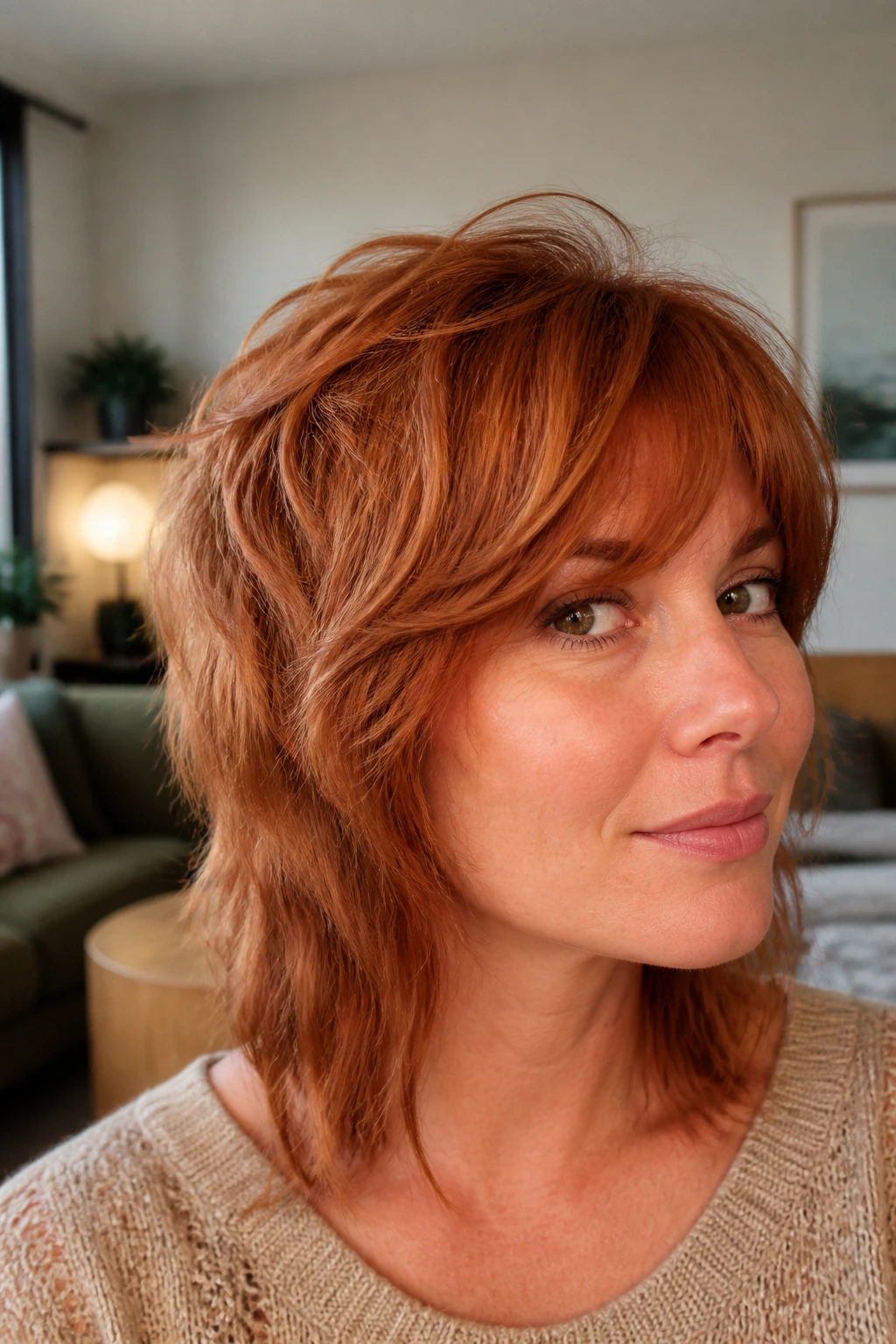
Micro-layers sound scary until you see them used the right way. On fine hair, they can give you lift right where the head starts to flatten, which is usually the part people complain about most. The trick is to keep those short pieces high on the head and leave the lower layers longer and calmer.
What Makes It Different
This is not a shredded, everywhere-at-once shag. It’s a controlled one. The crown gets tiny internal layers, while the sides stay soft enough to hold shape. That means the hair moves when you turn your head, but the ends still look like they belong to an actual haircut.
- Great if your roots collapse by lunchtime
- Works well with a lightweight root spray
- Needs a stylist who knows when to stop cutting
One thing I like here: the copper tone shows every small shift in length. The layers don’t vanish in the color. They stay visible, which makes the haircut look deliberate instead of accidental.
4. Grown-Out Shag Bob in Cinnamon Auburn
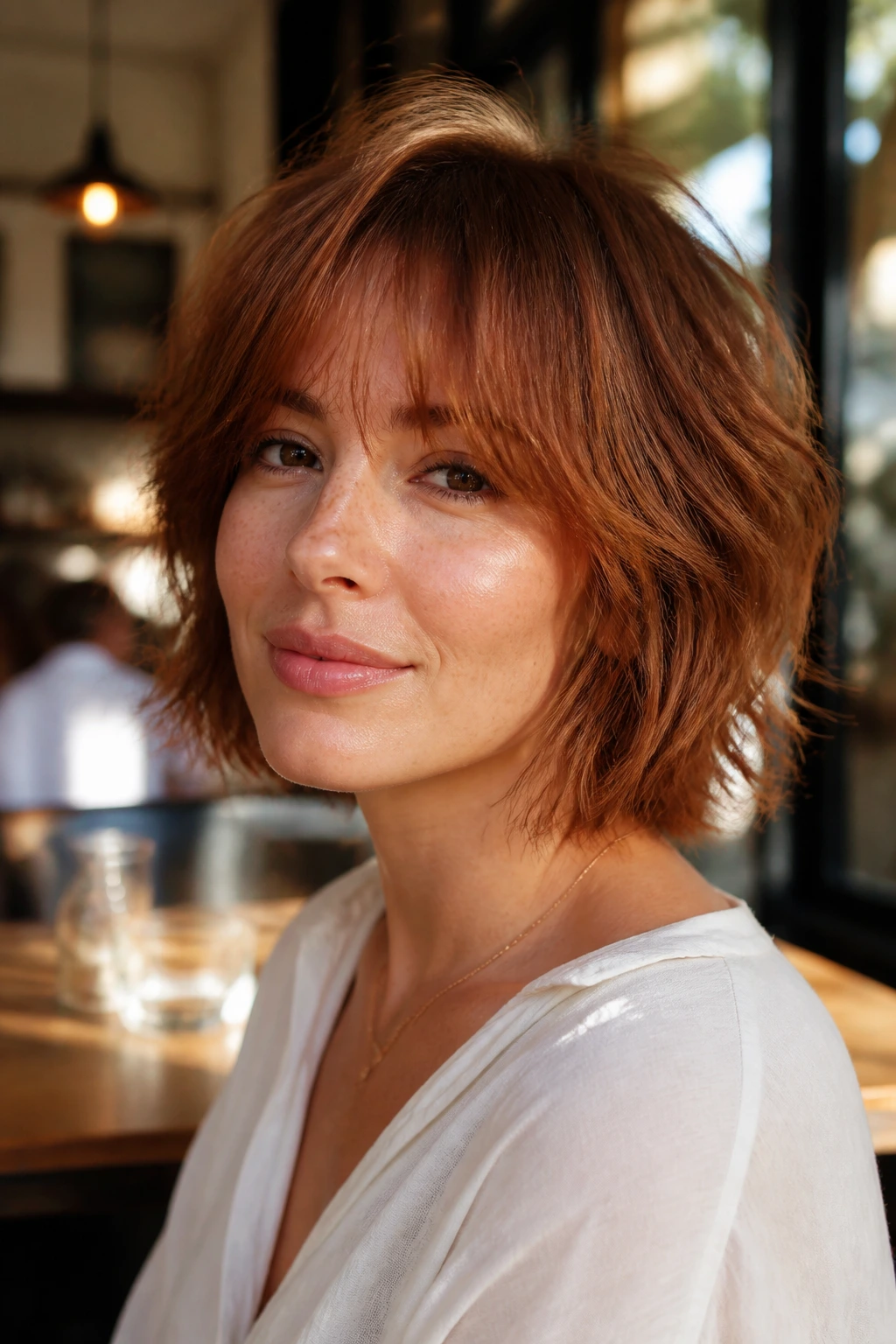
A grown-out shag bob is the cut for people who want hair that behaves on day three. It sits somewhere between a bob and a shag, which is exactly why it works on fine hair. You get enough length to keep the ends from looking threadbare, but the internal texture keeps the shape from falling flat and sad.
The best version stops just below the chin or skims the upper neck. That extra inch matters. It gives the style a little swing when you walk, and it keeps the silhouette from turning too airy at the bottom. Cinnamon auburn gives it warmth without making the cut feel loud.
A round brush helps, but only at the roots and around the face. Don’t overwork the ends. They should look soft, not polished to death. If you’re the type who wants a cut that still looks decent after a pillow crease and a coffee run, this one earns its keep.
5. Long Auburn Shag with Airy Ends

Long hair and fine hair can be a tricky pair. Keep too much length with no structure, and the ends look stringy. Add too many short layers, and the whole head loses its weight. A long auburn shag solves that by keeping the lower length intact while weaving in layers that start around the cheekbone or collarbone.
The best long shag does not chew up the bottom two inches. That part should stay relatively calm. The texture belongs higher up, where the hair can lift and move without exposing the ends. Auburn shades help here because they make the internal layers easier to see, especially in natural light.
Picture it with soft bends, not beach-wave chaos. A 1-inch iron or a loose braid overnight will do more for this cut than any heavy styling cream. I’d skip thick oils; they make fine hair collapse fast. A pea-sized amount of serum on the ends is plenty.
If you’ve been trying to keep length without sacrificing shape, this is one of the few shag cuts that actually respects that goal.
6. Auburn Shag with Bottleneck Bangs
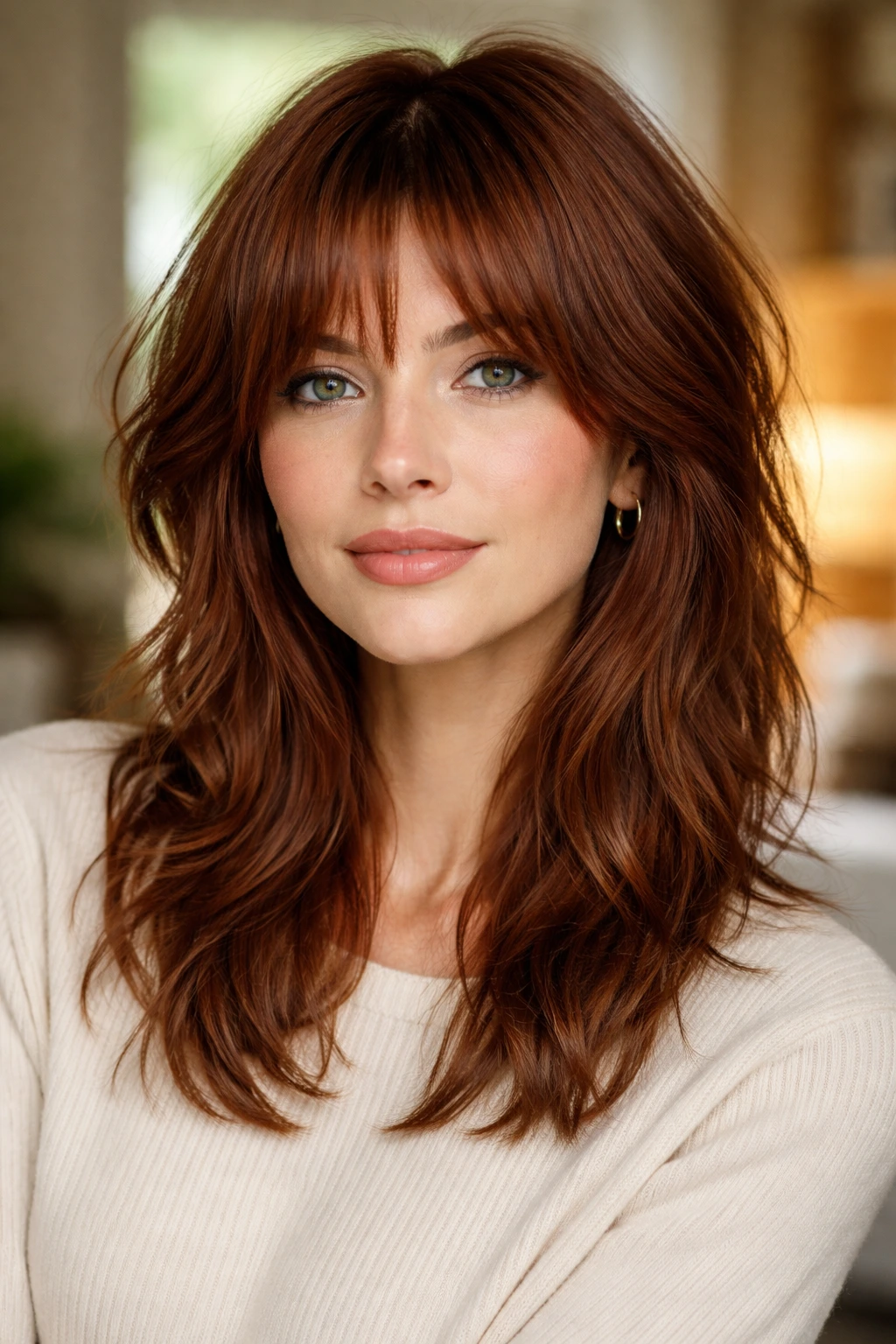
Bottleneck bangs are a smart move when you want a fringe that frames the face but doesn’t swallow it. They start narrow near the center and open wider near the temples, which gives fine hair a little structure without demanding too much density from the front. On an auburn shag, that shape feels polished in a loose, lived-in way.
The reason they work so well is simple: the center stays light, while the sides blend into the shag layers. That keeps the front from looking heavy, which is a common problem with full bangs on fine hair. If your hairline is a bit sparse, this bang shape is more forgiving than a blunt fringe.
How to Ask for It
Tell your stylist you want the center to sit just above the brows and the sides to taper toward the cheekbone. Ask for the bang to be softly disconnected, not chopped straight across. That little bit of softness matters.
This cut looks best with a root lift product and a quick round-brush pass at the front. Nothing fussy. Just enough shape to keep the bangs from splitting apart.
7. Wispy Wolf-Shag Hybrid

A wolf-shag hybrid can look fantastic on fine hair, but only if someone shows restraint. The mistake people make is going too short at the top and too thin at the back, which leaves the whole style looking sparse. Keep the spirit of the cut — a little edge, a little length contrast — but don’t overdo the shredding.
How to Keep It from Going Too Skinny
The best version keeps the top layers around cheekbone length and leaves enough back length to hold the silhouette. That way the haircut still has a shape when it’s not perfectly styled. Auburn color helps because the shade variation gives the layers more visible depth.
- Best for hair with some natural bend
- Better with a soft finish than a stiff one
- Needs a stylist who won’t carve too much into the ends
This is one of those cuts that looks cooler when it’s slightly imperfect. A rough dry, a little scrunching, and you’re done. If your hair is pin-straight and won’t hold a bend, I’d steer you toward a softer shag instead.
8. Soft Razor-Cut Shag with Side-Swept Fringe

If your hair falls the same way every time and refuses to cooperate with a middle part, a side-swept fringe can save a lot of frustration. The soft razor-cut shag is useful here because it removes enough bulk to create movement, but it should never be so aggressively thinned that the ends fray out. That’s the line people miss.
I like this cut on fine hair that gets weighed down by scissors-only layering. A gentle razor pass through the mid-lengths can make the hair bend more easily, especially around the face. But the ends should still have some presence. You want airy, not shredded.
The side fringe gives the shape direction. It also hides the fact that fine hair sometimes wants to split at the front during the day. A little texturizing spray at the roots and a finger-combed finish are enough. This is a cut for people who want movement they don’t have to babysit.
9. Shoulder-Grazing Auburn Shag with Invisible Layers
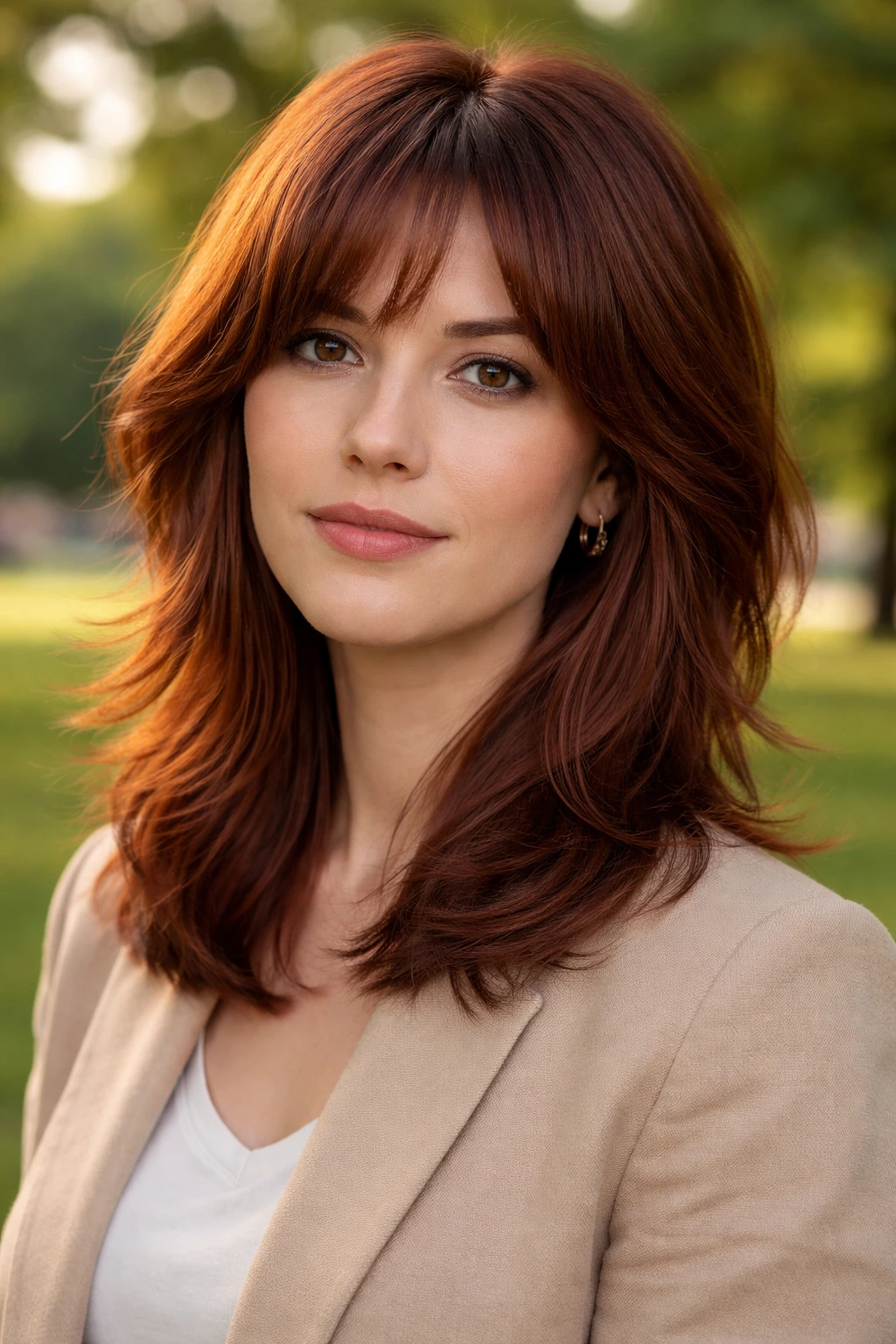
Invisible layers are the answer when you like the shag idea but don’t want to look like you’re wearing a shag. The surface stays smooth enough to read as full, while the internal layers do the work underneath. On shoulder-grazing hair, that keeps the outline clean and the movement subtle.
What Makes It Different
This style behaves better than a heavily chopped shag in professional settings, but it still has life. The layers are there; they’re just tucked in. That means you get the lift and bounce without exposing too much scalp or making the ends look airy.
A shoulder-grazing length also helps because it gives fine hair enough heft to settle. If you’ve ever had a cut that turned into a triangle after two shampoos, you know why that matters. Auburn tones make the motion easier to see, especially if the color has a little copper or chestnut variation.
This is a good choice if you want a haircut that looks neat when tucked behind the ears and loose when you let it fall forward. It’s adaptable. That counts for a lot.
10. Curly-Friendly Auburn Shag for Wavy Fine Hair
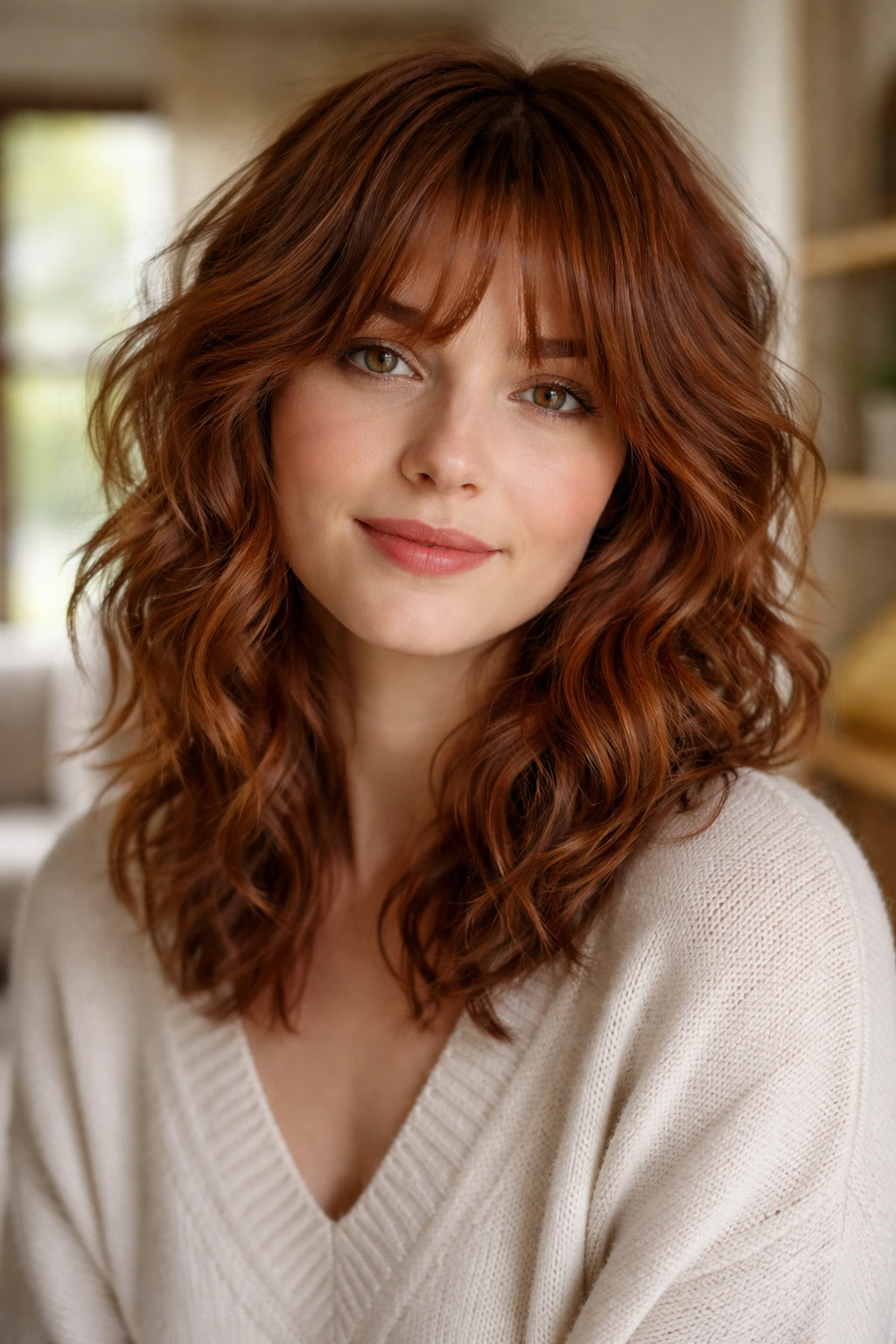
Wavy fine hair needs a different kind of shag. Cut it like straight hair and the shape can puff in odd places. Cut it dry, or at least partly dry, and the layers can follow the wave pattern instead of fighting it. That’s the whole game here.
What to Ask for at the Chair
Ask for longer layers through the top and sides, not a bunch of short snips all over the head. Short layers can spring up too much once the hair dries. You want the wave to move, not explode.
- Keep the perimeter at least shoulder length
- Let the shortest face frame start near the cheekbone
- Use a diffuser on low heat and low speed
This cut loves a little mousse and a scrunch, then hands off. Fine waves do not need a ton of product; they need the right amount in the right spots. Too much cream and the whole look goes limp. Too little and the texture breaks apart.
If you have any natural bend at all, this is one of the easiest auburn shag haircuts for fine hair to live with.
11. Textured Pixie Shag in Deep Auburn
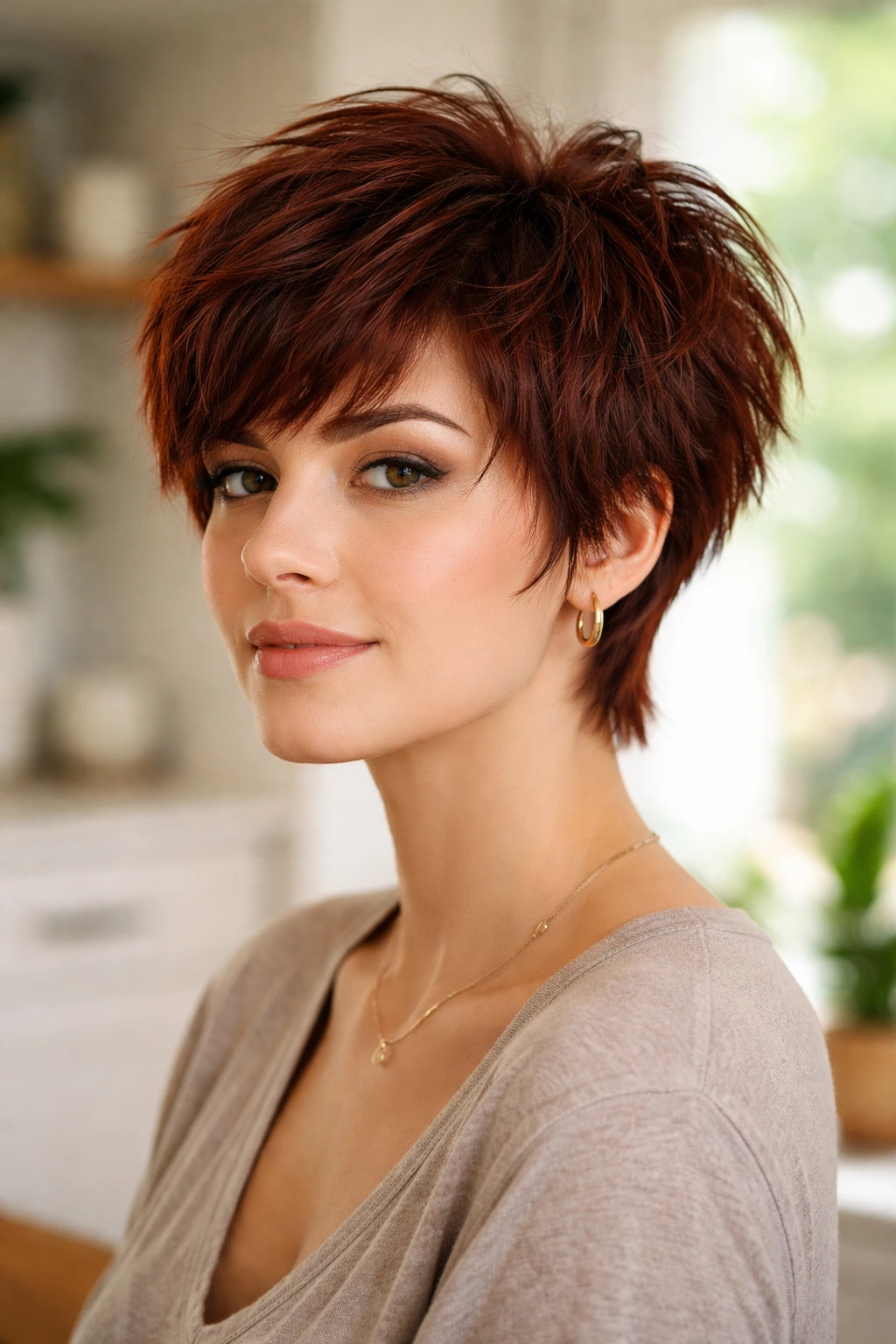
Short hair can look fuller than long hair on fine strands. People hate hearing that until they see it, but it’s true. A textured pixie shag removes the dead weight that makes fine hair sag, and the shorter crown gives the illusion of density. Deep auburn makes the shape even clearer because the color adds depth around the top and sides.
The key is not to go too choppy. Keep enough length on top — around 2.5 to 3 inches — so the hair can be pushed forward, side-swept, or ruffled without sticking straight up. The nape can be tapered, but not shaved to the bone. Fine hair needs a little substance to hold onto.
This is not a shy haircut. It shows your face, your ears, your jaw. But if you like low fuss and you’re tired of fighting length that never seems to stay full, it’s a smart move. A dab of paste between the fingertips is usually enough to finish it.
12. Mid-Length Shag with Cheekbone Layers
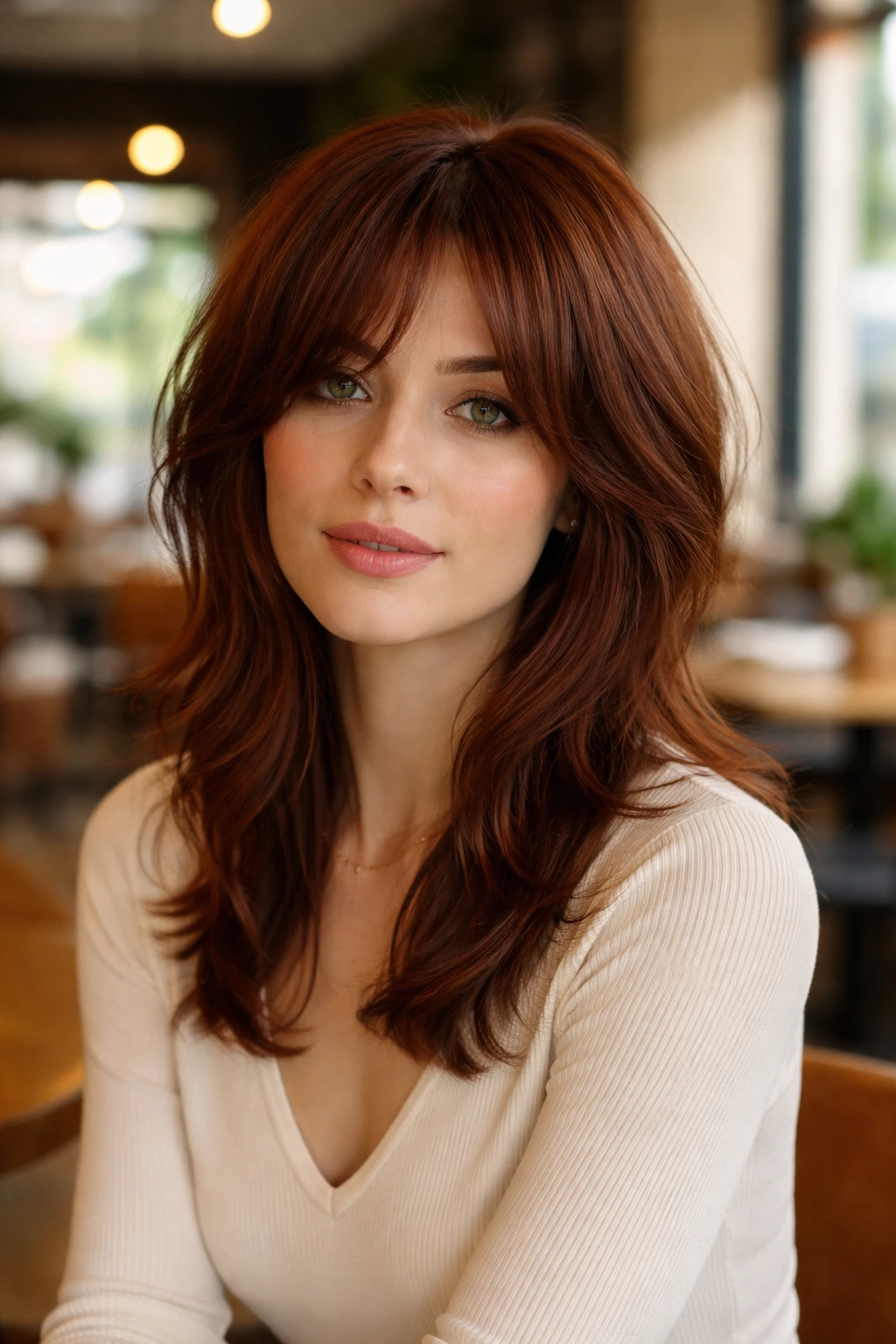
Why do cheekbone layers make such a difference? Because that’s where the eye naturally goes first. Put movement there, and the whole haircut feels lifted even if the roots are flat. On fine hair, that kind of visual trick matters more than people admit.
A mid-length shag gives you enough room to shape the outline without losing the ends. Ask for the shortest face-framing pieces to hit the cheekbone or just below it, then let the rest taper softly toward the collarbone. If the layers start too high, the shape can turn airy in the wrong way. Too low, and you lose the sculpted look.
How to Style It
A small round brush or a large curling iron can give the front a gentle bend. Don’t curl every strand. Just give the front and top a little direction, then let the rest fall naturally. That keeps the style from looking overworked.
This is a strong choice for square or round faces, because the cheekbone layers create a longer line without dragging the whole cut down.
13. Chestnut Auburn Shag with Flipped Ends
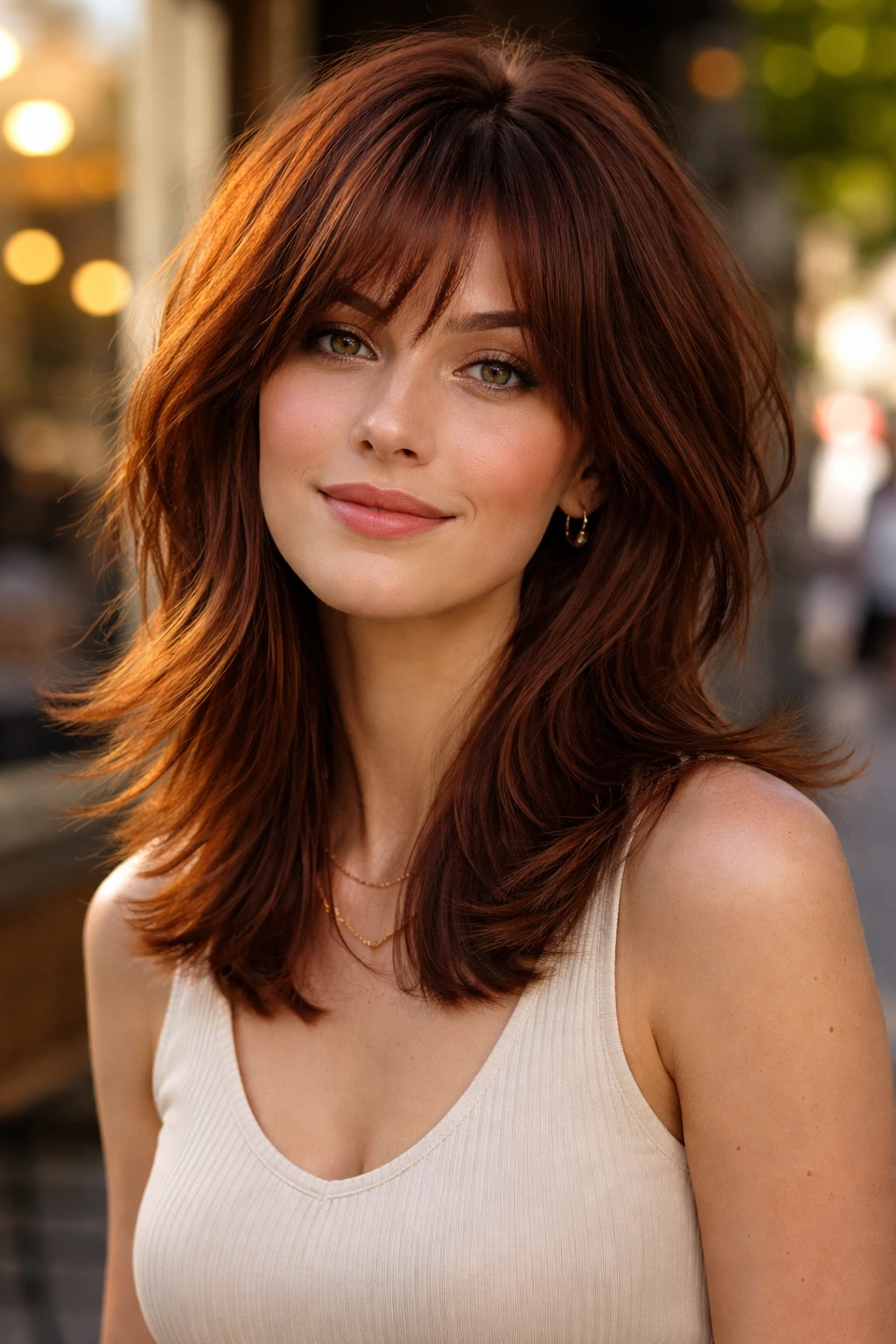
There’s something nice about a shag that remembers to have a little fun. The flipped-end version does that without turning into a costume. It has a soft retro feel, but the shape stays clean enough for everyday wear, which is why it works so well on fine hair.
The flipped ends should be loose, not curled into tight little hooks. A round brush or a flat iron twist at the very bottom is enough. The goal is to make the perimeter look springy and a bit animated. Chestnut auburn keeps the color warm but grounded, so the haircut doesn’t lean too red or too sweet.
This style is especially good if the ends of your hair tend to tuck inward and look flat. A small flip changes the line of the haircut instantly. It’s a tiny thing. It matters.
And yes, it looks better when the roots have a little lift. Flat roots and flipped ends can fight each other. Give the crown a touch of volume and the whole cut feels more intentional.
14. Auburn Shag with a Blunter Perimeter
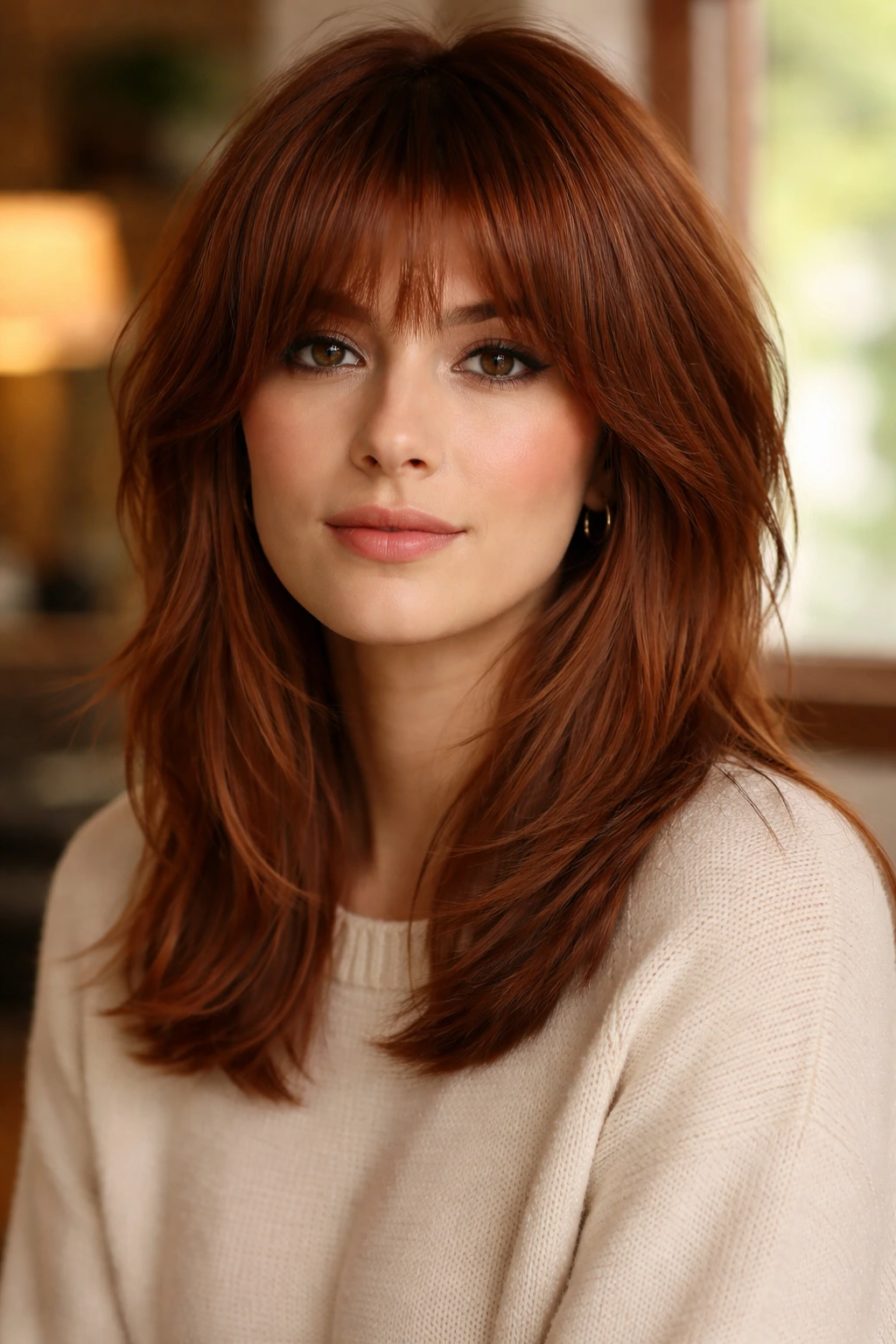
Not every shag needs to be shredded to work. In fact, on fine hair, a blunter perimeter often makes more sense because it keeps the ends looking thicker. That strong edge anchors the haircut, while soft internal layers still give it motion.
This is the version I’d suggest to someone who likes the shag idea but has been burned by over-thinned cuts before. The outline stays solid. The texture lives inside the shape. You get the movement without the see-through ends that can happen when every strand gets textured to death.
The contrast matters. A blunt-ish hemline makes the auburn color look richer too, because the bottom line holds its shape. If the ends are too airy, the whole style can start looking unfinished. That’s not a color problem. It’s a cutting problem.
This is also a good option if your hair breaks easily at the bottom. Leave the perimeter strong, and let the layers behave themselves.
15. Layered Shag Mullet in Mahogany Auburn
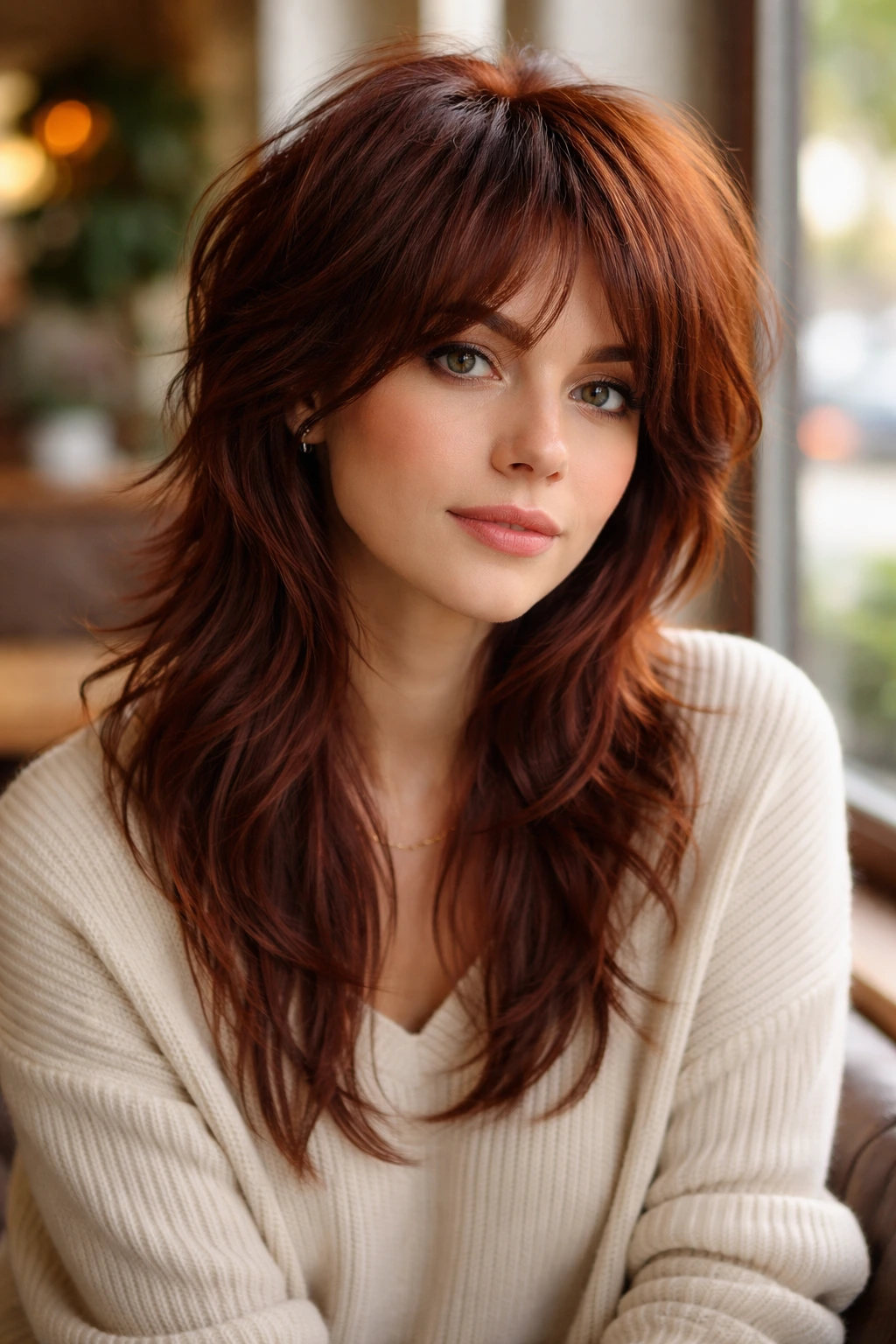
A mullet-shag sounds daring, and it can be. But on fine hair, the softer version has a real advantage: it keeps the back longer, which helps the hair hold some weight, while the front and crown get enough layers to show movement. Mahogany auburn suits it well because the shade adds depth to the shape.
The safest version keeps the front around cheekbone level and the back only a little longer than the shoulders. That gives the cut its attitude without turning the ends into strings. If you go too short in too many places, the whole style can collapse. Fine hair does not forgive excessive thinning.
Best For
People who like a little edge. People who don’t want the same haircut as everyone else. People who can live with a style that looks best with a bit of texture and a slightly undone finish.
I wouldn’t call this low drama. I would call it honest. If you want a haircut with personality and your hair can handle a little separation, it’s a strong choice.
16. Auburn Shag with an Arched Fringe
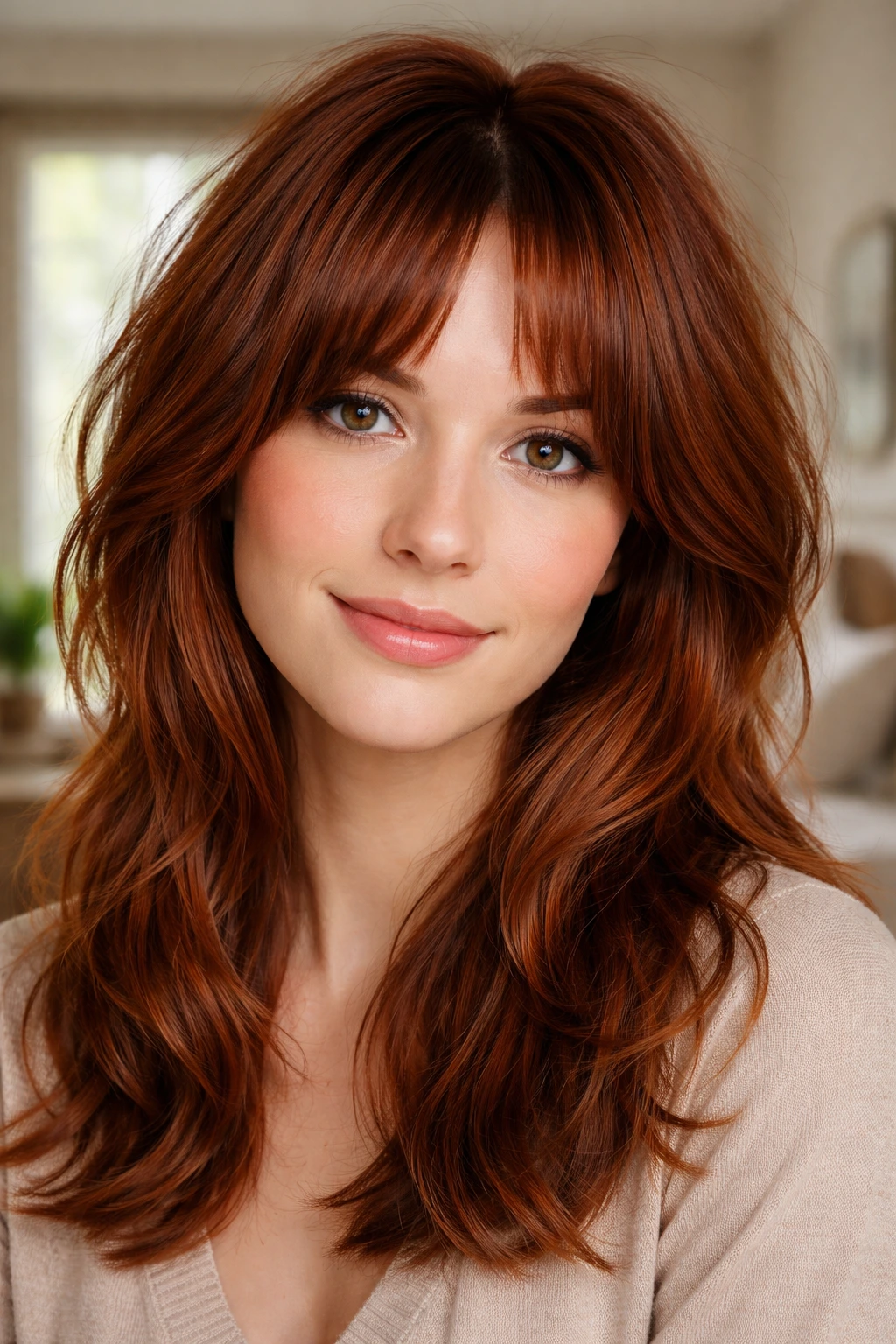
An arched fringe is useful when you want softness at the front but you don’t want a heavy bang sitting on your forehead all day. The center stays a touch shorter, then the sides fall a little longer, which opens the face and keeps the shag feeling light. On fine hair, that shape helps the front avoid looking clumped together.
The best arch sits low enough to touch the brows at the center and slips down near the outer corners. That tiny curve matters. It gives the haircut a shape of its own, which means the rest of the layers don’t have to work so hard. Auburn color makes the fringe look even more dimensional because the front catches the shade changes first.
This style is especially nice if you wear glasses or if you dislike a full curtain bang. It frames without covering. That’s a nice compromise, and not enough people ask for it.
A quick trim every few weeks keeps the arch from growing into a regular fringe. Worth it.
17. Rounded-Crown Shag with Feathered Sides
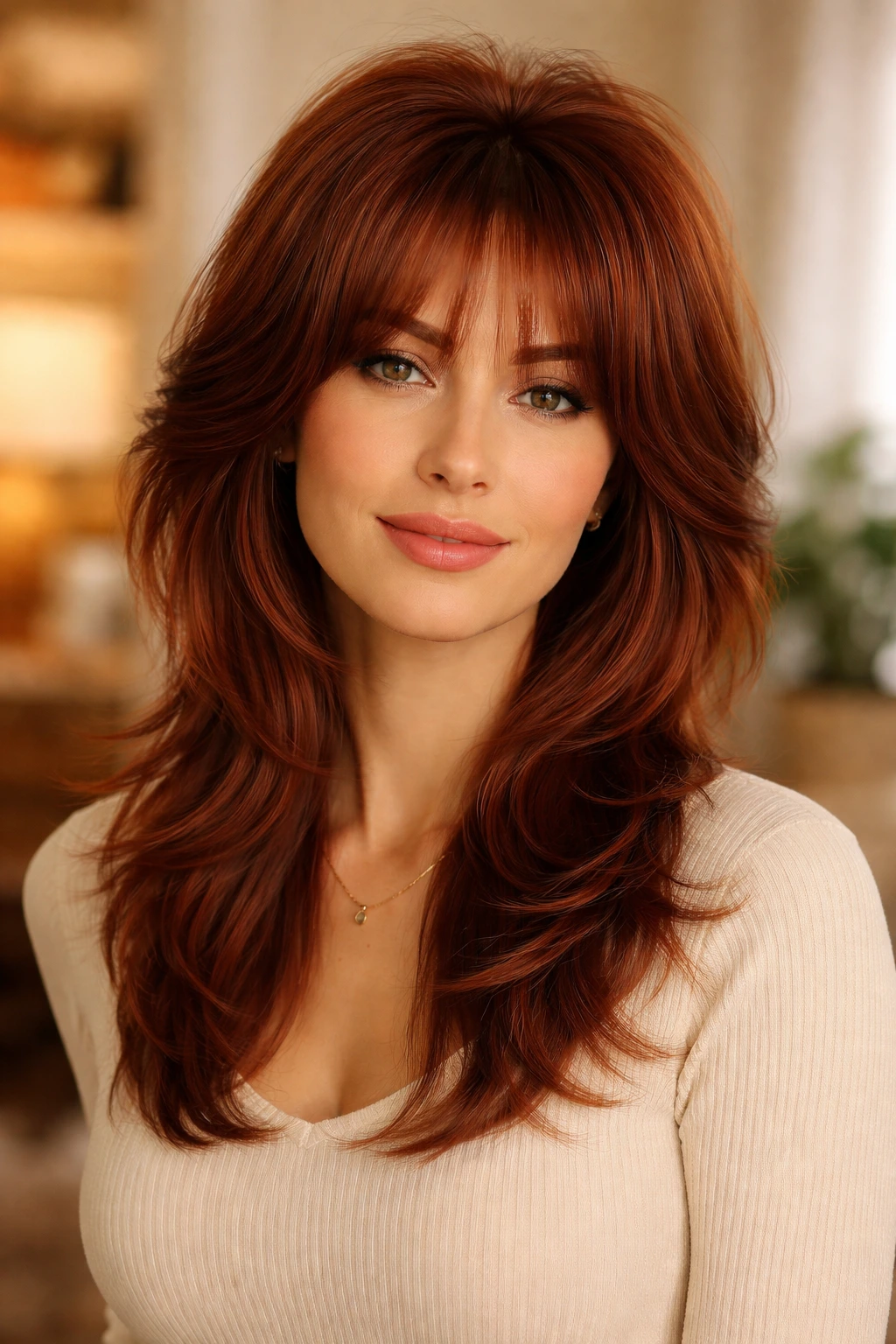
Picture a haircut that lifts at the top and softens as it moves down the sides. That’s the rounded-crown shag, and fine hair often loves it because the shape creates fullness where it’s most visible. The crown gets a little height, the sides stay feathered, and the overall line reads as balanced instead of flat.
The Shape That Matters
This cut works best when the crown is cut to encourage lift rather than collapse. Ask your stylist to preserve some length at the top while feathering the sides around the cheek and jaw. The result is a rounded silhouette that flatters long faces especially well.
- Crown lift should be soft, not teased
- Sides should taper gradually
- Ends should stay light but not wispy
Styling is easy. Blow-dry the crown forward first, then guide it up and back with your hands. That small move helps the roots remember where to sit. If you like a little polish but hate anything stiff, this is one to save.
18. Razor-Soft Auburn Shag for Straight Fine Hair
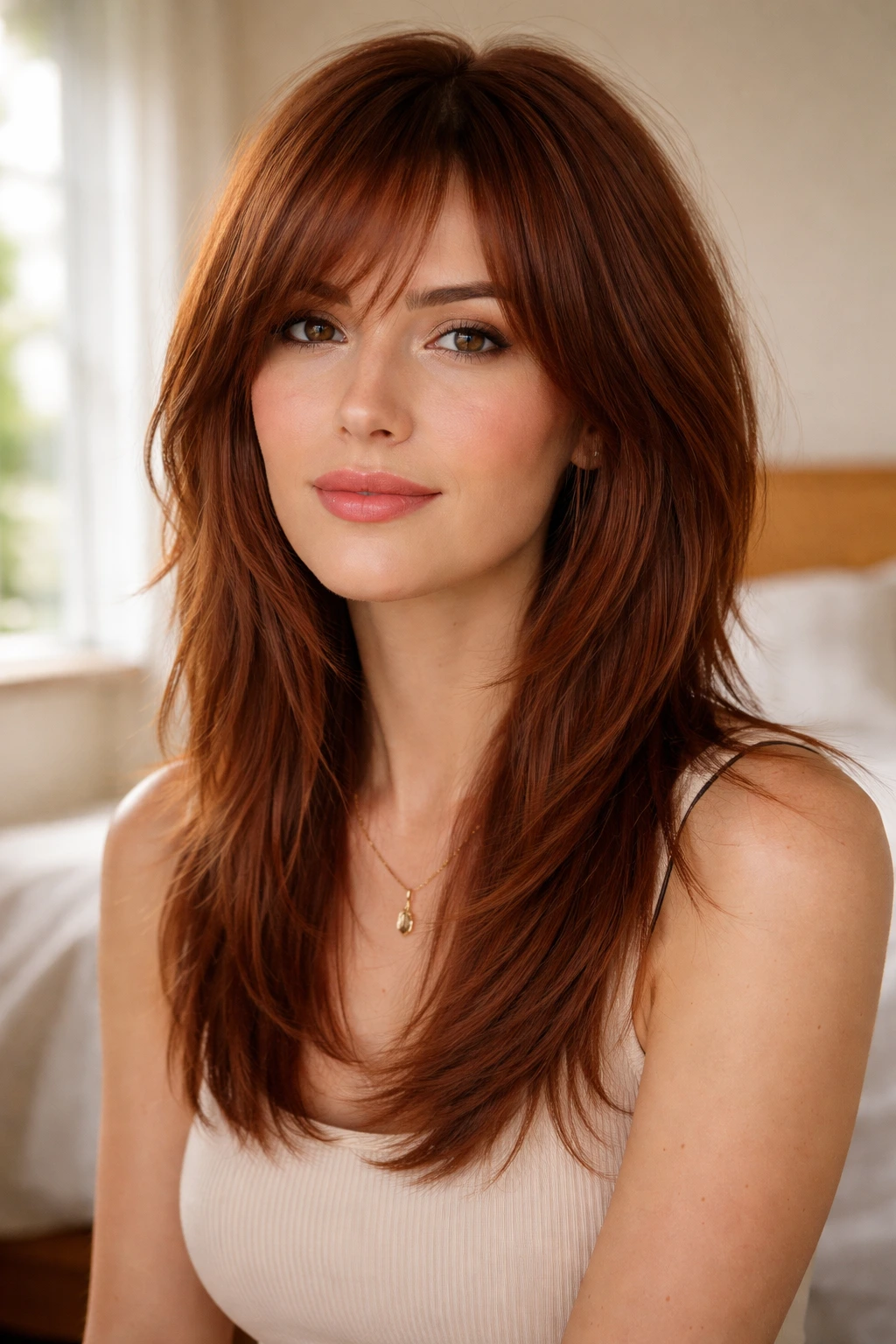
Straight fine hair tends to expose every bad layer. There’s nowhere to hide. That’s why a razor-soft shag can work so well if the cut is handled carefully. The razor should soften the mid-lengths and create bend, not turn the ends ragged.
I’d keep the perimeter a little stronger than you think you need. Straight hair already lies close to the head, so if you over-thin it, the style can start to look dry and thin by the second day. A soft auburn tone helps because it makes the texture visible without requiring the hair to puff up.
Products That Help
A light volumizing mousse at the roots, a texture spray on the mid-lengths, and a tiny bit of serum on the ends. That’s enough. Heavy creams and oils usually work against this shape.
The nice thing about this cut is that it looks good with movement but doesn’t demand a full styling session. If your hair is the sort that drops out of a curl by noon, this is a far more forgiving path.
19. Deep Side-Part Shag with Lift at the Root
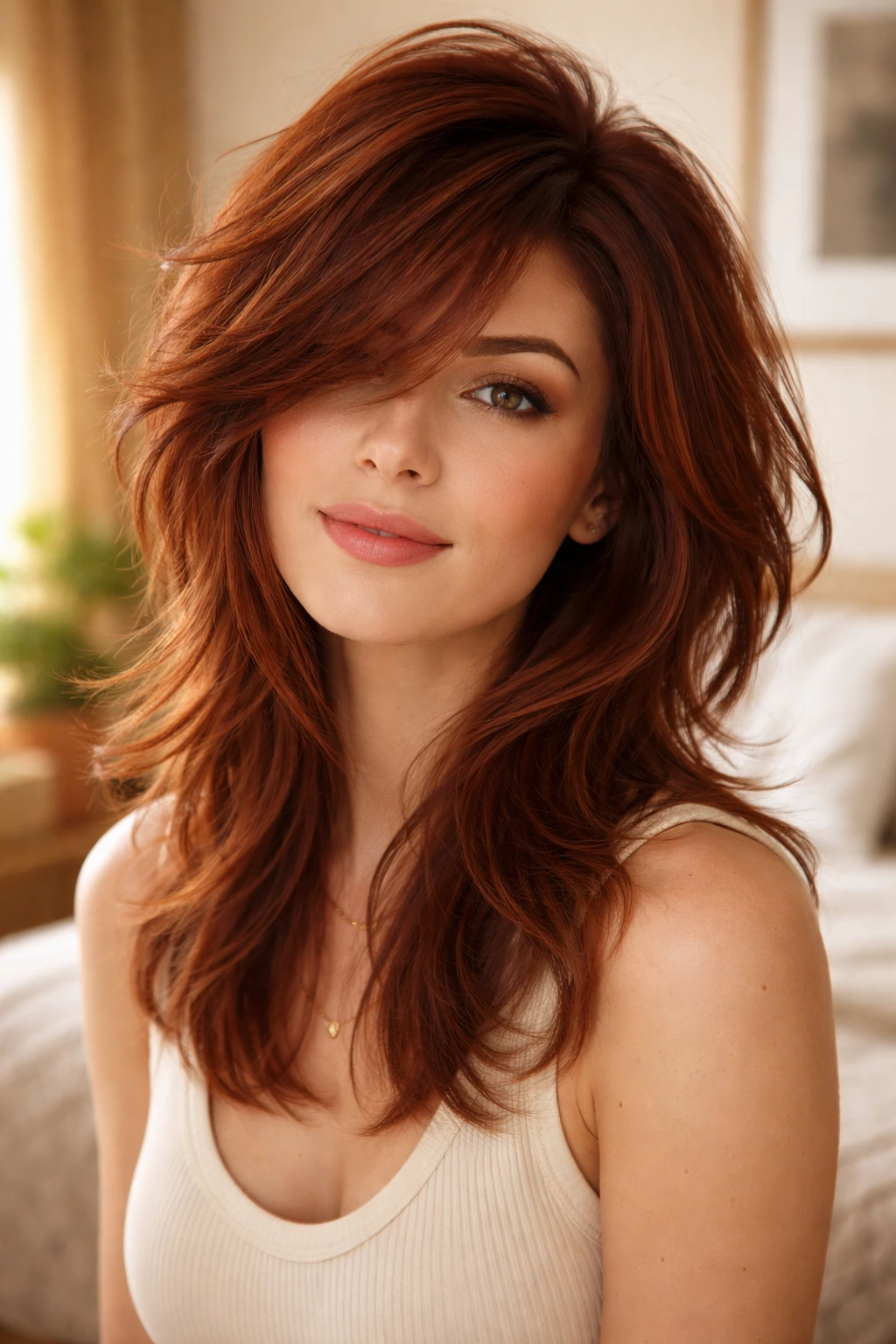
A side part changes the whole mood of a shag. It gives the haircut direction, and direction creates volume. On fine hair, that matters because the root line is often where the style falls apart first. A deep side-part shag fixes some of that in a way that doesn’t feel forced.
Why the Side Part Helps
A middle part can be pretty, sure, but it often exposes too much scalp on finer strands. A deep side part shifts the bulk over to one side and lets the layers fall with more body. That one change can make the hair look fuller even if the cut itself stays fairly simple.
If one side of your hair is always flatter, this is worth trying. Blow-dry the part opposite the way you want it to sit first, then flip it back. That gives the roots a little push. A small clip at the crown while the hair cools can help too.
This cut works especially well with auburn color because the asymmetry shows off the tone from different angles. It’s practical, but it doesn’t look boring. That’s a nice combination.
20. Tousled Lob Shag in Warm Auburn
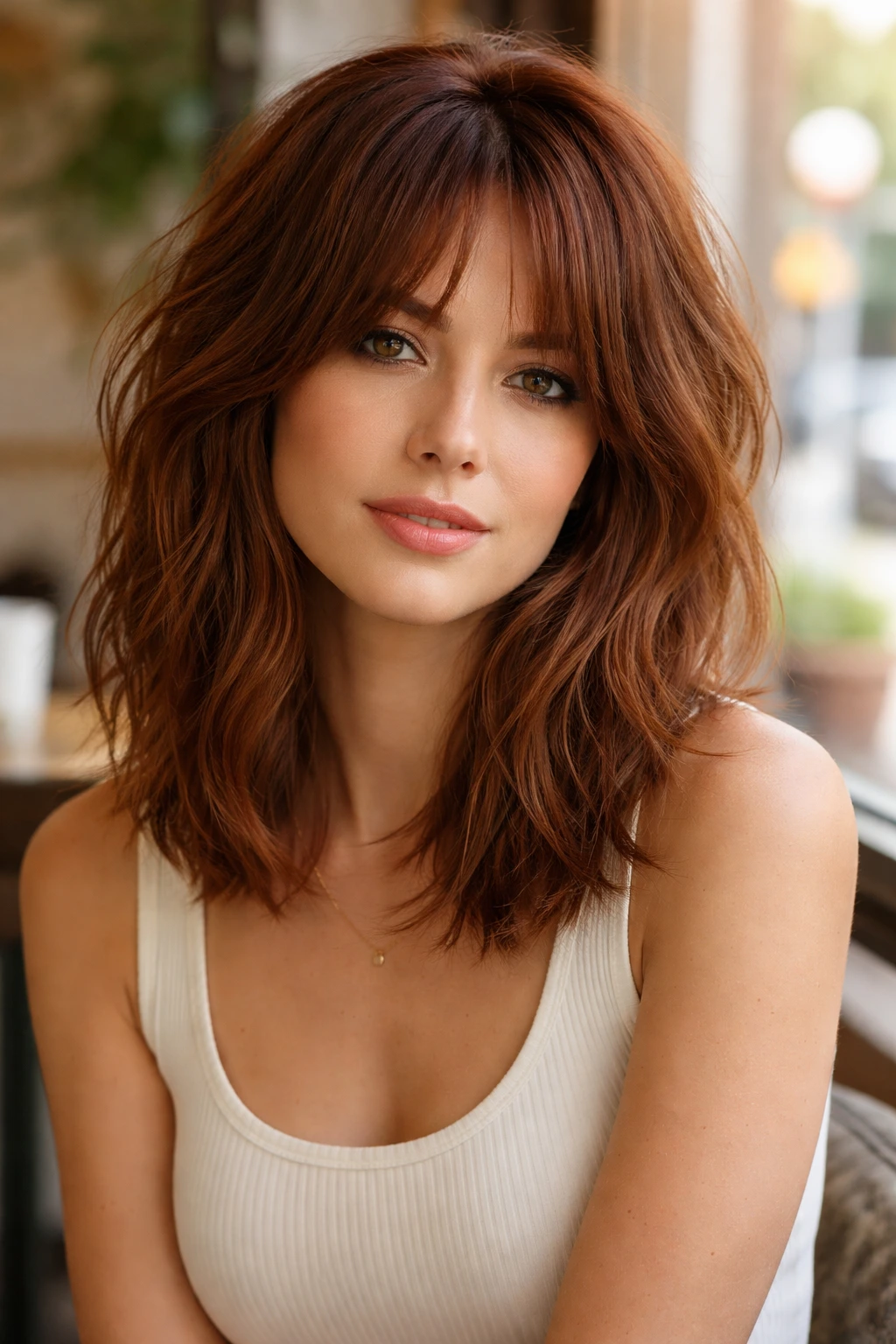
A lob gives fine hair a kind of breathing room. It’s long enough to feel soft, short enough to avoid dragging the ends down. Add shag layers to that length and you get a cut that can look messy in a good way, not in a “I gave up” way. Warm auburn keeps the whole thing looking rich and easy.
This is one of the safest auburn shag haircuts for fine hair if you want volume without going short. The collarbone length gives the hair a little heft, and the shag layers keep it from lying like a sheet. You can air-dry it, curl a few pieces, or rough it up with mousse and be done.
A 1.25-inch curling iron is enough if you want bends. Don’t curl every section. Just do the front, the top, and a few pieces through the sides so the shape feels broken up. That keeps the lob from turning too neat, which would miss the point.
It’s the kind of cut that works at brunch, at work, and when you’ve done almost nothing to it.
21. Piecey Auburn Shag with Swept-Back Bangs
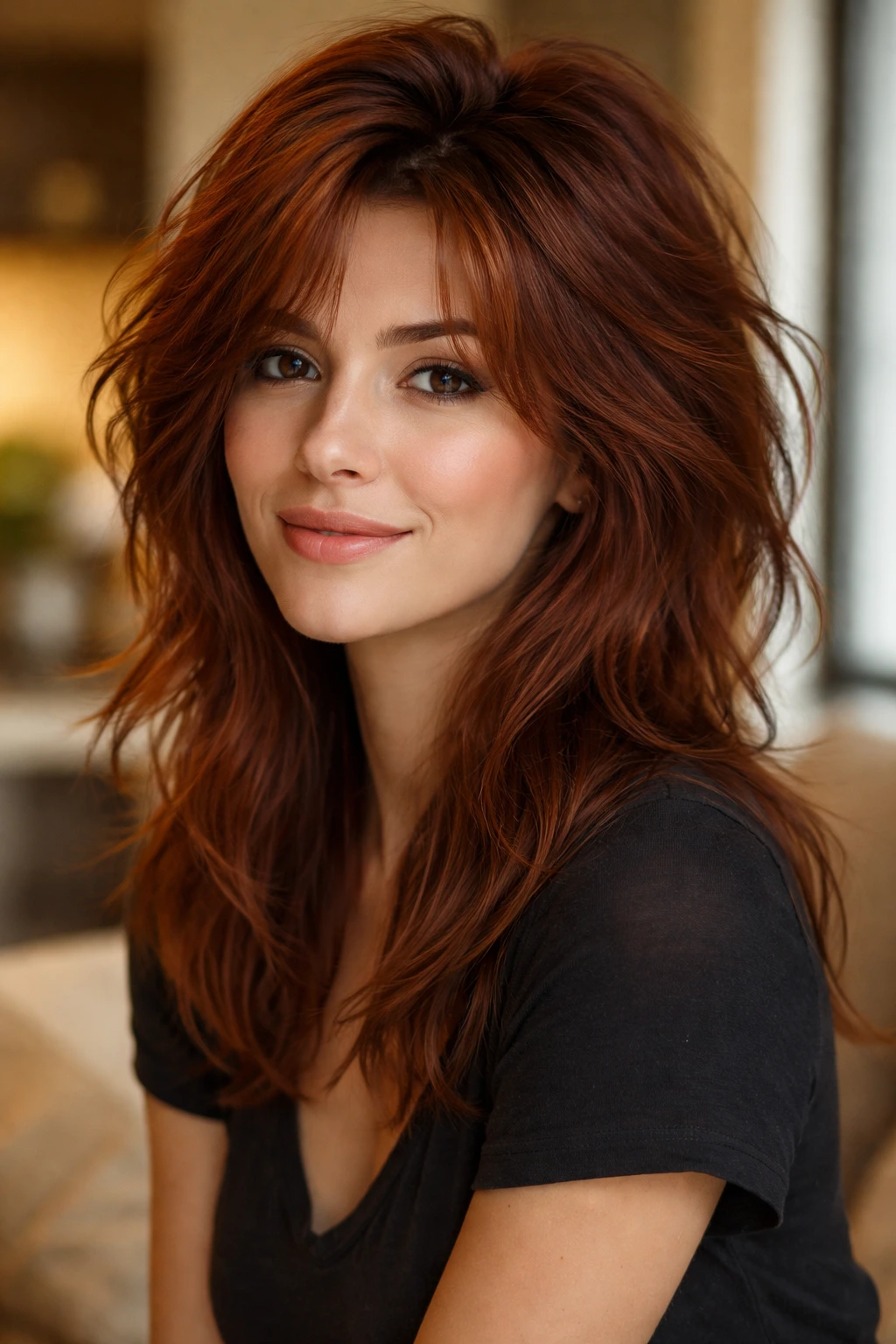
Swept-back bangs are underrated. They give the face room to breathe, they keep hair off the eyes, and they can make fine hair look fuller up front because the fringe isn’t sitting there in one flat panel. On a piecey shag, that little lift makes a huge difference.
How to Wear It
Dry the bangs with a small round brush or clip them back while they cool so they stay off the forehead. The rest of the hair can stay a little messy. That contrast is what makes the shape work. The bangs look intentional, but not stiff.
This is a strong choice if you’re growing out shorter fringe or if you’ve decided you’re done battling bang separation every morning. It also suits people with a high forehead, since the swept-back shape balances the upper face without hiding it.
Fine hair likes this approach because it avoids the heavy front piece that can make the rest of the cut feel thin. A bit of root spray at the hairline keeps the style from falling forward too fast.
22. The Low-Maintenance Auburn Shag for Thinning Ends
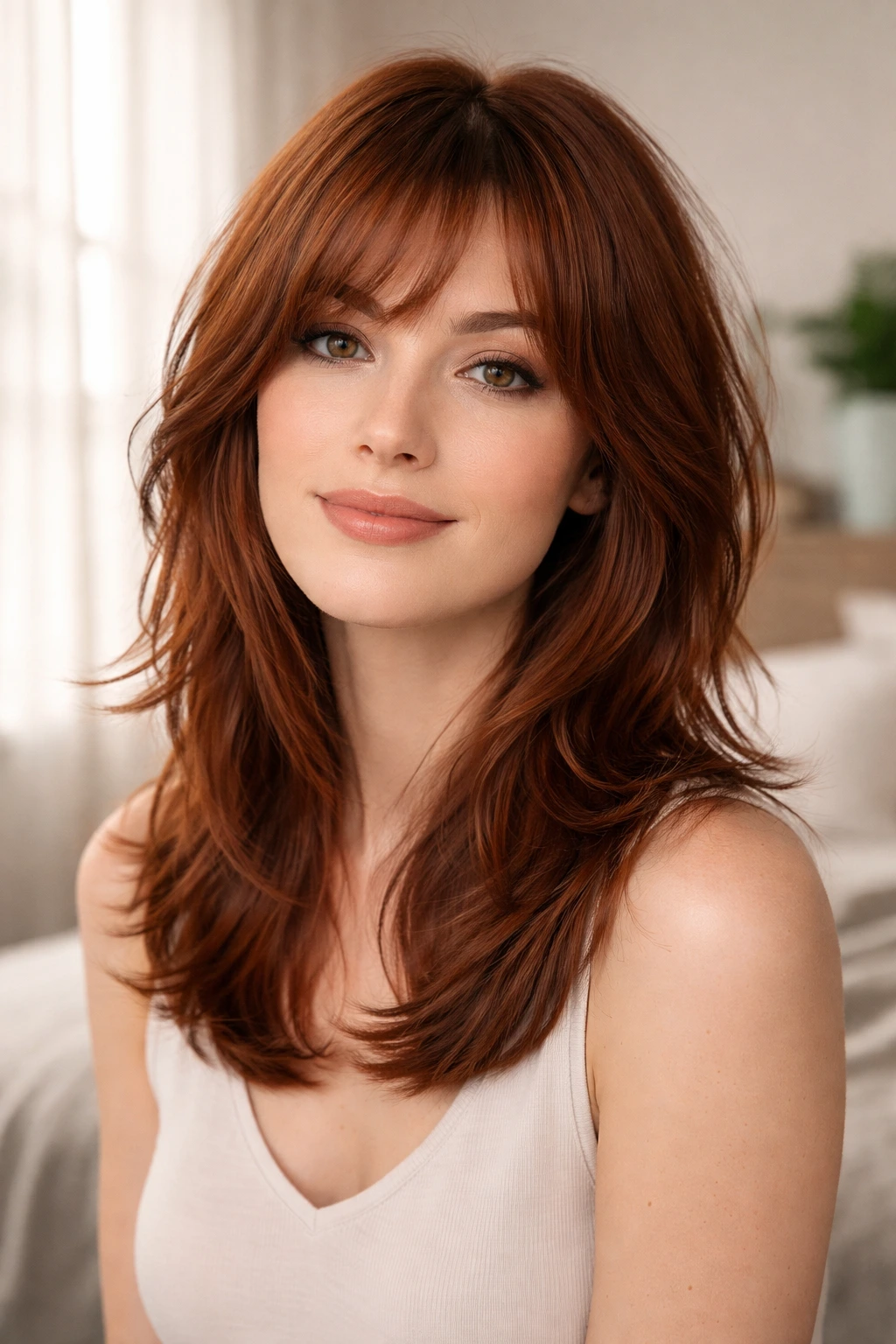
If you want one reference photo to take to the salon, make it this kind of shag. Not the most dramatic. Not the most shredded. The one that keeps the bottom line strong, puts softness around the face, and lets the auburn color do some of the visual work for you. Fine hair usually looks best when the cut respects the ends instead of attacking them.
Ask for collarbone length, soft layers that start around the cheekbone, and a perimeter that stays a little fuller than you think you need. If your hair is especially fragile, say so. A good stylist will leave more weight at the bottom and avoid over-thinning the crown. That one decision can save the whole haircut.
This is the version that works when you want movement on good days and decent behavior on lazy ones. It air-dries well. It doesn’t panic if you skip a blowout. And it grows out without turning into a mess by the third week.
Save the photo, but also save the words: shape first, thinning second, and never cut the ends so hard that the hair disappears. That’s the whole deal with fine hair and a shag, really.
