



Fine hair is notorious for its refusal to cooperate. It clings to the scalp, loses its volume by midday, and often feels like it lacks the substance to hold any style for more than a few hours. You have likely spent years buying thickening shampoos that promise miracles but only leave behind a waxy residue. The truth is, the answer is rarely found in a bottle of volumizing mousse. It is found in the geometry of the cut itself. When you have fine hair, length is often your enemy because gravity acts as a constant downward force. A shaggy pixie cut is the ultimate optical illusion for thin strands because it intentionally removes the weight that drags your hair down, replacing it with strategic layers that force the hair to stand up and create space.
The shaggy pixie isn’t just a trend; it is a structural necessity for anyone tired of limp, lifeless locks. By focusing on choppy ends and uneven lengths, you create a sense of density that isn’t actually there. It tricks the eye into seeing more hair than is present. Whether you want something edgy and rock-and-roll or soft and romantic, there is a version of this cut that will change how you view your hair routine. Forget about spending forty minutes with a round brush and a blow dryer. These cuts rely on texture, grit, and the natural movement of your hair rather than fighting against it.
1. The Classic Textured Shag Pixie
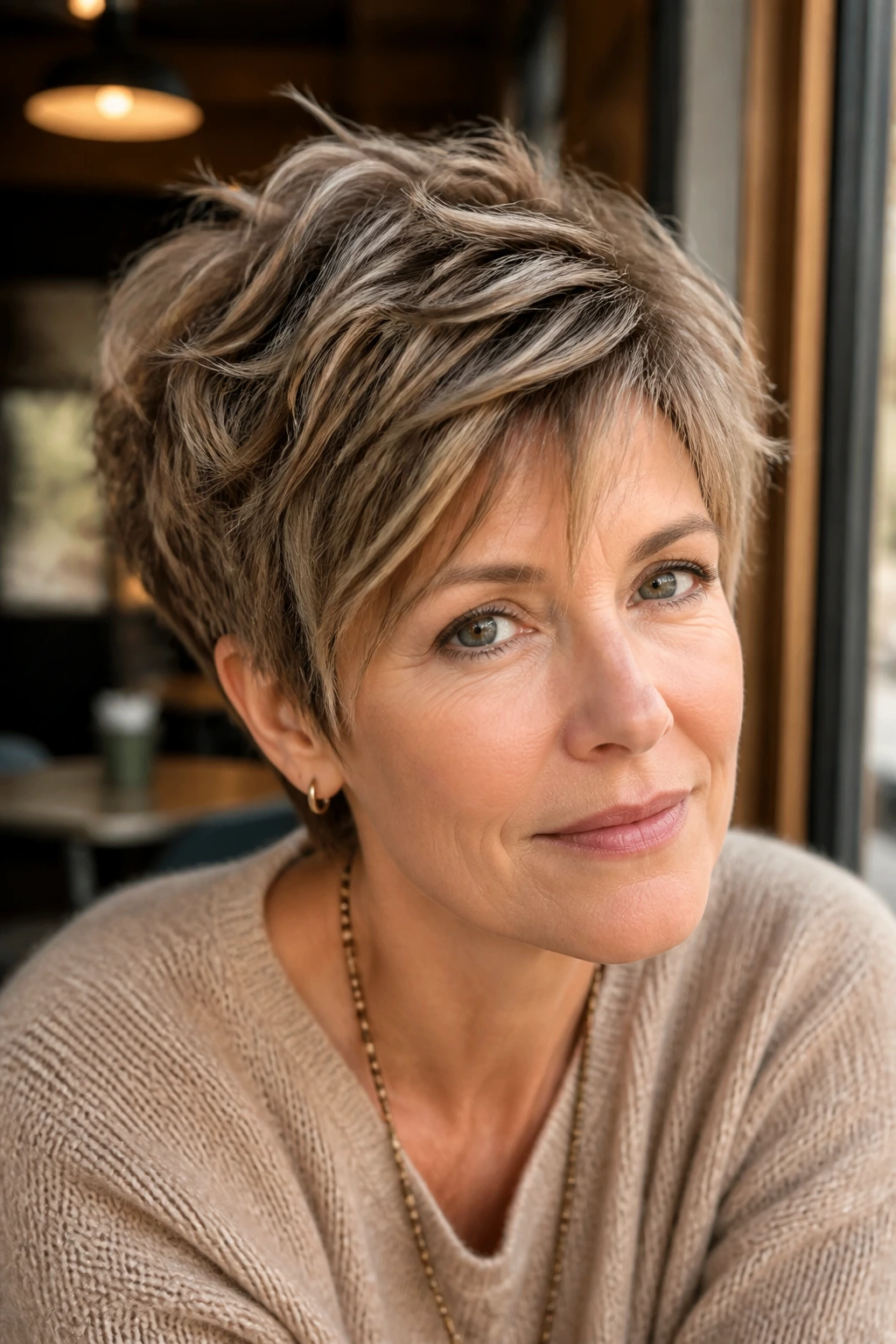
This is the baseline for anyone transitioning from a bob or long hair into a shorter crop. It relies on internal layering to remove bulk while keeping the silhouette slightly longer in the front than a traditional pixie. For fine hair, the secret is in the point-cutting. You want your stylist to use shears to cut into the ends rather than straight across, which creates that soft, shattered edge that looks thick and intentional.
Why It Works for Fine Hair
The length variation is what saves you here. When hair is all one length, fine strands tend to clump together and look stringy. By introducing shorter layers at the crown and leaving the fringe slightly longer, you break up the surface area. This allows individual strands to move independently, which naturally creates a sense of fullness that a blunt cut simply cannot replicate.
Styling Strategy
- Avoid heavy waxes: They will collapse fine hair instantly.
- Use a texturizing spray: Look for a salt-based or grit-based spray to give the roots some “stick.”
- Finger styling: Skip the brush entirely. Work a pea-sized amount of paste into your palms, warm it up, and mess up the hair with your fingers to encourage separation.
Pro tip: Ask your stylist to leave a little more length around the ears. This provides a soft framing effect that balances the shorter layers on top.
2. Wispy Micro-Bangs Pixie
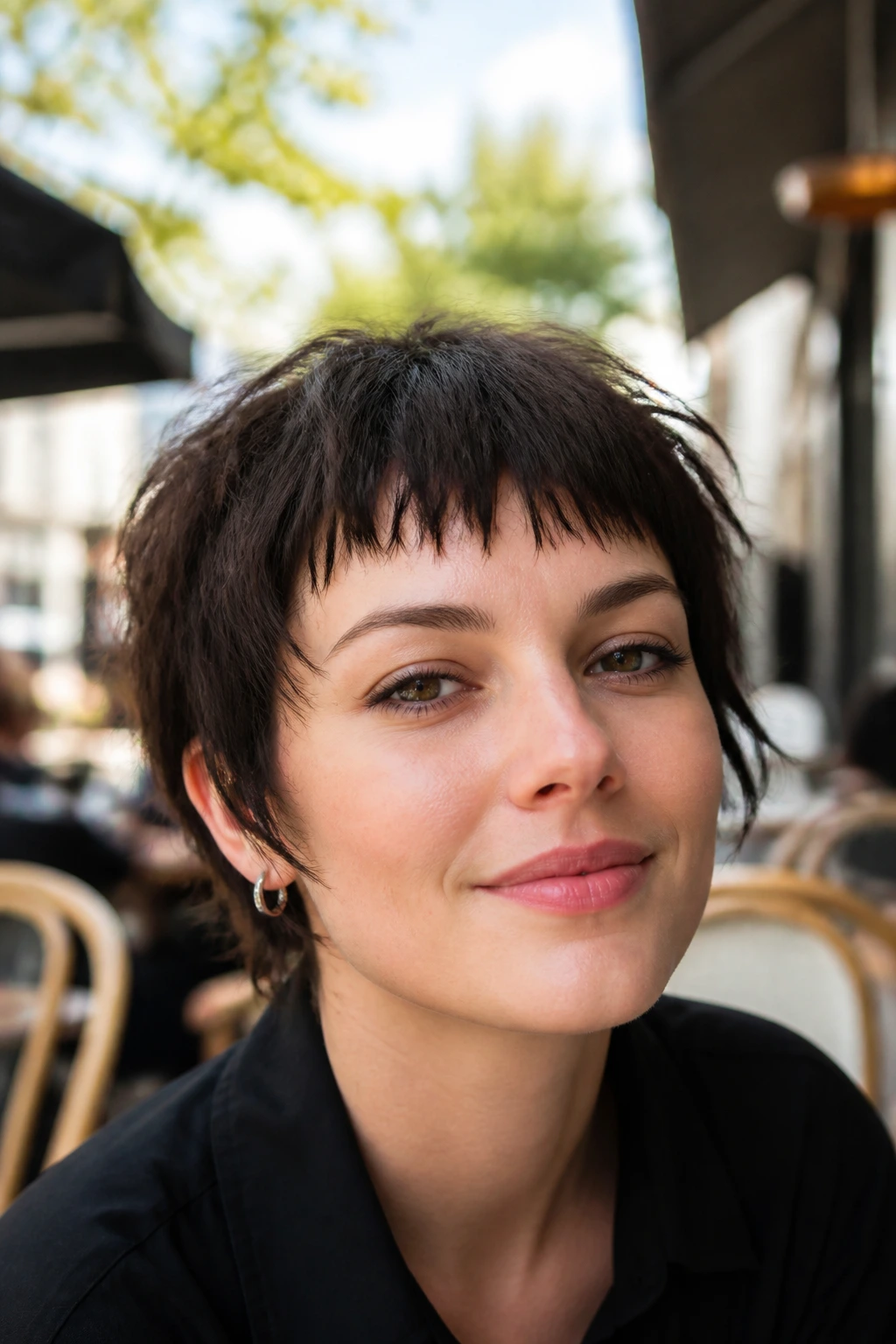
Micro-bangs are intimidating, but they are a fantastic solution for fine hair because they pull the focus upward toward your eyes. When you cut the bangs short and jagged, you are removing the weight from the front of your face. This prevents the “curtain” effect where fine hair hangs in your eyes and makes the rest of your hair look thin by comparison.
The Power of the Fringe
Short, choppy bangs allow for a “piece-y” look that feels intentional. It signals that you didn’t just get a bad haircut; you chose a high-fashion, low-maintenance style. Because the fringe is short, it won’t get oily against your forehead as quickly as longer bangs would, which is a major win for those of us struggling with oily scalps and fine hair.
How to Maintain the Shape
- Trim the bangs every three to four weeks.
- Use a dry shampoo spray on the bangs even if they aren’t dirty; it adds the necessary grip to keep them from falling flat.
- Avoid flat ironing them. You want them to have a slight, organic wave rather than being plastered to your forehead.
3. The Long-Layered Shaggy Crop
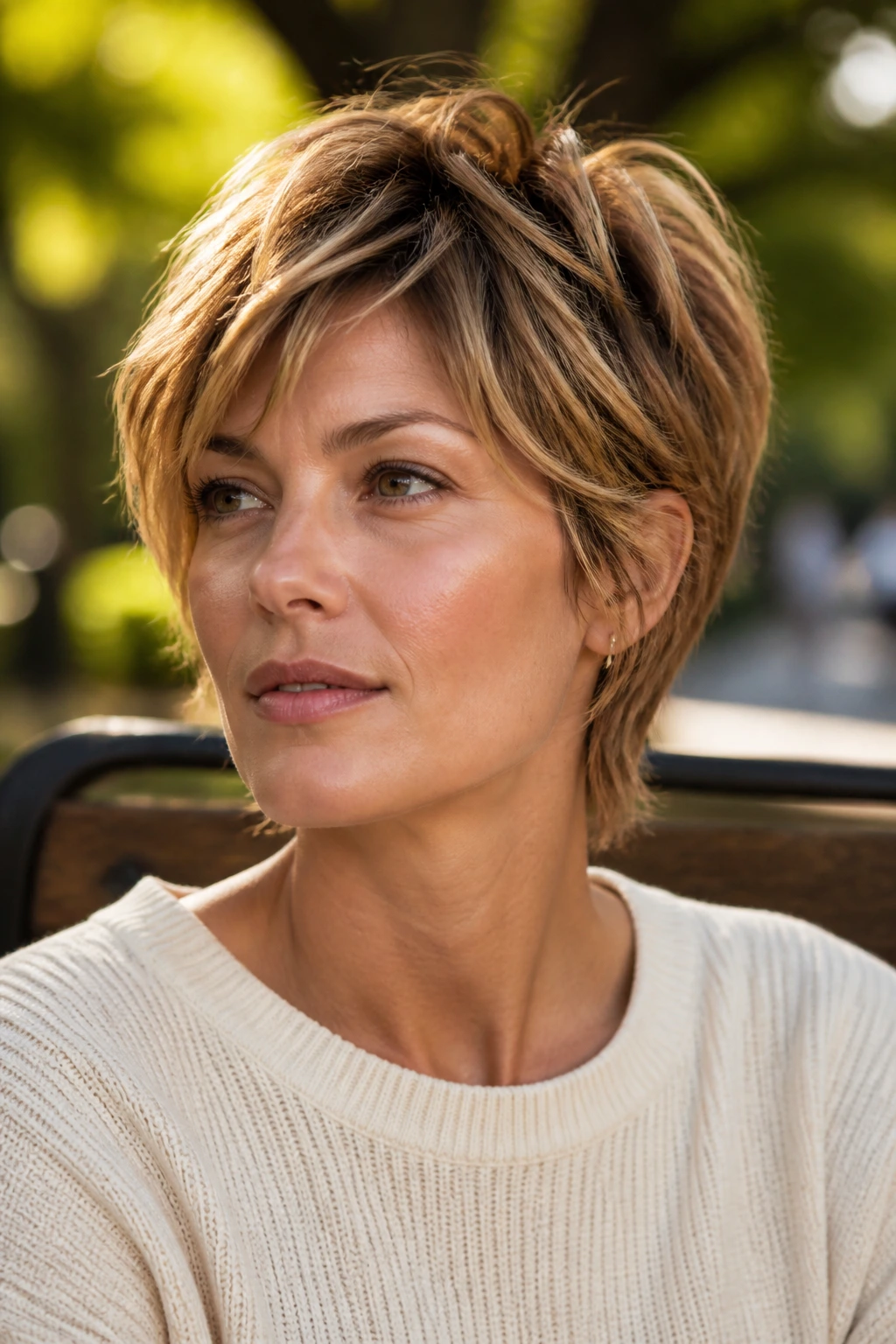
If you are terrified of going too short, this is your entry point. It keeps enough length to tuck behind your ears but embraces the “shag” philosophy of uneven, choppy layers. This cut provides the most versatility, allowing you to style it sleek for a professional setting or tousled for the weekend.
It works exceptionally well on fine hair because the longer layers don’t require the aggressive styling that shorter pixies demand. You can let this air-dry with a bit of sea salt spray, and it will look like you spent twenty minutes styling it. The key to the “shag” element is the neck—ask for a tapered, textured nape so the hair hugs the neck rather than flipping out in an awkward, grown-out way.
4. Choppy Crown-Volume Pixie
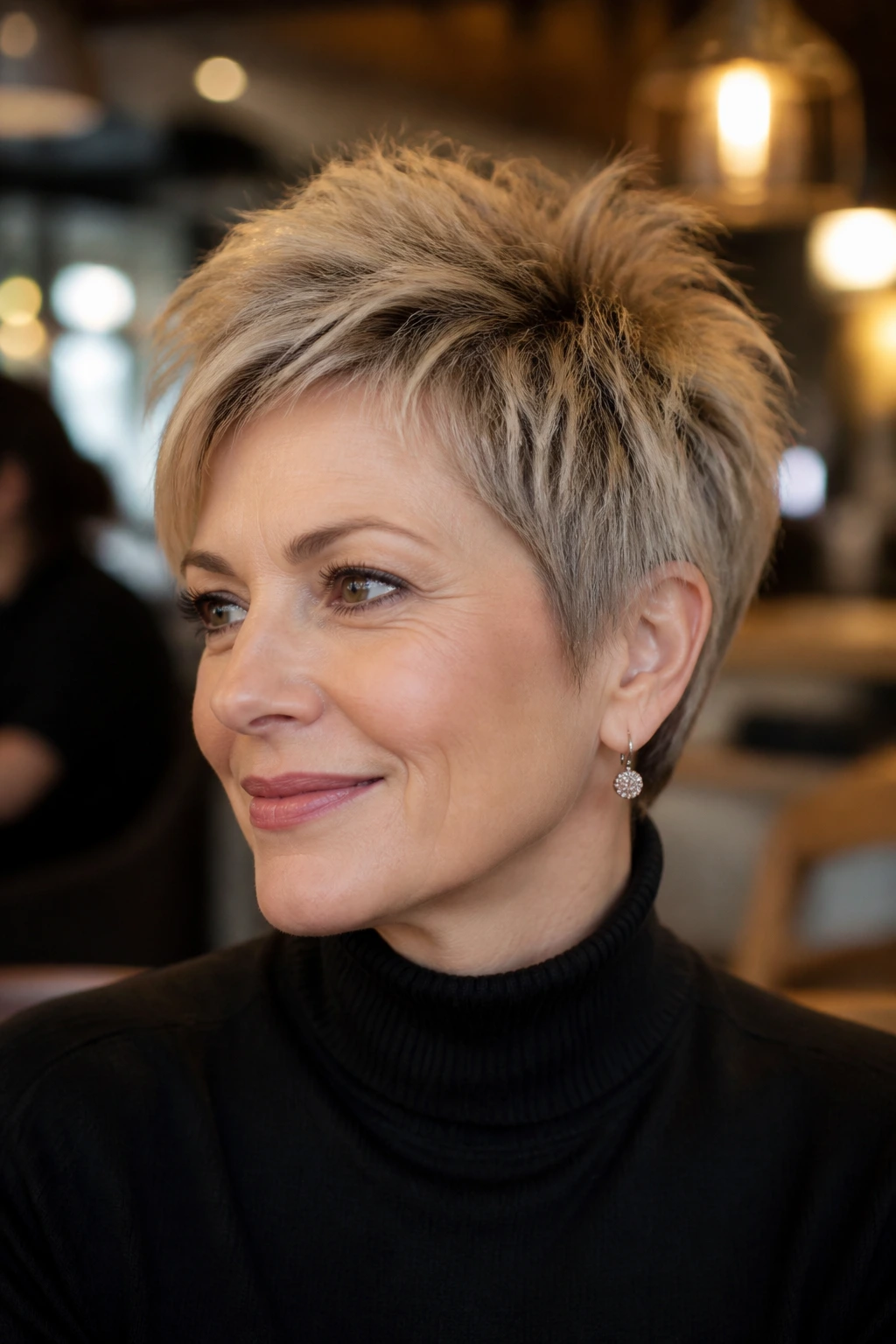
Many people with fine hair suffer from a flat crown. It is the area where the hair parts and lies flattest against the scalp. This specific cut addresses that by focusing all the “choppiness” at the top of the head. By cutting the hair on the crown significantly shorter, you create a natural lift that stays put all day.
Why This Style Succeeds
Physics is on your side here. When you cut a section of hair shorter, it has less weight to hold up, which means it naturally springs away from the scalp. This creates a “lift” that lasts from morning until night. It is the closest thing to a permanent blow-out you can get with a scissor cut.
Questions to Ask Your Stylist
- “Can we focus the texture shears on the crown?”
- “Will this length support itself without me needing hairspray?”
- “How short do we need to go to ensure the hair stands up?”
5. The Messy Bedhead Shag
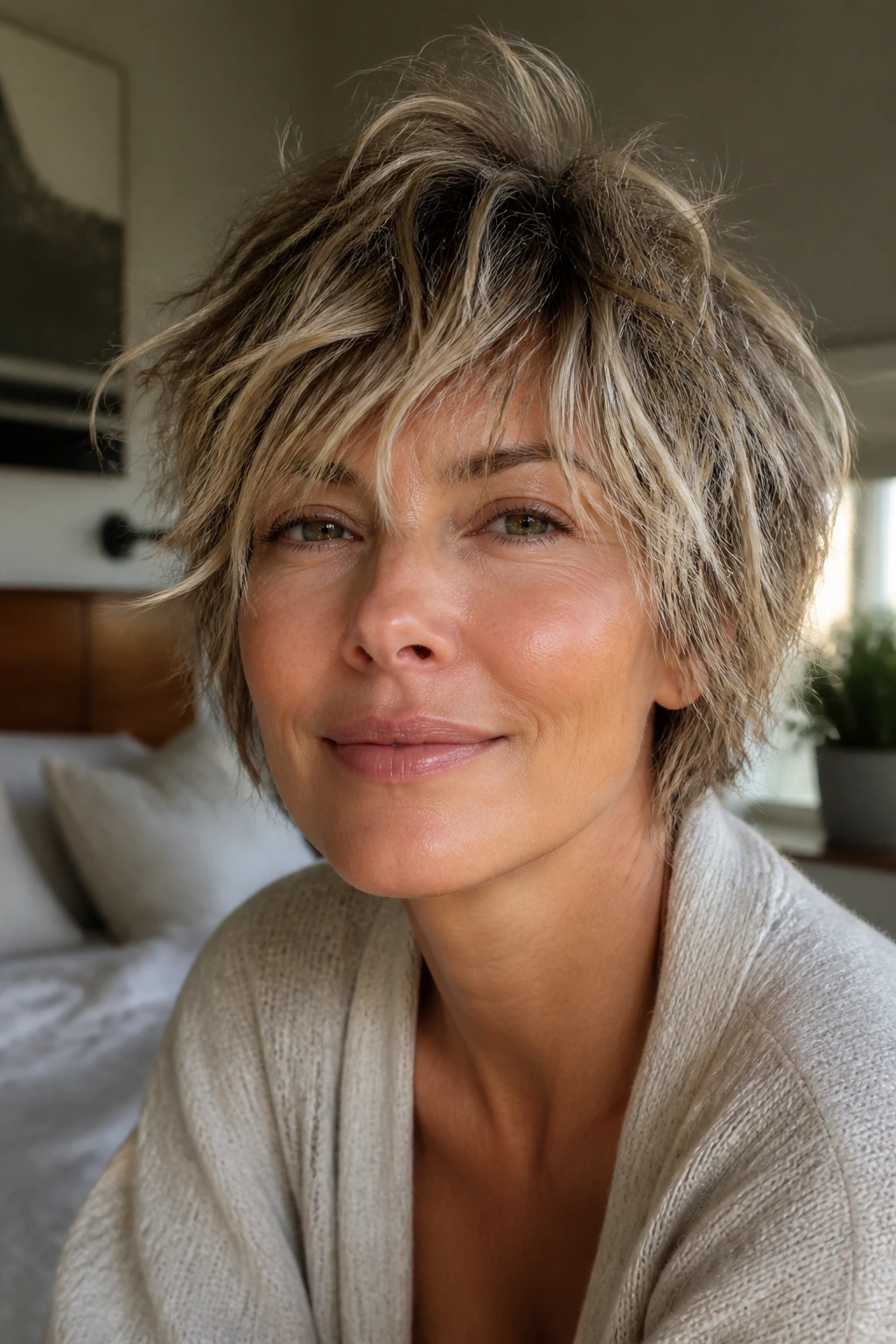
This is the ultimate low-maintenance look. It embraces the idea that your hair should look slightly undone. For those with fine hair, the “bedhead” look is actually a blessing. Why? Because you aren’t trying to achieve a perfect, sleek style that exposes the scalp. You are intentionally creating chaos.
The chaos is the camouflage. When your hair is messy and tousled, it is impossible to tell how dense or sparse it is. It looks like a deliberate style choice rather than a struggle with genetics. Use a matte pomade—not a shiny gel—to keep the hair pliable. Shiny products make fine hair look greasy and even thinner, so stick to matte textures at all costs.
6. Side-Swept Razored Pixie
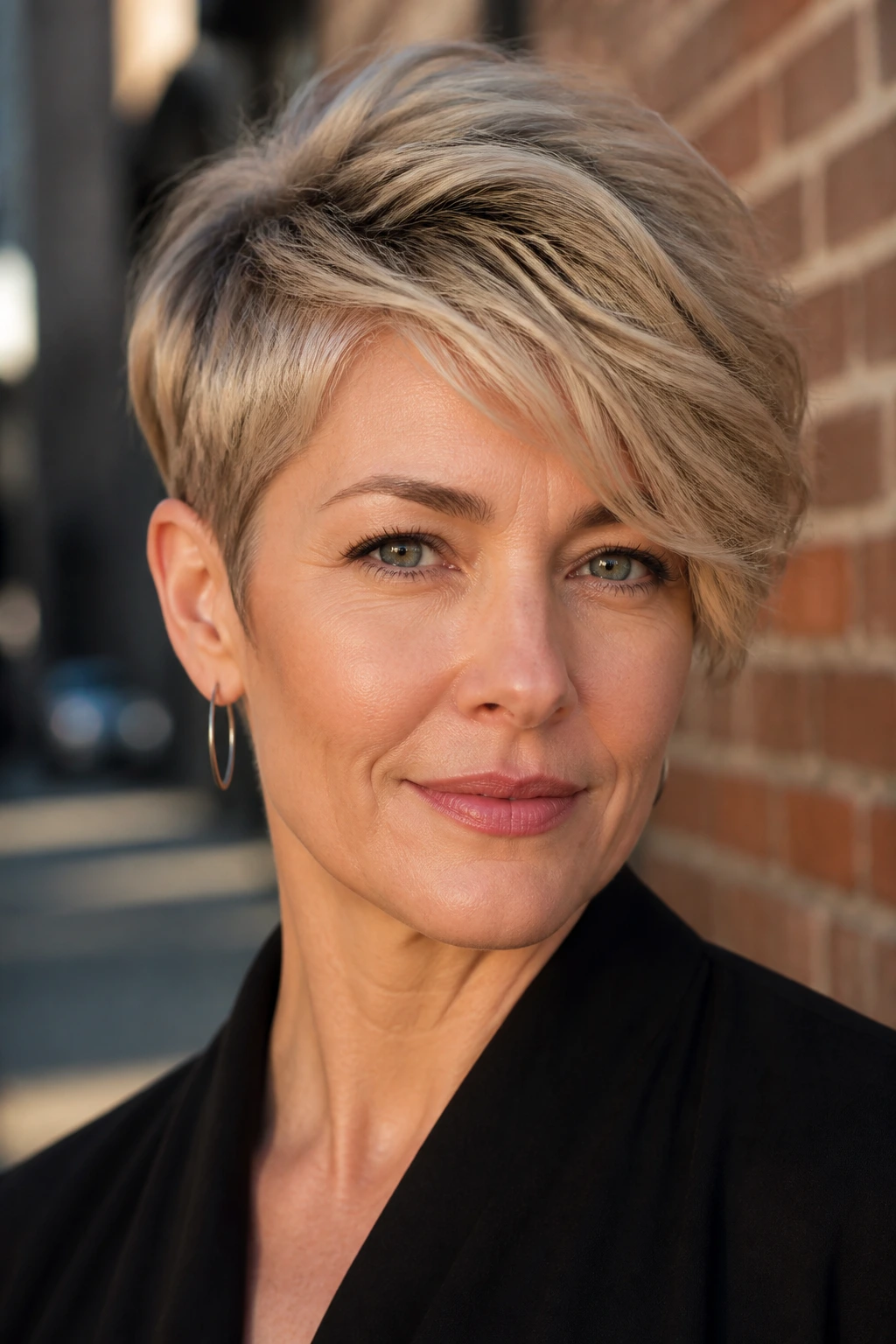
Using a razor instead of scissors changes the texture of the ends entirely. While scissors create a blunt line, a razor creates a soft, tapered end. When you sweep these razor-cut ends to one side, they stack on top of each other, creating a dense, heavy look that is perfect for fine hair.
The side-swept fringe is also incredibly flattering for almost every face shape. It softens the jawline and draws the eye across the face, which creates the illusion of width and volume. This style is best paired with a slightly shorter side to provide contrast. The contrast makes the longer, side-swept section look even thicker by comparison.
7. Feathered Nape Shag
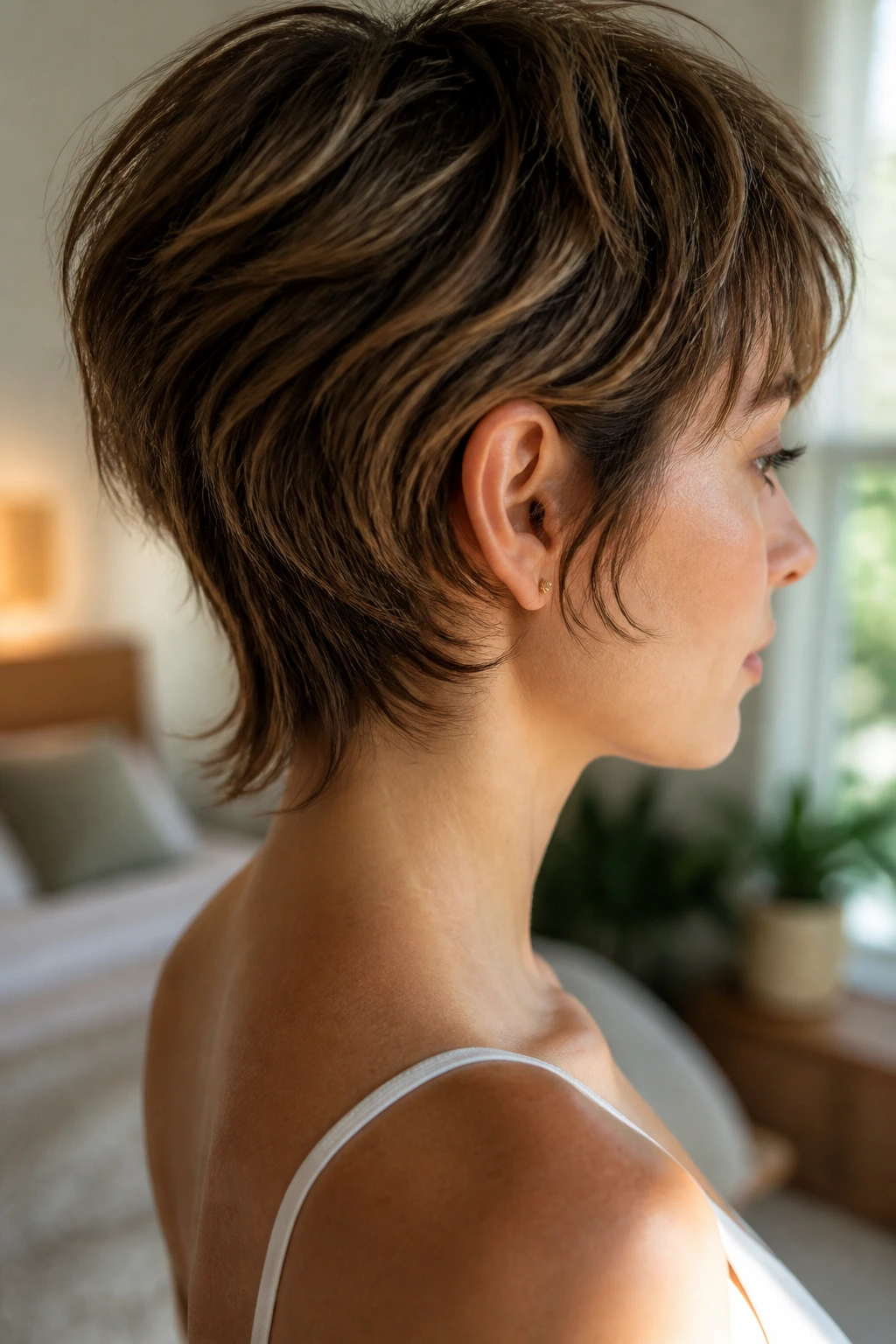
The nape of the neck is a detail often overlooked in short haircuts. If you leave it too long, it grows out into an annoying, unkempt mullet. If you cut it too short, it loses that soft, feminine, shaggy vibe. The “feathered” nape is the solution. It is cut with thinning shears to look soft and delicate against the skin.
This style is perfect for those who want a pixie that feels soft rather than aggressive. It pairs well with a bit of length around the ears. Because the nape is feathered, it creates a nice, gradual transition that doesn’t scream “short haircut.” It’s a great way to dip your toe into the pixie world without going for a full, sharp undercut.
8. Soft Curly Shaggy Pixie
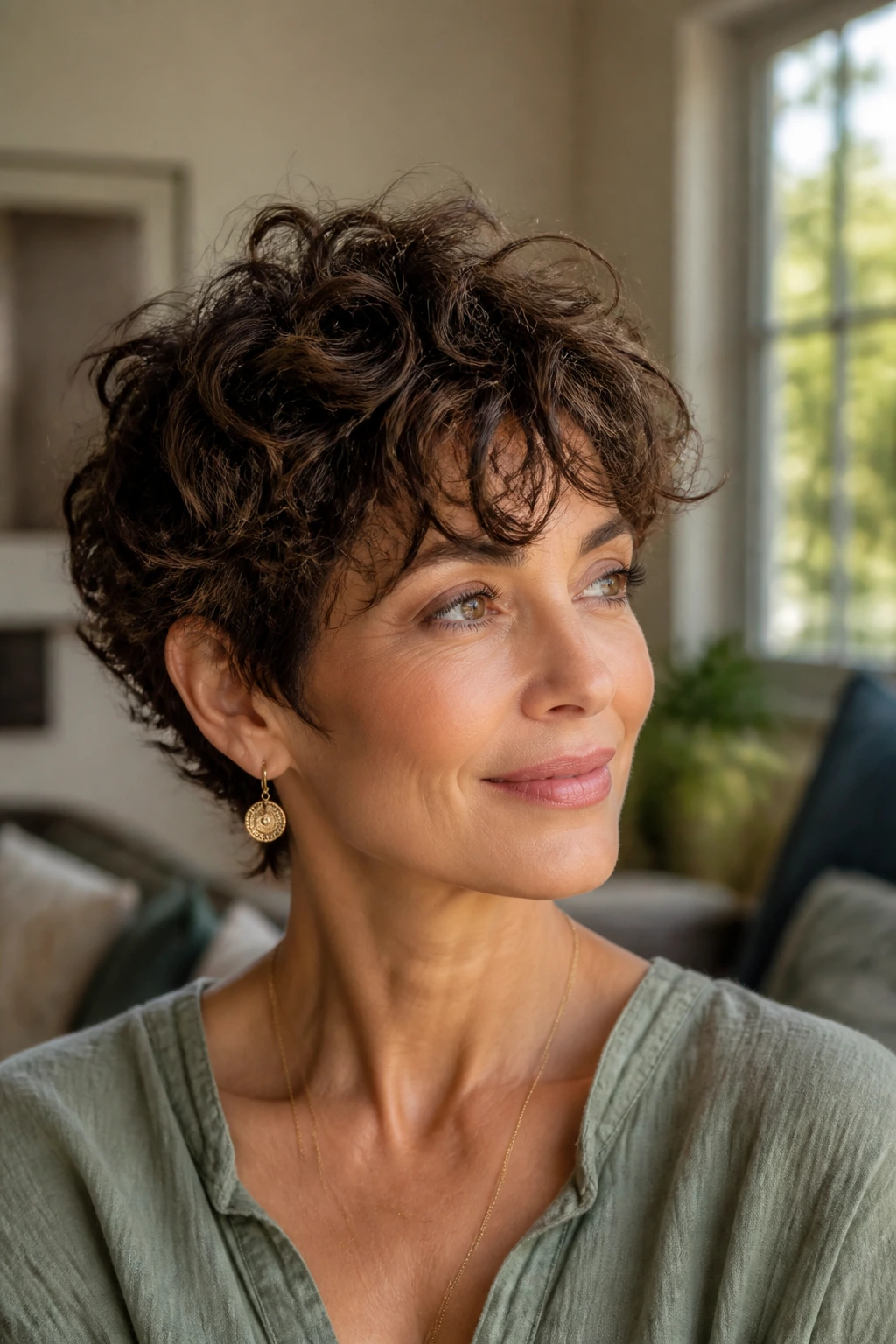
If your fine hair has even a hint of a wave or curl, you have an advantage. You should lean into it. A shaggy pixie with a natural wave is the easiest style to maintain. The wave itself provides the volume you are constantly searching for.
Do not try to straighten this. The curls or waves are what give the hair structure. A shaggy cut allows those curls to bounce without being weighed down by the length of the hair. Use a curl cream designed for fine hair—if it is too heavy, your curls will go limp. Scrunch it in while the hair is damp, and then walk away. Do not touch it while it dries, or you will create frizz.
9. The Two-Tone Textured Pixie
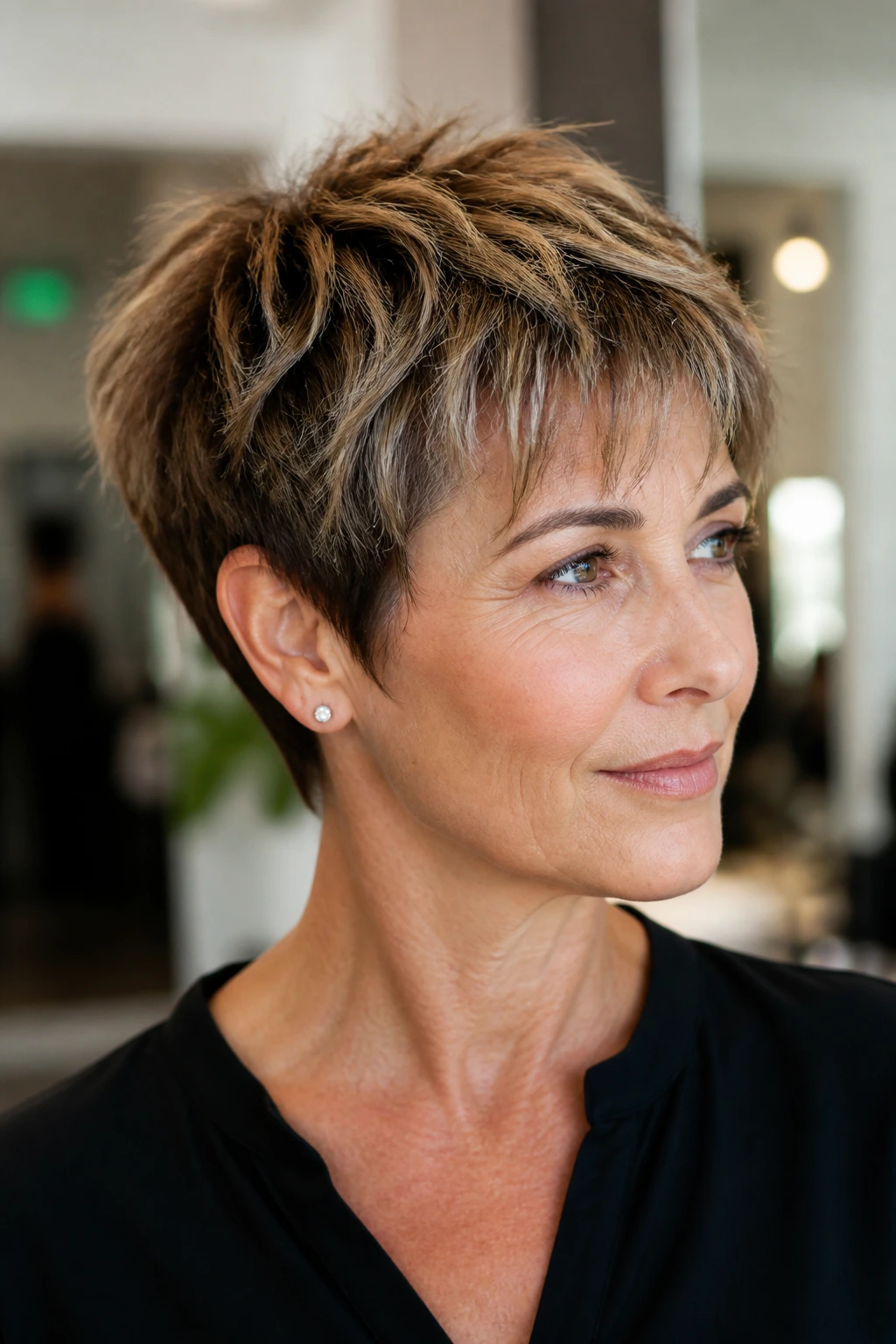
Color is an underrated tool for adding volume. When you have fine hair, a single flat color can make your hair look thinner. By adding subtle highlights or a balayage effect, you introduce depth and dimension. The eye sees the color variation and assumes it is texture.
Pairing this color technique with a shaggy, choppy cut maximizes the effect. The layers catch the light differently, and the color variations emphasize those layers. If you are blonde, go for a mix of cool and warm tones. If you are brunette, add some caramel or honey lowlights to break up the darkness.
10. Piece-y Blunt Shag
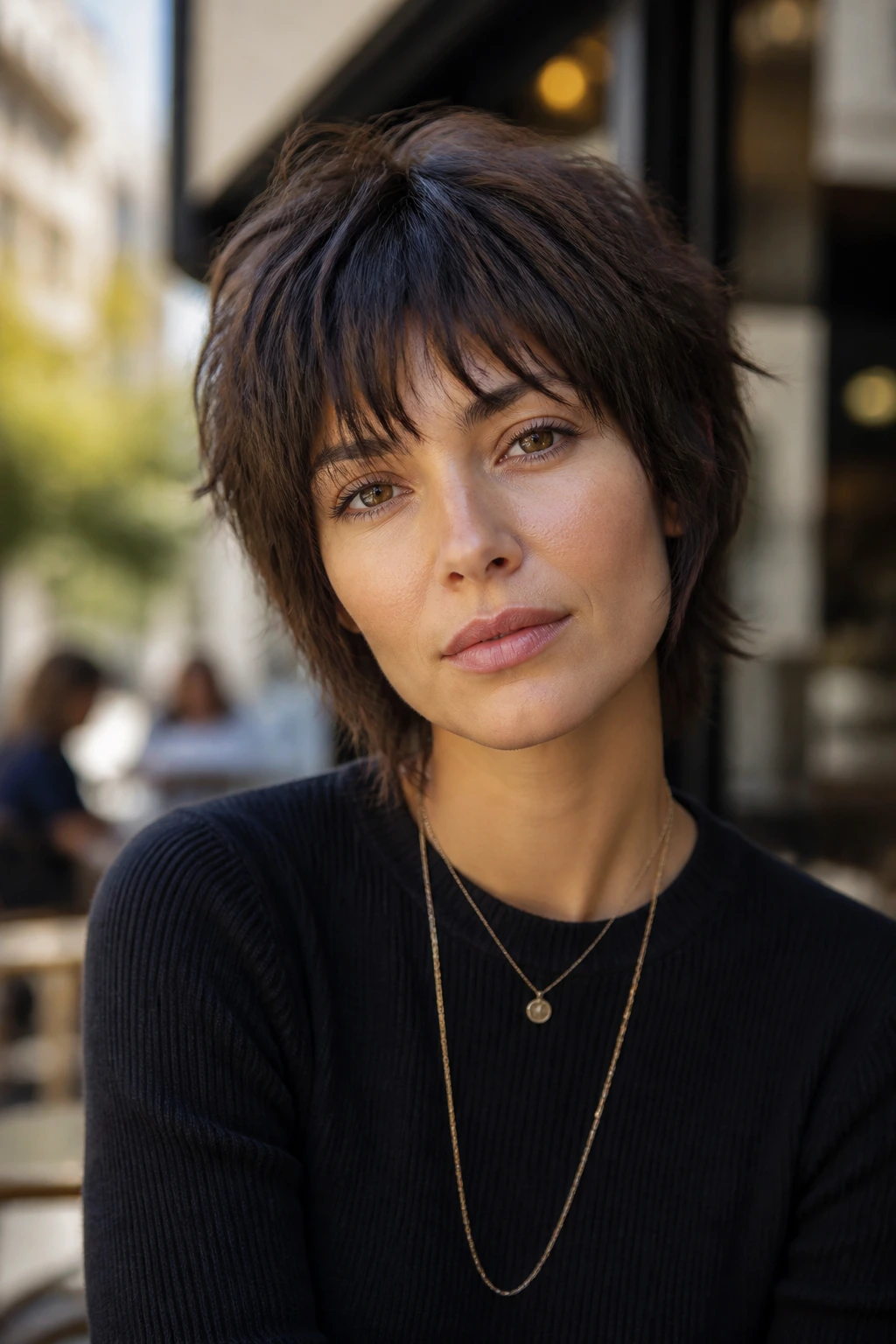
This sounds like a contradiction—how can a blunt cut be piece-y? The answer is in the technique. You cut the hair blunt to get that clean, sharp edge that makes fine hair look thicker, but then you “shatter” the ends with point-cutting to remove the harshness.
It gives you the best of both worlds: the density of a blunt line and the movement of a shag. This is a very modern, fashion-forward look. It works exceptionally well on straight, fine hair that usually just hangs limp. The bluntness provides the structure, and the texture gives it the personality.
11. Soft Voluminous Pixie
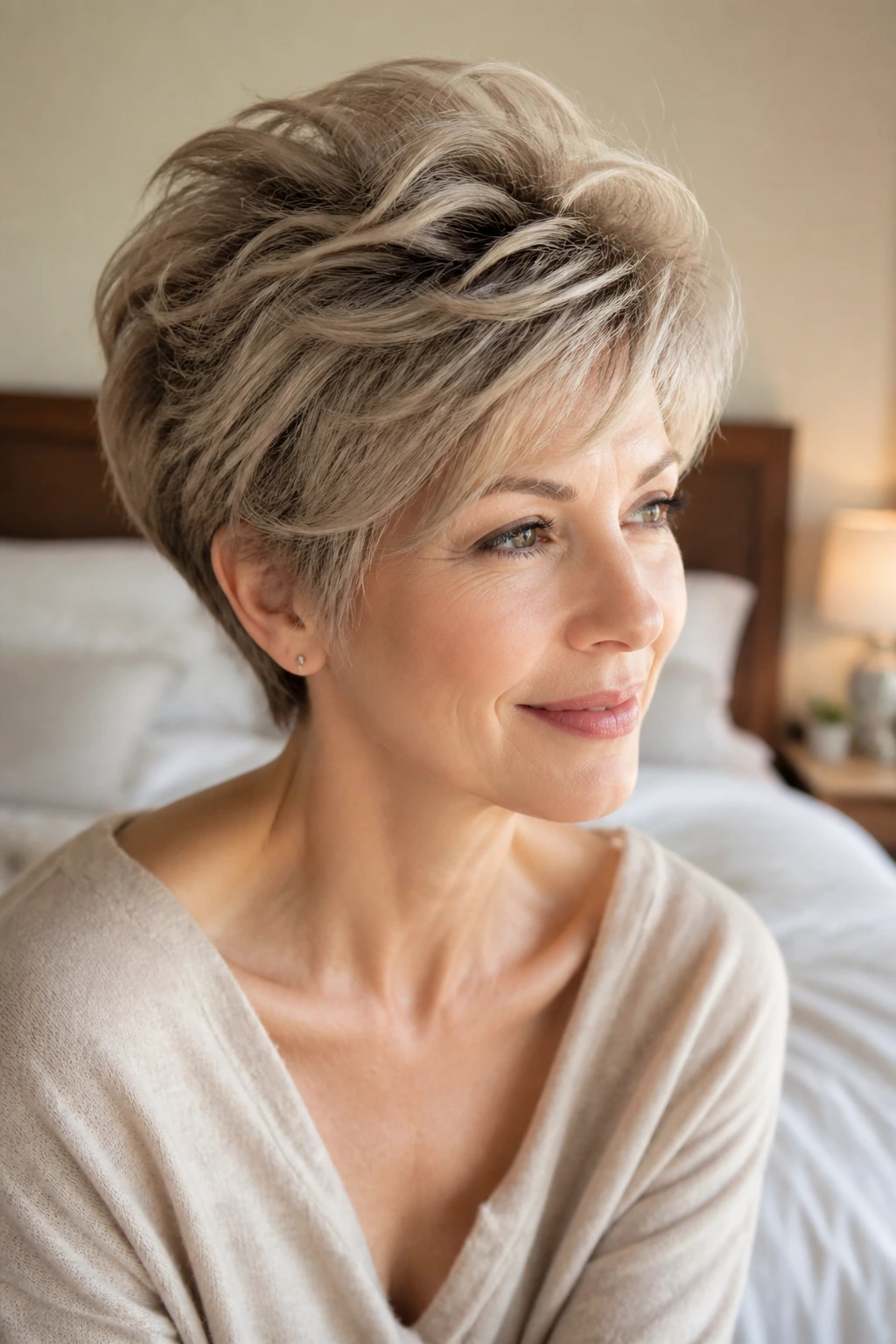
This style is about maximizing the surface area of your hair. Instead of tight, close-cropped sides, you keep the sides slightly longer and layered. This creates a rounded shape that makes the head look fuller. It is a very classic, almost French-inspired look.
It works because it treats the hair as a soft frame around the head rather than just a crop. You can use a round brush with a small barrel to lift the roots. Because the hair is fine, it will respond quickly to heat, so you don’t need high temperatures. Just a quick lift at the root is enough to hold the shape all day.
12. Undercut Shaggy Pixie
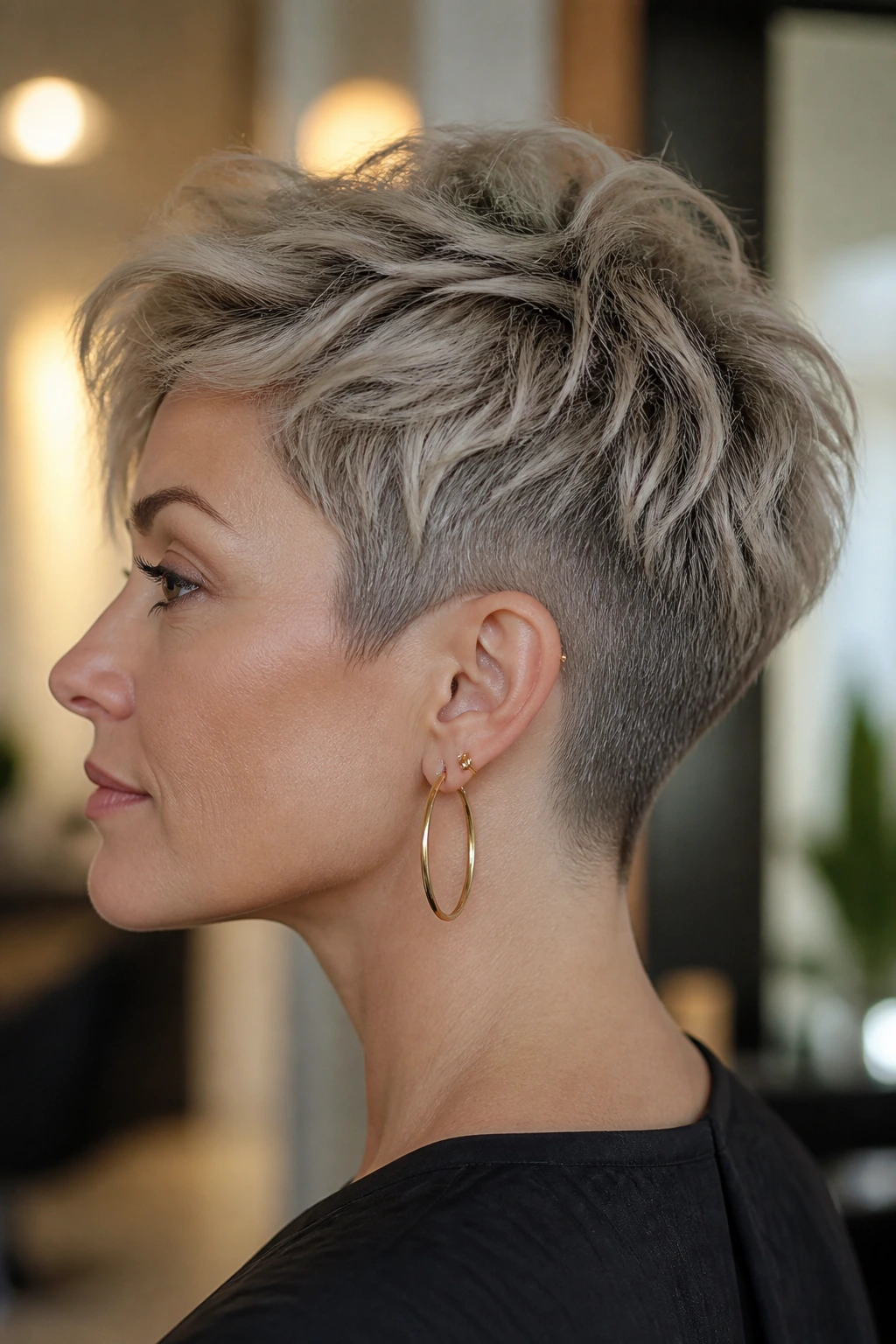
An undercut involves buzzing the hair short at the nape or sides while leaving the top long and textured. It creates a stark contrast between the buzzed area and the long, shaggy hair on top. For fine hair, this is a secret weapon because it removes the “fluffy” parts that usually just look messy and replaces them with a clean, sharp, intentional contrast.
The hair on top then gets to be the star. You can pile it up, style it forward, or sweep it back. Because the weight on the sides is completely removed, the hair on top has nowhere to go but up. It is the ultimate style for anyone struggling with hair that just won’t hold volume.
13. Spiky Grunge Shag
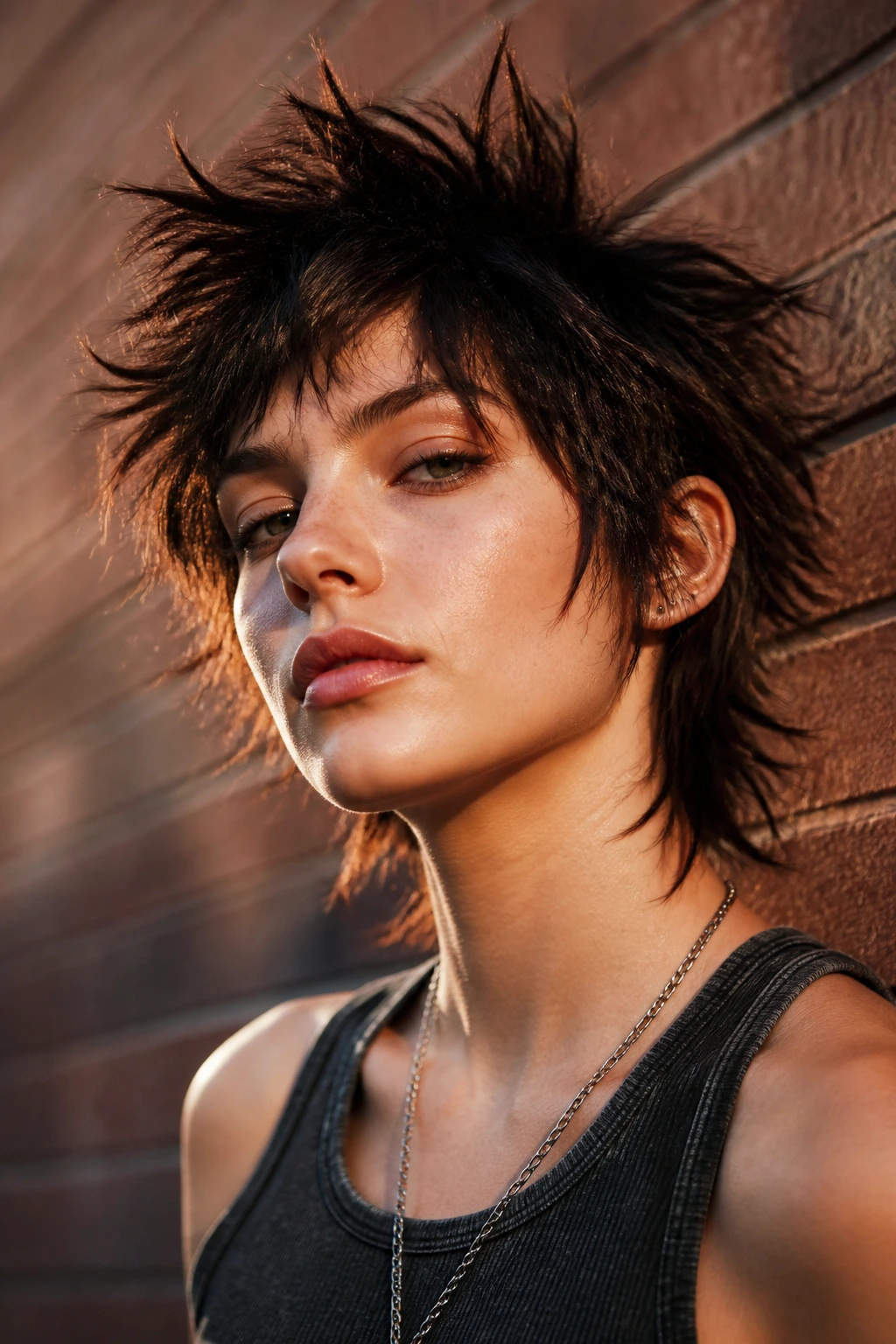
Think of this as the “undone” version of a pixie. It is intentionally messy, spikey, and full of attitude. Grunge is back, and for fine hair, it is a godsend. Grunge is all about looking like you just got out of bed, which means your hair is supposed to look a little wild.
Use a high-hold, matte-finish clay. Rub it between your fingers until it’s warm and then pull individual sections of hair upward. Don’t worry about being perfect. The more chaotic the spikes are, the better the overall effect. It draws attention away from the scalp and toward the texture of the ends.
14. Soft Layered Pixie-Bob Shag
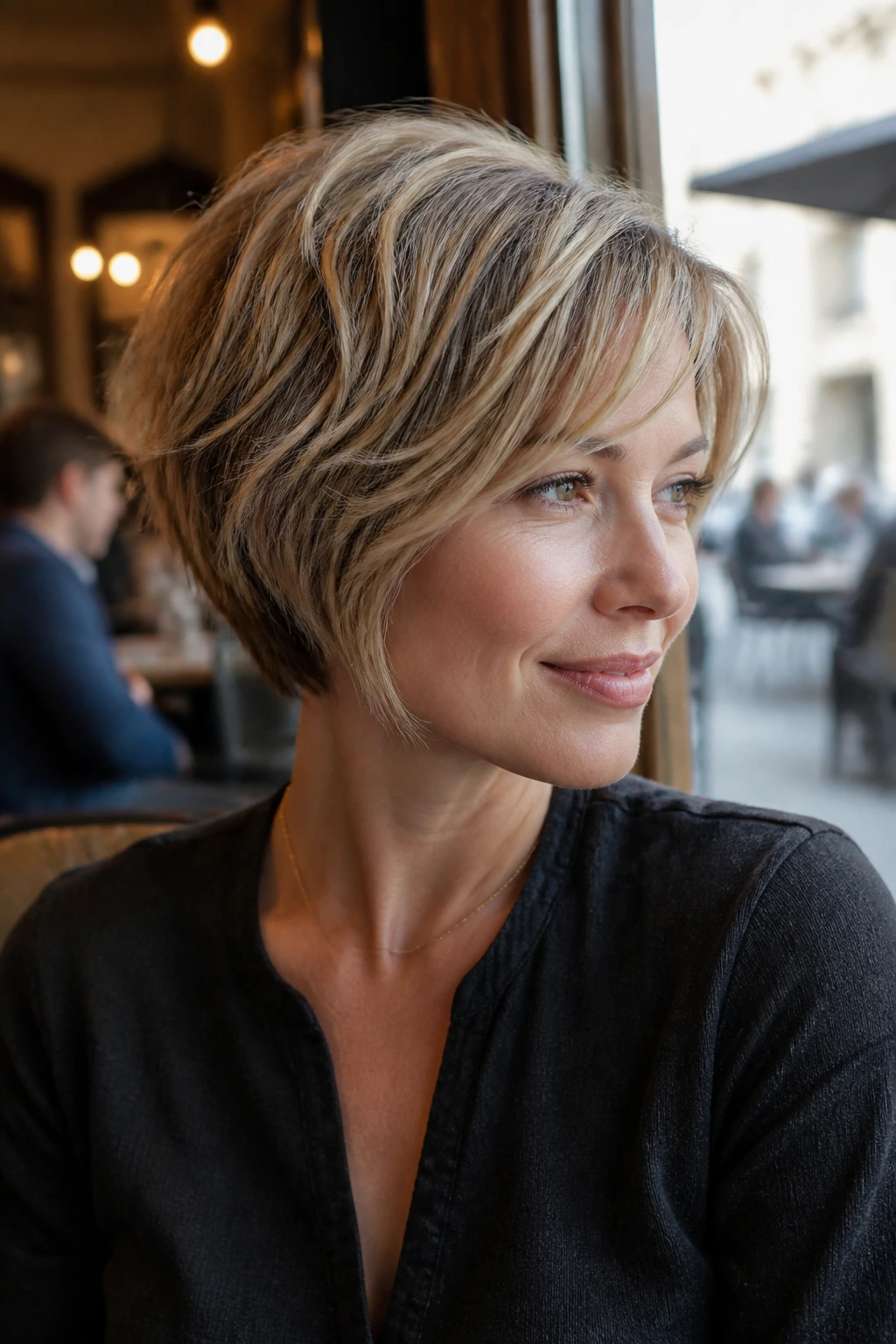
If you aren’t ready to commit to a true pixie, this is the bridge. It is essentially a bob that has been cut into a pixie—short in the back, long in the front. It is a “bixie,” if you will. The shag layers prevent it from looking like a traditional, “dated” bob.
The layers are what make it suitable for fine hair. They prevent the bottom from becoming heavy and triangular (a common problem for fine hair). By keeping the back short and layered, you get the volume. By keeping the front longer, you get the versatility of a bob. It is the safest bet for a first-time short-hair enthusiast.
15. The Razored Fringe Pixie
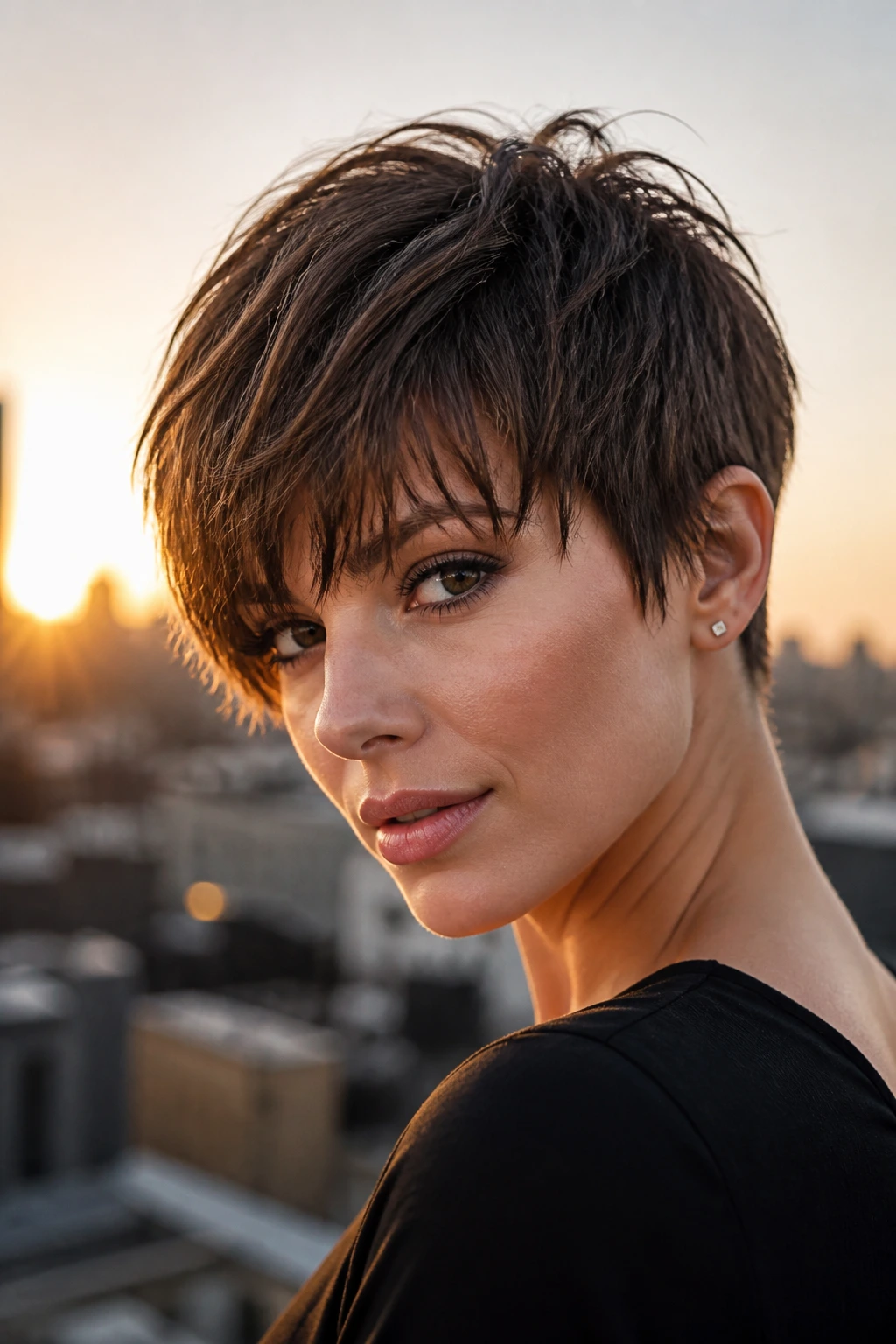
We have talked about micro-bangs and side-swept bangs, but a heavy, razored fringe is a category of its own. This style focuses on a thick, textured fringe that covers the forehead, paired with a very short back. It is a bold look that works incredibly well for those with smaller, more delicate features.
Because the fringe is razored, it isn’t a heavy, solid block of hair. It has movement. The wisps of hair across the forehead prevent the style from looking like a helmet. It is an excellent way to hide a receding hairline or just add a focal point to your face.
16. Messy Curtain-Bangs Pixie
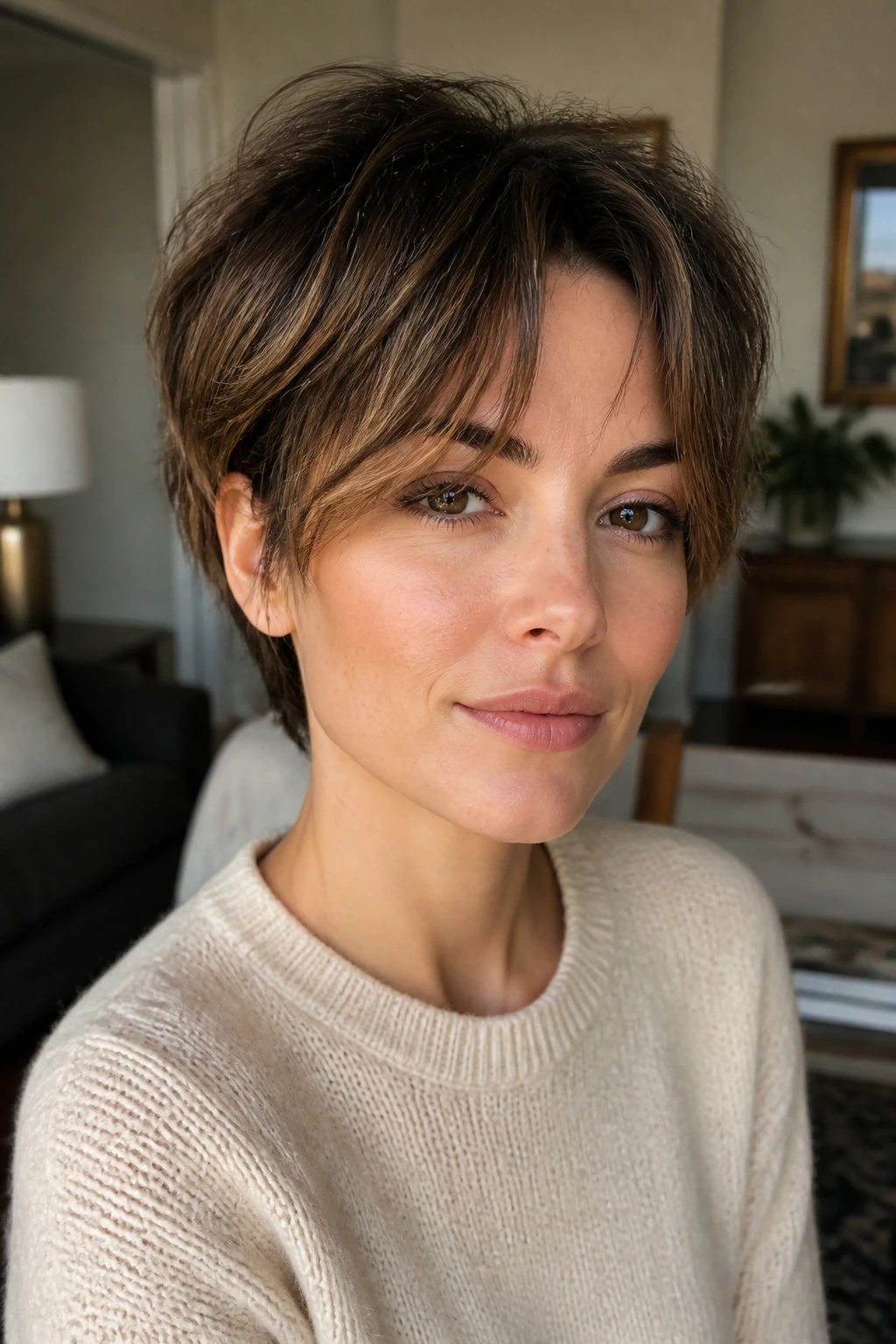
Curtain bangs are usually associated with long hair, but they are surprisingly effective on a shaggy pixie. By splitting the fringe down the middle and letting it fall to the sides, you create an open, airy feeling around the face. It is a soft, romantic look that feels less “intense” than a typical pixie.
To style this on fine hair, you need a little bit of root lift. Use a volumizing spray while damp and dry the bangs away from your face with a round brush. Once they are dry, use a bit of texturizing spray to mess them up slightly. You don’t want them to look like perfectly polished curtains; you want them to look lived-in and soft.
17. The Tapered Shag Crop
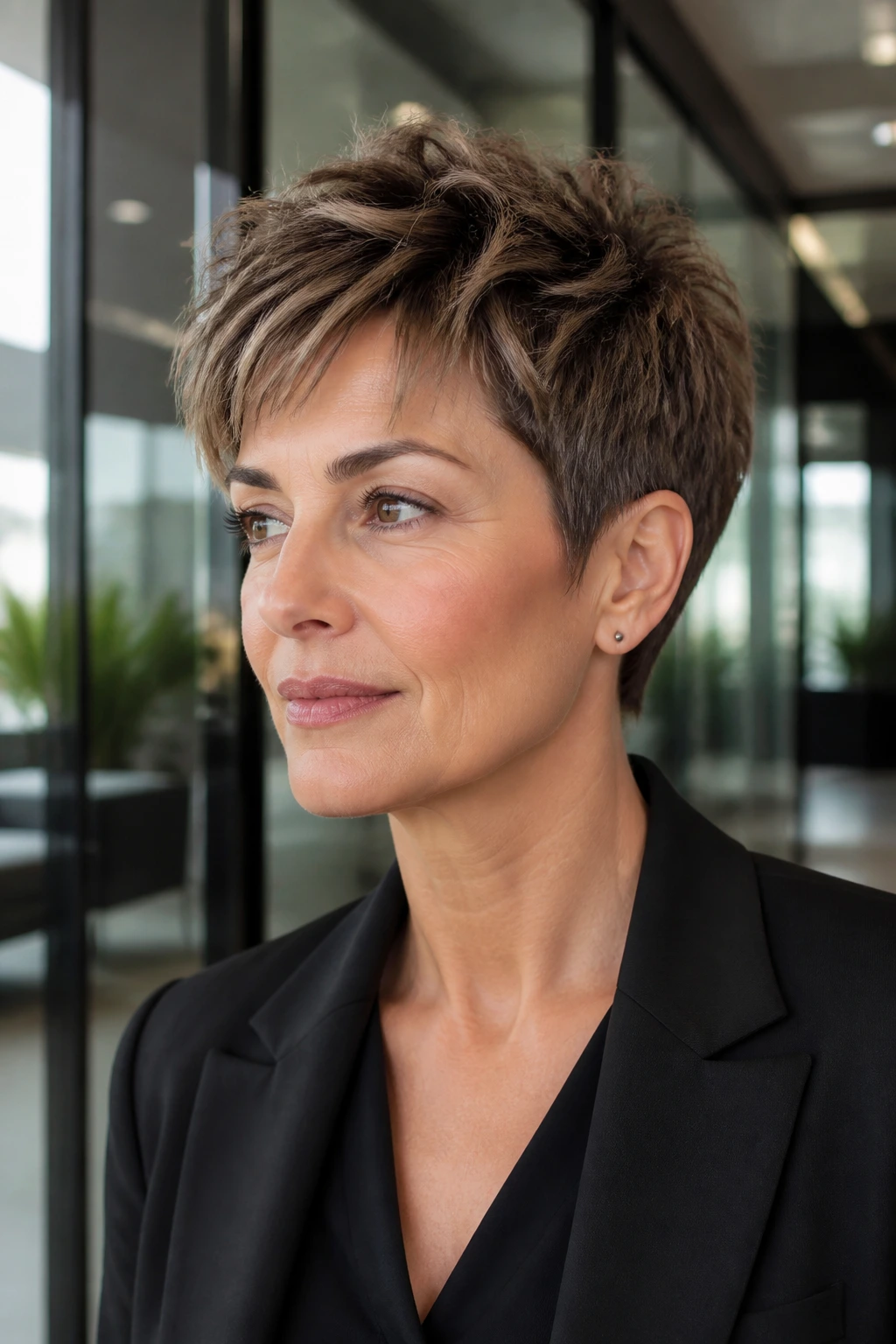
A taper means the hair gets progressively shorter as it moves down toward the neck. When you combine a taper with a shag, you get a cut that is very tight at the bottom but full of texture at the top. It is the most professional-looking of the shaggy pixies.
The taper creates a clean silhouette that makes the hair look intentional and “done” even when you haven’t put effort into it. This is a great look if you have a corporate job but still want to express a bit of edge. It is easy to grow out, too—the taper keeps the back from becoming unmanageable as it gains length.
18. Inverted Shaggy Pixie
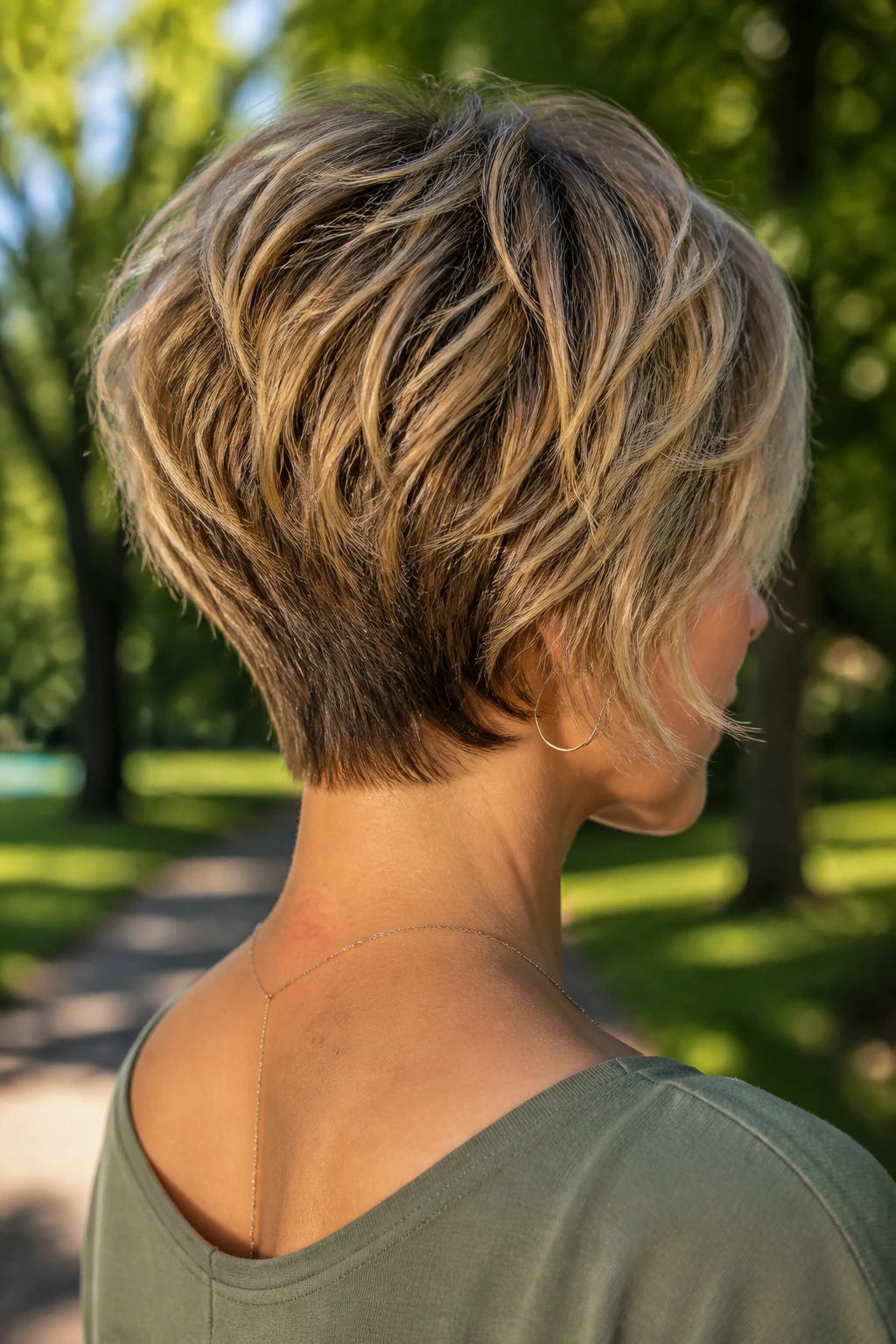
An inverted cut means the back is shorter than the front, but with a shaggy twist, those layers are heavily texturized. This creates a rounded shape at the back that gives the illusion of a thicker head of hair. It is a classic technique used to create the appearance of volume where there isn’t any.
Because the layers are shaggy, the “inverted” line isn’t a sharp, harsh angle. It is soft and diffused. This works beautifully for fine hair because it avoids that “flat-ironed” look that can make hair appear see-through. It is all about building a rounded, 3D shape around the head.
19. Layered Grunge Crop
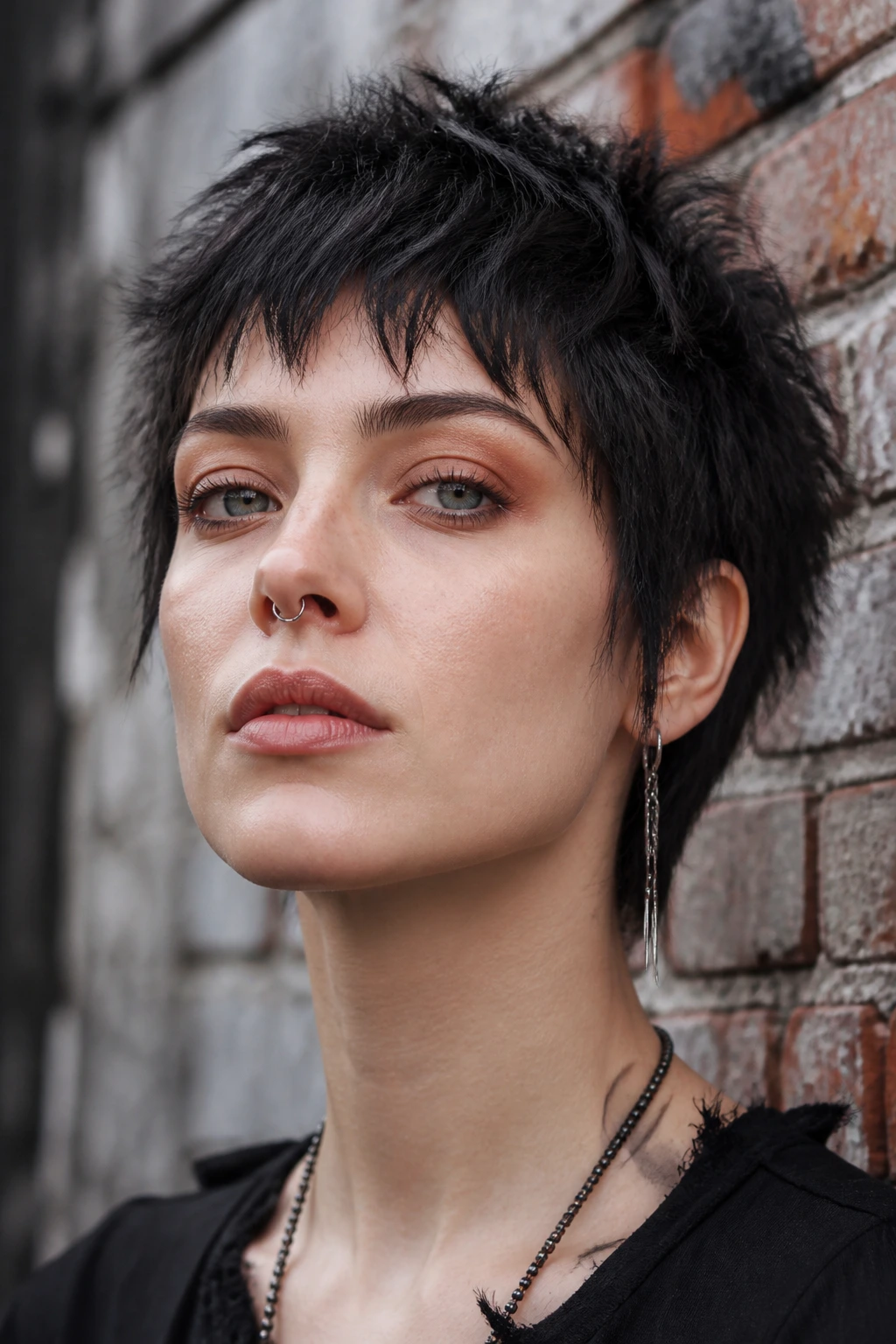
This is a step up in aggression from the Spiky Grunge Shag. It involves more intense, choppy layering throughout the entire head. It is meant to look raw and unfinished. This cut relies on the hair having a matte, gritty texture.
If your hair is very clean and soft, it will be hard to style this. You will need to use a “sea salt” spray or a dry texturizing spray to give your hair the grit it needs to hold this shape. This isn’t a cut for someone who wants to brush their hair every morning; this is a cut for someone who wants to shake their hair into place and walk out the door.
20. Soft Wispy Layered Pixie
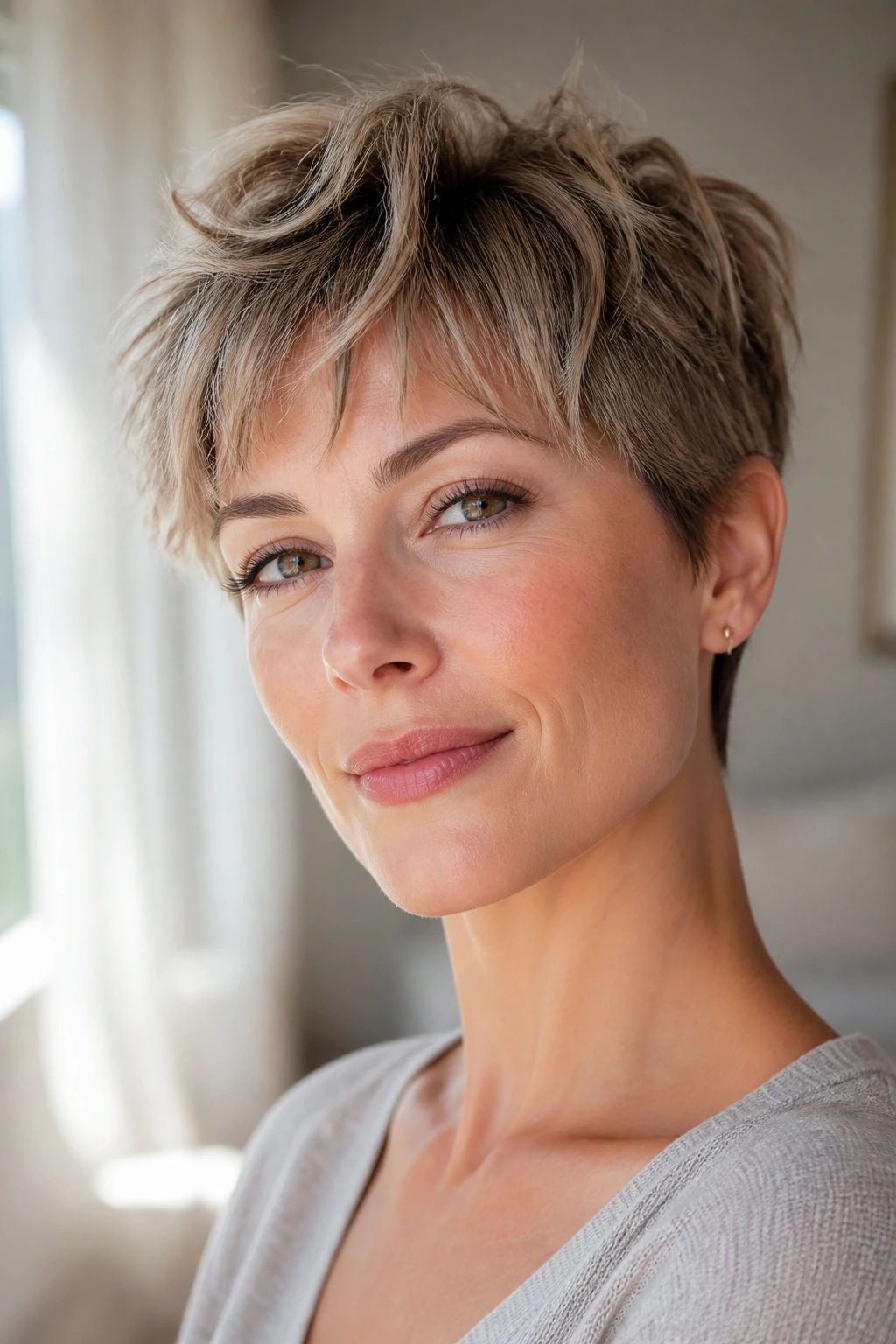
This style is for the minimalist. It’s light, airy, and focuses on tiny, delicate layers that make the hair look like it’s floating. It isn’t about big volume or wild spikes; it’s about a soft, refined texture that enhances your natural hair pattern.
It is very easy to maintain. Because the layers are wispy, as they grow out, they just kind of blend in. You won’t have awkward “in-between” stages that drive you crazy. It’s a great style if you want to emphasize your cheekbones and eyes without the hair becoming the main event.
21. The Textured Mohawk Shag
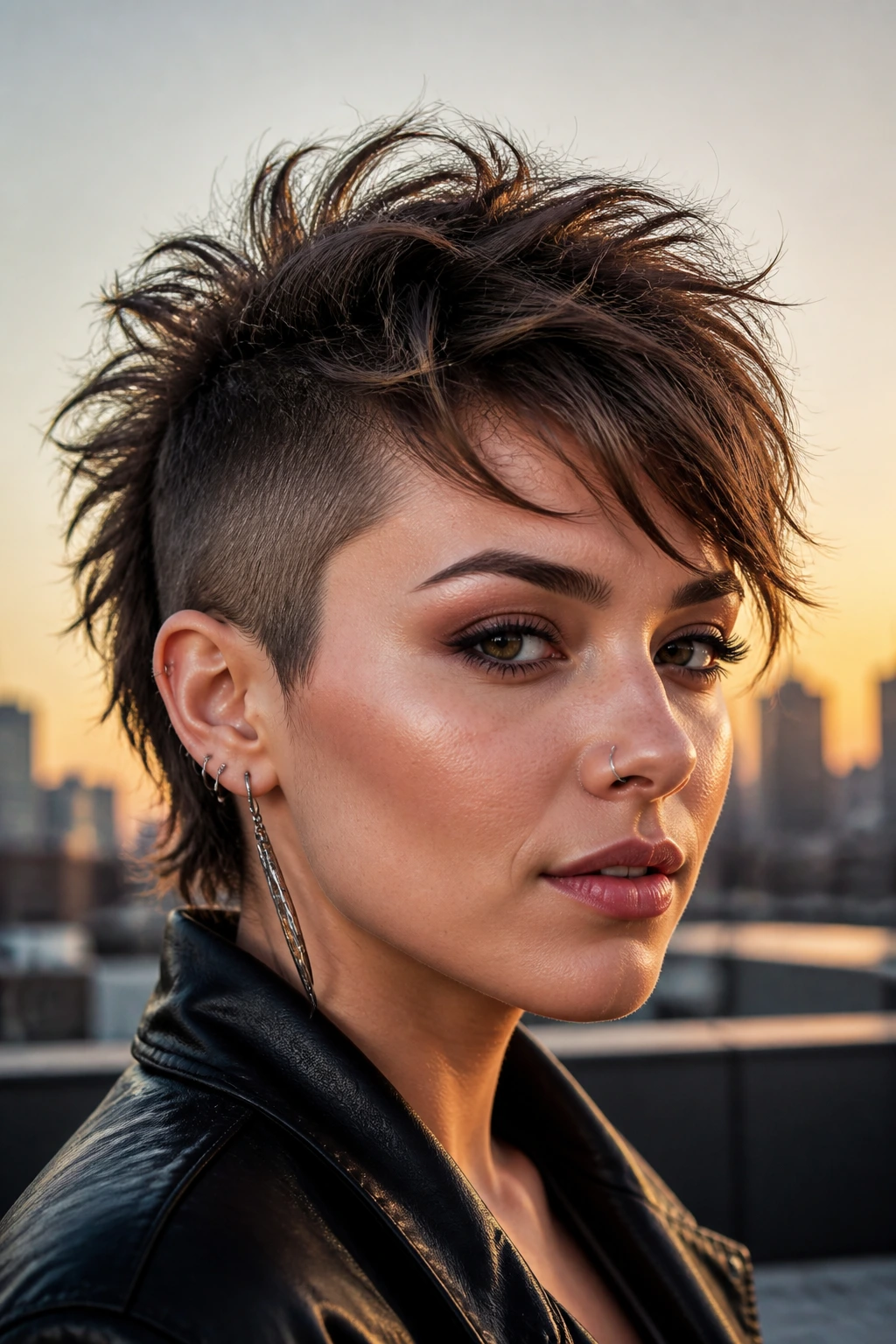
Don’t panic—this isn’t a literal punk-rock mohawk. It is a “faux” mohawk where the sides are kept tight, and the center is left long, shaggy, and textured. It is a stylish, trendy way to wear short hair that makes your head look taller and slimmer.
For fine hair, this is brilliant because it forces all your hair to exist in one place: the center. By pulling all the hair toward the middle, you create a concentrated area of thickness. You aren’t spreading your hair thin across your whole head; you are piling it up where it matters.
22. Asymmetrical Shaggy Pixie
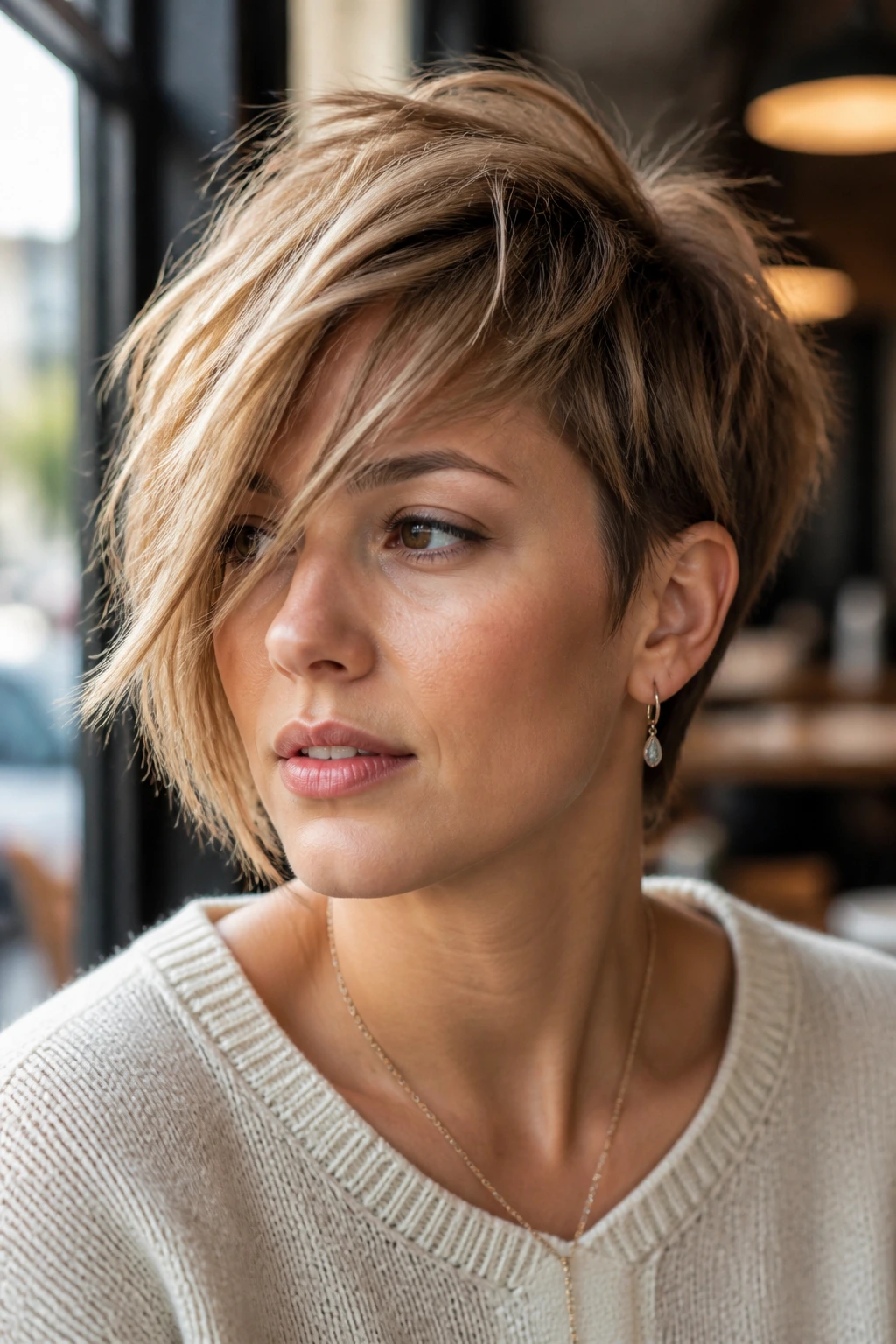
Asymmetry is your best friend when it comes to fine hair. By making one side shorter than the other, you create a visual focal point that distracts from the density of the hair. It looks like a deliberate design choice rather than a struggle with thinness.
The longer side can be styled to fall over the face, which is very flattering. The shorter side can be tucked behind the ear, which keeps the look clean. It is a versatile, dynamic haircut that constantly looks different depending on how you part it.
23. Tousled Baby-Bangs Shag
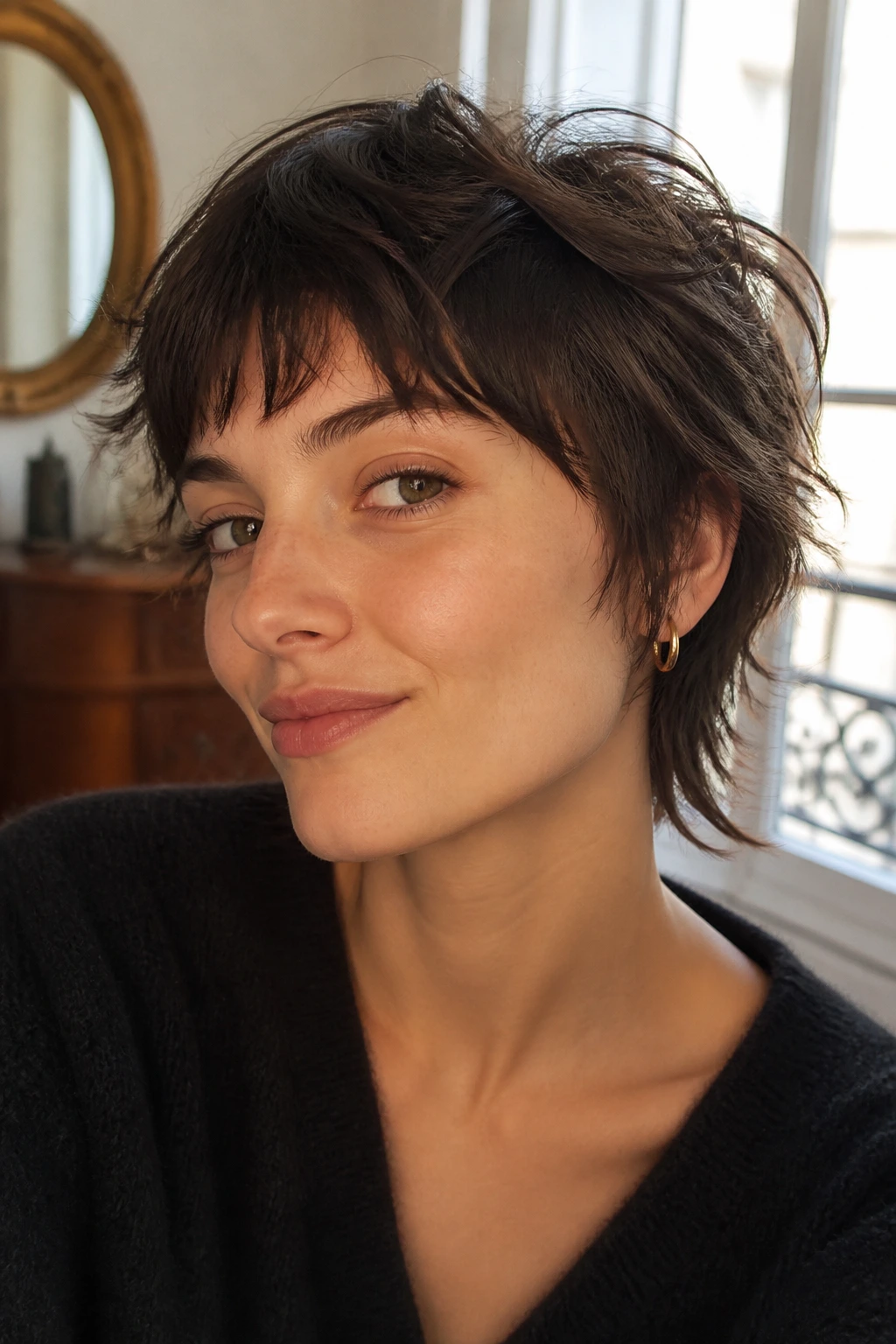
“Baby bangs” are essentially bangs that stop well above the eyebrow. When you pair this with a shaggy, tousled crown, you get a look that is extremely French-girl chic. It is playful, young, and effortless.
The key to keeping this from looking “chopped” is the layering on the rest of the head. Keep the rest of the hair shaggy and textured to balance out the severity of the short bangs. It’s a look that screams confidence. You don’t need a lot of product here; just a little bit of salt spray to enhance the natural chaos of the layers.
24. The Shaggy Bowl-Cut Pixie
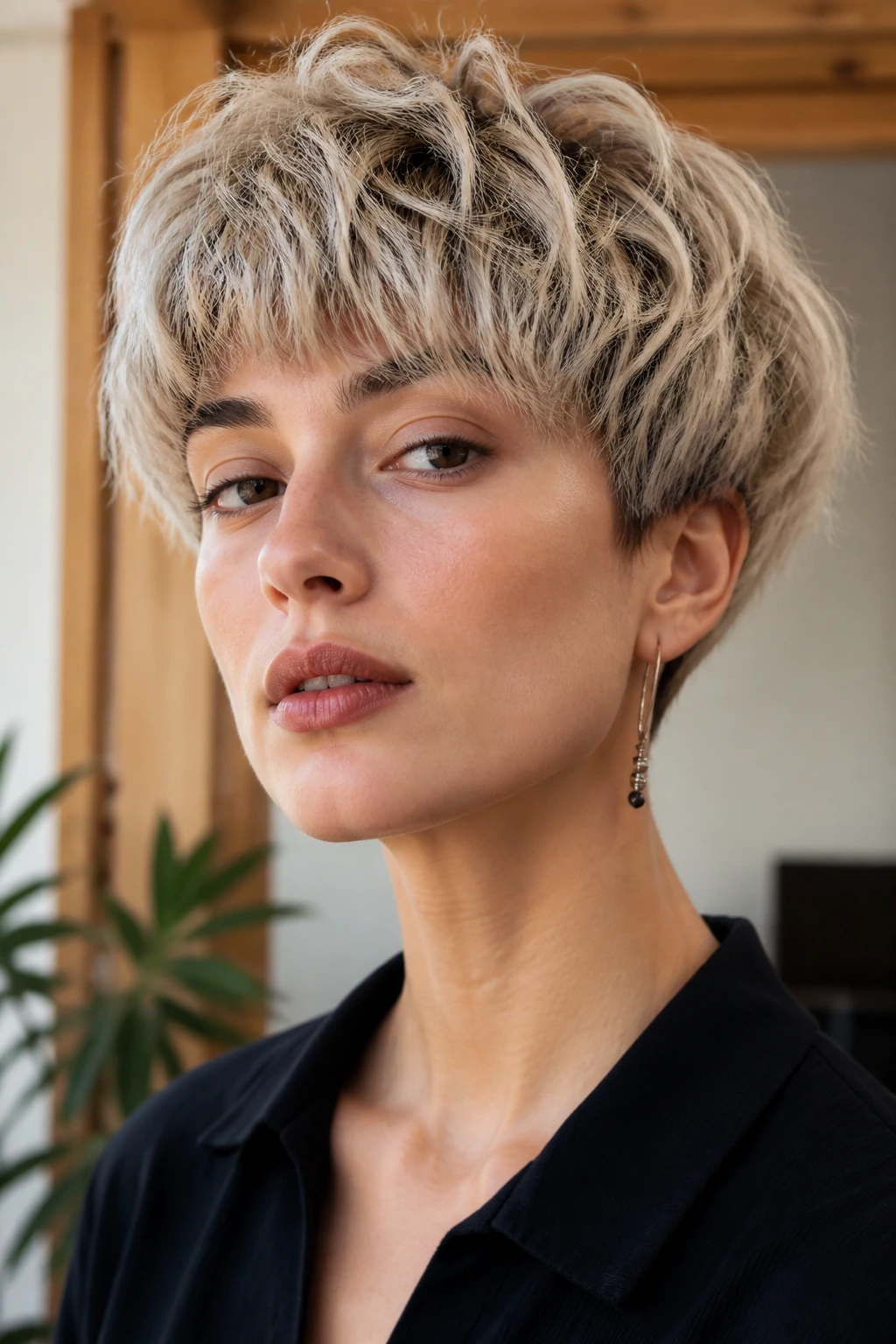
The “bowl cut” has a bad reputation, but the modern, shaggy version is completely different. It creates a seamless, circular line of hair that is heavily layered and textured. It sounds strange, but it is one of the best cuts for creating the illusion of a massive amount of hair.
Because the hair is layered and shaggy, it lacks the weight of a traditional bowl cut. It feels light, modern, and very fashion-forward. It is excellent for those with rounder face shapes who want to add some structure and angles to their silhouette.
25. Layered Platinum Shag
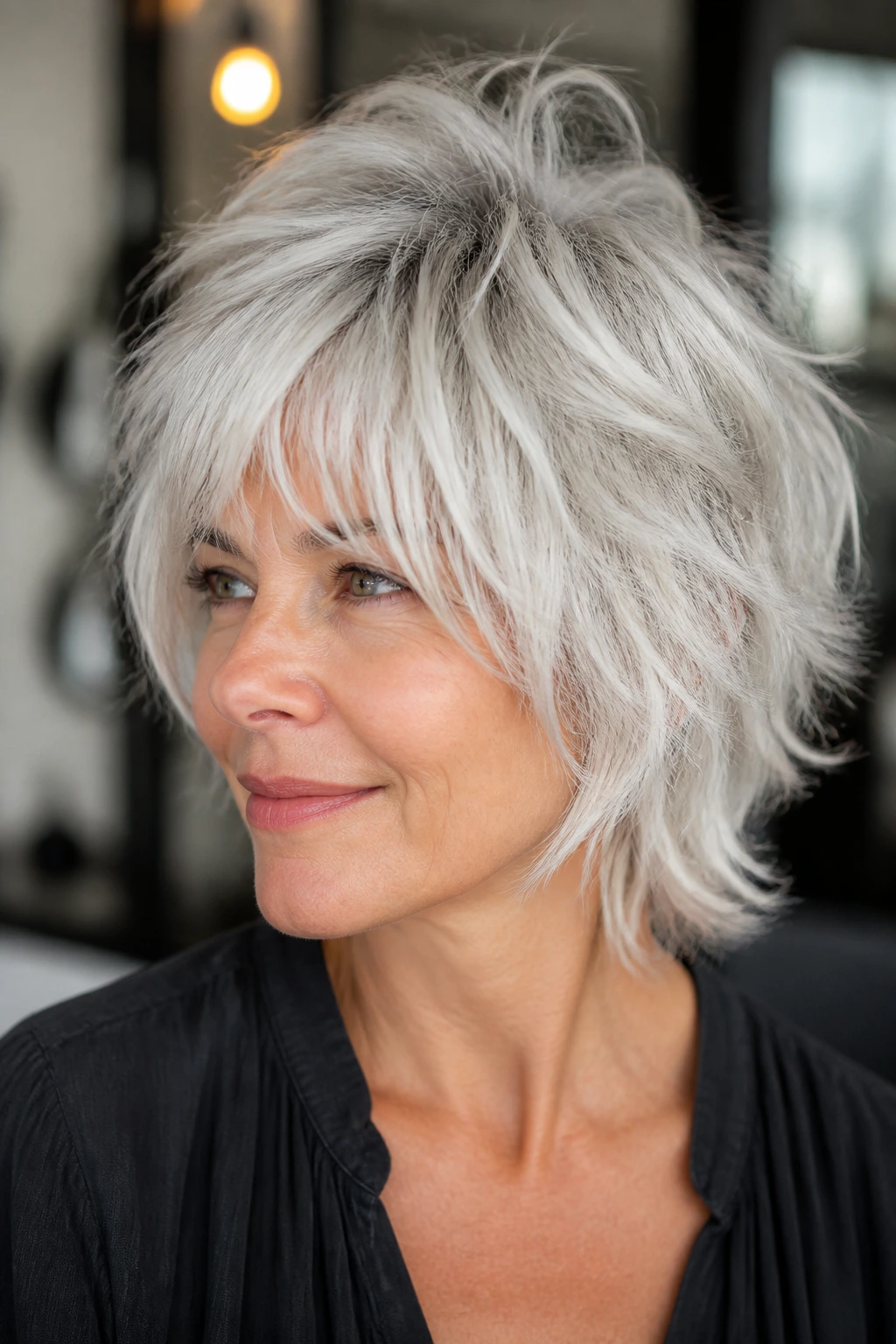
Sometimes, the color is the cut. Platinum blonde is a very drying process, which sounds bad, but for fine hair, it’s actually helpful. The chemical process of bleaching makes the hair strand swell and become more porous, which gives it a “thicker” feel.
When you pair this chemically thickened hair with a shaggy, layered cut, you get the absolute maximum volume possible for fine hair. It’s a high-maintenance look—you’ll need to manage roots and moisture—but in terms of purely aesthetic volume, it is unmatched. The layers prevent the platinum from looking like a flat, solid sheet of color.
Final Thoughts
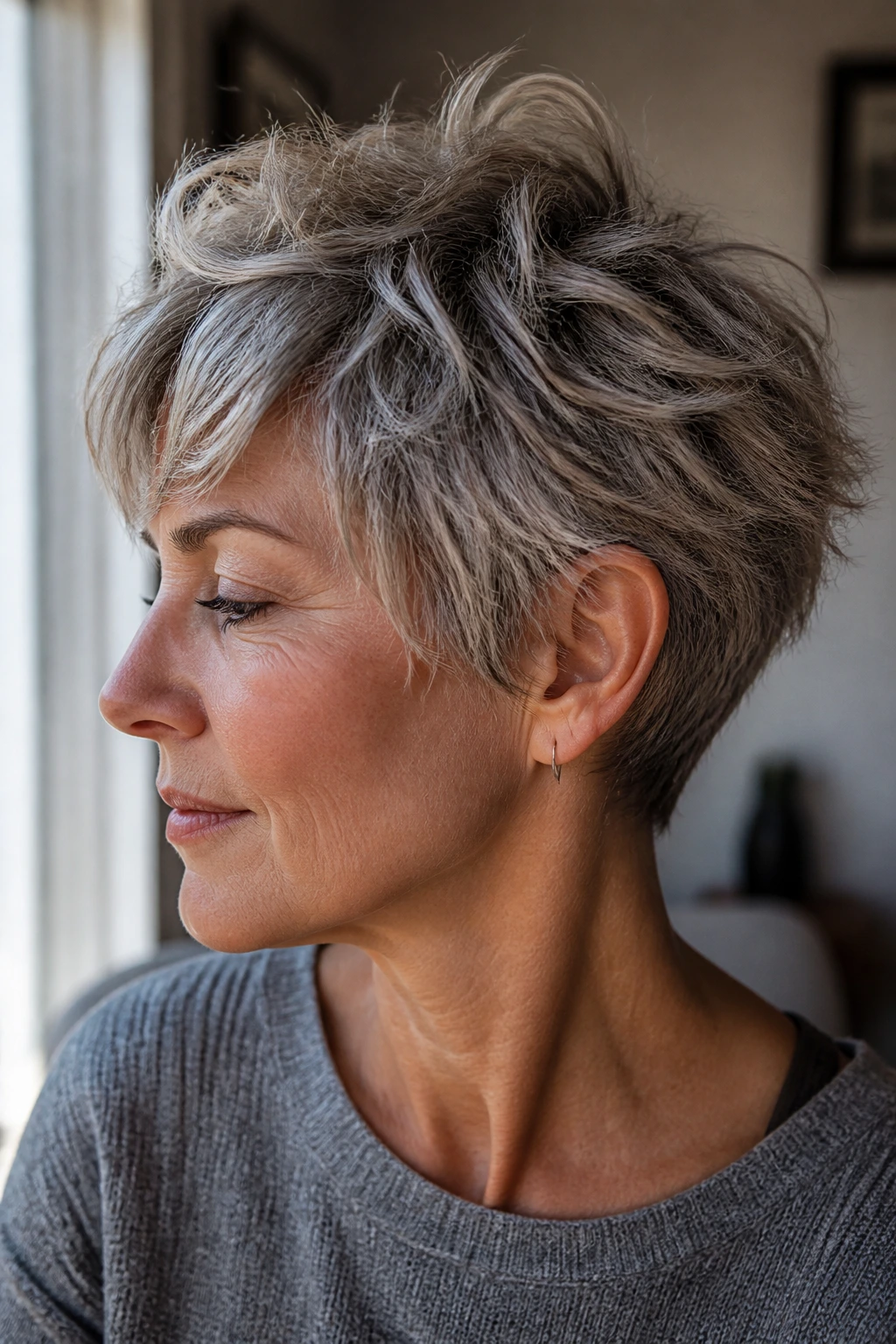
The mistake most people with fine hair make is assuming they need to grow their hair long to hide how thin it is, or conversely, that they must stick to a severe, blunt bob. The truth lies in the middle: texture. A shaggy pixie is not just a style choice; it is a mechanical solution to the problem of fine hair.
By embracing layers, razors, and the concept of “deliberate messiness,” you stop fighting your hair’s natural tendencies and start working with them. You are no longer trying to make fine hair do something it doesn’t want to do (like hold a sleek, heavy shape). Instead, you are giving it the freedom to move, bounce, and look fuller than it actually is.
When you go to your stylist, be clear about your goals. Bring photos of the shape you like, but emphasize that the technique—the point-cutting, the razoring, the removal of weight—is what matters most. A great shaggy pixie should look good the moment you walk out of the salon, but more importantly, it should look good three weeks later when you wake up, run your fingers through it, and realize you don’t actually need to do anything at all.
