



Fine hair can look flat fast when a cut asks it to do too much. A good pixie cut for fine hair fixes that by removing dead weight, lifting the crown, and keeping the outline clean enough to read as fuller than it is.
That is the whole trick.
The best versions don’t chase length. They build shape where the eye lands first — at the fringe, the crown, and the top layer near the part. A blunt, heavy pixie can drag fine strands down and make them look sparse at the ends. A smarter one does the opposite, and it does it without needing a gallon of styling product.
I like pixies on fine hair because they can be quick, blunt, soft, edgy, polished, or messy and still make sense. A pea-sized touch of mousse at the roots, a little blow-drying at the crown, maybe a fingertip of matte paste at the ends — that’s often enough to make the cut behave.
Some of the styles below are forgiving. Some ask for a cleaner cut line or a more hands-on styling routine. All 30 earn their place because they change how fine hair sits on the head, and that matters far more than length alone.
1. Soft Layered Pixie for Fine Hair
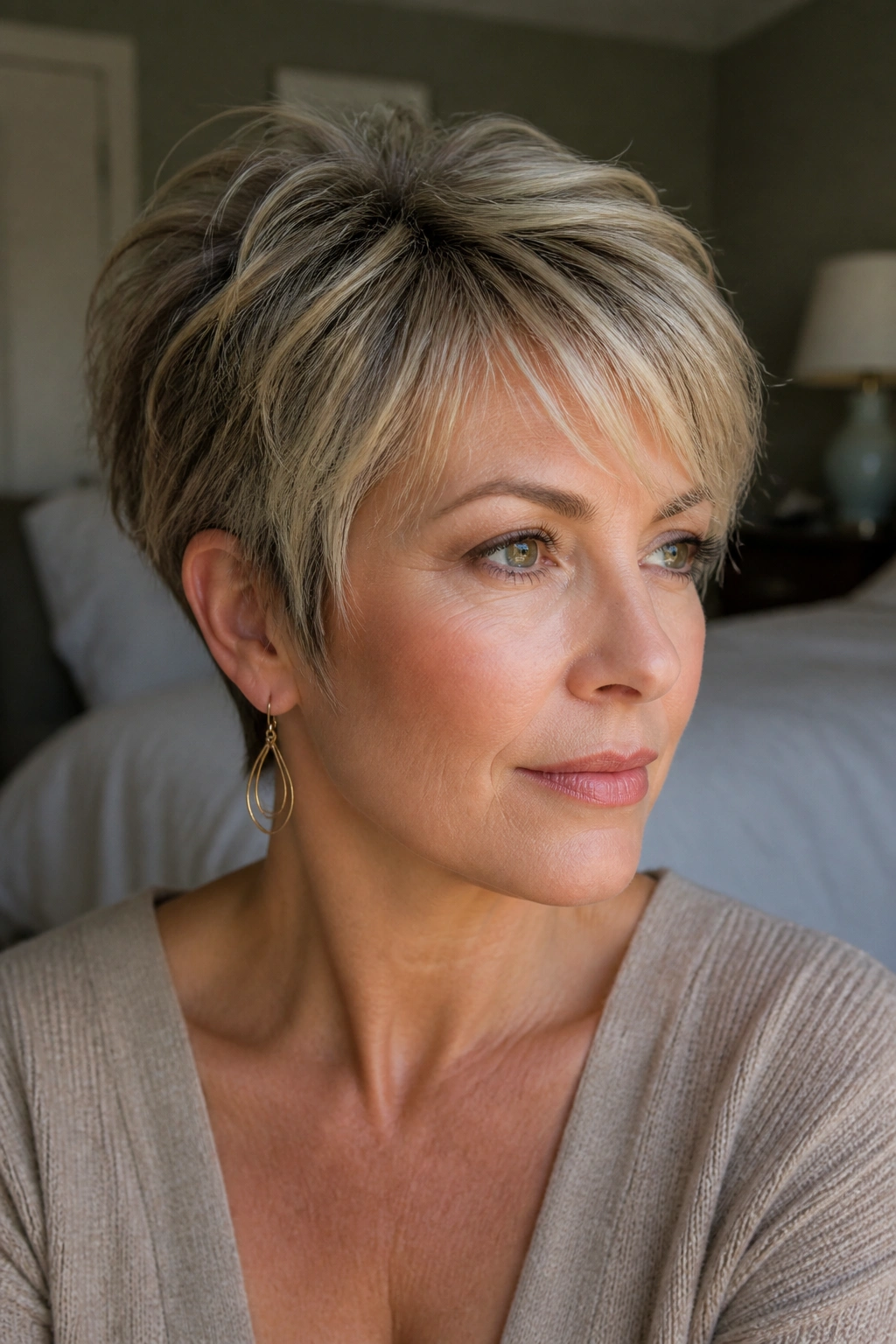
Soft layers are the easiest place to start if you want movement without making fine hair look shredded. The shape keeps enough weight on the perimeter to feel full, while the inner layers remove just enough bulk for lift at the crown.
Why It Flatters Fine Strands
Ask for layers that begin near the crown and taper gently toward the top, not a bunch of random thinning at the ends. That matters. Fine hair can look wispy in a bad way if the scissors get too aggressive.
A soft layered pixie works especially well if your hair falls flat by lunchtime. The cut gives it somewhere to go.
- Keep the nape neat and clean.
- Leave the top long enough to bend with your fingers.
- Use a small round brush only at the crown if you blow-dry.
- Finish with a light cream, not a heavy wax.
Best move: tell your stylist you want shape, not feathered-out ends that disappear.
2. Choppy Textured Pixie
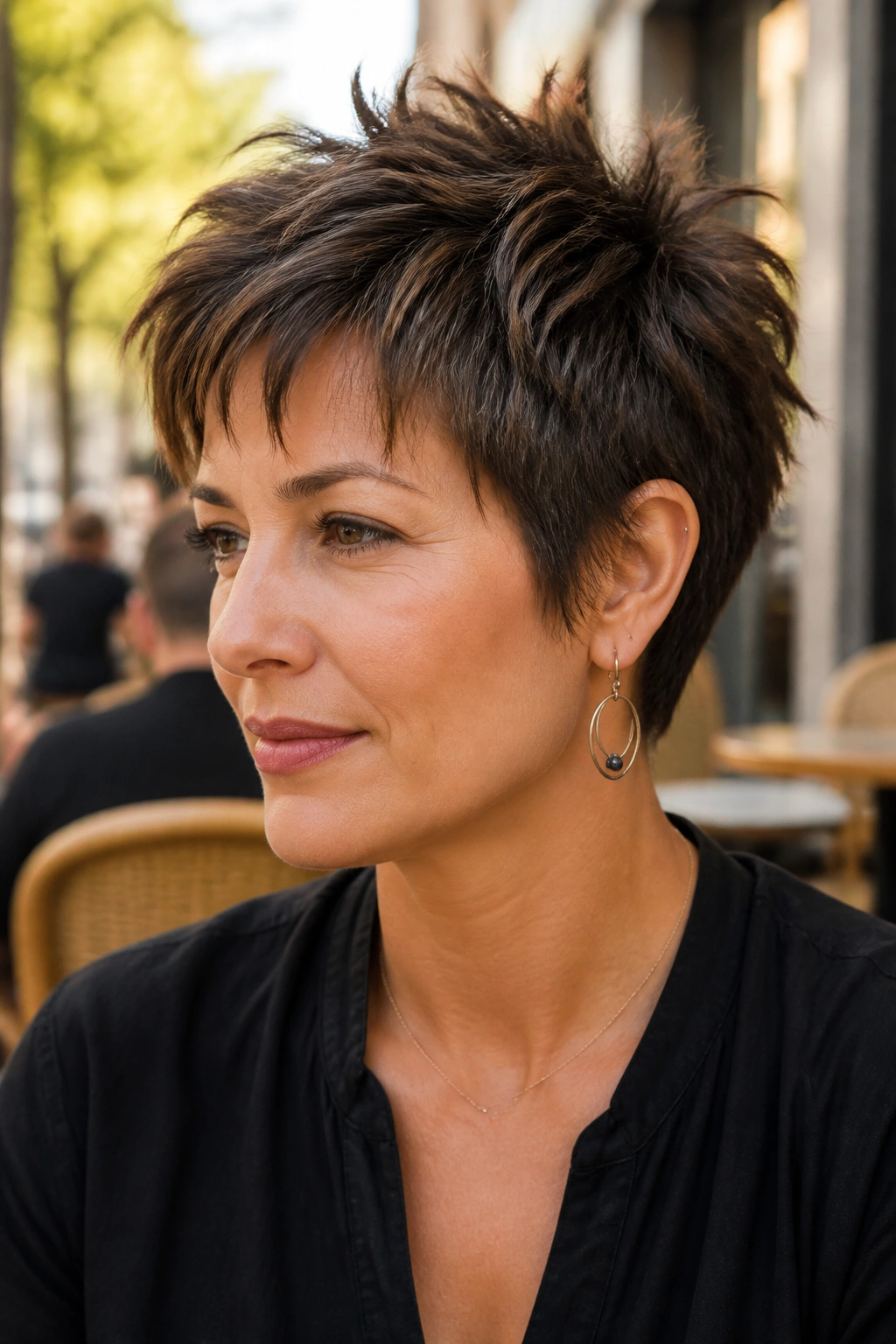
A choppy pixie can make fine hair look like it has more of it. That sounds simple, but it’s one of those cuts that lives or dies by the actual texture work in the chair.
The secret is separation. Short, uneven pieces catch the eye and give the impression of body even when the individual strands are fine. If the cut is too smooth, the hair can lie like silk and show every thin spot. If it’s too broken up, it starts to look ragged. There’s a narrow lane here.
I’d style this with a pea-sized bit of matte paste warmed between the palms, then pressed into dry hair from the mid-lengths out. Don’t rake it through from root to tip like you’re combing a dog. Pinch small sections instead. That’s what creates the piecey finish without making the hair feel sticky.
It’s a sharp-looking cut. A little messy, in a good way.
3. Side-Swept Fringe Pixie
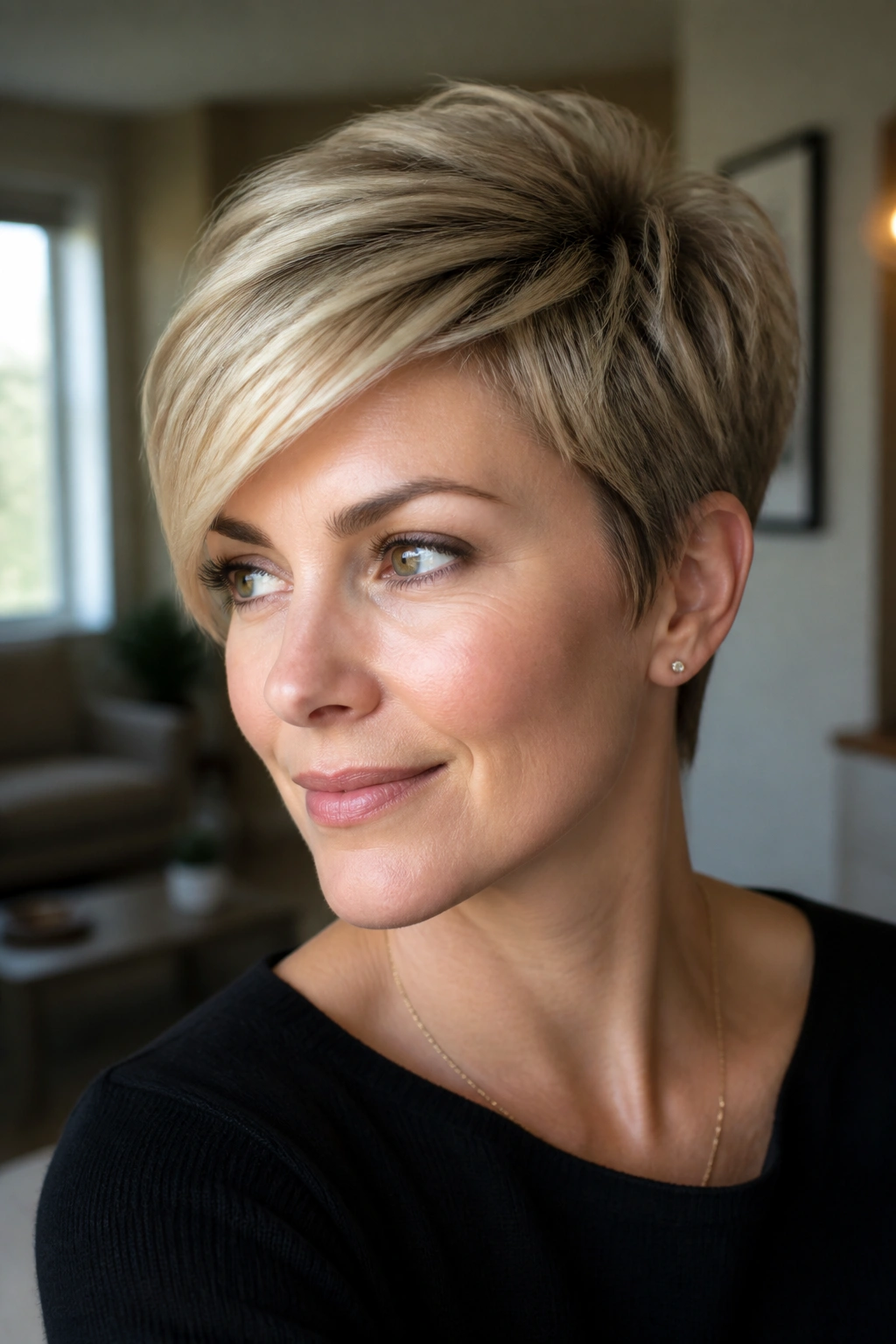
Why does a side-swept fringe do so much for fine hair? Because it gives the front of the haircut a visible line, and visible lines read as density. Straight-across bangs can do that too, but they’re less forgiving and can look heavy fast.
How to Wear It
The part should sit about 1 to 1½ inches off center, not slapped all the way to one side. Blow-dry the fringe in the opposite direction first, then sweep it across while it’s still warm. That tiny bit of counter-direction creates lift at the root.
Fine hair with a side-swept fringe also plays nicely with glasses and strong brows. The fringe softens the forehead without swallowing it.
- Use a 1-inch round brush for just the front section.
- Aim the dryer nozzle downward so the fringe doesn’t puff.
- Finish with a cool shot to set the curve.
- Trim the fringe before it drops into your eyes.
Small detail, big payoff: keep the fringe light at the ends so it slides instead of hanging.
4. Feathered Crown Pixie
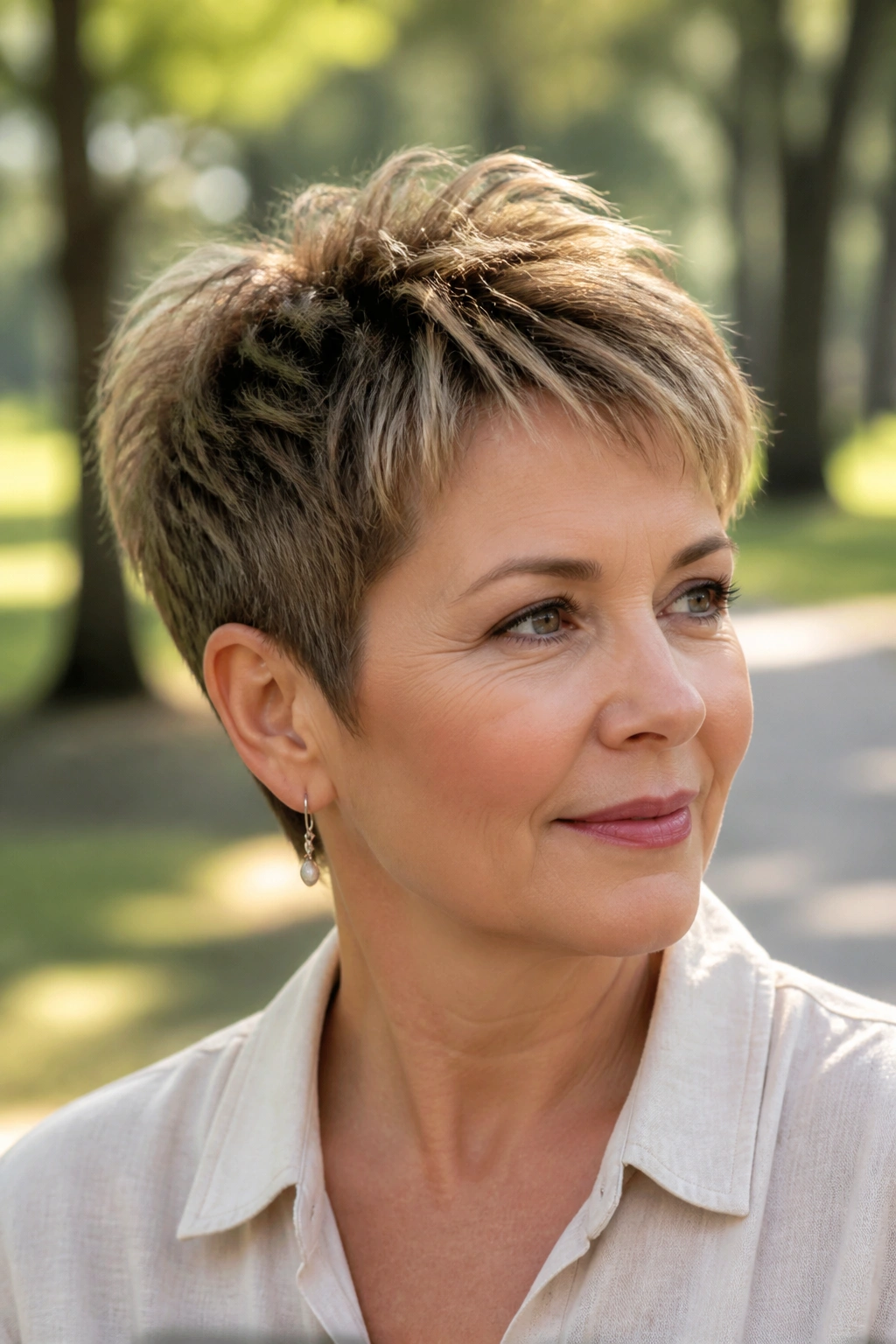
If your crown collapses the second you step outside, this is the cut worth paying attention to. A feathered crown pixie gives the top some air without turning the whole head into a fluffy cloud.
The cut works because the feathering happens where you need lift most — right around the top center — while the sides stay controlled. That contrast is what makes the shape feel fuller. Fine hair often fails when every section is treated the same. It needs zones, not sameness.
What To Ask For
- Soft point-cut layers at the crown.
- A clean nape so the back doesn’t puff.
- Slight length left through the top for movement.
- No aggressive thinning on already fine ends.
The feathered crown also behaves nicely with a quick root-dry using fingers instead of a brush. That’s not fancy. It’s practical. And practical wins every time with hair that falls flat fast.
5. Tapered Nape Pixie
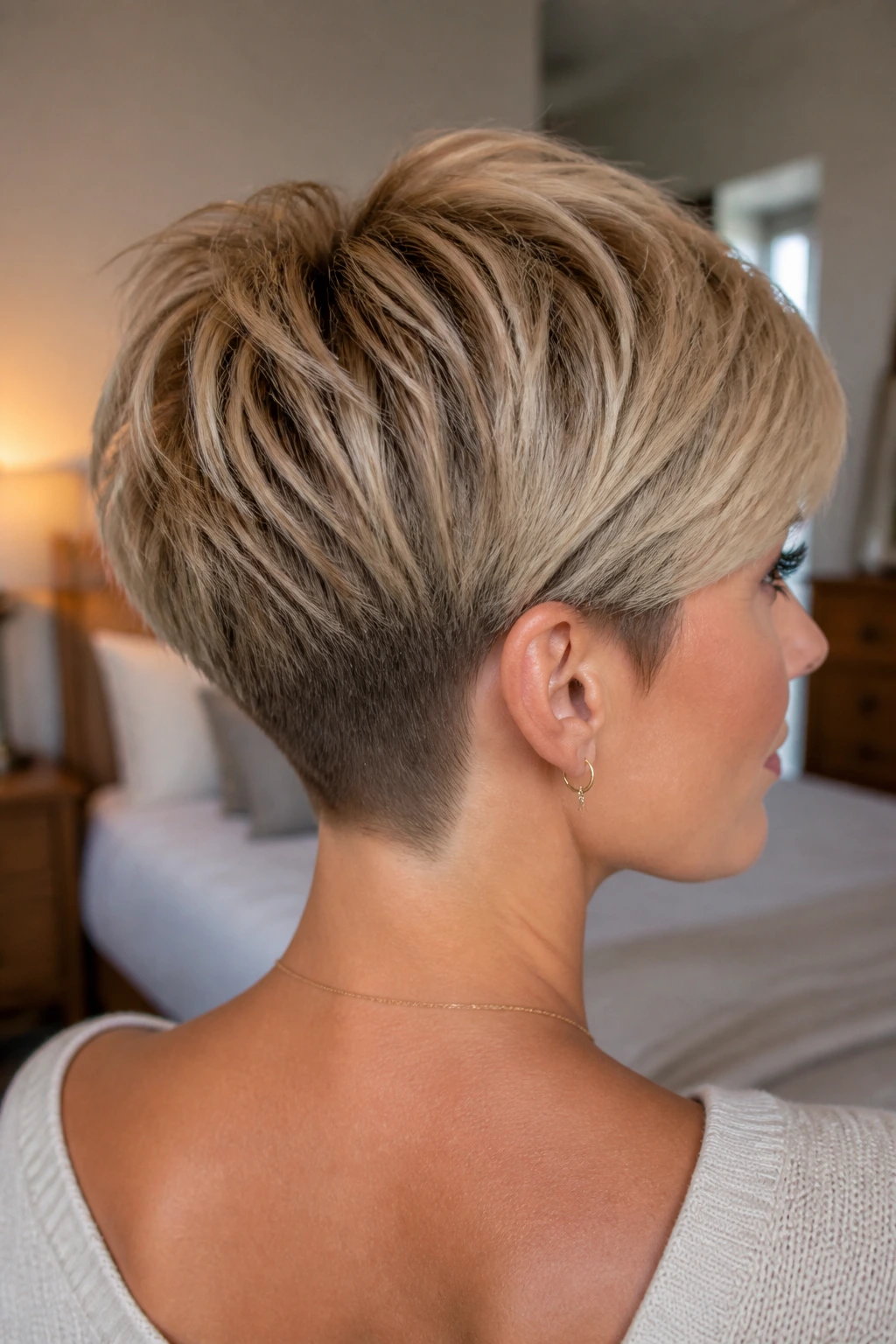
The tapered nape pixie is one of my favorite shapes for fine hair because it makes the whole cut look deliberate. The back is clipped close and gradually softened, so the neckline feels neat instead of bulky.
That clean taper matters more than people think. When the nape is loose or uneven, fine hair often looks thinner because the eye keeps landing on the wrong place. A tight taper pushes the attention upward, where the top can be styled for lift.
This cut is also easy to live with if you wear glasses or hate hair brushing your collar. The shape stays out of the way. No drama.
A little blow-dry at the roots is usually enough. Use your fingers, aim the dryer upward for a few seconds at the crown, then let the rest fall where it wants. That’s often all this cut needs. Fancy styling can come later, if you feel like it.
6. Long Pixie With Ear-Grazing Length
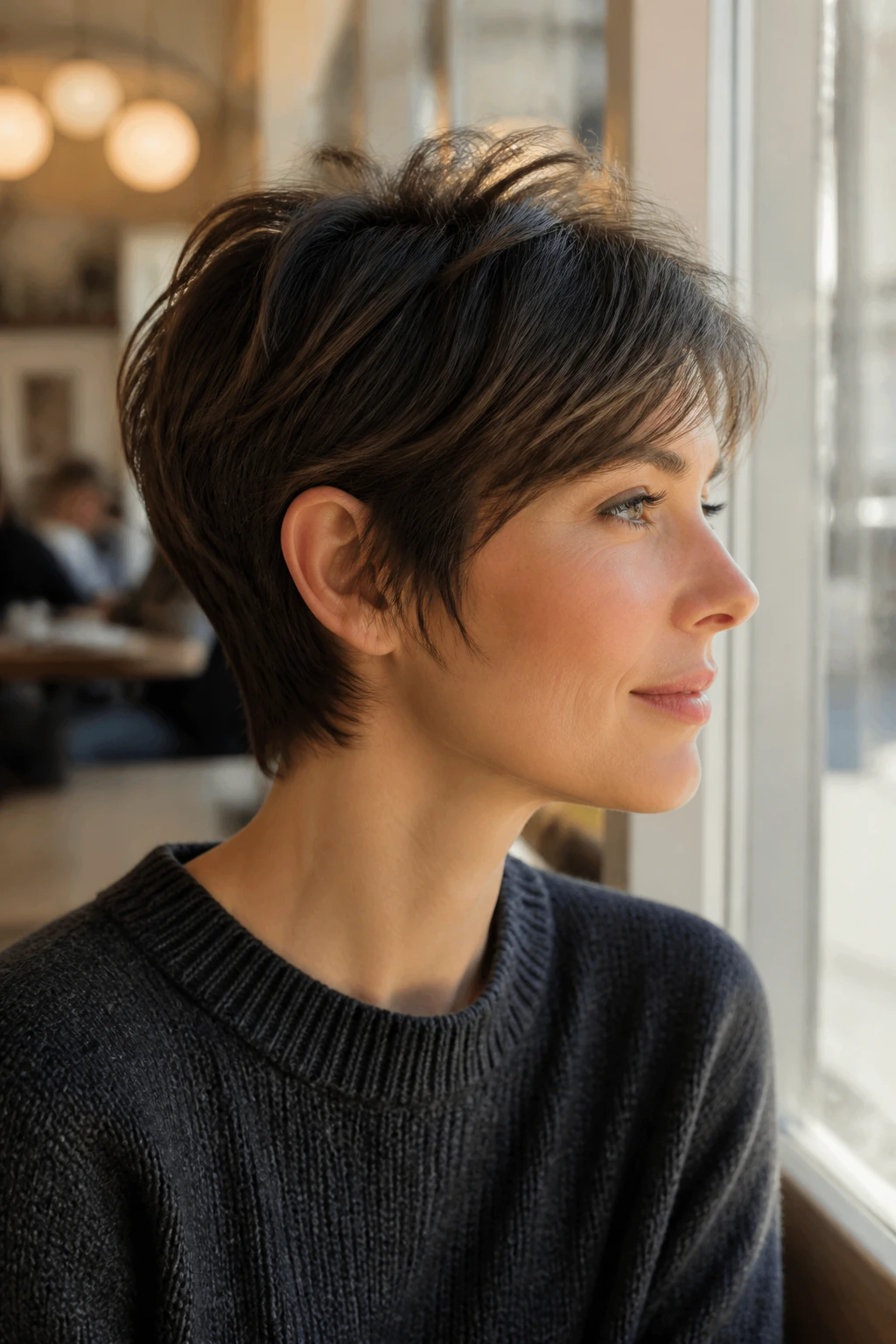
A long pixie is the peace offering for anyone who wants a short cut but isn’t ready to go all the way in. The sides sit close to the ears, the top stays long enough to tuck or sweep, and the whole thing feels softer than a classic cropped pixie.
For fine hair, that extra length is useful because it gives the style more visual weight. Too-short sides can expose the scalp in an unkind way if density is low. Ear-grazing length keeps the outline gentler and gives you room to move the hair around on different days.
It also behaves well with clips, headbands, and an ear tuck. That sounds minor until you’ve had one of those mornings when every strand refuses to cooperate.
If you want a low-risk cut, start here. It’s short enough to feel fresh, but not so short that a single bad styling day ruins the mood.
7. Micro Pixie
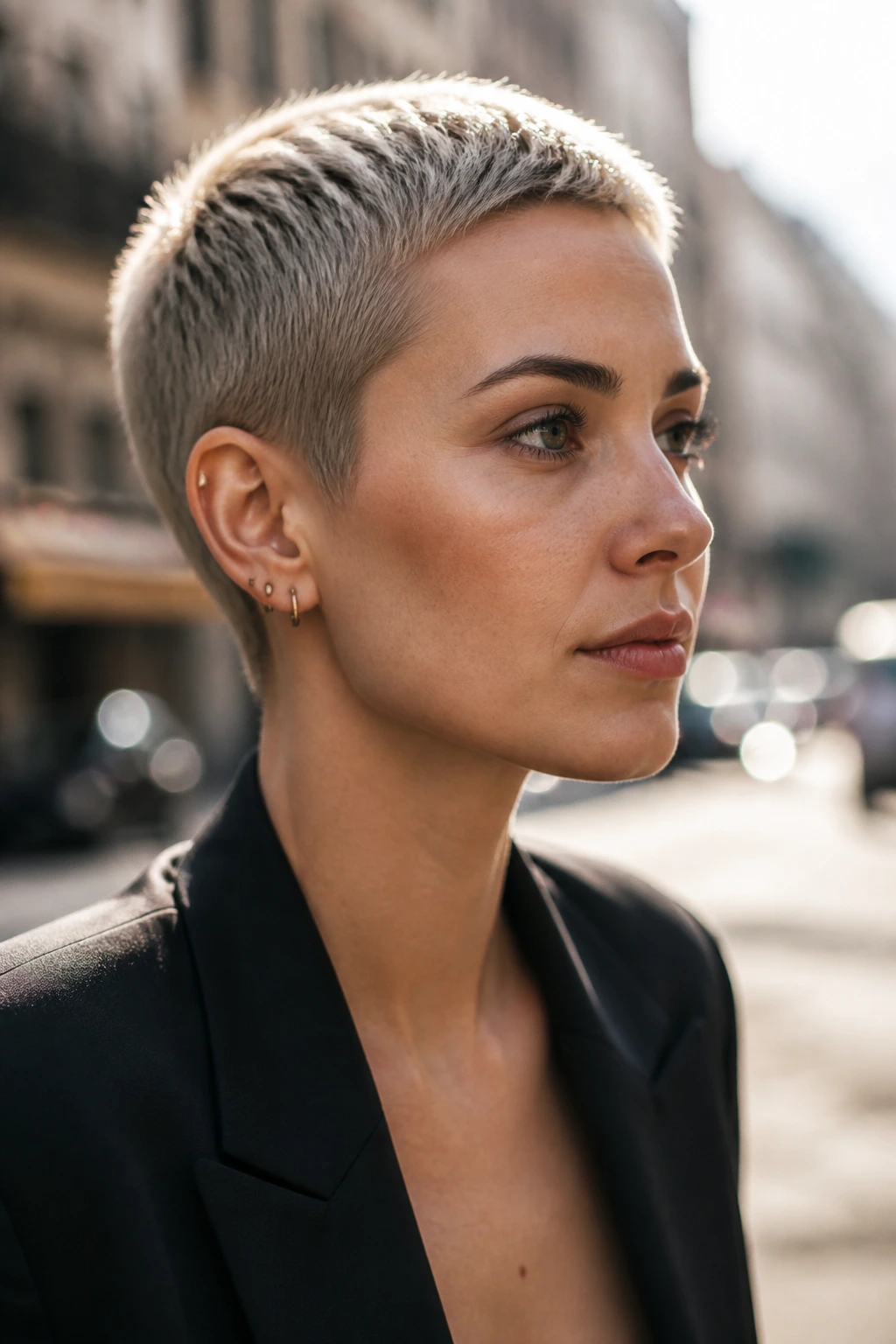
A micro pixie is blunt about what it is: short, cropped, and not interested in pretending to be longer than it is. On fine hair, that can be a good thing. Removing the extra length often makes the hair look denser, not less.
The shape works best when the cut stays clean and close to the head. Ask for very short sides, a soft top no longer than about 1 to 1½ inches, and a neckline that looks crisp from every angle. A razor-heavy finish is not the move here if your strands are fragile; scissor work usually gives a better result.
This is not the cut for someone who wants to hide behind hair. It’s for people who want face shape, brows, and cheekbones to do some of the work.
The styling routine is tiny. A dab of cream, a quick finger-comb, and you’re done. That’s the appeal. No one is pretending this cut is fussy.
8. Pixie Bob for Fine Hair
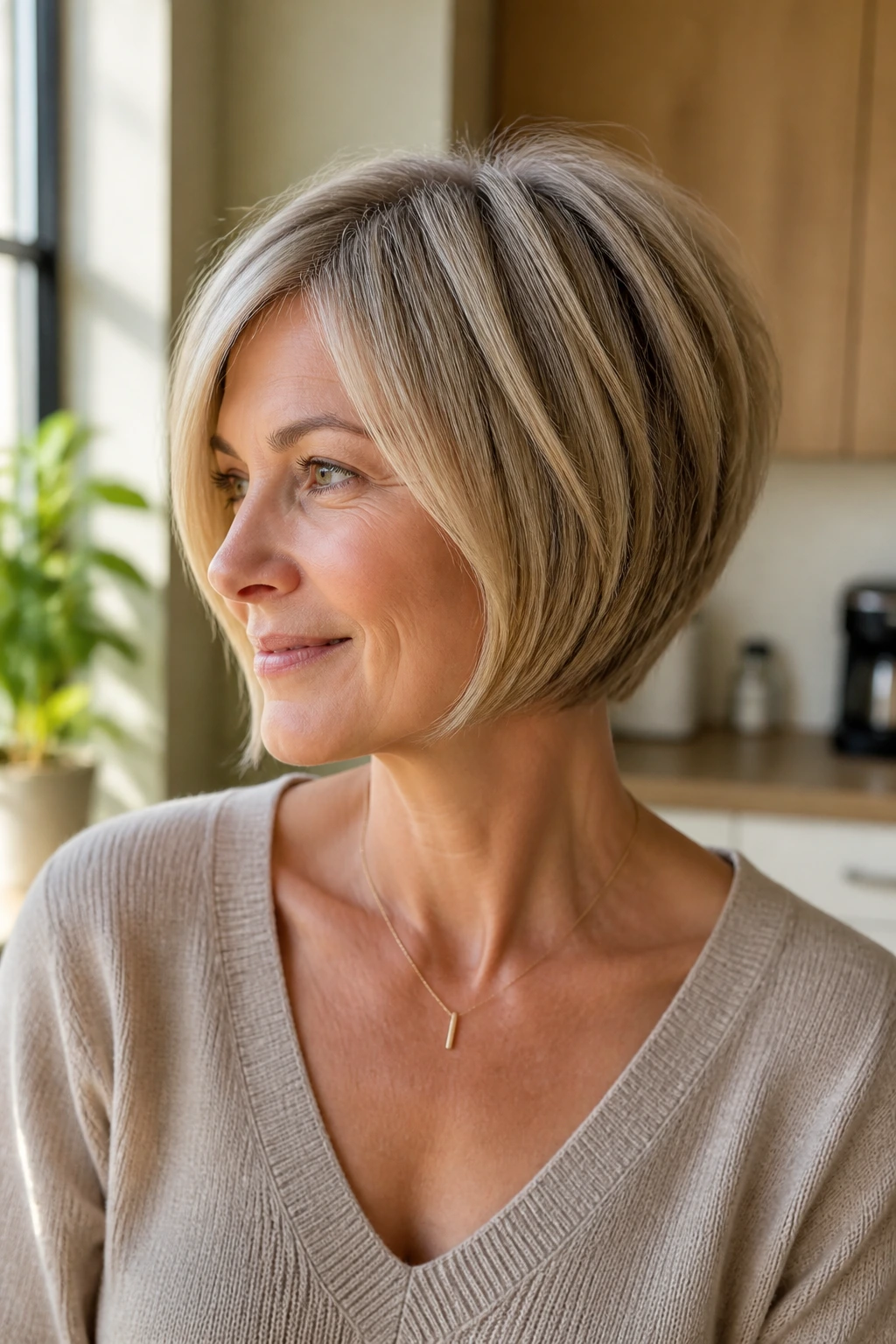
Can a pixie bob give fine hair more life than a shorter crop? Yes, and the reason is simple: it keeps a bit more weight where the hair naturally wants to fall. That extra length can make the ends look fuller instead of wispy.
A pixie bob — or bixie, if you like the shorthand — sits between a short bob and a pixie. The back usually brushes the nape, while the front can skim the cheekbone or jaw. That shape gives you movement without losing the stronger outline that makes fine hair read as thicker.
Why the Hybrid Shape Helps
The cut lets the crown stay light while the perimeter carries enough body to feel intentional. That’s a better trade than slicing everything down to the scalp and hoping the styling product fixes it later. It won’t.
A small round brush and a 2-minute blow-dry at the roots make a big difference here. You want bend, not volume that looks puffy or overdone. Keep it soft. Keep it touchable.
9. Asymmetrical Pixie
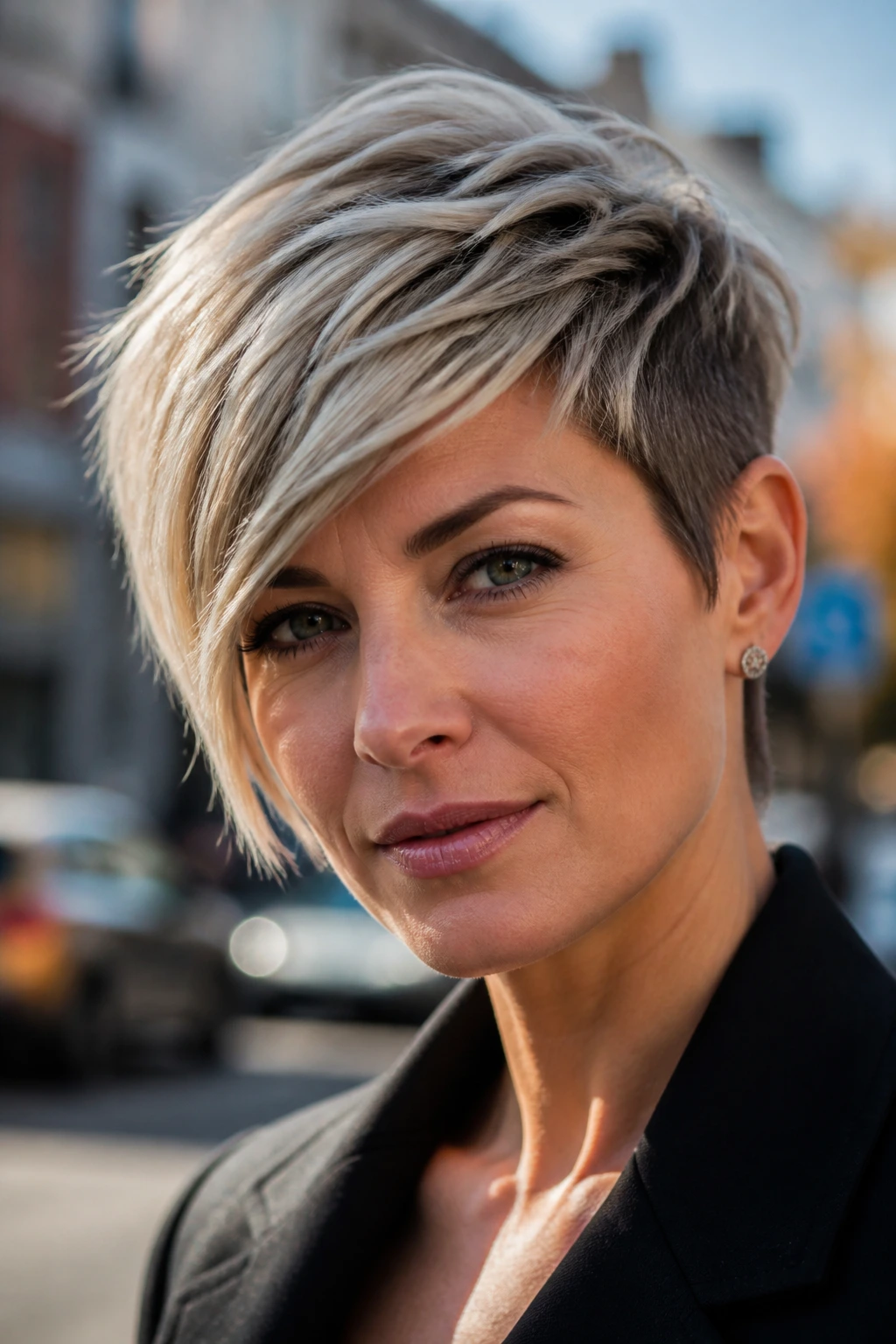
One side shorter. The other side slightly longer. That’s the whole idea, and it works because the eye stops trying to measure whether the hair looks thin. It gets pulled into the shape instead.
An asymmetrical pixie is a smart pick when fine hair needs a little visual tension. The diagonal line gives the cut movement, and movement reads as fullness. If both sides are even and very short, the shape can feel severe. A small imbalance fixes that.
The difference doesn’t have to be dramatic. Even a 1 to 2 inch gap between the short side and the longer sweep can change how the cut sits. Too much asymmetry and the style starts looking like a statement first, haircut second.
This one suits people who want edge without a full punk moment. It looks sharper with a tucked ear on one side, a clean part, and a little separation at the ends. Easy enough. Still interesting.
10. Undercut Pixie
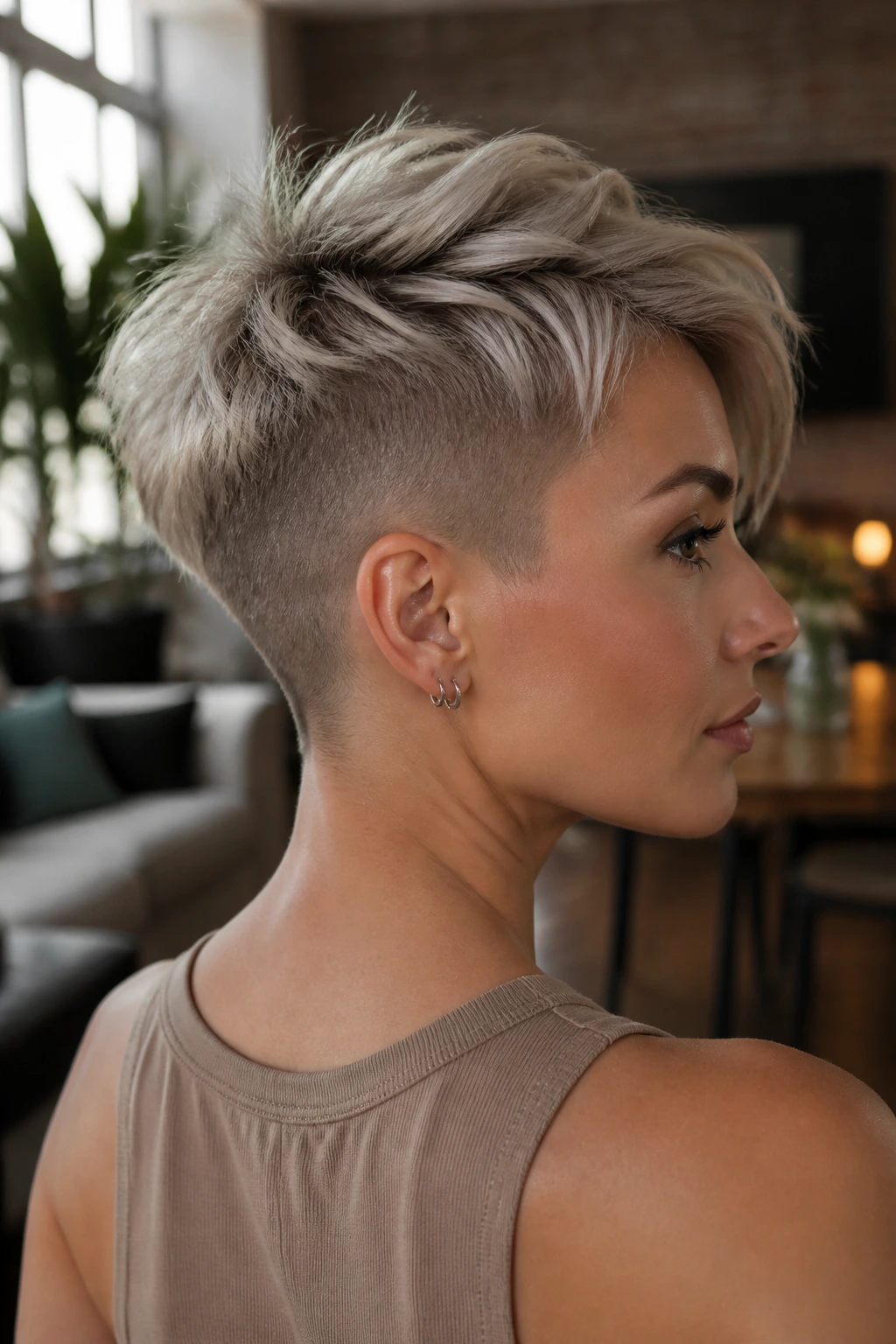
An undercut pixie is useful when fine hair is also dense in the wrong places. Strange combination, but it happens all the time. The hair around the nape and sides can swell while the top stays flat, and that makes the whole head look bottom-heavy.
Shaving or clipping out some of the underneath bulk changes the shape from the inside out. The top no longer has to sit on a fat base, so it can move and lift more easily. That’s the real win.
This cut does ask for maintenance. The grow-out can turn fuzzy if you leave it too long, and the line underneath needs regular cleanups. Not every 4 weeks has to be a salon trip, but waiting too long makes the shape lose its crisp edge fast.
If you like a little edge and want the top to look lighter, this is a strong option. It also pairs well with a side sweep or a textured fringe.
11. Tousled French Pixie
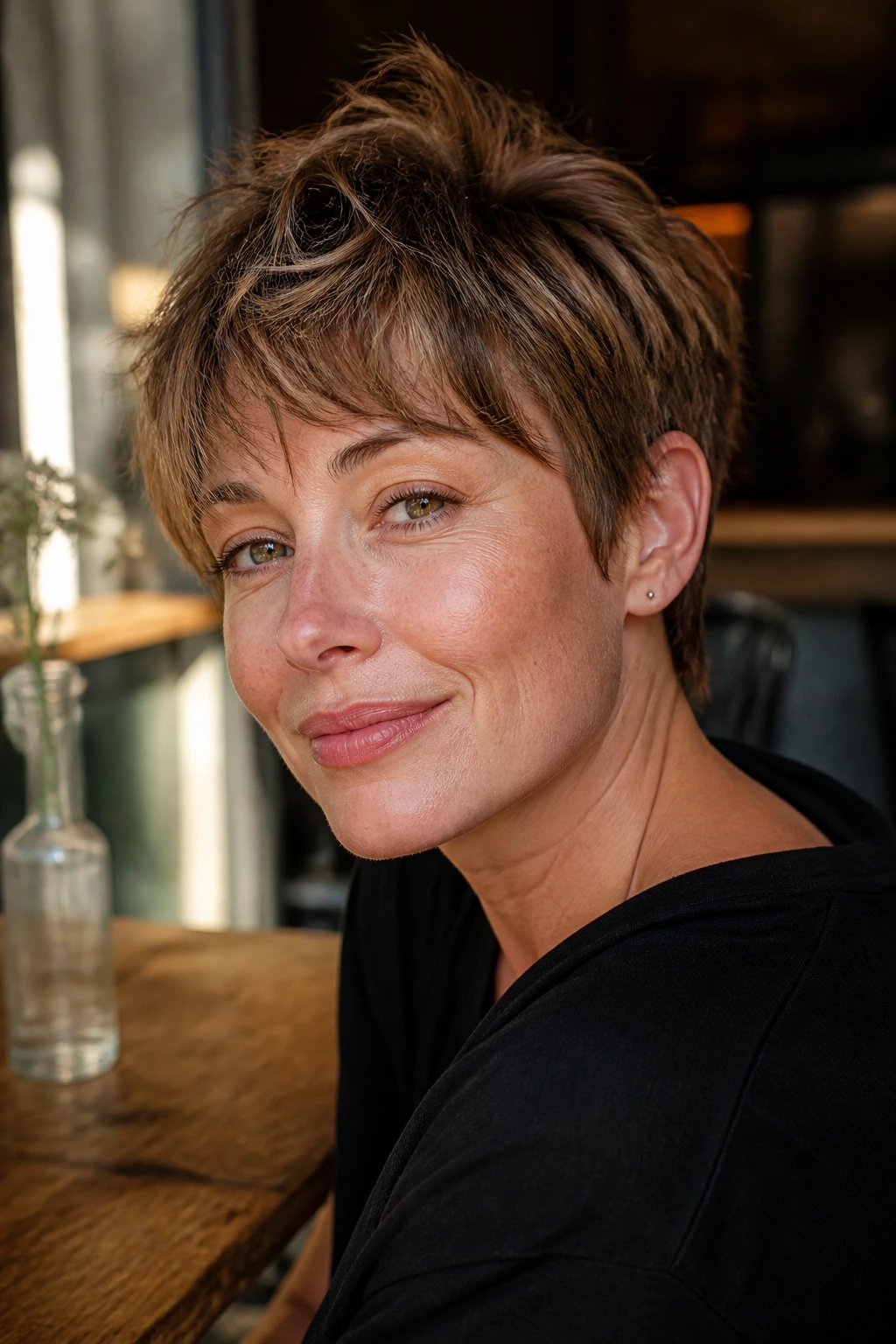
A tousled French pixie is what happens when a short cut stops trying to look polished every second. The fringe is soft, the top has movement, and the whole thing feels like it was finger-styled in under 5 minutes — because often it was.
Fine hair usually benefits from this kind of looseness. Too much polish can make every strand lie flat against the head. Tousling breaks that line just enough to add depth. The trick is not to overdo it. You want a soft bend, not a crinkled mess.
This cut looks best with a texture spray or a light dry shampoo at the roots. Spray at the crown, scrunch once or twice, and leave the ends alone. If you keep touching it, the shape disappears. That’s the annoying part.
Still, this is one of the easiest short cuts to wear if you prefer a lived-in look over a strict one.
12. Baby Bang Pixie
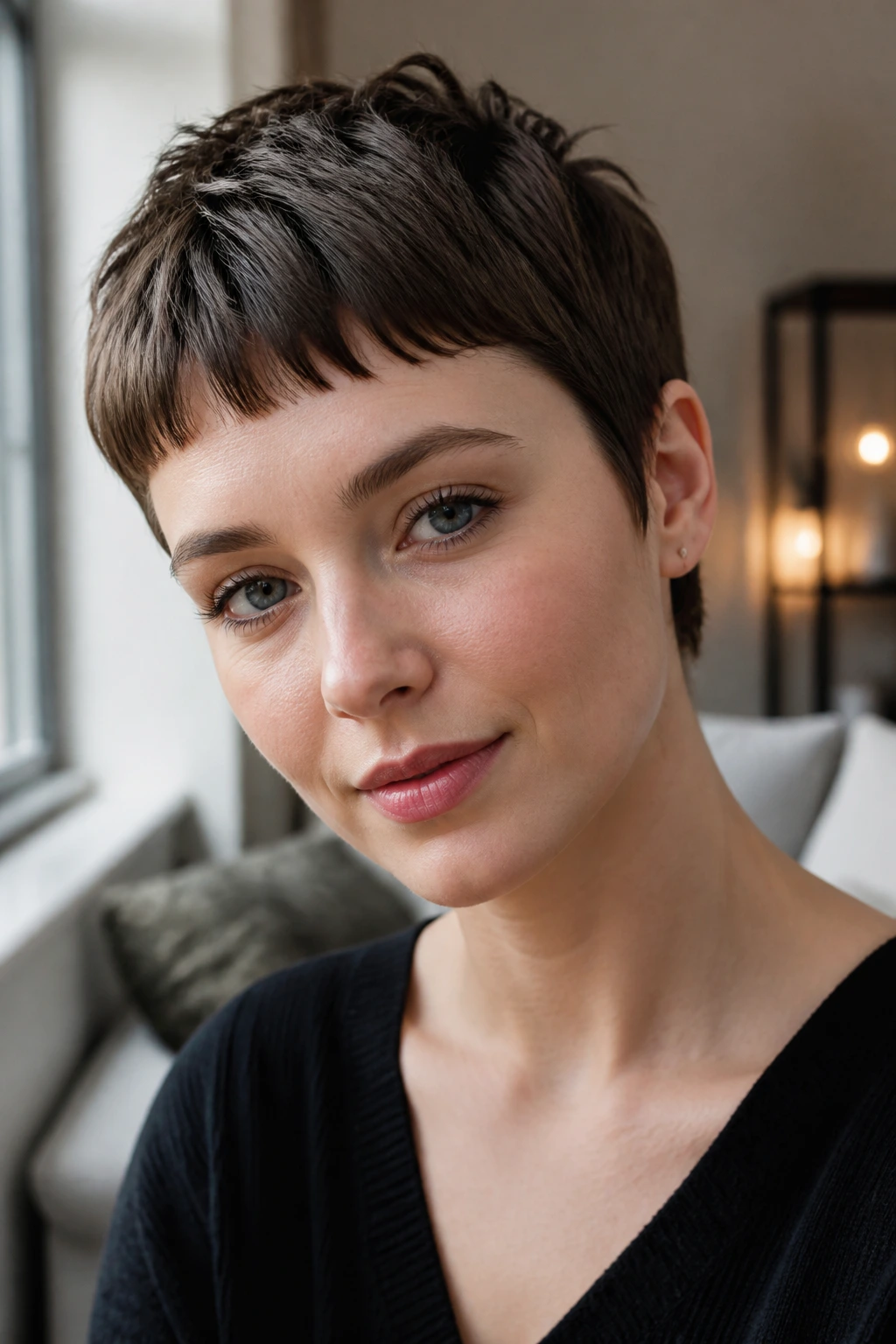
Baby bangs are tiny, but they do a lot of work. On fine hair, they give the front of the haircut a crisp edge, which can make the whole style look more substantial.
What Makes It Different
The fringe usually sits well above the brows — think 1 to 1½ inches, not a heavy curtain. That keeps the front light and keeps the cut from eating up too much of the already-fine density. A blunt baby bang on thick hair can feel bold; on fine hair, it should stay wispy enough to move.
Cowlicks fight this cut. A lot.
If your front hair grows in a strong swirl, the fringe will want to split or kick out to the side. That can look cool if you expect it, but annoying if you don’t. Ask for micro-point cutting at the ends so the bangs don’t look carved from one solid bar.
It’s a sharp little cut. Not everyone wants that. The people who do usually love it.
13. Swept-Back Volume Pixie
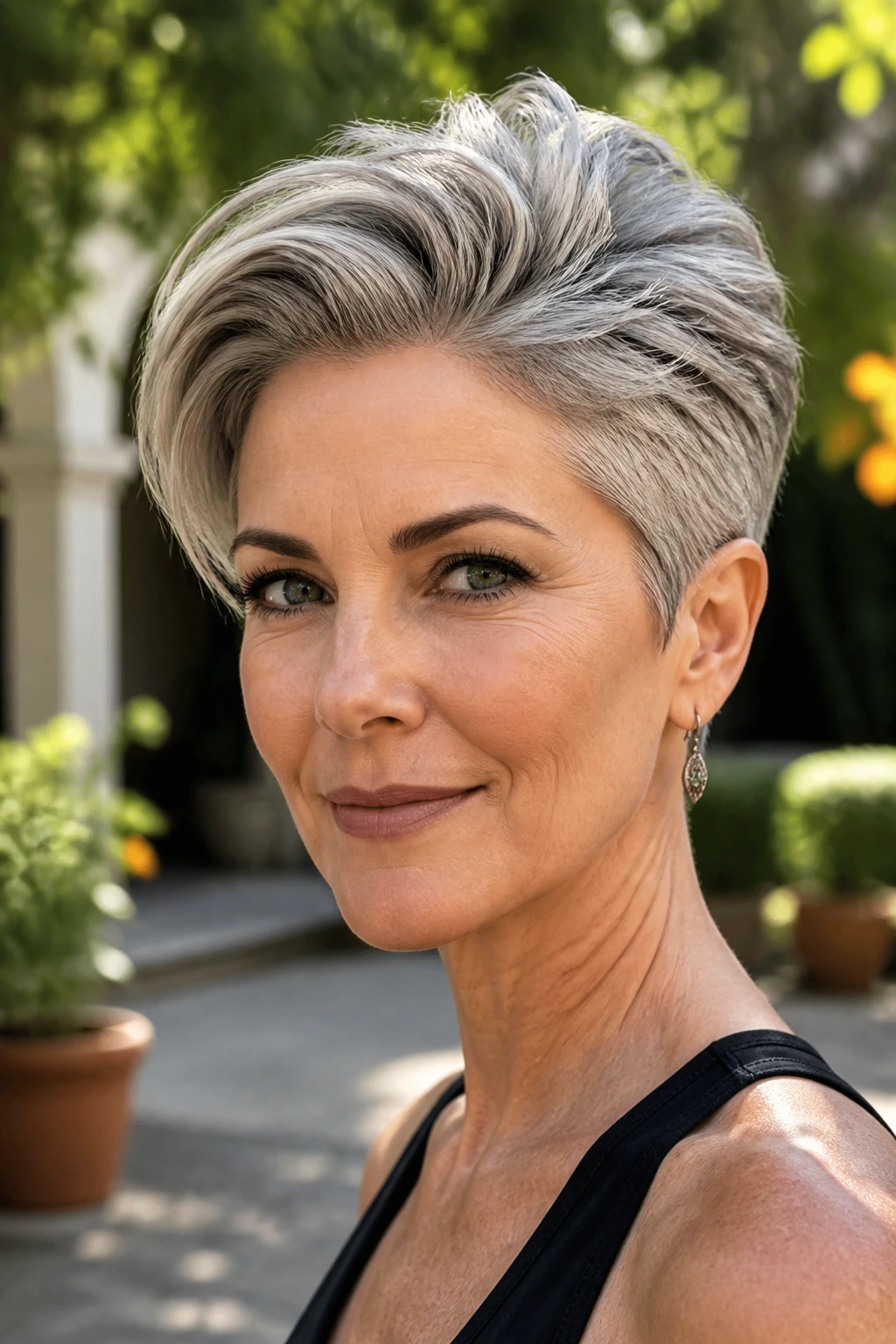
Can you build height on fine hair without making it stiff? Yes. The swept-back volume pixie is proof.
The shape lifts the hair away from the forehead and pushes the attention up toward the crown, where a little root control goes a long way. Fine hair often wants to collapse forward. This cut asks it to move back instead, which changes the whole profile.
How To Get Lift Without Stiffness
- Work a light mousse through damp roots.
- Blow-dry the hair forward first, then sweep it back with your fingers.
- Pin the crown with 2 small clips while it cools for about 10 minutes.
- Finish with a flexible spray, not a hard shell of lacquer.
That cooling step matters. It locks the lift in place while keeping the hair touchable.
This is a good short style for evenings out, but it also works on ordinary days if you want a sharper, cleaner shape. It’s not fussy. It just asks for a little root attention.
14. Razored Pixie
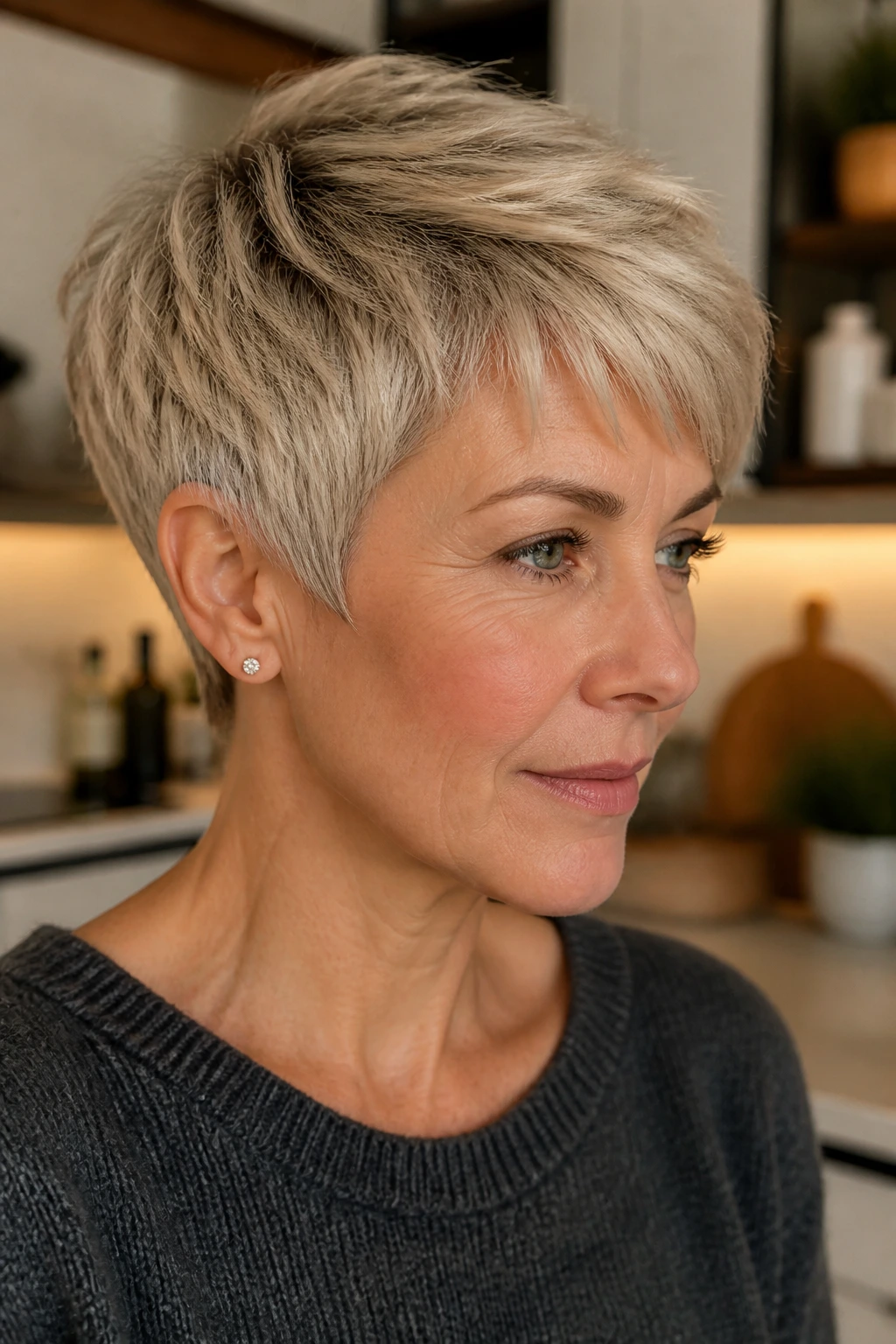
A razor can make fine hair look airy in the right hands and thin in the wrong ones. That is the honest version, and it matters.
When a razored pixie is done well, the edges look soft and the top pieces fall with a little bend instead of a blunt block. That helps fine hair because the cut doesn’t sit as one heavy line. It moves. The danger is over-razoring. If the stylist uses the blade too freely, the ends can turn see-through fast.
What To Watch For
- Razor work should be controlled, not aggressive.
- Thicker areas can take more texturing than the fringe.
- Fragile ends usually do better with scissors.
- A light serum on the tips can keep the finish from looking frayed.
This cut suits people who want a slightly undone shape but don’t want a shag. It’s softer than that. Cleaner too.
A careful razor cut can be lovely. A careless one looks tired by noon.
15. Curved Bowl Pixie
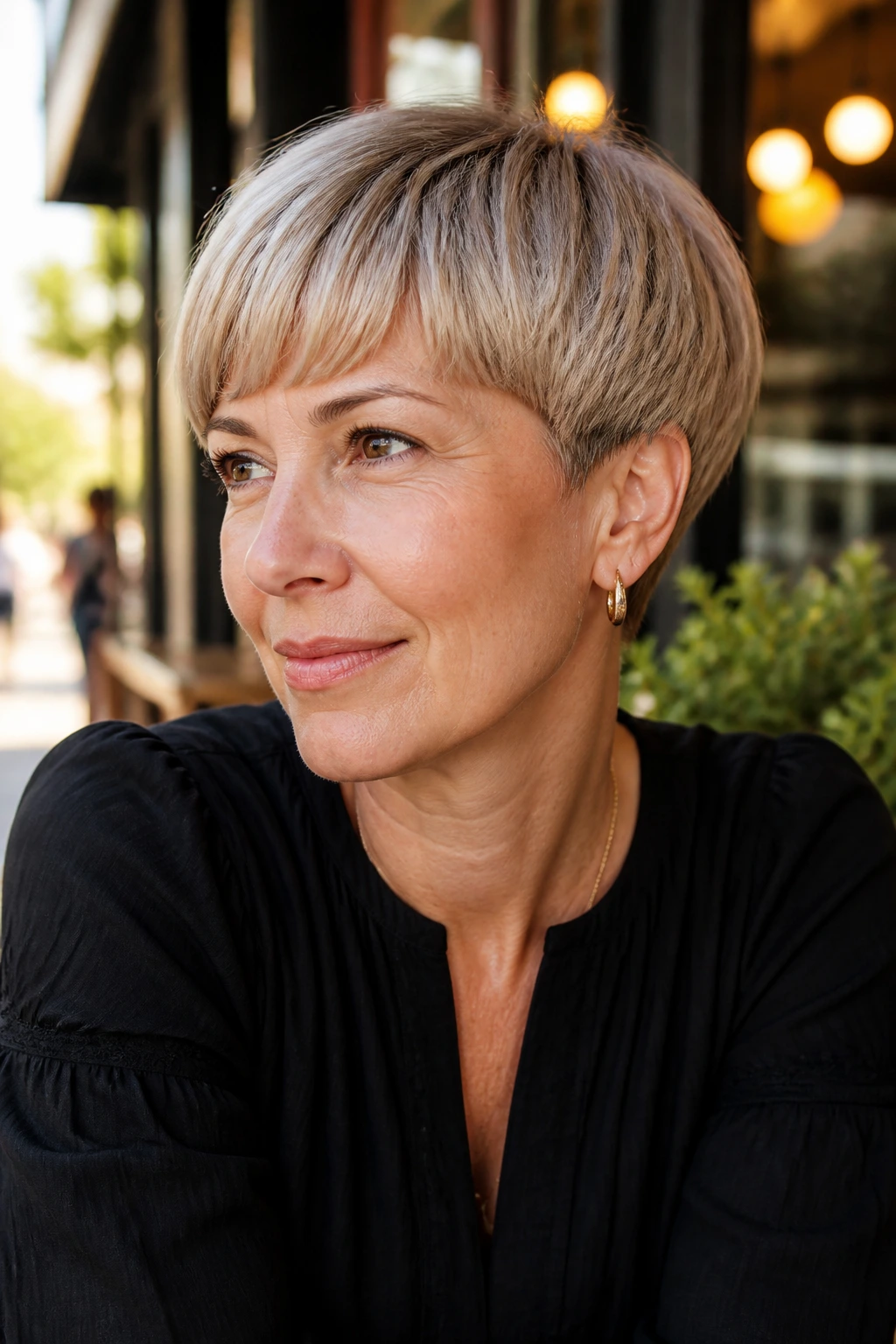
People hear “bowl cut” and think of something harsh from childhood photos. A curved bowl pixie is not that. The modern version keeps the outline rounded and soft, which can be a gift for fine hair.
The curved shape gives the head a fuller silhouette because the perimeter reads as continuous. Fine hair often looks best when the outer line is clear. Too many broken ends make it look wispy. Too much bluntness, though, can feel severe. This cut sits in the middle.
It works especially well if you like a clean shape around the temples and a little length at the top. A paddle brush and a quick under-bend at the ends are usually enough to set it. No need to overstyle.
The key is balance. Let the line be round, not helmet-like. That distinction sounds tiny. It isn’t.
16. Shaggy Pixie
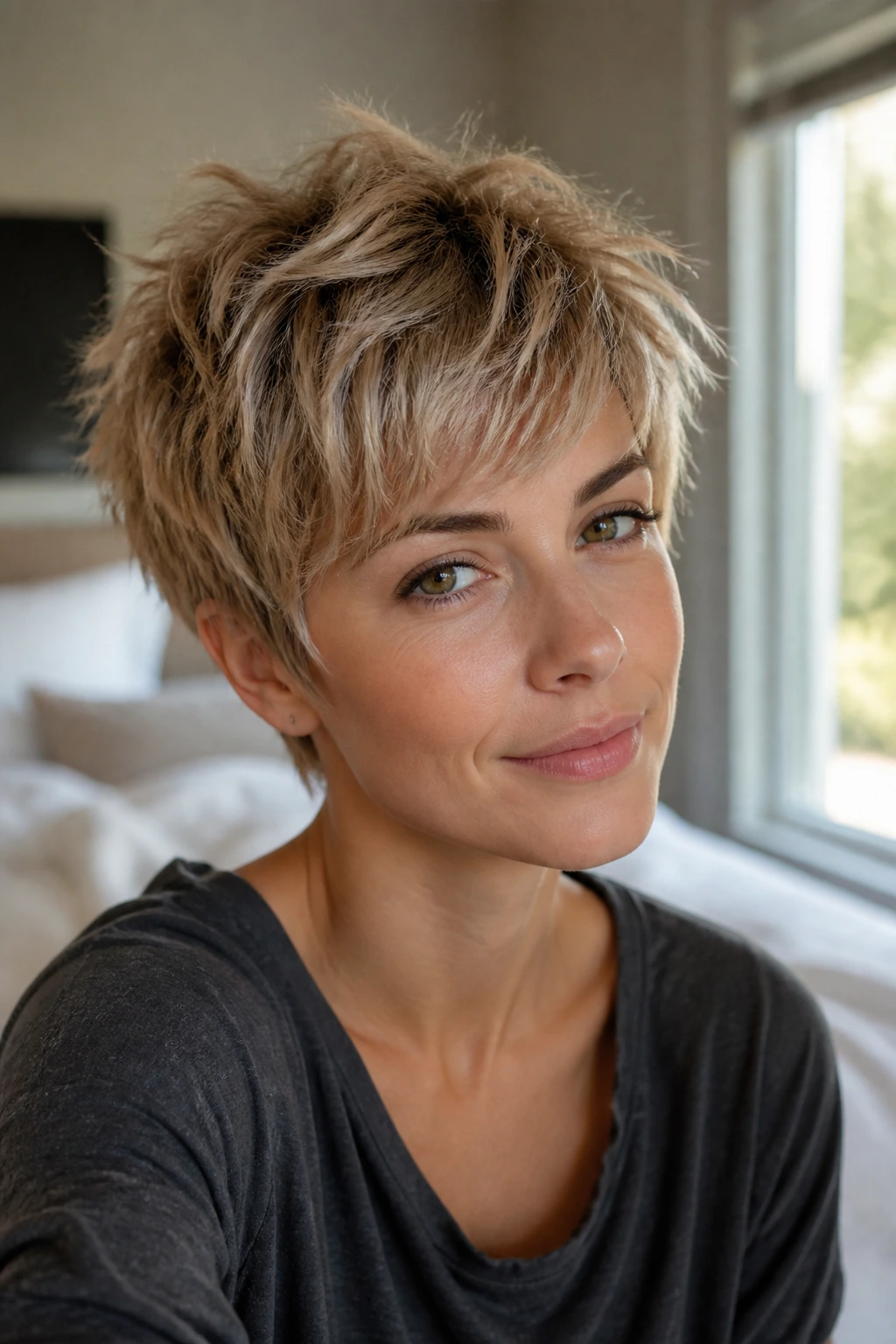
A shaggy pixie is not a messy pixie unless the cut goes too far. On fine hair, the danger is usually over-layering, which makes the shape puff out at the wrong points and disappear at the right ones.
The better version keeps the shag compact. Shorter crown layers, a bit of length at the fringe, and slightly broken edges through the top can create movement without turning the head into a fuzz cloud. That’s the balance you want.
This style is good for people who don’t want to fuss with round brushes every morning. A little wave spray, a quick scrunch, and maybe a finger twist at the fringe is often enough. If the hair has any natural bend, this cut will use it.
It looks casual. It should. But casual does not mean careless, and that’s where many shaggy cuts go wrong.
17. Piecey Crop Pixie
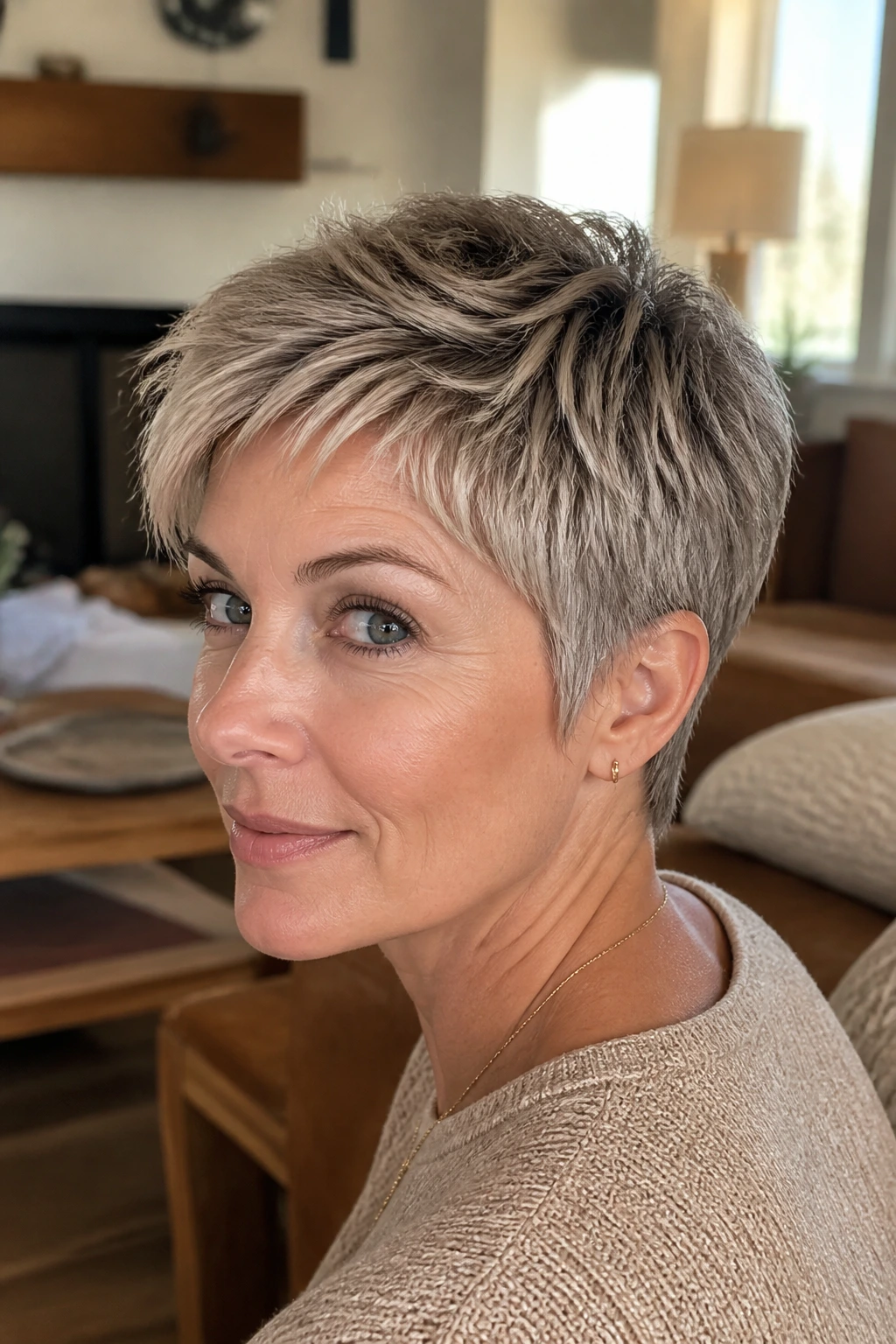
A piecey crop is one of the strongest choices if you want fine hair to look active rather than flat. The goal is to make the top break into visible sections so the eye sees texture instead of one smooth sheet.
How The Piecey Finish Works
The cut usually keeps the top slightly longer, then removes bulk in narrow sections so the strands land separately. That separation is the point. It creates small shadows and little edges that make the hair feel fuller than it actually is.
- Use a matte paste the size of a pea.
- Warm it between your fingertips first.
- Press it into dry hair, focusing on the top layer.
- Leave the roots alone unless they need lift.
- Pinch 4 to 6 small pieces into place and stop.
That last part matters. If you keep touching and reworking it, the piecey effect turns into grease.
This is a strong everyday cut for someone who wants a little attitude with their volume. It wears best when it looks lightly styled, not polished.
18. Graduated Pixie
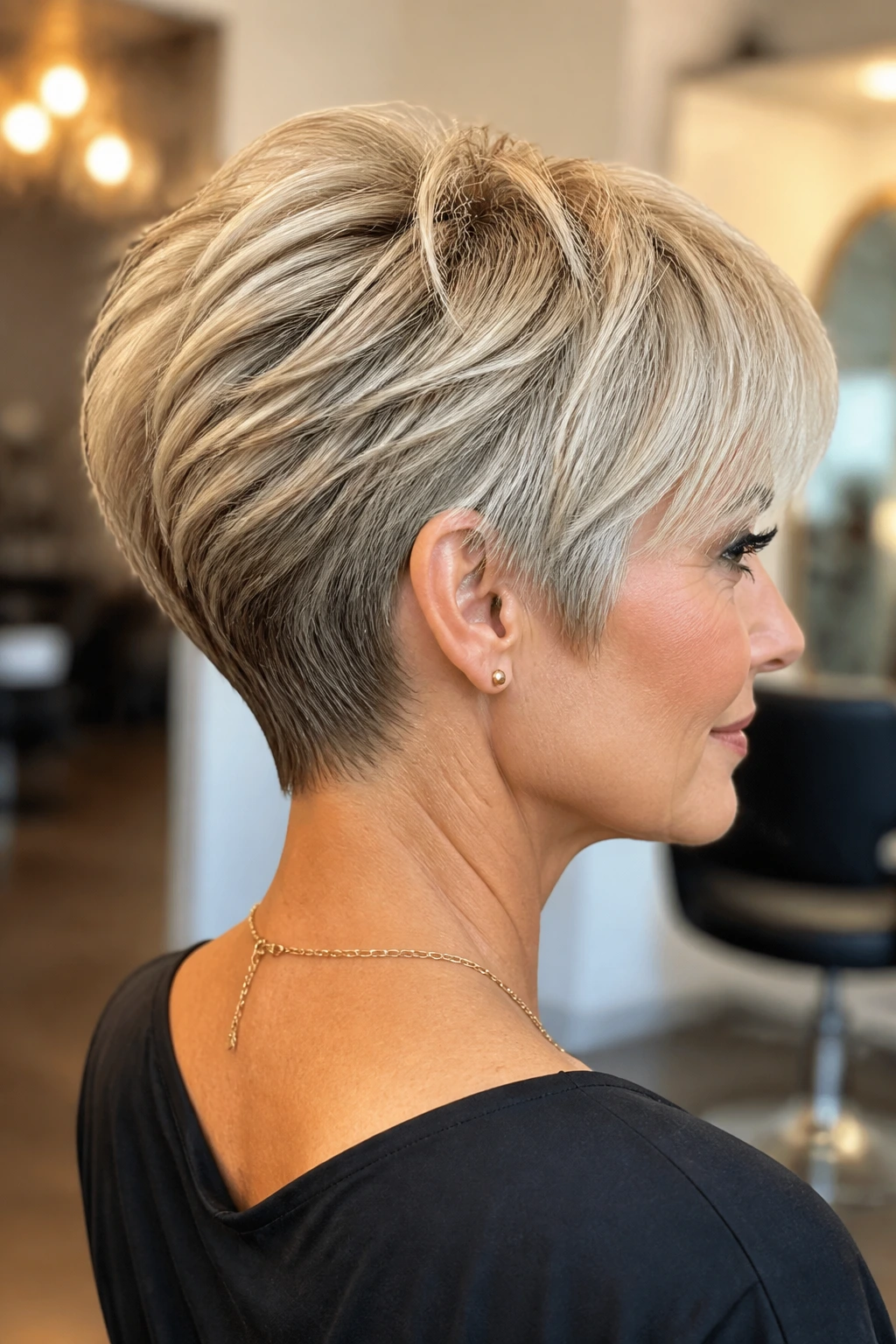
A graduated pixie earns its keep by building weight where the shape needs it and removing it where it doesn’t. The back is subtly stacked, and that stack can make fine hair look much fuller at the head’s back curve.
That is useful because fine hair often loses body through the occipital area first. Once that area collapses, the whole style drops. A good graduation keeps the back lifted and lets the top sit on top of that support instead of floating in space.
The cut needs a stylist who understands balance. Too much graduation and it starts looking like a wedge. Too little and the shape goes limp. You want a gentle rise, not a sharp shelf.
I’d style it with a small round brush just at the back of the crown, then let the front stay softer. That contrast keeps the shape modern instead of overbuilt.
19. Swoopy Side-Part Pixie
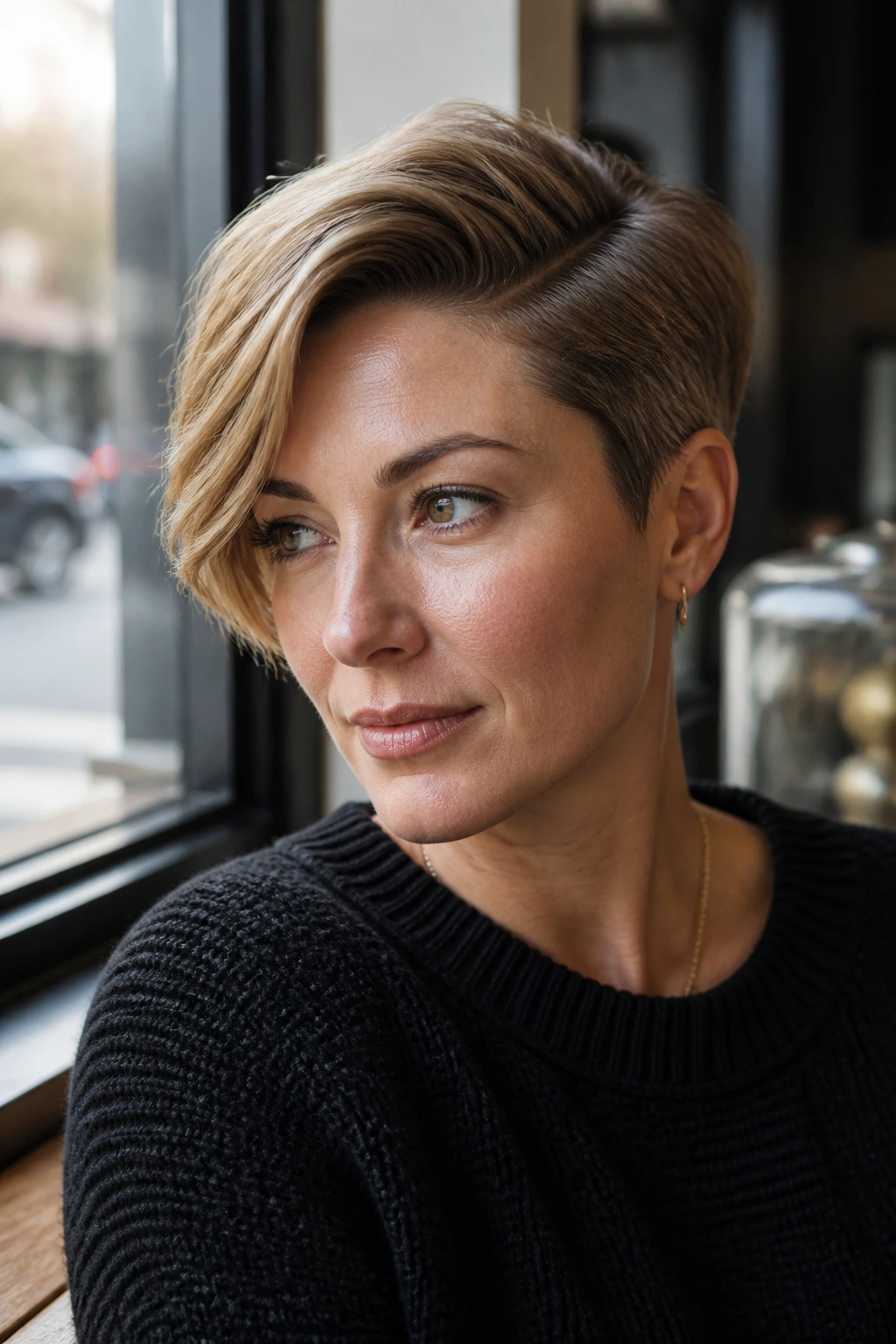
A deep side part can save a fine-hair pixie on a flat day. It shifts volume to one side and makes the haircut look intentionally shaped instead of accidentally collapsed.
Why does it work? Because a side part creates a visible ridge, and that ridge gives the top something to stand on. A center part can split fine hair into two skinny sections. A side part often does the opposite and builds one stronger-looking sweep.
How To Part It
Use a tail comb and place the part about 1½ inches off center. Blow-dry the hair in the opposite direction for a few seconds first, then sweep it into place. If needed, clip the heavier side at the root for 5 to 10 minutes while it cools.
That one move can change the whole cut.
This style feels a little dressier than a casual crop, but not stiff. It’s one of those short cuts that still looks good if you tuck one side back with a simple barrette.
20. Wispy Fringe Pixie
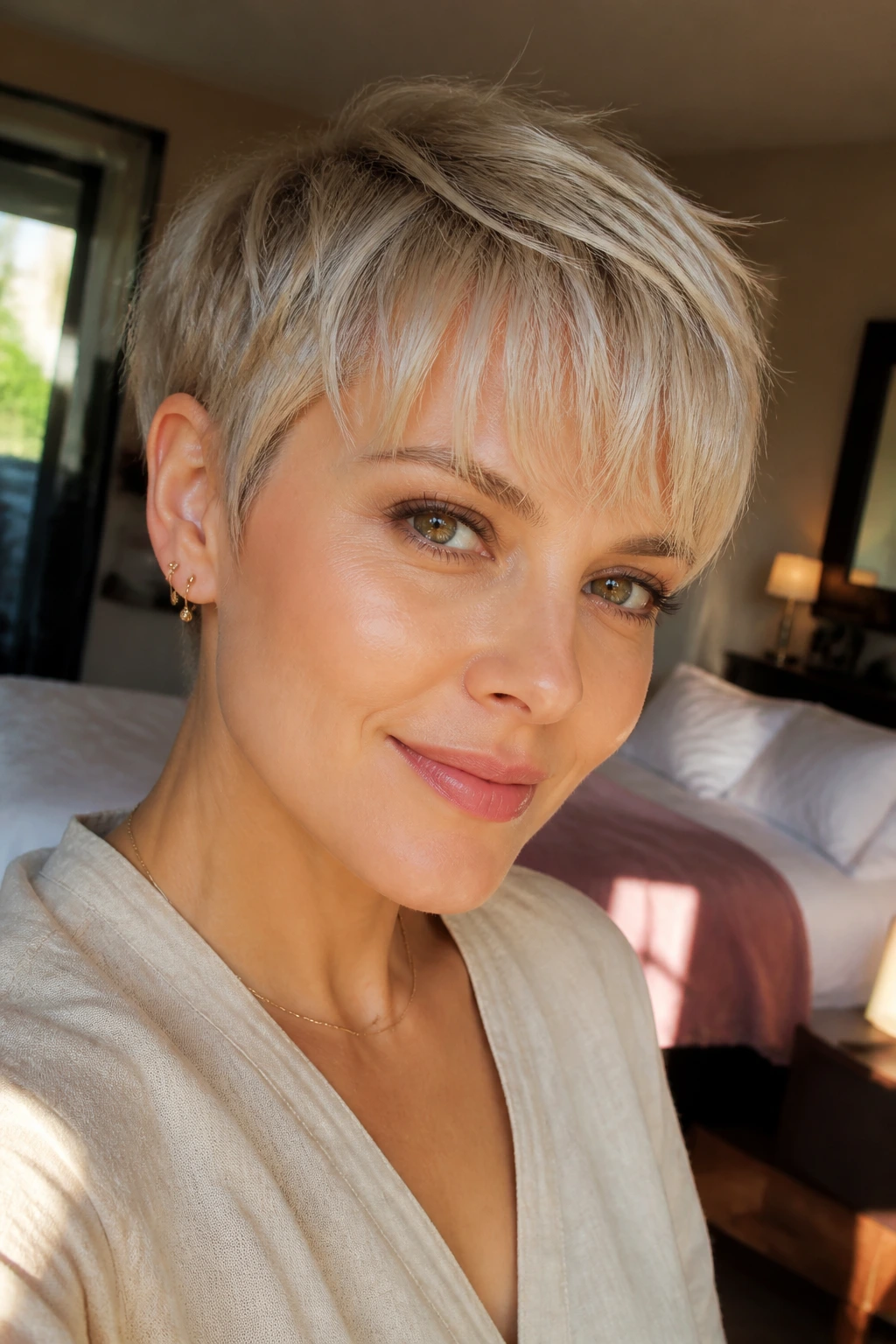
A wispy fringe is a smart way to soften the front of a pixie without sacrificing too much density. Fine hair often looks better with a little air around the forehead than with a hard, blunt bang that eats up half the front section.
The fringe should be cut light enough to move and break apart naturally. A tiny bit of point-cutting at the ends helps. You don’t want the fringe to sit there like a flat sheet. You want it to skim.
It’s especially nice if you like to wear the rest of the pixie close and clean. The fringe becomes the soft spot in the cut, which keeps the whole thing from feeling too severe.
A one-pass touch-up with a mini flat iron can help if the front bends weirdly. Keep the pass quick. Fine hair doesn’t need much heat to change shape.
21. Stacked Crown Pixie
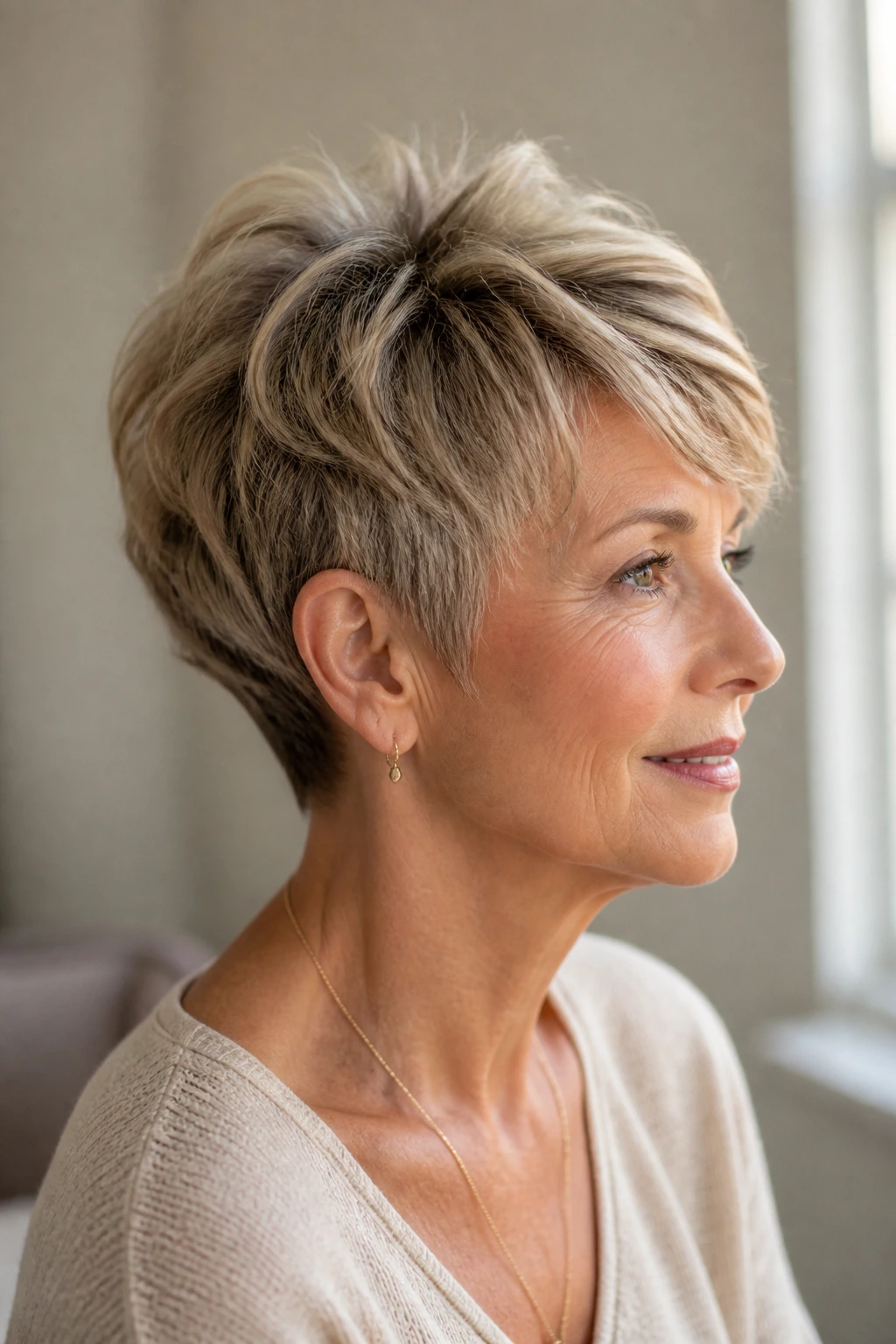
If your crown needs help, stack it there — not everywhere. That’s the cleanest way to think about a stacked crown pixie, and it’s the reason the cut works so well on fine hair.
The stacked layers sit in the back center, around the occipital area, and create a lifted profile from the side. The rest of the cut can stay softer and more controlled. That contrast keeps the haircut from turning into a helmet, which is the trap with this shape.
You do want the stacking to be subtle. Too much and the back bulks up in a dated way. Too little and the lift disappears. A few well-placed shorter layers can make a huge difference.
That’s the line to remember.
For styling, root-lifting mousse at the crown plus a small clip while the hair cools usually does more than heavy teasing ever will. Teasing looks tempting. It also collapses fast.
22. Neck-Length Bixie
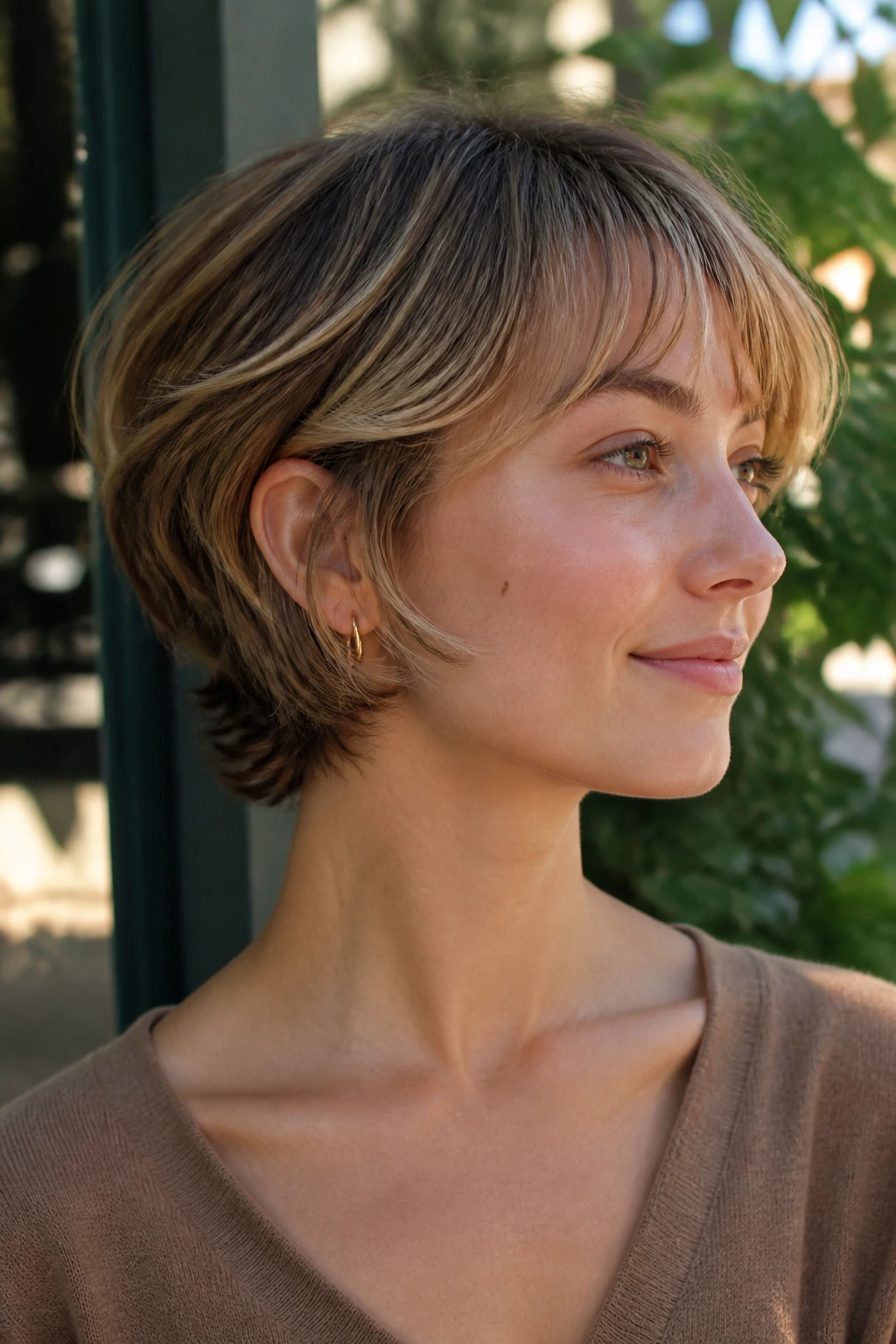
A neck-length bixie is the grown-up version of a pixie that still wants to behave like a short cut. The back brushes the neck, the sides stay light, and the front usually has enough length to tuck or sweep.
This shape is useful for fine hair because it offers swing. A super-short pixie can sometimes feel too stripped down if your hair is sparse. A neck-length bixie keeps a little movement at the ends, which makes the whole style feel fuller.
It also grows out kindly. That matters. A lot of short cuts get awkward in a hurry, but this one can drift toward a short bob without looking like you waited too long to get back to the salon.
I like it for anyone who wants the comfort of a pixie with a softer edge around the face and neckline. It’s relaxed, but not lazy.
23. Tapered Pixie With Long Top
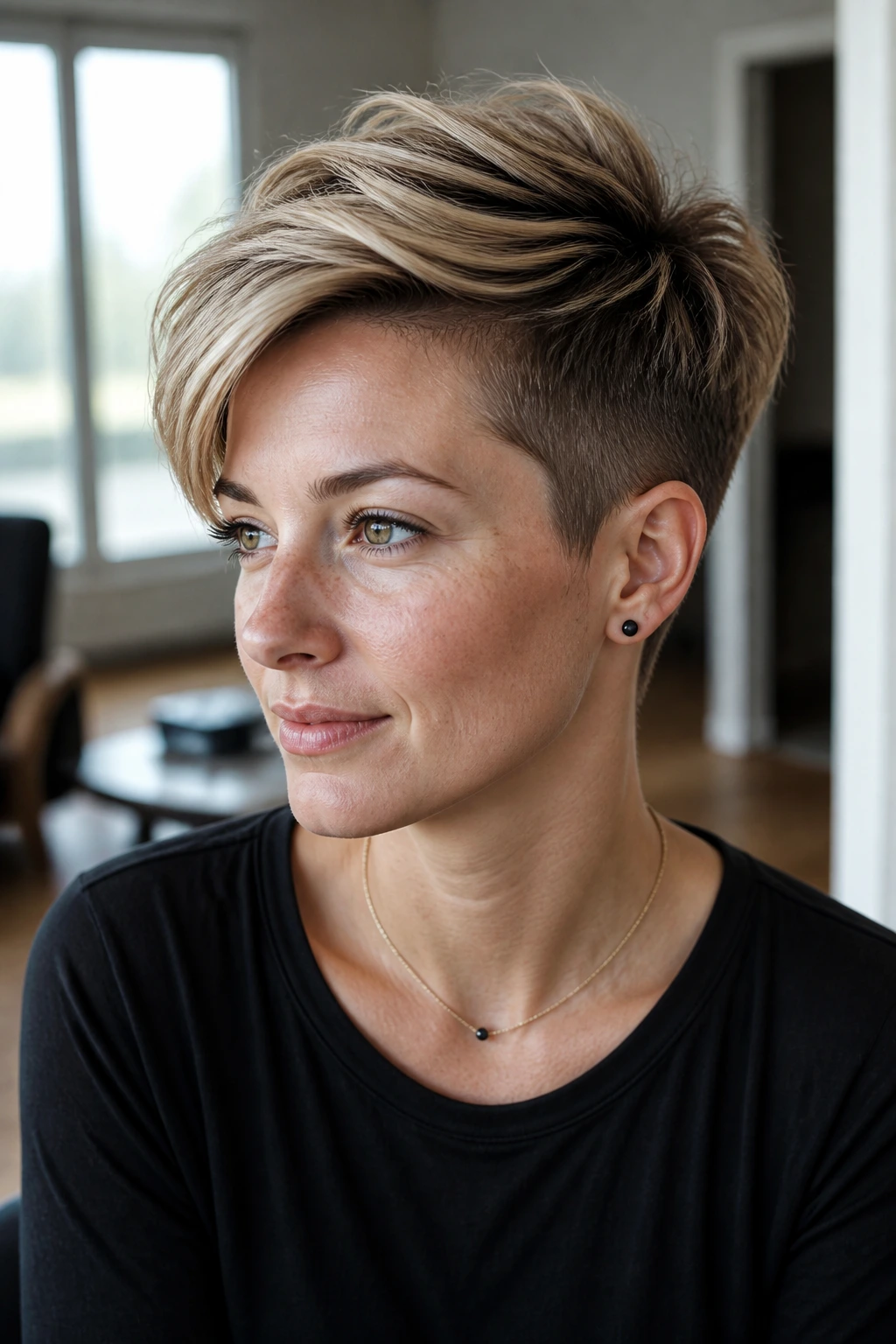
A tapered pixie with a long top gives you two moods in one cut. The sides and nape stay close and neat, while the top keeps enough length for a sweep, a quiff, or a side tuck.
Why The Shape Works
Fine hair often needs contrast more than length. Short sides make the top look fuller by comparison, and the taper keeps the cut from ballooning out around the ears. That makes the whole shape look cleaner and sharper.
- Keep the sides around ½ inch or less.
- Leave 4 to 5 inches on top if you want styling options.
- Ask for soft texture near the front, not choppy ends everywhere.
- Use the top to create height or movement depending on the day.
This is a good choice if you like changing your part line. It can read polished in the morning and more undone by evening with almost no extra effort.
24. Airy Layered Crop
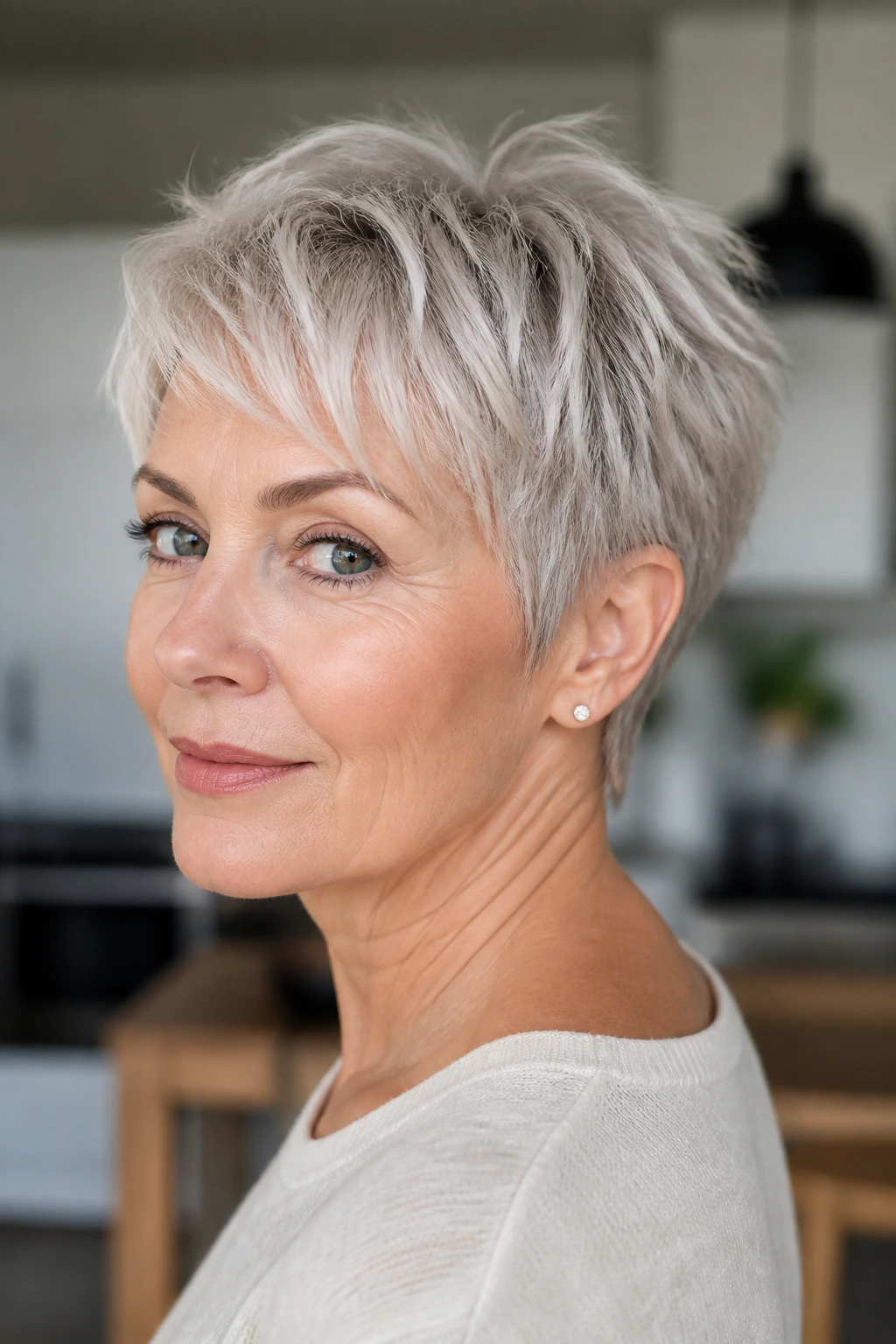
An airy layered crop is the cut for people who hate a heavy styling routine. The shape stays light, the layers are small and controlled, and the whole thing can air-dry with a decent result if the cut is done well.
The reason it works on fine hair is simple: the layers don’t drag the ends down. They keep the silhouette lifted and let the hair separate in a soft way. There’s no bulky block at the bottom to flatten everything out.
A little leave-in spray on damp hair is enough for most days. Scrunch the crown once, tuck the sides where they belong, and leave it alone. If you touch it too much while it dries, the shape turns fuzzy.
This is not the flashy option. It is the practical one. And practical haircuts age better than trendy ones that need 20 minutes and three tools every morning.
25. Slick Pixie
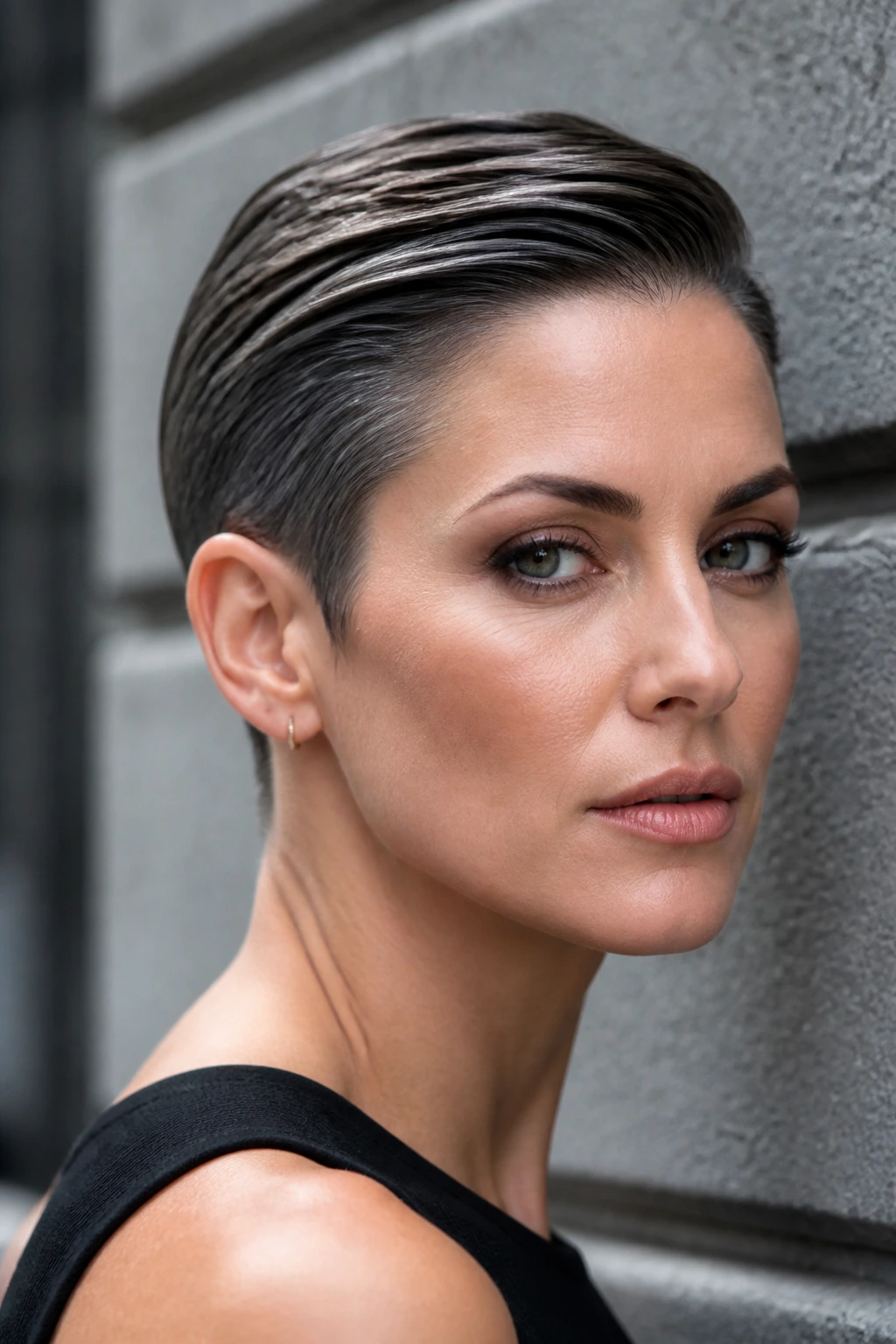
Can fine hair wear a slick pixie? Absolutely. Fine strands often lay close to the head more easily than coarse ones, which makes sleek styling easier than people expect.
The trick is product control. Use a small amount of gel or styling cream — about the size of a nickel, sometimes less — and work it through damp hair with a comb. You want shine and direction, not wet, clumpy heaviness.
How To Keep It Sleek, Not Greasy
Start with clean roots. Dirty roots and slick styles do not get along. Comb the hair back or into a side sweep, then let it dry in place or set it with a short blast from the dryer. If the hairline is sparse, go lighter on the gel at the front so the scalp doesn’t show too sharply.
This cut is sharp and modern-looking, but it also exposes everything. That’s the trade. If you like precision, it’s a strong one.
26. Soft Mullet Pixie
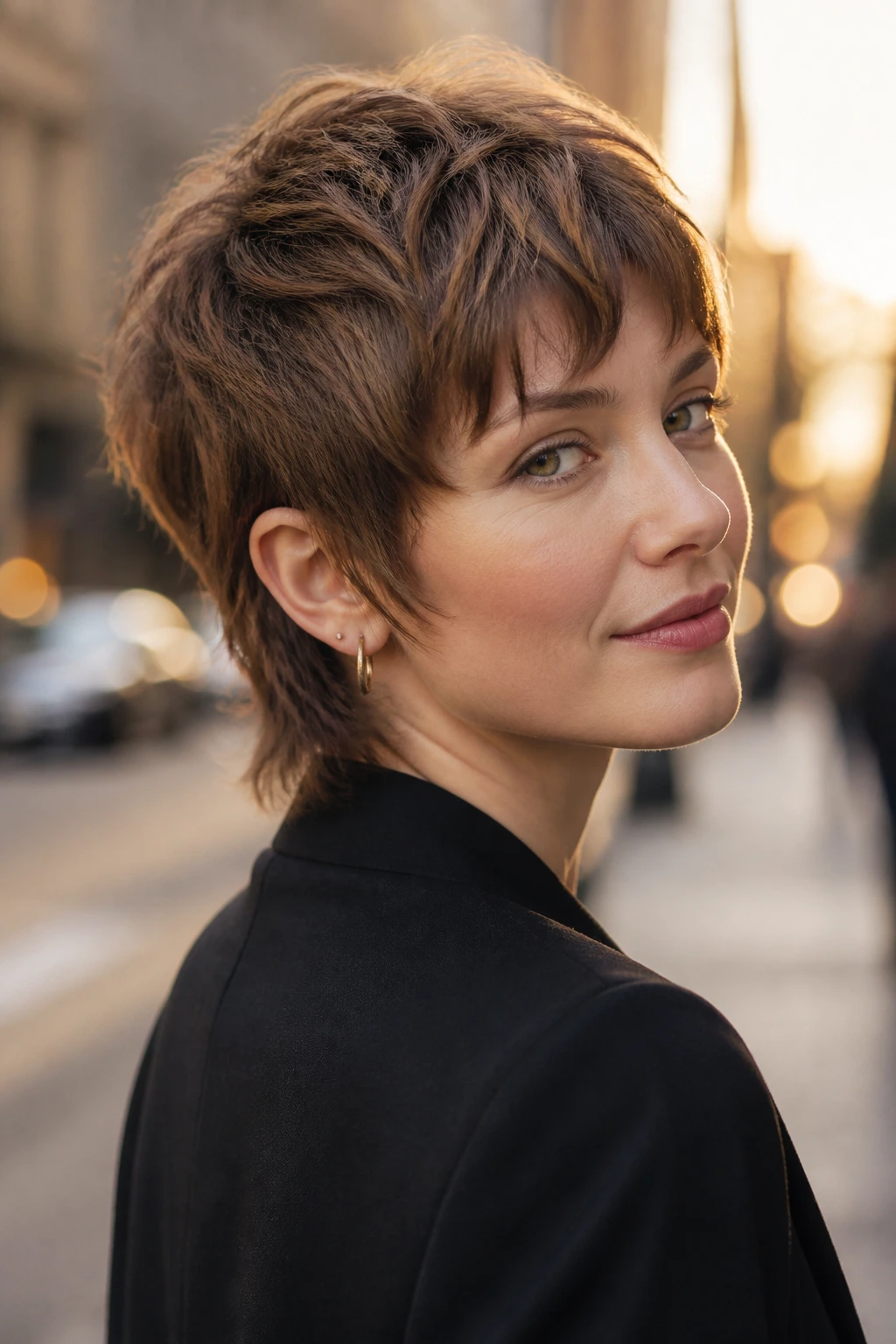
A soft mullet pixie sounds riskier than it is. The back is left a little longer, the crown stays short, and the front usually has some movement around the cheekbones. On fine hair, that extra bit of length in back can stop the style from looking too clipped.
The soft version is the one worth considering. A hard mullet shape can overwhelm fine strands fast, while a gentler version keeps the silhouette light and wearable. Think subtle difference, not costume.
It works well if your hair has any wave at all. Let the back move a little. Diffuse it at low heat if you want more texture, or let it dry naturally and keep the shape looser.
This is a good choice for someone who wants a little edge without a harsh outline. It has personality, but it doesn’t shout.
27. Classic Boyish Pixie
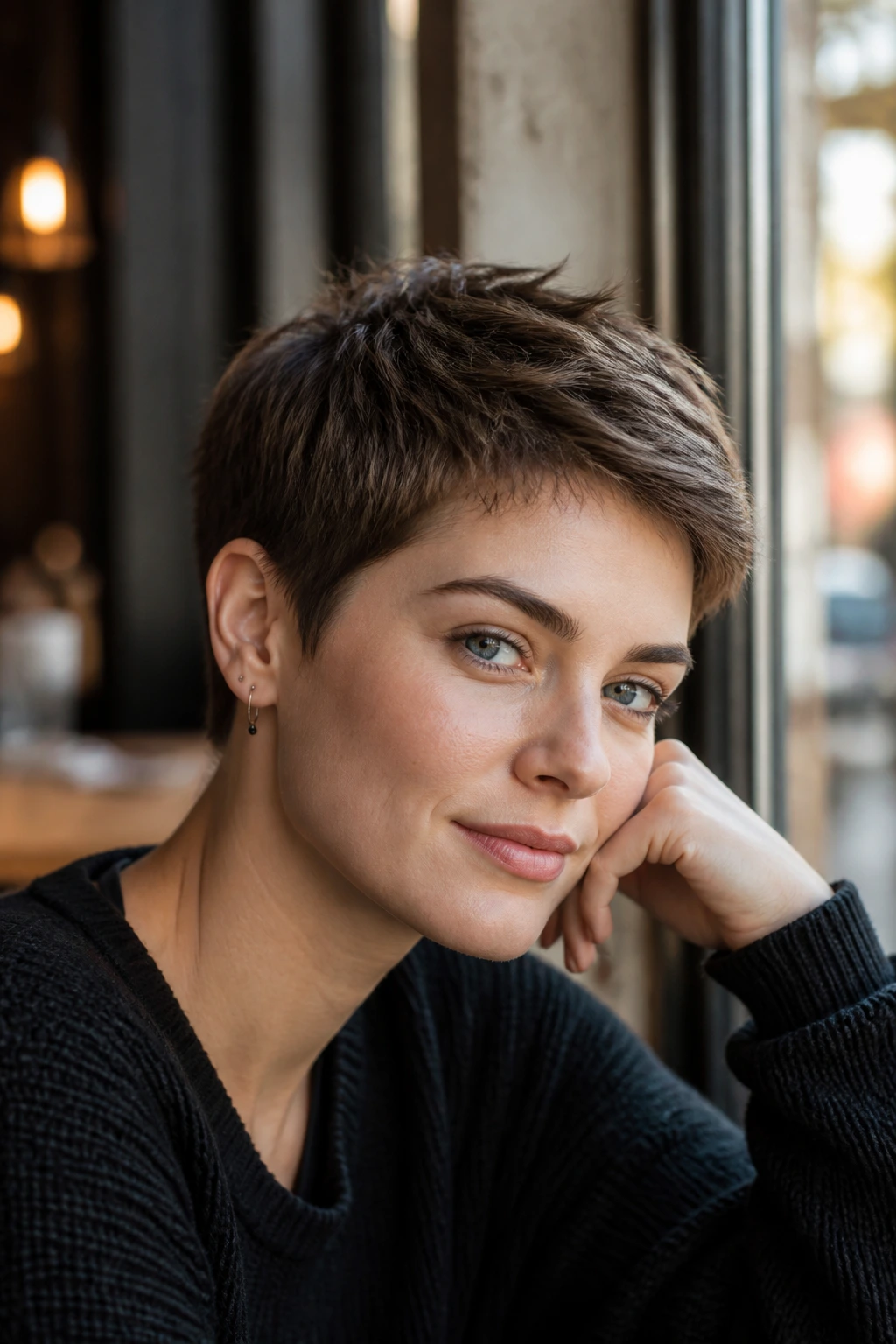
There’s a reason the classic boyish pixie never really goes away. It’s clean, simple, and on fine hair it can look sharper than a more layered cut because the outline stays tidy.
The shape is usually short around the ears and neckline, with just enough length on top to create a small bend or sweep. That modest top length matters. It gives the haircut some lift without making it floppy.
This style is good when you want the least amount of daily handling possible. A little cream wax, a finger-comb, and you’re out the door. Nothing dramatic. Nothing needy.
One nice thing about this cut: it looks better when the neckline stays freshly cleaned up. A tidy nape changes the whole mood. Messy growth can make the whole thing lose its shape fast.
28. Rounded Pixie
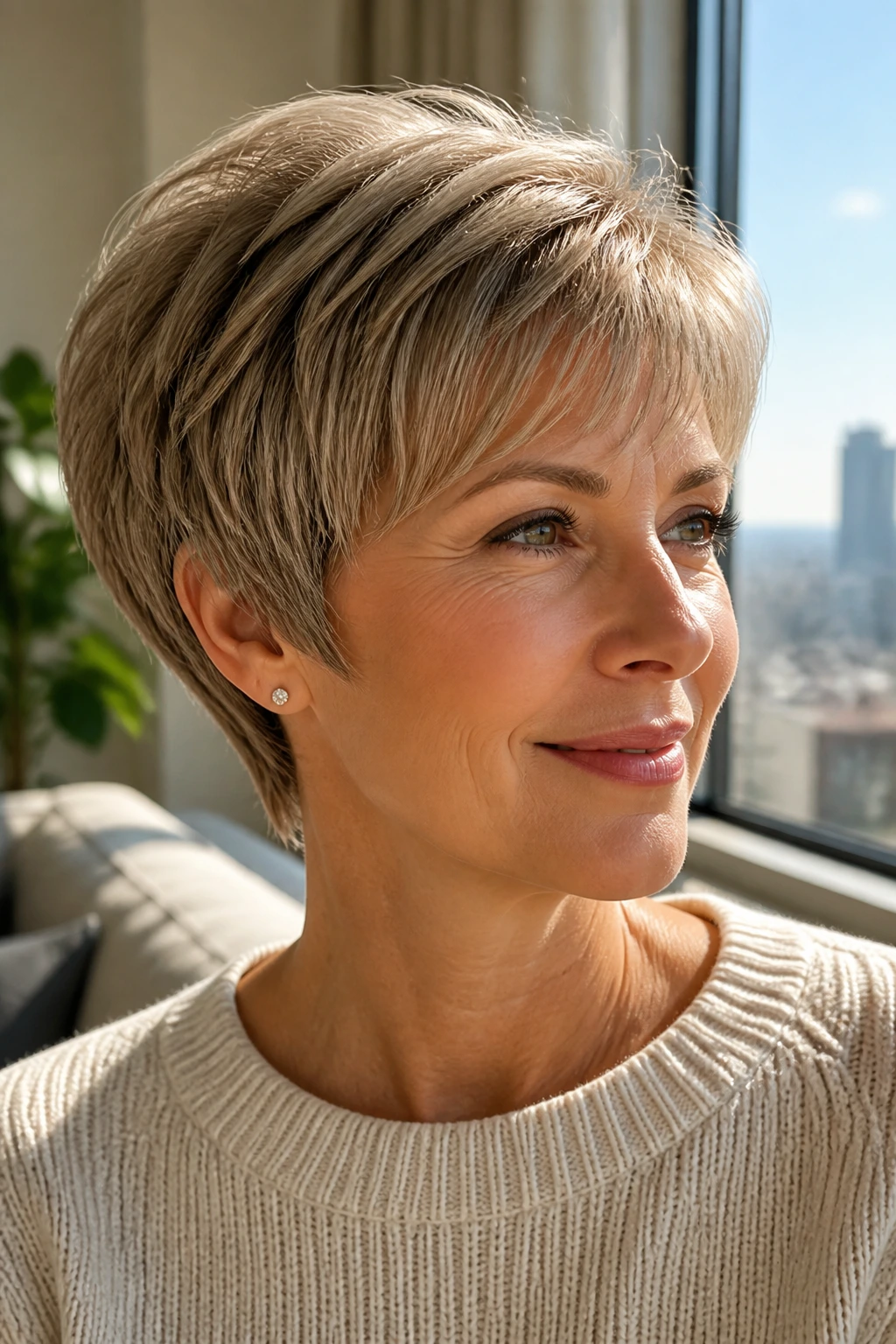
A rounded pixie works because the curve makes fine hair read as fuller. Flat, angular cuts can expose sparse patches at the sides. A rounded silhouette softens that problem and gives the head a more balanced outline.
This shape tends to suit people with sharper features or glasses because the curve softens the face without hiding it. The sides are kept gently full, the top has a soft dome, and the back follows the head instead of jutting out.
The styling is usually simple. A round brush and a low-heat blow-dry can bend the ends inward by a few millimeters, and that tiny curve is enough. You are not trying to create a pageant blowout.
If your fine hair tends to stick straight out at the temples, this is a smart answer. The rounded line calms that problem down.
29. Deconstructed Pixie
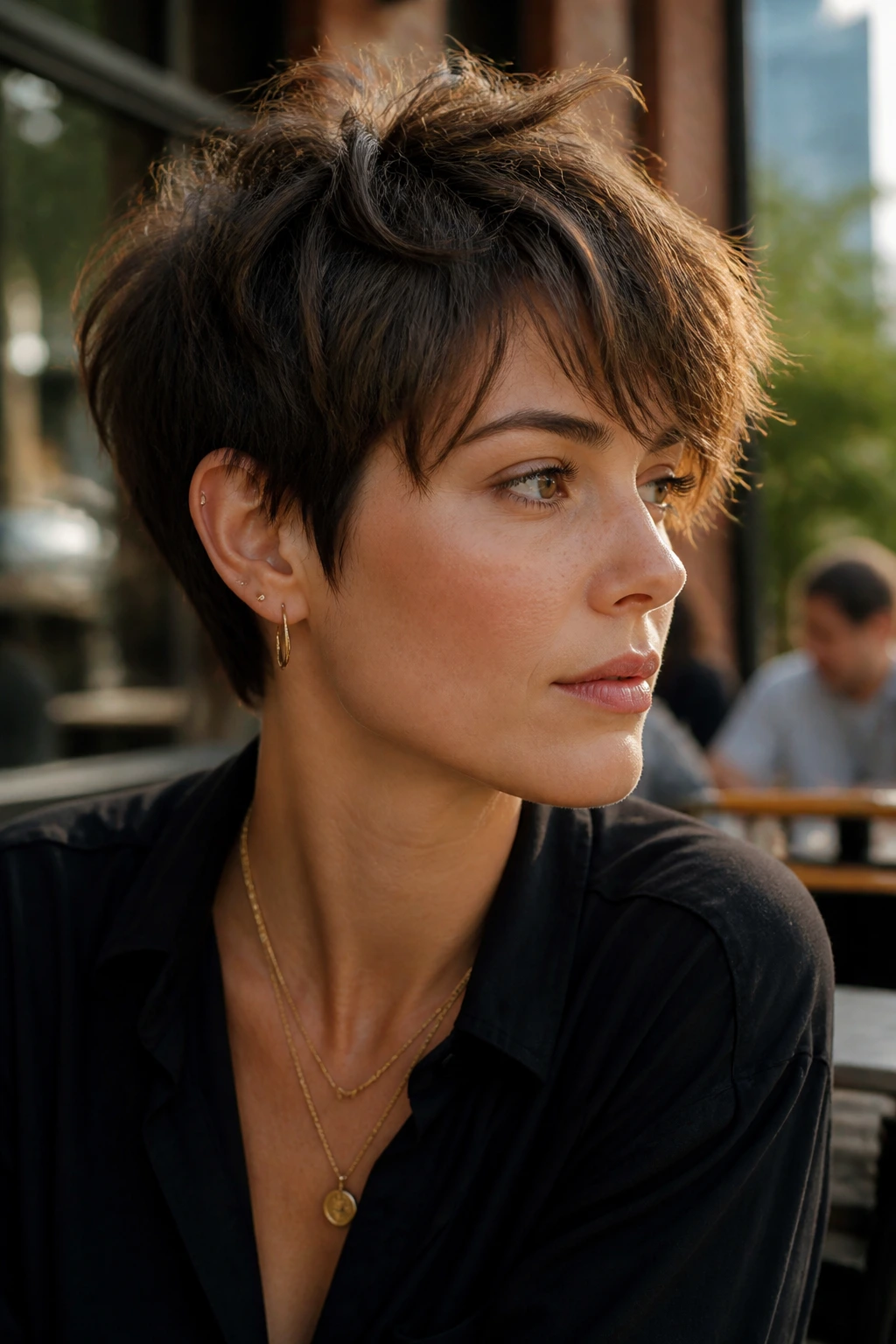
A deconstructed pixie breaks the shape apart in a controlled way. The pieces are uneven on purpose, which keeps fine hair from looking too neat or too thin.
The style works because the eye reads texture as fullness. Small, broken segments at the fringe and top make the cut feel layered even when the length is short. But there’s a line here too. Go too broken and the hair looks sparse. Go too clean and the point of the cut disappears.
What Makes It Feel Undone
- Shorter, separated top pieces.
- Slightly longer front corners.
- A bit of bend rather than a strict wave.
- Styling with wax spray or a light cream, not a hard paste.
This is a good cut for someone who wants a cool, lived-in feel and doesn’t mind the hair looking a touch imperfect. That’s the whole charm, actually.
30. Easy Grow-Out Pixie
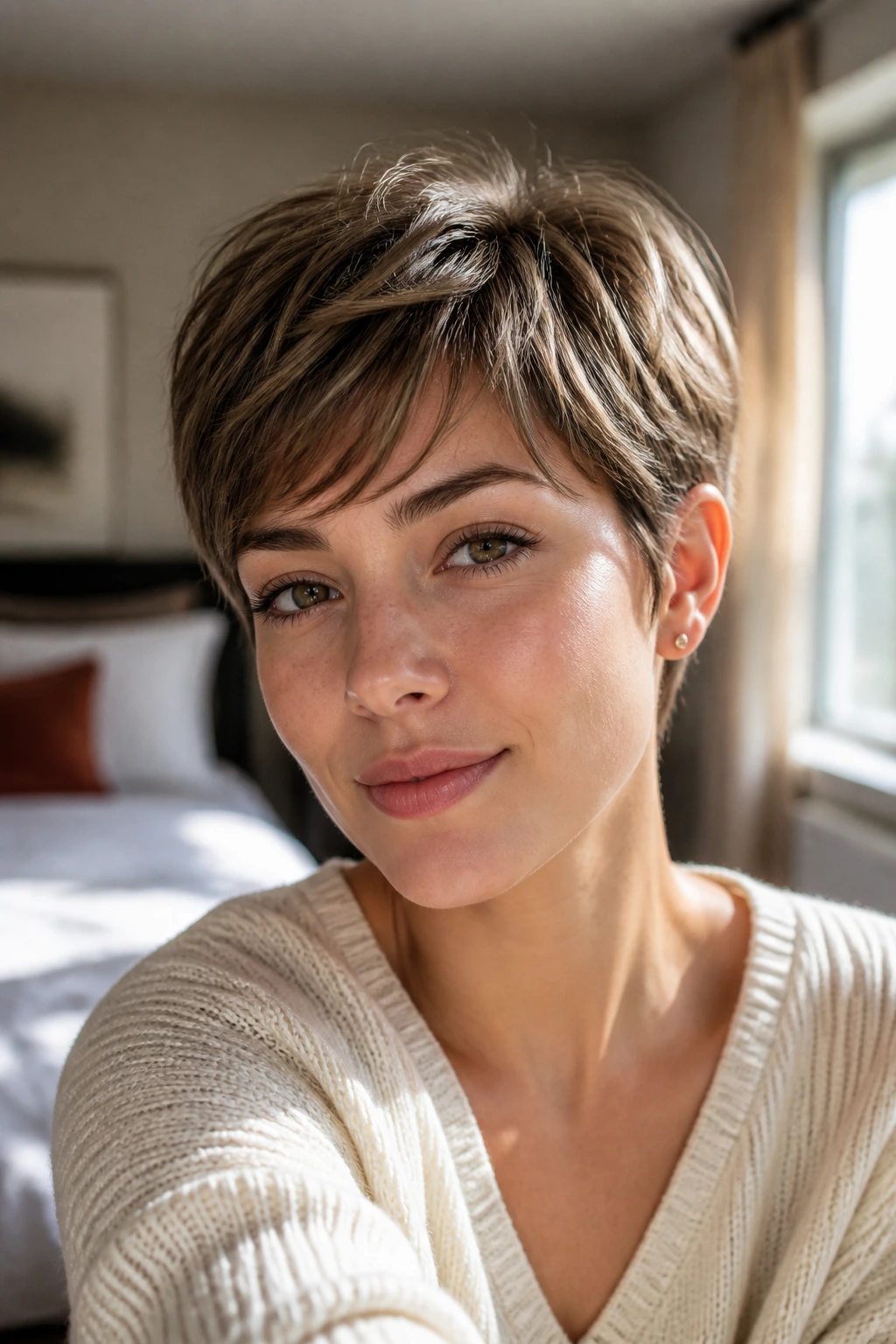
If you want one pixie that won’t punish you when it starts growing out, this is the one. The easy grow-out pixie keeps enough length on top and around the ears to slide into a longer shape without turning shaggy overnight.
The key is softness at the edges. Tight sides, yes, but not razor-sharp lines that show every week of growth. A top length around 3 inches and a slightly longer front can carry you through that awkward middle stretch far better than a super-short crop.
Fine hair tends to look better during grow-out when the shape still has a plan. This cut gives it one. You can tuck it, sweep it, part it differently, or let it dry messy and still keep the outline readable.
That’s why I keep coming back to it. Not because it’s flashy. Because it stays decent when real life happens, and that’s usually the better test of a haircut anyway.
