



Fine hair can look limp in a pixie cut if the shape is too blunt, too boxy, or too heavy at the crown. Blonde pixie cuts for fine hair solve that problem in a sneaky way: the light color breaks up the scalp line, and the right layers stop the top from collapsing by lunchtime.
The shade matters more than people think. Ash blonde can make texture look sharper, beige blonde softens sparse ends, and a darker root gives the crown a little shadow so the whole cut reads thicker from a few feet away. That shadow is not a flaw. It’s the thing that keeps the haircut from looking see-through.
The other piece is length. Fine hair usually does better when the top has enough room to move—roughly 1.5 to 3 inches—while the sides and nape stay neat. Too short, and the cut can lose shape fast. Too long, and the whole thing starts to droop. There’s a narrow sweet spot, and that’s where pixies get interesting.
1. Blonde Pixie Cuts for Fine Hair With Soft Layers
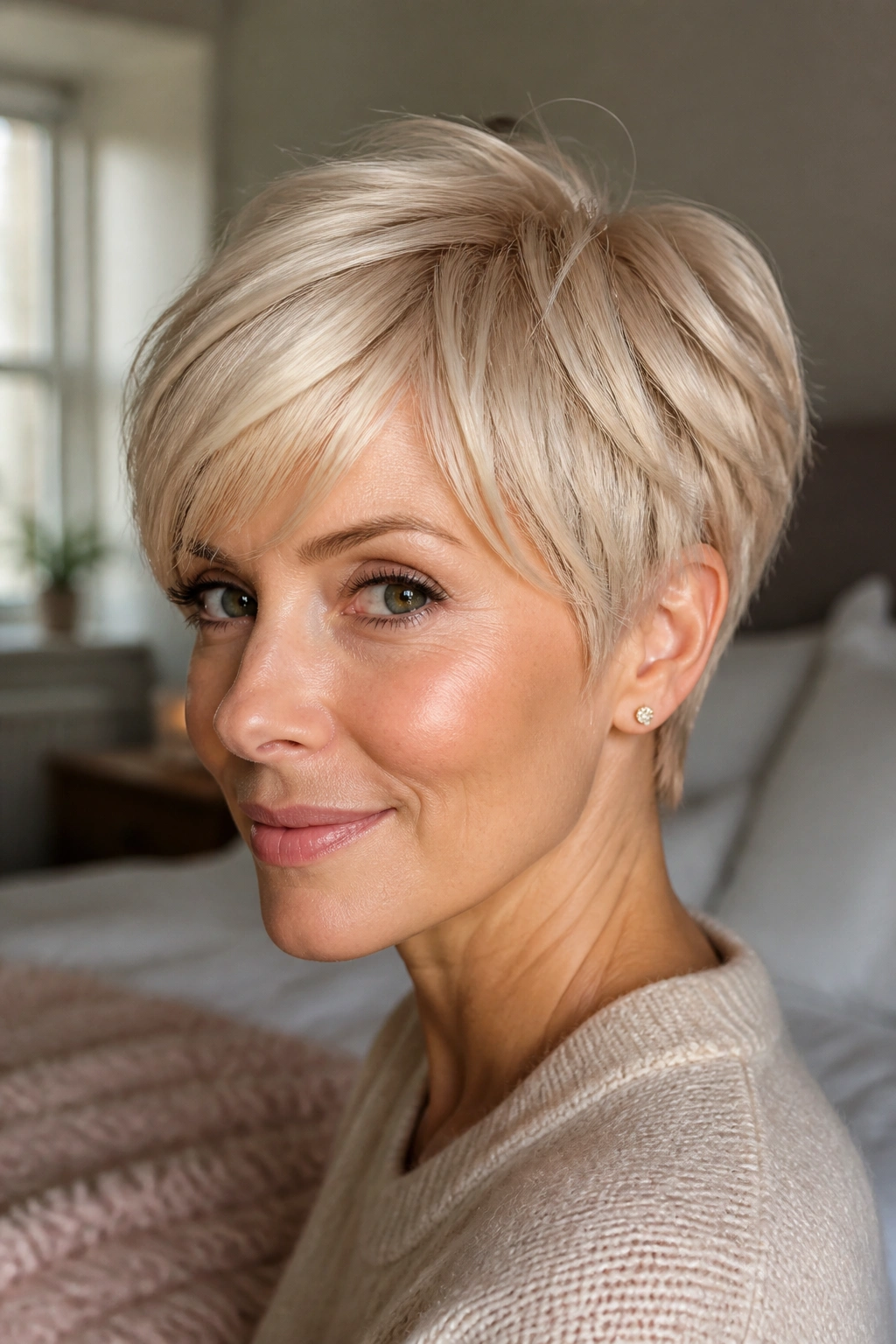
Blunt lines and delicate hair do not get along for long. Soft layers at the crown keep the cut from sitting in one flat sheet, and a pale blonde tone stops the edges from looking heavy.
Why the Layers Matter
Ask for the top to stay a little longer than the sides—about 2 inches at the crown is enough for movement, while the nape can sit close to the head. Champagne blonde, beige blonde, or a light wheat tone all work because they scatter light instead of forming one solid block. If your hair has a natural side part, keep it. Fighting a cowlick with a super-tight crop is a quick way to get a helmet shape.
- Crown layers that can lift with a fingertip
- Tapered sides that hug the head
- A soft fringe that sweeps instead of sitting blunt
- A trim every 5 to 6 weeks so the shape stays clean
My rule: if the top looks airy but the sides still feel neat, the cut is doing its job.
2. Side-Swept Butter Blonde Pixie
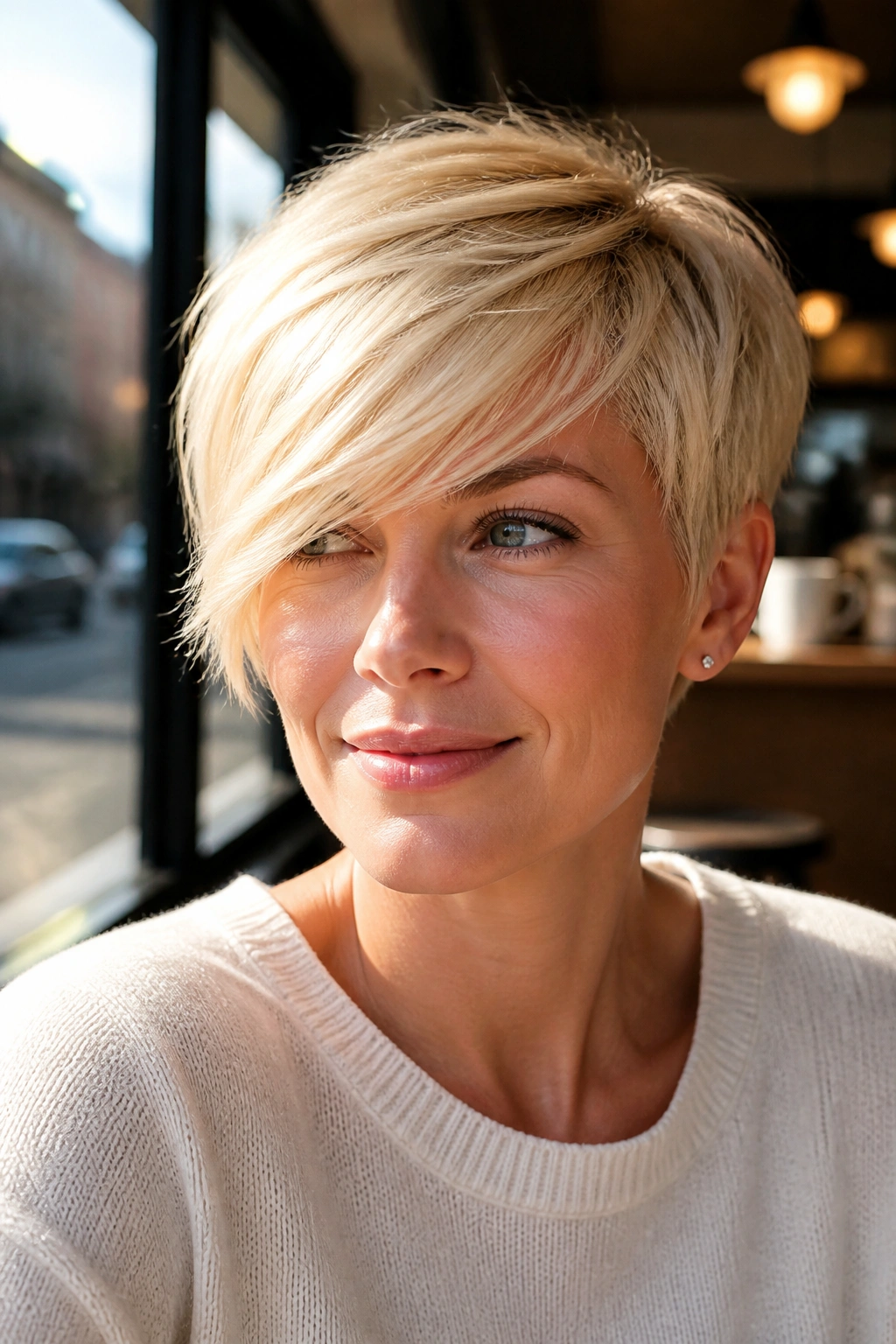
Why does a side-swept fringe make fine hair look fuller? Because the eye follows the diagonal line before it notices how much hair is actually there. That little trick matters on a pixie.
A butter blonde shade keeps the front soft, which is useful if your forehead feels too exposed with a center part or a tiny bang. The fringe should be long enough to skim the eyebrow, then tucked slightly to one side with a round brush or your fingers. Nothing stiff. A touch of mousse at the roots and a pea-sized dab of cream through the ends is plenty.
This one flatters people who want a pixie that still feels feminine and easy to wear. It also plays nicely with glasses. The side sweep leaves room for frames without crowding the face.
3. Platinum Tapered Pixie With a Short Nape
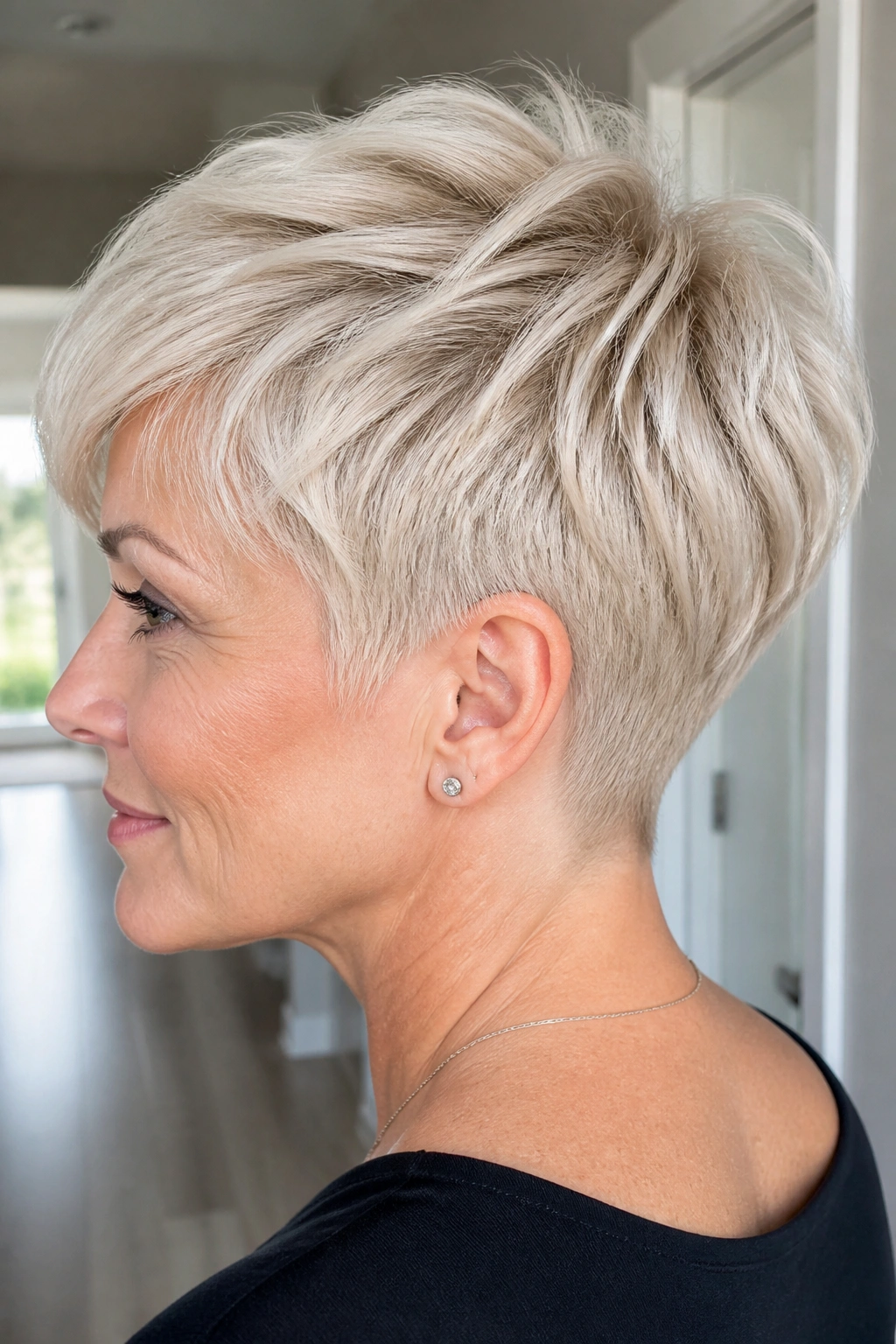
A platinum tapered pixie can look crisp on fine hair when the nape is cut close and the top stays just a touch longer. The contrast gives the illusion of density where it counts.
How to Wear It
Keep the back snug, the temple area clean, and the crown textured rather than smooth. A platinum shade makes the shape look sharper, which is useful if your hair tends to disappear into your head. But there’s a catch: platinum shows every uneven patch, so the cut has to be neat from the start.
- Best on straight or slightly bent hair
- Needs a trim about every 4 weeks
- Looks strongest with matte paste, not glossy serum
- Works well when the top is styled forward, then lifted at the roots
If you like sharp lines and low fluff, this is one of the cleaner options.
4. Feathered Ash Blonde Pixie
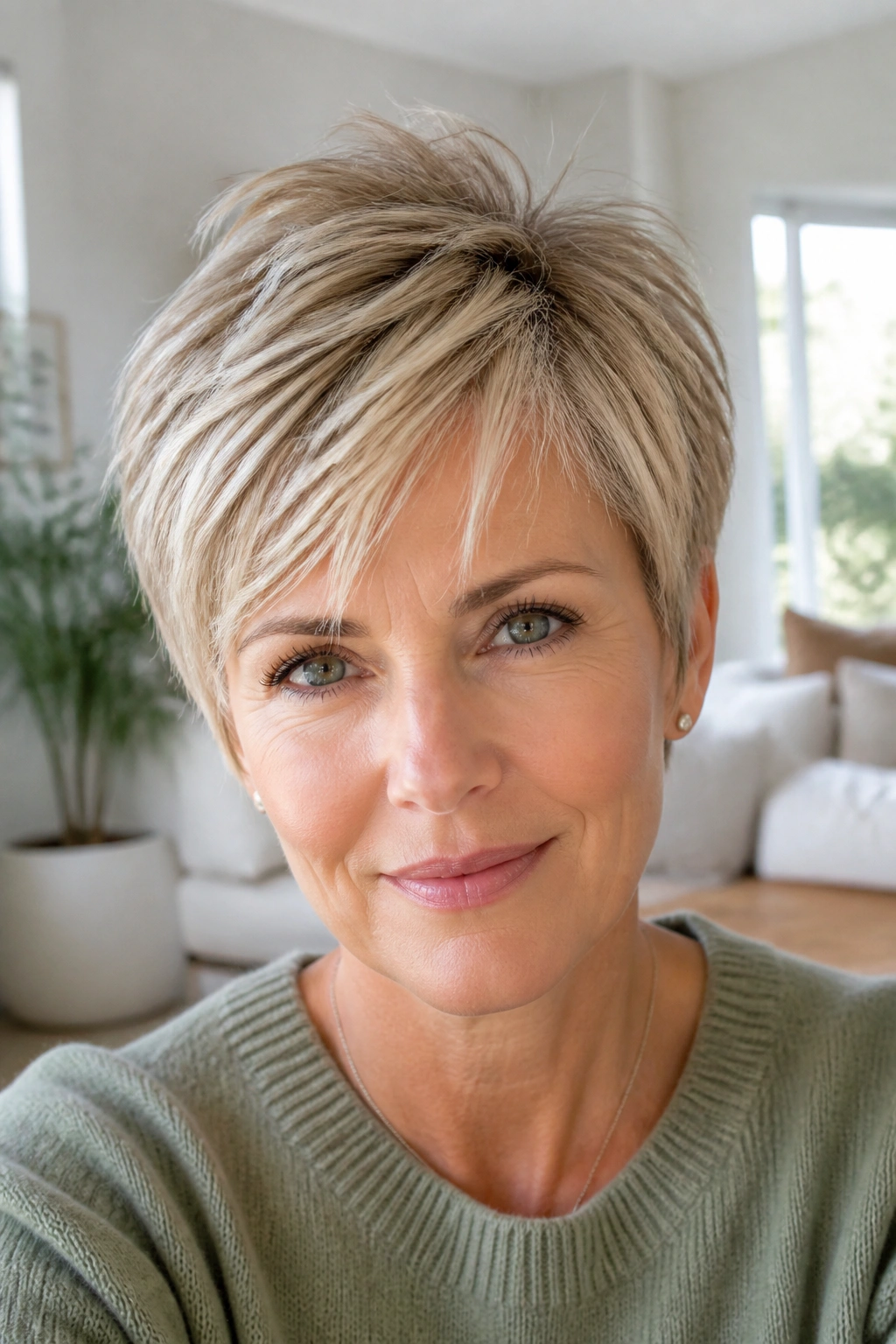
Ash blonde does not have to feel cold or flat. On a feathered pixie, it actually helps because the cool tone makes the little slices of texture stand out.
The trick is the feathering. Ends that are softened with scissors or a careful razor give the style motion, which matters when your hair is fine and quick to collapse. Ask for weight removal in the right places, not all over the head. Thin hair that has been over-thinned can end up looking wispy in a bad way, and nobody wants that.
- Feathered fringe around the eyes
- Light crown layers for movement
- Ash blonde toner to reduce brass
- Slightly longer pieces at the temples for balance
This cut is good if you like a cooler, cleaner look and you don’t want the hair to feel too sweet or soft.
5. Piecey Honey Blonde Pixie With Choppy Ends
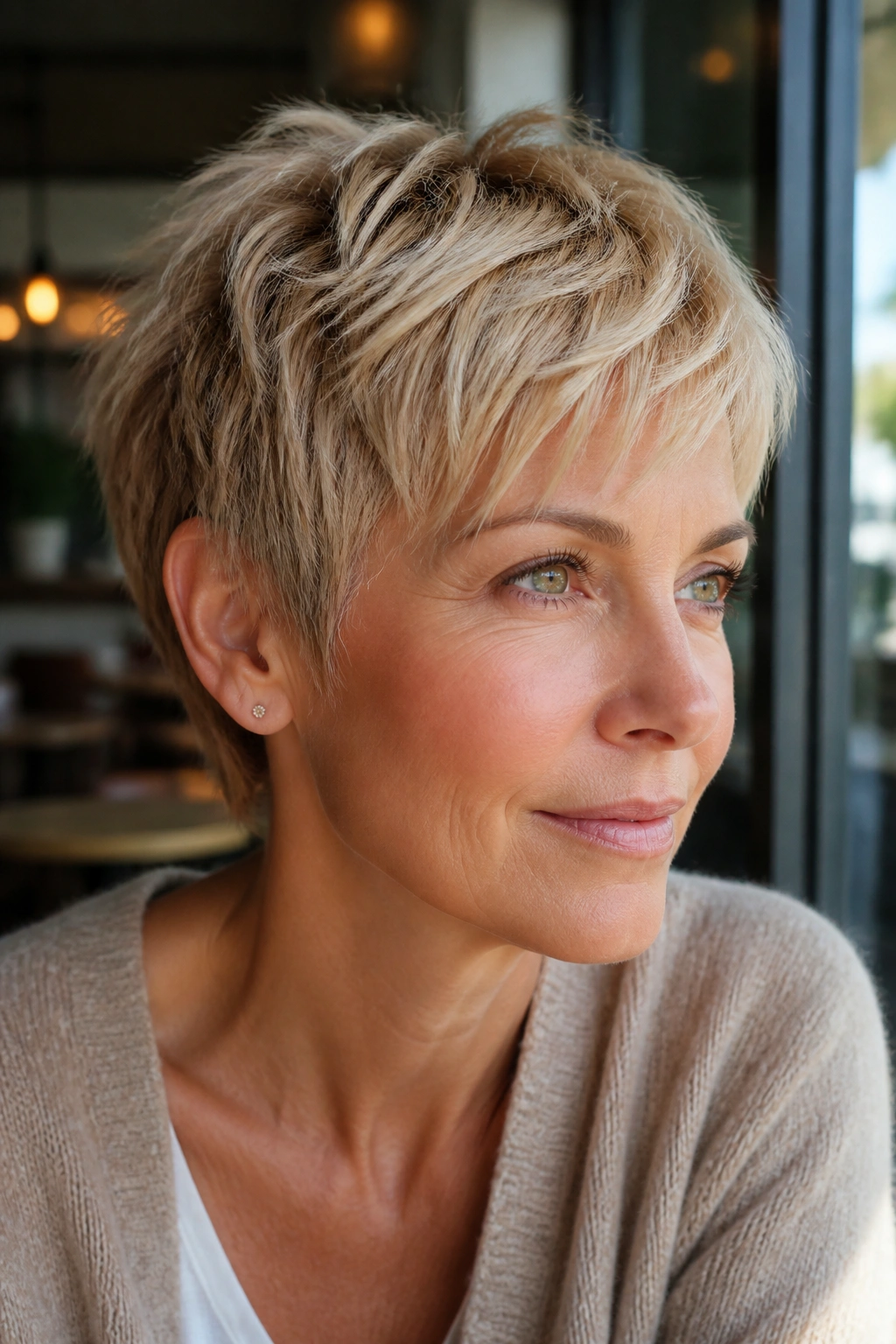
Run your fingers through a piecey honey blonde pixie and it feels loose, almost airy, like the cut has a little more life than the hair really does. That’s the charm here.
Honey blonde is warmer than ash or platinum, which helps fine hair in a very practical way: it softens the scalp line. Then the choppy ends break up the silhouette so the cut doesn’t fall into one tidy shape that exposes everything. A sea-salt spray at the roots and a tiny bit of styling cream on the tips is enough. Too much product and the whole thing goes limp.
This is the pixie for someone who likes a bit of mess. Not chaos. Just enough separation that the hair looks touched, not shellacked. It suits oval faces and softer jawlines especially well, because the texture keeps the look from turning severe.
6. Long-Top Beige Blonde Pixie
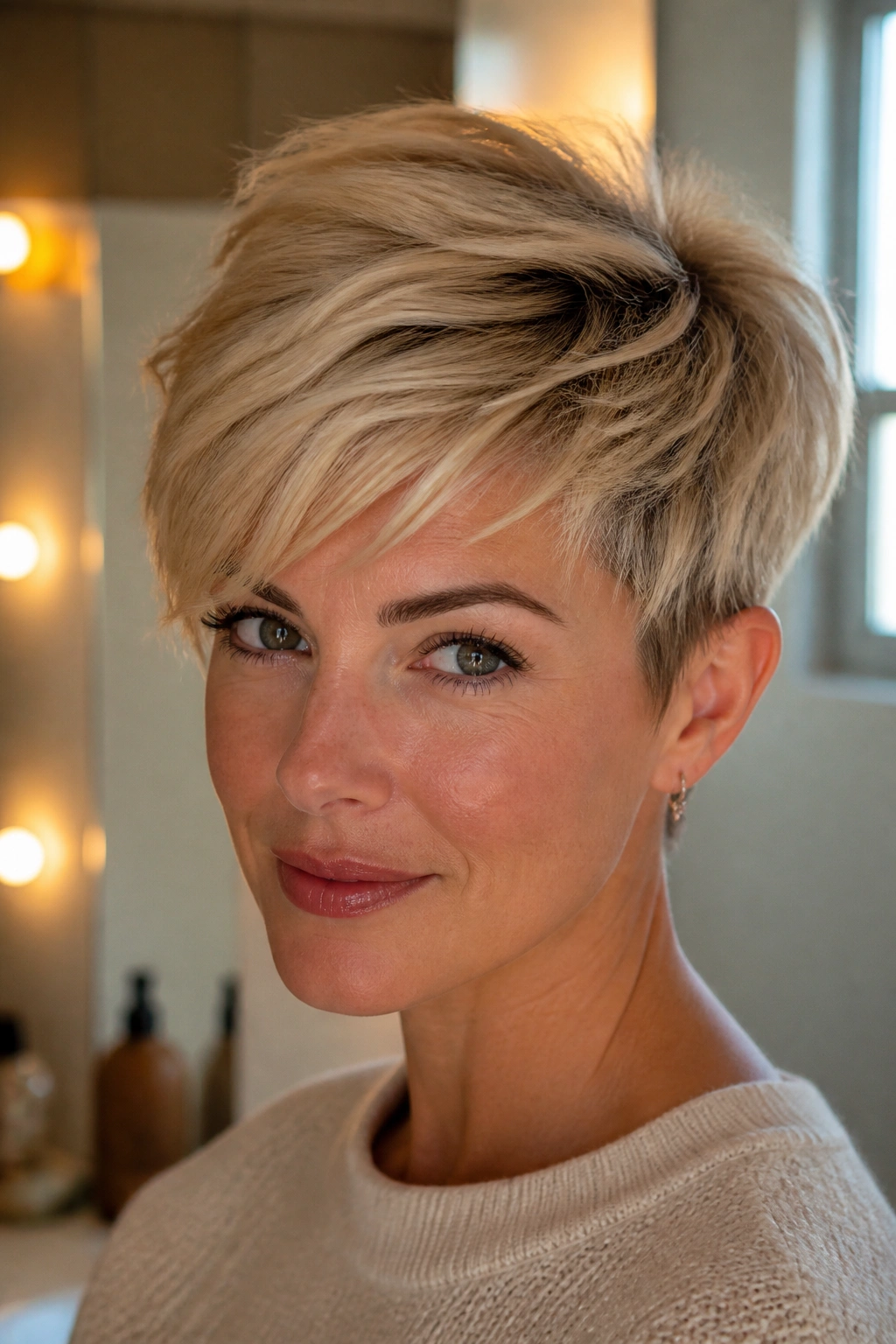
A long-top beige blonde pixie sits in the sweet spot between a short crop and a baby bob. That middle ground matters if you want to try short hair without going full buzzed-at-the-sides.
The top should have enough length to tuck, sweep, or bend—think 2.5 to 3 inches—while the sides stay clean and close. Beige blonde is a smart color choice because it reads soft rather than stark. It doesn’t fight the haircut. It lets the shape do the work.
This cut is also a nice bridge if you are growing out a shorter style. It keeps the neckline neat while giving you more to play with at the front. A blow-dry with a small round brush gives the crown a little bend. Air-drying can work too, as long as you add root lift first.
7. Micro-Fringe Blonde Pixie With Texture
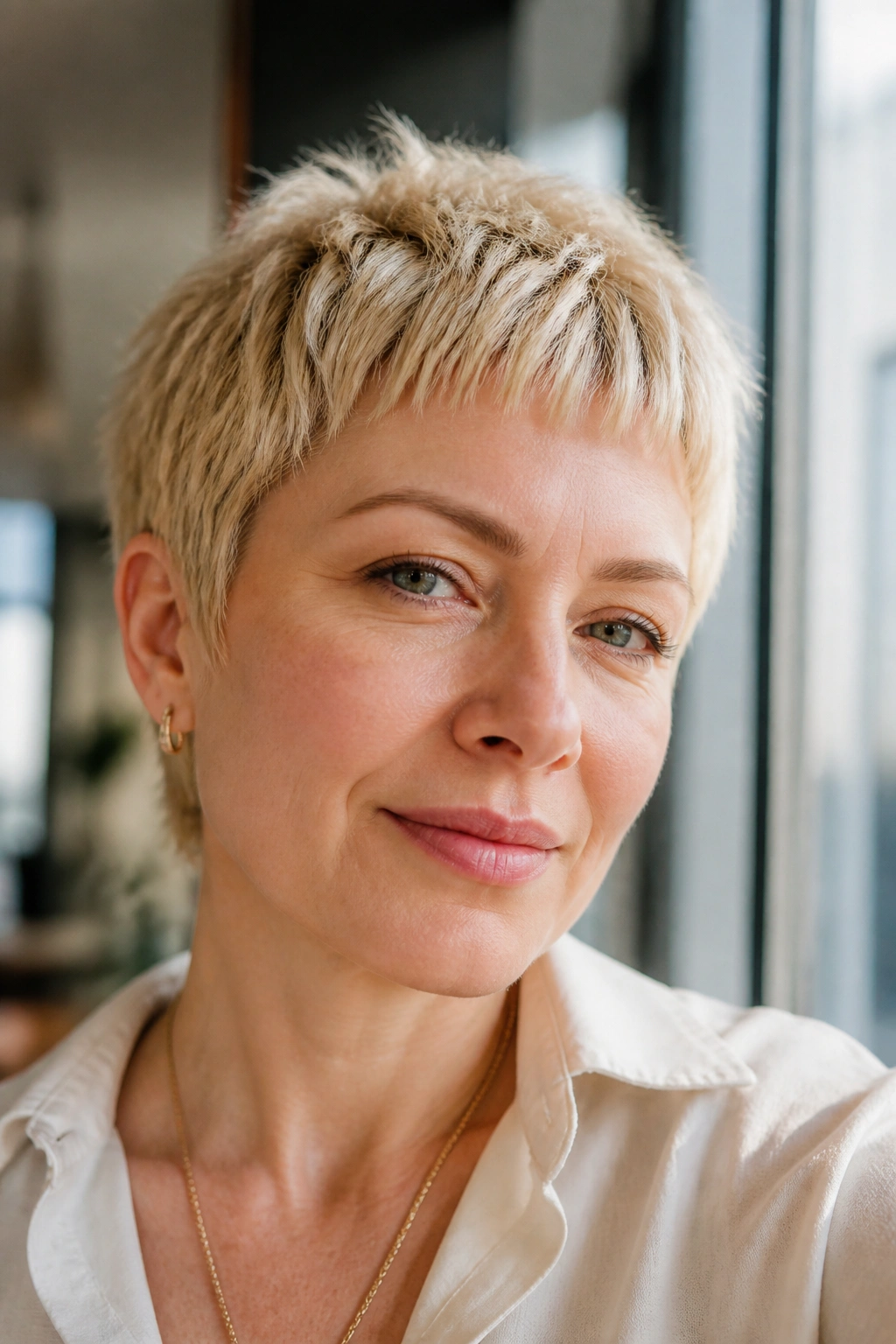
A micro-fringe on fine hair can look edgy or odd, depending on how much texture sits behind it. Short bangs need the rest of the cut to feel light, or they take over the whole face.
What Makes It Work
Keep the fringe short but not blunt. It should hover above the brows, not sit like a ruler across the forehead. The blonde tone helps, because pale color softens the hard line a tiny bang can make. On the rest of the cut, ask for piecey layers through the top and temples so the fringe has somewhere to live.
- Micro fringe length: just above the brows
- Top layers: choppy, not stacked
- Best pairing: beige blonde or soft platinum
- Styling: a quick finger-dry with a little mousse at the roots
Skip heavy oils. They make a tiny fringe sit flat, and then the cut loses the attitude that made it interesting in the first place.
8. Tousled Champagne Blonde Crop
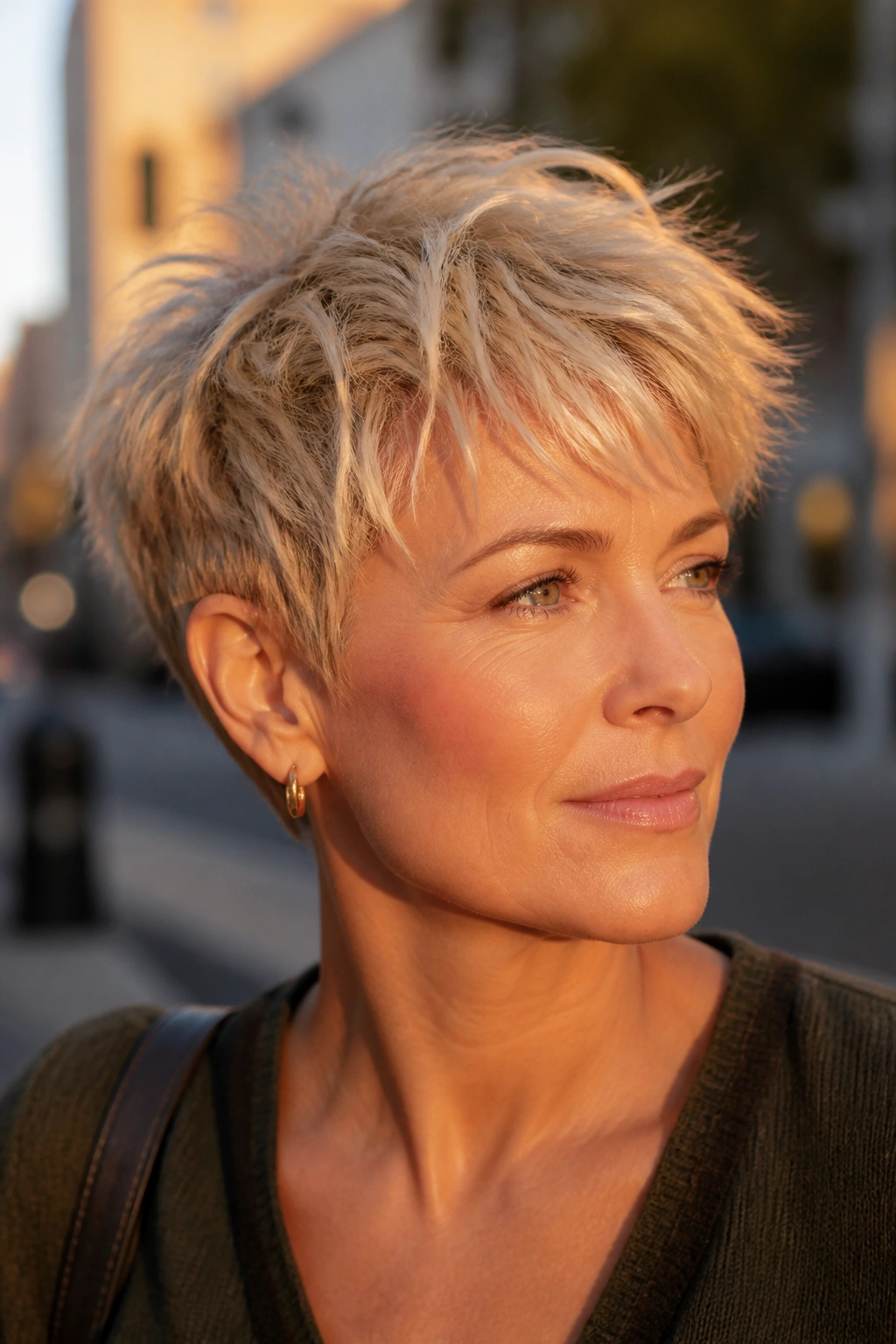
A tousled champagne blonde crop has that easy, slightly undone look that fine hair often wears well. The trick is keeping the ends light enough that they move when you shake your head.
Champagne blonde is a nice shade here because it has a soft brightness without looking icy. If the crop gets too sleek, the hair can start to show every weak spot. Tousling hides that. A 1-inch curling iron, used for quick bends instead of full curls, is enough. Wrap only the top third of the hair for 5 to 8 seconds, then let it cool in your hand before you separate it.
I like this cut for people who hate the idea of a strict blow-dry. It still looks intentional when it’s a little messy, and that saves time on busy mornings. The shape should never feel stiff. That would miss the point.
9. Curved Fringe Pixie With Crown Lift
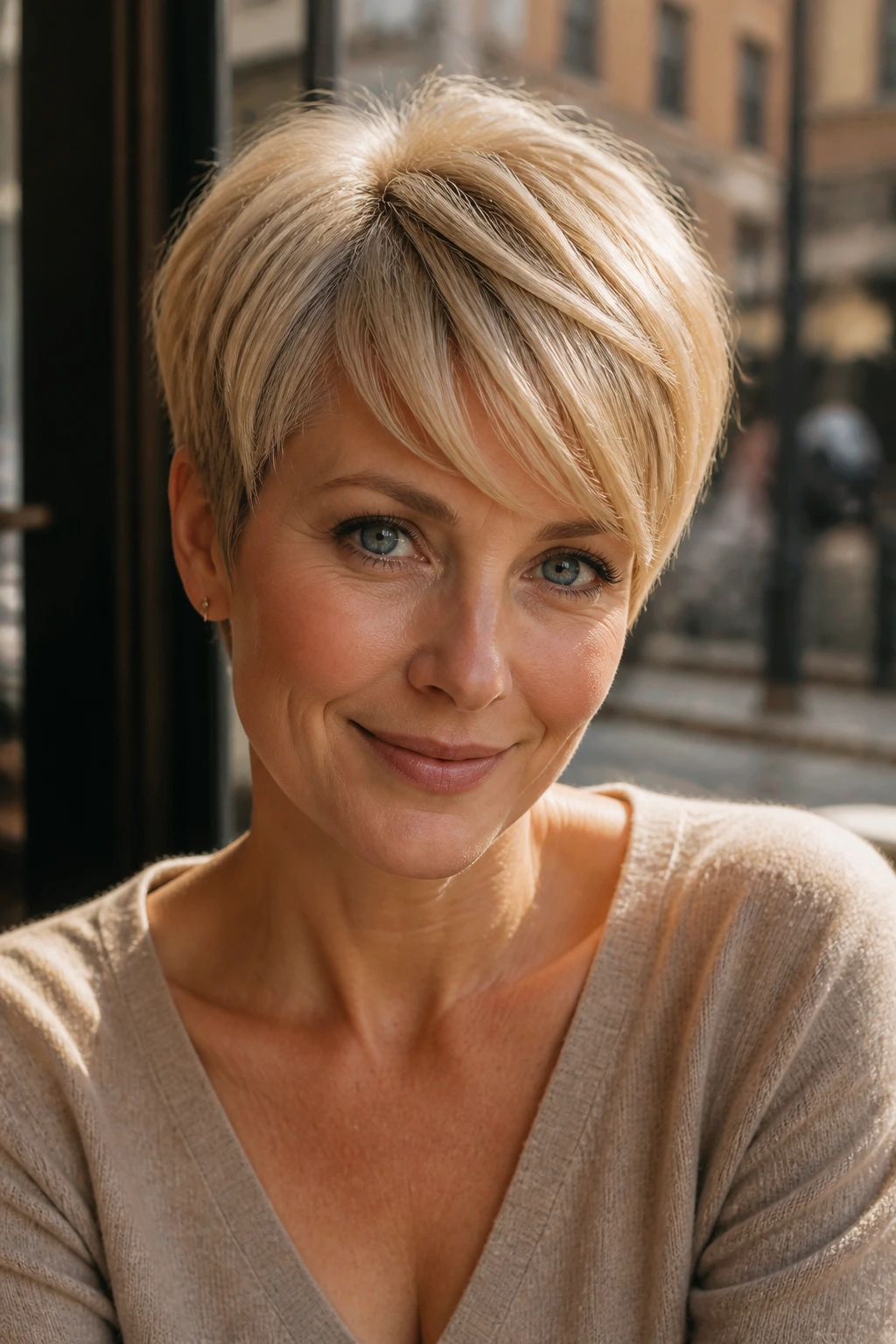
Why do curved fringes work so well on fine hair? Because they soften the forehead and let the crown look fuller without trying to stack too much volume all at once.
The front should arc gently across the brow, then taper back into the top so there’s no hard break. That curve draws the eye upward, which helps if the crown tends to fall flat. A light root spray at the crown and a quick blow-dry with a vent brush can make a huge difference. Don’t overdo it. A little lift looks modern; too much turns the cut into a puff.
How to Wear It
Part the hair just off center, not dead in the middle. Then brush the fringe forward and to the side while it’s still warm from the dryer. The shape should feel soft around the face, with enough height on top to keep the whole style from looking pressed down.
10. Blonde Pixie Cuts for Fine Hair With a Stacked Nape
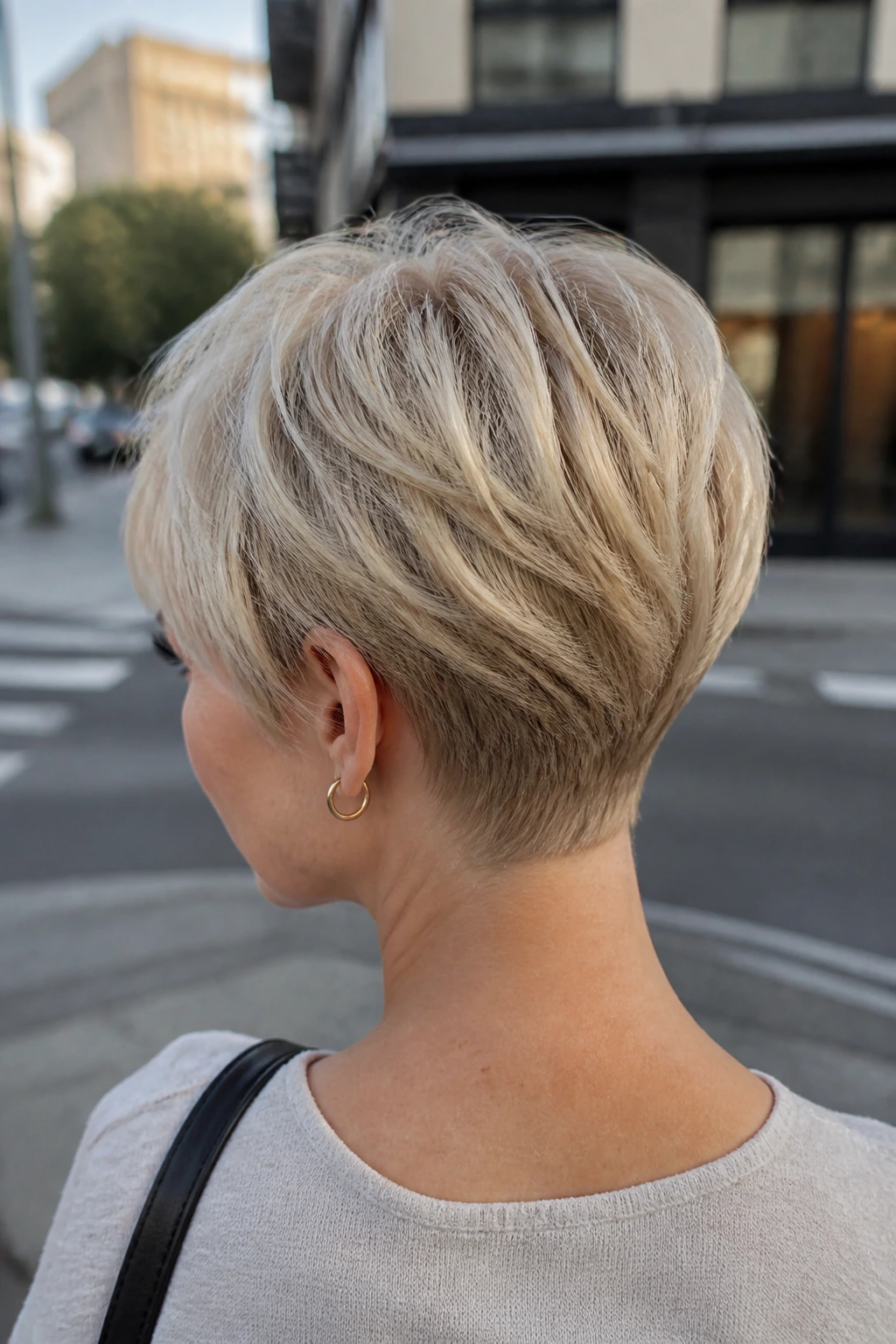
A stacked nape is one of the few places where fine hair can actually benefit from a little structure. The short layers at the back build visual weight right where the head starts to curve, and that makes the whole cut look fuller.
The blonde tone helps break up the stacked lines so the back does not read blocky. Ask for the shortest part at the neckline to stay tight, then let the layers inch upward in small steps. If the stack is too dramatic, the haircut can look dated fast. Keep it soft, not architectural.
- Nape length: close, but not shaved
- Crown: lightly layered for lift
- Color: beige, wheat, or soft gold blonde
- Maintenance: trims every 4 to 6 weeks
This is one of my favorite shapes for straight fine hair because it gives body without needing much styling. The cut does the heavy lifting.
11. Undercut Blonde Pixie With a Longer Top
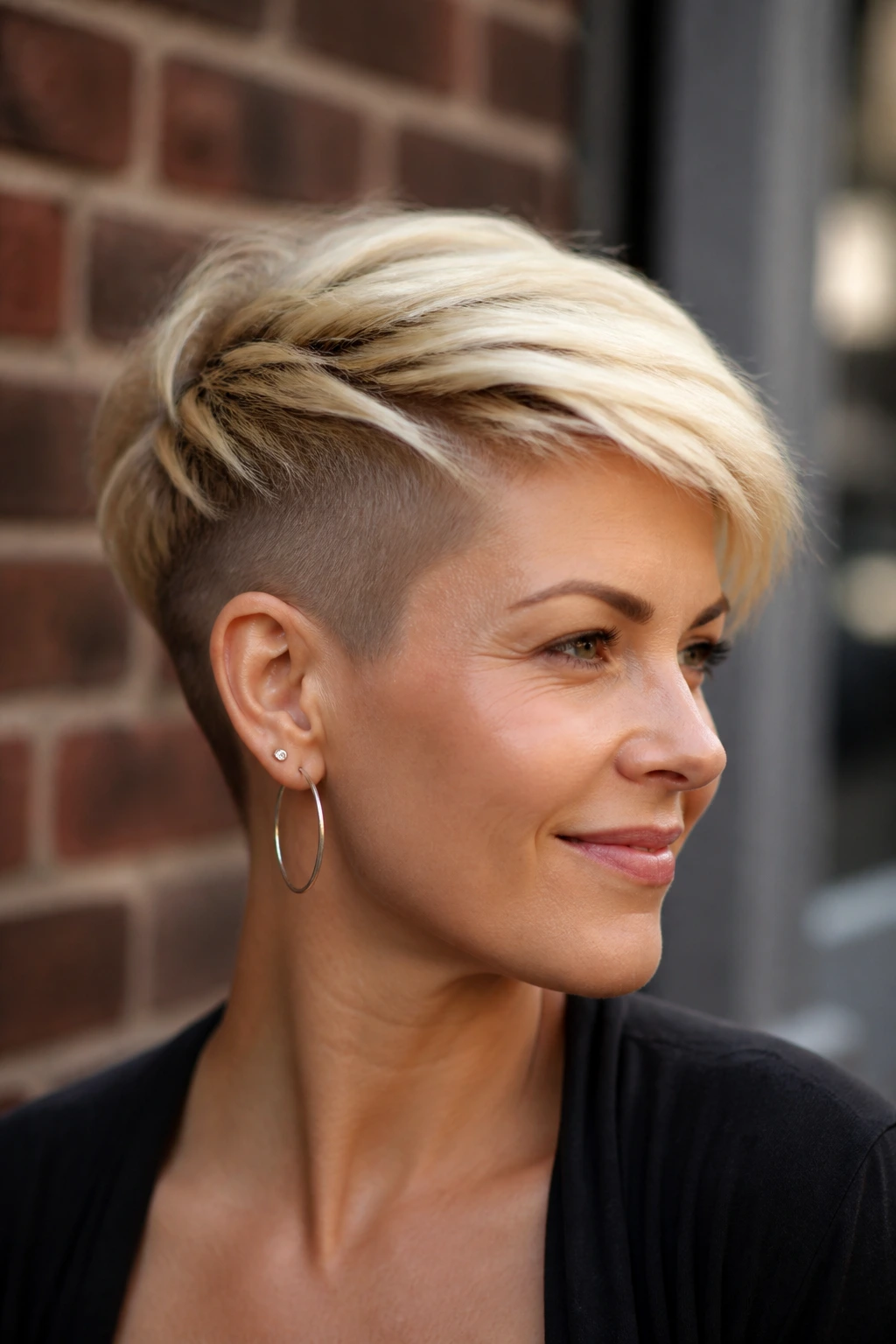
An undercut can be a smart move on fine hair if the problem is excess bulk, not lack of it. That distinction matters. If your strands are sparse, removing too much underneath will expose the scalp. If your hair is fine but dense, the undercut can make the top look cleaner and fuller.
Keep the top long enough to sweep across the head—roughly 3 inches works well—while the sides and lower back stay trimmed close. Blonde highlights on the top add a little brightness, and that brightness keeps the longer section from feeling heavy. A satin-matte paste is better than a shiny one here. Shine emphasizes separation, and sometimes that is not the look you want.
This cut has a sharper edge than most pixies. Good if you like contrast. Not so good if you want softness everywhere.
12. Soft Wavy Blonde Pixie
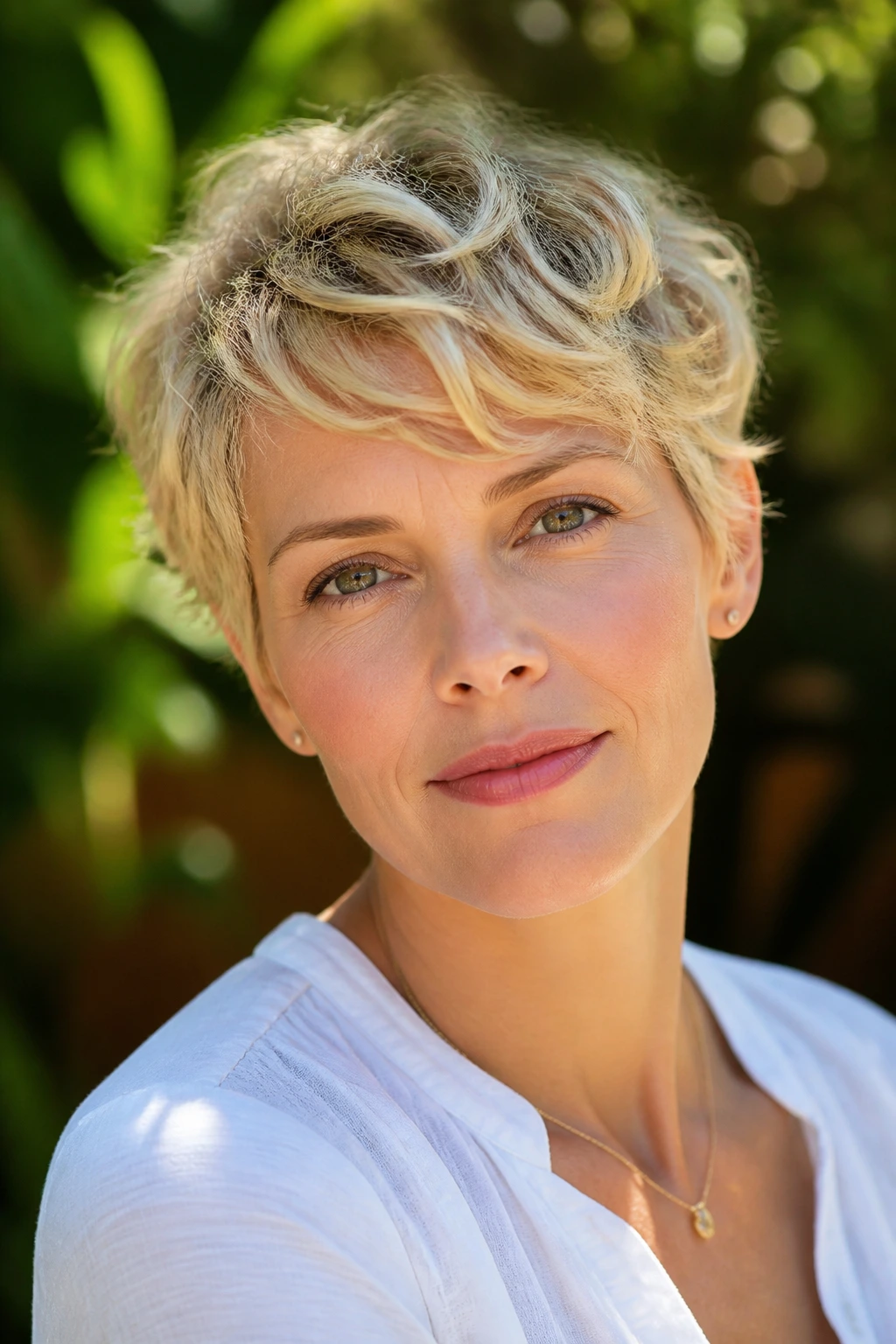
Fine hair with a natural bend can look better in a soft wavy pixie than in a pin-straight crop. The wave gives the impression of body, and the blonde color makes every bend show up a little more clearly.
The shape should stay relaxed around the ears and crown, with just enough layering to let the wave move. A 1.25-inch iron can add gentle bends if your hair is straighter than you’d like. Wrap the sections away from the face, leave the last inch out, then finger-comb when they cool. That keeps the wave from looking too polished.
This cut is a good middle road. It gives you texture without making the hair look spiky or overworked. If you have a little natural motion already, use it. Honestly, that is half the battle with fine hair.
13. Deep Side-Part Blonde Pixie
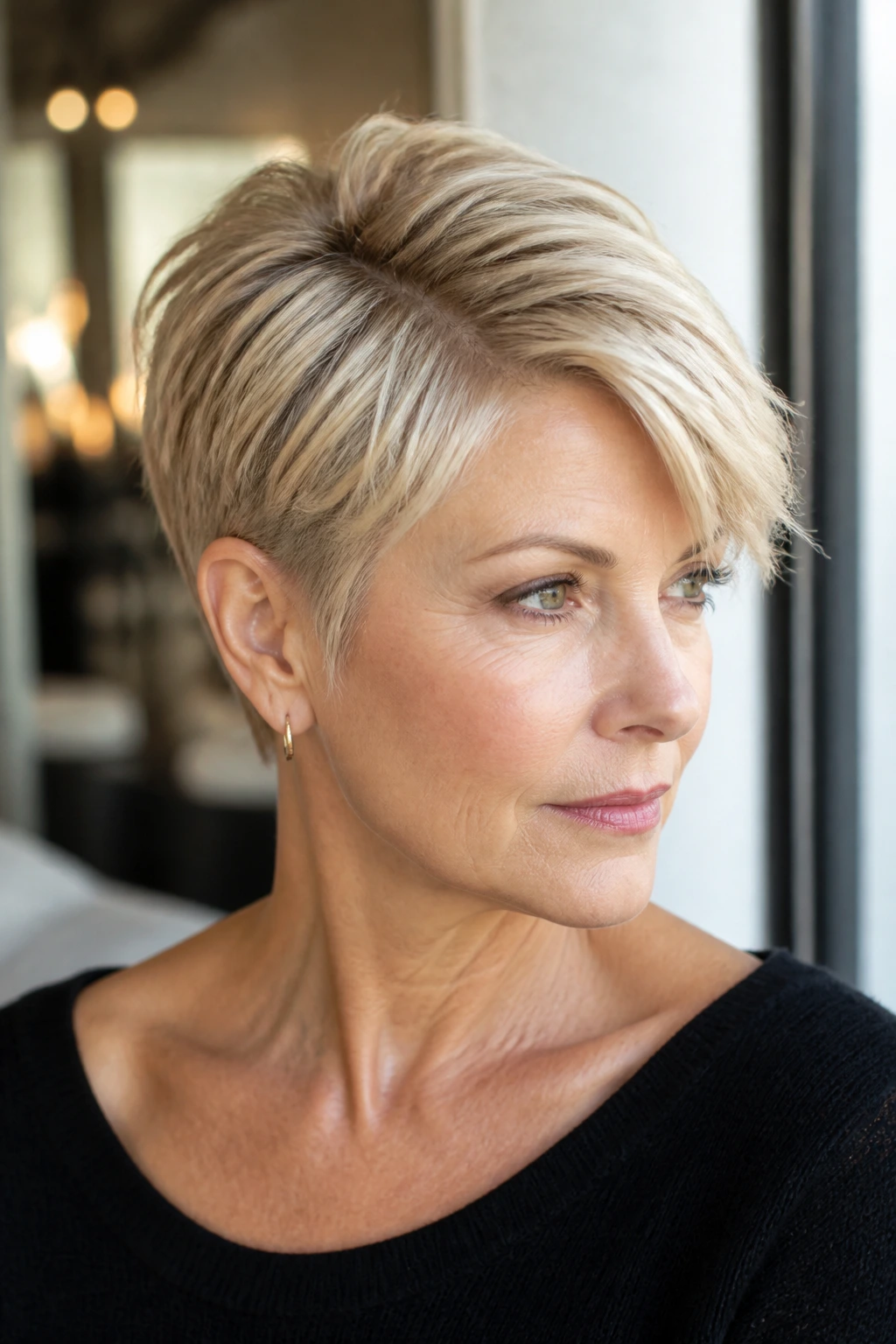
A deep side part can rescue a pixie that keeps falling flat on one side. It shifts the weight, and that alone can make fine hair look twice as full.
Why It Helps
Move the part to the arch of the eyebrow or even slightly beyond it. That instantly gives lift on the heavier side and a bit of softness on the other. A deeper part also works well with blonde hair because the part line becomes less obvious when the color has dimension. Add a root-lifting spray at the base, then blow-dry the hair in the opposite direction first. That little trick creates bend before you place the part back where you want it.
- Best for one-sided flatness
- Useful with glasses or strong brows
- Easy to style with a vent brush
- Works with ash, beige, or golden blonde
The cut itself does not need to be dramatic. The part is the drama.
14. Shadow-Root Blonde Pixie for Easy Grow-Out
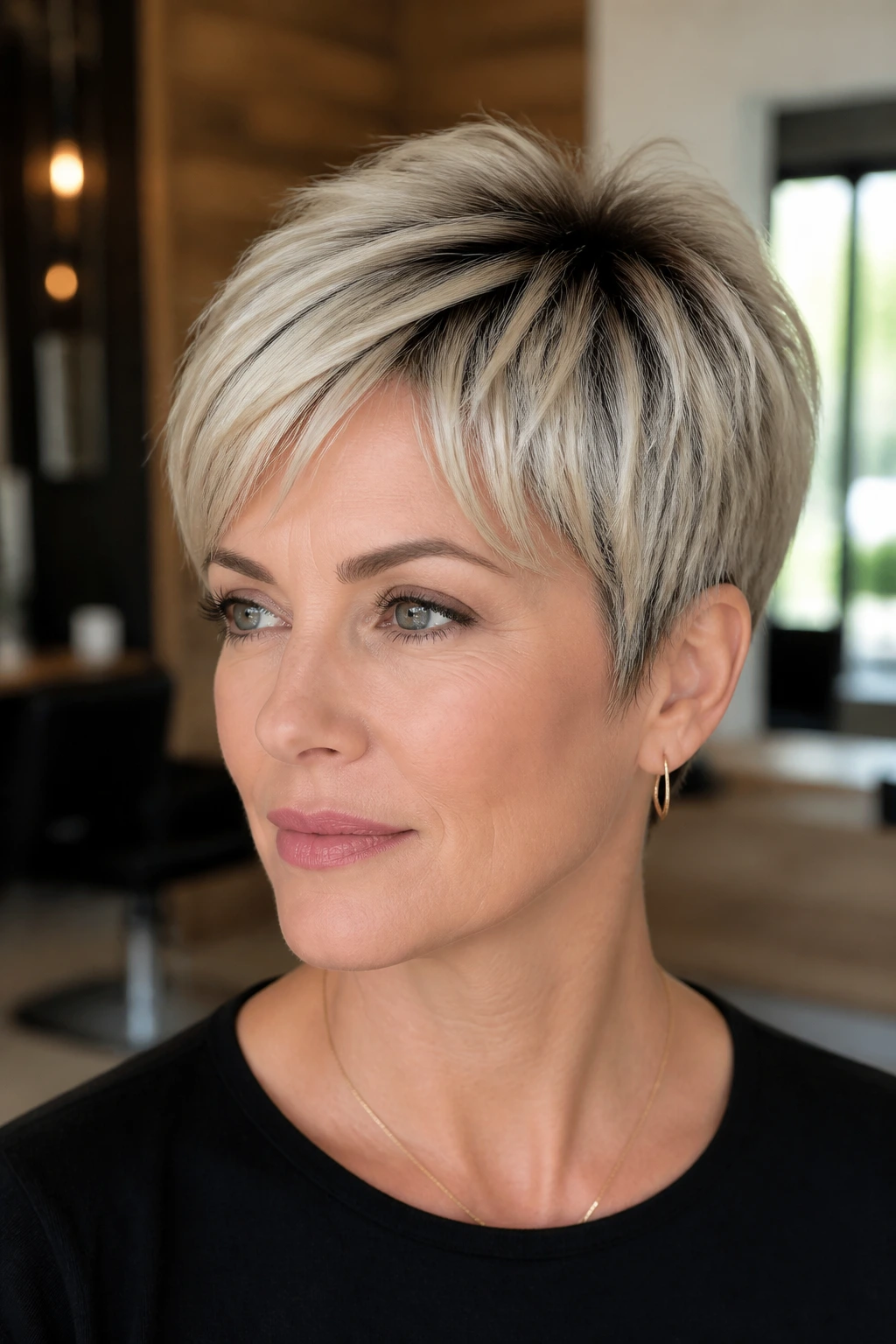
A shadow root is one of the smartest things you can put on a fine-hair pixie. It gives the crown depth, helps the blonde stand out, and keeps regrowth from looking harsh.
Keep the root slightly deeper—just enough to show about a half-inch to an inch of contrast before the lighter blonde takes over. That darker base helps the hair read fuller at the scalp, which is where fine hair usually looks most transparent. The rest of the blonde can be buttery, icy, or beige depending on your skin tone.
This is the style for someone who does not want to chase salon visits every few weeks. The grow-out is kinder. The shape still matters, of course, but the color does part of the lifting. That saves you a lot of fuss.
15. Razor-Cut Blonde Pixie With Wispy Ends
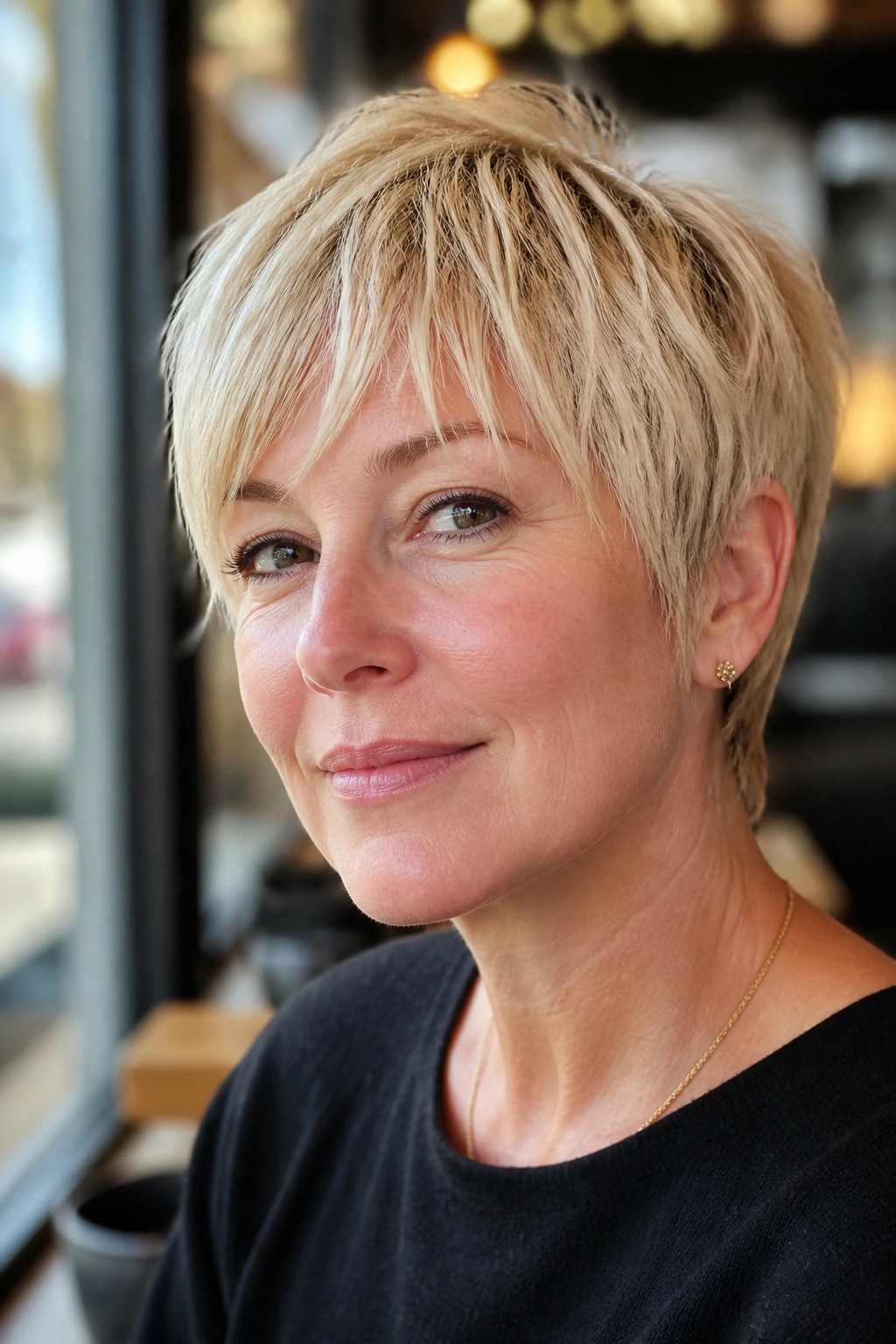
Three small razor cuts can do more for a pixie than a heavy round of thinning shears. A razor-cut blonde pixie gets softness at the edges, which is exactly what fine hair needs when it starts feeling stringy.
When a Razor Helps
Use it to soften the fringe, break up the temples, and lighten the top layer. It works best on straight to slightly wavy hair. If the hair is already fragile or frizzy, a razor can make the ends look frayed, and that is a real problem. A good stylist will know where to stop. That is the whole game.
The blonde tone should stay bright enough to show the movement but not so pale that every flyaway screams for attention. Vanilla blonde and soft ash are both safe picks. The final shape should feel airy when you shake your head, not scraped thin. There’s a big difference.
16. Crown-Boosted Choppy Pixie
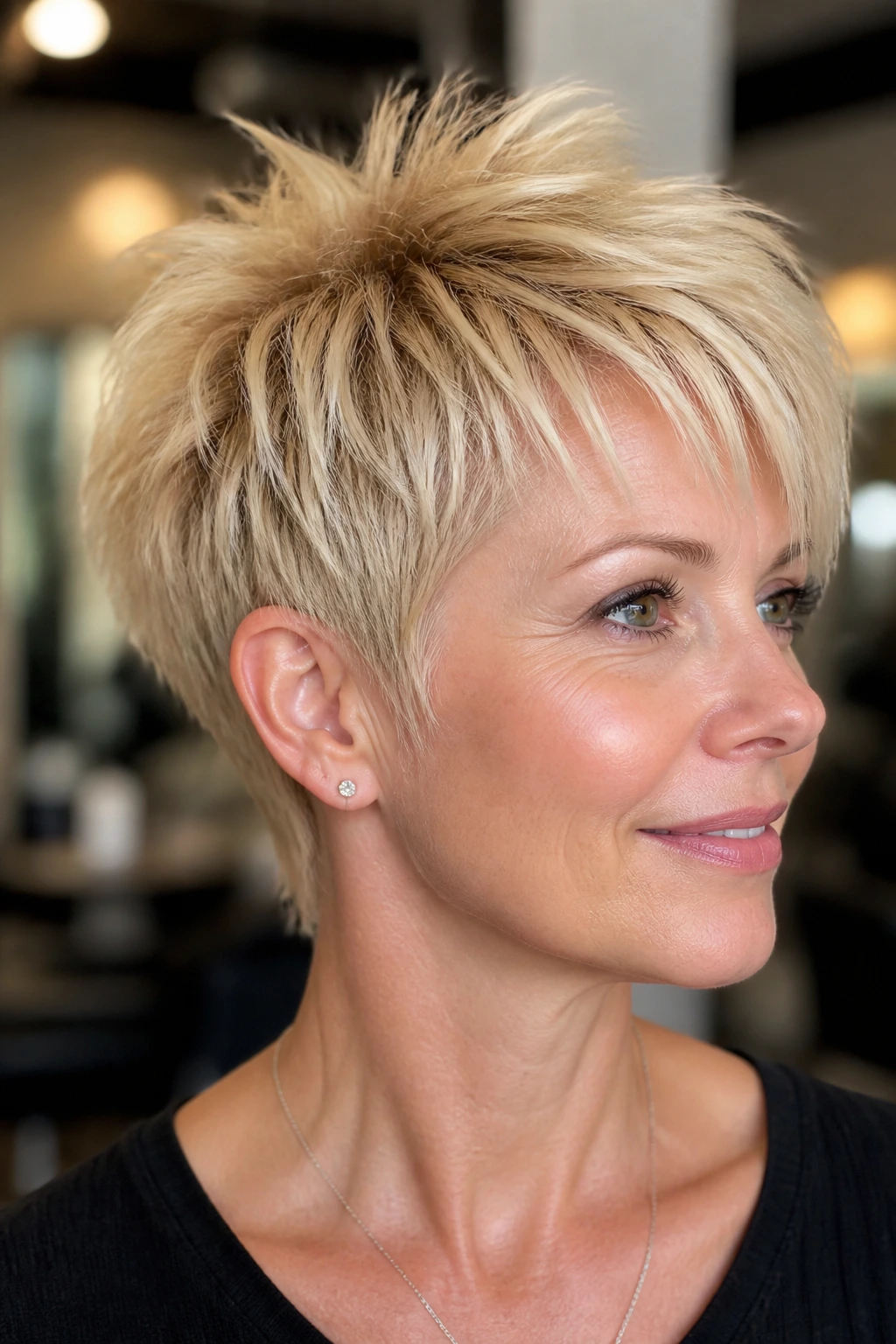
I keep coming back to crown volume because that’s where fine hair usually gives up first. A crown-boosted choppy pixie deals with that head-on by making the top the focus of the cut.
The layers at the crown should be short enough to stand up a little when blow-dried, but not so short that they turn fuzzy. Think piecey, not fluffy. A little mousse at the roots, then a blow-dry with your fingers lifting the hair upward, gives better control than a big brush does. Choppy ends around the fringe and temples keep the style from looking too tidy.
This is a good choice if your hair lies flat the second it dries. It gives you a shape that looks lively even when you do not spend much time on it. That kind of haircut earns its keep.
17. Ear-Tucked Sleek Blonde Pixie
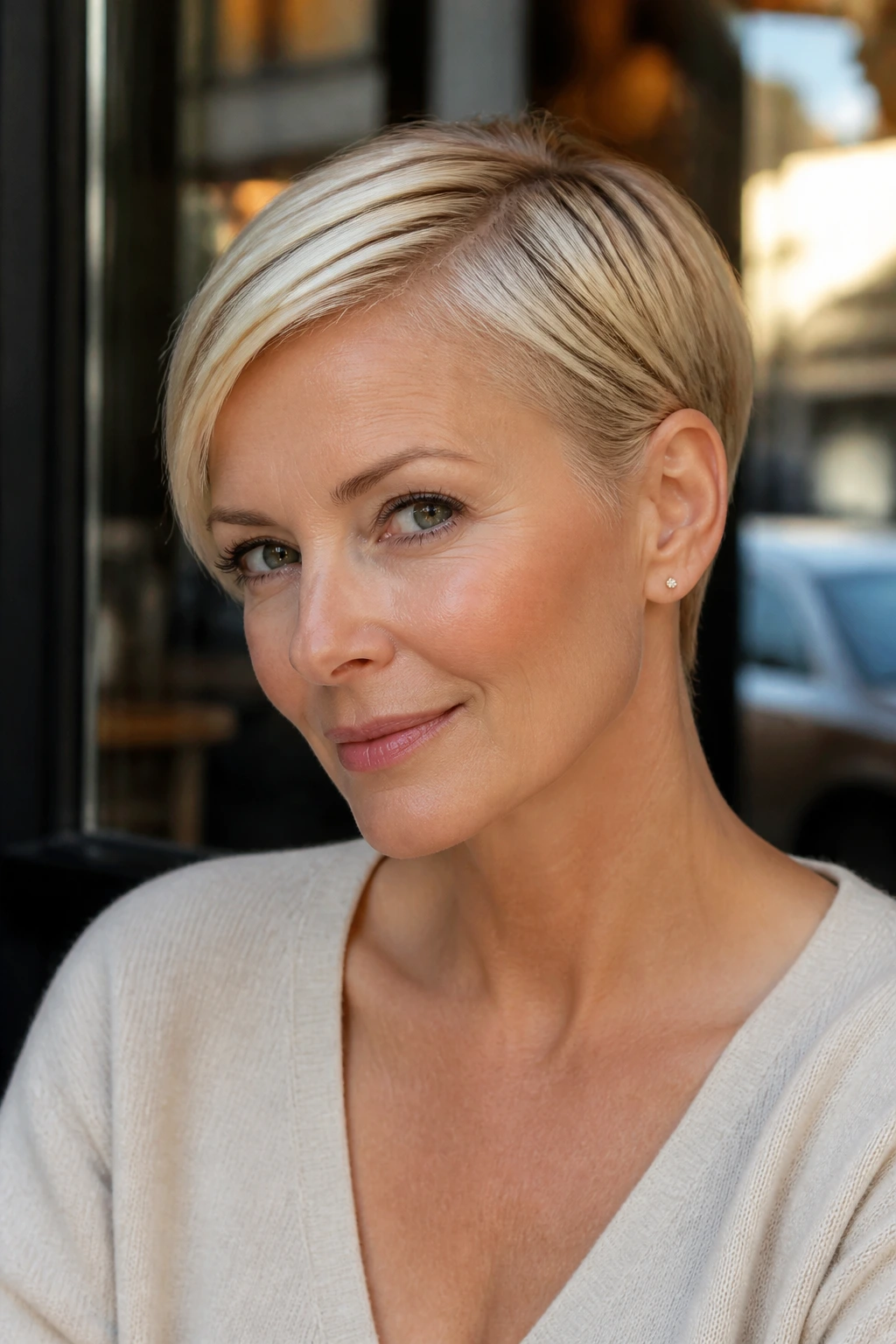
Can a sleek pixie work on fine hair? Yes, if the cut is tight enough and the blonde is clean enough to keep the shape visible. The ear-tucked version is all about neat lines and a little shine.
Keep the sides short enough to sit behind the ears without puffing out. The top should be smooth but not plastered down. A light pomade or wax, warmed between the fingertips, is enough to tuck the front and let the temples stay tidy. Blonde works well here because the color catches the clean edges and makes the shape look deliberate.
Styling Note
Use a comb only on the top if you want the finish to stay crisp. Too much brushing can make fine hair lift away from the head in the wrong places. The haircut should feel polished, not stiff.
18. Wispy Baby-Bang Blonde Pixie
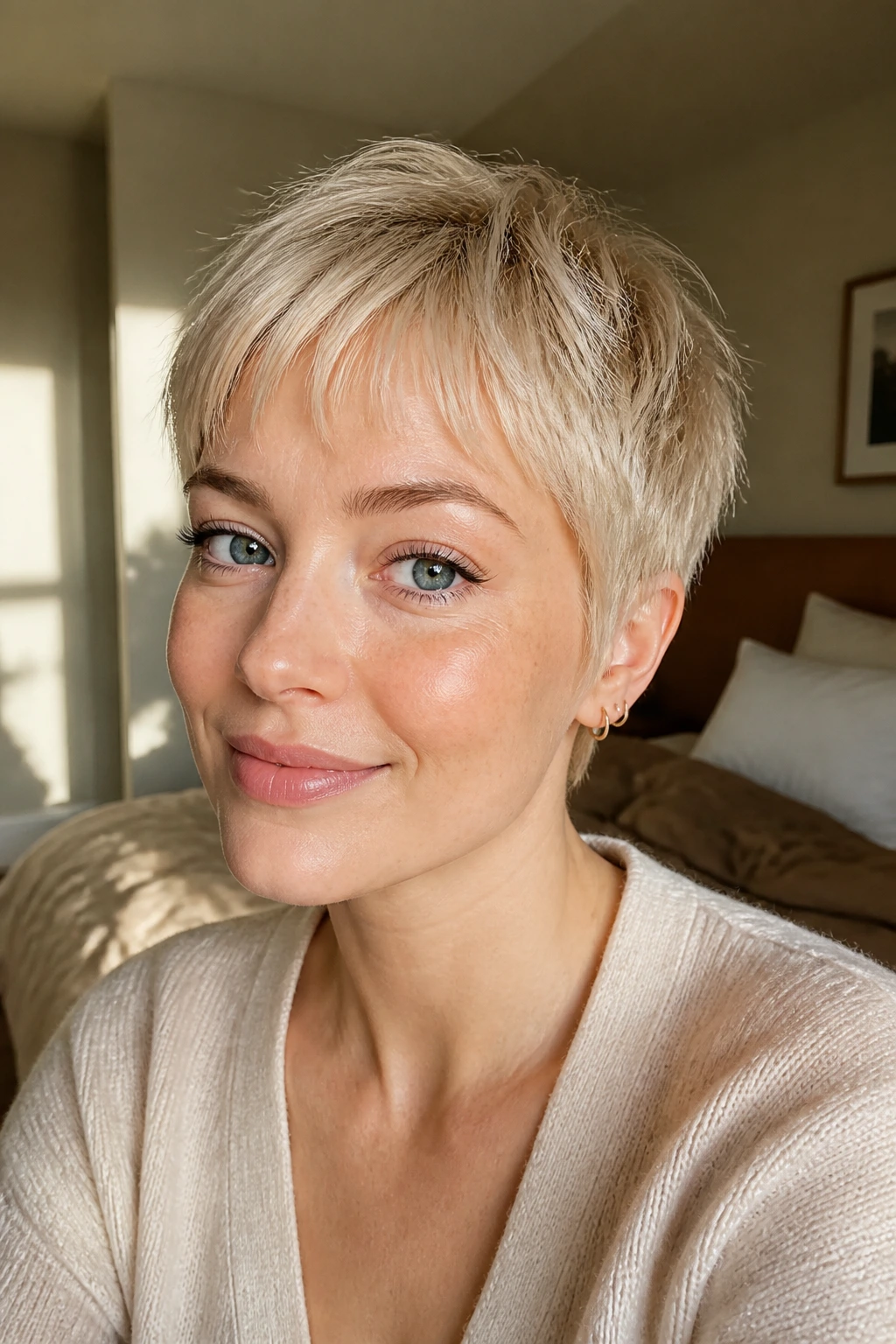
Baby bangs can look harsh on thick hair. On a fine blonde pixie, they can look almost delicate, which is the whole reason they work.
The key is to keep them wispy, not straight across and heavy. A tiny amount of see-through texture around the center of the forehead makes the fringe feel lighter, and the blonde shade stops the short length from shouting at the face. If you have a small forehead or sharp brows, this shape can be a strong fit. If your features are already bold, keep the rest of the cut soft so the bang doesn’t fight the face.
This is not a low-drama haircut. It has a point of view. That is what makes it fun. Just remember that baby bangs need more frequent trims than longer fringes, because half an inch changes the whole mood.
19. Soft Mushroom Pixie in Vanilla Blonde
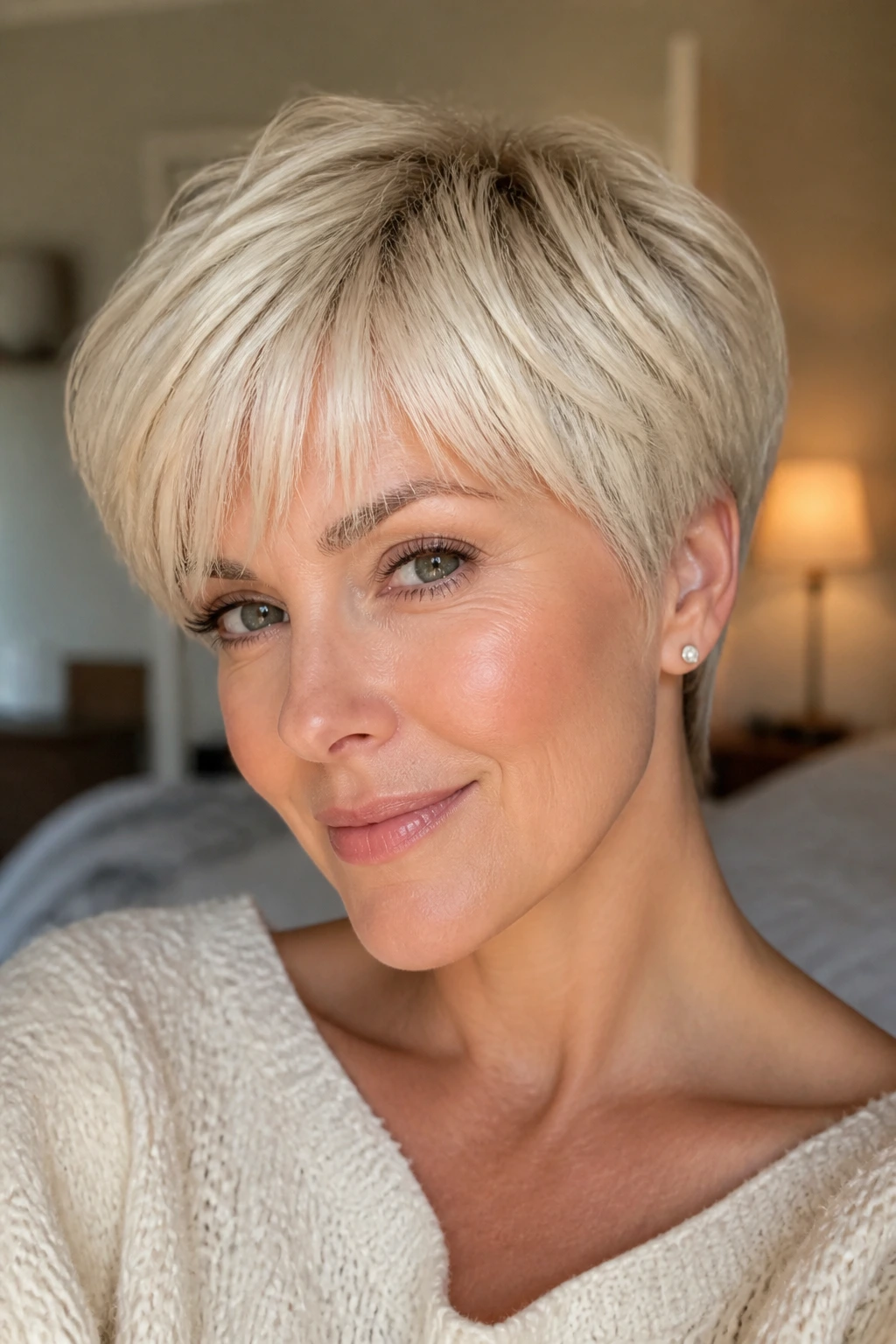
A mushroom shape sounds old-fashioned until you soften it. Then it becomes one of the easiest ways to give fine hair a fuller outline without adding bulk in the wrong places.
Why It Works on Fine Hair
The rounded silhouette gives the crown and sides a continuous line, which helps the hair look denser than it is. Vanilla blonde keeps the shape bright, but the edges should stay feathered so the cut doesn’t feel helmet-like. Ask for a softly rounded top with light tapering around the ears and neck. You want the outline to feel controlled, not rigid.
- Best on small to medium face shapes
- Good if you like smooth, neat hair
- Needs a little root lift, not a pile of product
- Works well with a side part or a soft fringe
This is one of those cuts that can look plain in the chair and elegant once it settles. That happens a lot with good pixies.
20. Brushed-Up Blonde Pixie With Height
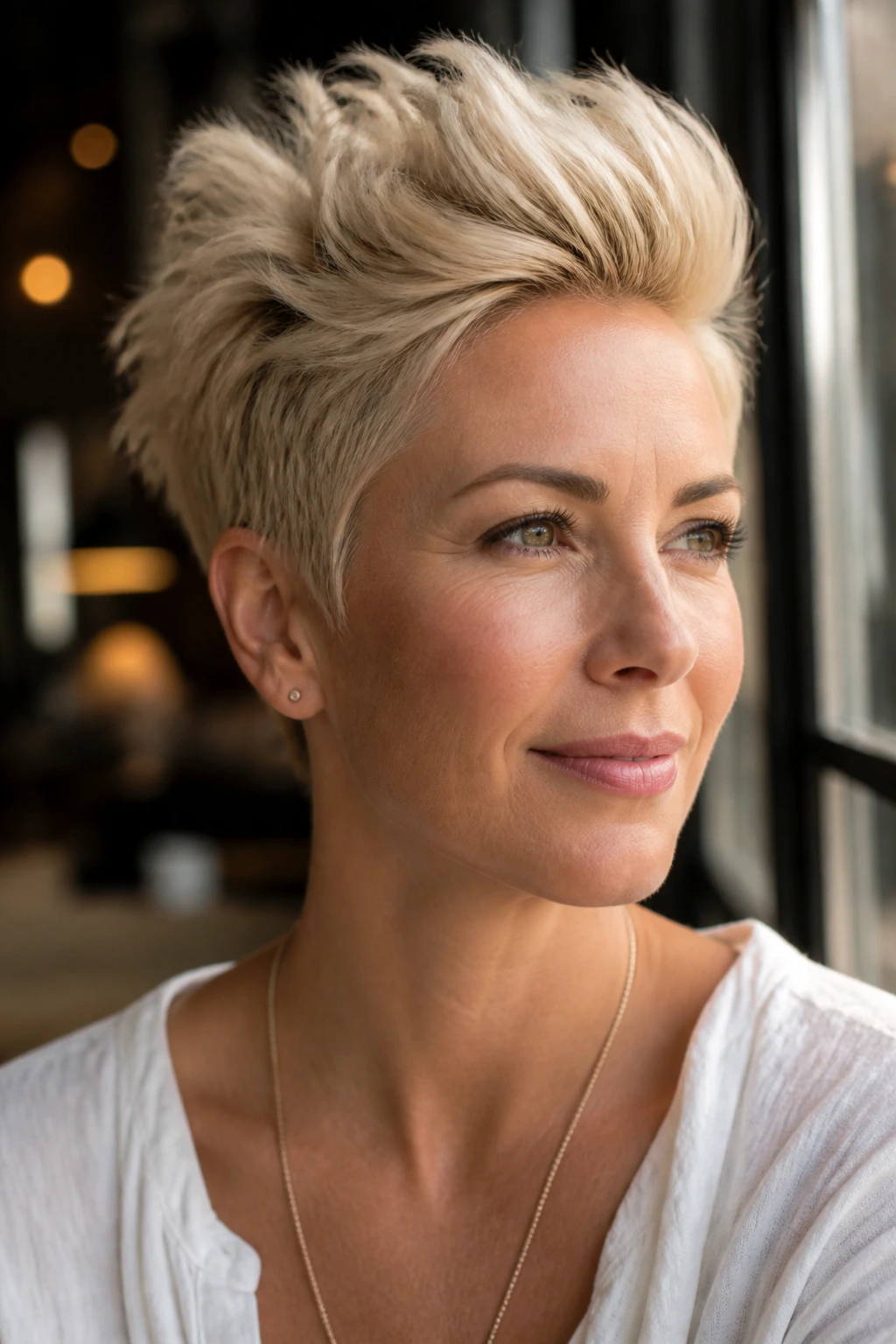
Fine hair can go tall if the cut is light enough. A brushed-up blonde pixie creates height right at the front and crown, which is where flat hair usually gives up first.
The secret is not a mountain of product. It’s direction. Blow-dry the hair forward first, then up and back, using a small round brush or even just your fingers to lift the roots. A root-lifting spray or a light mousse keeps the shape in place without turning it sticky. Blonde, especially pale gold or beige, makes the vertical movement show up better.
This style suits someone who likes a little polish and does not mind a more styled finish. It can look sharp in a way that feels modern, not fussy. If you want a cut that reads confident from across a room, this is a strong candidate.
21. Blonde Pixie Cuts for Fine Hair in a Pixie Bob Shape
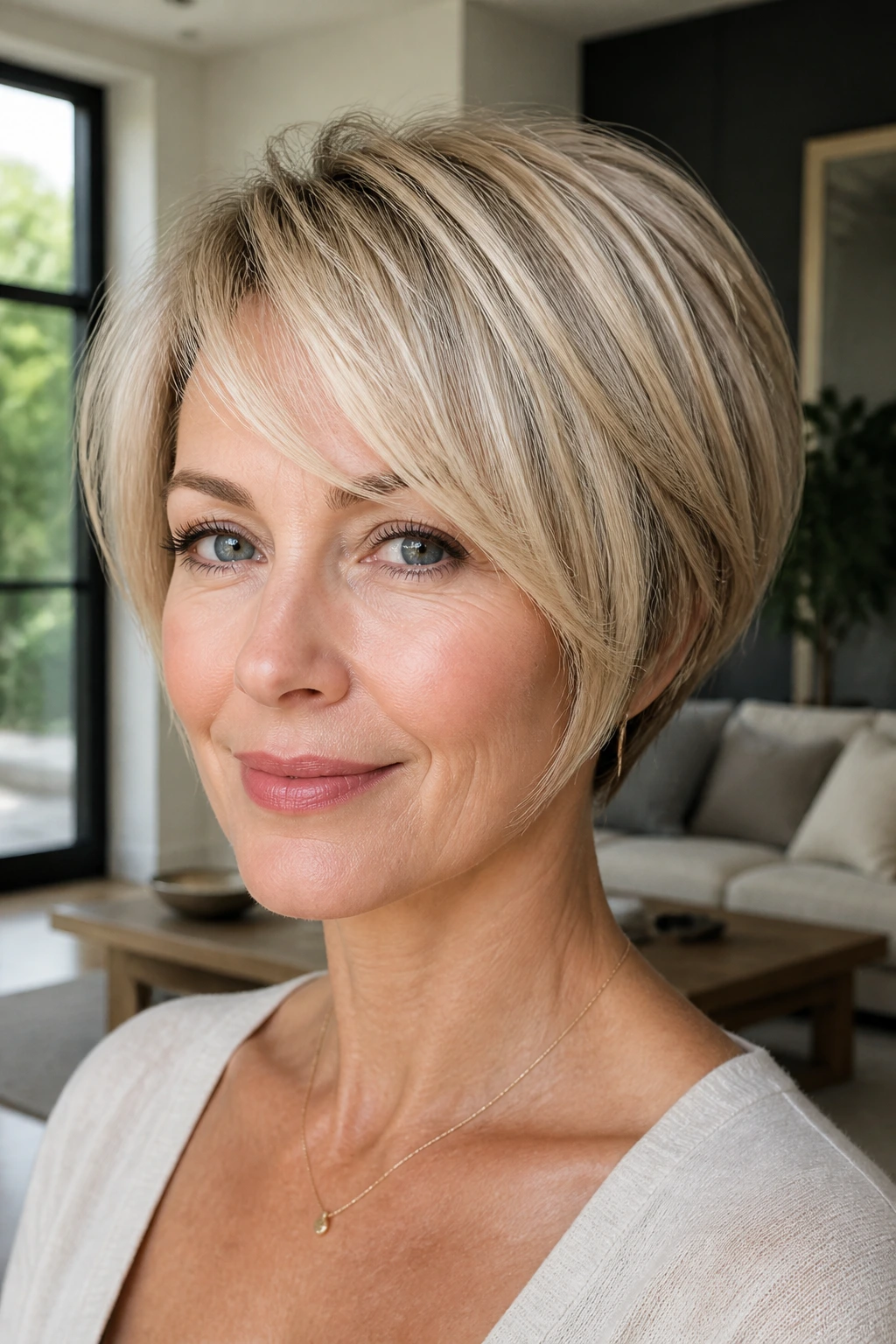
The pixie bob is a smart compromise when you like the feel of short hair but want a bit more softness around the jaw. On fine hair, that extra length can be a gift.
The Shape Difference
Compared with a classic pixie, the pixie bob keeps more length around the ears and front, often landing somewhere near the cheekbone or just above the jaw. That extra bit of hair gives fine strands something to cling to, which helps the cut look thicker. Add blonde dimension—think lighter pieces over a slightly deeper base—and the whole shape reads fuller without feeling bulky.
- Good if you’re nervous about going very short
- Works well with straight or softly bent hair
- Can be styled tucked, swept, or air-dried
- Keeps grow-out easier than a tight crop
This is a useful option for people who want movement, not just novelty. It feels practical, and that counts for a lot.
22. French Blonde Pixie With a Short Fringe
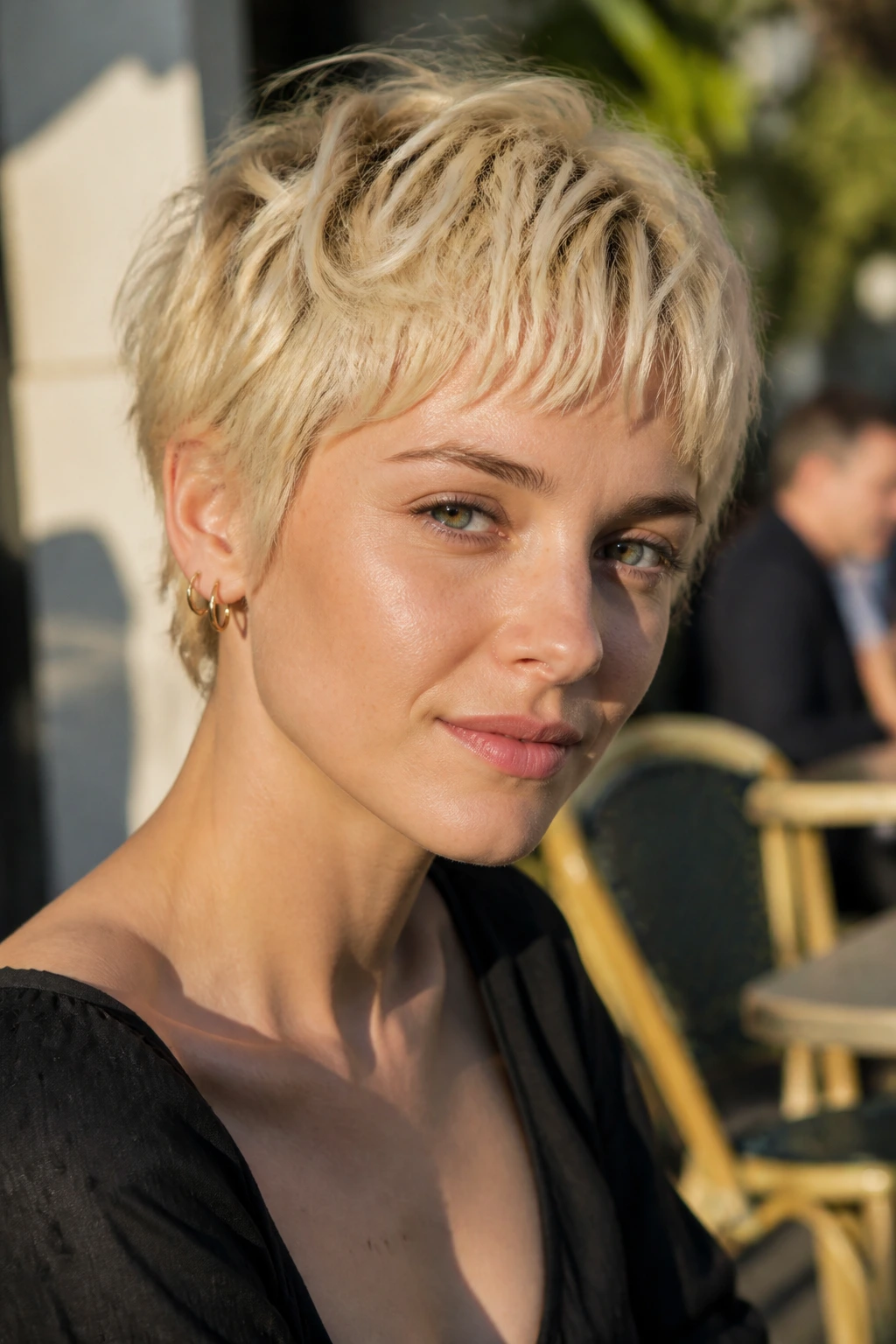
A French blonde pixie tends to look effortless, though that word is doing a lot of work. What really makes it feel easy is the balance between a short fringe and soft, airy sides.
The fringe should stay light and a little uneven, not blunt and square. The blonde shade can sit in the pale gold range or lean toward beige, depending on your skin tone. Keep the temples slightly wispy so the cut does not box the face in. That little softness matters more than most people realize.
Styling It Well
Use your fingers first, not a brush. Let the hair dry with a bit of movement, then shape the front with a dab of styling cream. If you comb it too neatly, the haircut loses the casual feel that makes it appealing.
This is a nice fit for oval faces and anyone who wants a pixie with some softness around the edges.
23. Fluffy Blonde Pixie With Curtain Fringe
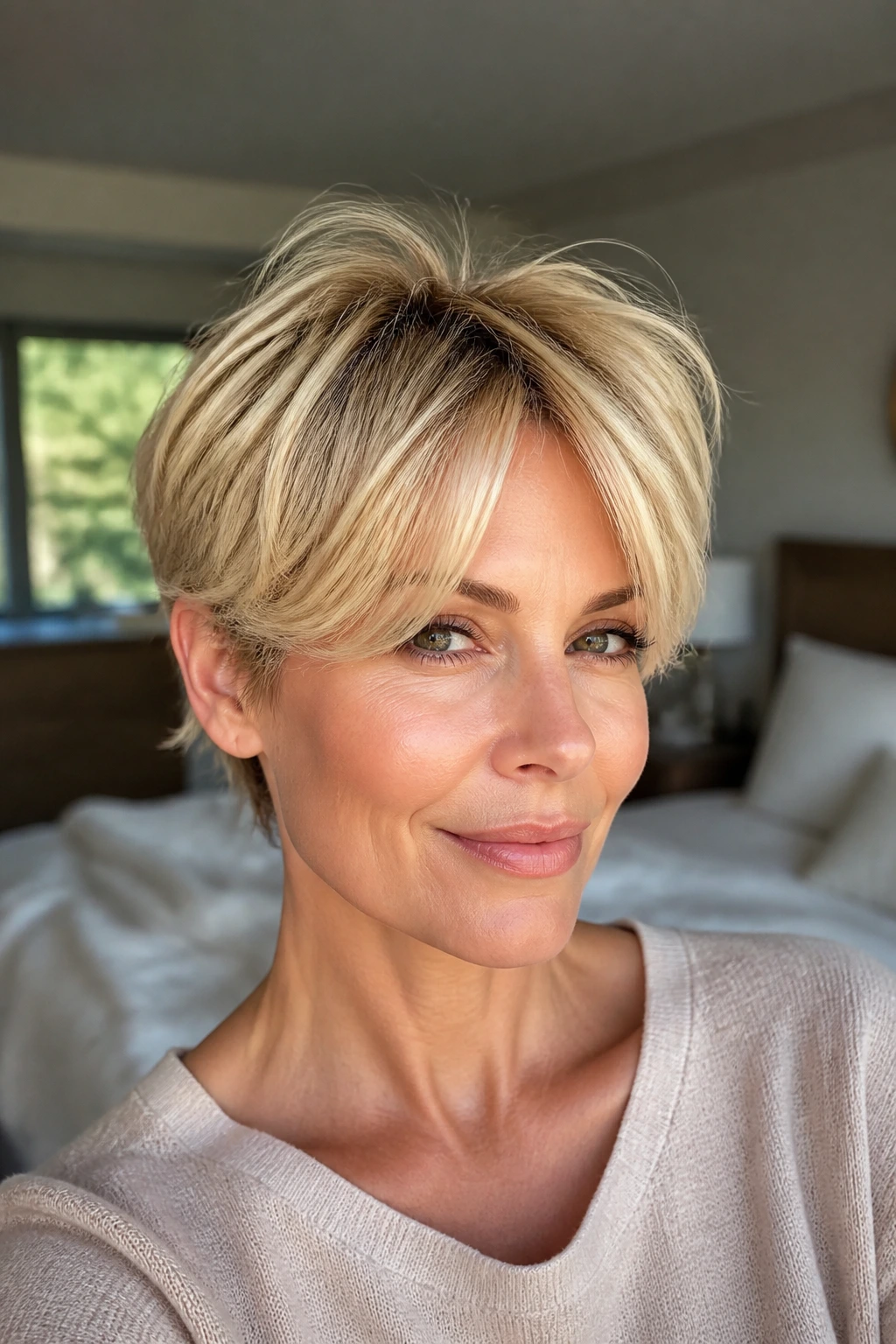
A curtain fringe on a pixie is a little unexpected, and that is why it works. It gives fine hair two front pieces to frame the face, which helps the top feel less sparse.
The fringe should part near the center and fall away from the face in soft, feathered pieces. The crown can stay a little fluffy, but not rounded into a ball. That distinction matters. You want lift, not puff. A root-lift mousse and a quick finger-dry are usually enough. If you need a touch more bend, wrap the fringe around a medium brush for a few seconds and let it cool before you release it.
This cut flatters longer foreheads and softens sharper cheekbones. It also gives fine hair more visible structure at the front, which is often where people want the most help.
24. Asymmetrical Blonde Pixie With Face Framing
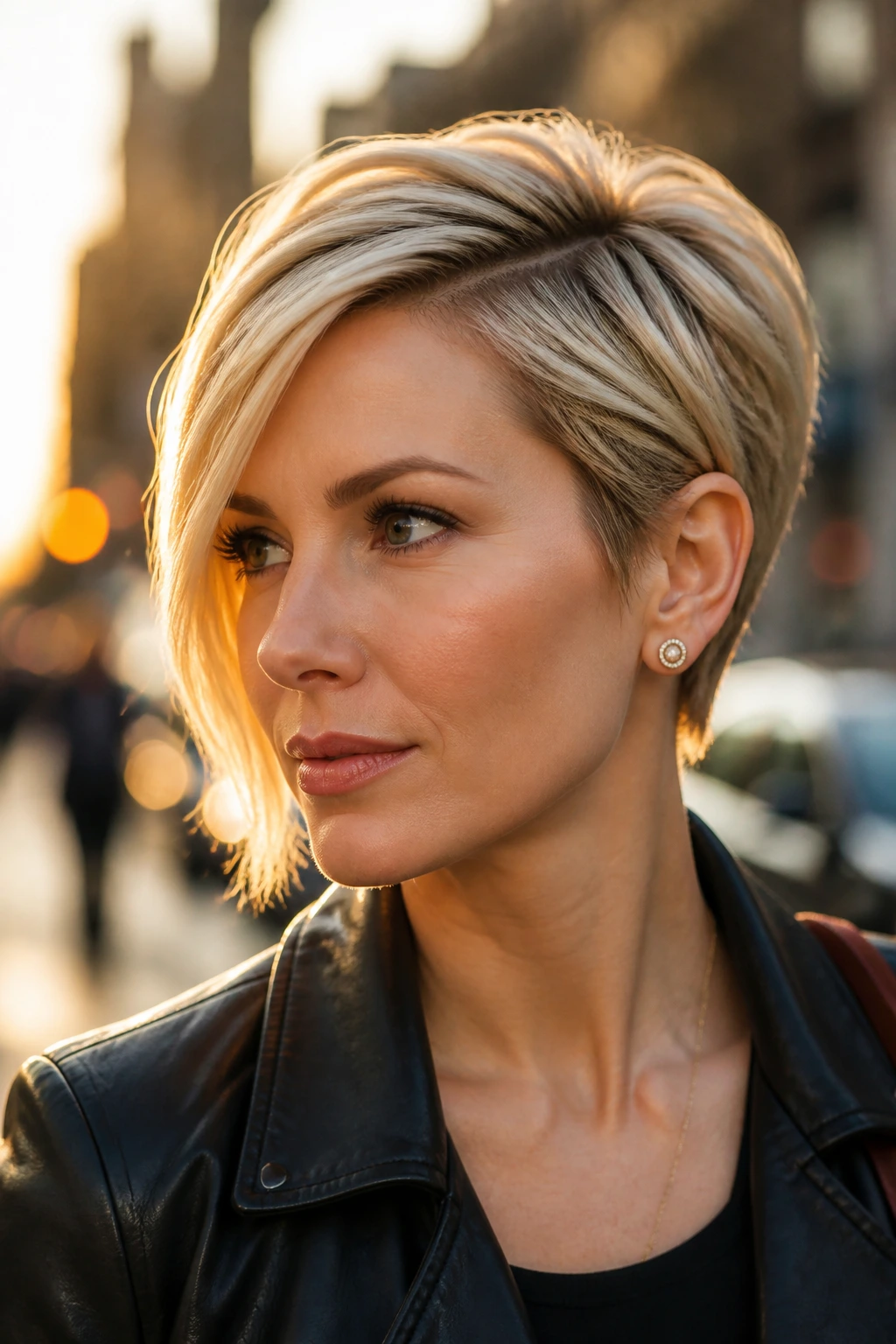
One longer side can do a lot for fine hair. An asymmetrical pixie creates a point of interest, and that single uneven line often makes the whole haircut look richer.
The longer side should frame the cheekbone or graze the jaw, while the shorter side stays neat and close. Blonde dimension helps here because the color change makes the asymmetry easier to read without looking harsh. If one temple area tends to lie flatter than the other, this shape can hide that imbalance instead of fighting it.
I like this cut for round or square faces because the longer side softens the outline. It’s a good choice if you want a bit of edge without going full spiky or severe. Keep the finish smooth with a little texture at the ends. Too much separation can make the asymmetry feel messy instead of smart.
25. Spiky Modern Blonde Pixie
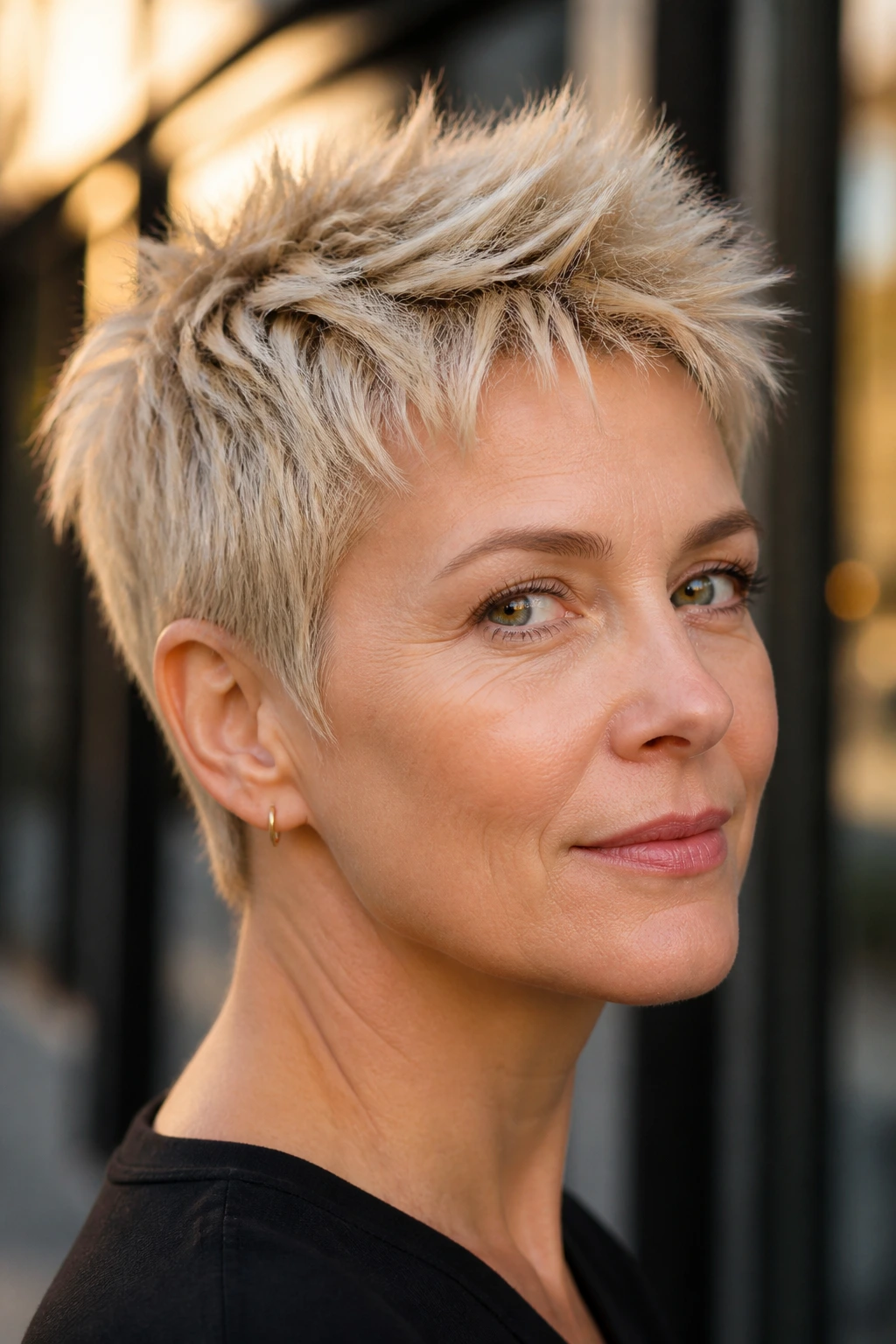
Is a spiky pixie too much for fine hair? Not if the spikes are small, clean, and controlled. The trick is keeping the texture separated without making it crunchy.
The Product Rule
Use a tiny amount of paste—about a pea-sized dab—warm it between your fingers, then pinch only a few sections at the crown and front. Don’t coat the whole head. Fine hair turns greasy fast, and too much product flattens the roots. A blonde shade with some brightness at the ends helps the spikes read clearly, especially on short hair.
- Keep the spikes irregular
- Leave a few softer pieces around the temples
- Work on dry hair only
- Use less product than feels natural
This is a bolder look, and I would not push it on someone who likes softness. But if you want a pixie with energy, it has personality.
26. Rounded Blonde Pixie With Side Volume
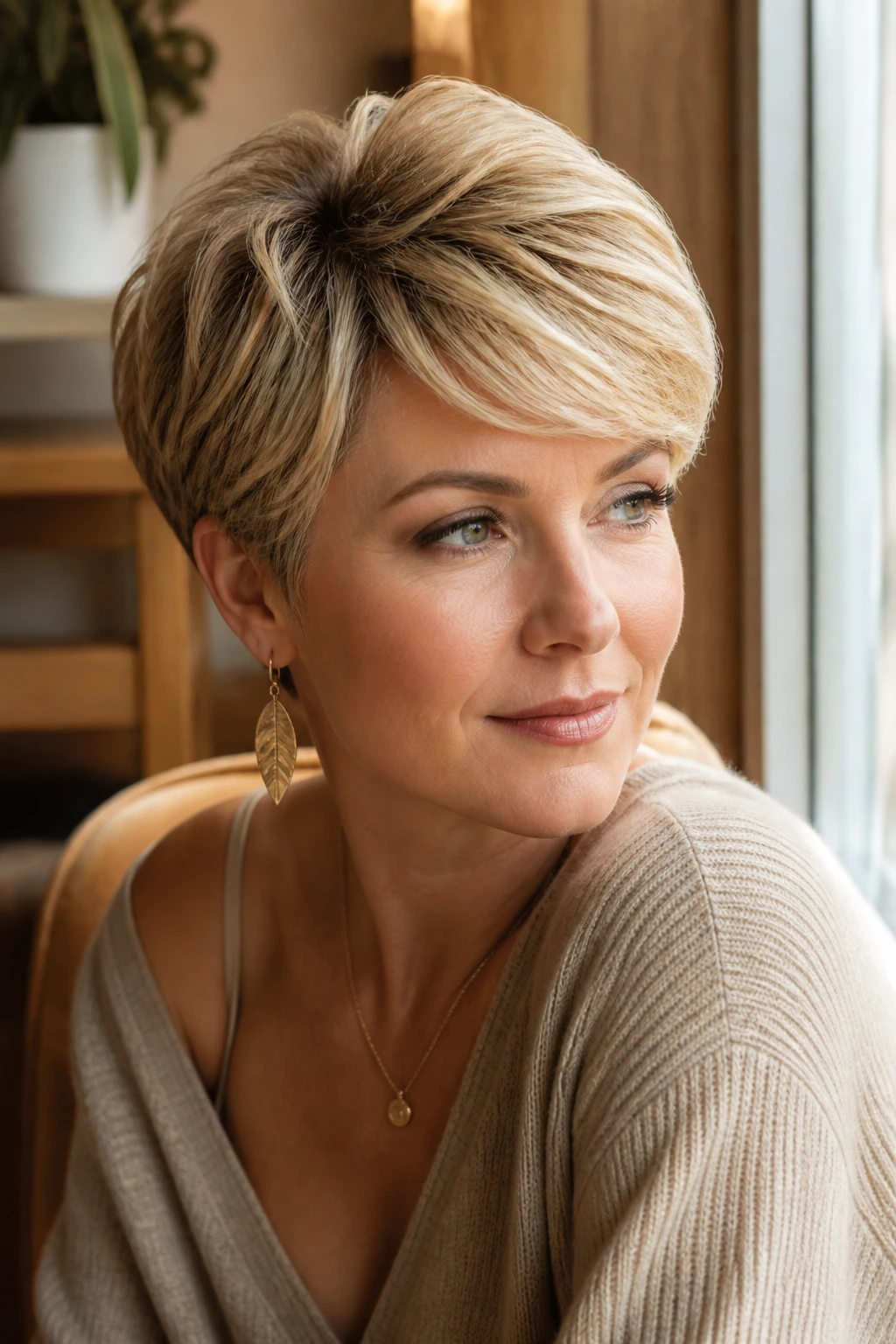
A rounded shape is kinder to fine hair than a boxy one. The curved outline removes harsh corners, and the side volume gives the cut a fuller look where the eye tends to linger.
The shape should arc gently from the crown to the temple, then taper into the nape. Blonde highlights can sit a little brighter on the side with more volume, which makes that area read thicker. A round brush helps if you blow-dry, but you can also coax the shape with your fingers and a light styling cream.
This cut works especially well if you have cowlicks or a crown that splits in odd directions. Instead of fighting the natural fall, the rounded shape lets the hair settle into something softer. That saves time, and it usually looks better than forcing symmetry.
27. Platinum Crop With Temple Length
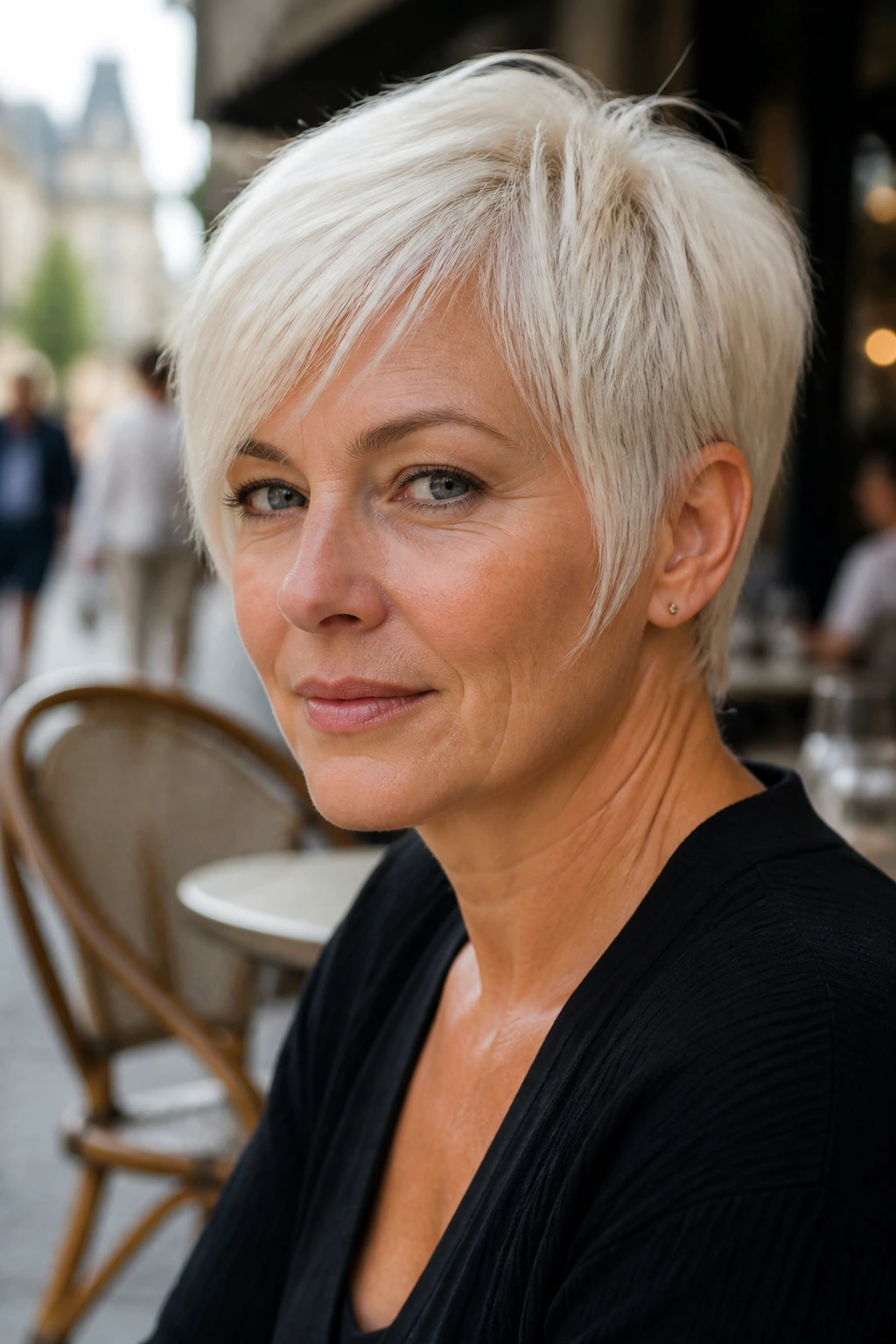
A platinum crop with longer temples has a sharp, tailored feel, but the extra length at the sides keeps it from becoming too severe. Fine hair benefits from that little bit of softness.
What Makes It Different
The temples should sit a little longer than the crown, almost like tiny side panels that frame the face. That gives the haircut more presence. Platinum color makes every line visible, so the cut needs texture in the top and around the ears. Otherwise it can look flat and unforgiving.
- Temple length that reaches the upper cheek
- Shorter crown layers for lift
- Clean neckline with no heavy shelf
- Best worn with a matte or low-shine finish
This is a good choice if you like a sharper silhouette but still want movement. It also flatters strong brows and defined cheekbones, which do a lot of the heavy lifting here.
28. Golden Blonde Pixie With a Deep Root Smudge
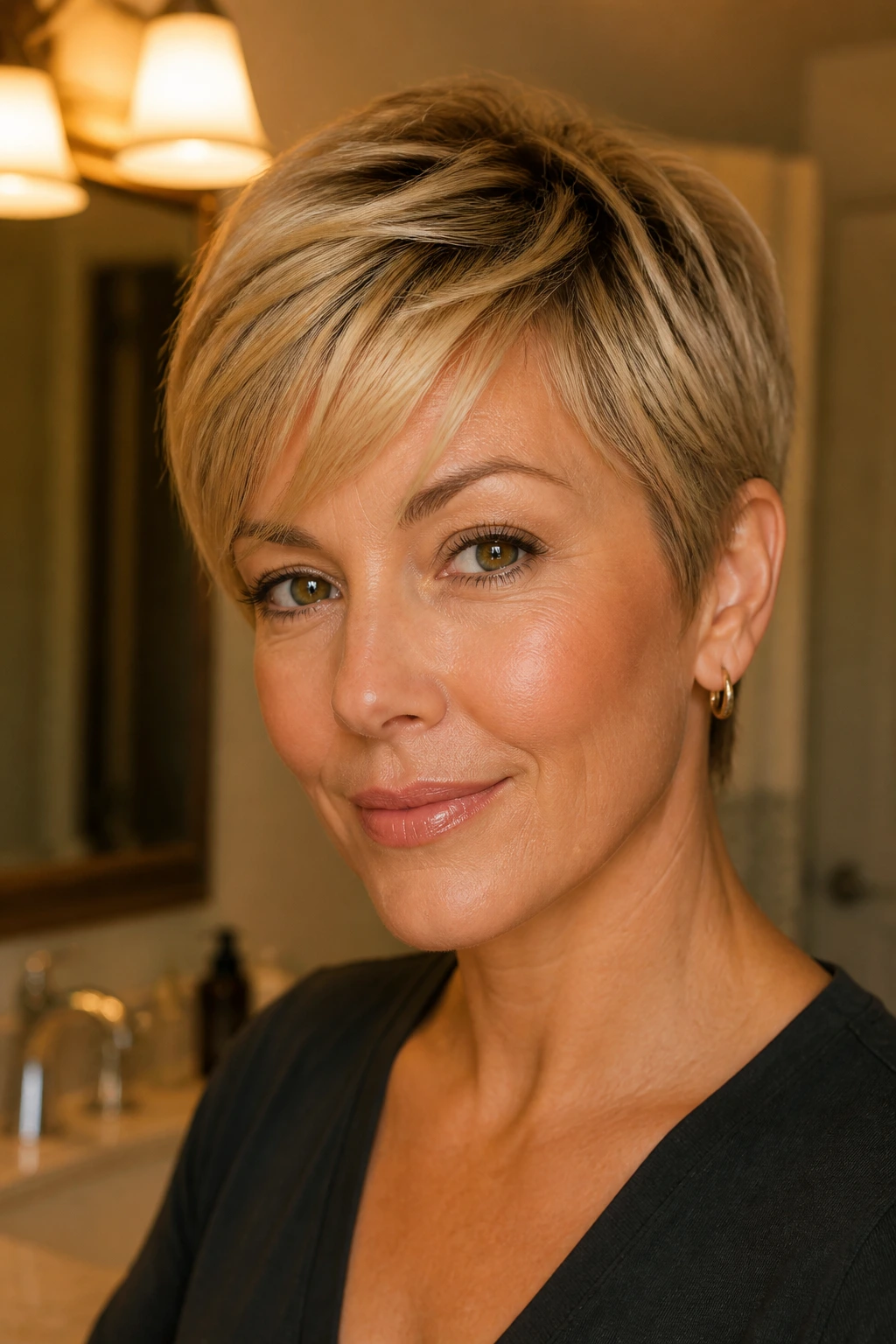
Golden blonde can be warm and soft on fine hair, and a deeper root smudge gives it depth that keeps the crown from looking thin. That contrast matters more than a lot of people expect.
The root area should stay just dark enough to create shadow for about an inch, then melt into a golden blonde mid-length and lighter ends. The effect is subtle up close and useful from farther away, because the cut reads fuller where the hair meets the scalp. If your skin leans warm, this shade usually feels easy to wear. It brings a bit of light to the face without going icy.
This is the kind of pixie that can stay attractive as it grows. The root smudge helps hide regrowth, and the warmer blonde keeps the whole thing from feeling too stark. That is practical beauty, which I respect.
29. Two-Tone Blonde Pixie With Darker Underlayers
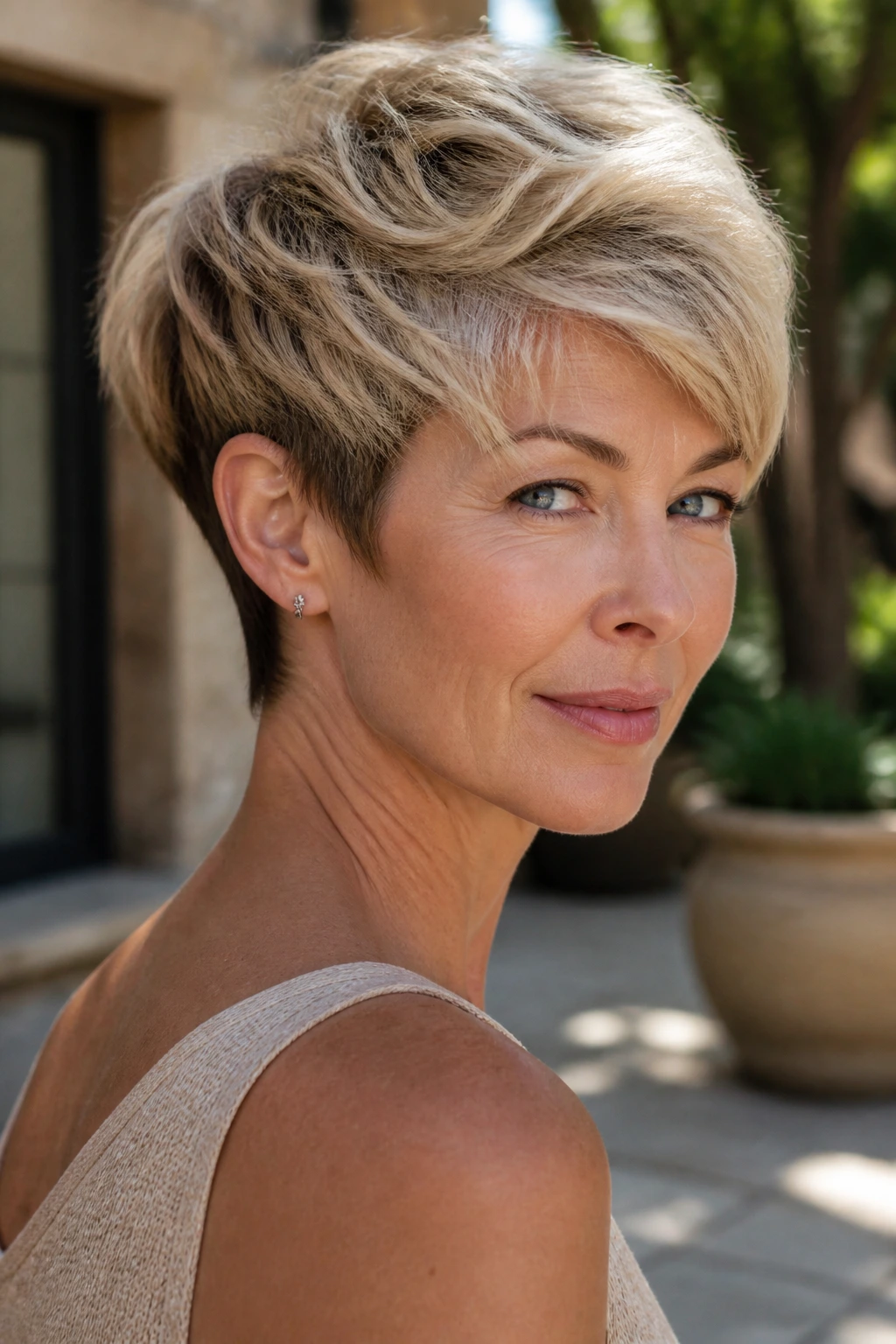
A two-tone pixie sounds dramatic, but on fine hair it often looks smarter than a single flat blonde. The darker underlayers add shadow beneath the brighter surface, and shadow is what gives the illusion of thickness.
The top can stay a soft champagne or buttery blonde while the underlayers sit one or two shades deeper. That hidden contrast gives the haircut more depth at the nape, around the ears, and under the crown. It also makes the texture show up better when the hair moves. The style should feel layered in a literal sense, not just a color sense.
This is a strong pick if your hair is fine but plentiful enough to hold shape. It is not ideal if you want one flat, even color. The two-tone effect needs movement to make sense, and that movement is part of the charm.
30. Blonde Pixie Cuts for Fine Hair That Grow Out Gracefully
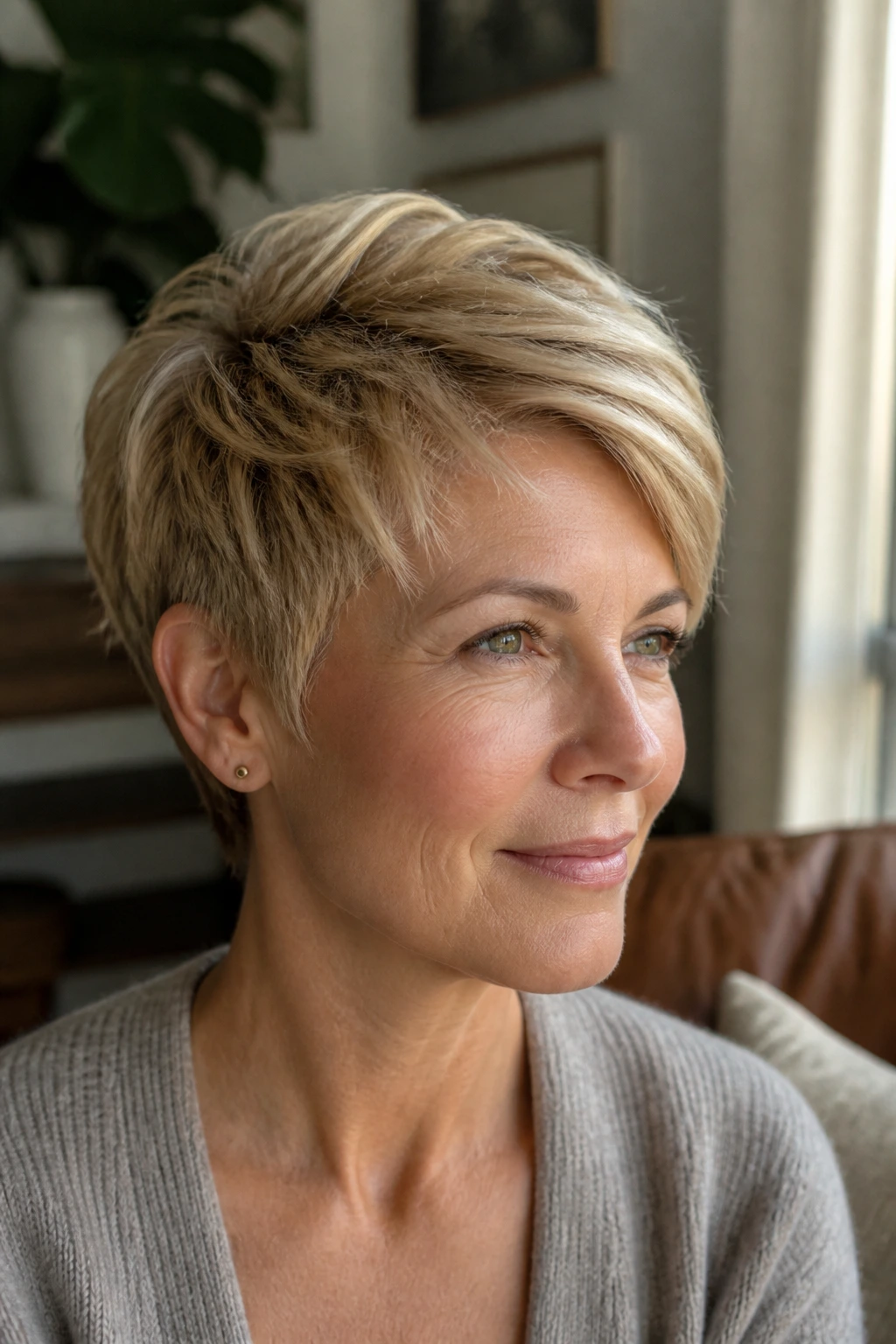
The best pixie is not always the shortest one. A grown-out blonde pixie for fine hair can be the smartest choice if you want a cut that stays decent between trims and does not fall apart the second it gets a little longer.
Keep the top long enough to sweep, the temples soft enough to frame the face, and the neckline tidy enough to avoid that awkward shaggy stage. A beige or shadow-root blonde helps a lot here because the regrowth blends instead of shouting. If your hair grows fast, this is where shape matters more than strict precision.
A small amount of styling cream on the ends and a quick finger-dry at the roots are usually enough to wake it up. That’s the kind of cut I like most: low drama, still flattering, no wrestling match with the mirror.
If you only save one idea from this whole list, make it this one: keep the top light, the edges soft, and the color dimensional. Fine hair looks best when the cut works with its slip and movement, not against it.
