



Fine hair does not need more length to look fuller. It needs a shape that knows where to stop.
Sleek pixie cuts for fine hair work because they clean up the outline, keep the top from collapsing, and stop the ends from looking see-through. The wrong pixie can do the opposite fast. Too much thinning at the crown, too many short layers, and the whole thing starts to read airy in a bad way—flat at the root, wispy at the ends, and oddly tired by lunchtime.
The sweet spot is sharper than people think. You want clean edges, a little lift at the crown, and enough length in the fringe or top section to create the illusion of density. A good pixie on fine hair should feel light, not flimsy. That is a real difference, and you can see it in the mirror even before you style it.
And yes, styling matters. A fine-tooth comb, a tiny round brush, a pea-sized amount of cream, a light mist of root spray—these are not extras, they are the whole game when the hair itself does not carry much bulk. Some cuts need more polishing than others. Some are happy with a quick finger-dry and a side part. The better options below lean sleek first, with just enough movement to keep the haircut from looking stiff.
1. The Classic Tapered Pixie for Fine Hair
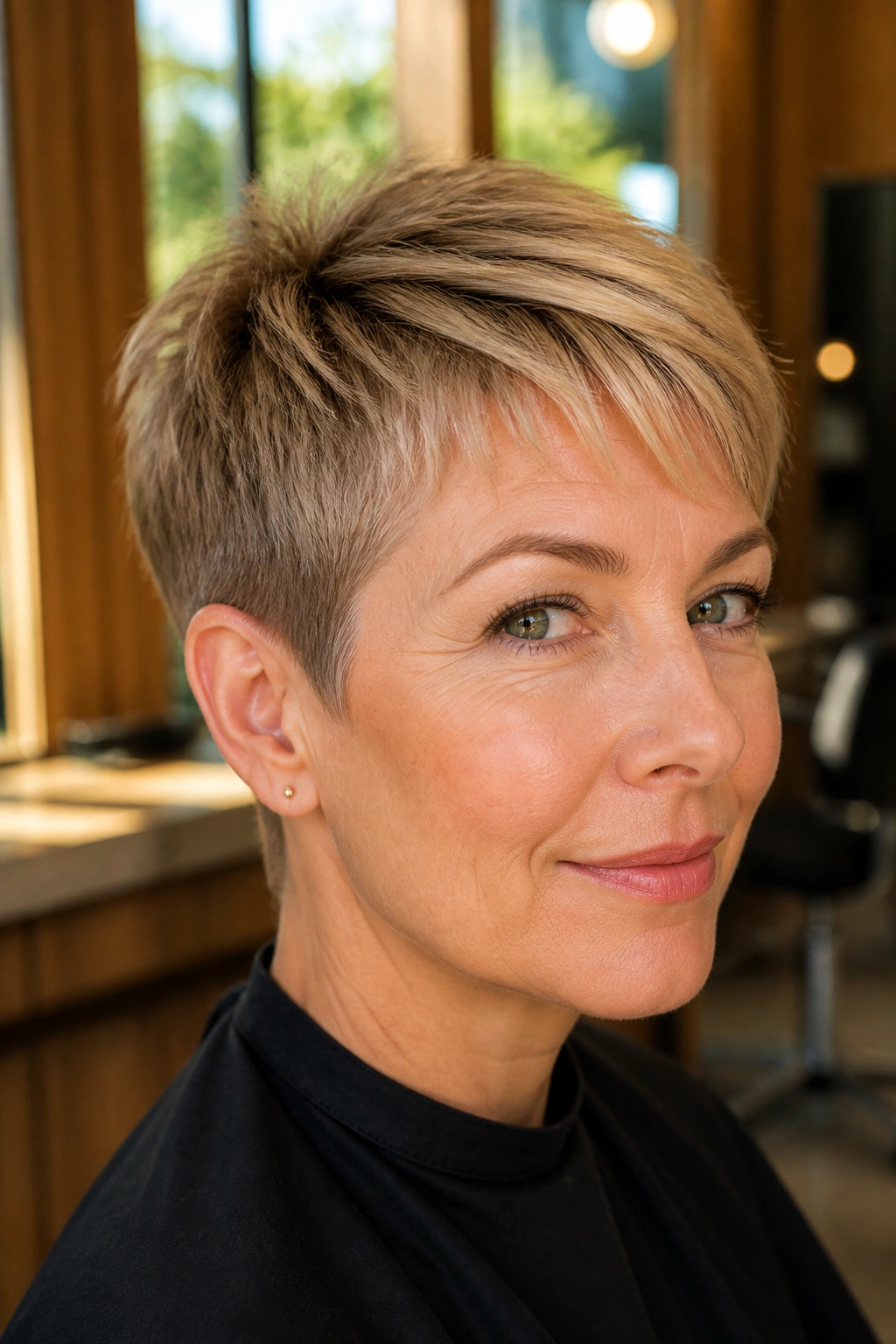
This is the one I keep coming back to when someone wants a safe-but-not-boring pixie cut for fine hair. The sides and nape stay snug, the crown keeps a touch more length, and the top lays in a neat line that reads fuller than it really is. Nothing is fighting itself. That’s the charm.
The cut works because the taper pulls the eye upward. Fine hair can look limp when every section is the same length, but a classic taper gives you a clear shape from the neckline to the crown. It also grows out gracefully, which matters more than people admit. A pixie that turns fuzzy in ten days is not a good bargain.
Ask for slight length through the top, not choppy stacking everywhere. Too many short layers can make soft hair look hollow. If you want a cleaner finish, blow-dry with a flat brush and a dab of lightweight cream, then tuck the sides in close. Neat. Sharp. Easy to live with.
2. The Side-Swept Pixie With a Long Fringe
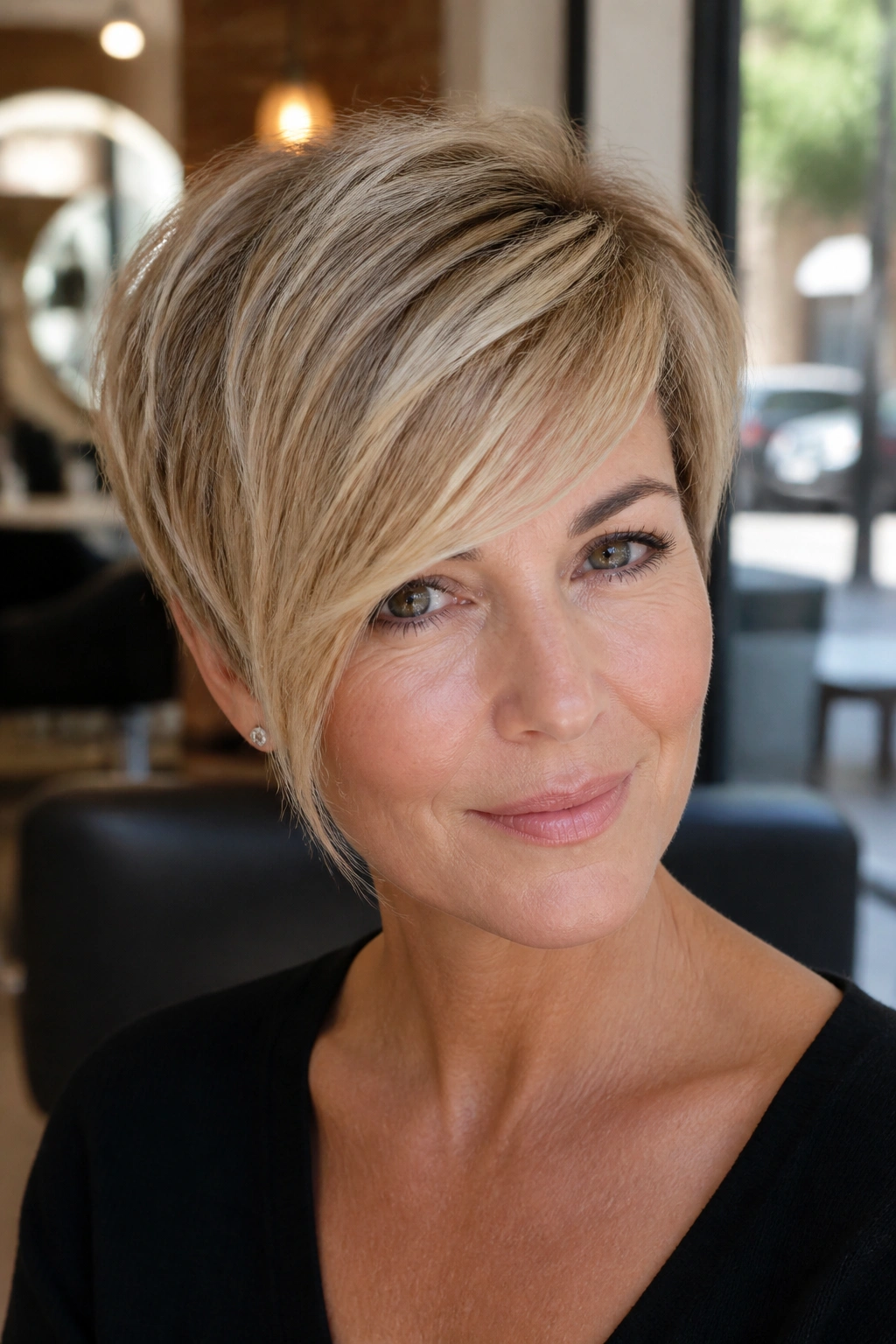
A long fringe changes everything. It gives fine hair a little drama without asking the whole cut to do too much. One diagonal line across the forehead can make the top feel denser, and it gives the haircut a polished, deliberate look instead of a short-all-over crop.
Why the fringe carries so much weight
The fringe acts like a frame. When it sweeps from a deep side part, it shifts focus away from sparse spots at the crown and onto the eyes, cheekbones, or jawline. That’s especially useful if your hair gets flat on top or if one side always falls a little weaker than the other.
A longer fringe also gives you styling room. You can wear it tucked behind one ear, brushed forward, or blown across the face with a round brush. Each version changes the mood of the cut without touching the basic shape.
- Best styling move: blow-dry the fringe in the opposite direction first, then sweep it over.
- Best product: a light styling cream, not a heavy wax.
- Best trim habit: clean up the fringe every 3 to 4 weeks so it does not split.
- Best for: anyone who wants softness around the face without losing the sleek finish.
Keep the fringe smooth at the root and loose at the ends. That small contrast stops it from looking helmet-like.
3. The Micro Pixie With Soft Texture
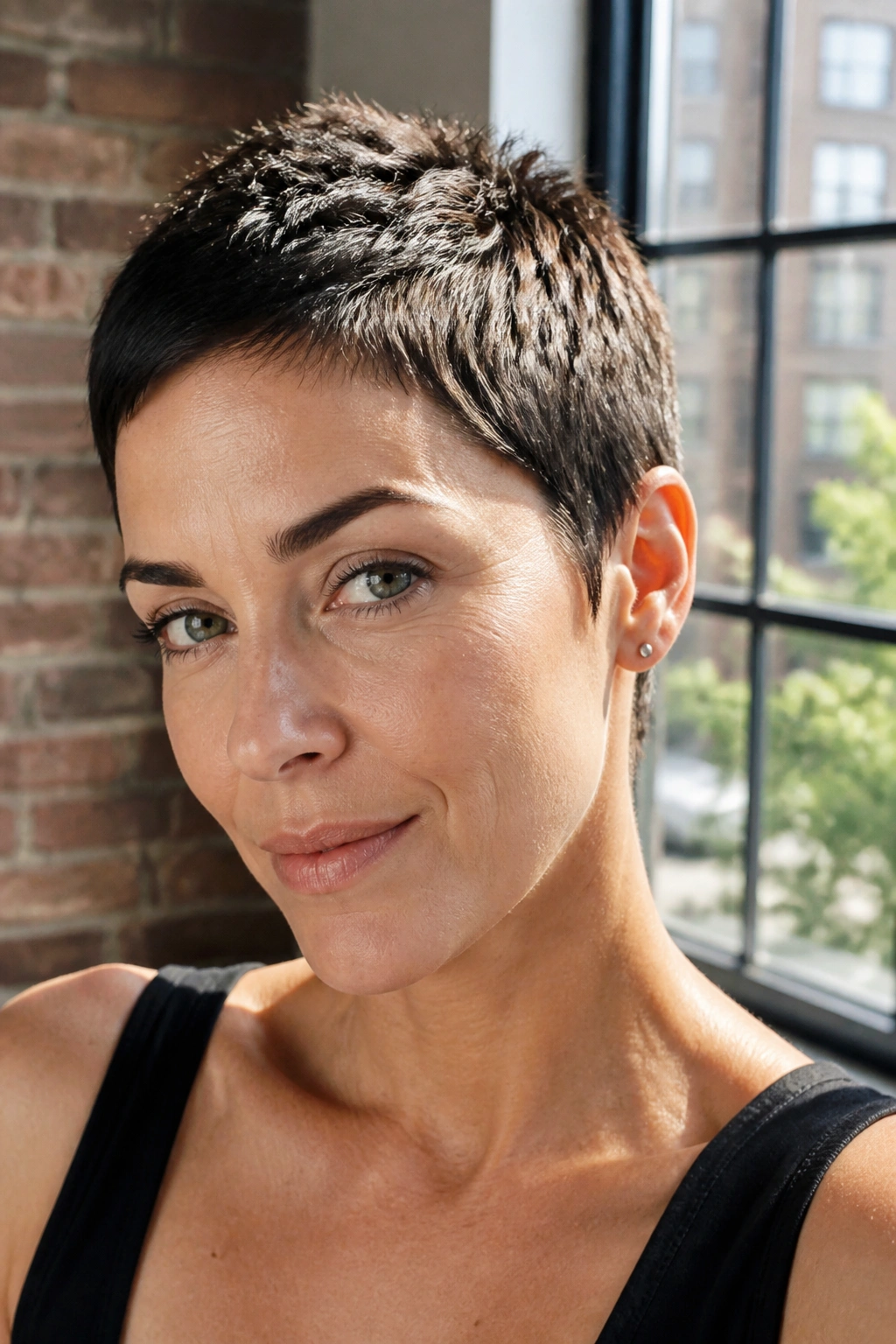
Shorter than most people expect, the micro pixie can look incredibly sharp on fine hair when it is cut with a soft touch. The trick is not to make it fluffy. It needs a clean outline, but the top should have just enough texture to keep it from reading flat against the head.
Why does this work so well? Fine hair often looks better when it is taken shorter than people think they can wear. Extra length can expose thin ends. A micro pixie removes that problem and turns the whole silhouette into a neat, compact shape. That little bit of scalp closeness can actually make the hair look denser.
This is a good choice if you hate spending time styling. A fingertip of matte paste, rubbed between the palms until it disappears, is often enough. Push a touch of product into the roots, then smooth the top with your fingertips. Do not overload it. A micro pixie should look crisp, not sticky.
4. The Pixie Bob Hybrid
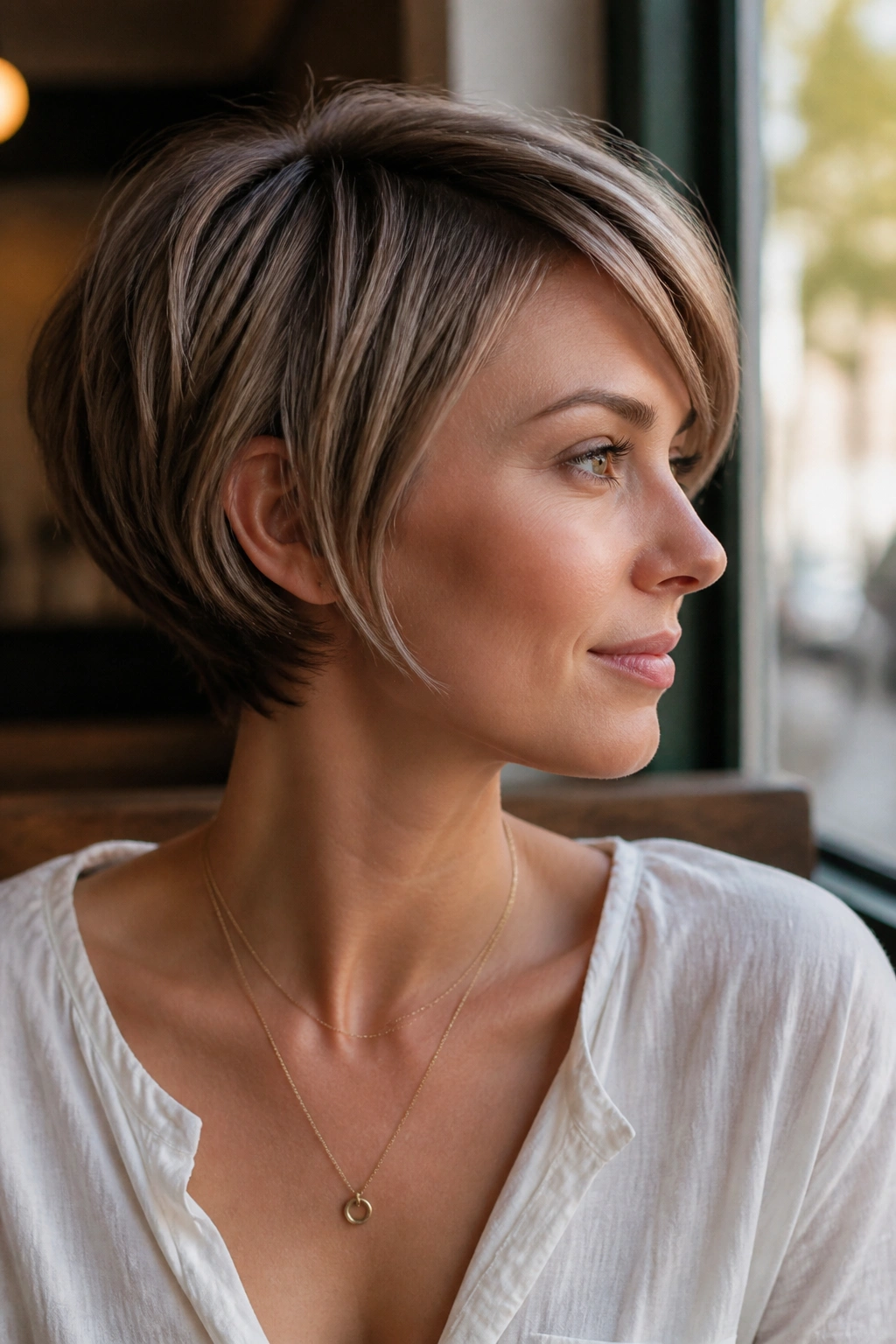
Short doesn’t have to mean severe. A pixie bob gives you the short neck and light crown of a pixie, then adds a little more length around the ears and jaw. On fine hair, that extra length can be a gift because it keeps the outline from vanishing into your scalp.
What I like about this shape is how forgiving it is. If you are nervous about going too short, the pixie bob feels like a bridge. It still looks sleek, but there is more movement at the sides and a little more swing when you turn your head. That movement helps the cut feel fuller.
It’s also one of the easiest shapes to style with a flat iron. Straighten the surface, curve the ends under just a touch, and leave the crown smooth. You do not need a severe bend. You need a tidy line. A pixie bob gives you that without the sharpness of a true crop.
5. The Slicked-Back Pixie With a Glassy Finish
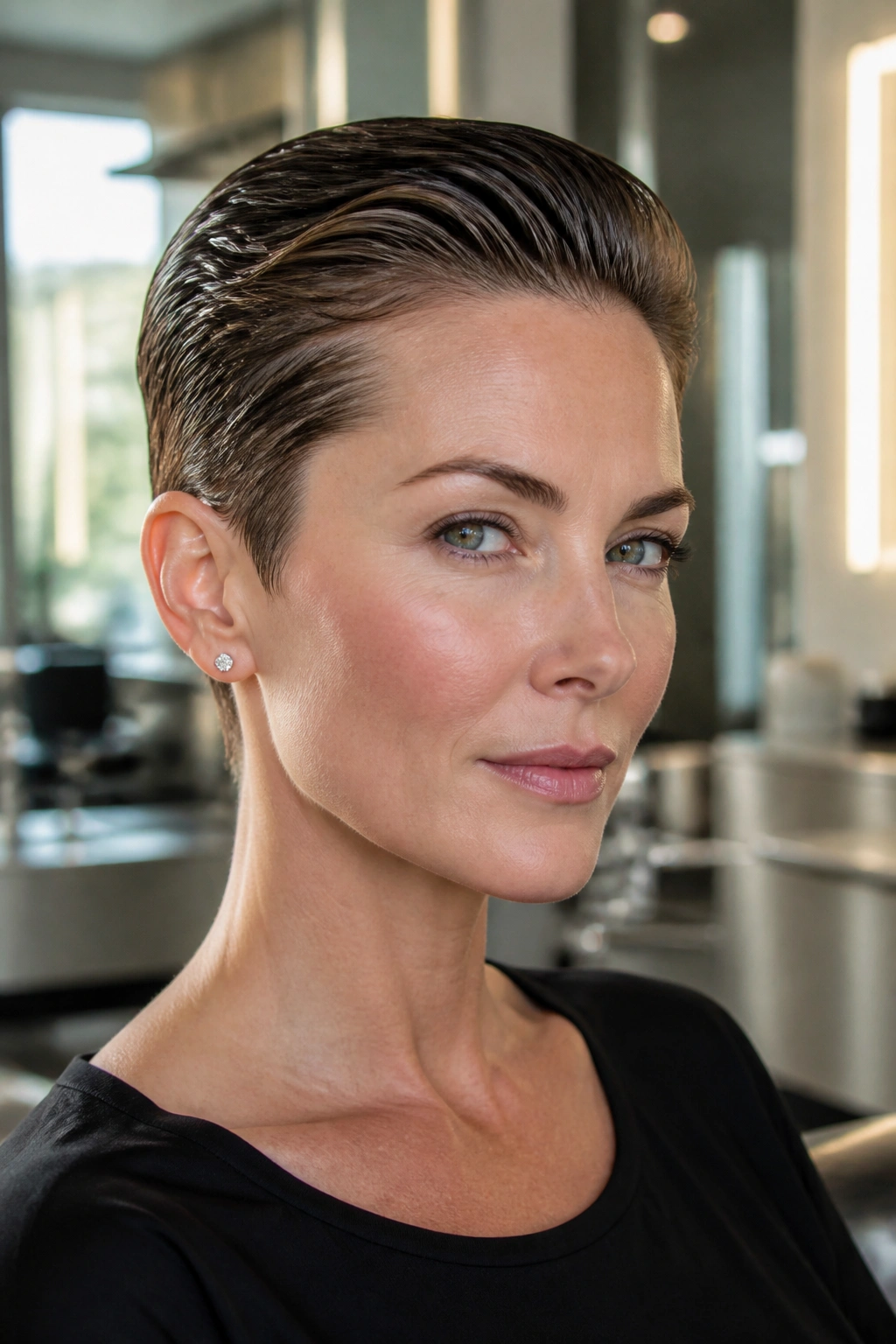
A slicked-back pixie can look expensive in the best sense of the word. On fine hair, the style works because the hair lies close, the shine is obvious, and the whole cut reads as intentional. No fuzz. No random puff at the temples. Just a smooth, modern shape.
The finish matters more than the haircut here. Damp hair, a small amount of strong-hold gel, and a fine comb will do the heavy lifting. Work the product from roots to ends, then comb the hair back and slightly up at the front so it doesn’t go flat against the head. The goal is controlled shine, not a wet mop.
Cowlicks can fight this cut. If your growth pattern pushes the front in two directions, ask for a bit more length at the hairline so you have something to tame. A slicked-back pixie is clean and dramatic, but it is not a lazy haircut. It looks best when every piece is deliberately placed.
6. The Undercut Pixie That Keeps the Top Looking Fuller
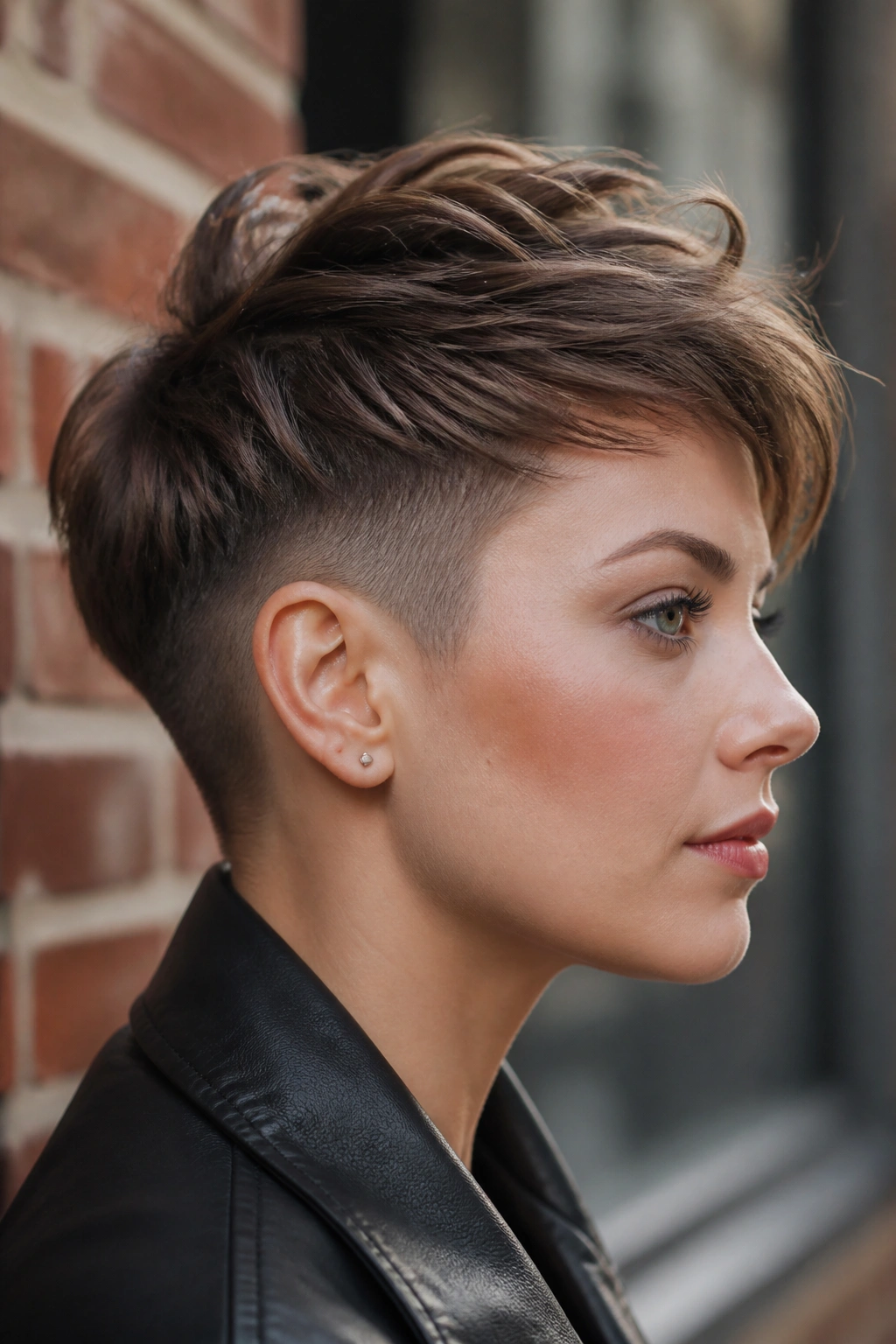
An undercut can be a smart move for fine hair when it is used with restraint. The point is not to shave half your head. The point is to remove bulk where the hair lies too close and let the top keep the visual weight. That makes the crown read thicker.
What makes it work
The top stays longer, often with a soft sweep or a controlled side part, while the sides and nape are clipped tighter. That contrast creates shape. It also makes styling easier because the top has room to sit without being dragged down by the rest of the cut.
- Best if your nape puffs out: the shorter underlayer keeps the neckline neat.
- Best if your crown falls flat: the top length gives you something to lift.
- Best product choice: root spray at the base, then a light cream on the ends.
- Best haircut request: keep the undercut subtle, not disconnected and harsh.
The mistake here is going too extreme. Fine hair does not need to lose more density than it already lacks. A soft undercut can give you edge without making the hair look sparse.
7. The Asymmetrical Pixie
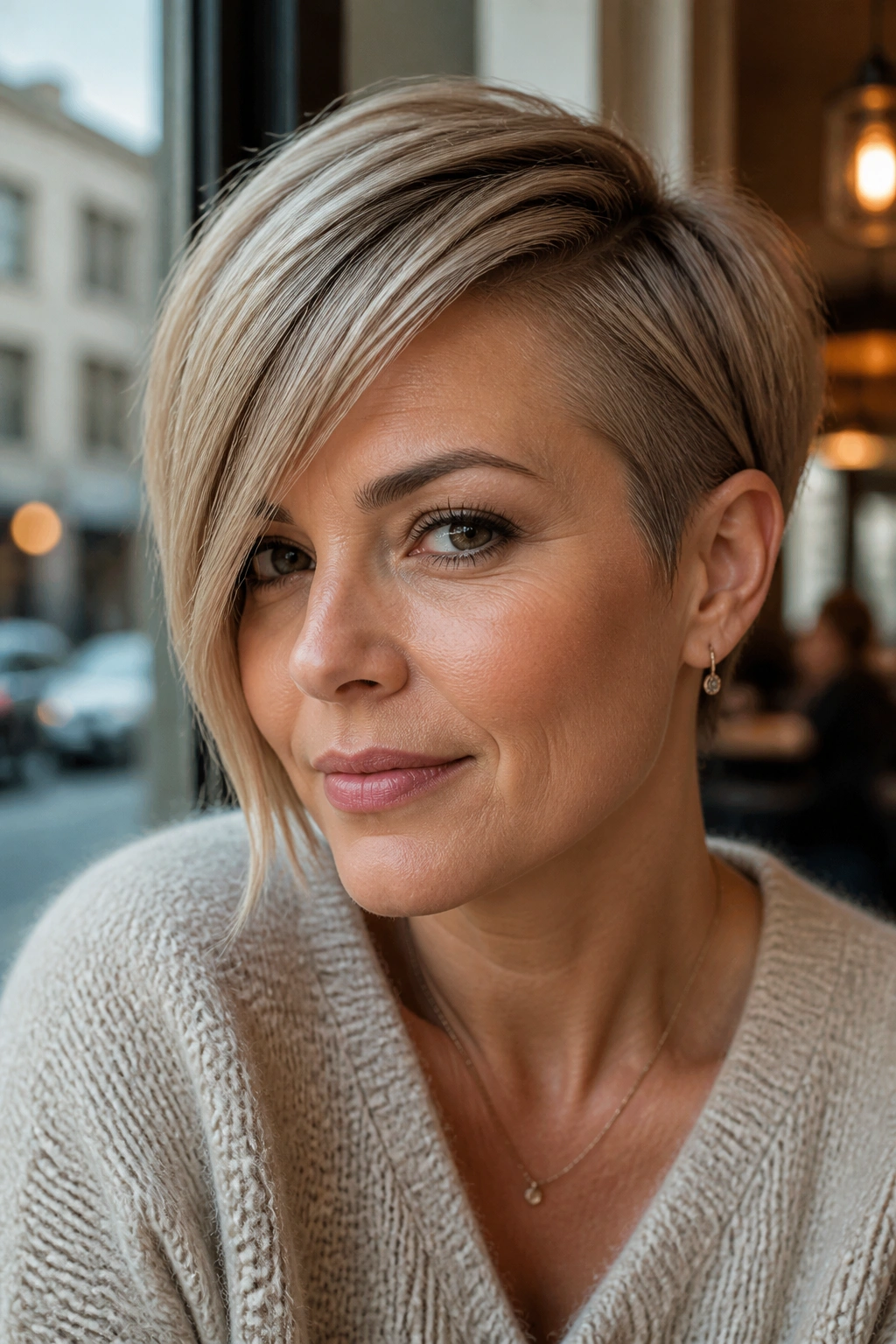
Why does an uneven shape help fine hair so much? Because the eye follows the longer side and stops worrying about the amount of hair. A diagonal line creates motion. Motion makes the cut feel larger.
An asymmetrical pixie usually has one side that falls closer to the cheek or jaw, while the other side stays tighter. That difference can make the face look longer, slimmer, or more defined, depending on where the weight lands. It also helps if one side of your hair grows flatter than the other, which is more common than people think.
How to wear it
Brush the longer side forward or across the forehead, then tuck the shorter side behind the ear. That tiny asymmetry makes the style look edited. Not messy. Edited. A touch of smoothing cream at the part keeps it sleek, and a pass with a flat iron on the longer side seals the line without taking away movement.
8. The Feathered Pixie With Crown Lift
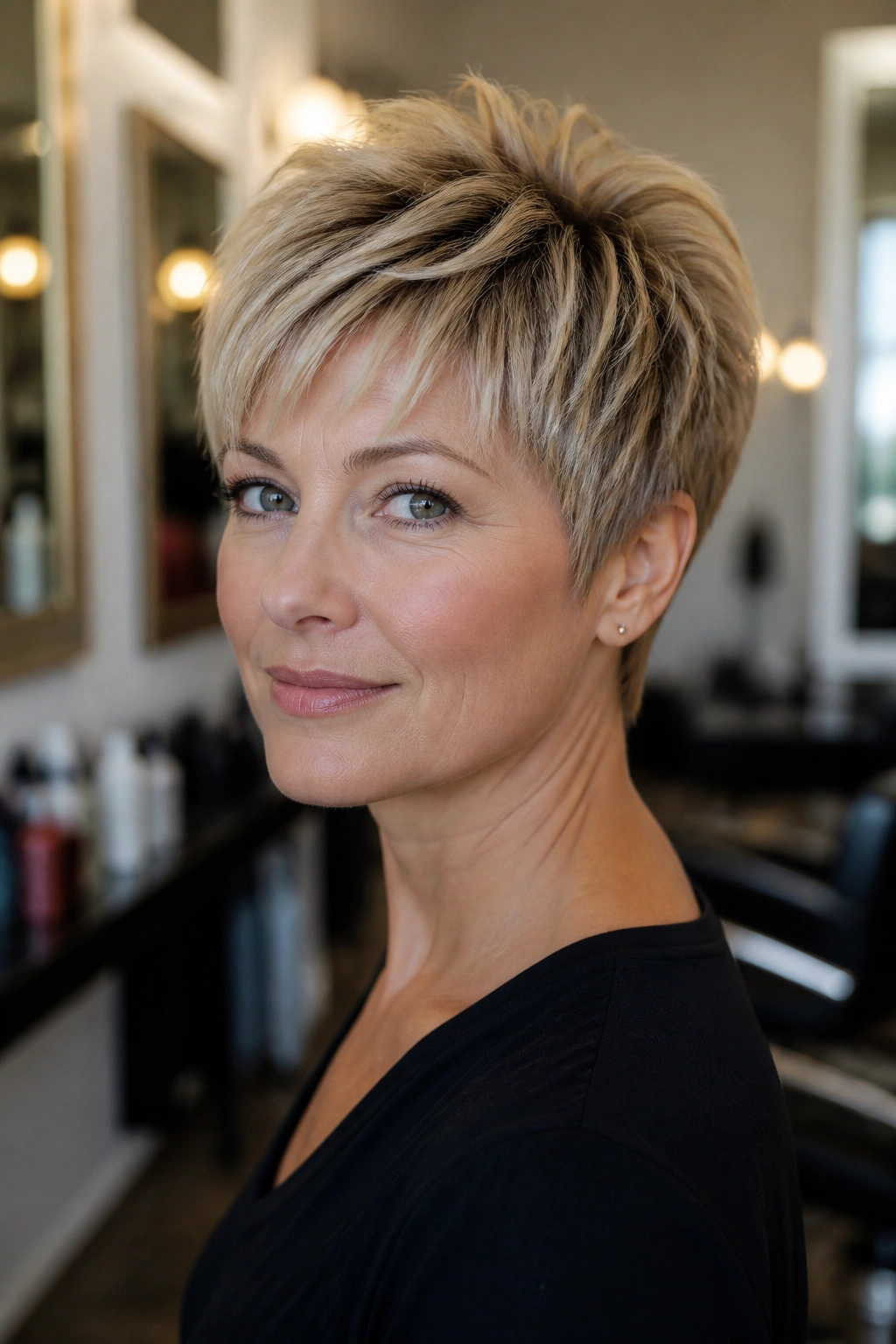
Feathering can be dangerous on fine hair when it goes too far. Too much and you end up with wisps. But a controlled feathered pixie, especially one with lift at the crown, can be lovely. The shape feels light, but the crown has enough height to keep the top from collapsing.
The real trick is where the feathering lives. Keep it around the upper layers and through the fringe, then leave the lower section cleaner and tighter. That gives you texture without shredding the silhouette. It also keeps the hair from looking patchy in bright light.
Styling note
Blow-dry the roots upward for a few seconds, then direct them back with the nozzle. Up and back. Not straight up. That small detail keeps the lift soft instead of puffy. A round brush can help, but a flat brush works fine if you want a sleeker finish. Finish with a mist of flexible spray so the crown holds shape without turning crunchy.
9. The Bowl-Cut-Inspired Pixie
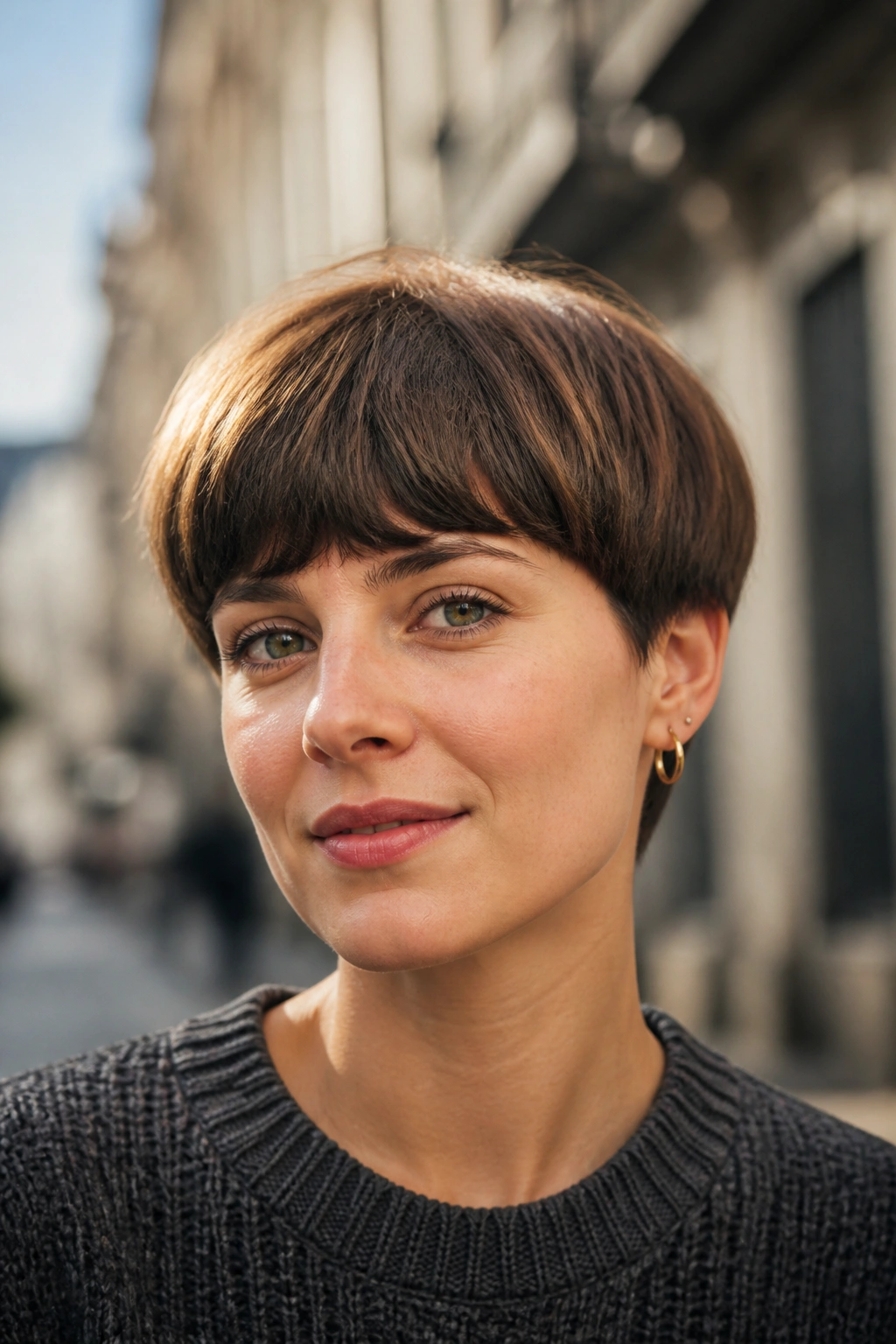
This one gets misunderstood a lot. A bowl-cut-inspired pixie is not about looking childish or severe. When it is softened at the edges and kept sleek, it can look polished, graphic, and surprisingly flattering on fine hair.
The rounded shape gives the illusion of density because the hair follows a strong curve. Instead of broken layers and scattered ends, you get a clear line that reads fuller. That line can sit just above the brows, at the top of the ears, or a little lower depending on how bold you want it.
It works best on straight hair or hair that can be smoothed down without fighting. If you have a strong cowlick at the crown, this cut will need more work. If your texture is naturally smooth, though, it can look almost sculpted. A shine cream on the surface is enough. Keep the inside of the haircut light, not puffy.
10. The Choppy Fringe Pixie
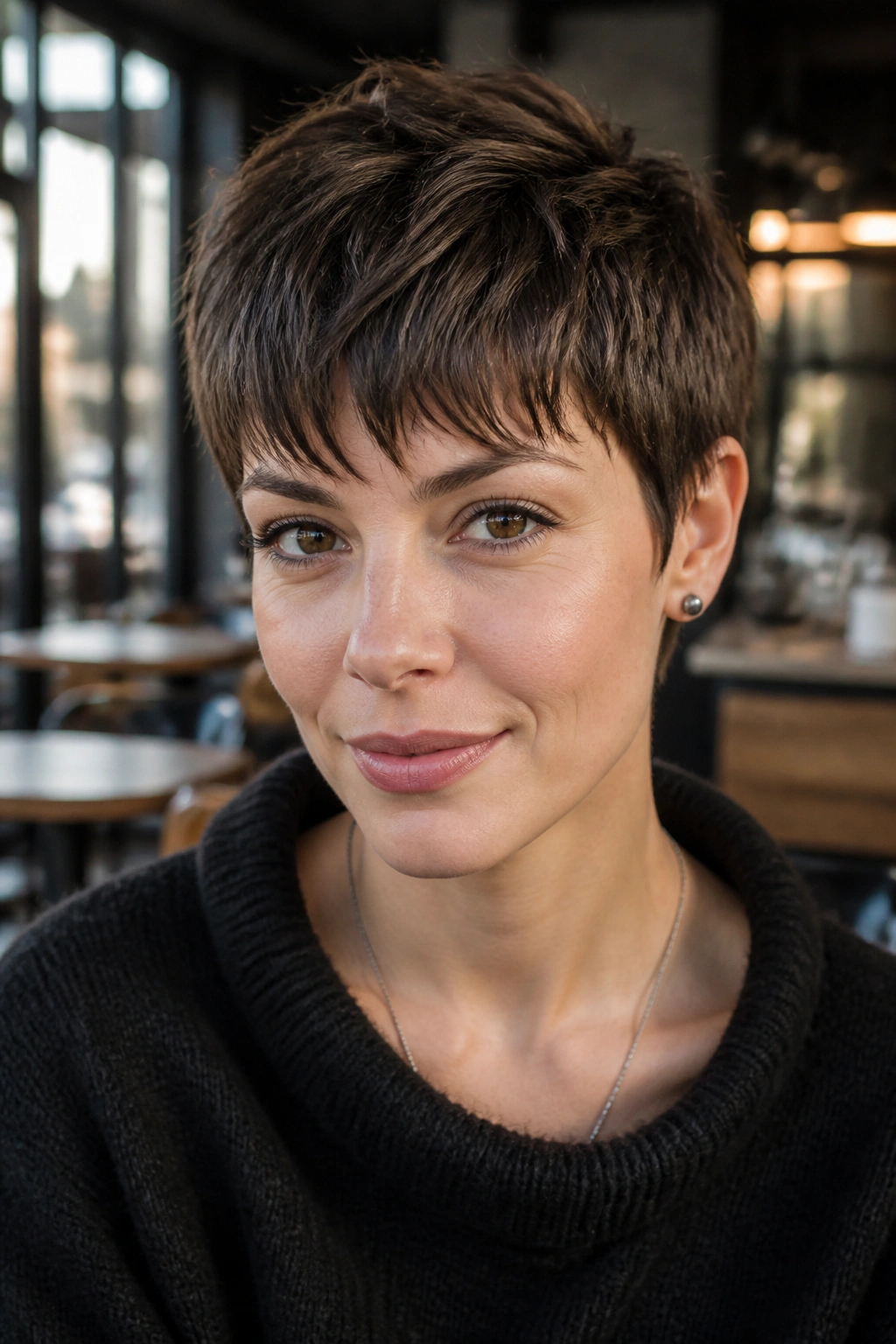
A choppy fringe is one of the quickest ways to wake up fine hair. The broken edge at the front keeps the cut from feeling too tidy, and that tiny bit of irregularity can make the top look fuller than a blunt line would. It also gives the face a bit of edge without turning the whole haircut hard.
What to ask your stylist for
Ask for a fringe that has texture at the tips, not shredded layers everywhere. That distinction matters. You want the front to move, but you do not want the whole top of the head to look thin. Point-cut ends usually do the job better than aggressive thinning shears.
A choppy fringe pairs well with a clean nape and sleek sides. That contrast is the point. Keep the body of the haircut neat, then let the bangs do the slightly messy work.
- Use a pea-sized amount of paste and warm it well before touching the fringe.
- Push the fringe forward first, then break it apart with your fingers.
- Keep the root area smooth, so the texture stays in the bangs, not the whole head.
- Skip heavy oils; they make short fringe separate in a greasy way.
11. The Ear-Tucked Polished Pixie
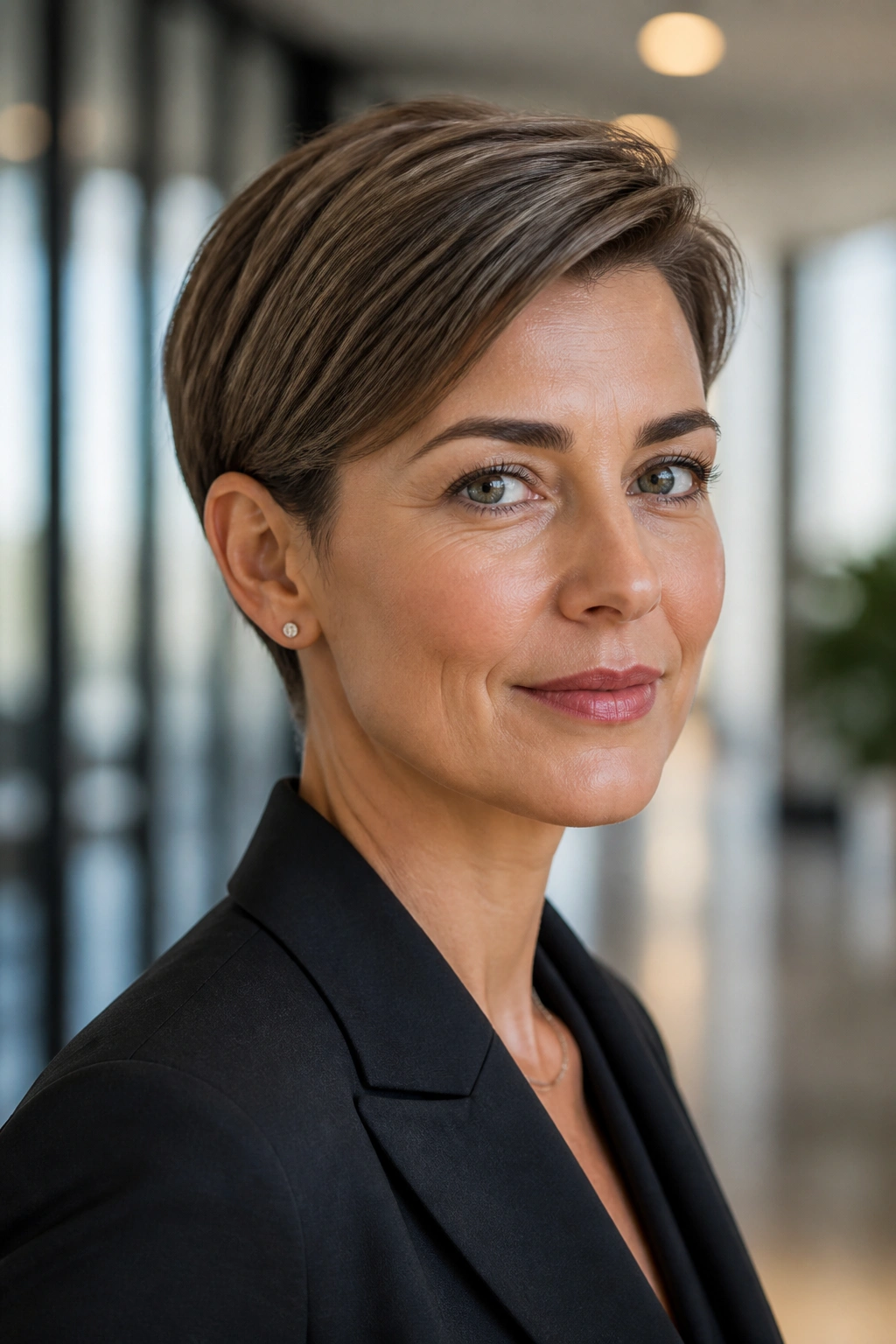
There is something quietly sharp about a pixie that slips neatly behind the ear. The shape opens the face, shows off the jawline, and makes fine hair look deliberate rather than loose. It also creates a strong side profile, which is useful if you like wearing earrings or glasses.
This cut usually keeps enough length on top and along the sides to tuck cleanly, but not so much that it collapses. The surface should be smooth, almost satin-like, with the ends sitting close to the head. It is one of those styles that looks like it took longer than it did.
I like this option for people who want a neat, work-friendly cut. The trick is to blow-dry the side sections down and back, then set them with a small flat iron pass if needed. A little behind-the-ear tuck is doing a lot of the visual work here. Keep the hairline clean, and the whole look sharpens up fast.
12. The Soft-Waved Sleek Pixie
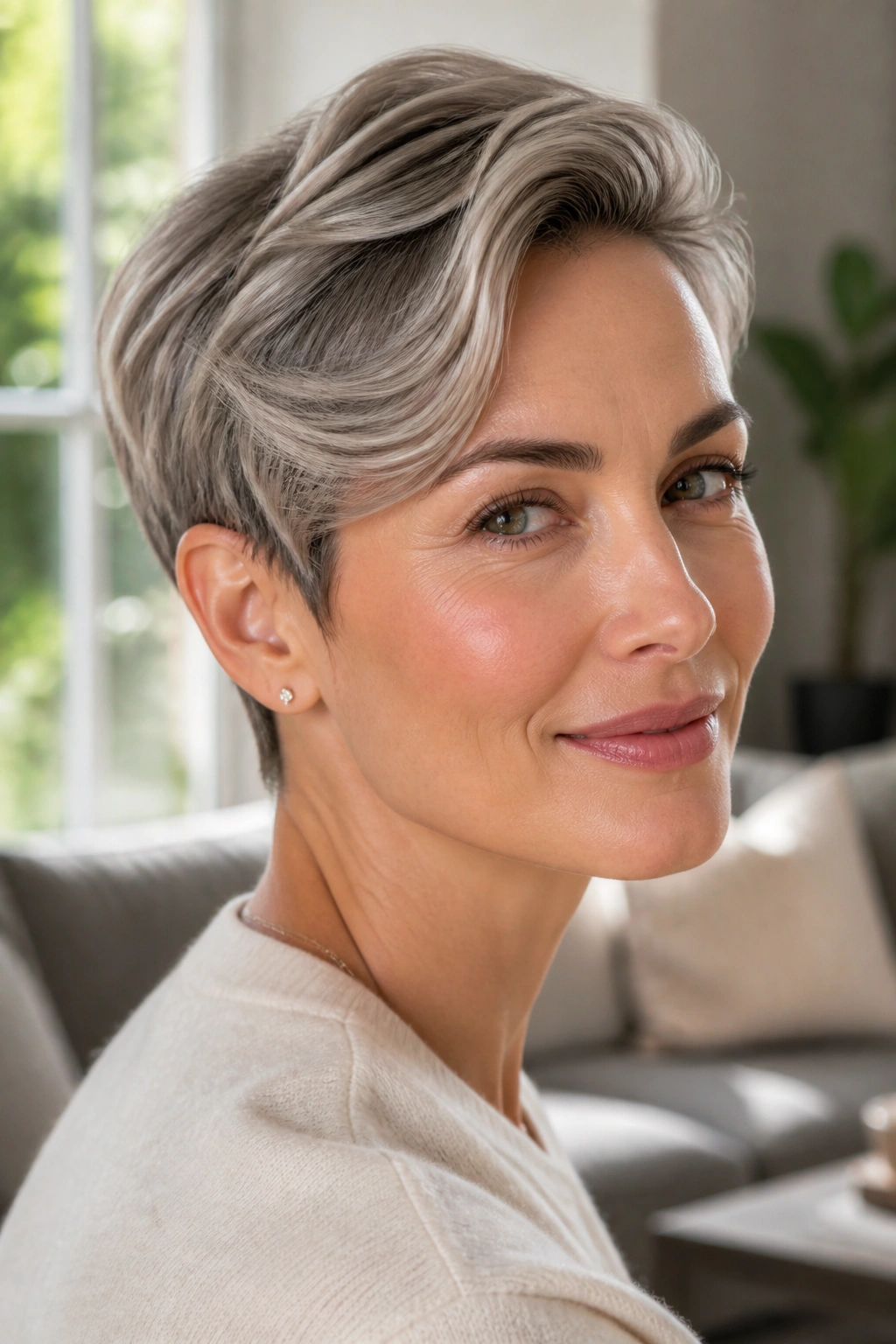
Sleek does not have to mean flat. A soft wave through the top of a pixie can make fine hair look more alive, especially if the wave is wide and controlled rather than curly. You want bend, not bounce.
This style works because the wave changes how light lands on the hair. Straight, limp sections can disappear. A gentle curve gives the eye more to follow, and that makes the haircut appear fuller. The shape stays smooth at the sides while the top carries a little motion.
A small flat iron or a narrow curling iron can create that bend. Wrap only the mid-lengths for a second or two, then pull the ends straight so it does not become ringlets. Finish with a light serum on the surface. Too much and the wave collapses. Too little and the bend disappears. It is a narrow window, but when you hit it, the cut looks expensive in a quiet way.
13. The Platinum Pixie With Clean Lines
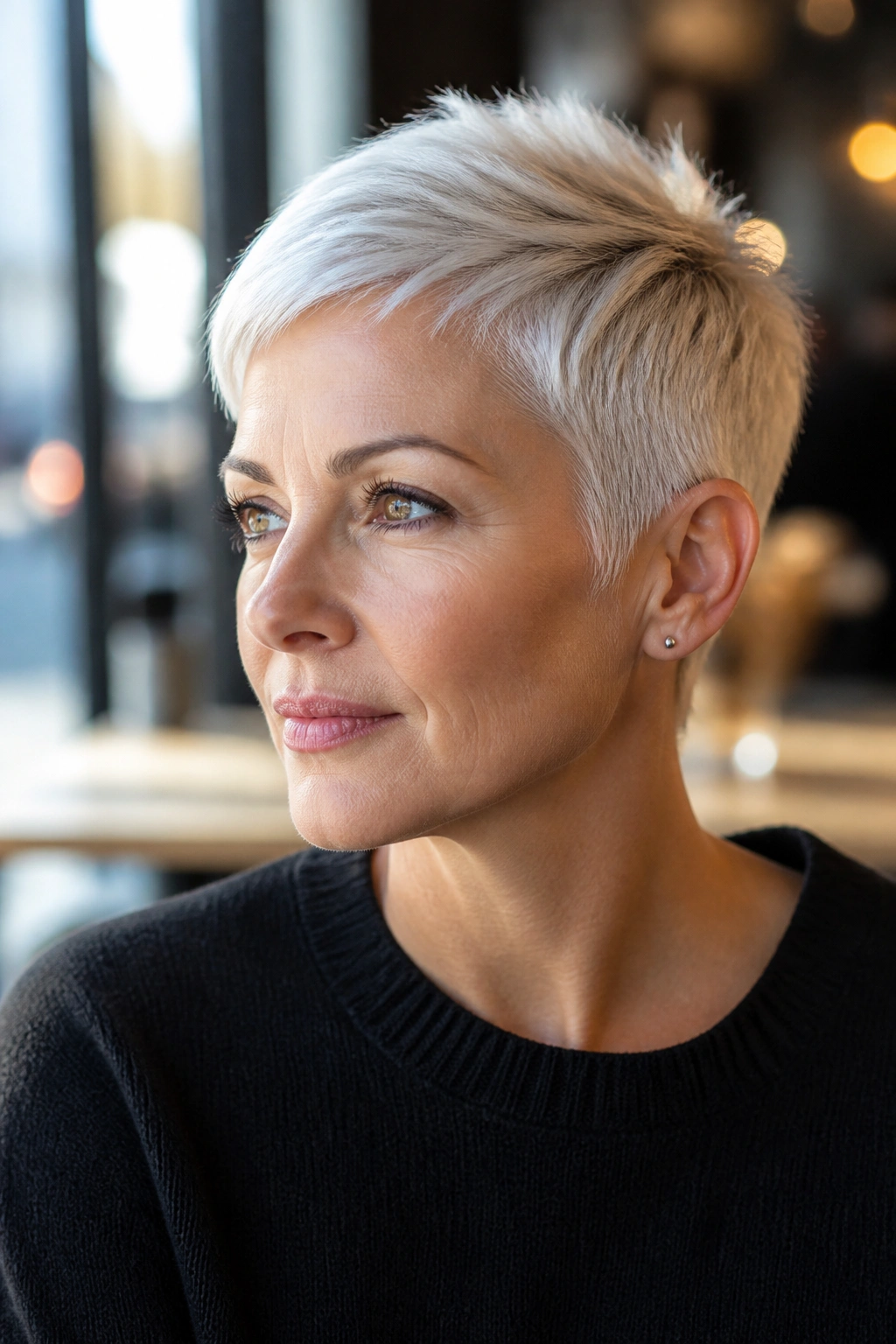
Color is not the cut, but it changes how the cut reads. A platinum pixie with clean lines can make fine hair look sharper because the silhouette becomes more visible. Every edge shows up. Every bend matters. That is useful when the hair itself is soft and delicate.
The catch is condition. Fine hair can get fragile fast if the lightening is too aggressive, and damaged hair tends to look thinner, not fuller. So the shape has to carry the look. Keep the cut precise: a neat nape, smooth sides, and enough top length to keep the style from looking bare.
What I like about this pairing is the contrast. The bright tone emphasizes the structure, while the cut keeps the hair close and controlled. If you go this route, ask for a tone that suits your skin and a shape that can still look good if you air-dry it one day and style it the next. That flexibility matters more than the color drama.
14. The Nape-Grazing Tapered Pixie
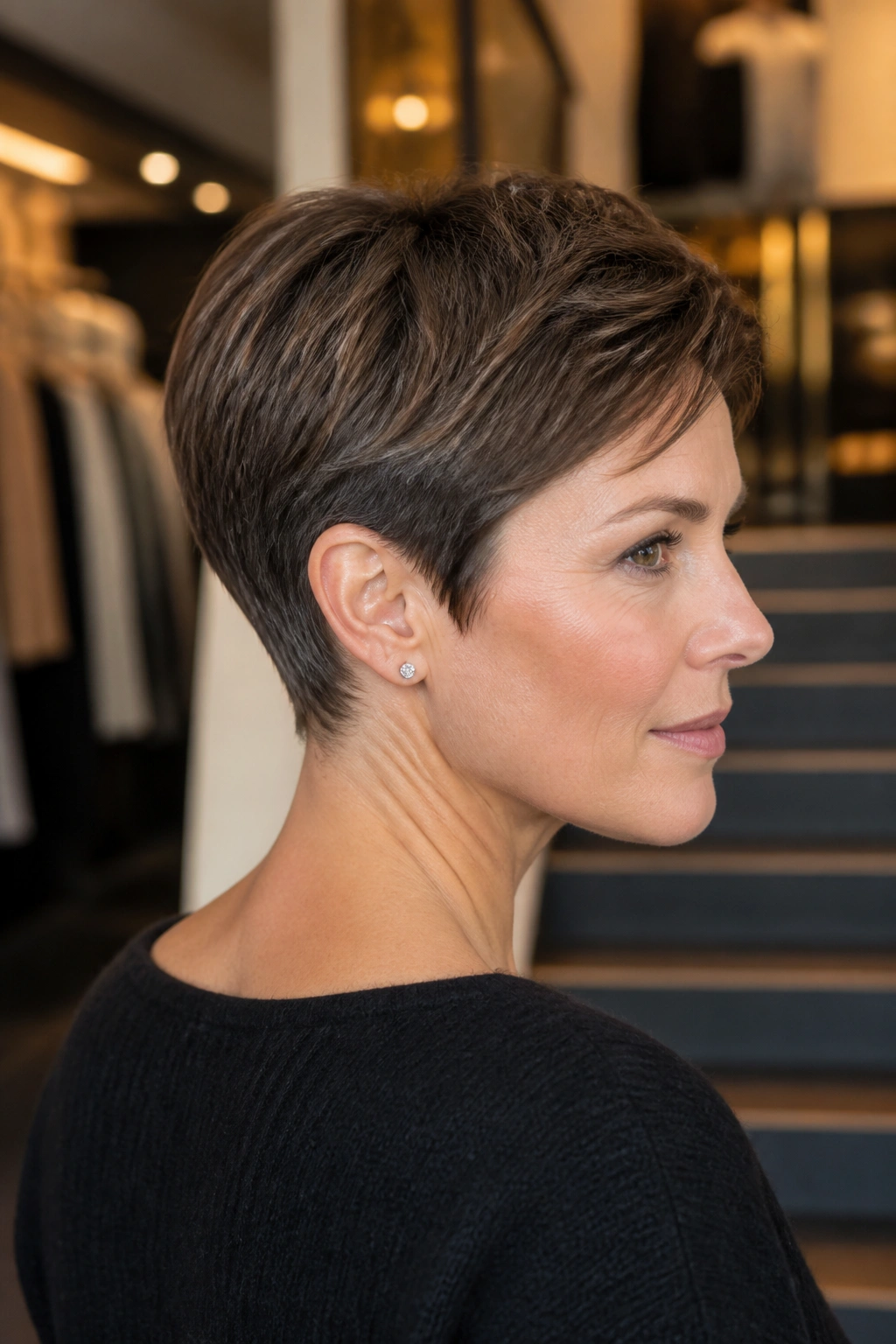
A nape-grazing pixie gives you a little softness at the neck without letting the cut spread out. The longer taper in back follows the shape of the head and makes the neckline look tidy, which is one of the fastest ways to make fine hair feel polished.
Why the nape matters
The back view is where a lot of short cuts fall apart. Fine hair can look scraggly there if the nape is too blunt or too short. A gentle taper keeps the line close and clean, so the haircut holds its shape from every angle.
This cut is especially good if you like wearing high collars, small earrings, or simple makeup. It feels neat. Almost tailored. A little cream through the top and a smoothing pass at the back are usually enough. If your hair grows fast at the neckline, this is the kind of style that benefits from frequent cleanups because the whole silhouette depends on that lower edge staying crisp.
15. The Bixie With Sleek Ends
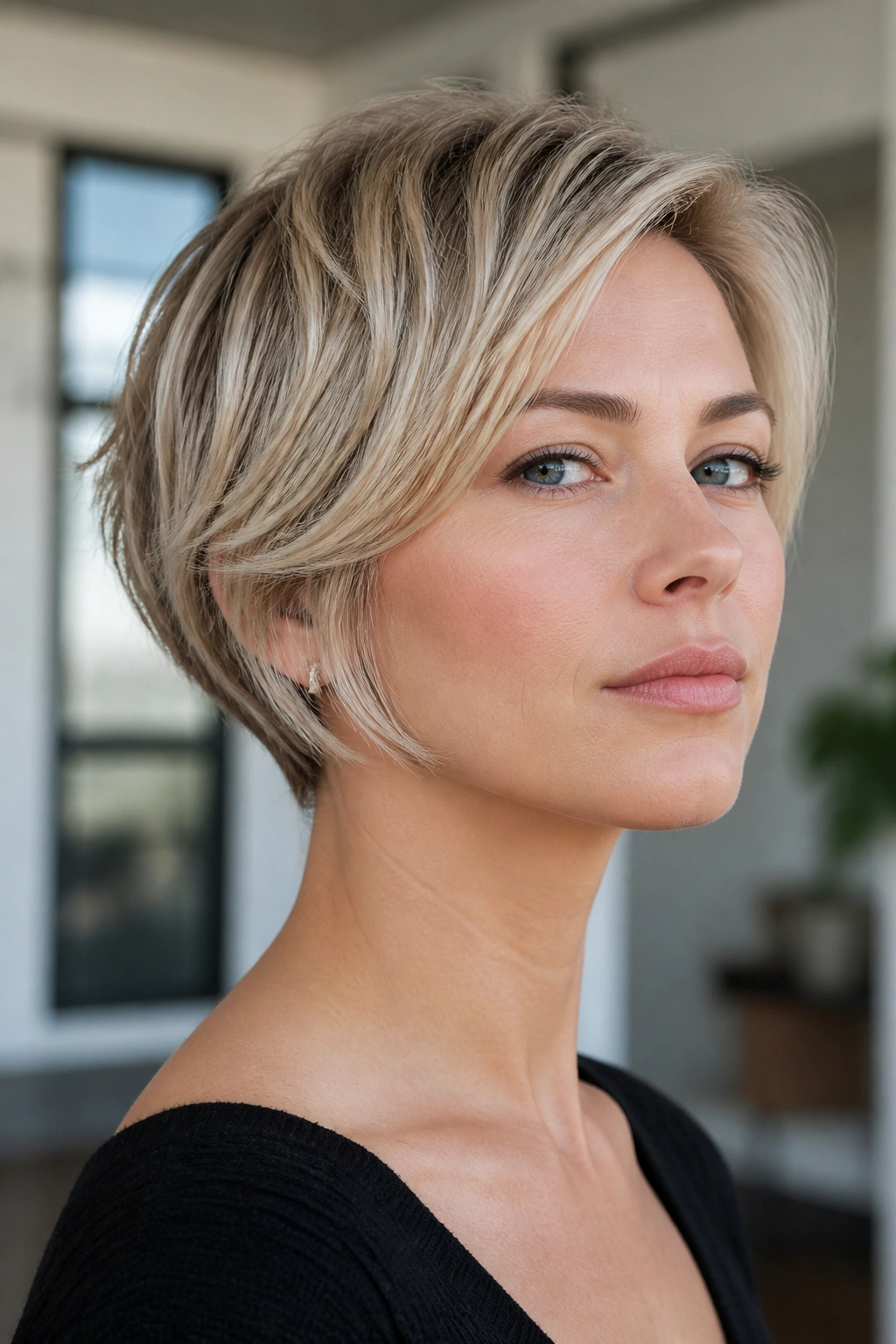
A bixie sits between a bob and a pixie, and that in-between space is exactly why it works on fine hair. You get more length than a true pixie, but the ends stay light enough to move. When the finish is sleek, the whole cut reads as polished instead of shaggy.
The best bixies for fine hair keep the perimeter neat and the top slightly layered. That prevents the shape from puffing out in the wrong spots. The ends can skim the cheek or jawline, which gives the illusion of thicker hair because the outline has more surface area.
This is a smart choice if you are growing out a shorter crop or if you want to flirt with shorter hair without fully committing to a close cut. A flat iron can keep the ends smooth, while a side part gives the style structure. No need for a lot of product. A soft cream and a small mist of spray are enough.
16. The Deep Side-Part Pixie
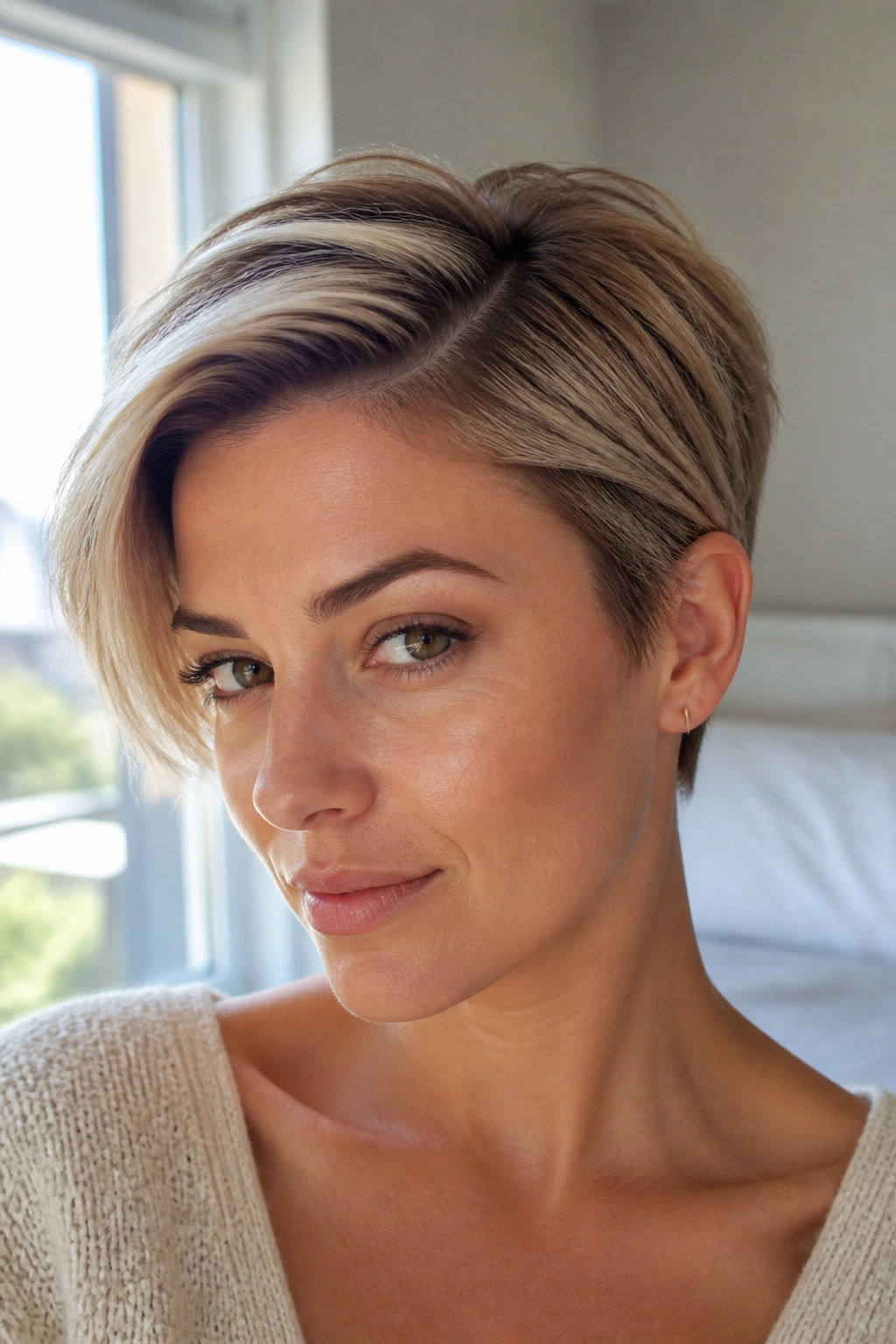
Sometimes the haircut itself does less than the part. A deep side part can rescue fine hair by stacking the visual weight to one side and creating instant lift at the roots. It is a small change, but it changes the whole face shape.
The side with more volume reads fuller because the hair is directed away from the natural fall line. That makes the crown look less flat and the front more intentional. If your hair tends to split down the middle and sit close to the scalp, this is one of the quickest fixes.
You do not need a dramatic cut to make this work. Even a simple pixie with a smooth top can feel new when the part moves an inch or two over. Blow-dry the roots in the opposite direction first, then settle them where you want them. That little bit of resistance at the start is what creates lift.
17. The Baby Fringe Pixie
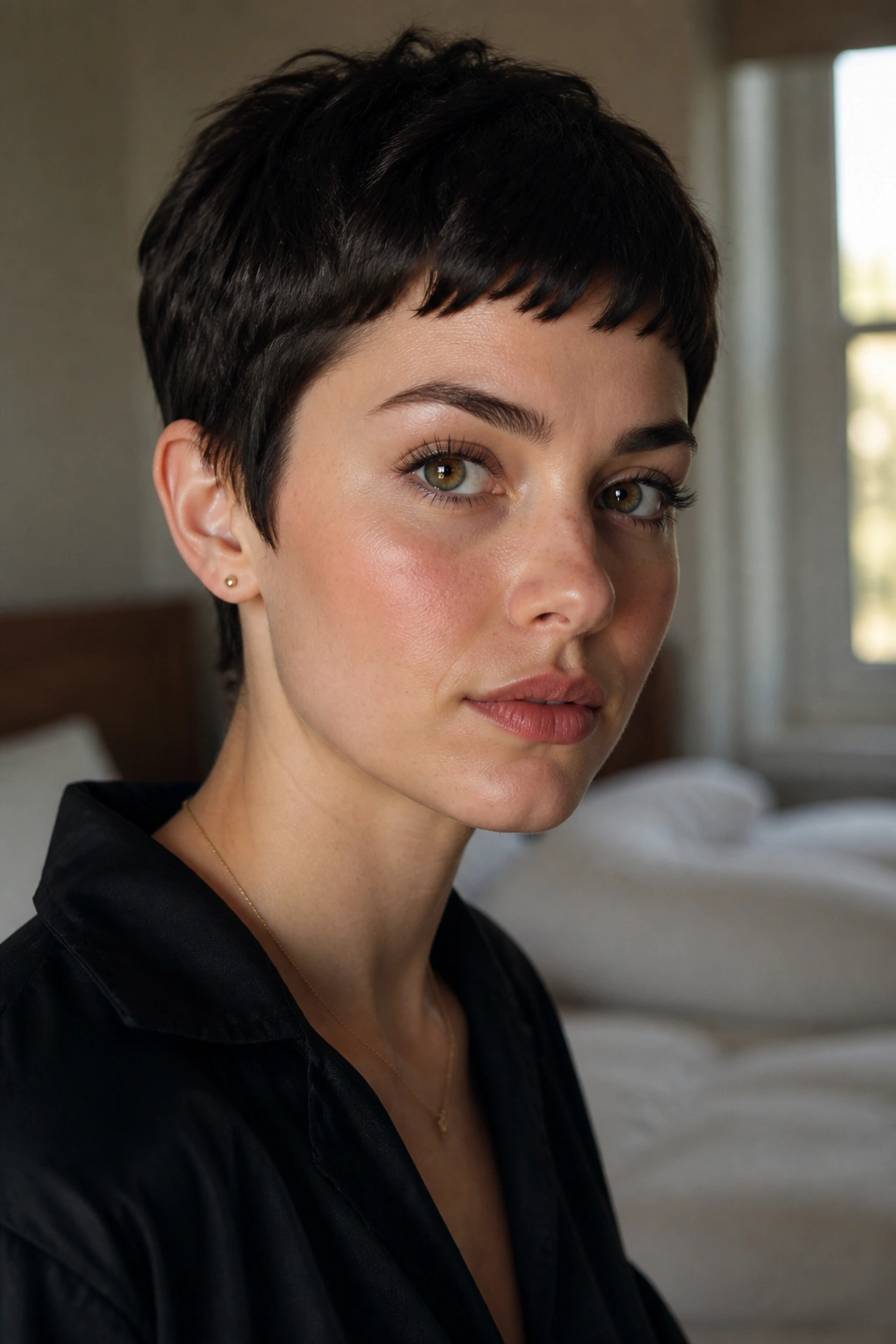
A baby fringe can be a bold move, and on fine hair it often looks sharper than people expect. The short fringe opens the face, highlights the eyes, and keeps the top from looking overgrown. It also creates a clean, graphic line that suits sleek styling.
The reason it works is simple: short fringe takes weight off the forehead area and puts it into the shape of the cut. Instead of long strands trying to do too much, the haircut becomes clear. You see the line, the eyes, the bone structure. That can be flattering in a way a softer fringe is not.
It helps when the rest of the cut is tidy. Keep the sides close, the nape neat, and the fringe blunt enough to read. If it gets too sparse, it loses the point. This is one of those styles that needs confidence, yes, but also a decent trim schedule. A baby fringe grows out faster than you think.
18. The Long-Top, Short-Sides Pixie
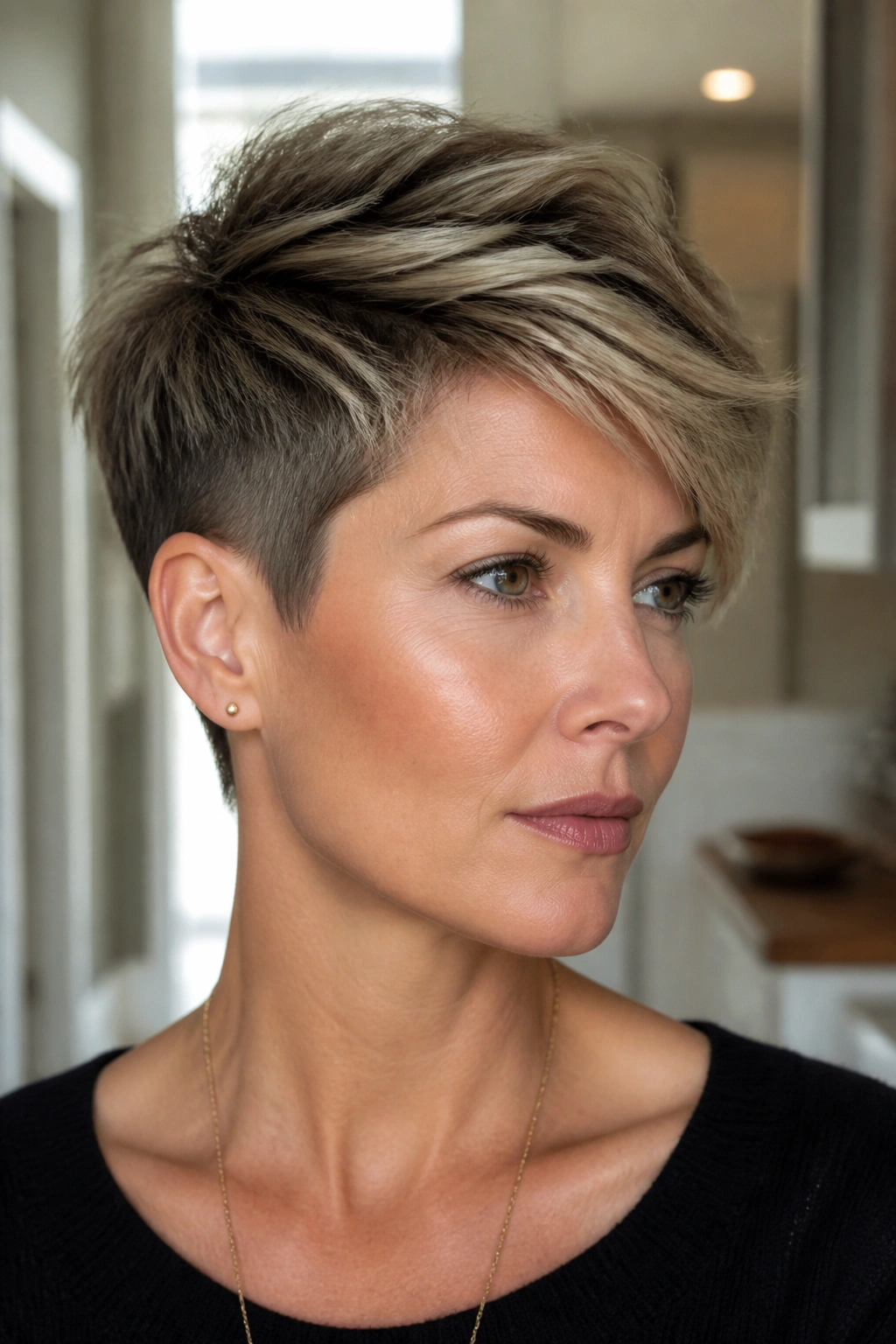
This is the pixie for anyone who wants more contrast. The top stays long enough to sweep, part, or flatten into a sleek wave, while the sides stay short and precise. Fine hair benefits from this because the shorter sides remove visual clutter and the top gets all the attention.
How to style it without overdoing it
Blow-dry the top forward first, then lift at the roots with your fingers or a small brush. Once the hair is dry, smooth the surface with a tiny bit of cream. The goal is a controlled line, not a fluffy crown. If the top is long enough, you can even tuck one side back for a cleaner shape.
- Use a heat protectant before any flat-ironing.
- Keep the sides clipped tight, especially around the ears.
- Ask for point-cut length on top, not blunt heaviness.
- Finish with flexible spray so the shape moves a little.
The cut has a bit of attitude, but it stays neat. That combination is hard to beat.
19. The Razor-Cut Pixie
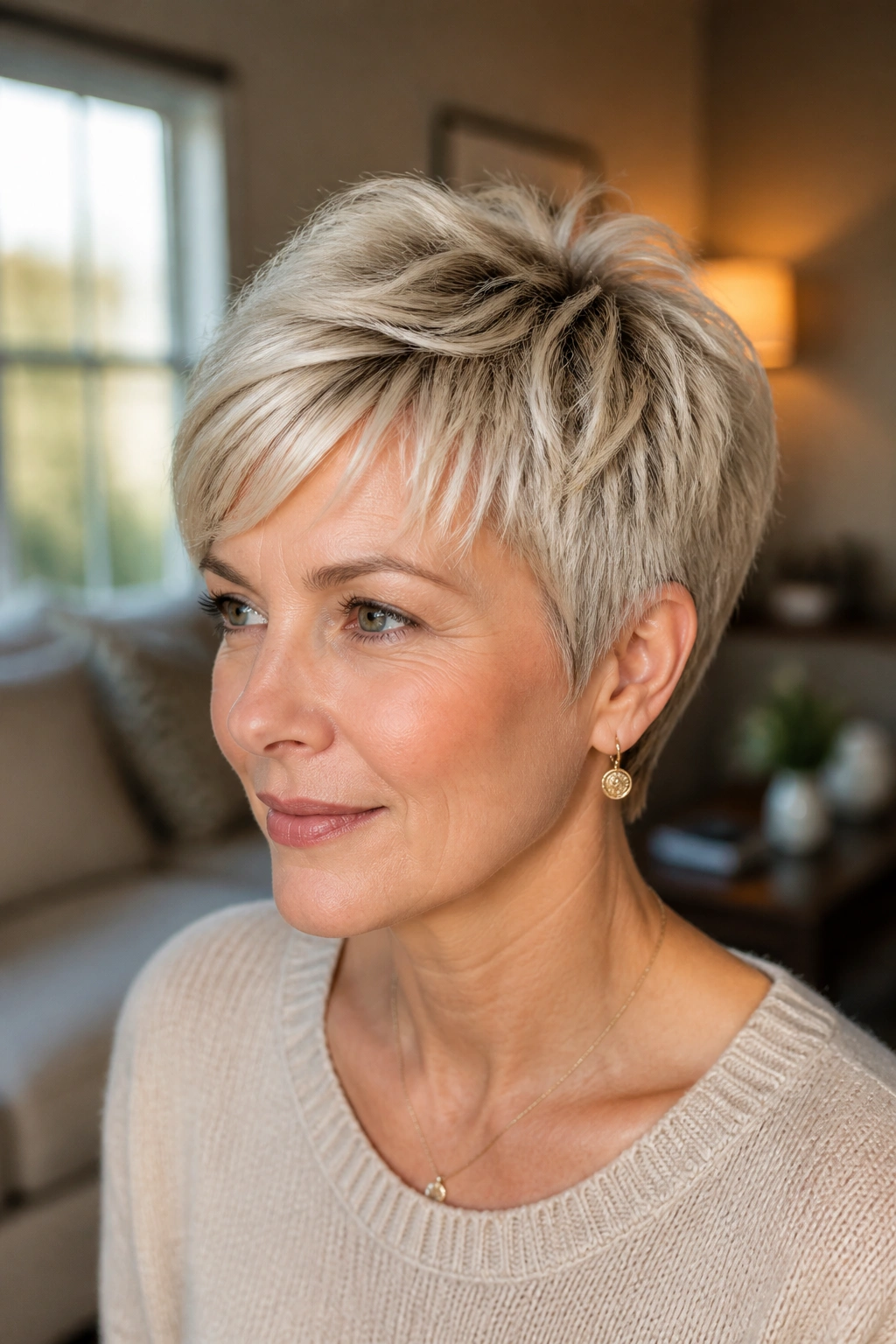
A razor-cut pixie can look airy and modern, but on fine hair it needs a careful hand. Too much razor work, and the ends can get too wispy. Just enough, though, and the haircut gains a soft edge that still sits close to the head.
What the razor does well is remove bulk without creating harsh steps. That is useful when the hair is fine but has odd density in certain spots, like at the crown or around the ears. The texture becomes softer, the line less blunt, and the style easier to shape with fingers instead of a brush.
I would not ask for this cut if your hair is already fragile or splits easily. But if your strands are fine and healthy, the razor can give you movement that scissors sometimes miss. Use a tiny bit of cream or balm on dry hair to keep the ends from looking frayed. That’s the difference between soft and thin.
20. The Piecey Layered Pixie
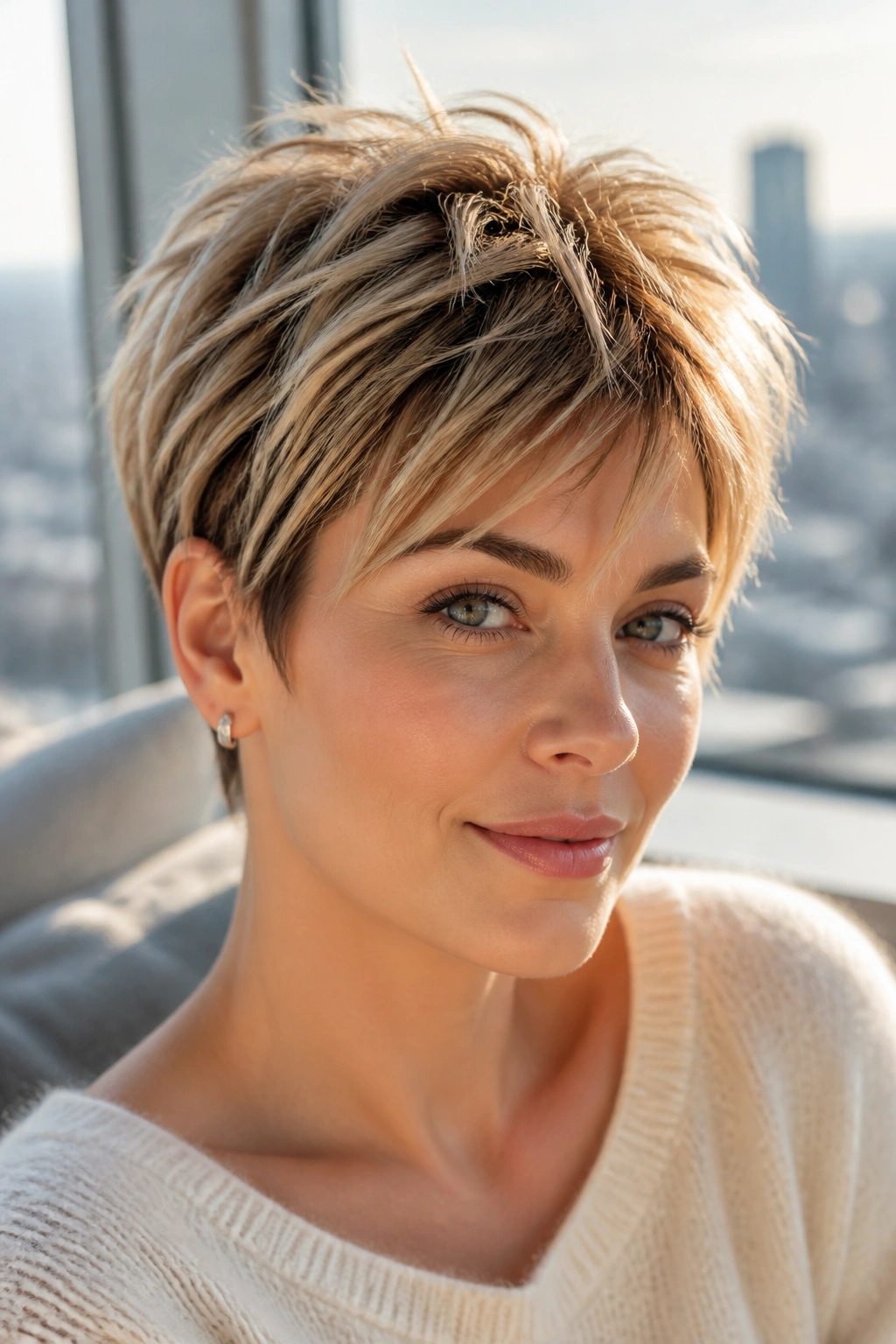
Piecey does not have to mean messy. On fine hair, a pixie with controlled pieces can keep the top from lying like one flat sheet. The key is separation at the ends, not feathered chaos from root to tip.
How to keep the pieces clean
Ask for layers that are visible when the hair moves, but not so short that they vanish. The top should still have enough body to sit in sections. That way, when you apply product, the strands define themselves instead of clumping into one shape.
A little styling paste goes a long way here. Warm it in your hands, then pinch the ends into place. Leave the crown smoother than the fringe so the style doesn’t sprawl. A piecey pixie can go wrong fast if every bit of hair is pushed in a different direction. Keep the structure neat, and let the texture happen only where you want it.
21. The Soft Undercut Pixie
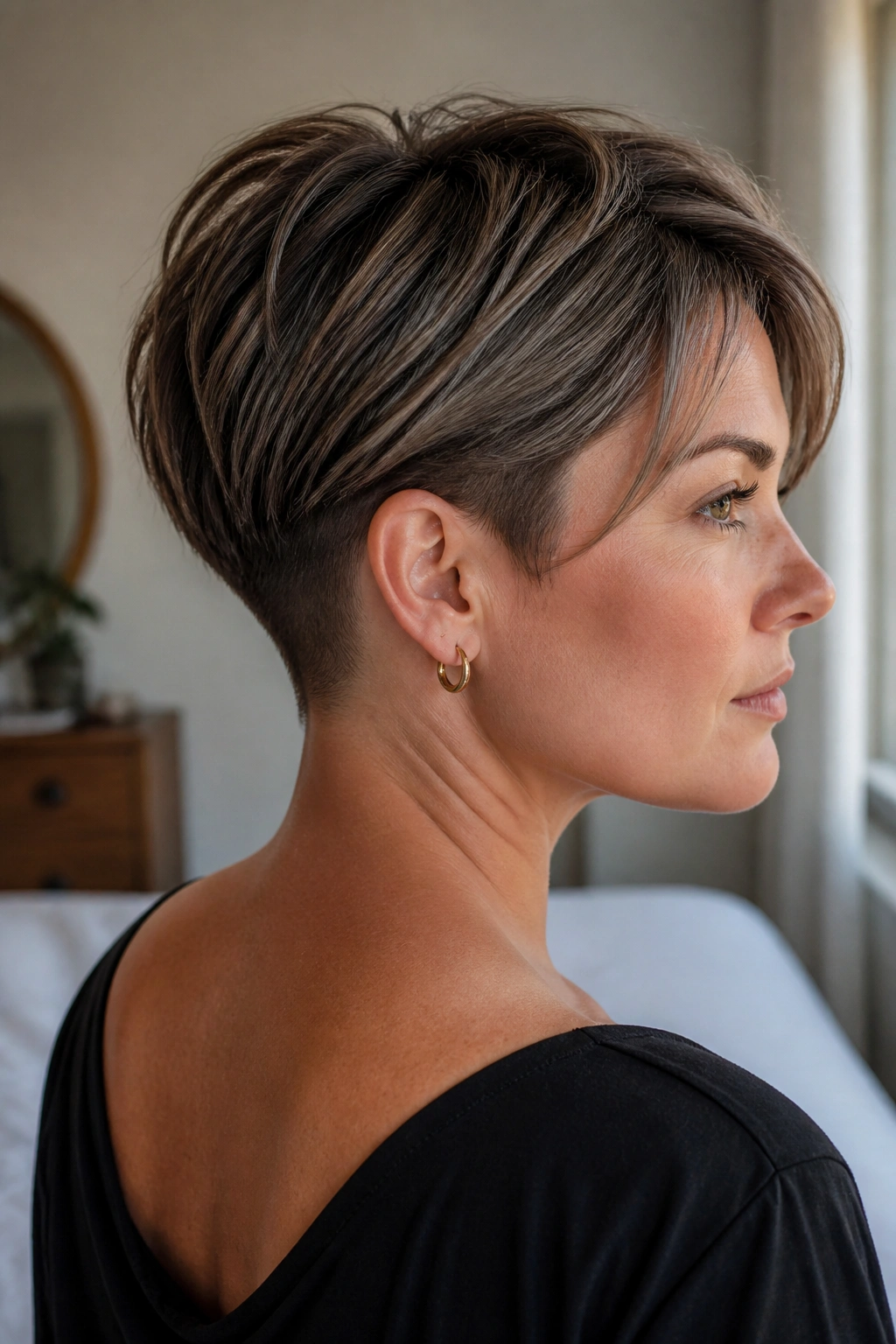
This version is for people who want the look of an undercut without the obvious edge. The shorter area stays hidden underneath, usually at the nape or around the lower sides, while the top and outer layers stay sleek and visible. It is subtle, but it changes the way the haircut sits.
Fine hair often benefits from this kind of hidden support because it reduces puff where the hair can look bulky and keeps the outer shell smooth. You get a cleaner line at the neck and more control when the hair is tucked or swept back. That makes the style useful, not just stylish.
The big advantage is flexibility. Wear it smooth for a neat finish, or bring a little lift into the top and let the hidden shorter section keep the shape from getting boxy. If your hair has a stubborn back section that flares out, this cut can calm it down without making the whole thing feel shaved.
22. The Tucked-Behind-Ear Pixie
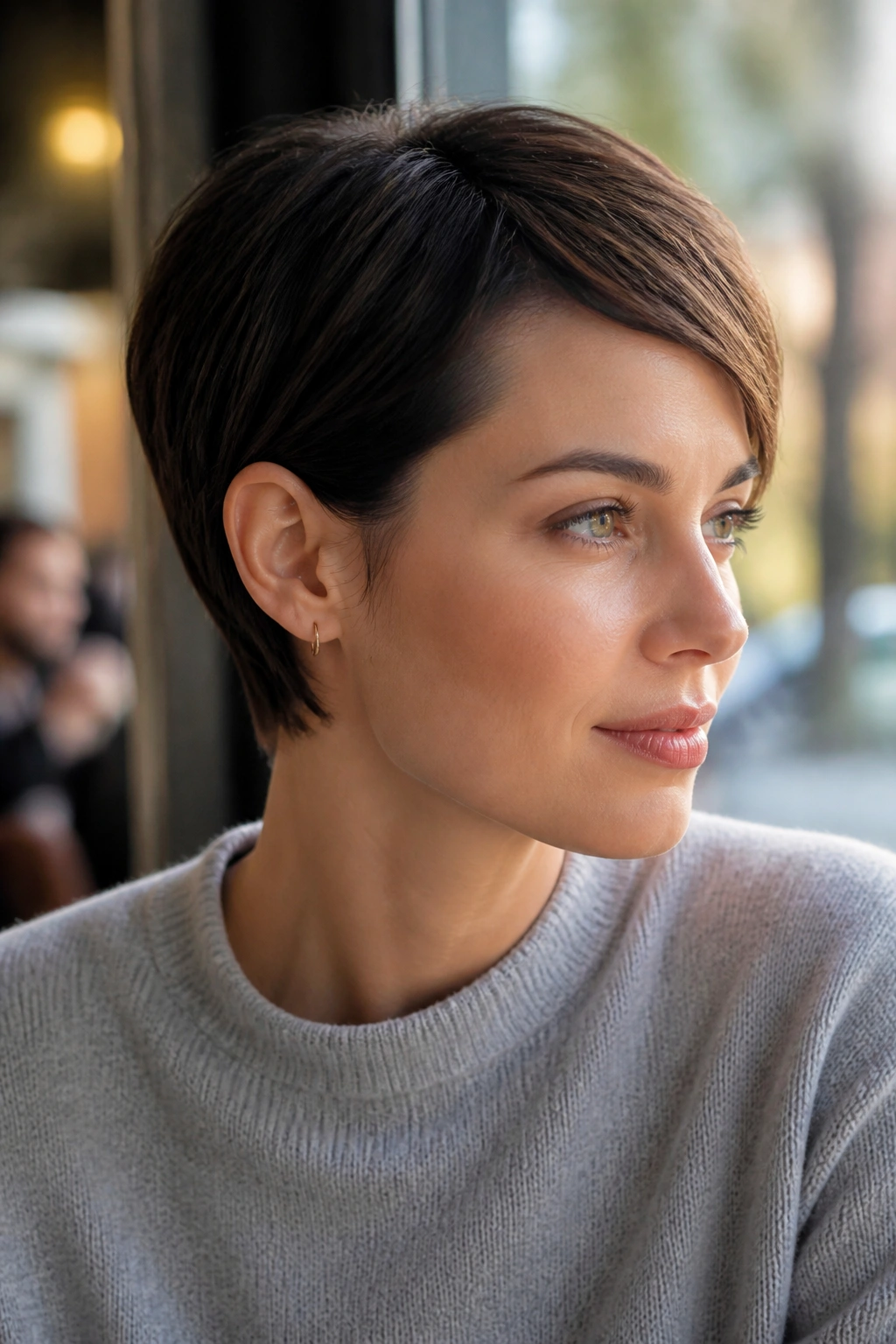
A tucked-behind-ear pixie has a nice, practical elegance to it. The shape shows the face, keeps the sides neat, and lets the top do the flattering work. On fine hair, that matters because the style does not rely on volume alone. It relies on line.
The part usually sits a little off center, and the hair on one side is long enough to tuck back cleanly. That creates a soft curve around the temple and cheek. It also makes glasses, earrings, and a clean neckline look more deliberate. Small detail. Big payoff.
This is one of the best cuts if you like your hair out of your face but do not want a severe crop. It needs a smooth finish at the temple and a neat sideburn area, or the tuck looks accidental. A dab of smoothing cream before drying helps the side stay in place without losing softness.
23. The Old Hollywood Side-Part Pixie
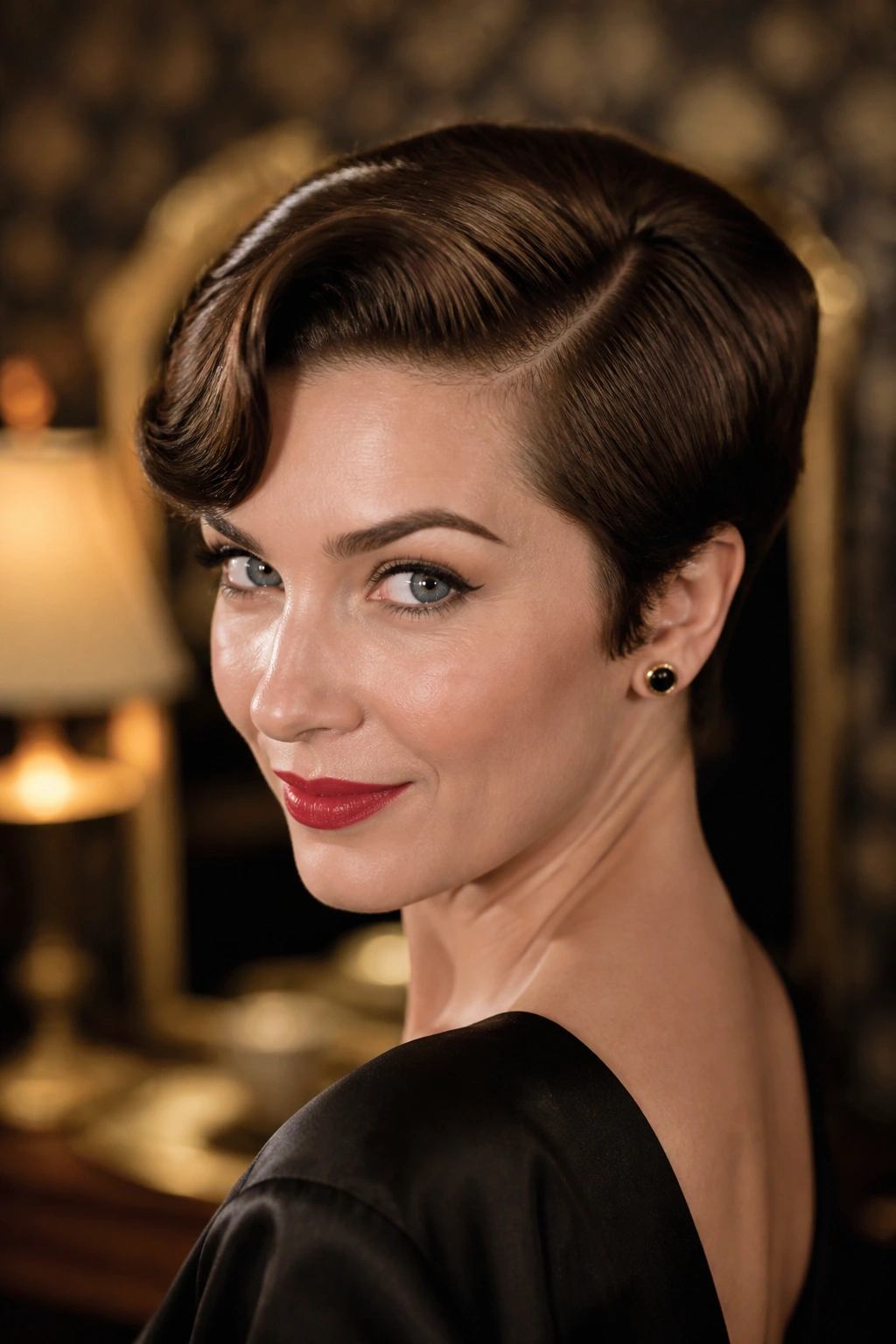
This is the elegant one. A side-parted pixie with a soft wave or polished bend can give fine hair a dressed-up feel without adding much length. The shape is controlled, glossy, and a little old-fashioned in the best way.
What makes it work is the balance of restraint and curve. The part is deep enough to create lift, but not so deep that the style looks dramatic for no reason. The front can sweep across the forehead, then melt into the sides with a soft bend. That keeps the line feminine without becoming fussy.
Use a round brush or a small iron to create the bend, then brush the surface lightly so it does not read as tight curls. A touch of shine spray at the end helps the cut look finished. This is one of those styles that can carry a red lip, a turtleneck, or a plain white shirt and still feel complete.
24. The Minimalist Crop With a Clean Neckline
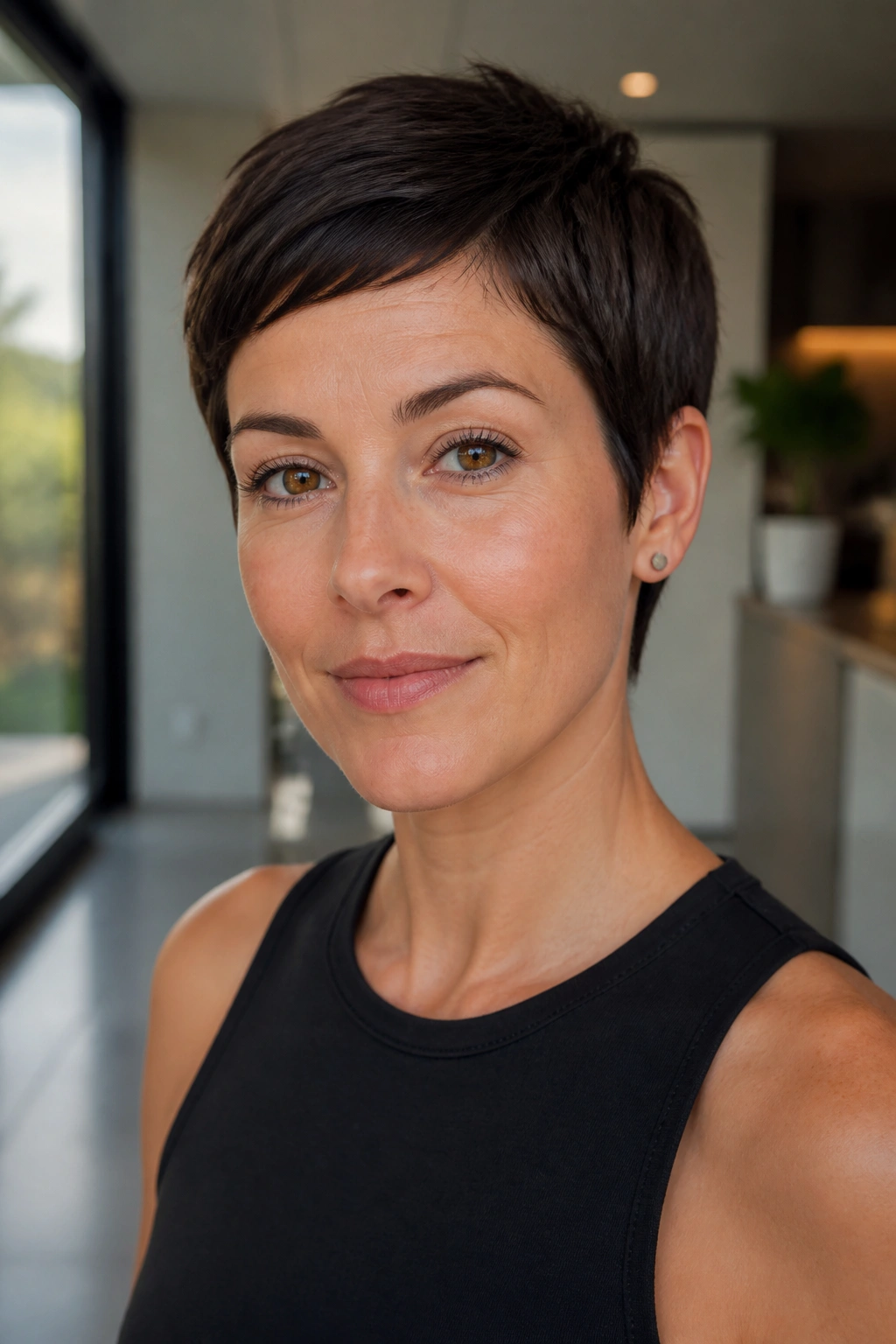
Some cuts try too hard. A minimalist crop does the opposite, and that is exactly why it works on fine hair. The neckline is clean, the shape is simple, and the top is kept just long enough to lie in one smooth direction.
The appeal here is clarity. Fine hair looks better when the haircut has a clear job. Too many layers can make the outline break apart. A minimalist crop gives you a strong silhouette and leaves the styling to a basic brush-through and a little cream.
It is a good choice if you like low-maintenance hair that still looks considered. You are not chasing big volume with this one. You are letting the cut do the work. The result is neat, modern, and easy to keep in shape with regular trims. If you like simple clothes and clean lines, this haircut fits that mood without trying to steal the show.
25. The Spiky-Leaning Sleek Pixie
Spiky does not have to mean punk. On fine hair, a slight lift at the front or crown can add energy without turning the style messy. The secret is to keep the sides smooth and the spikes small, like little ridges rather than sharp points.
Why bother? Because fine hair can sit too close to the head when it is all smoothed in one direction. A little bit of vertical movement breaks that up and makes the top look fuller. It also gives the cut a more modern edge if you find slick styles too plain.
Use a matte paste or a light fibrous cream on dry hair, then pinch small sections upward. Stop before it looks stiff. The best spiky pixies still feel touchable. If the product starts to build up in visible clumps, you’ve gone too far. Pull back. The shape should look sharp, not crunchy.
26. The Fringe-Forward Pixie
When the fringe carries the haircut, the whole style feels softer and more wearable. A fringe-forward pixie keeps the emphasis at the front, which is useful when fine hair needs help looking denser. The length up front gives the eye something to hold onto.
This cut can be blunt, side-swept, or slightly curved, depending on how much forehead you want to show. The important part is that the fringe has enough substance to avoid looking stringy. A good fringe-forward pixie usually keeps the sides closer and the top tidy so the bangs remain the main event.
It is a nice choice if you like the feeling of hair touching the face but do not want the weight of a full bob. The fringe can also hide a flat root day, which is one of the more practical perks. Blow-dry the front first, set the direction early, and do not flood it with product. The line should stay soft.
27. The Rounded Crown Pixie
A rounded crown can be a quiet miracle on fine hair. Instead of trying to create height in one stiff strip, the cut curves gently over the top of the head. That rounded shape makes the hair look fuller from the side and softer from the front.
The reason this reads well is that fine hair often looks best when it follows the head shape rather than fighting it. A rounded crown keeps the silhouette smooth, not flat. It also helps the cut avoid the blocky look that can happen when the top is too short and the sides too blunt.
I like this style for people who want a feminine outline without too much fuss. A root spray at the crown and a quick round-brush lift are usually enough. Keep the back tidy and the top curved, and the shape stays elegant even when the hair is not freshly styled. That is worth more than a flashy trick.
28. The Grown-Out Sleek Pixie
A grown-out pixie can still look deliberate if the structure is smart. In fact, this may be the most underrated version for fine hair because it lets you keep the sharpness of a pixie while gaining a little more softness around the ears, nape, and forehead. The shape starts to feel relaxed without losing its line.
The key is balance. The top should stay long enough to sweep or tuck, while the sides remain neat enough that the whole cut still reads as a pixie and not a half-grown shortcut. Fine hair does well with this kind of in-between length because it avoids the see-through stage that can happen when layers are left too short.
This is the one I would choose if you want a cut that survives a busy month without falling apart. A side part, a smoothing cream, and a quick pass of the flat iron can keep it tidy for dinner, work, or a last-minute plan. A good grown-out pixie should still look like a choice, not a pause.
