



A round face can be a gift in the salon chair, but it does make the pixie conversation a little more specific. Short red pixie cuts for round faces need shape, not just shortness; they need a bit of lift, a line that moves diagonally, and some control around the cheeks so the whole cut doesn’t spread out sideways.
Red hair changes the equation too. Copper, cherry, auburn, and burgundy all throw light in different ways, so the same cut can look sharp, soft, edgy, or almost sculpted depending on the tone you choose. That’s the fun part. It’s also the part people miss when they ask for “a pixie” and stop there.
The biggest mistake is treating round-face hair like it has to be hidden. It doesn’t. The goal is to stretch the shape a little, open up the forehead or the crown, and stop the silhouette from getting boxy at the widest point. A blunt fringe all the way across the brow can flatten the face fast. A little asymmetry, some texture, and the right red shade do far more.
So the cuts below aren’t one-note inspiration photos. They’re different ways to handle the same face shape with different hair types, different textures, and different comfort levels. Some are polished. Some are messy. Some lean bold enough to make strangers stare. All of them can work if the lines are handled with a steady hand.
1. Short Red Pixie Cuts for Round Faces with a Deep Side Part
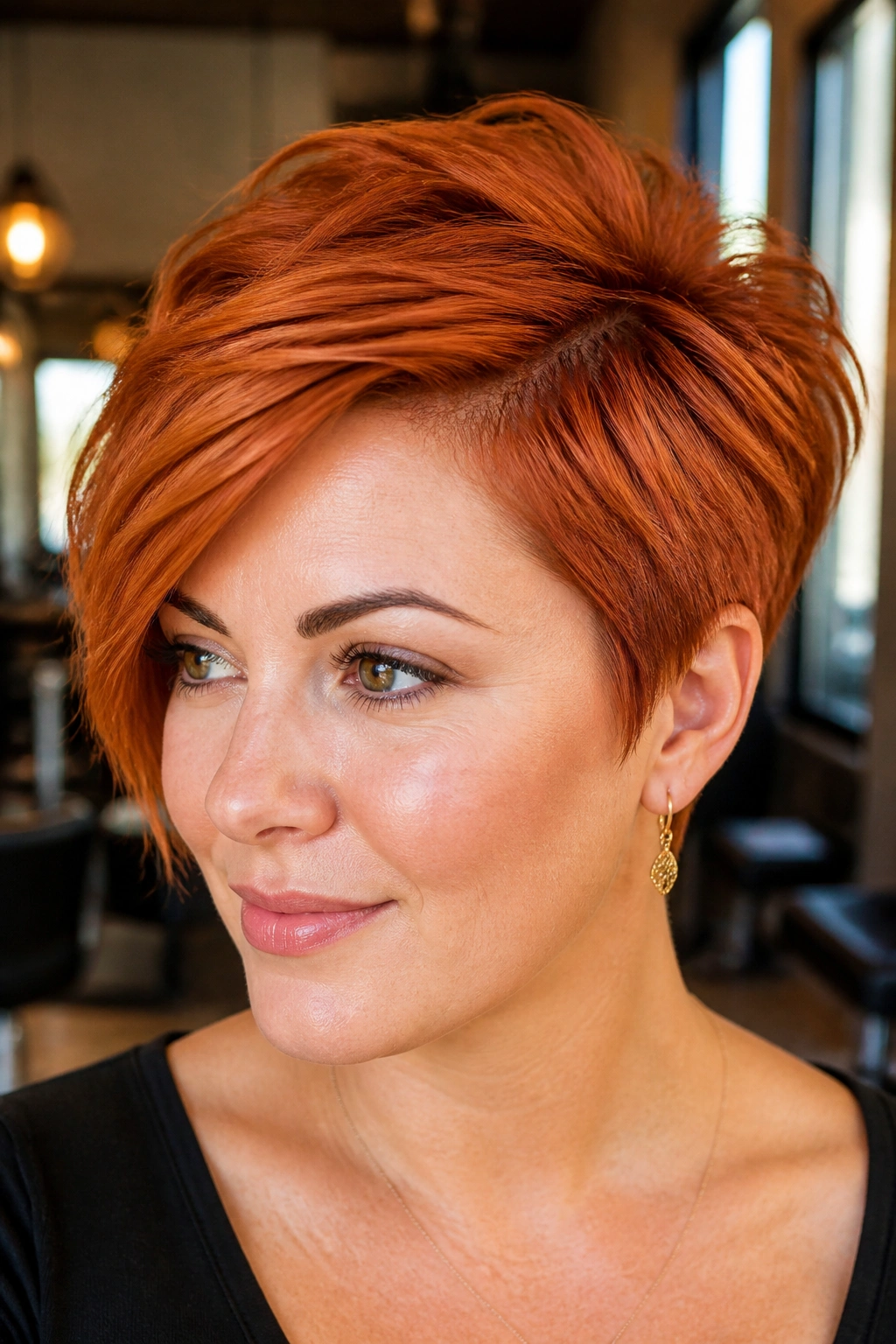
A deep side part is one of the easiest ways to make a short red pixie look longer through the face. It moves the eye off center, adds a clean diagonal, and gives the crown a place to lift instead of lying flat. On a round face, that little shift matters more than people expect.
Why the Side Part Earns Its Keep
Copper and cherry tones make this cut even sharper because the color change shows every layer. Keep the top around 2.5 to 3 inches, then let the sides taper close to the head so the width stays controlled.
- Ask for soft internal layering at the crown.
- Keep the temple area snug, not puffed out.
- Blow-dry the part in the opposite direction first, then flip it back.
Best move: use a pea-size dab of lightweight cream, not heavy wax, or the front will drop into your eyes by lunchtime.
2. Copper Pixie with a Side-Swept Fringe and Tapered Nape
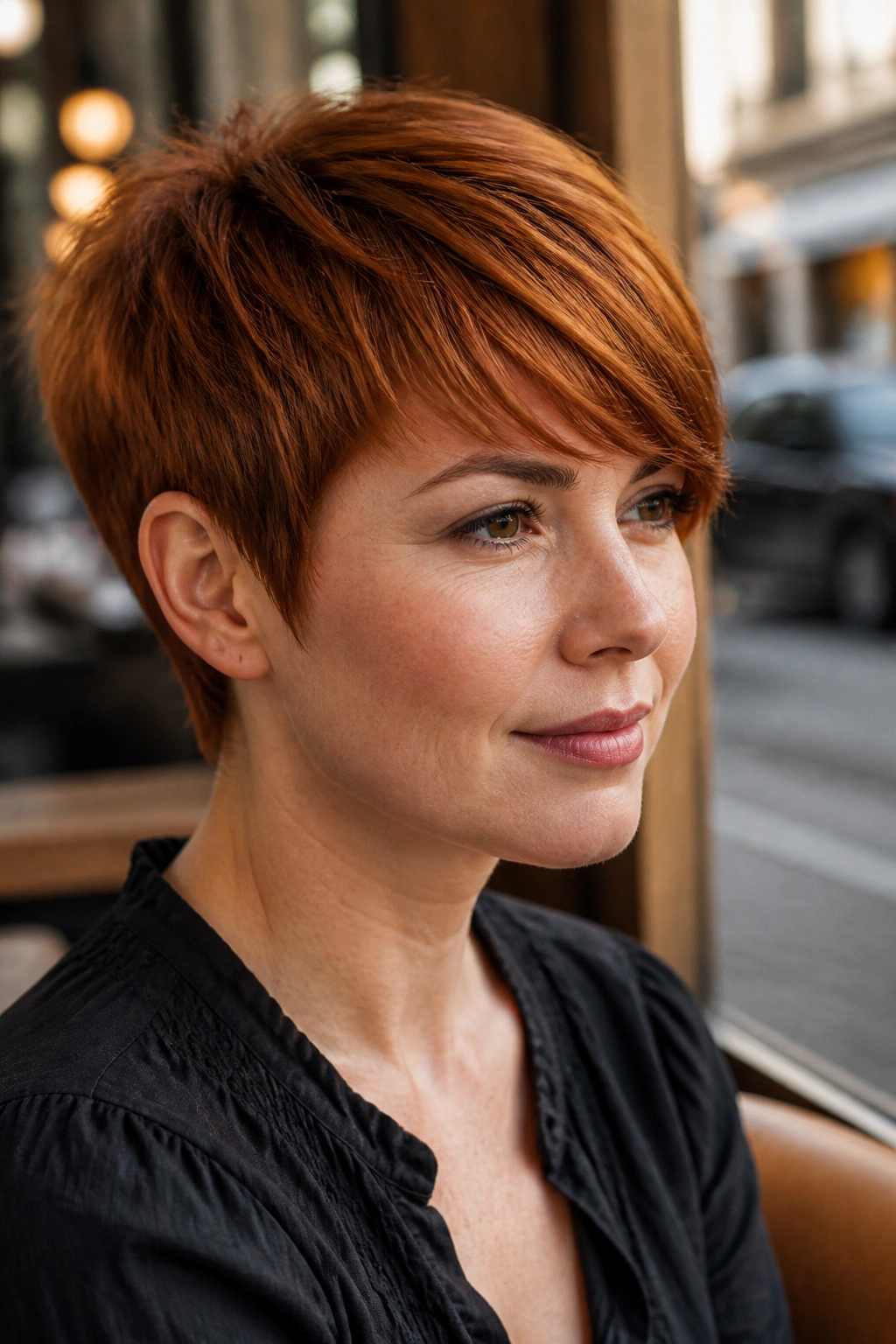
Why does this shape flatter a round face so well? Because the fringe travels across the forehead instead of cutting it in half, and the tapered nape keeps the back from looking bulky. The whole cut feels neat, but not stiff.
A side-swept fringe should graze the brow and soften near the cheekbone, never land as one solid block. That diagonal line gives the face a little stretch, which is the whole game here. If your hair tends to puff at the sides, this is the cut that reins it in without making it feel clipped to the skull.
How to Style It
Work a touch of mousse through damp hair, then blow-dry the fringe with a small round brush. Aim the airflow forward first, then sweep it over. That keeps the front flexible and stops the part from separating into a stubborn ridge.
A tapered nape also grows out better than a blunt back. Less mushroom, more shape. That’s the difference between a pixie that looks deliberate and one that looks like it lost a fight with the clippers.
3. Choppy Ginger Pixie for Thick Hair
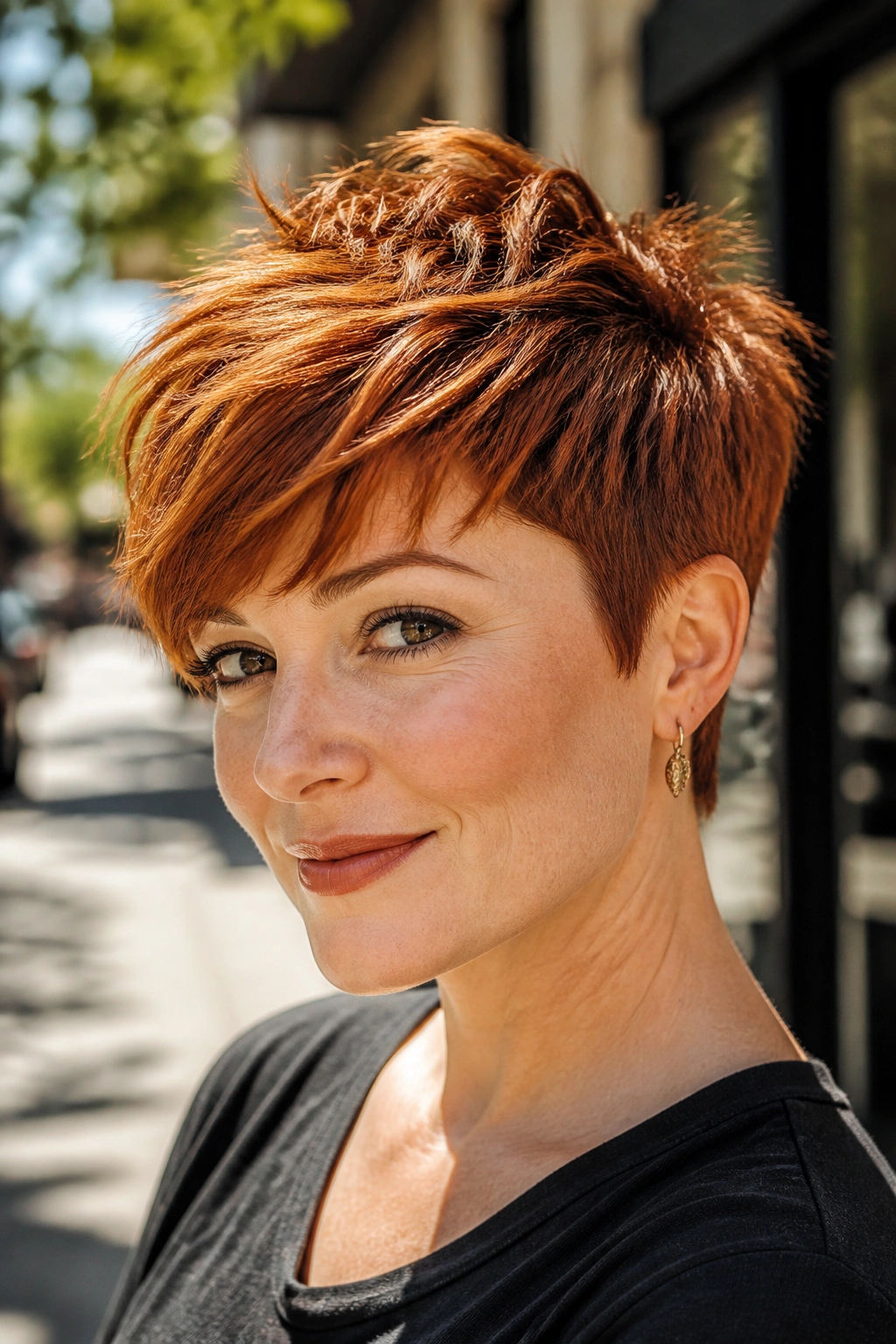
Thick hair and a round face can be a tricky pair, because thick hair wants to widen everything unless the weight is taken out in the right spots. A choppy ginger pixie fixes that by breaking up the bulk with uneven layers and a rougher edge. It looks light even when the hair itself is dense.
The key is not to overcut the crown. You want movement, not frizz. Leave enough length on top to create a little lift, then use point-cutting or razor work through the ends so the shape doesn’t turn into one solid cap. Ginger tones help here because they show the texture immediately. You can see the layers.
A matte paste or clay is your friend. Smooth it between your fingers, pinch the top in small sections, and leave the fringe broken instead of neat. Clean lines can be lovely. On thick hair, though, a little controlled mess usually wins.
4. Ruby Razor-Cut Pixie with an Undercut
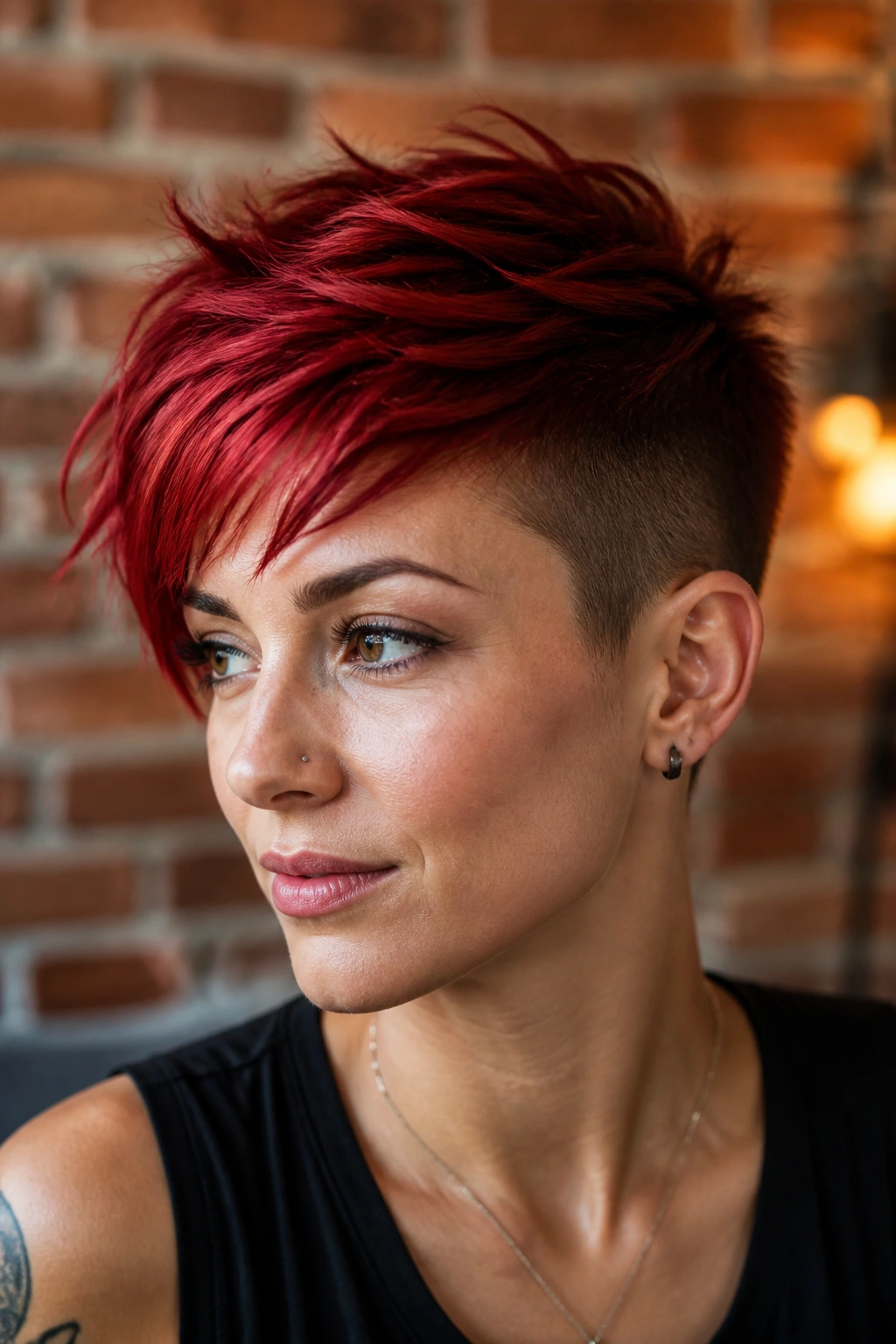
If your hair tends to bulk up around the ears, this is the cut that cuts through the problem instead of pretending it isn’t there. A ruby razor-cut pixie with an undercut removes width at the sides and leaves the top with enough length to build height. That combination can be a real relief on a round face.
The razor edges give the top a soft, feathered fall, while the undercut keeps the lower half tight. It’s a strong look, but not a harsh one if the red shade is rich and glossy. Ruby makes the cut feel intentional rather than severe.
- Keep the top about 3 to 4 inches for styling room.
- Ask for the undercut to start just above the ear.
- Use a flat iron only if the hair bends the wrong way; a brush and blow-dryer usually do enough.
Small warning: this cut grows out fast at the nape, so don’t expect it to stay crisp forever.
5. Auburn Pixie-Bob Hybrid
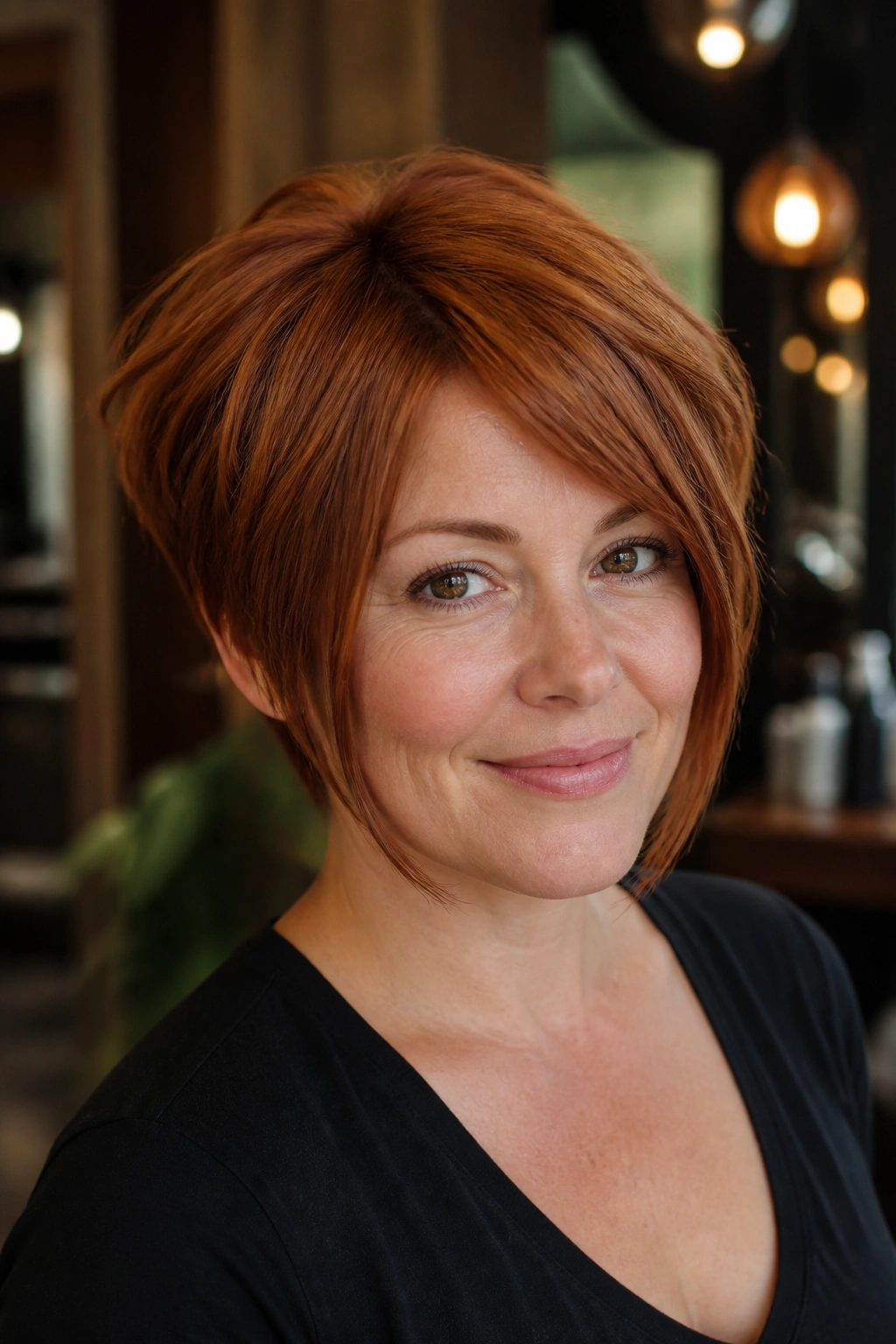
A pixie-bob hybrid is the compromise people reach for when they want short hair but don’t want the full commitment of a cropped pixie. On a round face, that extra bit of length in front can be a blessing, because it lets the front pieces skim the jaw instead of stopping right at the cheek.
Compared with a classic bob, this shape keeps the back much shorter and more lifted. The result is lighter, cleaner, and easier to style in the morning. Auburn is a smart shade here because it reads warm without screaming for attention.
This cut suits someone who wants a soft outline and a little swing. It also helps if your hair is straight or has a slight bend. Ask for the front to stay longer on one side, then tuck the opposite side closer to the head. That one move keeps the face from feeling too circular.
6. Short Red Pixie Cuts for Round Faces with a Micro Fringe

A micro fringe sounds risky, and on some faces it is. On a round face, though, it can work when the crown has height and the sides stay narrow. The short fringe shows more forehead, which keeps the face from looking crowded top to bottom.
What Makes It Work
The trick is balance. A tiny fringe with flat sides looks harsh. A tiny fringe with lifted roots and a soft, tapered perimeter looks stylish and clean. Bright red hair makes the shape even more visible, so every line has to be deliberate.
How to Wear It
Use root-lift spray at the crown and blow-dry upward with your fingers first, then a small brush. The fringe should sit lightly, not stick straight out like a ruler. If your forehead is already short, skip this one. If your features are strong and you like a sharp look, it can be a knockout.
7. Shaggy Flame Pixie with Soft Ends

A shaggy pixie is one of my favorite answers for round faces because it breaks the outline in all the right places. The ends don’t sit in one clean circle. They flick out, bend inward, and land a little unevenly, which keeps the face from looking wider.
Why It Softens the Shape
The shag effect pulls attention upward and away from the cheeks. A flame-red shade makes the layers read clearly, especially when the light hits the ends. It’s a good cut for people who hate precision and want something that looks a touch wild on purpose.
Quick Texture Notes
- Use a salt spray only if your hair is fine.
- Use a cream if the ends get frizzy.
- Keep the fringe broken, not blunt.
My opinion: this is one of the easiest short red pixie cuts for round faces to live with, because it looks better when it’s slightly imperfect.
8. Sculpted Mahogany Crop with Tucked Sides
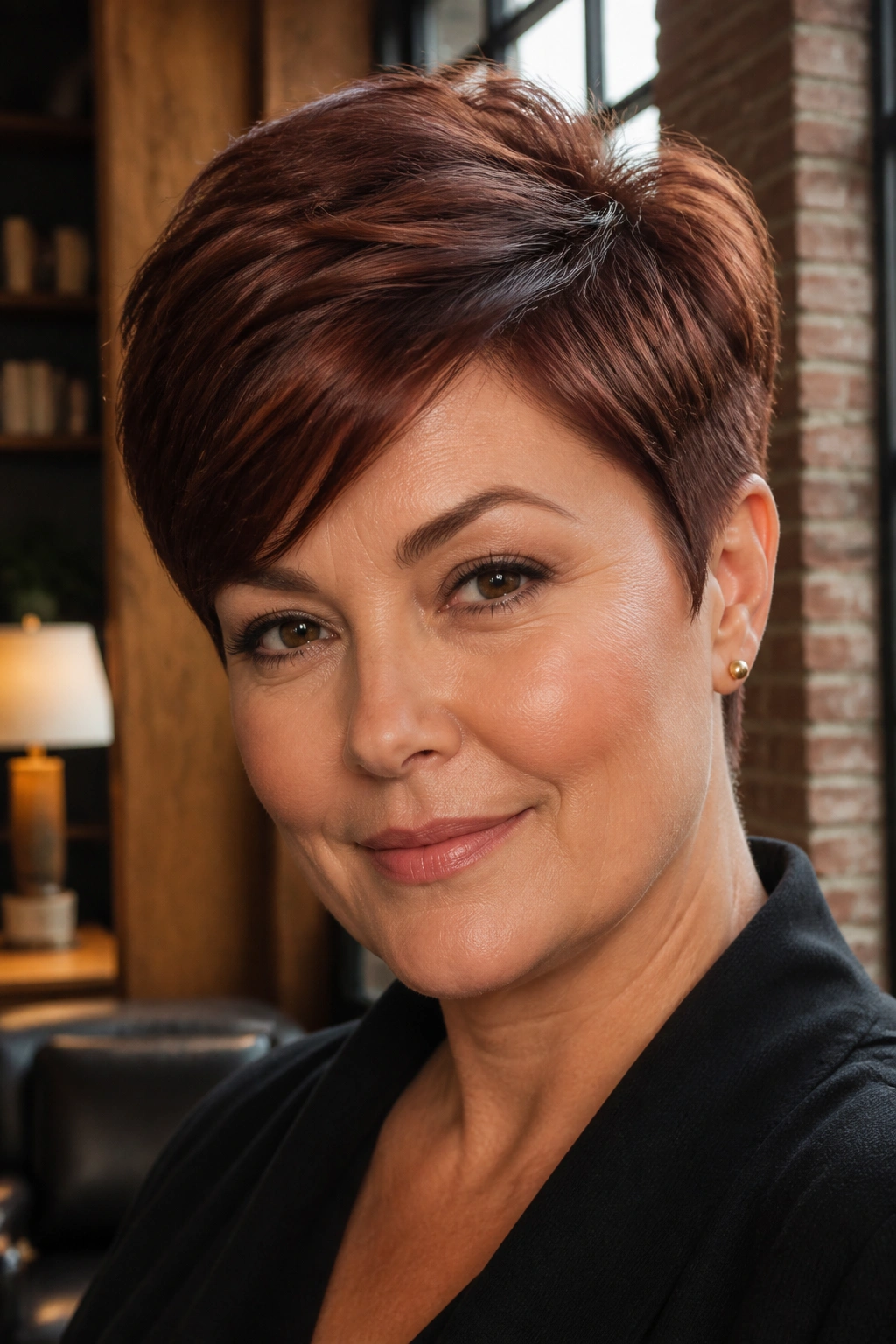
Can a tidy pixie look good on a round face? Absolutely, if the sides are controlled and the top keeps a little lift. A sculpted mahogany crop does exactly that. The shape is neat around the ears, which narrows the lower half of the face, and the top stays airy enough to avoid a helmet effect.
Mahogany is a quieter red, and that helps if you want the cut to feel polished rather than loud. The color also pairs well with straight or slightly wavy hair because the lines stay visible. If the hair has a strong cowlick, the front may need more direction, but the cut itself holds up well.
Ask your stylist to tuck the sides close and leave the crown piecey. That contrast is what keeps it flattering. If everything is equally short, the shape loses its edge fast.
9. Feathered Copper Pixie with Light Ends
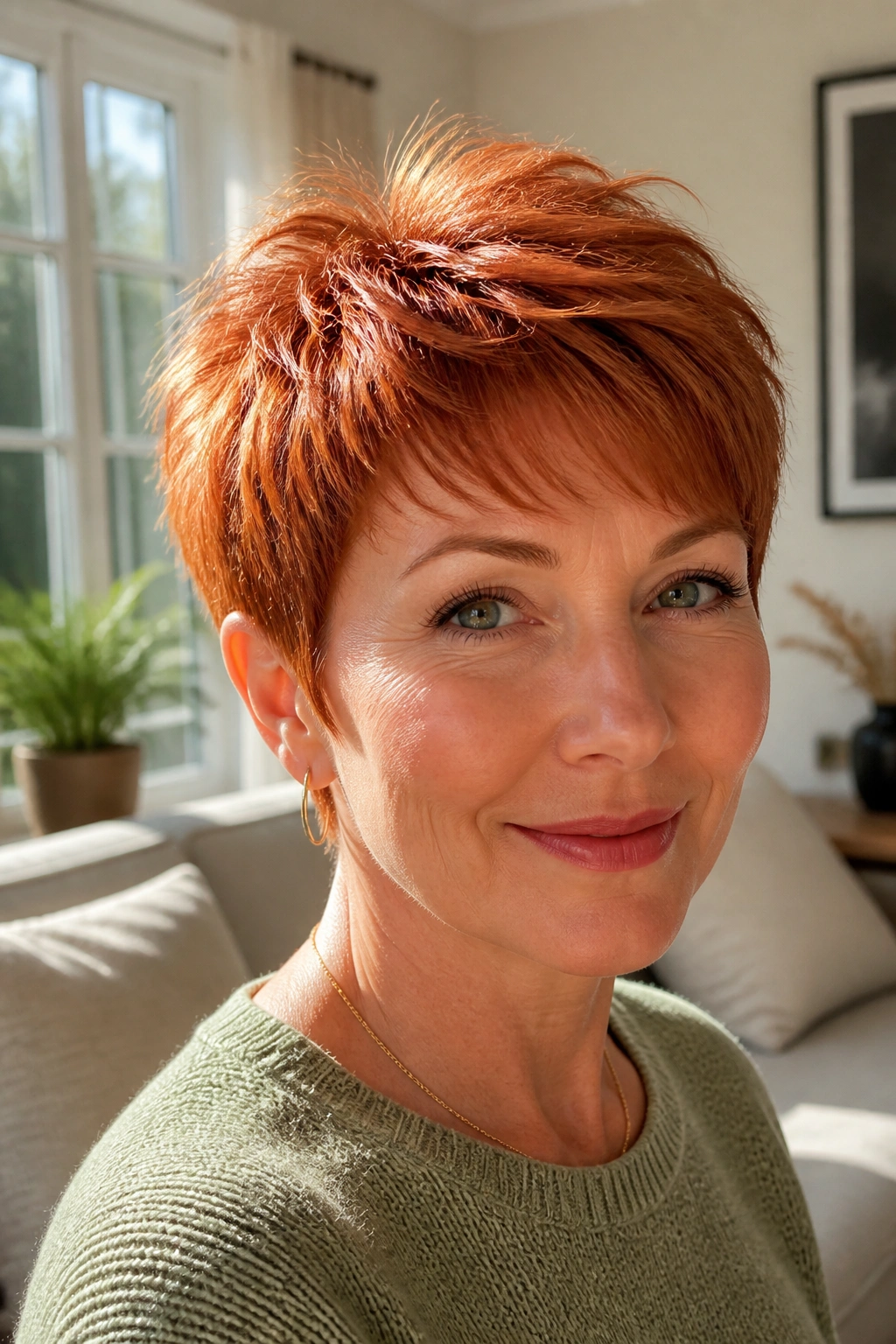
Feathering is one of those old salon tricks that still earns its place. On a round face, feathered ends keep the pixie from turning boxy, and copper color makes every soft edge stand out without feeling overstyled. The result is light, airy, and a little cheeky.
This cut is a smart pick for fine to medium hair because the feathering creates movement without needing a ton of product. The ends should look brushed and lifted, not blunt. If the hair is too thick, ask for extra debulking near the crown so the shape doesn’t balloon.
A light shine spray at the very end is enough. Too much product will flatten the feathering and make the cut look older than it is. Nobody needs that. The whole point here is a soft, moving shape that avoids heaviness around the cheeks.
10. Asymmetrical Scarlet Pixie

Walk into a room with one side longer than the other and people notice. That’s the whole point of an asymmetrical pixie. On a round face, the longer side acts like a visual line pulling downward, which keeps the face from reading too wide.
A scarlet shade makes the asymmetry bolder, but the cut still needs a careful hand. The longer side should graze the cheekbone or just below it, while the shorter side stays neat and close. If the difference is too dramatic, the haircut starts to feel costume-like. A little imbalance goes a long way.
- Keep the longer side soft, not chunked.
- Let the shorter side tuck neatly behind the ear.
- Style with a side part and a small amount of paste.
The cut works best when the hair is straight or lightly waved. Curly texture can do it too, but the asymmetry needs extra length to stay visible.
11. Curly Red Pixie for Natural Texture
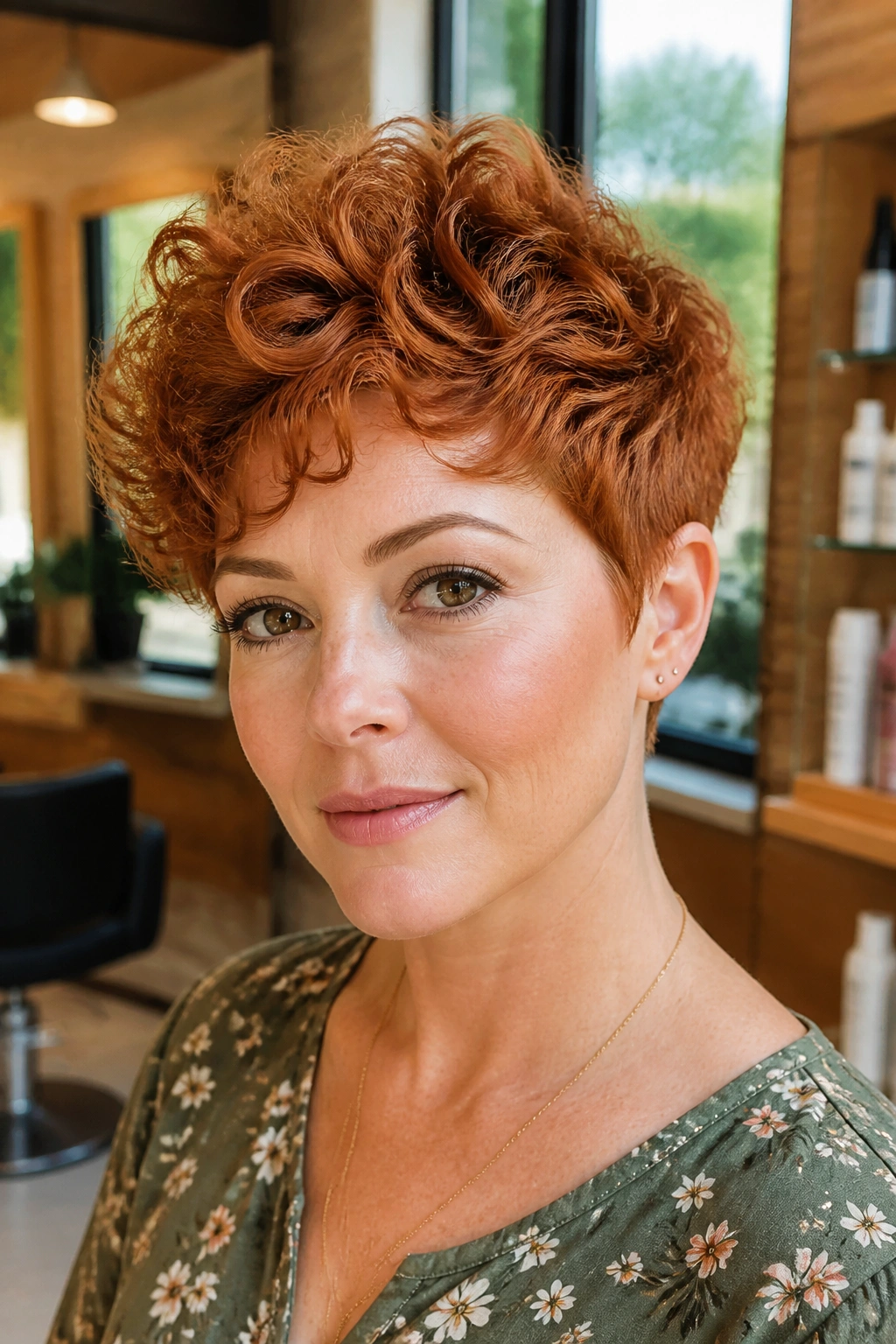
Curly pixies are not the enemy of round faces. The wrong curl cut is the enemy. A curly red pixie works when the top is left a little longer, the sides are shaped in close, and the curl pattern is allowed to sit upward instead of out sideways.
The best version of this cut respects shrinkage. If the curls are tight, the stylist should leave enough length to show shape once the hair dries. Red tones are excellent here because they make the curl pattern easier to see, especially in softer auburn or copper shades.
Unlike a straight pixie, this one needs diffusing and a little leave-in cream. Scrunch the curls, let them dry with the head tipped slightly forward, then break up any one-piece ringlets with your fingers. The goal is lift at the crown and a clean edge around the ears, not a giant halo.
12. Sleek Burgundy Pixie with a Gloss Finish
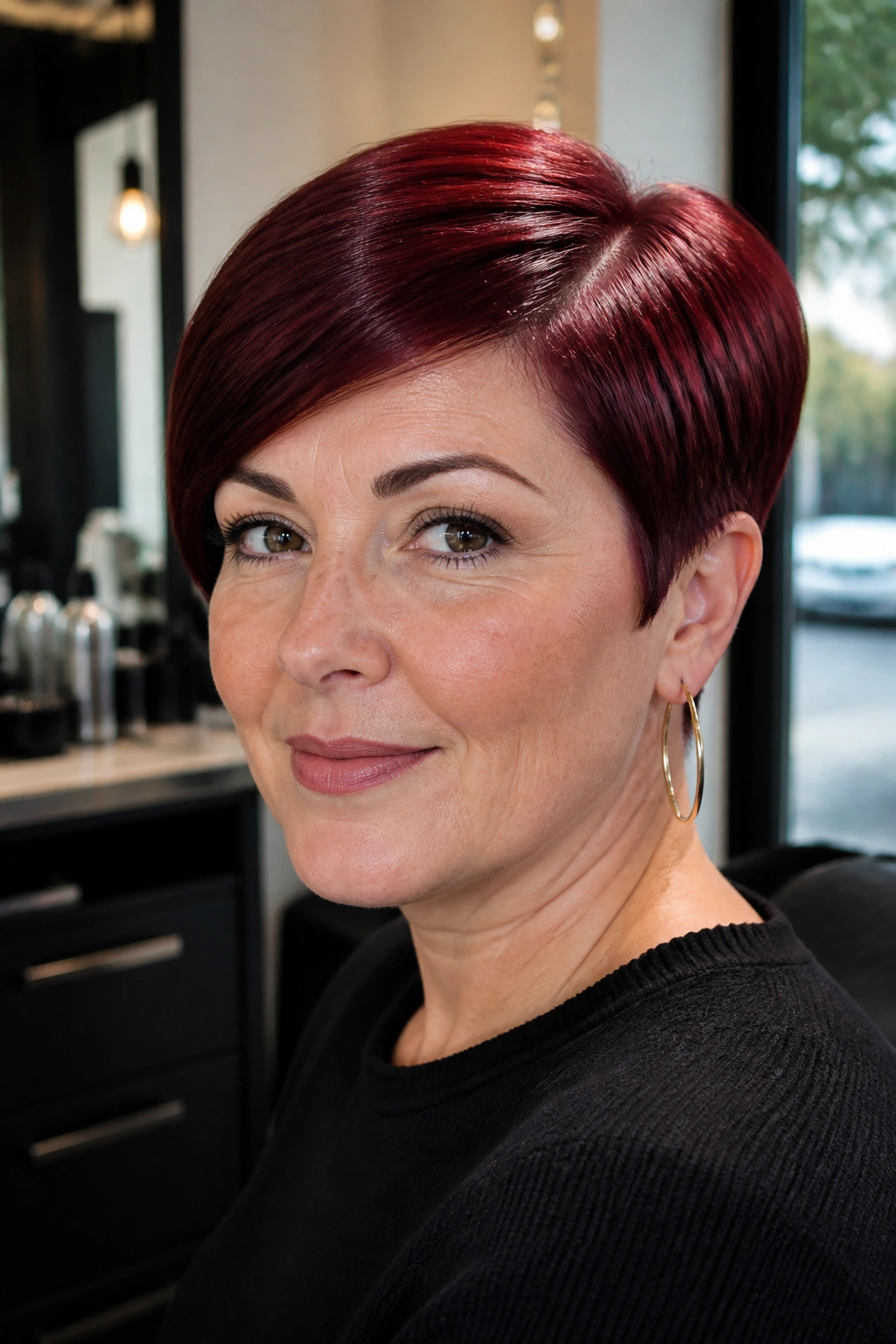
Not every round face needs teased texture. Sometimes the sharper answer is a smooth, sleek pixie with a side part and a glossy burgundy finish. The color gives the cut depth, and the smooth styling keeps the face from getting too wide through the sides.
The trick is perimeter control. The sides should lie close, the fringe should sweep diagonally, and the top should have enough length to move, but not flop. That’s the line between elegant and flat. Burgundy helps because darker red shades create shadow, which narrows the silhouette a little.
Use a small amount of serum on damp hair, then blow-dry with a paddle brush or a vent brush until the surface looks smooth. A sleek pixie can show every bump, so the prep matters more here than in a messier cut. If you like clean shapes and low visual noise, this one is strong.
13. Tousled Cinnamon Pixie for Fine Hair
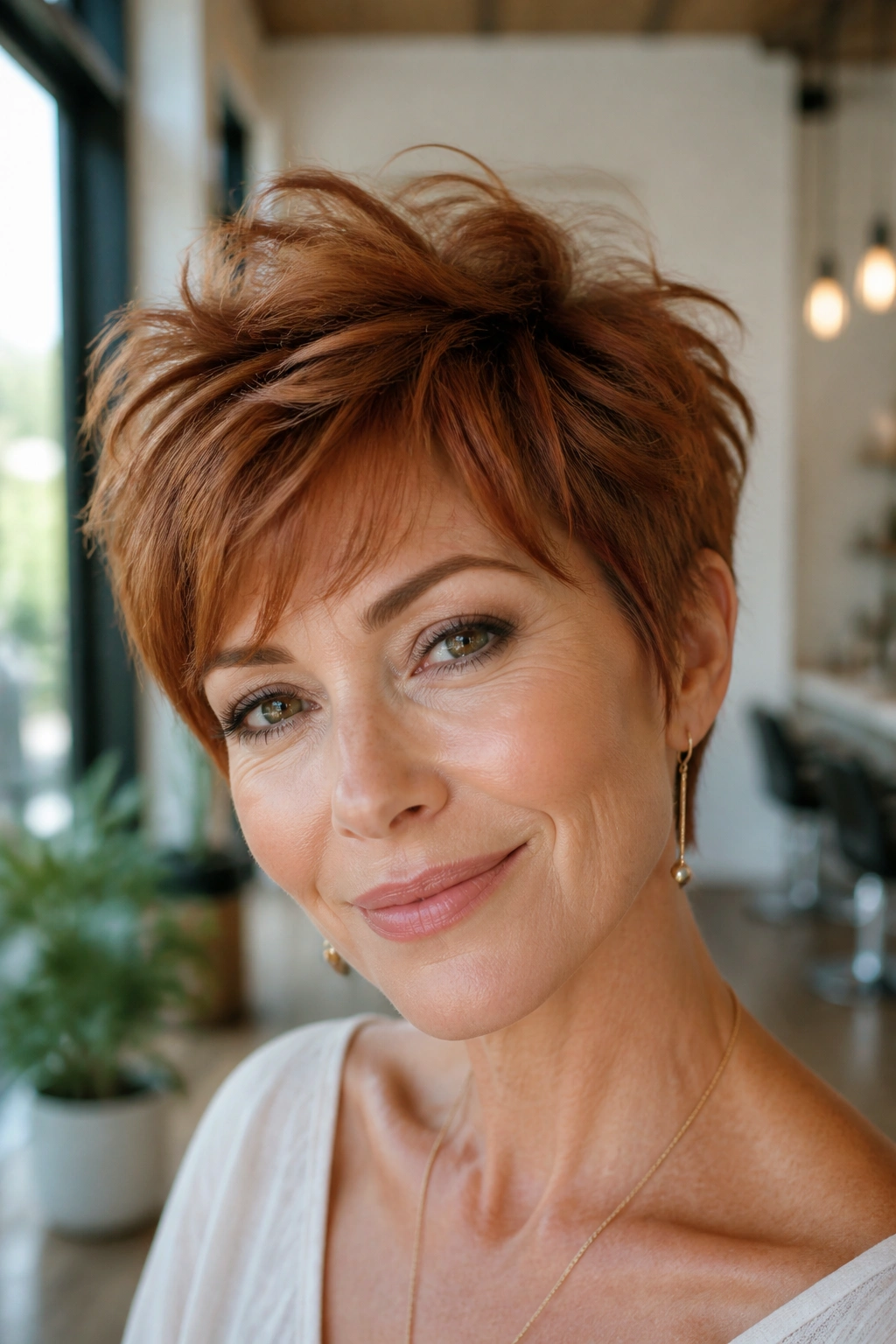
Fine hair needs a haircut that makes volume look earned, not fake. A tousled cinnamon pixie does that by stacking soft layers at the crown and keeping the ends airy so they don’t collapse under their own weight. Cinnamon red gives the texture warmth without turning too bright.
What Makes It Look Fuller
The crown should be the tallest point. Even half an inch of extra lift makes a difference. Keep the fringe soft and piecey, then let the top move in different directions so the hair doesn’t form one flat sheet.
Quick Styling Moves
- Spray root lift at the base before drying.
- Flip the part once while drying, then set it back.
- Finish with a dry texture spray, not wet gel.
Good to know: this cut can look tiny on day one, then settle into a better shape after a single wash and style.
14. Short Red Pixie Cuts for Round Faces with a Feathered Fringe
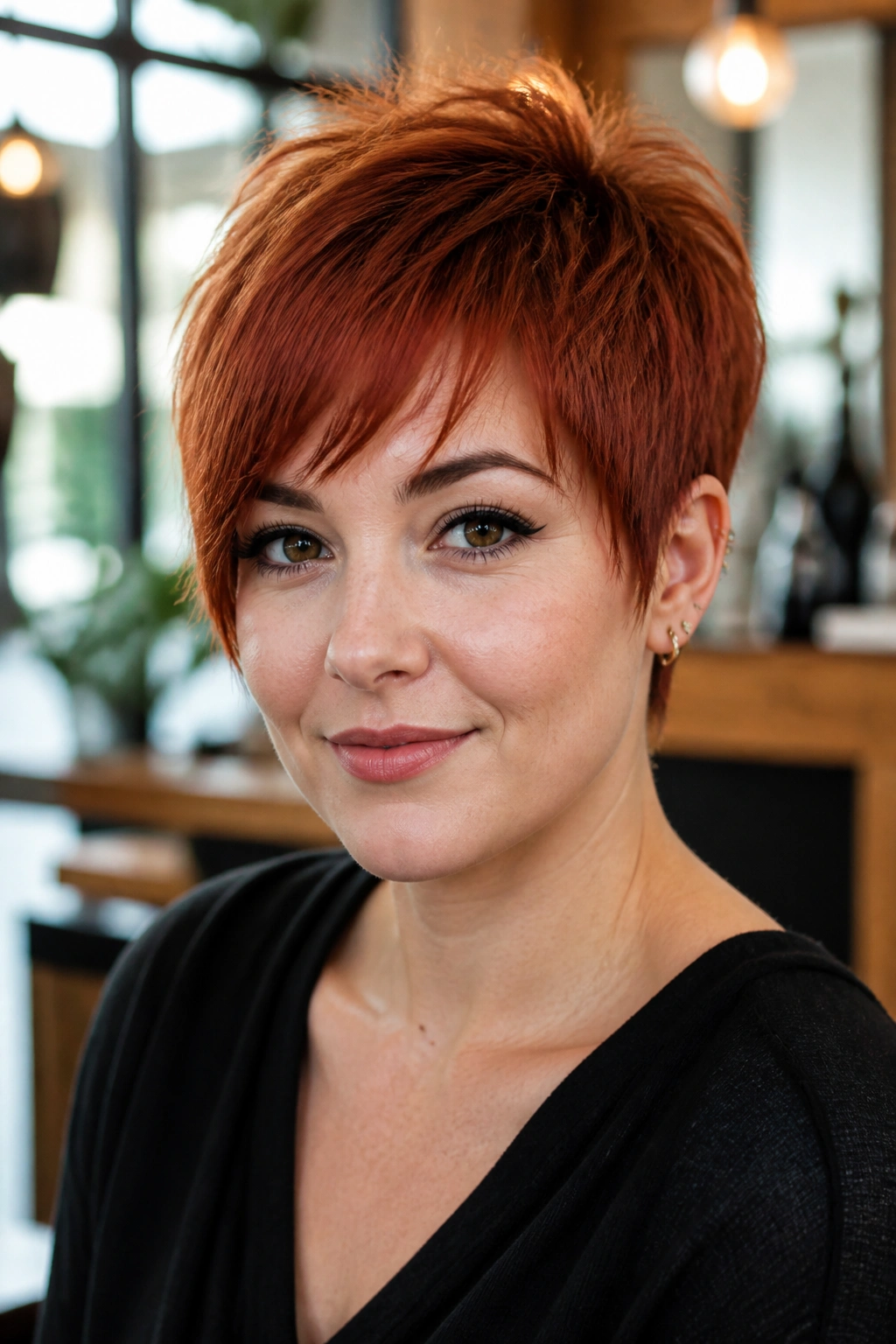
A feathered fringe is one of the prettiest ways to keep a round face from feeling boxed in. Instead of one heavy line across the forehead, you get several soft strands that break up the shape and leave a little skin visible. That tiny bit of movement matters.
The fringe should sit light, almost airy, with the longest pieces angling toward the temples. Pair that with shorter sides and a modest lift at the crown, and the face starts to look longer without any hard edges. Red hair makes the feathering easy to see, which is part of the appeal.
How to Keep It Soft
Use a round brush only at the root. If you curl the fringe under too much, it gets puffy fast. A little pinch of styling cream on the ends keeps the strands separated. If your hair is coarse, ask for thinner fringe sections so the softness stays visible.
15. Layered Crimson Crop
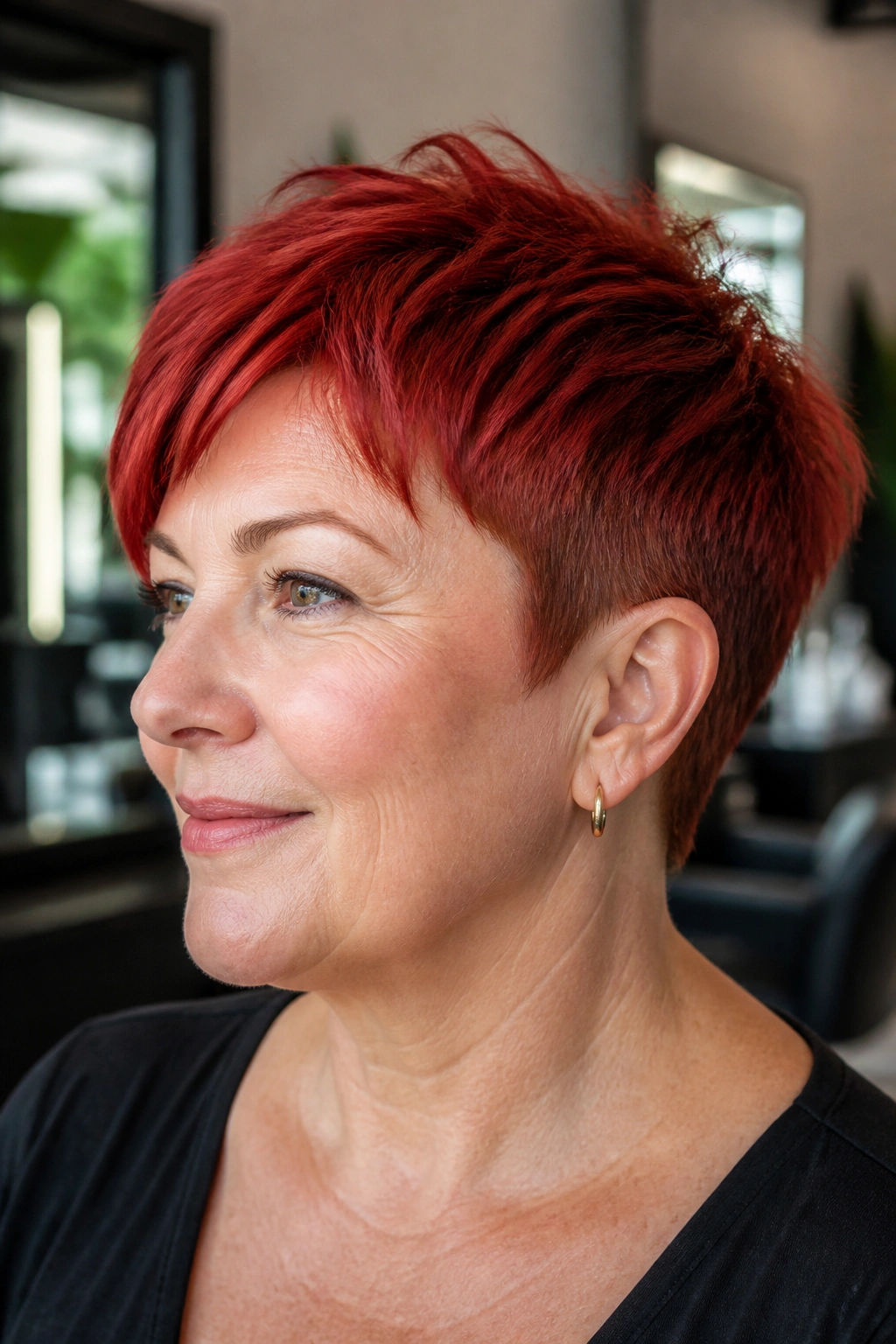
A layered crop is a good fit when you want the face to read slimmer without relying on bangs. The vertical motion in the cut draws the eye up through the crown, while the layers remove bulk from the sides. Crimson is the red shade that makes this shape feel rich and strong.
This works especially well on straight hair that tends to sit heavy. Ask for visible layers through the top and a shorter perimeter near the neckline. The top should rise, not lie in a round cap. That’s the detail that stops a round face from getting more round.
A little molding cream goes a long way. Work it in with your fingertips, then bend a few pieces forward and others upward. The cut should look touched, not shellacked. If you want structure without stiffness, this is a very good lane.
16. Soft Strawberry Pixie
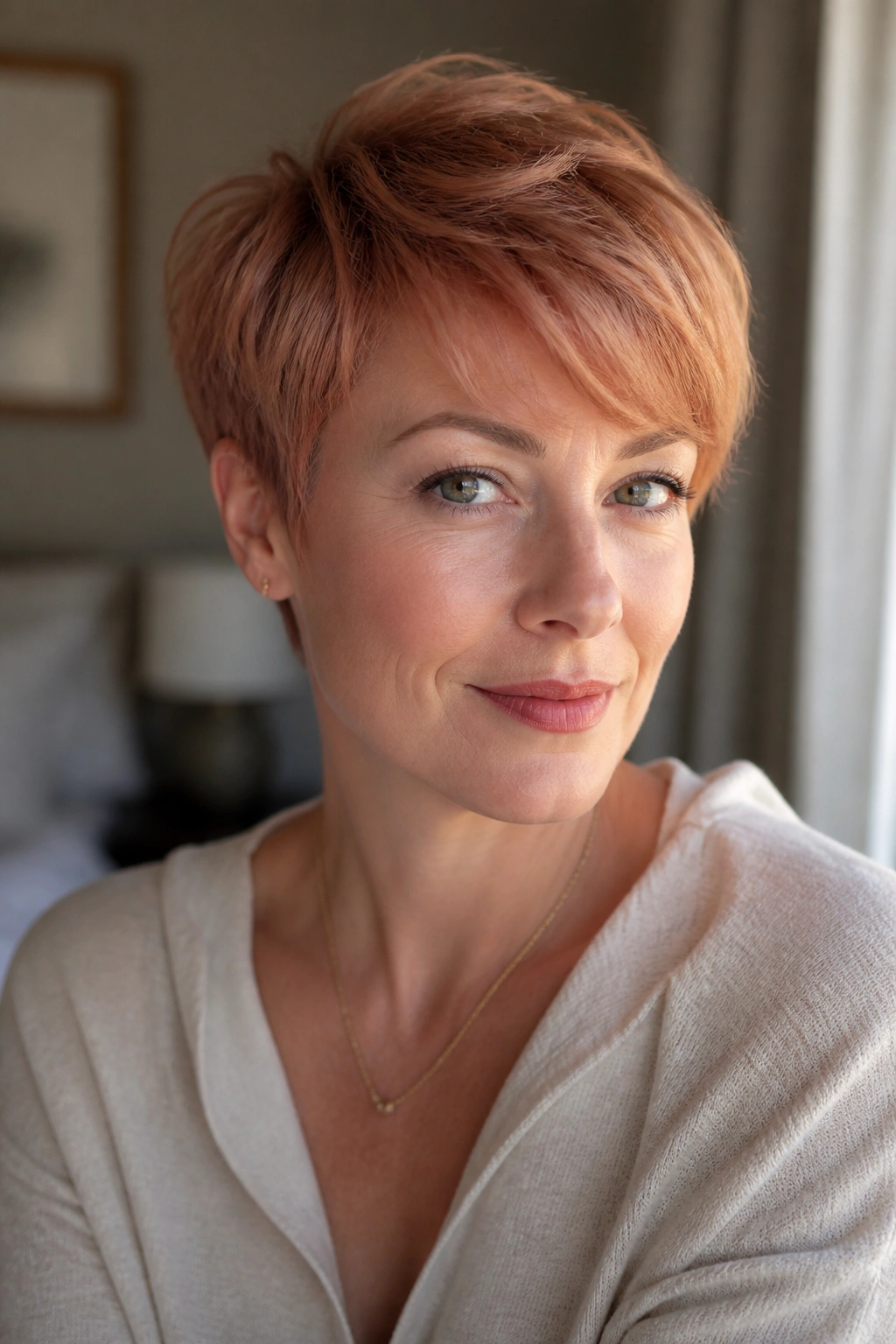
There’s a sweet spot between loud red and barely-there copper, and that’s where a soft strawberry pixie lives. It feels lighter than a deep red crop, which helps if you want color without the haircut taking over your face. On a round face, the softness keeps the whole look friendly instead of severe.
This version should be airy around the temples and a bit longer at the front. The side pieces can graze the cheekbones, but they should not puff out. That would defeat the purpose. The color itself does some of the work by brightening the skin and keeping the haircut from feeling heavy.
A soft strawberry tone also grows out gracefully. The roots don’t shout as much as they do with a stronger red. That makes this a sensible choice if you like short hair but do not want to visit the salon every few weeks like clockwork.
17. Razor-Edge Red Pixie
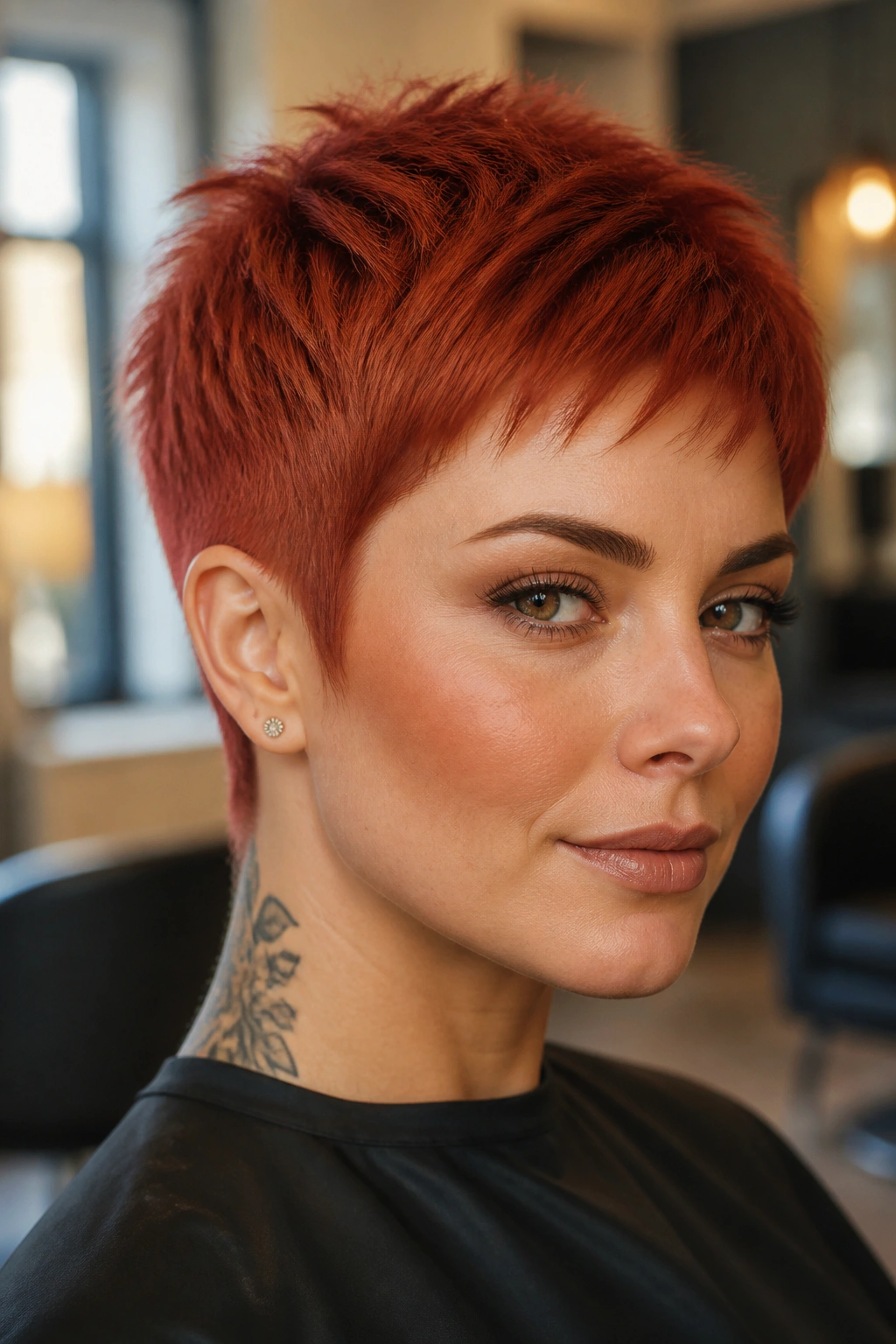
Compared with a feathered pixie, a razor-edge cut has more bite. The ends look sharper, the texture feels more deliberate, and the outline reads cleaner. On a round face, that crispness can be useful because it stops the haircut from melting into the cheeks.
The red shade can be anything from copper to scarlet, but the cut itself needs contrast. Shorter sides, a slightly longer top, and visible ends are the formula. If the stylist leaves everything soft and blurry, the whole effect weakens fast.
This is a good pick for people who like hair that looks styled even when it’s short. A matte finish keeps the edges visible, while a touch of wax at the ends gives the top some shape. It’s a sharper personality than the feathered look, and that’s exactly why it works.
18. Temple-Undercut Pixie for Cheek Slimming
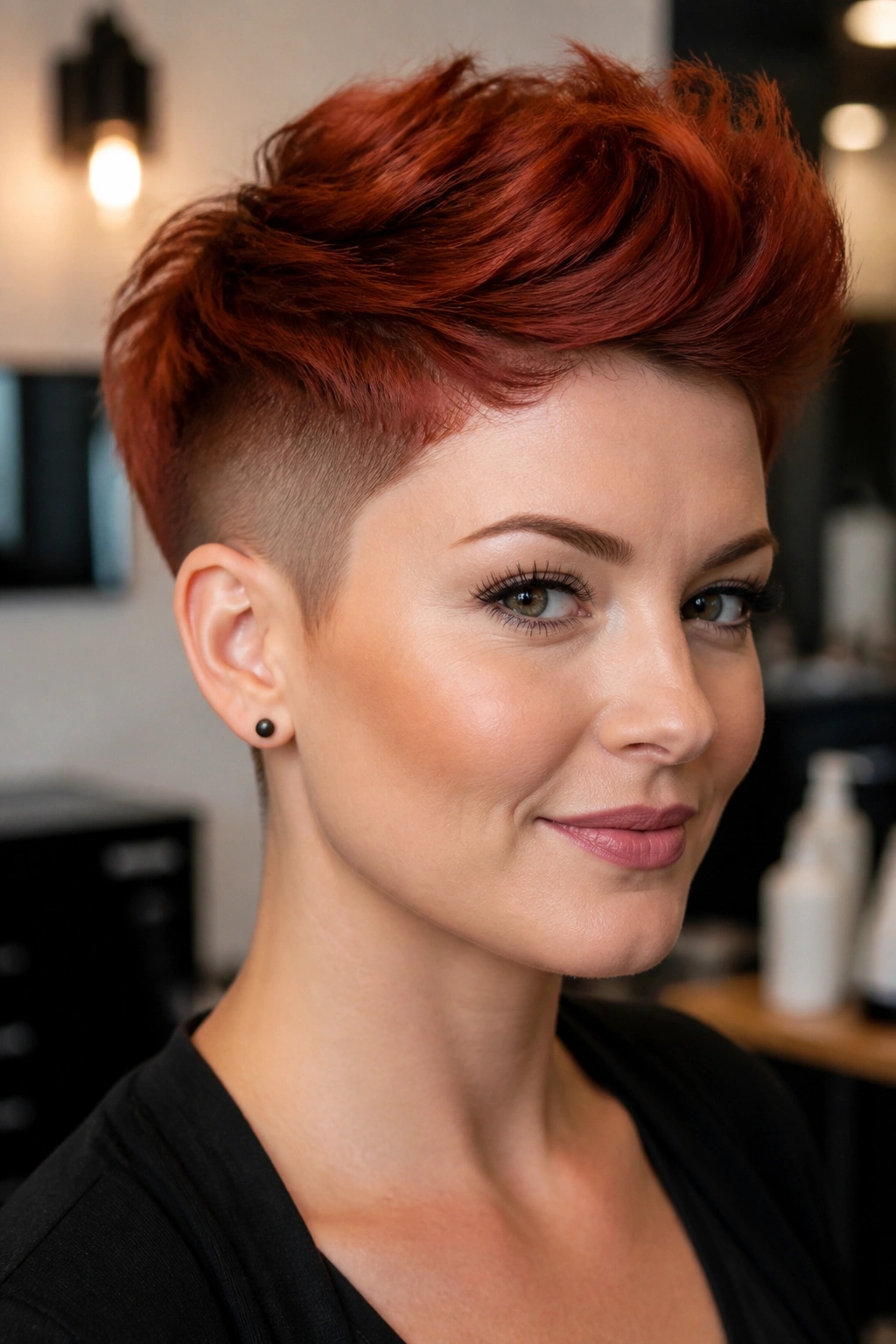
A temple undercut is a sneaky little fix when the sides of the face feel too full in short hair. By taking the hair in close around the temples, the widest part of the face gets breathing room. The crown then gets to carry the shape instead of the cheeks.
This cut looks especially good with a red shade that has some depth, like copper-red or dark auburn. The undercut hides under the surface, so the top remains the star. Keep the top around 3 inches, give it a soft bend or a quiff, and let the sides stay close.
Styling That Helps
Blow-dry the top upward with a small brush, then press the sides flat with your hands. A dab of paste at the roots gives the crown some grit. If the top falls sideways, the undercut loses its purpose, so keep the lift visible.
19. Bright Copper Quiff Pixie

A quiff on a pixie is a bold move, but it solves the round-face problem fast because it sends the eye straight up. Height at the front creates length in the face, and bright copper makes the shape look lively instead of severe. It’s a clean, loud little haircut.
Why It Works
The quiff should not be huge. Two inches of lift at the front is enough if the sides stay tight. Too much volume and you get a pompadour; too little and the face goes back to feeling broad. The sweet spot sits between those two extremes.
Quick Notes
- Keep the front long enough to brush back.
- Use a blow-dryer and vent brush for lift.
- Finish with a dry hold spray so the shape stays airy.
This cut is strong, and I like it for people who want to wear the haircut before the haircut wears them.
20. Sideburn-Detail Pixie with Long Framing Pieces
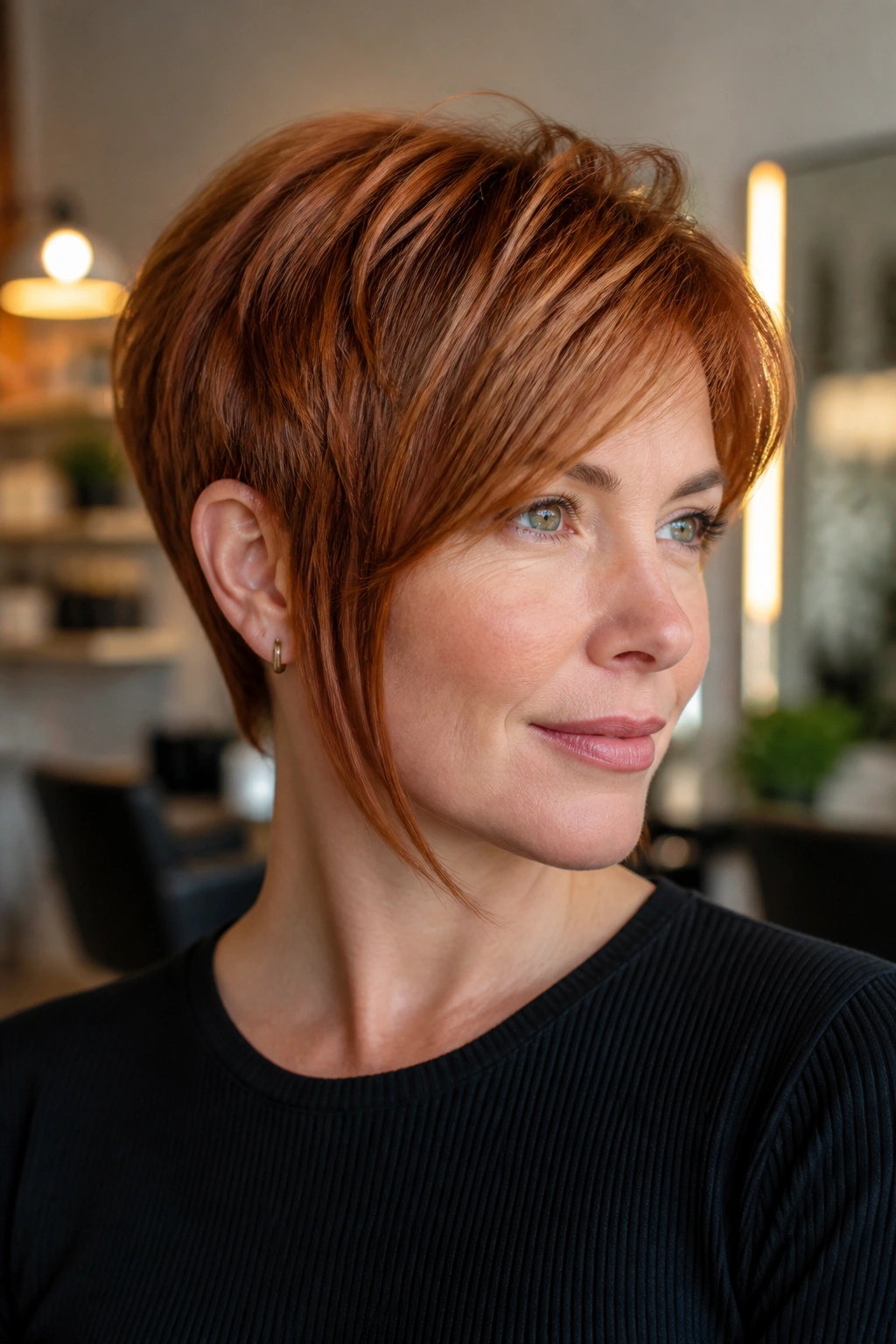
Sideburns get ignored in haircuts far too often. On a round face, they can be useful because a longer sideburn or temple piece creates a vertical frame that narrows the middle of the face. It sounds tiny. It isn’t.
The best version of this pixie leaves the front pieces just long enough to touch the jaw while the rest of the cut stays compact. A red tone with a little depth, like auburn or cinnamon, keeps the framing soft. If the sideburn area is cut too bluntly, the face can look wider. A little taper is better.
How to Wear It
Tuck one side behind the ear and leave the other loose. That asymmetry gives the face a cleaner outline. A small amount of serum on the longer pieces helps them lie close without frizzing out. Simple, but it works.
21. Dark Auburn Low-Maintenance Pixie
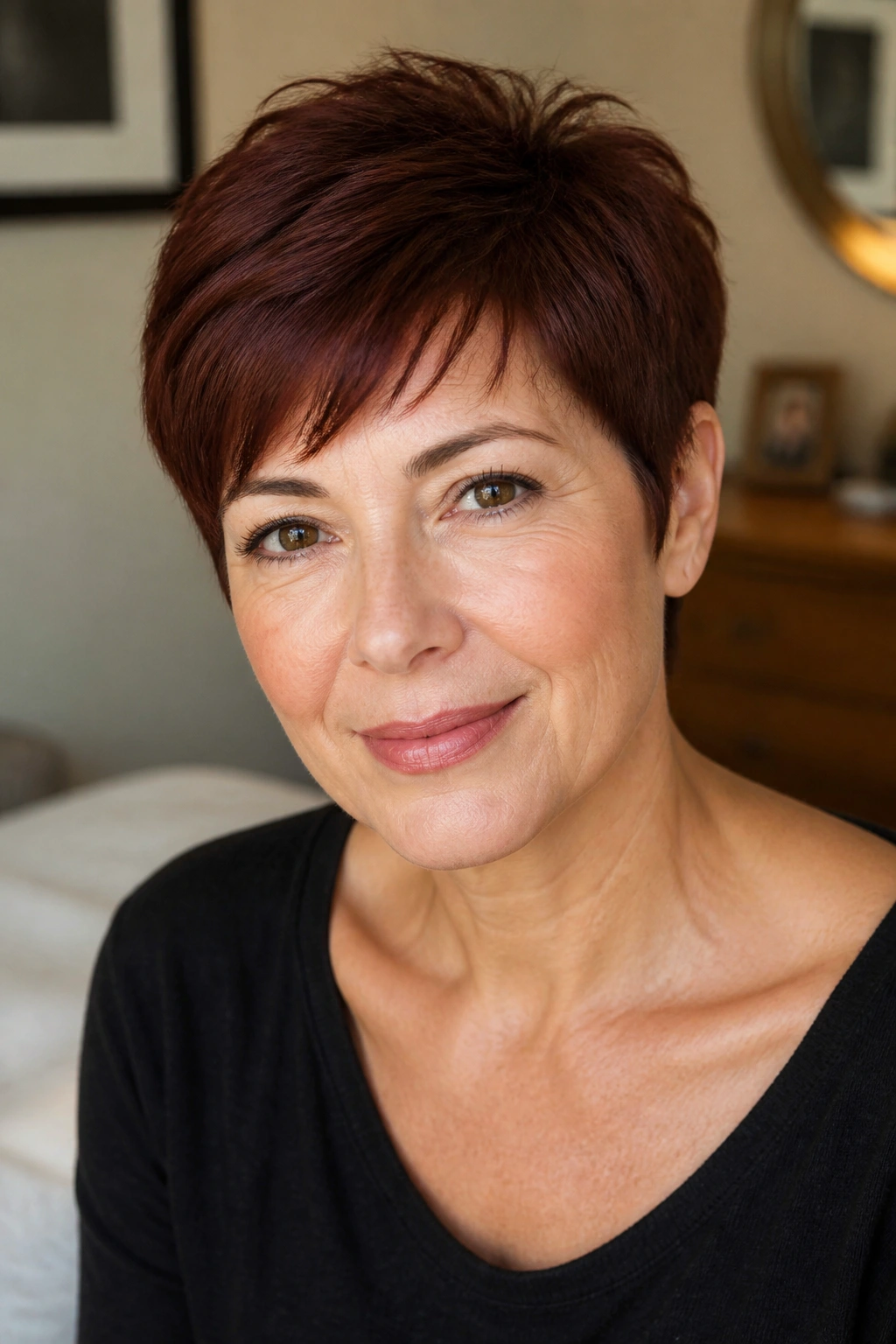
There’s a reason dark auburn shows up so often in short cuts for round faces: it’s easy to wear. The shade is rich without being flashy, and the darker tone creates a little shadow around the edges of the haircut. That shadow helps the face look a bit narrower.
The haircut itself should stay clean and compact. Not severe. Just tidy enough that you don’t spend ten minutes fighting it every morning. A low-maintenance pixie like this often has soft layers through the top and a neat neckline, which lets the style grow out without looking ragged in a week.
This is a good cut for someone who wants red hair without the extra upkeep of a brighter copper. It also looks good with glasses, which is a detail a lot of salon mood boards ignore. Frames plus auburn can be a strong combination when the outline stays tight.
22. Textured Pixie for Thick Hair
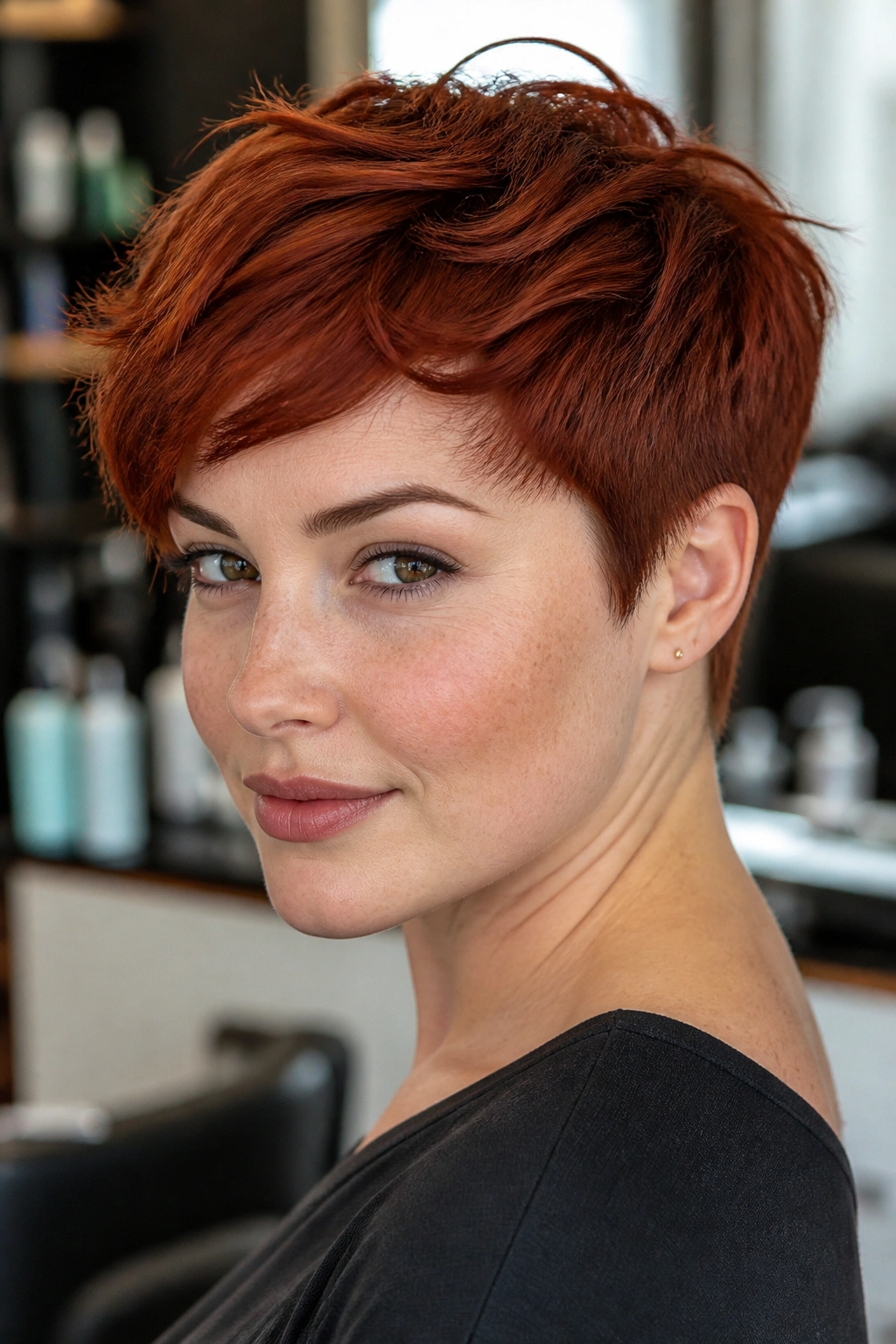
Thick hair needs internal removal, not just shorter length. If the stylist trims the outside and leaves the inside heavy, the cut will puff in the wrong places and sit like a helmet. A textured red pixie fixes that by taking weight out where the head curves widest.
The texture should be built through the top and around the crown, while the sides stay controlled. That way the hair can move without spreading out. Red color helps because it reveals the choppy work that thick hair sometimes hides. You can actually see the layers doing their job.
- Ask for point-cutting through the top.
- Keep the nape shorter than the crown.
- Use a matte product, not a glossy cream, if the hair is dense.
This cut needs a stylist who understands bulk. If they don’t remove it correctly, the shape will fight you.
23. Feather-Light Pixie for Fine Hair
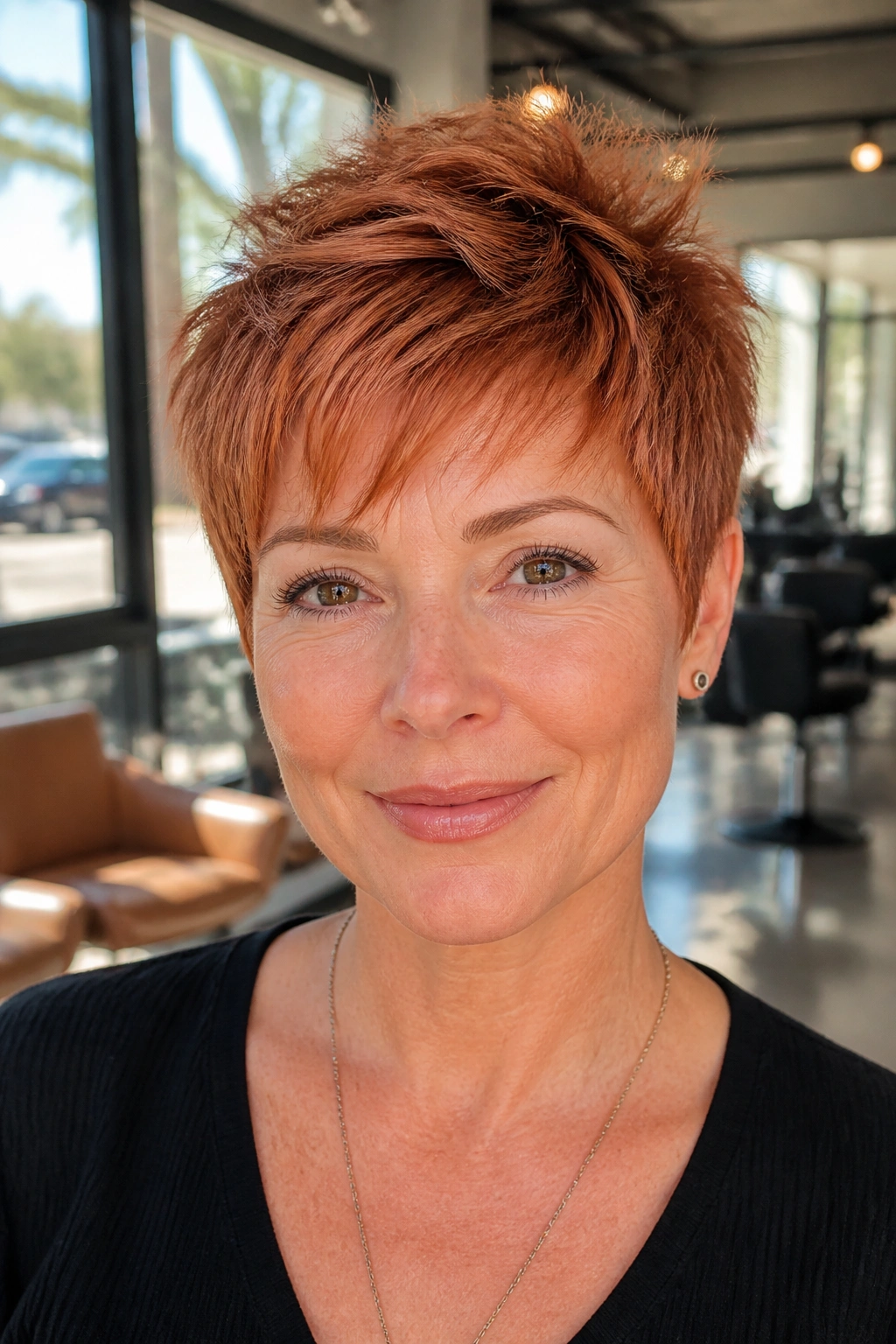
Fine hair and a round face can be a nice pairing when the cut is built with lift instead of width. A feather-light pixie keeps the sides close and the top airy, so the hair doesn’t collapse into a soft dome. That matters more than the color, but a red tone makes the texture easier to read.
Compared with the thick-hair version, this cut needs less weight removal and more strategic layering. The crown should hold enough height to create a little vertical line, while the fringe stays wispy and broken. If you over-layer fine hair, it disappears. If you under-layer it, it sits flat. Neither is useful.
A mousse at the roots and a quick blast with a blow-dryer usually does the job. No heavy cream. No greasy wax. Fine hair tells on you fast when you use too much product, and a red pixie with limp roots is a sad sight.
24. Ear-Skimming Warm Red Pixie

Ear-skimming length can be flattering on a round face when the top stays narrow and the sides don’t flare. The trick is to let the hair touch the top of the ear or sit just above it, then keep the crown lifted so the silhouette stays vertical. Warm red makes the cut feel soft rather than severe.
What to Watch For
If the side lengths get too fluffy, the face looks wider. If they’re too tight, the cut can turn hard. The best version lands in the middle: close enough to slim the cheeks, soft enough to keep a little movement.
Best Styling Habit
Dry the roots upward, then smooth the sides with your palms. A touch of cream on the ends helps the ear-skimming pieces stay tucked in place. That tiny piece of control keeps the haircut from ballooning around the lower face.
25. Burgundy Wave Pixie

A wave changes everything. Even the smallest bend in the top can keep a pixie from feeling flat, and on a round face that bit of lift helps stretch the profile. Burgundy adds depth, so the curve of the wave shows up without needing a lot of styling.
Why the Shape Reads Right
This cut should have a little movement through the front and crown, not curls, not poker-straight strands. The wave should fall diagonally or slightly forward. That angled motion keeps the face from looking too circular.
Styling Notes
- Use a diffuser if the bend is natural.
- Use a small iron only on a few front sections.
- Finish with a light hold spray, not a crunchy one.
This is a good choice if you want softness and polish in the same cut. It doesn’t shout. It just sits there looking smart.
26. Faux-Hawk Red Pixie
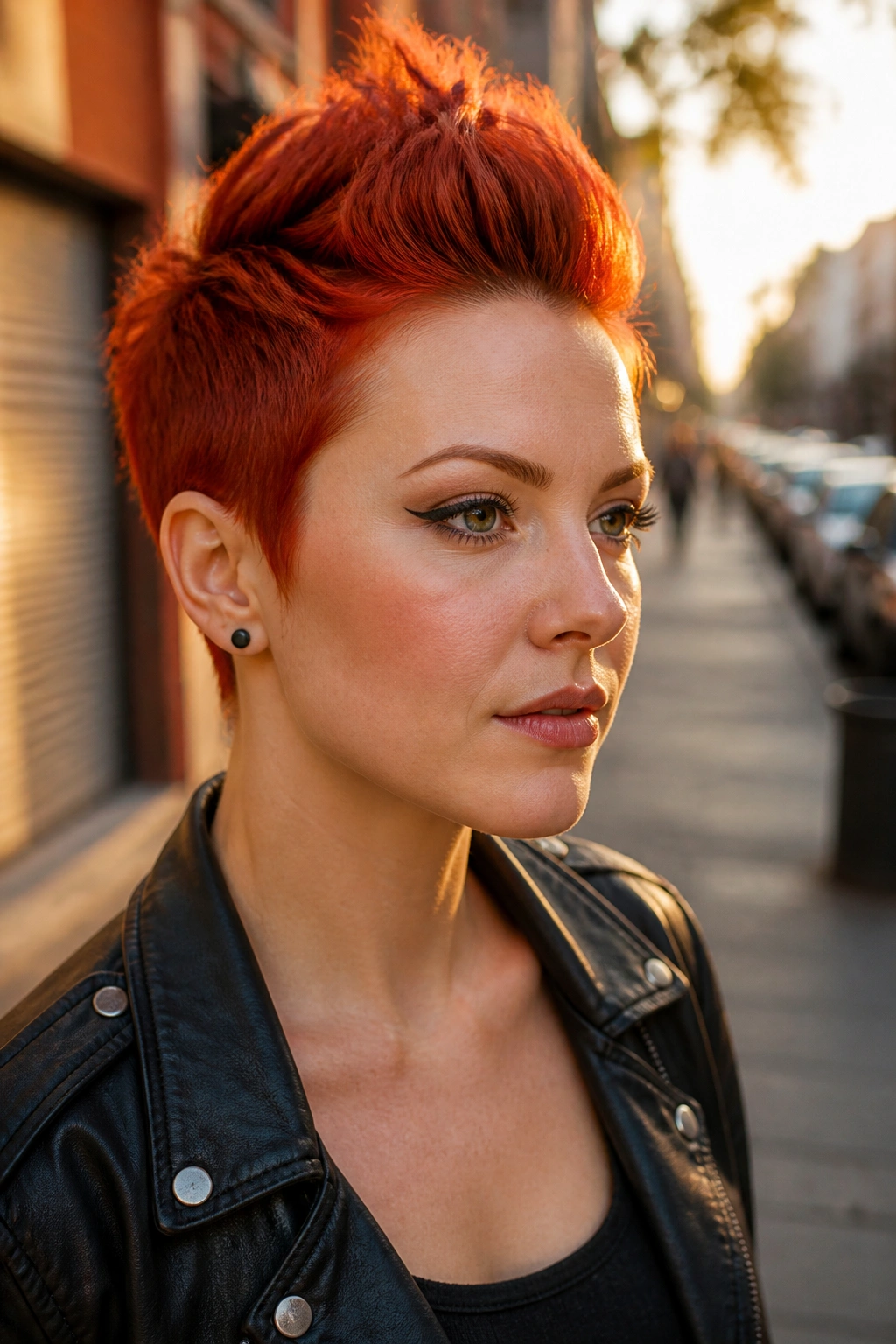
Can a faux-hawk work on a round face? Yes, and it can work hard. The central strip of height draws the eye straight up, while the sides stay clipped or slicked close so the width never spreads outward. It’s one of the most face-lengthening pixie shapes around.
How to Style It
The center should have enough length to stand up a little, but not so much that it becomes a full mohawk. Think lift, not spike. The top can be tousled or sharp depending on your taste, and red hair makes the ridge line easy to see.
A small amount of firm paste at the crown helps the shape stay up. If your hair is fine, use root spray first. If it’s thick, the sides may need more undercut to keep the silhouette narrow. This one is not shy. That’s part of the appeal.
27. Short Red Pixie Cuts for Round Faces with a Rounded Crown and Narrow Sides
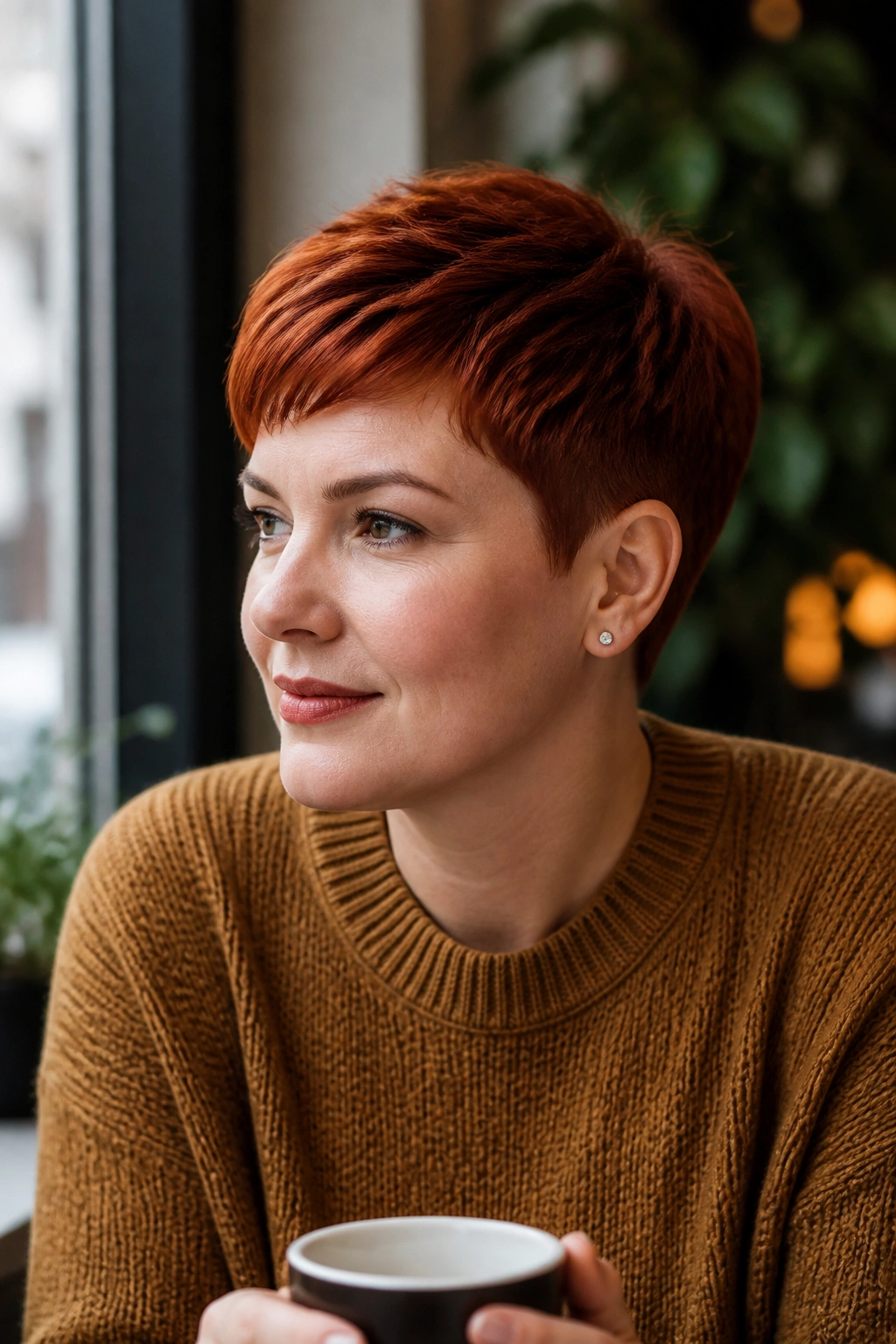
A rounded crown sounds risky on paper, but it can be a smart move when the sides are kept tight and the top doesn’t puff past the head’s natural shape. The narrow sides do most of the slimming work, while the crown gives the haircut a gentle, lifted curve instead of a boxy edge.
The important part is restraint. The top should feel full, not fluffy. Red tones like copper or soft crimson help because they show the curve cleanly without making the haircut look heavy. If the crown gets too wide, the face reads wider too. So the width has to stay controlled.
How to Keep It Balanced
Use a round brush only at the roots, then smooth the top with your fingers so the curve stays compact. Keep the fringe short enough to open the face, and leave the temples snug. This is one of those cuts that looks easy when it’s done well and strangely puffy when it isn’t.
28. Retro-Inspired Red Pixie with a Tapered Neckline
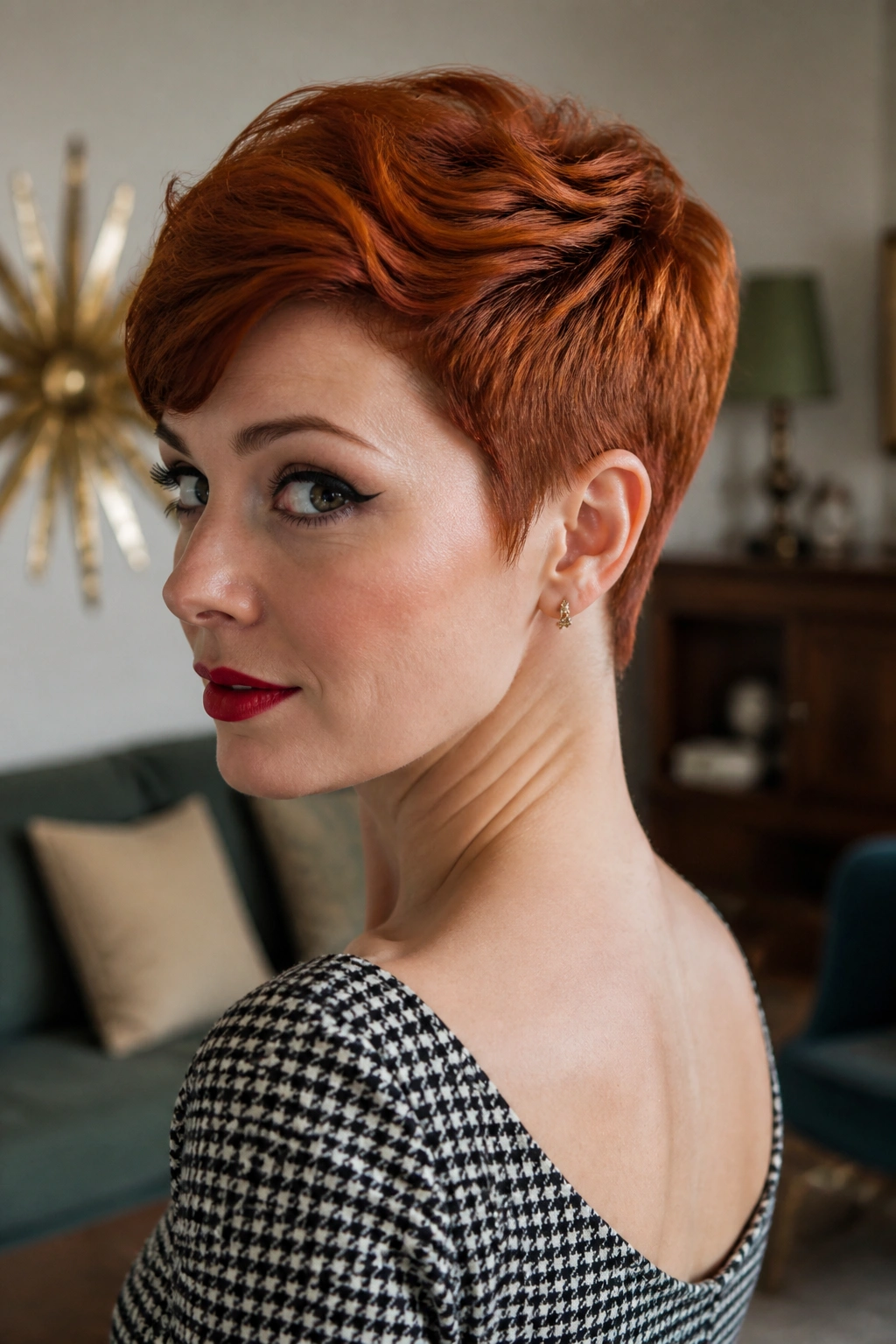
Retro pixies have a nice way of bringing softness back into a short cut. A tapered neckline keeps the back neat and narrow, while the top can hold a little height or wave. On a round face, that taper helps the whole outline stay clean from the side and from behind.
This version works well with a warm red because the color gives the vintage shape some energy. Think polished, not costume. The top can be side-swept, brushed back, or lightly curled at the end, but the neckline should stay slim and tidy. That’s where the elegance comes from.
- Ask for a gradual taper at the nape.
- Keep the crown slightly higher than the sides.
- Use a satin-finish spray if you want shine without greasiness.
The cut grows out in a civilized way, which is more than can be said for some shorter styles. That alone makes it worth a look.
Final Thoughts
A good red pixie on a round face is never about making the face disappear. It’s about giving it structure, direction, and a little lift where it counts. Some cuts do that with a side part. Others use height, a narrow nape, or a diagonal fringe. The right answer depends on your hair texture more than your mood board.
Red color also does more work than people give it credit for. Copper sharpens layers. Auburn softens them. Burgundy adds depth. Scarlet makes the outline feel bolder. Same haircut, different mood.
If you’re choosing between a few of these, start with the one that matches your daily styling habit, not the one that looks most dramatic in a photo. A cut you can actually live with beats a gorgeous shape you have to wrestle every morning.
