



Fine hair can look fuller in a pixie, but only when the cut is built with a little restraint. Wavy pixie cuts for fine hair work because the bend breaks up scalp show-through and gives the eye more to read, which is half the battle when the strands themselves are delicate.
The mistake is going too light with the scissors. If a stylist shreds the ends into wisps or thins the sides until they’re airy in the wrong way, the cut can look flat, spiky, and a bit tired by lunch. That’s not movement. That’s hunger.
A better pixie keeps enough line around the perimeter to suggest density, then uses wave, fringe, and crown shape to fake the fullness fine hair often lacks. Some versions need a deep side part. Some need a nape that hugs the head. Some need a longer top so the hair has something to bend around instead of dropping straight down.
1. Side-Swept Fringe Pixie
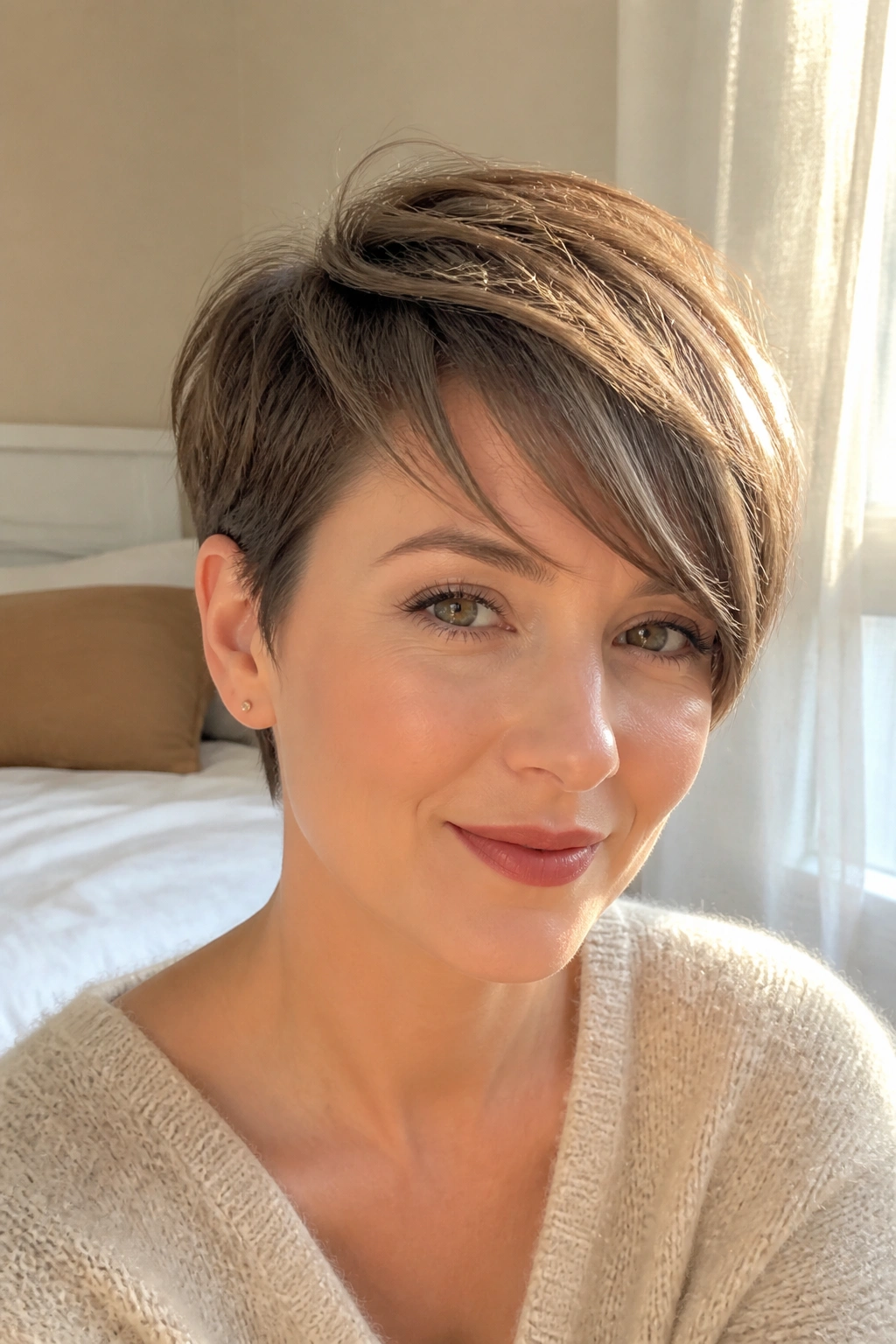
A side-swept fringe is one of the easiest ways to make fine hair look fuller. The diagonal line pulls attention away from the part line and gives the front of the cut a little more weight, which is exactly where delicate hair tends to betray itself first.
Why the Fringe Does the Heavy Lifting
Keep the longest pieces around 3 to 4 inches so they can bend softly across the forehead instead of flipping out like a helmet edge. That length also gives your stylist room to carve a curve that looks intentional, not accidental.
Ask for soft point cutting at the ends, not aggressive thinning. The fringe should feel touchable, not shredded.
- Blow-dry the fringe from side to side with a small round brush.
- Use a pea-sized dab of mousse at the roots, then a light mist of flexible hairspray.
- Keep the side nearest the part a touch shorter so the sweep has a natural fall.
Tip: If your wave pattern is uneven, let the fringe dry almost all the way before you shape it. Wet hair lies.
2. Crown-Lift Tapered Pixie
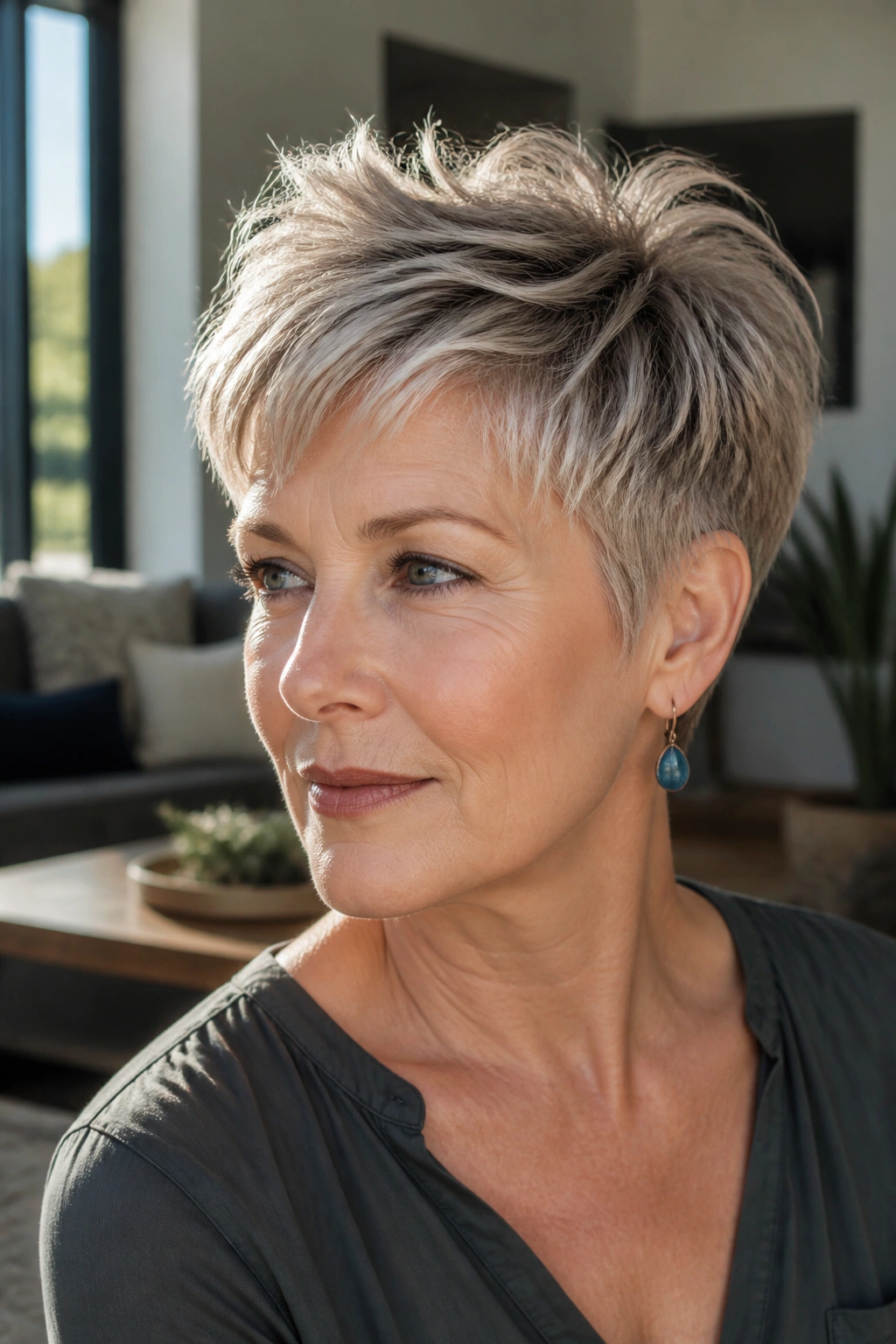
Why does a lifted crown change the whole cut? Because fine hair often collapses at the top first, and once the crown goes flat, the rest of the style follows it down like a domino line.
The fix is a pixie that keeps 2.5 to 3 inches at the crown and tapers quickly at the sides and nape. That length gives you enough room to coax a bend with heat or mousse without leaving the top bulky. The shape should rise a little at the back of the head, not sit in one flat sheet.
Where the Height Should Sit
The lift belongs just behind the hairline, not all the way at the front. If the tallest point is pushed too far forward, the style can look puffed in the wrong place.
Use a root spray, then blow-dry the crown straight up with your fingers. A flat brush can work too, but fingers give you more control. Finish by pinching the top layer with a matte paste so the wave breaks into small pieces instead of one heavy clump.
3. Choppy Micro-Shag Pixie
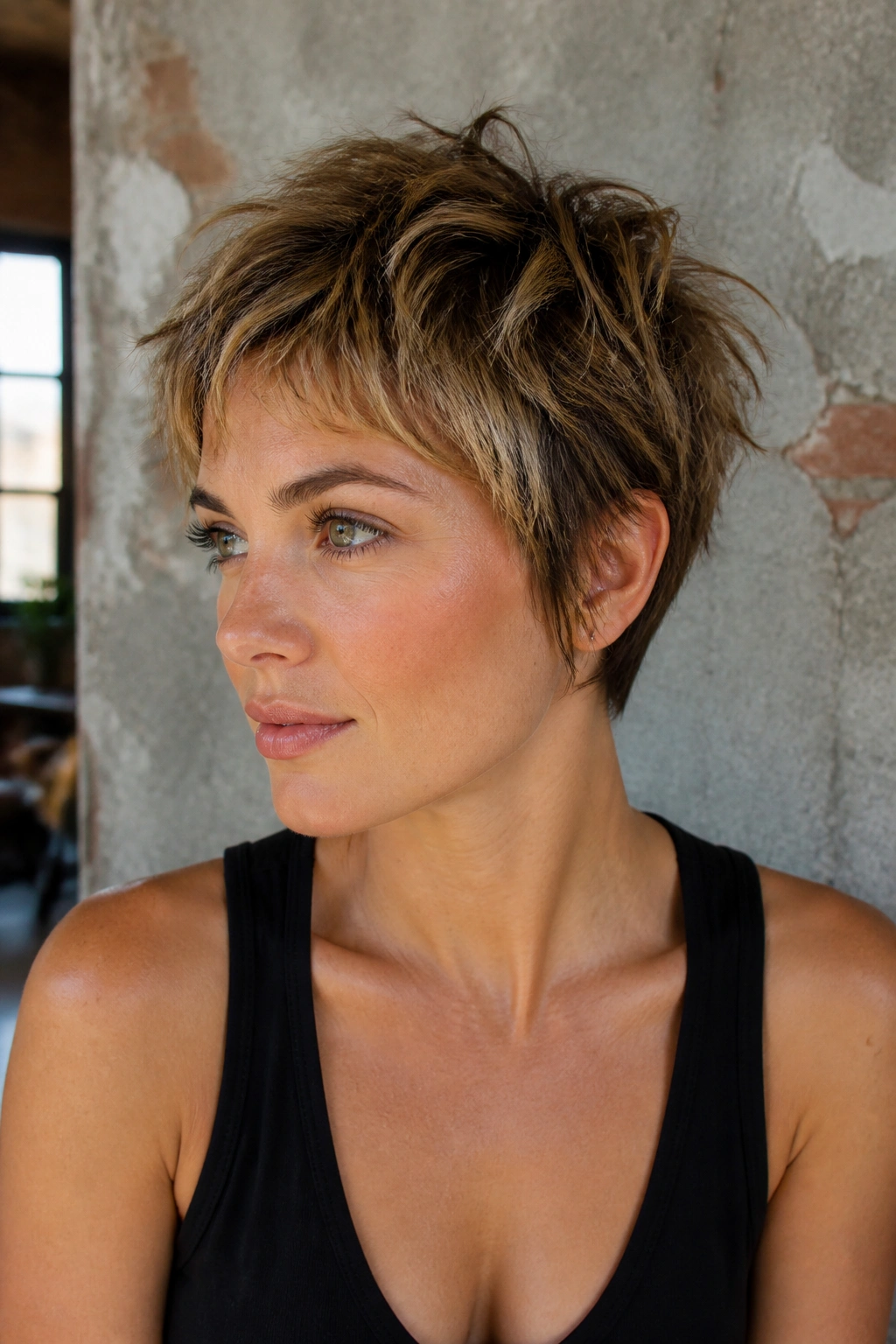
Picture hair that goes limp as soon as the wind stops. A choppy micro-shag pixie solves that problem by giving fine strands more edges to catch the eye, and more edges means more texture.
What Makes It Different
This cut leans into short, broken layers through the top and upper sides, usually with the longest pieces sitting around 2.5 to 4 inches. The goal is not volume in the big, fluffy sense. It’s small, irregular movement.
- Ask for light, piecey layering through the crown.
- Keep the nape cleaner so the back doesn’t puff out.
- Style with a texturizing cream on damp hair, then rough-dry.
That last part matters. If you try to smooth this cut too much, it loses the shaggy charm and starts looking sparse. A little mess is the point.
4. Ear-Tucked Classic Pixie
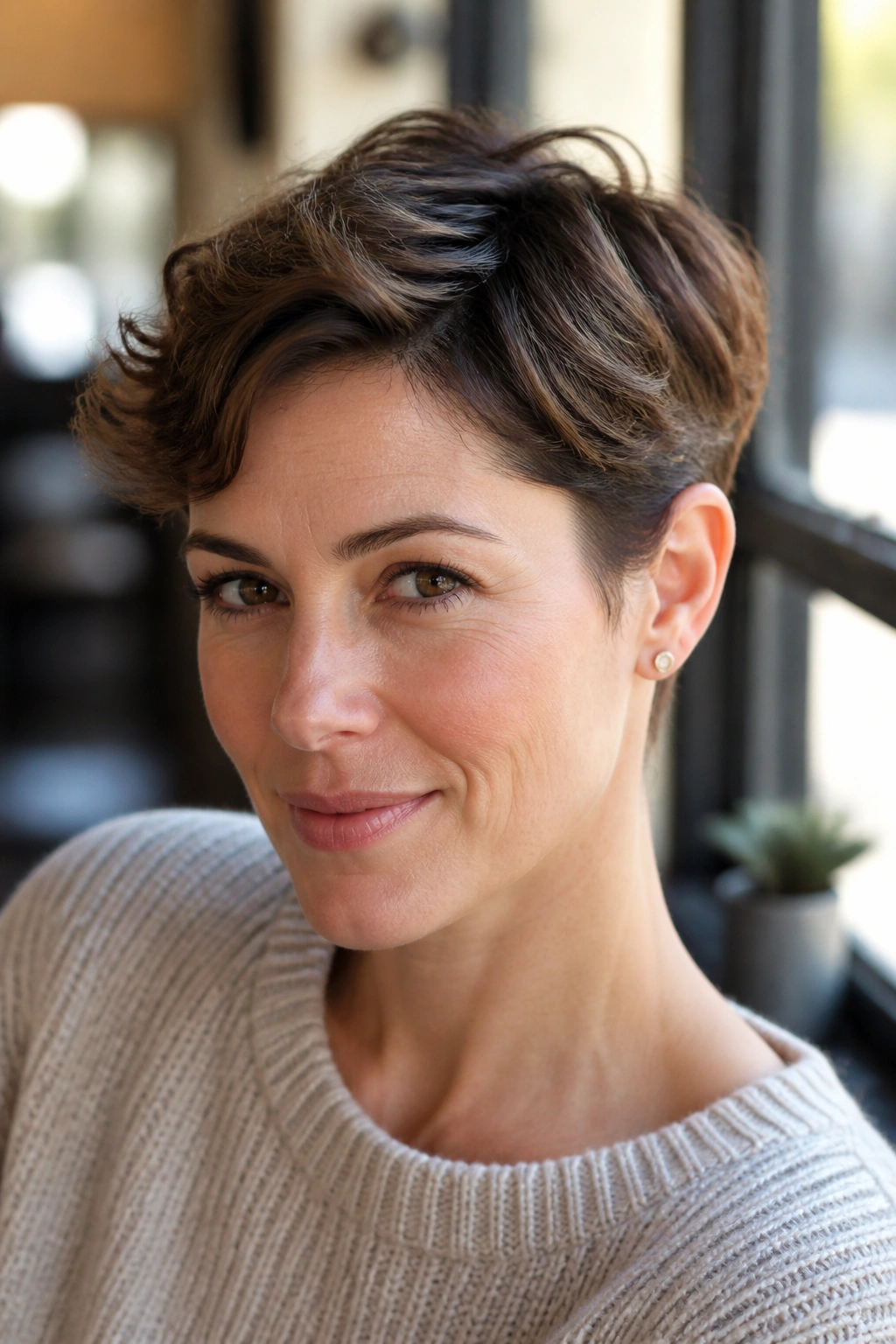
A cleaner pixie can help fine hair more than a heavily shredded one. That’s the part people miss.
When the sides are softly tapered and the hair is long enough to tuck behind the ears, the cut gains a neat outline that makes the whole head look more deliberate. Fine hair often looks better with a clear shape than with a lot of wispy fuss around the edges. The ear tuck also shows the jawline, which helps the style feel lighter without removing more hair.
That line matters.
Keep a little length at the sideburns — not a curtain, just enough to soften the edge where the cut meets the cheek. A sideburn that’s too short can make the face look harsh and the hair look thinner. Ask for a neckline that hugs close, then keep the top at 2 to 3 inches so the wave still has something to do.
5. Asymmetrical Sweep Pixie

Asymmetry is a cheat code for sparse strands. One side slightly longer than the other keeps the eye moving, and moving eyes don’t sit there counting every fine hair on your scalp.
The longer side usually sits around the cheekbone or jaw, while the shorter side hugs close to the head. That contrast gives the cut shape without needing a lot of density. It also works well when one side of your wave pattern is stronger than the other, which is more common than people admit.
What to Ask For
- Keep one front corner about 1 inch longer than the other.
- Build the shortest side around the ear and temple.
- Use a light pomade only at the ends so the longer side stays piecey, not greasy.
This is a good pick if you like a little edge but do not want a harsh undercut. The asymmetry does the work quietly.
6. Feathered Soft-Edge Pixie
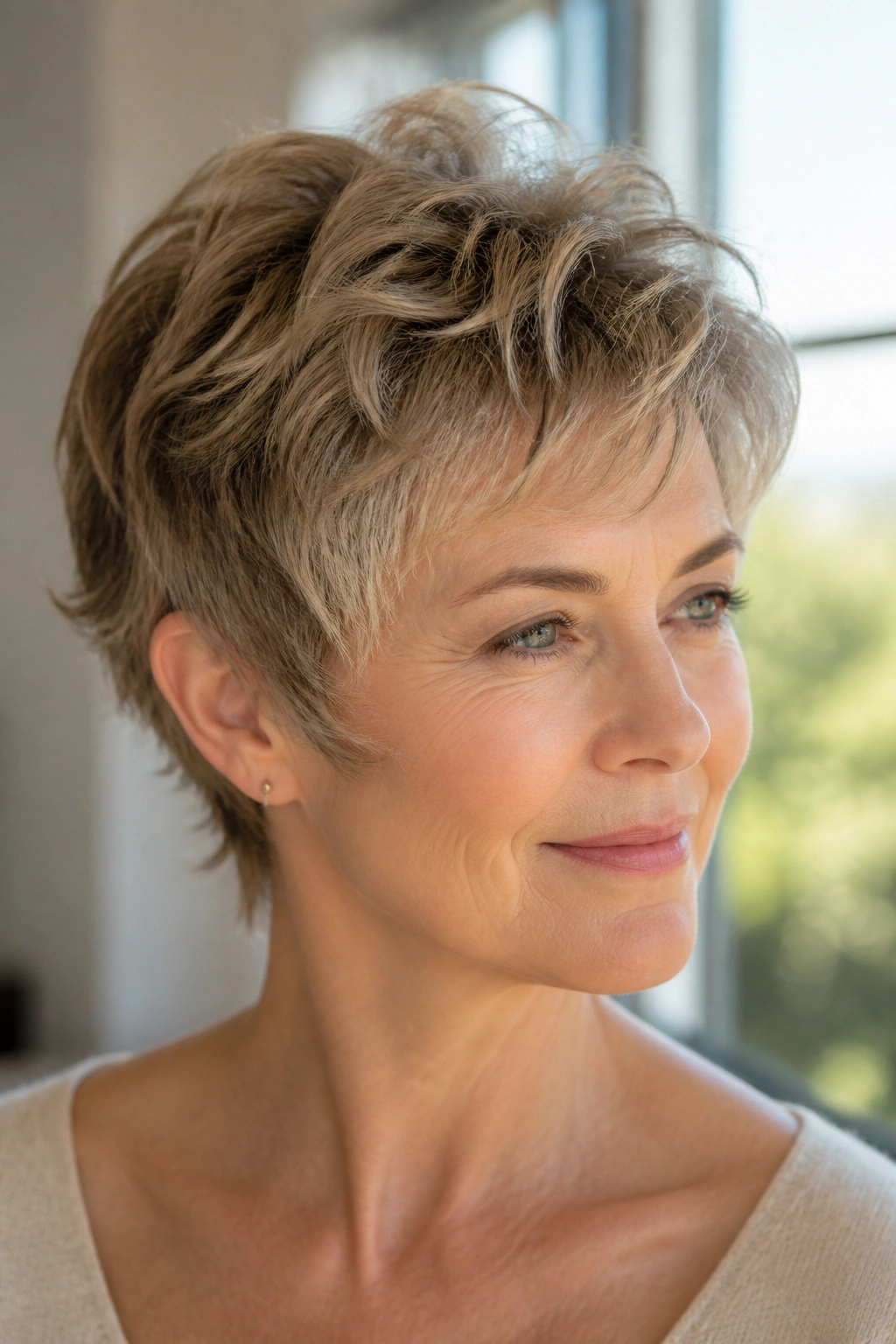
If your hair sits flat at the temples but bends a little at the crown, a feathered soft-edge pixie can make that natural bend look bigger than it is. The cut uses soft, airy ends around the face and ears, while the top stays a touch longer so the wave has room to curl over itself.
The trick is feathering only the outer edge, not the whole head. Too much feathering on fine hair can leave the cut looking hungry. A controlled feather at the perimeter, though, makes the style feel lighter without stripping away body.
Use a vent brush and dry the hair upward at the roots. Then break the top into tiny sections with your fingers. A dab of styling cream between the palms is enough. You want the hair to move when you turn your head, not collapse into a cloud.
7. Deep Side Part Pixie
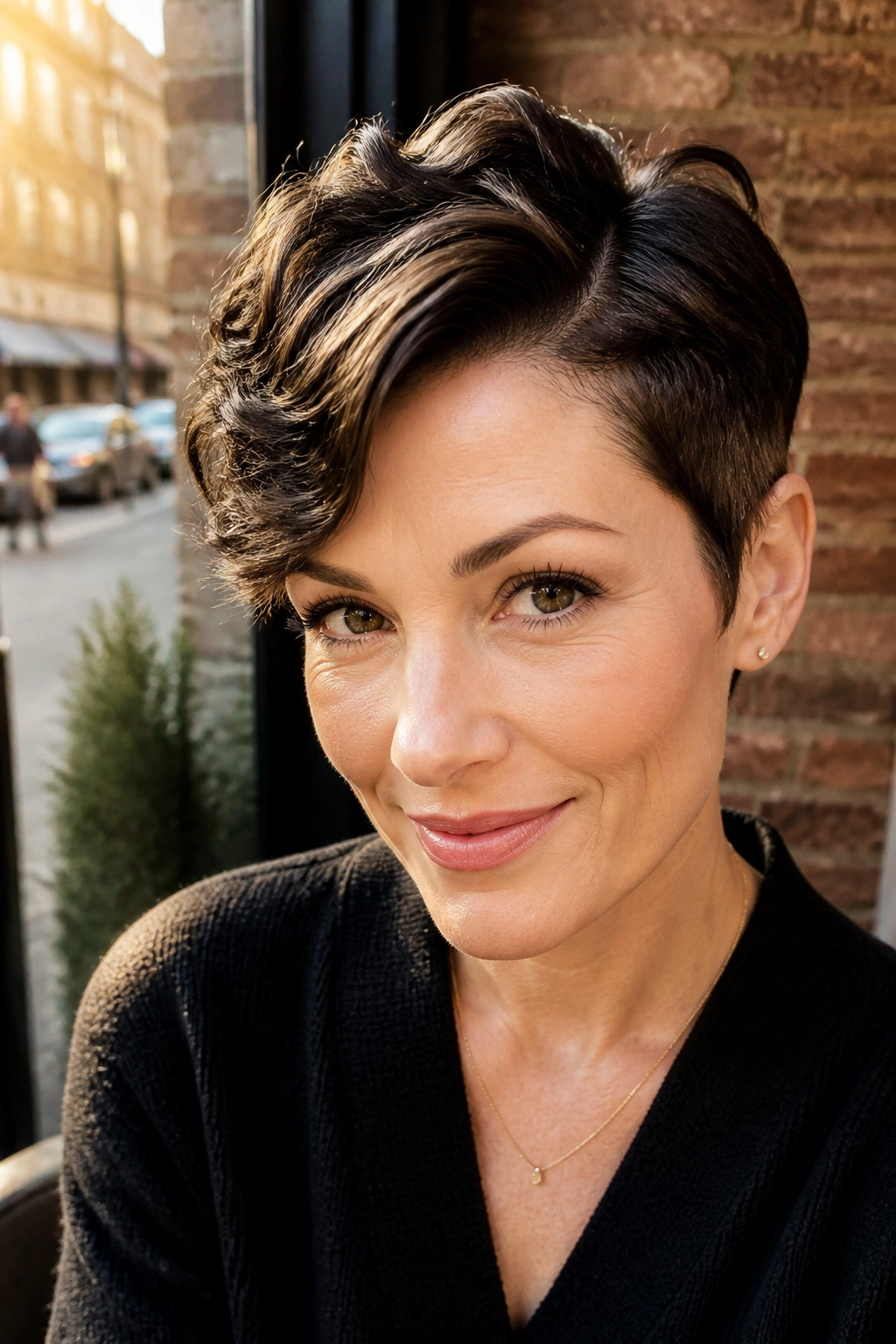
A deep side part hides the scalp line better than a center part ever will. That alone makes it useful for fine hair, but it also gives the pixie a bit of drama without asking for extra length.
The part should be moved far enough over that one side takes on a fuller look while the other side stays close and neat. That contrast makes the hair appear denser because the volume is concentrated where the eye lands first. If your natural part sits in one spot for years, changing it can also keep one section from getting worn flat all the time.
A quick note: don’t carve the part so hard that it looks stamped in. A soft zigzag or finger-made part leaves a better fall. Blow-dry across the part line first, then back the top away from the head with a round brush. The wave will settle into a shape that looks much richer than the raw damp hair did.
8. Bixie-Light Hybrid
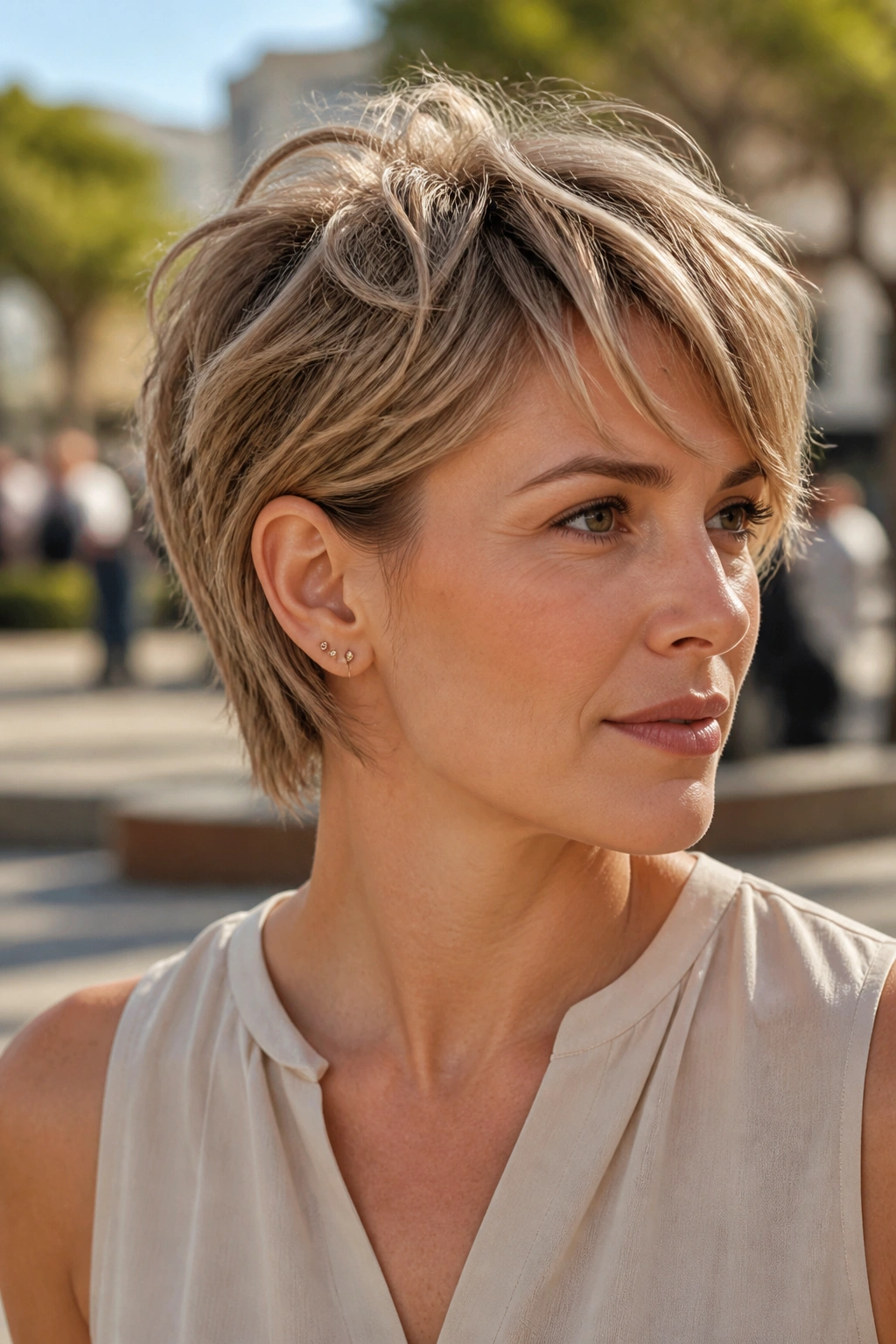
Unlike a strict pixie, the bixie-light leaves enough length to skim the jaw and tuck behind the ear. That extra inch or two can be a gift for fine hair, because it gives the ends more visual weight.
Why the Hybrid Helps Fine Hair
The cut usually sits somewhere between a pixie and a short bob, with 3 to 5 inches on top and slightly longer pieces around the face. That length prevents the style from getting too airy. It also lets the wave bend in bigger, softer curves instead of tiny little flicks.
This is the pick for someone who wants a short cut that still feels easy to reshape. A little mousse, a quick finger-dry, and one pass with a small iron around the front pieces is often enough.
The hybrid shape is forgiving during grow-out too. It doesn’t suddenly turn into a triangle, which is a mercy.
9. Micro-Bang Wave Pixie
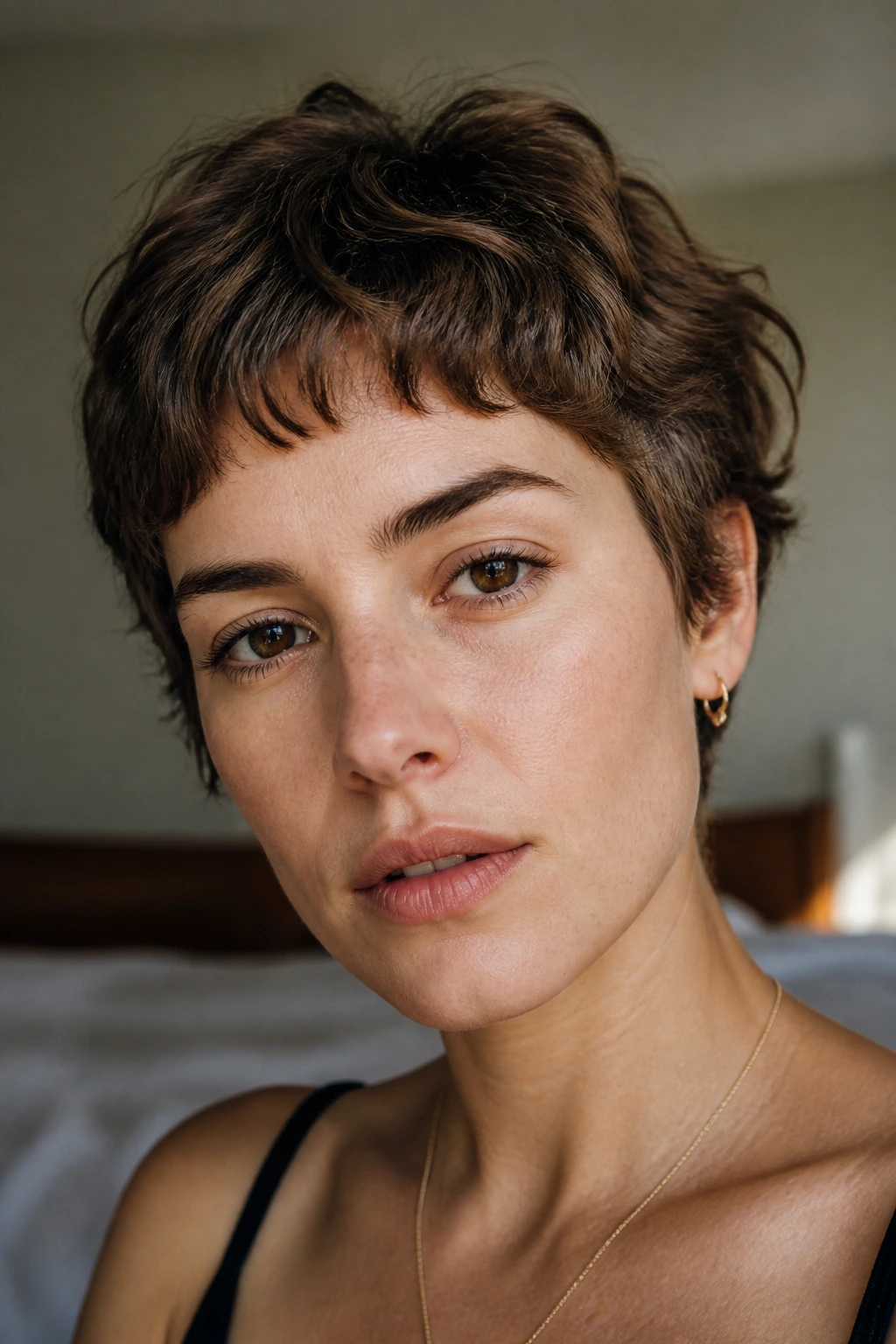
Micro bangs can wake up a wavy pixie fast. They sharpen the face, put the eyes on display, and make fine hair look more styled even on lazy mornings.
The trick is keeping the fringe short but not heavy. Think just above the brows, with enough softness in the edge that the bangs don’t look like they were cut with a ruler. On fine hair, a blunt micro bang can go wispy in a strange way, so the line should be a little broken.
Too thick is the enemy.
Let the rest of the cut stay slightly longer through the crown and sides, so the bangs become the focal point. A tiny touch of styling balm on the fringe will help the wave sit in place, but don’t overload it. The front should feel crisp, not sticky. If the face is the feature you want to show off, this cut does that without needing much hair at all.
10. Wet-Texture Pixie
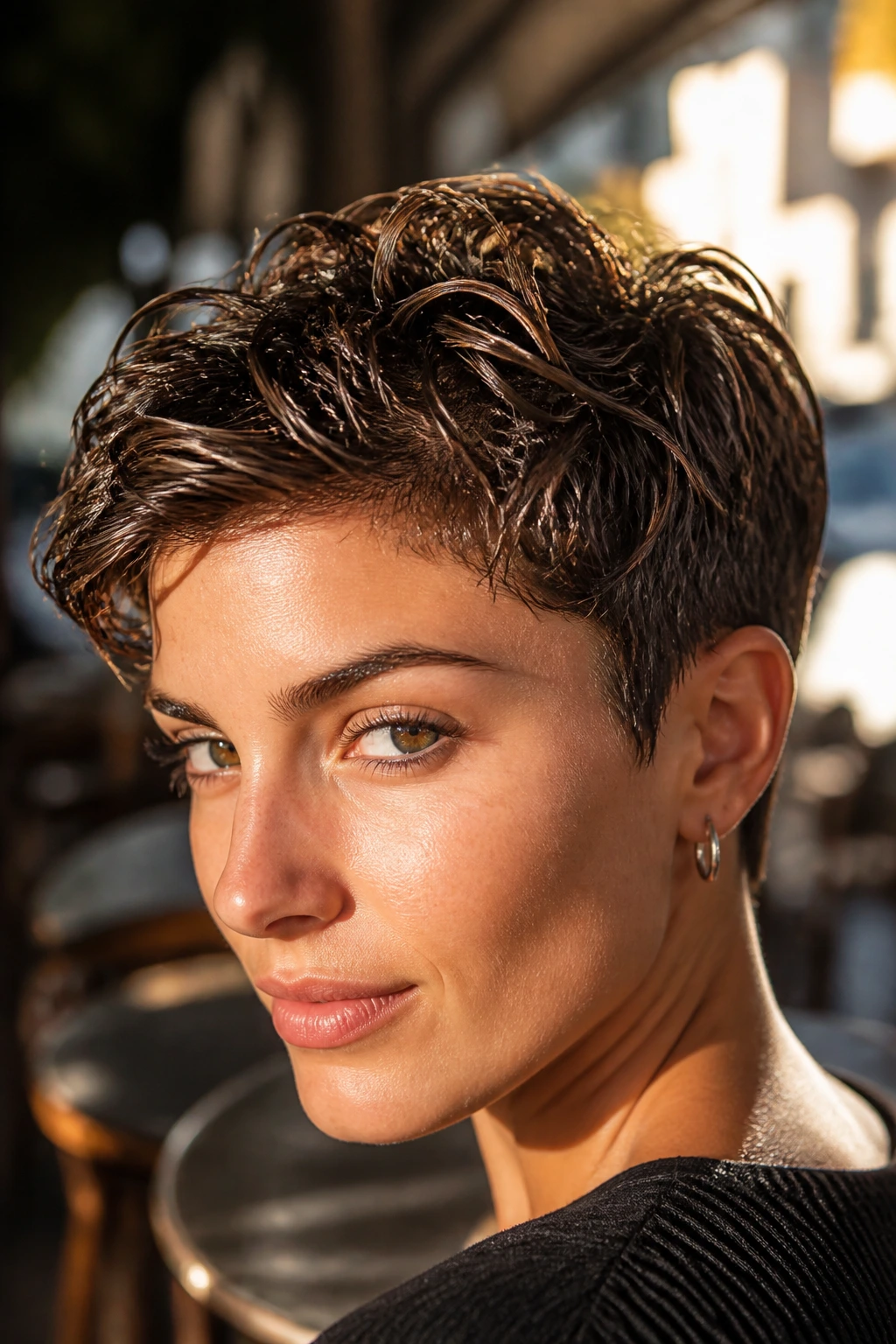
A wet-texture pixie is a smart move when your fine hair tends to separate in a choppy, uneven way on its own. Instead of fighting that, the style leans into a glossy, controlled finish that looks intentional.
How to Keep It Neat
- Work a light gel or styling lotion through damp hair.
- Comb the top forward, then use your fingers to lift small sections.
- Scrunch the ends once, lightly. No rough handling.
The best part is that wet texture makes the hair appear heavier. Fine strands that dry fluffy can look a little fuller when they’re grouped into narrow ribbons instead of left to drift apart. Keep the sides close and the top only moderately long, around 2 to 3 inches, so the style doesn’t slide into a flat cap.
This one looks especially good with a clean ear line and a sharp brow. Small details do a lot here.
11. Rounded French Pixie
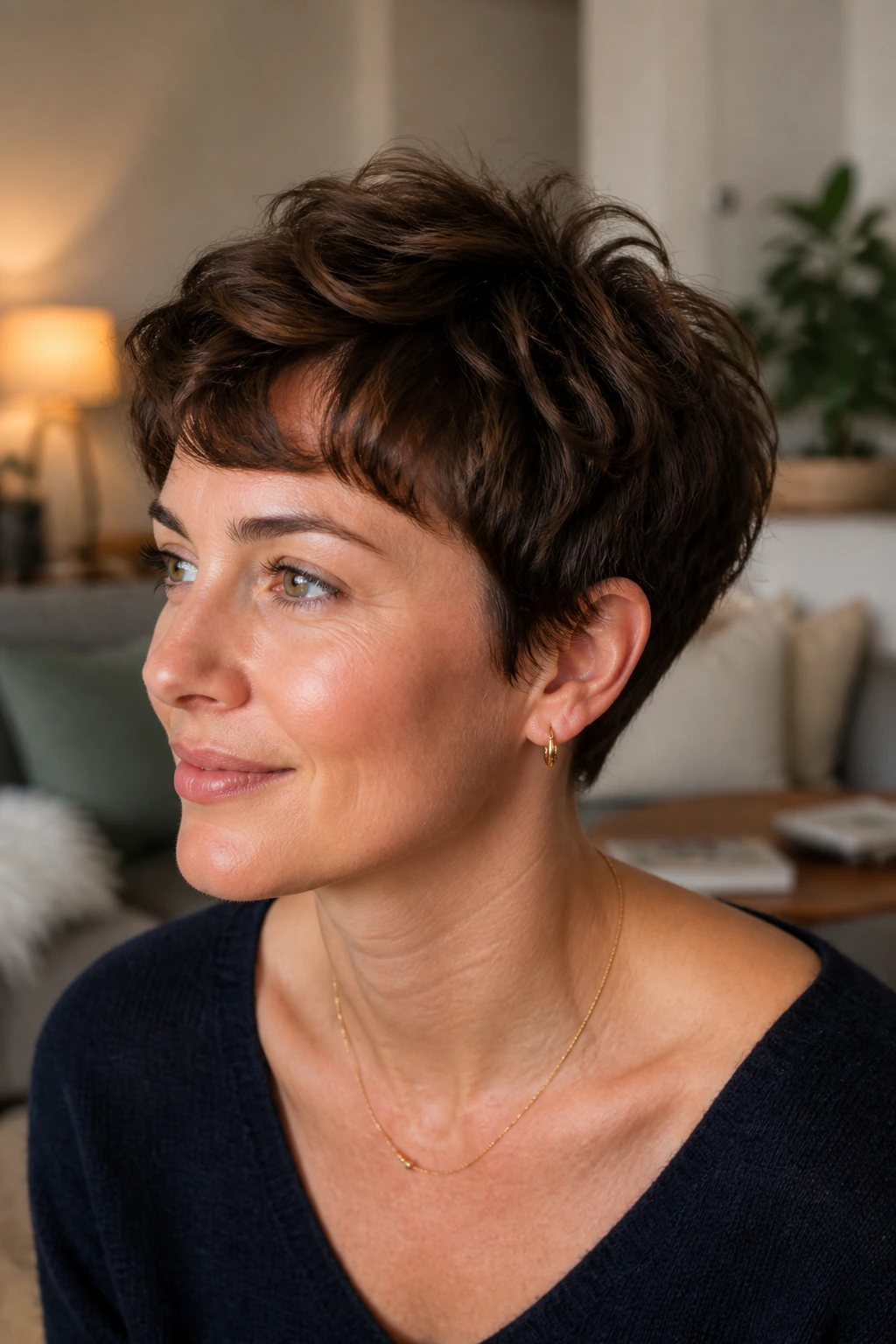
What makes a rounded French pixie work on fine hair? The silhouette. It’s soft around the head, a little curved at the crown, and tidy through the nape, so the cut reads as full even when the actual density is modest.
The shape usually avoids harsh layers. Instead, it uses gentle graduation to keep the top from falling flat and the sides from puffing out. That’s a useful trick when the hair is delicate but still has some natural wave. You get movement without a mess of short pieces sticking up everywhere.
A light cream or smoothing balm suits this cut better than a waxy paste. The finish should be supple, not gritty. If you like a polished look that still feels casual, this is the one people usually come back to. It doesn’t shout.
12. Razor-Wave Pixie
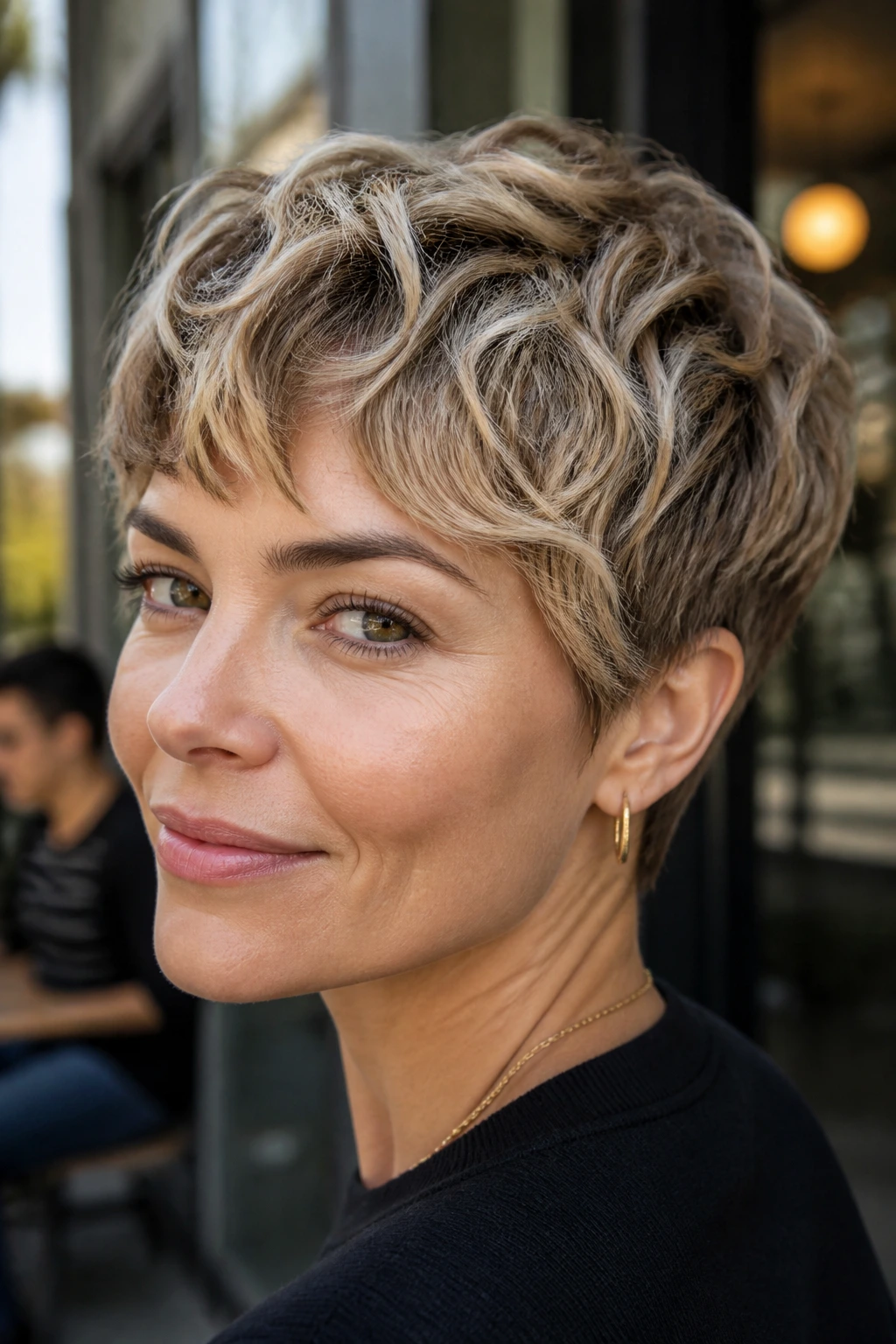
A razor is not the enemy, but overdoing it on fine hair is. That’s the line to remember.
What Makes It Different
Used carefully, a razor can soften the ends of a pixie and help the wave break into loose pieces. The blade should kiss the surface, not shred the whole section. On a fine head of hair, a little razoring around the perimeter is enough; any more and the cut starts to lose body fast.
- Keep the razor work near the outer edges.
- Leave the crown with more bluntness than the sides.
- Style with a small amount of matte paste so the ends separate cleanly.
This cut suits hair that already bends a little on its own. If your wave is stubbornly straight, the razor won’t manufacture movement out of thin air. It will only remove weight. That’s useful, but it’s not magic.
13. Piecey Root-Lift Pixie
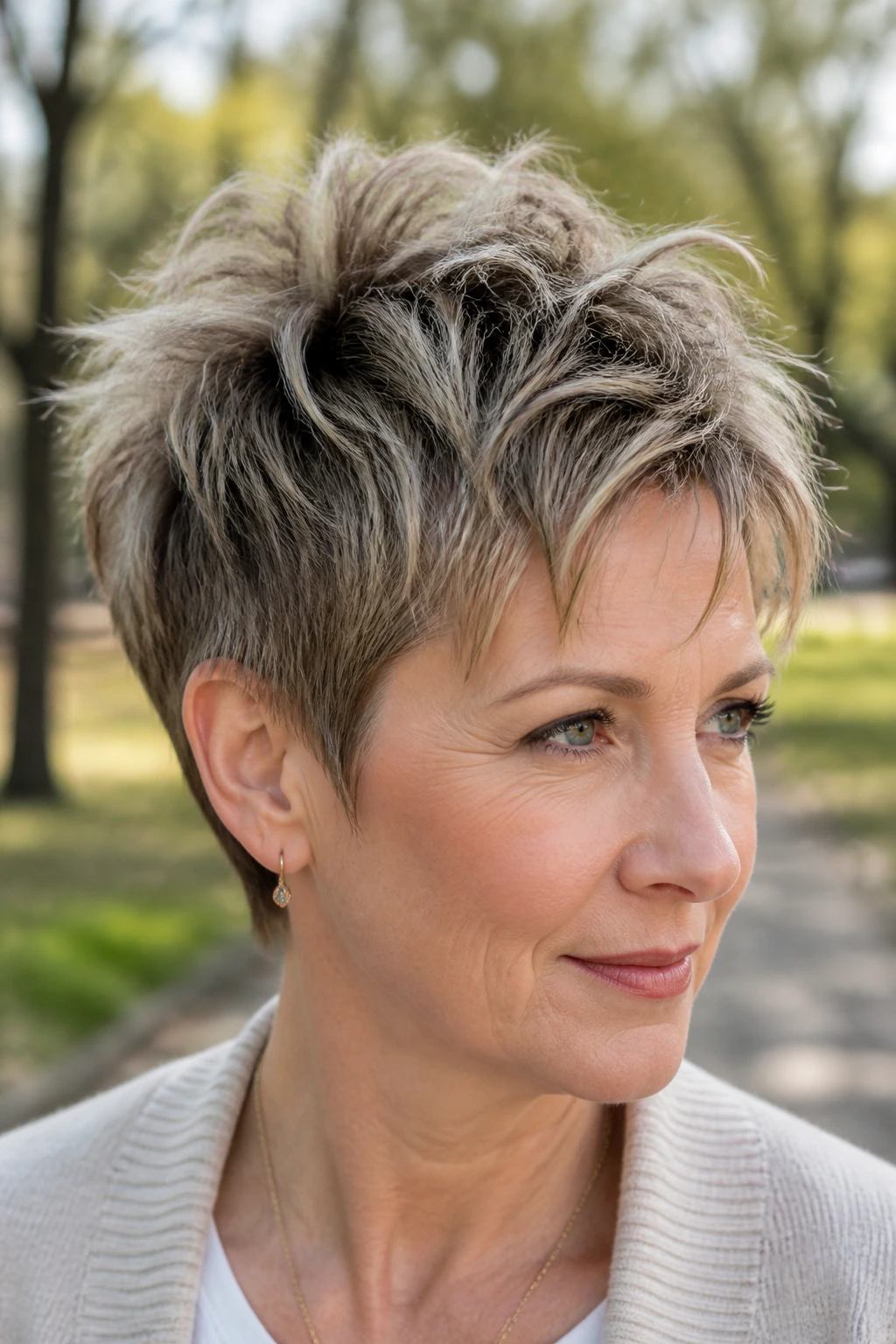
A piecey root-lift pixie is what you reach for when the hair at your scalp flattens faster than the rest. The point is to build lift at the roots and leave the ends broken into tiny, visible sections so the hair looks fuller from every angle.
Start with mousse at the damp roots, then dry the crown first. Not the ends. The crown. Fine hair often loses its shape there within an hour, so that’s where the attention belongs. Once the top is dry, pinch the front pieces with a little cream or paste, and twist a few strands around your fingers to make the wave read in smaller chunks.
It’s a practical cut, not a fussy one. And it is a lot less fragile-looking than styles that rely on soft ends alone.
14. Nape-Tapered Grow-Out Pixie
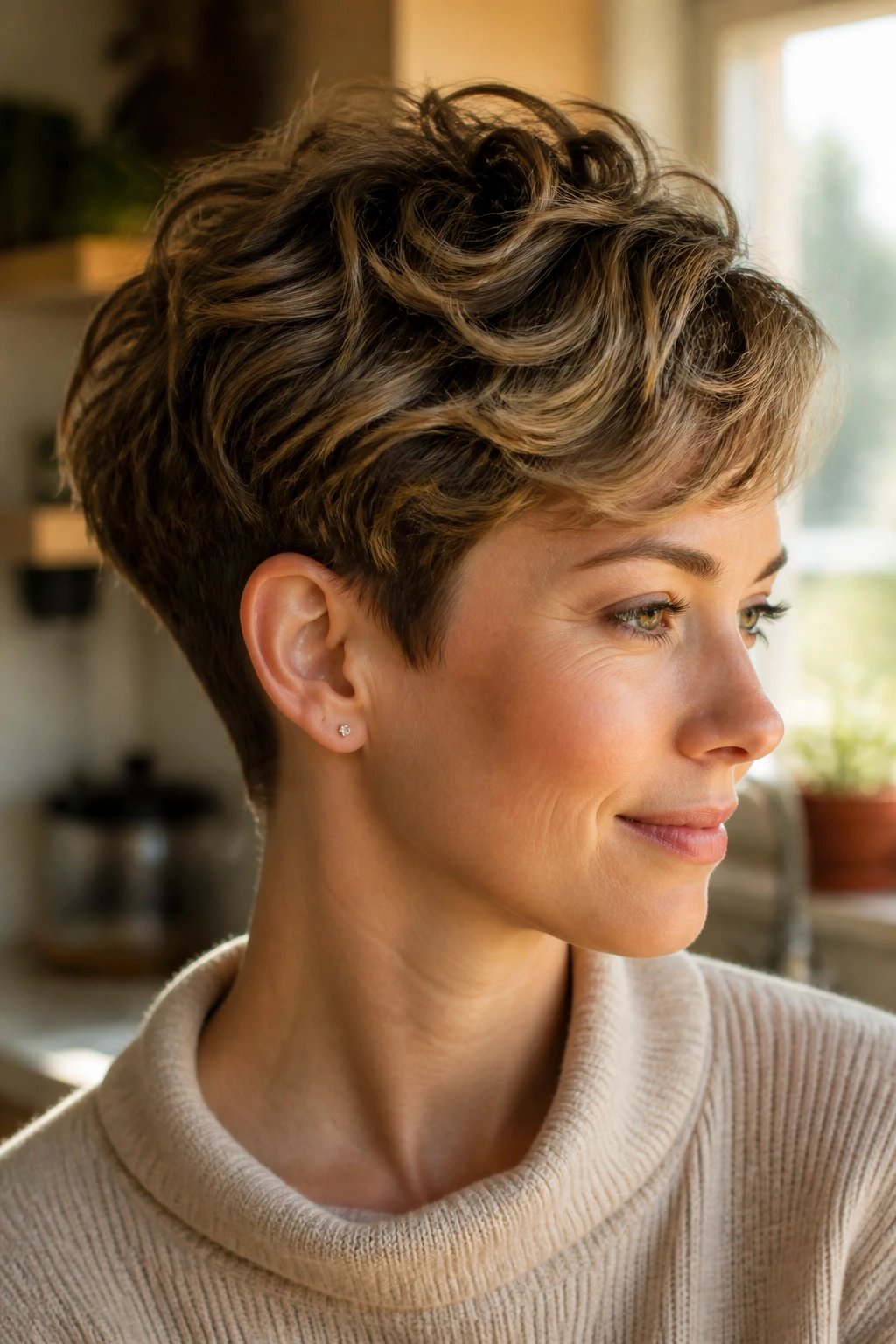
A nape-tapered pixie is a small mercy for anyone who hates awkward grow-out stages. The close neck taper keeps the back neat as the top gets longer, which matters when fine hair starts to lose shape before the next trim.
What to Ask For
- Keep the nape clipped or softly tapered to about 0.25 to 0.5 inch.
- Leave the top at 3 inches or more so the wave can still move.
- Soften the sideburns instead of cutting them blunt.
That combination keeps the cut looking tidy even when it’s past its fresh-from-the-salon moment. Fine hair can go from chic to shapeless fast if the back grows too fast or the sides get bulky. This shape stays cleaner longer.
It also feels easy to style on off days. A little water, a finger-comb, and a dab of cream is enough to bring the outline back.
15. Soft Mullet Pixie
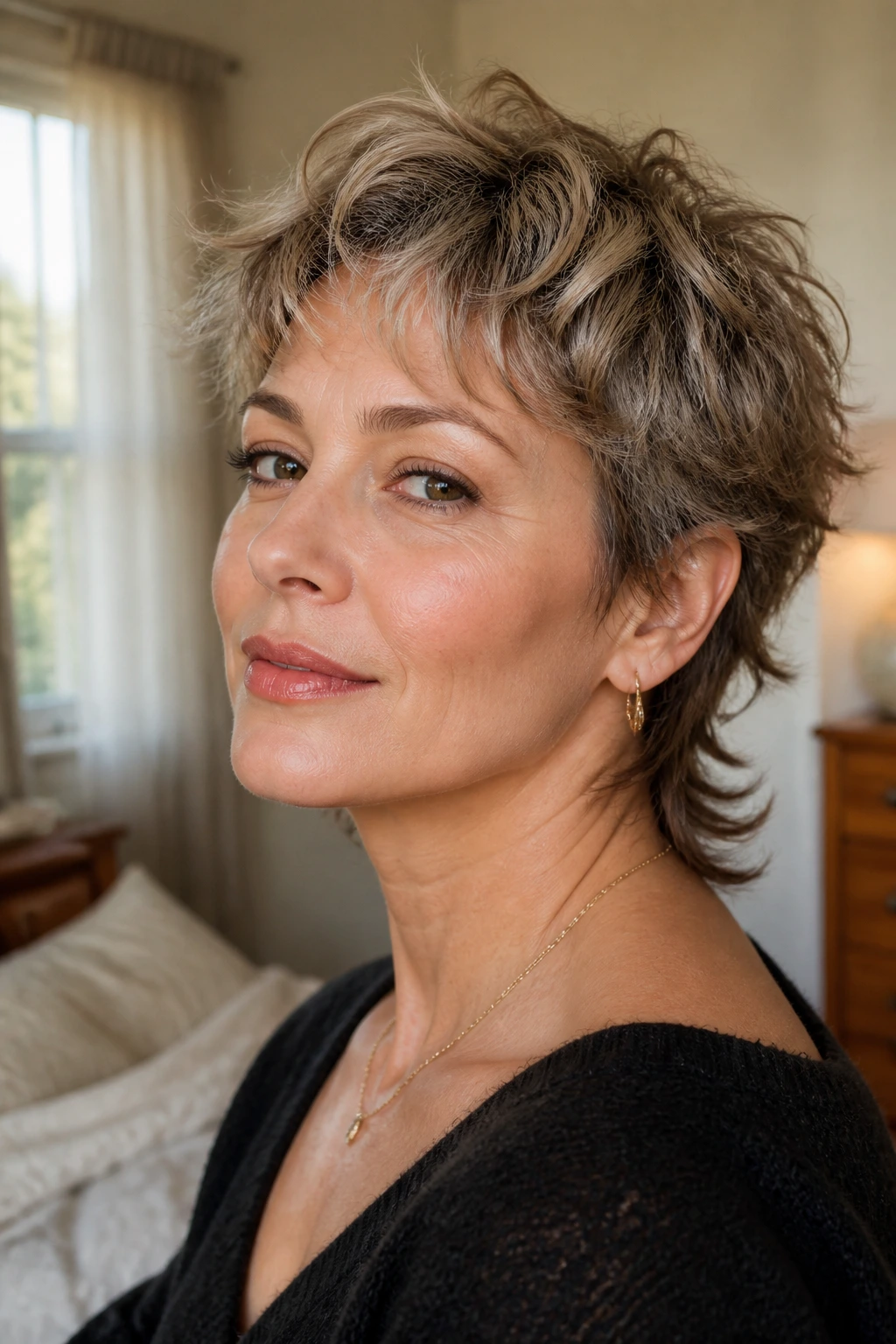
A soft mullet pixie sounds louder than it looks. Done right, it keeps a little extra length in the back while the top and sides stay cropped, and that extra back length can help fine hair feel less sparse.
The useful part is weight. A little weight in the nape gives the whole cut a base, which stops the hair from floating away from the head. The front still needs lift and texture, but the back acts like an anchor. That is why this shape can look thicker than a very short all-over pixie.
The edges should stay soft, not ratty. Ask for a gradual transition from crown to nape, and keep the top pieces wave-friendly at around 3 to 4 inches. If you like a cut that feels a touch cool without looking too styled, this one has range.
16. S-Wave Sculpted Pixie
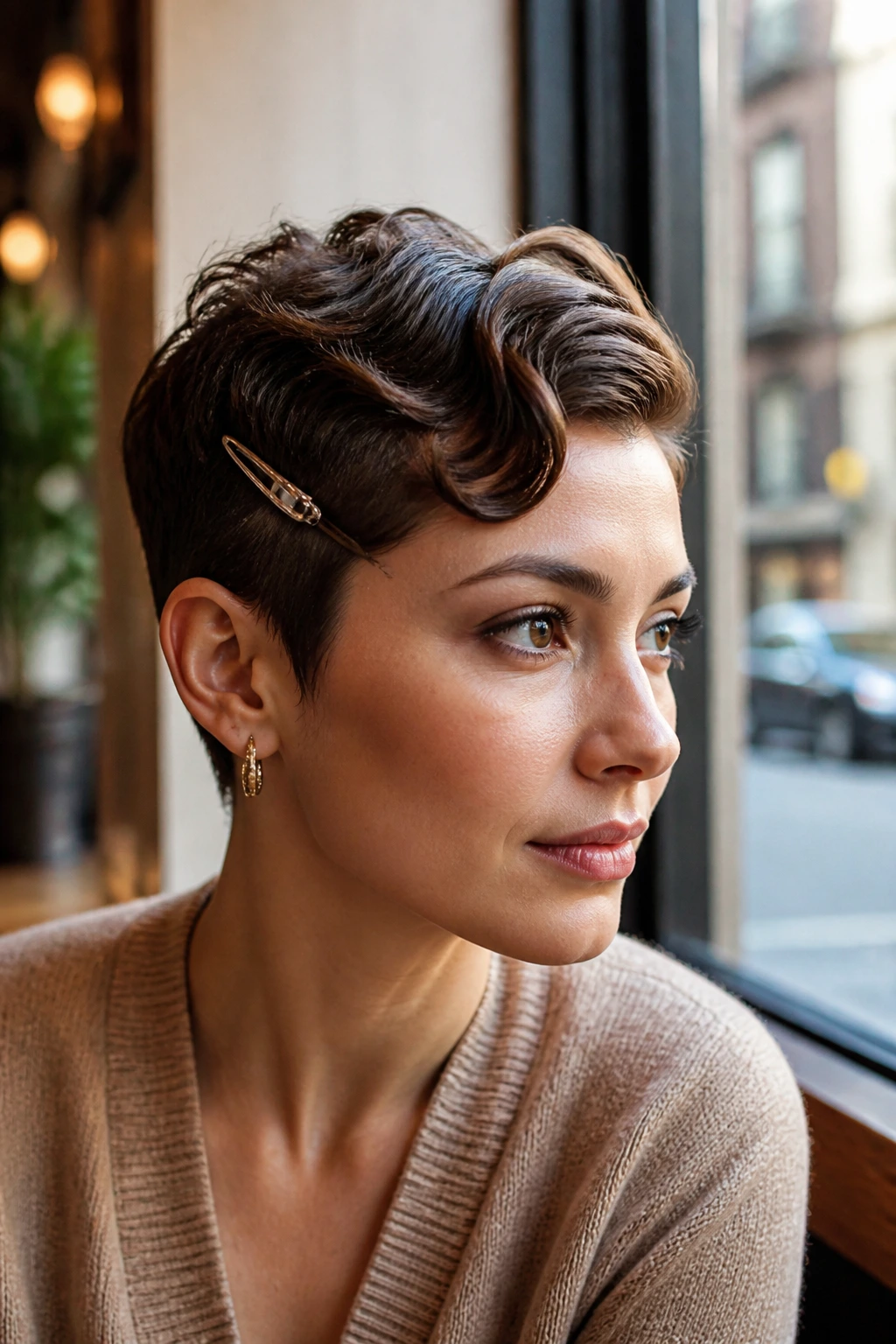
Can one wave change the whole cut? Yes. An S-wave at the front can make a fine-haired pixie look shaped, expensive, and a little old-school in the best way.
How to Style the Wave
Use a 3/4-inch curling wand or a small flat iron, and bend the front section in alternating directions so it forms a soft S rather than a tight curl. Clip the wave in place while it cools. That cooling time is where the shape sets, and skipping it usually means the hair droops.
The rest of the cut should stay simple. If the sides are too busy, the front wave loses its point. Keep the top around 3 inches, then let the S-wave sit just off the forehead. It should look controlled, not lacquered.
A small finish spray is enough. Anything heavier can turn the curve into a stiff shell.
17. Sideburn-Forward Pixie
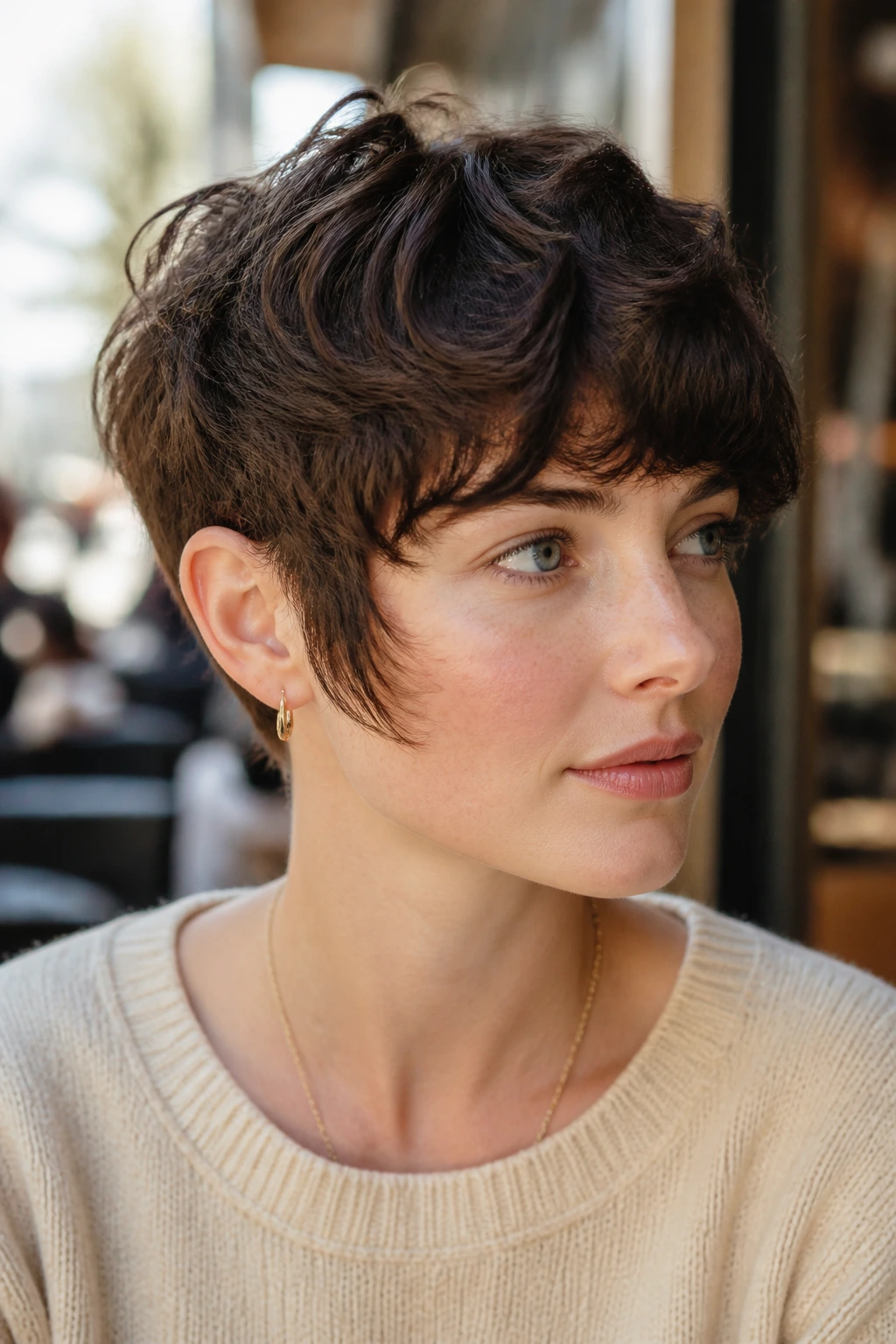
A sideburn-forward pixie works because it puts a little more visual weight around the temples, which is useful when fine hair tends to look sparse at the sides. The longer sideburn pieces soften the face and give the cut a quieter outline.
Why This Shape Helps
- Leave the sideburns around 1 to 1.5 inches.
- Keep the top slightly longer so the wave has a landing spot.
- Tuck the opposite side behind the ear to create contrast.
That front-side focus can make a small head of hair feel fuller without forcing the crown to carry all the weight. It also suits wave patterns that curl more strongly near the face than at the back.
This is one of those cuts that looks better when it’s a little imperfect. A strand falling forward is fine. A lot of polish can make it feel stiff, and stiff is not what fine hair needs.
18. Airy Layered Pixie
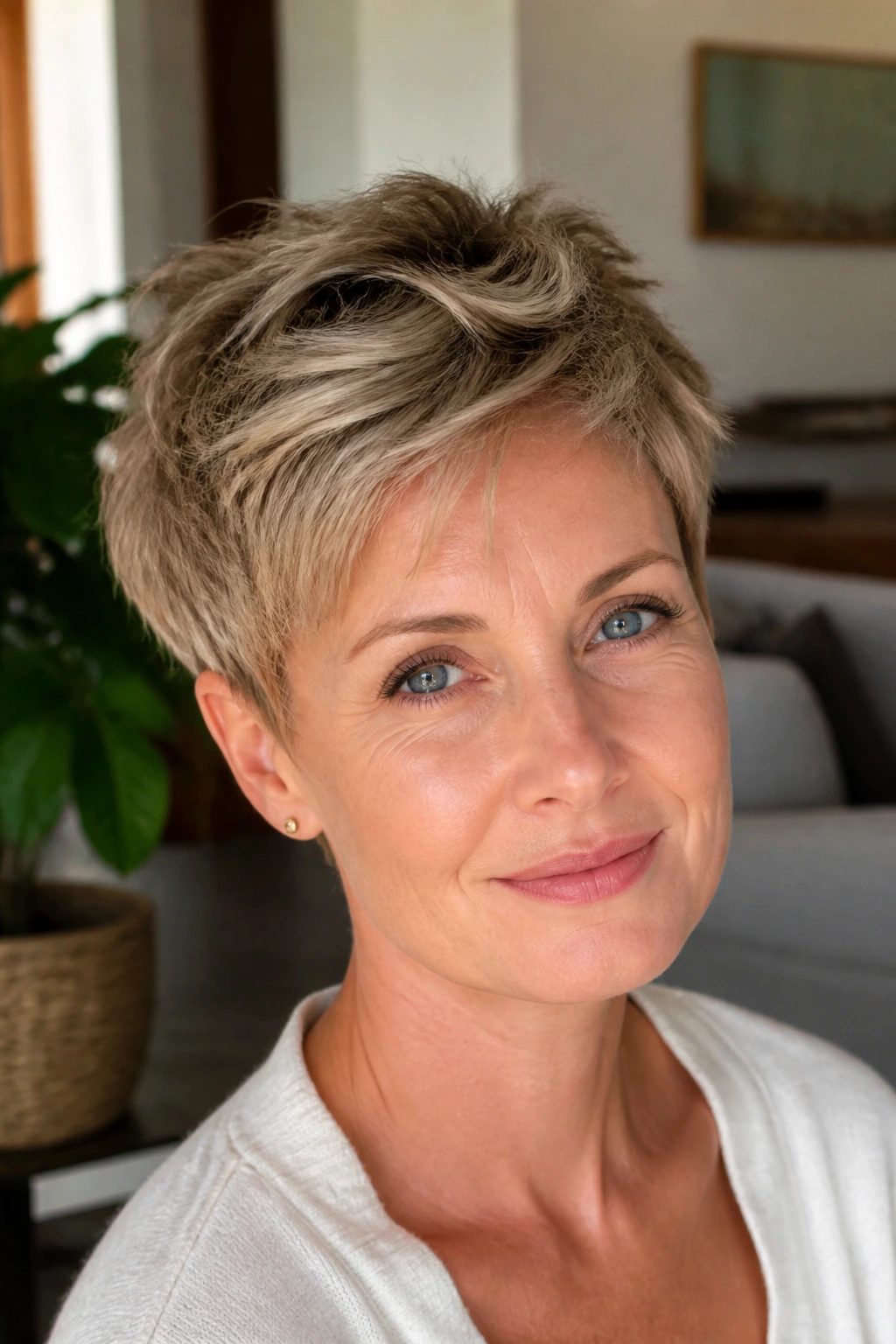
Airy is not the same as sparse. People mix those up all the time.
An airy layered pixie keeps movement in the top and crown, but it leaves enough structure underneath to hold the shape. That means the layers should be internal, not carved so aggressively that the outside edge disappears. Fine hair needs that outer line. It gives the illusion of mass.
The best version has a soft lift at the back, a little bend through the front, and sides that skim the head instead of flaring out. If your hair naturally bends at the ends, this cut will use that bend instead of fighting it. Use a light foam or spray mousse, then dry with your fingers until the layers separate into small pieces. The result is light, yes, but still looks like hair you can count on.
19. Swept-Back Pixie
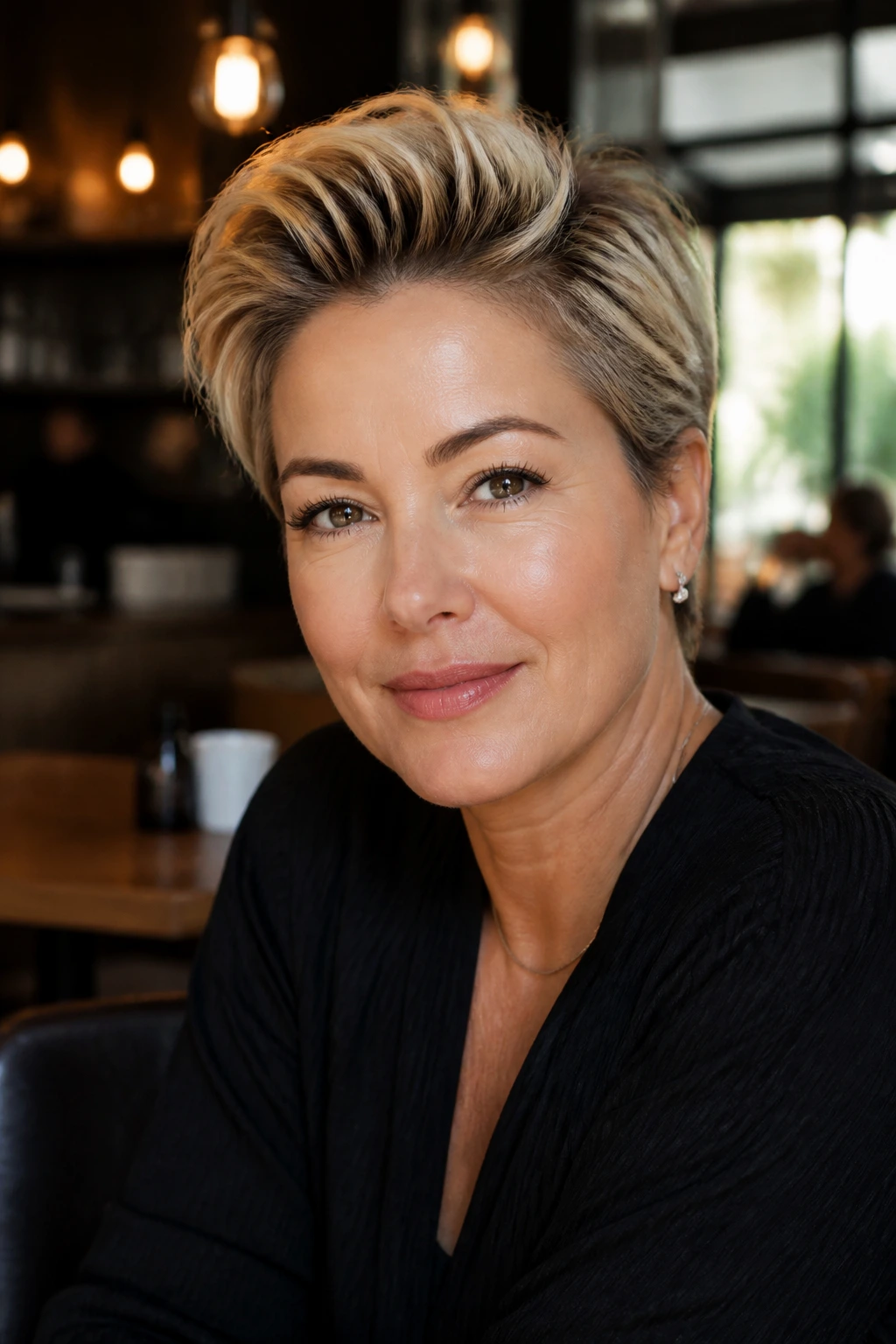
A swept-back pixie gives fine hair a cleaner, more open shape. It pulls the front away from the face, which can make the top look taller and the hairline look less obvious.
How to Keep It From Falling Flat
Start with damp hair and a light mousse at the roots. Comb the front section backward with a wide-tooth comb, then lift it slightly as you dry. The trick is not to flatten the front against the scalp; that just exposes the head shape and makes the hair look thin.
- Keep the front at 3 to 4 inches.
- Leave enough length at the crown to bend back naturally.
- Finish with a small amount of flexible hairspray at the roots.
This cut can look sharp or soft depending on how much you separate the top. A little finger-tousling changes the mood fast, which is handy when you want one cut that can dress up or down.
20. Tucked-Behind-Ear Wave Pixie
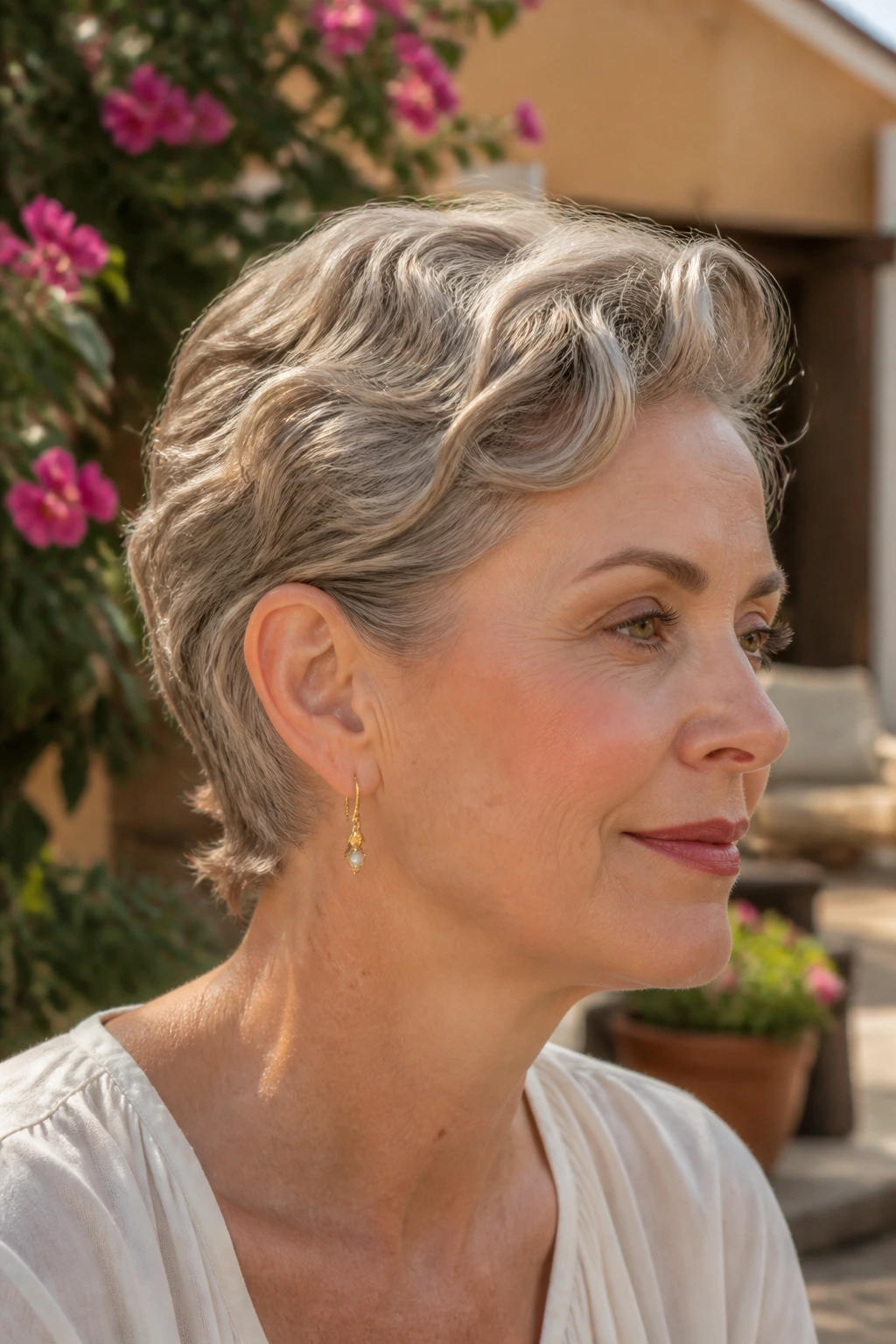
Tucking fine hair behind one ear can do more than a clip ever will. It creates a clean line on one side and lets the wave on top stay visible, which makes the cut look deliberate instead of overworked.
The shape works best when one side is cut just a touch longer so the tuck feels natural. Keep the ear-facing side light and the crown a little fuller, then bend the top with your fingers while it’s damp. If the hair is too short, the tuck looks forced. If it’s too long, it stops reading as a pixie.
A neat tuck also exposes the cheek and jaw, which gives the face a frame without asking the hair to do all the framing itself. That matters on fine strands. They get tired quickly. Give them one or two jobs, not six.
21. Curved Fringe Pixie
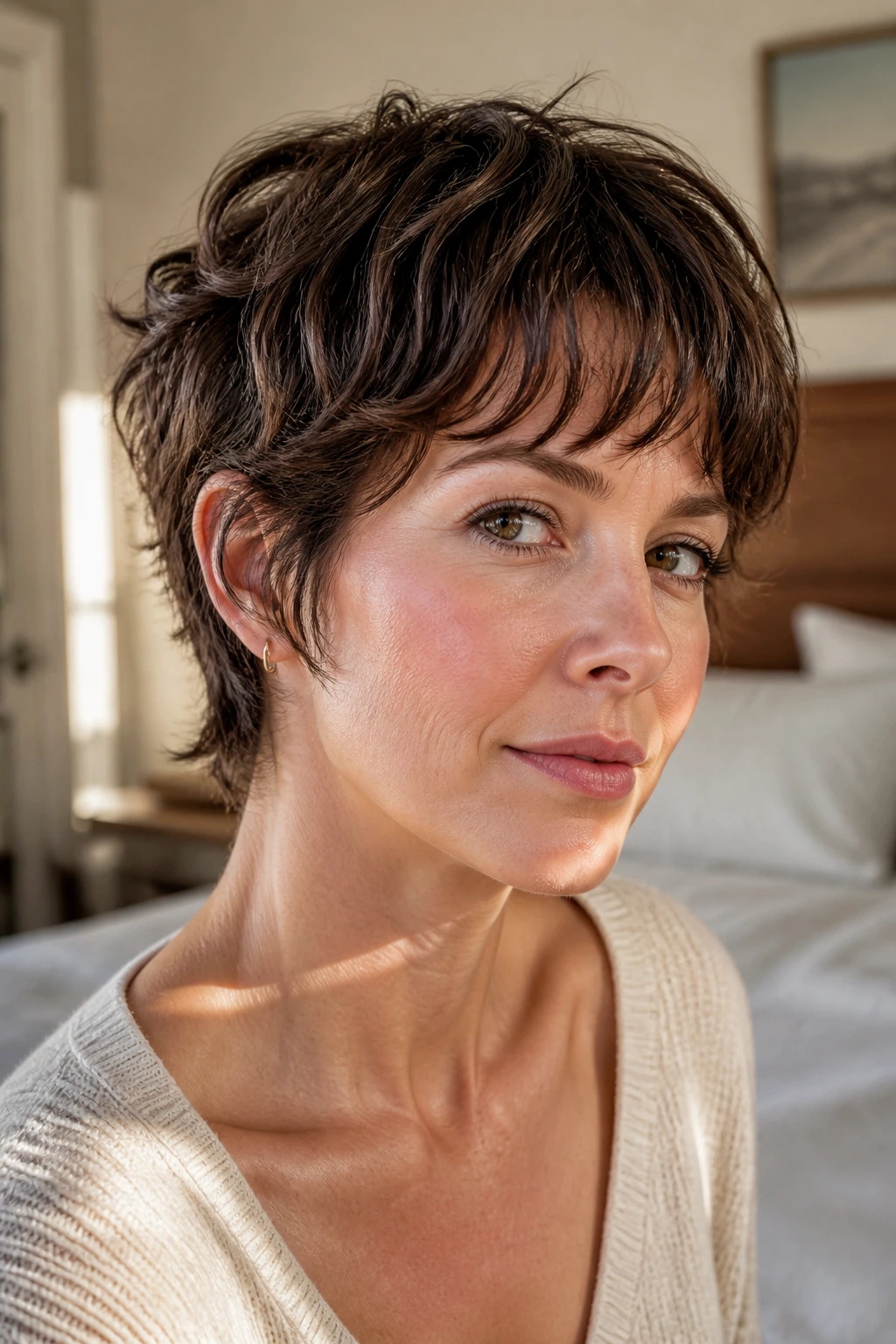
A curved fringe is softer than a blunt bang and more forgiving on fine hair. The shape starts a little shorter in the middle, then lengthens toward the sides so it follows the forehead instead of cutting straight across it.
Why the Curve Matters
The curve keeps the front from looking heavy, which is a common problem with short bangs on delicate hair. It also helps the fringe blend into the sides, so the cut doesn’t have that abrupt helmet edge some pixies get.
- Ask for the center of the fringe around 2 to 2.5 inches.
- Let the sides fall closer to 3 inches so they taper cleanly.
- Dry the fringe forward first, then sweep it with your fingers to one side.
This style is especially useful if your forehead is a little longer or if you want the eye to travel smoothly across the face. It’s soft, but not sleepy.
22. Bedhead Pixie
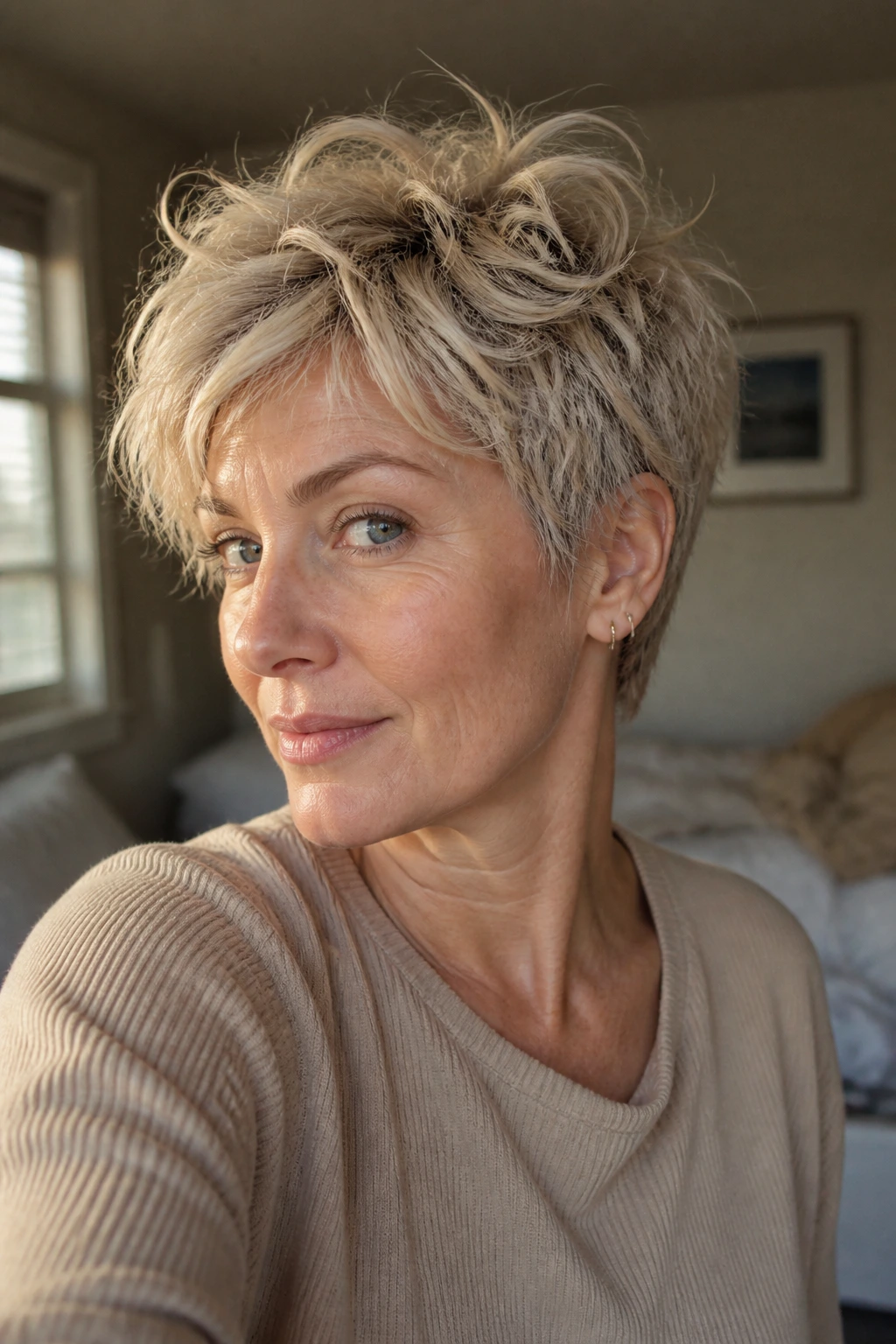
A bedhead pixie can beat a polished one when the strands are fine and flat. Messy texture hides little weak spots that a smooth finish would expose, and the result feels casual instead of over-managed.
The haircut needs some support, though. Don’t confuse “messy” with “random.” The top should still have a shape, the nape should stay tidy, and the sides should not puff out like cotton. Use a salt spray or light texture spray on damp hair, then rough-dry until the wave starts to split into little sections. A tiny bit of paste at the ends is enough to keep the texture from turning fuzzy.
This style is useful on days when you don’t want to fight the hair. It looks better a little undone anyway.
23. Long-Top Short-Sides Pixie
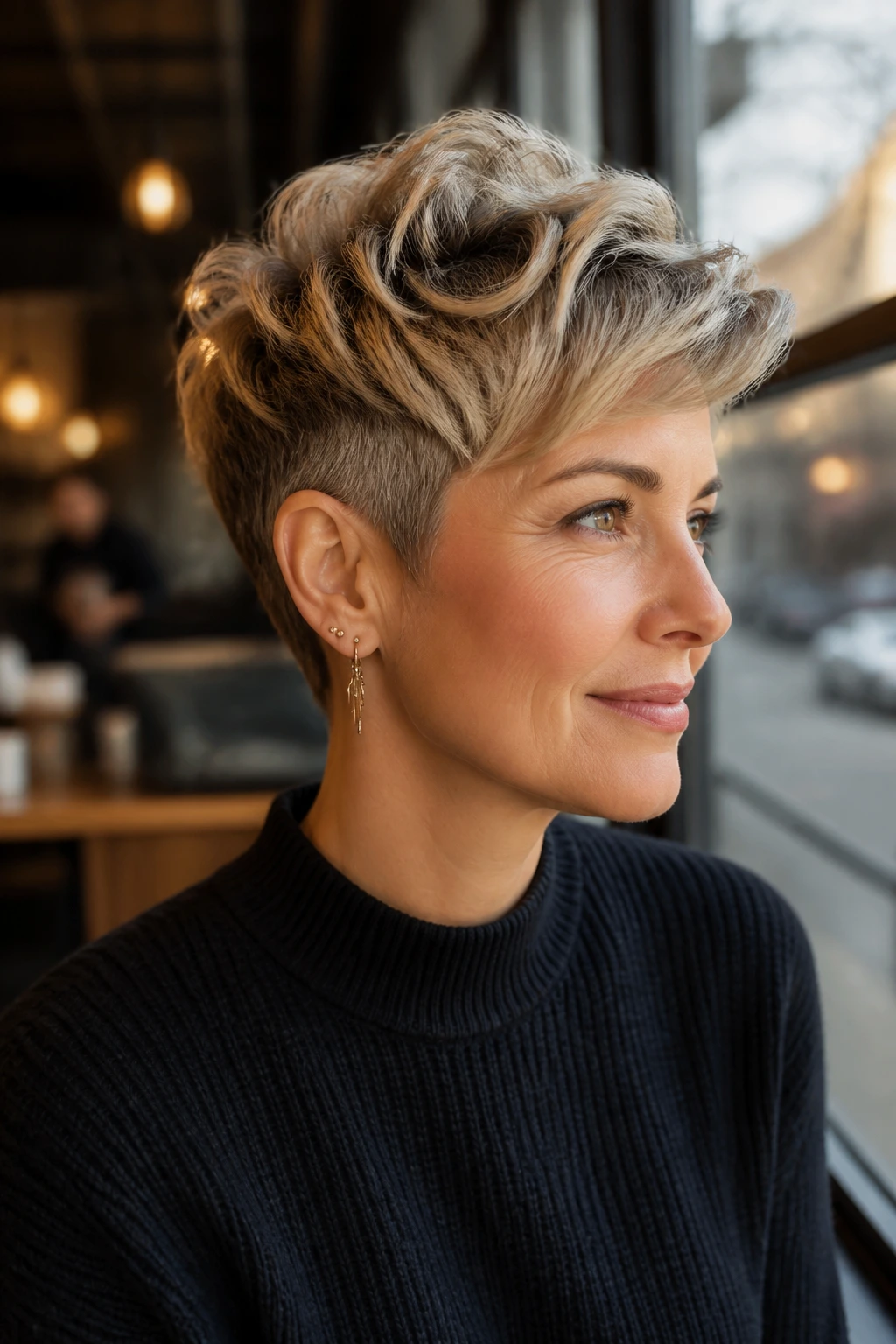
A long-top, short-sides pixie gives fine hair room to show off its wave without letting the sides go limp. The contrast is clean, and contrast is useful when the hair itself doesn’t have much density.
Where the Length Should Live
Keep the top around 4 to 5 inches if your wave is loose, or slightly shorter if it bends strongly on its own. The sides can sit near 0.5 to 1 inch, close enough to keep the outline crisp. That difference lets the top carry the movement while the sides stay neat.
A lot of people worry this shape will look too masculine or too severe. It doesn’t have to. If the top is softened with a little point cutting and styled with a light cream, the cut feels modern without being hard.
It is also one of the easiest pixies to restyle with your hands. That matters more than people think.
24. Soft Edge Bob-Pixie
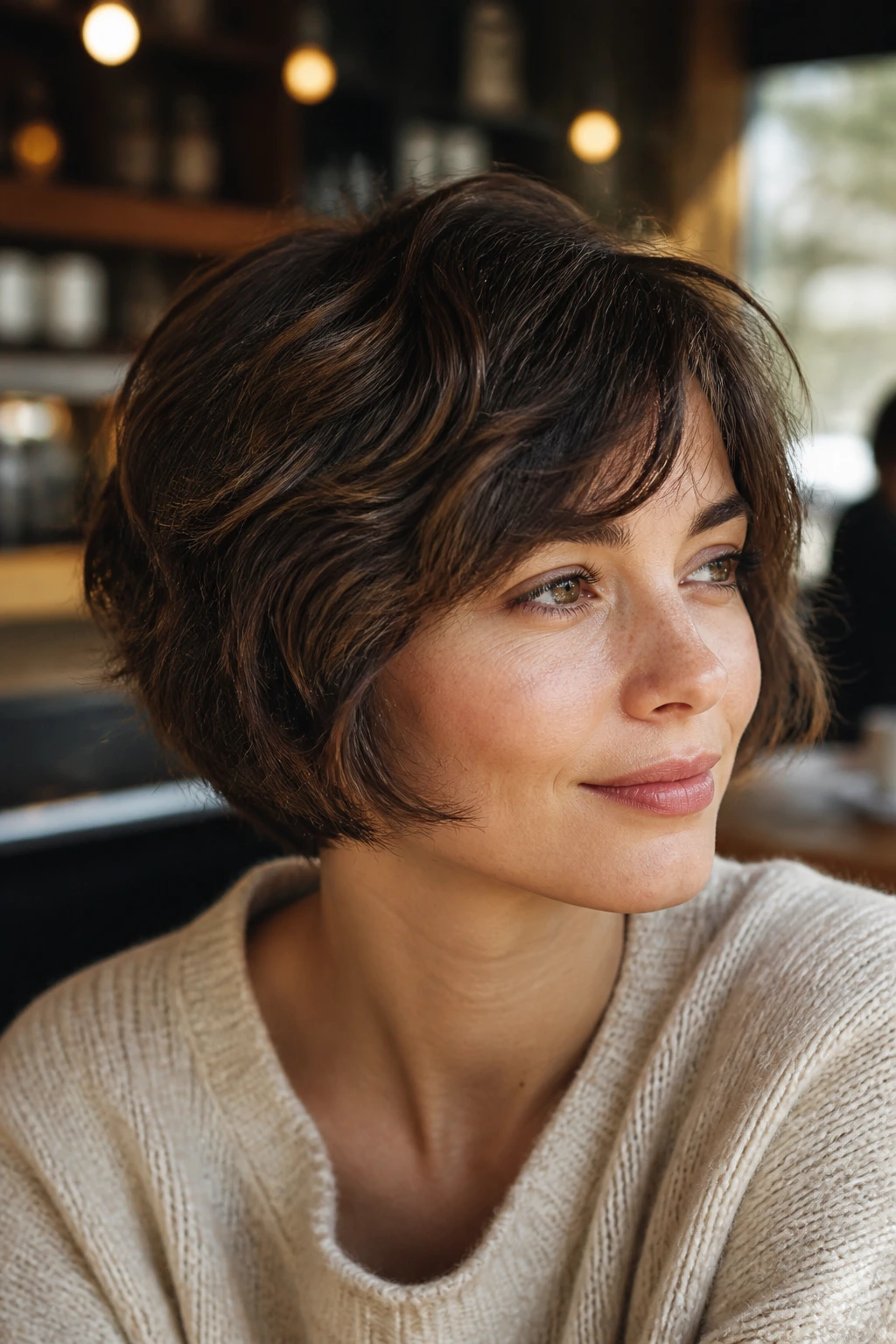
A soft edge bob-pixie is the sensible middle ground for anyone who wants short hair but not a super-short crop. The extra length around the jaw and cheekbones gives fine hair a little more visual mass, which is useful when the strands are too delicate to hold a tightly cropped shape all day.
The ends should stay soft and slightly curved in, not blunt and blocky. That little inward bend keeps the cut from floating away from the face. It also helps when the wave pattern is loose and unpredictable. You can wear it tucked, swept, or pushed back, and it still looks like the same haircut.
This is the kind of cut that forgives a missed styling day. It doesn’t demand a perfect blowout. It only needs a quick bend at the front and a clean neck line.
25. Grow-Out-Friendly Wave Pixie
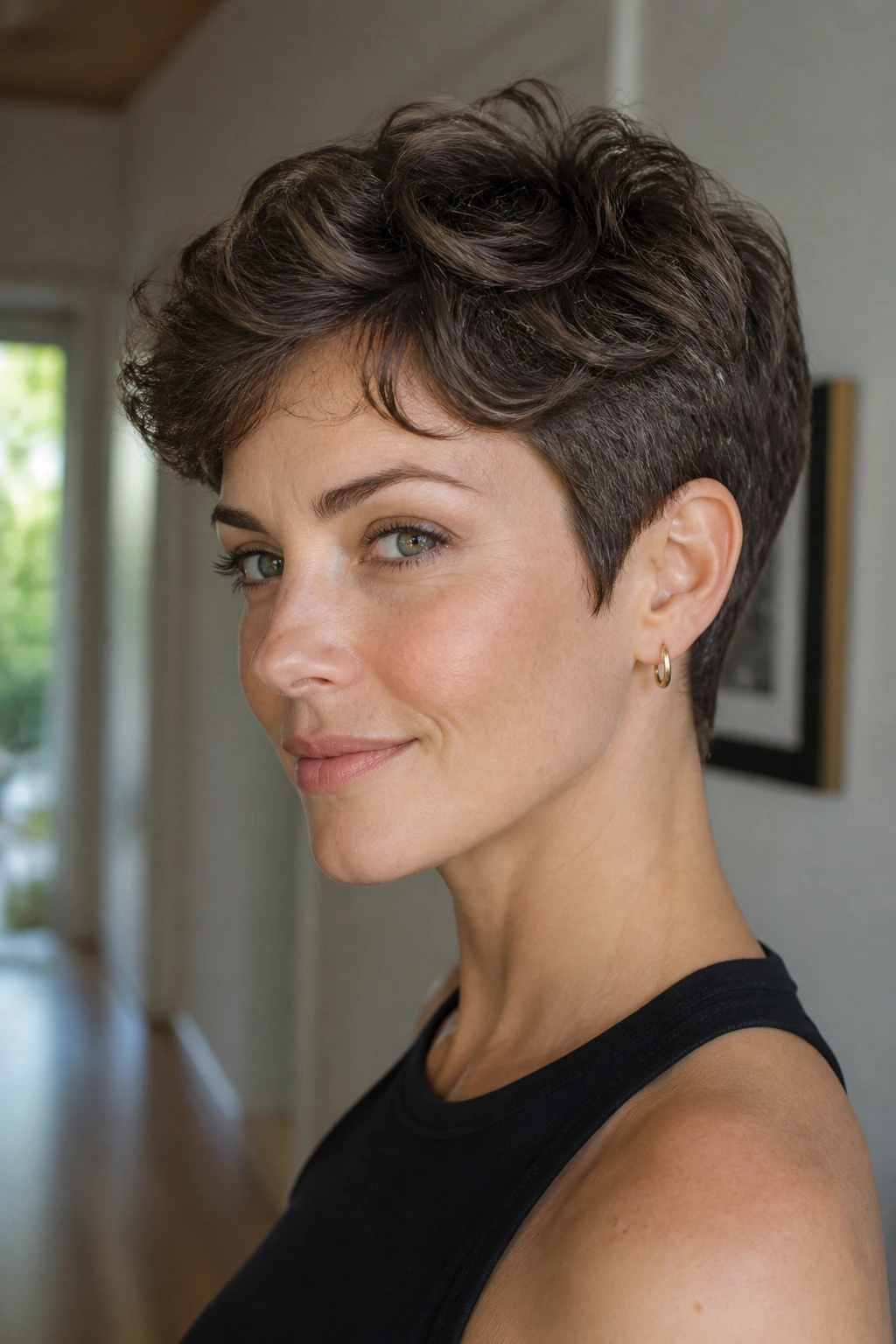
The cut that earns repeat appointments is usually the one that still looks decent six weeks later. That’s why a grow-out-friendly wavy pixie makes so much sense for fine hair.
Keep the perimeter controlled, especially at the nape and around the ears, but leave enough softness on top that the hair can fall into a new shape as it gets longer. Ask for a top length around 3 to 4 inches, then let the sides taper in a way that won’t turn bulky as they grow. If you like to stretch time between trims, this matters more than a trendy name ever will.
The good version looks tidy on day one and relaxed by week four. That is the sweet spot. If you can run your fingers through it, add a bit of cream, and walk out the door, you’ve got the right pixie for fine hair — one that bends with you instead of fighting every inch of growth.
