



Fine hair doesn’t need a dramatic rescue. It needs shape, softness, and a color that doesn’t fight the cut. Beige pixie cuts for fine hair work because beige blurs the contrast between scalp and strands, so the crop reads as airy instead of sparse.
That matters more than people think. A harsh dark root can make a pixie look chopped in a way thin hair rarely benefits from, while an icy platinum can make every layer look sharper than it needs to be. Beige sits in the middle — cool enough to feel clean, warm enough to keep the cut from looking chalky — and that middle ground is where short, light hair often looks its best.
Some versions lean French and delicate. Others are sharper, with a short back or a deep side part. Start with the one that gives your hair the most believable lift.
1. Soft Beige Pixie With a Tapered Nape
If your hair collapses at the crown by lunch, this is the safest place to begin. A tapered nape removes the bulky zone at the back of the neck, which keeps fine hair from looking heavy or frayed, and the beige tone softens the whole outline so the cut still feels light.
Ask for a close, clean nape with a touch more length through the top and front. That tiny bit of extra height is what gives the cut movement without making the sides puff out.
- Keep the crown about 1 to 1½ inches longer than the nape.
- Dry the back first, aiming the airflow upward at the roots.
- Finish with a pea-sized matte paste only on the ends.
Best for: readers who want a neat shape with almost no fuss.
2. Mushroom Beige Pixie With a Feathered Crown
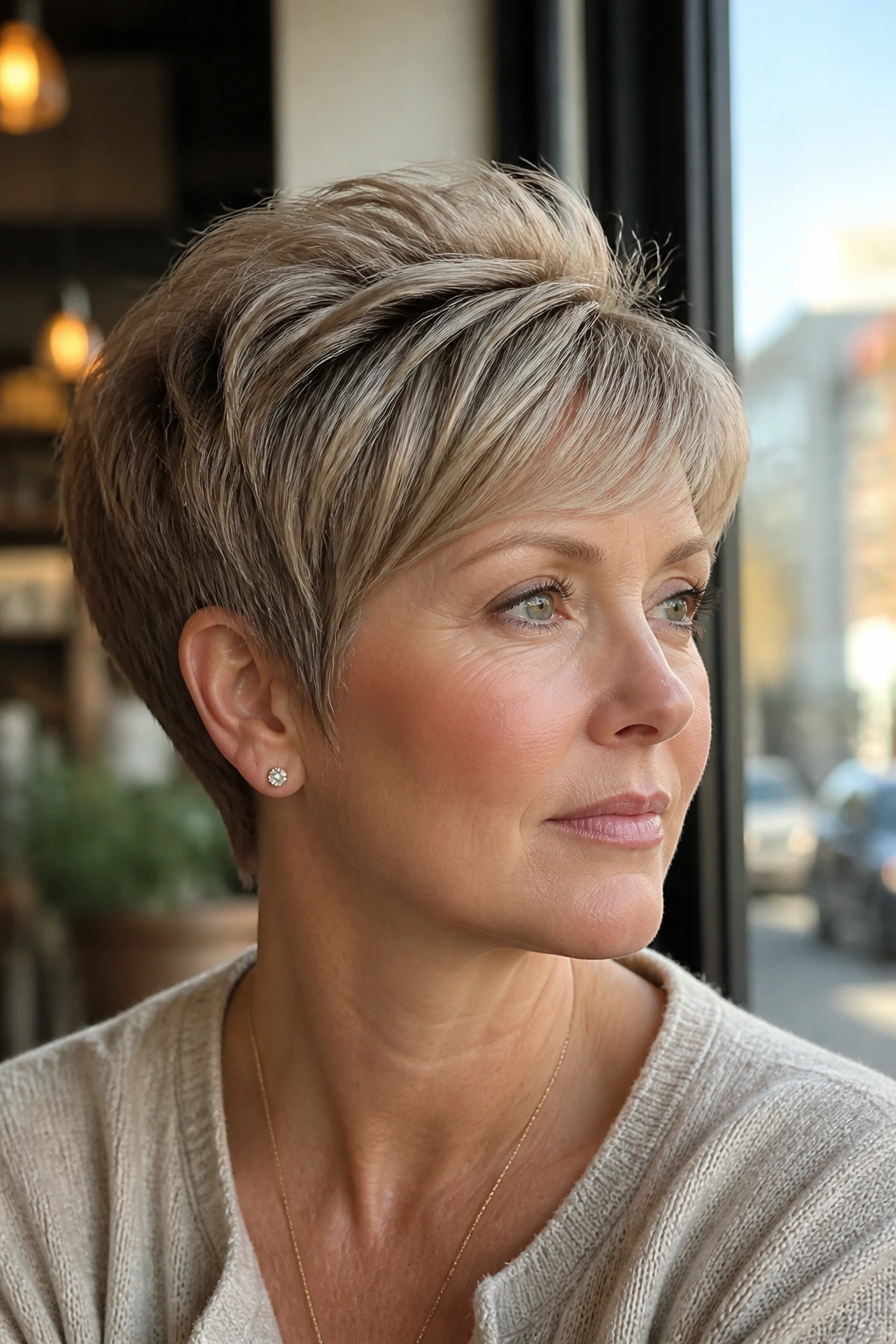
This cut does more for fine hair than a blunt little cap ever will. The rounded outline gives the illusion of density, while the feathered crown keeps the top from feeling helmet-like. Beige helps the whole shape look soft instead of blocky.
The trick is balance. The sides stay controlled, but the crown gets tiny, airy layers that lift when you rough-dry them. You do not want chunky steps here. You want a soft halo of texture that moves when you turn your head.
It’s a strong choice if your hair is naturally straight and tends to split at the crown. If your cowlick pushes hard in one direction, ask the stylist to follow that growth pattern instead of fighting it. Hair that fine does better when the cut cooperates with the scalp.
3. Side-Swept Beige Pixie With a Long Fringe
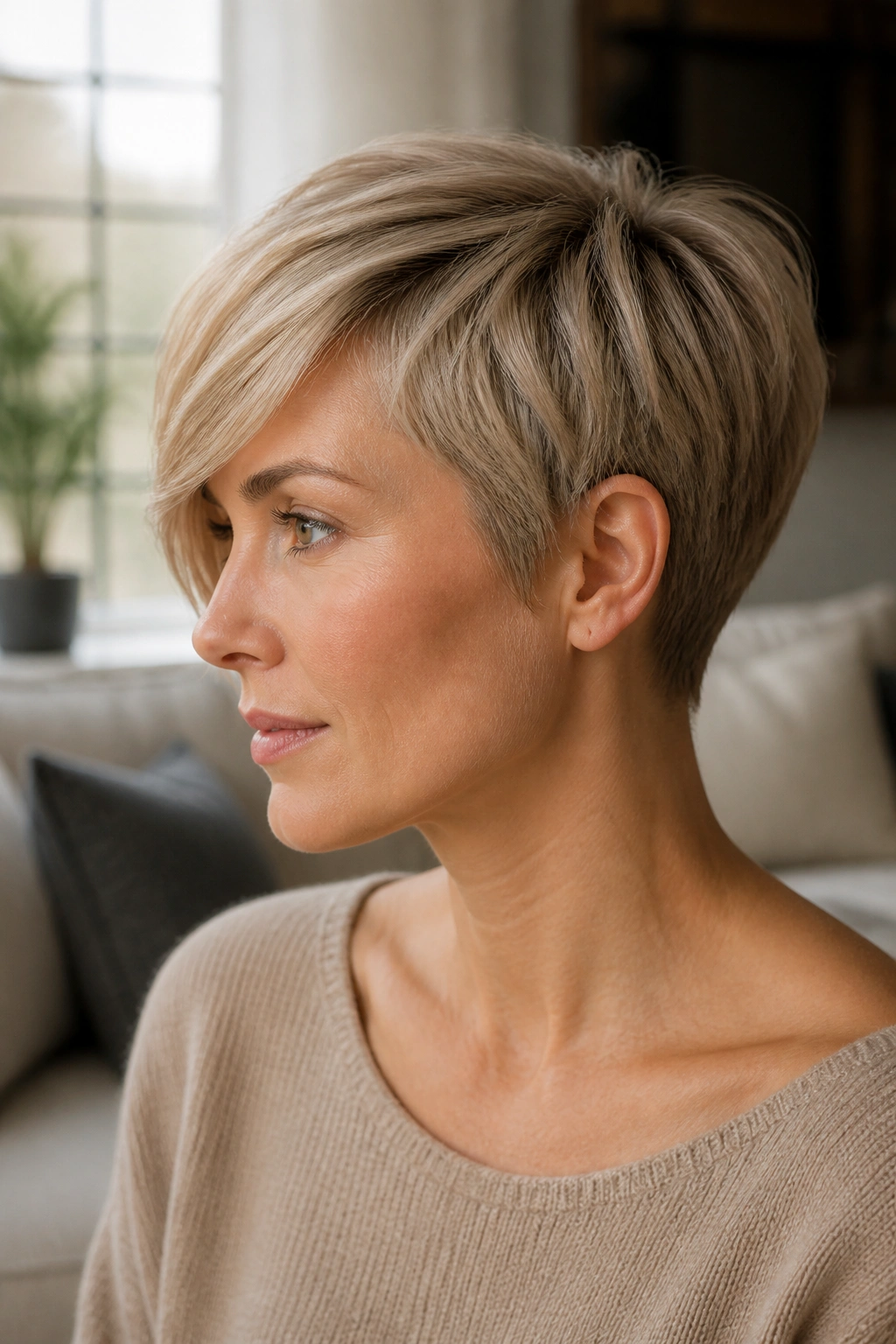
Why does this style work so well on fine hair? Because a long fringe gives you visual weight right where the eye lands first. A side sweep also breaks up the forehead area, which can make the rest of the cut feel fuller by comparison.
The fringe should be long enough to tuck behind the brow, not long enough to fall into your lashes all day. Beige keeps the front soft, which matters if your hairline is narrow or your face reads a little sharp without some softness around it.
How to Style It
Blow-dry the fringe in the opposite direction first, then sweep it back across once it’s almost dry. That tiny trick gives the root a little lift. Finish with a light cream or paste on the ends only — not at the root, or the fringe will separate into sad little strings.
4. Beige Bixie With Airy Layers
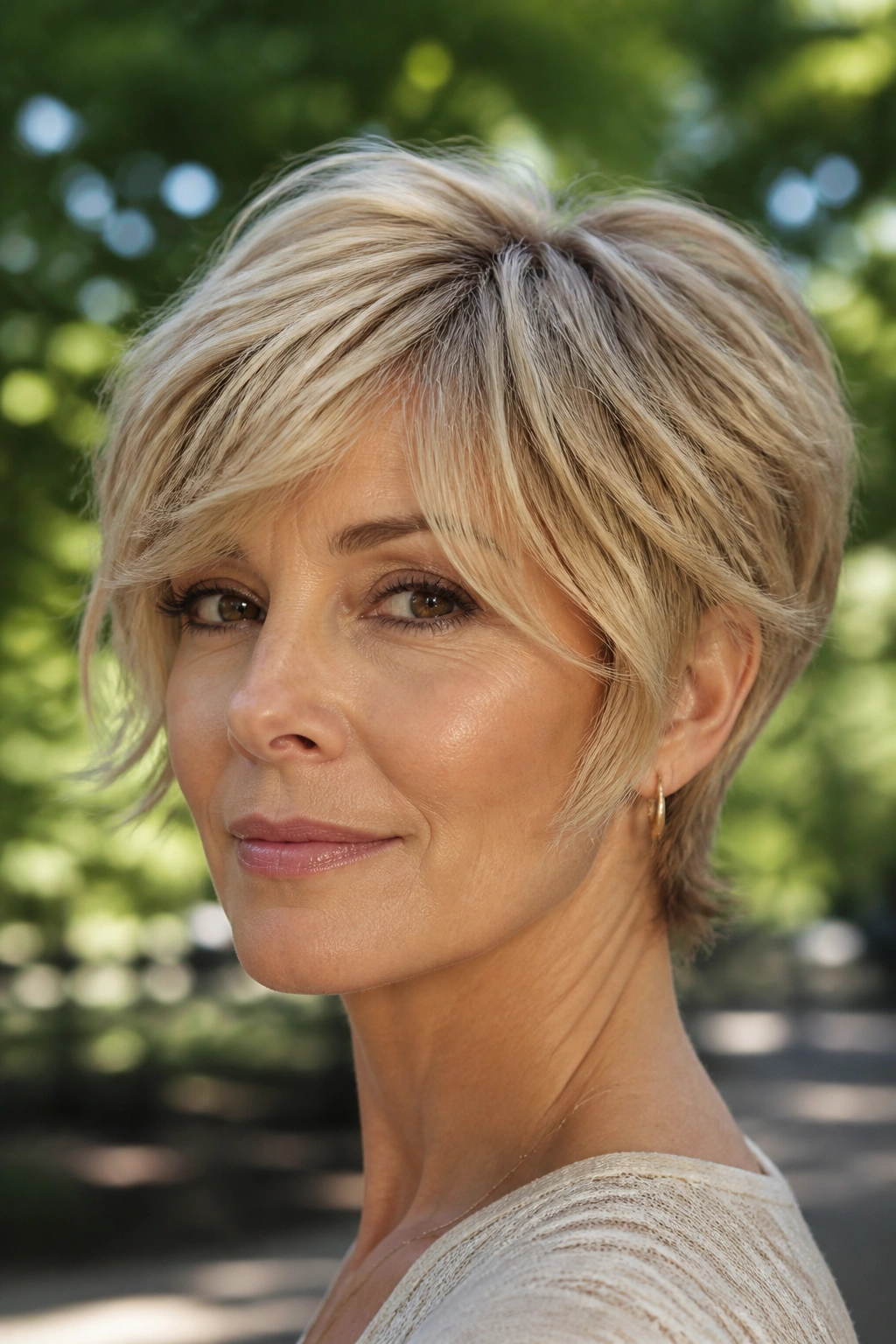
A bixie sits between a bob and a pixie, and that in-between length is a gift for fine hair. You get enough fullness around the cheekbones to keep the cut from looking too bare, but you still keep the neck open and light.
Beige works especially well here because it softens the longer perimeter. The cut can take on a slightly grown-out look fast if the tone is too dark or too flat, and beige stops that from happening so quickly. It keeps the whole shape looking deliberate.
This is a good choice if you’re nervous about going too short in one jump. It also gives you a little more room to play with tuck-behind-the-ear styling, which is handy on days when you want the cut to look smoother and more polished. Fine hair doesn’t always need more layers. Sometimes it needs a longer outline with lighter interior movement.
5. Cropped Beige Pixie With Razor Ends
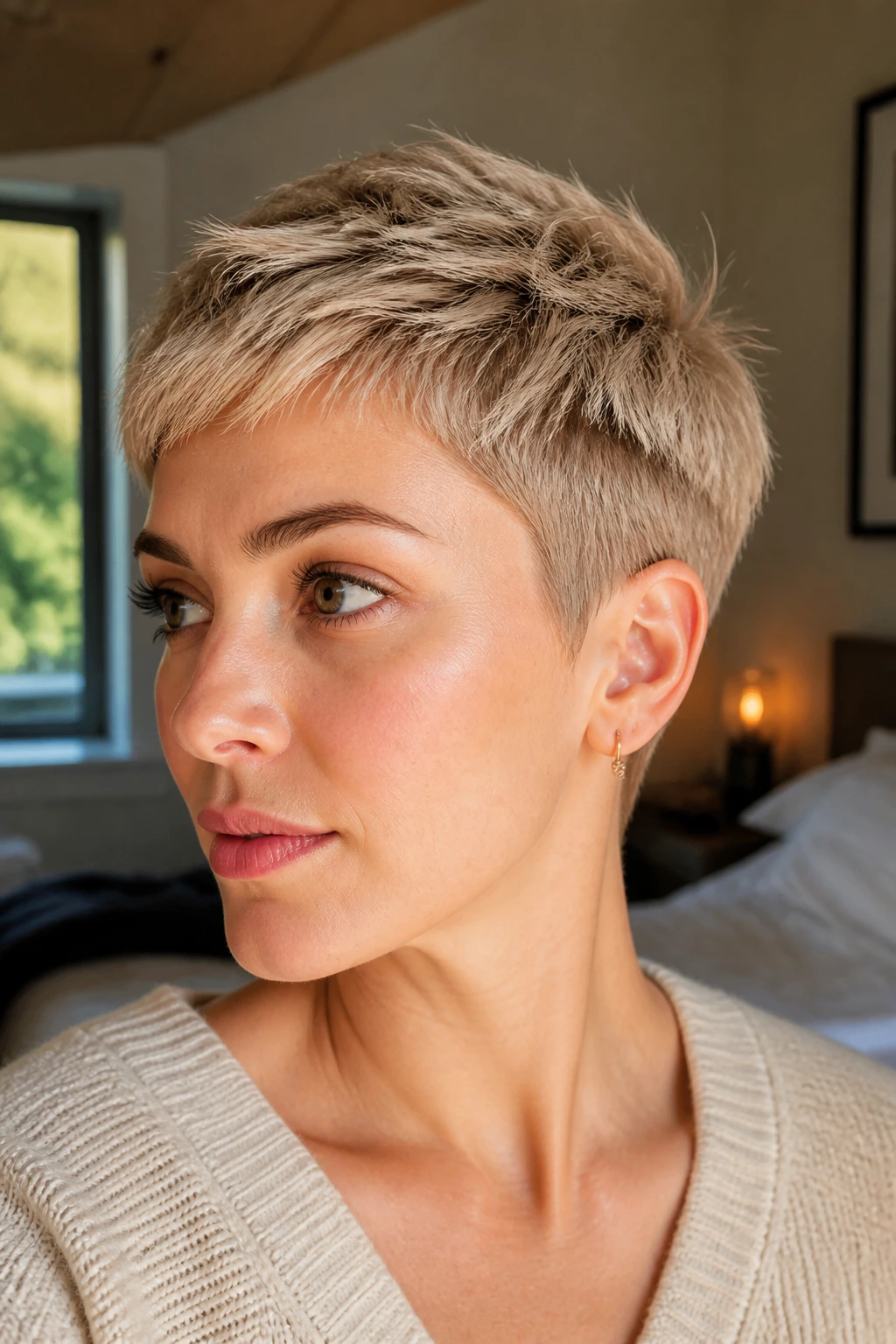
Razor-cut ends can be brilliant on silky fine hair. They take the hard edge off the cut and let the strands separate in a way that feels modern rather than blunt. Beige makes that texture show up without turning the look harsh.
But here’s the catch: razor cutting is not a free-for-all. If your hair is porous, dry, or a bit frayed on the ends, too much razor work can make the cut feel fuzzy. Keep the shape close and controlled, and ask for soft point-cutting at the top instead of aggressive thinning.
This version suits straight hair that lies flat and needs a little broken-up movement. It’s less useful if your hair already flies away at the ends. In that case, scissors and a cleaner outline usually behave better.
6. Beige Pixie With Micro Bangs
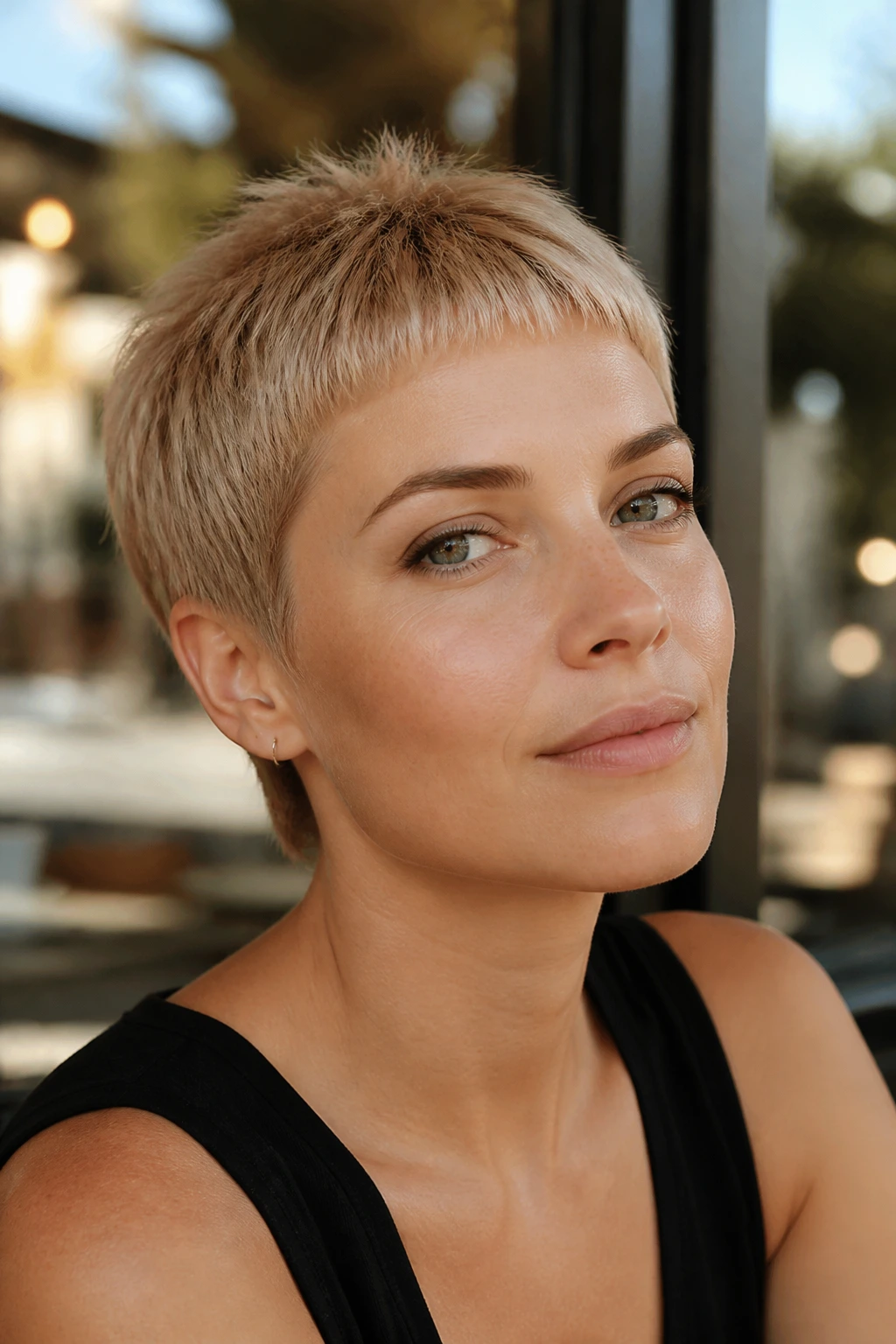
Micro bangs change the whole mood of a pixie. They bring the eyes forward, open up the face, and make fine hair look intentional instead of accidental. Beige keeps the short fringe from feeling too severe, which is the main reason this version works better than a blunt dark crop.
What to Ask For
- Keep the bangs short but soft, not ruler-straight across the forehead.
- Leave enough length in the crown so the top doesn’t collapse.
- Ask for texture at the temple area so the fringe blends, not chops.
Quick Notes
- Trimming usually lands every 3 to 4 weeks.
- A dab of wax is enough.
- Heavy cream will flatten the front fast.
Pro tip: let the fringe sit a touch uneven. Tiny irregularity looks better than a sharp little line.
7. Shadow-Root Beige Pixie for Extra Lift
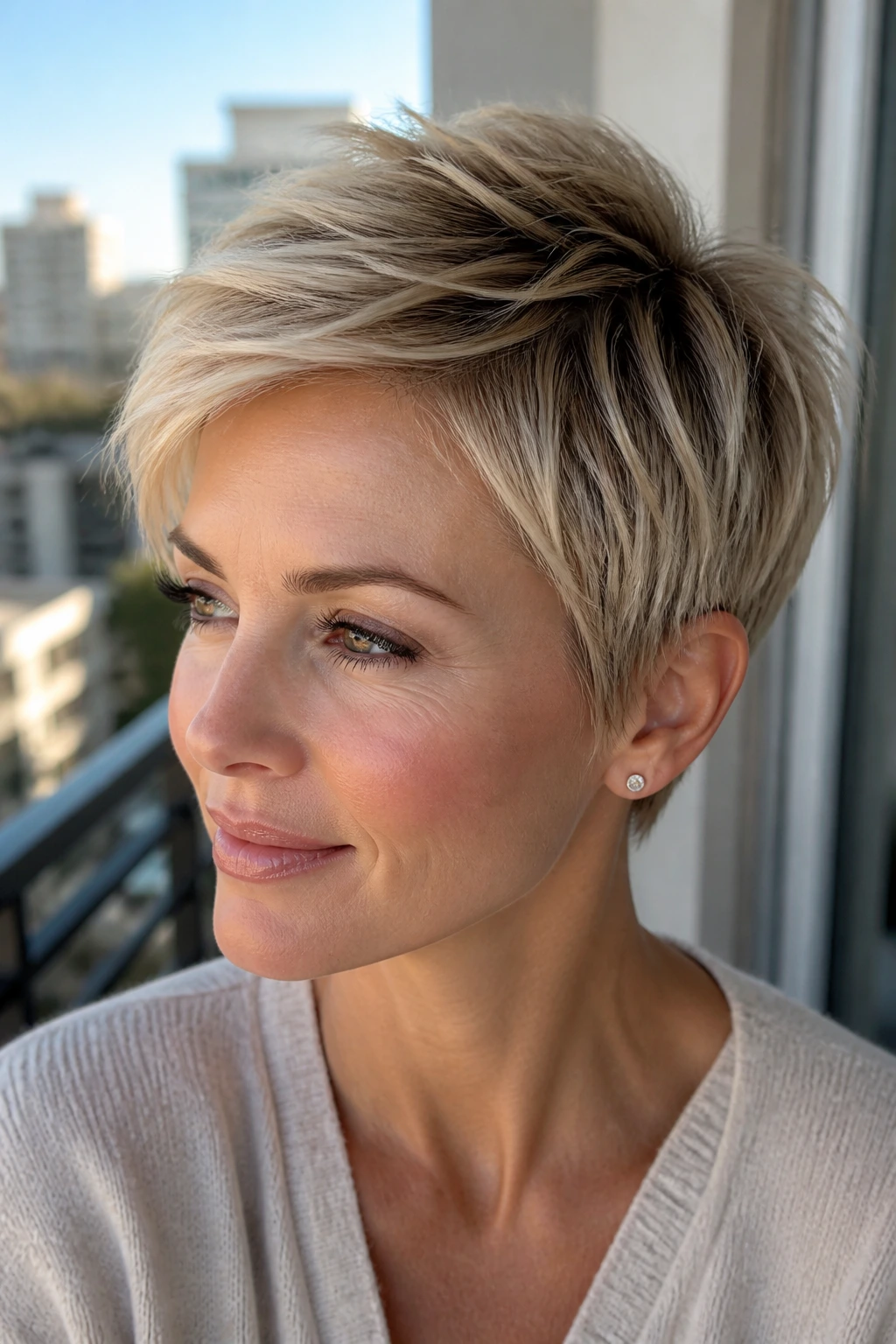
A shadow root sounds like a color detail, but on fine hair it acts like a shape trick. The darker root gives the crown depth, and that depth makes the top look fuller than it really is. Beige through the mids and ends keeps the style soft.
This is one of my favorite beige pixie cuts for fine hair when the scalp starts to show through at the part or crown. The contrast is gentle, not stripey, so the hair still reads as light. You get movement without the cut looking overworked.
Ask for the root to melt into the beige gradually. No hard line. That line is what gives away a color job from across the room, and on a pixie it can look especially harsh. A tinted dry shampoo can help on day three or four, but the real win is the color placement itself.
8. Asymmetrical Beige Pixie With One Longer Side
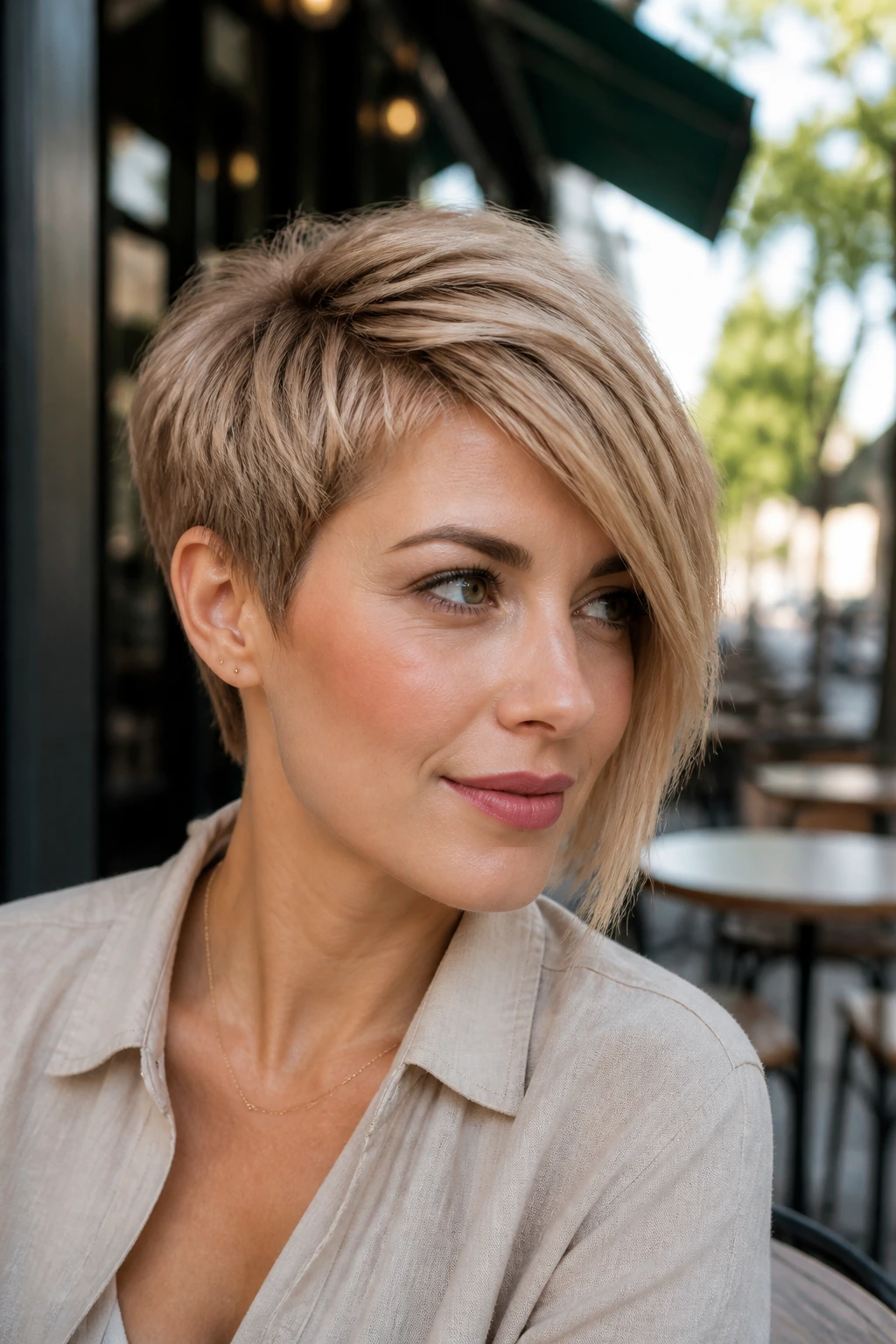
A little imbalance can make fine hair look far more expensive than perfect symmetry ever does. One longer side gives the eye a line to follow, and that line creates the illusion of density. Beige keeps the asymmetry from reading as edgy in a heavy way.
The shorter side should still have enough length to tuck behind the ear. The longer side can skim the cheekbone or sit just below it, depending on how much face-framing you want. If your jawline is strong, this cut softens it nicely. If your face is narrower, keep the longer side feathered so it doesn’t drag everything down.
This one works best with a clean nape and a slightly longer top. Too much length in the back and the whole thing loses its shape. Too little and the asymmetry feels random instead of sharp.
9. Soft Beige Pixie With Long Sideburns
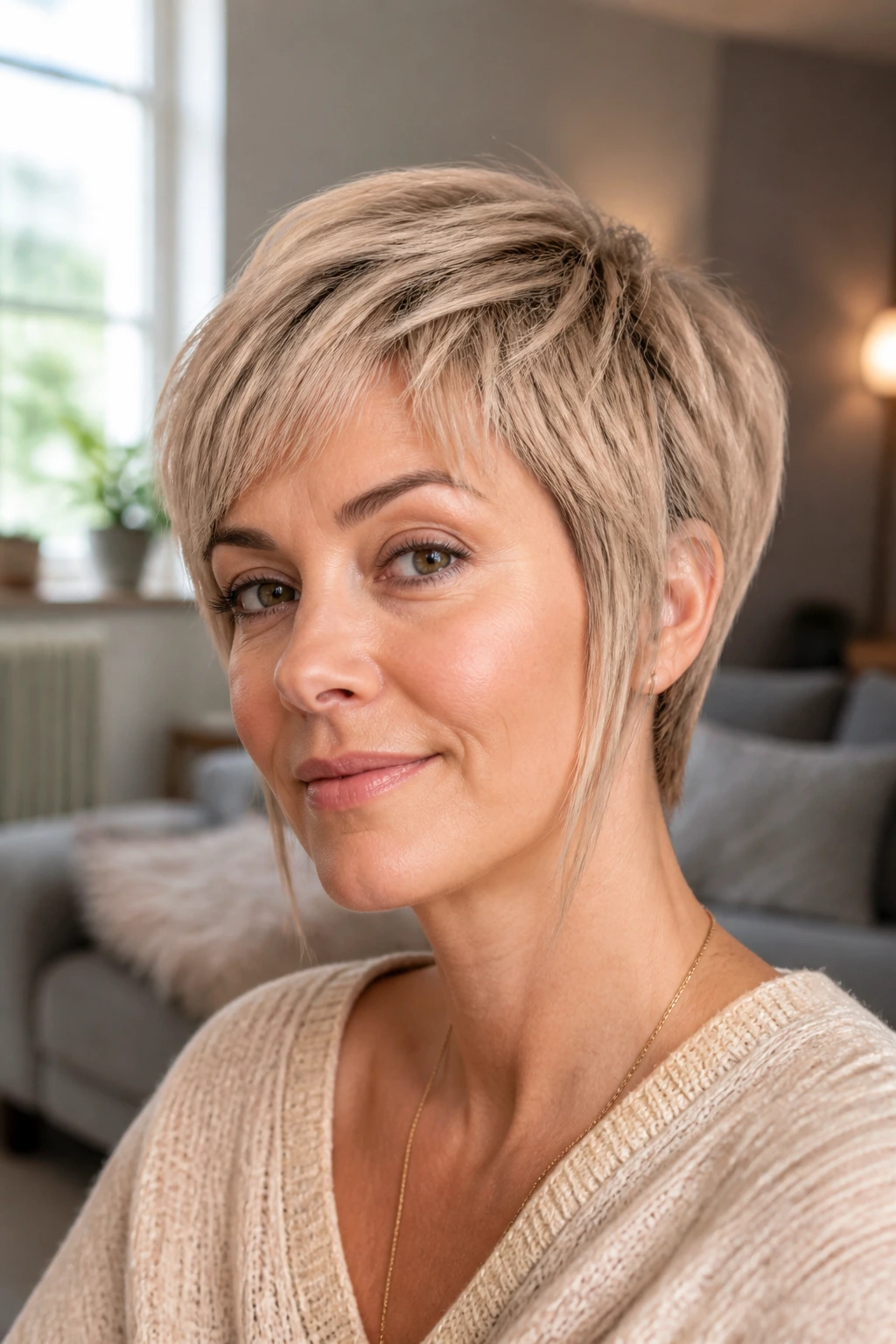
Long sideburns are one of those tiny details that make a big difference. They frame the face, hide some width around the cheek area, and stop a pixie from looking too abruptly cut at the sides. On fine hair, that little extra line of softness can be a lifesaver.
I like this version for people who want short hair but don’t want the “all exposed, all the time” feeling that comes with a very cropped shape. Beige helps here because it keeps the sideburn area from feeling heavy or blocky.
The request is simple: keep the sideburns tapered, not thick, and make the ends soft enough to move. If they’re too blunt, they can look like little shelves. Nobody needs that. A light styling cream is usually enough; strong paste tends to make the sideburns stick out in odd places.
10. Choppy Beige Pixie With a Spiky Crown
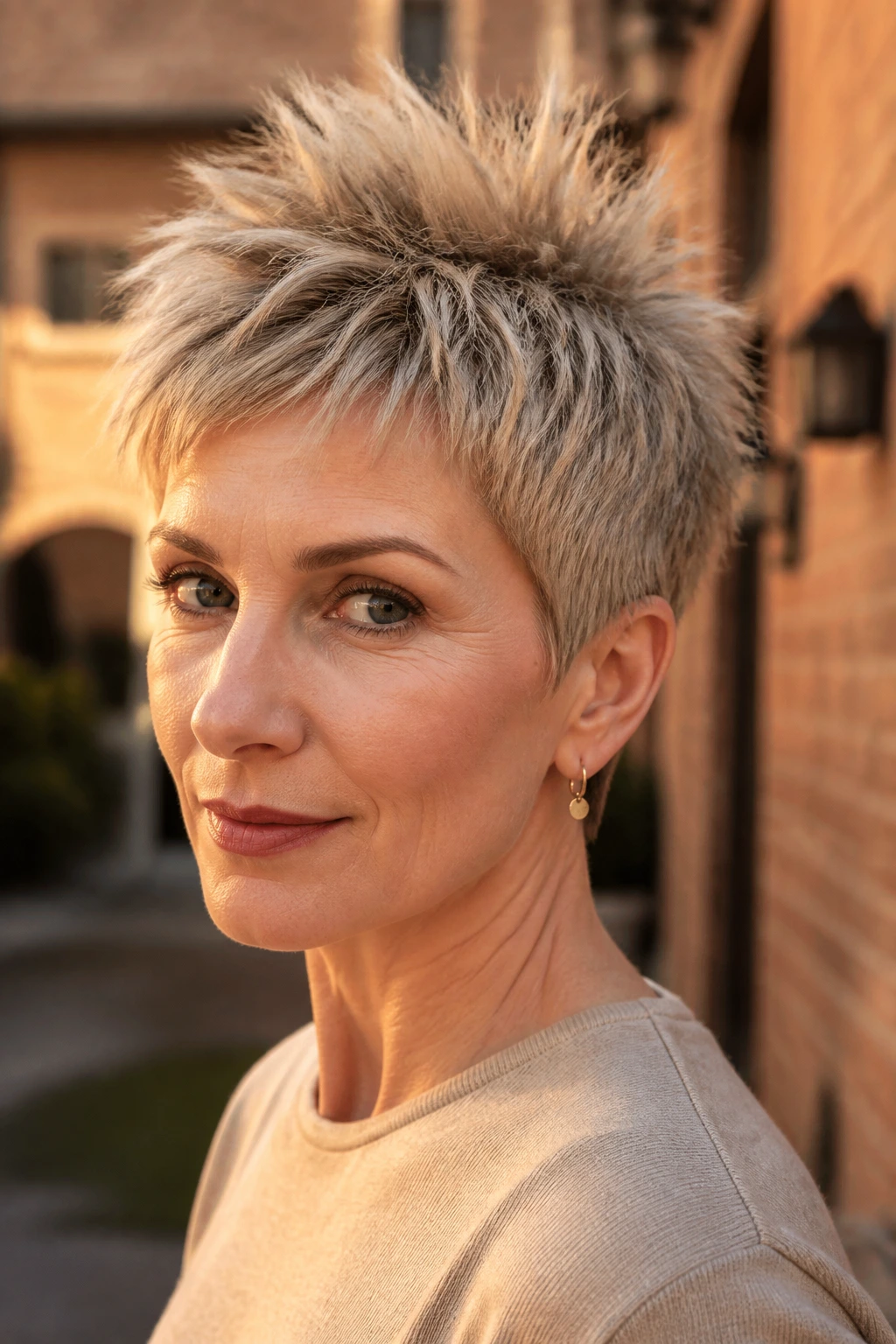
Can fine hair hold a spiky crown? Yes, if the cut is short enough and the product is light enough. This style uses short, uneven layers at the top to create separation, which is a neat way to fake density without teasing the roots into a mess.
Beige is useful here because the texture needs visual help. Dark, spiky cuts can look too severe, and overly platinum tones can make the spikes look brittle. Beige lands in a softer zone, so the texture reads as deliberate.
How to Style It
Rough-dry the top with your fingers until the roots are about 80 percent dry. Then pinch small sections upward with a matte paste or fiber cream. Stop before the hair starts to stick together. That sticky, clumped look is the fastest way to ruin the effect.
11. Sleek Beige Pixie Tucked Behind the Ear
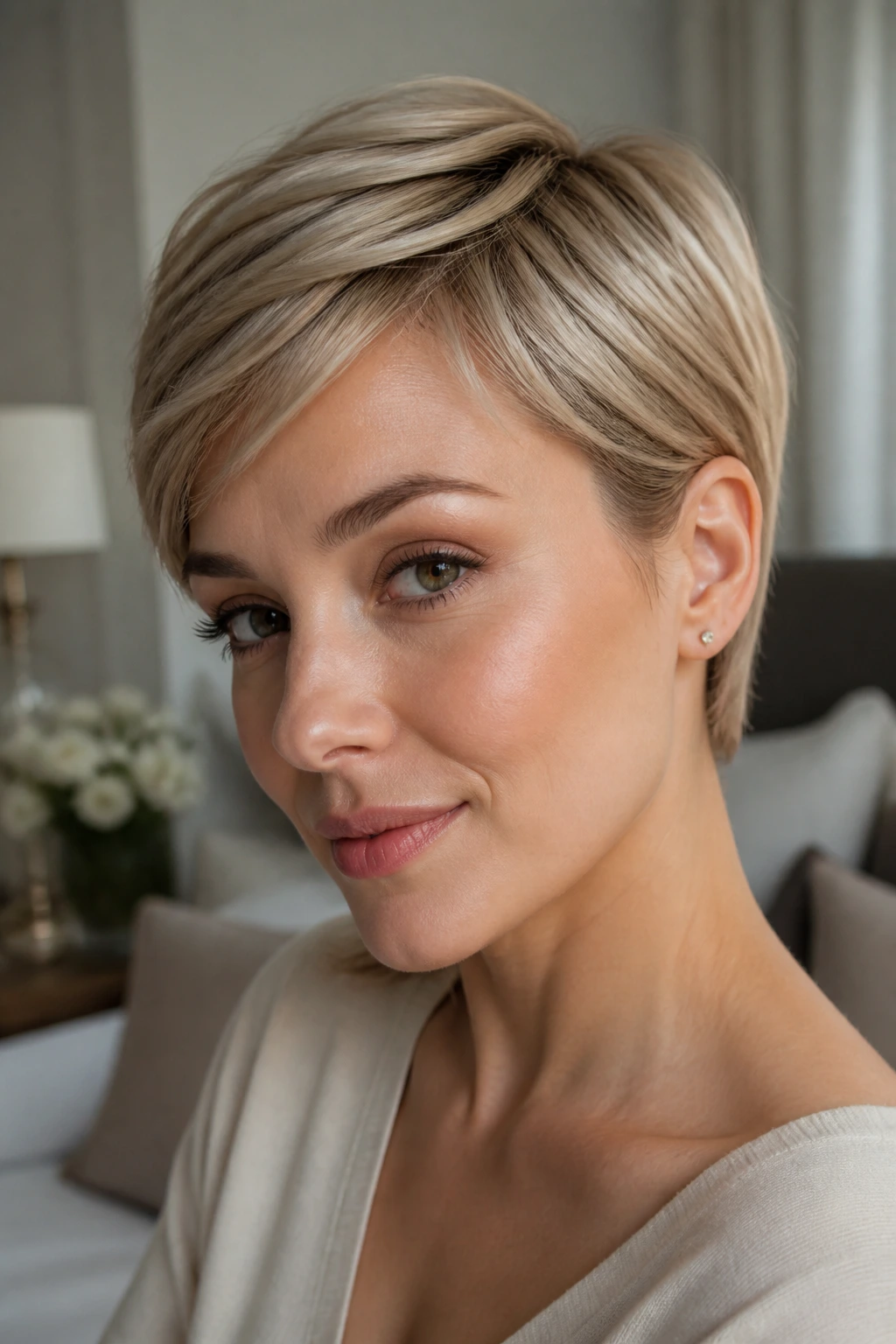
The neatest beige pixie is often the one that looks easiest. A sleeker shape keeps fine hair from puffing out, and tucking one or both sides behind the ears shows off the face instead of hiding it. Beige gives the finish a powdery softness that keeps it from feeling severe.
This cut is especially good if you wear glasses or earrings. The short shape clears the frame of the face, and the beige tone keeps the whole look light around the temples. Fine hair can look fragile when it’s over-textured, so a smoother finish is sometimes the better move.
Use a blow-dryer with a nozzle and a flat brush to guide the hair down and back. A tiny amount of shine cream through the ends can help, but keep it off the roots. Roots need lift; ends need control.
12. Beige Pixie Bob Hybrid With a Stacked Back
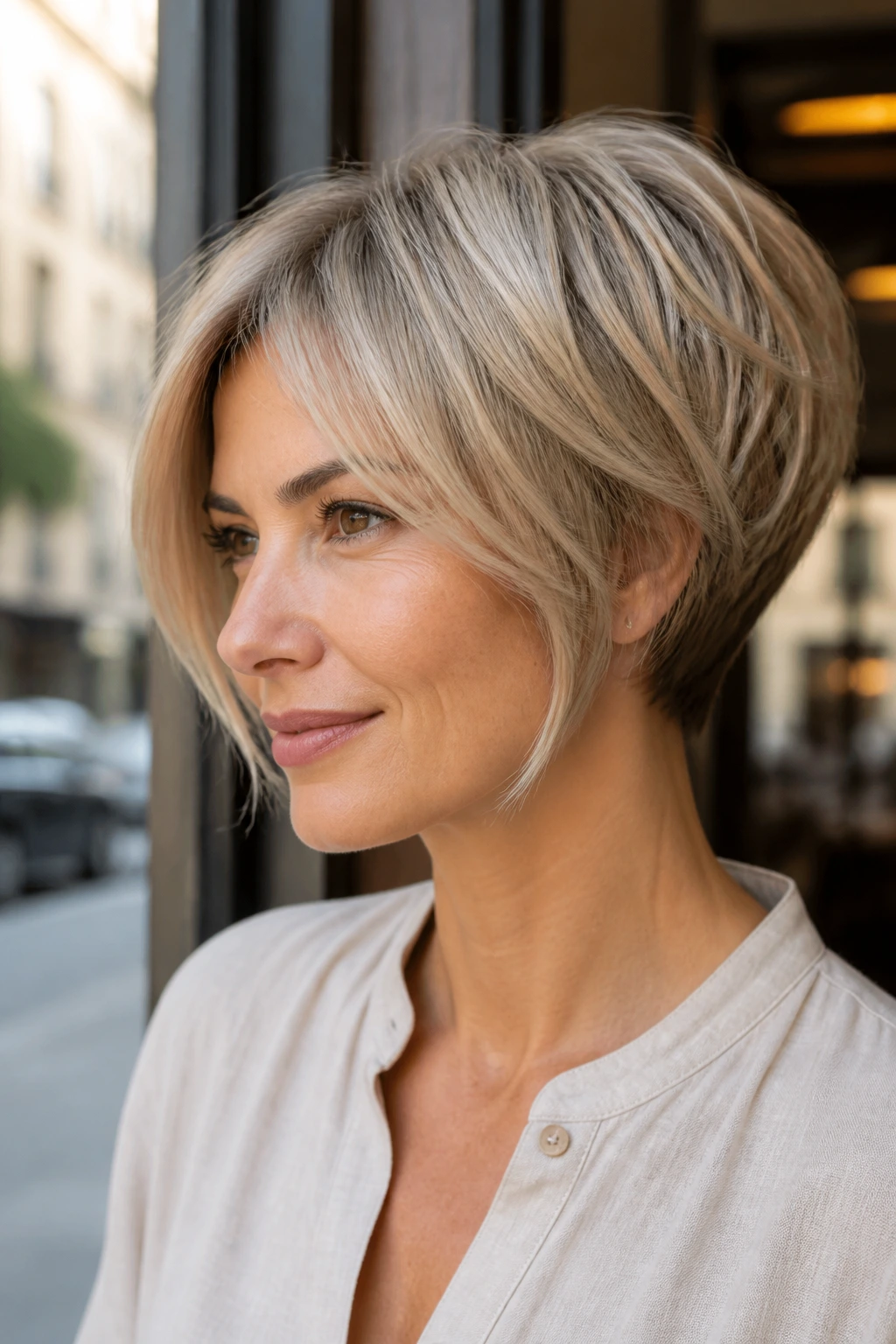
If you are not ready to lose all your length, this is the compromise that still looks modern. The stacked back gives volume where fine hair tends to collapse, while the longer front pieces keep the cut from feeling too abrupt. Beige softens the transition between the short back and longer front.
The shape works well when you want something that can be tucked, flipped, or air-dried with a little bend. It’s more forgiving than a strict pixie, and that matters if your hair grows unevenly or you hate constant trimming.
- Ask for stacking only at the back, not through the whole head.
- Keep the front pieces light and slightly broken up.
- Use a round brush at the crown for lift, then leave the ends loose.
This is a good everyday cut. Quiet, but not boring.
13. Beige French Pixie With Rounded Bangs
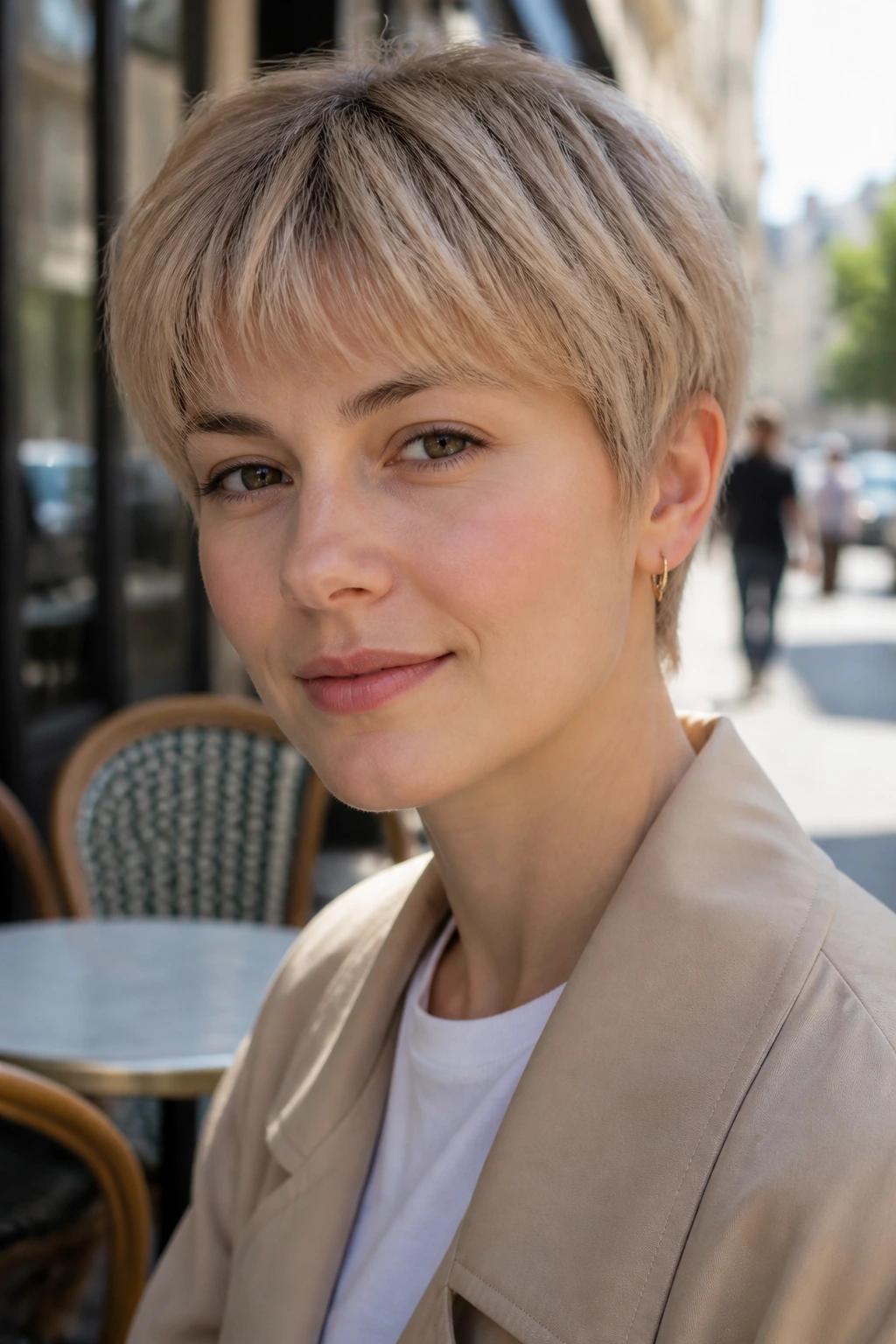
A French pixie usually feels a little more romantic than a sharp crop. Rounded bangs soften the forehead, and the beige shade keeps the whole look airy instead of heavy. On fine hair, that softness matters because strong lines can make the cut feel thinner than it is.
What makes this version appealing is the way it moves around the face. The bangs do not need to be thick. In fact, they should be a little transparent at the edges so the hair can still breathe. That lightness is what gives the cut charm.
It suits straight or lightly wavy hair best. If your hair sticks up at the roots, a quick blow-dry with a small brush helps the bangs sit in a gentle curve. Skip heavy wax. It will only make the fringe lose that soft French feel.
14. Beige Shag Pixie With Piecey Ends
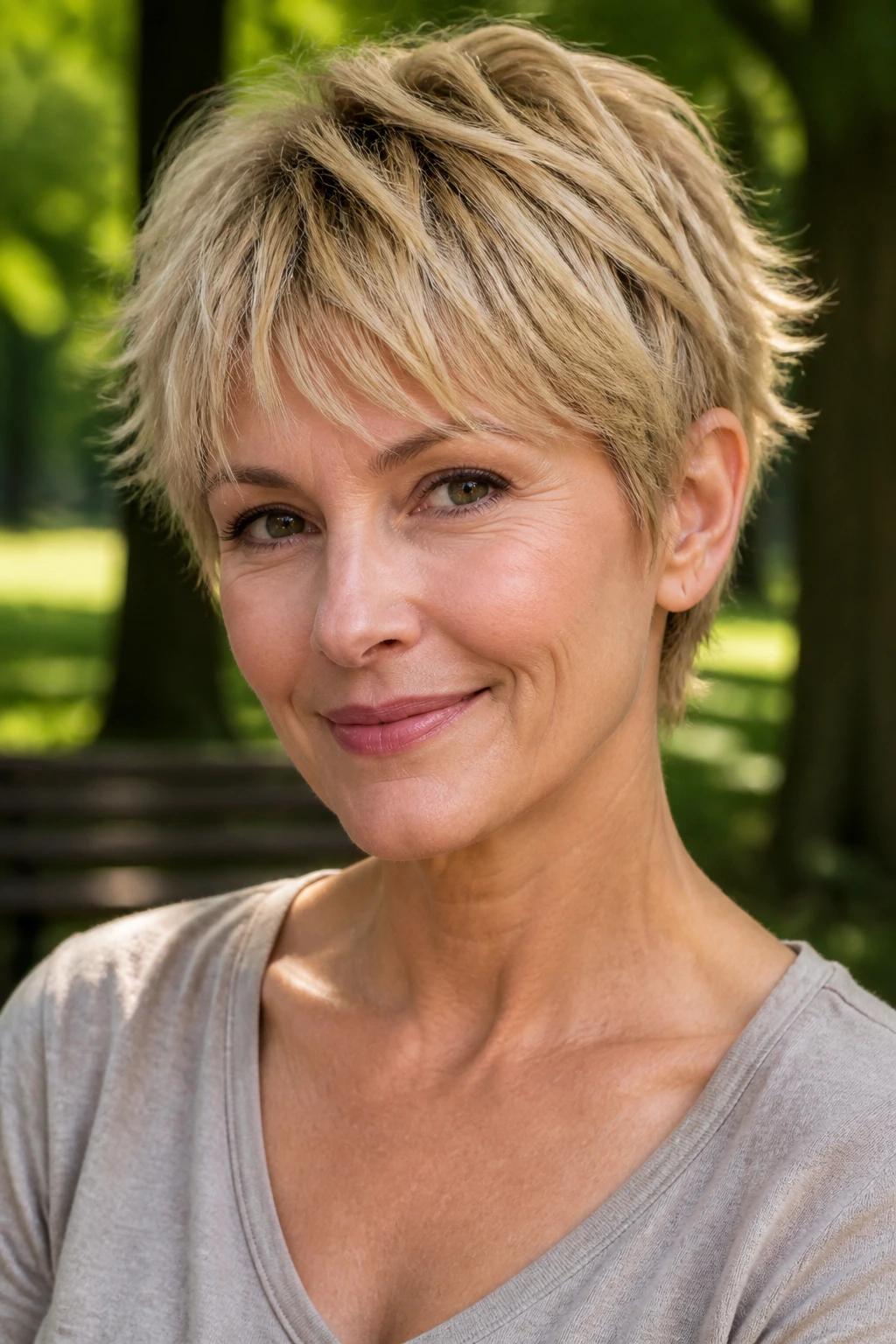
A shaggy pixie gives fine hair a bit of attitude without drowning it in layers. The ends are broken up, the top is loose, and the whole cut feels a little more casual. Beige is a smart choice because it stops all that texture from reading as dry.
This style is for someone who wants movement first. It’s not polished in a neat little salon way, and that’s the appeal. The strands separate into little pieces, which makes the hair seem fuller than it really is. Use a light mousse or volumizing spray instead of a heavy sea salt spray if your hair already feels thirsty.
Piecey ends look best when they’re not too perfect. A few uneven bits around the temples and fringe area make the whole cut feel natural. If everything is identical, the style loses its charm fast.
15. Beige Pixie With a Lifted Crown and Short Sides
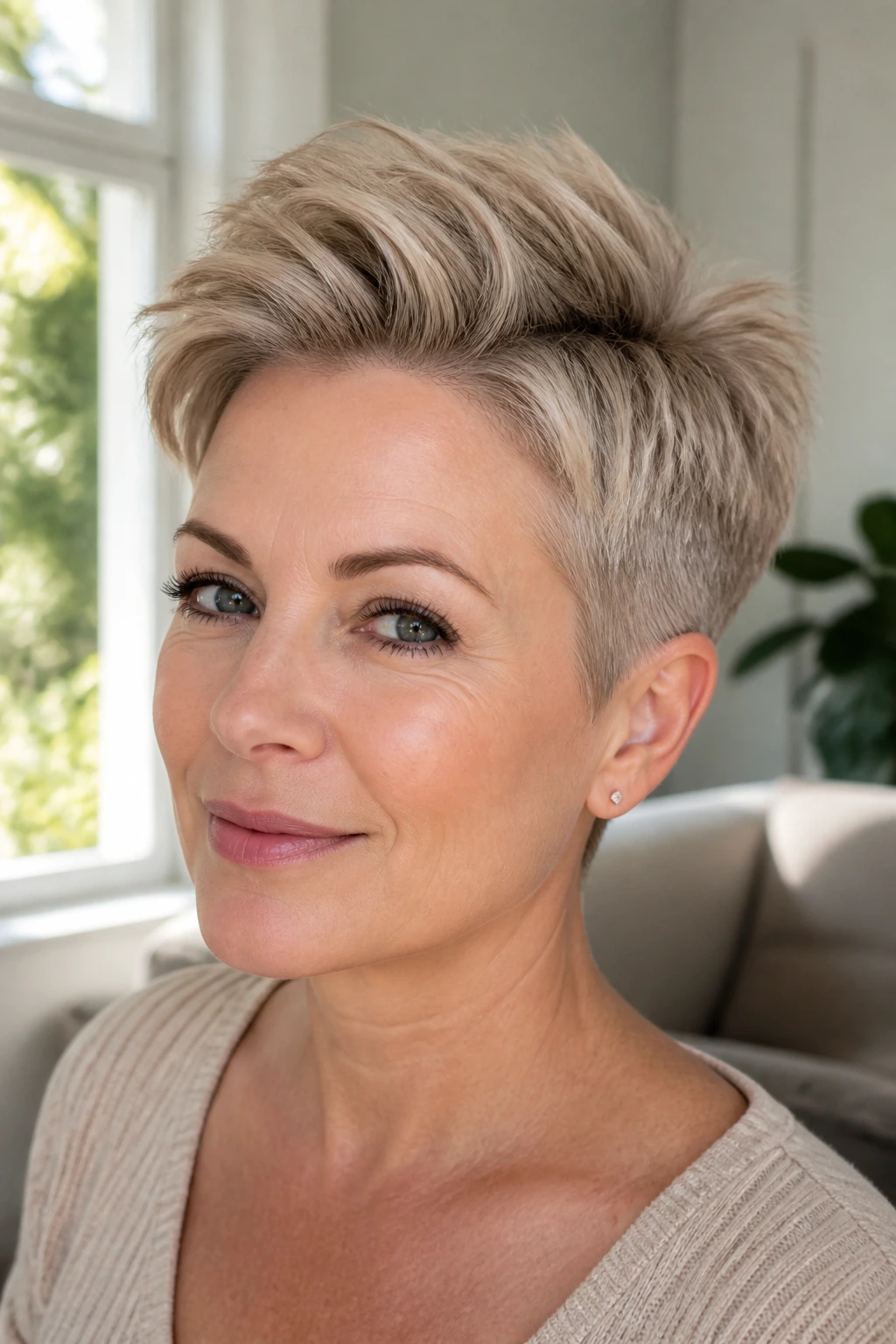
If you want the biggest visual payoff, start with the crown. A lifted top and shorter sides build height where fine hair needs it most, and beige breaks up the scalp so the lift looks soft rather than stiff.
What to Ask For
- Keep the sides close, but not shaved to the skin.
- Leave enough length at the crown to push upward with a brush.
- Add internal texture at the top, not on the very ends.
- Keep the front slightly longer if your face is round.
That last part matters. A little front length keeps the style from feeling too vertical. You want lift, not a cartoon puff. A round brush or even a small vent brush can help shape the crown in under 5 minutes, which is one reason this cut is so practical.
16. Champagne Beige Undercut Pixie
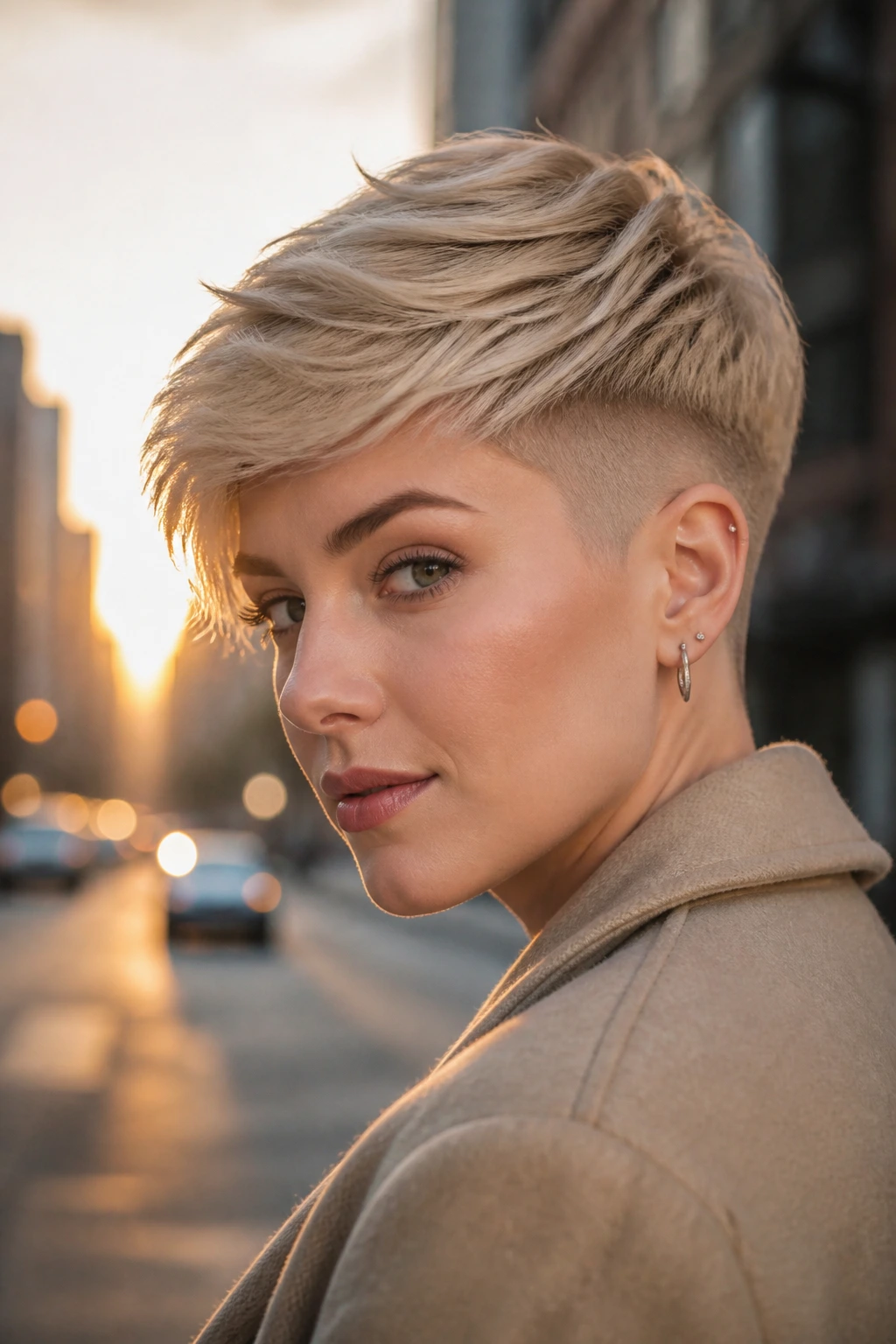
An undercut on fine hair is a risky move if the back is too sparse, so keep it narrow and intentional. Champagne beige makes the style feel softer than a stark undercut, which helps when you want the edge without the hardness.
The best version leaves enough density on top to cover the cut line when you want it hidden. That way the style can shift from polished to a little rebellious depending on how you part it. If your hair is very fine but dense at the crown, this can work beautifully. If your hair is fine and already thin all over, keep the undercut subtle.
The key is restraint. A wide shave can make a short cut look patchy as it grows out. A small, clean undercut just gives shape. That’s all it needs to do.
17. Beige Pixie With a Soft Wave
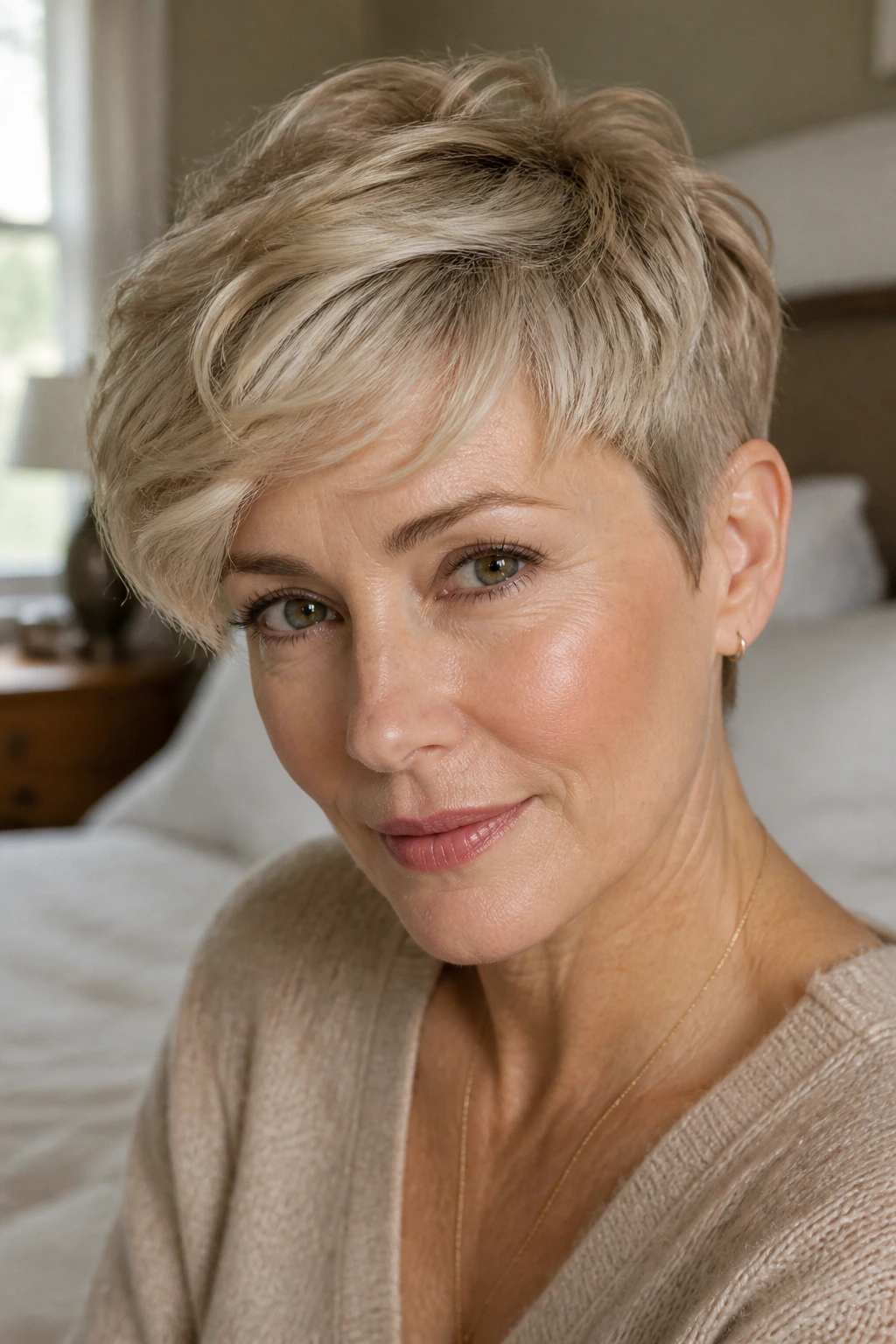
A tiny wave can save a pixie from looking too flat. On fine hair, even a slight bend through the front or crown gives the eye something to catch, and beige makes that movement look soft instead of overly styled.
This cut is a good fit if your hair has a little natural bend but no real body. You do not need a big curl pattern. A loose wave in one side, or a gentle flip at the fringe, is enough. Too much curl makes the cut puff out and can shorten the face more than you want.
Air-drying with a light mousse or wrapping the front around a small brush can create that bend without much work. If the wave looks too forced, loosen it with your fingers while the hair is still warm. The goal is softness, not a ringlet. Big difference.
18. Beige Pixie With a Temple Fade
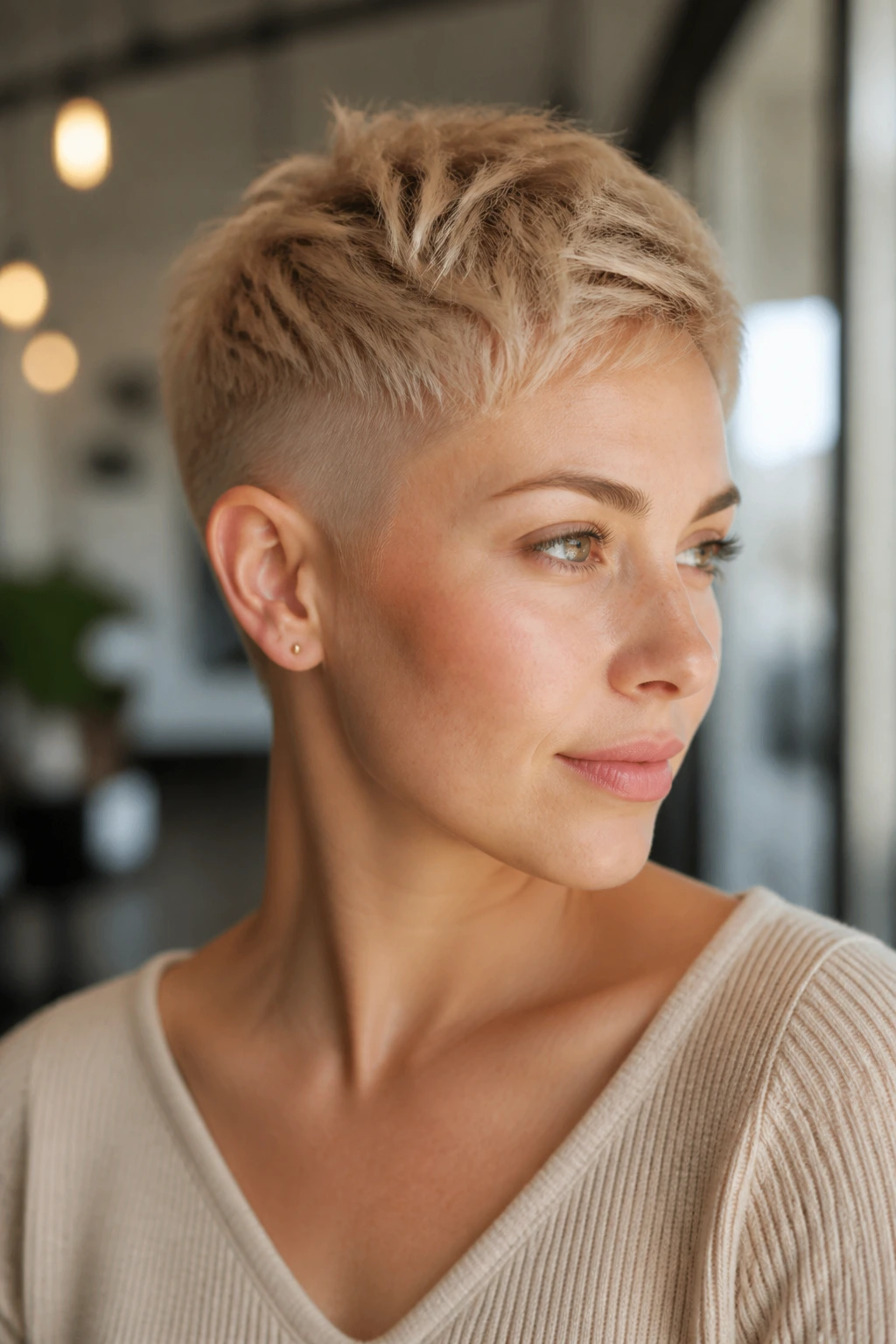
A temple fade is a sharp little detail that can clean up a pixie fast. It narrows the area around the ears, which helps fine hair look tidier and more deliberate. Beige keeps the fade from feeling severe or too barber-shop heavy.
This cut is especially useful if the hair around your temples sticks out in odd directions. A controlled fade pulls that area in and creates a cleaner frame for the face. It also works well if you wear glasses, because the temples of the frames sit neatly against a shorter side.
Keep the fade low. That matters. A fade that climbs too high can wipe out too much of the side density, and fine hair needs every bit of help it can get. The shorter area should support the top, not compete with it.
19. Beige Bowl-Inspired Pixie
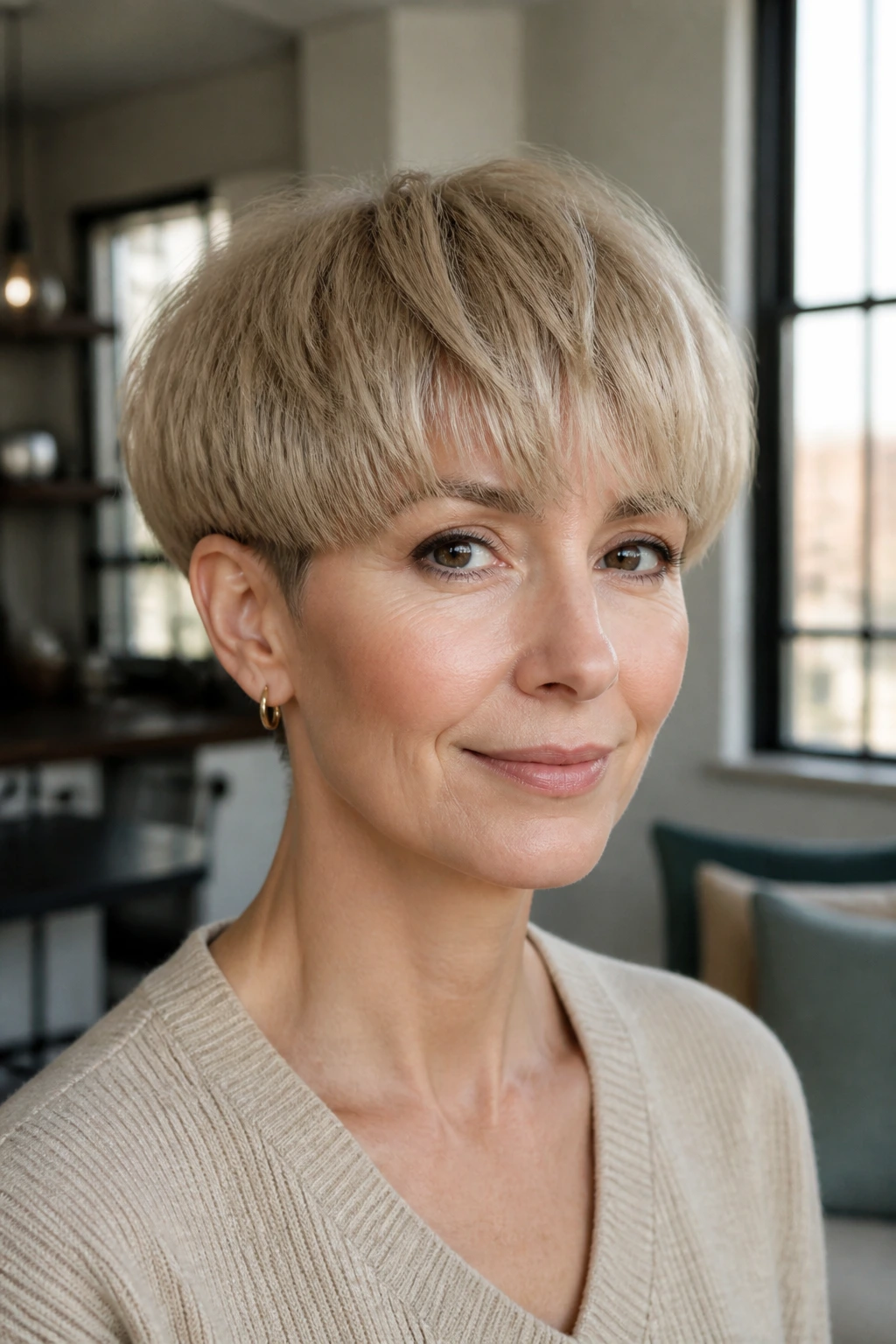
A bowl-inspired pixie sounds bold, and it is, but the softened version can be surprisingly wearable. The circular shape gives coverage around the sides, which helps fine hair feel fuller. Beige keeps it from veering into helmet territory.
The secret is in the edges. They need to be curved, not blunt, and the top should be lightly texturized so the shape moves instead of sitting like a cap. If you like fashion-forward cuts, this one has a lot of personality without needing much daily styling.
It suits straight hair best, especially hair that falls in a smooth line and resists puffing up. If your hair is wavy, the shape can still work, but you’ll want a little smoothing cream to keep the outline neat. That soft beige tone is doing a lot of heavy lifting here, and it deserves a clean silhouette.
20. Beige Pixie With Baby Lights
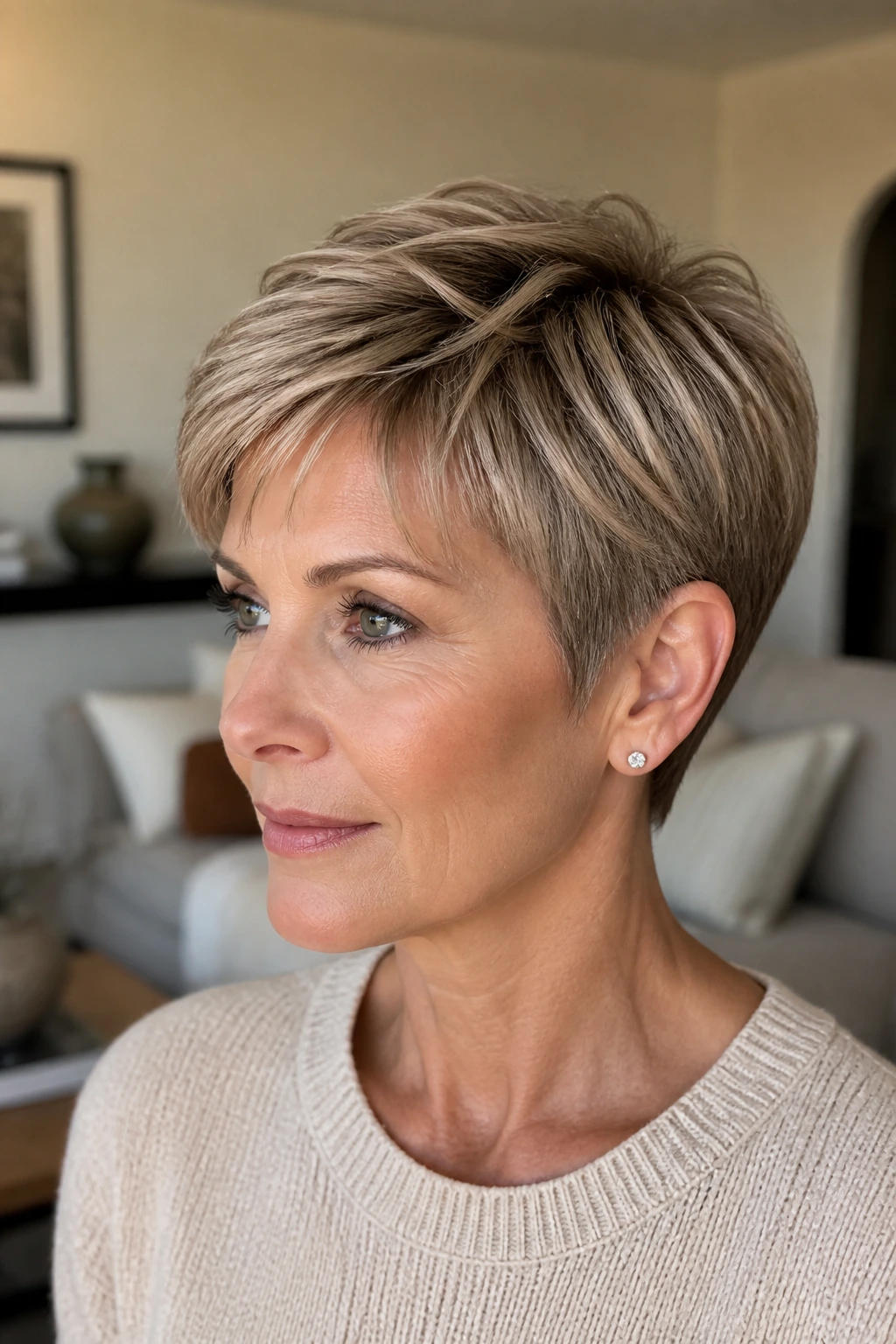
Do baby lights matter on fine hair? More than most people expect. Tiny, delicate highlights create dimension without making the cut look striped. Beige baby lights are especially useful because they keep the overall tone soft and blended.
How to Ask for the Color
Ask for micro-fine foils placed through the crown, front, and around the part line. The goal is a gentle shift in tone, usually only one or two shades apart, so the light catches in small pockets instead of all over the head. That tiny contrast can make a pixie look denser.
The cut itself can stay simple. The color does the visual work. This is a smart move if your base is already light and you want the hair to look a little fuller without changing the shape. Just keep the highlights soft. Strong contrast on a pixie tends to look choppy in a bad way.
21. Tousled Beige Pixie With Extra Texture
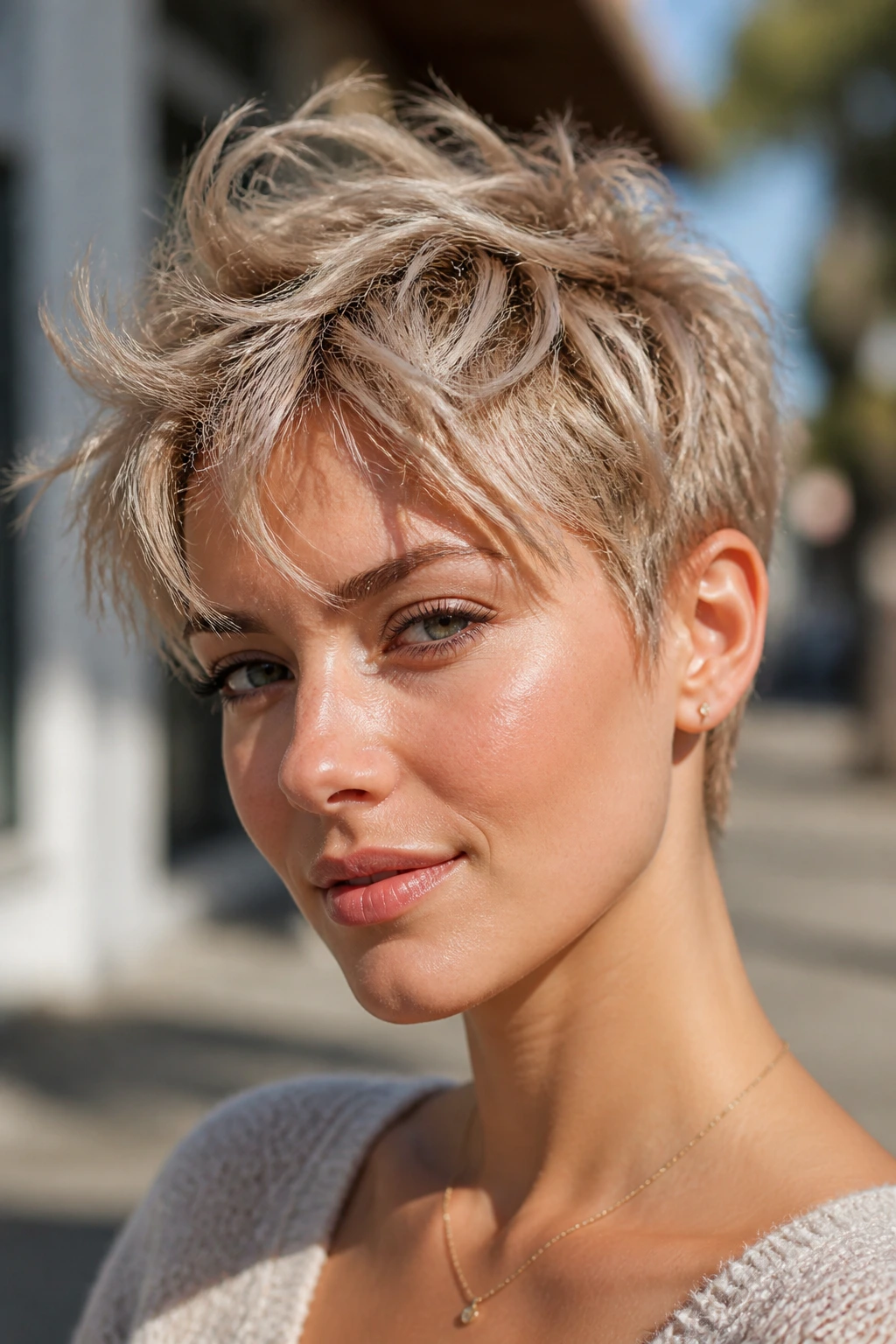
A tousled pixie is one of the easiest ways to cheat fullness. Messy texture creates space between the strands, and those little gaps can make fine hair seem broader than it is. Beige is the right color for this because it makes the texture look sun-soft rather than rough.
This version is for the person who does not want a polished finish every morning. You rough-dry, pinch a few sections, and leave a bit of irregularity in the fringe and crown. That irregularity is the point. A cut like this looks dead if you over-comb it.
Use a small amount of styling cream or paste, warmed between your fingers first. If the product goes on in a blob, the texture clumps and you lose the airy finish. A little goes a long way. Too much, and the whole style collapses into one sticky shape.
22. Beige Pixie With a Deep Side Part
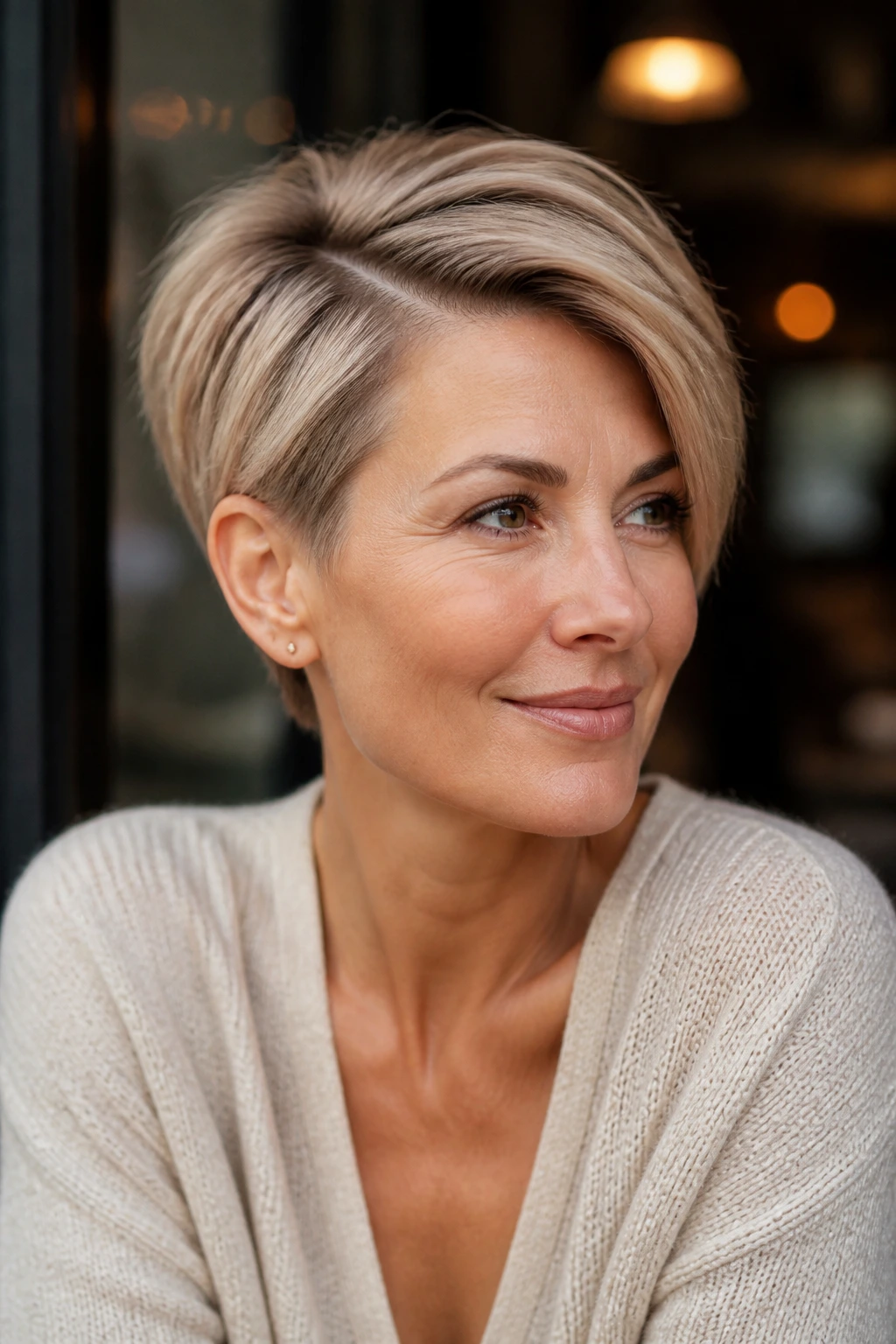
A deep side part can do more for fine hair than an extra inch of length. It creates a shadow line, and shadow is one of the oldest tricks in the book when you want hair to look fuller. Beige keeps the part from feeling too harsh.
- Works well if your crown is flat.
- Helps balance a wider forehead.
- Can soften a strong cowlick if the part follows the growth pattern.
- Looks best with a little root lift at the heavier side.
The part should not sit so deep that the hair falls over one eye all day. You want structure, not drama for the sake of it. A clip at the root while the hair cools can help the part stay put without needing a lot of product later.
23. Beige Pixie With Feathered Sides
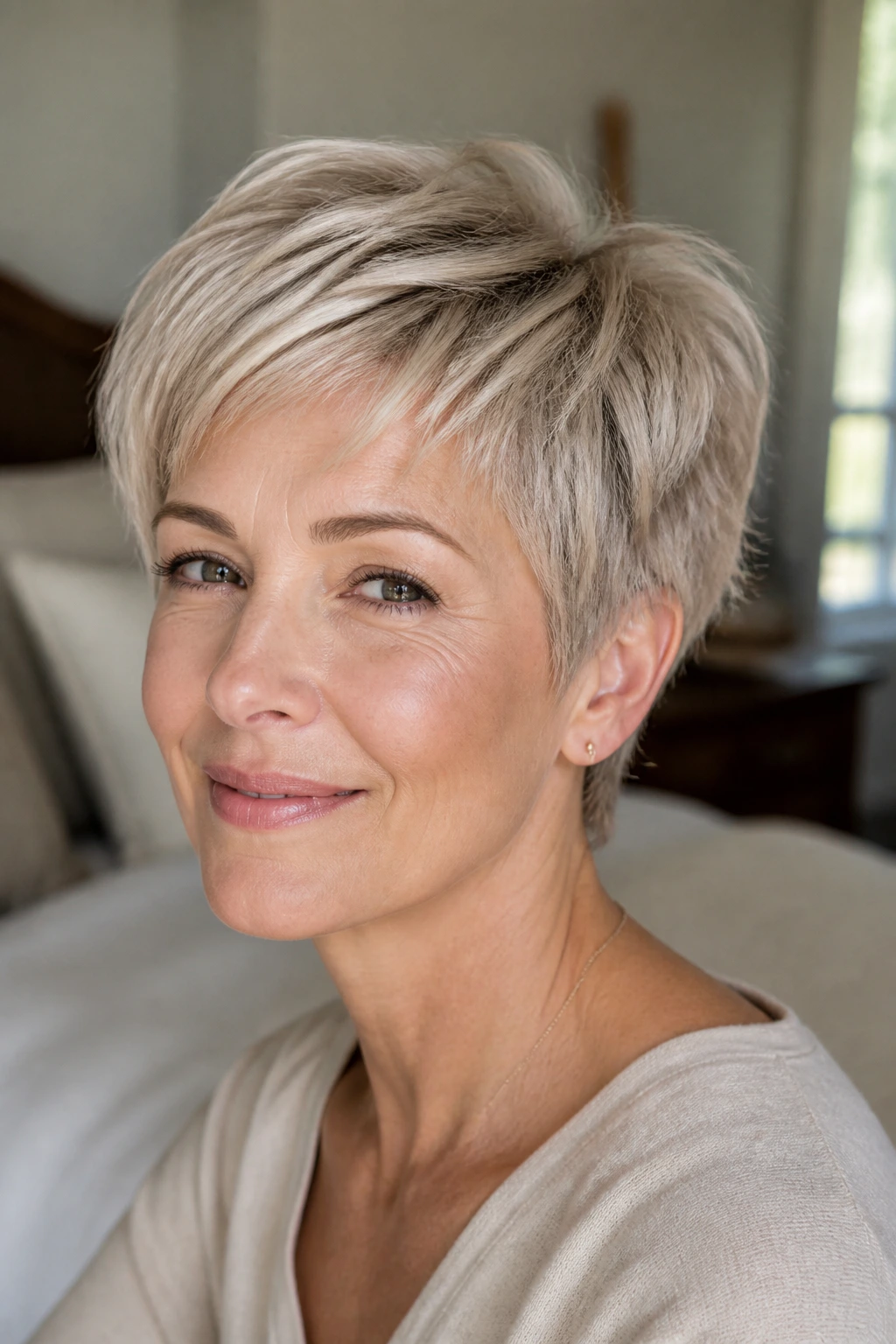
Feathered sides are a quiet fix for fine hair that tends to puff out in the wrong places. Instead of one blunt line, the hair tapers into soft ends, which keeps the silhouette from feeling boxy. Beige is useful because it makes those soft edges look light and clean.
This cut is especially good if your jawline is narrow or your ears sit a little close to the head. Feathering gives a hint of movement without taking too much weight away. Too much thinning around the sides, though, can leave the cut looking wispy in a bad way, so the stylist should feather, not shred.
I’d choose this over a very blunt side if your hair is fine and straight. Blunt sides can read as heavier, but they also expose thinness faster. Feathering gives you room to breathe.
24. Beige Pixie With a Glossy Finish
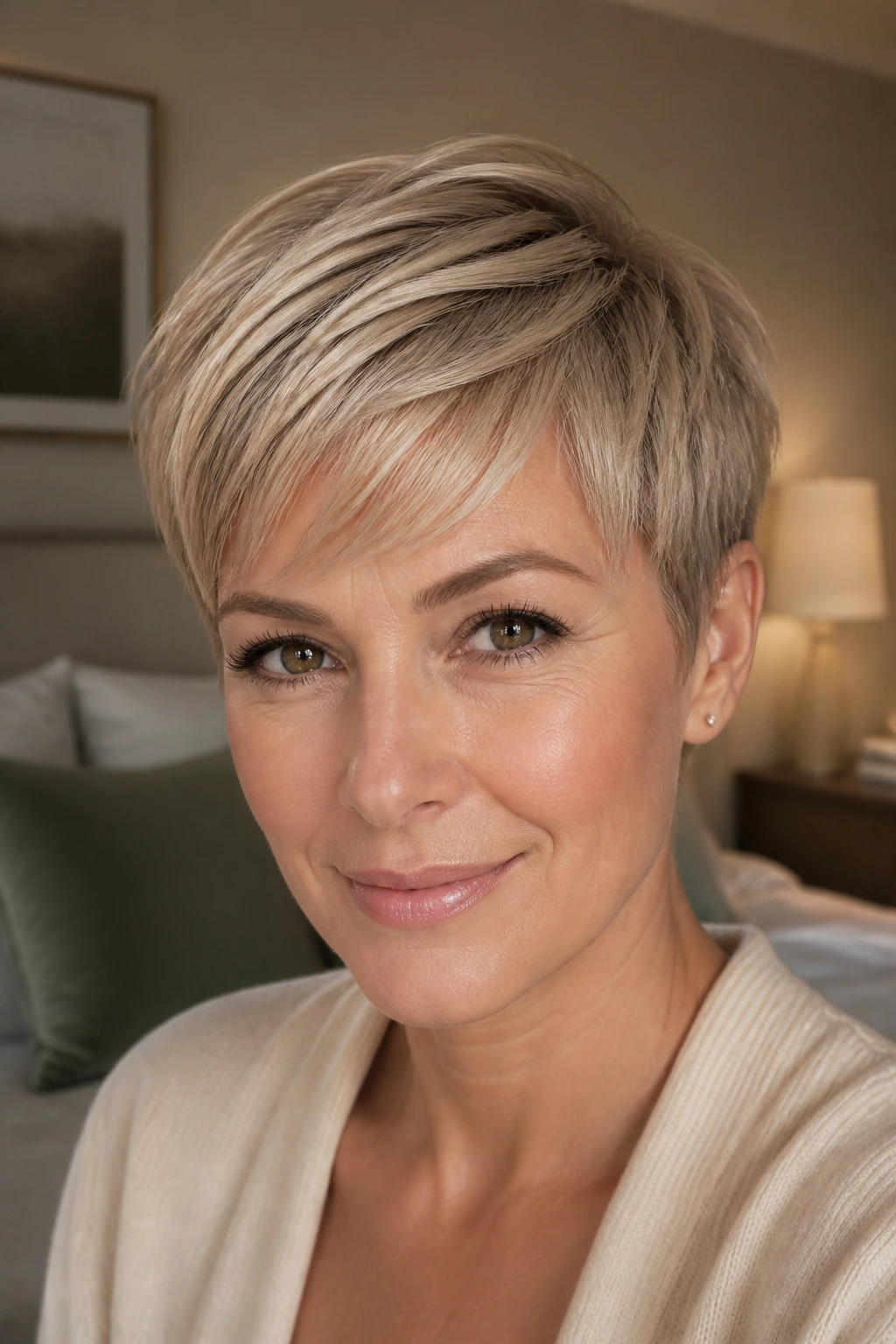
Sometimes the smartest move is to make fine hair look healthy first and textured second. A glossy beige pixie does exactly that. The sheen reflects light across the top and fringe, which can make the strands look smoother and a bit fuller.
This works best when the cut itself is tidy. Clean lines, soft edges, and enough length on top to catch the shine. A beige gloss or toner can keep the color from looking dull, especially if the hair has been lightened before. Just don’t pile oil near the roots. That is the fastest way to flatten everything.
The style suits people who like a more finished, salon-polished look. Not stiff. Polished. There’s a difference. Think soft shine on the lengths, not wet hair from root to tip.
25. Beige Platinum Pixie With an Elongated Top
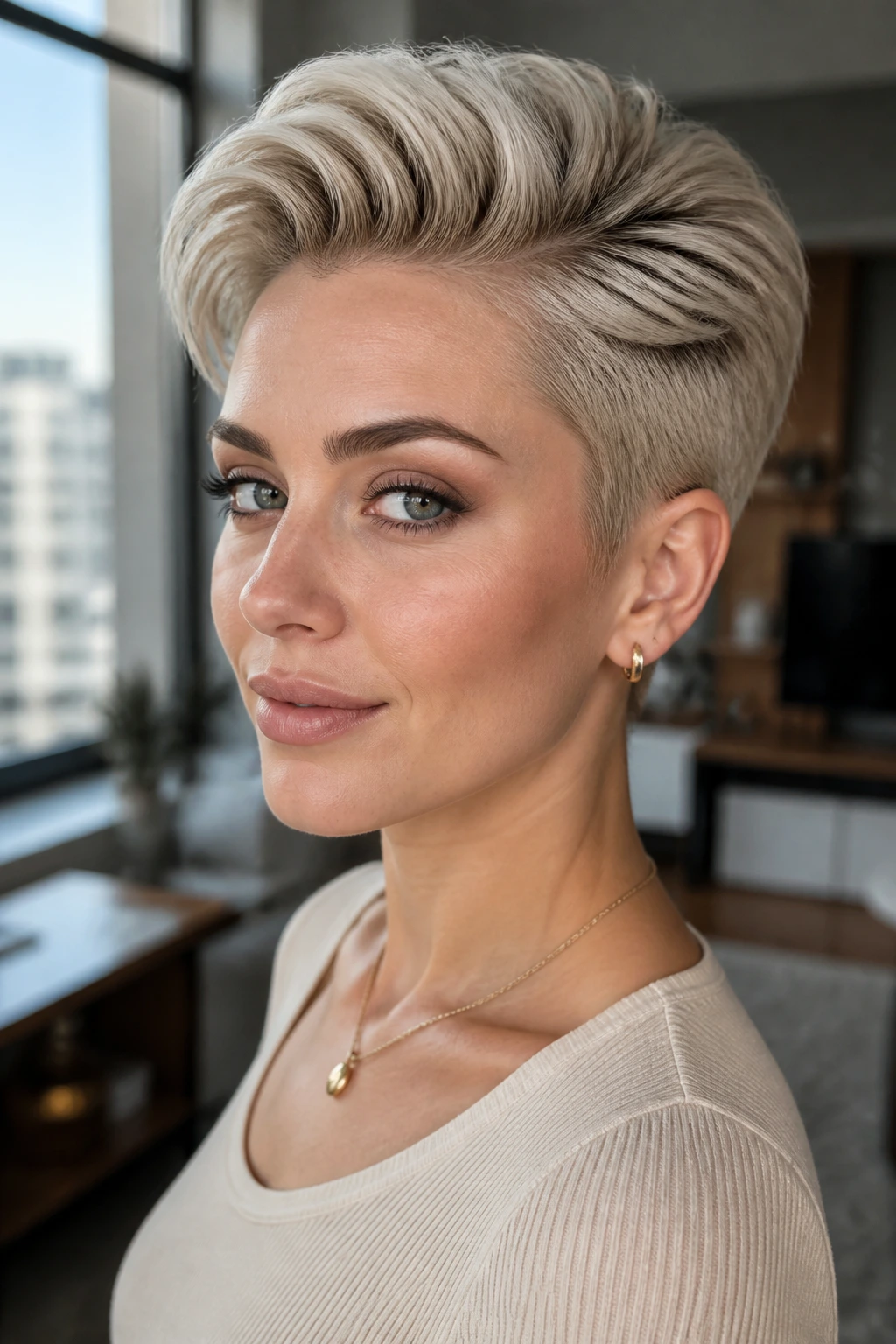
This is the sharpest version in the bunch, and it works because the top stays long enough to move. Beige platinum gives you brightness without the icy glare that can make a pixie feel brittle, while the elongated top keeps the style from looking shaved down to nothing.
How to Wear It Well
Keep the top piecey and slightly swept back or to the side. That leaves room for lift and stops the color from overwhelming the cut. A small amount of smoothing cream through the ends can keep the brightest blonde from fraying visually, especially if your hair is very fine.
This style suits someone who likes a crisp, clean look and doesn’t mind maintenance. The lighter the beige platinum, the more often you’ll want to refresh the tone. But when the shape is right, it has a sleek, sharp finish that suits fine hair better than most people expect. The longer top keeps it wearable. That’s the whole trick.
Final Thoughts
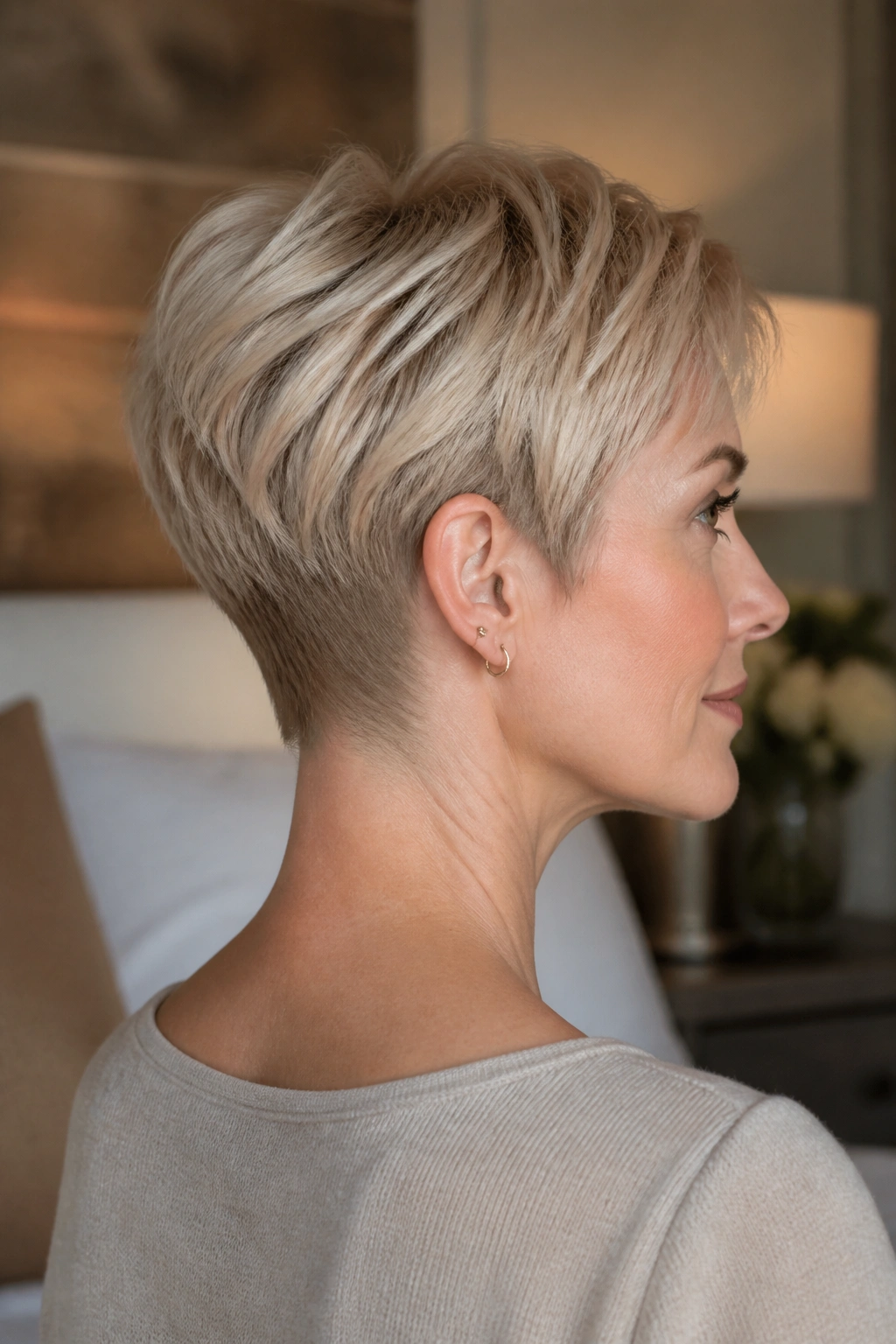
Beige works on pixie cuts because it softens the hard parts of short hair. It blurs the scalp contrast, smooths out the edges, and gives fine strands a little breathing room. That alone can make a huge difference.
The best beige pixie is the one that keeps your hair looking like hair, not a styling project. If you want more fullness, ask for lift at the crown. If you want softness, keep the fringe airy and the sides feathered. If you want edge, add a deep part or a narrow undercut — just not so much that the cut loses its shape.
And that’s the part people miss: fine hair does not need more drama. It needs better lines, a kinder color, and a cut that still looks good when you’ve barely done a thing to it.
