



Fine hair can look flat in a heartbeat. A blunt cut can make that worse, and a heavy layer pattern can make it feel like the hair disappeared at the ends.
A shaggy pixie cut fixes that by doing something smarter than simply going short. It builds movement into the shape. The crown gets lift, the perimeter gets a little broken up, and the front gets enough softness to keep the whole cut from looking severe. On fine hair, that matters. A lot.
The trick is not to shred the hair into nothing. That’s the mistake I see most often. Fine hair usually looks best when it keeps enough length to bend, flip, and separate into pieces, while still losing the bulky weight that drags it down. Done right, a shaggy pixie can make hair look fuller, airier, and more expensive-looking without asking for much fuss.
These 18 shaggy pixie cuts lean into that idea from different angles. Some are softer and more wearable. Some have a little more edge. A few are barely-there on the sides and fuller on top, which is often the sweet spot for fine strands. All of them work with texture instead of fighting for it.
1. Feathered Crown Pixie
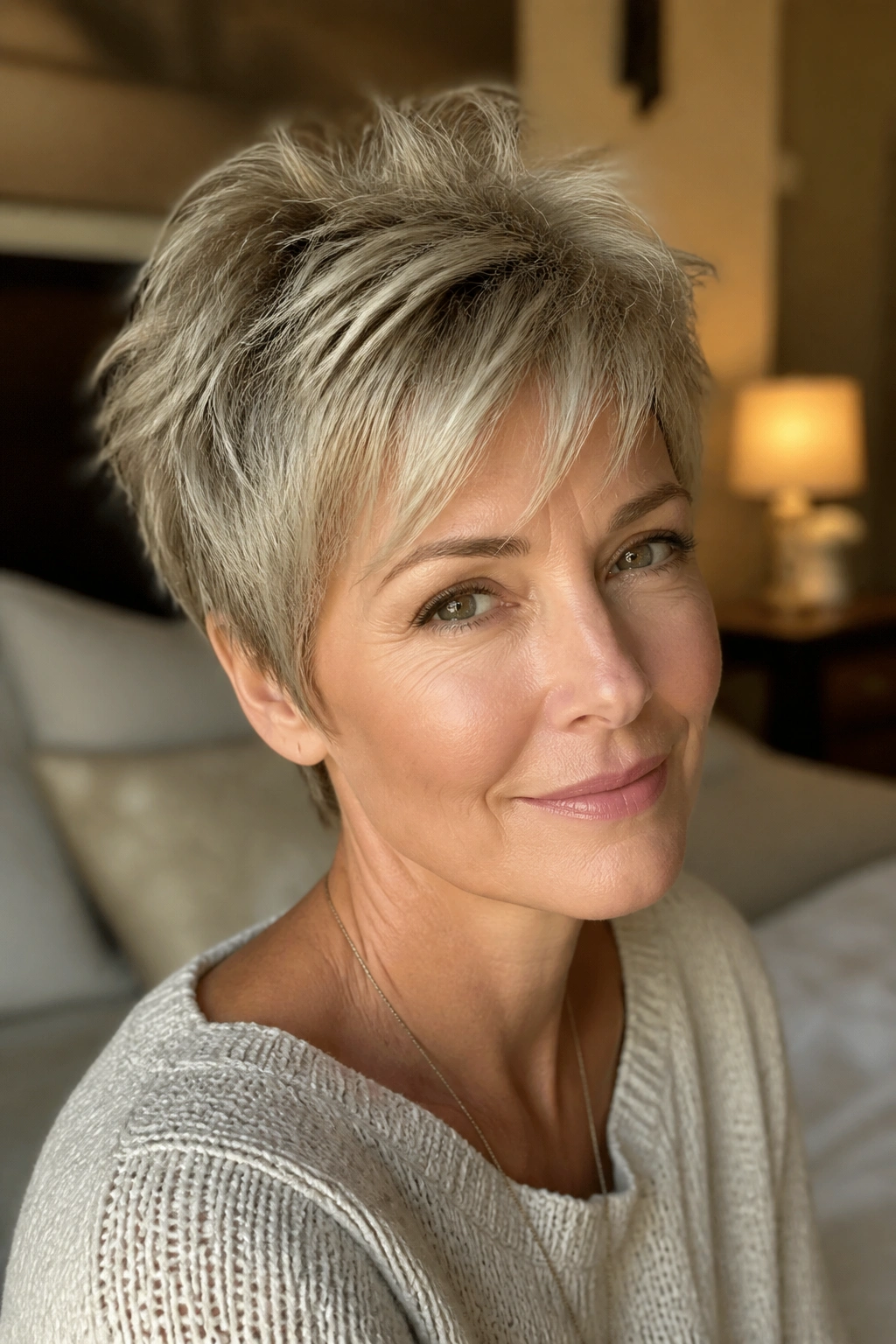
Feathered crown pixies are a gift to fine hair because they keep the top light and lifted without making the cut look thin. The layers are sliced or point-cut so they fall in soft, airy pieces instead of one heavy cap. That matters. Fine hair needs shape, not bulk.
Why It Works
The crown is where this cut earns its keep. A little height at the top makes the whole head look fuller, and the feathered texture stops the style from lying flat by lunch. Keep the sides soft and close, then let the top stay a touch longer so you can ruffle it with your fingers and get instant movement.
A pea-sized dab of lightweight paste is usually enough. Work it only through the top third of the hair.
- Best on hair that collapses at the crown
- Looks good with side-swept or broken bangs
- Needs a trim every 4 to 6 weeks to keep the feathered shape clean
- Works well with a quick blow-dry and a small round brush
Tip: lift the roots while they’re still warm from the dryer. That tiny extra bit of direction makes a bigger difference than people expect.
2. Side-Swept Micro Fringe Pixie
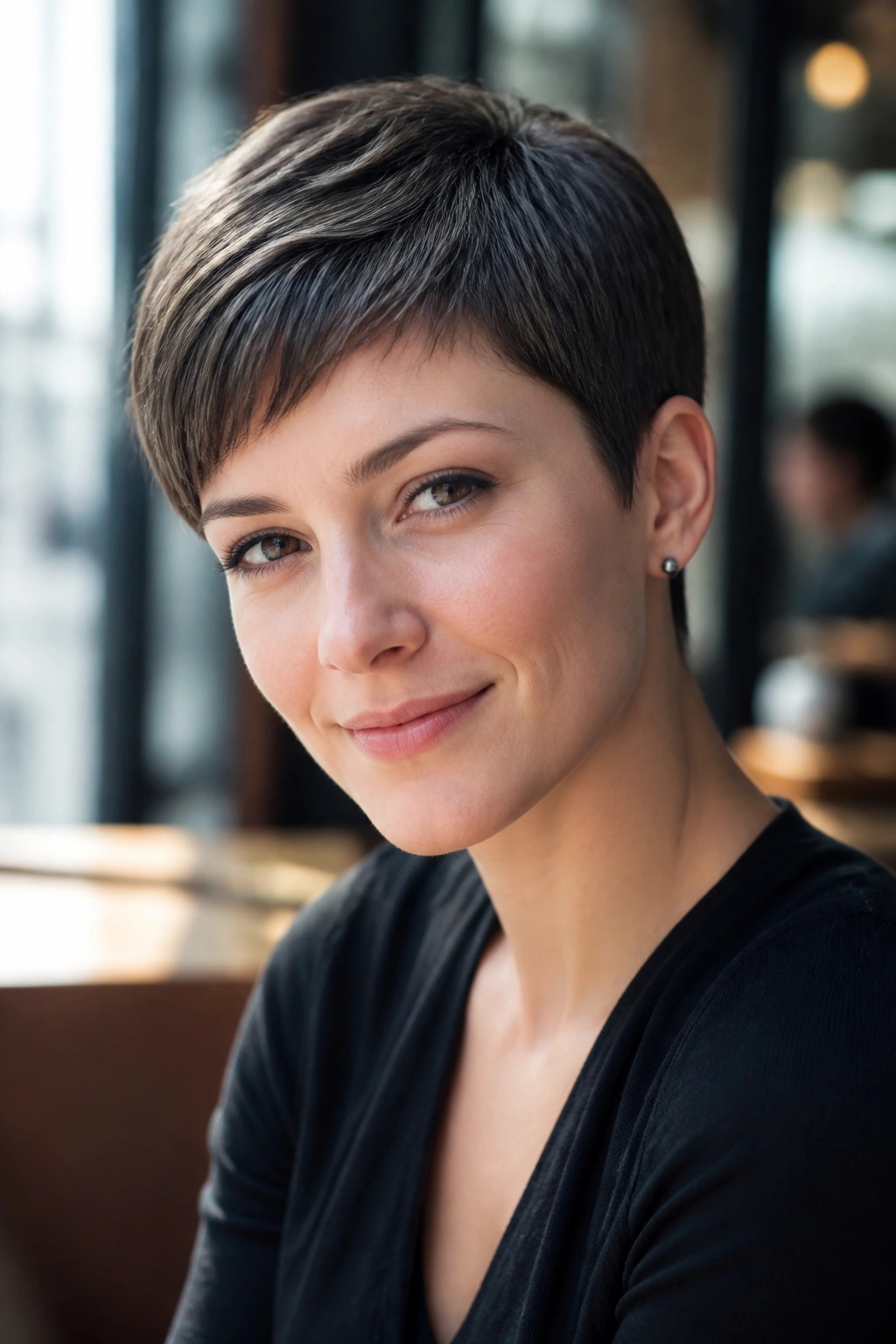
This cut does something a blunt fringe usually cannot: it gives fine hair a little weight in the front without dragging the whole style down. A side-swept micro fringe lands just above or around the eyebrow, then drifts off to one side so the face keeps its shape.
The diagonal line matters. Straight-across bangs can expose how sparse fine hair is at the hairline. A side sweep softens that problem and makes the front look denser because the eye follows the longer line.
For styling, use a flat brush or a small round brush and direct the fringe across the forehead while it dries. Once it’s set, bend the ends with a tiny touch of wax. Not much. Too much product and the fringe starts to separate into skinny strings, which is the opposite of what you want.
This one suits people who want a pixie that feels a little polished but not stiff. It has enough structure for work, enough looseness for weekends, and enough face framing to keep fine hair from looking overcut.
3. Choppy Top-Heavy Pixie
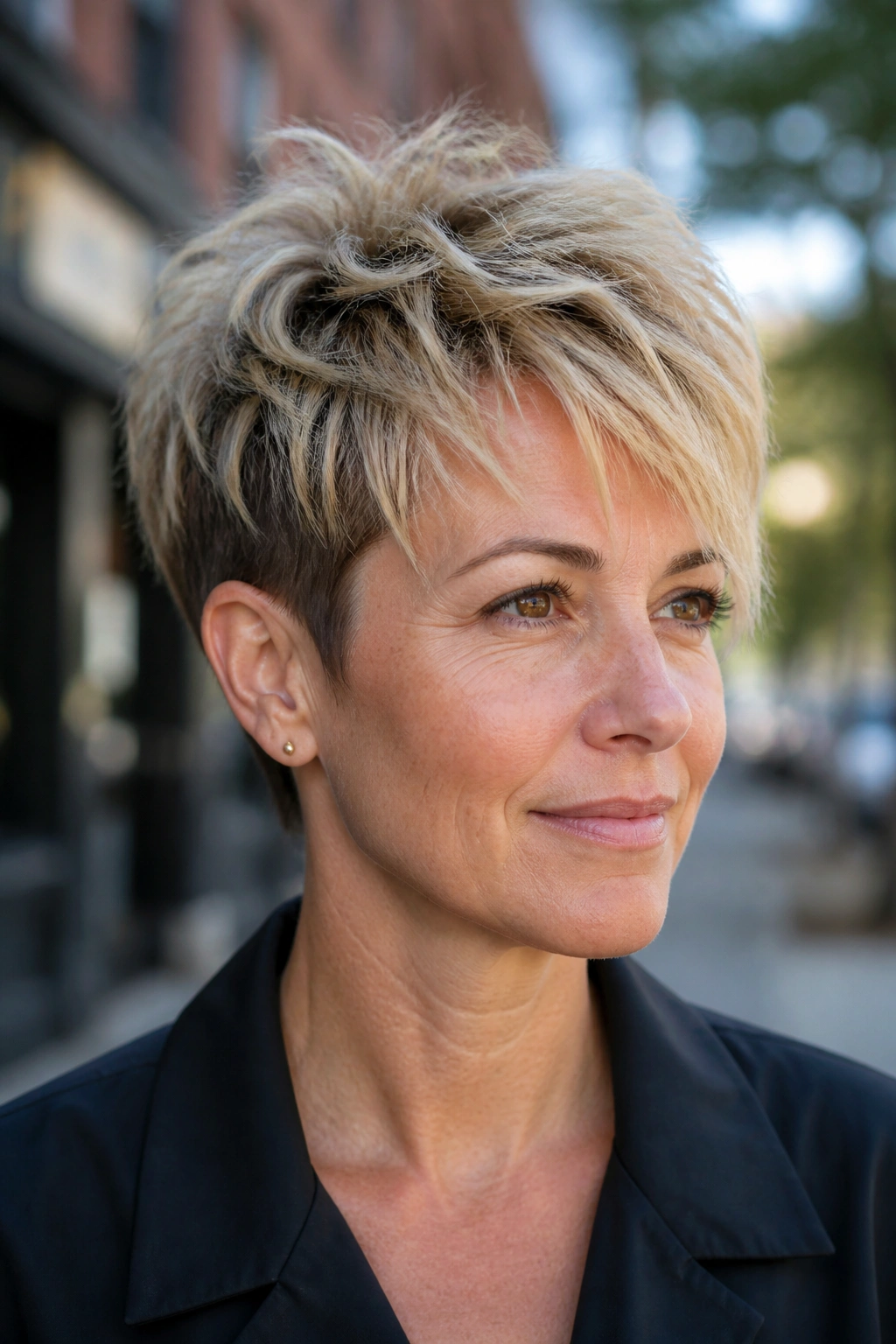
Why does a top-heavy pixie help fine hair so much? Because the eye reads height before it reads density. A little extra length on top creates the illusion of body, even when the hair itself is lightweight.
The sides stay shorter here, often clipped close around the ears and neckline, while the top is sliced into uneven chunks. That unevenness is the point. Fine hair does not need every strand sitting in the same line. It needs broken texture that gives the cut some attitude.
How to Style It
Blow-dry the top forward first, then back, then up. That back-and-forth direction gives the roots lift. After that, pinch just the ends with matte paste or a soft molding cream.
A few things make this shape work:
- Keep the top 1 to 2 inches longer than the sides
- Use a lightweight volumizing spray at the roots, not a heavy cream
- Avoid over-brushing once it’s dry
- Ask for point-cut ends, not blunt ends
This is one of the easier shaggy pixie cuts for fine hair to wear if you like a little mess. It looks better when it is a bit imperfect.
4. Soft Razor-Cut Shag Pixie
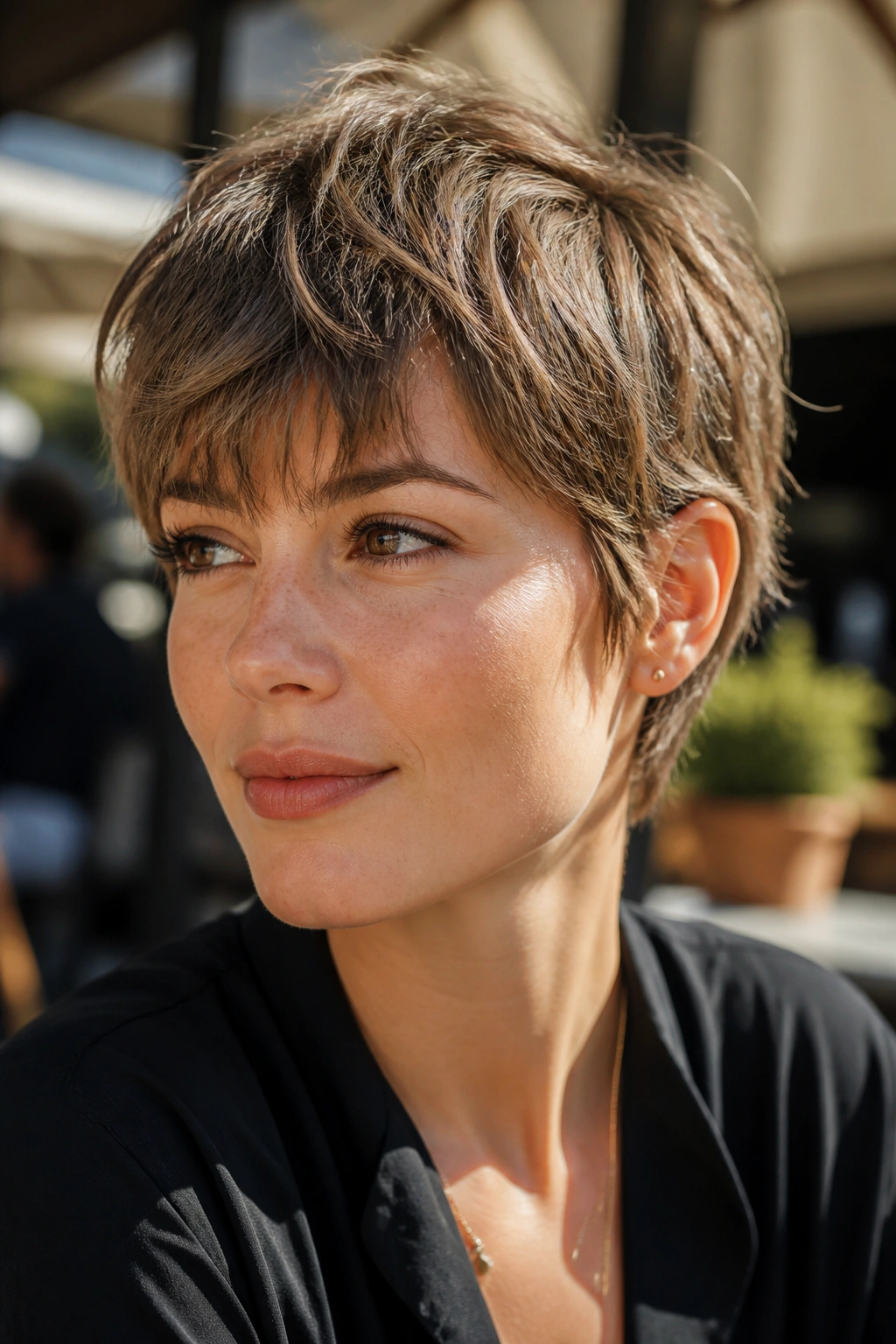
A razor-cut shag pixie has a slightly broken edge that can make fine hair look more alive. On straight, slippery strands, that broken edge matters because it keeps the cut from falling into one flat sheet. The movement stays visible.
Picture hair that usually lies close to the scalp and loses shape by noon. A razor cut changes the way the ends sit. They move a little more independently, so the style gets air between the pieces. It’s subtle, but it changes everything.
What to Ask Your Stylist For
- Razor work through the top and fringe, not the whole head
- A soft, not choppy, perimeter
- Shorter pieces at the crown for lift
- Longer wisps around the temples to avoid a hard edge
The catch is that too much razor work can make fine hair look frayed. That’s why the hand here has to be careful. You want texture, not thinned-out ends.
If your hair is very fine and already fragile, keep the razor work light and let scissors do some of the shaping. The best version of this cut looks airy, not shredded.
5. Tapered Nape Shag Pixie
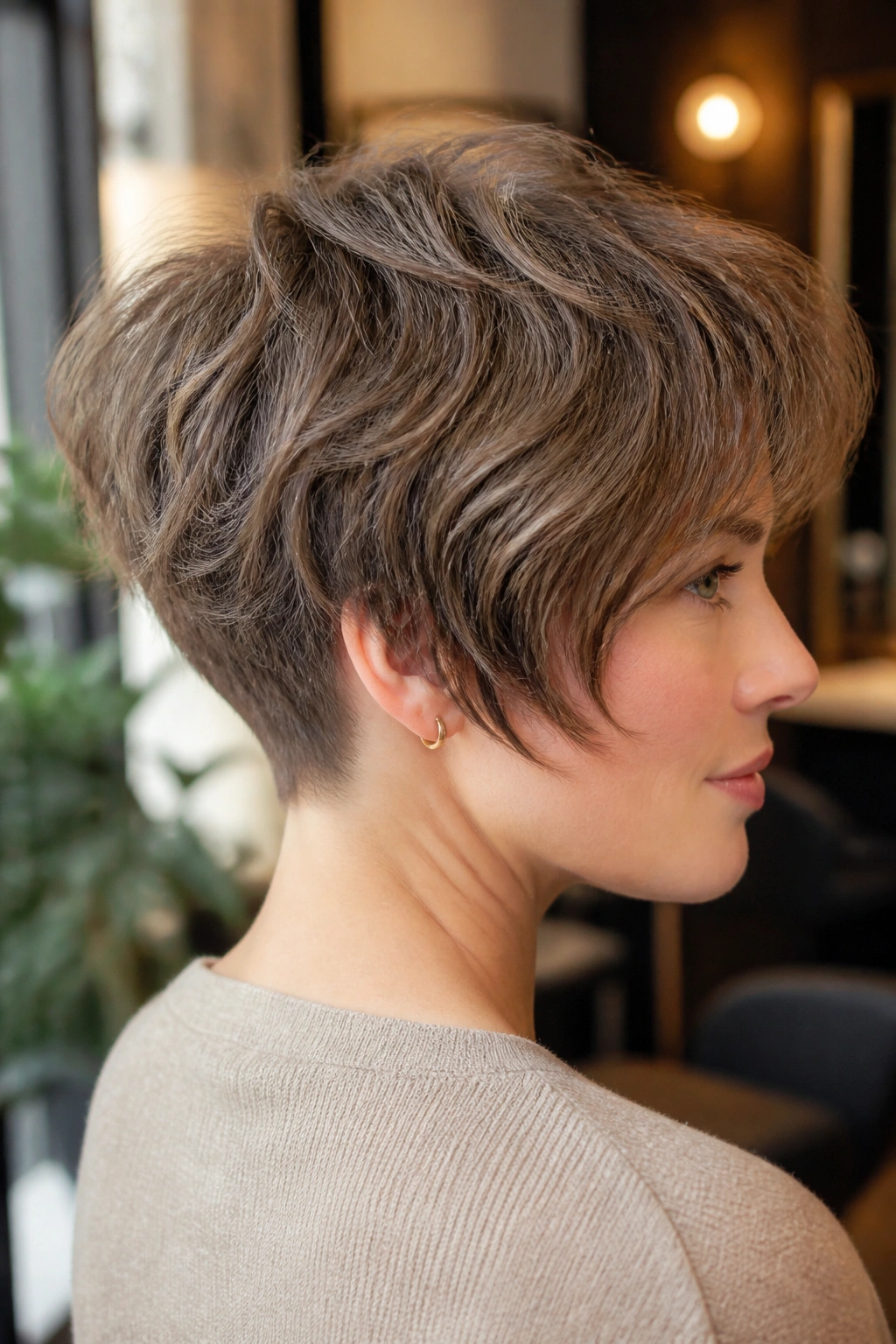
A tapered nape gives a shaggy pixie some backbone. The neckline stays neat and close, which keeps the cut from ballooning out at the bottom, while the top and crown stay loose enough to move. That contrast is what makes the shape feel intentional.
Fine hair often needs one clean anchor point. The nape is that point. Without it, the cut can slip into a fuzzy outline that never quite settles. With it, the layers above have something to fall against, and the whole head looks more controlled.
This style works especially well if you wear glasses or if you hate hair tickling the back of your neck. The shorter nape also makes grow-out less awkward than people fear. It still needs trimming, sure, but the shape softens gradually instead of collapsing all at once.
I like this version for anyone who wants a pixie that reads neat from the back and relaxed from the front. That mix is harder to get than it sounds. Done right, it feels like a haircut with a plan.
6. Piecey Platinum Pixie
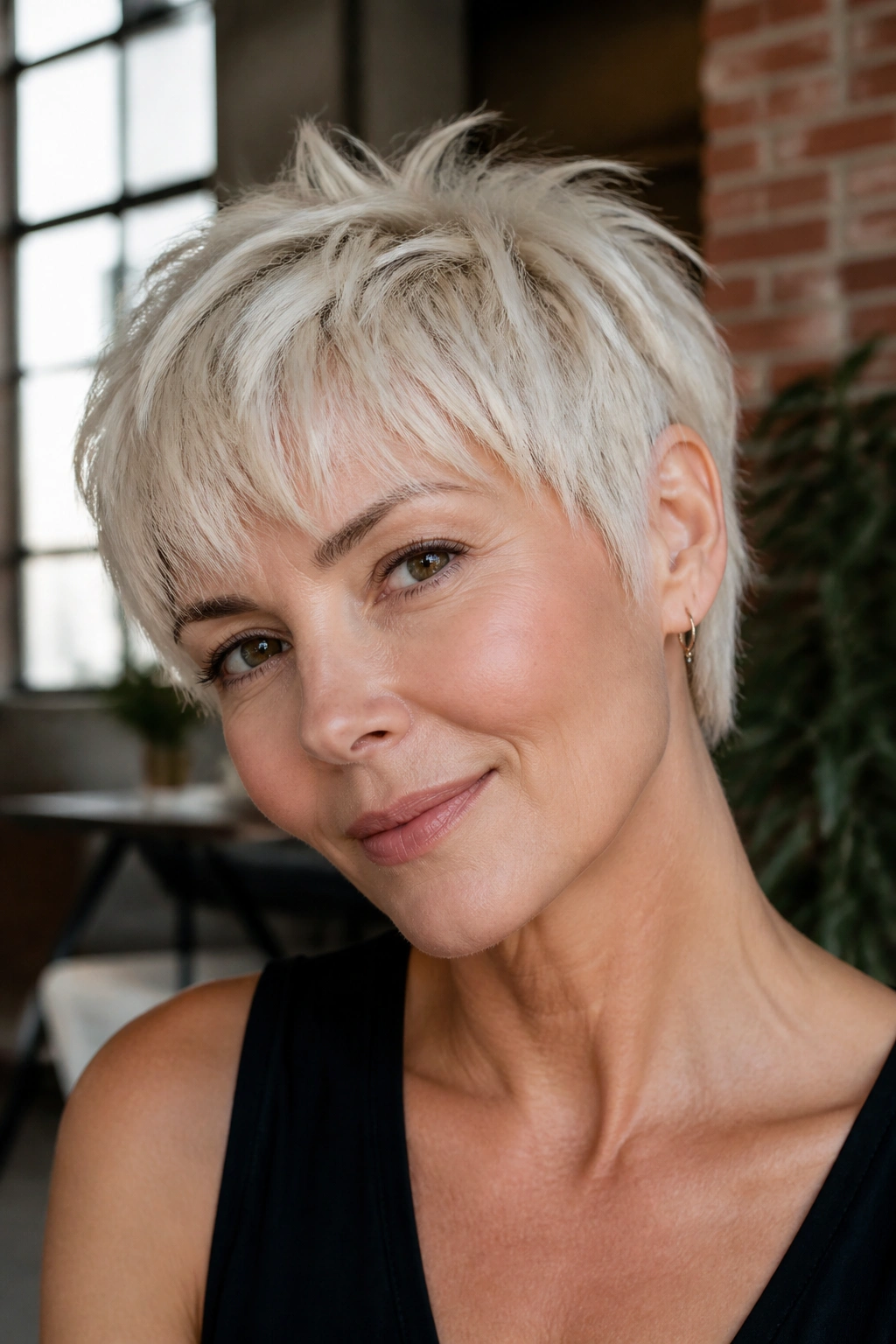
Platinum blonde and shaggy texture are a strong pair because light hair color makes every bend and separation show up more clearly. On fine hair, that can be a real advantage. The cut looks fuller, not flatter, because the lighter shade catches the eye across every broken layer.
Unlike a sleek blonde pixie, this one does not rely on shine alone. The texture is the main event. Short pieces around the crown, a little separation through the fringe, and soft, messy ends all help the haircut feel bigger than it is.
If you go this route, be honest about maintenance. Platinum hair wants toning, conditioning, and a bit of patience. Fine hair can be prone to dryness, so keep the lightening gentle and the styling products light. A creamy leave-in on the ends is enough. Heavy oils will flatten the top fast.
This is a good choice if you want your pixie to look sharp and modern without being rigid. It’s a little cooler, a little bolder, and very good at showing off cut lines.
7. Curly or Wavy Shag Pixie
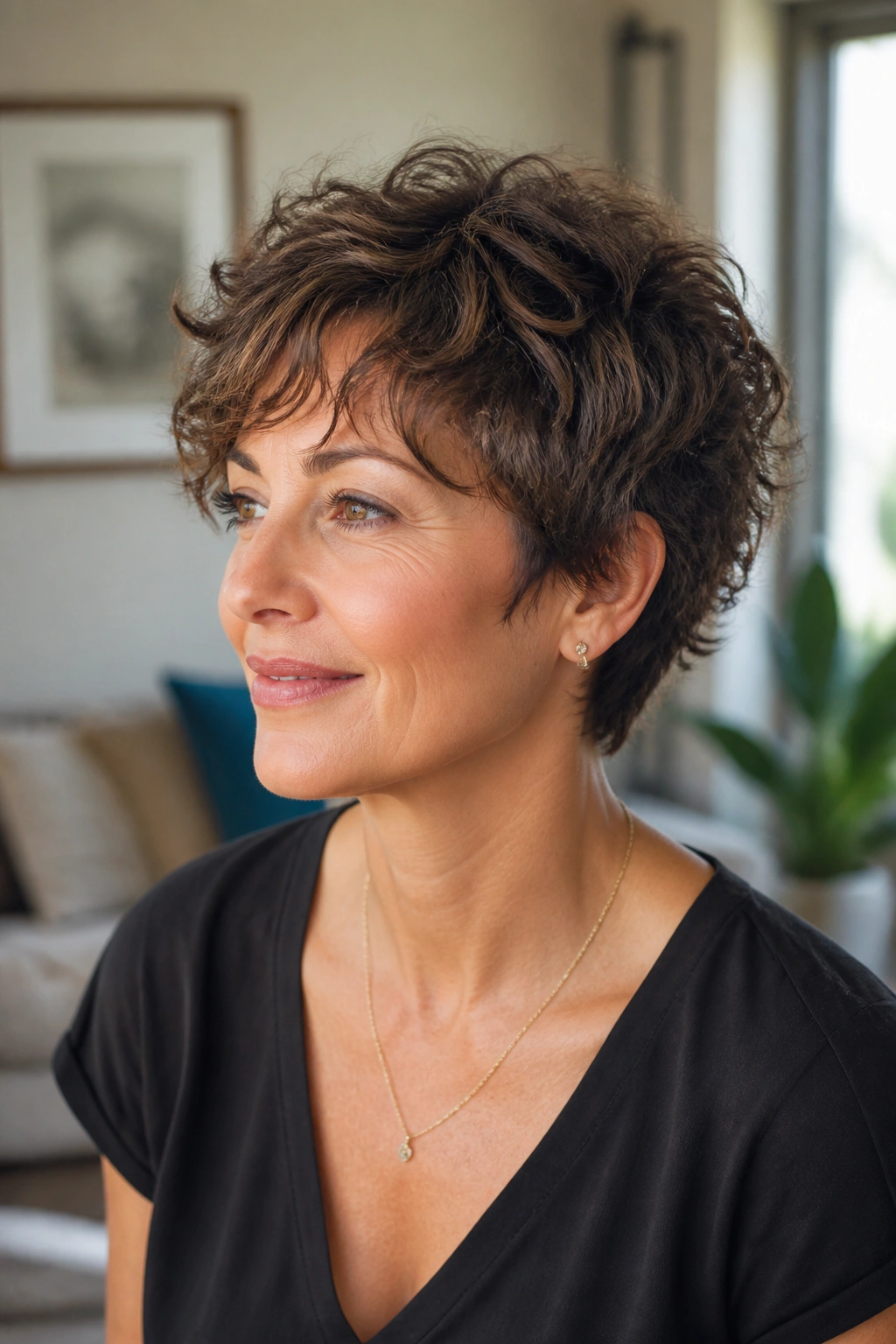
A shaggy pixie on wavy or curly fine hair behaves differently from a straight-textured cut, and that’s worth respecting. The curl gives built-in volume, while the shag layers keep the shape from turning into a triangle or a puffball.
What Changes With Texture
The shorter the top, the more likely waves will spring up, so length control matters. Keep some room at the crown and around the front so the pattern has space to sit. If the layers are cut too short, fine curls can bounce too high and lose the soft outline you want.
A light curl cream, used sparingly, is usually enough. Scrunch once, then stop fussing with it. If you keep touching fine waves while they dry, they lose their shape and separate into thin, weak pieces.
How to Style It
- Apply mousse to damp roots
- Air-dry or diffuse on low heat
- Avoid brushing once dry
- Trim every 6 weeks so the ends do not frizz out
The best part is the softness. Curly shag pixies look relaxed even when they are tidy. That’s a nice trick to have.
8. Undercut Pixie With Shaggy Top
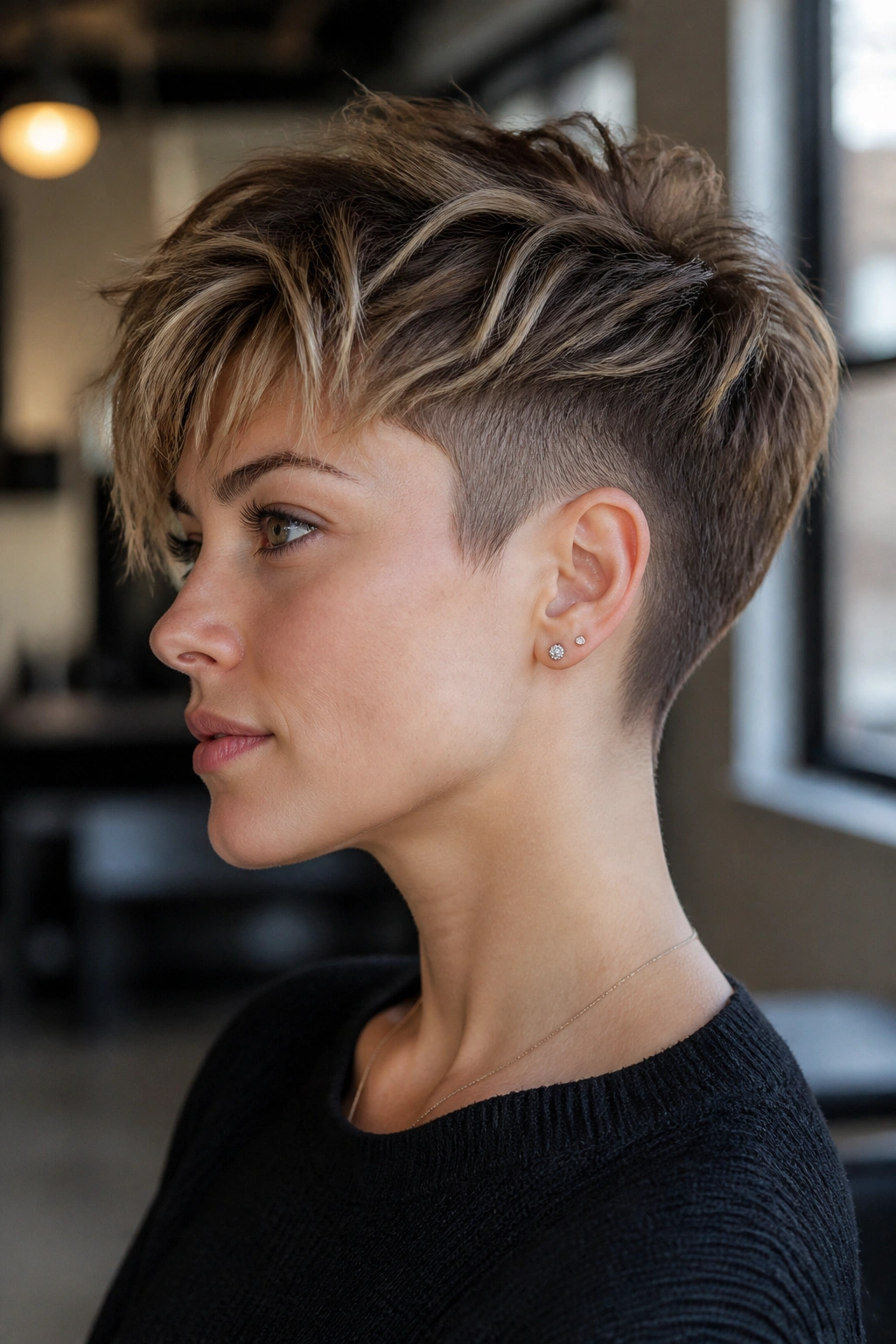
A shaggy pixie with an undercut can be a smart move when fine hair also runs dense or bulky at the sides. Removing weight underneath lets the top sit higher and move more easily. The result is cleaner, not harsher, if the top stays soft.
This is not the cut I’d hand to someone who wants maximum softness around the head. It has edge. Still, on the right person, that edge helps the top pieces stand up instead of sliding flat against the scalp. You get a stronger silhouette and less bulk where you do not need it.
The top should be the star here. Keep the fringe broken, keep the crown layered, and let the undercut hide under the longer sections. That way the style still feels shaggy rather than clipped to pieces.
This cut works well if you like a little contrast and do not mind showing some scalp at the sides when your hair shifts. It is especially handy in humid weather, when fine hair tends to expand in odd directions.
9. Long Fringe Pixie Shag
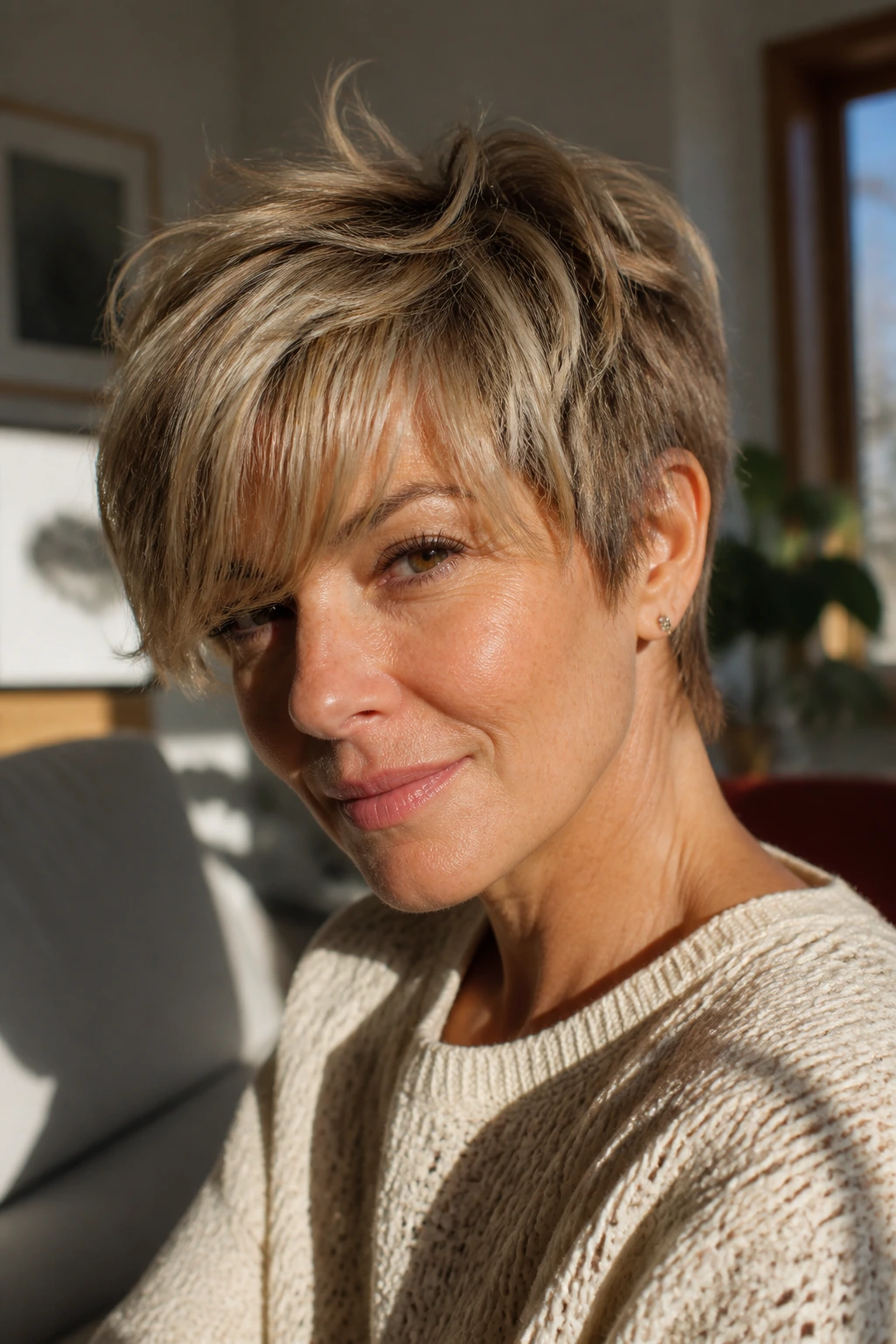
Why do long fringes work so well on fine hair? Because they give the front of the haircut a place to land. Without that length, a pixie can feel airy in a bad way, like there is not enough hair to anchor the style.
A longer fringe, usually grazing the eyebrows or sitting just below them, lets the top stay shaggy without getting too exposed. The fringe can sweep to one side, split in the center, or fall forward in soft pieces. That flexibility is half the appeal.
How to Wear It
Use a round brush only on the fringe if the rest of the cut air-dries well. That keeps the front intentional while the back stays loose. A tiny bend at the ends is usually enough. You do not want a perfect wave here; a little bend looks better.
This version is a good bridge for anyone growing out a shorter pixie. It softens the transition and makes the cut feel less abrupt. And if you are nervous about going short, this is one of the safer places to start.
10. Bedhead Pixie With Broken Layers
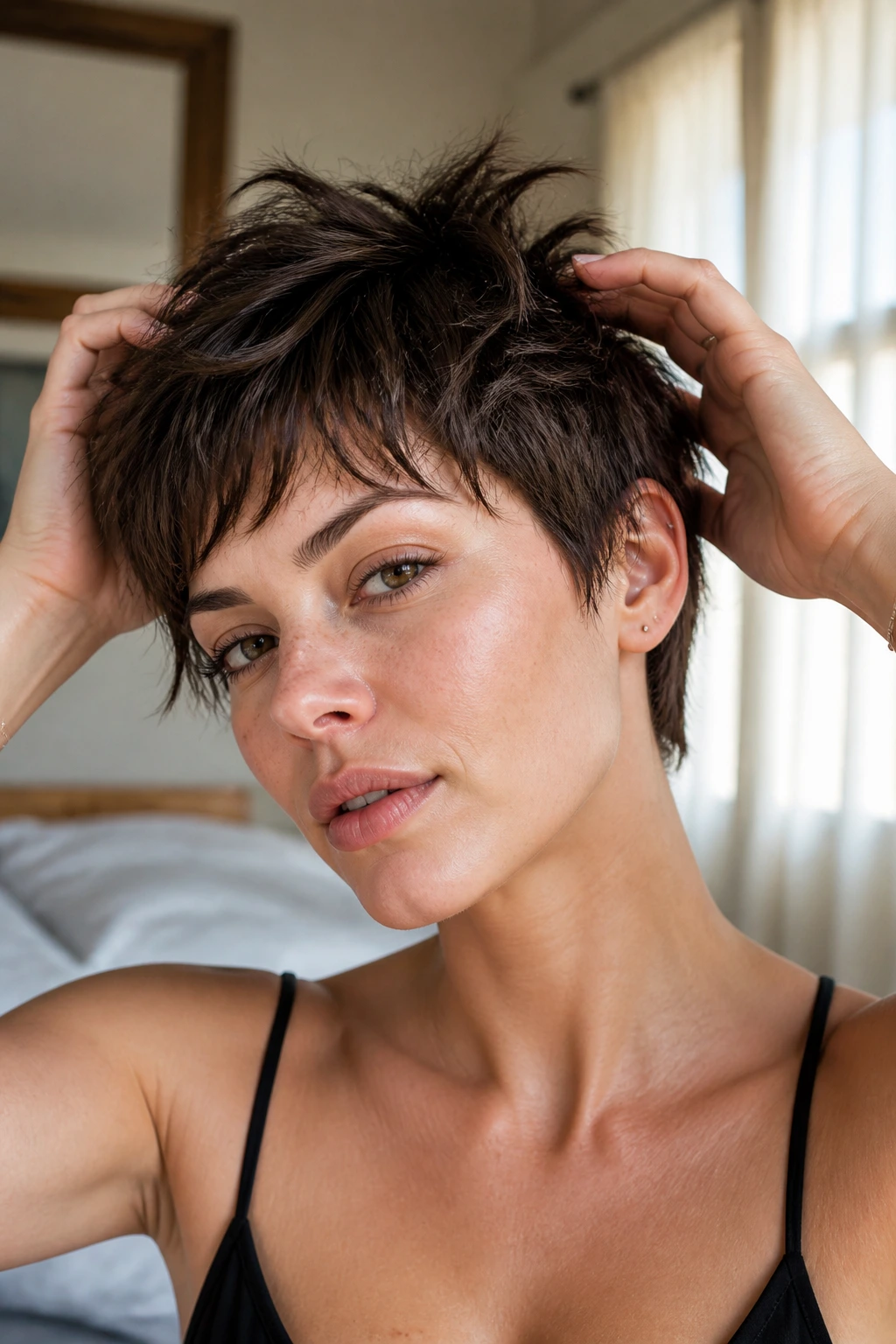
There’s a difference between messy and flat. The bedhead pixie lives in the first camp. Its layers are broken up enough to look lived-in, but not so thin that the haircut loses shape.
Think of the kind of texture that looks better after a few minutes of finger-styling than after a heavy blowout. That is the whole point. Fine hair often behaves better when it is encouraged into pieces instead of trying to become a smooth sheet.
The mechanism is simple: short, uneven layers create tiny shifts in direction, and those shifts catch the eye. The hair looks thicker because it does not all sit on one plane. Use a dry texture spray at the roots, then shake the hair loose with your hands. Stop there.
- Best for people who do not want a polished finish
- Easy to refresh on day two
- Looks best with matte products
- Can go limp fast if overloaded with cream
The charm of this cut is that it never looks overworked. That’s rare.
11. Asymmetrical Shag Pixie
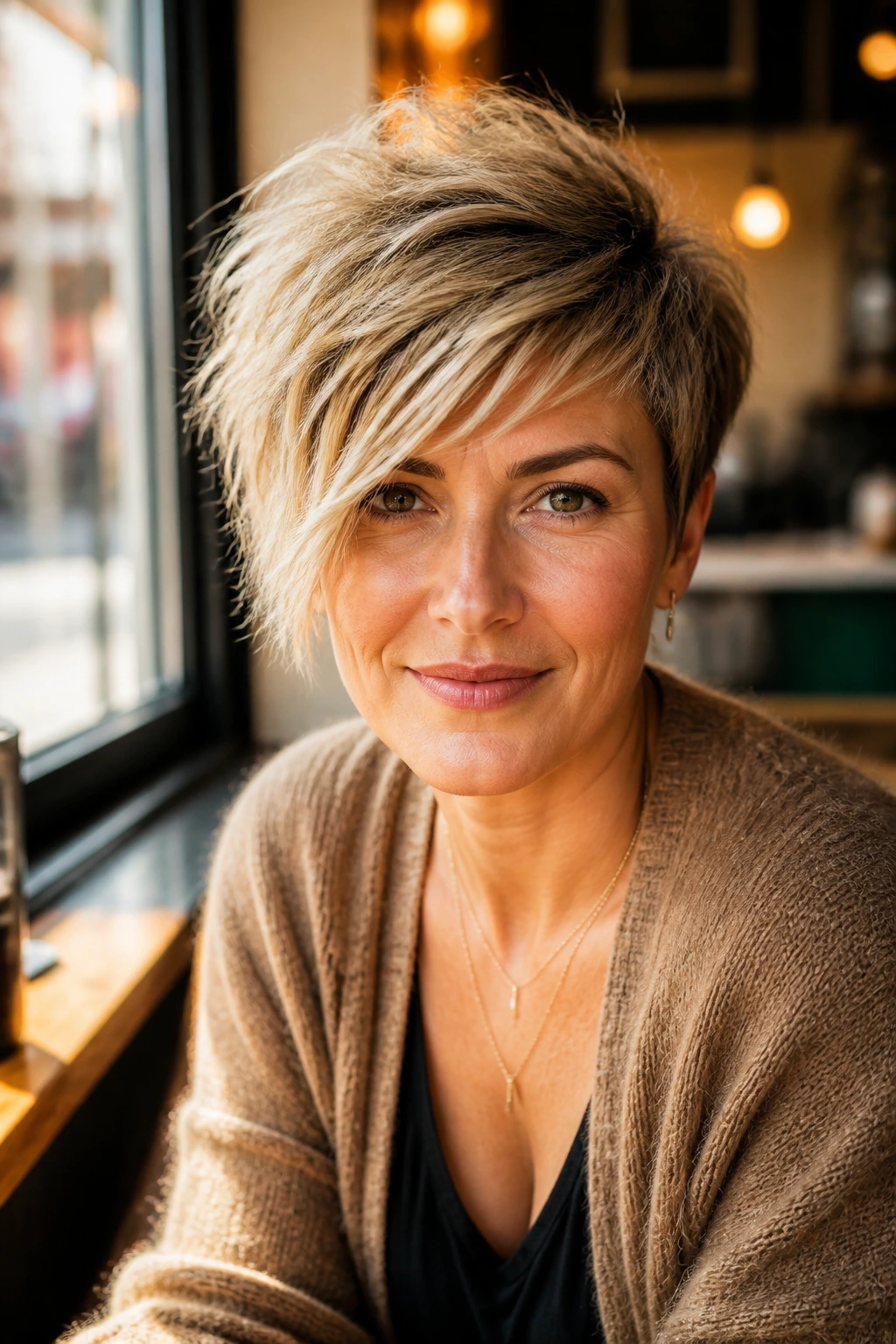
An asymmetrical shag pixie gives fine hair a built-in focal point, which is useful when the strands themselves are too light to carry much visual weight. One side sits a little longer, the fringe may sweep more heavily in one direction, and the whole cut gains movement from the imbalance.
That imbalance is not a flaw. It’s the strategy.
On fine hair, symmetry can sometimes emphasize how thin the ends are, especially if the hair has a soft density around the temple area. Asymmetry breaks that up. It lets the haircut feel more sculpted and less predictable, and that can make the hair look fuller simply because there is more to look at.
Keep the longer side textured, not blunt. If it turns into a sharp shelf, the style loses its shaggy feel. A little mess is your friend here. A lot of precision is not.
This cut suits someone who likes a bit of drama but still wants the ease of a pixie. It looks especially strong with a tucked-behind-one-ear finish.
12. Ear-Grazing Pixie With Texture
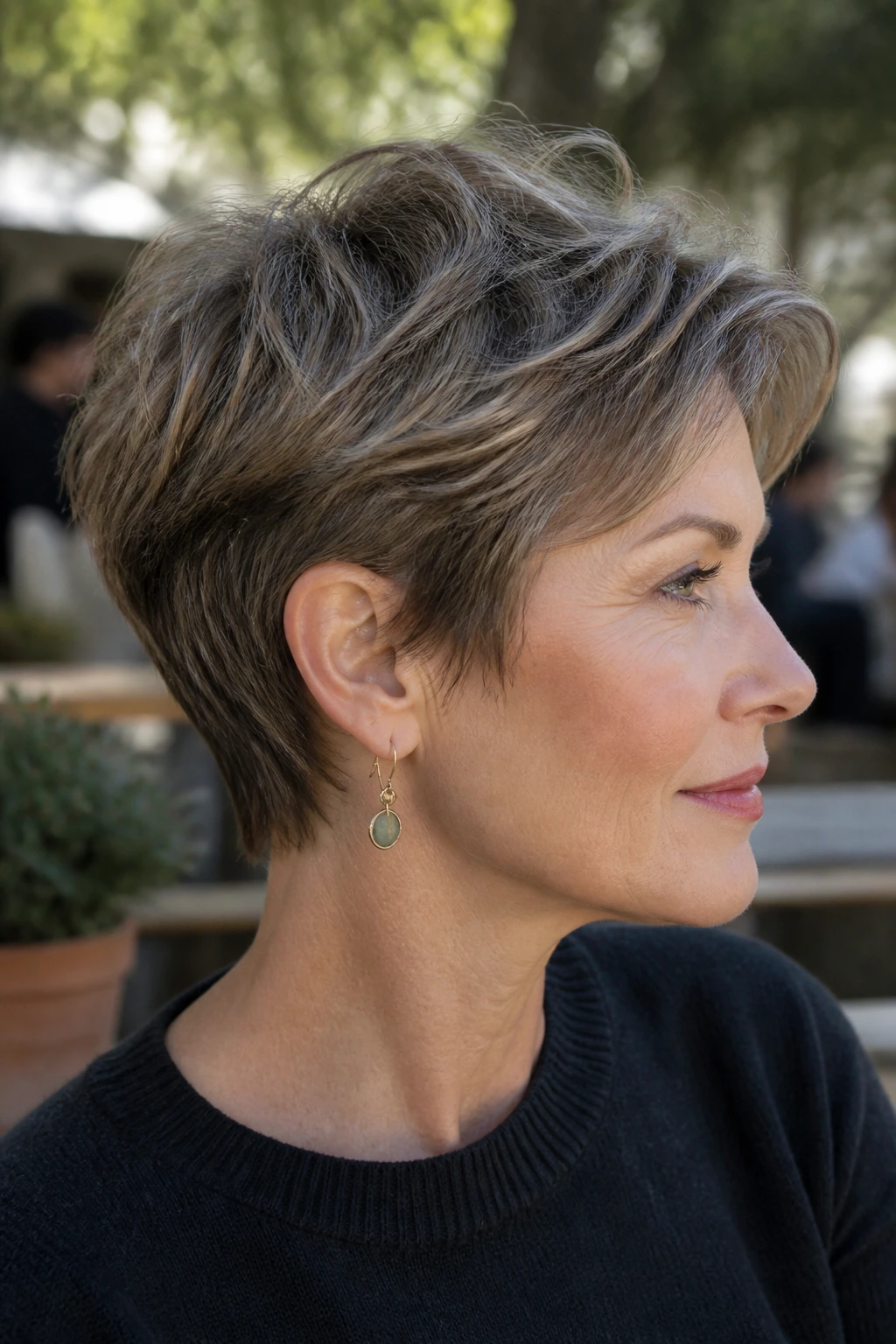
Ear-grazing lengths are a sweet spot for fine hair. They are short enough to stay light, but long enough to move and flip without exposing every sparse spot at the scalp. The result feels softer than an ultra-short crop and less fussy than a grown-out bob.
Unlike a crisp pixie that hugs the head tightly, this one keeps a little air around the sides. That makes it easier to wear if your hair naturally falls flat near the temples. The texture through the top does the work, and the slightly longer sides keep the outline from turning severe.
I like this cut for people who wear earrings a lot, because the hair and the jewelry do not fight each other. The cut sits around the ear, not on top of it, so the shape feels balanced.
If you want a fine-hair pixie that looks relaxed in daylight and still put-together at dinner, this is one of the better options. It does not try too hard. That’s part of the appeal.
13. Bixie-Shag Hybrid
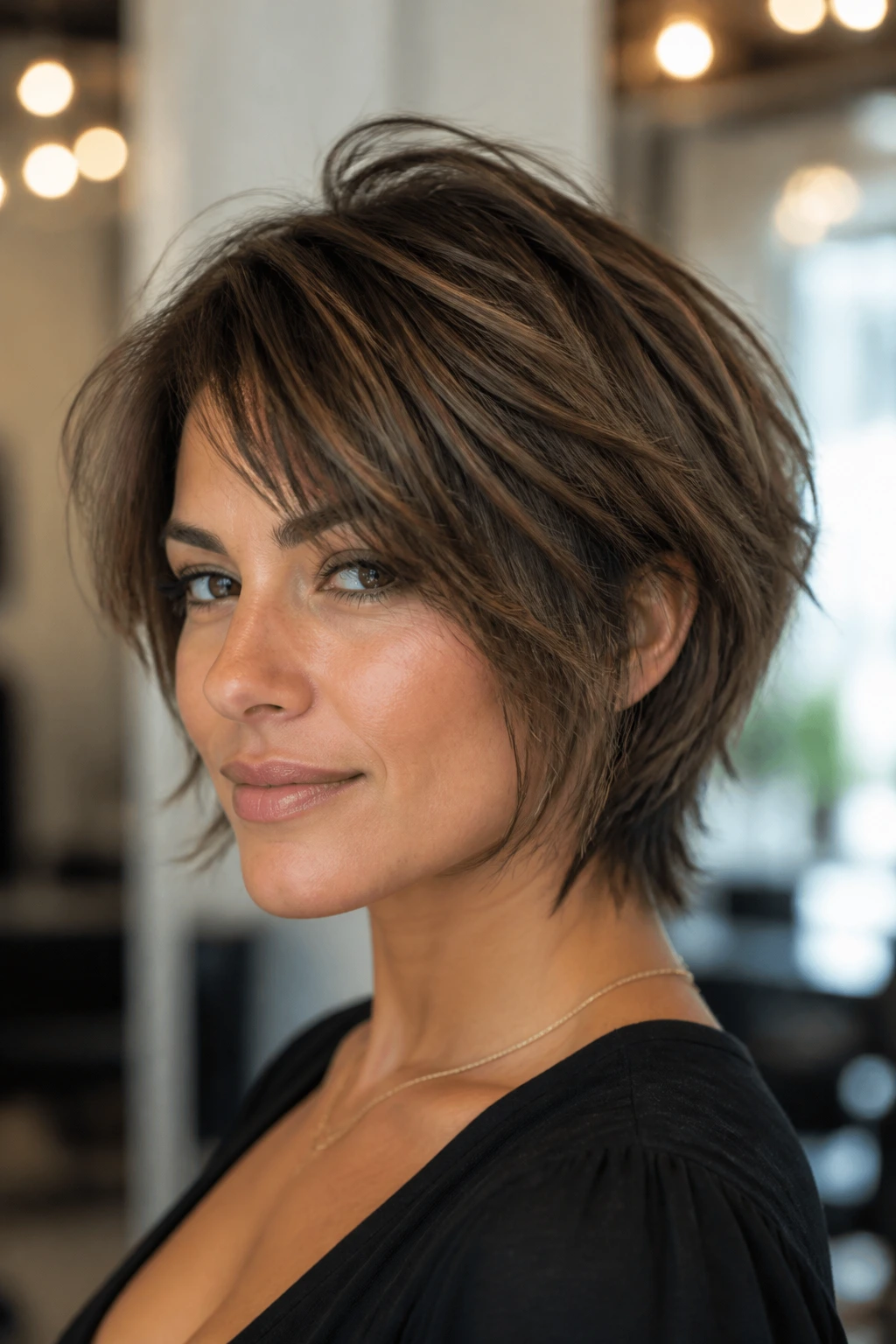
A bixie-shag hybrid sits between a pixie and a short bob, and that middle ground can be gold for fine hair. You get more length than a classic pixie, but you still keep the chopped layers and loose texture that make shag cuts work so well.
Why It Sits Between Two Cuts
The added length around the sides and nape gives fine hair a bit more visible body. At the same time, the shaggy top keeps the whole shape from feeling heavy. That balance is useful if you are nervous about going very short or if your hair tends to break up at the ends.
Ask for soft layers, not blunt ones. A blunt bixie can look boxy fast on fine strands. The shag version stays lighter and more forgiving.
Good Signs You Want This Cut
- You want some neck coverage
- You like the idea of tuckable sides
- You need a style that grows out cleanly
- You want texture without losing too much length
A bit of mousse at the roots and a rough blow-dry are usually enough. It is one of the easier shapes to live with, which is probably why so many people return to it.
14. Wispy Bangs Pixie
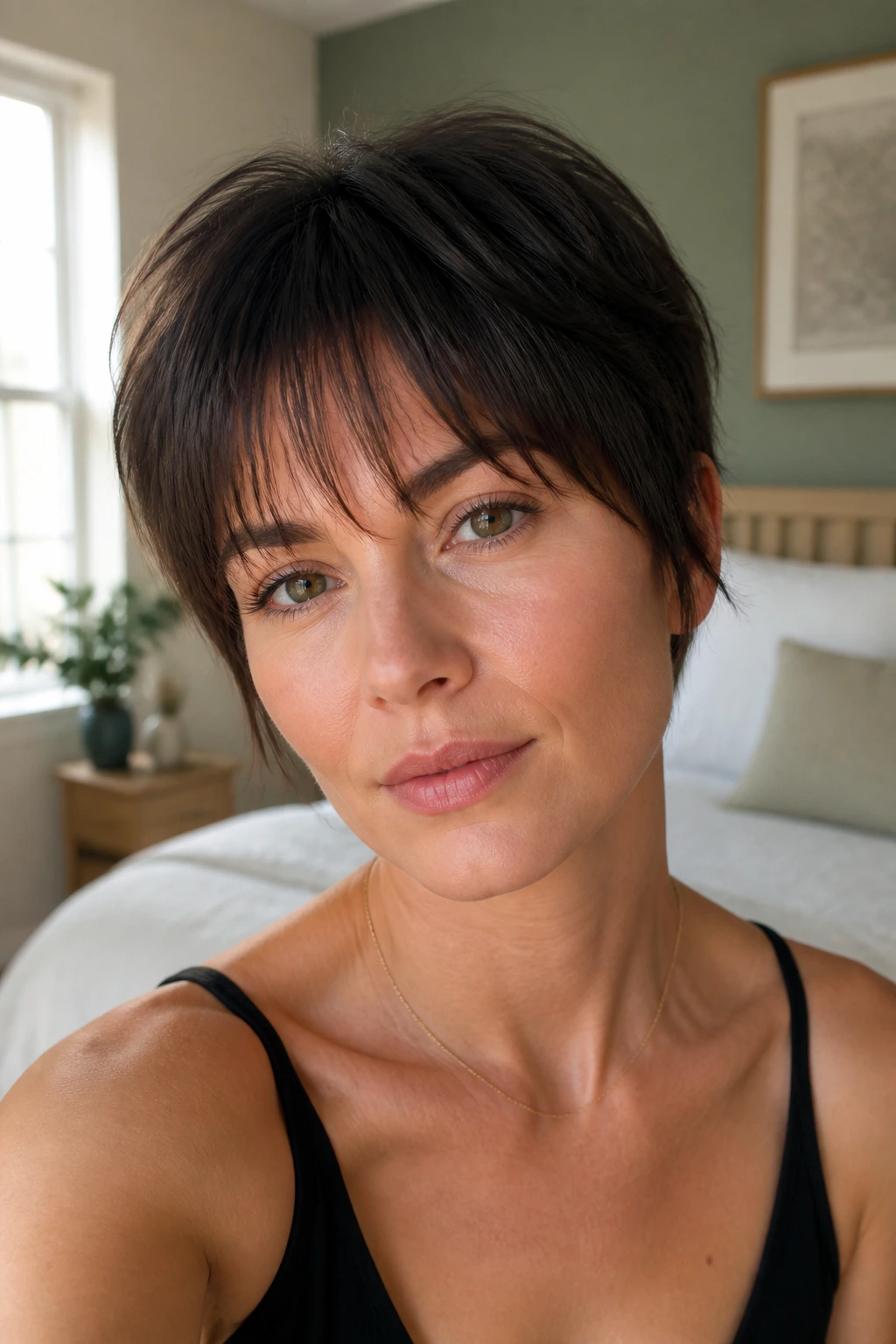
Wispy bangs can save a fine-hair pixie from looking too exposed in the front. They soften the forehead, add movement, and make the whole cut feel lighter without making it look sparse. The bangs should be thin on purpose, not accidently thin.
That distinction matters. Wispy bangs work when they are cut with intent, so they fall in little separated strands that can drift slightly left or right. If they are too short or too chopped up, they start to look see-through in a bad way.
Use a round brush or a quick finger dry to keep them soft. Let them sit a bit piecey. A tiny bit of styling cream on the tips helps, but only on the tips. If the product reaches the roots, the bangs will flatten and cling to the forehead.
This cut is especially good if you want to hide a higher hairline or if your fine hair tends to separate around the front. It keeps the focus where you want it.
15. Air-Dry Friendly Shag Pixie
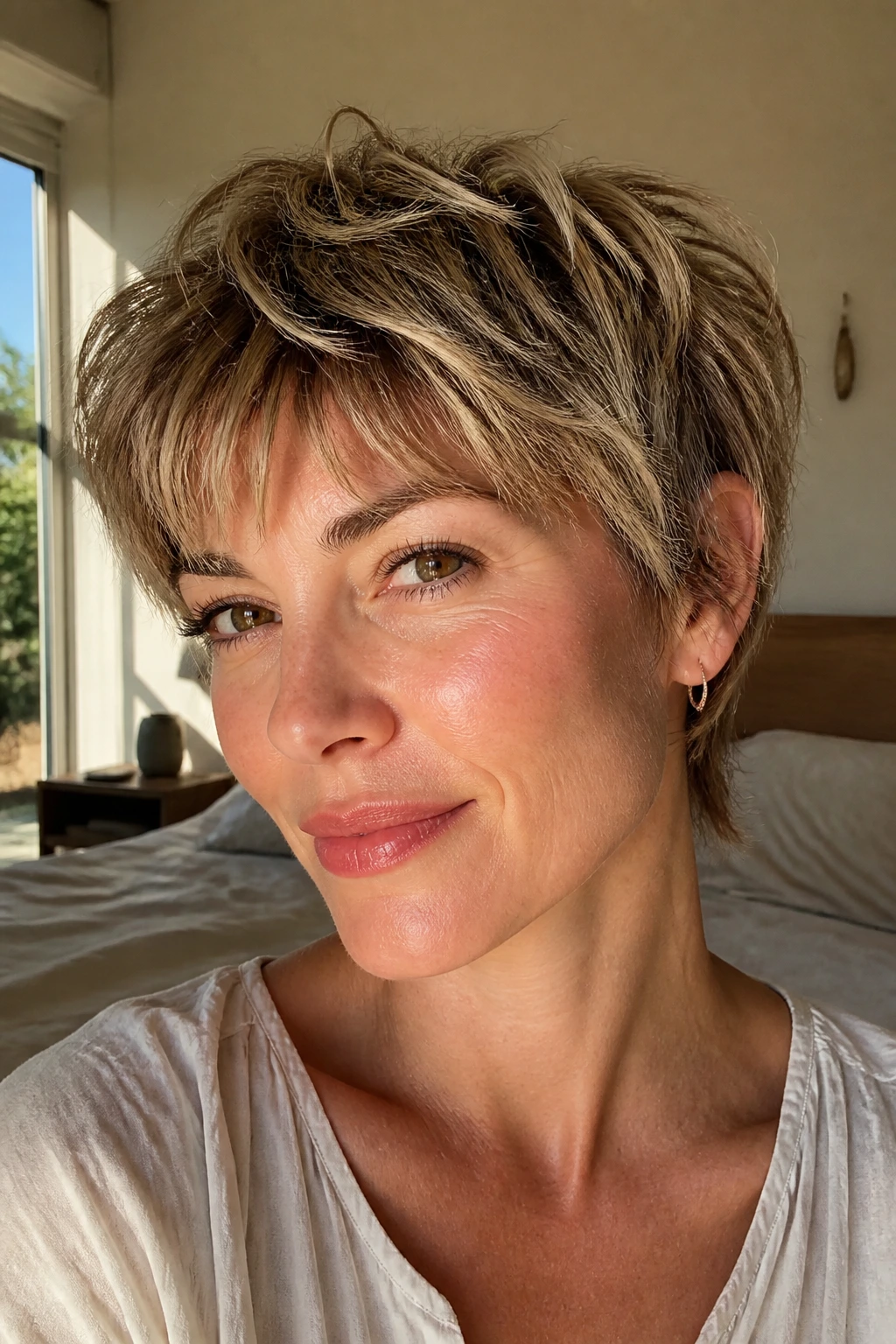
Can a shaggy pixie work without much styling? Yes, if the cut is built for it. Air-dry friendly versions rely on good internal shape, not a blow-dryer miracle. The layers need to fall into place on their own, which means the cut should be light through the top and controlled through the nape.
The best air-dry pixies have enough texture to move, but not so much thinning that they collapse as they dry. That balance is the whole game. Fine hair does better when the stylist leaves some density through the front and crown, then removes weight in the right places.
A salt-free texturizing spray or a light mousse can help, but do not pile on product. You want a little grit, not crunch. Scrunch once, shake it out, and let it dry with some part of the hair tucked behind the ear and some left loose. That uneven drying pattern can add a nice lived-in bend.
This is the cut for people who want to wash, rough-dry with a towel, and leave the house without a ten-minute battle.
16. Overgrown Pixie With Shaggy Ends
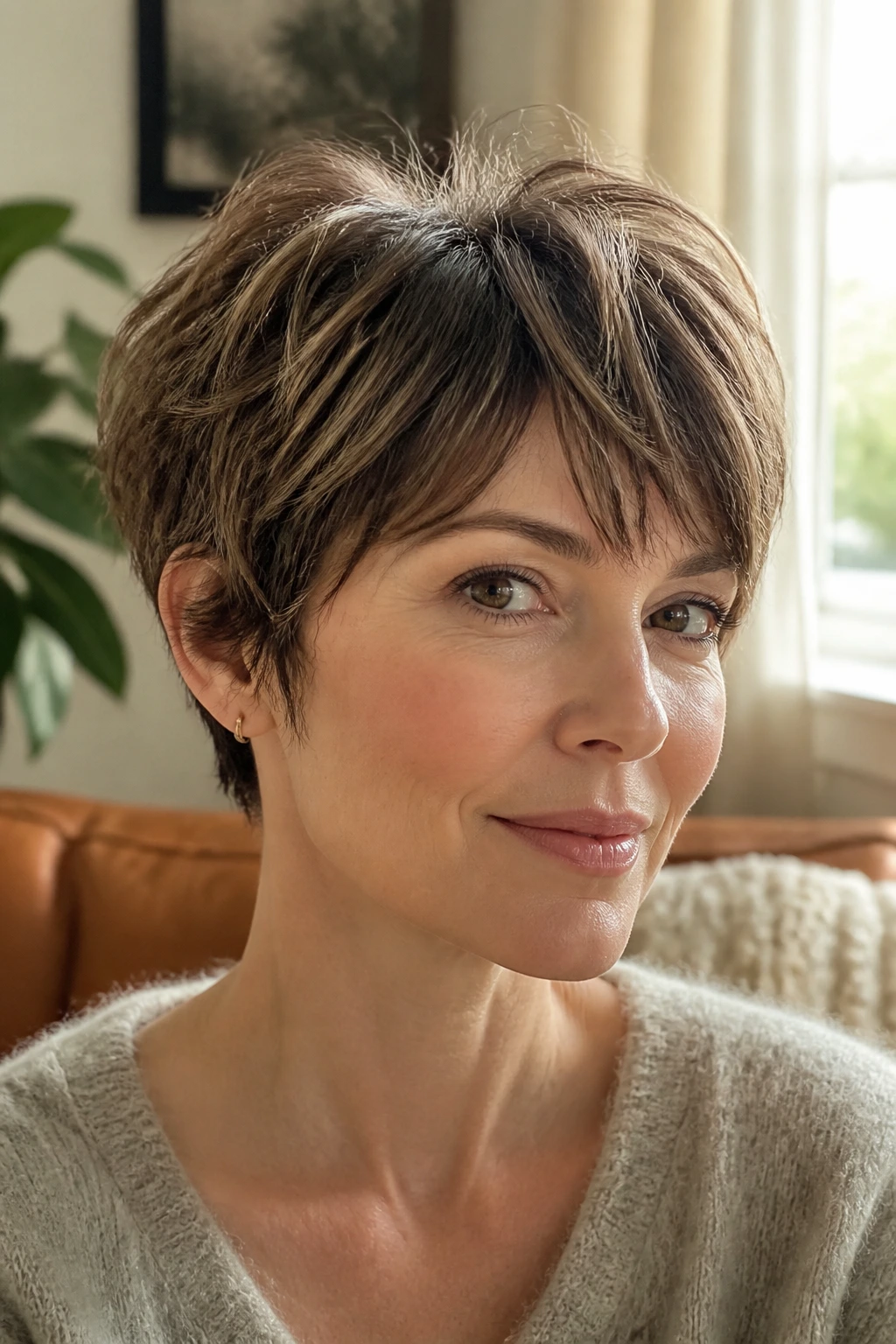
An overgrown pixie is one of those cuts that sounds awkward and often looks excellent. The length sits somewhere between a short crop and a grown-out shag, with soft ends that keep the shape from feeling boxy. For fine hair, that extra length can be a good thing because it gives the style more movement and more styling options.
The key is keeping the ends shaggy. If the haircut grows out but stays blunt, it can start to droop. If the ends stay broken and airy, the shape just looks softer. That is a much better place to be.
This style is useful for anyone who wants a pixie but does not want to visit the salon every month. It grows with a little grace. You can wear it tucked, tousled, or brushed forward. A quick mist of water and a touch of cream usually bring it back to life.
It also suits people who like a less severe outline around the face. The overgrown length softens everything a bit, which is flattering on fine hair that needs shape more than sharpness.
17. Salt-and-Pepper Shag Pixie
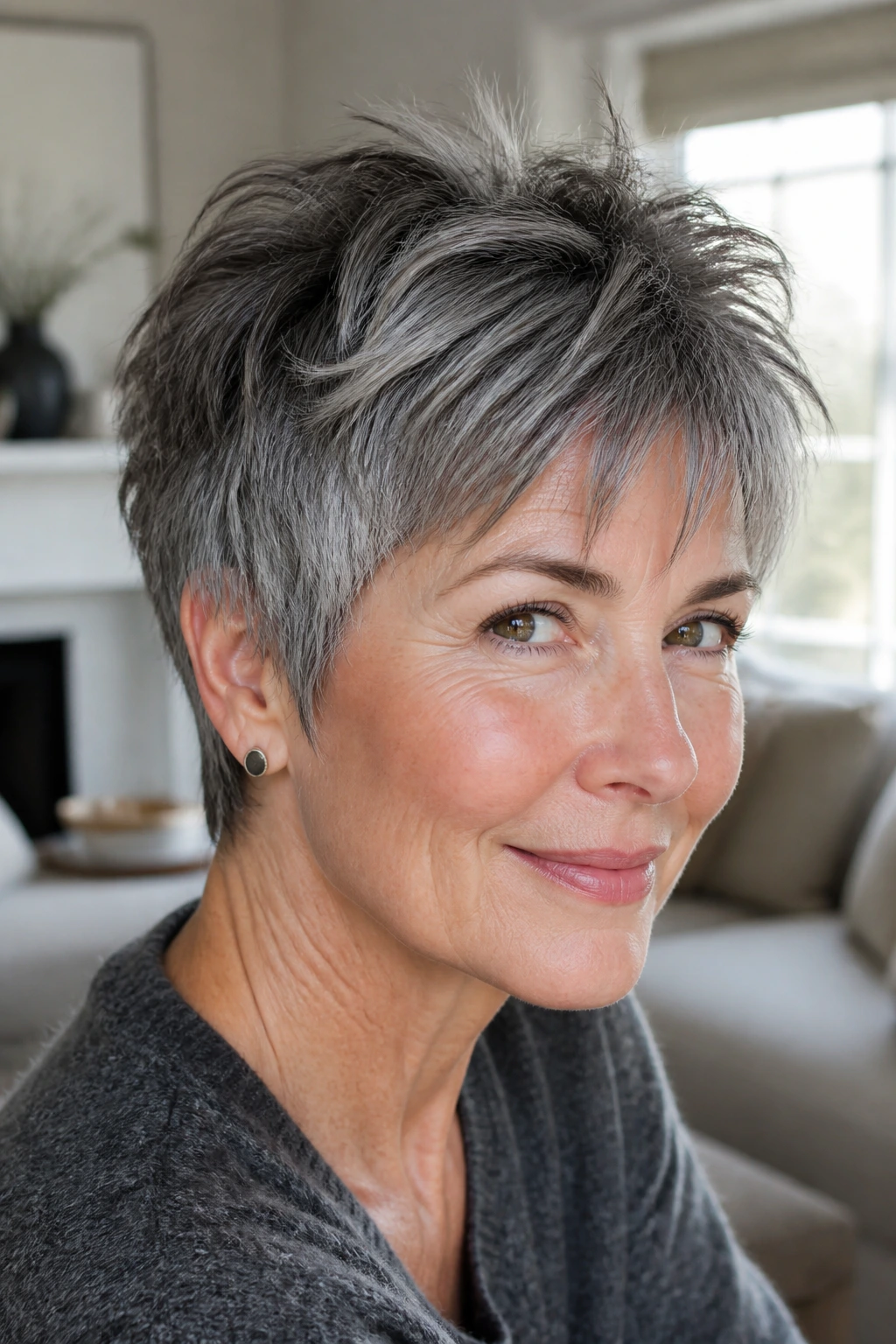
Salt-and-pepper color and shaggy texture are a strong combination because the mix of light and dark strands naturally shows off movement. On fine hair, that visual contrast can make the cut appear fuller without a lot of product or styling tricks.
This is one of those cuts that looks better when the texture is not over-managed. The silver strands catch the broken layers, the darker strands add depth, and the pixie ends up looking richer than a plain one-length crop ever could. It is especially good when the top has a little lift and the fringe stays soft.
If your hair is partially gray, do not be tempted to flatten it down with heavy smoothing creams. They blur the texture and take away the dimension that makes the cut interesting. A light cream or a dry paste is enough.
I like this version because it feels honest. It does not pretend the hair is thicker than it is. It just makes the most of the pattern already there.
18. Minimal Styling Shag Pixie
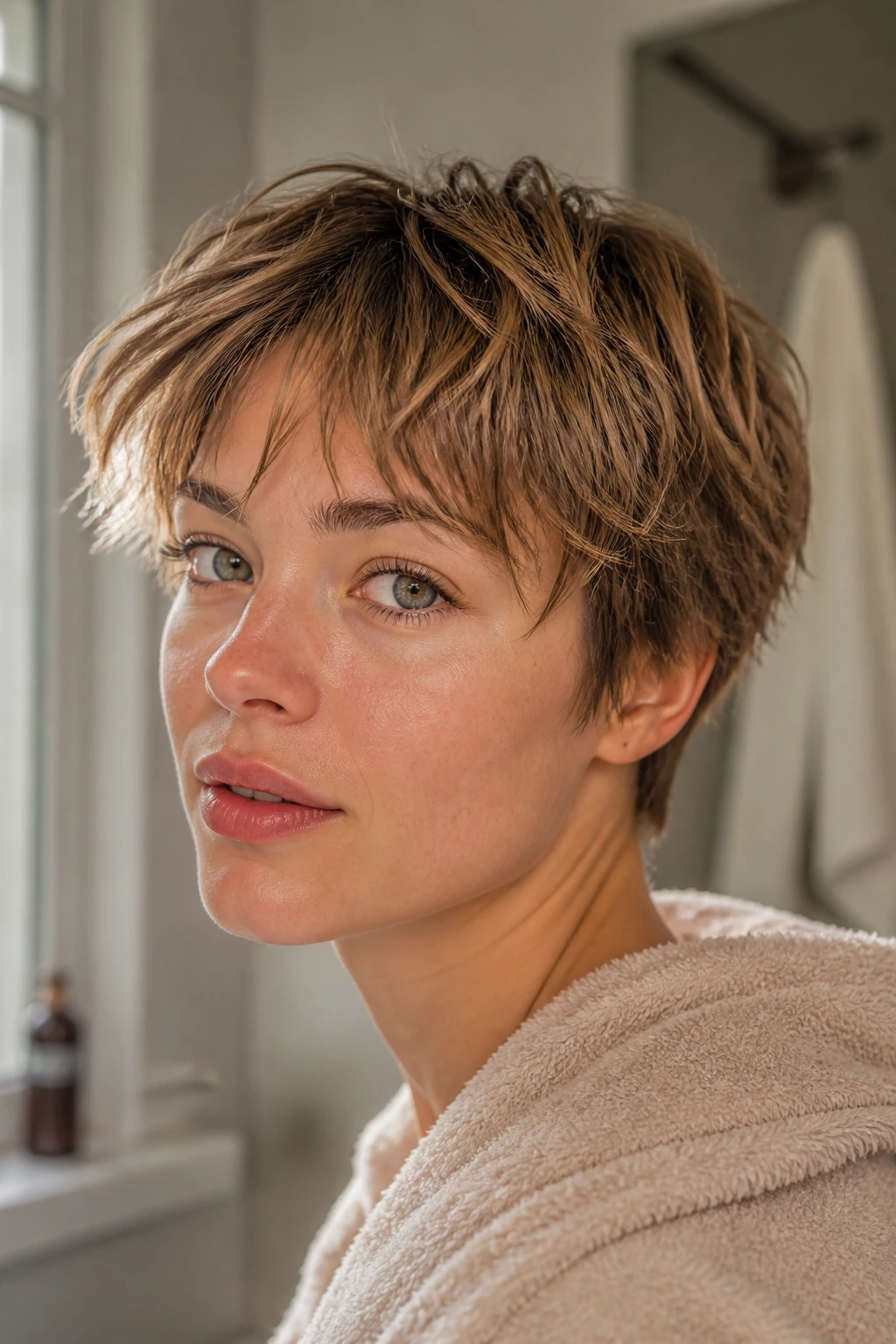
Some shaggy pixie cuts are built for styling tools. This one is built for a towel, a quick shake, and maybe 30 seconds of finger work. It keeps the layers soft, the nape tidy, and the top just long enough to move without having to be taught every morning.
That makes it a strong choice for fine hair that gets greasy fast or goes limp the minute too much product lands on it. The haircut itself does most of the work. A root spray, a little side part, and a light push at the crown are usually enough to make it look done.
If I had to name the one thing that separates a good minimal-styling pixie from a lazy one, it would be the ends. They need to be broken and soft, not blunt. Blunt ends sit there. Soft ends move.
This is the version to choose if you want a pixie that fits real life, not a photo shoot. It has shape. It has ease. And on fine hair, that combination is hard to beat.
A shaggy pixie only works when the cut leaves room for the hair to breathe. Fine strands need that room more than most, which is why the right layers matter so much more than the exact product or the exact part.
If you are torn between two versions, choose the one with a softer crown and less thinning through the ends. That keeps the hair looking fuller for longer, and honestly, it is easier to live with.
