



Round faces and short pixie cuts get along better than people think, but the haircut has to do a little work. If every line sits at the same level, the face can read wider and shorter than it really is. Once you add a side part, a bit of height, or a slim edge around the cheekbone, the whole shape changes.
That’s the part most people miss. A flattering pixie for a round face is not about hiding your features. It’s about giving the eye somewhere to travel. Diagonal lines help. So do tapered sides, lifted roots, and a little asymmetry. Even a tiny shift in where the fringe lands can make the cut feel sharper, lighter, and more intentional.
Hair texture matters too. Fine hair usually needs root lift and airy ends. Thick hair needs bulk removed from the interior so the sides do not puff out. Curly hair wants shape control more than length control, which is a different game entirely. And if you wear glasses, the right fringe can keep the haircut from crowding your face.
The 18 short pixie cuts below use those tricks in different ways. Some are soft. Some are crisp. A few have a little attitude, which I always think is the fun part. Pick the one that fits how much styling you’re willing to do before coffee.
1. Deep Side-Part Pixie for Round Faces
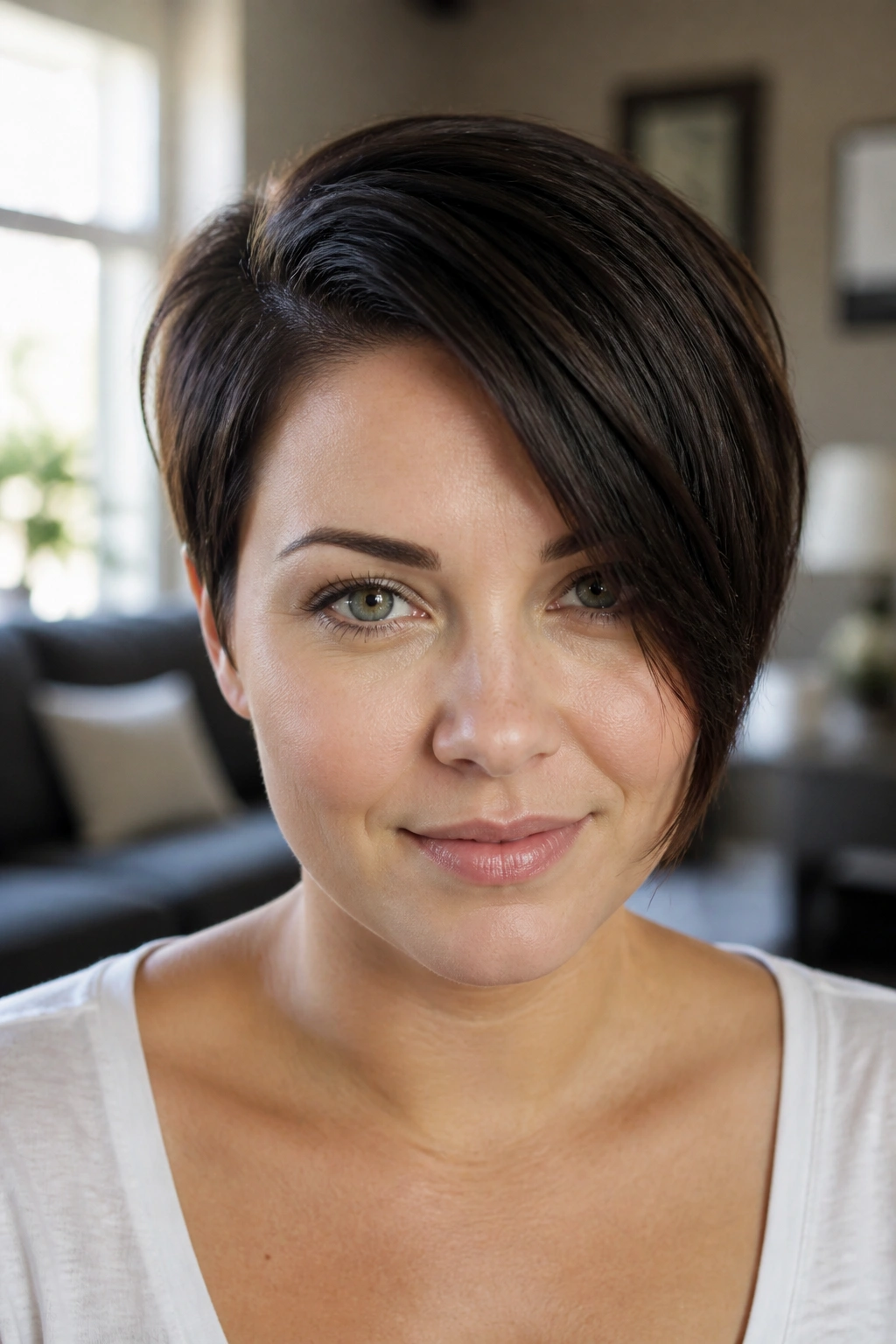
A deep side part is one of the simplest ways to make a pixie feel leaner on a round face. It pulls the eye off center, breaks up symmetry, and gives the front of the cut a longer line without adding much extra hair.
The trick is placement. Part it close to the arch of one eyebrow, not in the middle of the head. Keep the heavier side sweeping across the forehead and stopping somewhere near the upper cheekbone. That little diagonal line does a lot of work.
Why It Works
A round face already has soft curves, so the haircut benefits from a little structure. A deep side part adds that structure without making the style stiff.
- Ask for a longer front piece on one side, usually 2 to 3 inches.
- Keep the opposite side tighter near the temple and ear.
- Blow-dry the roots away from the face with a small round brush.
- Finish with a pea-sized bit of matte paste on the ends, not the roots.
One small warning: if the fringe gets too heavy, the cut can collapse forward and make the face look shorter. Keep the front airy.
2. Crown-Lifted Textured Pixie
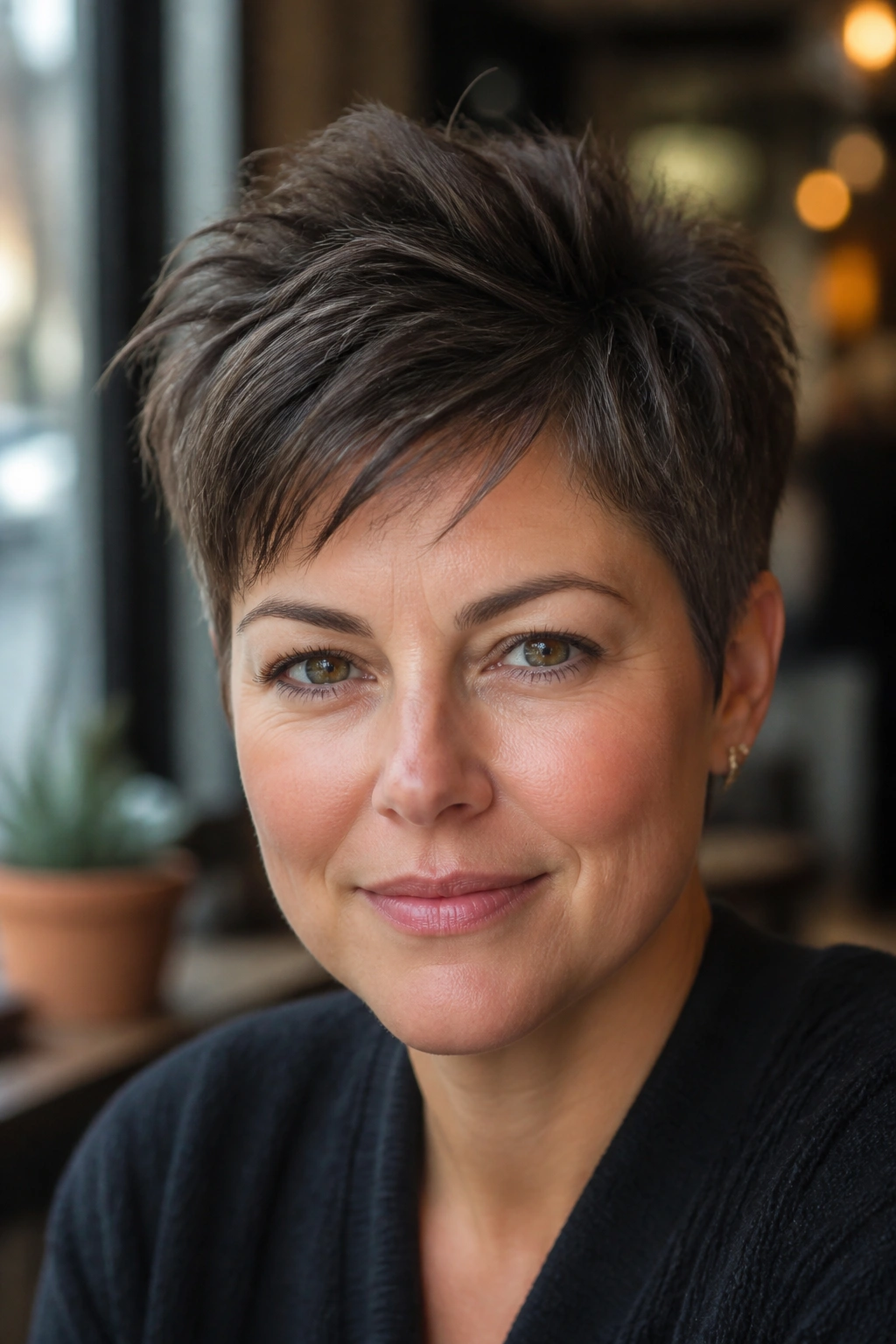
Height at the crown does more for a round face than extra length at the sides ever will. That’s why this cut keeps the sides neat and puts the energy on top, where it creates a longer visual line.
The texture is the whole point. You want a piecey top, not a smooth cap of hair. A little separation keeps the style from looking flat or overly tidy. I like this one on fine hair because the lift makes the strands look fuller without turning the cut bulky.
A root spray before blow-drying helps a lot. Direct the front upward with your fingers, then bend the top slightly forward at the last minute so it doesn’t look like a helmet. That small move keeps the shape soft and modern.
If your hair is thick, ask for internal layering. If it’s fine, leave some weight through the front so the pieces do not stick straight up. The goal is height with control. Not chaos.
3. Tapered Nape Pixie with Long Top Layers
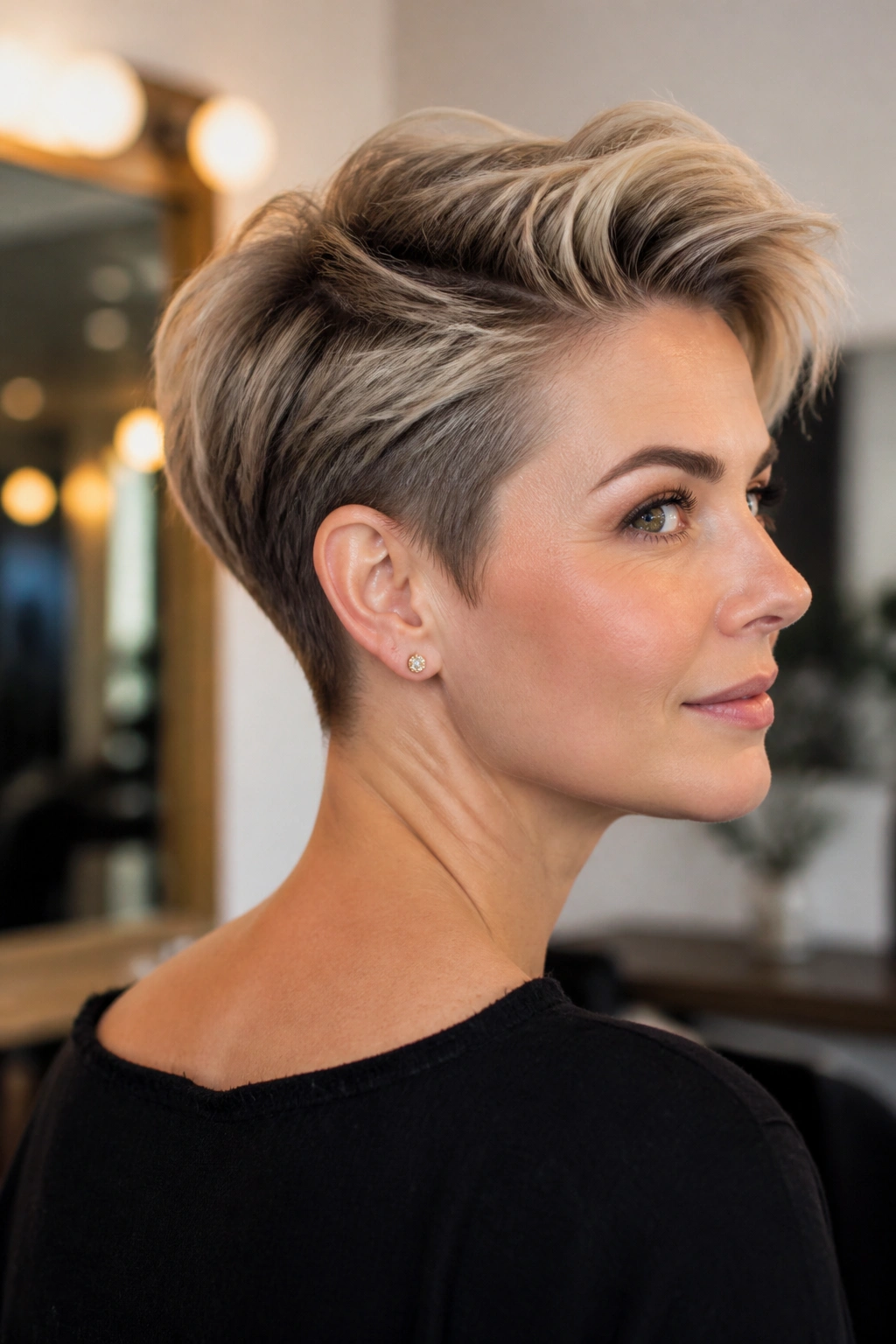
If your hair grows out fast and you hate a boxy back view, this one behaves. The nape is cut close and clean, while the top stays long enough to sweep, flip, or lightly spike depending on your mood.
That contrast matters on a round face. The short back removes bulk where you do not need it, and the longer top draws the eye upward. It also makes the neck look a little longer, which is always useful when the face shape is soft and full.
How to Style It
Use a blow dryer and your fingers first. Brush the top up and slightly forward while the roots are still warm.
- Keep the crown around 3 to 4 inches if you want lift.
- Leave the nape very tight, but not shaved unless you want a stronger edge.
- Use a light mousse for grip, then a dab of paste to separate the ends.
- Ask for soft graduation around the back so the cut grows out neatly.
A little contrast goes a long way here. Too much, and the style starts looking harsh. Just enough, and it feels crisp.
4. Side-Swept Fringe Pixie
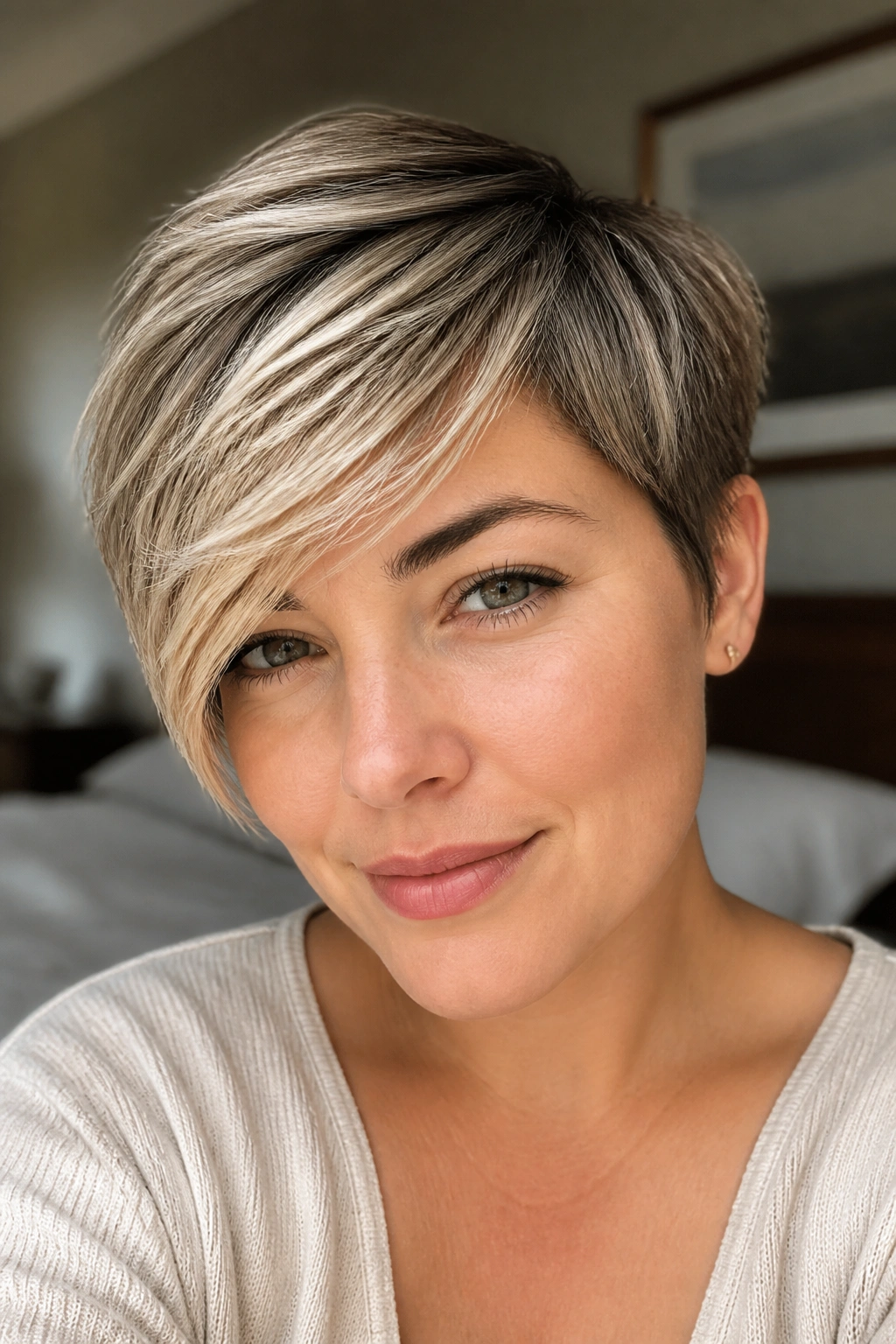
A side fringe is the haircut version of a good angle in a photo. It changes everything without asking for a dramatic chop. On a round face, that slanted front edge breaks the curve and gives the style a cleaner line.
I like this one for anyone who wants to keep some softness around the forehead. The fringe should start longer near the part and taper as it crosses the face. Keep it light at the ends. Heavy bangs are the trap here.
The side-swept shape also gives you room to play. You can tuck one side behind the ear, let the fringe drop loose, or push it back with a little styling cream. That flexibility makes it easier to live with on busy mornings.
If your cheeks are fuller, ask that the longest point of the fringe land just above the cheekbone. That tiny adjustment keeps the eye moving vertically instead of stopping at the widest part of the face. Small detail. Big payoff.
5. Curly Pixie with Soft Layers
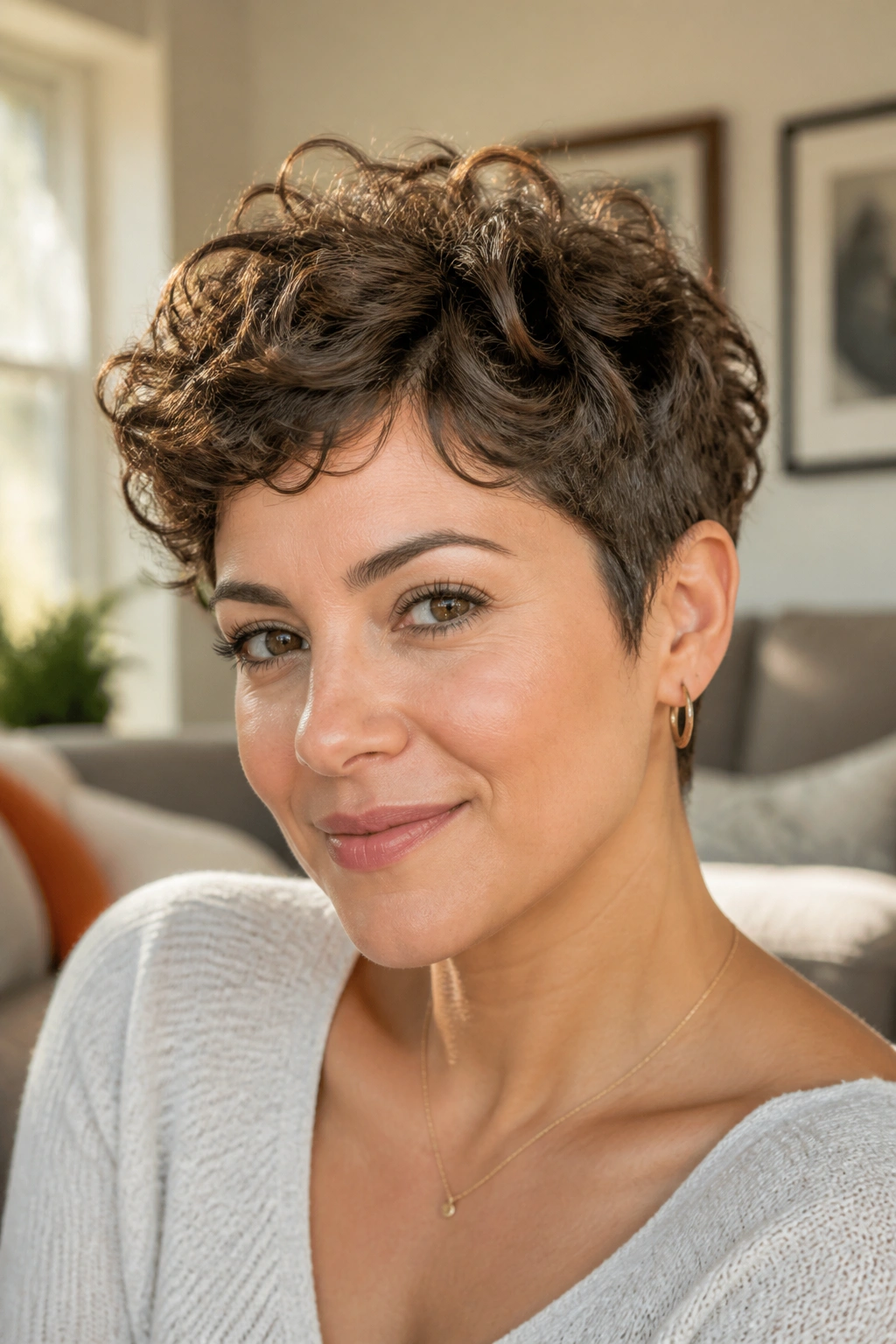
Curly hair can look incredible in a pixie on a round face, but the shape has to be handled with care. The wrong cut turns into a puffball fast. The right one feels airy, lifted, and full of movement.
Soft layers are the key. They remove weight from the bulkier parts of the curl pattern and let the curls sit where they want to sit. I prefer a little more length on top and around the front, with the sides nudged in close enough to keep the outline tidy.
There’s a sweet spot between too much control and not enough. If the cut is too tight, the curls spring up and widen the face. If it’s too loose, the whole thing loses shape. The better option is a controlled halo around the head with a clean nape and temples.
Use curl cream on damp hair, then scrunch in a small amount of gel. Diffuse on low heat or let it air-dry, but do not keep touching it once it starts setting. That’s how you get frizz and lose the shape you paid for.
6. Feathered Pixie with Wispy Ends
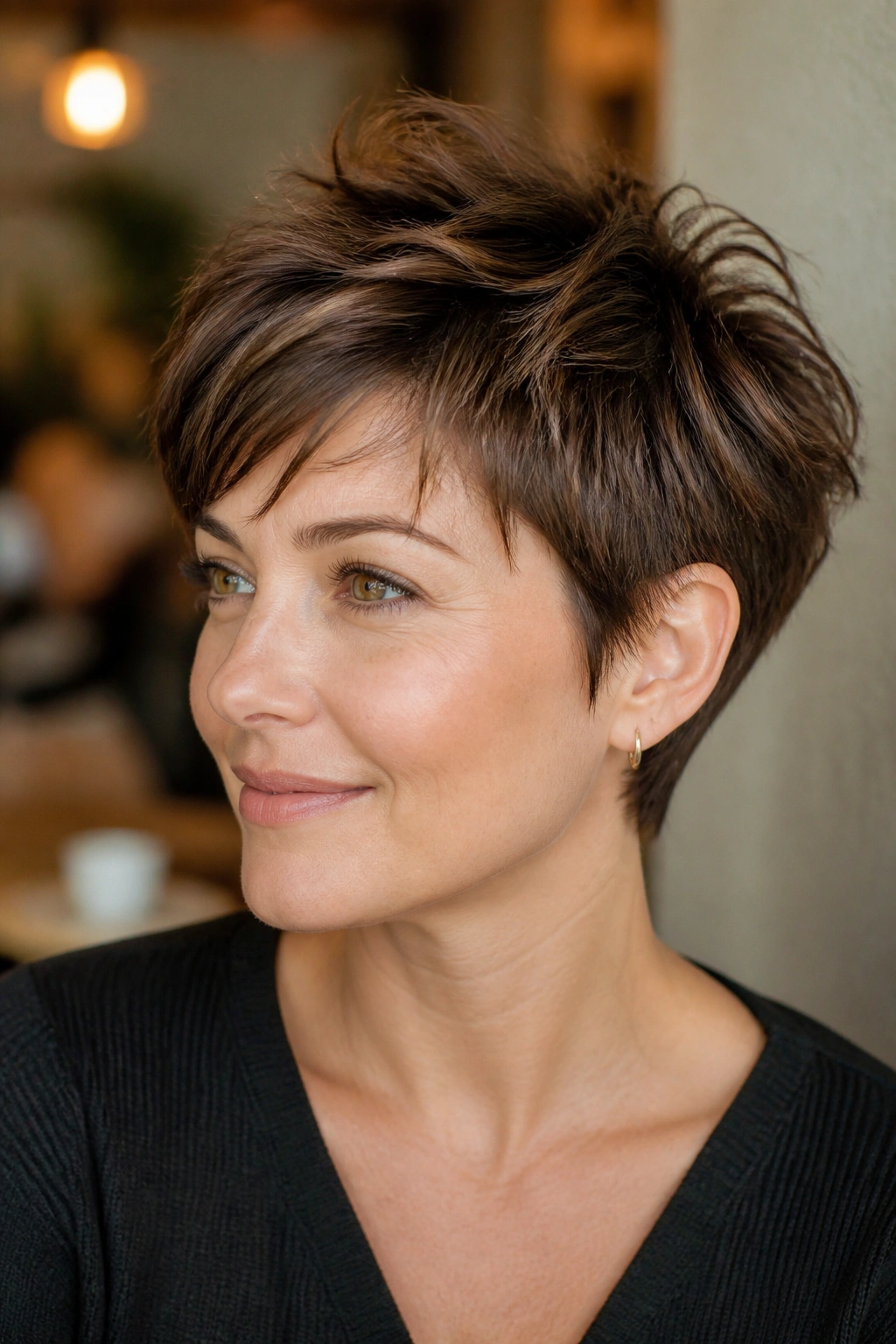
Unlike blunt pixies, feathered cuts soften the edges just enough to keep a round face from looking boxed in. The ends are sliced or point-cut so they flutter instead of sitting as one hard line.
This is one of my favorite options for thick hair. Thick hair loves to spread out at the sides, and feathering takes some of that weight away. The result is lighter at the temples and cleaner around the ears, which helps the face feel a little more oval.
The styling is simple. Dry the hair in the direction you want the pieces to fall, then use a small amount of wax or paste to flick a few ends outward and leave the rest soft. Don’t overwork it. Feathered cuts lose their charm when every strand is pushed into place.
If you want a cut that feels feminine without going sweet, this one hits that note well. It has movement, not mush. That matters.
7. Shaggy Pixie Crop with Choppy Crown Pieces
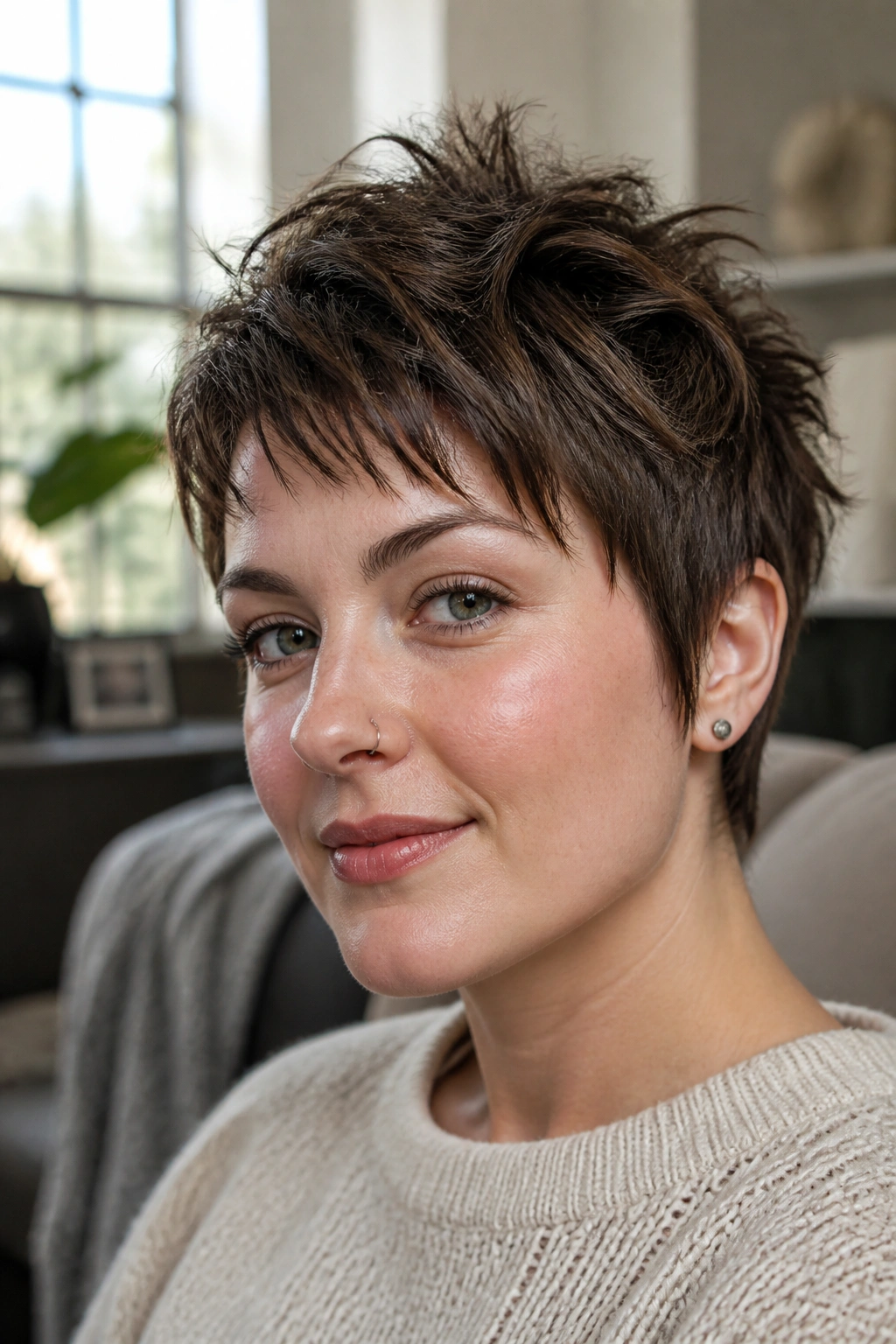
Can a messy pixie flatter a round face? Yes, if the mess is controlled. The shaggy crop works because it breaks up the circle with irregular texture and a little lift through the crown.
Ask your stylist for choppy, disconnected layers on top and softer edges through the sides. You want the top to look piecey, almost like it was roughed up with your fingers on purpose. The sides should stay close enough to keep the shape from ballooning out.
What to Ask For
- Shorter, uneven layers at the crown for movement.
- Lightly thinned sides so they do not puff at the cheeks.
- A fringe that can fall forward or sweep sideways.
- Texturizing shears used sparingly, not hacked through the whole head.
The nice part about this cut is the second-day hair. A little dry shampoo wakes it up fast, and the texture tends to look better after it has been lived in for a few hours. Freshly washed hair can be too slippery for it, which is one of those details people only learn after wearing the cut for a while.
8. Slicked-Back Pixie with a Matte Finish
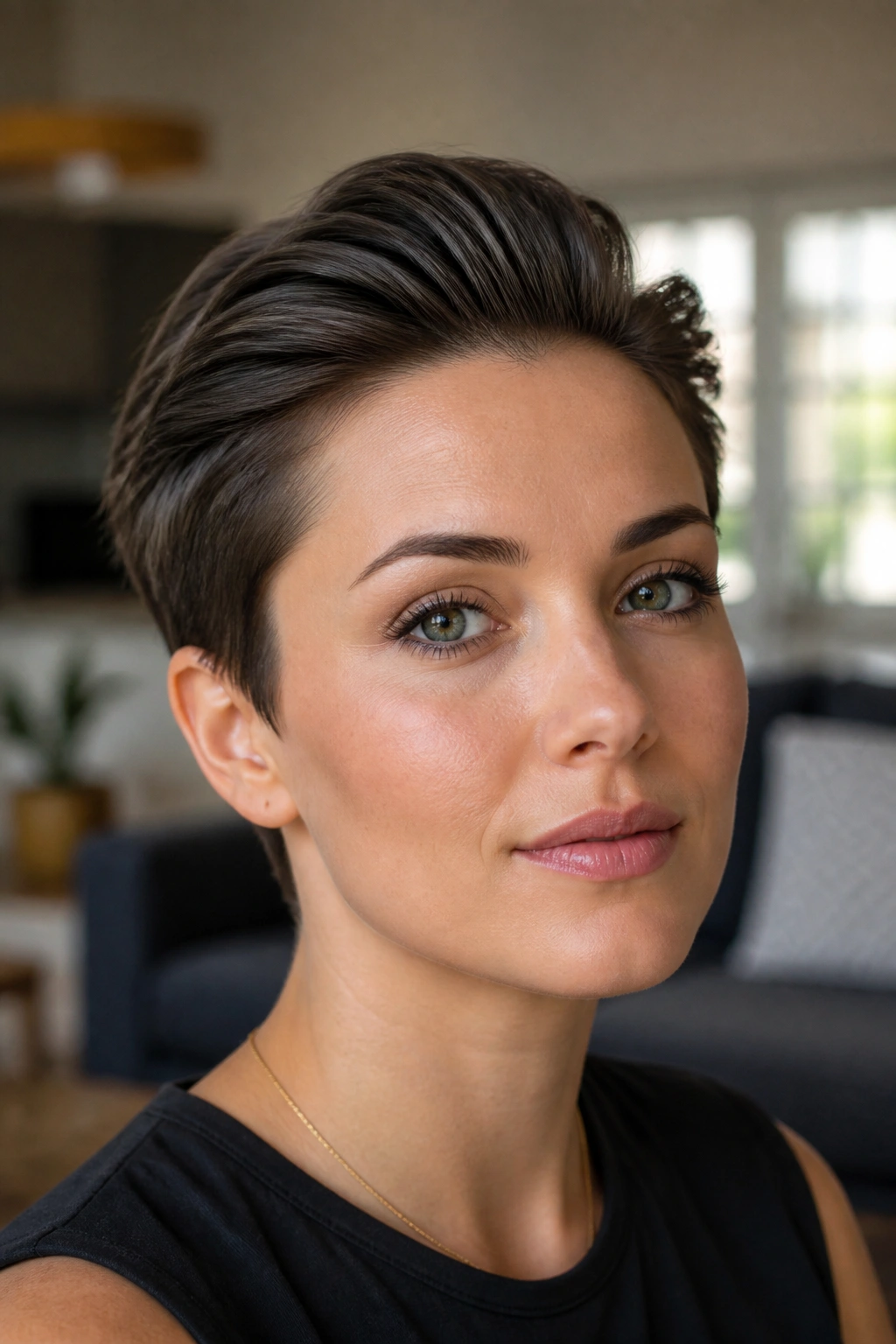
A slicked-back pixie is sharper than most people expect, and that sharpness works well on a round face. It clears the forehead, stretches the face visually, and shows off the cheekbones instead of sitting on top of them.
The matte finish matters. Shine can look sleek, but too much of it can make the cut feel wet and a little severe. A matte paste or cream gives hold without the plastic look. You can still see the texture, which is the part that keeps this style from going flat.
Start with damp hair and brush it back with your fingers or a wide comb. Push the roots up at the front for a touch of lift, then flatten the sides close to the head. If you want a softer version, leave a tiny bit of bend at the front hairline.
This cut is not timid. That’s the appeal. It has a clean, decisive shape that makes a round face look less circular and a lot more deliberate.
9. Baby-Bang Pixie with Tapered Sides for Round Faces
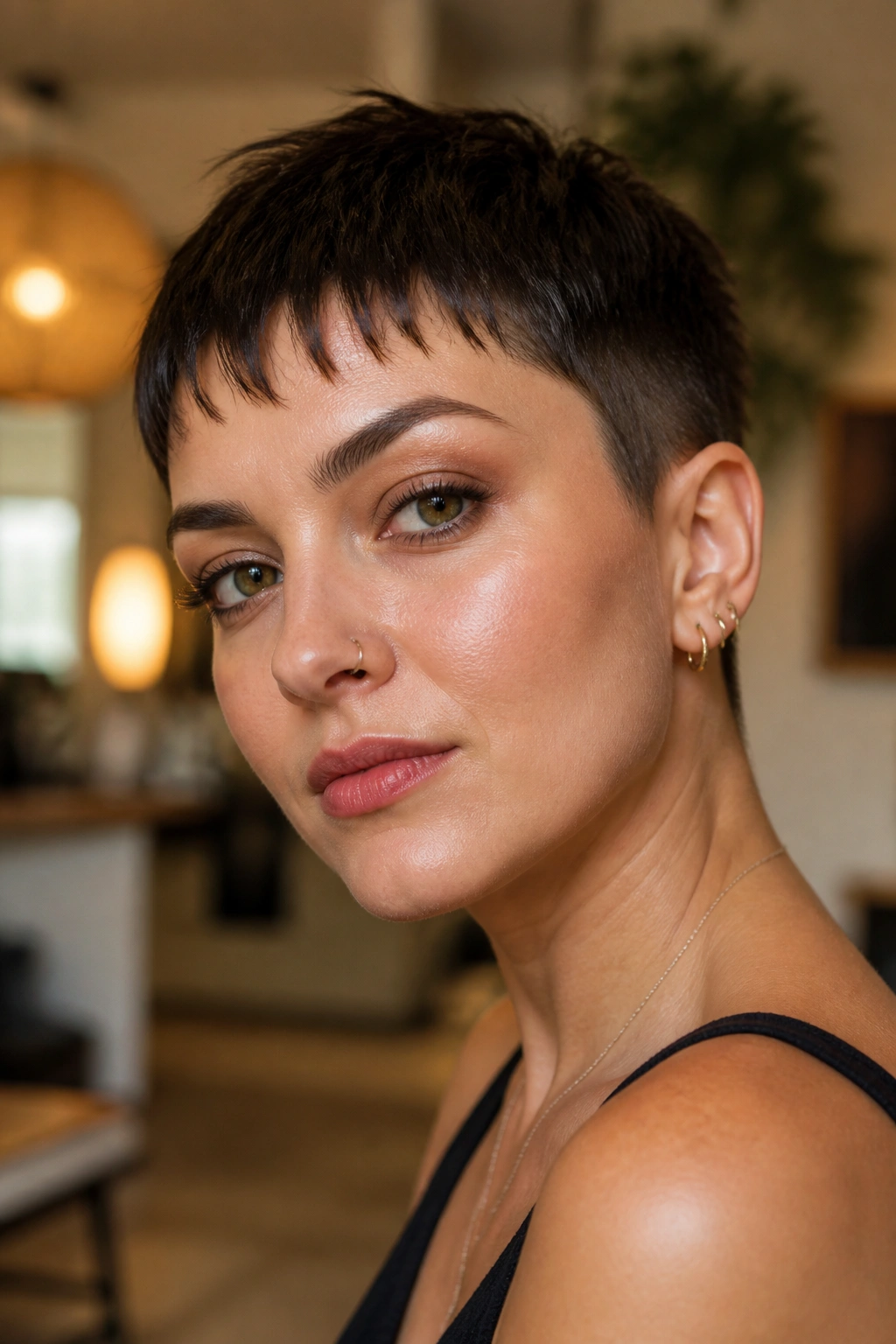
Baby bangs sound risky, and sometimes they are. But when they’re cut thin and paired with tapered sides, they can bring a round face a nice dose of edge without making it look wider.
The short fringe gives the face a hard line up top, which interrupts the softness below. That contrast is what makes it work. The rest of the cut has to stay lean, though. If the sides get fluffy, the whole shape goes sideways fast.
A thin fringe is better than a dense one here. Dense baby bangs sit heavy and can make the forehead feel boxed in. A softer, almost wispy fringe keeps the forehead open enough that the style still breathes.
This one looks especially good with a bit of brow texture or strong earrings. It has personality, no question. If you want a cut that reads bold at first glance but is still short and manageable, this is a strong contender.
10. Ear-Grazing Pixie with Long Sideburns
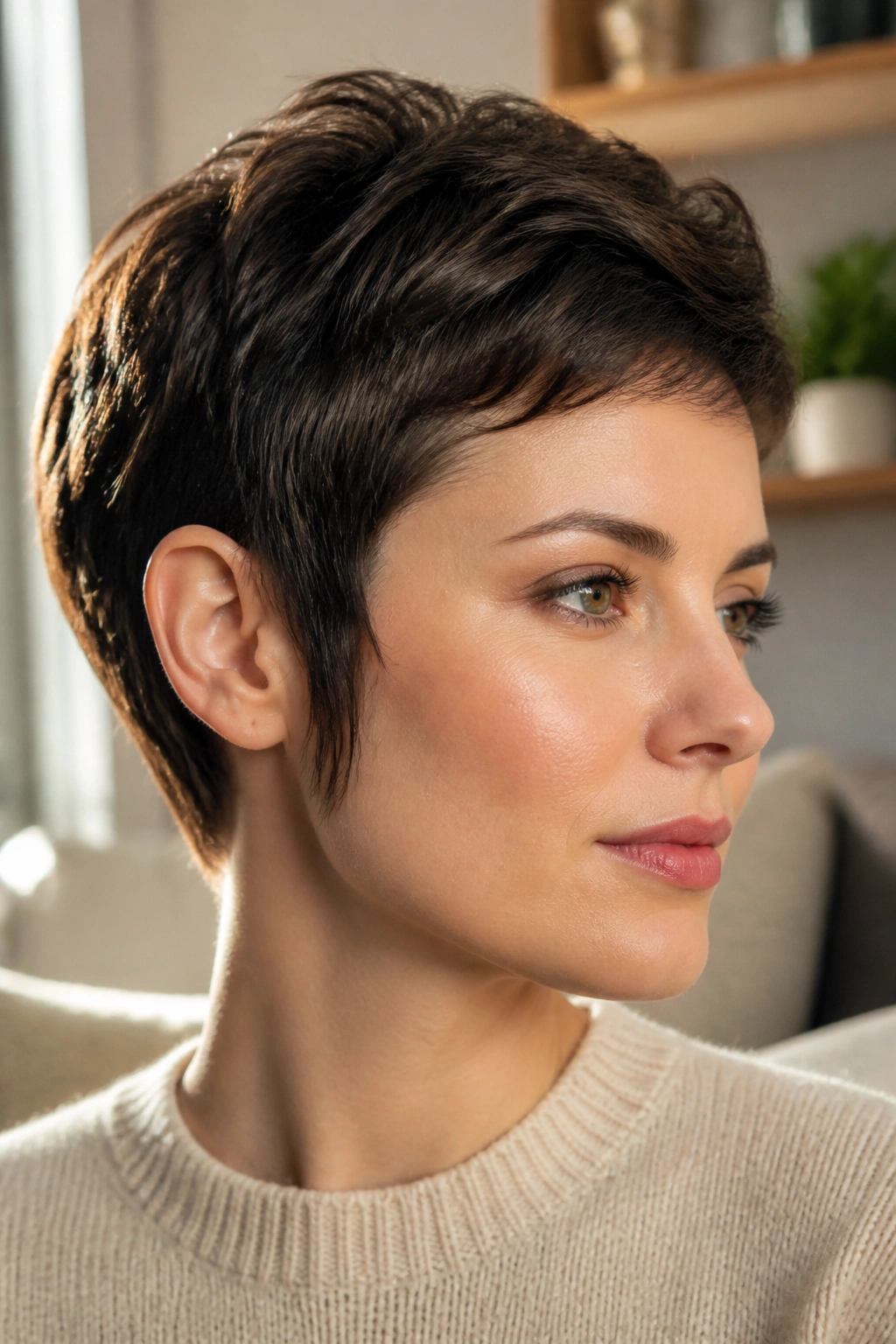
An ear-grazing pixie sounds subtle, and it is, but subtle can be smart. On a round face, leaving a little length around the ears and sideburns creates a vertical edge that nudges the eye downward rather than outward.
That extra length near the jawline does not have to be dramatic. Even half an inch can change the balance. It lets the cut skim the face instead of stopping abruptly at the cheek. That small bit of length also gives you a place to tuck hair behind the ear when you want the style to look cleaner.
I like this one for people who wear glasses or hoops a lot. The sideburn area acts like a frame around the frame, which sounds fussy but actually makes the whole look feel finished.
Keep the top soft and slightly textured so the style doesn’t turn severe. The best version has a neat outline, a little movement on top, and enough side length to make the face feel longer without showing off too much skin at the temples.
11. French Pixie with Soft Texture
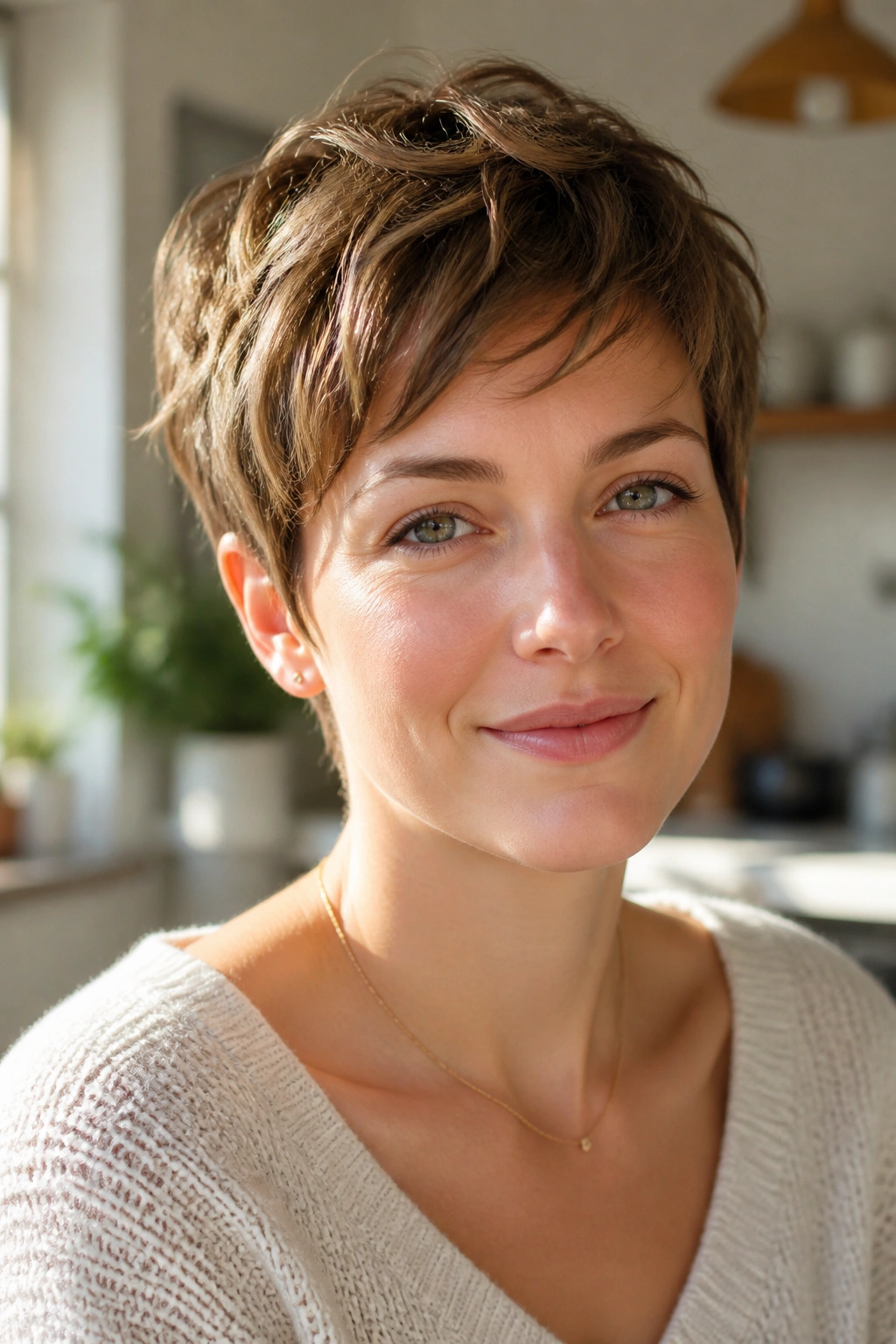
A French pixie is different from a hard-edged crop. It feels a little looser, a little airier, and less engineered. That softness can be exactly what a round face needs, especially if you want shape without the sharpness of an undercut or a heavy side shave.
What makes it different is the balance. The fringe is usually light and slightly irregular. The crown has some lift, but not so much that it looks spiky. The sides stay close, yet they do not feel severe. It’s the kind of cut that looks best when a few pieces move around a little.
This is a good match for straight or slightly wavy hair that wants to fall naturally. You can air-dry it with a touch of cream and let the texture do the work. If your hair is very thick, ask for the interior to be removed so the shape doesn’t spread at the sides.
If you like hair that looks effortless but still shaped, this is the lane. Not messy. Not polished. Somewhere in the middle, which is harder to pull off than people think.
12. Piecey Fringe Pixie with Choppy Ends
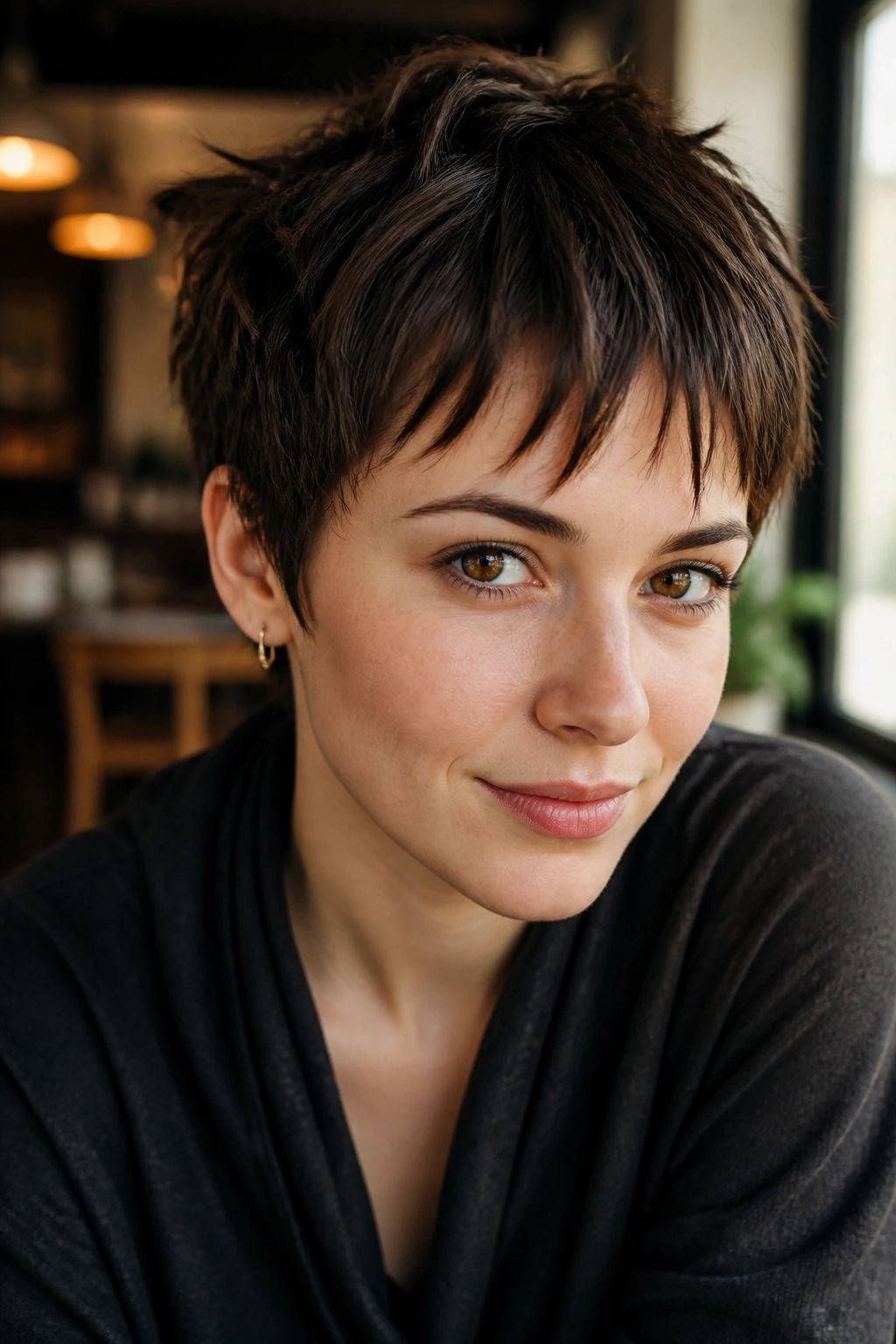
A piecey fringe can be a lifesaver on a round face because it breaks up the front of the haircut instead of forming one smooth curve. That broken line keeps the style from feeling too sweet.
The ends matter. Choppy ends keep the cut from sitting like a neat cap. They also let light move through the hair, which makes the whole style feel lighter. A tiny amount of separation around the front can change the mood from cute to cool in about ten seconds.
I’d keep this one a little rough around the edges. Use a wax or cream between the fingertips and pinch a few sections in the fringe, then leave the rest alone. Too much combing flattens the shape, and too much product turns the texture greasy.
This is one of those cuts that gets better when it’s not perfect. If a strand flips the wrong way, I’d leave it. That tiny imperfection often looks more natural than a tidy, over-brushed pixie ever will.
13. Soft Mohawk Pixie
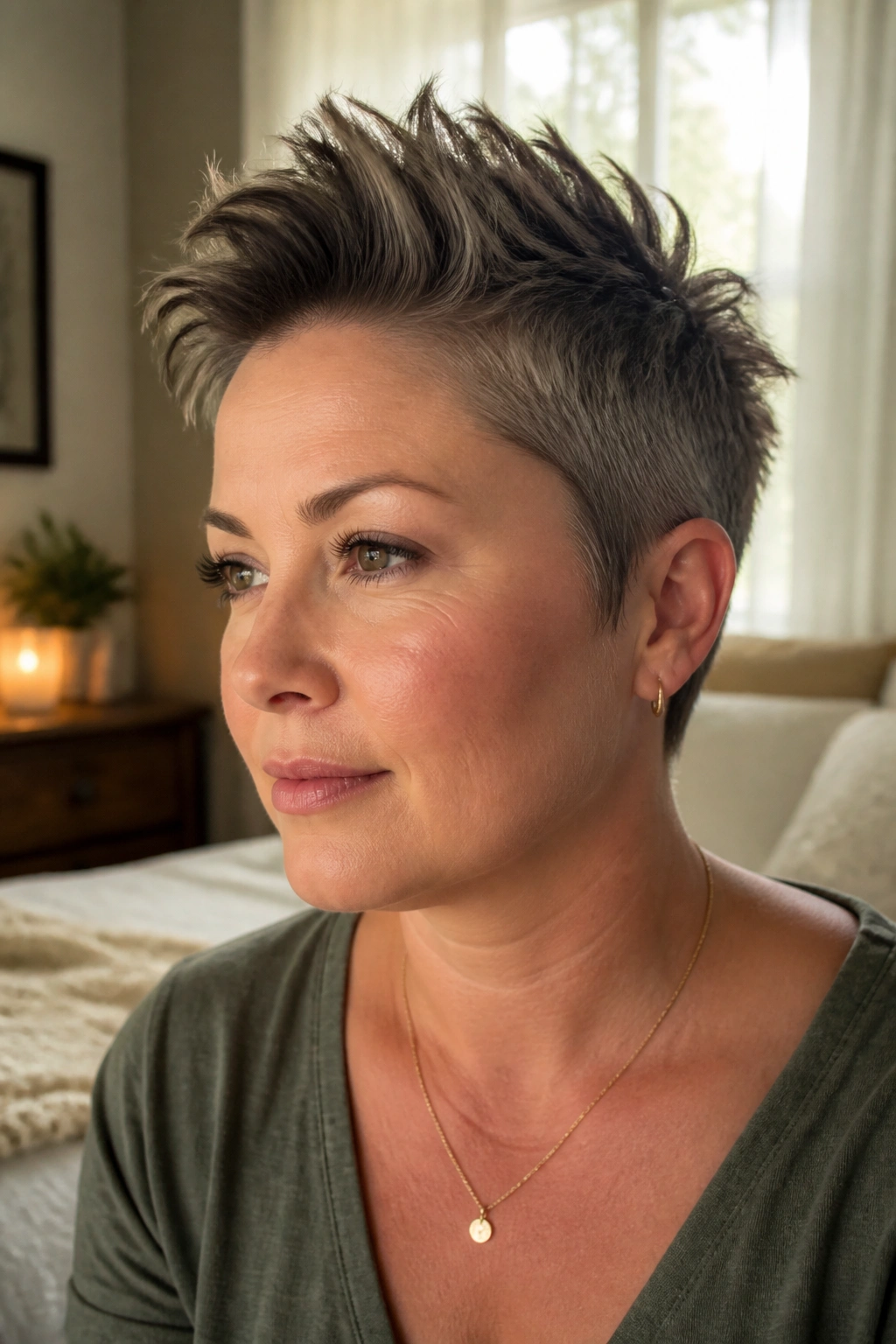
A soft mohawk pixie sounds fierce, but the wearable version is much easier than the name suggests. The middle section stays a little taller, while the sides are tapered close enough to sharpen the face.
Why does this work on a round face? Height. That central ridge creates a vertical path right through the middle of the head, and that alone changes the proportions. It also gives the style some attitude without needing a lot of length.
How to Keep It Wearable
- Keep the top around 2.5 to 4 inches, depending on your hair density.
- Taper the sides gradually instead of shaving them off hard.
- Use a blow-dryer to lift the middle, then pinch the ends with a matte paste.
- Avoid making the ridge too wide; a narrow center line looks cleaner.
I especially like this cut for people who want something short but not plain. It has edge, but not drama for drama’s sake. The face gets a cleaner outline, and the haircut does the heavy lifting.
14. Razor-Cut Crop with Broken Ends
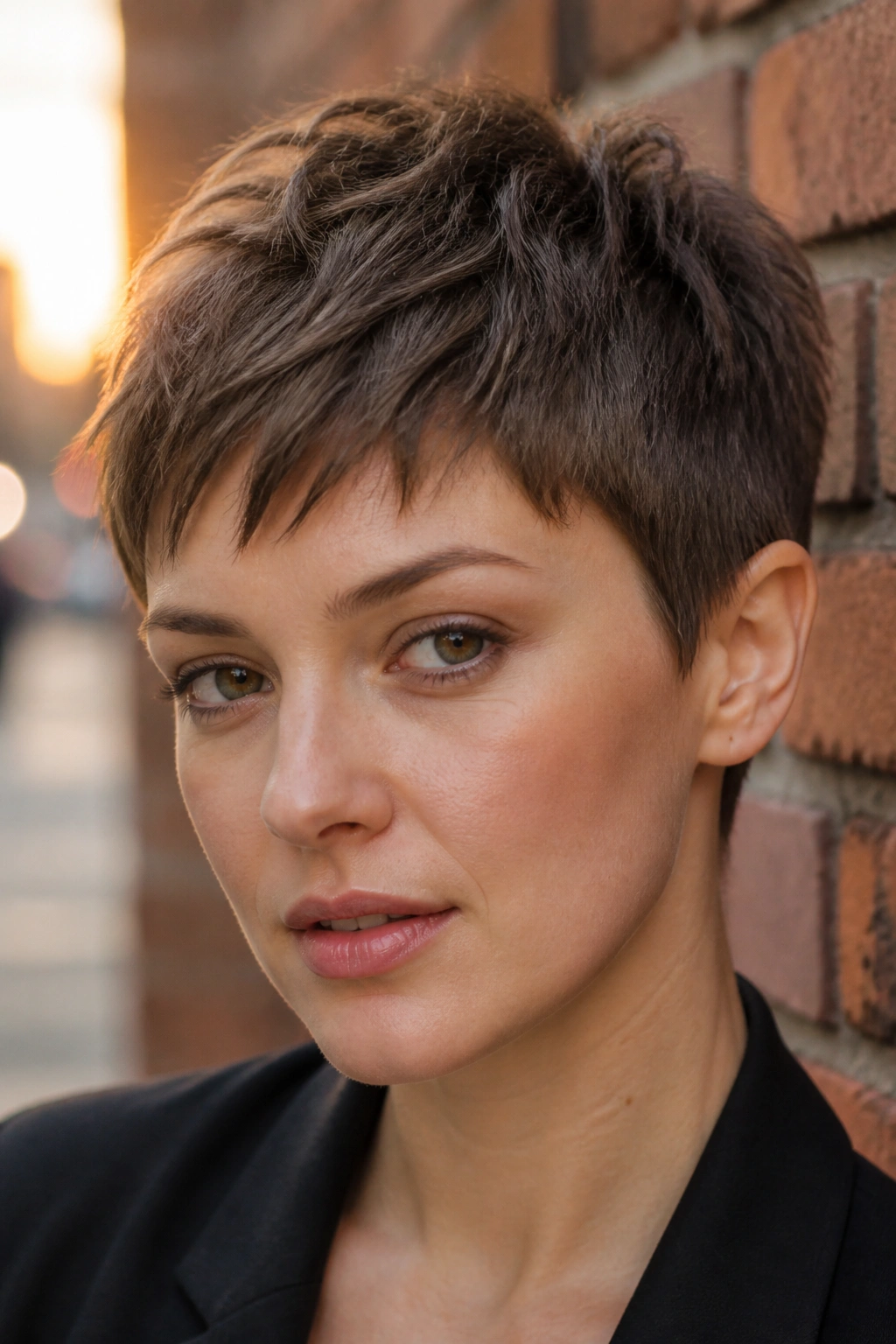
A razor-cut crop brings a rougher texture than scissors alone can give. The ends look broken up, which is useful on round faces because those irregular lines stop the haircut from reading too smooth or too full.
This style is especially good for dense hair that tends to sit heavy. Razor cutting removes weight in a more airy way than blunt cutting does, so the hair can move instead of sitting in one solid block. If your hair is already fragile or heavily processed, though, be careful. A razor on damaged ends can make them look frayed.
The best version has a close nape, short sides, and a slightly longer top that can be pushed forward or swept to one side. That contrast keeps the face from looking too open at the widest point.
There’s a streetwise feel to this cut that I like a lot. It doesn’t ask for polish. It asks for shape. That difference matters if you want short hair that still feels a little rough around the edges.
15. Tucked-Behind-Ear Pixie
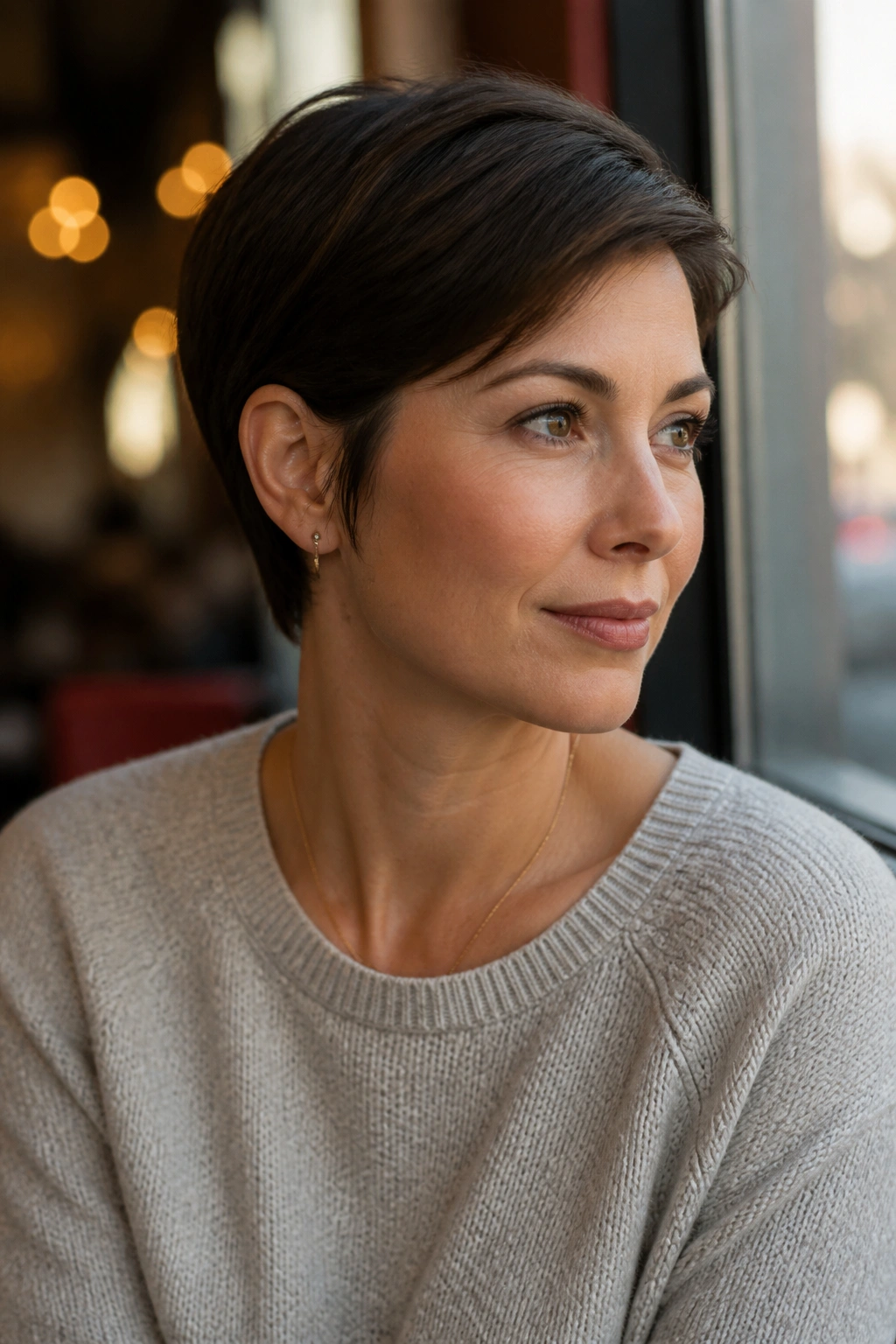
A pixie that can tuck behind the ear is a quiet little cheat code. It gives you two looks in one haircut: one side soft and loose, the other side cleaner and more open.
For a round face, that matters because the exposed ear and cheek line create a longer side edge. The face reads less circular when one side is tucked and the other side stays a touch fuller. It also keeps the style from feeling heavy around the jaw.
I like this cut for people who do not want to fuss much in the morning. A little cream, a quick blow-dry, and one tuck is often enough. If you want more shape, leave the front slightly longer so the tucked side has something to hold.
Earrings help, too. A small hoop or a thin drop earring can echo the clean line of the tuck and make the haircut feel finished. Nothing elaborate. Just enough to draw the eye down the side of the face.
16. Grown-Out Pixie with a Layered Crown
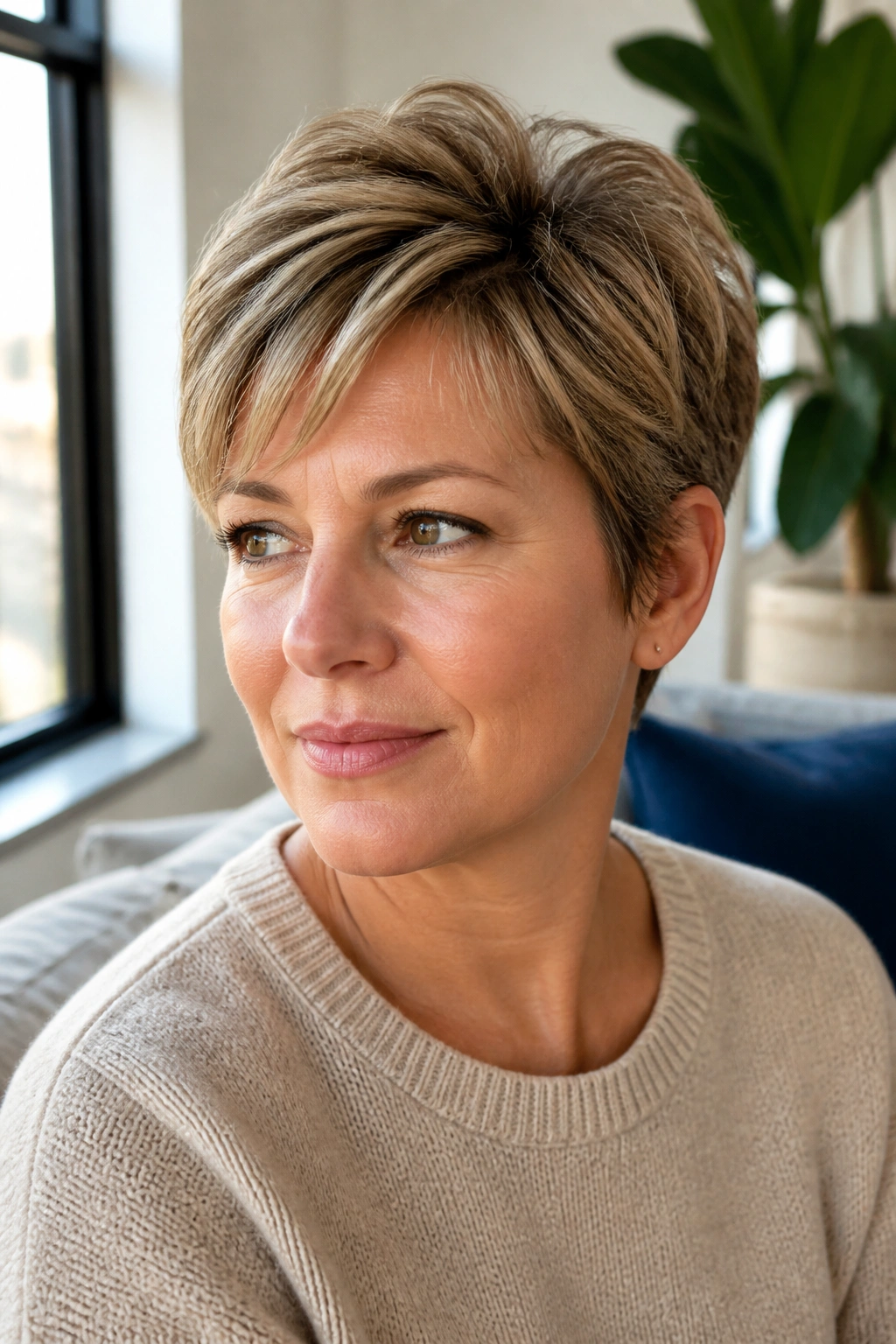
Not everyone wants a super-short crop that needs constant trimming. The grown-out pixie is a little softer, with more length through the crown and top, but it still keeps the sides neat enough to flatter a round face.
Compared with a tighter pixie, this version has more movement and more room to play with parting. The layered crown prevents the top from lying flat, while the longer front gives you a hint of fringe without committing to full bangs. It’s the haircut for someone who wants short hair that grows out gracefully instead of turning awkward in two weeks.
If your hair is fine, this shape gives you enough length to build texture with a round brush or a bit of root spray. If it’s thick, ask for interior layers so the top doesn’t sit like a cap. Either way, the crown should stay the most mobile part of the cut.
This is also a smart bridge if you’re growing out a shorter crop but do not want to jump straight to a bob. It keeps the face open and the proportions clean while buying you some extra length.
17. Angular Asymmetrical Pixie with a Long Front Corner
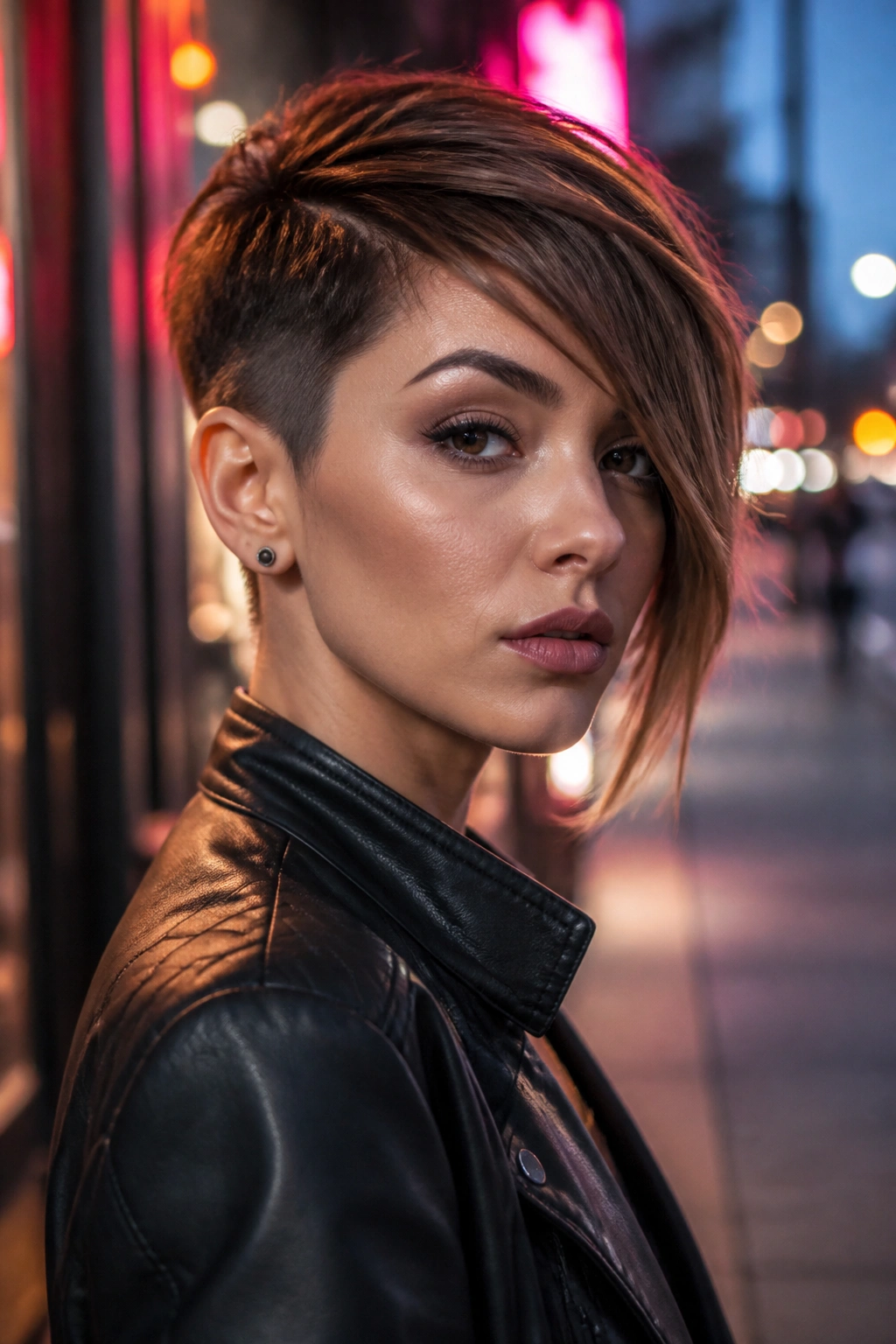
Some haircuts are soft and friendly. This one isn’t, and that’s the point. A long front corner that drops toward the cheekbone creates a hard visual line, which cuts through the roundness of the face in a way softer styles cannot.
The asymmetry is the whole trick. One side can be cropped close while the other side keeps a longer front sweep that lands near the mouth or jaw. That uneven balance gives the face more shape and makes the haircut feel sharper from every angle.
I like this style when the goal is to make a round face look a little more angular without relying on heavy styling every day. The cut itself does the work. You may still want a small amount of paste to keep the longer front piece separated, but you won’t need much else.
There is a nice tension here between sleek and edgy. If you’re tired of cuts that try too hard to be sweet, this one has some bite.
18. Sculpted Top Pixie with Tapered Sides for Round Faces
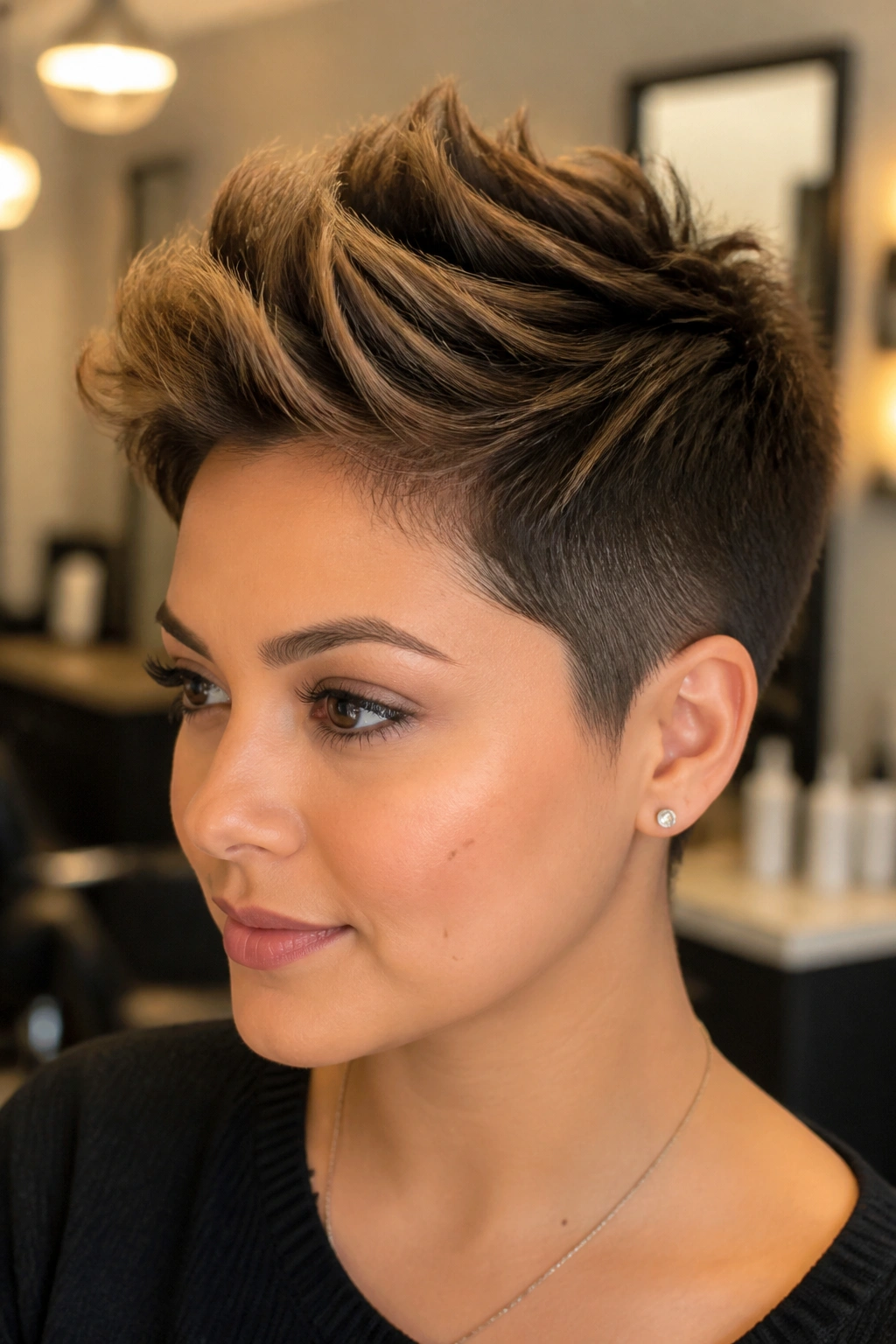
A sculpted top pixie is for the person who wants clear shape and does not mind using a blow-dryer. The top gets lifted and directed, the sides stay close, and the whole haircut ends up looking taller and leaner on a round face.
The sculpted part does not mean stiff. It means the hair has a defined direction. Push the roots up at the front, then slightly forward or to one side so the top has a visible arc. That line creates vertical interest, which is exactly what a round face needs from a very short cut.
How to Style It at Home
Start with a root spray on damp hair. Blow-dry the crown upward with a small brush or your fingers until the roots feel dry and springy.
- Keep the sides tightly tapered, especially around the temples.
- Leave enough length on top, usually 2.5 to 4 inches, for lift.
- Use a lightweight paste after drying to separate the front pieces.
- Finish with a mist of flexible hairspray if the shape needs hold.
This is the one I’d pick for someone who likes a crisp finish and is fine spending five minutes getting the top right. It looks sharp, clean, and a little dramatic in the best way.
If you’re stuck between two or three of these cuts, choose the one that fits your mornings. The best pixie is the one you can dry, shape, and walk out the door with before the coffee cools. That part matters more than any trend name ever will.
