



Fine hair doesn’t need more length to look full. It needs shape.
That’s why voluminous pixie cuts for fine hair can be such a smart move. A good pixie takes weight off the sides, leaves lift where it matters, and gives the top room to move instead of lying like a damp napkin by noon. Short isn’t the point. Structure is.
The difference between a flat pixie and a full-looking one usually comes down to a few small choices: where the layers sit, how much length stays at the crown, whether the fringe is blunt or broken up, and how the neckline is handled. A cut that looks airy on paper can go limp fast if the top is over-thinned or the sides are too wide. That part gets missed all the time.
The styles below each solve a different problem—flat crowns, sparse-looking temples, stubborn cowlicks, soft hairlines, and that annoying habit fine strands have of shrinking once they dry. Some are sharp and cropped. Some are softer and more forgiving. All of them are built to give fine hair a little more presence without asking it to do something it can’t.
1. Feathered Crown Pixie for Fine Hair
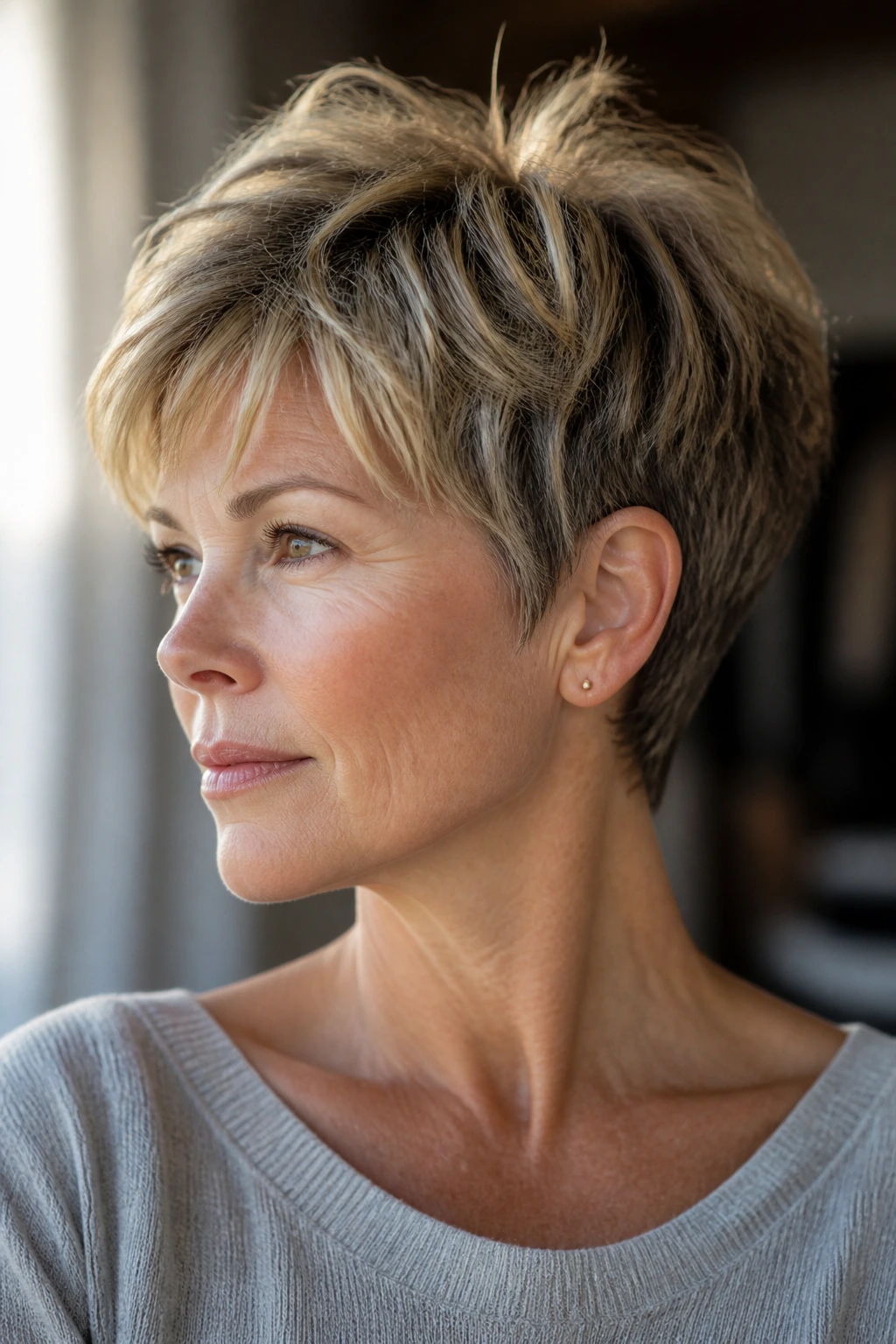
If your hair collapses at the crown, start here.
A feathered crown pixie keeps the top light, soft, and mobile, which is exactly what fine hair needs when it refuses to stand up on its own. The trick is leaving enough length through the crown to create lift, while the sides stay neat so the top has somewhere to “sit” visually. That contrast is doing a lot of work.
Why It Works
The feathering breaks up the outline, so the cut doesn’t read as one solid helmet shape. Instead, it looks airy. Ask for soft feathering through the top third, not all over the head, and keep the longest bits around 2 to 3 inches if you want real styling room.
What to ask for at the salon:
- Short, tidy sides
- A longer crown with feathered ends
- Light layering through the top, not aggressive thinning
- A soft neckline so the shape doesn’t look boxy
Best styling move: blow-dry the crown forward first, then back with a small round brush and a shot of cool air. It gives you lift that lasts longer than finger-drying alone.
2. Side-Swept Pixie with Long Fringe
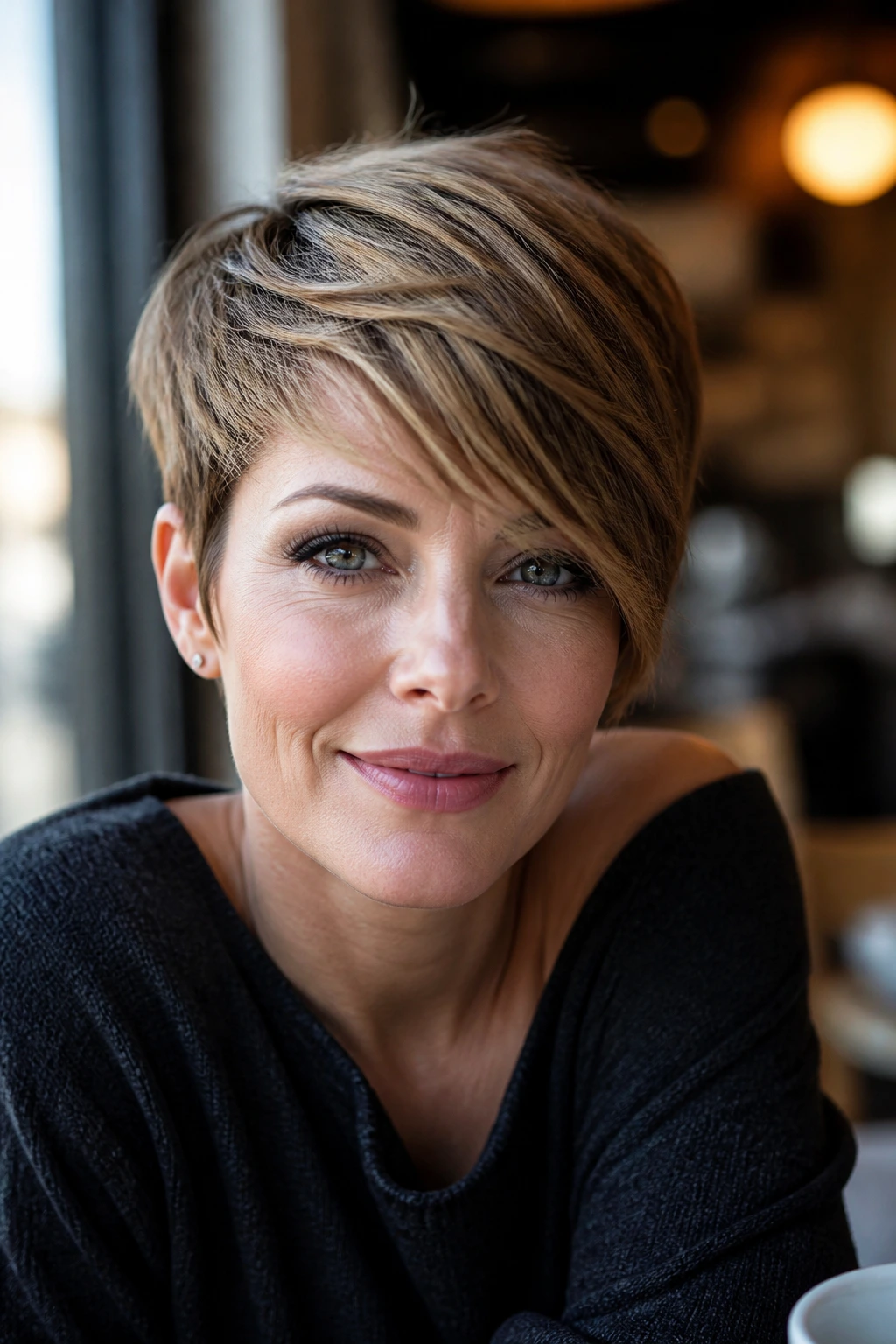
Want lift without exposing much of the forehead? This is the one.
A long side fringe can make fine hair look fuller because it creates a diagonal line across the face. Diagonal lines feel denser than straight ones. They also hide a flat root area better than a center split or a short blunt bang, which can be unforgiving on fine strands.
The fringe should skim the brow or land just below it, then sweep into the longer top section. That little bit of movement matters. If the front is cut too short, it loses the soft drape that gives the style its body. If it’s too long, it starts behaving like a bob fringe and weighs the whole cut down.
A flat brush and a root-lifting spray are usually enough. Aim the dryer at the roots first, then bend the fringe sideways with your fingers. Don’t saturate the front with cream or oil; the fringe is the first place fine hair gives up.
3. Choppy Textured Pixie Crop
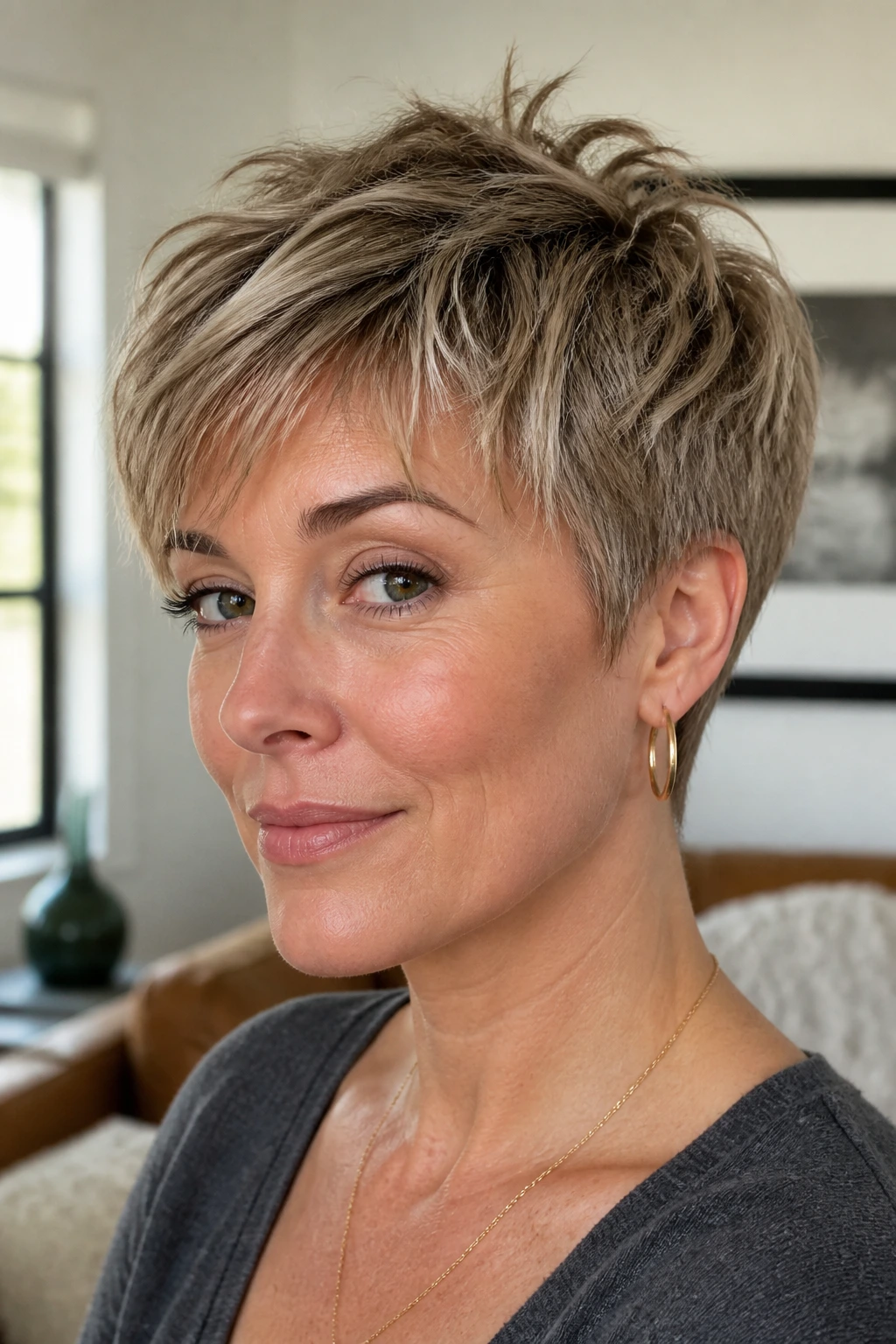
Picture a cut that looks a little rough at the ends, in a good way. That’s this one.
A choppy pixie crop uses uneven texture to fake thickness. Fine hair often looks sparse when the edges are too precise, because every strand ends in the same place and the eye reads that as thin. Choppiness interrupts the line. It gives the hair more movement and makes the top look busier.
What Makes It Read Fuller
Point cutting works better than blunt snips here. So does a little unevenness around the fringe and crown. You want tiny differences in length, not a shredded mess. There’s a fine line, and yes, it’s fine for a reason.
- Keep the nape clean and tight
- Leave the top broken up, not puffy
- Style with a pea-size matte paste
- Use your fingertips, not a brush, for the finish
One warning: if your hair already frays easily, don’t let the texturizing go wild. Too much removal at the ends can make fine hair look see-through instead of fuller.
4. Tapered Pixie with Lifted Top
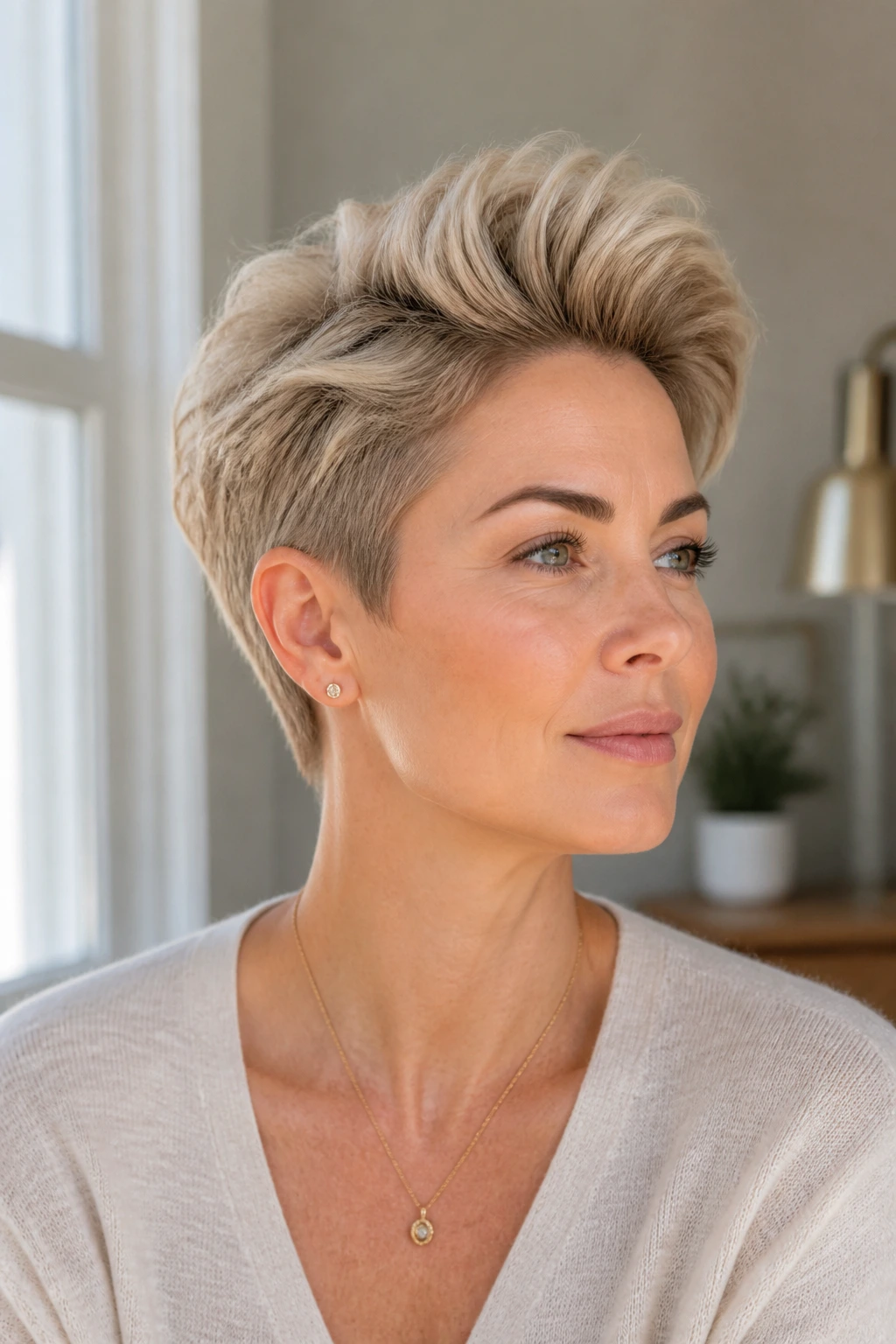
A tapered pixie does one thing very well: it steals mass from the sides and gives it back to the crown.
That’s why it looks so good on fine hair. A close taper around the ears and neckline creates a clean base, and the longer top suddenly has more impact. It’s a bit of visual sleight of hand, but it works. The head looks more sculpted, and the hair looks like it has more of it.
What to Ask Your Stylist
- Taper the nape and around the ears
- Keep 2 to 3 inches on top for lift
- Blend the transition softly so it doesn’t look clipped in two pieces
- Leave the crown slightly longer than the front if you want height
This cut is especially useful if your hair lies flat near the temples. A tight side shape makes the top appear fuller by comparison. Blow-dry upward at the roots, then set the lift with a light mist of flexible spray. Nothing crunchy. No hard shell.
5. Layered Bixie Cut
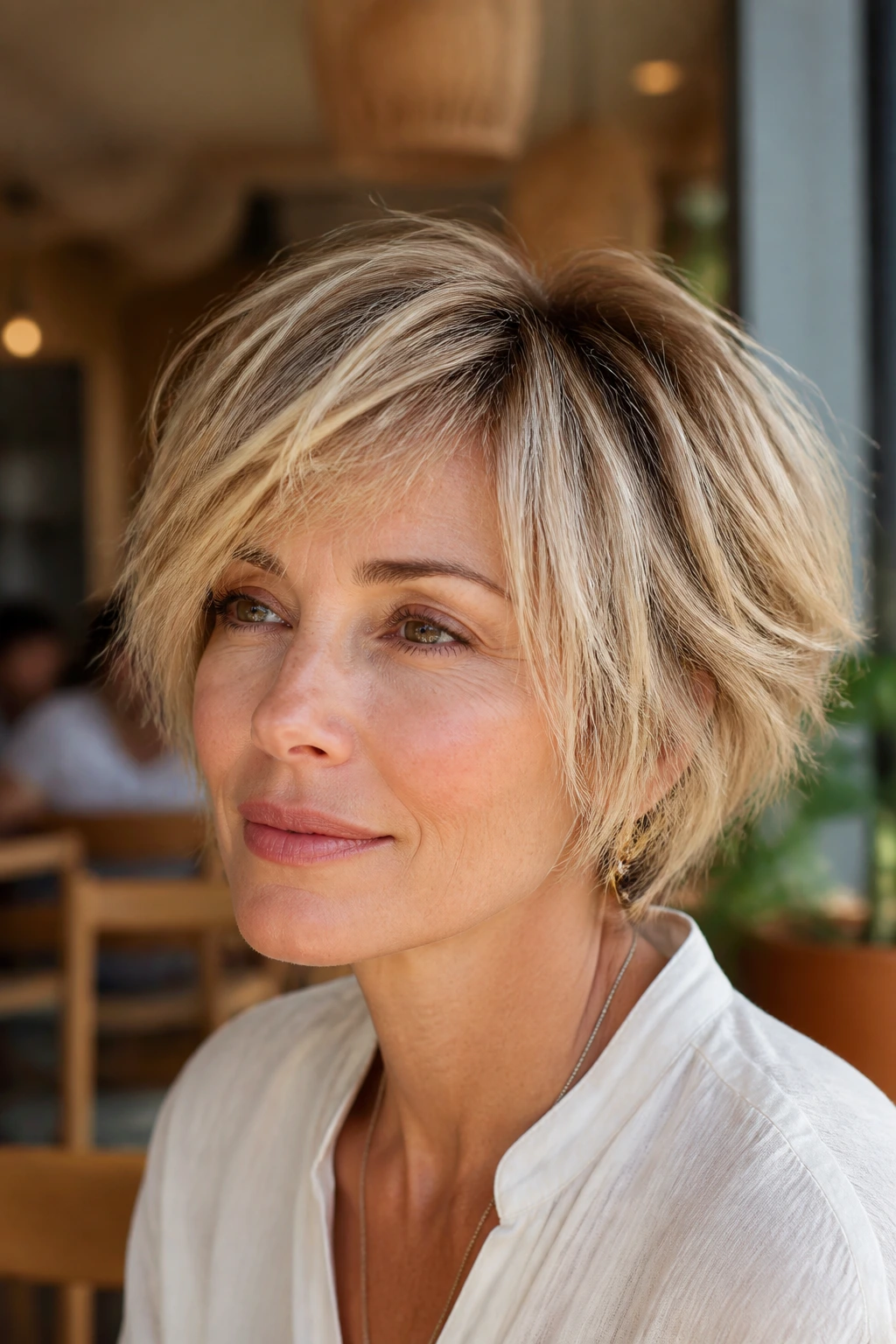
If a full pixie feels too short, the bixie is the middle ground that earns its keep.
It sits between a bob and a pixie, which means fine hair gets some length to hang onto while still gaining the lift and movement that shorter cuts bring. The perimeter usually hits around the cheekbone, jaw, or just above the neck, and that little bit of extra length can make fine hair look richer than a severe crop.
This is the cut for someone who likes touching their hair. You can tuck it, bend it, sweep it, and let pieces fall in different directions without losing the shape. A bixie also softens a narrow face and keeps the neck from feeling overexposed, which some people love and some people don’t.
Best for: anyone who wants the airy feel of a pixie but isn’t ready to go fully short. It’s also easier to grow out. That matters more than people admit.
6. Undercut Pixie with Soft Top
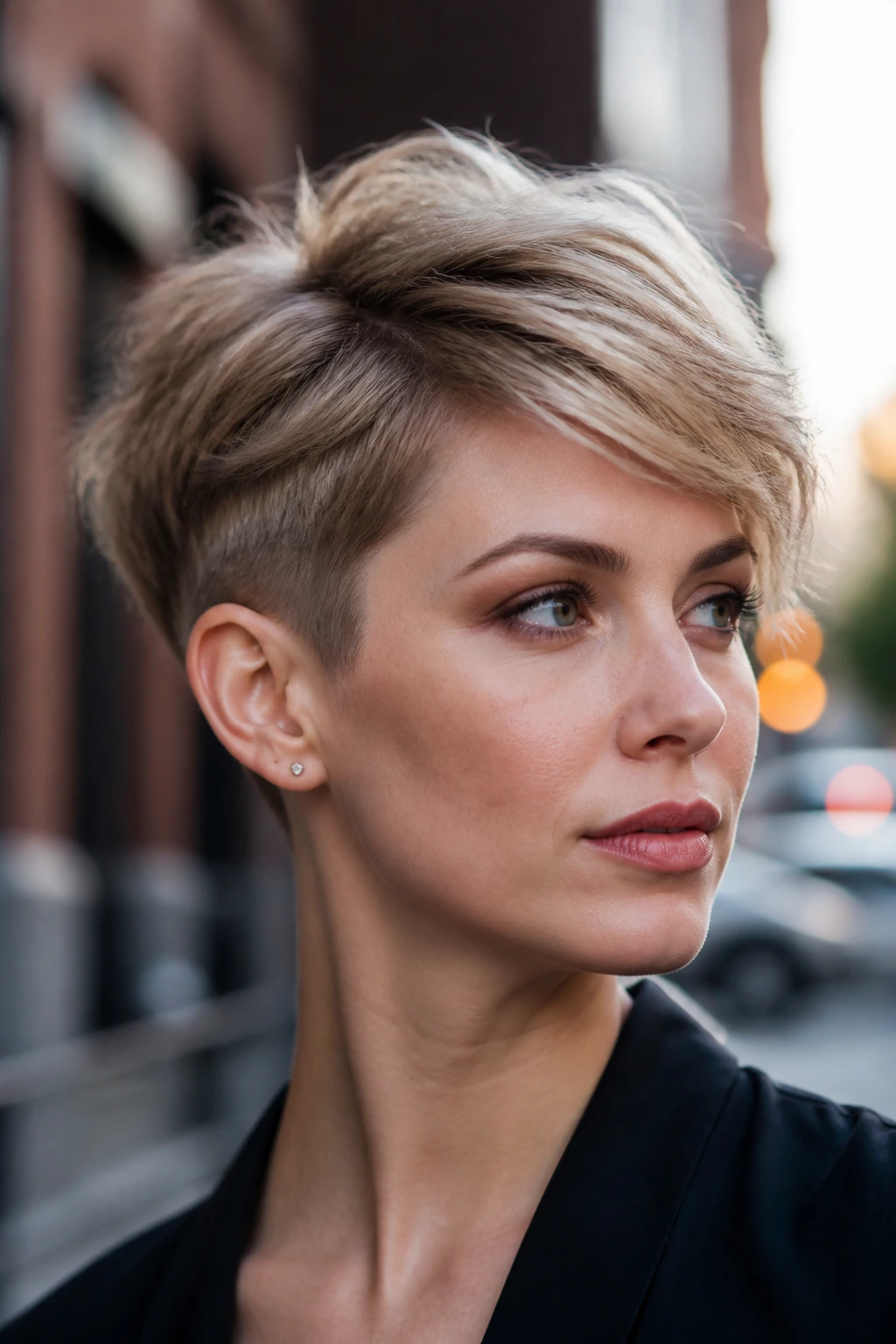
An undercut can make fine hair look fuller, not less. Strange, but true.
The reason is simple: removing bulk underneath lets the top sit higher. When the lower sections aren’t dragging the silhouette down, the crown can look lifted even if the hair itself is fine. The key is keeping the top soft, not stiff. A hard, spiky finish can make the cut look severe, and fine hair usually looks better with a little movement.
This version works best when the undercut is hidden or tucked into the nape and lower sides. You still get the clean outline, but the top stays flexible. If your hair is sparse around the temples, be careful with this one. Too much removal there can expose the scalp in a way that looks thin rather than sharp.
A tiny amount of mousse at the roots and a loose blow-dry with your fingers will usually do the job. Keep it airy. That’s the whole point.
7. Razor-Cut Piecey Pixie
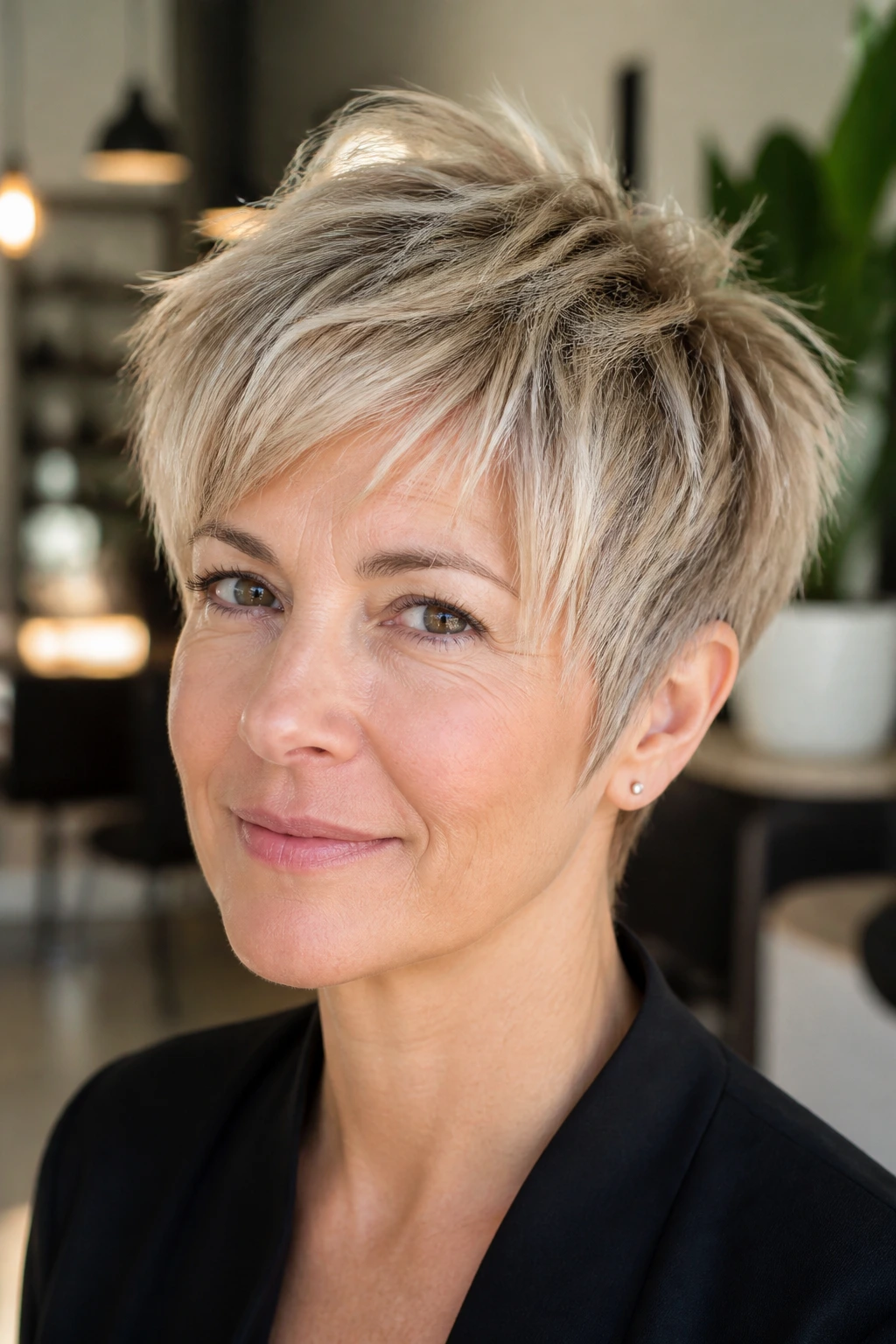
Razor-cut ends have a certain slip to them. They move differently.
On fine hair, that movement can be a gift. A razor-cut pixie creates separated pieces that fall in little layers instead of one solid line, which gives the style more lift and texture. The finished cut should look touchable, not frayed. That distinction matters a lot.
What to Watch For
Razor cutting is not a free pass to thin everything out. Fine hair can get damaged-looking fast if the blade is used too aggressively. Ask for soft slicing only through selected sections, usually around the crown and fringe.
- Best on straight to slightly wavy hair
- Needs a light hand with product
- Looks best when dried in different directions
- Can show split ends sooner if overworked
The finish should feel airy between your fingers, almost like the strands are floating apart. A dry texture spray helps, but only if you keep it away from the roots. Too much there and the whole thing turns dusty.
8. Curly Pixie Cuts for Fine Hair
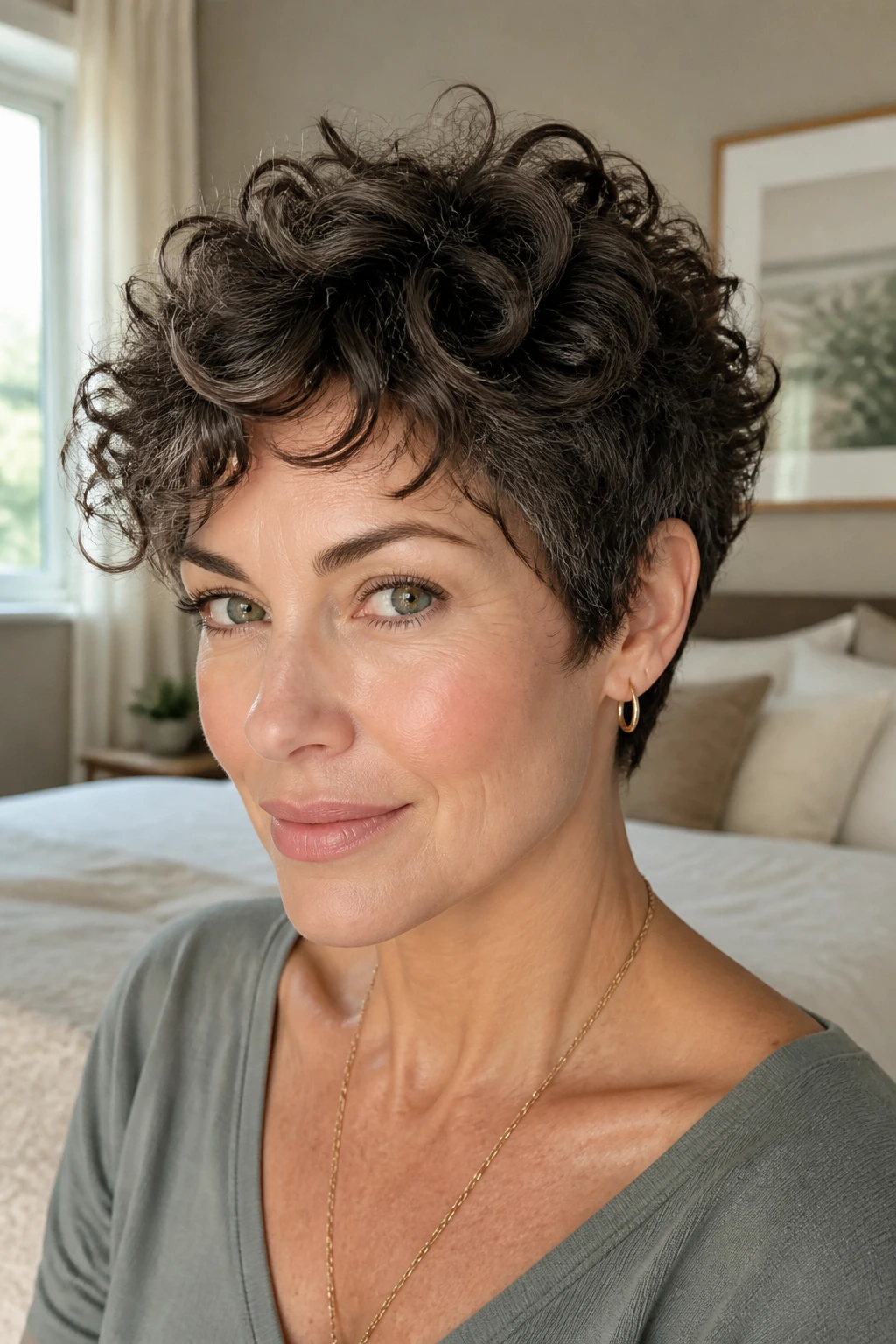
Can fine hair be curly and still look full in a pixie? Absolutely.
The trick is letting the curl pattern set the shape instead of fighting it into submission. Fine curls and waves often have more bounce than they get credit for, but they need a cut that follows the bend of the hair. Short layers that are too heavy can puff out the wrong places. Too little layering can leave you with a flat top and triangle sides. Neither is a good time.
How to Style It
- Apply a light gel or curl cream to damp hair
- Scrunch gently, then diffuse on low heat
- Keep the crown a touch longer than the sides
- Ask for curl-by-curl shaping if the pattern is uneven
This cut looks best when the curls aren’t crushed. Let them set, then separate a few pieces with oiled fingertips once they’re dry. A little frizz is fine. It gives the cut life. A plastered-down curl on fine hair usually just looks limp.
9. Asymmetrical Pixie with Deep Side Part
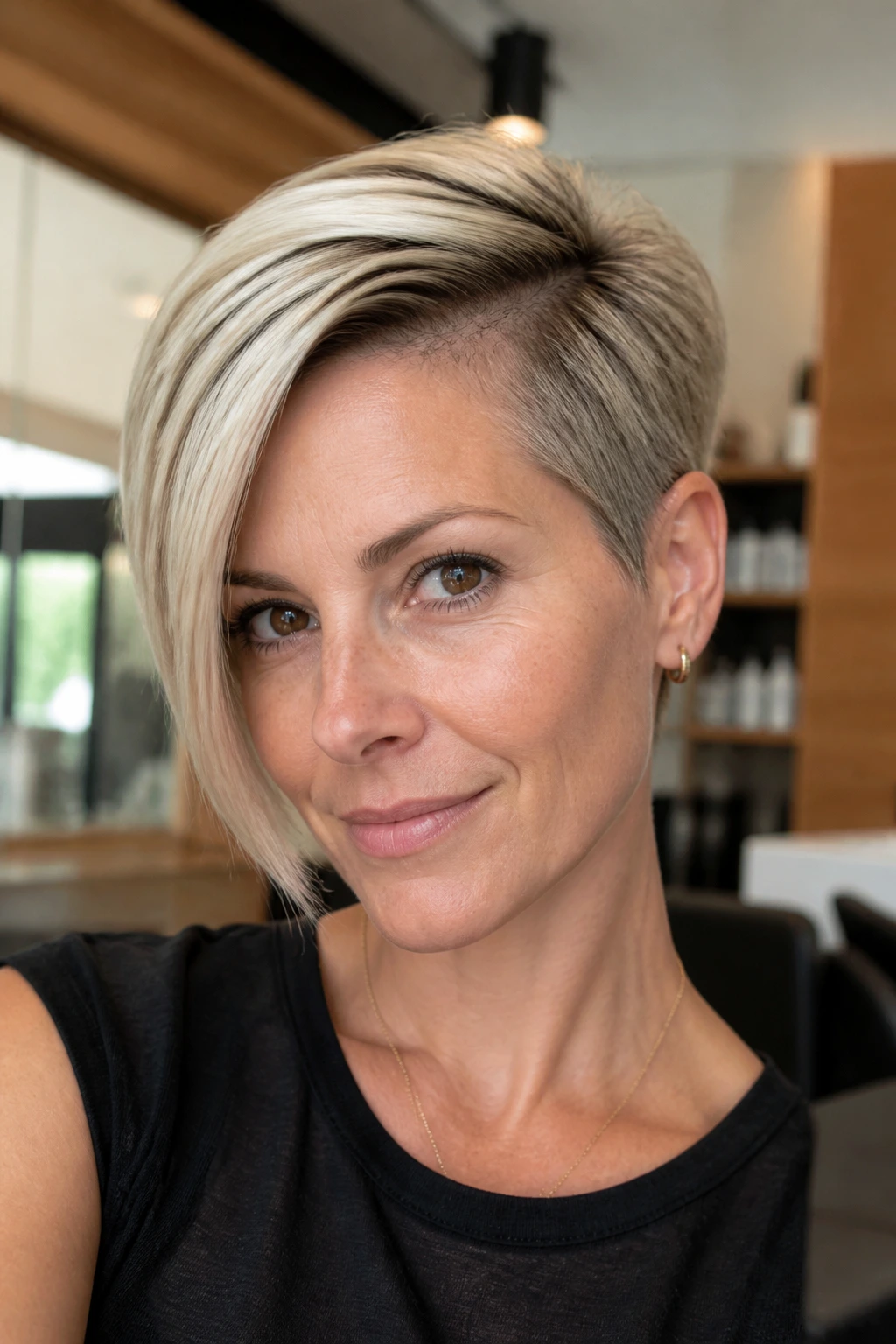
A deep side part can do more for fine hair than a whole drawer of volume products.
An asymmetrical pixie pushes one side longer, which changes the way the eye reads the haircut. Instead of seeing thinness evenly across the head, you get a stronger shape and a heavier-looking front section. That extra length can also hide a temple area that feels sparse or flat.
The best asymmetrical versions don’t swing too far. You want a visible difference, not a dramatic costume cut. One side can graze the cheekbone while the other stays closer to the ear. That imbalance creates movement, and movement reads as fullness.
This is one of those styles that looks expensive when the lines are clean. Keep the back neat and the part intentional. If the part shifts around randomly, the whole cut loses its edge. A little root spray and a quick blow-dry in the direction you want the hair to lie usually keeps it in place.
10. Rounded Pixie with Soft Volume
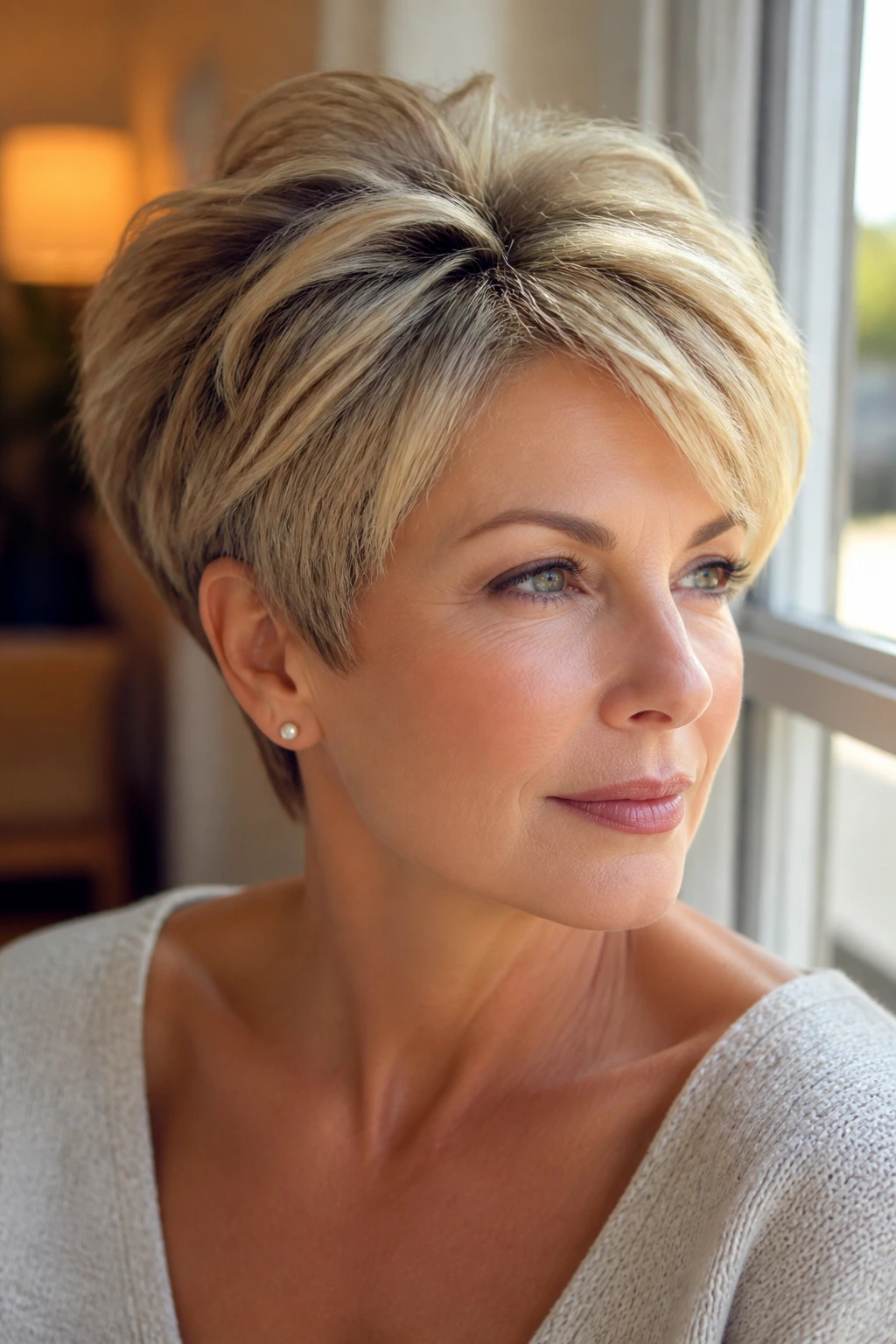
A rounded pixie is a strong choice if you hate sharp corners around the head.
Flat sides can make fine hair look narrower than it really is. A rounded outline softens that effect by keeping some fullness at the temples and crown. The shape feels almost sculpted, but not stiff. It’s the kind of cut that makes fine hair look deliberate instead of accidental.
This style works especially well if your hair is straight or only mildly wavy. The rounded silhouette needs a little help from the blow-dryer, but not much. Use a small brush and direct the top upward first, then curve the sides just enough to follow the head shape. You’re not building a helmet. You’re building a little lift.
Best detail to request: keep the perimeter soft and avoid over-thinning the top. A rounded pixie loses its charm when the crown gets sliced too much. The shape should feel plush, not airy to the point of empty.
11. Micro-Layered Pixie with Crown Lift
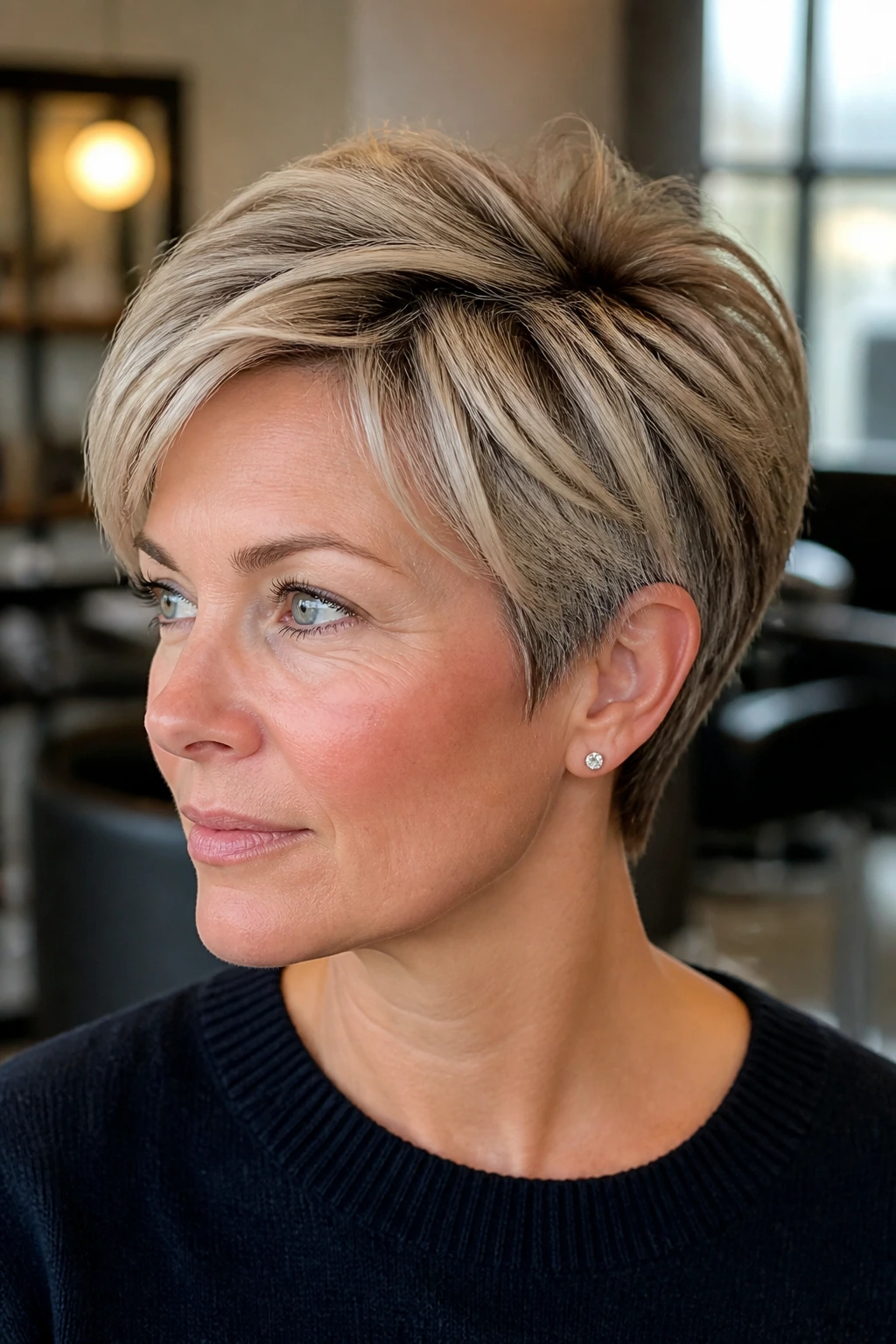
Tiny layers can do a surprising amount of work.
A micro-layered pixie uses short internal layers through the crown and upper back to create lift without making the cut look shaggy. That’s useful for fine hair that sticks to the scalp the moment humidity enters the room. The layers are small, almost hidden, which means the cut still looks clean from the outside.
Ask for This at the Salon
- Short internal layers at the crown
- A slightly longer top layer to cover the shorter pieces
- Soft blending around the part line
- No heavy thinning through the ends
This cut is best when you want volume that doesn’t scream “styled.” It’s subtle. The root area gets a gentle push, the top moves, and the silhouette stays neat. A little mousse at the roots and a rough blow-dry with your fingers usually brings it to life.
Skip thick creams. They flatten micro-layers fast.
12. Tousled French Pixie
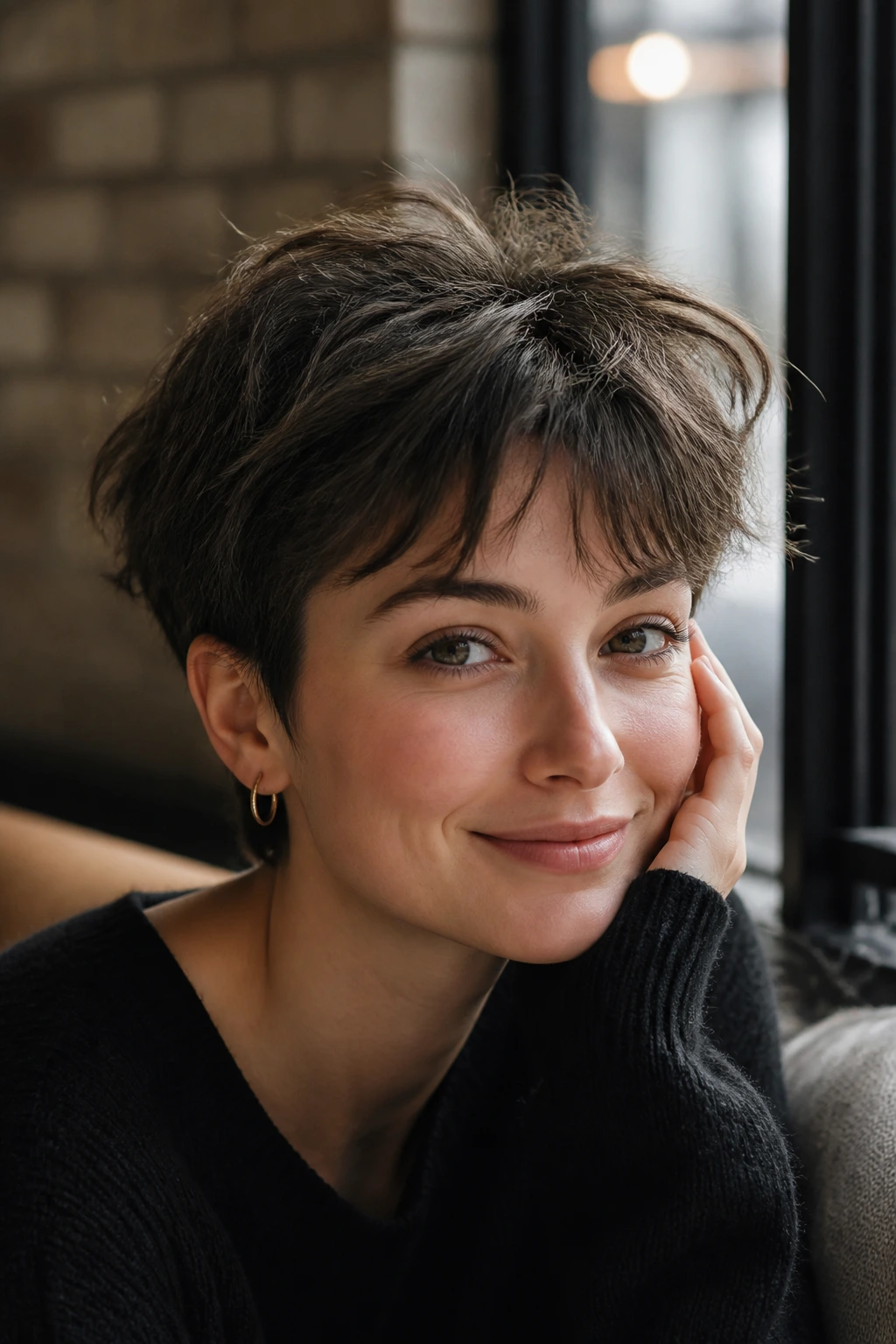
Some cuts look styled. This one looks like you slept well and had great hair anyway.
The tousled French pixie usually keeps a little more length on top, with soft fringe and a slightly irregular finish. It’s not messy in a lazy way. It’s messy in a considered way, which is harder to pull off than people think. Fine hair benefits from that looseness because the texture fills space without needing bulk.
The charm is in the movement around the forehead and crown. Pieces should fall forward, then shift away from the face as you move. If the cut is too precise, the softness disappears. If it’s too broken up, you lose the shape. That middle ground is where it lives.
A tiny bit of lightweight cream rubbed through damp hair is enough. Let it air-dry partway, then pinch a few sections to break up the finish. No heavy brushing. That just pulls the body out of it.
13. Pixie Bob Hybrid for Fine Hair
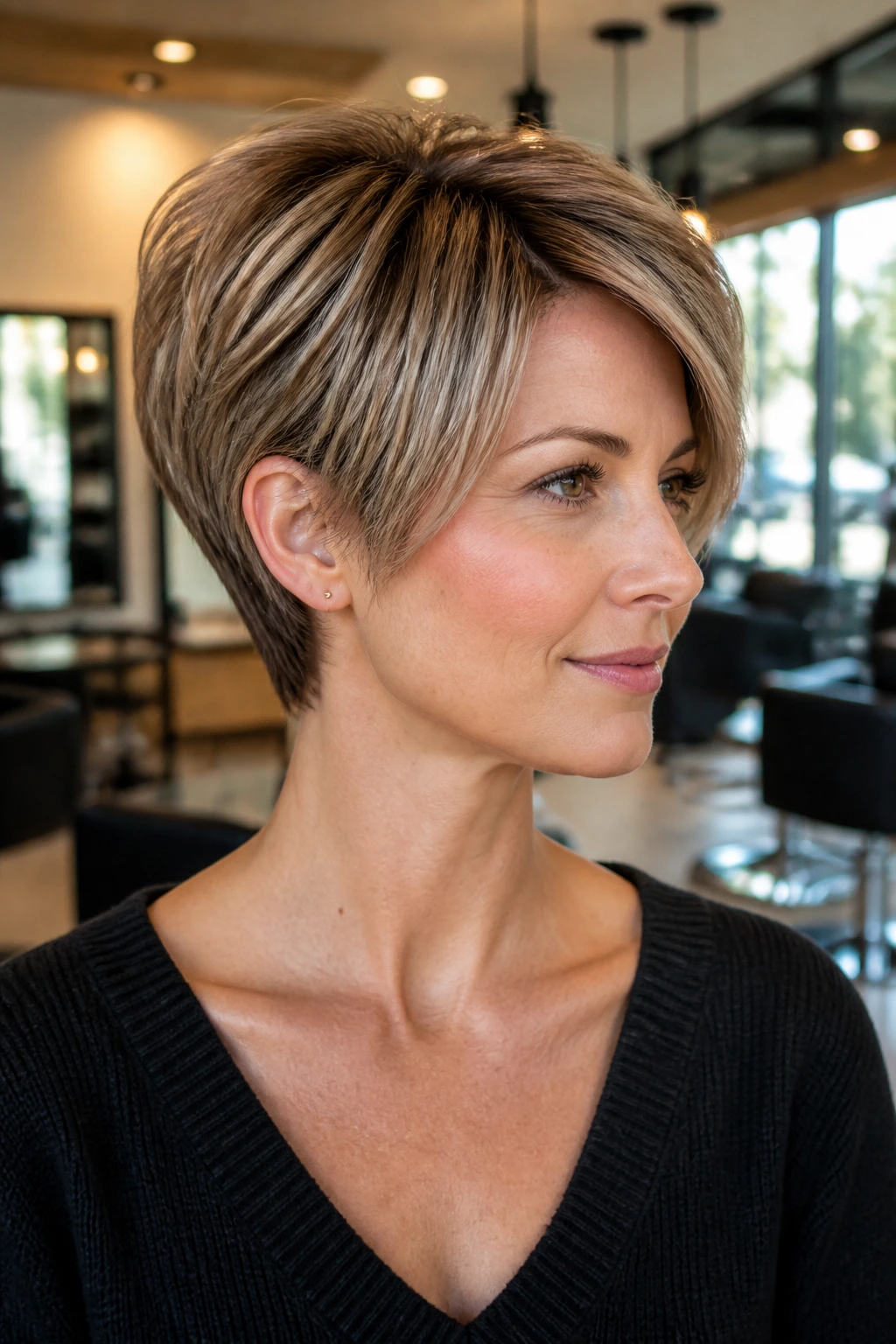
This is the cut for someone who wants the feeling of short hair without losing all the swing.
A pixie bob hybrid keeps the nape shorter and the front longer, so fine hair gets the clean shape of a pixie and the little bit of swing that a bob brings. The result is fuller-looking because there’s more visible length around the jawline. That frame matters. It gives the hair somewhere to land.
It also buys you styling options. You can tuck one side, flip the front, bend the ends under, or leave the top a little loose. Fine hair often behaves better when it has a small amount of length to work with, and this cut gives it that.
If you’re growing out a pixie, this is one of the nicest landing points. It doesn’t look awkward. It just looks purposeful. Ask for soft layering at the crown so the top doesn’t collapse under the longer perimeter.
14. Shaggy Pixie with Wispy Ends
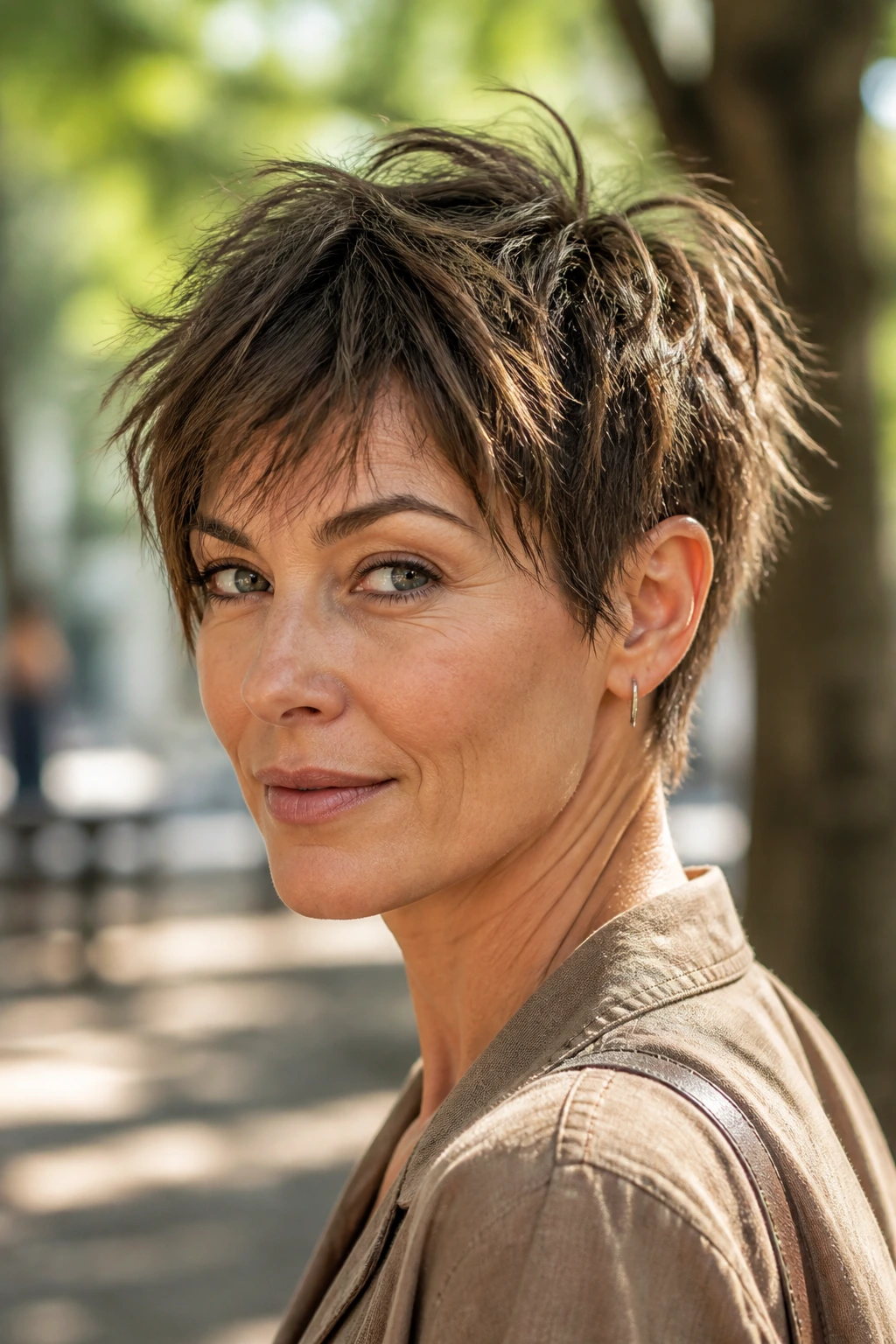
Messy can be a strategy. This cut proves it.
A shaggy pixie with wispy ends works because the broken finish makes fine hair seem less uniform. Uniform is the enemy here. When every strand falls the same way, the hair can look sparse. When the ends are lightly shattered and the top has a little lift, the eye reads movement instead of thinness.
What Makes It Work
The crown should stay lifted, the fringe should be uneven, and the neckline should be tidy enough to keep the cut from looking unfinished. That last part matters. A shaggy pixie is not a neglected pixie.
- Use dry shampoo at the roots
- Add texture spray only mid-length to ends
- Ruffle the top with your fingertips
- Keep the fringe soft, not blunt
My take: this cut is better when it looks lived-in than when it looks perfect. If you like hair that can be fixed in 20 seconds and still look intentional, this one earns its spot.
15. Slicked-Back Pixie for Fine Hair
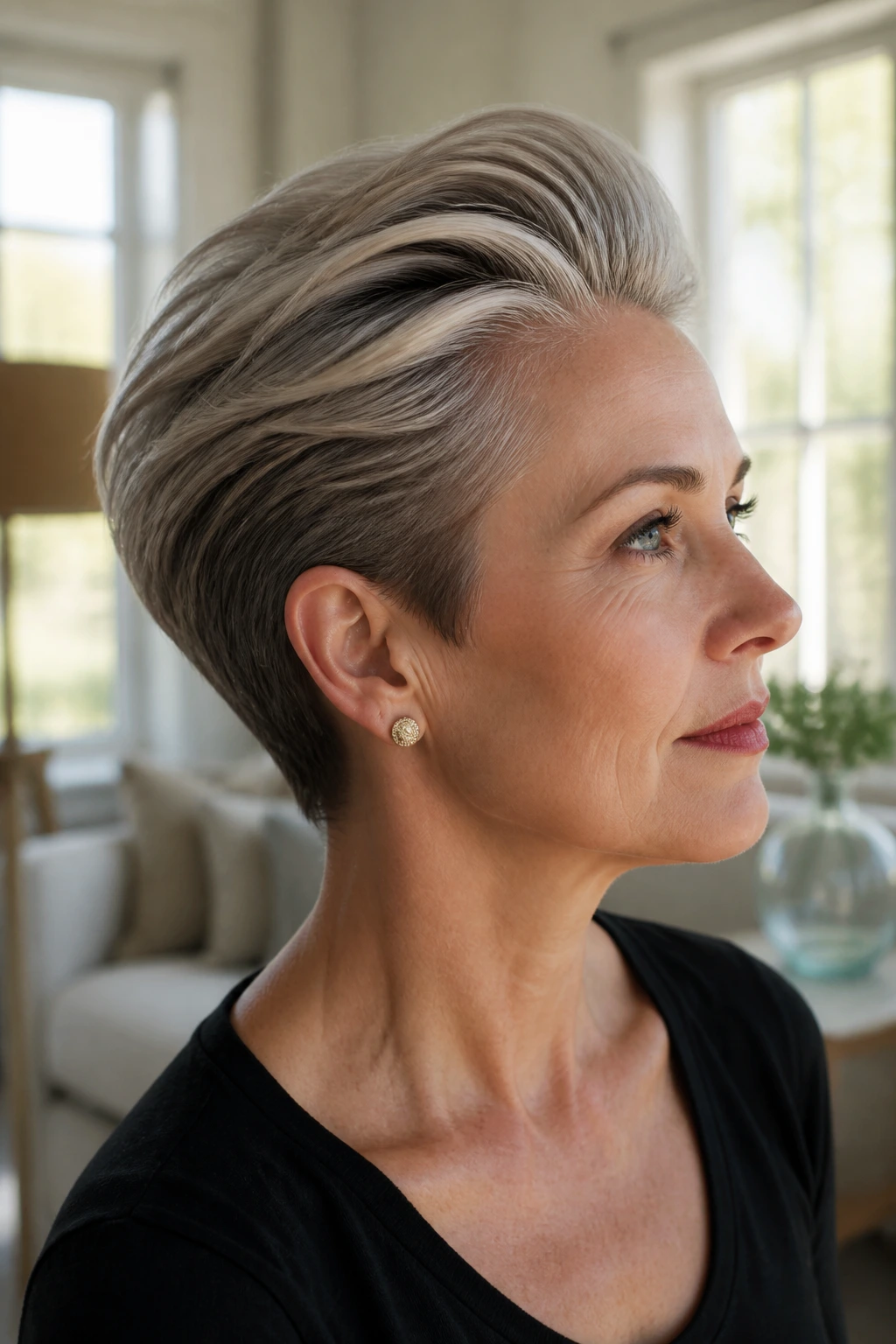
Fine hair can do a slicked-back look. It just needs the right cut under it.
A lot of people assume slicked-back styles only work on thick hair, but the opposite can be true. If the sides are already neat and the top has a bit of length, fine hair can look sleek and dense when brushed back with a light gel. The shape becomes the volume. That’s the trick.
The important part is restraint. Too much oil or pomade and the hair clings to the scalp in a sad little sheet. Too little and the style slips apart. You want enough hold to create shine and direction, not enough to freeze every strand in place.
This version works best when the crown has been cut with a little extra length so it can rise before it’s smoothed back. The outline should stay close and clean around the ears. If you’ve got a strong jawline, even better. The cut gives it room to show.
16. Soft Mullet Pixie
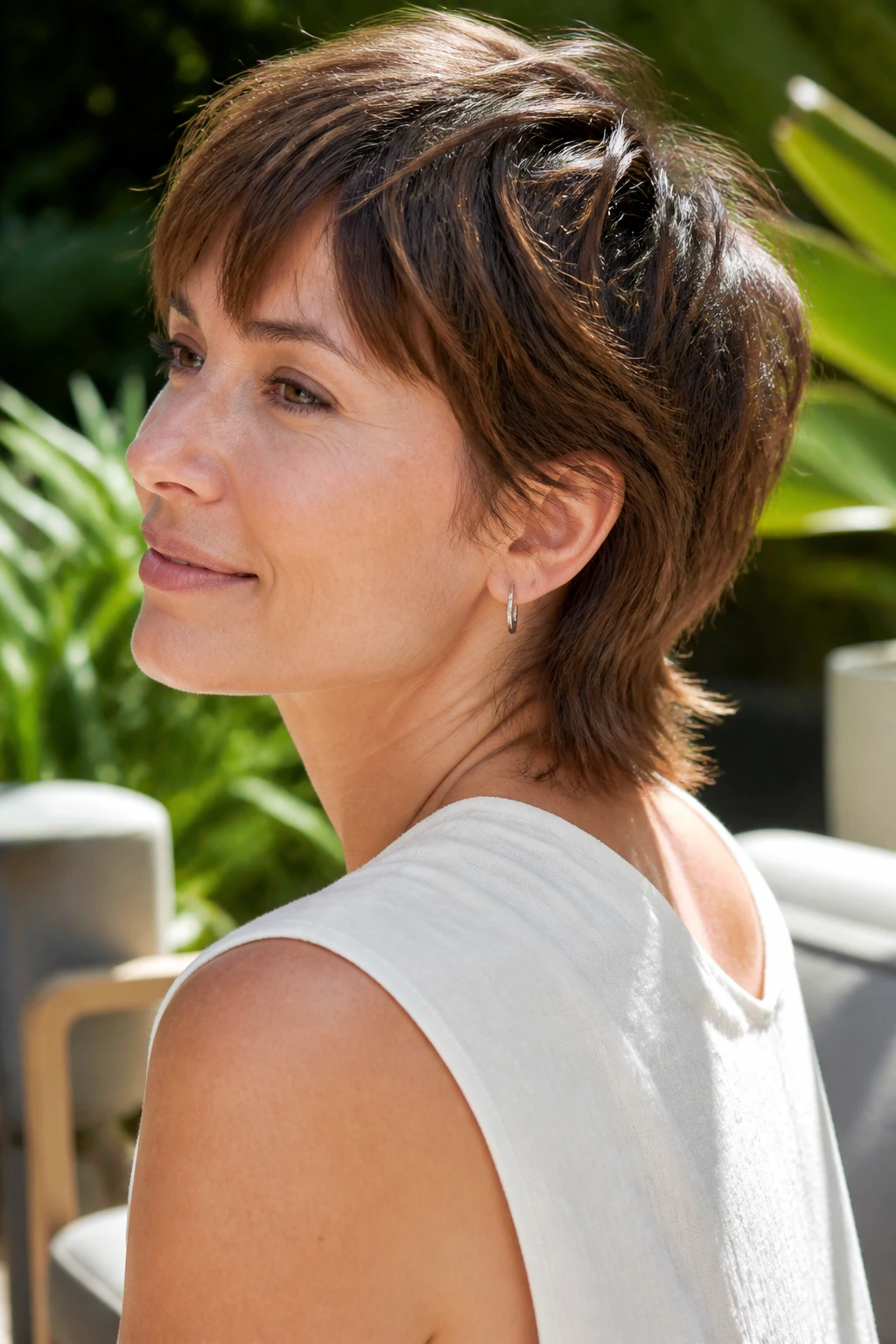
A soft mullet pixie sounds bold, and it is, but it can be surprisingly flattering on fine hair.
The longer back gives the illusion of density, while the shorter top and face-framing pieces keep the cut from going flat. It’s not a hard mullet with a choppy edge. The “soft” part matters. The transition from short to long should feel gradual, almost hazy. Fine hair tends to look better when the outline isn’t too abrupt.
This shape also works if your hair grows differently at the crown and nape. Some people have flat spots in the back that a standard pixie exposes. A soft mullet pixie shifts the emphasis lower, so the silhouette feels fuller from the side.
A little texture cream through the ends can help, but don’t pile product into the back. You want movement, not stringiness. The cut should feel light when you turn your head, not heavy.
17. Bowl-Inspired Pixie with Broken-Up Edges
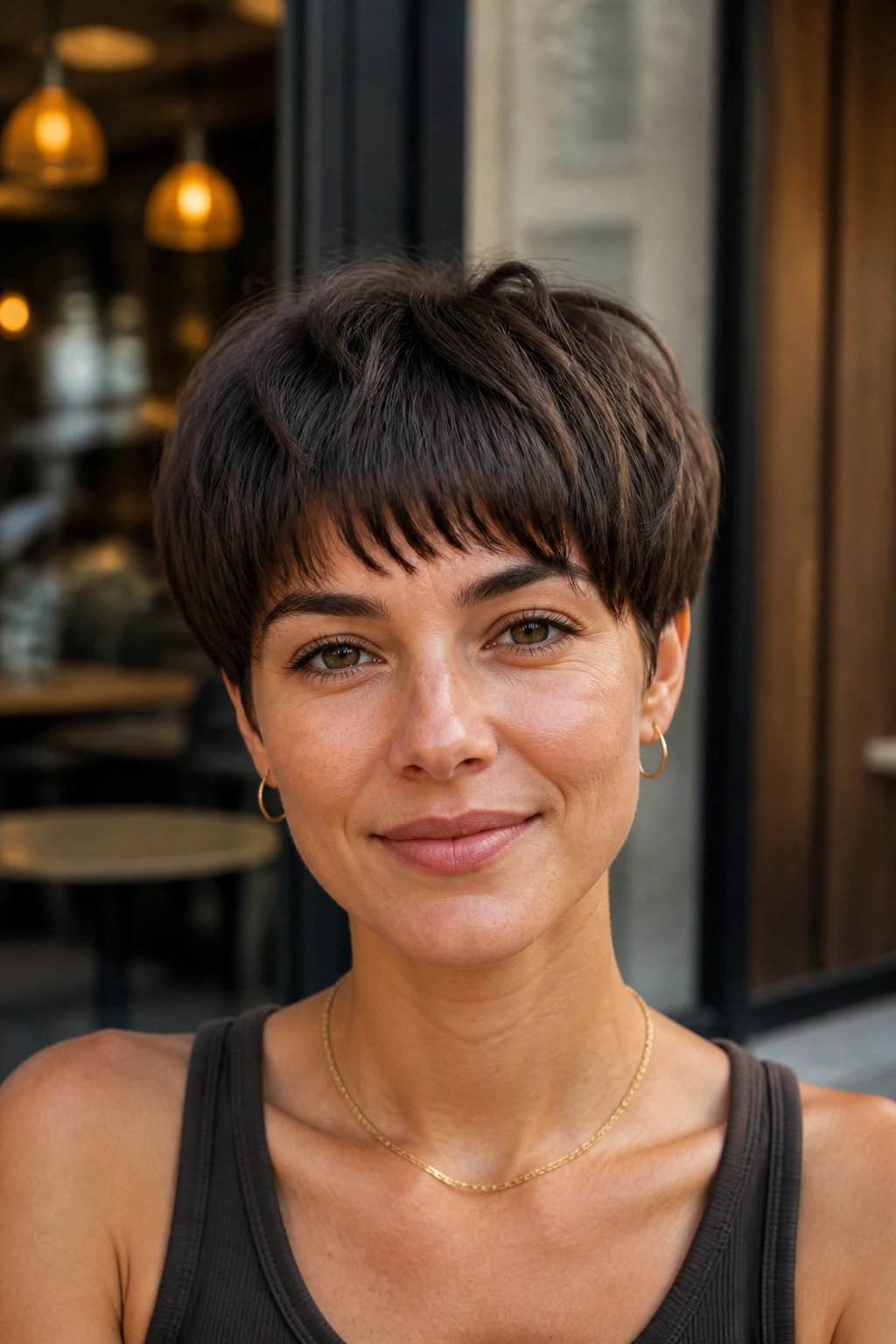
A bowl-inspired pixie can go wrong fast. Done well, it has a cool, modern shape.
The old bowl cut was heavy and blunt. This version is different. The edges are broken up, the fringe is softened, and the top isn’t one solid shelf. For fine hair, that broken outline can actually create the illusion of more density because the hair stays close to the head while still showing texture.
The best version keeps the curve around the head but cuts into it enough that it doesn’t read as a cap. A little unevenness through the fringe helps. So does a soft taper around the nape. You want the shape, not the cartoon.
This cut works best on straight hair or hair that can be smoothed with minimal effort. If your hair is very frizzy, the outline may blur too much. But if your texture is smooth and fine, the style can look crisp in a way that feels fresh rather than severe.
18. Side-Profile Pixie with Ear Tuck
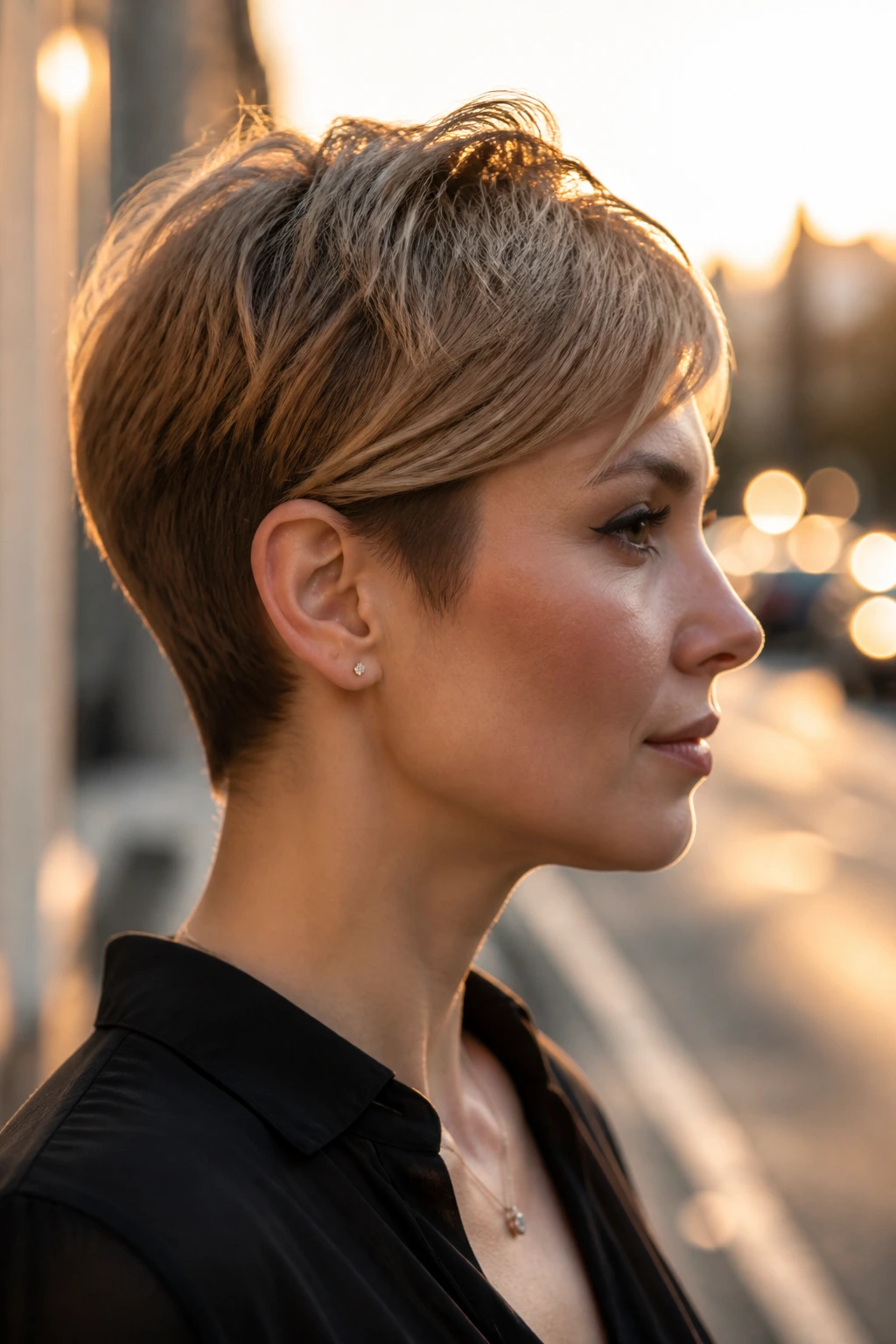
A pixie that tucks neatly around the ear can look fuller from the side than from the front.
That sounds backwards, but the side profile is often where fine hair shows its best work. A little tuck opens up the face, shows off a clean line around the ear, and lets the crown look higher by comparison. This is a nice choice if you wear glasses or like small earrings, because the cut leaves room for both.
How to Style It
- Blow-dry the top upward first
- Tuck one side while the hair is still warm
- Leave the opposite side slightly looser for balance
- Finish with a light spray, not a stiff shell
The ear area should be clean but not stripped bare. You want the line to look deliberate. A good version of this cut feels polished in a quiet way, and that polish makes fine hair seem denser because the shape is so clean.
19. Platinum Pixie with Extra Texture
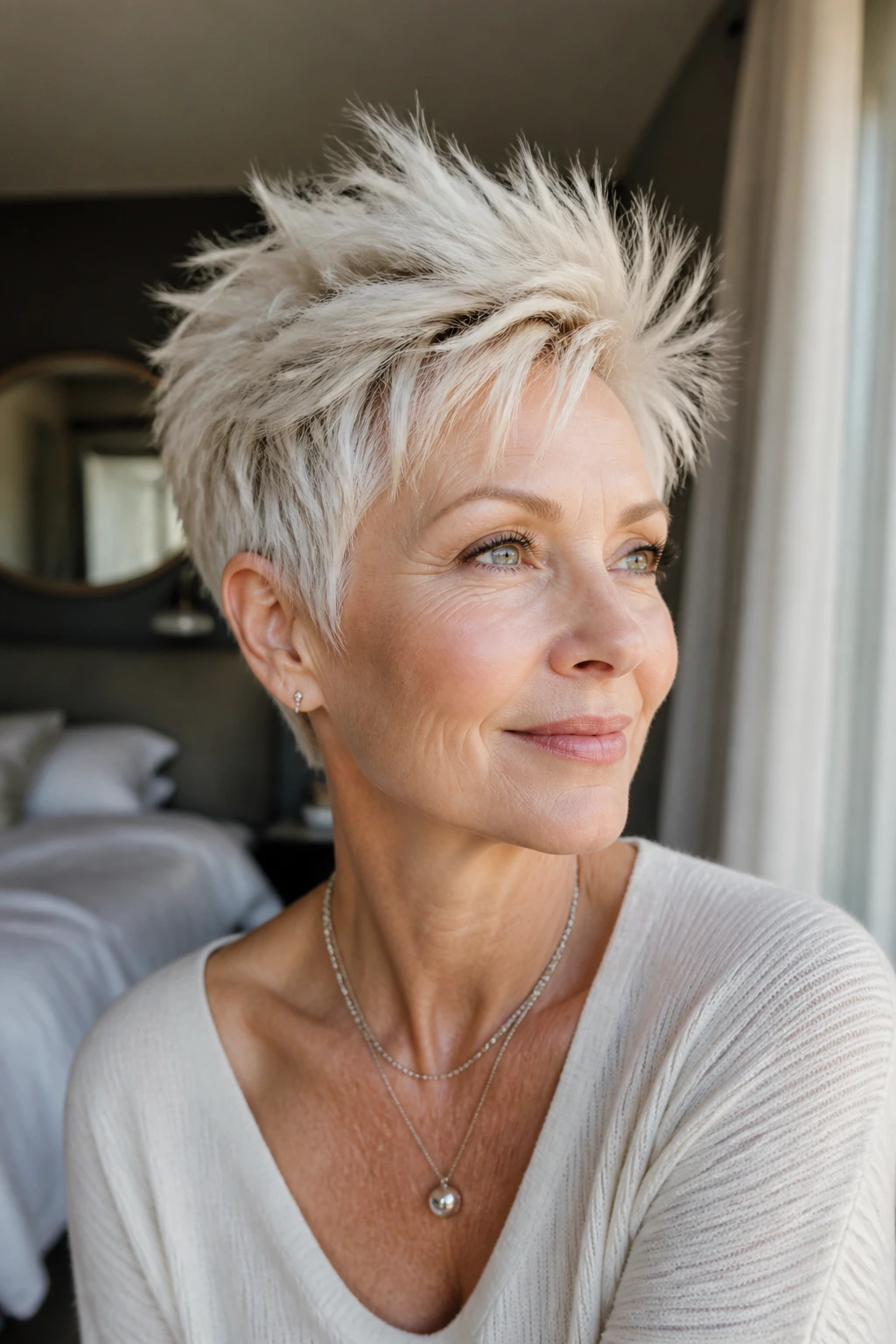
Color can help a cut read fuller, and platinum is a sharp example.
Light shades reduce contrast at the scalp, which means the hairline and root area don’t shout quite as loudly. On a textured pixie, that can make fine hair look more even and airy. The cut still does the main work, but the color helps by softening the visual breaks between scalp and strand.
If platinum is too much upkeep, a pale blonde, creamy beige, or soft silver tone can have a similar effect. The point isn’t the color itself. It’s the way light bounces off it and makes the texture easier to see. Fine hair often looks better when the layers are visible in soft light instead of hidden in shadow.
One caution: lighter color can show dryness faster. If you go this route, keep the cut shaped with regular trims so the ends stay clean. A cropped silhouette with a rough, fried perimeter loses the whole point.
20. Deeply Textured Crop with Spiky Finish
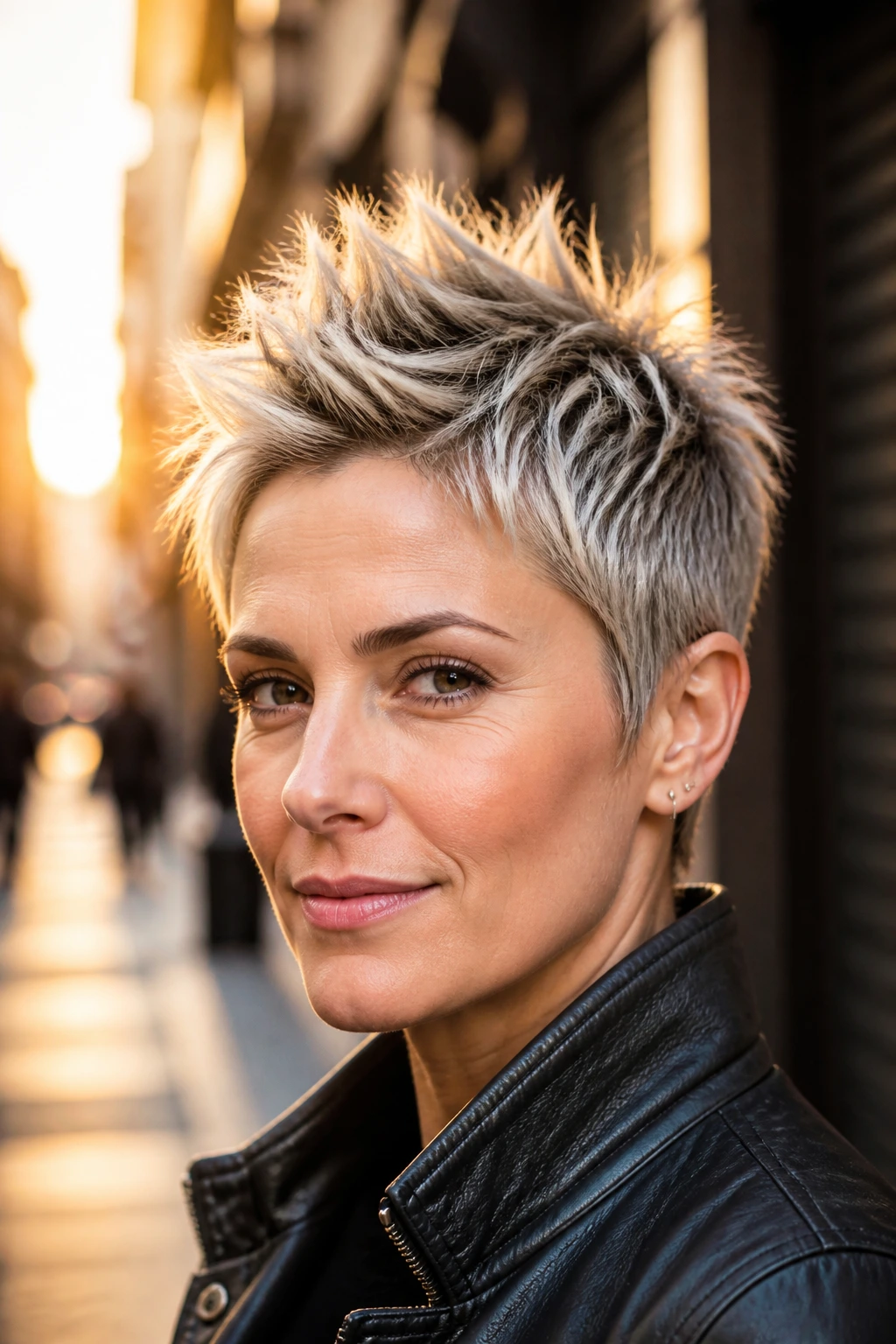
This cut has attitude, but it still has to be wearable.
A deeply textured crop uses short, choppy pieces on top and a spiky finish to create height. Fine hair that grows in different directions often responds well to this because the cut works with natural irregularity instead of trying to flatten it into obedience. The result should look lifted and sharp, not stiff.
The styling part is tiny. Warm a pea-size amount of paste between your palms, press it into the top, and pinch a few ends upward. That’s enough. If you keep adding product, the texture closes up and the cut loses air.
This style is strongest on people who like a little edge around the face. It also photographs with good structure because the pieces separate cleanly. Still, it needs regular trims. A spiky crop goes from crisp to ragged faster than softer pixies do, and fine hair shows that shift quickly.
21. Long Top Pixie with Tapered Sides for Fine Hair
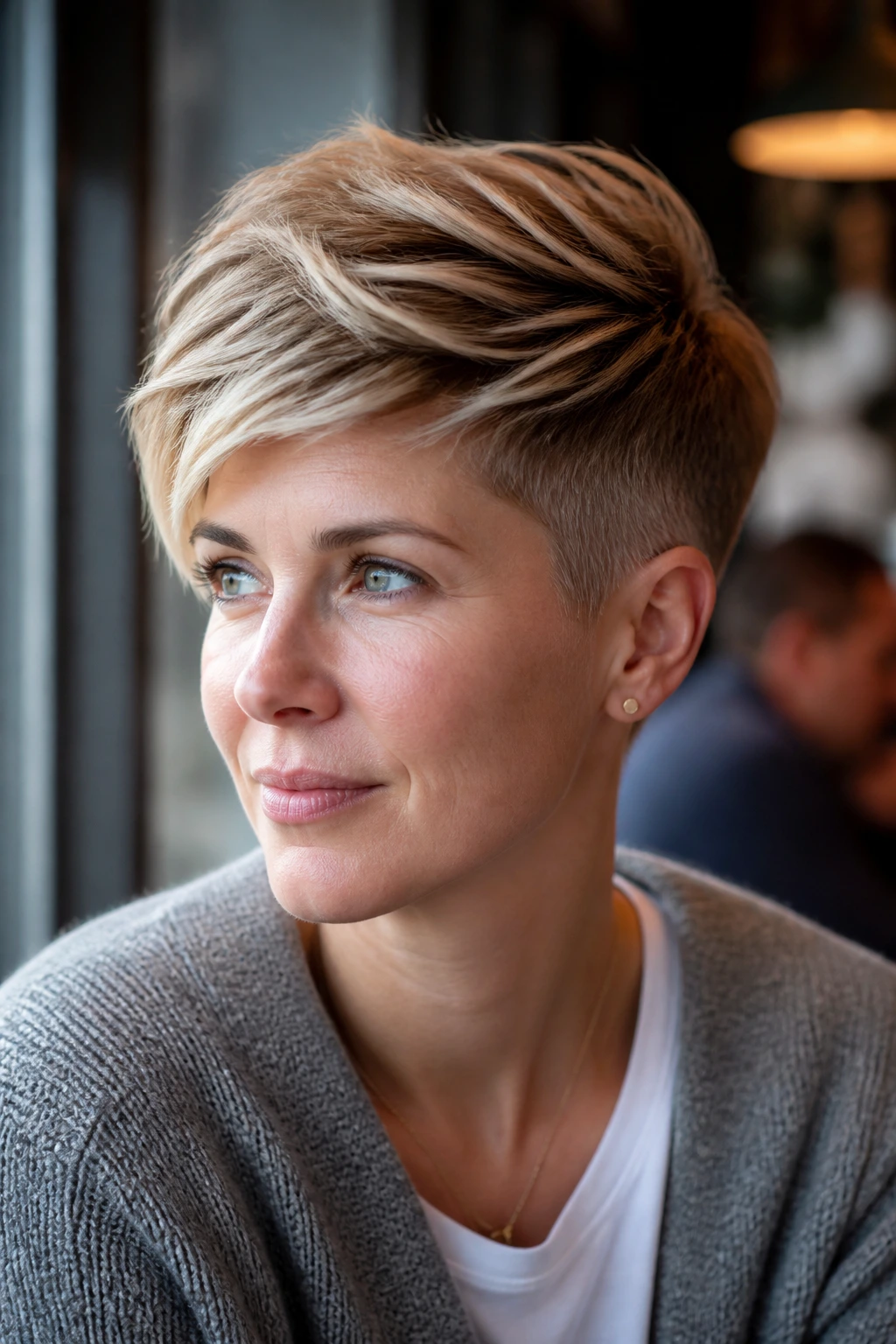
If you want options, keep the top longer.
A long-top pixie with tapered sides gives fine hair more ways to style itself without letting the whole shape get floppy. The length on top can be swept forward, flipped up, pushed to one side, or tucked behind the ear. That flexibility is worth a lot if your hair changes mood every time the weather shifts.
The tapered sides keep the cut from puffing out where you do not want it. That’s the balance. A longer top on its own can fall flat. Tapered sides on their own can look too bare. Put them together and the silhouette gets stronger.
This is one of the best options if you want a pixie that can look casual during the day and a little sharper at night. A round brush, a quick root lift, and a dab of matte cream are usually enough. If your hair needs more structure, this is one of the easiest shapes to train.
22. Airy Nape-Hugging Pixie for Fine Hair
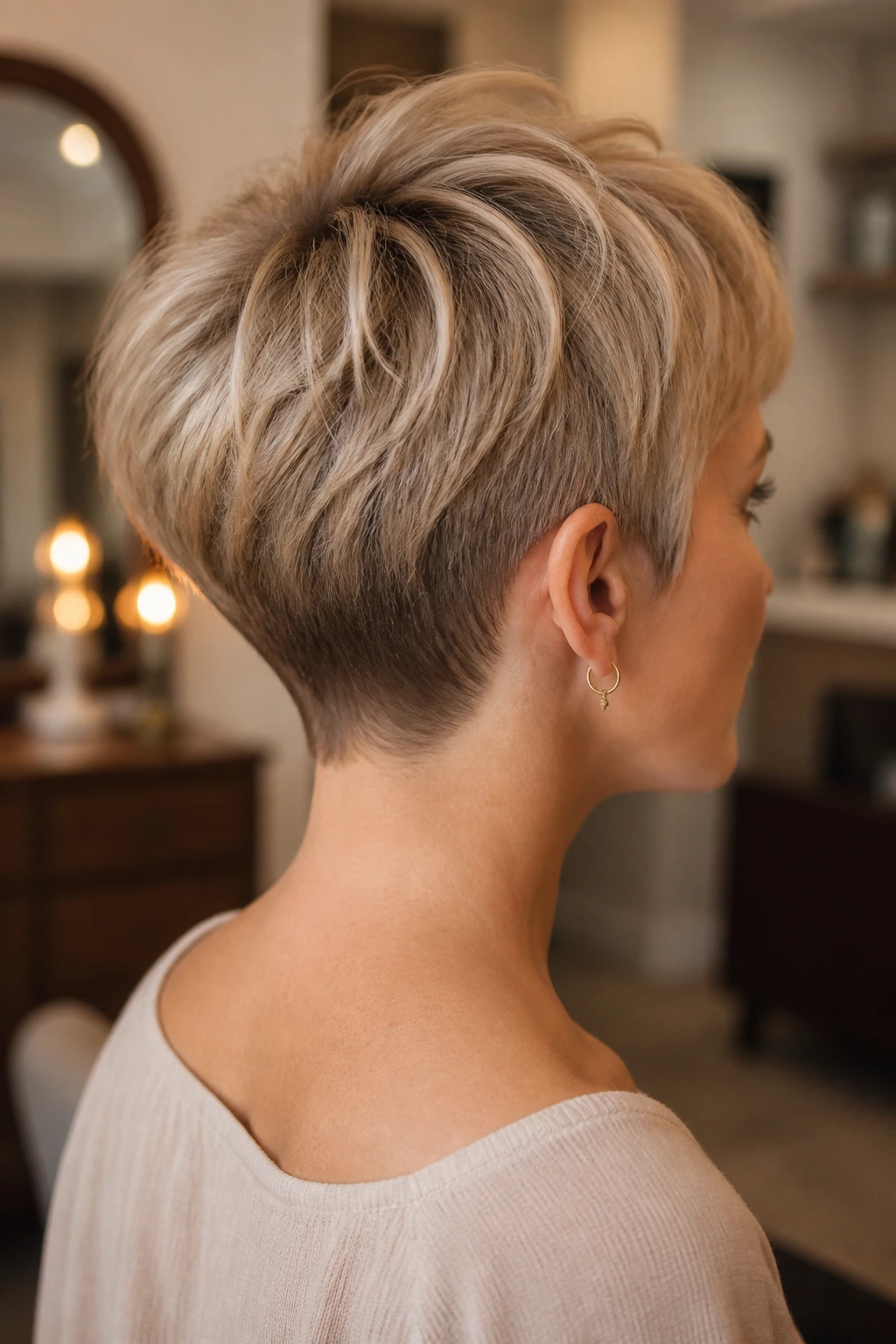
This is the cut I’d point to if you want neatness, softness, and enough lift to keep fine hair from disappearing into your head.
An airy nape-hugging pixie keeps the back close and the crown lightly layered, so the shape feels controlled without feeling heavy. The nape is trimmed cleanly, but not so tight that the cut loses warmth. Up top, the extra length stays soft enough to move. That contrast gives fine hair a more visible outline.
It’s also a forgiving shape if you don’t want to spend forever styling in the morning. A quick blow-dry at the crown, a little root spray, and a finger-style finish are often enough. The cut does the rest. And honestly, that’s what makes it useful. Hair shouldn’t need a ceremony every day.
If you’re choosing between a few pixie styles, start with the one that gives your crown the most air and your sides the least bulk. That small shift usually matters more than chasing extra length.
