



Straight hair and a pixie cut make a cleaner pair than most people expect. The shape shows up fast, the shine shows up even faster, and every tiny change in the outline reads immediately. That’s the appeal.
Flat is the enemy. So is a cut that looks cute for two days and then collapses at the crown, sticks out at the cowlicks, or turns into a helmet because the weight was left in the wrong place. A good pixie on straight hair is usually about control: a tapered nape, some lift up top, and enough softness around the edges that it doesn’t look carved out of one block.
The nice part is that straight hair gives you choices. You can wear a pixie sharp and graphic, soft and feathered, cropped close, or left long enough to tuck behind the ear. You can also keep styling dead simple or spend five extra minutes with a round brush and paste. Both approaches can work.
These 28 pixie cuts for straight hair cover the useful range, from crisp and minimal to shaggy, grown-out, and a little bit rebellious.
1. Blunt Pixie Cut for Straight Hair
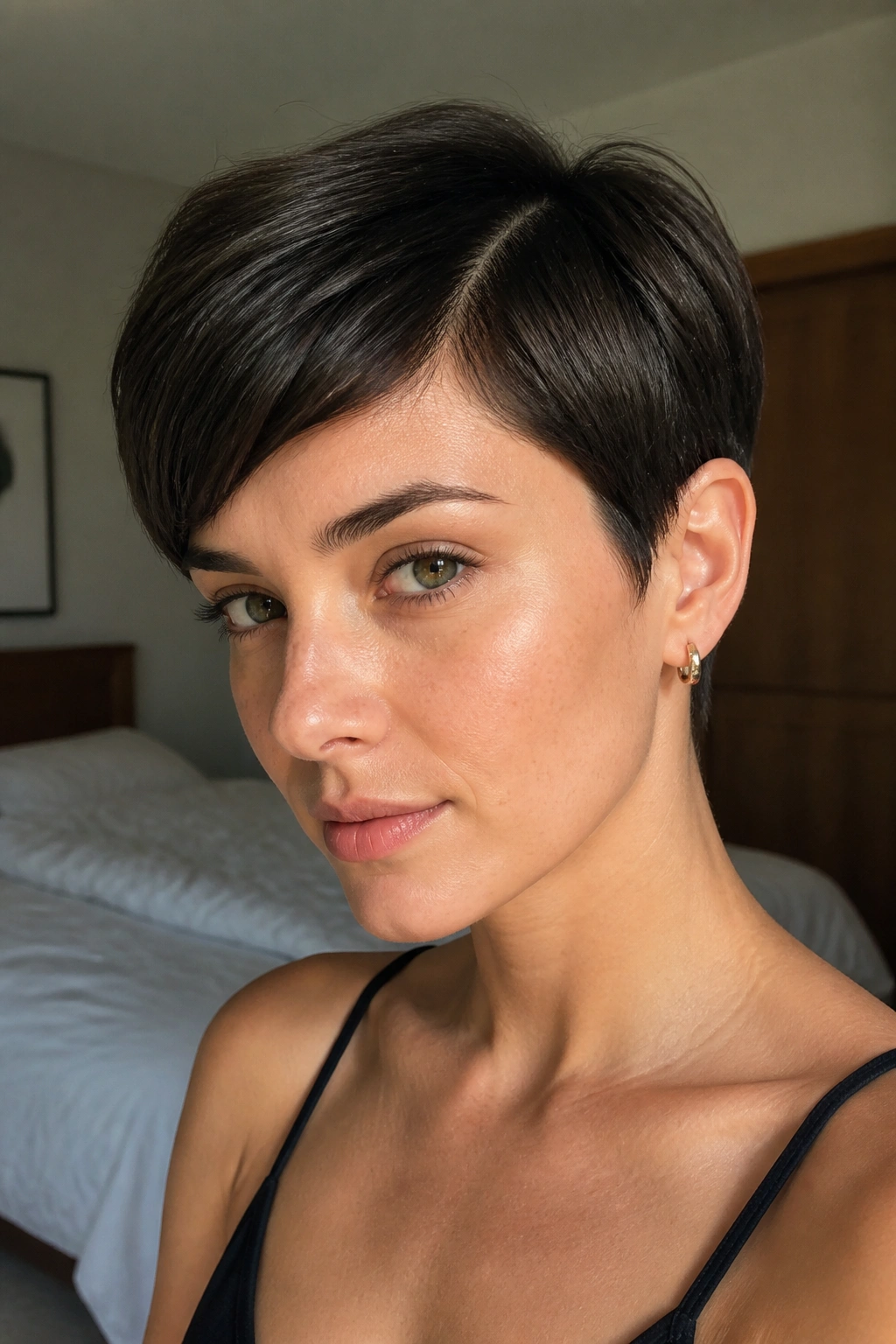
A blunt pixie is one of the strongest looks straight hair can wear. The line stays visible, the edges stay clean, and the whole cut feels deliberate without needing much styling at all.
Why It Works
The blunt perimeter gives straight strands something to do. Instead of disappearing into softness, the ends land with a clear shape, which is especially nice if your hair is fine and tends to lie too close to the head. Ask for a tidy, even line through the sides and a slightly shorter nape so the back does not puff out.
A side part keeps this from feeling too severe. One quick bend with a flat iron or a round brush at the fringe is usually enough.
Best for: Dense straight hair, strong jawlines, and anyone who likes a crisp finish.
Watch for: A blunt cut that is too wide through the sides. That’s where the helmet look starts.
2. Soft Tapered Pixie with a Close Nape
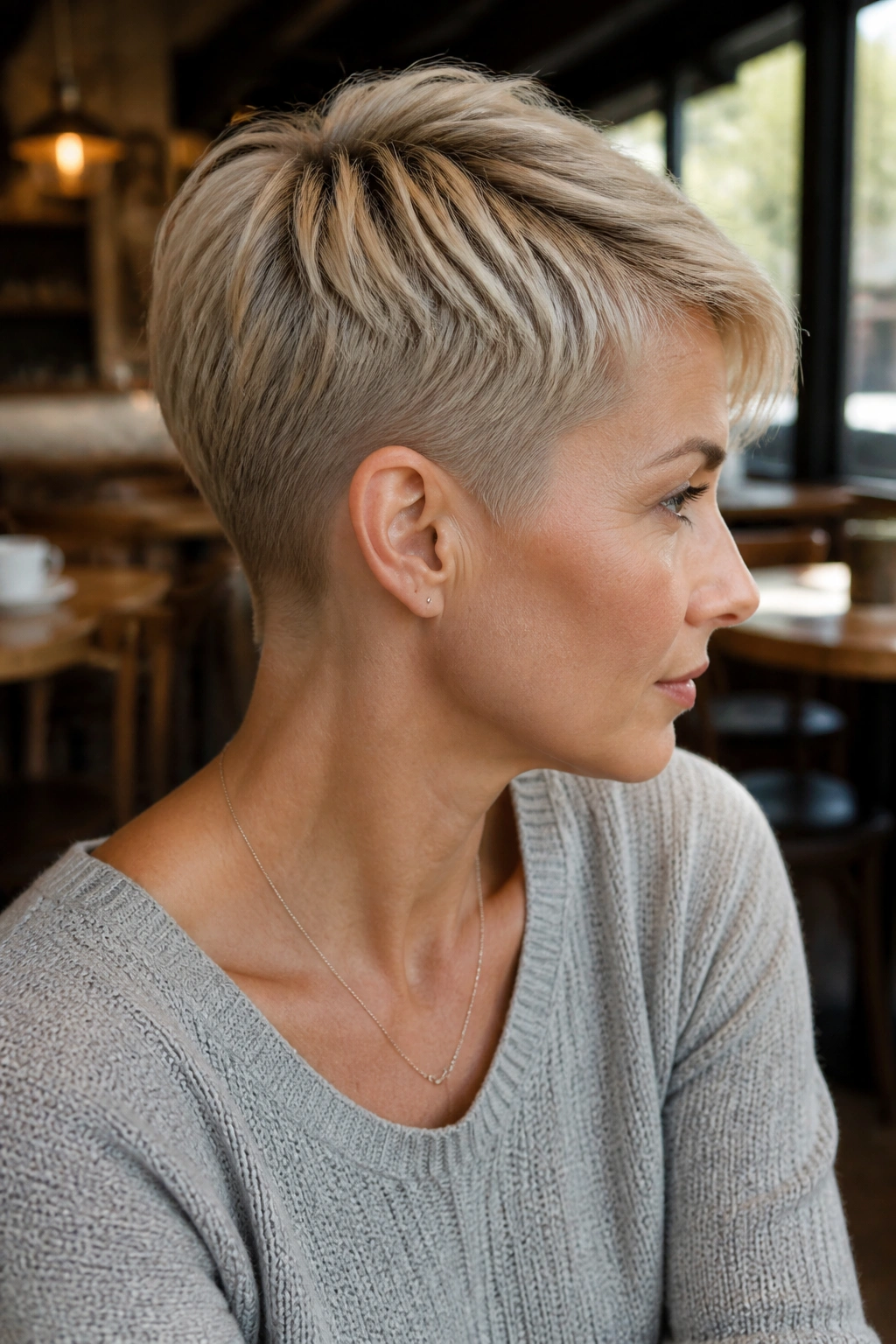
This is the cut I’d hand to someone who wants short hair but does not want it to look hard. The nape sits close, the sides narrow in cleanly, and the top keeps a little length so the shape feels light.
The taper is the real trick. It makes the back sit flat against the neck, which straight hair often needs, and it keeps the whole style from ballooning when you tuck your chin down. If your hair grows quickly at the neckline, this shape still looks tidy between trims.
How to Wear It
- Blow-dry the top forward first, then push it slightly back with your fingers.
- Use a pea-size cream if you want a softer finish.
- Keep the nape neat every 4 to 6 weeks.
My take: This is one of the easiest pixie cuts for straight hair to live with day to day.
3. Side-Swept Pixie with a Long Fringe
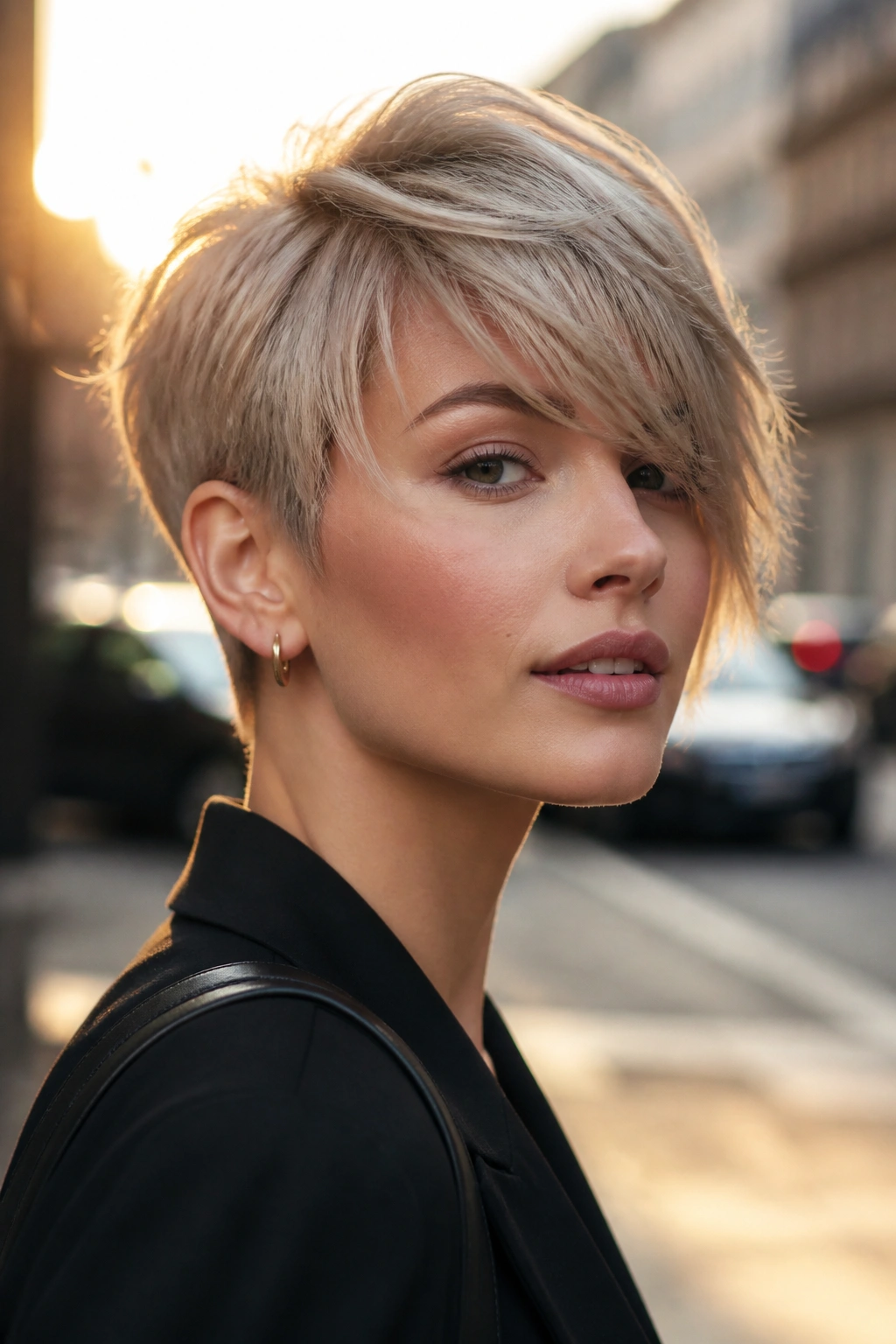
If you want a little softness around the face, this is the move. The fringe sweeps across the forehead instead of sitting straight on it, which gives straight hair some motion without forcing texture that isn’t there.
The longer front also gives you styling options. Push it low over one eyebrow, tuck it behind the ear, or let it fall diagonally across the cheekbone. That diagonal line is flattering because it breaks up the squared-off feel straight hair can sometimes have.
Choose this if you like a cut that can look neat in the morning and slightly undone by lunch. It handles both. And honestly, that’s part of the charm.
4. Choppy Razor Pixie with Piecey Ends
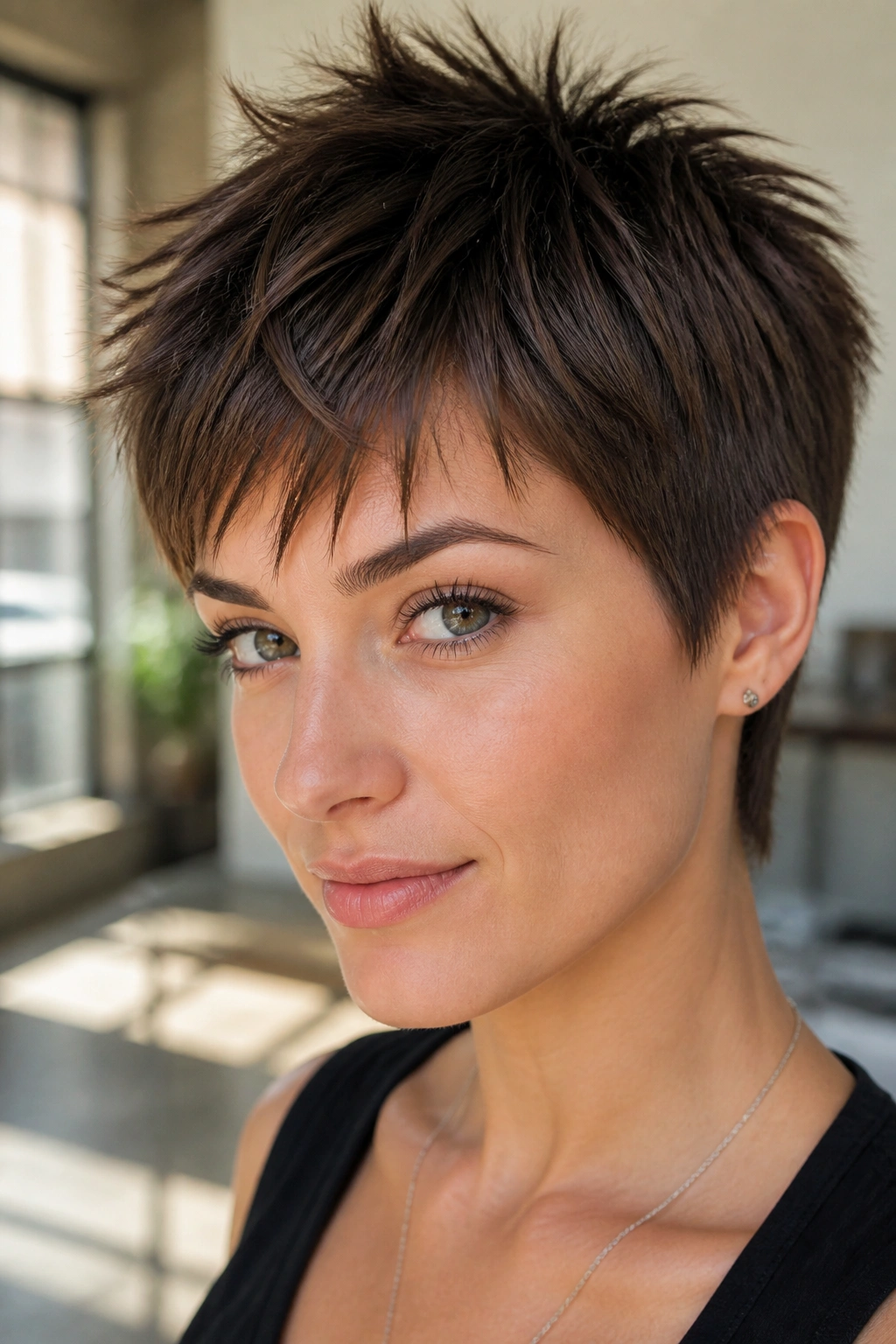
This one has edge, but not the loud kind. Razor work or careful point-cutting breaks the ends into small, separated pieces, so straight hair doesn’t sit like a solid sheet.
What Makes It Different
A choppy pixie needs movement at the ends, not bulk. That means the top should be cut to fall in little sections rather than one flat cap. If your stylist leaves too much weight on the crown, the style loses its lift and looks heavy fast.
Use a matte paste or a light texturizing cream. Work it through dry hair with your fingertips, then pinch the ends to separate them a bit.
- Good for hair that feels too sleek.
- Better on medium density than very fine hair.
- Looks best when the finish is slightly imperfect.
Bold truth: If you hate touching your hair, skip this one. It likes a little styling.
5. Long Pixie Cut That Brushes the Jaw
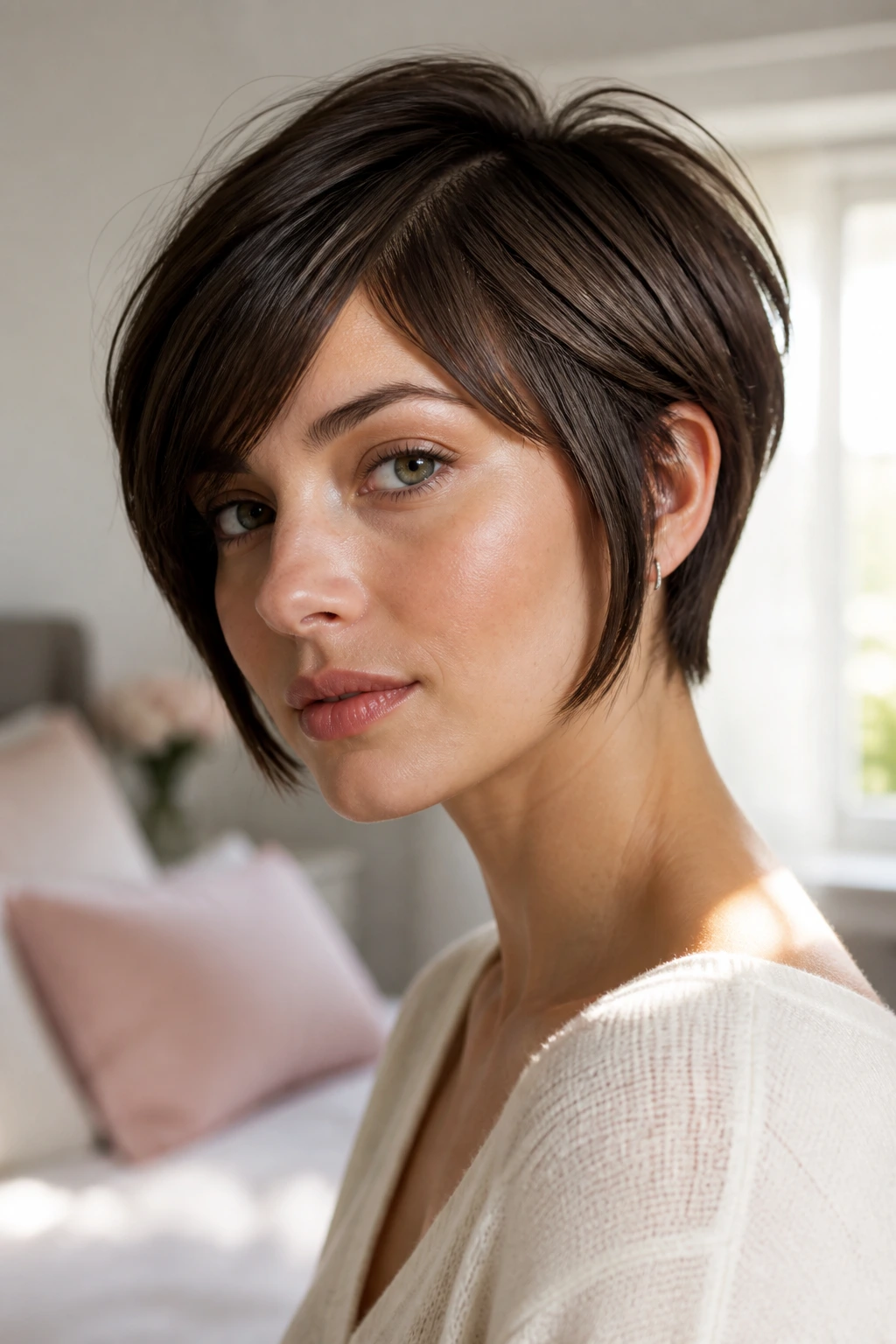
A long pixie is the safest place to start if you’re nervous about going short. The front brushes the jawline, the top keeps enough length to move, and the back stays cropped so the whole shape still feels modern.
Straight hair tends to make this cut look polished fast, which is a bonus. You don’t need much product, and you can get a clean silhouette just by blowing the front forward and tucking the side layers under. It’s also the sort of cut that grows out gracefully, which matters more than people admit.
There’s a reason this shape stays popular. It gives you the feel of short hair without the immediate shock of a very short crop.
6. Undercut Pixie with a Full Top
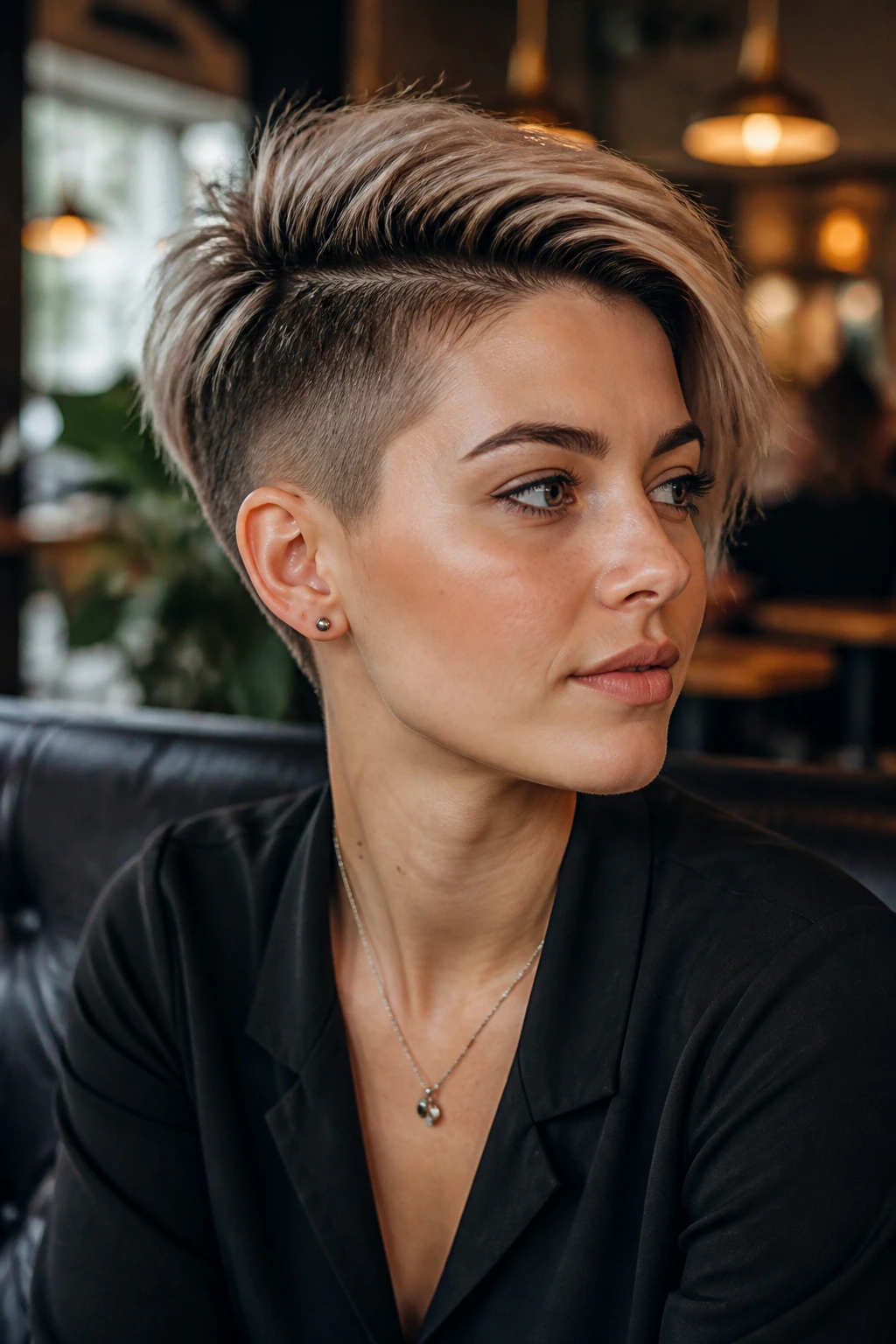
Dense straight hair can carry an undercut better than almost anything else. Taking weight out underneath lets the top sit higher, and that contrast keeps the cut from looking bulky around the ears and nape.
The cleanest versions leave the top at 2 to 4 inches, depending on how much sweep you want. That length gives you enough hair to side-part, brush back, or push forward when you want a different mood. The undercut itself can stay hidden, which is nice if you want a sharp shape without screaming about it.
Best for
- Thick straight hair that feels heavy in short cuts
- People who want easier drying time
- Anyone who likes a little surprise when they turn their head
The downside? Grow-out needs discipline. Let the undercut get shaggy and the whole thing loses its line.
7. Bixie with Soft Graduation
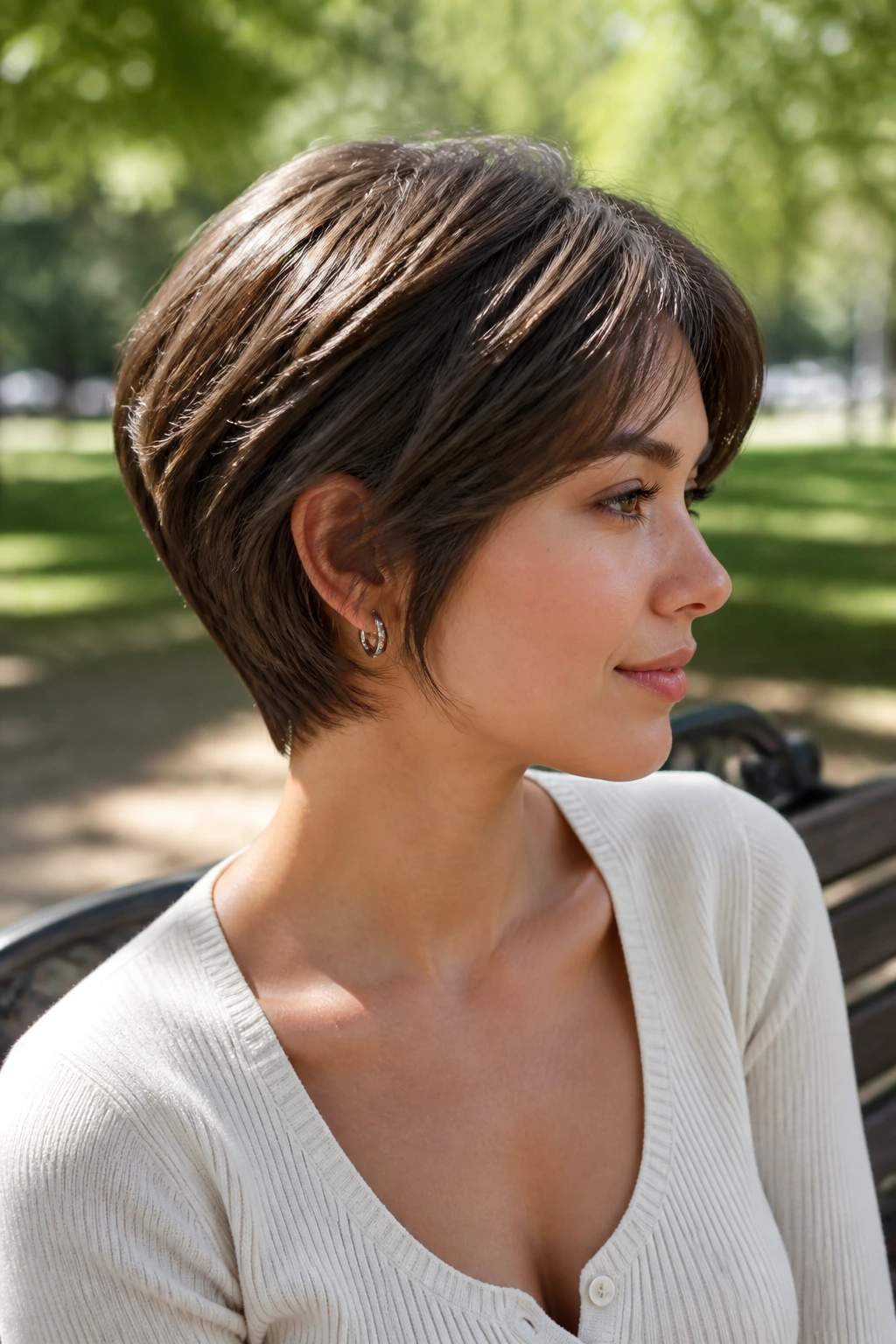
The bixie sits between a bob and a pixie, and straight hair makes that in-between zone look very clean. It’s short enough to feel light, but long enough to keep some swing at the sides.
Why It Works on Straight Hair
Graduation through the back helps the cut sit properly, especially if your hair has a flat root area. You get a softer outline than a classic pixie, which is useful if you’re not ready for a crop that exposes the ears and neckline right away.
A bixie is also forgiving on days when you don’t style much. Air-dry it with a little leave-in cream and let the natural straightness do its thing.
Tip: Ask for interior layering, not lots of surface chopping. The shape should move from underneath.
8. Rounded Pixie with a Bowl-Inspired Shape
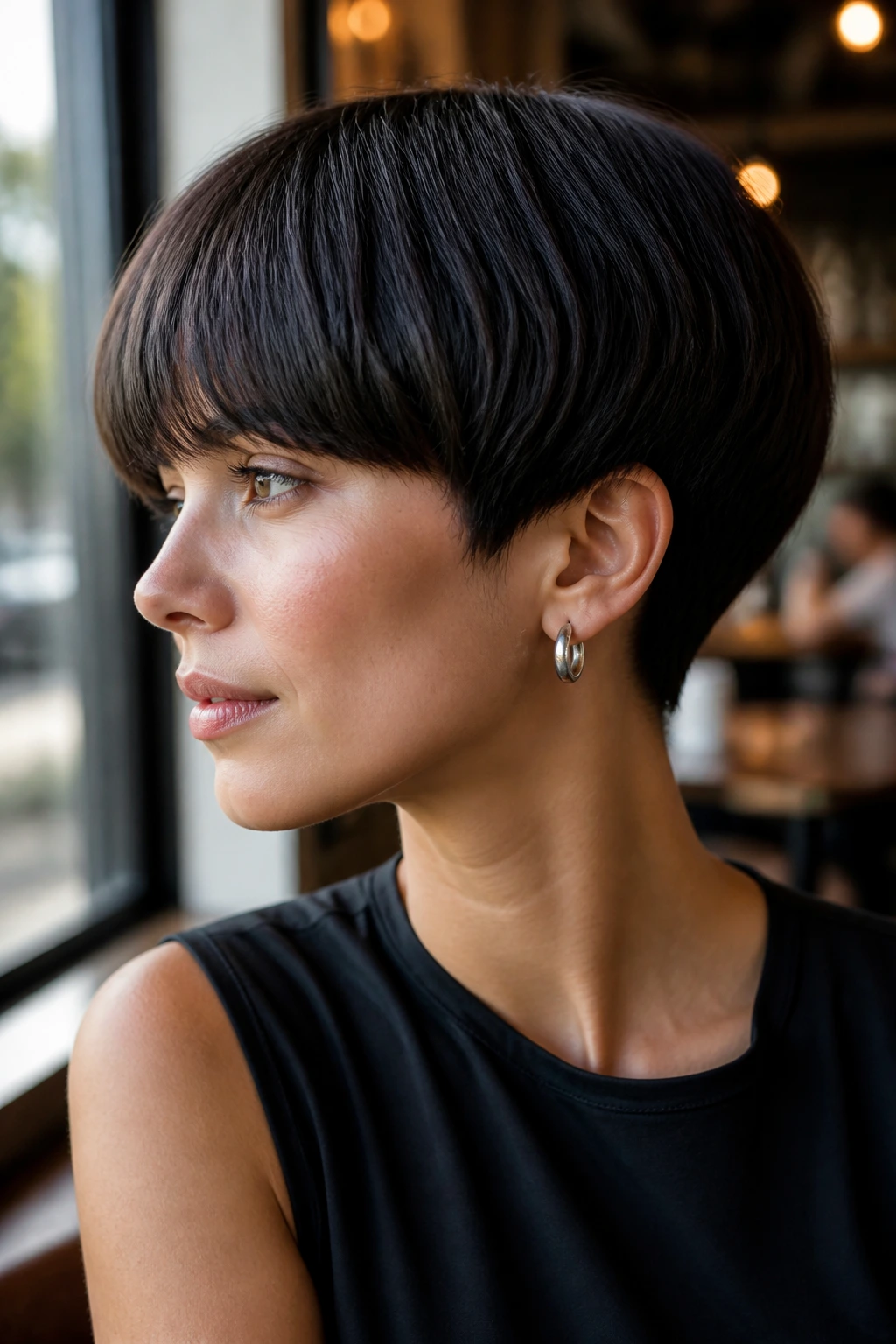
This is not the same as a bowl cut, and I’m glad. The rounded pixie keeps a curved outline but softens the edges so it feels intentional rather than dated. On straight hair, that curve reads especially clean.
The shape works best when the sides are snug and the top is slightly fuller, almost like a small dome that narrows toward the nape. That geometry sounds fussy, but in real life it just means the cut frames the head instead of flaring out from it.
A rounded pixie is sharp in a quiet way. If your wardrobe leans minimal, this cut fits right in. If you like a little drama, the silhouette still gives you that.
9. Asymmetrical Pixie with One Longer Side
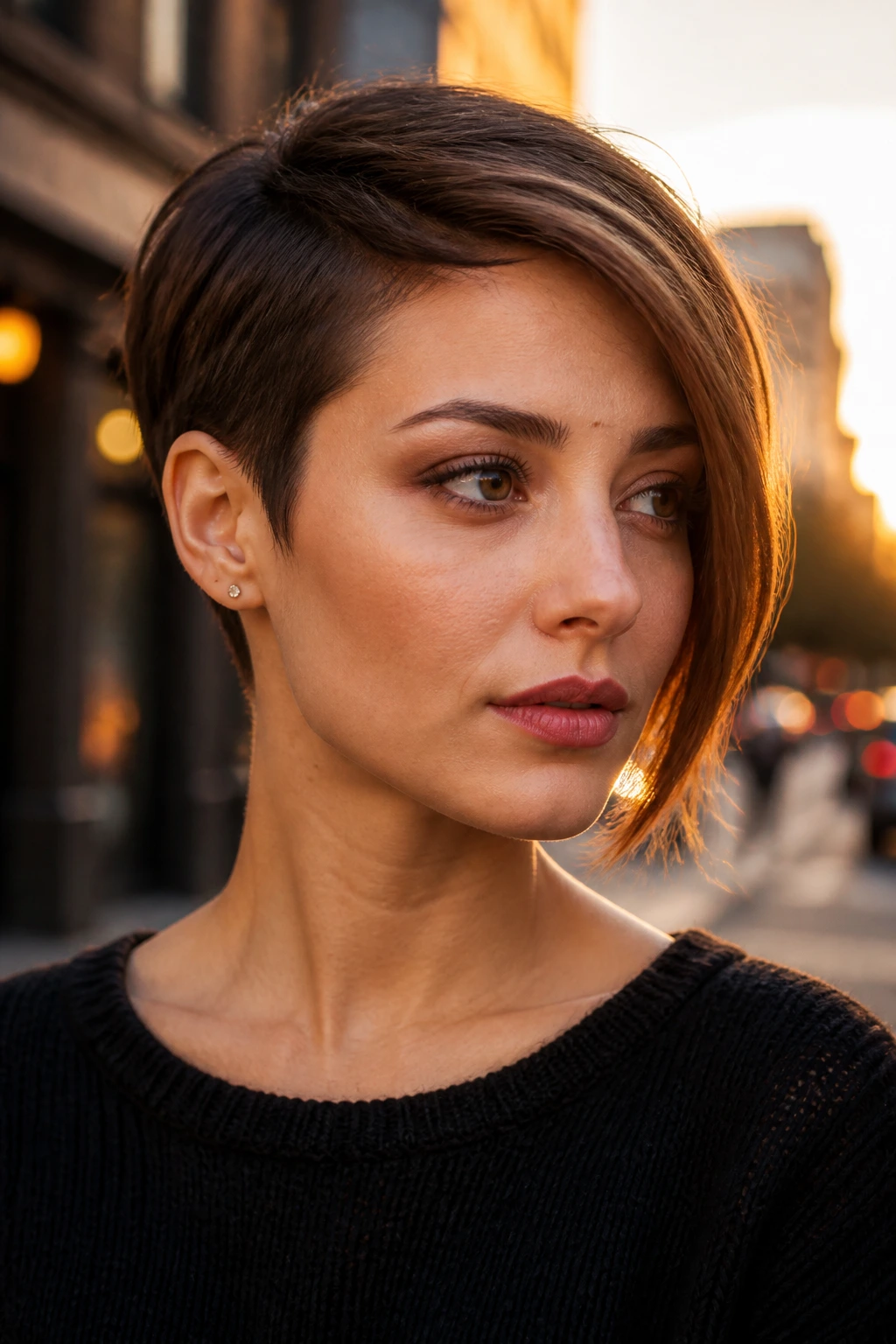
A slight imbalance can do a lot for straight hair. One side stays shorter, the other side drops longer, and the whole cut suddenly feels more deliberate than a standard symmetrical crop.
That longer side can skim the cheekbone or land closer to the jaw, depending on how much contrast you want. The key is keeping the shorter side tidy so the difference looks designed, not accidental. Straight hair makes this shape easy to see, which is both the reward and the warning.
How to Ask for It
- Keep one side about 1 to 2 inches longer.
- Blend the back smoothly so the shift feels gradual.
- Leave enough top length to tuck behind one ear.
I like this shape on people who want their cut to have a little attitude without losing wearability.
10. Pixie Cuts for Straight Hair with Curtain Bangs
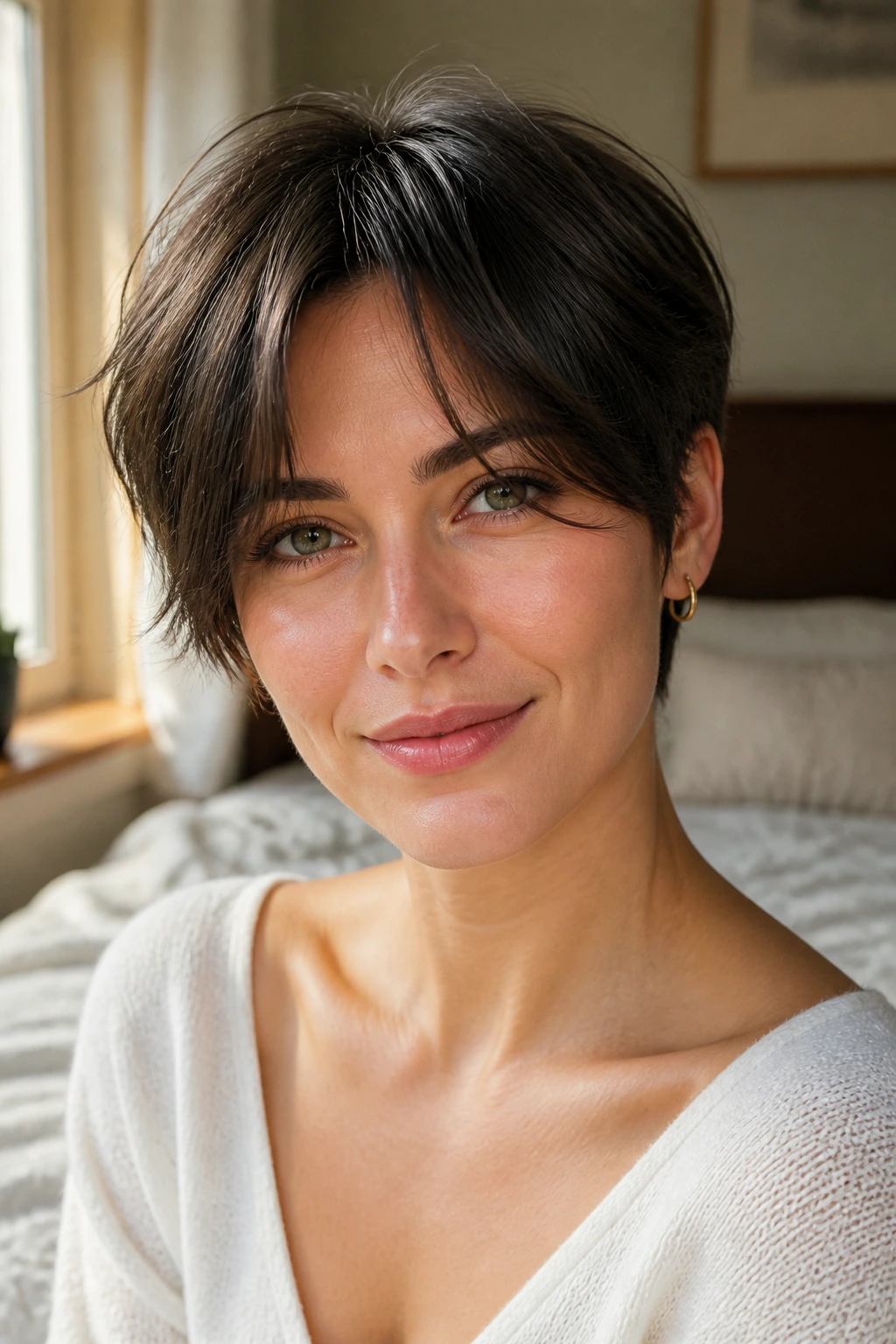
Curtain bangs change the mood fast. Instead of a hard front line, the fringe opens in the middle and falls away from the face, which gives straight hair a softer, slightly romantic feel.
The nice part is that curtain bangs do not need perfect volume to work. A quick bend with a round brush is enough. They also help if you dislike a short bang sitting straight across the forehead, which can feel severe on very sleek hair.
What to Watch For
- Keep the shortest point around eyebrow level or slightly above.
- Don’t let the sides grow too heavy.
- Ask for a soft, face-framing transition into the temples.
Short version: This is one of the easiest ways to make a pixie feel less sharp.
11. Feathered Pixie with Airy Layers
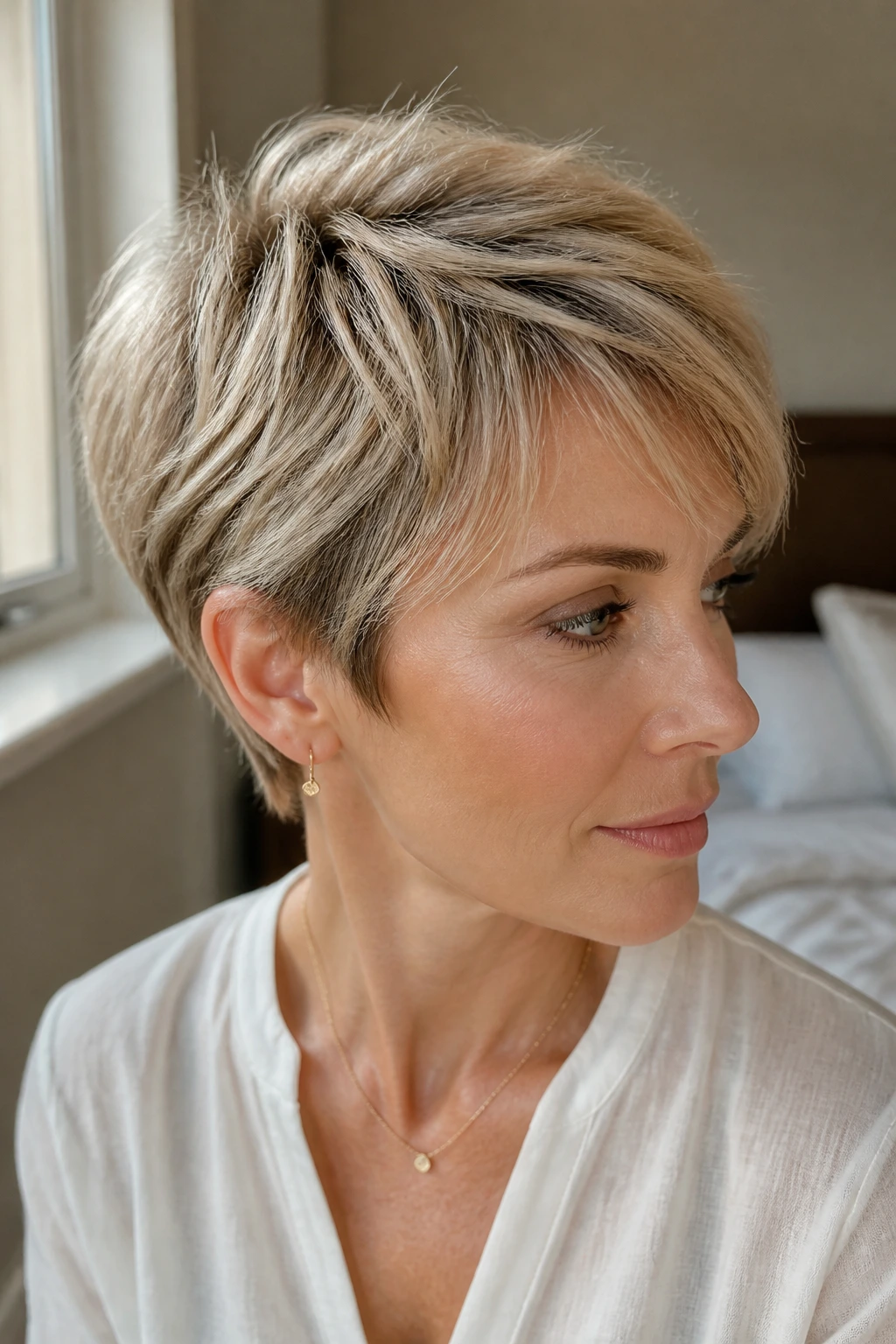
Feathering is a smart move for straight strands because it breaks up the solid outline without making the cut look thin. The layers should feel light and lifted, not choppy for the sake of it.
The crown gets the most attention here. A little extra height in that zone keeps the whole cut from lying flat, especially if your hair has a fine texture. The edges should still look tidy, though. Feathering works when it adds air, not when it makes the cut fuzzy.
This is a good pick if you like movement but hate the crunchy look some texturized cuts can get. A soft cream, a quick blow-dry, and you’re done.
12. Slicked-Back Pixie for Straight Hair
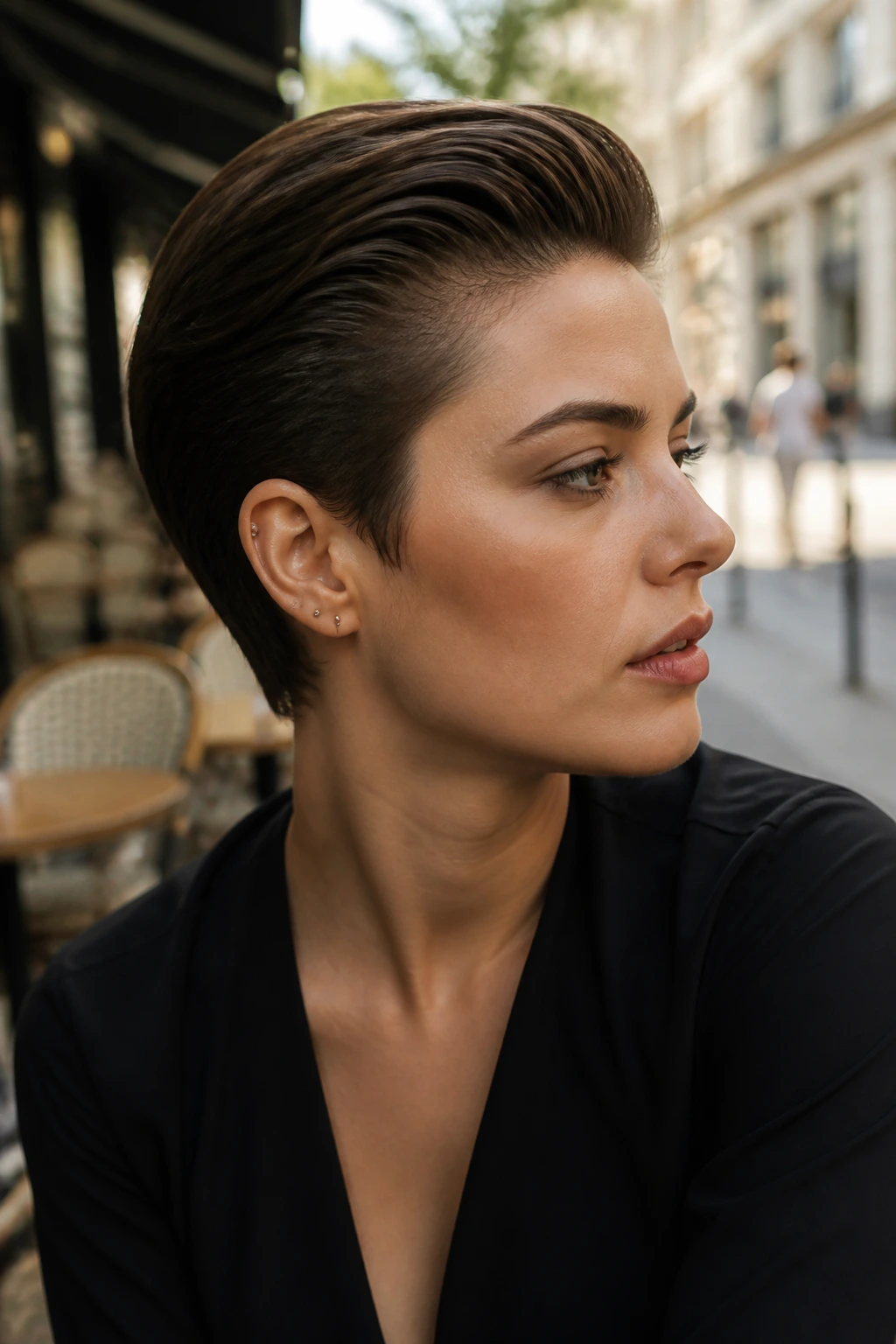
Straight hair and a slicked-back pixie are a natural pair. The cut already wants to lie close to the head, so you might as well lean into it and make the shape clean on purpose.
A little gel or high-shine cream turns the whole style into something polished and sharp. The top should have enough length to comb back without standing up in random sections. If it’s too short, the look turns patchy. If it’s too long, it starts to feel wet and heavy.
This is the one I’d wear with a strong brow, a good pair of earrings, and almost no fuss elsewhere. It doesn’t need much else.
13. Shaggy Pixie with Lived-In Texture
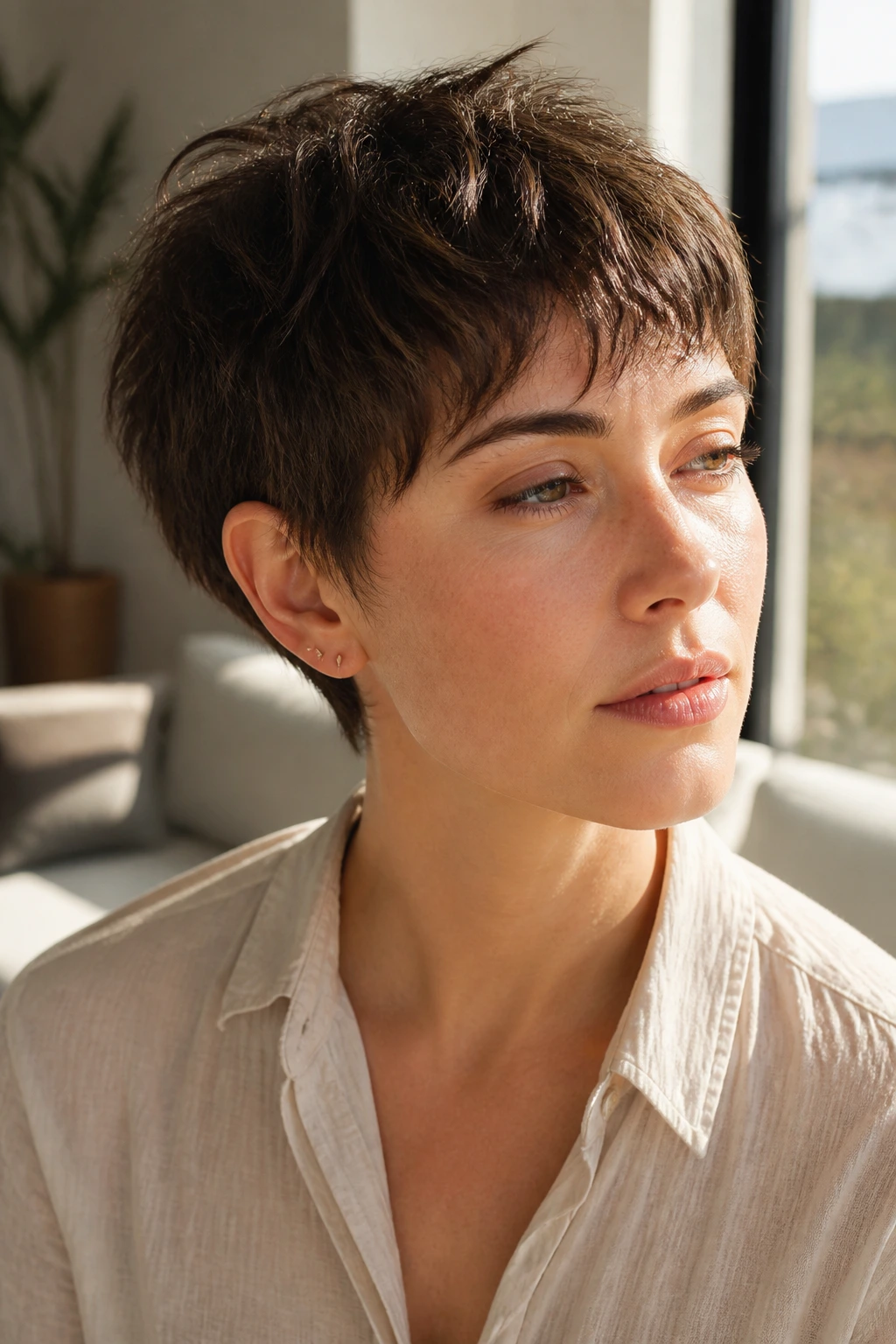
If you want your pixie to feel less neat and a little more undone, this is the route. The shaggy version uses irregular layers through the top and sides, so straight hair breaks into pieces instead of sitting in one smooth shape.
Why It Works
Straight hair can look too tidy in a conventional short cut. A shaggy pixie adds just enough mess to stop that. The trick is keeping the layers soft at the ends and shorter around the crown, where you want lift.
A salt spray or dry texture spray helps, but don’t drown it. A light mist and a rough finger-dry are enough.
- Good for people who like a casual finish.
- Better on hair that has medium density.
- Needs a little more product than a classic pixie.
My opinion: This looks best when it’s not over-styled. A little imperfection is the whole point.
14. Cropped Pixie with a Tiny Fringe

A tiny fringe makes a pixie feel bolder immediately. The bangs sit high on the forehead, which shows off brows, eyes, and bone structure in a way longer fringe cuts do not.
Straight hair is a strong match here because the fringe lays flat and stays where you put it. That gives the cut a neat, almost editorial look. Keep the sides and back clean so the short front feels intentional rather than abrupt.
This shape asks for confidence, but not in a loud way. It’s more about committing to the line. If you like minimal makeup and strong accessories, the balance is excellent.
15. Layered Crown Pixie with Lift
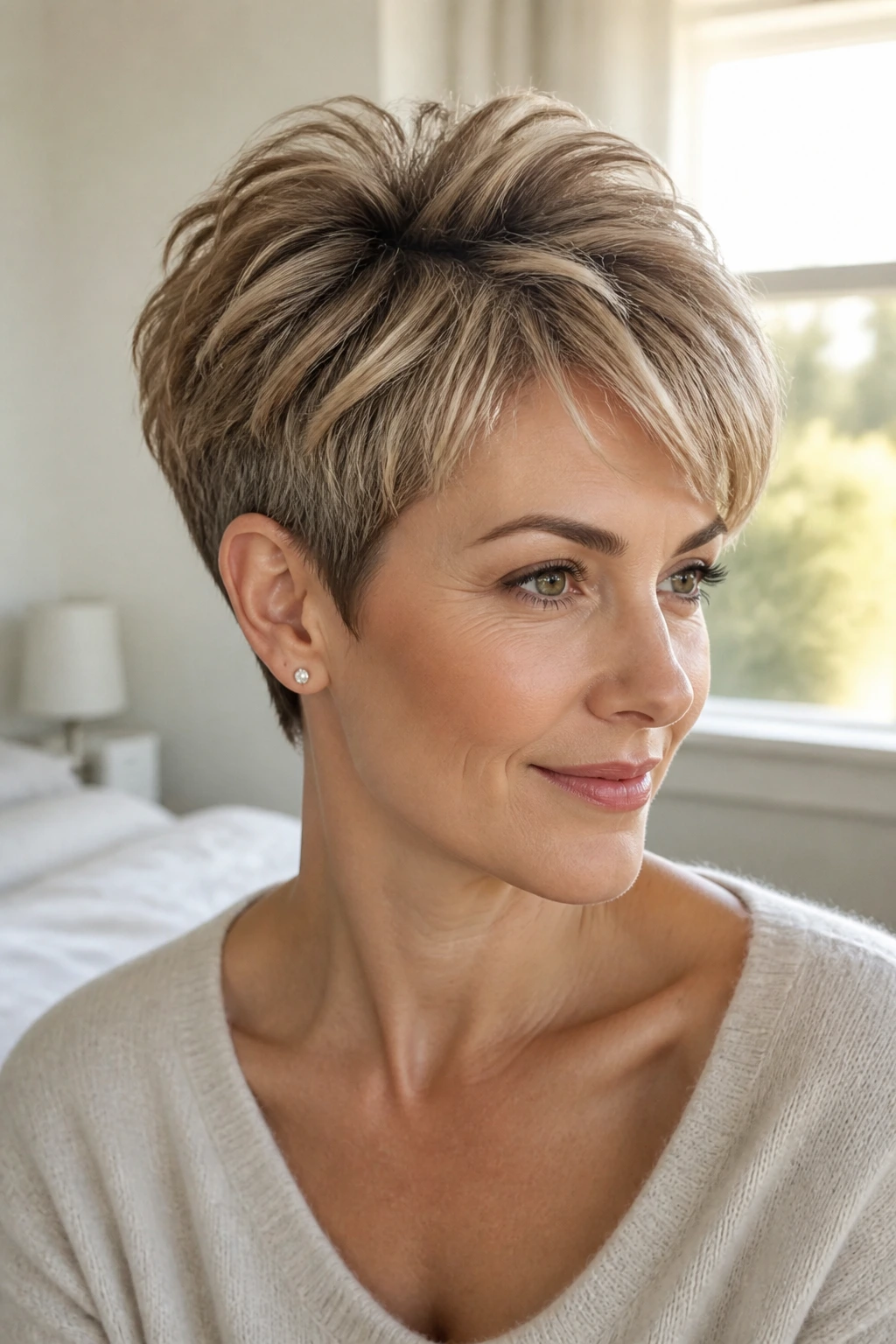
Flat crown? This cut solves that better than most. The layering sits higher through the top, so straight hair gets some lift where it usually needs it most.
The important part is not to over-thin the ends. You want volume above the head, not wispy edges all around. A round brush or a small vent brush can help you lift the roots while keeping the sides smooth. That contrast is what makes the shape feel alive.
How to Style It
Use a root-lifting mousse on damp hair, then blow-dry the crown upward with your fingers or a small brush. Finish with a light wax only at the tips if you want a little separation.
It’s practical. And that matters.
16. Tapered Nape Pixie with Longer Temples
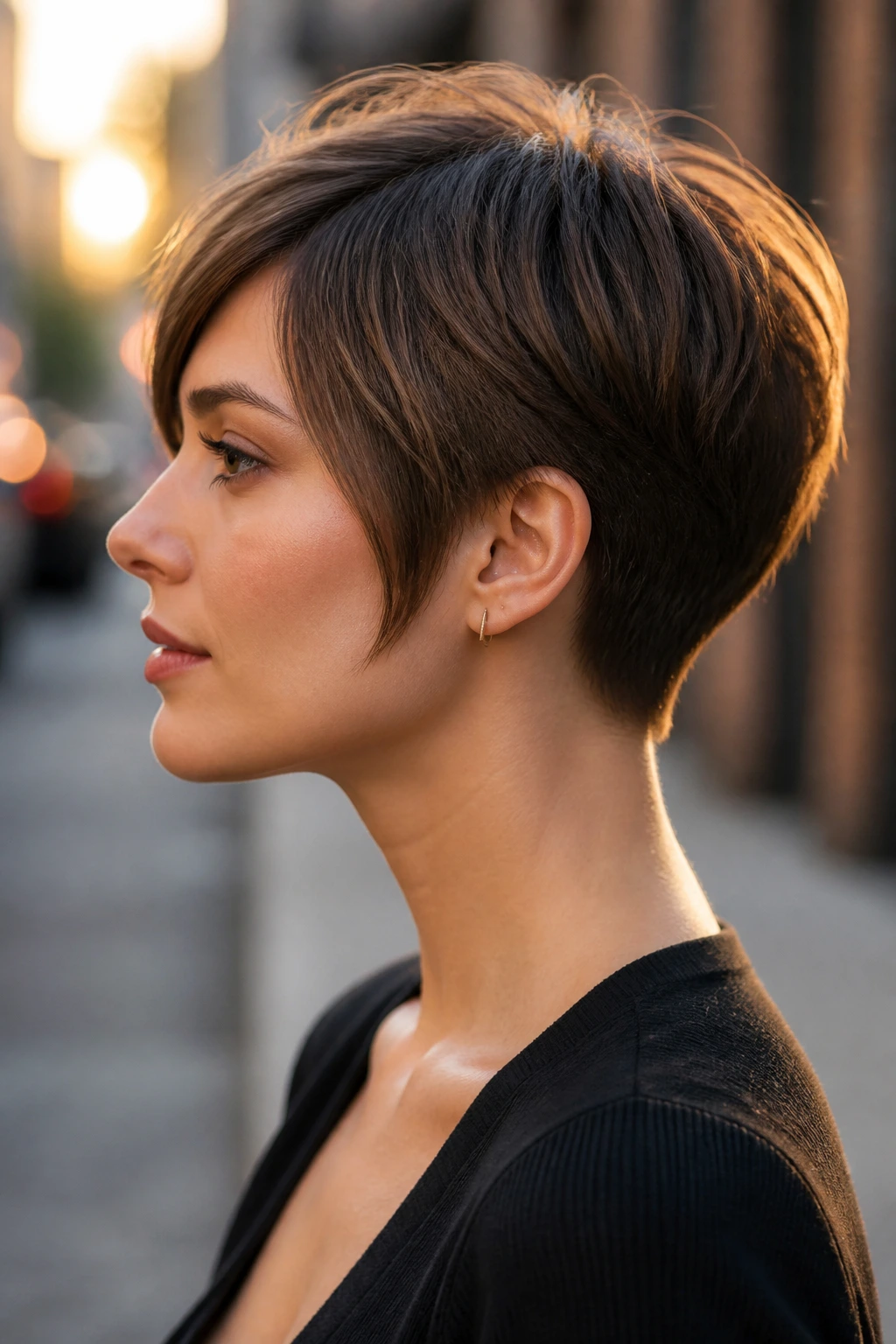
This cut is all about balance. The nape hugs the neck closely, while the temples stay a touch longer, which helps straight hair keep its shape instead of puffing out at the sides.
The longer temple area frames the face in a softer way than a fully cropped pixie. That can be useful if your hairline is strong or your face shape benefits from a little side detail. Ask for a clean taper at the back and a smooth join at the ears so the transition doesn’t look choppy.
A cut like this usually grows out neatly. That’s one of its best qualities, and probably the least glamorous one too.
17. French Pixie with Soft Perimeter
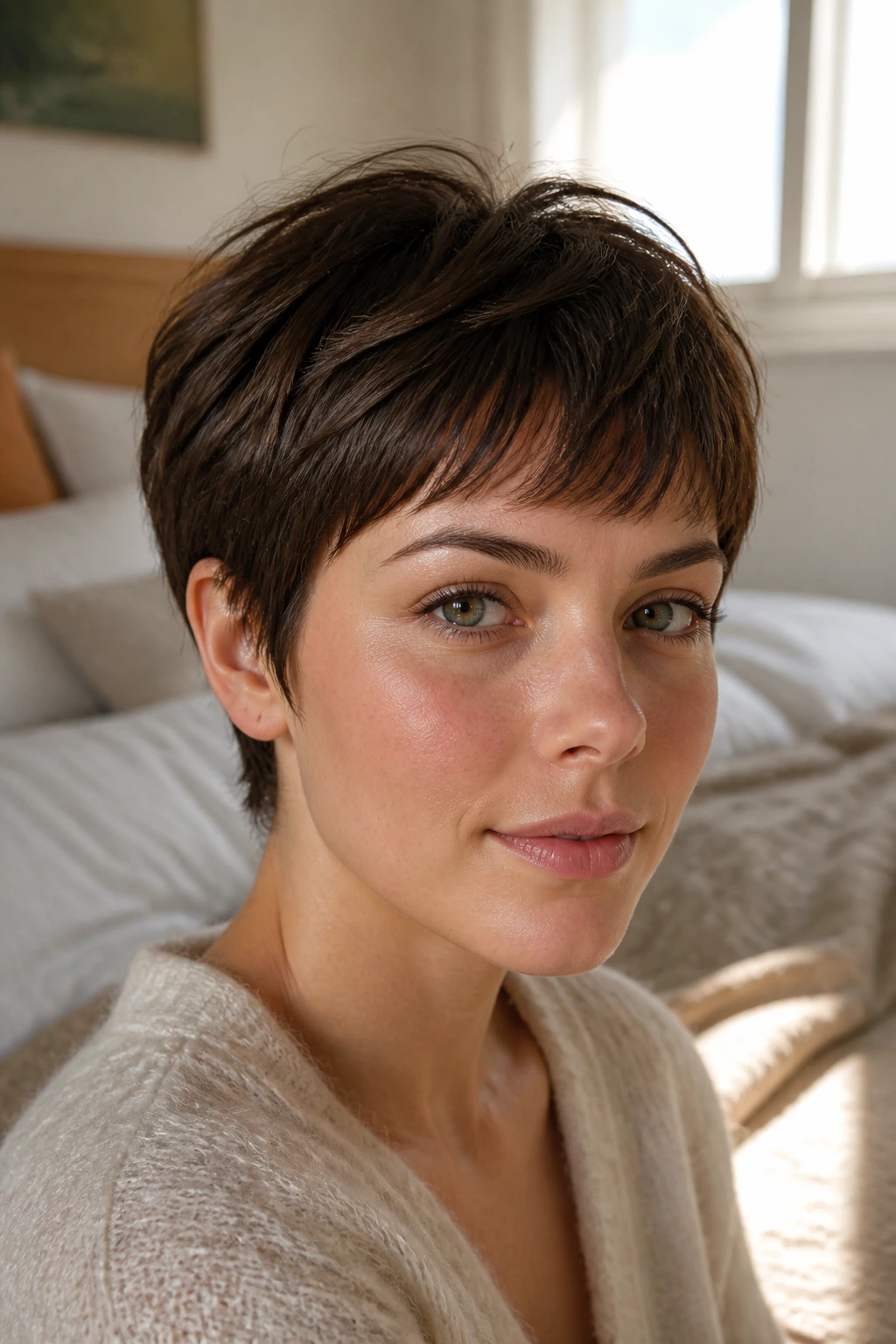
The French pixie has a slightly effortless feel, but don’t mistake that for careless. The perimeter is soft, the fringe is usually short-to-medium, and the side length keeps the cut from looking boxy.
Straight hair gives this shape a nice kind of calm. The outline stays readable, but the finish doesn’t feel too stern. A little bend at the front, a little air at the crown, and the whole style looks like it belongs on a real head rather than a salon photo.
This one works especially well if you like hair that feels light around the ears and neck. It’s neat without being severe. That’s a useful line to walk.
18. Micro Fringe Pixie
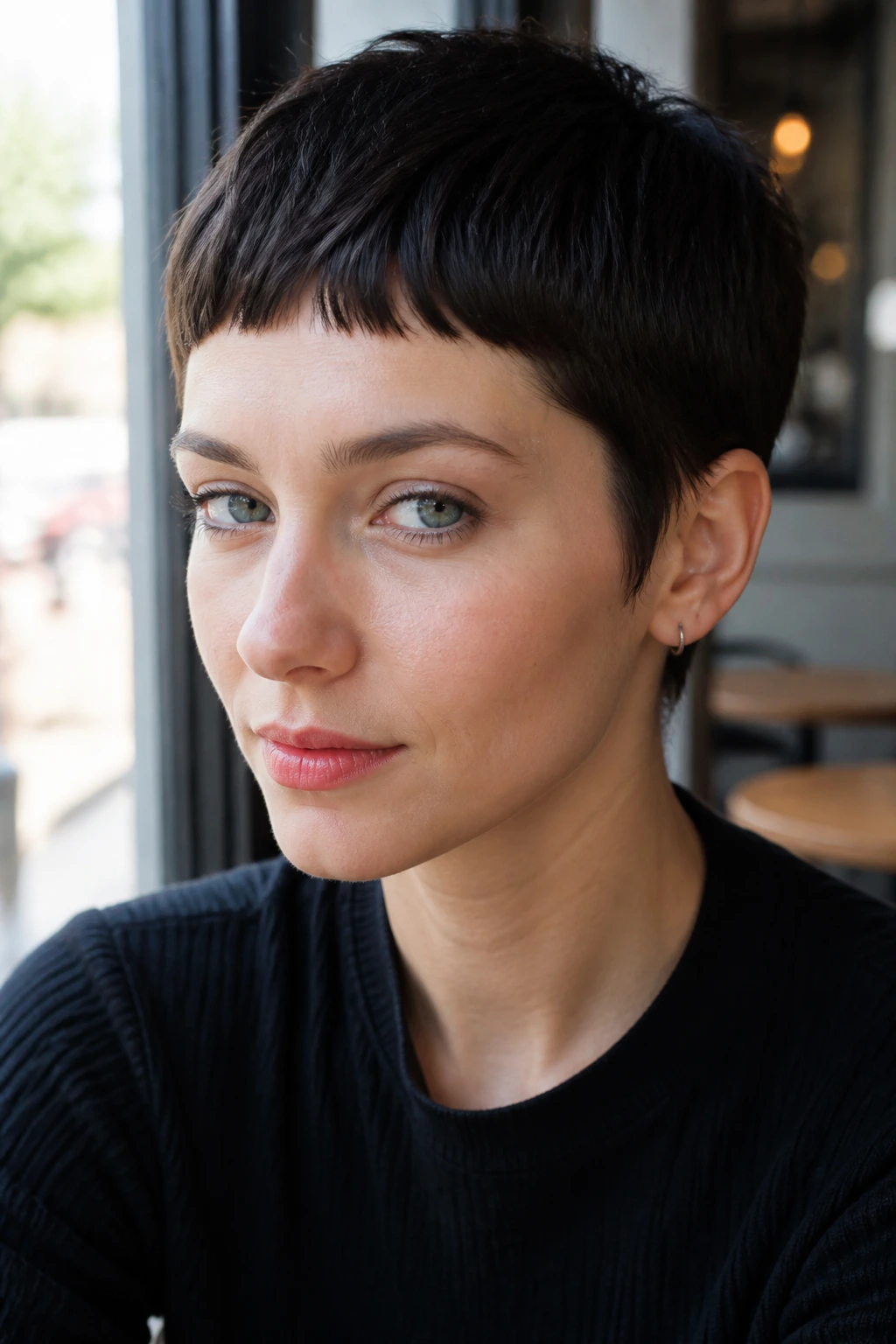
A micro fringe changes the whole attitude of a pixie. The bangs are cut very short, often just above the brows, which makes the face look more open and the haircut feel more graphic.
On straight hair, that little fringe sits flat and clean, which is exactly what you want. The rest of the cut should stay close and tidy so the front stays the focus. If the top gets too fluffy, the fringe loses its impact.
Best for
- Strong brows
- People who like sharp shapes
- Hair that holds its direction without much effort
This is not the softest option on the list. It’s more precise than pretty, and that’s the appeal.
19. Swept-Back Pixie with Clean Lines
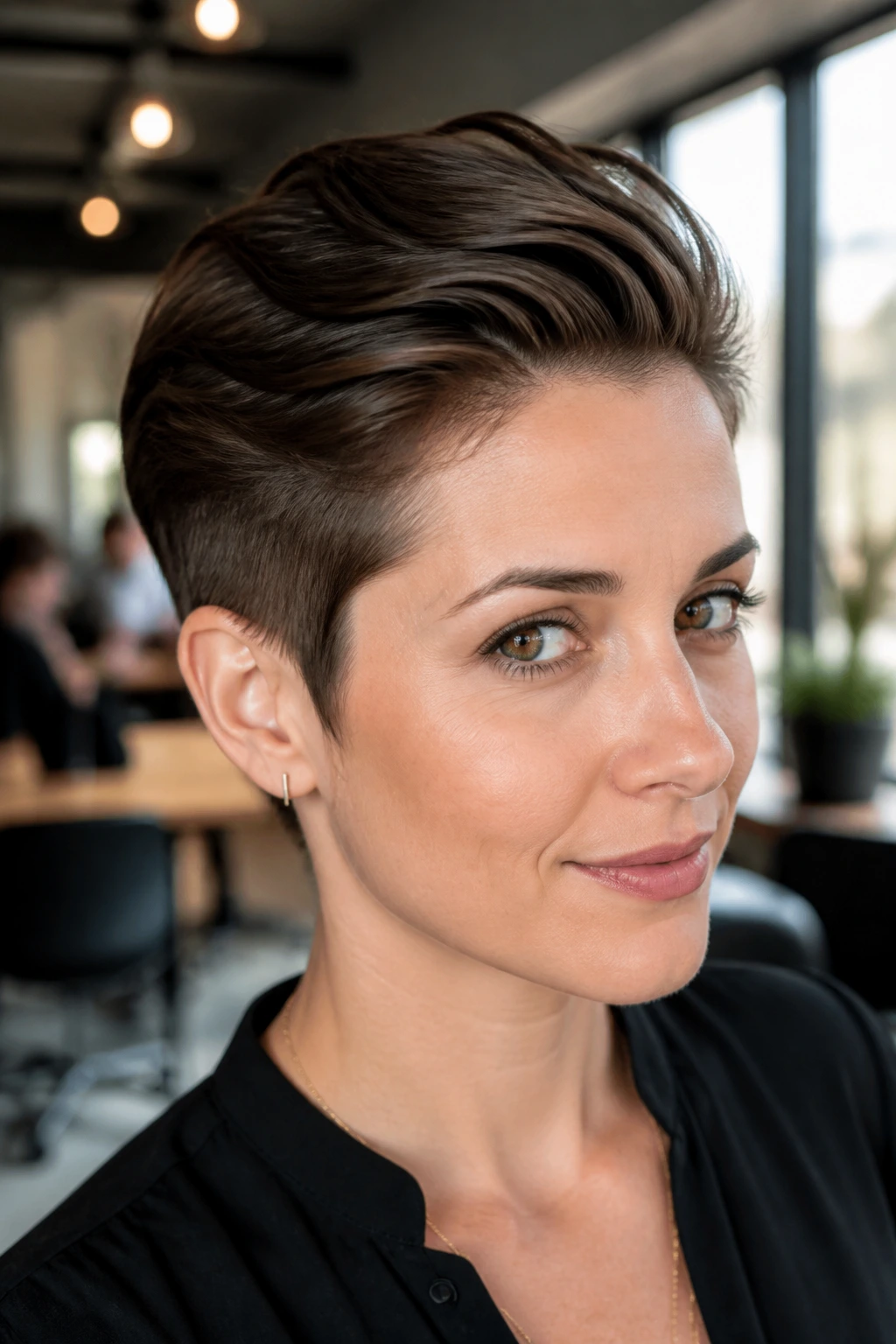
Here’s the version that looks like it took effort even when it didn’t. The top is long enough to push back, the sides are tapered, and the outline stays clean from temple to nape.
A swept-back pixie suits straight hair because the natural texture supports the shape. You do not need curls or waves to make it stay put. A touch of pomade or styling cream is enough to keep the front in place and give the surface a little shine.
Good detail to ask for: keep the sideburn area neat and the neckline narrow. That stops the style from drifting into an overgrown short crop.
20. Razored Pixie with Wispy Ends
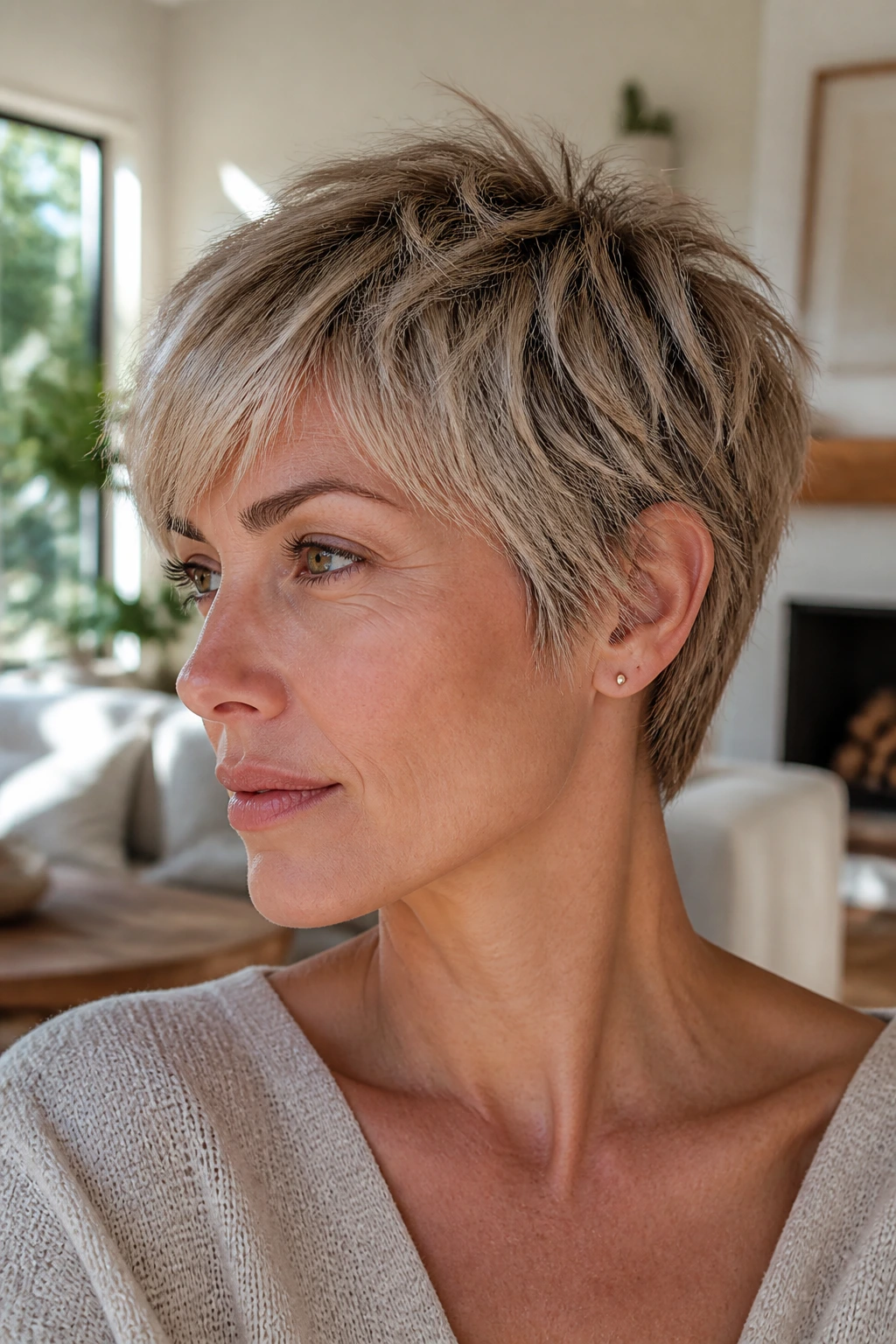
Razored ends can look airy on straight hair when they’re done with a light hand. The point is to soften the outline, not shred the whole cut into thin, weak pieces.
This style works best when the top has a little movement and the sides are kept close. The wispy finish keeps the pixie from feeling too solid, which can happen fast on straight hair if the cut is left blunt everywhere. A small amount of paste helps separate the ends without making them sticky.
What Makes It Different
- Softer edges than a blunt pixie
- Less weight around the crown
- Better if you want a lighter feel without losing shape
I’d choose this when the hair is straight but not especially thick. Heavy hair can still use razor work, but it needs careful hands.
21. Ear-Grazing Pixie with Tucked Sides
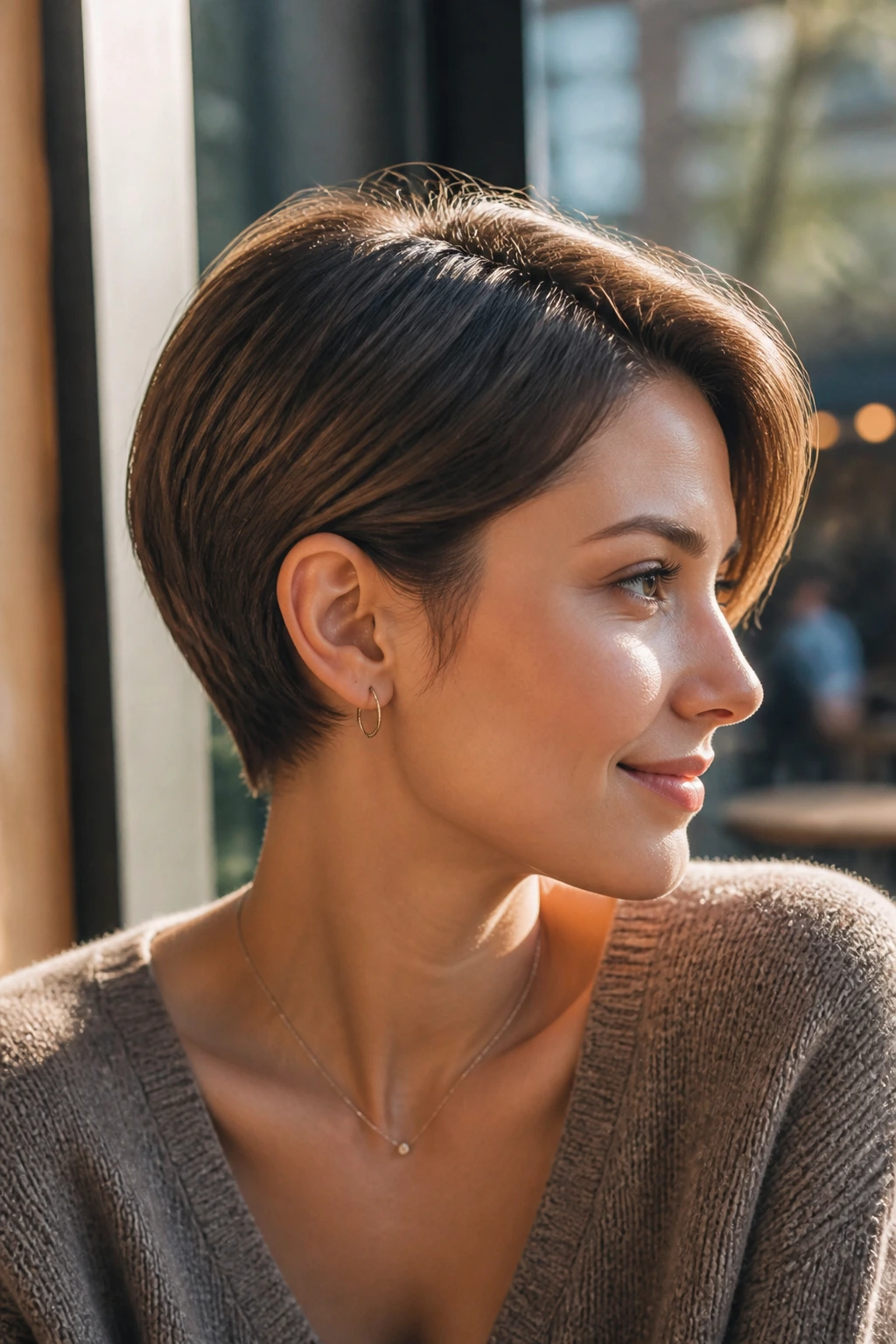
This shape sits in a sweet spot. The sides skim the ears, the top stays short enough to feel fresh, and the whole cut can be tucked cleanly behind one ear without fighting you.
Straight hair helps here because the tuck stays in place. You get that neat side profile that makes earrings, glasses, and jawlines stand out a little more. It’s an easy style to wear, which sounds boring until you realize how often boring equals practical.
The shape also grows out politely. That matters if you don’t want to be in the salon every few weeks. Short doesn’t have to mean high-maintenance.
22. Deep Side-Part Pixie with Volume on Top
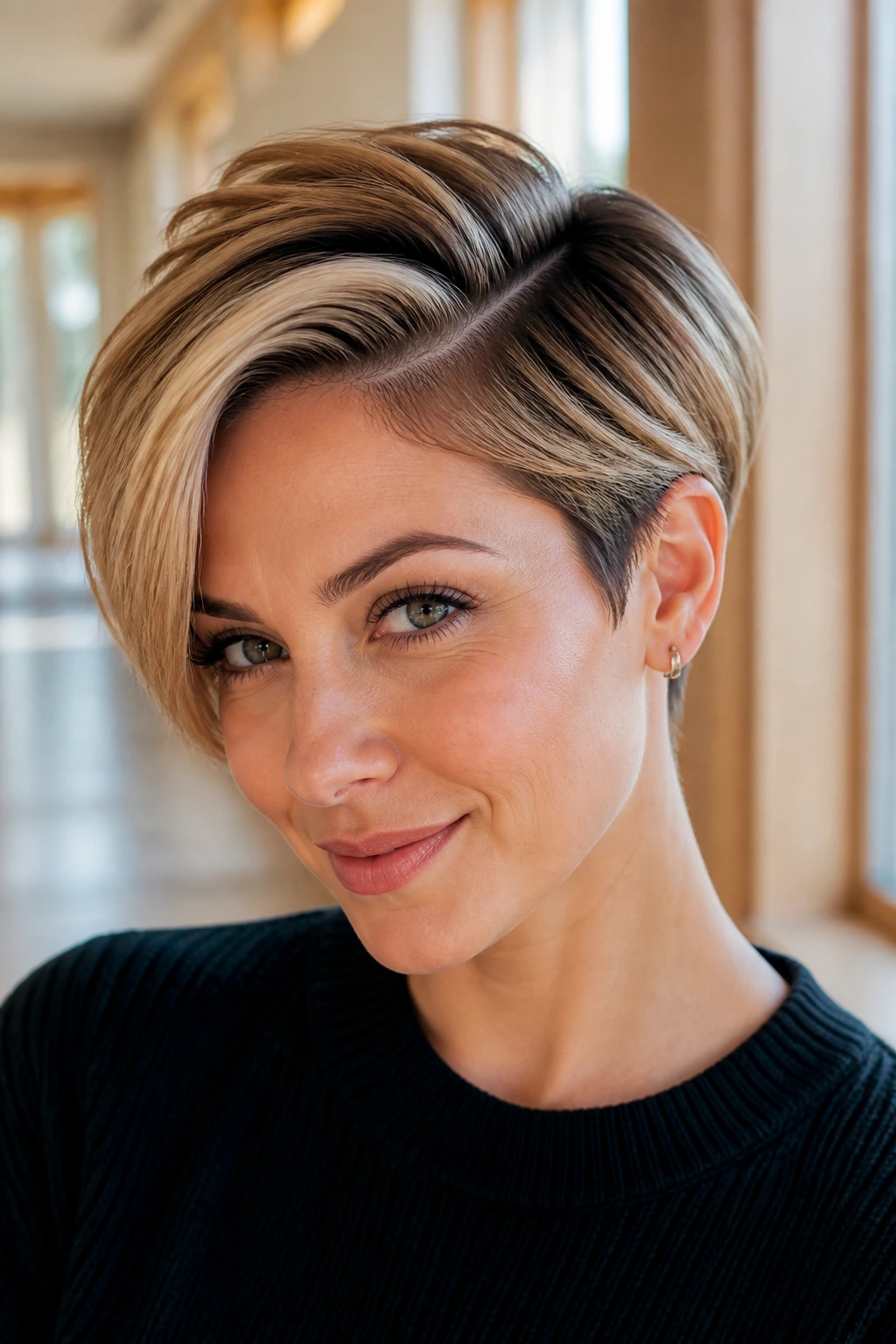
A deep side part gives straight hair a fast way to fake more volume. Shift the part well off center, lift the root at the heavier side, and suddenly the whole cut has more shape and height.
The Setup
Use a blow-dryer aimed at the root for a few seconds, then let the hair cool in place. That bit of heat-and-cool action matters more than most people think. It helps the bend stay instead of falling straight back down.
- Leave enough top length for a visible sweep.
- Keep the shorter side tidy and close.
- Use a light powder if your roots go limp.
This is one of those cuts that changes character depending on where the part sits. Small shift, big payoff.
23. Disconnected Pixie with Bold Contrast
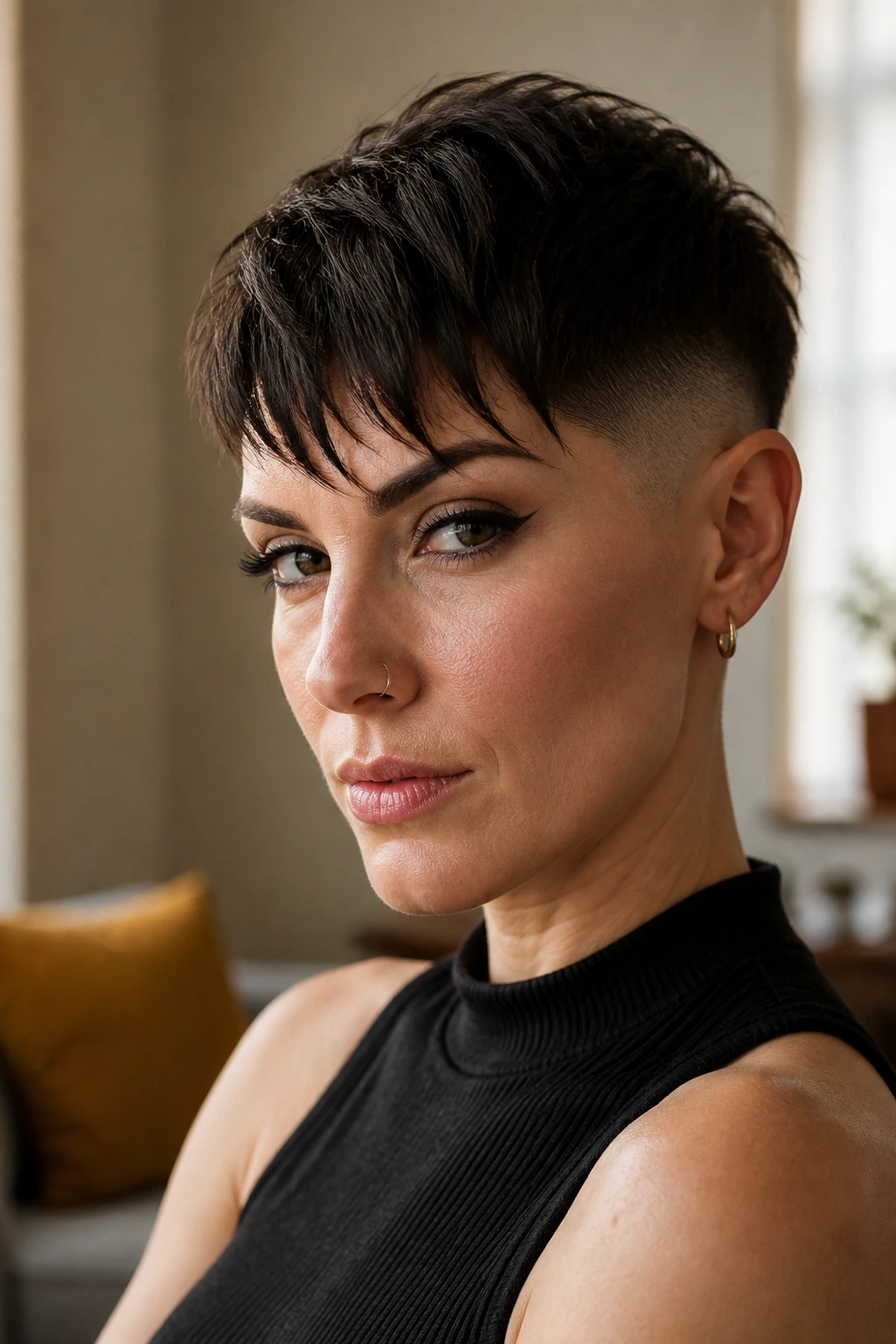
A disconnected pixie keeps the top longer and the sides much shorter, with a visible difference between the two. On straight hair, that contrast reads cleanly, which is why the cut can look so striking.
The shape has real attitude. The top can be brushed forward, angled to one side, or pushed back for more height, while the sides stay neat and cropped. If you like a haircut that shows its structure right away, this is a strong choice.
It does need a good grow-out plan. Without one, the contrast gets muddy fast. But while it’s fresh, the silhouette is sharp in a way that’s hard to fake.
24. Stacked-Back Pixie with a Graduated Neckline
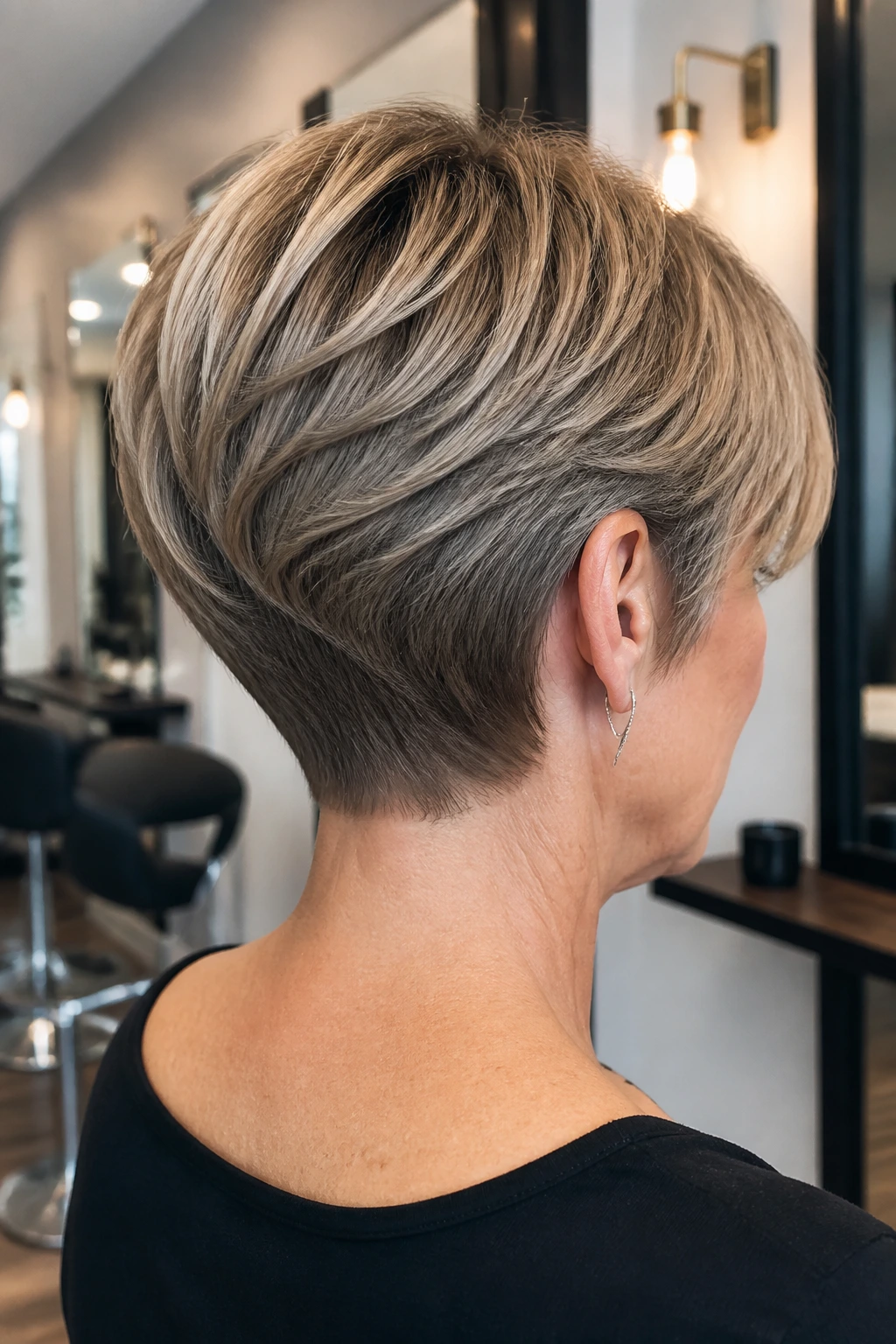
This cut is all about the back. The layers stack slightly at the nape, giving straight hair a rounded lift through the rear of the head and keeping the neckline looking tidy.
That graduation helps if your hair tends to lie flat against the skull. You get a little shape without asking the top to do all the work. The front can stay simple and smooth, which makes this one a smart pick for people who want structure more than drama.
What to Ask the Stylist
- Build visible graduation in the back.
- Keep the upper layers light, not bulky.
- Taper the neckline cleanly so it doesn’t kick out.
A stacked pixie looks best when the back is precise. If the line is sloppy, the whole thing loses its shape.
25. Grown-Out Pixie with Soft Edges
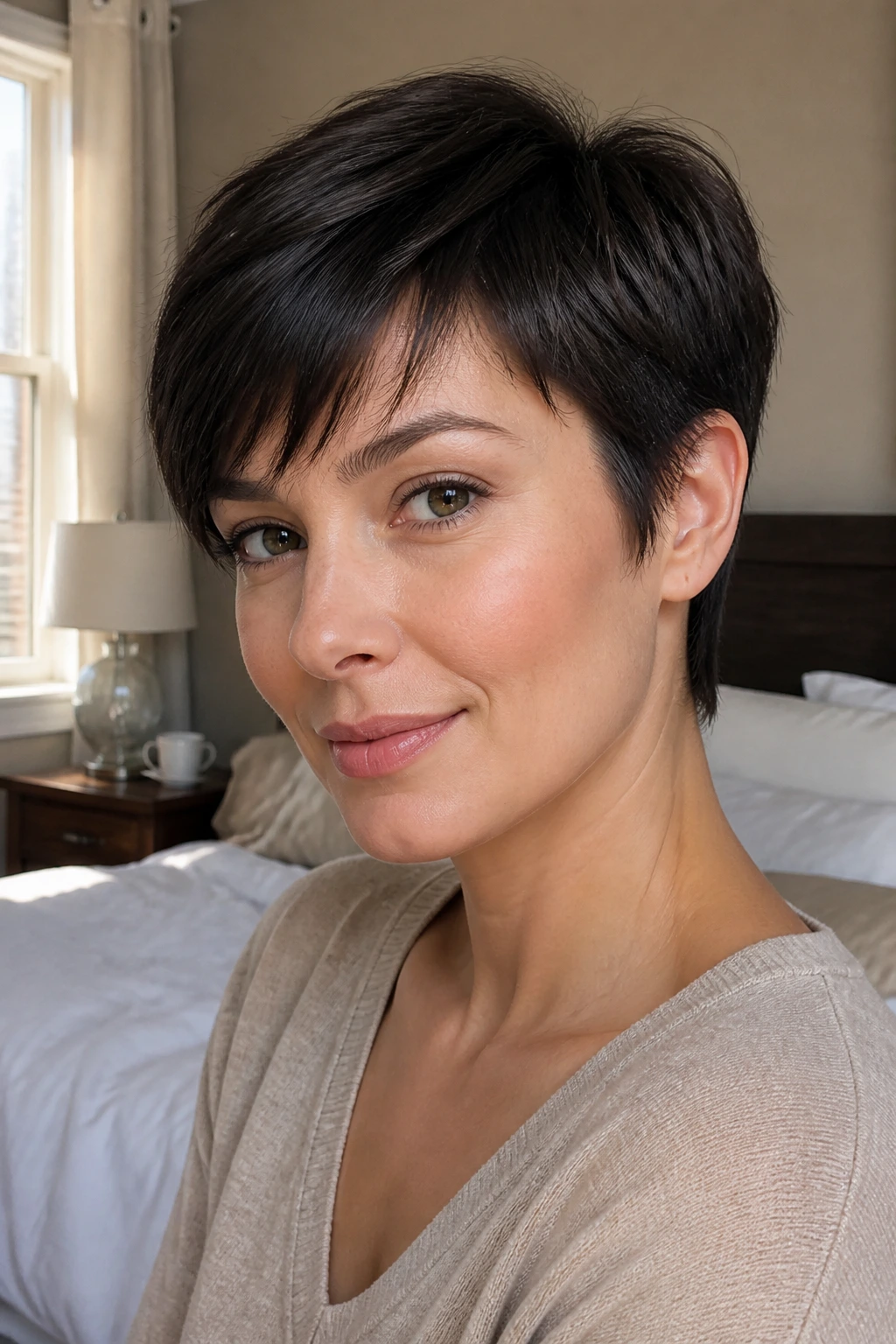
Not every pixie has to look freshly chopped. A grown-out version with soft edges can be one of the nicest cuts for straight hair because it sits between short and medium length without looking awkward.
The trick is keeping the outline on purpose. The temples should still connect to the sides, the nape should stay neat enough to read as a shape, and the top should have enough length to tuck or sweep. That balance makes the grow-out stage look deliberate instead of neglected.
Why People Like It
- Easier to style on busy mornings
- Less frequent trims
- Sits well with glasses and earrings
It’s not the boldest look here. But it might be the most livable.
26. Wet-Look Pixie with Glossy Finish
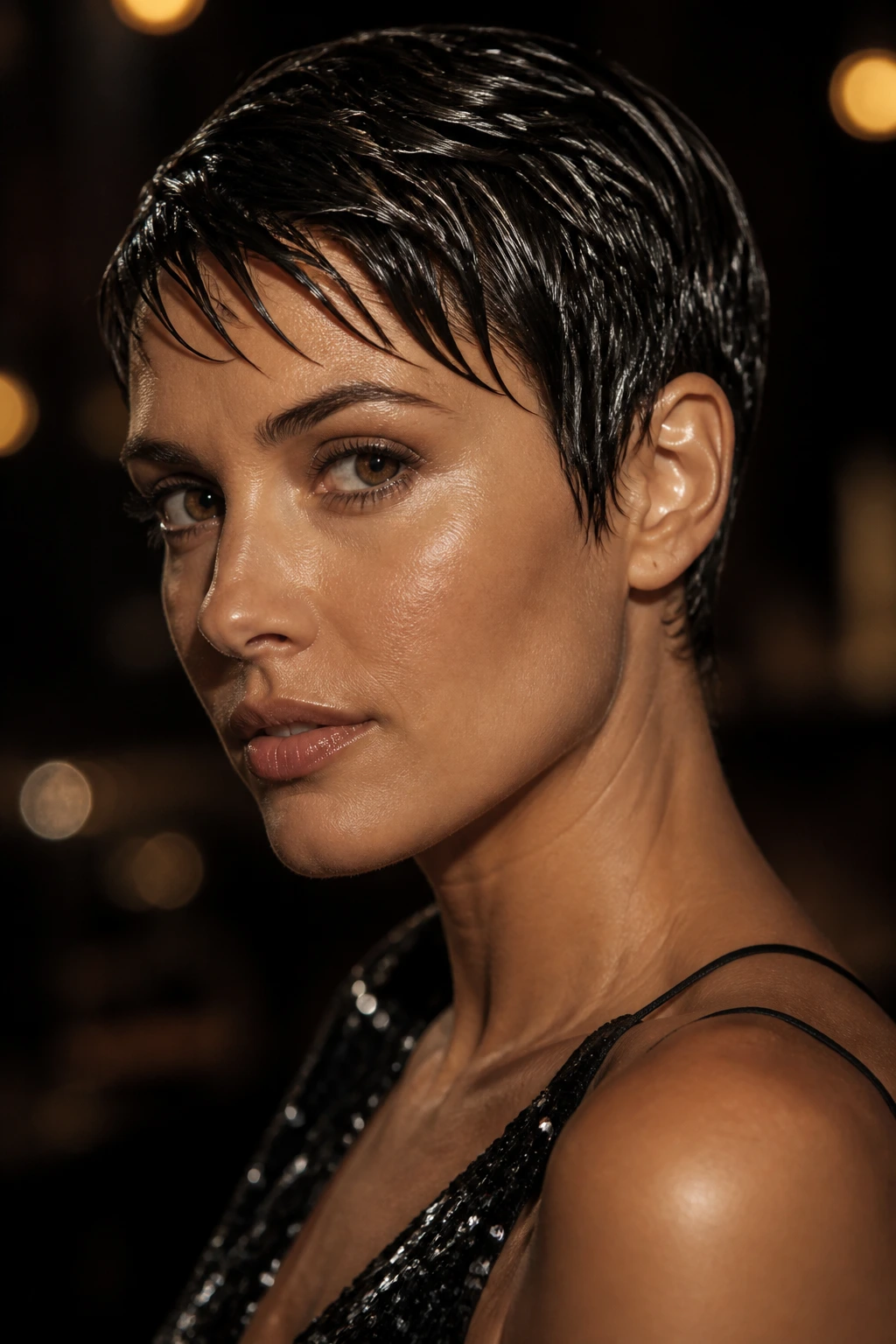
This is a styling move that can make a simple pixie feel dressed up fast. Straight hair already has the base for it; you’re mostly adding shine and hold so the shape looks sleek instead of flat.
Use a strong-hold gel or a wet-look cream on damp hair, comb it into place, and leave a little separation at the front if you do not want the whole head glued down. The finish should look shiny, not crunchy. That distinction matters more than people admit.
I like this for evenings, black clothing, sharp collars, or anything where a plain cut needs a little edge. It’s simple, but it has presence.
27. Longer-Top Pixie with Hidden Undercut
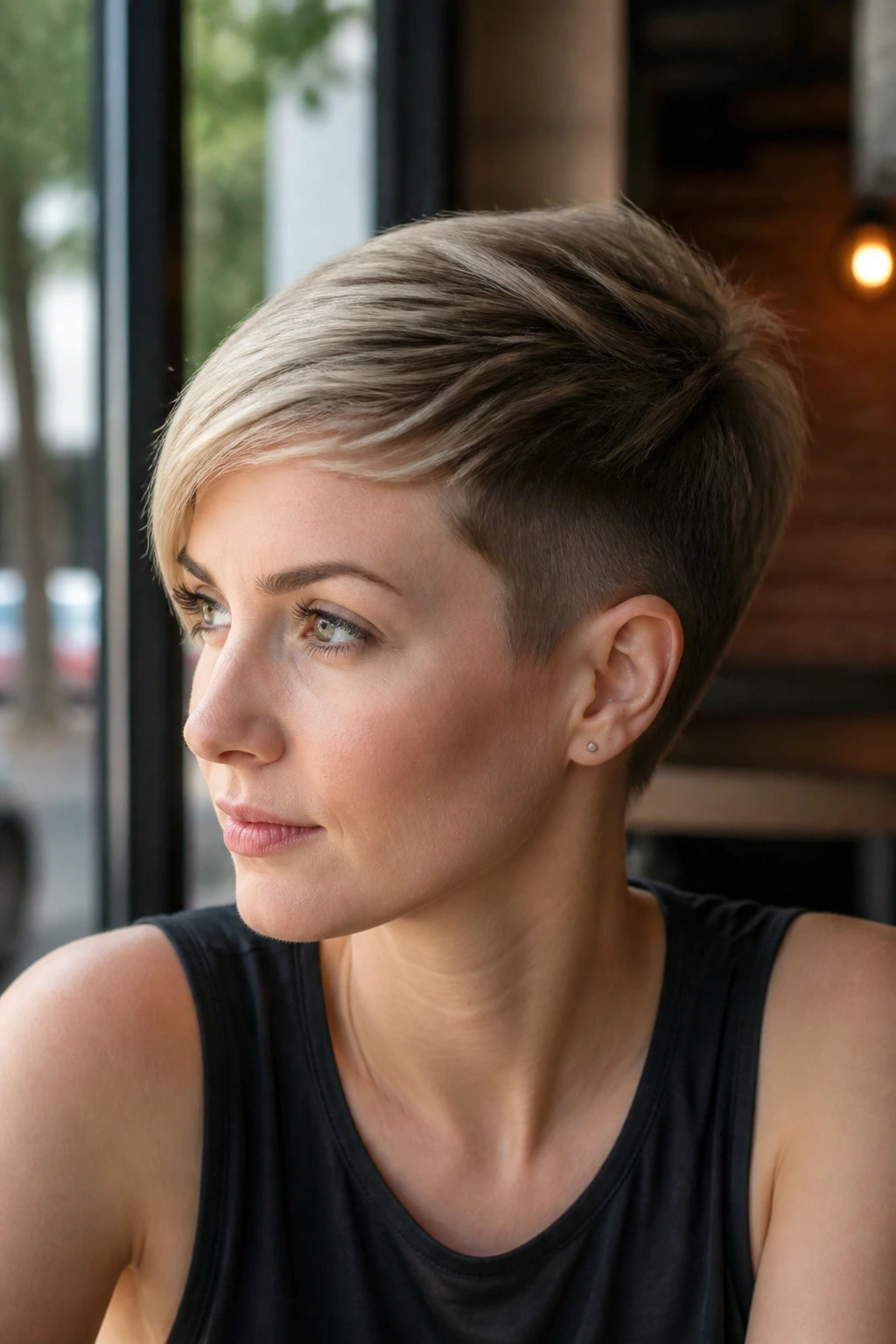
This is the cut for people who want a cleaner front than the sides suggest. From the front, it reads like a longer pixie. From the side or back, the hidden undercut removes bulk and gives the top room to move.
Straight hair benefits because the longer top can fall smooth while the undercut keeps the shape light. You can wear it brushed forward, swept back, or parted hard to one side. The secret is underneath, which makes the cut feel a little clever without being fussy.
That hidden removal of weight is especially useful if your hair looks thick but collapses when short. It solves both problems at once.
28. Minimalist Pixie with a Soft Outline
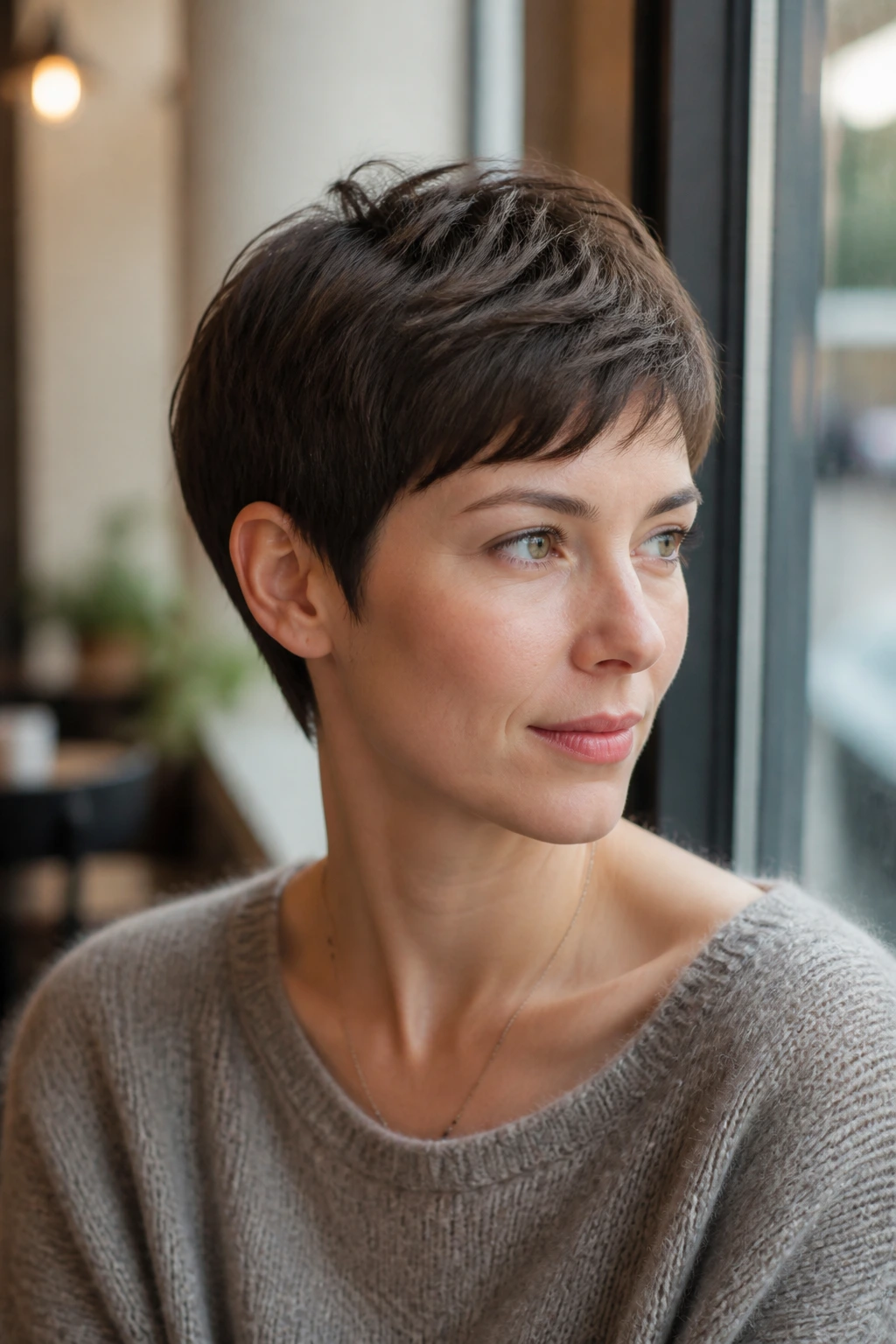
A minimalist pixie skips the drama and gets the shape right. The outline is soft, the sides are close but not shaved, and the top has just enough length to move without sticking up.
This cut is quietly good on straight hair because it lets the natural texture do the work. There’s no aggressive layering, no heavy fringe, no complicated styling routine. Just a neat head shape, a clean nape, and a finish that looks intentional from every angle.
A Small Warning
If you ask for it too short everywhere, it loses the softness that makes it worth wearing. Keep a little length at the temples and crown.
It’s the kind of pixie that looks easy because it is. That’s not a flaw.
Final Thoughts
The smartest pixie cuts for straight hair do one thing well: they shape what straight hair already wants to do, instead of fighting it. Clean edges, controlled volume, and a neckline that sits right make far more difference than extra product ever will.
Short hair is often sold as a big leap. In practice, it’s more about choosing the right outline. A blunt cut, a feathered crop, a long pixie, or a tighter undercut all solve different problems, and straight hair shows those differences fast.
The cleanest pixie is not the shortest one. It’s the one that still looks good after you’ve run out the door.
