



Fine hair looks best when the cut does the heavy lifting. A good pixie gives the crown lift, the nape shape, and the sides enough structure to stop everything from sliding flat by lunch.
Brown helps more than people think. An espresso shade draws a firmer outline around the head, while chestnut, mocha, and caramel tones create shadow and movement that make the hair read fuller than it really is.
A bad pixie on fine hair usually fails in the same boring way: too much weight left at the bottom, too much softness near the scalp, or a color that reads as one flat sheet. That is why the smartest brown pixie cuts for fine hair are built around shape first, color second, and styling after that.
Pick the silhouette that fits your face and your routine. Some of these cuts are sharp and cropped, some are soft and airy, and a few live in that useful middle ground where the hair looks polished without looking stiff.
1. Soft Espresso Pixie With a Tapered Nape
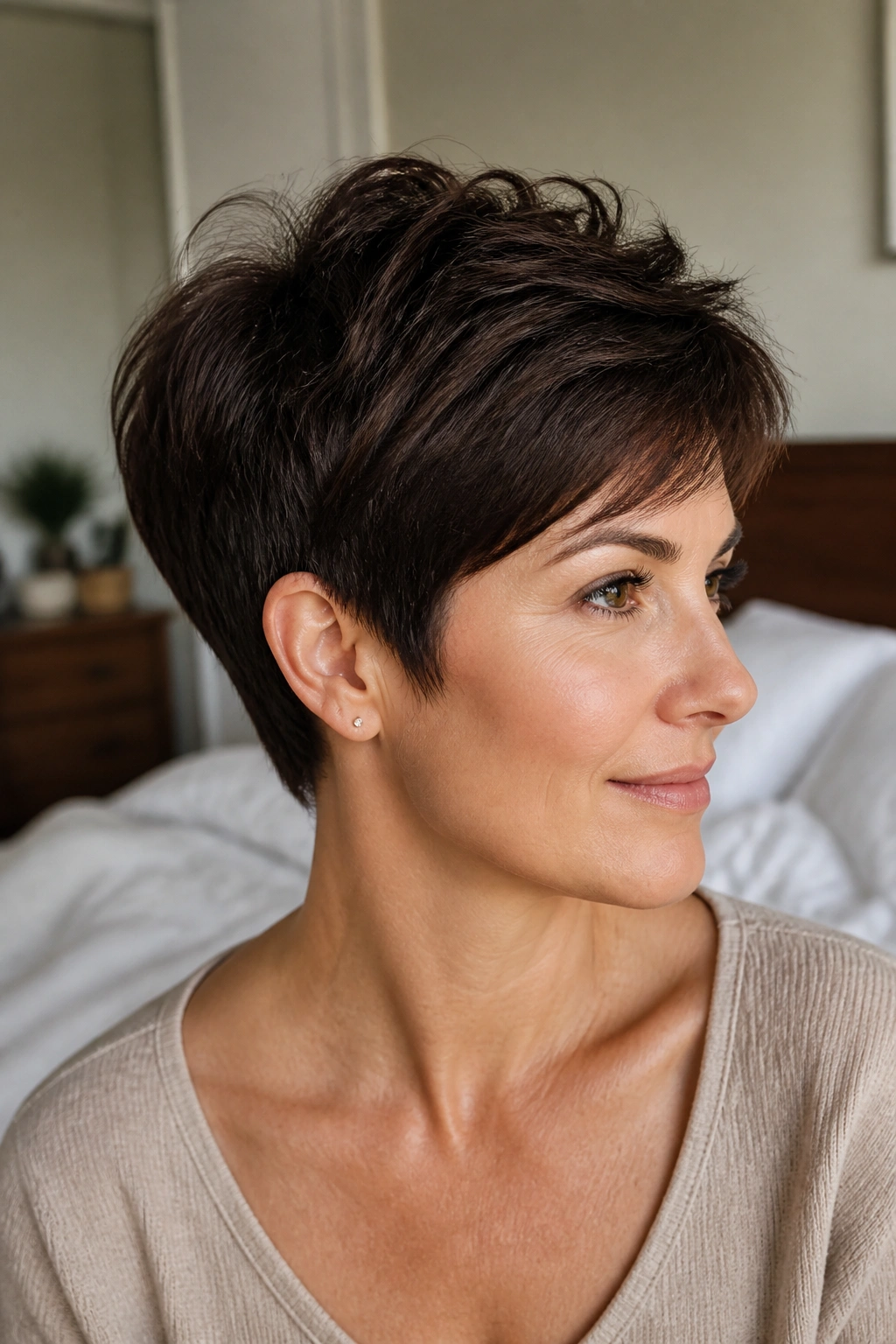
If your hair collapses the moment you step outside, start here. A tapered nape gives fine hair a cleaner base, and that matters because the neck area is usually where thin strands start to look wispy.
Espresso brown makes the whole cut look grounded. It gives the eye a stronger edge to follow, so even a short crop can read as denser than a lighter shade would. Keep the crown around 2 to 3 inches, and ask for soft point-cutting instead of a blunt chop.
That tiny detail changes the whole mood. Point-cut ends break up the line just enough to keep the top from looking helmet-like, while the tapered nape removes the puffiness that can make fine hair look tired. Style it with a lightweight mousse at the roots, then rough-dry with your fingers and finish by lifting the crown forward and up.
This one is plain in the best way. It works, and it keeps working on day two.
2. Chocolate Pixie With a Long Crown
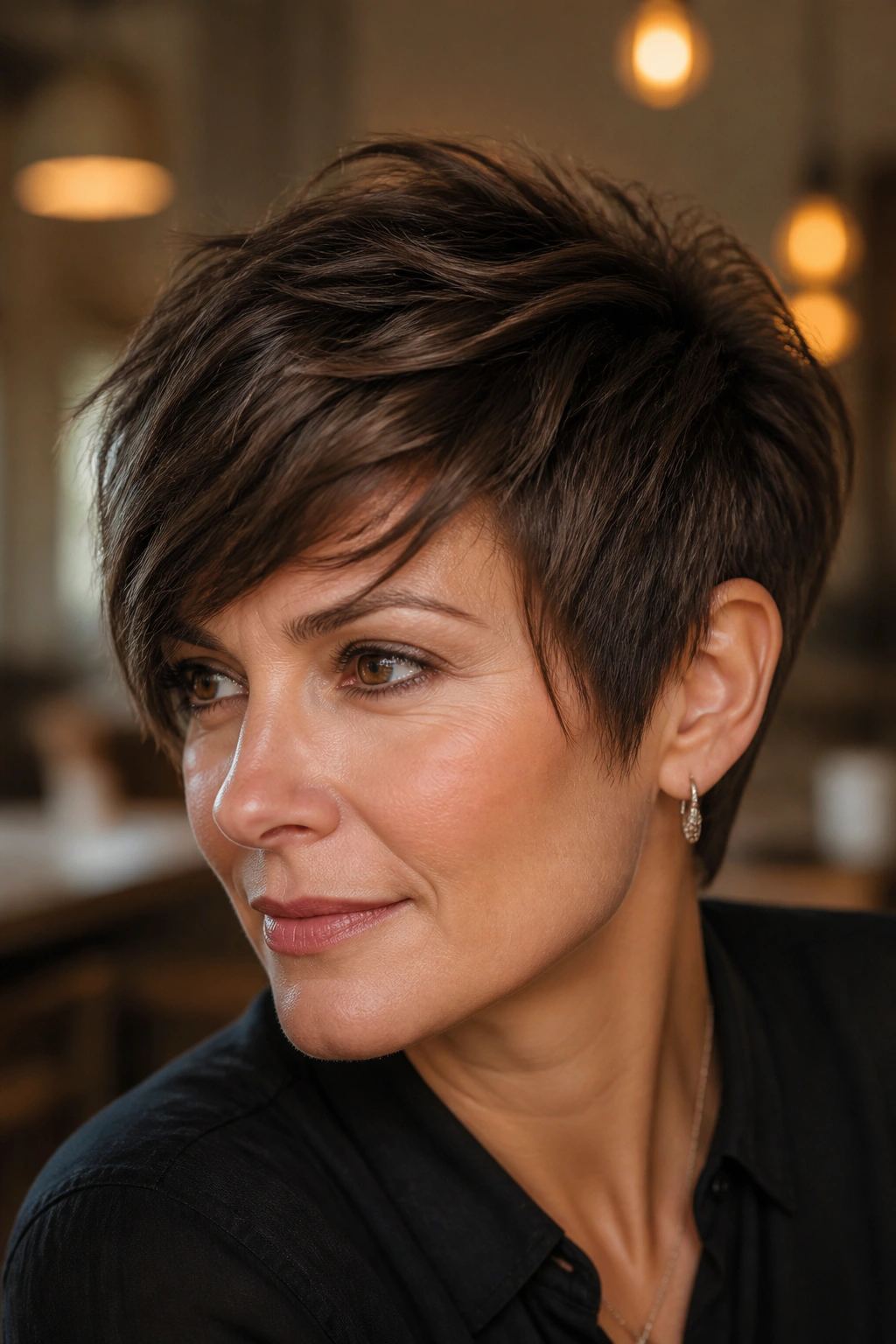
A longer crown gives fine hair something to do. Without it, the cut can sit too close to the head and lose all sense of lift by noon.
Why It Works for Fine Hair
Chocolate brown is a smart choice here because it adds depth without looking severe. The darker base creates a visual shadow under the crown, and that shadow makes the top look fuller than a single-length crop ever could. Keep the crown longer than the sides by about an inch or so, then let the fringe fall in a soft angle instead of a hard line.
How to Style It
- Blow-dry the crown in the opposite direction of your part for 20 to 30 seconds.
- Use a pea-sized amount of light wax only on the ends.
- Keep the sides smooth, not flat.
- If the top starts to separate too much, mist a little root spray and lift it with your fingertips.
This cut looks especially good if you like a bit of movement around the forehead. It has enough length to brush back, but not so much that it loses the pixie shape.
3. Mushroom Brown Pixie With a Rounded Back
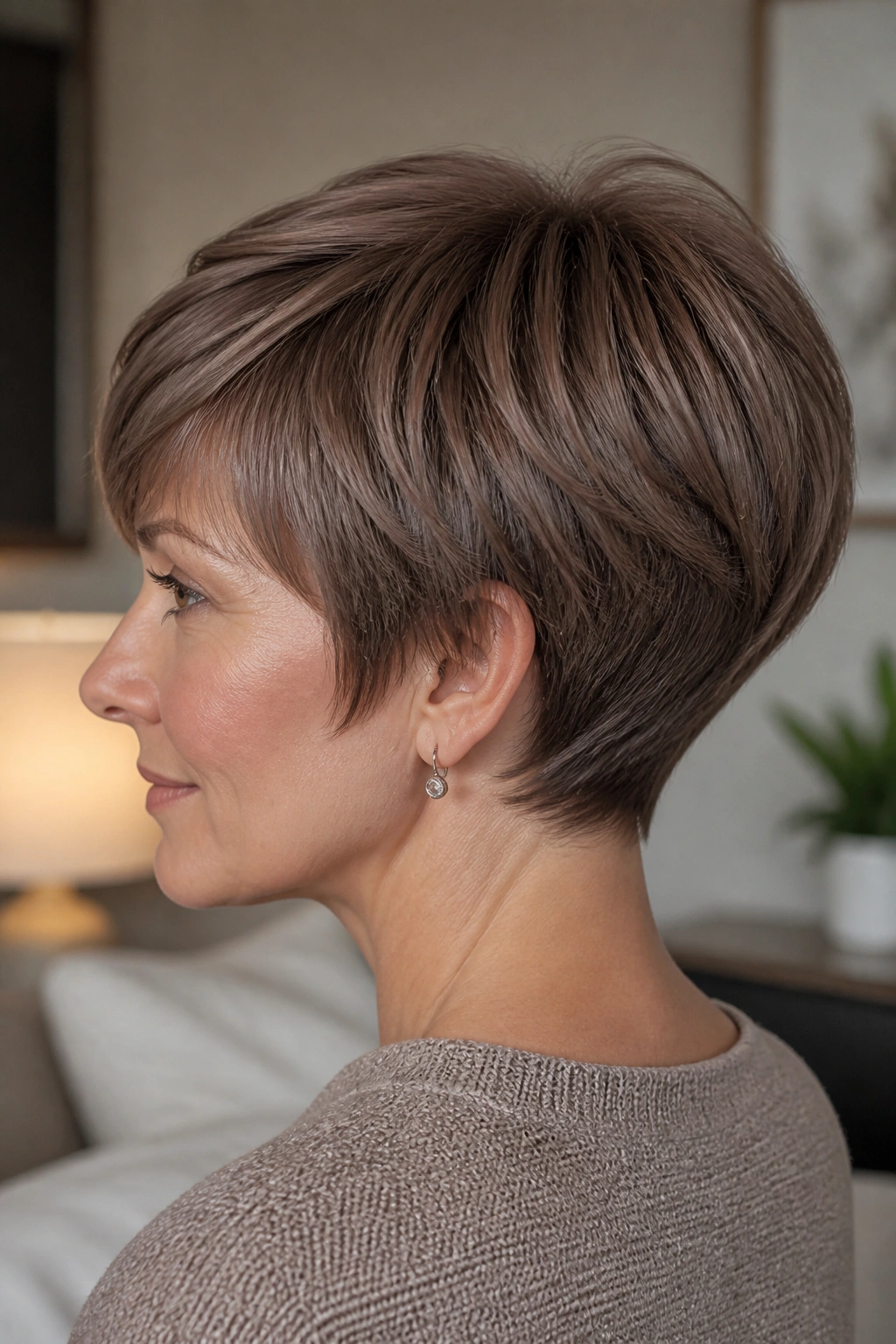
A rounded silhouette can make fine hair look thicker than spiky texture ever will. That sounds backward until you see it in the mirror. The curve at the back gives the hair a fuller outline, so the style reads as plush instead of sparse.
Mushroom brown suits this shape because the color keeps the whole cut soft and even. You want the back to sit close to the head without going limp, and the top should keep a little dome so the silhouette stays visible from the side. If the cut gets over-thinned, the round shape disappears fast.
Ask for a soft internal layer rather than a lot of choppy slicing. Fine hair does not need endless texture; it needs controlled fullness. A paddle brush and a quick blow-dry toward the crown usually do the trick.
This is one of those cuts that looks calm and intentional. No sharp edges. No fuss. Just a neat shape that does fine hair a favor.
4. Chestnut Pixie With Side-Swept Fringe
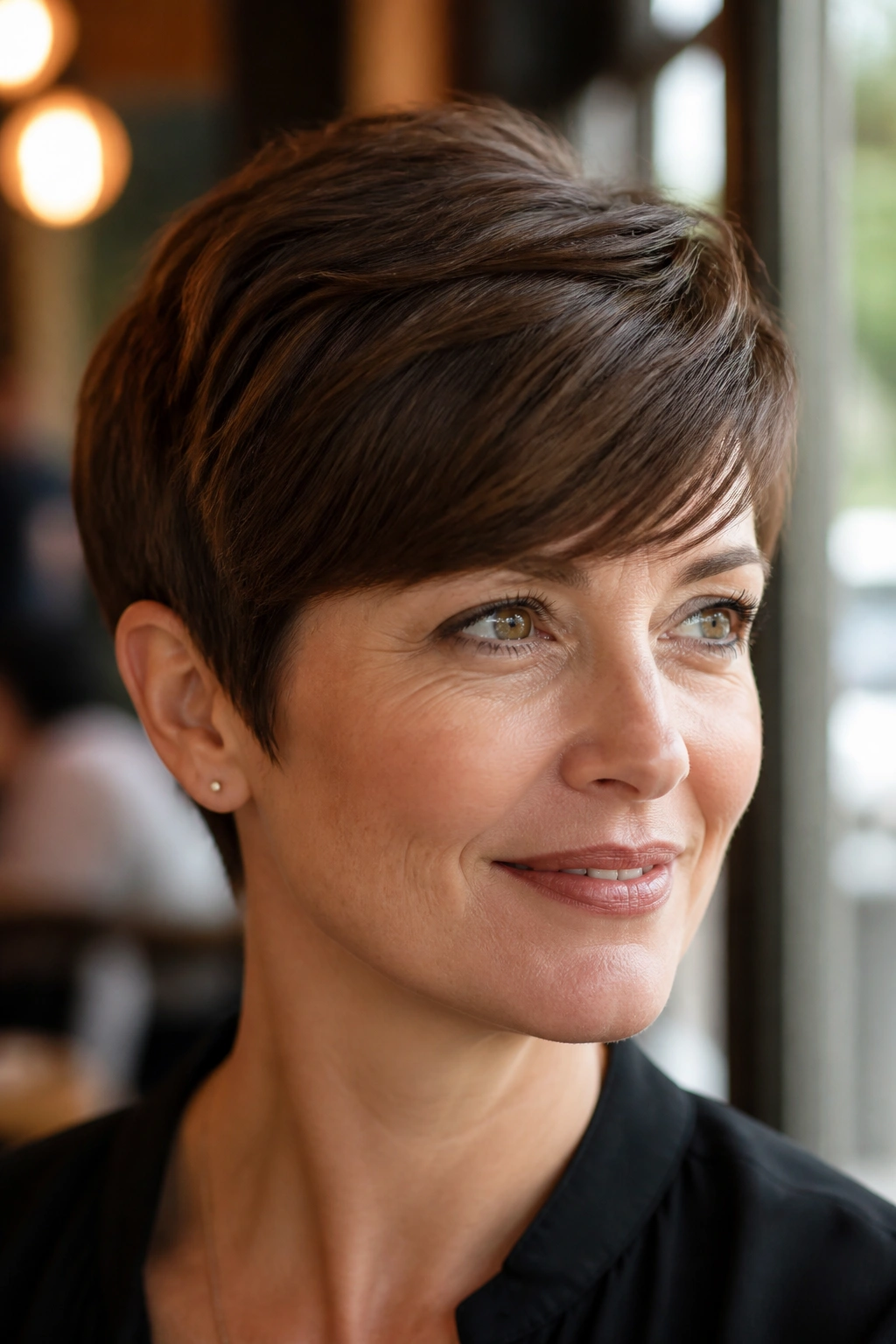
Picture this: your hair falls forward, your forehead feels too exposed, and you want something short without looking bare. A side-swept fringe solves that in about the cleanest way possible.
Chestnut brown keeps the fringe warm and dimensional, which matters more than people expect. A diagonal fringe line pulls the eye across the face, and that motion makes the top section feel fuller. Keep the fringe long enough to skim the brow bone, then let it taper softly into the temple.
A side-swept shape also helps if your hair has one stubborn cowlick near the front. Work with it instead of against it. Dry the fringe in the opposite direction first, then brush it over once it has some heat in it. That little reset gives the hair memory.
This is a friendly cut. It softens strong foreheads, covers a bit of the hairline, and still leaves enough face open that the pixie feels light.
5. Caramel-Dipped Tapered Pixie
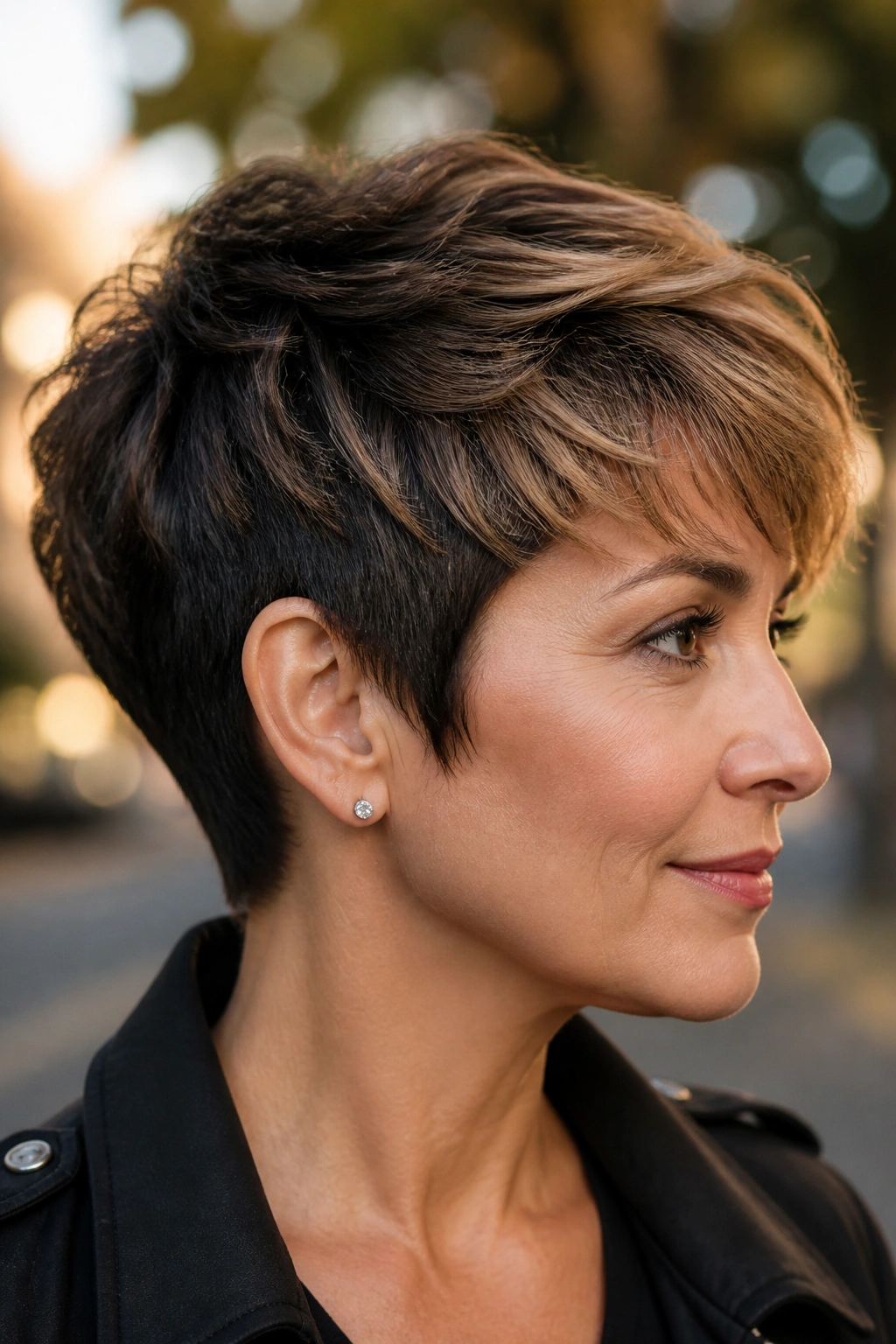
This is the easiest way to fake depth without piling on heavy layers. A darker brown base with caramel through the top and front pieces gives fine hair a little contrast, and contrast is doing a lot of work here.
Unlike a solid brown pixie, the caramel-dipped version catches the eye in two directions. The darker roots make the scalp area look denser, while the lighter ends keep the texture from flattening into one flat block. You do not need chunky highlights. A few delicate pieces around the crown and temples are enough.
Keep the cut tapered at the nape and slightly piecey on top. That stops the color from looking stripy. If the light pieces are too wide or too bright, the hair can start to look thinner, not fuller. Soft placement matters.
This style is best if you like dimension but do not want a high-maintenance color routine. It grows out with less drama, which is handy when the cut itself already needs regular trimming.
6. Dark Cocoa Piecey Pixie
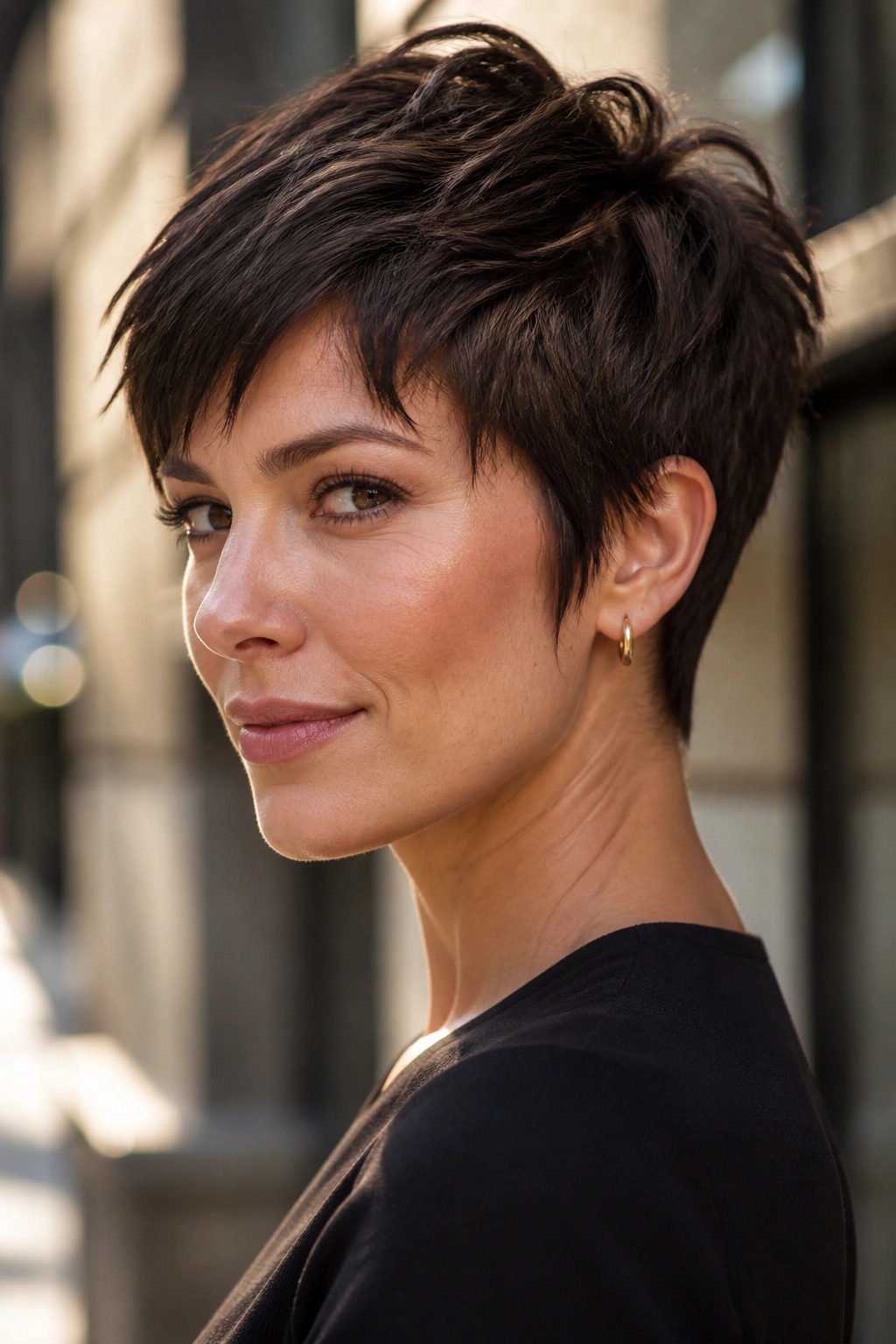
Why do piecey ends matter so much on fine hair? Because they create small shadows between strands, and those shadows make the hair look separated in a good way instead of stringy in a bad one.
Dark cocoa brown gives the cut a deep, smooth base, then the choppy ends break it apart just enough to show movement. The trick is restraint. You want controlled separation, not dry little spikes sticking every direction. Ask for a textured top, soft sideburns, and a neat nape.
What to Watch For
- Use a matte paste, not a heavy cream.
- Warm it between your palms before touching the hair.
- Pinch only the last inch of the top layers.
- Leave the roots alone unless you need lift.
That last part matters. Overworking the roots is a fast way to make fine hair look frayed. Keep the roots lifted and the ends piecey, and the cut stays crisp without getting messy.
7. Warm Walnut Pixie With Micro Bangs
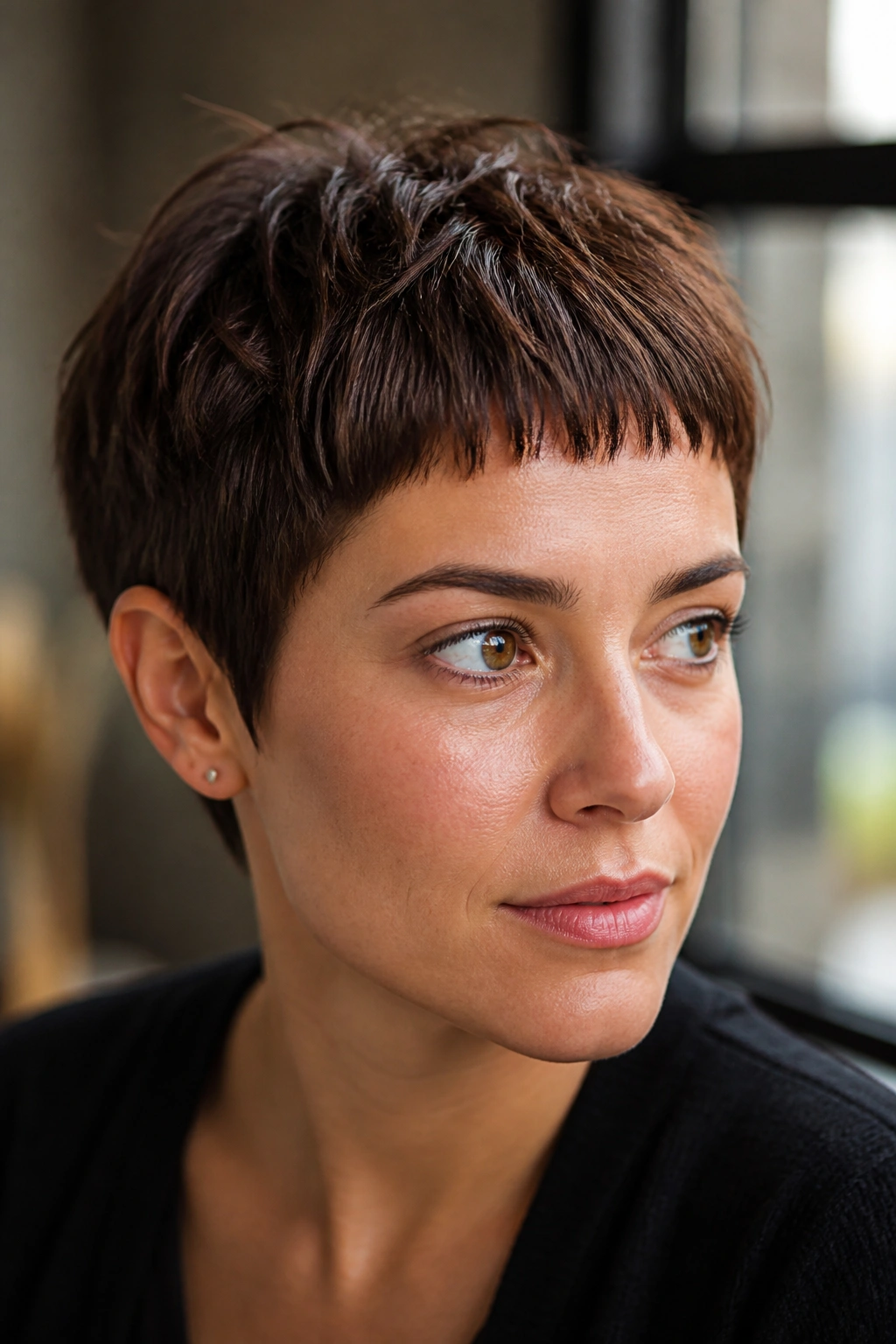
Micro bangs are not shy, and that is the point. On a fine-hair pixie, they can take attention off the crown and move it straight to the eyes and brows.
Walnut brown softens the look so the bangs do not feel severe. The color has enough warmth to keep the cut approachable, even when the fringe is short. Keep the bangs textured, never blunt. If they are cut too straight, they can make fine hair look brittle.
A cut like this needs a slightly longer top to balance the short fringe. The sides should stay close, and the nape should be neat. That balance keeps the face from getting boxed in. If your brows are a feature you like, this is a very flattering move.
A few things to keep in mind:
- Micro bangs need frequent trims.
- The top should have enough length to soften the forehead line.
- Light root lift helps the crown stay from collapsing.
- A tiny dab of styling paste keeps the fringe from separating awkwardly.
This style has personality. It does not apologize for itself.
8. Deep Mocha Pixie Bob Hybrid
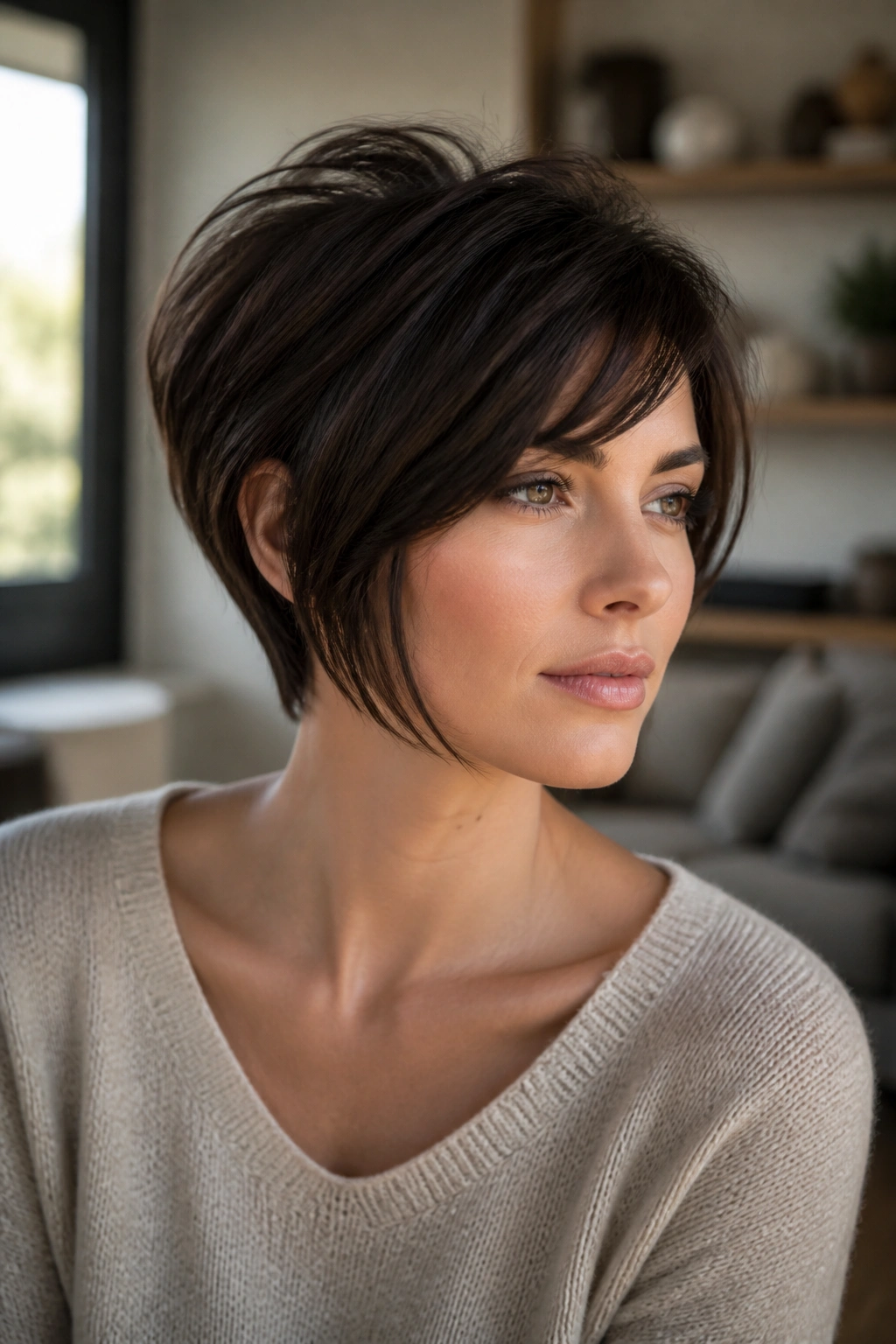
There’s a sweet spot between a true pixie and a short bob, and fine hair often looks best right there. A deep mocha pixie bob hybrid gives you length around the ears and nape while still keeping the easy short-crop feel.
That extra bit of perimeter is useful. Fine hair tends to look thinner at the ends, so keeping a little more weight around the jaw can make the whole cut read as fuller. The top should still have lift, though. Ask for stacked layers at the back and a gentle bend through the crown so the silhouette does not go boxy.
Deep mocha is a good color choice because it adds polish without flattening the shape. The shade has enough richness to make the cut feel sleek, but not so much depth that it swallows the texture. On straight fine hair, this is a strong option.
It also grows out nicely. The shape holds for a while, and that matters when you do not want to live in the salon chair.
9. Sandy Brown Undercut Pixie
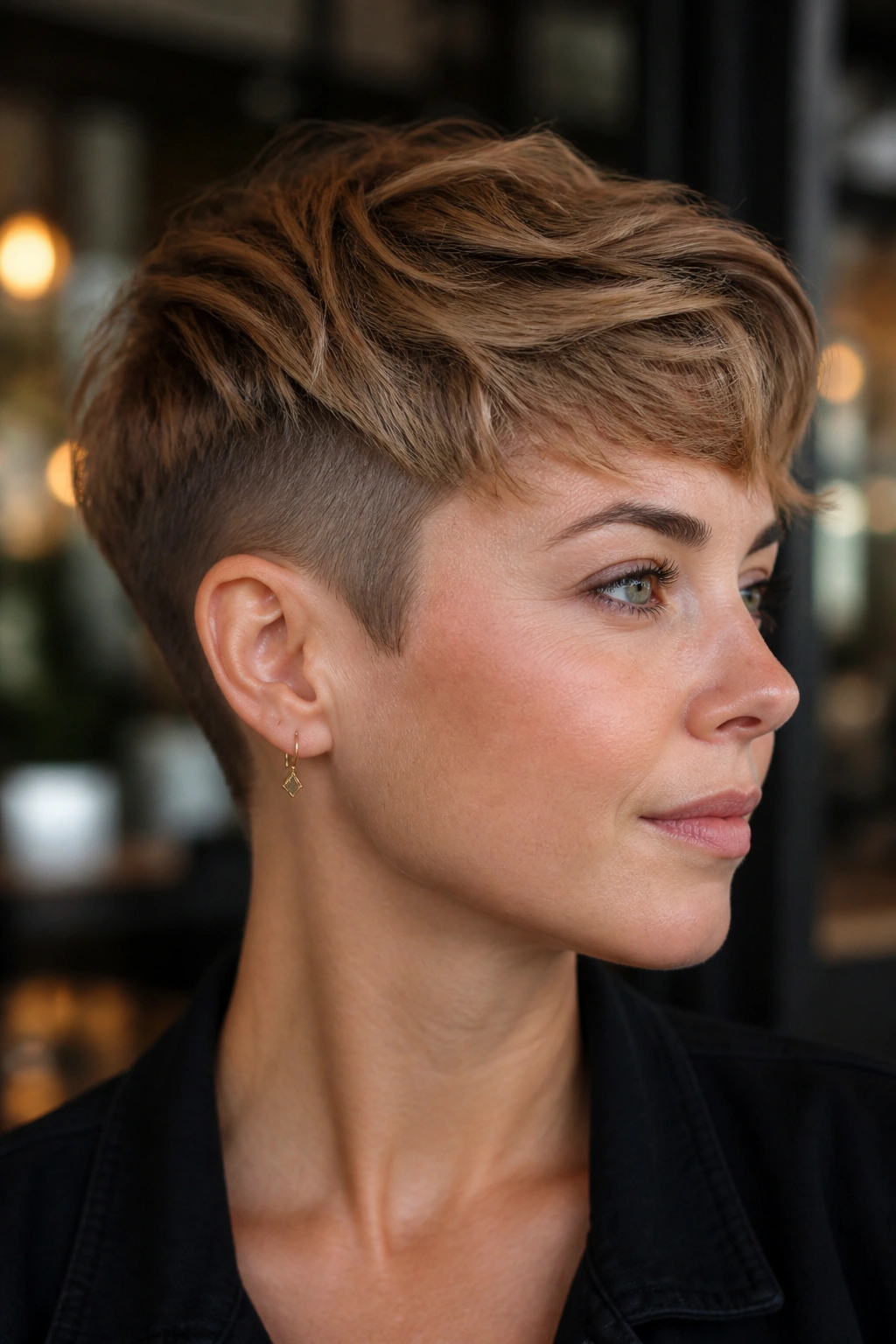
This is the sharpest way to keep fine hair from collapsing at the sides. A low undercut removes extra bulk under the top layer, and that lets the crown sit higher without looking puffy.
Sandy brown keeps the look from turning too hard-edged. The lighter brown softens the contrast between the shaved or closely cropped areas and the top section, which is useful if you want shape without a full punk finish. Ask for the undercut to stay low and hidden unless you want it to show.
Do not take too much off if your hair is sparse. That is the catch. Fine hair can handle an undercut when there is enough density on top to cover it, but if the top is too thin, the cut can start to feel overexposed. A good stylist will keep the top slightly longer and let the crown do the visual work.
This one suits people who like a little edge in their haircut and do not mind a crisp outline.
10. Cinnamon-Brown Tousled Pixie
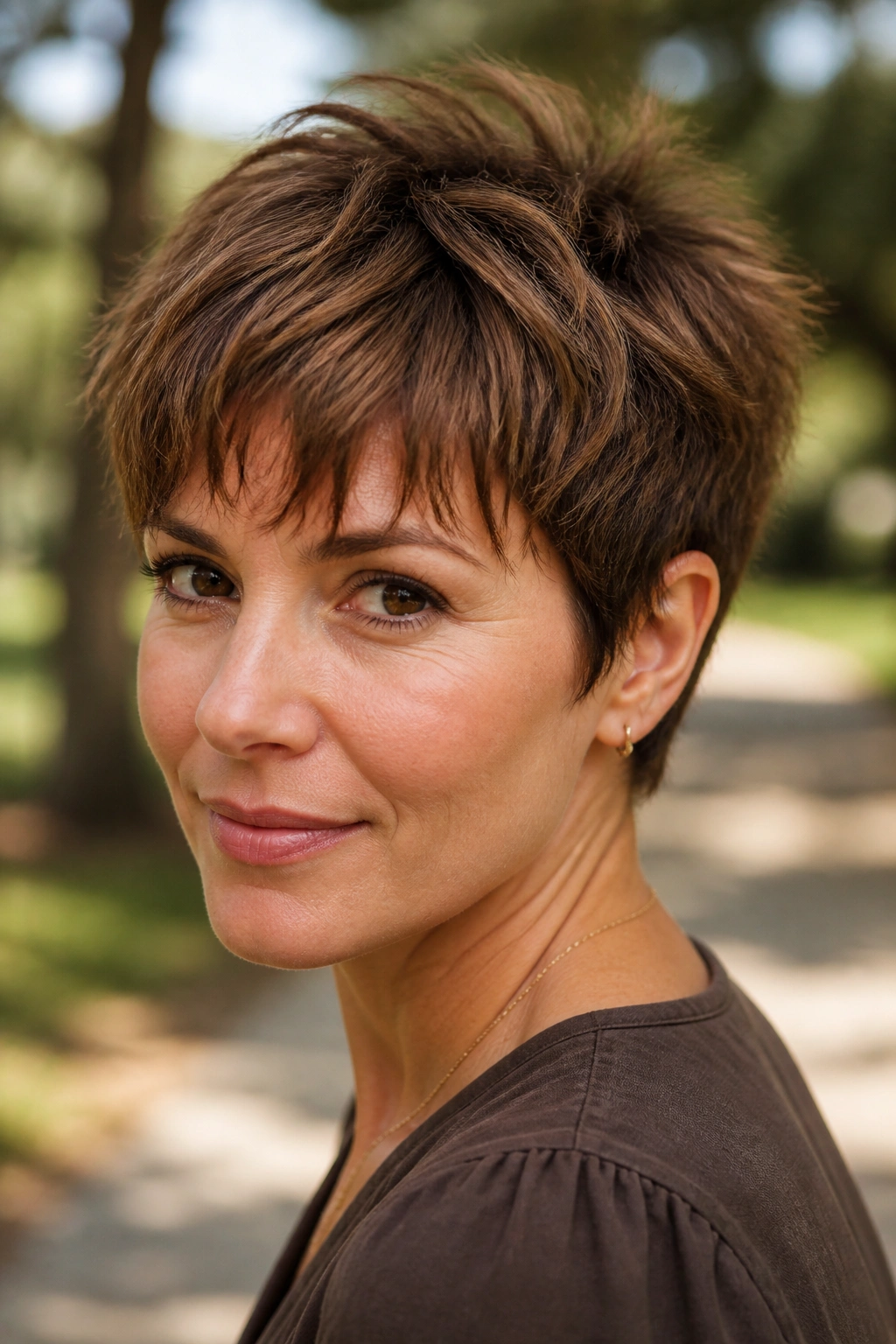
What if you want movement, not polish? Then a tousled pixie is the right answer. Fine hair can look flat when it is smoothed too much, but a little irregular bend gives it life.
Cinnamon brown is a smart shade for this cut because it catches light across the ridges of the texture. The warmth keeps the style from looking dry or dusty, which is a real risk with short hair and too much texturizing. Ask for choppy layers through the top and soft, broken ends around the fringe.
Work a light sea salt spray or texture mist through damp hair, then scrunch with your hands and let it air-dry about 80 percent before finishing with a diffuser or a quick blow-dry. The goal is separation, not frizz. If the hair starts to puff, you’ve gone too far with the product.
This cut has a casual feel, but it still looks deliberate. That combination is hard to beat.
11. Glossy Brunette Shaggy Pixie
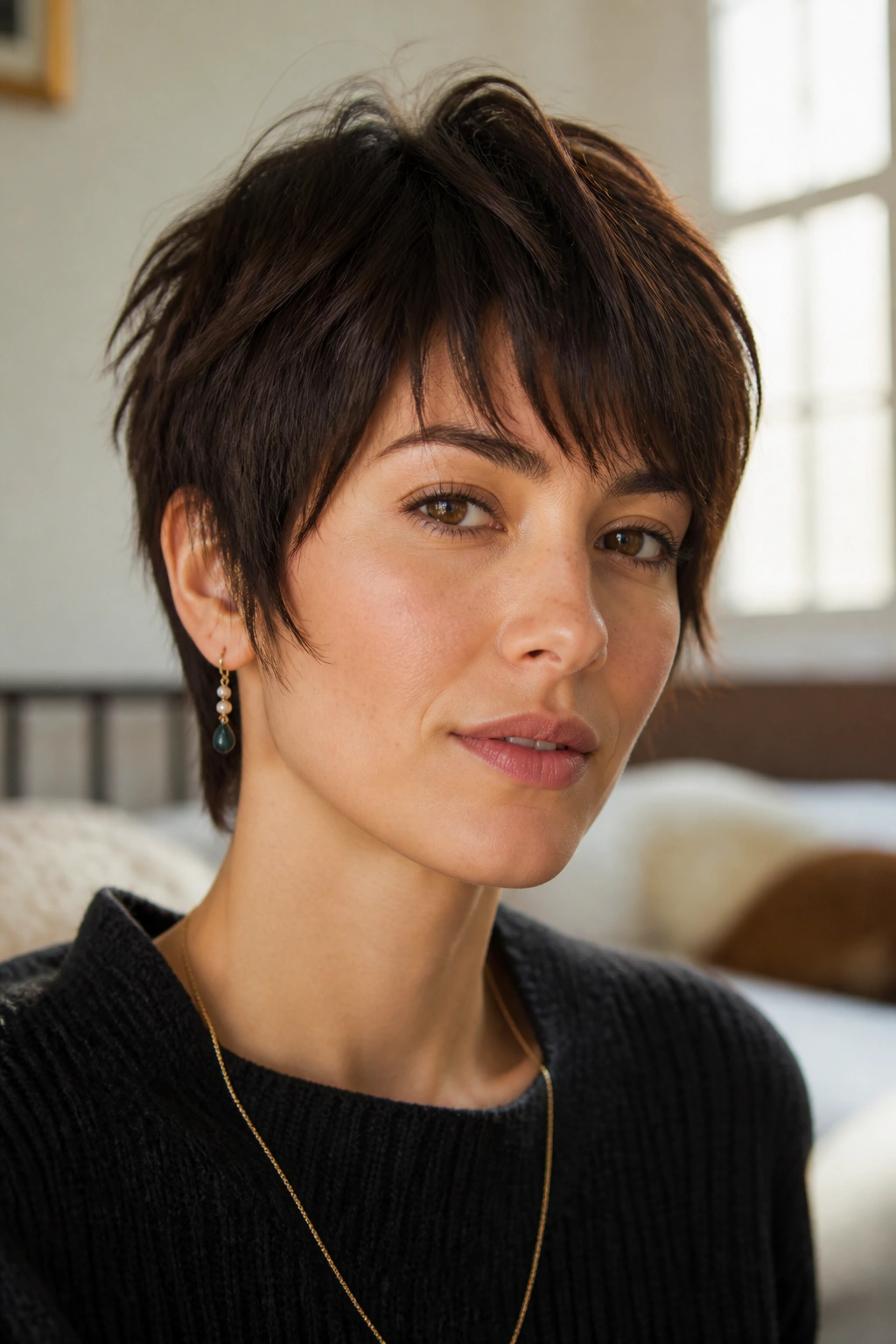
A shaggy pixie can be a gift for fine hair, as long as the finish stays clean. Too much frizz turns the shape mushy. Too little movement turns it stiff. The glossy brunette version keeps that balance in check.
Think wispy temples, a longer top, and a fringe that falls in uneven bits instead of one straight line. The brunette shade helps the layers read as deeper and more connected, which matters when the hair itself is thin. The shine is part of the appeal here. It keeps the style from looking overtextured.
A Few Salon Notes
- Ask for a razor only on the softest perimeter.
- Keep the fringe broken, not blunt.
- Leave enough length at the crown for lift.
- Finish with a light shine spray from about 10 inches away.
This cut works because it has movement without chaos. The pieces shift when you turn your head, but the shape still sits where it should.
12. Rooted Brown Balayage Pixie
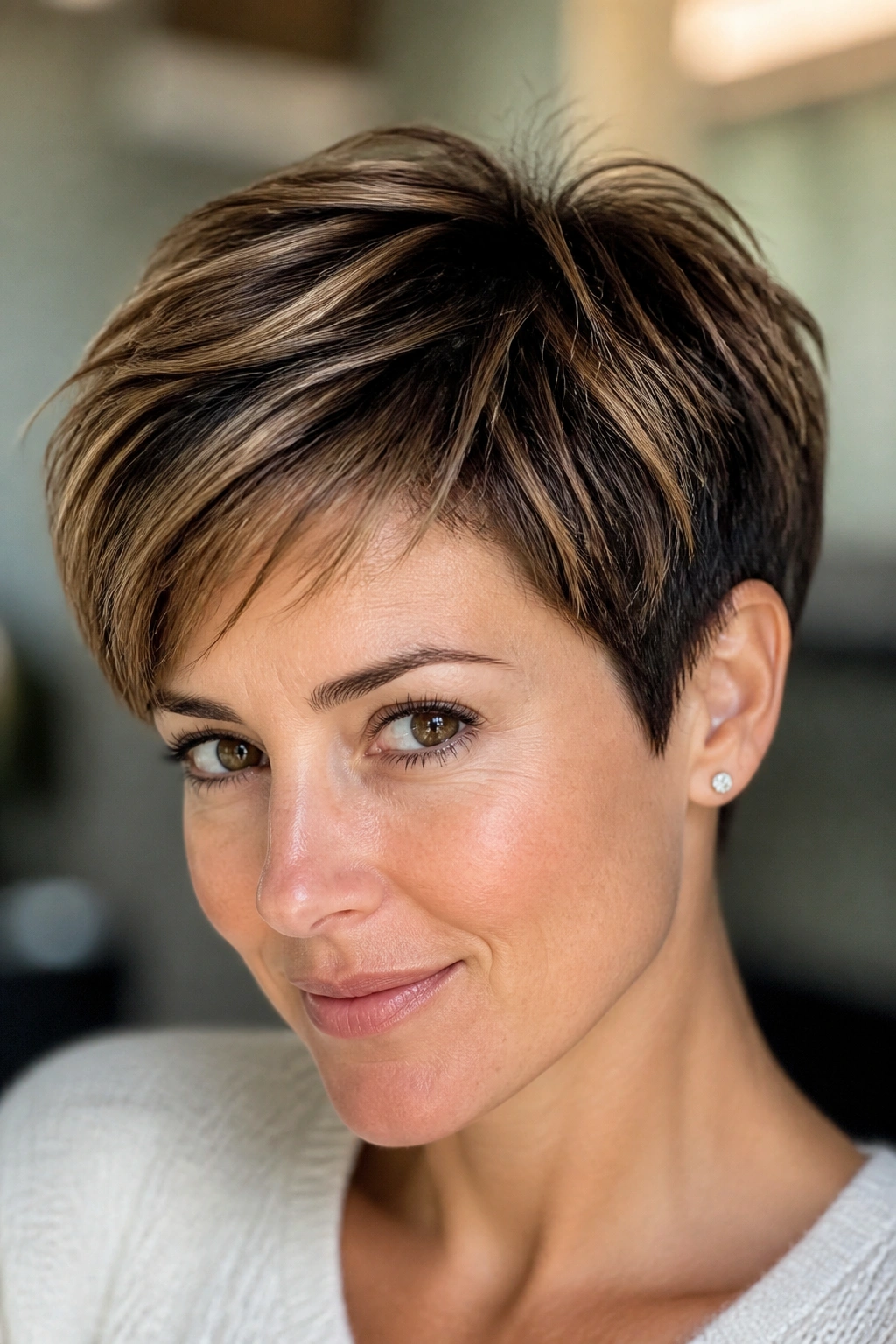
A rooty color story can do more for fine hair than a big chop alone. Darker roots give the scalp area a fuller look, and a few hand-painted lighter pieces through the crown keep the cut from going flat.
That’s why a rooted brown balayage pixie makes sense. The contrast builds depth right where fine hair usually needs it most. Keep the highlights soft and narrow, especially around the part line and top layers. Too much lightness can thin out the look fast.
Compared with a single-tone brown pixie, this version has more visual movement. Your eye sees multiple shades, so the hair reads as thicker even when the strand count is the same. That little trick matters on straight fine hair, which can otherwise look like one smooth sheet.
It also buys you easier grow-out. The darker root softens the shift between salon visits, and that is one less thing to worry about.
13. Auburn-Brown Pixie With Feathered Ends
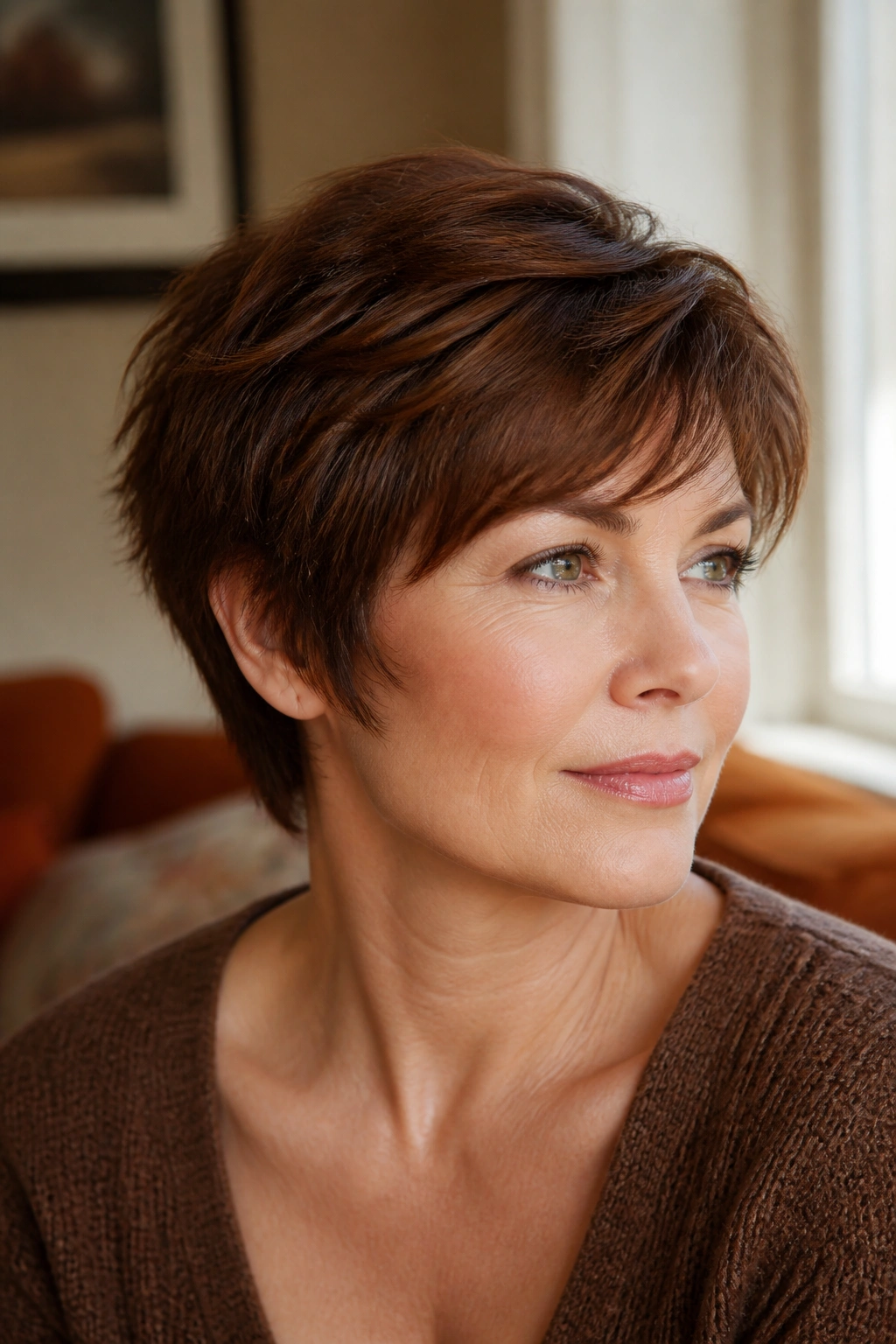
Auburn-brown has warmth that plain brown sometimes misses. On fine hair, that warmth can bring the whole cut to life, especially when the ends are feathered instead of blunt.
Feathering matters because it keeps the perimeter airy. Fine hair can look boxy when the ends are too sharp or too heavy, so a soft, brushed-out finish is usually kinder. Ask for light feathering around the ears and nape, then a slightly longer top that can move back or to the side.
This style has a softer mood than the more sculpted pixies. It works well if you want a cut that looks touched by air, not carved into place. The auburn tone also helps skin look less washed out, which is a nice side effect if your natural brown is a little flat.
You can style it with a round brush, but you do not have to. Finger-drying gives it a looser finish, and sometimes that is the better call.
14. Bittersweet Brown Sculpted Pixie
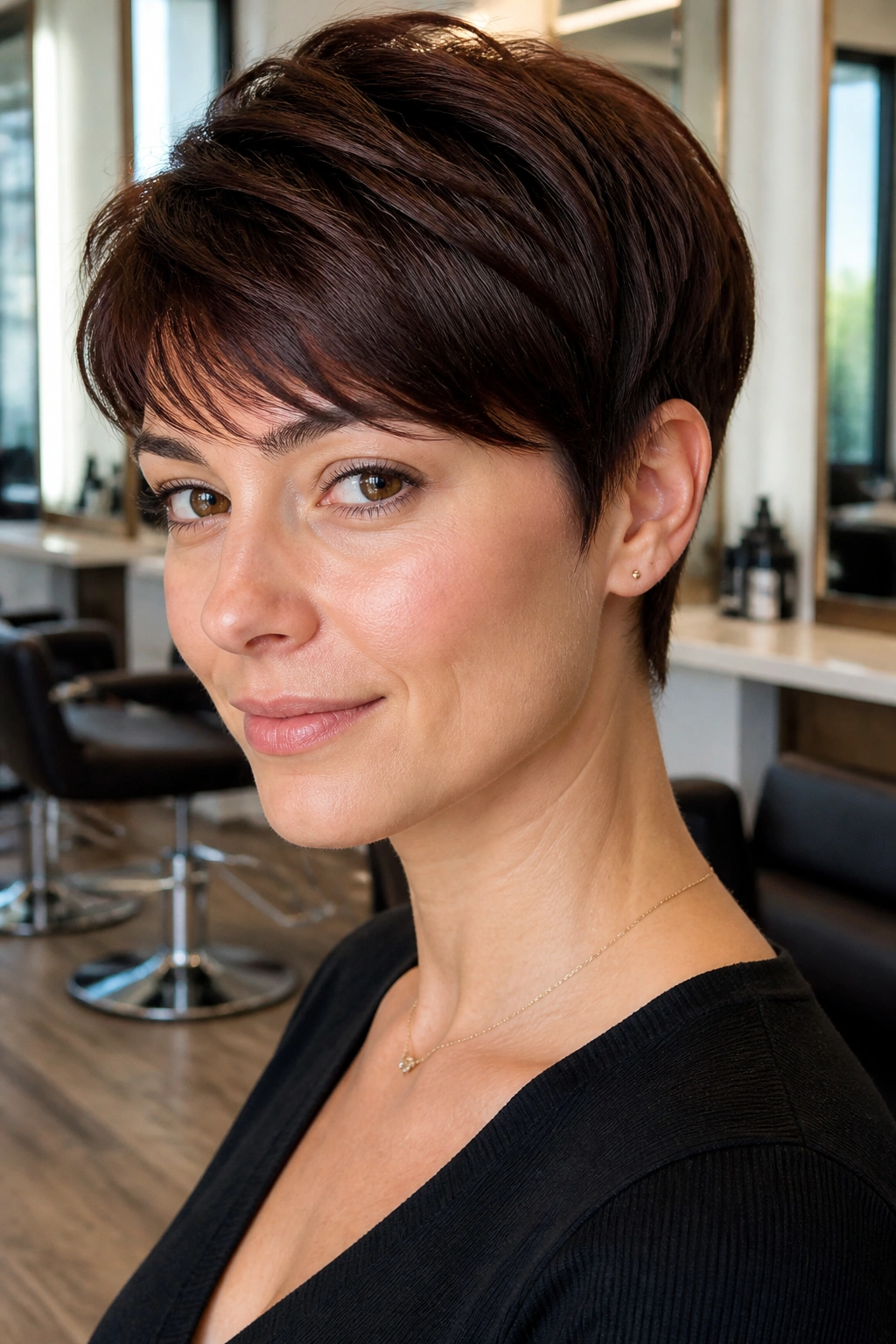
If you like a precise haircut, this is the one to notice. A sculpted pixie depends on clean lines, and bittersweet brown gives those lines more presence.
The cut usually keeps the sides neat, the nape tight, and the top slightly longer so it can be directed forward or across. Fine hair benefits from that control. Instead of blowing around and separating in strange places, it sits where you tell it to sit. That makes the hair look intentional and denser at the same time.
This is not a casual wash-and-go cut, though. It looks best when you give it direction. Blow-dry the top with a nozzle attachment, push the front in the shape you want, then set the ends with a tiny amount of styling cream or paste. The finish should look polished, not slick.
It suits strong features and sharp jawlines, but it can also soften a round face if you keep the fringe swept and the top a touch longer.
15. Soft Brunette Bowl Pixie
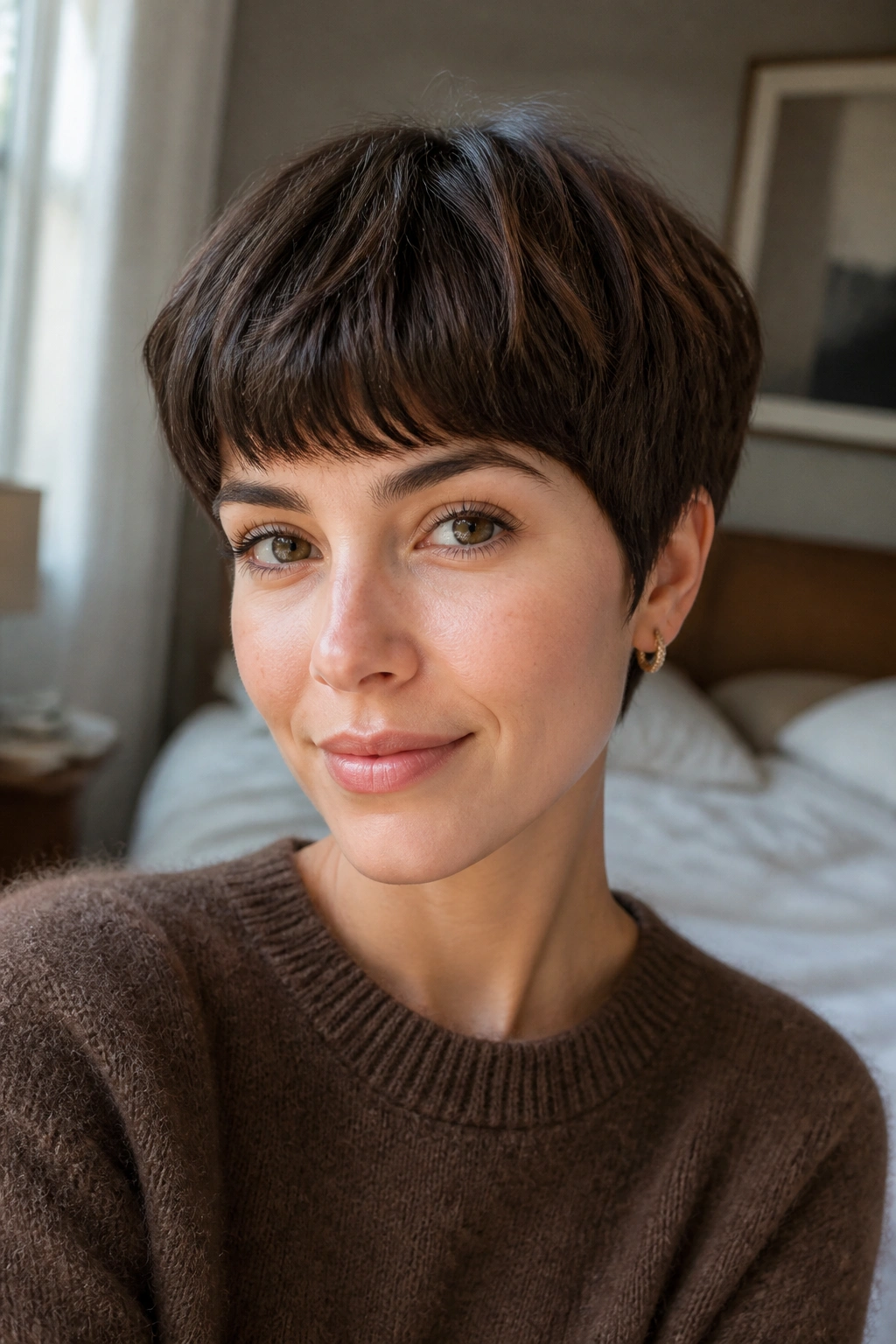
People hear “bowl cut” and think of something rigid. That’s the wrong image. A soft brunette bowl pixie is gentler, and on fine hair, that rounded perimeter can actually be a strength.
The reason is simple: a fuller edge makes thin ends look thicker. Instead of tapering everything away, the modern bowl-inspired pixie keeps a little weight around the line of the cut. That gives the hair more presence around the face and stops it from disappearing at the tips.
This style is not for everyone, and that is fine. It suits straight hair best, and it looks strongest when the top has a tiny bit of internal layering so it does not sit like a cap. Ask for softened corners near the jaw and a slightly longer fringe if you want the shape to feel less severe.
It has a fashion edge, but it is more wearable than people expect. A good brown tone helps a lot there.
16. Honey-Brown Pixie With Ear Tuck
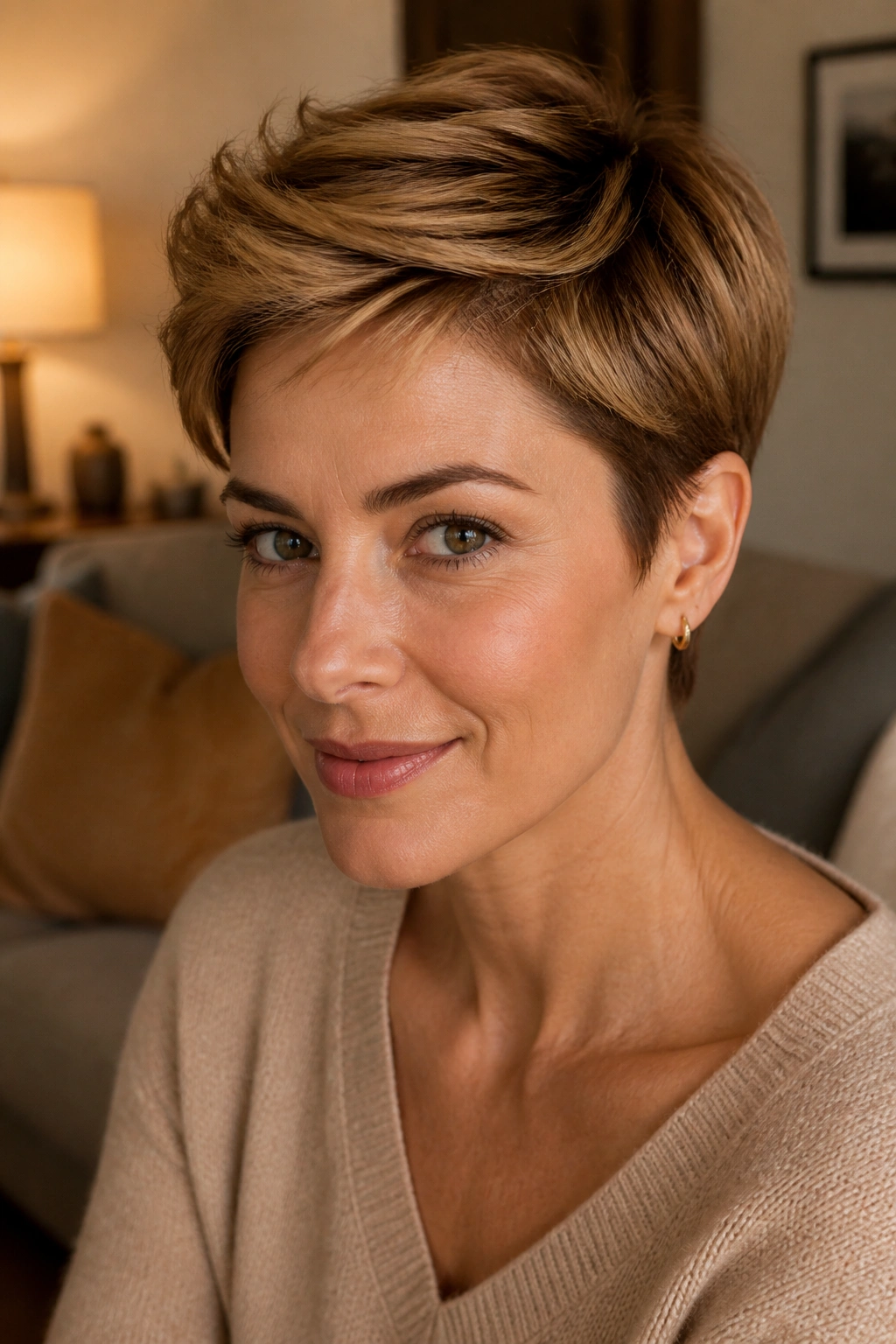
Why does an ear tuck matter? Because it changes the whole balance of the haircut. Once one side is tucked, the eye goes straight to the cheekbone and jaw, and the top suddenly feels fuller by contrast.
Honey brown is a smart match for that shape. The lighter warmth near the face lifts the skin tone and gives the cut a softer edge. Keep the side pieces just long enough to tuck cleanly behind the ear, then let the crown keep a little height so the style does not collapse into the side of the head.
What to Ask for at the Salon
- A slightly longer top, around 2.5 to 3 inches.
- Soft, movable side pieces that can tuck or fall out.
- Light feathering around the temples.
- A nape that stays tight but not shaved bare.
This cut is easy to live with if you like changing the shape with your hands. Tuck it, leave it loose, or push the front back. It has more flexibility than it first appears.
17. Espresso Pixie With Baby Bangs
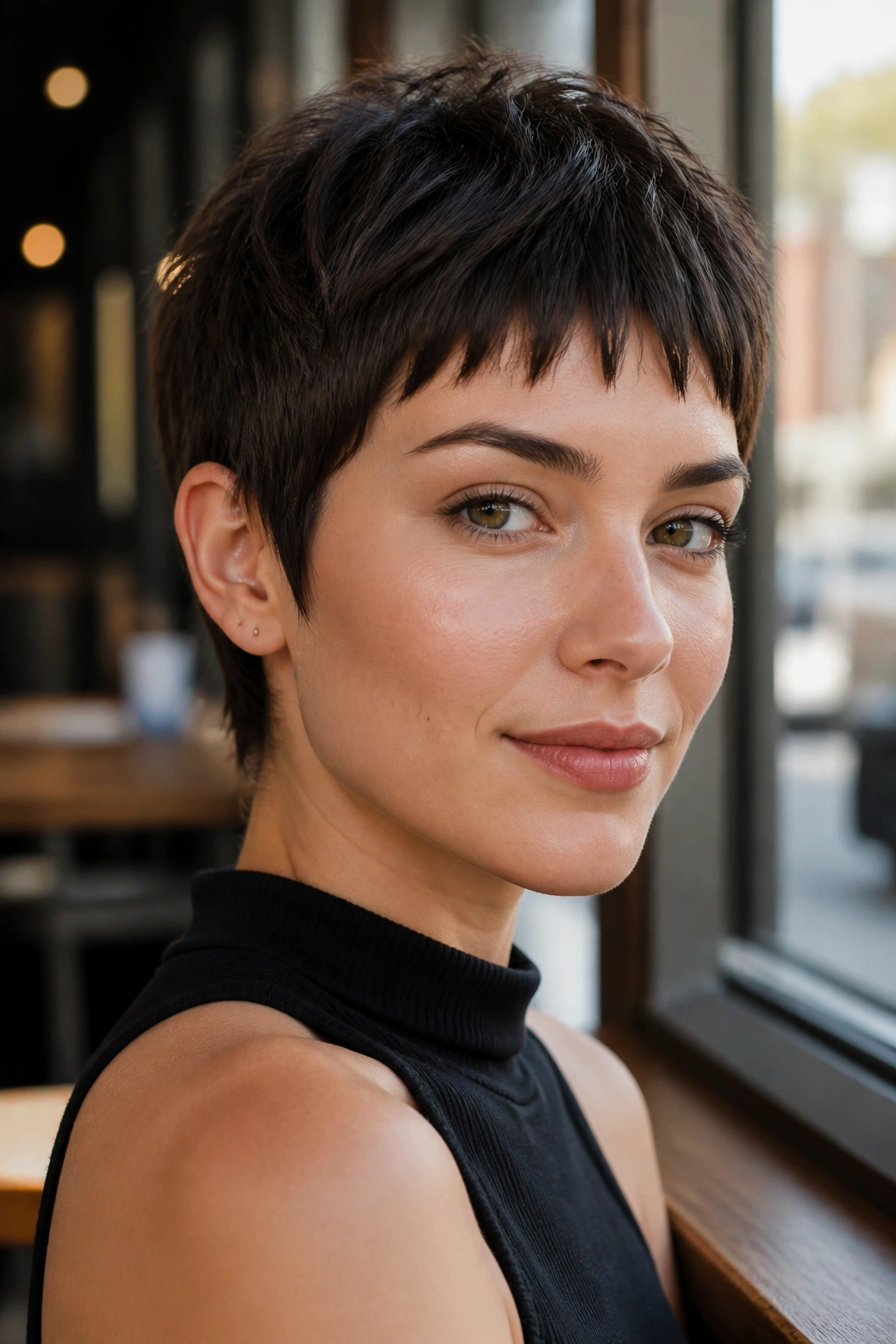
Baby bangs can look brave in the chair and brilliant in real life. On fine hair, they help because they move the focus upward and keep the rest of the cut from needing too much volume to feel complete.
Espresso brown gives the tiny fringe a strong frame. The dark color grounds the short bangs so they read as deliberate instead of accidental. Keep them broken and slightly chipped at the ends. A straight, heavy baby bang can look rigid on fine hair, and that is not the move.
I like this cut when the rest of the hair is kept neat and compact. It feels modern without trying too hard. The top can stay a little longer, but the front is the main feature, and the contrast is what makes it work.
A few good habits help here:
- Trim the bangs before they start touching the lashes.
- Dry them side to side so they do not sit flat.
- Keep product off the fringe unless you need control.
- Let the rest of the pixie stay soft around the ears.
Tiny details matter a lot with baby bangs. A quarter inch can change the whole face.
18. Coffee Bean Pixie With a Swooped Top
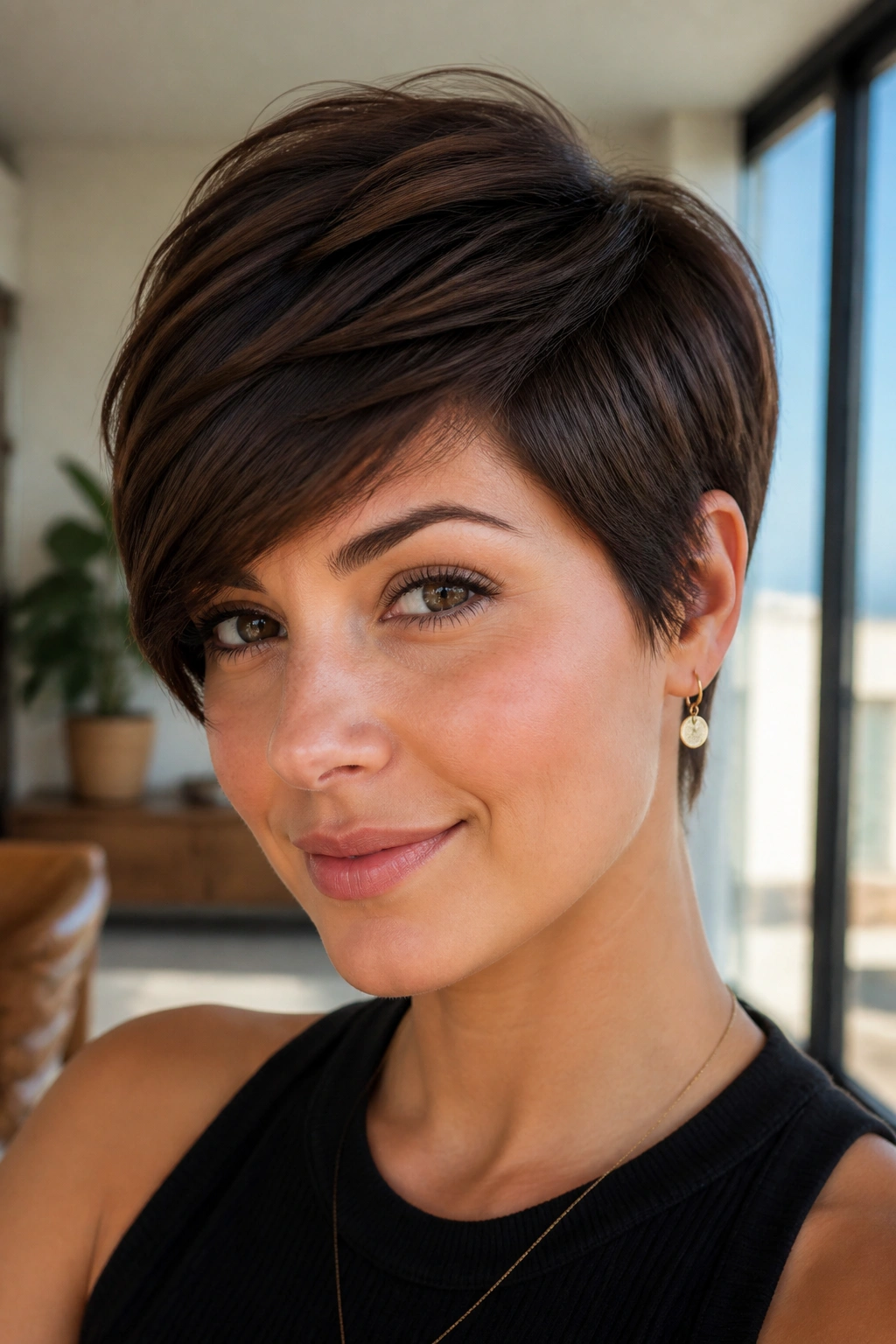
A swooped top does something flat hair often needs: it creates a clear line for the eye to follow. Without that motion, fine hair can sit there and fade into the head shape.
Coffee bean brown keeps the swoop from looking washed out. The deep tone gives the curve more definition, especially if you part it low and dry the top in the opposite direction before sweeping it across. That reverse-dry trick gives the hair a little built-in lift.
This style is a good call if you want softness at the forehead without giving up structure. It suits round faces nicely because the diagonal line stretches the face a bit. It also works for anyone who likes a polished finish but does not want a stiff side part.
Use a round brush only on the top section if you need help, and keep the sides close. The contrast between the sleek top and neat sides is what gives the pixie its shape.
19. Bronde Pixie With Airy Layers
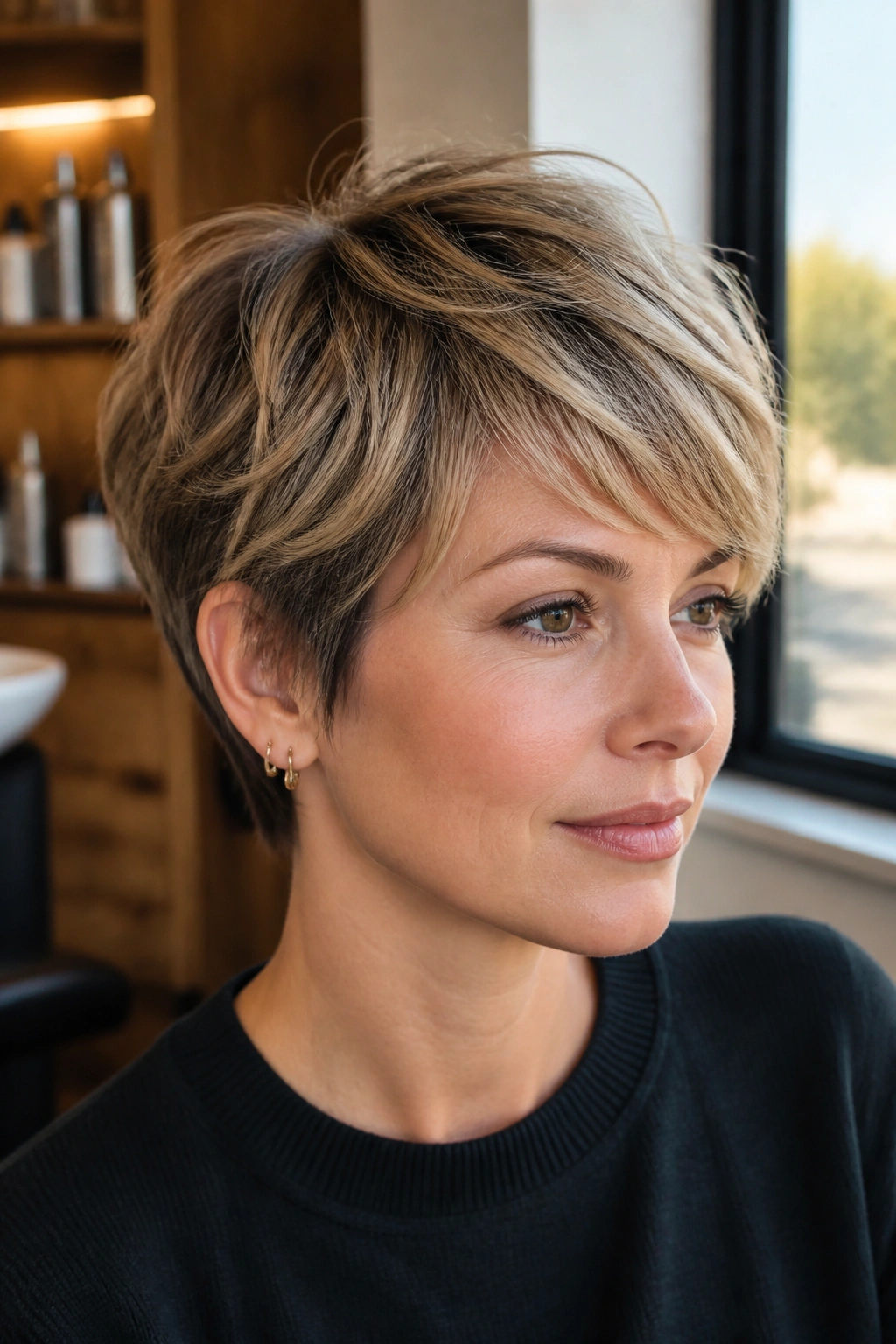
Bronde is the middle ground that makes a lot of sense on fine hair. Too dark, and the hair can look flat if the cut is not sharp enough. Too light, and every thin spot shows up faster. Bronde sits between those two problems.
The airy layers in this cut should be soft and scattered, not choppy for the sake of being choppy. You want movement that looks light, almost floated through the crown and fringe. A few lighter pieces around the top and face help the hair catch light, while the darker brown underneath keeps the shape from disappearing.
This is a strong choice if your hair already has a bit of natural texture. The lighter tones bring out bends and flicks that a solid color can hide. It also softens the transition between the pixie and your skin, which can be nice if a very dark brown feels harsh.
On days when you want a little more lift, dry the roots first and then tuck a few top pieces behind the ears. The cut shifts easily.
20. Asymmetrical Deep Brown Pixie
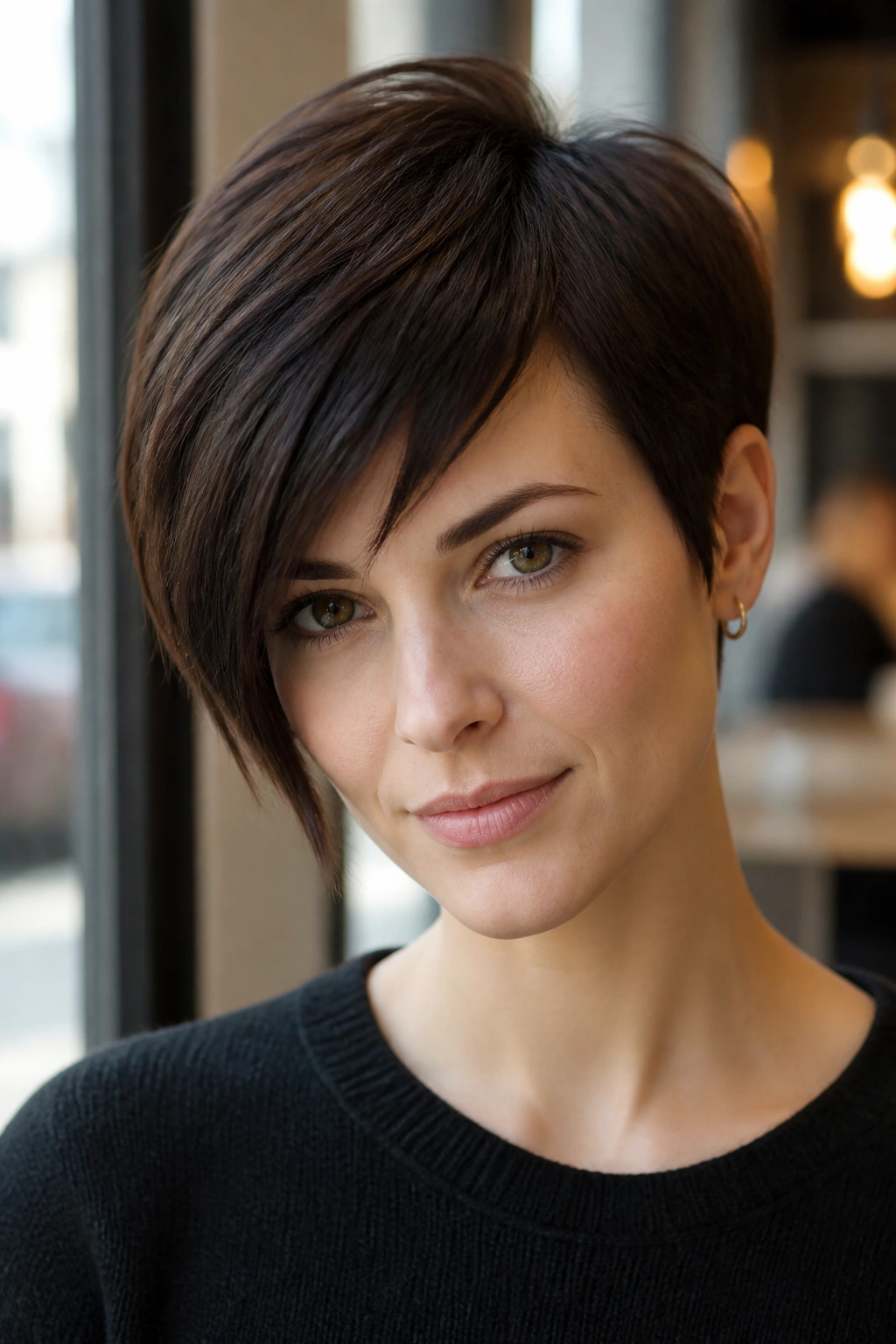
What if you want fine hair to look deliberate, not delicate? An asymmetrical pixie does that well. One side stays slightly longer, the other side stays tight, and the uneven balance gives the whole cut a bit of attitude.
Deep brown helps the shape read clearly. The darker color sharpens the asymmetry so the eye catches the angle right away. Keep the longer side grazing the cheekbone or jaw, and let the shorter side stay clean around the ear. That difference does not need to be dramatic. Half an inch can be enough.
This cut is good for anyone who likes a little edge without going full undercut. It feels clean, but it is not boring. Fine hair benefits because the asymmetry creates a strong visual line, and strong lines are useful when the strands themselves are soft.
It does need regular trimming, though. If the longer side gets too long, the balance disappears. That is the tradeoff, and it’s worth it if you like a crisp finish.
Final Thoughts
The best pixie for fine hair is rarely the shortest one. It is the one that gives the hair a shape the eye can hold onto. Brown shades help because they add shadow, and shadow is one of the oldest tricks in the book for making hair look fuller.
If you’re torn between a few of these, choose the silhouette first. Pick the crown height, the fringe shape, and the nape length before you obsess over the color tone. Espresso, chestnut, mocha, and caramel all play different roles, but the cut underneath does the real work.
Ask for less bulk in the wrong places and more structure where the hair tends to collapse. That’s the part most people skip, and it’s usually the difference between a pixie that looks cute for one afternoon and one that keeps its shape all week.
