



Fine hair can go limp in a hurry, which is exactly why a sharp pixie can look so good on it. The right pixie cuts for fine hair don’t pretend the hair has more density than it does; they work with clean lines, smart layering, and a little attitude to make the texture look deliberate instead of delicate.
The mistake people make is reaching for too much feathering. That sounds flattering in theory, then the ends go see-through and the whole cut starts to feel weak. A good edgy pixie does the opposite. It keeps enough shape at the perimeter, builds lift where the hair naturally needs help, and leaves the styling finish a little piecey so the cut feels alive.
That’s why I like pixies on fine hair more than almost any other short style. You can go sharp, soft, tousled, or cropped close, and the haircut still reads as intentional. A strong fringe, a tight nape, or an asymmetrical part can do more for volume than an extra inch of length ever will.
The fun part is how many directions you can take it. Some versions lean punk. Some look sleek and expensive. Some are barely there and still have edge. Once you start looking at shape instead of length, the options get much more interesting.
1. Choppy Micro Pixie for Fine Hair
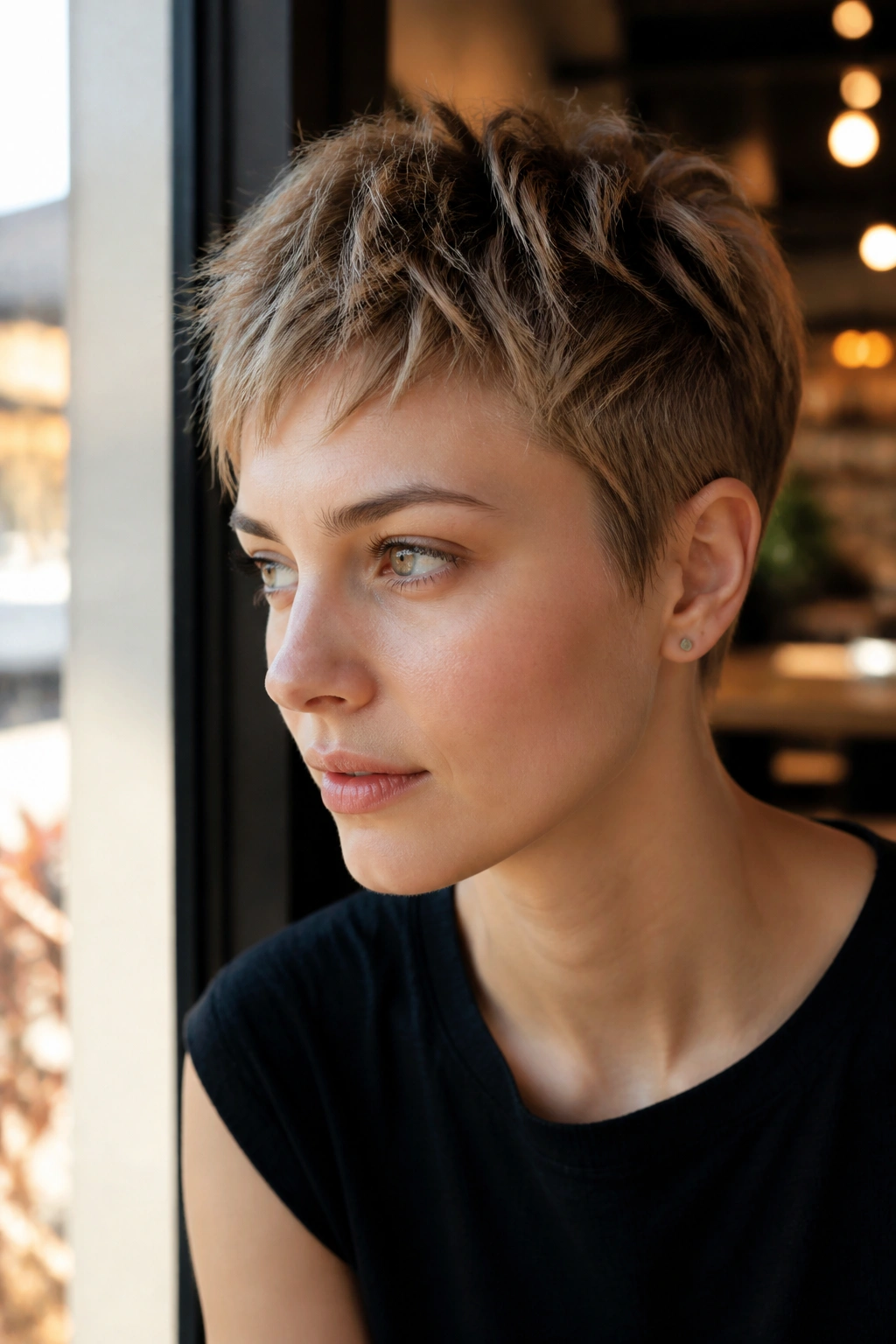
This is the cut that wakes fine hair up fast. A choppy micro pixie keeps the length short enough that the strands sit together, which makes the hair look denser at the ends. That matters. Long, wispy ends tend to show every gap, while a shorter, broken-up edge looks fuller almost by default.
Why It Works on Fine Hair
The magic is in the balance: short perimeter, slightly longer top, no mushy layers. Ask for point-cutting through the crown and around the fringe so the texture feels sharp instead of soft. If your stylist reaches for thinning shears all over, pull the brakes. That tool can be useful, but it can also leave fine hair looking patchy.
A tiny bit of matte paste is enough here. Warm it between your fingers, then pinch the top into uneven little bends. You want separation, not stiff spikes.
- Keep the sides close to the head.
- Leave about 1.5 to 2 inches on top.
- Ask for a blunt nape with chipped ends.
My favorite part: it looks edgy even on a plain black tee and no makeup.
2. Asymmetrical Pixie with a Deep Side Part
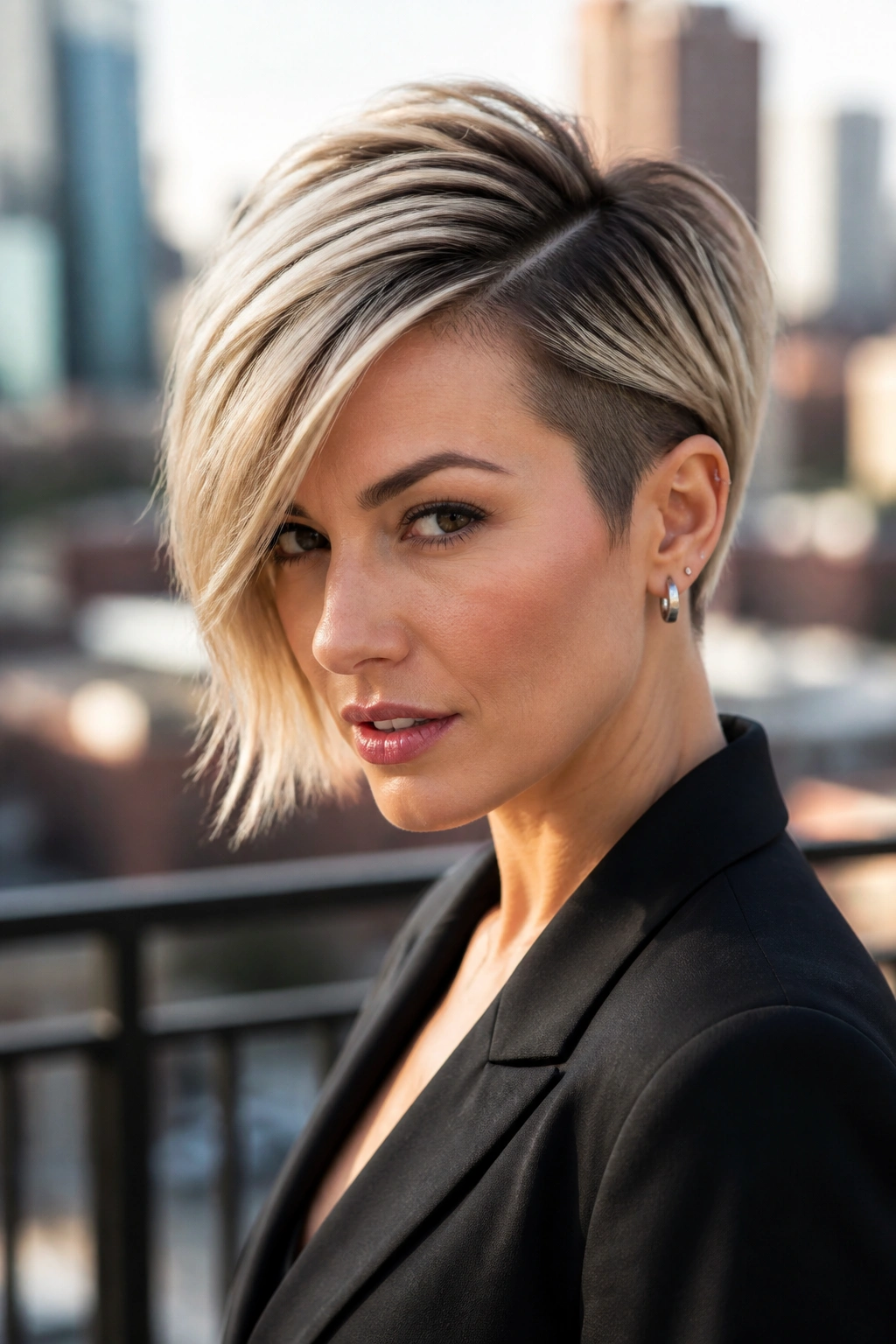
Why does this one work so well? Because fine hair loves a line it can follow. A deep side part creates a strong diagonal, and that diagonal makes the top feel fuller on one side without asking the hair to do some impossible volume trick. The eye sees shape first, not sparsity.
The longer side can skim the cheekbone or brush the eyebrow, while the shorter side stays tight and clean. That contrast gives the haircut tension, which is exactly what makes it feel modern. If your hair falls flat at the crown, this is one of the easiest ways to cheat a little height.
I’d keep the part dramatic, not timid. Put a root spray at the heavier side, blow-dry it up and away from the scalp, then flip the fringe over at the end. The result should feel a touch off-center and a touch defiant.
A straight iron can help, but only on the long side. Leave the short side alone.
3. Undercut Pixie with a Tight Nape
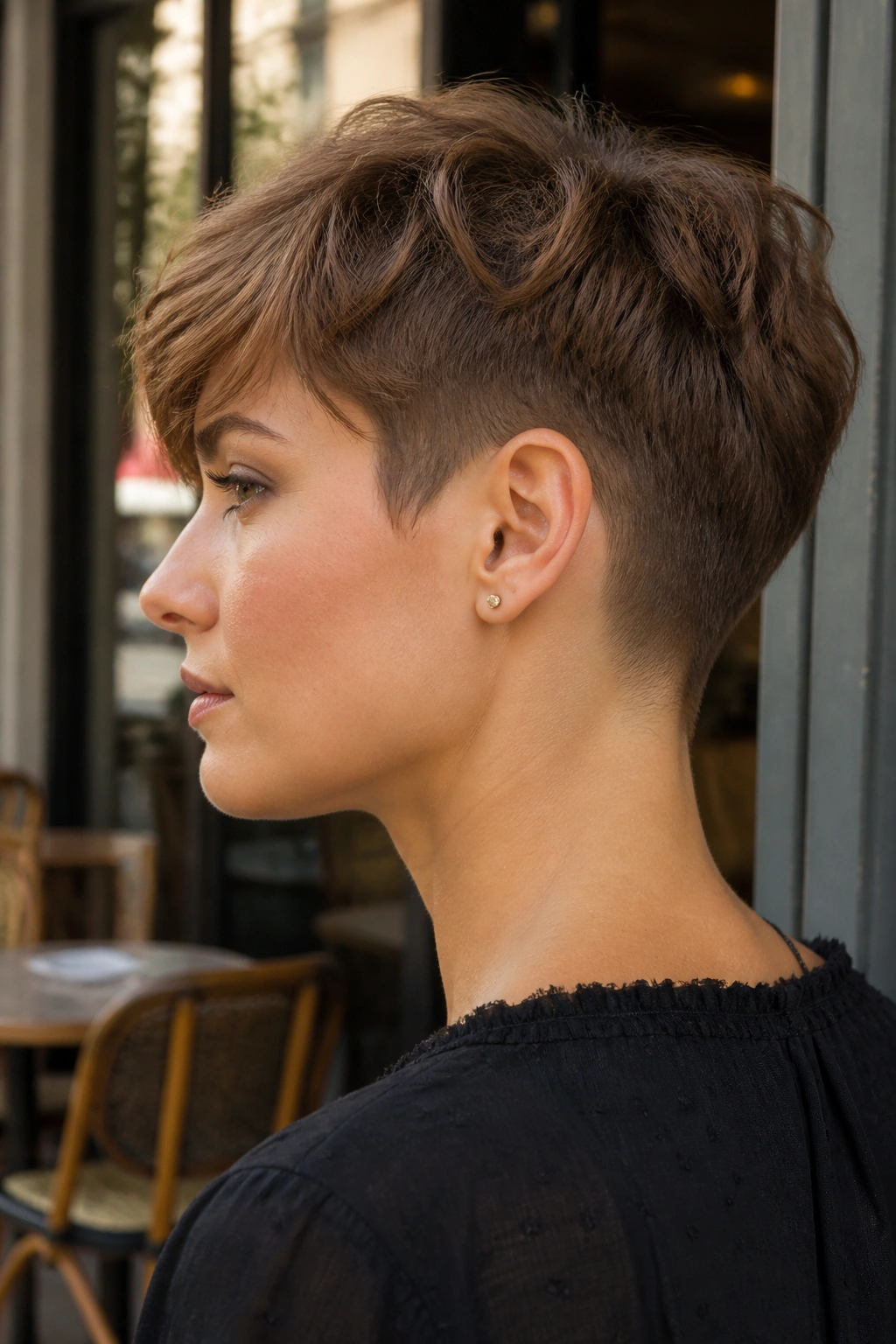
If your hair bulges at the nape or grows out in a fuzzy triangle, this cut fixes that problem in a clean, almost no-nonsense way. The undercut removes bulk where fine hair can still puff oddly, and the longer top keeps the style from looking too severe. It’s sharp. It’s practical. It also grows out better than people expect.
What to Ask For
- A clipped or very short nape.
- Tapered sides that hug the head.
- Longer top layers that can fall forward or lift up.
- A soft transition around the ear, not a bulky shelf.
That clean back area makes the whole cut look lighter. Fine hair can actually gain presence when the neckline is handled well, because the eye stops getting distracted by fuzzy edges.
I like this cut for people who want edge but do not want to spend 20 minutes styling every morning. A dab of styling cream on the top and a quick finger-dry are usually enough. If you want it sharper, a touch of gel on the sides does the trick.
4. Feathered Pixie with Wispy Bangs
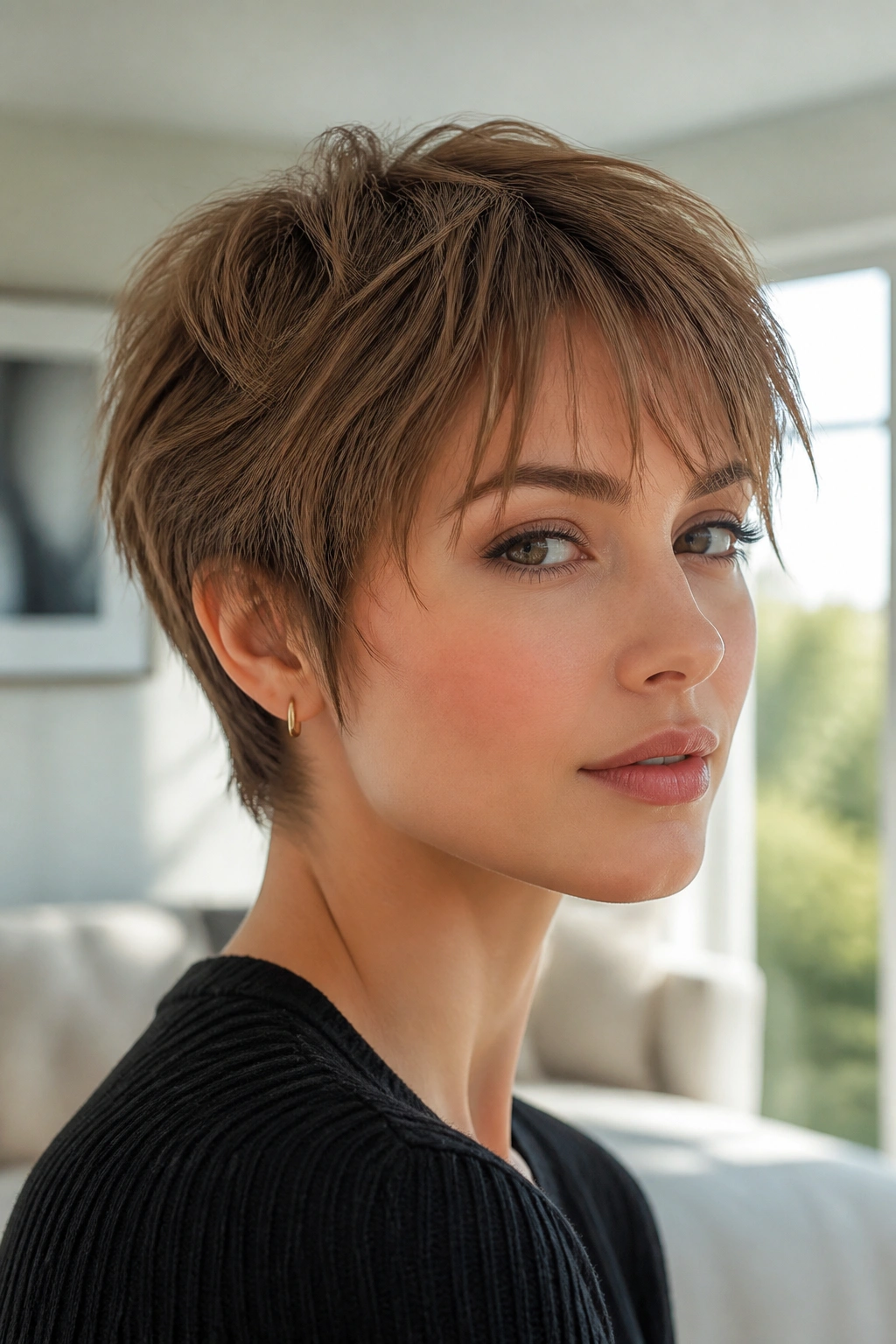
This one has a softer mood, but don’t mistake soft for boring. A feathered pixie with wispy bangs can look sleek, cool, and a little artsy all at once. Fine hair benefits from feathering when it’s done sparingly, because the movement keeps the cut from looking boxy.
The trick is to feather the interior, not shred the ends. You want airy layers that move when you turn your head, not a frayed outline that disappears into nothing. Wispy bangs help too, especially if your forehead is on the broader side or your hair tends to split at the front.
A light mousse works better than heavy cream here. Blow-dry the bangs from side to side with your fingers, then let them fall where they want. That little bit of imperfect movement is what gives the cut its edge.
This is a good one if you want something feminine but not precious. It has bite. Just enough.
5. Tousled Crown-Volume Pixie
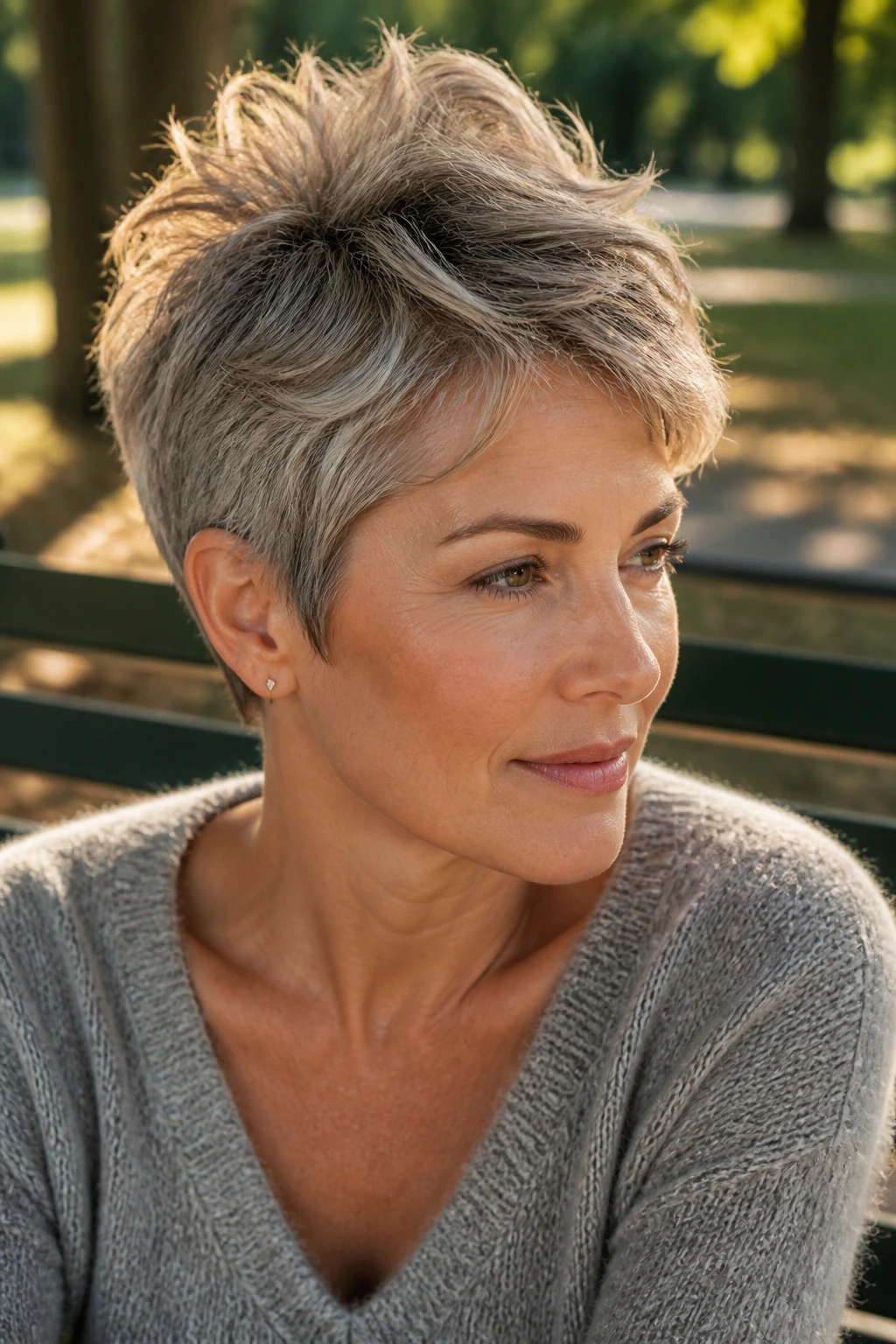
A pixie with volume at the crown is almost unfair on fine hair. The top gets all the lift, the sides stay close, and the haircut looks fuller where people actually notice fullness. That’s the real trick: don’t spread the volume everywhere. Put it where it matters.
The crown should be cut with enough length to bend up and over, but not so much that it collapses under its own weight. I like this shape with a bit of texture spray on dry hair, then a quick blast at the roots with a dryer and a small round brush. You are not trying to create a helmet. You want lift that looks a little loose.
Styling Note
Use:
- mousse at the roots while damp,
- a round brush about 1 inch wide,
- a pinch of dry texture spray at the end.
If the top starts to separate too much, skip extra product. Fine hair usually needs less than you think.
6. Bixie with a Tapered Neckline
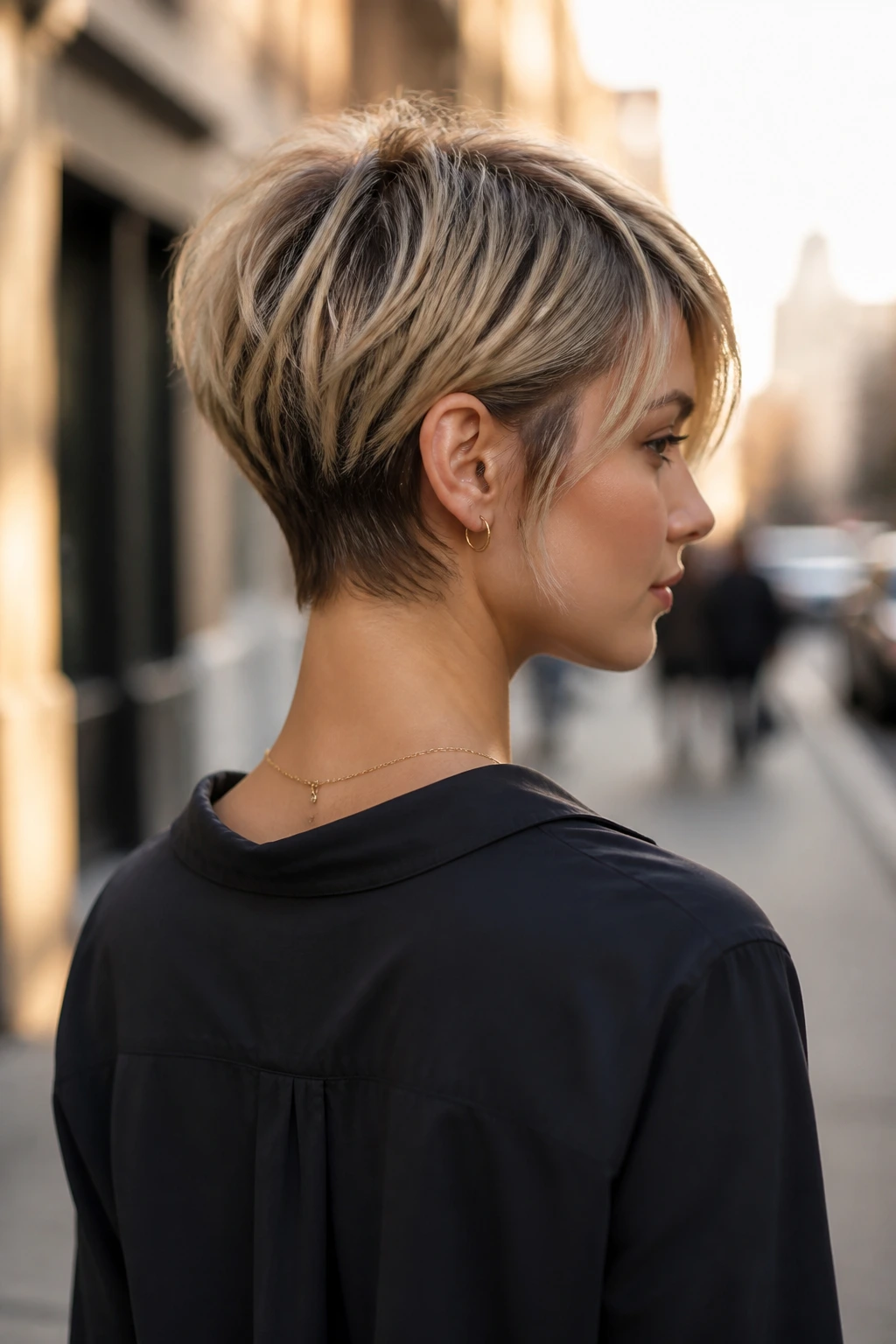
A bixie sits between a bob and a pixie, and I’m partial to it for fine hair because it gives you a little more length without losing shape. The tapered neckline keeps the back neat, while the front can graze the jaw and still feel light. That combination stops the cut from going flat and shapeless.
Compared with a blunt bob, this version feels livelier. Compared with a classic pixie, it gives you more room to tuck hair behind the ear or flip the front over to one side. Fine hair likes that flexibility, but only if the layers stay controlled.
The best bixies keep most of the texture in the top half, not all the way through the ends. If the lower layers get too thin, the cut starts to look stringy. Keep the outline clean, then mess with the top for style.
A small flat brush and a little bend through the front pieces go a long way.
7. Slicked-Back Wet-Look Pixie
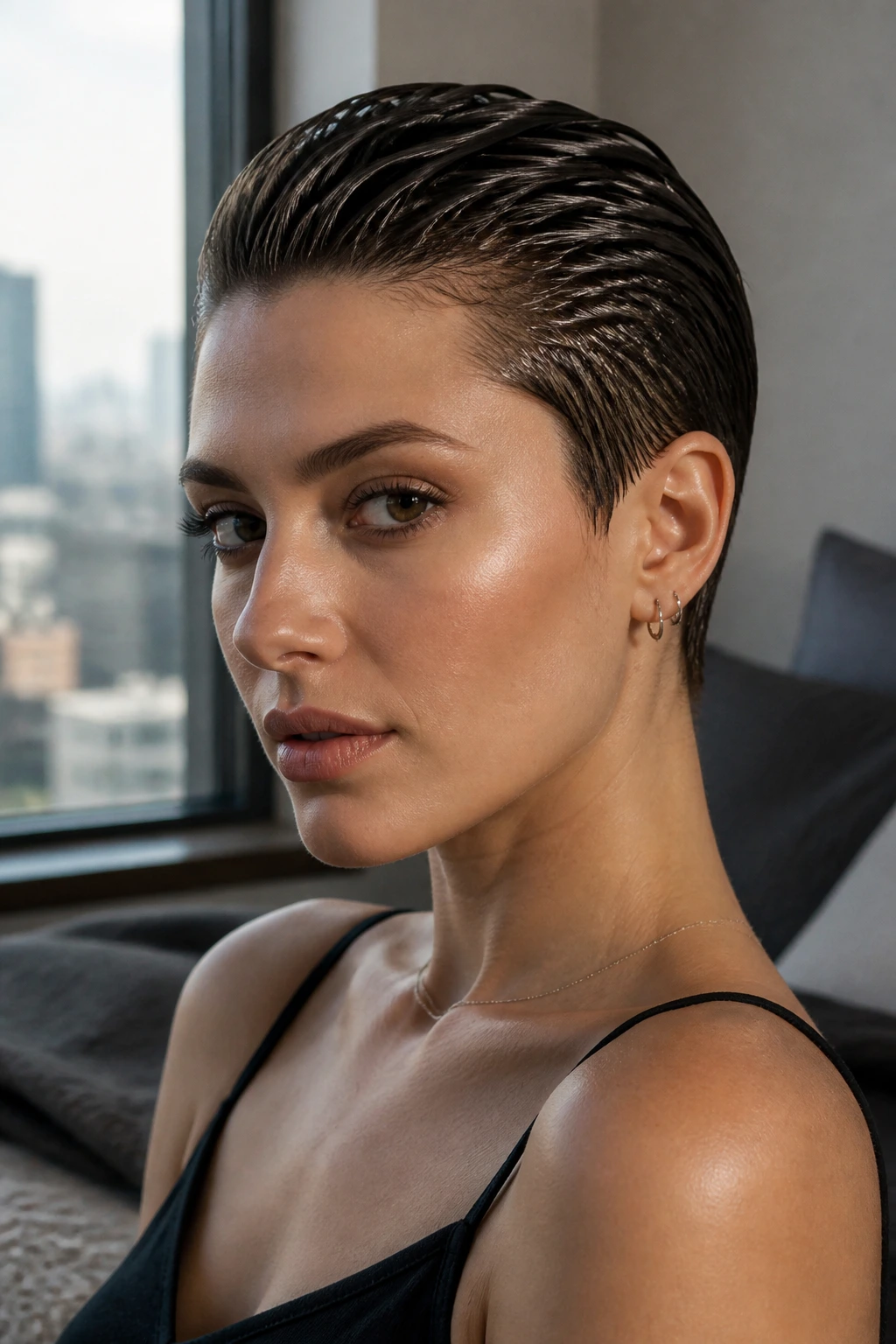
A slicked-back pixie is one of the easiest ways to make fine hair look intentional. Clean lines can be more striking than big, fluffy volume, and the wet look turns thinness into shine. That shine is doing real work here. It hides separation and makes the crop feel deliberate instead of airy.
Start with damp hair and work in a small amount of gel mixed with a light cream. Too much gel gets crunchy fast, and crunchy is not the goal unless you want that very hard-edged finish. Comb everything back with your fingers first, then refine the shape with a wide-tooth comb or a fine comb.
This style shines when the hairline is neat and the nape is trimmed close. It works well for evenings, but it can also be a day look if you keep the product soft. I’d avoid a greasy finish. The point is sleek, not wet-dog shiny.
It’s a strong choice when you want edge with almost no fuss.
8. Razored Pixie with a Long Top
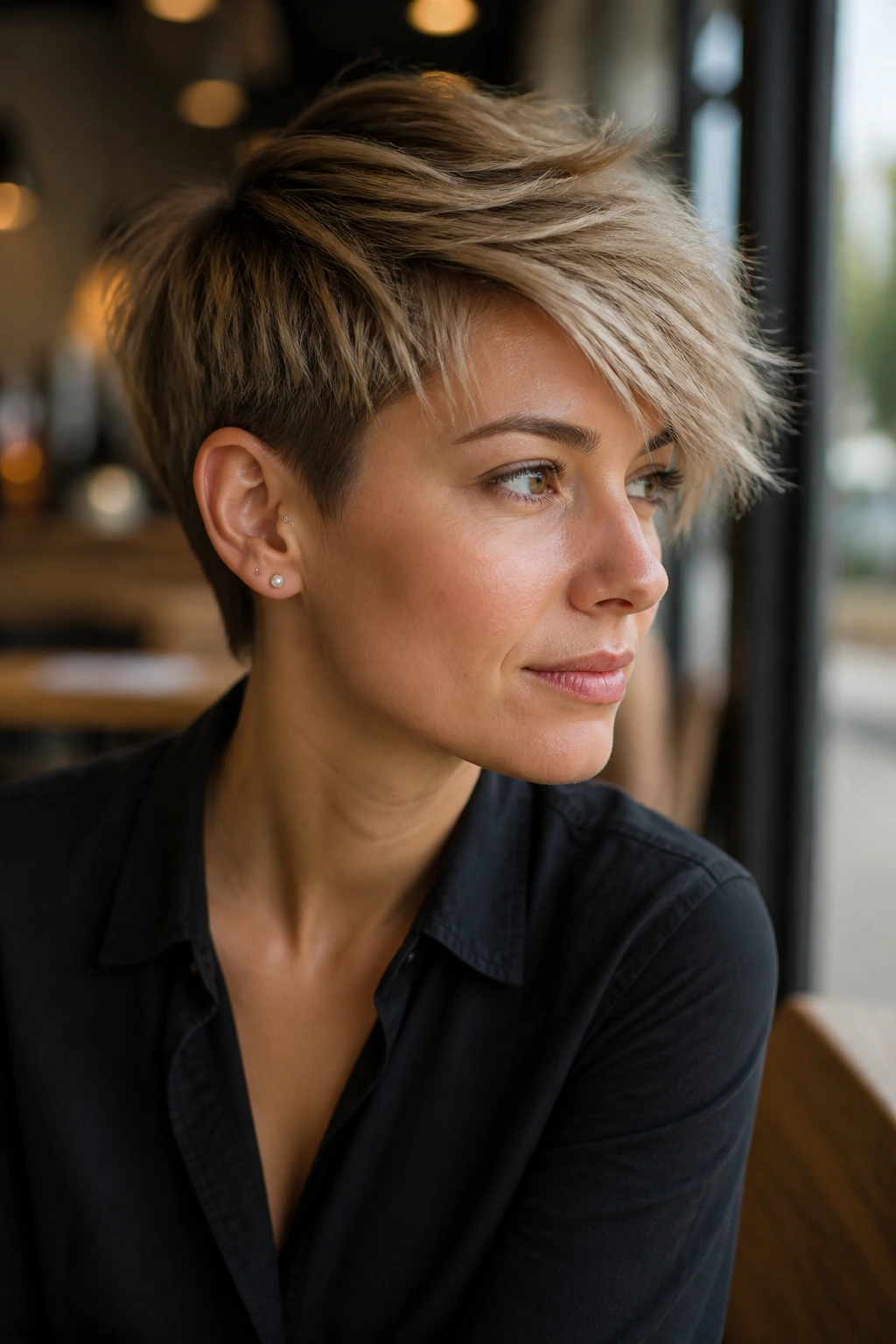
A razor cut can be beautiful on fine hair, but only when it’s used with care. The long top gives you movement, while the razor breaks the ends so the style doesn’t look heavy or blunt. The result is airy, a little sharp, and easy to push in different directions.
What I like most here is the flexibility. You can sweep the top forward, flip it up, or let it fall messy over the forehead. That makes the cut feel less fixed and more lived-in. Fine hair often benefits from that looseness, because rigid styling can make every sparse spot look more obvious.
What to Watch For
Do not let the razor touch every inch of the hair. That’s where trouble starts. Keep the razor work focused on the top third and fringe, and leave the lower shape a bit stronger.
A wax spray or a dry finishing cream is enough for styling. Use your fingers, not a brush, unless you want the shape to look too neat.
9. Baby-Bang Pixie with Sharp Edges
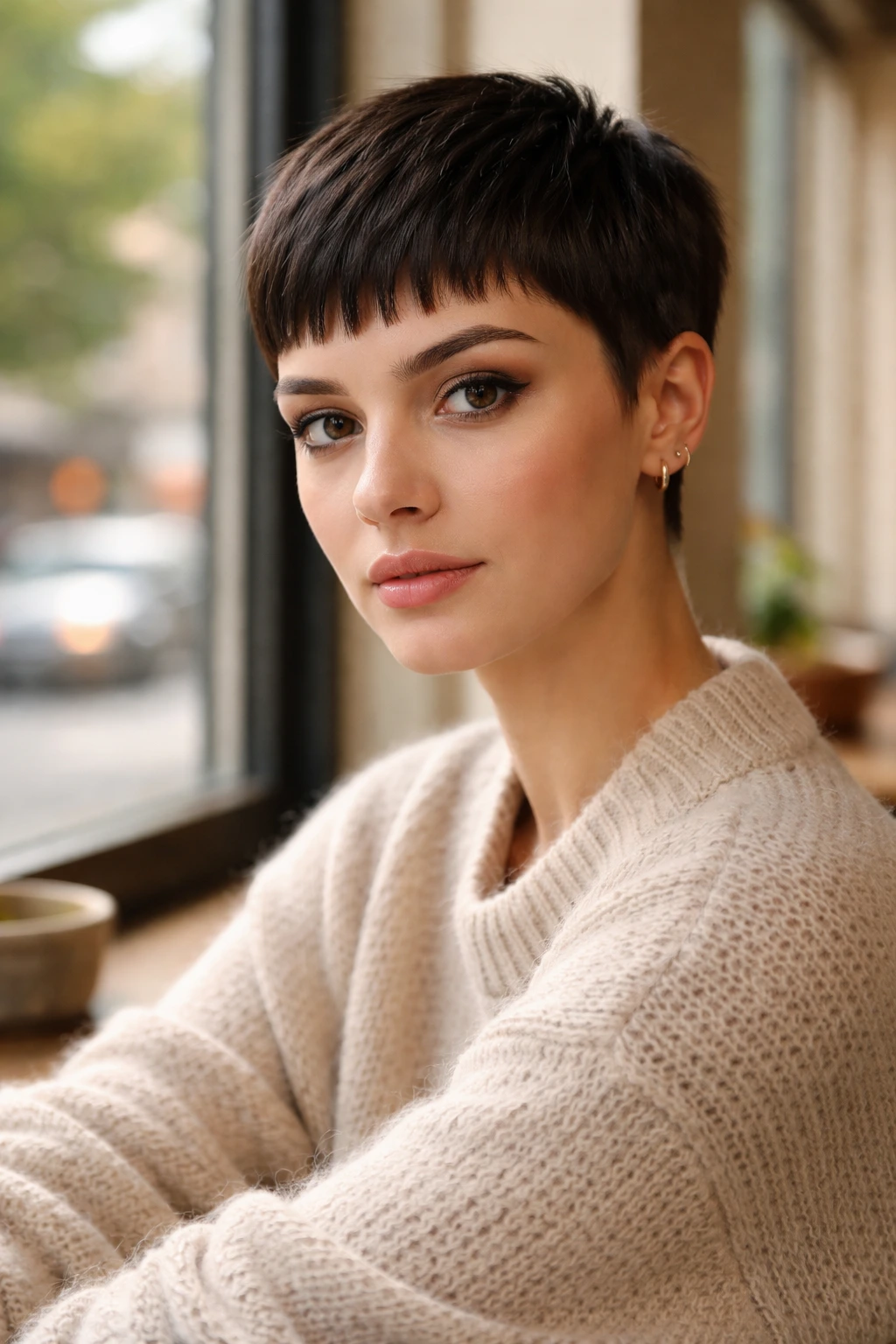
Baby bangs are not subtle. That’s the appeal. They turn the fringe into the main event and make the whole pixie feel sharper, especially when the rest of the cut stays close to the head. On fine hair, this works well because the front edge becomes a strong visual line instead of a wispy afterthought.
The trick is density. Baby bangs need enough hair in the front to sit properly, so the top should not be over-thinned. Keep the nape close and the sides snug, then let the fringe sit just above the brows. If it lands too long, the whole idea loses its punch.
I like this cut on people who wear glasses or bold earrings. It gives the face a frame, which can be useful when the hair is short. If the fringe starts to split, a tiny bit of paste at the root usually fixes it.
This one is tiny in length and big in attitude. That’s the sweet spot.
10. Tapered Pixie with Sideburn Detail
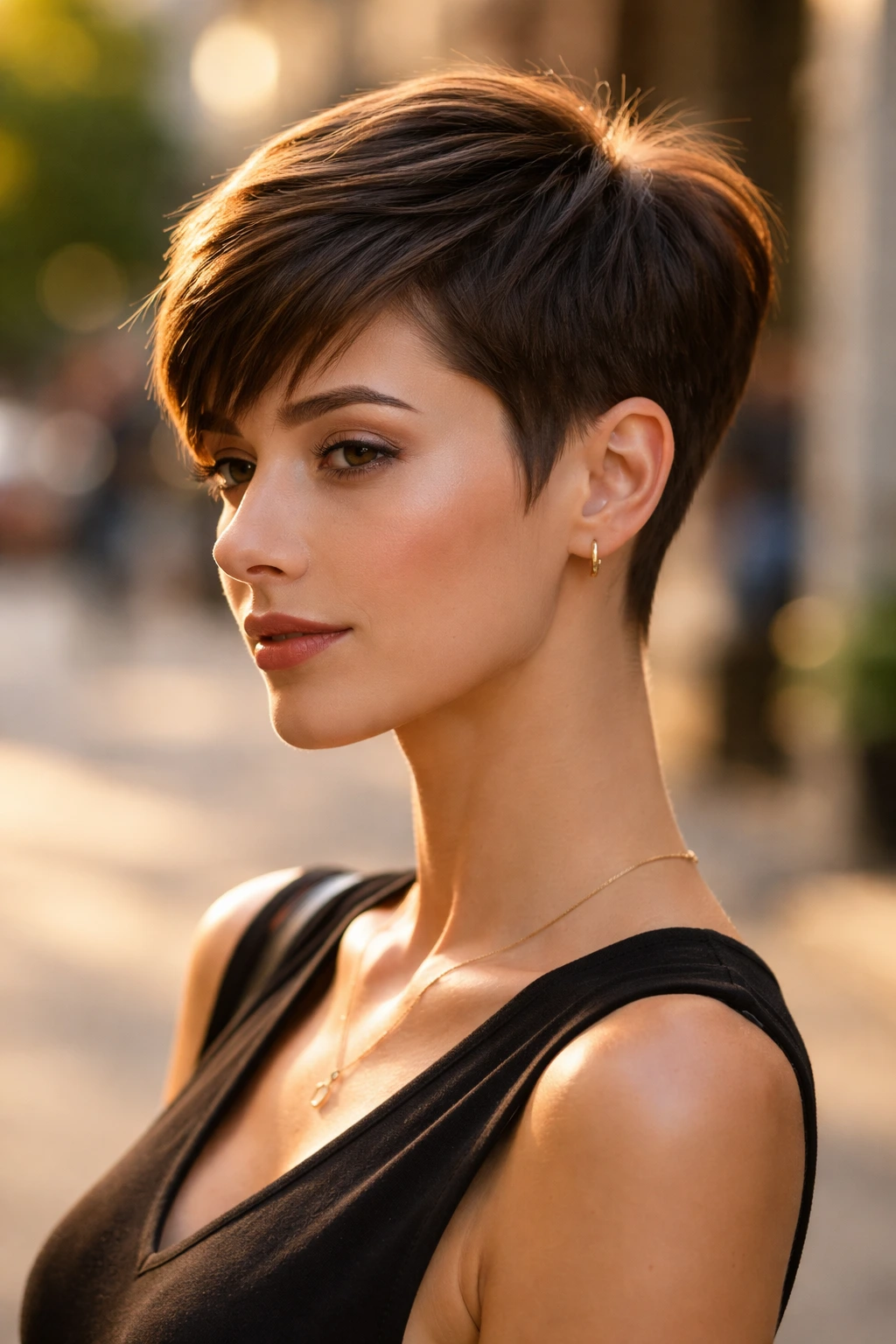
Sideburn detail sounds small, but it changes the whole mood of a pixie. A tapered cut around the temples and nape keeps fine hair lying close, while a little extra length in the sideburn area gives the haircut a sharp, tailored edge. It feels finished.
The clean taper helps the head shape look neat, which matters a lot with fine hair. There’s less bulk to fight, so every line has a job to do. A few longer pieces around the ears can soften the cut just enough, especially if your jawline is narrow and you want a little balance.
This is one of those styles that looks good from the side, not only from the front. That’s why I like it. The silhouette has movement, but the outline stays crisp.
A tiny bit of pomade at the temples is enough. Press it in, then leave it alone.
11. Curly Pixie with Lifted Root Layers
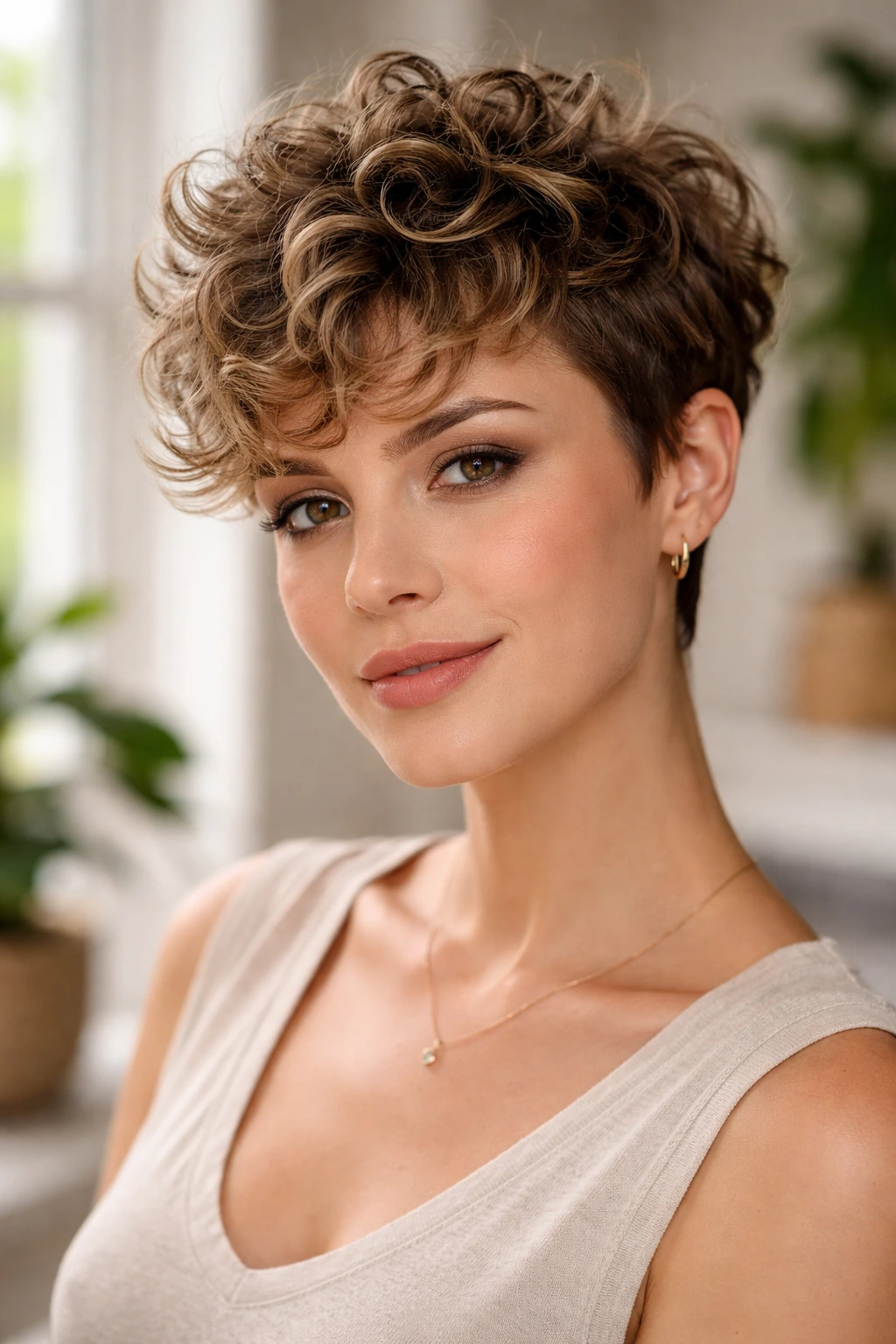
Curly fine hair needs a different kind of pixie. It does not want to be crushed with too much layering, and it definitely does not want heavy creams that drag the curl down. What it wants is shape, lift, and enough room for the curls to sit on top of each other without collapsing.
Ask for root-focused layering rather than all-over thinning. Keep the sides close and let the curls build height through the crown. A diffuser helps, but only if you lift the roots while drying and stop before the hair gets frizzy. The goal is bounce, not puff.
Styling Notes
- Use a light mousse on damp hair.
- Scrunch from the ends upward.
- Diffuse on low heat.
- Stop drying when the curls still feel a little soft.
I like this cut because it keeps the natural texture visible. Fine curls can look fragile when they’re over-shaped. Here, the cut gives the curls room to do their own thing.
12. Shaggy Pixie with Mullet Energy
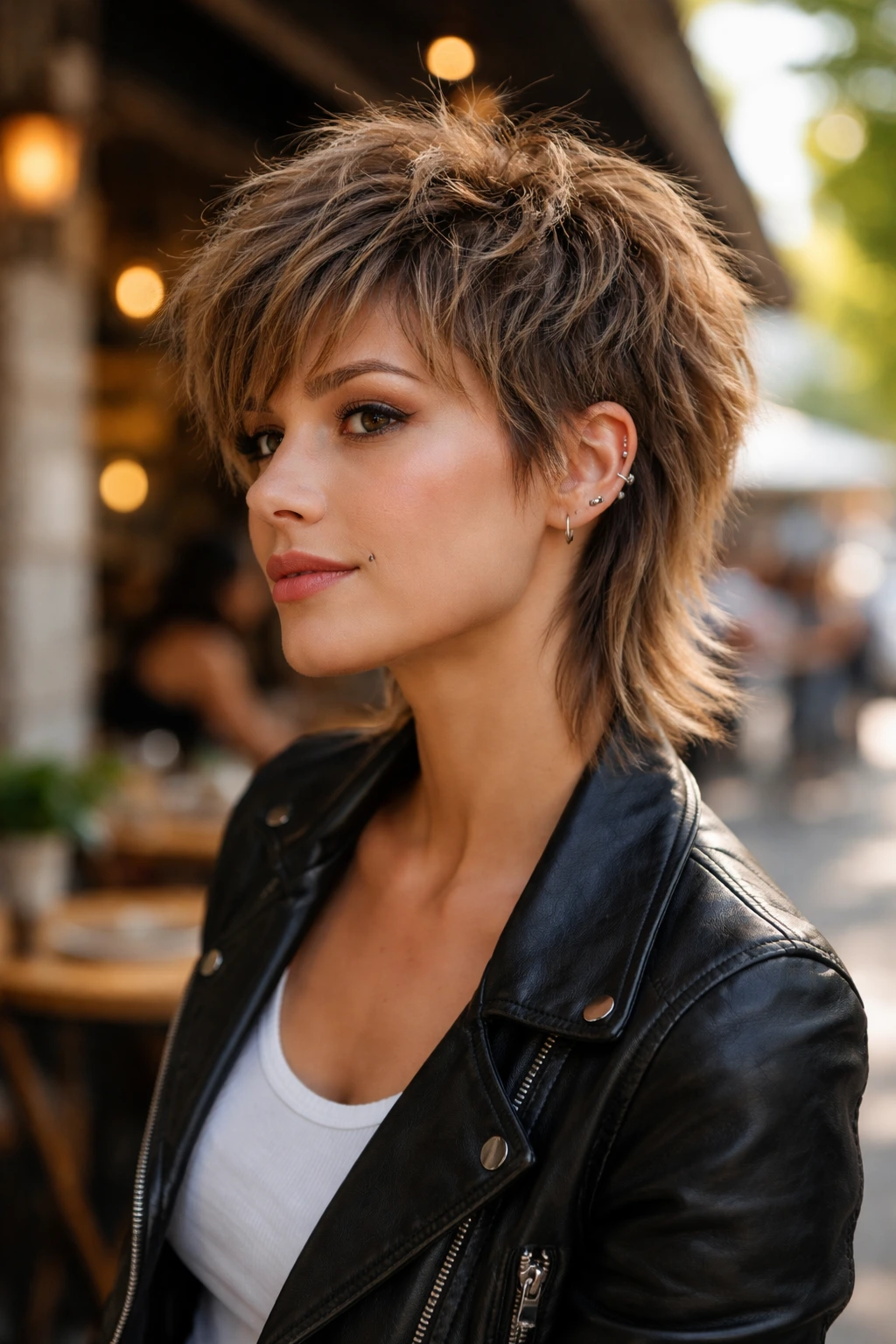
This is the rebellious one. A shaggy pixie with a little mullet energy keeps the front and crown short and choppy, then lets the back stay just long enough to feel a bit unruly. Fine hair can handle this shape if the layers are kept narrow and the outline stays readable.
The trick is not to turn it into a wispy mess. You still need a perimeter. A strong neckline and some weight near the cheekbones keep the cut from disappearing. I like this version when someone wants something rough around the edges but still wearable.
It looks best with matte texture spray and a quick scrunch at the back. If the crown starts to collapse, flip it from side to side while drying. That gives it a little bend and keeps the shape from sitting too flat.
This is not a quiet haircut. That’s the point.
13. Long Fringe Pixie with a Short Back
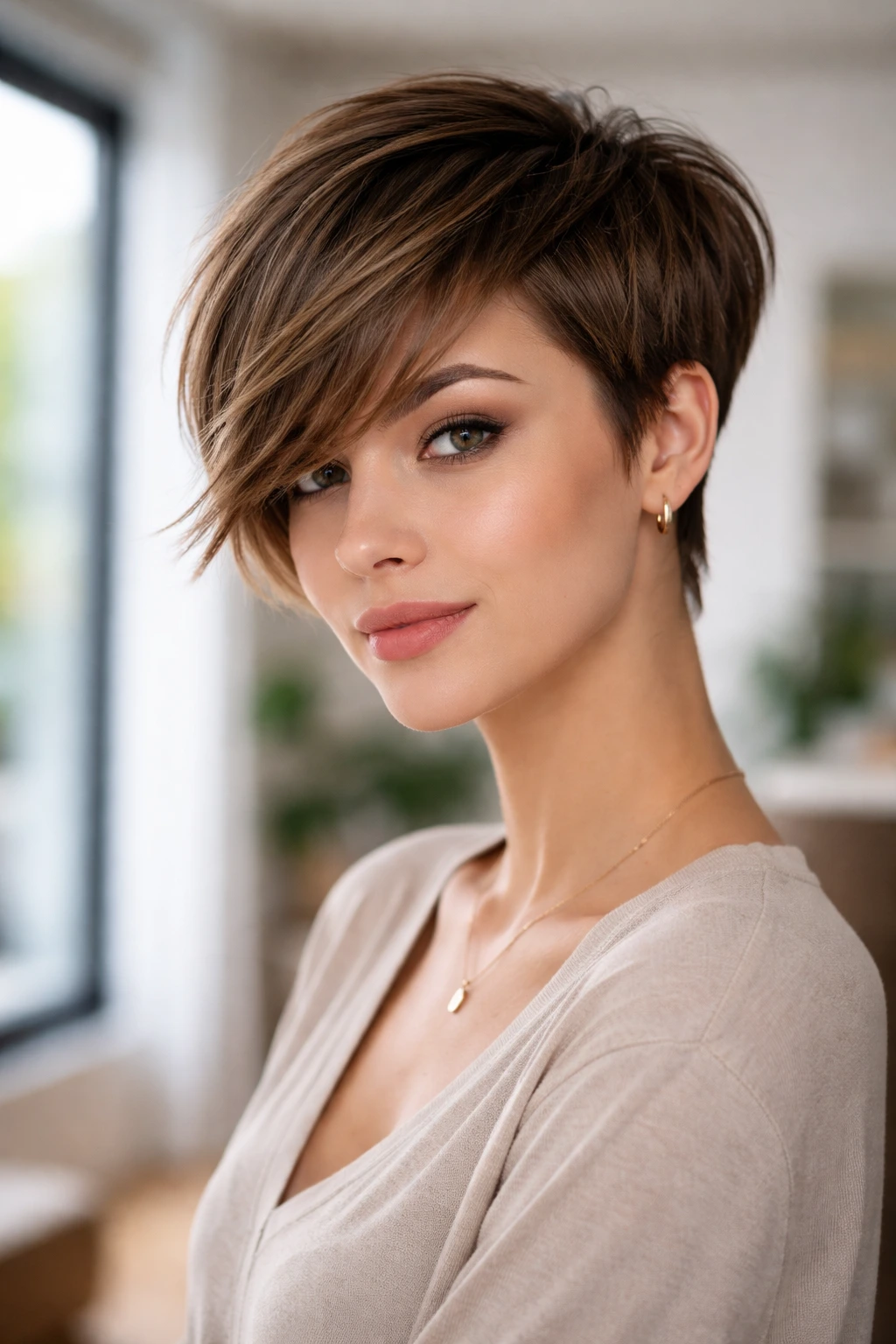
If you want to keep some face-framing length, this cut is a smart move. The long fringe gives you something to play with, while the short back keeps the whole style from sagging. Fine hair often looks better when the weight is concentrated in one area instead of spread evenly everywhere.
The fringe can be swept to one side, pushed forward, or tucked back behind the ear. That flexibility is useful if you get bored fast. The shorter back keeps the neck light and gives the front the room it needs to feel dramatic.
I’d call this a good in-between cut. It has the edge of a pixie, but it still leaves a little softness around the face. If your hairline is uneven, the fringe can hide that easily.
A small round brush and a little root lift spray are usually enough. Nothing fussy.
14. Bowl-Inspired Pixie with a Soft Curve
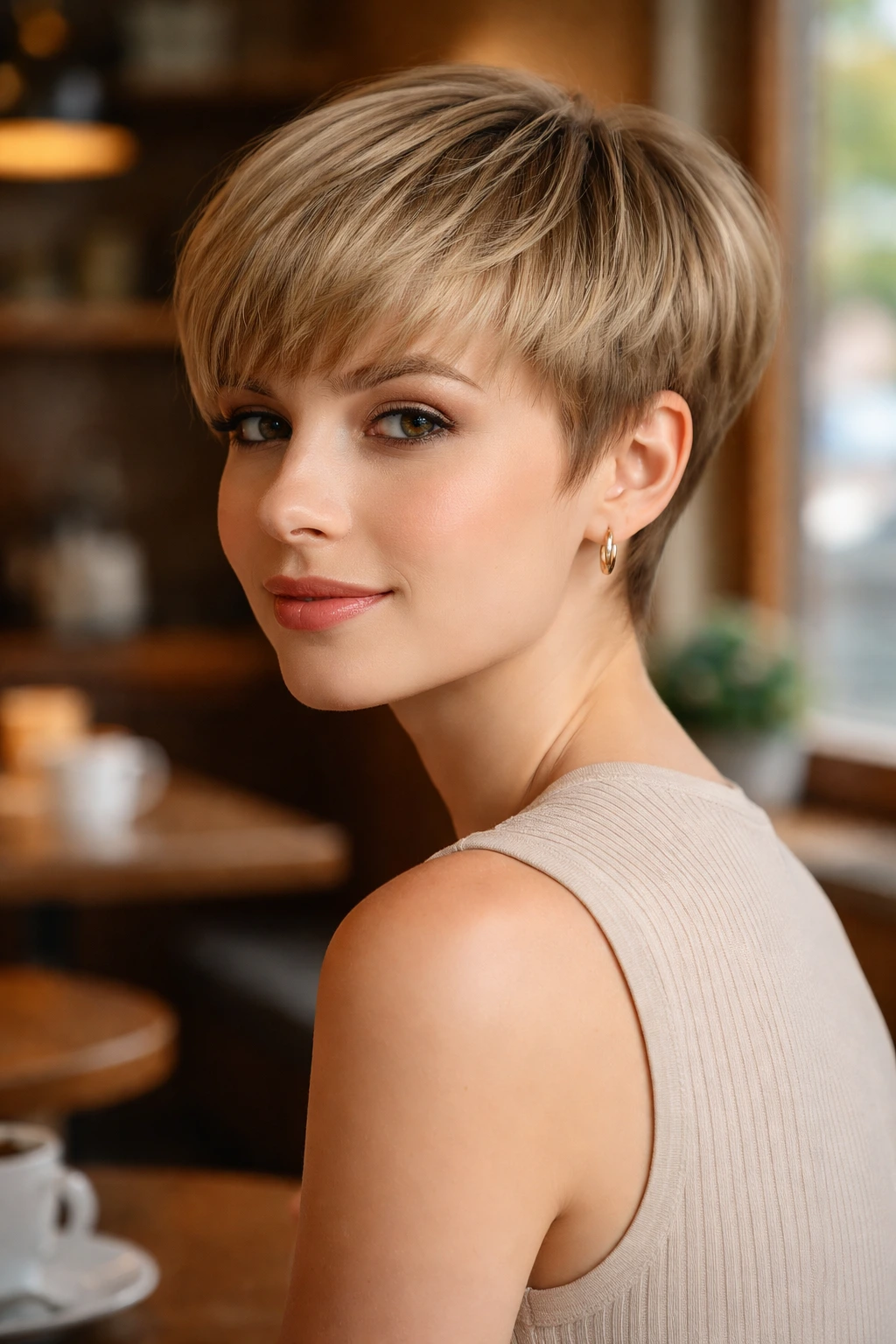
A bowl-inspired pixie can sound severe, but the softened version is one of the chicest shapes for fine hair. The curve around the head creates a denser-looking outline, which is useful when the hair naturally lies thin. The key is to keep the edges broken up so it doesn’t read like a helmet.
This cut works best when the perimeter is precise and the interior is lightly textured. You want the shape to feel architectural, not stiff. Fine hair often looks fuller in this kind of silhouette because the hair is held in a consistent line.
It’s also one of the more editorial-looking options here. If you like sharp fashion energy, this is it. If you prefer something messy and carefree, probably not.
A matte cream or a light paste keeps the finish modern. Shine can make the shape look too rigid, and that’s not where this cut lives.
15. Spiky Crop Pixie with Matte Texture
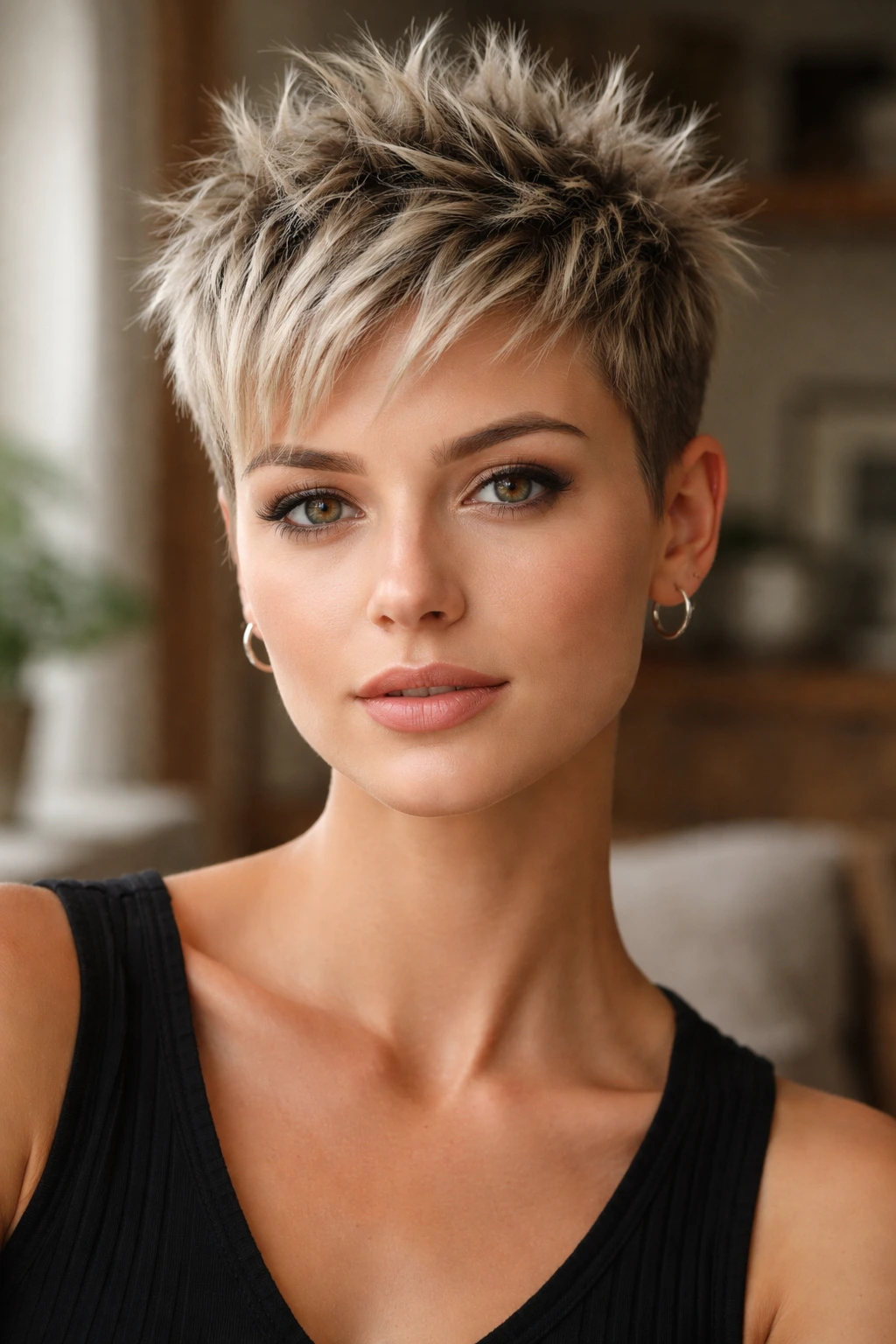
The matte finish is the whole point here. A spiky crop turns fine hair into tiny, separated sections that read as texture instead of flatness. That means the haircut can look fuller than it really is, which is a nice trick when you want edge and don’t want to fight your hair all morning.
Keep the sides short and the top slightly longer so the spikes have somewhere to stand. Then work a small amount of paste through dry hair, not damp hair. Dry hair gives the product grip. Damp hair usually gives you more slip than shape, and slip is not your friend here.
I like this cut for people who want something a little punk but still manageable. You can push the spikes forward, up, or diagonally across the crown. It doesn’t need to be perfect.
A single pea-sized scoop of product is often enough. More than that, and the texture starts to clump.
16. Side-Swept Pixie with a Clean Temple Line
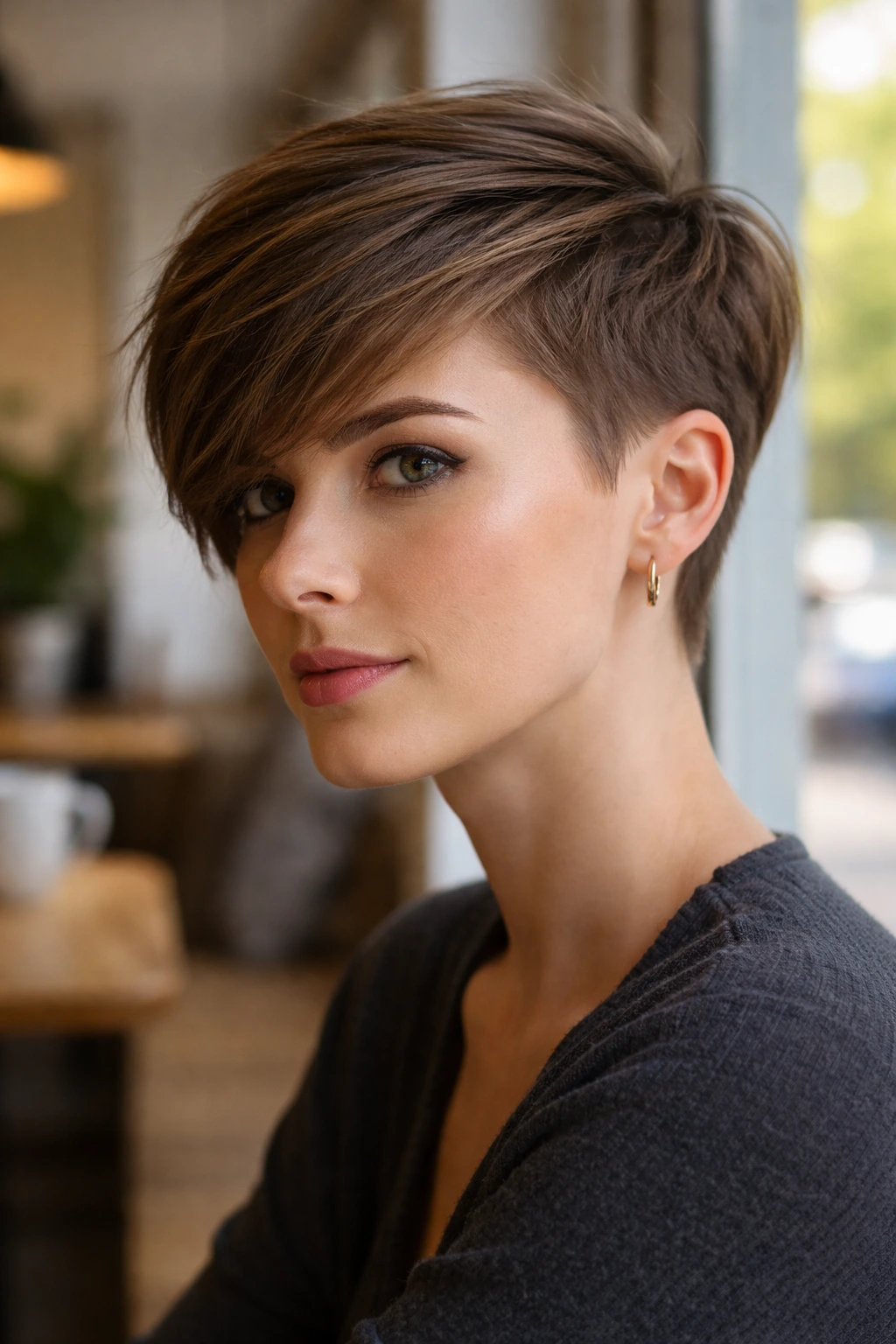
Can a side-swept pixie look edgy? Absolutely. The answer is the temple line. Keep one side smooth and tidy, then sweep the longer top pieces over in a loose arc. That contrast gives the haircut structure, and fine hair usually looks better when there’s a strong shape to hold onto.
This version works especially well if you want to keep a little softness around the face. The sweep covers one eyebrow or skims the cheek, while the temple stays close and sharp. It’s a nice balance, though I hate using that phrase; what I mean is the cut has enough contrast to feel cool and still easy to wear.
Blow-dry the top in the opposite direction first, then sweep it over. That little trick adds a bit of lift near the part. A light cream at the ends keeps the hair from fraying out.
It’s polished, but not boring. That matters.
17. Stacked-Crown Pixie with Close Sides
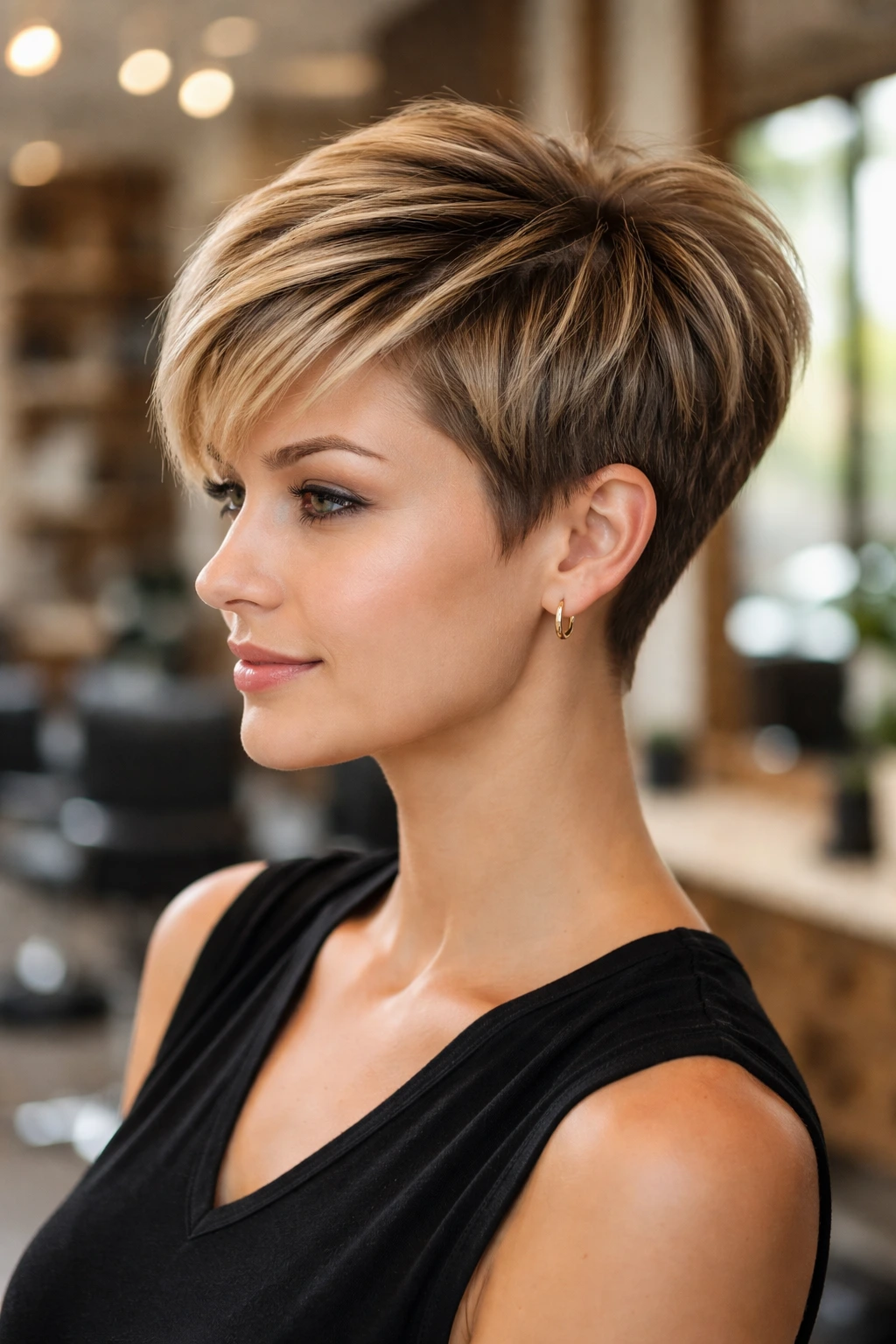
A stacked crown can do a lot for flat fine hair. By keeping more length and layering at the back of the crown, the haircut builds height where the head needs it most. The sides stay close, so the shape does not balloon out and lose control.
This is a more technical cut than it looks. The stacking has to be precise or the back ends up puffy in the wrong place. But when it’s done well, the result is clean and lifted, with a nice curve from the crown down to the nape. Fine hair often looks thicker in this shape because the layers are arranged to support each other.
I’d style it with a root-lifting spray and a quick blow-dry using a vent brush. You do not need big curls or heavy volume. You need shape that stands up on its own.
If your crown lies flat no matter what, this is one of the smarter choices.
18. Soft Mohawk Pixie with Height
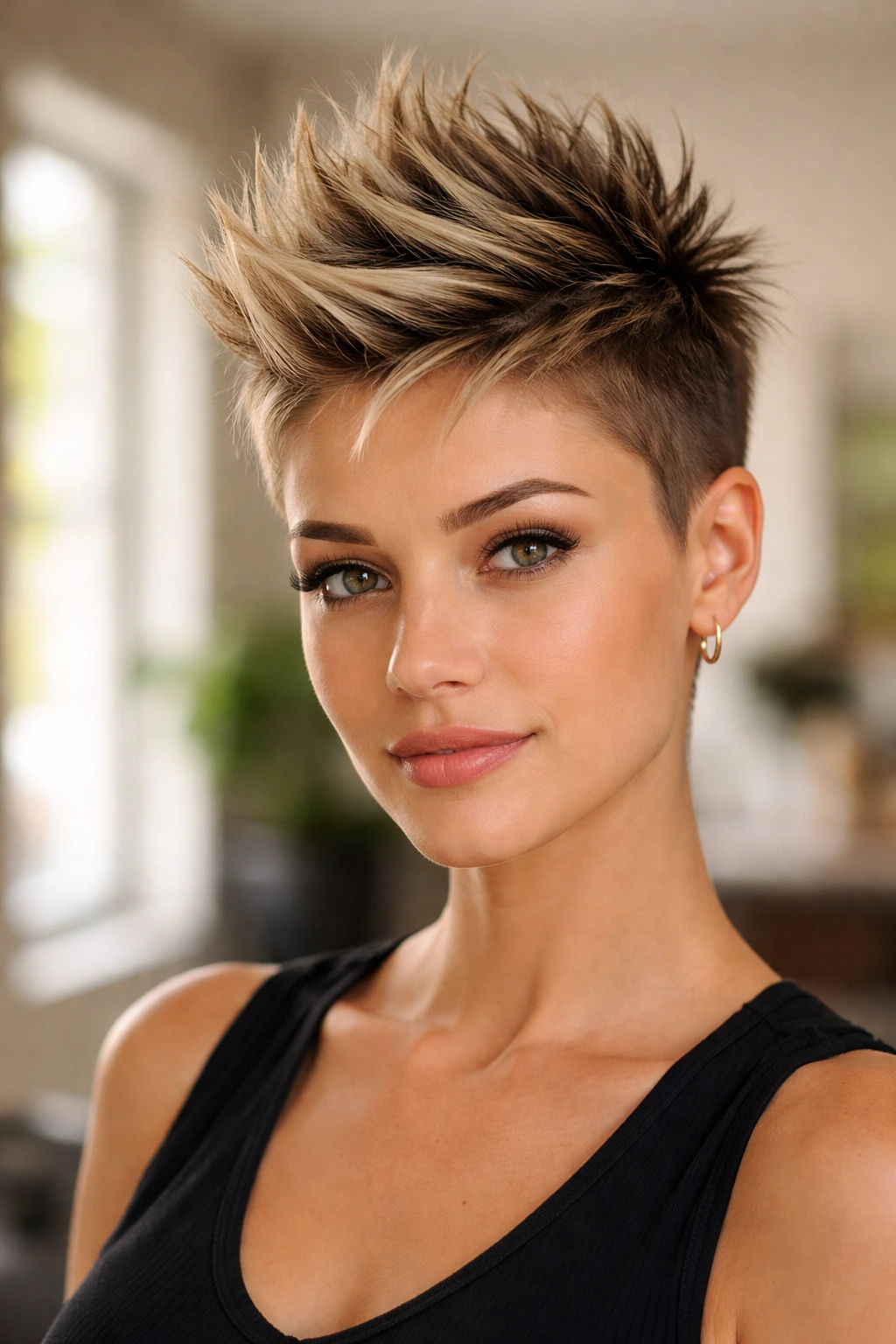
This is the most dramatic silhouette in the bunch. A soft mohawk pixie keeps the sides close and builds a narrow ridge of height from the forehead to the crown. Fine hair can actually pull this off better than some thicker hair types, because the style is not asking every strand to stand up at once.
The narrow center section is the star. It gives the illusion of lift without needing a huge amount of hair. Leave enough length through the top so you can bend it slightly forward or upward, then keep the sides tight enough that the shape stays clear.
Styling Guide
- Spray the roots with a light volumizer.
- Blow-dry the center strip upward.
- Press the sides flat with a little cream.
- Finish with texture spray on the top only.
This cut has attitude. A lot of it. If you like a haircut that says something before you do, this is a strong pick.
19. Pixie with Micro Bangs and a Fade
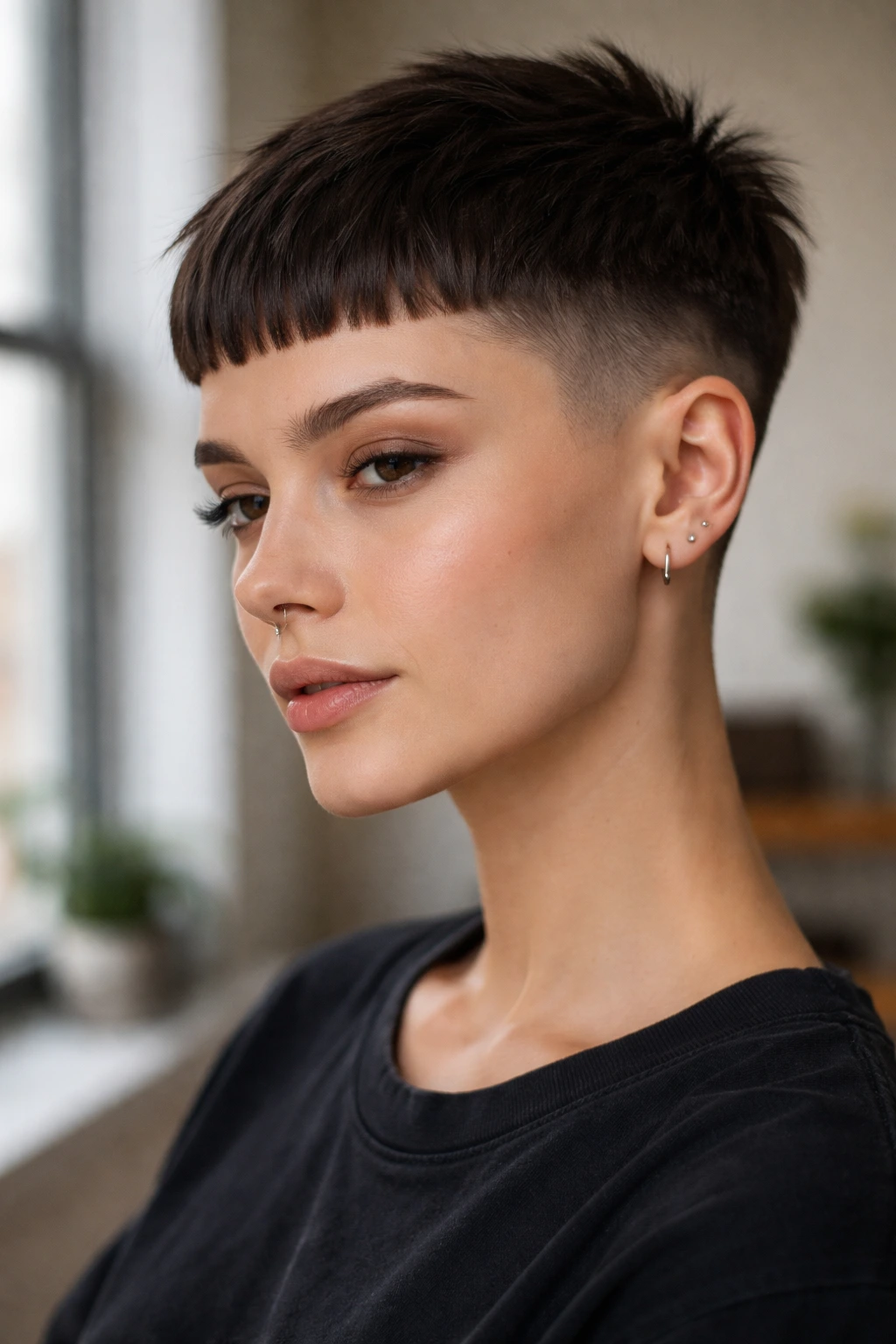
Micro bangs plus a fade make a crisp, almost graphic silhouette. The fade cleans up the sides and back, while the bangs create a tiny front line that feels sharp and deliberate. On fine hair, that contrast works because it gives the haircut a strong outline instead of a soft, fuzzy edge.
The fade does need maintenance. There’s no point pretending otherwise. But if you like a tidy shape and a fresh neckline, the upkeep is part of the appeal. The cut feels current in the plain sense of the word: clean, exact, and slightly bold.
I like this version on straight or lightly wavy hair, especially when the hairline is fairly even. A touch of styling cream keeps the micro fringe from sticking up too much. A little goes far here.
If you want edge with barber-shop precision, this is the one to keep in mind.
20. Grown-Out Pixie with Uneven Ends
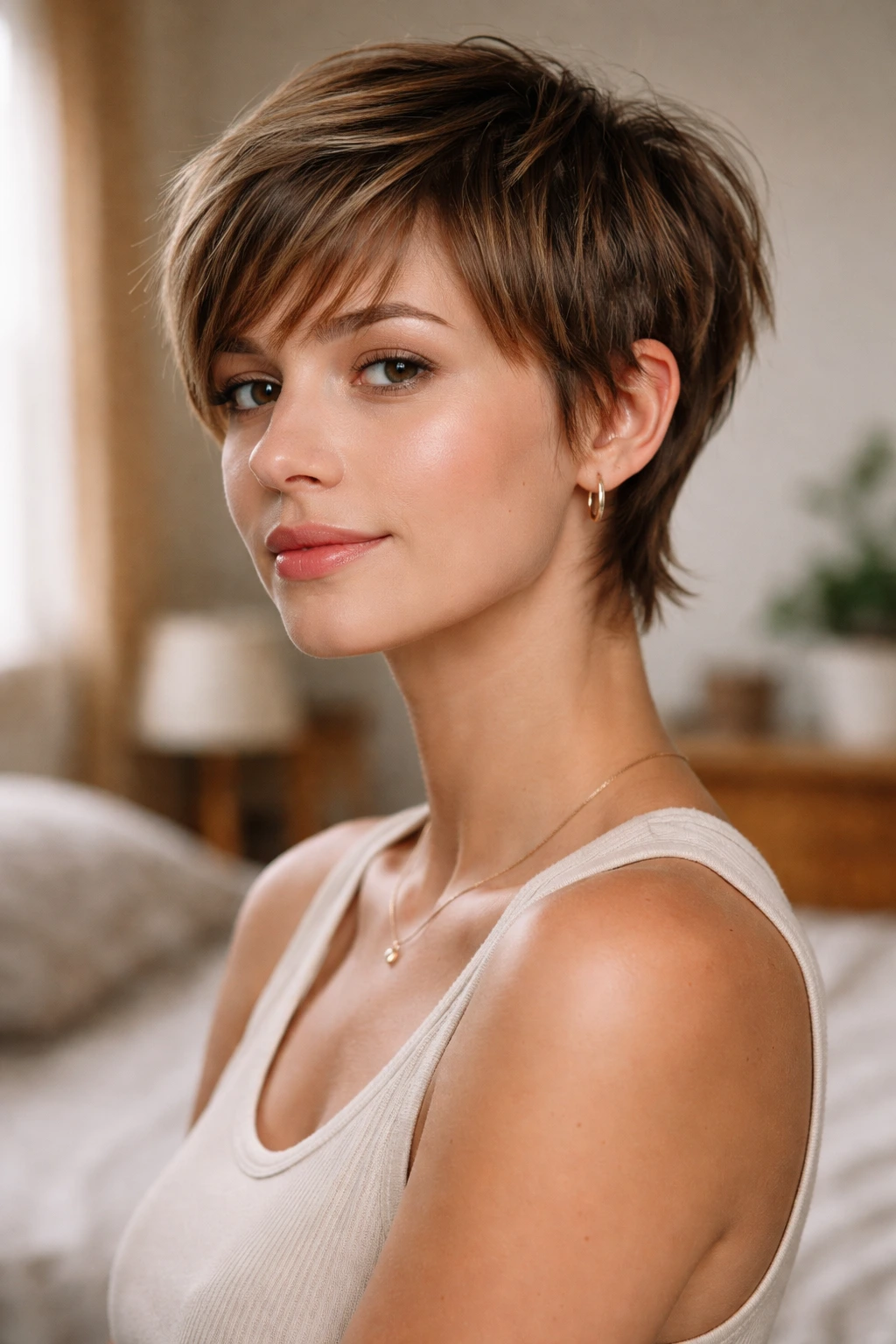
Who says a pixie has to look freshly cut? A grown-out pixie with uneven ends has a nice, lived-in feel that suits fine hair well, because the slightly longer bits around the ears and nape help hide sparse areas. It looks relaxed, but not lazy.
The uneven ends are the whole point. They keep the shape from reading too neat, which can make fine hair feel fragile. Instead, the cut looks a bit windblown and a bit intentional, like you have somewhere interesting to be and no time for a perfect blowout.
This is also one of the easier pixies to live with between salon visits. As it grows, the shape still makes sense. That is worth something. A lot of short cuts lose their charm fast, and this one tends to soften in a good way.
A quick squeeze of texturizing cream is enough. Finger-comb and leave the brush in the drawer.
21. French Pixie with Airy Texture
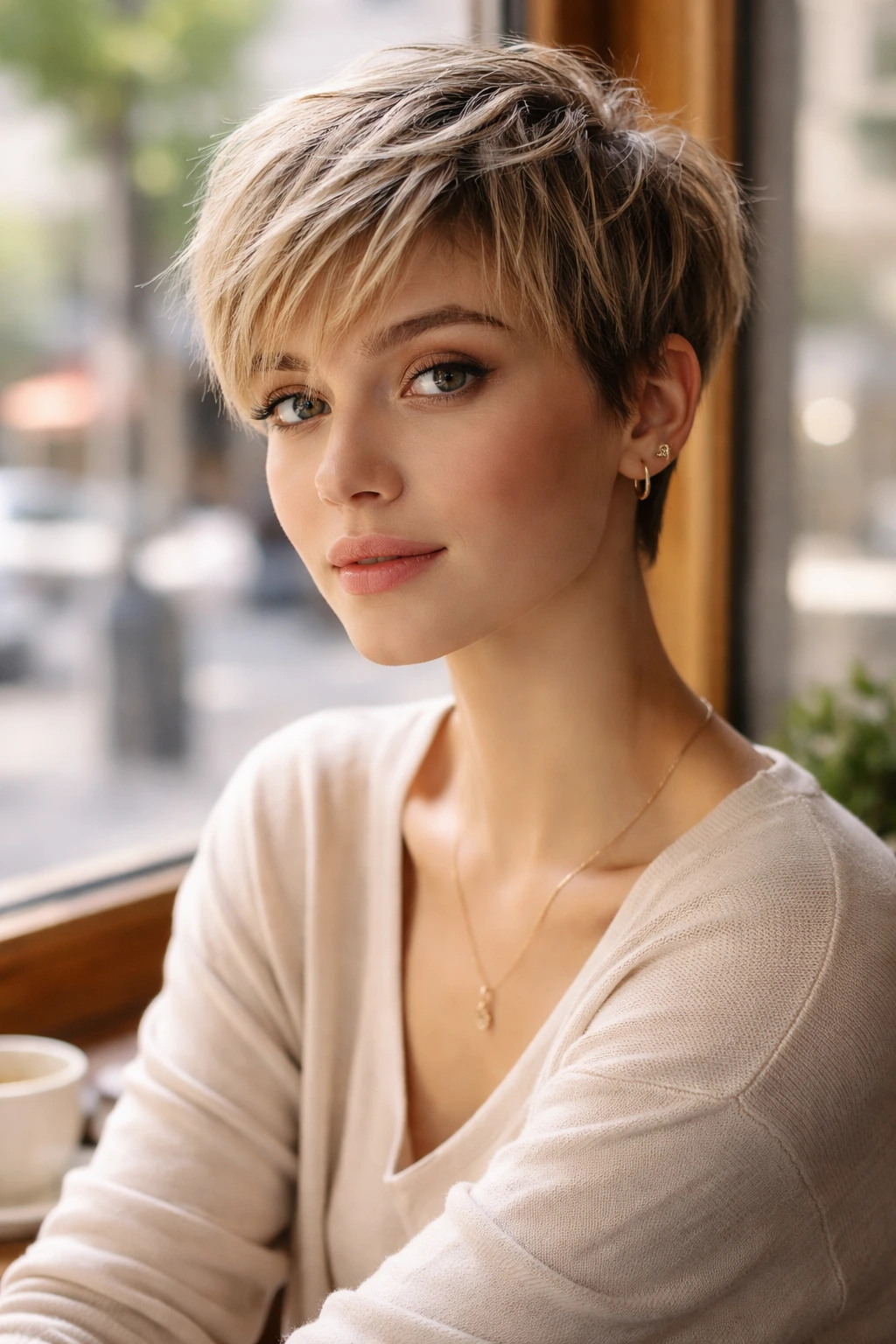
The French pixie has a softer, more editorial mood than some of the harsher cuts here, but it still has edge if the texture is broken up enough. Fine hair suits this shape because the layers stay light and the fringe sits close to the forehead instead of hanging in heavy strips.
What gives it life is the air between the pieces. You want movement, not fluff. A light styling cream or a mist of texturizing spray keeps the top from looking too tidy, while the sides stay trimmed close enough to keep the outline sharp.
I’d call this the chic cousin of the choppier pixie. It is less aggressive, but not dull. If your style leans toward clean jackets, small earrings, and a cut that looks good even when you haven’t fussed with it, this one makes sense.
A little mess at the crown is fine. It’s part of the charm.
22. Sleek Side-Part Pixie with a Glass Finish
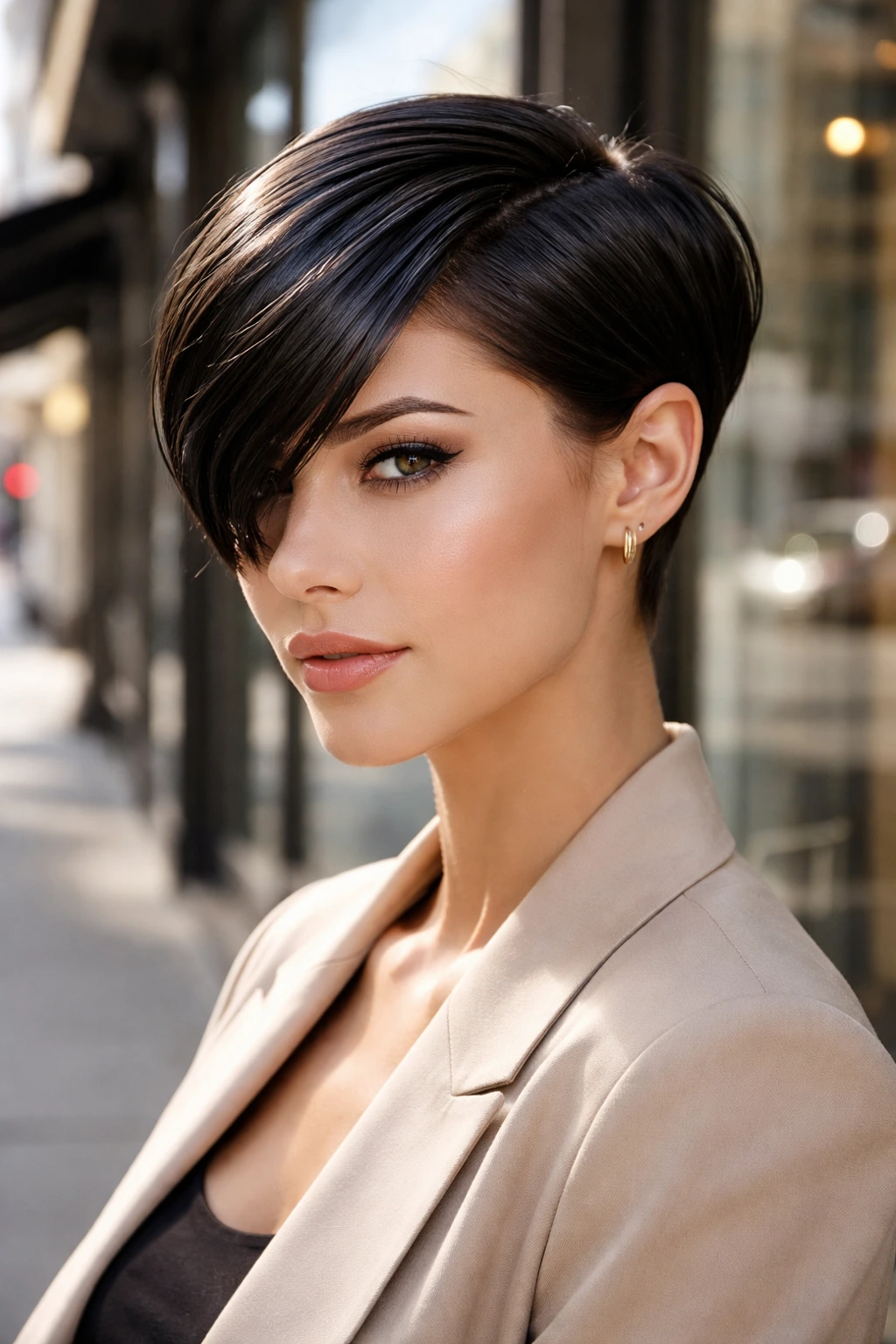
Shine can be edgier than chaos. A sleek side-part pixie with a glassy finish gives fine hair a polished surface, which makes the whole crop look denser and more expensive in the best sense. The part is deep, the outline is sharp, and the finish is smooth enough to catch the light in a clean line.
This cut works especially well on straight fine hair because it does not fight the texture. It uses it. A small amount of serum through the ends and a careful blow-dry with a paddle brush keeps the top flat where it should be and slightly lifted where it matters.
The side part also gives you a strong frame around one eye and the cheekbone. That visual asymmetry keeps the cut from feeling plain. If you want short hair that reads as polished rather than playful, this is a very good lane.
Keep the product light. Too much and the hair goes limp fast.
23. Close-Cropped Pixie with a Bold Line
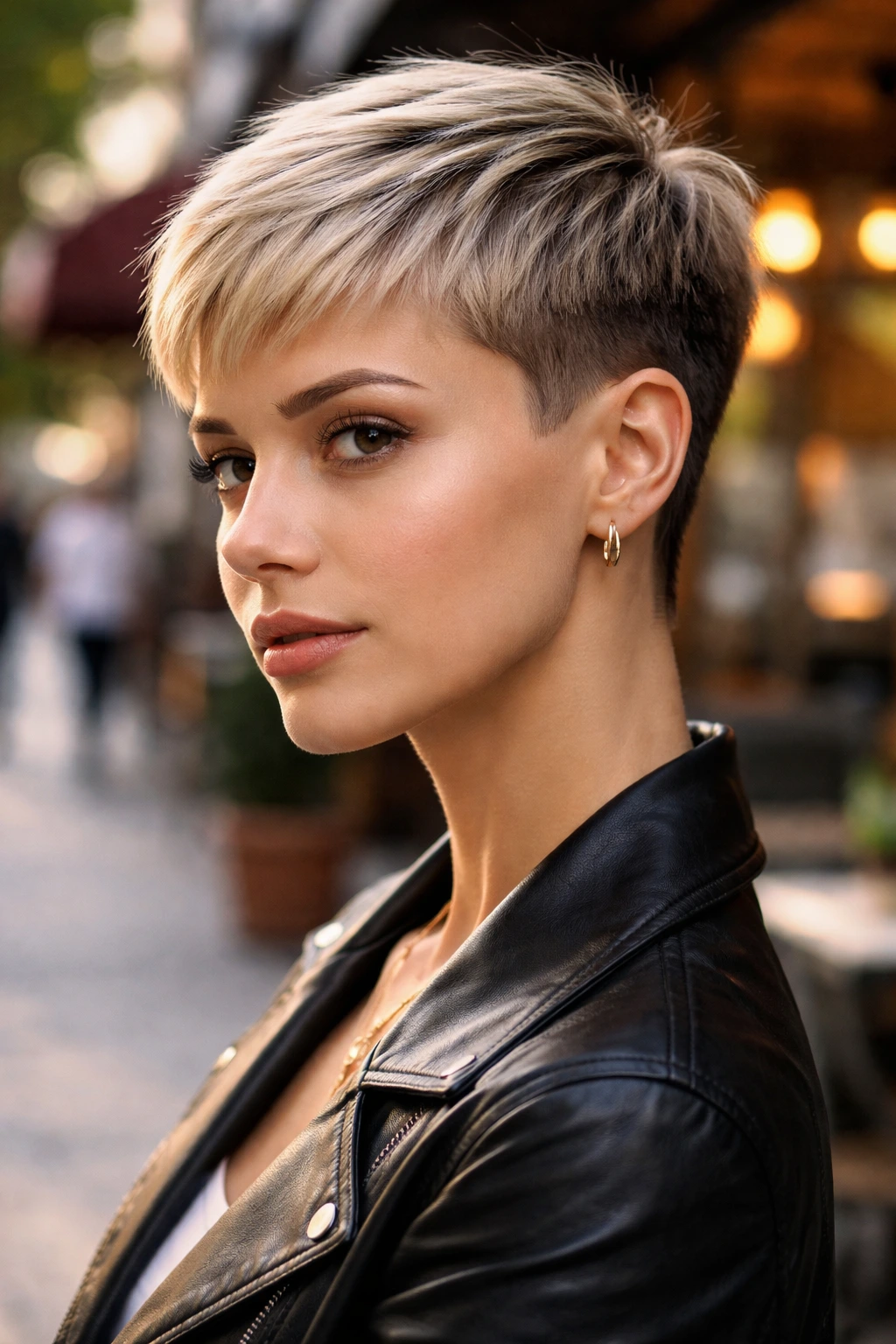
Sometimes the cleanest answer is the strongest one. A close-cropped pixie with a bold line around the ears and nape gives fine hair a crisp shape that looks fuller than a softer crop. There is no wasted length here. Every part of the cut has a job.
This style is especially good if you want low styling time. You wash it, rough-dry it, maybe use a touch of paste, and move on with your day. The strong line keeps it from looking unfinished, which is the danger zone for very short cuts on fine hair.
What to Ask Your Stylist
- A blunt or near-blunt outline.
- Short sides that hug the head.
- A slightly longer top, if you want any styling room.
- Clean edges around the ears and neckline.
I like this one because it feels honest. No fluff, no fake volume, just a sharp crop that knows what it is.
24. Wavy Pixie with Broken-Up Layers
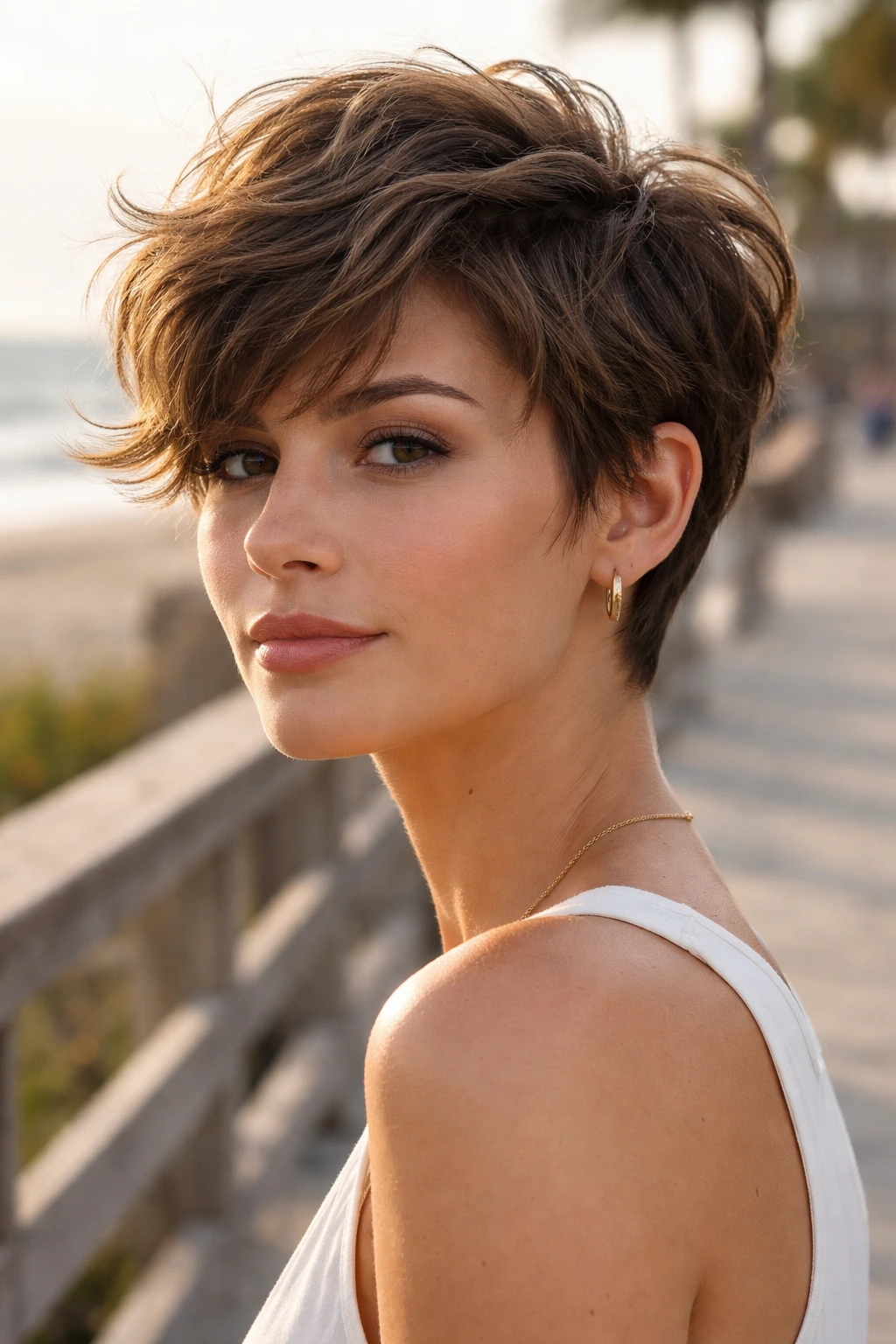
Fine wavy hair can be tricky, because it wants movement and can still collapse if the layers get too light. A broken-up pixie handles that better than a smooth, neat cut. The waves get room to bend, the top gets a little lift, and the texture feels messy in a good way.
The important thing is to keep the layers narrow and the outline controlled. Too many short layers can make the waves puff up. Too few, and the cut sits heavy and awkward. The sweet spot is a shaped top with a clean nape and just enough length through the front to show off the wave.
A sea-salt spray or a light wave cream is enough for styling. Scrunch, air-dry halfway, then finish with your fingers. A comb usually flattens this cut more than it helps.
This one feels effortless in the real-world sense, not the fake-magazine sense. It still needs a good cut. That part never changes.
25. Edgy Pixie with a Nape Taper and Crown Lift
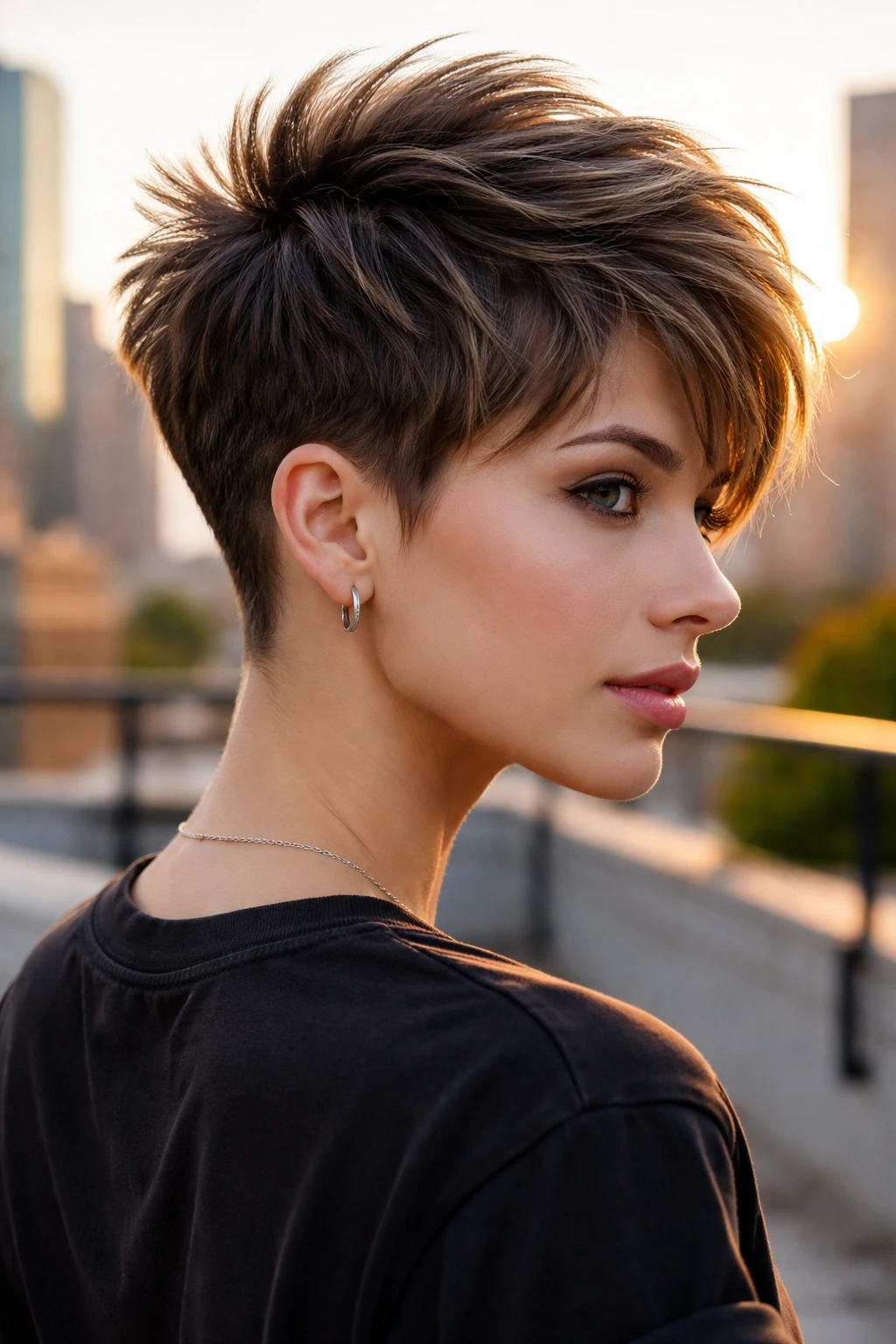
If you want one pixie that lands between punk and polished, this is the shape I keep coming back to. The nape taper gives the back a clean finish, the crown lift gives fine hair some height, and the top can be worn choppy, side-swept, or pushed forward depending on your mood.
That mix matters. Fine hair often looks best when the silhouette does two things at once: it keeps the edges neat and gives the top a little room to move. A taper at the neck stops the cut from looking bulky, while crown lift keeps the shape from falling flat in profile.
I’d ask for enough length on top to bend, not just spike. That gives you more styling options from day to day. A texturizing spray, a matte paste, and a quick blow-dry at the roots are usually enough to keep it alive.
This is the pixie for someone who wants edge that still feels wearable. Sharp, yes. Fussy, no.
