



Round faces do not need to be hidden. They need a cut that keeps moving.
That is exactly why asymmetrical pixie cuts for round faces work so well. A clean side sweep, a longer front corner, a clipped nape, or a shaved panel changes the line of the face in a way blunt, even cuts usually do not. The eye stops going straight across the cheeks and starts moving up, down, and diagonally. That little shift matters more than people think.
A good asymmetrical pixie is not about adding random edge for the sake of it. It is about shape. More height at the crown. Less width at the sides. One side that feels longer, sharper, or more broken up than the other. Done right, the cut makes the face look leaner without turning it harsh, and that balance is the whole point.
There is also room for personality here, which I love. Some versions look sleek and sharp. Others are messy, jagged, or almost punk. If you have ever wanted a short haircut that feels lively instead of safe, this is the lane.
1. Asymmetrical Pixie Cuts for Round Faces With a Long Crown
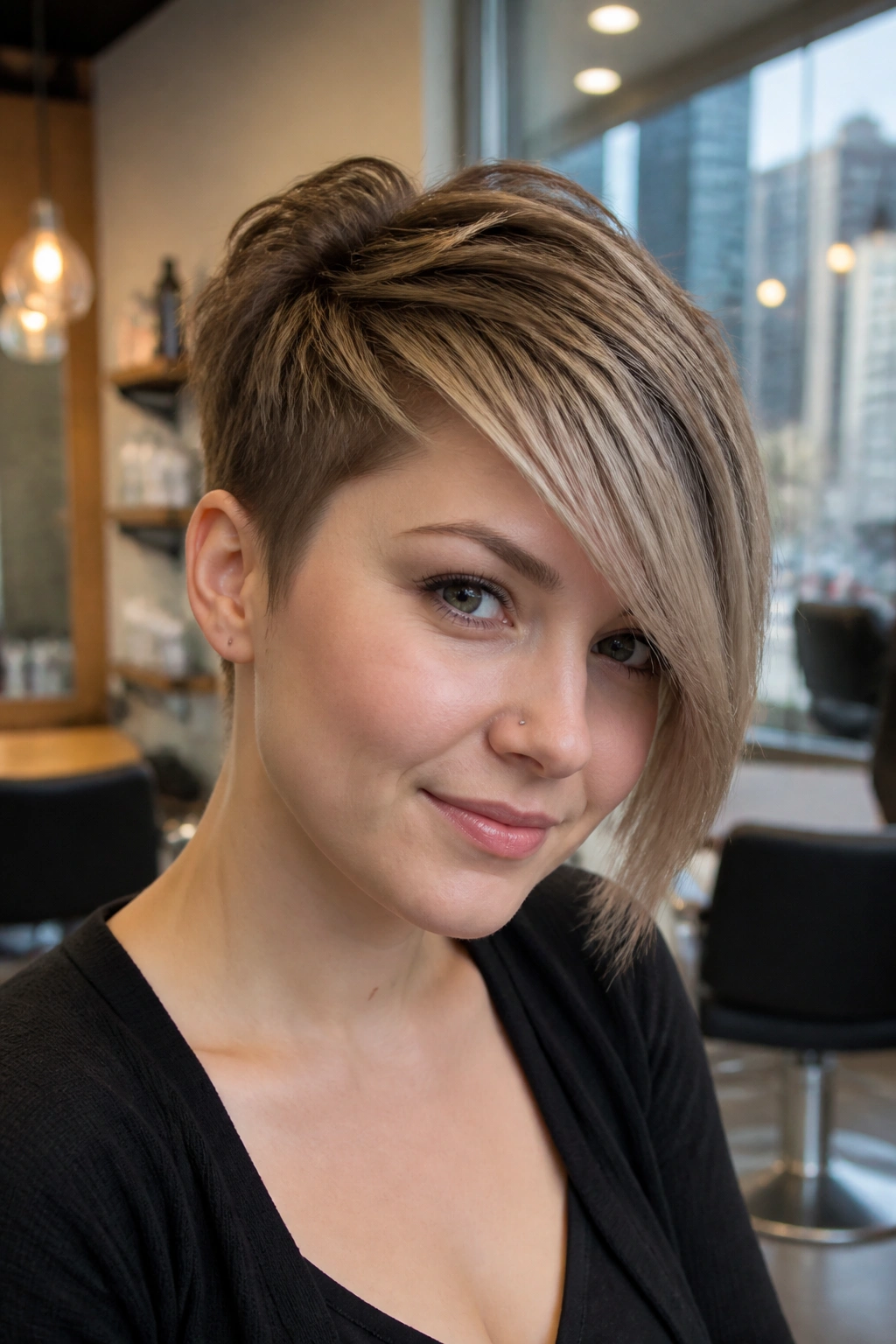
Keep the top long and the nape tight, and the whole face looks taller in a hurry. That simple move does a lot of work on a round face because it gives the eye somewhere to go besides the widest part of the cheeks.
The longest piece should fall forward, not straight out to the side. I like it when it lands somewhere between the eyebrow and the outer cheekbone, because that creates a clean diagonal line. Shorter sides keep the silhouette from puffing out.
Why It Works on a Round Face
- The extra length on top adds vertical shape, which helps the face feel less wide.
- A tight nape stops the back from turning bulky.
- The forward sweep creates movement instead of a flat block of hair.
- A small amount of piecey texture keeps the cut from looking helmet-like.
Best tip: ask for the longest front section to be a little below the brow line, then style it forward and slightly across, not tucked back. That one detail changes the whole mood.
2. Side-Shaved Pixie With a Diagonal Fringe
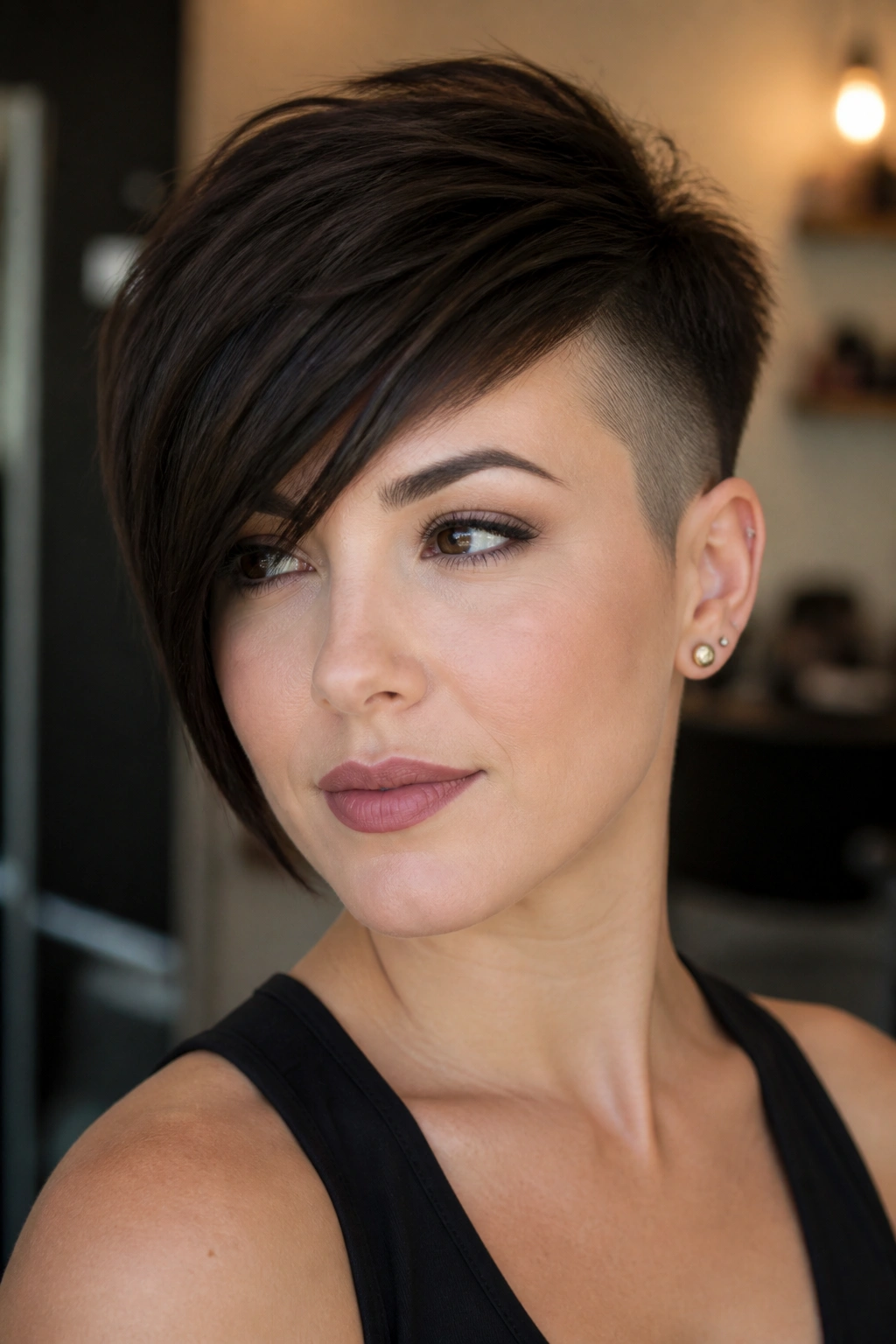
A shaved side is the fastest way to remove width. It sounds blunt because it is blunt, and that is why it works so well on round faces that can handle a bit of bite.
The long fringe should fall on a strong diagonal, ideally starting near the part and slashing toward the opposite cheek. That line gives the haircut a sense of direction. Without it, the cut can look cute. With it, the cut looks deliberate.
You do need to keep the shaved section tidy. A clipper guard around #2 or #3 usually leaves enough shadow to feel edgy without turning severe, and most people need a clean-up every 2 to 4 weeks if they want the line to stay crisp. If you hate salon maintenance, this is not the easiest choice.
Still, when it works, it really works. The contrast between close-cropped and longer pieces makes the face feel slimmer, and the fringe keeps everything from looking too hard. Use a matte paste on the longer side, then pinch the ends instead of brushing them flat.
3. Feathered Side-Part Pixie That Stays Soft
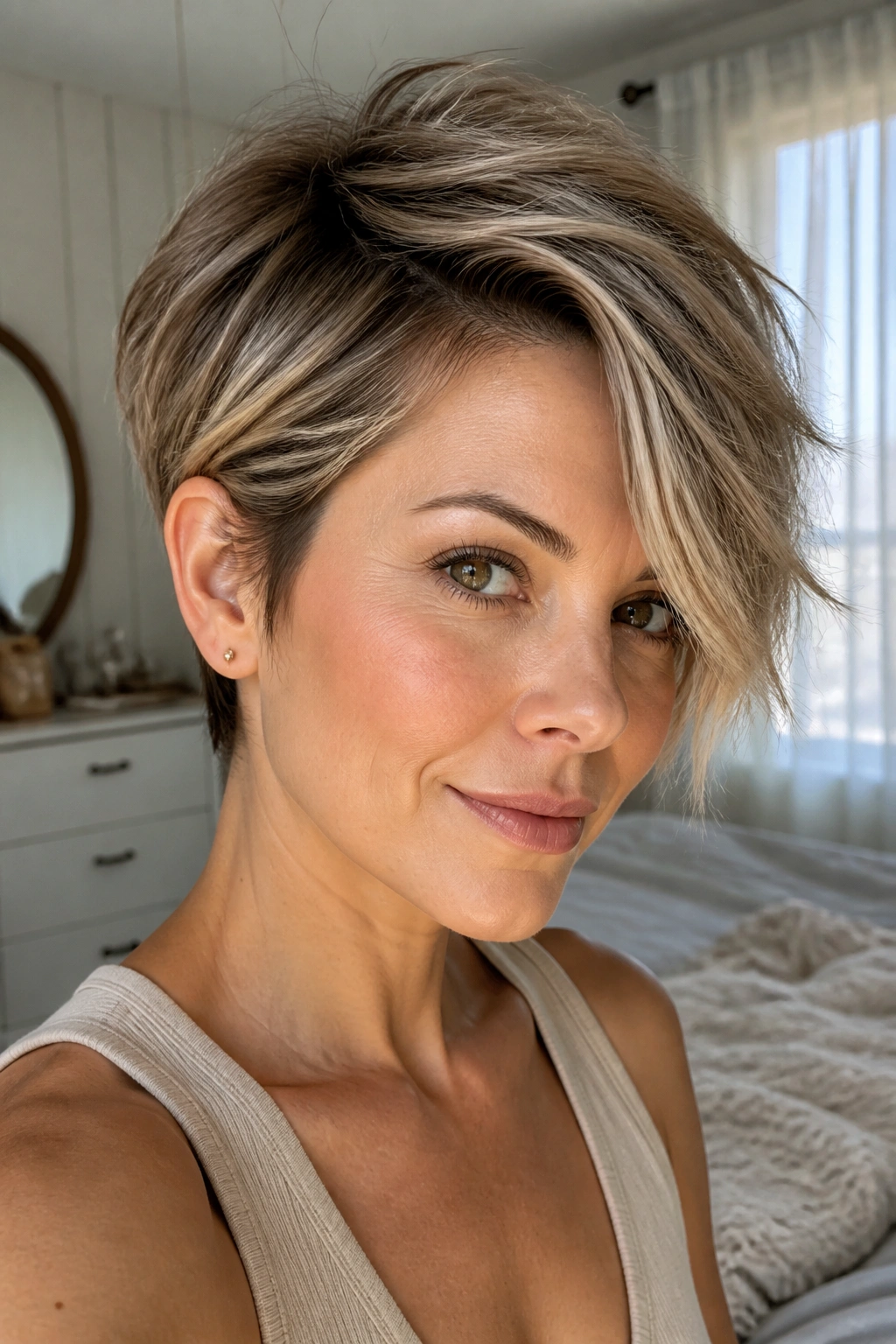
Can a pixie feel light and still look sharp? Yes. It just needs a deep side part and layers that are feathered, not smoothed into a single bland shape.
This version is especially good if your hair is fine or medium and tends to lie flat around the temples. The feathering gives lift without piling on bulk, which matters on a round face because too much side volume can make the face look broader than it is. The part does half the work, honestly. It pulls the eye off-center and keeps the cut from sitting square.
How to Style It
Use a small amount of mousse at the roots, then rough-dry the hair with your fingers until it is about 80 percent dry. After that, flip the heavier side forward and tuck the shorter side closer to the head. A dab of lightweight wax on the ends is enough.
Watch this: if the layers are too wispy at the temples, the cut can lose shape fast. You want feathering, not frizz.
4. Pixie Bob Hybrid With a Crooked Part
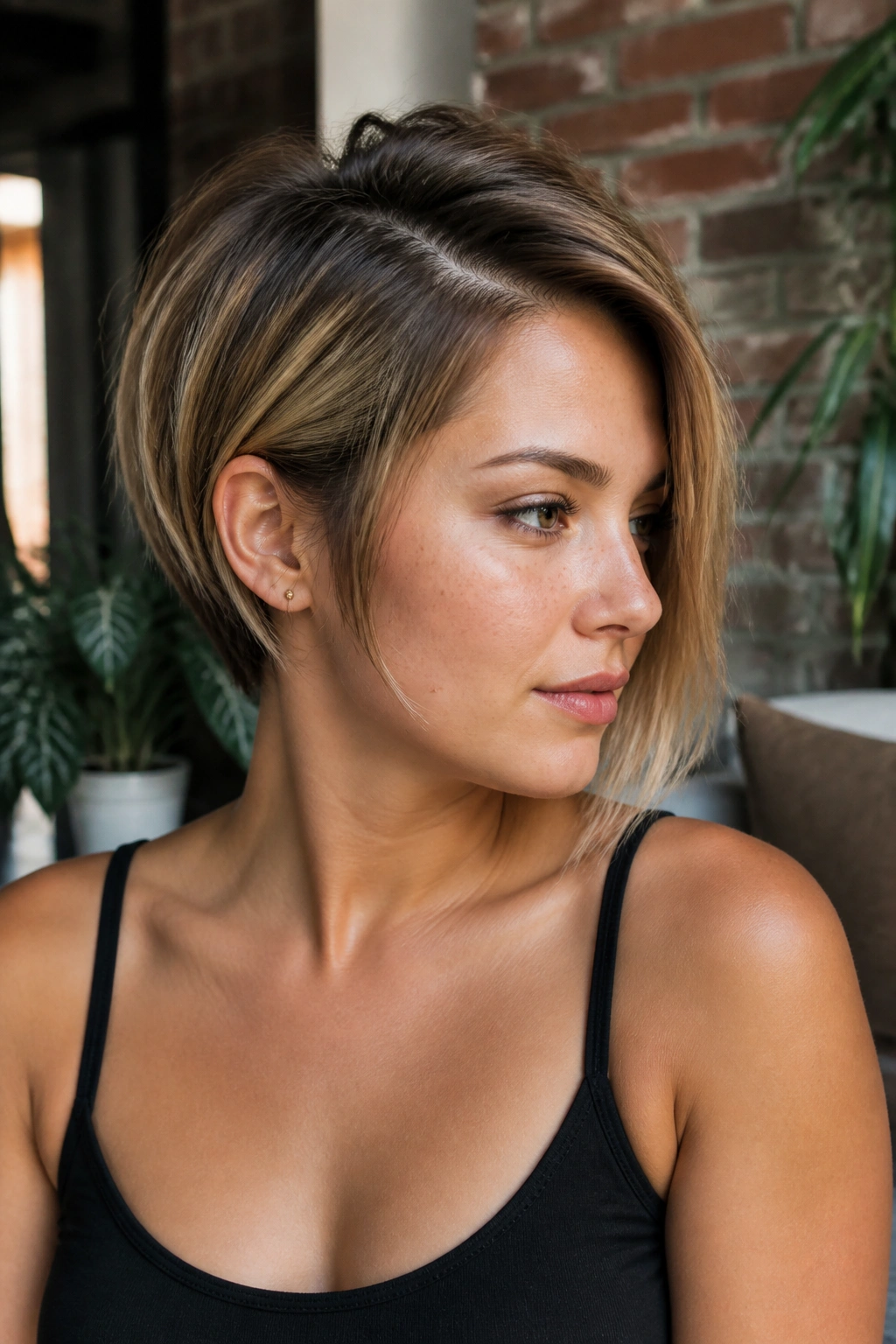
Picture this: you are growing out a short cut, but you still want the haircut to look intentional. A pixie bob is the sweet spot.
It keeps the top and crown short enough to read as a pixie, then lets the front and sides drift just a little longer so the shape feels less compact. On a round face, that extra drop near the jaw helps. It gives the face a longer frame instead of a boxy one.
- Keep the longest front pieces just under the cheekbone if your hair is straight.
- Let the shorter side stop closer to the ear so the asymmetry is obvious.
- Ask for soft stacking in the back, not a bulky wedge.
- Use a light blow-dry cream if your hair flips out at the ends.
I like this cut for people who want edge but still need something wearable with a jacket, a blazer, or a plain white tee. It can look cool in a very quiet way. And that is often the smarter move.
5. Micro-Fringe Pixie With Broken Ends
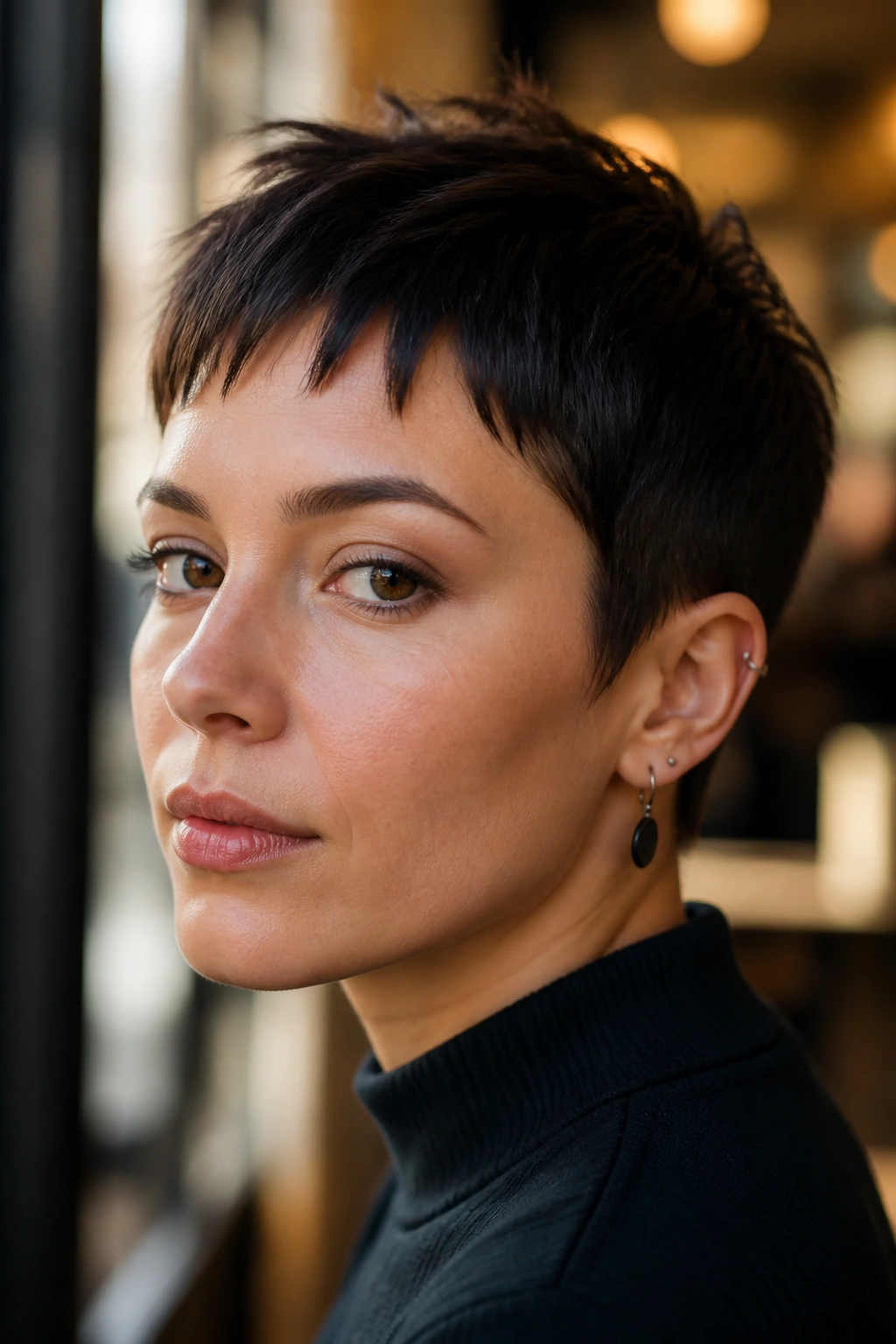
A micro-fringe can be brutal on the wrong face shape and weirdly perfect on the right one. For a round face, the trick is to keep it short, jagged, and disconnected from the rest of the cut.
If the fringe is too thick, it drags the eye sideways. If it is too blunt, it can make the forehead look boxed in. The version that works here has tiny, uneven ends and enough space between the bangs and the brow to keep things airy. That little gap matters.
The rest of the cut should stay close at the sides and slightly lifted at the crown. That keeps the face from getting swamped by fringe. I also prefer a micro-fringe on hair that has a little natural bend, because pin-straight hair can make it look severe unless you soften it with texture paste.
This is not the haircut for someone who wants “cute.” It is for someone who likes a little attitude and does not mind a strong first impression. Short. Sharp. Done.
6. Tapered Pixie With Long Sideburns
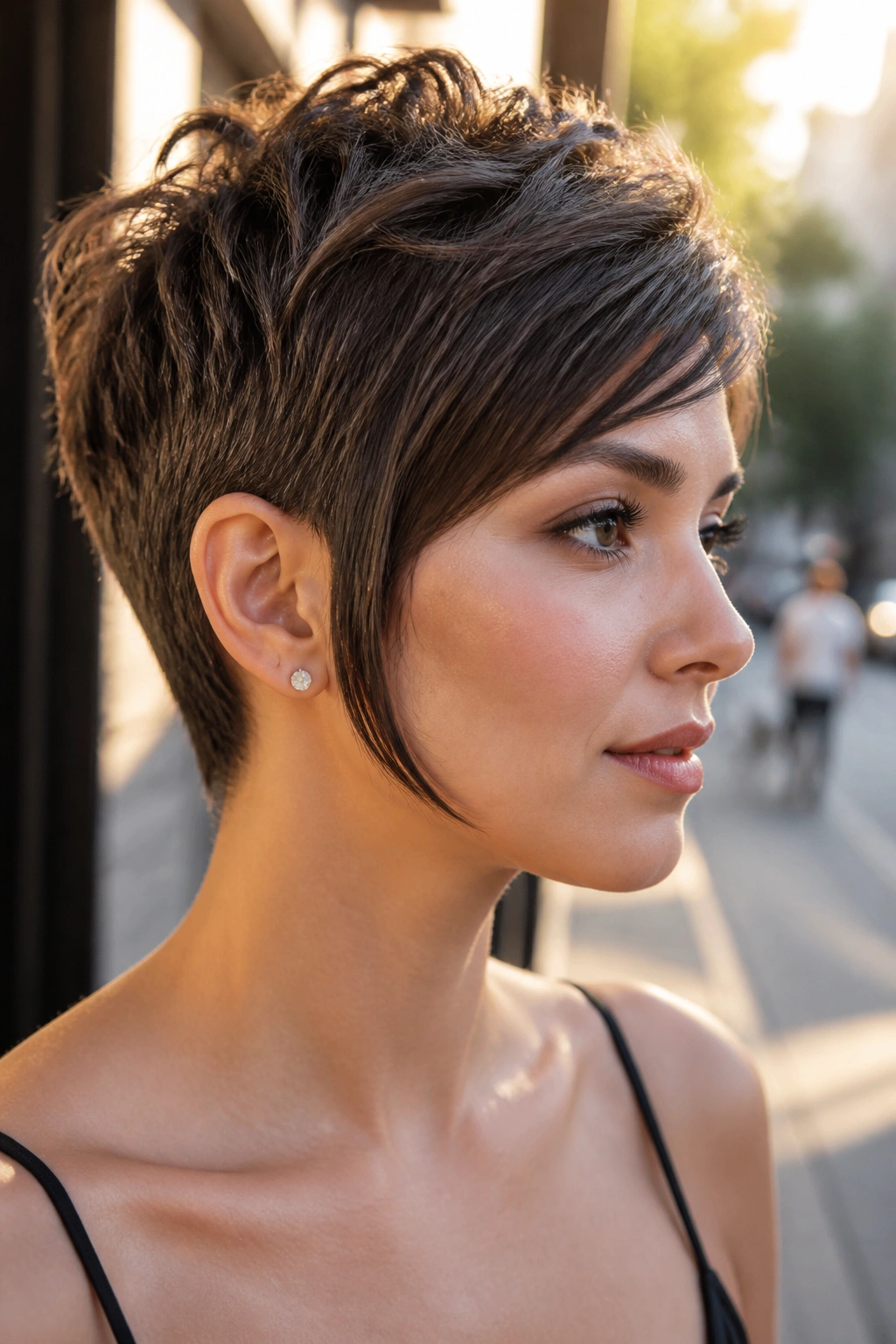
Unlike a boxier crop, this version keeps the sides neat while letting the sideburns stretch a little longer. That one move changes the balance in a good way.
Longer sideburns act like slim vertical lines beside the cheeks, which is useful on a round face. They visually pull the face down instead of out. The taper in the back keeps the silhouette clean, so the haircut does not puff out at the nape or around the ears.
This cut is a good pick if you like structure but do not want a hard undercut. It feels polished, but not stiff. Ask your stylist to cut the sideburns so they skim the jawline, then keep the top textured enough that it can sweep across the forehead when you want it to.
My recommendation: use a pea-sized amount of styling cream and comb the sideburns downward with your fingers, not a brush. A brush can flatten the shape and steal the whole point.
7. Razor-Cut Pixie With Lift at the Crown
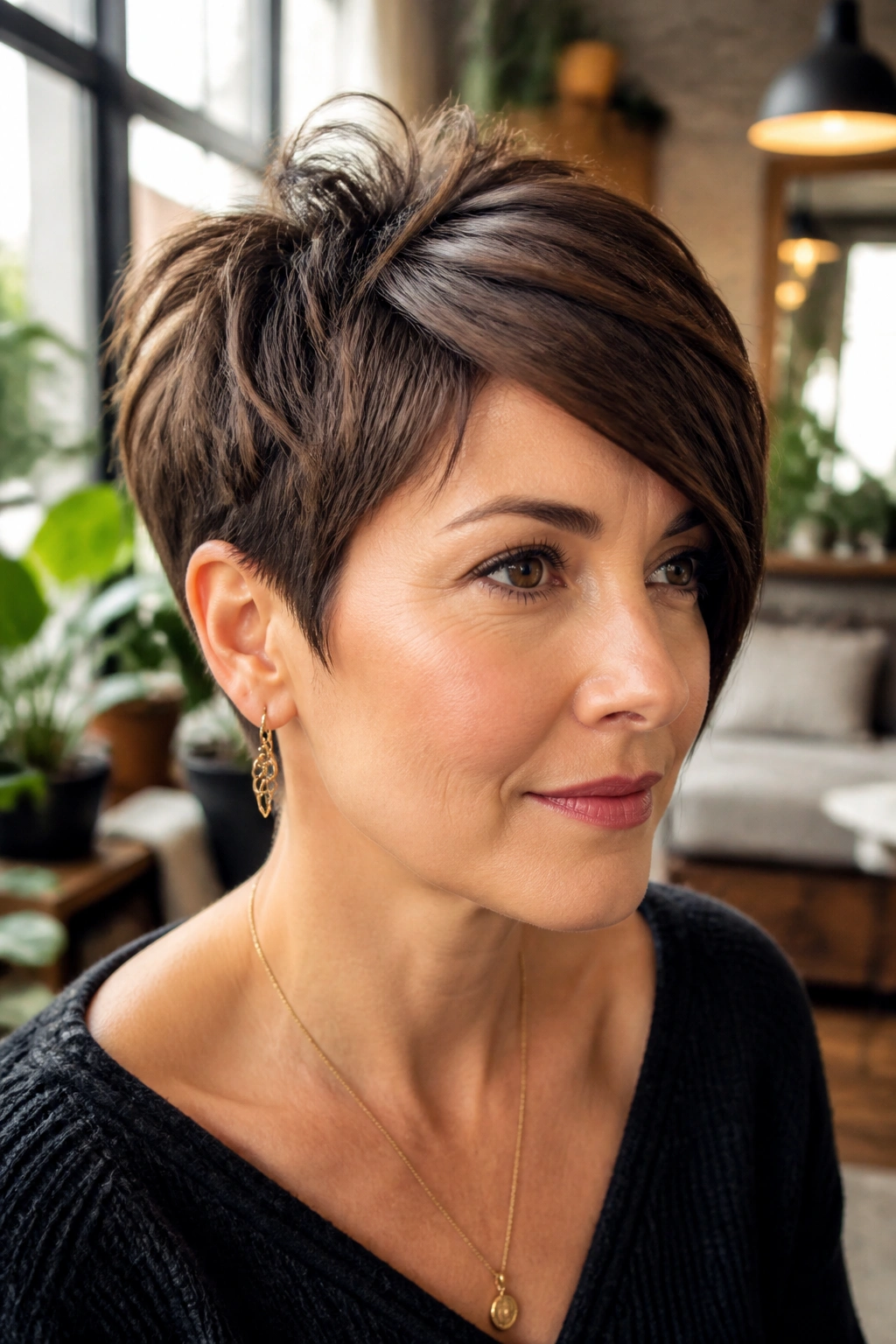
If your hair collapses by noon, this is the fix. Razor-cut ends and a lifted crown can give even stubborn hair more attitude.
The razor work matters because it breaks up the edges and keeps the cut from feeling heavy. On round faces, heavy is the enemy. A solid block of hair around the cheeks makes the face look wider than it is, while a razor-cut top lets the shape move and breathe. The crown should be the tallest point, but not puffed up into a cloud.
What to Ask For
- A razor-cut top with visible separation.
- A shorter, tucked nape.
- One side left 1 to 2 inches longer than the other.
- A side-swept finish rather than a centered fringe.
If your hair is thick, this cut is a lifesaver. It removes some of the bulk that usually makes a pixie look squat. Just do not let anyone over-thin the ends. Too much thinning can make the cut fray out in a bad way, and that is hard to fix.
8. Side-Shaved Asymmetrical Pixie for Round Faces
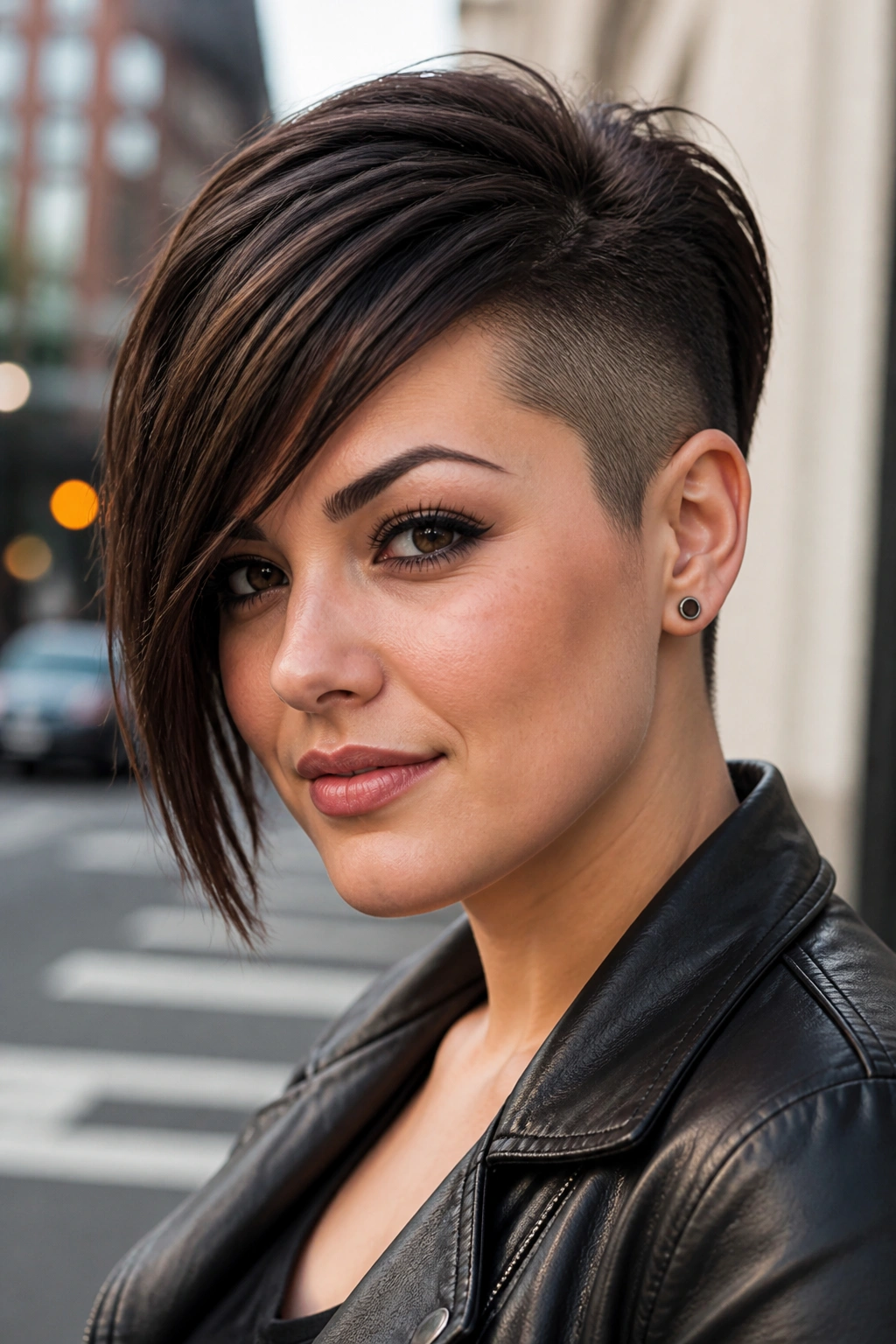
A side shave can look aggressive, but on a round face it is often the cleanest way to sharpen the outline. The haircut stops reading as “all hair, everywhere” and starts reading as shape.
The long side should carry most of the personality. I like a section that sweeps past the eyebrow and then drops toward the cheekbone, because that diagonal line cuts through the roundness in a nice, obvious way. The shaved side does the opposite job. It clears visual space.
This is the kind of cut that looks even better when you wear one ear visible. Tuck the shorter side behind the ear, slick it close, or leave it almost bare. Any of those choices make the asymmetry feel intentional instead of accidental.
It is also a good match for bold makeup, a strong brow, or a simple outfit. That is not a rule, just a pattern I keep seeing. When the haircut is this direct, everything else can stay quiet.
9. Piecey Top With Sharp, Separated Layers
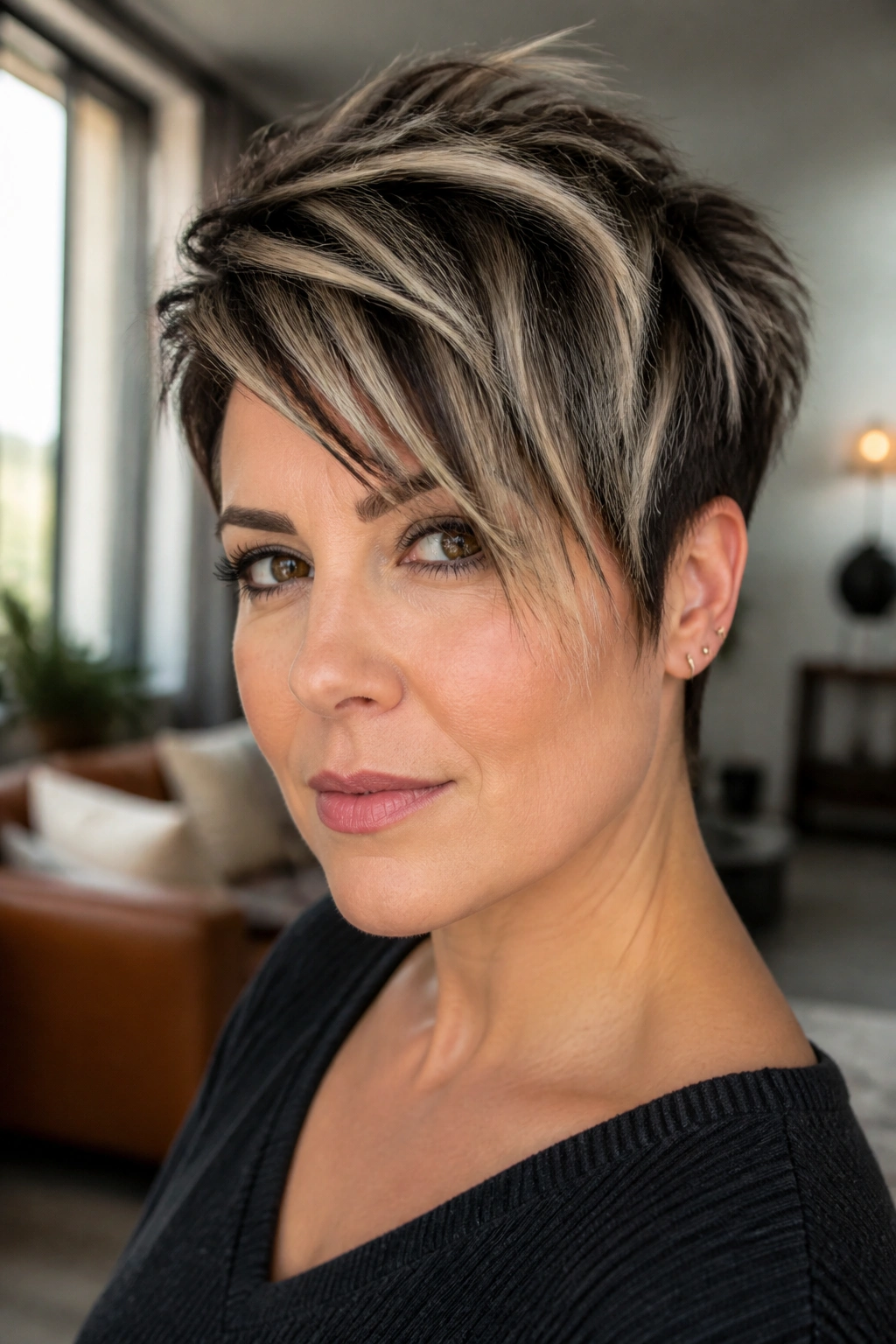
Messy is not the goal here. Separated is the goal.
A piecey pixie keeps the top broken into distinct chunks, which gives the cut a rougher edge than feathered softness does. On a round face, that texture is useful because it stops the hair from forming one smooth shape that mirrors the face. You want movement, not symmetry. A little unevenness looks cooler and cuts the width at the temples.
The front pieces should be long enough to flick across the forehead, but not so long that they fall into curtain-bang territory. That makes the cut feel heavier than it should. Keep the back and sides snug, then use a small amount of wax to pinch 3 or 4 visible pieces into place.
A comb is optional. Fingers are usually better.
The best thing about this version is how forgiving it is on imperfect hair days. If one section goes flat, the whole haircut still looks lived in. That is a real advantage, not a beauty-poster fantasy.
10. Wet-Look Swept-Back Pixie
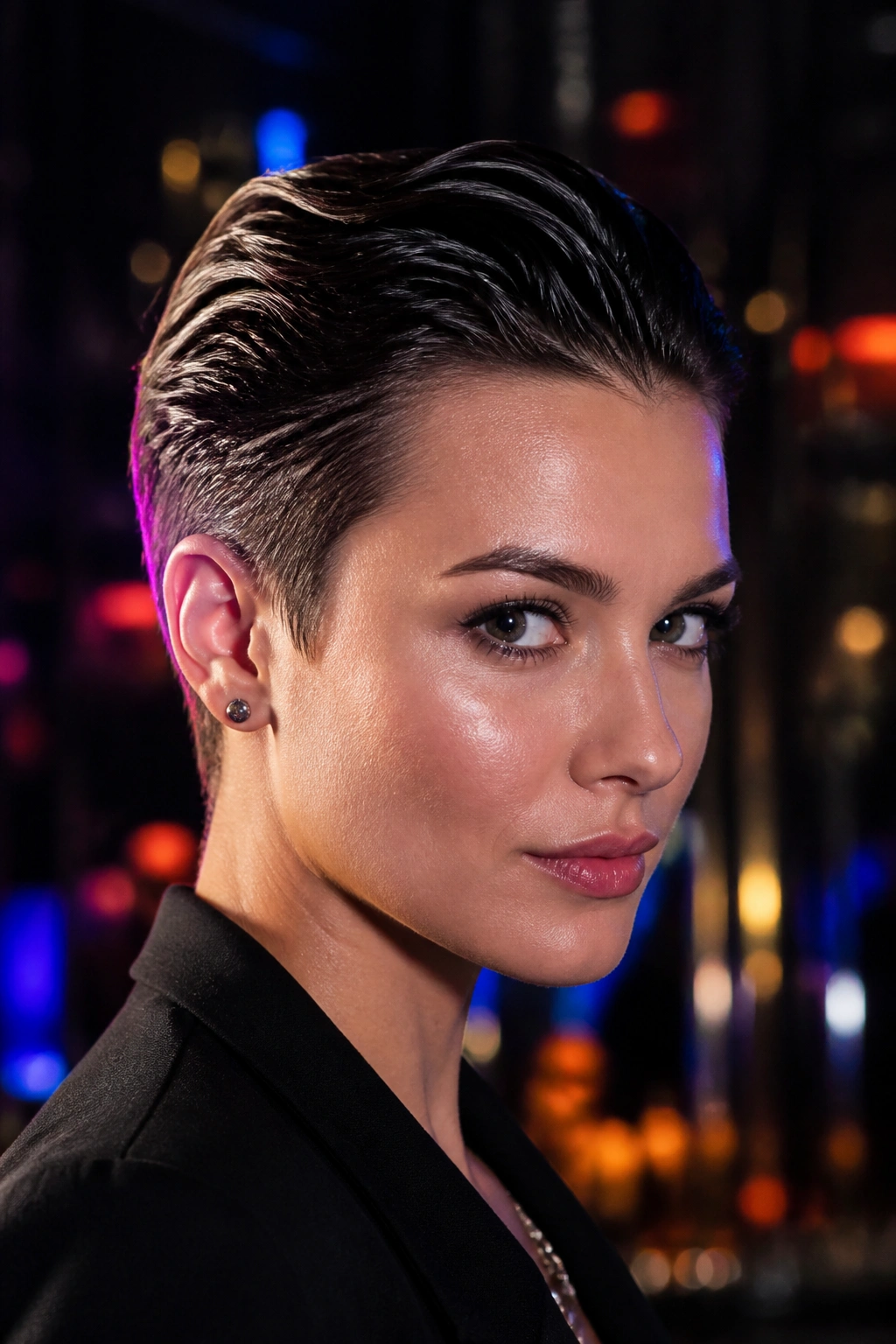
A slicked-back pixie can look dramatic on a round face because it pushes every line upward and backward. There is nowhere for width to hide.
The shape works best when the sides stay close and the top has enough length to be combed away from the forehead. Use gel or a strong styling cream on damp hair, then comb everything back with your fingers first and a fine-tooth comb second. The hair should sit close to the head, with a little separation at the crown so it does not look painted on.
This cut is especially good for sharper brows, strong cheekbones, or any face shape that can carry a bit of polish. It also works well with statement earrings, because the ears and jawline stay visible. That small detail makes the face feel more open.
No fluff. No cute little fluff.
If you want a short haircut that can handle an evening out without much fuss, this is one of the most reliable options. It looks intentional in low light, and that is harder to do than people think.
11. Chopped Mini-Mullet Pixie
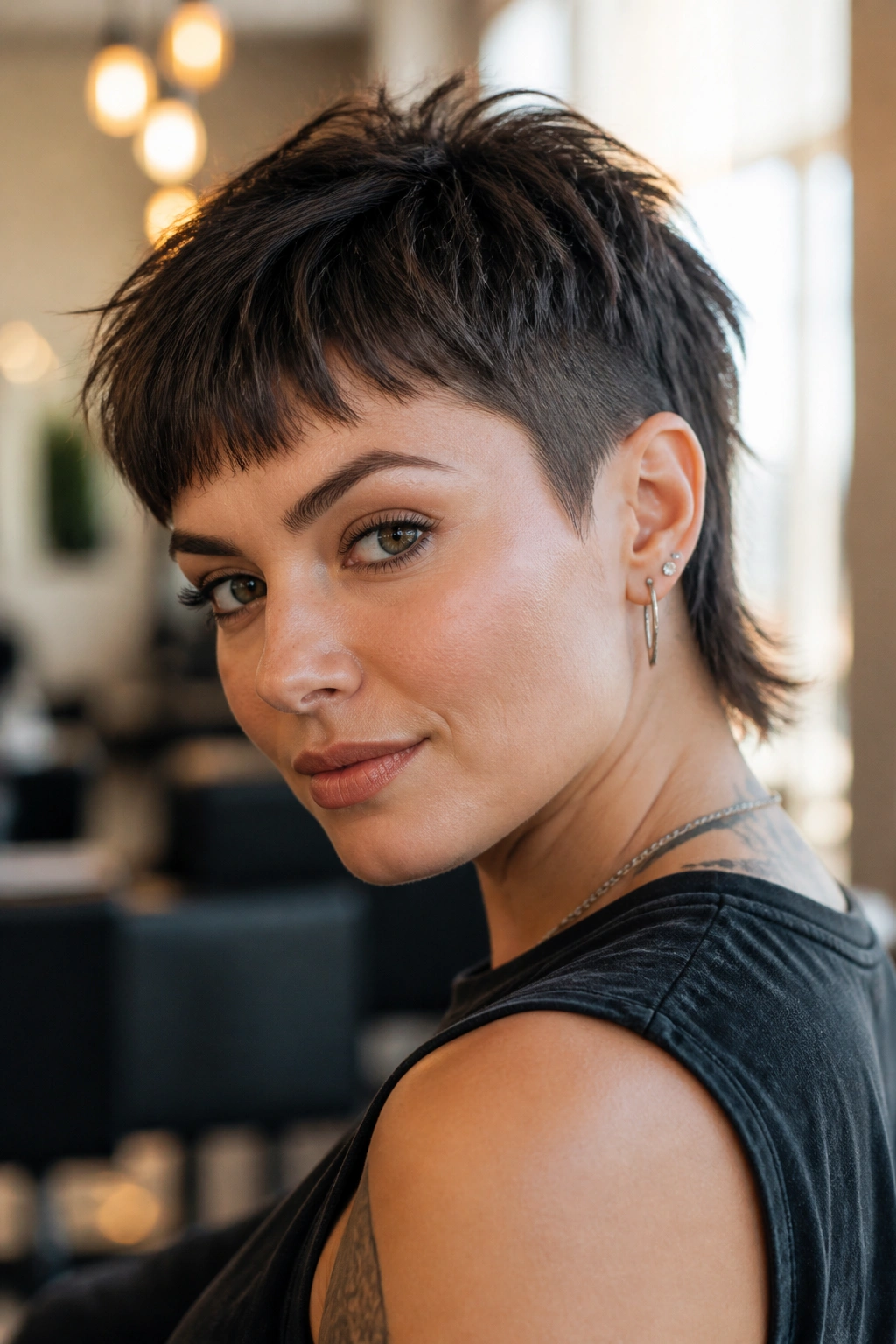
If you like your hair with a little mischief, this is the one to watch. It keeps the pixie front, but lets the back hang just enough to feel strange in a good way.
The reason it flatters a round face is simple: the longer back creates a vertical drop, while the shorter front keeps the cheeks from being boxed in. The sides should stay tight or lightly tapered so the cut does not widen at the widest point of the face. That balance is everything.
I would not do this cut if you want something soft or sweet. It is better for someone who likes graphic shape, exposed ears, and a bit of rebellion in the silhouette. Add texture spray and rough up the crown with your fingers, or keep it sleeker and let the shape speak for itself.
The beauty of this cut is that it grows out with some personality still intact. A lot of edgy crops look tired after a few weeks. This one usually keeps its edge longer.
12. Ear-Tucked Pixie With a Long Front Corner
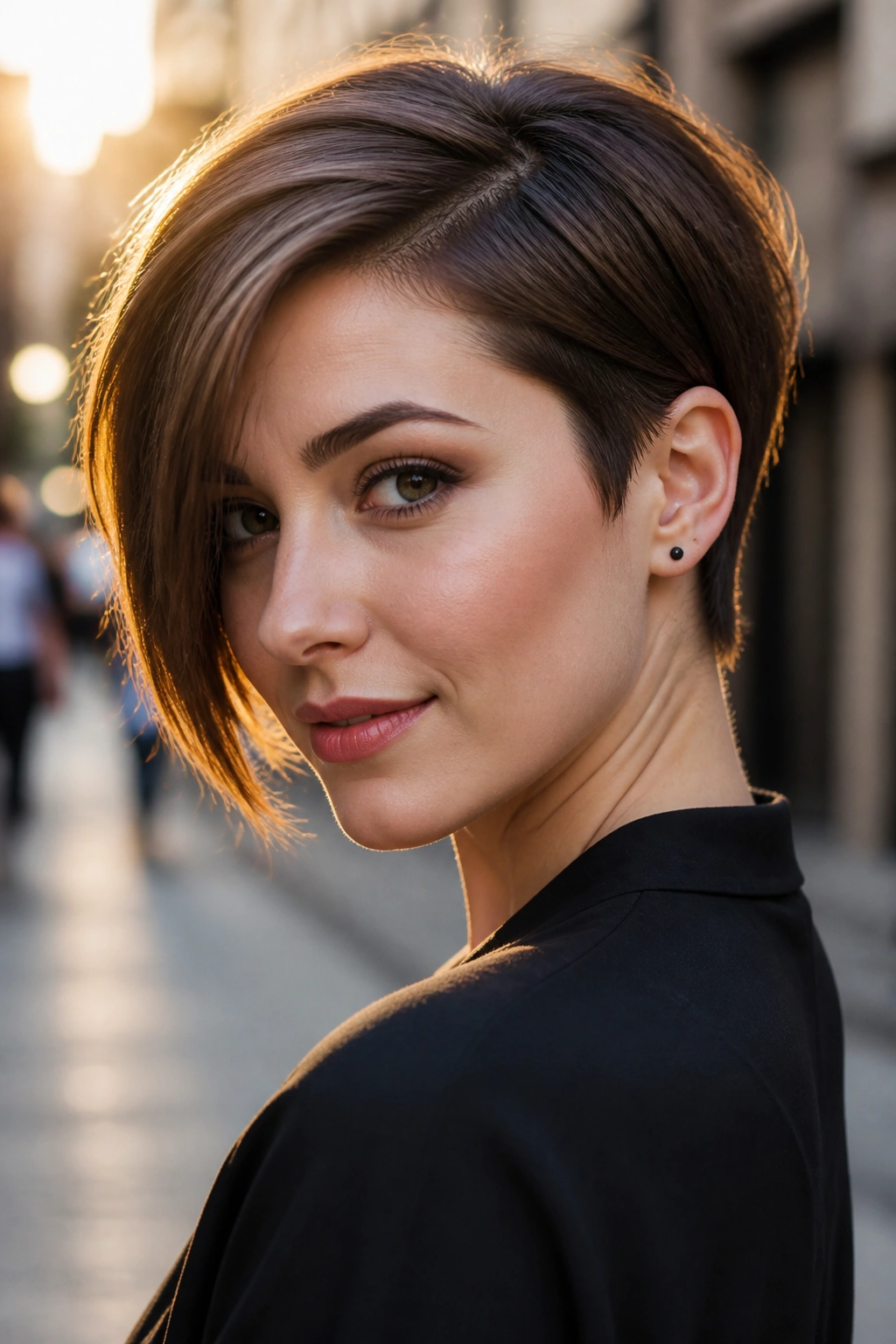
One side tucked behind the ear. One side left to fall forward. That is the whole trick, and it works.
The tucked side opens the face and keeps the haircut from feeling heavy around the jaw. The longer front corner on the other side acts like a frame, pulling the eye diagonally. On a round face, that diagonal is gold. It breaks the circle without needing a giant amount of length.
Unlike some of the more aggressive cuts here, this one can look polished enough for work but still feel modern when you move. It is especially nice on straight hair, where the line of the front piece shows up clearly. If your hair is wavy, the shape gets softer, which is not a bad thing.
Ask for the longer side to stop somewhere between the cheekbone and the top of the jaw. Any shorter and you lose the effect. Any longer and the pixie starts sliding into bob territory.
13. Tousled Pixie With an Asymmetrical Fringe
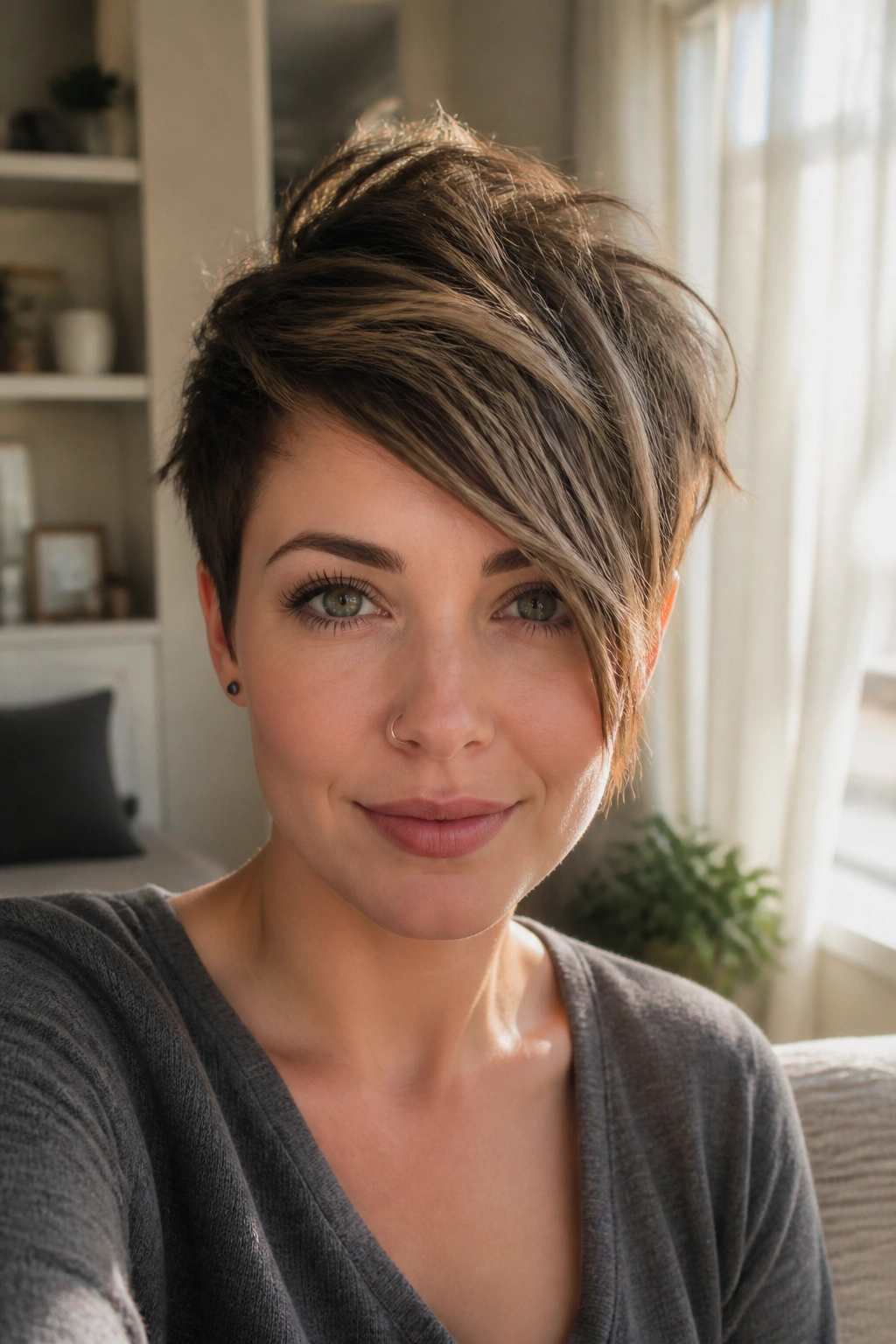
Want something rougher around the edges? Go tousled, but keep the fringe uneven.
This version leans on movement instead of crisp shape. The asymmetrical fringe should sit a little heavier on one side, then taper into shorter, choppier pieces on the other. That imbalance helps a round face because the eye follows the longer line instead of stopping at the cheeks.
How to Get the Texture
- Mist salt spray or a light texturizing spray through damp hair.
- Scrunch the top with your hands until it starts to bend and separate.
- Dry with your fingers or a diffuser on low heat.
- Finish with a tiny bit of matte paste on the ends.
The point is not to look messy for no reason. The point is to make the haircut feel alive. If the texture is too polished, the asymmetry gets lost. If it is too dry, the whole thing can look brittle, so keep a little sheen at the crown.
This is one of my favorite options for hair that naturally has wave. It looks like you did something on purpose, but not like you spent an hour fighting your own head.
14. Platinum Crop With a Sharp Uneven Line
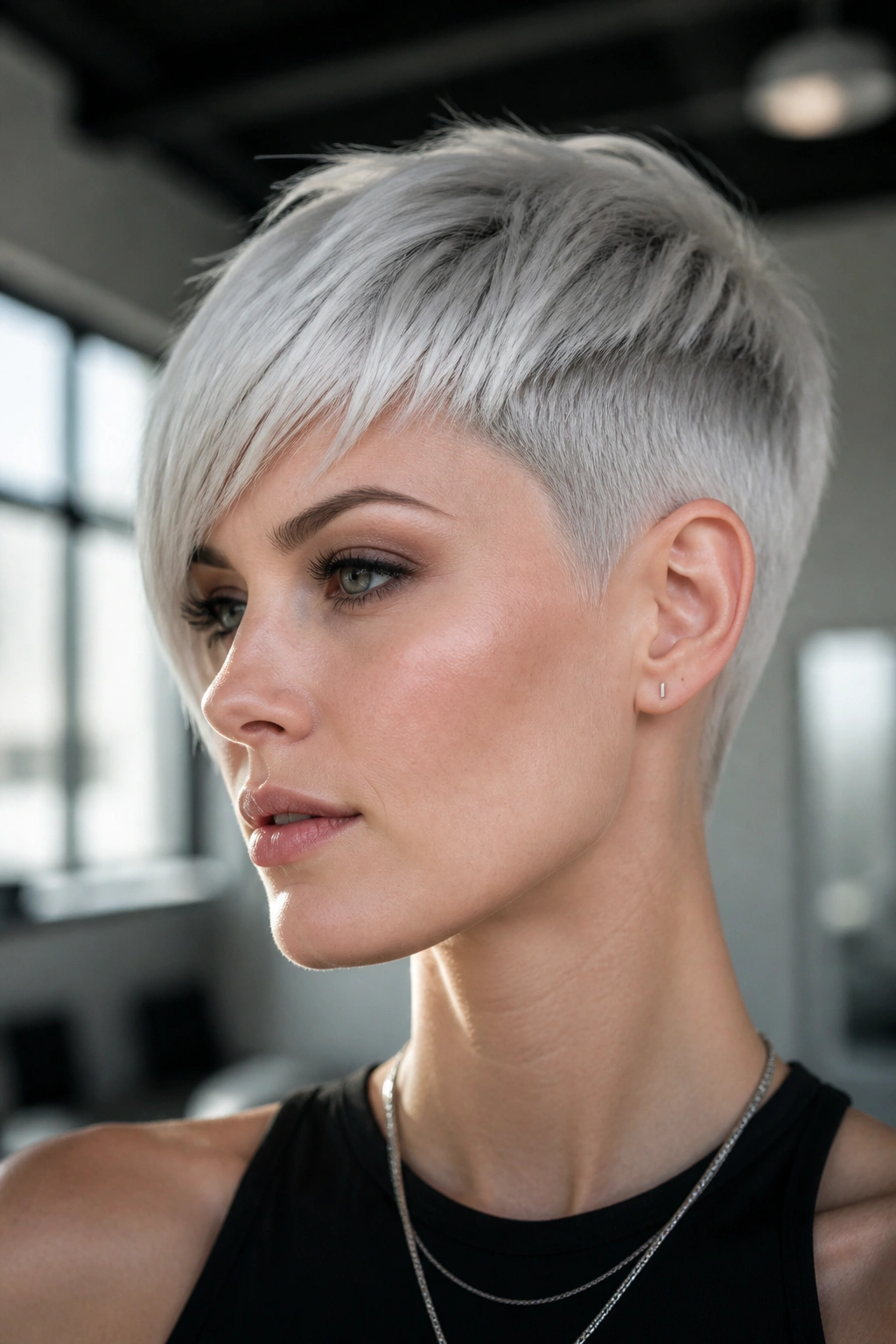
Color does not create shape on its own, but it can make a shape hit harder. Platinum on a sharp asymmetrical pixie is proof.
The light color exposes every edge, every angle, every little change in length. That means the cut itself has to be clean. On a round face, a sharp uneven line can work beautifully because it draws the eye across the face in a quick, slashing motion instead of settling into a broad shape. The haircut feels leaner. It also looks more graphic under strong light, which is part of the appeal.
This cut is not forgiving if the shape is lazy. If the nape is bulky or the side lengths are too close together, the platinum just makes the problem louder. So the cut has to be honest. Shorter in the back, longer where the fringe moves, tighter around the ears.
I like this look with simple makeup and clean clothing. The haircut already does enough. You do not need to stack extra noise on top of it.
15. Curly Asymmetrical Pixie for Round Faces With a Deep Part
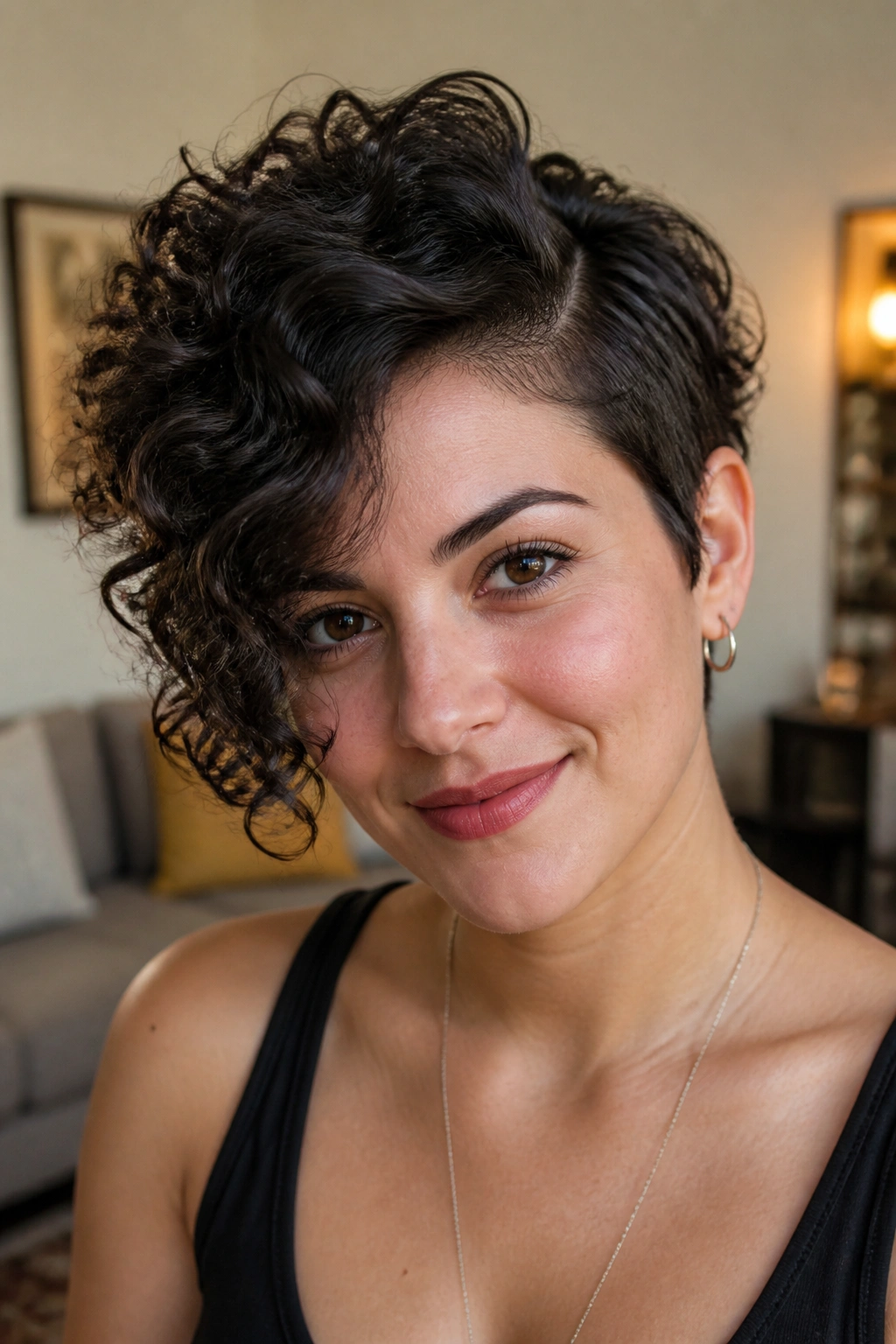
Can curls work on a round face without adding width? Absolutely, if the length is controlled and the part is deep.
Curly hair has its own rules. Shrinkage changes everything, so the longest side should be cut with the curl pattern in mind, not against it. A deep side part creates a visual drop on one side, and that drop helps stretch the face. Keep one temple shorter and let the curls on the other side sit a little longer near the cheekbone.
How to Style It
Use a curl cream on soaking-wet hair, then scrunch in a small amount of gel if you want more hold. Diffuse on low heat or let the hair air-dry if you have time. The curls should end up soft and defined, not puffed into a triangle.
A curly pixie can be one of the most flattering short cuts on a round face because it gives height without needing a blowout. The danger is width at the sides, so keep the shape narrow through the temples and fuller at the crown. That single shift makes a huge difference.
If you have been told curls and short cuts do not belong together, I would ignore that advice. They can be brilliant together. You just need the right line.
16. Wavy Pixie With Longer Temples
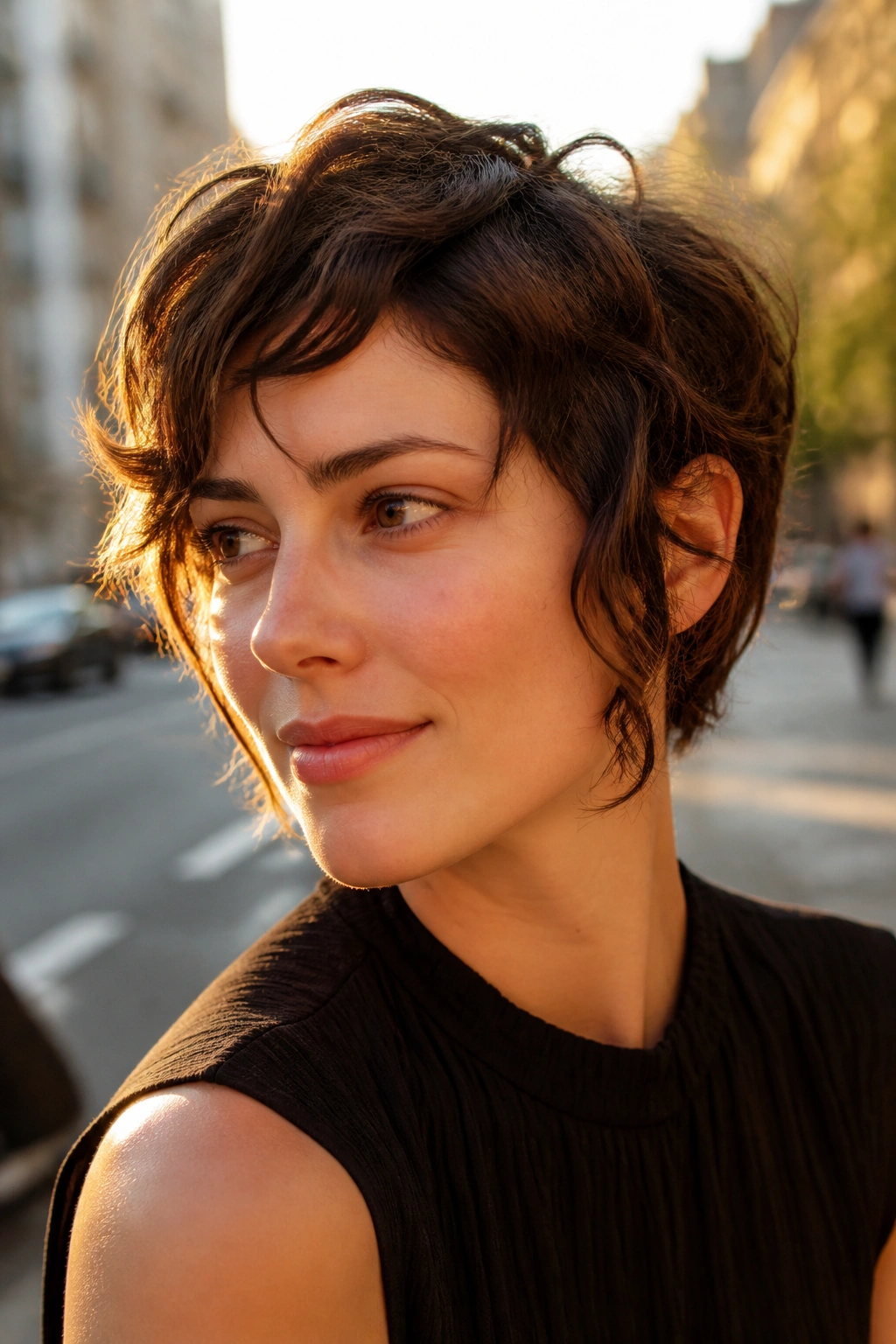
Waves are sneaky. They can soften a face in a flattering way, but they can also puff out if the shape is too even.
This cut keeps the temples longer than the back and lets the wave fall forward in a slightly crooked line. That longer temple area is useful on a round face because it creates two slim vertical hints beside the cheeks. The hair is still short, but the face gets a frame that feels leaner and more relaxed.
The best version of this cut avoids too much layering at the sides. Too many short layers can make the wave bounce outward. Instead, keep the interior layers light and let the longest pieces do the work. A bit of cream or mousse is enough; you do not need a bucket of product.
I also like this style because it looks good a little imperfect. If one wave flips funny, the whole cut still reads as intentional. That is a quiet gift. Not every short haircut can handle a bad hair morning.
17. Sleek Sculpted Pixie With a Clipped Side
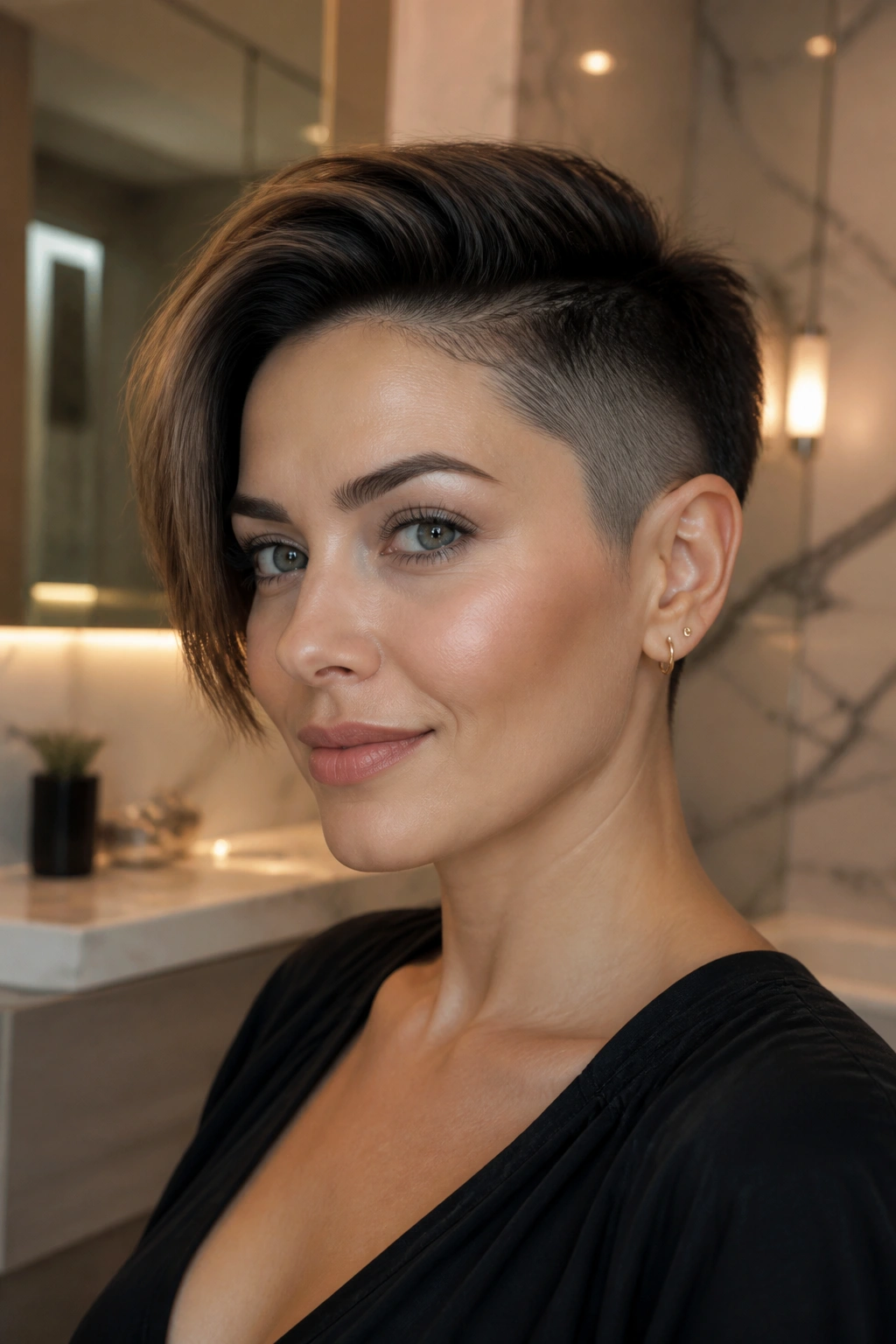
Some days you want texture. Other days you want precision. This is the precision cut.
A clipped side gives the face a hard edge, while the longer opposite side can be combed smooth or tucked into a curve along the forehead. On a round face, that contrast creates a cleaner outline than fluffier styles do. It is especially strong if your jawline is soft and you want the haircut to bring a little structure back into the picture.
Use gel for a slick finish or a soft pomade if you want shine without stiffness. A fine-tooth comb will give you the cleanest part, but fingers can keep it from looking too formal. The clipped side should stay neat enough that the contrast is obvious, because that contrast is doing the slimming work.
This cut is sharp in the best way. It suits a strong brow, a bold lip, or a plain black top. Then again, it can look just as good with a sweatshirt. That is the nice part: the shape carries the attitude even when everything else is simple.
18. Grown-Out Asymmetrical Pixie With a Long Side Fringe
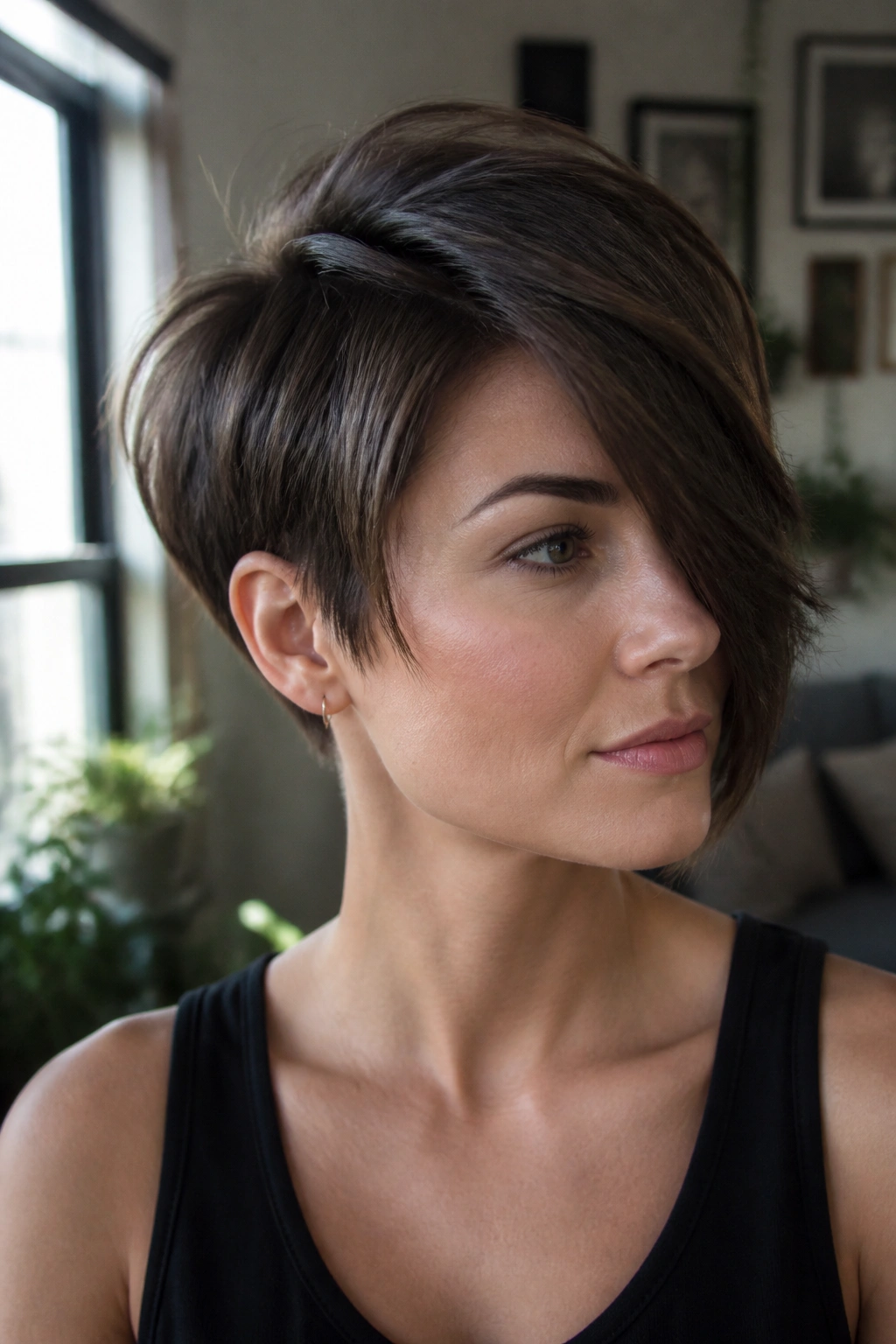
This is the version I would point to for someone who wants edge without living in the salon chair. It has a long side fringe, a tucked nape, and enough growth room to stay interesting as it softens.
The longest piece should sweep across the face and land somewhere near the cheekbone or just below it. That keeps the front dramatic. The back stays tight enough to preserve the pixie shape, and one side can be slightly shorter so the asymmetry stays visible even after a few weeks of growth. On a round face, that long front line is the real hero.
It is also the easiest of the edgy cuts to wear with different textures. Straight hair looks crisp. Wavy hair looks loose. A little bend from a flat iron or a blow-dry brush can change the mood without changing the cut. That kind of flexibility matters if you do not want one haircut locked into one look.
If you want a short style that still feels sharp when it starts to grow out, this is the one. It keeps its shape, keeps its attitude, and does not ask for perfection every morning. That is a pretty good deal.
