



Fine hair can go flat in a blink, which is exactly why a silver pixie cut often looks sharper than a longer style that keeps dragging the roots down. The short length removes weight. The silver tone adds a clean, reflective finish that makes shape matter even more.
That part gets missed a lot. People focus on the color and forget the cut has to do the heavy lifting. On fine strands, a blunt edge in the wrong place can make the whole head look thinner, while a good pixie uses tiny shifts in length, soft tapering, and controlled texture to fake density without making the hair feel bulky.
I like silver pixies on fine hair because they can go in two directions and still work. They can look polished and sharp, or broken up and airy, or a little rebellious if you want that piecey, choppy finish that moves when you turn your head. The trick is choosing the right shape for the way your hair behaves on a tired Tuesday morning, not the way it behaves after a perfect blow-dry.
1. Choppy Silver Pixie With Crown Lift
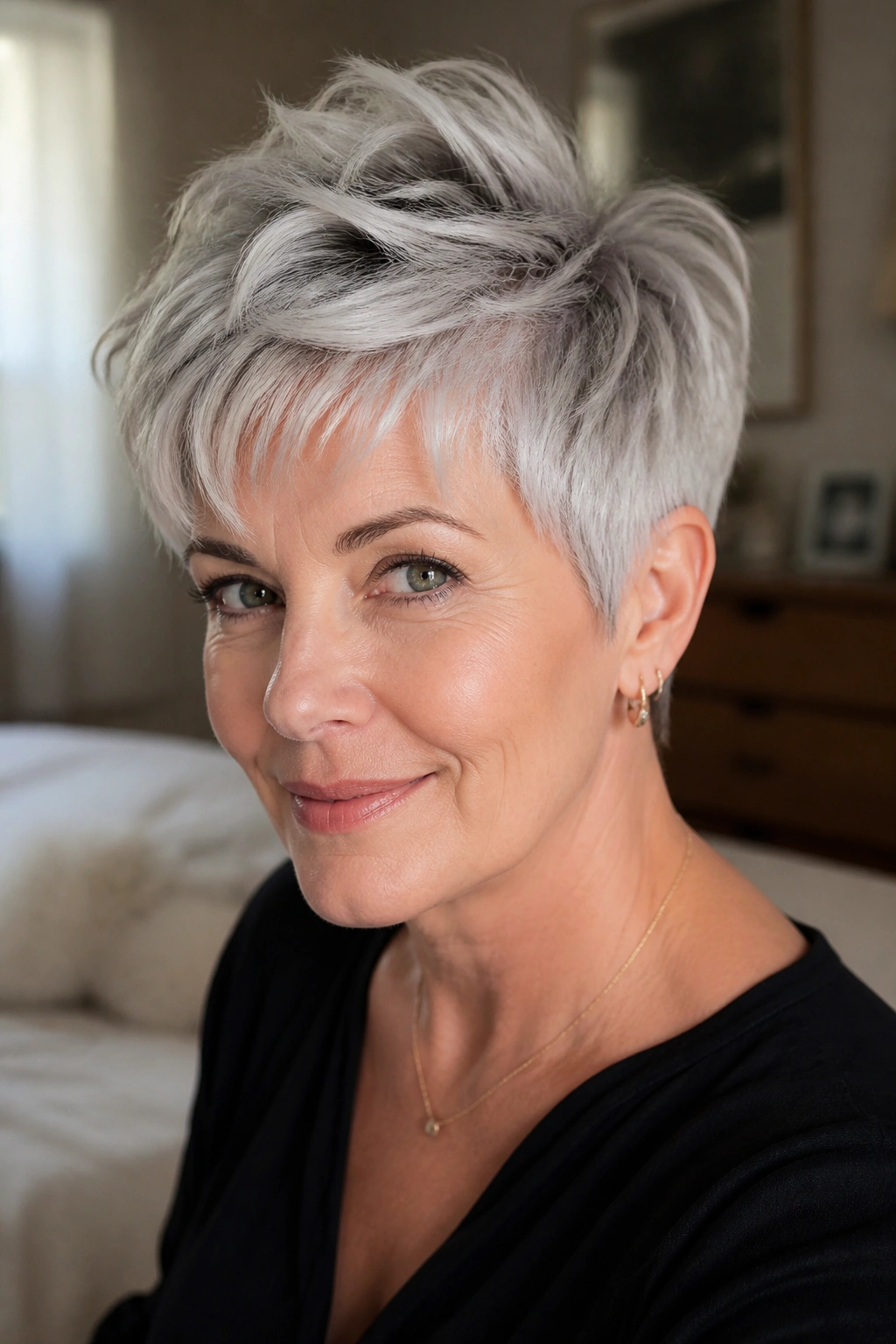
Choppy layers at the crown are one of the fastest ways to wake up fine hair. The cut keeps the sides tight, then breaks up the top into short, uneven pieces so the hair doesn’t lie in one flat sheet. That matters with silver, because the color shows every line and every shadow; if the cut is soft in the right places, the whole style looks fuller.
Why It Works on Fine Hair
- Short, broken layers at the crown create movement where fine hair usually collapses first.
- Tapered sides stop the silhouette from spreading outward and making the head look wider.
- A slightly messy finish makes the hair look intentional, not thin.
Use a pea-sized amount of lightweight mousse at the roots, then blow-dry the crown upward with your fingers or a small round brush. You want lift, not fluff. If the top starts to separate into crunchy spikes, you’ve used too much product. A tiny touch of matte paste at the ends is enough.
2. Tapered Silver Pixie With a Clean Nape
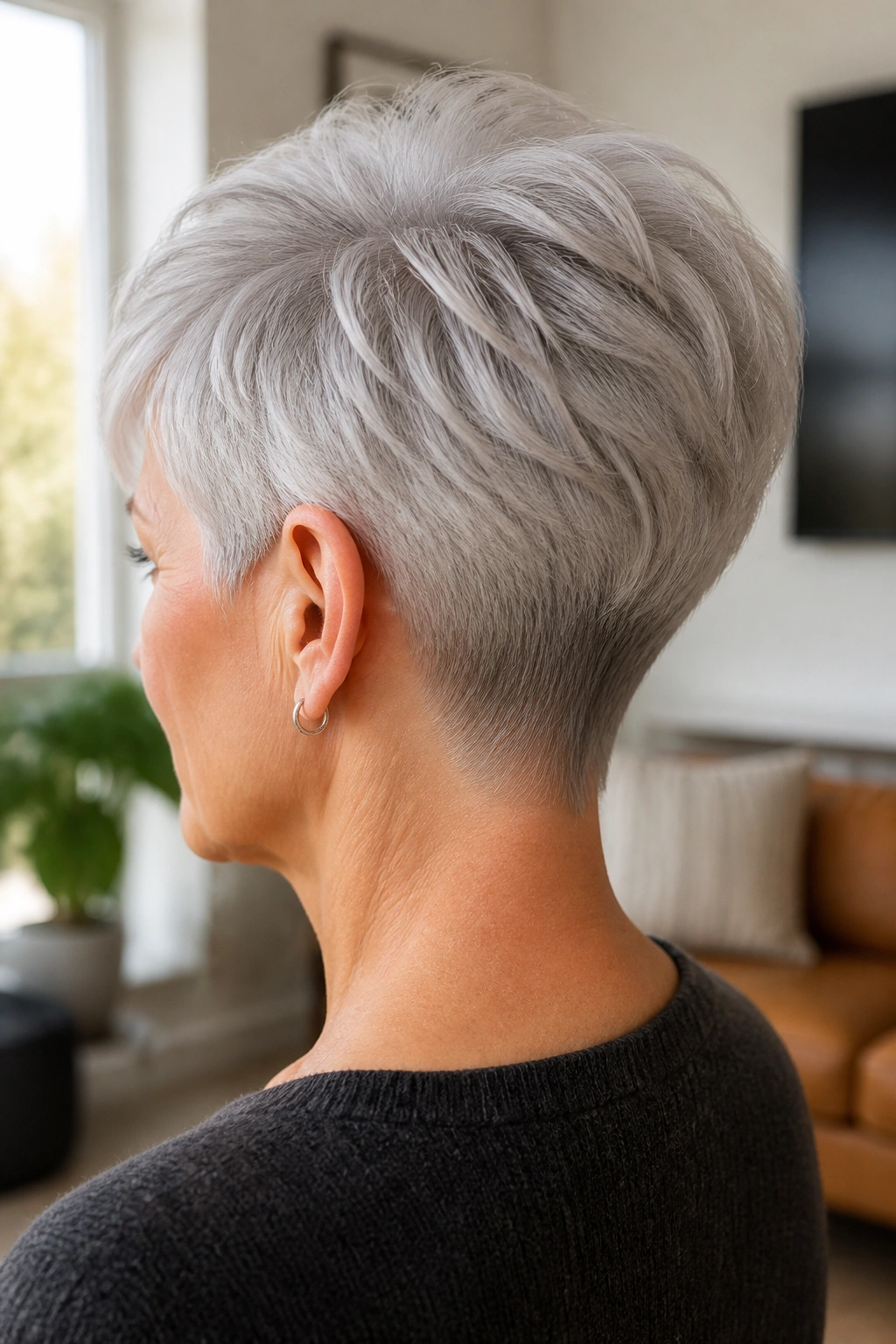
A tapered nape does more than tidy the neckline. On fine hair, it removes dead weight from the back of the cut, which makes the top look denser and the whole shape feel lighter on the head. That’s a win when your hair tends to collapse by lunchtime.
Ask for a soft taper rather than a hard, stacked line. Hard stacking can be beautiful on thick hair, but on fine strands it sometimes reads as too much scalp and not enough body. The sweet spot is a clean curve at the nape with enough length left above it to keep the back from looking skeletal.
This cut also grows out neatly. That matters more than people admit. A tapered nape buys you an extra couple of weeks before the style starts feeling shaggy in the wrong places, especially if your hair grows fast around the ears and neckline. Simple. Neat. Low drama.
3. Side-Swept Silver Pixie With a Long Fringe
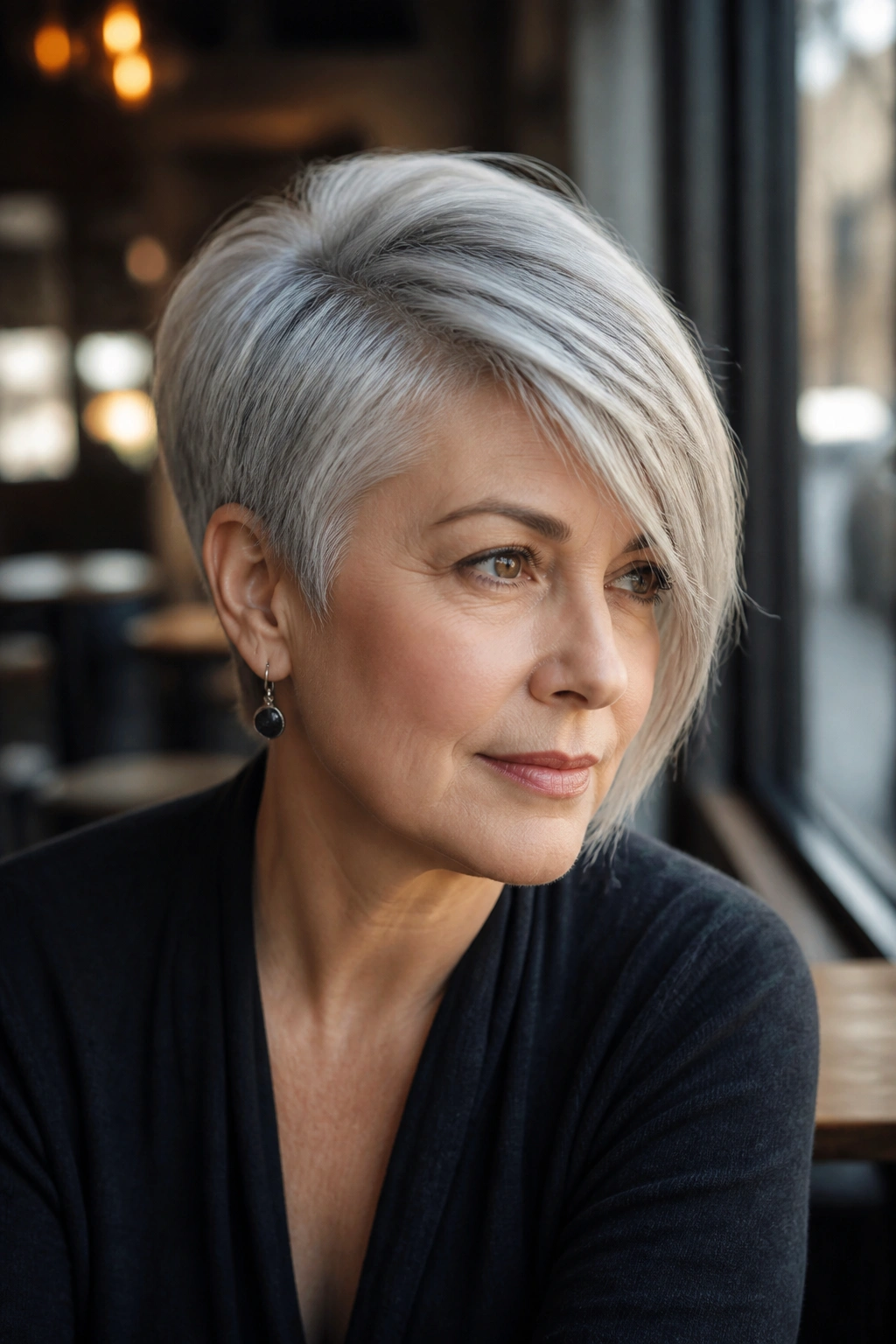
Want the front to do the heavy lifting? A side-swept silver pixie with a longer fringe does exactly that. The extra length in front gives fine hair a place to move, bend, and cover the forehead a little, which makes the entire cut look more substantial.
How to Style It
A deep side part is the easiest place to start. Blow-dry the fringe in the opposite direction first, then sweep it back across the forehead so it sits with a bend instead of a flat arc. That little trick gives you lift at the root without needing a pile of product.
- Use a round brush with a small barrel if your hair falls forward too quickly.
- Keep the fringe long enough to tuck behind one ear when you want a cleaner line.
- Finish with a light mist of flexible hairspray so the front doesn’t separate into wisps by noon.
This shape suits people who like softness around the face. It also helps if your hairline is uneven or your forehead feels like the first thing everyone notices. The fringe becomes a frame, not a curtain.
4. Feathered Silver Pixie With Airy Ends

Feathering can look old-fashioned in the wrong hands, but on fine hair it can be a lifesaver. The point is not to make the ends fluffy for the sake of it. The point is to soften the edge so the cut moves when you do, instead of sitting there like a helmet.
Feathered silver pixie cuts usually work best when the stylist uses scissors instead of a heavy razor. A razor can fray fine hair if the strands are already delicate, and frayed ends on silver hair tend to show up fast. You want the outline to feel light, not stringy.
If your hair is naturally straight and a little slippery, this cut gives it some air. If it’s straight but stubborn, feathering helps the style bend around the head instead of sticking flat to it. The result is gentler than a choppy crop, but it still avoids that thin, see-through look that fine hair can get when the layers are too blunt.
5. Piecey Silver Pixie With Micro-Layers
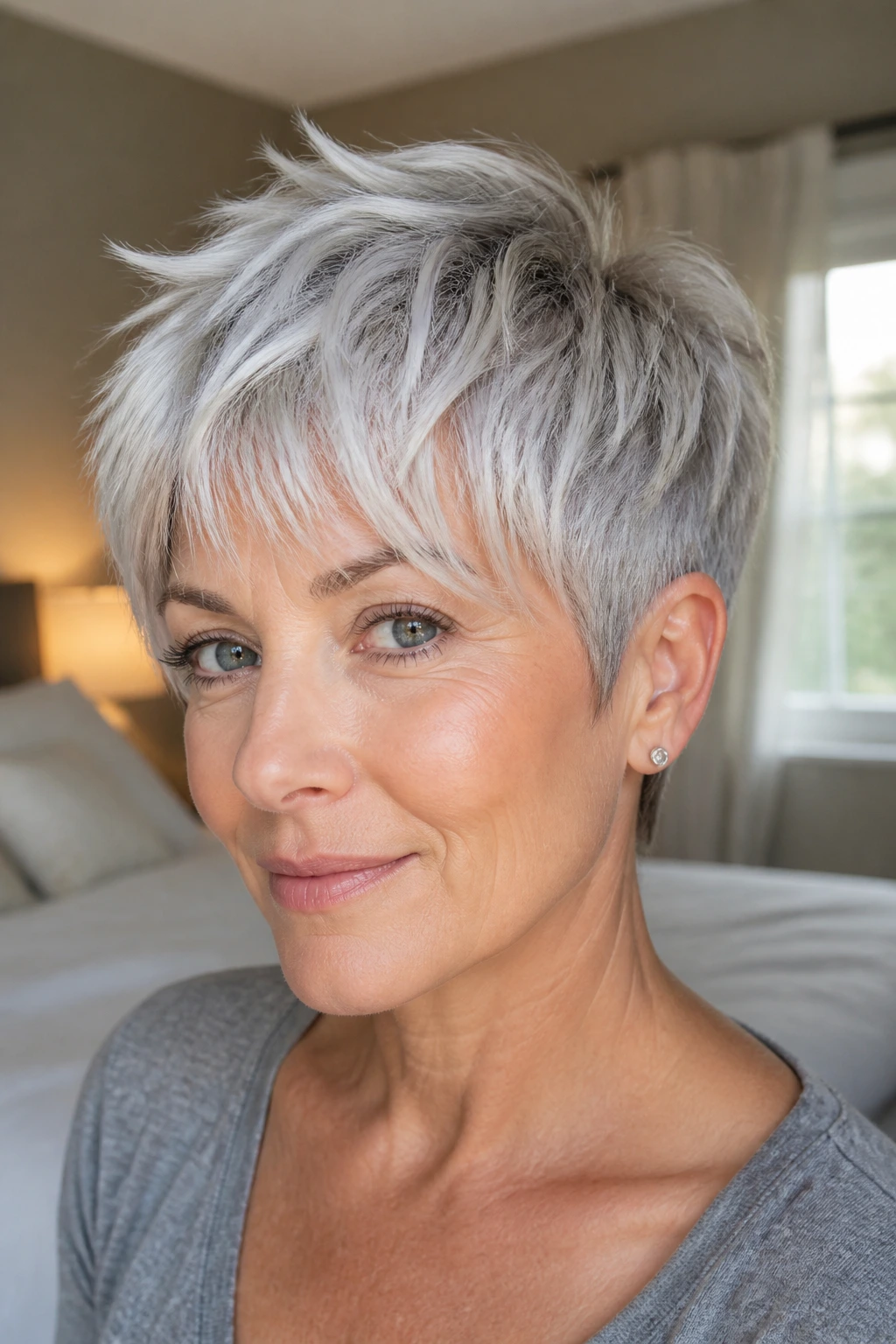
Piecey texture is a fine-hair cheat code. It lets you break the surface of the cut into little sections so the eye reads movement and density instead of one smooth, flat plane. On silver hair, those separated bits catch the light in a way that makes the style look more deliberate.
Micro-layers are tiny, almost hidden shifts in length. They don’t shout from across the room. They work up close, where the ends can stand away from each other just enough to create lift. That’s why this cut can be so useful for someone who wants a modern pixie without the soft, floppy feel that sometimes comes with longer top layers.
Rub a grain-of-rice amount of styling paste between your fingertips and pinch the pieces into place. Not much more. If you pile on product, the separation turns greasy and the whole point disappears. This cut looks best when it’s a little undone, a little broken, and still clean enough to feel polished.
6. Long-Top Silver Pixie With Short Sides
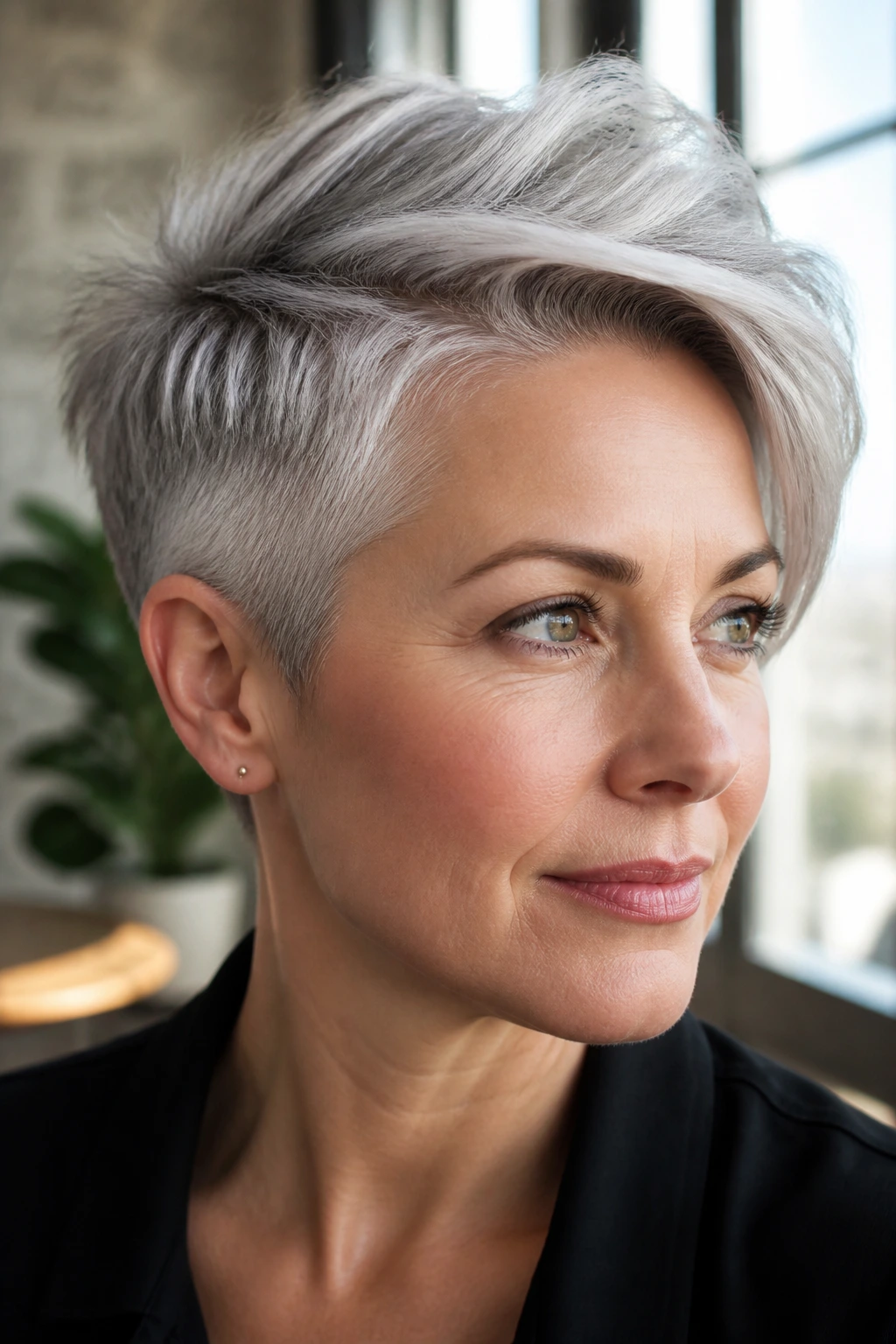
Longer top pieces change the whole balance of a pixie. The short sides keep the head close and neat, while the extra length on top gives you room to flip, sweep, or push the front back for height. Fine hair often needs that extra length in one place more than everywhere.
A long-top pixie is a smart choice if your hair tends to lie down at the crown but still has enough slip to move. The longer top pieces give you something to style with a blow-dryer, which is helpful because very short fine hair can be tricky to direct. You need just enough length to build shape.
What Makes It Different
Unlike an all-over crop, this version creates contrast. The sides stay sleek, so the eye goes straight to the top. That contrast makes the hair look thicker than it is, especially if the silver shade has a slightly darker root or lowlight underneath.
This is the cut for someone who likes options. Wear it smooth one day, rough it up the next, and let the front fall forward when you want a softer look. It doesn’t get boring, which is rare in short hair.
7. Silver Pixie With an Undercut
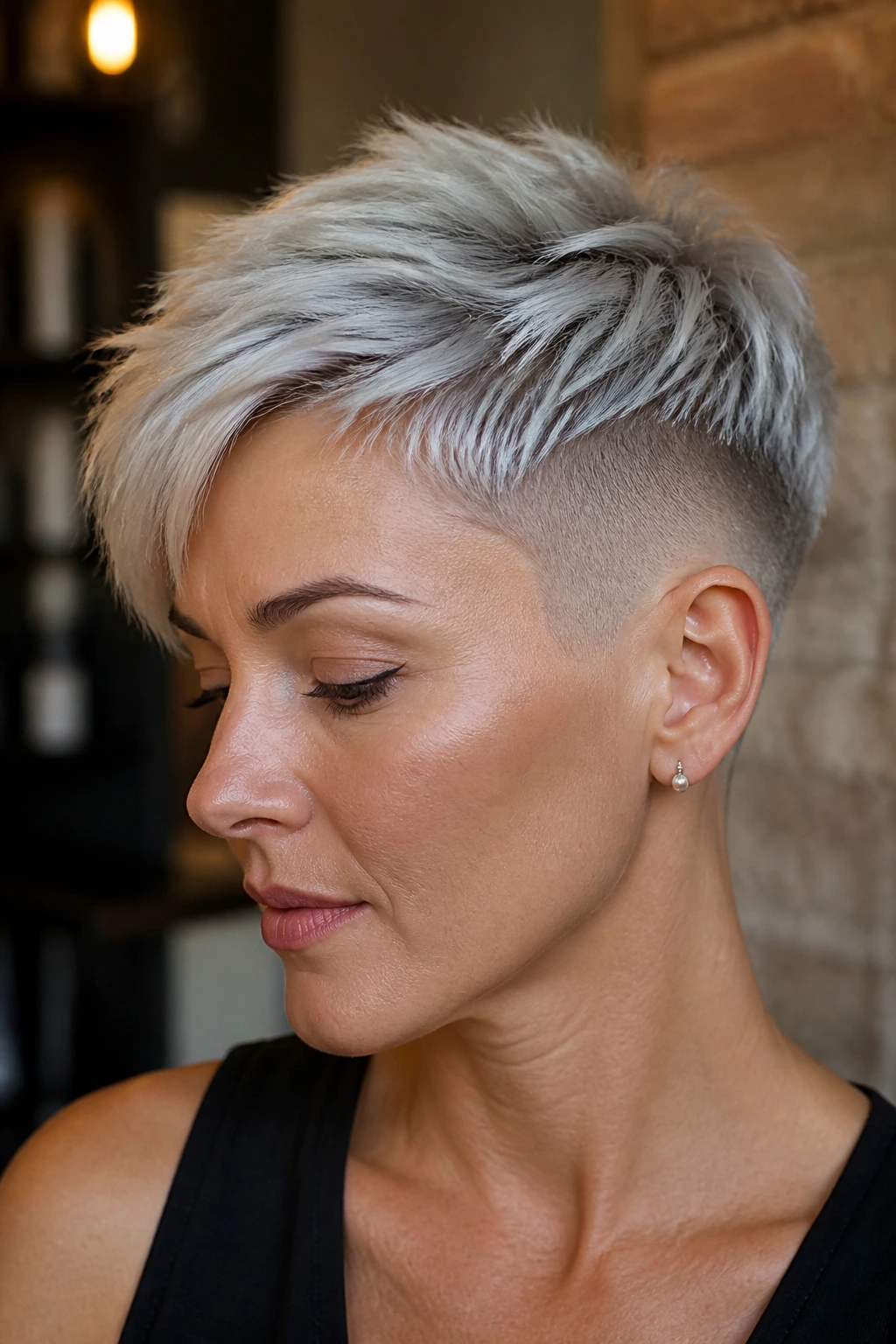
An undercut sounds dramatic because it is. But it can be one of the smartest ways to handle fine hair if you want the top to look fuller without the sides dragging the style down. Removing bulk underneath lets the upper layers sit higher and move more freely.
The catch is maintenance. An undercut grows out faster than most people expect, and the contrast between the shaved or clipped section and the silver top can shift quickly. If you like a crisp shape, you’ll need regular tidy-ups around the ears and nape. If you prefer a softer grow-out, keep the undercut subtle rather than severe.
I’d suggest this cut for someone who likes clean edges and doesn’t mind a little edge showing. It can look sleek with a side part or more rebellious when you tousle the top with a matte cream. Either way, the fine hair benefits from the weight being gone where it doesn’t help.
8. Rounded Silver Pixie With a Soft Halo
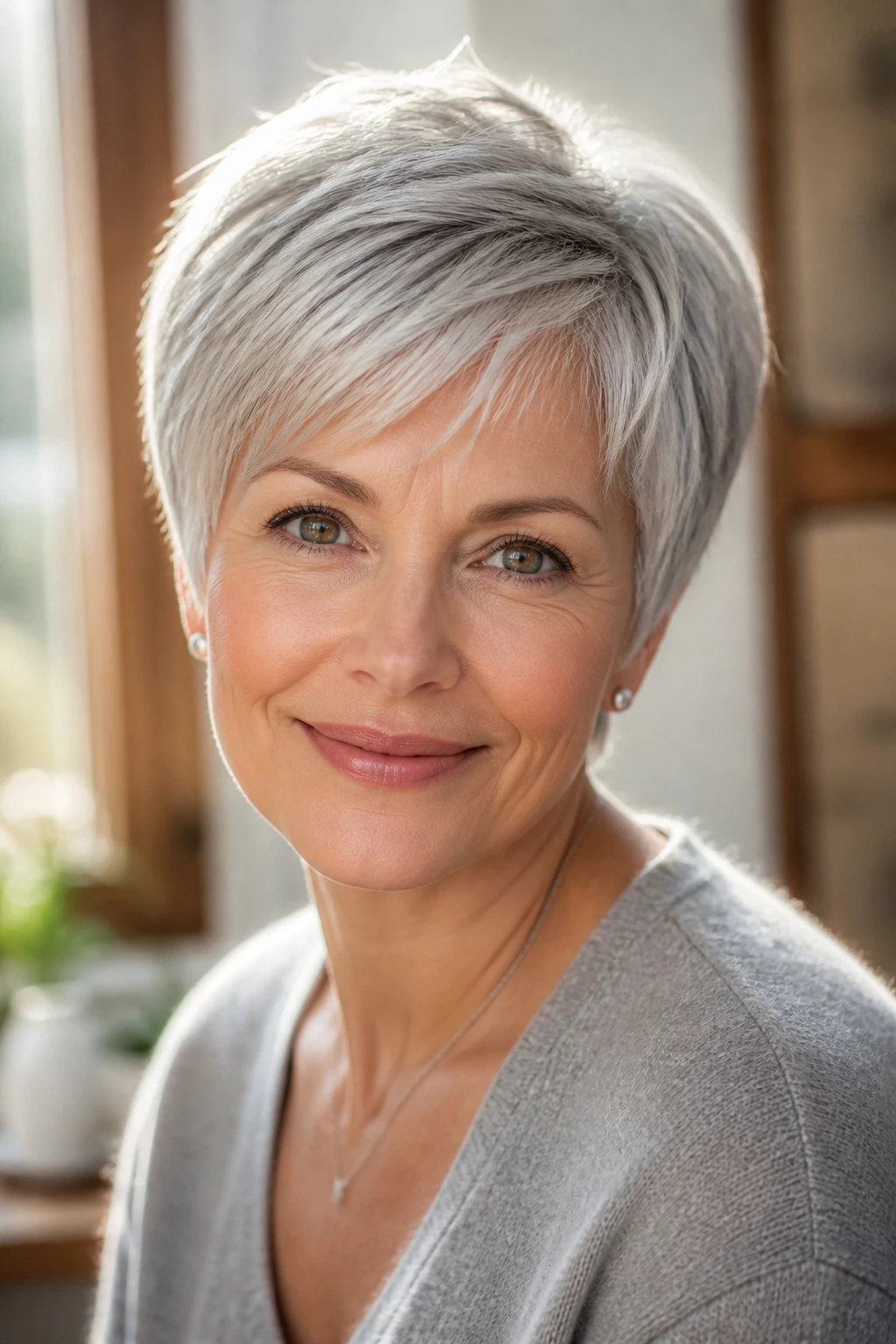
Rounded silhouettes get overlooked. People chase height and forget that a curved shape can make fine hair look denser because it fills space around the head instead of spiking upward in a few thin bits. A soft halo shape is especially good if your hairline is sparse or your crown needs a gentler outline.
This cut keeps the perimeter curved, with just enough length through the top and sides to keep the shape continuous. No harsh corners. No extreme points. The line should feel almost cushioned, which sounds odd until you see how much fuller it can make fine hair look in natural light.
It also plays well with silver shades that have a smoky base or a soft pearl finish. Those tones read smoother on a rounded cut. If the color is icy and the haircut is too sharp, the whole thing can go brittle fast. Rounded edges soften that risk.
9. Asymmetrical Silver Pixie With a Deep Part
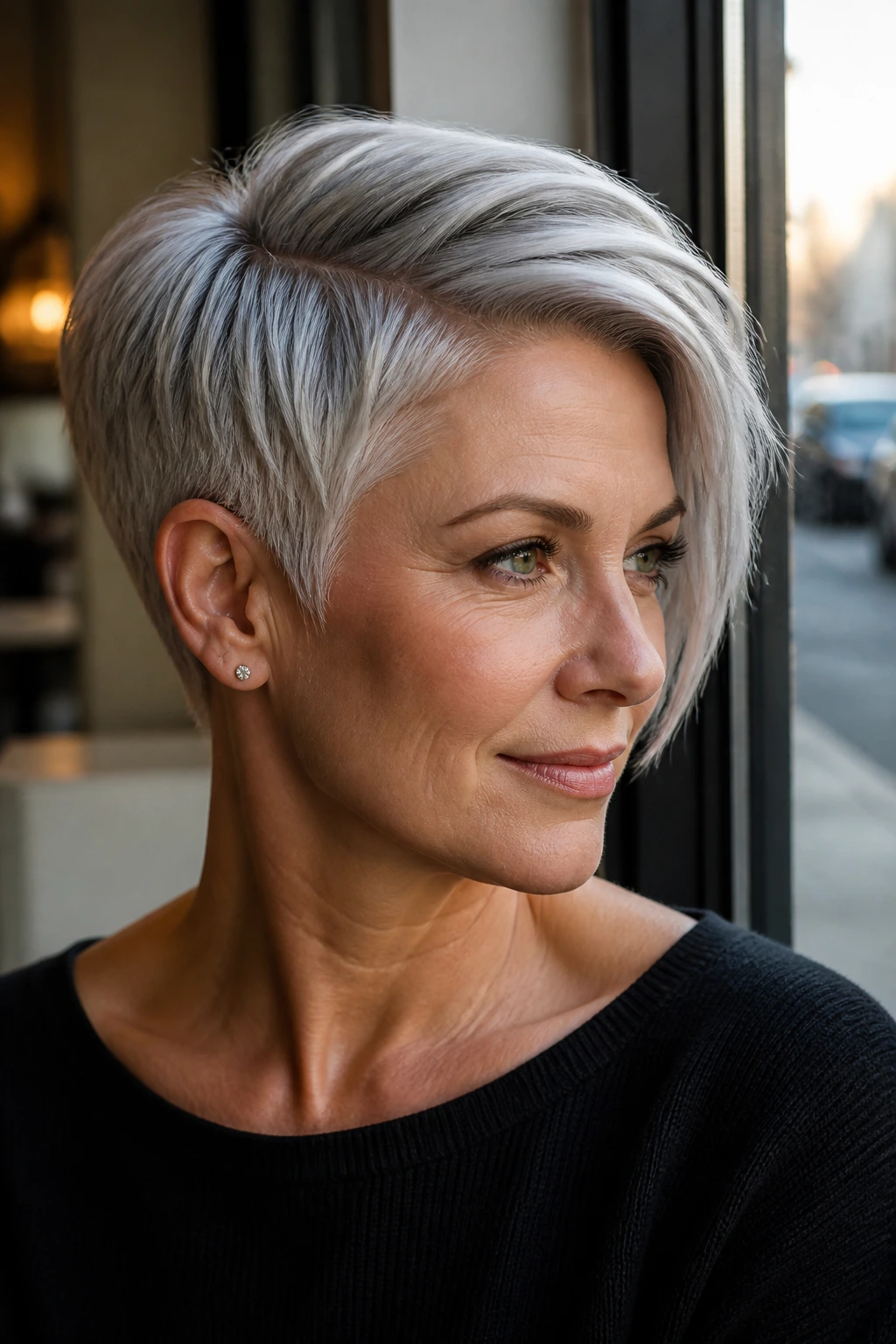
Asymmetry buys you movement instantly. One side sits shorter, the other falls a little farther across the face, and suddenly the style has direction instead of sitting in the middle like a cap. Fine hair loves that kind of visual trick because it gives the illusion of more hair where the line overlaps.
A deep part is the real star here. Push the hair away from its usual fall pattern and you get a lift at the roots that a fine head of hair rarely gives you on its own. The longer side can skim the cheekbone or land just under the eye, which adds shape without adding weight.
This is one of those cuts that looks best when it’s not too perfect. A little bend in the longer side keeps it from reading as stiff. If your hair is pin-straight and hard to move, a tiny round brush or a flat iron curve at the ends helps the shape hold without making it puffy.
10. Sleek Silver Pixie With a Slicked-Back Finish
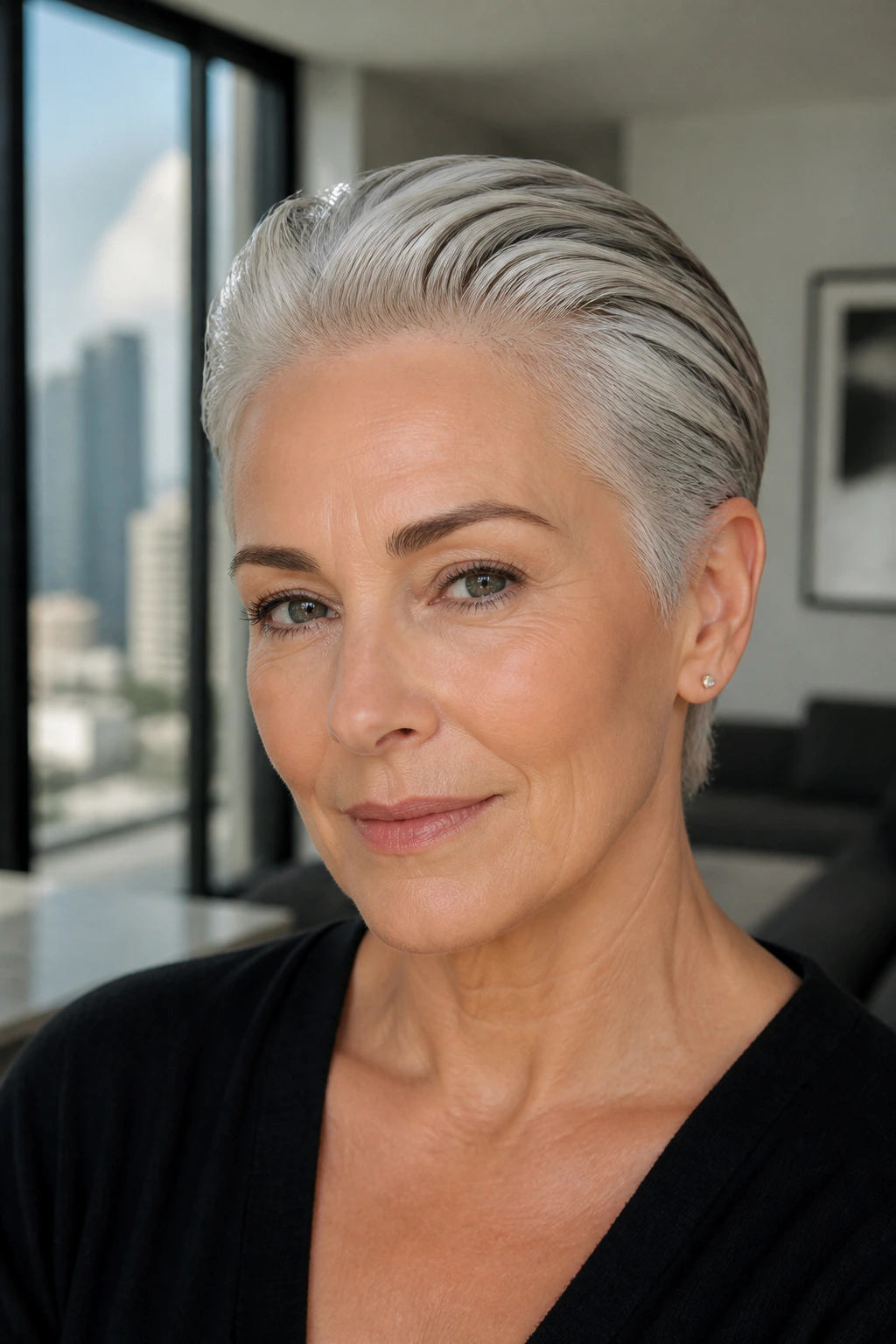
A slicked-back pixie is not the enemy of fine hair. In fact, it can be one of the cleanest ways to make a short cut look sharp when the strands are naturally smooth and a little translucent. The key is using the right amount of hold, not drowning the hair in gel.
Go light at the roots and a touch heavier through the top if you want that polished, swept-back effect. Fine hair gets greasy fast, so a small amount of gel or styling cream is enough. Too much and the style collapses into a shiny helmet. Too little and the hair pops apart.
This works especially well with silver shades that have a cool, icy finish. The sleek surface makes the color look deliberate and expensive without needing a lot of styling fuss. It’s a good choice for evenings, but it also holds up in a regular daytime setting if you keep the texture controlled.
11. Textured Crop Pixie With a Short Fringe
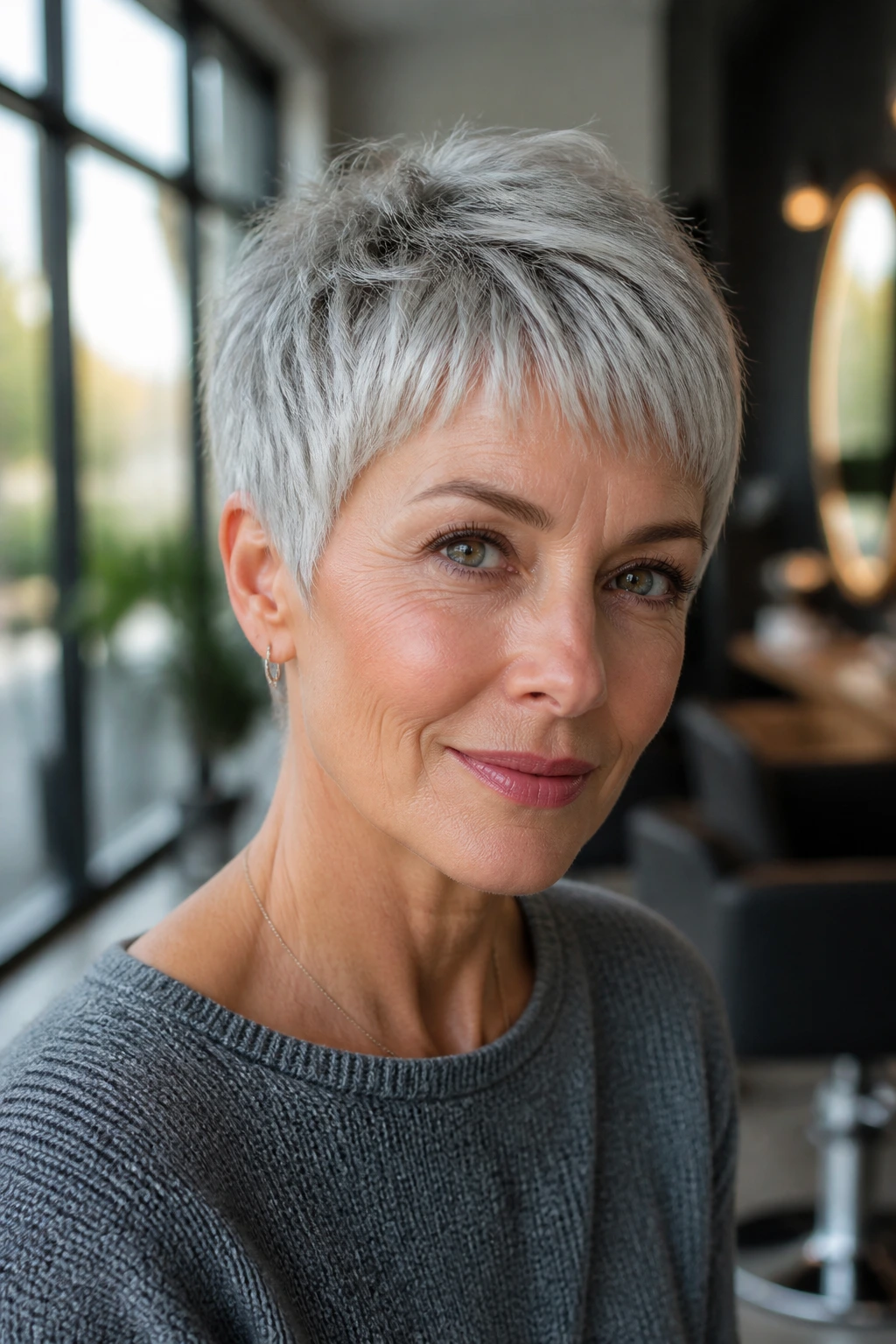
A textured crop sits somewhere between a pixie and a short crop, and that middle ground is useful for fine hair. The fringe stays short and broken, which keeps the front from hanging flat, while the top gets enough texture to avoid looking like a single sheet of hair.
What to Ask For
Tell the stylist you want piecey texture, not thinning. Those two things are not the same. Thin hair usually looks better when the hair is cut to move, not chewed up with heavy texturizing shears. Point cutting works well here because it leaves the ends lively without taking out too much bulk.
- Keep the fringe short enough to show the eyes, long enough to soften the forehead.
- Ask for soft texture through the crown so the hair doesn’t cling to the skull.
- Use a dry wax or texture spray at the roots, then push the front forward with your fingers.
This cut has attitude. A little. Not too much. It’s the sort of pixie that can look casual with a T-shirt and still feel finished with earrings and a collar that shows the neck.
12. Wispy Silver Pixie With Airy Bangs
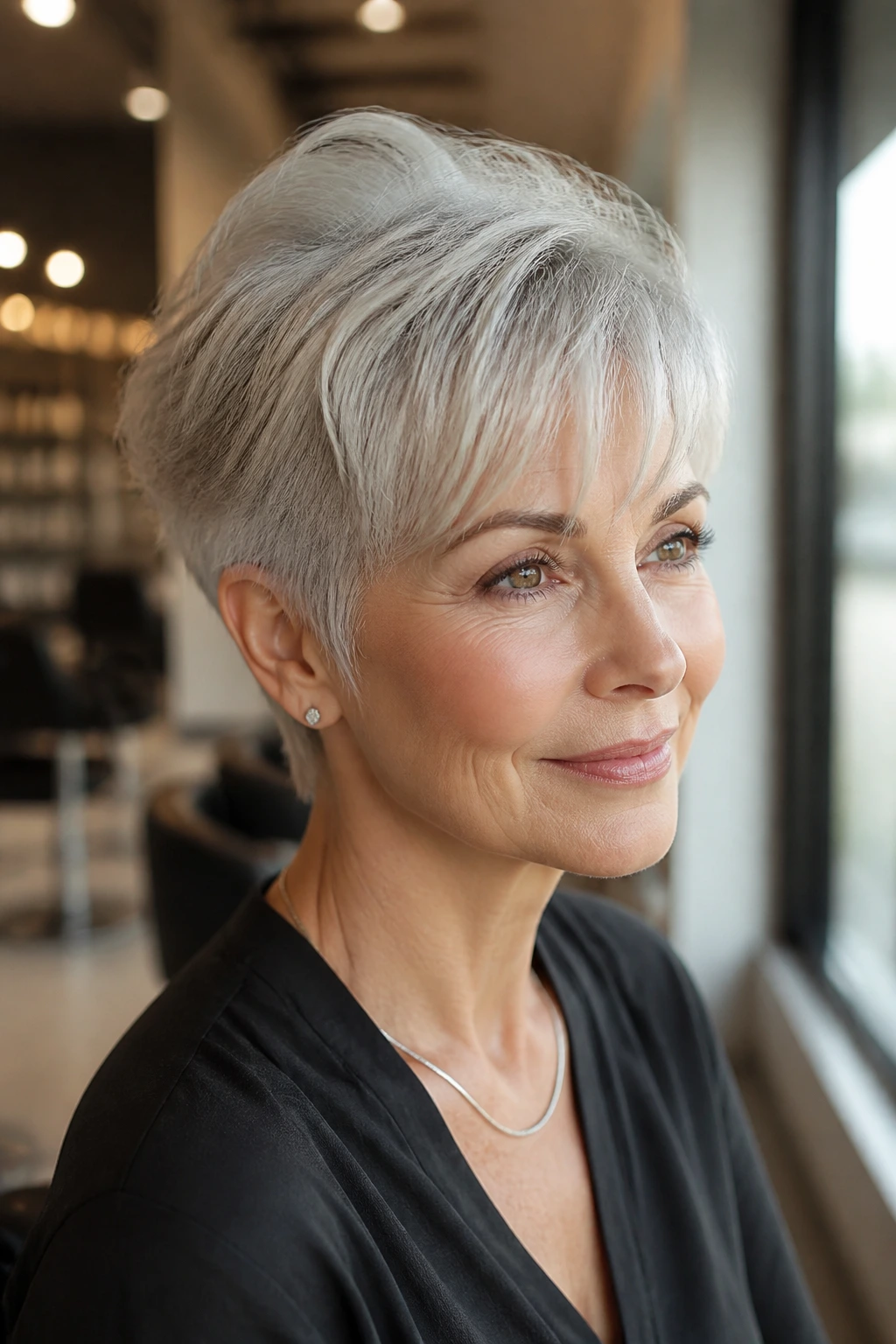
Wispy bangs are what keep a short silver cut from feeling severe. Fine hair can swing hard toward either too flat or too bare, and a light fringe helps split that difference. It gives the front a softer edge while letting the rest of the haircut stay short and clean.
The key word is wispy. Not see-through. Not sparse in a sad way. Wispy means the bangs are cut light enough to move and separate, but still present enough to frame the face. On silver hair, that softness matters because the cool tone can make blunt lines look harsher than they are.
This cut is a good fit if your forehead feels prominent or if you want a little camouflage around the hairline. It also works well when you don’t want to commit to a heavy fringe that needs constant styling. A quick mist of water, a finger comb, and you’re out the door.
13. Shaggy Silver Pixie With a Messy Top
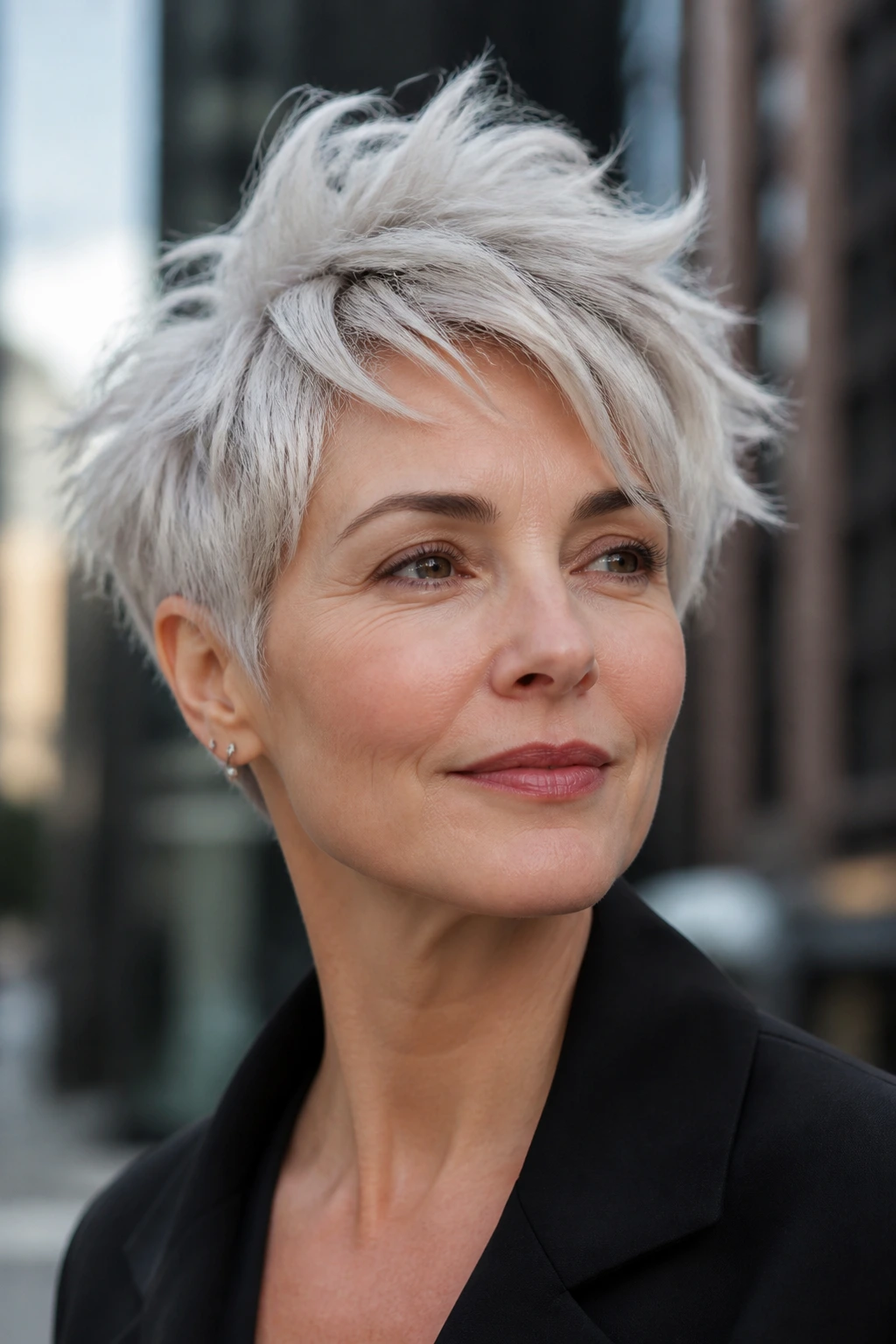
Shaggy does not have to mean sloppy. On a pixie, it means the top pieces are cut with enough irregularity to break up the surface and let the hair fall in separate, airy sections. Fine hair benefits because that separation creates movement where straight, flat layers would just sit there.
This cut suits people who hate the feeling of hair glued to the head. A shaggy pixie gives you lift without turning rigid. It also hides small changes in density, which is useful if one side of your hair grows faster or one crown area is thinner than the other.
Best Way to Wear It
Use a lightweight texture spray on dry hair, then pinch the top pieces into place. Skip thick pomades. They weigh fine hair down in a hurry. If you want a softer finish, use a blow-dryer with the nozzle aimed upward at the crown for about 30 seconds, then let the hair cool before touching it again.
The shape looks best when it feels a little uncombed on purpose. That’s the whole charm.
14. Silver Pixie With Soft Sideburns
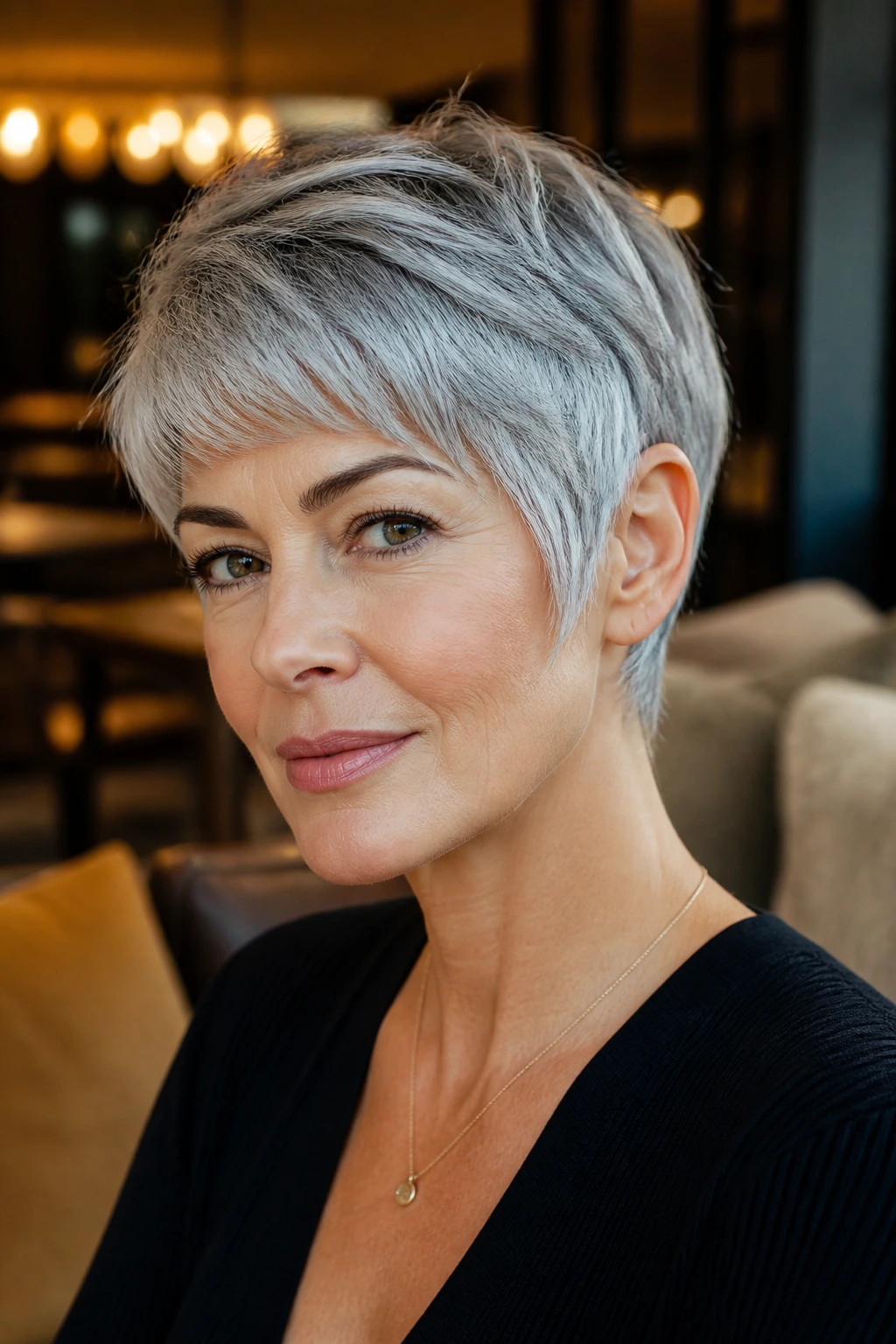
Ear-tucked styling changes the whole read of the cut. When the side pieces are long enough to brush the ear, the style feels more delicate and less severe, which can be a relief if your fine hair tends to look too stark in a super-short crop. Soft sideburns make that transition smooth.
This is a nice option if you want the haircut to play well with glasses, earrings, or a strong jawline. The hair around the temples is left a little longer, so it softens the face instead of cutting it off abruptly. That little bit of length also gives the illusion of more hair where the head usually feels narrow.
The best version keeps the nape neat and the crown lightly textured. That balance matters. If everything is equally short, the cut can look flat. If the temples are too heavy, the sideburns start stealing the whole show. Soft, tapered side pieces keep the focus on the eyes and cheekbones.
15. Silver Pixie With a Root Shadow
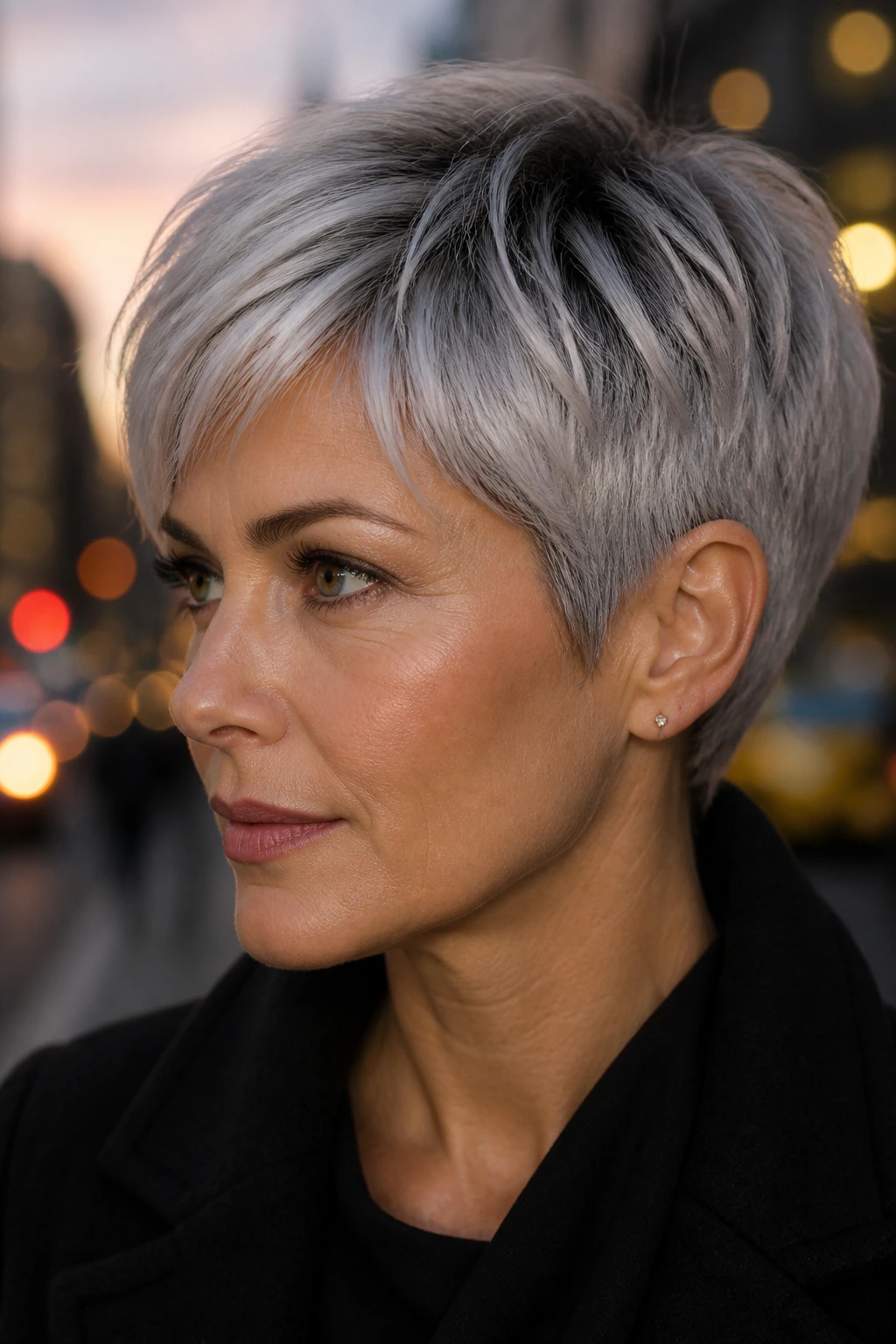
A root shadow is not a trick; it’s a density tool. On a silver pixie, a slightly deeper root keeps the scalp from showing too much through the top layers, and that makes fine hair look thicker at a glance. The contrast does a lot of work quietly.
This is one of my favorite ideas for people who love silver but hate how flat one-tone color can look on delicate strands. You keep the bright silver through the mids and ends, but leave the root a shade or two deeper. The eye reads depth. The hair reads fuller. It’s a small change that matters more than you’d think.
Color Detail to Ask For
- A root that is one to two shades deeper than the silver lengths.
- A soft blend, not a hard line.
- A cool or smoky tone at the root if brass tends to creep in fast.
It also stretches the time between toning appointments because the grow-out looks intentional rather than harsh. That alone is worth it for a lot of people. Nobody wants a silver pixie that needs perfect salon timing to stay decent.
16. Baby-Bang Silver Pixie
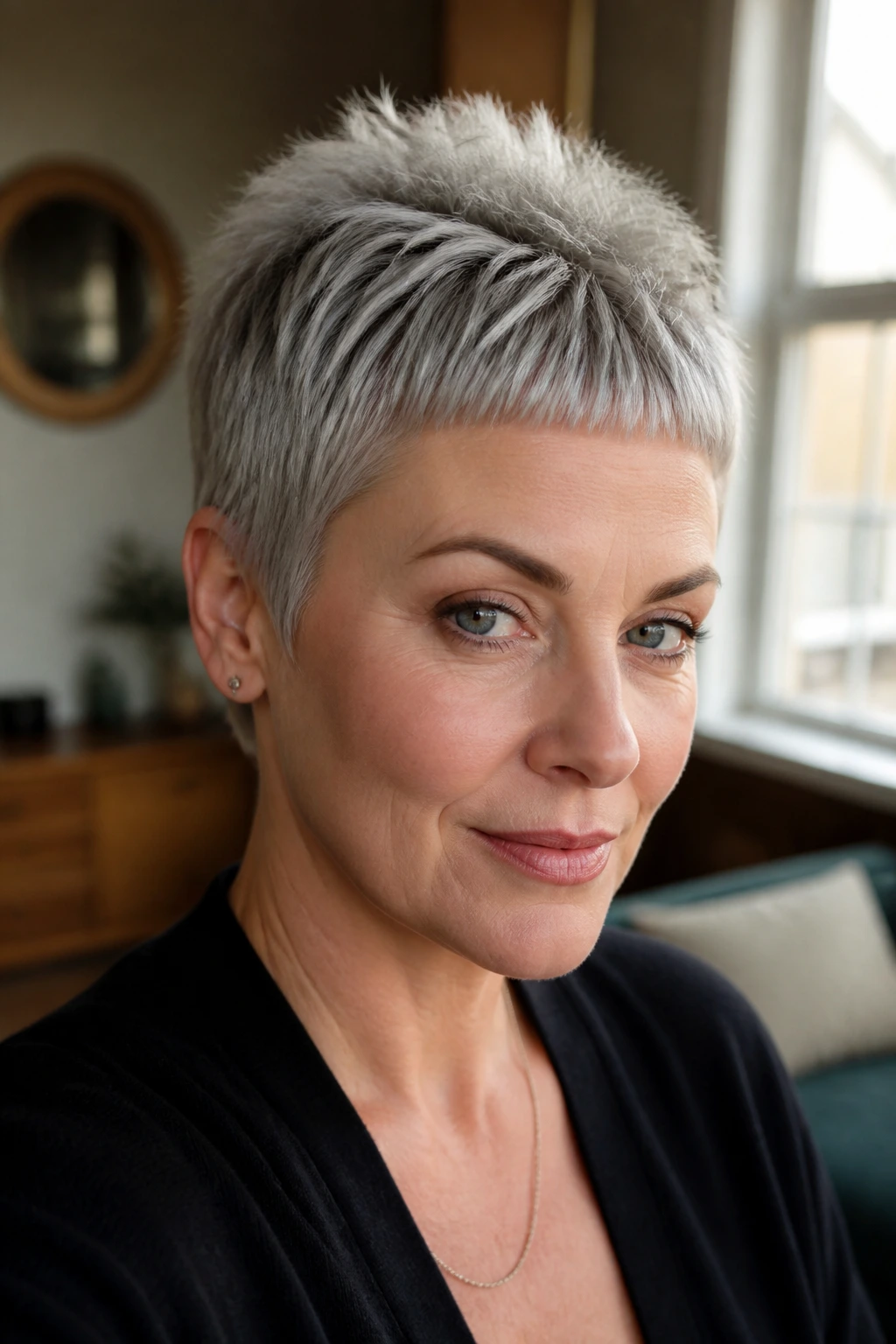
Baby bangs are not for the timid, but they can be excellent on fine hair. Because the fringe is short, the front of the haircut stops swallowing the face, and the rest of the shape can sit higher on the head. That gives the crown a little more visual room to breathe.
This cut works best when the bangs are precise, not choppy in a sloppy way. A short fringe on fine hair can go wispy fast, so the line needs enough intention to look neat. I’d avoid over-texturizing the bang area; it’s the one place where a cleaner edge often helps more than a frayed one.
If you have a small forehead or a sharp brow line, this style can be striking. If you’d rather soften everything, it may feel too exposed. That’s the trade-off. Baby bangs make a clear statement, and they do not hide much.
17. Tousled Silver Pixie With Bedhead Texture
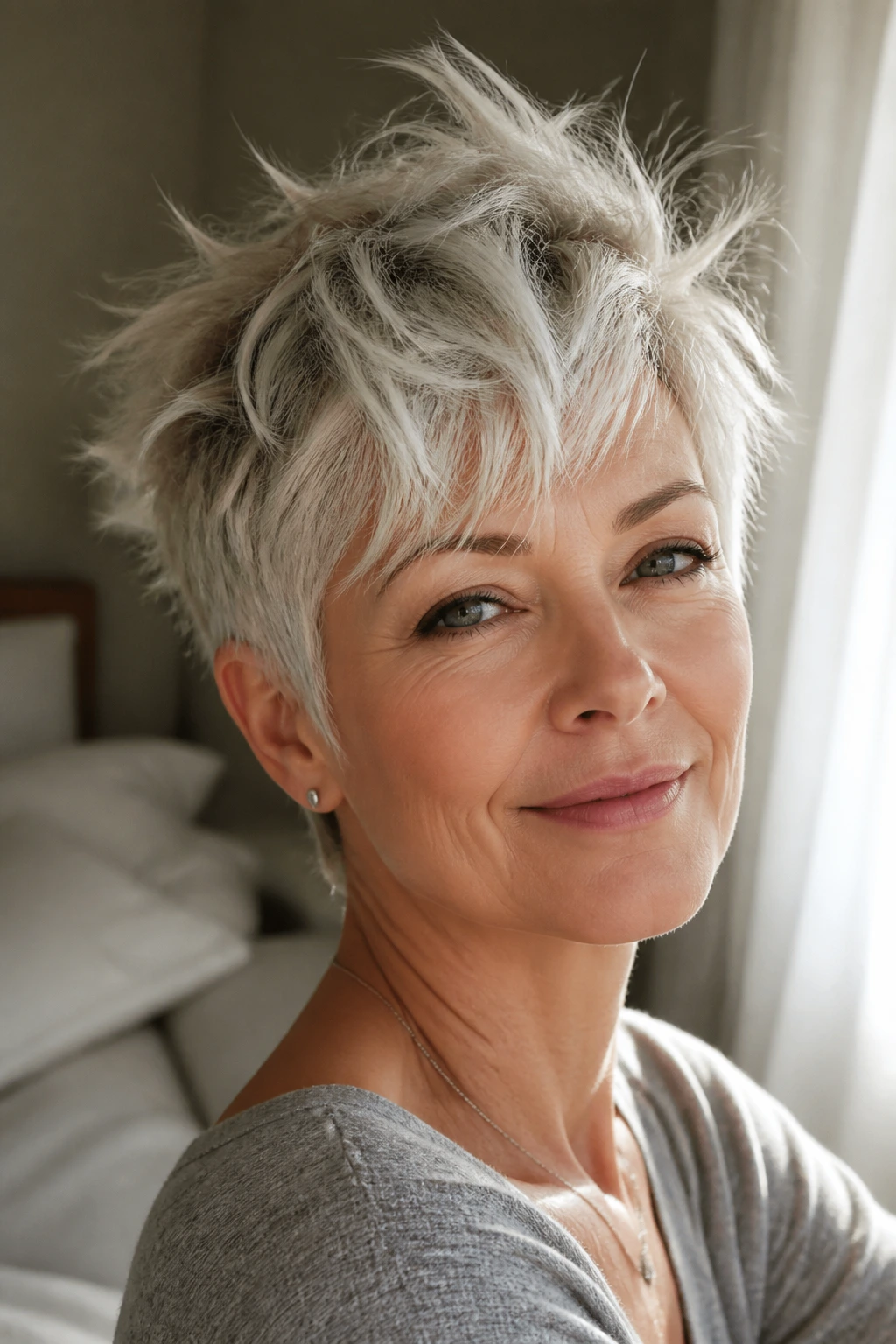
A tousled pixie works when the hair wants to separate. Instead of forcing every strand into place, the cut leaves enough uneven texture that the top can lift and fall in little sections. Fine hair often behaves better this way than when it’s chased into smooth perfection.
The styling matters here. Use a lightweight texture spray or a dry foam, then rough-dry the hair with your fingers until it’s about 80 percent dry. After that, twist a few top pieces around your fingertips and let them drop. You’re trying to encourage movement, not create curls. Big difference.
This style is forgiving on mornings when you’re short on patience. It also grows out well because the soft messiness hides the shift. If your hair gets greasy fast, this cut can still look decent on day two with a quick refresh at the roots and a tiny bit of dry shampoo.
18. Graduated Pixie Bob in Silver
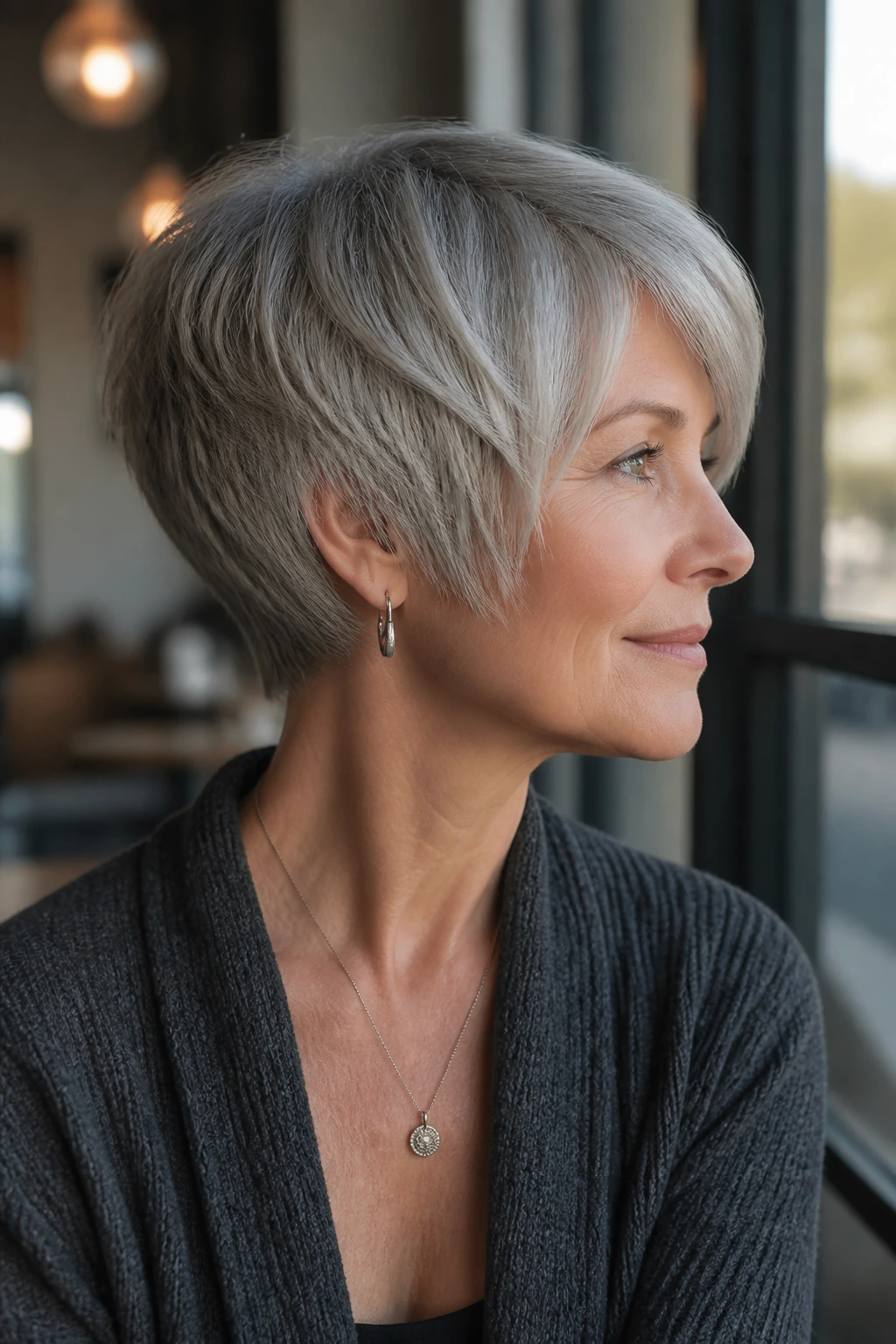
A graduated pixie bob gives you the illusion of more hair without giving up short length. The back stays shorter and slightly stacked, while the front hangs a bit longer, which adds shape around the face and keeps the silhouette from feeling too exposed. Fine hair often benefits from that extra structure.
This is a smart halfway point if you’re not ready for an ultra-short pixie. You still get the clean neckline and lightness, but the front has enough length to tuck, sweep, or smooth behind one ear. That extra inch or two makes a big difference in how the cut behaves.
It also takes silver color well because the longer front pieces show tone variation more clearly. If you like a smoky root, pearly mids, or a brighter face frame, this shape gives the color more room to show. A neat blow-dry with a paddle brush keeps the graduated lines from collapsing.
19. Swept-Back Silver Pixie With Height
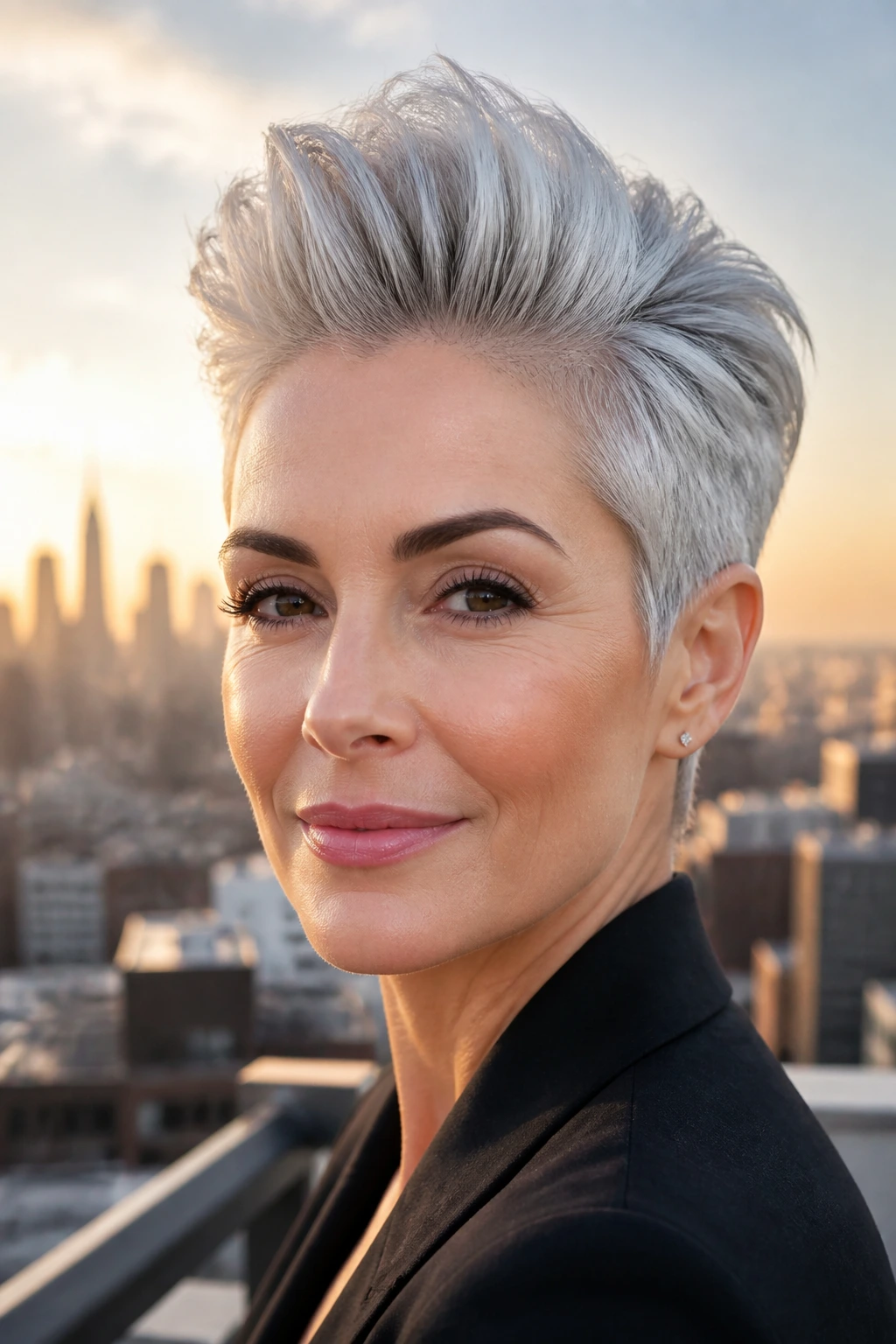
Swept-back height works when the hairline is clean and the crown needs help. Fine hair often loses body at the front first, so pushing the top backward with a little lift can make the whole cut feel taller and more balanced. It’s a flattering shape when you want the eyes to go up instead of out.
The trick is using memory and support. A bit of mousse at the roots, then a blow-dry directed back with a round brush or your fingers, helps the hair learn the shape. Once it cools, a light spray keeps it in place. If the front is stubborn, clip it up for a few minutes while it sets. Old-school, but it works.
This style has a crisp, almost tailored feel. It suits silver tones that lean cool and clean, and it plays nicely with strong brows or statement earrings. Not every pixie needs to be soft. Sometimes a little height is exactly the point.
20. Classic Soft Silver Pixie With Clean Edges
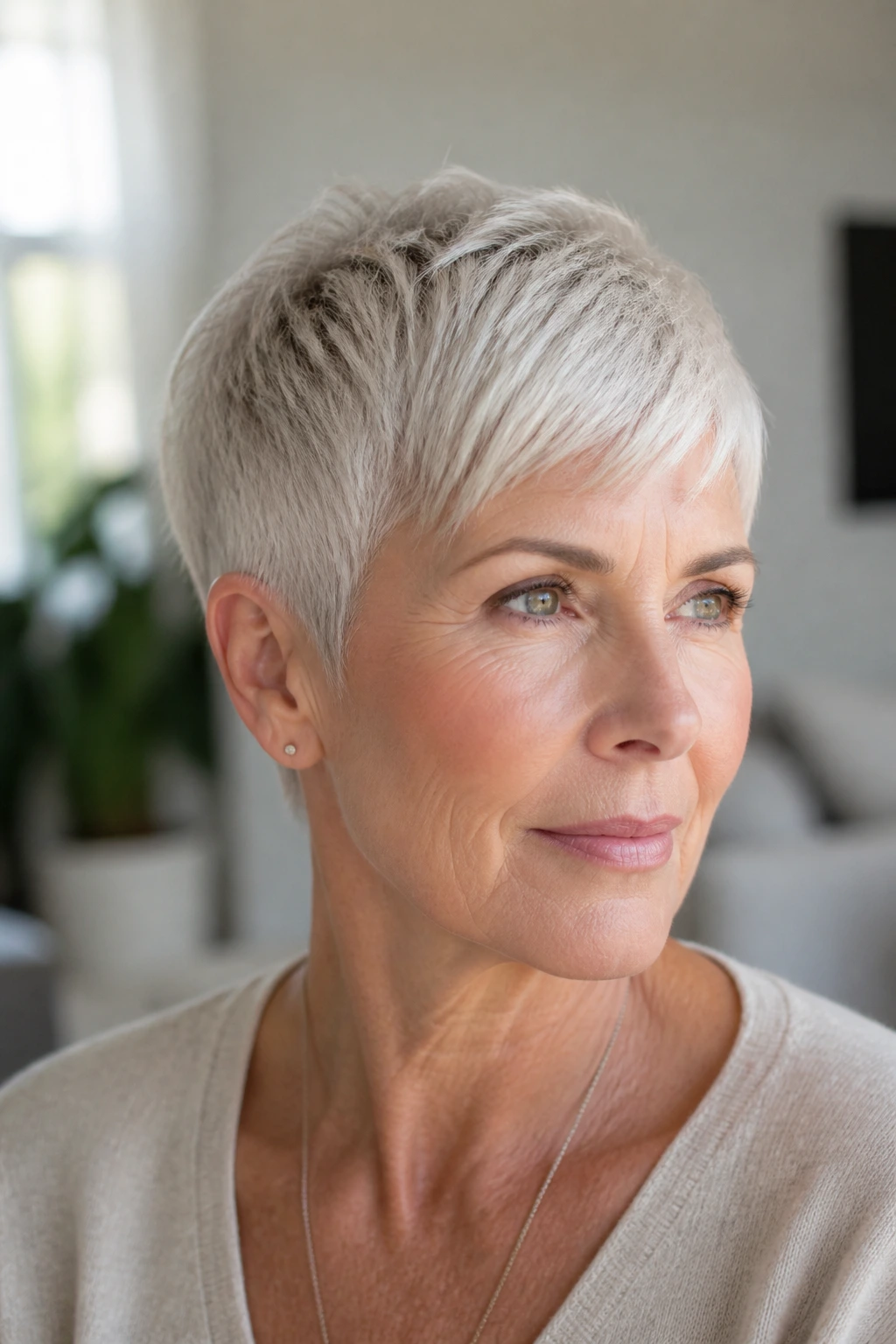
The classic soft silver pixie is the one I keep coming back to because it does so many things without asking for much. It has enough shape to give fine hair body, enough softness to avoid a hard helmet look, and enough structure to grow out without making you miserable.
This version usually keeps the sides close, the top lightly layered, and the front just long enough to brush in one direction or the other. No drama. No gimmicks. Just a clean shape that flatters the head and lets the silver color do its job. If your hair is very fine, very straight, or a little fragile, this is often the safest place to start.
It’s also the easiest cut to live with if you’re new to short hair. You can wear it neat with a side part, rough it up with texture spray, or smooth it down with a dab of cream. It doesn’t demand a whole mood. It just needs a good cut, a light hand with product, and the willingness to keep the edges tidy so the shape stays crisp.
