



A round face does not need more width from a haircut. It needs direction.
That is why short wavy pixie cuts for round faces can work so well when the shape is handled with a little care. The cut should lift the eye, open space around the cheekbones, and keep the sides from puffing out where the face is already fullest. Waves help, but only when they are placed with intention.
A good pixie on this face shape is never just short hair. It is a set of decisions: where the fringe falls, how much height sits at the crown, how tight the nape feels, and whether the wave is encouraged or flattened. Miss one of those details and the whole thing can slide from sharp to puffy fast.
I like pixies that leave a touch more length on top, especially when the hair bends naturally instead of lying flat. That little bit of movement keeps the style alive, and it keeps the face from looking shorter than it really is. Once you know where the volume should live, the rest gets easier.
1. Short Wavy Pixie Cuts for Round Faces: Side-Swept Textured Cut
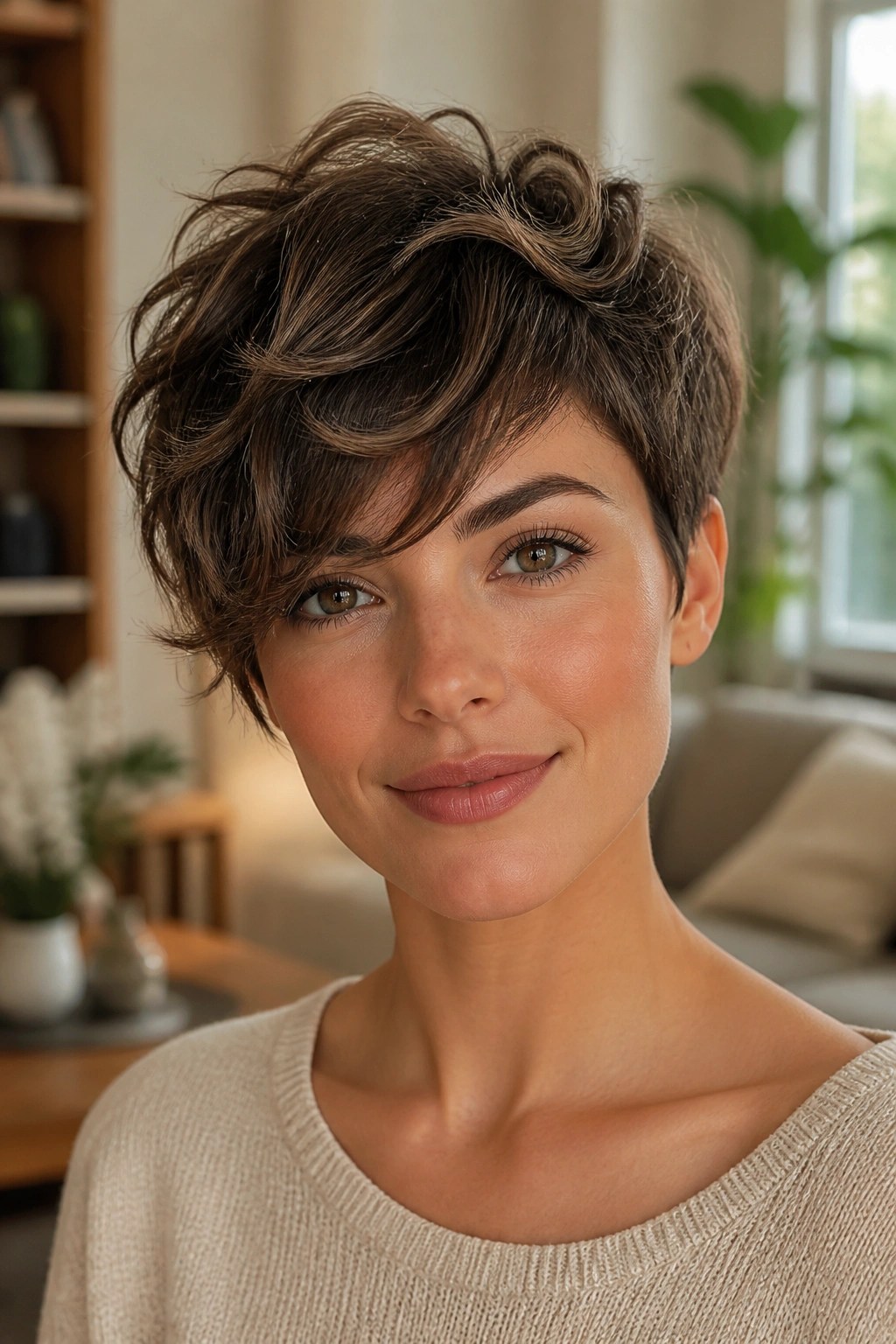
This is the cut I reach for first when someone wants a pixie that feels friendly, not severe. The diagonal line of a side-swept fringe does a lot of quiet work on a round face. It pulls the eye across the forehead instead of stopping it dead in the middle.
Why the diagonal line helps
A side-swept fringe softens the widest part of the face without hiding it. That matters. You want movement that trims the visual width, not bangs that sit straight across and chop the face into a shorter box.
Ask for 3 to 4 inches of fringe, 2.5 to 3.5 inches on top, and tapered sides that stay close to the head. If your waves are loose, point cutting helps the fringe fall in soft pieces instead of one heavy sheet. If your waves are tighter, leave the top a touch longer so the bend has room to form.
- Best for medium-density hair that bends easily
- Works well with a deep or off-center part
- Style with a pea-size mousse and finger-drying
- Ask for the fringe to hit one eyebrow, not both
Keep the fringe grazing one brow, not sitting in a straight line. That tiny difference changes the whole face.
2. Crown-Lift Pixie With Tapered Sides
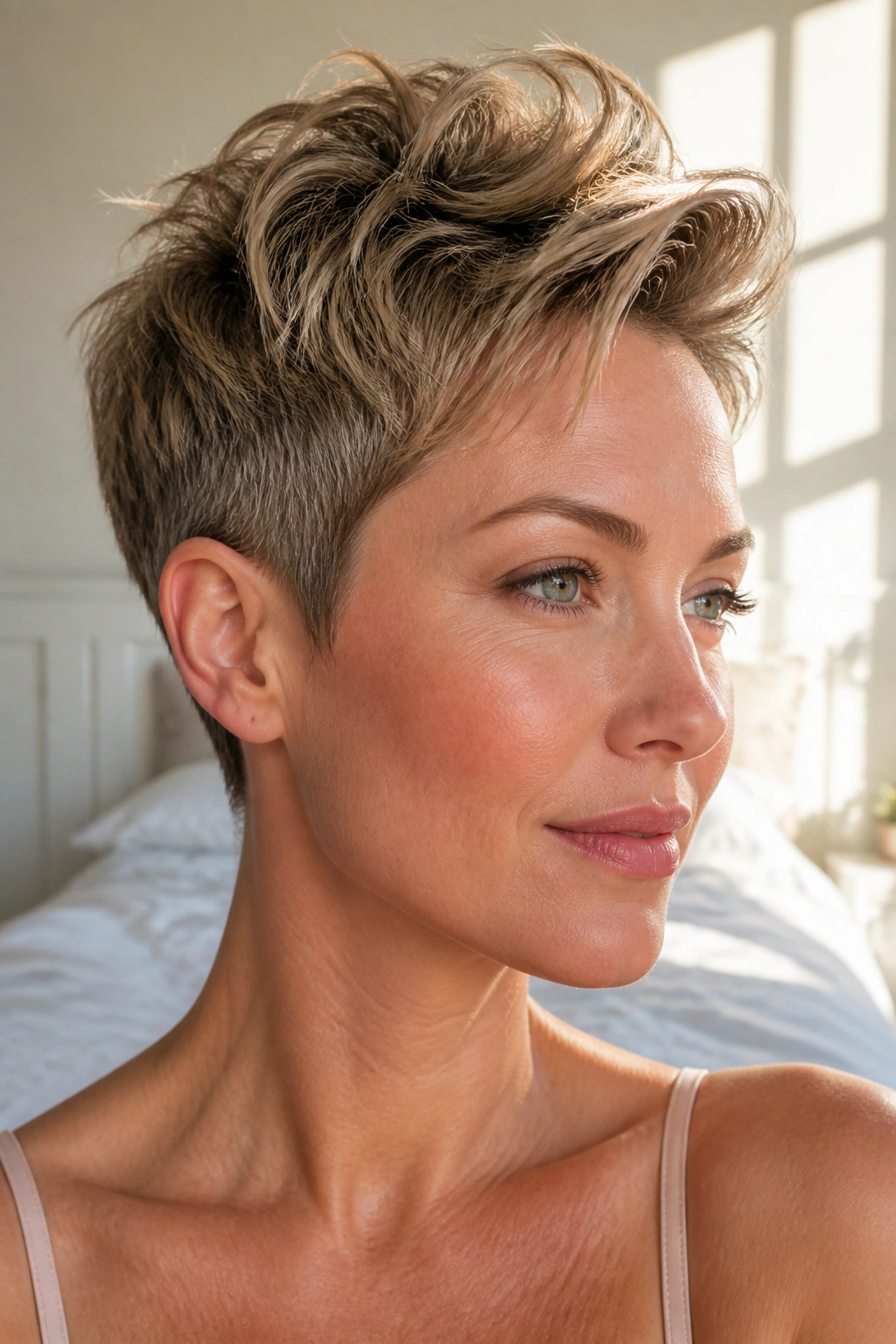
Can a pixie make the face look longer without looking dramatic? Yes, and this is how you do it. Put the lift at the crown, keep the sides close, and let the top carry the shape.
The reason this works is simple: round faces read wider when the volume sits level with the cheeks. Move that volume upward and the silhouette stretches. A little height above the crown gives the face more vertical space, even if the cut itself stays short.
I like this version on fine to medium hair because it does not need a huge amount of product. A light root spray, a quick blow-dry with the fingers, and a small dab of matte paste at the ends is usually enough. If you use too much cream, the lift collapses and the whole point of the cut disappears.
Ask your stylist for extra length through the crown, clean taper at the temples, and softer weight near the front hairline. That keeps the top airy and stops the sides from puffing out near the cheeks. The result feels neat, but not rigid.
3. Choppy Pixie With Piecey Ends
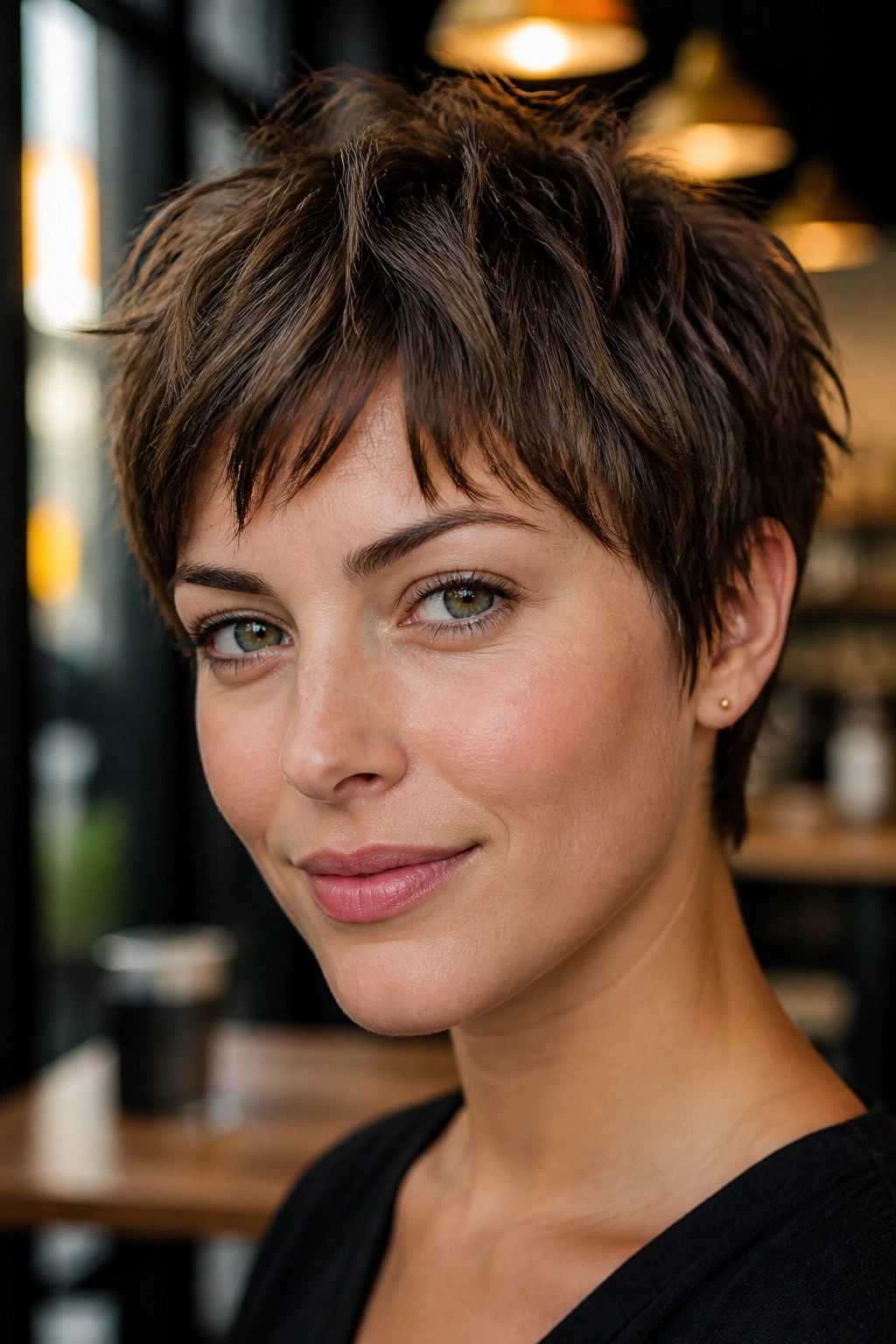
If your waves puff up the minute the air gets damp, a blunt pixie will fight you. Choppy ends break that problem up. They create little shifts in length, so the hair moves instead of forming one round block.
What to ask for in the chair
This cut depends on texture, not perfection. Tell your stylist you want point-cut ends, a broken perimeter, and short layers on top that can separate into pieces. Razor work can help, but only if the hair is dense enough to handle it. Too much thinning on fine hair turns the whole style wispy in a bad way.
The styling part is easy if you keep your hands out of it. Work a small amount of sea salt spray into damp hair, then scrunch and let it dry until it feels about 80 percent dry before you shape the pieces with your fingers. A little matte paste on the tips can sharpen the separation.
- Best on hair with natural bend
- Strong choice for people who hate a polished finish
- Avoid heavy shine products; they collapse the texture
- Use your fingertips, not a brush, once the hair starts to dry
The whole point is broken shape. If every strand lies flat, you lose the charm of the cut.
4. Undercut Pixie With Loose Waves
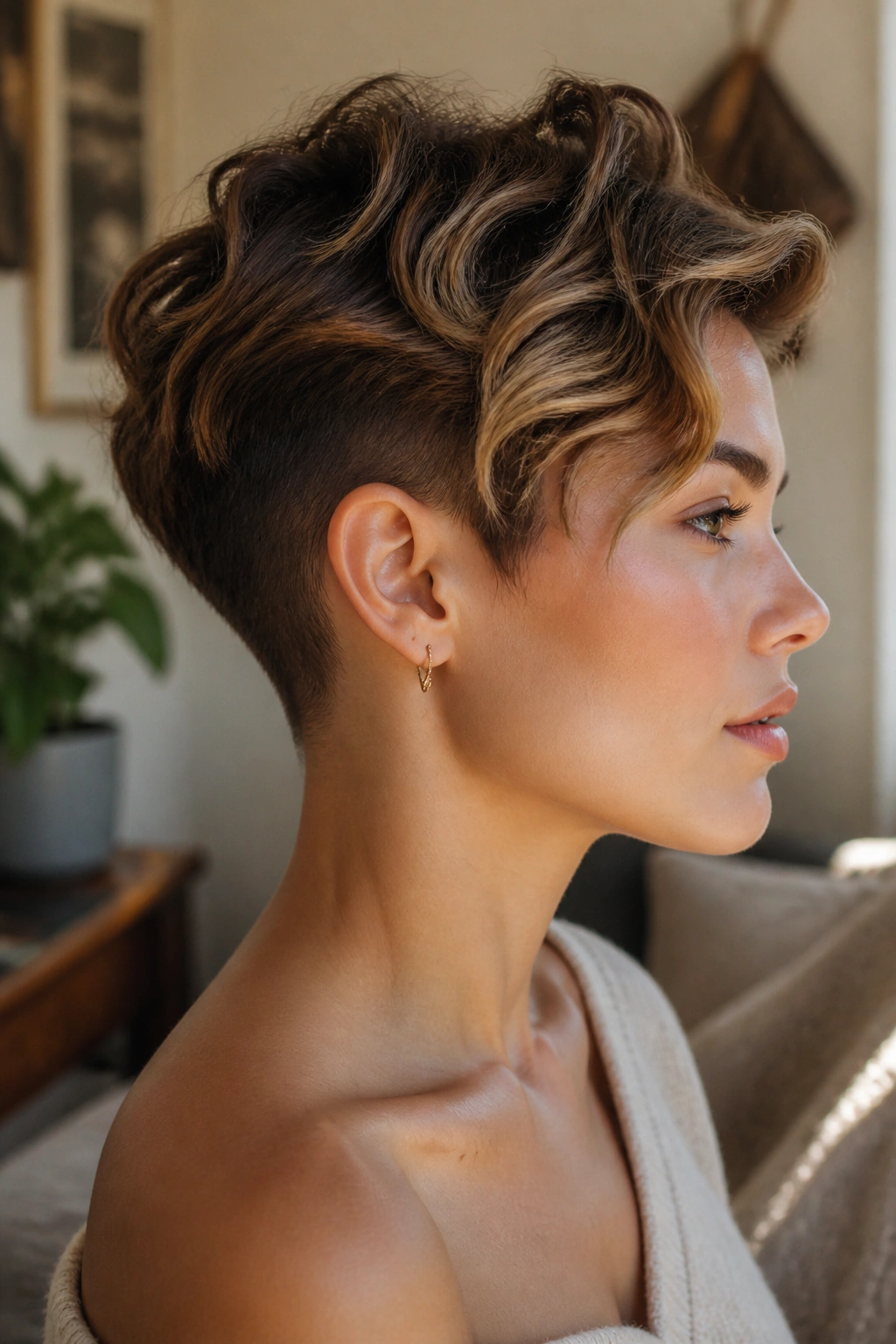
An undercut does not have to look hard or edgy. In a wavy pixie, it can be almost invisible from the front and still do the heavy lifting underneath. That hidden cleanup is what keeps a round face from looking boxed in.
The trick is placement. Keep the undercut low enough to clean the nape and the area behind the ears, then leave the top soft and bendy. When the sides sit flatter, the face looks longer and the hair around the cheeks stops adding width. You get contrast without bulk.
Where the undercut should sit
- Nape: very short, often under 1/2 inch
- Behind the ears: cleaned out enough to remove puff
- Top: 3 to 4.5 inches so the waves still move
- Front: long enough to tuck or sweep across the forehead
This cut is one of my favorites for thick hair because it removes weight where it matters most. It also grows out more gracefully than people expect. The top can stay pretty for weeks even after the undercut starts softening.
5. Long-Top Pixie With Curtain Fringe

A long top gives you options, and options are useful when you are not ready to commit to a very cropped look. The curtain fringe makes this version especially good for round faces because it opens in the middle and falls away from the cheeks instead of sitting across them.
There is a nice looseness to this cut. The top can be pushed forward on one day, tucked back on the next, or split down the middle when you want a softer frame around the eyes. That flexibility matters if your waves are unpredictable, because the style does not depend on one exact parting to look right.
I like the fringe to sit somewhere between cheekbone and eyebrow length, not at the chin and not fully micro-short. Anything too long starts acting like a bob. Anything too short loses the curtain effect and turns blunt. The sweet spot is a fringe that bends in two pieces and leaves a small opening at the center.
Use a light cream on damp hair, then rough-dry it with your fingers or a small brush. The goal is movement, not a perfect bend.
6. Feathered French Pixie
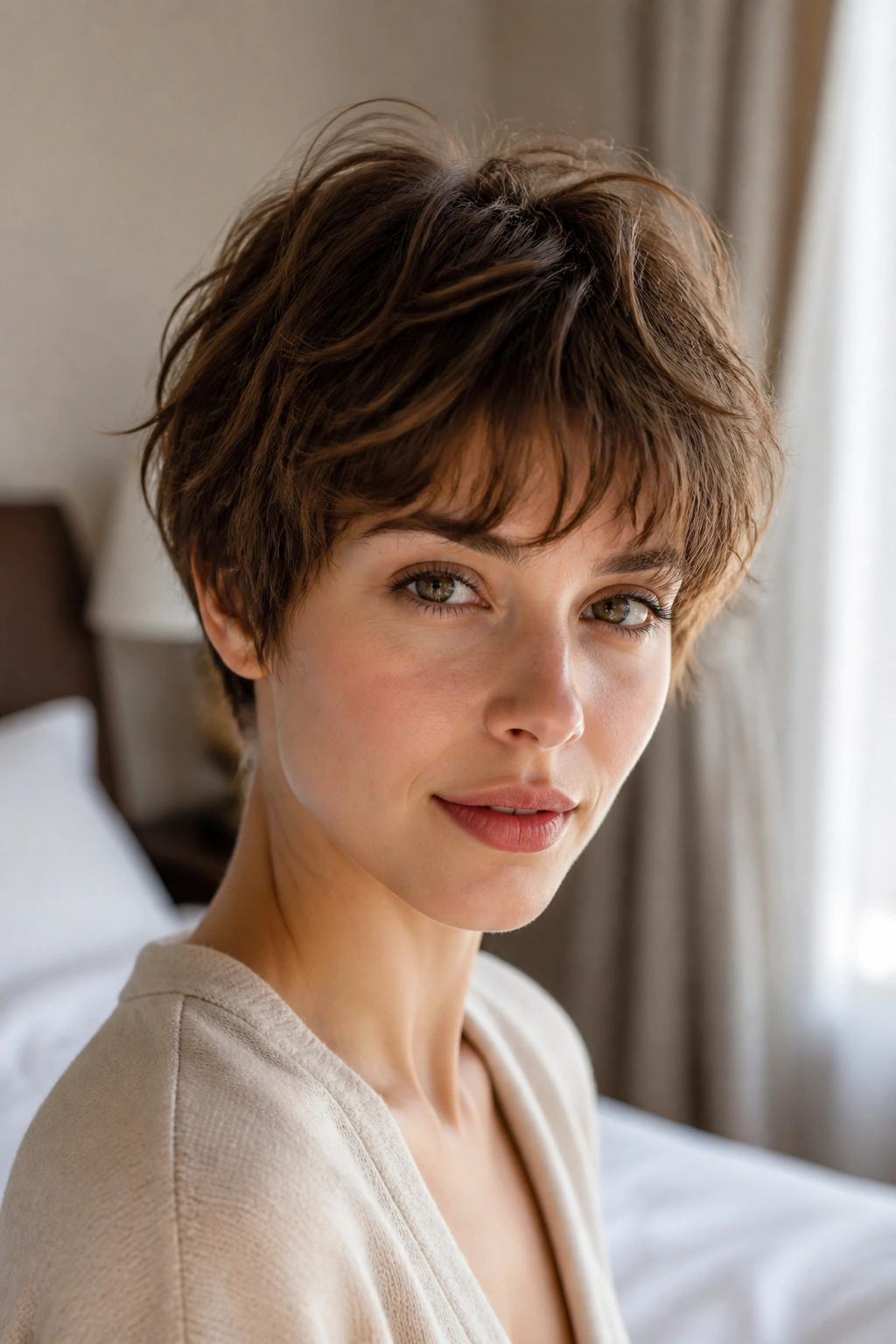
A blunt baby fringe and a feathered French pixie are not the same thing at all. One can feel heavy fast on a round face. The other stays airy, broken, and a little lived-in.
This cut works because the front is soft instead of dense. The hair is feathered through the fringe and around the temples, which keeps the face open. There is still a short, cropped feel, but the edges are light enough that the cheek area does not get crowded.
Who this works best for
If your forehead is medium to short, this is a smart choice. It gives shape without swallowing the face. If your waves are loose and your hair has some natural bend, even better. The texture keeps the feathering from looking too neat.
Ask for micro-length fringe pieces around 1.5 to 2 inches, soft layering through the top, and light tapering around the ears. Skip anything too thick at the brow. That is where the cut can go from chic to boxy in a hurry.
It is a nice cut for people who like hair that looks like it was dried in five minutes and never fussed with again. Because sometimes that is the whole appeal.
7. Asymmetrical Pixie With a Deep Side Part
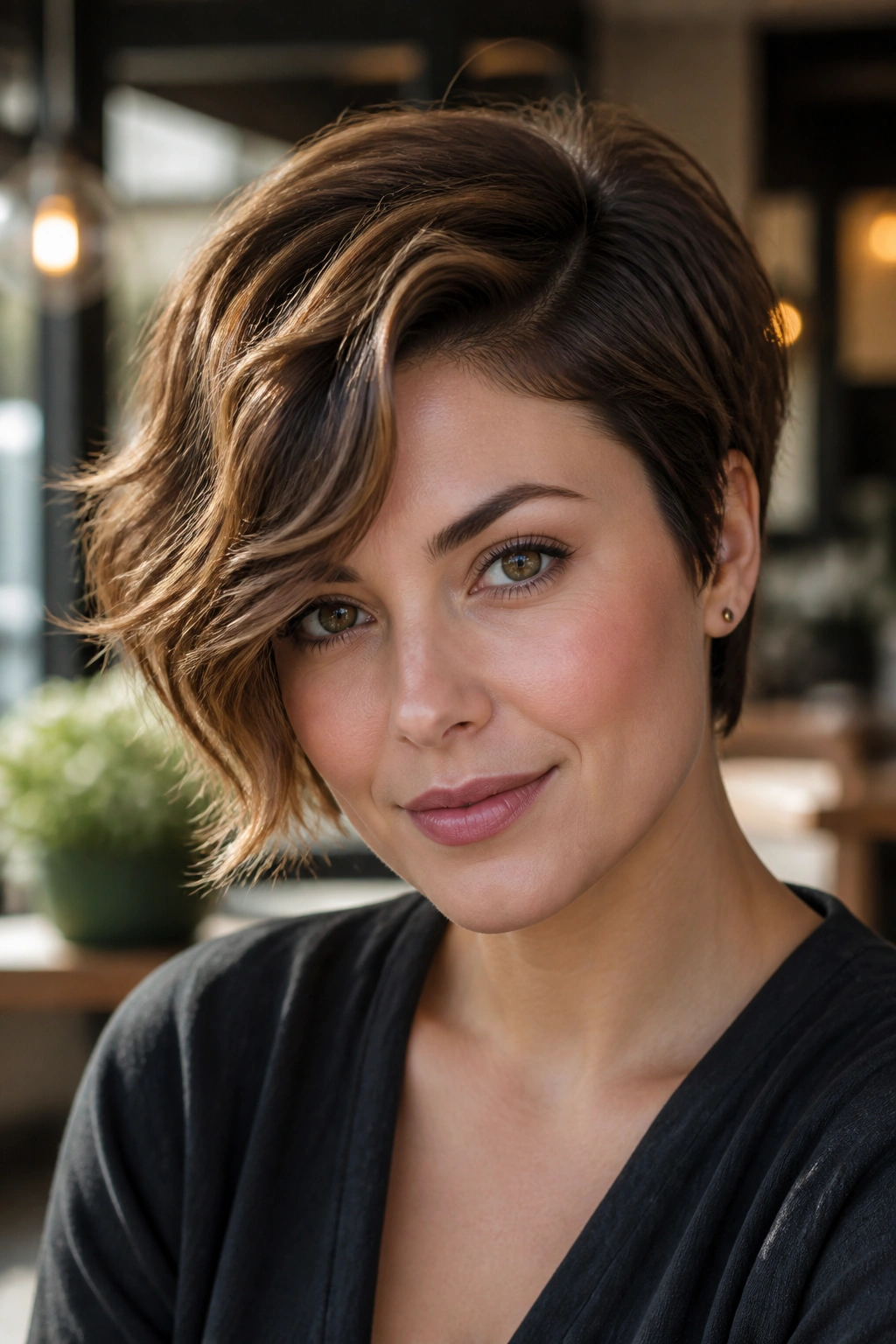
A deep side part is one of the easiest ways to make a round face look leaner. Add asymmetry, and the whole cut starts moving in a direction instead of sitting evenly on both sides of the head.
The longer side should skim the cheekbone or just graze the outer edge of the eye. The shorter side can stay close to the temple and ear. That difference creates a diagonal line that breaks up the roundness of the face without trying too hard. It feels modern, but not rigid.
What makes the asymmetry work
- Long side: enough length to bend across the forehead
- Short side: tight enough to slim the profile
- Part: deep enough to create a clear line, not a tiny shift
- Texture: soft and broken, never stiff
This style is especially useful if one side of your face feels fuller than the other. The longer side balances that out in a way that looks natural. I also like it with glasses, because the asymmetry keeps the frames from taking over the whole face.
8. Feathered Pixie With Tucked Ears
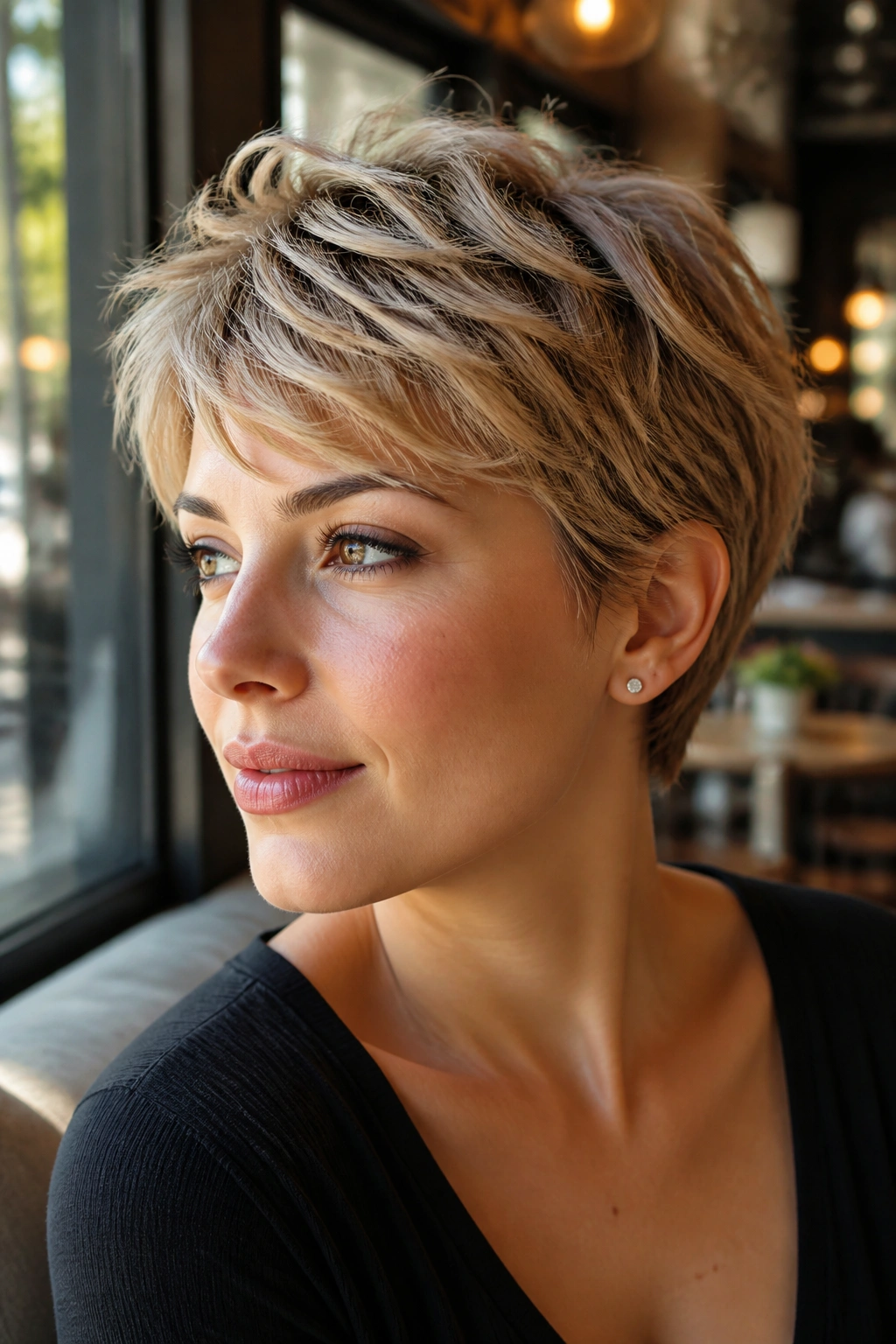
Picture hair that brushes the ears, flips a little at the ends, and never sits flat against the cheeks. That is the charm of this cut. It has enough softness to feel feminine without building width where you do not want it.
Feathering does the actual shaping work here. It removes chunks of bulk from the side layers and keeps the edges light, so the hair falls in thin, movable sections. Around a round face, that is useful because thick side pieces can make the jaw and cheeks look fuller than they are.
A few details matter:
- Keep the ear area tapered, not blunt
- Leave the top slightly longer so the shape rises upward
- Ask for feathering around the temple, not just the crown
- Use a tiny bit of light cream on the ends, nothing heavy
This is the kind of cut that looks polished even when it is a little messy. The shape holds because the sides stay neat. The softness keeps it from feeling too severe.
9. Pixie Bob Hybrid With Soft Waves
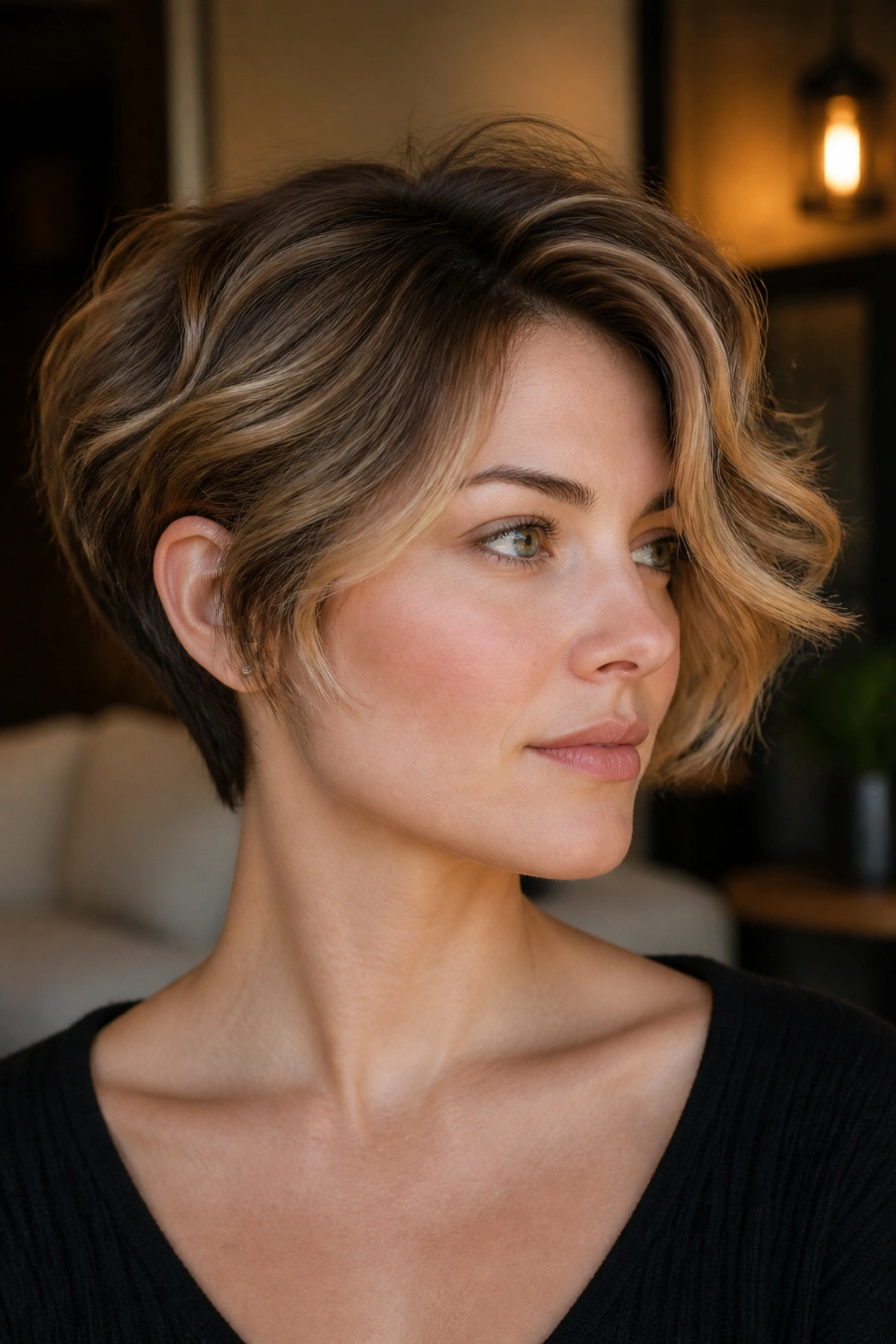
If you want short hair but not too short, the pixie-bob hybrid is a very sensible middle ground. The front has more length than a classic pixie, which gives the face a longer line and lets the waves fall in a softer sweep.
The key is to keep the nape tighter than the front. That contrast is what keeps the cut from turning into a mushroom shape. Around a round face, a fuller nape and full sides are the fastest route to extra width. A clean back solves that before it becomes a problem.
How to wear it
Wear this cut with a slight side part or a loose off-center part. Center parts can work, but only if the front pieces are light and the top has lift. If the hair is dense, ask for internal removal of weight so the waves do not swell outward at the sides.
This is also a good cut if you want a style that can grow out without looking awkward right away. It buys you time. And sometimes that is what people need most.
10. A Nape-Tapered Take on Short Wavy Pixie Cuts for Round Faces
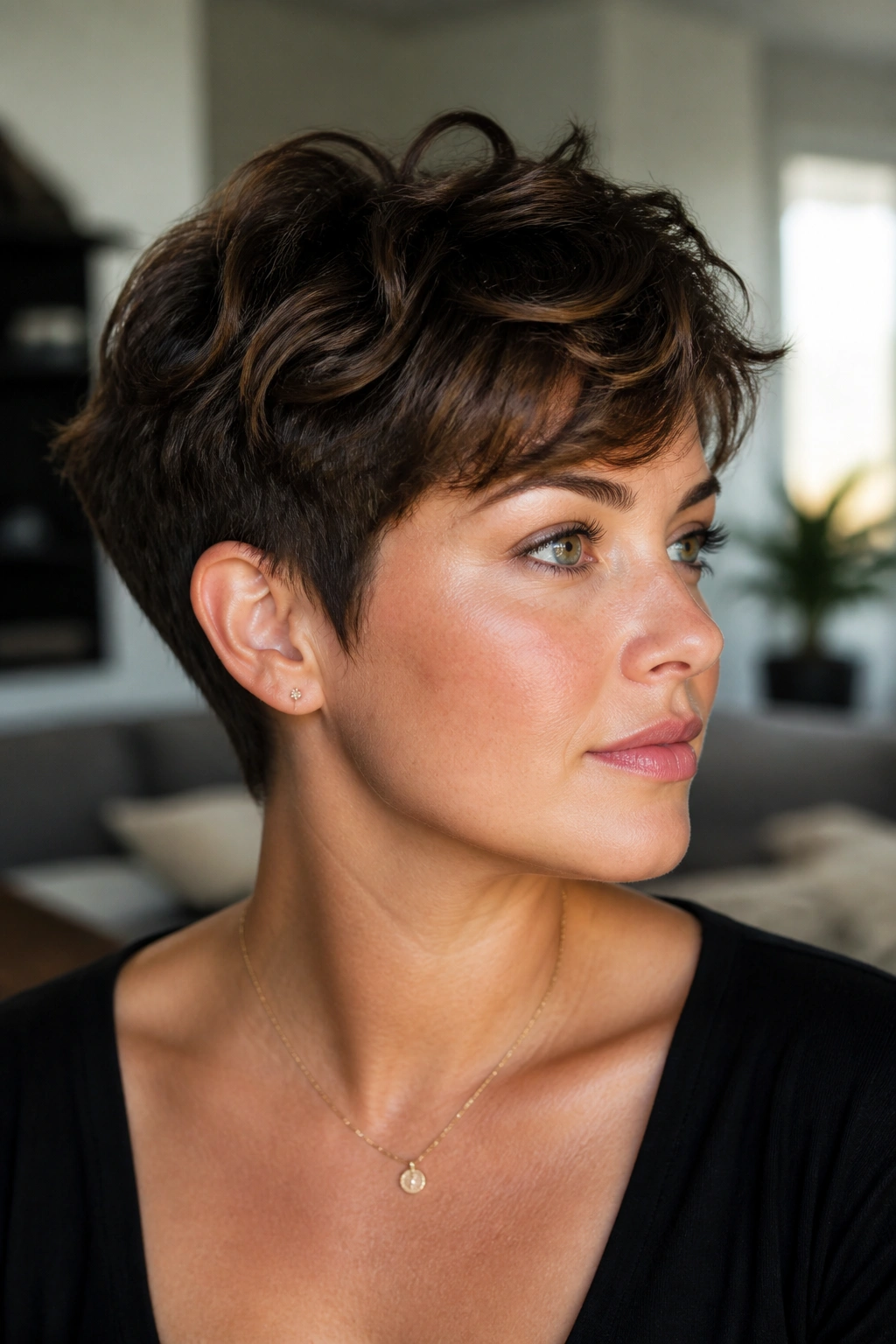
If you want the cleanest silhouette for a round face, start at the nape. A tight nape makes the whole haircut feel lifted, and that lift changes how the eye reads the face. It sounds small. It is not.
This version keeps the sides neat and the crown softly raised, so the haircut never sits heavy at the bottom. That matters because the lower half of the face is where roundness can get emphasized if the hair flares out there. A short, tapered nape keeps the weight in the right place and lets the top do the flattering work.
I would ask for a low taper at the neck, soft layers through the crown, and enough length on top to encourage wave, usually 2.5 to 4 inches. If your hair tends to spring up, leave the top a little longer than you think you need. Wavy hair shrinks, and short hair with a lot of bend always looks shorter once it dries.
This is one of those cuts that looks tidy in the morning and still makes sense by evening. Not fussy. Just clean.
11. Wet-Look Wavy Pixie
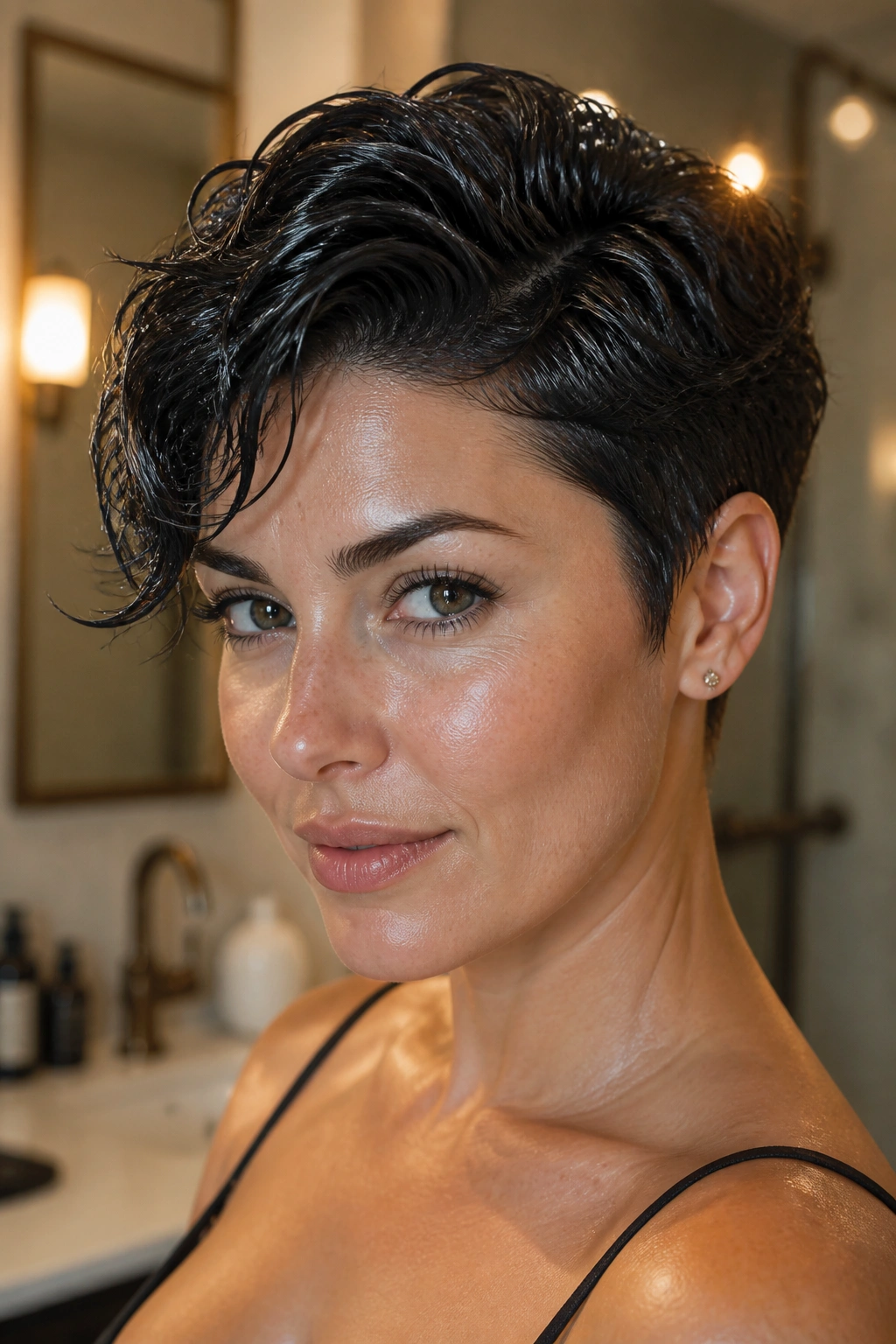
Can a wet-look pixie flatter a round face? Yes, if you keep the shine narrow and the shape lifted. The trick is not to slick the sides outward. That would widen the face. Instead, keep the hair close at the temples and push the movement slightly up and back.
A wet-look finish gives short waves a clean line that can feel very fresh on a round face. It also keeps frizz down, which matters if your wave pattern tends to puff when you add product. Use a gel-cream blend or a light gel, then comb the hair into place while it is damp and still easy to shape.
The front can be brushed back from the forehead or swept in a small diagonal wave. I prefer the diagonal. It keeps the face from feeling too open and gives the eyes a frame without turning the cut stiff. If the sides start to balloon, press them closer to the head with your palms and a touch more product.
This is not a daily style for everyone. But when it works, it looks clean in a way that regular texture sometimes does not.
12. Razor-Cut Shaggy Pixie

Some wavy hair wants a little roughness in the cut. A razor-cut pixie gives it that. The ends feel softer and more broken, which helps the waves fall into loose pieces instead of one solid shape.
What to ask your stylist
- Use a razor only if the hair is dense enough to handle it
- Keep the crown layered, not thinned to bits
- Leave the perimeter soft around the cheeks
- Avoid too much texture at the widest part of the face
This cut is especially good when your hair has movement but also a little frizz. The rough edges keep the style from looking overfitted. On a round face, that looseness is useful because it breaks the outline rather than tracing it exactly.
I would not choose this for very fine hair unless the stylist is careful. Too much razor work can make the ends look stringy. But on medium or thick wavy hair, it can be one of the easiest pixies to live with. Put in a bit of mousse, scrunch, and leave it alone.
13. Swept-Back Quiff Pixie
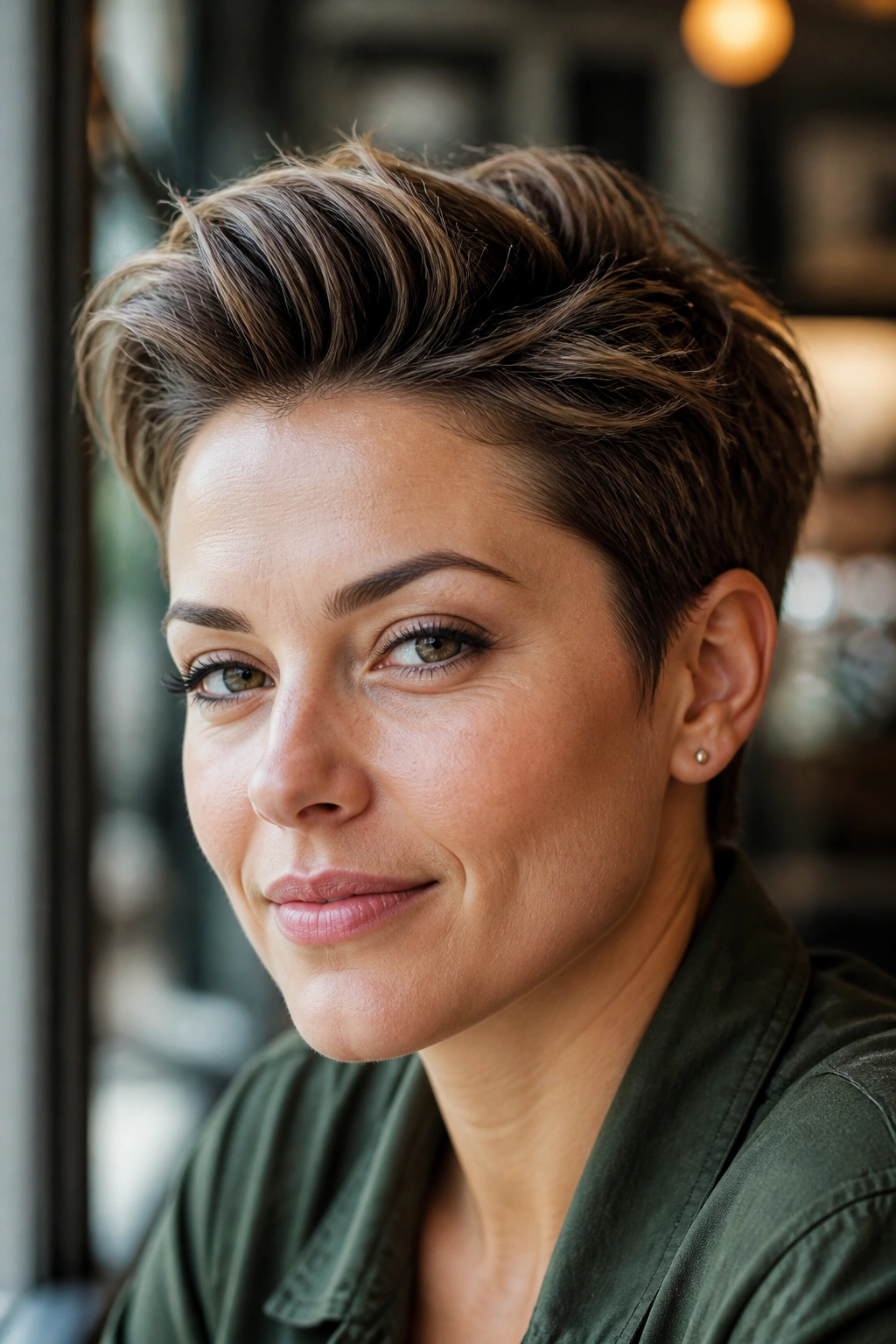
A swept-back quiff pixie has attitude, but it does not have to be loud. What it does do is pull the face upward fast. That is gold on a round face.
The front section is the main event here. It is longer, lifted, and directed back from the forehead instead of falling forward. That creates height, and height changes the shape of the whole face. The sides stay tighter so the top can be the star without turning into a puffball.
This cut likes a little structure. Work a volumizing foam through damp roots, then blow-dry the front upward with your fingers or a small brush. Once the hair is about 90 percent dry, press a bit of matte paste through the top for hold. If you use too much shine, the quiff collapses and starts looking flat.
I like this most on thicker wavy hair because the bend holds the shape without needing too much product. It is bold, yes. But it is also one of the most face-lifting short cuts you can wear.
14. Airy Pixie With Flipped-Out Ends

The best version of this cut should feel a little breezy at the edges. The ends do not sit there like a block. They flip out or bend away from the face in thin, light pieces.
That airiness matters on a round face because hard, rounded edges can make the cheeks look fuller. Flipped-out ends do the opposite. They break the outline and make the shape feel lighter. You get movement without a lot of bulk.
Use a small amount of styling cream on damp hair, then rough-dry until the wave starts to set. After that, twist tiny sections around your fingers or a small brush to coax the ends away from the face. You do not need a perfect curl. A slight lift at the tips is enough.
This cut is a nice fit if you prefer hair that feels a little playful. It also grows out in a forgiving way. The flip softens as it gets longer, which means you are not trapped in one exact look for weeks.
15. Sideburn-Forward Pixie
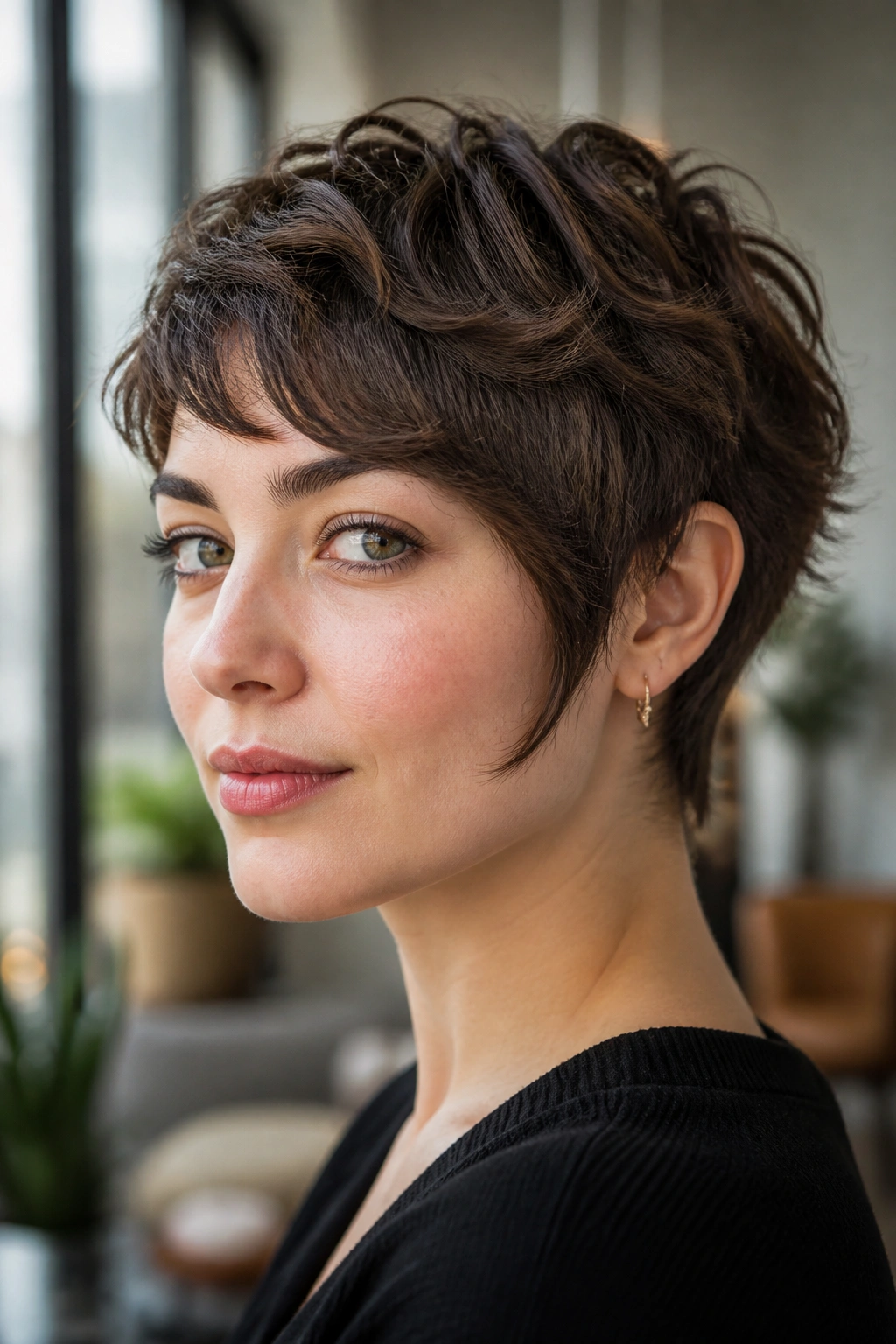
Why do sideburns matter so much? Because they frame the widest part of the face before the eye gets stuck on the cheeks. A small change there can make the whole haircut feel slimmer.
In this cut, the sideburn area is left a little more present than usual, then softened so it falls forward instead of straight down. That forward direction creates a vertical edge near the jaw and helps break up the round outline. It is subtle, but subtle is often the point with short hair.
How to style the front pieces
- Keep the sideburns around 0.5 to 1.5 inches, depending on density
- Sweep the front toward the cheekbone, not outward
- Use a dab of cream only on the ends
- Avoid brushing everything behind the ears; you want some forward line
This is a nice option if you like a pixie that feels a little more face-framing than cropped. It is not fussy. It just knows where to sit.
16. Soft Mohawk Pixie
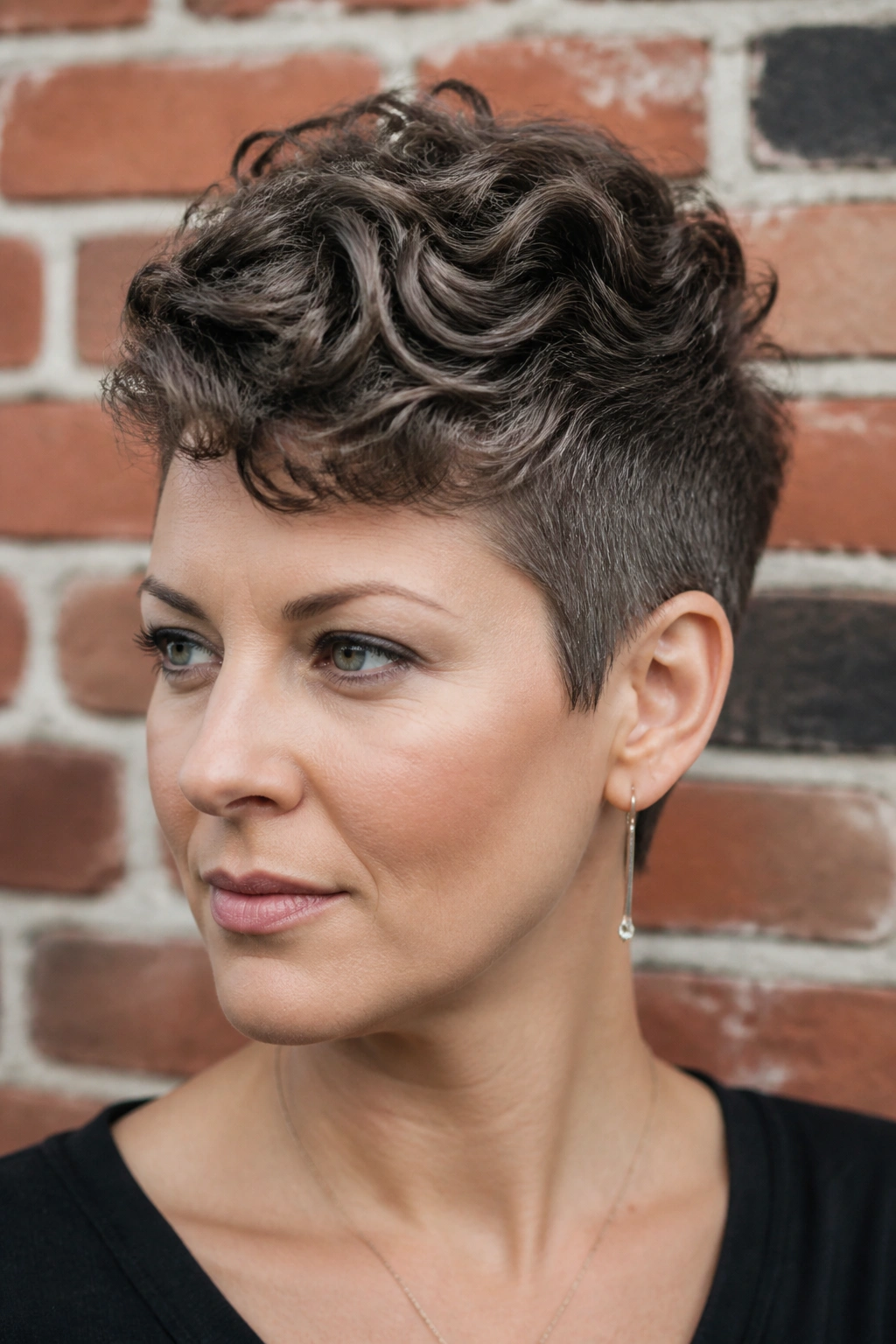
A mohawk-inspired pixie does not have to look punk or harsh. When it is softened up with waves, it becomes one of the most flattering shapes for a round face because the eye goes straight up the center of the head.
The sides are kept close, and the center ridge stays longer. That creates a vertical line from forehead to crown, which stretches the face. The trick is keeping the ridge soft, not spiked. Wavy hair helps a lot here because it bends into shape on its own.
A few details make or break it:
- Center top: 3 to 4 inches, sometimes a little more
- Sides: very short or closely tapered
- Front: enough length to push slightly forward or upward
- Finish: airy, with separation rather than stiffness
This cut can be surprisingly gentle-looking if the top is feathered instead of sharpened. It is a good one for people who want something bold but still easy to style in five minutes flat.
17. Grown-Out Pixie With Sweeping Layers
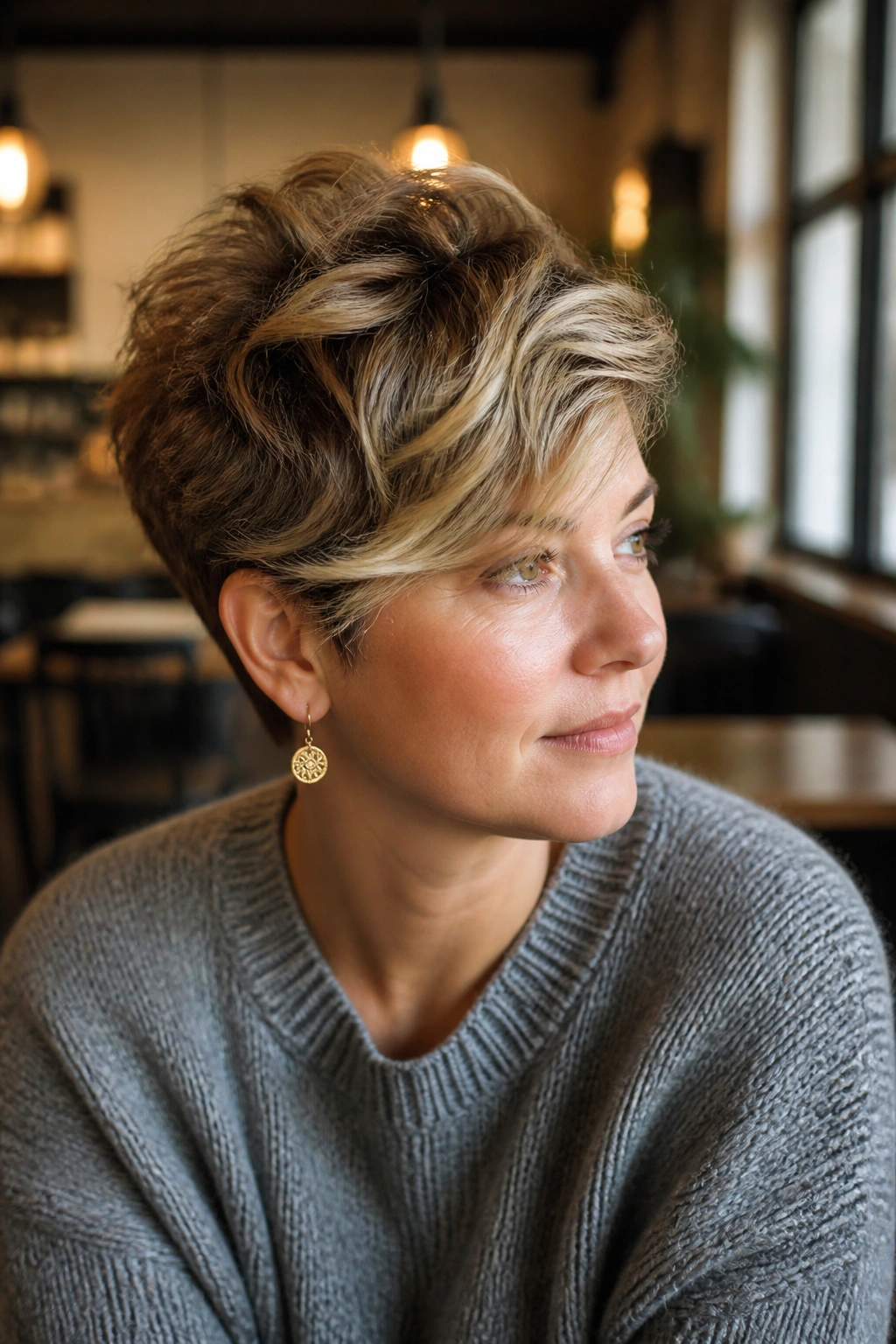
If you are between haircuts and the shape is getting fuzzy, do not panic. A grown-out pixie can still look great on a round face if the layers are directed with purpose.
The magic here is in the sweep. The top and front stay long enough to move across the forehead or away from the face, while the sides stay controlled. That keeps the haircut from turning into a wide puff around the ears, which is the main thing to watch once a pixie gets longer.
This version is forgiving. It does not demand a perfect trim to look good, and that matters if you do not want to be in the salon every few weeks. A light cream or soft wax is enough to separate the front pieces and keep the layers from collapsing into one flat sheet.
I like this cut for people who want to grow a pixie into something slightly longer without losing the flattering shape. It bridges the awkward in-between stage better than most styles do.
18. Tapered Pixie With Micro Fringe
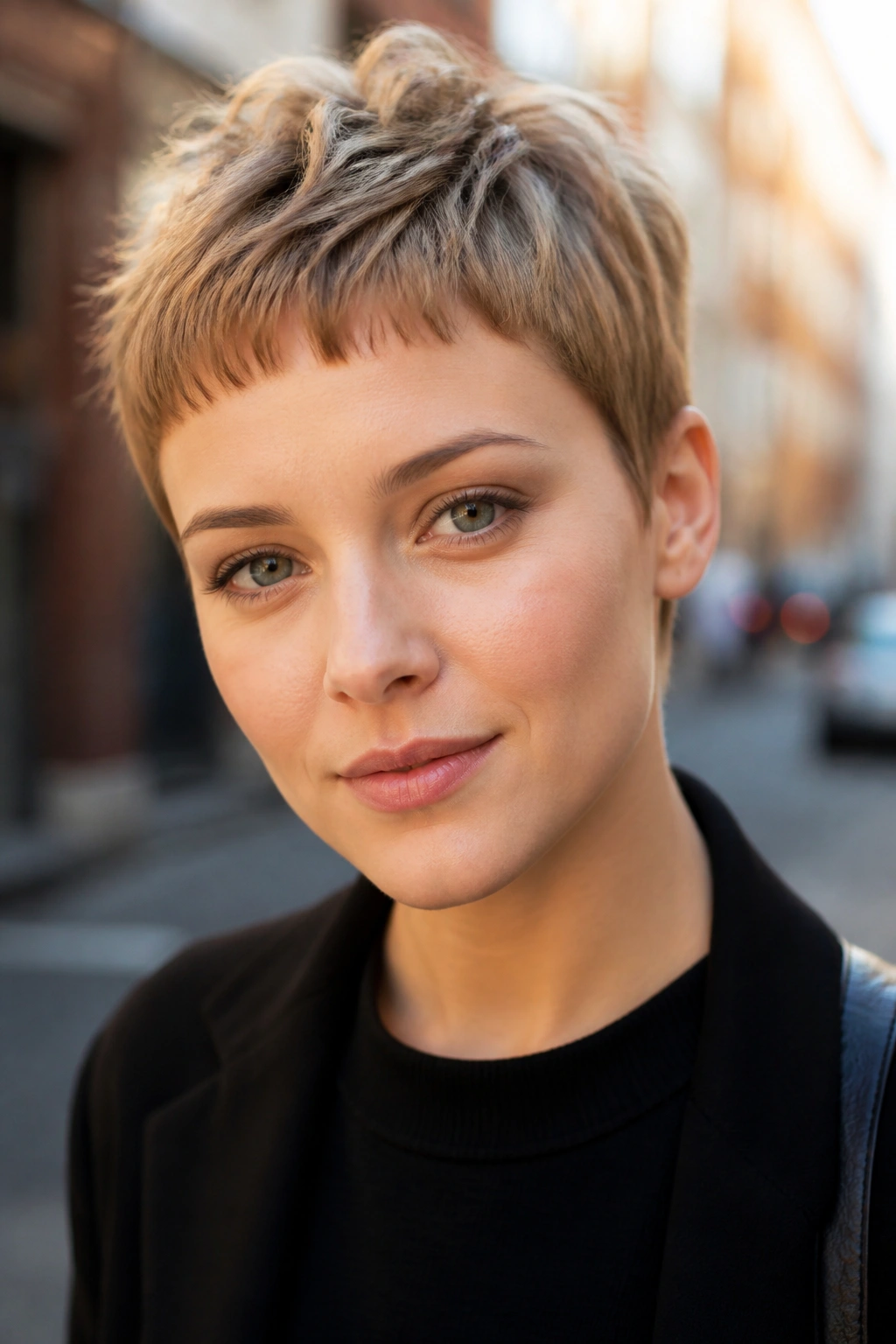
A micro fringe can be tricky on a round face, but a tapered version is a different animal. Instead of a dense block across the forehead, the fringe stays short and light, with enough texture to leave some space on the skin.
That space matters. A thick fringe can shorten the face fast. A thin, broken micro fringe keeps the forehead open while still giving the cut a clear front edge. If your brows are strong or your eyes are the feature you like most, this can be a very good move.
This cut works best when the top is softly layered and the sides are tapered close to the head. The balance keeps the short fringe from feeling random. I would avoid a very straight, heavy micro bang here. It can make the face feel boxed in. The better version looks a little uneven, a little airy, and completely intentional.
It is one of those styles that looks stronger in person than it sounds on paper. Clean. A bit sharp. Still soft enough to live with.
19. Side-Parted Pixie With Lift at the Crown
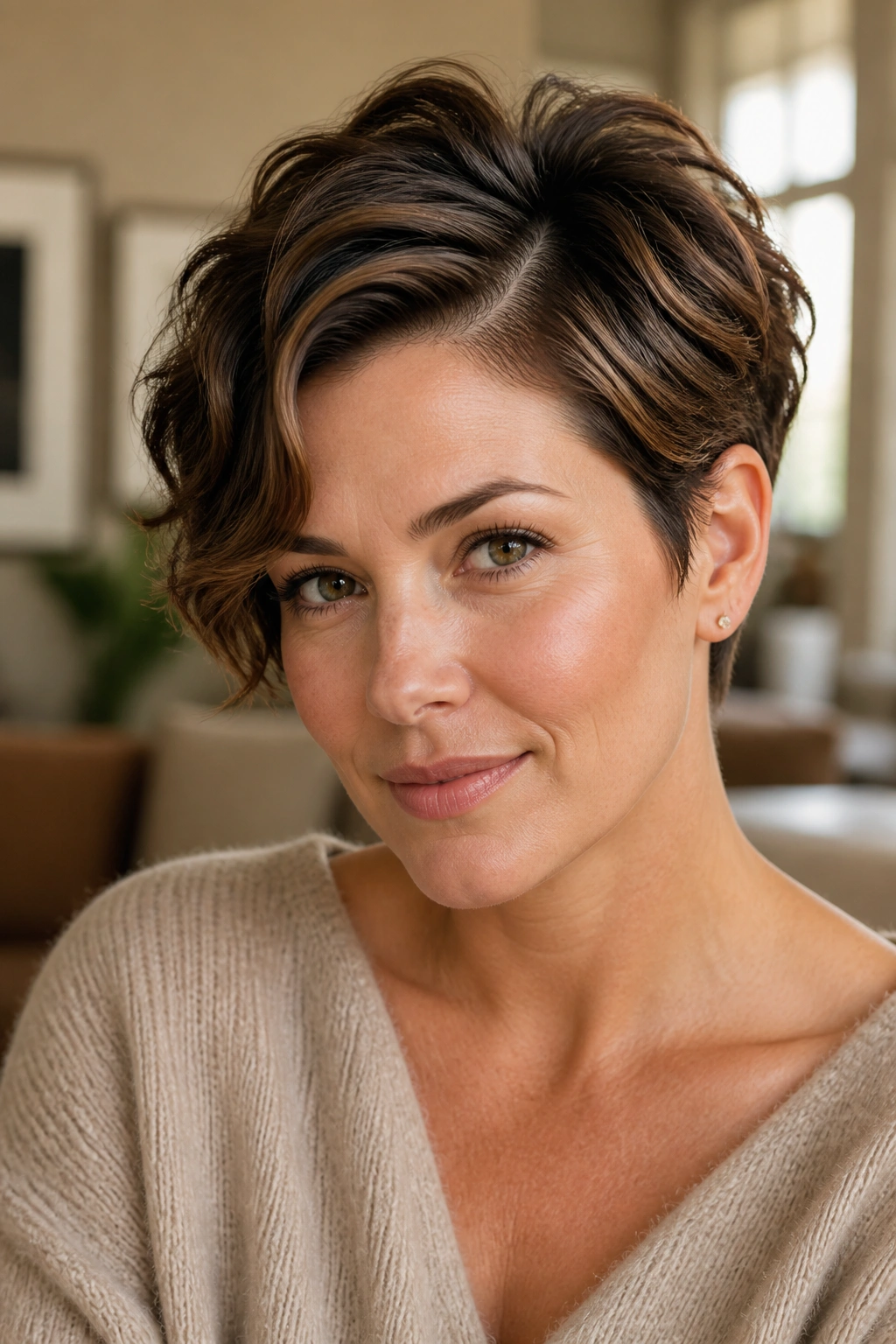
A side part gives a round face shape and direction at the same time. Add lift at the crown, and the whole haircut starts pulling upward instead of spreading outward. That is the move.
This style is especially useful if your waves like to fall forward. The part keeps them from dropping straight down the forehead, and the lift keeps the top from lying flat against the head. The combination creates a longer silhouette, even when the hair is cut short.
I like this on medium to thick wavy hair because the wave pattern naturally supports the shape. The crown can be dried with a small brush or just lifted with the fingers while the roots are still damp. A little root spray helps, but you do not need much. Too much product near the scalp makes the lift look crunchy, and that is not the point.
If you want something polished enough for work but not stiff, this is a strong choice. It sits in that middle space very well.
20. Short Wavy Pixie Cuts for Round Faces With a Soft, Airy Finish
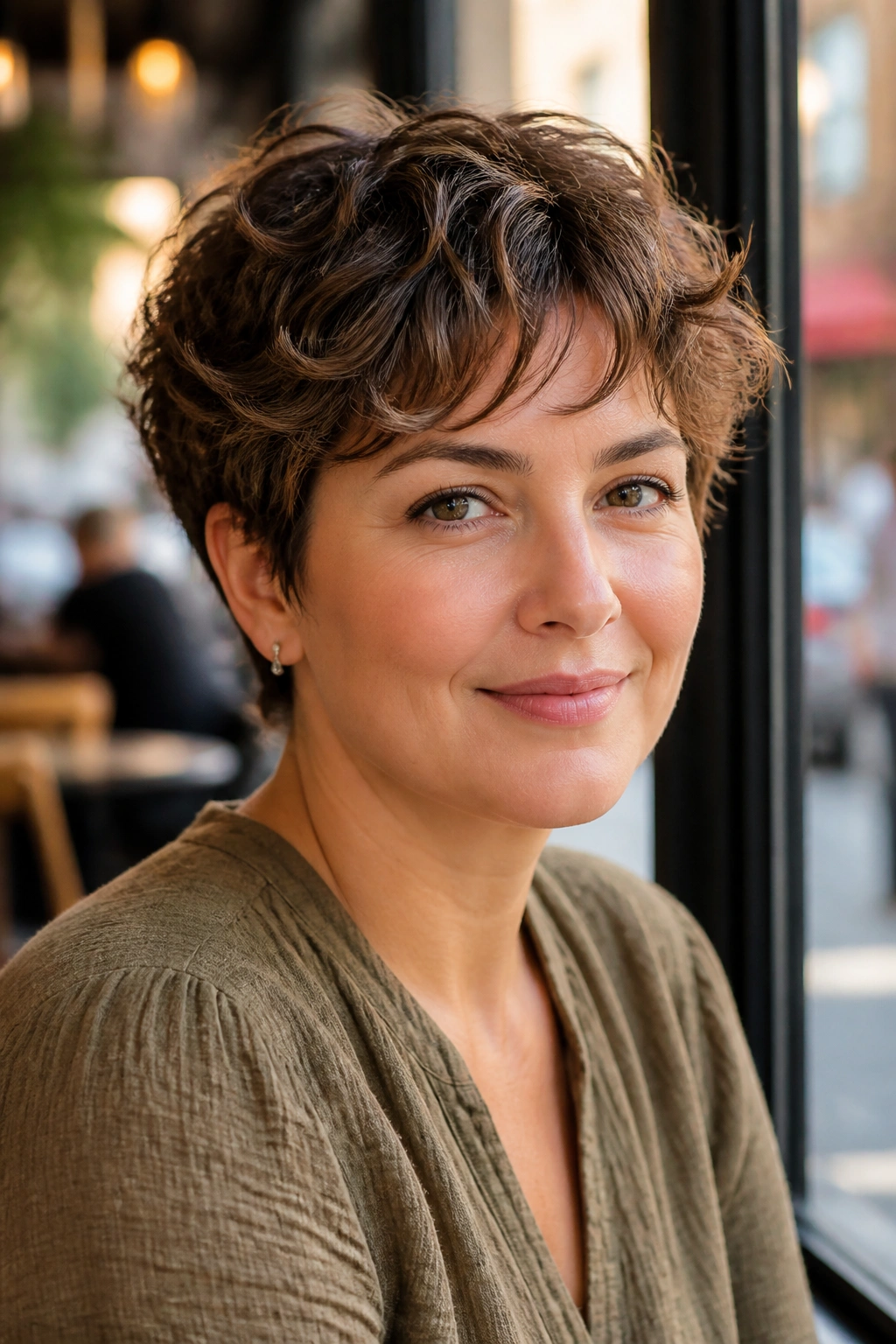
If you want the least fussy version of the whole idea, start here. A soft, airy pixie keeps the sides neat, leaves the top light, and lets the waves bend without crowding the face. It is the kind of cut that looks intentional even when you do almost nothing to it.
The shape matters more than the product. Ask for soft point cutting, a tidy nape, and enough top length to form a small wave instead of a hard bend. Keep the fringe light and movable. If it sits too bluntly across the forehead, the face can feel shorter. If it stays open and broken, the whole haircut looks more balanced.
This is the version I would suggest to anyone who wants short hair but still likes a little softness around the face. It does not try too hard. It just gives the cheekbones room, keeps the profile clean, and lets the wave pattern do what it already wants to do.
A round face usually looks best when the hair feels lifted, not bulky. Keep that idea in your head when you sit in the chair, and the cut gets much easier to choose.
