



If you have fine hair, you already know the daily battle: the limpness by noon, the way a single drop of humidity turns your head into a flat, stringy mess, and the constant search for that one product that adds volume without weighing your strands down into oily clumps. Many people with fine hair avoid short cuts, fearing they will lose what little volume they have. But that is exactly the wrong approach. When you remove the weight of length, fine hair actually gains the ability to hold a shape. And when you commit to a high-lift platinum blonde, you change the texture of the hair itself—bleach makes the hair shaft swell and roughens the cuticle, which creates instant, gritty volume.
Platinum is not just a color; it is a commitment. It is high-maintenance, sure, but it is also one of the few ways to give fine hair that structural “oomph” it lacks naturally. A platinum pixie cut doesn’t just look striking; it feels different. It feels light. It feels intentional. If you are tired of spending forty minutes blow-drying hair that just falls flat anyway, cutting it short is the most liberating thing you can do for your morning routine.
1. The Classic Tapered Pixie
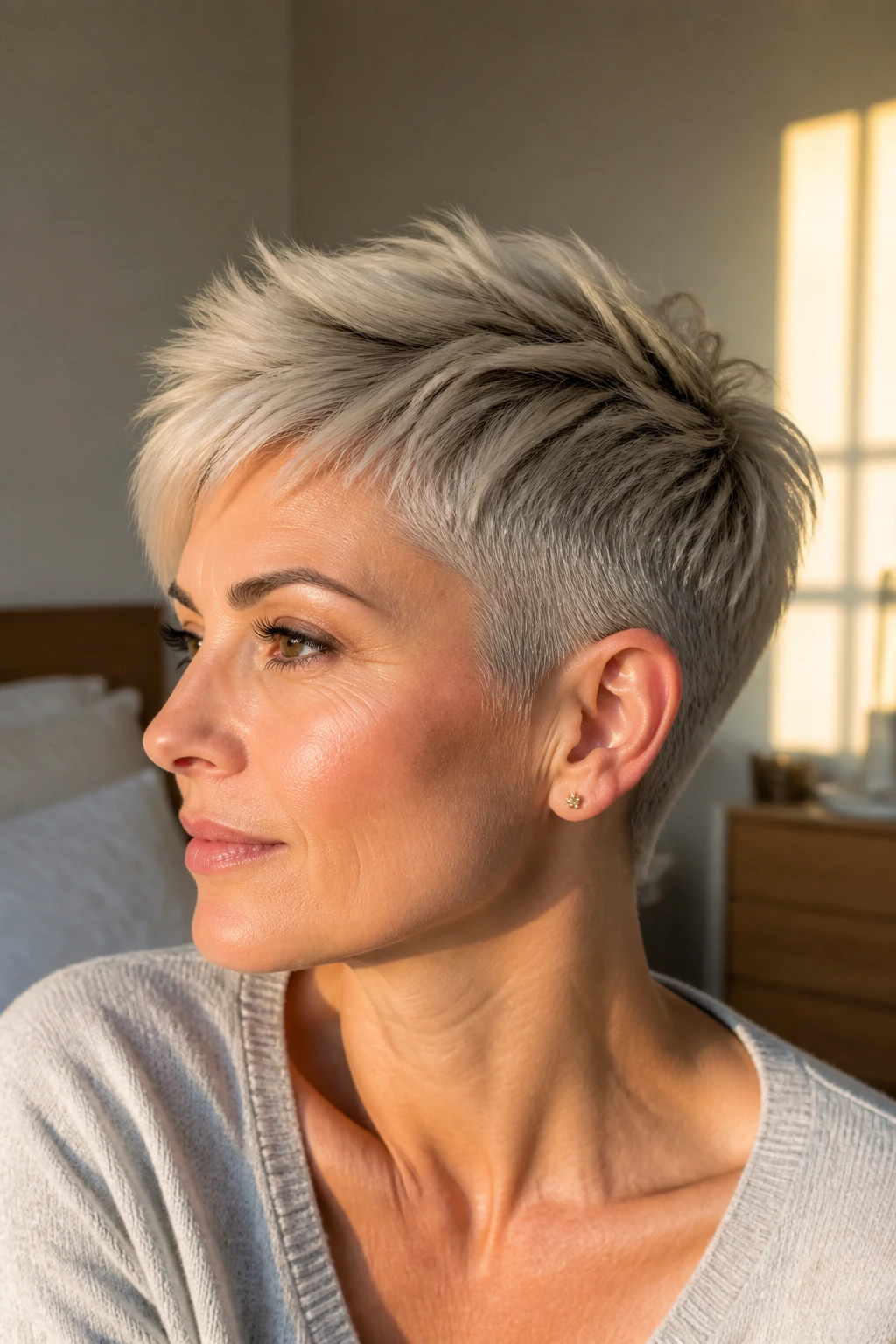
This is the baseline for a reason. Tapering the sides and back closely to the scalp creates a clean, architectural silhouette that immediately makes the hair on top look denser by comparison. Because fine hair tends to lay flat against the skull, the sharp graduation of a taper creates a shadow effect near the neckline, which gives the illusion of thicker, fuller hair growth.
Why It Works for Fine Hair
When the sides are clipped or scissor-tapered short, you remove the “curtain” effect that long, fine hair creates. This cut forces the eyes upward, highlighting the cheekbones and the jawline rather than the hair’s lack of density. You aren’t hiding anything; you are framing it.
Styling the Top
- Use a lightweight texturizing paste—not a pomade. Pomades are too heavy for fine strands and will make them look greasy within hours.
- Focus the product on the roots to encourage lift.
- Mess up the top with your fingers; avoid using a comb, which will flatten the volume you are trying so hard to create.
Pro tip: Ask your stylist to use a razor for the ends of the longer layers on top. It creates a soft, feathered edge that hides the blunt ends of fine hair, which often look sparse.
2. The Textured Crop with Baby Bangs
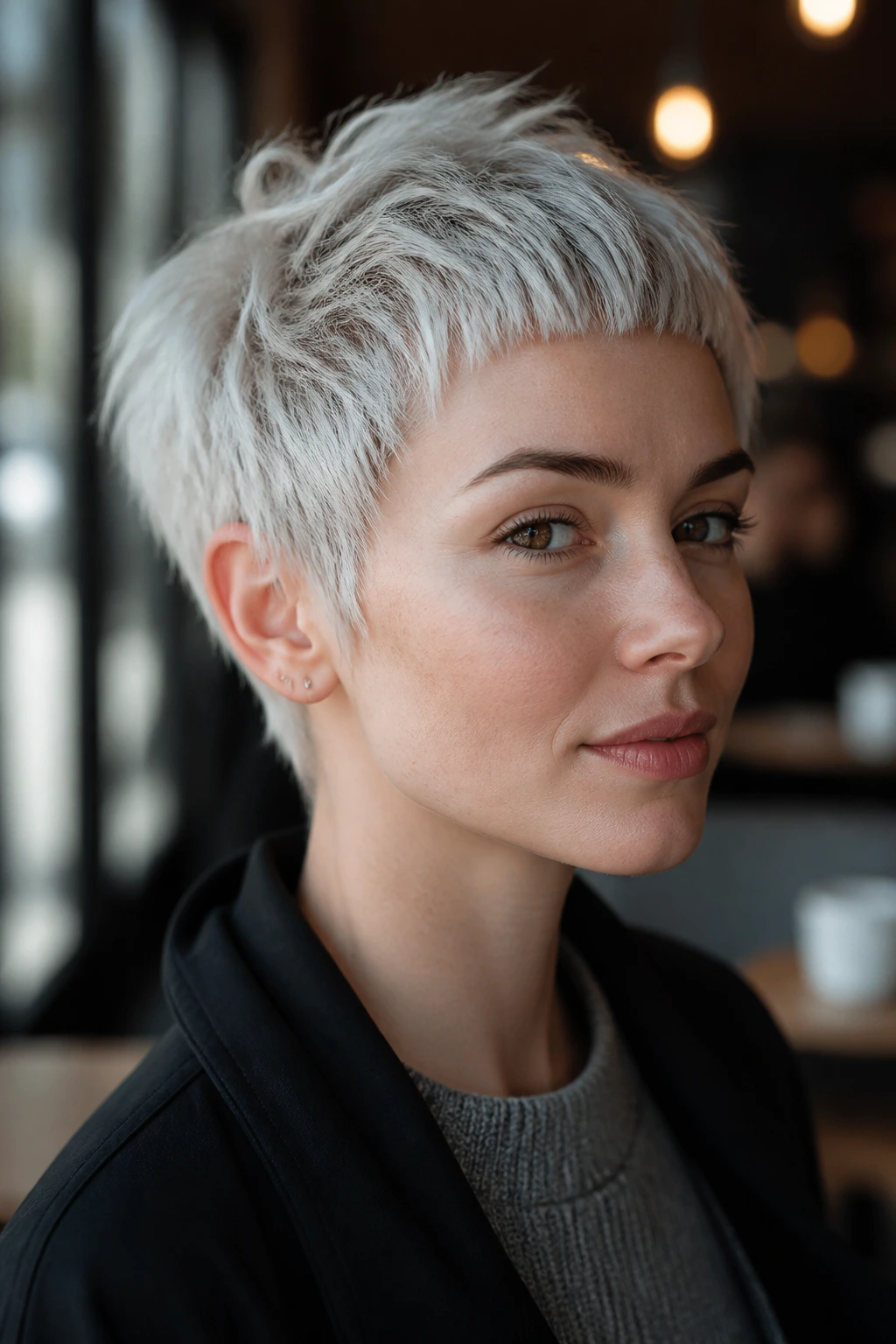
There is something inherently chic about a super-short, micro-fringe, especially when paired with an icy platinum tone. This cut is all about attitude. The baby bangs—fringe cut well above the eyebrows—remove the heavy weight of traditional bangs that can drag a face down, making it the perfect choice for round or heart-shaped faces.
The Power of Texture
Fine hair loves texture. When you bleach your hair to a platinum level, you are essentially changing its chemistry, making it porous and dry. While “dry” sounds like a negative, in the world of styling fine hair, this is a massive advantage. Your hair will finally hold a style. A matte texturizing spray will transform this crop from “freshly washed and limp” to “effortlessly edgy” in thirty seconds.
Maintaining the Shape
This cut requires regular maintenance. You will need to be in the chair every four to five weeks to keep that fringe sharp. If you wait too long, the bangs grow out, lose their purpose, and just look like an awkward accident. If you cannot commit to the salon frequency, skip the baby bangs and go for a longer, side-swept fringe instead.
3. The Platinum Undercut Pixie
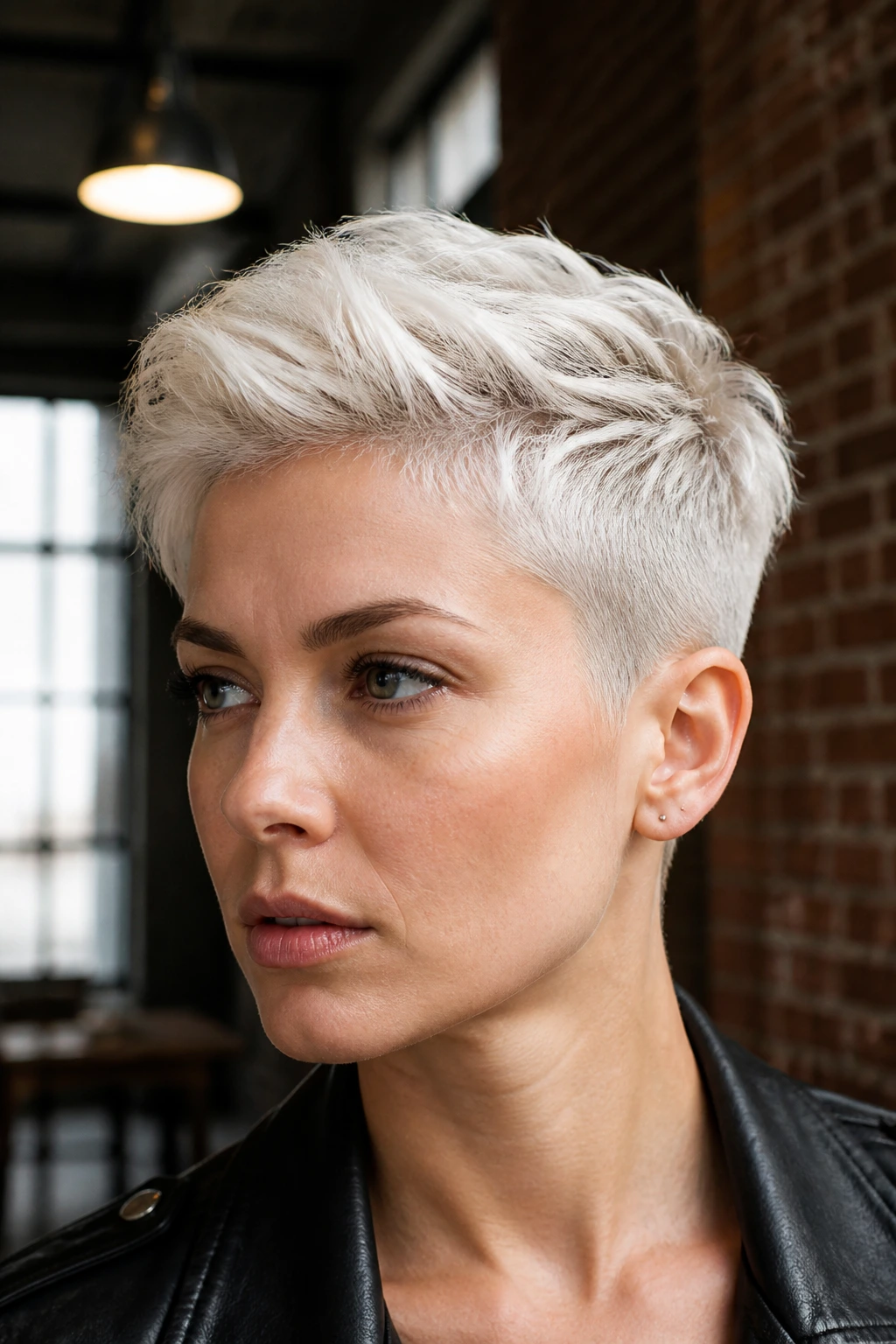
If you want to lean into the punk-rock aesthetic, an undercut is the way to go. This involves shaving the nape of the neck or the sides—or both—while keeping the top longer and heavily layered. For someone with fine hair, the undercut is a secret weapon. It removes bulk where you don’t need it and keeps the hair focused where you do.
The Contrast Factor
Platinum hair looks incredible against a shadow-rooted undercut. If you keep your roots dark and buzz the under-section short, you create a visual depth that makes the platinum top look even brighter and thicker. It plays with light and shadow in a way that longer styles simply cannot replicate.
What to Ask For
Tell your stylist you want a “disconnected” cut. This means the transition between the buzzed sections and the longer hair on top is abrupt, not blended. It’s a bold look, but it is surprisingly easy to style. Since most of the hair is gone, your “styling time” is basically just running a bit of product through the remaining top section.
4. The Soft, Wispy Layered Cut
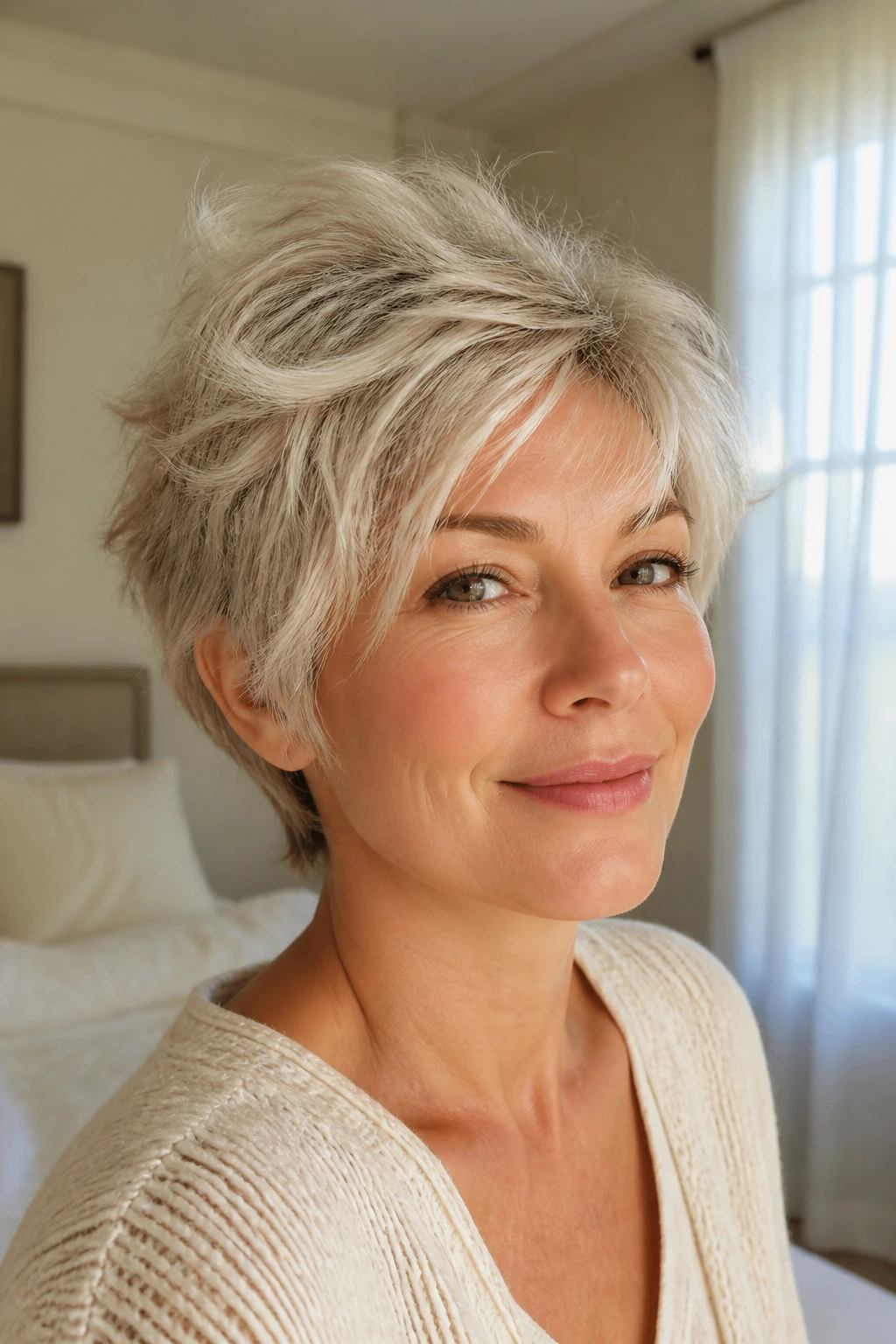
Not every pixie needs to be a sharp, severe geometric shape. If you prefer a more romantic, feminine aesthetic, the wispy layered pixie is a fantastic choice. This style relies on soft, shattered ends that create movement and airiness, preventing the hair from looking like a flat helmet.
Why Layers Matter
Many people with fine hair are terrified of layers, thinking they will take away precious volume. That is a myth. When layers are cut correctly—with a point-cutting technique rather than a blunt shear—they create internal support. They act like little springs, propping up the hair next to them.
Styling for Softness
Avoid heavy waxes or gels. Instead, reach for a volumizing mousse applied to damp hair, then blow-dry with a round brush that has a small diameter. You aren’t trying to make it stick up; you are trying to bend the hair shaft at the root, which is the only way to get lasting lift.
5. The Asymmetrical Deep-Side Part
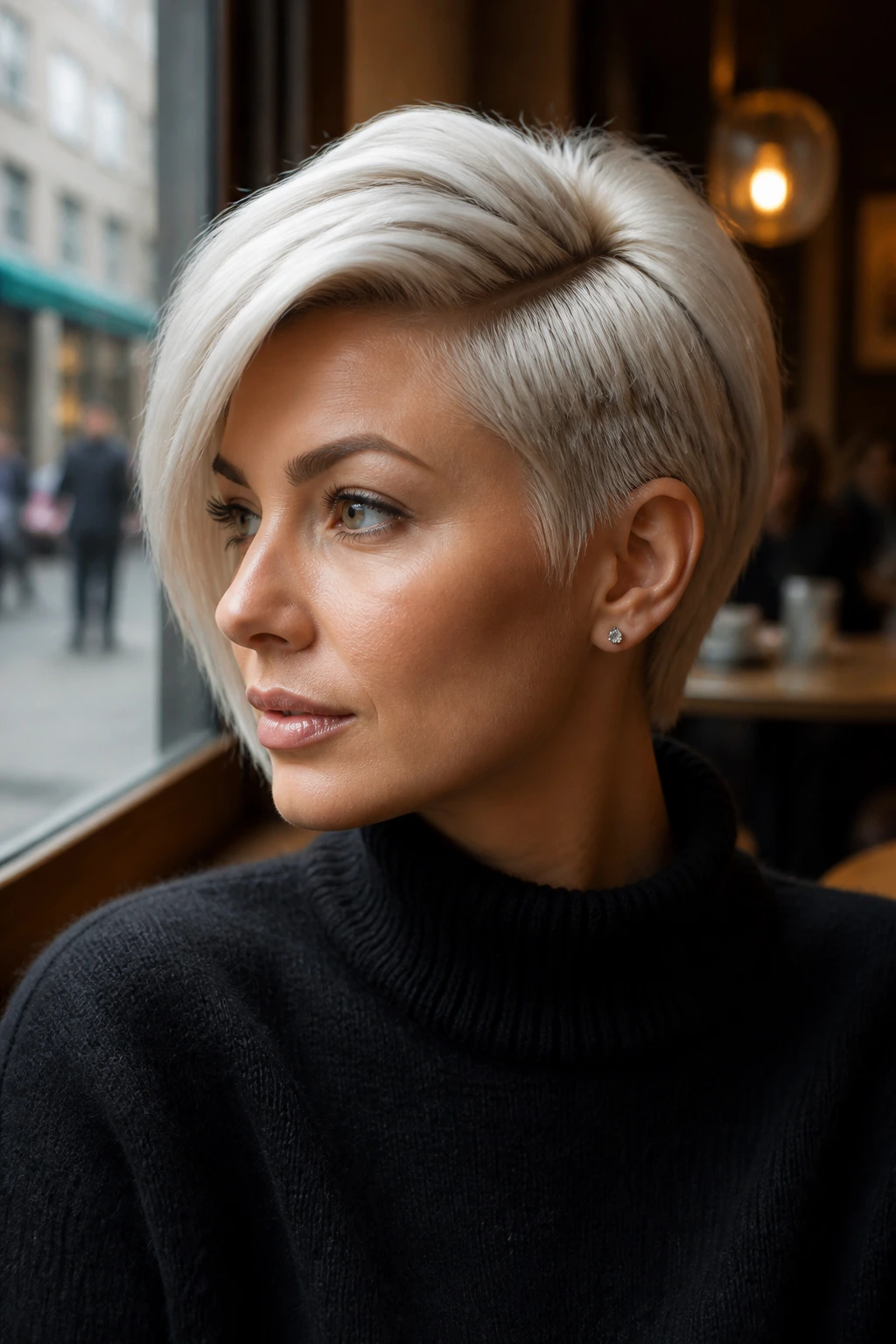
The asymmetrical pixie is a classic for a reason. By keeping one side significantly longer—perhaps grazing the cheekbone—and the other side cut short and tight, you create a frame that is incredibly flattering for almost every face shape. It draws the eye diagonally across the face, which is visually interesting and keeps the focus off the hair’s density.
The Illusion of Density
Because all the hair is swept to one side, you have more volume in one place. It is a simple matter of math: packing all your strands together creates a fuller appearance than dispersing them evenly across the scalp. The platinum color adds a high-fashion, editorial vibe to this asymmetry that looks intentional and expensive.
When to Use a Straightener
If your hair has a slight kink or wave, the asymmetrical pixie can look messy. A quick pass with a small-barrel flat iron (the mini ones are great for this) helps smooth the longer section, making the transition to the shorter side look crisp and deliberate.
6. The Spiky Choppy Cut
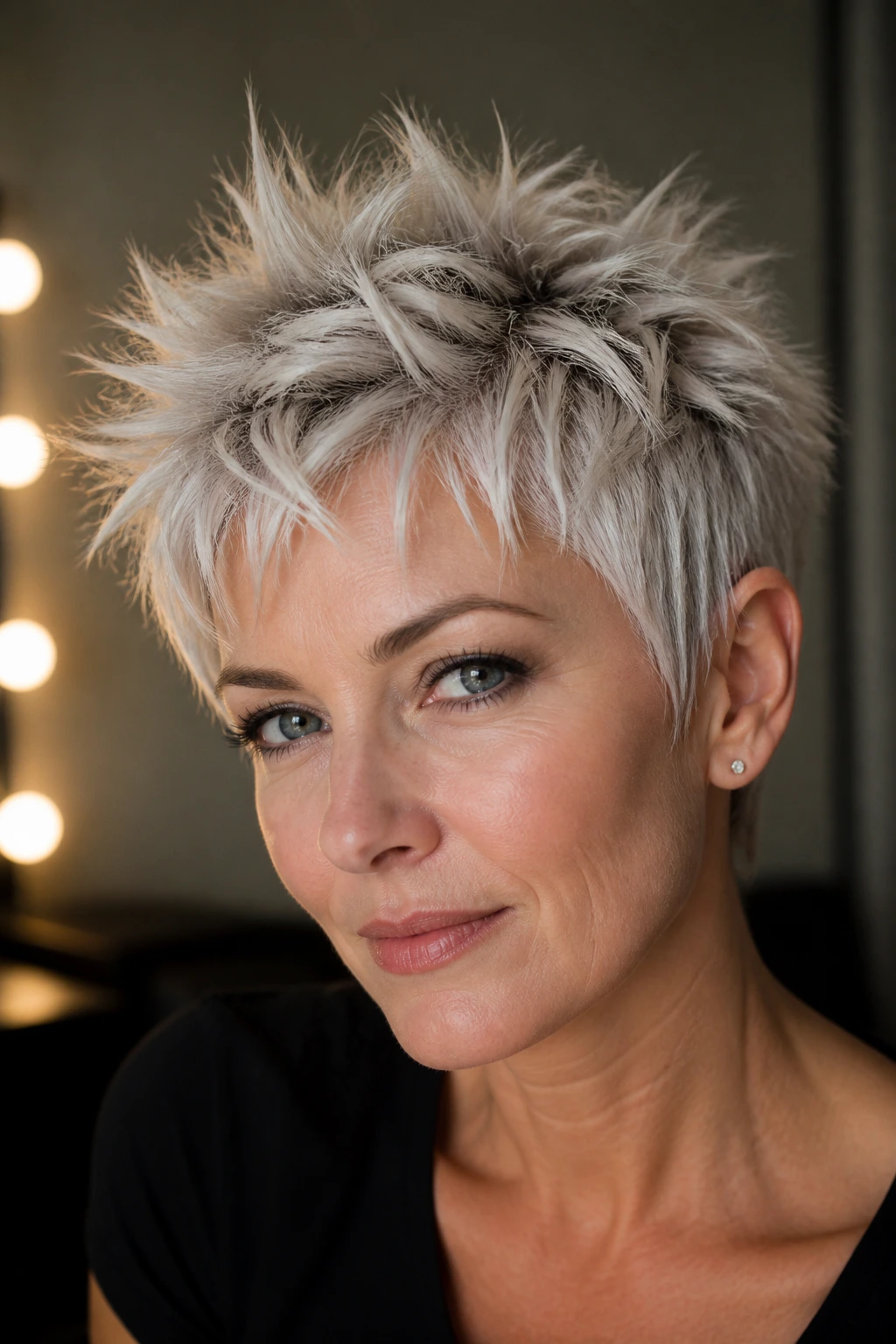
This is the “bedhead” look perfected. It is short, jagged, and looks like you spent hours on it when, in reality, you just woke up and added a dab of paste. For fine hair, the choppy nature of this cut is key because it breaks up the hair strands so they don’t stick together in limp, oily sections.
Why the Spikes Hold
Platinum-bleached hair has a rougher cuticle. This is the secret to a spiky look. If your hair is virgin, healthy, and slick, it will not hold a spike; it will just droop back down. Bleached hair acts like Velcro. When you push it up, it stays up. This is a rare instance where the damage of bleaching actually works in your favor.
The Right Product
Look for a “dry wax” or a “clay paste.” Do not use gels; they will make the spikes look like rigid, wet sticks, which is not the goal. You want a matte finish that looks like natural, gravity-defying texture.
7. The Platinum Buzz Pixie
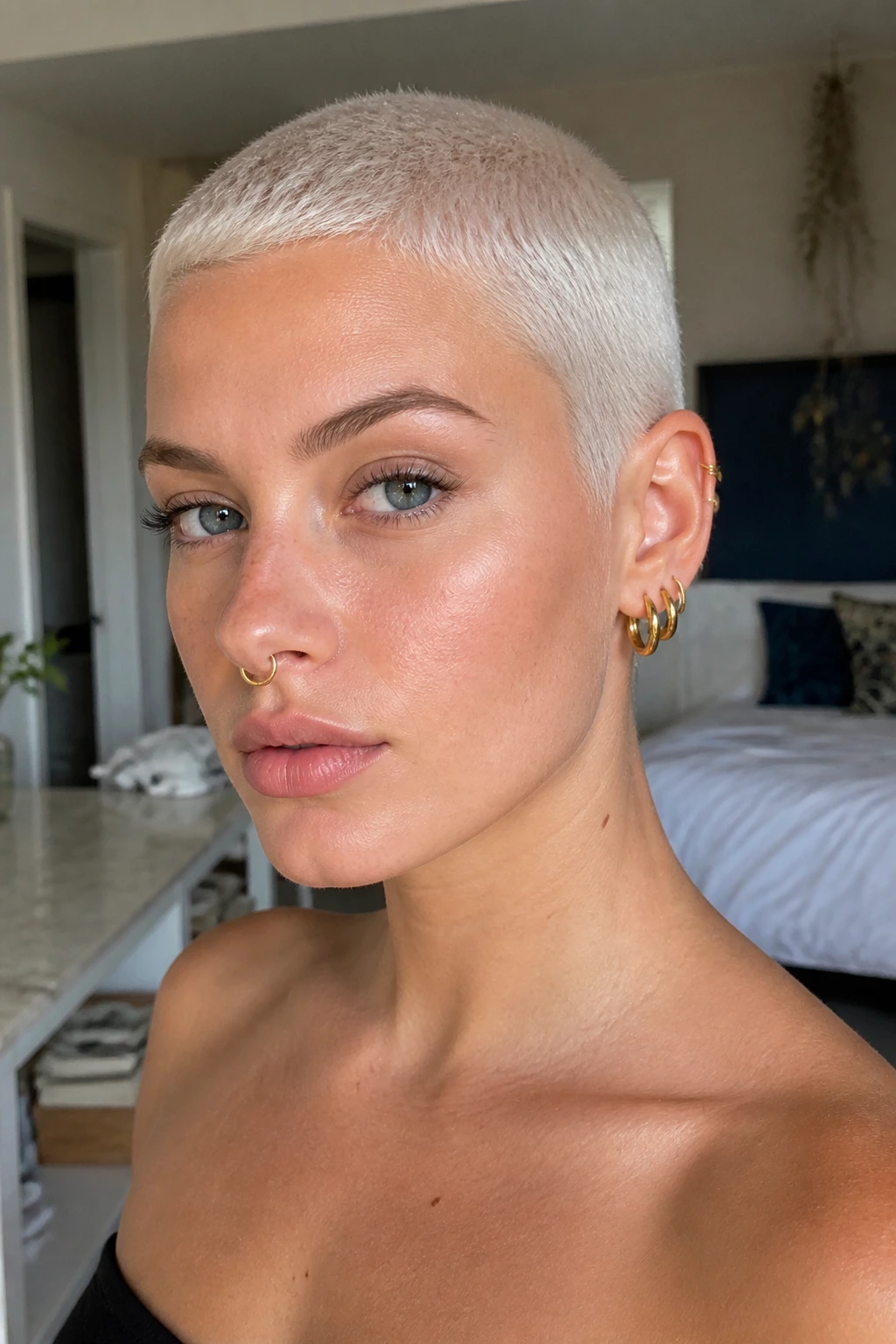
If you want the ultimate low-maintenance look, the buzz cut is it. There is nowhere for the hair to hide. It is just you, your bone structure, and the platinum color. It is an incredibly bold move, but it is arguably the most liberating thing you can do for your hair.
The Practical Reality
You spend zero time styling this. You wake up, you are ready. The only maintenance is the color and the frequency of the buzz. If your hair is fine, the buzz can sometimes look a bit “see-through,” but the platinum color helps mitigate that. The bright color reflects light, which helps hide the scalp more effectively than dark, fine hair would.
Accessorizing
Because the hair is minimal, your earrings and makeup become the focus. This cut is perfect for someone who loves to experiment with bold lipstick or statement jewelry, as your face is always the center of attention.
8. The Curly/Wavy Pixie
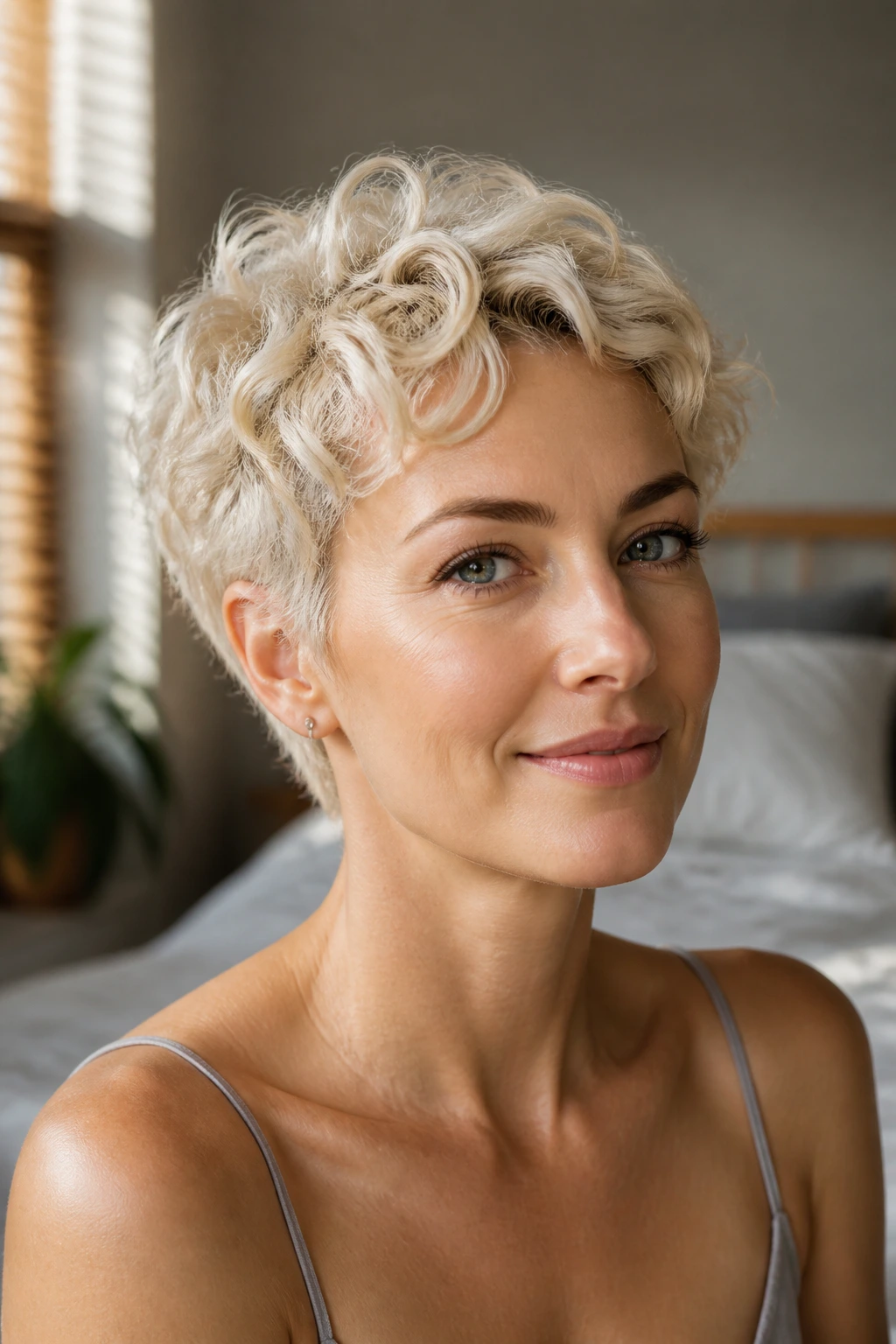
Fine hair is not always straight. Many people with fine hair have a slight wave or curl that they try to straighten into submission. Stop that. Embrace the wave. A platinum pixie with some natural wave is stunning—it looks like a cloud of white-blonde texture.
Managing the Curl
The key to a curly pixie is length on top. You need enough length for the curl to actually form. If you cut it too short, the hair will just frizz and stand straight up. Ask for the sides to be tight and the top to be layered in a way that encourages the hair to spiral rather than poof.
Product Selection
Use a curl-enhancing cream, but apply it sparingly. Since your hair is fine, a dime-sized amount is plenty. Any more, and the weight of the product will stretch the curls out, turning them into damp strings.
9. The Sleek, Center-Parted Pixie
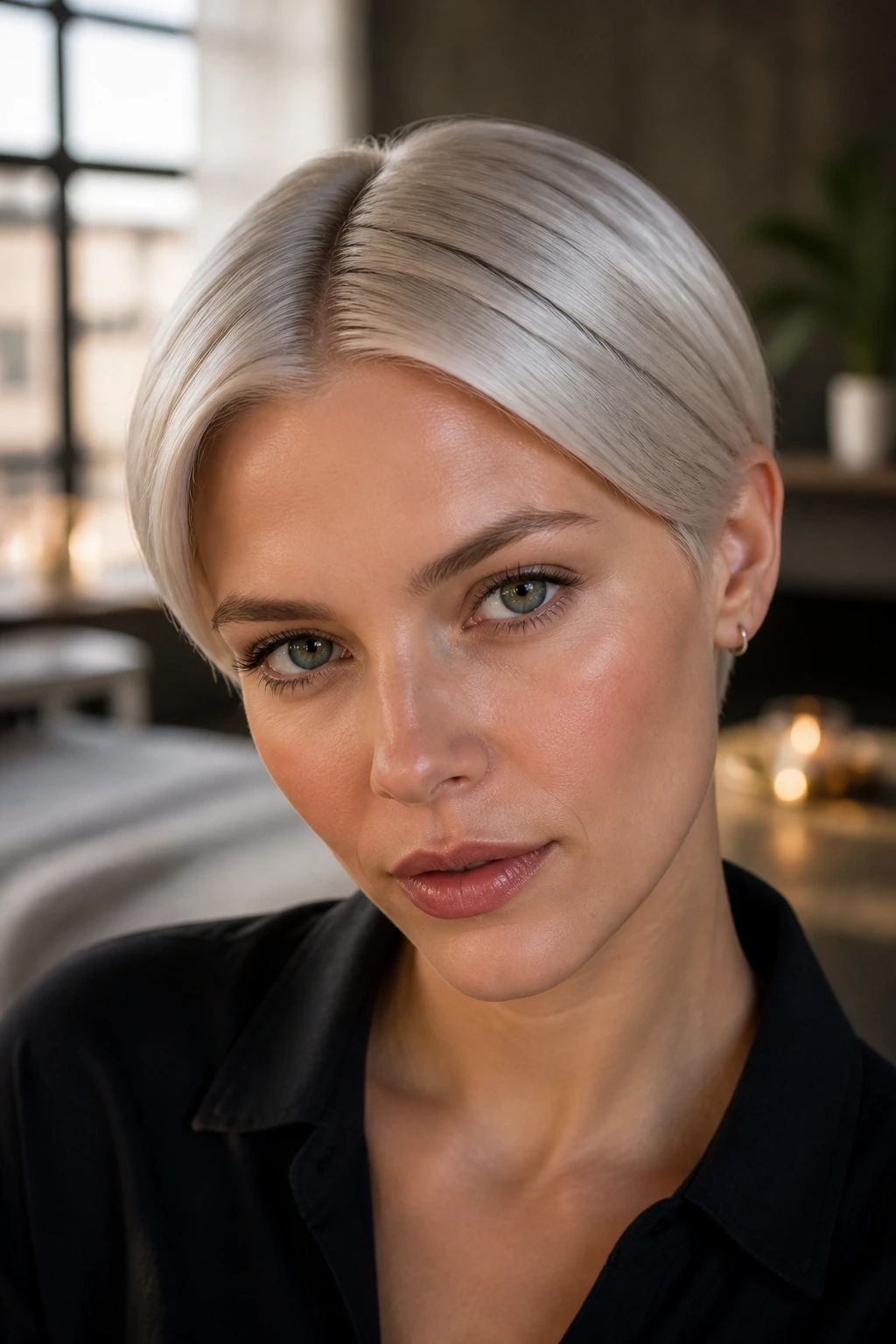
Center parts have made a massive comeback, and they work surprisingly well with a pixie cut if you have the right face shape. This look is very 1990s minimalist. It is sleek, shiny, and sophisticated. It looks best on fine hair because fine hair naturally lies flat, which is exactly what this style demands.
The “Glass Hair” Effect
To pull this off, your platinum hair needs to be healthy. Use a high-shine serum or a glossing spray. The goal is to make the hair look like a polished helmet. If the hair looks frizzy or dull, the center part just looks like you tried to grow it out and gave up.
The Maintenance
This style requires a very precise cut. The length around the ears must be uniform, and the ends must be blunt. If your stylist isn’t precise with the shears, the center part will look crooked and sloppy.
10. The Mohawk-Inspired Platinum Cut
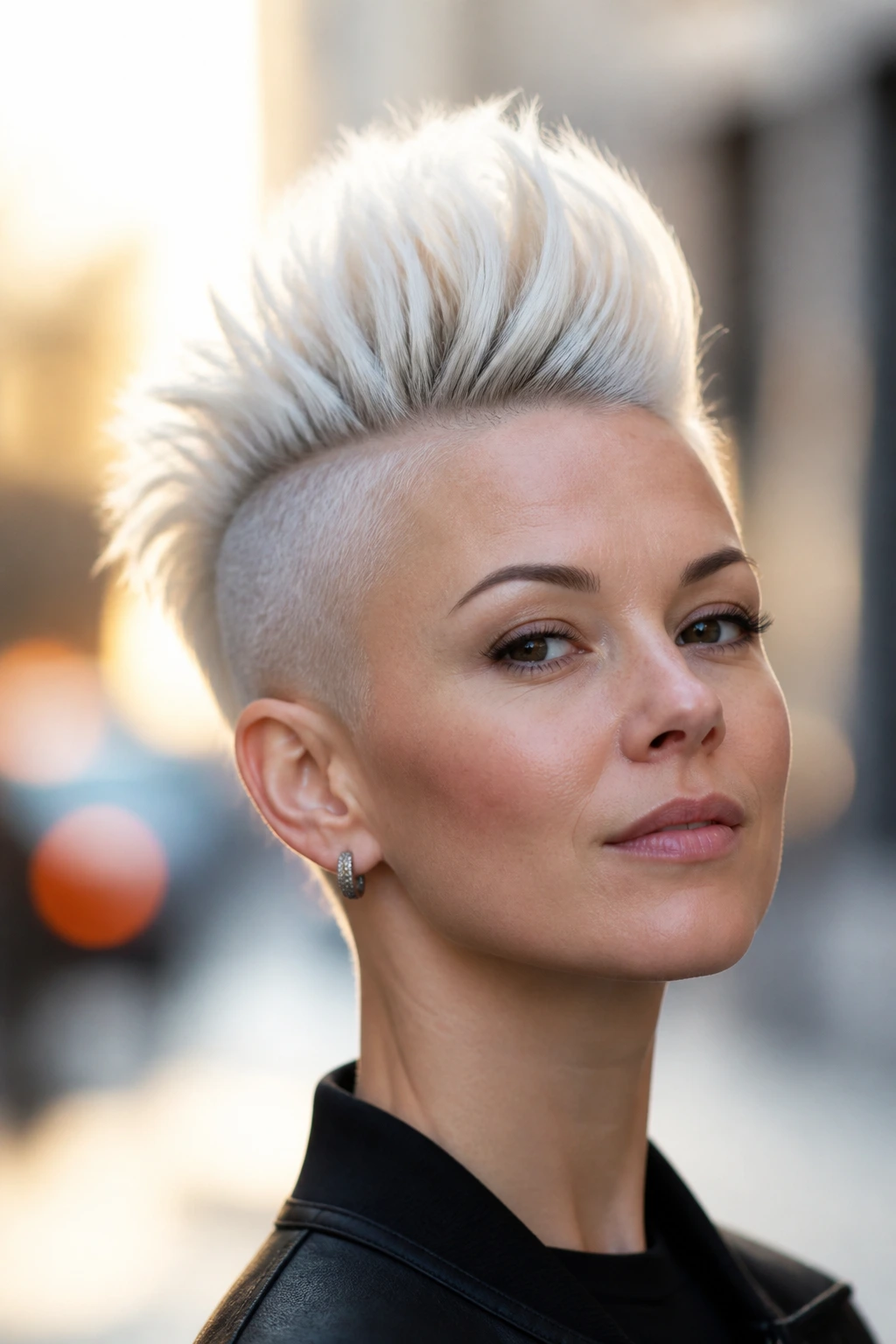
You don’t have to go full-on biker punk to get the benefits of a mohawk-inspired cut. The modern version is subtle. It keeps the hair slightly longer through the center strip and tapers the sides very short. It gives you the vertical volume that fine-haired people crave without the commitment of a full shave.
Creating Height
The trick here is to dry the hair upward. Use a round brush to pull the hair at the roots while you blow-dry. Once dry, use a strong-hold hairspray rather than a paste to lock the height in place. Hairspray provides the necessary rigidity for fine hair to defy gravity.
A Subtle Edge
If you aren’t ready for a full mohawk, ask your stylist to “disconnect” the top slightly—just enough so the hair naturally wants to stand up rather than fall over to the sides. It creates a silhouette that looks much thicker than it actually is.
11. The Feathered Cut with Longer Nape
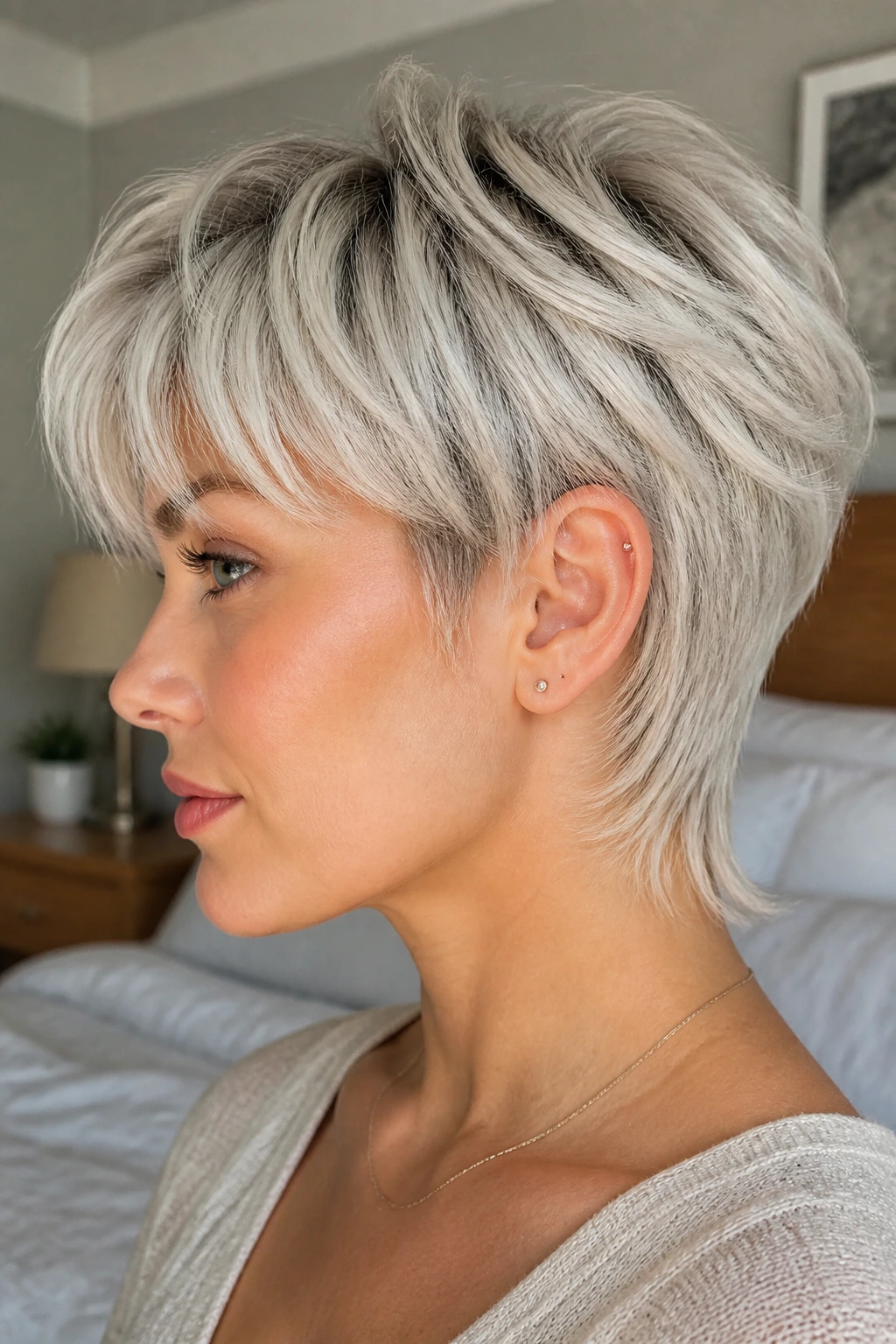
If you aren’t ready to let go of all your length, the feathered pixie with a longer nape is the perfect transition. It feels like a short cut, but it has a bit of “tail” that creates a soft, feminine shape at the back of the neck.
Why Feathering Works
Feathering involves slicing into the ends of the hair to create soft, tapered tips. For fine hair, this is crucial. It removes the blunt weight at the ends, which usually creates a “triangle” shape (short at the top, thick at the bottom). Feathering keeps the shape balanced and airy.
The Platinum Impact
This cut looks best with a dimensional platinum—perhaps a slightly darker, ashier root smudge. The contrast between the dark root and the feathered platinum ends gives the cut depth, making the hair look much more substantial than a solid, flat-color paint job.
12. The Platinum Pixie with Curtain Bangs
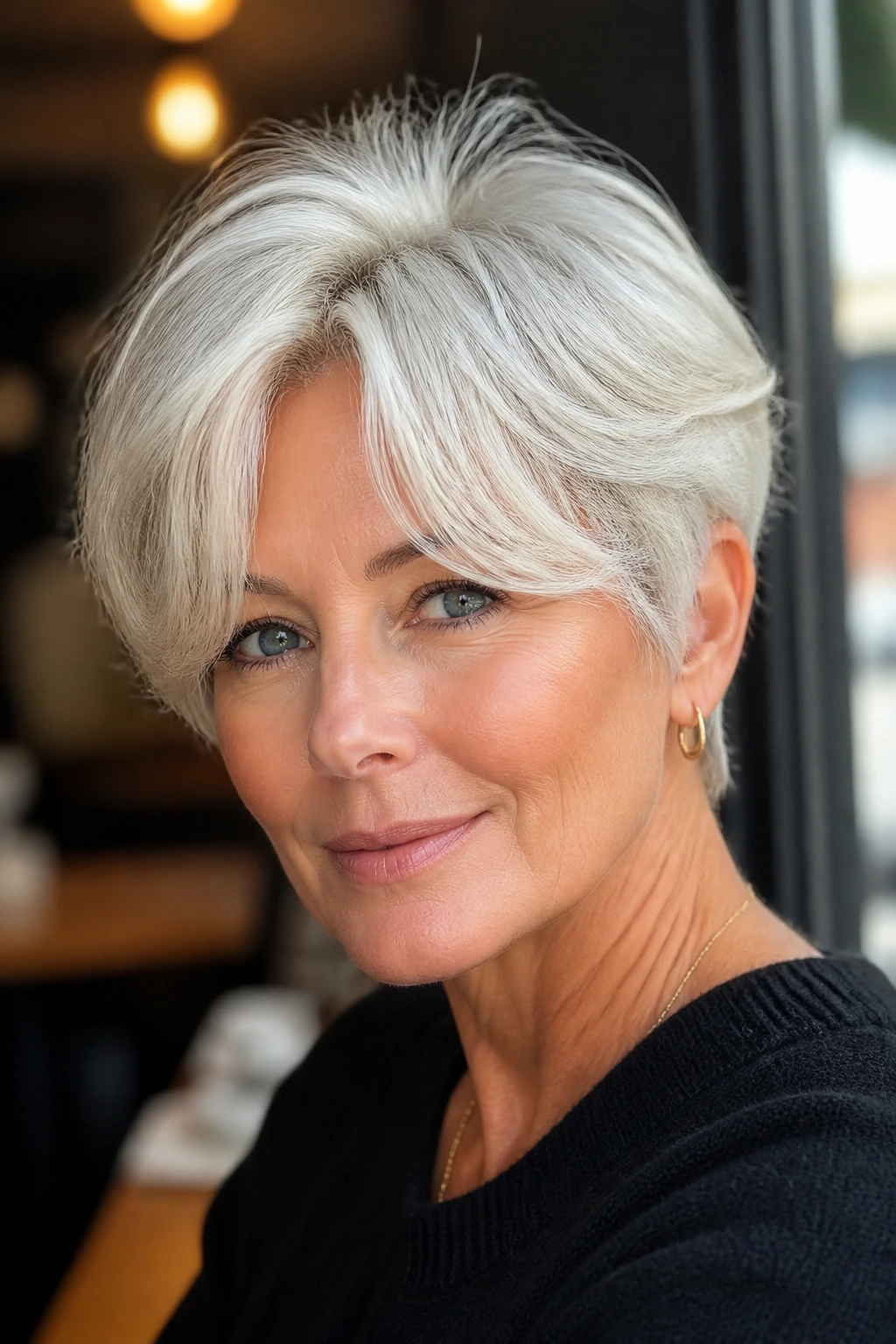
Curtain bangs are usually associated with long hair, but they are a fantastic way to frame the face when you have a pixie. The idea is to have longer pieces around the temples that sweep away from the face, softening your features.
The Benefit for Fine Hair
The benefit here is purely structural. Curtain bangs break up the severe lines of a pixie cut, making it feel less like a “boy cut” and more like a deliberate, stylish choice. They also add volume around the cheekbones, which helps if you feel your face looks too exposed with a very short cut.
Styling the Bangs
You must style these. They will not just fall into place. Use a round brush to direct them away from your face while drying. If you let them air dry, they will likely just stick to your forehead and look stringy.
13. The Piecey “Bedhead” Pixie
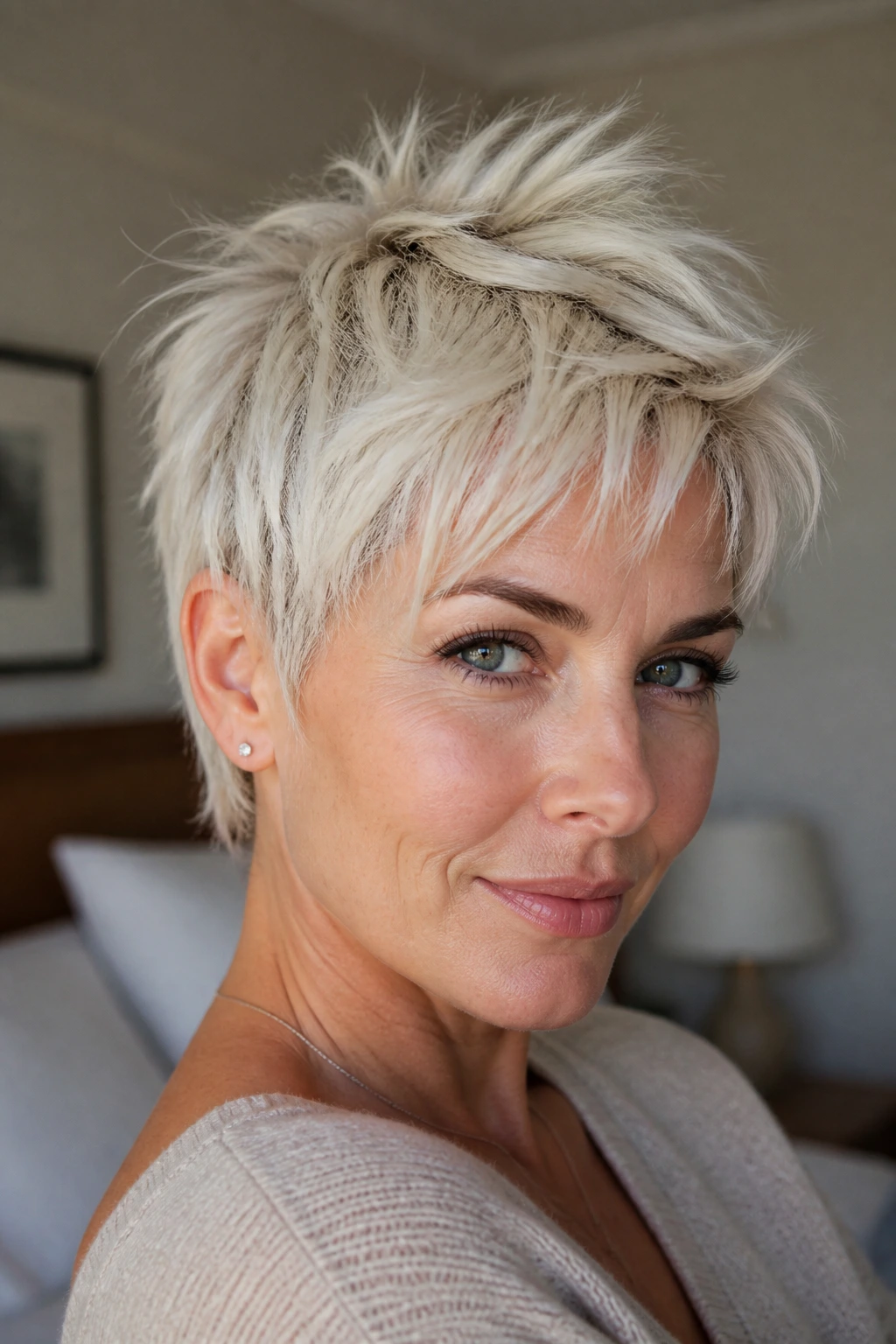
This is the messier, cooler sister to the spiky crop. It is less about volume and more about shape. It uses texture to create a “undone” look. It’s perfect if your hair has a little bit of natural grit, which, as we established, platinum hair usually does.
The “Piecey” Technique
To get the piecey look, take a small amount of pomade or paste and rub it thoroughly between your palms until it disappears. Then, pull your hands through your hair, twisting small sections as you go. You aren’t coating the hair; you are just giving the ends a bit of definition so they clump together into distinct “pieces” rather than a uniform, flat layer.
Why It Works
It hides the scalp. When fine hair is styled perfectly straight, every gap becomes visible. When it is messy and piecey, the eye doesn’t know where the hair ends and the “style” begins. It is an optical illusion that works.
14. The Slicked-Back “Wet” Look Pixie
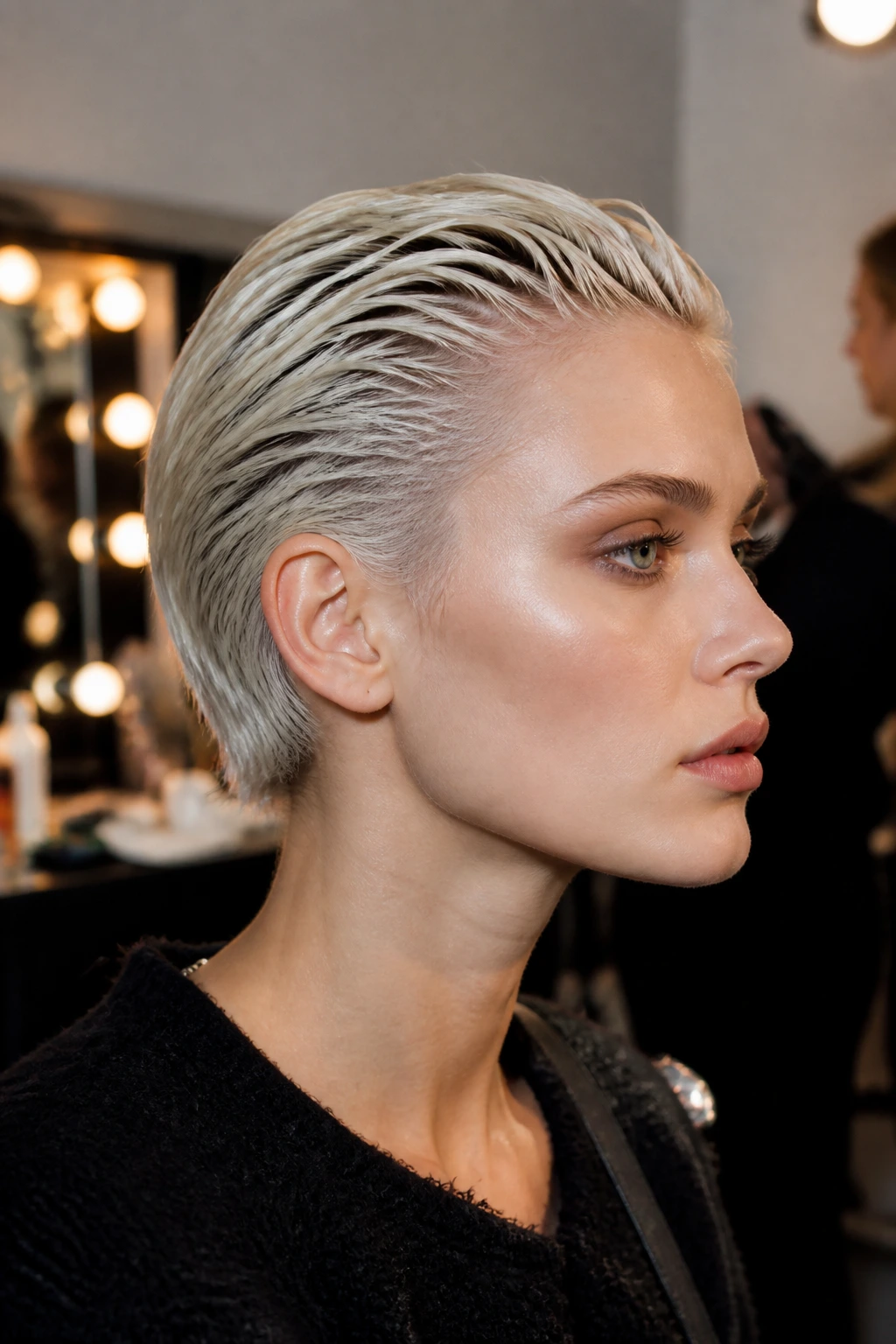
This is a high-fashion, evening-appropriate style. You take a generous amount of high-shine gel and comb your hair straight back, away from your face. It is bold, it is severe, and it is undeniably chic.
Gel Choice
For fine hair, you must be careful with gels. Avoid the ones that dry rock-hard and crusty. Look for a “light hold” wet-look pomade or a styling cream that offers shine without the stiff, flaky residue.
A Note on Greasiness
The trick to the wet look is ensuring the rest of your appearance is polished. If you have “lived-in” makeup and messy clothes, you look like you just skipped a wash. If you have clean makeup and sharp accessories, you look like you just stepped off a runway. It is all about the context.
15. The Platinum Pompadour Pixie
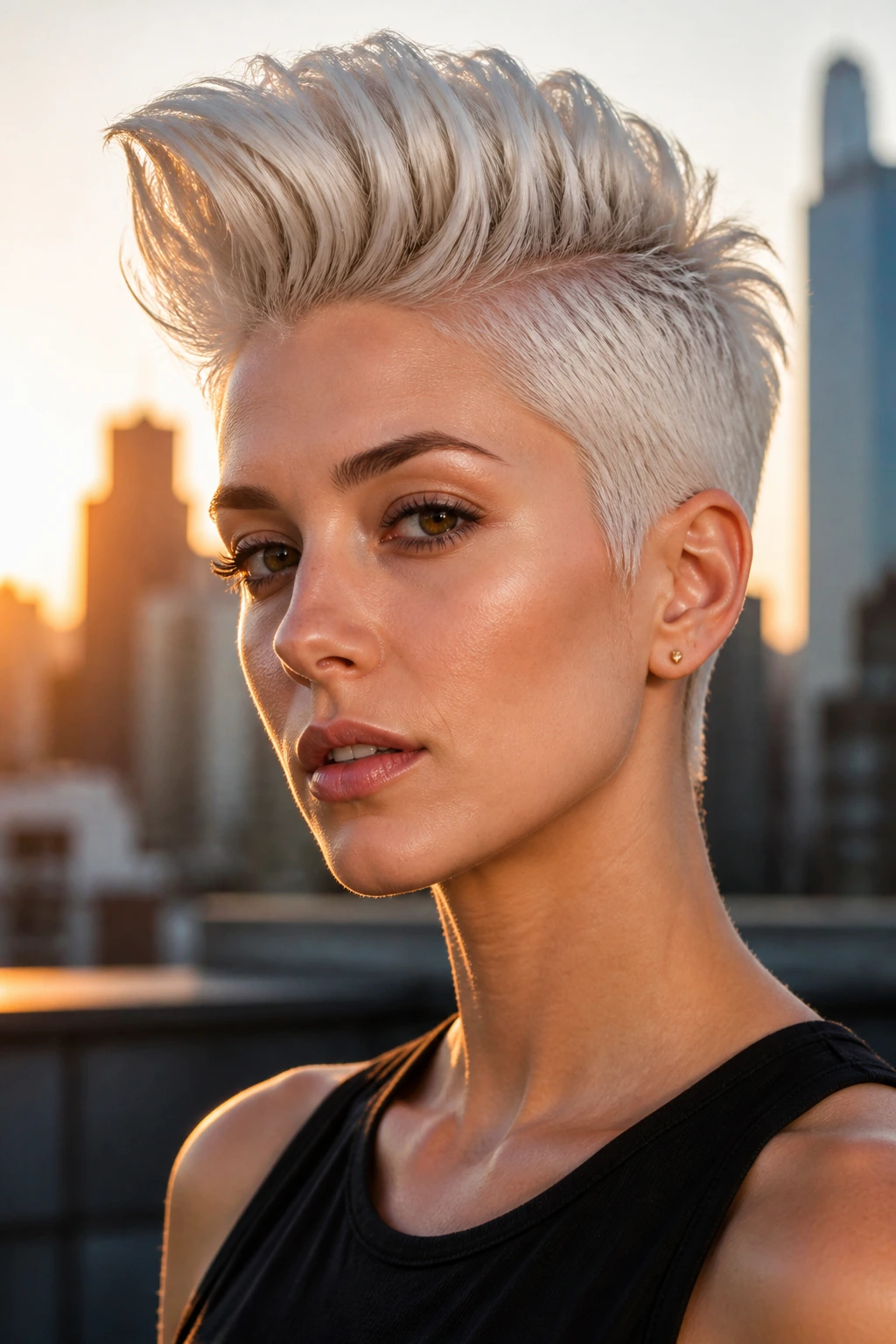
The pompadour is all about height. You sweep the hair at the front hairline upward and back, creating a voluminous puff. This is the ultimate volume-builder for fine hair because you are training the hair to stand in a direction it doesn’t naturally want to go.
Building the Structure
You need a good mousse and a strong blow-dry technique. Flip your head upside down and dry the front section with a round brush to maximize root lift before you even start styling. Once it is dry, use a bit of volumizing powder at the root. This is a game-changer for fine hair—it creates a tacky, grit-like texture that supports the height of the pompadour.
Managing the Sides
Keep the sides very tight to maximize the contrast. If the sides are long, the pompadour will just look like a bump on top of a mop. The drama is in the contrast between the tight sides and the big top.
16. The Bowl-Cut Inspired Modern Pixie
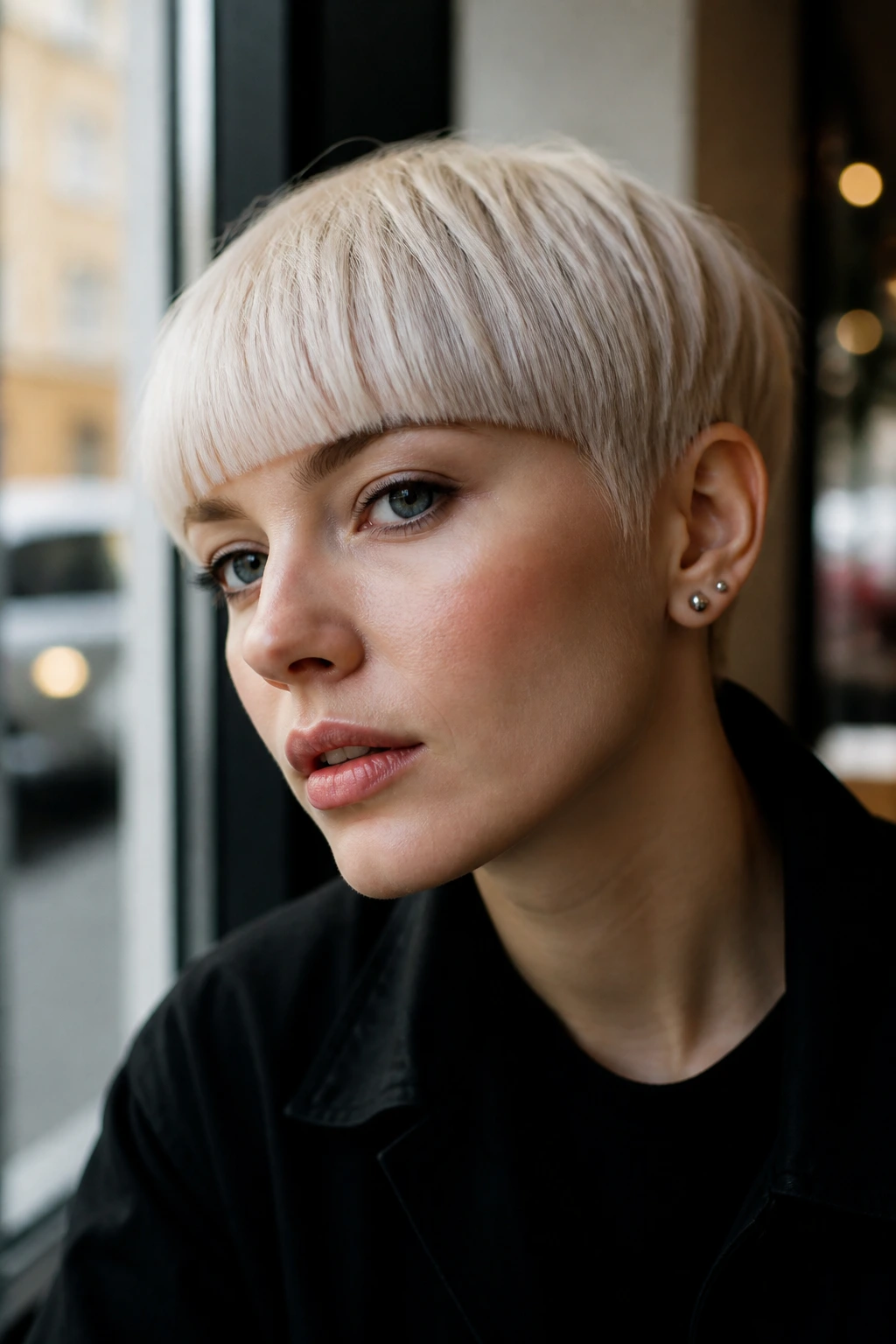
The bowl cut had a bad reputation for decades, but the modern, high-fashion version is surprisingly edgy. It involves a strong, blunt fringe and an even, rounded length around the head. It is graphic, clean, and looks incredible in platinum.
The Geometry of It
For fine hair, the bluntness is your friend. Because your individual strands are thin, they tend to look wispy at the ends. By cutting them blunt, you give them a weight and presence they don’t naturally have. It creates a sharp line that looks like a dense curtain of hair.
The Maintenance
This is a high-maintenance cut. You need the precision of a master stylist. If the line is off even by a quarter of an inch, the whole thing loses its structural impact. Expect to be back in the chair every four weeks.
17. The Platinum Pixie with Tapered Sides and Shadow Root
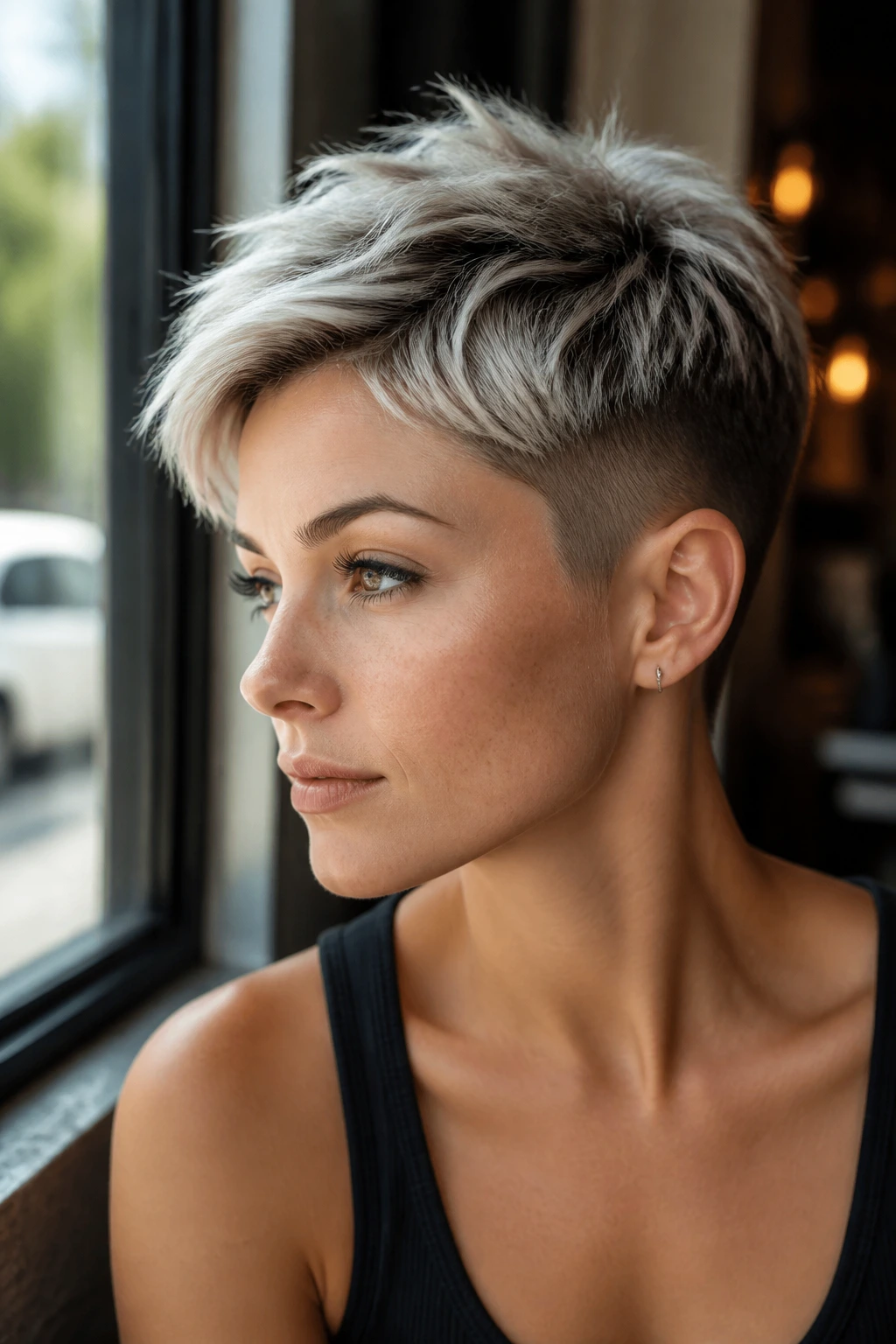
If you want to wear platinum but are worried about the harshness against your skin tone, or if you are worried about the maintenance, the shadow root is the answer. It keeps the roots dark and blends them into the platinum length, creating a lived-in, effortless vibe.
The Visual Depth
The dark roots add a layer of density. When you look at the hair, your eye sees the dark base first, which implies thickness. The platinum on the ends then becomes an accent, rather than the entire head of hair. It is a fantastic way to ease into platinum if you have never done it before.
Coloring Tips
Ensure your colorist knows the difference between a “smudge” and a “root melt.” A smudge is more precise and keeps the roots looking intentional, whereas a melt is more blended. For a pixie, a smudge usually looks sharper.
18. The Shag-Pixie Hybrid
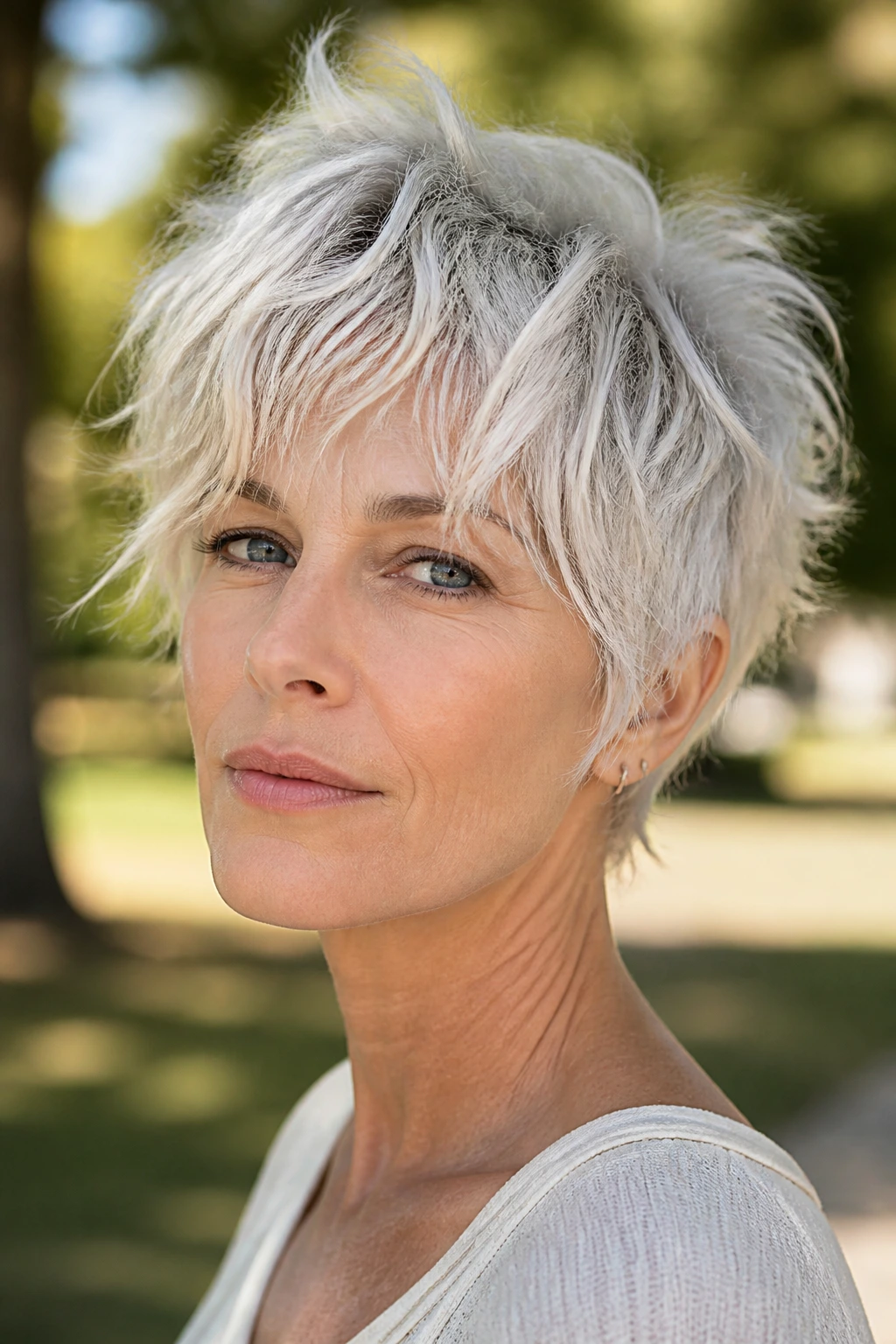
The shag is all about messy layers and piecey ends. When you bring that energy to a pixie, you get a cut that has a lot of movement. It is softer than a crop and more interesting than a basic layered cut.
Volume Through Layers
This cut uses shorter layers at the crown to create height, and longer, wispy layers around the ears and neck to create softness. For fine hair, the layers at the crown are essential. They provide that much-needed lift that stops the hair from sitting flat on the skull.
Styling for the Shag
This cut is made for sea salt spray. Spritz it into damp hair and let it air dry. The salt will add the grit and volume that fine hair lacks, giving you that beachy, “I woke up like this” look.
19. The Side-Swept Long Pixie
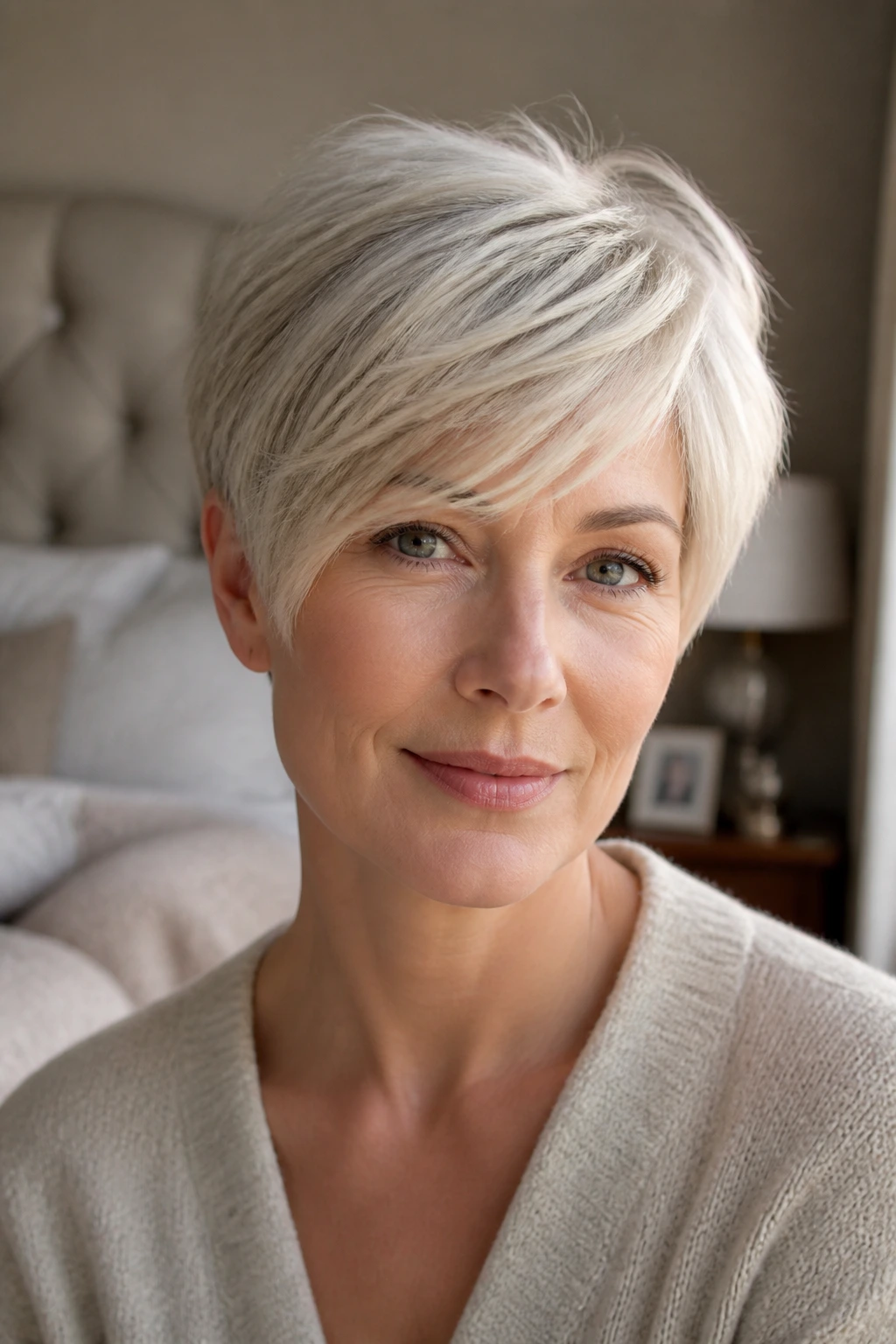
This is the style for people who aren’t quite ready to lose all their hair. The top is kept long enough to sweep across the forehead, while the sides and back are trimmed to pixie lengths. It is a very versatile look that can be worn pushed back, messy, or sleek.
Framing the Face
The side-swept length is excellent for covering the forehead if you are self-conscious about it, or for softening the transition if you are growing out a previous, shorter cut. It is a “starter pixie” that gives you a taste of the freedom without the shock of a super-short style.
The Volume Trick
To keep the side-swept section from falling flat, use a lightweight dry shampoo, even on clean hair. It adds a layer of powder to the hair shaft, which creates friction between the strands, making the hair stand up just a little bit more.
20. The Platinum Pixie with Micro-Fringe
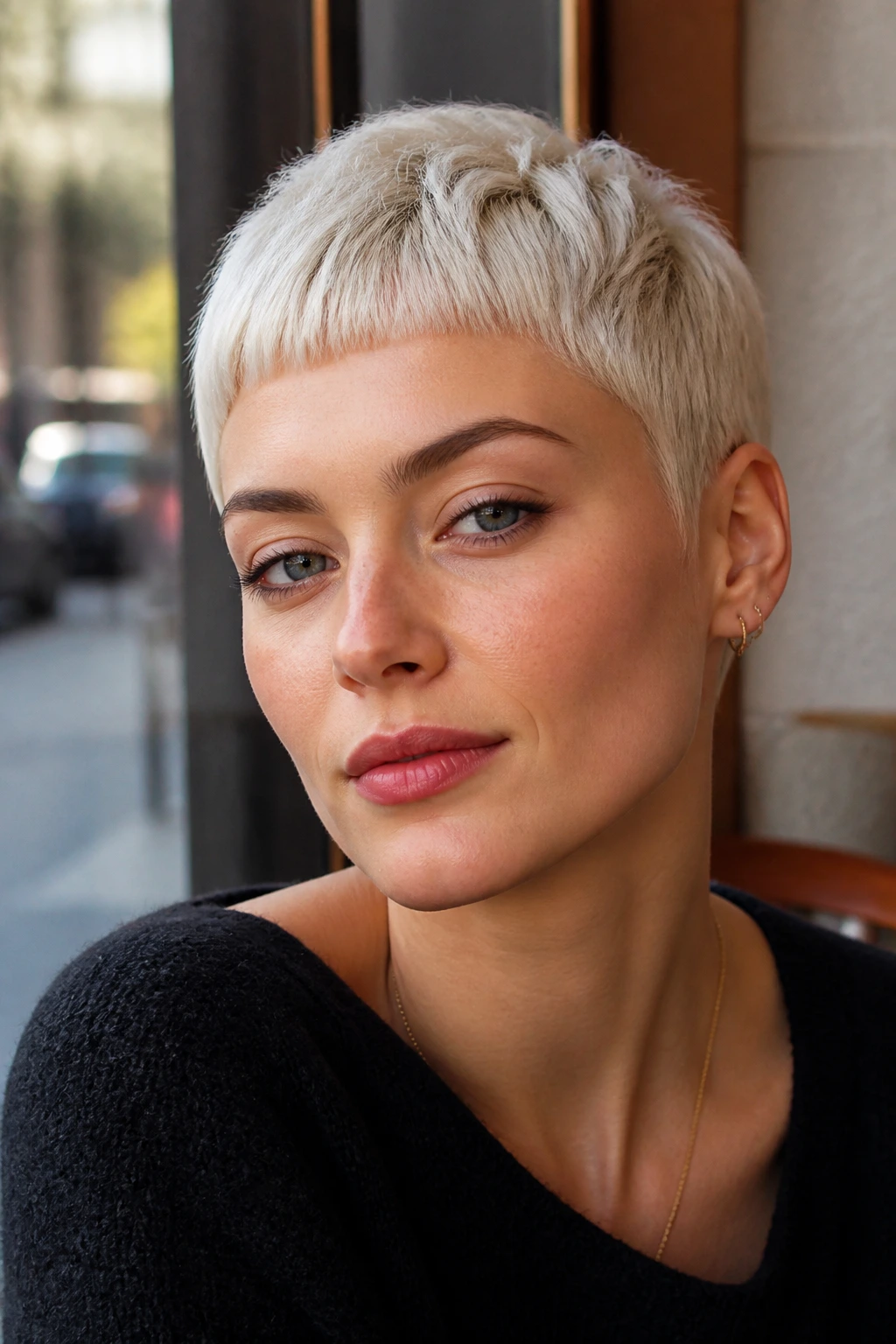
We saved the boldest for last. A platinum pixie with an ultra-short, straight-across micro-fringe is a statement. It is for the person who wants a look that is part editorial, part rebellion.
Why It Works
It exposes the entire face. There is no hiding behind hair. It forces people to look at your eyes, your brows, and your cheekbones. The micro-fringe is a very intentional detail that tells the world you are in control of your aesthetic.
The Commitment
You need good brows. If you are going to go this short, your eyebrows become a major part of your frame. Make sure they are groomed and defined, because they will be front and center every single day.
Final Thoughts
Going platinum with fine hair is not a decision to make on a whim. It requires a stylist you trust, a budget for regular toner appointments, and a commitment to deep-conditioning treatments. Bleach is a chemical process that changes your hair, and while that change can be a tool to build volume, it also requires care. Use heat protection, invest in a high-quality purple shampoo to keep the brassiness at bay, and do not underestimate the power of a good texture spray.
Once you find the pixie cut that works for your face shape and your personal style, you will likely never want to go back to long hair again. There is a specific kind of confidence that comes with a platinum pixie. It is sharp, it is bright, and it is impossible to ignore. You stop hiding behind your hair and start letting your hair accentuate who you actually are. That is the real value of the cut. It is not just about the hair; it is about the freedom.
