



There is a persistent myth that short hair is the ultimate “low-maintenance” option. People often assume that chopping the length off removes the need for effort entirely. The reality is that shorter styles—especially those that lean into the textured, cropped aesthetic often associated with the classic pixie—demand a different kind of attention. You aren’t wrestling with tangles or blow-drying for twenty minutes, but you are dealing with structure. You are dealing with the shape of your skull, your hairline, and the specific way your hair cowlicks.
When you go short, there is nowhere to hide. Every missed spot by the barber, every awkward growth pattern, and every bad hair day becomes front and center. That is not meant to scare you away from the style. It is meant to prepare you. A well-executed short crop is sharp, masculine, and incredibly practical, provided you understand the mechanics of the cut before you sit in the chair.
We are looking at eighteen variations of these short, cropped styles. Some are tight to the scalp; others allow for a bit of messy, disheveled volume. The best style for you depends almost entirely on your hair density, your growth speed, and how much time you are willing to spend with a jar of matte clay or sea salt spray in front of a mirror. Forget the idea that “short” means “uniform.” It is all about the details.
1. The Classic Textured Crop
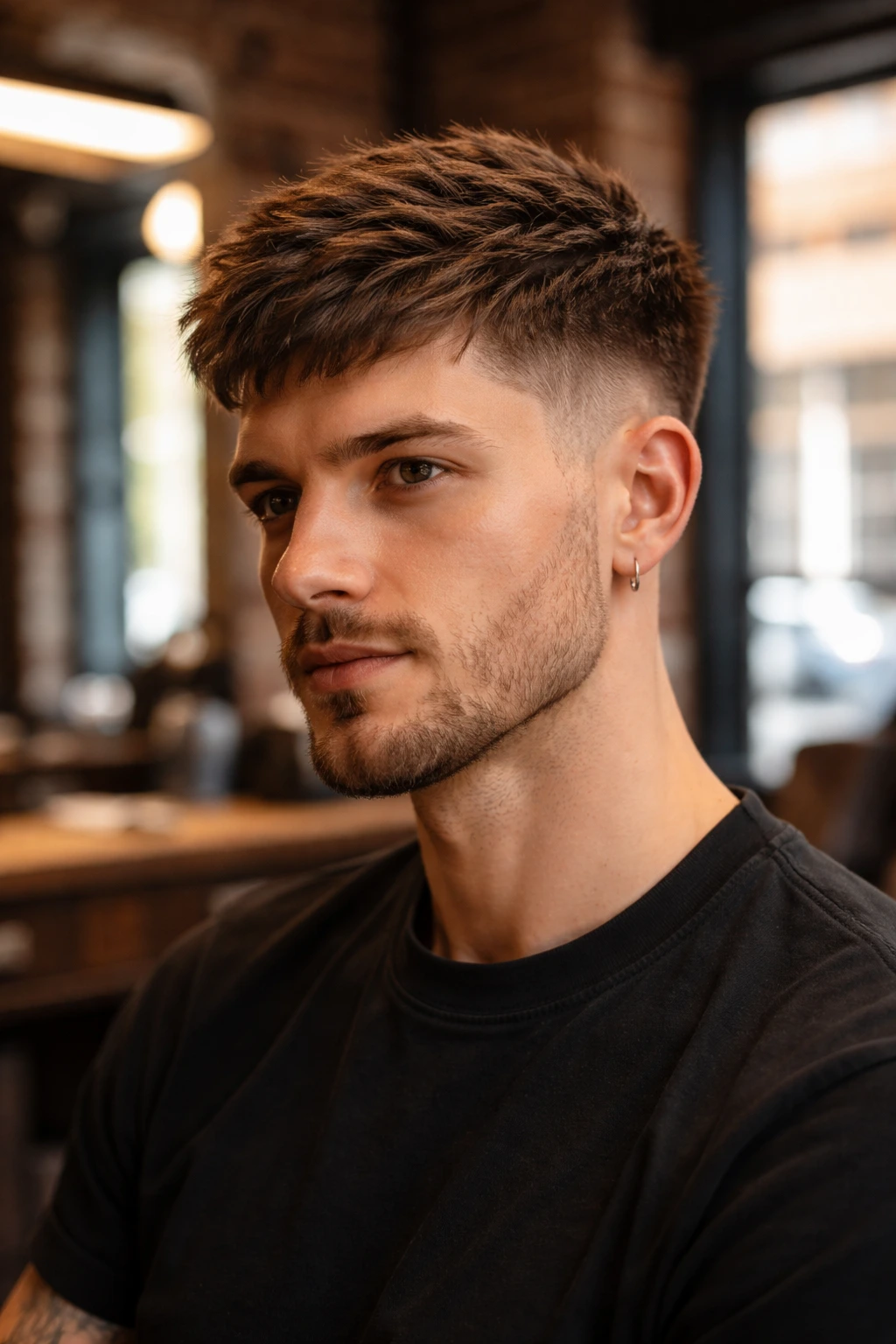
This is the baseline. If you walk into a shop and ask for a crop without any extra qualifiers, this is usually what you get. It balances length on top with shorter, often faded or tapered sides. The goal here is texture. You want the top to have enough length—usually about an inch to an inch and a half—to allow for some movement, rather than just lying flat against your head.
Why It Works for Most Men
This cut is versatile because it doesn’t commit to a specific subculture. It is not quite a military-style induction cut, but it is certainly not a longer, shaggy look. It works with almost any hair type, from fine and straight to thick and wavy. The texture is key; without it, the cut looks like a helmet.
Getting the Look
Ask your barber for a scissor cut on top with a textured finish. You want them to point-cut the hair rather than using a blunt, straight-across cutting technique. This creates those varying lengths that make the hair look fuller and less rigid. You can pair this with a number two or three guard on the sides to keep things neat without exposing too much scalp.
Maintenance Note: This style requires a trip to the barber every three to four weeks. Because the sides are kept short to emphasize the texture on top, they will start to look fuzzy and unkempt long before the top of your hair becomes an issue.
2. The High Fade Crop
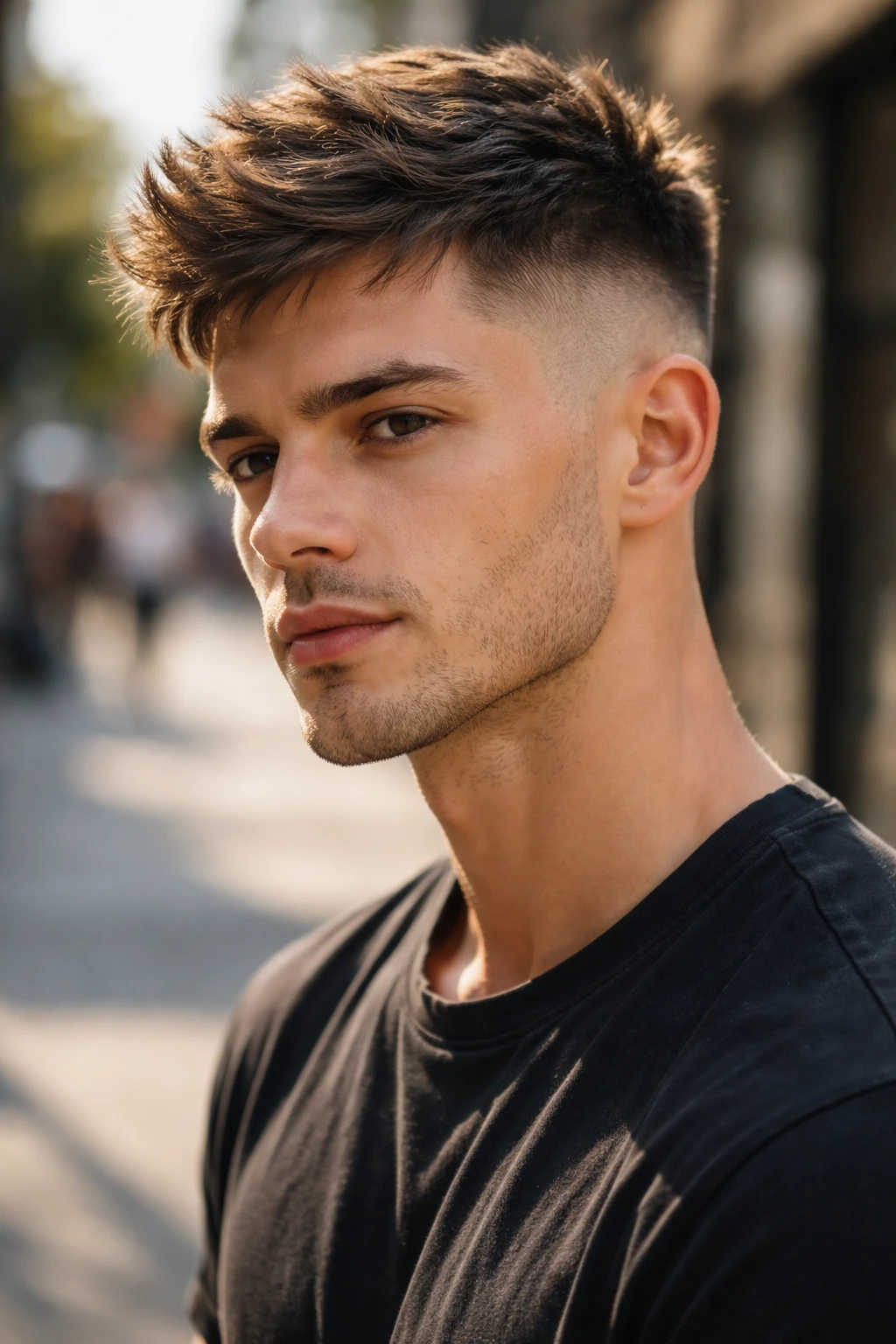
Contrast is the name of the game with a high fade. While the textured crop usually keeps the sides relatively blended, the high fade creates a dramatic drop-off. You go from a significant amount of length on top down to skin-tight on the sides, very high up toward the crown. This draws the eye upward, which can make your face appear slightly longer and more angular.
Structural Advantages
- Facial Definition: By removing hair from the sides high up, you expose the cheekbones and jawline, which generally creates a more masculine, chiseled appearance.
- Cooling Effect: This is an excellent choice for warmer climates or anyone who runs hot.
- Style Contrast: The stark difference between the skin-tight sides and the textured top makes the hair on top look thicker and more deliberate.
Who Should Avoid This
If you have a very long, narrow face or prominent ears, a high fade might accentuate those features in a way you might not like. The high contrast can sometimes make the top of the head look wider, so if you are already conscious of facial length, consider a mid-fade instead.
3. The French Crop

The French crop is arguably the most recognizable version of the short, textured style. It is defined by a distinct, often blunt fringe that is brushed forward toward the forehead. Unlike other crops where you might style the hair up or back, the French crop embraces the natural growth direction of the front of the hair.
The Mechanics of the Fringe
The secret to a good French crop is the weight. You want enough weight in the front to prevent the hair from looking wispy or thin, but not so much that it becomes a heavy, 1990s-style bowl cut. Your barber needs to be precise with the edge of the fringe. It should look intentional, not like you just haven’t combed your hair in three days.
Styling for Success
You will need a low-shine product for this. Avoid high-gloss pomades, which will clump the fringe together and make it look greasy. A matte clay or a dry texturizing powder works best. Apply a small amount, rub it between your palms, and push the hair forward from the crown toward your hairline. Do not overwork it. The messy, slightly separated look is the entire point.
4. The Disconnected Undercut Crop
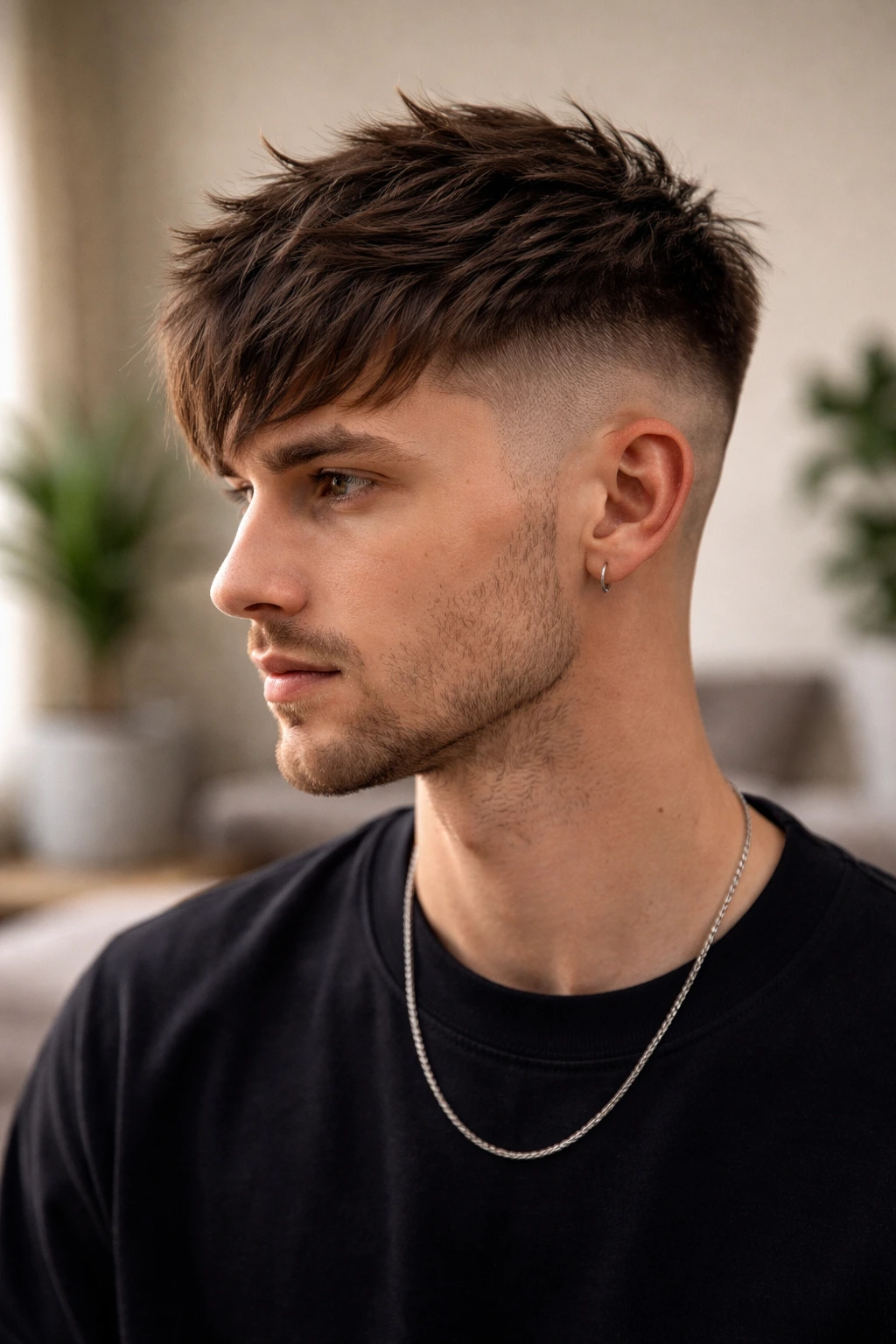
A disconnected undercut means there is zero transition between the top and the sides. There is no fade, no taper—just a sharp line where the long hair ends and the shaved hair begins. It is a bold, aggressive choice that requires a bit more maintenance because you cannot hide the growth.
The Visual Impact
When you have a disconnected undercut, the top of your hair acts like a cap. It hangs over the shaved sides. This is effective if you have a lot of volume on top that you want to showcase. It also provides a clean, architectural look that feels very intentional and sharp.
The Reality Check
You cannot wait six weeks for a haircut with this style. Because there is no blend, as soon as the shaved sides grow out even a quarter of an inch, the “disconnected” look disappears and just starts to look like a bad haircut. If you choose this route, be prepared for bi-weekly maintenance at the barbershop. It is a commitment, but the payoff is a style that is undeniably striking.
5. The Messy Bedhead Crop
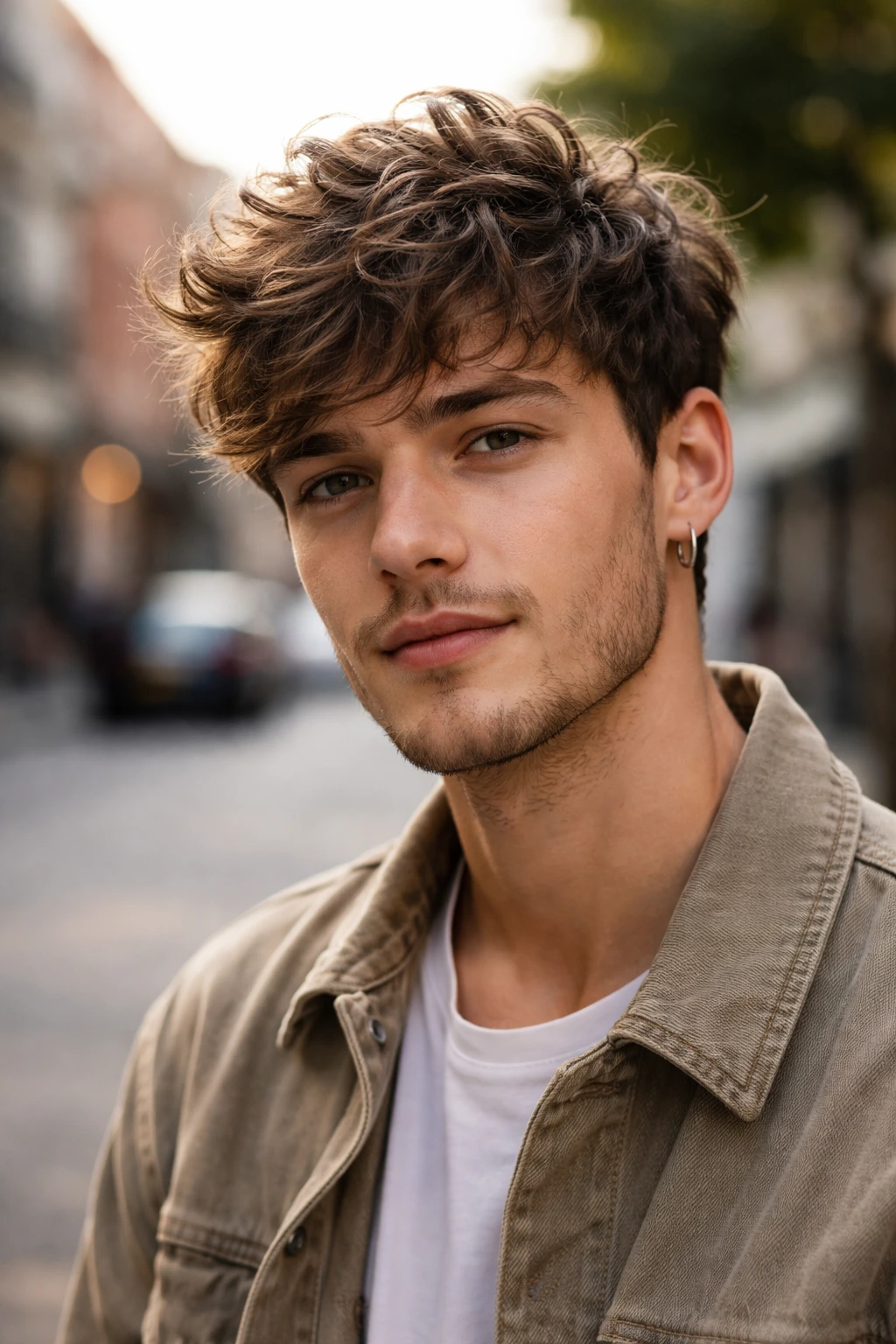
If you have wavy or curly hair, this is likely your best option. Trying to force a crop into a rigid, structured shape is a losing battle with natural texture. Instead, lean into it. This style is about keeping the top long enough for the curl or wave to form, then using product to define those clusters rather than smoothing them out.
Why It Beats the Alternatives
Other crops rely on a smooth, flat surface. If you have aggressive cowlicks or a weird growth pattern, those crops will fight you. The messy crop doesn’t care. It actually benefits from the chaos. The more random the movement, the better the final result looks.
Product Application
Avoid heavy waxes. They will weigh down your natural wave and make the hair look stringy. Instead, reach for a sea salt spray when the hair is damp. Scrunch it in, then let it air dry. If you need a bit more hold, use a light-hold cream once the hair is dry. This provides definition without the stiff, crunchy feel of a gel.
6. The Hard Part Crop
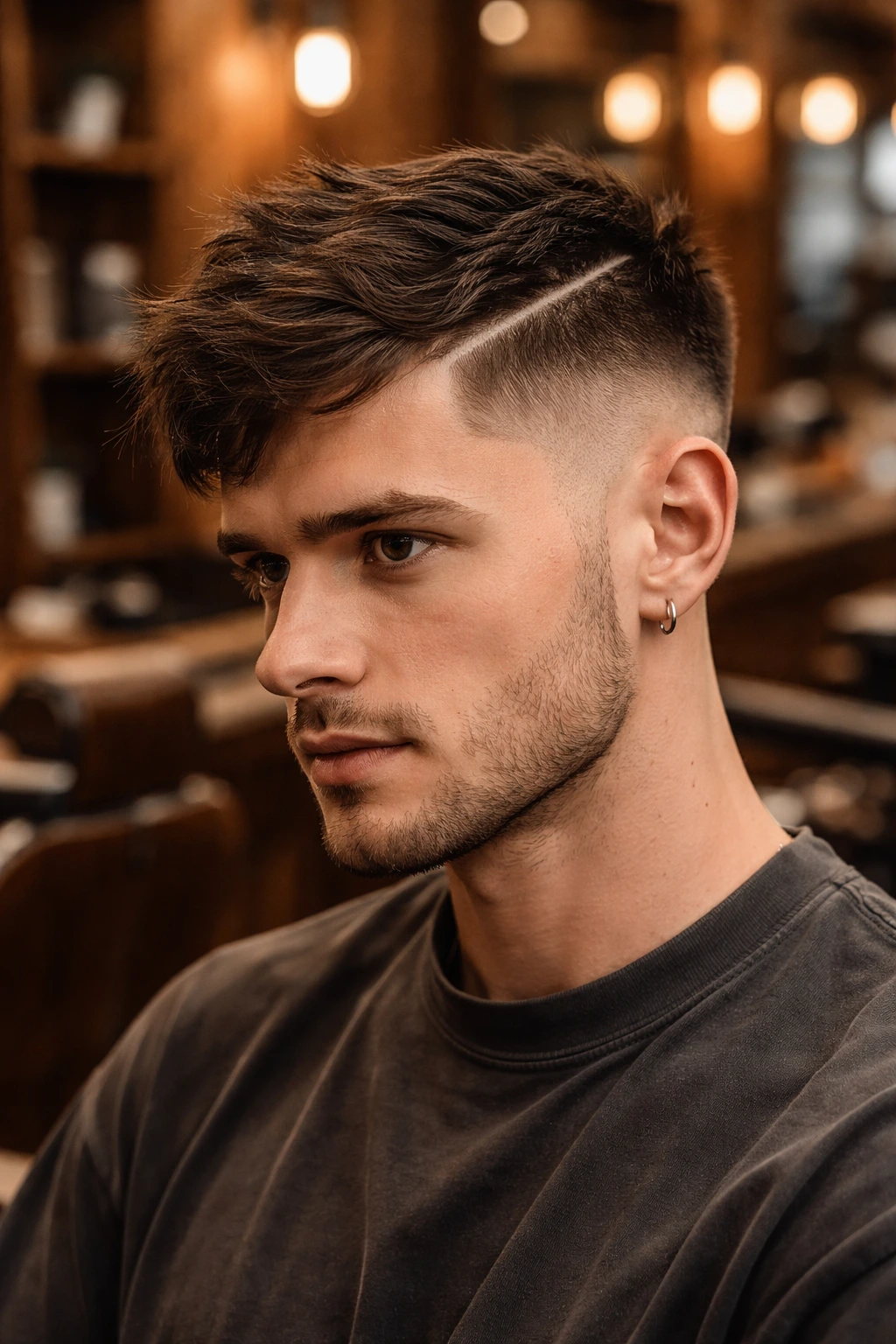
For those who want a bit of structure in a sea of messy texture, the hard part is a solid addition. This involves the barber using a straight razor to shave a distinct line into the scalp where a side part would naturally be. It creates a visual separation that stays put, regardless of how you style the rest of the hair.
The Argument for Precision
The hard part is not for everyone. Some find it a bit too groomed or “mall-hair” reminiscent. However, when done properly on a short, textured crop, it adds a layer of sophistication. It says you put time into your appearance. It takes a standard, slightly chaotic crop and gives it an anchor point.
The Downside
Growth. That razor line is incredibly obvious after about ten days. If you go with a hard part, you are signing up for very frequent edge-ups. If you miss your barber appointment, that line will start to blur, and you will be left with a strange patch of stubble in the middle of your haircut. If you are inconsistent with your grooming schedule, skip this one.
7. The Tapered Sides Crop
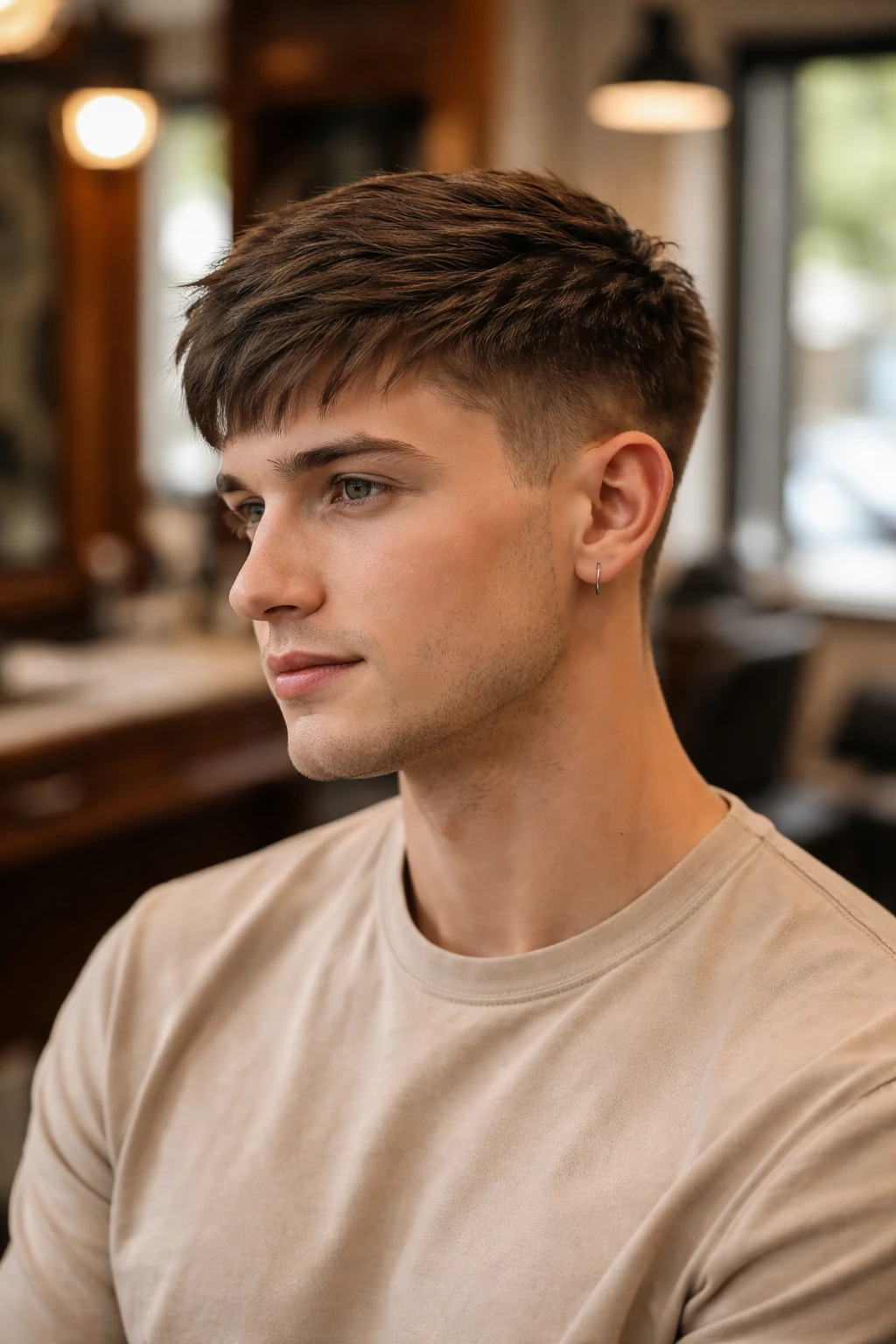
The taper is the more conservative cousin of the fade. Instead of taking the hair down to the skin, a taper gradually shortens the hair, leaving a bit of length around the neckline and ears. It is a softer transition and a cleaner look for professional environments where a skin fade might be considered too aggressive.
Why It’s a Smart Choice
- Longevity: A taper grows out much more gracefully than a fade. You can usually stretch this haircut to five or six weeks without it looking sloppy.
- Professionalism: If you work in a conservative office, the tapered look feels established and neat. It doesn’t scream for attention, but it shows you care about presentation.
- Versatility: It pairs with almost any top-length style, from a structured French crop to a longer, scissor-cut top.
The Consultation
When asking for this, be specific. “Taper” can mean many things. Tell your barber you want “a conservative taper at the neckline with no skin showing.” This ensures they don’t default to a high-and-tight skin fade, which is a common barber habit.
8. The Spiky Top Crop
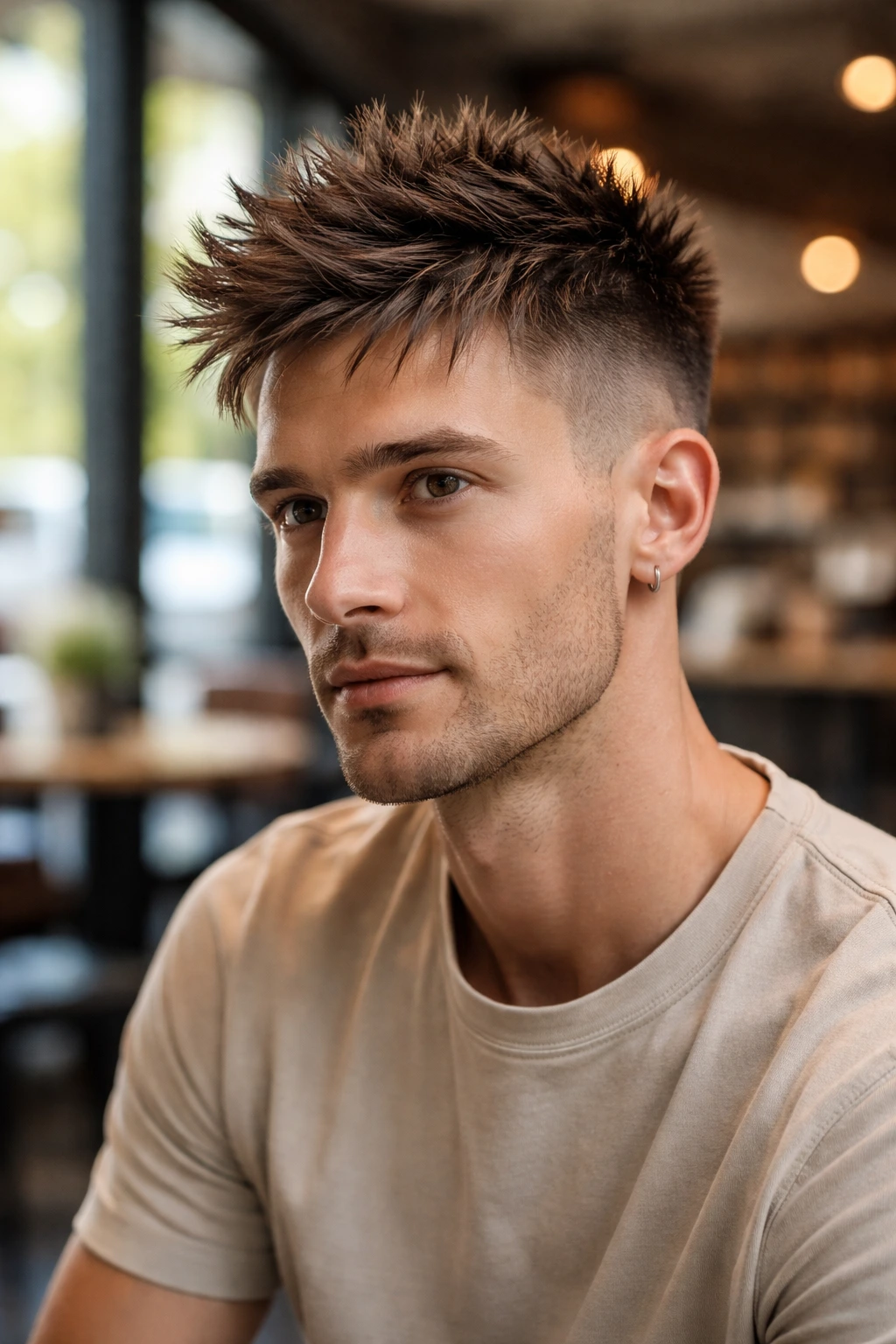
You might think we left the spiky hair in the early 2000s, but the modern version is more subtle. It is not about using half a bottle of super-glue gel to create sharp, crunchy points. It is about using a texturizing clay to pull small sections of hair upward and outward, creating a slightly jagged, energetic silhouette.
Elevating the “Spike”
The key to avoiding the retro look is the finish. Keep it matte. If your hair looks wet or shiny, you are in the danger zone. Use a dry, matte clay that offers high hold but zero shine. Apply it to dry hair, working it through your fingers before lightly pinching and pulling at the ends of your hair.
Who Should Wear This?
This is excellent for men with fine or thinning hair. Creating spikes and vertical texture gives the illusion of volume. When hair lies flat, gaps in density are more obvious. When you create vertical interest, those gaps are hidden by the shadow and structure of the hair strands.
9. The Side-Swept Pixie
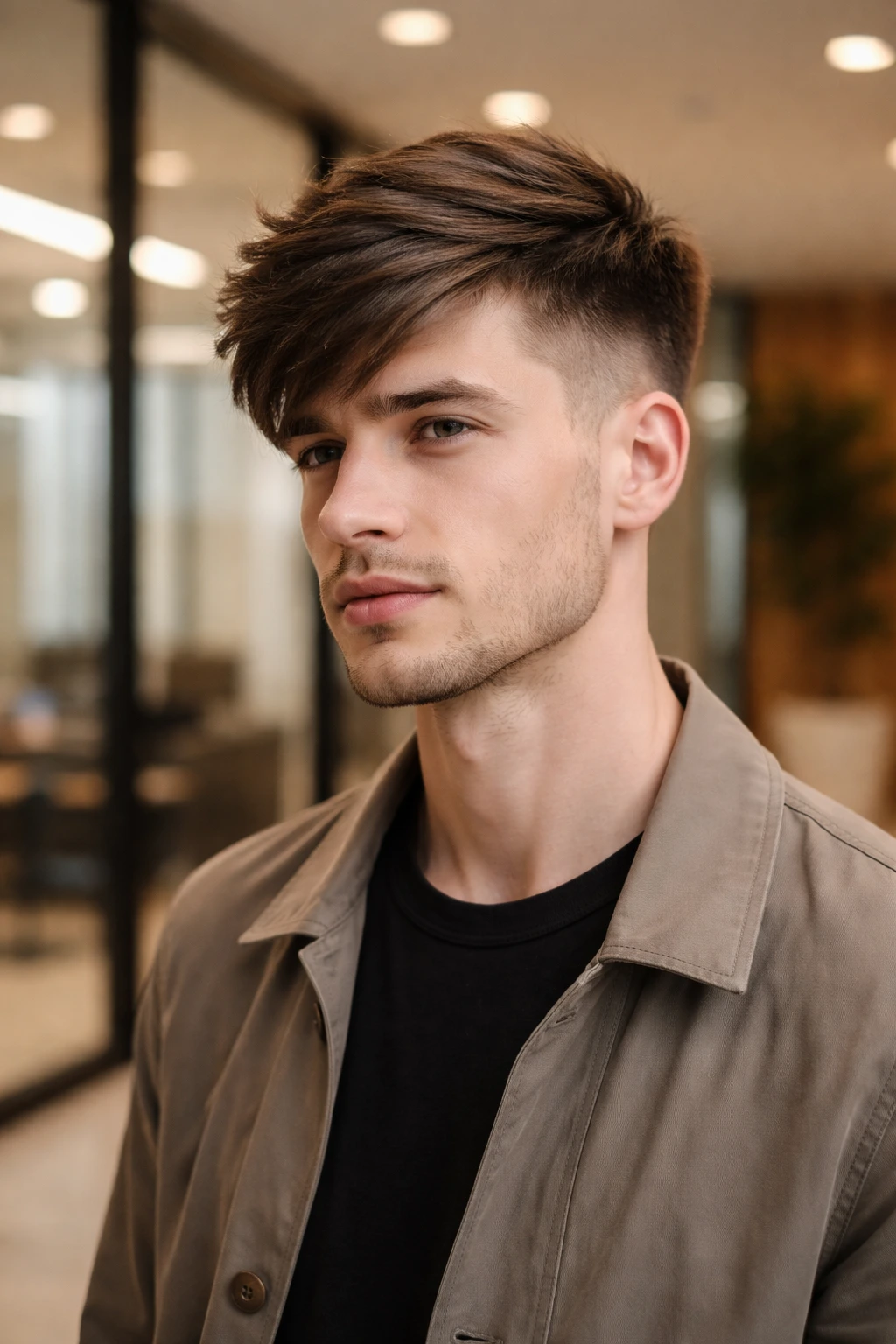
Most crops are styled forward or messy, but sweeping the hair to the side is an underrated option. This works well if you have a slightly longer top section. You get the shortness on the sides and back, but the top is kept long enough to be combed over toward one side of the head.
The Benefit of Asymmetry
Most faces are not perfectly symmetrical. A side-swept style plays with that. If you have a dominant part or a hair growth pattern that pushes to one side, this style works with your natural anatomy rather than against it. It is a much more “adult” version of the crop that still feels modern and sharp.
Styling Tip
Use a comb, not your fingers. For a side-swept style, you want clean lines. A light-hold pomade will help keep the hair in place without making it look like a brick. Start with the hair damp, use a blow dryer to set the shape, then apply a tiny amount of product to lock it in.
10. The Mohawk-Style Crop
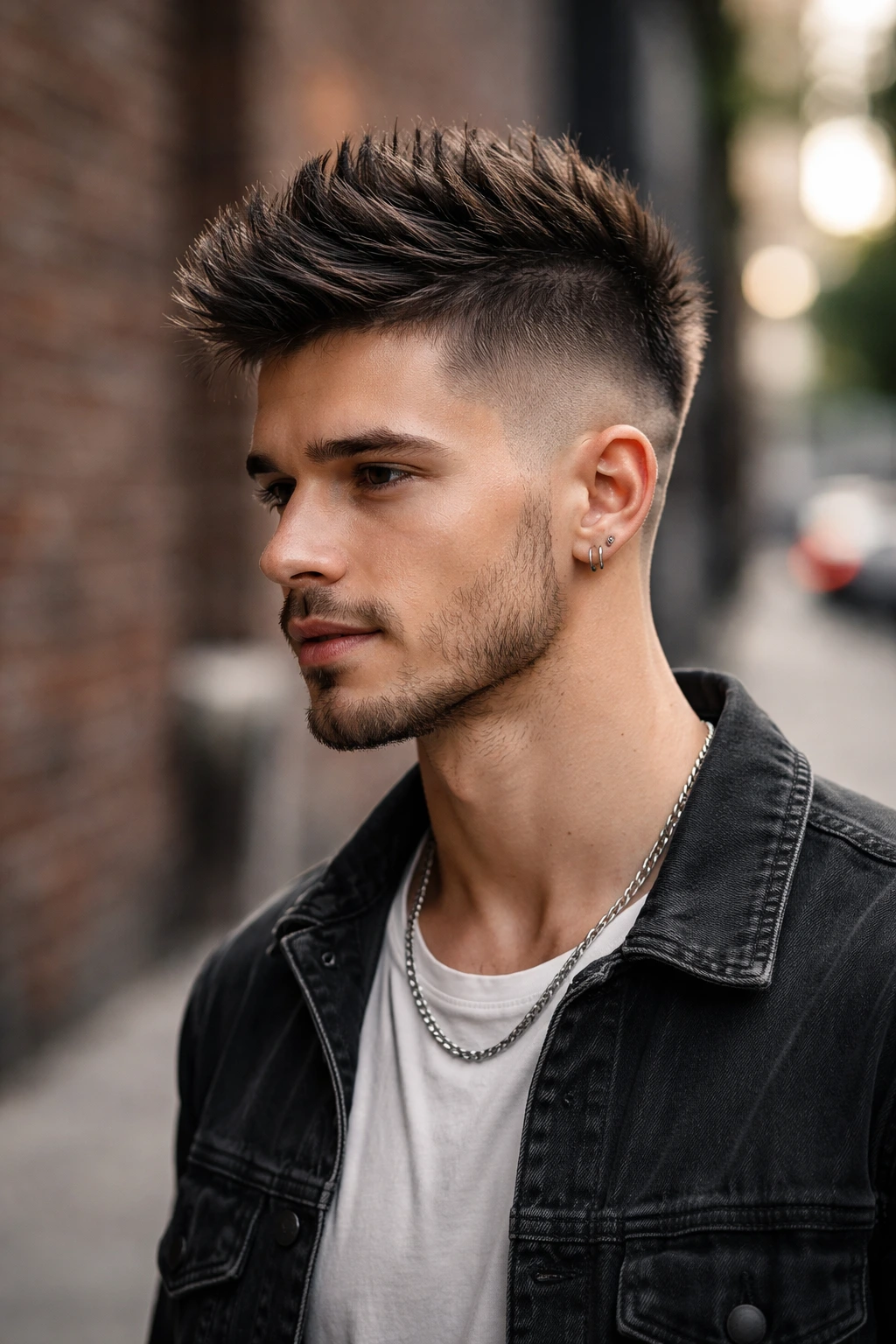
This isn’t a punk-rock mohawk. It is a subtle, tapered-down version. You keep the hair slightly longer in a strip running down the center of the head, tapering down to shorter lengths as you move toward the sides. It creates a slight peak in the center, drawing the eye toward the middle of the face.
Why It’s Not Just for Punks
When trimmed correctly, this style is actually quite subtle. It provides a unique silhouette without being overly loud. It is fantastic for men with round faces because it adds height, which helps to elongate the appearance of the face.
The Key to Execution
The secret is the blending on the sides. You want a smooth transition from the top strip to the sides. If the jump in length is too extreme, you move from “stylish” into “costume” territory. Ask your barber for a “soft mohawk fade” or a “tapered center crop” to ensure they understand you want a balanced, wearable look.
11. The Angular Fringe Crop
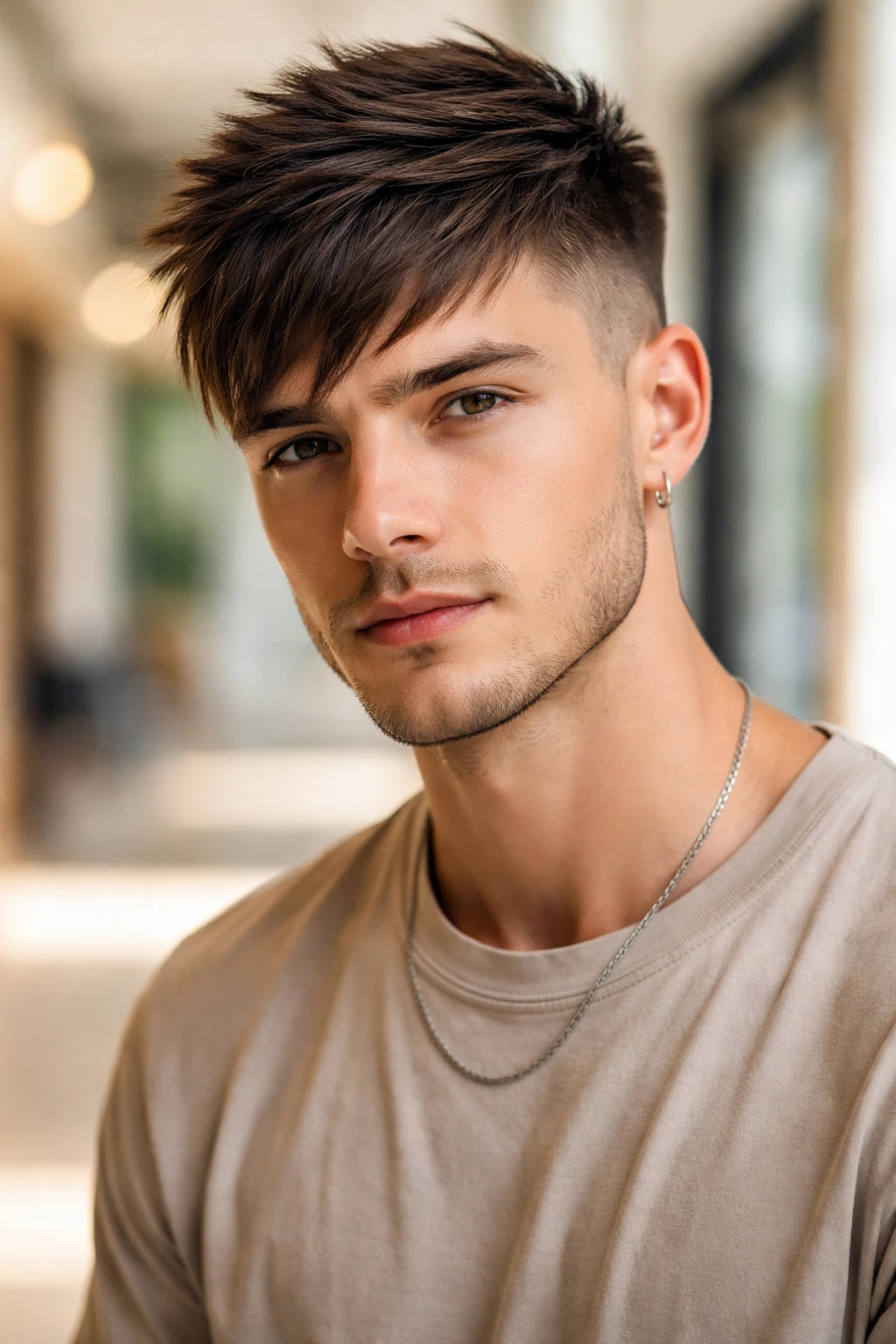
This style is all about geometry. The fringe is not just cut forward; it is cut at an angle across the forehead. It can go from short on one side of the forehead to longer on the other, or vice versa. It is a bold, artistic choice that looks best on guys with straight, thick hair.
The Shape Factor
- Square Faces: The diagonal line helps soften the rigid angles of a square jaw.
- Oval Faces: This style adds character to an otherwise balanced face shape.
- Styling Note: You have to commit to styling this every morning. If you wake up and just shake your hair out, it will look like a mistake. You need to comb the fringe into the specific angle you want.
Pro Maintenance
Keep a small comb in your pocket. If the wind hits it, or if you wear a hat, the angle can get disrupted. A quick comb-through in the mirror keeps the geometry intact throughout the day. It is a high-maintenance look, but the sharpness is worth it for the right personality.
12. The Mid-Fade Textured Crop
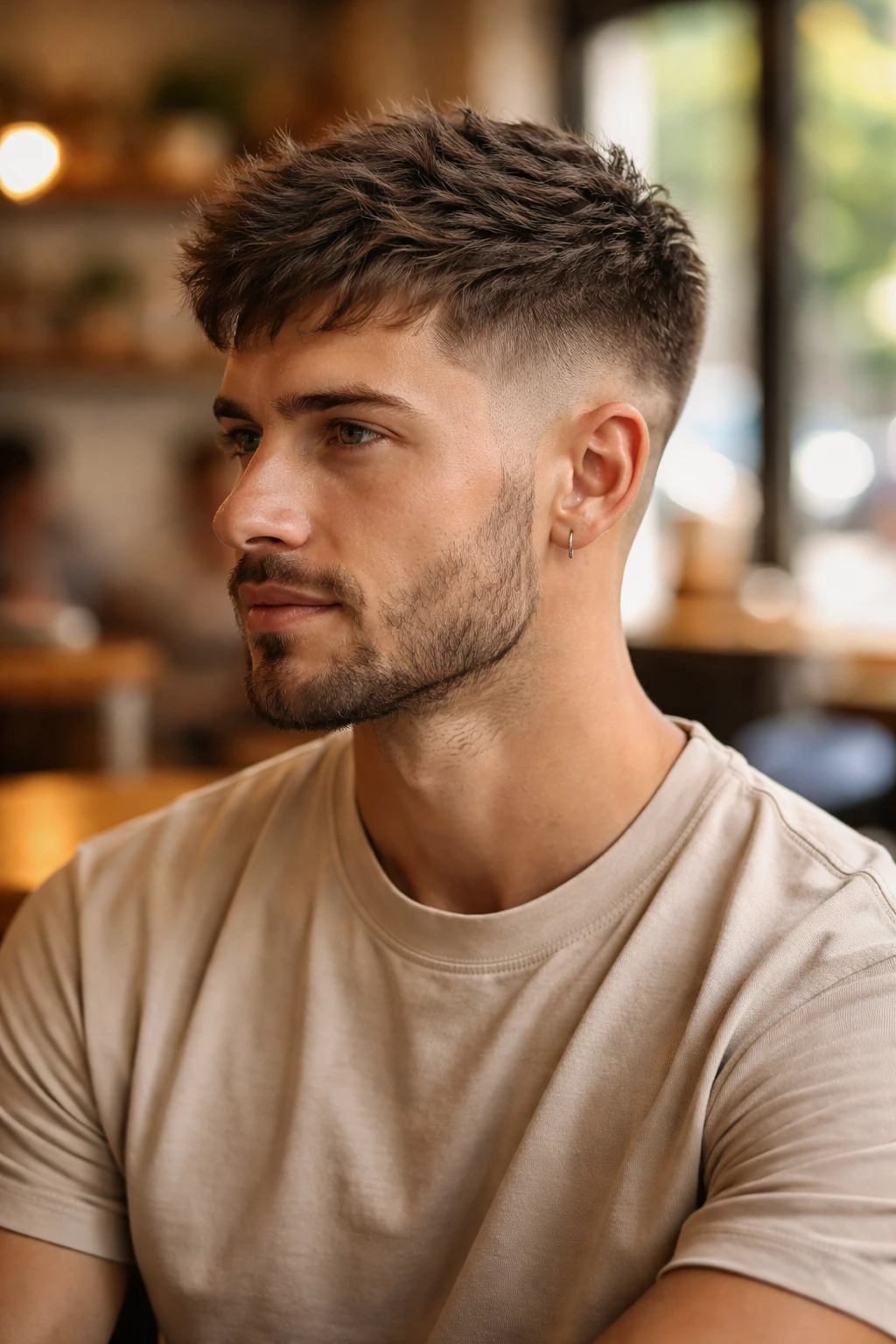
The mid-fade is the middle ground. It starts around the temples and curves down toward the back of the head. It provides a clean, precise look without the intense exposure of a skin fade or the conservative nature of a taper. For many, this is the “Goldilocks” of short, cropped hairstyles.
Why It Works for Everyone
It balances well with almost any beard style, from a heavy, full beard to a clean-shaven look. Because it doesn’t go all the way up to the crown, it doesn’t dramatically change the perceived shape of your head. It just cleans up the messy hair around the ears and neck.
The Texture Component
Since the sides are a mid-fade, you can be quite liberal with the texture on top. You can leave it messy, you can spike it, or you can push it forward. The fade acts as a frame. Because the frame is balanced, you have more freedom with what you do inside the frame on top of your head.
13. The Scissor-Cut Crop
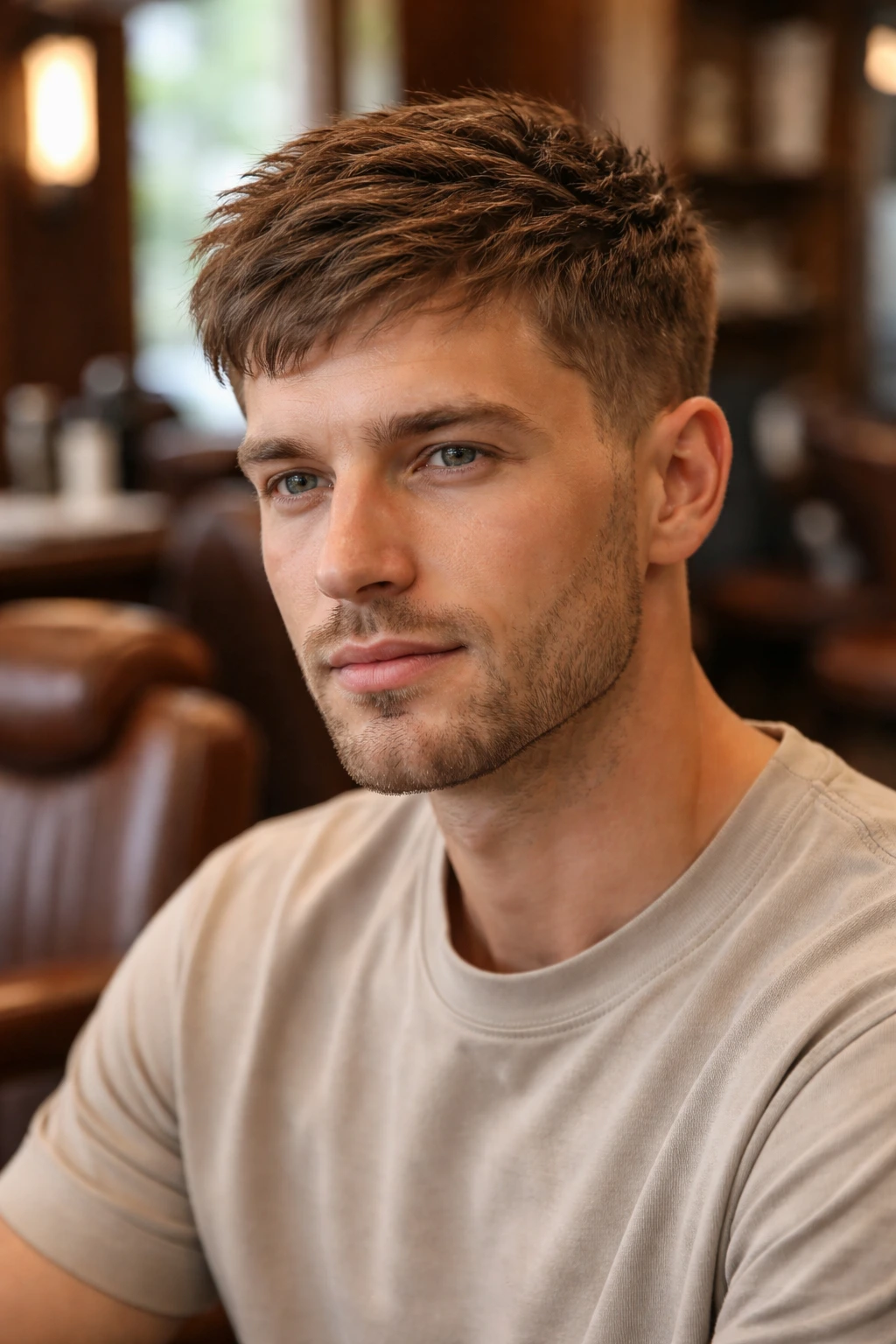
Sometimes, clippers are the enemy. If you have fine hair that stands straight up when shaved, or if you just dislike the feeling of buzzing, a scissor-cut crop is the answer. Every part of this haircut, including the sides, is done with scissors and a comb.
The Aesthetic Difference
Clippers create a very uniform, industrial look. Scissors create a softer, more natural appearance. Even when the hair is short, scissors allow for subtle variation in length. This results in a cut that looks like it has been groomed rather than “manufactured.”
Who This Is For
This is perfect for men who are thinning. Clippers, especially with short guards, can expose scalp and make thinning look more pronounced. Scissors allow the hair to lay over itself more naturally, providing better coverage and a denser appearance, even when the hair is cut short. It takes longer in the chair, but the finish is superior.
14. The Undercut Pixie
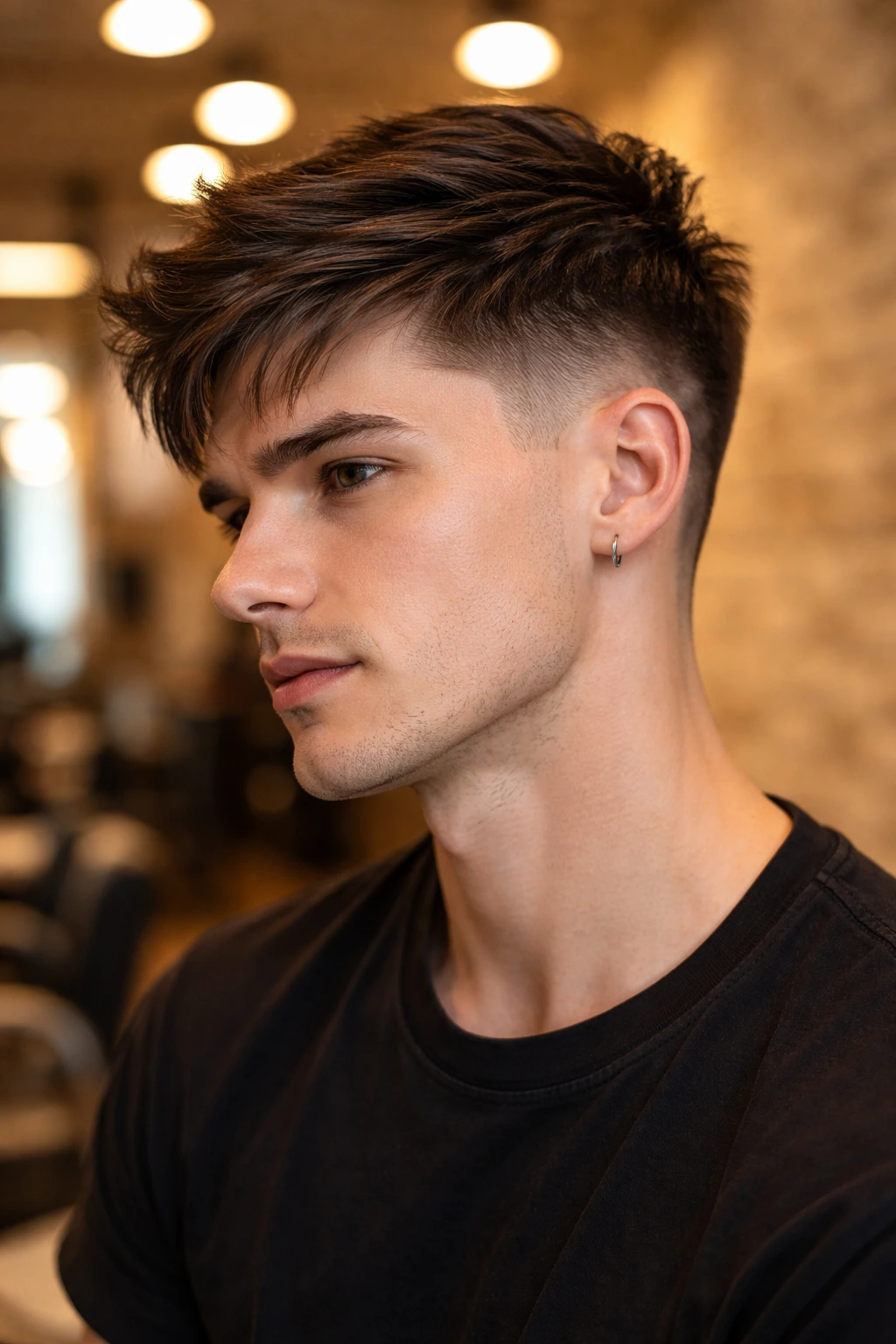
This style differs from the disconnected version because it typically involves a taper rather than a hard disconnect, but the top is significantly longer. It’s almost like a disconnected pompadour that has been shortened into a crop. You have the short, tight sides and a long, substantial top section that you can style back or to the side.
Managing the Volume
You will need a stronger product for this one. Because the top has some length, it has gravity working against it. A strong-hold pomade or a heavy-duty paste is necessary to keep the hair from flopping forward if you want it styled back.
The Daily Routine
- Wash your hair.
- Towel dry until it is damp.
- Apply a quarter-sized amount of strong-hold paste.
- Blow dry the top while using your fingers to pull it back or to the side.
- Finish with a quick spray of hairspray if your hair is stubborn.
15. The Curly-Top Crop
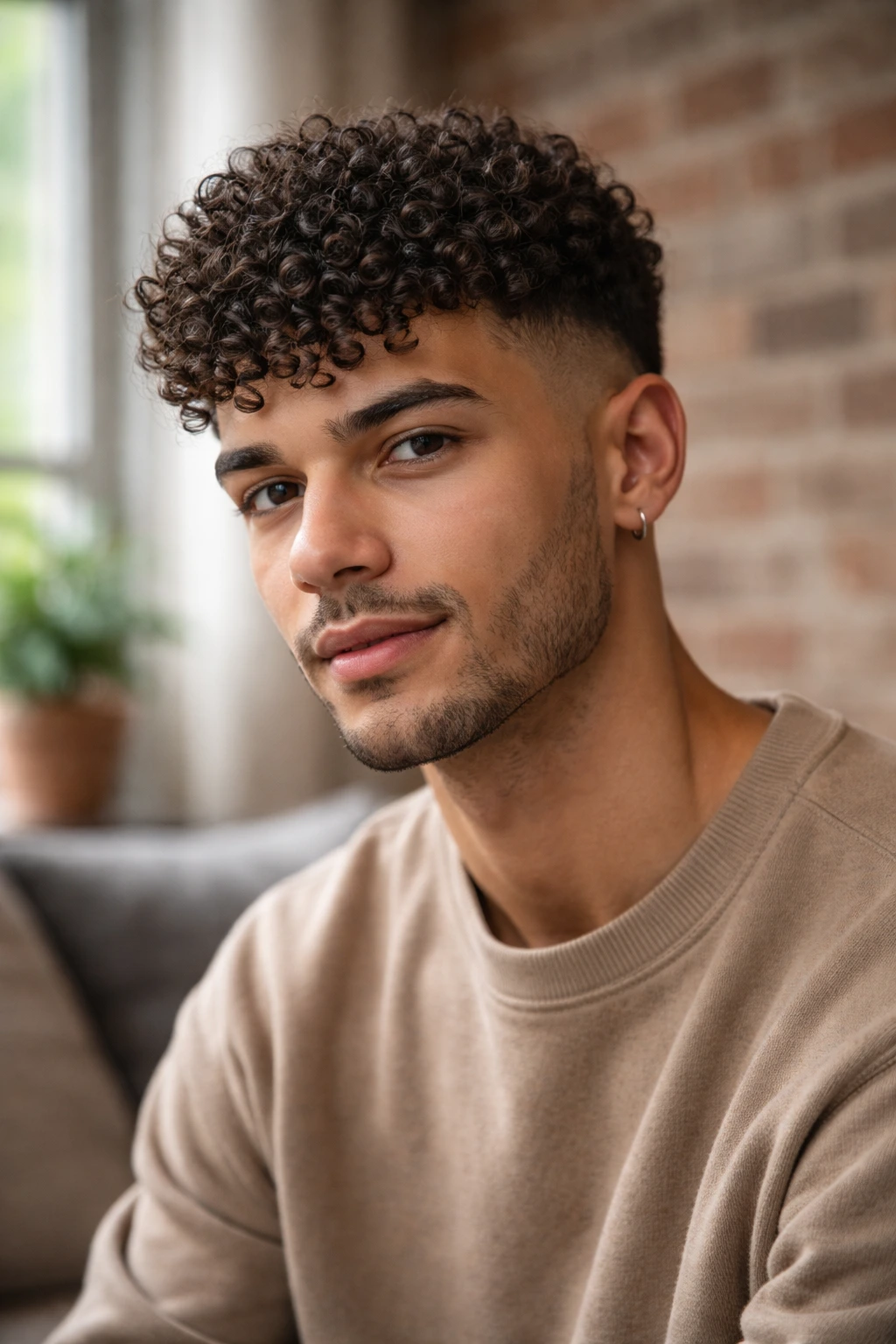
If you have tight curls, the crop is arguably your best friend. Trying to grow out curly hair can lead to the dreaded “triangle” shape, where the hair puffs out at the sides. By keeping the sides tight and letting the curls live on top, you solve the shape problem immediately.
Embracing the Volume
Don’t fight the curls. Use a curl-defining cream. This is a product that adds moisture and “clumps” the curls together, preventing them from turning into a frizzy mess. It’s the difference between a controlled, cool look and a frantic, undefined one.
The Maintenance Factor
Curly hair grows differently, and the tight, cropped sides will need attention more often than straight hair. As the curls on the sides grow out, they lose their shape and start to look fuzzy quickly. Expect to hit the barber every three weeks to keep the contrast sharp.
16. The Hard-Transition Crop
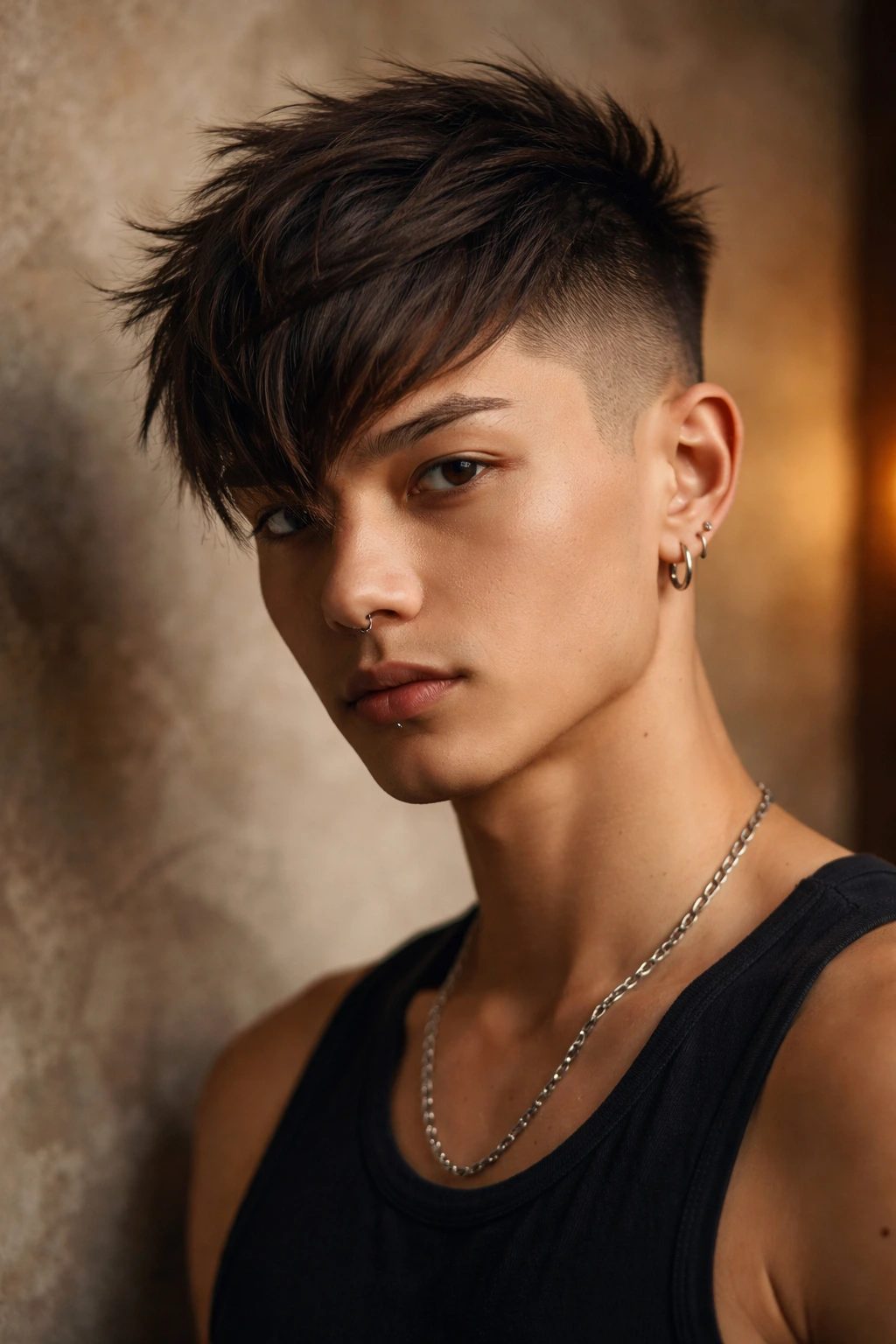
This style is about deliberate inconsistency. You might have one side of the head faded shorter than the other, or a patch of hair left slightly longer near the crown while the rest of the top is cropped short. It is an avant-garde take on the crop.
Who Should Try This?
This is for the guy who is tired of the standard, balanced haircut. If you have a creative job or a personal style that leans toward the unconventional, this is a way to express that. It shows you aren’t just following the “standard” barber menu.
Communicating with Your Barber
You cannot just sit down and say “do whatever.” You need to bring a photo. This is not a standard haircut; it is a custom design. If you don’t have a visual reference, the barber will likely just give you a standard fade. Be very clear about where you want the longer sections and where you want the shorter transitions.
17. The Salt-and-Pepper Pixie
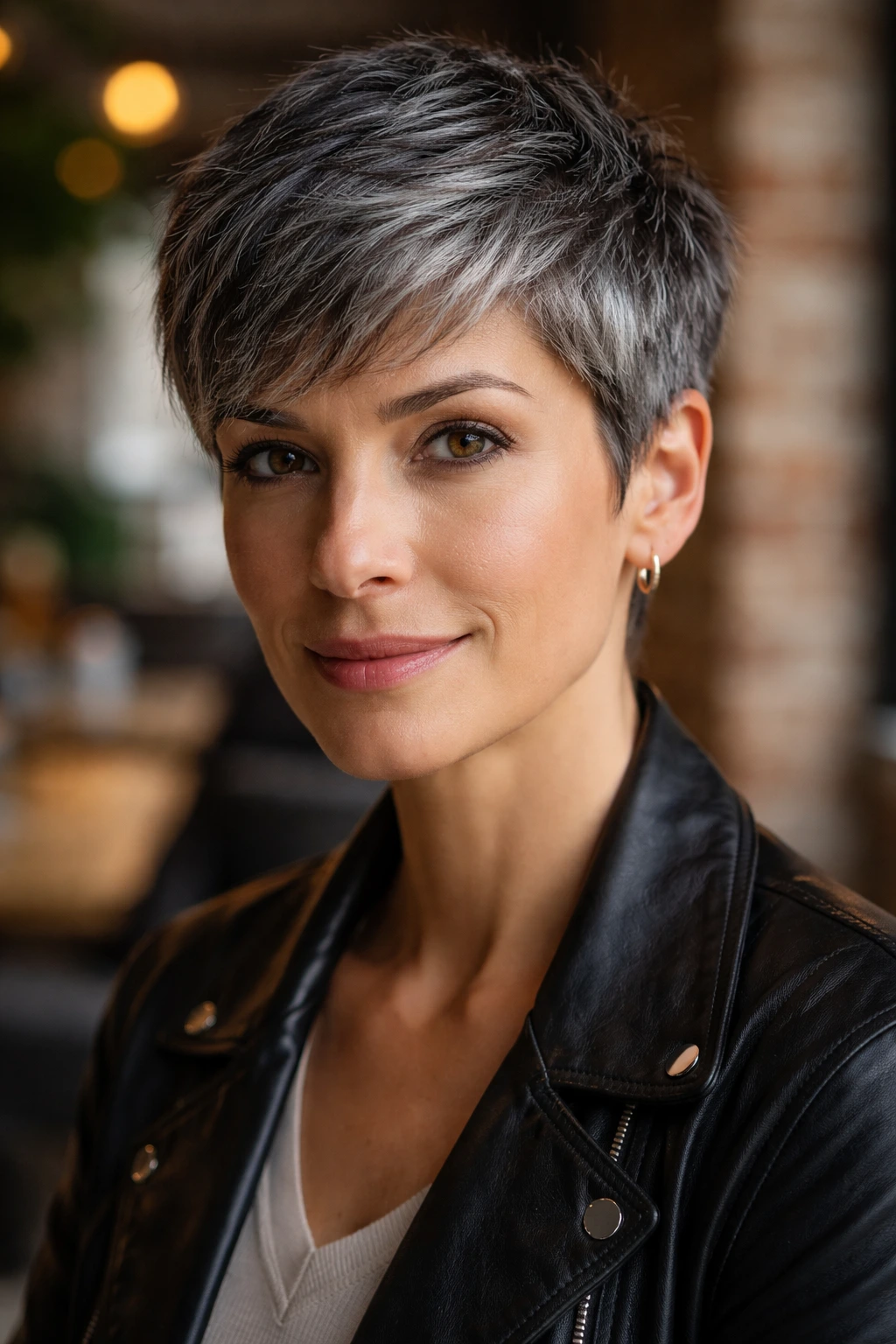
Age changes your hair texture. As it turns grey, it often becomes wiry and unruly. A crop is an excellent way to manage this. The salt-and-pepper crop embraces the natural texture change. It keeps the hair short enough that it doesn’t get frizzy, but textured enough to show off the variation in color.
Why It Looks Sophisticated
Grey hair naturally has a lot of dimension. When you keep it short and textured, that variation in color becomes a feature rather than a nuisance. It looks intentional and sharp. It sheds the “unkept” look that can sometimes come with longer grey hair.
Product Selection
Look for products that specifically mention they are for “coarse” or “gray” hair. These often have a bit more conditioning power to soften the wiry texture. Avoid anything too shiny, as it can make grey hair look yellow or greasy. A matte finish is essential here.
18. The Fringe-Forward Crop
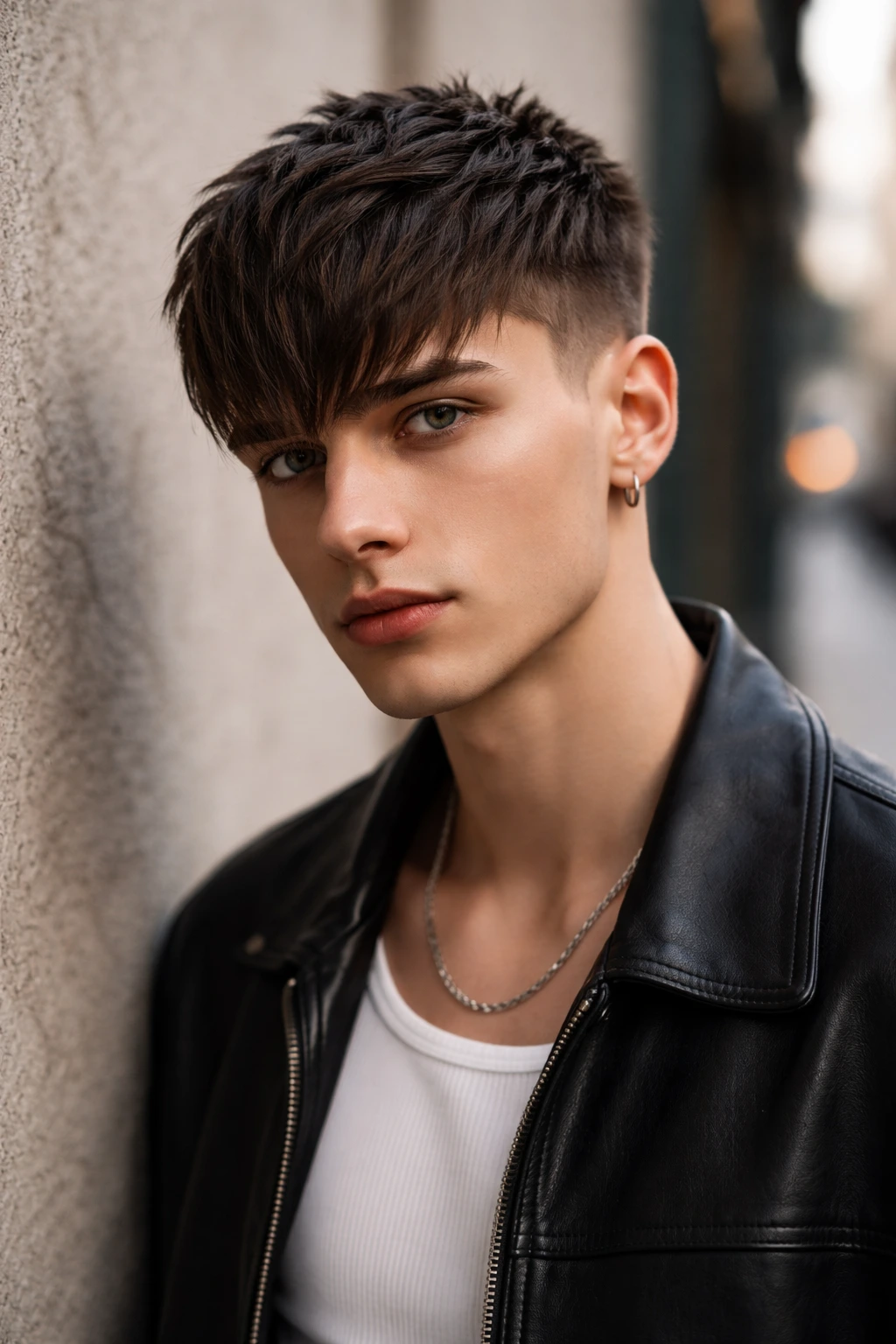
This is the extreme version of the French crop. Instead of just brushing the fringe forward, you are pushing everything forward. The crown, the sides, the back—it all flows toward the face. It creates a very compact, rounded silhouette that is becoming increasingly popular in high-fashion circles.
The Visual Effect
This is a very intense look. It is compact and creates a distinct shape for your head. If you have a round face, be careful; this can accentuate the roundness. It works best on oval or heart-shaped faces where the structure of the jaw can balance out the roundness of the haircut.
The Commitment
This is a “high-style” cut. You cannot just roll out of bed and look good. You have to style this every single morning. It needs to be brushed into place, likely with a bit of clay to provide the hold. If you aren’t the type to spend five minutes on your hair every morning, look back at the earlier list and pick something more “wash and wear.”
Managing Your Routine and Products
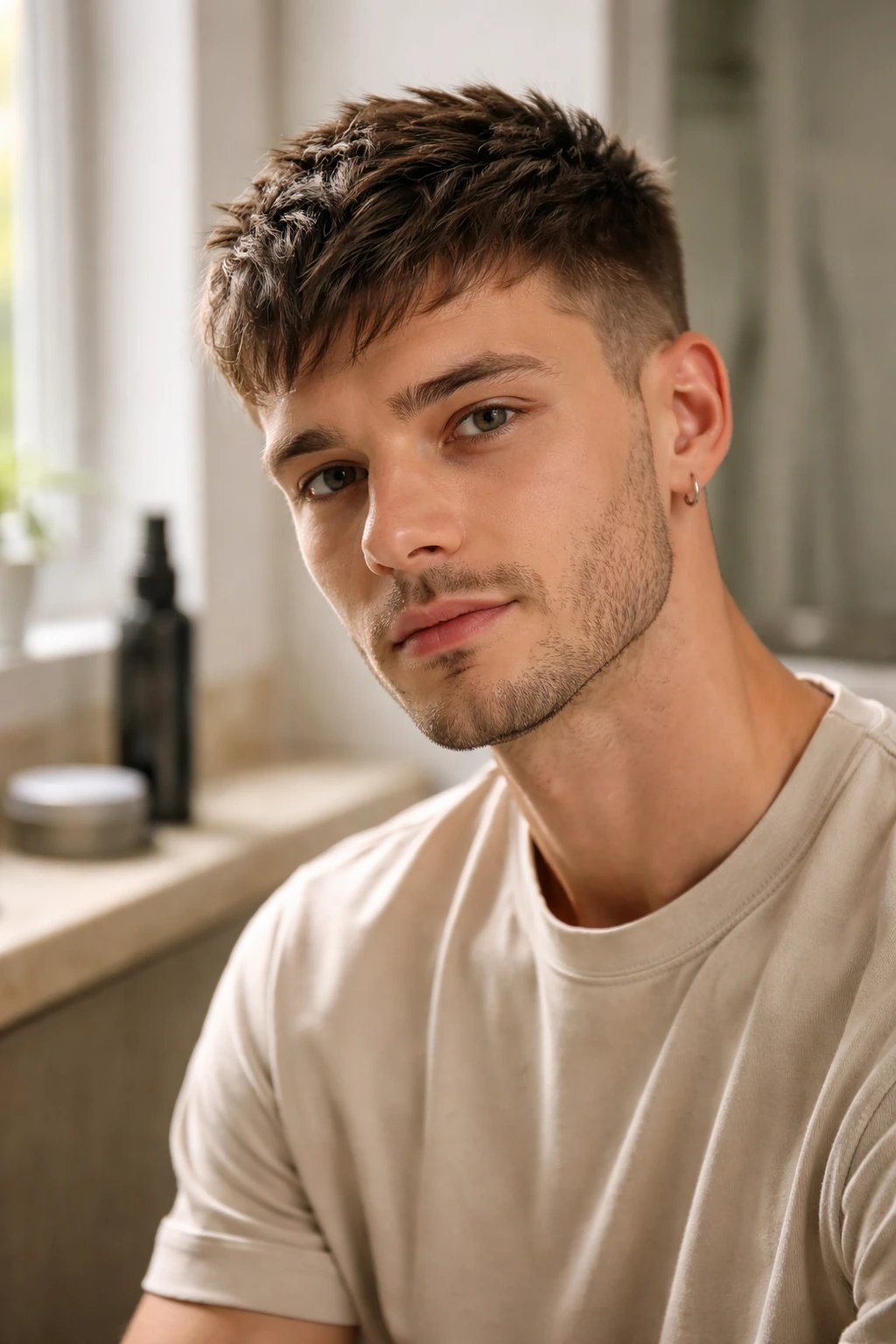
The biggest mistake men make when adopting a shorter, cropped style is assuming they don’t need hair products. You absolutely do. In fact, you need them more than the guy with long hair. When your hair is short, the product doesn’t just hold the style; it provides the texture that defines the cut.
The Holy Trinity of Crop Products
- Matte Clay: This is the gold standard for crops. It provides hold and texture without shine. It makes the hair look dry and natural.
- Sea Salt Spray: Best for pre-styling. Spray it on damp hair to add grit and volume before you even think about blow drying or using clay. It gives the hair that “just spent a day at the beach” structure.
- Texture Powder: If you have very fine hair, this is a cheat code. You sprinkle it onto the roots, and it instantly creates volume and lift that holds all day. It’s a bit messy to apply, but it is worth the effort for the density it adds.
Barber Relationships
When you find a style on this list you like, do not just memorize the name. “Textured crop” means ten different things to ten different barbers. You must bring pictures. Even better, bring pictures of someone who has a similar face shape and hair type to you.
If you bring a picture of a guy with stick-straight, thick hair, and you have fine, wavy hair, your barber needs to manage your expectations. They can get you close to the shape, but the texture will behave differently. A good barber will tell you: “We can do this, but it will need more product” or “We can do this, but the fringe won’t sit that heavy.” Listen to them. They see the hair from a different angle than you do.
The Growth Cycle
With any of these styles, growth is your enemy. A crop looks like a crop because of the contrast between the hair on top and the hair on the sides. As soon as the sides grow, that contrast vanishes, and you’re just left with a “short haircut.” It loses its edge.
Plan for a visit to the shop every three weeks. If you can make it to four, you’re lucky. If you push it to five or six, you aren’t really wearing a “pixie” or “crop” style anymore; you’re just wearing a haircut that’s growing out. If you aren’t willing to put in the time or the budget for that kind of maintenance, you might be better served by a style that grows out more gracefully, like a classic tapered side-part. But if you want that sharp, modern, effortless look? The crop is the only way to go. Just be ready to keep up with the chair time.
