



Thick hair can make a pixie look rich and full in the best way. It can also turn into a bulky little triangle if the cut ignores weight, direction, and the way your hair actually falls. That’s the difference between a pixie that looks sharp and one that feels like a helmet after lunch.
The good news is that thick hair is one of the best textures for a pixie cut when the shape is built with intent. You’ve got density to work with, which means the hair can hold a line, show off texture, and keep a short cut from looking flimsy. What it does not need is random thinning or a bunch of shredded ends with no plan.
The sweet spot is usually a cut that removes bulk in the right places: closer at the nape, lighter around the ears, and controlled through the crown. A great pixie for thick hair has room for movement but still feels clean at the edges. That’s the part people miss when they ask for “short and easy” without saying where the weight should live.
Some cuts lean polished. Some lean messy. Some are so cropped they make cheekbones do the work. All of them can suit thick hair if the shape matches the density instead of fighting it.
1. Choppy Layered Pixie
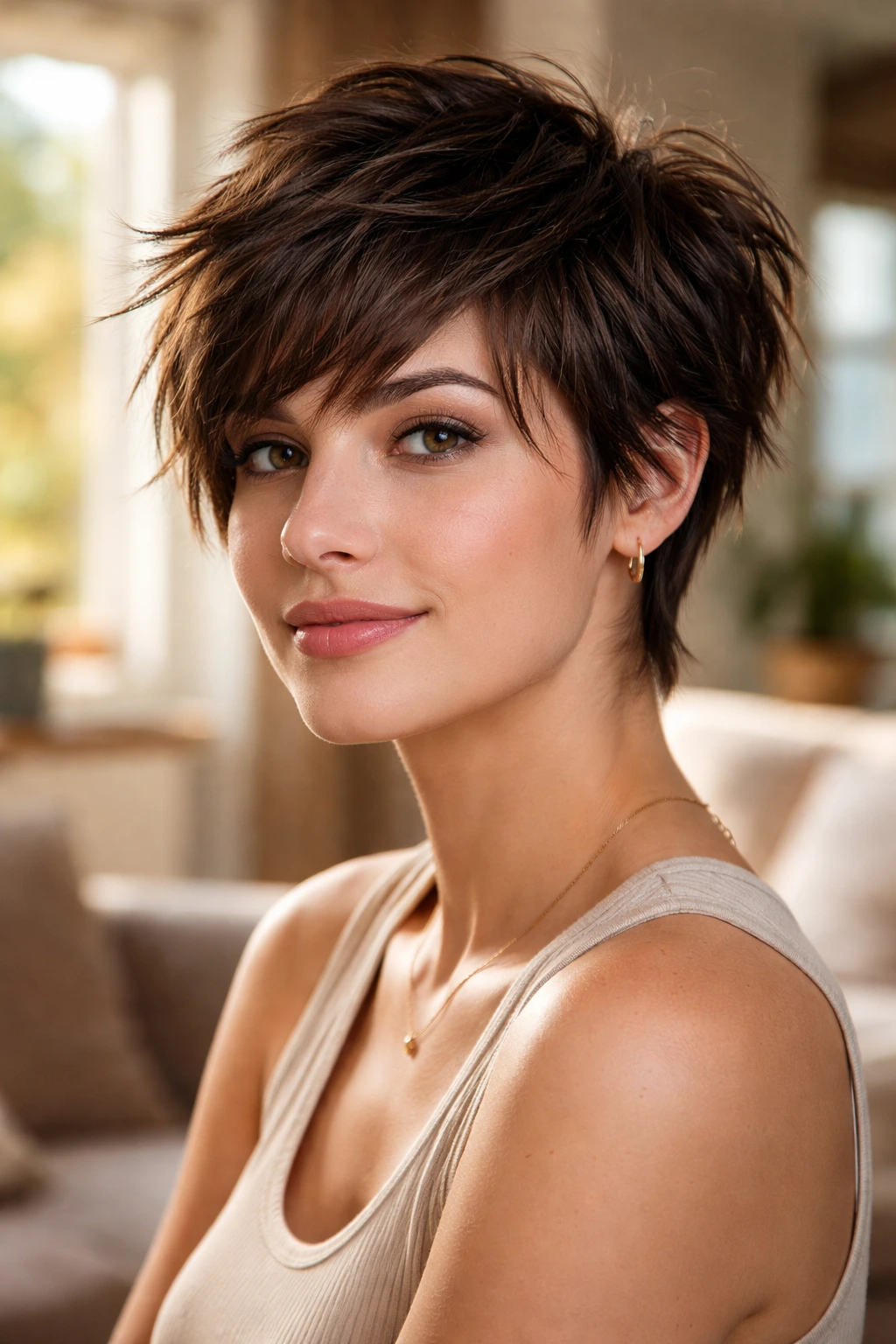
A choppy layered pixie is one of those cuts that makes thick hair look awake instead of heavy. The whole point is to break up the mass with uneven, piecey layers so the hair moves instead of sitting in one block. If your hair tends to puff out at the sides, this is usually one of the first shapes worth considering.
Why It Works on Thick Hair
The choppy ends keep the outline from getting too solid, and that matters more than people think. Thick hair loves to stack up, especially around the crown and temples, so those irregular layers stop it from turning boxy. Ask for shorter interior layers and a slightly softer perimeter so the shape has air inside it.
A little matte paste goes a long way here. Work in a pea-sized amount, then pinch the ends in small sections with your fingers so the cut shows its texture instead of collapsing into a smooth blob.
- Best if your hair is dense from root to tip.
- Good for oval, heart, and square faces.
- Looks strong with a side part or a messy forward sweep.
- Usually needs only a quick dry with your fingers and a blast of air.
Pro tip: keep the layers uneven, not shredded. There’s a difference, and your hair will show it.
2. Tapered Pixie With a Close Nape
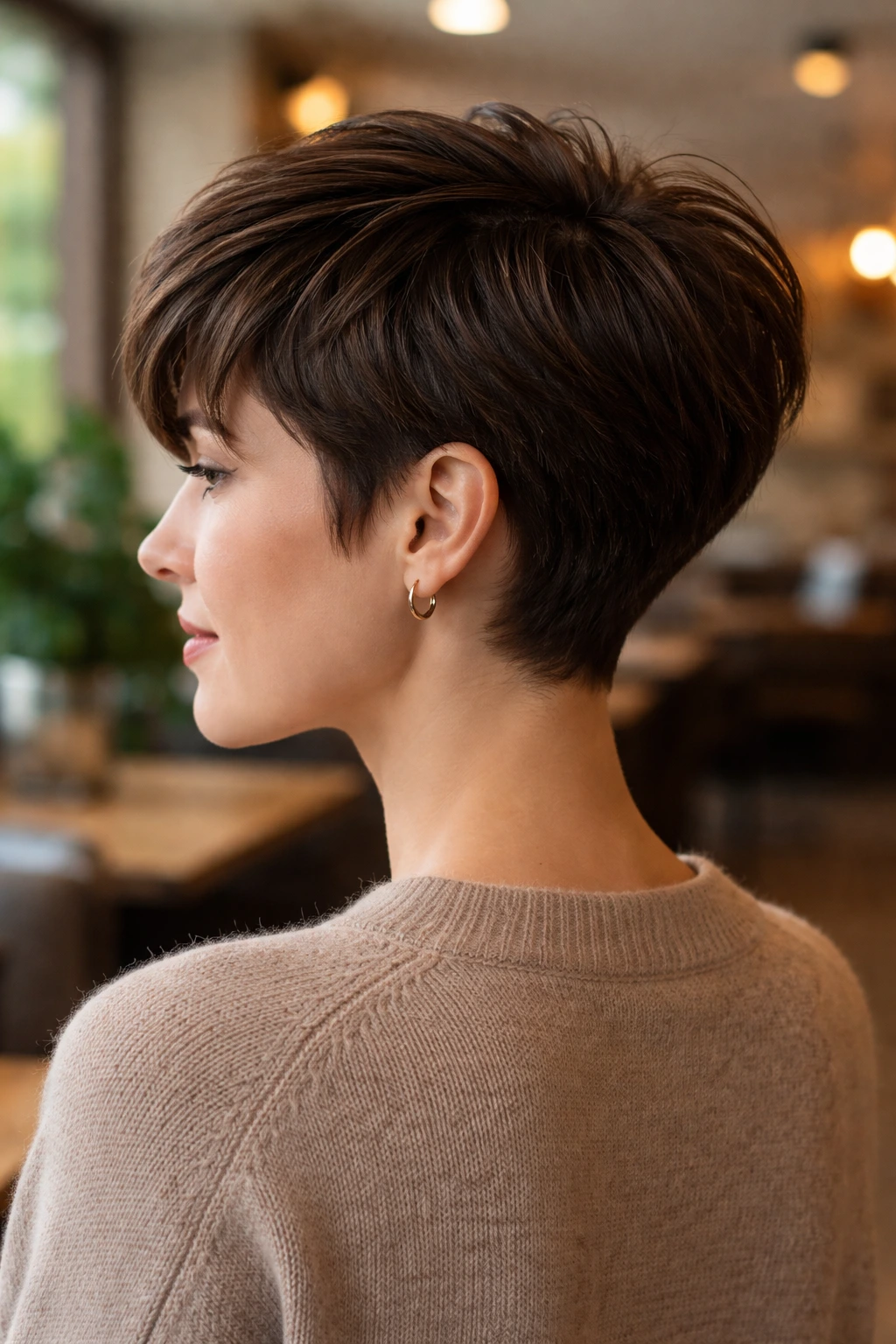
Why does a tapered nape matter so much? Because thick hair builds bulk fast at the back of the head, and that’s where a lot of pixies lose their shape. A tapered pixie keeps the sides and back snug while leaving enough length on top to avoid that helmet effect.
The smartest version leaves about 1/2 inch to 1 inch at the nape and gradually lengthens as it moves toward the crown. That small shift changes everything. The hair sits closer to the head, the neckline looks clean, and the top still has enough lift to feel styled rather than flattened.
This cut is especially nice if you like order. It doesn’t scream for attention, which is exactly why it works so well. A light blow-dry with a small round brush or just a vent brush can push the top forward or to the side without making it poofy.
Ask your stylist to keep the taper soft around the ears if you wear glasses. Hard edges there can feel fussy, and thick hair already gives you enough structure.
3. Undercut Pixie
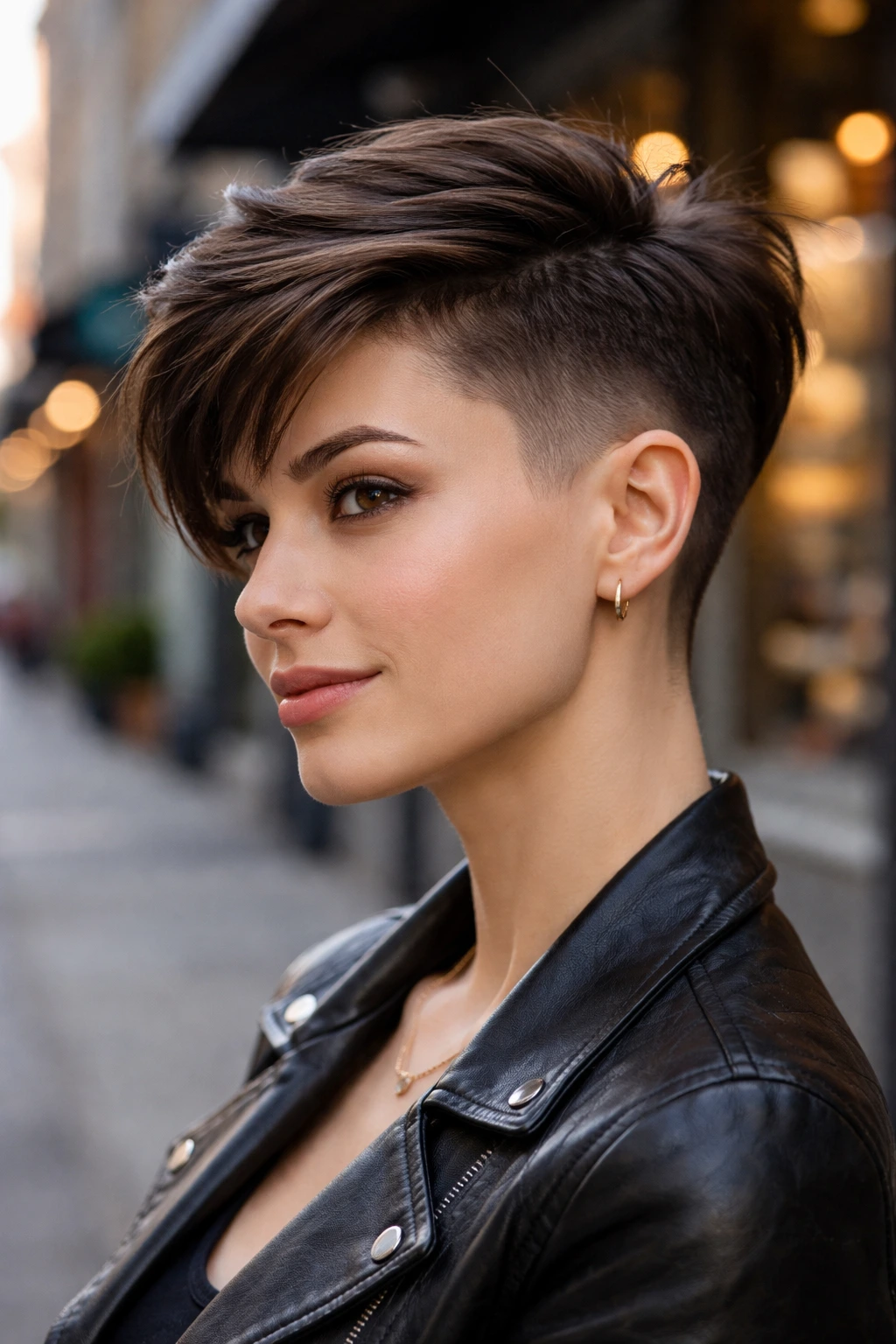
A real undercut changes the whole mood of a pixie. Instead of trying to remove bulk everywhere, the haircut takes weight out underneath, usually at the nape and lower sides, while leaving the top fuller and more dramatic. That contrast is the reason thick hair takes so well to it.
I like this one for people who hate the feeling of hair touching their neck. The undercut clears that out, and suddenly the top can be styled high, swept over, or left messy without the bottom puffing up to compete with it. It feels lighter the second it’s cut.
How to Wear It
- Keep the undercut narrow if you want it subtle.
- Go wider if you want a more obvious shape and less daily bulk.
- Leave 2 to 4 inches on top for side-swept styling.
- Use a strong-hold cream if the top wants to fall forward.
There’s a catch, though. The grow-out can get annoying if the shave line is very high, because thick hair fills in fast and makes the contrast less clean. If you don’t want frequent trims, ask for a low undercut that sits below the occipital bone. That gives you the effect without the maintenance headache.
4. Side-Swept Long Pixie
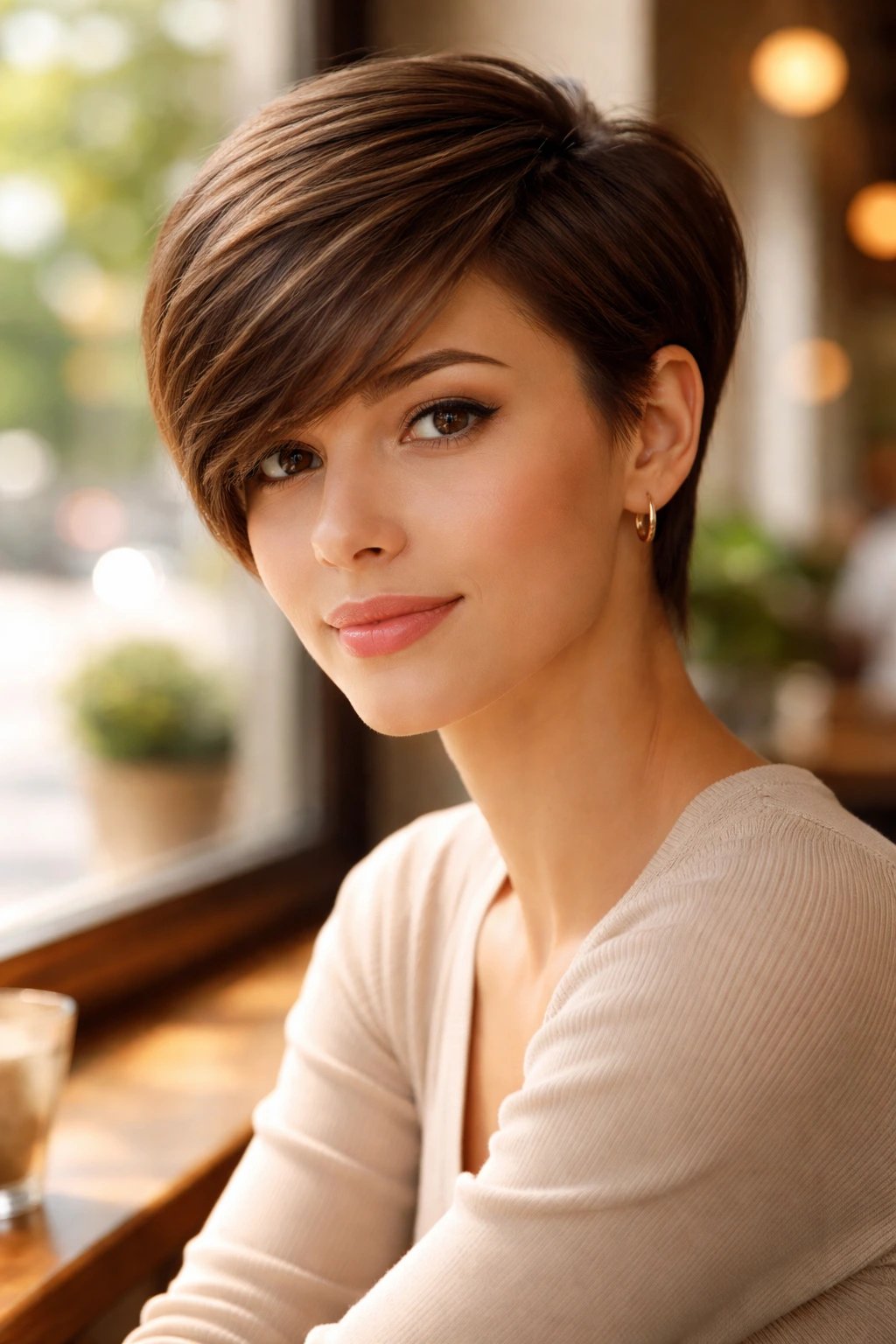
A side-swept long pixie is the safer choice for anyone who wants to keep some softness around the face. The front usually stays longer, often around 3 to 5 inches, and the rest of the cut stays compact enough to keep thick hair from ballooning out. It’s one of the easiest pixie cuts for thick hair to live with day to day.
The parting does a lot of the work here. When the front is swept across the forehead, the hair falls in a controlled line instead of popping straight up. That’s especially useful if your hair has a stubborn cowlick at the front or a swirl that refuses to cooperate.
I’d call this the “don’t panic” pixie. It gives you short hair without exposing every edge of your face at once, and that makes the transition less dramatic if you’re used to longer hair. A flat iron bend at the ends or a quick brush-through with mousse can keep it from looking too neat.
If your hair is thick and straight, ask for subtle internal layers so the front doesn’t feel like one heavy curtain. The goal is movement, not a side-draped slab.
5. Curly Pixie With Soft Shape
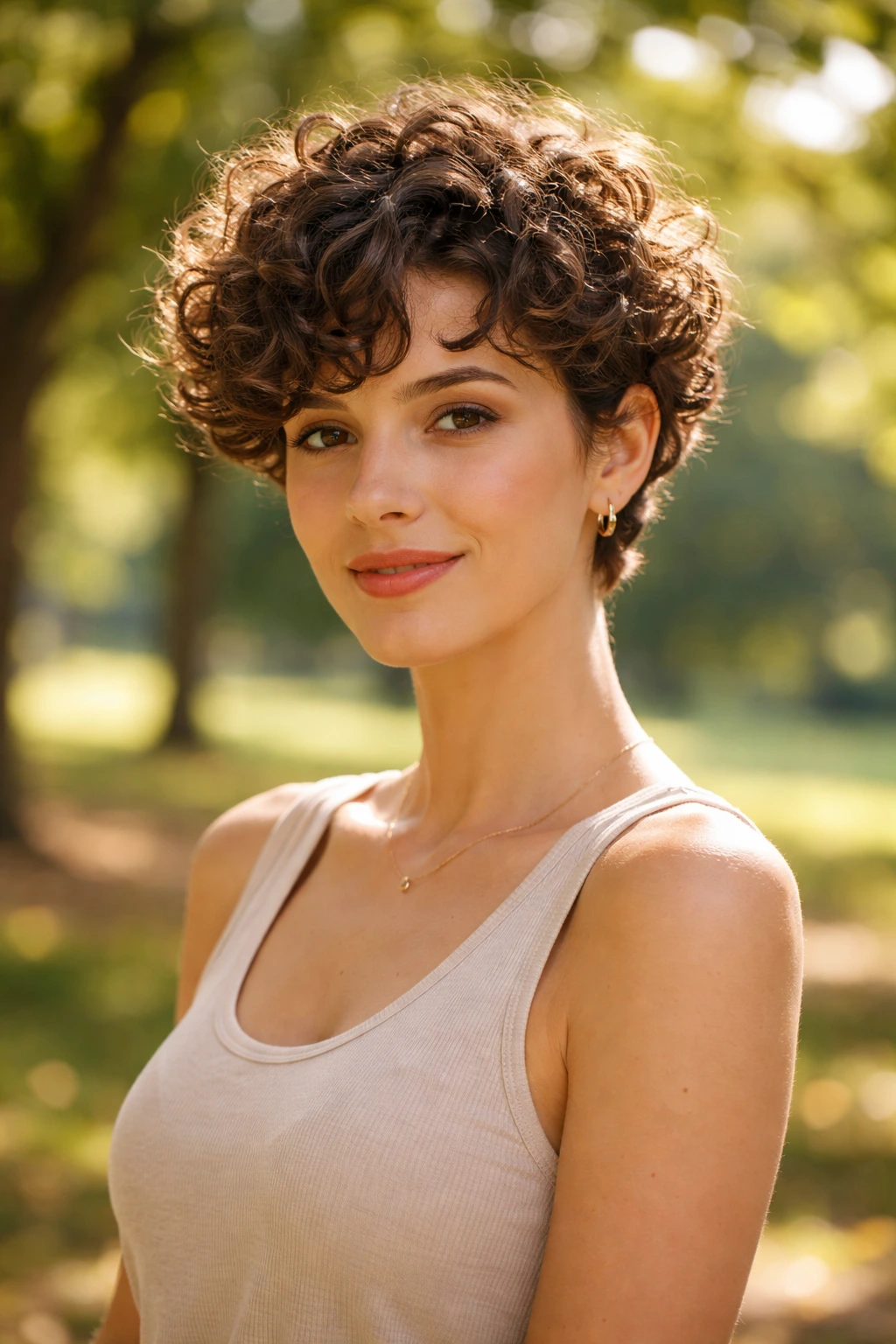
Can thick, curly hair wear a pixie without getting huge? Absolutely, but the cut has to respect the curl pattern instead of fighting it. A curly pixie works best when it follows the natural spring of the hair and removes bulk where the curls stack too high.
The shape should be rounded but not rounder-than-life. That sounds picky, but it matters. Thick curls can expand two inches or more after drying, so the stylist should cut with that shrinkage in mind and leave enough length on top to avoid a too-tight finish. A good target is often 2 to 4 inches through the top, depending on curl size.
How to Get the Most From It
Curl-Friendly Details
- Ask for dry cutting or curl-by-curl shaping if your hair shrinks a lot.
- Leave the fringe a little longer so it doesn’t spring straight up.
- Use a cream gel, not a heavy wax.
- Diffuse on low heat until the roots are dry and the curl clumps hold their shape.
This cut looks best when it’s not over-touched. Scrunch, dry, stop. That’s the whole mood. And if a few curls stick out? Good. That’s the point.
6. Asymmetrical Pixie
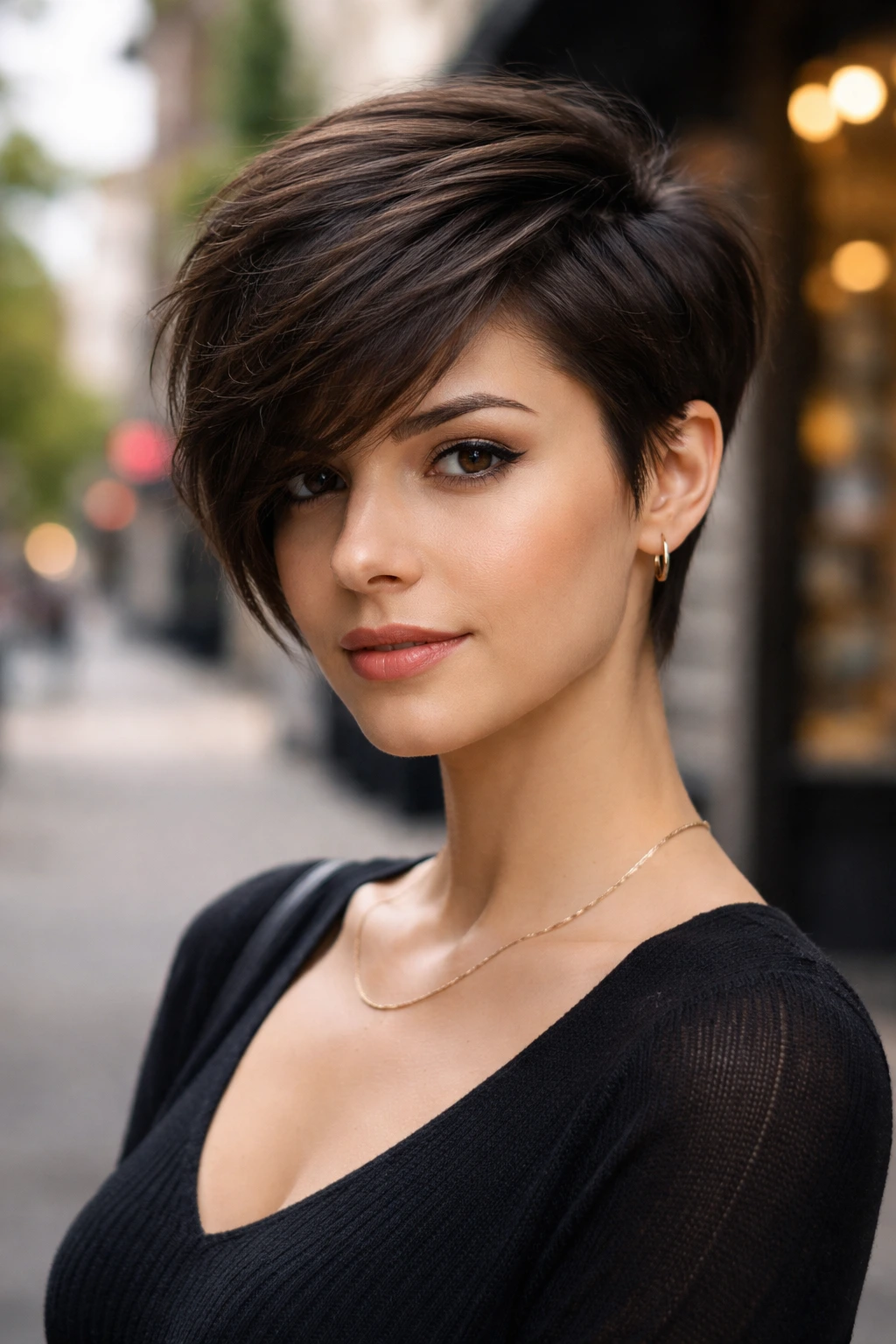
Unlike a perfectly balanced pixie, an asymmetrical cut gives thick hair a built-in direction. One side stays longer, the other side is cut tighter, and that contrast keeps dense hair from reading as one solid block. It’s a strong choice if you want something sharp without going full edge.
The trick is to make the longer side deliberate, not accidental. Usually that means keeping one front section around 4 to 6 inches while the opposite side sits shorter and cleaner around the ear. The imbalance draws the eye in a good way and gives the cut motion even when the hair air-dries.
This one tends to flatter people who like a little drama but don’t want a hard undercut. The asymmetry does the styling for you. Tuck the short side behind one ear, let the long side sweep forward, and the whole cut looks considered.
Be careful with texturizing shears here. Too much on thick hair can make the longer side fray and lose the sleek line that gives the style its punch. If you want a neat finish, ask for weight removal inside the shape, not on the outer edge.
7. Feathered Pixie
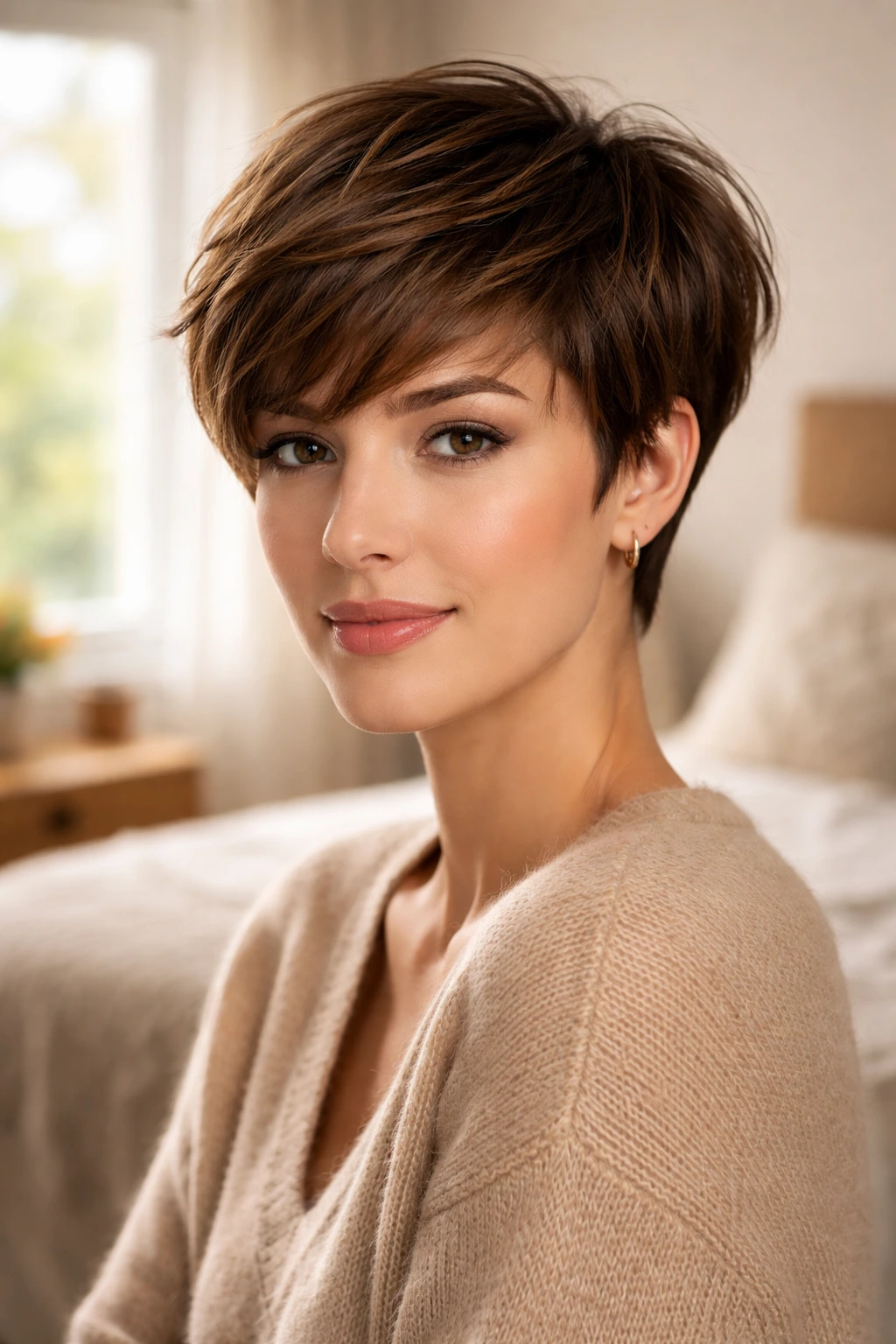
A feathered pixie is a good answer when thick hair feels too solid in a blunt short cut. The feathering softens the ends so the shape opens up instead of sitting like a cap. It’s lighter, airier, and a little more forgiving on busy mornings.
The best feathered versions keep the ends soft around the temples and crown, where dense hair tends to gather. That means the cut moves when you turn your head, which is half the charm. If your hair has a coarse texture, feathering can take some of the visual weight off without making it look thin.
What Makes It Different
The finish is less piecey than a choppy pixie and less severe than an undercut. That middle ground is why a lot of people end up loving it. It works especially well if you wear your hair brushed forward and want the front to fall in soft little strands instead of sharp spikes.
A lightweight mousse and a quick blow-dry with your fingers usually do the job. Don’t load it with heavy cream. Feathered cuts look best when they can separate a little.
8. Bixie for Thick Hair
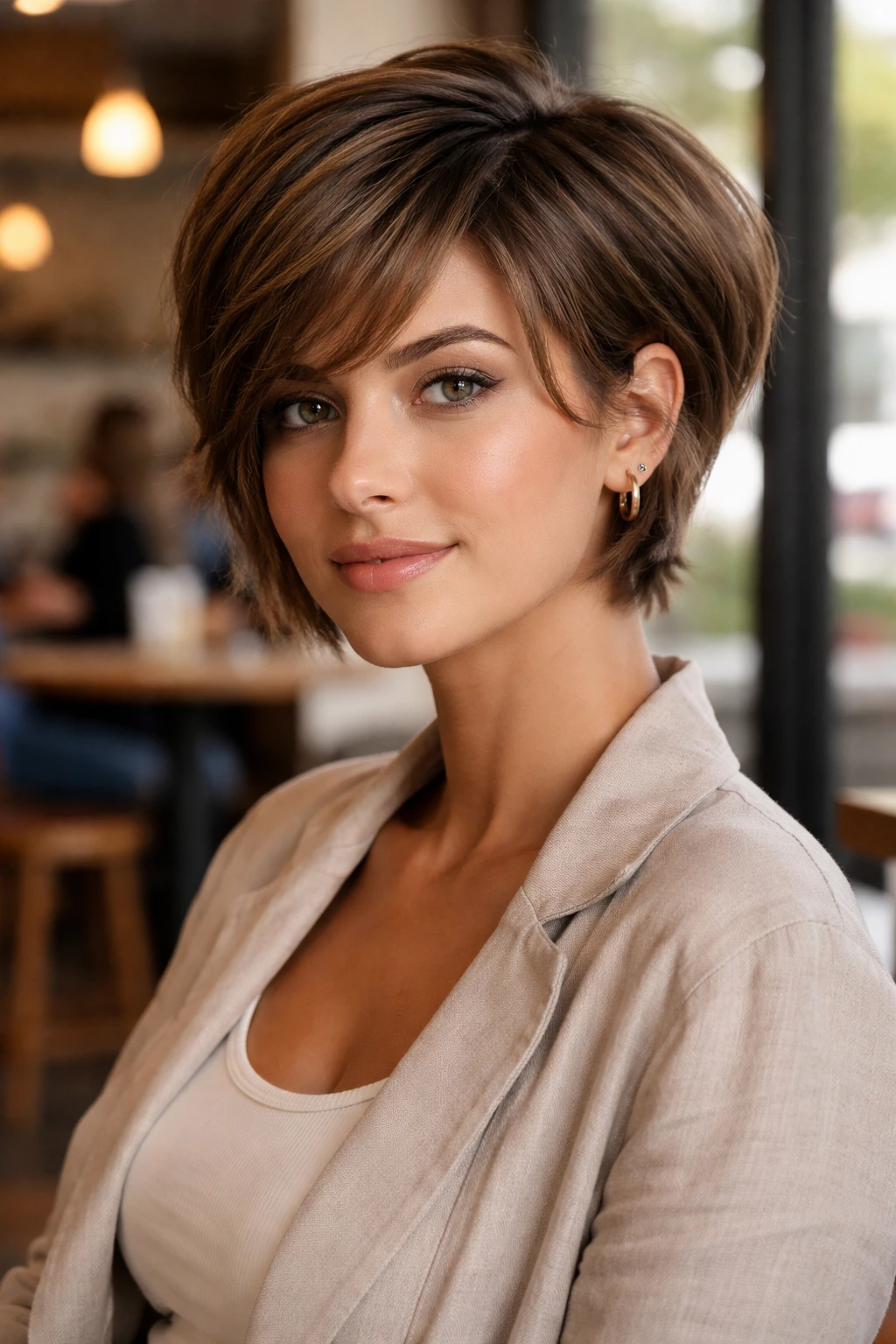
The bixie sits between a bob and a pixie, and thick hair makes that shape look intentional instead of awkward. You get the shortness at the back and sides, but the front and crown stay long enough to keep some swing. If a full pixie feels too exposed, this is a smart place to land.
What thick hair gives the bixie is body. What the bixie gives back is control. The longer top sections keep the style from puffing out too wide, and the shorter layers underneath stop the cut from dragging down your whole face. A well-done bixie usually lands somewhere around chin length in the front and shorter at the nape, which creates a nice slope.
I like this cut for people who are nervous about committing to a very short shape. It still looks short, but it doesn’t read severe. It also buys you a little more styling range: air-dried and tousled on one day, smooth with tucked sides on another.
If your hair is dense and coarse, ask for light graduation at the back. Without it, the bixie can turn into a blunt shelf.
9. Shaggy Pixie Crop
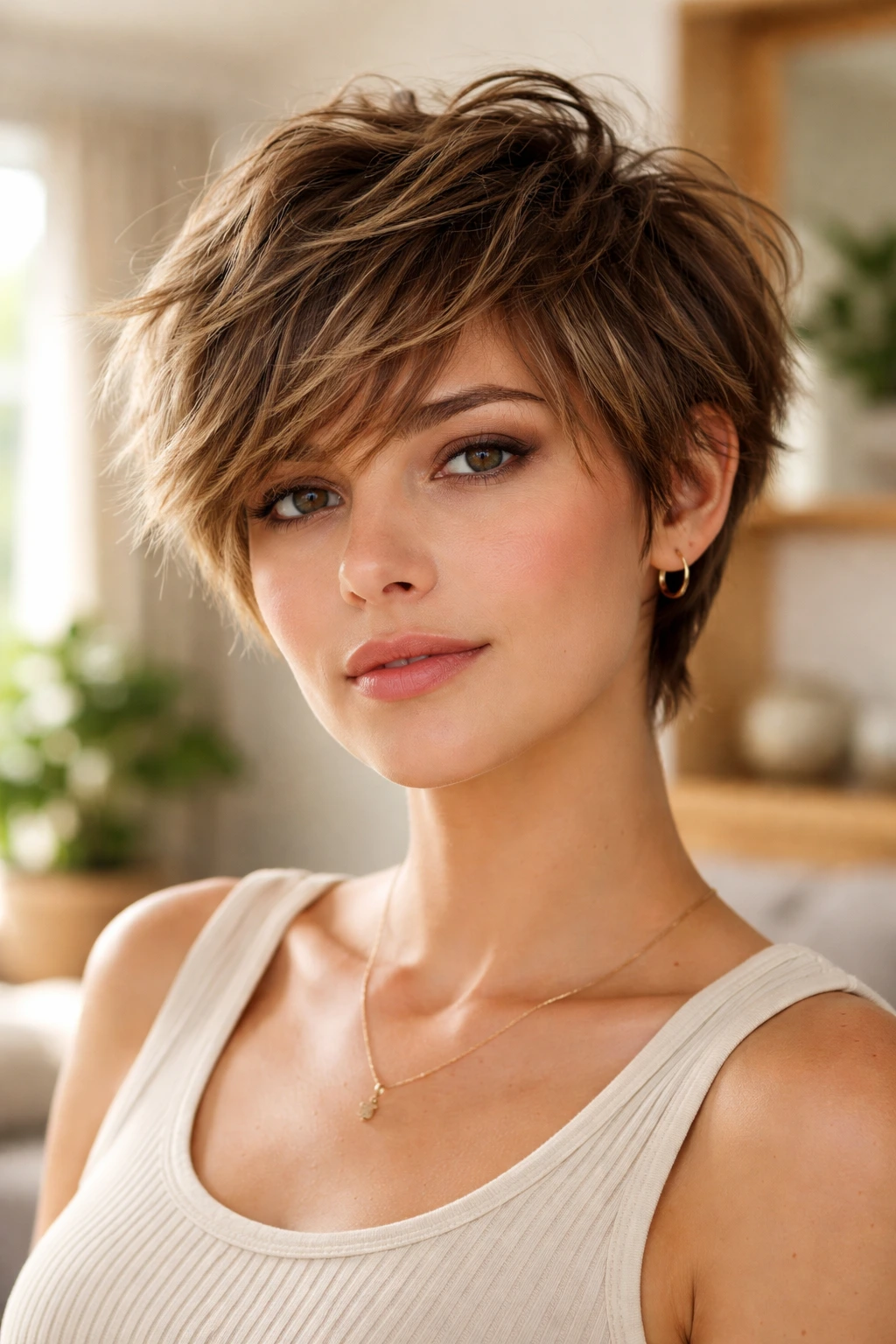
Picture a pixie that borrowed a little from a shag haircut. That’s the shaggy pixie crop, and thick hair is exactly what gives it personality. The layers are broken up, the top is loose, and the whole thing has a casual edge that doesn’t feel overworked.
This cut is a favorite if your hair has a bit of natural wave. The layers catch on themselves and create separation without much help. A little mess is part of the design. If your hair is pin-straight, you can still wear it, but you’ll want a texture spray or a dry wax to keep the shape from falling flat.
- Ask for choppy pieces around the crown.
- Keep the fringe soft and a little uneven.
- Leave enough length at the temples to avoid harsh corners.
- Style by rough-drying, not smoothing every strand into place.
This is not the cut for someone who wants a polished little cap of hair every morning. It likes imperfection. A good shaggy pixie should look better after you’ve run your hands through it twice.
10. Micro Pixie
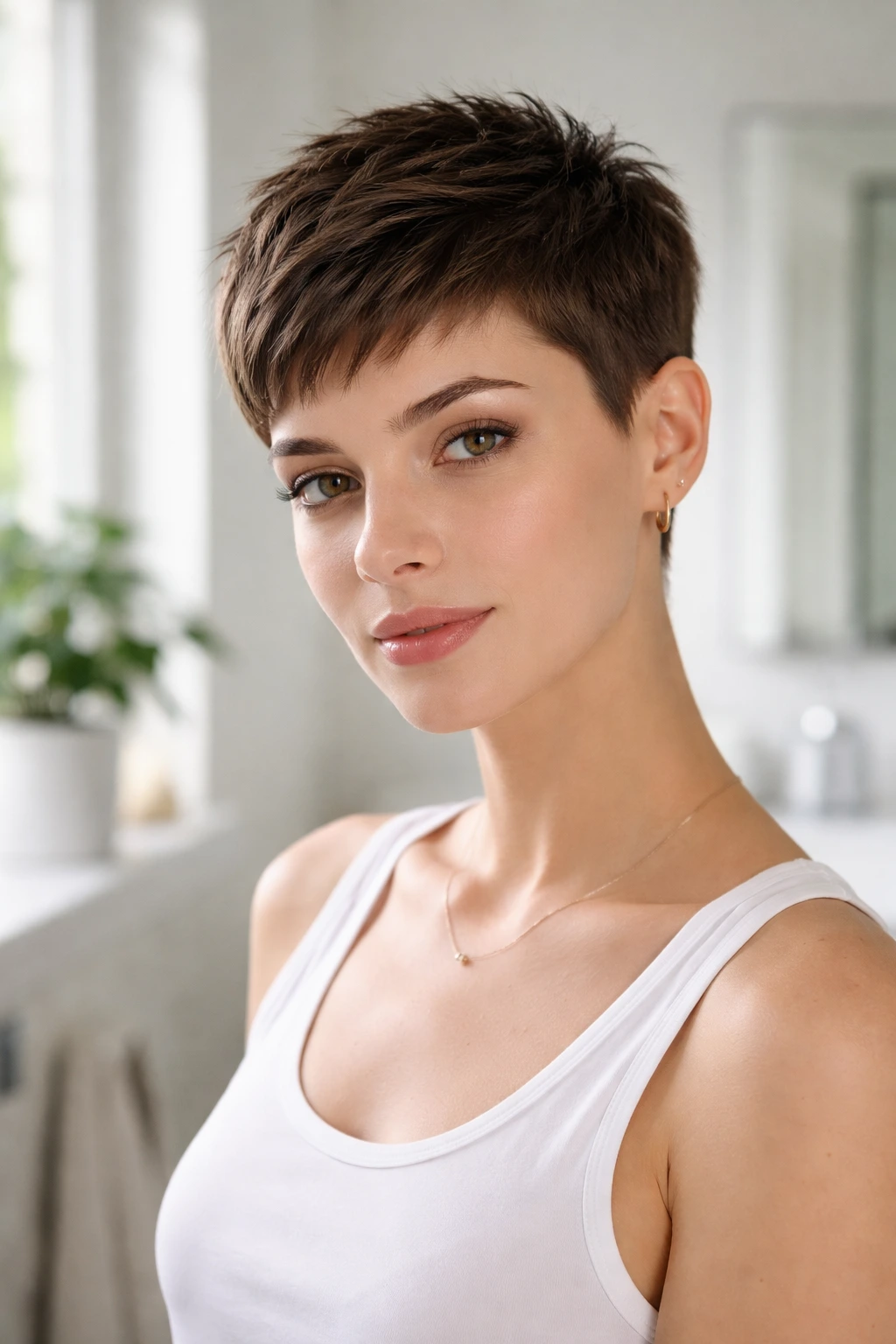
A micro pixie goes short enough that the cut becomes about bone structure, not length. On thick hair, that can be a fantastic move if you want less bulk and more definition. The sides and back are cropped close, and the top is just long enough to show direction, usually around 1 to 2 inches.
The appeal is simplicity. There’s less hair to fight with, less to blow-dry, and less chance of the shape swelling up by the end of the day. But the haircut has to be clean. If the lines are sloppy, thick hair will show every uneven corner.
What to Watch For
The scalp will show more than it does in longer pixies, so your stylist needs to balance closeness with softness. A tiny bit of length around the hairline can keep the cut from looking harsh. If your hairline is uneven or you’ve got stronger growth at the temples, this helps a lot.
I’d recommend this cut to someone who likes a bold look and doesn’t mind regular trims. It grows out fast, and thick hair can blur the shape within a few weeks if you let it.
11. Spiky Textured Pixie
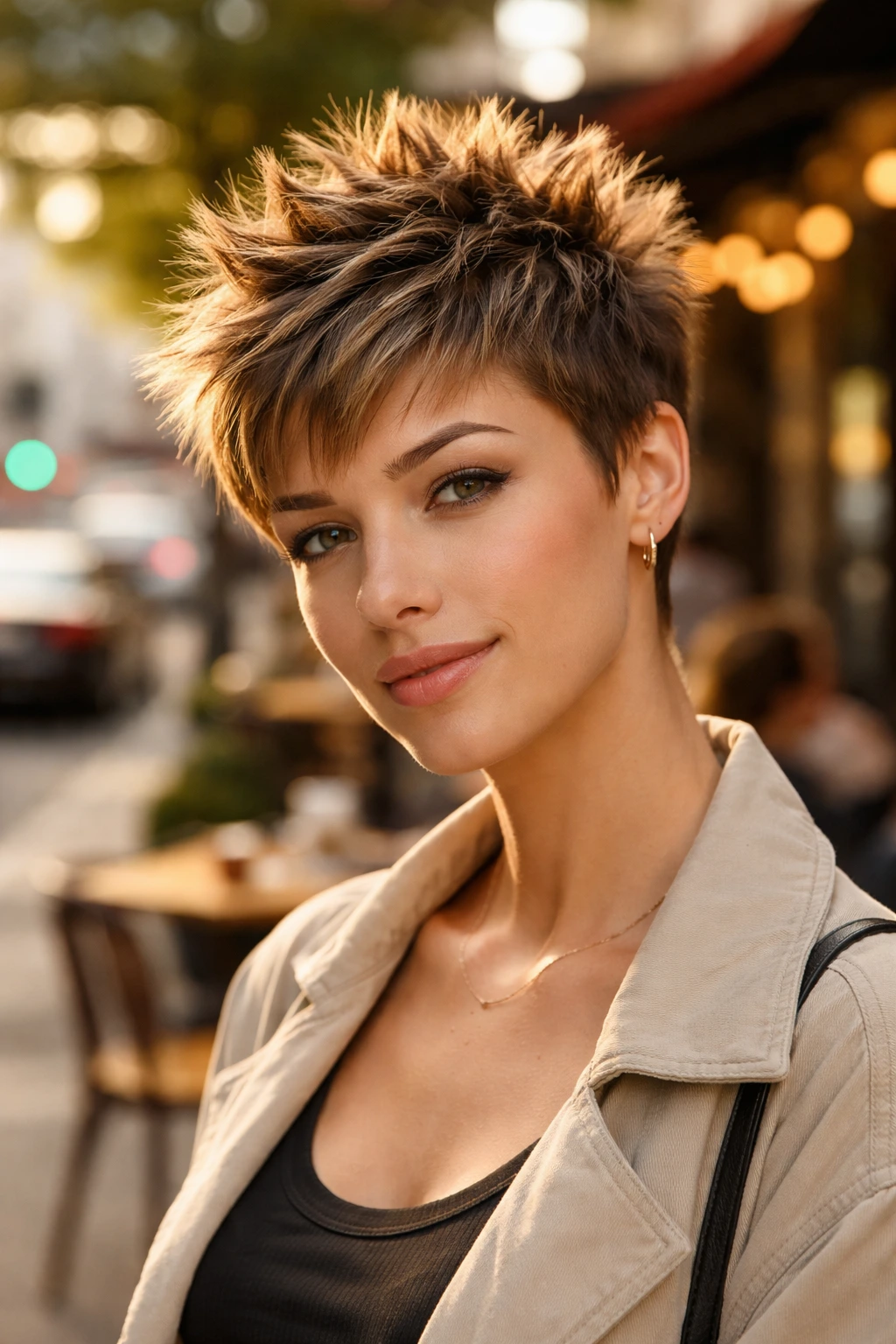
What if you want your thick hair to look playful instead of soft? A spiky textured pixie is the answer. The cut keeps the sides tighter and leaves enough length on top for the hair to stand up, tilt forward, or split into small peaks with the right product.
This style works because thick hair has enough body to hold those spikes without collapsing. You’re not building height from nothing. You’re just encouraging what the hair already wants to do. A matte fiber paste or clay, used sparingly, gives that dry, separated finish.
How to Get It Right
- Start with towel-dried hair, not soaking wet hair.
- Warm a small amount of product in your palms first.
- Push the hair up at the roots, then pinch the ends.
- Stop before it looks crunchy.
The best versions are not stiff. They should feel touchable and a little imperfect, with sharper bits through the crown and softer edges near the face. If you go too hard with gel, the style can read dated fast. A rough, modern spiky pixie is much better.
12. Rounded Pixie
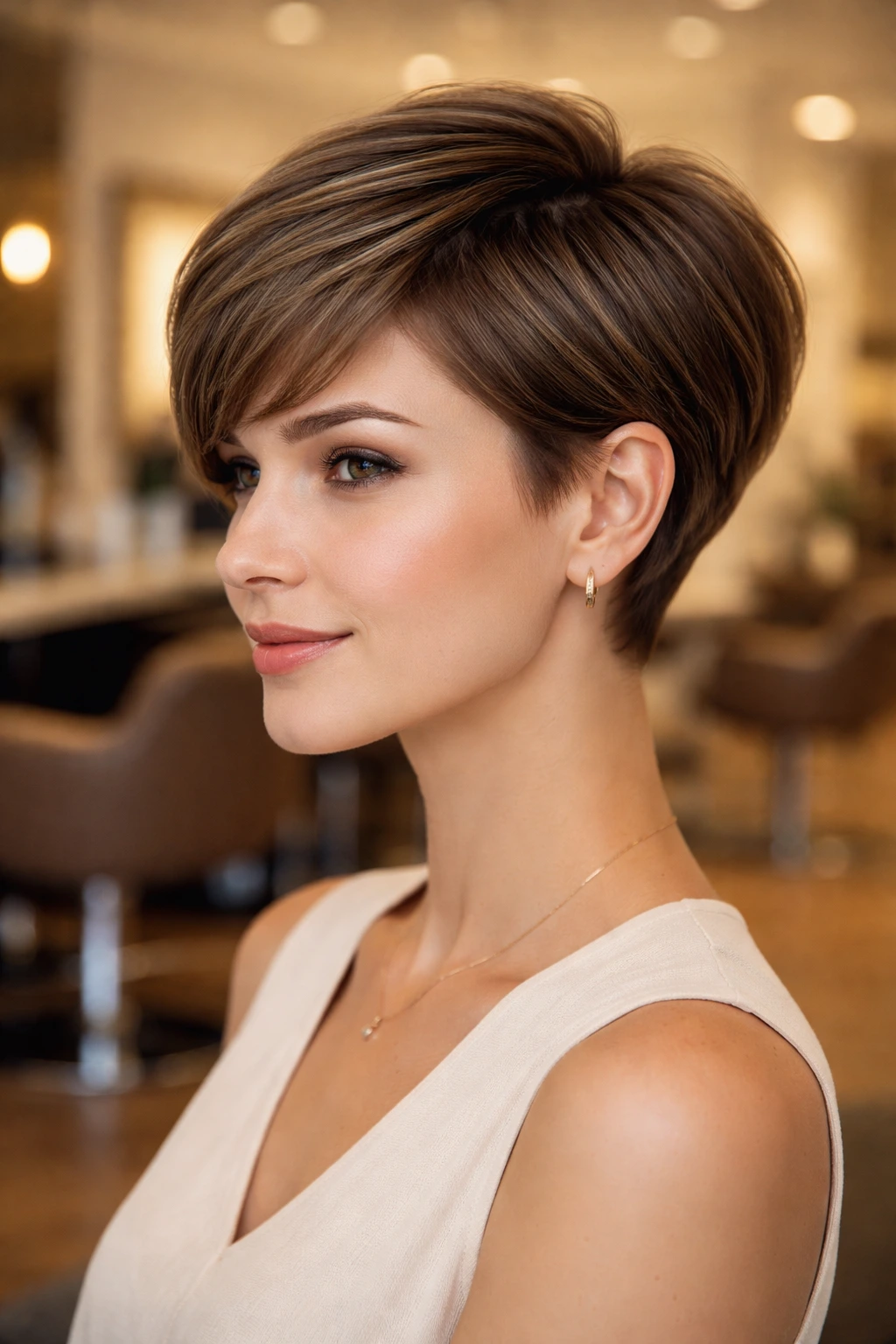
A rounded pixie is for someone who wants a smoother outline and less edge. Thick hair can make this shape look plush and neat, almost like a soft cap, as long as the interior is layered enough to keep it from becoming bulky. The curve is the whole point here.
The silhouette usually hugs the head at the sides while keeping a gentle lift through the crown. That makes the haircut feel balanced instead of flat. If your hair sticks out at the ears or flares at the back, a rounded shape can tame that without making the cut severe.
This is a good option for a person who likes a more polished finish. It works especially well with straight or slightly wavy thick hair. Ask for soft graduation through the back so the curve doesn’t turn into a box.
A small round brush and a smoothing cream can do a lot of work here. I would skip heavy texturizers. They fight the shape.
13. Crown-Heavy Pixie
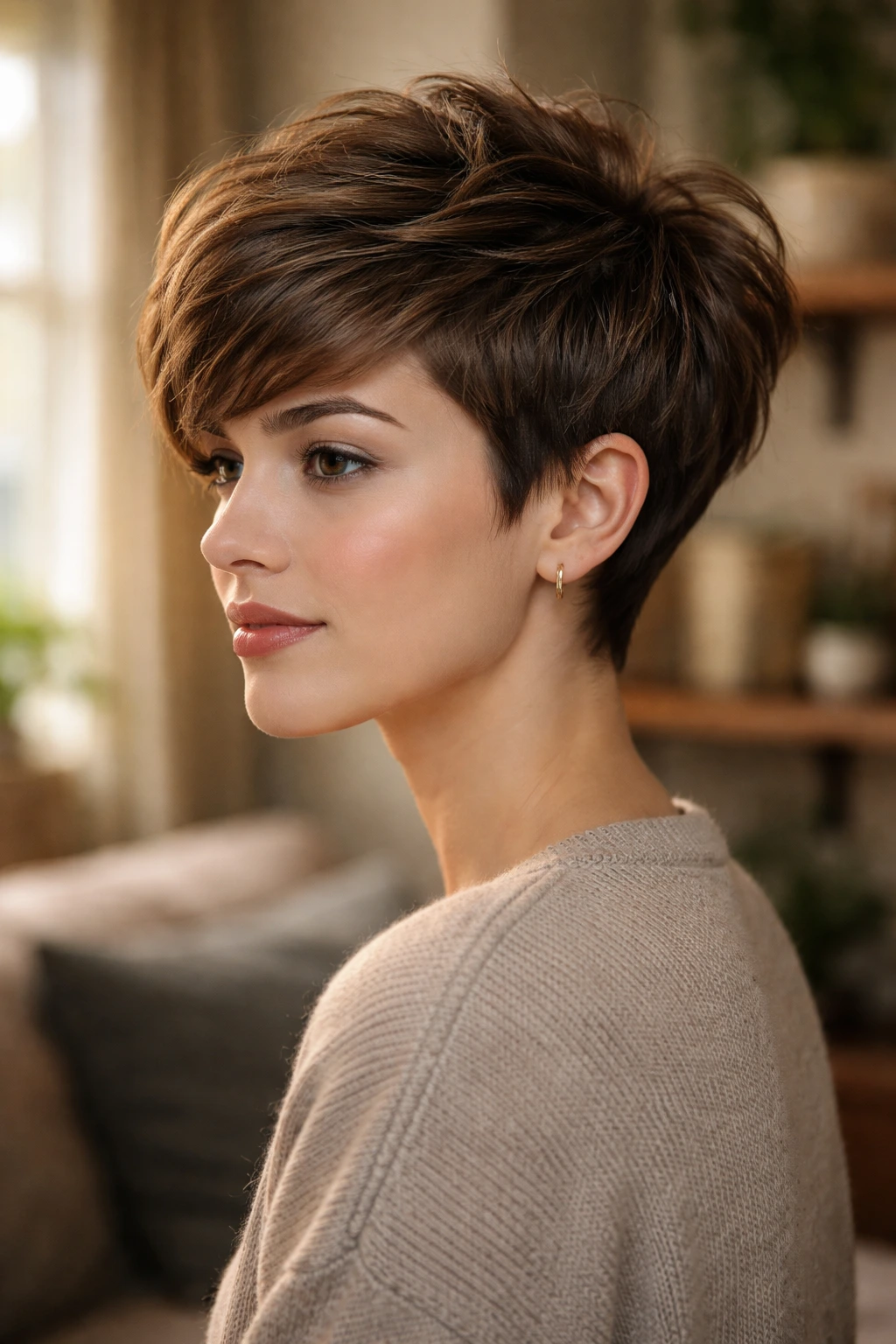
A crown-heavy pixie sounds a little dramatic, and honestly, it should. The crown stays fuller, the back and sides stay tighter, and the contrast gives thick hair a lifted profile instead of a flat one. It’s one of the best cuts for anyone whose hair collapses at the roots but puffs at the sides.
The extra length on top usually sits somewhere around 3 to 4 inches, which is enough to style upward, forward, or diagonally across the head. That makes the haircut more flexible than a super-short crop. You can wear it neat for work and messier on the weekend without changing the cut itself.
Why It Works
The volume is controlled, not removed. That’s the part that matters. Thick hair rarely needs every bit of body taken away; it needs the body redirected so the silhouette makes sense. A good crown-heavy pixie creates height where you want it and reduces bulk where you don’t.
If you have a strong cowlick at the crown, bring that up before the scissors come out. The cut can work with it, but only if the stylist knows where the hair naturally splits and swirls.
14. French Pixie
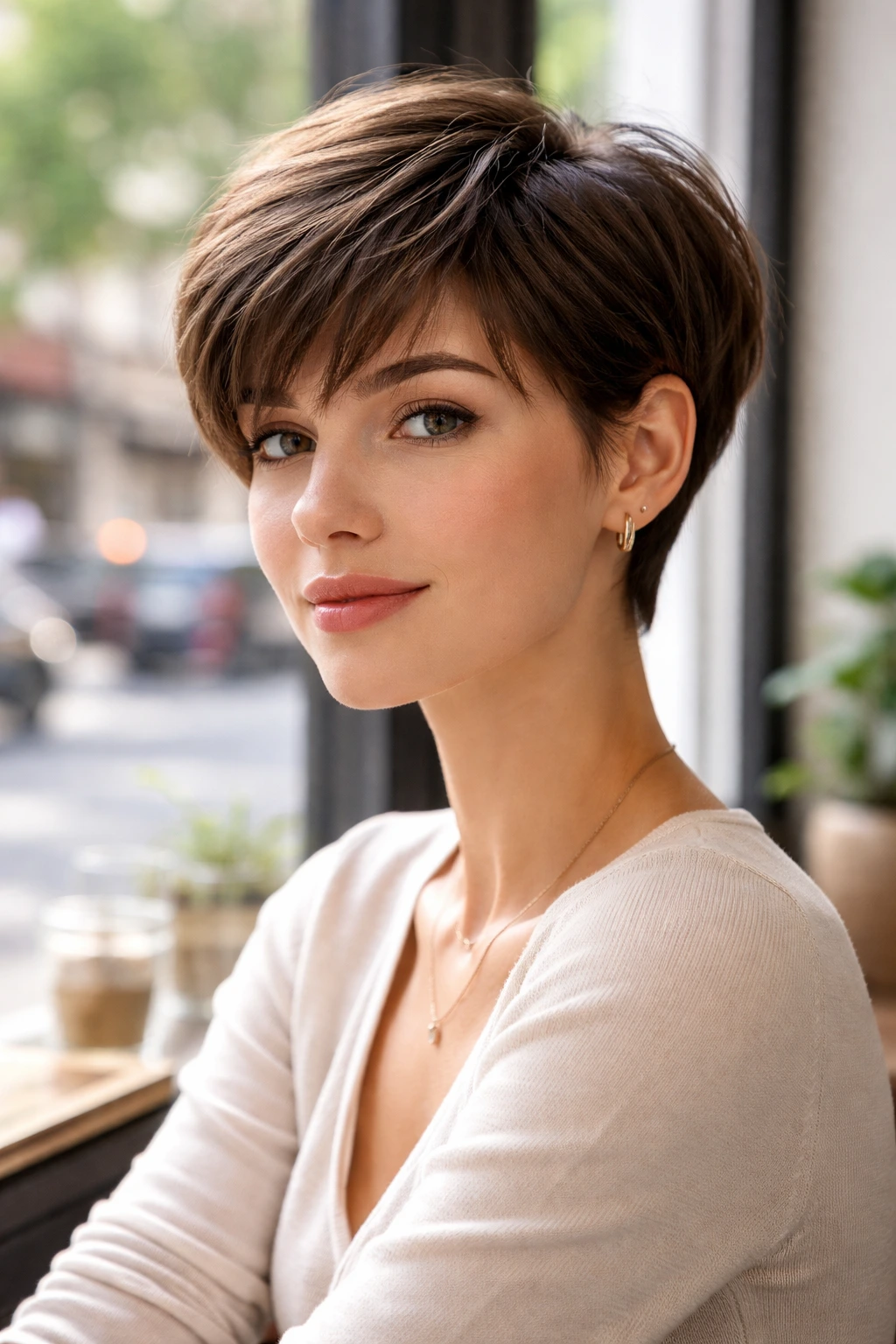
A French pixie is soft, a little chic, and very good at making thick hair look deliberate without looking overstyled. The fringe is usually a little longer and broken up, and the sides stay close enough to keep the shape clean. It has that slightly undone feel people like, but it still needs a proper outline.
The charm is in the balance. Too much softness and thick hair swallows the face. Too much sharpness and the whole thing gets stiff. The French pixie sits in the middle, with airy bangs and a neat nape that keeps everything from spreading out too much.
This cut tends to look best when the front falls in separate pieces rather than one thick curtain. A tiny bend in the fringe helps. Blow-dry the front forward, then use your fingers to split it into loose sections.
If your hair is very dense, ask for a little thinning under the crown only. Not on the surface. The surface should stay full enough to hold the shape.
15. Mohawk-Inspired Pixie
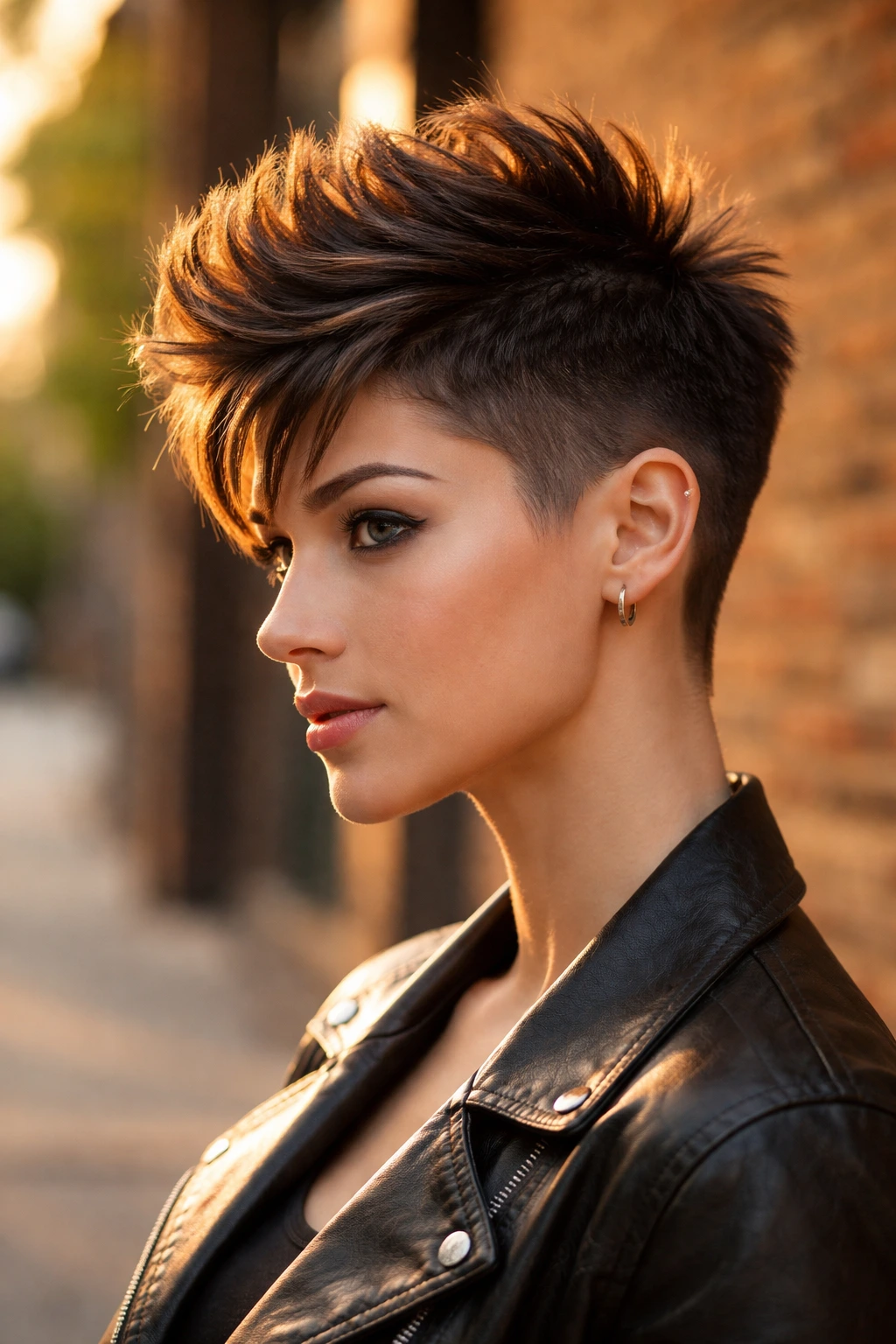
A mohawk-inspired pixie is for the person who wants attitude without fully shaving the sides. The center strip stays longer, sometimes 4 to 6 inches, while the sides are cut tighter so the middle section can stand up or sweep back. Thick hair gives this style the body it needs.
The cool part is that it can look surprisingly wearable. You don’t have to spike it into something theatrical. A brushed-up center ridge, a soft forward bend, or a messy lifted crown can all count. The haircut does the heavy lifting, and your styling choices can keep it tame or bold.
How to Wear It Day to Day
- Keep the sides shorter than the middle by a clear margin.
- Ask for soft blending near the temples so the contrast doesn’t look pasted on.
- Use a root-lifting spray at the center only.
- Let the top dry up and away from the scalp before shaping it.
This one suits thick hair because it controls the bulk by concentrating it in one place. If you’ve got strong features and like a sharp neckline, it can look fantastic.
16. Ear-Tucked Fringe Pixie
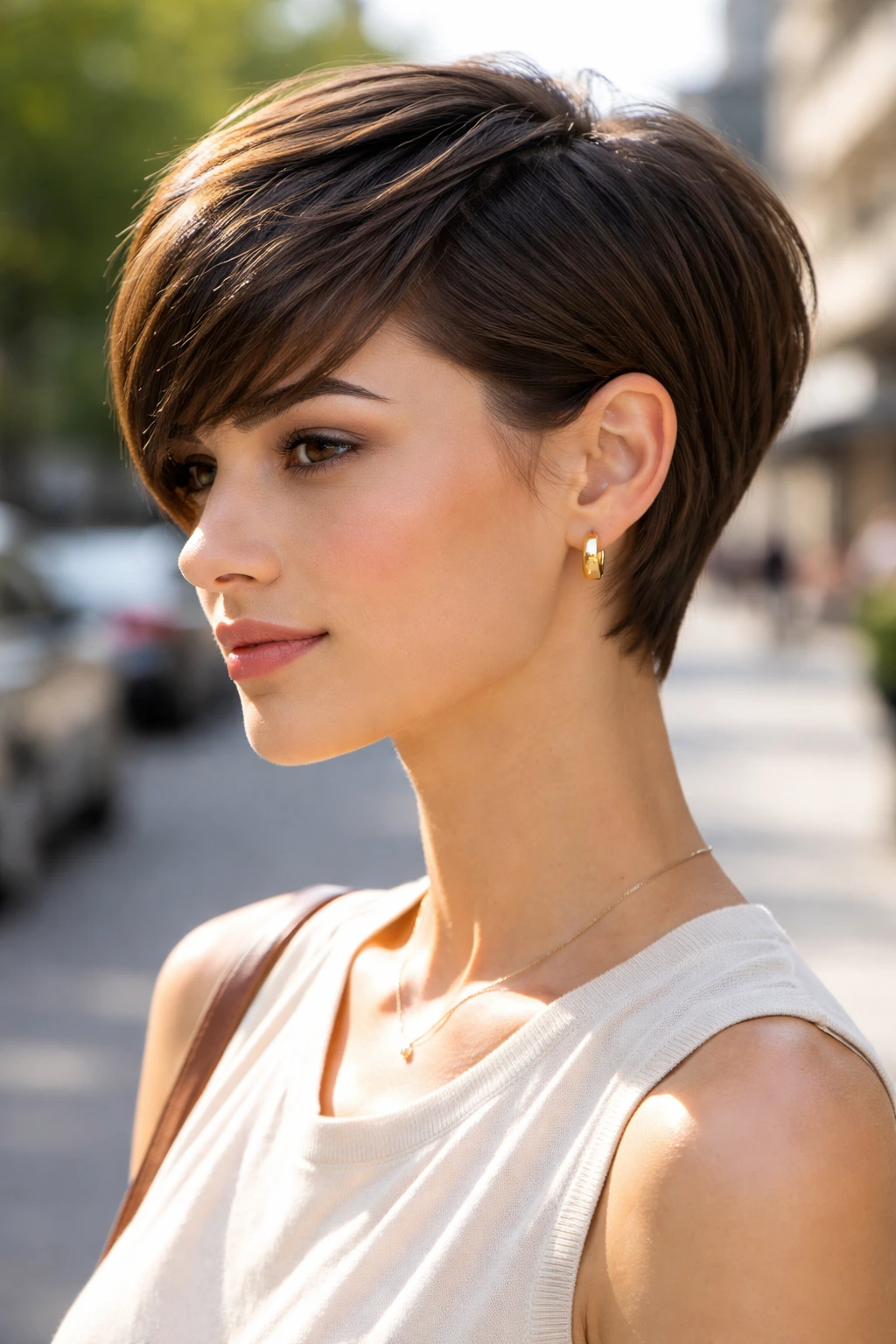
Sometimes the smartest pixie move is leaving one side long enough to tuck behind the ear. That little detail changes how thick hair behaves around the face. Instead of building width at the cheeks, the hair is guided back, which gives the cut a cleaner line and a more relaxed feel.
The fringe on top usually stays soft and slightly longer, so you can push it to the side and tuck one section away. It sounds small. It isn’t. On dense hair, that tucked area creates breathing room around the face and makes the style feel less crowded.
What Makes It Comfortable
The cut works especially well if you wear earrings, glasses, or both. It shows the face instead of covering it, and thick hair gets to act like an accessory rather than a curtain. The long fringe can be worn smooth or a little bent, depending on how polished you want it.
Ask for the tucked side to stay just below the cheekbone if you want a gentle frame. Shorter than that can feel abrupt, especially on heavy hair.
17. Stacked Pixie
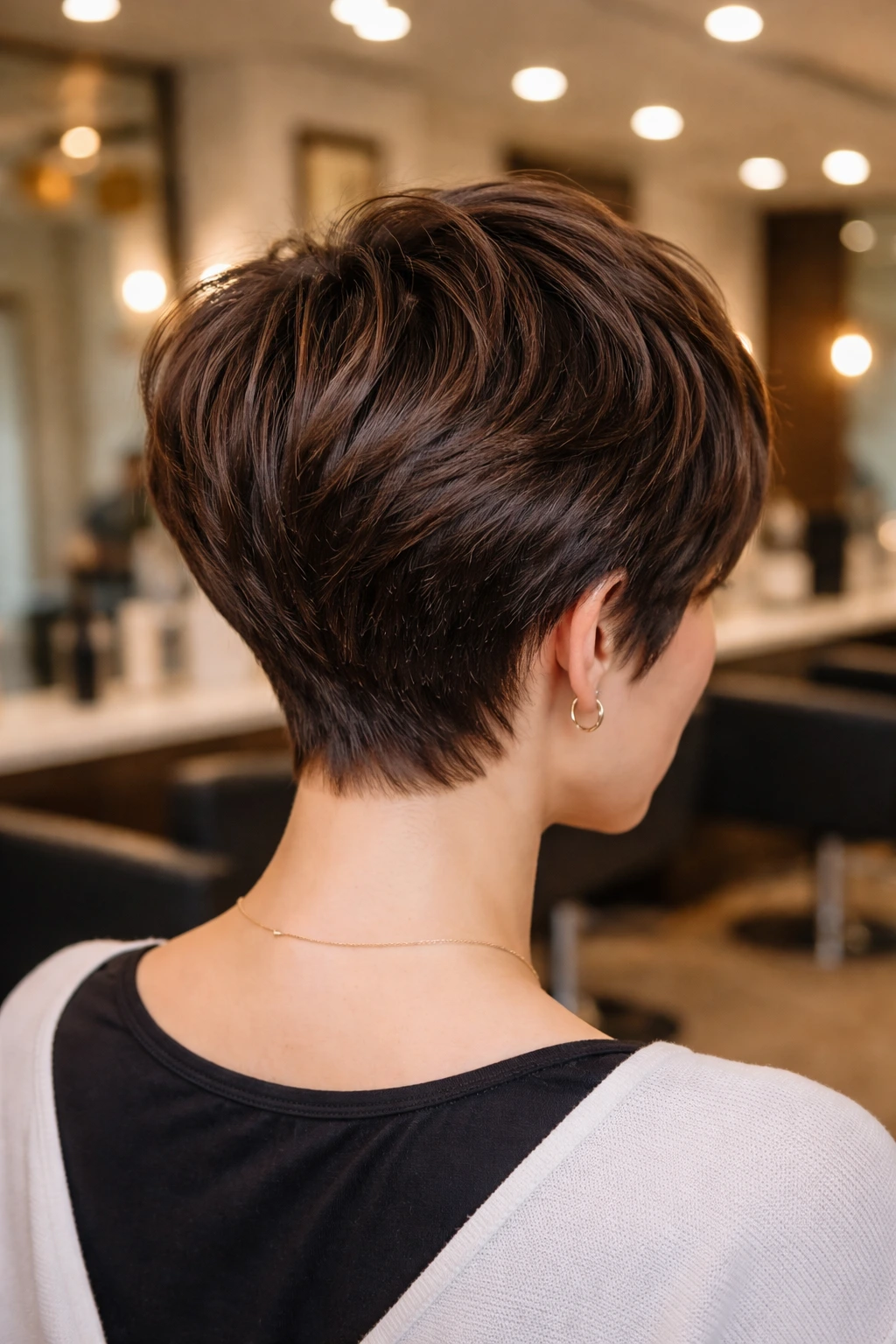
A stacked pixie uses short, layered graduation at the back to build shape where thick hair usually gets bulky. The shorter layers sit on top of each other, creating lift and contour through the crown and nape. It’s a clean-looking cut, but it has more structure than it first seems.
This is one of my favorite options for thick hair that grows out in a triangle. The stacking removes that wide base and replaces it with a rounder, tidier outline. The back looks neat, and the top has room to stay full without drifting into puffiness.
The Science Behind the Shape
The shorter lower layers support the longer ones above them, which creates height without needing a lot of product. That’s why the style looks so good when it’s freshly cut. It has shape built in.
If you want it softer, keep the top longer and ask for gentle stacking instead of a dramatic lift. If you want more definition, the stack can be tighter. Either way, this cut needs regular maintenance because thick hair grows into the back quickly.
18. Razor-Cut Piecey Pixie
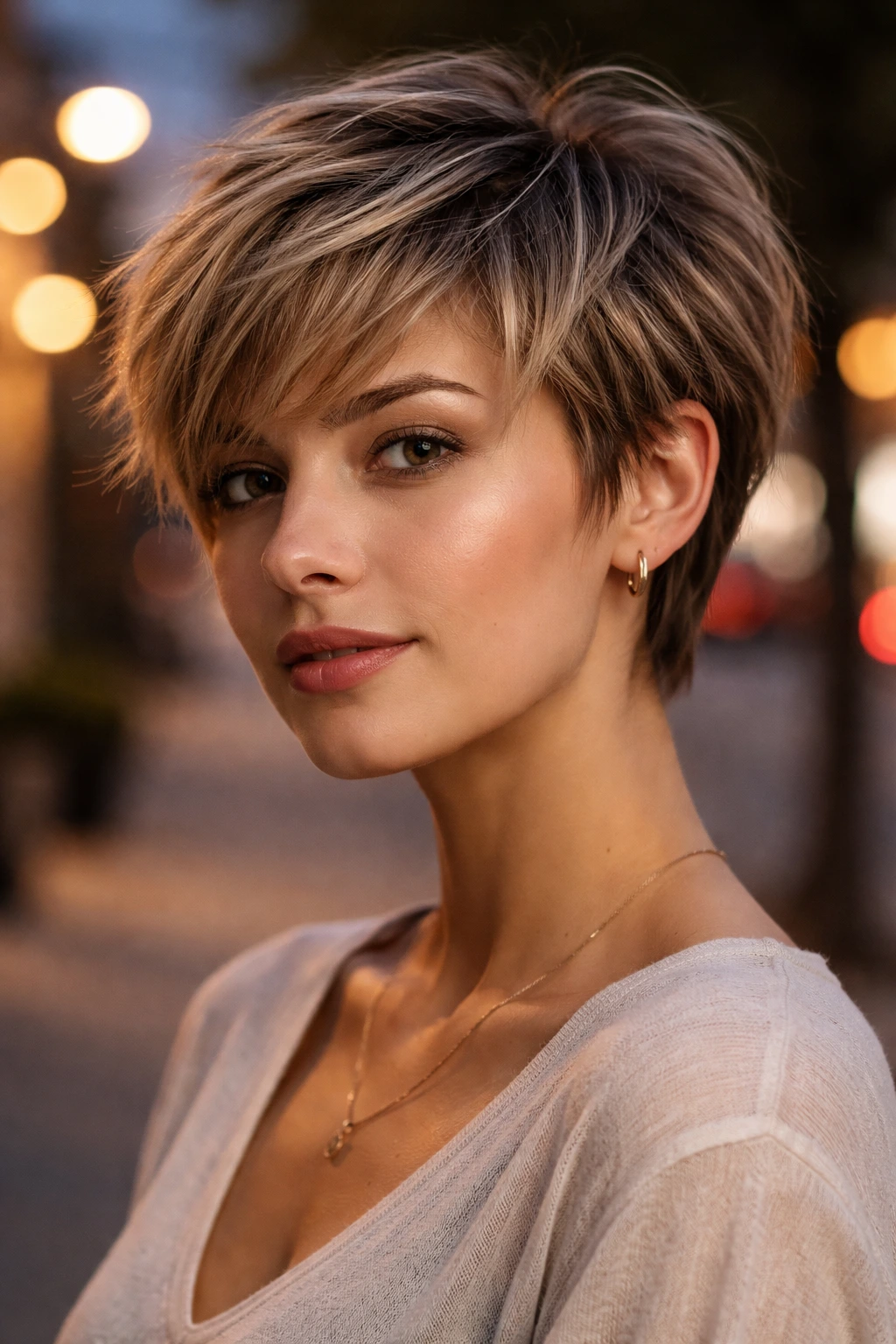
A razor-cut piecey pixie has a slightly softer, more broken finish than a scissor-cut version. The razor takes some of the weight out of thick hair and leaves the ends with a feathered, separated look that reads modern without trying too hard. It’s especially good if your hair feels too blunt when cropped short.
The shape should still be controlled. A razor is a tool, not a shortcut to texture. Used well, it creates movement through the sides and crown without leaving hard shelves of hair. Used badly, it can make thick hair frizzy and uneven at the ends, which is the opposite of what you want.
If your hair is coarse, ask for the razor work to stay on the interior pieces and the ends around the face. That keeps the outline soft while protecting the structure. A dab of light pomade can help define the pieces after styling, but don’t overload it. The cut should look separated, not greasy.
This one is ideal if you like hair that feels a little undone and not overly planned. It has edge, but not the kind that makes you feel like you need a flat iron every morning.
Final Thoughts
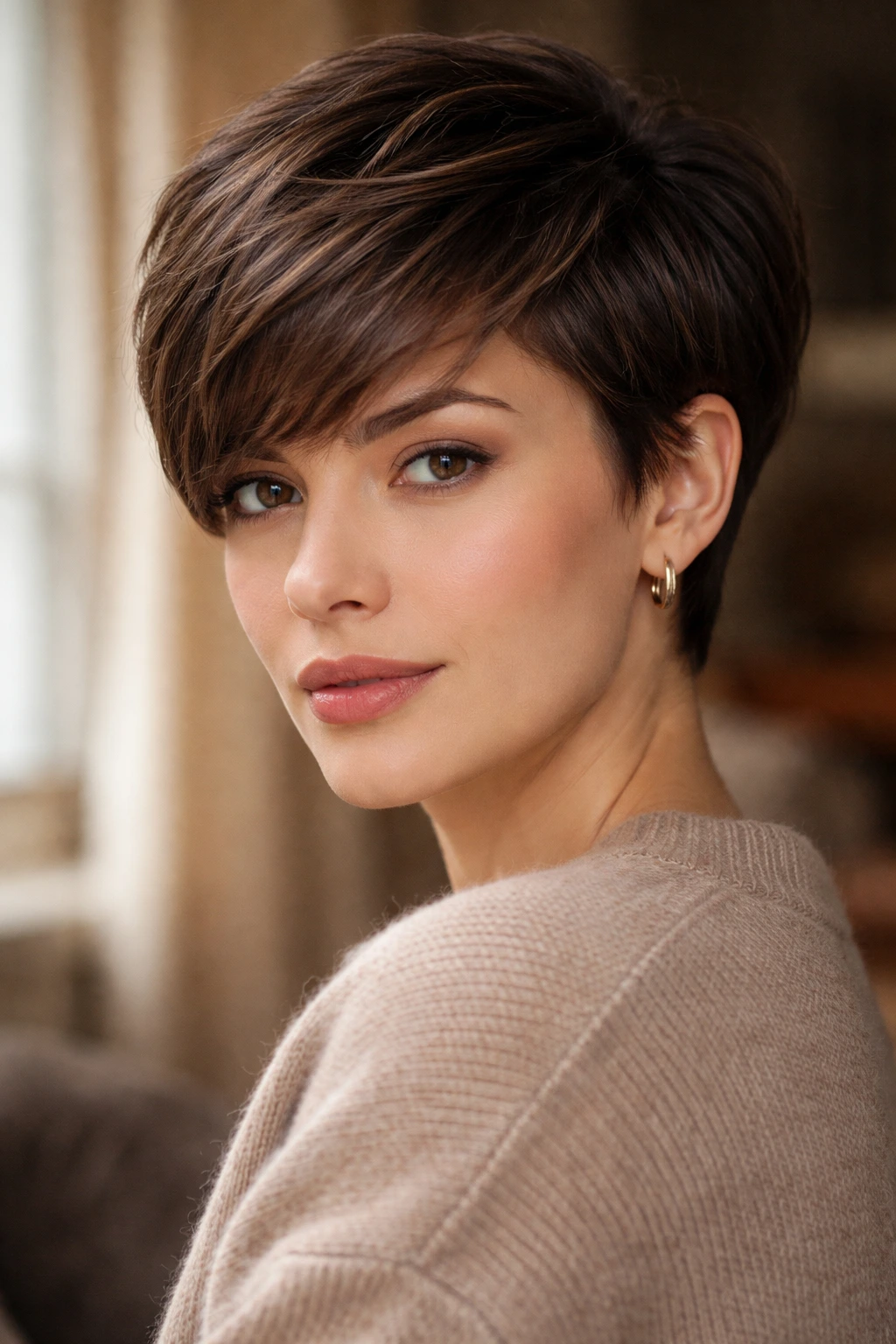
Thick hair and pixie cuts are a good match when the cut has a real shape. That shape can be tight and sharp, soft and feathered, or built-up and dramatic, but it has to respect where your hair carries weight.
A good pixie for thick hair does one thing especially well: it turns bulk into style. The nape, crown, and fringe all matter, and the best cut for you is the one that uses those zones on purpose instead of guessing.
If you’re taking a photo to a stylist, bring two or three. One for the outline, one for the fringe, and one for the finish. That usually gets you closer to the haircut you actually want, which is the whole point.
