



Fine hair can look elegant one minute and flat the next. That’s the annoying part. A good pixie cut fixes some of that problem by removing weight, and a rose-toned finish adds the kind of depth that makes strands look fuller than they are.
That’s why rose pixie cuts for fine hair keep showing up on my shortlist. Blush, dusty rose, rose gold, mauve, and pink champagne all work a little differently, but they share one useful trait: they break up the surface so hair doesn’t read as one thin, shiny sheet. The cut matters just as much as the color. If the layers are too shredded, fine hair can look wispy in a bad way.
The sweet spot is shape. You want enough length in the right places to create lift, enough taper at the nape to keep the outline clean, and enough color variation to make the hair look denser from a few feet away. That’s the part most people miss. A rose pixie is not only about looking cute; it’s about building structure where fine hair usually struggles.
Some of the styles below are soft and airy. Others are sharper, more modern, even a little cheeky. A few are forgiving if your hair grows fast. A few need a tidy trim schedule. All of them can work on fine hair if the cut and color are handled with some restraint, which is the trick, really.
1. Soft Blush Side-Swept Pixie for Fine Hair
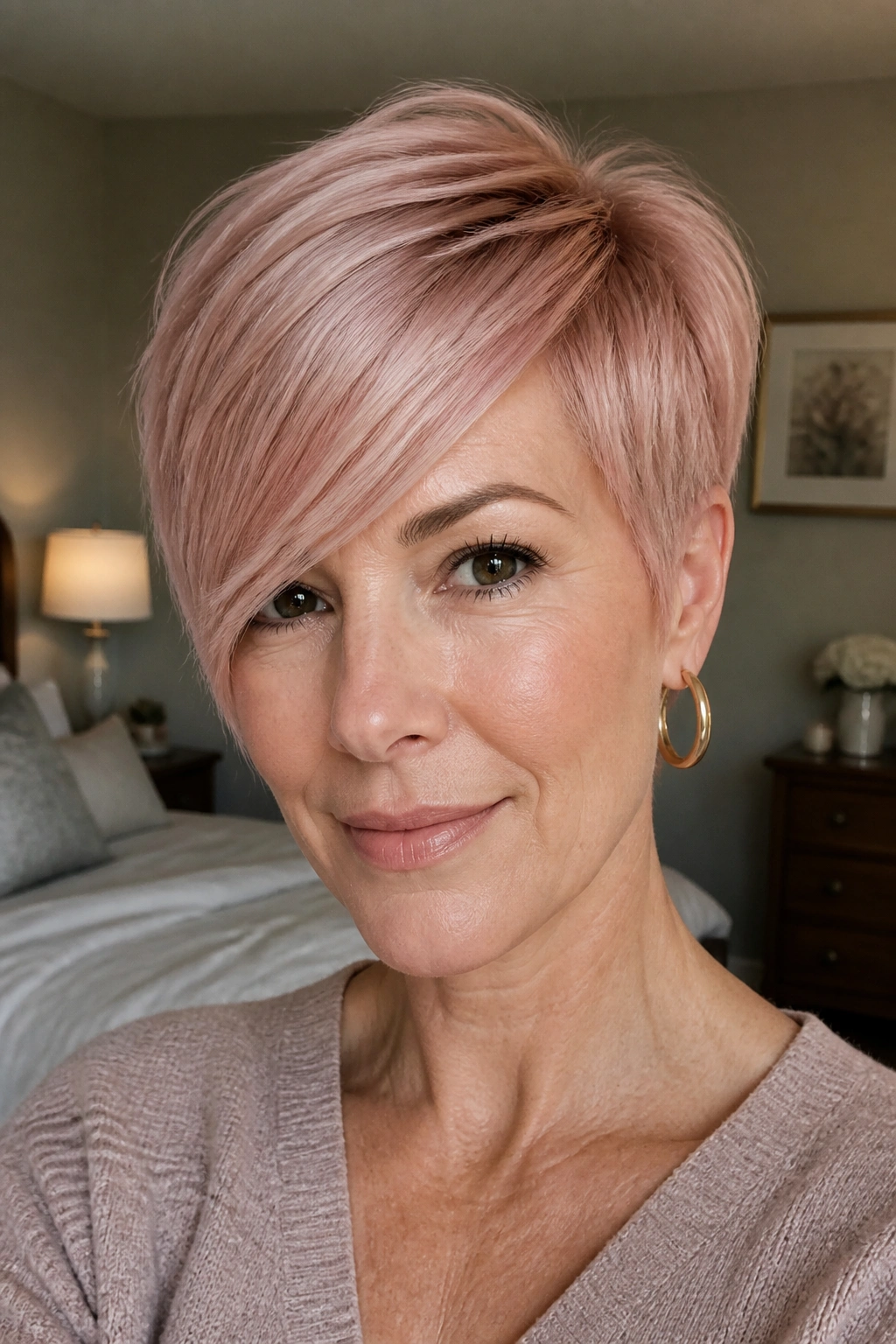
This is the rose pixie cut I reach for when someone wants softness first and attitude second. The side-swept front gives fine hair a little drama without forcing the whole cut to be big and fluffy, which is where a lot of pixies go wrong.
Why It Works on Fine Hair
A long diagonal fringe creates the illusion of density across the forehead and temple area. That matters because fine hair often shows gaps most obviously right there, especially when it’s freshly washed and still a bit too airy.
The blush shade should stay light, almost milky. If the pink goes too saturated, the eye stops reading the shape and starts reading the color. You want both, but the cut should win.
- Keep the front section about eyebrow length on the longer side.
- Ask for soft internal layering at the crown, not aggressive thinning.
- Use a pea-sized amount of lightweight cream to separate the fringe.
- Blow-dry the front in the direction you want it to fall, then pin it for 2 minutes if you want extra bend.
Pro tip: Ask your stylist to leave one slightly heavier side. That tiny imbalance makes fine hair look more intentional and less floaty.
2. Dusty Rose Tapered Pixie
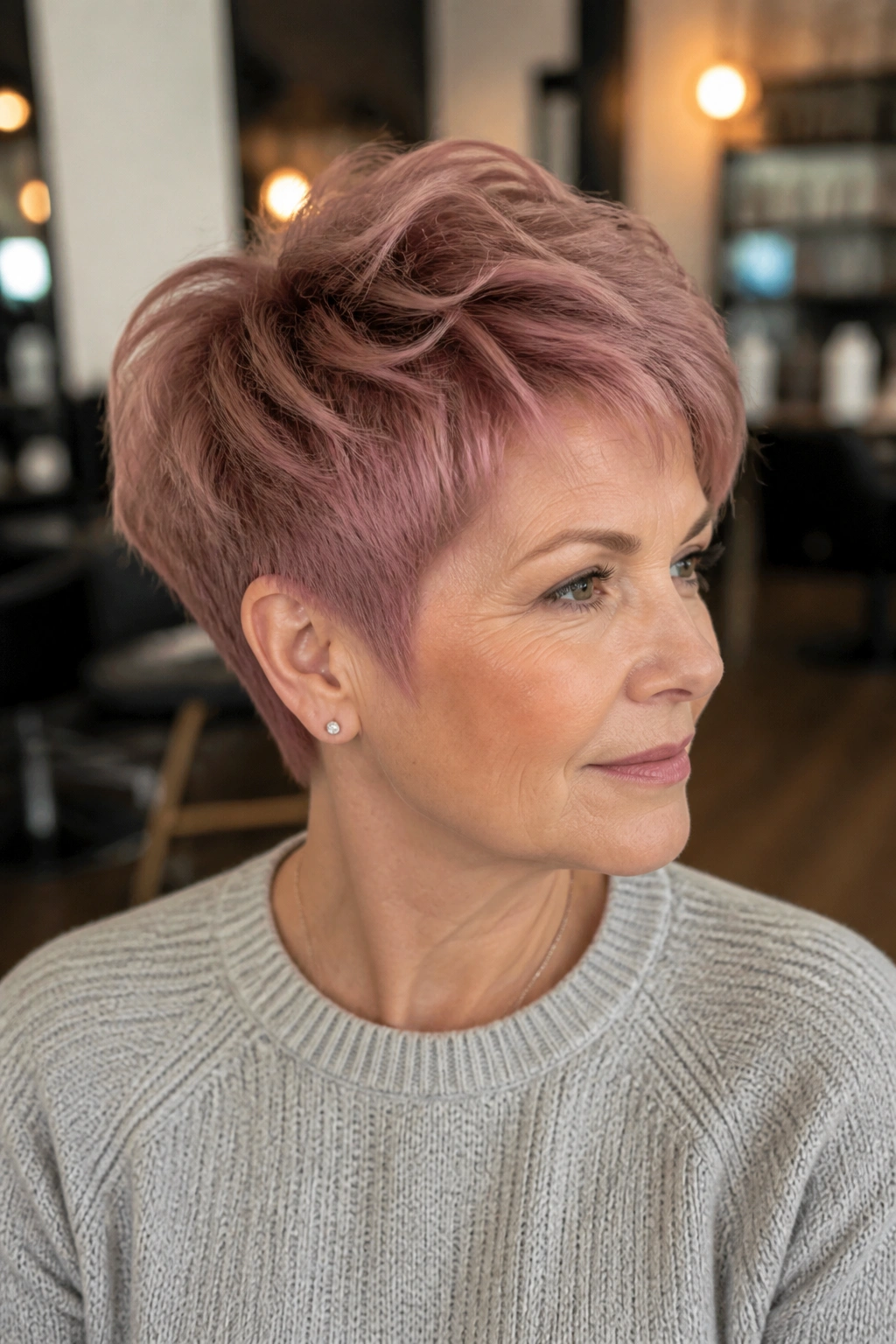
Dusty rose is the shade I trust when the goal is polished, not sugary. It sits in that muted pink range that reads calm and expensive, and on fine hair it has a useful side effect: the softness of the tone hides a little scalp show-through better than a flat single-process color.
The taper is what gives this cut its clean edge. A close nape and neat sideburn area make the top look fuller by comparison, even if the hair itself is delicate. I like this on people who don’t want to spend ten minutes fighting their hair every morning.
Keep the top textured, but not choppy to the point of fraying. That’s the mistake. Fine hair needs movement, yes, but it also needs some solid pieces to hold its outline. If everything is razor-light, the cut loses shape by lunchtime.
Work a small dab of matte paste through dry hair and pinch the ends between your fingers. That’s usually enough. No heavy wax, no sticky pomade, and no giant puff of hairspray that turns the whole thing crunchy.
3. Rose Gold Crown-Lift Pixie
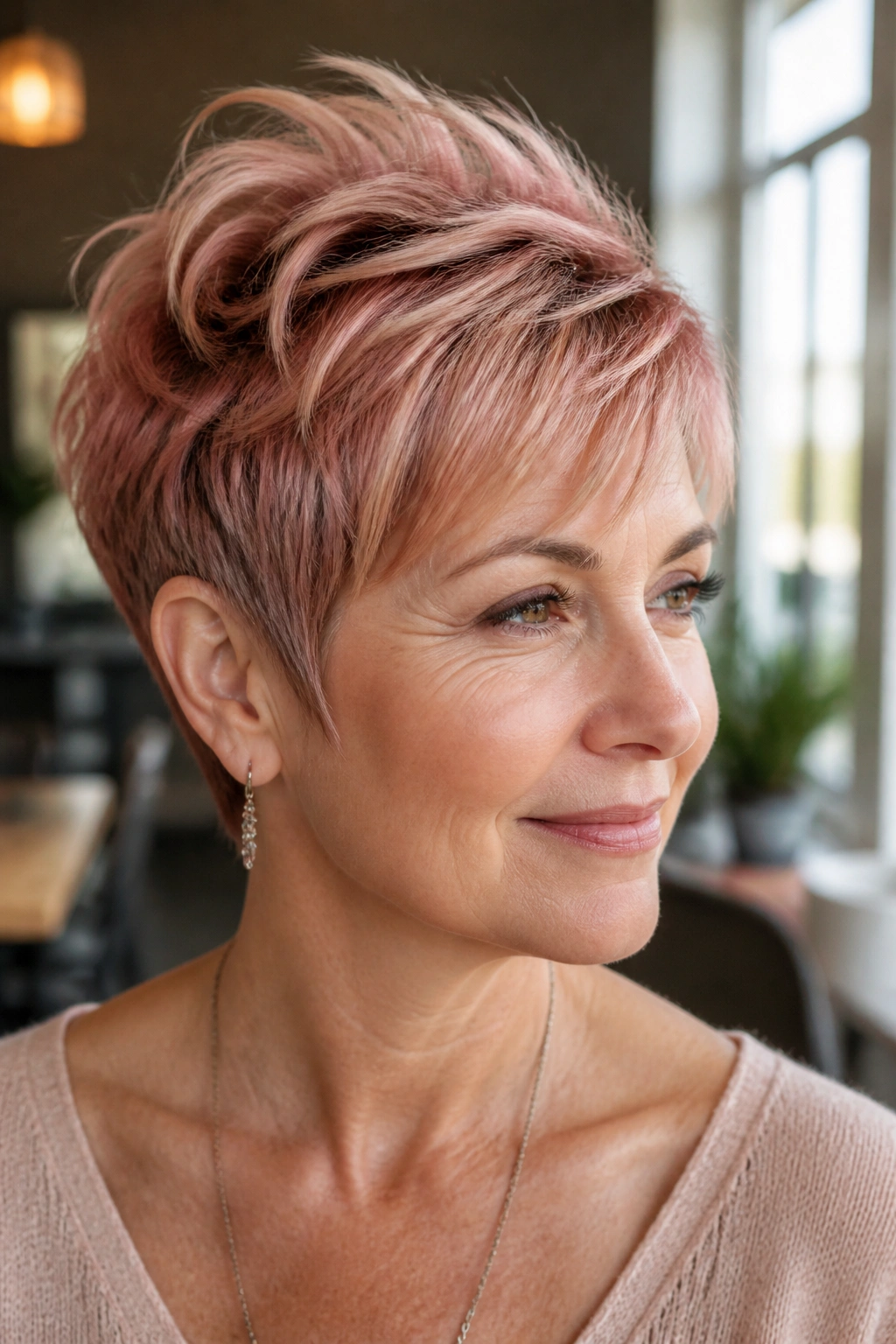
Why does this shape make fine hair look taller? Because the eye goes where the lift is, and rose gold reflects light right at the crown. The combination is small but effective.
The cut keeps the sides neat and the top slightly longer, with the styling focused on pushing the crown up and forward a touch. On fine hair, that lift is doing more work than most people realize. A half-inch of height at the root can change the whole read of the haircut.
How to Style It
- Mist root-lift spray into damp hair, concentrating at the crown.
- Blow-dry with a small round brush, lifting the root and rolling the top section back.
- Finish with a light texture spray only on the upper layers.
- Avoid brushing it flat after styling; use your fingers to keep the airy shape.
The rose gold shade should be brightest on the top layer and softer near the temples. That contrast makes the cut look fuller without needing extra bulk. It’s a smart choice if your hair collapses when it gets too much moisture or product.
4. Micro-Fringe Blush Pixie
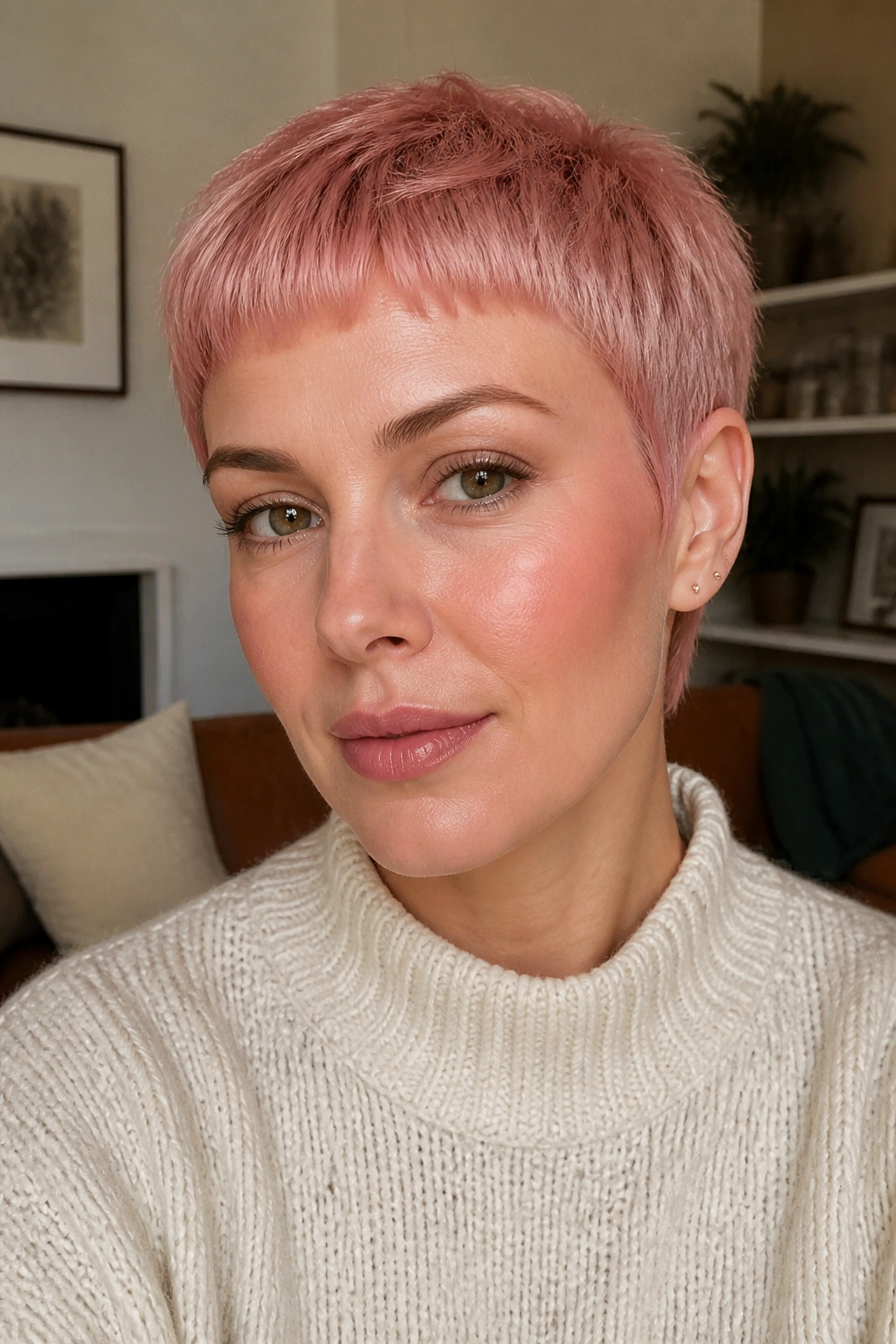
Picture a tiny fringe that stops just above the brows and a softly rounded top that doesn’t fight the face. That’s the charm here. It feels sharp, but not severe.
Micro-fringes can scare people with fine hair, mostly because they think the front will look sparse. It won’t, if the fringe is cut with enough weight to sit as a line instead of a feather. The key is to keep the ends blunt enough that they read as a shape, not as broken pieces.
The blush tone helps, too. It adds warmth around the face, and that warmth distracts from any narrow spots at the hairline. If your forehead is a little shorter, this cut can look chic fast. If your forehead is longer, it brings the whole face into balance.
A tiny amount of gloss cream works better than a thick styling cream here. You want the fringe to move a little, not stick in place like a helmet. And for the love of all things practical, do not overthin the bangs — micro-fringe and razor-thinning are a bad pairing on fine hair.
5. Mauve Shag Pixie
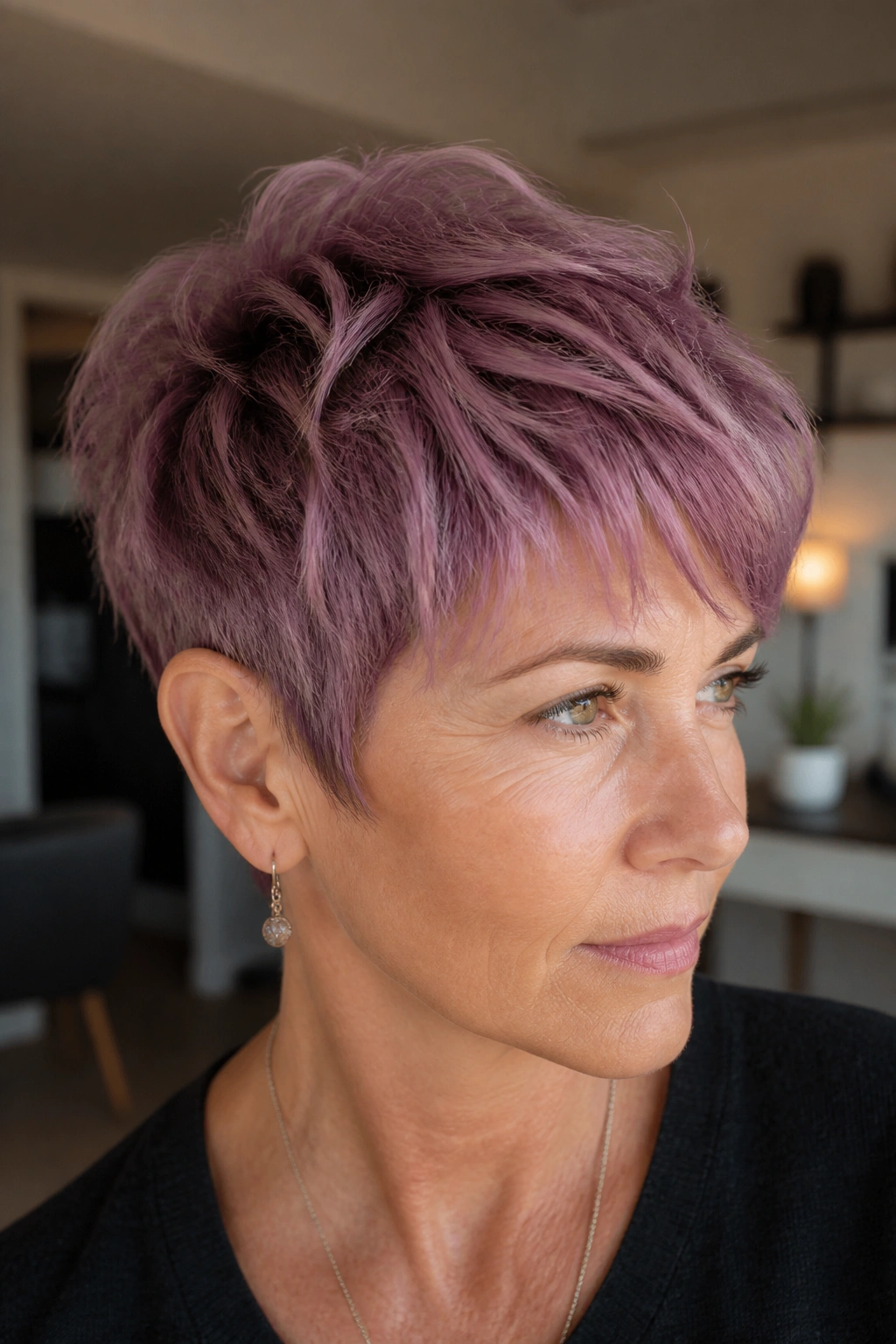
If fine hair goes limp on you, a mauve shag pixie is one of the few short cuts that can look messy on purpose and still feel stylish. It has that slightly broken-up edge that gives the hair texture without turning it into a frizz cloud.
The shag part comes from the layers, but they need to be controlled. I mean controlled. Too many short pieces and the cut starts looking shaggy in the wrong way. Keep the crown layers mobile and the perimeter a little cleaner, and the shape holds together better.
Mauve is a useful choice because it sits between pink and plum. That in-between tone gives the surface more visual depth, which fine hair often needs. A flat pastel can disappear in bright light. Mauve does not.
Use a mousse on damp hair, then rough-dry with your fingers until the roots feel about 80 percent dry. After that, twist a few top pieces around your finger and let them cool. That gives the ends a lived-in bend without needing heat tools everywhere.
6. Long-Top Rose Pixie With Tucked Sides
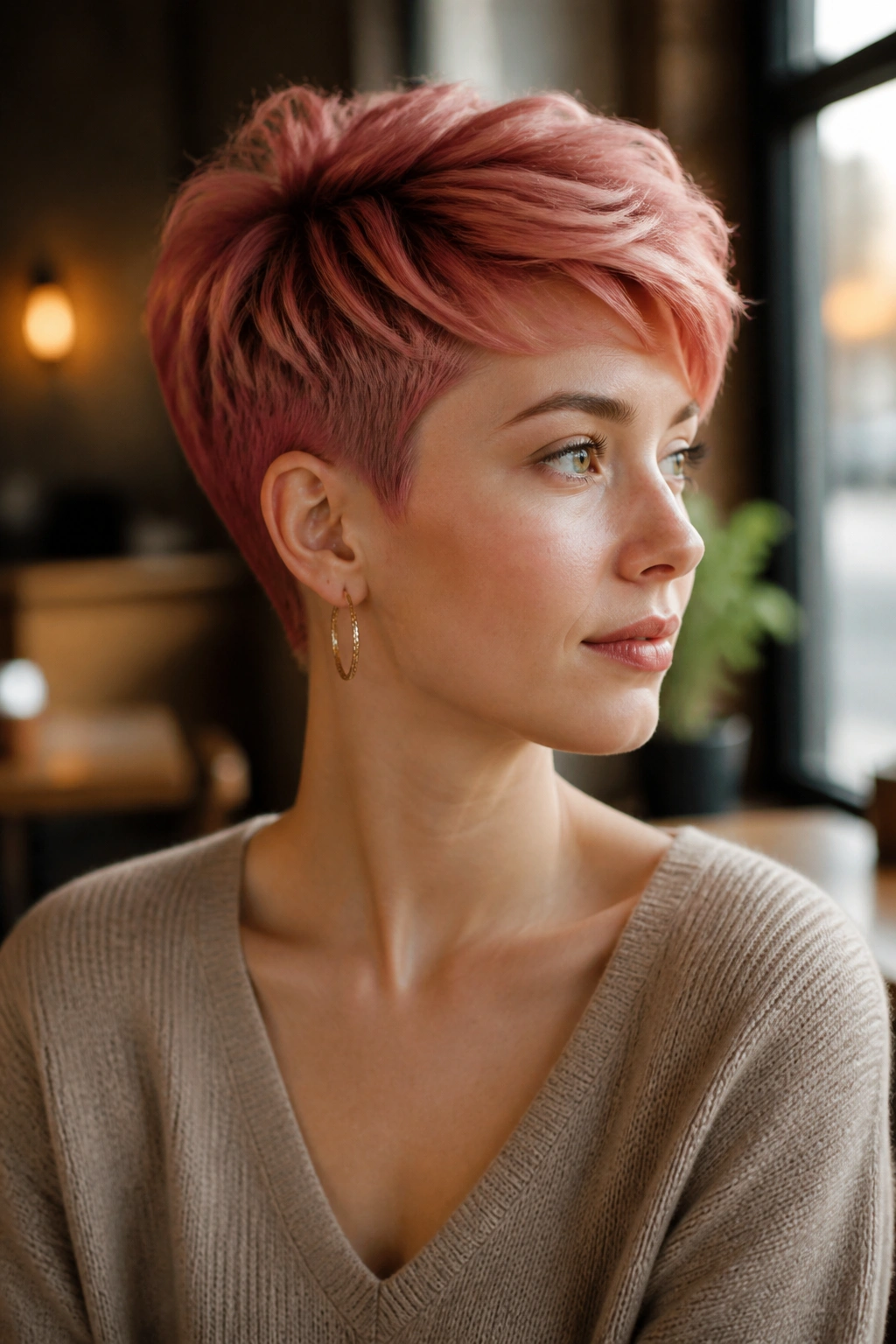
Unlike a classic boyish crop, this one keeps enough length on top to create a real silhouette. That matters a lot for fine hair, because a little extra length on the crown can mean the difference between “cute” and “flat.”
The sides are tucked close, often around the ear and into the nape, while the top stays long enough to sweep, tuck, or part. That contrast is what creates shape. You get a narrow outline at the edges and a fuller mass on top, which is a nice trade when your hair density is on the softer side.
The rose color can stay brighter through the top section and calmer through the sides. I like that because it gives the eye somewhere to land. If everything is equally pink, the haircut loses that built-in structure.
Best for someone who likes to change the direction of the front without getting a full grow-out cut. Ask for point cutting only on the top layer, not all over. That keeps the hair from going wispy when it’s dry.
7. Feathered Rose Crop
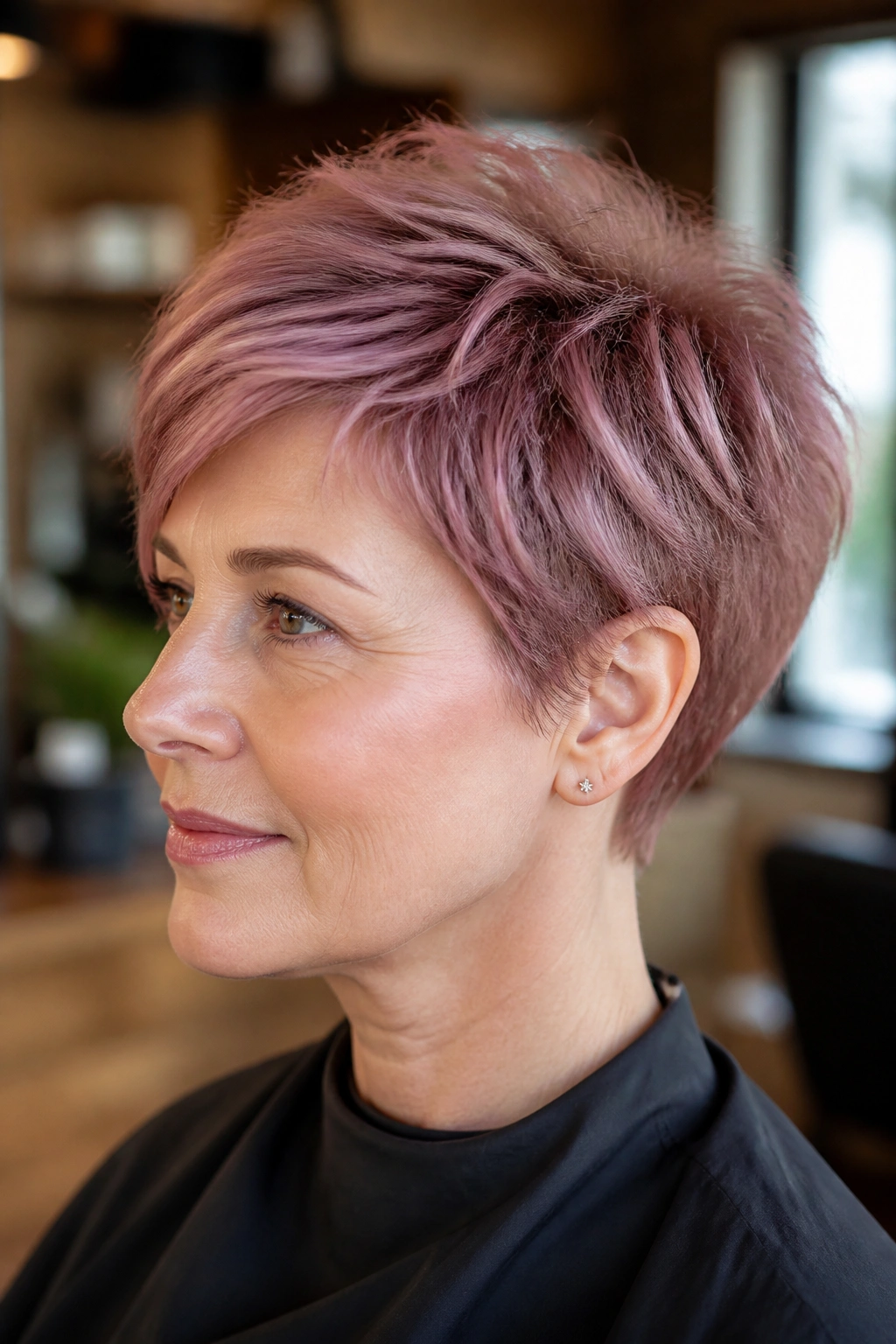
Feathering can save fine hair when it’s used lightly. Used badly, it can shred the ends into nothing. That’s the whole story, really.
What to Ask Your Stylist
- Keep the feathering mainly through the top third of the head.
- Leave the nape and around the ears a little more solid.
- Ask for soft, directional pieces around the temple rather than all-over texturizing.
- Use a rose glaze over a beige-blonde or soft brown base for extra depth.
The reason this works is simple: feathering opens up movement at the top while the cleaner edges give the cut a body line. Fine hair needs both. Too much texture and the shape disappears. Too little and the hair sits like a cap.
This version looks especially good if your natural hair sways straight but not pin-straight. It takes a bend without demanding a lot of styling. A light mist of volumizing spray at the roots is usually enough.
8. Sleek Rose Pixie With Rounded Nape
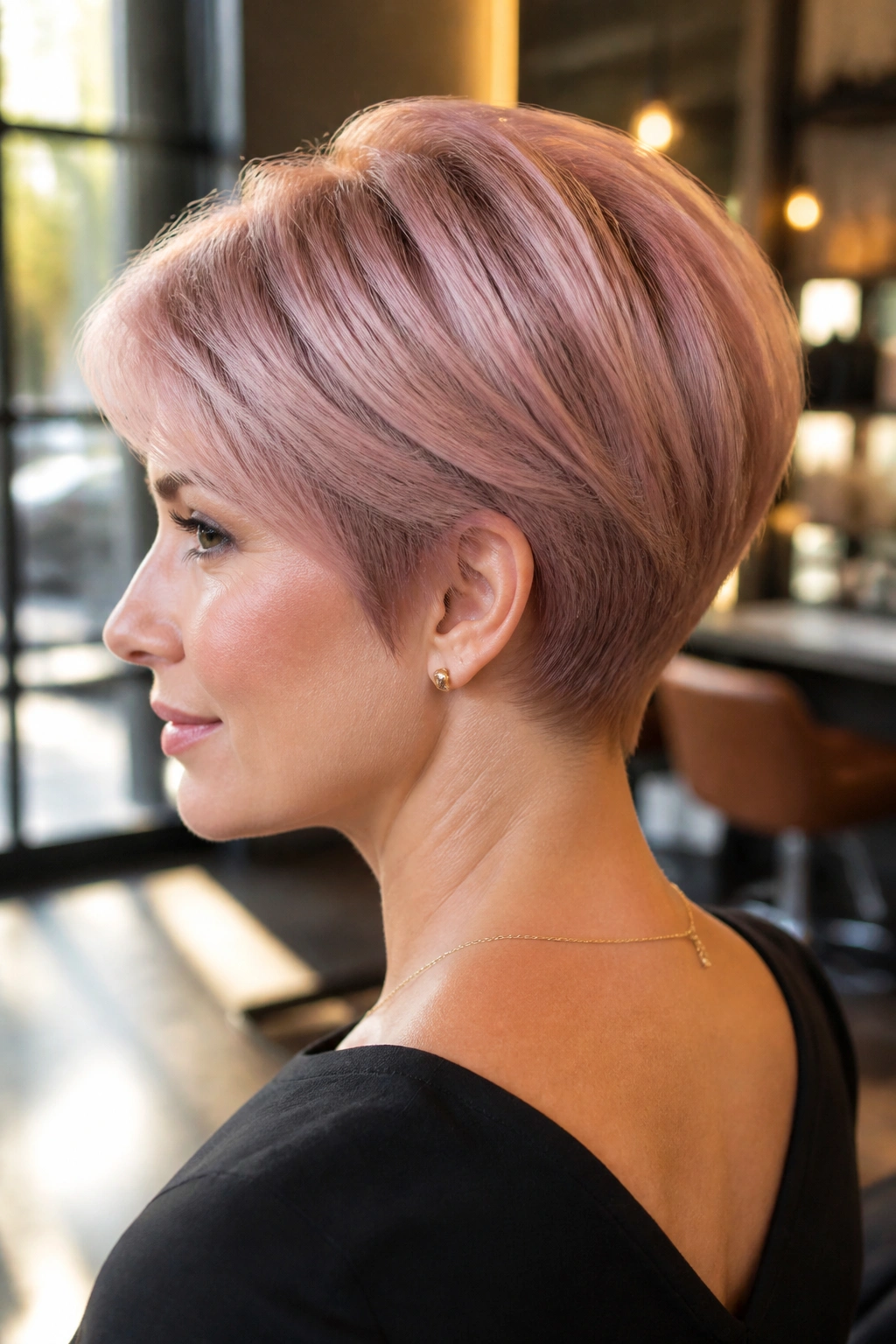
A clean nape changes everything. It gives a pixie a finished feel, and on fine hair, that finished line makes the top look denser than it is.
This is not the cut for people who want shaggy texture. It’s smoother, neater, and a bit more controlled. The rounded shape at the nape helps the haircut hug the head, which removes bulk where you don’t want it and leaves the eye focused on the top.
The rose tone can stay soft and even here — think petal pink, not candy pink. The point is to keep the surface glossy and tidy. Fine hair tends to show every little uneven bit, so a sleek finish actually works in its favor.
A round brush and a small amount of serum are enough for daily styling. Use heat sparingly. Fine hair can get bent out of shape if you blast it with too much hot air, and then the sleek look turns into a puff at the crown by midmorning.
9. Wavy Rose Pixie With Piecey Ends
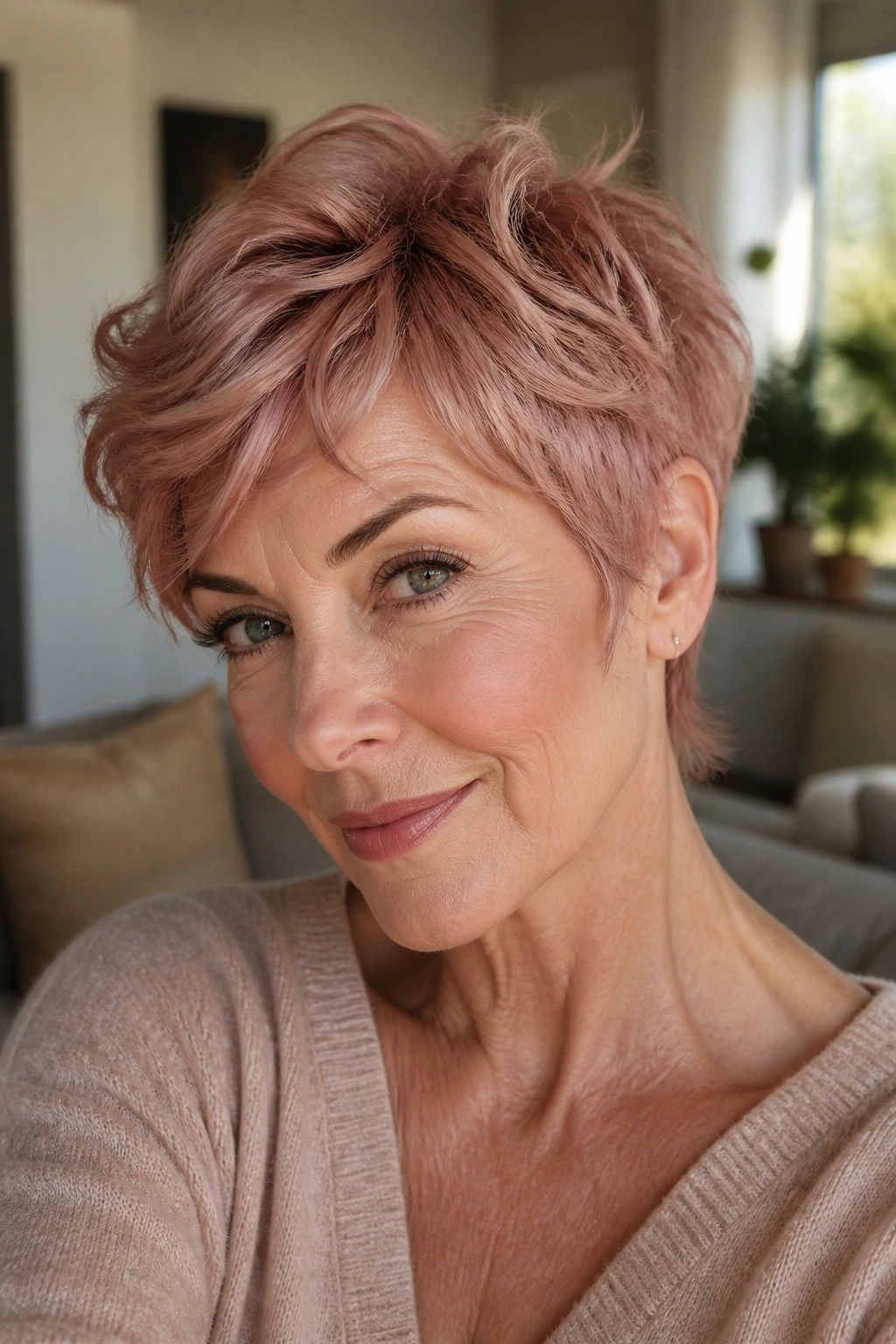
Can fine hair pull off movement without looking sparse? Yes, if the wave stays controlled and the ends are left piecey instead of over-layered.
This cut works because the wave creates body, while the rose tone breaks up the surface. A little bend through the mid-lengths gives the illusion of thickness, and the piecey ends keep the outline modern. Straight across, the same cut would look tighter. With a wave, it breathes.
How to Style the Wave
- Apply a walnut-sized amount of mousse to damp hair.
- Scrunch gently from the ends up to the crown.
- Diffuse on low heat until the hair is about 90 percent dry.
- Separate the top pieces with dry fingers, not a brush.
Keep the rose shade on the warmer side if your hair falls naturally wavy. The warmth makes the texture look softer and more expensive. A cool pink can sometimes make wavy fine hair look a little pale, which isn’t the goal here.
10. Deep Side-Part Rose Pixie
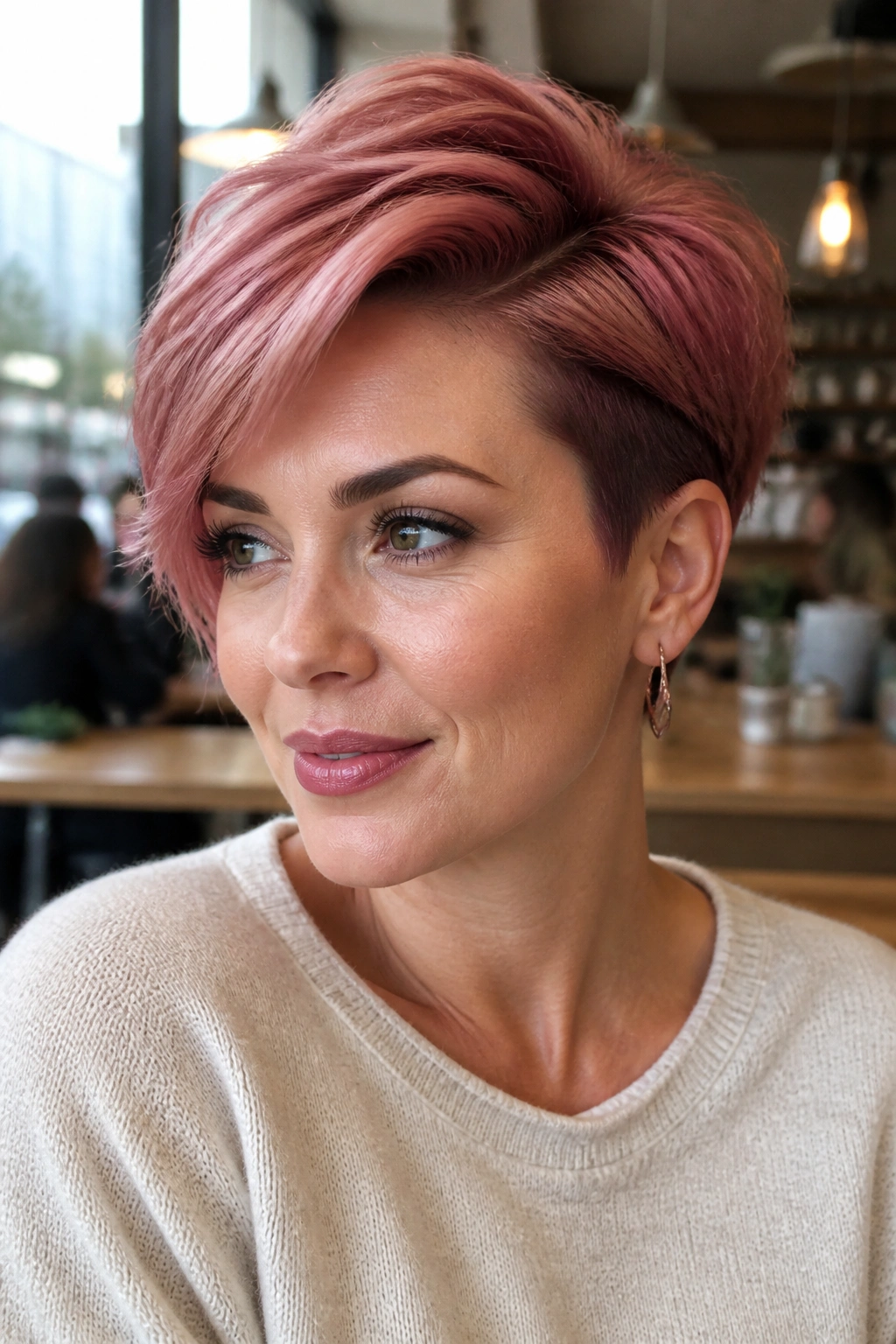
Sometimes all a pixie needs is a hard side part and a stronger fringe line. That single move can make fine hair look thicker in a way that no amount of product can fake.
The deep side part creates a heavy side and a lighter side, so the haircut gets instant asymmetry. That asymmetry matters because a perfectly centered pixie can expose too much scalp on fine hair. A side part breaks up the flatness and gives the top a slope to work with.
The rose color should be brightest on the fuller side. Even a subtle shift in tone can make that side look denser. I like this especially with a soft rose-brown base, where the contrast is gentle and not too obvious.
A small root clip at the front can help train the part if your hair refuses to stay put. Clip it while the hair is cooling after blow-drying. It’s a small, boring trick. It works.
11. Pink Champagne Textured Pixie
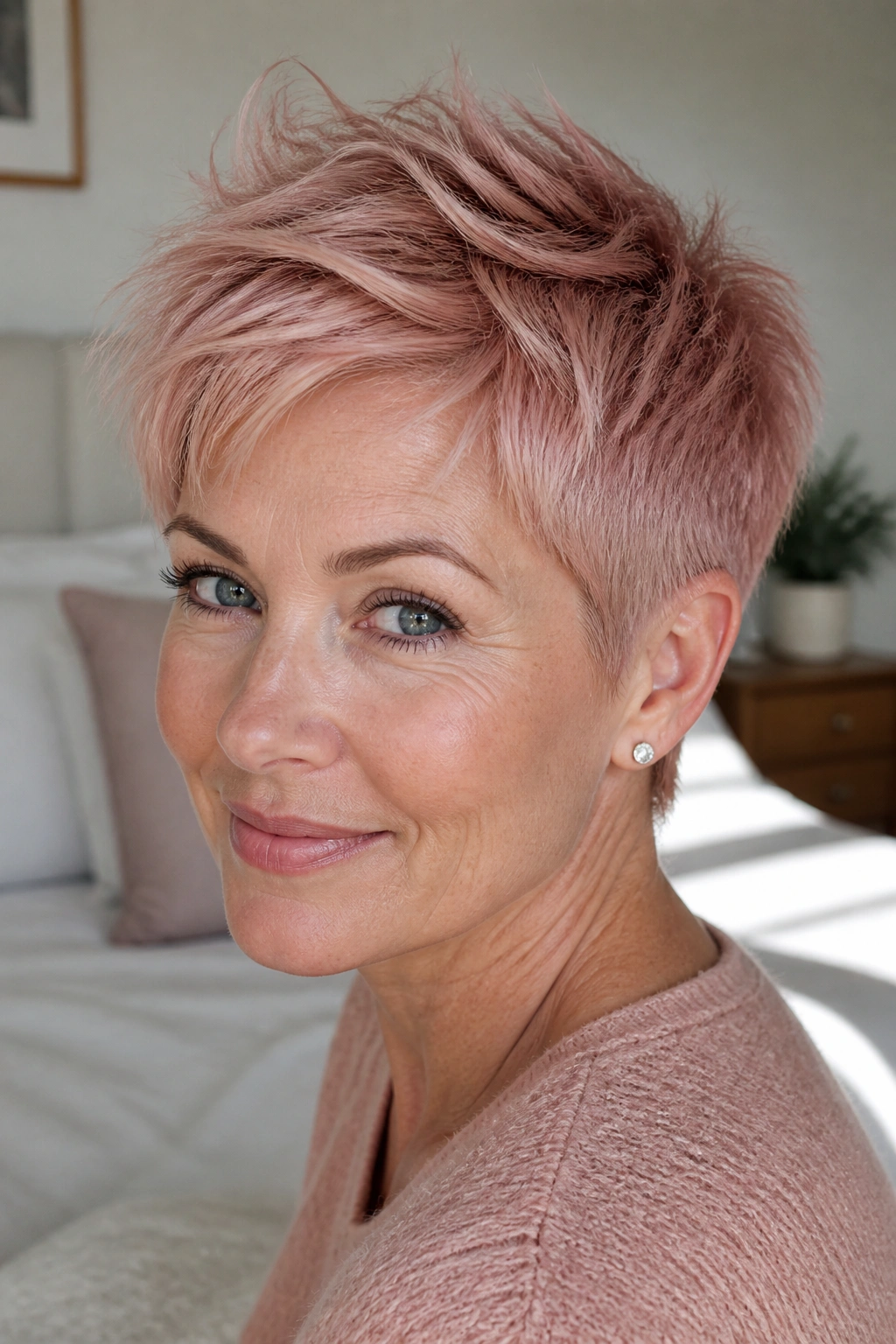
Pink champagne is the shade I recommend when someone wants rose hair but does not want to look like they borrowed it from a festival tent. It’s softer, airier, and easier to wear with fine hair because the beige-gold undertone gives the color a little more body.
The texture should sit mostly at the crown and through the front. You don’t need texture everywhere. In fact, too much can make the sides look stringy. Keep the sides neat and let the top carry the interest.
This is one of those cuts that looks better with a slightly imperfect finish. A few bent pieces near the forehead, a little lift at the root, and a relaxed side sweep are enough. Overstyling kills it. So does too much shine serum.
A dry wax is enough for the ends if they need separation. Use less than you think — about a pea-sized amount, warmed between your palms first. Fine hair shows product fast, and once it gets greasy, there’s no graceful way back.
12. Rooted Rose Balayage Pixie for Fine Hair
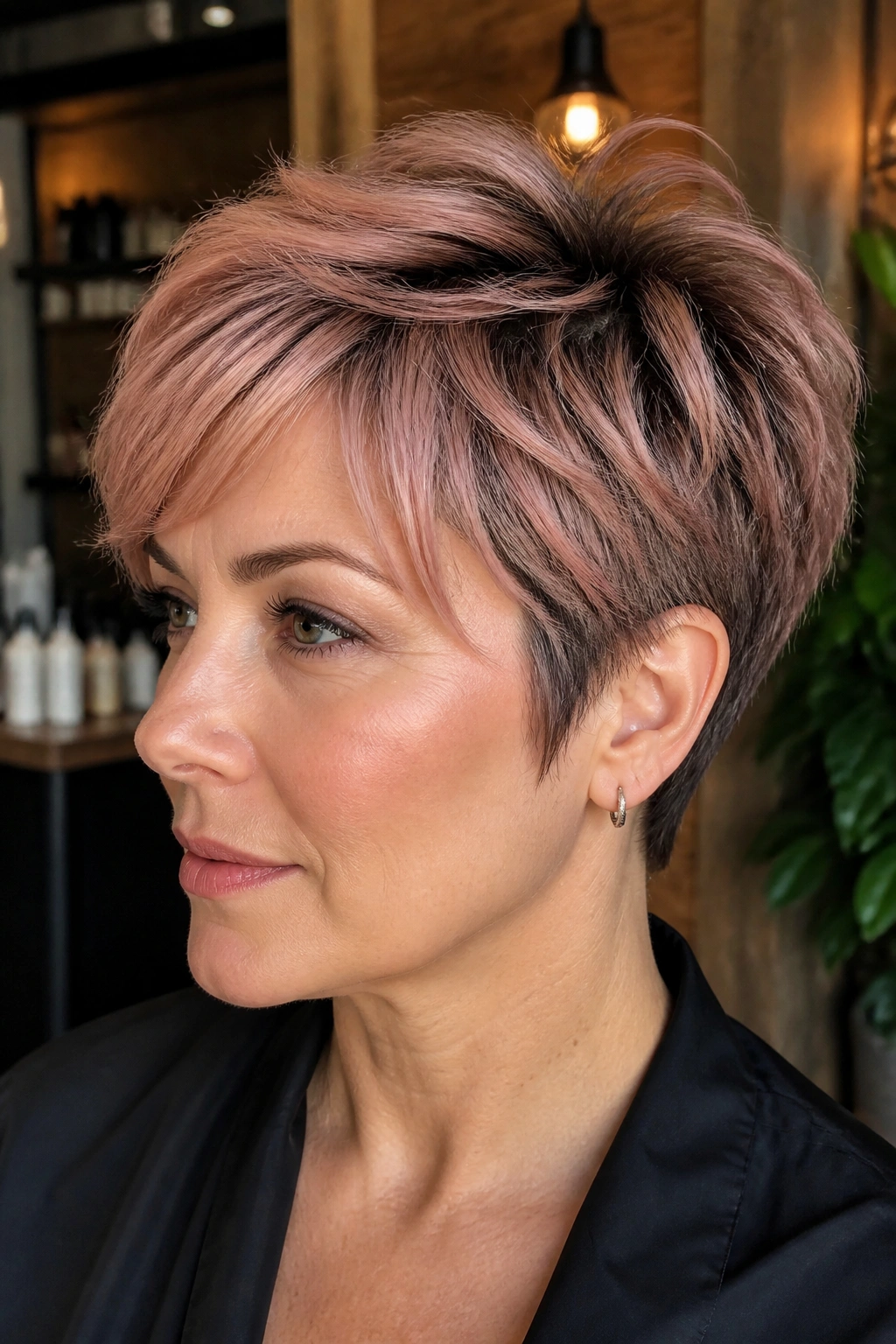
If an all-over pastel makes your hair look thinner, a rooted rose balayage pixie solves the problem. The darker root creates depth, and the rose pieces on top catch the eye where you want the fullness to read.
This is one of the smartest rose pixie cuts for fine hair because the color placement does half the visual work. A shadow at the root makes the top appear thicker. Lighter rose through the crown and fringe keeps the cut from feeling heavy or blocky. You get contrast without harsh lines.
I’d keep the palette to two main tones. Three, maybe, if your hair is especially light. More than that and the result can start looking busy, which fine hair does not need. The cut should stay simple enough to let the color placement do the talking.
Ask for soft balayage rather than tiny highlights packed all over the head. The bigger painted sections make the rose read more clearly. And if you’re trying to stretch time between color appointments, this is a forgiving direction to take.
13. Asymmetrical Rose Pixie With Longer Front Panel
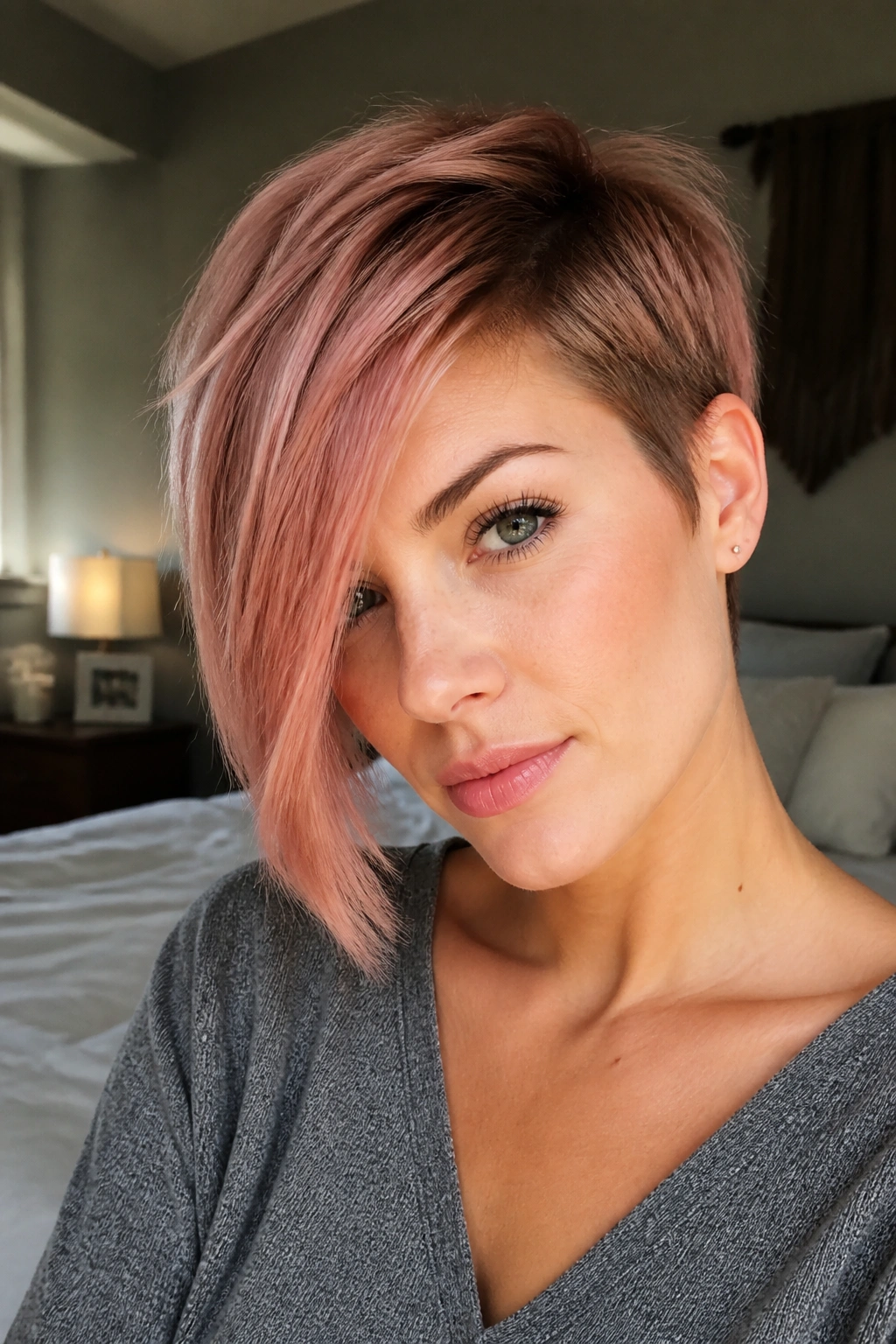
A longer front panel can do more for fine hair than a lot of extra layers. The asymmetry gives the haircut a forward tilt, and that shape keeps the eye moving instead of settling on thin spots.
Why the Uneven Line Helps
One side skims the cheekbone while the other side sits a touch shorter. That difference creates tension in the shape, which is a fancy way of saying the cut stops looking flat. Fine hair often benefits from that kind of built-in imbalance.
The rose tone should stay slightly brighter on the longer side. That small shift helps the asymmetry feel deliberate. If the longer side is also the richer pink, the whole haircut gets a little more edge.
- Keep the longer front panel at cheekbone length or just below.
- Leave the opposite side close to the head.
- Use a flat iron only to bend the front once, not to straighten every strand.
- Keep the nape tidy so the weight stays up top.
This one suits people who like a little bite in their haircut. It is not soft and sleepy. Good. Fine hair doesn’t always need soft.
14. Curly Rose Pixie for Fine Hair
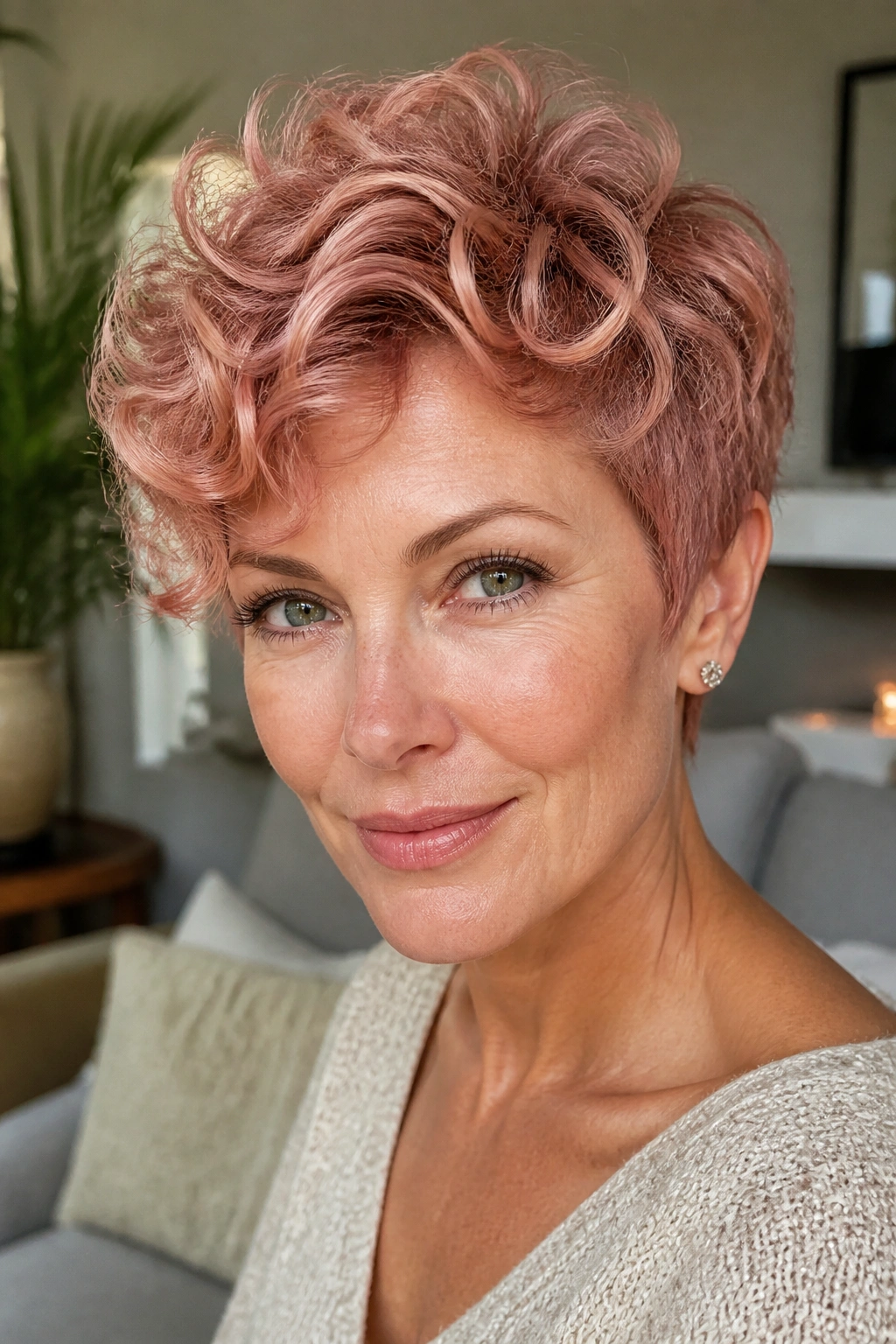
Fine curls behave differently from straight fine hair. They need shape, but they also need room to spring, and a pixie can give them both if the cut respects the curl pattern.
The length should be a bit longer on top and around the front, with the sides gently tapered. That gives the curls a place to stack instead of spreading out in a puff. The rose shade works best when it sits in ribbons through the outer curl layer, because that’s what people actually see first.
A soft pink glaze on curly fine hair tends to read more dimensional than a solid block of color. That’s the fun part. The movement of the curl breaks up the shade in a way that straight hair can’t.
Use curl cream only from mid-length to ends, and keep it light. Heavy cream can flatten the root and make the cut lose its bounce. Diffuse on low heat, then leave the curls alone once they’re dry. Pick at them too soon and they frizz.
15. Slicked-Back Rose Pixie
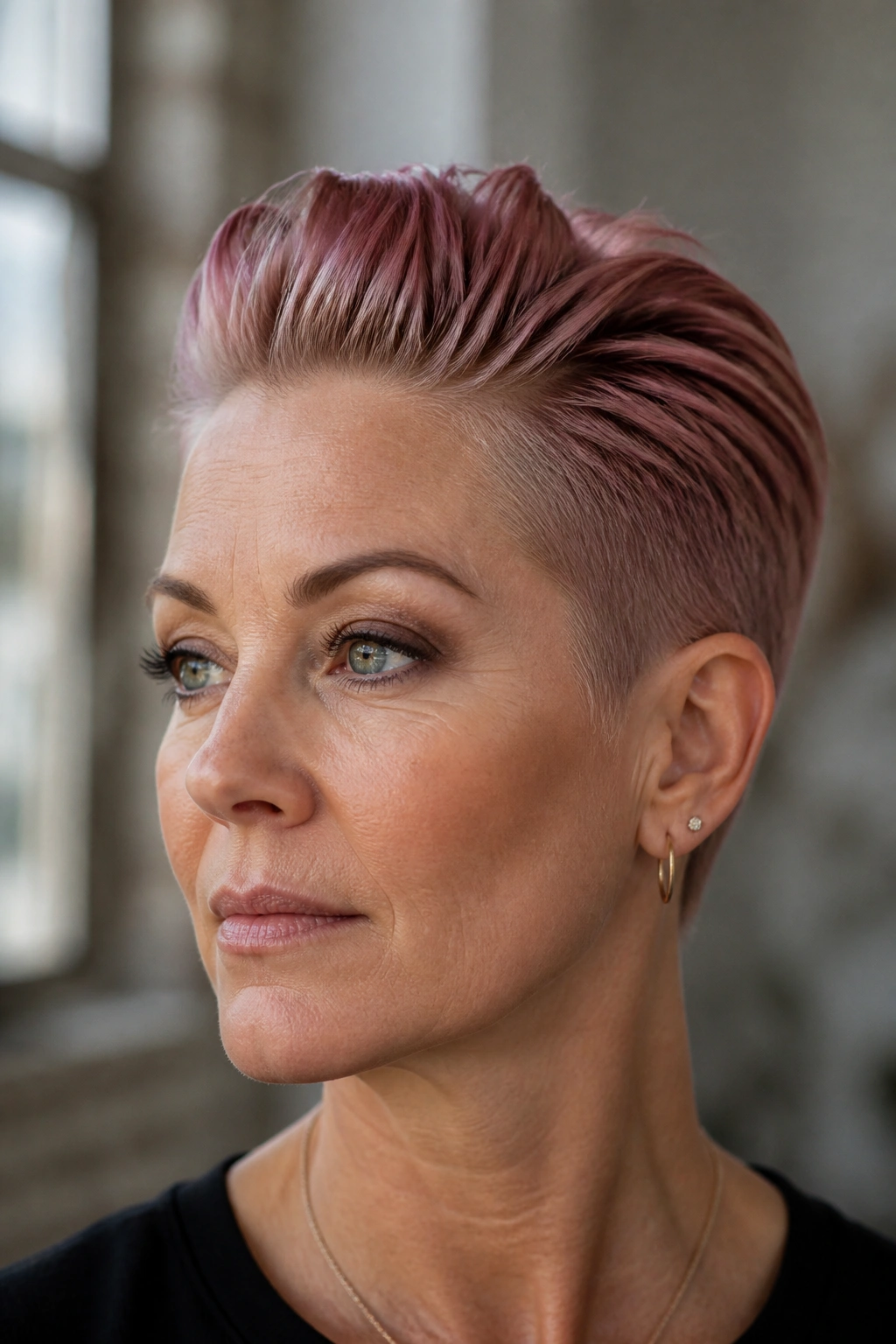
Want something sharper for an evening out? A slicked-back rose pixie does the job, as long as the cut underneath has enough structure to hold its shape once the product goes in.
This style exposes the face, the ears, and most of the crown, so fine hair needs a decent foundation. A tight taper at the sides and a little length on top are what keep it from collapsing into a wet-looking smear. The rose color becomes more obvious too, especially if the crown catches light.
How to Keep It From Looking Greasy
- Start with a small amount of gel, not a handful.
- Work it through damp hair from front to back.
- Comb once, then stop.
- Finish with a light mist of flexible hold spray only where needed.
The best version of this look is controlled, not slick in the old-school helmet sense. You should still see hair movement. If it looks too wet, it stops reading as chic and starts reading as overdone, which is not the same thing at all.
16. Ear-Hugging Rose Pixie
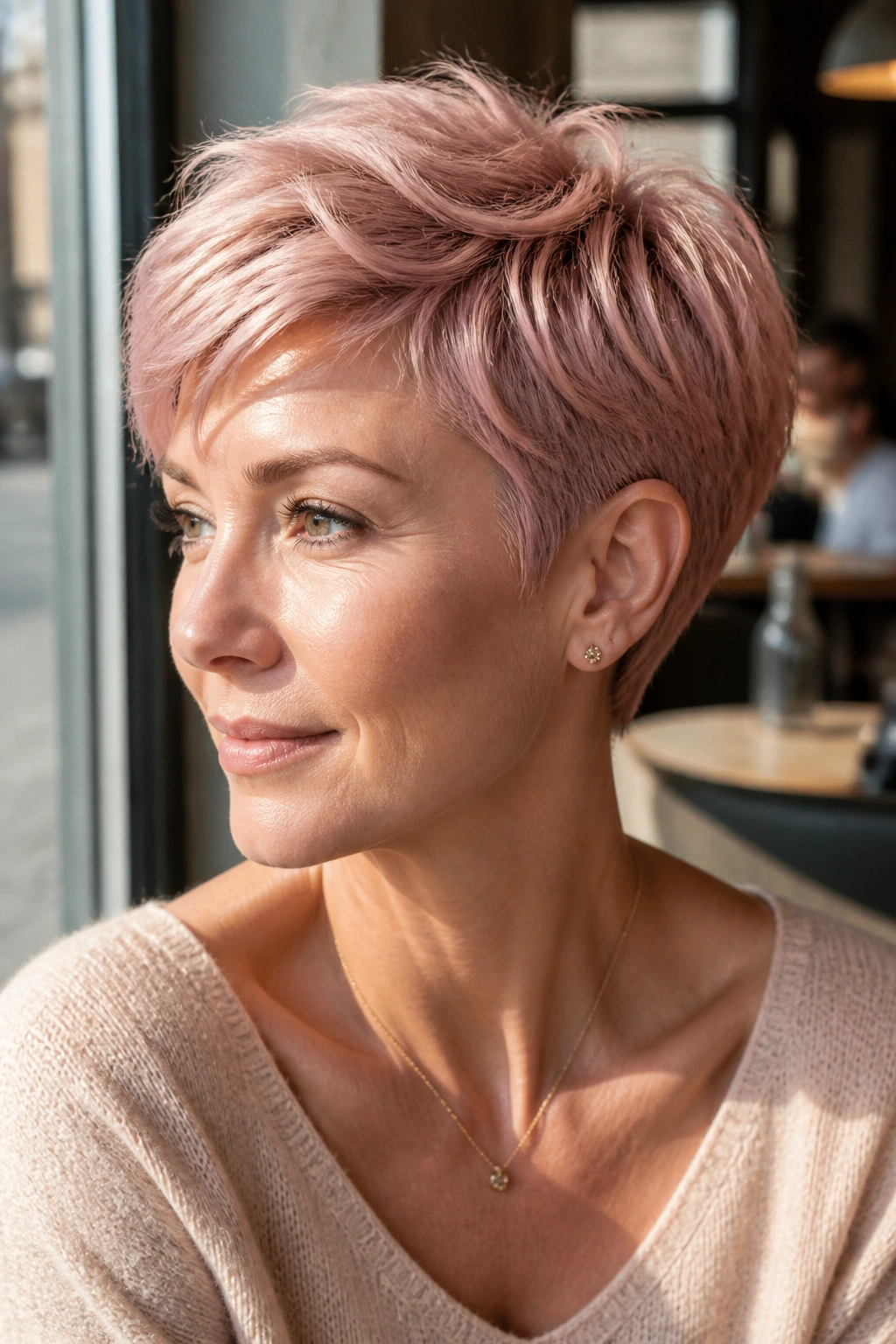
The best ear-hugging pixies feel neat at the sides and full at the top. That shape is a gift for fine hair, because it keeps the outline tidy without asking the strands to carry more weight than they can hold.
This cut sits close around the ears, almost like it’s tracing the bone structure, while the top stays soft and slightly longer. The effect is very clean. It also works well with glasses, which people forget to mention until they try a pixie and suddenly realize the ears matter a lot.
The rose color should be quieter here — think soft blush or pink beige. The point is not to scream color. It’s to make the short shape feel intentional and fresh.
Ask for the sides to be tucked but not shaved too tight. Fine hair can lose its density fast if the undercut is too aggressive. A little edge is enough. The rest should feel smooth, almost tucked-in, and easy to maintain between trims.
17. Grown-Out Rose Pixie With Curtain Fringe
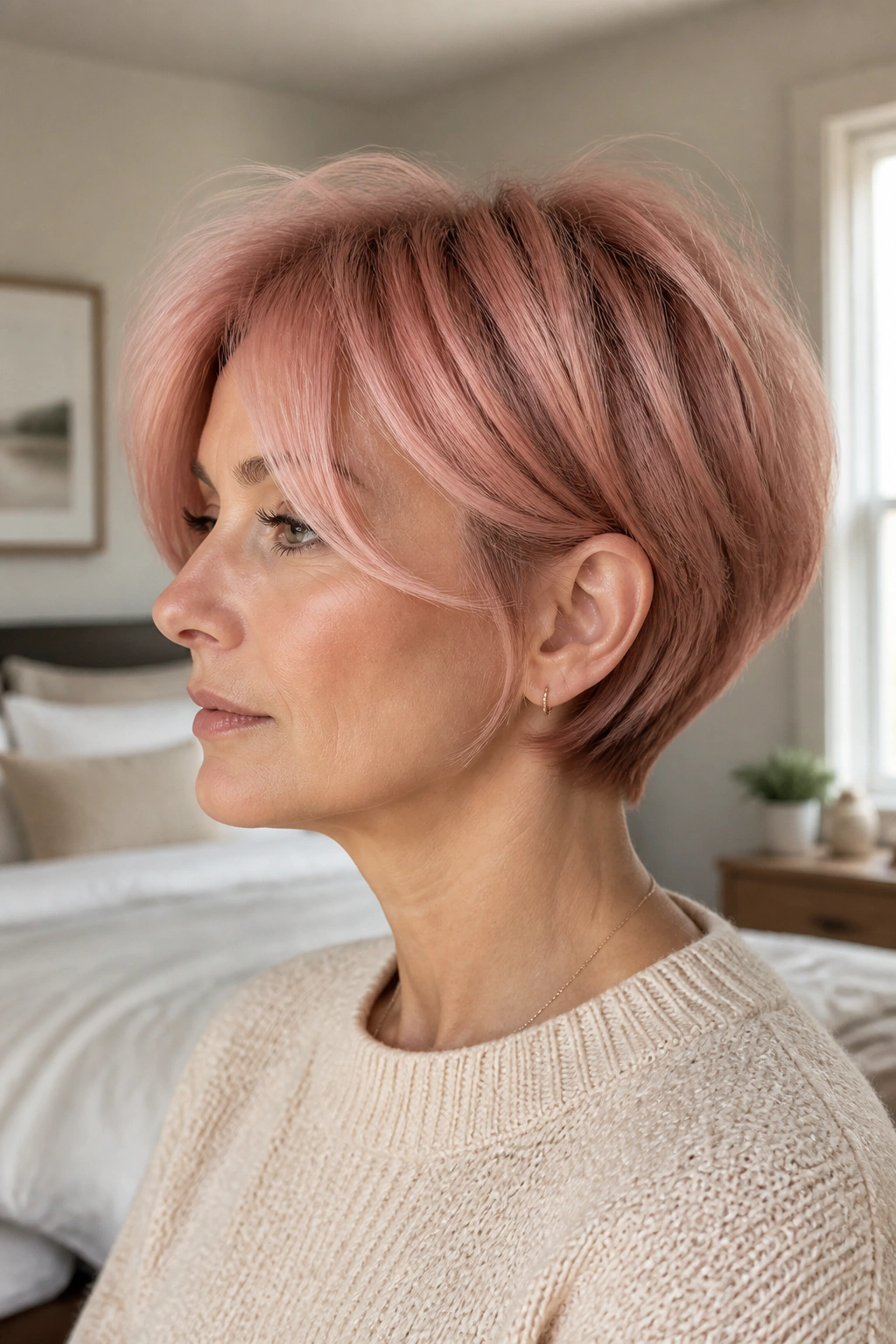
Unlike a strict crop, this one lets the fringe get a little longer and softer. That makes it useful for people who want the ease of short hair without the constant need to sharpen every line.
The curtain fringe splits near the center or just off-center and falls toward the temples. On fine hair, that framing trick is worth a lot because it gives the front some width without making it heavy. The rose tone can be brighter around the face and deeper toward the nape for a little contrast.
This version is forgiving during grow-out. If your trims get delayed, it still looks like a style rather than an accident. That alone puts it high on my list. Not every pixie can survive a few extra weeks without looking shaggy in the wrong way.
Keep the ends blunt enough to hold the shape. Too much texturizing and the curtain effect turns flimsy. A small round brush or even just a quick finger-blow-dry can keep the fringe moving without making it puff out.
18. Piecey Rose Pixie With Choppy Bangs for Fine Hair
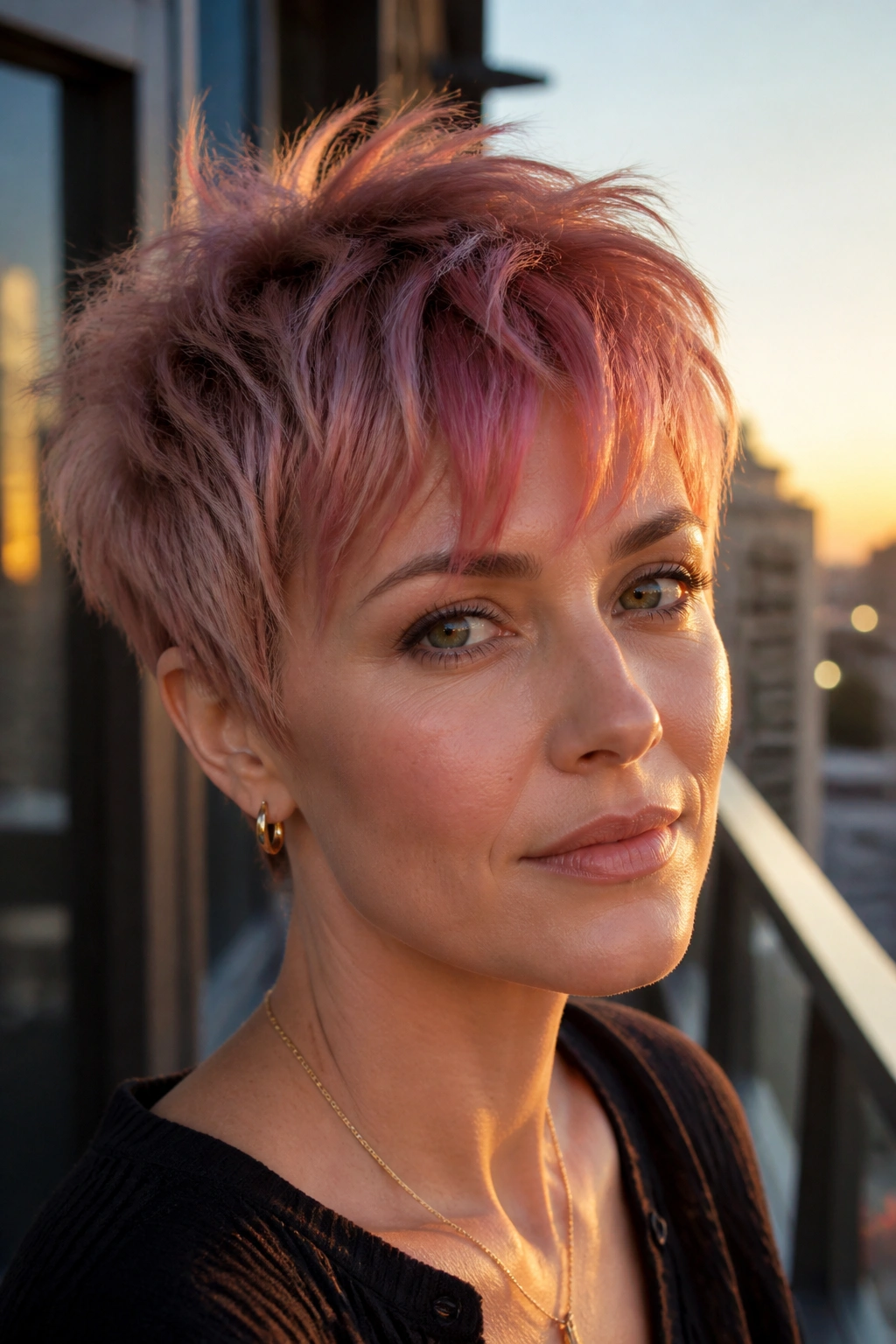
This is the cut that gives the most attitude with the least length. Choppy bangs, broken-up top layers, and a rose tint with a little bite — that combination gives fine hair more personality than most longer styles manage.
The trick is to keep the bangs piecey, not shredded. Fine hair hates being over-thinned at the front. You want the choppiness to come from shape, not from removing too much material. That’s a subtle difference, but it matters more than people think.
What to Ask For
- Bangs that sit just above the brows or graze them.
- Short internal layers through the top only.
- A soft taper at the nape.
- Rose color concentrated near the fringe and crown.
A tiny puff of texture powder at the roots can help this style stand up through the day. Use it sparingly. If the powder gets overworked, the front starts looking dusty. And for fine hair, dusty is not a compliment.
Final Thoughts
Rose tones and pixie cuts are a strong match when the hair is fine, but only if the cut keeps enough structure to hold the color. That’s the part worth protecting. Too much thinning, too much layering, and the whole thing loses the shape that makes it work.
The styles that age best are the ones with a clear line somewhere — a fringe, a taper, a side part, a rounded nape. Color can help, sure, but the haircut does the heavy lifting. If the shape is right, even a soft blush or dusty rose finish can make fine hair look fuller from every angle that matters.
I’d start by choosing the outline you actually wear in real life. Then pick the rose shade that suits how much maintenance you’ll tolerate. That order saves people from bad haircuts, which is never a small thing.
