



Round faces can wear a pixie cut. They just need the right shape.
The long pixie is the sweet spot for a lot of people because it keeps enough length to soften the look, but not so much length that the haircut loses its edge. The trick is geometry: a little height at the crown, a little movement around the temples, and some kind of diagonal line that keeps the eye moving instead of stopping at the widest part of the face.
What does not help is a heavy, boxy shape that sits flat at the sides. That can make a round face look shorter and wider than it really is. A good long pixie does the opposite. It lifts, slices, and opens things up without turning into a high-maintenance art project.
This haircut also works across textures, which is part of why stylists keep coming back to it. Straight hair can look crisp and modern. Wavy hair gets softness. Curly hair gets shape instead of puff. The best versions are never one-note; they have a little swing in the fringe, a little lift in the top, and a nape that is tidy enough to keep the whole thing from feeling fuzzy.
1. Side-Swept Long Pixie with Soft Fringe
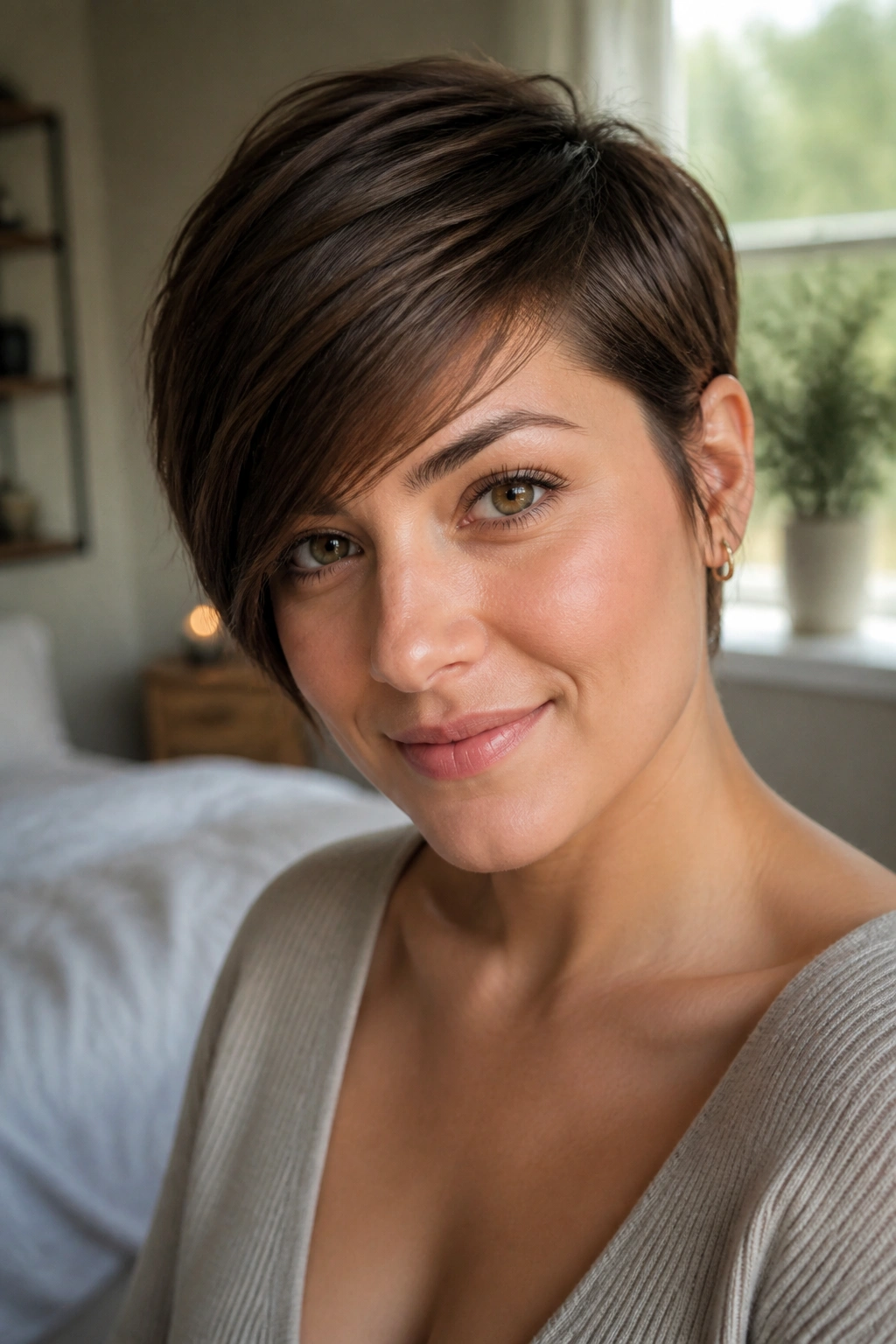
A side-swept fringe is one of the cleanest moves for a round face. The line runs diagonally instead of straight across, so the eye follows the fringe down and across rather than hanging out at cheek level.
This version works especially well when the top is kept a little longer than the sides, usually around 2 to 4 inches, depending on hair density. Ask for softness around the temple area, not a blunt wall of hair. That tiny difference matters a lot.
- Keep the fringe long enough to tuck behind one ear.
- Use a small round brush or a flat brush to direct the hair across the forehead.
- Finish with a light cream or flexible paste so the fringe moves instead of freezing in place.
The big win here is movement. A side-swept long pixie never has to look stiff, and that softness is what keeps a round face from feeling boxed in.
2. Deep Side-Parted Pixie with Crown Lift
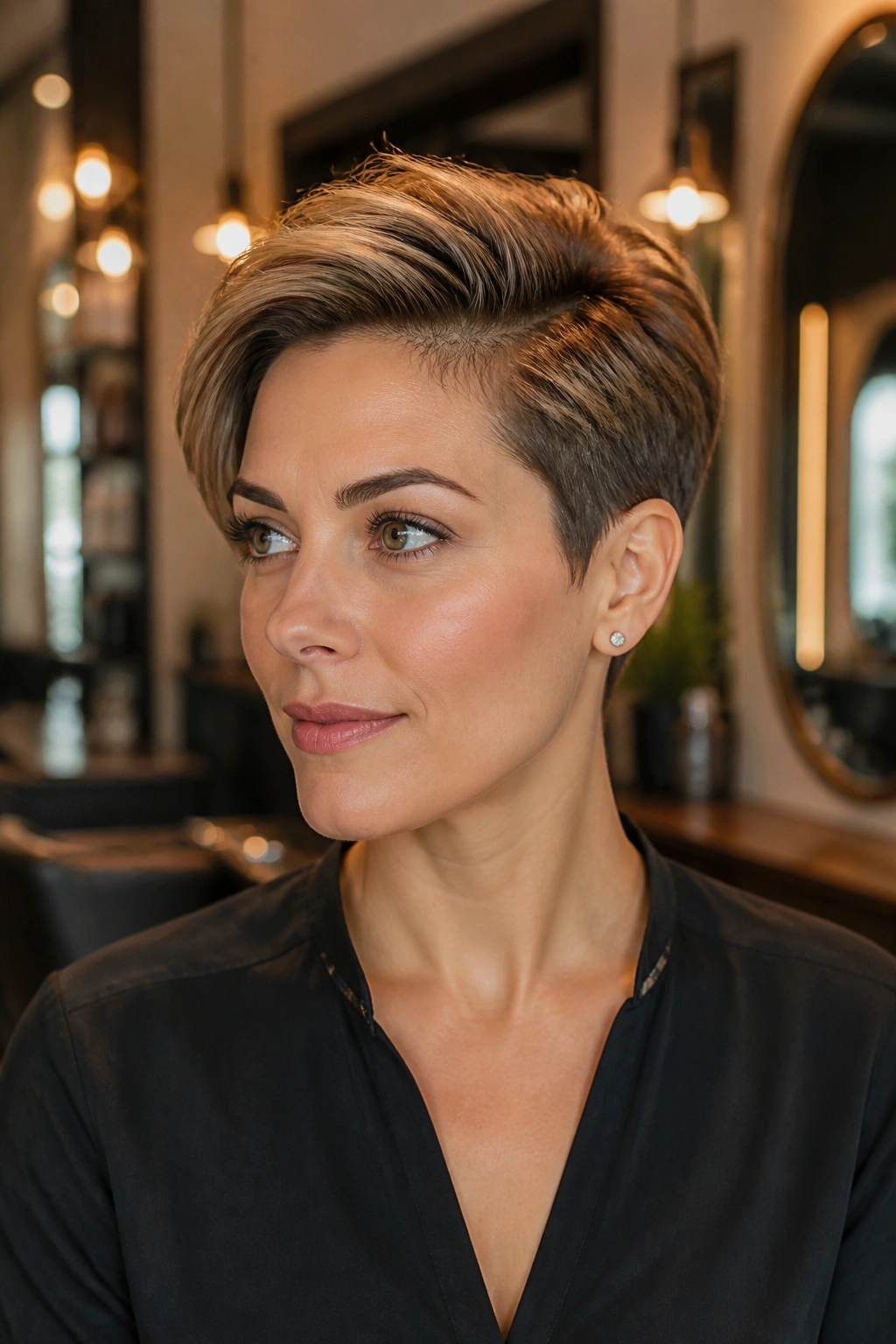
A deep side part can do more for a round face than a lot of people expect. It breaks symmetry, and symmetry is what often makes a face look even rounder than it is. One side sits low and neat. The other gets a little lift, and that lift gives the whole haircut a sharper silhouette.
The crown matters here. If the top lies flat, the part looks like an afterthought. If the roots get a bit of lift, the cut starts to read taller and leaner. A root-lifting mousse or a light volumizing spray at the base is enough; you do not need a crunchy helmet.
How to style it
Blow-dry the roots in the opposite direction first, then flip the part back where you want it. That little detour adds volume without making the style look overworked. A round brush helps, but fingers work too if your hair already has some bend.
This is a good choice for anyone with fine or medium hair that tends to collapse by noon. It holds shape well, looks polished fast, and gives round features a cleaner line from forehead to jaw.
3. Choppy Textured Pixie with Piecey Ends
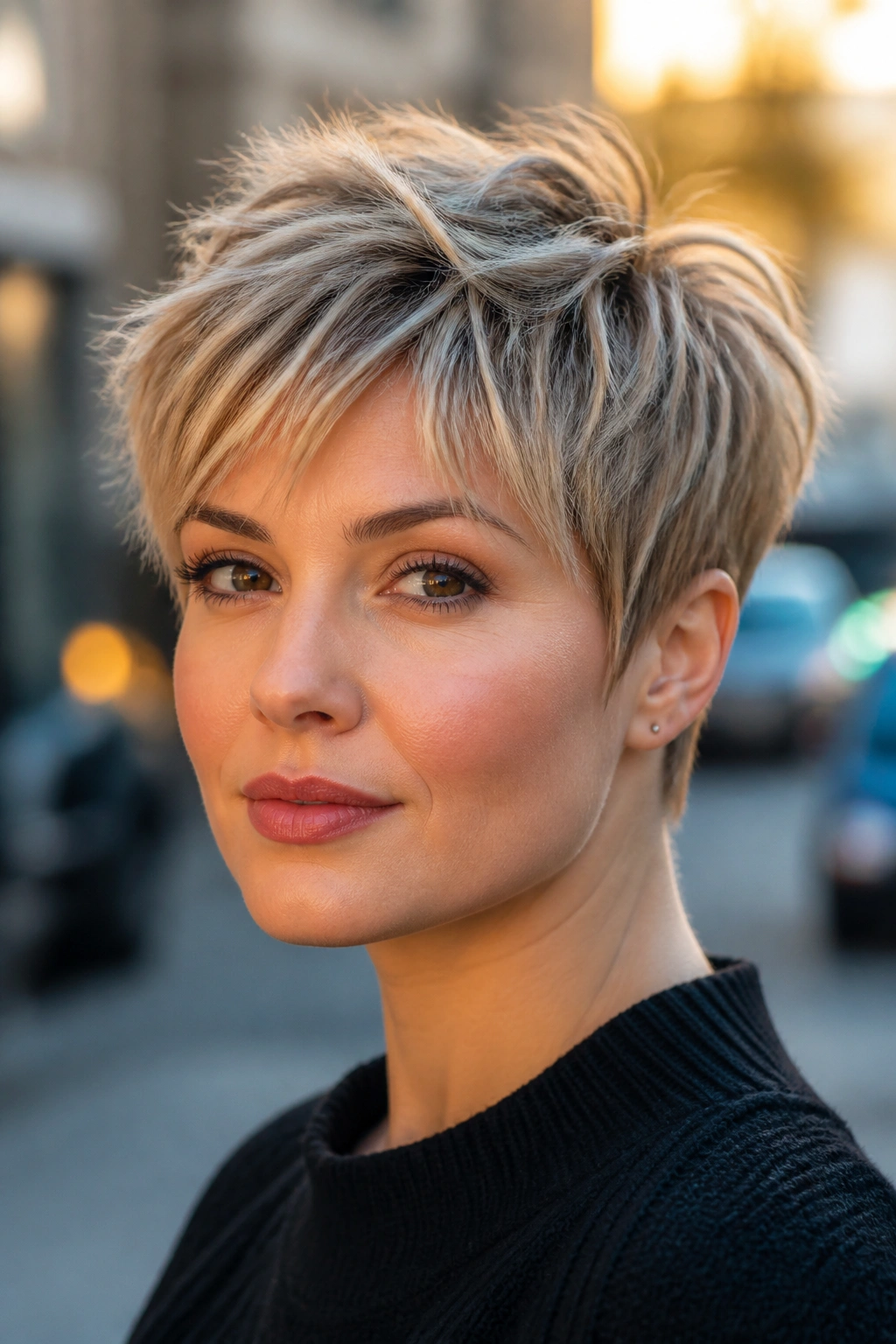
Choppy layers can be a lifesaver on round faces, especially when the hair itself is thick or dense. The goal is not to make the cut shaggy for the sake of it. The goal is to break up the solid shape so the face does not get swallowed by one smooth, circular outline.
A good textured pixie has little separated pieces around the top and front, almost like the haircut was lightly broken apart with scissors rather than carved into a perfect shell. That piecey finish keeps the eye moving. It also stops the style from feeling too precious, which is a common problem with short hair.
Ask for point cutting or razor work only where the hair can handle it. Fine hair can turn wispy fast if the stylist goes too hard. Thick hair usually loves it.
This is one of the most forgiving options for air-drying. A dab of matte paste through the ends, a quick tousle, and you are done. If your hair tends to puff at the sides, keep the bulk lower and the top lighter.
4. Asymmetrical Long Pixie with Longer Front Pieces
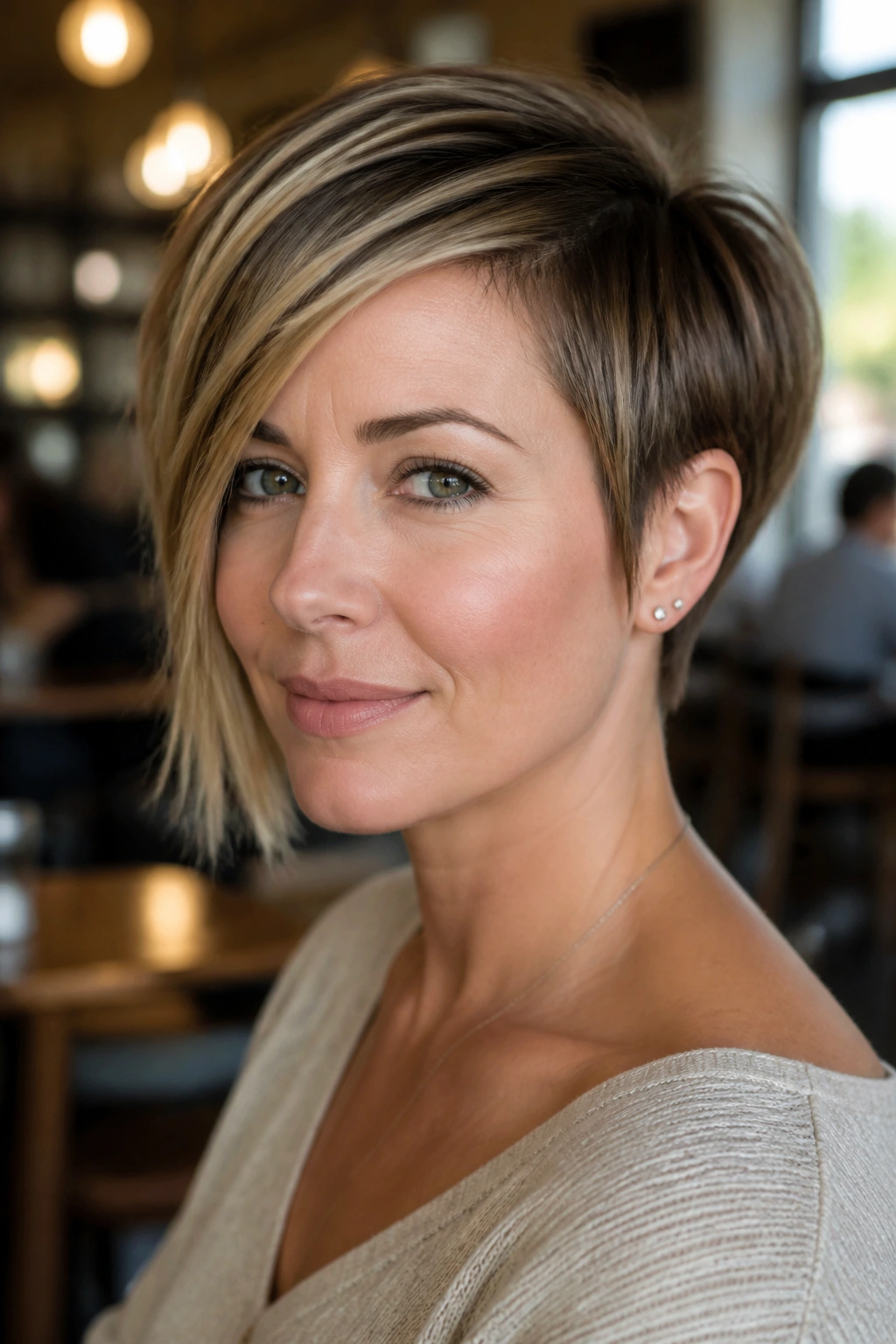
A round face likes a little imbalance. Not chaos. Just enough asymmetry to interrupt the curve.
This style keeps one side longer or lets the front fall more heavily on one side of the face, usually grazing the cheekbone or just below it. That longer front piece creates a line that pulls the eye downward, which is exactly what you want when you are trying to add length. It also gives the haircut a sharper personality without becoming dramatic for no reason.
What to ask for
- One side that sits slightly longer than the other
- Front pieces that angle past the widest part of the cheek
- A tapered back so the shape stays neat from behind
The trick is restraint. If the difference between the two sides is too extreme, the cut can feel costume-y. Keep the asymmetry subtle enough that it reads as modern, not theatrical. It should look like the hair naturally falls that way, even though it took a trained hand to get there.
5. Curly Long Pixie with Tapered Sides
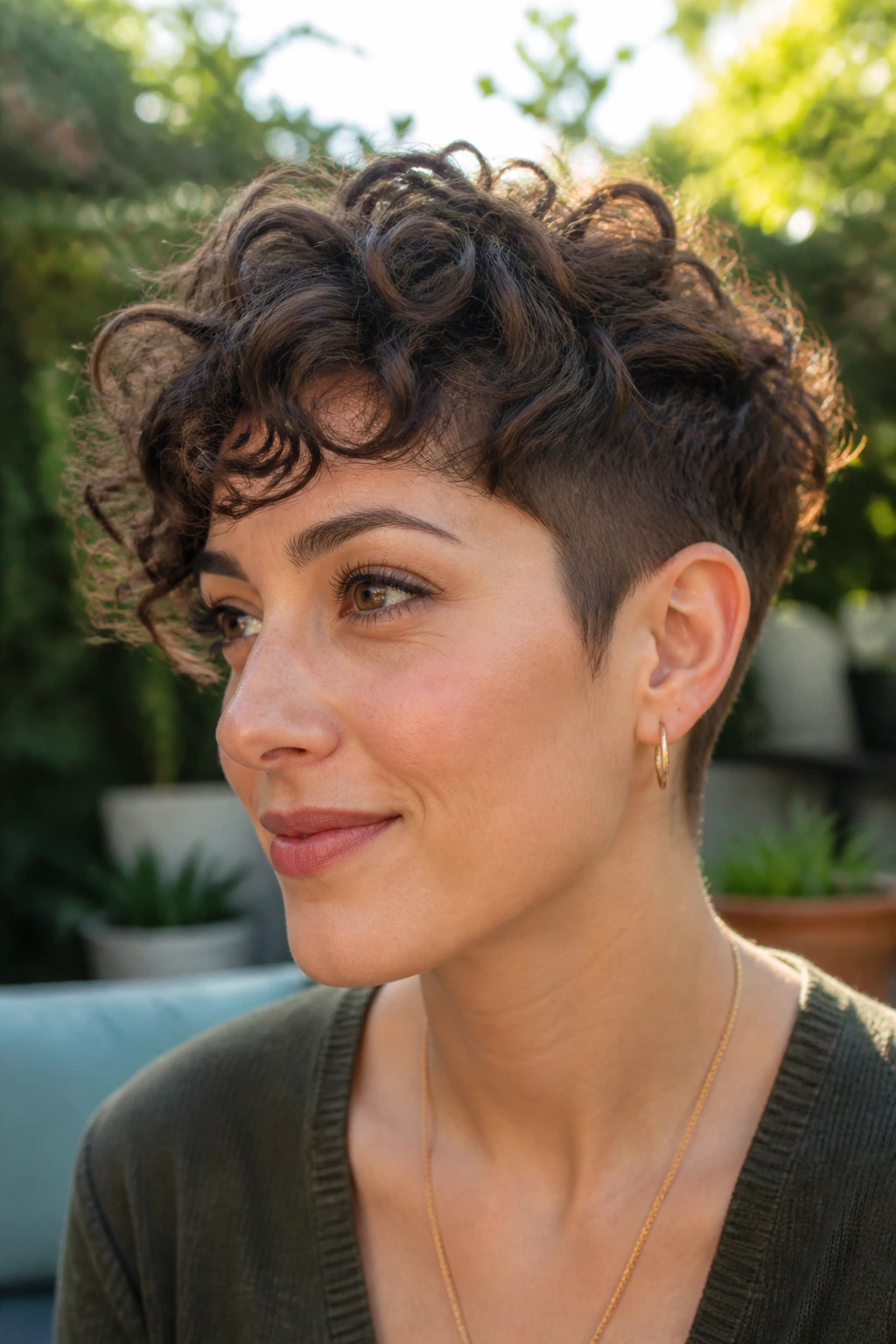
Curly hair and round faces can be a beautiful match when the shape is handled properly. The biggest mistake is leaving too much width at the cheeks, because curls already want to spread outward. A tapered side keeps that from happening.
The best curly long pixies leave the top and front long enough for the curl pattern to show, then tighten the sides and nape so the haircut has a clear outline. That contrast makes the face look longer. It also keeps the style from turning into a soft puffball, which is a real risk if the cut is too uniform.
Curl specialists usually cut this kind of shape dry or mostly dry so they can see where each curl lands. That matters more than people think.
A little curl cream goes a long way here. Scrunch it in, let the curls set, then touch only the outer pieces once the hair is dry. Too much handling and the shape gets wider again. No one needs that.
6. Shaggy Pixie with Wispy Bangs
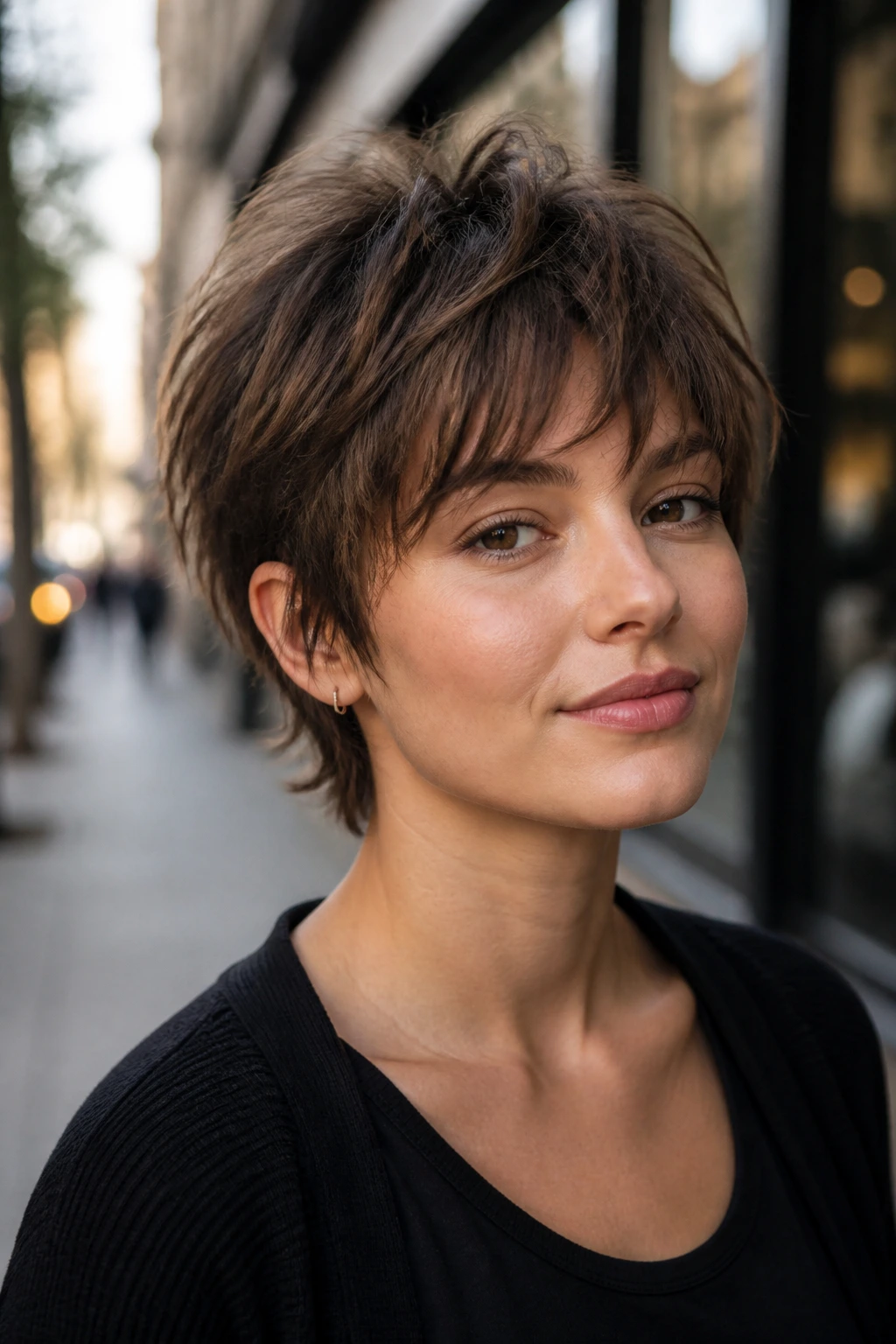
There is something smart about a shaggy pixie on a round face. It does not try to force precision where precision is not needed. Instead, it keeps the ends soft, the layers uneven, and the bangs feather-light.
That wispy fringe is the key. Heavy bangs can shut down the face, but airy ones make the forehead look open while still bringing focus to the eyes. The haircut feels casual, almost a little undone, which is part of its charm. It is also very friendly to hair that has a natural wave or a stubborn cowlick near the hairline.
Why it works
The texture creates vertical interest, and vertical lines are your friend here. They keep the shape from reading as one smooth circle.
- Best on medium to thick hair with some natural bend
- Easy to style with a texture spray or a light mousse
- Looks best when the ends are a little irregular, not overly polished
The one warning: do not let the shag get too wide at the temples. That is where a lot of round-face cuts go sideways. Keep the softness up top, but let the sides stay a touch closer to the head.
7. Undercut Long Pixie with Voluminous Top
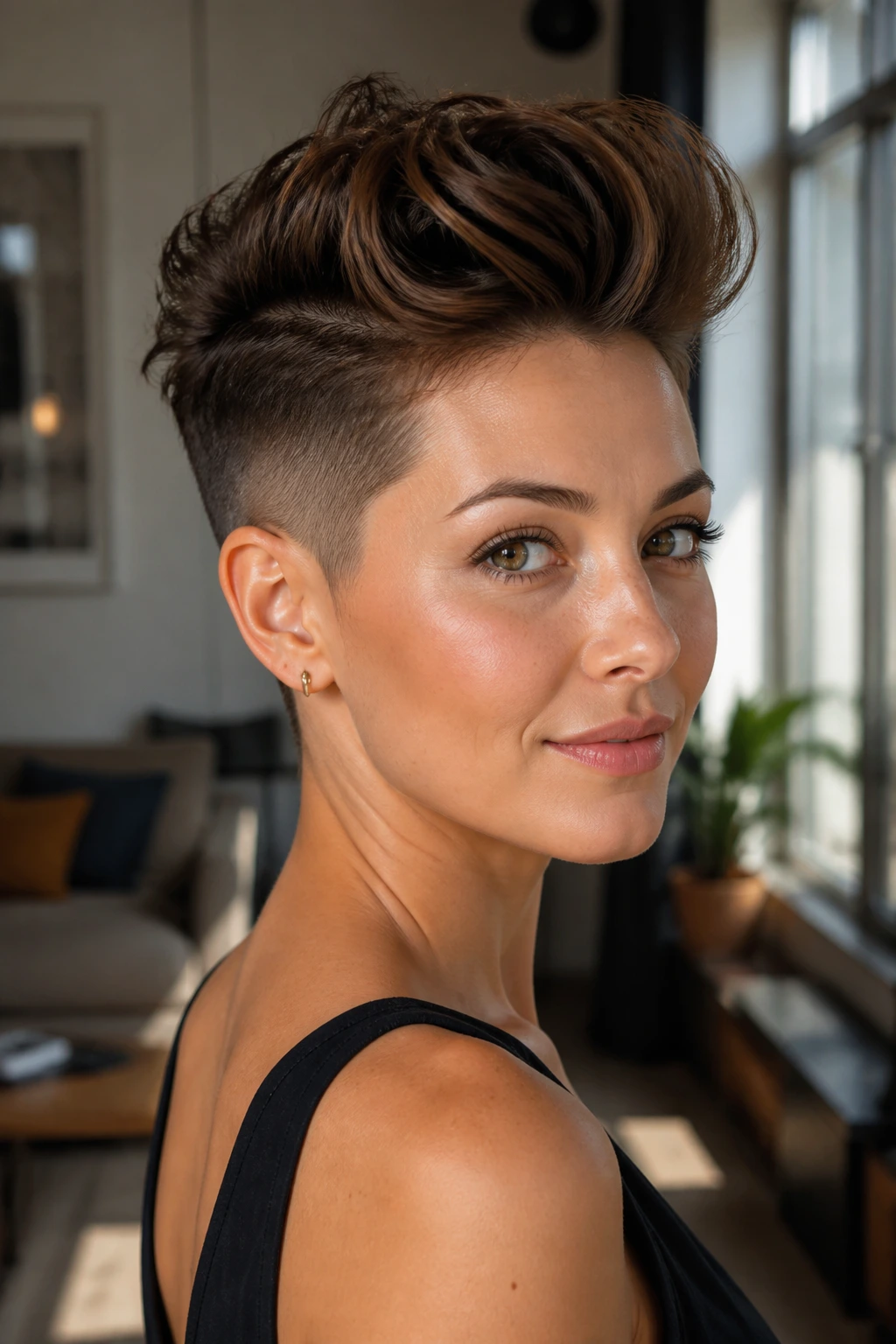
An undercut can sound intense, but on the right person it is one of the smartest long pixie choices for a round face. Why? Because it strips away bulk where you do not want it and leaves volume where you do.
The top stays long enough to brush upward, sweep forward, or fall diagonally. The sides and nape are cropped tighter, which visually narrows the lower half of the face. That difference between the soft top and the neat sides gives the haircut a clear shape from every angle.
This cut does ask for more upkeep than a softer pixie. The undercut grows out fast. If you like a sharp outline, expect to clean it up every 4 to 6 weeks. If you do not want that kind of schedule, skip it.
Still, it is a strong look. Strong is the point. A round face does not need everything to be gentle.
8. Sleek Tucked-Behind-Ear Pixie
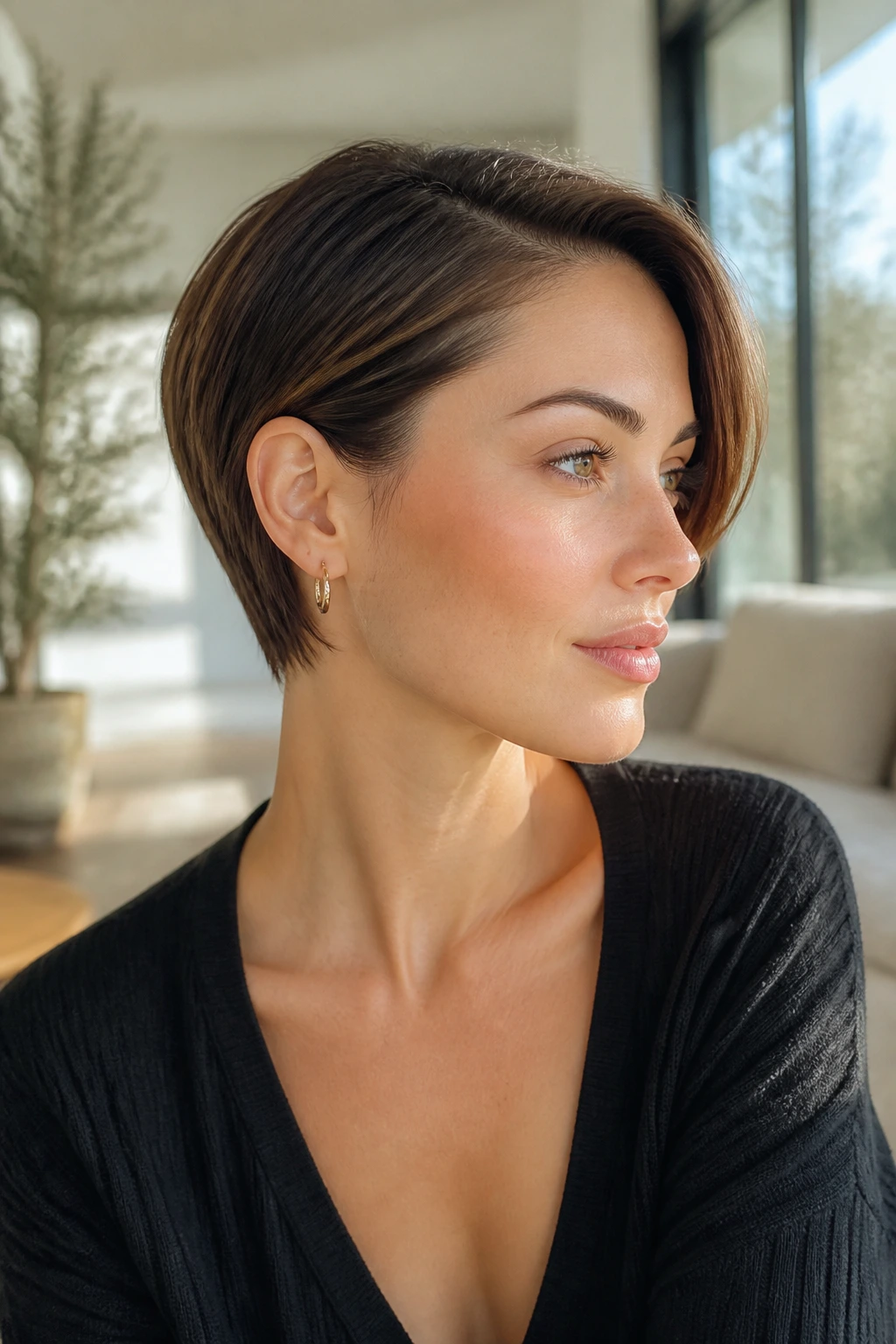
A sleek pixie that tucks behind the ear can look almost deceptively simple. The hair sits close to the head, but the front stays long enough to slide back and reveal the cheekbone, which changes the whole feel of the face.
The beauty of this cut is the calmness of it. No choppy ends, no major lift, no piece-y texture trying to shout for attention. Just clean lines and a smooth finish. On a round face, that quiet structure helps the eyes move vertically and diagonally instead of getting stuck in one soft curve.
Styling move
Use a smoothing cream on damp hair, then blow-dry the front down and back with a paddle brush. Once dry, tuck one side behind the ear and leave the other side slightly looser. That small asymmetry keeps it from feeling too tidy.
This style is a good match for straight or slightly wavy hair. It can work on thicker hair too, but the nape has to be cut carefully or the whole thing starts to balloon outward. That is the part stylists sometimes rush. They should not.
9. Feathered Pixie with Arched Bangs
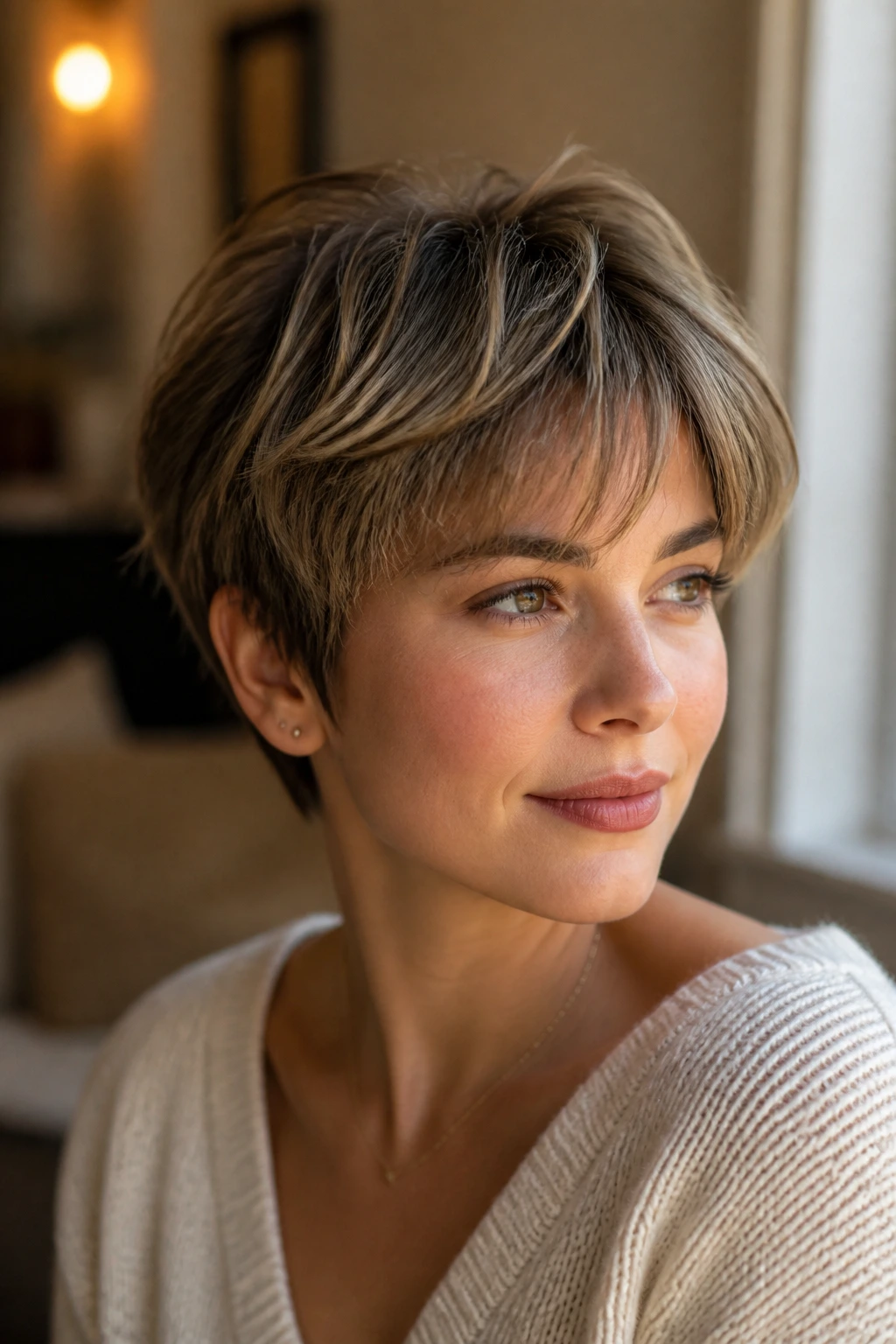
Feathered layers around the forehead and temples can soften a round face without making it look wider. The trick is the arc of the bangs. They should lift a little in the center or sweep upward on the sides, not land in one hard line.
That arched shape creates a subtle vertical effect, almost like a frame that opens in the middle. It draws attention to the eyes and brow, then lets the rest of the cut taper away. Done well, it feels light and airy rather than fussy.
This cut is especially good if you like hair that looks finished but not severe. It has polish, but it does not behave like a formal style. Think soft edges, not sharp corners.
If your hair is fine, ask for light layering rather than aggressive thinning. If it is thick, the feathering can remove some bulk around the sides. Either way, the bangs should be cut with enough softness that they move when you smile. That sounds tiny, but it changes everything.
10. Pixie Bob Hybrid with Jaw-Skimming Length
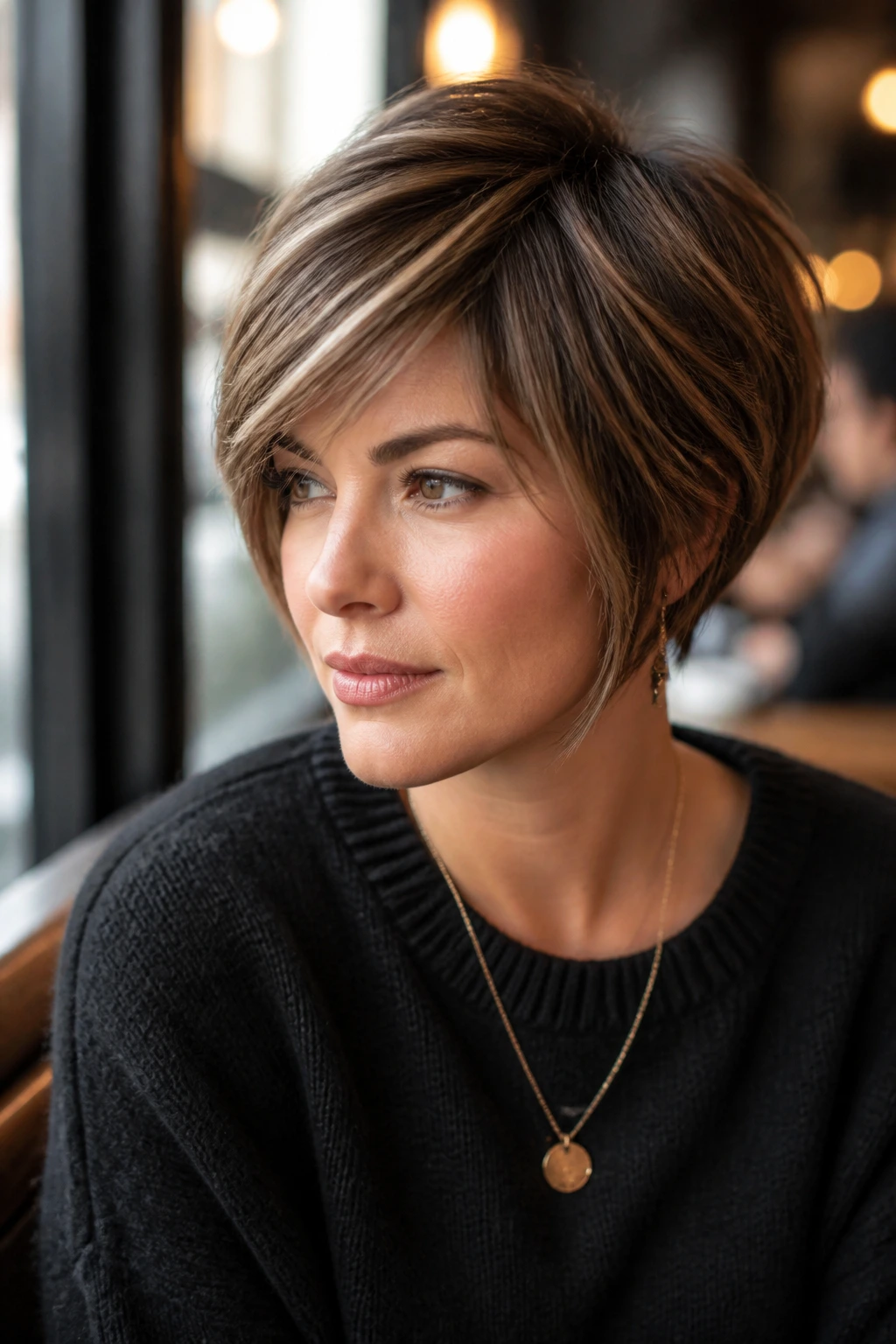
A pixie bob hybrid is the kind of cut that gives nervous first-timers a way in. It still feels short, but the extra length around the jaw and front makes it less abrupt than a classic pixie.
For a round face, this matters because the jaw-skimming front pieces can stretch the lower half of the face without making the hair hang too low. The back stays lighter and more compact, which keeps the head shape tidy. You get the lift of a pixie and the softness of a bob, without the heavy square shape that a blunt bob can create.
Quick fit notes
- Works well if you want to keep some ear coverage
- Good for straight, wavy, or loose curly textures
- Easier to grow out than a very cropped pixie
The only thing to watch is length at the cheeks. If the front ends right at the widest point, the face can look fuller. A good stylist will aim either slightly above or slightly below that point. Tiny adjustment. Big difference.
11. Razored Pixie with Side Fringe
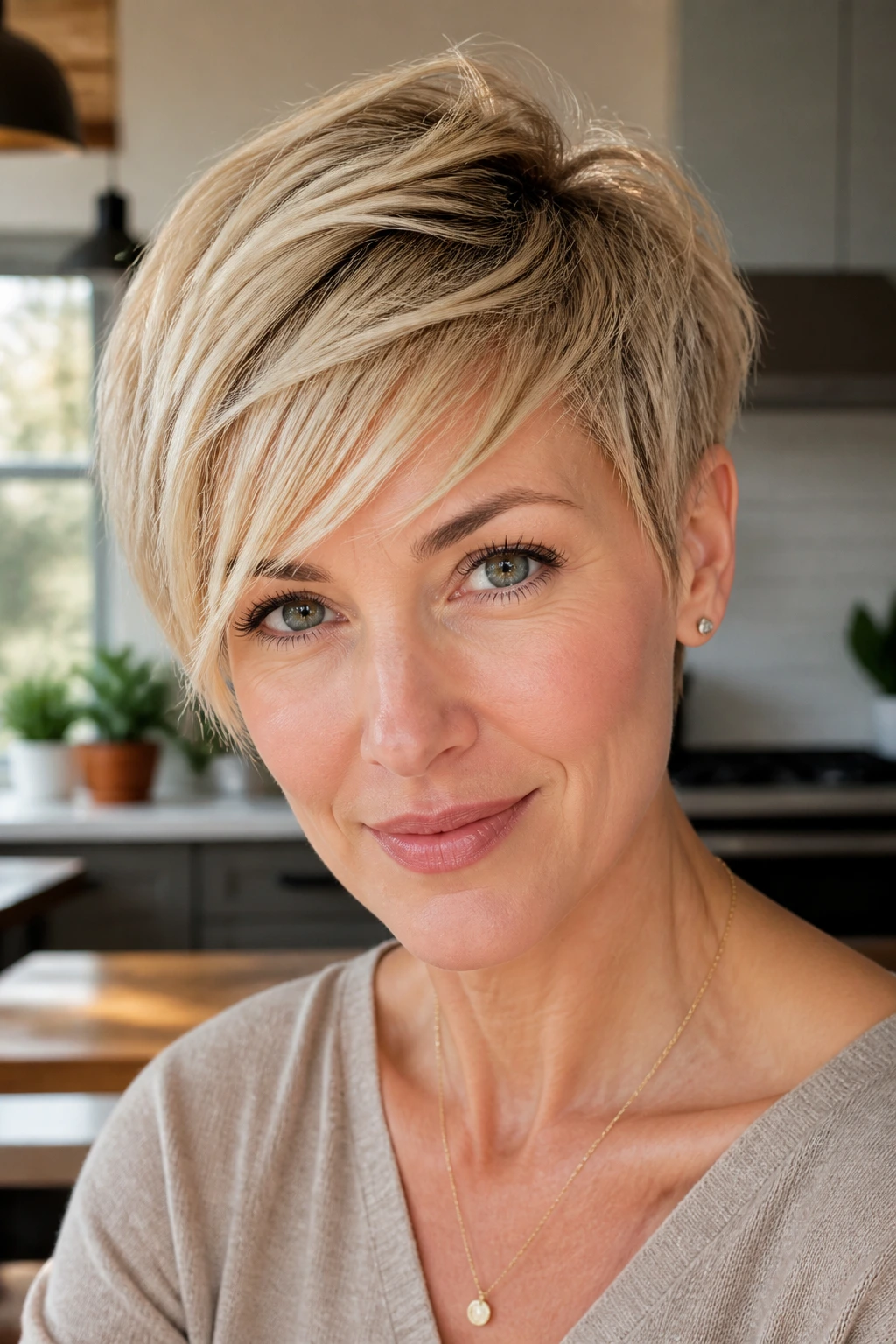
Razoring is one of those techniques that sounds harsher than it usually looks. Done right, it softens the ends and gives the haircut a light, almost broken-in finish. On a round face, that softness helps prevent the style from feeling heavy at the sides.
The side fringe keeps the front diagonal and airy, which is the whole point. A blunt fringe would stop the eye. A razored side fringe lets it slide across the face instead. That movement creates the feeling of length, even in a short haircut.
This cut suits thicker hair especially well, because razoring can take out some bulk without taking away shape. Fine hair is a different story. If your hair is already soft and light, too much razor work can make it look frayed.
The finished look should feel touchable, not shredded. If the ends look ragged in a bad way, the cut went too far.
12. Tousled Bedhead Pixie with Crown Height
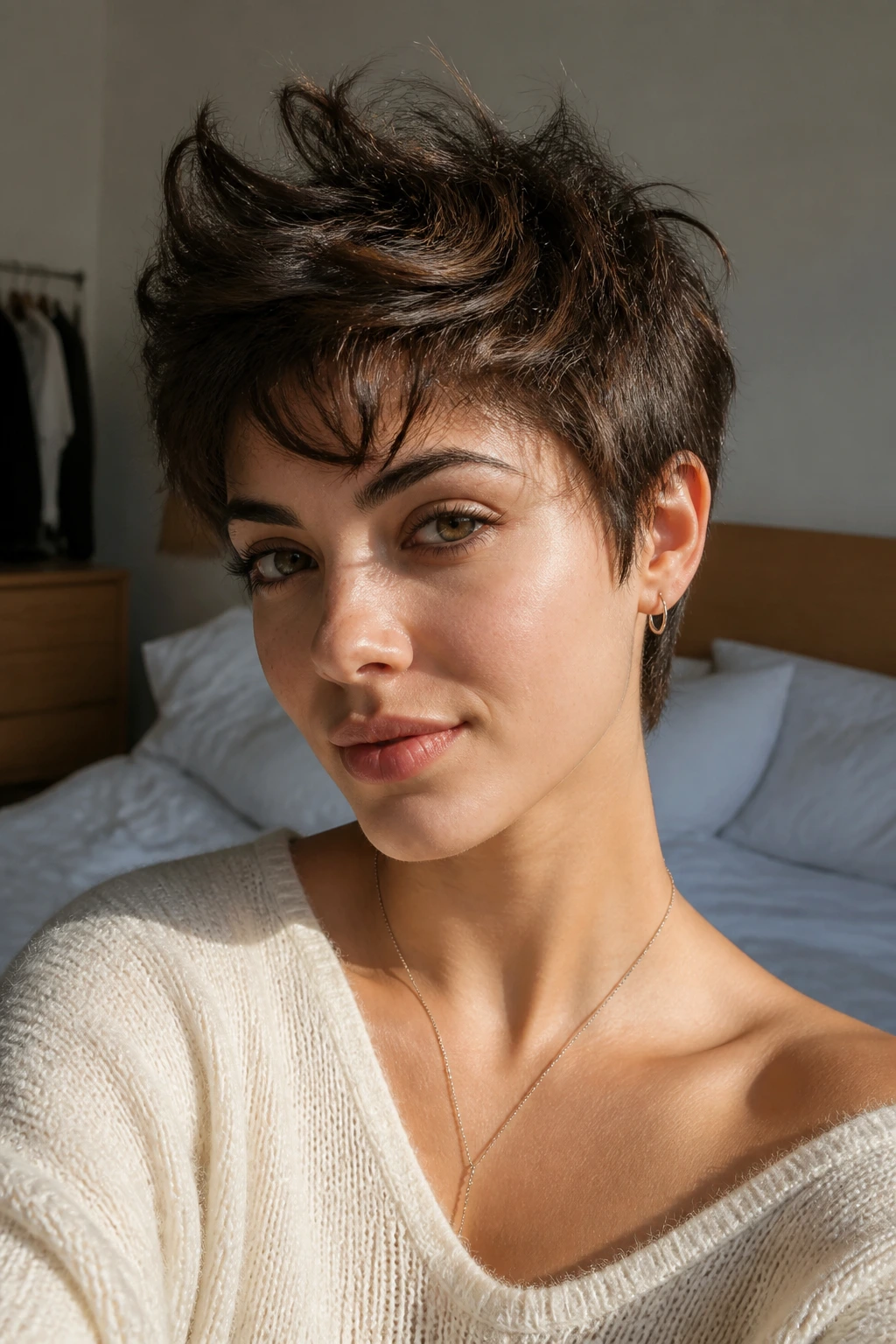
Messy hair is often more flattering than perfect hair on a round face. Not sloppy. Messy on purpose.
This pixie keeps a little lift at the crown and lets the top fall in loose, broken pieces. The sides stay closer to the head, which stops the silhouette from spreading outward. That crown height is the secret sauce. It gives you a longer shape without needing a lot of visible structure.
How to keep it from going flat
- Work a light mousse into damp roots before drying
- Blow-dry the crown upward with your fingers, not just a brush
- Pinch a matte paste into the ends once the hair is dry
- Avoid heavy oils near the roots; they kill lift fast
The charm of this style is that it never looks too rehearsed. A bit of bend, a bit of separation, a bit of lift. That is enough. If you over-style it, the whole point disappears.
13. Face-Framing Long Pixie with Soft Layers
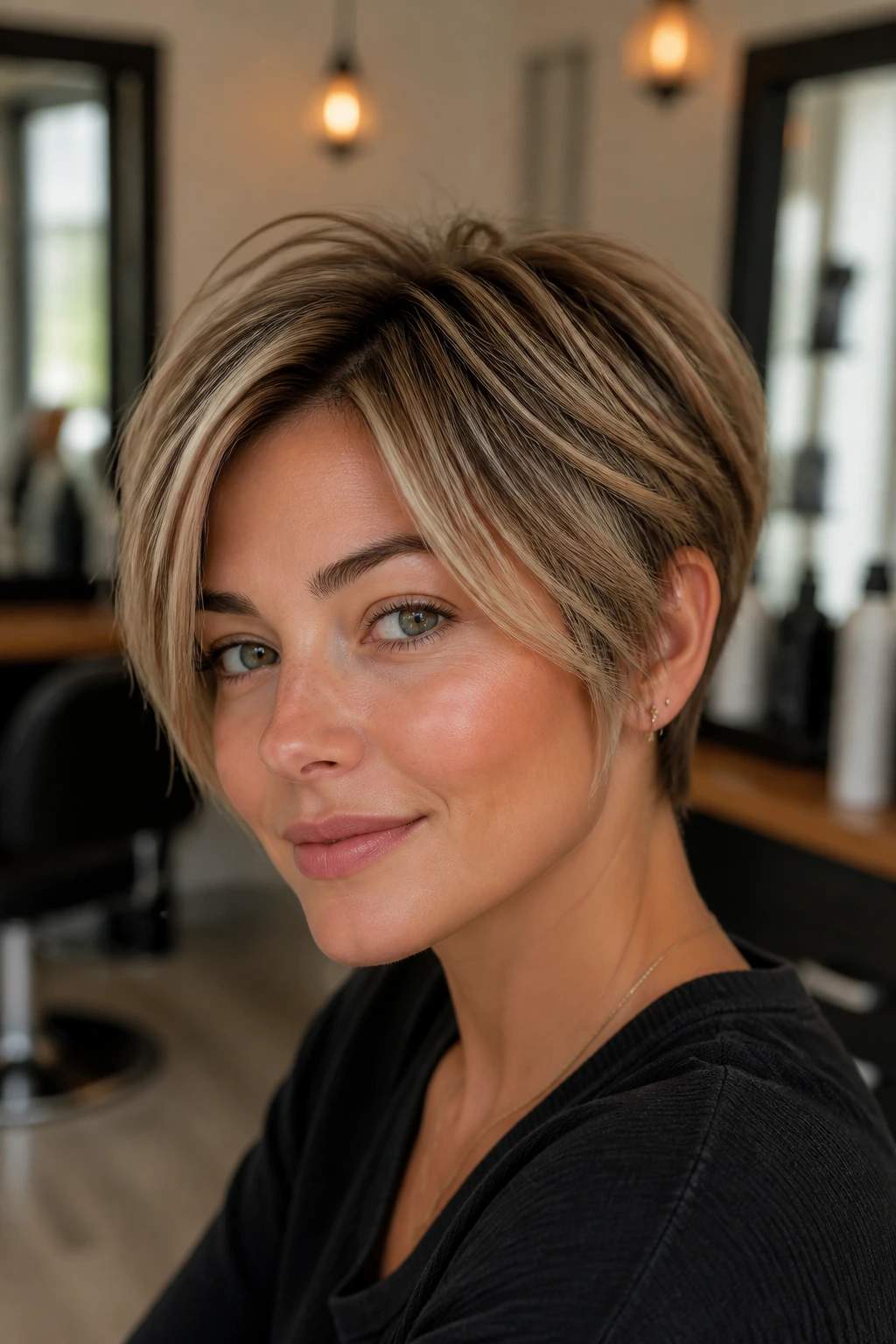
Some cuts feel like they were built for a round face, and this is one of them. The soft layers start near the temples and cheekbones, then taper down toward the jaw so the face gets framed instead of surrounded.
That framing matters because it keeps the eye in motion. Rather than reading the face as one even circle, the haircut creates little shifts in length that make the features feel more defined. The top can stay slightly fuller, but the front pieces should be the star.
If you are asking a stylist for this, say you want movement around the cheekbones, not volume at the sides. Those are not the same thing. Volume at the sides can widen the face in a hurry. Movement, on the other hand, can slim it down without looking obvious.
This is one of the most versatile long pixies on the list. It can look polished at work, soft on weekends, and a little romantic when air-dried. That is a useful haircut.
14. Brushed-Back Glam Pixie
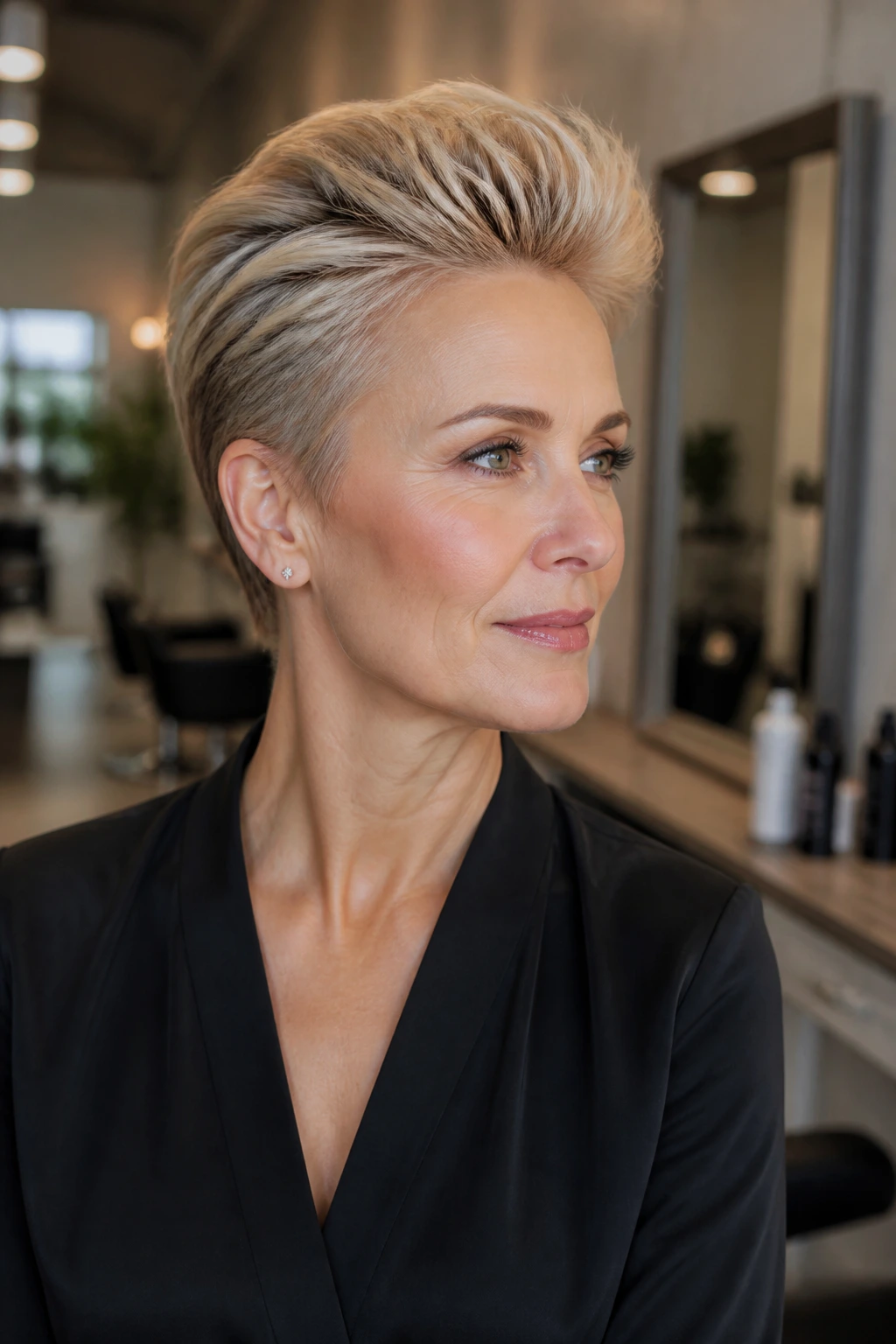
A brushed-back pixie is a little bolder than the soft side-swept versions, and that is exactly why it works. Pulling the hair away from the face exposes the forehead, the brow, and the structure of the cheeks, which can make a round face look longer and more defined.
This style needs a bit of hold. Not stiff hold. Just enough to keep the front lifted and the sides under control. A light gel or styling cream at the roots, followed by a careful blow-dry, is usually enough. Once the hair is dry, you can smooth the top back with your hands and leave the ends slightly soft.
The look has a nice old-Hollywood edge without being fussy. It also works well for events, because it photographs cleanly and does not collapse the way some softer pixies do.
If your hairline is strong, this can be a great move. If your forehead is the feature you prefer to soften, keep a few longer pieces loose around the temples instead of brushing every strand straight back.
15. Soft Fauxhawk Pixie with Longer Sides
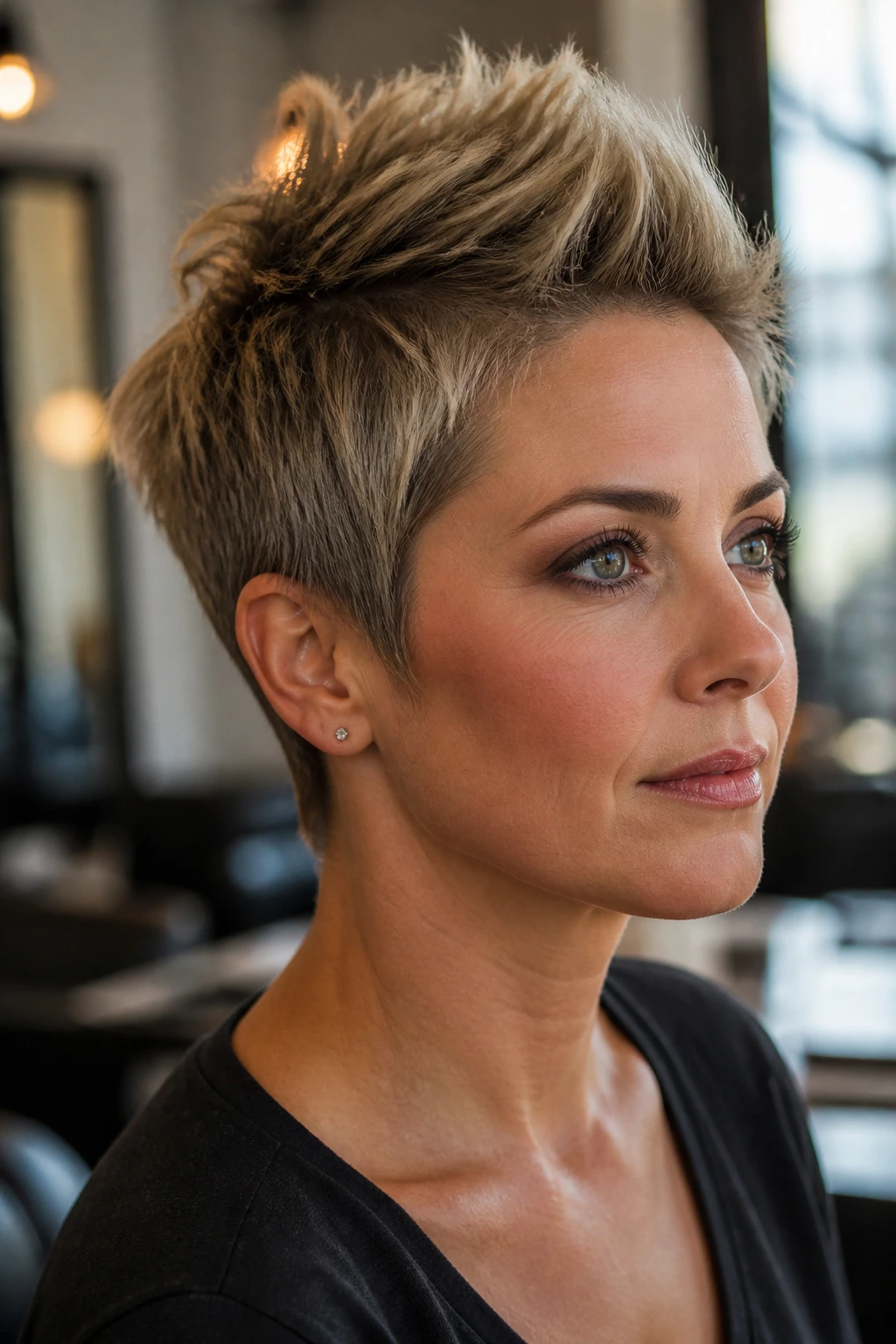
A fauxhawk sounds louder than it is. The softer version is surprisingly wearable, and on a round face it can be one of the most flattering cuts in the bunch because it puts the height where you want it most.
The center section is left longer and styled upward or slightly forward, while the sides stay shorter and closer to the head. That creates a narrow middle line and a leaner profile. It also adds a little attitude, which never hurts a haircut this short.
Who should try it
- People with thick or coarse hair that likes to hold shape
- Anyone who wants a short cut with some edge
- Wavy textures that can create lift without much effort
The trick is balance. If the center ridge gets too tall and the sides too tight, the cut can start to feel severe. Keep the height soft and the top touchable. A matte paste is usually better than glossy pomade here because it keeps the texture from turning slick and flat.
16. Graduated Long Pixie with Stacked Back
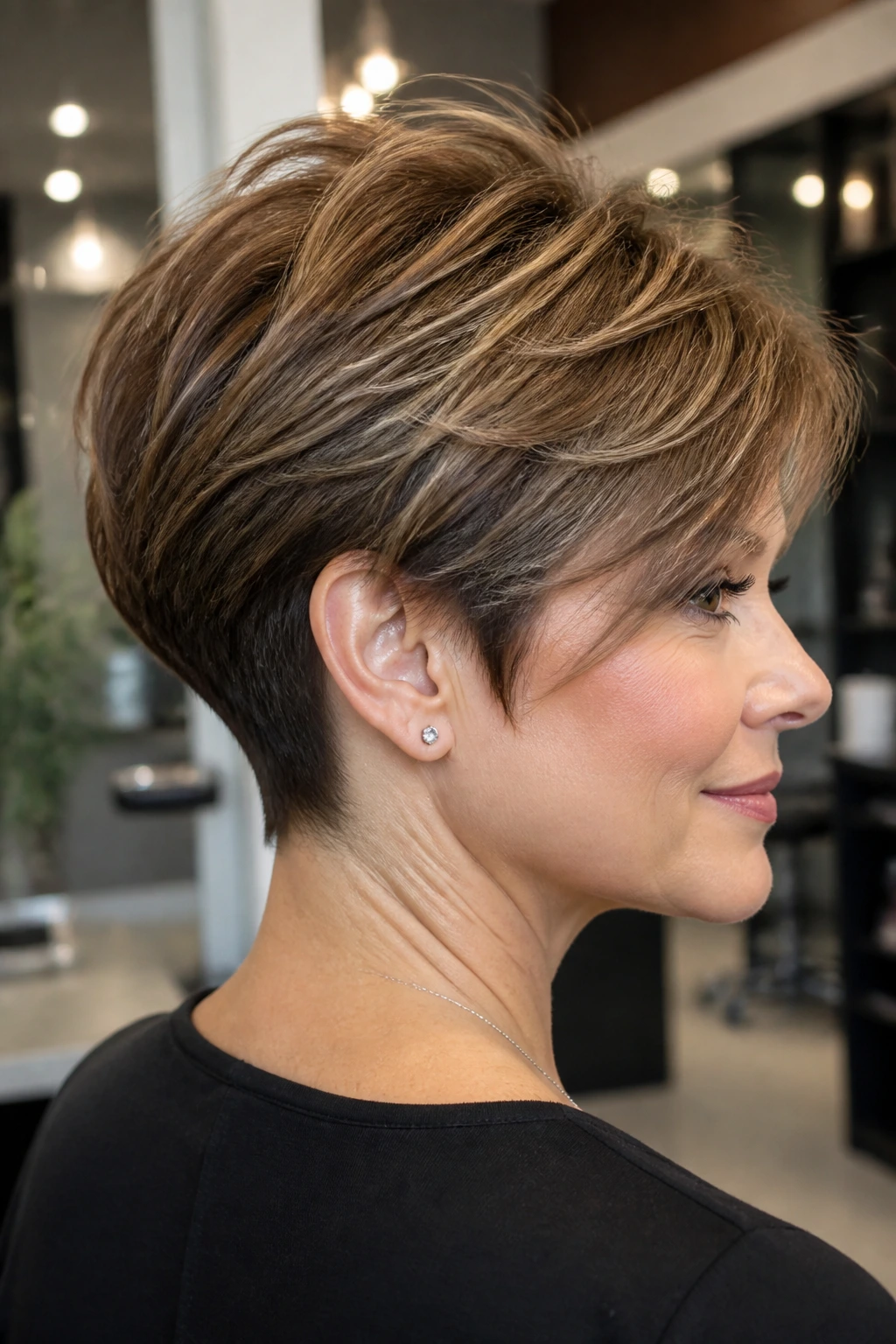
A graduated back gives a long pixie a clean, sculpted shape, and that shape is useful on round faces because it shifts attention upward. The back sits a little higher and fuller, while the front stays longer and softer. The contrast makes the head look more tapered.
This cut is especially smart for thick hair, because the stacked layers in the back remove weight without chopping off all the length. The result is tidy but not severe. You still get movement in the front, which keeps the face from feeling closed in.
The best version is not too short at the nape. There should still be a little softness where the head meets the neck, or the cut can start to look boxy from behind. That is a small detail, but it matters when you turn your head.
If you like a haircut that keeps its shape between salon visits, this is a solid option. It grows out in a controlled way, which is more than can be said for some of the sharper pixies on this list.
17. Curtain-Bang Long Pixie
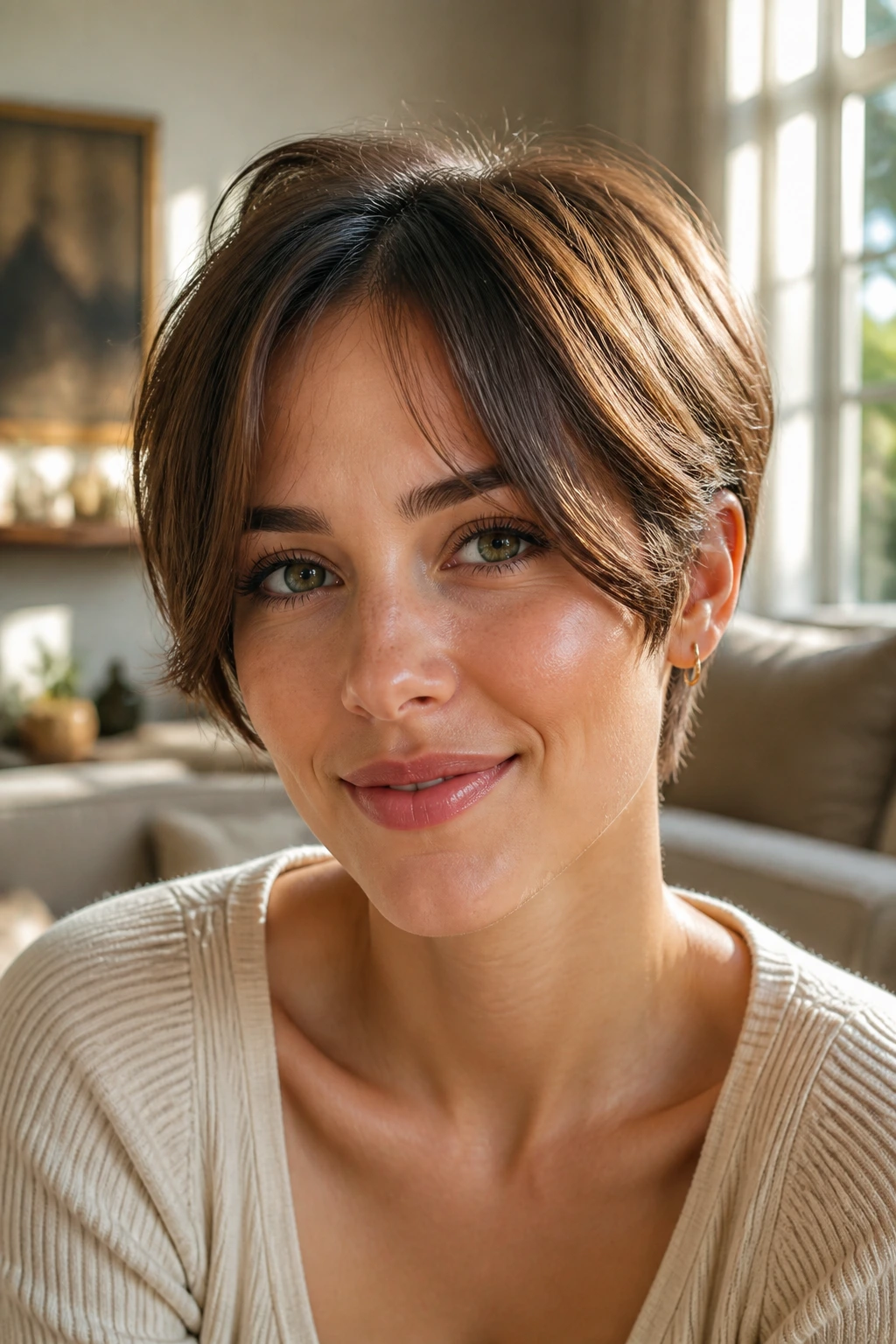
Curtain bangs have a way of making short hair feel less abrupt. On a round face, they work because they part in the middle or slightly off center and fall away from the cheeks in two soft lines.
That split creates breathing room around the face. It also adds a vertical opening down the center, which helps the face look a little longer. The rest of the pixie can stay simple and neat; the bangs carry most of the visual interest.
The key is length. Curtain bangs that are too short tend to puff out around the forehead. Leave them long enough to graze the brows or cheekbones, then bend them outward with a round brush or even just a twist of the fingers while drying.
This is a good choice if you want something softer than a side fringe but not as blunt as a straight bang. It feels easy, and easy usually wins when you are trying to live with short hair day after day.
18. Grown-Out Long Pixie That Still Looks Intentional
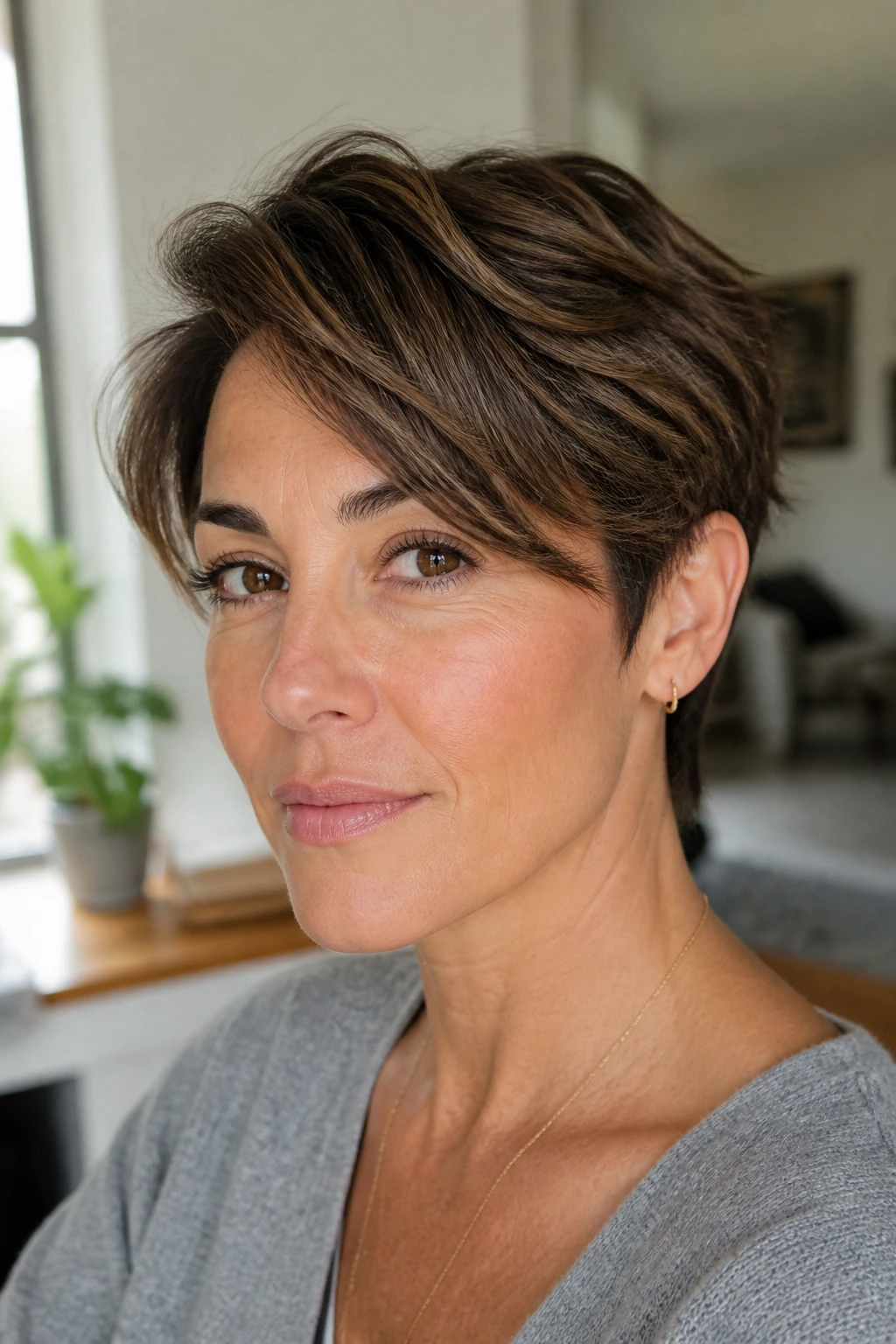
The best long pixie for a round face might be the one that grows out gracefully. Hair does not stay salon-fresh for long, and a cut that keeps its shape after 6 to 8 weeks is worth more than one that looks perfect for four days and then falls apart.
This version usually keeps the top and front a little longer than the rest, with the sides tapered just enough to maintain a shape. The front can be swept to one side, pushed back, or left soft around the face. Because the cut is built with movement in mind, it does not suddenly lose its purpose when it gets a little longer.
Ask your stylist for a shape that stays slim at the sides and light at the crown, with enough length in front to tuck, sweep, or piece out. That flexibility is the whole point. It means you can go a little longer between trims without feeling like you are wearing an accidental mullet.
If you want one long pixie that plays nice with real life, this is the one I would start with. It is practical, a little forgiving, and still sharp enough to make a round face look more defined the minute you walk out the door.
