



Brown pixie cuts for fine hair work for a simple reason that gets ignored too often: short hair does not have to fight its own weight. When the strands are soft and sparse, long layers can hang there like wet ribbon. A good pixie removes that drag and puts the shape where your eye wants it — at the fringe, the crown, the taper, the color.
The other piece is color. Brown is not one note. A chestnut pixie looks warmer and fuller than a flat ash brown cut under the same lighting, while a deeper mocha can make the outline read cleaner and denser. That little difference matters a lot on fine hair. It’s the same head of hair, but the cut and shade change how much body you think you’re seeing.
Some of these cuts stay soft and side-swept. Some go crisp and cropped. A few lean on dimension, and a few lean on sheer shape. That mix is what makes a brown pixie haircut useful instead of fussy. If your hair goes limp fast, the right version can make mornings shorter and your profile sharper.
1. Soft Chestnut Pixie With a Side Sweep
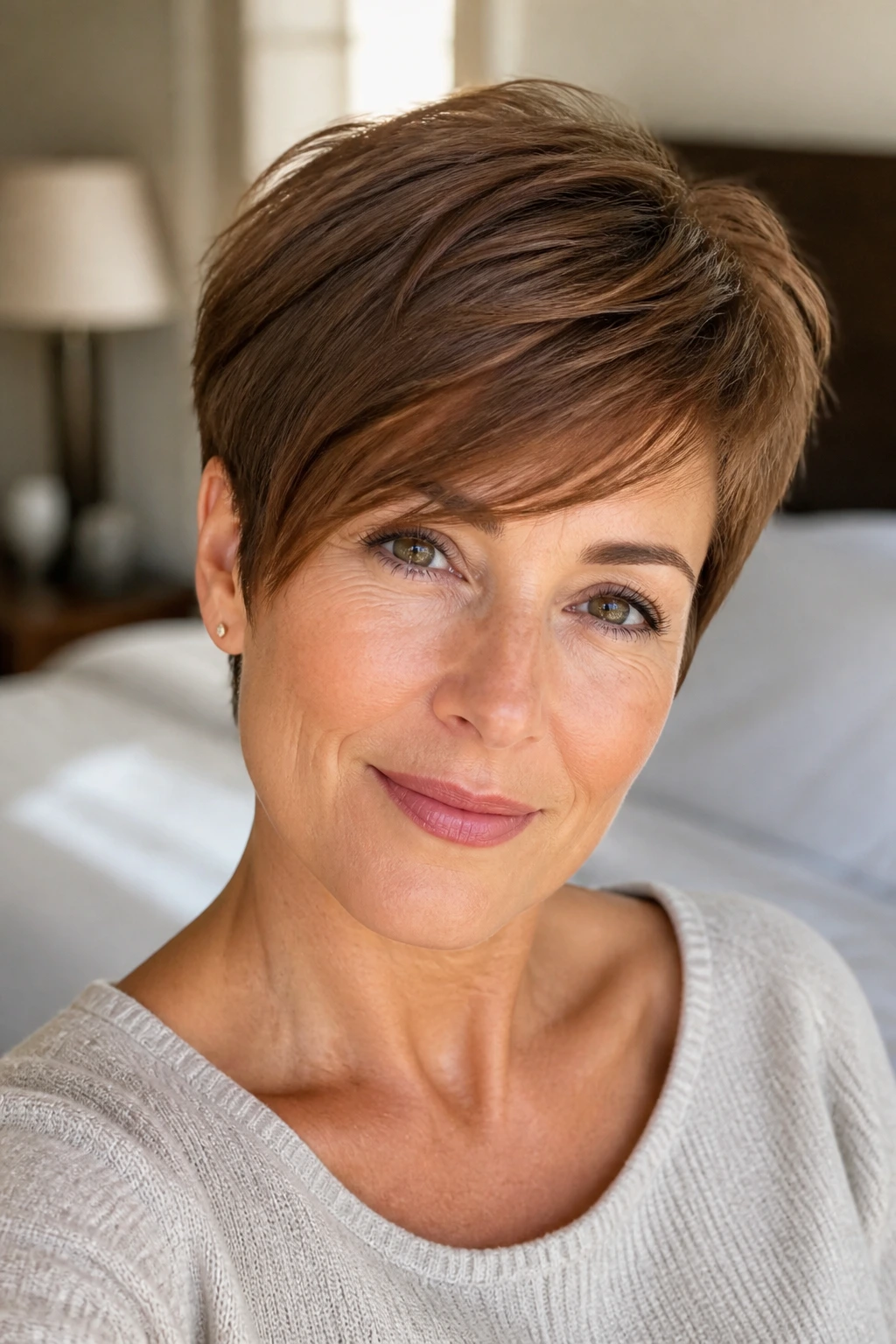
This is the safest place to start. The chestnut tone keeps the cut from looking flat, and the side sweep gives fine hair a little movement without asking for much styling. On straight strands, that sweep matters more than people think. It hides scalp show-through at the front and gives the whole cut a softer read.
Why It Flatters Fine Hair
A longer front section, usually around 2 to 3 inches, gives the illusion of density where you need it most. The side sweep also breaks up the hairline, which is handy if your forehead is a touch wider or your hair tends to separate in the same spot every day.
- Ask for a tapered nape so the back hugs the neck cleanly.
- Keep the top soft, not fluffy; too much lift can look like a helmet.
- Use a pea-sized amount of lightweight cream and work it through the front only.
Best tip: blow-dry the fringe first, while the hair is still damp. That one move usually makes the rest of the style behave.
2. Deep Espresso Crop With a Micro Fringe
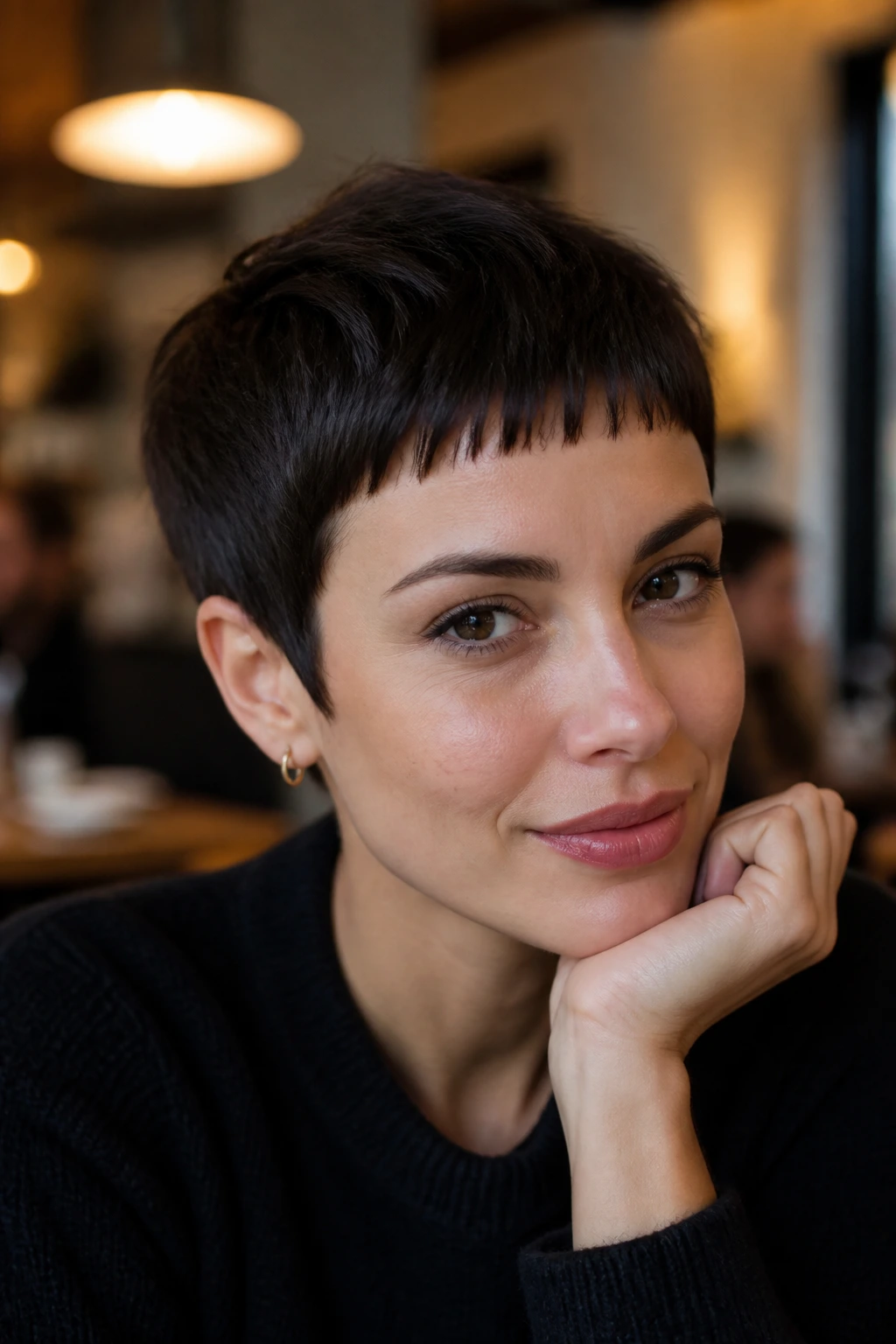
A micro fringe makes this cut look sharper than almost anything else on the list. Deep espresso brown helps fine hair read as denser, and the short fringe creates a hard visual line that can be very flattering if your features can handle it. It is not a soft, shy haircut. It has opinions.
The trick is keeping the cut compact through the sides and crown. Fine hair can lose its shape if the layers are too long, so this version works best when the outline stays tight. You want the top to move, but only a little. A dab of matte paste at the roots is enough. More than that and the fringe starts to separate in odd ways.
This one suits someone who likes a neat, graphic look and does not mind regular trims. It grows out fast in the wrong direction, especially around the forehead. But when it is fresh, it has a smart, almost tailored feel that a softer pixie cannot quite fake.
3. Cocoa Tapered Pixie With a Lifted Crown
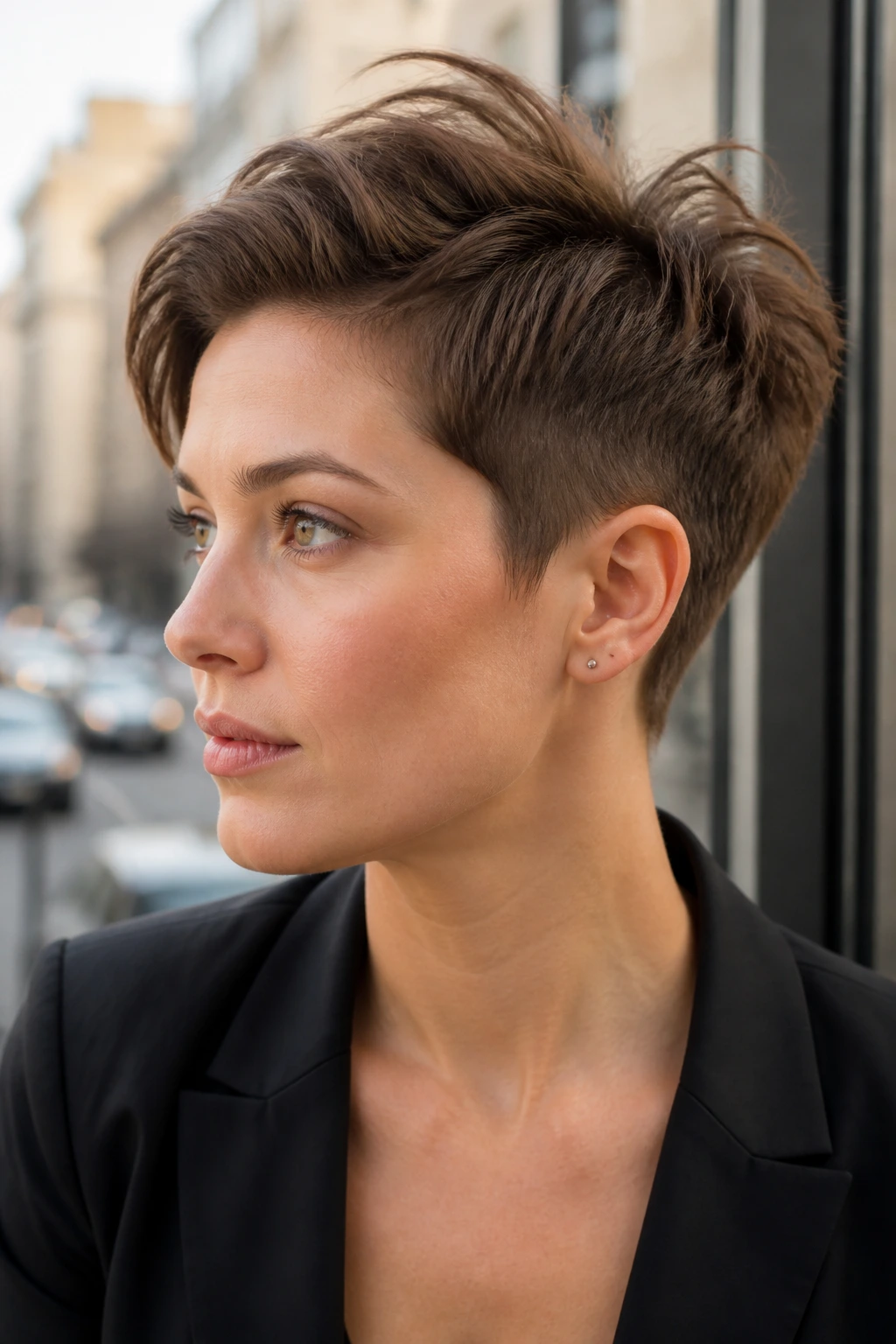
Why does a tapered pixie often look fuller than a longer one? Because the shape does the job that length usually tries to do. A cocoa shade keeps the style grounded, while a lifted crown steals the eye upward and away from flat spots near the temples.
How to Wear It
Ask your stylist to leave slightly more length at the crown than at the sides, then taper down quickly around the ears and nape. That keeps the silhouette neat without making the top look thin. Fine hair loves this kind of controlled contrast.
This cut is a good fit if your hair parts itself and refuses to hold volume for long. Dry shampoo at the roots helps, but only after the hair is fully dry. Work it in with your fingertips, not a brush. A brush can collapse the lift faster than you’d expect.
4. Mushroom Brown Rounded Pixie
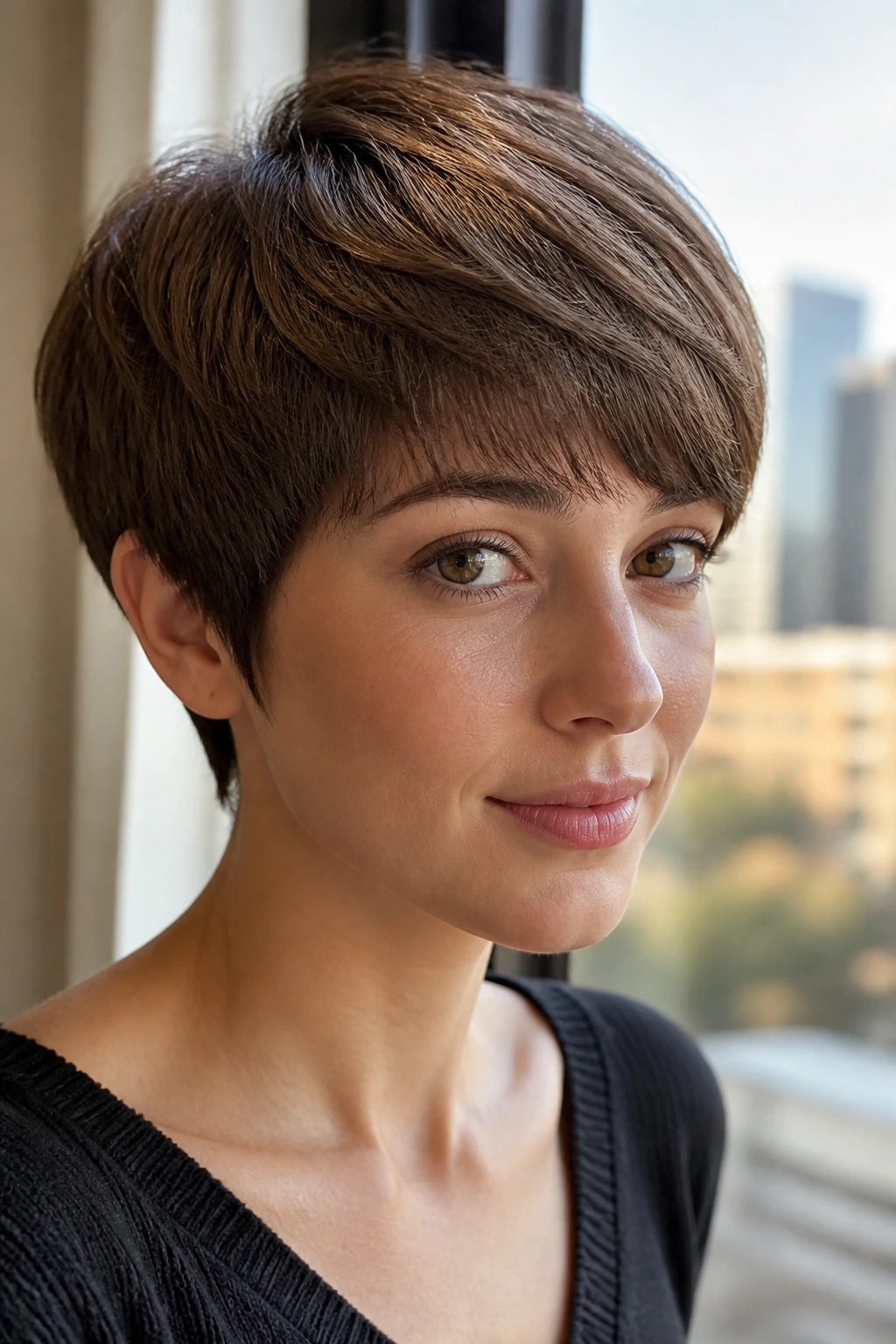
Picture hair that always lies close to the scalp by lunch. The rounded pixie is the answer when you want softness, not sharp edges, and mushroom brown gives the shape a cool, smoky depth that makes fine strands look less see-through.
This version keeps more fullness through the middle of the head and curves gently into the sides. It is especially nice if your hair is naturally straight or slightly bendy, because the round shape makes the cut feel deliberate instead of accidental. The color helps too. Mushroom brown has enough depth to create shadow, but it does not go so dark that the cut looks heavy.
- Best when the crown is kept softly layered
- Good for narrow faces that need a little width
- Needs only a vent brush and 2 minutes of blow-drying
A lot of rounded cuts go wrong when the sides are over-thinned. Skip that. You want a soft curve, not a bowl.
5. Caramel-Balayage Layered Pixie
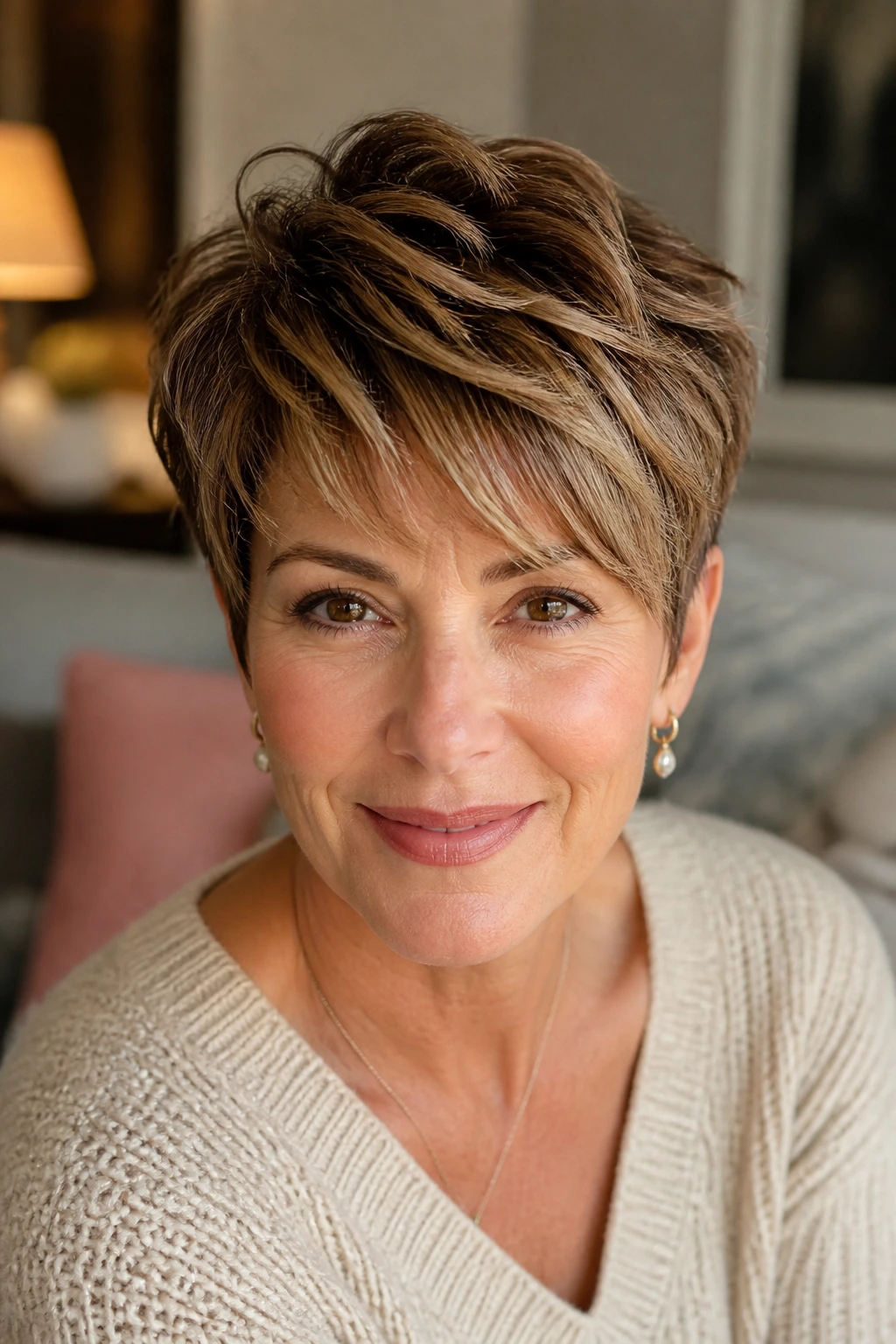
Caramel pieces can do a lot for fine hair if they are placed with restraint. Too many light streaks and the cut starts to look stringy. The better move is a layered brown pixie with soft caramel balayage through the crown and fringe, where the eye naturally looks first.
The payoff is depth. Brown hair without dimension can fall flat on camera and in daylight. Add a few ribbons of caramel near the top, and the cut suddenly feels more lifted, even if the actual hair count has not changed one bit. That is why this style keeps showing up on people with thin strands who still want movement.
A little gloss makes this cut even better. Ask for a clear brown glaze or a warm-toned gloss every so often if your color tends to go dull. The cut looks best when the layers are visible, not fuzzy, and the color should help you see them.
6. Ash Brown Choppy Pixie
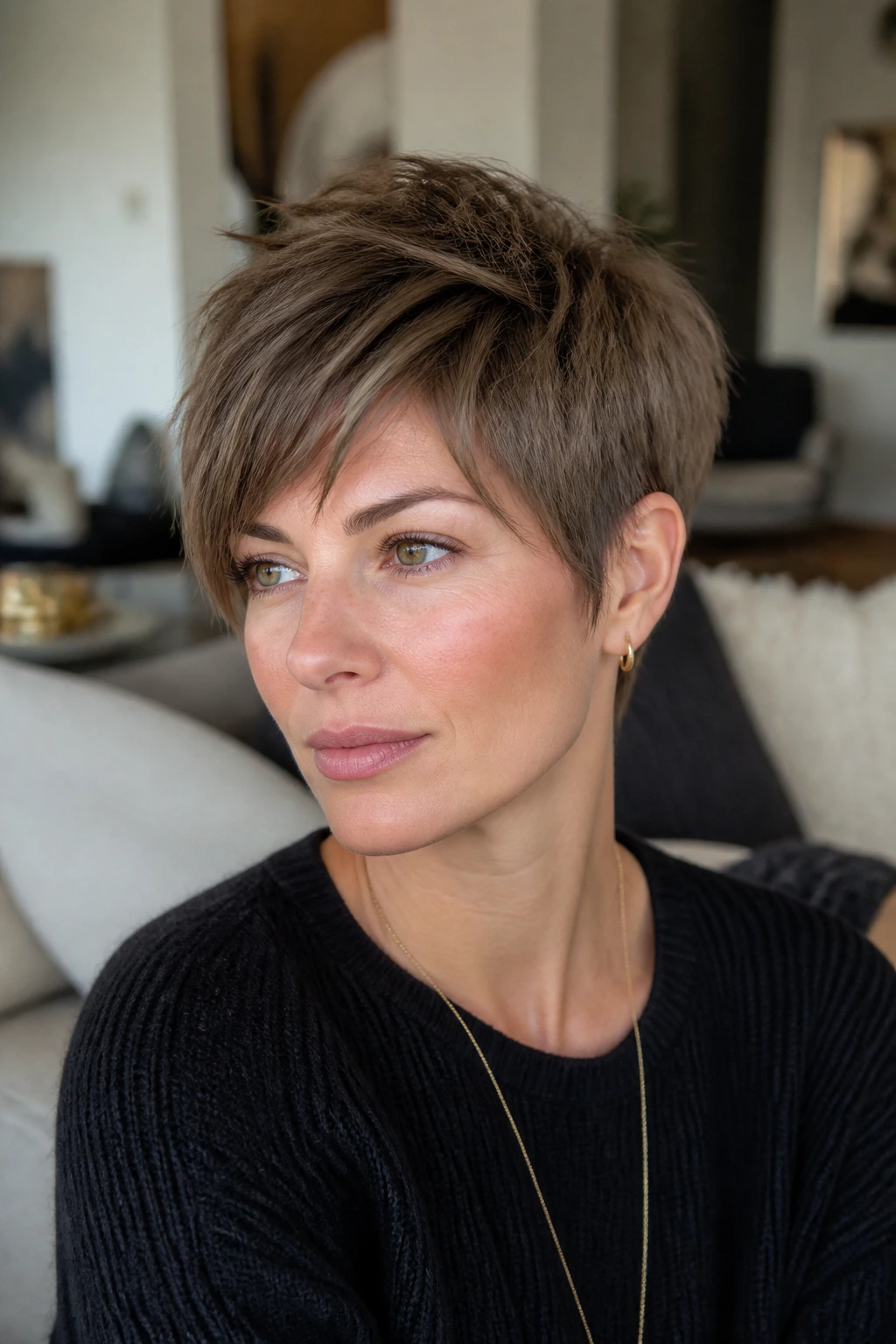
Compared with a warm brown pixie, this one feels cooler and more modern. Ash brown softens any brassiness and gives choppy layers a cleaner edge. If your fine hair gets fluffy in humidity, the cooler tone can make the style look a touch more controlled.
The choppiness matters more than the color, though. A good ash brown pixie uses broken ends and short, uneven layers to create texture that looks lived-in, not stiff. It is a good match for straight hair that falls in one flat sheet. Add a matte texture cream, scrunch once or twice, and leave it alone. Overworking it only makes the ends look thin.
This is the cut I’d hand to someone who wants movement without a lot of softness. It has a little bite to it. Not a lot. Just enough.
7. Mocha Undercut Pixie With a Long Top
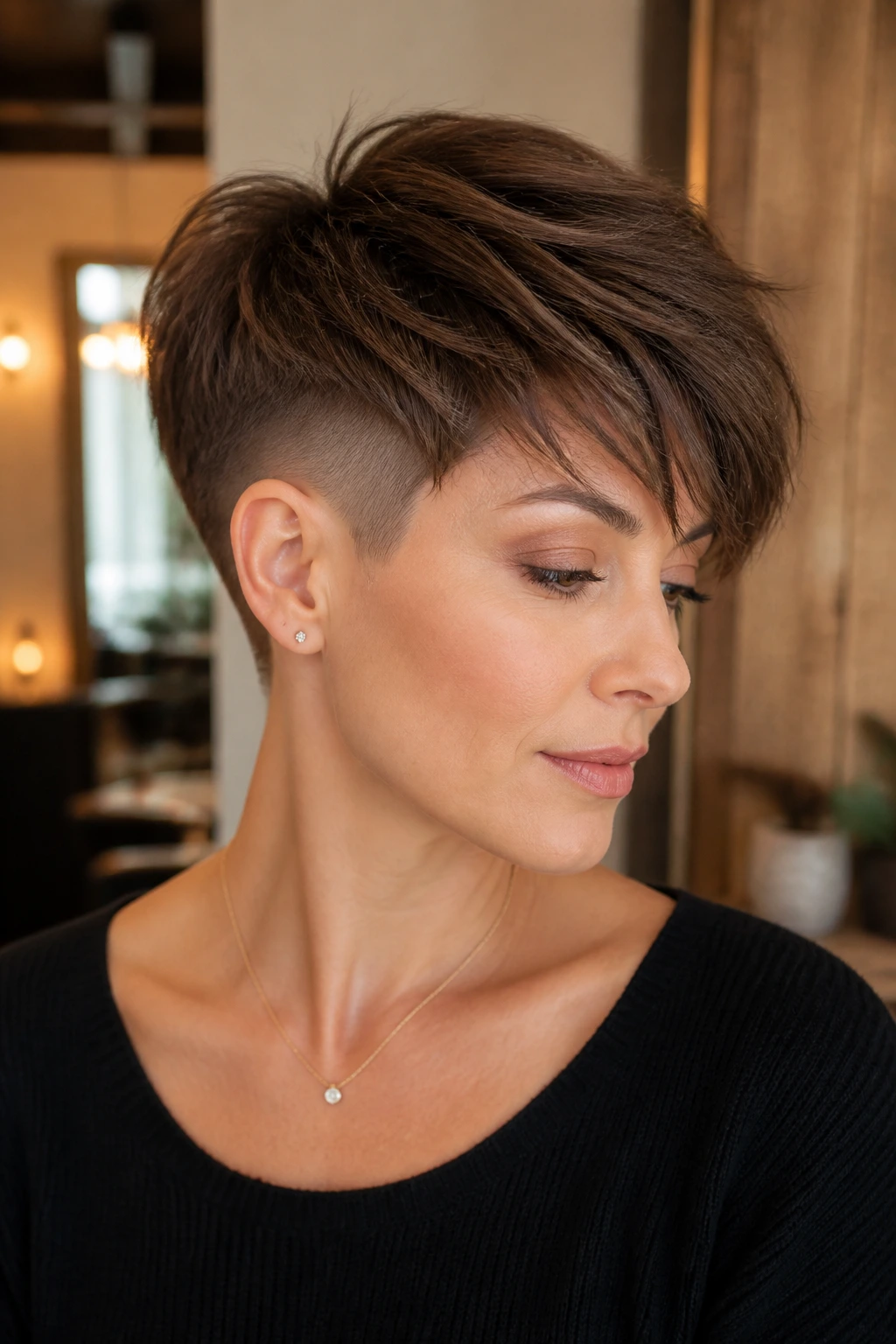
A hidden undercut can be a gift for fine hair. It removes bulk where you do not need it and leaves the top longer, so the hair looks fuller where it counts. Mocha brown makes the whole shape feel richer, especially when the long top is swept forward or to the side.
Why It Works
The undercut keeps the neckline clean, which helps the crown sit higher. That contrast between short sides and longer top is what gives the style lift. If your hair grows in heavy around the nape, this cut can feel lighter almost immediately.
- Keep the top around 3 to 4 inches
- Ask for the undercut to stay soft, not shaved bare
- Style with a round brush or fingers, depending on how polished you want it
One warning: this grows out unevenly if you skip trims. The silhouette loses its shape fast once the sides catch up.
8. Warm Chestnut Feathered Pixie
Warm chestnut does something nice for fine hair: it gives the cut a little glow without screaming for attention. Pair that with feathered layers, and you get a pixie that moves when you turn your head but does not fall apart by noon.
This cut suits hair that has a bit of natural bend. The feathers catch that bend and make it look intentional. If your strands are pin-straight, a small barrel brush and a quick blow-dry at the ends will help. Keep the products light. A soft styling foam or a tiny bit of mousse at the root is enough.
The reason I like this version is that it feels kind. It is not trying to be edgy or severe. It just makes fine hair look awake.
9. Dark Brown Long-Top Pixie
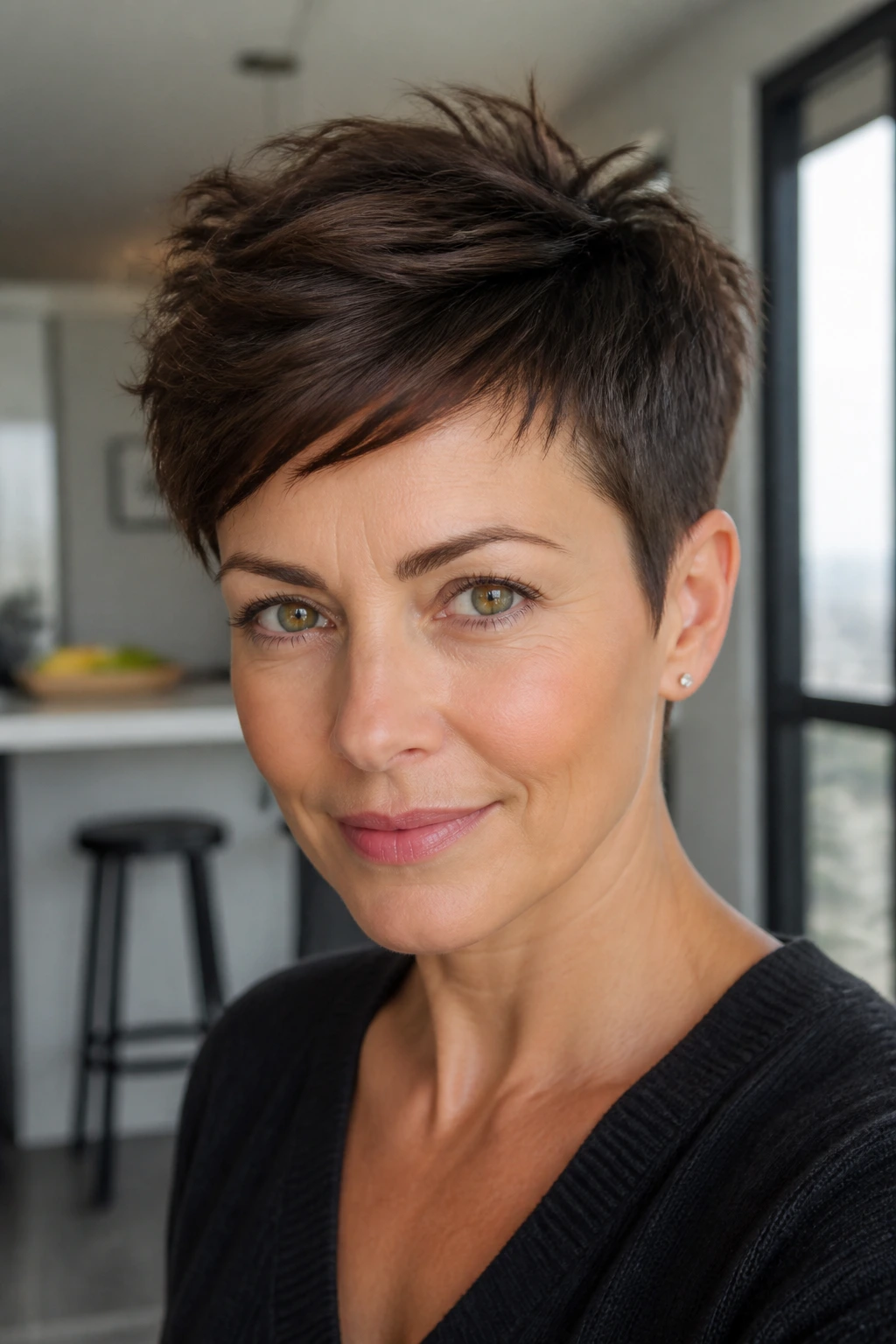
Why keep the top longer? Because fine hair often needs a little extra length up there to create the illusion of mass. A dark brown long-top pixie gives you that without drifting into bob territory. The sides stay short enough to keep the style crisp.
This is one of the better choices if you like to change your part. Wear it brushed forward on tired days, or sweep it over with a little root lift when you want more height. The dark brown shade helps the outline hold together, especially if the hair is naturally sparse at the temples.
How to Wear It
A light-hold mousse on damp hair gives the top some grip. After that, use your fingers to push the hair in the direction you want and leave it there. Too much brushing makes the top collapse.
10. Walnut Pixie With Curtain Bangs
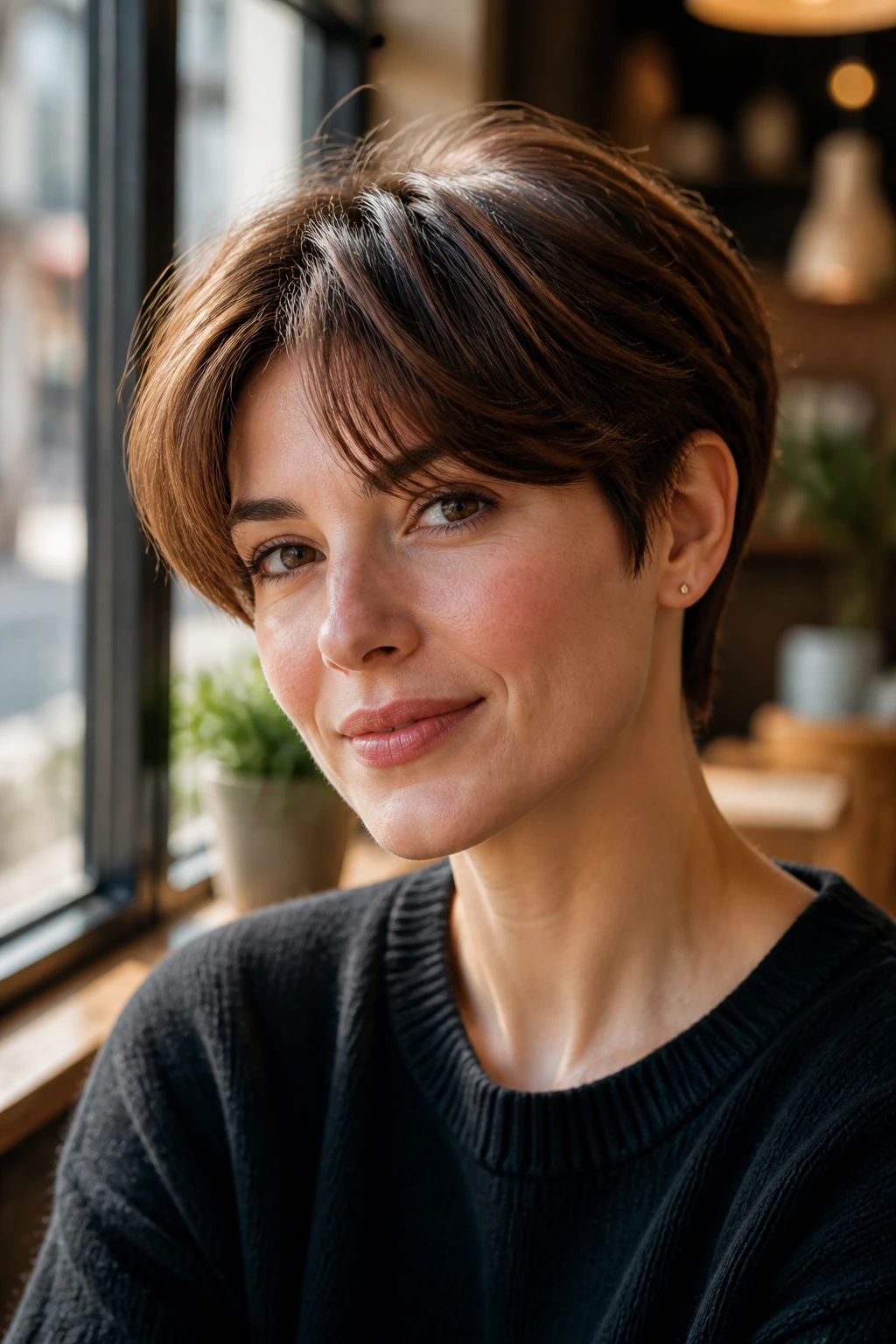
Curtain bangs on a pixie can go wrong fast if they are too thick. Keep them soft and split just enough to open the face. Walnut brown gives the look some depth, which matters when the bangs are meant to feel airy rather than heavy.
This cut is nice on people who want a little face-framing without losing the short-hair feeling. The parting should be loose, not exact. Think of it as a small drift in the middle rather than a true curtain. A round brush for the bang area and fingers for the rest is usually the easiest way to keep it from looking overdone.
- Best for longer foreheads
- Keeps the eyes and cheekbones in focus
- Needs a trim every 5 to 7 weeks to hold the shape
The bangs should skim, not sit like a curtain on the whole forehead.
11. Cinnamon Brown Textured Pixie
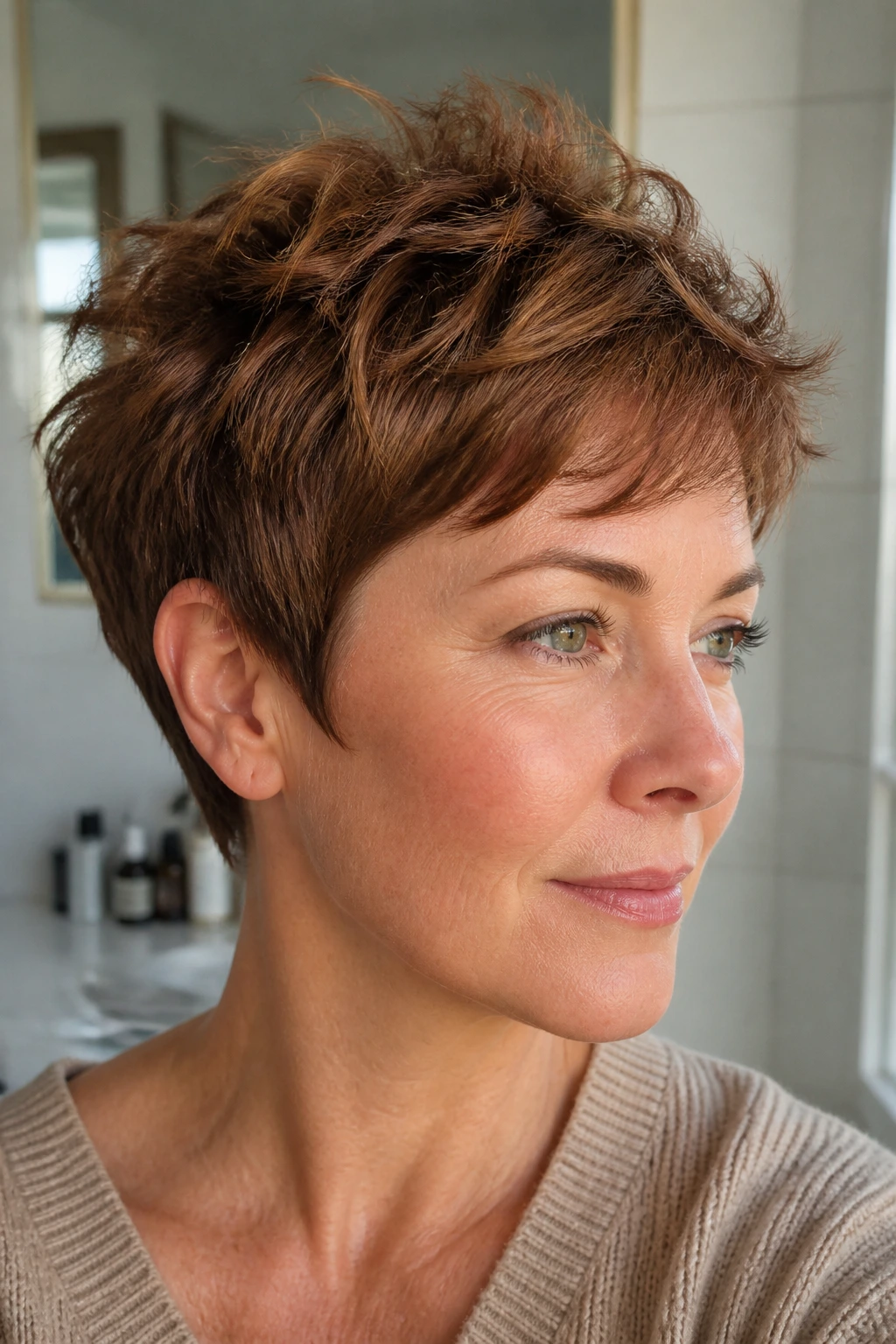
Cinnamon brown adds warmth in a way that suits fine hair more than stark black ever does. The color catches the light at the edges of the texture, which helps the layers stand out. A textured pixie in this shade feels soft but not plain.
What makes this version interesting is the finish. You do not want it sleek. You want broken-up ends, a little lift, and enough movement that the style looks hand-tousled even when it is freshly blown dry. A small amount of paste at the tips can create separation without turning the hair crunchy.
This is one of those cuts that looks best when it is slightly imperfect. Too neat and it loses charm. Too messy and it loses shape. The sweet spot is somewhere in the middle, which sounds vague until you see it in a mirror and know immediately.
12. Brunette Pixie With an Ear Tuck
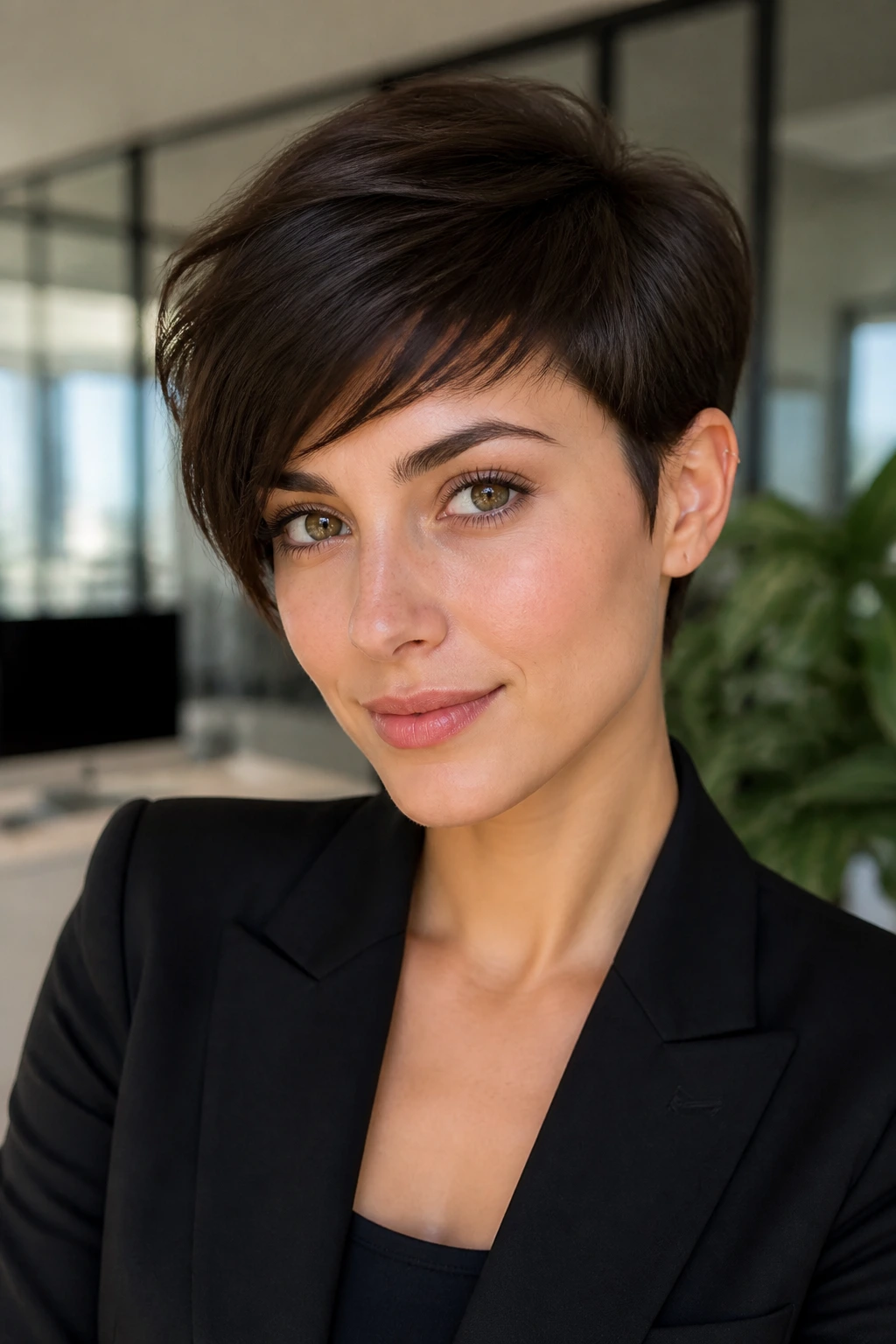
Unlike a more voluminous pixie, this one is about clean lines. The brunette tone keeps it grounded, and the ear tuck opens the face in a quiet, polished way that fine hair can actually pull off without seeming sparse. It is simple. That is the appeal.
This cut works well when the hair around the ears is kept a touch longer than the back, so you can tuck one side and leave the other loose. That asymmetry gives the style a little life. If your hair is fine and very straight, a styling cream with a soft hold is often better than a strong paste. You want the tuck to stay put, not feel glued down.
It is best for people who want a neat silhouette that still has some softness around the cheekbone. The shape is easy to wear to work and easy to dress up with earrings.
13. Chocolate Shaggy Pixie
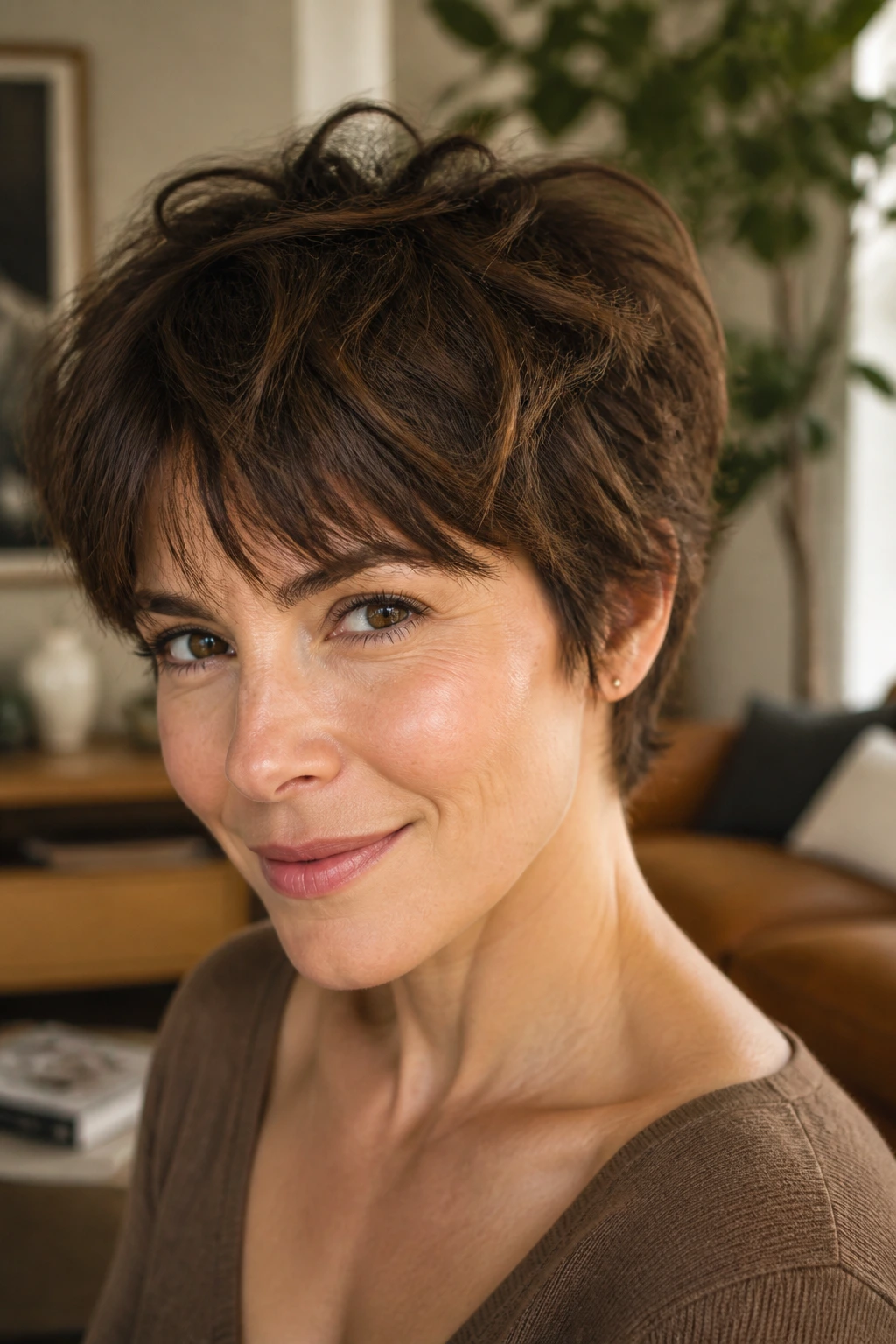
A shaggy pixie sounds casual, but on fine hair it needs more thought than people expect. Chocolate brown helps because the darker depth makes the chopped layers look fuller. The shag influence brings in movement, which is useful if your hair flops in one direction and refuses to do anything else.
What Makes It Different
Instead of one smooth, tidy outline, this cut uses short, uneven layers to keep the top from lying flat. The texture should feel broken in, not choppy for the sake of being choppy. That’s a real difference. A bad shaggy pixie looks ragged. A good one looks alive.
- Best for hair that has a little natural wave
- Works with a dab of texture cream and air-drying
- Needs a stylist who is comfortable cutting movement into fine hair
Pro tip: ask for soft point-cutting, not aggressive thinning. Fine hair cannot afford to lose more density than necessary.
14. Glossy Neutral Brown Sleek Pixie
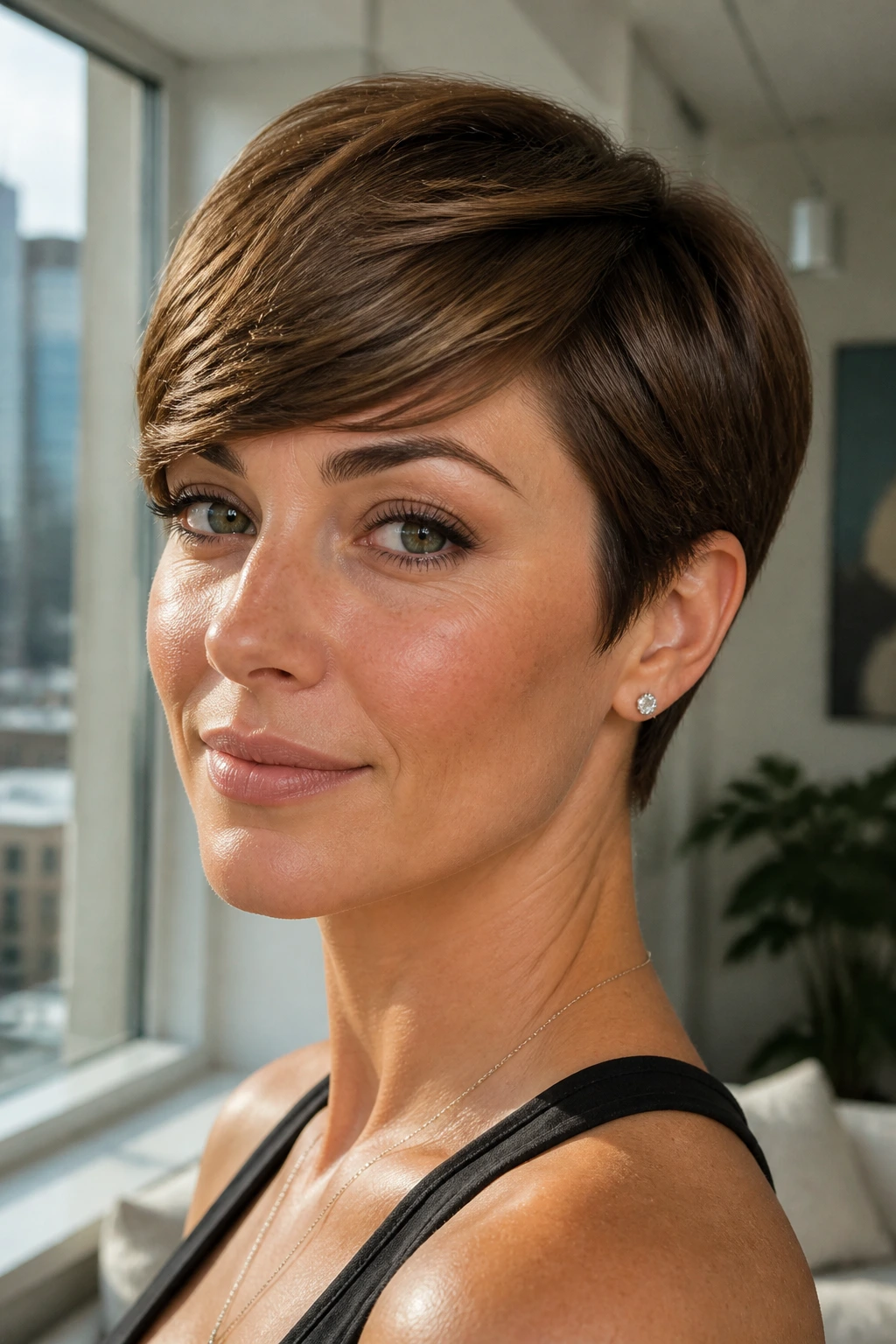
Most people assume fine hair must be messy to look full. Not always. A sleek pixie in a neutral brown shade can look rich if the cut is tight and the finish is glossy. The key is having enough layer detail under the surface so the style does not collapse into a flat sheet.
This works best on hair that already dries with some smoothness. If your strands frizz easily, a light serum on the ends and a careful blow-dry can keep the finish clean. Use a small flat brush or even a paddle brush, but keep the heat moderate. Too much heat makes fine hair look wiry.
The look is neat, almost sharp. It is the pixie I’d suggest for someone who likes a polished outline more than a piecey one. Not everyone wants texture everywhere.
15. Root-Shadow Brown Pixie With a Longer Front
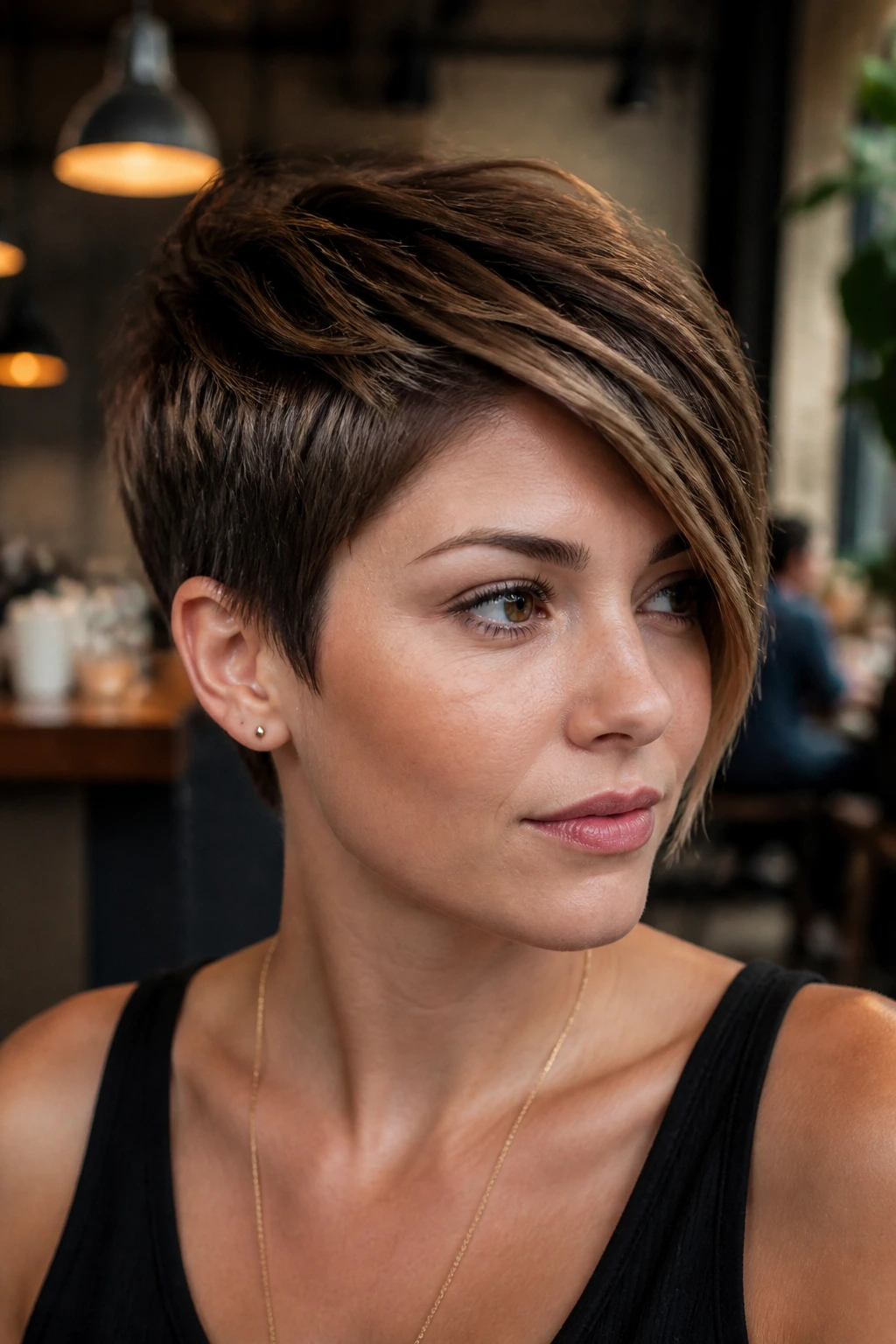
Why does a root shadow help fine hair so much? Because it creates depth at the scalp, which is where thinness usually shows first. A softer root that melts into a brown length makes the top look fuller without any extra teasing.
How to Use It
Keep the front slightly longer — often 3 inches or a touch more — so it can fall forward or sweep sideways. That longer front softens the face and gives the cut a little flexibility. The rest should stay compact so the shape does not get floppy.
If your color tends to fade quickly, this is one of the easier pixies to live with. The shadow at the root hides grow-out better than a solid all-over tone. It is also forgiving on days when you do not feel like styling much. A quick blast with the dryer and a pinch of paste can be enough.
16. Auburn-Brown Wispy Fringe Pixie
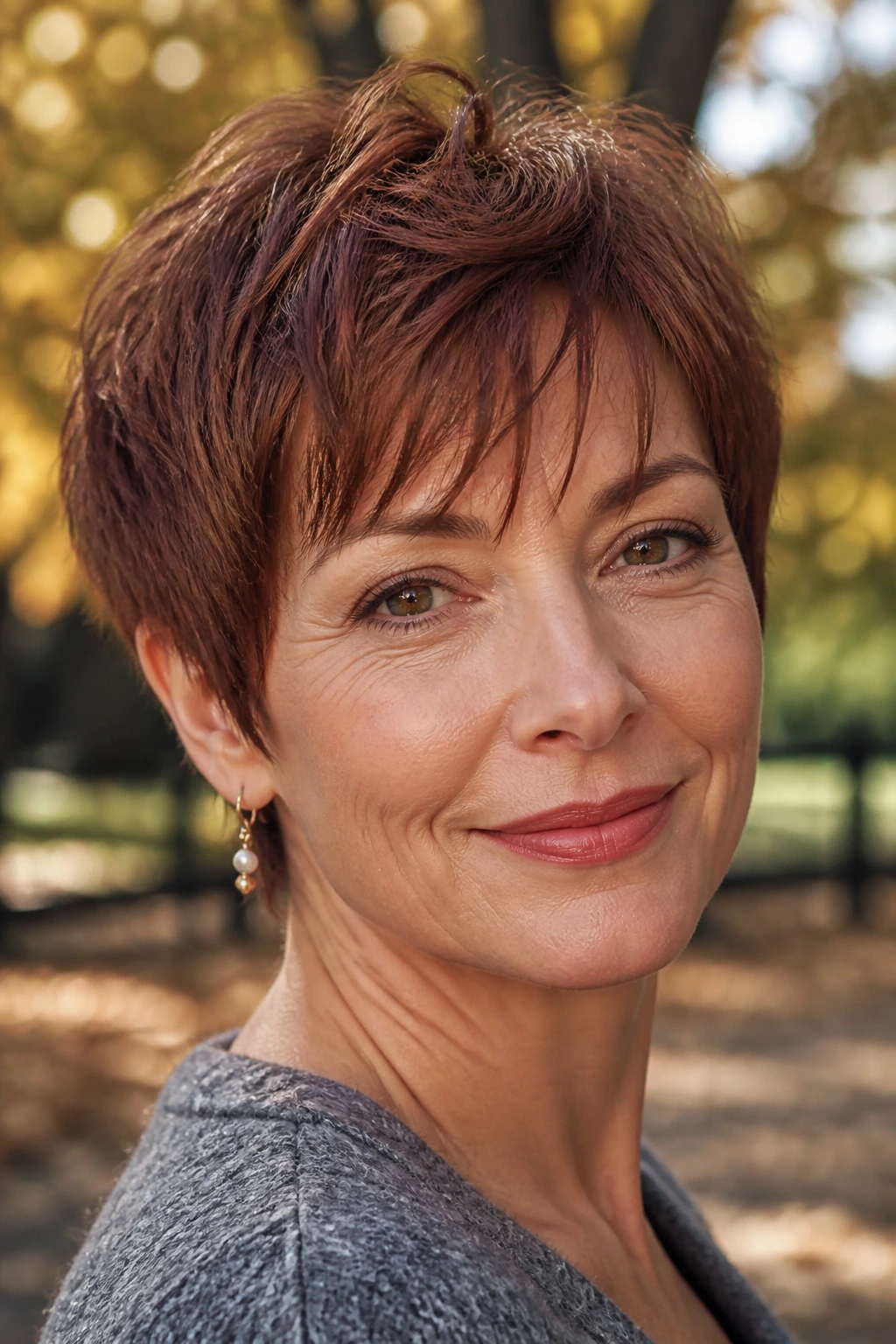
Auburn-brown is a smart move when you want warmth but not too much redness. On fine hair, that warmth can make the whole cut look denser, especially around the fringe. Keep the fringe wispy, though. Heavy bangs can flatten the front and steal the lift from the crown.
This version suits softer features and anyone who likes a little romance in the haircut. The wisps should skim the forehead in uneven pieces, not lie in one solid row. That unevenness helps fine hair look less uniform and more textured.
A small round brush at the front can shape the fringe, but I would not spend ages on it. The charm of this cut is that it looks a bit airy. Overstyling ruins that fast.
17. Piecey Dark Brown Pixie With Point-Cut Ends
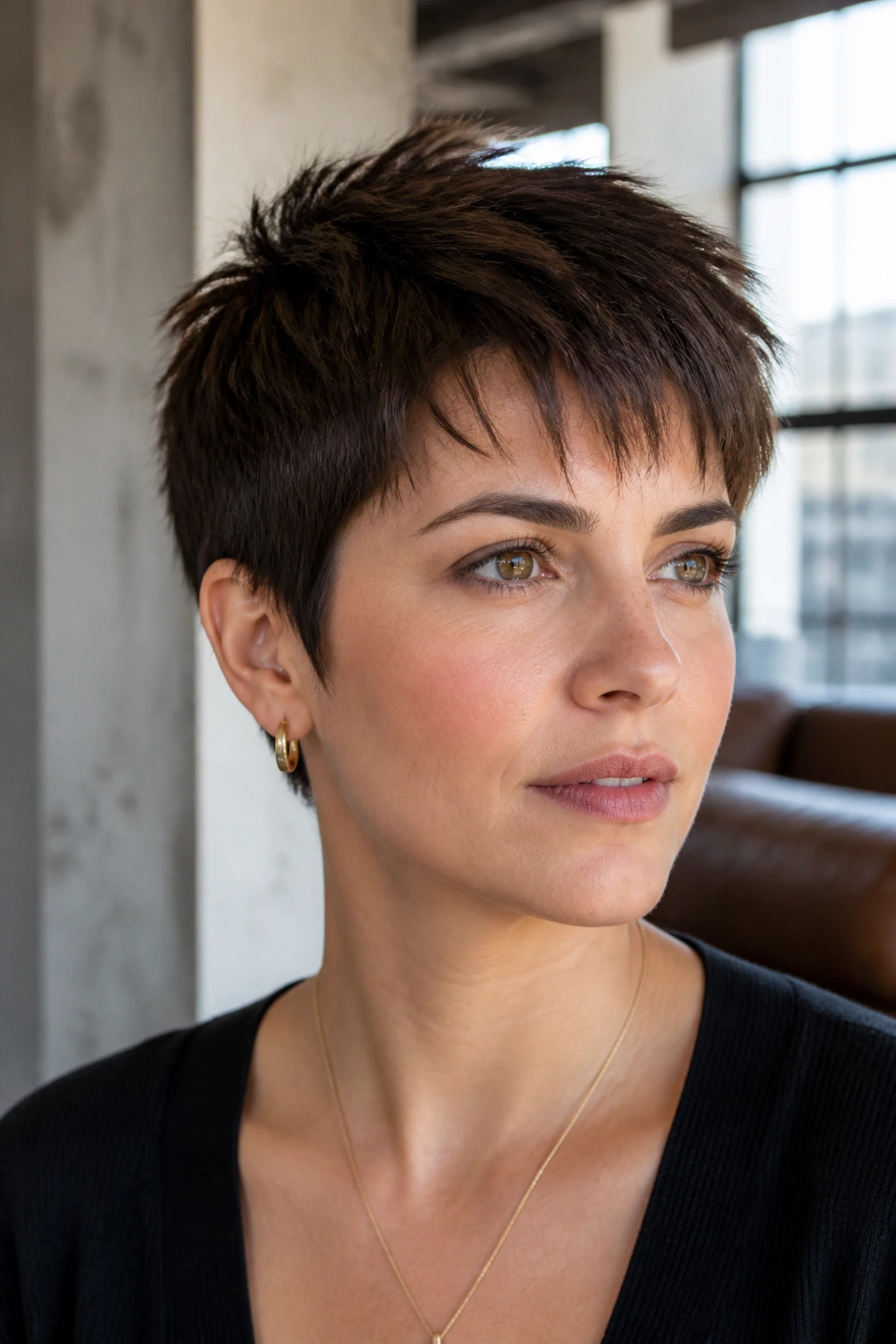
Point-cut ends make a huge difference on fine hair. They break up the line so the cut doesn’t look like one blunt block. Dark brown helps those edges read as fuller, and the piecey finish gives the style a casual, lived-in feel.
The best thing about this cut is how little product it needs. A tiny amount of paste worked into dry hair will separate the pieces just enough. If you use too much, the strands clump together and the fullness disappears. That’s the trap with fine hair. More product does not always mean more body.
I like this one for people who want short hair that still feels a bit messy in a good way. It is less refined than a sleek pixie, more relaxed than a classic crop, and easier to revive with your fingers after a long day.
18. Honey Brown Pixie With Crown Lift
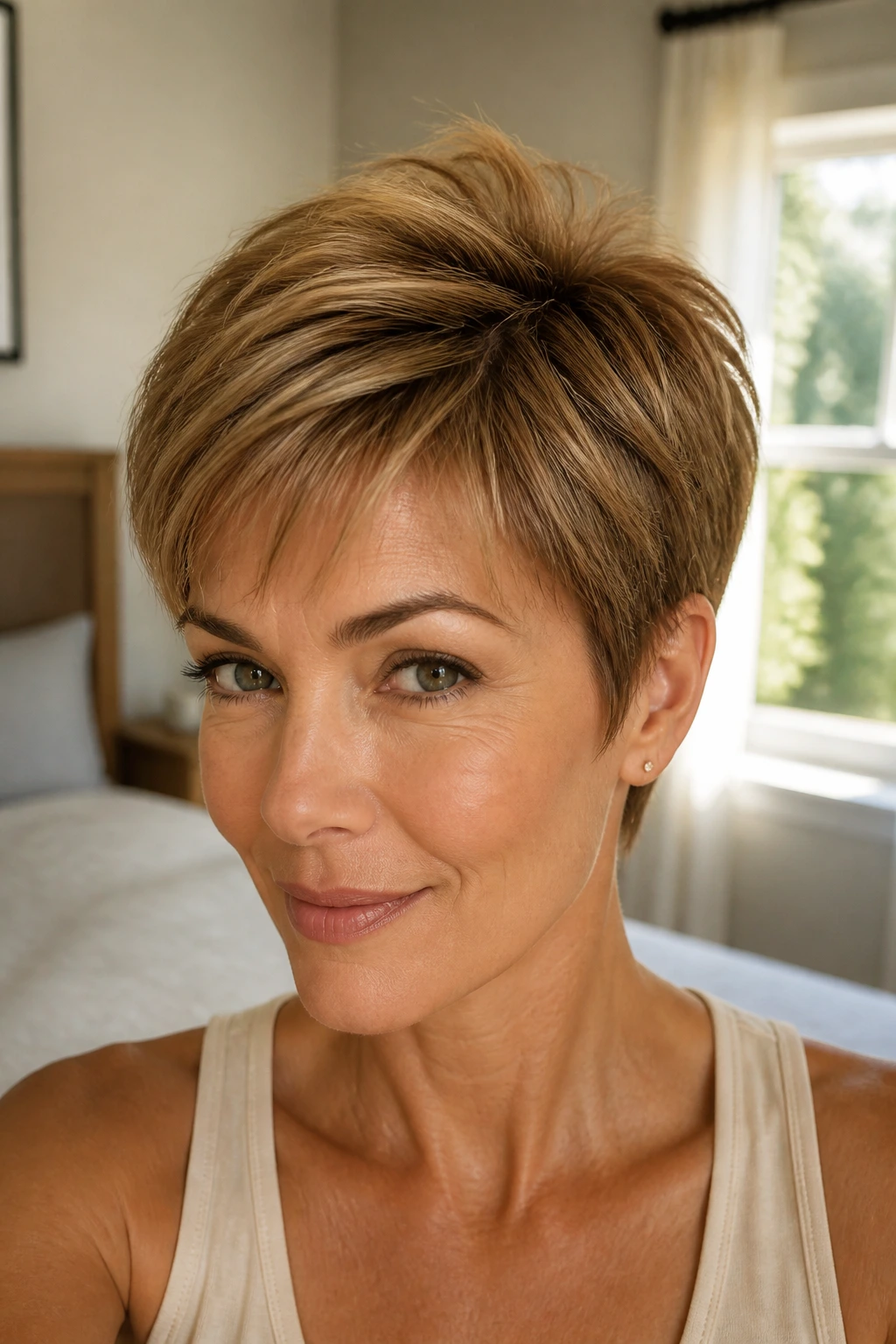
Honey brown brings brightness to the top, which can make fine hair look a touch thicker where the light hits. The crown lift matters too. A small bump at the top changes the silhouette more than a lot of people expect.
This cut should stay light around the sides and fuller on top. That contrast keeps the face open while giving the upper half of the head more shape. A root-lift spray at the crown and a quick blow-dry with your head tipped forward can help. Not a long routine. Maybe two minutes if you’re being honest.
The honey tone is especially nice when the hair needs a little warmth but not a full golden highlight job. It feels softer than bleach-heavy blonding and usually looks gentler as it grows out.
19. Side-Parted Tapered Brown Pixie
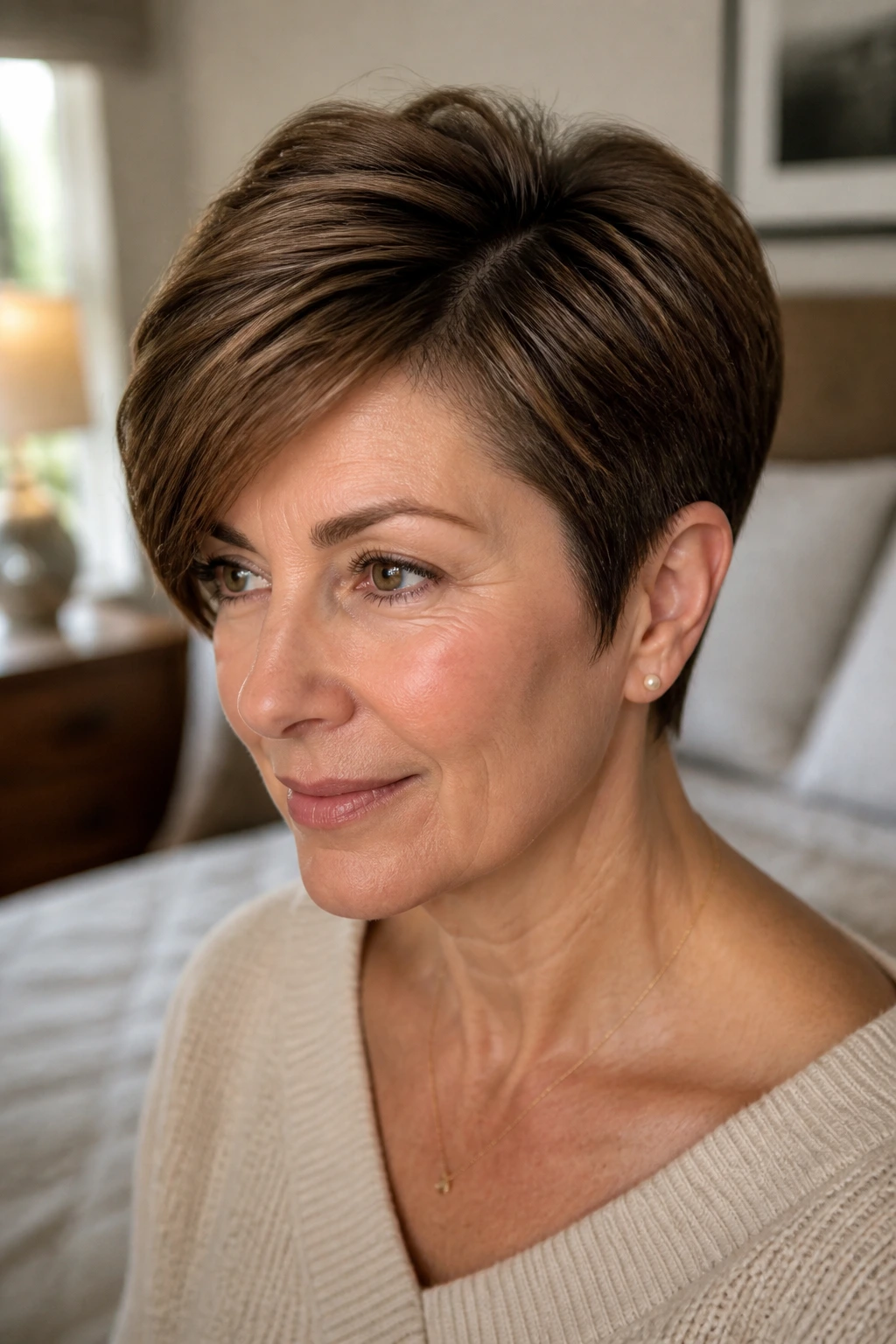
A deep side part can rescue flat fine hair. It gives the top a direction, and direction often looks like volume. On a tapered brown pixie, that side part also keeps the outline tidy around the ears and neck.
What to Watch For
The part should not be carved so hard that it looks severe. Let it sit a little soft. The crown should have enough length to move over without separating in thin strips. If the hair is too short on top, the part will expose the scalp instead of covering it.
- Best if you have a natural side part already
- Great with lightweight mousse and a wide-tooth comb
- Needs the top trimmed before the sides get too bulky
This is one of those cuts that looks expensive without trying very hard. I mean that in the plainest way possible.
20. Curved Brown Pixie for Round Faces
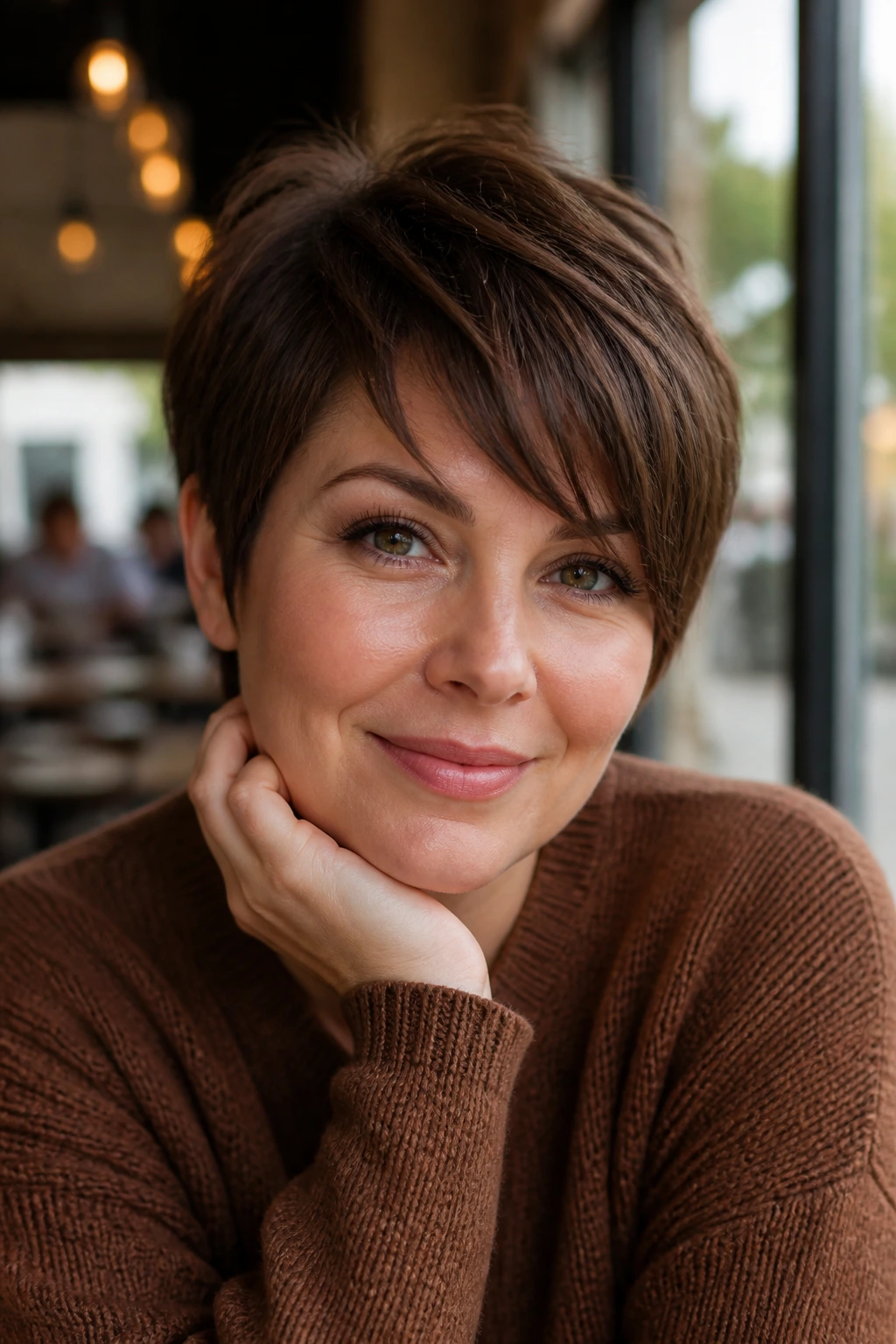
A curved pixie can make a round face look longer without making the hair feel severe. The shape hugs the head near the sides, then lifts just enough through the top to stretch the outline. Brown color keeps the finish soft, which is useful if you do not want the haircut to feel too sharp.
The front should be slightly elongated and swept to one side or brushed forward in a gentle curve. That line helps break up the circular shape of the face. Fine hair often behaves better in this kind of guided shape than in a big, fluffy one. Big shape tends to deflate. Controlled shape holds.
How to Get the Most From It
Ask for soft graduation through the crown and shorter sides that do not puff out. A little styling cream on damp hair can keep the curve smooth. If the ends kick out, use a small flat brush and direct them inward while drying.
21. Salted Mocha Messy Pixie
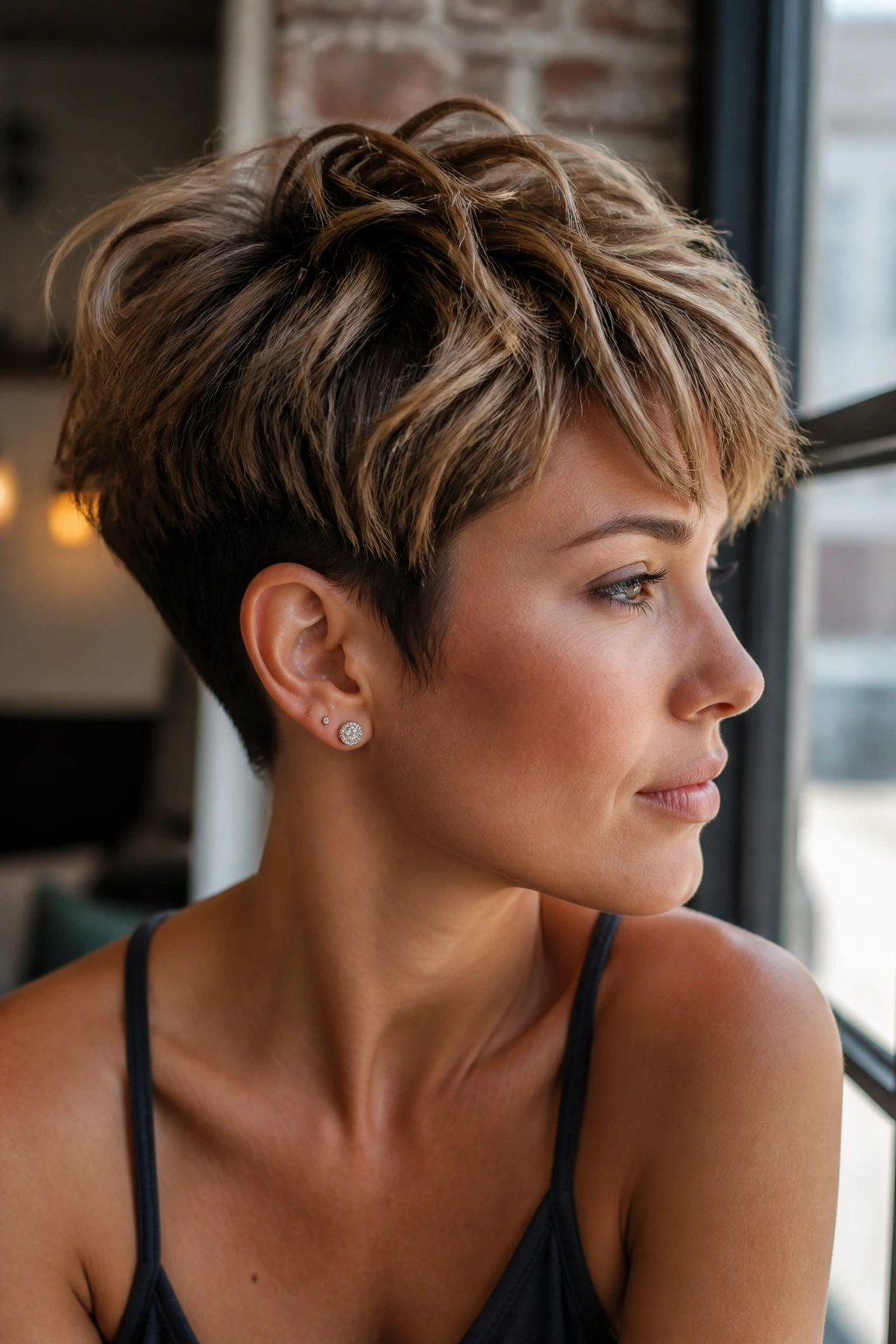
Why do some messy pixies look good and others just look neglected? The difference is structure. A salted mocha pixie keeps a real cut line underneath the mess, so the texture feels intentional instead of accidental.
This is a nice choice if you do not want a polished finish every day. The mocha shade gives enough depth for the style to read as full, while the lighter, saltier pieces on top keep it from feeling heavy. It is especially useful for hair that refuses to stay sleek. Fine hair often does better when you stop fighting it and let the movement stay a little irregular.
You still need shape at the nape and around the ears. Messy on top, neat underneath. That balance keeps the haircut from wandering off into bad bed-hair territory.
22. Soft Brunette Pixie With a Longer Nape
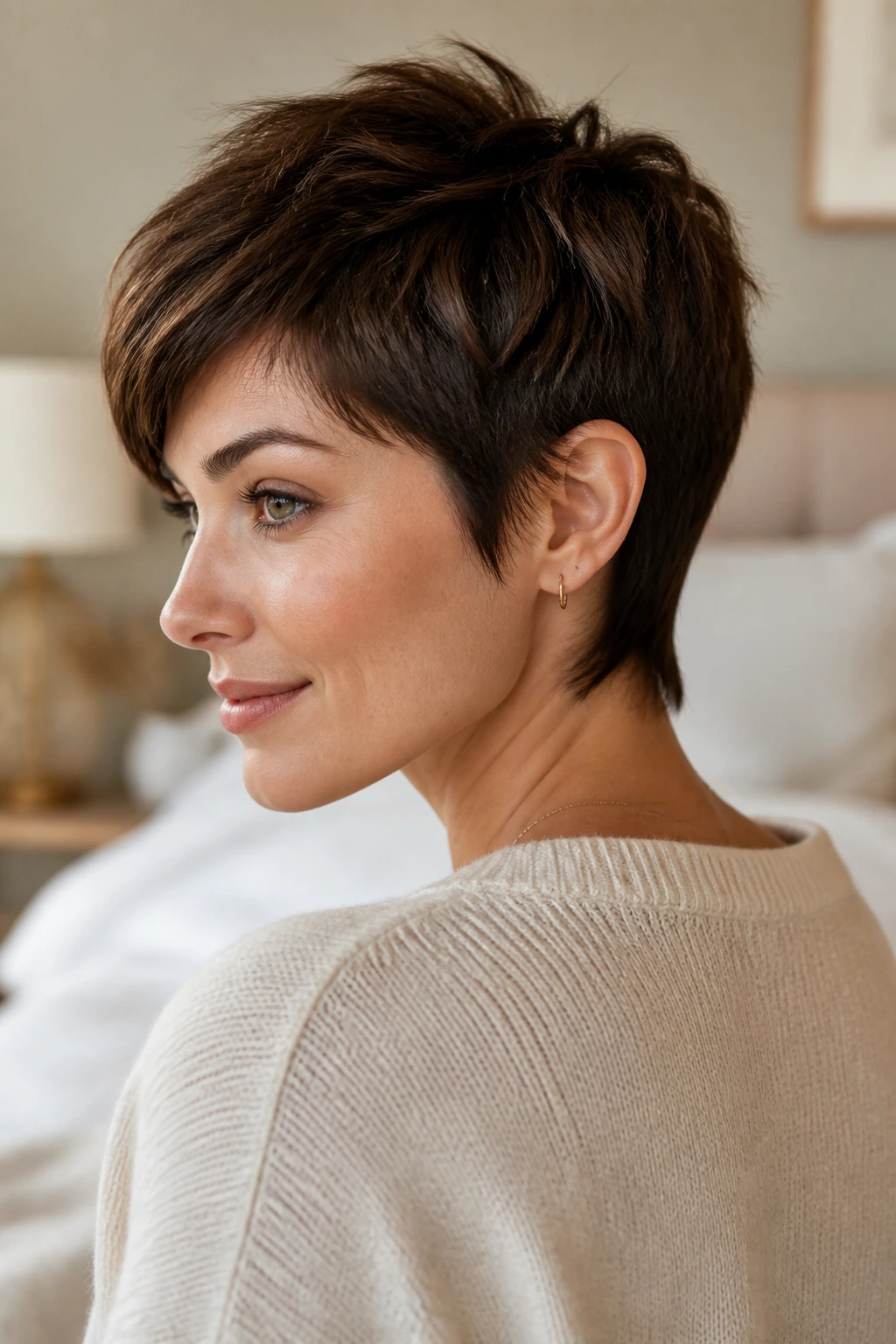
A longer nape sounds small, but it changes the whole mood of the cut. Instead of a hard crop at the back, you get a soft tail that tapers gently into the neck. On fine hair, that extra bit of length can make the style feel less severe and easier to grow out.
The brunette shade keeps the silhouette rich, especially if the top is left with enough texture to move. This works well for people who want something feminine without going overly fluffy. The nape can still be tidy. It just does not have to be severe.
- Good choice if you hate frequent salon visits
- Easier grow-out than a super short nape
- Looks nice with small earrings and a clean neckline
There’s a quiet payoff here: the cut looks more expensive when the back is shaped with care.
23. Latte Brown Pixie With Choppy Bangs
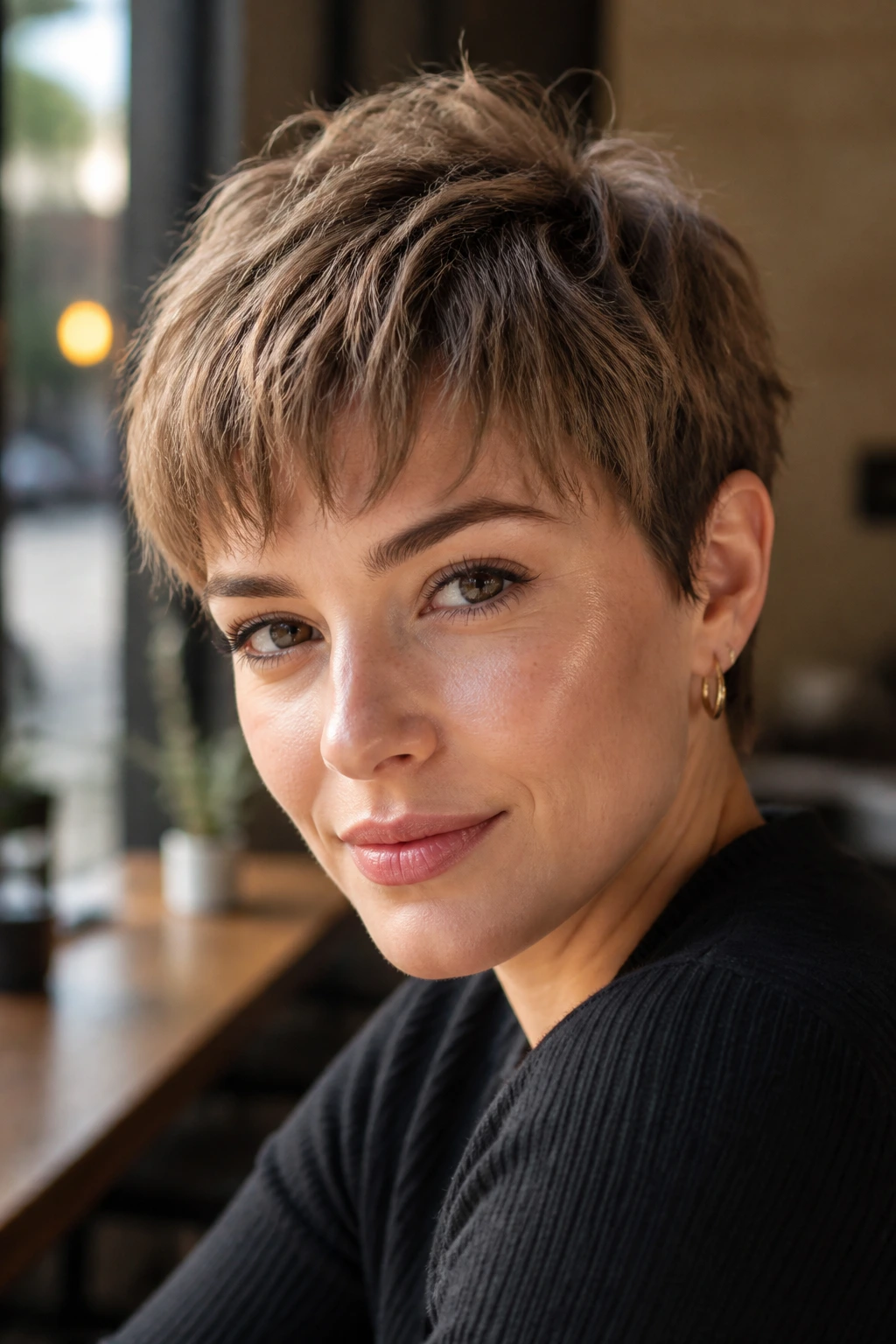
Choppy bangs can rescue a pixie that feels too plain. Latte brown gives the style a soft, milky depth, and the uneven fringe makes fine hair look more textured across the front. The bangs should be broken, not heavy. That matters a lot.
This cut is useful if your forehead is the first place your hair goes flat. The bangs create a bit of structure without covering everything. A finger-dry approach works well here. Let the bangs fall where they want, then nudge them into place with a tiny amount of cream. A brush can make them too neat, which somehow always makes them look thinner.
It is a gentle style, not a strict one. That is what makes it wearable.
24. Dark Roast Texture Pixie
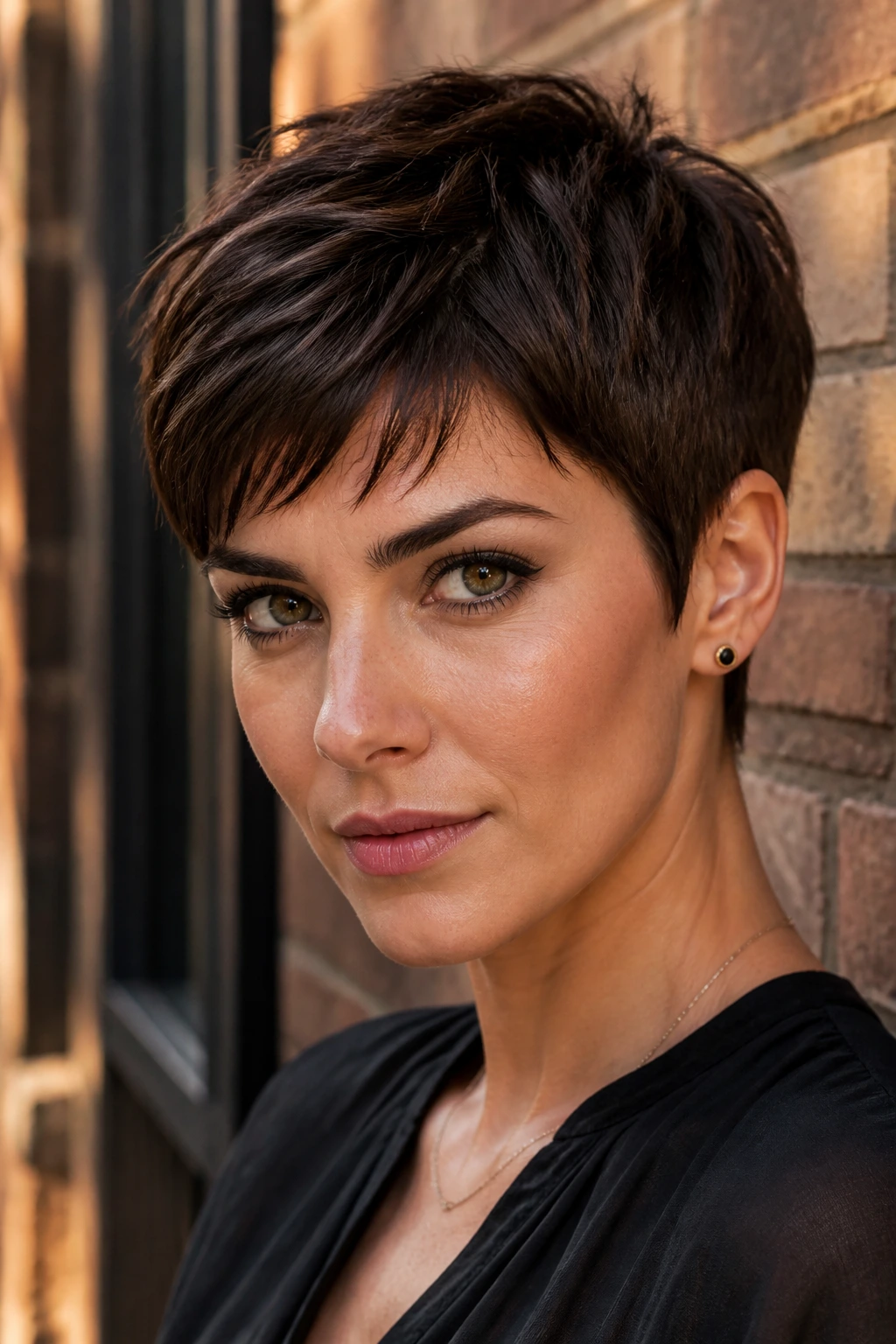
Unlike a sleek brown pixie, this one leans hard into texture. Dark roast brown gives the cut depth and makes the silhouette feel denser, while rougher layers keep the finish from looking pasted down. If your hair has any natural wave at all, this style can pick it up and use it.
The best version has short, separated pieces at the top and slightly longer bits at the front. That unevenness gives the eye something to follow. Fine hair needs that. It needs a reason to look busy. A dry texture spray can help, but use it sparingly. Too much and the hair starts to feel dusty.
This is the cut for someone who likes a bit of edge and does not mind touching their hair once or twice during the day.
25. Grown-Out Brown Pixie for Fine Hair
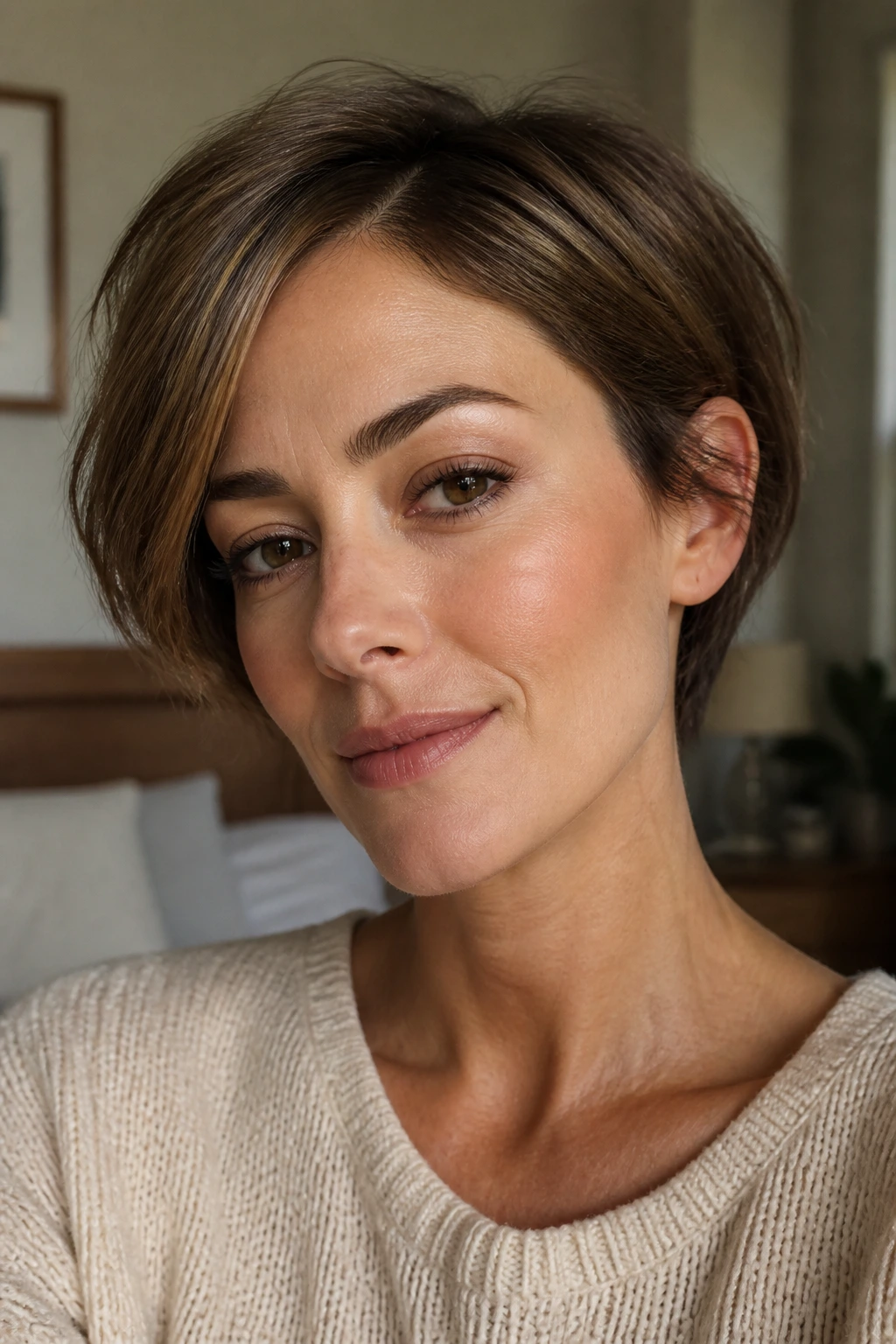
A grown-out pixie sounds like an in-between stage, but when it is cut on purpose, it can be one of the best options for fine hair. The shape starts as a pixie and eases toward a short bob, with enough length in front and at the nape to avoid that awkward mushroom phase.
Why It’s So Practical
The brown shade helps the style keep depth as it grows, which is a gift if you do not want a harsh line every four weeks. The front can be brushed sideways, tucked behind the ear, or left a little tousled. That flexibility matters.
- Best when the top is kept 2.5 to 4 inches
- Easy to restyle with mousse, a round brush, or fingers
- Good choice if you want a softer grow-out between trims
My honest take: this is the one I’d choose if you want short hair but do not want the haircut to boss you around. It buys you time.
Final Thoughts
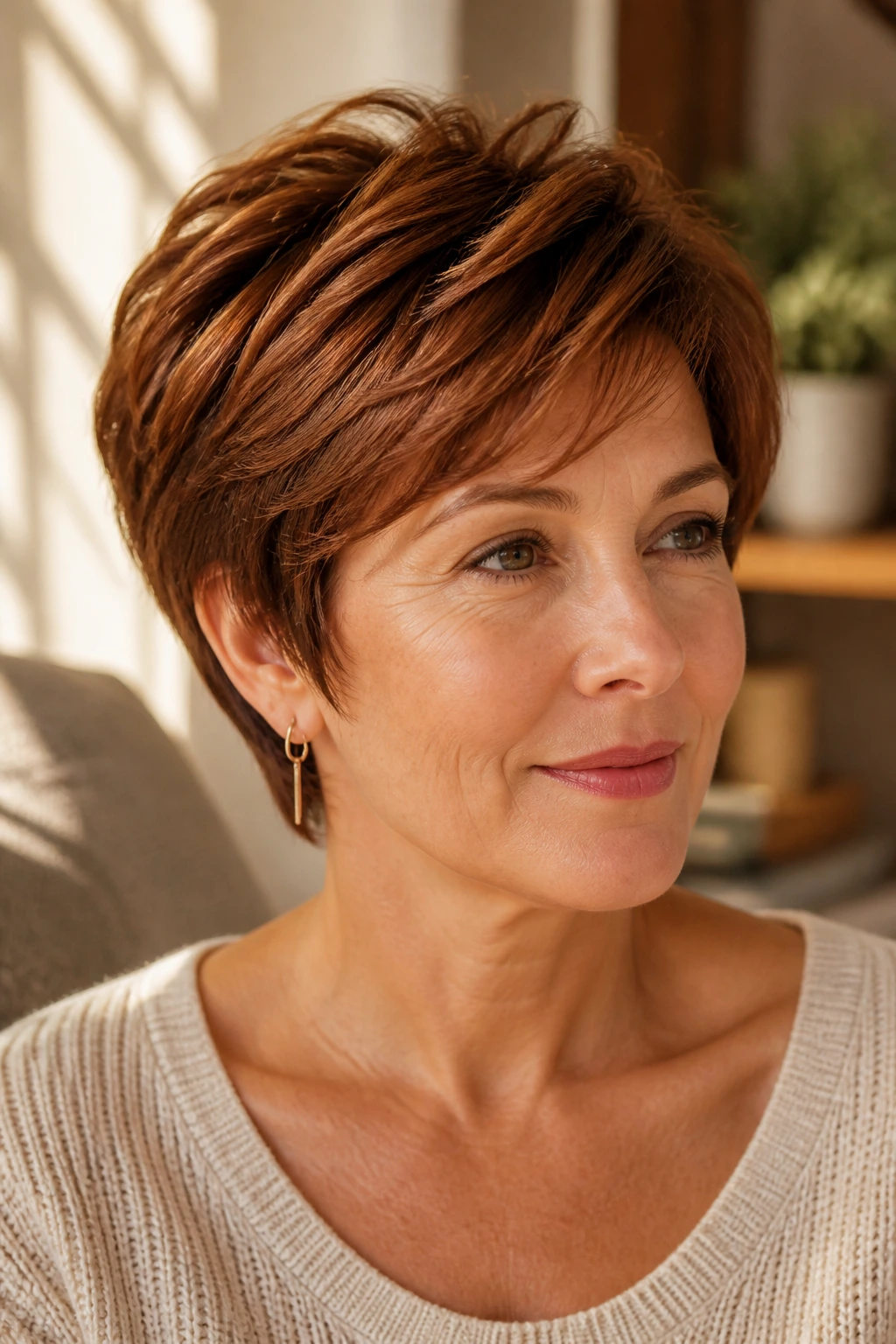
Brown pixie cuts for fine hair work best when the shape is doing real work. Color helps, sure. So does a bit of texture. But the cut itself — the crown height, the taper, the fringe length — is what keeps the style from falling flat.
If your hair is very fine, I’d pick the version that gives you one strong feature and leaves everything else calm. Maybe that’s a side sweep. Maybe it’s a long top. Maybe it’s a root shadow and a clean nape. Too many tricks at once usually look busy, and busy is not the same thing as full.
The easiest pixie to live with is the one you can style in a few minutes and still recognize when the wind hits it. That sounds obvious, but it saves a lot of bad cuts.
