



Pixie cuts for oval faces have a nice kind of freedom built into them. You do not have to spend half the appointment trying to “correct” your shape, which is a luxury people with round, square, or heart-shaped faces do not always get. The real job is simpler, and honestly more fun: pick the kind of short cut that makes your bone structure look crisp, your eyes look bright, and your hair behave in a way you can live with.
That does not mean every pixie suits every oval face. Not even close. Fringe placement, crown height, and how tight the nape sits against the neck can change the whole mood of the cut. A soft, airy crop gives one kind of finish. A sharp undercut gives another. A fringe that lands at the eyebrow can make the face feel quietly romantic, while a micro bang can turn the whole thing sharp and editorial.
The best short cuts for oval faces usually do one of two things: they either keep the shape light and easy, or they lean into contrast and make the features look even cleaner. Hair texture matters too. Fine hair needs lift. Thick hair needs removal of bulk. Curly hair needs room to spring, not a brutal chop that turns into a triangle. And yes, cowlicks still matter. Short hair has a way of exposing every little habit the hair has been hiding.
So the smart move is to think in terms of shape, not just length. Fringe, crown, nape. Those three spots do most of the work.
1. Soft Tapered Pixie
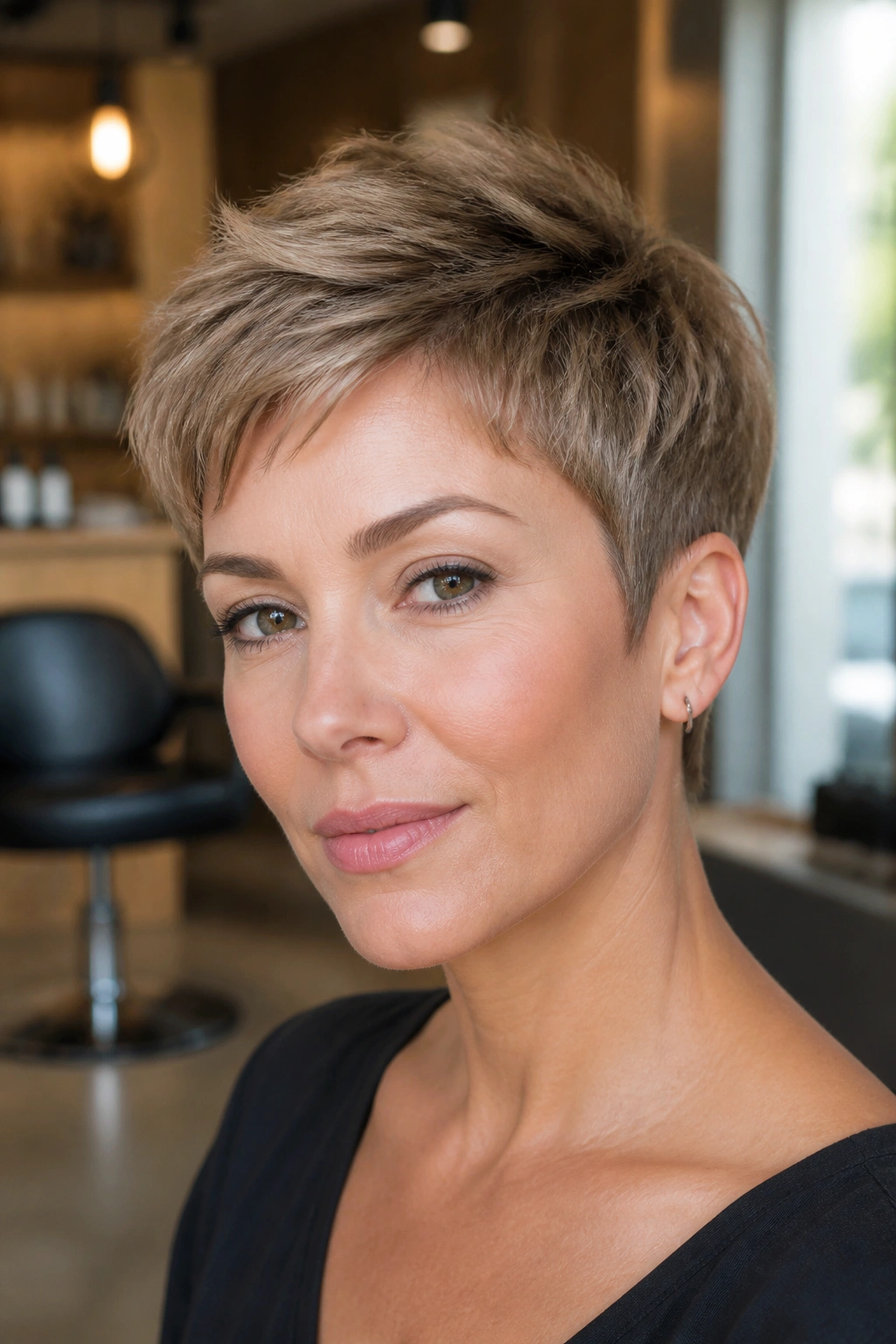
A soft tapered pixie is the easiest place to start if you want short hair without a hard edge. The sides hug the head, the nape sits close and neat, and the top keeps just enough length to move a little when you turn your head. On oval faces, that balance works because it shows the face instead of crowding it.
Clean, not severe. That is the whole appeal.
The taper keeps the cut from looking boxy, which can happen fast when the sides are left too full. Ask for soft point-cut ends around the hairline, not blunt lines. A little softness near the temples helps the cut blend into the face instead of stopping abruptly at the ears.
Fine hair usually loves this shape because it does not need a lot of volume to look intentional. Thick hair can wear it too, but the nape and sideburns should be thinned carefully so the cut does not feel bulky. A light styling cream or a pea-sized dab of matte paste is usually enough.
2. Side-Swept Fringe Pixie
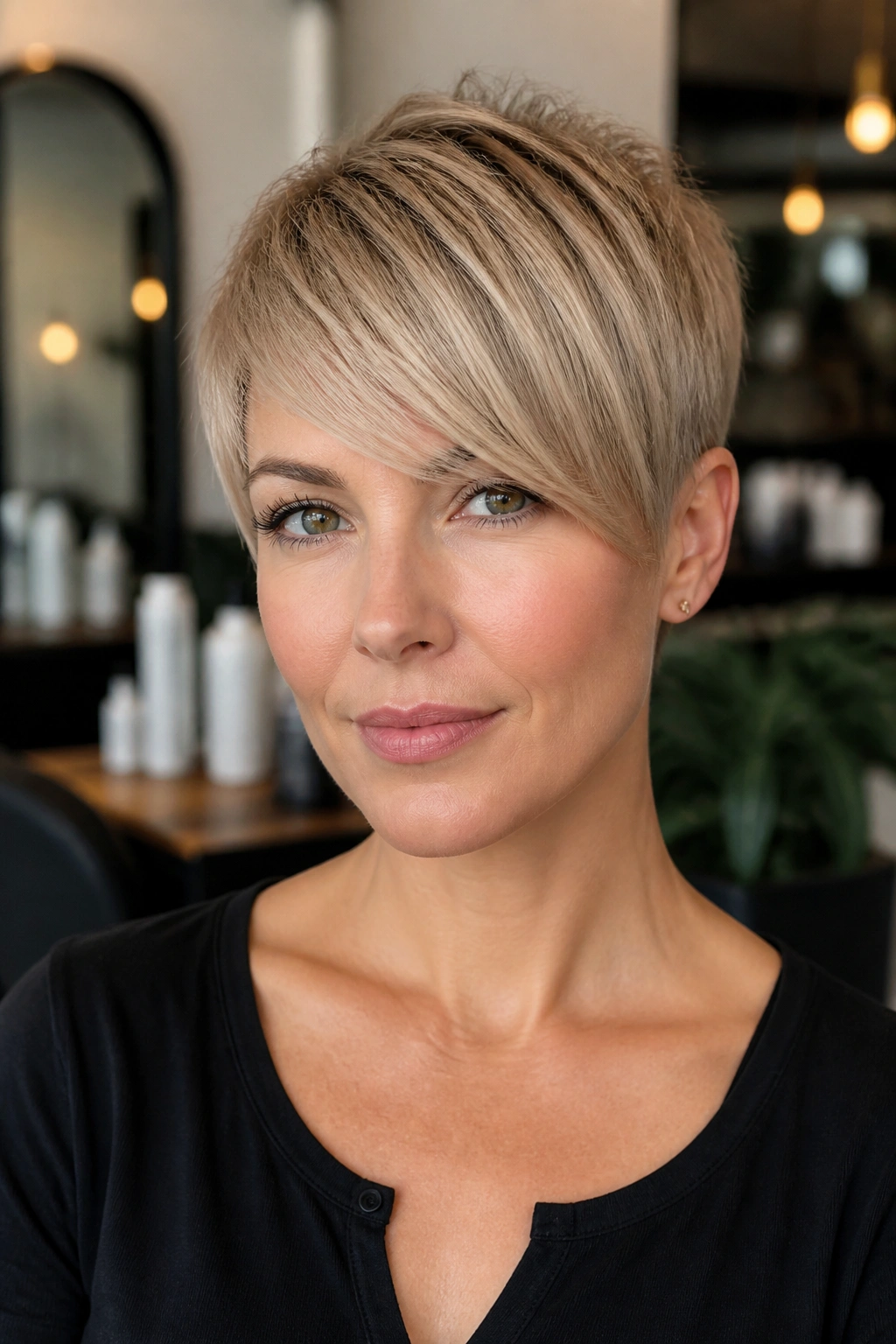
A side-swept fringe does more work than people give it credit for. It draws the eye across the face instead of straight down, which makes an oval face look even more graceful without making it feel longer than it already is. The trick is keeping the fringe long enough to sweep, but not so long that it hangs in your eyes all day.
Why the sweep matters
The best side-swept fringe starts deeper at the crown and drops softly toward one brow. That diagonal line breaks up the forehead in a flattering way, especially if your hairline is high or your features feel delicate. It also gives the cut a little motion, which keeps short hair from feeling too “done.”
How to style it
- Blow-dry the fringe first, while it is still damp.
- Aim the airflow in the direction you want it to fall.
- Use a light cream or spray wax, not a heavy gel.
- Tuck one side behind the ear when you want more face exposure.
If your hair has a stubborn front cowlick, keep the fringe a touch longer at the start. That extra half-inch saves a lot of frustration later.
3. Choppy Piecey Pixie
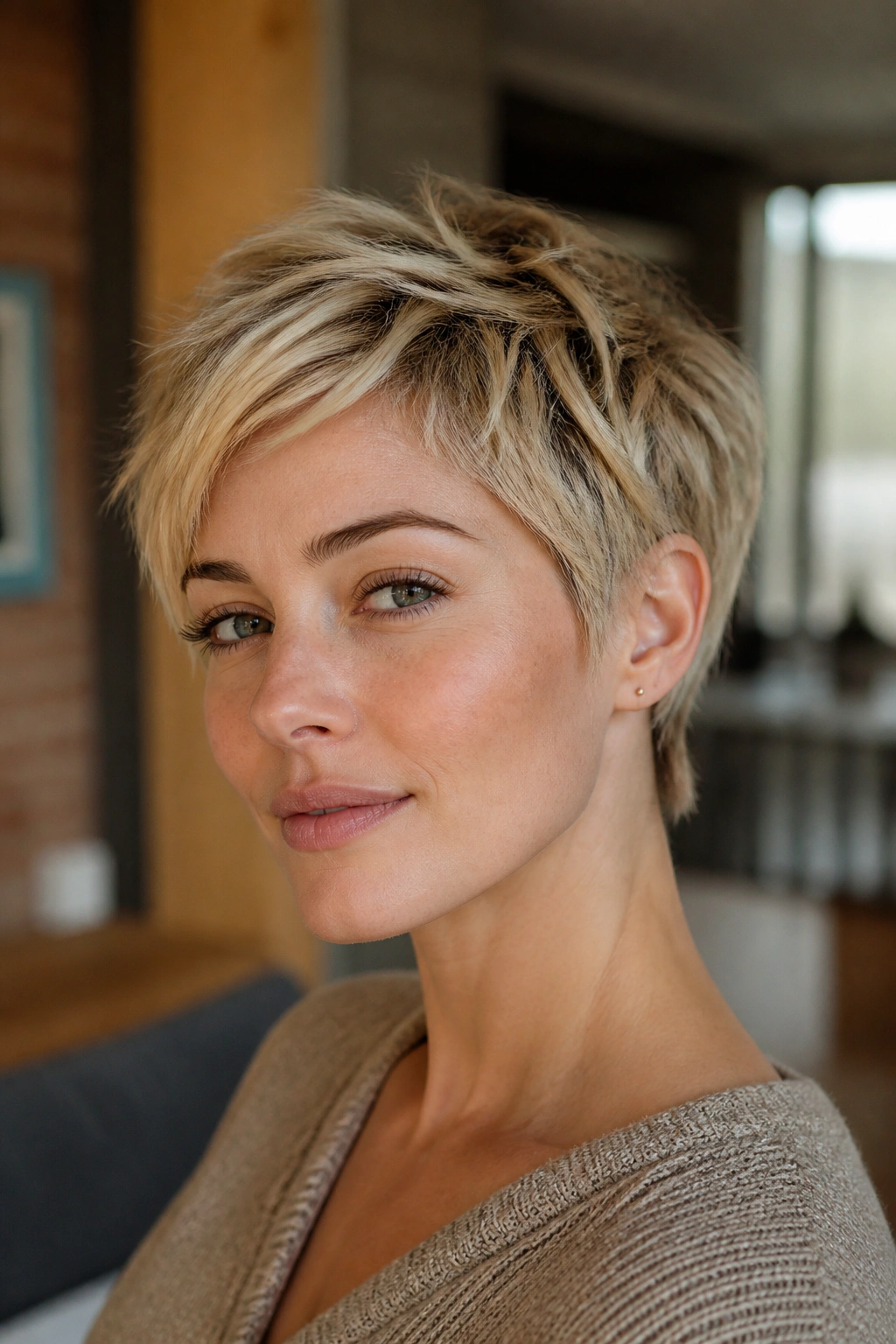
Why does a choppy pixie work so well on oval faces? Because the face shape can carry broken-up texture without losing balance. When the ends are point-cut or razor-cut into small pieces, the whole haircut feels lighter, less precious, and a lot more modern. It is the opposite of a stiff helmet crop.
The best version uses separation on purpose. You want little bits that catch the light differently, not a smooth cap of hair that all sits in one direction. That kind of texture is especially useful if your hair is thick, because the choppiness removes visual weight without making the style look thin.
What makes it different
- Ends are cut into small, uneven pieces.
- The crown has movement, not a single flat layer.
- The fringe can be short, side-swept, or broken up.
- A matte styling paste usually works better than shine products.
A quick fingertip-style finish is enough here. Rub a tiny amount of product between your hands, then pinch the ends instead of combing them smooth. That little bit of mess is the point.
4. Asymmetrical Pixie
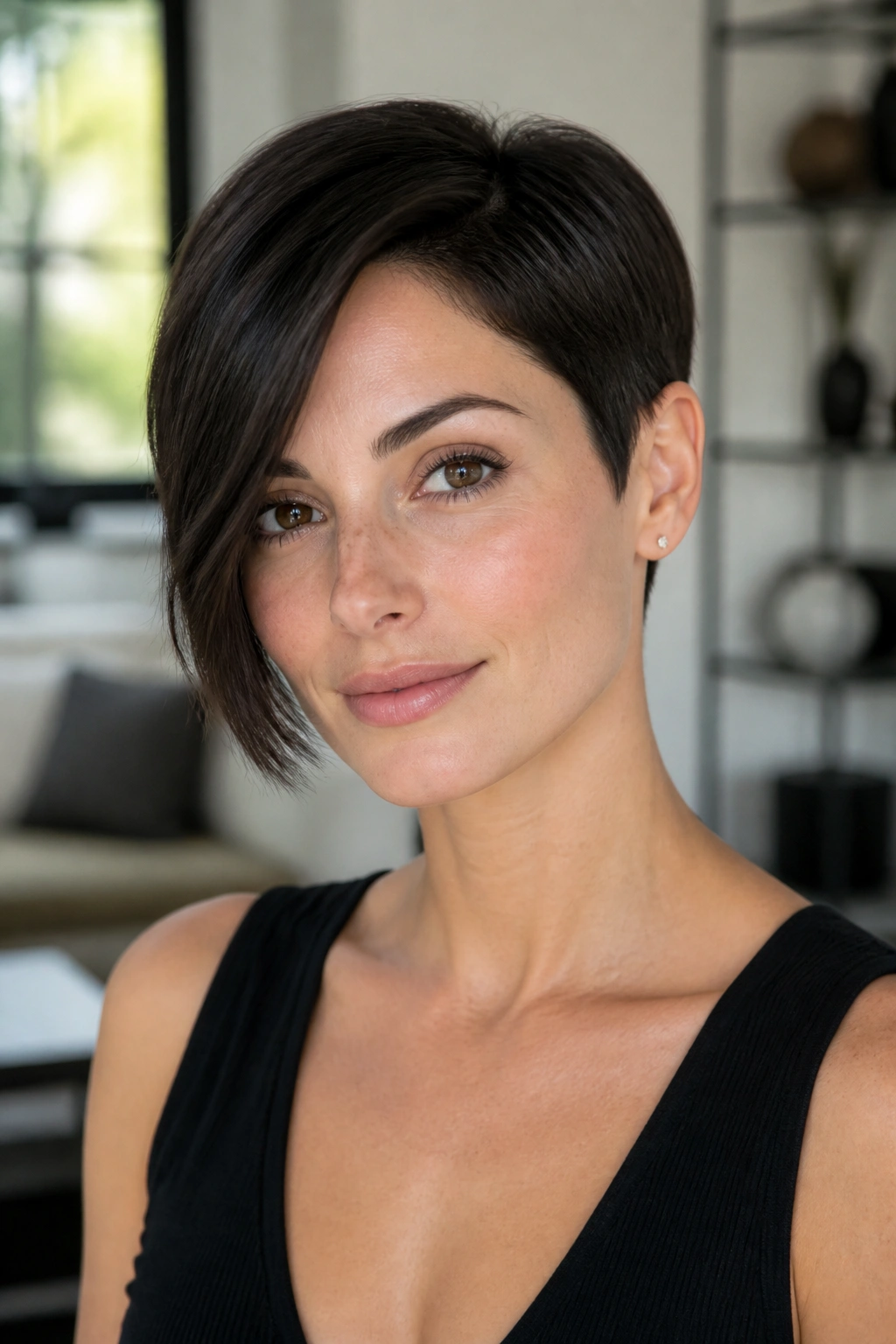
An asymmetrical pixie leans into the fact that oval faces can handle visual imbalance without looking off. One side stays a little longer, the other side gets tighter, and the whole cut feels sharper for it. The shape makes the cheekbones stand out because your eye keeps moving across the face instead of settling in one place.
This is the pixie for someone who wants short hair with a bit of attitude, but does not want to go full undercut. The longer side can skim the cheek or jaw, while the shorter side keeps the profile crisp. It is a good cut if you like tucking hair behind one ear on one side and leaving the other side to frame the face.
Unlike a perfectly symmetrical crop, this one has a built-in line of tension. That is what gives it interest.
A side part helps keep the imbalance intentional. If you have fine hair, keep the longer side soft rather than heavy. Thick hair can handle more swing, but the longer section should still feel airy, not like a separate curtain.
5. Long Pixie With Ear Tuck
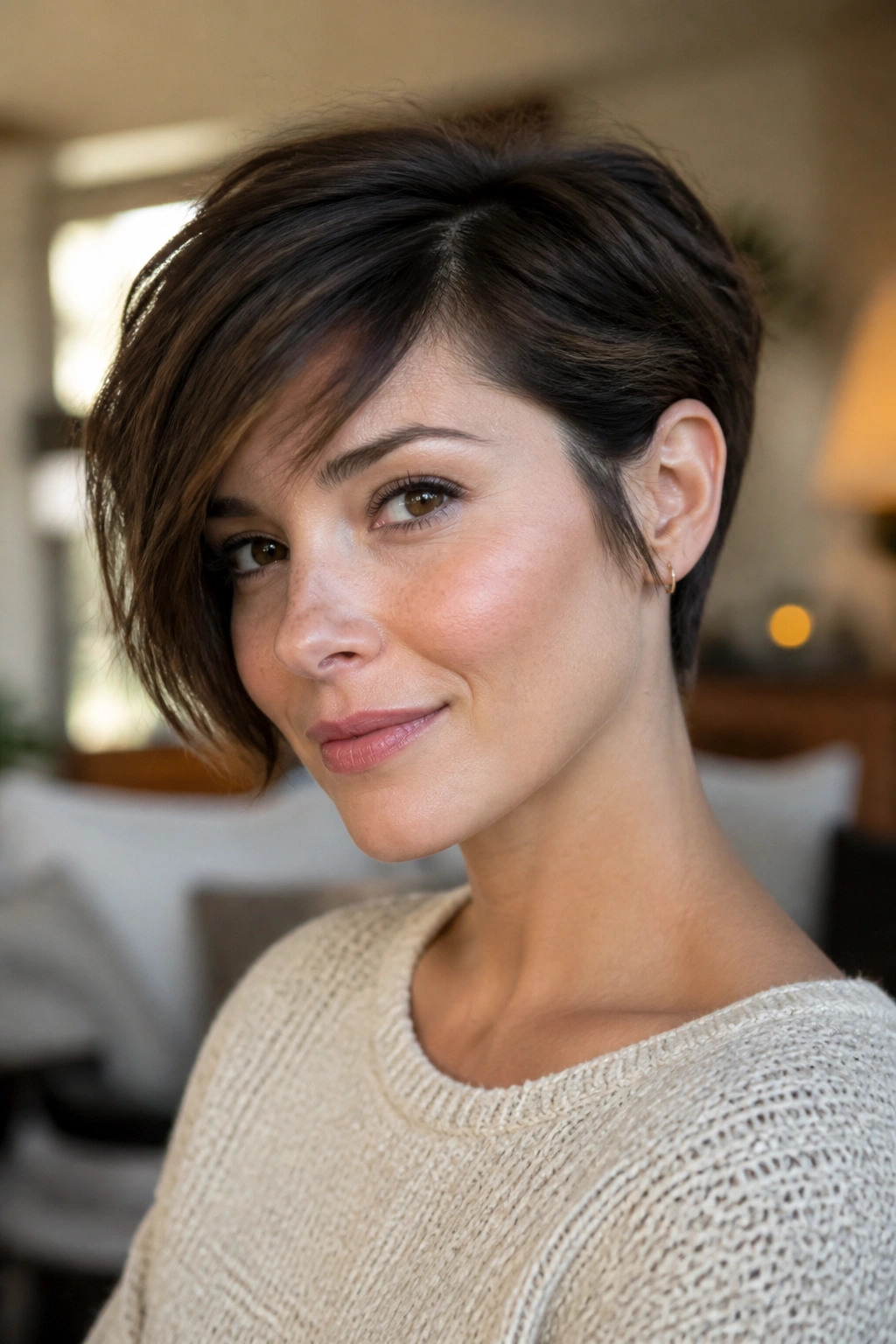
If you keep catching yourself tucking your hair behind one ear, this cut is probably already waiting for you. The long pixie with an ear-tuck length keeps the front and sides long enough to move, while the back stays cropped enough to read as a pixie, not a bob. On an oval face, that exposed cheekbone line can look clean and elegant without trying too hard.
The beauty of this cut is the in-between feel. It is short, but not drastic. You can wear it smooth and tucked for a neat look, or let the front fall loose for a softer shape. That makes it a nice transition cut if you are coming from a bob and do not want to jump straight into a close crop.
What to ask for
- Keep the front pieces around cheekbone length.
- Leave enough side length to tuck behind the ear.
- Taper the nape so the back does not bulk up.
- Soften the ends around the temples.
A light blow-dry cream helps the longer pieces move instead of flipping out at awkward angles. This one grows out well too, which is not a small thing.
6. Tapered Nape Pixie
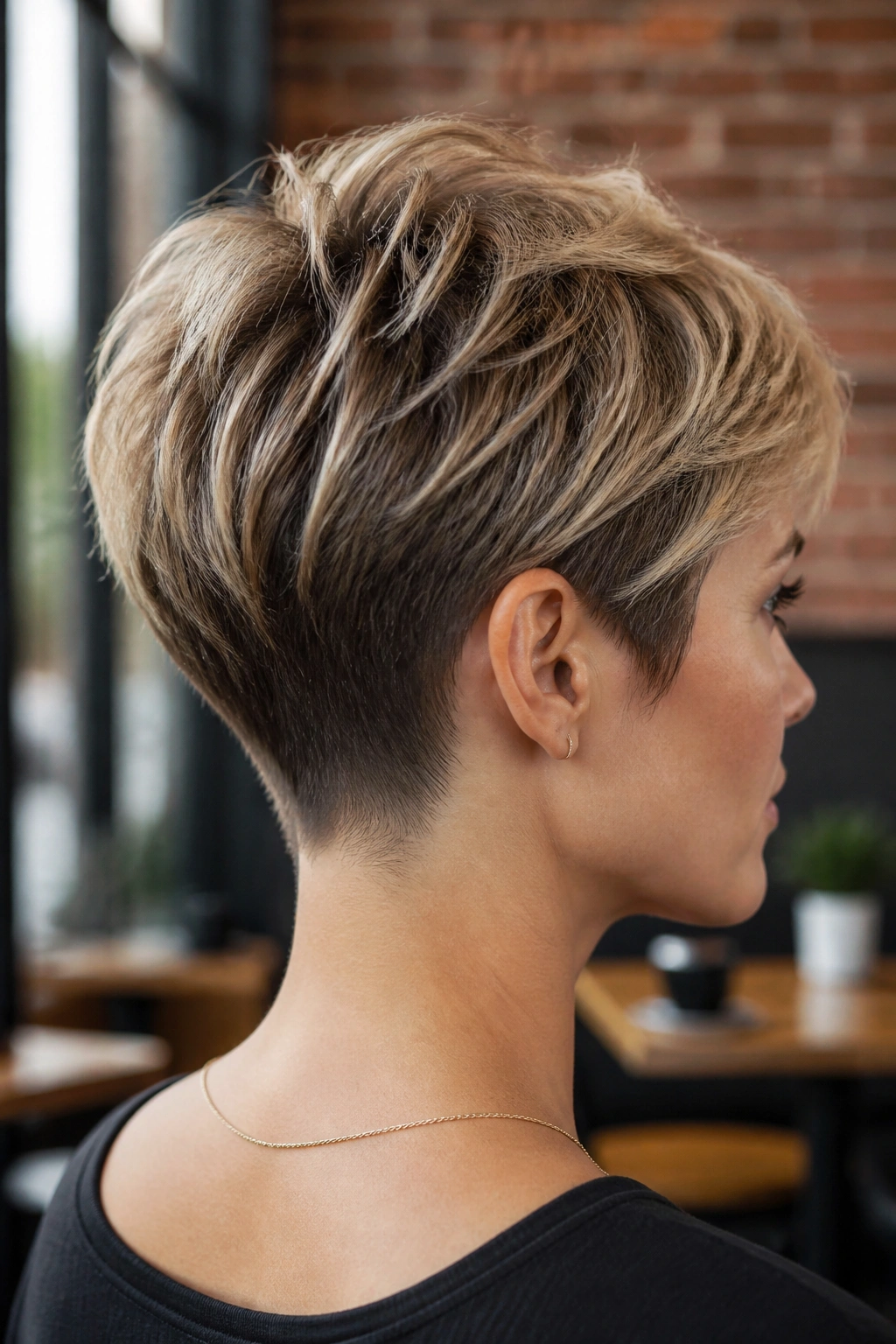
The back of this cut does the quiet work. A tapered nape pixie sits close at the neckline, cleans up the profile, and leaves the top with enough softness to keep the whole style from feeling severe. On oval faces, that neat back gives the front room to breathe. You see the face more clearly because the haircut is not competing with it.
This is a good choice if you like your hair to look sharp from behind and easy from the front. It also plays nicely with earrings, collared shirts, and sweaters, because the nape sits clean instead of puffing out into the fabric. If you have a habit of wearing your hair up on hot days, this is one of the easiest cuts to live with.
Shorter napes need regular shaping. Every four to six weeks is a realistic rhythm if you want the neckline to stay crisp. Let it go too long and the silhouette changes fast.
A tapered nape is not flashy. That is exactly why it works.
7. Curly Pixie Crop
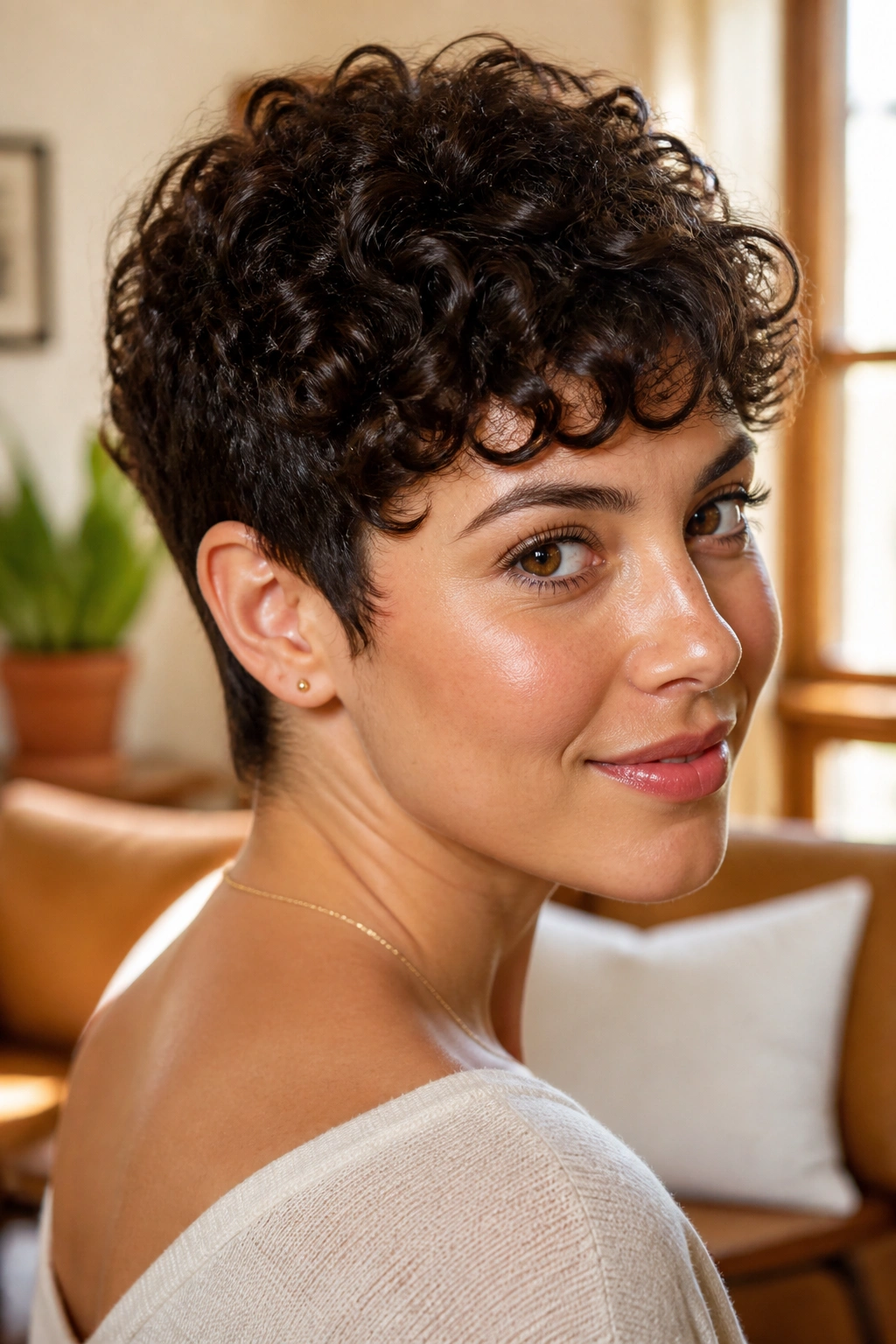
Curly hair and pixie cuts can be a dream together, but only if the cut respects the curl pattern. A curly pixie crop keeps enough length on top for the curls to spring up, while the sides and nape stay controlled so the shape does not turn wide. Oval faces are a good match here because the open face and rounded curl shape balance each other naturally.
The biggest mistake is cutting curly hair too wet and too short all over. Curls shrink, and they shrink with opinions. A dry cut or curl-by-curl shaping usually gives a better read of where the curl actually lands. Ask for a little extra length around the crown if your curls are tight, and keep the fringe soft rather than blunt.
What to ask for at the salon
- Leave the top long enough to show your curl pattern.
- Keep the sides tapered, not shaved too close.
- Cut the fringe so it can sit slightly longer when dry.
- Shape the nape so it follows the curl line.
A cream-based curl product and a diffuser are enough for most days. Let the curls form first, then separate them only a little. Too much touching turns definition into frizz.
8. Feathered Crown Pixie
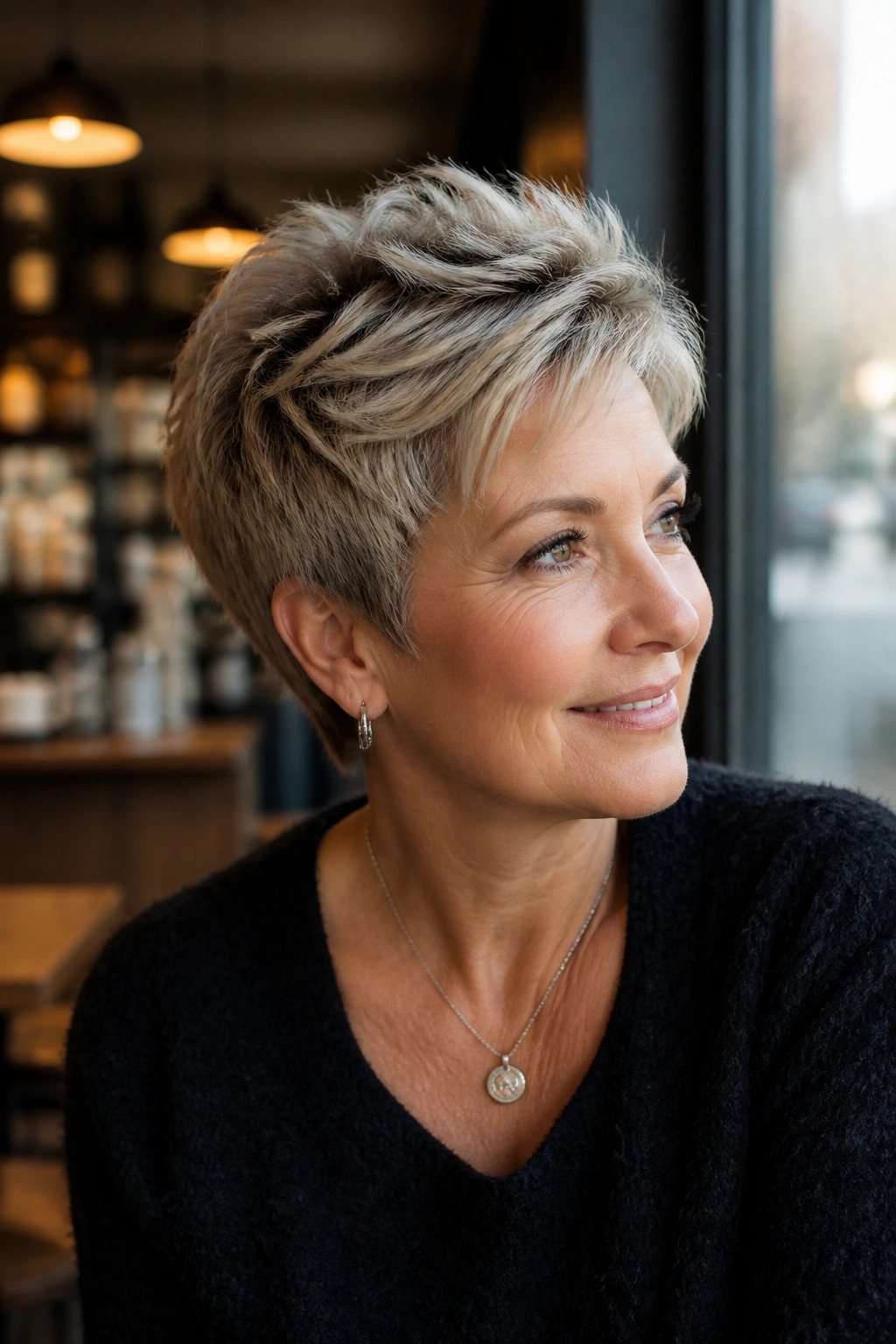
Feathered layers at the crown change the mood of a pixie fast. Instead of sitting flat, the hair lifts and bends away from the head in soft, airy pieces. On oval faces, that movement keeps the look light and easy while still giving the top enough height to feel styled.
The feathering matters because it stops the cut from turning blocky. Short hair can look heavy if all the layers sit in one blunt line, especially around the crown. Feathered ends break that line up. You get softness at the front and lift at the top without needing a lot of product.
How it changes the shape
The feathered crown opens the face and gives the cheekbones room to show. It is a nice fit if your hair is fine or medium and tends to fall flat by noon. It also looks good with a side part, because the layers can fall in different directions without looking messy.
Try a light mousse at the roots and a quick blow-dry with your fingers lifting the top. That is usually enough. Too much hairspray kills the floaty feel, and that would be a shame.
9. Micro Bang Pixie
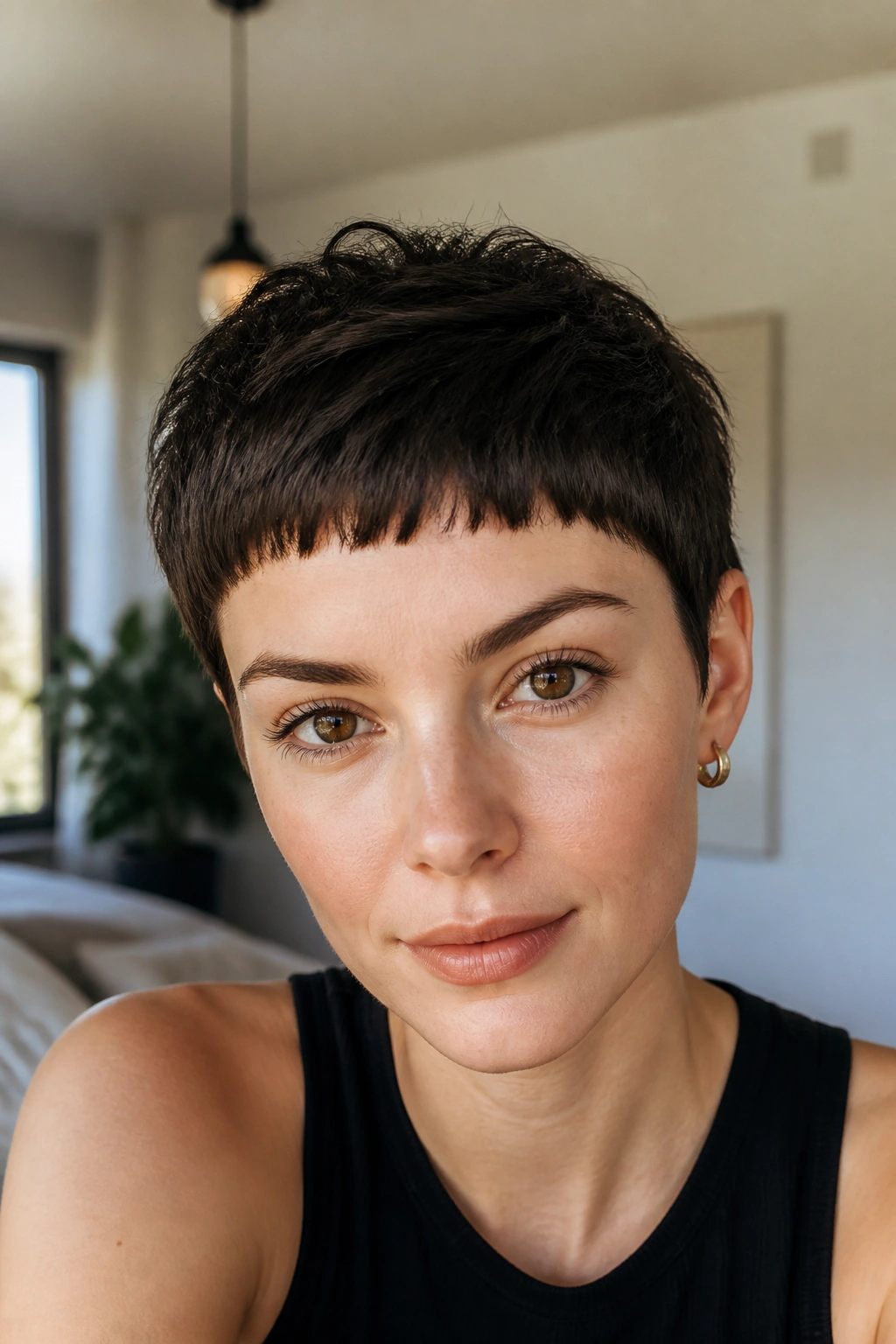
Micro bangs are a bold choice, but oval faces can wear them better than most people think. The short fringe leaves the brows exposed, which makes the eyes stand out and gives the face a sharp, almost graphic line. If you like the idea of a cut that feels a little fashion-forward without needing a whole costume attached to it, this is the one.
A good micro bang should sit well above the brows, not skim them. That tiny gap makes the fringe look intentional rather than accidental. It also puts the focus on the eyes and the upper half of the face, which is where oval faces often look cleanest.
You do need to like trims. A lot. Short bangs grow out fast, and once they drop into the brow line, the whole cut changes shape. If your hair has a big front cowlick or swings wildly at the hairline, this one asks for more styling patience than a side-swept fringe.
Still, when it works, it really works. Sharp. Bright. No clutter.
10. Brushed-Forward Crop
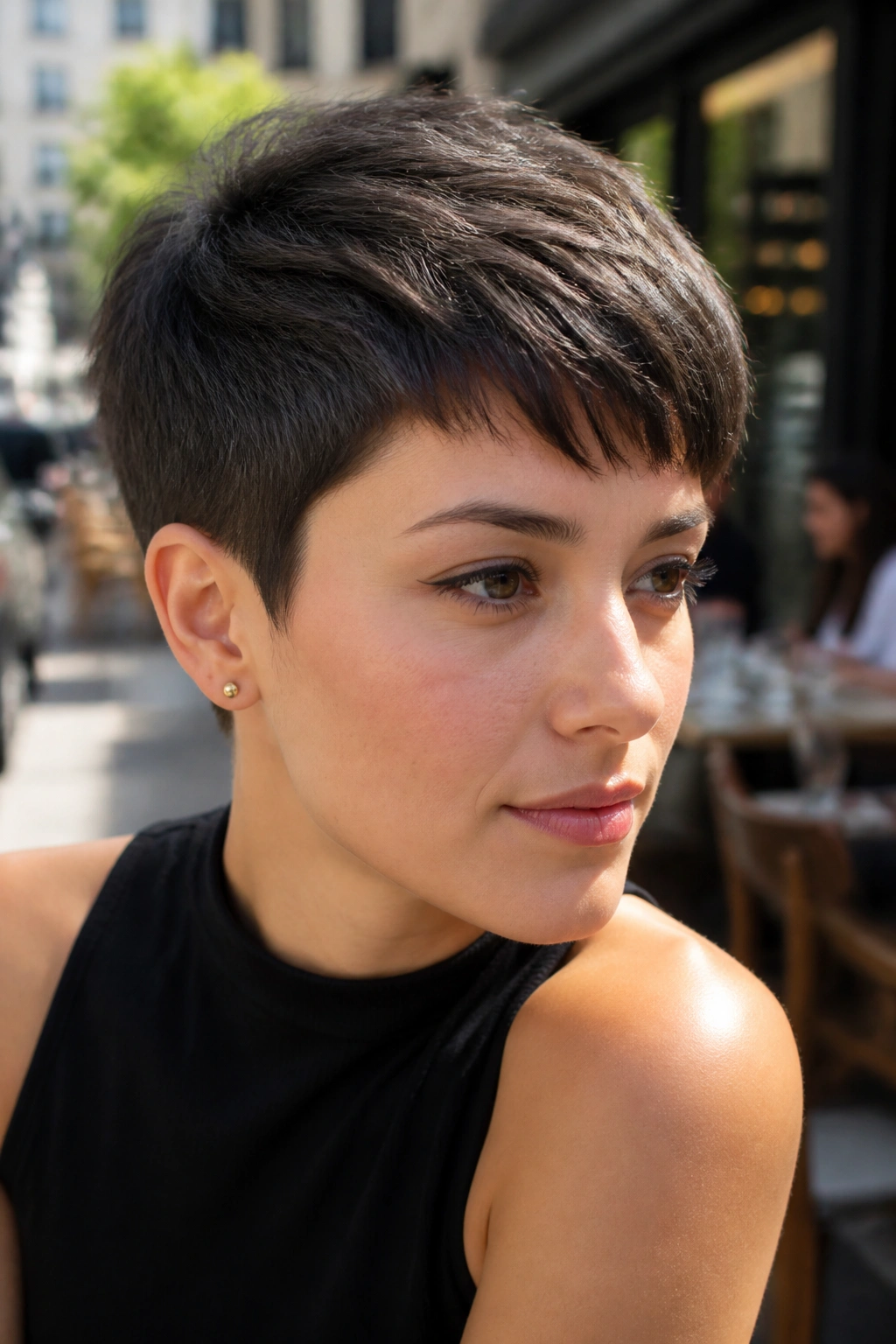
Why does the brushed-forward crop look so strong on oval faces? Because it pushes the focus straight toward the eyes and cheekbones. The hair moves forward from the crown and lands in a soft, controlled line across the forehead, which makes the cut feel modern without needing a lot of height.
This style has a very different energy from a side-swept pixie. It is more direct. Less romantic, more crisp. If your hair is straight or only slightly wavy, the forward direction can give you that tidy, piecey finish without a lot of fuss. Fine hair also likes it because the forward sweep can create the illusion of density right where the cut needs it.
A matte paste works better than anything shiny here. You want the strands to separate a little, not sit like one smooth sheet. If the hair starts to collapse during the day, a quick finger rake from crown to fringe usually brings it back.
One small warning: if your forehead is prone to cowlicks, keep the fringe longer at first. Short front sections can fight back.
11. Undercut Pixie
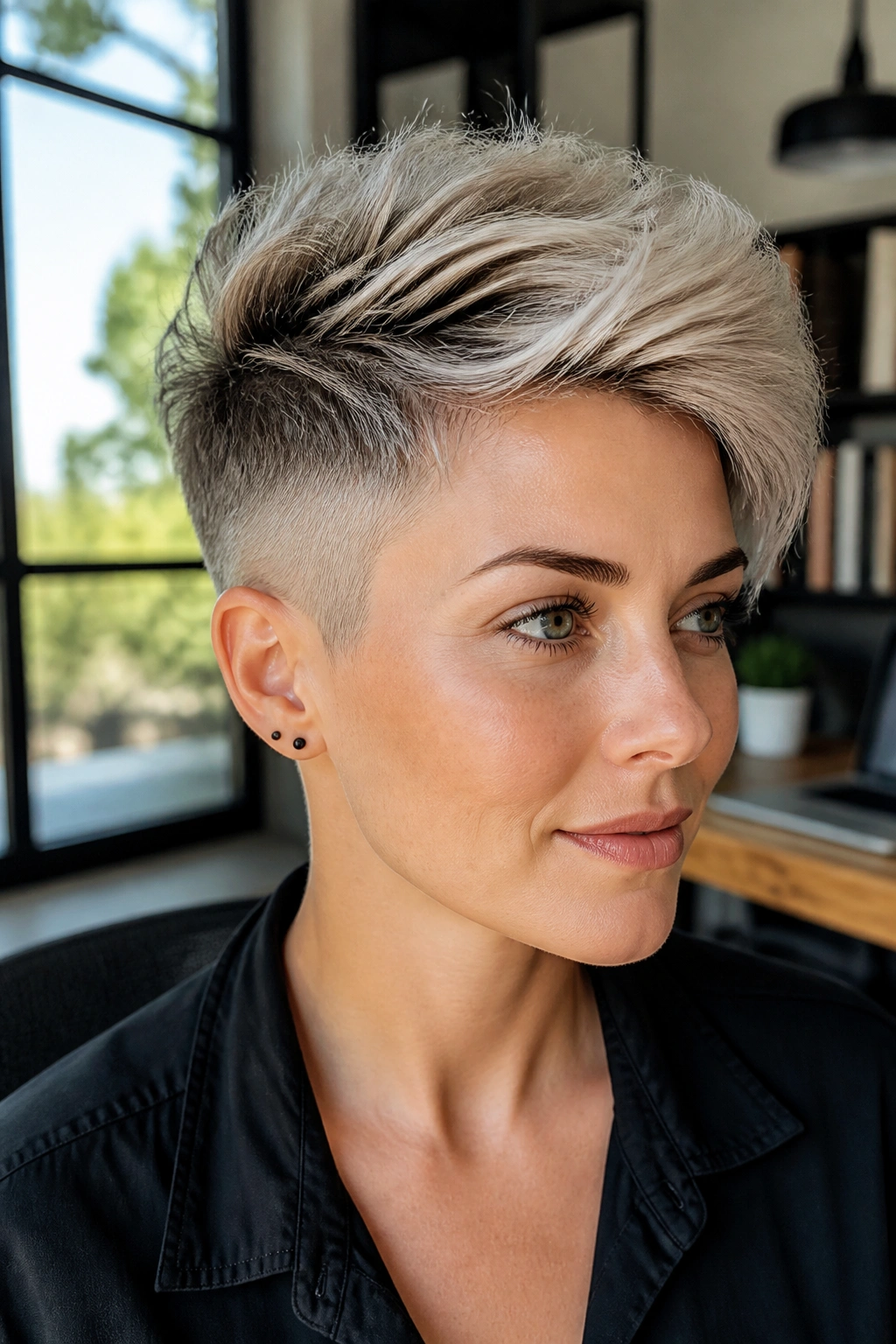
An undercut pixie does not have to look hard. It can be hidden, soft, and surprisingly wearable, especially on an oval face that can handle more contrast without losing balance. The longer top gives you styling room, while the shaved or closely clipped areas remove bulk from the sides and nape.
That contrast is the whole point. Thick hair benefits a lot because the undercut takes out the heavy base that makes short hair puff out around the ears. Fine hair can wear it too, but the top needs enough length to avoid looking sparse. A hidden undercut under longer layers is often the smartest version if you want the practicality without the obvious edge.
Common undercut placements
- Nape-only undercut for a cleaner neckline.
- Temple undercut for a sharper side profile.
- Hidden undercut beneath the top layer for removable bulk.
- Full side undercut if you want the strongest contrast.
The grow-out phase is the catch. It needs maintenance more often than a soft pixie, and that is the tradeoff. Worth it if you want speed and shape.
12. Bixie With Soft Layers
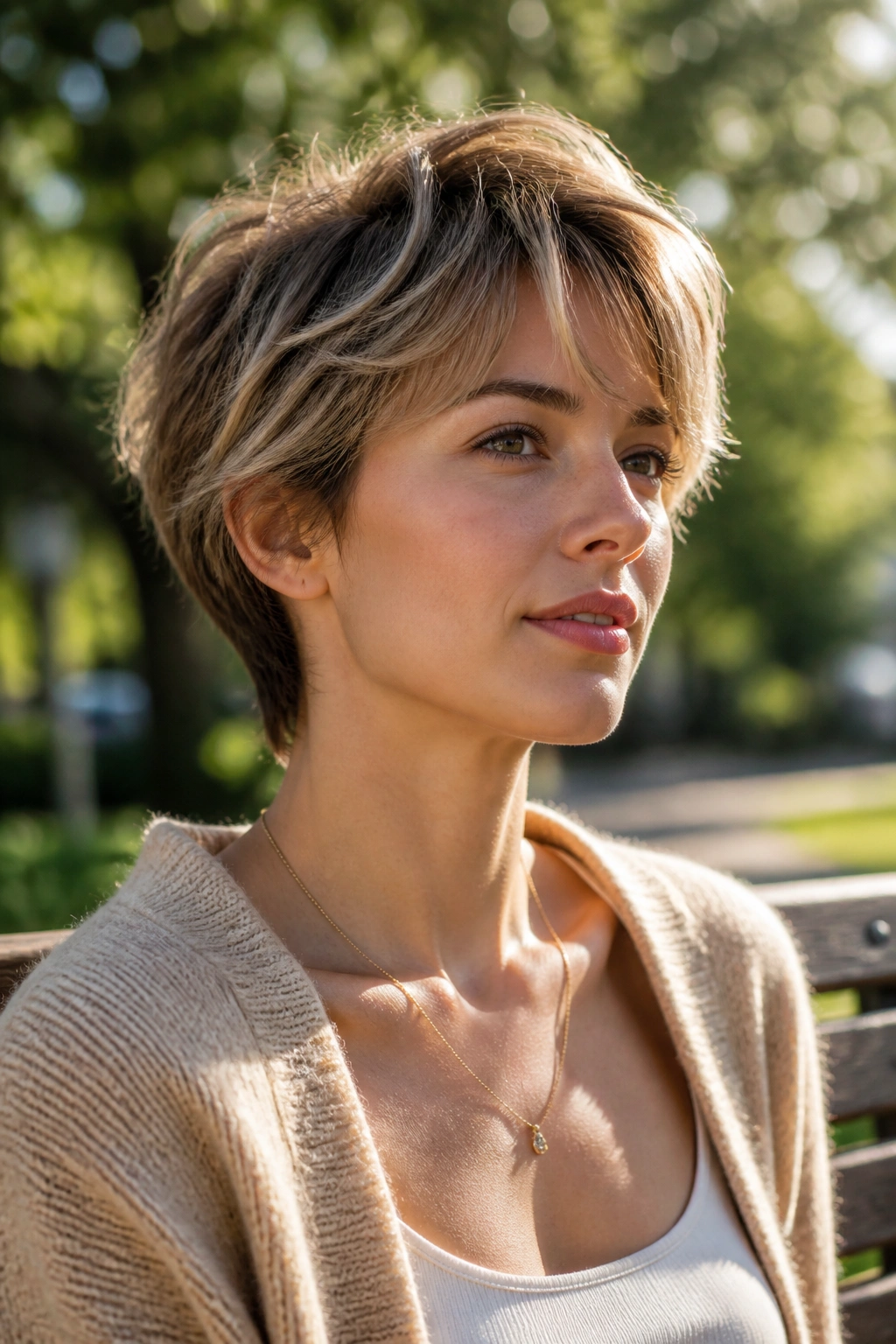
A bixie lives between a bob and a pixie, and that middle ground is exactly why it works so well on oval faces. The length is long enough to feel familiar, but short enough to expose the neck, jaw, and cheekbones. It gives you the short-hair feeling without the commitment of a very cropped cut.
Soft layers keep the shape from turning heavy at the ends. That matters because a bixie can go mushroom-shaped if the interior is too full. Ask for movement around the face, especially near the cheekbones, so the cut bends inward instead of flaring out. A little bend at the ends is enough. You do not need perfect curl.
This is a smart pick if you are unsure about going all the way to a pixie. It grows out gracefully, and you can tuck the longer pieces behind the ear when you want it to feel more like a short bob. That flexibility is the whole appeal.
If you want one short cut that does not feel like a leap, this is probably it.
13. Mohawk-Inspired Pixie
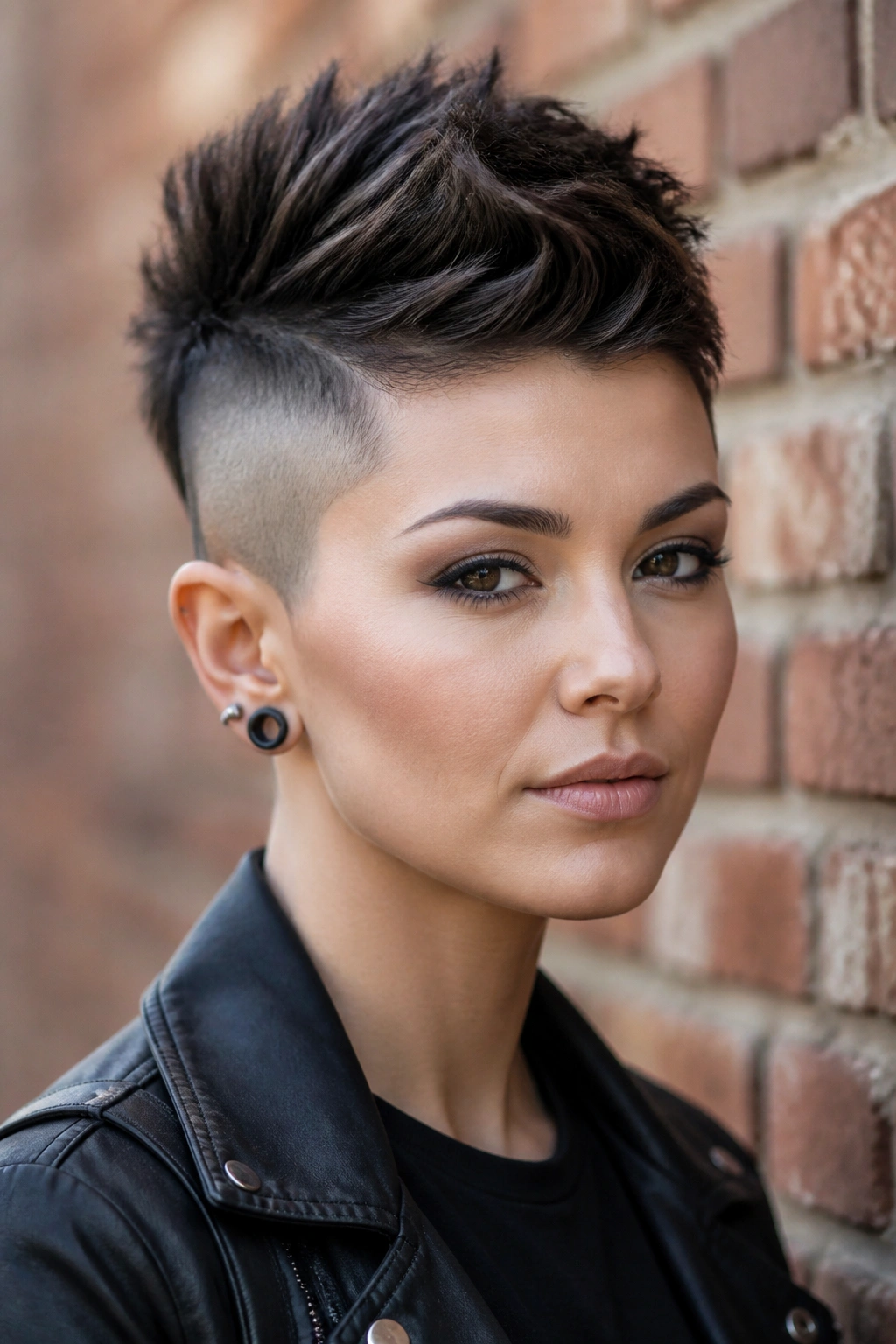
A mohawk-inspired pixie sounds louder than it usually wears in real life. Keep the sides tight, leave the center strip longer, and the result is less punk show, more sharp shape. Oval faces can handle that vertical line well because the face already has enough balance to support the extra height.
The center section can be soft and feathered or more defined, depending on how much edge you want. If the sides are blended smoothly into the top, the haircut reads as modern and clean. If the sides are clipped tighter, the shape gets bolder. Either way, the face stays open, which is what makes this cut surprisingly flattering on oval shapes.
How to keep it soft
- Ask for a blended transition, not a hard ridge.
- Keep the top long enough to lift by hand.
- Use a root spray or mousse for height.
- Avoid heavy oils near the crown.
This style is best if you like a little drama in your hair. Not costume drama. Just enough to notice.
14. Slicked-Back Pixie
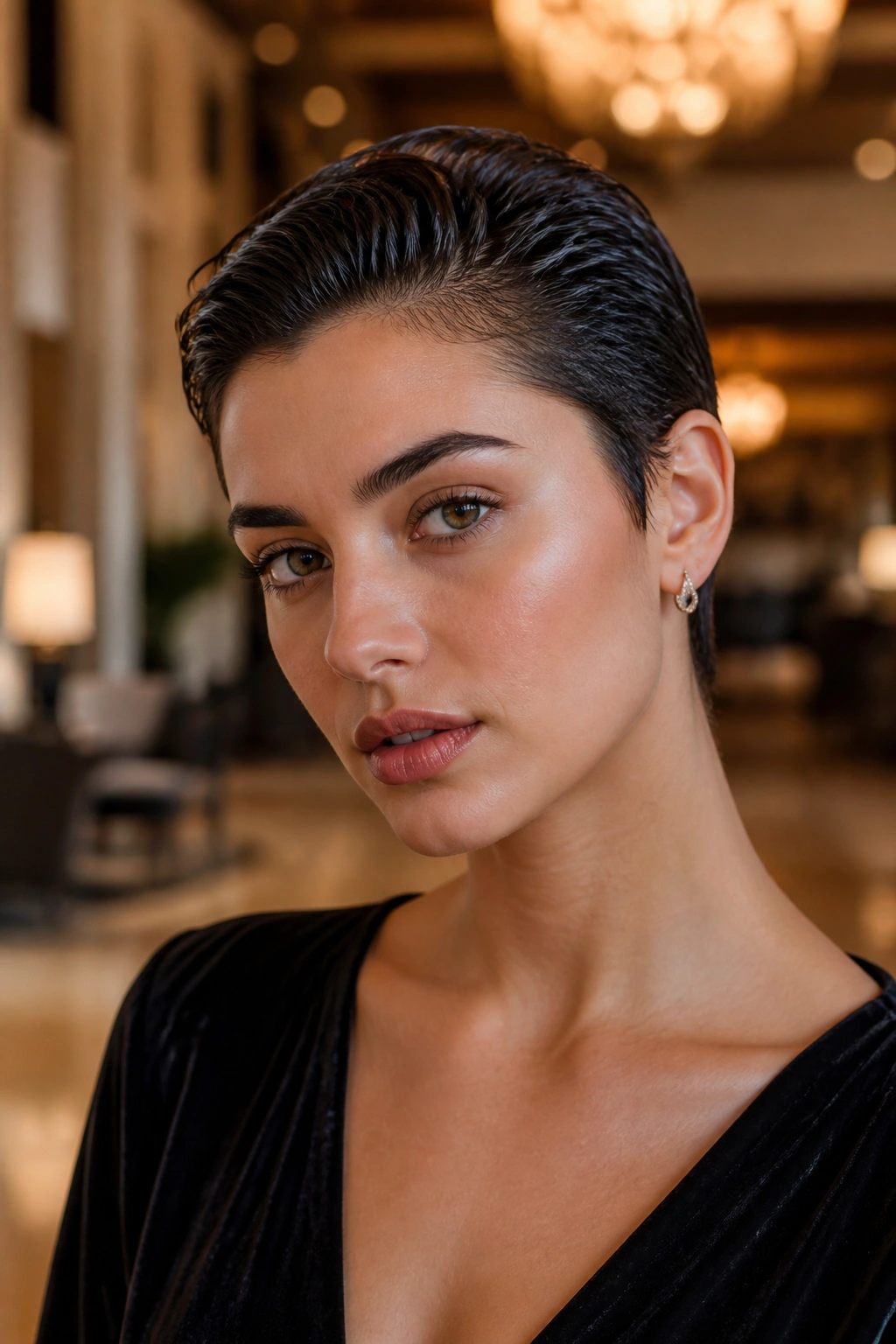
A slicked-back pixie can look polished in a way few short cuts manage. Hair is brushed away from the face and set close to the head with cream, gel, or a wet-look product, which puts every feature on display. Oval faces take that exposure well because the proportions stay calm even when the hair gets dramatic.
This is the cut for evenings out, formal events, or any day you want the face to do the talking. It also works on shorter pixies that need a clean finish instead of fluff. The key is to keep the texture intentional, not crunchy. A soft gel or lightweight styling cream usually gives a better result than stiff hold.
If you have baby hairs or an uneven hairline, leave a few soft pieces loose near the temples. That stops the style from feeling severe. And if your hair is very dry, a wet look can be unforgiving, so condition well.
What product texture works best
- Cream for soft hold and a natural finish.
- Gel for a sharper, shinier look.
- Pomade for separation and control.
- A tiny bit of oil on the ends, not the roots.
It is a strong look. No pretending otherwise.
15. Crown-Heavy Pixie
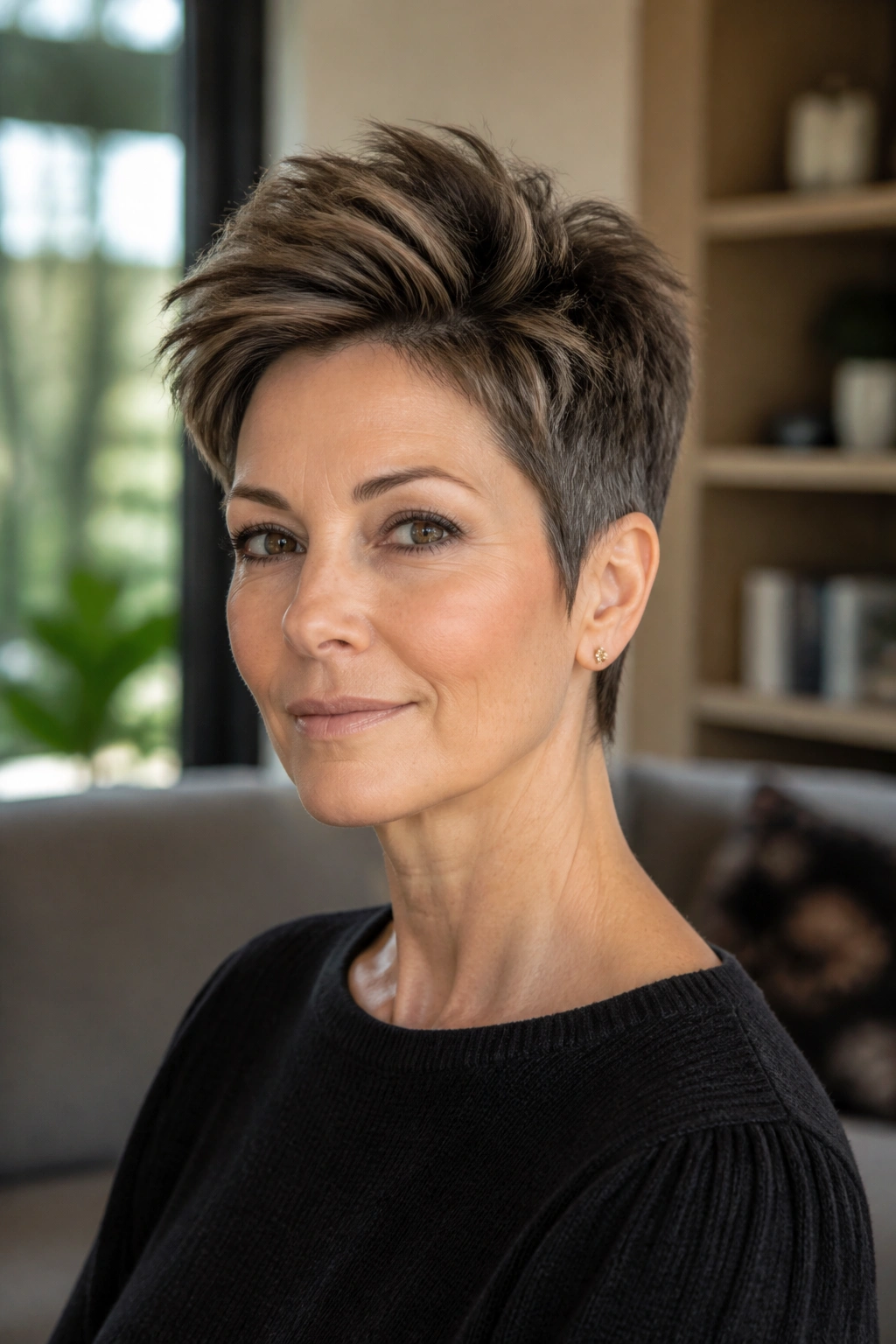
A crown-heavy pixie keeps the volume where it counts: up top. The sides stay neat, the back stays controlled, and the crown gets enough lift to make the haircut feel alive. On oval faces, that extra height can look elegant rather than too long, as long as the sides do not disappear completely.
This style is useful for fine hair that needs a little boost and for medium hair that tends to fall flat after an hour. The trick is not to build a tower. A soft lift at the crown is enough. If the top goes too high, the face can start to feel stretched, which is not the look here.
Blow-drying with a small round brush or lifting the roots with your fingers while the hair is warm usually does the job. A root spray helps more than a heavy mousse if your hair is thin. If your face is already long, keep the crown height modest and let the fringe stay a little fuller instead.
Height is good. Too much height is a different story.
16. Razor-Cut Pixie
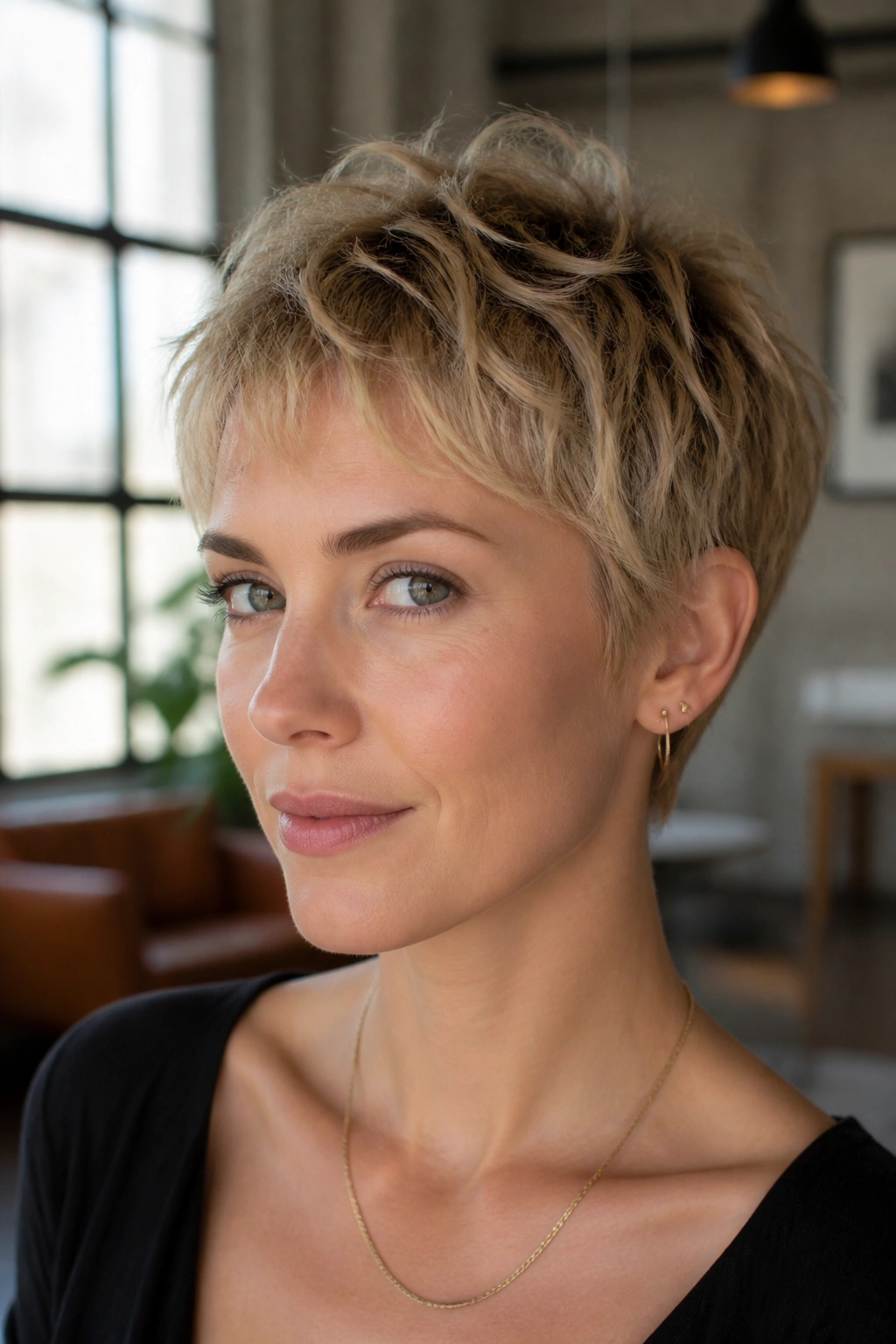
A razor-cut pixie has softer ends and a kind of airy, lived-in finish that scissors cannot always give. The blade removes bulk and leaves the edges a little wispy, which makes the whole cut feel lighter. On an oval face, that softness keeps the look from becoming too rigid.
Thick hair usually responds well to this technique because the razor takes down the density without flattening the shape. It also helps if you want a piecey finish with movement around the temples and fringe. Fine hair can wear it too, but the stylist has to be careful not to take too much weight out of the ends or the cut can start looking sparse.
This one depends on the hands doing the cutting. A razor cut done badly can frizz at the ends or create weak spots, especially if the hair is already fragile. So ask for a stylist who actually cuts this way often, not someone winging it because they own the tool.
Soft, airy, a little undone. That is the sweet spot.
17. Wavy Shag Pixie
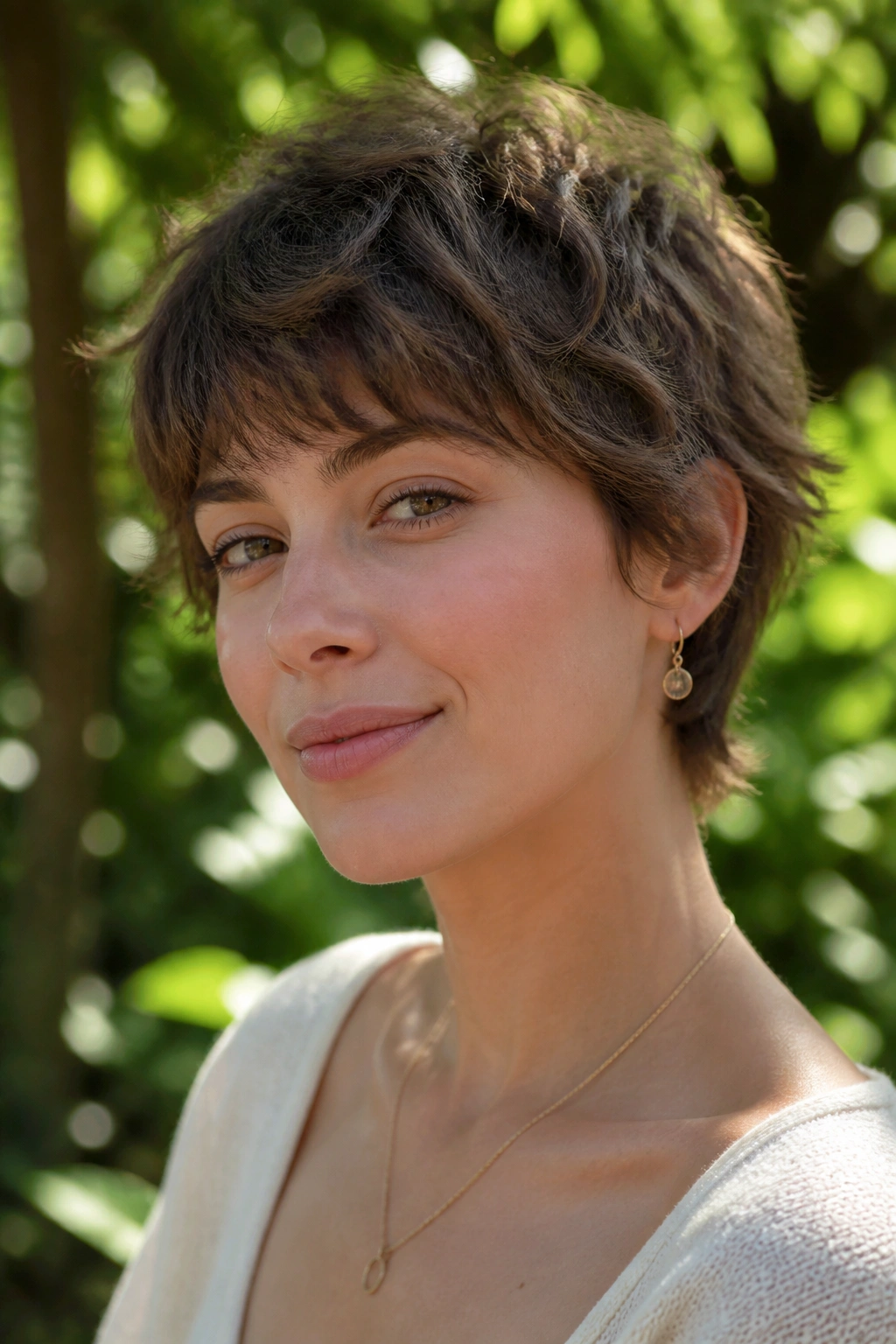
A wavy shag pixie sits in a nice middle place between playful and practical. The layers are broken up enough to let natural waves move, but short enough to keep the shape focused around the face and crown. Oval faces can wear this easily because the shaggy texture adds interest without needing extra width anywhere.
The best versions keep the fringe soft and the sides lightly layered. You want bends, not bulk. If the hair is air-dried with a little cream, the texture falls into place with almost no effort. That is the real draw here. The haircut does not need perfection every morning. It needs a bit of movement and a product that does not weigh the waves down.
Best styling combo
- Leave-in cream for softness.
- A touch of mousse at the roots.
- Scrunching while the hair is damp.
- A diffuser only if the waves need a lift.
This style is good for people who like their short hair to look slightly undone on purpose. There is a difference, and it matters.
18. Quiff Pixie
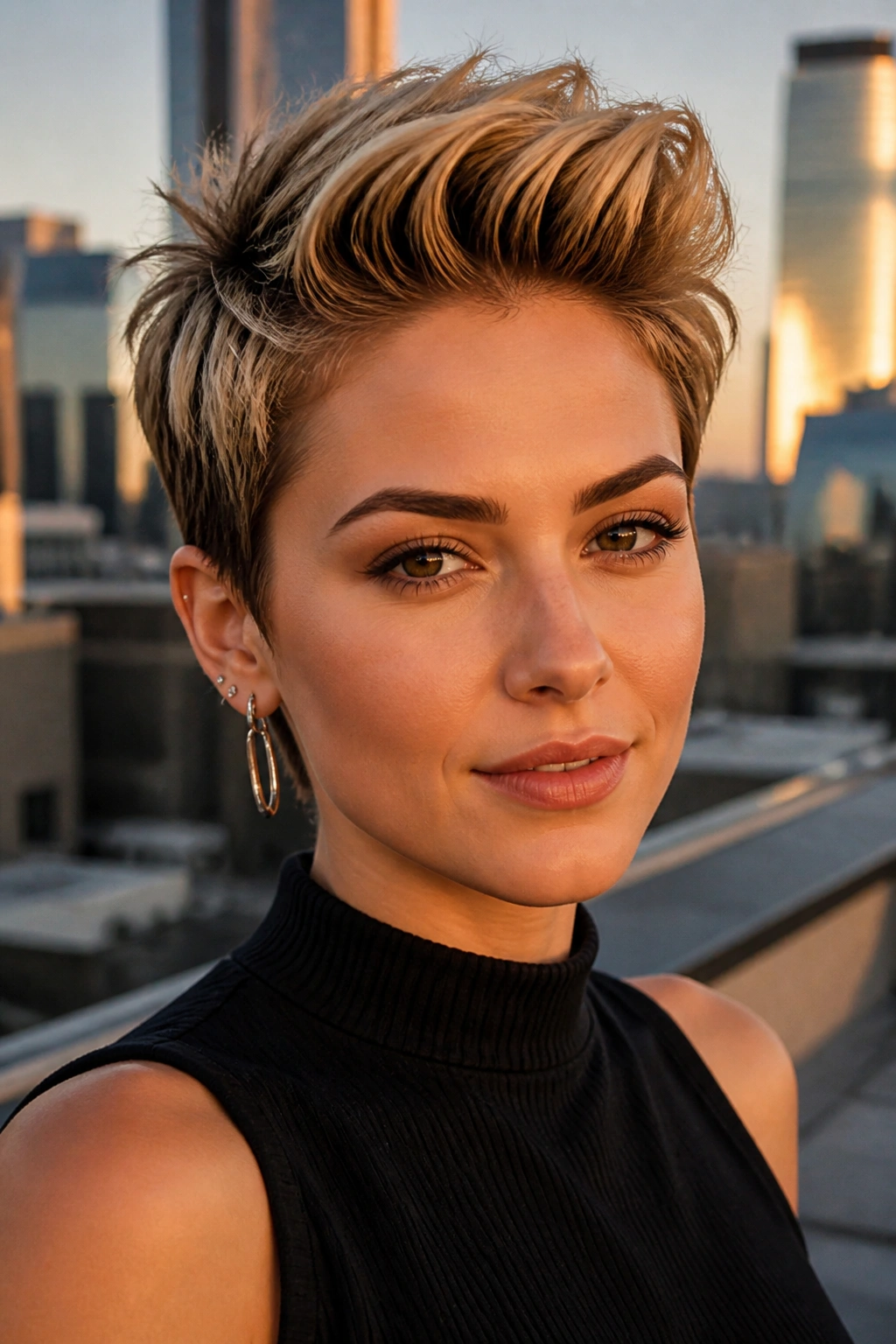
A quiff pixie pushes the front section up and back, which gives the style a little lift and a lot of personality. On oval faces, that upward movement does not have to work hard to balance anything. It just makes the features look clear and lively.
This is one of the more styled-looking pixies on the list. You usually need a blow-dryer, a brush, and a product with enough grip to keep the front from collapsing. The payoff is a sharp silhouette that still feels wearable. It can look polished in the daytime and stronger at night with almost no change in the cut itself.
If you like hair that has some attitude without getting too extreme, this is a nice middle ground. Keep the sides closer to the head so the front volume stands out. A quiff that is too wide can start to look puffy instead of sculpted.
It takes a few extra minutes. Still worth it.
19. Piecey Pixie With Sideburns
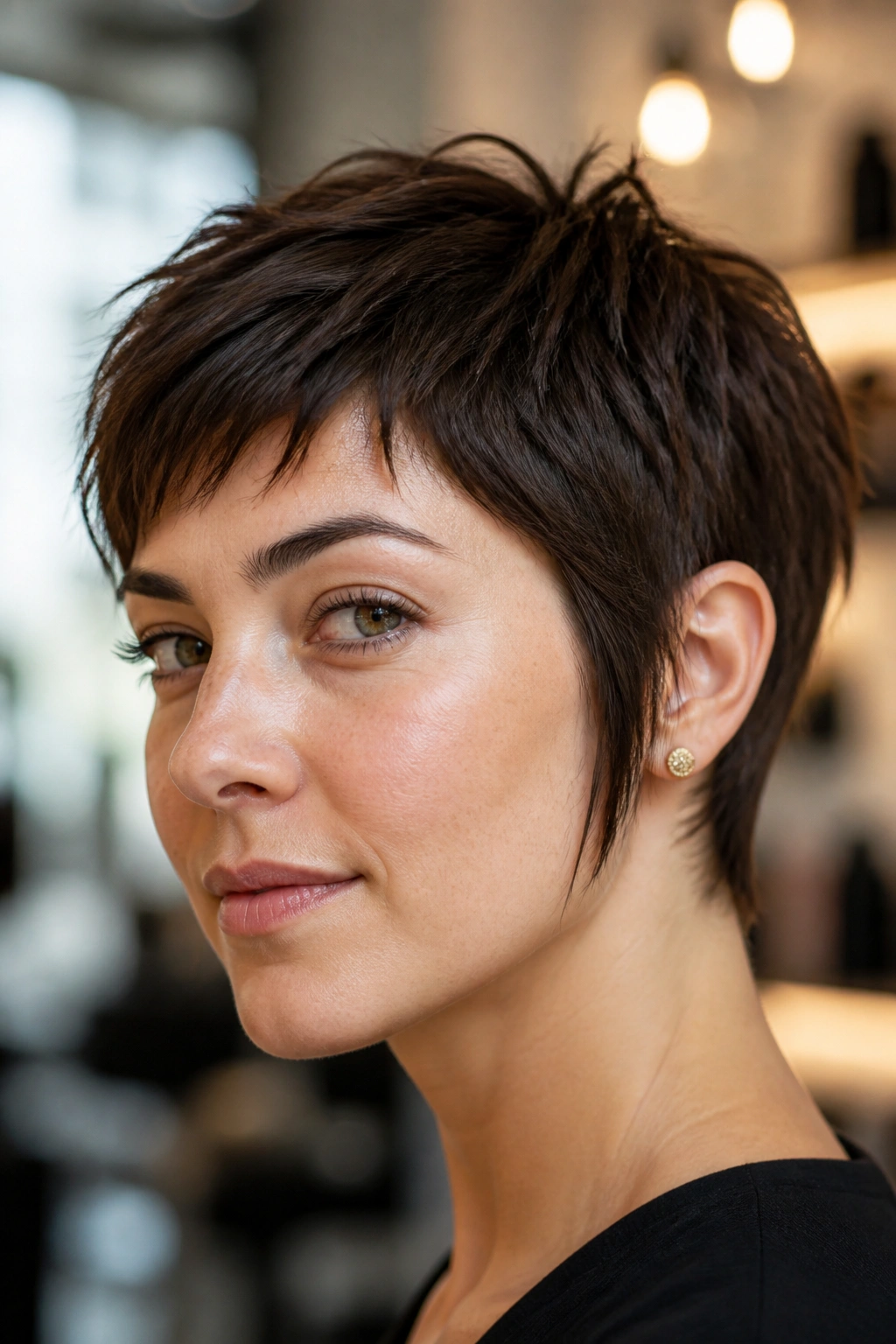
Sideburns matter more than people think. In a piecey pixie, they frame the jaw and soften the area right in front of the ears, which can make the whole cut look more finished. On oval faces, that little bit of length keeps the shape from feeling too abrupt.
Why the sideburns matter
If they are cut too high, the face can lose some of its natural outline. If they are left a little longer and textured, they connect the haircut to the cheekbone area in a much better way. That is especially useful if you like a pixie that feels feminine without being overly polished.
The piecey texture on top helps too. You get motion above and around the face, while the sideburns keep the profile soft. Ask for them to hit somewhere around the top of the jaw or just below the ear, depending on how much frame you want.
A tiny bit of wax at the ends is enough. Pinch, separate, and stop before it turns greasy. That line between tidy and overworked is thin.
20. Minimal Close Crop
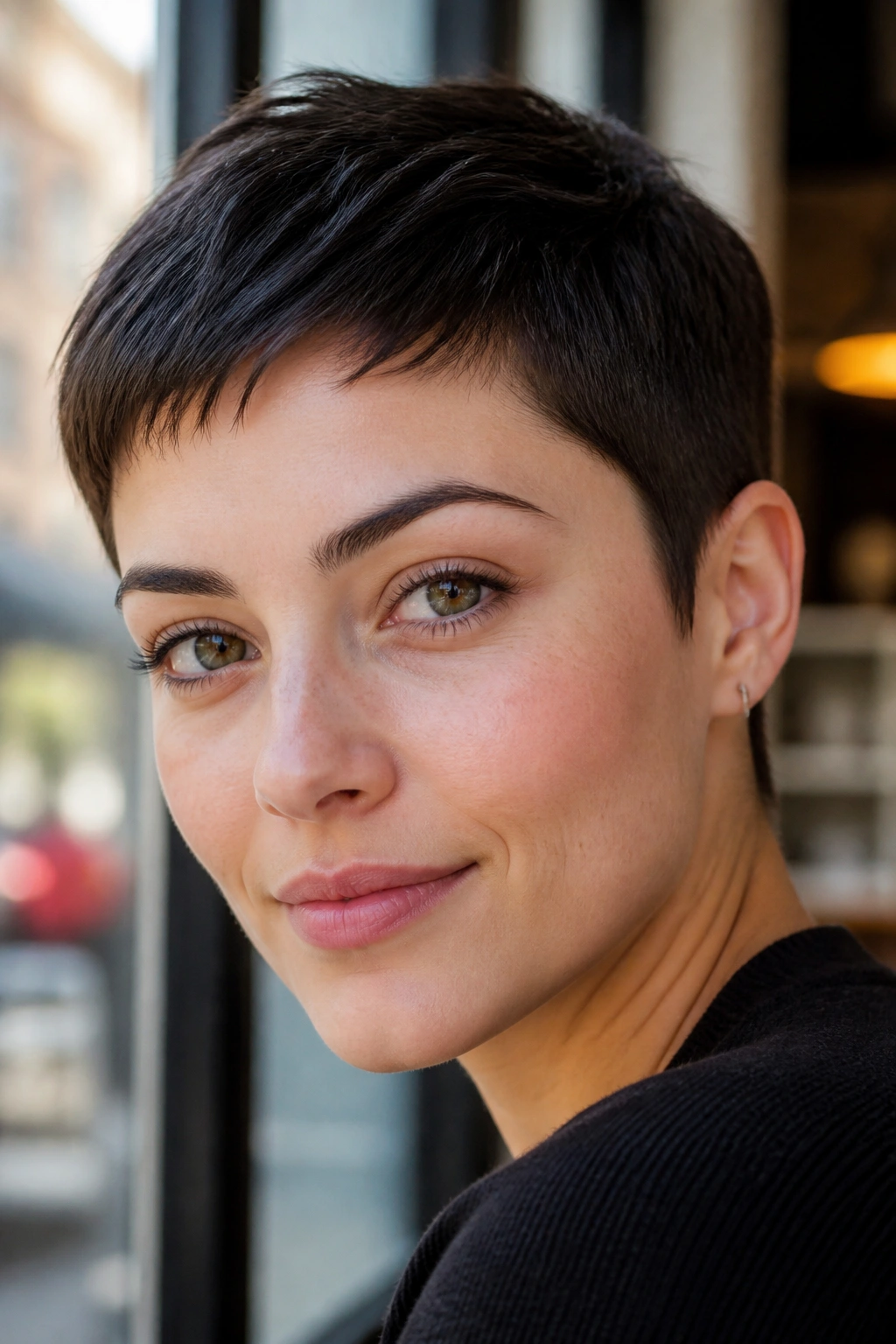
A minimal close crop is the shortest, cleanest version in the mix, and oval faces can carry it without needing extra tricks. There is nowhere for the hair to hide, which is exactly why the cut looks so fresh when it is done well. The eyes, brows, cheekbones, and jaw all come forward at once.
This is not the cut for someone who wants to cover much. It is for someone who likes a sharp outline, a fast morning routine, and hair that stays out of the way. If your hair is very dense, the crop can be kept close but still soft on top. If your hair is fine, the shape needs a little more precision so it does not read as flat.
A tiny fringe or soft forward texture keeps the cut from feeling too severe. And if you want a version with a little warmth, leave the sideburns and nape a touch longer than the top. That small difference changes everything.
Shorter than this, and you are almost in buzz-cut territory. Which is fine, if that is what you want. For oval faces, though, this close crop is often the cleanest line in the room.
