



Fine hair and a pixie cut can be a gorgeous match, or a frustrating lesson in how fast hair can go flat. The best choppy pixie cuts for fine hair do not try to fake fullness with a dozen tiny layers everywhere. They keep enough shape at the crown, enough edge around the perimeter, and enough softness in the right places so the haircut still has something to stand on.
That part matters more than people think. With fine strands, too much thinning can turn a cute short cut into something stringy and see-through by lunch. A smart choppy pixie uses texture like seasoning, not a heavy pour. The good ones give you movement at the top, clean edges at the nape, and pieces that separate instead of clumping into one sad little shape.
I’ve always thought the best pixies for fine hair are the ones that look a little smarter than they first appear. They may read as effortless, but they are usually built with real restraint: a little longer through the crown, a little stronger through the fringe, and not much reckless razoring near the ends. That balance is the difference between “short hair” and “short hair that actually looks fuller.”
1. Crown-Lifted Micro Pixie
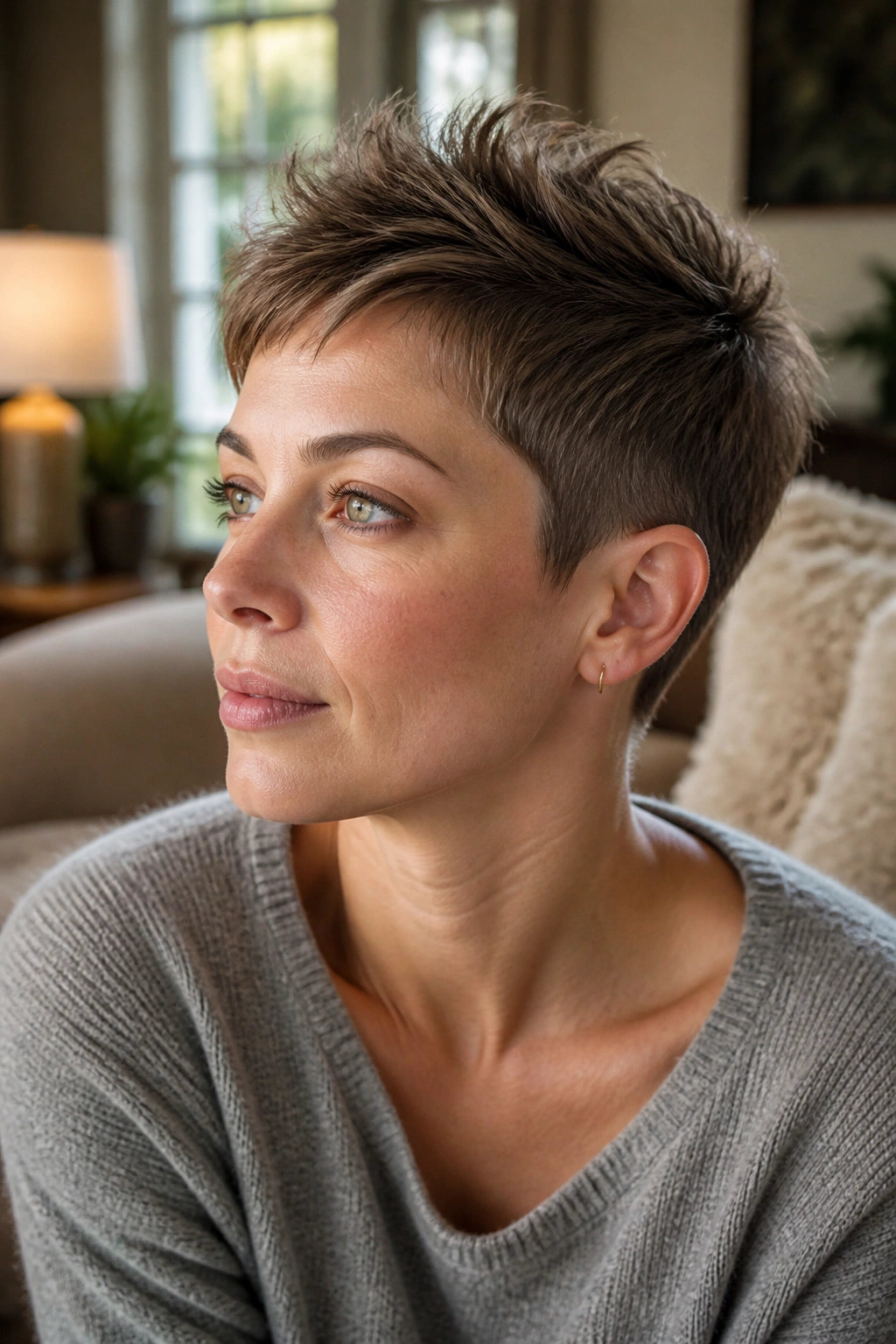
This is the tiny cut that makes fine hair look awake. A crown-lifted micro pixie keeps the sides close and the nape neat, then leaves just enough length on top to create a little height without tipping into helmet territory. The whole point is shape. Not volume for volume’s sake.
The crown does the heavy lifting here. Ask for the top to stay slightly longer than the sides, with soft separation through the upper layers so the hair can stand off the head instead of lying in one flat sheet. A small round brush and a pea-size mousse can do a lot for this cut, especially if you dry the crown upward and slightly back.
Why it works on fine hair
Fine strands often collapse when the weight sits in the wrong place. This cut removes that problem by trimming the sides tight while keeping the top buoyant and light.
- Best for straight to slightly wavy fine hair.
- Works well if your hairline is neat and you like a clean neck.
- Looks fuller when the top is lifted with root mousse.
- Needs a trim about every 4 to 6 weeks to stay crisp.
Pro tip: Don’t flatten the crown with heavy cream. It kills the whole point.
2. Side-Swept Fringe Pixie
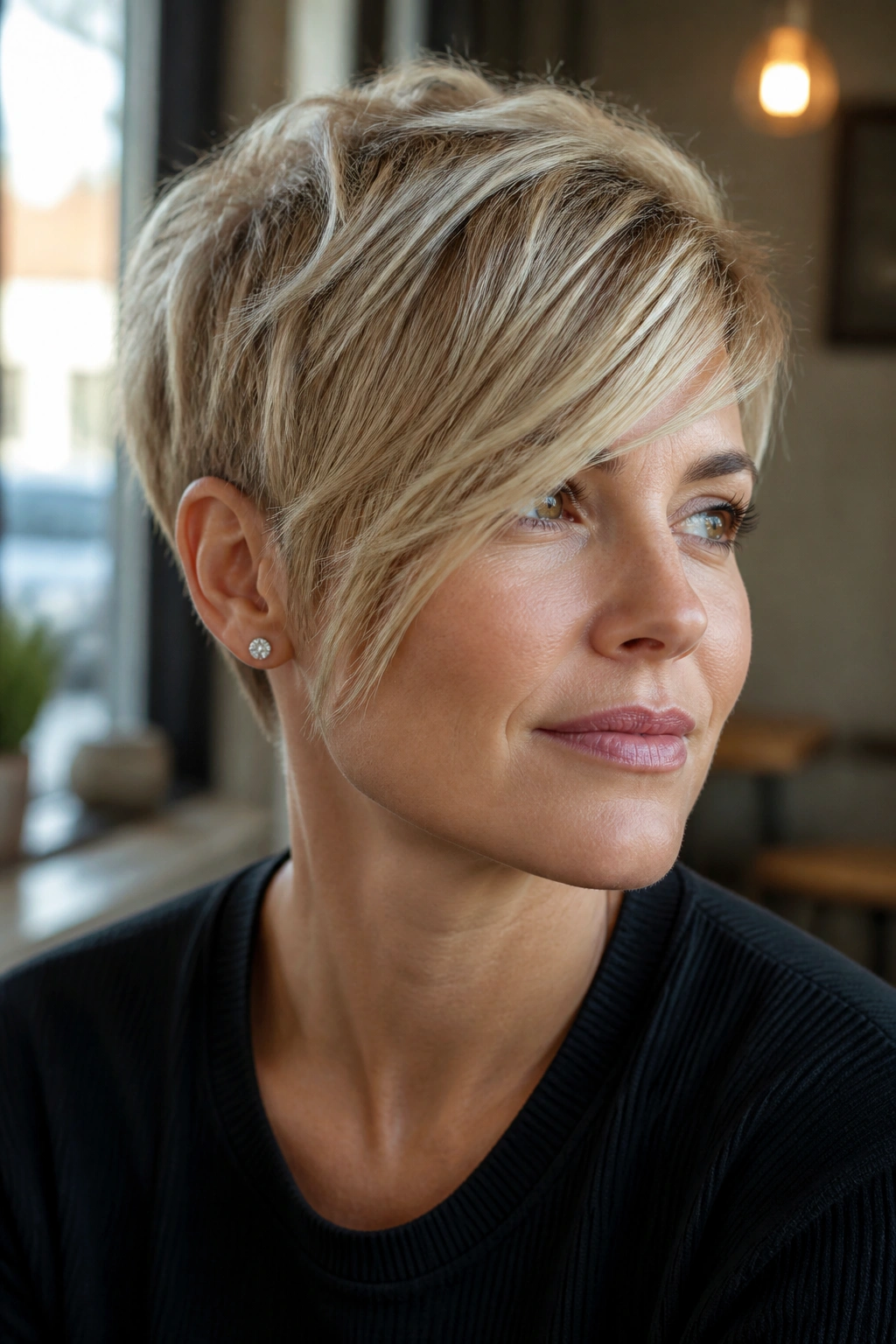
A side-swept fringe is one of the easiest ways to make fine hair look denser. The diagonal line gives the eye something to follow, and that little sweep across the forehead hides a lot more than blunt micro-bangs do. It also softens the face, which is useful if you don’t want every bit of the haircut sitting in one hard shape.
The fringe should start longer than you think. I like a sweep that hits somewhere between the brow and the cheekbone, with the shortest pieces blending into the temple instead of stopping abruptly. That keeps the front from looking chopped off. The rest of the cut can stay cropped and piecey, which gives the style that easy, lived-in feel people usually want from a choppy pixie.
A light styling cream or texture spray is enough here. Push the fringe to one side while drying, then let a few ends break away naturally. That broken line is doing more work than a perfect curve ever could.
3. Razor-Textured Crop
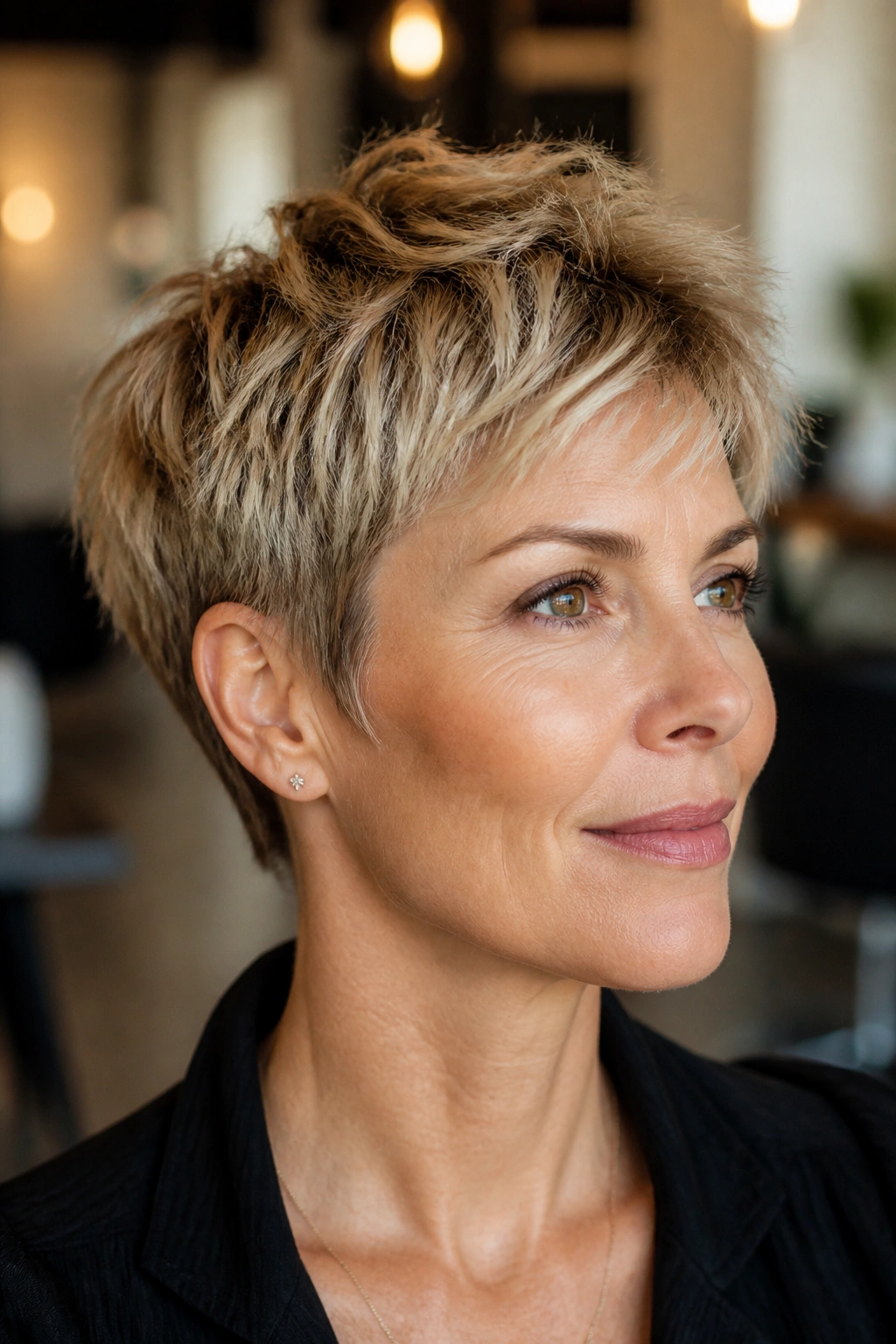
Why does a razor-textured crop work so well on fine hair when too much layering usually makes hair weaker? Because the razor removes bulk in a controlled way, and that can create movement without leaving the ends blunt and heavy. The key is restraint. A good razor cut should look airy, not shredded.
This style keeps the outline close to the head, then breaks up only selected sections so the top and fringe can move. It’s especially nice if your hair tends to puff at the ends but lies flat at the roots. You get more separation where you want it and less weight where you don’t. That matters on a short cut, because every millimeter shows.
How to ask for it
Tell your stylist you want soft, disconnected texture rather than a thin-out job. That language helps avoid overworking the ends.
- Ask for razor work mainly through the top and fringe.
- Keep the perimeter stronger so the cut still looks full.
- Avoid heavy texturizing at the nape if your hair already feels sparse.
- Style with a matte paste, but only a tiny amount.
The right razor crop has a little grit to it. Too much, and it starts to look tired.
4. Tapered Pixie With Piecey Top
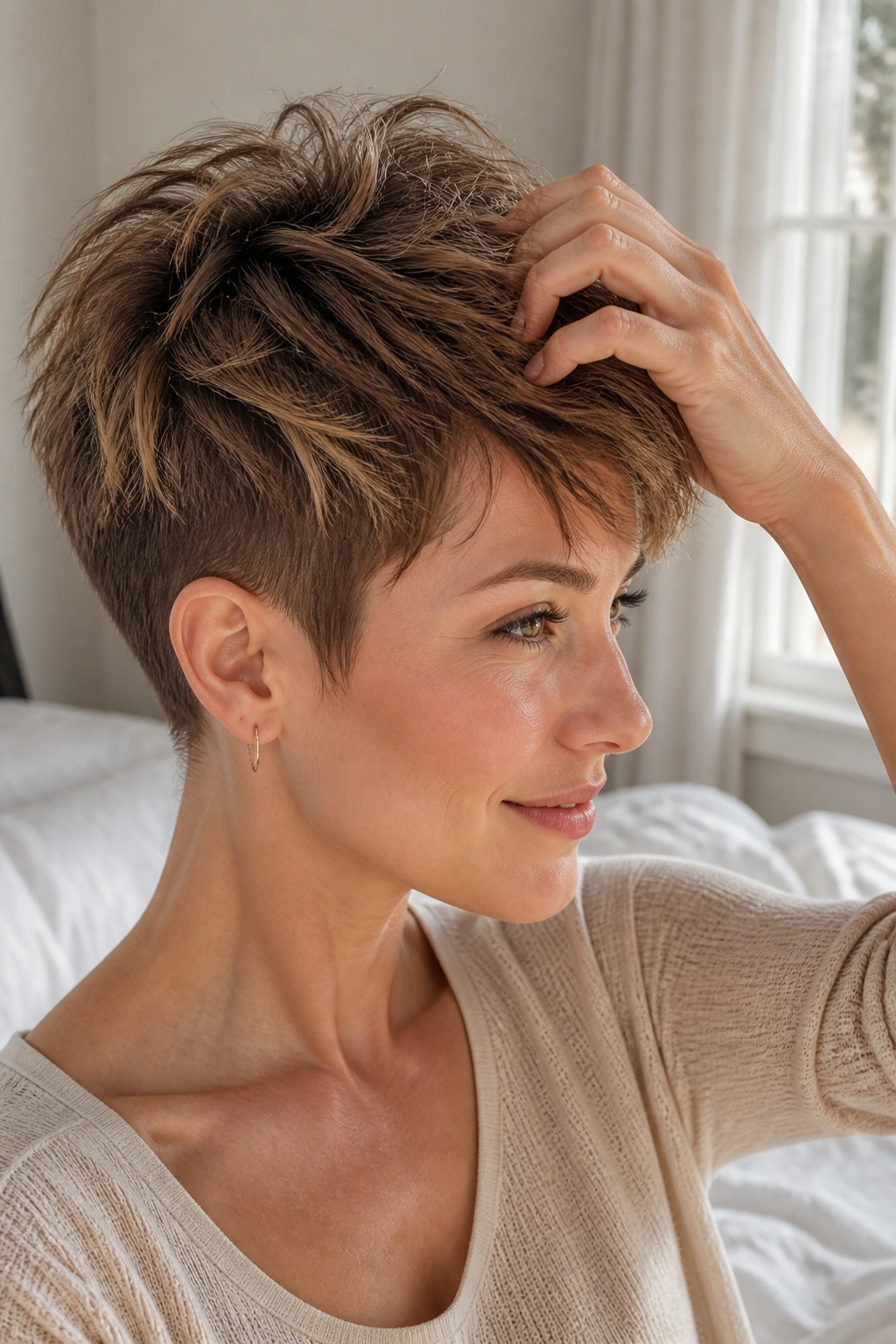
If you want a pixie that feels neat from the side but alive from the top, this is the one. The taper through the back and sides creates a clean outline, while the top stays broken into little pieces that move when you run your fingers through it. Fine hair often looks better when the shape is controlled at the base and loose on top.
This cut is especially good if you like tucking hair behind one ear. The taper keeps the profile tidy, so you do not end up with bulky side sections that flip out in random directions. Meanwhile, the piecey top gives the whole cut a little lift and avoids that overly polished short-hair look that can make fine strands seem even thinner.
A blow-dryer and a vent brush are enough most mornings. Direct the top upward first, then pinch a few ends with a dab of styling wax after it cools. Cool hair holds shape better than warm hair ever will.
5. Long-Crown Choppy Pixie
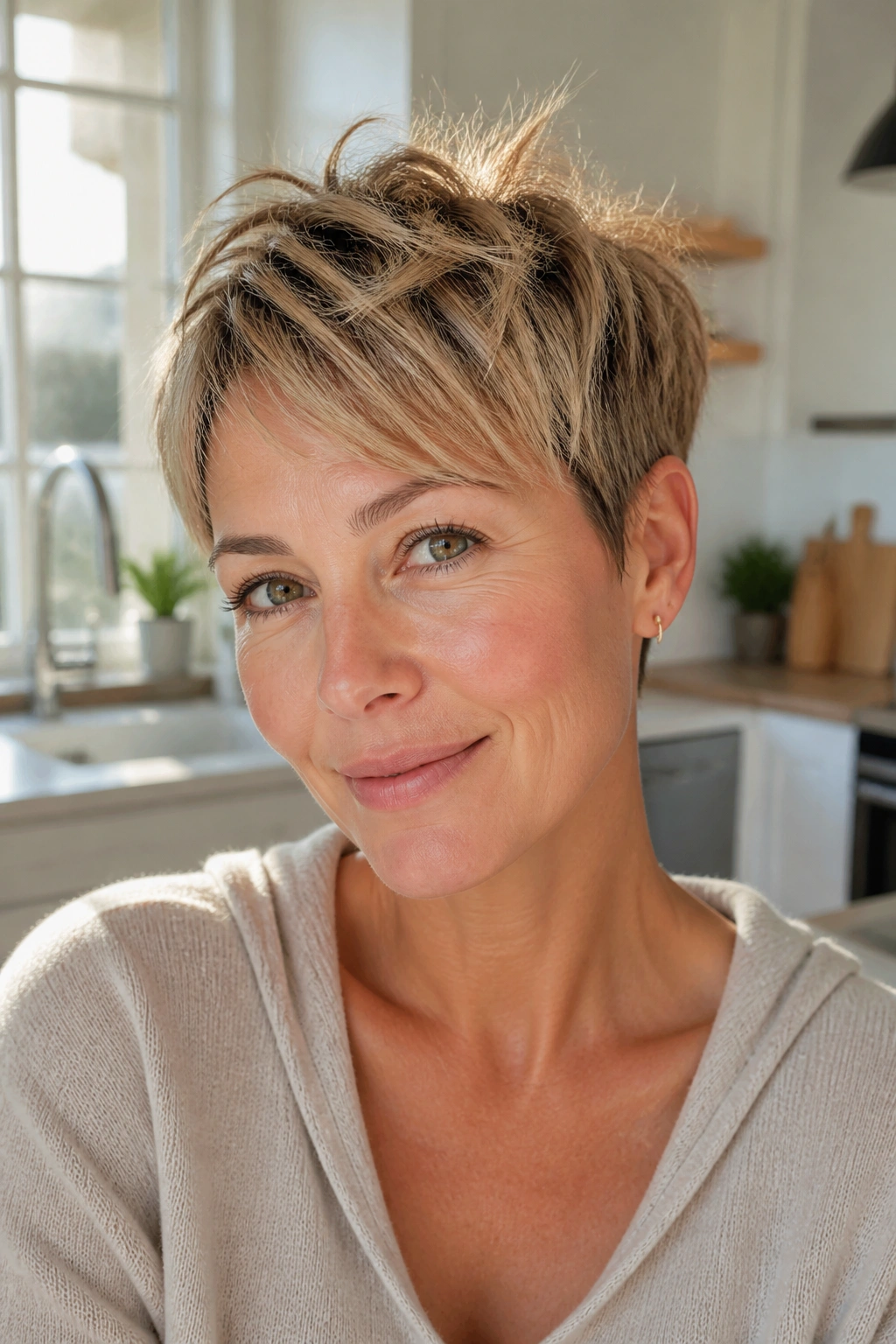
Long-crown pixies are a gift for anyone with fine hair that needs a little more body without looking overstyled. The crown stays longer, often by an inch or two compared with the sides, and that extra length gives the cut room to bend, puff, and separate. Shorter pieces around the ears keep it from getting fluffy in the wrong way.
What I like about this shape is that it respects gravity. It does not fight it with too many short layers. Instead, it builds softness at the top and lets the hair settle into a shape that feels easy, not forced. If your hair is fine but fairly straight, this can be one of the most forgiving pixies on the list. The crown will keep a little movement even on a lazy day.
A touch of dry shampoo at the roots helps this cut last between washes. You do not need a lot. A light mist, worked in with fingertips, is enough to rough up the base and keep the top from sliding flat by noon.
6. Asymmetrical Choppy Pixie
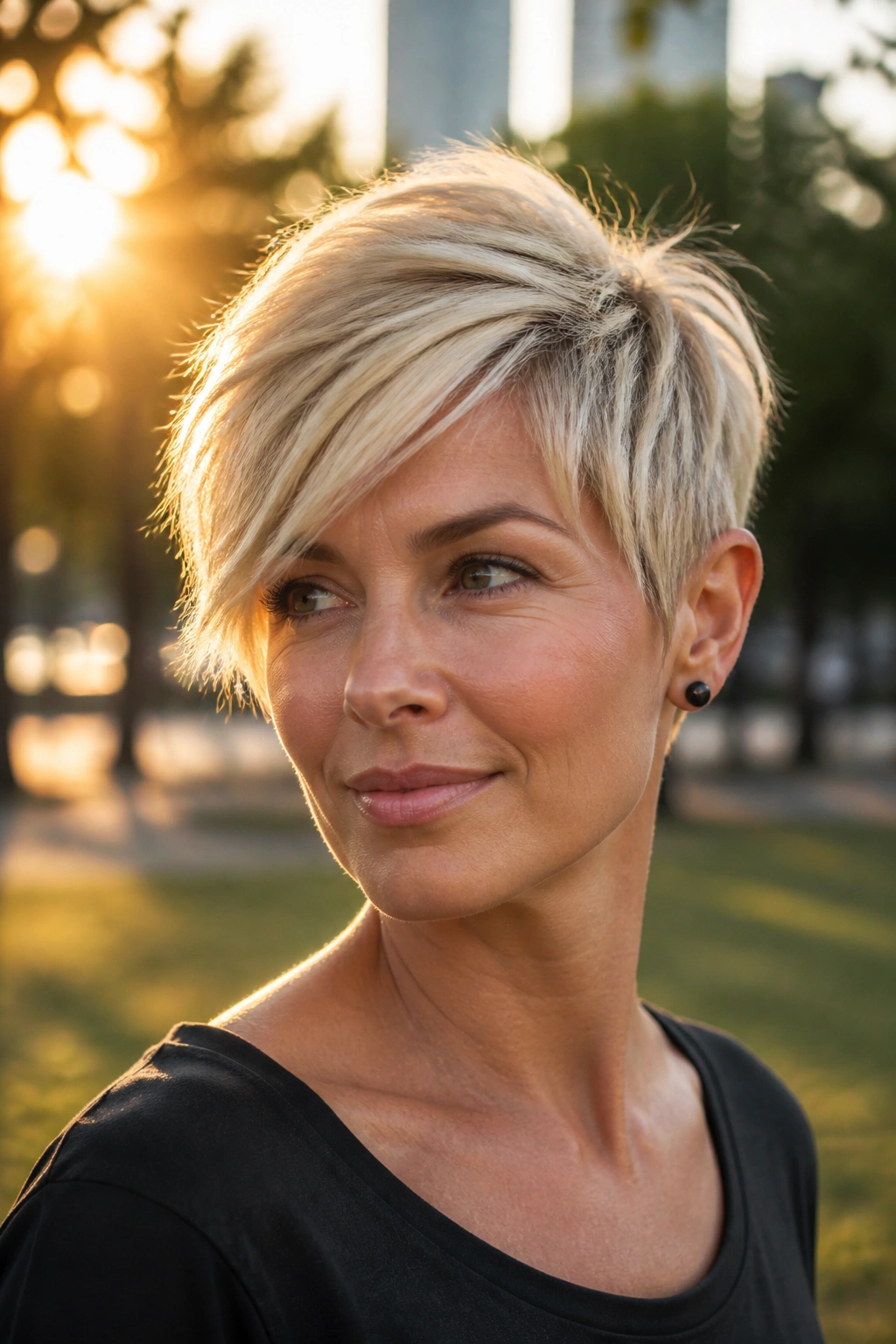
A flat part can make fine hair look smaller than it is. An asymmetrical choppy pixie fixes that by shifting the weight off-center, which creates shadow, lift, and a little visual tension. One side can graze the brow while the other stays tighter at the ear. That unevenness is the whole point.
This cut is good when your hair falls in the same place every single day and refuses to cooperate. The asymmetry interrupts that habit. It also gives the illusion of density because the eye reads the longer side as fuller, even if the actual amount of hair is the same. Small trick. Big payoff.
It suits strong cheekbones and angular features especially well, but it can work on softer faces too if the longer side is not too severe. Keep the texture choppy, not razor-thin, so the length difference looks intentional instead of patchy. If the cut starts to feel too precious, it has gone too far.
7. Broken Fringe French Pixie
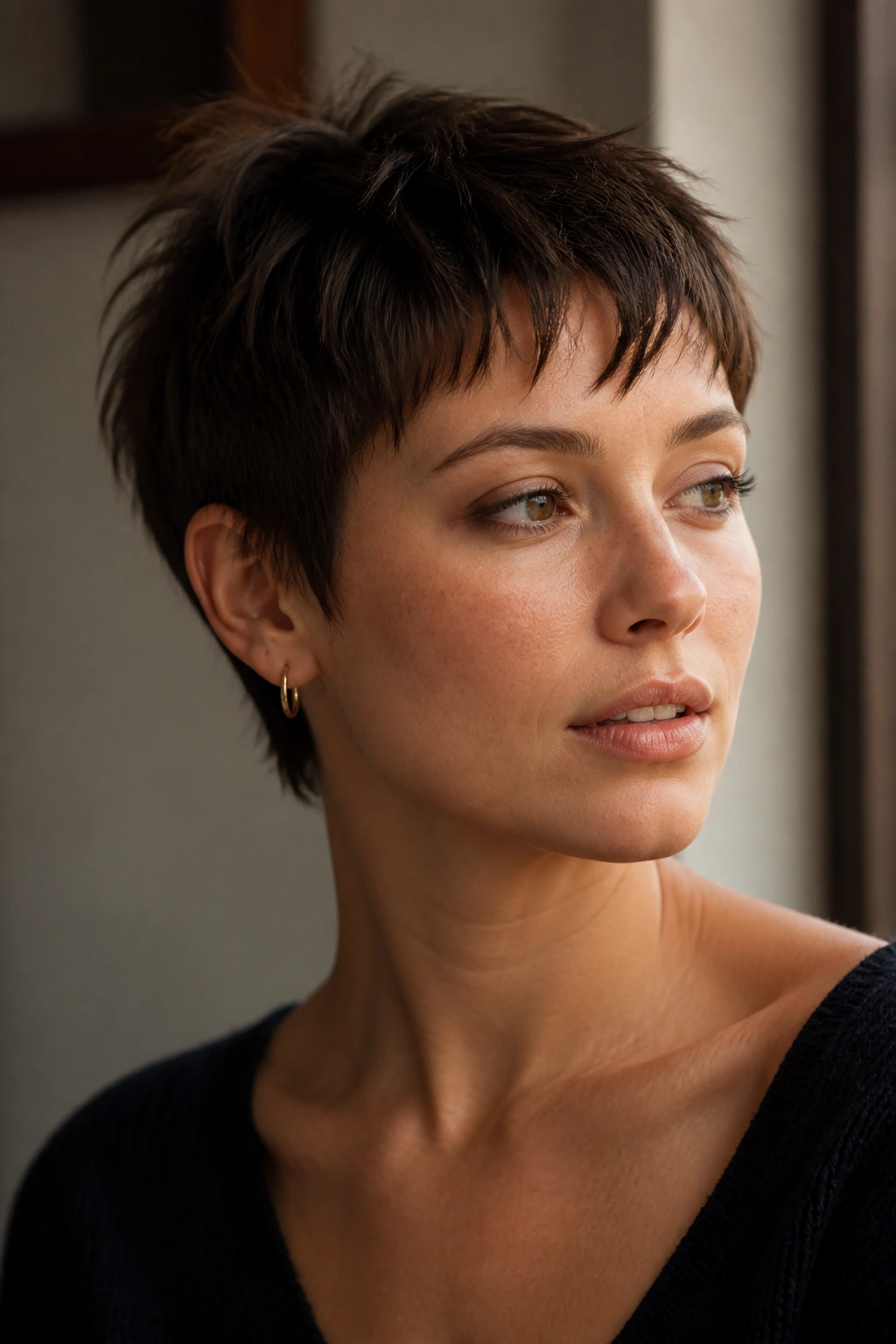
A broken fringe gives a French-style pixie its charm. Not a solid curtain. Not a blunt line. Just little separated pieces across the forehead that look like they were cut with a bit of nerve and then left alone. On fine hair, that broken edge can be kinder than a heavy fringe because it doesn’t drag the face down.
What the broken fringe does
It puts texture right where people look first. The fringe creates interest, and the rest of the cut can stay simple and close to the head so the overall shape doesn’t swell out.
A style like this loves a light cream or a soft paste rubbed between the fingers first. Then pinch the fringe into tiny sections and let a few pieces fall where they want. Do not comb it into one polished sheet. That kills the mood and the movement.
How to wear it
- Keep the fringe long enough to tuck sideways if needed.
- Ask for uneven ends, not thinning shears everywhere.
- Leave the crown soft so the front is not doing all the work.
- Dry the fringe with your fingers, not a stiff brush.
This cut has personality. It also grows out better than people expect.
8. Feathered Pixie for Wispy Hair
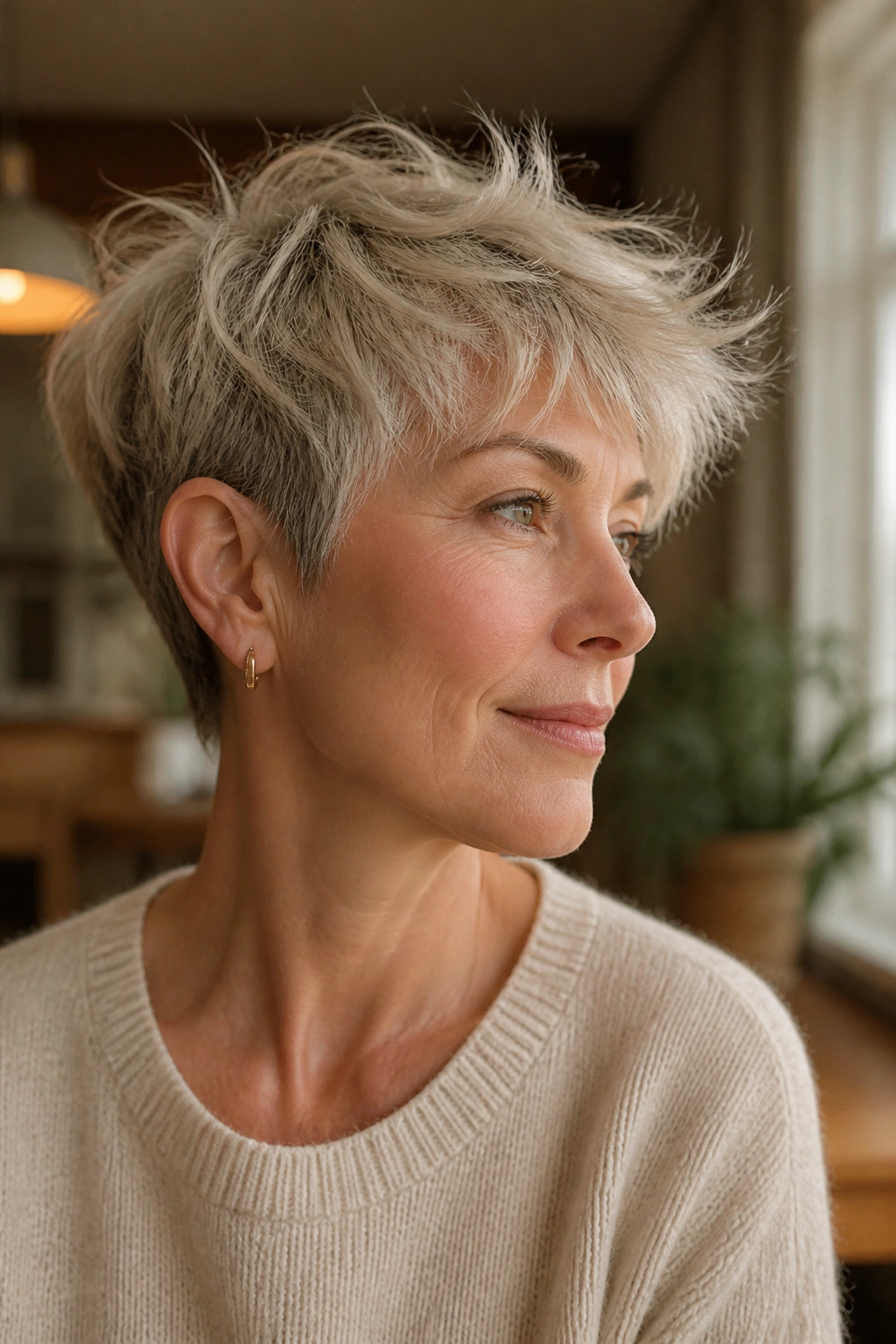
I reach for feathering when the hair feels soft, airy, and a little too willing to collapse. A feathered pixie can give wispy strands some direction without making them look chopped to bits. The trick is to feather the top and fringe while leaving the base strong enough to support the shape.
There’s a fine line here. Too much feathering and the hair starts to look thin in the wrong places. Done well, though, the layers bend the eye upward and make the cut feel lighter and fuller at the same time. You see movement instead of scalp. You get softness instead of a hard edge.
The best version of this cut usually has a neat nape, a softly feathered crown, and a little extra length around the temples. That combination keeps the silhouette from floating away. It also makes air-drying easier, which is a blessing if your hair has a mind of its own. A mist of volumizing spray at the roots helps more than a full head of product.
9. Undercut Pixie With Soft Overhang
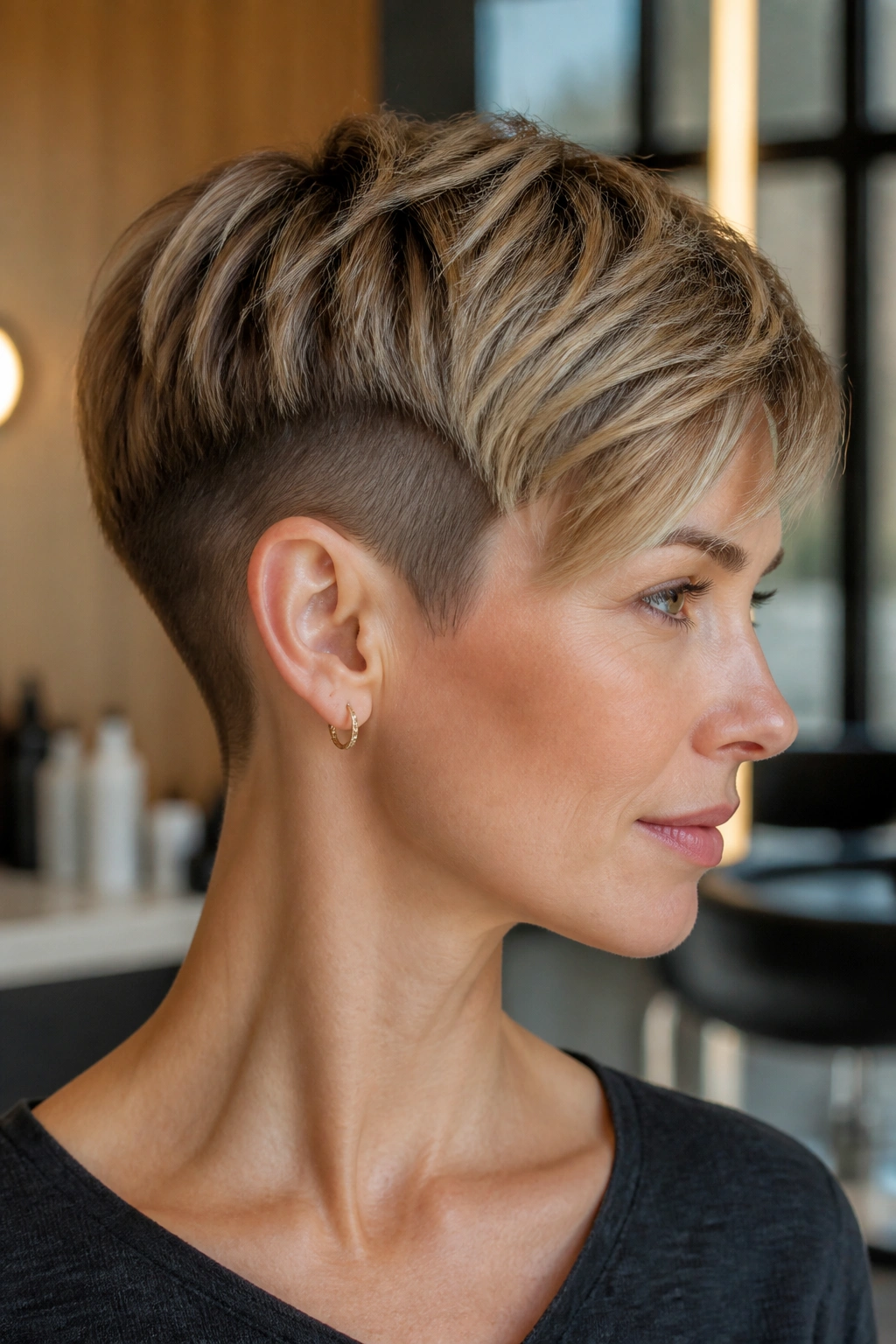
An undercut can sound severe, but on fine hair it can be a smart move. By taking more length away underneath and letting the top fall softly over it, you create a cleaner line and a lighter feel on the scalp. The overhang hides the short bits beneath and gives the cut a little sweep.
This works especially well if the back of your head gets bulky but the top looks sparse. The undercut removes the heaviness that fine hair sometimes holds in the wrong place, and the soft top keeps the style from looking too sharp. It’s one of those cuts that seems tougher on paper than it looks in real life.
The styling part is straightforward. Rough-dry the top, then use your fingers to bend the longest pieces over the undercut. A tiny bit of wax at the ends helps them stay separated. Don’t overdo it. The beauty of this cut is the contrast between hidden shortness and visible softness. That contrast disappears fast if you smother it.
10. Deep Side-Part Tousled Pixie
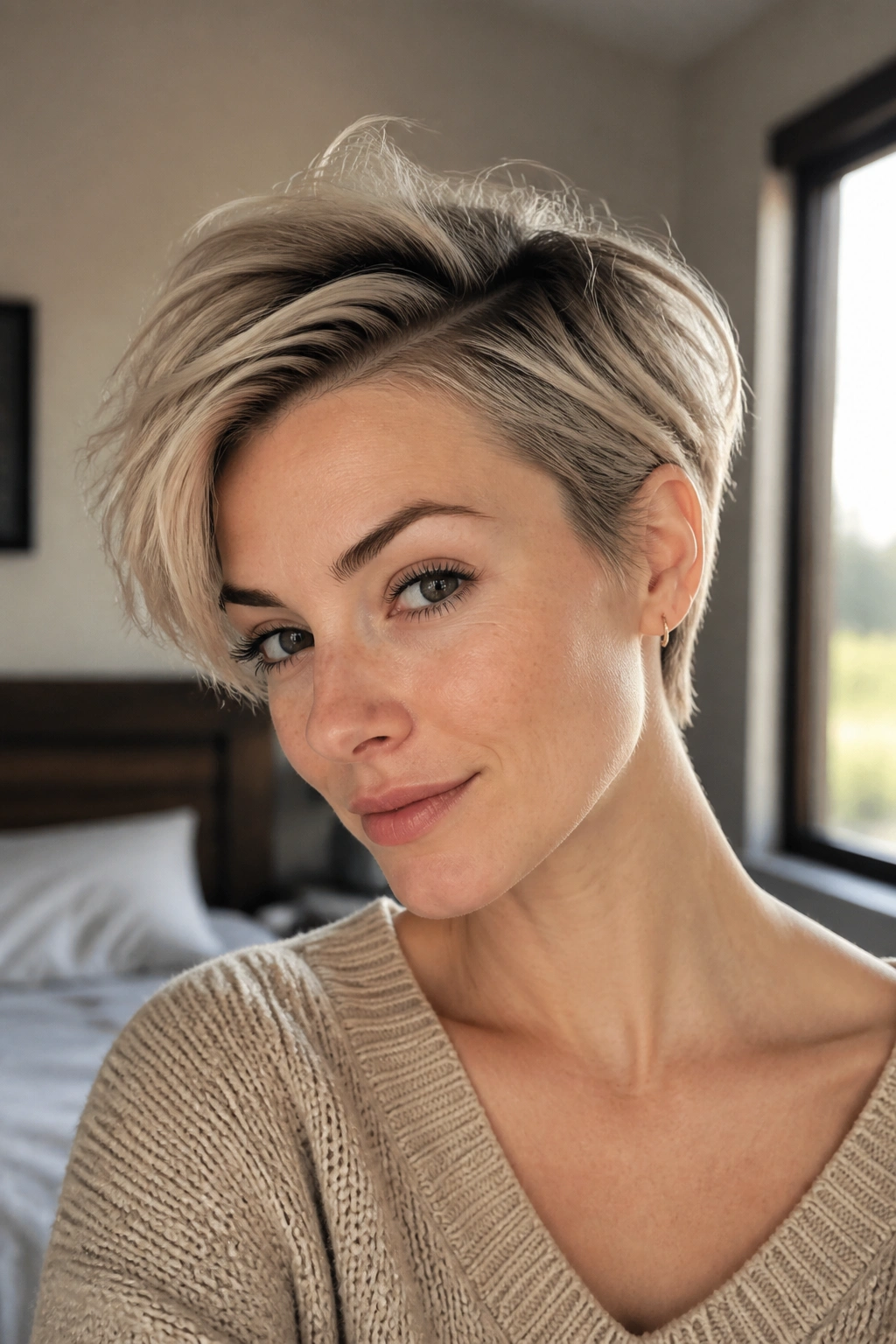
A deep side part does more for fine hair than most people give it credit for. It shifts weight, creates lift at the root, and gives you an instant change in shape without touching the scissors. Pair that with a tousled pixie and the whole head reads fuller, especially around the front.
Small change. Big payoff.
This cut usually has slightly longer top pieces that can be pushed across the forehead or bent up and away from the part. The texture should look touchable, not stiff. If the hair is too clean and too smooth, the part just sits there. A little grit changes everything. Blow-dry the front in the opposite direction first, then flip it back to your chosen side for extra lift.
Root work matters
That first minute with the dryer decides a lot. If you lift the roots while they are warm, the cut holds shape much better.
- Use a root spray or light mousse at the part.
- Dry the hair with the nozzle aimed at the scalp.
- Break up the ends with fingertips after drying.
- Rework the part when hair starts to fall flat.
This is a cut for someone who likes movement more than polish.
11. Pixie-Bob Hybrid With Choppy Ends
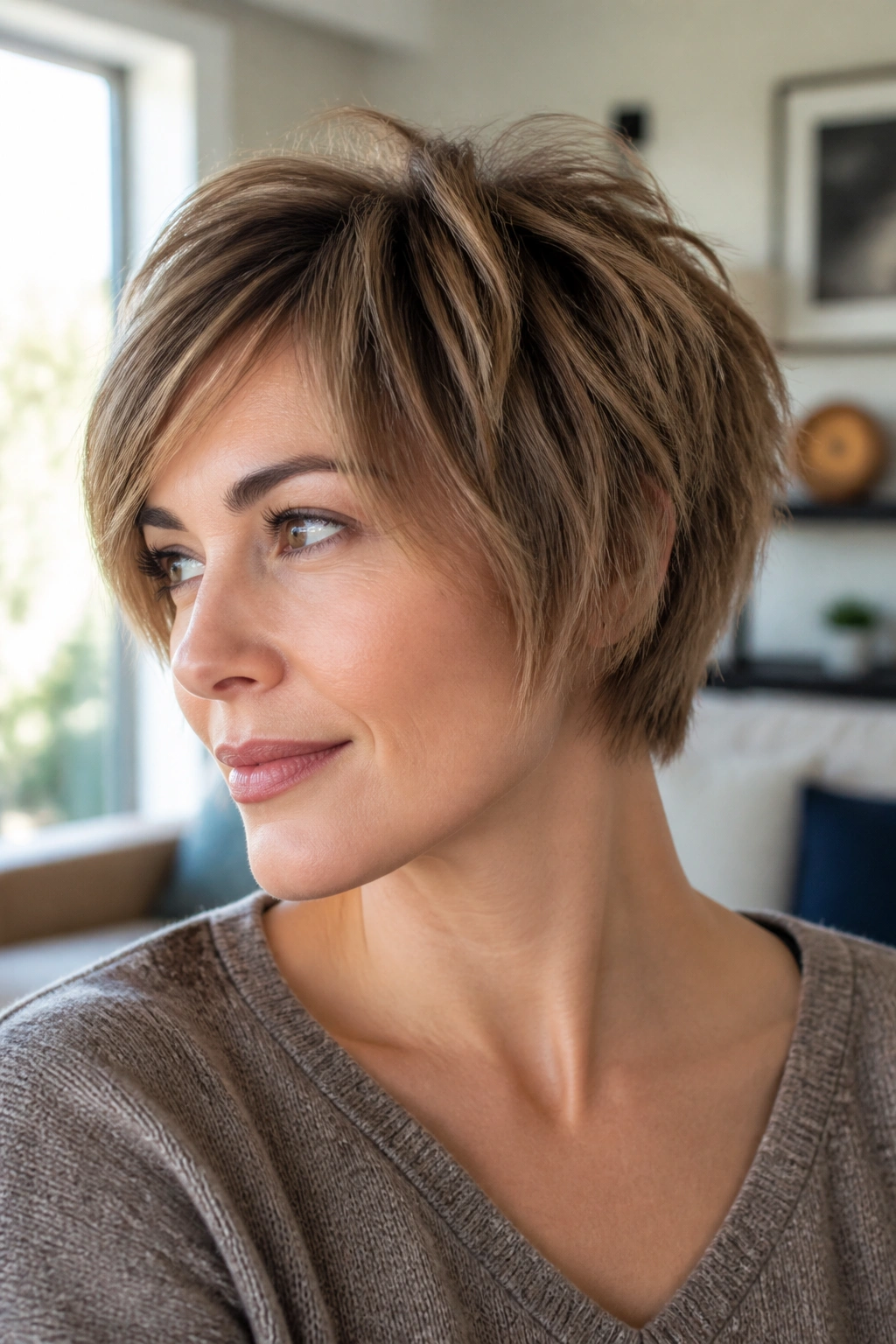
If you’re not ready for a full pixie, the pixie-bob hybrid gives you breathing room. The length usually brushes the jaw or sits just above it, with shorter, choppy layers through the crown so the top doesn’t sag. On fine hair, that extra bit of length at the perimeter can make the ends look denser.
I like this shape for people who want a short haircut but still want hair they can tuck, flip, or pin. It is also a sensible bridge if you’re growing out a shorter crop. The choppy ends keep it from looking boxy, and the slightly longer outline keeps the whole thing from becoming too exposed around the face.
Compared with a classic pixie, this version feels softer. Compared with a bob, it feels lighter. That middle ground is why so many fine-haired people end up loving it. You get movement at the crown and enough length below to keep the silhouette from vanishing.
12. Spiky Pixie With Airy Texture
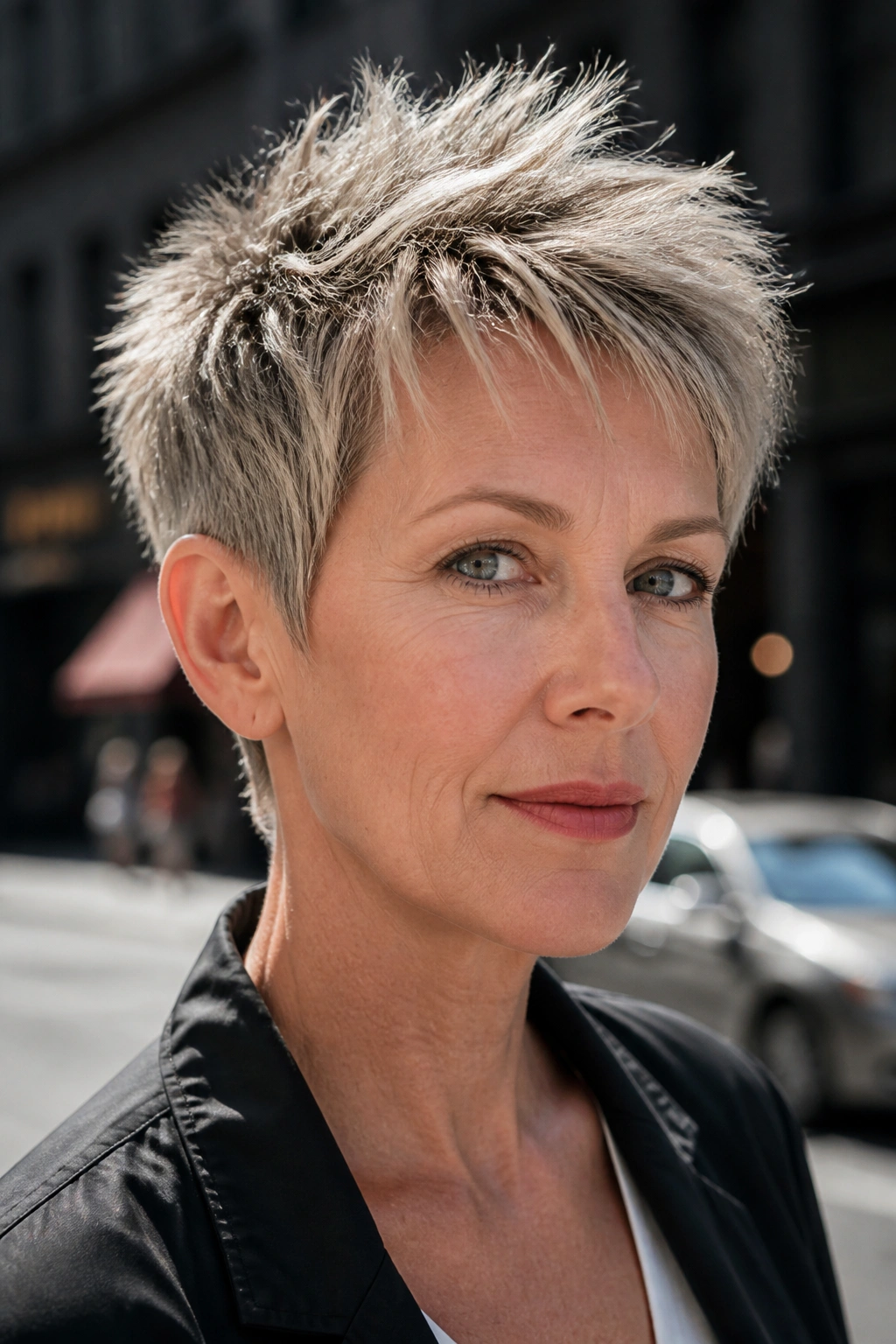
A spiky pixie can look edgy, but on fine hair it can also be practical. The trick is to keep the spikes soft and separated, not stiff or crunchy. Fine strands respond well to light product because they don’t need much to stand up a little. They just need direction.
Unlike a fluffy, rounded pixie, the spiky finish creates crisp little points that make the cut look sharper and more deliberate. That can be a gift if your hair tends to look limp after a few hours. A matte paste or molding cream worked between the fingertips gives the ends that broken, airy feel. Use less than you think. A pea-size amount is often enough for the whole head.
This style suits people who like a bit of attitude and don’t mind using their hands in the morning. It’s not fussy. It’s not soft-focus. It just works when the goal is to make fine hair look a little more alive. If you touch it too much after styling, it can go flat.
13. Curly Choppy Pixie
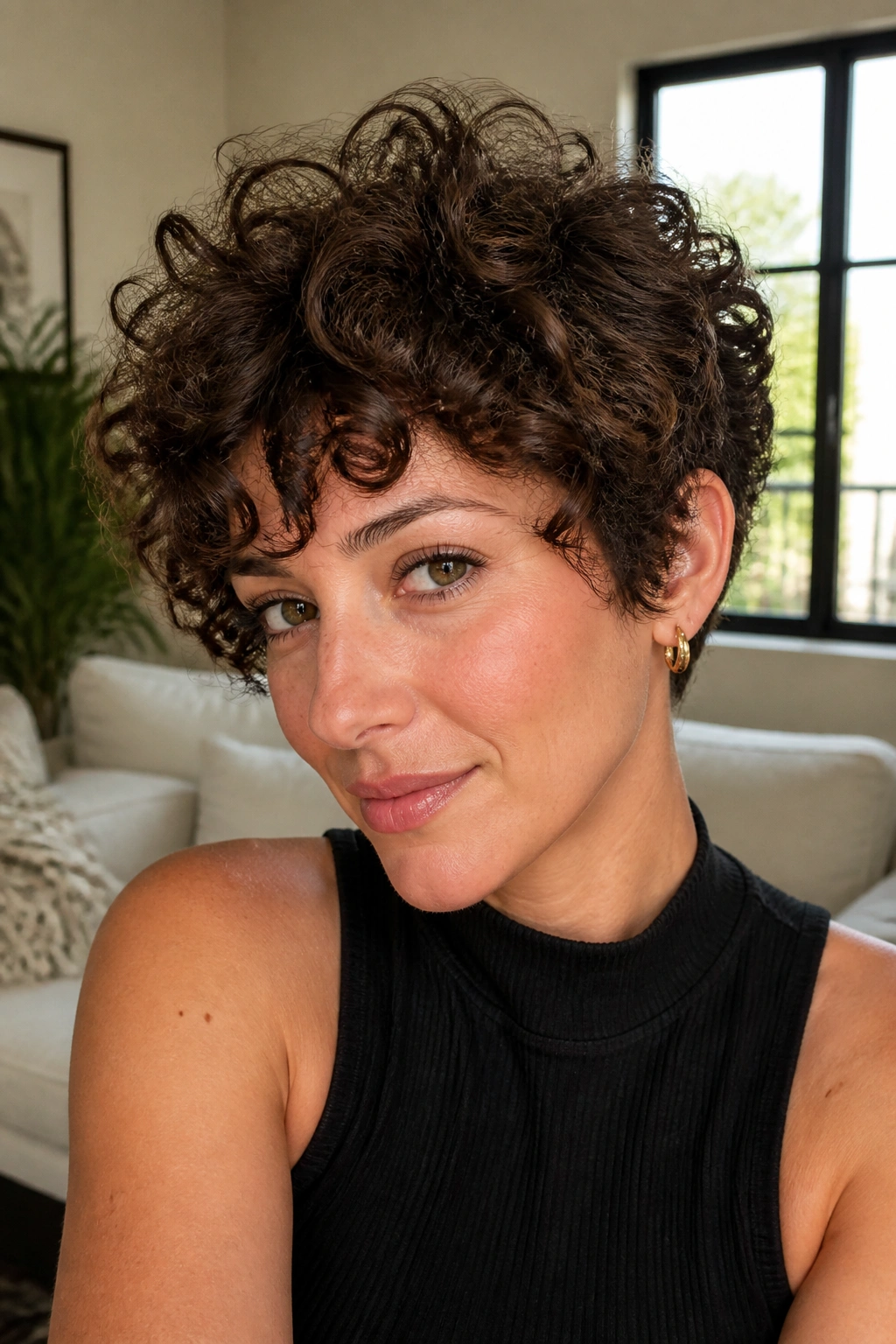
Fine curly hair has its own rules, and ignoring them is a fast way to get a puffball or a triangle. A choppy pixie on fine curls works best when the cut follows the curl pattern instead of fighting it. That usually means keeping the shape a touch longer on top and around the front, with softer sides that do not balloon out.
Cut it where the curl lives
Curly hair shrinks more than people expect, so the shape should be built with that shrinkage in mind. A dry cut or a curl-by-curl approach helps the stylist see where each piece wants to sit.
Keep the styling light
- Use a curl cream or soft gel, not a heavy butter.
- Scrunch only until the curls clump.
- Diffuse on low heat to keep the crown from collapsing.
- Leave the fringe a little longer so it does not bounce too short.
What I love about this cut is that the choppiness shows off the curls instead of hiding them. The movement feels natural, not forced. And when the curls are fine, that matters even more.
14. Rounded Pixie With Crown Sweep
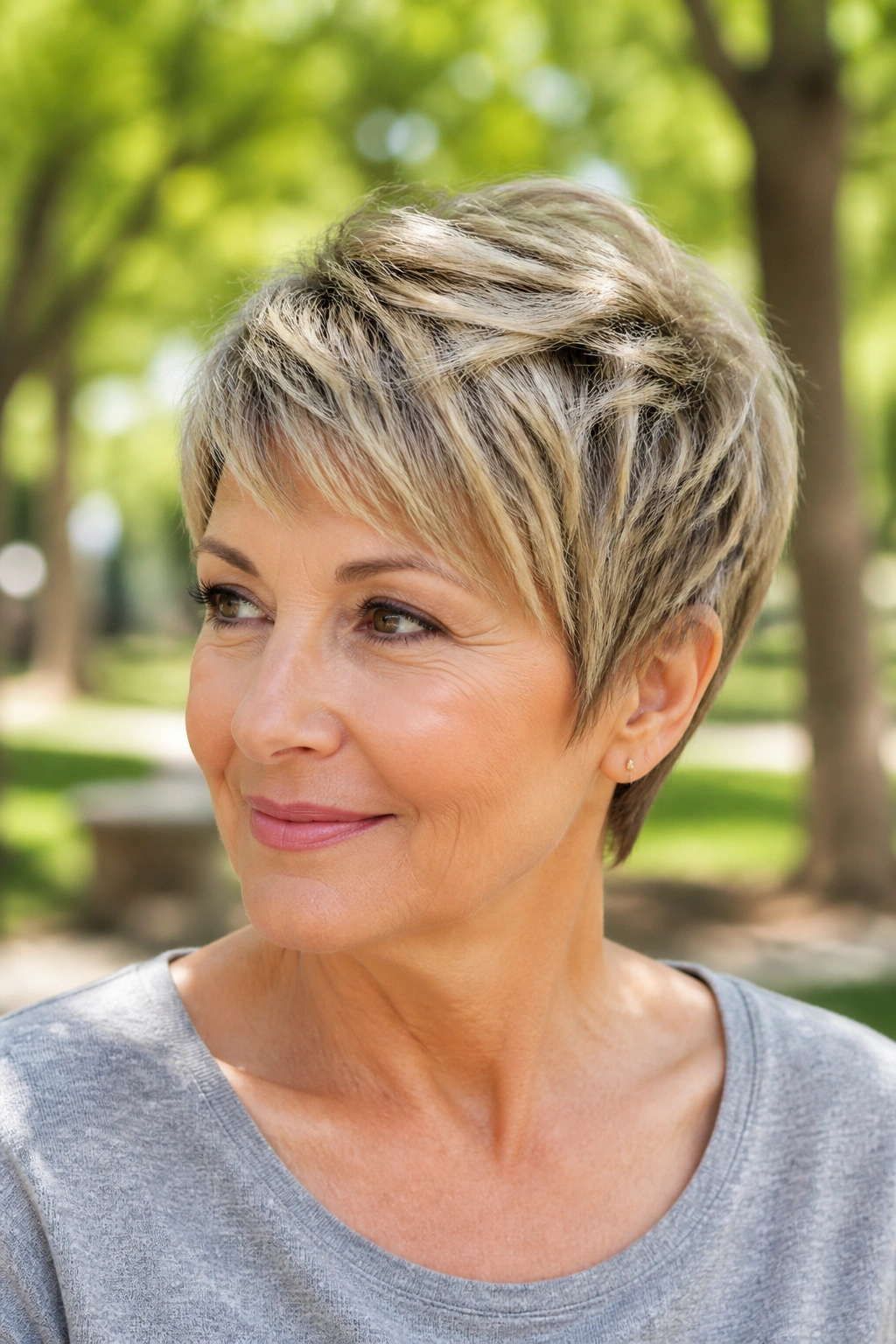
A rounded pixie can sound tame, but for fine hair it is often smarter than a super jagged shape. The rounded outline gives the cut a fuller silhouette, especially at the back of the head and around the sides. Then a crown sweep adds motion so it doesn’t look too helmet-like.
That balance is the whole game. Fine hair often needs a shape that feels contained at the edges and soft at the top. This cut does both. The crown can be directed diagonally across the head, which keeps the roots from lying dead flat and gives the style a little lift without obvious teasing.
What to ask for
- A rounded perimeter through the back and sides.
- Soft, internal texture at the crown.
- A longer sweep across the top, not a blunt top layer.
- Minimal thinning near the temples if your hairline is delicate.
This is a good option for someone who wants a neater pixie that still has a bit of movement. It can look polished one day and slightly undone the next. That’s not a flaw. It’s the point.
15. Short Shag Pixie
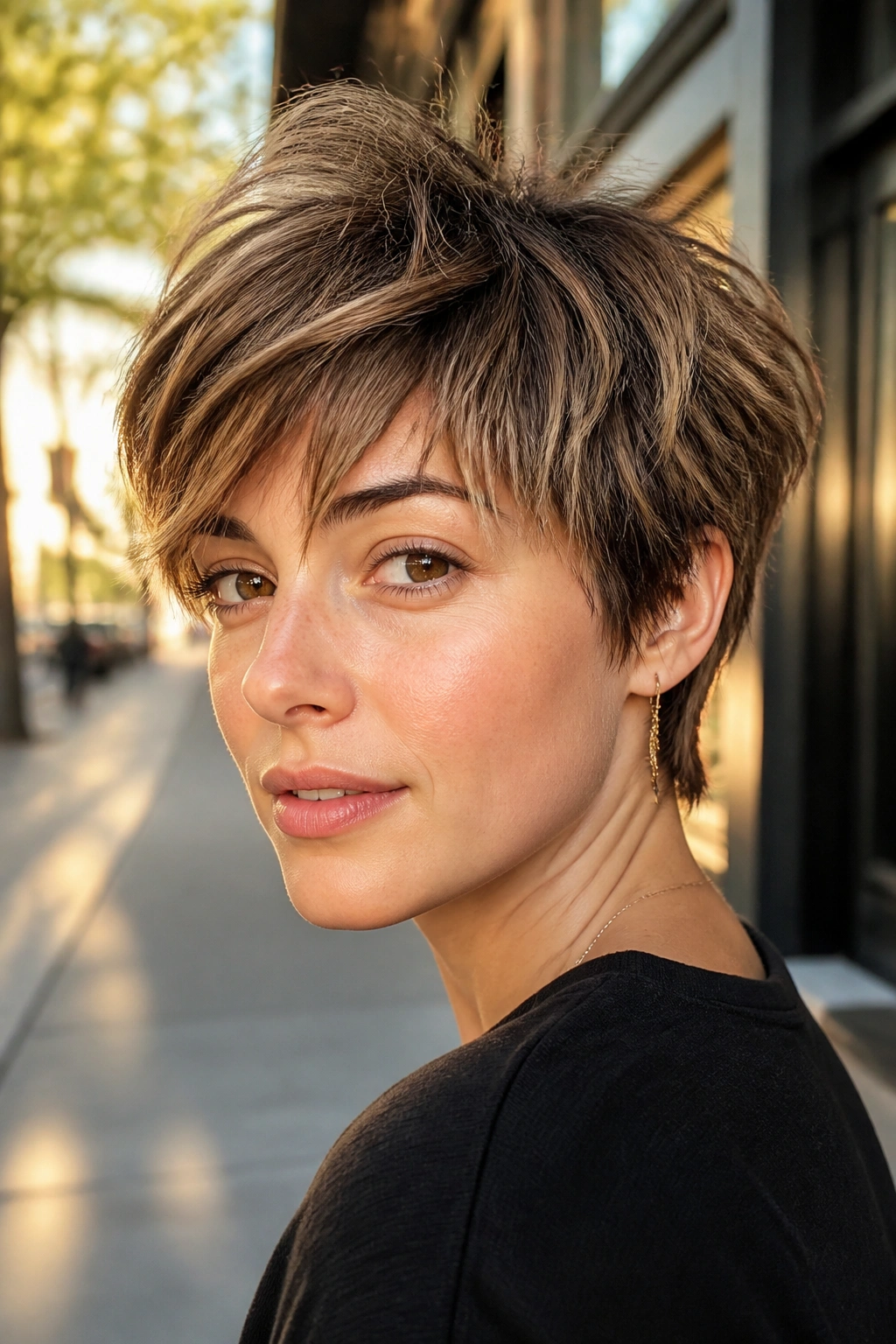
A short shag pixie is a little rough around the edges in the best way. It borrows the choppy, irregular feel of a shag but keeps the length pixie-short, so the whole cut stays light. Fine hair often benefits from that broken texture because it gives the eye enough detail to read as fuller.
I like this cut for people who hate anything that looks too neat. It has a bit of grit, a bit of movement, and a bit of rebellion without demanding a full styling routine. The layers should be uneven on purpose, with enough softness around the front to avoid a spiky mess. That last part matters. A shag pixie should feel messy in a smart way, not abandoned.
A little texture spray at the roots and a quick squeeze at the ends is usually enough. If the hair is very fine, avoid too much separation on the crown. You still want some piecey detail, but not so much that the top exposes every gap.
16. Sleek-Rooted Choppy Pixie
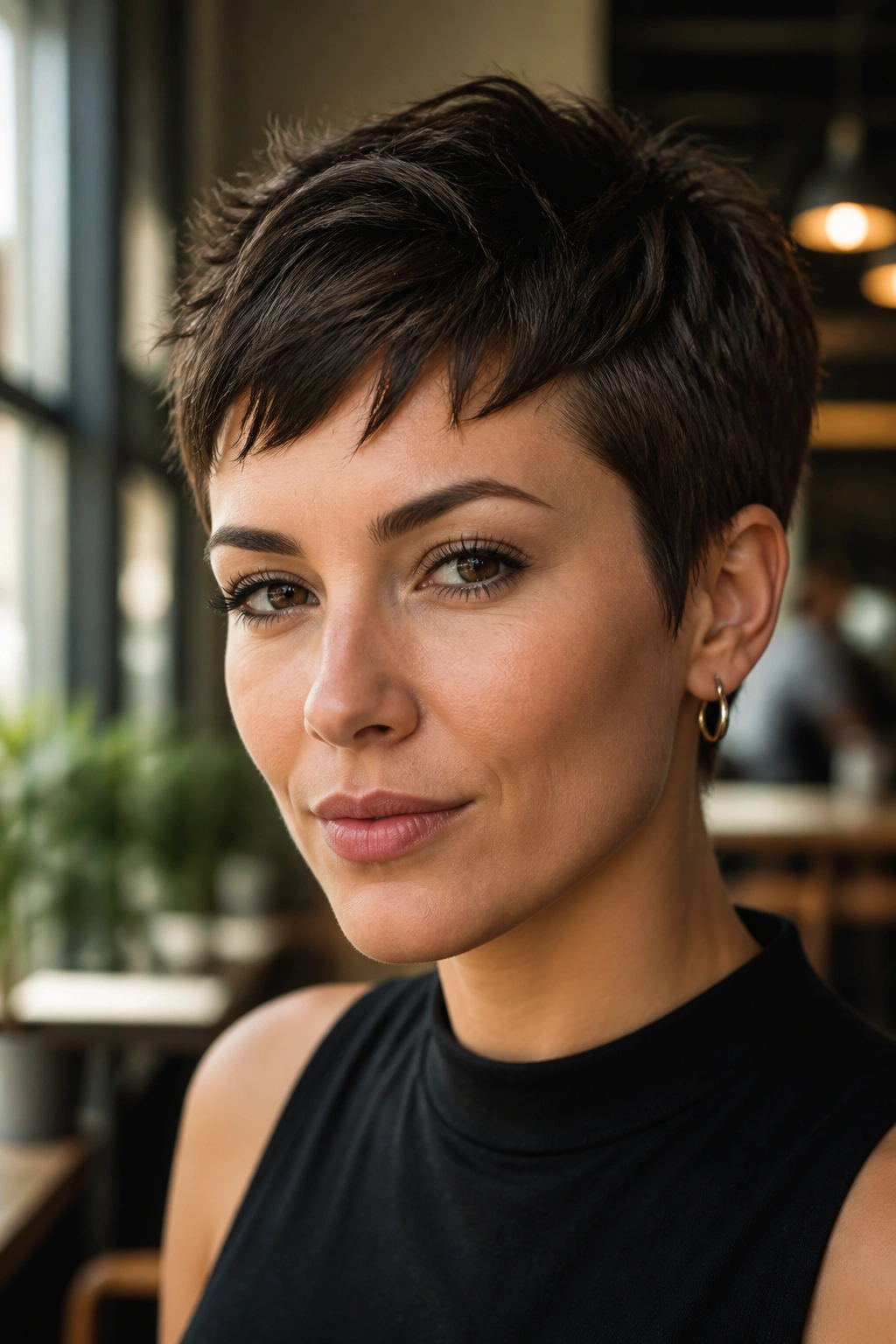
Not every choppy pixie has to look tousled. A sleek-rooted version keeps the top smooth and close to the head near the scalp, then breaks the ends into small, separated pieces. On fine hair, that can actually make the cut look denser, because the root area looks tidy and deliberate instead of airy in a fragile way.
It also has a cleaner feel than a fully textured style. If your wardrobe leans sharp or minimal, this cut fits that mood better than something fluffy. The contrast between smooth roots and broken ends is what keeps it interesting. Too much volume at the top can sometimes make fine hair look like it is trying too hard. This avoids that problem.
Use a blow-dryer with tension at the roots, then add a dab of wax to the ends only. The roots should stay smooth; the texture belongs at the edges. If you rough up the scalp area too much, the shape loses its polish fast. This is the kind of pixie that looks most expensive when it looks slightly controlled.
17. Mullet-Inspired Pixie
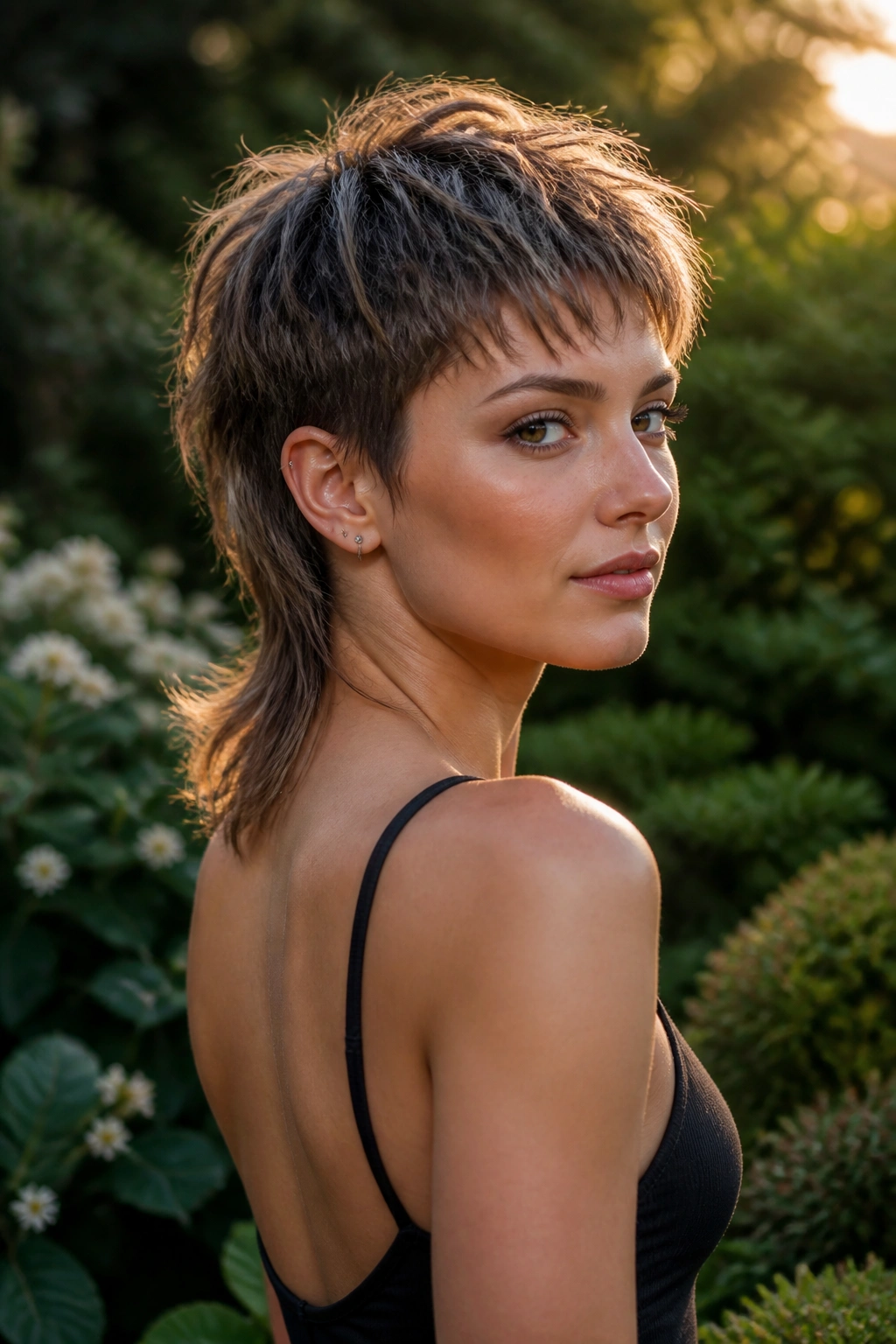
A mullet-inspired pixie is not for everyone, and that’s fine. But if you like movement at the neck and a little edge around the ears, it can be one of the most interesting shapes for fine hair. The extra length in back gives the cut shadow and a bit of swing, while the top stays cropped and choppy so the crown does not droop.
What to ask for
Tell your stylist you want a soft, short mullet shape, not a dramatic retro version. That usually means a little length at the nape, strong texture at the crown, and a fringe that stays light.
Who should skip it
- People who want a polished, classic short cut.
- Very sparse hairlines that need a stronger front shape.
- Anyone who hates visible layers at the neck.
The cut shines when the back is slightly longer but still soft. If the back gets too wispy, it can look unfinished. Keep the lengths connected enough that the haircut reads as a shape, not a collection of leftovers. That’s the line to watch with fine hair.
18. Brow-Skimming Choppy Pixie
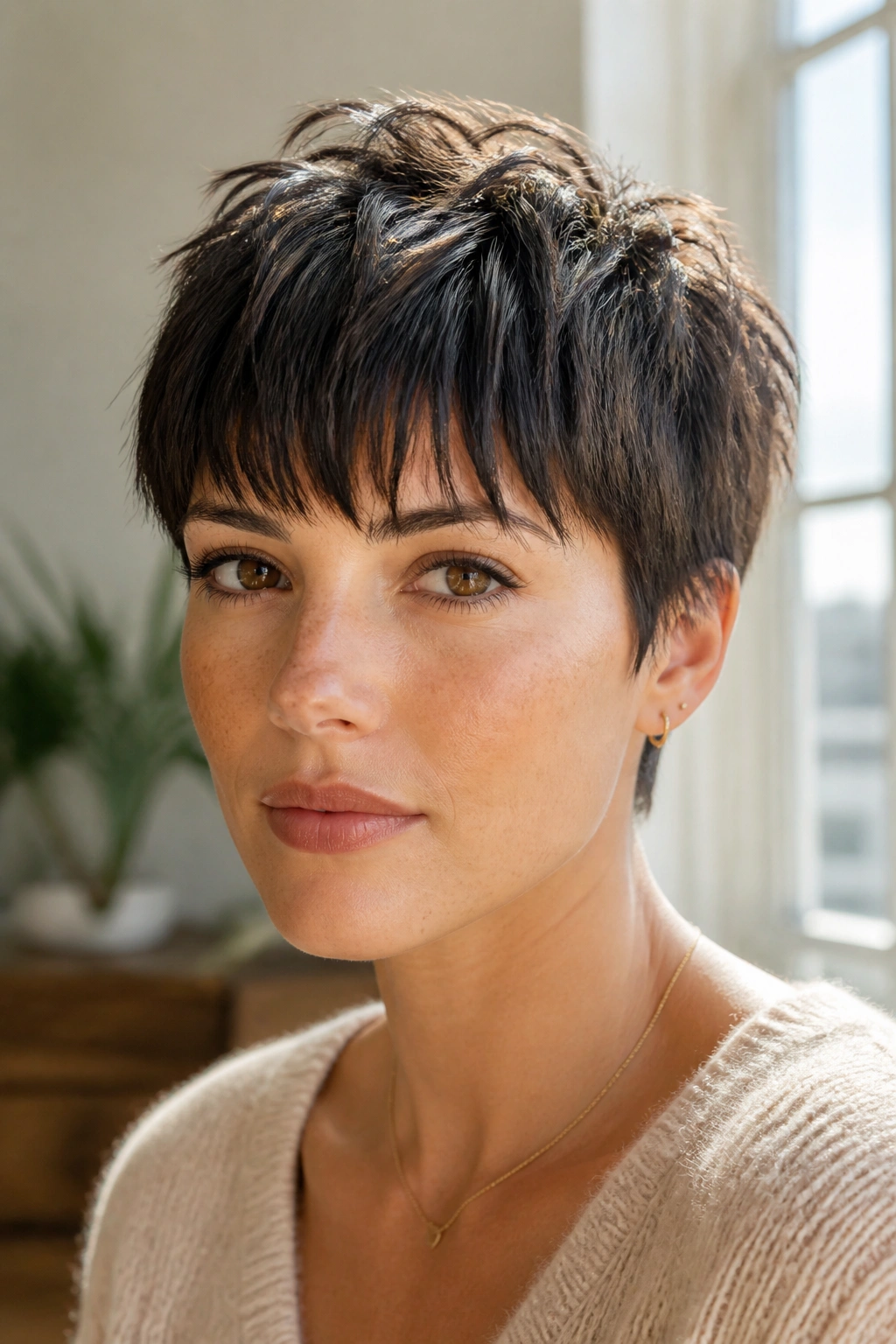
If you want the safest entry point into choppy pixie cuts for fine hair, start here. Brow-skimming length in front gives you a little coverage, a little softness, and enough hair to style in more than one direction. The rest of the cut can stay short and broken up, but the front keeps the whole thing from feeling severe.
This shape works because it gives the eye a clear anchor. Fine hair often benefits from one stronger section that the rest of the haircut can orbit around. In this case, it’s the fringe. A brow-skimming front can be pushed sideways, separated into pieces, or left to fall lightly across the forehead. That flexibility matters when you’re not ready to commit to a super short crop.
It also grows out in a calmer way than many sharper pixies. The front stays useful for longer, and the rest of the cut can soften without losing its outline. If you’re nervous about your hair lying flat, ask for a little extra length through the top and fringe. That extra half inch changes the whole feel of the cut, and on fine hair, half an inch is never small.
