



Fine hair and a pixie cut can be a brilliant match, but only when the shape does the work. Asymmetrical pixie cuts for fine hair keep the eye moving, which makes the hair look fuller than a straight, even crop that lies flat from every angle. The trick is not volume for its own sake; it’s a stronger line, a longer front, or a side sweep that gives the cut something to say.
Flat hair hates a silent haircut.
A lot of people ask for texture when they really need structure. Fine hair can look wispy if it gets over-thinned, especially around the crown and the sides, so the smartest asymmetrical pixies use enough length to show off a shape while keeping the ends blunt or softly point-cut. That difference matters more than most salon consultations admit.
The styles below range from soft and wearable to sharp and fashion-forward, because there is no single pixie that suits every face, hairline, or styling habit. Some need a little mousse and a quick blow-dry; others work best with a dab of paste and a side tuck. Either way, the goal is the same: make fine hair look intentional, not fragile.
1. Deep Side-Swept Asymmetrical Pixie for Fine Hair
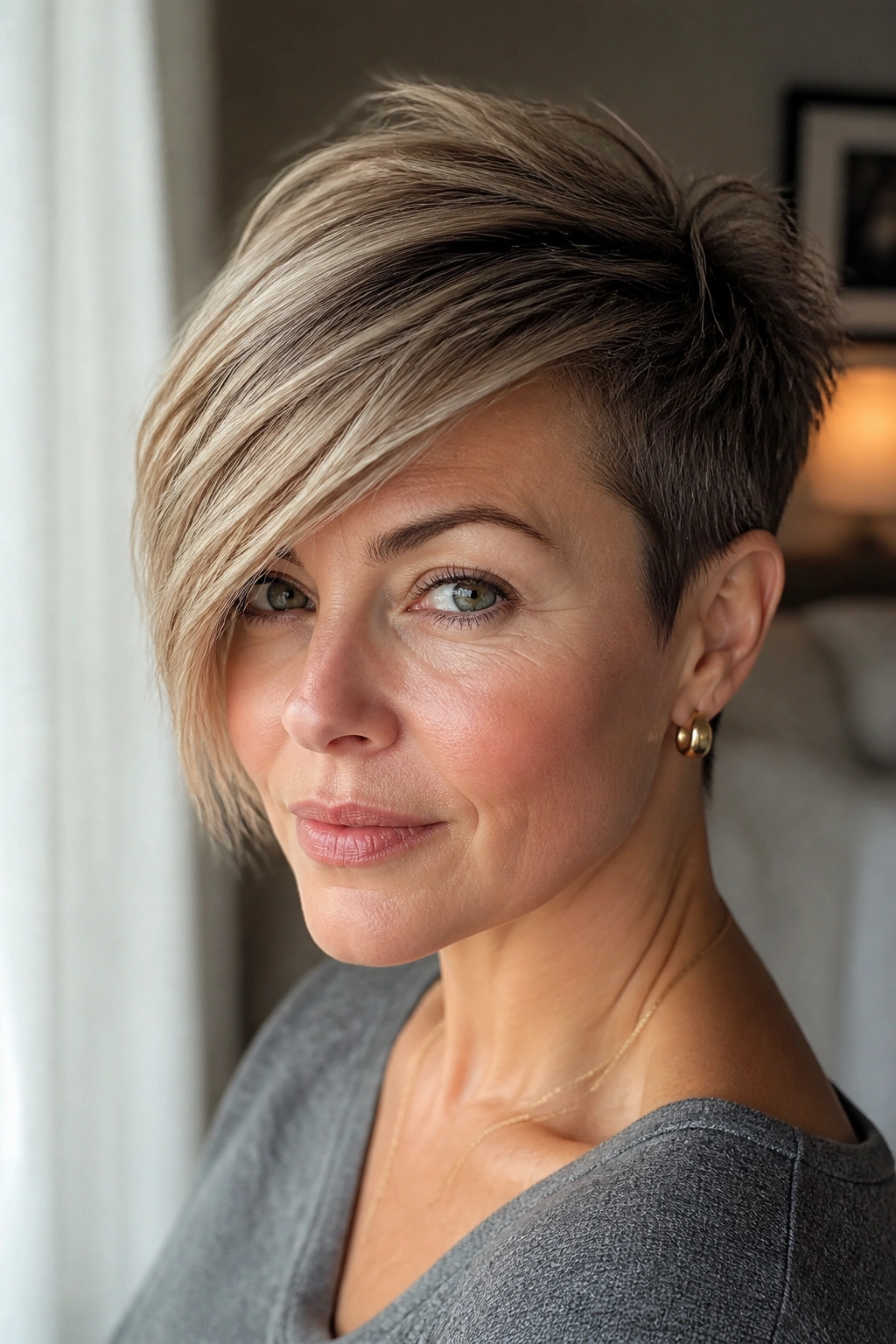
A deep side sweep is one of the easiest ways to make fine hair look denser without piling on fake volume. The long fringe creates a strong diagonal, and that diagonal gives the eye more to read. Fine hair often needs that visual interruption.
Why the angle matters
When the top is cut with a little length and the part is pushed hard to one side, the hair at the front looks fuller than a center-parted crop. Keep the side closest to the ear tighter, then leave the opposite front corner longer so the cut feels deliberate.
That contrast does the heavy lifting. You do not need a huge amount of layering for this shape, and that is part of the appeal. A small amount of lift at the root and a clean side sweep can make the whole cut look sharper.
- Ask for the longer front piece to graze the eyebrow or cheekbone.
- Keep the crown lightly layered, not razored to pieces.
- Style with a root-lifting spray and a 1-inch round brush.
- Finish with a touch of light hold spray, not a stiff shell.
Tip: Blow-dry the long side in the opposite direction first, then sweep it over at the end. That bend stays longer than a straight-ahead dry.
2. Cropped Crown with Longer Front Pieces
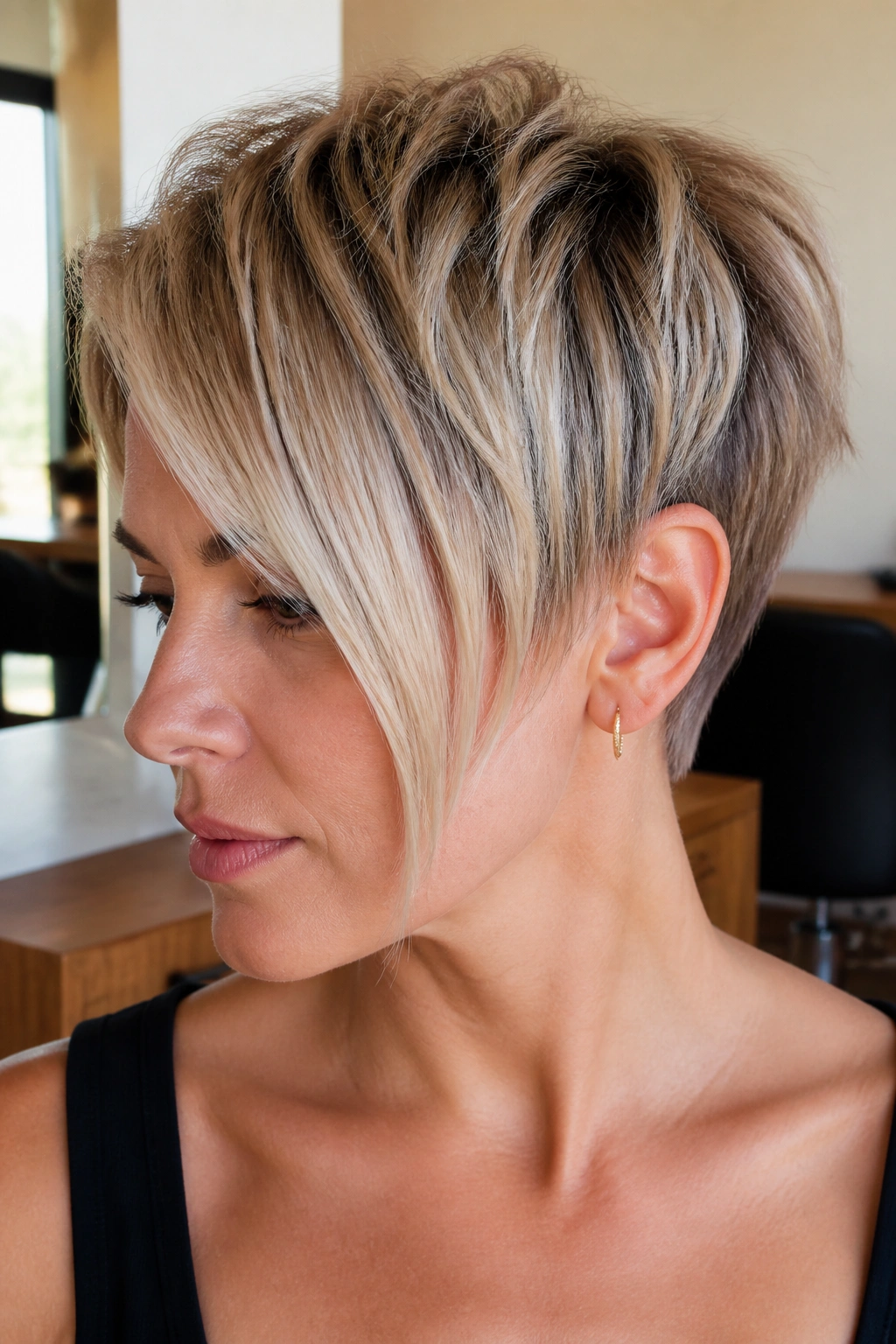
A cropped crown with longer front pieces is the quiet workhorse of asymmetrical pixie cuts for fine hair. It keeps the top short enough to avoid droop, but the front stays long enough to frame the face and hide any sparse spots near the hairline.
This shape is especially useful if your hair falls flat at the crown the second it air-dries. Leave a little more length there than you think you need—half an inch can matter—and let the front fall forward before you redirect it. The extra front length softens a strong cheekbone, but it also gives the cut a bit of swing.
I like this version on hair that is straight or only slightly wavy. It does not ask for much. A light mousse at the roots, then a quick rough-dry with fingers, is often enough. If you use a brush, keep it loose; too much pulling flattens the shape and makes fine hair look tired.
And yes, this is one of those cuts that looks better when it is not trying too hard. The rougher finish suits it.
3. Ear-Tucked Asymmetrical Pixie with a Clean Side Sweep
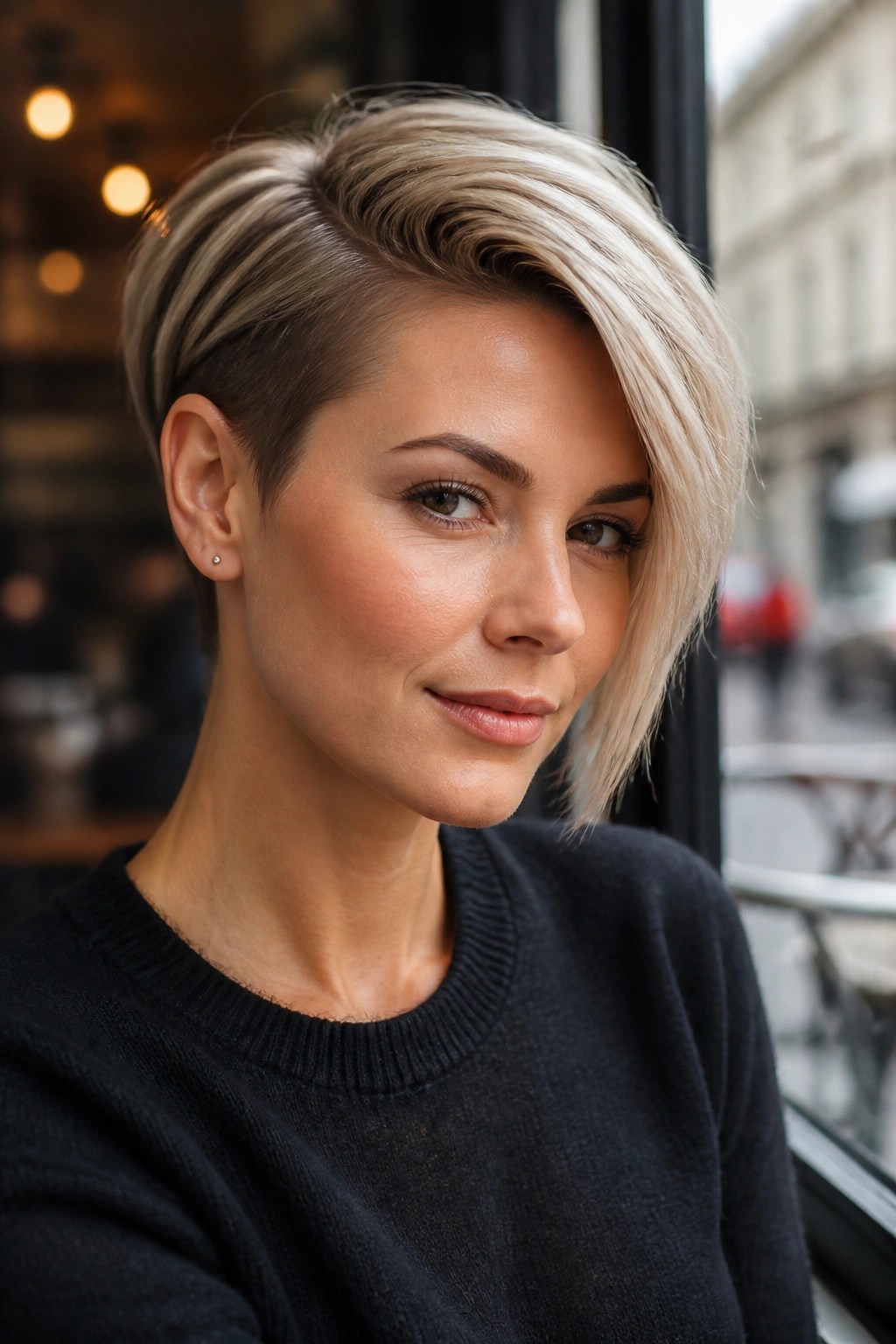
Why does an ear-tucked pixie work so well on fine hair? Because it creates a sharp contrast: one side looks clean and close, while the other side keeps a soft, longer edge near the face. That visual split makes the style feel fuller than it is.
The tucked side should be cut just short enough to sit flat without puffing out. On the opposite side, let the front section sit a little longer so it can fall forward, then tuck just the ends if you want a neat finish. The trick is not to force both sides into the same mood. Let one side be polished and the other stay a little loose.
How to style the tucked side
- Dry the hair with a vent brush so the roots don’t collapse.
- Use a pea-sized amount of pomade on the longer side only.
- Tuck the shorter side behind the ear while the hair is still warm.
- Leave one small piece free near the temple if you want a softer line.
This cut looks especially good with a visible earring or a strong brow line. Little details matter here. They keep the style from feeling accidental.
4. Razor-Cut Piecey Pixie
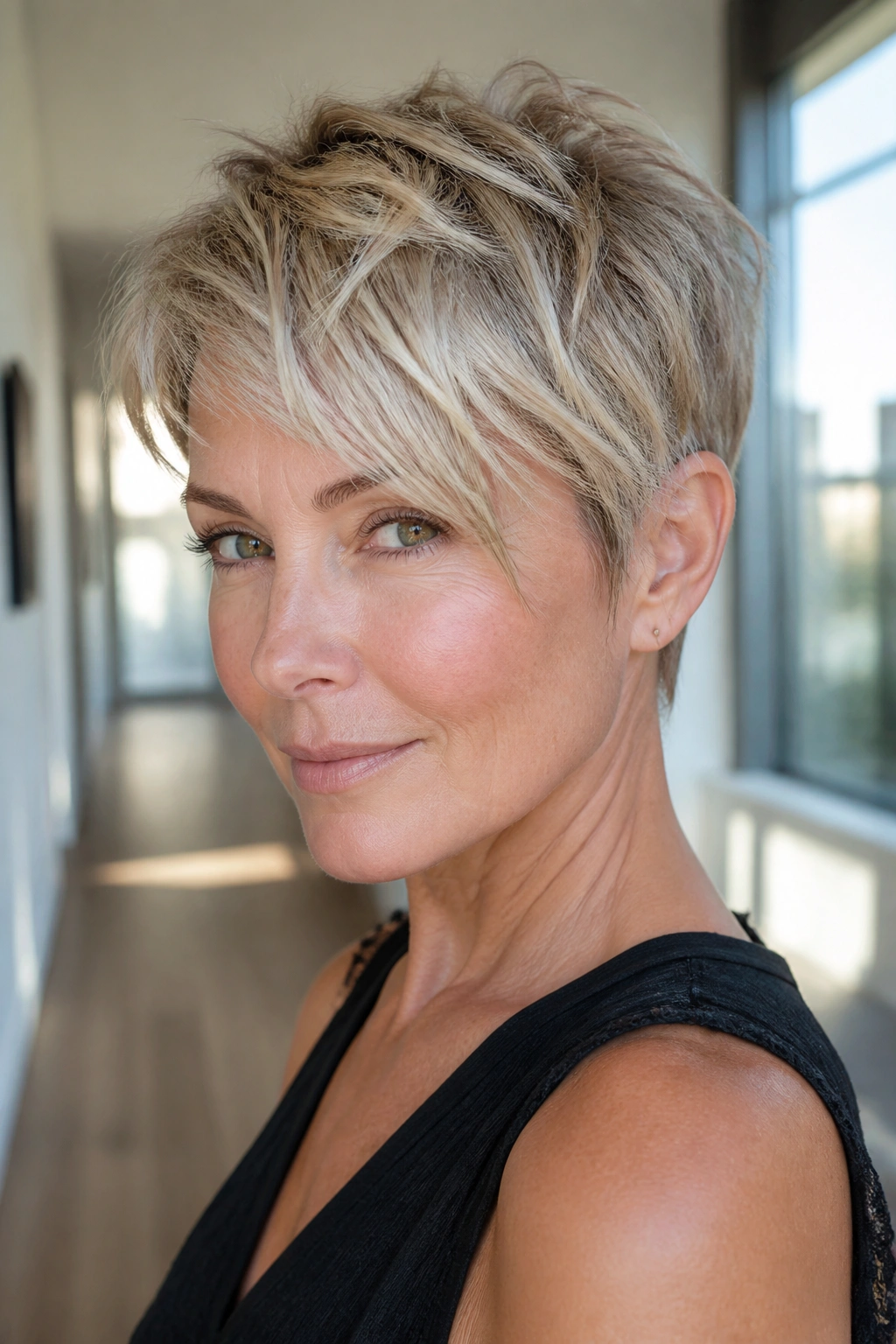
Picture a short cut that looks airy around the temples and a little more carved out through the ends. That is the promise of a razor-cut piecey pixie, and on fine hair it can be a smart move when the goal is movement rather than bulk.
The key is restraint. A razor can give the ends a soft, broken look, but too much razor work can make fine hair appear frayed. I prefer this shape when the stylist uses the razor only through the mid-lengths and leaves the perimeter with a cleaner edge. That way the cut still has some weight.
What to ask for
- Light razor work through the top only.
- A slightly longer front section for balance.
- Minimal thinning around the crown.
- Soft separation at the ends, not shredded layers.
Use a matte paste or dry texture spray on this one. A shiny serum can make the piecey finish collapse into one flat shape, and nobody wants that. The best version looks almost like the hair has been pinched into little strands with fingers, not combed into obedience.
5. Micro-Nape Pixie with a Longer Top Layer
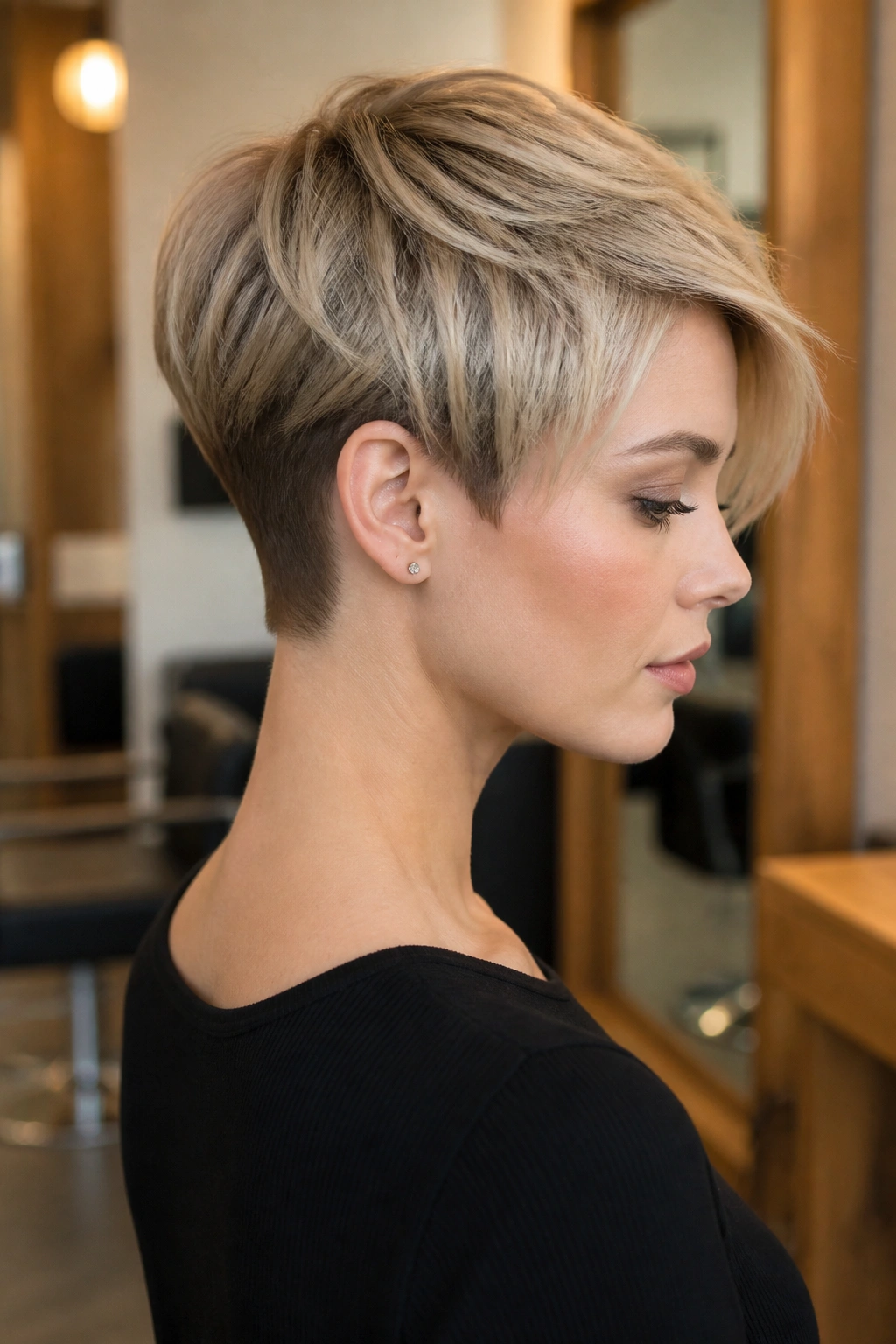
The micro-nape version is the one I reach for when someone wants short hair but hates the mushroom effect. The back is closely tapered, almost tucked into the neck, while the top stays longer and softer so the shape has somewhere to go.
That difference matters on fine hair because a bulky nape can make the whole cut feel bottom-heavy. A tight back cleans up the silhouette fast. Then the longer top layer gives you lift where the eye needs it most.
This cut also grows out well, which is a rare gift in short hair. Instead of turning fuzzy at every edge, it usually becomes a softer crop with a longer crown. That makes the grow-out period less annoying, which is worth saying plainly. Some pixies are needy. This one is not.
If your neckline is on the narrow side, this shape can look especially good because it opens up the neck and keeps the sides neat. A tiny bit of root spray at the crown and a quick blow-dry forward is usually enough to bring it to life.
6. Curved Pixie Bob Hybrid
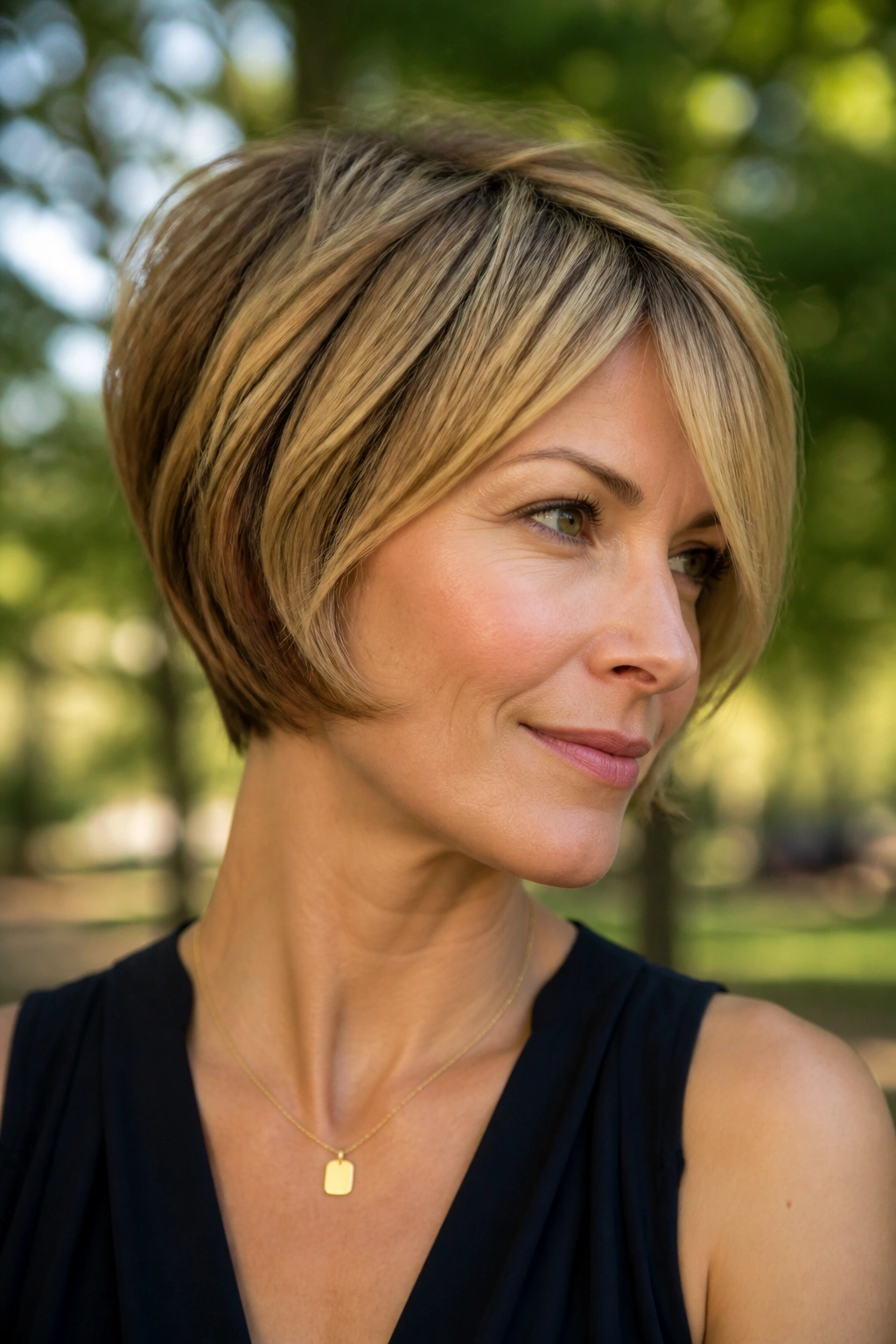
Unlike a classic pixie, the curved pixie bob hybrid leaves a soft edge at the jaw. That little bit of extra length changes everything for fine hair. It keeps the cut from looking too shaved-down and gives the ends enough room to bend around the face.
This is a good choice if you want the ease of a pixie but still like some movement near the cheeks. The curve is the point. The back stays neat, the side moves forward, and the front lands somewhere between a crop and a short bob. That balance is especially kind to hair that does not have much natural body.
I also like this for people who are nervous about going too short. The hybrid shape feels safer without looking timid. That sounds contradictory, but it isn’t. A strong outline can be soft around the edges.
Best of all, the shape can be tucked, flipped, or brushed forward depending on the day. It gives you options, which is half the fun.
7. Side-Parted Undercut Pixie
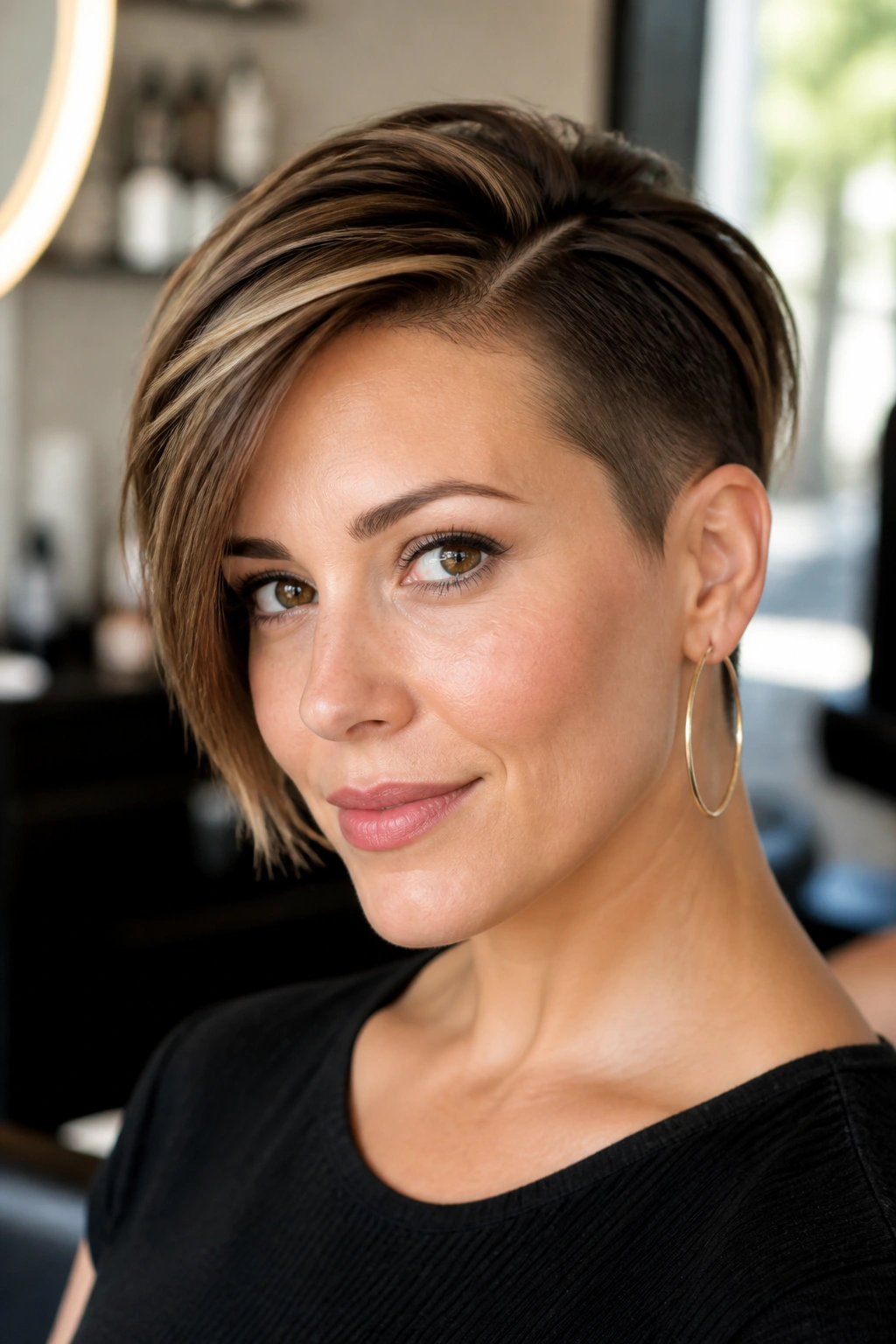
An undercut does not make fine hair look thinner. Done right, it does the opposite. By removing bulk from one side or the lower back, you let the top sit higher and cleaner, which can make the remaining hair look more substantial.
Where the removal should happen
The undercut should live where it supports the shape, not where it creates a hole. A hidden nape undercut or a small side undercut can keep the top from puffing out in odd places. That’s the sweet spot.
- Ask for the undercut to stay narrow and controlled.
- Keep the top long enough to cover the shaved area when you want to.
- Use a side part so the longer section has somewhere to fall.
- Avoid heavy creams on the shaved side; they make the contrast dull.
This style suits someone who likes a bit of edge but still wants a clean finish. The side part gives it a more adult feel, less costume, more haircut. And if you have fine hair that gets greasy at the roots, the undercut can buy you an extra day before the style looks limp. That alone makes it worth considering.
8. Feathered Asymmetrical Pixie for Straight Fine Hair
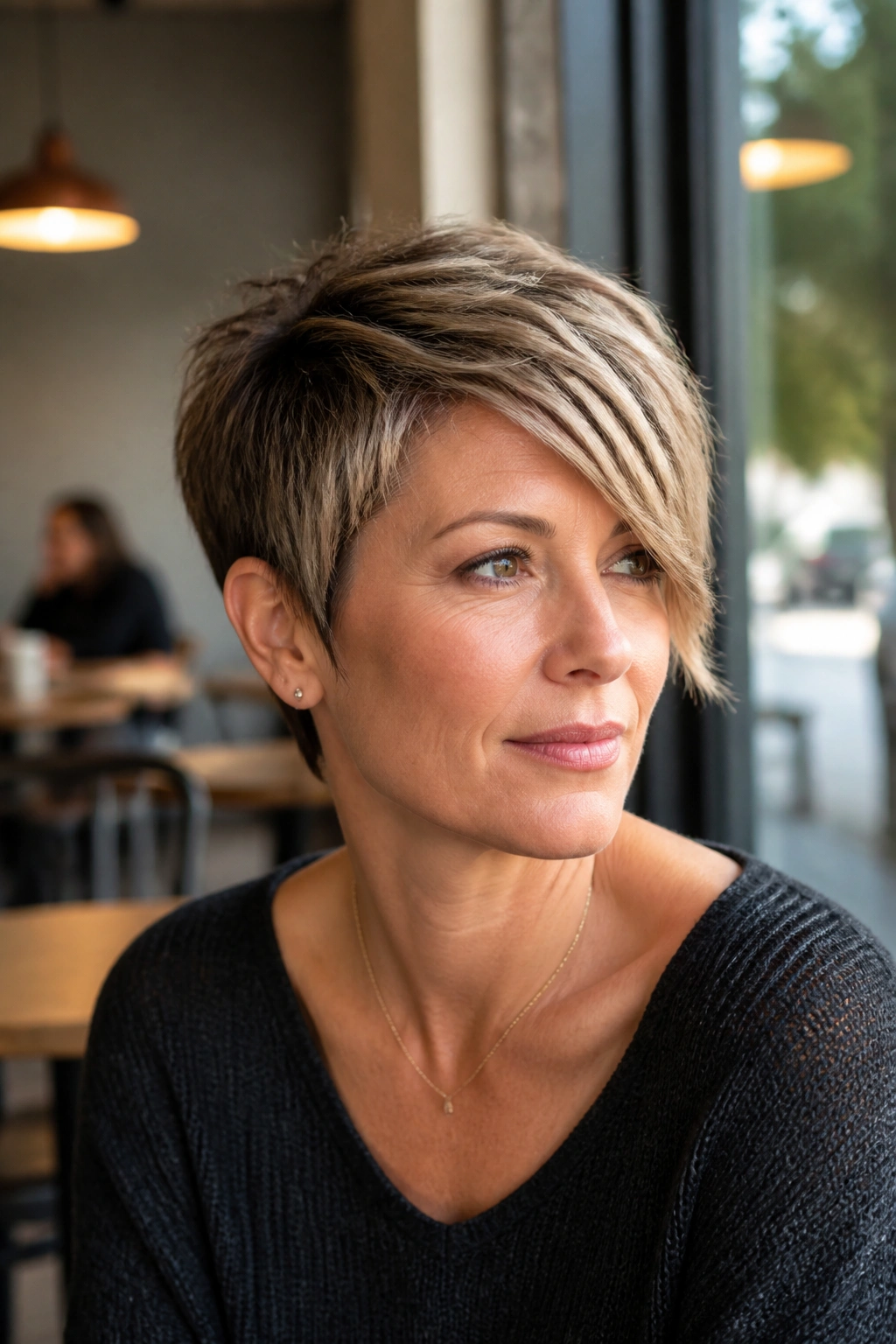
Can feathered layers help straight fine hair, or do they just make everything look thin? They can help, but only if the feathering is soft and controlled. The point is to keep movement at the top and around the front without chewing up the whole shape.
Straight fine hair loves a little direction. Feathering near the fringe and crown gives the cut a lighter feel, while a more solid lower edge keeps it from turning see-through. If the layers are too short, the style loses its outline and starts to look wispy in the bad sense. Nobody wants that.
A small round brush and a cool-shot finish can make this cut behave. Lift the roots, turn the front slightly off the face, and let the longer side land in a clean diagonal. That one move gives the haircut enough lift to read from across the room. Not loud. Just crisp.
This is a strong option if you wear glasses, by the way. The feathering keeps the front from crowding the frames.
9. Swept-Back Glossy Pixie
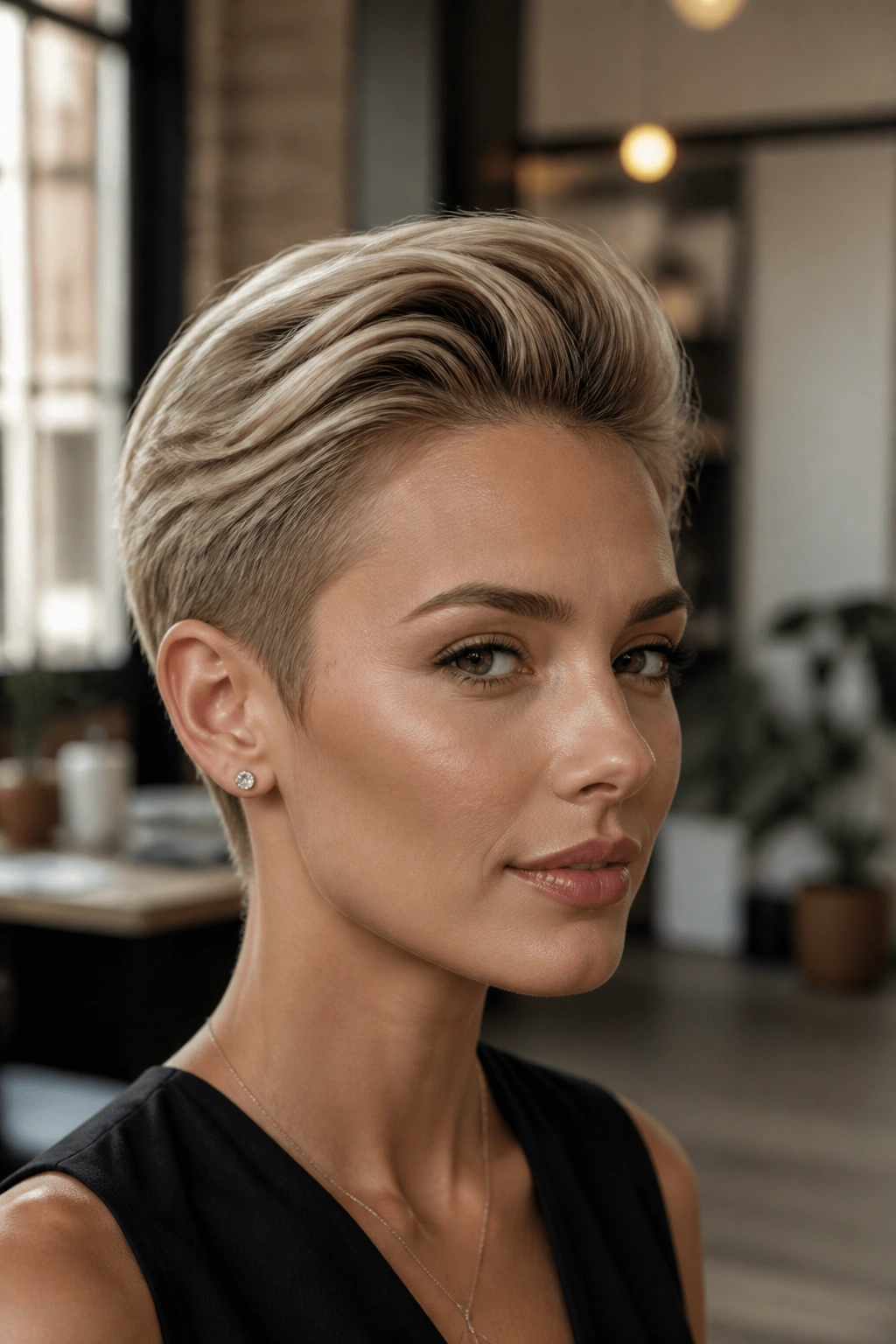
Run your fingers through a swept-back pixie and you can feel the difference immediately: the top lifts, the sides stay close, and the hair doesn’t fight your hands. That slicked-back feeling is part of the appeal. It looks clean, but it also makes fine hair seem more controlled than it usually is.
The glossy finish works because it turns texture into shape. Instead of separating every strand, the style groups the hair into a smooth curve that follows the head. The asymmetry shows up in the part and the front line, not in a bunch of uneven bits. That’s why it reads so neatly.
Use a light smoothing cream on damp hair, then comb the front backward and slightly to one side. A blow-dryer nozzle helps a lot here. Keep the air moving from roots to ends, and don’t overdo the product. Too much shine can make fine hair cling to the scalp.
This version looks especially good with a tailored jacket or a sharp collar. The haircut does the styling for you.
10. Messy Crop with a Wispy Fringe
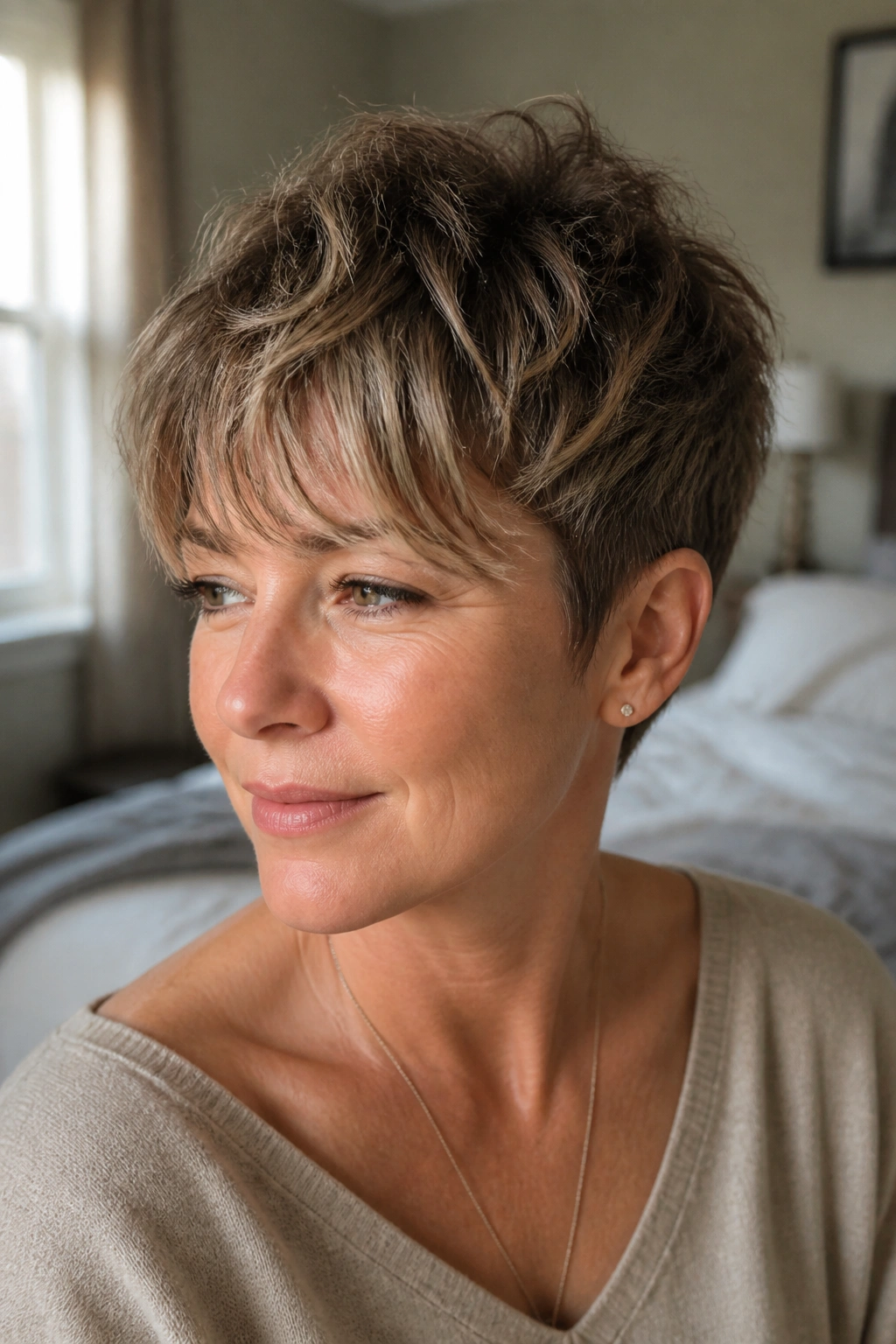
Every salon has someone who says they want short hair but refuse to see a hard scalp line. Fair enough. The messy crop with a wispy fringe is made for that person, and it can be a lovely answer for fine hair when the cut needs softness instead of precision.
The fringe should stay light, but not see-through. That distinction matters. Wispy does not mean sparse. A soft front with a little bend can hide a high forehead or soften a strong brow, while the messy crown keeps the shape from feeling too formal.
Products that help
- A root spray for lift at the front.
- A dry texture mist for the crown.
- A tiny amount of matte paste for the fringe ends.
- Dry shampoo on day two if the roots go flat.
This cut feels casual, but it still needs a plan. Scrunch the top while drying, then pinch a few pieces at the front so the fringe does not sit in one dull sheet. The best version looks like you styled it in five minutes and did not fuss. That’s the whole charm.
11. Long-Front, Short-Back Pixie with a Sharp Diagonal Line
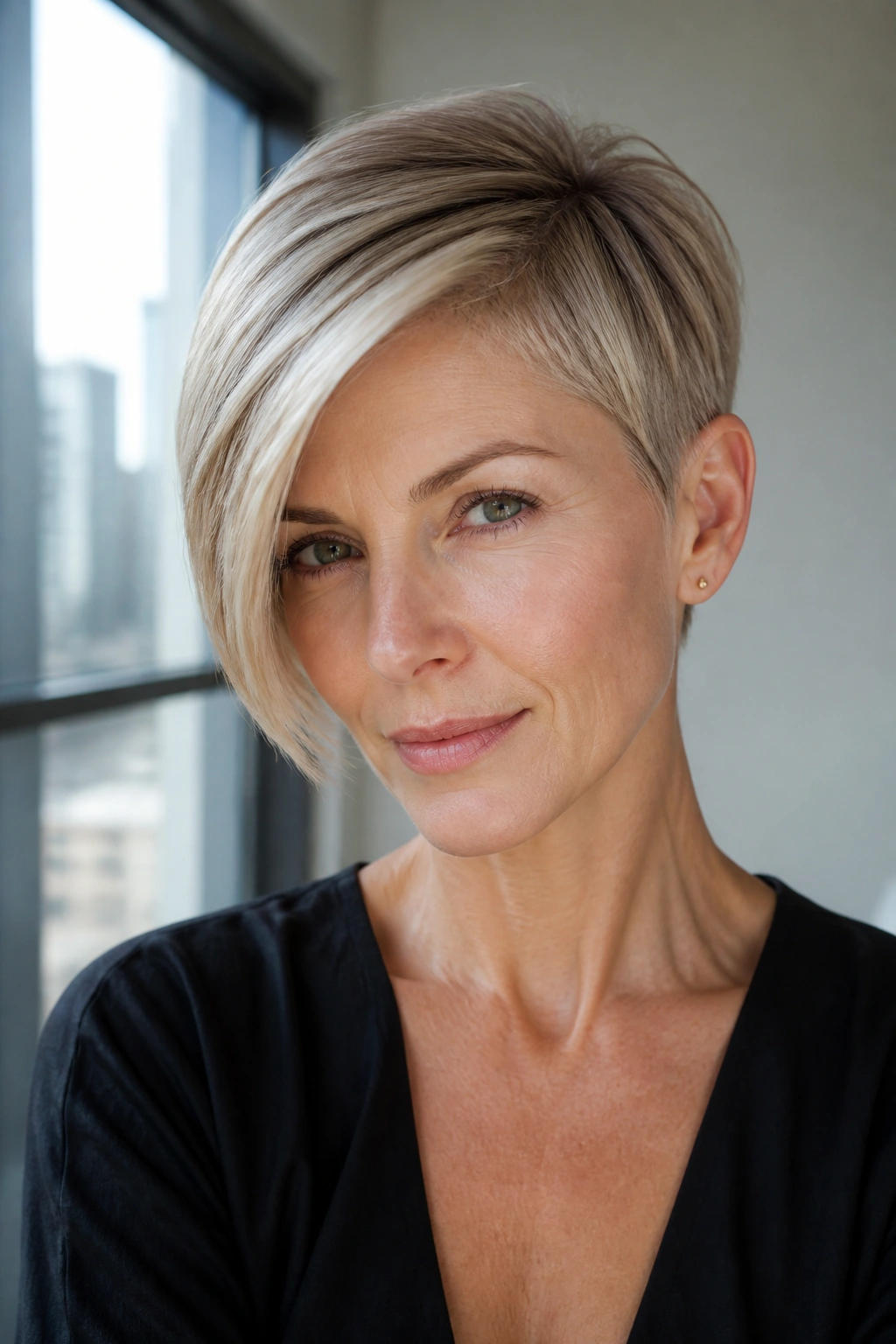
The sharp diagonal line is the whole point here. A long-front, short-back pixie uses that angle to make the face look more defined and the hair look denser where it counts. On fine hair, the front pieces do a lot of visual work.
This cut is bolder than some of the softer options, and that’s the appeal. The back stays tight, which keeps the silhouette neat, while the front falls across the forehead or cheekbone in a clear slope. The eye follows the line, and the haircut feels fuller because it has direction.
I’d call this one especially good for rounder faces or soft jawlines. The diagonal gives you a little edge without needing dramatic length. Keep the front pieces smooth and leave the back tidy. If the shape gets fuzzy, the whole point gets lost.
Ask for a careful bevel at the ends rather than a choppy shred. Fine hair can handle strong lines better than rough ones. Strange but true.
12. Wispy-Bang Asymmetrical Pixie
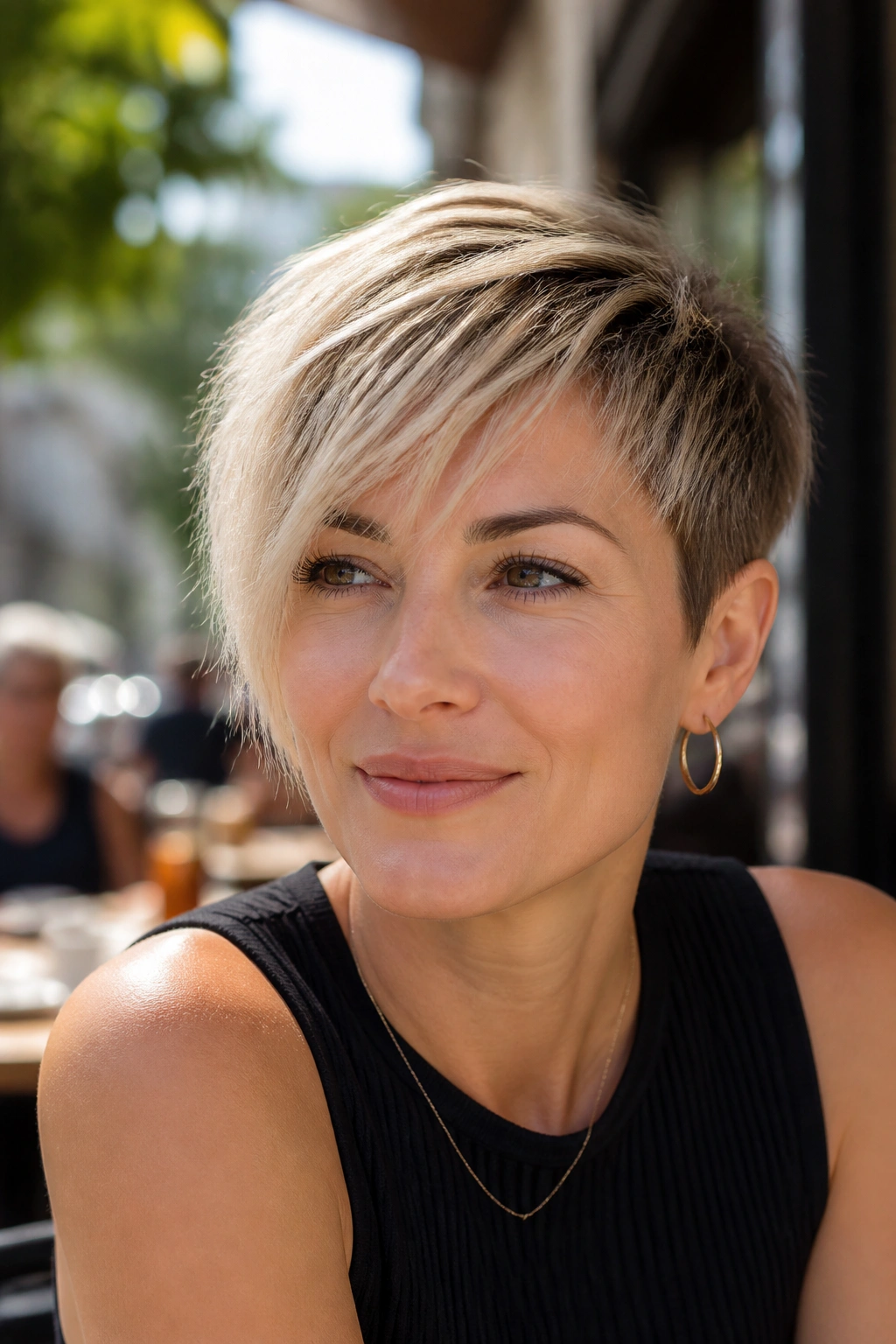
How wispy should wispy bangs be? Light enough to move, but not so thin that they vanish. That’s the balance. On fine hair, a bang that is cut with restraint can soften the forehead and keep the pixie from feeling too severe.
The bangs should land somewhere between the eyebrow and the upper lash line on the longer side, with a slightly shorter section on the opposite side if you want the asymmetry to show. The rest of the cut can stay cropped and neat. That contrast is what keeps the fringe from taking over.
Best bang length
A bang that skims the brow works well if you wear your hair forward. A longer, side-swept bang is better if you like to tuck one side behind the ear. Either way, do not let the bangs get over-thinned at the ends; fine hair already gives enough of that effect on its own.
A tiny dab of styling cream is enough. Work it through the fringe with your fingertips, then shake the hair loose instead of brushing it to death. That little bit of mess gives the bangs life.
13. Sideburn-Forward Pixie
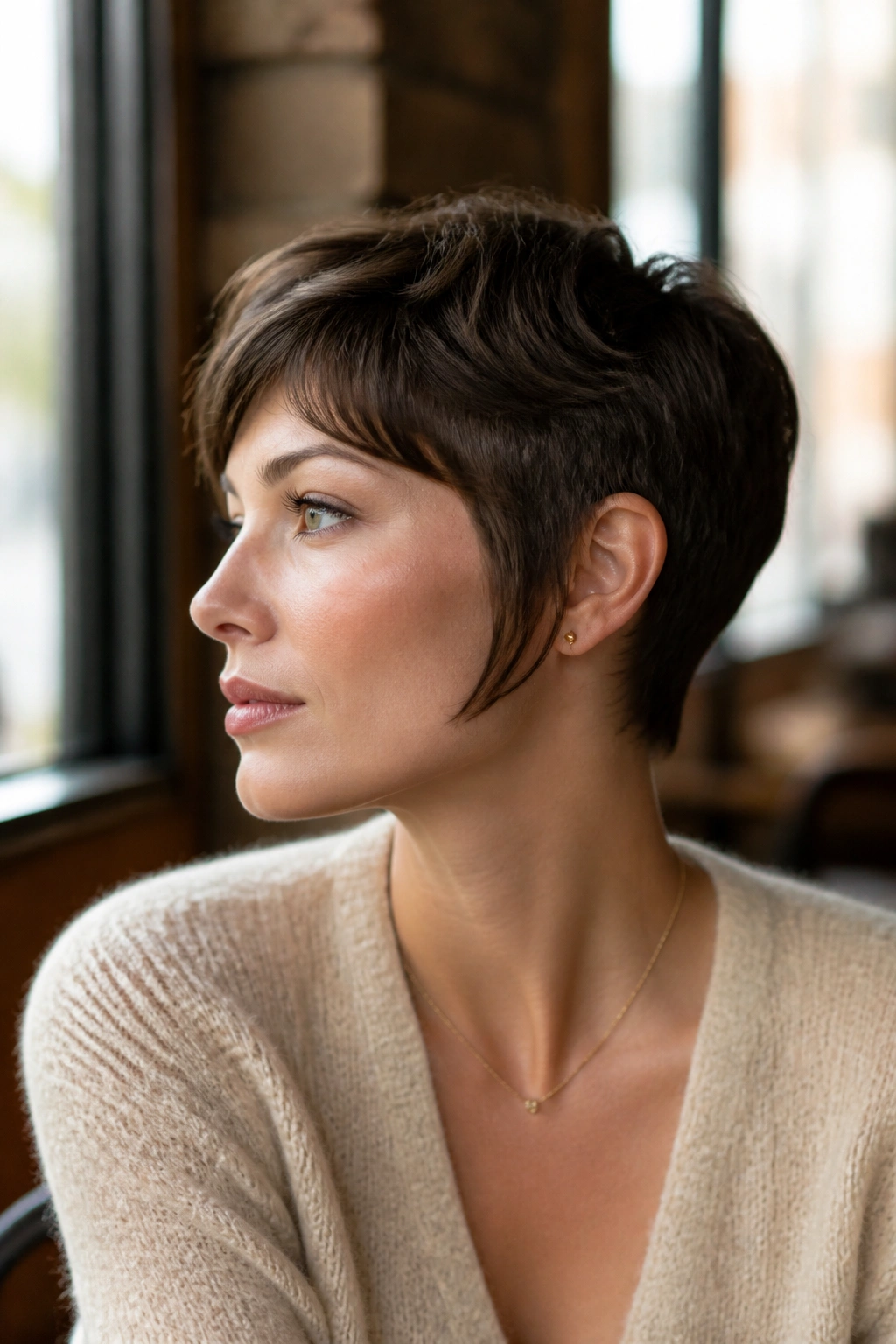
Some pixies live or die on the sideburns. A sideburn-forward cut keeps those front edges a little longer so the face has a frame, and fine hair usually benefits from that extra bit of shape.
This style is a good move if you want the haircut to look intentional even on a plain day with no styling. The longer sideburn area creates a soft vertical line, which can slim the face and keep the sides from looking too bare. The rest of the cut can stay short and close to the head.
- Ask for the sideburns to stay softly tapered, not clipped off blunt.
- Keep the front corner just long enough to brush the cheek.
- Use a small amount of wax only on the ends.
- Let the sideburns stay a little softer than the back.
It has a nice vintage feel without turning costume-y. That matters. A lot of short cuts borrow from old styles and end up feeling too rigid. This one keeps its humanity.
14. Wavy Asymmetrical Pixie for Fine Hair
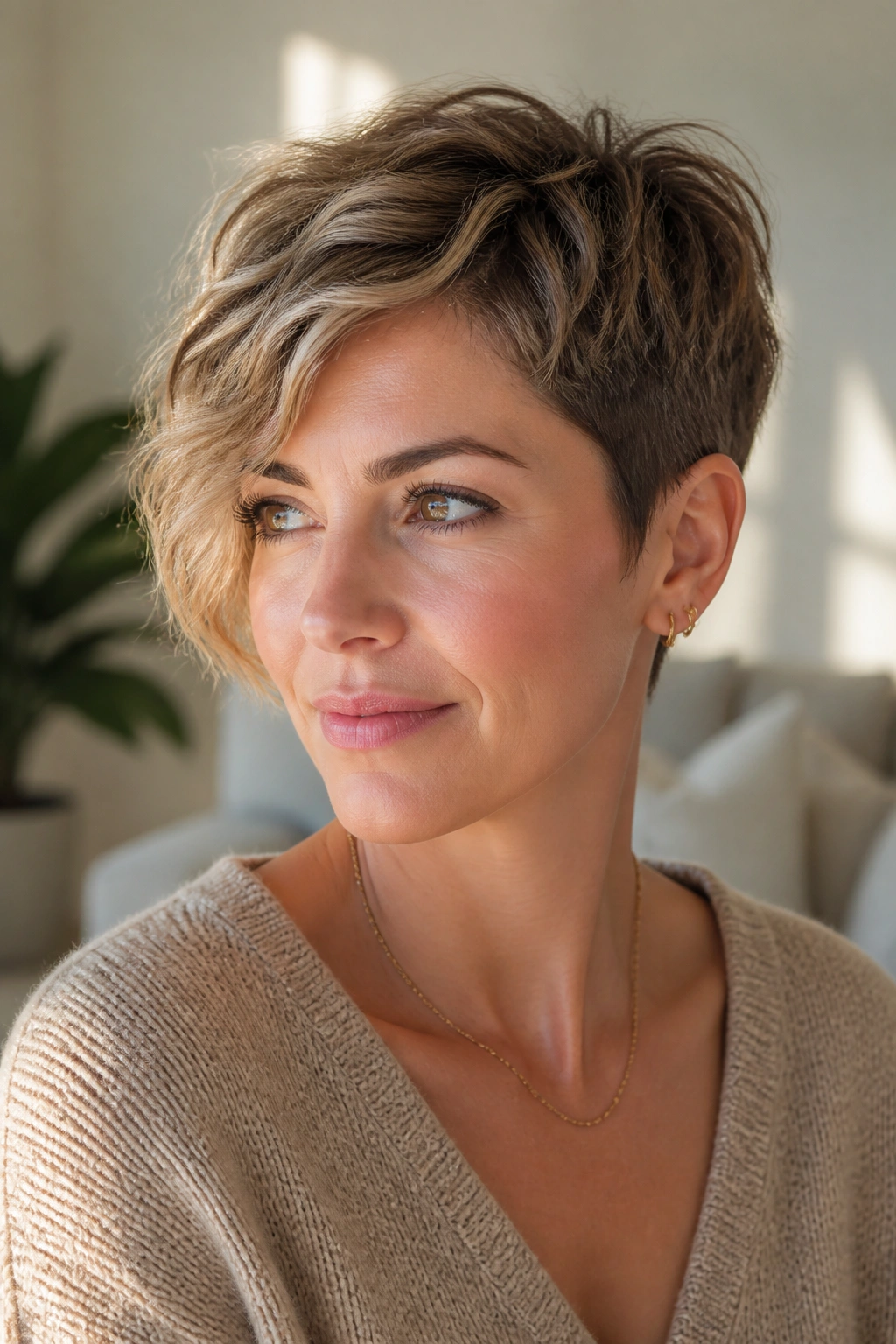
Wavy fine hair needs a different pixie than straight fine hair. The bend adds softness, but it can also steal length if the shape gets too busy. A wavy asymmetrical pixie has to leave room for the wave to move without turning puffy.
The better version keeps one side a little longer and lets the wave fall into that longer line. The shorter side stays close, which gives the style contrast. If both sides are chopped the same way, the wave can balloon outward and make the head shape look wider than it is.
A diffuser helps here, but only on low heat. Scrunch in a light mousse, tilt the head a bit to one side, and let the wave dry in the direction you want it to sit. Fine wavy hair can frizz fast, so the drying process needs to stay gentle.
This cut is one of the prettiest options on the list because it looks soft without losing its shape. That is harder to pull off than people think.
15. Tapered Nape Pixie with Soft Layers
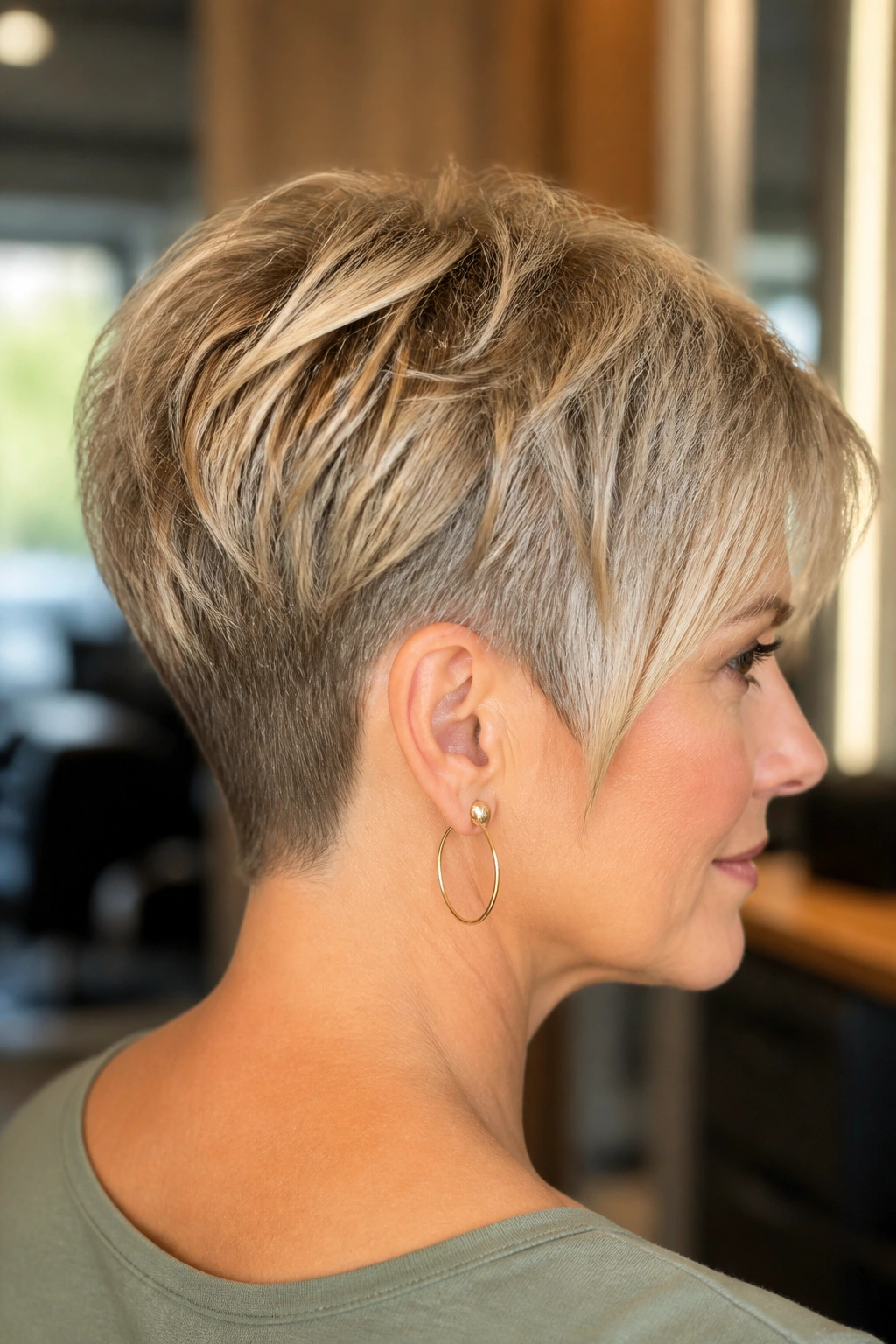
The tapered nape is the unsung hero of short cuts. It keeps the back clean, stops fine hair from building a shelf at the neck, and gives the top room to look fuller. Once the nape is tidy, the rest of the haircut reads better.
Soft layers through the top keep the style from feeling too helmet-like. That’s the trap with fine hair: too much uniform length and the cut goes flat, too much thinning and it turns flimsy. The tapered nape solves the back half of that equation, which is a relief.
I also like this cut for grow-out. A neat nape makes a later trim look less urgent. Even when the front starts to lengthen, the back still keeps some discipline. That buys you time between appointments, and time is often the whole battle with short hair.
A quick touch-up every 5 to 7 weeks keeps the shape honest. After that, the taper starts to lose its line and the haircut stops looking sharp.
16. Shaggy Pixie with a Slanted Fringe
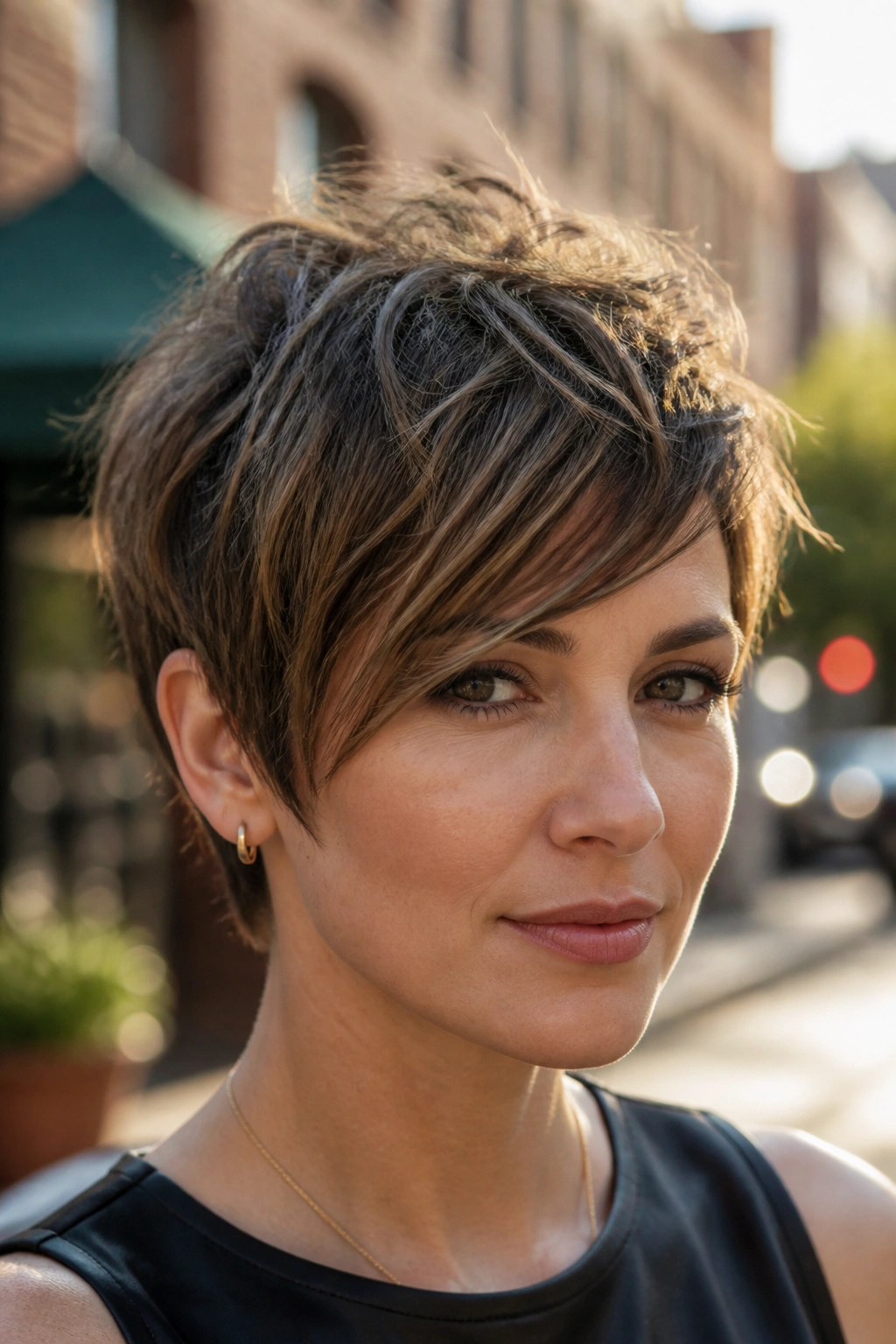
A shaggy pixie sounds messy on paper, but on fine hair it can be the easiest shape to live with. The trick is to keep the shag elements near the top and front, then let the rest stay tidy enough that the haircut still reads as a pixie.
The slanted fringe gives the style its asymmetry. It breaks up the forehead line and keeps the front from feeling too square. The shag texture adds a little roughness, which is useful when fine hair tends to lie too politely.
Where the shag lives
Keep the texture around the crown and the front third of the cut. Leave the nape and around the ears more controlled. That contrast prevents the haircut from turning into a fuzzy cloud.
A light texture spray works better than a heavy paste here. Spray, scrunch, and stop. The whole charm is that it looks like it moved on its own. Overworking it kills the effect fast.
This is a nice choice if you like hair that looks better after you’ve lived in it for a few hours.
17. Polished Office Pixie with a Deep Part
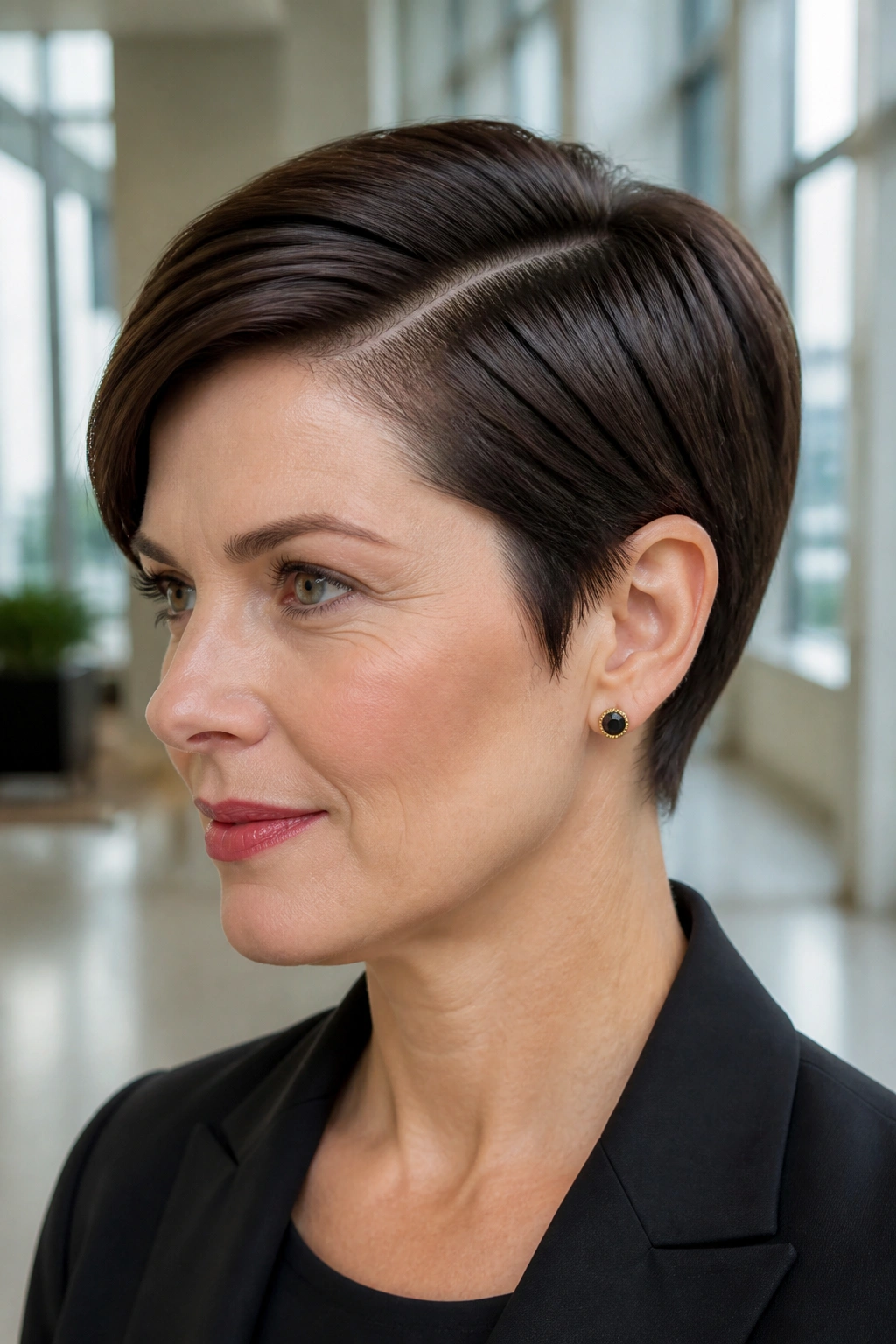
A polished office pixie only works when the part line is committed. A hesitant part gives you a limp look. A deep, clear part gives the haircut shape, sheen, and enough asymmetry to feel deliberate.
This version is for straight or slightly wavy fine hair that needs to look neat with very little fuss. The front section is swept across the forehead, the sides stay sleek, and the back is tapered close so the cut doesn’t puff out under a collar. It’s clean. Maybe a little severe, but in a good way.
A smoothing cream or light serum on the mid-lengths keeps flyaways down, but the roots should stay as light as possible. Fine hair gets greasy fast if you overload it, and a polished pixie can go flat in an instant if the product is too heavy. That is the annoying part.
If your life includes meetings, uniforms, or a dress code that dislikes fuss, this is one of the safest shapes to try. It looks put together without asking for much daily effort.
18. Low-Maintenance Asymmetrical Pixie for Fine Hair
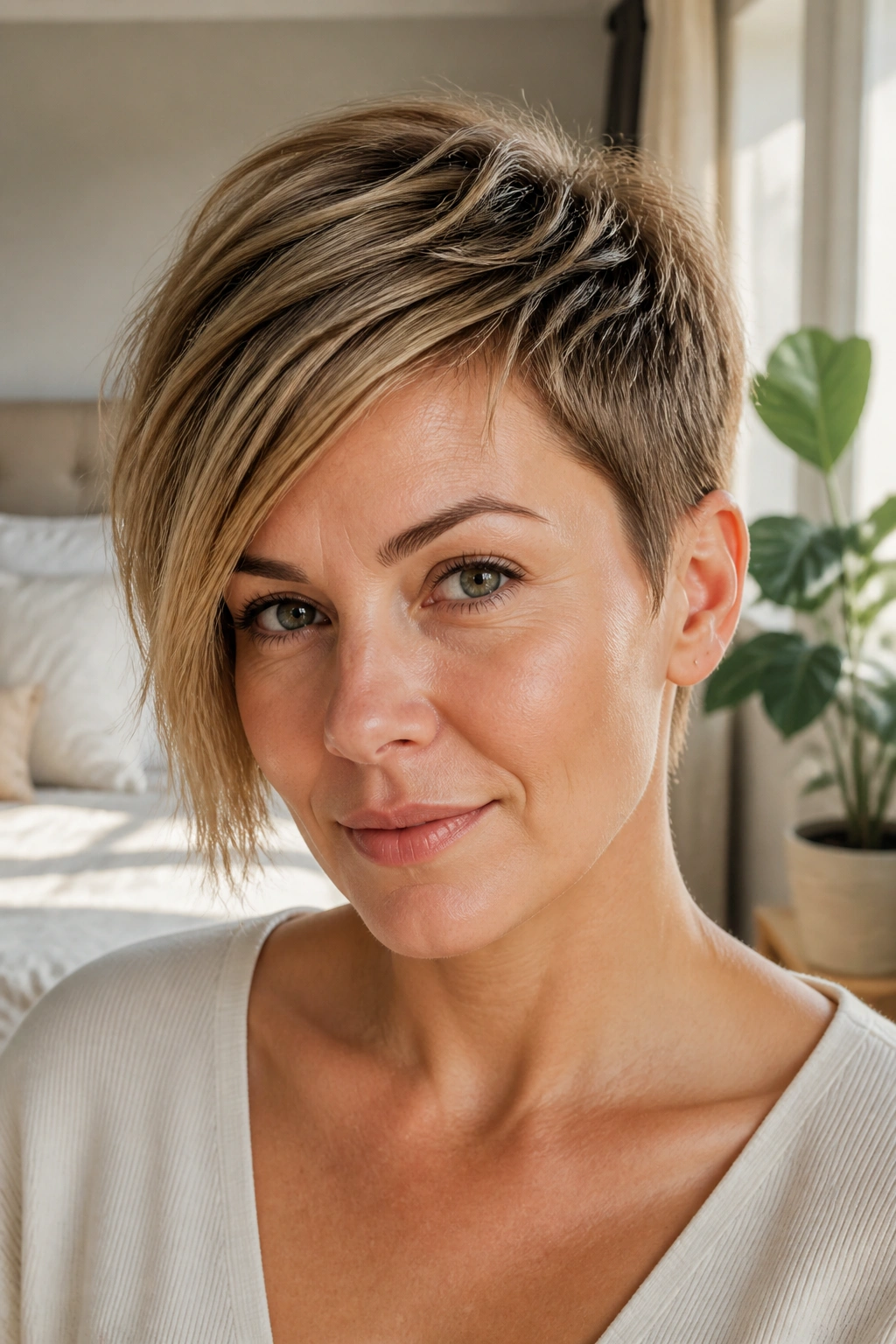
If you want a pixie you can air-dry and leave alone, this is the safest bet. A low-maintenance asymmetrical cut keeps one side slightly longer, keeps the crown soft but not over-layered, and leaves enough shape in the front that the haircut still looks styled when you haven’t touched it.
That balance is what makes it work for fine hair. Too much texture and it starts to look thin. Too little and it falls flat. The sweet spot sits in the middle: a defined side part, a longer front corner, and a neat nape that keeps the back from puffing out.
- Ask for soft point-cutting through the top, not heavy thinning.
- Keep one front section longer by about 1 to 2 inches.
- Leave the crown with enough length to bend, not spike.
- Book trims every 5 to 7 weeks so the asymmetry stays clean.
A little leave-in cream on damp hair is often enough. Let it dry, tuck one side if you want, and move on with your day. Short hair can be fussy, sure. But when the cut is built right, it can also be one of the easiest things in your routine.
