



Fine hair gets blamed for everything. Flat roots, see-through ends, a style that falls limp before you’ve even left the house. A stacked pixie cut changes the equation because it puts the shape where fine hair needs it most: through the back, at the crown, and around the nape, where short graduation can make hair look fuller without making it heavy.
The trick is that not every pixie works. Fine hair can look thin fast if the layers are too wispy or the ends are thinned out until there’s nothing left to hold a shape. A good stacked pixie keeps some strength at the perimeter, builds lift through the back, and uses clean lines to make the whole cut look intentional instead of fragile. That balance matters. A lot.
I’m a big fan of stacked pixies on fine hair because they do something blunt cuts can’t: they create the idea of density. Not fake, not puffy, not helmet-like. Just enough bend at the crown, enough curve at the back, and enough softness around the face that the hair looks alive even when you don’t spend twenty minutes fighting it.
And that’s the point here. The 20 styles below all use stacking in a slightly different way, so you can match the cut to your face shape, your hair texture, and how much styling you’re actually willing to do in the morning.
1. Soft Rounded Stacked Pixie for Fine Hair
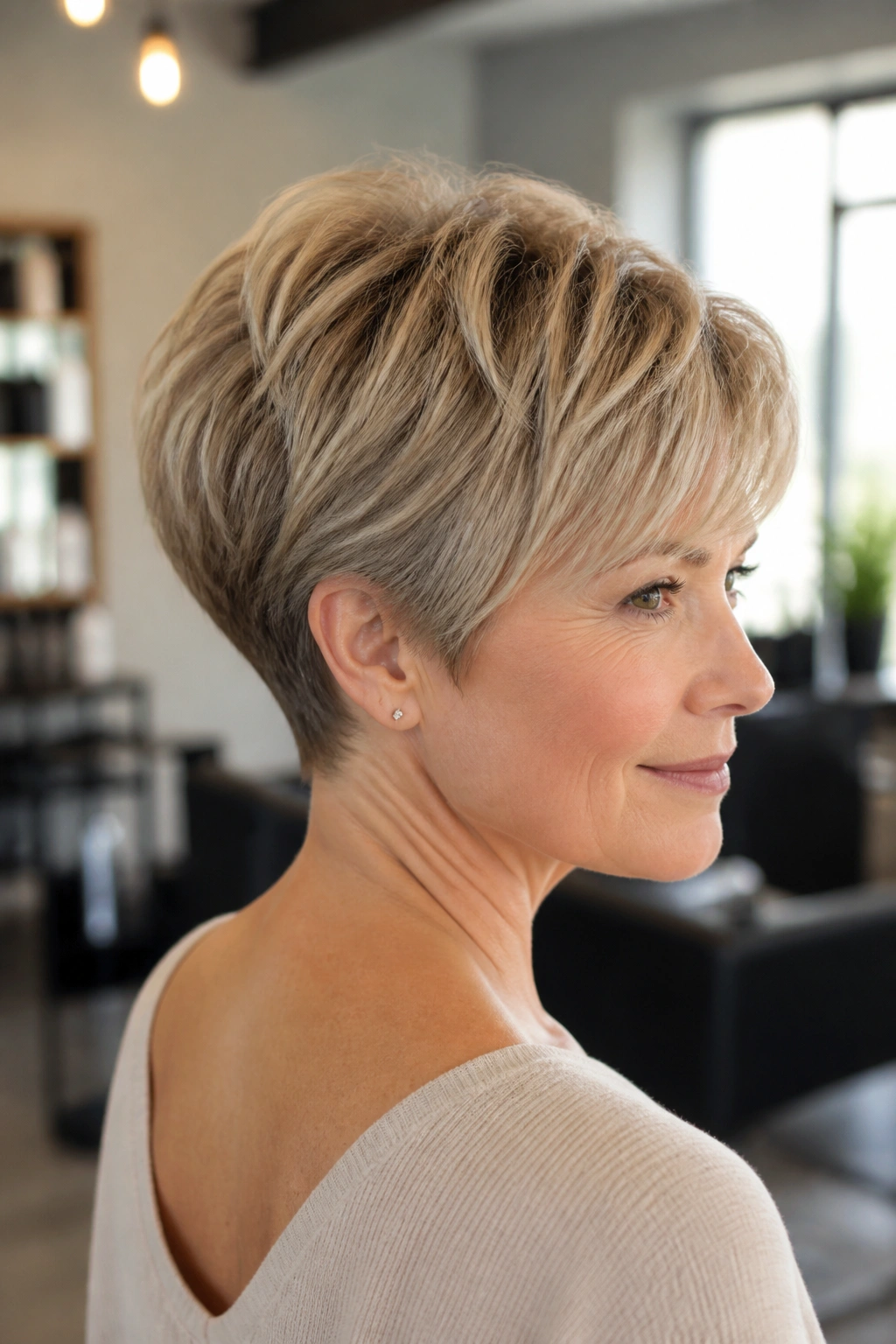
This is the version I’d hand to someone who wants volume without drama. The back is stacked close to the head, but the crown stays softly rounded, so the shape reads full rather than choppy. On fine hair, that rounded silhouette matters more than people realize. It gives the cut a little body from every angle.
Why It Works
Fine hair often goes flat because the top is too long and the back is too blunt. A soft rounded stack solves both problems at once. The shorter nape creates lift, while the crown layers overlap in a way that catches light and makes the hair look thicker.
Ask for this at the salon:
- A short, tidy nape
- Graduated layers through the back
- Lightly feathered crown pieces
- A neckline that follows the head shape instead of sticking out
Best for: people who want movement without a lot of daily styling.
A round brush and a small blast of root spray are usually enough. Keep the finish soft. If you make it too piecey, the cut loses the fullness that makes it work.
2. Tapered Nape Pixie with Side-Swept Fringe
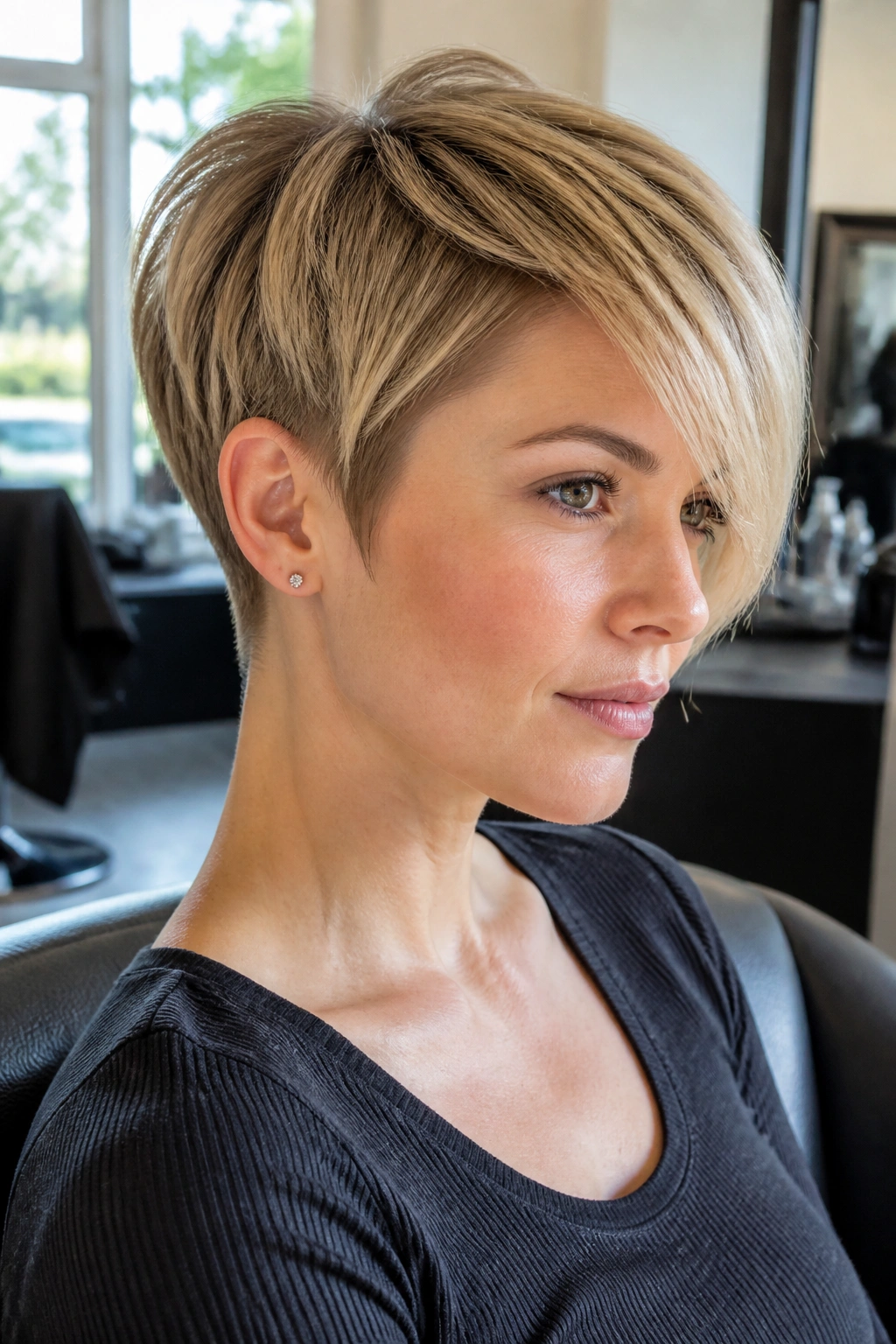
This is the smartest choice if your hair is fine at the temples. The tapered nape keeps the back neat, while a longer side-swept fringe gives the front some weight where it matters. That front softness can make the whole cut look denser, especially if your hairline is a little sparse.
The appeal here is balance. The back stays short and stacked, so the silhouette has lift. The front doesn’t get overcut, which keeps the style from looking brittle. I like this cut on people who want a polished look that still feels easy, because it grows out gracefully instead of losing its shape overnight.
A little smoothing cream on the fringe helps, but don’t load it up. Fine hair hates heavy product. A pea-sized amount is usually enough, and even that might be too much if your hair is very soft.
3. Choppy Mushroom Pixie with Lifted Back
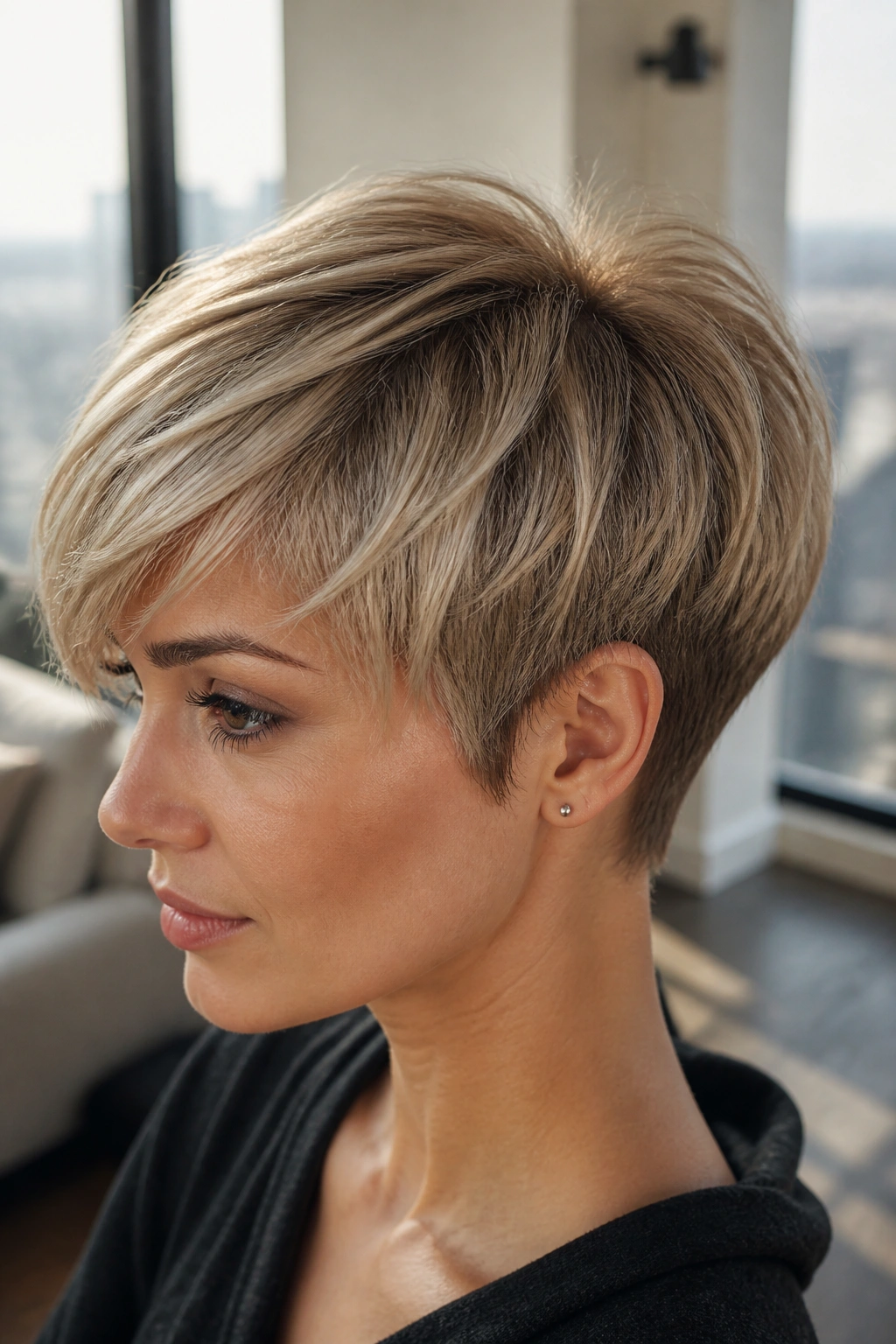
A choppy mushroom pixie sounds a little odd, but the shape is lovely on fine hair when it’s done well. Think of a short, rounded top with a stacked back and broken-up ends that keep the cut from looking stiff. It has a retro edge without turning into costume hair.
What Makes It Different
The cut uses controlled irregularity. Not chaos. Just enough texture to keep the hair from lying flat against the head. Fine hair tends to look bigger when the ends are slightly uneven, because the eye reads movement as volume.
How to Wear It
- Blow-dry the crown first for lift.
- Use a light mousse at the roots.
- Finish with a matte paste on the ends.
- Skip heavy oils; they collapse the shape.
This one suits people who like a little personality in their haircut. It can look artsy, sharp, or soft depending on how you style it. That flexibility is part of the appeal.
4. Asymmetrical Stacked Pixie with Long Bangs
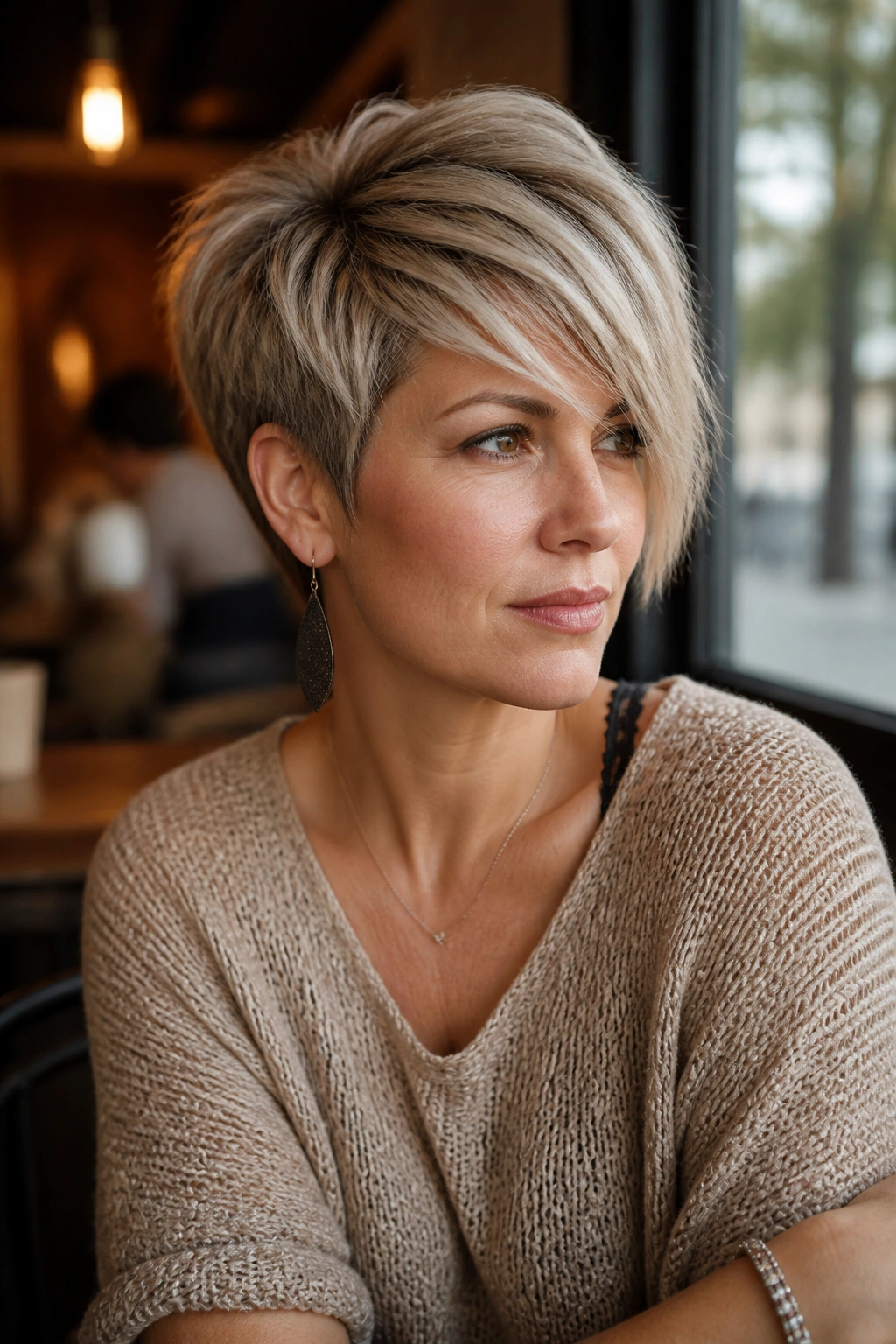
One side a little longer. That’s the whole trick, and it works. An asymmetrical stacked pixie gives fine hair a stronger visual line, which makes the style look fuller even when the actual hair density is modest. Long bangs on one side also help hide thin temples or a narrow hairline.
The back still carries the stacking, so you get the lift where a pixie needs it. The asymmetry comes in at the front and side, where it adds interest without needing extra length all over the head. I like this cut because it feels deliberate. It doesn’t look like you just chopped your hair off and hoped for the best.
Keep the longer side smooth and slightly tucked behind the ear. The contrast between the short stacked back and the longer front section is what makes the shape pop. If you curl the front too much, you lose that clean line.
5. Mini Bixie with a Stacked Crown
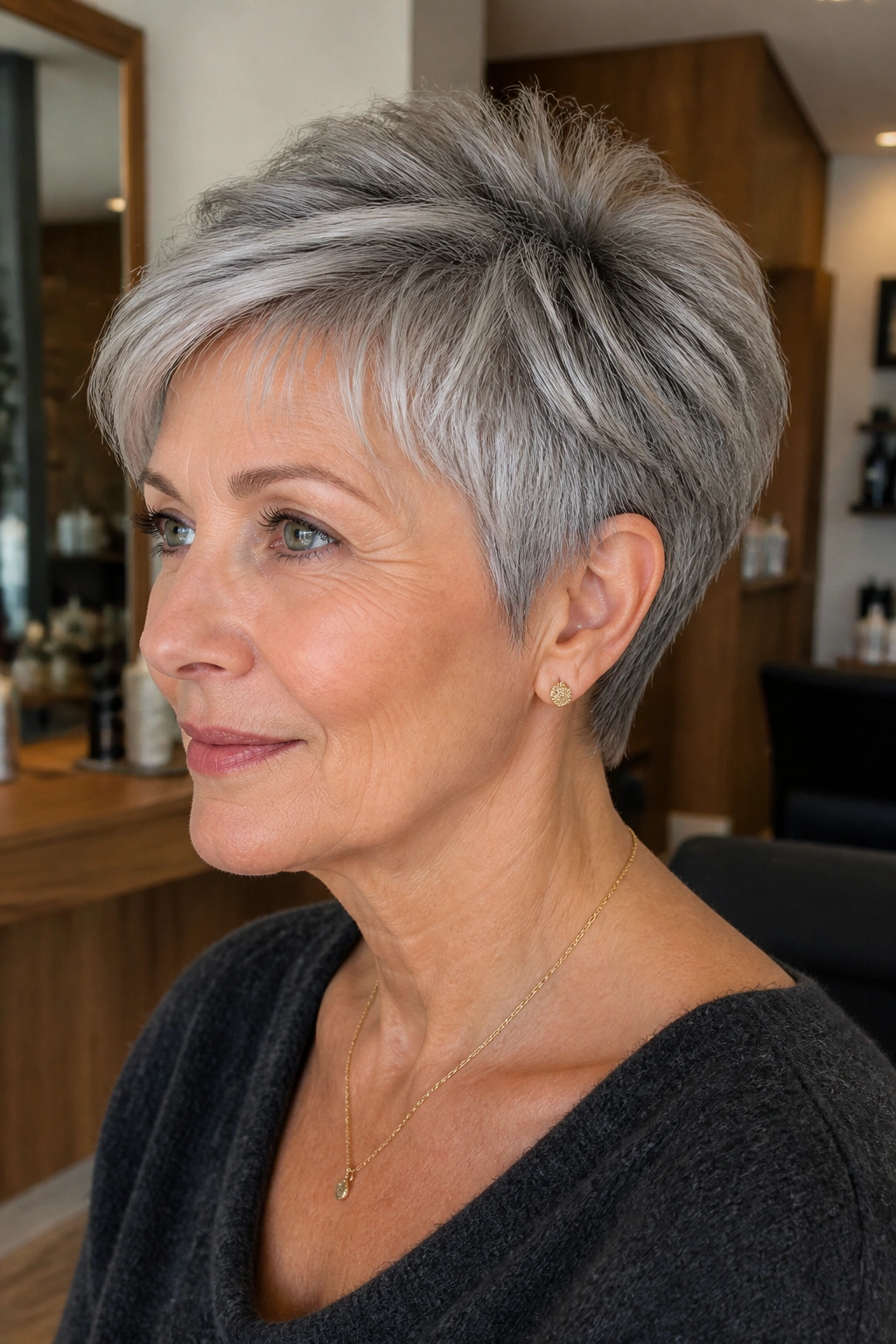
A bixie sits between a bob and a pixie, and for fine hair that in-between zone can be gold. The mini version keeps enough length to feel soft, but the stacked crown gives it the lift a blunt bob usually lacks. If you’ve been nervous about going short, this is a friendly place to land.
It has more surface area than a classic pixie, which means you can play with parting and tuck the sides behind the ears. But because the crown is stacked, the head shape still looks compact and airy rather than heavy. That’s the whole point. You get movement without the flop that fine hair sometimes gets at jaw length.
Styling note
A round brush at the crown and a flat brush on the sides make the shape look cleaner. If you rough-dry everything, the longer pieces can separate in a way that makes the cut look unfinished.
6. Curly or Wavy Stacked Pixie
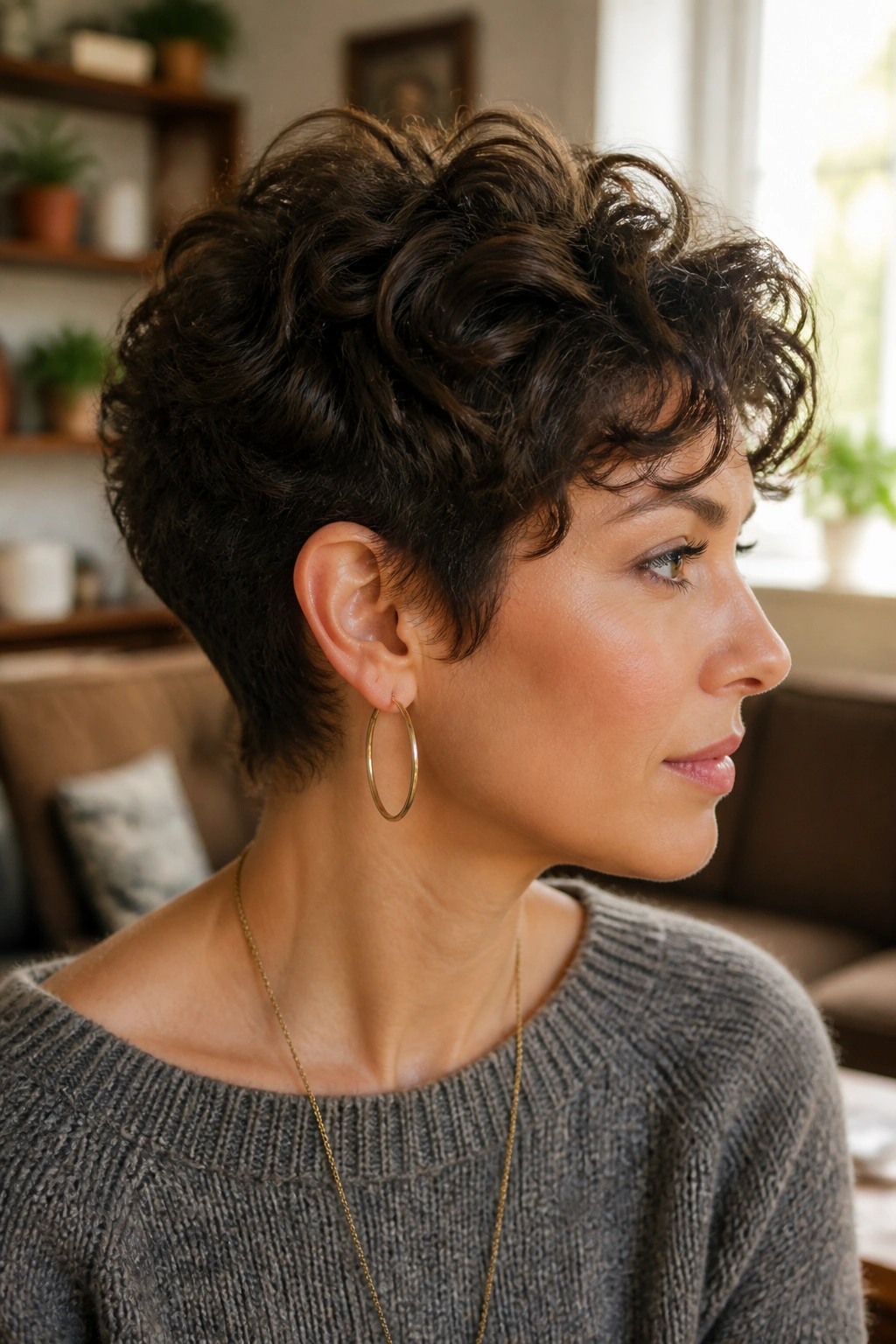
Curly fine hair is its own animal. It can look thin when it’s wet and huge when it dries, which makes the wrong cut feel like a gamble. A stacked pixie built for curls keeps the back short and neat while leaving enough length on top for the curl pattern to spring up.
Do not overthin this one. That’s the mistake people make. Fine curls need structure, not endless point cutting. A little stacking at the back gives the shape control, and longer top layers let the curl form without puffing out at the sides like a triangle.
A curl cream with a small amount of hold works well here. Scrunch, let it dry, then break the cast only if the hair feels crunchy. If your waves are loose rather than springy, a diffuser on low heat helps the crown keep its lift.
7. Undercut Pixie with Airy Crown
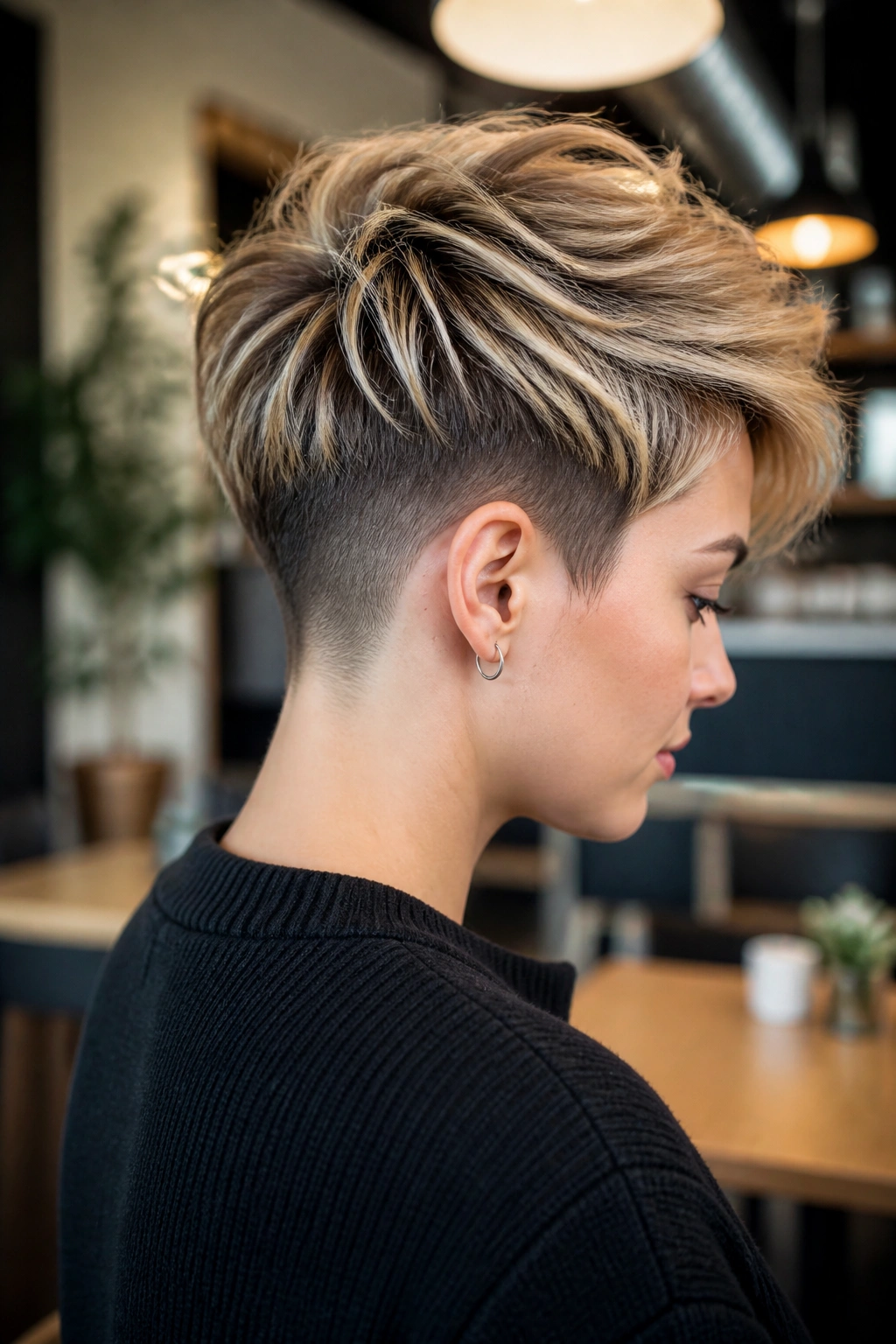
An undercut sounds bold, but on fine hair it can be practical. Removing weight at the nape and lower sides lets the top sit with more lift, which is useful when the hair otherwise clings to the head. The crown stays airy and a little longer, so the style has room to move.
This cut is for someone who likes clean lines. The undercut gives the back a crisp finish, and the stacked crown softens the whole thing. You get contrast. That contrast is what makes the hair appear thicker, because the eye reads the higher top and the tighter sides as deliberate structure.
A little dry texture spray goes a long way here. If you pile on paste, the airy effect disappears. Keep the finish light and touchable, not sticky.
8. Wispy Silver Pixie with Soft Stack
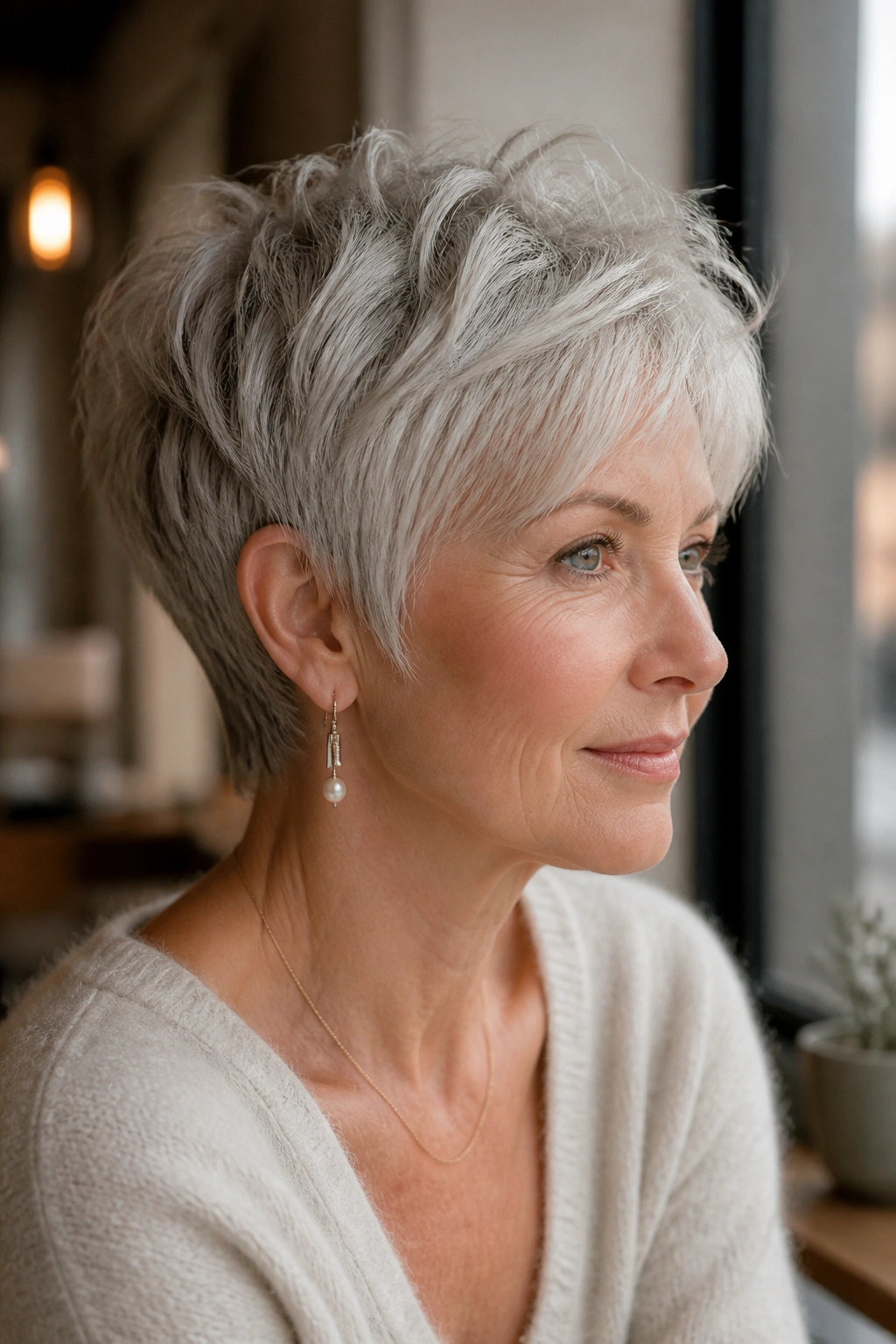
Silver and white hair often has a fine texture, and it can go flat in a way that feels a bit unfair. A wispy stacked pixie treats that softness as an asset instead of a problem. The layered back adds shape, while the wispy top keeps the cut from looking too severe.
What I like here is the movement. Fine gray hair can catch light in a soft, almost silvery way when the layers are clean and not overworked. A gentle stack at the nape gives the head a lifted line, which is enough to make the whole haircut look more finished.
The little details matter
- Keep the fringe feathered, not blunt.
- Ask for soft graduation, not aggressive thinning.
- Use a purple shampoo only when brassiness shows up.
- Finish with a lightweight cream if the hair feels dry.
This is one of those cuts that looks calm and sharp at the same time. Not easy to do. Worth it when it’s right.
9. Piecey Razor-Cut Pixie with Tucked Sides
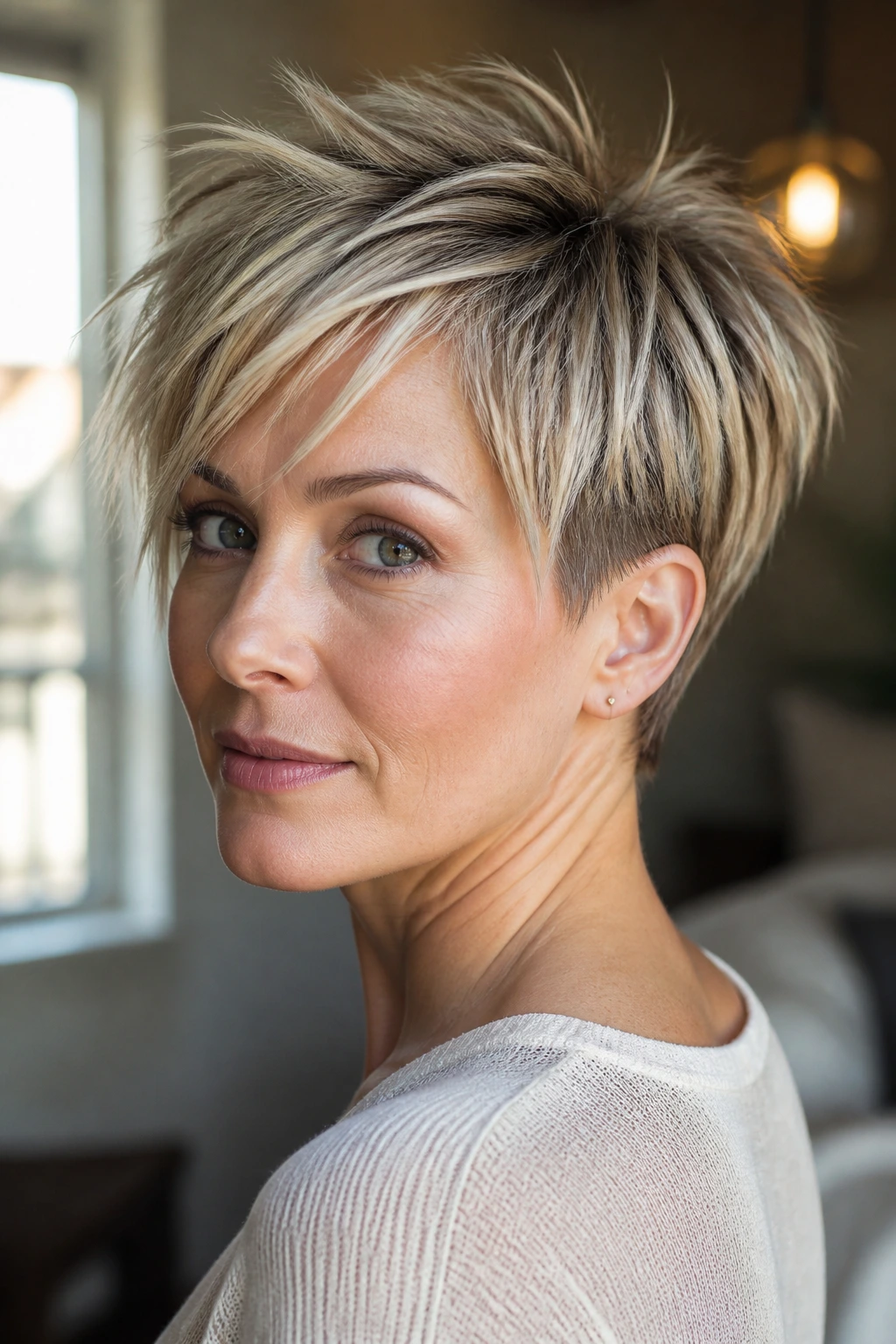
Razor-cut texture can be risky on fine hair, but in the right hands it creates a beautiful piecey finish. The key is restraint. You want the ends softened enough to move, not shredded into air. With a stacked back and tucked sides, the shape stays compact while the top gets a little grit.
This version suits people who dislike a polished blowout. It looks better when it’s slightly undone. A quick dry with fingers, a dab of matte cream, and maybe a touch of dry shampoo at the roots is usually enough. That slight messiness gives the illusion of density because the pieces separate instead of lying in one flat sheet.
If your hair is fragile or breaks easily, keep the razor work limited. Scissor-over-comb and point cutting can give you most of the effect without stripping out too much weight.
10. Deep Side-Part Stacked Pixie
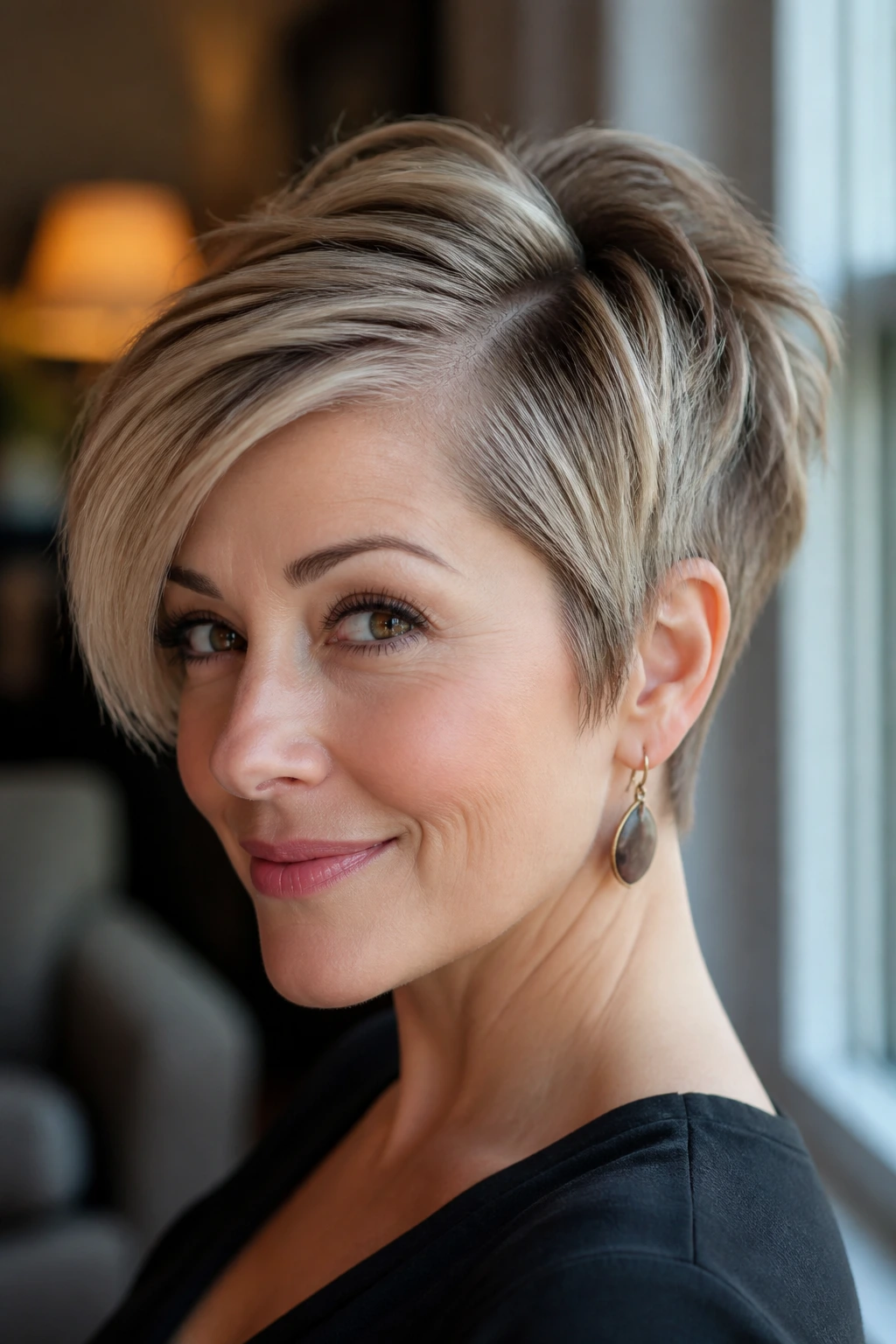
A deep side part can do more for fine hair than a pile of products ever will. It lifts one side at the root, gives the top a clear direction, and makes the stacked back look even fuller by comparison. The result is clean, simple, and surprisingly flattering.
Why this cut reads full: the part creates asymmetry, and asymmetry gives the eye more to follow. Fine hair often looks thicker when it’s not split evenly down the middle. That’s not magic. It’s just visual weight.
This works best when the crown has short, controlled layers and the side part falls a little longer across the forehead. Keep the part flexible, though. If you lock it into the same place every day, the roots can start to droop in that direction.
A root-lift spray at the part line helps. So does flipping the part to the opposite side for a few minutes while drying. Small thing. Big payoff.
11. Cropped Pixie Bob with a Short Back
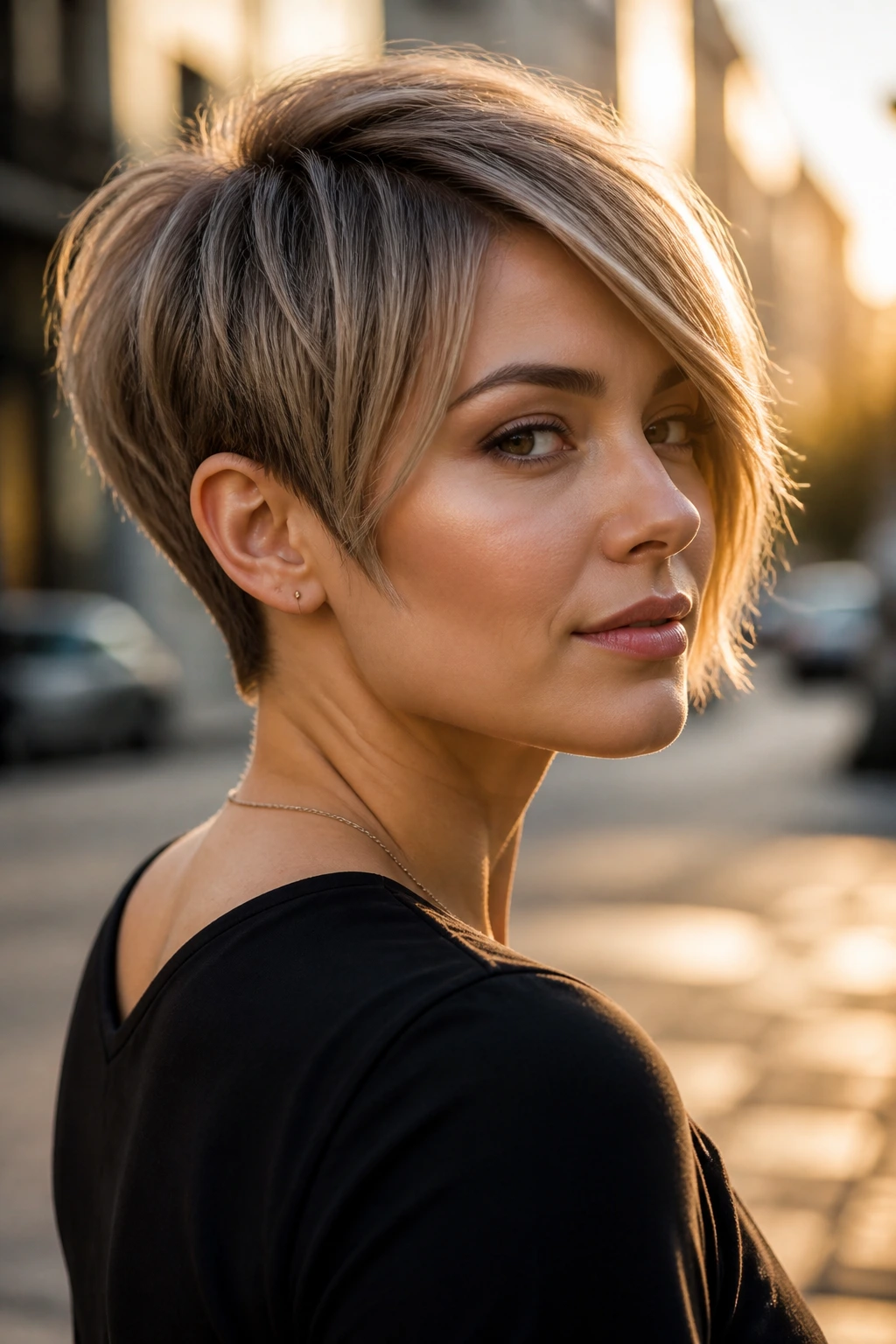
A cropped pixie bob is a good bridge cut for people who want the fullness of a bob and the neatness of a pixie. The back is shorter and stacked, but the sides hold enough length to soften the jawline. Fine hair likes this shape because it gives you a little perimeter without dragging everything down.
The cut has a nice geometry to it. You see the stacked back first, then the longer front pieces, and the contrast makes the whole haircut feel denser than it is. It’s also a solid choice if your hair gets wispy around the neck, since the short back keeps that area clean.
If you wear glasses, this shape plays well with frames. The shorter back keeps the profile tidy, and the front length gives the glasses something to sit beside rather than fight against.
12. Brushed-Forward Fringe Pixie with Lifted Crown
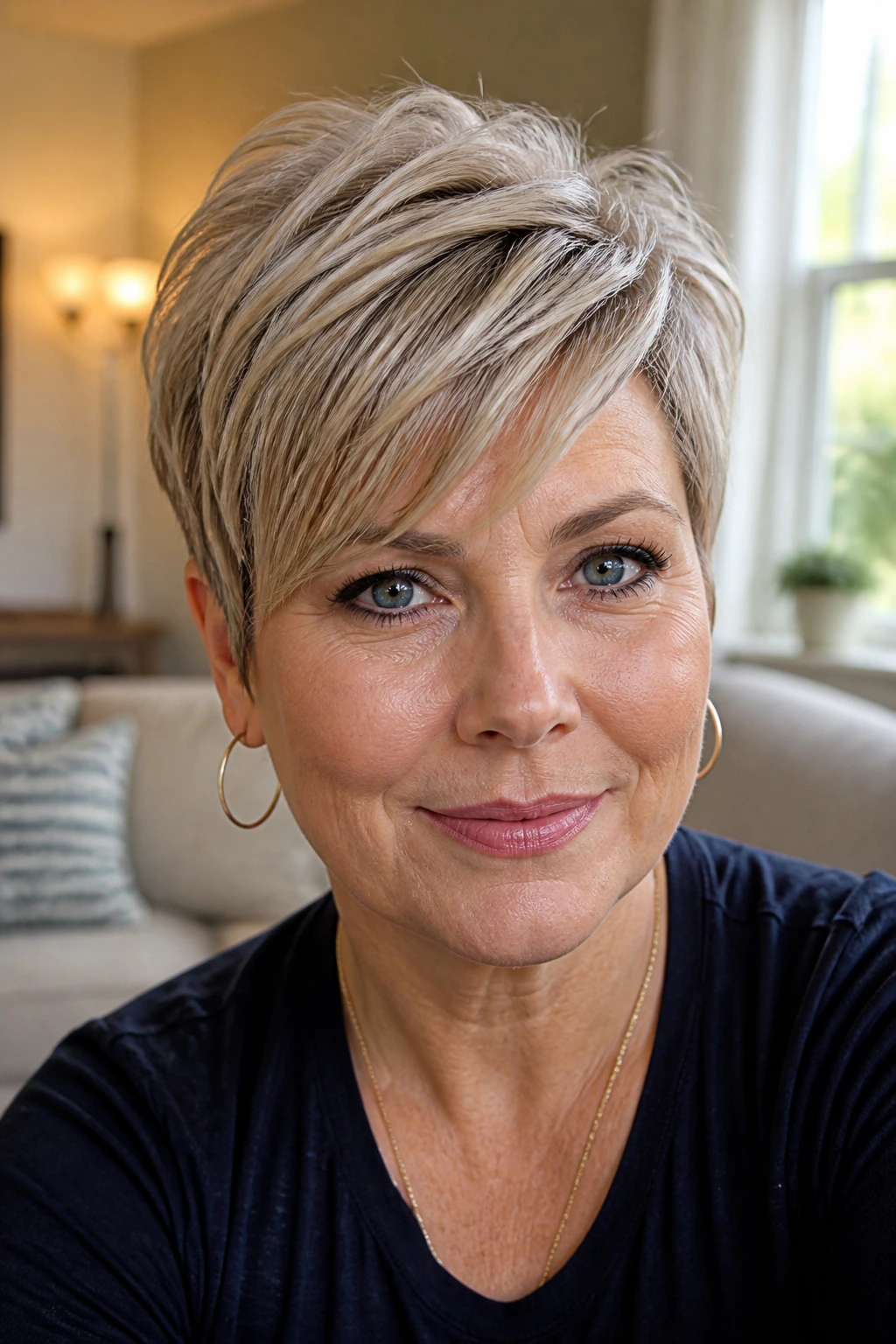
A brushed-forward fringe changes the mood of a stacked pixie fast. Instead of volume going straight up, the movement comes forward, which can be a relief if your hair refuses to hold height. The stacked crown still gives lift at the back, but the front creates a softer, more face-framing finish.
This is a strong option for fine hair that separates too easily at the hairline. The forward fringe hides sparse areas and gives the haircut a fuller front edge. It also feels a little modern without leaning sharp or severe.
How to style it
Use a blow dryer from the crown toward the forehead, then guide the fringe forward with your fingers. A small round brush can help, but you do not need one every day. Once the hair is dry, pinch the fringe with a tiny bit of styling cream so it doesn’t puff up.
It’s a nice cut for anyone who wants softness around the eyes without losing the stacked shape at the back.
13. Textured Platinum Pixie with Chunky Layers
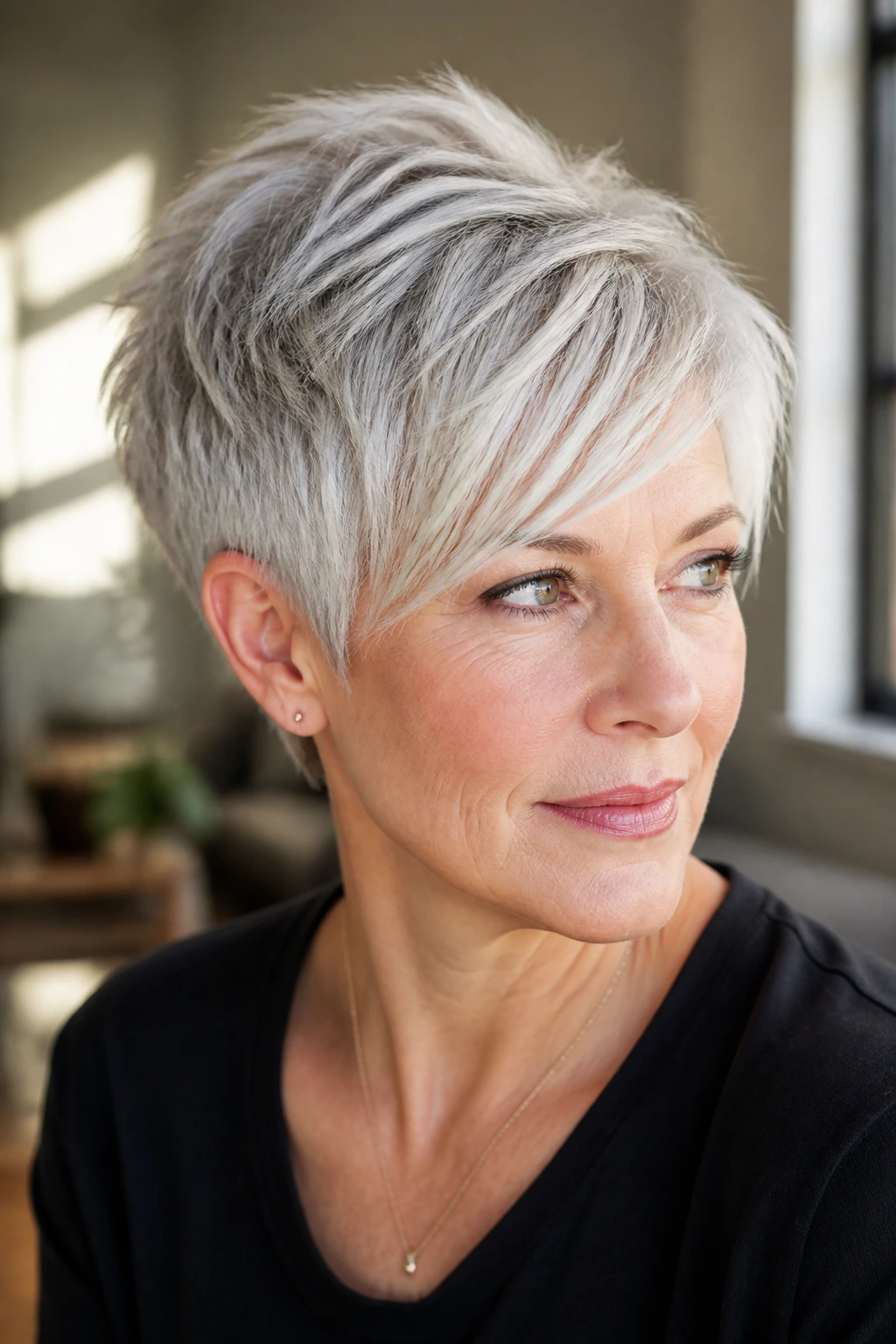
Platinum hair shows every line of a haircut, which is why a stacked pixie with chunky layers can look so good on fine strands. The lighter color makes the texture obvious, so the cut needs clear shape and smart layering. If the lines are weak, the whole thing goes flat. If they’re crisp, the haircut looks expensive without trying too hard.
The chunky layers here are not about thinning the hair to nothing. They’re about building visible pieces that sit on top of the stack and catch the light. Fine hair benefits from that clarity because the layers read as density instead of softness alone.
I’d keep the finish a little dry and airy. Too much shine can make platinum hair look limp. A light texture spray near the crown gives the cut a bit more grit, which helps the shape hold through the day.
14. Low-Maintenance Wash-and-Go Stacked Pixie
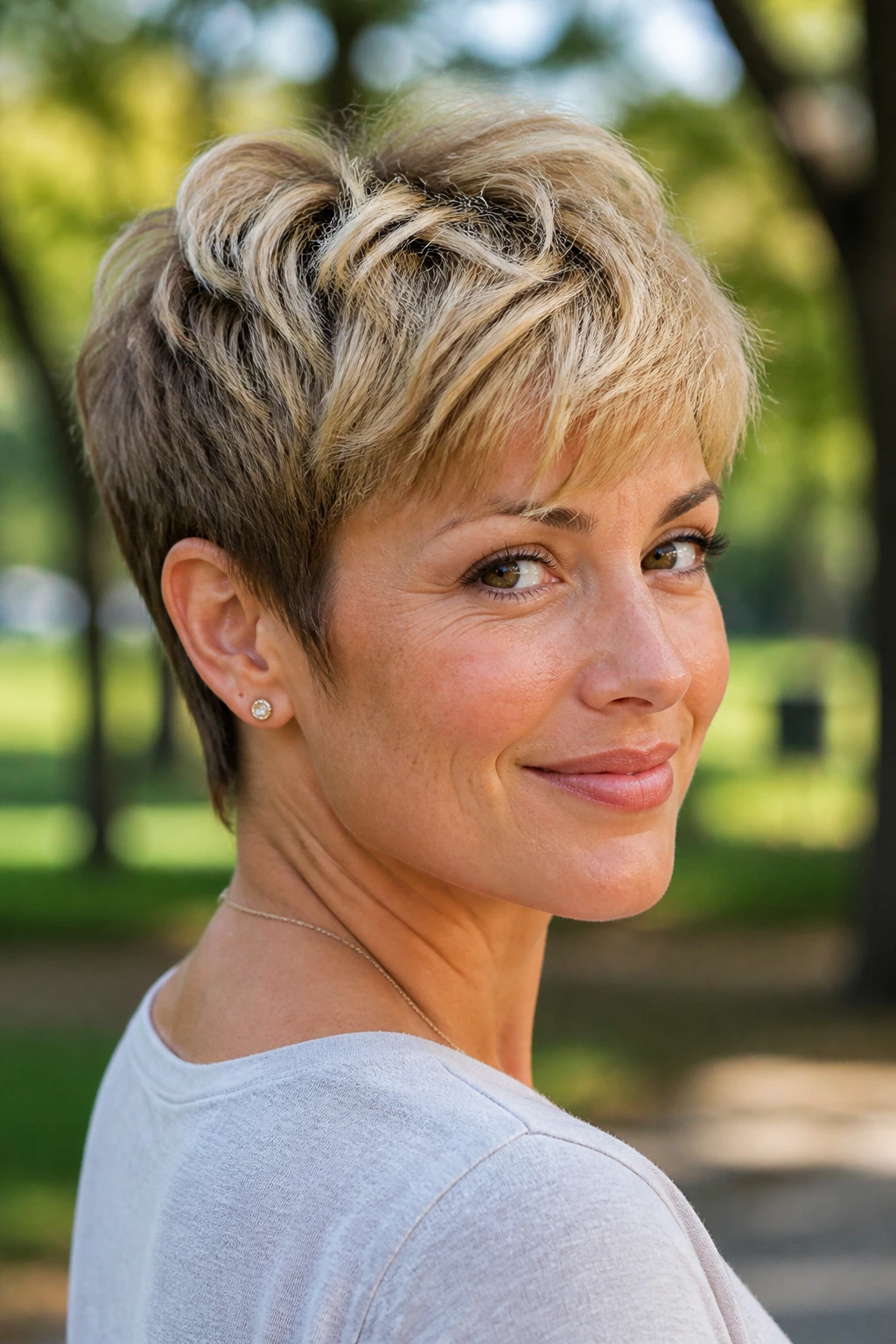
Some pixies need a blowout. This one doesn’t. A wash-and-go stacked pixie is built with enough internal shape that it still looks put together when air-dried, which is exactly why fine-haired people love it. Less effort. Better odds.
The cut should have a clean nape, short stacking at the back, and soft layers through the top that fall into place on their own. If the haircut relies on round brushing every morning, it is not really low maintenance. It’s just high-maintenance with good marketing.
What to ask for
- A shape that follows your head, not a trendy silhouette
- A stack that sits close to the skull
- Top layers that move without collapsing
- Minimal thinning through the ends
This style is best if you’re busy, or if you just don’t want to spend your life styling your hair. Fair enough.
15. Elegant Office-Friendly Pixie with Clean Lines
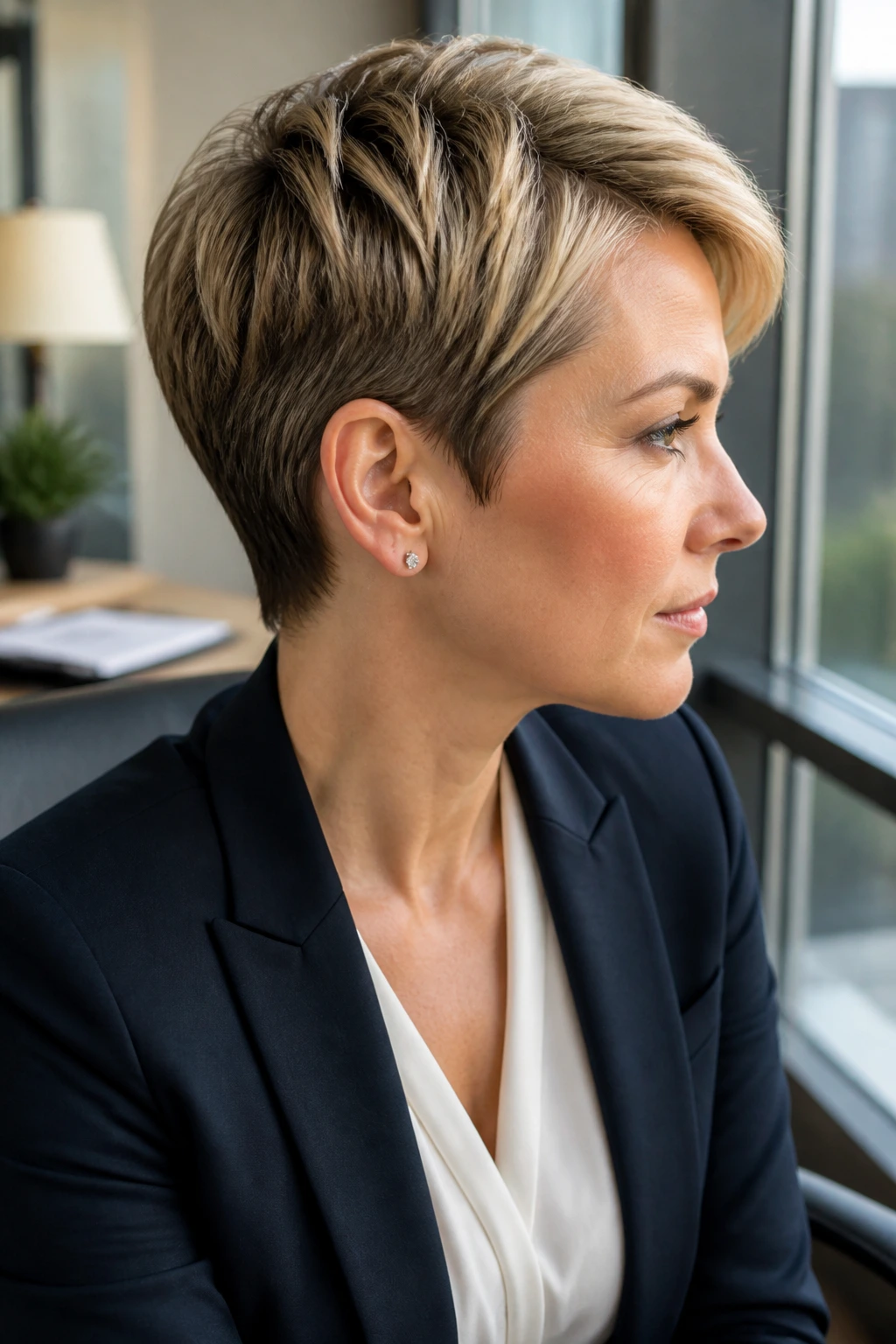
Not every stacked pixie has to look edgy. A cleaner, more tailored version can be sharp in the best way, especially on fine hair. The structure matters here: tidy nape, neat sideburns, balanced crown. The whole cut reads controlled and deliberate.
I like this style for people who need their hair to work with blazers, button-downs, or a more polished wardrobe. The clean lines keep it professional, but the stacking still gives enough lift that the hair doesn’t lie flat against the head. That tiny bit of height changes the whole mood.
If your hair tends to frizz at the ends, this cut handles it better than a super-soft shape. The lines stay visible even when the texture gets a little fuzzy. A small smoothing serum on damp hair helps, but use almost nothing. Fine hair and heavy shine products are not friends.
16. Tousled Bedhead Pixie with Crown Height
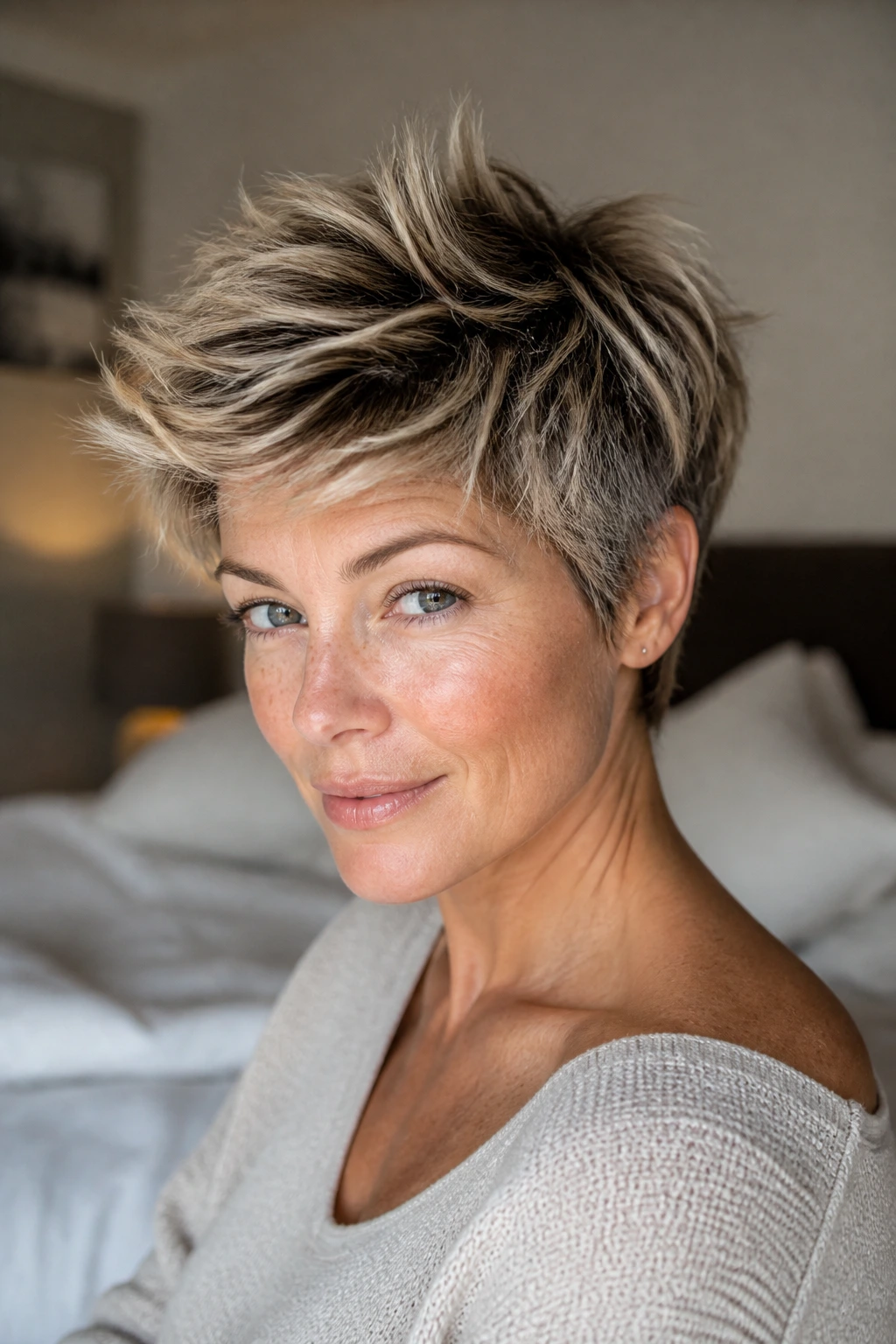
A tousled pixie can look lazy in a good way, which is harder to pull off than it sounds. The crown height gives the style structure, and the messy pieces on top keep it from feeling too neat. Fine hair often looks better with a bit of controlled disorder, because the separation creates the illusion of more strands.
This cut works when the back is stacked cleanly but the top is left long enough to push around with your fingers. You want the shape to survive a little movement. If every strand has to land in a perfect place, the haircut is too delicate.
A dry texture spray is useful here, especially at the roots and around the crown. Scrunch, lift, and stop before the hair starts looking crunchy. That last part is the line people cross too often.
17. Soft Bowl-Pixie Hybrid with a Stacked Back
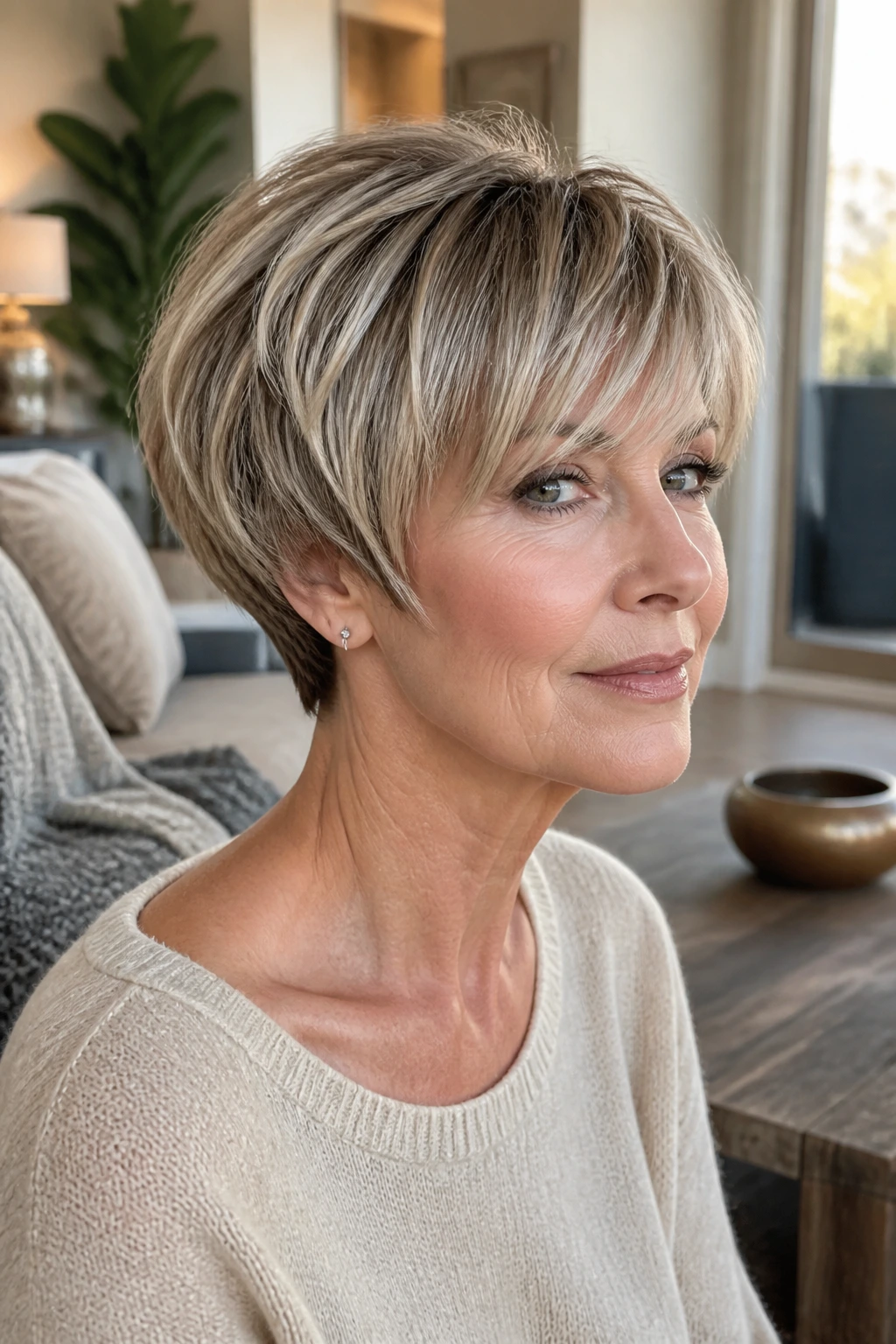
A soft bowl-pixie hybrid sounds unusual, but it can be lovely on fine hair when the edge is softened and the back is stacked properly. The rounded outline gives the hair a fuller perimeter, while the shorter back keeps the cut from turning heavy. It has a little structure, a little sweetness, and a lot of shape.
The key is softness around the sides. A hard bowl line can make fine hair look flat and dated. A softer version, with gentle stacking and light interior layers, gives the same density effect without the rigid feel.
This cut suits people who want something a bit different but not too loud. It’s especially good if your hair falls forward at the temples, because the rounded side shape can help balance that out. Keep the texture touchable and avoid overflattening the top.
18. Long-Top Pixie with a Narrow Nape
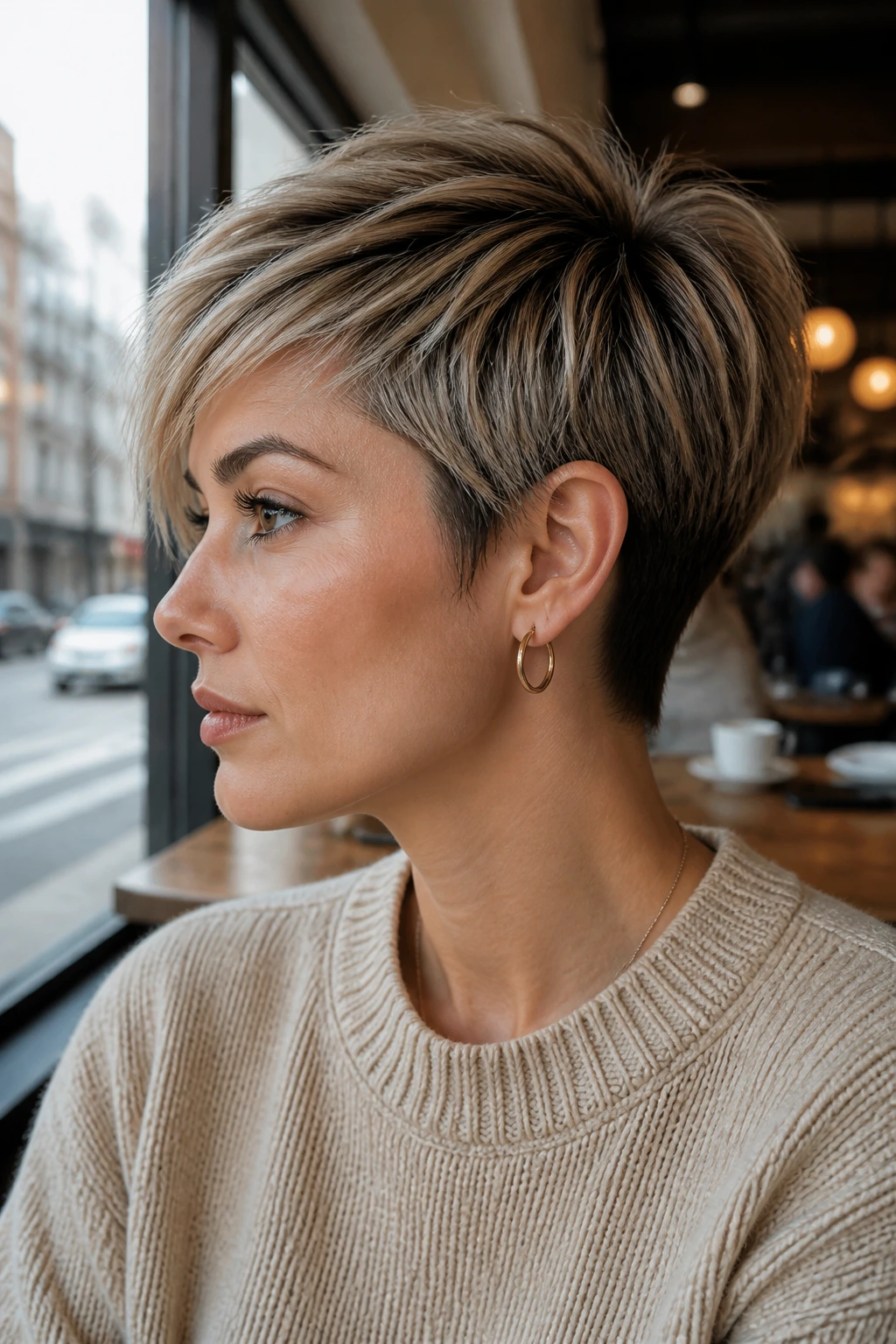
The long-top pixie is one of my favorite shapes for fine hair because it gives you choices. The back stays narrow and stacked, while the top holds enough length to slick back, sweep to the side, or mess up with your fingers. That flexibility is a big deal when your hair texture changes from day to day.
A narrow nape keeps the neckline clean, which makes the top seem fuller by comparison. Fine hair often benefits from that kind of contrast. The shorter back also stops the cut from growing into a puffy little mushroom, which happens faster than people expect.
Good styling choices
- A matte paste for separation
- A soft pomade if you want shine
- Root powder for extra lift
- A quick blast of cool air to lock the shape
This is the cut for people who get bored fast. There’s enough length up top to play with, but not so much that the style loses the stacked effect.
19. Face-Framing Stacked Pixie for Round Faces
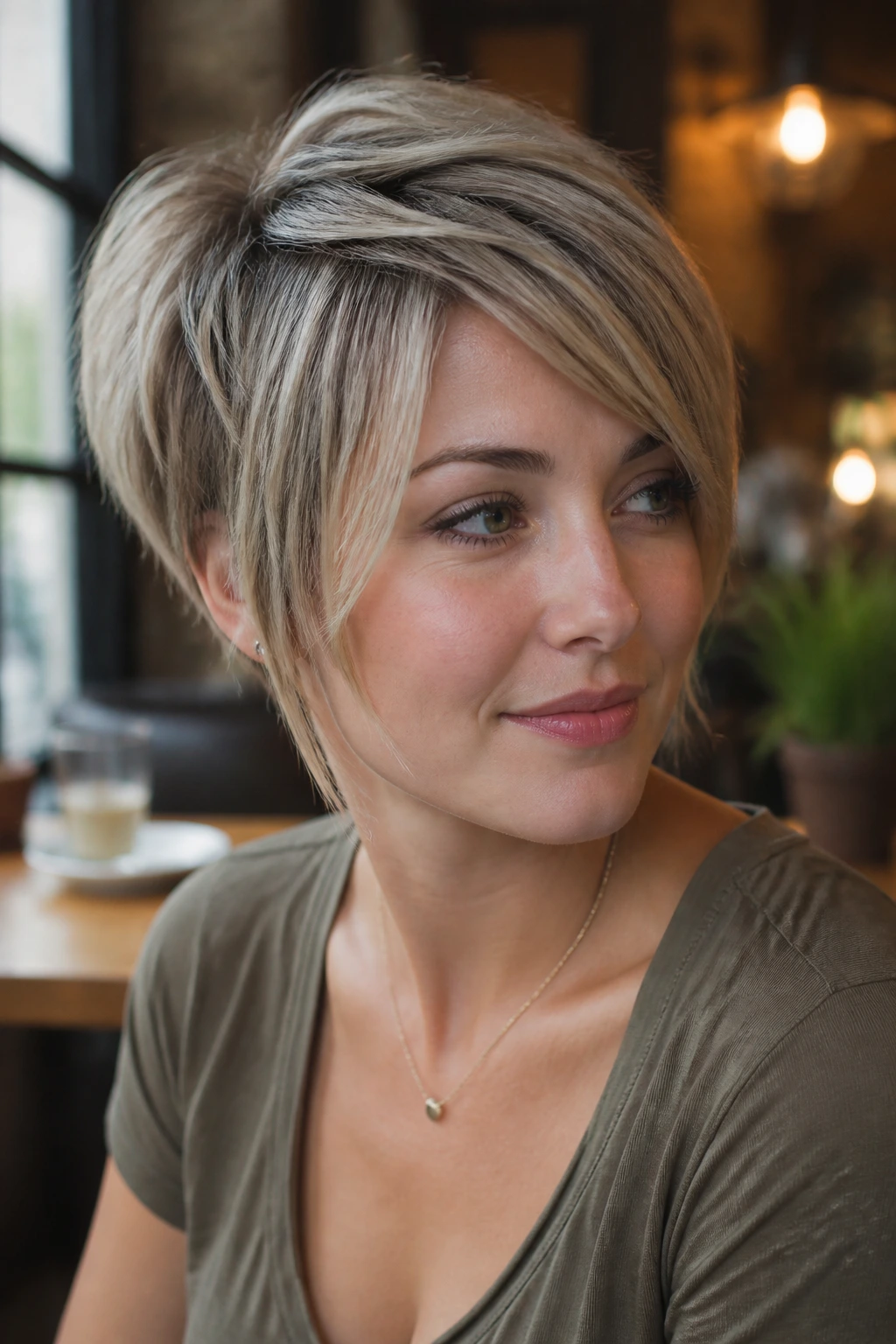
Round faces and fine hair can be tricky together, because both respond badly to cuts that add width in the wrong place. A face-framing stacked pixie handles that by keeping the sides a little longer and the back neatly graduated. The result is lift at the crown, not bulk at the cheeks.
The face-framing pieces should skim the cheekbones or stop just below them, depending on how much openness you want around the face. That little bit of length helps stretch the silhouette. It also keeps the style from looking too severe, which can happen when fine hair is cut too short all around.
I prefer this shape with a side part. The off-center line keeps the haircut from spreading visually across the face, and the stacked back maintains the height you need. If the front pieces start to flip out, a quick pass with a flat iron on low heat usually fixes it.
20. Airy, Light-Ended Stack for Thinning Ends
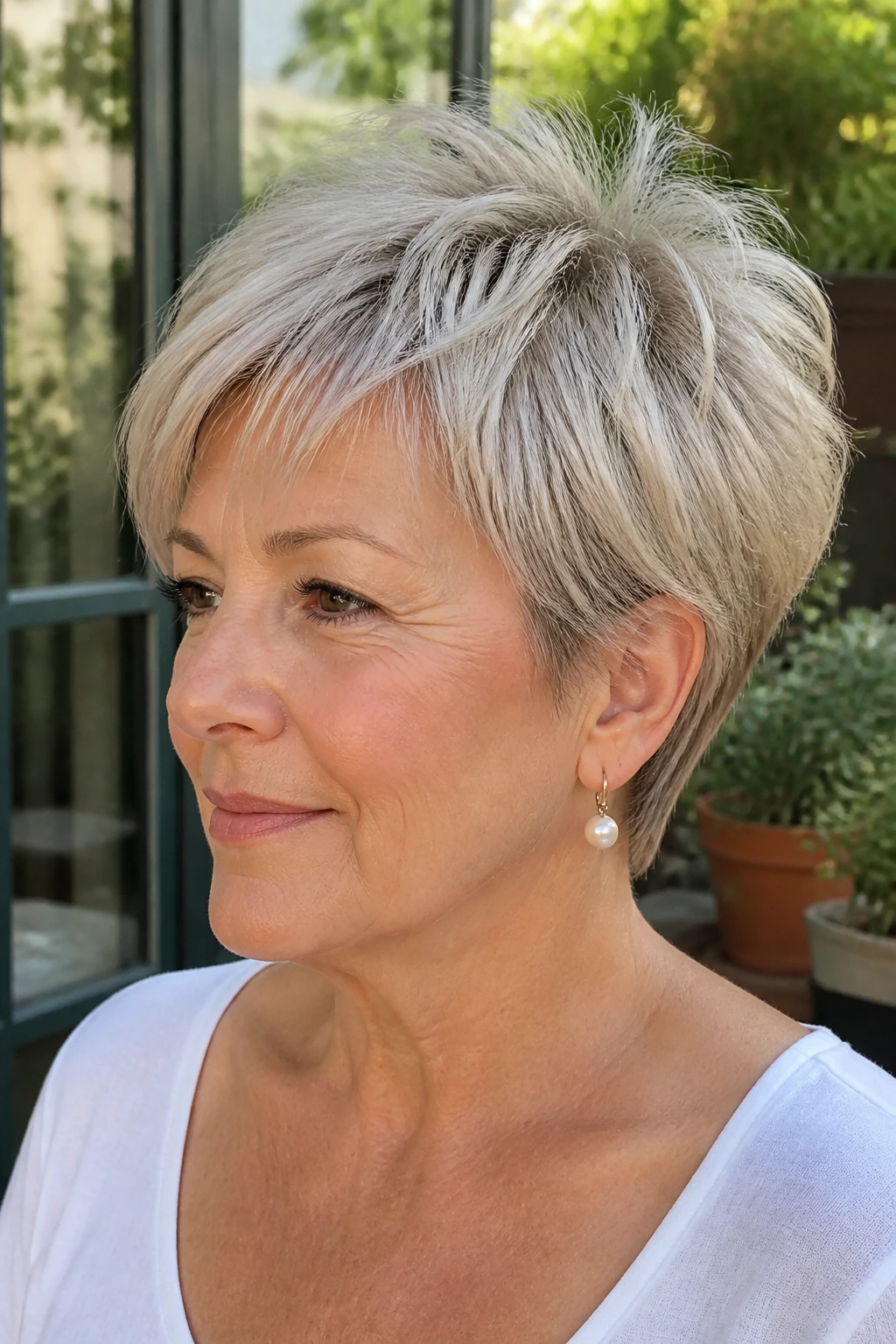
When the ends are the part that worries you, this is the cut to watch. An airy stacked pixie keeps the bottom clean and the top light, so the thinner ends do not become the focal point. Instead, the eye goes to the crown shape and the layered back.
The finish should feel soft, not shredded. That distinction matters. Fine hair with thinning ends often looks worse when it is overtextured, because the gaps show more. A light-ended stack uses just enough layering to make movement visible, then stops before the cut loses its body.
What to tell the stylist
- Keep the perimeter full enough to hold shape
- Use gentle layering through the crown
- Avoid aggressive razor thinning at the ends
- Preserve a little weight near the hairline
This one is practical. Not flashy. But it’s the kind of practical that saves a haircut.
Final Thoughts
Stacked pixie cuts for fine hair work because they respect the way fine strands behave. They need lift at the crown, clean structure in the back, and enough softness around the face to keep the shape from feeling severe.
The best version is the one that gives your hair a stronger outline, not just more texture. If your strands go flat fast, ask for stacking that builds height without stripping away too much weight. That small difference changes everything.
