



Fine hair and a flat pixie are not the same thing. The right asymmetrical pixie cut for fine hair gives you shape where you need it, then pulls weight away from the spots that drag everything down. That little imbalance is the whole trick.
A good asymmetrical cut does not depend on piles of layers. It uses a longer fringe, a tighter nape, or one side that falls a bit farther past the cheekbone so the eye reads movement, not emptiness. Too many bad pixies are over-thinned into a fuzzy halo, which looks airy for about ten minutes and then collapses. Not ideal.
I like asymmetry on fine strands because it cheats the eye in a smart way. A side part can lift the root. A longer front piece can frame the face. A compact back keeps the cut from puffing out in odd places, which is the part people notice first when a pixie goes wrong.
The 22 cuts below cover soft, edgy, sleek, and lived-in versions, but they all do the same basic job: make fine hair look deliberate, not fragile.
1. Deep Side-Swept Asymmetrical Pixie
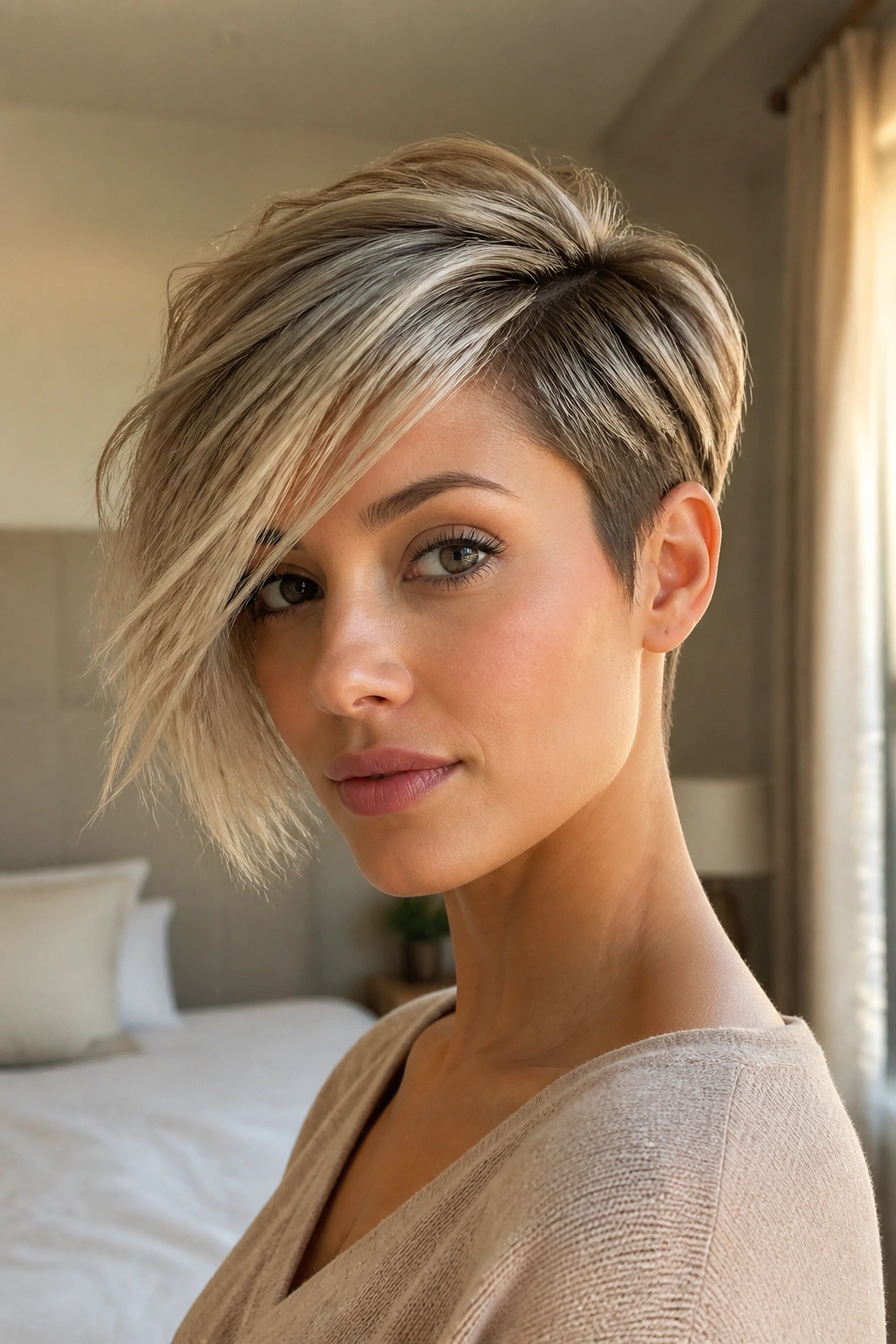
This is the pixie I reach for when fine hair needs instant shape without looking overworked. One side stays longer and drapes across the forehead, while the other side stays snug and close to the head. That contrast gives you movement, and movement reads as fullness.
Why the sweep matters
A deep side sweep gives the front a clear direction. Hair that falls straight down often looks thinner than it is; hair that travels diagonally across the face looks denser and more purposeful.
- Keep the longer front piece around 3 to 4 inches.
- Let the shorter side sit near the temple or just above the ear.
- Ask for a soft bevel at the ends, not shredded tips.
- Style with a light mousse at the roots and a small round brush.
Best tip: blow-dry the long side forward first, then sweep it over once the root is half-dry. That little switch gives the fringe a cleaner bend.
2. Tapered Nape Asymmetrical Pixie
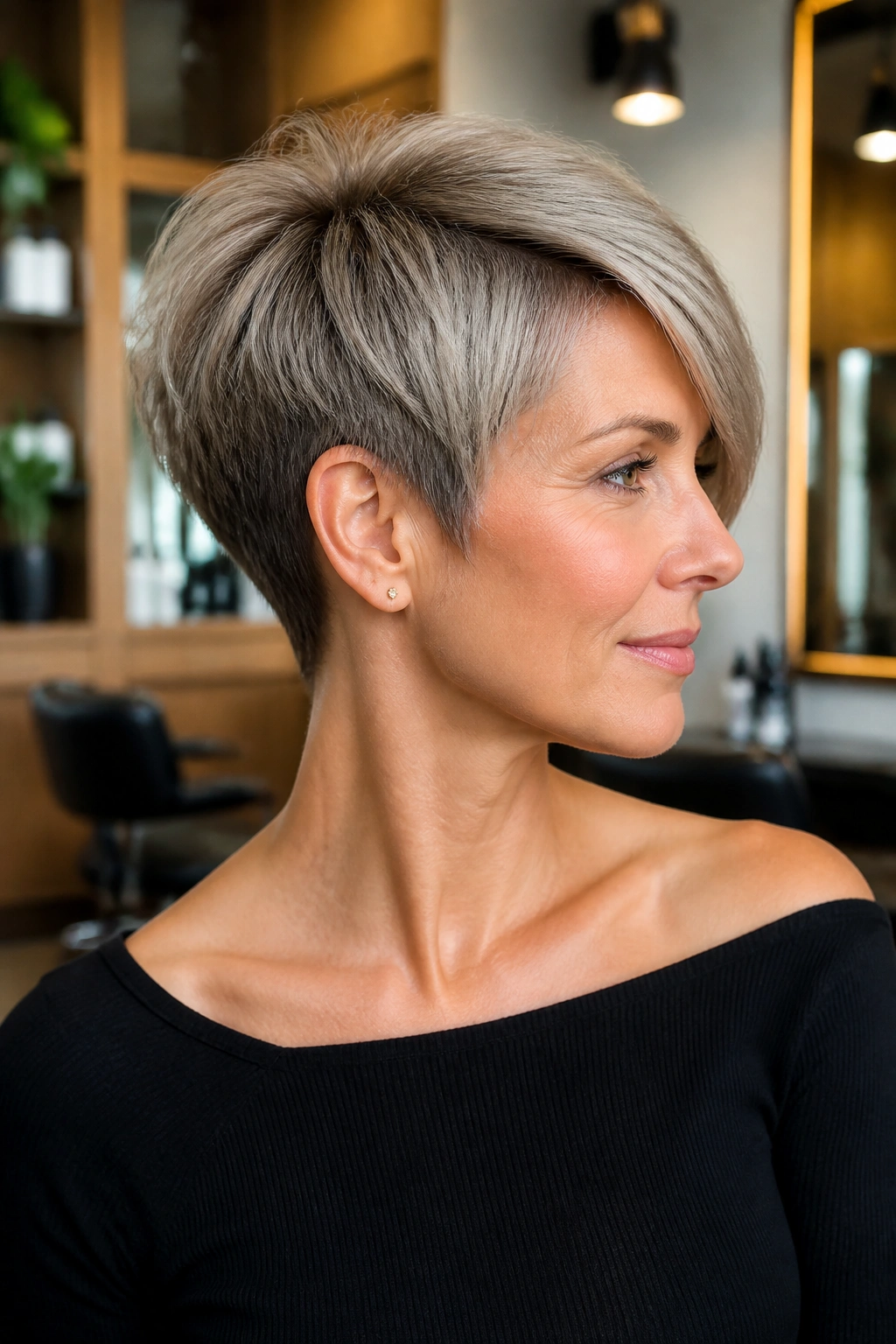
A short nape is not boring. On fine hair, it can be the best part of the haircut because it removes the heavy, sleepy shape that makes pixies look limp. The longer top stays alive, while the back sits neat and close to the neck.
The beauty of this version is that it feels tidy without feeling severe. One side can be left slightly longer at the temple, which softens the line near the face. That small imbalance keeps the cut from reading too uniform, and uniform is usually the enemy when hair is fine and straight.
I especially like this cut on people who want their neck to show but still want movement up top. Ask your stylist to keep the nape tapered with clean edges, then leave the crown a touch longer so you can push it forward or off to the side. Do not over-thin the top; the taper already gives you enough shape.
3. Pixie Bob With One Longer Side
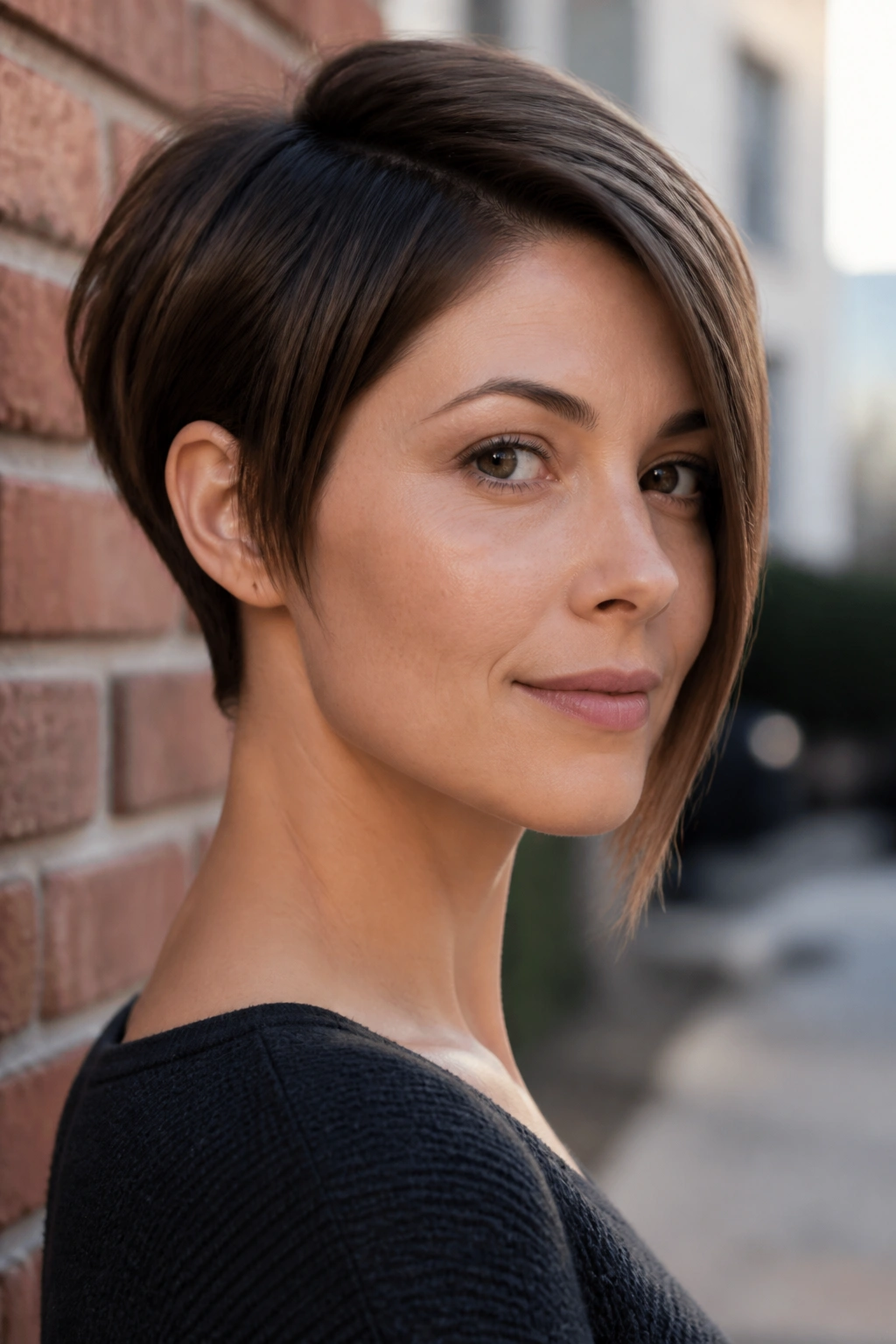
Picture the client who wants short hair, but not a shock. That’s where the pixie bob comes in. The back stays short and neat, while one side reaches farther toward the jawline, almost like a tiny bob collapsed into a pixie.
This works well on fine hair because the longer side creates a visible line. That line gives the illusion of density, especially if the hair naturally falls flat against the head. The cut also gives you a little more styling room on days when you want to tuck one side behind the ear and leave the other side loose.
- Best when the longer side hits just below the cheekbone.
- Keep the nape compact so the back does not puff.
- Use a 1-inch flat brush for a smooth bend.
- Finish with a pea-size amount of paste on the ends.
The sweet spot here is restraint. Too much length and it stops being a pixie bob. Too little and the whole shape loses its point.
4. Razor-Cut Shattered Pixie
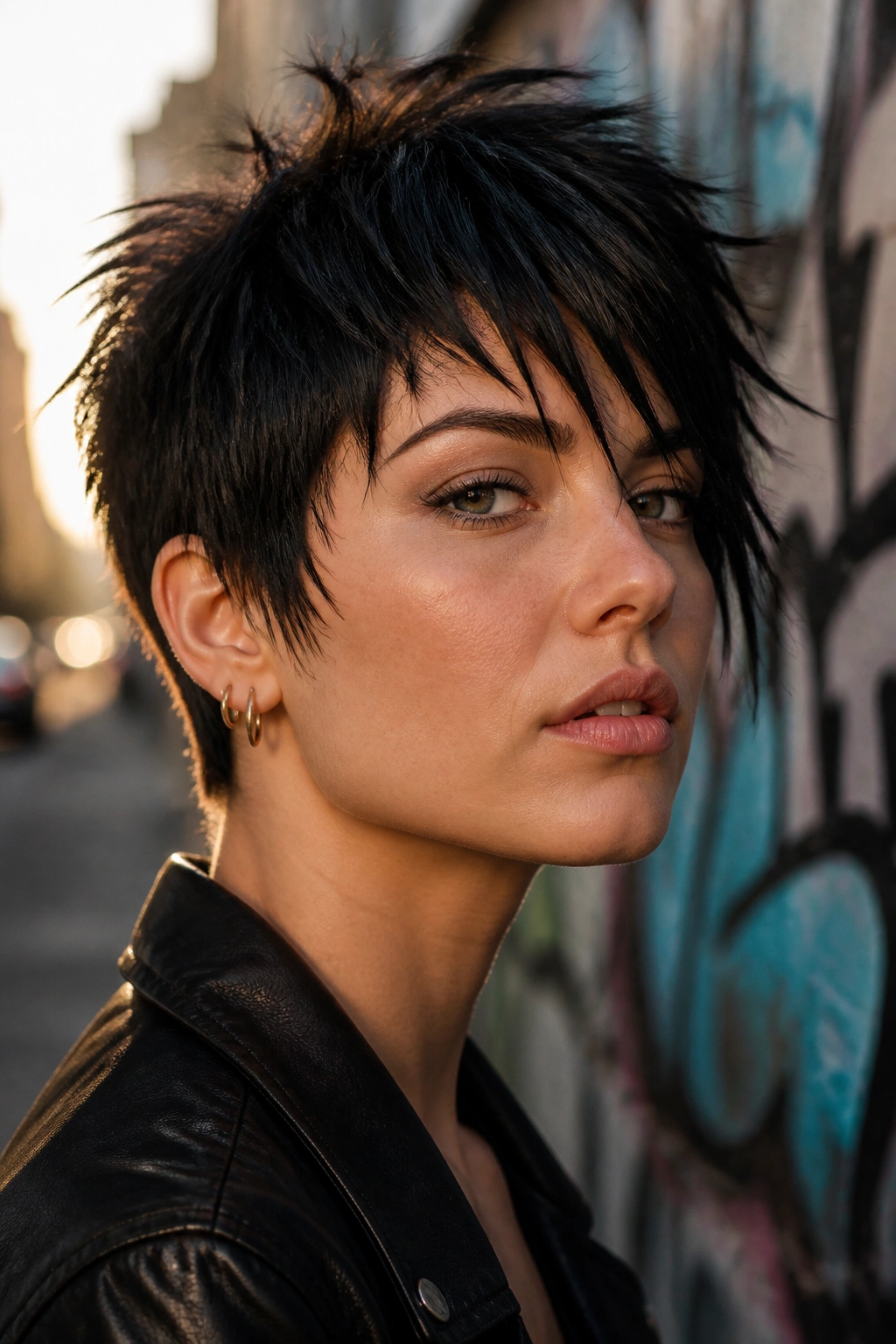
I have a mixed relationship with razor cutting on fine hair. Used carefully, it gives you airy ends and a little broken texture that moves beautifully. Used everywhere, it can make the hair look see-through, which is the last thing fine hair needs.
The version that works keeps the perimeter clean enough to hold shape, then lets the razor soften the top and the front. That gives the cut some edge without stripping away all the weight. Straight fine hair often benefits most, especially if it tends to lie too flat and one-dimensional.
A shattered pixie suits people who like a piecey finish and do not mind a bit of styling. You will want a texture spray or a lightweight dry wax, not a heavy cream. Heavy cream sits on fine hair like a wet towel.
My opinion: if your hair is already wispy, ask for scissors first and razor second. A good stylist will know when to stop.
5. Micro-Bang Asymmetrical Pixie
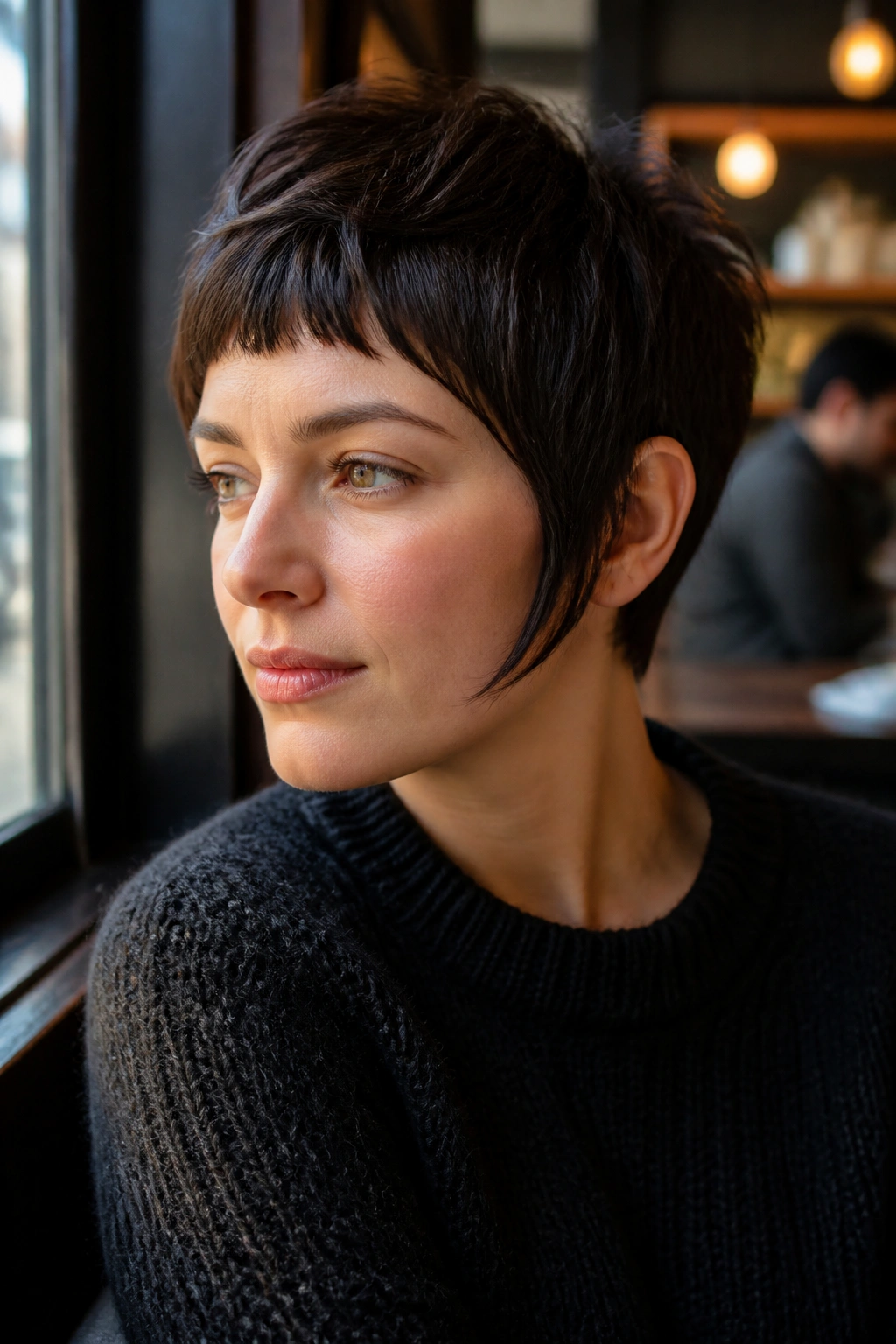
Can a tiny fringe work on fine hair? Absolutely, if the rest of the cut carries the weight. Micro-bangs give the front a strong, graphic line, while the asymmetry keeps the haircut from feeling too precious.
This cut is especially good when you want your eyes to be the focus. The short fringe opens up the face, and the longer side adds balance so the look does not turn boxy. On fine hair, that little hard edge in front can make the entire shape feel thicker.
How to wear it
- Keep the bangs short enough to sit well above the brows.
- Leave the side pieces longer so the face still has movement.
- Style with a light styling cream, then separate the fringe with your fingertips.
- Trim every 3 to 4 weeks or the line starts to lose its snap.
This one is not for everyone. Cowlicks can fight it. Forehead whorls can push it in odd directions. But when it works, it looks sharp in the best way.
6. Feathered Asymmetrical Pixie
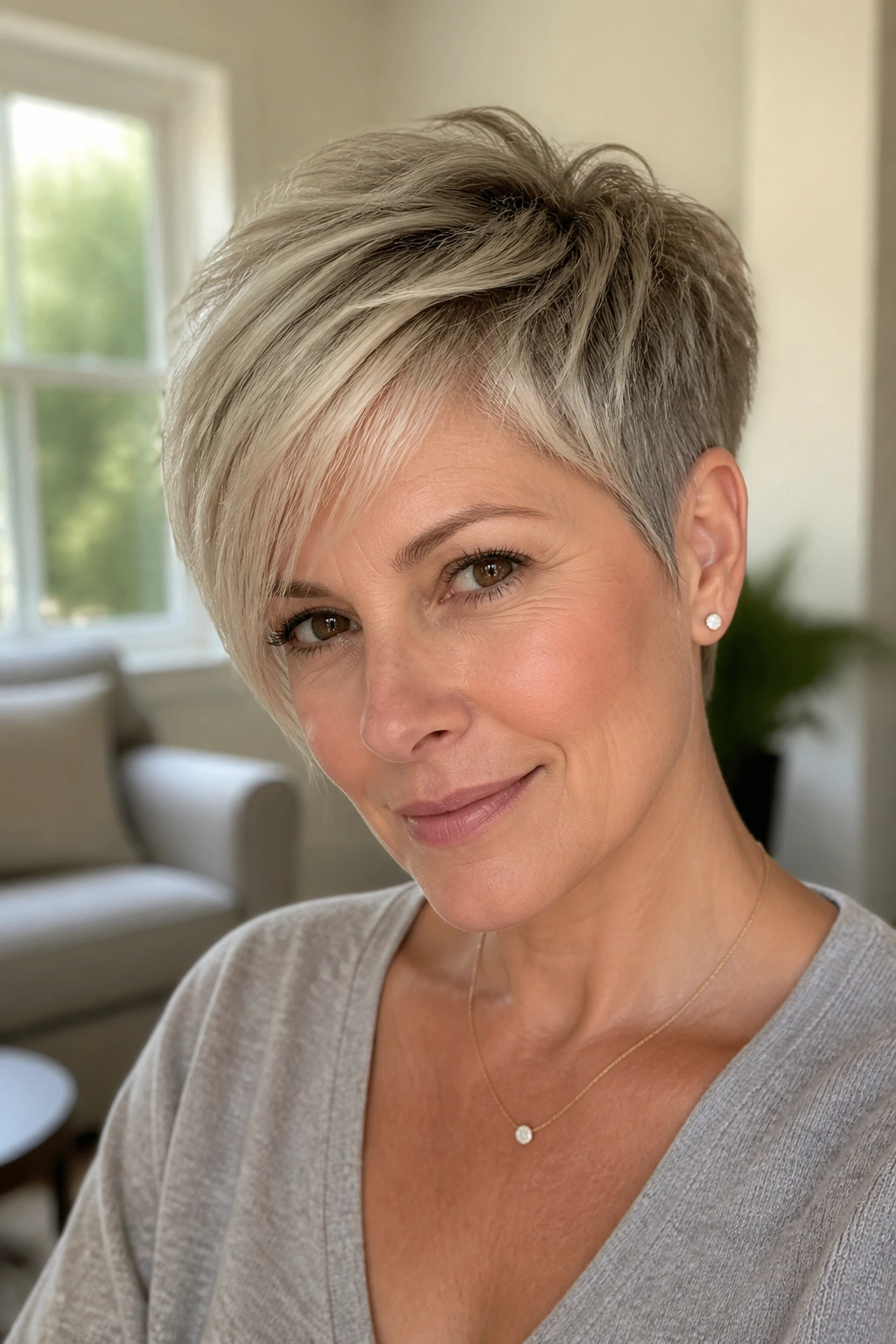
Unlike choppy pixies that depend on hard separation, a feathered asymmetrical cut blurs the edges a little. That softness is useful on fine hair because it keeps the style from looking too chopped up or too thin at the ends.
The feathering should happen in controlled places, usually around the crown and the top sides. You want lightness, not wisps. That is a real difference. Wisps feel accidental. Feathering feels planned.
This cut is best for someone who likes movement but hates anything spiky or severe. It also works well if your hair bends a little on its own, because the feathers catch that natural bend and make the whole cut feel fuller. Ask for a soft side part, then blow-dry with a small round brush to lift the roots just enough.
A feathered pixie can look almost airy in photos, but in real life it works because the silhouette stays intact.
7. Undercut Asymmetrical Pixie
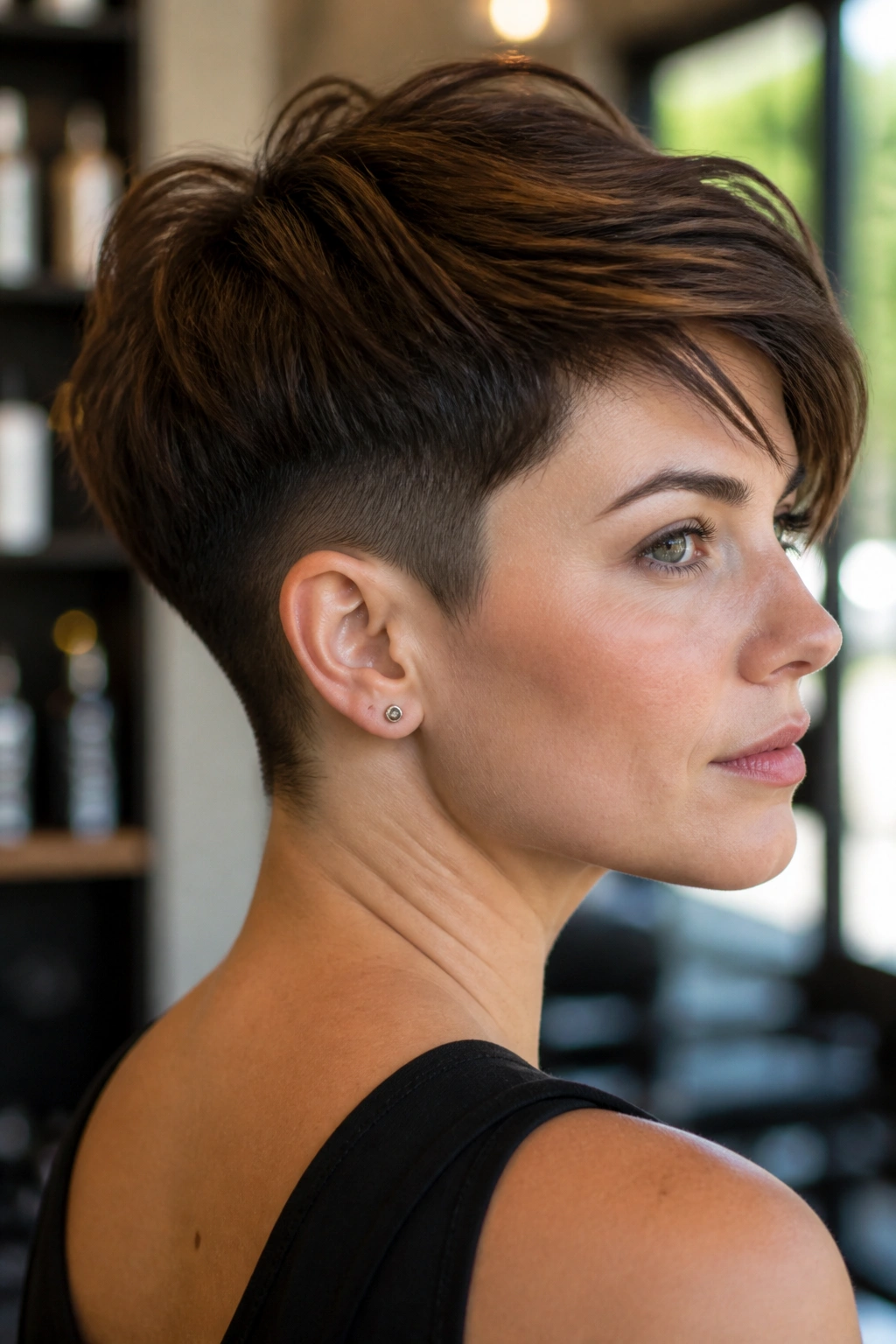
This is the boldest fix for flat fine hair. An undercut removes bulk from the underside, which lets the top sit higher and move more freely. When done well, it makes fine hair feel lighter without making it look sparse.
The catch is that an undercut can go too far. If your hair is very fine and already low in density, shaving or clipping too much underneath can expose the scalp in a way that feels harsh. So keep the undercut controlled. Think hidden support, not a dramatic reveal unless that’s what you want.
I like this shape when the longer side falls across the forehead and the top has enough length to sweep over the cut area. It gives the haircut a little edge and a lot of lift. Style it with mousse at the roots and a matte paste on the longer side so the asymmetry stays visible.
This is one of those cuts that looks better when it is slightly messy. Too polished and you lose the point.
8. Curved Fringe Pixie
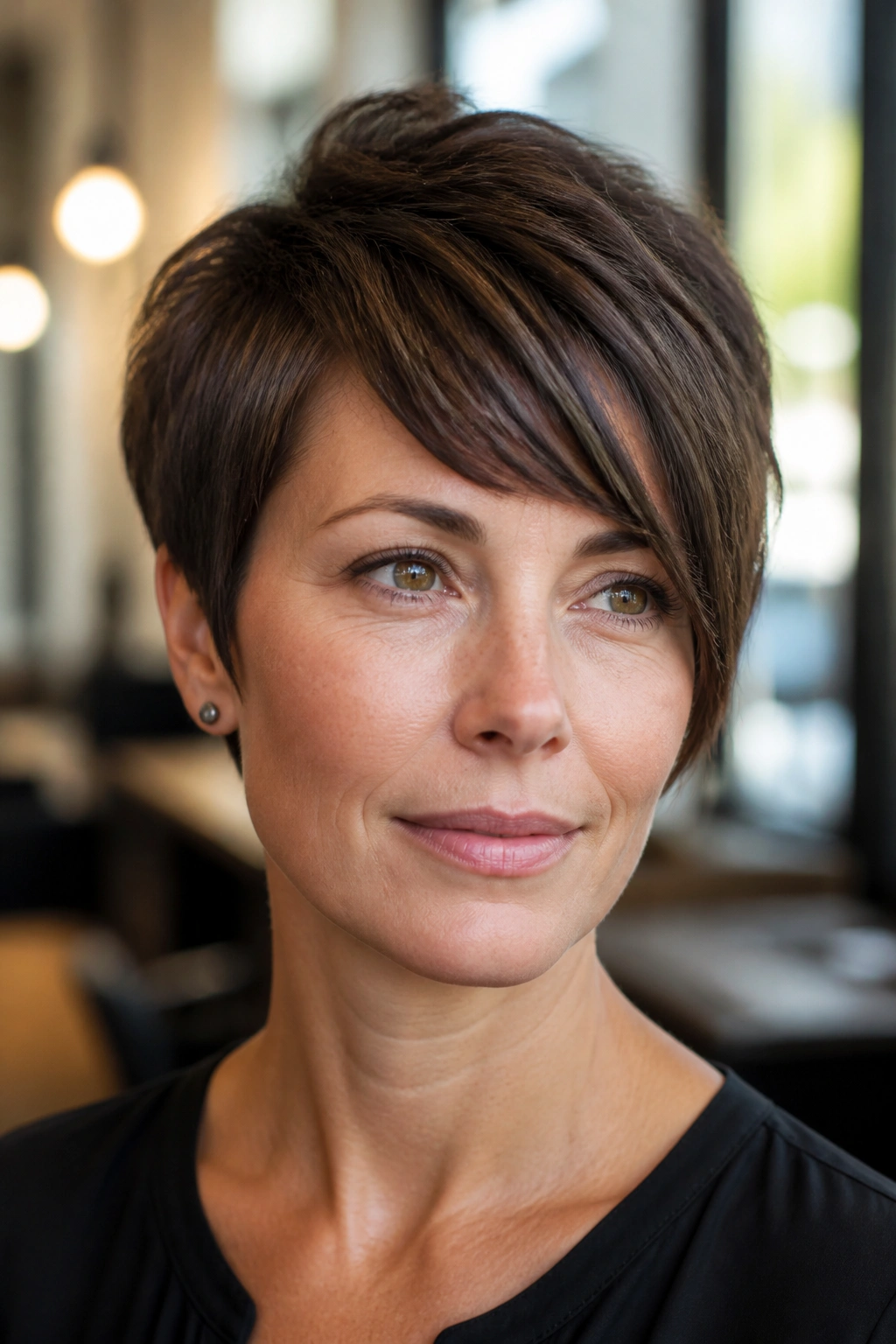
If your forehead feels long to you, a curved fringe can soften the whole haircut without hiding your face. The fringe arcs across the front instead of falling in a blunt line, and that curve plays very nicely with an asymmetrical shape.
The longer side can sweep into the fringe, which keeps the cut from feeling too split. Fine hair benefits from that blend because sharp disconnects can make thin strands look even thinner. A curved fringe gives you shape without turning the front into a hard shelf.
The curve, not the blunt line
The trick is in the bend. The fringe should skim the brows on one side and rise slightly on the other, almost like a tiny crescent. That little lift makes the front look fuller.
- Use a small round brush or a flat brush with a wrist twist.
- Dry the fringe from side to side until it sets.
- Keep the ends soft, not chunked.
- Finish with a light mist of flexible spray.
This cut is quiet in a good way. It does not shout.
9. Choppy Crop With Broken Fringe
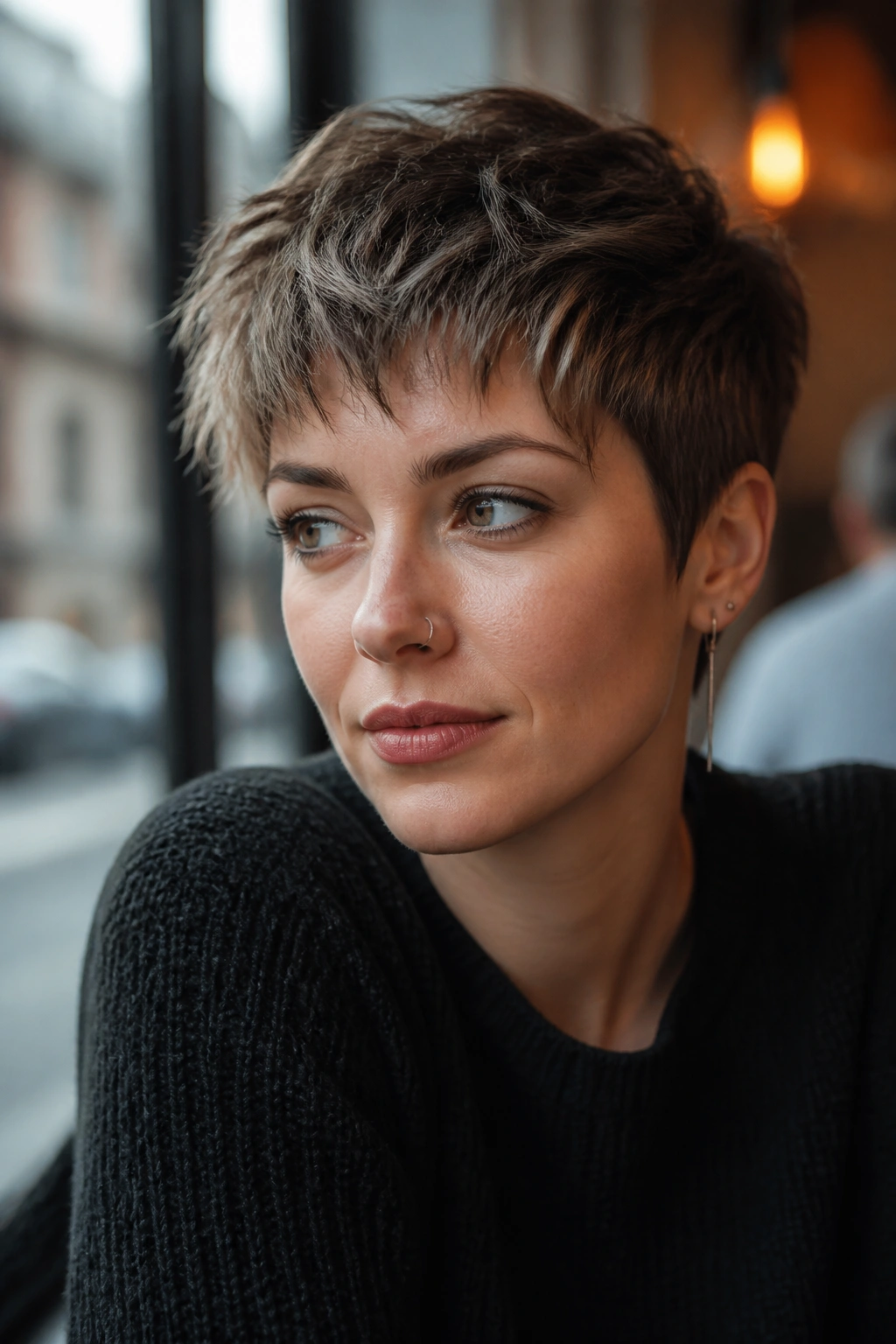
A choppy crop sounds rough, and honestly, that’s part of the appeal. On fine hair, broken fringe pieces and uneven ends can make the cut look thicker because the eye reads texture before it reads density. That is why this style works.
The danger is overdoing the choppiness. If the layers are too short or too shredded, the cut starts to look airy in a bad way. I prefer this version when the top still has enough length to push around with your hands. A little separation goes a long way.
This is the pixie for someone who likes a casual, slightly undone finish. It looks best with dry texture spray or a tiny bit of matte paste rubbed between the fingertips. Don’t brush it into submission. You’ll flatten the whole point of it.
A broken fringe near the front keeps the asymmetry alive, especially if one side is left a touch longer and allowed to fall over one brow. That small detail makes the whole cut feel less neat and more interesting.
10. Ear-Tucked Pixie With Longer Temple Pieces
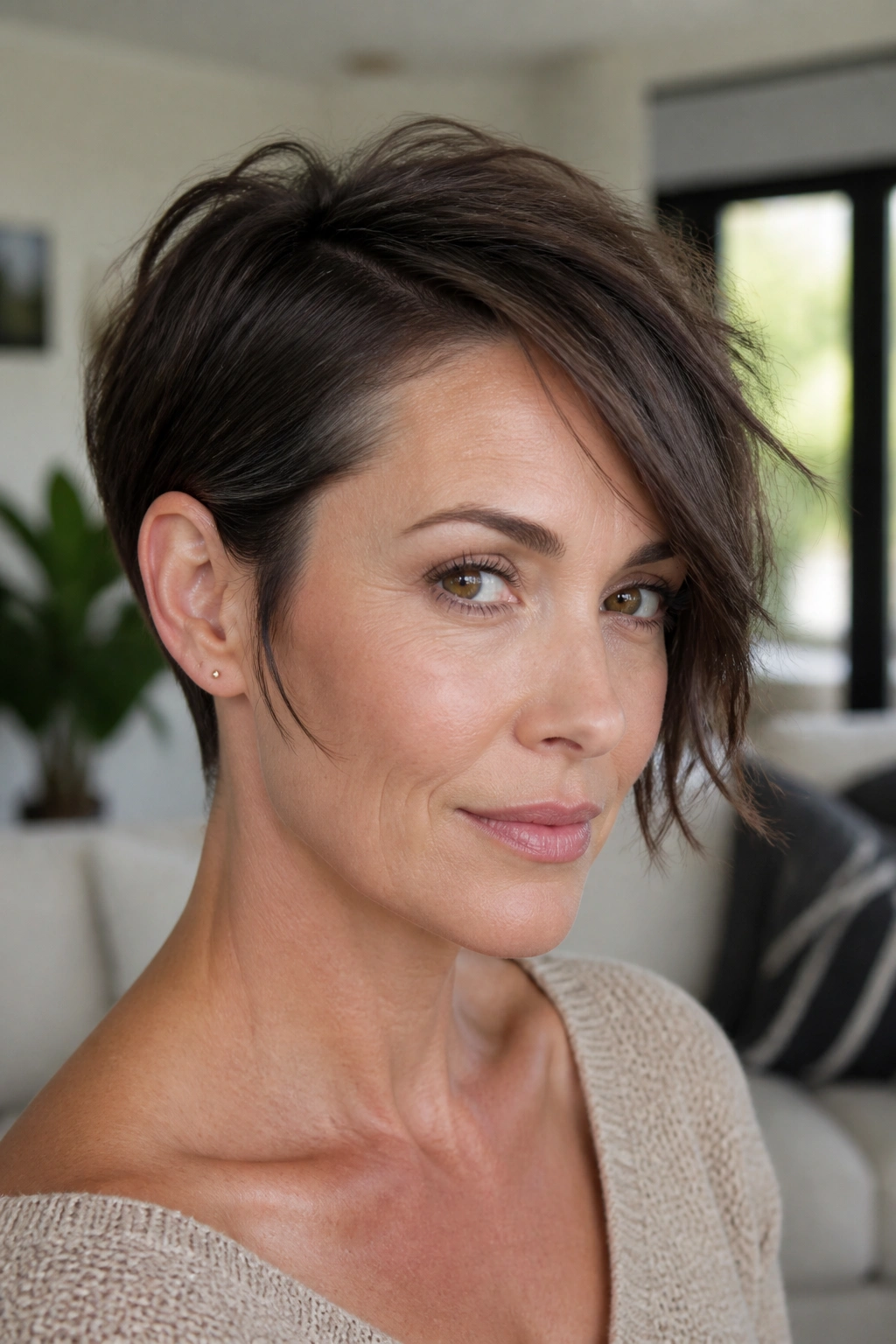
The ear-tucked pixie is one of those cuts that looks easy but carries a lot of shape work underneath. Fine hair gets a lift from the contrast between a tucked side and a longer temple piece, because the eye keeps moving instead of settling on flatness.
This cut is especially good if you wear glasses or earrings. The longer temple piece gives the face a soft frame, and the tucked side shows off the jawline. It also helps if you want to change the mood of the haircut with almost no effort. Tuck it. Leave it loose. Huge difference.
I like this on straight or slightly wavy fine hair. The ends should be kept clean so the temple pieces do not fray into nothing. Ask for a light point-cut at the edges only. Too much texturizing here makes the sides look weak.
One good habit: tuck the hair while it’s still warm from blow-drying. It sets the curve in place better.
11. Front-Weighted Inverted Pixie
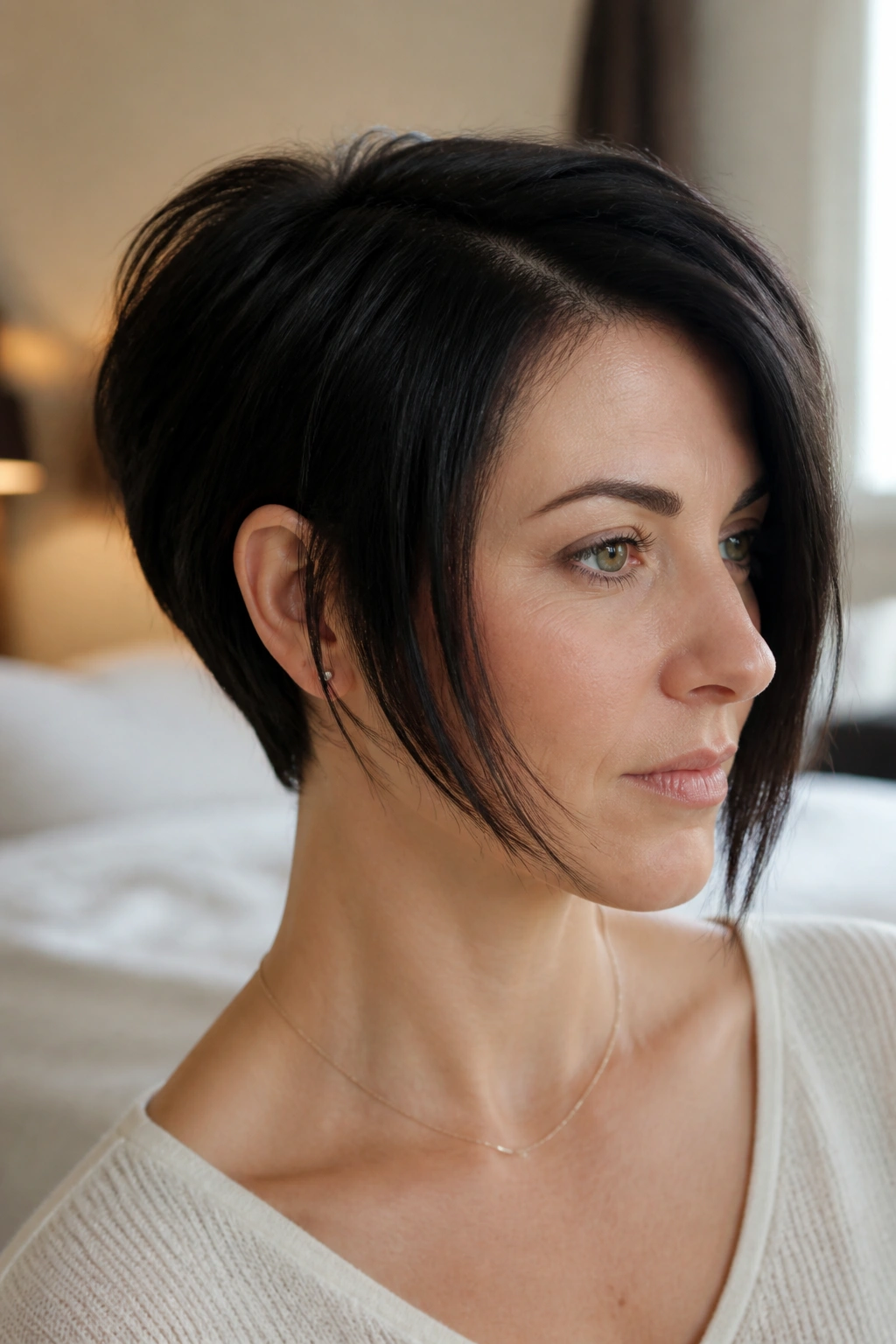
Why does the front-weighted shape help fine hair? Because it puts the visual mass where your eye lands first. The back stays compact, while the front and sides keep more length, so the cut feels fuller without actually being bulky.
An inverted pixie is a smart move if the back of your hair tends to lie down but the front can hold shape. The longer front pieces can brush the cheekbones or chin, depending on how much length you want. That gives you more styling options than a very short crop.
How to ask for it
Tell your stylist you want the back tight and the front left longer, with the longest piece falling on one side. That wording matters. It keeps the cut from becoming a generic short bob.
Fine hair does well when the front is given a clear job. Here, the job is to frame the face and carry the line. Blow-dry that front section away from the face first, then direct it back or across once it has a bit of bend. Simple. Effective.
12. Wet-Textured Asymmetrical Pixie
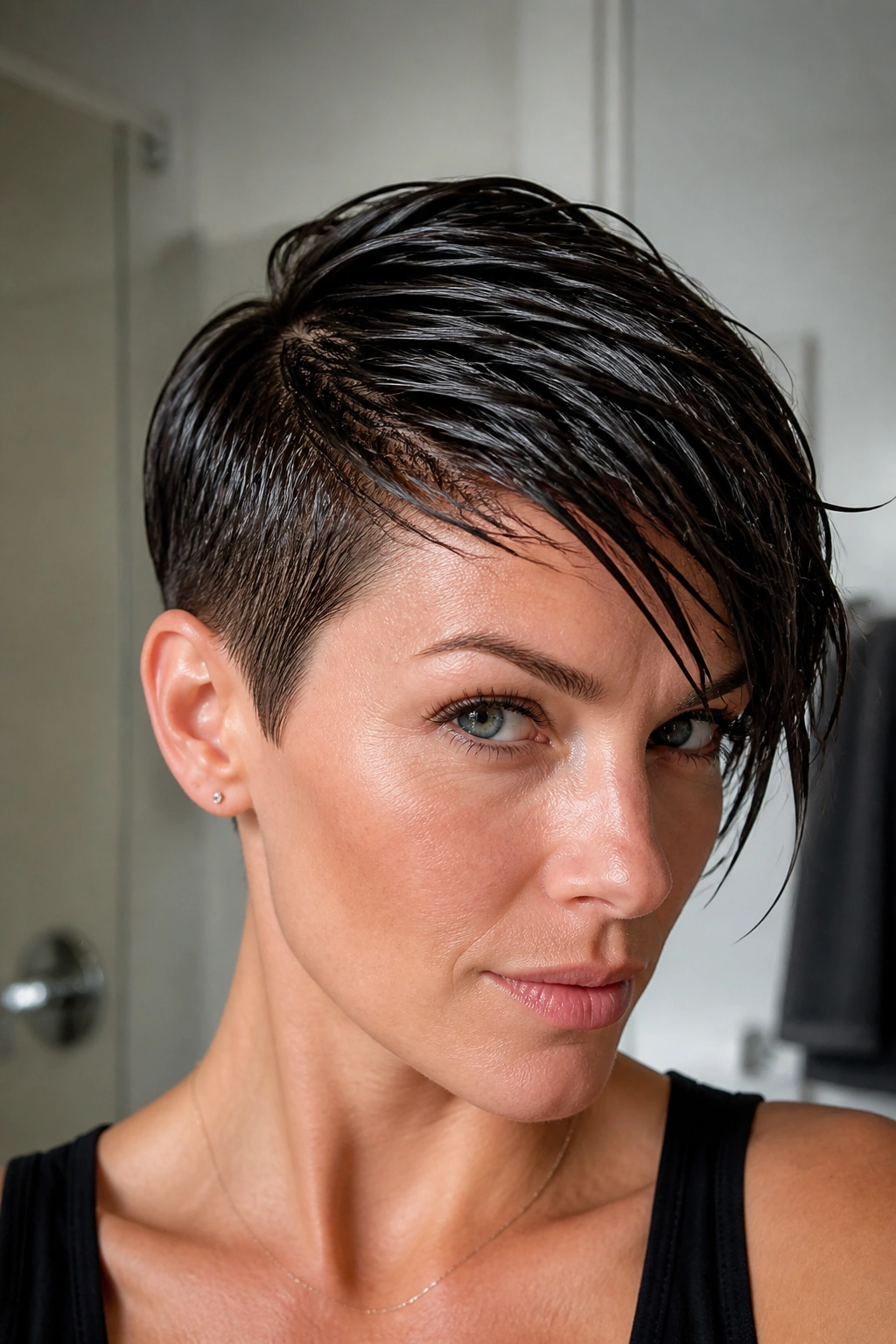
Fine hair can look expensive when it lies flat on purpose. The wet-textured pixie does exactly that. It uses gel or a light styling cream to create a smooth, glossy finish, then shapes the asymmetry with a comb or fingers.
This cut is a gift if your hair frizzes when you try to fluff it. Instead of fighting for volume, you lean into control. The result is clean and modern, but not stiff if you use the product lightly. Too much gel, and the hair turns crunchy. Too little, and the style loses its line.
I like this best on straight fine hair or on hair that gets wavy but not curly. You can comb one side sleek behind the ear and let the longer front piece fall over the forehead. That contrast looks sharp. It also means you do not need much daily styling. Wet-look hair either looks right or it doesn’t.
One note: build the shape while the hair is damp, not after it’s half dry and already fighting you.
13. Wavy Asymmetrical Pixie
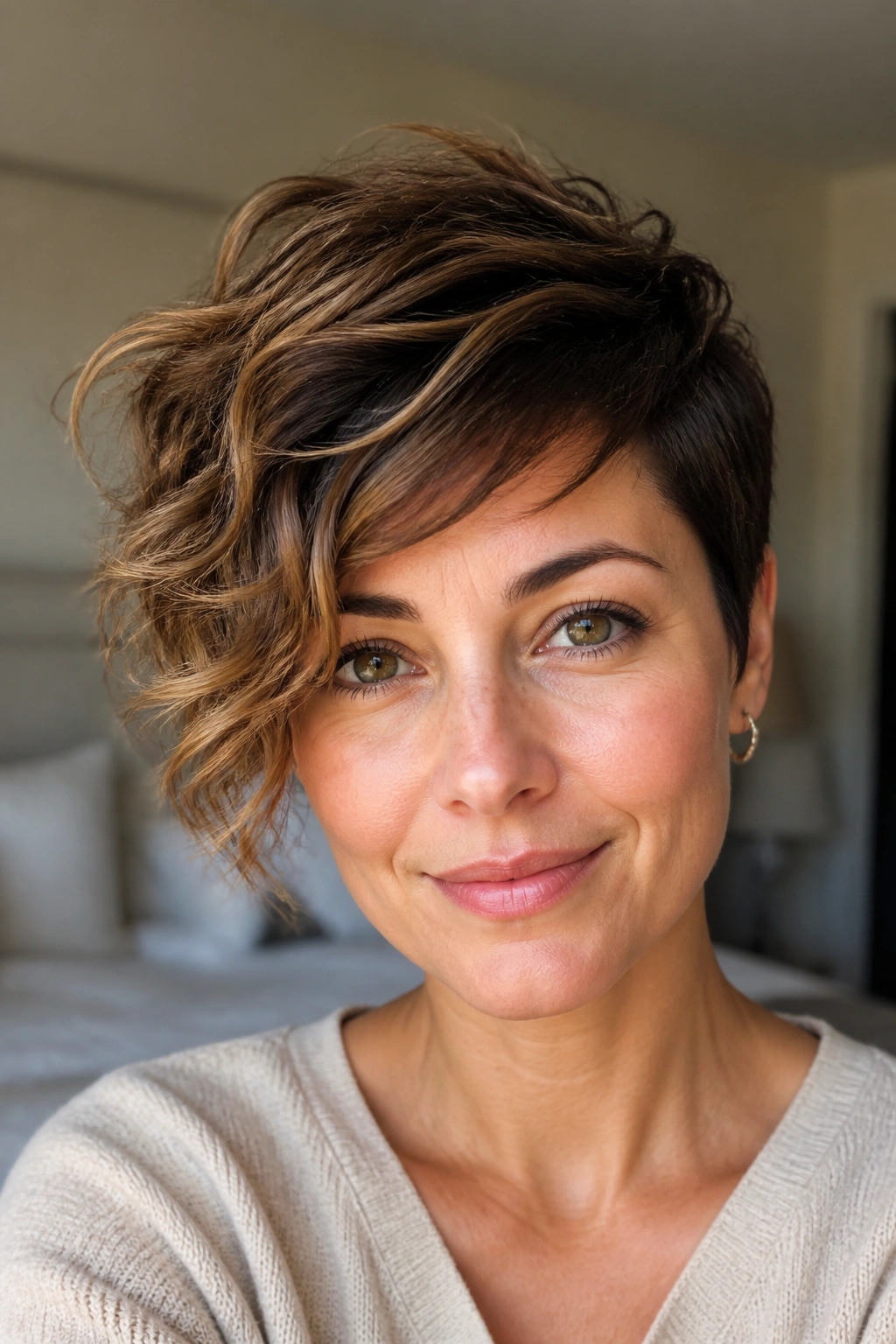
Waves are not the enemy of fine hair. In fact, a bit of bend can make a short cut look fuller because the hair bends away from the head instead of lying like a sheet. An asymmetrical pixie works well here because the uneven lengths give the wave somewhere to land.
The cut should keep enough length in the longer side and the top so the wave pattern can show. If the hair is cut too short, the wave turns puffy. If it’s left too long, the silhouette loses its pixie shape. That middle ground matters.
Best styling move
Diffusing on low heat works nicely, but only if you stop before the hair gets frizzy. A little wave cream through the mid-lengths is enough. Skip heavy oils near the roots.
The result should feel loose and touchable, not polished. A few crooked pieces are part of the charm here. Fine wavy hair often looks better with a bit of asymmetry because perfect symmetry can make the texture look too sweet.
14. Sculpted Side-Panel Pixie
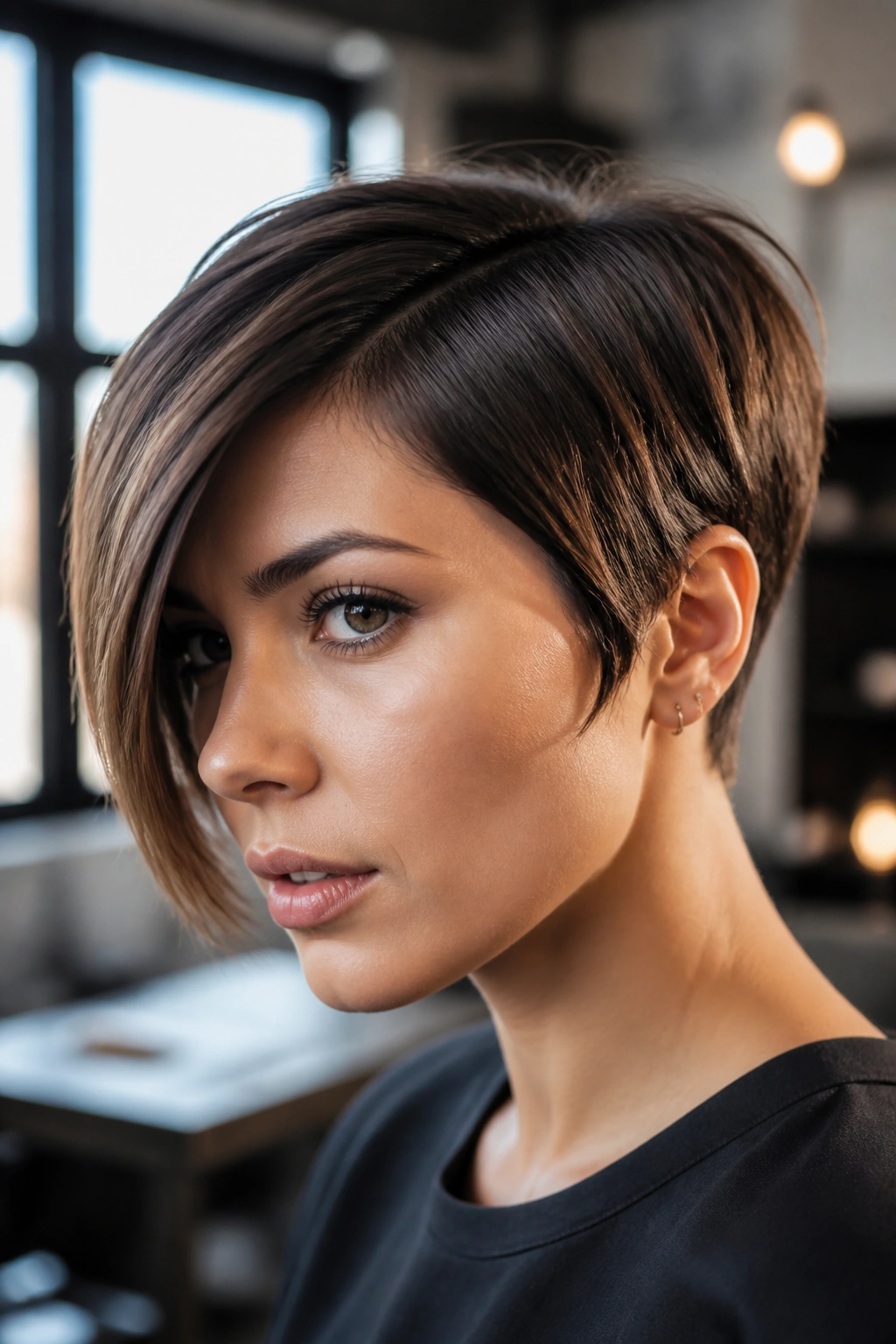
This is the pixie that looks almost tailored. One side gets a longer panel of hair that falls across the temple or cheek, while the rest stays cropped and neat. The contrast is clean, sharp, and a little editorial.
Fine hair benefits from that side panel because it creates a visible shape that doesn’t depend on bulk. The panel gives the eye a place to rest, and the short side keeps the profile clean. If your face is square or broad through the jaw, this can be a nice way to soften the edges without hiding them.
A sculpted side-panel pixie needs good cutting, not just good styling. Ask your stylist to keep the longer panel thick enough to move as one piece. If it gets thinned out too much, the whole concept falls apart. The panel should feel like a ribbon of hair, not a shredded curtain.
I like this cut with a side part and a light shine product. It keeps the shape visible.
15. Sideburn-Heavy Asymmetrical Pixie
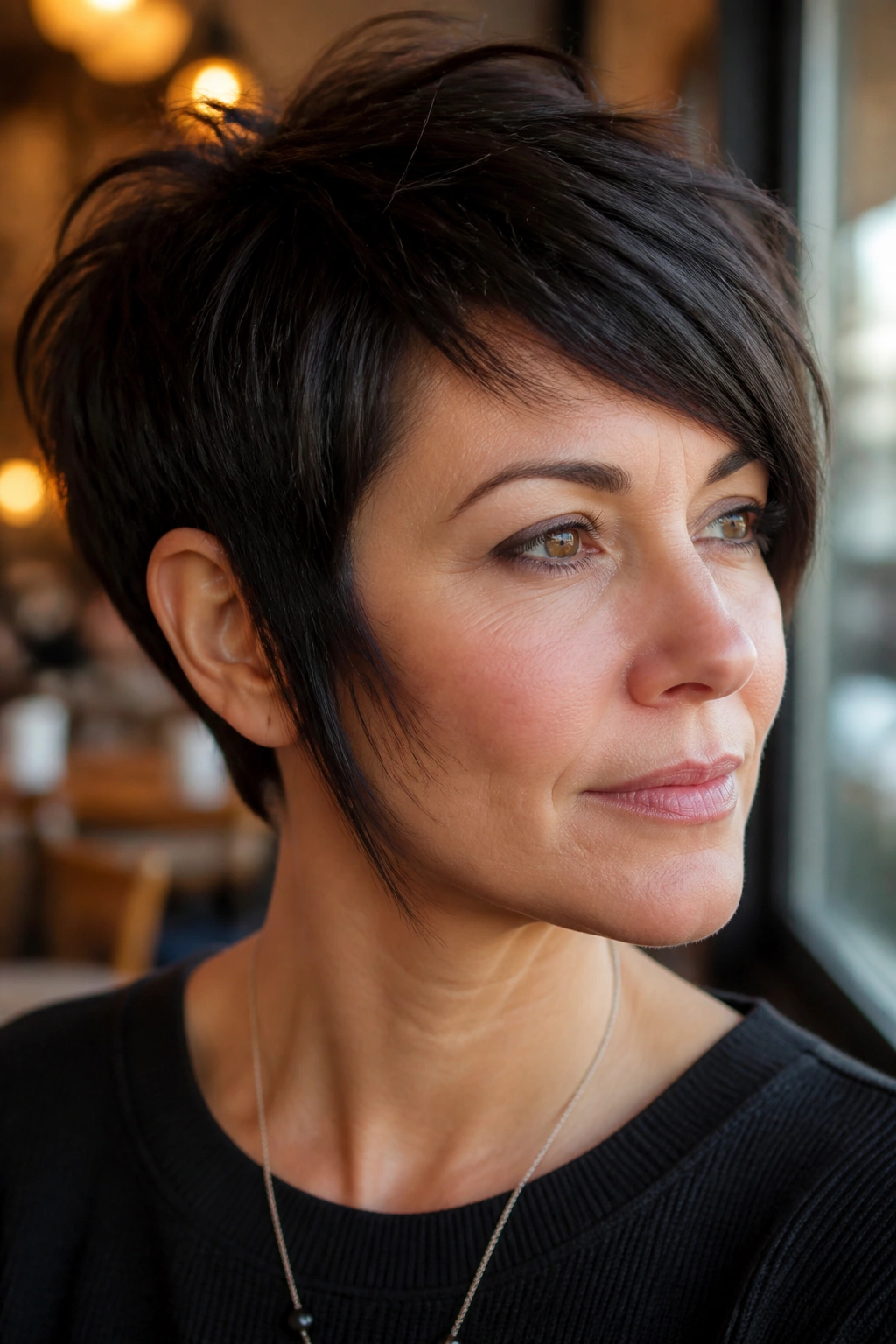
Sideburns get ignored in a lot of short-hair conversations, which is a shame. On a fine-haired asymmetrical pixie, longer sideburn pieces can frame the jaw and give the haircut a little softness where it matters most.
This cut works especially well if you do not want the sides to look too bare. The longer sideburns bridge the gap between the short back and the front fringe, so the haircut feels connected. That connection helps fine hair look fuller. Broken-up shapes can be pretty; disconnected ends can be awkward.
I like this version on heart-shaped and oval faces. The sideburns keep the face from feeling too open, while the asymmetry adds some edge. Keep the sideburns clean and narrow, though. If they get too wide, the style starts to drift into shag territory.
A tiny detail makes a big difference here: ask for the sideburns to taper gently rather than stop abruptly. The finish feels more natural.
16. Piecey Crown Pixie
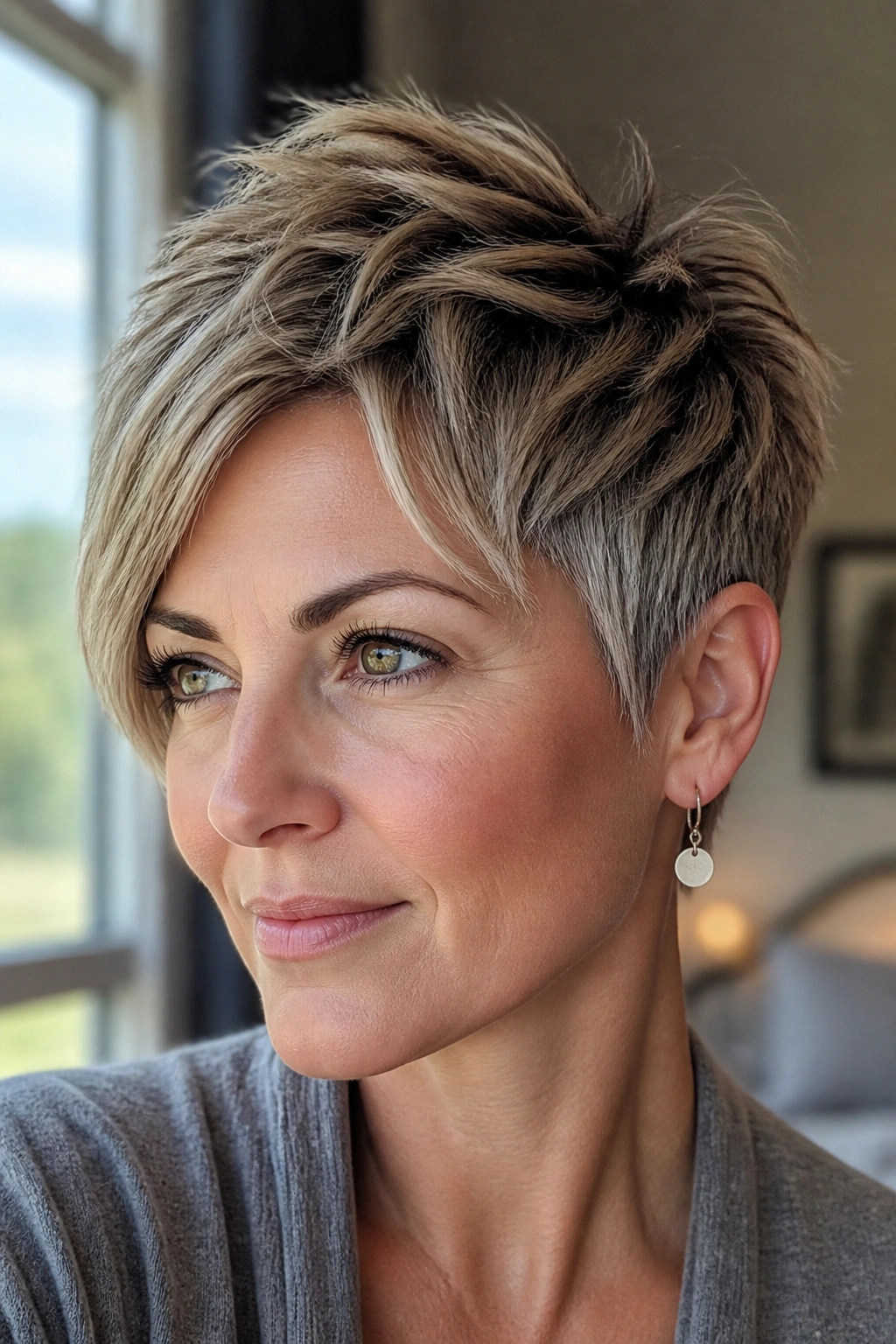
A flat crown ruins good haircuts. There, I said it. On fine hair, the crown has to work harder than the rest of the cut, because if it collapses, the whole pixie looks smaller than it is.
The piecey crown pixie keeps the top section a little longer and separates it into soft little pieces instead of one smooth cap. That separation creates lift and keeps the silhouette from looking helmet-like. It also plays nicely with asymmetry because the crown can lean toward the longer side.
How to build lift at the crown
- Blow-dry the crown up and away from the scalp.
- Use a root-lifting foam before drying.
- Pin the crown up for a few minutes while it cools.
- Finish with a small amount of texture powder if needed.
I prefer this cut for hair that goes limp fast. The trick is not to over-stack layers. You want lift, not gaps. Those are not the same thing.
17. Soft French Pixie With An Uneven Fringe
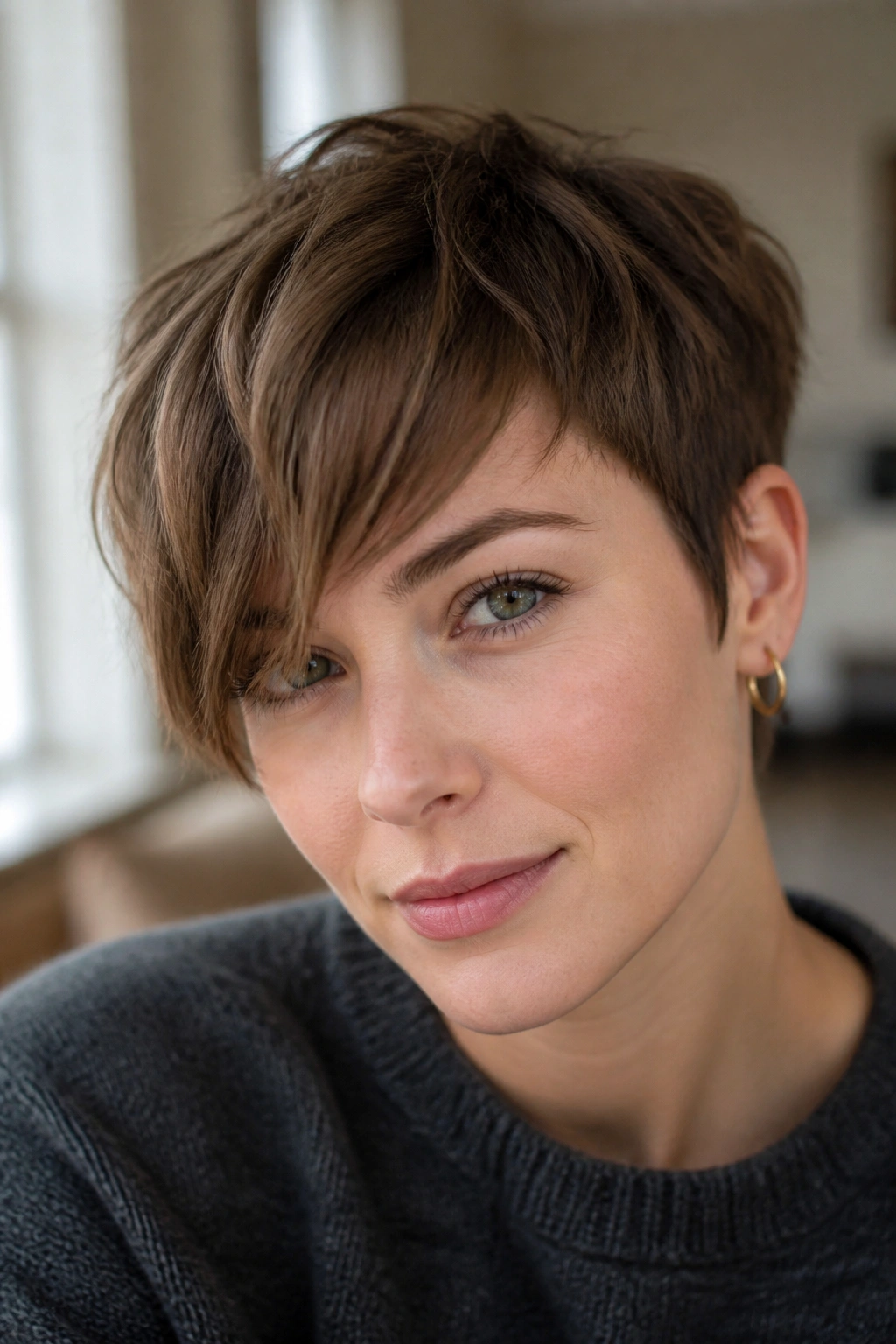
Can a pixie still feel soft and slightly effortless? Yes, if you avoid hard edges and keep the fringe a little uneven. This version borrows that lived-in, undone feeling people like in softer short cuts, but the asymmetry keeps it from turning sweet.
The fringe should hover just above the eyes on one side and fall shorter on the other. Nothing too perfect. Fine hair likes this because tiny irregularities make the cut look fuller than a ruler-straight line would. A razor-sharp perimeter would feel too severe here.
What to ask your stylist
- Keep the fringe slightly irregular, not blunt.
- Leave the top long enough to push forward or sideways.
- Soften the temples so they blend into the front.
- Avoid aggressive thinning at the ends.
This cut is one of the easiest to live with. It can be brushed, finger-styled, or tucked, and it still holds its shape.
18. Grown-Out Asymmetrical Pixie
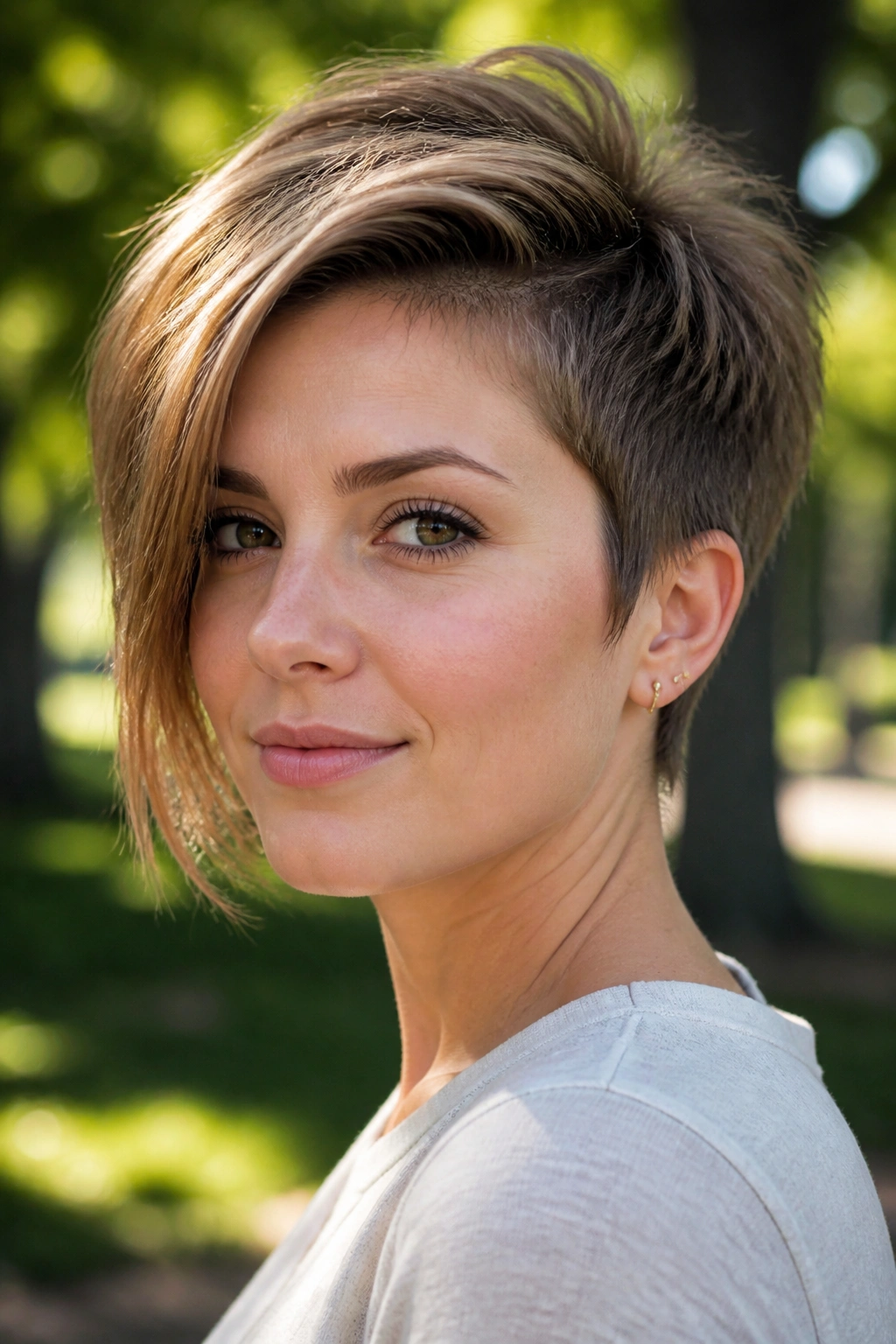
A lot of people think a pixie has to look freshly cut to work. I don’t agree. A grown-out asymmetrical pixie can look better on fine hair because the extra length gives the hair more body and the shape more movement.
The key is to keep the cut intentional. The longer side should still feel longer on purpose, not like you forgot to book an appointment. The nape stays tidy, the fringe keeps its sweep, and the top gets a little shaggy in a controlled way. That balance is what saves it.
This is the friendliest cut in the bunch if you hate frequent salon visits. It grows out well because the asymmetry keeps the shape from turning blocky too soon. You can wear it sleek on clean days or tousled on days when you want a bit of edge.
A good grown-out pixie also buys you time between trims. That matters more than people admit.
19. Disconnected Contrast Pixie
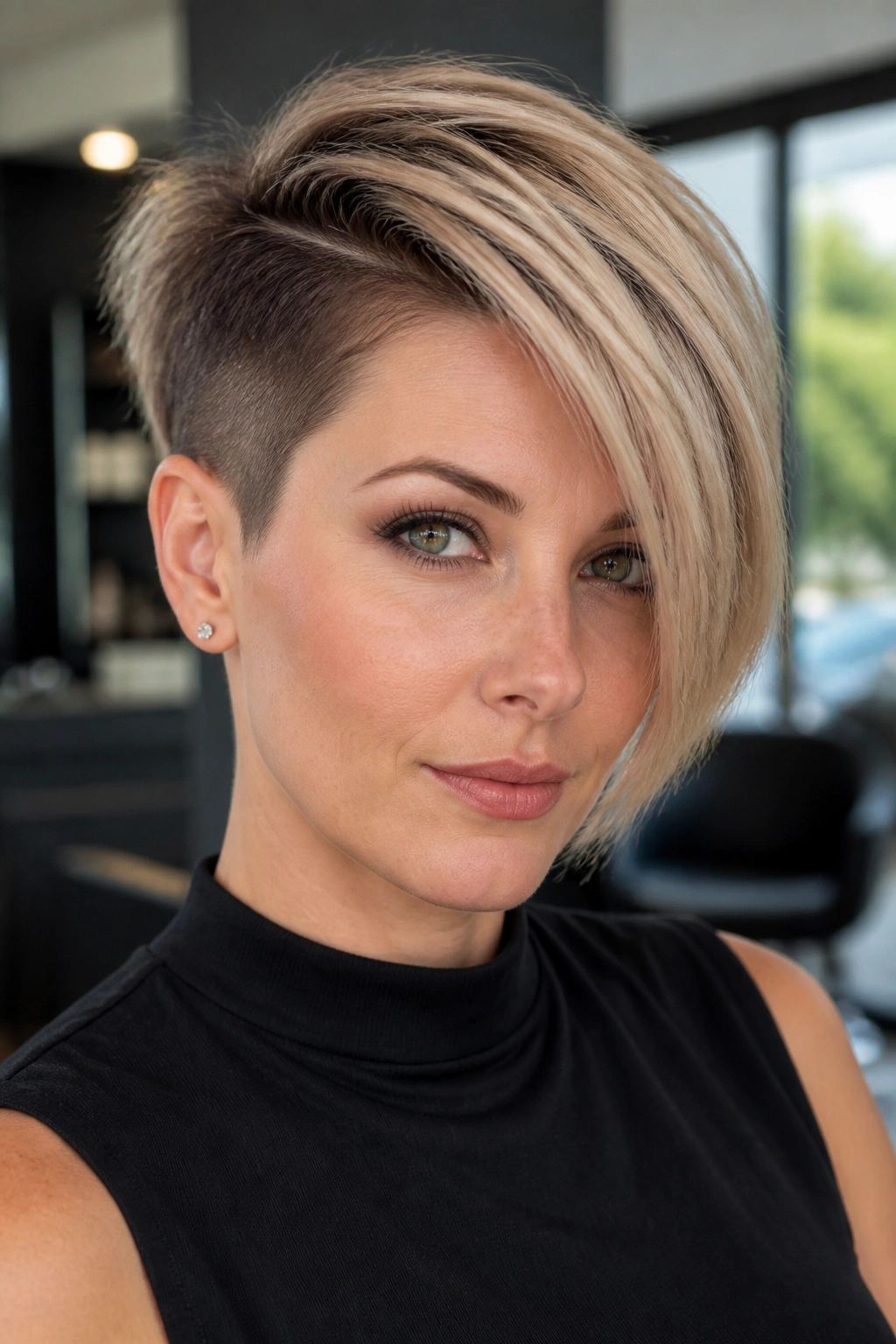
This cut has attitude. One part is short and close, another part is left longer, and the line between them is meant to be visible. On fine hair, that contrast can create the illusion of density because the eye sees two strong shapes instead of one thin mass.
The trick is not to make the disconnect sloppy. You want a clear difference in length, but the ends still need enough structure to sit well. If everything is over-layered, the style loses its punch and starts looking patchy. No one wants patchy.
I like this cut for people who are comfortable styling their hair with a bit of product. A paste or wax helps define the contrast without making the hair stiff. If you wear it with a deep side part, the longer side can fall over the forehead while the shorter side stays tight and clean.
This one looks best when the hair is a little messy on purpose. Clean, but not fussy.
20. Sleek Tucked Pixie
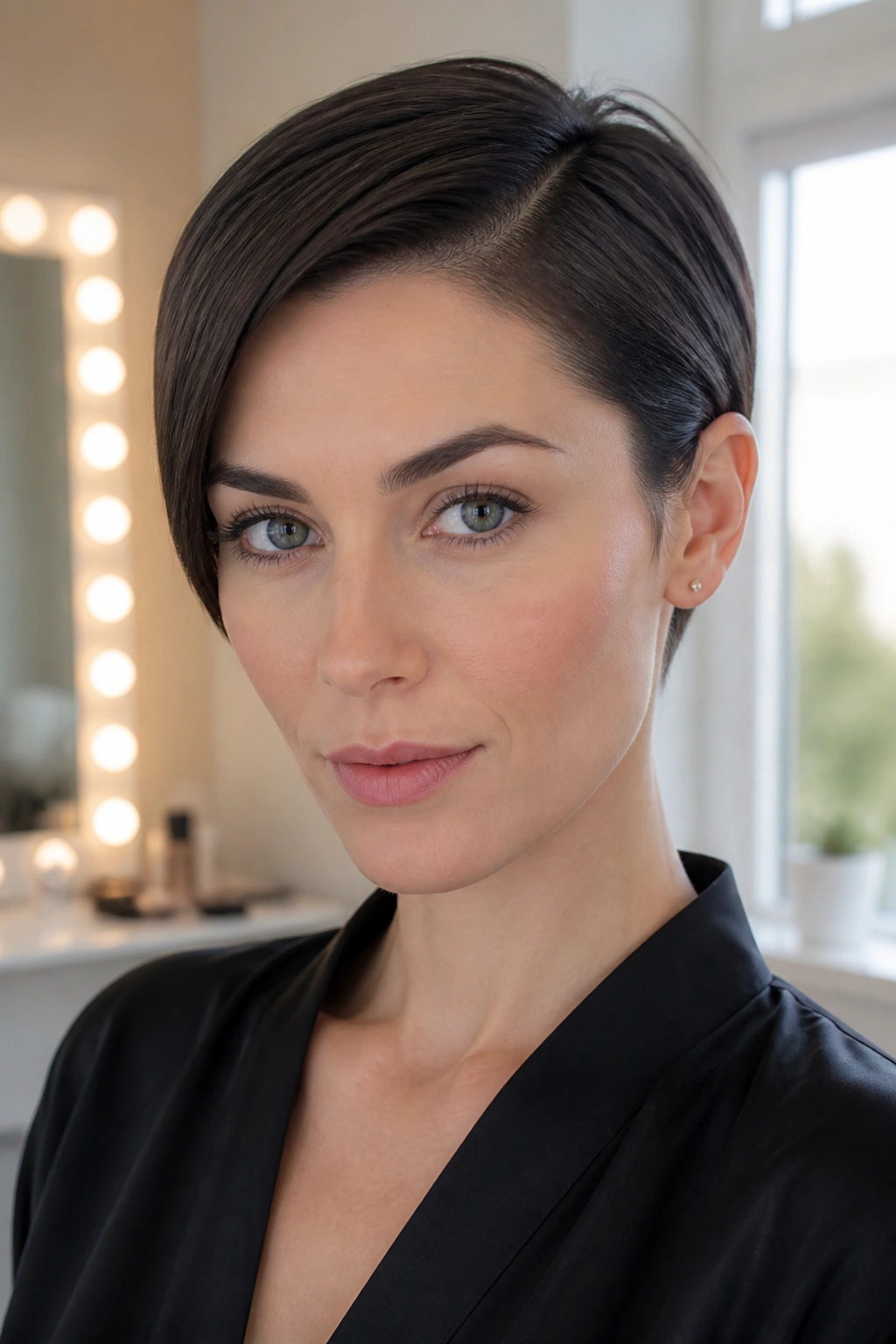
Fine hair can look sharp when it lies flat on purpose. The sleek tucked pixie uses smooth lines, a neat side part, and one side tucked behind the ear to make the haircut feel polished rather than thin.
This is a good option if your hair gets puffy when you try to add texture. Instead of chasing volume that may not stay, you go for a controlled shape. The longer side creates the asymmetry, and the tucked side keeps the face open. The result is clean and modern without looking harsh.
A light serum is enough here. Heavy oils will drag the hair down. Use a fine-tooth comb to direct the longer side where you want it, then tuck the shorter side or pin it back if needed. If your hairline is a little uneven, this style can hide that nicely.
I find this works especially well with earrings and strong brows. The hair steps back and lets the face do the work.
21. Brushed-Forward Asymmetrical Pixie
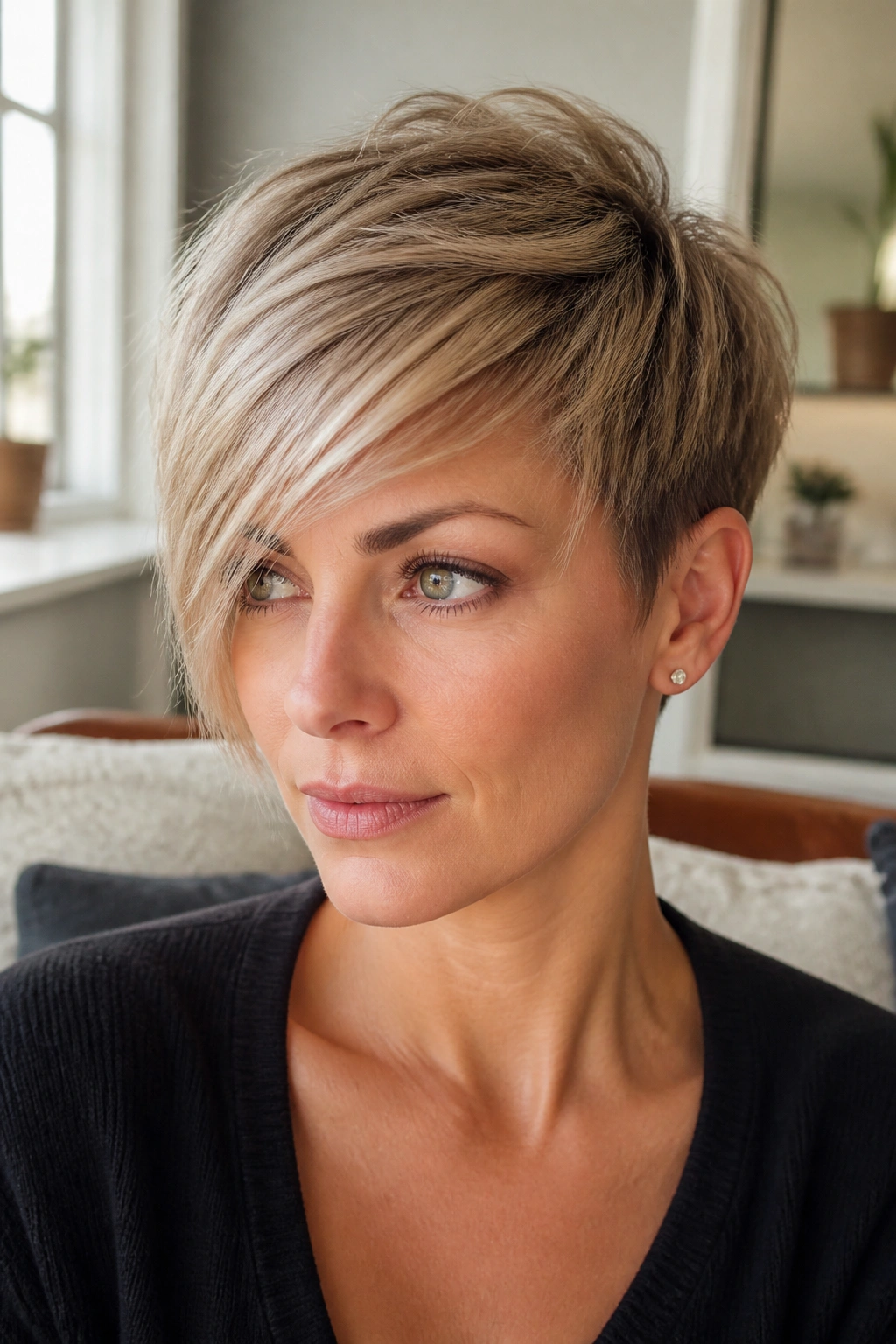
Brushing the hair forward sounds simple, and that’s exactly why it works. Fine hair often needs a little help at the forehead and crown, and bringing the top forward creates immediate visual weight.
This shape is great if your hairline is sparse or your crown tends to lie flat. The longer side can sweep diagonally across the face while the top gets pushed forward and slightly down, which makes the cut feel fuller than a backward-styled pixie. It also softens the forehead in a nice way.
How to dry it
Use your fingers to pull the hair forward while the roots are still damp, then finish with a small brush just at the front pieces. You want the roots to stand up a little before they settle.
- Start with root-lifting spray at the crown.
- Blow-dry forward, not back.
- Use a small dab of paste only on the ends.
- Stop before the front gets too heavy.
That forward movement is the secret. It makes the cut look purposeful instead of thin.
22. Tailored Asymmetrical Pixie For Fine Hair

Not every fine-haired client wants drama. Some want a cut that can be tucked, tousled, or smoothed down without fighting back, and this tailored version does that job well. It keeps the asymmetry visible, but the lines stay soft enough to live with every day.
This is the shape I’d point to if someone says, “I want a pixie, but I’m scared of ending up with air for hair.” Keep the perimeter fairly clean, leave one front side longer, and protect the density at the crown. That last part matters more than people think. If the crown gets over-thinned, the whole cut starts to look tired.
Ask for a stylist to keep the ends blunt enough to hold shape, then add only selective texture where the hair needs movement. Around the ears and at the nape, a tidy finish keeps the haircut from fraying. Around the face, a longer diagonal piece gives you that asymmetrical line without making the cut hard.
If you want the easiest version to maintain, this is it. The shape stays readable even when you skip a wash or two, and that is half the battle with fine hair.
