



A good pixie cut can change the whole mood of a haircut in one appointment. Pixie cuts for girls work because they can look soft, sporty, edgy, or polished without asking for a lot of length. The cut lives or dies by tiny choices: where the weight sits, how short the nape goes, whether the fringe lands at the brow or above it, and how much texture you leave through the crown.
That’s why two pixies can look nothing alike, even when both are short. One can make fine hair look fuller. Another can tame thick hair that puffs out at the sides. A third can sit right in that sweet spot where the hair still feels playful, but the shape reads clean instead of fuzzy.
The detail people miss is balance. If the sides are too bulky, the face can look wider. If the crown is chopped too short, the whole cut can lose lift and fall flat by lunchtime. A strong pixie keeps some softness around the hairline and enough length on top to move when you sweep it with your fingers.
And that’s the fun part. The cuts below cover the neat, the messy, the curly, the bold, and the easy-grow-out versions one by one.
1. The Classic Pixie With Soft Tapered Sides
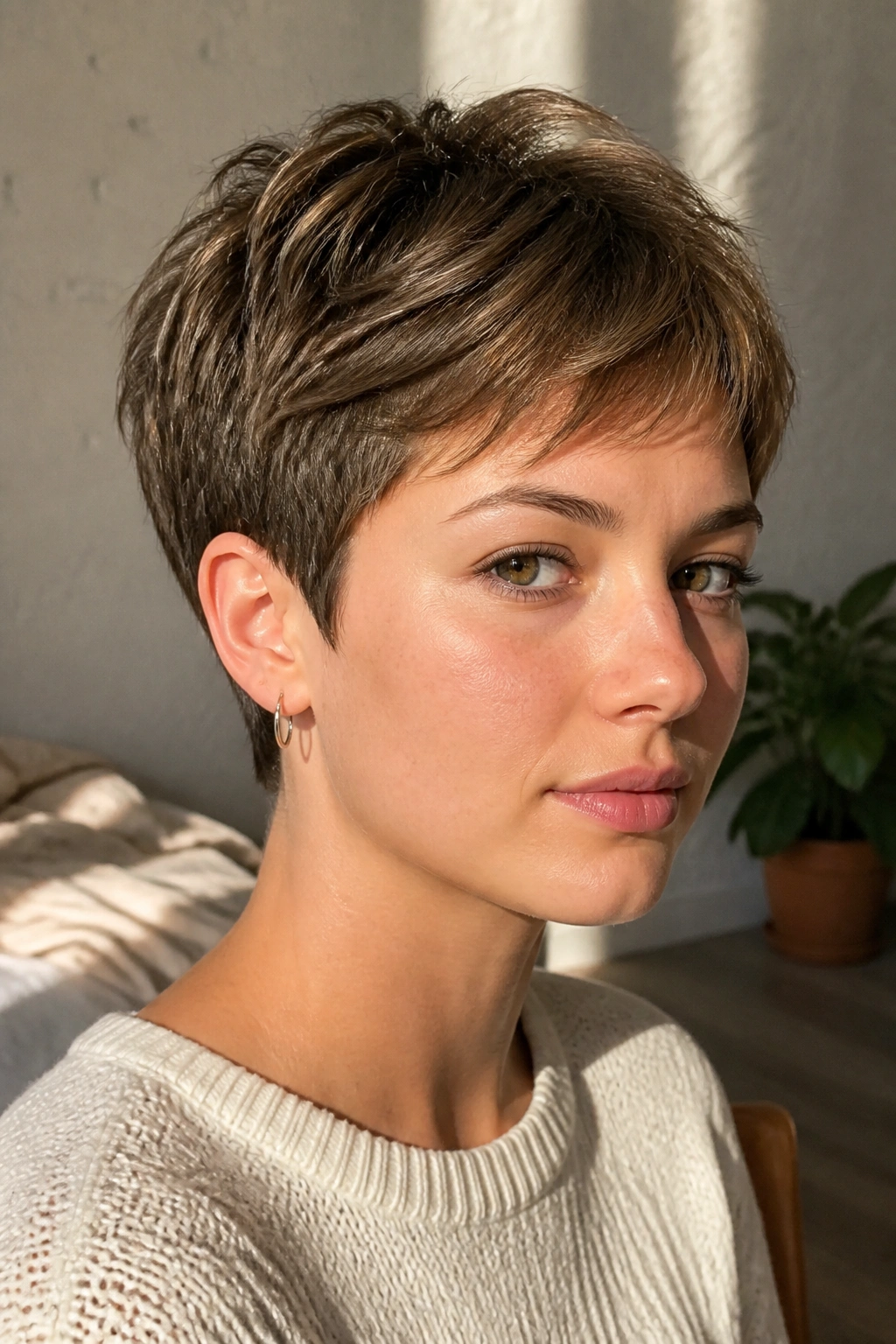
The classic pixie is still the one I’d hand to someone who wants short hair without drama. It keeps the sides close, leaves a little more length on top, and softens the edges around the ears so the whole cut feels tidy instead of severe.
Why It Works So Well
A good classic pixie usually has 1 to 2 inches on the sides and about 2 to 3 inches on top, with the nape trimmed shorter and gently blended. That length gives you enough shape to tuck behind an ear or sweep forward, but not so much that you end up wrestling with it every morning.
- Ask for soft tapering around the sideburns and neckline.
- Keep the crown a touch longer than the temples.
- Use a pea-size dab of light cream or mousse.
- Blow-dry with your fingers, not a brush, if you want a natural finish.
The best part is how forgiving it is. A tiny bend in the fringe, a little lift at the crown, even a slightly messy part—it all looks fine. If you want a first pixie cut that feels wearable on day one, this is the one most people settle into fast.
2. The Choppy Textured Pixie With Extra Lift
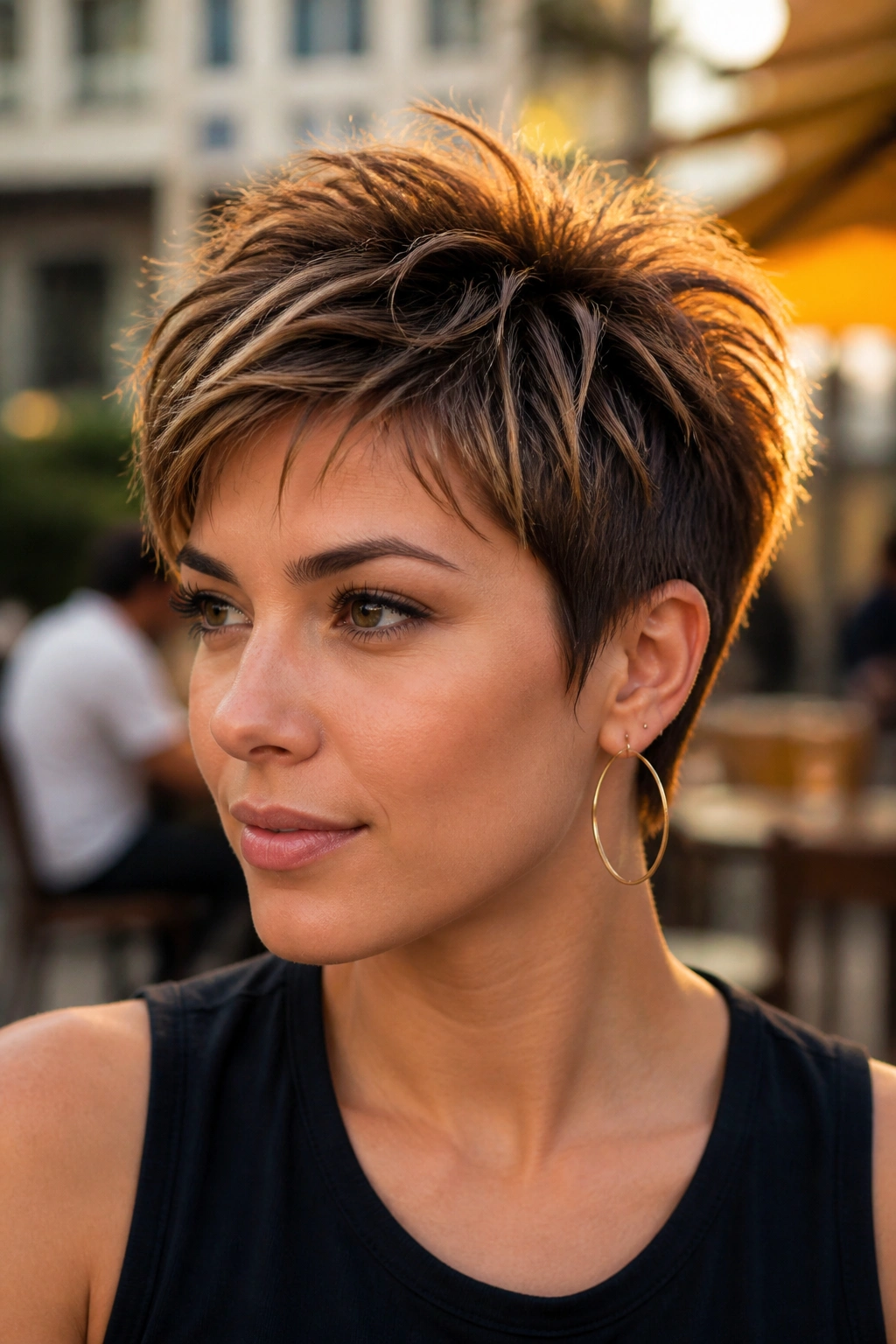
This is the pixie for girls who do not want their haircut to sit flat and polite. Choppy texture gives the cut a little bite, and that bite makes fine hair look denser than it really is.
The difference is in the ends. Instead of a smooth, rounded shape, the stylist point-cuts the top and fringe so the pieces separate a bit. You get movement without heaviness. That matters if your hair tends to lie close to the head or if the crown collapses the minute humidity shows up.
Bring this cut to life with a matte paste or dry texturizing spray. Work a small amount through dry hair, pinch the top in 3 or 4 sections, and stop before it starts looking stiff. Too much product turns “piecey” into greasy. That’s a fast way to lose the whole effect.
If you want something that feels a little cool without looking like you tried too hard, this cut lands in that sweet spot. It’s casual, but not lazy.
3. The Side-Swept Fringe Pixie That Softens the Face
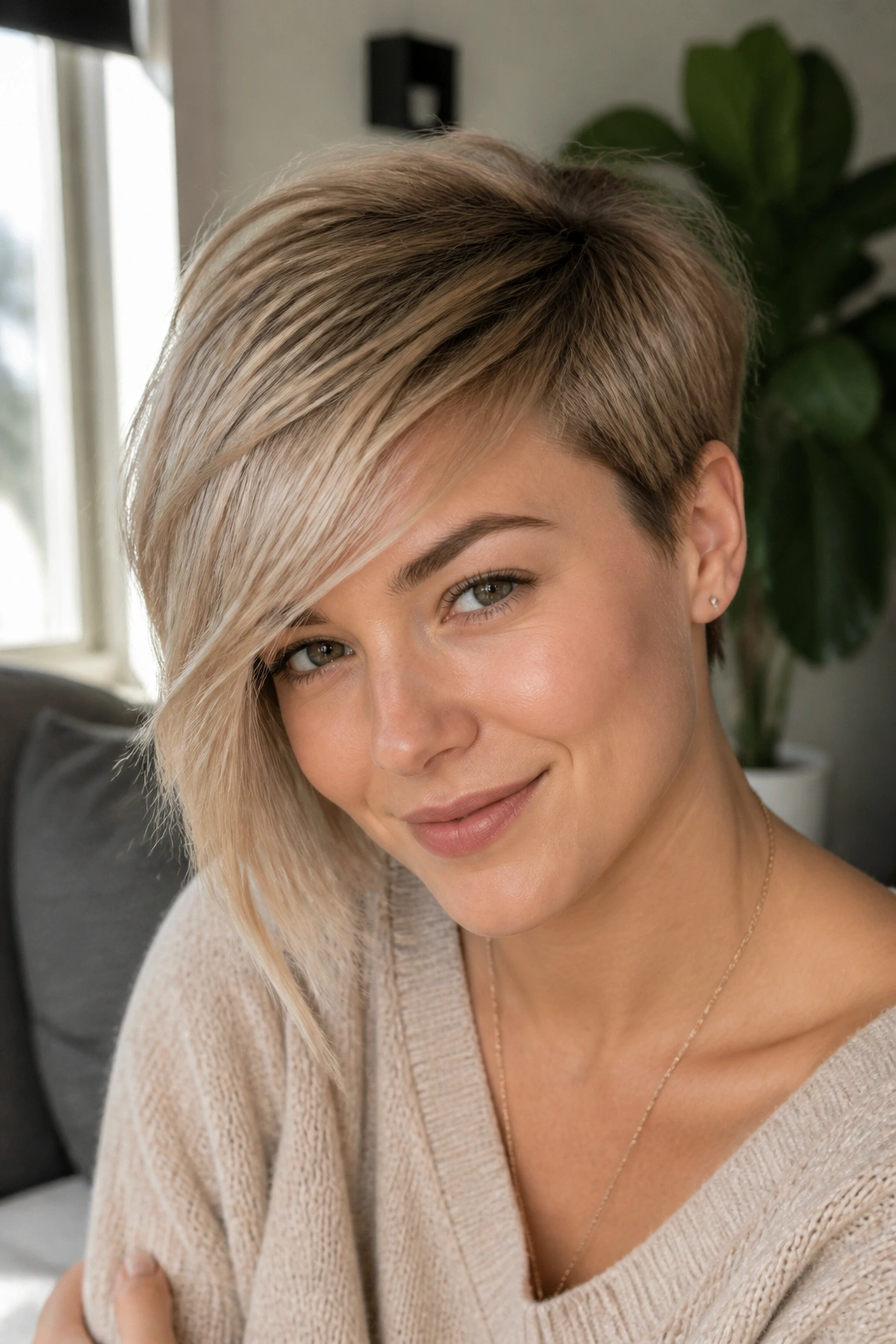
Can a short haircut still feel soft around the face? Absolutely, and this is the one that proves it.
A side-swept fringe pixie keeps the front longer on one side, usually brushing the brow or cheekbone, while the rest of the cut stays cropped and neat. That diagonal line matters. It pulls the eye across the face, which can be useful if you want to soften a broad forehead, balance a rounder face, or just avoid the blunt look that very short bangs can give.
How to Wear It
The fringe needs a little direction. Blow-dry it from the part line toward the opposite side with a small round brush, then finish by raking it into place with your fingers. If the hair is stubborn, a flat iron pass on low heat for 5 to 8 seconds can help the bend sit where you want it.
This cut is especially nice when you want a pixie that can still feel a bit romantic. The shape is short, yes, but the front gives you enough movement to tuck, sweep, or lift. It’s one of those styles that looks calm in photos and even better when the hair moves a little.
4. The Curly Pixie That Keeps the Shape
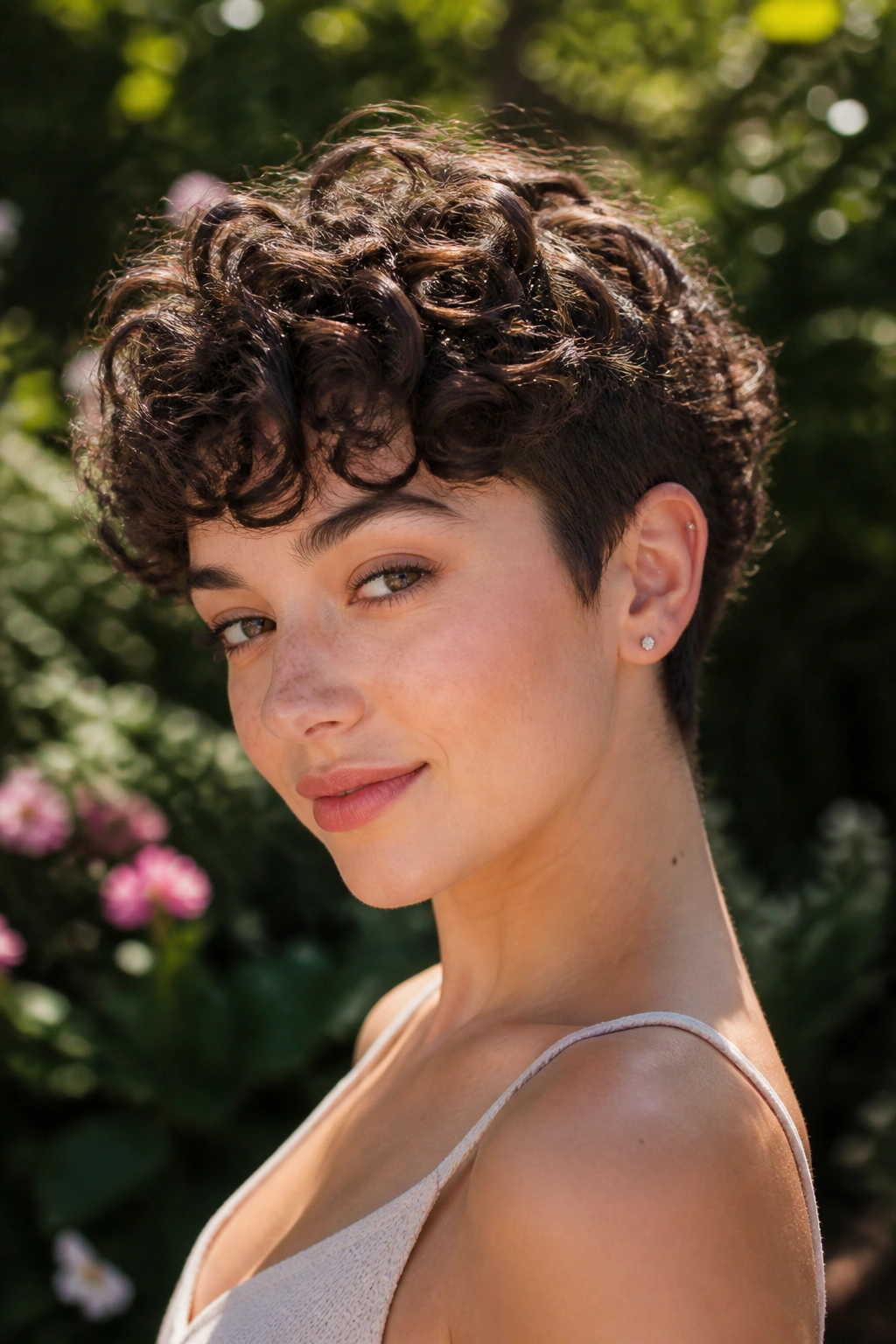
You can absolutely cut curls into a pixie without turning the head into a puffball. The secret is giving the curl enough room to spring while keeping the sides and nape shorter so the shape doesn’t spread out.
I’ve seen too many curly pixies cut as if the curl will behave like straight hair. It won’t. Curls shrink, bend, and bounce in their own direction, which means the top usually needs a touch more length than you think. A stylist who knows curls will often leave an extra half-inch to one inch on top to account for shrinkage.
- Diffuse on low heat and low speed.
- Use curl cream or mousse, not heavy wax.
- Ask for dry cutting if the curl pattern is tight or uneven.
- Keep the ends soft, not blunt.
The payoff is lovely. A curly pixie can look airy, light, and a little playful, especially when the curls are allowed to break naturally instead of being forced into one shape. It’s a cut that respects texture instead of fighting it.
5. The Undercut Pixie With a Clean Neckline
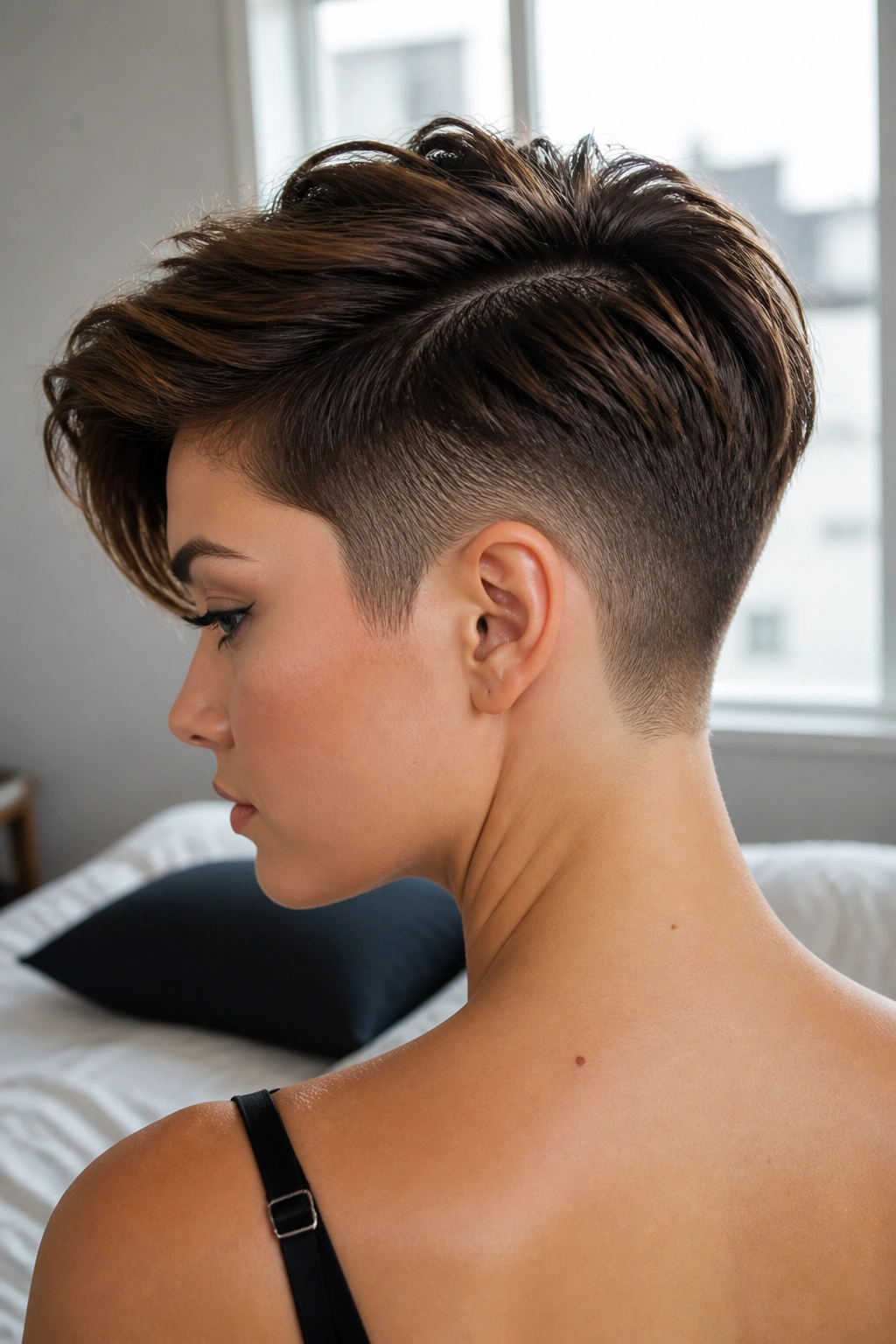
This one has edge. An undercut pixie removes bulk from the sides or back, then leaves the top long enough to sweep, spike, or smooth over the shorter sections. It’s neat where it needs to be and bold where it counts.
The cleanest version keeps the top around 3 to 5 inches, with the undercut clipped close under the longer layer. That gives you a strong contrast without making the haircut feel disconnected. A lot of stylists will fade the nape and behind the ears so the grown-out line stays softer between trims.
The big advantage is weight control. Thick hair, especially, can feel a lot lighter with an undercut. If you’ve ever had a short cut that still felt bulky, this is the fix. It also makes styling faster because you’re only working the top section.
Not every girl wants that much contrast, and that’s fair. But if you like short hair that still has some attitude, this is one of the cleanest ways to get it.
6. The Shaggy Pixie for Messy Movement
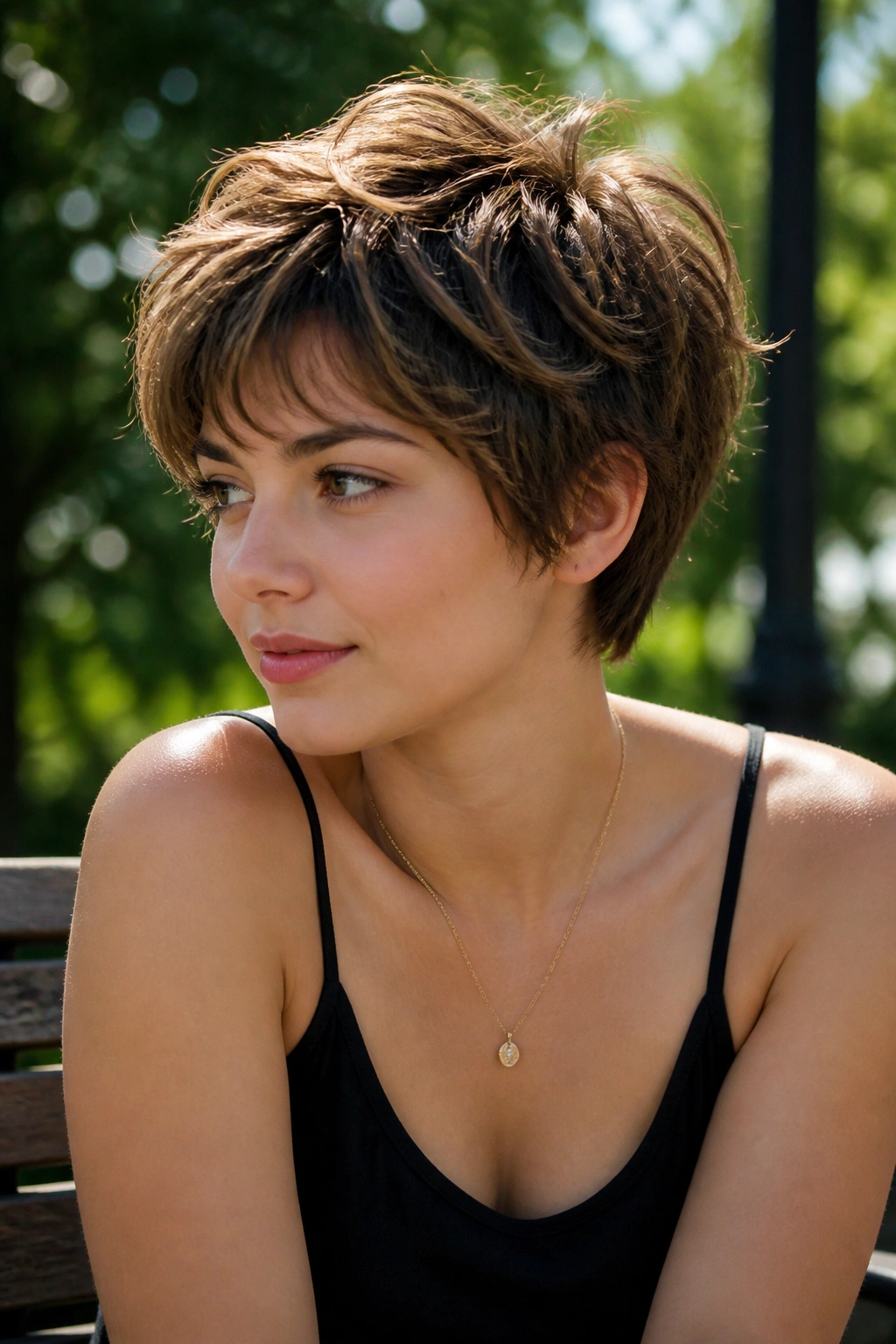
The shaggy pixie is basically the laid-back cousin of the classic cut. It keeps the shape short, but the layers are softer, longer, and less tidy, which gives the hair a lived-in feel that works especially well on thick or wavy strands.
What Makes It Different
Unlike a clean pixie, this one lets the top and sides blend with a little unevenness on purpose. The crown is usually left feathered, and the fringe may fall in broken pieces rather than one neat line. That looseness keeps the cut from looking helmet-like, which is a real risk with dense hair.
A sea-salt spray or light mousse can help, but don’t drown it. Scrunch a small amount into damp hair, then let it air-dry or rough-dry with your fingers. The goal is separation, not crunch. If the pieces look too perfect, you’ve probably used too much product.
This cut suits girls who like a little edge but still want softness around the face. It reads relaxed, not sloppy. There’s a difference.
7. The Asymmetrical Pixie With a Longer Side
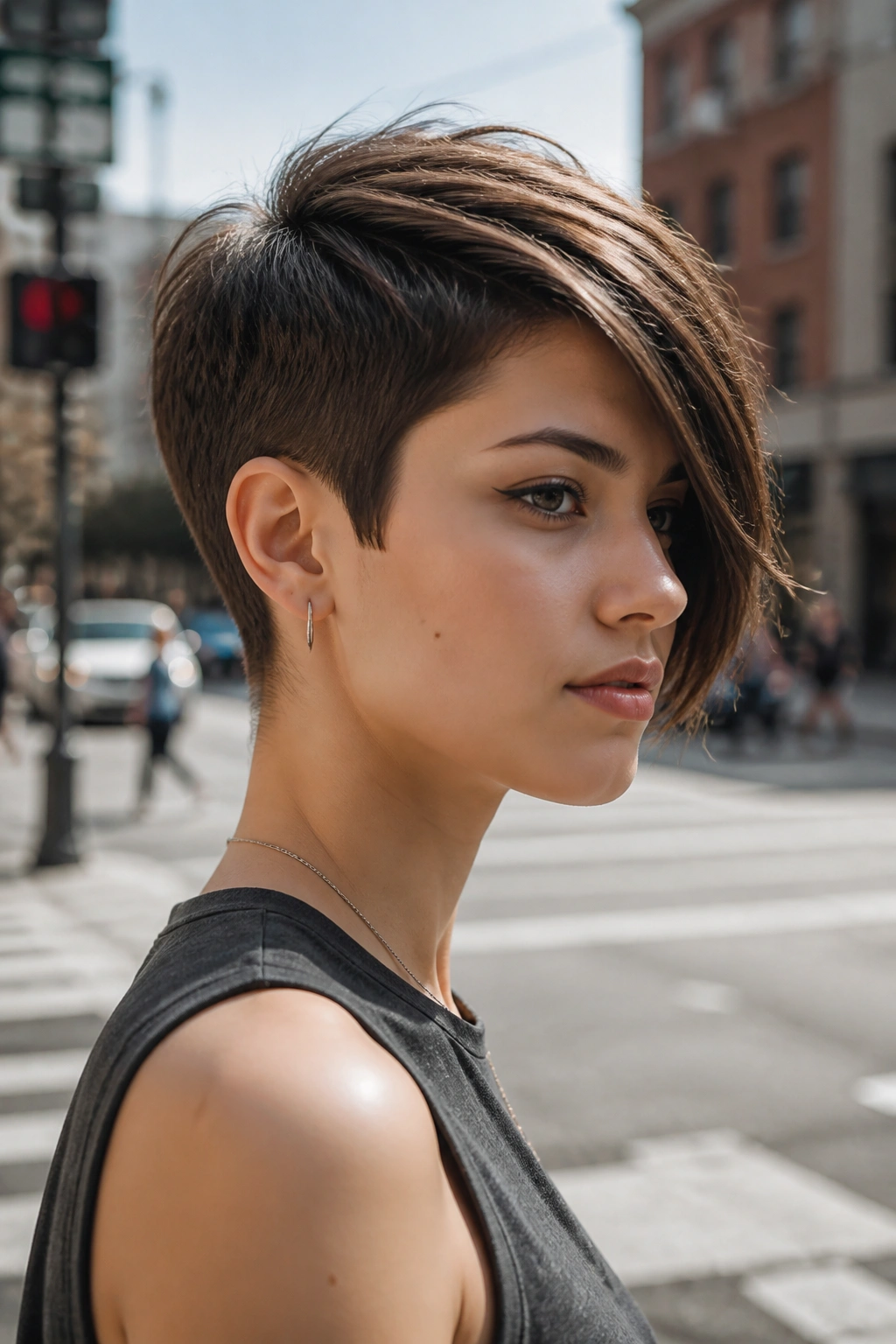
A slight imbalance can be the whole point. An asymmetrical pixie keeps one side visibly longer than the other, and that shift gives the haircut a sharper line without needing a full undercut or shaved side.
Why It Works
The longer side usually sits 1 to 2 inches below the shorter one. That may not sound like much, but on a pixie, it changes everything. The face looks longer, the profile looks leaner, and the haircut gets a little drama without turning into a full statement cut.
This style is especially handy if you want to draw attention away from one side of the face or break up a very round outline. It can also help if one side of the hair grows differently, which happens more often than people admit. The asymmetry stops those tiny differences from looking like a mistake.
Wear it sleek for sharper lines or rough it up with texture spray for a more casual feel. Either way, the cut needs a good trim schedule. If you wait too long, the imbalance stops looking deliberate and starts looking grown out. That part matters.
8. The Tapered Pixie With a Neat Nape
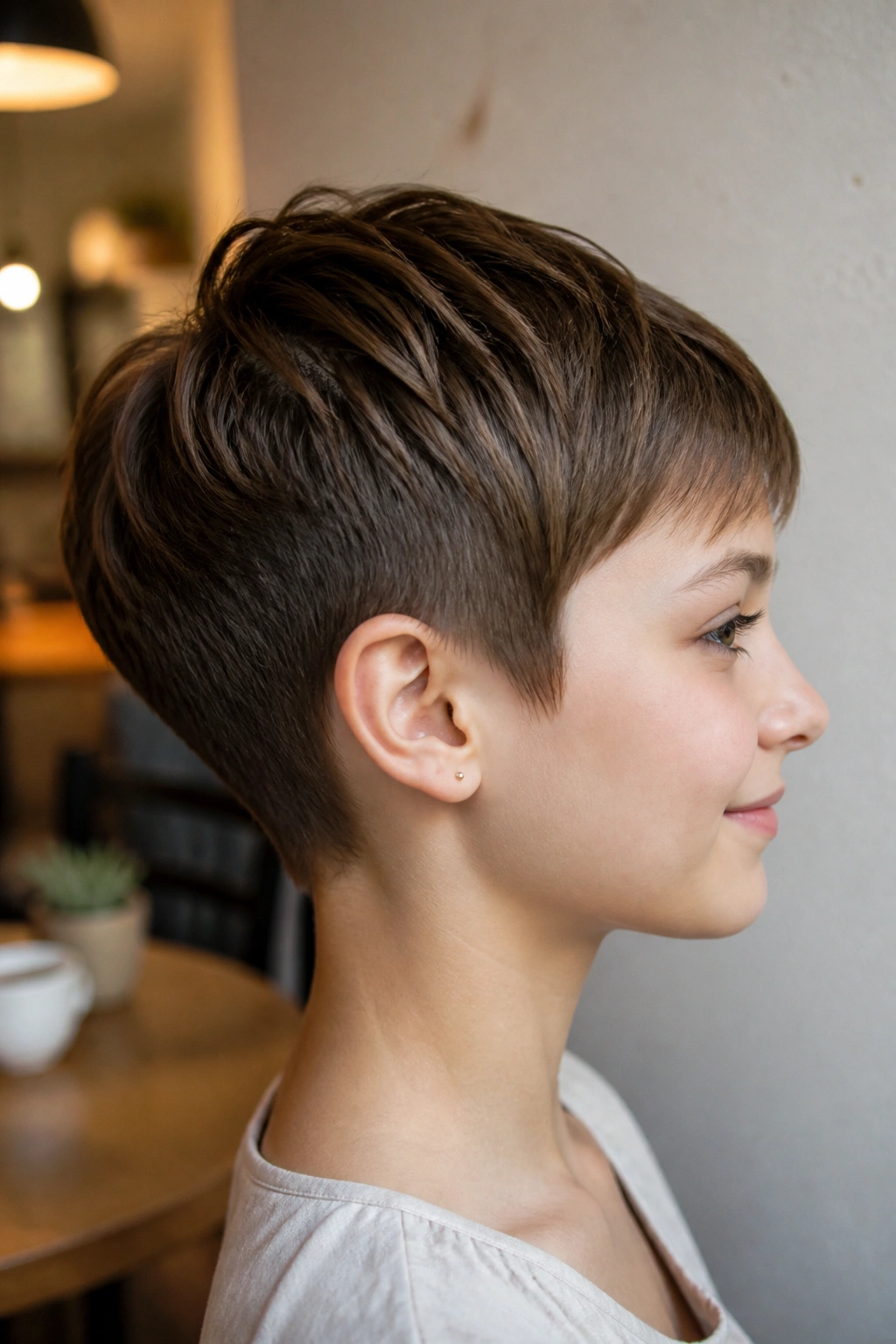
This is the cleanest-looking pixie on the list. A tapered pixie gets shorter as it moves toward the neck and ears, which makes the whole haircut sit close to the head in a neat, tidy way.
The shape is especially good if you want your hair off the neck without losing softness at the top. It works for school uniforms, active days, and anyone who hates the feeling of hair brushing the collar all day. The nape can be cut down to a half-inch or less, then blended into longer top layers so the cut doesn’t look boxy.
You also get a nice visual bonus here: the taper makes the head shape look smooth from the side. That’s a little detail, but a good stylist uses it on purpose.
If your hair grows fast around the ears and neck, this cut will ask for more frequent trims. Still, it stays crisp when the lines are kept fresh, and that crispness is what makes it feel polished rather than severe.
9. The Pixie Bob That Bridges Short and Longer Hair
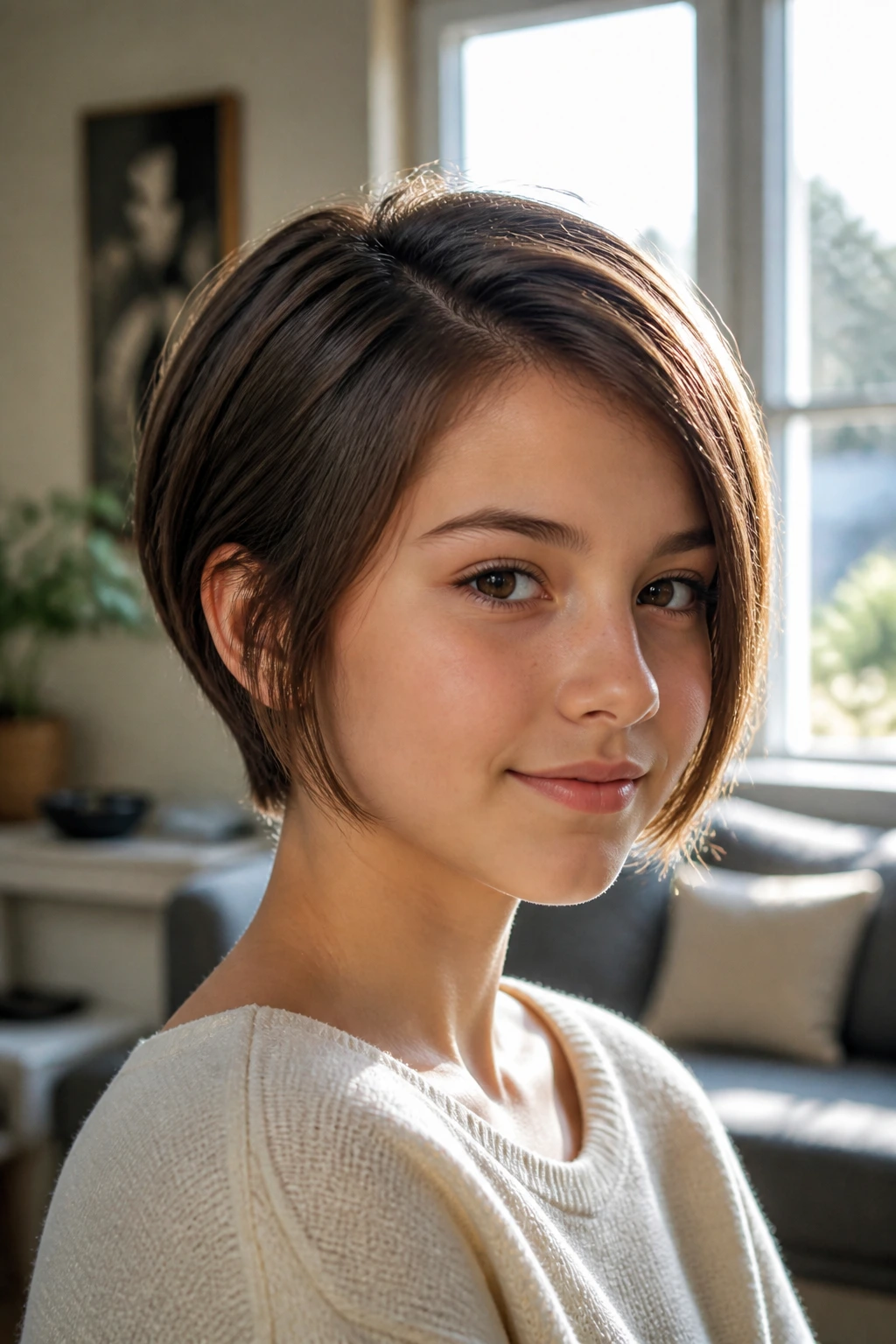
Can a pixie still feel long enough to tuck behind the jaw? Yes, if you drift into pixie bob territory.
A pixie bob keeps the back short but leaves the front and sides longer, often brushing the cheekbone or even the jawline. That makes it a smart choice for anyone who wants the short-hair feeling without jumping all the way into a crop. It’s also one of the easiest cuts to grow out, which is worth saying out loud because grow-out matters more than people think.
How to Wear It
Blow-dry the front forward first, then sweep it back or to the side once it’s mostly dry. That little bit of tension helps the shape sit cleanly instead of flipping out. If the ends are too blunt, ask for light texturizing at the bottom inch so the line moves.
A pixie bob is a nice middle ground. Not too short. Not too safe. And for girls who want to test short hair before going shorter later, it gives you room to decide without feeling stuck.
10. The Piecey Pixie With Separated Ends
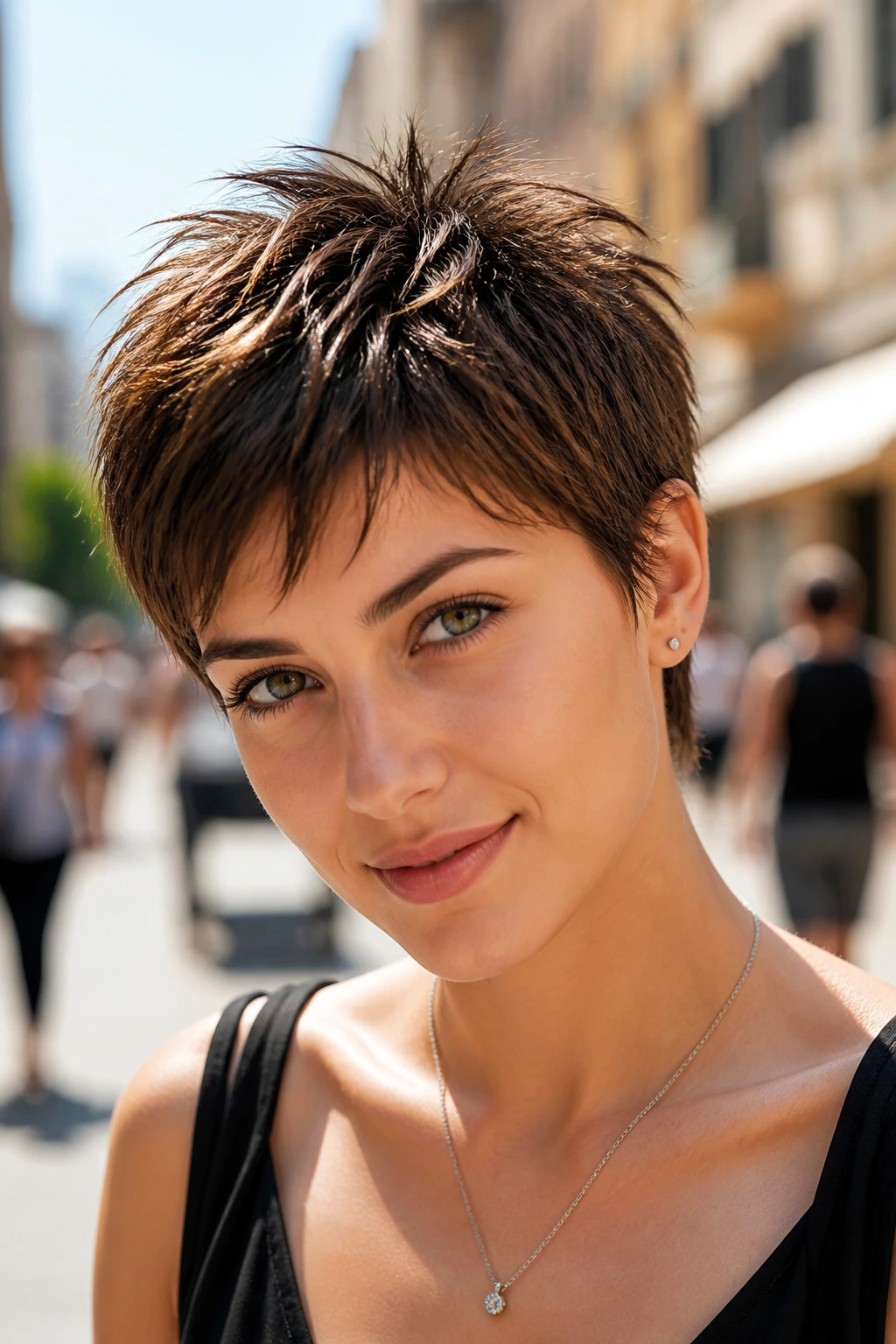
Some short cuts look best when the hair isn’t sitting in one solid block. The piecey pixie is built for that. It uses separated strands, small broken layers, and a little product control to make the haircut look airy and defined.
A piecey finish is especially useful on hair that has some natural body but gets puffy if left all one length. The stylist usually removes weight through the top and fringe, then leaves enough length for the ends to be pinched apart. You want visible sections, not a blur.
Use a light wax or pomade on dry hair. Warm a pea-size amount between your fingers first. Then twist 3 or 4 small pieces around the crown and fringe, leaving the rest alone. If you touch every section, you’ll kill the separation.
This cut has a fun, casual look that works with jeans, school clothes, and dressier outfits too. It doesn’t need a polished finish to make sense, which is part of the appeal.
11. The Feathered Pixie With Airy Layers
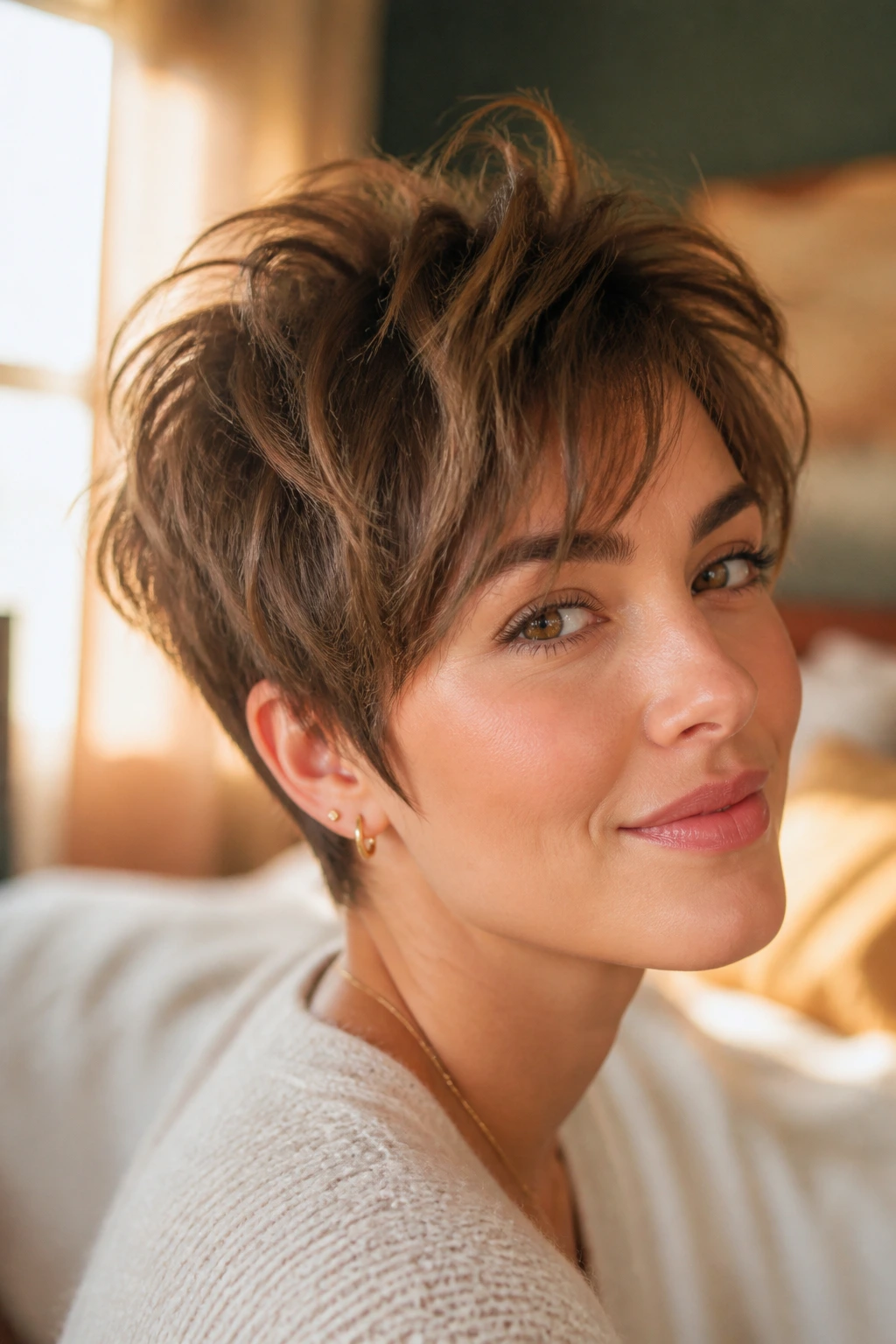
A feathered pixie feels softer at the edges than a blunt crop. The layers are sliced or lightly point-cut so the hair falls in wispy, airy sections that move instead of sitting stiffly against the head.
That softness matters on fine hair, because heavy lines can make thin strands look flatter than they are. Feathering gives the illusion of lift without forcing the cut into a spiky shape. On thicker hair, it keeps the style from feeling bulky around the temples.
What to Ask For
Ask for light feathering through the fringe, crown, and side layers, but keep the ends controlled. Too much feathering can make the cut fray out. That’s the part stylists watch carefully.
This is a nice choice if you like a gentler silhouette. The shape isn’t edgy, and it isn’t severe. It just sits there with a little movement and a softer edge, which is often exactly what short hair needs.
12. The Micro Pixie With Barely-There Sides
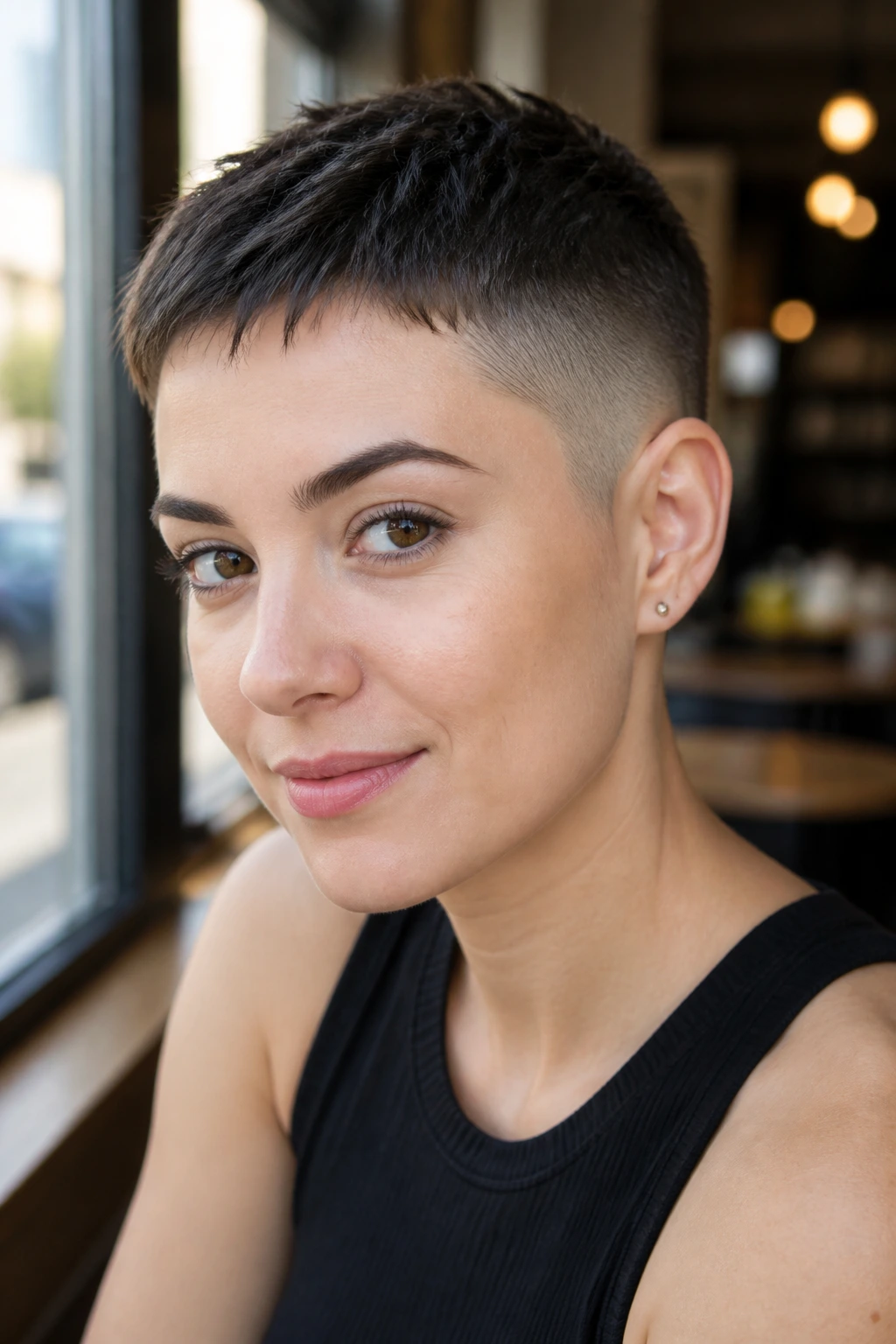
This cut is tiny, and that is the point. A micro pixie keeps the sides and back very short, with only a little length left on top for texture or a tiny fringe.
It suits girls who want almost no daily styling and don’t mind a haircut that puts their face out in the open. That means the hairline, brows, and jaw all matter more, so the cut should be precise. A sloppy micro pixie looks unfinished fast.
- Keep the top around 1 to 2 inches.
- Ask for crisp blending at the hairline.
- Use a tiny amount of matte paste if you want texture.
- Plan on trims every 3 to 4 weeks if you want the shape to stay sharp.
This isn’t the most forgiving pixie, but it has a clean, modern feel that’s hard to fake. If you like low-maintenance hair and a strong profile, it can be a great fit.
13. The Long-Top Pixie for Styling Options
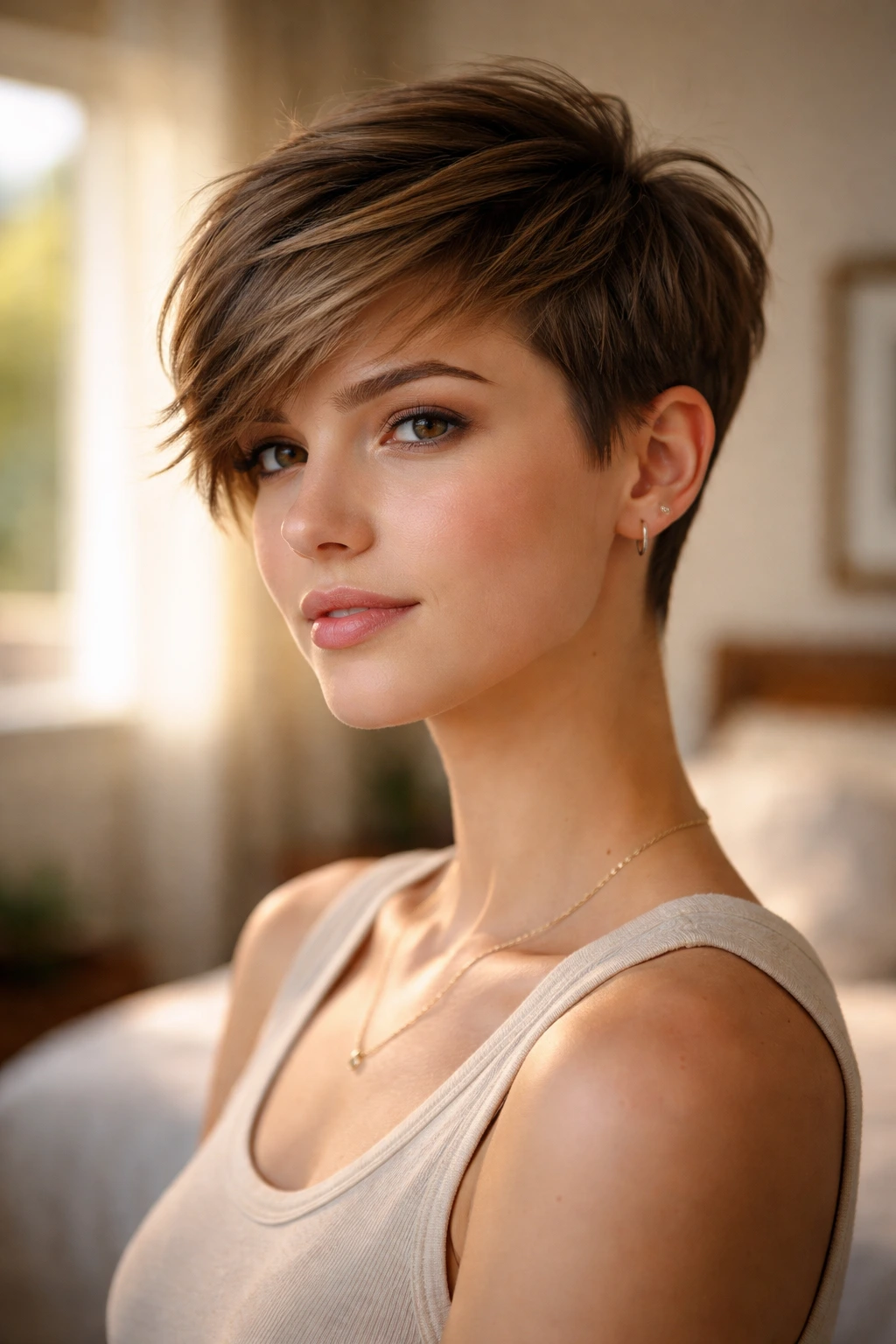
What if you want a pixie, but you still want options? Keep the top longer.
A long-top pixie gives you enough length on the crown and fringe to change the mood of the cut day by day. You can push it forward, part it to the side, slick it back, or rough it up into a mini quiff. The sides stay shorter, so the cut still reads as a pixie, but the styling room is wider.
How to Get the Most From It
Ask for 4 to 5 inches on top if your hair is straight or slightly wavy. On curly hair, the visible length will shrink, so the top may need a bit more room. The sides can stay close and soft, which keeps the top from looking top-heavy.
This is the version I’d recommend to girls who like changing their hair without changing the cut every day. It’s practical. It also grows out gracefully, which is a small mercy when salon time is limited.
14. The Layered Pixie for Thick Hair
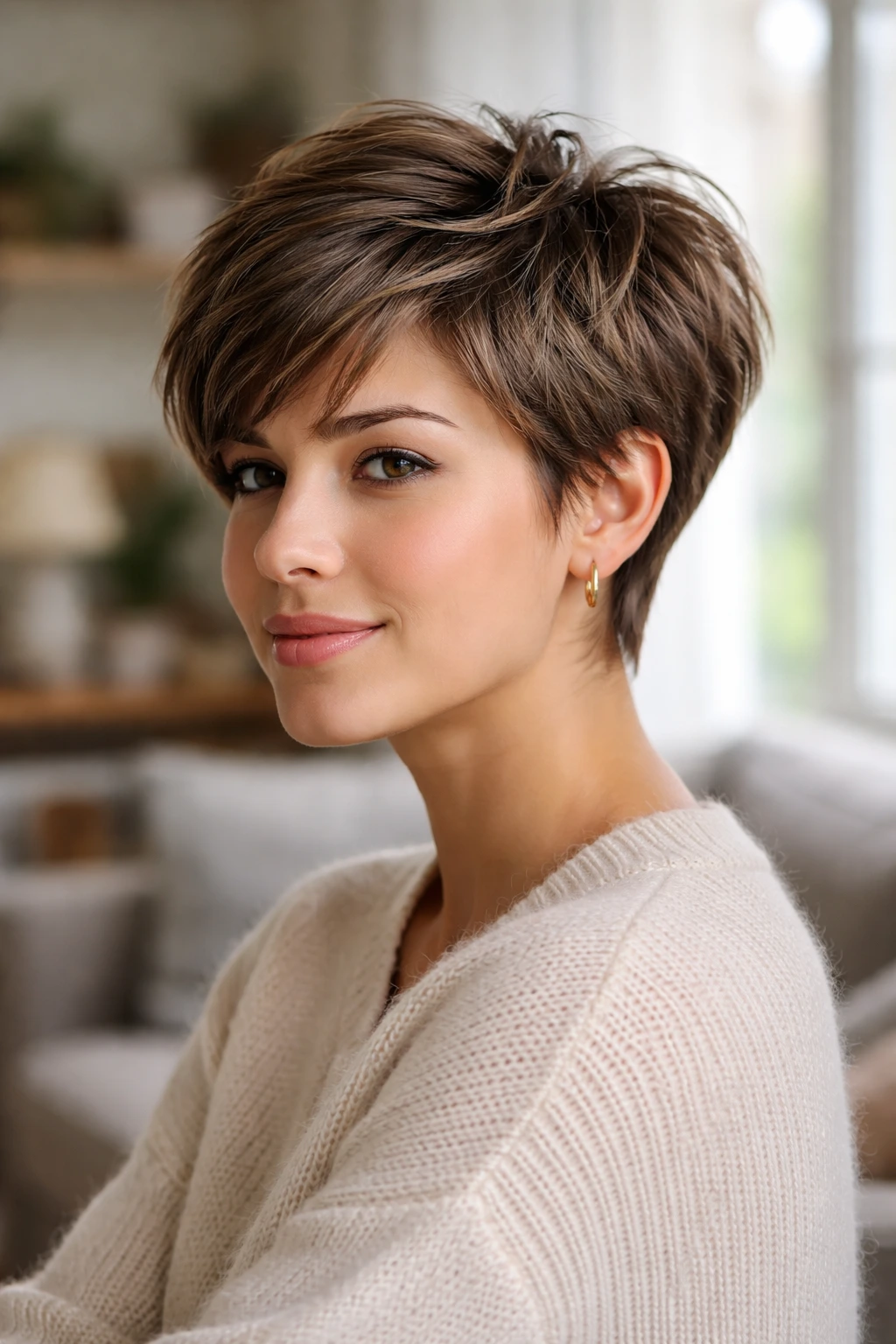
Thick hair needs room to move, and a layered pixie gives it that room. Without layers, thick short hair can balloon outward or sit like a cap. With them, the cut loses weight in the right places and starts to bend inward instead of out.
The crown is where the work happens. A stylist will usually remove bulk through the top and back while keeping enough strength at the fringe and hairline so the shape doesn’t collapse. That balance is what keeps the haircut from looking airy in a bad way.
You’ll probably like this cut if your hair feels heavy by noon. A layered pixie cuts that feeling down fast. It also takes well to a blow-dry with a vent brush or fingers, because the layers create natural lift on their own.
Some pixies are about decoration. This one is about comfort. Thick hair can be a lot to manage when it’s short, and layers are the difference between manageable and mushroom-shaped.
15. The Soft French Pixie With a Gentle Fringe
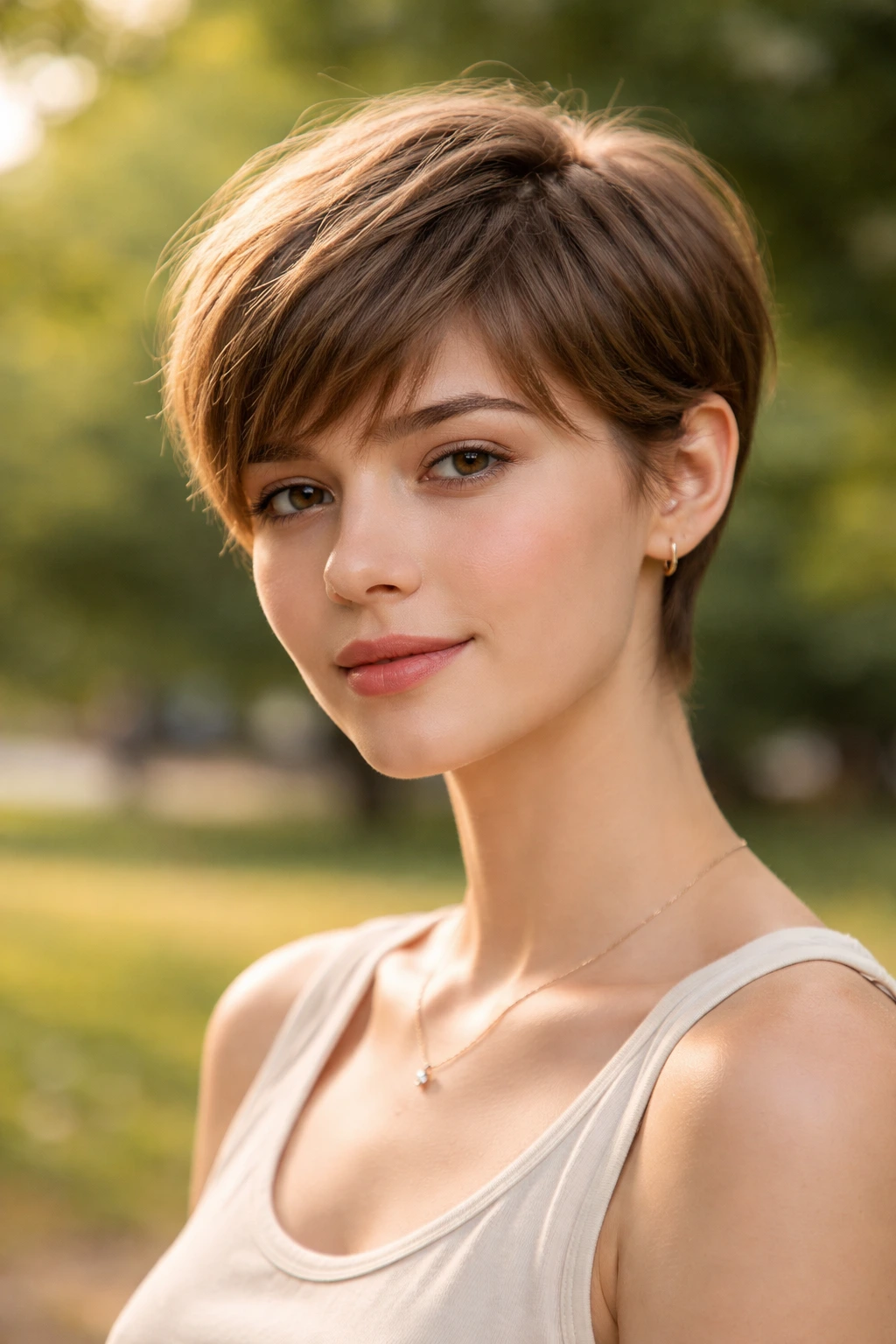
The soft French pixie leans a little romantic. It keeps the fringe light and slightly imperfect, with a shape that feels intentional but not stiff.
What Makes It Different
A French-style pixie usually avoids hard edges. The bangs sit a bit longer, often just touching the brows or curving to one side, and the sides blend softly into the top. You’re not chasing a sharp outline here. You’re aiming for that relaxed, chic shape that looks like it fell into place after a quick comb-through.
This cut works especially well when the hair has a natural bend. A tiny bit of mousse at the roots and a quick finger-dry are often enough. If you overstyle it, you lose the charm.
Best of all, it has a built-in softness around the forehead and temples, which can make short hair feel less severe. If you want a pixie that still feels gentle, this is one of the prettiest paths.
16. The Buzzed-Side Pixie for a Sharp Edge
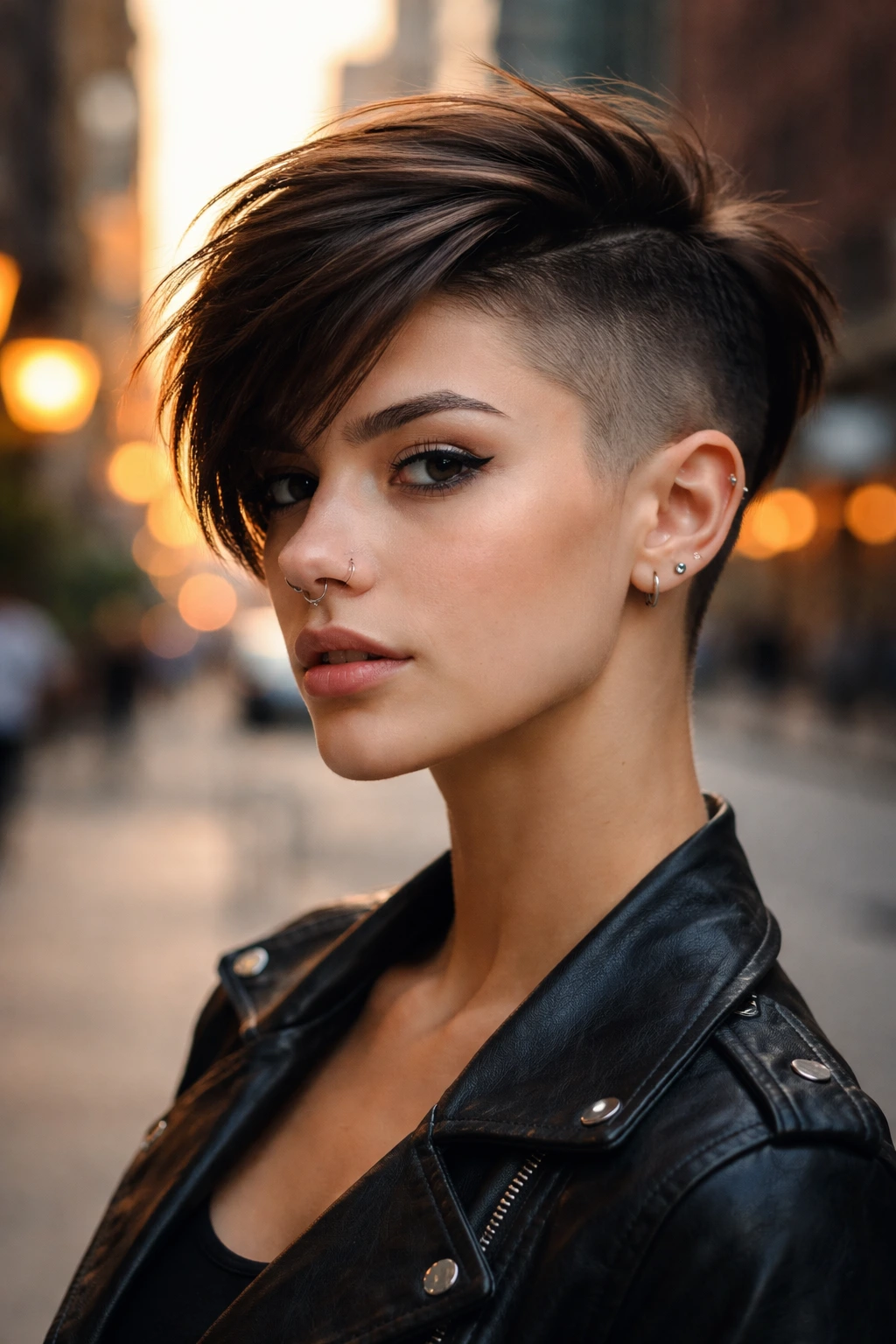
A buzzed-side pixie is not subtle, and that’s exactly why people choose it. One side gets clipped very close—sometimes nearly down to the scalp—while the other side and top stay longer and sweep across.
The contrast does most of the work. It gives the haircut an instant shape without needing much product or time. You wake up, smooth the top over, and you’re done. That is part of the appeal, honestly.
Take care with the proportions, though. If the buzzed side is too wide or the top too short, the cut can feel harsh instead of balanced. A good version keeps the longer section heavy enough to cover the short side when you want, and open it up when you don’t.
It’s a bold choice. No way around that. But if a girl wants a pixie with a clear edge and a little swagger, this one has plenty.
17. The Slicked-Back Pixie for a Polished Finish
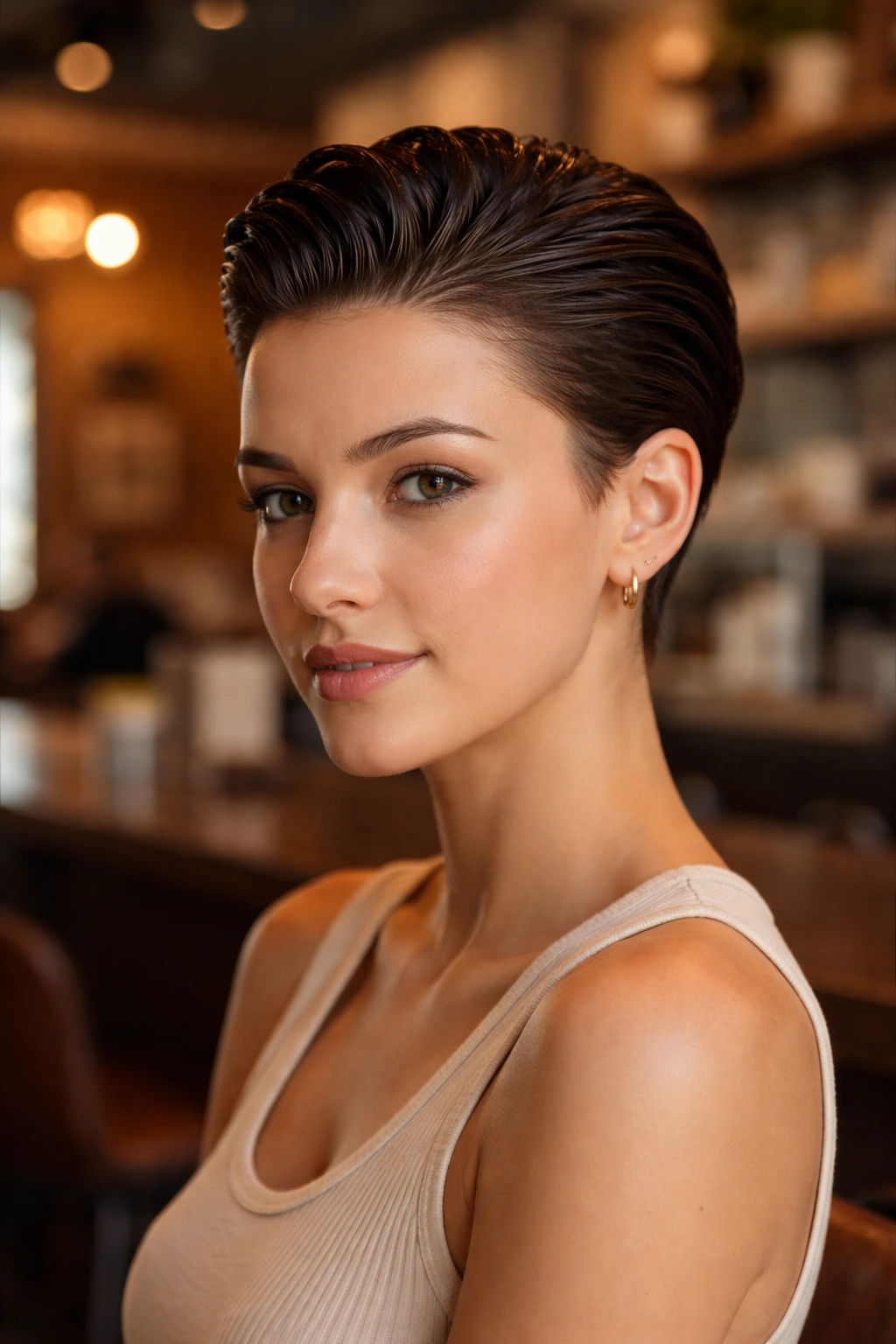
Sometimes short hair looks best when it stays close and glossy. A slicked-back pixie uses gel, cream, or pomade to push the hair away from the face and flatten the top slightly for a neat finish.
This style works on straight hair especially well, but wavy hair can do it too if you first rough-dry the roots. Use a small amount of product—more than a nickel-size blob can turn the hair stiff and shiny in a bad way. Then comb or finger-comb it back from the hairline while the hair is still damp.
The result feels clean and deliberate. It’s a strong look for events, photo days, or any moment when you want the haircut to read a little more grown-up. And if you’re tired of bangs falling into your eyes, this solves that instantly.
It’s not a cut that hides much. That’s the point. The face, ears, and brows all get their moment.
18. The Wavy Pixie That Works With Natural Bend
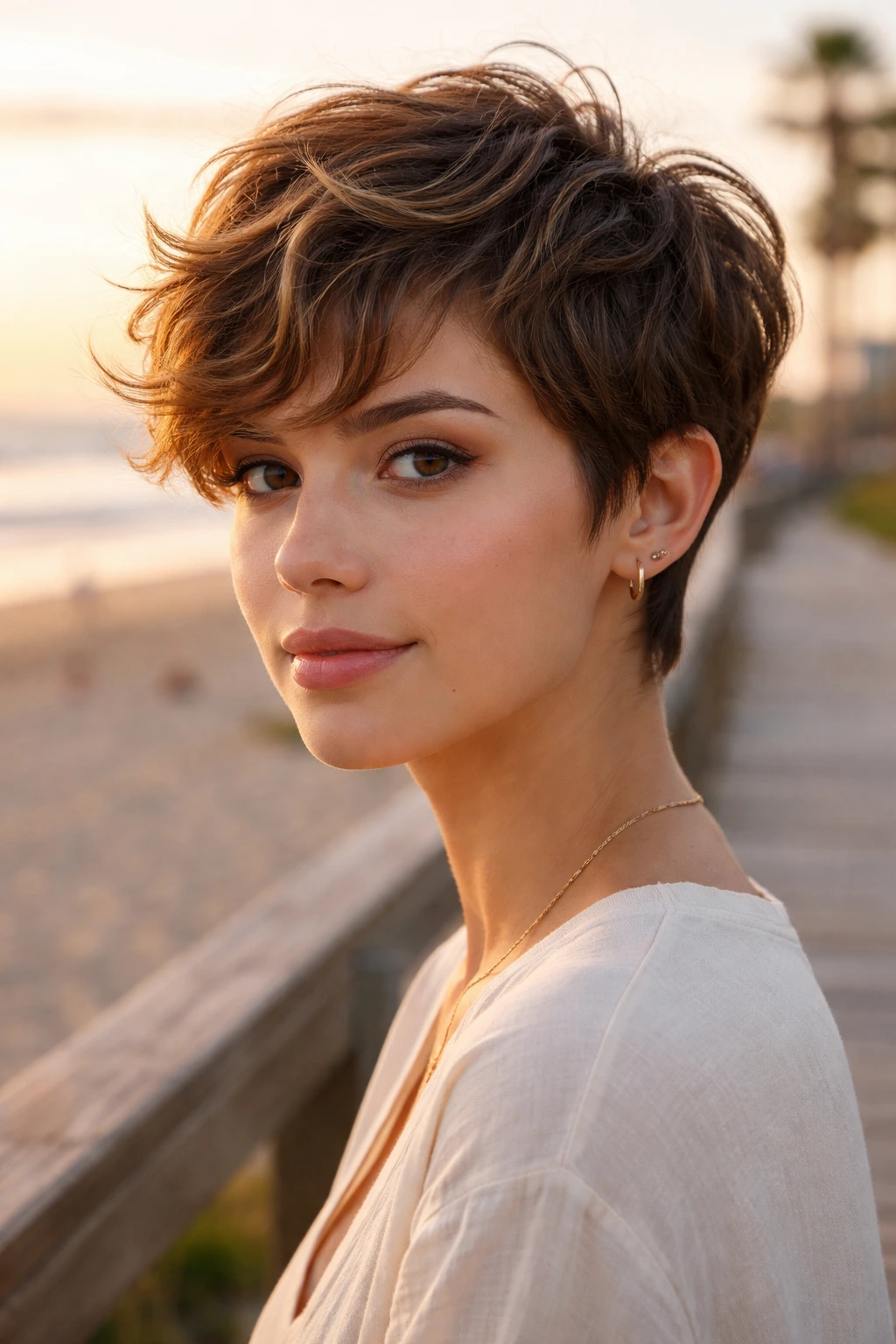
Waves can make a pixie look easy in the best way. Instead of forcing the hair flat or straight, this cut lets the wave pattern create the shape.
Why It Works Better Than Fighting the Texture
A wavy pixie usually keeps the top a little longer so the bends have room to move. The sides stay softer and shorter, but not razor-close, because wavy hair needs a bit of length to show its shape. If you cut it too tight, the wave can spring out in odd directions.
Use a light mousse or curl cream on damp hair, then scrunch and air-dry. A diffuser on low heat can help if the waves are stubborn. Avoid brushing it dry. That’s how you get poof where you wanted movement.
This style has a relaxed, beachy feel without trying too hard. It’s one of the easiest pixies to live with if your hair already has a bend in it. You’re not forcing the cut to behave. You’re letting it do half the work.
19. The Nape-Length Pixie That Grows Out Gracefully
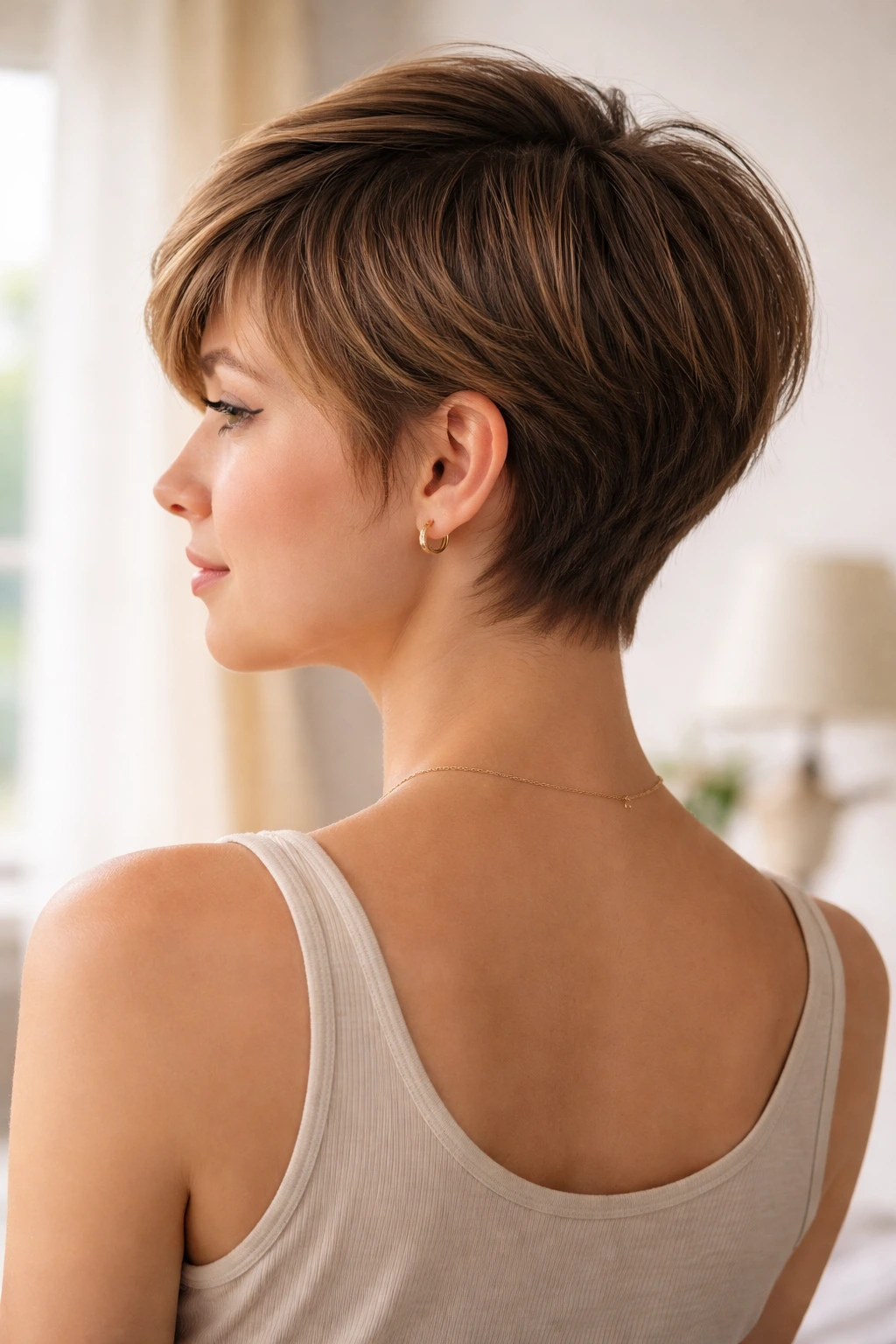
A nape-length pixie keeps a little extra hair at the back of the neck, which softens the whole cut and makes grow-out less awkward. That small bit of length changes the outline more than people expect.
The shape feels gentler than a high crop because the back doesn’t stop abruptly. Instead, it tapers down with just enough length to brush the neckline. It’s a smart choice if you like the pixie idea but want a softer landing during the months between trims.
How to Keep It Looking Intentional
Ask for a clean taper under the longer back section so the nape doesn’t turn into a shelf. That’s the mistake that ruins this style. The longer back should look like part of the cut, not like it was left behind.
This version is especially nice for girls who want a short haircut with a little swing at the neck. It feels less exposed than a micro pixie, but lighter than a bob. That middle ground is useful.
20. The Spiky Pixie With a Playful Finish
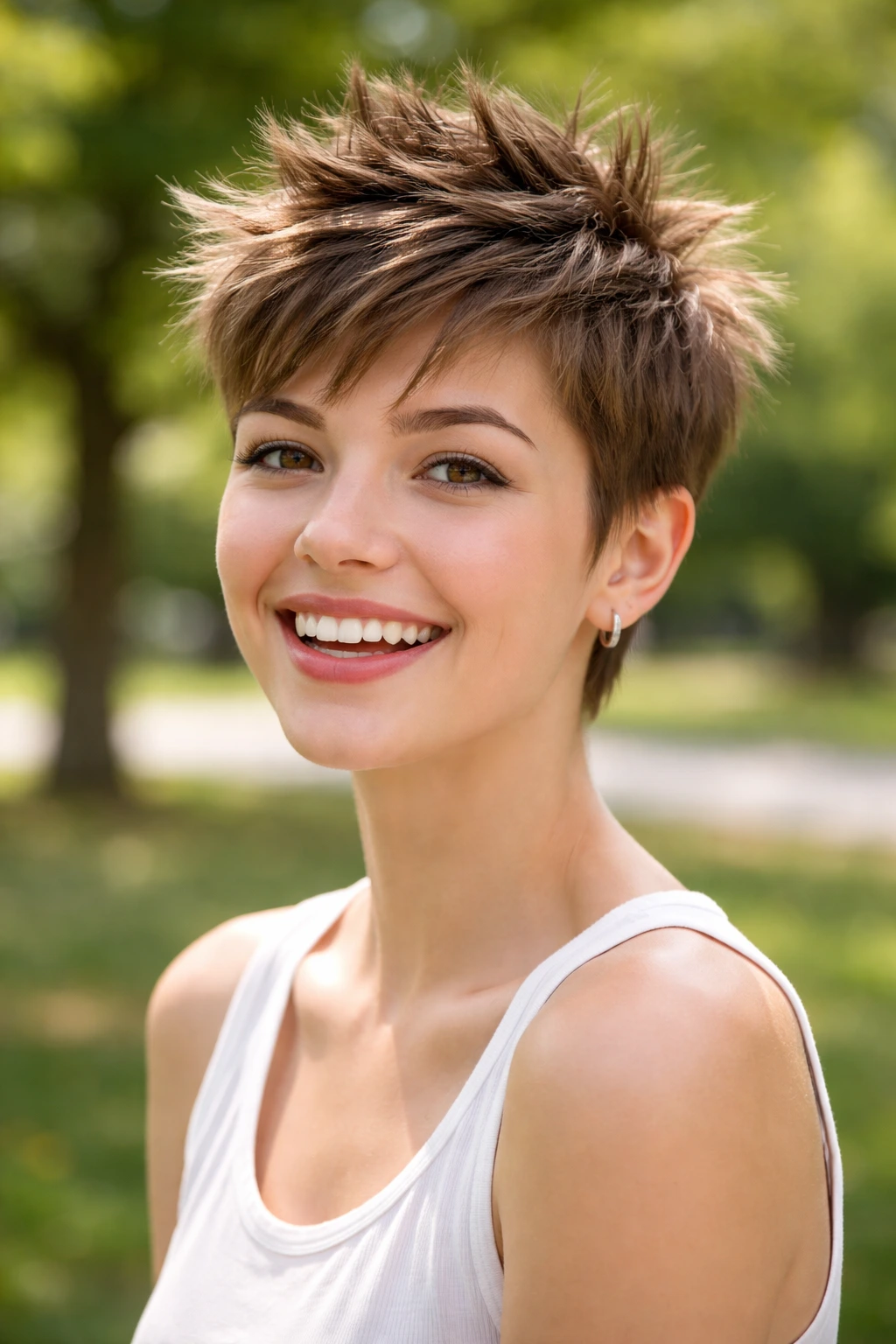
A spiky pixie has a little attitude and a lot of movement. The top is cut short enough to stand up in small points, then styled with a matte wax or paste so the pieces lift instead of lying flat.
This cut works best when the ends are texturized a bit. If the hair is blunt and heavy, the spikes can clump together instead of separating. A stylist will usually leave the crown short but not chopped to bits, because too much cutting can make the hair frizzy.
Use a pea-size amount of product and warm it in your hands first. Then pinch the top in small sections and direct some pieces forward, some up, some slightly sideways. If every spike points the same way, the cut starts to look stiff.
This style has a playful, energetic feel that suits active girls and anyone who wants a short cut with some personality.
21. The Grown-Out Pixie Between Salon Visits
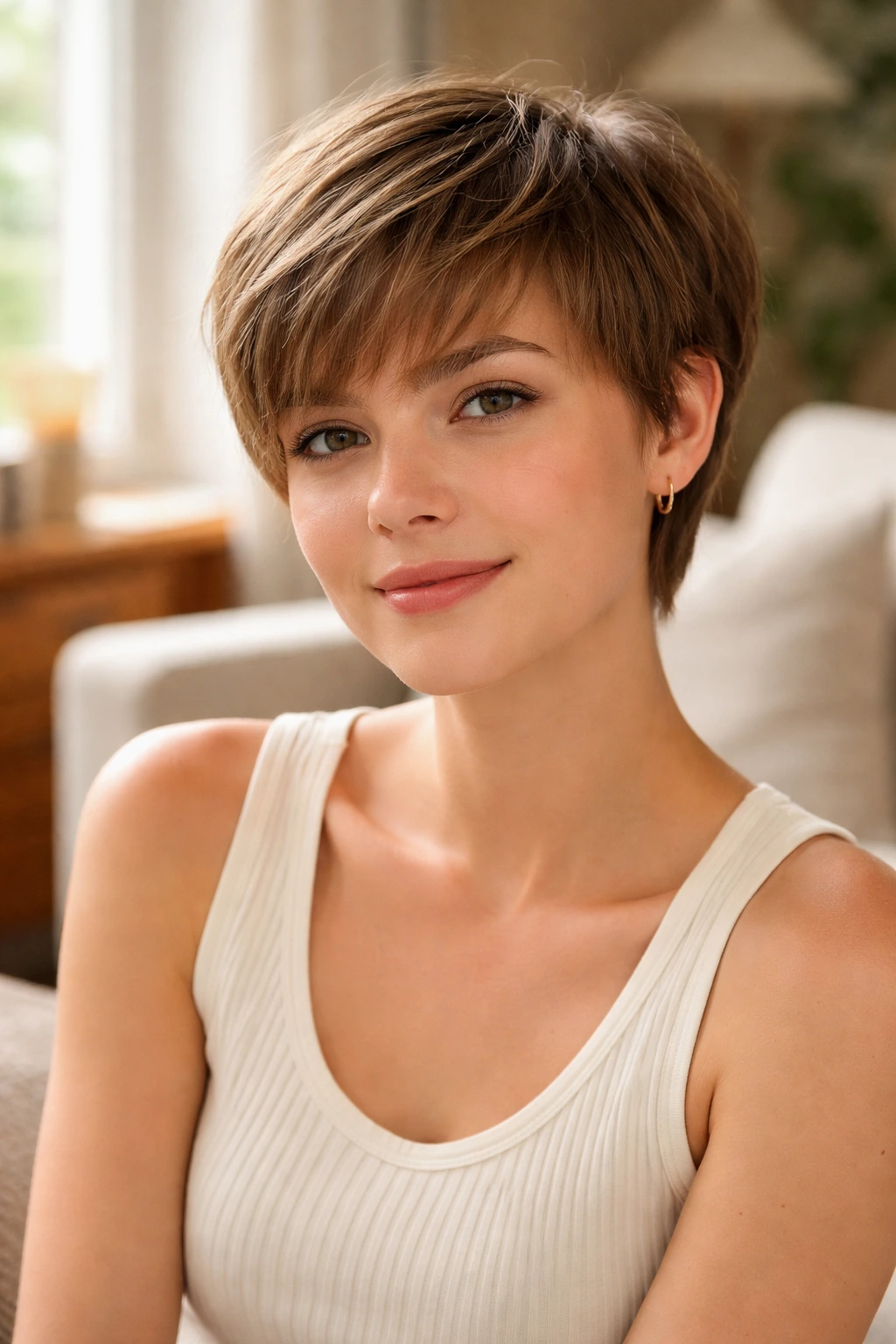
A grown-out pixie is not a mistake. It’s a stage, and when it’s shaped well, it can look intentional and easy to wear.
The key is keeping enough structure at the ears and nape so the cut still reads as a pixie instead of a fuzzy bob. The fringe may sit lower, the crown may lie a little softer, and the sides may blend more than they did on day one. That change can be annoying if you want a crisp cut, but it can also be very pretty.
How to Make the In-Between Phase Look Good
Push the front to one side, tuck one ear, and use a small amount of cream to keep the ends together. A light mist of water can revive the shape in the morning if it has gone a little flat overnight. You do not need to fight every strand.
This is the cut for girls who want a style that still looks good three, four, even five weeks after the salon, not just the first day out of the chair. That matters more than people admit.
22. The Soft Rounded Pixie for a Balanced Profile
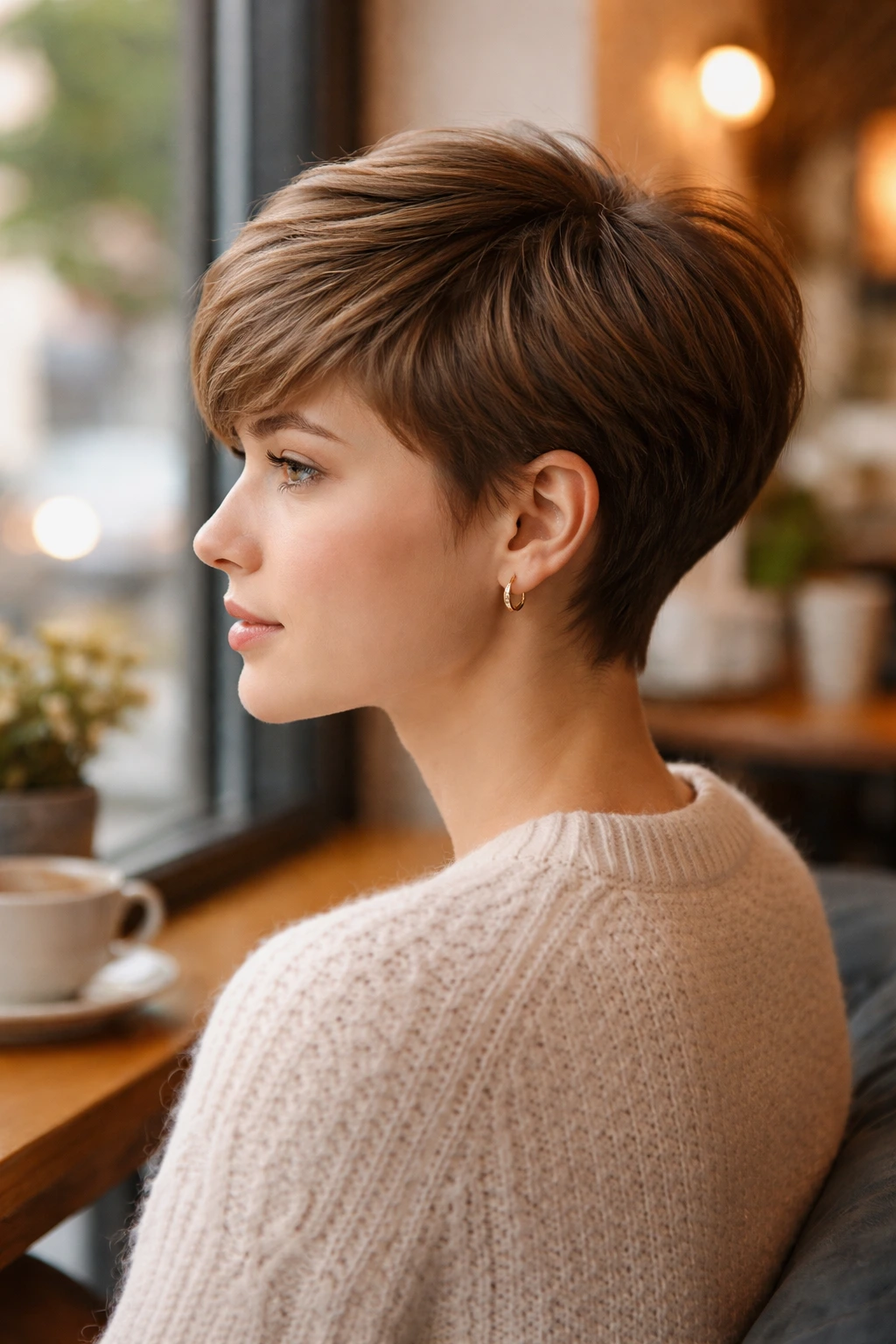
A rounded pixie keeps the silhouette smooth around the head, with the bulk controlled so the haircut curves gently instead of sticking out at the sides. It’s one of the easiest shapes to wear if you want short hair that still feels balanced from every angle.
The crown usually carries a little lift, the sides stay snug, and the fringe bends softly into the face. That rounded line can be flattering on a lot of face shapes because it avoids harsh corners. It also plays nicely with straight hair that tends to flop, since the shape gives the hair somewhere to sit.
A rounded pixie is a good reminder that short hair does not have to be sharp to be interesting. It can be smooth. Quiet. A little sweet, even. And if you want a pixie cut that feels tidy without looking severe, this is the one I’d keep near the top of the list.
The best pixie is the one that respects your hair’s habits instead of fighting them. That part never gets old.
