



A square face can wear a pixie cut with real punch.
The catch is that pixies are unforgiving when the shape is wrong. A blunt, boxy crop can make a strong jaw look even harder, while a cut with movement at the temples, a side part, or a broken fringe softens the edges without hiding the bone structure. That’s the sweet spot most people are chasing when they search for pixie cuts for square faces.
What matters most is where the eye lands. If the fringe stops in a hard line across the forehead or the sides end exactly at the jaw, the face can feel heavier than it is. If the top has lift, the front falls a little diagonally, and the sides stay soft or tapered, the whole haircut looks lighter and more alive.
So the best versions are rarely the neatest ones. They’re the ones that bend a little, move a little, and leave one or two pieces doing their own thing. That’s where the good stuff starts.
1. Side-Swept Pixie Cuts for Square Faces
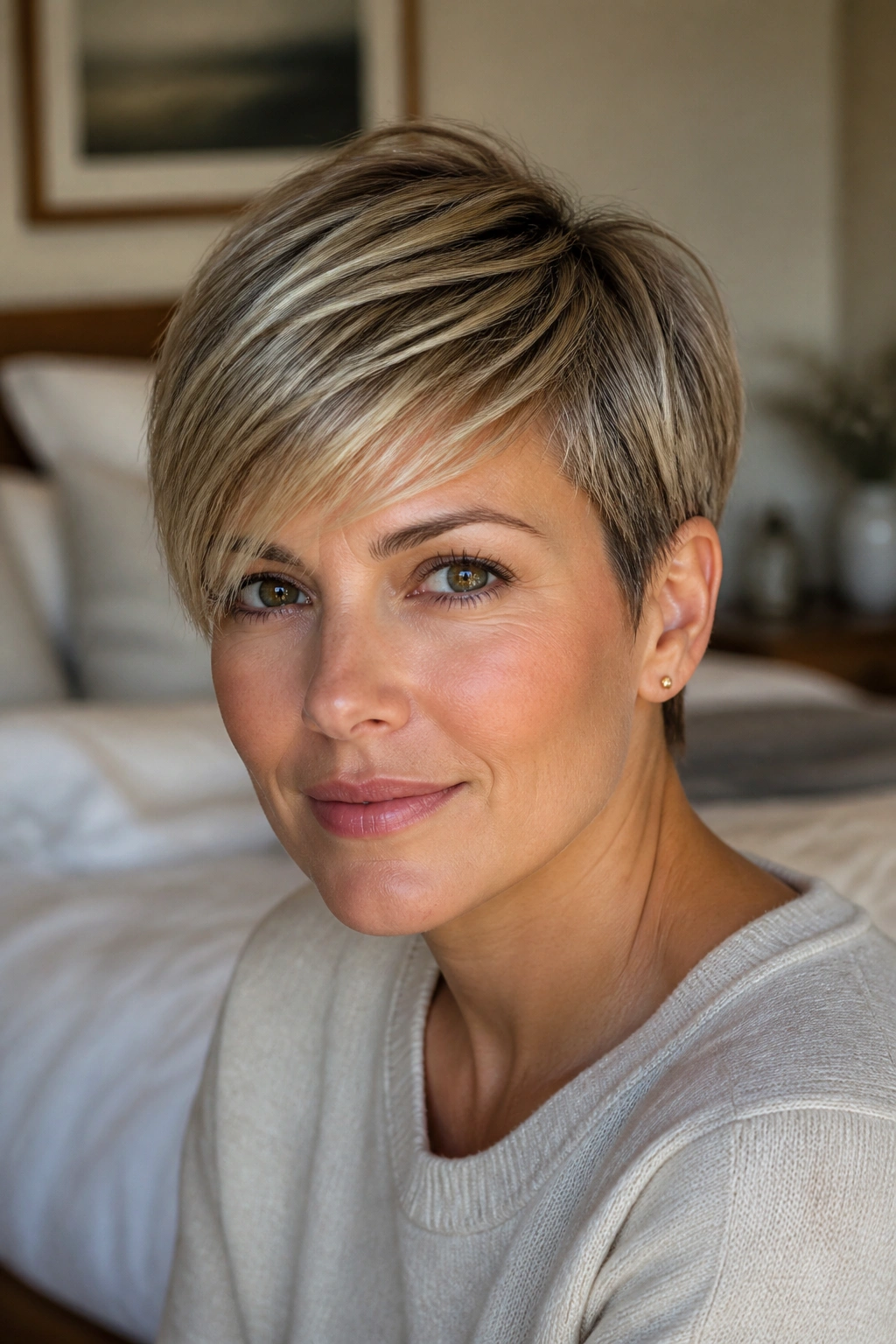
A side-swept pixie is the easiest place to start if you want softness without losing edge. The diagonal fringe pulls attention away from a strong jaw and toward the eyes, which is exactly what helps a square face feel less rigid.
Why the angle matters
The magic is in the sweep. A fringe that falls from a deep side part creates a line the eye follows upward and across, not straight down. That little change matters more than people think.
- Keep the longest front piece around 2 to 4 inches so it can move.
- Ask for soft tapering at the temples, not a blunt block.
- Use a light cream or flexible wax so the fringe bends instead of freezing.
- Blow-dry the front in the opposite direction first, then sweep it over for lift.
Best move: keep one side airy and the other slightly longer. That unevenness breaks up the square outline fast.
2. Feathered Long Pixie
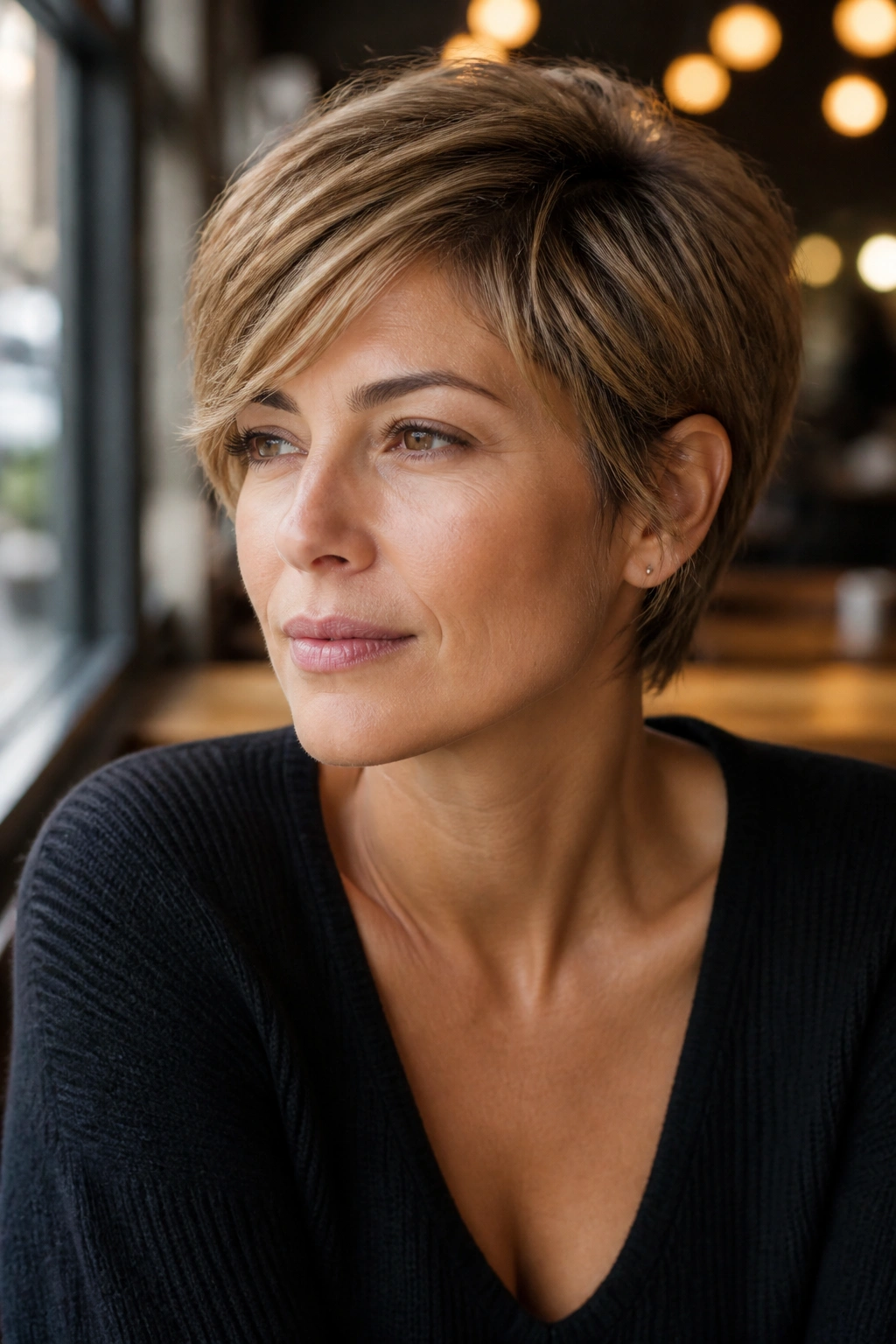
A feathered long pixie is one of the safest bets for a square face because it never sits still in one hard shape. The longer layers skim the cheekbones, and that softens the jaw without making the haircut feel fussy.
What I like about this cut is that it gives you options. Wear it tucked behind the ear on one side, push it forward on a bad hair day, or add a little bend with a flat iron for a more polished finish. The cut does the work, which is nice, because styling shouldn’t feel like a second job.
It also plays well with thicker hair. The feathered ends remove bulk, so the top doesn’t turn into a helmet. Ask for the layers to be cut with a razor or point-cutting so the edge stays broken up, not choppy in an aggressive way.
This is a good cut if you want a pixie that feels feminine, but not precious. It’s easy to grow out, too.
3. Choppy Crown Pixie
Why does a choppy crown help a square face so much? Because the eye goes upward before it goes outward. That little bit of height at the top makes the face look longer, and the broken texture keeps the style from feeling too geometric.
The key is restraint. You want visible texture, not little spikes standing in every direction. A square face already has strong lines, so the crown should look airy, not sharp.
How to wear it
Work a pea-sized amount of matte paste through dry hair, then pinch up only the top layer. Leave the sides softer and flatter. That contrast is what makes the cut look intentional instead of overdone.
- Ask for short, piecey layers at the crown.
- Keep the nape neat so the cut doesn’t spread out too much.
- Skip heavy gel; it can make the texture look stiff.
- Trim every 5 to 6 weeks if you want the choppy shape to stay crisp.
Best for: someone who likes a little edge but still wants the face to look softer, not harsher.
4. Tapered Pixie with a Longer Top
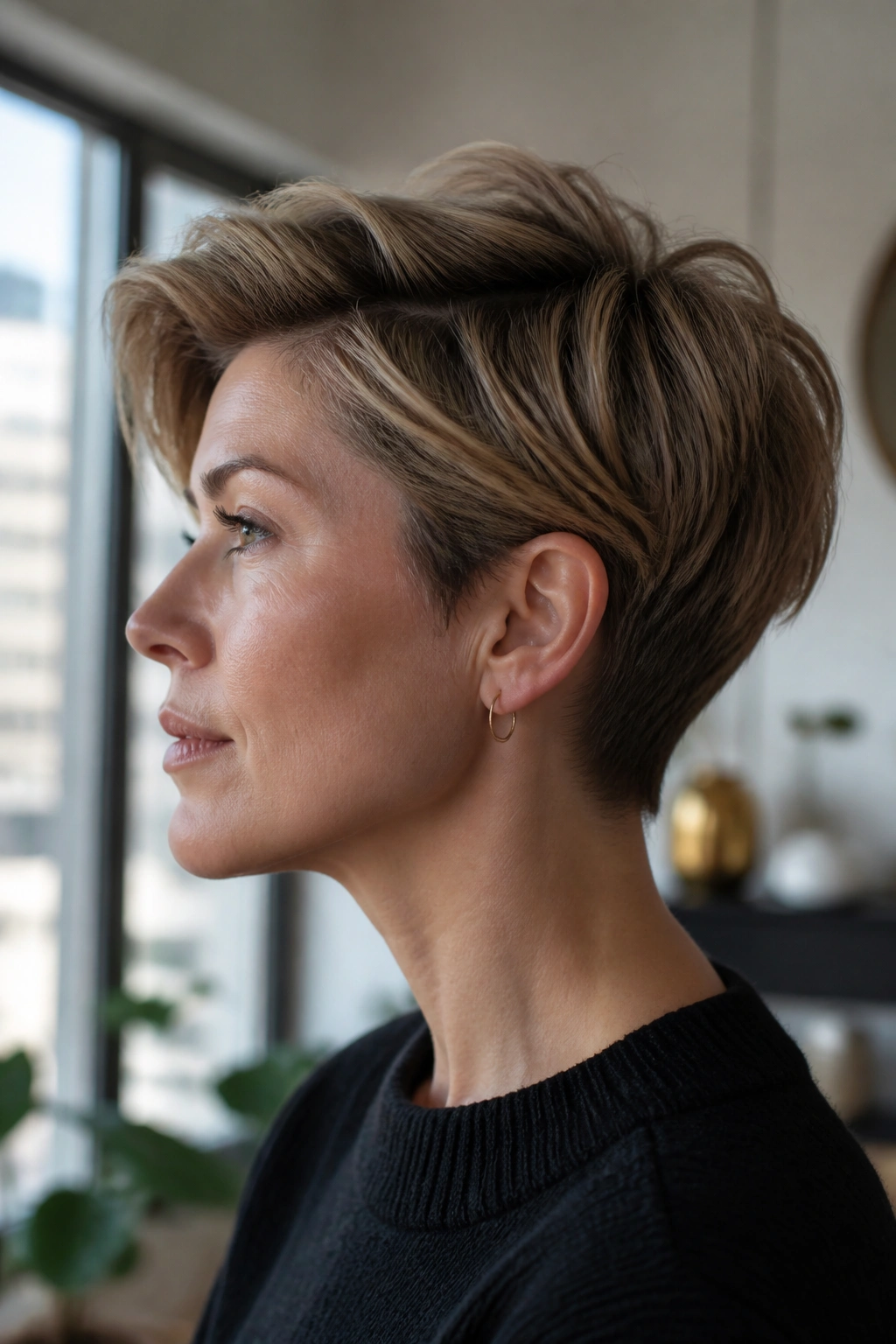
Picture a cut that starts neat at the nape, then opens up on top with enough length to flip, bend, or sweep. That shape works because it lets the square face keep its strength while stealing some attention for the crown and forehead.
The tapered back keeps the style clean. The longer top gives you movement. That combination is useful if your hair is thick, because the taper removes bulk where you do not want it and leaves length where you do.
What to ask for
- A tight taper at the neckline.
- Length through the top, usually around 3 to 5 inches depending on texture.
- Soft side layers that do not stop right at the jaw.
- A little disconnection between top and sides so the cut doesn’t look helmet-like.
The shape is especially good if you wear glasses. The longer top keeps the look modern, and the clean nape stops the style from feeling crowded around the face.
5. Curly Halo Pixie
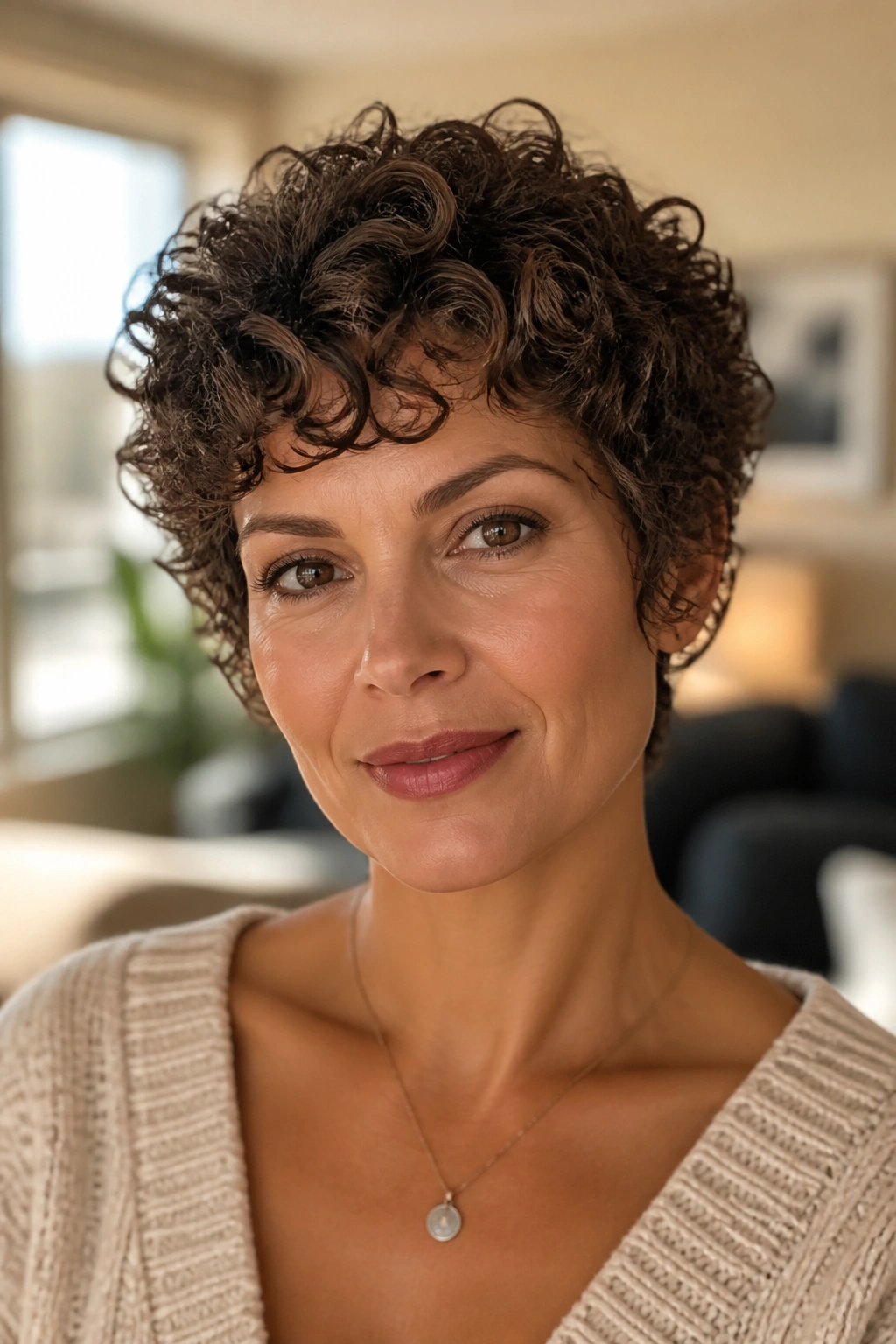
Curly hair can do something straight hair cannot: it naturally breaks up hard facial lines. On a square face, that softness is gold. A curly halo pixie creates movement around the temples and cheekbones, which makes the jaw feel less dominant without hiding it.
The danger is over-thinning. Too much carving can leave curly pixies frizzy and wide at the wrong points. I prefer a cut that respects the curl pattern, then lets the curls form a loose frame around the face. You want a halo, not a puffball.
A diffuser helps, but technique matters more than tools. Use curl cream on soaking-wet hair, scrunch gently, then dry on low heat until the curls feel set but still touchable. Let the shape live a little. Curly pixies look best when they are not forced into perfect symmetry.
One more thing: leave a touch more length near the sideburns. That tiny bit of weight keeps the jawline from feeling too exposed.
6. Asymmetrical Pixie Bob

A pixie bob is the middle ground for people who like short hair but do not want a super cropped feel. On a square face, the asymmetry is the point. One side can skim the cheekbone while the other sits shorter and tighter, which breaks up the face shape in a way that feels modern rather than severe.
Unlike a classic boyish pixie, this cut gives you a little drag of length around the front. That matters. A square face rarely needs more width at the sides; it needs lines that move.
The best version keeps the longer side soft, not blunt. If the front ends at one hard point, the whole thing can lock back into that boxy look you were trying to avoid. The trick is to let the ends feather slightly so the longer side bends around the cheek rather than slicing straight across it.
It’s a good cut if you want something between short and medium, or if you are growing out a shorter crop and need shape before you commit to a bob.
7. Undercut Pixie for Square Faces
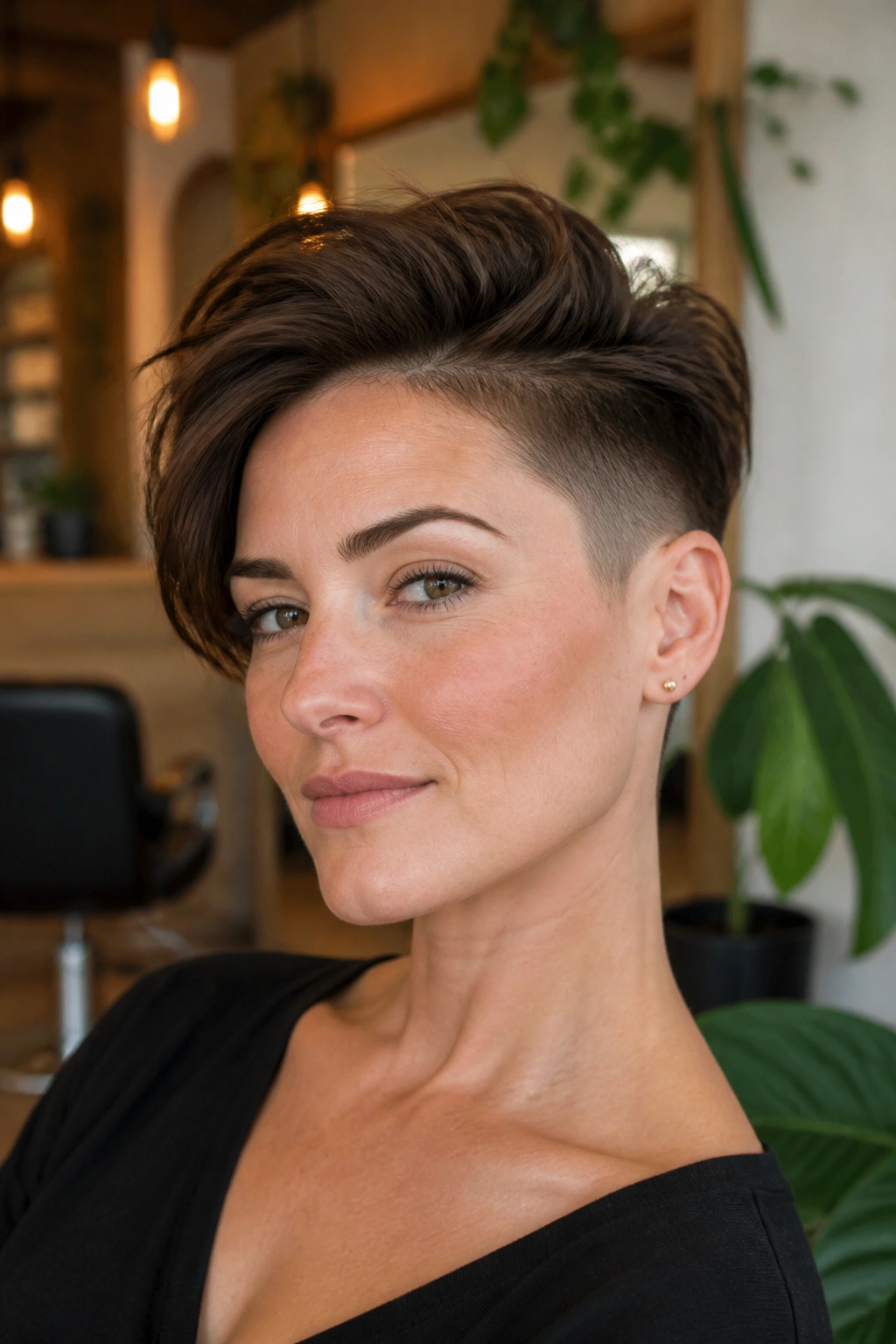
A pixie with an undercut sounds sharp on paper, and it can be. But the shape can still be soft if the top is airy and the front is not cut into a hard line. The short sides reduce width where a square face does not need it, while the longer top gives the eye somewhere else to go.
What keeps it from looking severe
The undercut should disappear into the style, not announce itself from across the room. That means a clean taper at the sides and nape, plus enough top length to fall over the shorter areas when you want softness.
- Keep the top around 3 to 4.5 inches if you want styling freedom.
- Ask for a soft fade or close taper, not a skin-tight block unless you want drama.
- Style the top with a light mousse or pomade so it moves.
- Leave a little length at the front hairline to soften the forehead.
Best use: thick hair that gets bulky on the sides. The undercut removes weight fast, and that can make a square face look cleaner, not harsher.
8. French Crop Pixie with Wispy Bangs
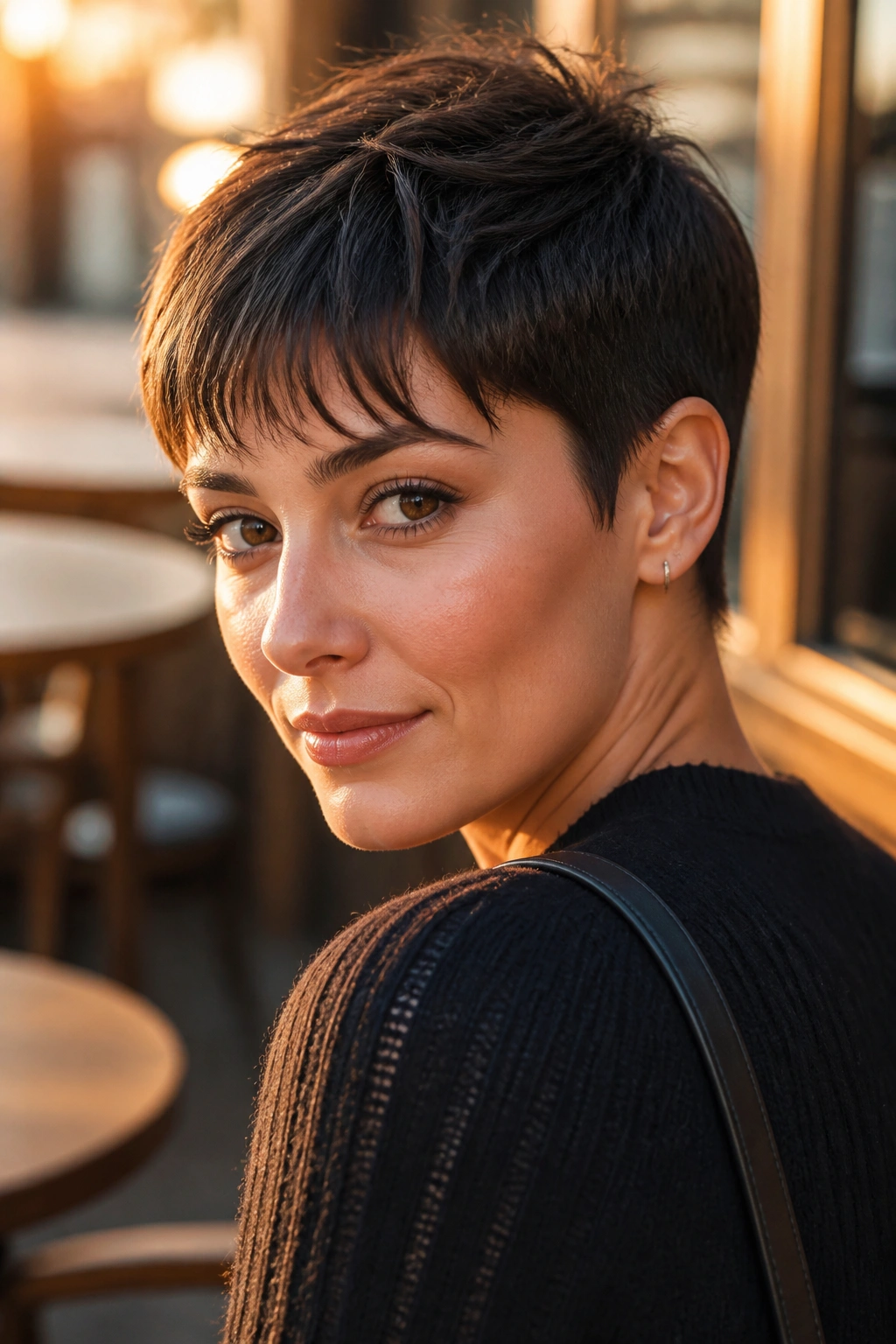
A heavy fringe is the wrong instinct here. It can shorten the face and box in the forehead, which is the last thing a square shape needs. Wispy bangs do the opposite. They break the line just enough to soften the upper face without hiding it.
The French crop version works well because it keeps the cut close to the head but not flat. The fringe sits light, almost broken at the ends, while the rest of the cut stays tidy. That contrast gives the haircut character without adding width.
Use texturizing shears on the fringe if your stylist likes them. You want the ends to look airy, not chopped into little teeth. And if your hair is dense, ask for internal thinning through the top so the bangs don’t collapse into a heavy strip by noon.
This is one of the better choices if you like a clean, slightly cool look that still flatters square features.
9. Razor-Cut Shaggy Pixie
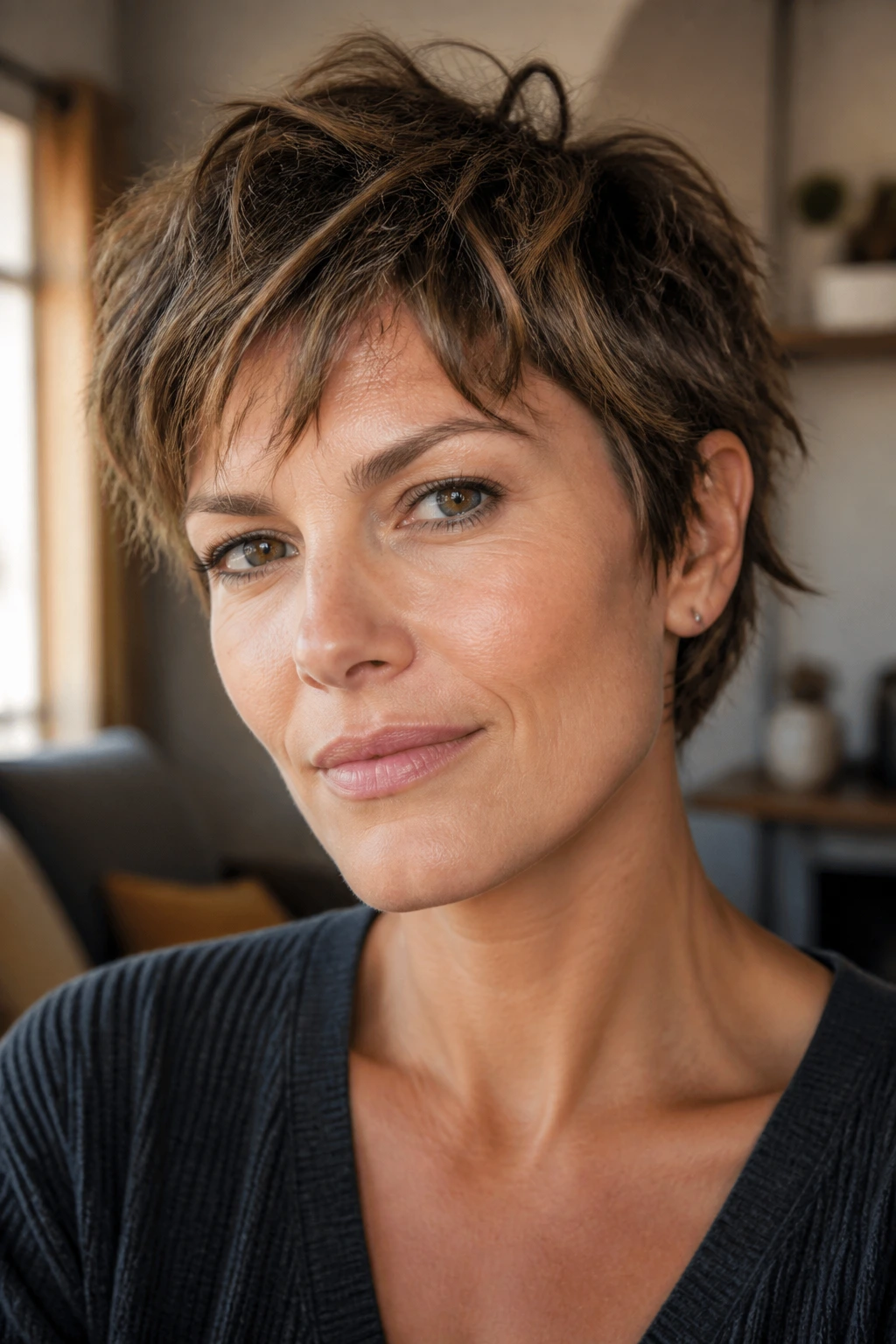
Why does a razor-cut pixie work so well on square faces? Because the razor takes the hard edge off the haircut itself. The ends get softer, a little wispy, and less exact, which matters when the face already has strong corners.
I like this cut on straight or wavy hair that tends to sit too neatly. A razor slice creates movement that scissors sometimes miss. It also keeps the top from feeling stiff, which is handy if you want a more lived-in look.
How to use it
Use a small amount of styling cream through damp hair, then rough-dry with your fingers. Once it’s dry, pinch the ends lightly with wax. Don’t build a perfect shape. That would defeat the point.
This cut can look fantastic with a side part or a half-tucked front piece. It is not the best option if your hair is already fragile or highly split at the ends, because the razor can make damaged hair look frayed. Healthy ends make the difference here.
10. Swept-Back Glam Pixie
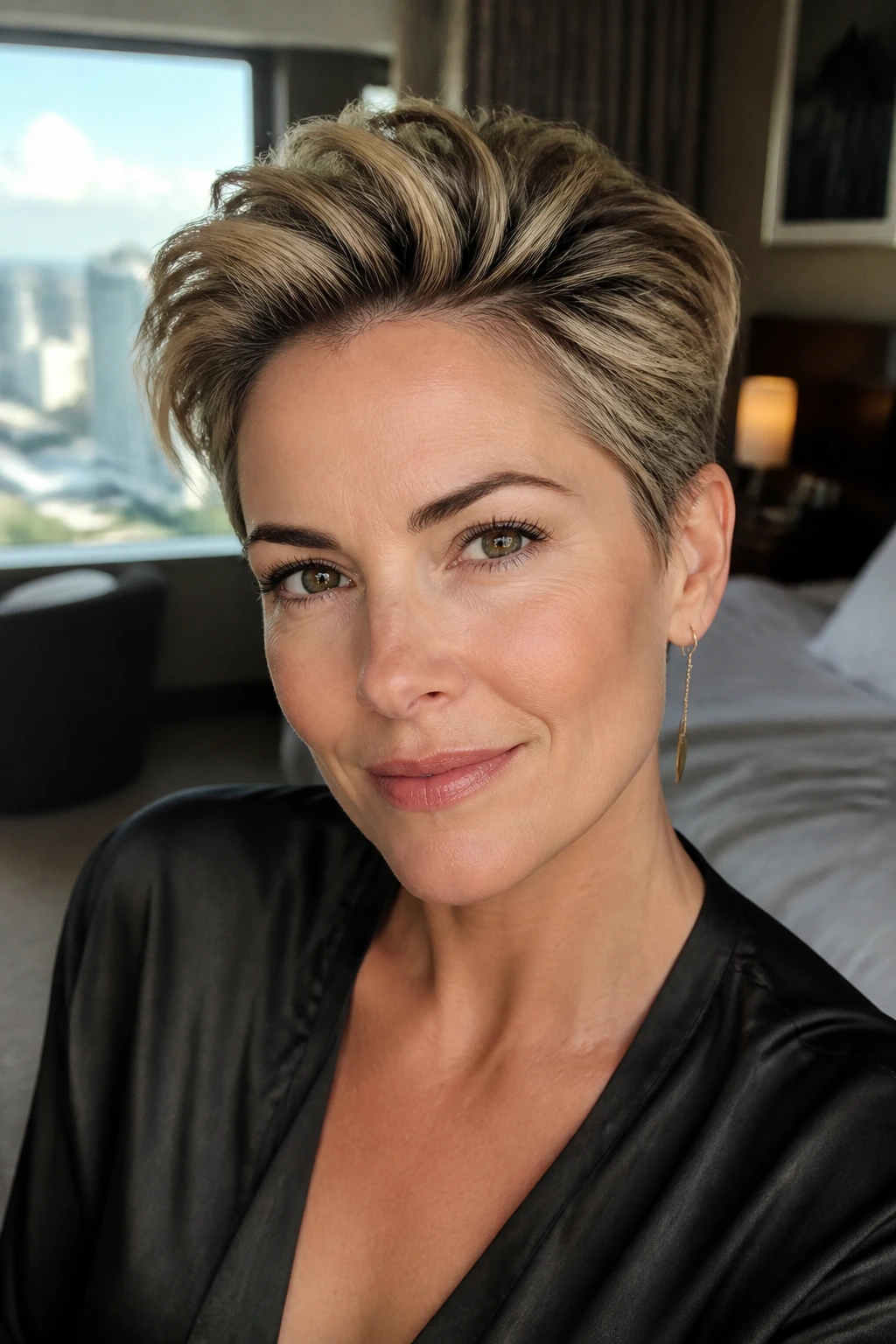
A swept-back pixie has a little old-Hollywood energy, and on a square face it does something smart: it keeps the front open while adding height at the crown. That vertical lift helps lengthen the face, and the swept-back shape shows off the cheekbones instead of fighting them.
The cut works best when the top has enough length to brush backward without sticking up like a tuft. You want polished, not helmet-slick. A bit of movement at the front keeps the style from looking too stern.
Styling notes
- Blow-dry the front up and back with a round brush.
- Use a light-hold mousse before drying for lift.
- Finish with a small amount of shine cream on the ends only.
- Keep the sides soft so the style does not widen at the jaw.
This is a good cut if you like dressing up, wearing earrings, or leaning into a sharper wardrobe. It has presence. A lot of it.
11. Bixie-Inspired Pixie
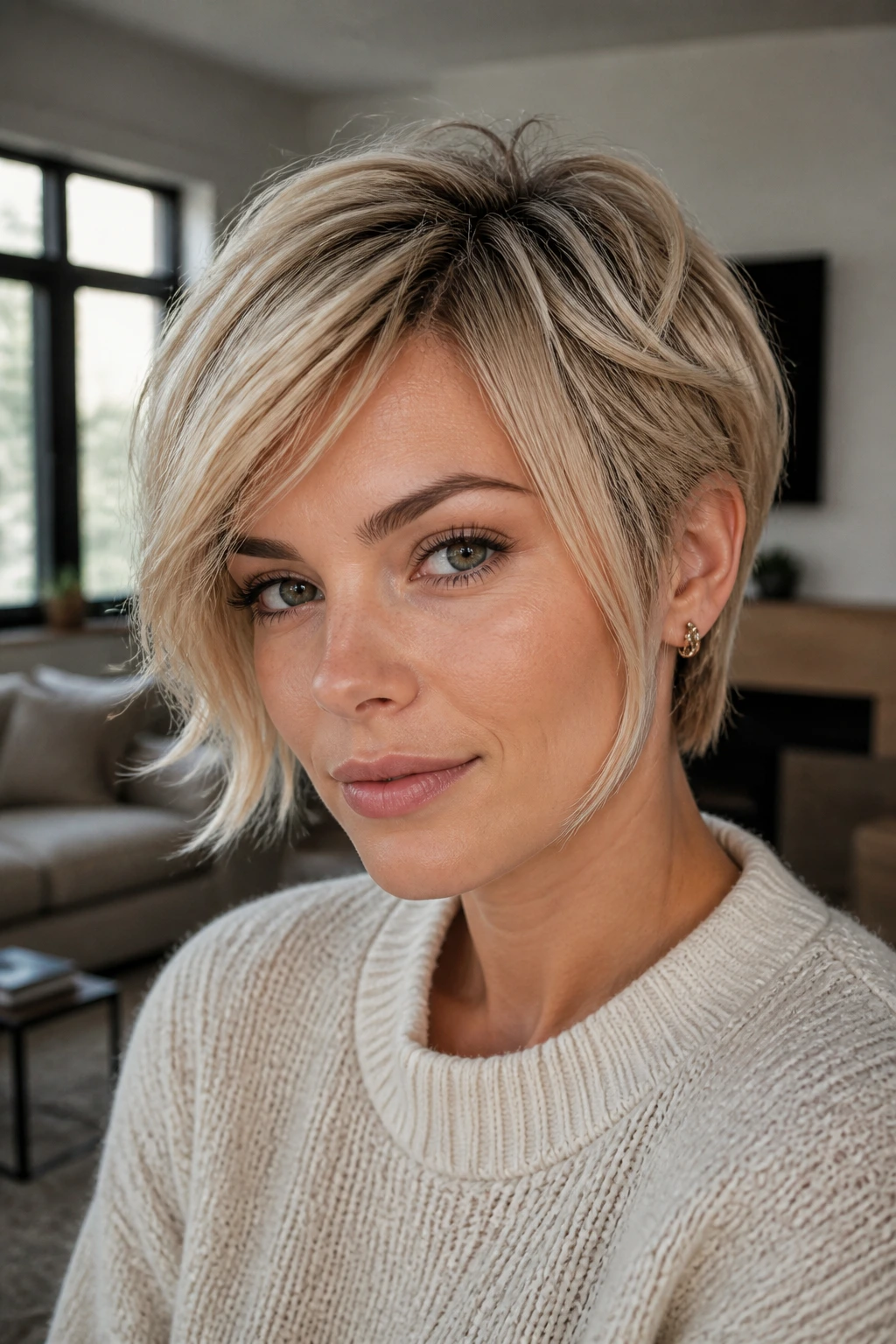
A bixie sits between a pixie and a bob, and that middle zone is surprisingly useful on square faces. The extra length around the sides and cheekbones softens the outline, while the cropped back keeps the haircut from looking heavy.
I reach for this shape when someone wants short hair but hates the feeling of being fully cropped. The longer front pieces can fall near the cheekbone or just below it, which helps break up the square jawline without drawing a hard border around it.
There is also a practical upside. A bixie grows out better than a strict pixie. If you miss a trim by a couple of weeks, it still reads as a style, not a mistake. That alone makes it appealing to people who want short hair without constant salon upkeep.
Ask for soft layering through the top and sides, not blunt underlayers. The more the pieces move independently, the better it sits on a square face.
12. Nape-Tapered Textured Pixie
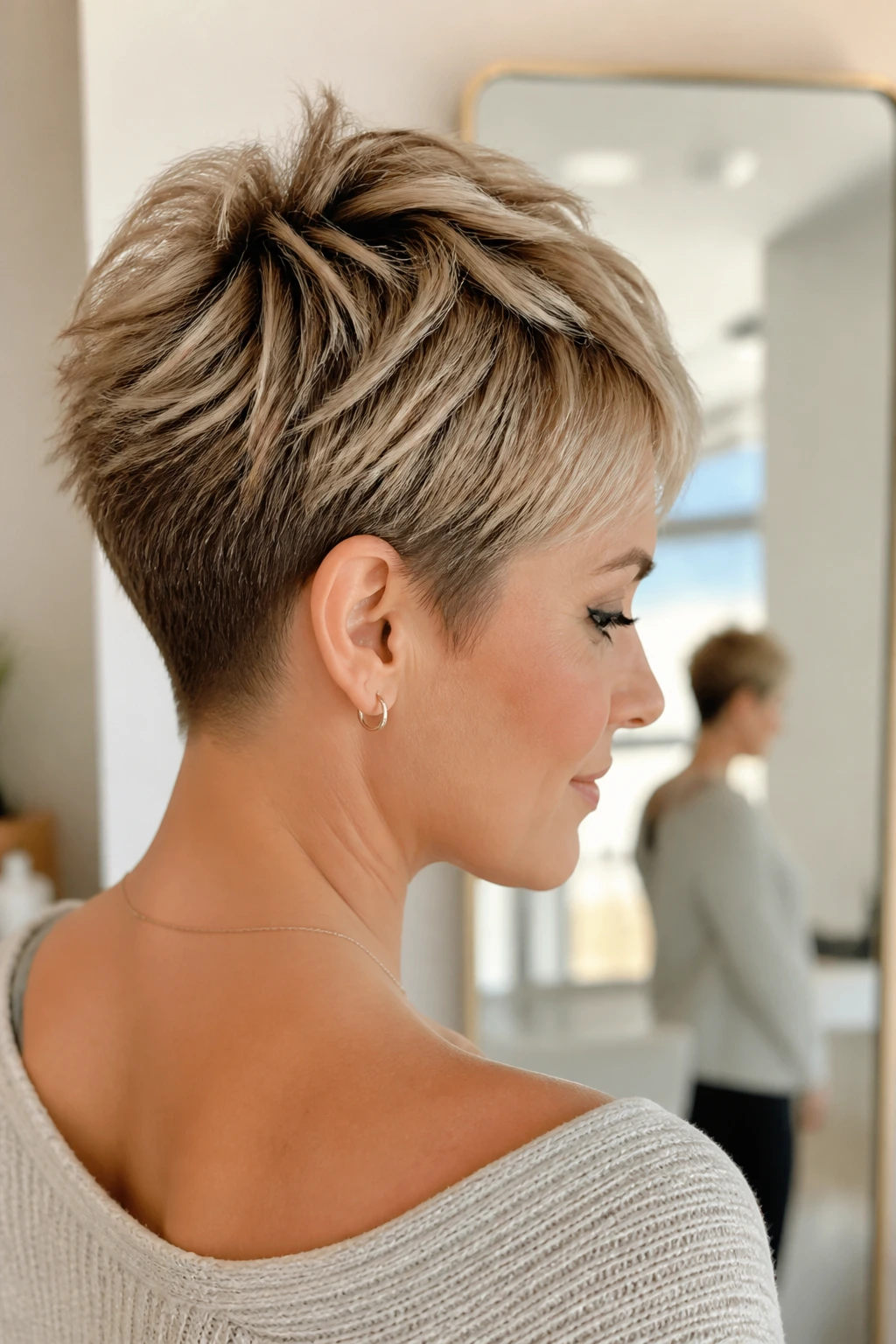
Unlike a one-length crop, this version gets slimmer where the head naturally narrows. The nape taper keeps the back neat, while the textured top prevents the haircut from looking flat or boxy. For square faces, that shape control is a big deal.
The reason it works is simple: it removes bulk at the neck and gives the upper half of the style a little lift. A square face often looks best when the haircut feels lighter around the perimeter. You do not need the style to hug the jaw. You want it to hover above it.
This is a good option for thick or coarse hair, because the taper cuts the shape down without leaving holes. If your hair is fine, keep the texture soft and avoid over-layering, or the pixie can start to look sparse at the crown.
It’s one of those cuts that looks clean from every angle. From the front, it frames. From the side, it lifts. From the back, it stays neat. Useful. No drama.
13. Soft Mullet Pixie
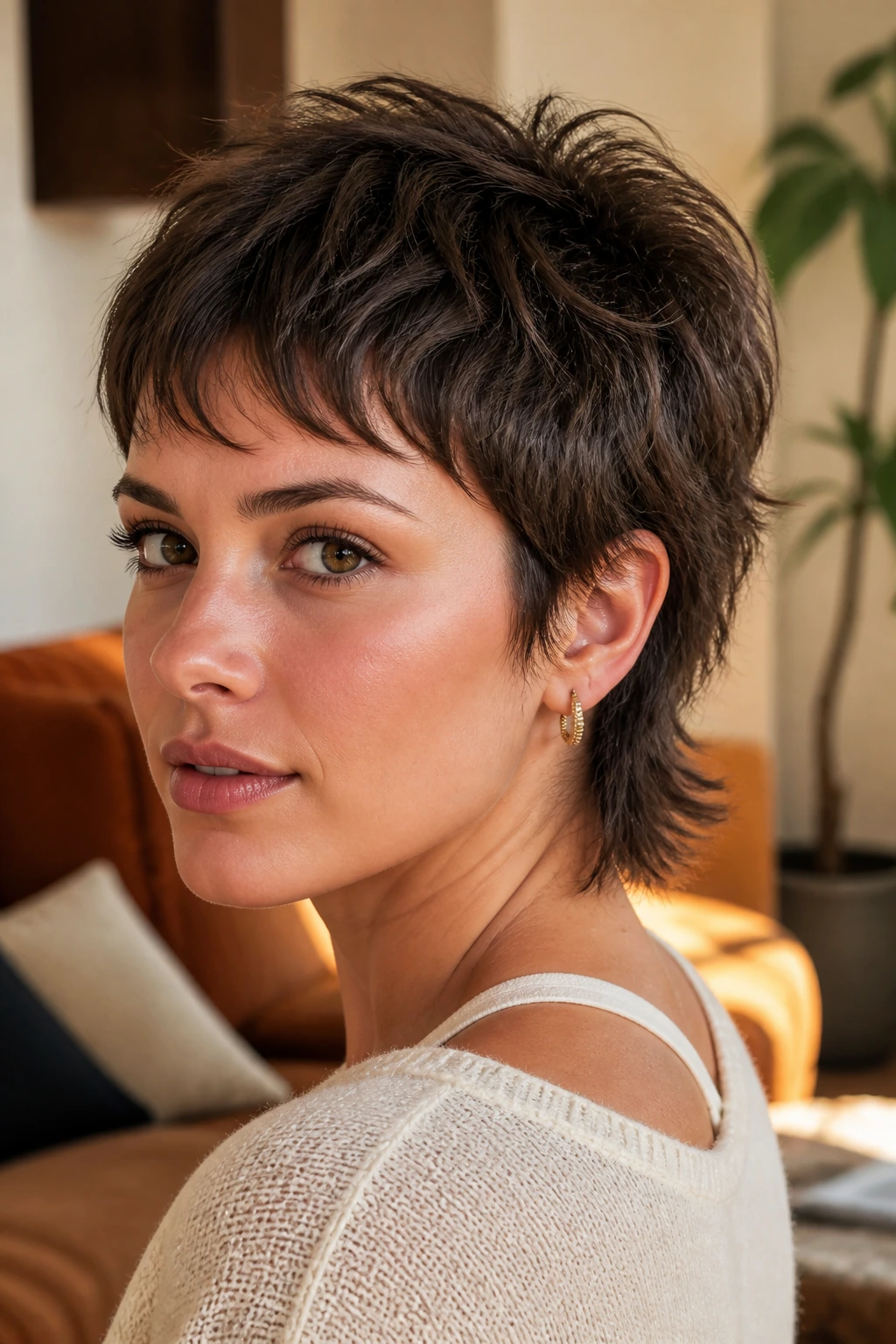
The words sound a little rebellious, but a soft mullet pixie can flatter a square face beautifully if the transition is gentle. The front stays short and light, the crown gets texture, and the back hangs a touch longer so the silhouette doesn’t stop at the same place all around.
Why it softens a square face
The longer back pulls the eye downward, which helps counter a strong jaw. The piecey front keeps the top from feeling heavy. The whole cut lives in motion.
- Keep the front pieces wispy, not blunt.
- Ask for a soft graduation from crown to nape.
- Leave the back just long enough to brush the upper neck.
- Style with a matte paste so the texture stays separated.
This is not the cut for someone who wants tidy and classic. It is for someone who likes shape with a little attitude. And on a square face, that attitude can be a nice thing.
14. Ear-Tucked Pixie with Long Sideburns
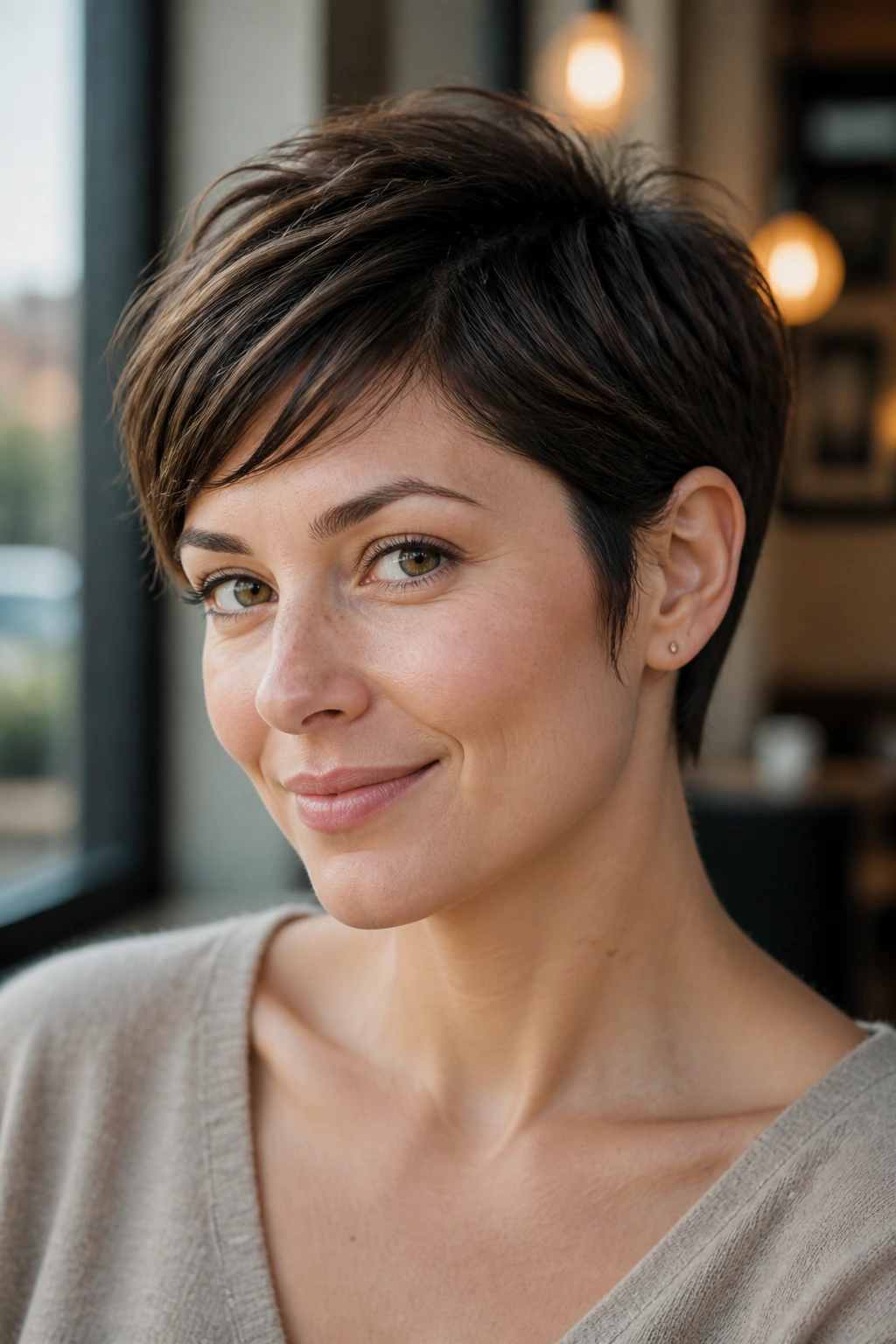
Sideburns matter more than most people admit. On a square face, a longer sideburn softens the line between cheek and jaw, especially when the rest of the cut is tucked behind the ear. That tiny strip of length can change the whole read of the haircut.
The ear-tucked look also shows off the face in a clean way. It opens the cheekbones and gives the style a neat, intentional finish. But the long sideburns keep it from going too hard. Without them, the cut can start to feel severe.
I like this shape for straight hair or loose waves. It’s easy to style, and it looks even better when it is slightly imperfect. Let a few pieces fall forward. Don’t pin everything back into submission.
If your jawline is especially strong, keep the sideburns tapered into a soft point instead of a blunt end. Small detail. Big payoff.
15. Sleek Side-Part Pixie
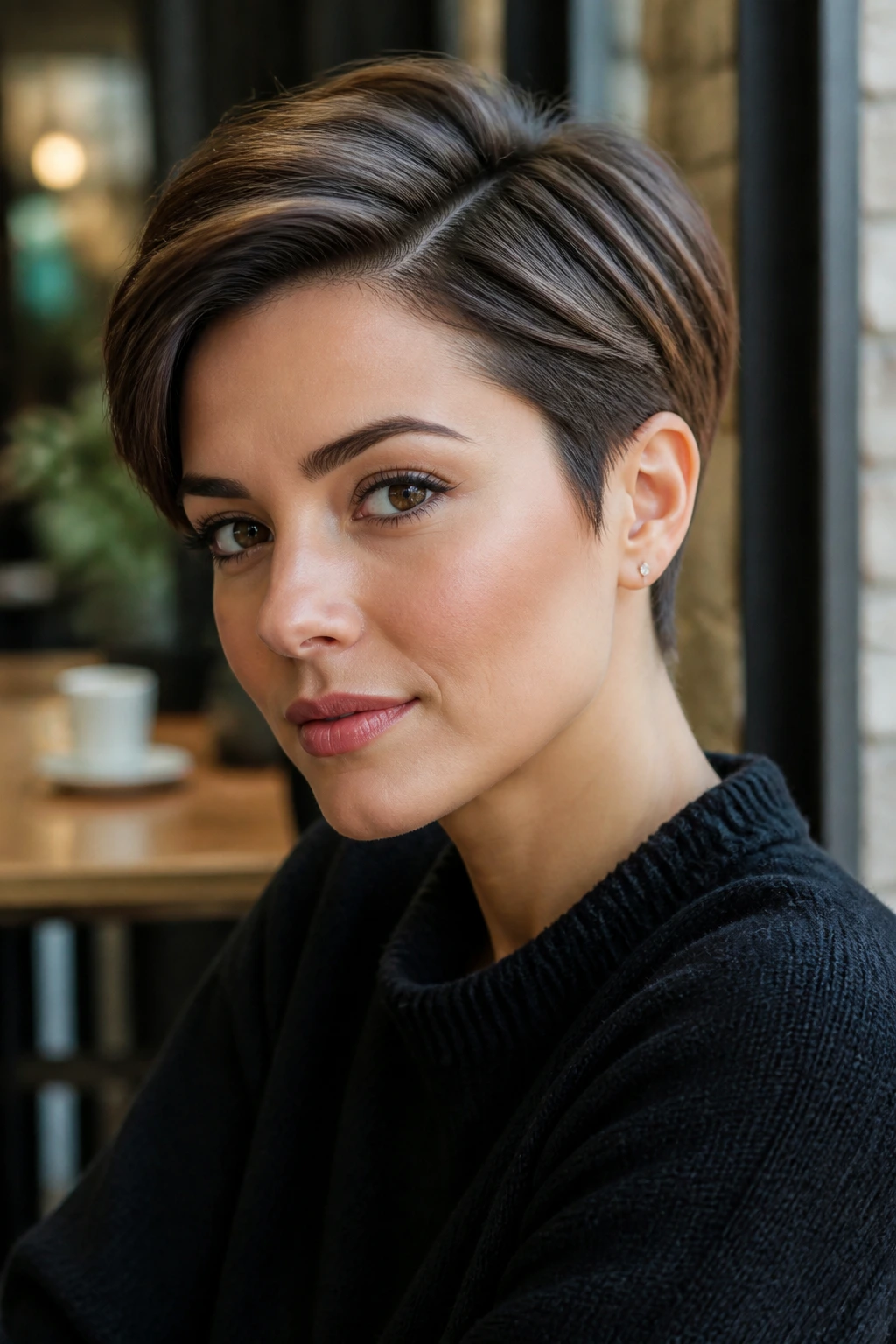
Can a sleek pixie work on a square face? Yes, if the part and the finish are doing the right jobs. A hard middle part usually brings too much attention to symmetry. A deep or slightly off-center part cuts across the shape and makes the face feel longer.
The trick is not to flatten the hair so much that it loses life. A polished pixie still needs some curve near the temples and a little lift through the front. Otherwise it can go from sleek to severe in one step.
How to style the finish
Use a smoothing cream on damp hair, then blow-dry with a small brush directing the front across the forehead. Finish with a light mist of flexible hairspray, not helmet spray.
- Part the hair while it is damp.
- Keep the front moving sideways, not straight down.
- Smooth the sides close to the head, but leave the ends soft.
- Add a touch of shine only at the top layer.
This cut suits people who like crisp clothes, clean lines, and not much fluff in the mirror.
16. Spiky Soft-Edged Pixie
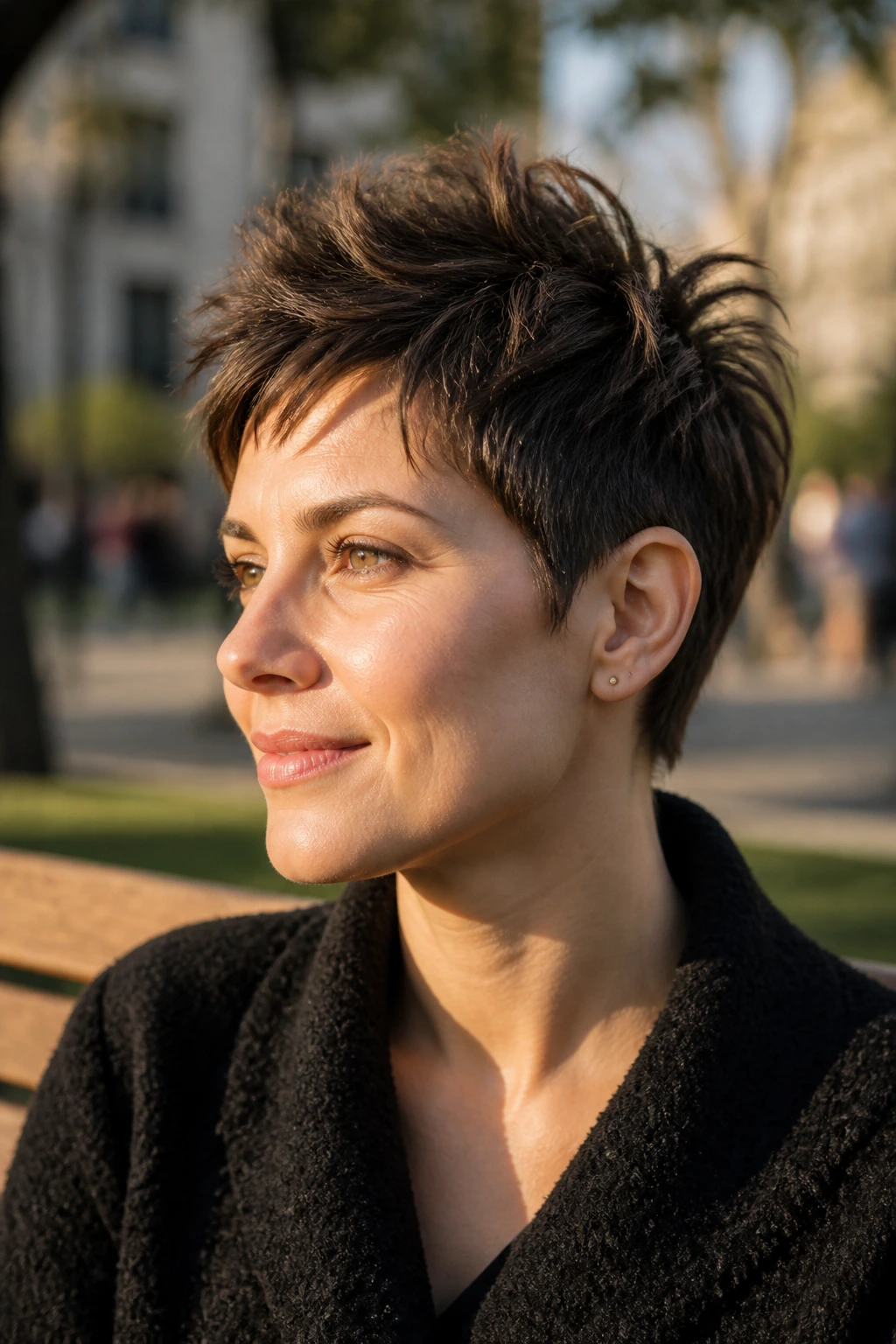
The word “spiky” can scare people off, but this is not a throwback to stiff, gelled-up tips. A soft-edged spiky pixie uses tiny bits of lift to keep the top alive while the sides stay calm. That works well on square faces because it adds height without widening the face.
Picture a cut that looks a little playful from the front and more controlled from the side. That’s the sweet spot. Too much spike and the style starts to feel cartoonish. Too little and it turns into an ordinary crop.
A pea-sized amount of matte wax is enough for most hair lengths here. Warm it between your fingers, then pinch only the ends of the top layer. Leave the base untouched so the style can still move.
This cut is especially good if you like low-maintenance styling with a bit of attitude. It doesn’t need perfection. That’s part of its charm.
17. Rounded Crown Pixie
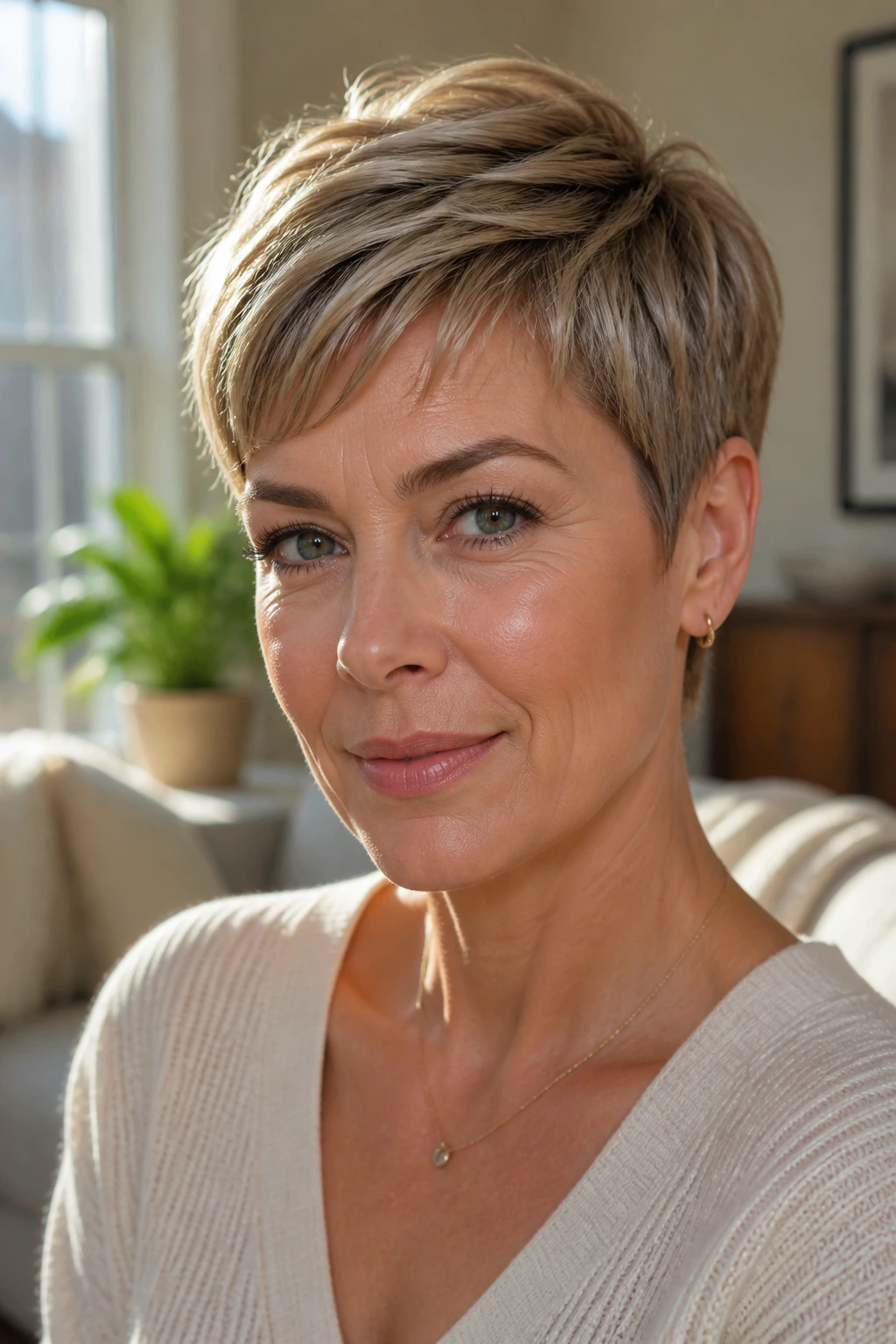
A rounded crown softens a square face in a way that feels almost sneaky. The height stays controlled, but the top curves instead of standing rigidly upright, so the face looks less angular and more balanced. The silhouette matters here more than any single strand.
I like this cut on straight hair, because straight strands can sometimes look too sharp when cropped short. A rounded crown blunts that effect. It gives the top a gentle dome without making the whole haircut puff out.
That said, the sides need to stay slim. If the crown is round and the sides are wide, the head can look broader than you want. The shape has to be managed from top to bottom, not just teased into place and left alone.
Use a round brush or a large vent brush while blow-drying, lifting only at the roots. Then smooth the ends with your fingers. That keeps the curve soft instead of bubble-like.
18. Curved Fringe Pixie
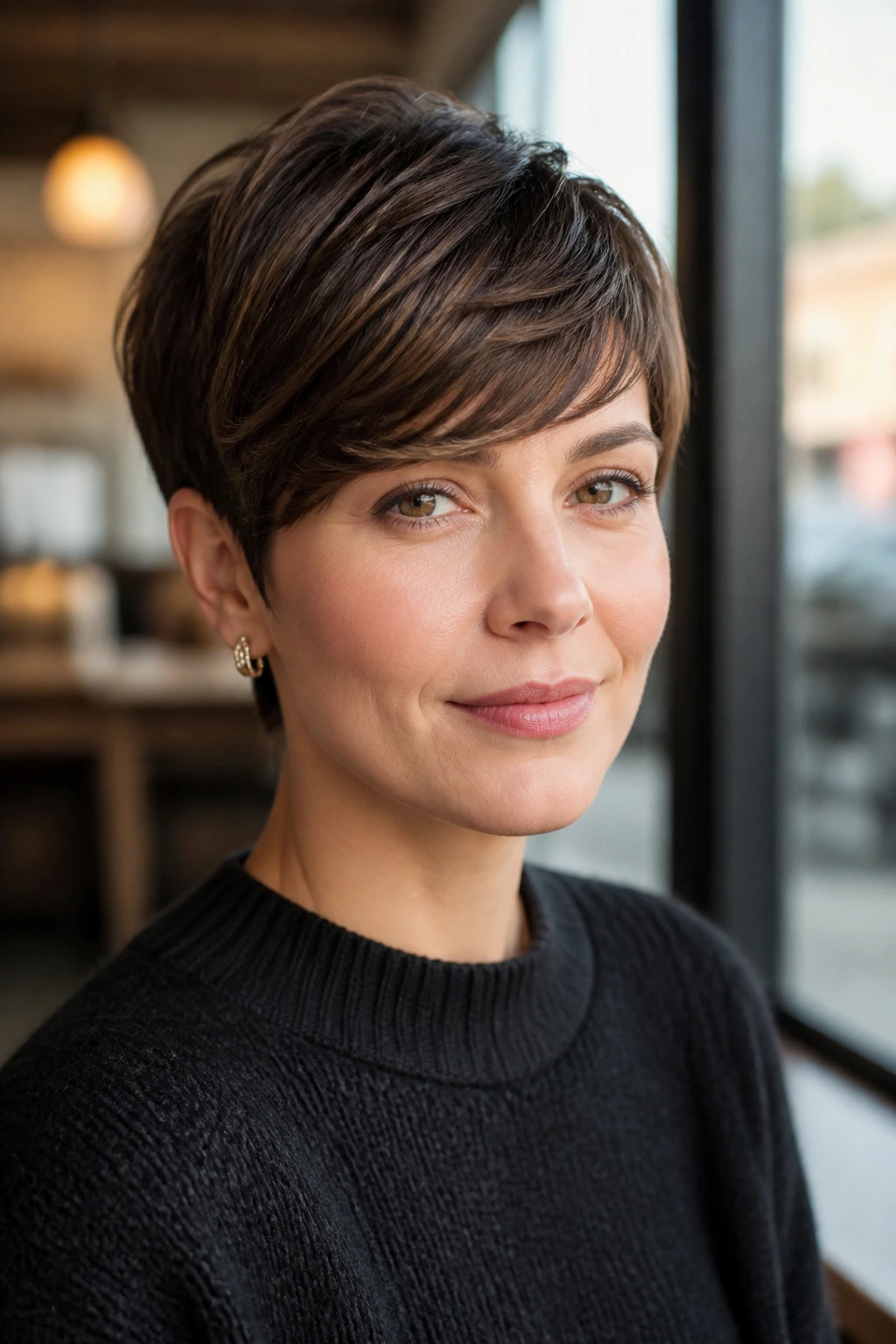
Unlike a blunt fringe, a curved fringe bends around the forehead and eases the transition into the rest of the cut. On a square face, that matters because a straight horizontal line can make the upper face look boxier than it is.
The curve does not need to be dramatic. In fact, a slight arc is usually enough. You want the shortest part to sit near the center or just off-center, then let the sides lengthen gradually toward the temples. That little sweep keeps the forehead open without drawing a hard border across it.
This is a good choice if your brow line is strong and you like your hair to frame the face rather than disappear from it. The fringe can be worn piecey, brushed down, or nudged to one side depending on the day.
It also pairs nicely with textured sides. The curve at the front and the softness around the temples make a square face look less square without losing its structure.
19. Wet-Look Pixie
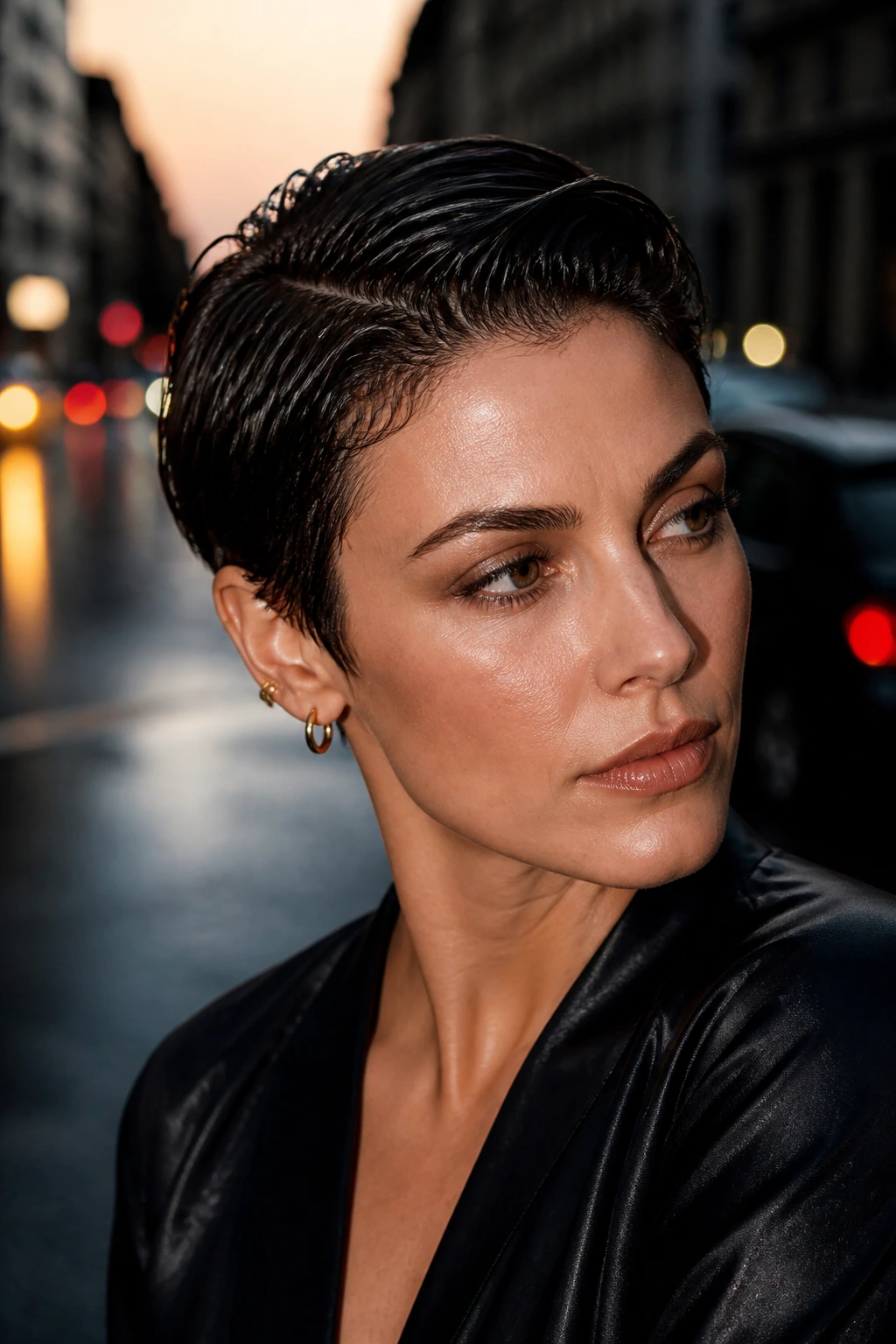
A wet-look pixie is not subtle, and that is the point. The shine and control pull the eye to the texture of the hair instead of the width of the face. On square faces, a slick finish can actually be flattering because it shows the cheekbones and jaw in a cleaner, more deliberate way.
Why the finish matters
The product placement is everything. Too much gel at the roots and the hair looks glued down. A little shine through the surface and you get that sculpted, glossy effect people usually want from this cut.
- Work gel or styling cream through damp, not dripping hair.
- Comb the front into a soft side part or back from the forehead.
- Leave a few ends looser so the style doesn’t look rigid.
- Use a medium-hold product if your hair is fine; stronger hold if it is thick.
This cut is best when you want drama without extra length. It’s sharp, but not harsh if the part is slightly off-center and the sides are kept close.
20. Air-Dry Wavy Pixie
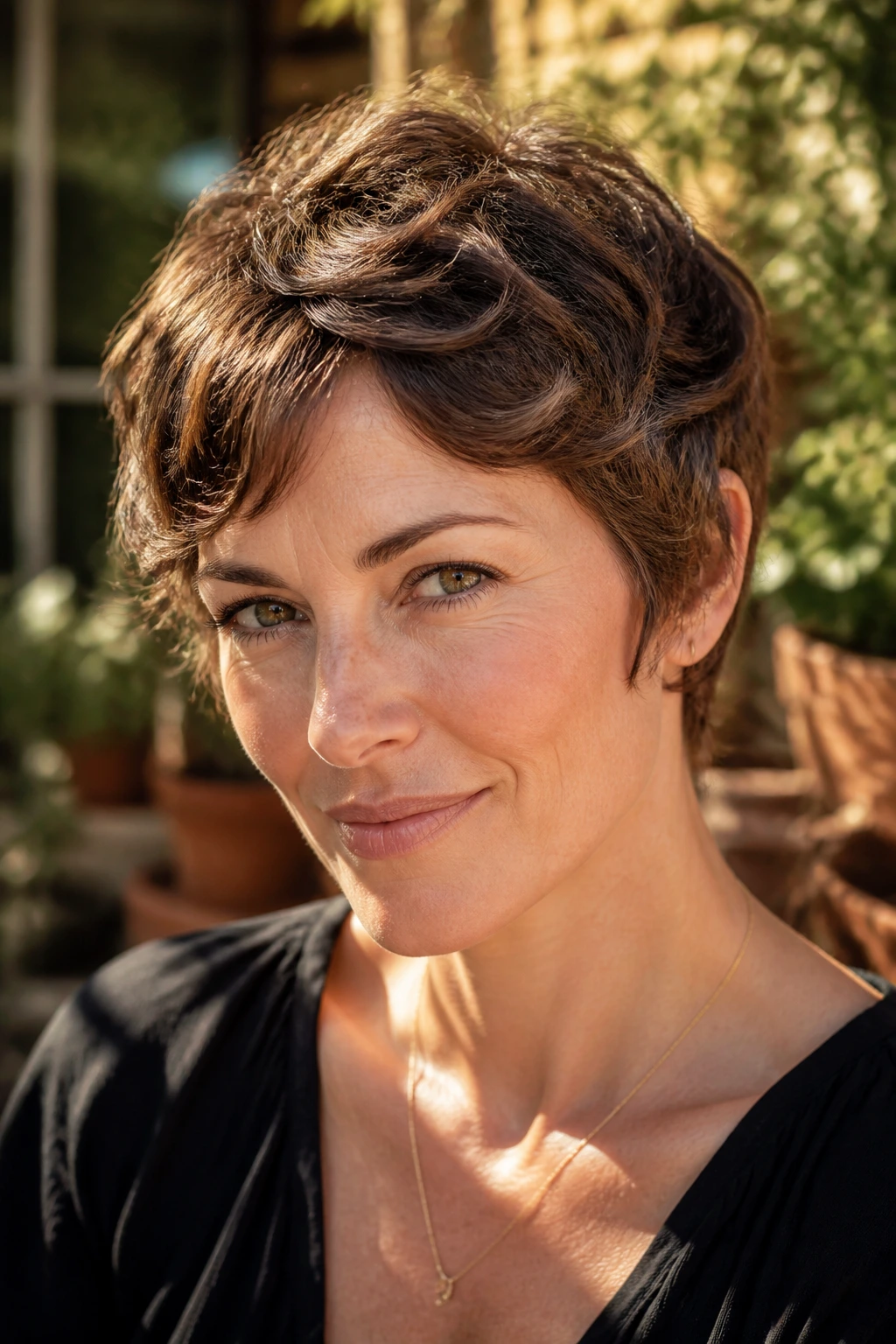
The easiest pixie to live with is often the one that respects your natural wave. A wavy pixie lets square faces keep softness around the jaw while avoiding the flat, boxy look that can happen when a cut is forced into submission.
The best part is how little you need to do. A light curl cream or mousse, a quick scrunch, and then leave it alone. If you keep touching it while it dries, the wave breaks up and the shape gets fuzzy in the wrong way. Hands off helps.
This style works because the wave creates tiny bends around the temples and cheekbones. Those bends are what interrupt the hard lines of a square face. Straight hair can mimic the effect, but natural wave does it with less effort.
Don’t over-cut the ends. A touch of length at the front gives the style somewhere to fall, and that softness is half the appeal.
21. Color-Piece Pixie
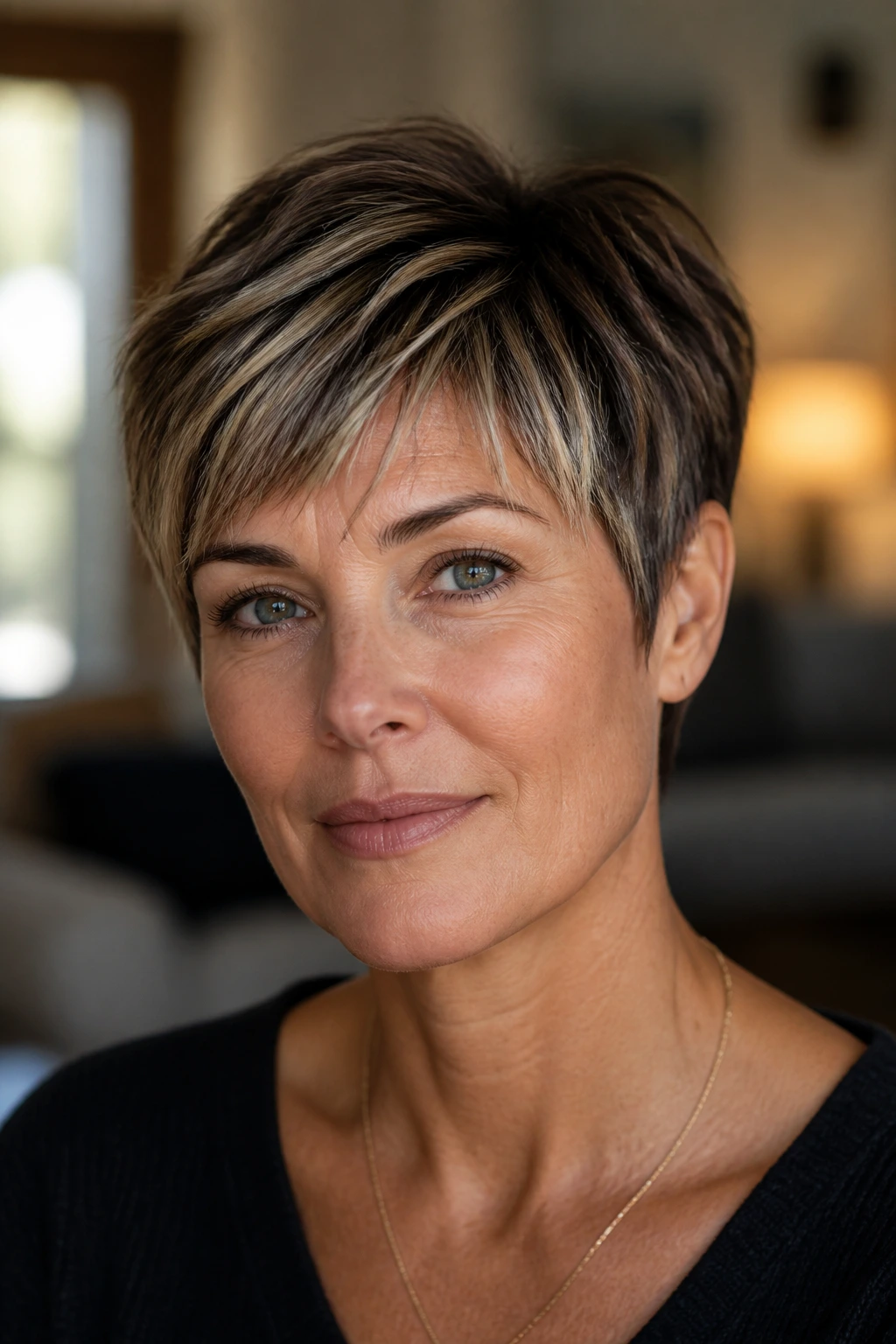
Can color change how a pixie reads on a square face? Absolutely. A few well-placed lighter pieces can soften the outline by drawing attention upward and inward, away from the outer edges of the jaw.
I’m not talking about chunky streaks. Those can look dated fast. Better to place subtle brightness around the fringe, temples, or crown so the haircut has movement even when the cut itself is short. On dark hair, a small amount of warmth near the front can be enough. On light hair, a few deeper lowlights can keep the shape from looking washed out.
Where to place it
Ask for lightness where the hair naturally catches the eye first: the front hairline, the top layer, and sometimes the ends near the cheekbone. That placement can make a square face look a little softer without changing the actual haircut.
This is a smart option if you already have a pixie you like but want it to feel fresher and less blunt.
22. Grown-Out Pixie with Face-Framing Bends
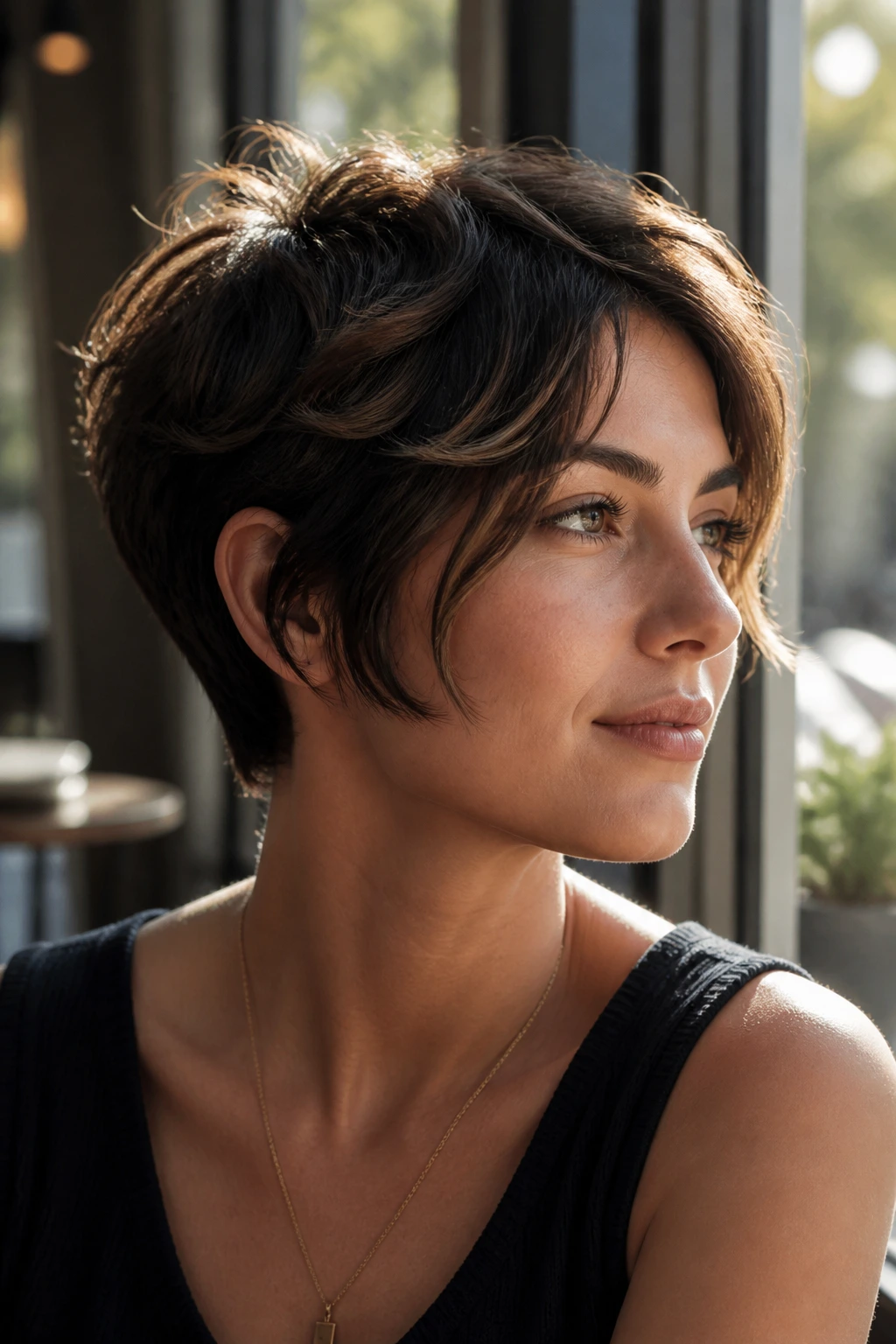
A grown-out pixie is not a compromise. When the front pieces get a little longer and bend around the face, the haircut can be even more flattering for square faces than a super short crop. The extra length near the cheeks softens the jaw and makes the whole look feel less clipped.
That slightly longer stage also gives you more room to play. You can tuck one side, sweep the fringe, or let the top fall forward in a loose curve. Those bends matter. They keep the shape from turning square again as it grows.
What to keep in place
- Ask for the front to stay a little longer than the sides.
- Keep the nape neat so the grow-out looks intentional.
- Use a small round brush or flat iron to bend the front pieces inward.
- Trim the ends every 6 to 8 weeks so the shape does not puff out.
This is the cut for people who want flexibility. It looks polished between appointments, and it gives square faces a softer outline without losing the short-hair feel.
Final Thoughts
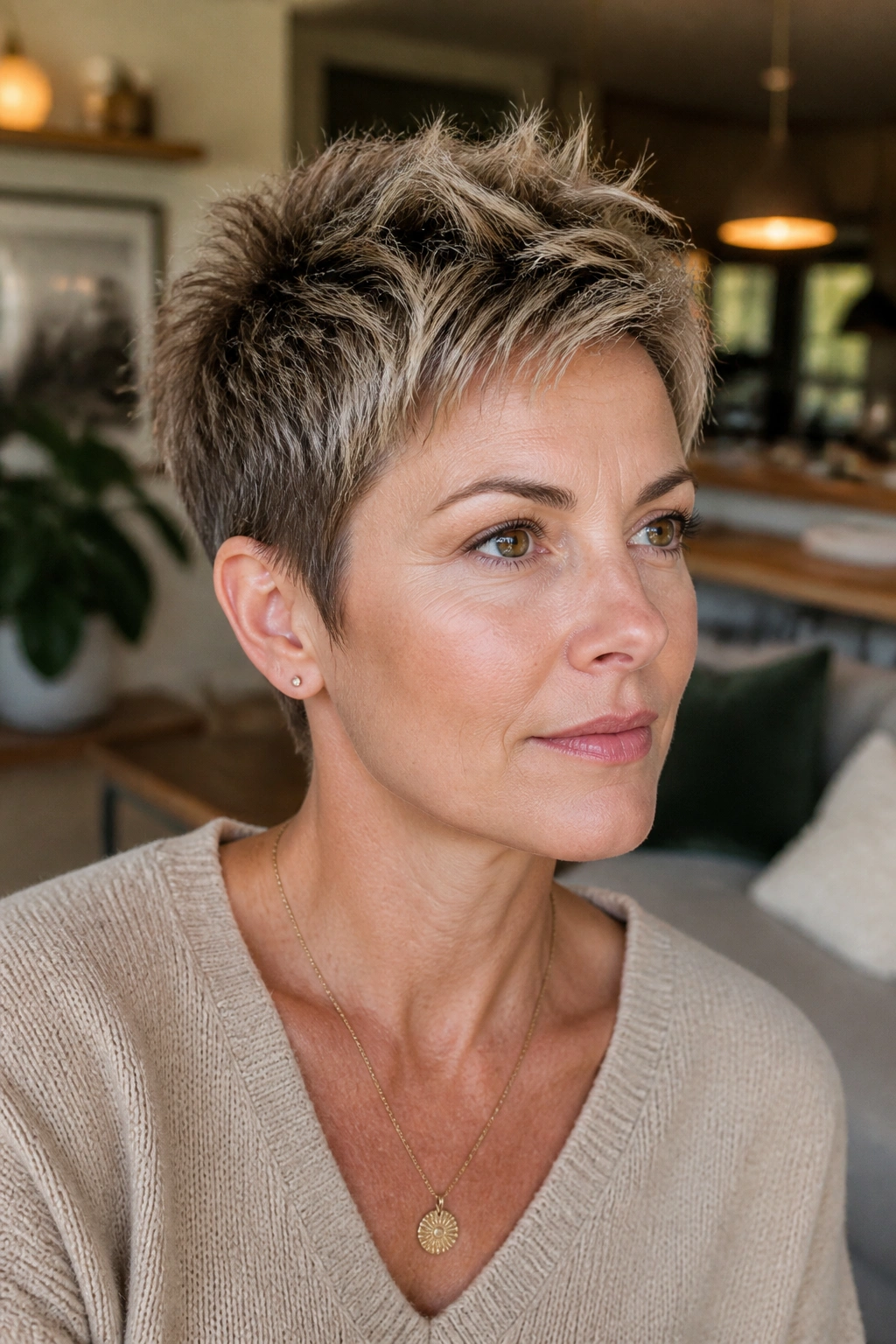
Square faces do not need to be hidden. They need a haircut that knows where to soften and where to stay clean. That usually means some mix of side-swept movement, broken texture, and a little height at the top.
The nicest pixie cuts for square faces are rarely the most obvious ones. They’re the cuts with a slight bend, a softer fringe, or one detail that keeps the geometry from getting too strict. If you bring photos to a stylist, bring two: one from the front and one from the side. That side view tells the real story.
