



Round faces and pixie cuts have a strange reputation. People act like short hair automatically makes the cheeks look wider, which is only half true and, frankly, not very helpful. The cut matters. A lot.
The best pixie cuts for round faces do a few very specific things: they build height at the crown, break up width with diagonal lines, and keep the sides soft instead of puffed out. That sounds technical, but you can see it in the mirror right away. A little lift near the roots, a longer fringe that falls across the forehead, and a tapered nape can change the whole feel of a cut.
What usually goes wrong is bluntness. A boxy, all-around-short pixie can sit like a helmet and make the face look wider at the cheek line. The fix is not “avoid pixies.” It’s choosing a shape that works with your bone structure instead of against it. Thick hair, fine hair, curls, coils, cowlicks — all of them can work, but they need different handling.
Most of these cuts also live or die by upkeep. If you want the silhouette to stay sharp, a trim every 4 to 6 weeks is the sweet spot for shorter versions, while longer pixies can stretch a little farther. That’s the part people skip, then wonder why the shape feels off. It’s not mystery. It’s growth.
1. Asymmetrical Pixie Cut for Round Faces
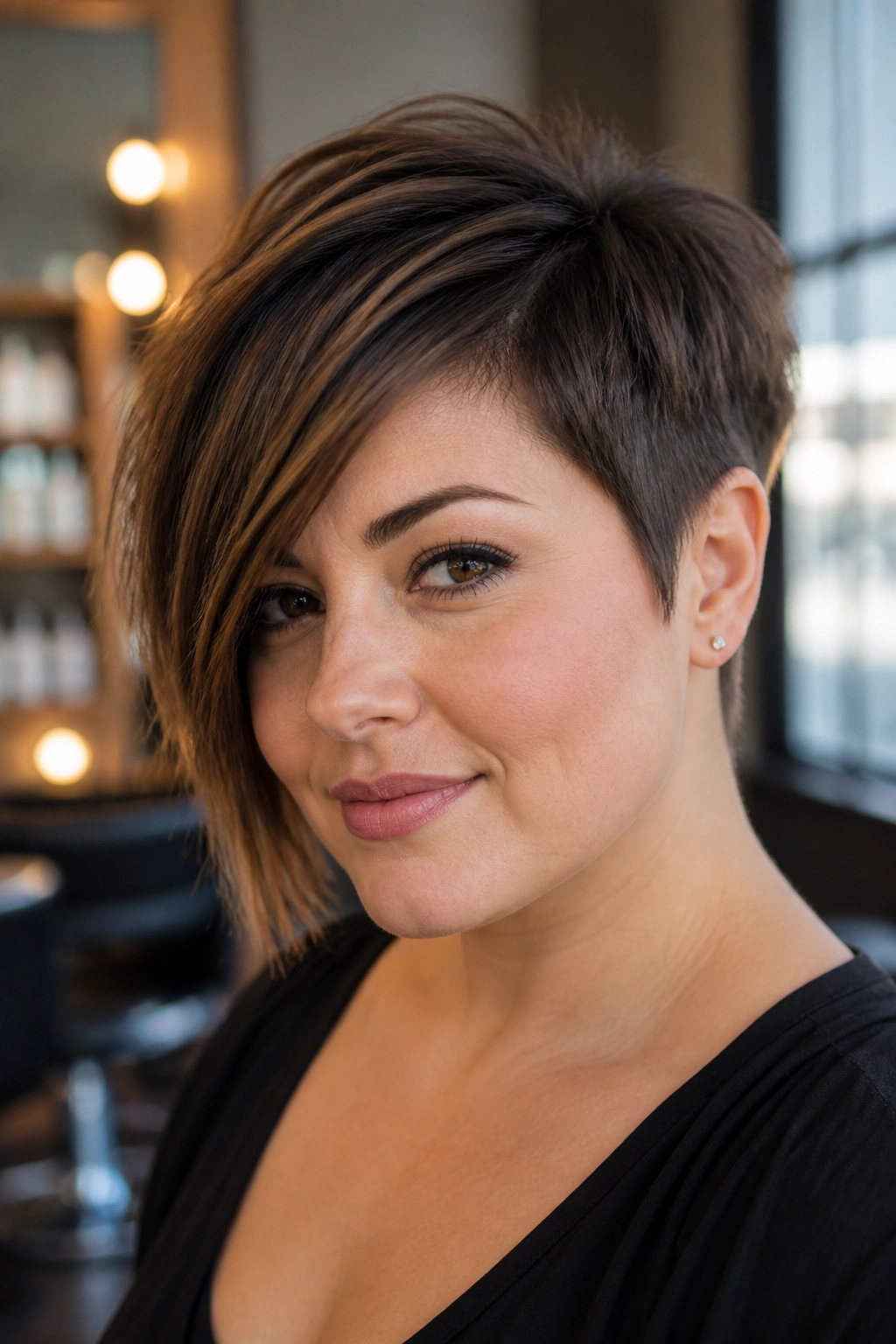
A diagonal line is your best friend here. One side stays shorter, the other side falls longer across the forehead or cheekbone, and the whole cut suddenly feels less circular.
Why It Flatters a Round Face
The asymmetry pulls the eye side to side in a controlled way, instead of letting the face read as one soft, even shape. That longer front piece acts like a visual break across the widest part of the face, which is exactly where you want a little interruption.
The trick is keeping the longer side purposeful, not floppy. Ask for a piece that lands somewhere between the eyebrow and cheekbone, depending on how much coverage you want.
- Best on straight or slightly wavy hair
- Works well with a deep side part
- Needs a little root lift at the crown
- Looks strongest when the ends stay piecey, not curled under
My favorite detail: keep one temple a touch narrower than the other. It sounds small. It changes everything.
2. Long Pixie With Side-Swept Bangs
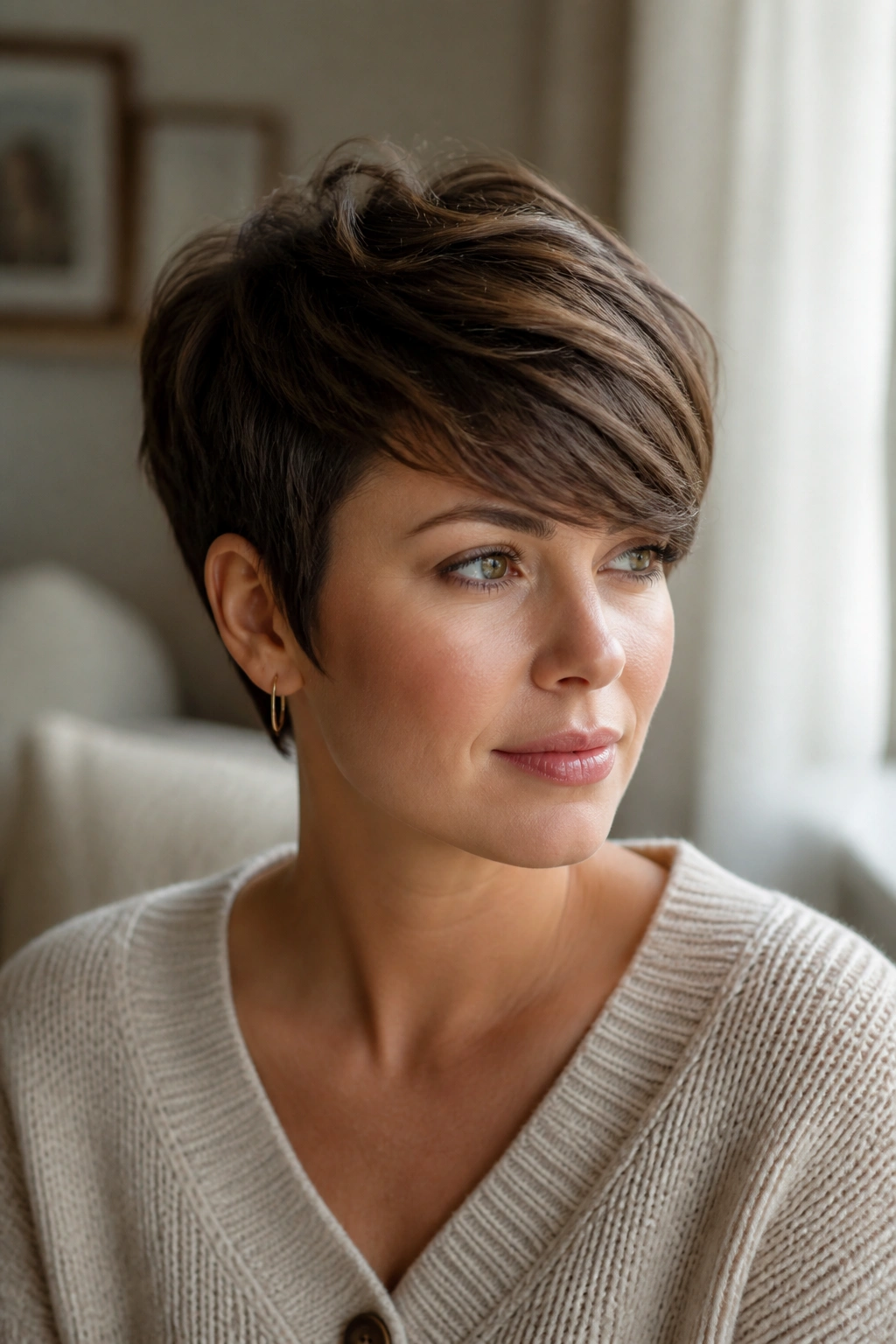
This is the cut people ask for when they want short hair, but not too short. The top stays long enough to sweep across the forehead, and that front movement is doing a lot of quiet work.
The side-swept bang takes pressure off the cheeks. Instead of letting the eye stop at the widest point of the face, it moves upward and diagonally. That matters. A round face usually looks best when the cut has motion, not when every side sits at the same length.
Keep the crown lightly layered so it does not flatten after an hour. A quick blow-dry with a small round brush and a bit of mousse at the roots usually gives enough bend.
For styling, I’d rather see a soft, brushed sweep than a perfect wave. Perfect can look stiff on a pixie. A little movement looks more natural and more flattering.
3. Textured Crop With Choppy Fringe
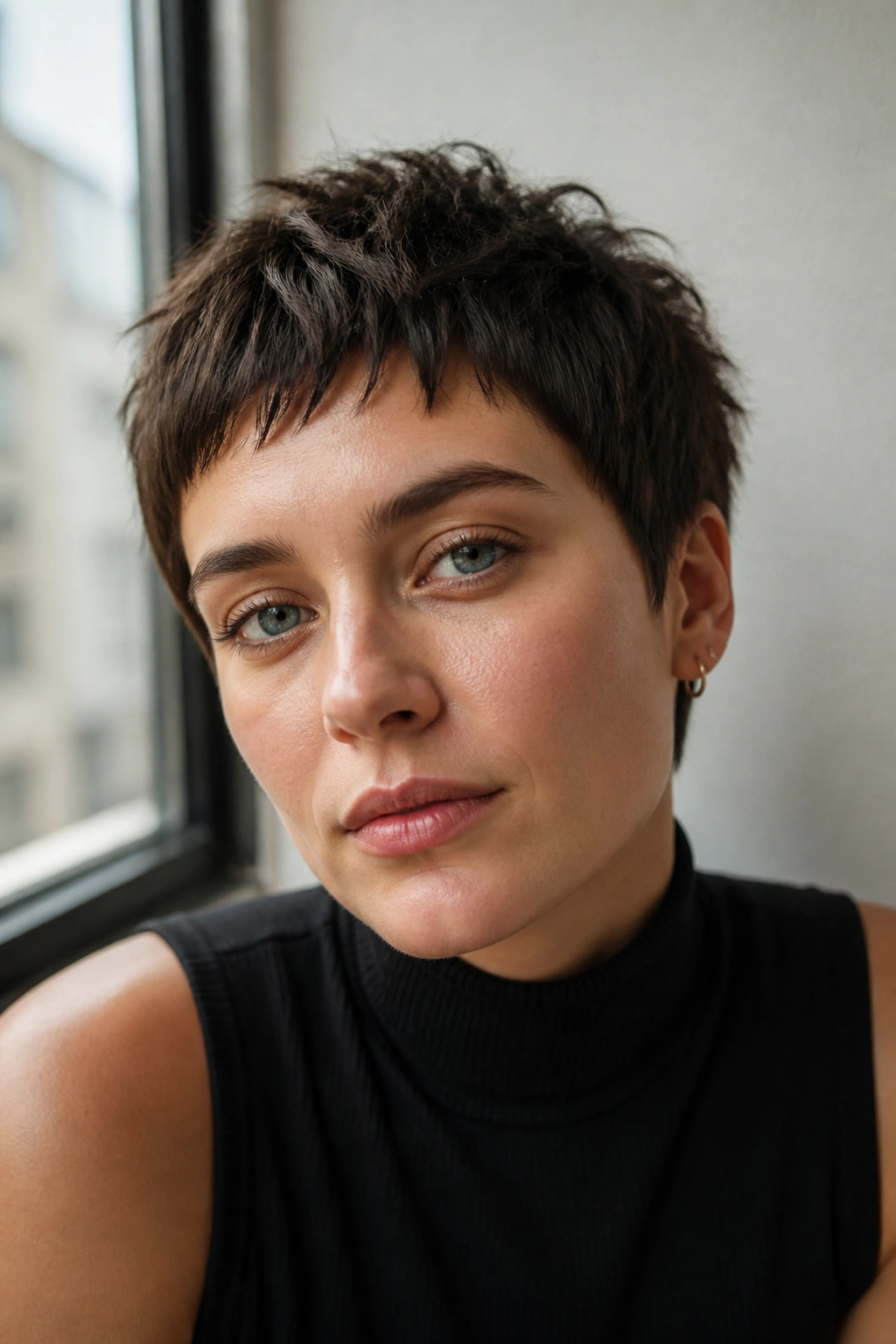
Why does this work so well? Because choppy ends break up shape. A round face doesn’t need more softness everywhere; it needs edges in the right places.
A textured crop keeps the outline irregular in a good way. The fringe is short, broken, and slightly uneven, which stops the forehead from looking boxed in. The top has little pockets of length, so the cut doesn’t sit flat and helmet-like.
How to Style It
Use a pea-sized amount of matte paste on dry hair. Rub it between your palms first, then pinch tiny sections near the front and crown. You want separation, not slickness.
This one is especially good if your hair has a little grit or natural wave. Fine hair can wear it too, but the layering needs to be careful; too many short layers and the top goes fuzzy instead of defined.
Skip heavy creams. They collapse the texture. A dry finish looks cleaner and gives the face more angle.
4. Tapered Pixie With a Lifted Crown
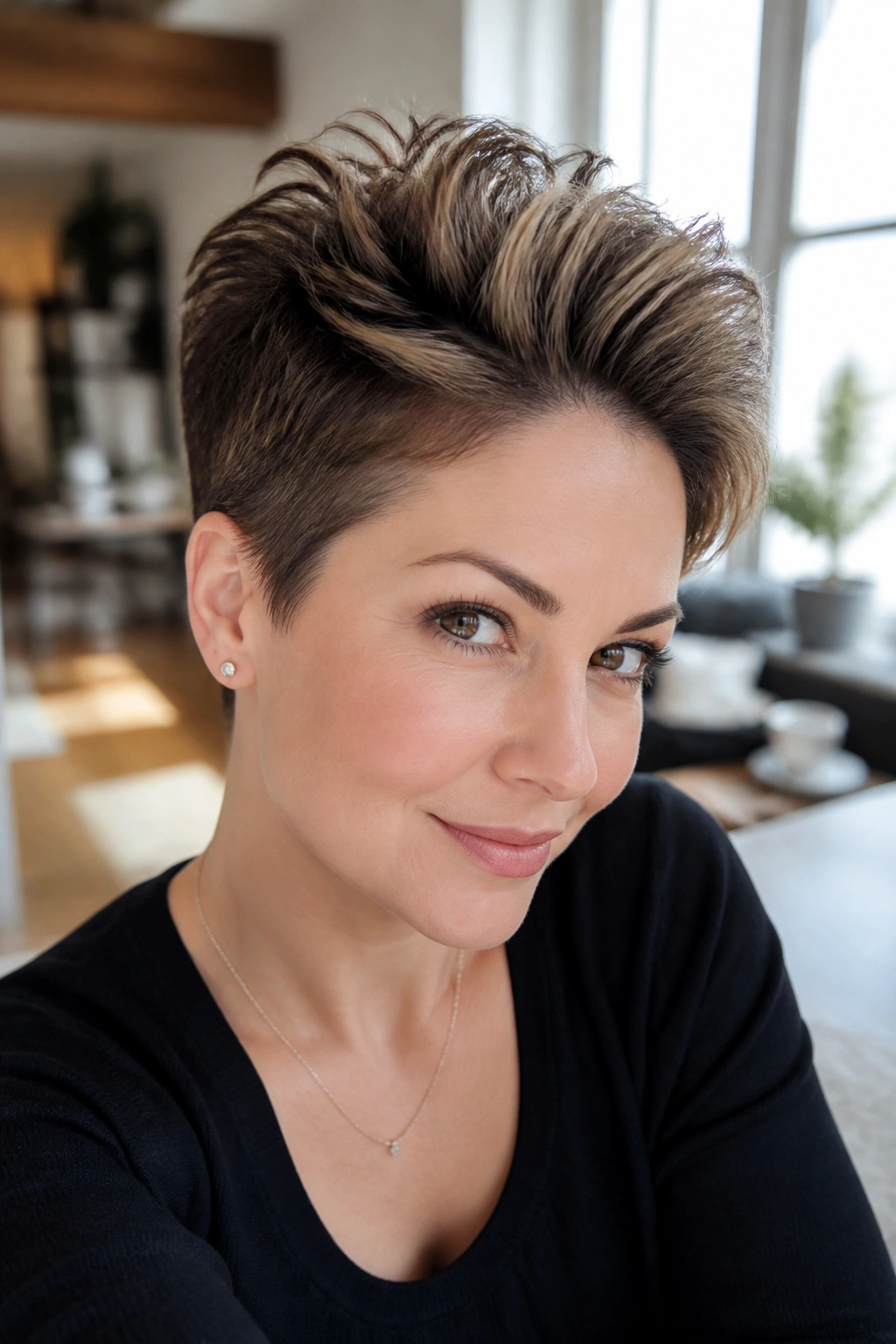
If your face is round and your hair likes to lie down, this is the cut that saves you trouble. Shorter sides and nape, taller top. Simple idea. Strong result.
The taper keeps the silhouette neat near the jawline, which matters because that area is where round faces can start to read wider if the hair poofs out. The lifted crown does the opposite. It adds vertical length, and vertical length is a friendly thing on a round face.
A lot of people think “volume” means “big everywhere.” It doesn’t. Here, you want the volume sitting almost entirely at the top center, not around the ears.
A quick blow-dry with the head tilted forward helps. Then finish with a little flexible spray so the lift stays soft instead of crunchy.
5. Feathered Pixie With Wispy Ends
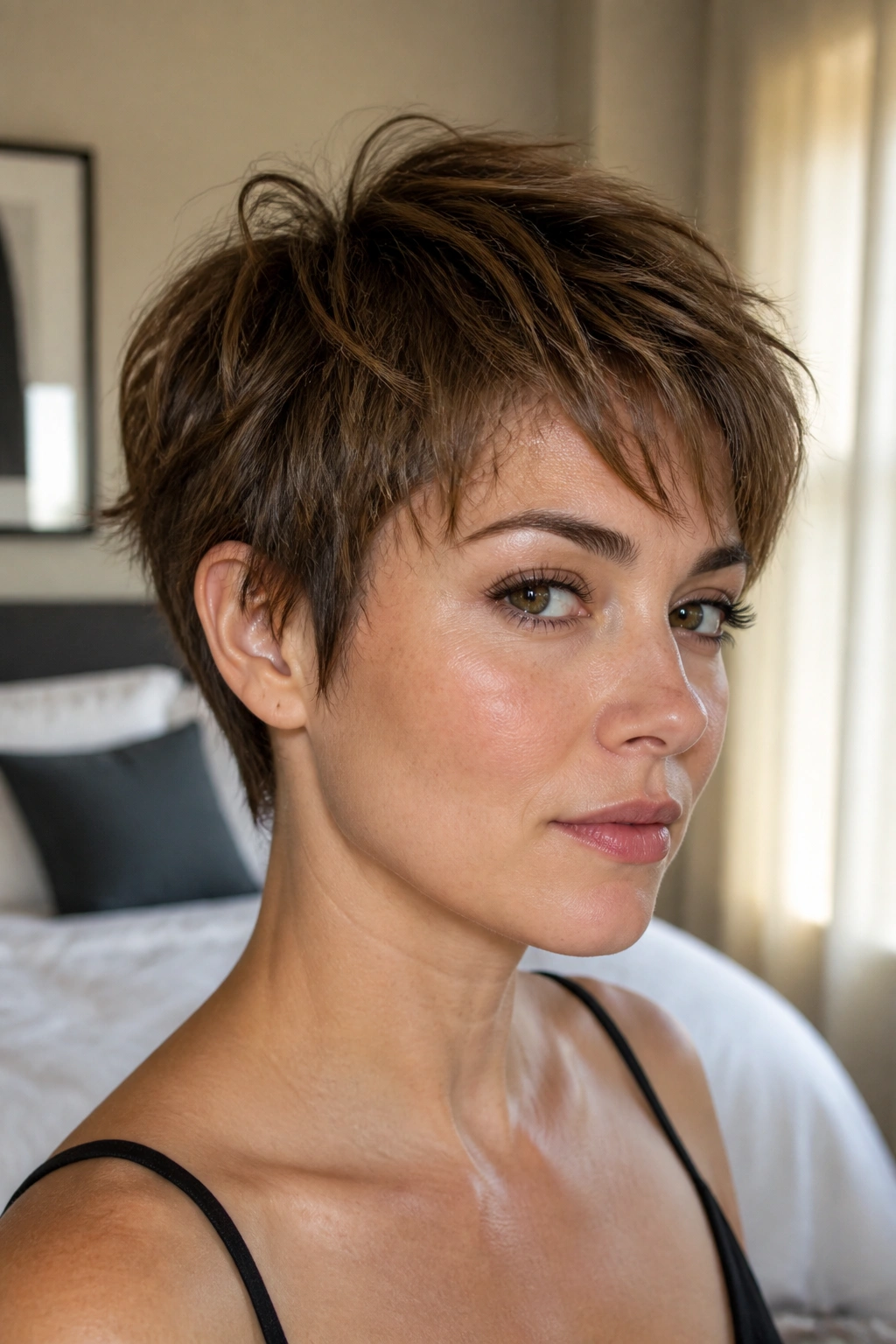
Feathering is underrated. It gives a pixie breathing room, which is helpful when you do not want the cut to feel hard or too close to the head.
The wispy ends around the temples are what keep this one from looking blunt. They blur the outline just enough, while the overall shape still stays narrow through the sides. If your hair is fine, this can be especially kind. It doesn’t demand thick density to look full, and that’s a nice change.
There’s also a softer effect around the eyes. Feathered bangs and temple pieces create a little frame without dragging the face downward. That balance is subtle. You notice it in the mirror before you know why it works.
This is one of those cuts that looks better with age, too, because the feathering grows out gracefully. Not every pixie does.
6. Undercut Pixie With Soft Top
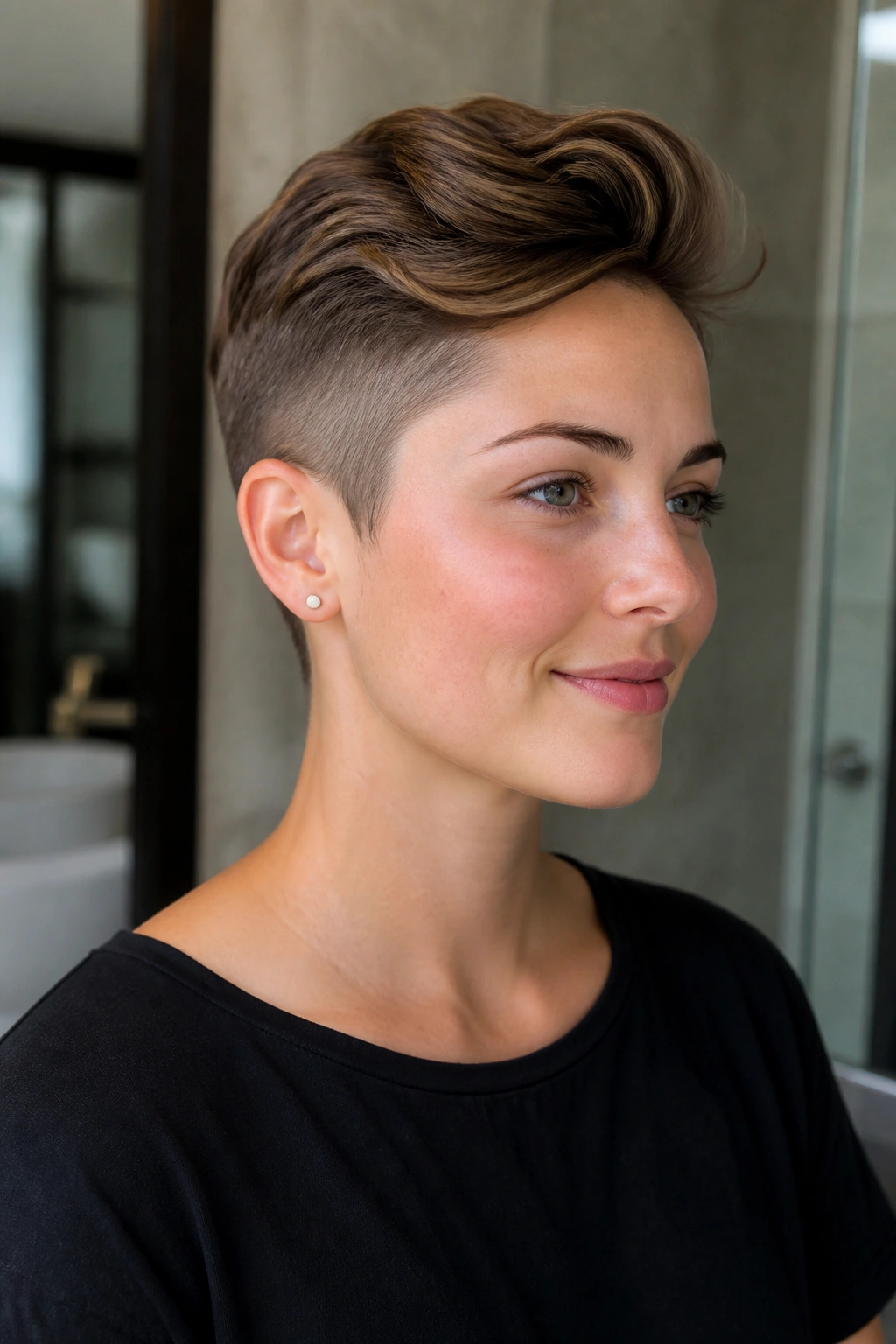
The undercut sounds edgy, and it can be, but the real appeal is practical. Removing bulk from the sides and back keeps a round face from looking wider than it is.
Unlike a one-length pixie, this version has a clear shape difference between top and sides. That contrast gives the face room. The soft top stops the cut from looking harsh, so you get structure without turning the head into a square.
It’s a smart choice for thick hair. Thick hair can balloon at the sides if you let it, and a clean undercut fixes that fast. If your hair is fine, you can still wear this, but the top needs enough length — usually 2 to 4 inches — to avoid looking sparse.
Ask your stylist to keep the top touchable. You want movement, not a hard ridge.
7. Curly Pixie Cut for Round Faces
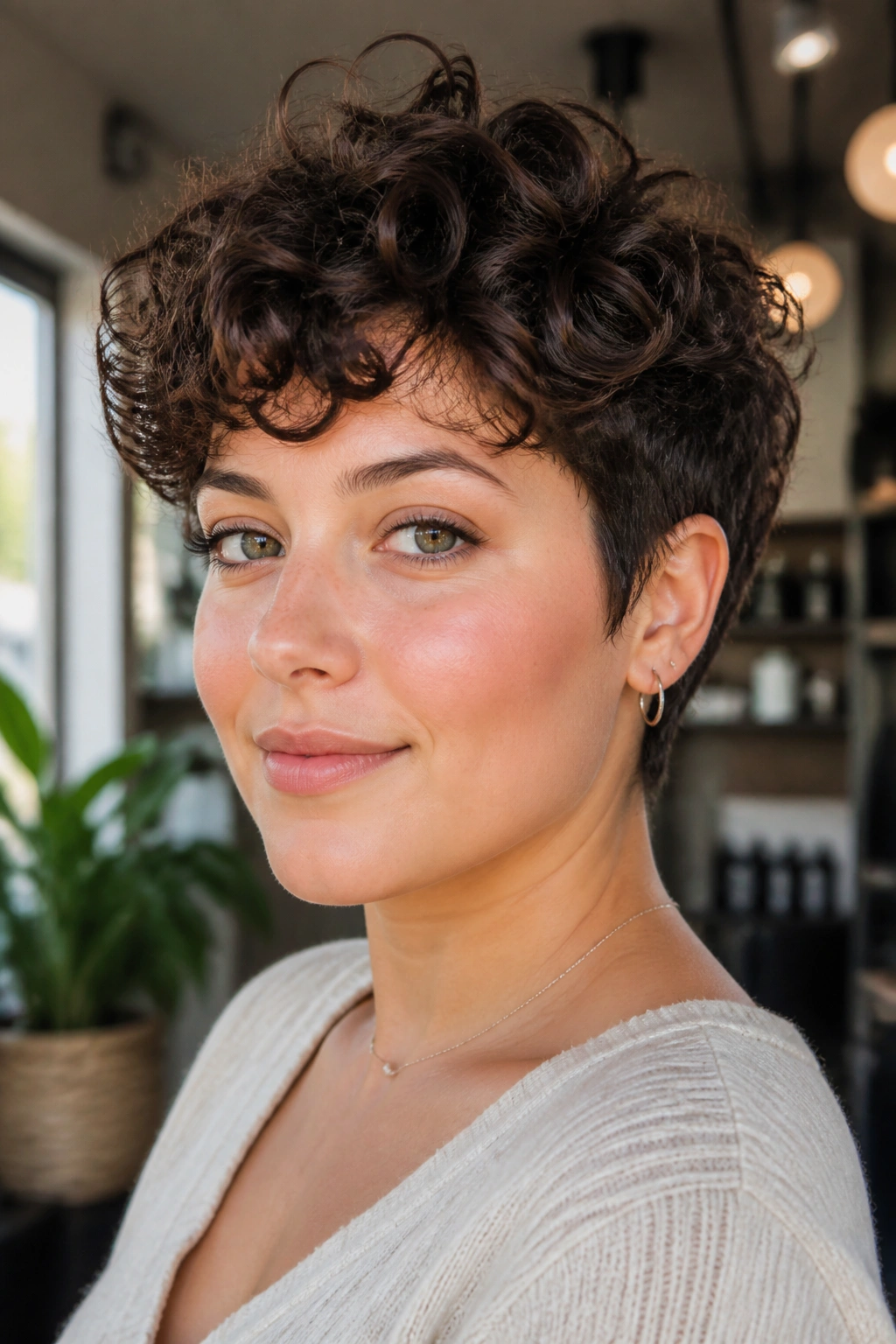
Curly hair and round faces can be a great match when the cut respects the curl pattern instead of fighting it. The key is shape. Curly pixie cuts for round faces need height at the crown and controlled width at the cheeks.
What Makes the Curl Shape Work
Curly hair naturally adds body, so the danger is not flatness. It’s a wide halo that sits right at cheek level. A good pixie solves that by tapering the sides a little tighter and leaving more length where the curls can rise upward.
The best versions keep the top curls slightly longer than the side curls. That small difference helps the eye travel up and down instead of straight across. You can also ask for curl-by-curl shaping so the cut follows the pattern of your actual coils, not some imaginary ideal.
- Best for loose curls through tight coils
- Needs a stylist who cuts dry or mostly dry
- Looks strongest with a tapered neckline
- Benefits from lightweight curl cream, not heavy butter
Style note: let the curls dry before you judge the shape. Wet curls lie.
8. Micro-Fringe Pixie With Tall Crown
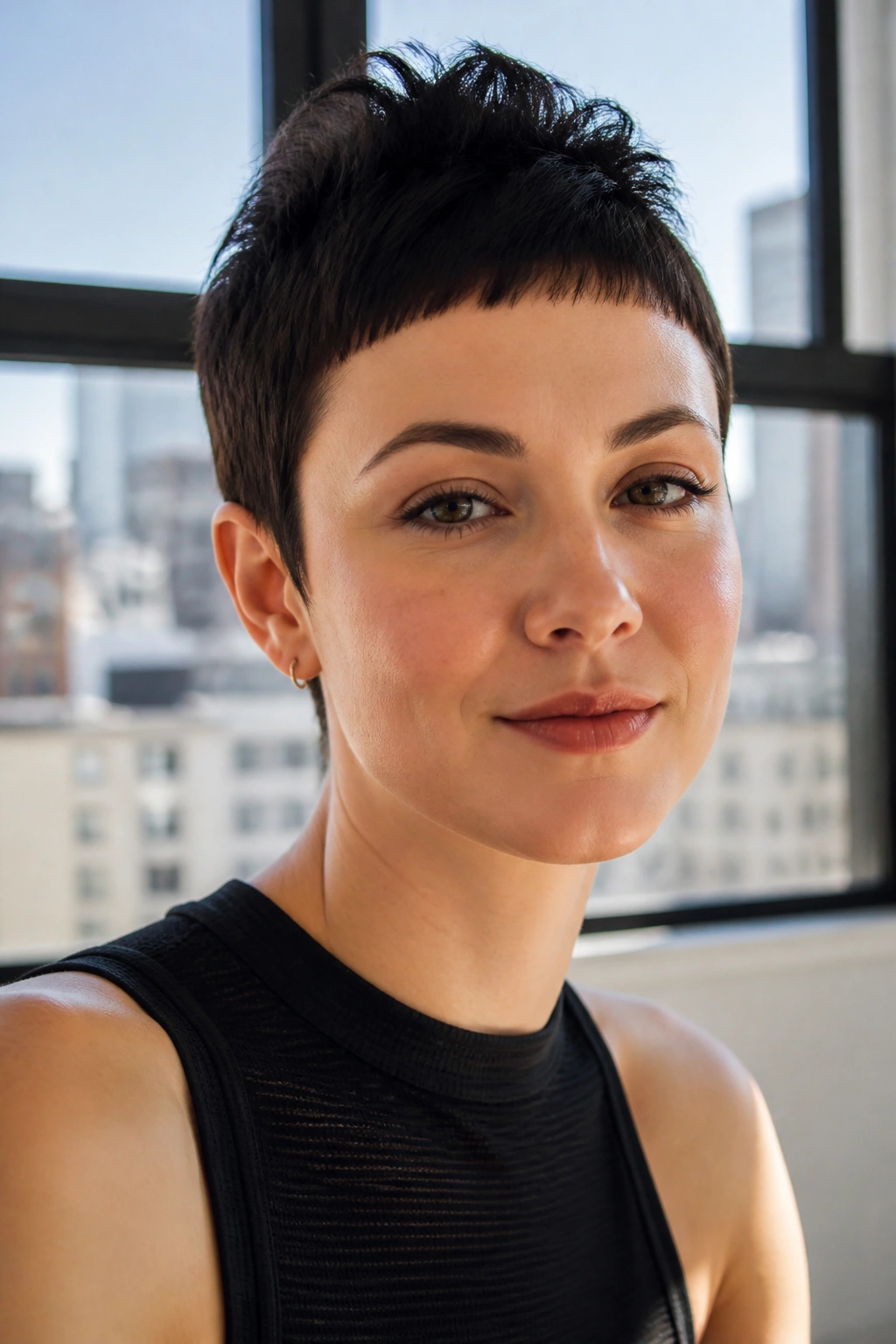
A short fringe can be brilliant on a round face when the crown carries enough height. That’s the whole story here.
The micro fringe opens up the upper part of the face and keeps the forehead visible, which can create a sharper, more editorial look. But it only works if the top is lifted. Otherwise, the face can read too short. That’s why the crown matters more than usual with this cut.
It suits people who like contrast. The fringe is tiny, the top is airy, and the sides stay tight. The effect is bold, but not bulky. If you have strong brows or a defined eye shape, this cut lets those features do some of the talking.
Use a light paste or styling powder at the roots. Too much product and the fringe loses its clean little edge.
9. Shaggy Pixie With Neck-Grazing Ends

Does a shaggy pixie sound messy? Good. A little mess is the point.
This version keeps some length at the nape and around the back corners, which gives the eye a longer line to follow. That matters on a round face, where a totally even crop can sometimes feel too compact. The shaggy texture breaks the outline and softens the cheeks without making the cut look heavy.
How to Ask for It
Tell your stylist you want piecey layers, not a heavy stack. Mention that you want the top to move and the nape to stay soft, with ends that graze the neck rather than stopping abruptly.
The best styling here is quick and rough in the good sense. A spritz of texture spray, finger-drying, then a little pinch-and-twist at the front. Done.
This is one of the easiest cuts to grow out, which is handy if you do not love salon visits every month.
10. Slicked-Back Pixie
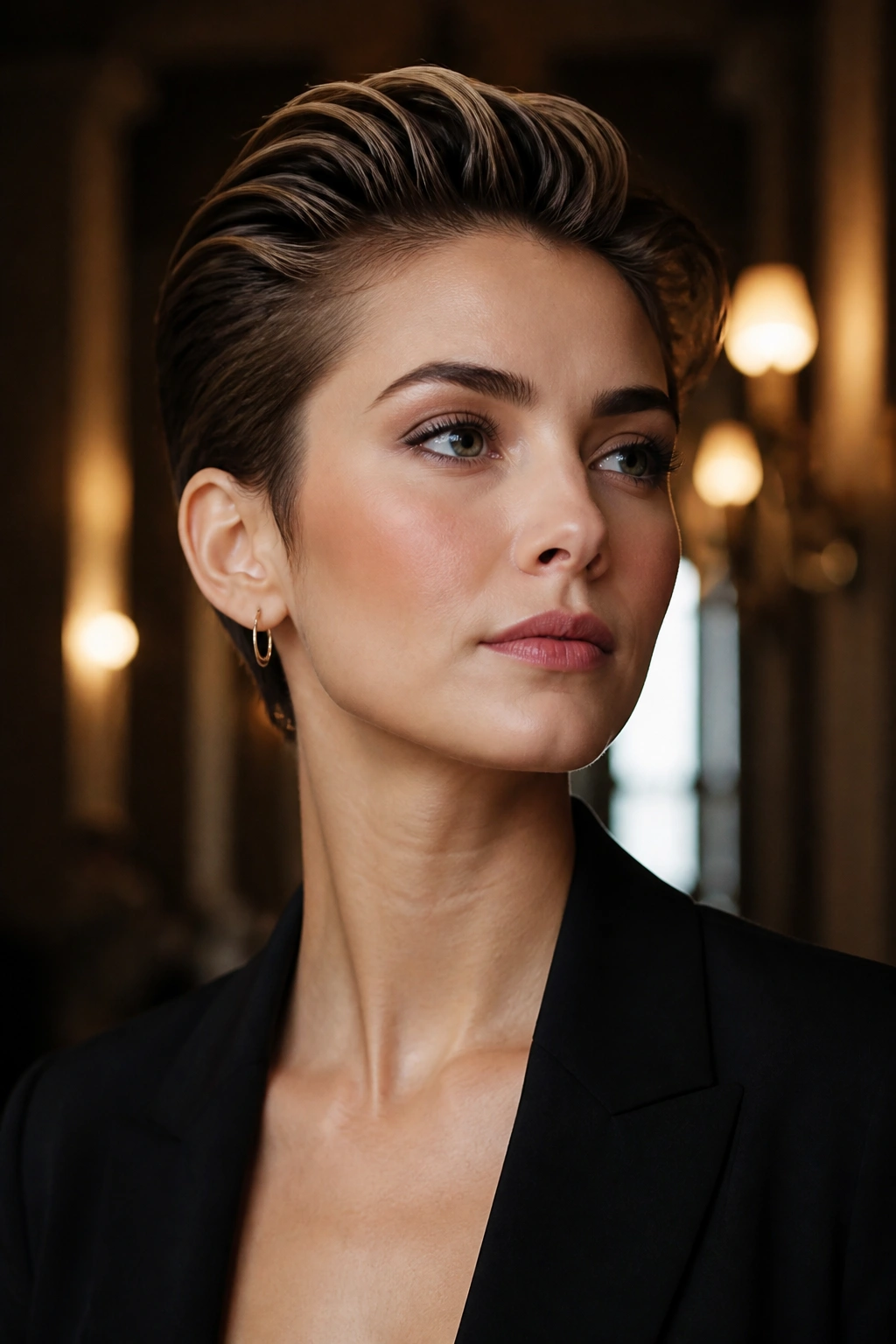
There’s something sharp about a slicked-back pixie on a round face. It pushes everything away from the cheeks and lets the bone structure show.
Picture a short crop that’s been combed back with a light gel or cream, but not plastered down like a helmet. The sides stay close, the top gets direction, and the whole face looks longer because there’s no horizontal interruption from a fringe.
This works especially well for evenings, formal events, and humid weather when loose hair would frizz anyway. It also suits strong brows and earrings. The face becomes the focus.
A tiny amount of gel goes a long way. Start with damp hair, comb it back with your fingers or a wide-tooth comb, then stop before it hardens into something too shiny and stiff. The sweet spot is polished, not greasy.
11. Pixie Bob Hybrid With Face-Framing Front Pieces
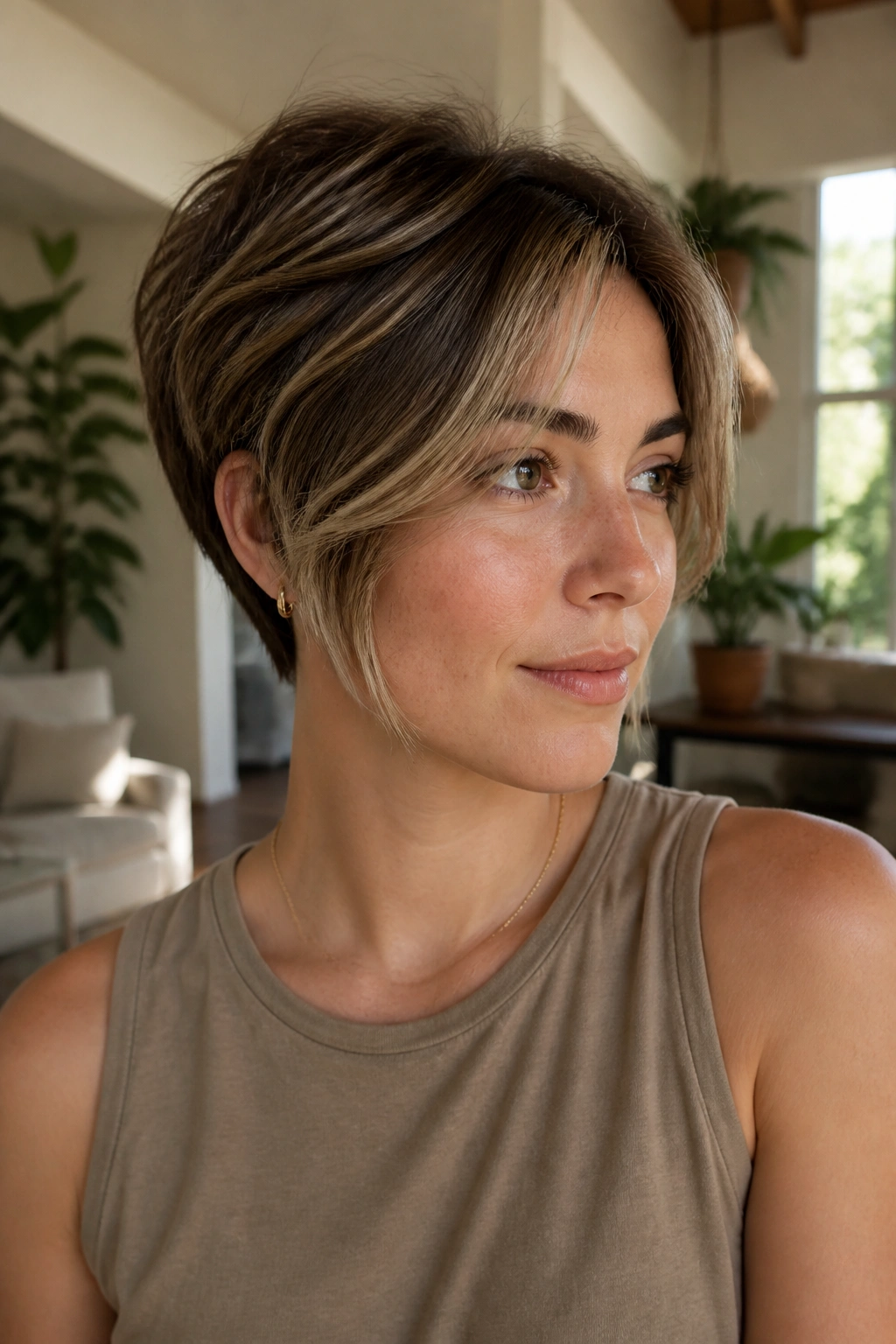
This one is for the person who wants to flirt with short hair without going all the way in. The back stays cropped, but the front pieces are long enough to skim the jaw or even brush the neck.
That extra length in front is gold on a round face. It creates a downward line, and downward lines slim the visual shape more reliably than a blunt curve. The hybrid also feels softer than a severe pixie, which helps if your face already has gentle features and you don’t want to sharpen them too much.
The cut works well when the front is lightly layered and the back stays neat. If both areas are too heavy, it turns into a shapeless grow-out. If both are too short, you lose the effect.
This is a good “bridge” cut for anyone deciding between a pixie and a bob. And yes, it’s still a pixie enough to count.
12. Platinum Piecey Pixie
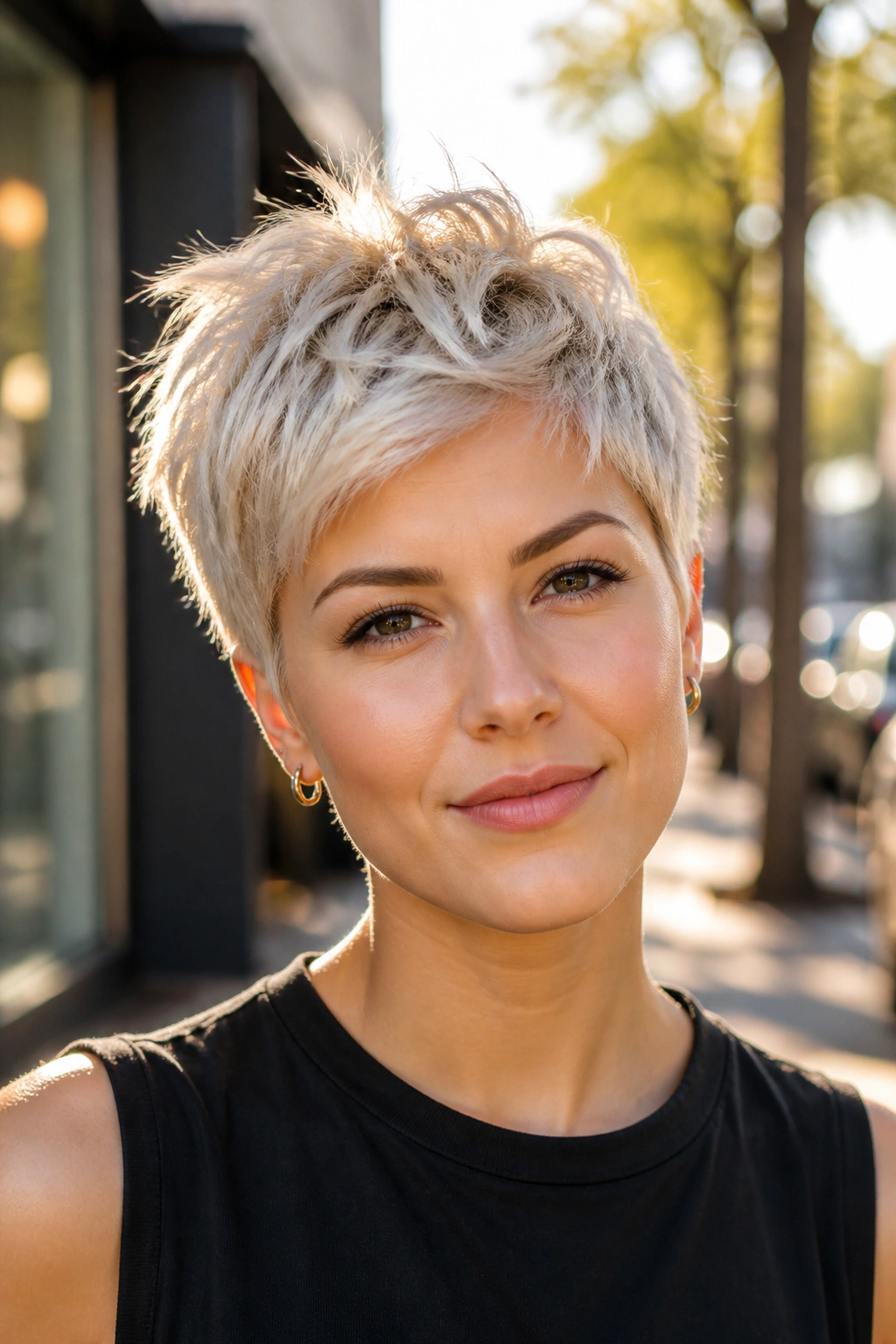
Color changes the geometry of a haircut more than people expect. A platinum piecey pixie makes the texture pop, so the eye notices the direction of the strands instead of the roundness of the face.
Unlike a solid, dark crop, this version has light reflecting off every broken edge. That makes the layers read as separate, which adds movement. On a round face, movement is useful because it keeps the cut from sitting like one big shape.
It also plays well with short, choppy layers. Platinum can make texture look sharper, but only if the cut underneath is clean. A sloppy cut turns platinum into an expensive mistake. A good one looks bright and crisp.
Maintenance is real here. Light blond shades need toning and careful conditioning, so this isn’t the low-effort option. Still, if you want drama, it earns its keep.
13. Tapered Natural-Hair Pixie
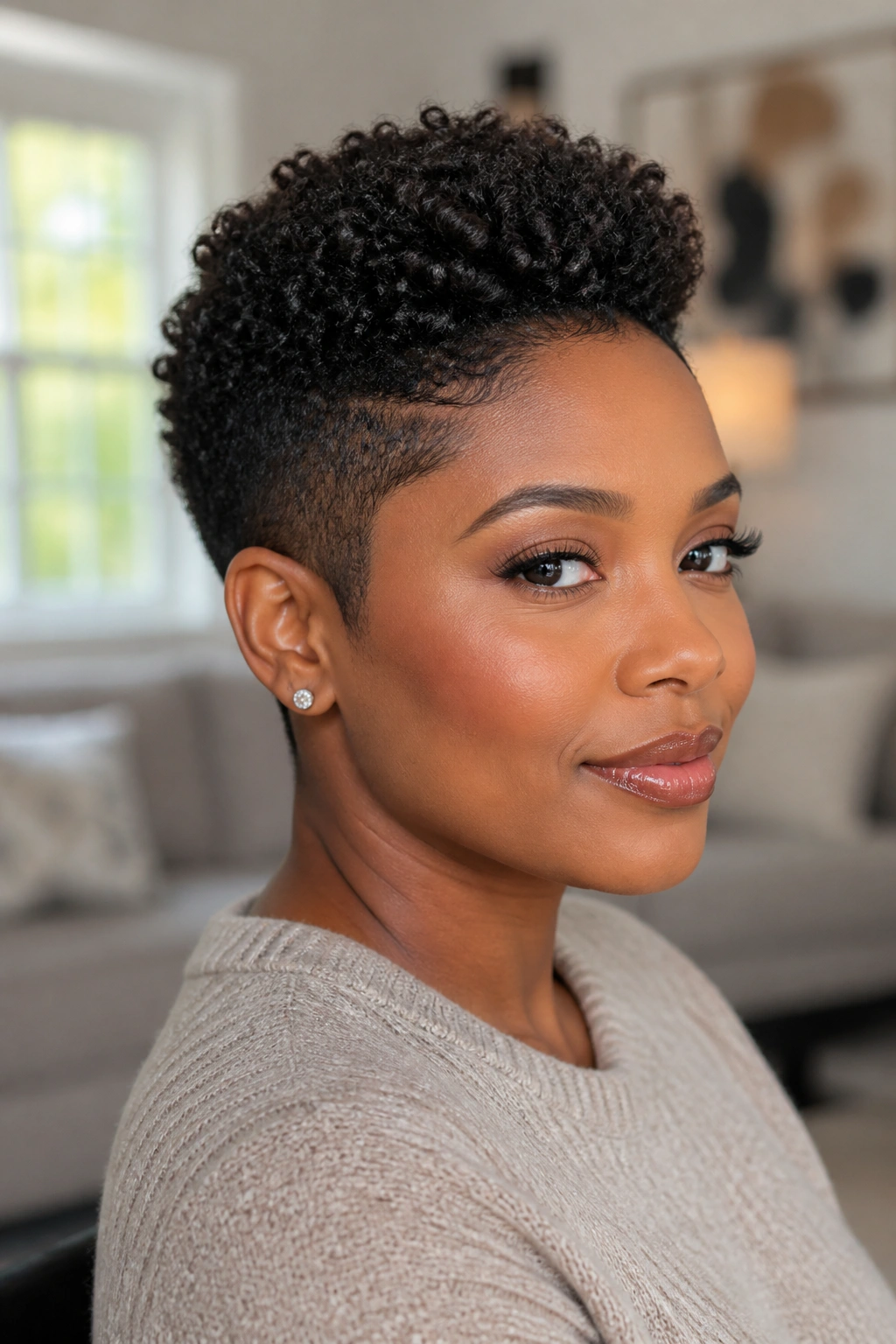
Natural texture needs room at the top and control at the sides. That’s the whole logic behind this shape, and it’s a good one.
Shape First, Then Style
A tapered natural-hair pixie keeps the perimeter tight around the ears and nape while leaving enough length on top for coils or curls to lift. That keeps the silhouette from getting wide at cheek level, which is the part most round faces want to avoid.
A shape like this also makes your styling easier. You do not have to fight the hair into a fake smooth line. You just define the curl pattern and let the taper do the quiet work underneath.
- Best with coils, curls, or dense wave
- Needs shape-up trims to keep the taper clean
- Works with sponge twists, finger coils, or a light curl cream
- Can be worn brushed up or softly forward
One thing I’d insist on: keep a little length at the temples. Too tight there, and the cut can feel severe.
14. Long Pixie Cut for Round Faces With Swept Length
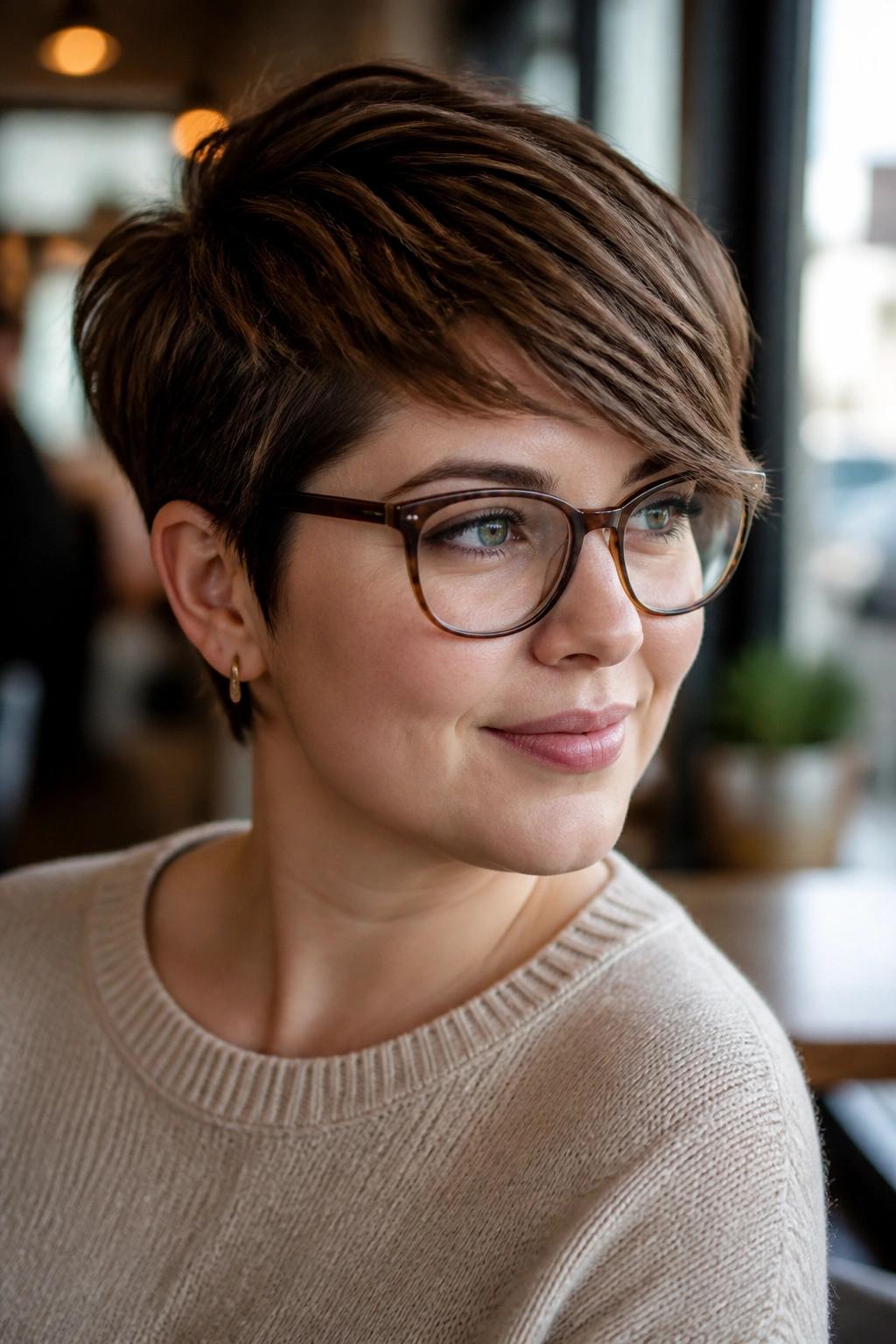
This is the safety valve for anyone nervous about going too short. A long pixie cut for round faces keeps enough length to tuck, sweep, or piece out across the forehead, which gives you more control over the final shape.
The reason it flatters so often is simple: it lets the top and front do the slimming work while the sides stay calm. You are not asking the haircut to create drama everywhere. You are asking it to concentrate the interest in one direction.
That matters if you wear glasses, because the longer top can balance the frame without crowding it. It also works on straight hair that tends to lie flat, since the extra length gives you room to build lift with a blow-dryer and a small round brush.
If you only remember one styling rule from this whole piece, remember this one: short at the sides, longer where the eye needs to travel.
15. Bowl-Inspired Modern Pixie
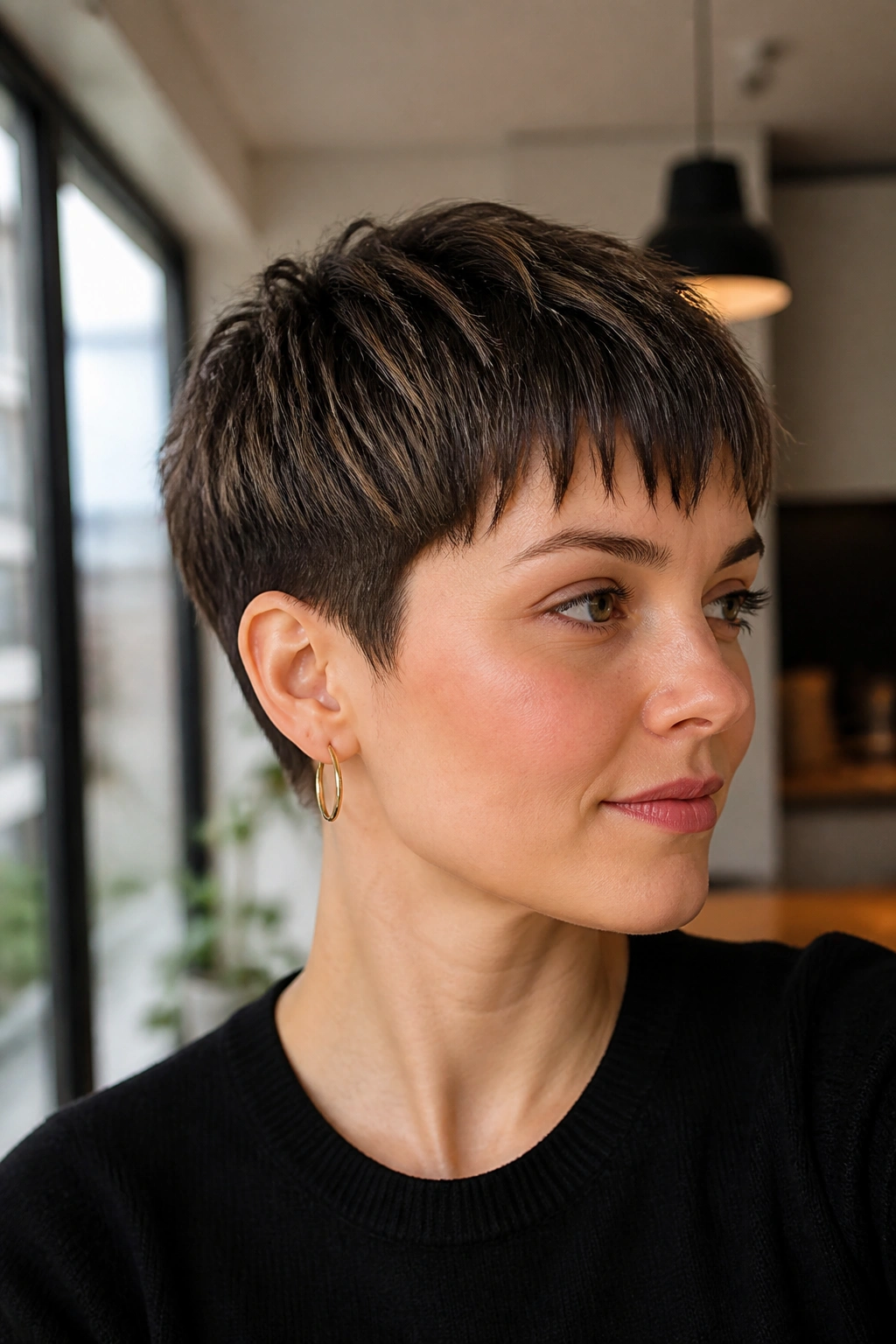
A bowl-inspired pixie sounds risky, and the old-fashioned version often is. The modern version is a different animal.
The cut keeps a rounded shape near the crown, but the edges are thinned out and textured so it doesn’t sit as one hard line. On a round face, that texture is the difference between chic and too much of a good thing. You want a hint of shape, not a perfect circle.
What to Watch For
The fringe should be soft, not heavy. The sides need some air, too, because a dense bowl shape can repeat the face shape instead of balancing it.
- Ask for internal layering to remove bulk
- Keep the fringe a little broken up at the ends
- Avoid a blunt line that lands right at the cheekbone
- Style with a round brush only at the crown, not all around
This cut works best on straight to slightly wavy hair. Curly textures can wear it, but the shaping has to be careful or the outline grows too wide.
16. Sideburn-Framing Pixie
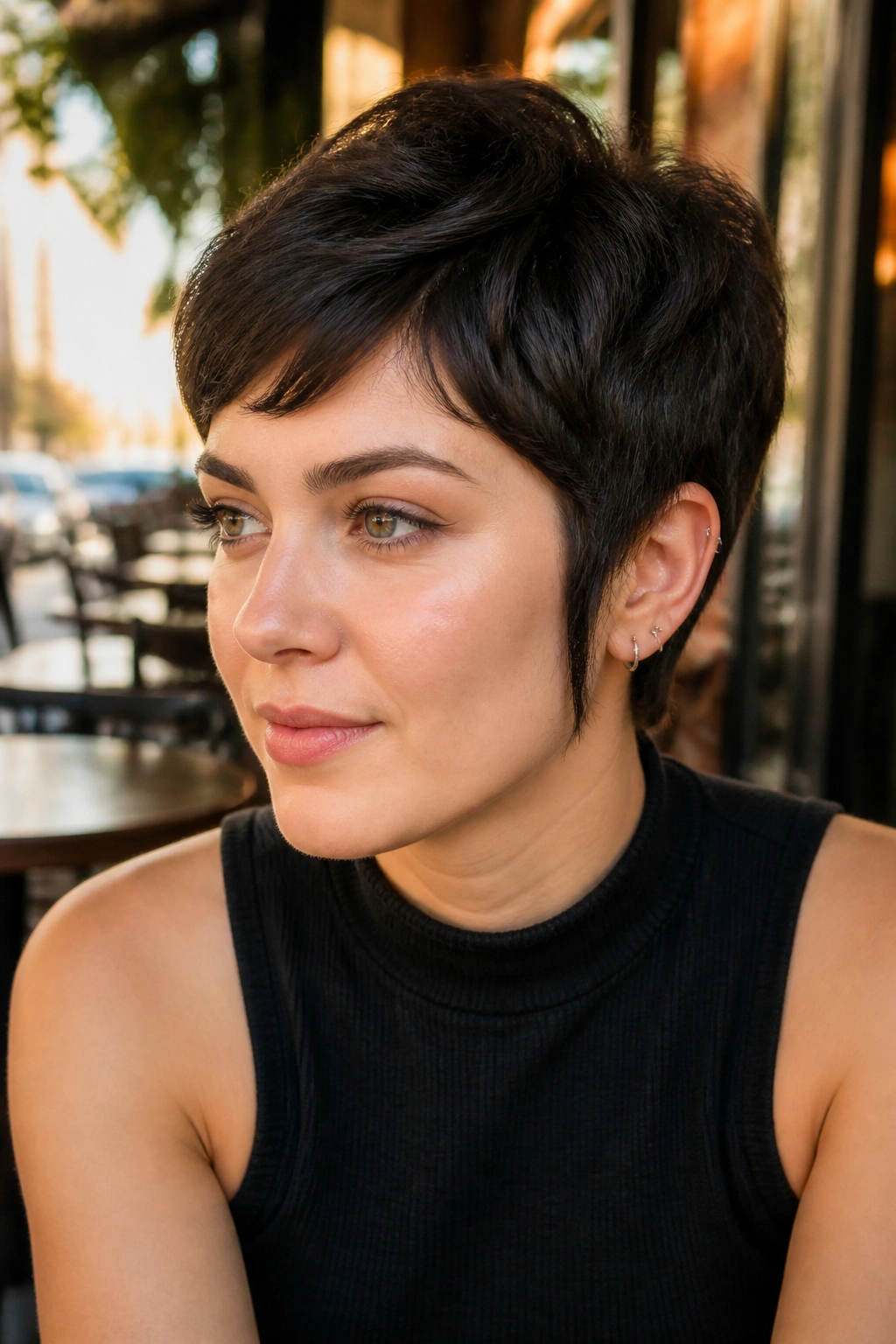
Sideburns get ignored too often. On a round face, they can be one of the smartest parts of the haircut.
A longer sideburn area creates a vertical strip near the temples, which narrows the upper face visually. That’s handy when the cheeks are the widest point. The rest of the cut can stay short and tidy, but those little temple pieces keep the shape from feeling too abrupt.
This style suits people who want something neat without looking severe. It has a tailored feel, almost like the haircut is wearing a jacket. The sideburn pieces can be tucked behind the ears or left loose depending on the day.
It’s also good for anyone who likes low-fuss styling. You’re not fighting a giant bang or a lot of volume. You’re just letting a few smart pieces do their job.
17. French Pixie With Soft Bangs
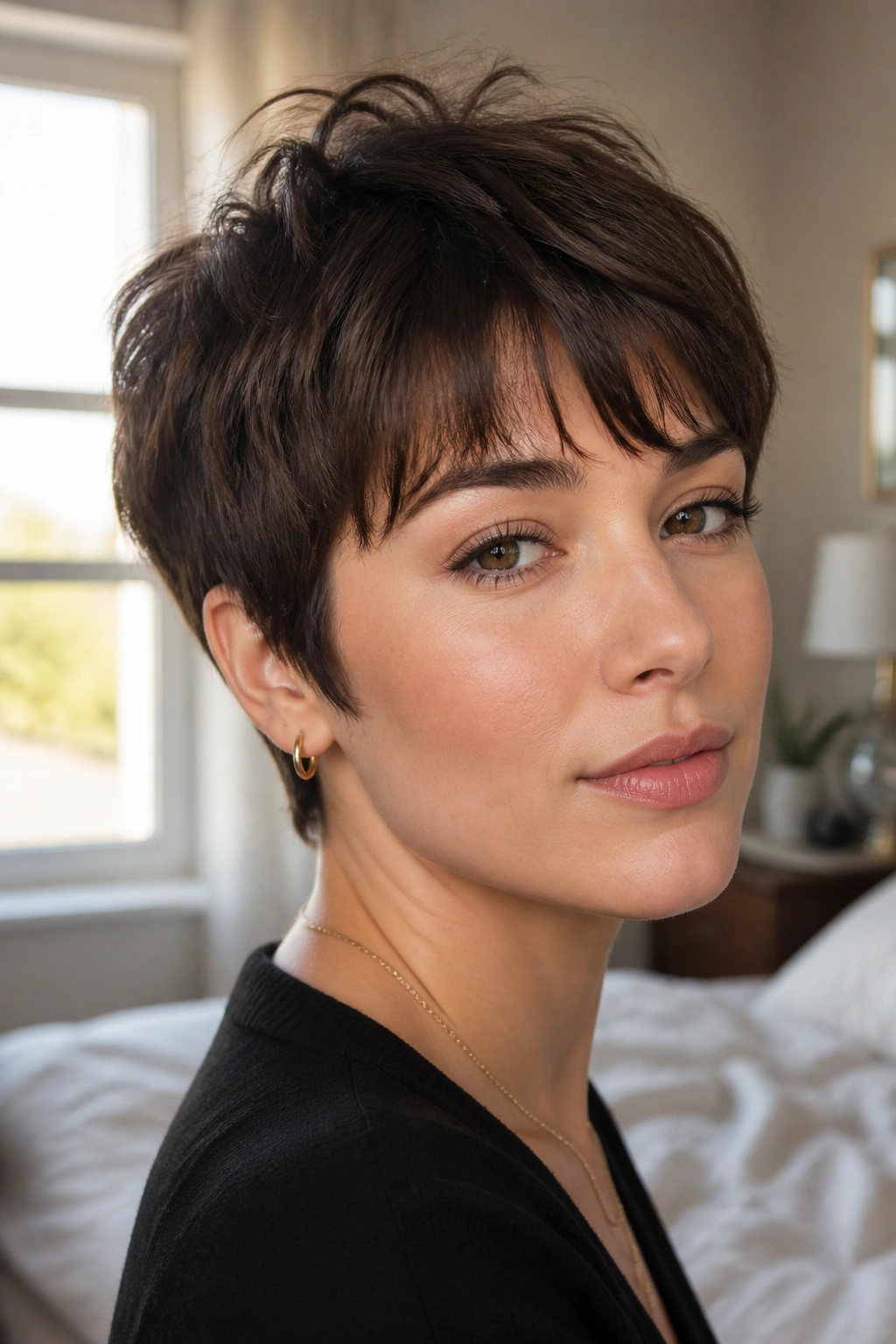
The French pixie lives somewhere between carefree and deliberate, which is part of why it works so well. The bangs are soft and a little broken, the top has movement, and the sides don’t puff out.
On a round face, that softness matters because it avoids the heavy, boxed-in effect that some short cuts create. The fringe skims the forehead instead of cutting it off, and the rest of the cut stays light enough to keep the face open.
This is a good one if you like hair that looks better when it’s been slept on a little. Not sloppy. Just lived-in. A dry texture spray and a quick finger-comb usually beat a polished blowout here.
One warning: if your hair gets too dense at the temples, ask for the sides to be thinned very carefully. Too much fullness there can undo the whole thing.
18. Brushed-Forward Pixie
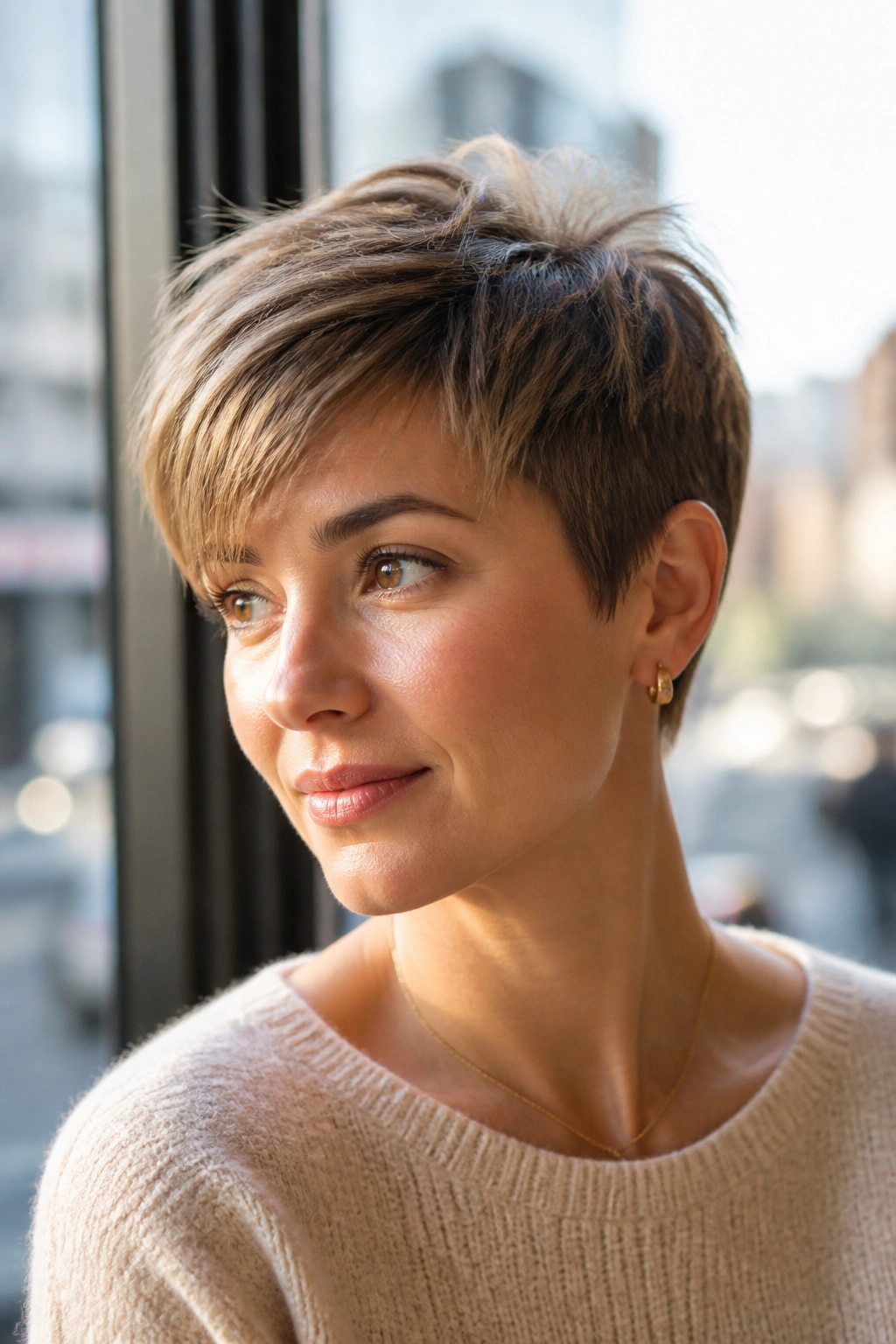
Brushing hair forward sounds counterintuitive for a round face, but the right version can work beautifully. The trick is keeping the front airy, not heavy.
Compared with a side-swept pixie, this one creates a lower, softer line across the forehead while still leaving the crown tall enough to add length. That makes it a better choice for people who don’t want a dramatic side part or who have a strong cowlick that keeps pushing hair forward anyway.
The brushed-forward shape also hides a bit of width at the temples, which can be useful if your face is fuller near the upper cheeks. Keep the ends choppy so the fringe doesn’t become one thick curtain.
Styling is easy: blow-dry the roots up first, then bring the front down with your fingers. If you skip the root lift, the cut can flatten fast.
19. Spiky Pixie With Crown Height
Some people hear “spiky” and imagine something dated. That’s not the move here. The modern spiky pixie is controlled, piecey, and cut to stand up a little where it matters.
Why It Works
The crown height adds vertical length, while the short, separated ends keep the silhouette narrow. On a round face, that combo is strong because it doesn’t feed the width at the cheeks. It gives the face a more oval feel without pretending to be something it isn’t.
A matte styling clay or paste works better than shiny gel. You want touchable spikes, not helmet hair. And the spikes do not need to be exaggerated. A half-inch of lift in the right places is enough.
- Best for straight hair or straightened natural texture
- Needs very short trimming at the sides
- Looks cleanest when the ends are razor-light
- Easy to restyle during the day with damp hands
Short version: this is a tiny haircut with real attitude.
20. Soft Mohawk Pixie for Round Faces
A soft mohawk pixie sounds like a statement cut, and it is, but the softness matters. The sides are clipped close, the center ridge stays longer, and the ridge is broken up rather than sharp.
That middle strip pulls the eye straight up. On a round face, that vertical line is the whole point. You’re building height where the face wants it most and keeping the cheeks visually quiet.
This cut is especially nice if you like a little edge but still want something wearable every day. You can flatten the ridge slightly for work, then rough it up a bit for the evening. The shape holds up well as long as the sides stay tidy.
Thick hair loves this cut because the center ridge can carry weight without spreading outward. Fine hair can wear it too, but the crown needs enough layering to avoid limpness.
21. Ear-Tucked Pixie With Long Top
Can a simple tuck change the whole haircut? Yes. More than people expect.
The ear-tucked pixie keeps the sides clean and lets the front and top stay longer, so you get a face-opening effect without losing the softness of a pixie. Tucking the sides behind the ears takes visual weight off the cheeks. That’s useful if you dislike hair sitting there at all.
How to Get the Most From It
Ask for enough length at the top to tuck one side behind the ear and leave the other side loose. That asymmetry keeps the cut from feeling too neat. A slight bend in the top pieces helps, too.
This is a quiet, smart style. It doesn’t shout. It just makes the face look a little leaner and the haircut a little cleaner.
- Great with glasses
- Good for medium-density hair
- Needs a bit of smoothing cream on the sides
- Works best when the ear area is kept slim
22. Layered Salt-and-Pepper Pixie
Gray, silver, black, and white strands all change the way layers show up. A layered salt-and-pepper pixie uses that contrast to its advantage.
The mixed color makes texture look richer, which means the eye notices movement instead of just shape. That helps a round face because the haircut feels dynamic, not static. If you have natural silver coming in, this cut can make it look intentional instead of transitional.
The layers should be soft enough to avoid a choppy wig-like effect. Too much slicing can make the different shades look disconnected. A well-cut layered pixie, though, has depth almost built in.
This is one of my favorite styles on mature hair because it does not ask the hair to pretend to be younger, thicker, or something else entirely. It just works with what’s there.
23. Minimal Close-Cropped Pixie
Not every round face needs lots of length on top. Sometimes a close crop is the better answer, especially if you like strong brows, a defined jaw, or a very clean haircut.
The reason this can work is balance. When the cut is short enough to follow the head closely, it removes the bulk that would otherwise widen the cheeks. The face becomes the focal point, not the hair.
The key is precision. A minimal crop should still have small shifts in length around the hairline and crown so it doesn’t read flat. Even a few millimeters matter when the cut is this short.
This is not the most forgiving style if you skip trims. Grow-out shows fast. But if you like low styling time, it’s hard to beat.
24. Angular Pixie With Diagonal Fringe
A diagonal fringe is one of the cleanest ways to reshape a round face. It gives the haircut direction, and direction is what softens the circular feeling.
Unlike a straight-across bang, this fringe cuts across the face at an angle, which narrows the upper portion visually and keeps the center from feeling too wide. The rest of the cut can stay short, but the angle keeps it from looking plain.
Why the Angle Matters
The angle creates movement before you even touch the styling tools. That means less effort in the morning and more consistency when the cut grows out. It also plays well with both fine and thick hair, as long as the fringe is tailored to the density.
Ask for a fringe that starts shorter near one brow and drops longer toward the opposite cheekbone. That little slope does a lot of work.
A diagonal shape is one of those details that looks tiny on paper and obvious in the mirror. That’s usually a good sign.
25. Grown-Out Pixie With Tapered Sides for Round Faces
This is the version I’d hand to someone who wants softness, flexibility, and fewer panic moments between trims. The top stays long enough to sweep, separate, or tuck, while the sides remain tapered so the face does not widen out.
A grown-out pixie can be even more flattering than a freshly clipped one, especially on a round face, because the longer top adds vertical line and the tapered sides keep the silhouette tidy. It has that easy, slightly undone look that many short cuts try for and miss.
If you want one practical rule to take with you, make it this: keep the longest pieces above the cheekbone, not at it. That one choice changes how the cut reads from the front, from the side, and in photos where round faces can sometimes look fuller than they do in real life.
This style is also forgiving. You can wear it messy on a weekday, shaped on a workday, or tucked behind one ear when you want the face to look more open. And that flexibility is part of why the best pixie cuts for round faces are never only about length — they’re about where the length lives, and what it does there.
