



Fine hair can look flat fast. One bad cut and the ends seem to disappear, the crown sinks, and the whole shape starts acting tired by lunchtime. A honey pixie cut changes the equation because it puts the focus where fine hair can still look full: close to the head, around the crown, and through the fringe where a little light and movement go a long way.
The color matters, but not in the cheap, one-note way people sometimes think. A good honey tone is warm, soft, and a little dimensional — more golden-beige than orange, more glow than glare. On fine hair, that warmth helps the cut read fuller because the eye sees shifts in tone, not just a single narrow silhouette.
The part that gets ignored is the cut itself. Honey blonde won’t rescue a blunt, heavy pixie that hangs straight down. What works is a shape with lifted layers, a tapered neck, and enough texture on top to keep the style from collapsing into the scalp. That’s where the useful choices live.
Here are 25 honey pixie cuts that do the job without pretending fine hair needs to be something it isn’t.
1. Feathered Honey Pixie Cut for Fine Hair With Lift at the Crown
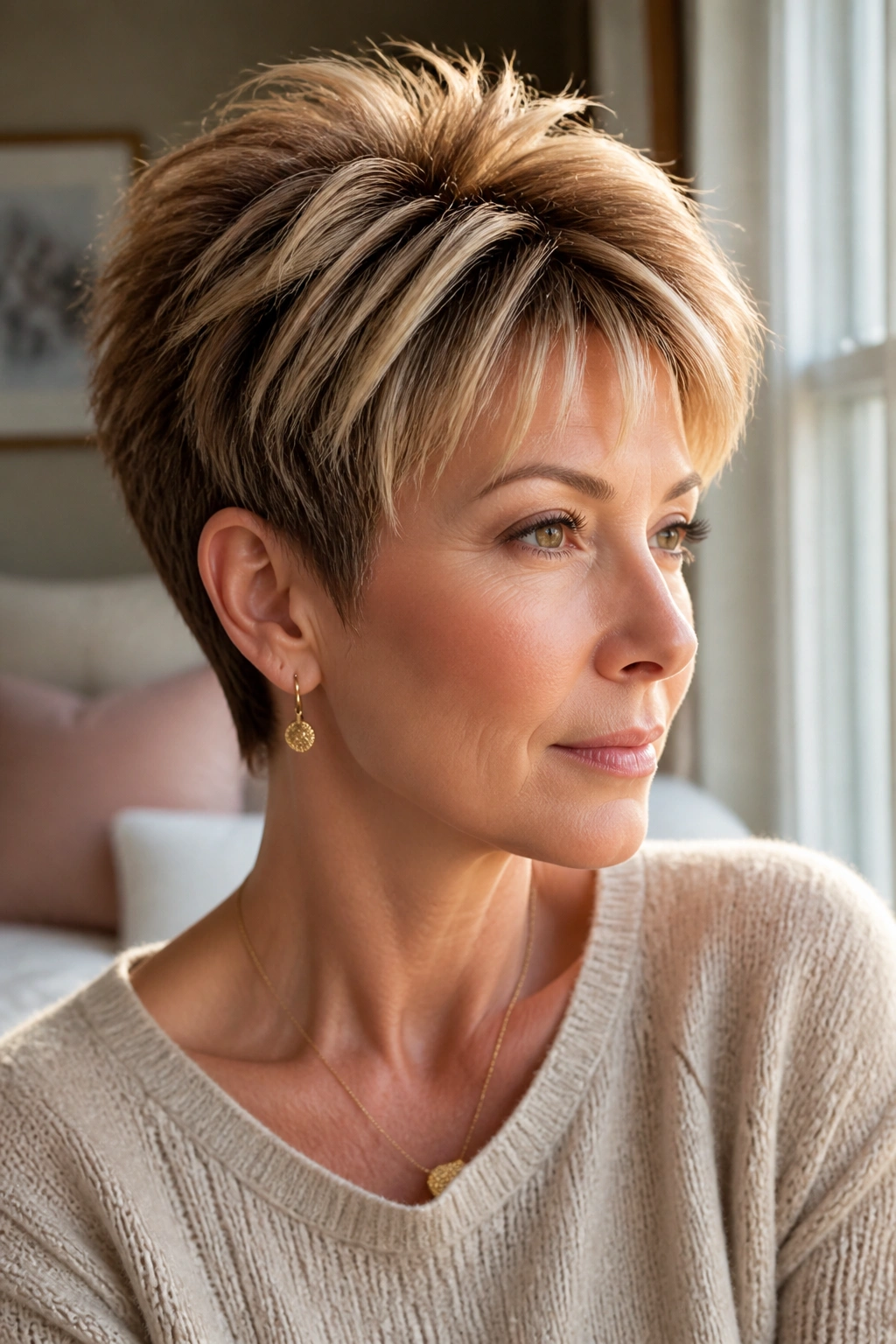
This is the cut I reach for when someone wants short hair but does not want that tight, helmet-like finish. The crown stays soft and feathery, while the sides are tapered close enough to keep the whole shape clean. On fine hair, that little bit of air at the top matters more than another inch of length.
The honey color works best when it sits on the upper layers, not as one flat wash from root to tip. A few lighter pieces around the crown and fringe make the top look fuller from a distance, which is half the battle with fine strands. If the hair is flat by nature, this is one of the easiest ways to fool the eye.
Ask for point-cut ends, a slightly shorter nape, and a crown that can be lifted with a round brush or fingers. The result is soft, easy, and not fussy at all.
2. Side-Swept Honey Pixie With a Long Fringe
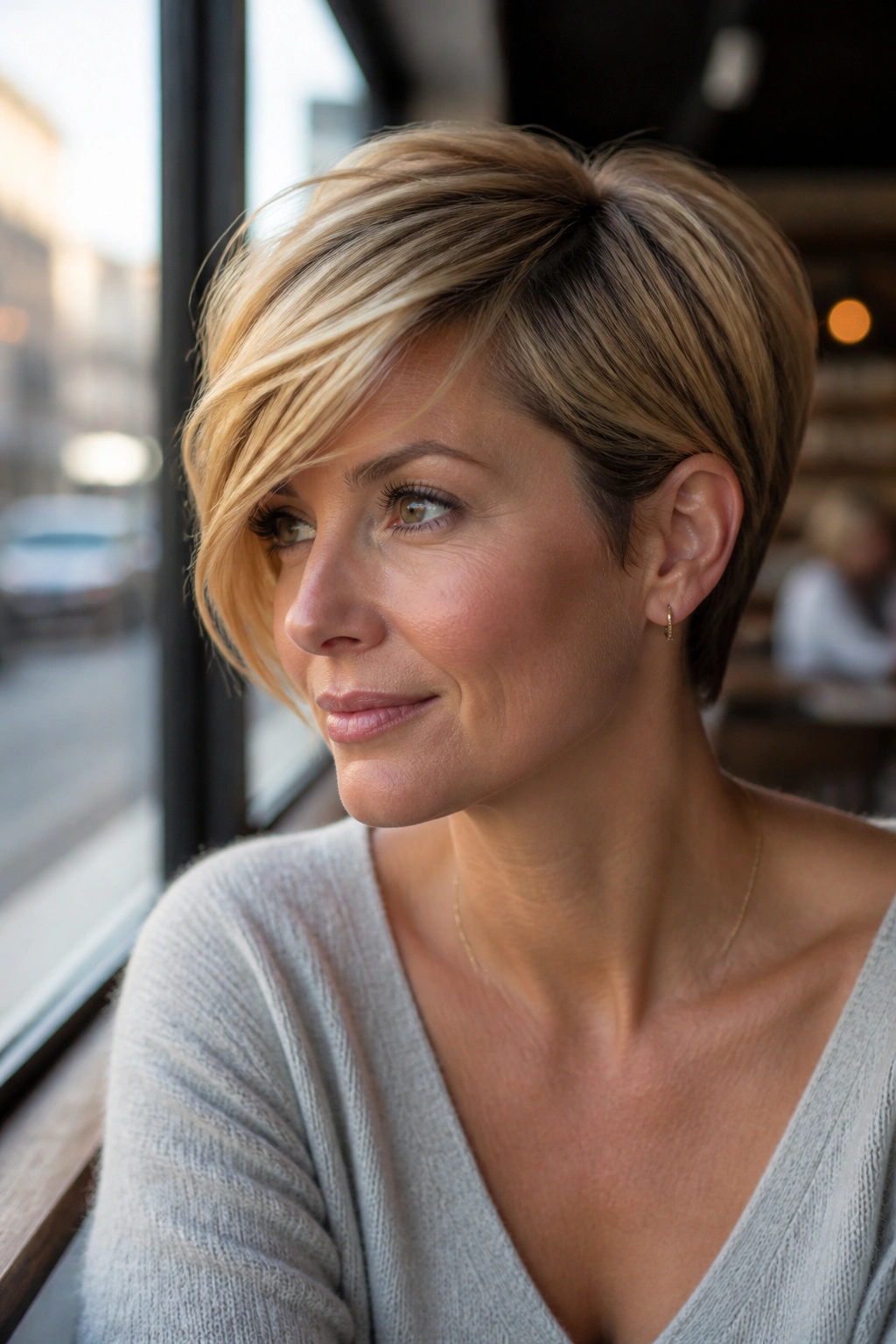
A long side sweep is one of the smartest tricks for fine hair. It gives the front a sense of weight without dragging the rest of the cut down, and that diagonal line across the face makes the style feel fuller than a straight-across fringe.
Why the Side Sweep Helps
The sideways movement hides a thin hairline better than a blunt bang ever will. It also gives you room to tuck the fringe behind one ear when you want a cleaner look. That tiny bit of flexibility is worth a lot.
Styling Notes
- Blow-dry the fringe in the opposite direction first, then sweep it across for a soft bend.
- Use a pea-size amount of lightweight cream only at the ends.
- Keep the longest pieces around brow to cheekbone length for the cleanest shape.
This cut suits people who want softness around the face but still want the honey tone to show through in a visible, flattering stripe of light.
3. Tapered Nape Pixie That Keeps the Back Clean
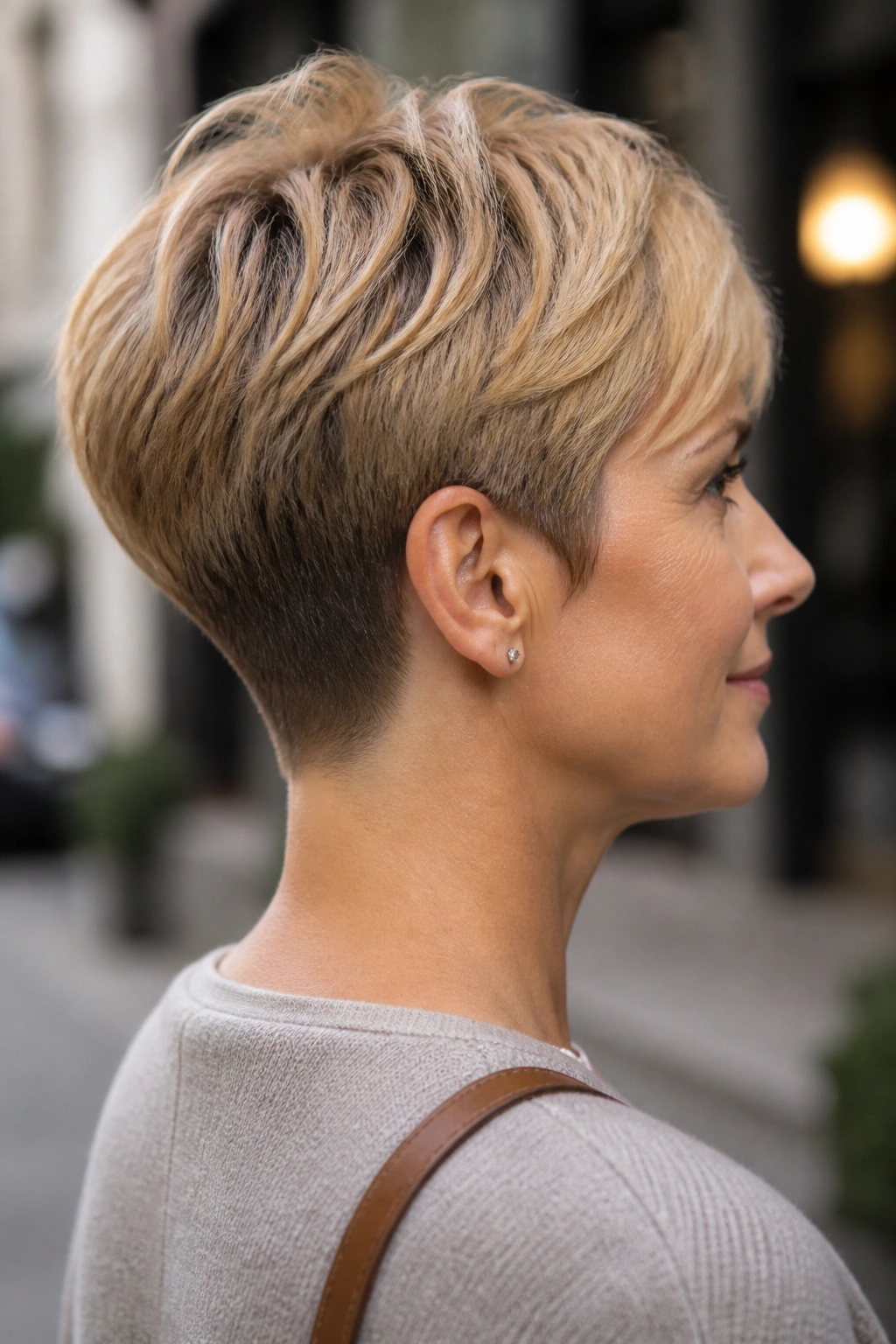
Why does the back of the head matter so much on fine hair? Because a tidy nape makes the top look more deliberate. A tapered neckline removes the ragged, see-through look that can happen when short hair grows out unevenly.
The nice thing about this shape is that it feels neat without looking severe. The nape hugs the neck, the sides stay light, and the top gets to keep a little height. Honey color helps here too, especially if the upper layers are a shade brighter than the underlayers.
I like this cut for people who want a polished finish without daily fuss. It grows out in a friendly way, and it keeps the silhouette compact instead of wispy. Clean in the back. Soft on top. That’s the whole point.
4. Choppy Honey Pixie With Piecey Ends
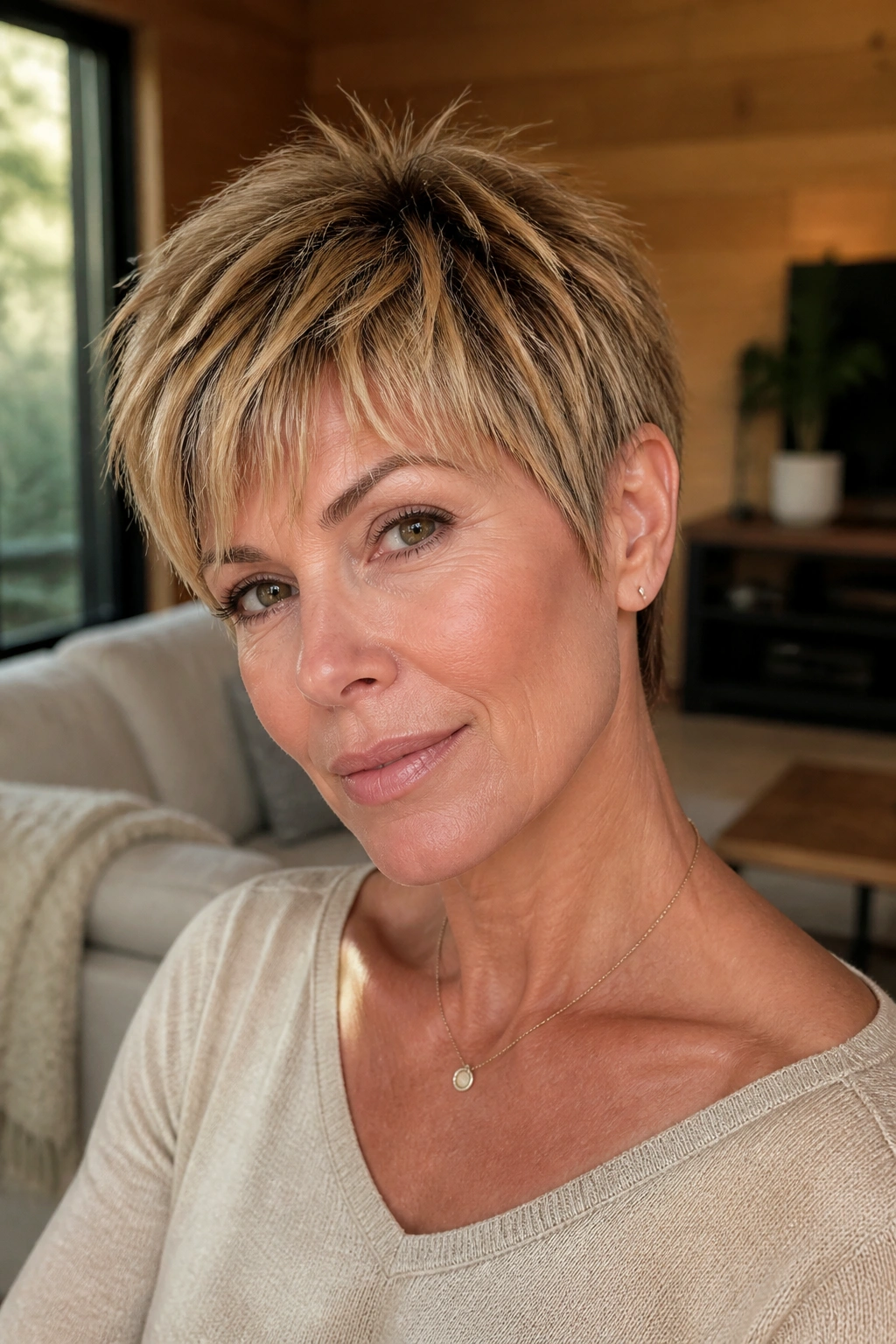
If your hair falls flat the second it air-dries, choppy ends can rescue the shape. The trick is to keep the texture broken and small rather than creating big, jagged chunks that look overcut. Fine hair usually does better with tiny irregularities than with dramatic layering.
One good salon detail changes everything: ask for point-cutting through the ends instead of a blunt line. That gives the honey pieces somewhere to catch light, especially around the fringe and temples. A matte paste or soft texture cream can then pull out just a few bits at a time.
- Best for hair that sticks to the head
- Good if you like a slightly undone finish
- Strong choice when you want movement more than polish
This is the cut that says, “I meant for it to look easy,” which is a nice thing to be able to say about a pixie.
5. Long-Front Pixie That Skims the Brows
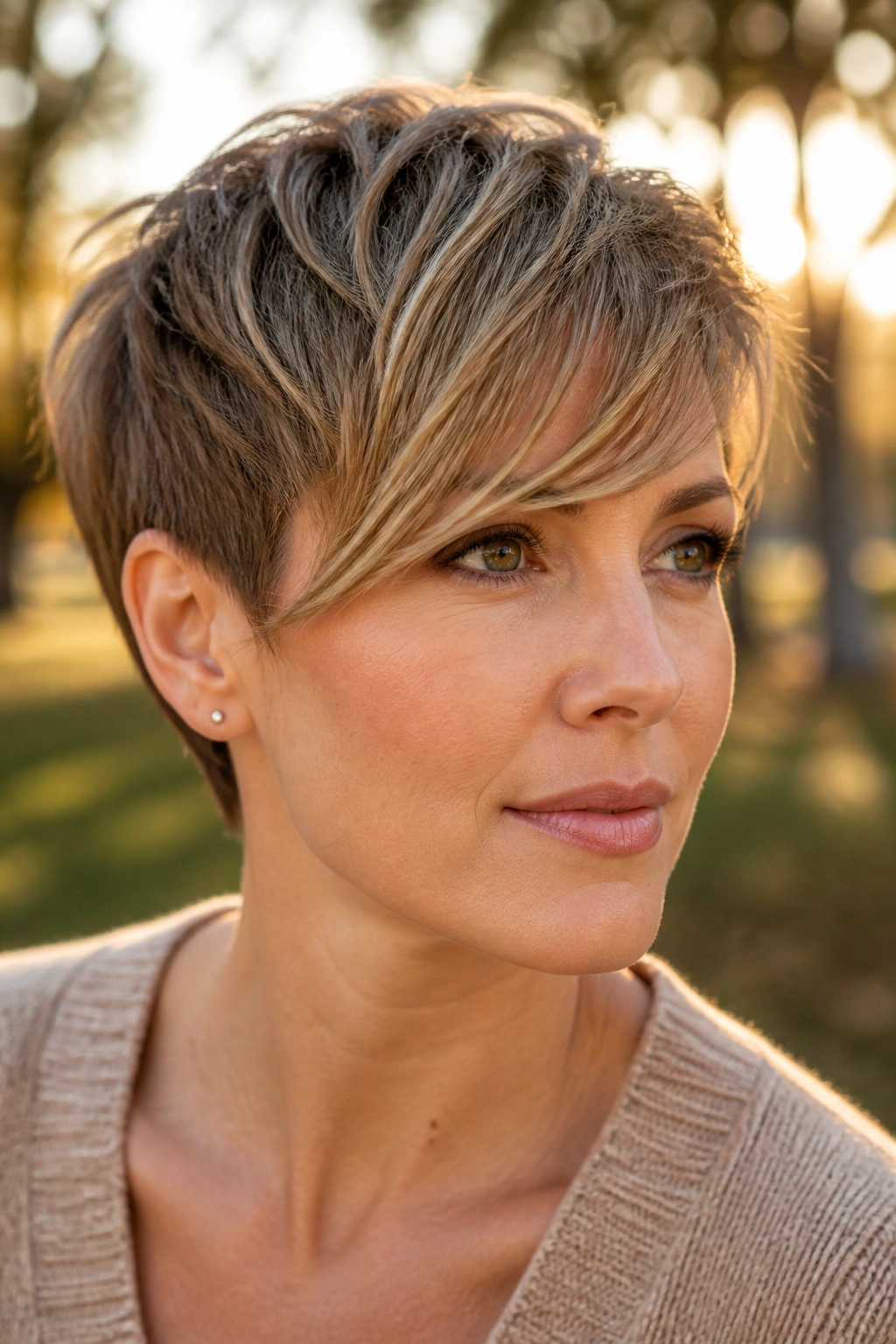
A longer front section changes the whole mood of a pixie. Instead of feeling cropped from every angle, the cut keeps a bit of drama in the fringe, and that extra length helps fine hair look less fragile. The front becomes the anchor.
Unlike a blunt bowl shape, this version leaves the perimeter soft. The back stays close, the sides stay neat, and the front gets to drape a little over the brow line. Honey highlights around that area make the face look brighter without screaming for attention.
I like this on anyone who wants a pixie but is nervous about losing too much softness. The longer front buys you confidence. It also makes styling easier on days when your hair refuses to cooperate, which happens to all of us.
6. Micro Pixie With Soft Edges
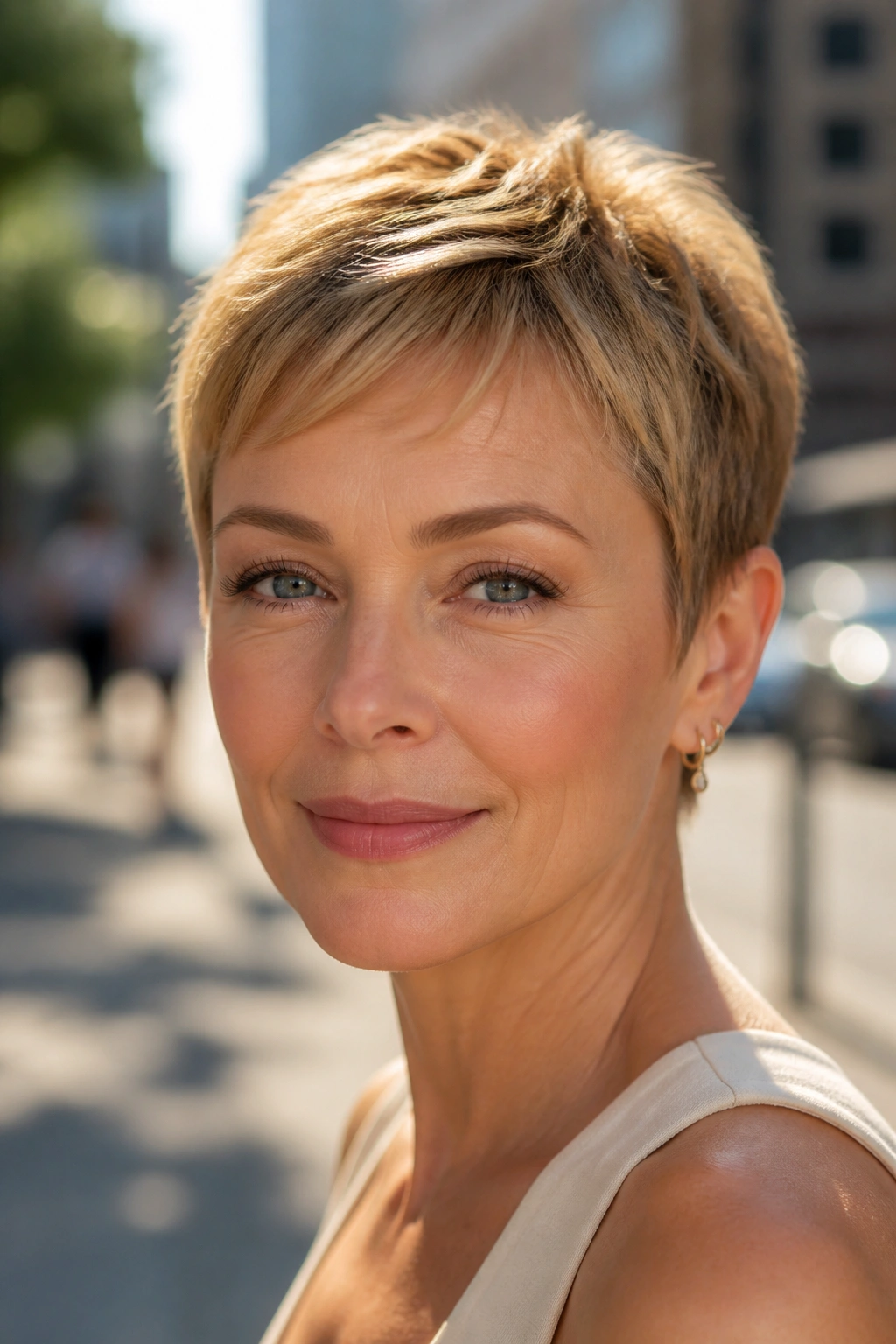
Shorter is smarter here. A micro pixie can be a strong choice for fine hair because it removes the weight that makes strands hang limp, then replaces it with a crisp, close shape that feels intentional. The key is softness at the edges so it doesn’t look too sharp.
Honey tones keep this cut from looking stark. On very short hair, a warm shade is kinder than a flat ash or a heavy dark color because it reflects light across the scalp and makes the surface read smoother. The effect is subtle, but it matters.
Best detail to ask for: a tiny bit of length left at the hairline and around the ears. That small softness keeps the cut from looking severe, and it makes the whole thing easier to wear with glasses, earrings, or a bare face.
7. Rounded Crown Pixie With a Little Height
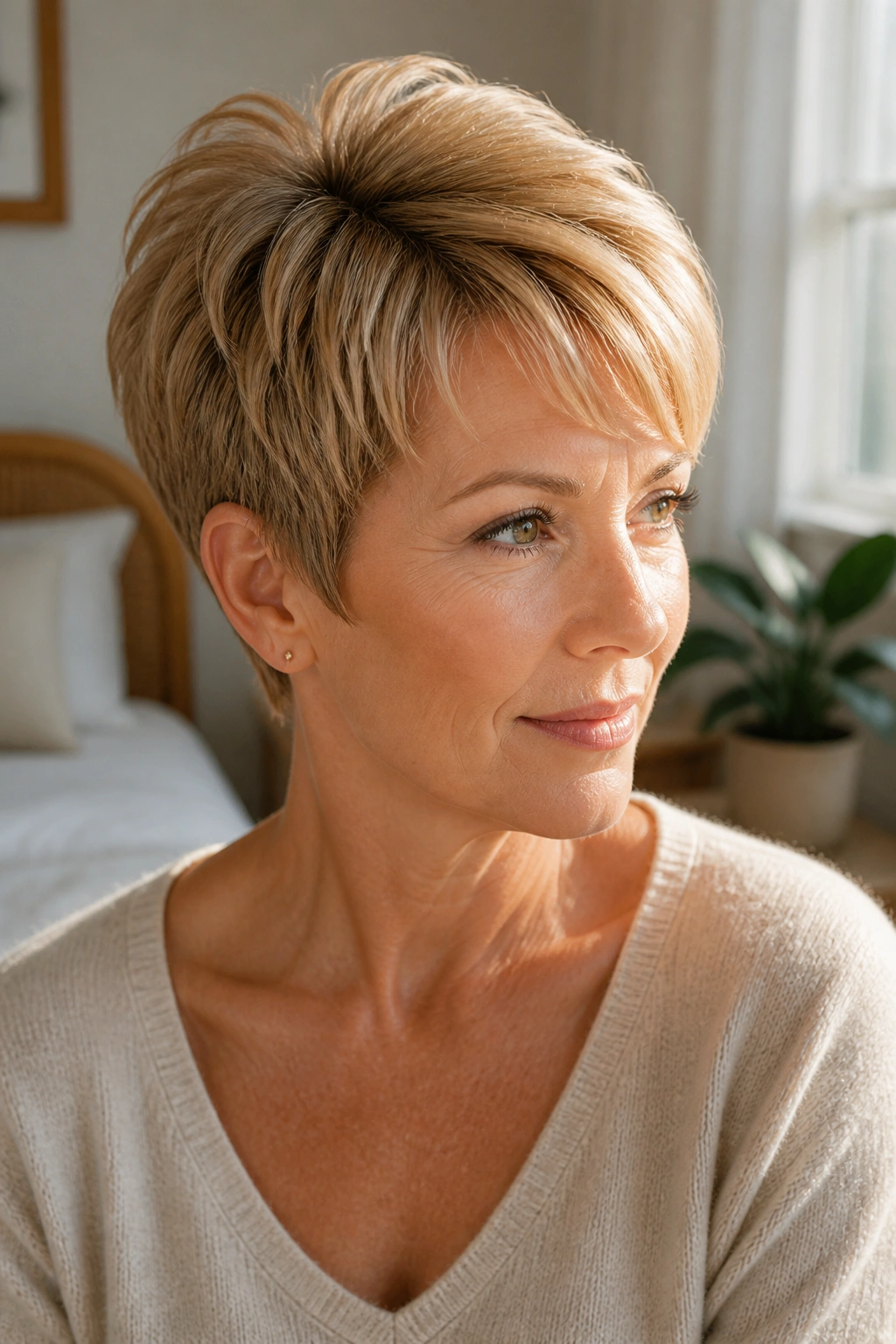
A rounded crown gives fine hair a shape it can actually hold. The top is cut to follow the curve of the head, but the crown is left just long enough to push up a little when you blow-dry it. That slight lift stops the style from sitting flat.
What to Ask For
- Keep the top layers soft, not chopped into big steps.
- Leave enough length at the crown to bend upward with a brush.
- Taper the sides so the roundness stays on top, where it belongs.
How It Looks in Real Life
This cut works well when you want the honey color to show movement, not stripes. A few lighter pieces at the highest point of the head make the shape feel airy. If your hair tends to lie down after one hour, this is one of the better shapes to try.
8. Undercut Pixie That Removes Bulk Without Looking Harsh
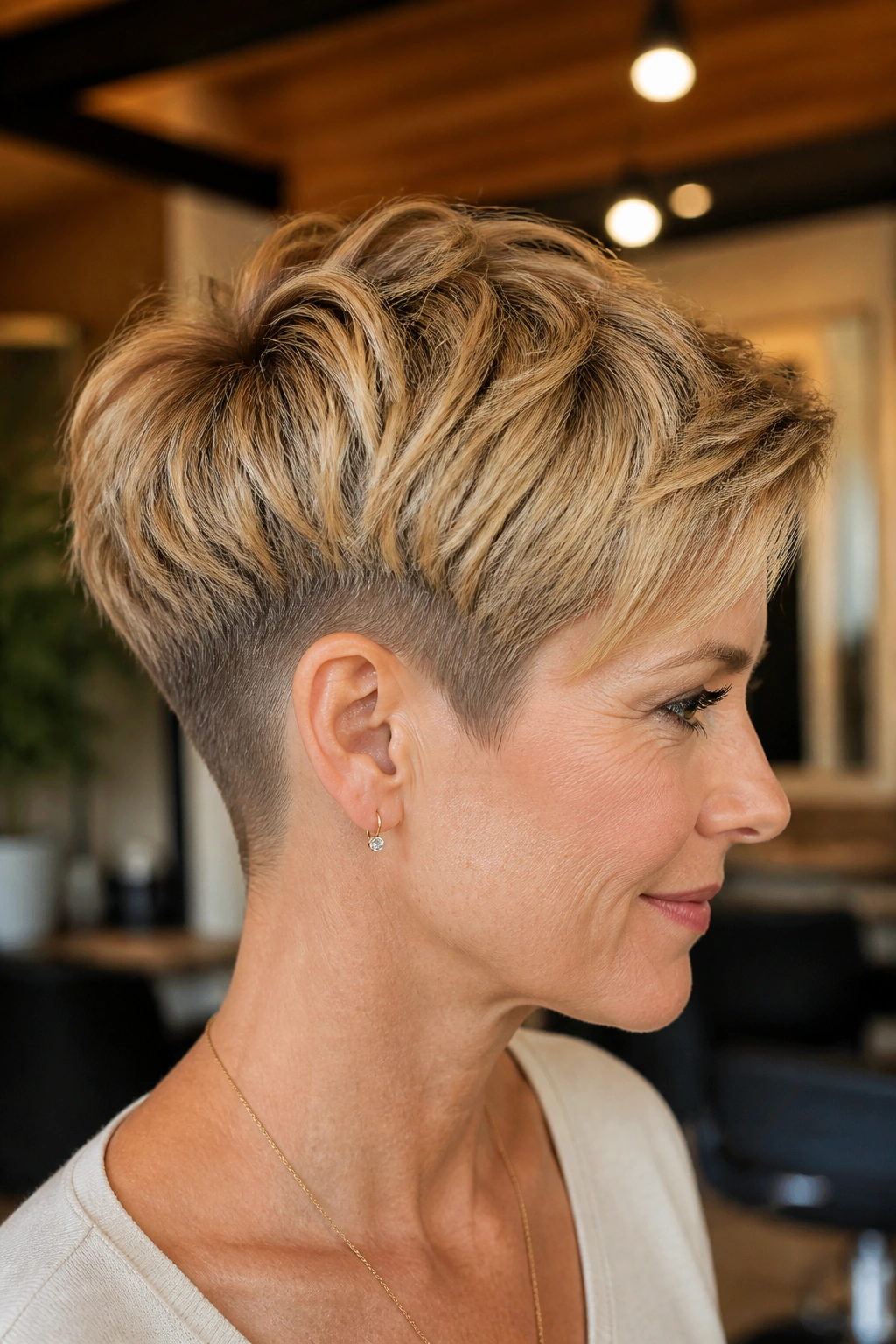
An undercut sounds dramatic, but it does not have to be. On fine hair, a small hidden undercut around the nape or behind the ears can clean up the outline and stop the cut from puffing out in awkward places. That keeps the top from looking thin by comparison.
The best version keeps the undercut quiet and lets the honey top layers do the talking. You get contrast without a hard edge. You also get less bulk where hair tends to stick out under scarves, collars, and jackets.
I’d choose this for someone who likes a sharper finish and does not mind a little salon upkeep. It grows out fast at the sides, so it’s not the easiest low-maintenance option, but it can make fine hair look much more deliberate.
9. Shaggy Honey Pixie With Broken-Up Layers
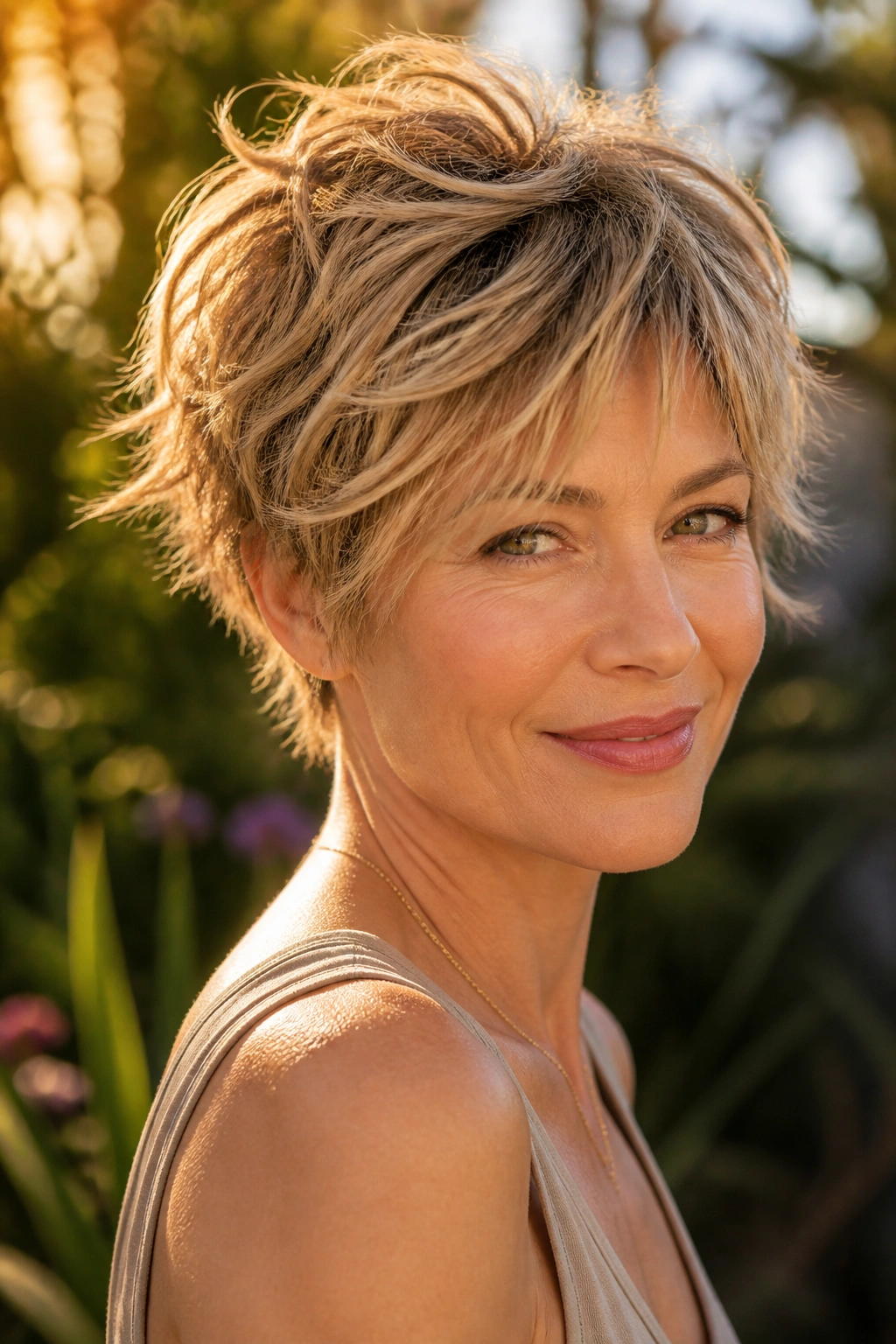
Can a shaggy shape work on fine hair? Absolutely, if the layers are handled with restraint. The goal is not to strip the hair bare. It’s to break up the outline so the cut moves instead of sitting there like a solid cap.
What Makes It Work
The honey color does some of the heavy lifting here. A few brighter ends and a softer root area create depth, which helps the choppy layers make sense. Without that color shift, shaggy pixies can look messy in a bad way. With it, they look lived-in.
Use a small amount of styling paste and pinch the ends into separate directions. Don’t overdo it. The style should look touched, not sculpted. That difference is huge, and people notice it even if they can’t name it.
10. Pixie Bob Hybrid for Fine Hair and More Coverage
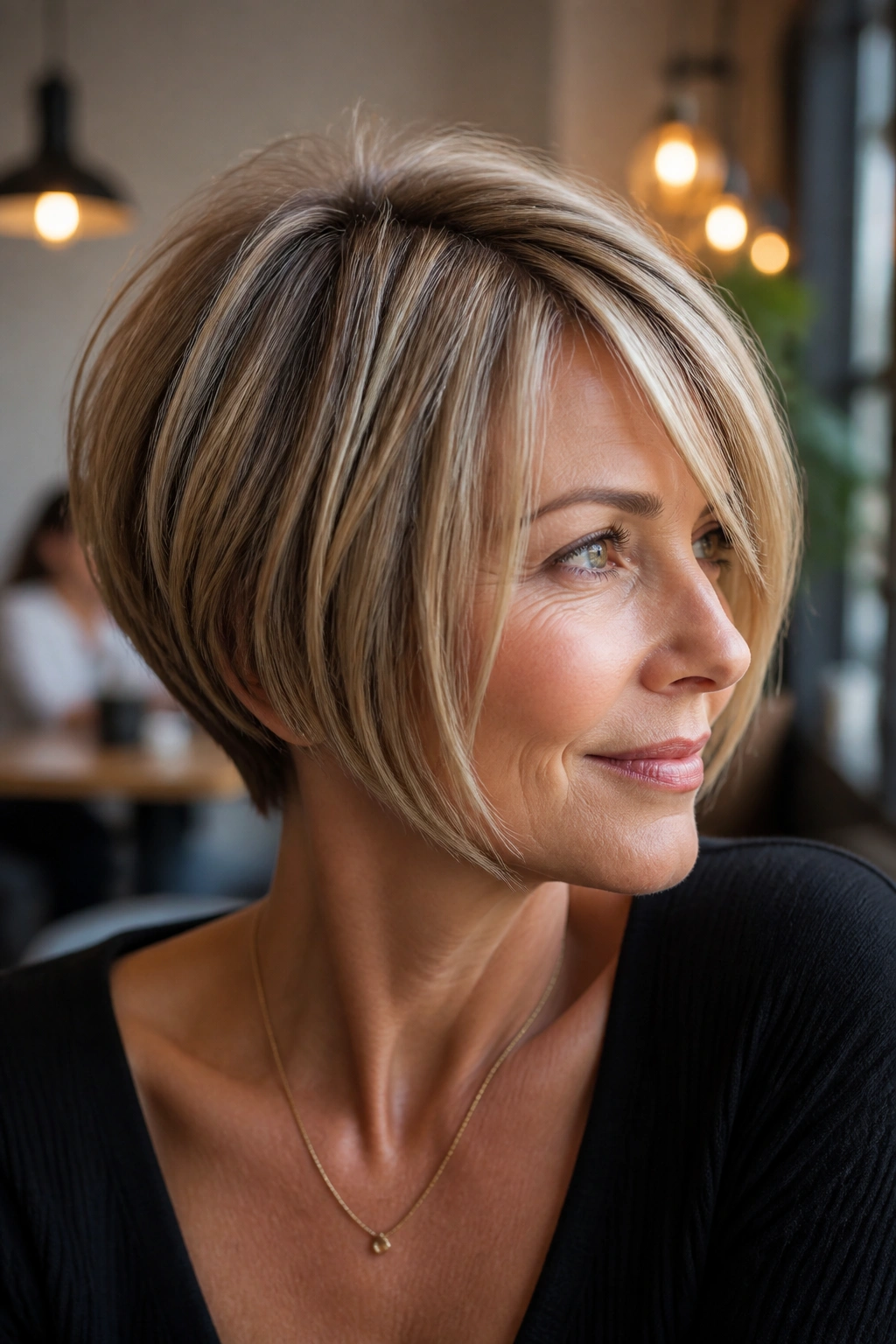
If you want short hair but not a full crop, the pixie bob is a safe place to land. It keeps more length around the ears and jaw, which gives fine hair a little extra coverage and makes the silhouette feel fuller from the side.
A honey blend works especially well here because the longer front pieces can carry the lighter tone without making the roots look sparse. I like this cut when someone wants to see how short hair feels before going even shorter. It’s a good middle step, and there’s no shame in that.
The shape also grows out well. That matters more than people admit. A cut that still looks good at six or eight weeks tends to get worn with more confidence, and confidence does a lot for a hairstyle.
11. Air-Dried Tousled Pixie That Moves on Its Own
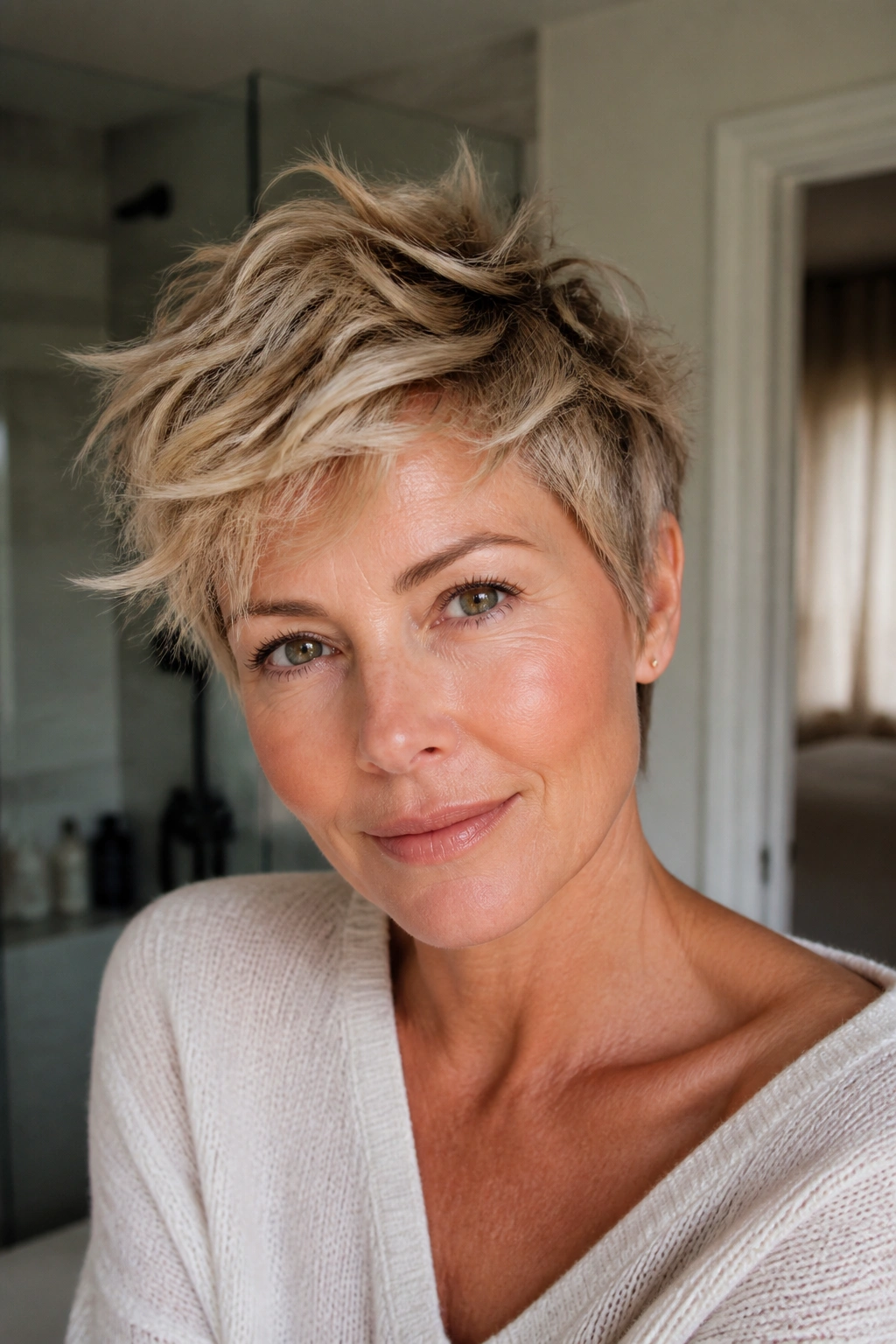
Some cuts are built to be blown out. This one is built to be left alone. A tousled pixie works on fine hair when the layers are short enough to bounce back after washing, but long enough to bend rather than stick straight out.
A dab of mousse at the roots and a little finger-raking while it dries can be enough. The honey tone helps because the shifting pieces catch light at different angles, so the style looks fuller even when the texture is loose. That part is sneaky in the best way.
If you hate a rigid routine, this is a solid choice. It forgives a messy morning. It also looks better the less perfect it is, which feels refreshingly honest.
12. Sleek Sides Pixie With Volume on Top
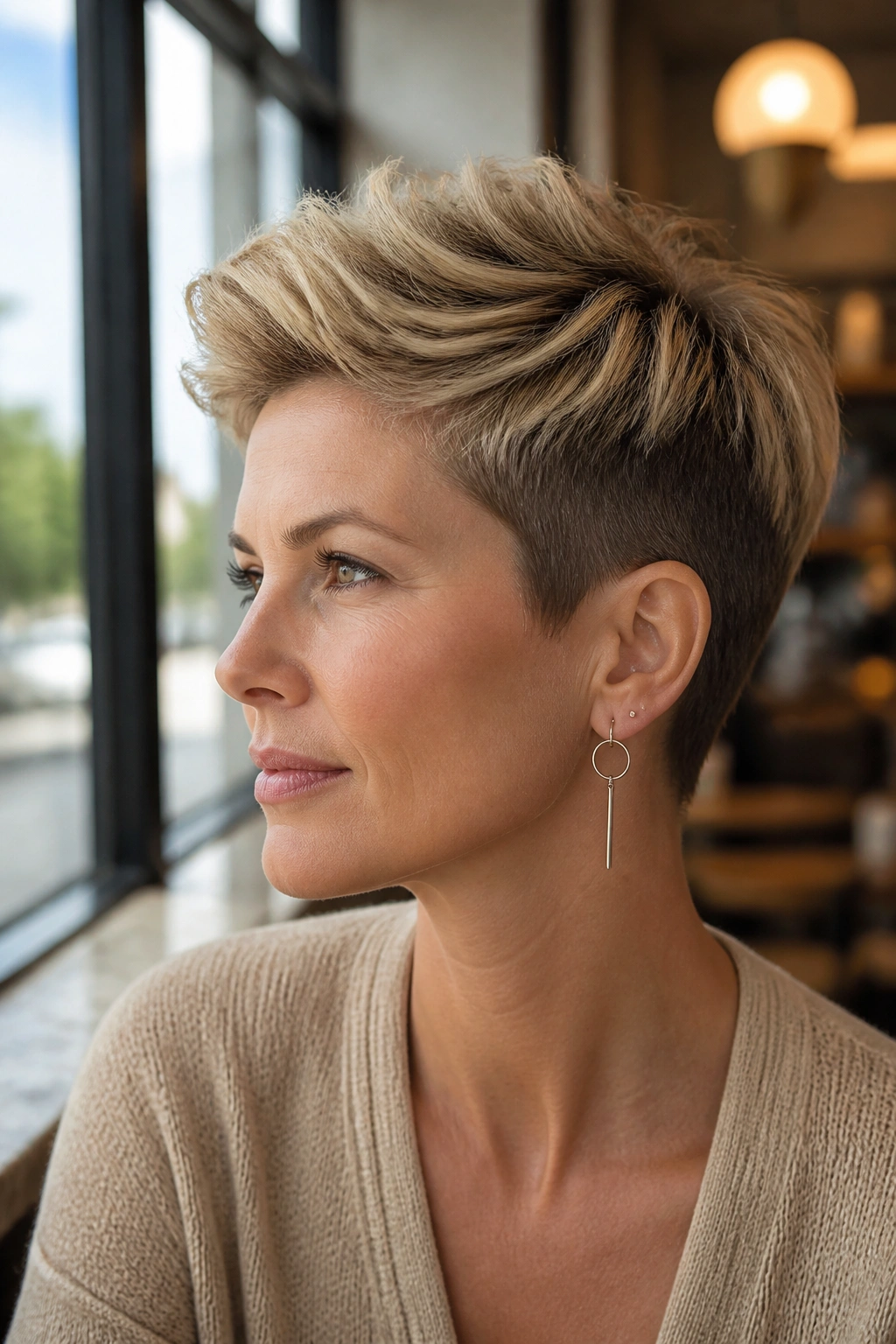
A polished pixie does not have to look severe. Keeping the sides sleek while boosting the top creates a sharp contrast that fine hair usually handles well, because the crown gets all the visual attention. That’s where you want the fullness.
Best Way to Style It
Use a round brush or a small flat brush at the roots, then smooth the sides with a tiny touch of pomade. Not much. Too much product on fine hair turns the shape greasy fast, and nobody wants that. Keep the top soft and lifted, not puffed.
This cut suits dressier outfits, clean lines, and anyone who likes a neat finish. Honey blonde gives the style warmth so it does not read too hard against the skin.
13. Wavy Honey Pixie That Lets the Bend Show
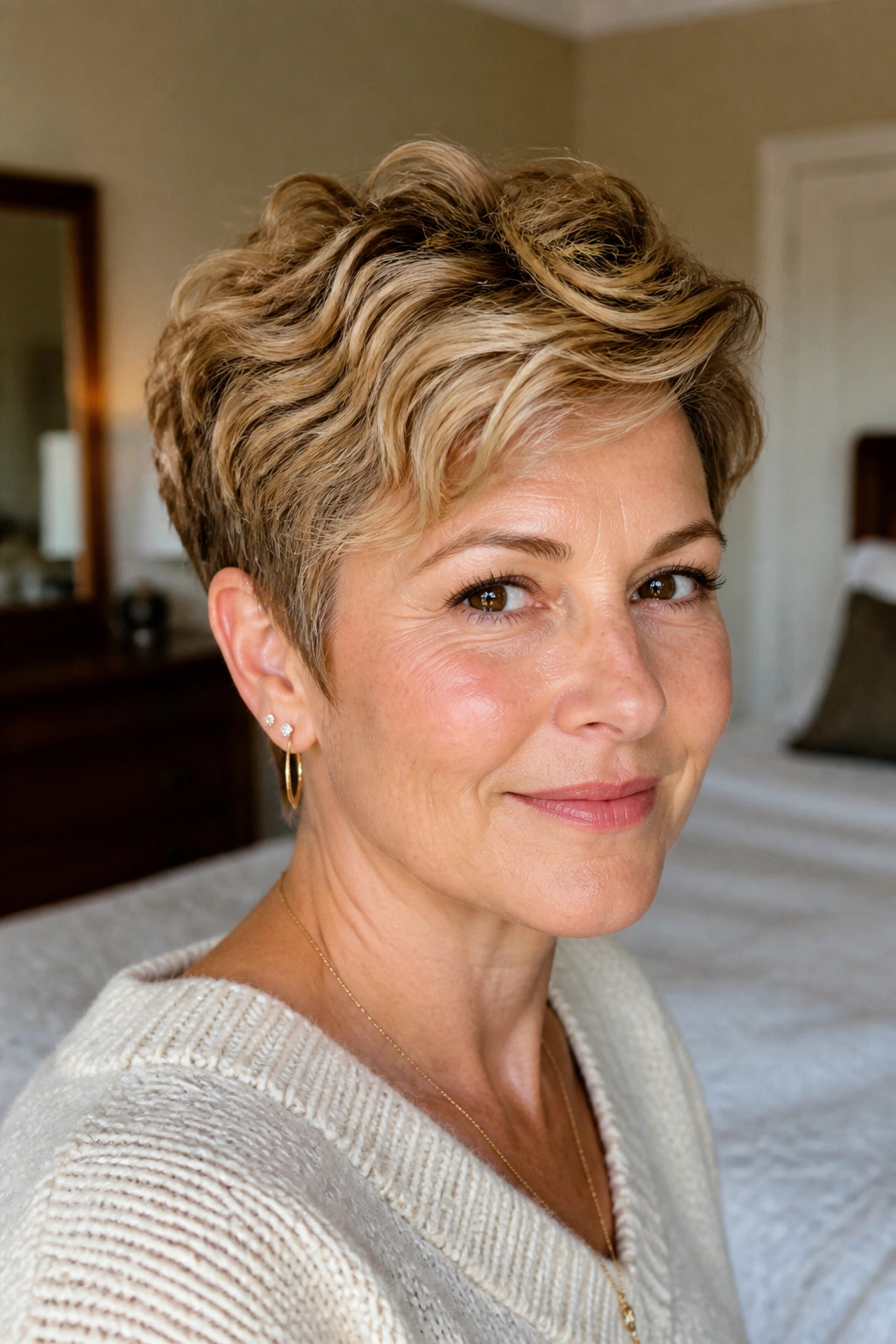
If your fine hair has even a small wave, let it stay visible. A wavy pixie keeps enough length in the top and crown to show that bend, which is often the thing that makes the hair look alive instead of flat.
What to Watch For
- Leave the top slightly longer than the sides.
- Keep the nape tidy so the wave stays focused up top.
- Use a light cream, not a heavy curl balm.
The honey color adds a soft ripple effect across the surface. On movement, it looks almost woven. That’s the fun part of this cut: the texture does not have to be dramatic to be useful. A small bend is enough.
14. Deep Side Part Pixie for Instant Lift
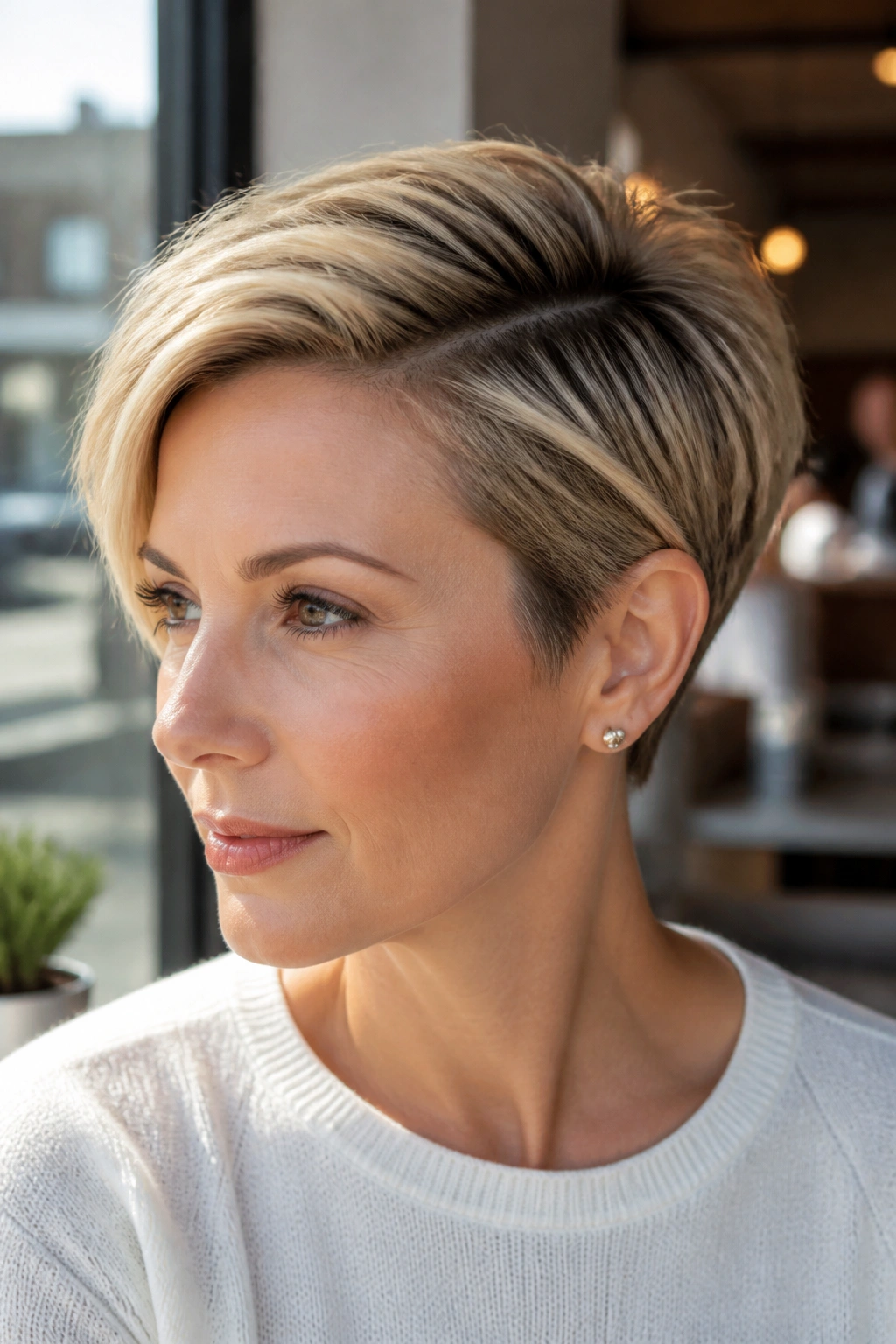
A deep side part can do more for fine hair than an extra layer or two. It breaks the symmetry, creates a stronger shape at the root, and gives the crown a chance to lift away from the scalp instead of lying down in one flat sheet.
Compared with a center part, this version feels richer and a little more sculpted. The honey color should sit heavier on the raised side so the eye picks up the change in volume. Even a tiny contrast in placement can make the cut look fuller.
I’m a fan of this one for people with a stubborn cowlick or a part that always wants to split open. You stop fighting the hair and start working with it. Much easier.
15. Soft Mullet Pixie With a Longer Neckline
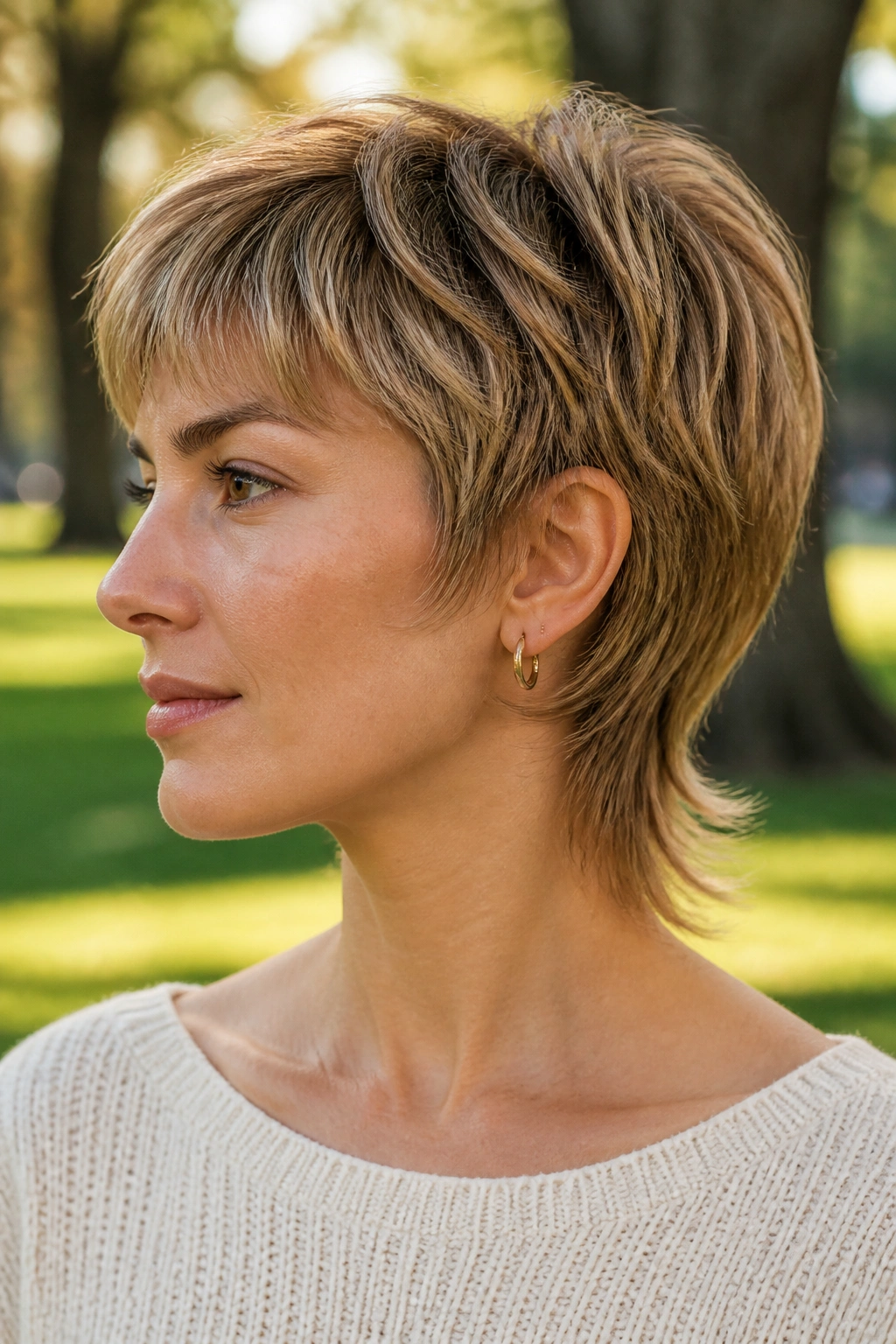
Can the mullet idea work on fine hair? Yes, if you keep it soft. A gentle pixie mullet leaves a bit more length at the nape and around the sides, which helps the cut feel less sparse while still keeping the crown cropped and airy.
The trick is to avoid a harsh disconnect. You want a smooth transition from the crown to the neckline, not a sharp jump. Honey highlights are useful here because they blur the steps and keep the whole shape looking feathered instead of chopped.
This cut is for someone who wants edge without commitment to a severe shape. It has attitude, but it does not bully fine hair into something it cannot hold.
16. Wispy Bang Pixie That Softens the Forehead
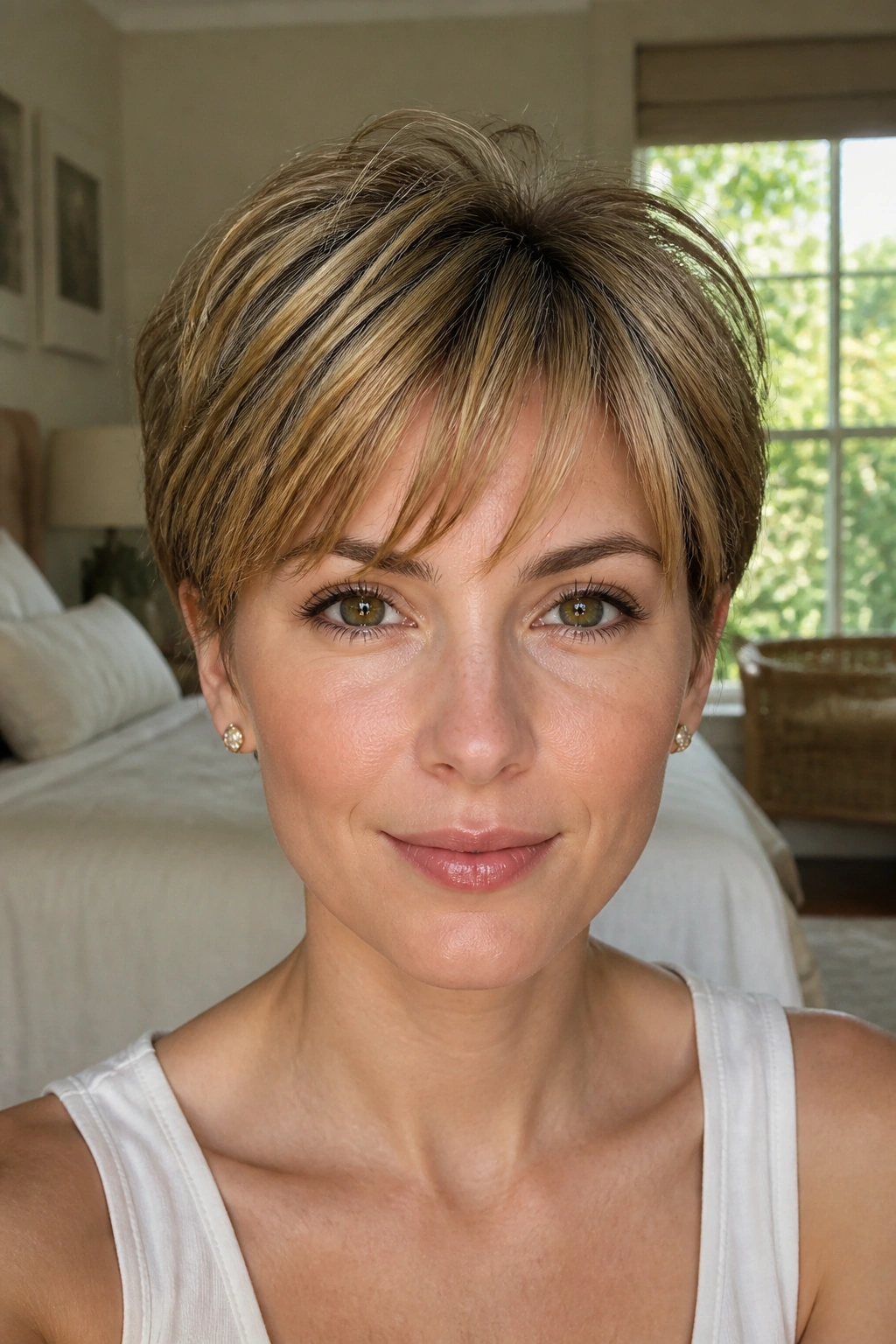
A wispy bang makes a pixie look gentle right away. The fringe stays light enough that it does not swallow the face, which is a real risk with fine hair if the bangs are cut too dense. Thin hair needs breathing room.
Keep the bangs a little longer than you think at first. Fine hair tends to sit shorter once it dries, and a fringe that lands just below the brows usually feels safer than one cut too high. Honey tones at the front make the softness obvious without making the style look washed out.
This is one of my favorite cuts for people who want a little face framing but do not want to commit to a heavy fringe. It feels easy, and it grows out gracefully.
17. Ear-Tucked Pixie With Longer Temple Pieces
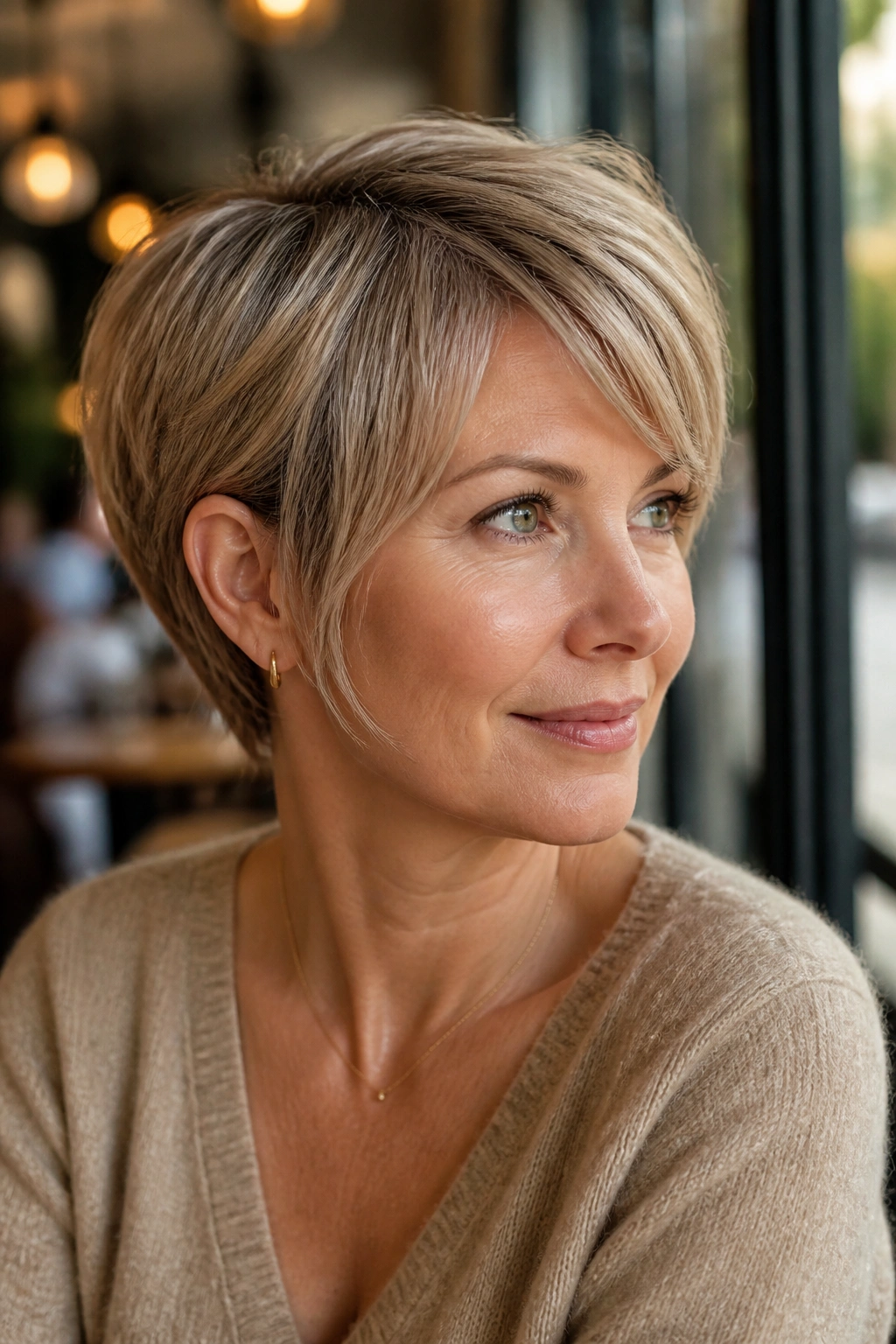
An ear-tucked pixie is one of those underrated cuts that looks simple until you actually live with it. The longer temple pieces let you tuck one side back, show off earrings, or wear glasses without the whole style feeling boxed in.
Why It Feels Softer
The sides stay long enough to skim the face, which is flattering when fine hair can sometimes seem too exposed in a very short crop. Honey pieces near the temples keep the area bright, so the cut still reads light and airy.
What to Ask For
- Keep the temple length around the top of the ear.
- Taper the lower side cleanly so the tuck looks neat.
- Leave a little bend in the fringe instead of cutting it rigid.
It’s a small change, but it makes the pixie more wearable day to day.
18. Honey Pixie With a Shadow Root for Depth
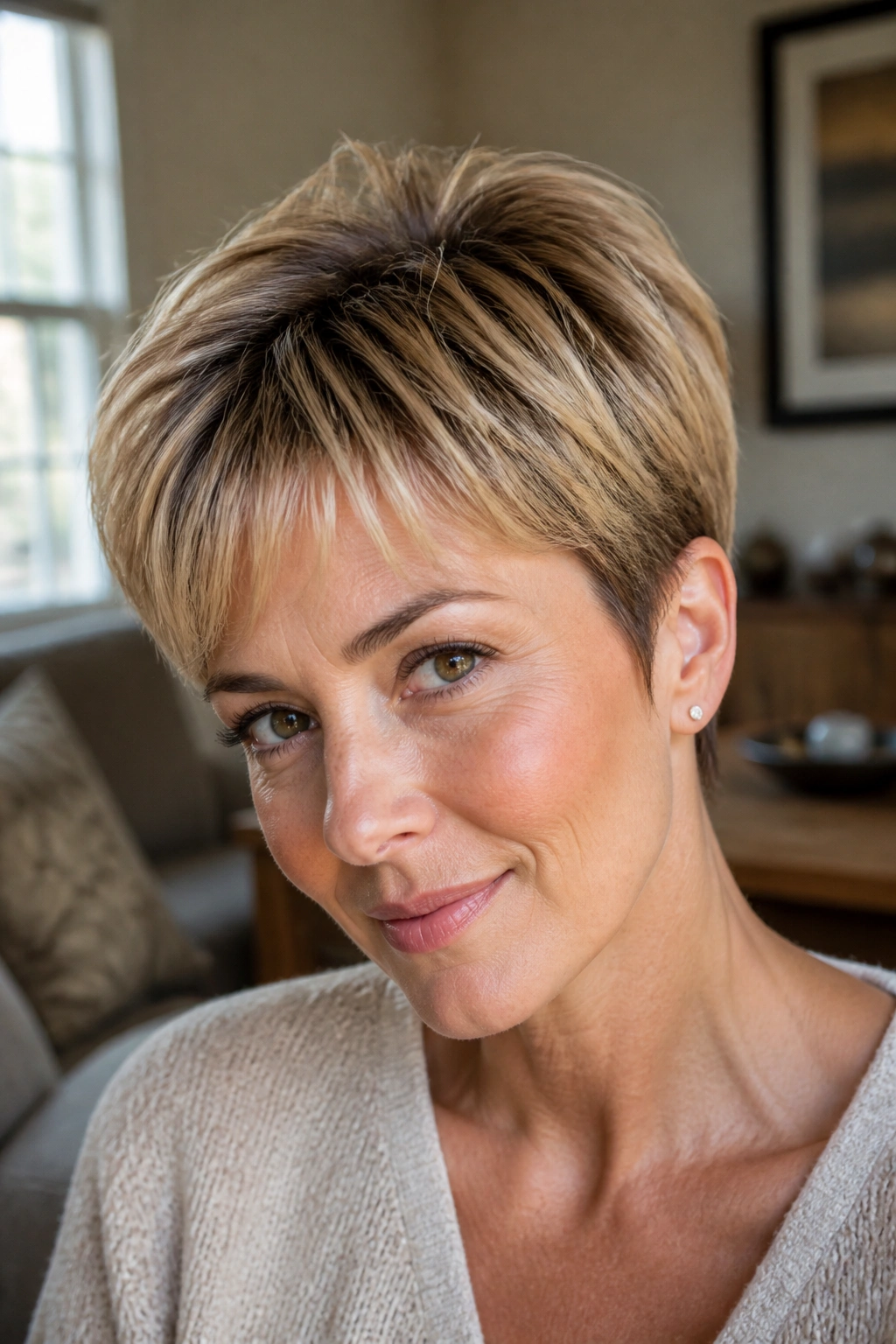
If your hair looks thin at the root, a shadow root is worth talking about. Leaving the base one shade deeper than the honey mids creates depth right where fine hair usually needs it most, and it softens the grow-out line so you’re not stuck with obvious upkeep.
This is one of the few color tricks that genuinely earns its keep. The darker root gives the top some visual weight, while the honey lengths keep the style warm and bright. That balance matters more than chasing a flat all-over blonde.
- Ask for a root shade that is only slightly deeper than the mids.
- Keep the honey brighter around the fringe and crown.
- Avoid chunky streaks that carve the head into stripes.
The result looks richer, not harsher. That’s the sweet spot.
19. Baby-Bang Pixie for a Sharp Little Edge
Baby bangs are not soft. That’s the point. A short fringe creates a graphic line that makes fine hair look intentional, even when the rest of the cut stays light and airy. It’s a bold move, but not a ridiculous one.
Honey color keeps the style from feeling too stark. On a short fringe, warmth matters because it stops the face from looking washed out. A small amount of texture through the top keeps the line from feeling helmet-like, which is where baby bangs usually go wrong.
Best For
- Straight or slightly wavy fine hair
- People who like a strong front view
- Faces that can handle a shorter forehead line
I would not pair this with heavy, stiff styling. It needs touch, not shellac.
20. Layered Pixie Shag With a Light, Airy Finish
A pixie shag keeps more movement than a classic crop. The layers are a little longer, the edges are a little rougher, and the whole cut feels looser around the head. Fine hair often benefits from that looseness because it stops the shape from sitting too close and too flat.
The honey shade can be placed in narrow ribbons through the top and side layers so the cut has depth without looking striped. That’s the difference between a shag that feels soft and one that just looks overdone. Tiny, broken-up highlights usually work better here than chunky ones.
This style is good for people who want the casual side of short hair. It reads relaxed, but not lazy. There’s a difference.
21. Sculpted Pixie With Swept Fringe
Why does a swept fringe make fine hair look fuller? Because it gives the front a direction. Hair that has somewhere to go looks more purposeful, and purposeful often reads as thicker, especially when the honey tone creates a visible path of light across the top.
Blow-drying matters here. Use the nozzle on the dryer, aim the roots up and across, and set the fringe with a small round brush or even your fingers if the hair is cooperative. A pea-size touch of cream at the ends keeps the sweep from falling apart.
This cut feels a little more dressed up than a shaggy pixie. It’s the one I’d pick for a dinner out, a work event, or any day you want the hair to look shaped on purpose.
22. Tousled Pixie With Matte Texture
A matte finish can be your best friend on fine hair. Shine tends to show the scalp, while a soft matte paste gives the strands a little grit so they stand apart instead of lying in one smooth sheet. The cut does not need to be messy to look tousled.
The honey color adds warmth without fighting the texture. In fact, warm tones often make the movement read more clearly because the light lands on the raised pieces and the recessed parts stays quiet. That contrast is subtle, but it’s doing real work.
Use a tiny bit of dry shampoo at the root if the hair slips easily. Then rough up the crown with your fingertips and stop there. Overworking a pixie is the fastest way to make it look tired.
23. Asymmetrical Honey Pixie With One Longer Side
An asymmetrical pixie is a nice way to add drama without adding length everywhere. One side stays a touch longer, which creates a visual line that can balance the face and make fine hair look fuller on the heavier side.
Why It Works
The longer panel gives the eye something to follow, so the hair does not seem as sparse. Honey tones are especially useful here because they can be brighter on the longer side and slightly deeper on the shorter side, which adds dimension without any fussy color work.
How to Wear It
- Keep the longer side near cheekbone length.
- Taper the short side close enough to stay clean.
- Style with a side sweep or tuck to show the contrast.
If you like a little edge but do not want a harsh cut, this is a strong option. It has movement and a bit of attitude, and it still behaves.
24. Grown-Out Pixie That Still Looks Intentional
A grown-out pixie is not a mistake if the shape is handled well. On fine hair, a little extra length around the ears and nape can make the style look fuller because the perimeter has more body to it. The key is keeping the outline tidy enough that it looks chosen, not neglected.
Compared with a tighter crop, this version is easier to live with between trims. The honey tone should stay soft and blended so the regrowth does not create a hard line across the head. A light root blur helps here, and so does a trim that cleans the nape without taking away all your length.
This is a good one for anyone easing out of a shorter cut or just wanting a lower-maintenance week. It’s practical. Also, it’s underrated.
25. Soft Tapered Honey Pixie for Fine Hair
If you want one cut that makes the safest, strongest case for fine hair, this is probably it. A soft taper keeps the neckline neat, the sides close, and the crown light enough to lift without fight. It does not ask the hair to do anything fancy.
The honey tone works best when it stays slightly brighter on top and a touch deeper underneath. That small contrast gives the cut depth without turning it striped, and depth is what fine hair usually needs most. Not bulk. Not harsh layers. Depth.
Ask for soft point-cut layers at the crown, a clean tapered nape, and a fringe that can move sideways or forward. That combination gives you options, which is the real luxury with a pixie. You can wear it neat, loose, tucked, or a little messy, and it still looks like the same good haircut.
