



Fine hair is not a death sentence for style; it is simply a different texture that requires a different approach. Most people with fine strands spend their lives terrified of shorter cuts because they assume that cutting off length will result in a flat, lifeless, helmet-like shape. That is exactly the opposite of what happens when you commit to the right pixie cut.
When you have fine hair, length is often your enemy. It adds weight, and weight pulls everything down, flattening the volume at your roots and making your hair look thinner than it actually is. By removing that length, you remove the gravity that works against you. For brunettes specifically, a pixie cut offers a massive advantage: contrast. The depth of dark hair combined with the precision of a short cut creates distinct lines and shadows that make hair appear denser and more intentional. You aren’t just cutting your hair; you are engineering it.
The following list covers a wide spectrum of cuts, but every single one shares a common goal: building structure where your hair naturally lacks it.
1. The Classic Tapered Pixie
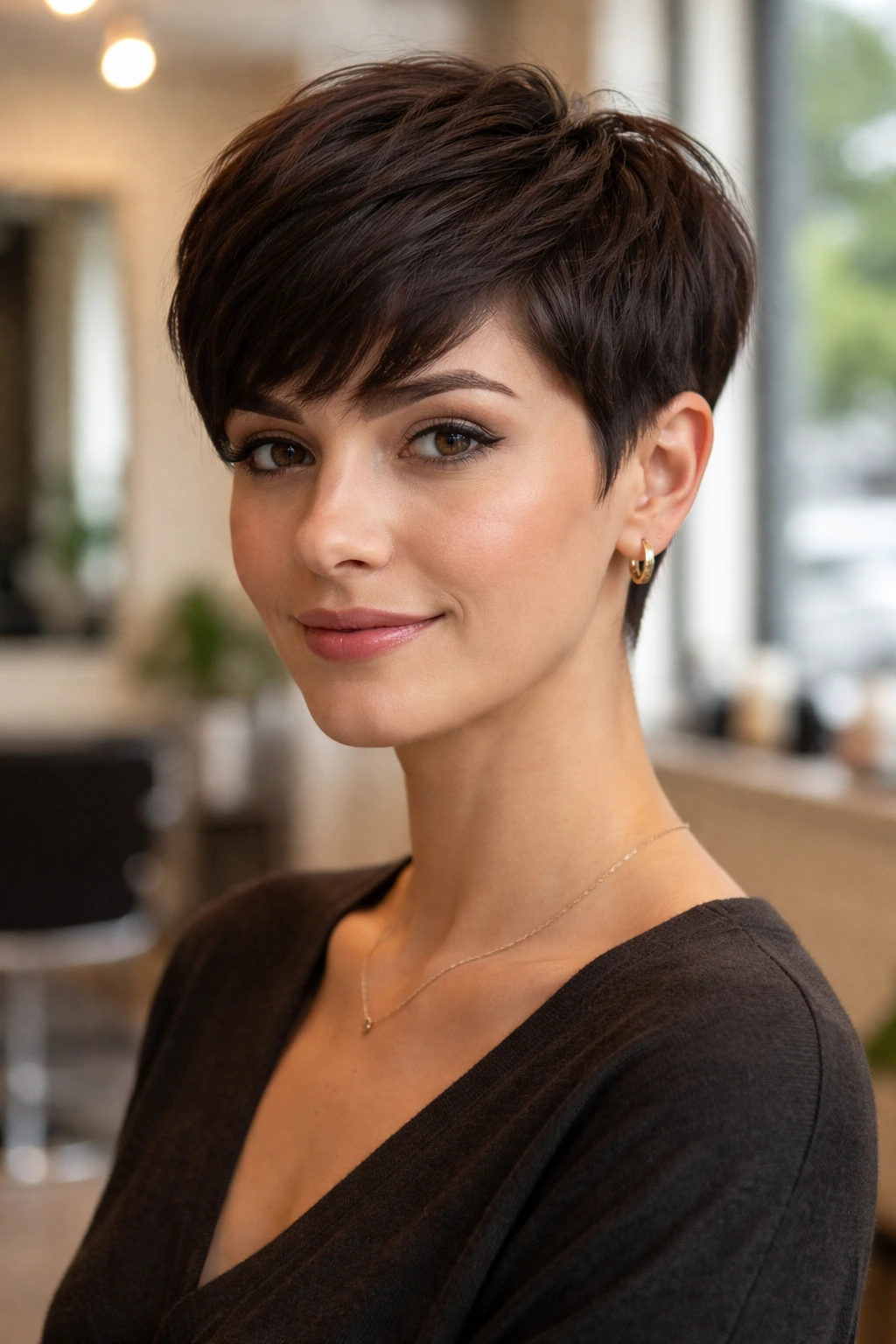
This is the baseline for short hair, the foundational look that proves you don’t need length to have style. A classic tapered pixie involves cutting the sides and the back close to the skin, gradually getting longer as you move toward the crown. For someone with fine, dark hair, this is the gold standard because it instantly creates a sense of density where there was none.
Why It Works for Fine Hair
The secret here is the graduated length. By keeping the nape and the perimeter tight, you remove the wispy ends that usually make fine hair look stringy. The longer hair on top then sits on a solid foundation, allowing you to use a volumizing powder or a light mousse to prop it up.
Key Styling Details
- The Cut: Ask your stylist to use scissors for the nape, not clippers. It leaves a softer, more feminine edge that grows out more gracefully.
- The Product: Use a dry texture spray. You don’t want anything wet or heavy here. You want a product that adds grit to the individual strands, making them appear thicker.
- The Finish: Keep the finish matte. Shine products often weigh down fine hair and highlight the scalp, which we want to avoid.
Pro tip: If your hair is exceptionally fine, ask for “invisible layering” inside the crown. It creates internal support without looking choppy on the surface.
2. Choppy Layers for Texture
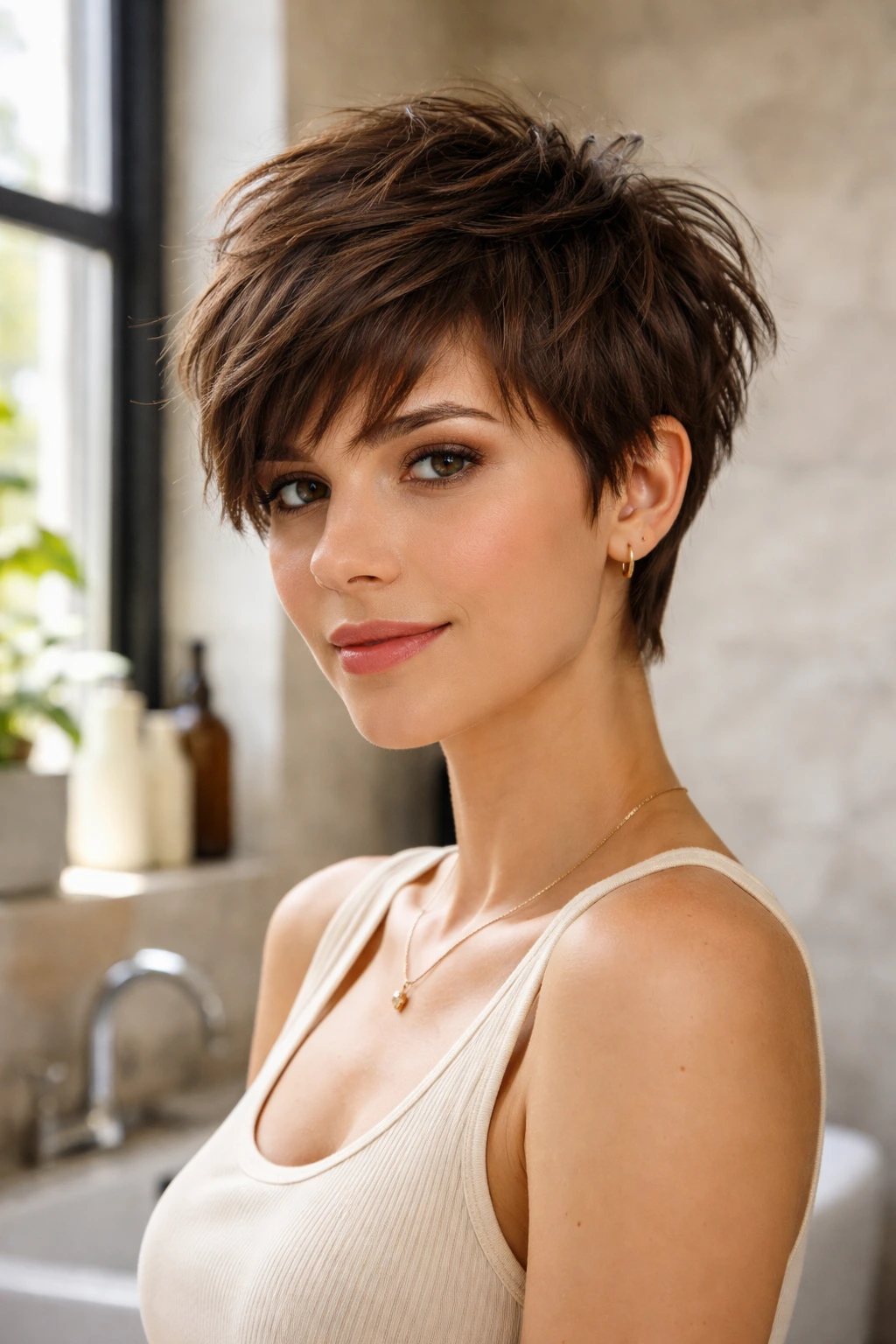
If your hair tends to lay flat against your skull, you need movement. Choppy layers are the most efficient way to get it. This cut uses a point-cutting technique—where the stylist cuts into the ends of the hair rather than straight across—to create uneven lengths that nest into each other.
When you have dark, fine hair, blunt lines can sometimes make the hair look even thinner because they highlight exactly how little hair there is. Choppy, irregular ends break up that visual line. It forces the eye to focus on the shape and the volume rather than the individual strands.
To style this, work a tiny amount of styling paste through your fingers—about the size of a pea—and pull it through the ends while the hair is damp. As it dries, it will clump into those distinct, piecey sections that give the illusion of a thicker head of hair. It feels messy, but it looks incredibly intentional.
3. The Textured French Bob-Pixie Hybrid
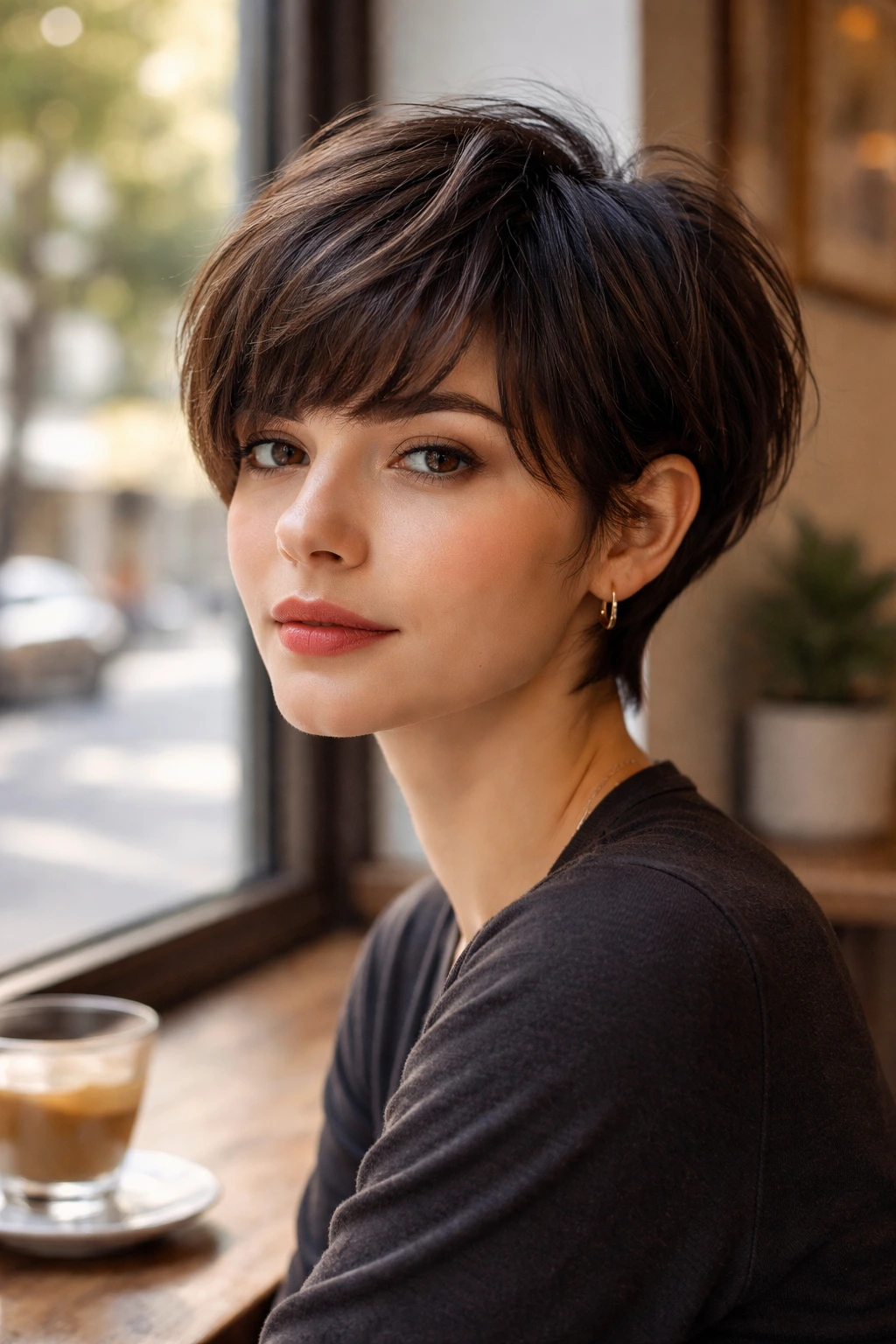
This is the bridge between a bob and a pixie. It is slightly longer than a traditional crop, usually grazing the top of the ears or just below, with a fringe that sits right at the brow line. It feels European, slightly undone, and entirely chic.
What Makes This Cut Different
Most pixie cuts go for a “sporty” vibe. This one goes for “effortless.” It has a bit more weight to it, which can actually be a benefit for fine hair. Sometimes, if you cut fine hair too short, it stands up like a dandelion. By leaving a little more length, you allow the weight of the hair to do a bit of the work for you.
How to Style It for Maximum Volume
- Apply a volumizing mousse to the roots while the hair is soaking wet.
- Use a small round brush to blow-dry the hair forward, then flip the ends back.
- Finish with a light-hold hairspray. Avoid high-hold sprays; they make fine hair brittle and prone to snapping.
4. Deep Side-Swept Bangs
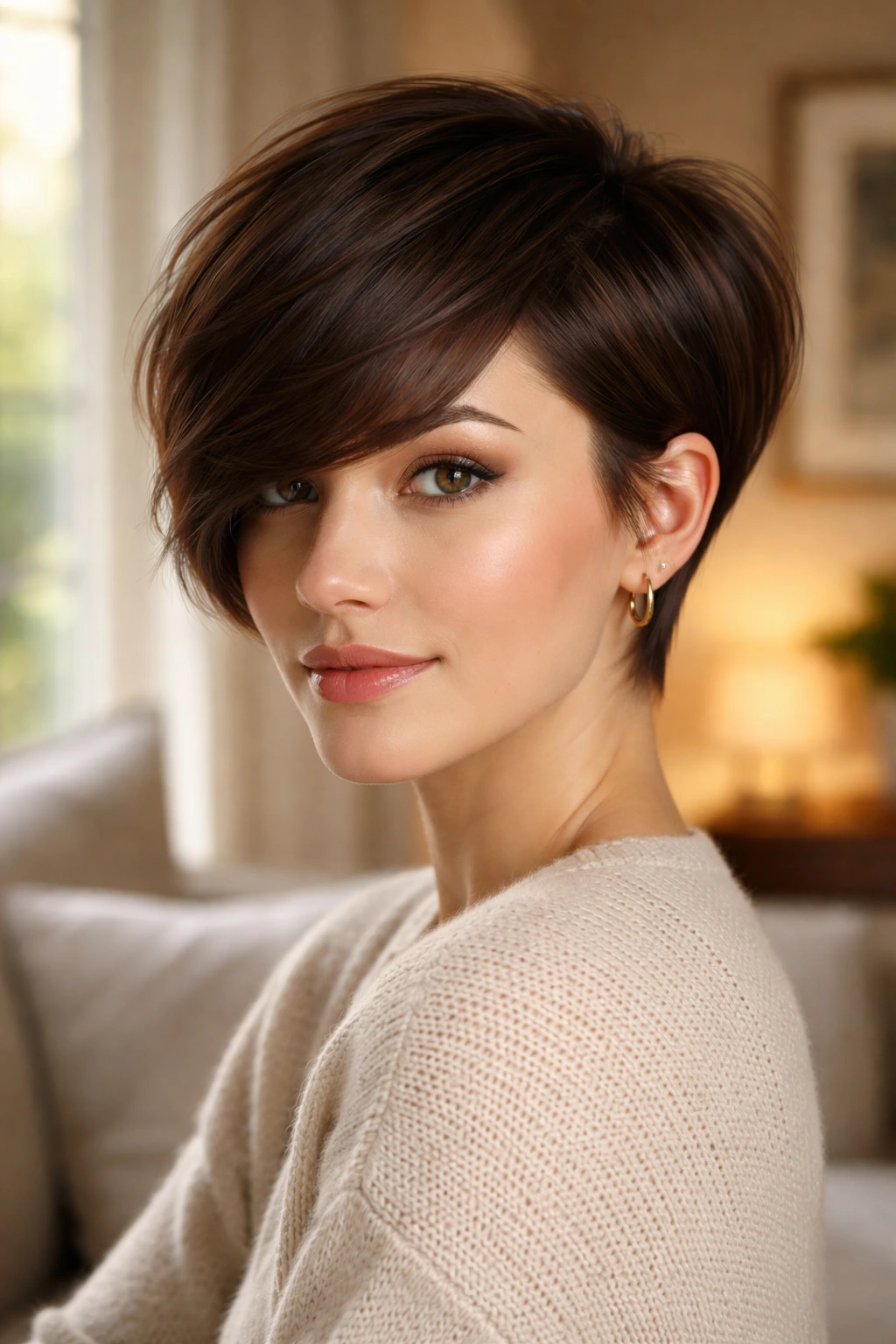
For brunettes, a deep side-swept fringe is a classic because the dark color provides such a dramatic, bold frame for the face. If you have a round or square face shape, this is your best friend. It draws the eye diagonally across your face, which elongates the features and adds a sense of drama.
The key to making this work with fine hair is the density of the bang itself. You need to carve out a section of hair starting from further back on your crown, not just at the hairline. If you only take a thin slice of hair for the bang, it will look greasy and flat within an hour. You need a thicker section to give it substance.
Don’t be afraid to let these bangs get a bit messy. The “perfectly placed” side sweep looks stiff and dated. A piecey, slightly disorganized side-sweep looks modern, approachable, and thick.
5. The Asymmetrical Undercut
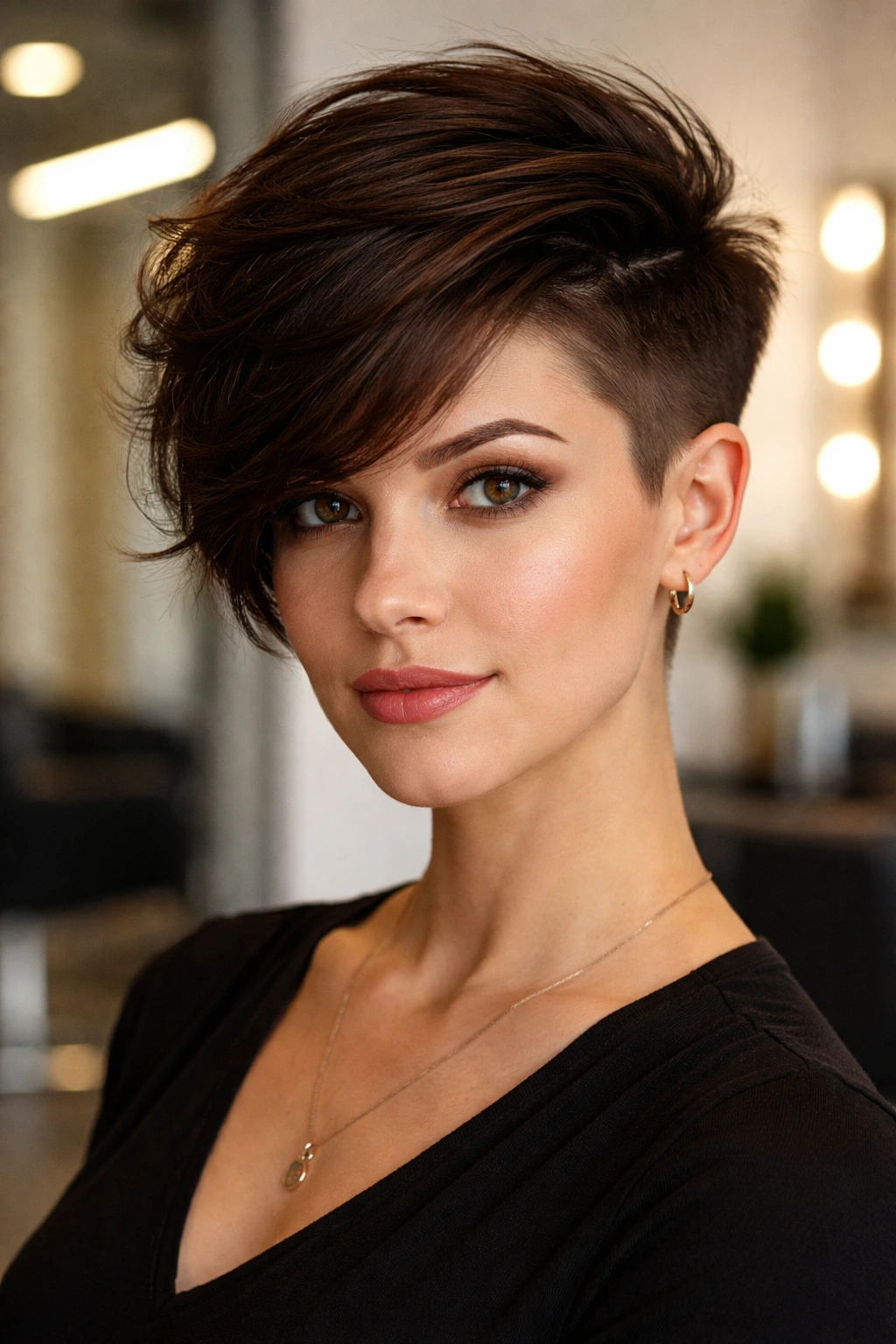
This cut is aggressive, confident, and perhaps the best way to make fine, dark hair look like it has volume. By shaving or tapering one side very short and leaving the other side significantly longer and swept over, you create a dramatic imbalance. The eye is naturally drawn to the volume of the longer side, which makes the hair look twice as thick as it actually is.
Why this works for fine hair is a matter of visual contrast. When you reduce the amount of hair on one side, you aren’t fighting the hair’s natural inclination to go flat. You are leaning into the style. You are saying, “I chose this shape.”
Keep the longer side textured, not slicked down. Use a salt spray on the damp hair before drying it to encourage a bit of a wave. Even if your hair is dead-straight, a little bit of salt spray gives it that “lived-in” quality that makes it appear more substantial.
6. Soft, Piecey Layers
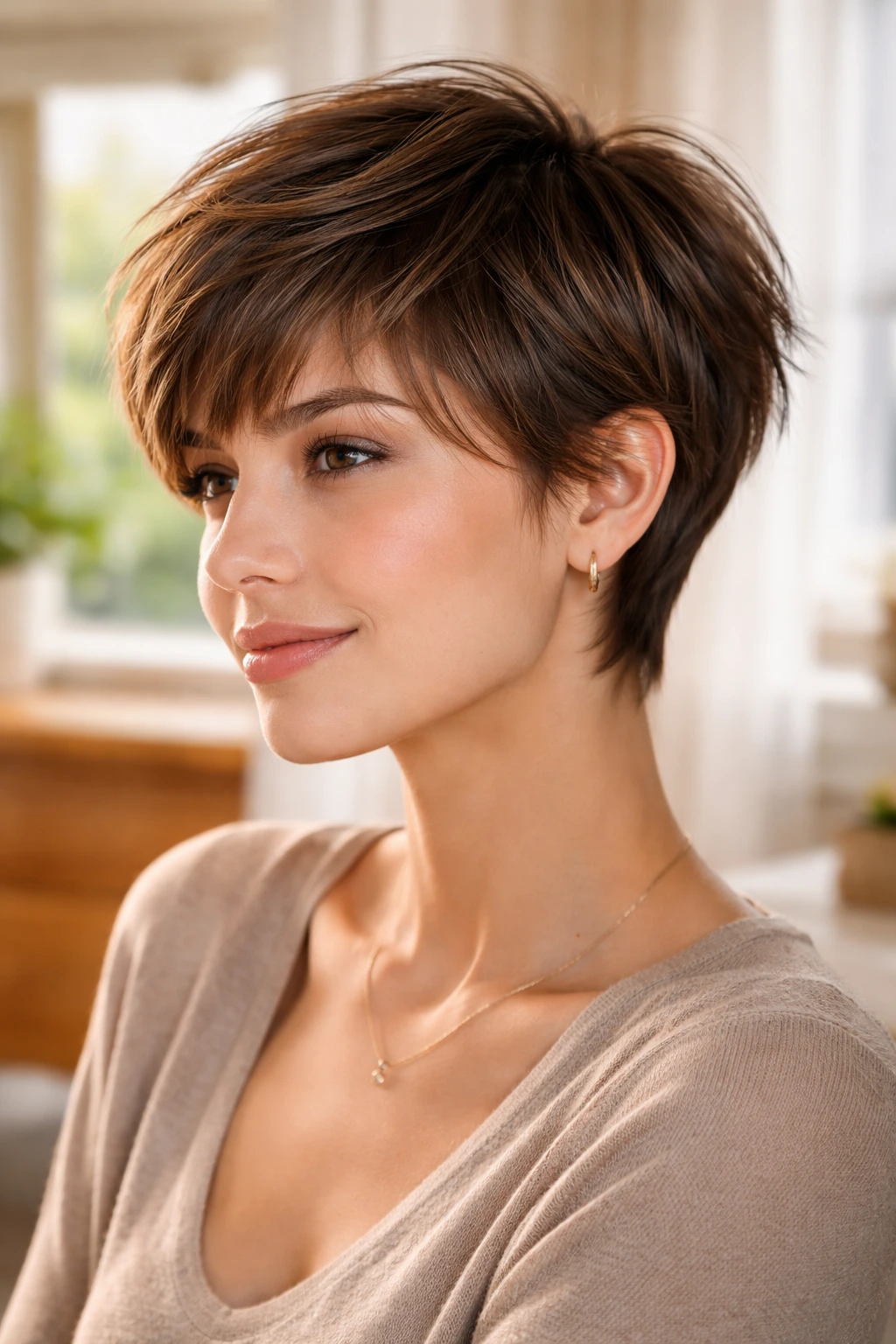
Think of this as the “everyday” pixie. It is not trying to be edgy or dramatic; it is just trying to look good in the morning with three minutes of effort. This cut relies on a uniform layer length around the head, cut with a razor for softness.
Why Razor Cutting Matters
Razors create a tapered, feather-like end to the hair. Scissors create a blunt end. For fine hair, blunt ends are fine, but they can be heavy. Razor-cut ends are light, airy, and they stack on top of each other beautifully.
Who Should Avoid This
If your hair is extremely porous or prone to damage, talk to your stylist about using a fresh blade or perhaps sticking to point-cutting with scissors. A dull razor on fine, damaged hair can cause split ends quickly. When done correctly with healthy hair, though, it is the softest, most feminine pixie you can get.
7. The Modern Shaggy Pixie
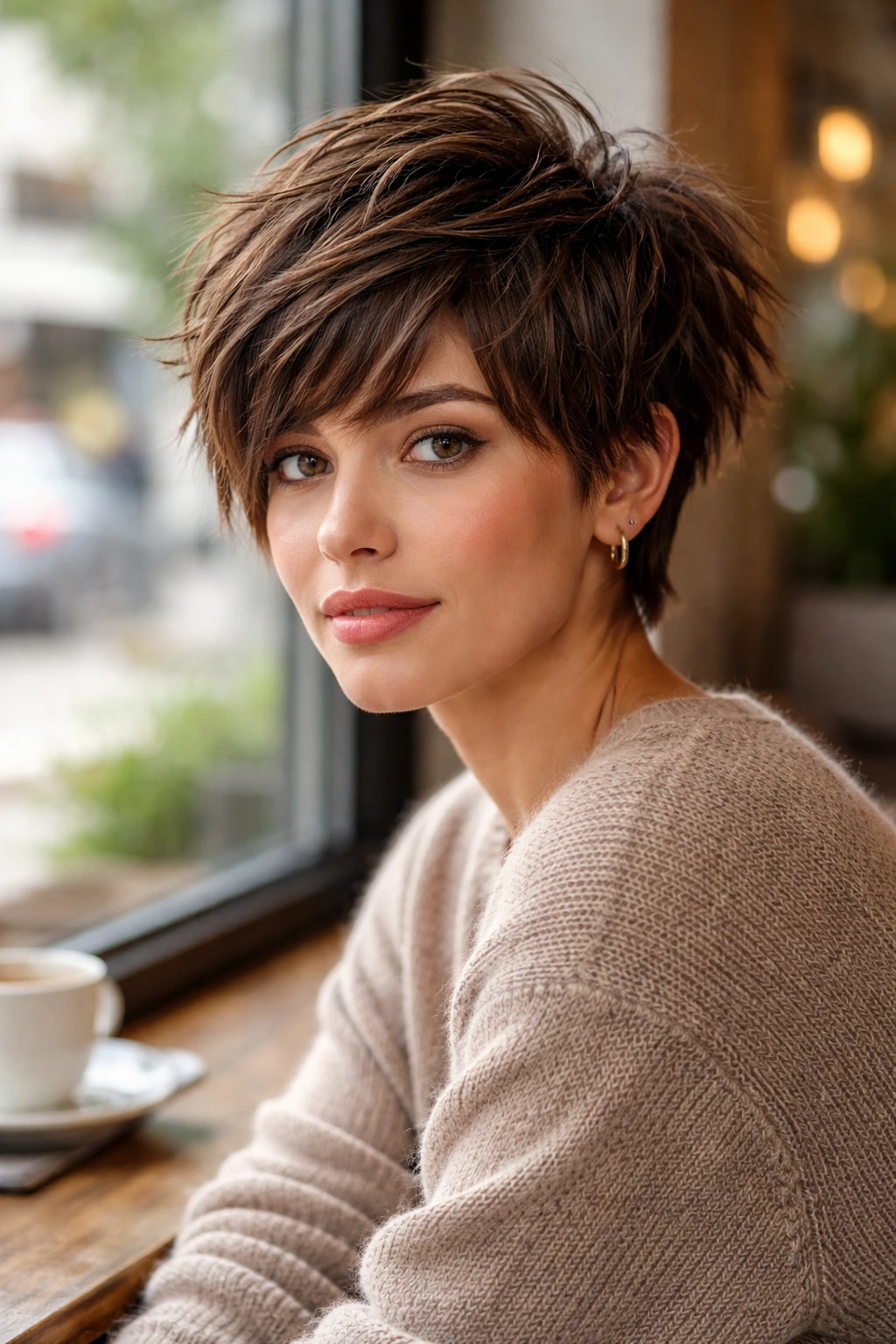
The “shag” has made a comeback, and it translates beautifully to a pixie length. This cut is all about the layers—lots of them, starting from the crown and moving down to the nape. It is the ultimate volumizing cut. Because there are so many layers, the hair has nowhere to go but up.
This style is particularly great for brunette hair because the internal layers create different levels of color depth if you have any natural highlights or lowlights. Even in a single shade of dark brown, the layers create natural shadow, which adds visual density. You want this to look a bit wild. If it is too neat, it loses the “shag” appeal.
8. Baby Bangs (Micro Fringe)
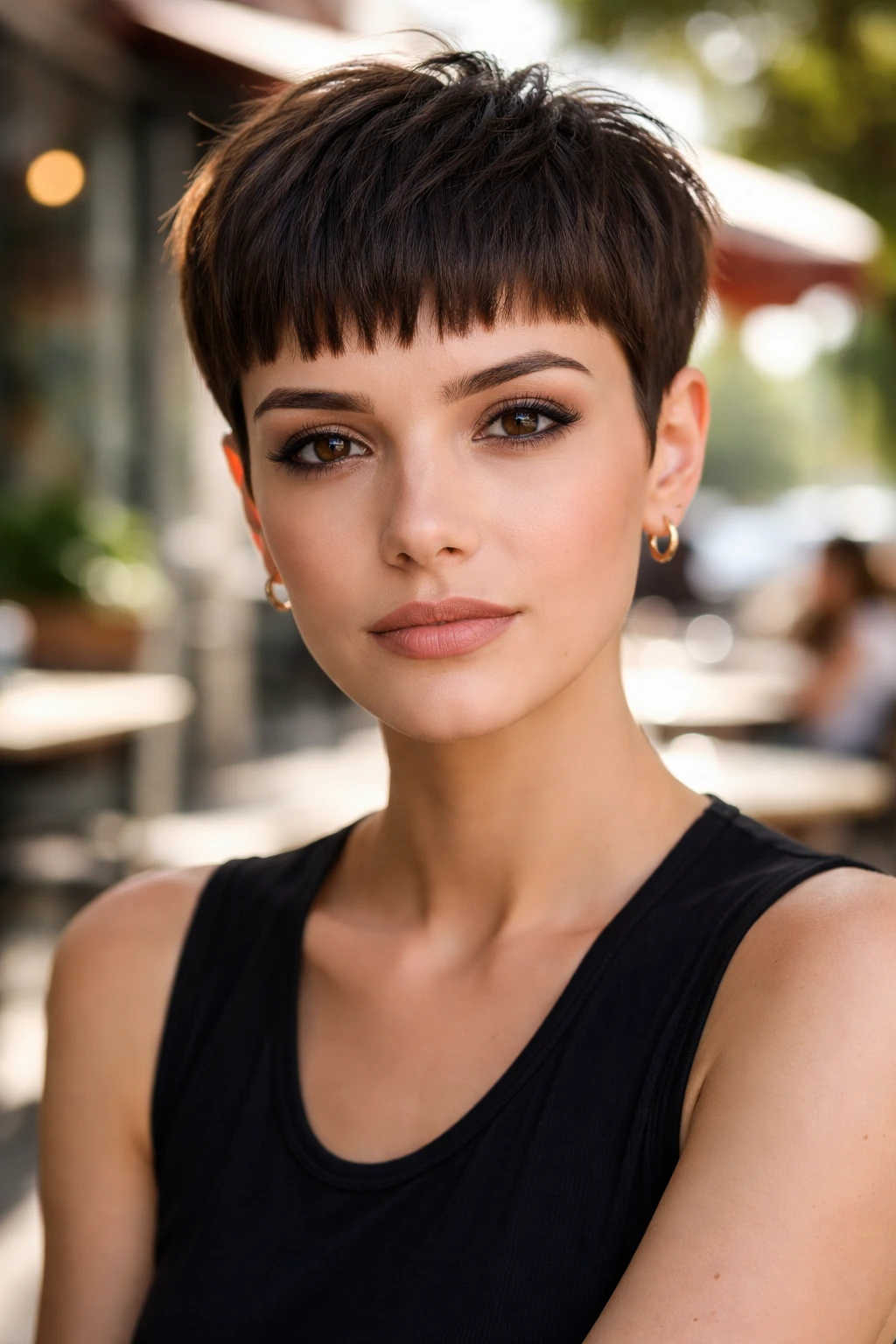
Some people think baby bangs are only for the bold. While that’s true, they are also a tactical choice for fine hair. By cutting your bangs very short—well above the eyebrow—you eliminate the weight that usually pulls the hair forward and flat.
When your bangs are long, they tend to separate and look stringy, especially in humidity. When they are short and blunt, they stay exactly where you put them. It creates a striking, structural look that draws attention to the eyes and cheekbones, completely distracting from the fact that your hair might be on the finer side.
Pair these with a slightly shorter, boxy pixie cut to keep the proportions right. If the rest of your hair is long and wispy, the baby bangs will look like an accident. If the rest of your hair is cropped and purposeful, the bangs look like a deliberate design choice.
9. Textured Crown Layers
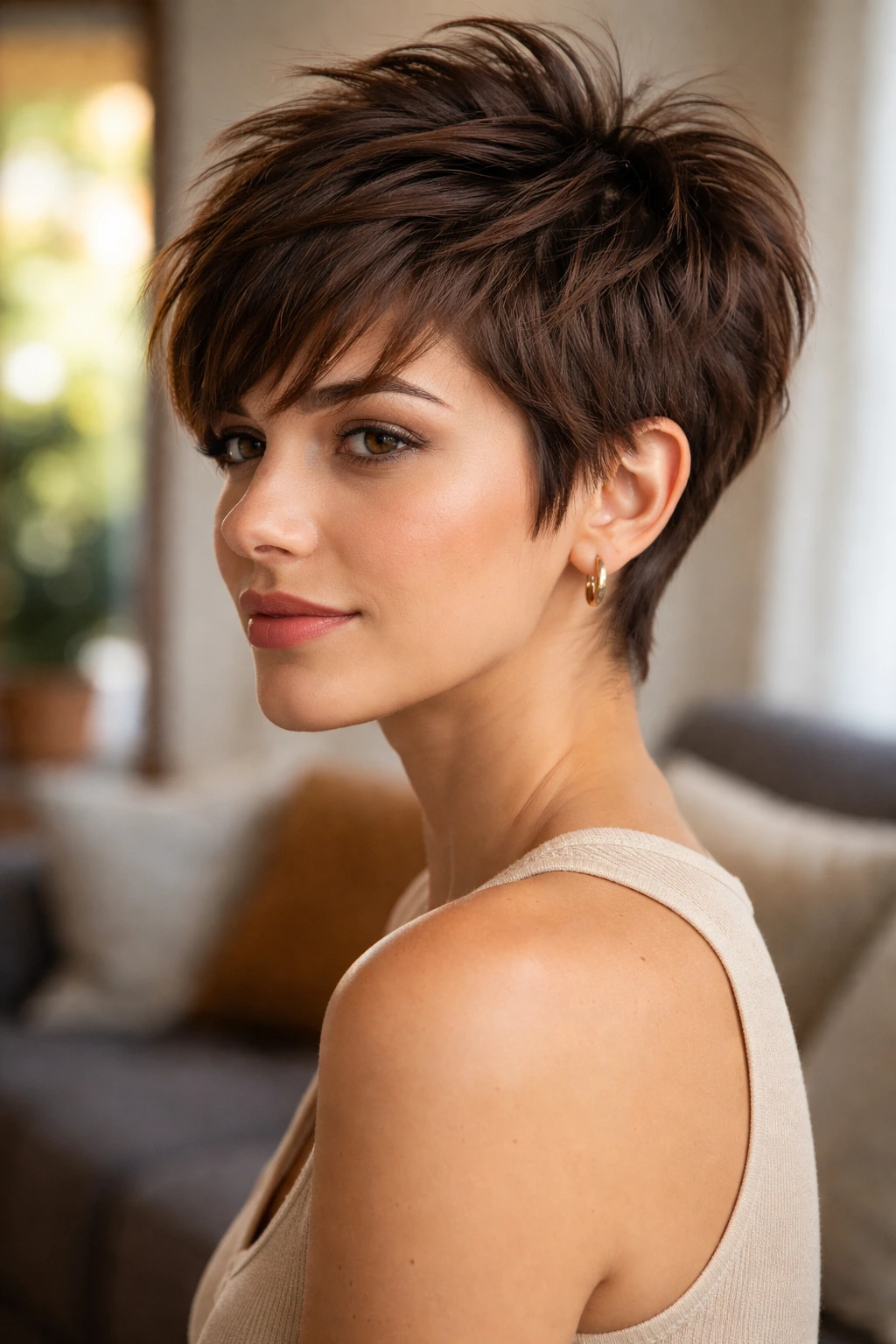
If your specific struggle is that your hair lies completely flat against your crown, you need this cut. It is a traditional pixie where the length is concentrated at the very top of the head. The layers are short, choppy, and designed to stand up with the help of a light wax or paste.
The Science of Height
Think of it like building a structure. If you have long strands, gravity is pulling them down at the root. By cutting the hair on the crown to about two inches, you drastically reduce the weight. The hair literally cannot lay flat because it isn’t long enough to be pulled down.
How to Talk to Your Stylist
Don’t just ask for a “short pixie.” Ask them to “keep the top layers short to create vertical volume.” This distinction tells the stylist that you are concerned about structure and height, not just length.
10. The Slicked-Back Wet Look
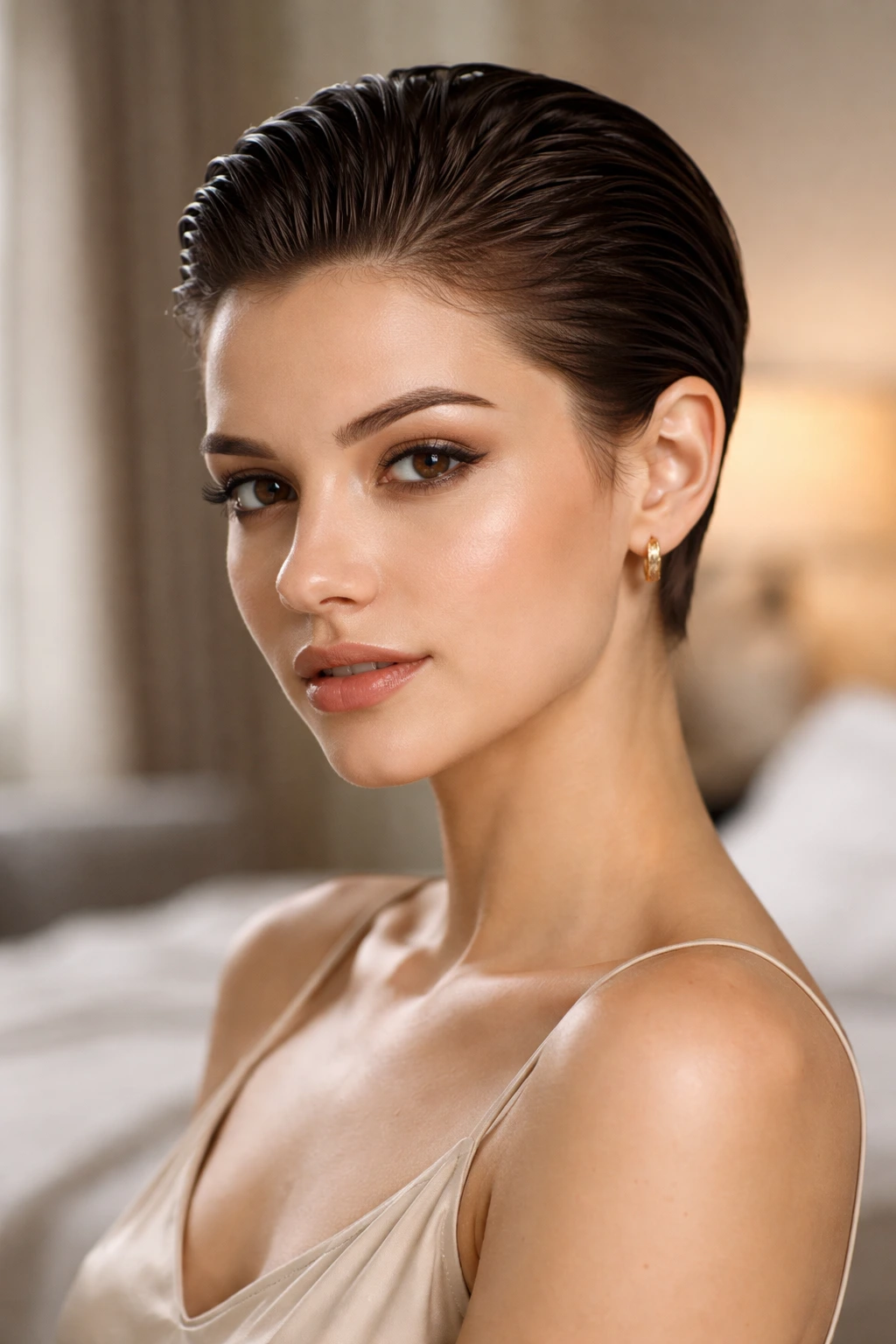
This is less of a cut and more of a styling technique, but it works best with a specific type of pixie: one that is slightly longer on top. If you have a brunette pixie with some length on the crown, the “wet look” is an incredibly sophisticated way to style it.
Forget the crunchy, greasy gels of the past. Use a high-quality pomade or a grooming cream. You want to smooth the hair back, following the shape of your skull. Because it is sleek, you don’t need volume to make it look good—you are aiming for a chic, editorial aesthetic.
It is surprisingly low maintenance. You can achieve this in thirty seconds with a comb and a tiny dab of product. It is the perfect choice for days when you don’t have the energy for blow-drying or texture building.
11. Messy Bedhead Pixie
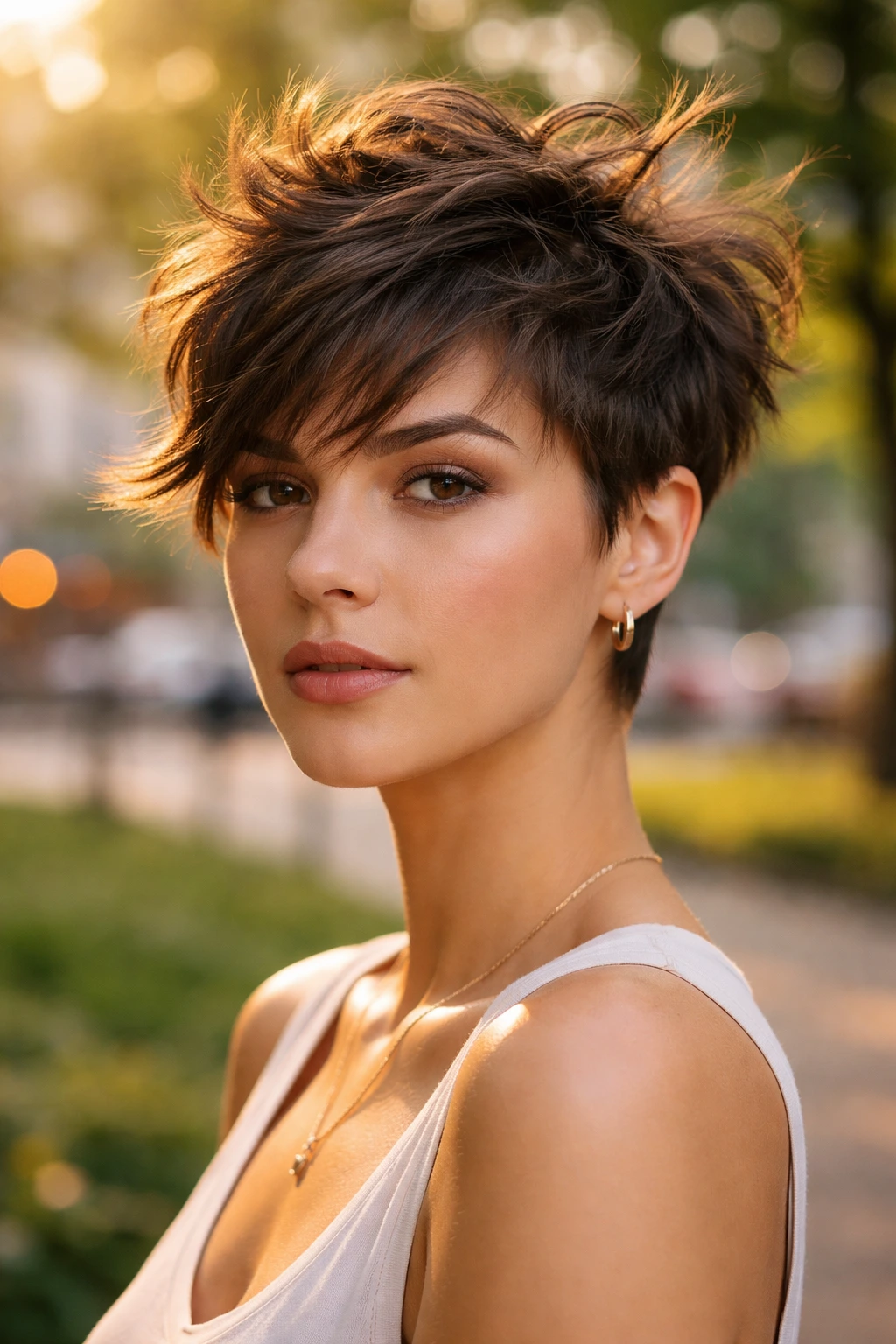
This is the “I woke up like this” look, but it is actually the result of a very precise cut. You want short sides and a long, jagged top. The goal is to have the hair look like it was tossed in the wind.
For dark hair, this is fantastic because it adds a sense of grit. You can use a salt spray or a dry texturizer to push the hair into random directions. Unlike the sleek looks, this one encourages you to use your fingers rather than a comb. The messier, the better. It suggests a youthful, rebellious energy that feels incredibly fresh.
12. The Wispy Nape Cut
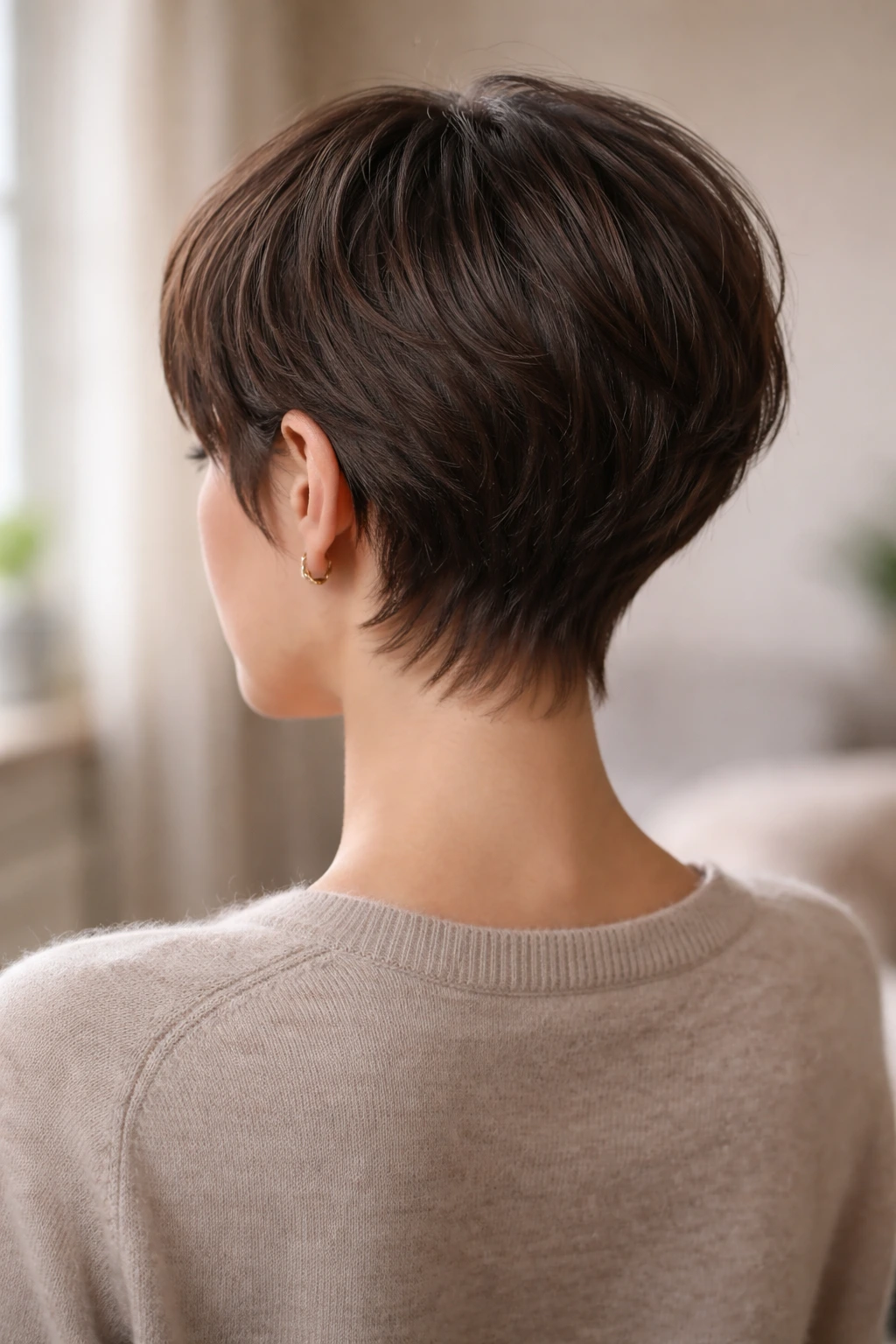
Sometimes, the issue isn’t the top of the hair—it’s the neckline. A “wispy” nape cut is a pixie that is styled to look a bit softer and slightly overgrown at the back. Instead of a hard line, the hair tapers off into little wisps against the neck.
This is a very feminine take on the pixie. It removes the harshness that can sometimes come with a super-short, buzzed-neck cut. It is also excellent for fine hair because it blends the edges, making the transition from hair to skin look seamless rather than abrupt. It adds a delicate touch to an otherwise sharp style.
13. Longer Top, Shaved Sides
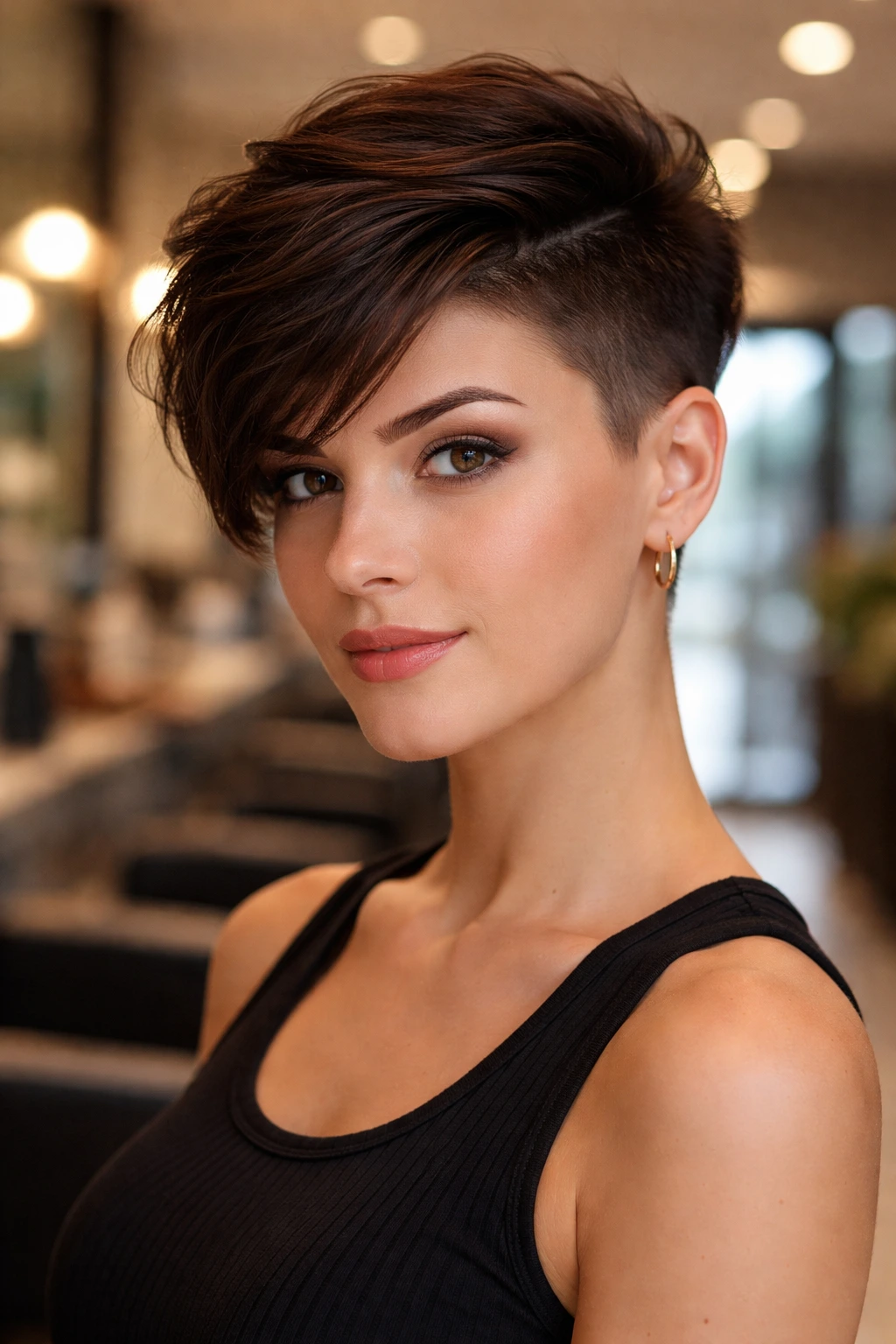
If you are willing to go a bit edgier, the “long top, short sides” look is the ultimate way to maximize volume. By removing the hair on the sides entirely (or using a guard to keep it very short), you leave yourself with a large section of hair on top that you can style however you want.
You have the freedom to sweep it to the side, spike it up, or let it fall forward. Because the sides are gone, you don’t have to worry about them looking thin or wispy. All the focus is on the top, where you can pack in as much volume as you need. It is a bold, striking silhouette that looks fantastic on brunettes.
14. The Tousled Layered Pixie
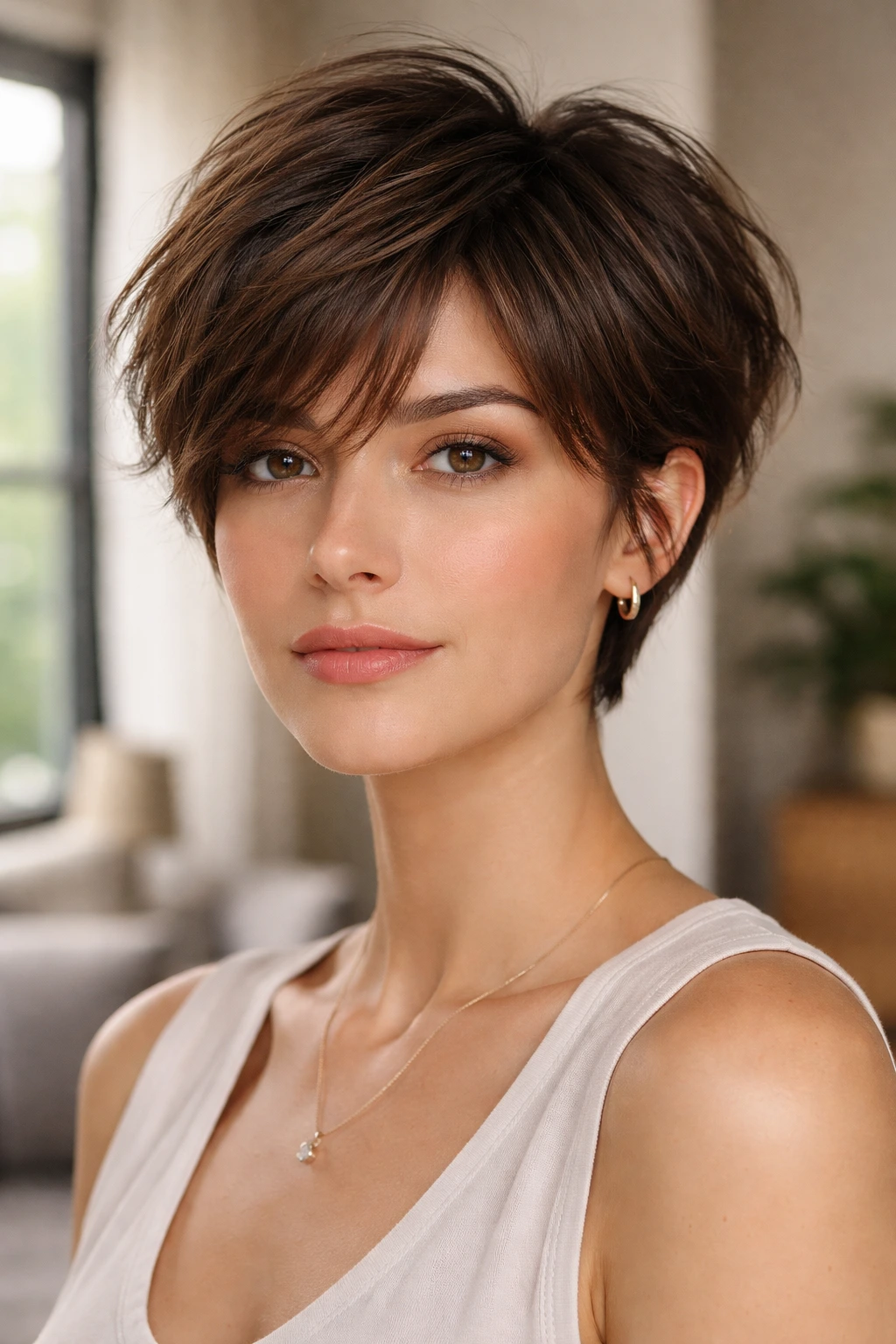
This cut is for people who want volume everywhere. It’s a shag-pixie hybrid, but with more emphasis on the tousle. The hair is cut into layers that are all roughly the same length, allowing them to interlock and support each other.
Why This Beats a Standard Crop
In a standard, one-length crop, fine hair falls flat. In a tousled, layered pixie, the hair has “bumpers.” Each layer acts as a support for the one below it. It is structurally impossible for this cut to lie totally flat unless it is dirty or weighted down by heavy product.
Essential Styling Tip
Use a diffuser. If you have the time, drying your hair with a diffuser attachment on your blow dryer—even if your hair is straight—will encourage that tousled, airy volume. It keeps the hair moving while it dries, preventing it from settling into a flat, limp shape.
15. Razored Edges for Softness
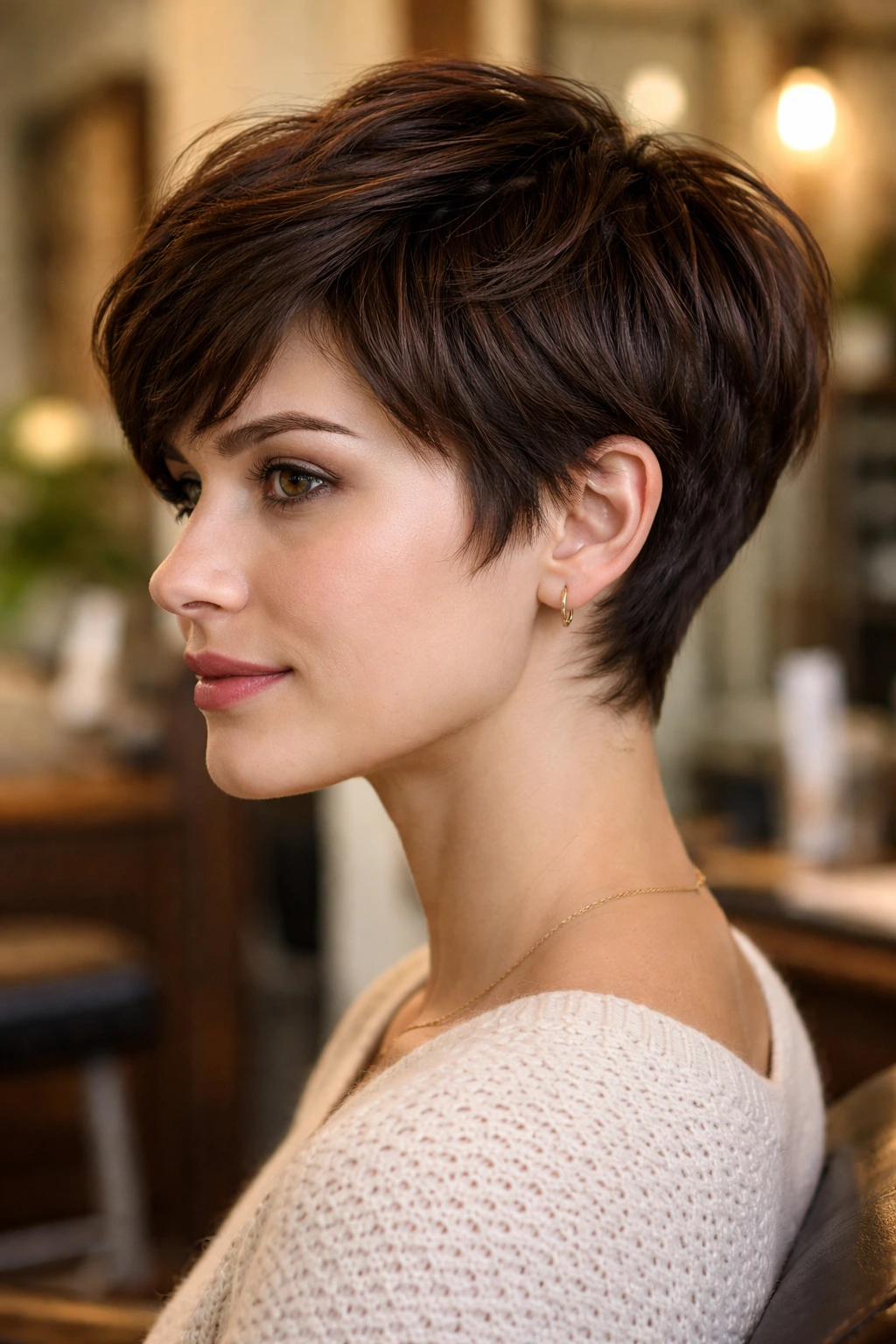
We touched on razor-cutting earlier, but a cut that specifically focuses on the edges is different. Here, the bulk of the hair is kept slightly fuller, but the perimeter—the edges around the ears and the hairline—is razor-cut to be whisper-thin.
It creates a halo effect. The dark hair provides a strong, solid base, while the edges soften the transition to the skin. It’s an incredibly expensive-looking cut because it requires precision. It moves with the wind. It feels light. It never looks like a stiff helmet.
16. The Curly-Textured Pixie
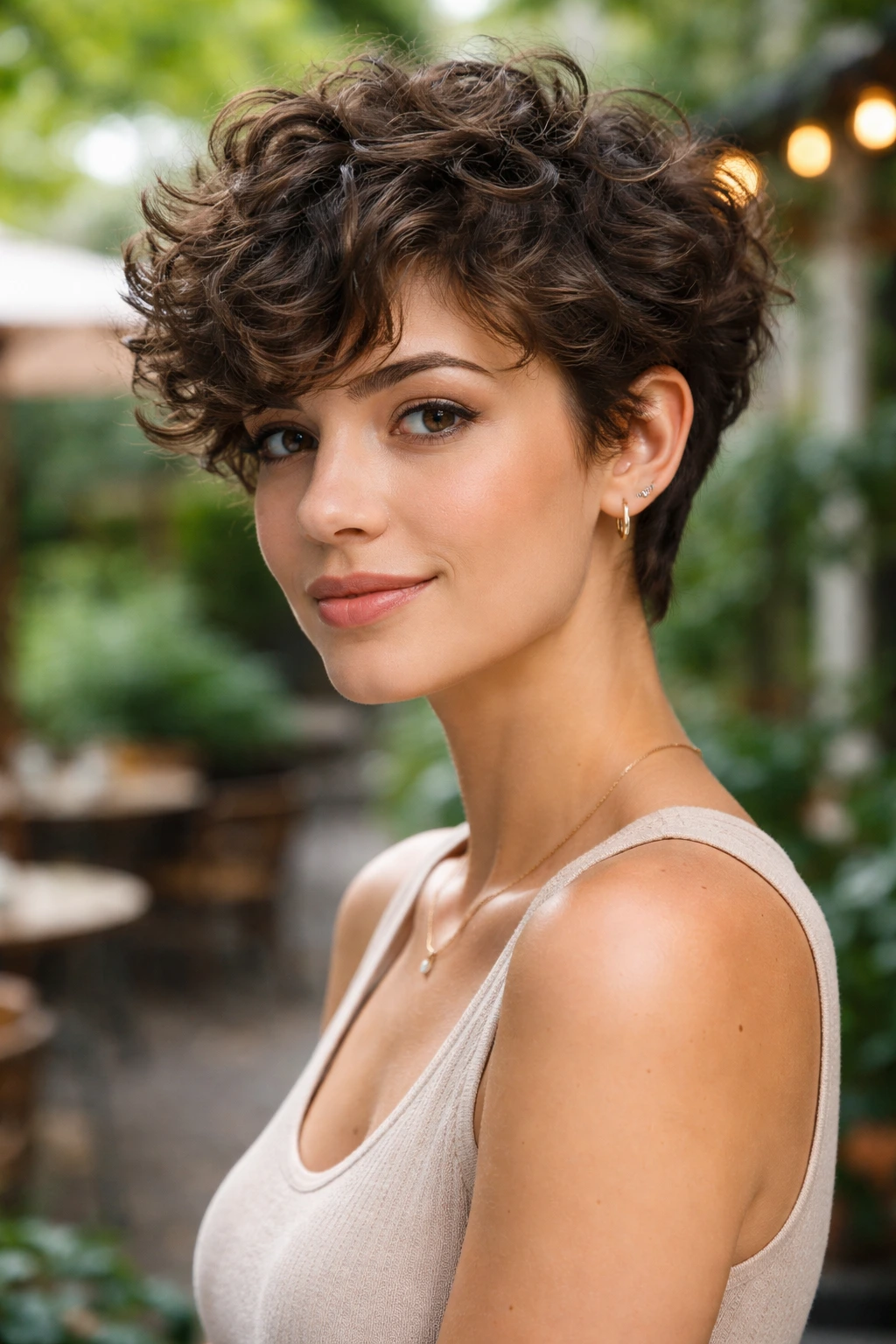
Even if your hair is fine, it might have a slight wave or natural bend. Many people with fine hair try to iron that wave out, thinking it makes the hair look “frizzy” or “messy.” Stop doing that. The wave is your best asset for volume.
A curly-textured pixie is cut specifically to allow that wave to live its best life. It uses layers to encourage the curl to spring up. When the hair springs up, it occupies more space, which is the definition of volume. Embrace the texture. Use a curl-enhancing cream, not a straightener.
17. Blunt-Cut Micro Pixie
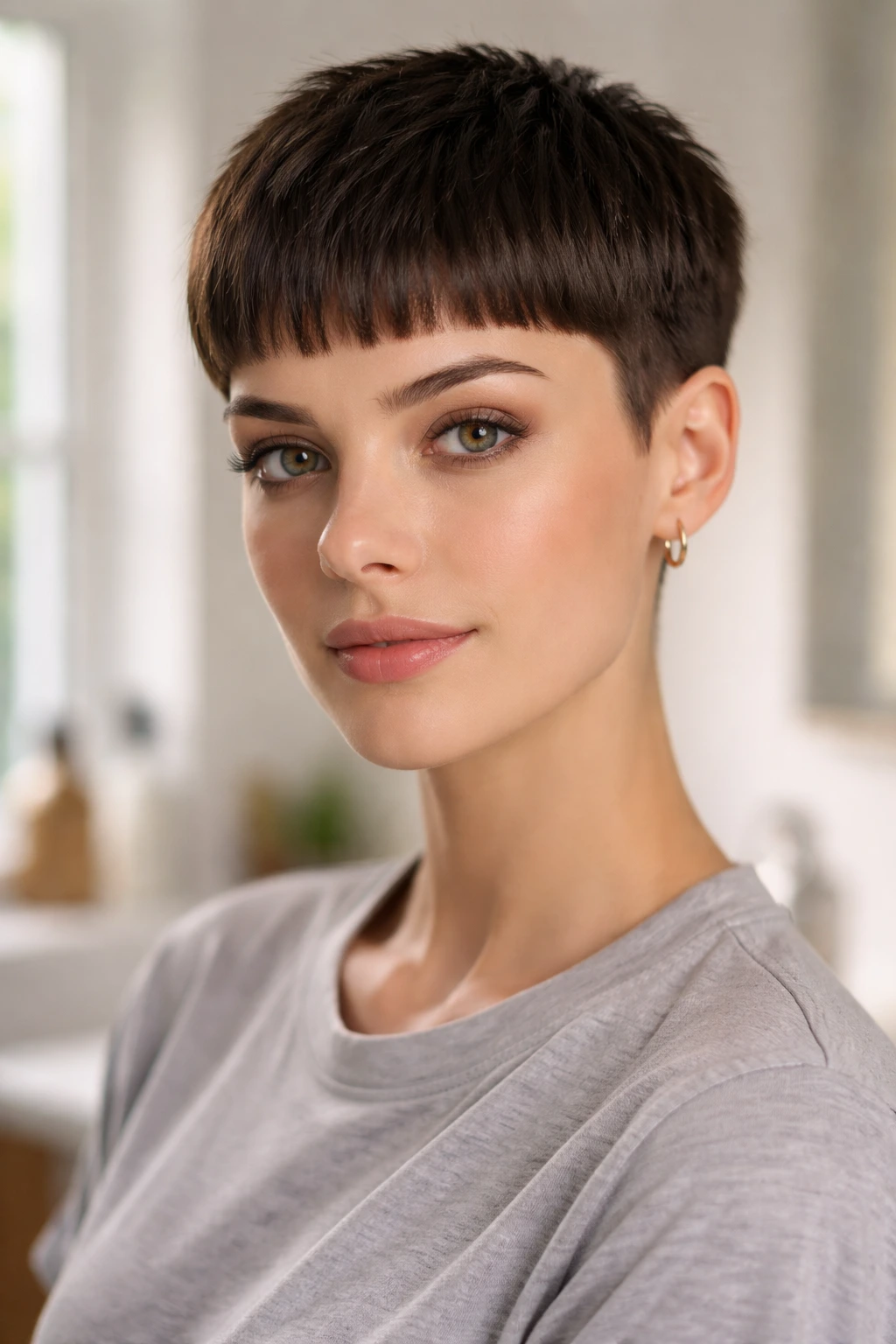
This is for the person who wants to be absolutely sure that their hair never looks thin. By cutting the hair very short—we are talking less than an inch on the sides and maybe two inches on top—and cutting the ends blunt, you create a “thick” appearance.
The logic is simple: hair looks thinnest at the ends. When you cut those ends off and keep the hair very short, you are always cutting it at a point where the strand is thickest. It is a very structured, very purposeful look. It requires frequent trims, but it is the most reliable way to make fine hair look like a dense, solid mass of color.
18. The Graduated Stack
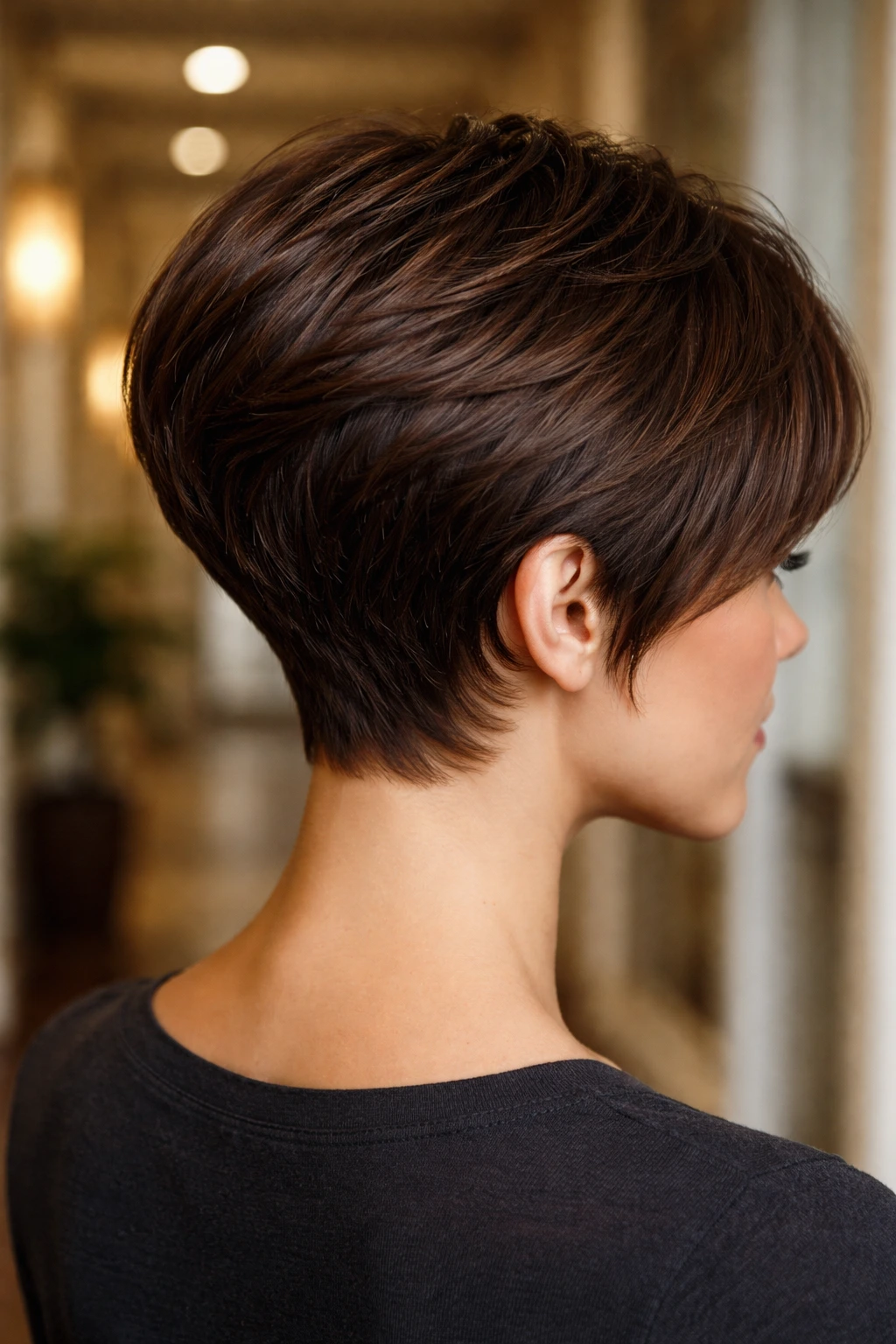
A graduated stack is usually associated with bobs, but it can be applied to a pixie. It involves stacking layers at the back of the head, starting short at the nape and getting longer as you move toward the crown.
The result is a rounded, voluminous shape in the back that gives the illusion of a massive amount of hair. For fine, brunette hair, this creates a gorgeous silhouette. It’s a very elegant, classic look that doesn’t scream “edgy” but instead whispers “sophisticated.”
The Maintenance Factor
This cut requires regular maintenance. Because it relies on the “stack” to create volume, as soon as the hair grows out, the stack loses its shape and falls flat. Plan for a trim every four to six weeks. It is an investment, but the payoff is a consistently thick-looking shape.
Mastering the Care of Your New Pixie
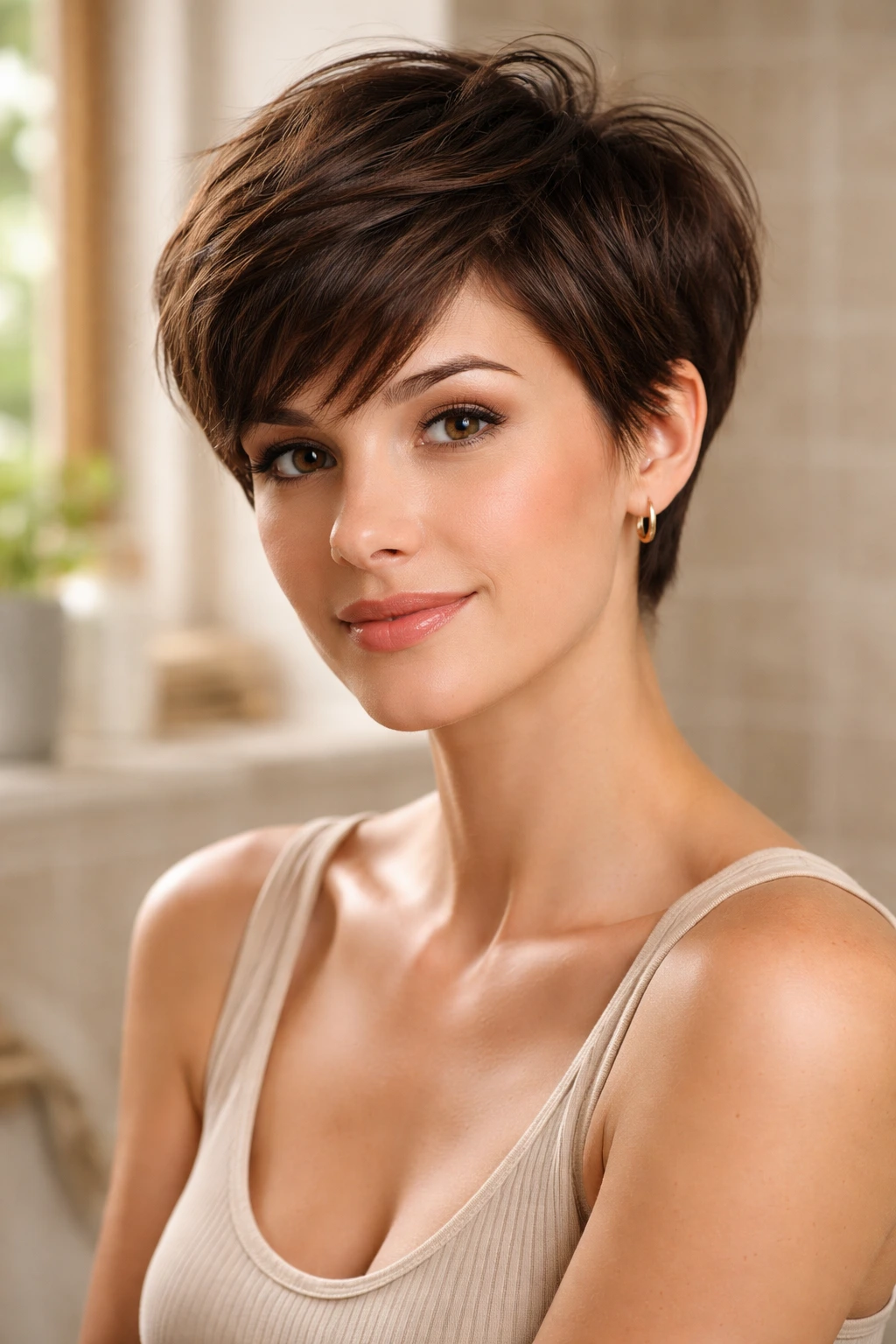
Once you have the cut, the battle is only half won. Fine hair, especially when it is dark, is unforgiving. If you use too much product, it looks greasy. If you use too little, it falls flat. If you use the wrong product, it looks like straw.
You need to rethink your entire shower and styling routine. Start with your shampoo. Use a volumizing shampoo, but avoid anything that claims to be “smoothing” or “moisturizing.” Those products often contain heavy silicones that coat the hair and weigh it down. You want clean, stripped, ready-to-work hair.
Conditioner is a tricky one. Most people with fine hair avoid it entirely, which is a mistake. Your hair still needs moisture. The trick is application. Only condition the very ends of the hair—never the roots. If you have a pixie, that means you might only be conditioning the top inch of your hair. That is perfectly fine.
Finally, invest in dry products. Dry shampoo is not just for dirty hair; it is for volume. Even on freshly washed hair, a light dusting of dry shampoo at the roots can provide the grit and grip your hair needs to stay standing up throughout the day. It turns silky, slippery fine hair into something that has substance and texture.
Final Thoughts
A pixie cut is not about hiding your fine hair; it is about embracing it. When you stop fighting your hair’s natural texture and start working with it, the results are transformative. You stop worrying about whether your ponytail looks thin or if your roots are flat, because those are no longer the metrics you are measuring against.
You are measuring against shape, silhouette, and precision. A well-executed brunette pixie is an accessory in its own right. It frames your face, highlights your features, and gives you a level of confidence that long, limp hair simply cannot provide.
Pick the cut that speaks to your personality. If you want to be bold, go for the undercut or the micro-fringe. If you want to be classic, stick with the tapered or the graduated stack. Whatever you choose, commit to the maintenance. Short hair is high maintenance, but it is also high reward. Keep it trimmed, keep it textured, and enjoy the feeling of hair that finally does what you want it to do.
