



Fine hair and a pixie cut are a smarter match than people often think. Add blond into the mix, and the whole cut starts working in a different way: light bounces around the shorter layers, the crown can look fuller, and the shape stops reading as flat or see-through. The catch is that the cut has to be handled with a little restraint. Too many choppy pieces, and fine strands can start to look wispy in the wrong places. Too much bleach, and the hair can lose the soft movement that makes a pixie look alive.
That’s why blond pixie cuts for fine hair need a bit more strategy than a generic short cut. The best versions are not loud or overworked. They keep a little density at the perimeter, build lift where the eye wants it, and choose a blond tone that gives the hair some dimension instead of washing it out. A pale champagne tone behaves differently from an ash blond. A root shadow does a different job than a solid platinum finish. Tiny details. Big effect.
If you have fine hair, you probably already know the problem spots: the crown collapses after a few hours, the fringe gets stringy, the sides look too narrow if the cut is over-thinned, and the back can go fluffy in a way that feels more fuzzy than chic. A well-chosen pixie fixes those issues by working with the hair you actually have, not the hair you wish you had. The right version can make your hair look thicker, your cheekbones sharper, and your morning routine a lot shorter.
1. Soft Side-Swept Blond Pixie
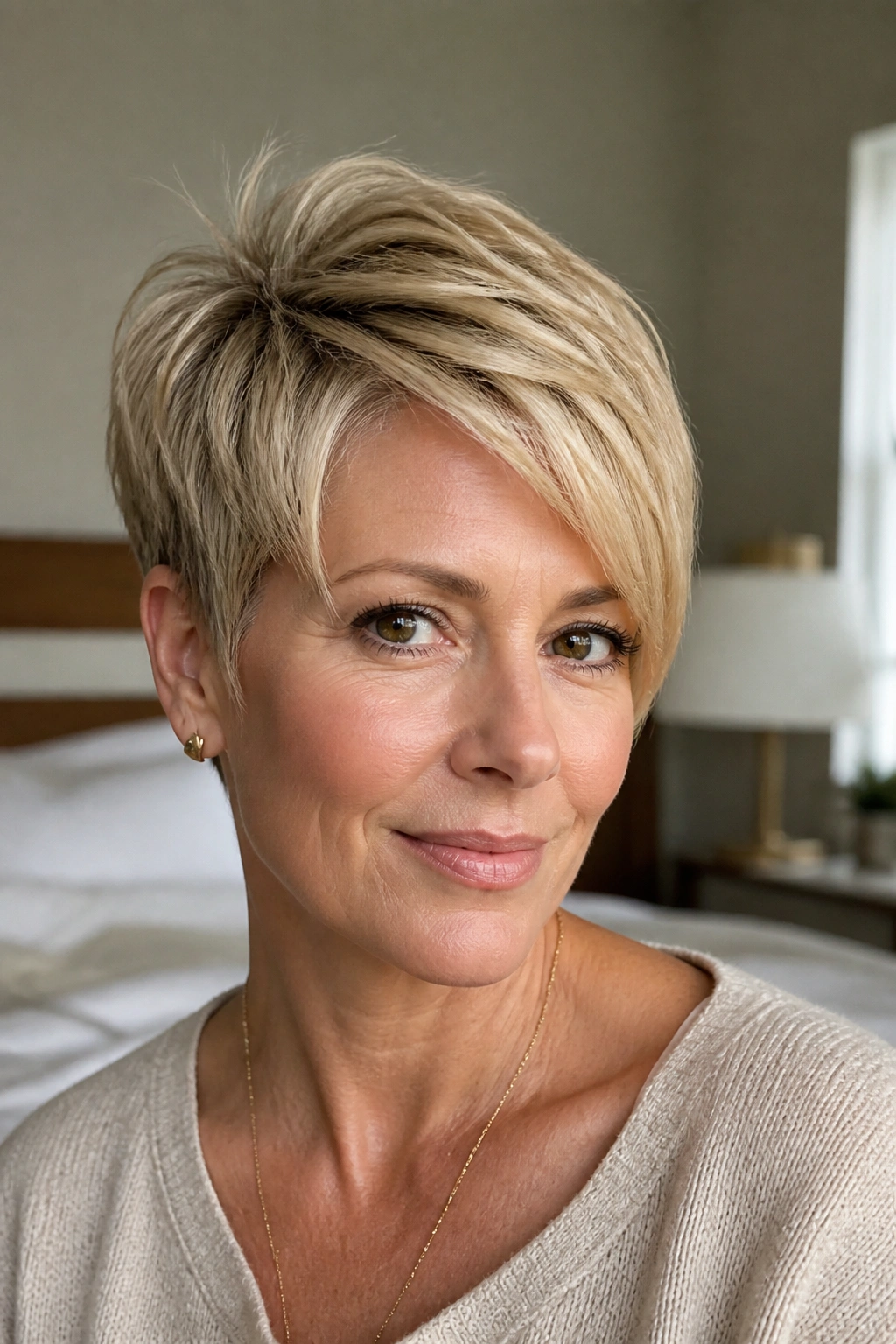
A side-swept pixie is the one I’d hand to someone who wants an easy first step into short hair. It keeps enough length at the front to soften the face, and that matters a lot when hair is fine because the front section often needs a little extra weight to sit well.
Why it works
The side sweep creates a diagonal line, and diagonals are friendly to thin-looking hair. They give the eye somewhere to go. A soft beige blond or creamy wheat blond keeps the cut from looking harsh, while a light root shadow stops the whole thing from reading as one flat block of color.
Ask for a slightly longer front, a tucked nape, and gentle texture through the crown rather than aggressive thinning. That mix gives you movement without emptying out the hairline.
- Best for round, oval, and heart-shaped faces
- Looks good with a round brush or a small flat brush
- Takes paste, mousse, or a light styling cream
- Grows out cleanly for several weeks
Styling tip: blow-dry the front in the opposite direction first, then sweep it back over. It sounds fussy. It works.
2. Choppy Ash-Blond Pixie With Micro Layers
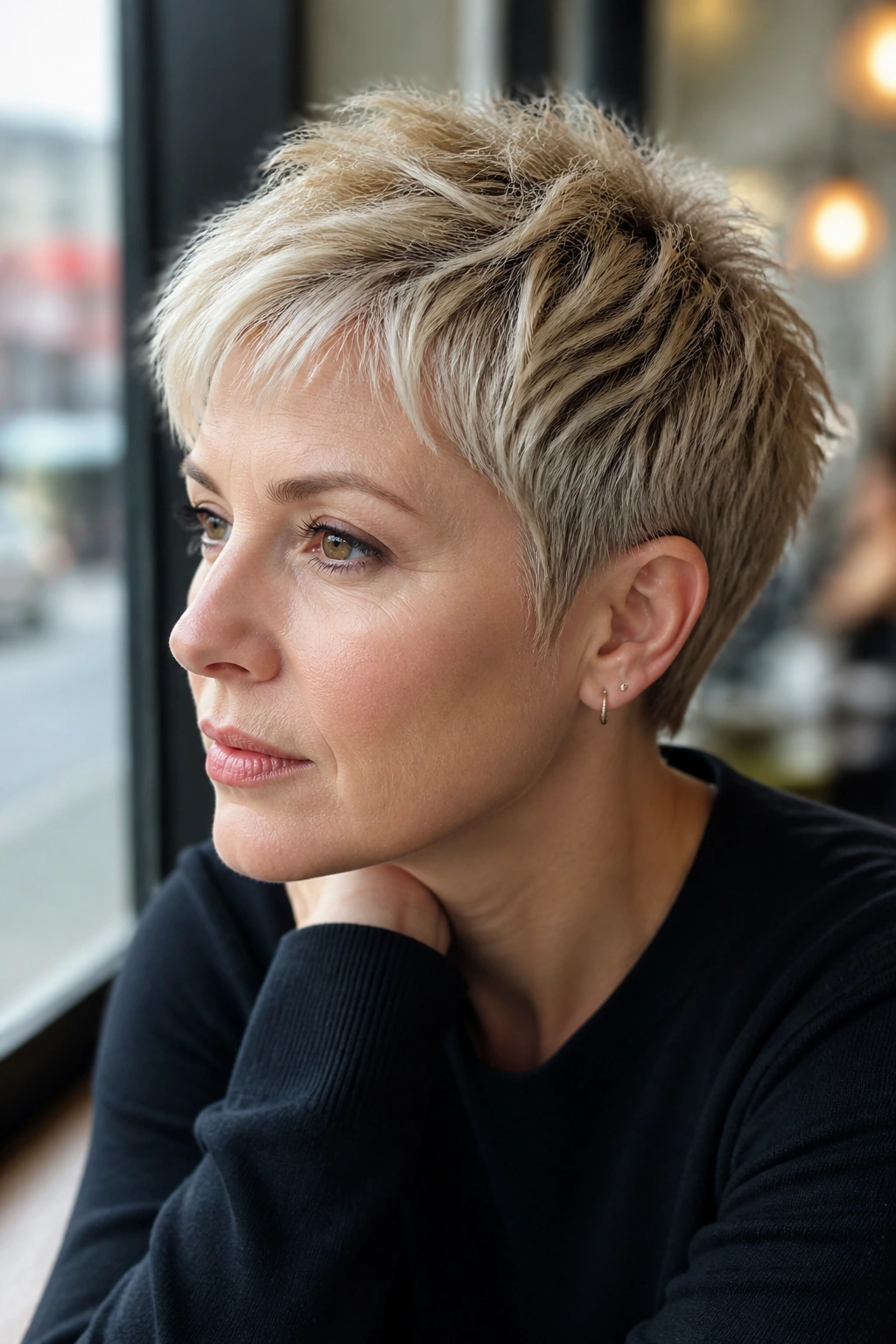
Why do some fine-haired pixies look busy instead of fuller? Too much razoring, usually. The choppy ash-blond version avoids that trap by keeping the layers tiny and controlled.
Ash blond is a smart choice when the hair texture is delicate because it cools down any brassiness and makes the cut feel crisp. The choppy pieces add grit, but not a shredded, over-textured mess. You want small broken-up sections near the top and crown, not feathered ends that dissolve into nothing.
What to ask for
- Micro layers through the top
- A soft, compact nape
- Piecey separation, not big spikes
- A cool beige or ash-blond toner
This is one of those styles that looks better with a little second-day wear. A pea-sized amount of matte paste, rubbed between the fingers and tapped into the ends, is enough. If you keep the product light, the texture looks intentional instead of greasy.
3. Platinum Pixie With Dark Root Shadow
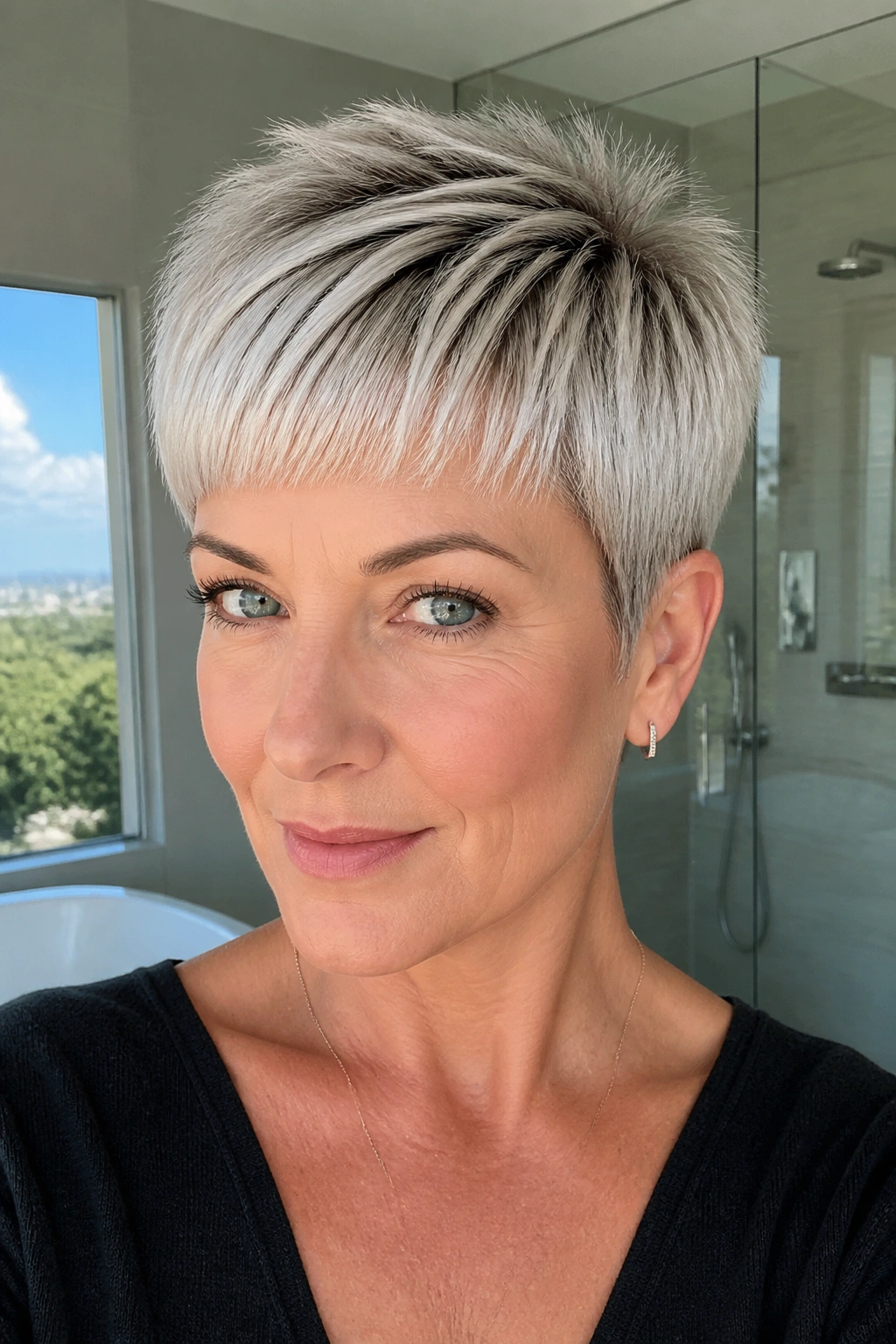
Platinum on fine hair can be a bold move, but the dark root makes it much easier to wear. Without that depth at the scalp, platinum can sometimes flatten the head shape and expose every thin area. With it, the whole cut gets a little lift.
This version is clean, cool, and sharp. It leans more polished than messy, which is a nice change if you’re tired of every short haircut being sold as “undone.” The root shadow also buys you time between salon visits, and that matters when the color is this light.
A short, bluntish fringe helps a lot here. So does keeping the crown slightly longer than the sides. The contrast between the deeper root and the bright ends creates the illusion of denser hair. Not magic. Just smart color placement.
For styling, keep the finish smooth. A tiny dab of lightweight serum on the outer layer—not the scalp—keeps the platinum from feeling dry.
4. Feathered Butter-Blond Pixie
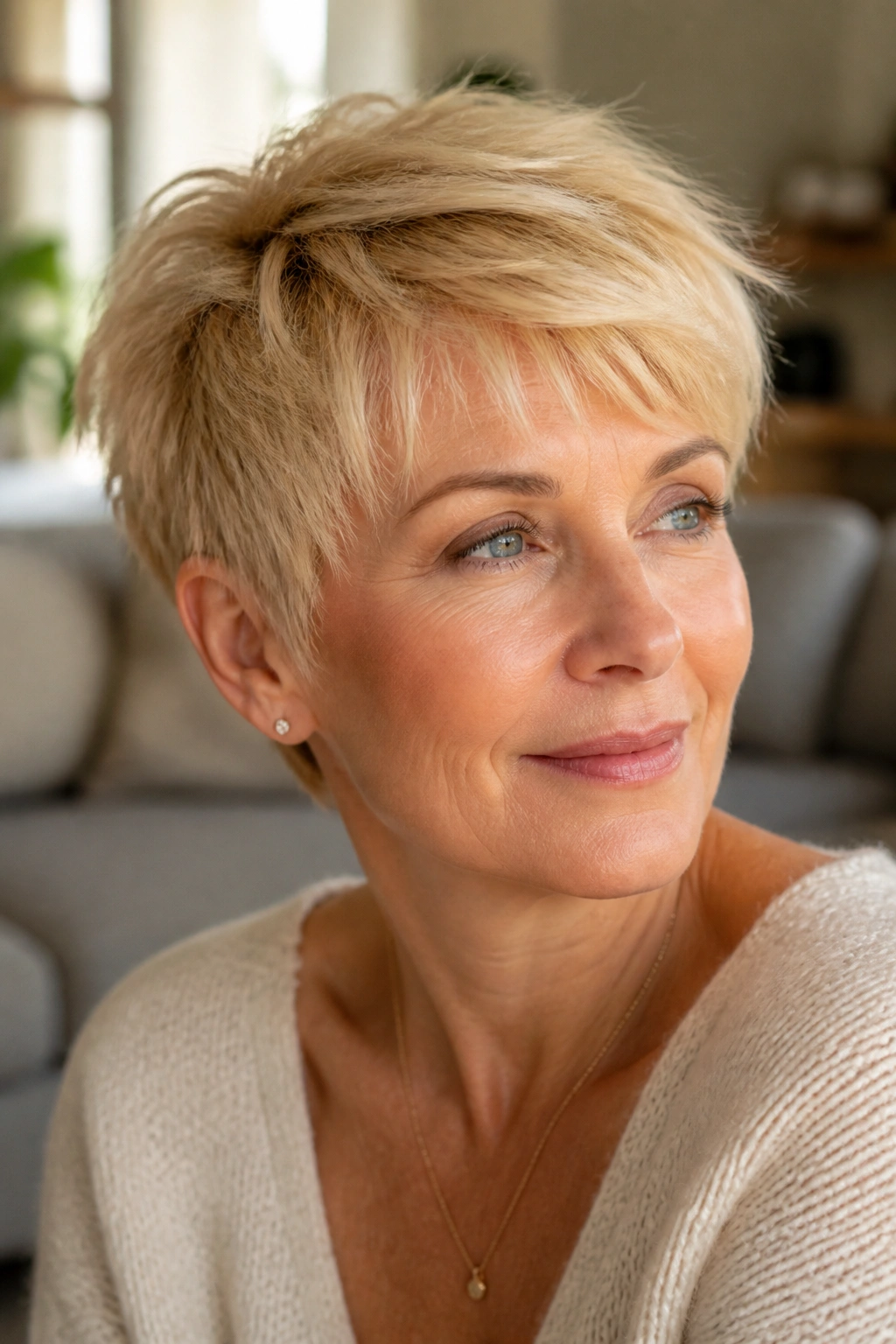
Butter blond has a soft glow that fine hair can wear beautifully. It’s warmer than ash, less stark than platinum, and easier on skin that looks washed out by cooler tones.
The feathered shape works because it keeps the movement airy without removing too much mass. You still want a little fullness at the top and around the temples. That’s the part too many feathered cuts forget. Once the sides are too thin, the haircut can start to look narrow and the head shape feels pinched.
Best features of this cut
- Soft feathering around the crown
- Light fringe movement
- A warm blond tone with pale gold notes
- Easy air-dry compatibility
This is one of the most forgiving blond pixie cuts for fine hair if you prefer a softer look. It doesn’t scream for attention. It just makes the hair appear lighter, fresher, and a bit fuller. And yes, it’s easier to style than it looks. Blow-dry with your fingers, then twist a few front pieces around the index finger while they cool.
5. Tapered Nape Pixie With Long Crown
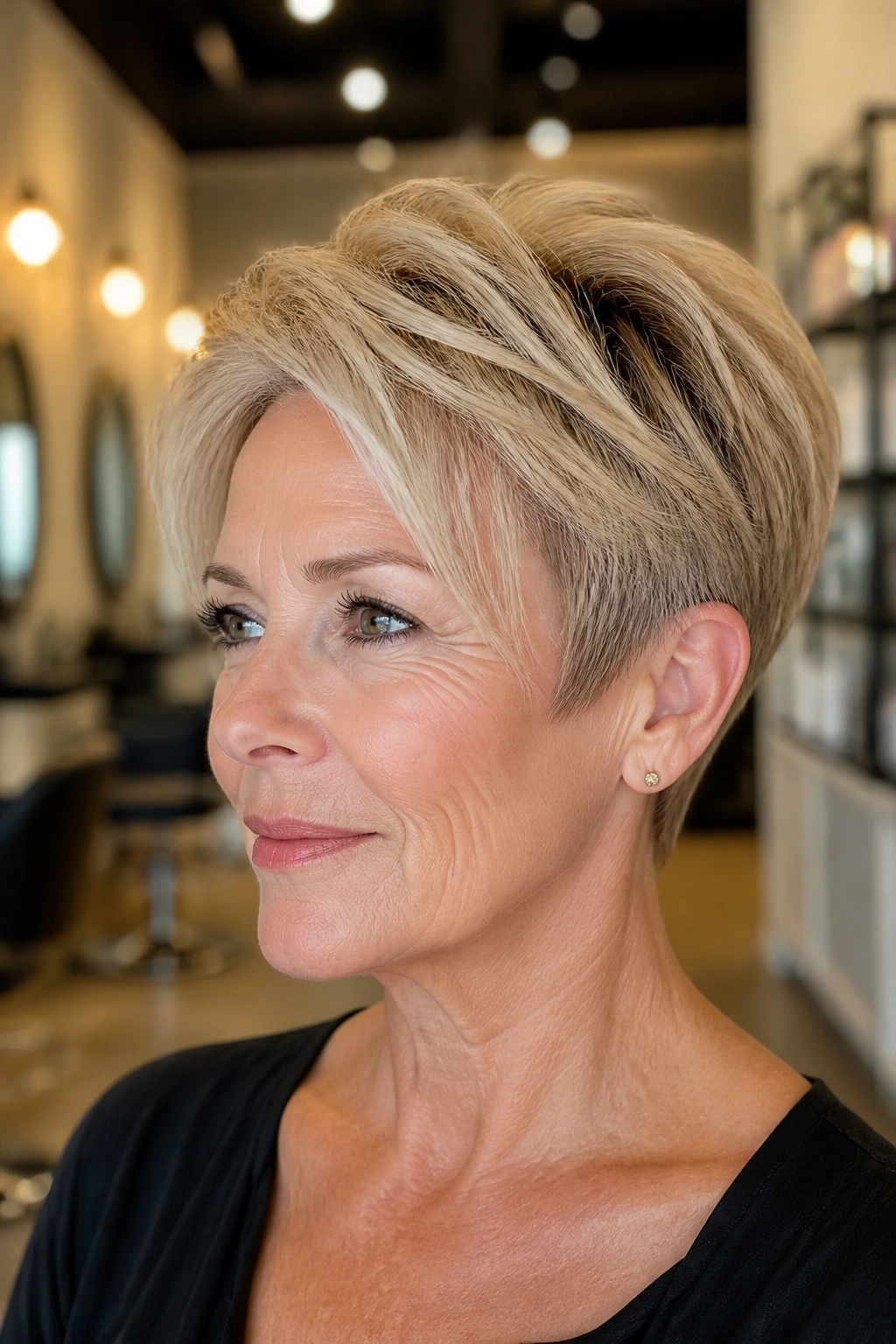
A tapered nape gives fine hair a cleaner line right where it needs structure most. Short hair at the neckline keeps the back from puffing out, while the longer crown helps build height without piling on too many layers.
This cut is a favorite of mine for people who want something neat from the front but a little more interesting from the side. The shape is tidy. The crown gives it some lift. And if the color sits in a soft champagne blond range, the haircut gets a subtle brightness that doesn’t make the hair look fragile.
You do need some styling discipline here. The crown should be lifted with a round brush or a vent brush, then set with a cool shot of air. Skip heavy wax. It will collapse the top.
A good barber or stylist will usually leave the taper snug, not shaved bare. That small difference matters. Too much skin showing at the nape can make the hair on top feel even finer by comparison.
6. Curtain-Bang Pixie in Beige Blond
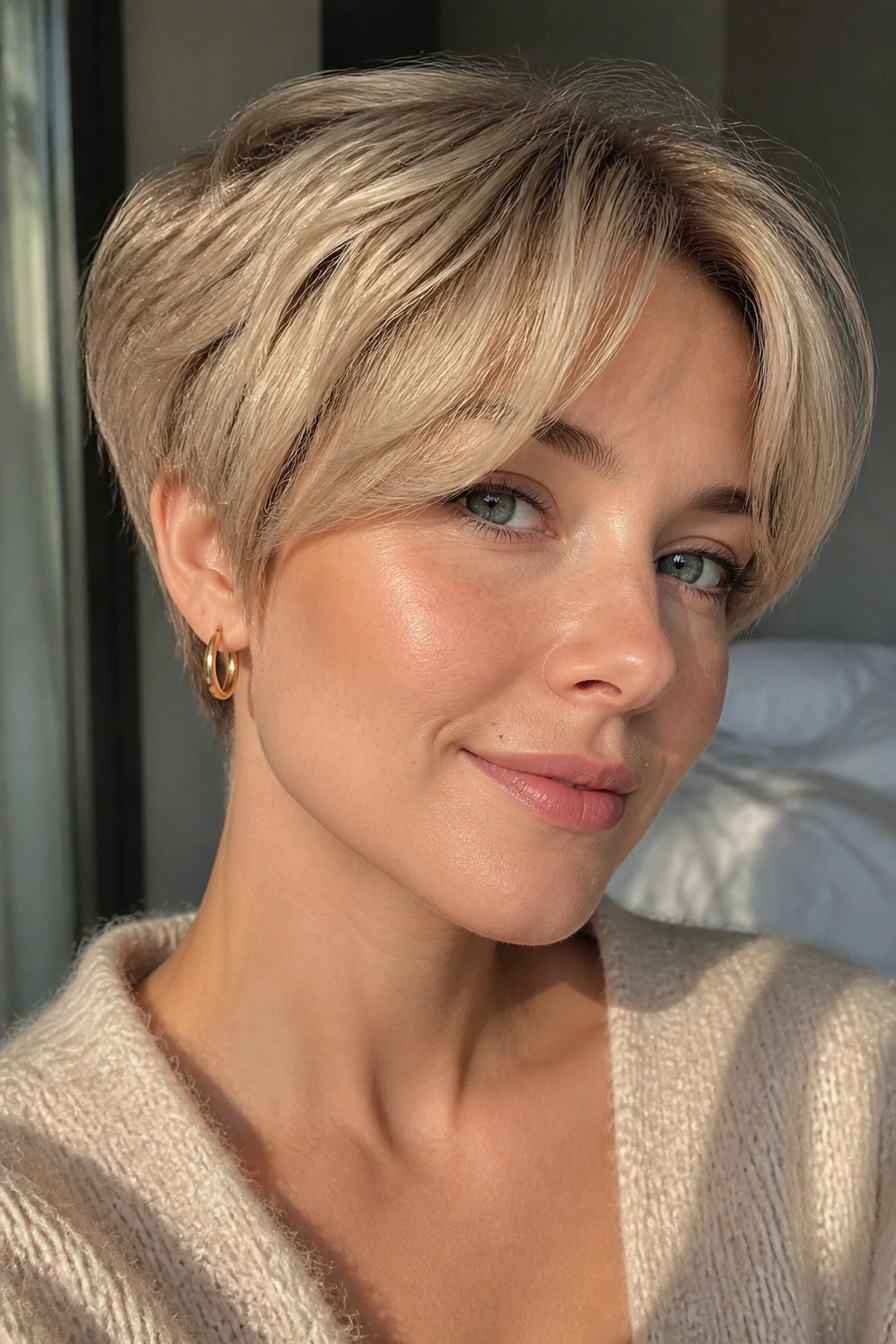
Curtain bangs aren’t only for longer cuts. On a pixie, they give fine hair a lovely bit of drape right where the face starts, and that can soften a strong forehead or lengthen the face in a gentle way.
The beige blond tone is ideal because it keeps the fringe looking light, not blocky. You want those front pieces to separate a little when they move. If the color is too solid or too bright, the bang line can look heavy, which is the last thing fine hair needs.
How to wear it
- Part the fringe slightly off-center
- Dry the bangs forward first, then split them
- Keep the ends soft, not razor-thin
- Use a tiny round brush if the hair sticks straight down
This one has a nice lived-in quality after a day or two. The bangs settle, the sides soften, and the whole cut starts to look more expensive than effortful. Funny how that works. It’s one of the easiest ways to make a pixie feel less severe.
7. Ultra-Short Crop With Airy Texture
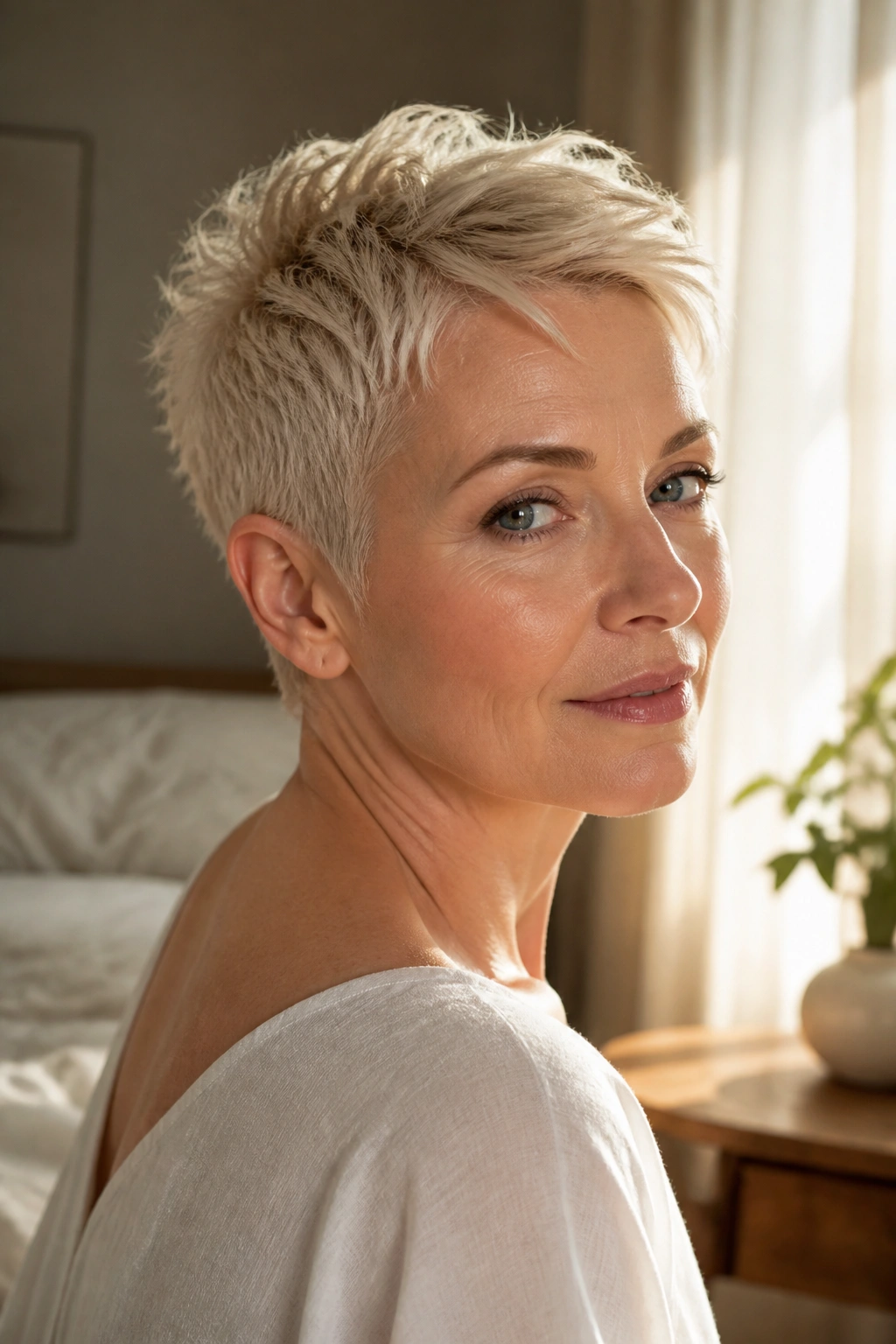
Some people need hair off the neck and out of the way, full stop. An ultra-short crop does that cleanly, and on fine hair it can actually look fuller than a longer pixie because there’s less length pulling the strand down.
The trick is not to over-texturize it. A crop that’s too chopped up starts to expose every bit of scalp and can look sparse fast. Keep the top just long enough to lift with fingers, and let the blond be soft rather than icy-bright. Creamy pearl blond works well here.
One sentence says it all: shorter can look denser.
If your hair is naturally straight, this is one of the fastest styling cuts on the list. Work in a rice-grain amount of paste, rub it through the crown, and stop. The shape should look touched, not built. That’s the whole point.
8. Swept-Back Champagne Pixie
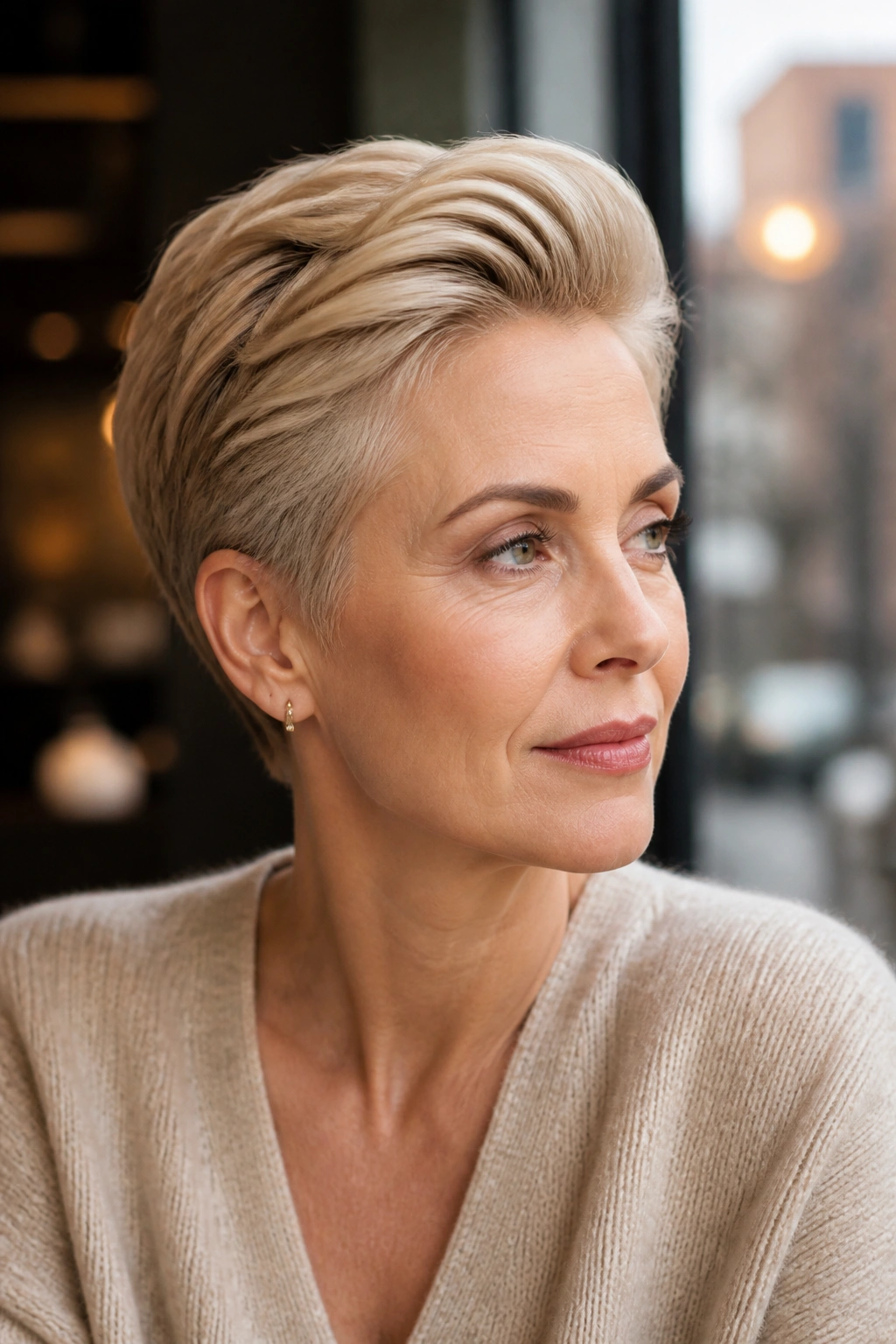
Sweeping the hair back opens the face fast. It also gives fine hair a bit of drama without relying on lots of visible layers, which can be risky on delicate strands.
Champagne blond sits in that flattering middle zone between warm and cool. It reflects light nicely, and when the top is kept longer, the hair can be brushed upward and backward into a soft ridge. That ridge is useful. It makes the crown look higher and the overall head shape more balanced.
This style suits people who like a cleaner, slightly dressier look. Think dinner, meetings, or just wanting your hair to behave without feeling overly styled. A small amount of blow-dry foam at the roots helps. Then brush the top back while the hair is still warm, and let it cool in place.
Avoid making the sides too sleek if the hair is very fine. You want a little body there. Too much flattening against the head can make the top look isolated.
9. Pixie Bob Hybrid for Fine Hair
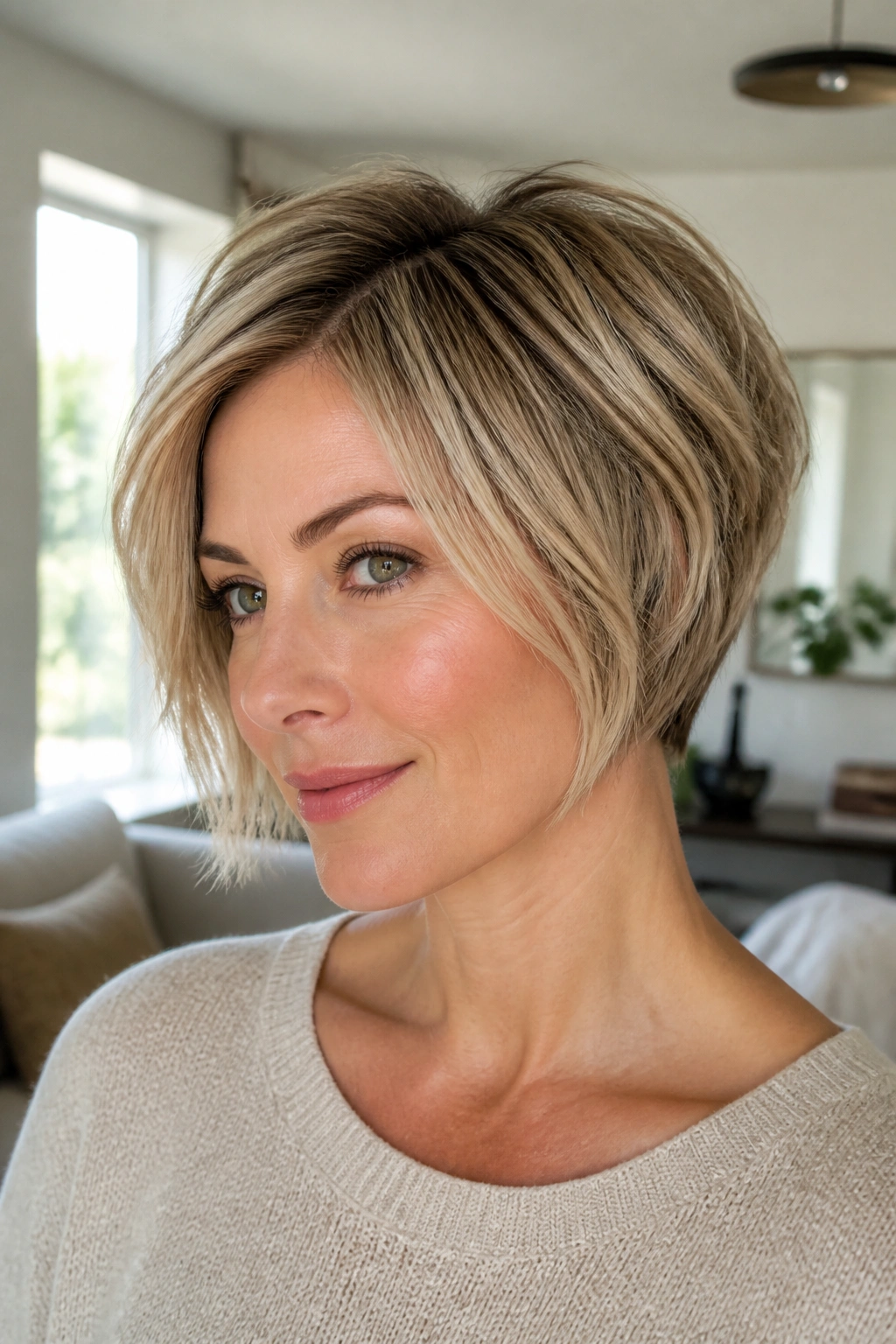
A pixie bob sits between a crop and a bob, and that in-between space can be gold for fine hair. Why? Because it keeps more perimeter weight than a standard pixie, which helps the ends look thicker.
This version is especially good if you like the idea of short hair but don’t want a tight cut everywhere. The front can skim the cheekbone, the back stays neat, and the blond tone can be a little softer—think sandy blond or oat blond—so the overall shape reads calm, not spiky.
What makes it different
- More length around the face
- Less dramatic contrast at the nape
- Easier grow-out than a very short crop
- Good for straight or slightly wavy fine hair
The hybrid shape can be a relief if your hair tends to separate at the crown. There’s enough length to disguise that, but not so much that styling becomes a chore. It’s one of those cuts that looks polished even when you barely touch it.
10. Wispy Fringe Pixie With Face-Framing Pieces
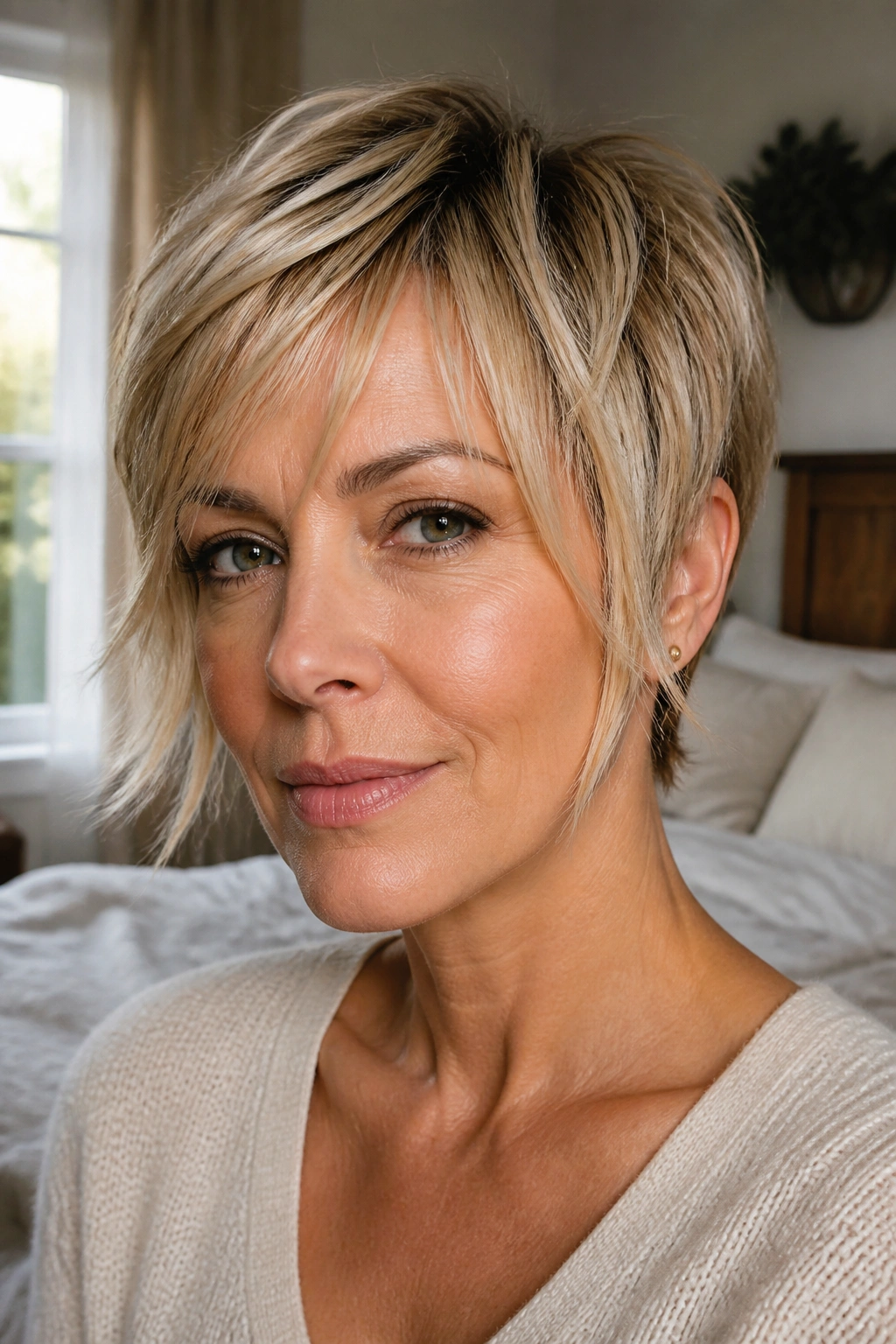
A wispy fringe sounds delicate, and in this case that’s the whole point. Fine hair can carry a light fringe better than a thick one, because the hair already wants to fall softly.
The face-framing pieces should be kept a little longer than the crown. That small difference helps the cut move around the face instead of sitting like a helmet. A soft honey blond or pale beige blond keeps the bangs from looking stripy. If the highlights are too chunky, the fringe loses that airy feel.
How to style it
What to watch for
- Don’t over-thin the fringe
- Keep the front pieces blunt enough to hold shape
- Dry the bangs side to side so they don’t split in the middle
- Use a light mist of flexible spray, not hard hold
The result is feminine without being sugary. I like that. There’s a little softness, but the haircut still has edge.
11. Undercut Pixie With Lifted Top
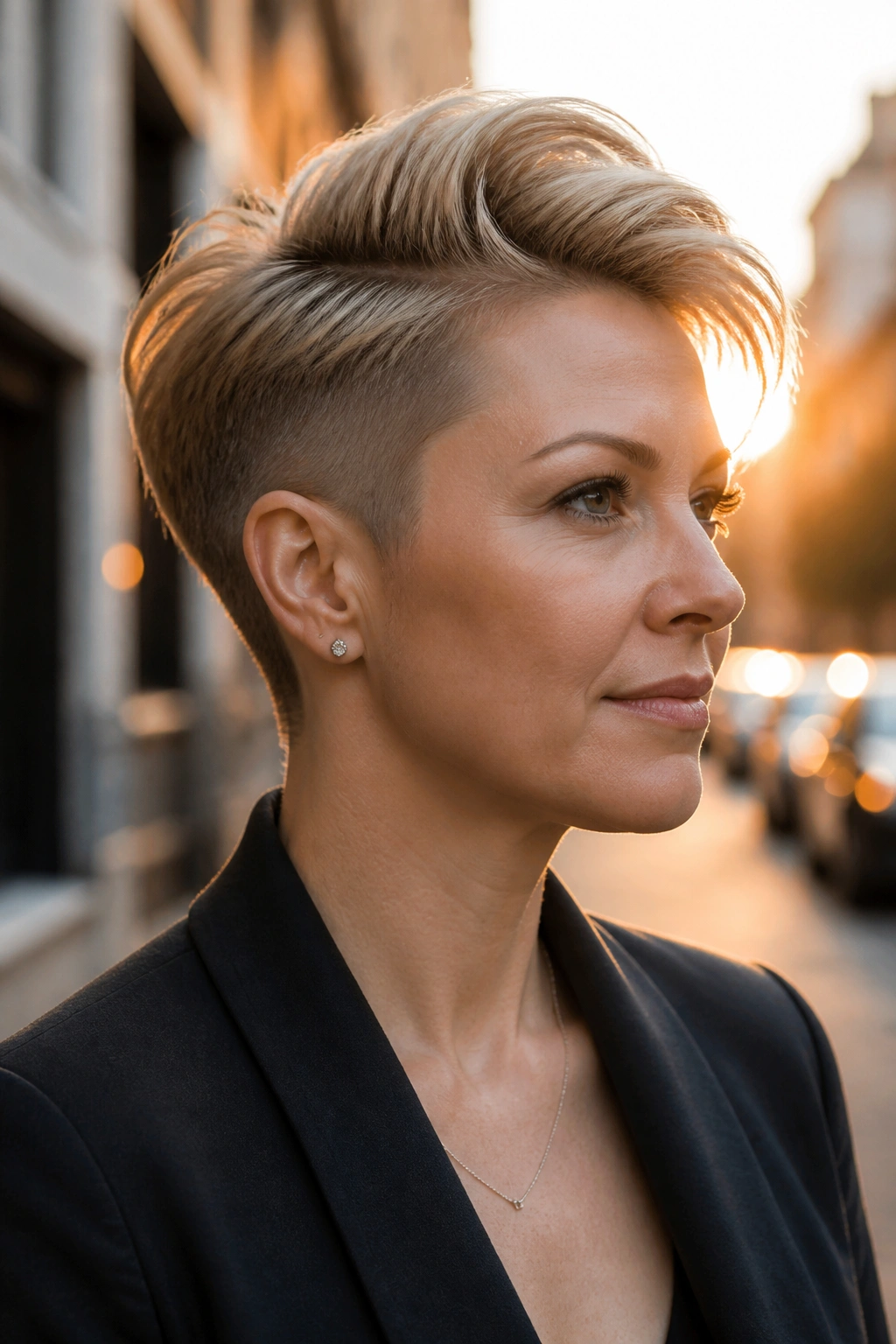
An undercut can be a lifesaver for fine hair if the top has enough length to carry the style. It removes bulk underneath and lets the upper layer sit with more lift.
The blond shade matters here because the contrast between the clipped sides and the longer top can get intense. A darker root or beige blond keeps that contrast from looking harsh. If you go too bright, the undercut can feel exposed in a way that isn’t flattering.
This is a strong choice if your hair lies flat at the sides and you want the top to have more presence. It also works well for anyone who likes a sharper silhouette. The style looks best when the top is swept to one side or lightly teased with a blow-dryer and a vented brush.
A tiny warning: don’t ask for the undercut too high unless you want a very graphic shape. On fine hair, a lower undercut usually looks more balanced.
12. Sliced Layer Pixie With Piecey Ends
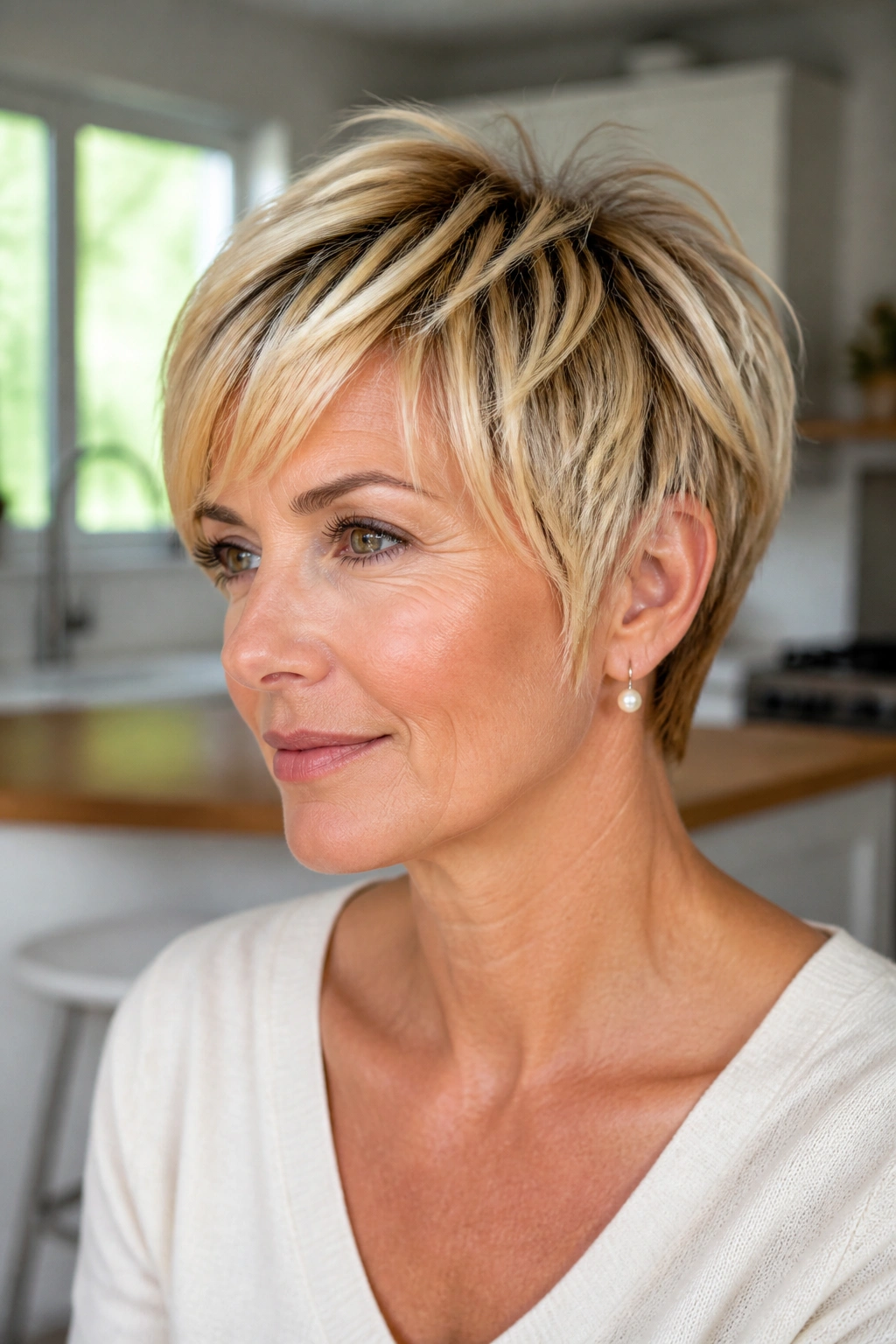
Sliced layers are different from choppy layers. They create separation without destroying the cut’s structure, which is exactly what fine hair often needs.
The ends should look defined, not fuzzy. That’s why this style works best when the stylist cuts into the shape with a light hand and keeps the perimeter visible. A neutral blond—something between pearl and wheat—lets the sliced layers show up without making the hair look streaky.
This one feels modern without being fussy. It has movement, but it doesn’t require a lot of product to hold it together. Use a tiny amount of styling cream on damp hair, then finger-dry the top while lifting the roots. Once dry, pinch a few ends between your fingers to separate them.
If your hair is very fine, ask to keep some weight near the temples. That little bit of density stops the style from going hollow around the face.
13. Warm Honey Blond Pixie With Soft Volume
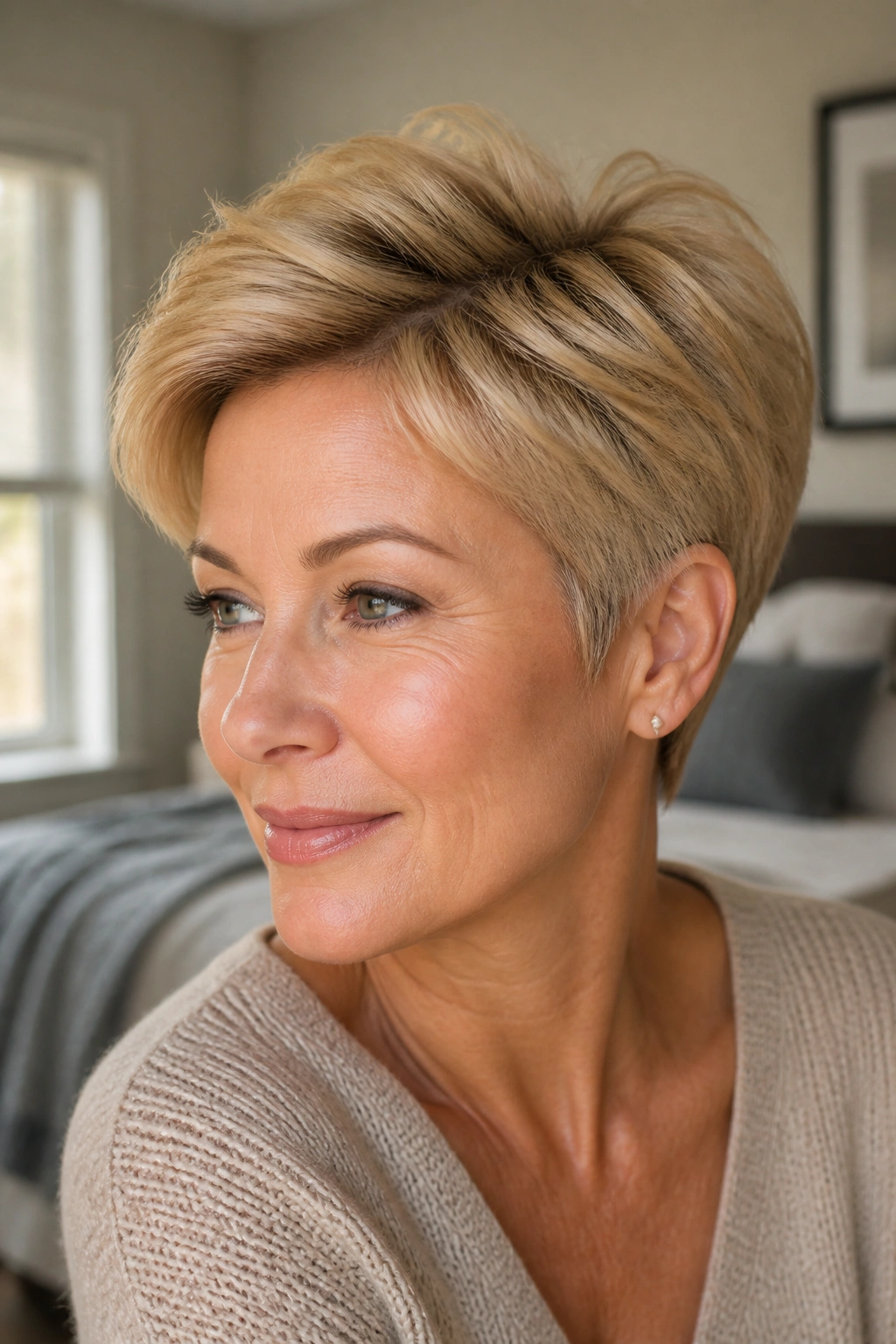
Warm blond shades deserve more love on fine hair than they get. Honey blond, in particular, can make the strands look richer and a little more substantial because the tone has depth, not just brightness.
This pixie is all about soft volume. No hard spikes. No shaved lines. Just a rounder shape through the crown and a gentle lift at the front. It’s flattering on people who want the cut to feel friendly and easy, not severe.
One nice thing about this color is how it behaves in low light. The warmth still reads, so the hair doesn’t disappear. That matters when you have fine strands and a short cut; flat color can make a lot of hair vanish visually.
Blow-dry with a small round brush, turning the front slightly away from the face. Then work in a drop of lightweight oil on the ends. A little warmth and a little volume is a better pairing here than sharp contrast.
14. Shaggy Pixie With Crown Length
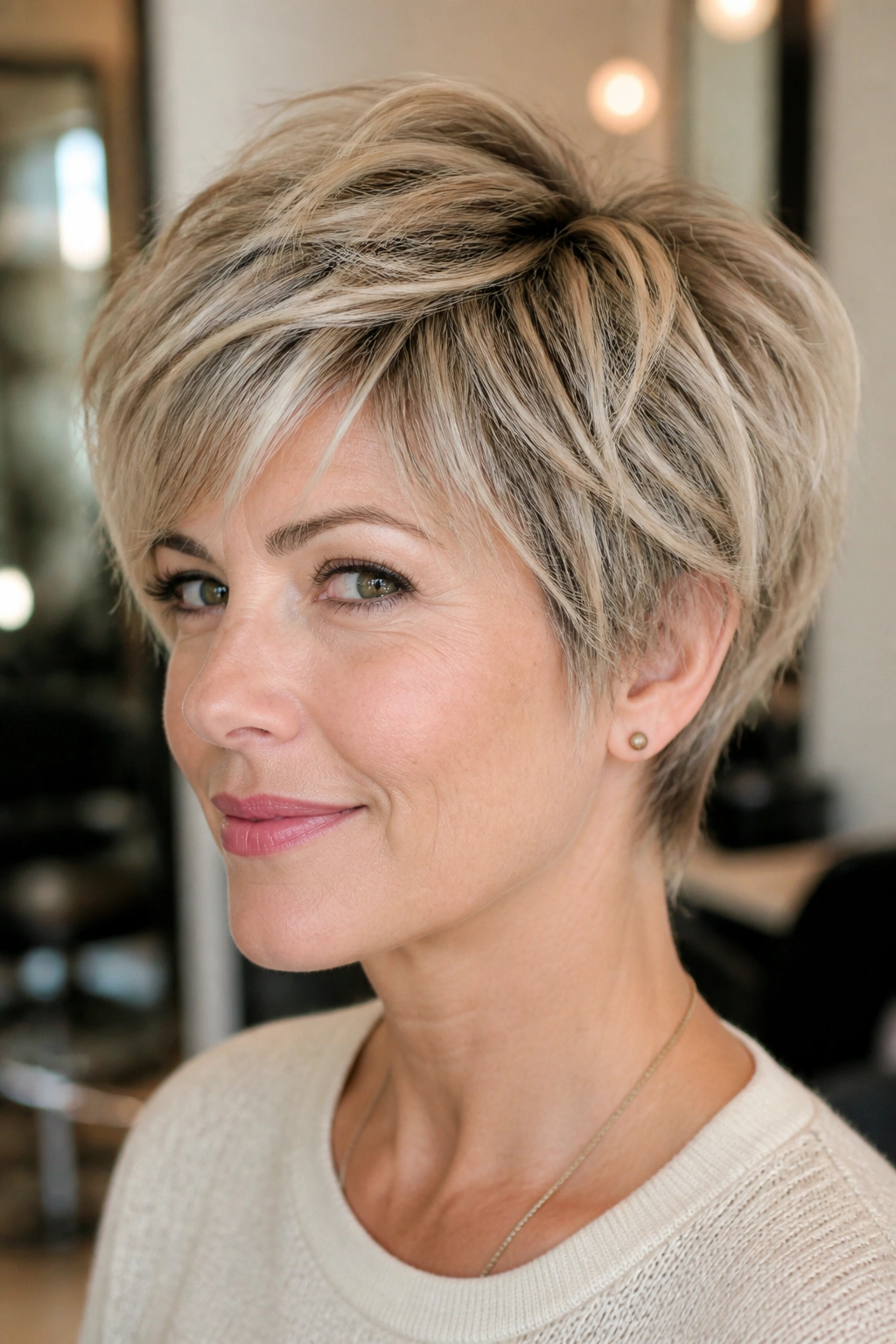
A shaggy pixie can work on fine hair, but only if the crown stays long enough to carry the shape. Too much shredding, and the cut just turns sparse. That’s the line.
The best shaggy version has a little lift at the roots, some broken pieces around the top, and a blond tone with dimension. I prefer soft beige highlights over chunky light streaks here. The aim is texture, not noise.
Why this one flatters fine hair
A longer crown creates the feeling of fullness where the head needs it most. The shaggy pieces make the haircut move, but the length keeps it from vanishing. It’s a good option if your hair has a slight wave or bends easily with heat.
This cut also grows out with a decent shape, which is more helpful than it sounds. A lot of short cuts look great only for two weeks. This one hangs on a little longer, especially if you keep the neckline neat.
15. Slick, Polished Pixie With Smooth Blonde Gloss
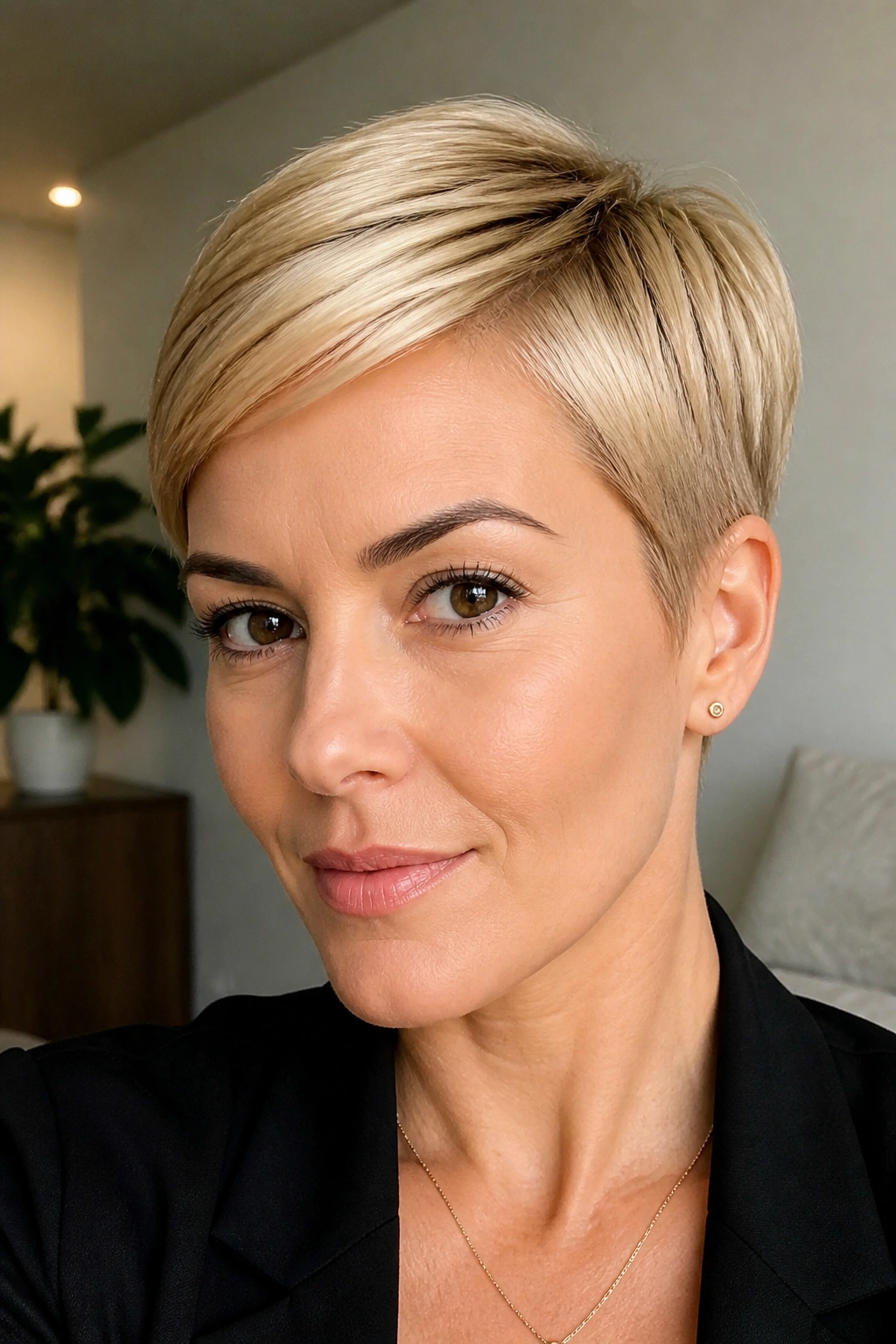
Not every pixie has to look piecey. A sleek pixie can be gorgeous on fine hair because the smooth surface reflects light and gives the cut a sharp, deliberate outline.
A glossy blond—think cream, pale gold, or soft pearl—makes the style look tailored. The key is to keep the hair healthy enough to lie flat without looking fried. Fine hair shows damage quickly, so this one rewards good conditioner and a careful hand with heat.
This cut works best when the shape is precise. The sides should hug the head. The top needs just enough length to sweep, not flop. A fine-tooth comb and a touch of styling cream are enough to finish it. If the hair is naturally a bit frizzy, use a smoothing lotion before blow-drying.
Good for
- Formal settings
- Straight hair that needs discipline
- People who like a neat outline
- Anyone tired of tousled cuts
It’s cleaner than messy pixies, and that’s the appeal.
16. Asymmetrical Pixie With Longer Side
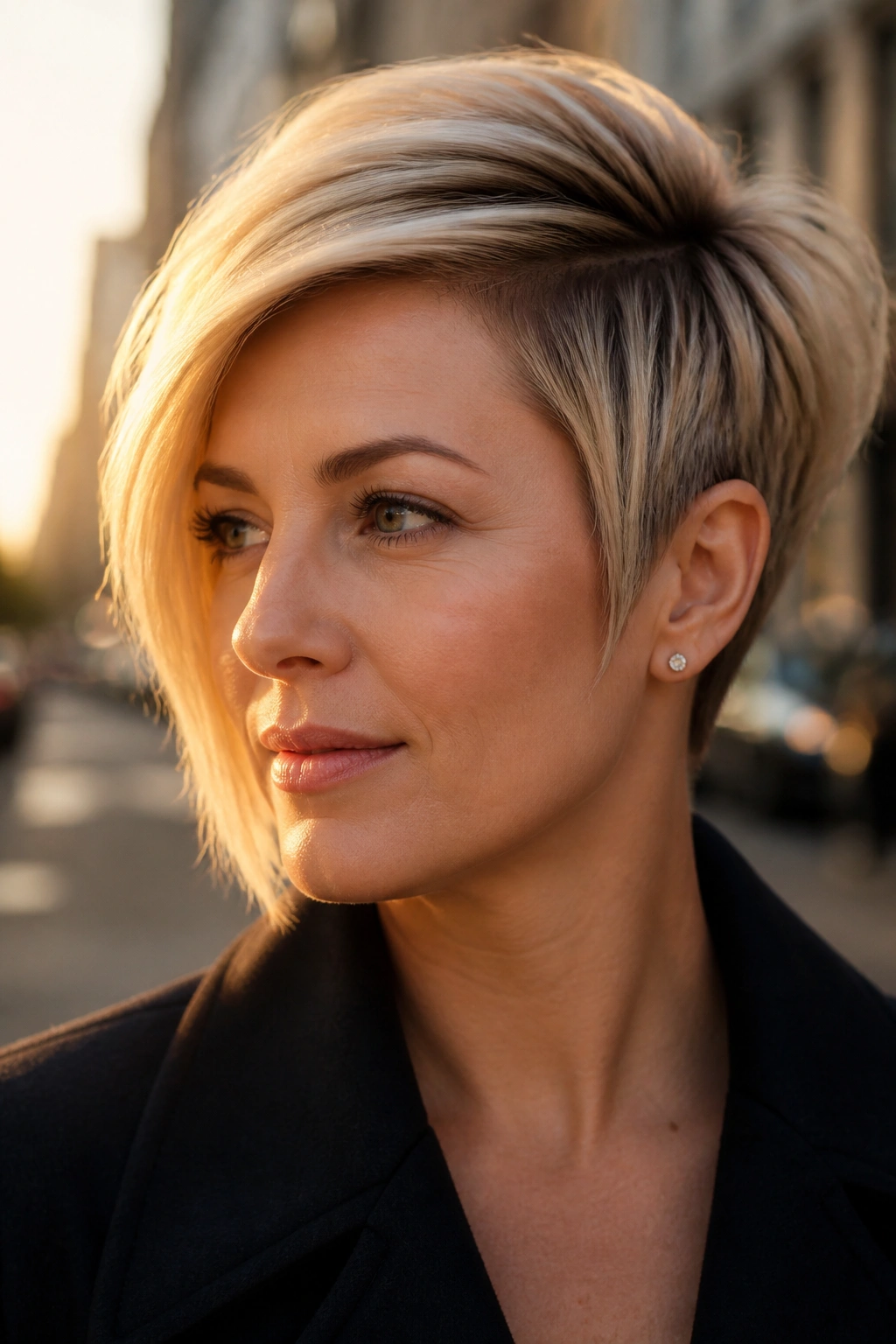
An asymmetrical pixie gives fine hair a built-in focal point. One side is longer, the other side stays close, and that difference gives the cut shape even when the hair itself doesn’t have much bulk.
The longer side can skim the jaw or cheekbone, which is handy if you want a little softness near the face. A cool blond with a deeper root keeps the longer section from looking stringy. If the color is too pale all over, the asymmetry can get lost.
What I like here is the sense of motion. The cut doesn’t need much styling to look intentional. A side part, a quick blow-dry, and a bit of finger shaping are enough. If you want to make the longer side stand out, tuck the shorter side behind the ear and let the front angle do the rest.
Be careful with over-layering. Fine hair already has enough air in it. You’re trying to shape that air, not scatter it.
17. Rounded Pixie With Soft Edges
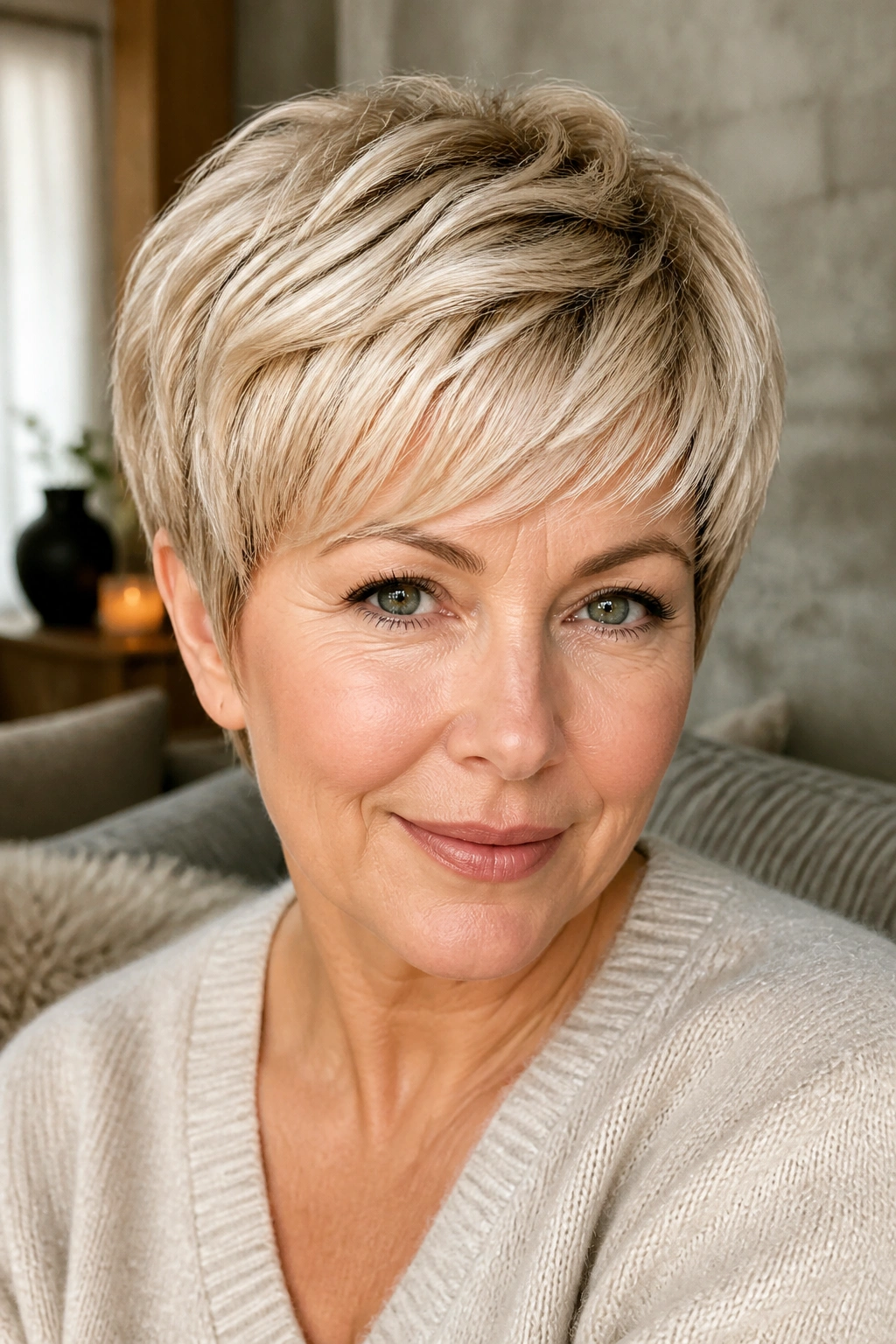
Rounded pixies don’t get enough attention, and that’s a shame. On fine hair, a curved silhouette can make the head look fuller because the shape feels dense all the way around.
The soft edges are the secret. You do not want a harsh bowl effect. You want a gentle arc through the top, temple, and crown, with the blond shade kept creamy and even. A buttermilk blond or pale beige blond works well because it smooths the line rather than breaking it up.
This is one of the easiest cuts to wear if you dislike fuss. It doesn’t rely on dramatic styling. It just sits in a neat, balanced way. If your hair is very straight, a little root lift with a round brush helps keep the top from lying too close to the scalp.
A rounded pixie can feel almost classic. Not boring. Just steady.
18. Tousled Beachy Pixie With Hidden Layers
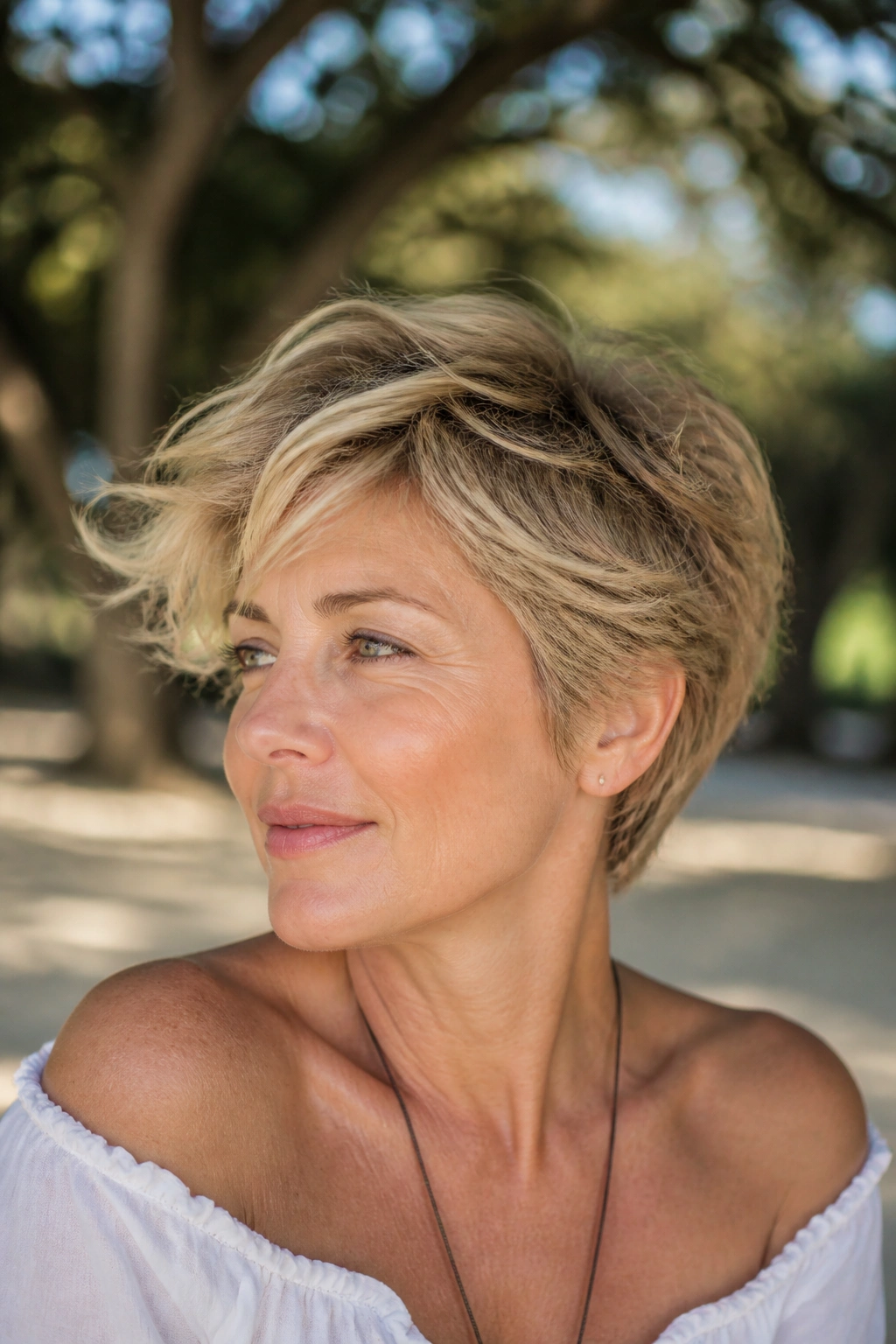
A beachy pixie sounds casual, but on fine hair it needs hidden structure or it turns limp fast. The best version has internal layers that you can’t easily see when the hair is lying flat, but which wake up once you add movement.
A sandy blond suits this shape because the tone already feels sun-kissed, and the cut doesn’t need harsh contrast to look alive. The texture should be soft and touchable. Think bends, not spikes.
How to get the look
- Blow-dry with a diffuser or fingers
- Twist a few damp sections while they dry
- Use a salt spray sparingly; too much can rough up fine hair
- Finish with a light cream on the ends
The nice thing about this cut is its looseness. It looks relaxed, but there’s still enough structure in the base to prevent collapse. That balance is harder to get than it sounds.
19. Bowl-Inspired Pixie With Softened Perimeter
A softened bowl-inspired pixie can work on fine hair when the line is kept light and the edges are broken up enough to avoid a hard helmet shape. That sentence matters. Hard lines and fine hair often fight each other.
The blond color should help the shape, not flatten it. A pale oatmeal blond with subtle lowlights gives the perimeter some dimension. The overall effect is modern and a little architectural, but not severe.
This cut suits straight hair better than very wavy hair, because the geometry needs a clean base. Keep the top a touch longer than the sides and ask for soft interior removal instead of harsh slicing. The haircut should still feel like hair, not a helmet shell.
One quick note: this is a style where the neck and ears really show. Clean edges make a big difference. If those are neat, the whole cut looks sharper.
20. Side-Part Pixie With Deep Root Contrast
A deep side part can rescue fine hair in a hurry. It creates instant lift where the hair wants to lie flat and gives the blond a more dimensional look.
Deep root contrast helps here because the darker base makes the lighter top pop. Not in a loud way. In a believable way. The part line itself can almost act like a built-in volume trick, especially when the front is swept across the forehead and slightly upward.
This style is a good fit if your crown tends to split down the middle. A side part changes the balance enough that the cut feels fuller without adding more length. Use a root-lifting spray at the part, dry the hair in the opposite direction first, and then flip it over. Old trick. Still one of the best.
If you wear glasses, this shape is especially good. It clears the frames and keeps the face visible.
21. Icy Blond Pixie With Blunt Fringe
Icy blond on fine hair can be striking, but it asks for a blunt fringe to keep the cut from looking too thin. The fringe acts like a visual anchor. Without it, the brightness can make delicate strands disappear.
The bluntness should be soft at the ends, not stiff. You want the line to hold, but you do not want a heavy block. A very short pixie with a blunt front works well when the hair is straight and the density is decent at the hairline.
This is one of the more fashion-forward choices in the group. It has a little edge. It also needs good upkeep because icy tones show brass fast. A purple shampoo used carefully—once every week or two—is usually enough to keep the color clean without over-drying the hair.
If you like a sharper look, this one delivers. If you hate regular trims, skip it.
22. Dimensional Balayage Pixie With Lived-In Grow-Out
A balayage pixie sounds unusual until you see how well it solves the grow-out problem. Fine hair can look limp when color is too solid, and balayage breaks that up with soft ribbons of light and depth.
The point here is not dramatic contrast. It’s movement. A mix of beige blond, sand, and a slightly deeper root creates the sense that there’s more hair than there really is. That’s the sort of trick I never mind paying attention to.
What makes it useful
- Less obvious regrowth
- Gentle brightness near the face
- A thicker visual effect through the top
- Easier maintenance than solid platinum
The cut itself should stay compact, with enough length on top to show the color shift. Ask for painted pieces around the crown and temple, not just the ends. That helps the light catch in the right places. Well, not “catch” in the vague way people always say. It helps the cut look less flat from every angle.
23. Piecey Pixie With Over-Directed Top
Over-directing the top sounds technical, but the result is simple: more lift, more shape, more body where fine hair usually gives up. The top is cut and styled to fall away from its natural direction, which creates a little extra fullness.
This style is especially good if your hair wants to lie down around the crown. A honey-beige blond keeps the structure soft, while the piecey finish prevents the haircut from looking too tidy. You want visible sections. Not a helmet. Not a fuzzy cloud either.
A styling paste with a dry finish is the right tool here. Warm a small amount in your hands, push it into the roots, then pinch a few pieces at the top and front. The trick is stopping before the product is obvious. Fine hair shows too much product fast.
It’s a little more styled than some of the softer pixies here, but that’s the trade. You get lift.
24. French-Inspired Pixie With Tiny Fringe
A tiny fringe gives a pixie an instant point of view. It’s short, slightly cool, and a bit cheeky in a way that suits blond hair surprisingly well.
On fine hair, the fringe should be light enough to move. A blunt micro-fringe can work, but only if the density at the front is decent. If not, go softer and a touch uneven at the edges. A pale wheat blond keeps the front from feeling too severe.
Why people like it
The haircut frames the eyes without swallowing the face. It also leaves enough length on top to play with texture, which stops the tiny fringe from dominating the whole cut. That balance is the whole game.
This one pairs well with minimal makeup and simple clothes. It has a neat, edited feel. Not fussy. Just sharp. If you want a pixie that feels a little more Parisian than sporty, this is the lane.
25. Flipped-End Pixie With Textured Crown
Flipped ends are a fun way to keep fine hair from looking too flat, especially when the cut has a bit of length on top and around the ears. A quick pass with a round brush or even a small flat iron can give the ends a subtle bend outward.
The blond should be soft and warm enough to keep the hair looking touchable. Too much ash can make the flipped shape feel stiff. A creamy golden blond works better because it softens the outline.
This style has a lived-in energy that still feels deliberate. The crown gets texture. The sides stay close. The ends do a little extra work. That’s a nice combination if you want movement without messy volume everywhere.
Use a heat protectant. Fine hair will tell on you if you don’t.
26. Neck-Hugging Pixie With Long Top
A neck-hugging pixie is practical in the best way. It stays close at the back, so the nape looks clean, but the top remains long enough to style in several directions.
This shape helps fine hair because the close back removes puffiness where there’s no need for it, while the longer top gives the illusion of more hair overall. A soft neutral blond keeps the balance easy on the eye. If you want to keep maintenance simple, this is a strong pick.
You can wear it brushed forward, swept sideways, or gently lifted at the front. That flexibility makes it one of the most forgiving cuts on the list. Some days you want polish. Some days you want quick and done. This does both.
The key is avoiding too much thinning at the top. Leave enough material for the style to bend rather than collapse.
27. Pearl-Blond Pixie With Face Lights
Pearl blond has a slightly glossy, milky look that can be lovely on fine hair because it makes the cut feel brighter without harshness. Add face lights—lighter pieces around the front—and you get a little framing effect that draws attention upward.
This is a good option if your face needs a little light around it or if you want the pixie to look more dimensional without going full highlight-heavy. The face lights should stay soft, thin, and blended. Thick streaks can look chunky fast on a short cut.
Quick notes
- Keep the sides cleaner than the top
- Use light-reflecting toner, not brassy gold
- Style the front away from the face for lift
- Refresh the gloss when the tone starts to dull
One thing I like here is the softness. It’s brighter, yes, but not brittle. That difference matters on fine hair.
28. Grown-Out Blond Pixie With Soft Layering
A grown-out pixie is not a compromise. When it’s cut well, it’s one of the easiest fine-hair looks to wear because the extra length at the top and sides gives the hair more shape to work with.
The soft layering keeps the cut from feeling heavy. A pale beige blond or sand blond lets the grown-out edges blend in instead of looking awkward. This is a good answer for anyone who likes short hair but wants to skip the constant trim cycle for a while.
You can tuck it, sweep it, or mess it up a little with your fingers and still have it look deliberate. That’s the attraction. It’s forgiving. It also tends to transition well into a bixie or short bob if you decide to keep growing.
Ask your stylist to preserve the density around the crown and temples. That keeps the hair from thinning out visually as it gets a little longer. Short, but not too short. That’s the sweet spot.
Final Thoughts
The best blond pixie cuts for fine hair do three things well: they keep enough weight to avoid see-through ends, they use color to create depth, and they stay easy to style when you have five minutes and not much patience. That combination is what makes short hair feel liberating instead of high-maintenance.
If you’re choosing between two versions, pick the one that keeps more structure at the crown and more softness around the face. Fine hair usually looks better with a little restraint than with heavy texturizing. A smart blond tone helps, too. It can turn a neat little cut into one that feels fuller, lighter, and far more alive.
