



Straight hair is the ultimate canvas for a pixie cut. Unlike wavy or curly textures that have a mind of their own, straight hair holds a geometric shape with precision, allowing for crisp lines, sharp angles, and deliberate layering that stays put. If you are tired of spending forty minutes blow-drying and smoothing out your mane every morning, or if you are simply looking for a change that feels like a clean slate, you have come to the right place.
There is a misconception that short hair is low-maintenance, but the reality is more nuanced. Short hair is high-frequency maintenance. You will see your stylist more often, and you will become intimately acquainted with your styling products. However, the payoff is a silhouette that looks styled even when you roll out of bed. The following styles embrace the natural lie of straight hair, focusing on structure, movement, and the specific architecture of the cut.
1. The Classic Tapered Pixie
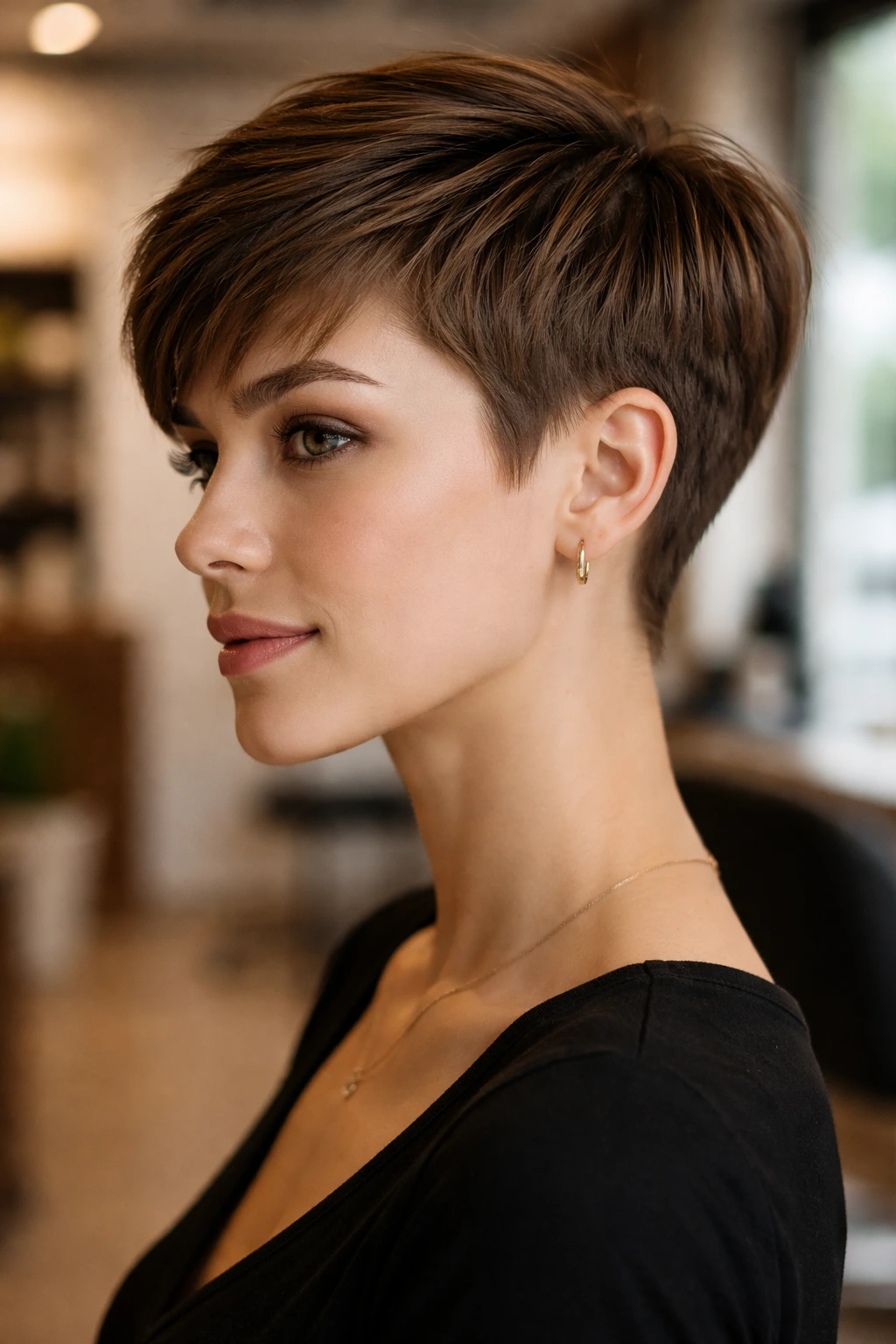
This is the baseline for all short hairstyles. You get clean, tight sides that gradually lengthen toward the crown. The key here is the scissor-over-comb technique used at the nape and around the ears. It removes the bulk that straight hair often accumulates, preventing that dreaded “helmet” effect.
Why It Works for Straight Hair
Straight hair tends to stand straight out when it is cut too short without tapering. By keeping the nape tight and using graduation, your stylist ensures the hair follows the curve of your head rather than sticking out like a shelf.
Stylist Tips
- Ask for a “tapered nape” rather than a shaved one if you want a softer look.
- Use a lightweight texturizing cream to keep the top pieces from looking flat.
- Expect a trim every four to six weeks to keep that clean neckline.
2. Textured Spiky Pixie
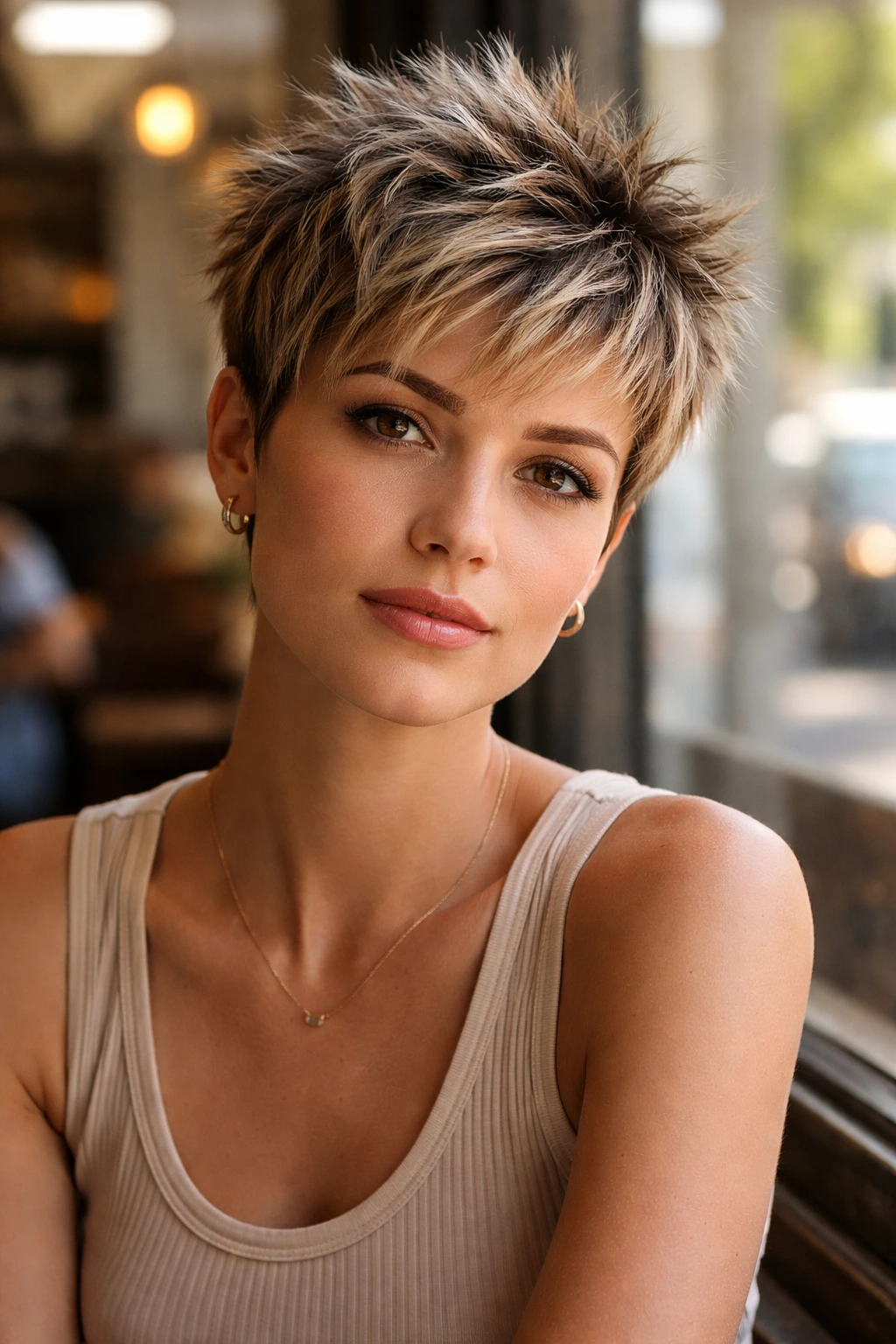
If you struggle with hair that feels lifeless and heavy, a textured spiky pixie introduces necessary grit. This cut involves significant point-cutting throughout the crown, which removes weight and allows the hair to be manipulated into different directions.
You are not looking for a uniform, “gelled-to-death” look. You want a piecey, lived-in feel. To achieve this, your stylist should use thinning shears or a razor to create jagged ends that naturally fall into a messy, spiky formation. It is a fantastic option for fine, straight hair that needs the illusion of density and volume.
3. Asymmetrical Side-Swept Pixie
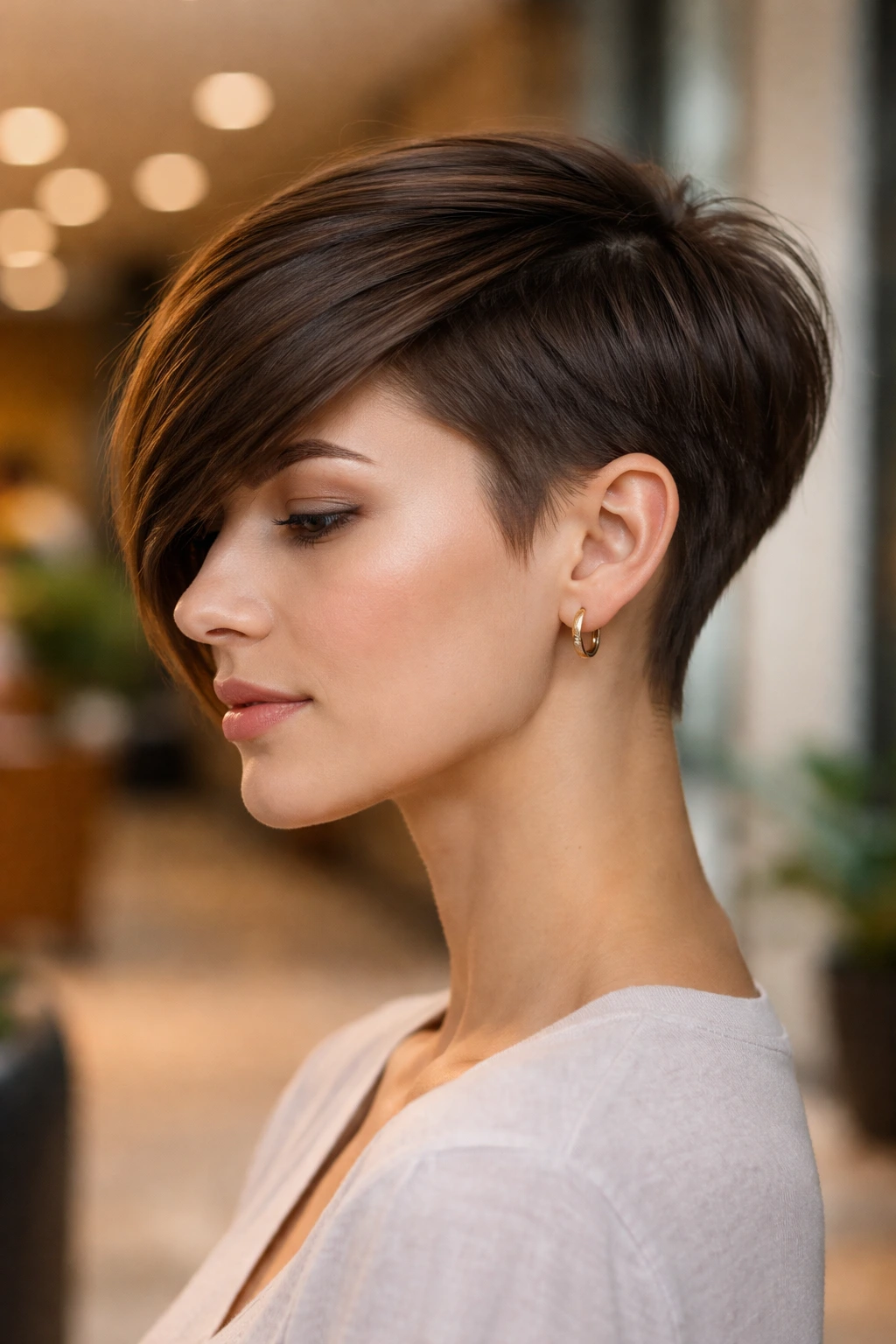
An asymmetrical cut plays with balance. You keep one side shorter—sometimes even undercut—while the other side features a longer, sweeping fringe that grazes your cheekbone. Because your hair is straight, this fringe will lie flat and smooth without requiring constant re-styling.
This shape is particularly flattering if you have a rounder face, as the diagonal line of the bangs creates an elongating effect. You can tuck the shorter side behind your ear to emphasize the length on the opposite side. It feels edgy but remains sophisticated enough for a professional environment.
4. Blunt Bangs Pixie
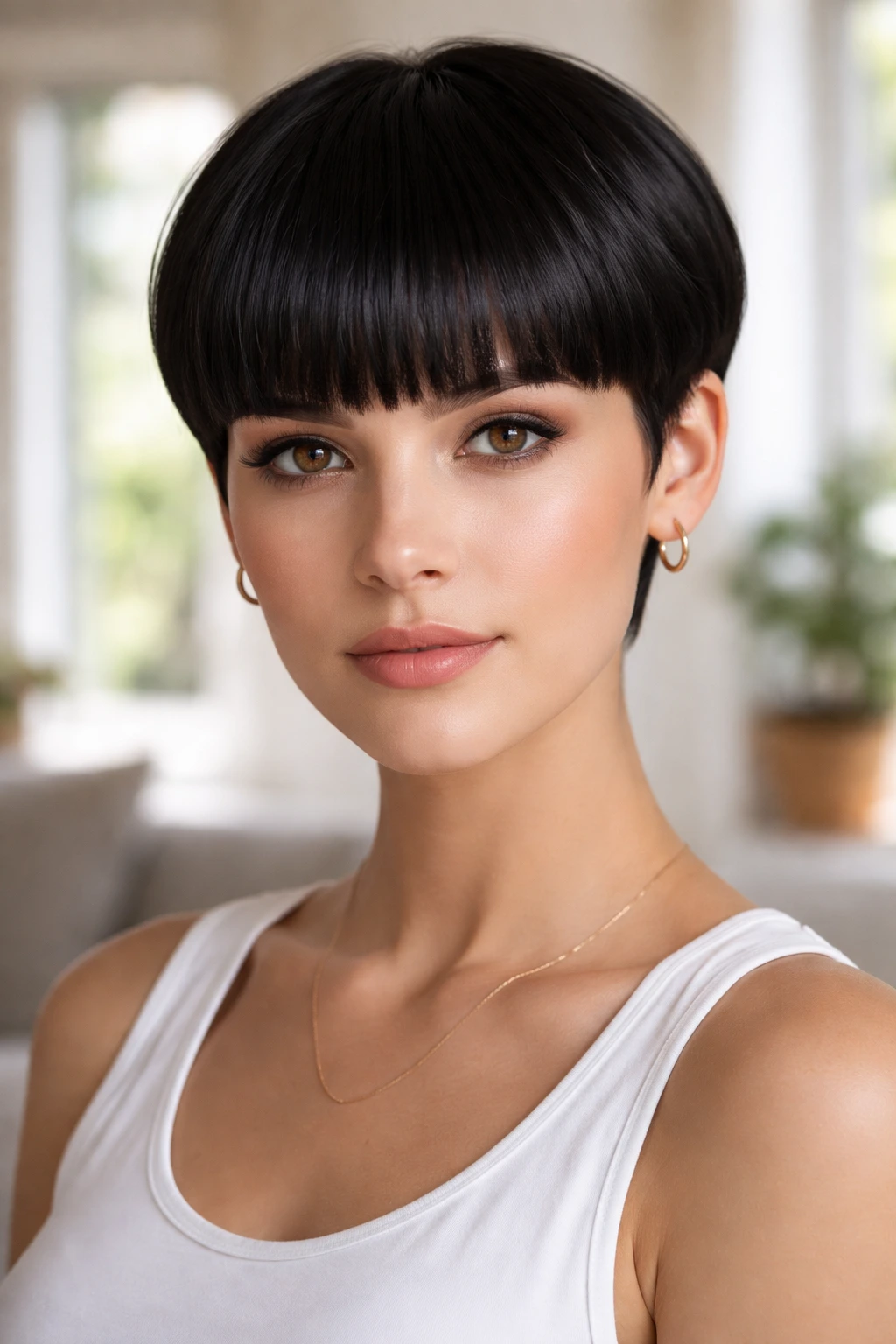
This is not for the faint of heart. It pairs the extreme shortness of a pixie with a heavy, straight-across fringe that sits right at the brow line. Because the hair is straight, you do not have to worry about the bangs curling up or doing anything unpredictable.
The Maintenance Factor
- You must keep the bangs trimmed precisely. Even a quarter-inch of growth changes the entire vibe of the cut.
- Use a small flat iron to keep the bangs perfectly straight, as any slight wave will show up prominently against the blunt edge.
- A shine spray is essential here to make the sharp lines look intentional and glossy.
5. Choppy Layered Pixie
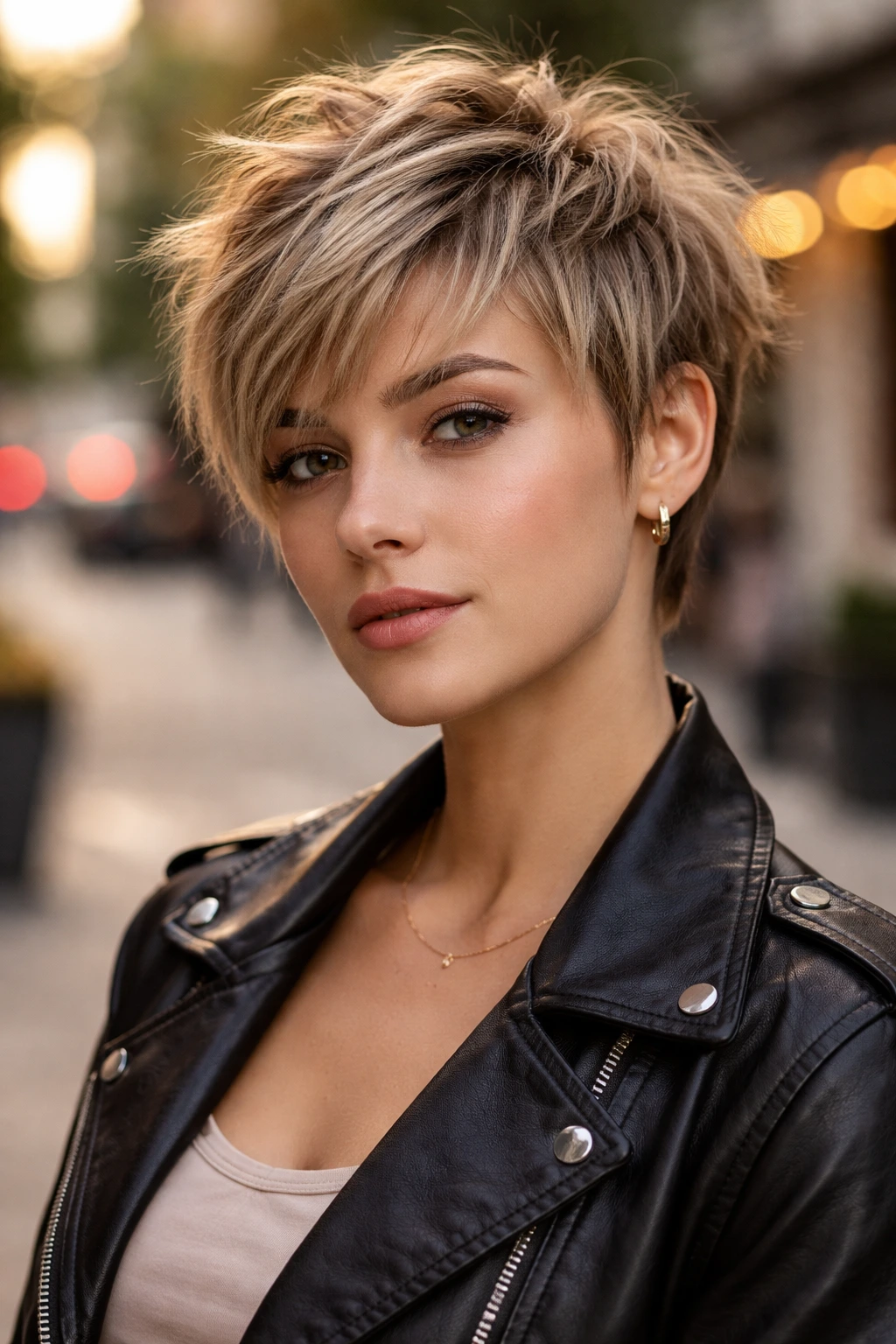
Choppy layers are all about movement. This cut is perfect if you want a wash-and-wear style that does not require a flat iron. The stylist cuts short, erratic layers all over the head, which gives straight hair a natural, tousled appearance that looks like you spent time styling it, even when you didn’t.
It is an ideal choice for someone who wants the length of a pixie but finds the classic, smooth styles too severe. The choppiness adds softness around the face, and the volume is built-in through the layers themselves rather than through product application.
6. The Undercut Pixie
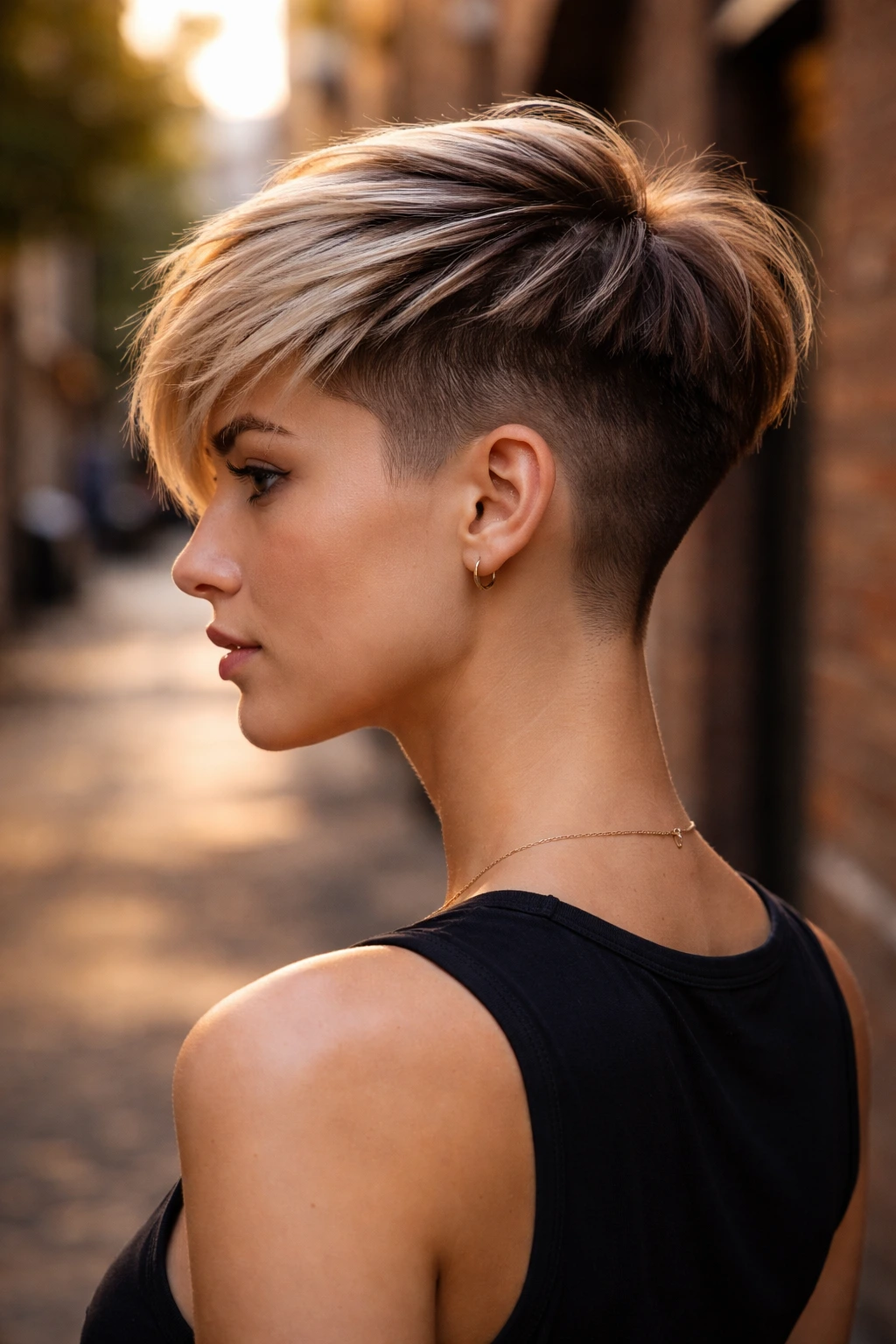
The undercut is a bold statement. You shave or buzz the hair at the nape and around the ears, leaving the top significantly longer. On straight hair, the contrast between the buzzed skin and the smooth, long top is striking.
It also serves a practical purpose: it removes the thickest part of your hair, making the styling process much faster. If you have thick, straight hair, an undercut can be a lifesaver, effectively thinning out your silhouette without losing the volume on top. You can play with the length of the top—wear it swept to one side, spiked up, or slicked back.
7. The Long Pixie (Bixie)
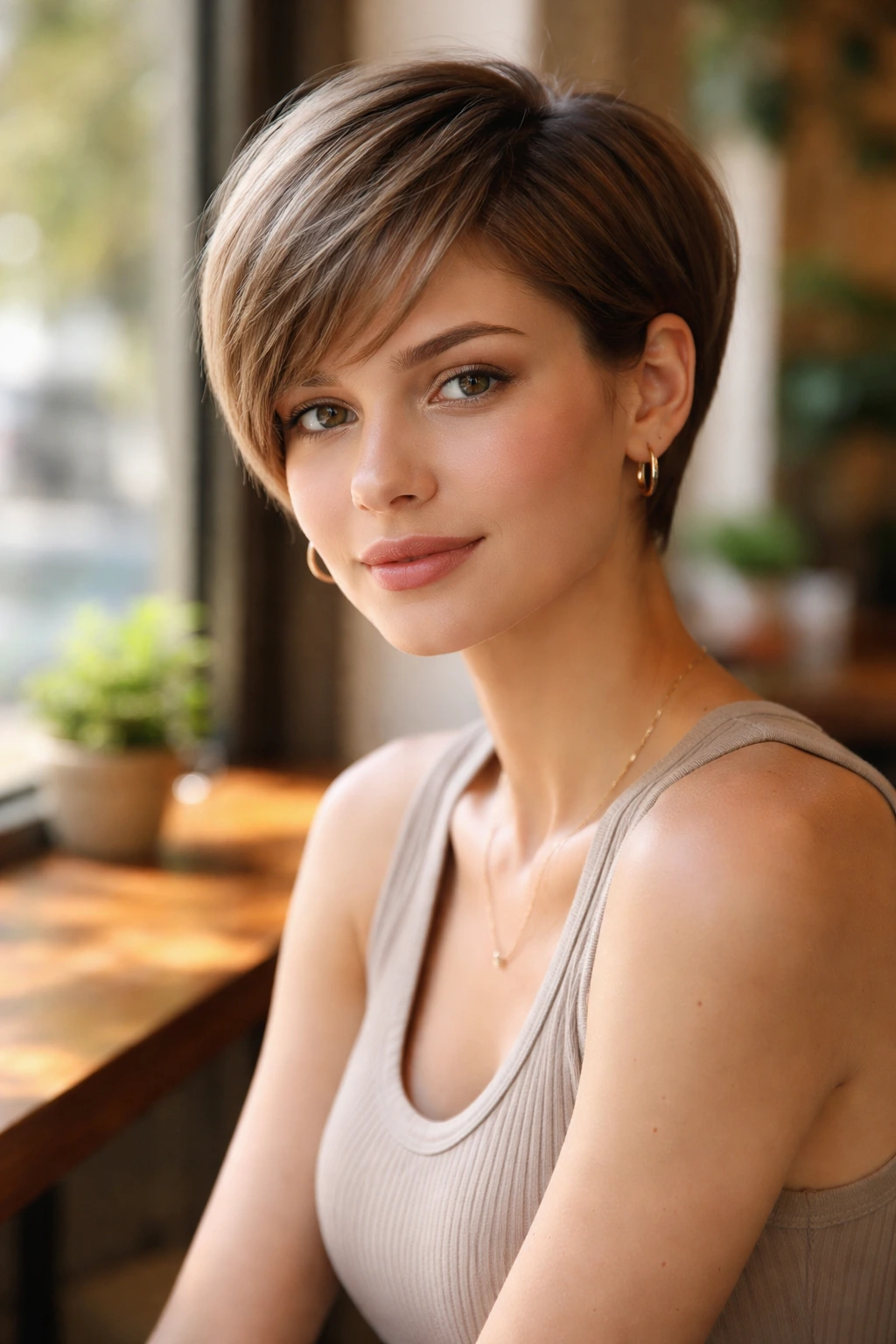
Somewhere between a bob and a pixie lies the “bixie.” It is a bit longer than a traditional pixie, offering more versatility. You can tuck the sides behind your ears, or leave them out to frame your jawline.
This cut is excellent for those making the transition from longer hair. It provides the freedom of short hair without the extreme exposure of a buzz-cut or micro-pixie. Straight hair looks elegant in this style because the ends can be slightly textured or blunted, creating a clean, modern aesthetic.
8. Platinum Buzz-Cut Pixie
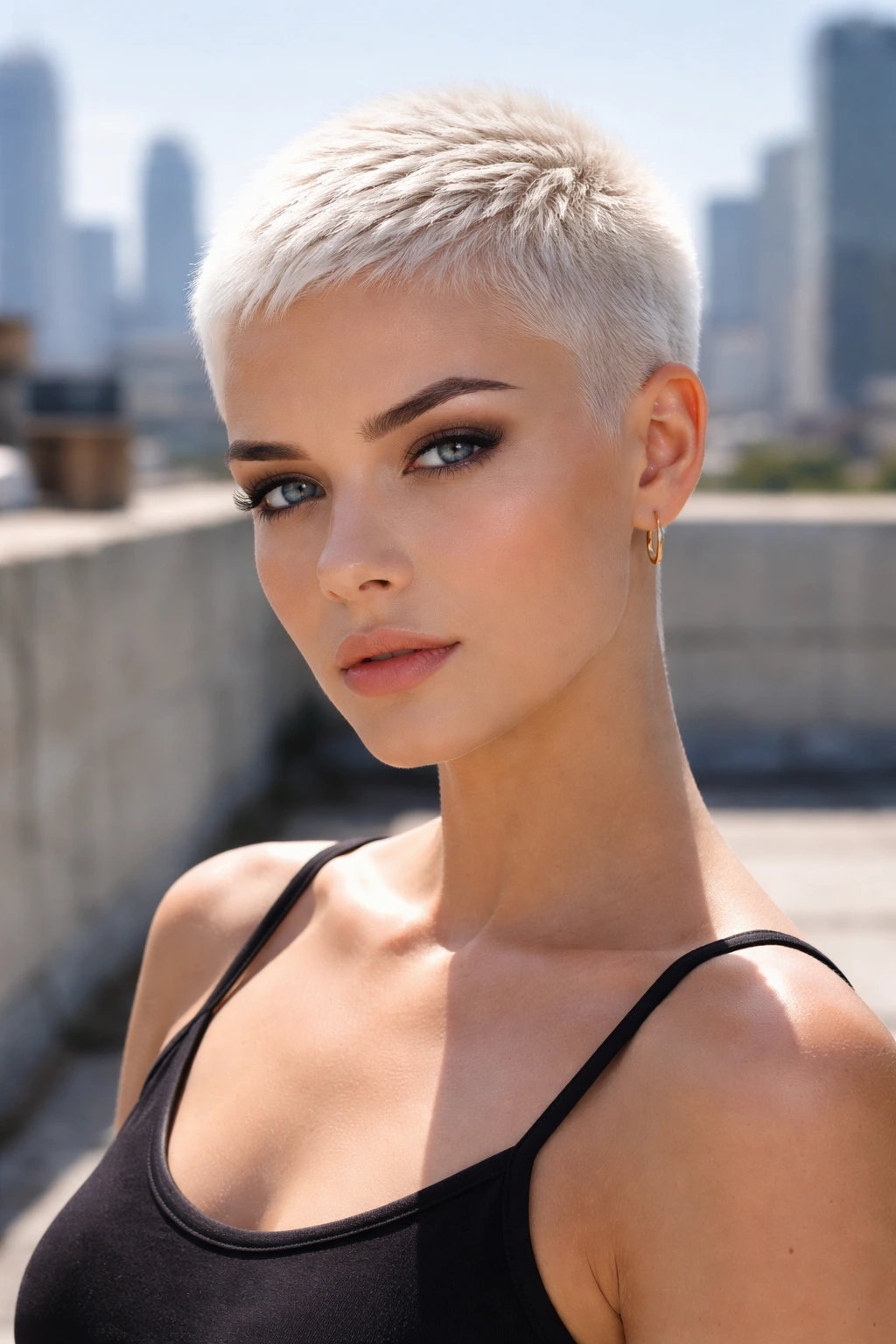
If you are ready for a total transformation, bleaching your hair platinum and taking the length down to a buzz-cut or a very short pixie is a defining look. Straight hair that is bleached loses some of its slippery texture, which actually makes it easier to style and adds volume.
Why the Color Matters
The lack of color depth puts all the focus on the shape of your head and your facial features. It is minimalist and high-fashion. Just be aware that platinum maintenance is a commitment. You will need to deal with roots every few weeks, and the health of your scalp and hair becomes a priority.
9. Wet-Look Pixie
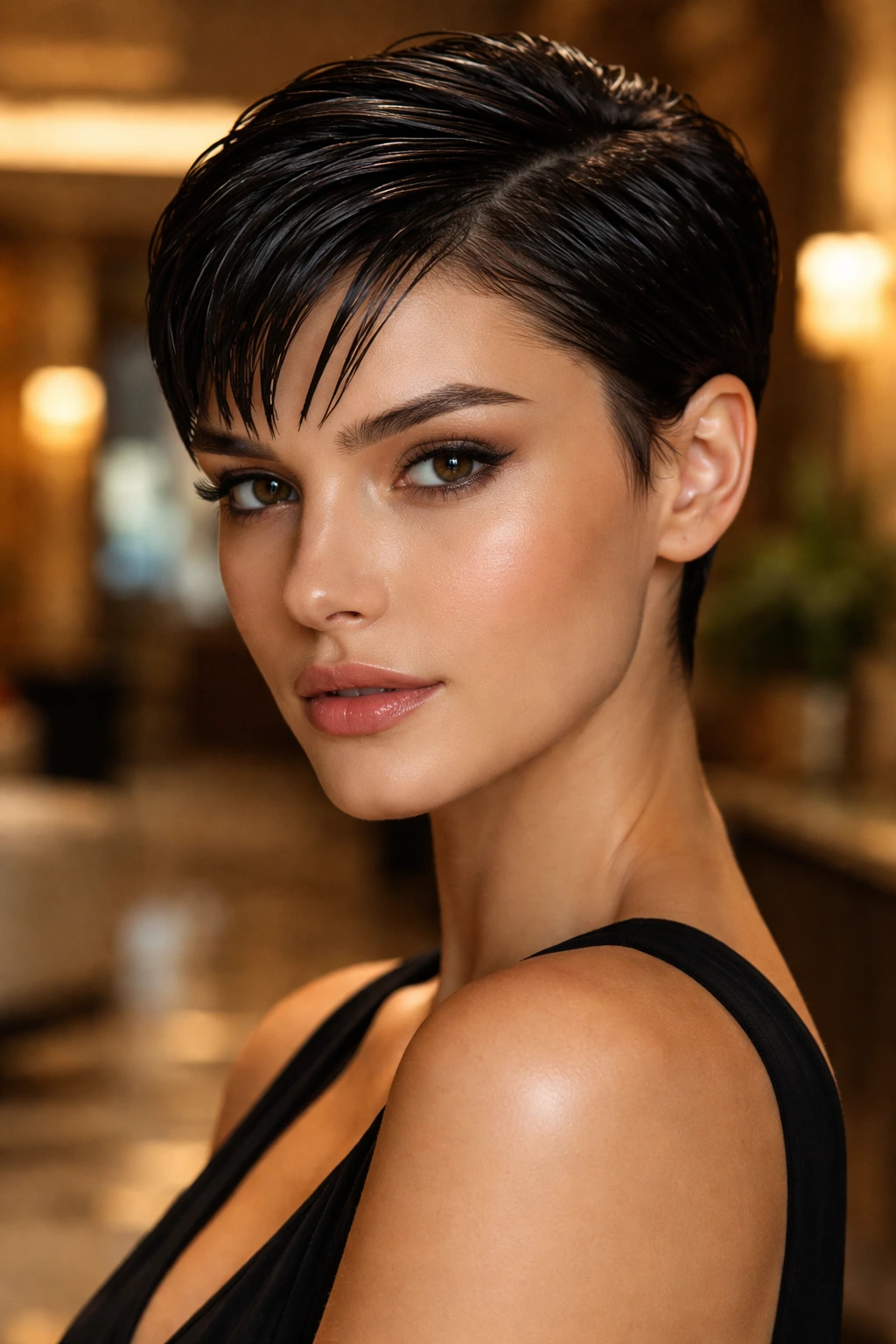
This is a styling choice rather than a specific cut, but it is tailor-made for short, straight hair. Using a strong-hold pomade or gel, you can slick your hair back or to the side, creating a “just out of the shower” appearance that stays in place all day.
This style creates a sharp, editorial look that works for formal events or just when you want to look polished. The key is using enough product so the hair looks purposefully wet, not greasy. Start with a dime-sized amount and work it through from roots to ends, using a fine-tooth comb to create lines or texture.
10. Feathered Pixie
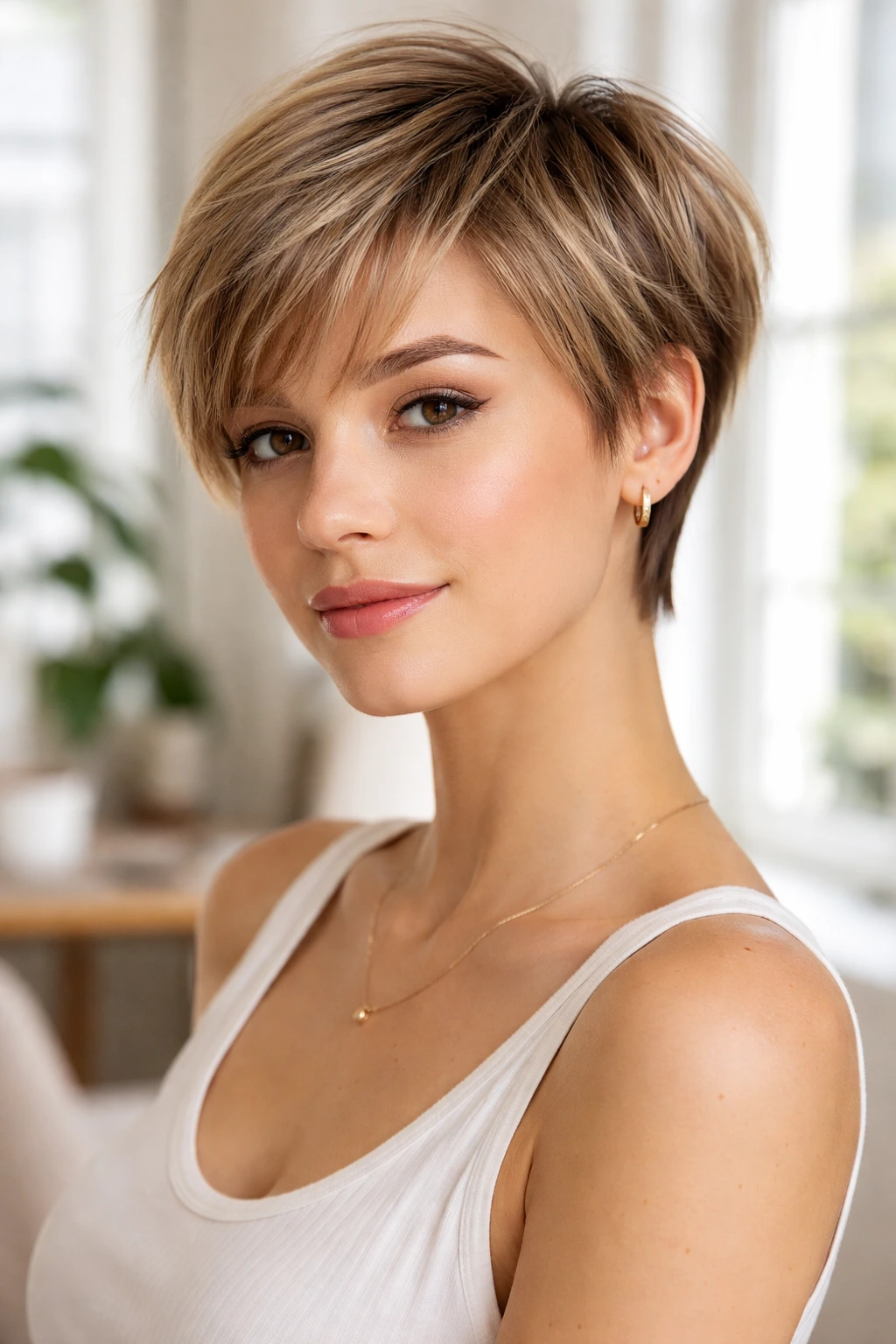
Feathering is a technique where the stylist cuts into the hair at an angle, creating thin, wispy ends that overlap. On straight hair, this looks incredibly soft and feminine. It is the antithesis of the sharp, blunt pixie.
The hair moves easily, and it frames the face gently. It is an excellent choice if you have finer hair because the feathering prevents the hair from clumping together. It looks particularly good with a side-swept fringe that blends into the rest of the cut.
11. Baby Bangs Pixie
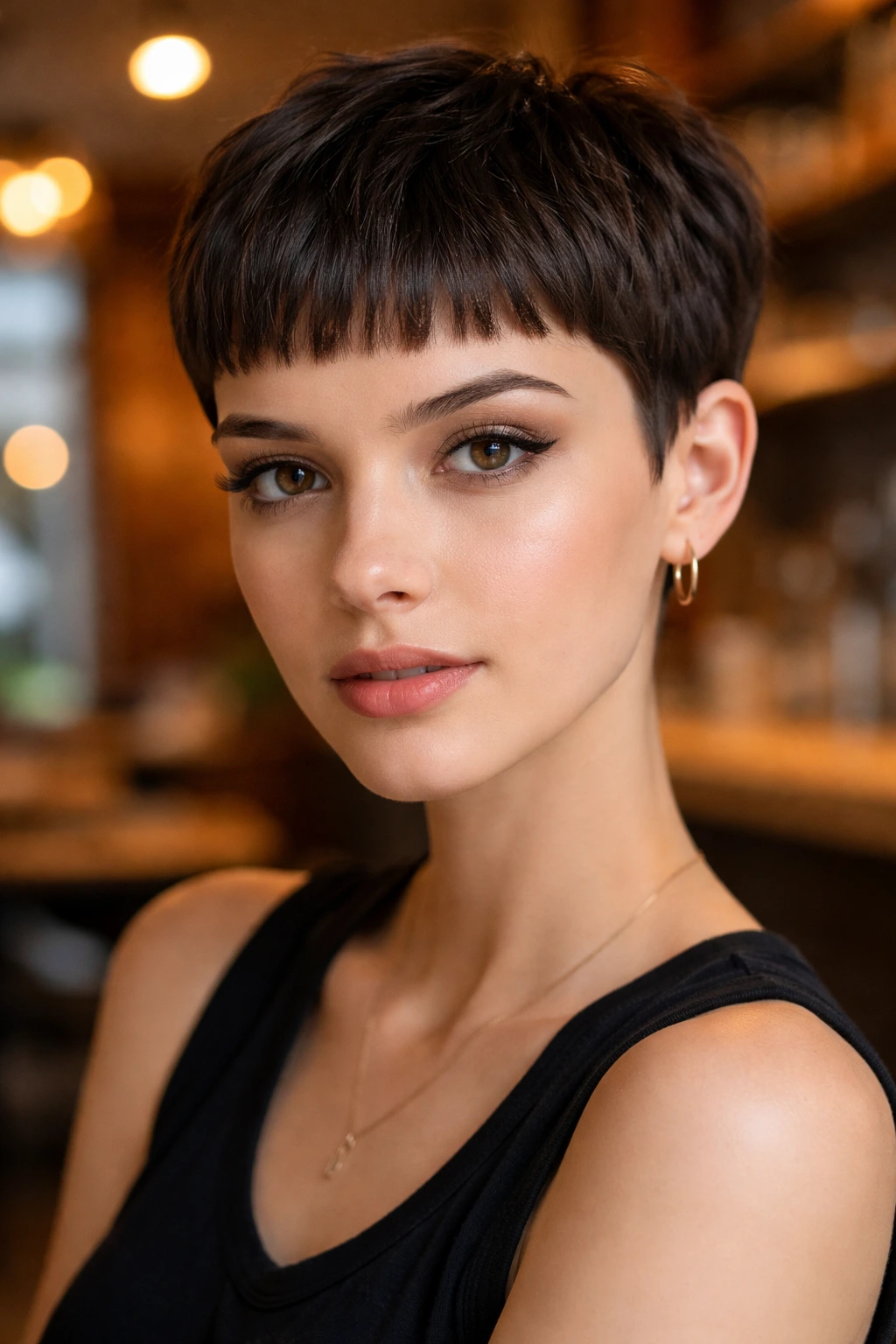
Baby bangs, or micro-fringes, sit well above the eyebrows. When combined with a short pixie, it creates a retro, gamine aesthetic that highlights your eyes and brows. Because your hair is straight, the bangs will remain perfectly horizontal, avoiding any awkward curling.
This is a high-fashion look that feels artistic and intentional. It works best if you have a face shape that can handle the exposure, as the short bangs draw all the attention to the upper third of your face. Keep the rest of the hair simple to let the bangs be the star.
12. Slicked-Back Pixie
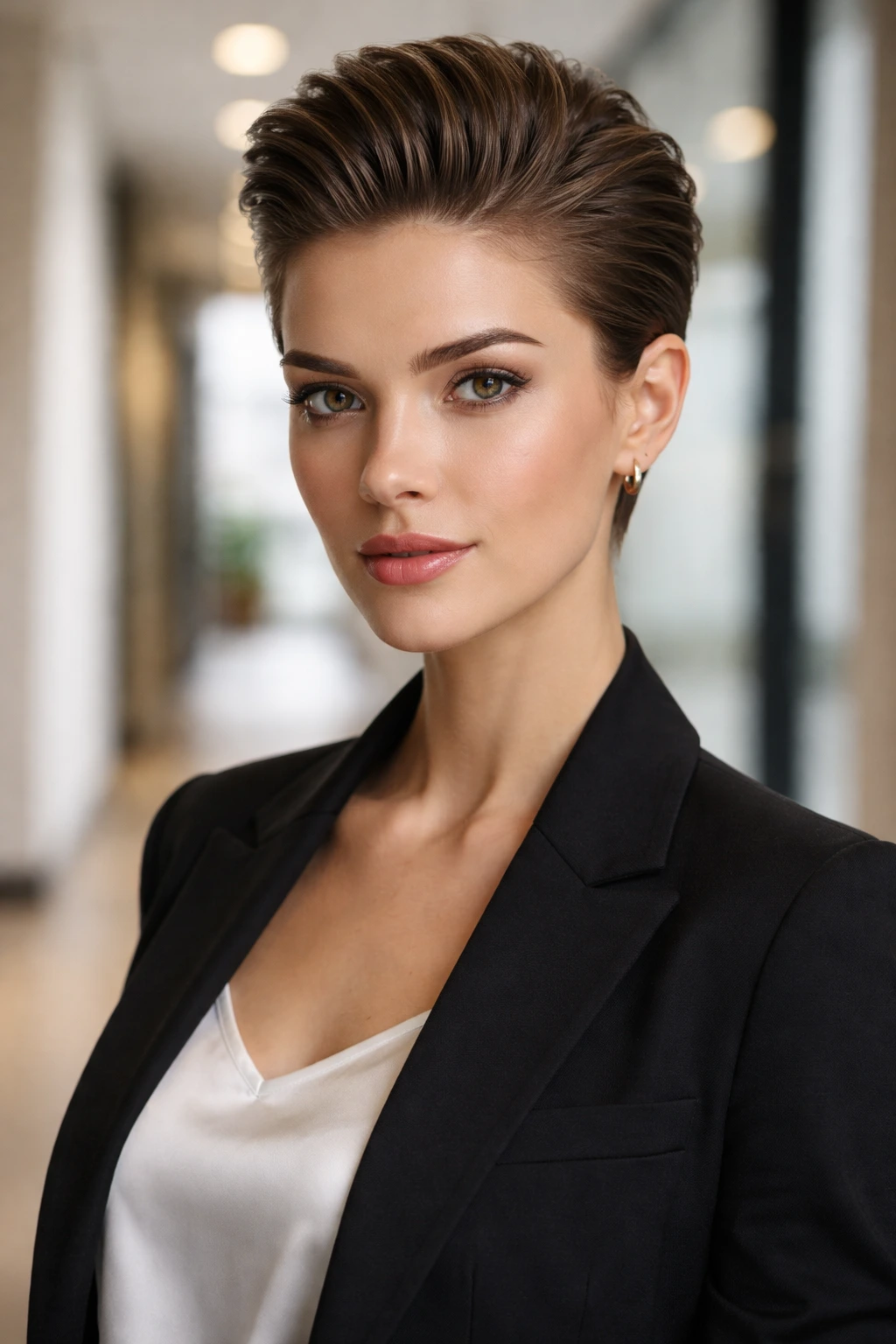
Similar to the wet-look, but this can be achieved with a matte-finish product for a dry, groomed appearance. It is a powerful, professional style that removes all hair from your face.
For straight hair, the secret is a good root lift. Before applying your product, use a volumizing mousse and blow-dry the hair backward, away from the face. Once it is dry, apply a matte pomade to lock it in place. This prevents the hair from falling flat against your skull and gives it a bit of necessary volume.
13. Shaggy Pixie
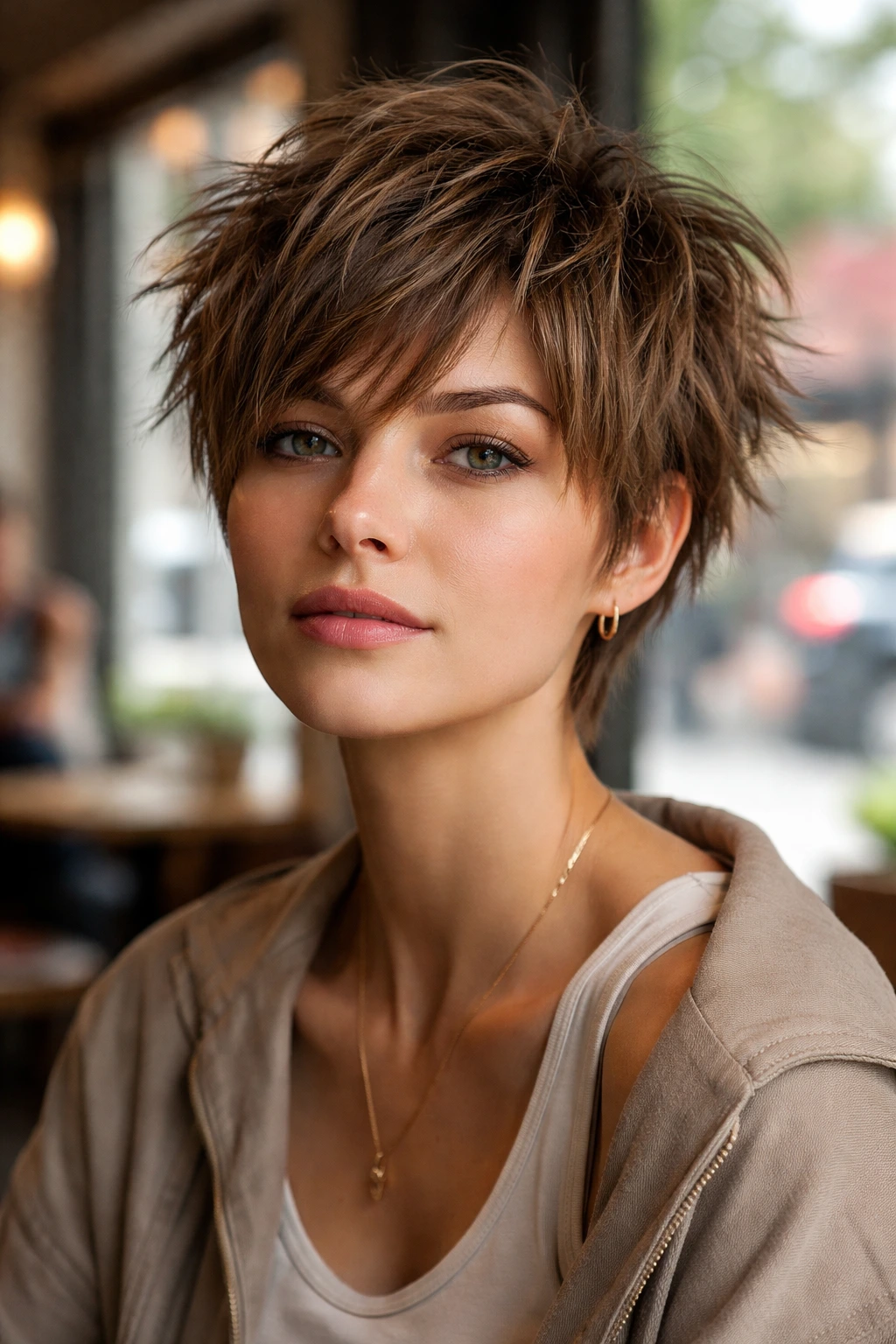
The shag has made a comeback, and it works surprisingly well in pixie form. It is all about internal layering and length variation. The crown has more volume, the sides are piecey, and the ends are razor-cut to look slightly frayed.
It feels rebellious and effortlessly cool. Because straight hair doesn’t have the natural bend of curls, you will need a sea salt spray or a dry texturizing spray to give it that “bedhead” look. The goal is to look like you just woke up, even if you spent ten minutes applying product.
14. Mohawk-Inspired Pixie
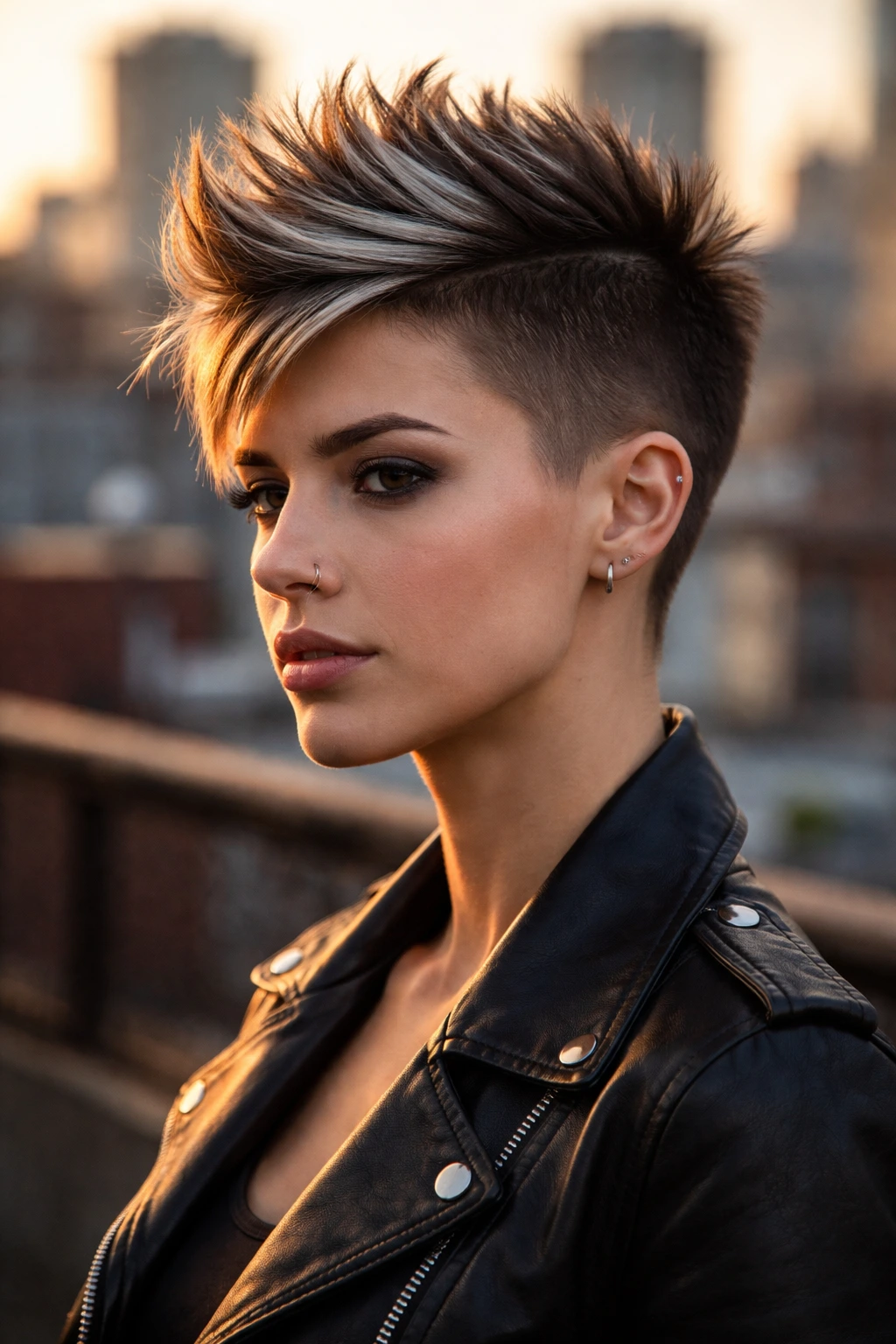
You don’t have to shave the sides to rock a faux-hawk. By cutting the sides very short and leaving the hair along the center strip significantly longer, you create a shape that you can spike up whenever you want.
When you want to be more conservative, simply brush the top down. It is a versatile cut that leans into the punk aesthetic while still being wearable. Use a strong-hold clay or wax to create the lift in the center.
15. Graduated Stacked Pixie
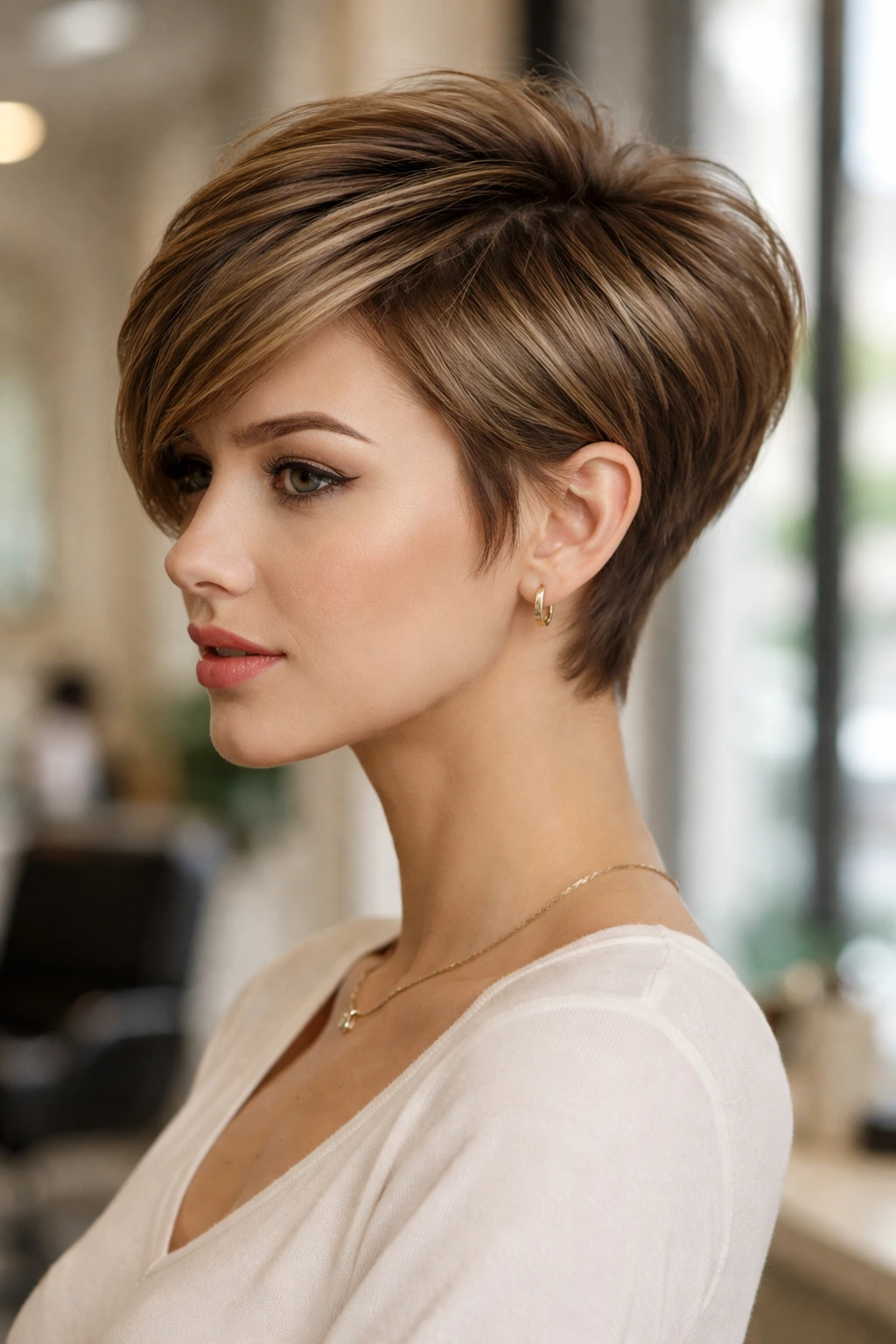
This style features heavy layering at the back of the head, creating a “stacked” effect that builds volume exactly where straight hair needs it most: the crown and the occipital bone.
The front is usually longer, tapering down to the face. It is a structured cut that is very precise. You need a skilled stylist who understands graduation to prevent the layers from looking like steps. When done right, it is one of the most flattering cuts for those with flat, thin, or very straight hair.
16. Wispy Fringe Pixie
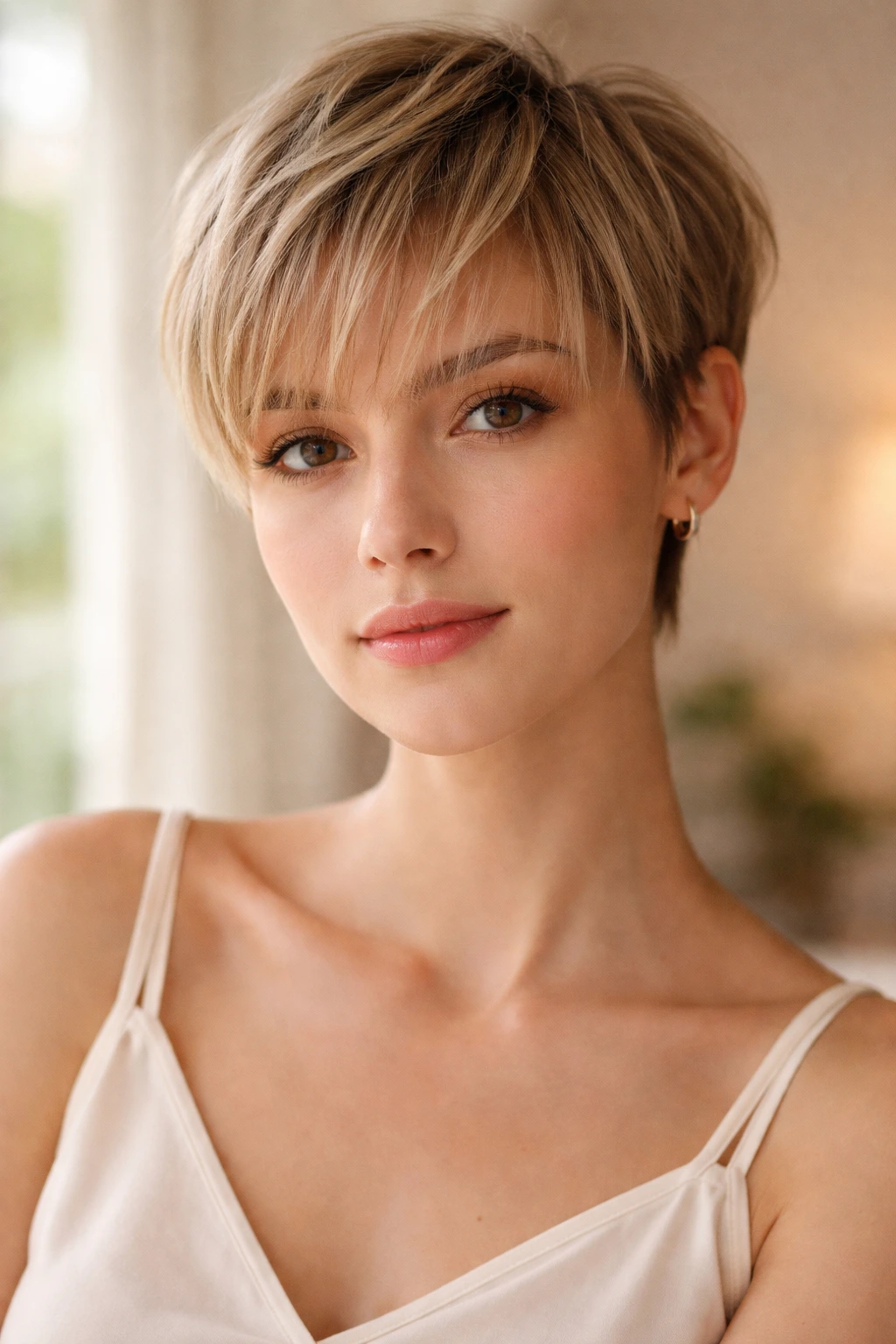
If you want bangs but find blunt ones too heavy, a wispy fringe is the answer. It involves cutting the hair around the forehead with precision shears to create a light, see-through effect.
It is delicate and provides a youthful frame for your face. Because straight hair is naturally prone to laying flat, you can easily control how much of your forehead you cover. It is a low-pressure way to have bangs without the commitment of a full, thick fringe.
17. Deep Side Part Pixie
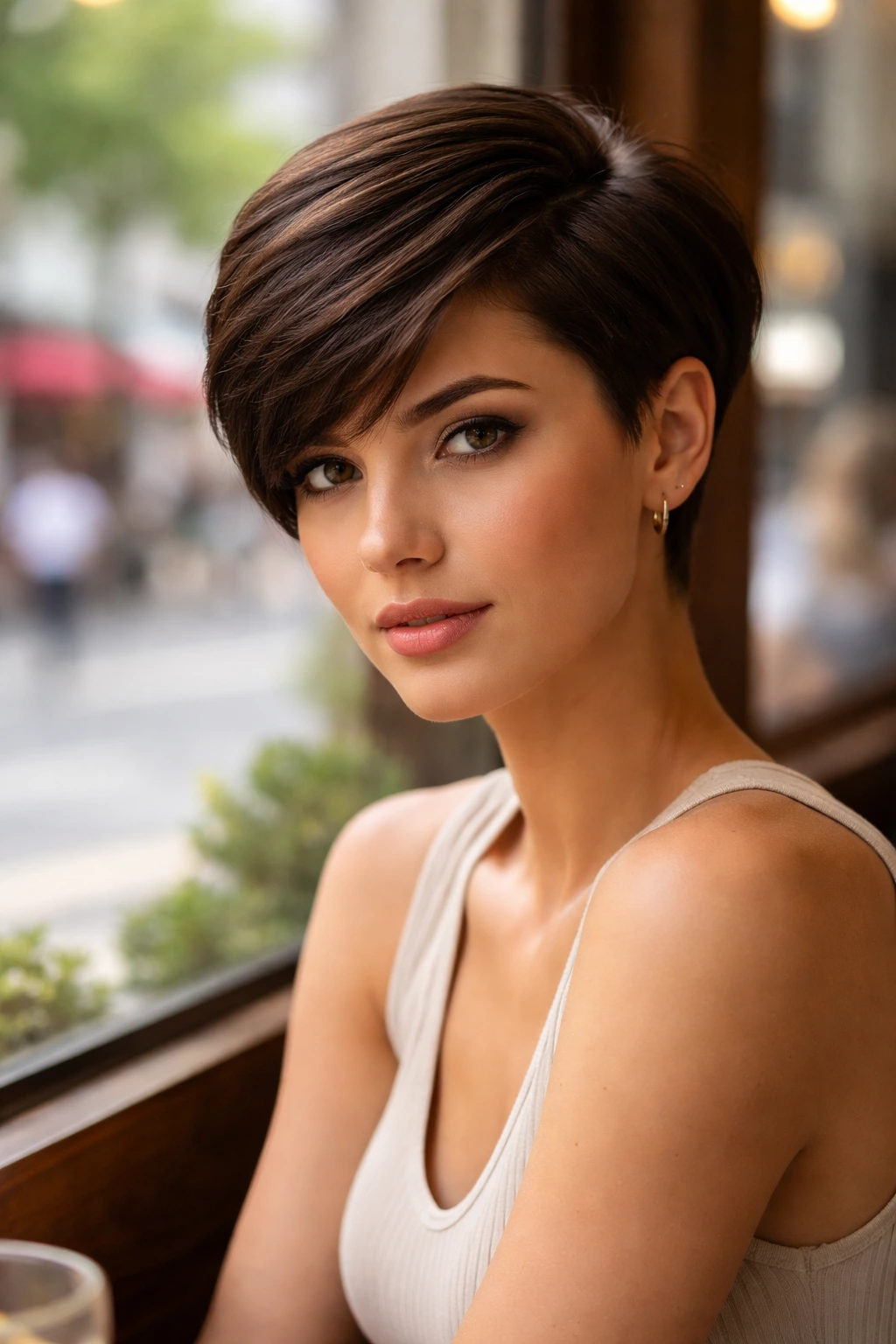
A deep side part is the easiest way to change your look without cutting anything. If you have a pixie, parting it on the extreme side creates an instant volume boost on the heavy side.
For straight hair, this style is best achieved when the hair is damp. Comb it into the deep part, apply a volumizing serum, and blow-dry the roots on the heavy side in the opposite direction of how you want it to fall. Once it dries, flip it over. The roots will have lift, and the part will stay sharp.
18. Two-Tone Contrast Pixie
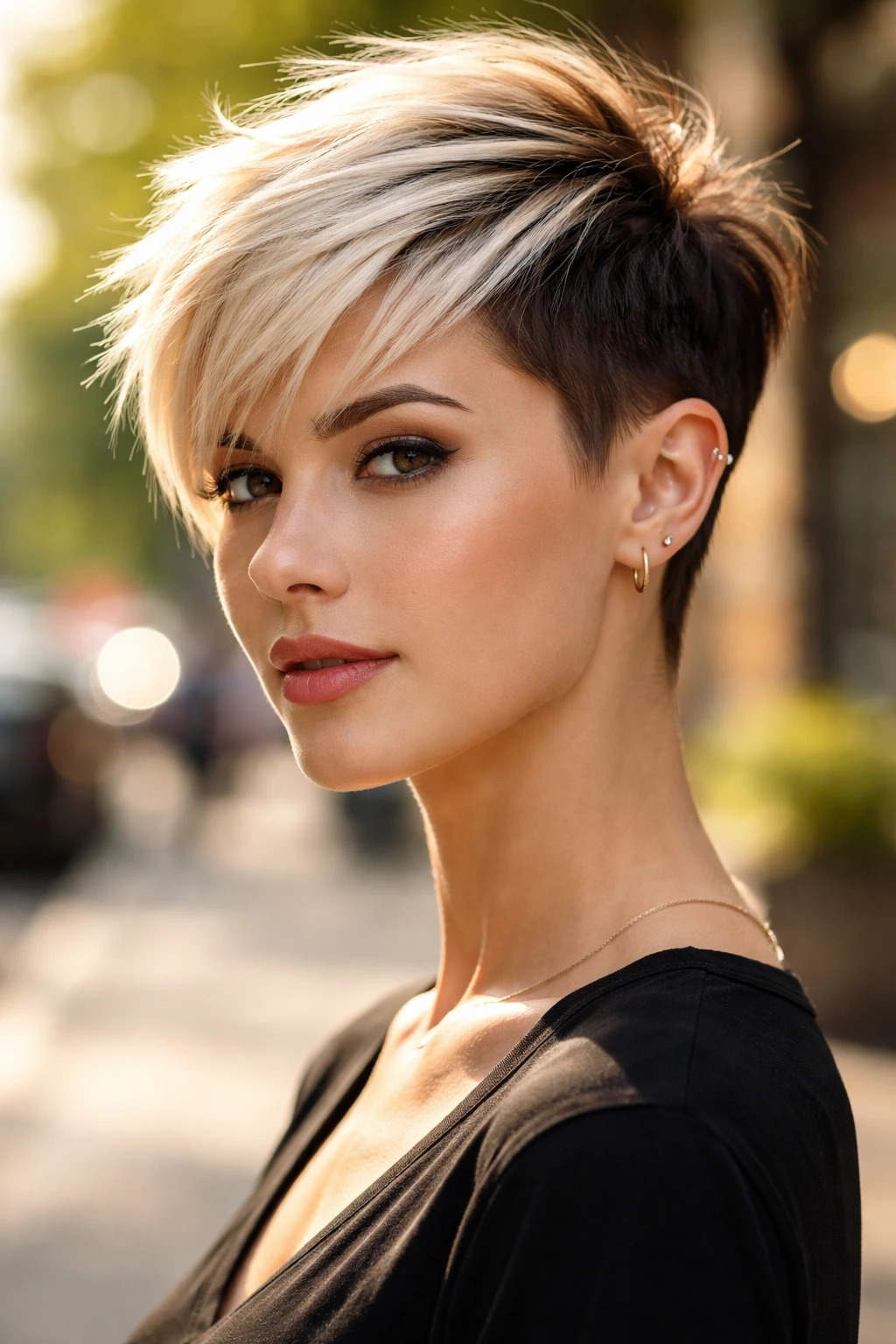
This is a cut and color combination. You shave or cut the bottom/sides very short and keep the top long, then color the two sections differently. Think dark at the base and a lighter or vibrant shade on top.
This emphasizes the structure of the pixie. It highlights the layers and the movement of the hair. Since straight hair doesn’t have internal texture to show off color variations, the block-color approach is a fantastic way to add visual depth to your style.
19. Rounded Bowl-Cut Pixie
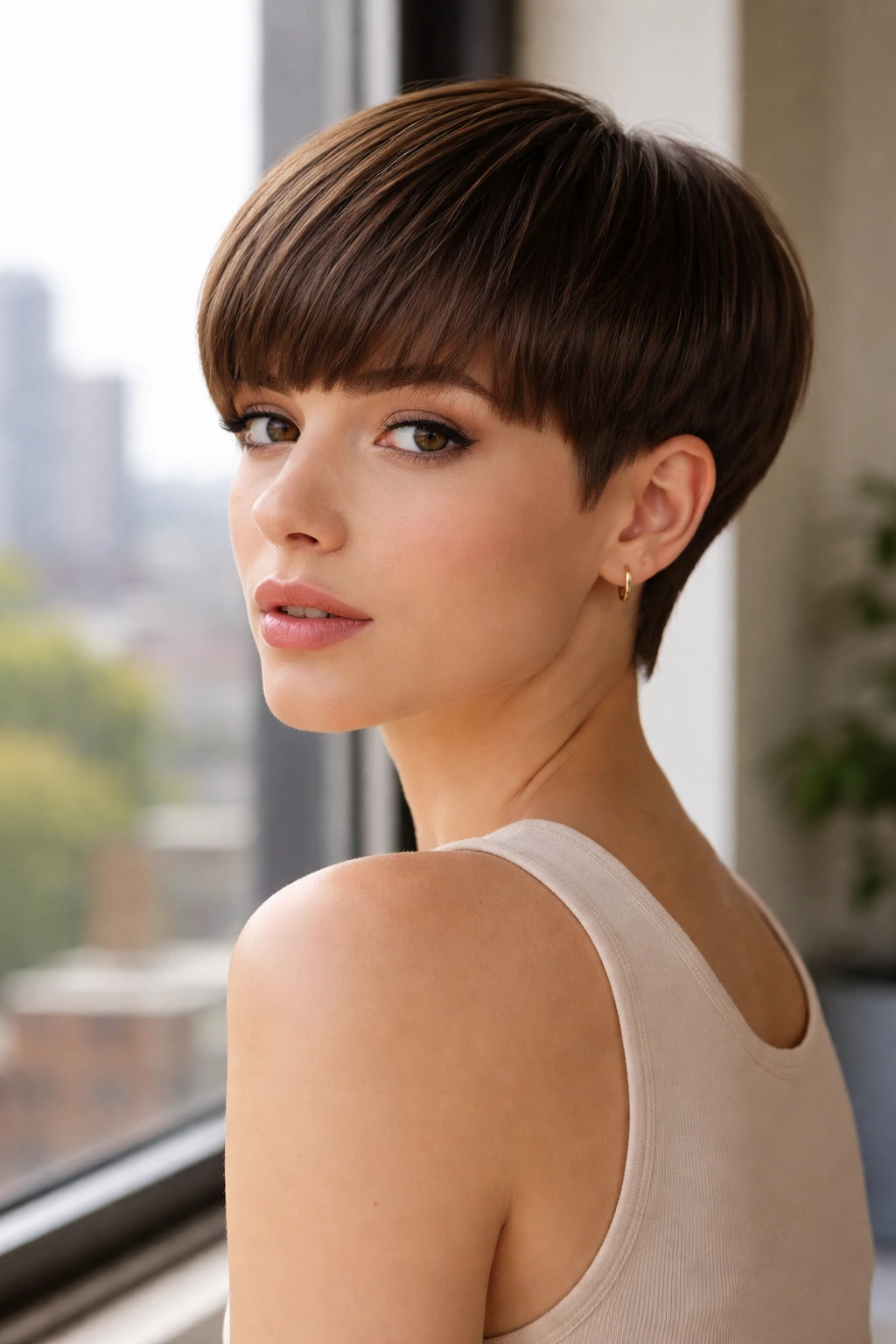
Modernizing the bowl cut makes it chic rather than dated. The key is the perimeter line. It should be perfectly rounded around the ears and nape, but with internal texturizing so it doesn’t look like a solid helmet.
It is a very minimalist, architectural style. It requires straight hair to look good, as any wave will disrupt the perfect curve of the cut. If your hair is poker-straight, this is one of the few styles that will look exactly like the photos without hours of styling.
20. Piecey Textured Pixie
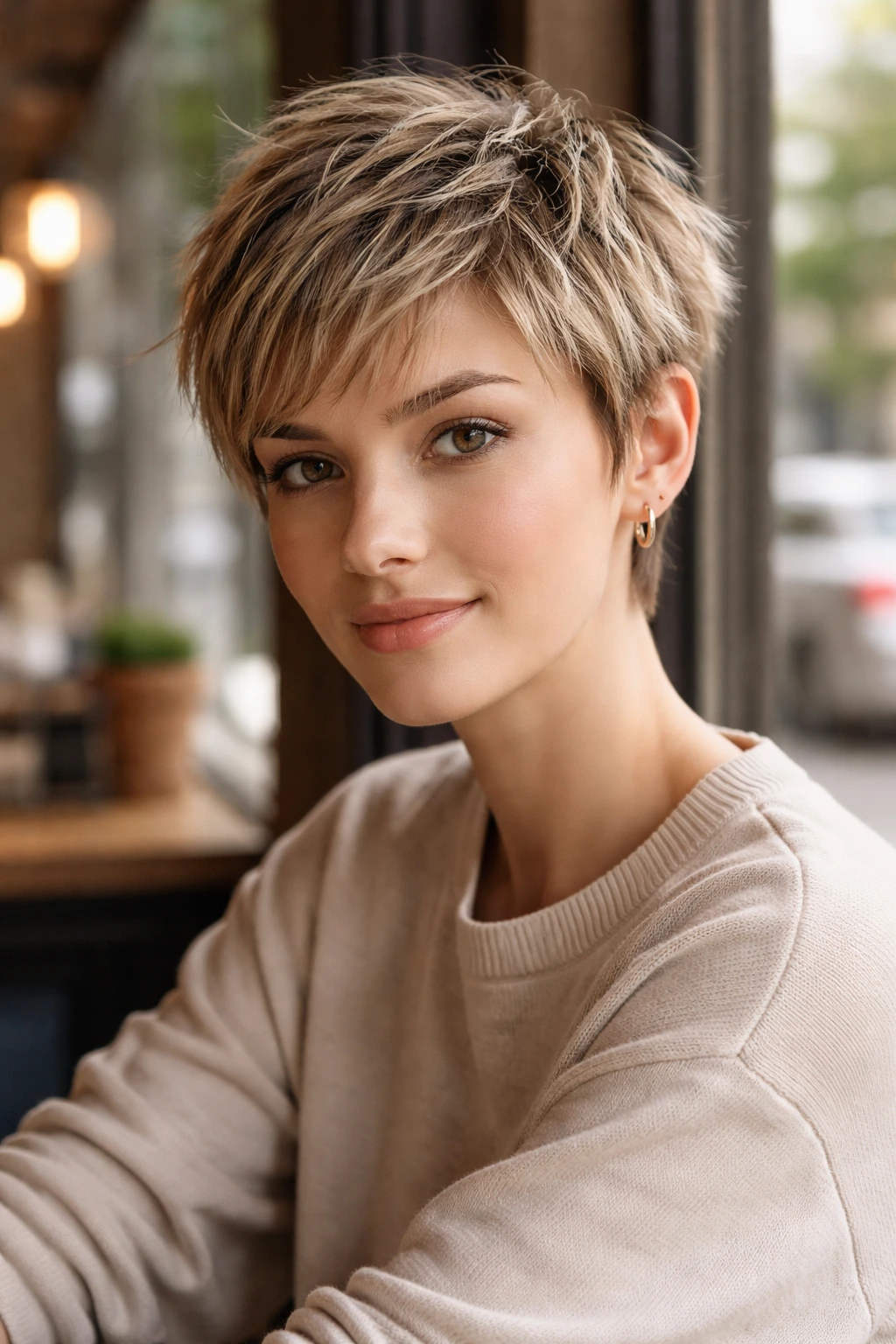
“Piecey” means you can see individual strands grouped together rather than one uniform sheet of hair. This is usually achieved with a razor cut. It gives straight hair a deliberate, gritty texture that catches the light differently than smooth hair.
This style is perfect for using products like hair wax or pomade. You want to twist the ends of the hair as you apply the product, creating little clusters. It is playful, youthful, and very easy to maintain on a day-to-day basis.
21. Soft Ear-Tuck Pixie
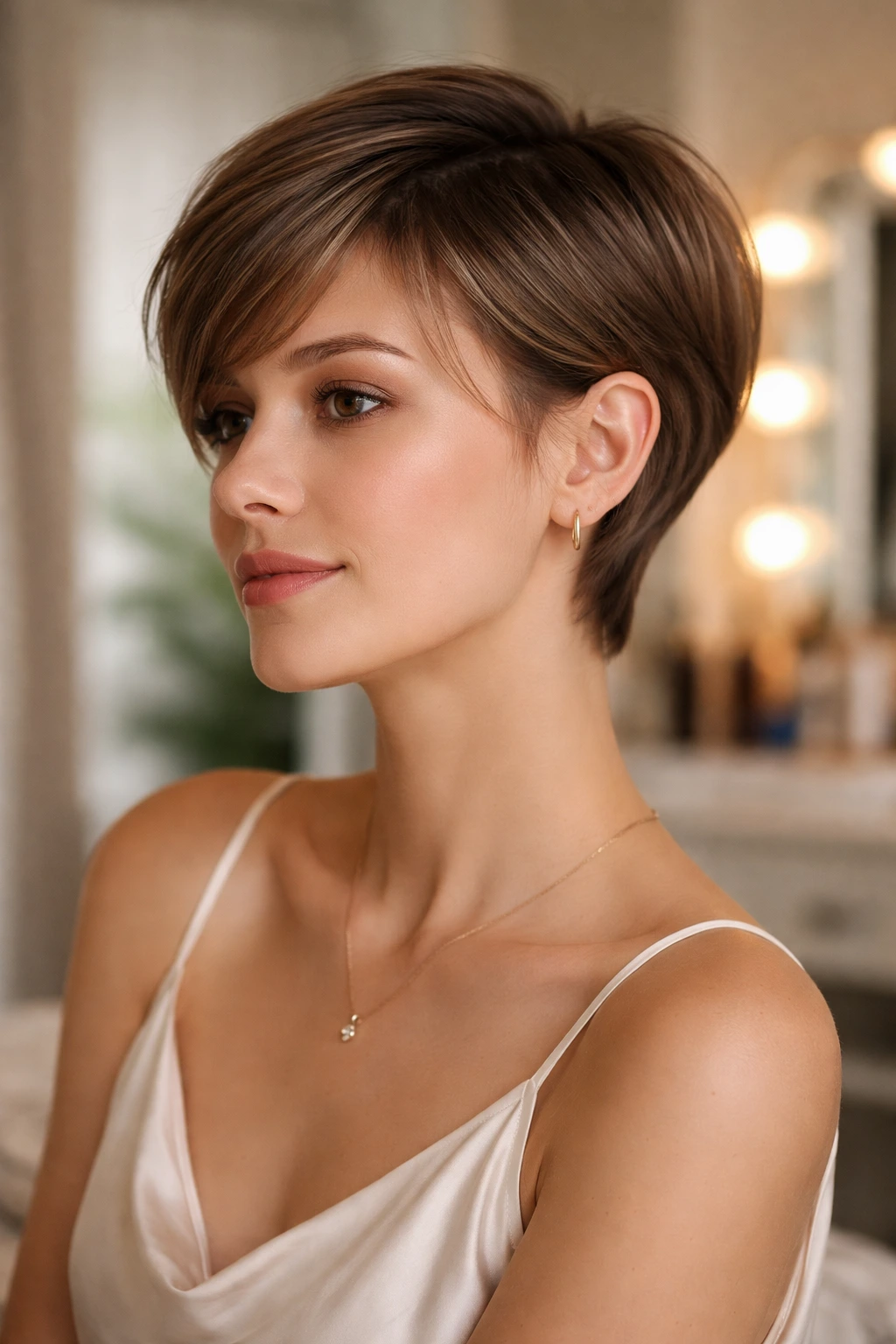
This is a longer pixie where the sides are long enough to tuck behind the ears, but the back is tapered short. It is a very soft, feminine interpretation of short hair.
It is a great “gateway” pixie. You don’t lose all your length immediately, and you have styling options. You can leave the sides down to frame your face or tuck them to show off your jawline and earrings. It feels very elegant and understated.
22. Razored Edge Pixie
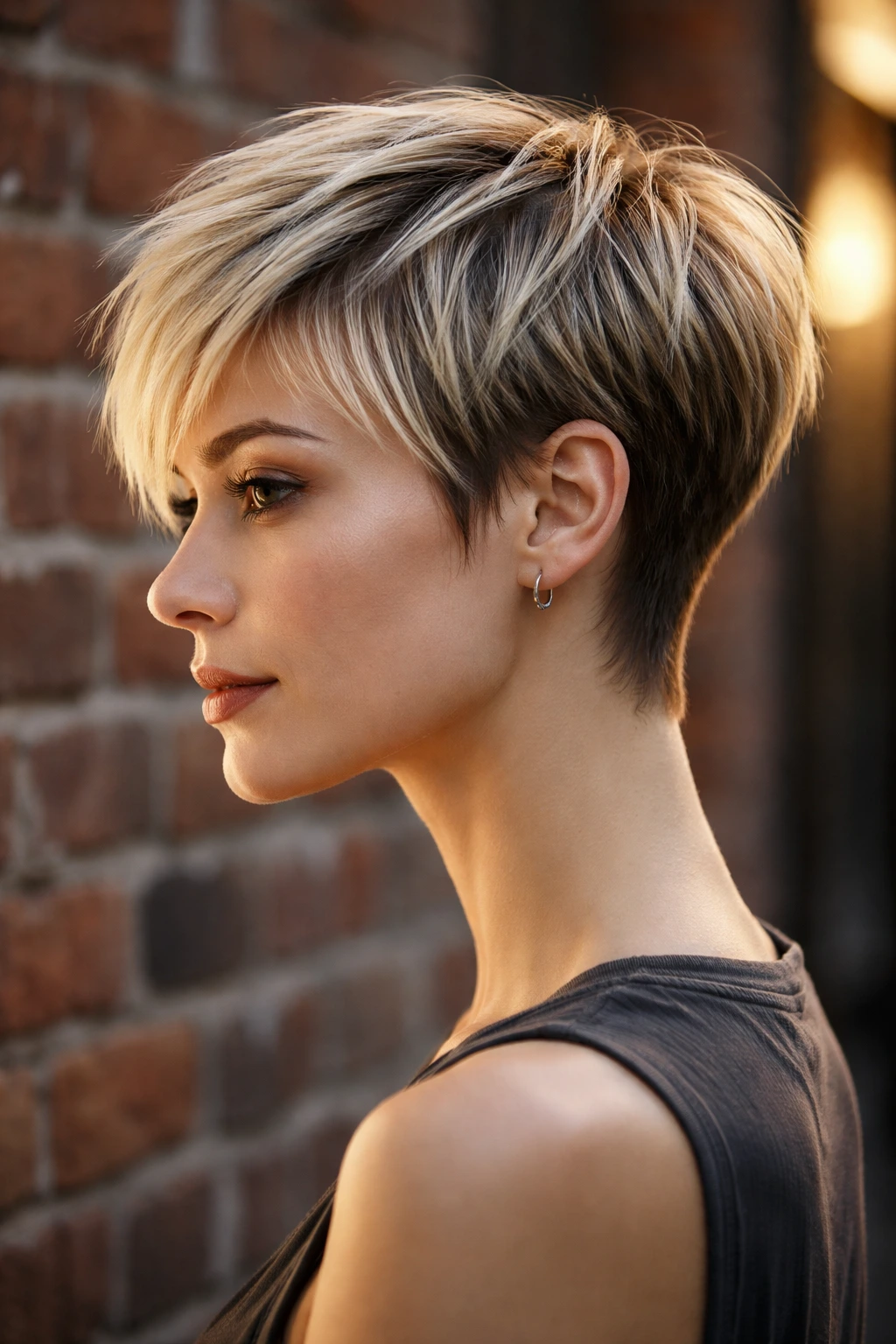
Using a razor instead of scissors changes everything. A razor cuts hair at an angle, which thins the ends and creates a natural, tapered point. On straight hair, this prevents the ends from looking blunt or heavy.
The result is a softer, more fluid shape. This style grows out much better than a blunt-cut pixie because there is no harsh line of demarcation as it gets longer. If you have fine hair, the razor technique can also give the illusion of more volume by adding texture throughout.
23. Messy Bedhead Pixie
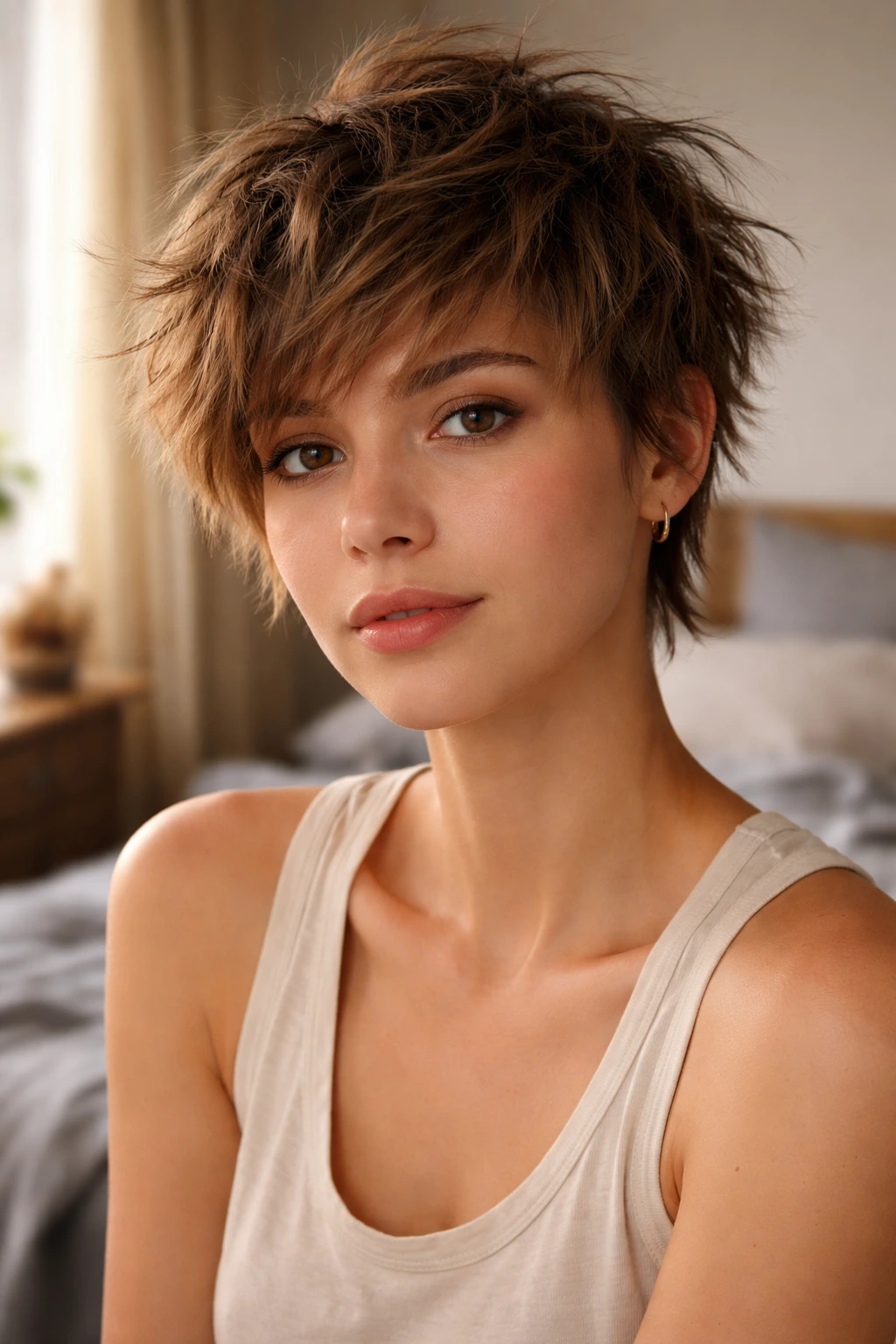
This style celebrates the natural texture of straight hair but forces it into a chaotic shape. It relies on a “shaggy” cut with longer pieces left around the ears and nape.
You will need a dry texturizing spray—not a wet one. Spray it into the roots and the mid-lengths, then use your fingers to mess everything up. The goal is to avoid the “perfect” look. This is the ideal style for lazy mornings where you want to look cool, not groomed.
24. Minimalist Boyish Pixie
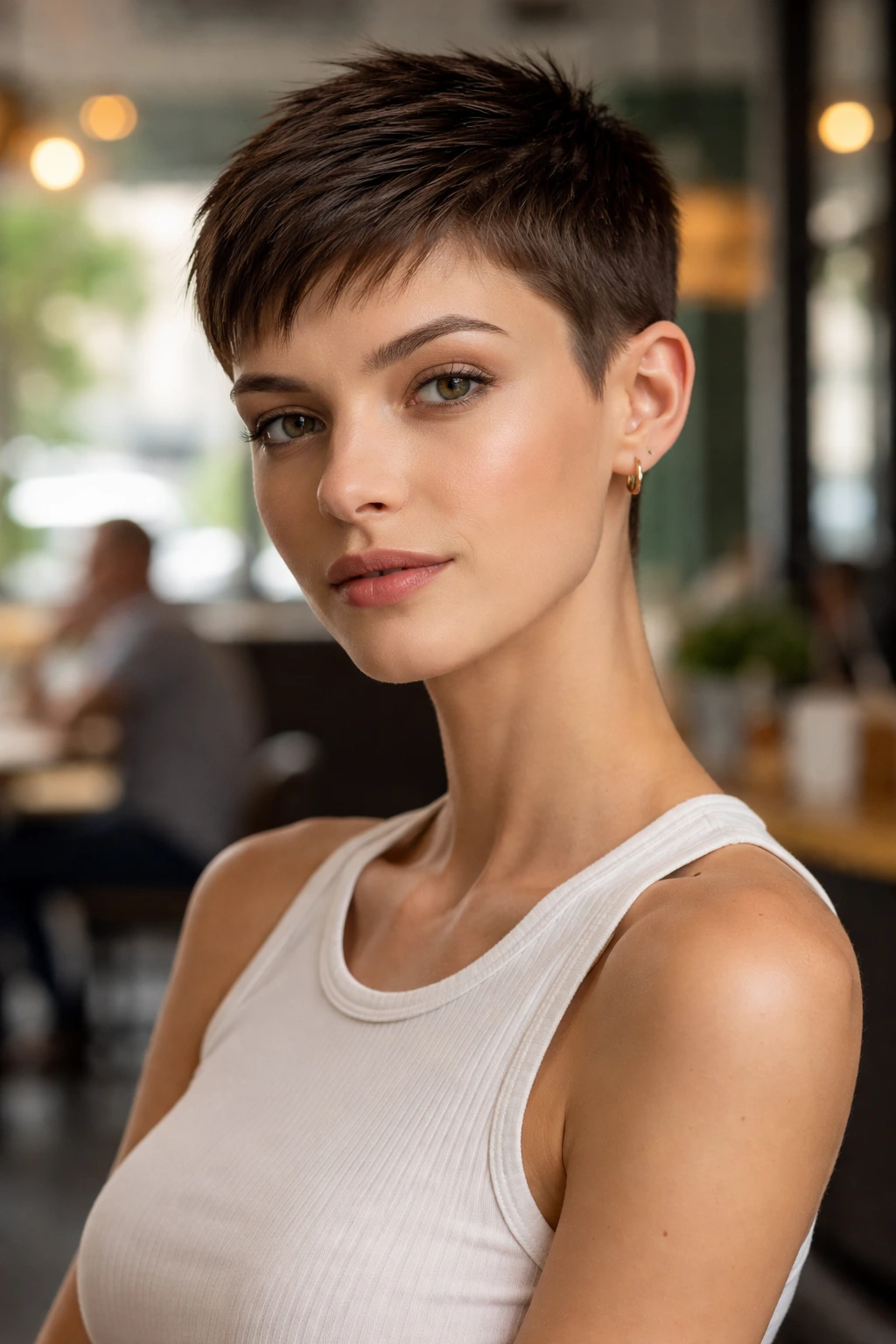
Think of a classic mid-century boy cut. Very short all over, usually with a small amount of length on top that is brushed to the side or front. It is simple, clean, and requires almost no product.
It highlights bone structure like nothing else. Because it is so short, your face is completely exposed. It is a bold, confident choice. If you have a strong jawline and defined cheekbones, this cut will frame them perfectly.
25. Micro-Fringe Pixie
Similar to baby bangs, but even shorter. This is an editorial look that sits very high on the forehead. It looks especially striking with a pixie that is kept very tight on the sides.
It is a cut that screams confidence. It isn’t trying to hide anything; it’s putting your features front and center. Because your hair is straight, you don’t have to fight the fringe to keep it short—it will sit exactly where you cut it.
26. Tapered Nape Pixie
This focuses specifically on the back of the neck. Instead of a blunt neckline, the hair is faded into the skin or tapered very short. It creates a sleek, high-end appearance that makes the neck look longer and more elegant.
The front can be whatever you like—a longer fringe, a side sweep, or a textured crown. The taper at the nape is the signature detail. It’s a clean, professional touch that separates a basic haircut from a well-crafted style.
27. Spiked Faux-Hawk Pixie
This is a fun, high-energy style. You keep the sides short and leave the hair from the forehead to the crown longer. You can use a gel or strong-hold cream to spike it up, creating a crest-like shape.
This isn’t about being subtle. It’s about having fun with your hair. Because straight hair is naturally gravity-resistant when cut short, you won’t need a massive amount of product to keep it standing. Just a dab of clay on your fingertips, rub it together, and pull the hair upward.
28. Sleek Center-Part Pixie
Center parts on short hair can be tricky, but on a pixie, it provides a very symmetrical, balanced look. It requires a slightly longer pixie, with enough length on both sides to fall straight down.
It is a very polished, “model-off-duty” style. It works best if your hair is extremely straight and healthy. Use a shine serum to keep it looking glossy and free of flyaways. It is one of the more mature and sophisticated options on this list.
Making the Leap
Choosing a pixie cut is more than just a style change; it is a shift in how you interact with your appearance. You lose the ability to hide behind your hair, which can feel vulnerable at first, but it is also liberating. Your face, your expression, and your features become the primary focal point of your look.
For those with straight hair, the advantages are distinct. You get the predictability of structure. You can rely on your hair to do what it is told, which means you spend less time wrestling with heat tools and more time enjoying the ease of a wash-and-go routine.
Remember that the relationship you have with your stylist is now the most important factor in your hair care. Because short hair grows out and loses its shape quickly, you will be in the salon chair more often than you were with longer styles. Treat these appointments not as a chore, but as the maintenance required to keep your signature look sharp.
Ultimately, hair is temporary. If you get a pixie and decide it is not for you, it will grow out. The experience of seeing yourself from a new perspective—stripped back, focused, and intentional—is worth the temporary nature of the cut. Pick a style that speaks to your personality, find a stylist who understands the geometry of short hair, and enjoy the freedom that comes with a shorter silhouette.
