



A round face is not a problem for a pixie cut. The right short blonde pixie cuts for round faces work because they pull the eye upward and away from the widest part of the face, which is usually the cheek area.
Blonde changes the whole read of the haircut. Platinum shows every edge, beige blonde softens the outline, honey brings warmth, and a shadow root keeps the top from looking flat. That matters more than people think. A pixie is tiny; every line counts.
The cut itself has to do the heavy lifting. A little height at the crown, a narrow nape, a side-swept fringe, or a piecey top can make the face look more oval without making the style feel stiff. Cowlicks, density, and hairline shape matter too, which is why a salon photo is only half the conversation.
The styles below cover soft, edgy, airy, and sculpted versions. Pick the one that matches how much styling you actually want to do.
1. Soft Side-Swept Blonde Pixie
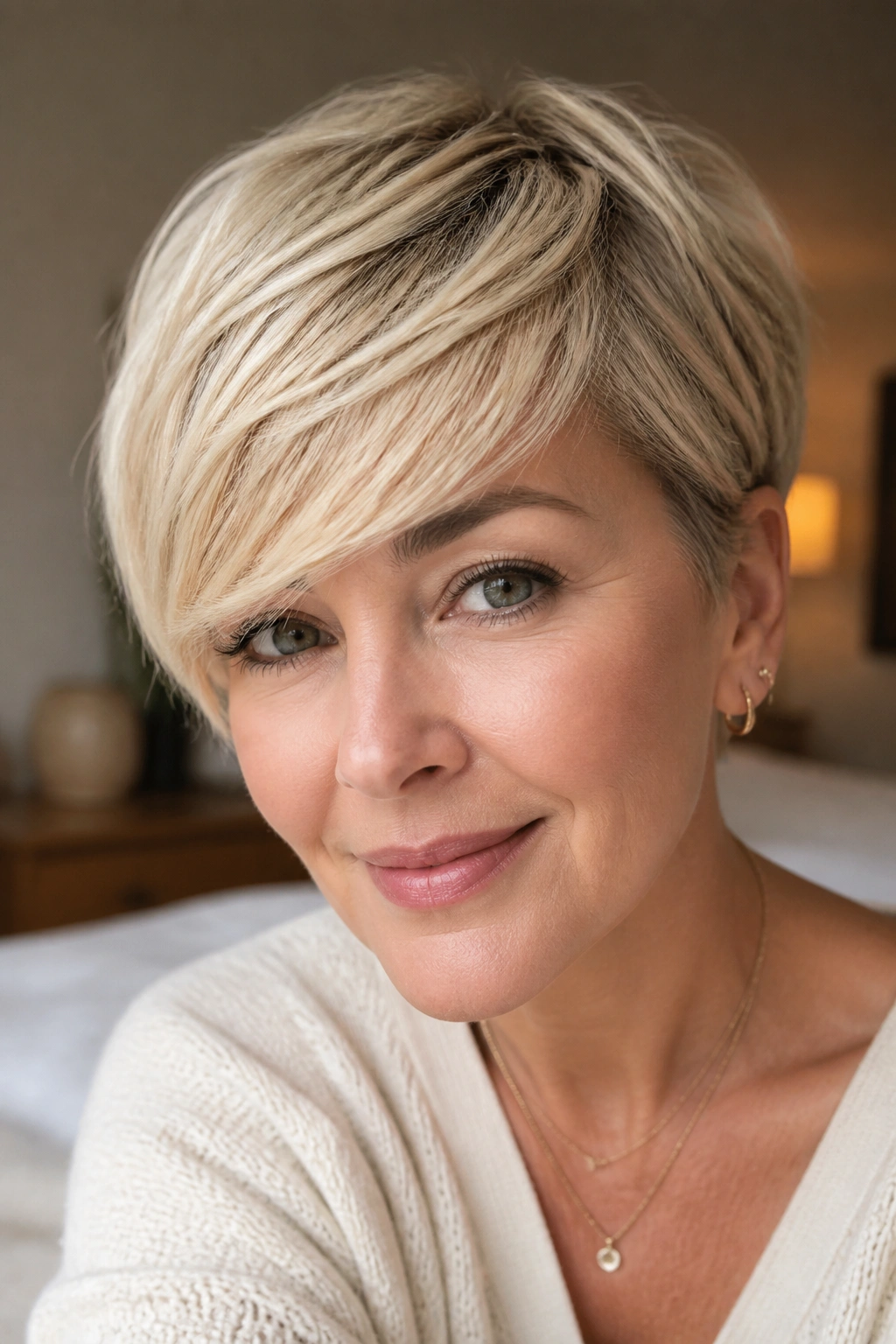
A soft side-swept pixie is the easiest place to start if you want something flattering without looking severe. The diagonal fringe cuts across the face instead of stopping at the cheeks, and that gives a round face a little more length.
Why It Flatters Round Faces
Keep the sides close, but not shaved tight. About 1 to 2 inches on top gives the fringe enough movement, and a beige or champagne blonde keeps the shape light. If the fringe lands right on the brow, the cut can feel heavy; let it skim just above the lashes or slide toward the outer corner of the eye.
- Ask for soft point cutting at the ends.
- Keep the side part slightly off center.
- Blow-dry the front in the opposite direction first.
- Finish with a pea-size amount of cream or paste.
Tiny detail that matters: the front should sweep, not droop.
2. Platinum Tapered Blonde Pixie
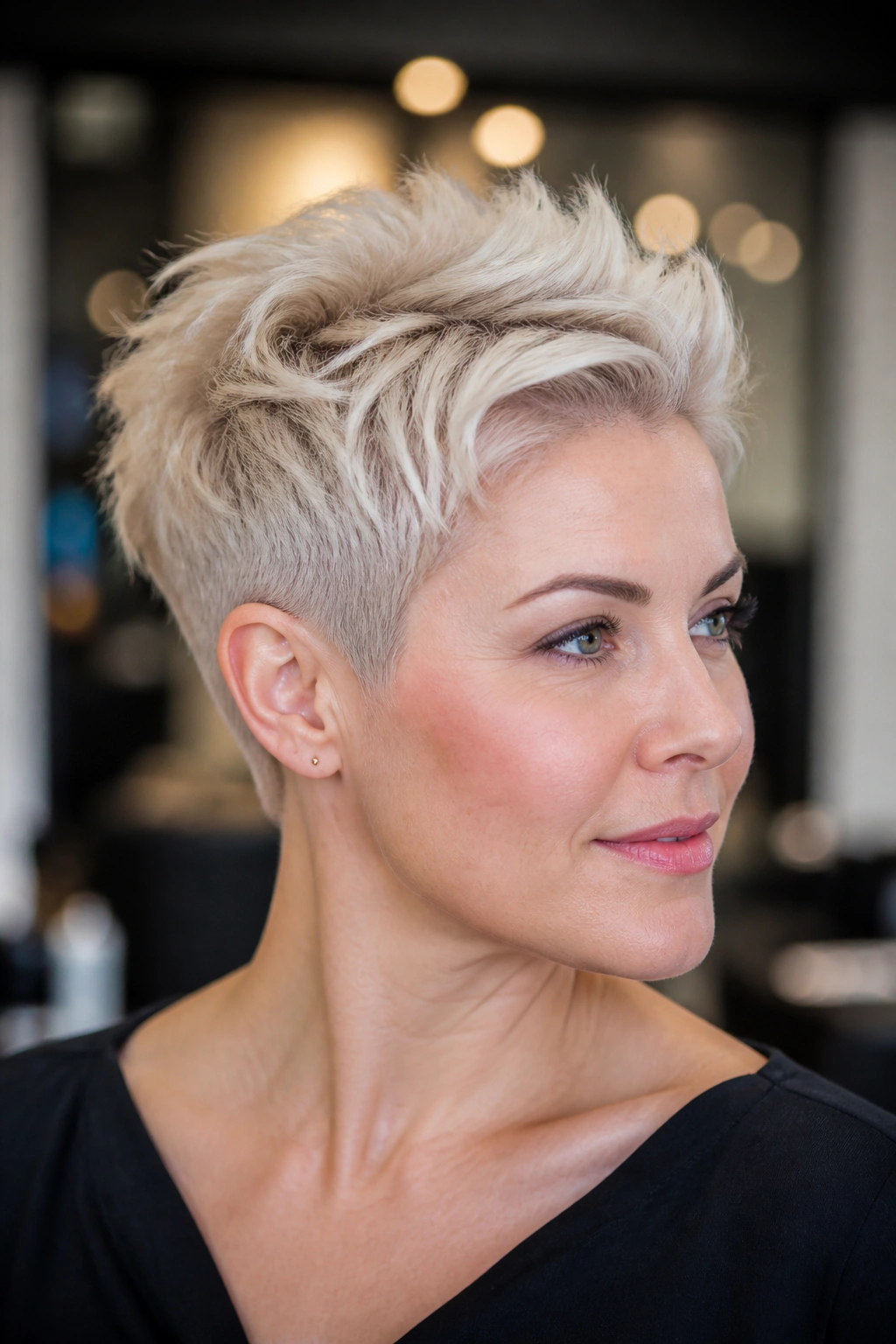
Platinum is unforgiving, and that is exactly why it looks so clean on a tapered pixie. The color makes the outline sharper, so the narrow nape and tight sides read instantly.
A cut like this works well when you want the crown to feel taller than the cheeks. That visual trick matters on a round face. The root area can stay a shade deeper for a little depth—otherwise the whole style can look like one bright block, and that is where things get flat.
This is a good option if you like crisp edges and don’t mind regular trims. The neckline has to stay neat. If it grows out too much, the shape loses that upward pull.
3. Feathered Crown Blonde Pixie
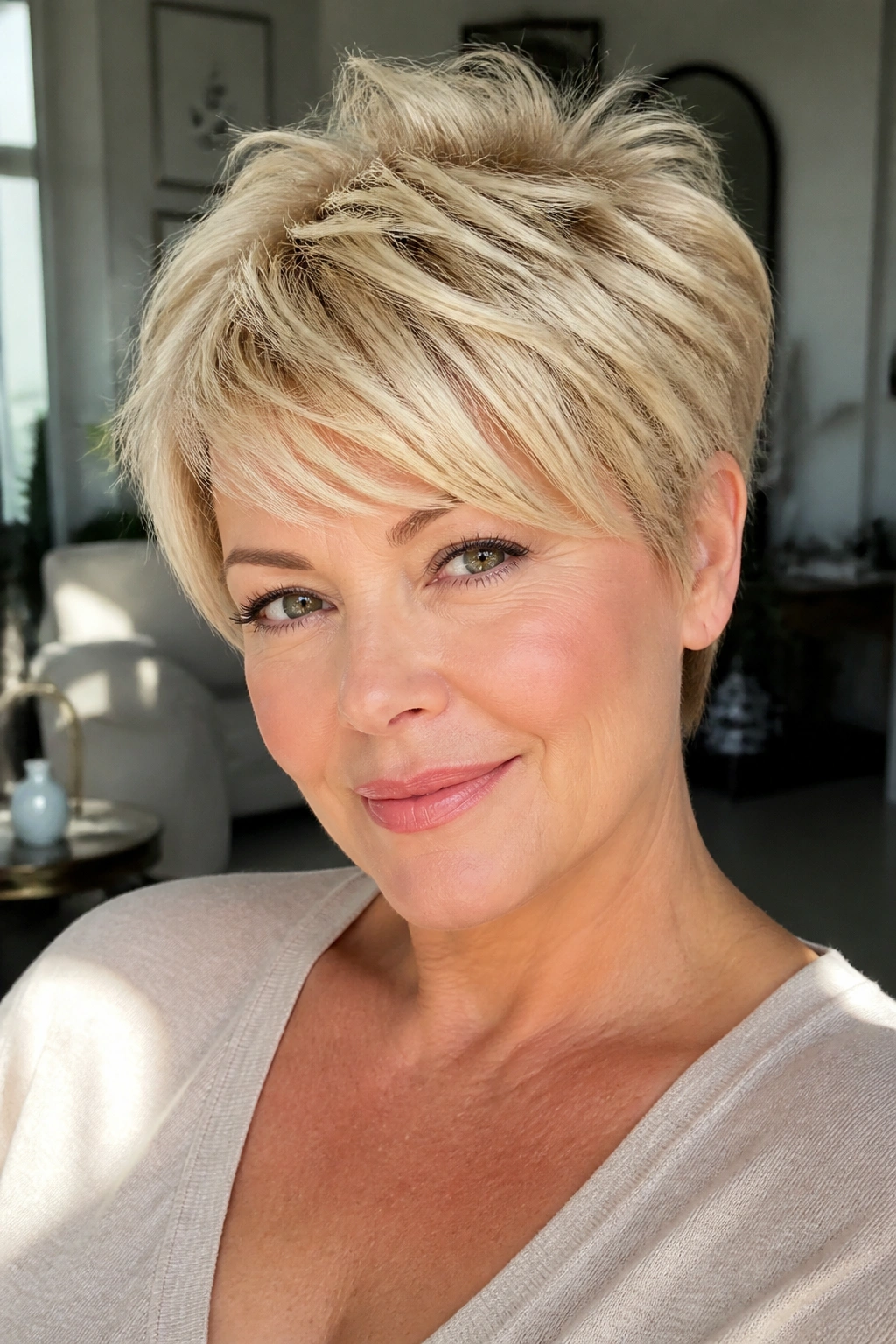
Want softness instead of sharp edges? A feathered crown pixie gives you movement without bulk. The top is cut into light layers, then lifted so the hair doesn’t sit in one round puff over the head.
How the Feathering Helps
Feathering breaks up the silhouette, which is handy on a round face because it keeps the cut from echoing the face shape. The sides can stay short and neat, while the crown gets those airy, sliced ends that move when you turn your head.
Style it with a little mousse at the roots and a round brush or your fingers. Don’t chase perfect separation. That only makes it look overworked.
This shape looks especially good in buttery blonde or soft gold, because the lighter tone shows the movement without turning it into a hard-edged crop.
4. Asymmetrical Blonde Pixie
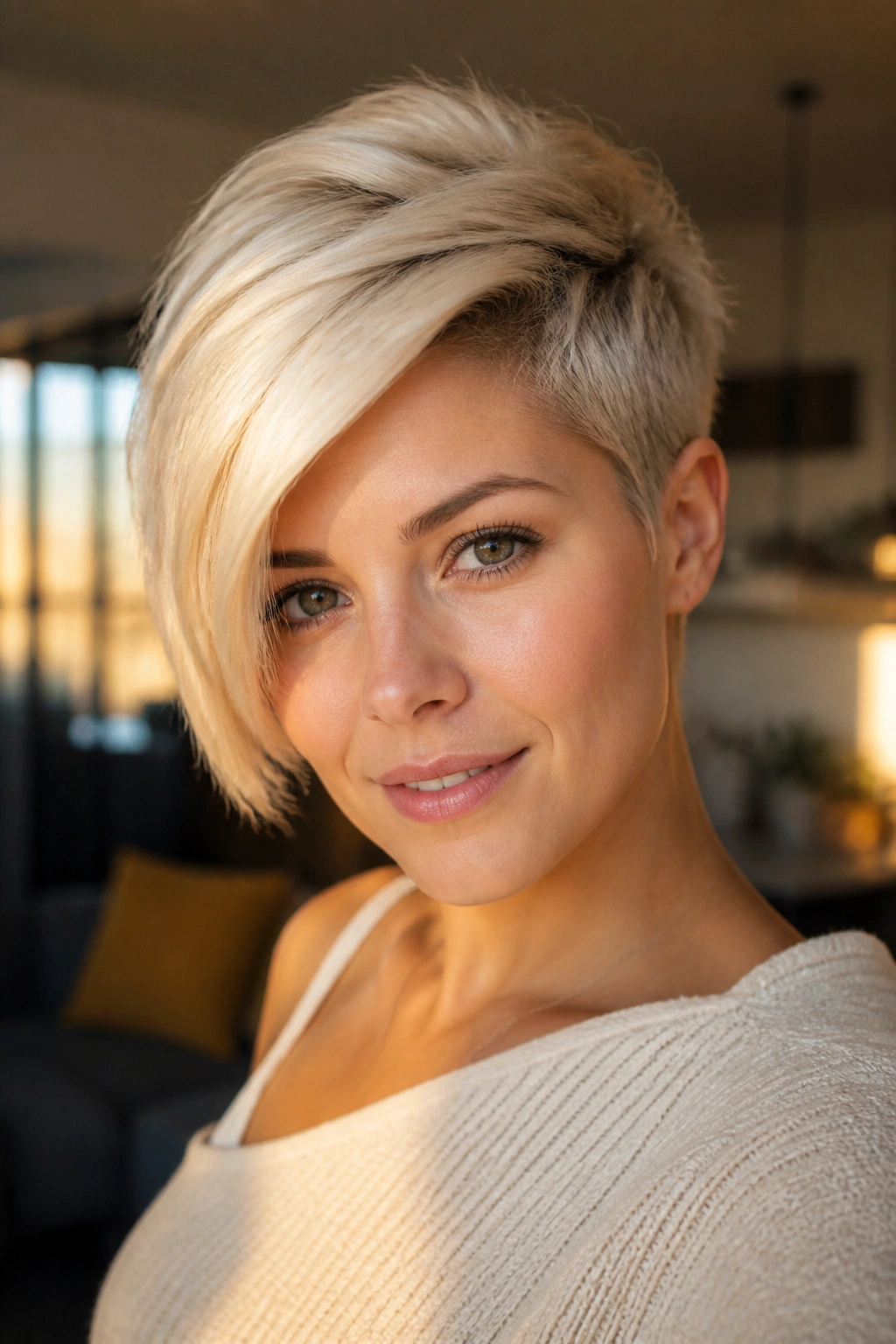
If your face feels too evenly rounded, asymmetry is your friend. One side stays shorter, the other side falls longer across the forehead or cheek line, and the eye immediately stops reading the face as a circle.
The trick is balance. The longer side should feel deliberate, not like an accident. A piece that ends near the cheekbone or outer brow can give the whole cut a stronger diagonal line, which is what you want. Keep the tucked side close to the ear so the contrast stays visible.
- Best when you want a little attitude.
- Works well with straight or lightly wavy hair.
- Ask for a longer fringe on one side only.
- Keep the neckline clean so the shape does not go bulky.
It is a sharper look, but not harsh if the blonde is creamy rather than icy.
5. Choppy Textured Blonde Pixie
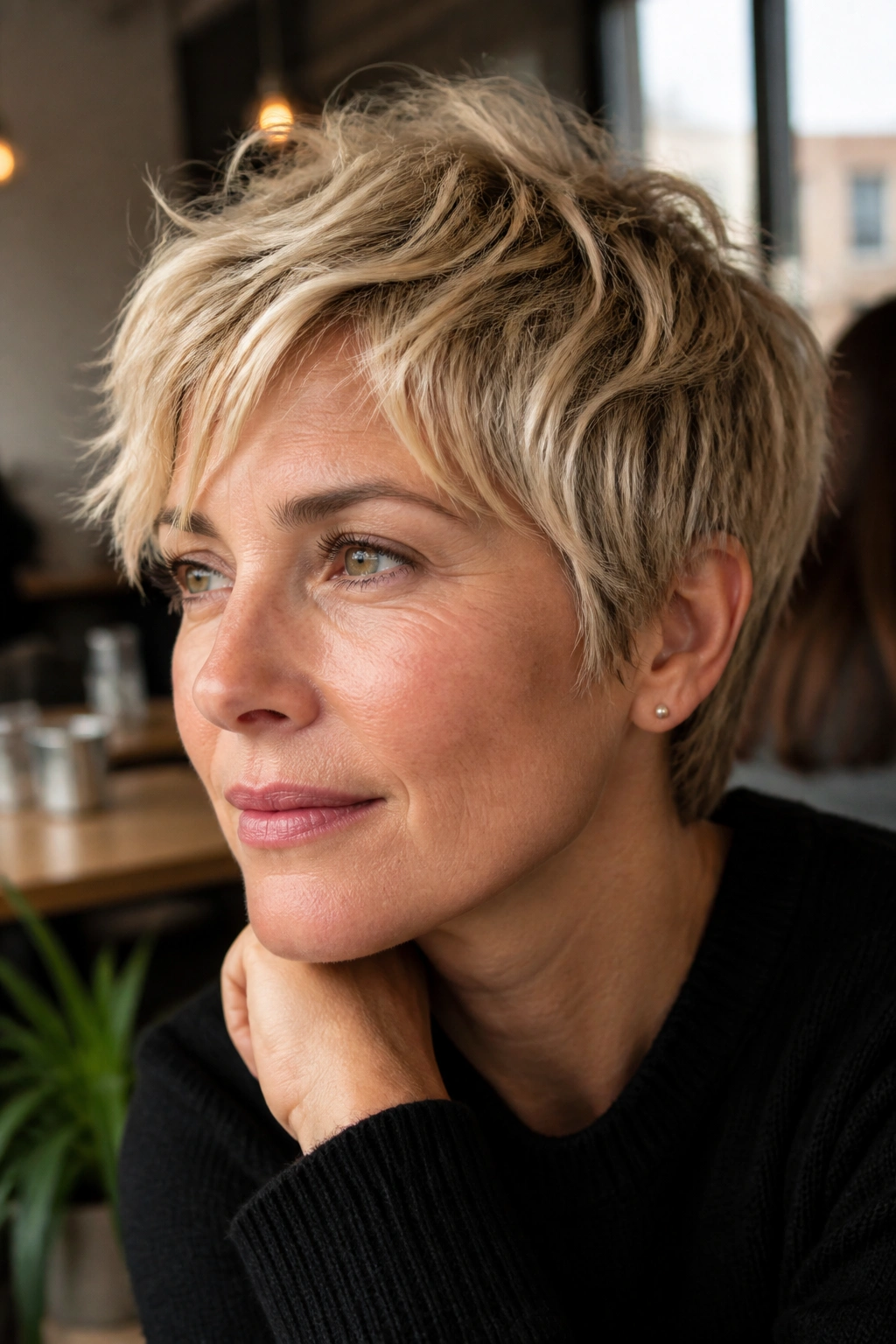
Choppy texture is the haircut version of quick movement. The ends are cut to break apart, which means the hair doesn’t sit in one round mass around the head. That matters a lot on a round face.
I like this version for thicker hair, because it takes away weight without making the cut feel tiny. A razor or point-cut finish gives the top those tiny irregular bits that catch wax or paste. The result looks lived in, not helmet-like. Good thing, because helmet hair on a pixie is the fastest way to ruin the shape.
Use a matte paste and work it into dry hair with your fingertips. Push some pieces forward, leave others standing up a little, and keep the sides flatter than the crown.
Short. Messy. Controlled.
6. Long Fringe Blonde Pixie
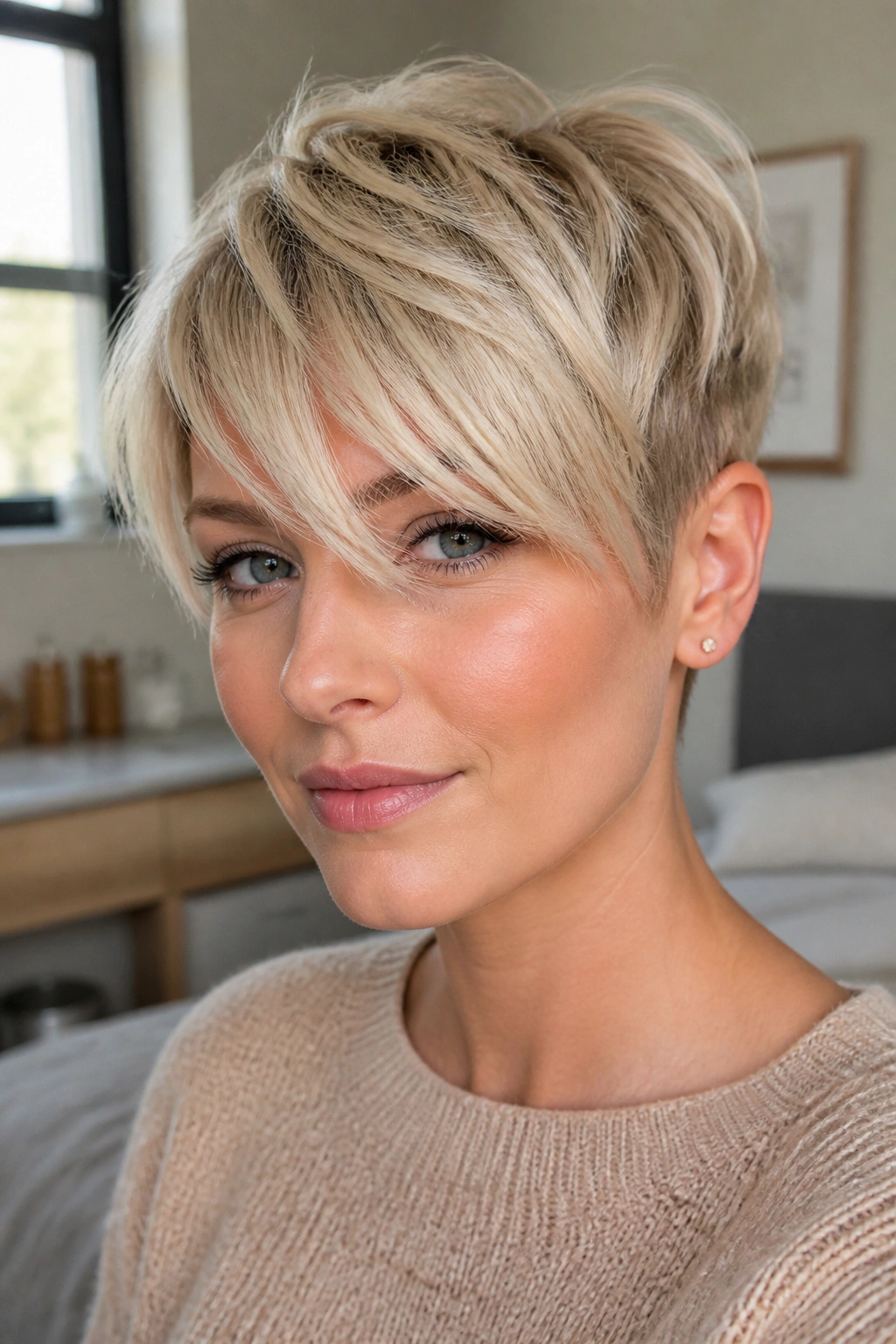
A long fringe does different work from a short one. Instead of exposing the whole forehead, it bends across part of it, which helps a round face feel a touch more vertical.
Where the Fringe Should Sit
The sweet spot is usually somewhere between the brow and upper lash line, depending on your forehead height and cowlicks. Too short, and the shape feels blunt. Too long, and it starts behaving like a bob fringe, which defeats the point of the crop.
A long fringe works best when the sides stay close and the top keeps lift near the crown. Beige blonde, wheat blonde, or soft gold all suit this cut because they don’t fight the movement.
If you want low drama in the morning, ask for the fringe to be slightly tapered at the ends. It falls better and grows out with less fuss.
7. Micro-Bang Blonde Pixie
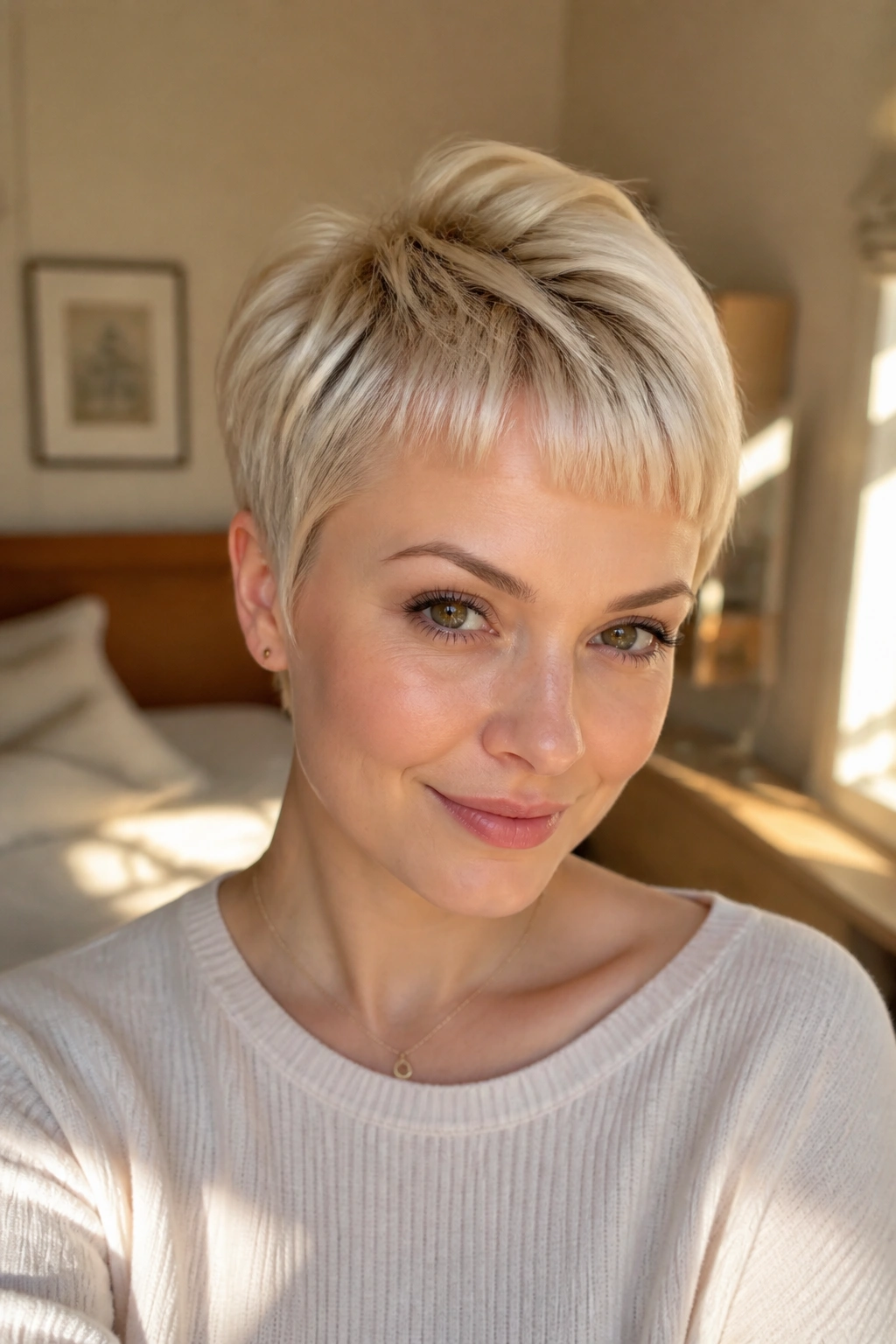
A micro-bang pixie is bold, but on the right round face it can look fresh instead of severe. The short fringe opens the face, shows the brows, and shifts the attention upward.
The cut only works when the rest of the shape is controlled. The sides need to stay narrow, and the crown should have some height so the face doesn’t look compressed. If the top is flat and the bangs are too blunt, the whole style can turn boxy. No one wants that.
- Keep the micro fringe soft at the edge, not cut like a ruler.
- Ask for close sides and a tapered nape.
- Use a tiny amount of styling cream, not heavy wax.
- Great if you like strong brows or glasses.
This is one of those cuts that looks expensive when the line is clean and expensive-looking when the line is sloppy. There’s the catch.
8. Undercut Blonde Pixie
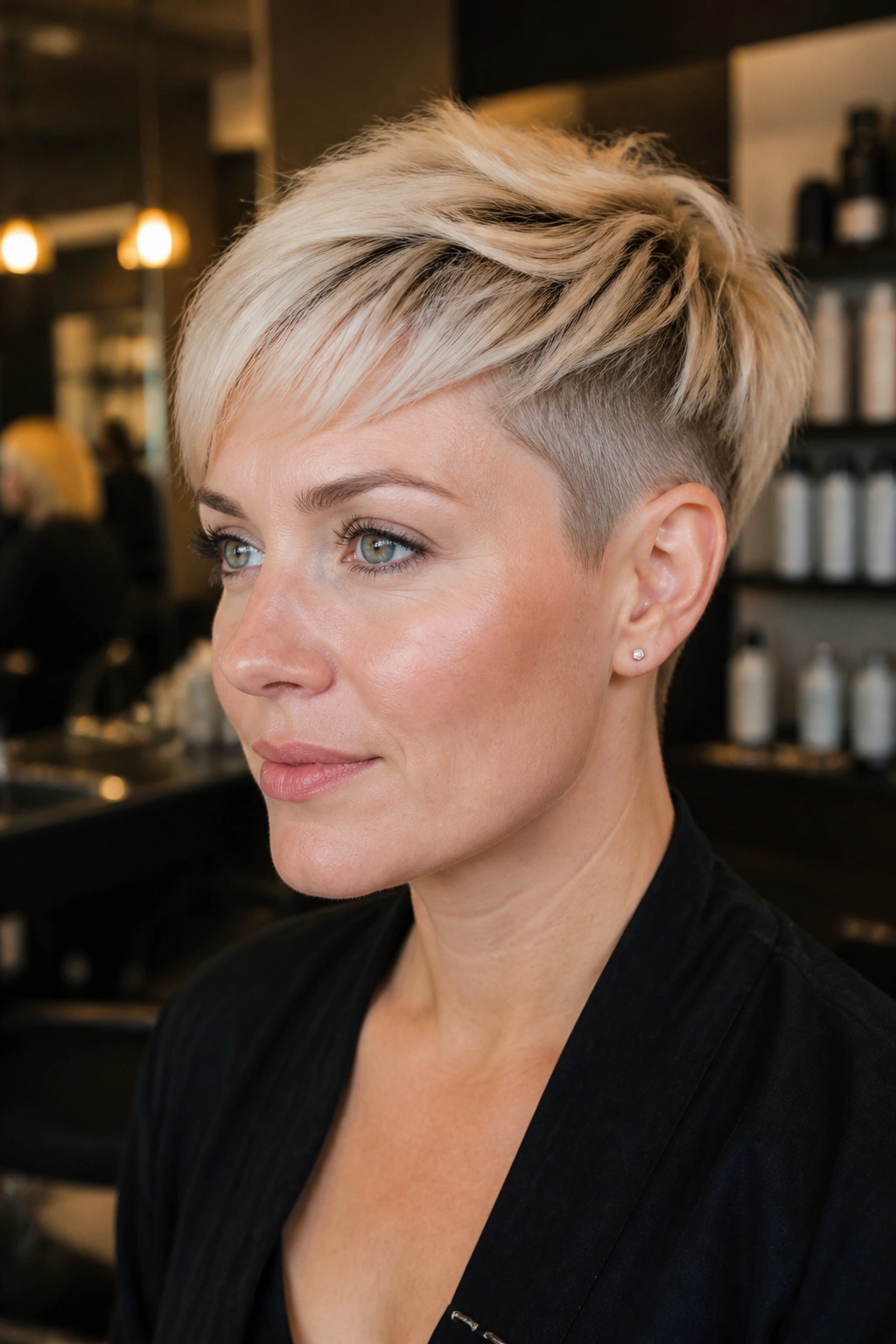
Undercut pixies are not only for edgy wardrobes. On a round face, the hidden removal of bulk can make the top look taller and the sides look slimmer without shouting about it.
A subtle undercut behind the ears or at the nape is especially useful if your hair is thick or grows out in a puff. It takes weight off the lower half of the head, which helps the face look less wide by comparison. The blonde color then shows the top layers more clearly, so the shape reads fast.
If you want this to stay wearable, keep the undercut hidden unless you tuck the hair or move it off the face. That gives you the clean shape without making the cut feel too hard.
9. Curved Swoop Blonde Pixie
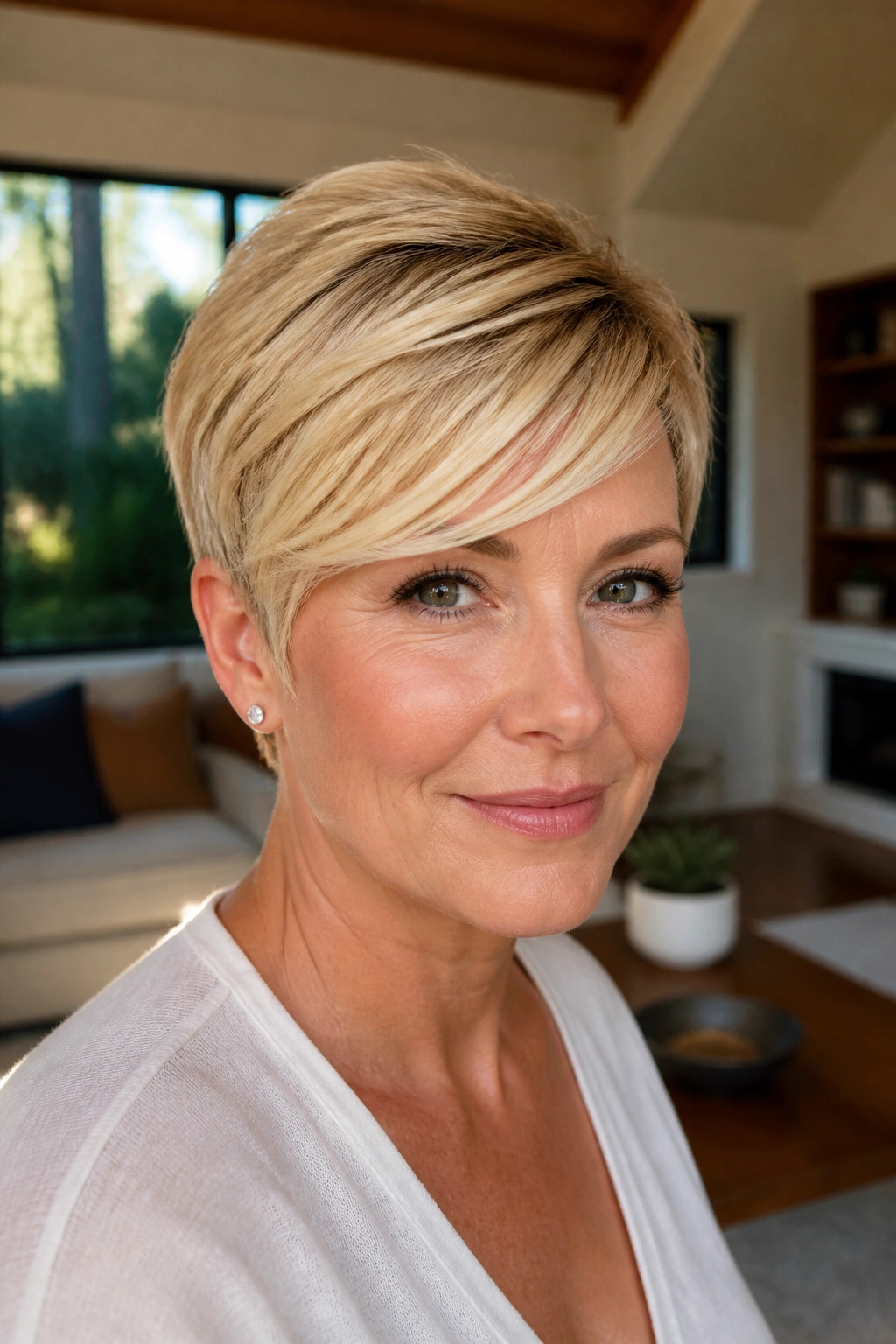
Think of this style as a curve, not a line. The front moves in a soft arc across the forehead, and that curve pulls the eye upward and sideways at the same time.
How to Style the Bend
A small round brush helps, but only if you use it to guide the hair, not force it. Blow-dry the fringe from the root, bend it slightly away from the face, then let it cool before you touch it again. That little cooling time makes the shape hold better.
The curve works especially well in honey blonde or soft wheat blonde, because the shade catches the movement without making it look stiff. Keep the sides close and the crown lightly lifted. Otherwise the swoop can get lost.
This is a good choice if you want a feminine line without softening the cut into nothing.
10. Piecey Layered Blonde Pixie
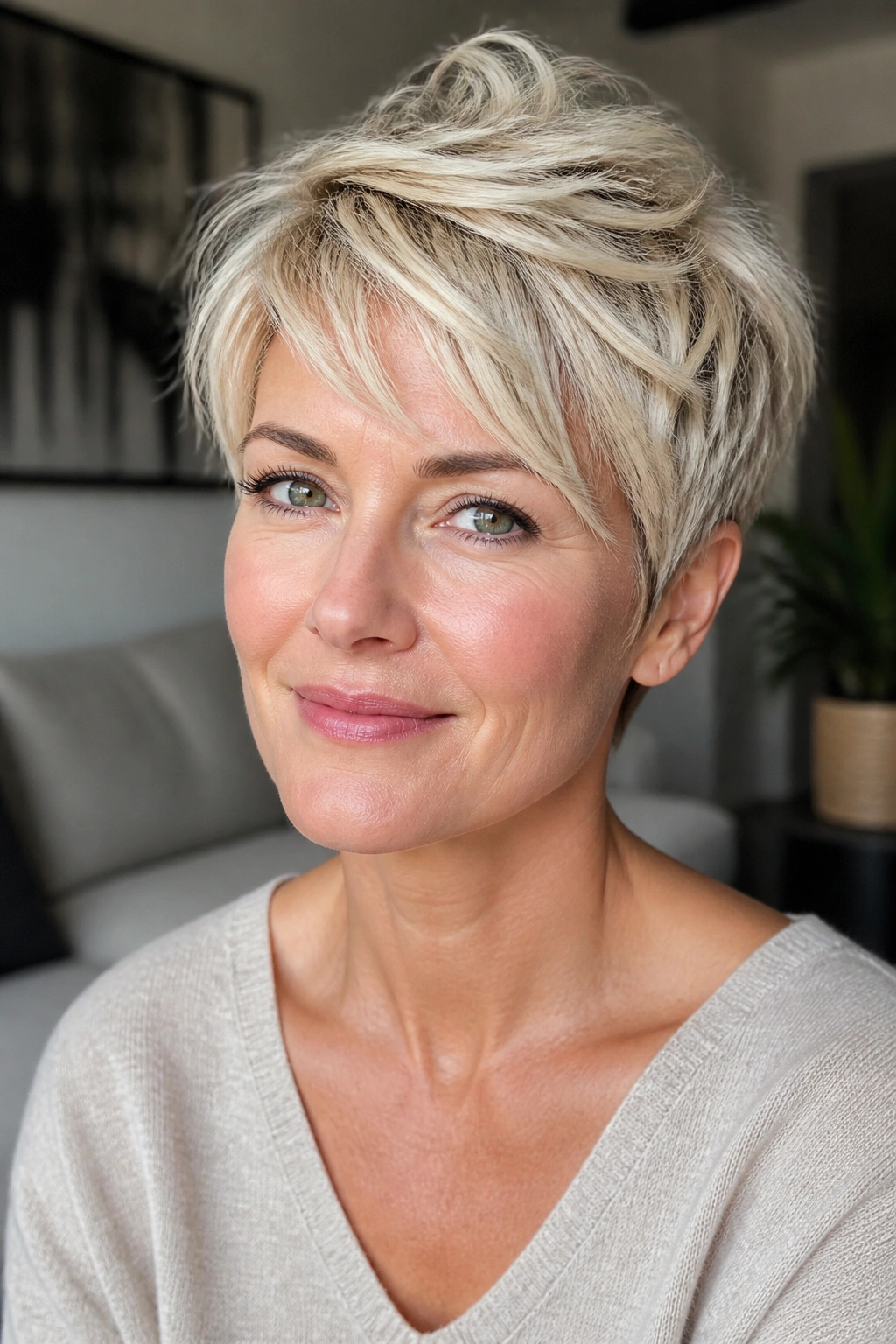
Piecey layers give a pixie that separated, ribbon-like look that flatters round faces by breaking up the outline. Instead of one smooth shape, you get small, directional sections that move in different directions.
The trick is to keep the pieces visible but not messy. A touch of wax or styling paste is enough. Use your fingers to pinch a few strands at the top, then leave the temple area tighter so the face still gets that narrowing effect. If every section sticks straight up, the style gets noisy. If every section lies flat, it loses its shape.
I prefer this cut on finer hair because the layers create the impression of more body without a lot of product. A cream blonde or soft beige blonde keeps the pieces from looking harsh.
11. Slicked-Back Blonde Pixie
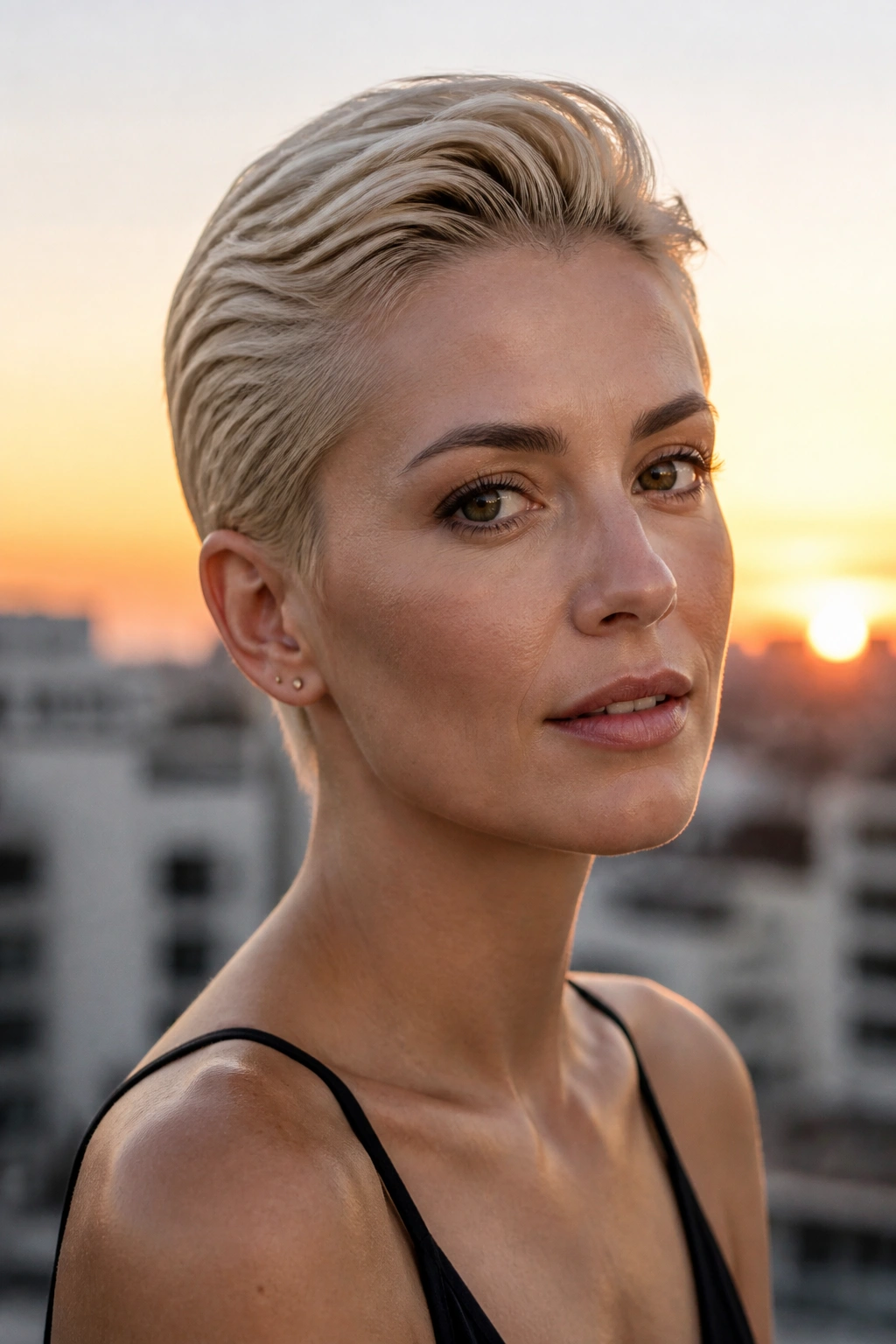
Not every round face needs softness. Sometimes the cleanest answer is to open the face completely and let the bone structure do the work.
A slicked-back pixie does that by removing the fringe from the forehead and directing everything rearward. The crown can have a bit of lift, but the sides should stay tight and the front should lie close to the head. That contrast makes the face look longer, and it also puts the eyes, brows, and cheekbones front and center.
Use gel for a wet look or pomade for a satin finish. Both work. Just do not overload the hair. Too much product turns the style heavy, and heavy hair sits low on a round face, which is the opposite of what you want.
12. Tousled Bedhead Blonde Pixie
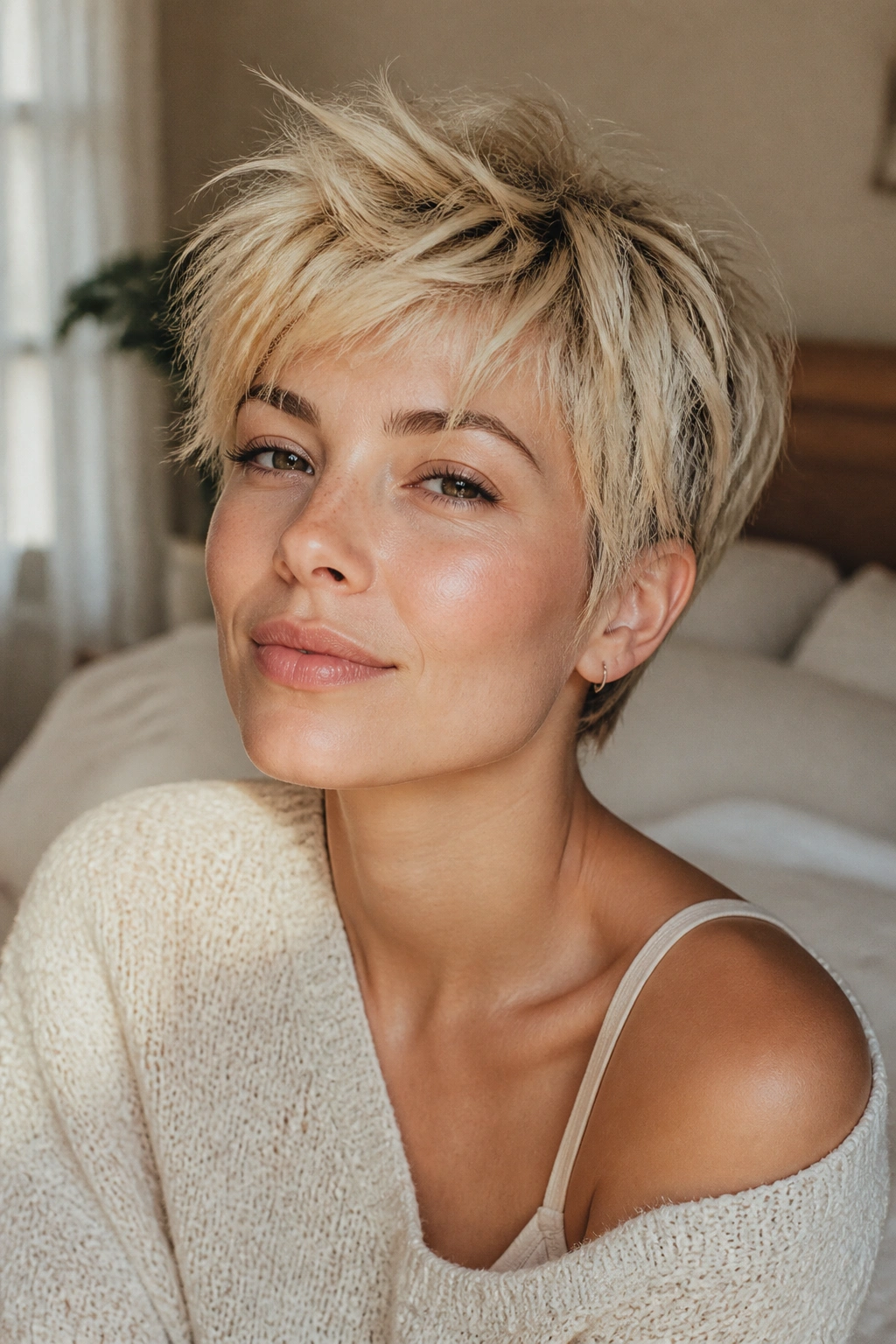
Bedhead can work, but only when the mess is controlled. The goal is a loose, airy top with enough edge to keep the face from looking too full.
A tousled pixie is especially good in blonde because the high and low tones of the strands show up more clearly when the hair bends in different directions. A little salt spray at the roots, then finger-drying, usually gives the right amount of lift. The sides should still stay close to the head. That part matters.
- Use spray first, then dry.
- Scrunch the crown, not the temples.
- Keep the back neat.
- Finish with a tiny bit of paste on the ends.
If you like hair that looks a little undone but still cut on purpose, this one is hard to beat.
13. Ear-Tucked Blonde Pixie
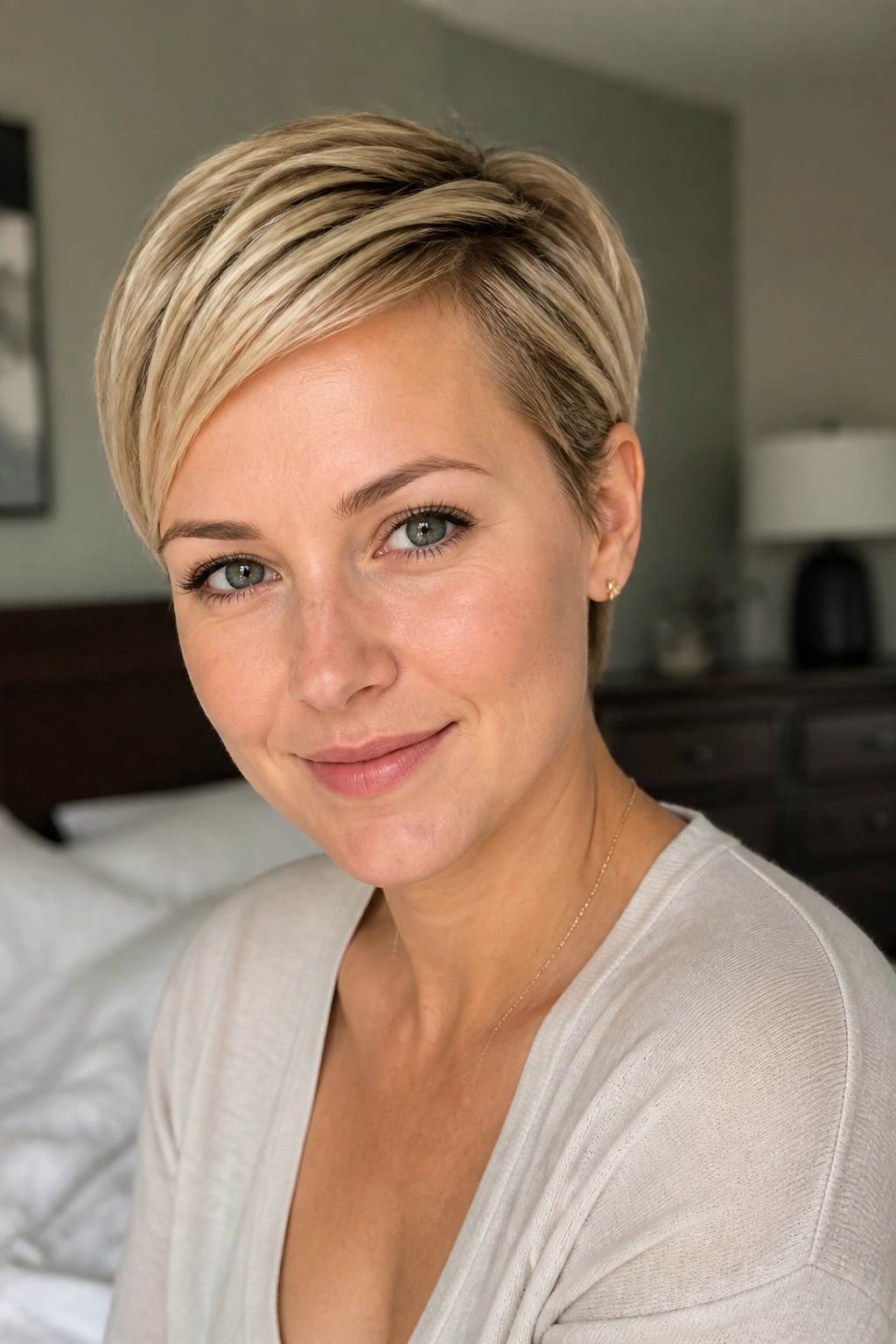
An ear-tucked pixie is a small change with a big effect. By moving some hair behind the ears, you open up the sides of the face and make the jawline feel cleaner.
That openness helps a round face because it creates more visible vertical space. The cut does not need to be severe. Even a soft side section that can tuck cleanly changes the silhouette. Glasses wearers tend to like this shape, too, because the hair doesn’t fight the frames.
The side length should be just long enough to tuck without sticking out awkwardly. If it’s too short, the ears get exposed in a way that feels accidental. If it’s too long, the tuck looks bulky. That middle zone is the sweet spot.
14. Wavy Blonde Pixie
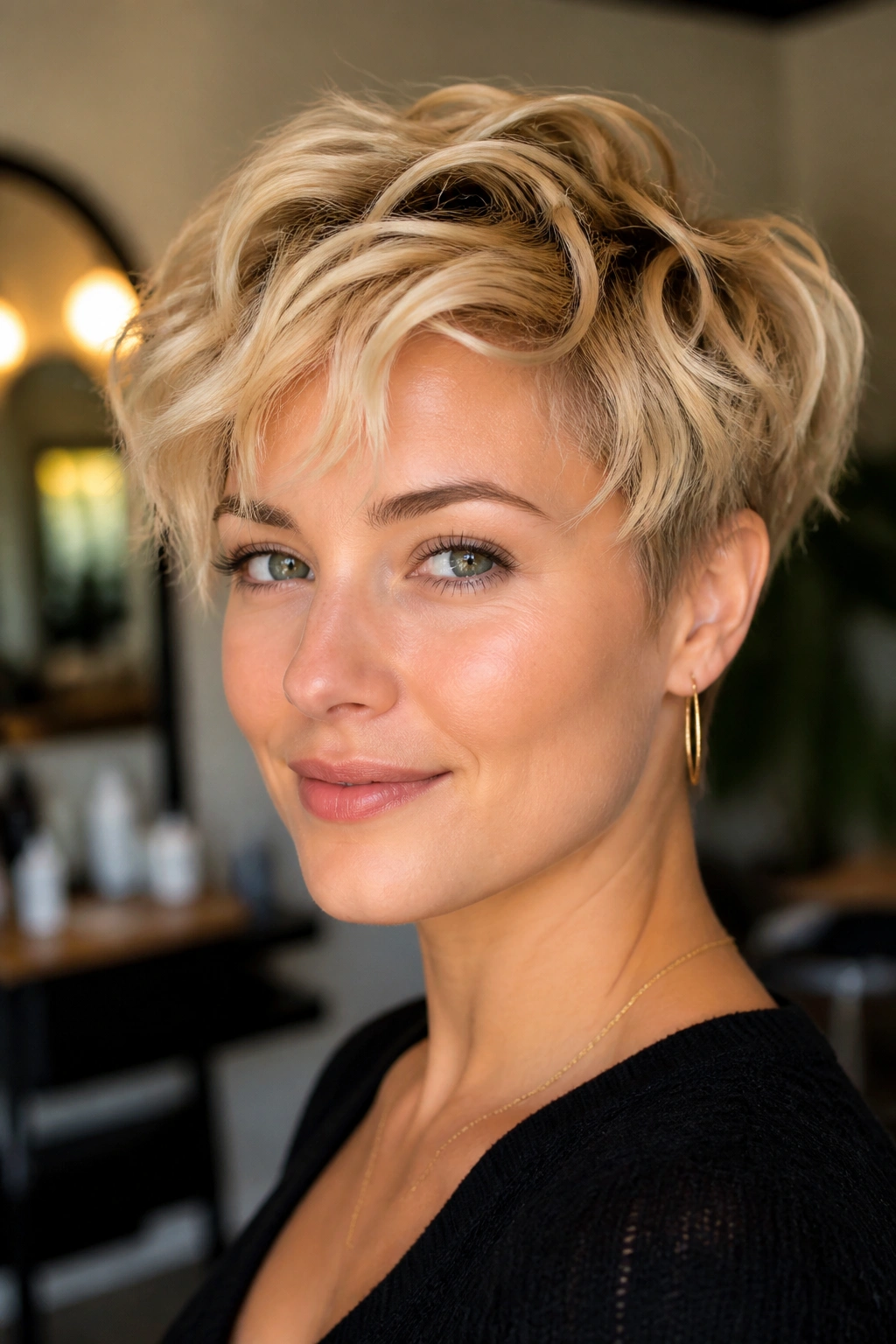
Can waves work on a round face? Yes, if the cut keeps the volume in the right places. Waves add softness, but they can also widen the shape if they sit right at the cheeks.
What Makes It Work
The best version has a slightly longer top and slimmer sides, so the wave pattern sits higher and doesn’t puff out around the widest part of the face. A diffuser helps if your hair is naturally wavy. If you’re styling with heat, use a 1-inch iron and leave the ends a little straighter so the whole cut doesn’t turn into a ball.
Cream blonde and golden blonde both suit this shape because the color shows the wave pattern without looking harsh. Keep the fringe light. Heavy waves across the forehead can make the face feel shorter than it is.
15. Rooted Shadow-Dimension Blonde Pixie
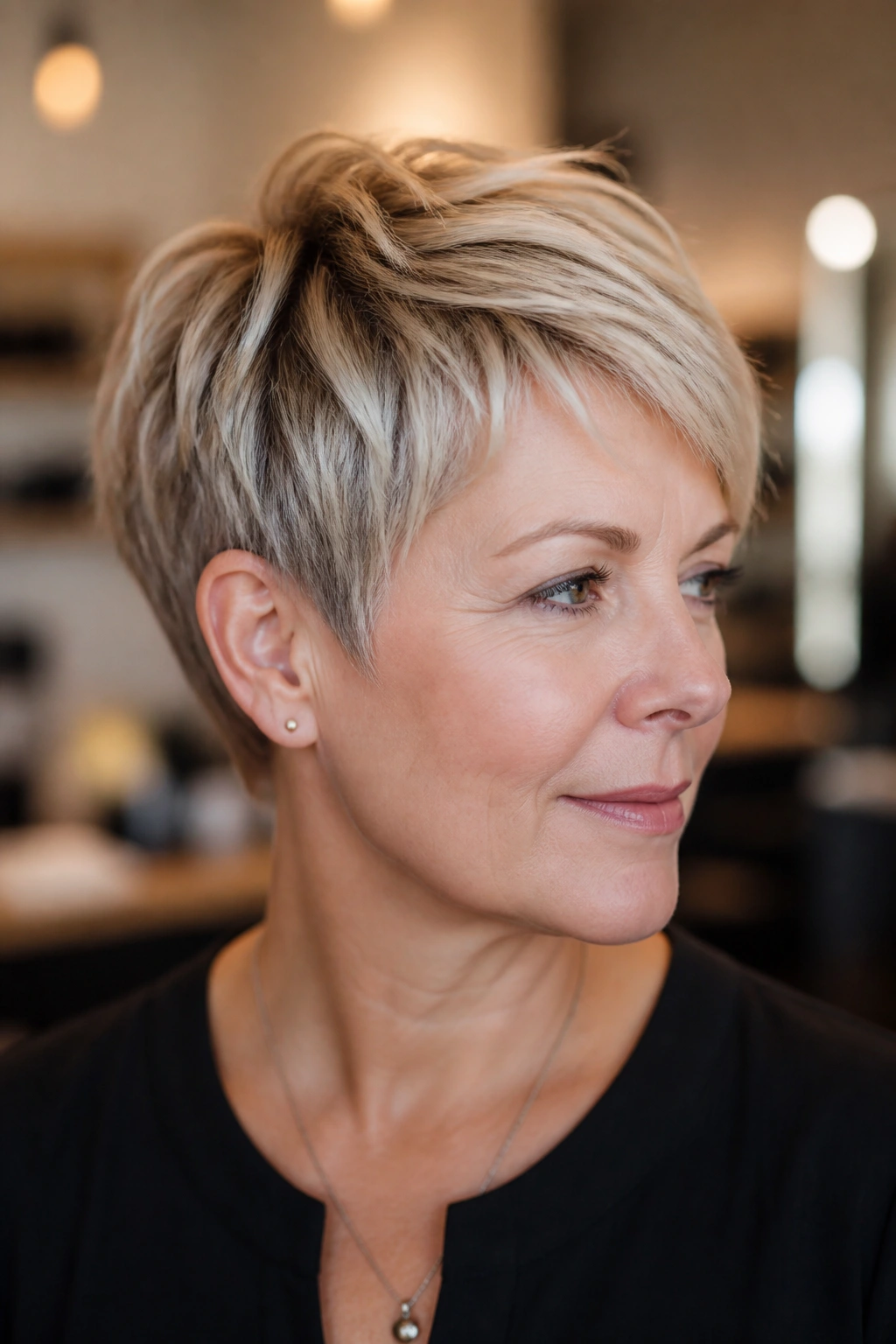
Blonde does not have to be one tone. A rooted shadow-dimension pixie uses a deeper root near the scalp and lighter mids and ends, which creates depth and makes the top look more lifted.
That contrast is useful on a round face because the darker root line pulls the eye up before it reaches the brightest points. The result is subtle, but it changes the shape more than people expect. It also grows out more gracefully, which is a bonus if you dislike frequent color upkeep.
- Ask for a root shade that is 1 to 2 levels deeper.
- Keep the ends in beige, pearl, or soft gold.
- Use a gloss or toner to keep the blonde clean.
- Style with root lift, not heavy smoothing.
This is one of the easiest blonde pixies to live with.
16. Buzzed Nape Blonde Pixie
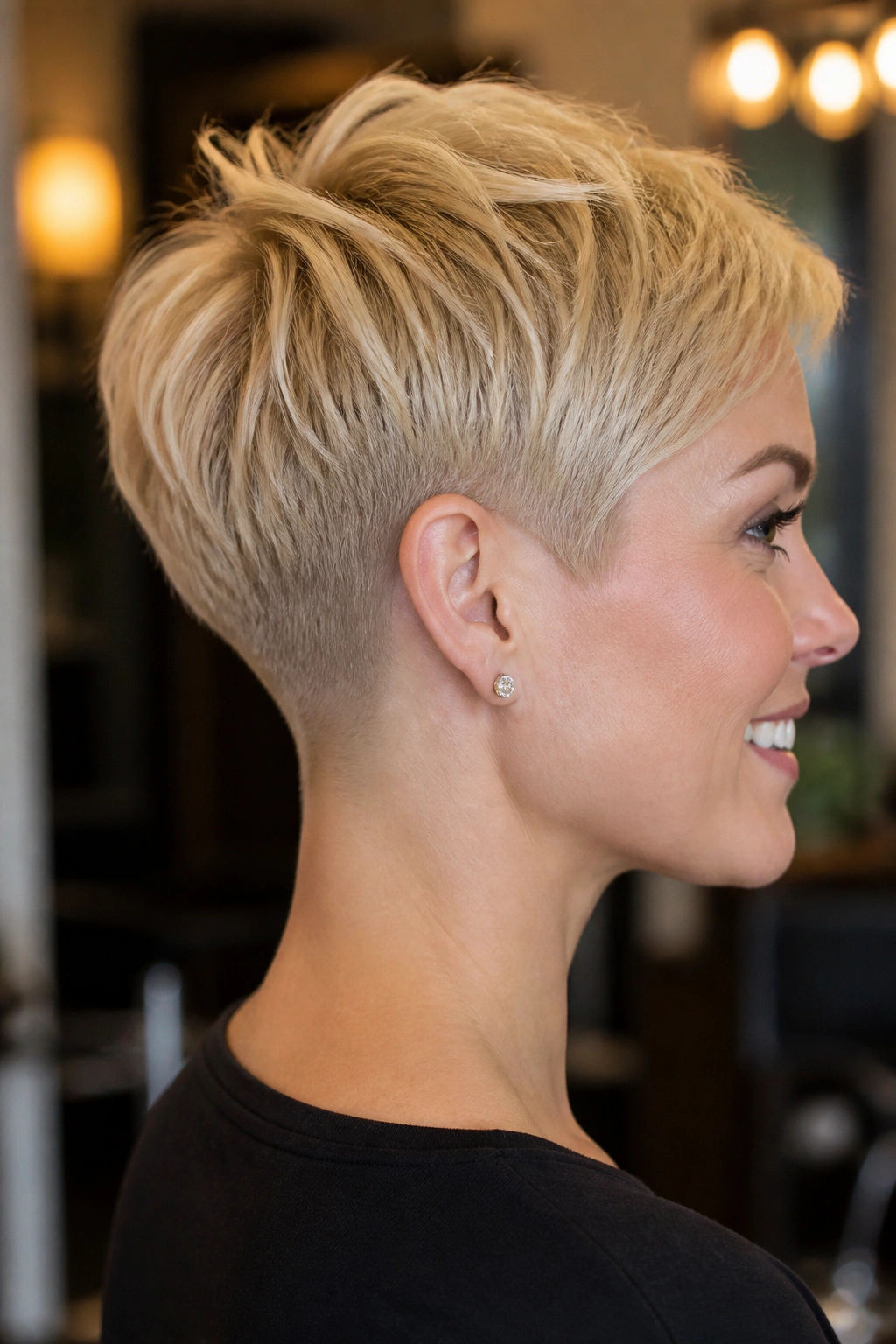
A buzzed nape is one of those hidden details that changes the whole profile. It removes weight where the hair often gets puffy, and that keeps the back from making the head look wider.
On a round face, that cleaner lower line helps the top take center stage. You can still keep the front soft or side-swept. The point is not to make the haircut extreme; it is to make the base neat so the rest of the style can look lighter. Thick-haired people usually notice the difference right away.
- Good for dense hair that grows heavy fast.
- Helps the neckline stay crisp.
- Works with both warm and cool blondes.
- Needs regular cleanups to stay sharp.
If your hair tends to balloon at the nape, this detail is worth asking about.
17. Deep Side-Part Blonde Pixie
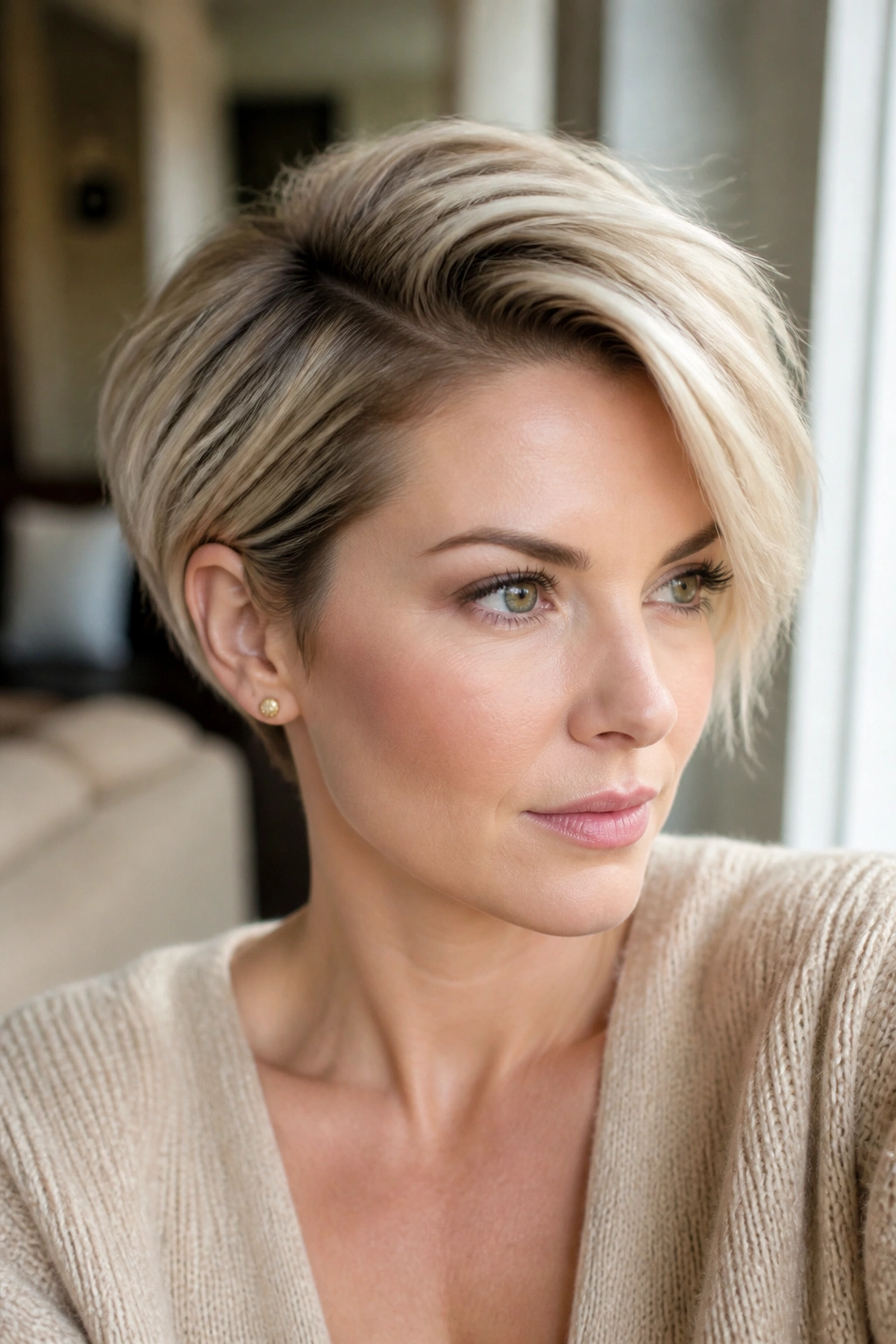
A deep side part changes the geometry of the whole cut. Instead of a centered shape, you get a strong line that moves the eye away from the middle of the face.
That asymmetry can be very flattering on a round face, especially if the front on one side falls a little longer than the other. The part should start high enough to create lift at the roots. If it sits too low, the hair collapses and the face looks fuller. A small round brush or a quick blast from the dryer can set the lift before you walk out the door.
How to Set the Part
Flip the hair while it’s damp, dry the roots in the opposite direction, then move it back. That gives you a little resistance and better volume. Use a light mousse if your hair is fine.
This one looks especially good in soft blonde tones with dimension.
18. Spiky Blonde Pixie
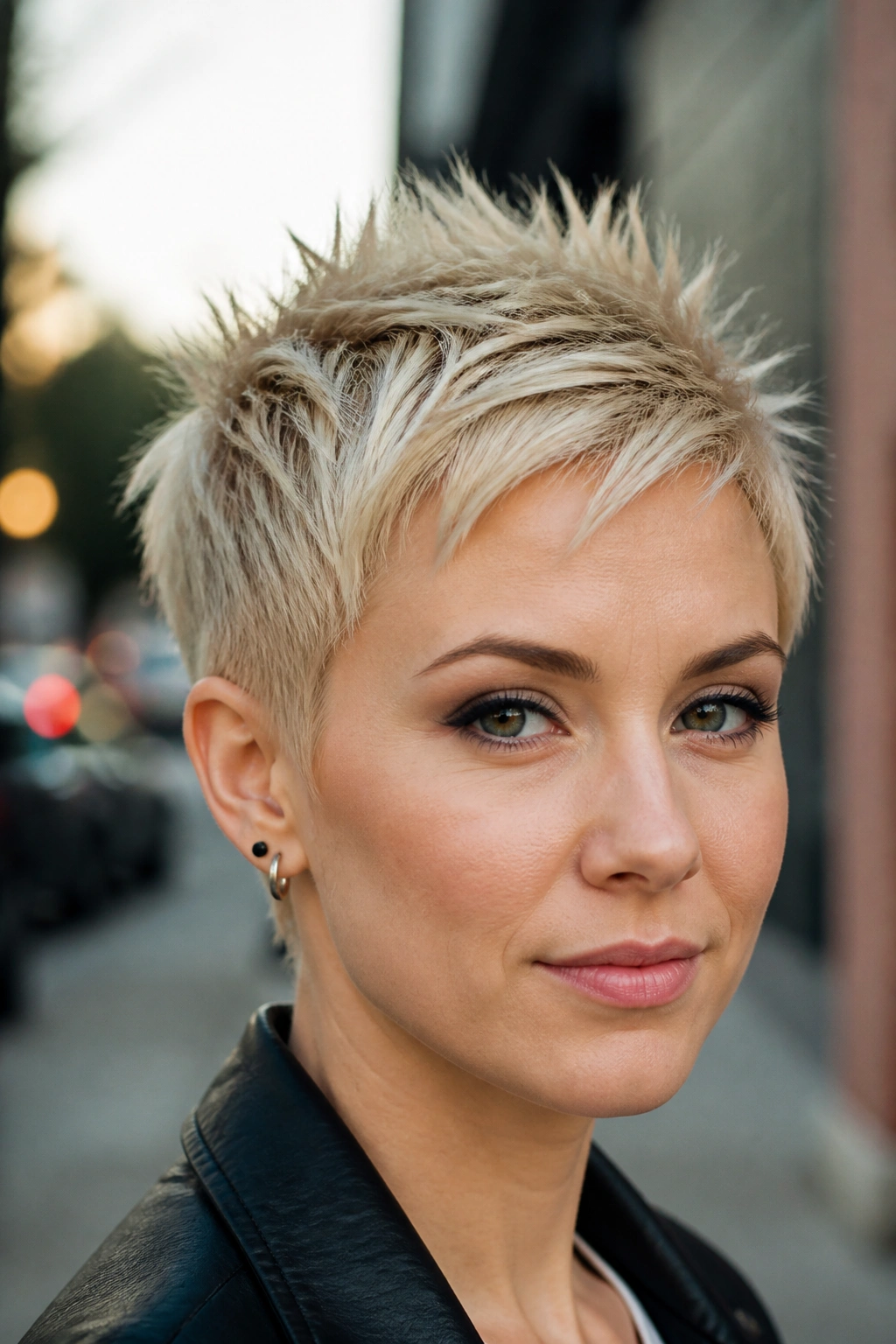
A spiky pixie is sharper than a piecey one, but it does not have to look punk. The trick is keeping the spikes short, separated, and a little uneven so they lift the face instead of adding width.
On a round face, that upward motion helps a lot. The sides need to stay tight, and the top should be the only area that gets texture. If the spikes spread sideways, the shape loses the benefit. If they stand too straight and stiff, the cut starts looking dated. Somewhere in the middle is where it works.
Use a small amount of matte clay and pinch the top between your fingers. A half-inch to one-inch lift is usually enough. More than that and the style starts to feel like effort.
19. Soft Curly Blonde Pixie
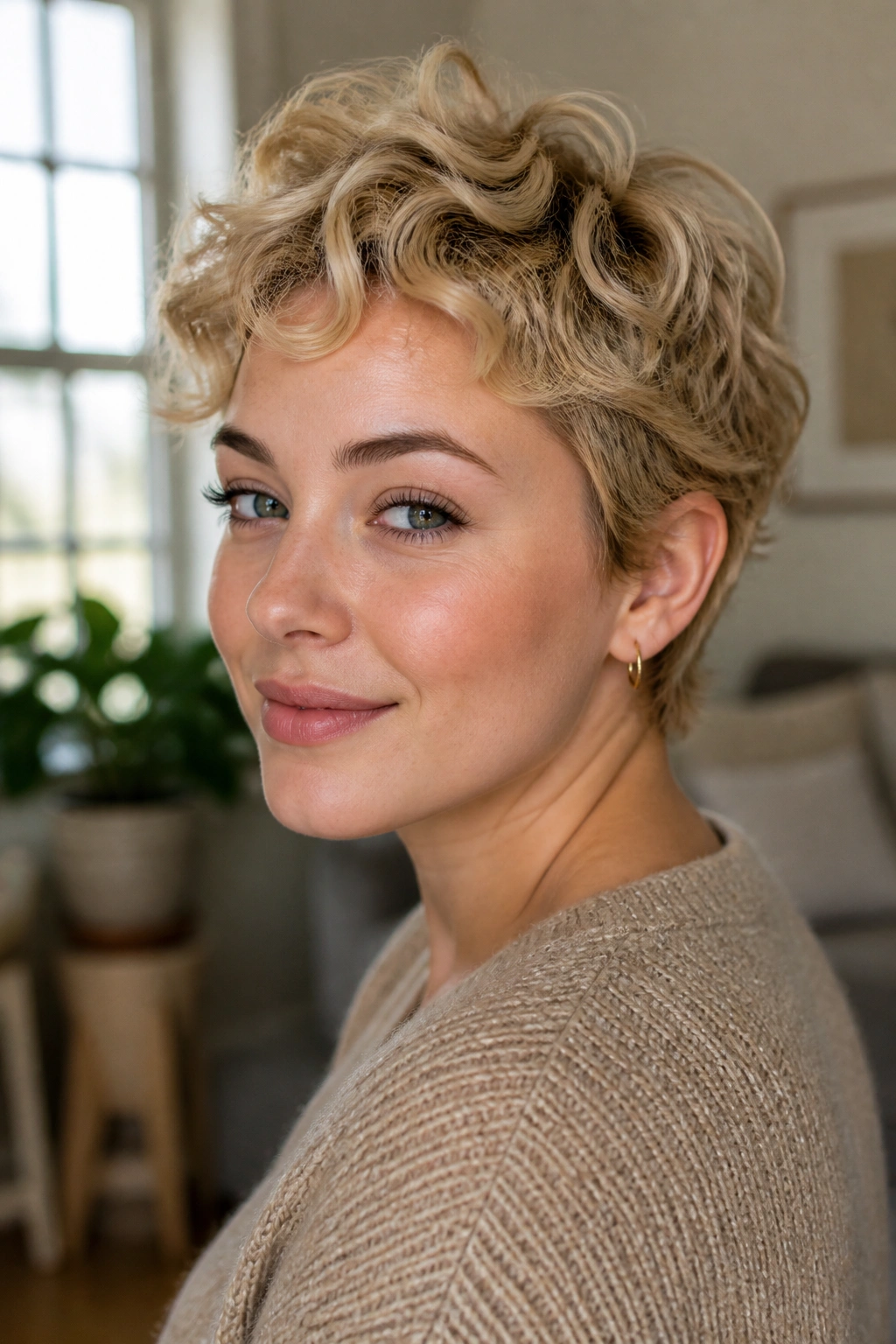
Can curls work with a round face and a pixie length? Absolutely, as long as the shape is cut for movement and not just left to do its own thing.
What to Ask Your Stylist For
The crown should keep a little more length than the temples. That keeps the curl pattern from turning into a puff around the sides. Ask for interior layers that remove bulk without carving the hair into tiny, choppy shelves. A curly pixie needs space to bend.
Use a curl cream or light gel, then diffuse on low heat or let it air-dry if your pattern is loose enough. Avoid brushing the curls once they dry. That is the fastest route to fuzz and a wider silhouette.
A warm blonde or beige blonde can soften the shape nicely, especially when the curl pattern creates natural movement.
20. Golden Blonde Long-Top Pixie
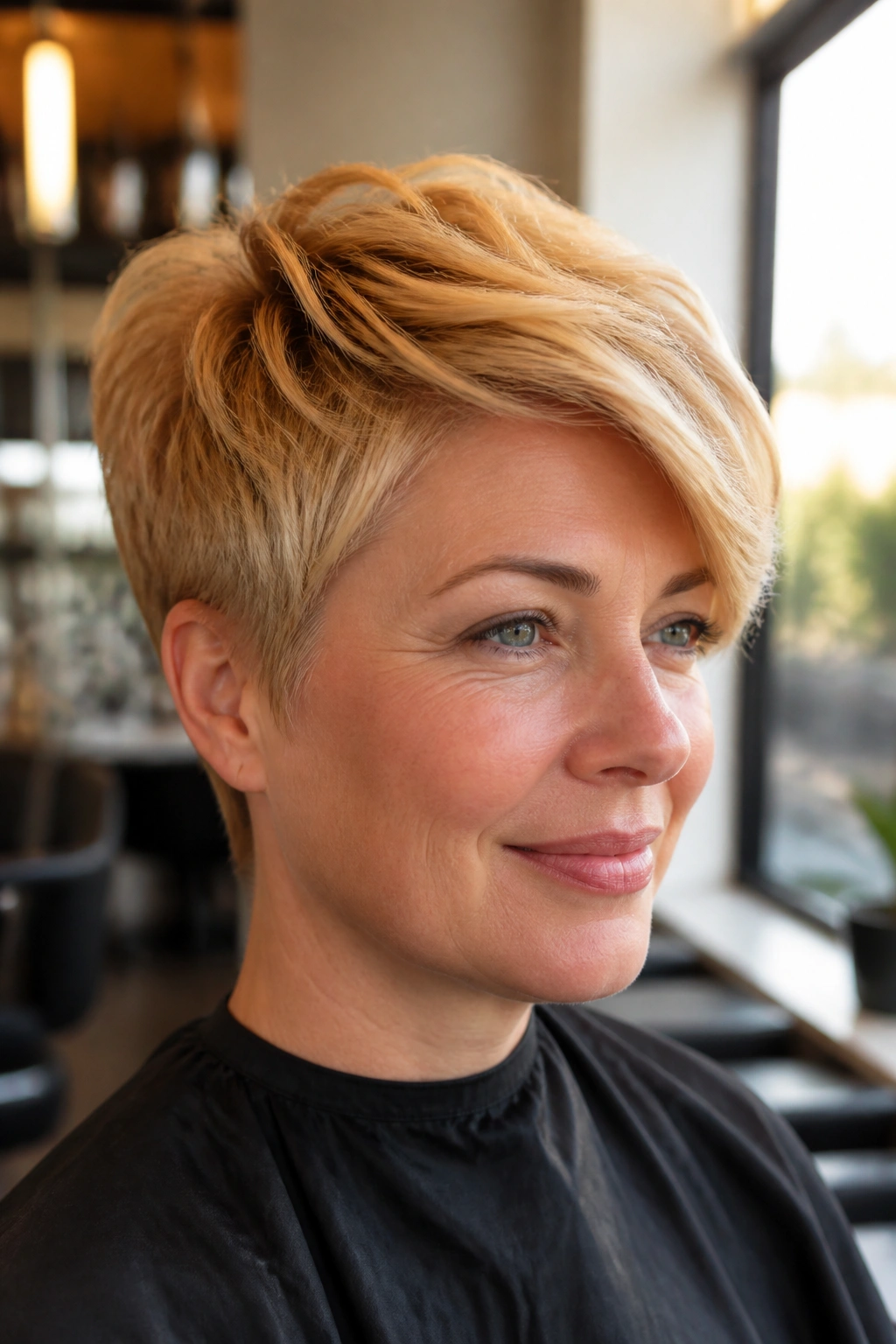
A long-top pixie gives you more styling room than a super-short crop, and that extra length can be a gift on a round face. The top can sweep, bend forward, or lift at the roots, depending on what you need that day.
Golden blonde works especially well here because the warmth keeps the style from feeling too hard. It’s also friendly to skin with warmer undertones. If the top reaches around 2.5 to 3.5 inches, you can get a lot of shape without crossing into bob territory.
This cut suits straight or lightly wavy hair. A little bend from a flat iron or a round brush is enough. Keep the neckline narrow and let the top do the talking.
21. Beige Blonde Soft-End Pixie
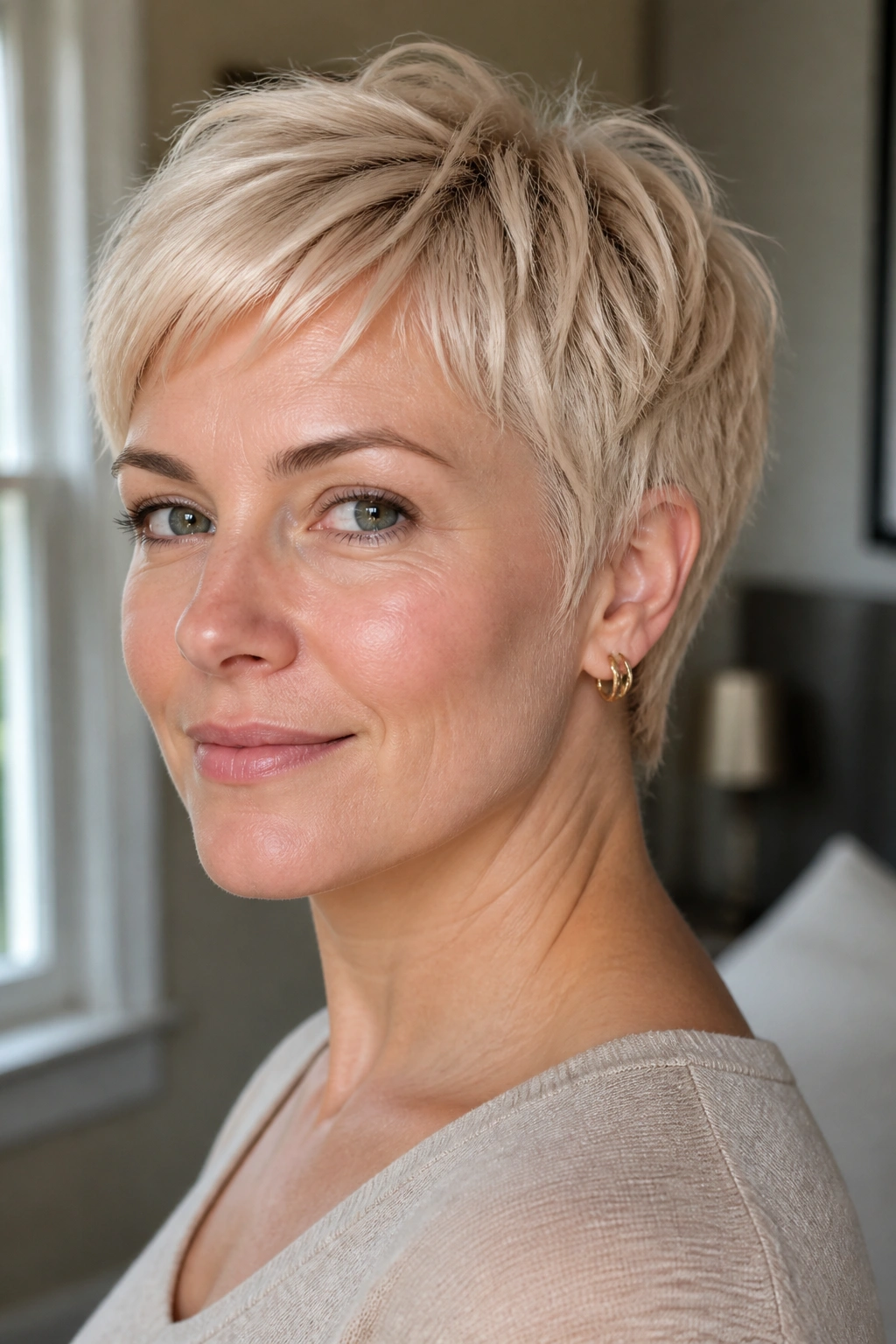
Soft ends change everything. Instead of blunt corners that stop the eye, the hair is lightly point-cut so the silhouette feels airy and less boxy.
Beige blonde is a smart match because it keeps the cut low contrast and easy on the eyes. That matters on a round face when you want shape but not a loud, graphic line. The style looks clean in natural light and stays gentle around the cheeks, which is where blunt pixies can get fussy.
I like this cut for people who want something neat enough for everyday life but not so polished that it feels stiff. It grows out in a nice way, too, because the soft ends blur the line as the hair gets longer.
22. Icy Blonde Dark-Root Pixie
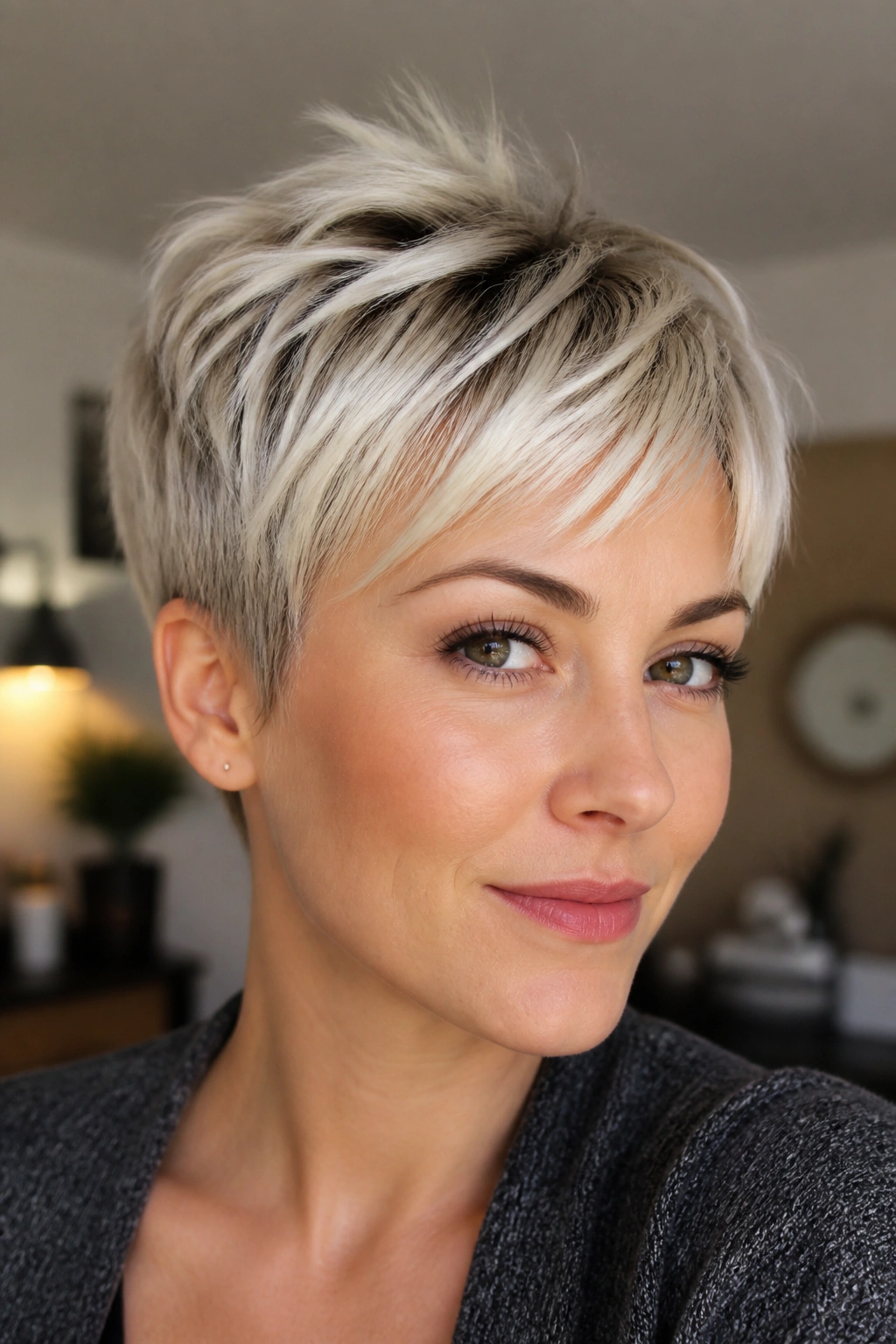
Dark roots do more work than people give them credit for. On an icy blonde pixie, the contrast at the scalp creates depth, and that depth makes the crown look taller.
That is useful for a round face because the eye gets pulled upward before it lands on the widest part of the face. The icy ends add brightness, but the root shadow keeps the cut from going flat or washed out. If the color is too one-note, the shape can look tiny. Contrast fixes that.
This one does ask for a bit more toner upkeep, because icy blonde can drift yellow if it is left alone too long. Still, the grow-out is easier than a full platinum block, which is why a lot of people end up preferring it.
23. Layered Blonde Pixie with Sideburns
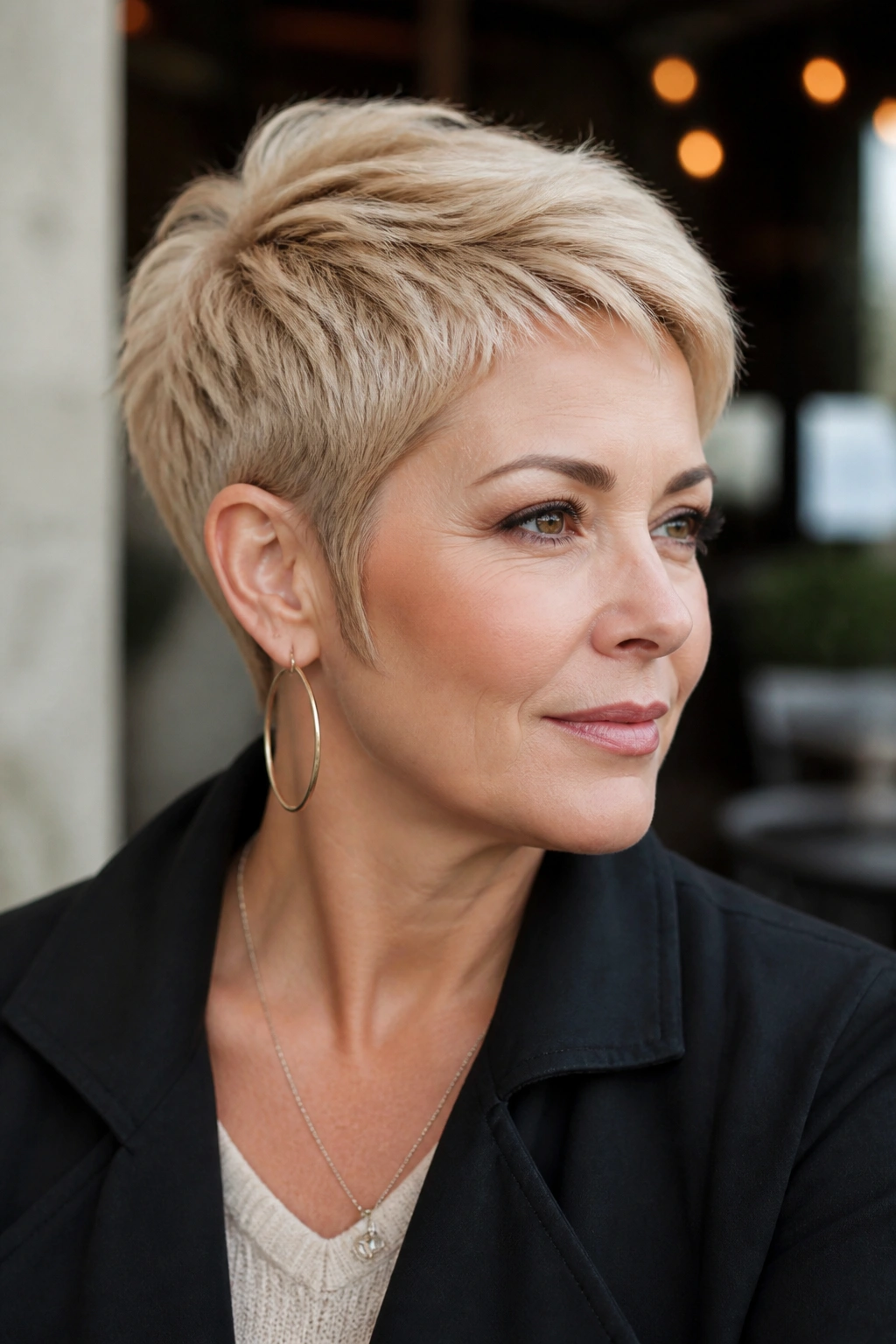
Sideburns are underrated. A small, intentional sideburn can lengthen the side plane of the face and make a round shape look a little more oval.
Why Sideburns Matter
They act like tiny vertical frames. Instead of ending the haircut right at the temple, they give the eye a line to follow downward. On a pixie, that can be more useful than adding extra length everywhere else. You do not need thick sideburns either; a slim, tapered edge is enough.
This cut works well if you wear glasses or want a slightly softer finish around the ears. Keep the top light and the sides close, then let the sideburns do their quiet job. A sandy blonde or neutral blonde keeps the detail visible without making it severe.
It’s a small thing. Small things matter here.
24. Faux Hawk Blonde Pixie
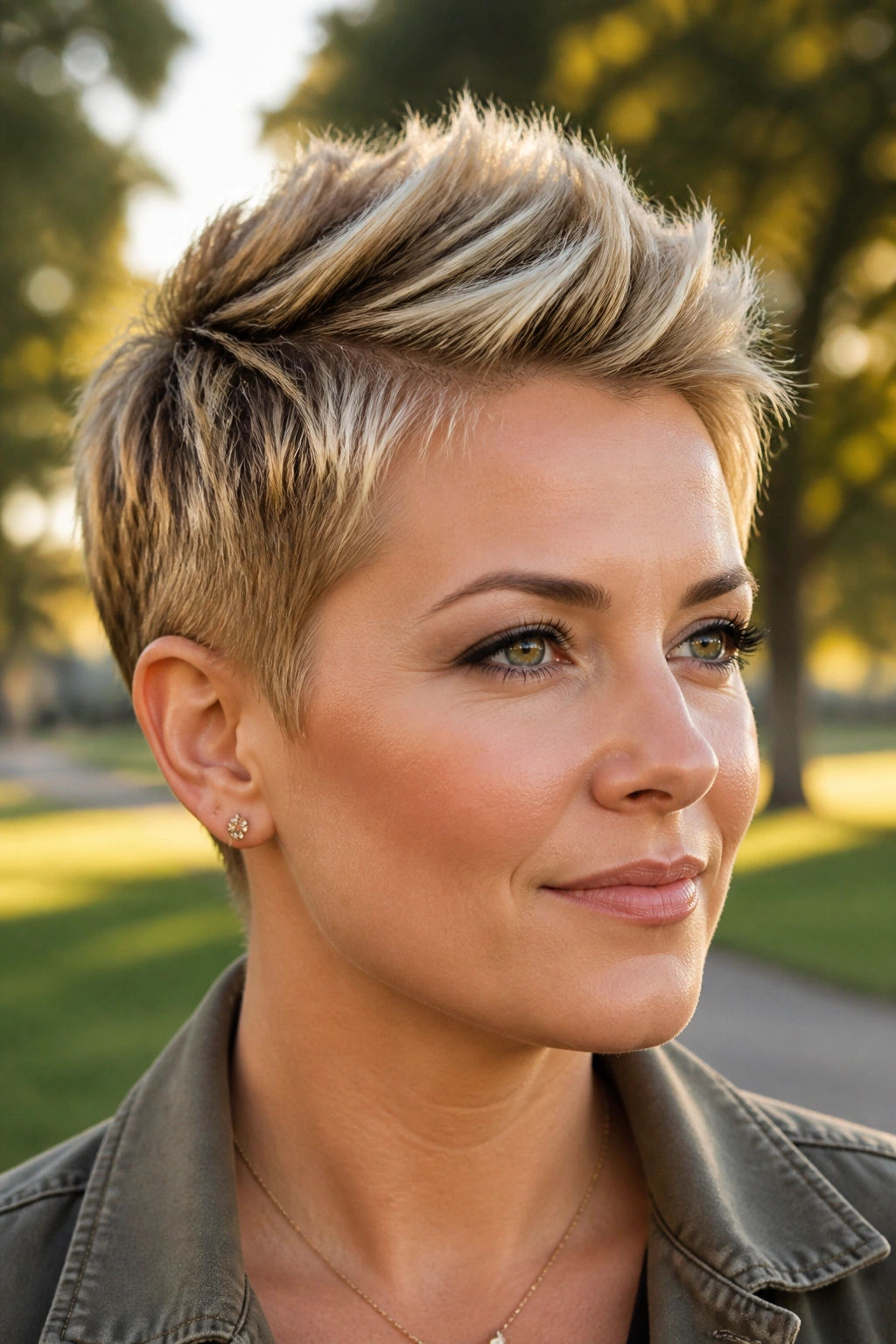
A faux hawk pixie sounds aggressive, but the right version is surprisingly wearable. The center ridge adds height, while the sides stay cropped tight, which is exactly the sort of shape that flatters a round face.
The point is not to build a towering strip of hair. Keep the top narrow and textured, with enough lift to suggest a hawk rather than copy one. A matte paste works better than shiny gel here because the texture reads cleaner. Thicker hair usually holds this shape best, though fine hair can work if the cut has enough internal support.
If you want a little edge without going full punk, this is a smart middle ground. It looks stronger in blonde when the color has some dimension at the root and crown.
25. S-Curve Fringe Blonde Pixie
An S-curve fringe sounds fancy, but it’s really just a fringe that bends in two gentle directions instead of falling straight down. That soft movement breaks up the circular feel of a round face.
Styling the Curve
Use a small round brush or a curling motion with your fingers while the hair is warm from the dryer. Pull the fringe slightly one way, let it cool, then nudge the end back the other way. The shape should feel loose, not curled. If it looks too done, it loses the point.
This works well with a soft blonde because the movement shows up without turning into a hard line. Keep the sides slim and the crown lightly lifted. The fringe is the feature here, so don’t crowd it with too much volume everywhere else.
This is one of those styles that looks easy when it’s actually been thought through.
26. Grown-Out Blonde Pixie
A grown-out pixie can be one of the most flattering versions for a round face, provided the neckline stays tidy. The extra length on top gives you more styling options, while the shorter sides keep the shape from getting bulky.
This is the cut for people who do not want a strict salon schedule. The key is to keep the edges intentional. A small trim around the ears and neck can stop the grow-out from turning into fuzz. The top can be swept, pushed forward, or left slightly messy, which gives you more than one way to wear it.
Blonde helps here because the layers show up even when the style is relaxed. If the color has a little root depth, the whole thing looks softer and less fussy.
27. Tapered Neckline Blonde Pixie
A tapered neckline is the quiet hero of many flattering pixies. It narrows the outline at the back of the neck, which keeps the silhouette from getting heavy on a round face.
What to Ask For
Ask for the hair at the nape to be softly graduated, not blocked off straight. The hair around the ears should sit close, and the crown can keep a little lift so the shape rises upward. A blonde pixie with a clean taper looks lighter even when the hair itself is thick.
- Keep the taper narrow, not shaved to the skin.
- Let the back follow the curve of the head.
- Use a comb or fingers to keep the nape neat.
- Great for office-friendly versions of pixie cuts.
It sounds like a small technical detail. It isn’t. A clean neckline changes the whole head shape.
28. Airy Crown Blonde Pixie
If you want the most forgiving version of a blonde pixie on a round face, make the crown airy and leave the sides close. That combination gives you lift where you need it and control where you do not.
The crown should never look puffy. Airy is the word. Think light, lifted pieces that move when you tilt your head, not a rounded tuft sitting on top like a cap. A pearl blonde, beige blonde, or soft butter blonde keeps the shape delicate, while a little root depth makes the top read higher. That’s the kind of detail that keeps the cut from sinking into the face.
Ask for length at the crown, taper through the temples, and a texture that bends rather than bulks. That formula holds up whether you style it sleek, piecey, or loose, which is why it’s a strong last option if you want something you can wear almost anywhere.
