



Fine hair can look almost see-through when the cut is too heavy, too long, or too flat in the wrong places. Put it in a red pixie cut, though, and the whole thing can wake up fast — sharper edges, cleaner shape, more visual depth, less of that limp, washed-out look that annoys people more than they admit.
The color helps, but only if the cut does its part. Copper, cherry, auburn, merlot, and brick red each bounce light a little differently, yet the real trick is still shape: a lifted crown, a tapered nape, a fringe that breaks up the forehead without swallowing it. Leave too much bulk at the sides and the hair collapses. Go too short on top and the scalp starts stealing the show.
That’s why the most flattering red pixie cuts for fine hair tend to share the same basic logic even when they look wildly different: keep the perimeter neat, keep the top airy, and keep the texture deliberate. The right cut does not try to fake thickness by piling on product. It works because every strand has a job.
1. Copper Feathered Pixie with Lifted Crown
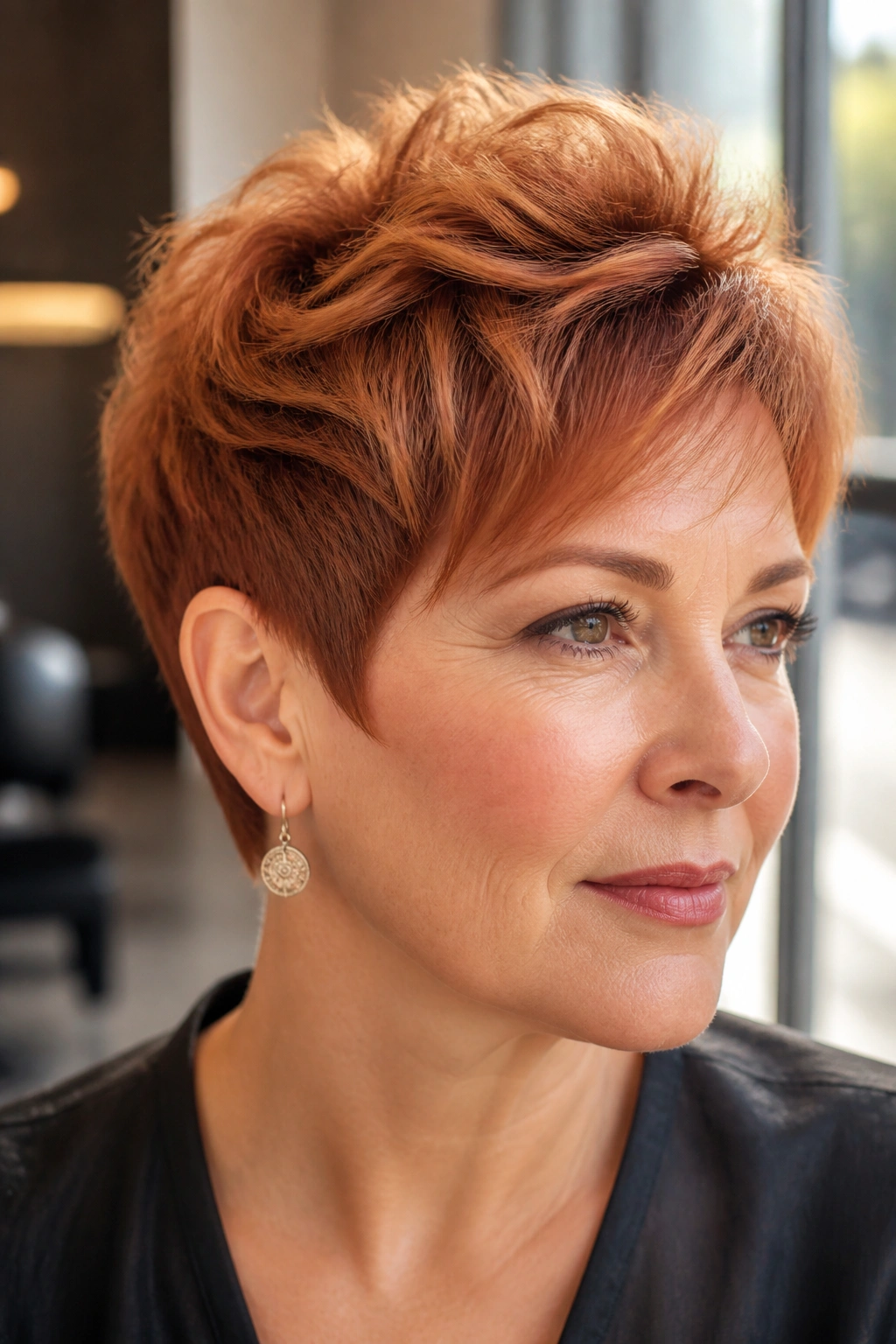
Copper is one of those shades that gives fine hair a little extra life, especially when the top is feathered instead of blunt. The color catches light at the crown, and the cut stops the whole shape from sinking into the head.
Why It Works on Fine Hair
A lifted crown with soft, feathered ends makes the hair look lighter and fuller at the same time. Ask for the top to stay a touch longer than the sides — usually about half an inch to an inch of difference is enough — so the shape feels airy, not sparse.
- Keep the nape tight so the eye goes upward.
- Use a pea-size amount of mousse at the roots.
- Blow-dry with your fingers first, then finish with a small round brush only if you need more bend.
- Finish with a matte paste on the tips, not the scalp.
Best tip: don’t overload copper with shine spray. Fine hair can go stringy fast.
2. Cherry Side-Swept Pixie with Long Fringe
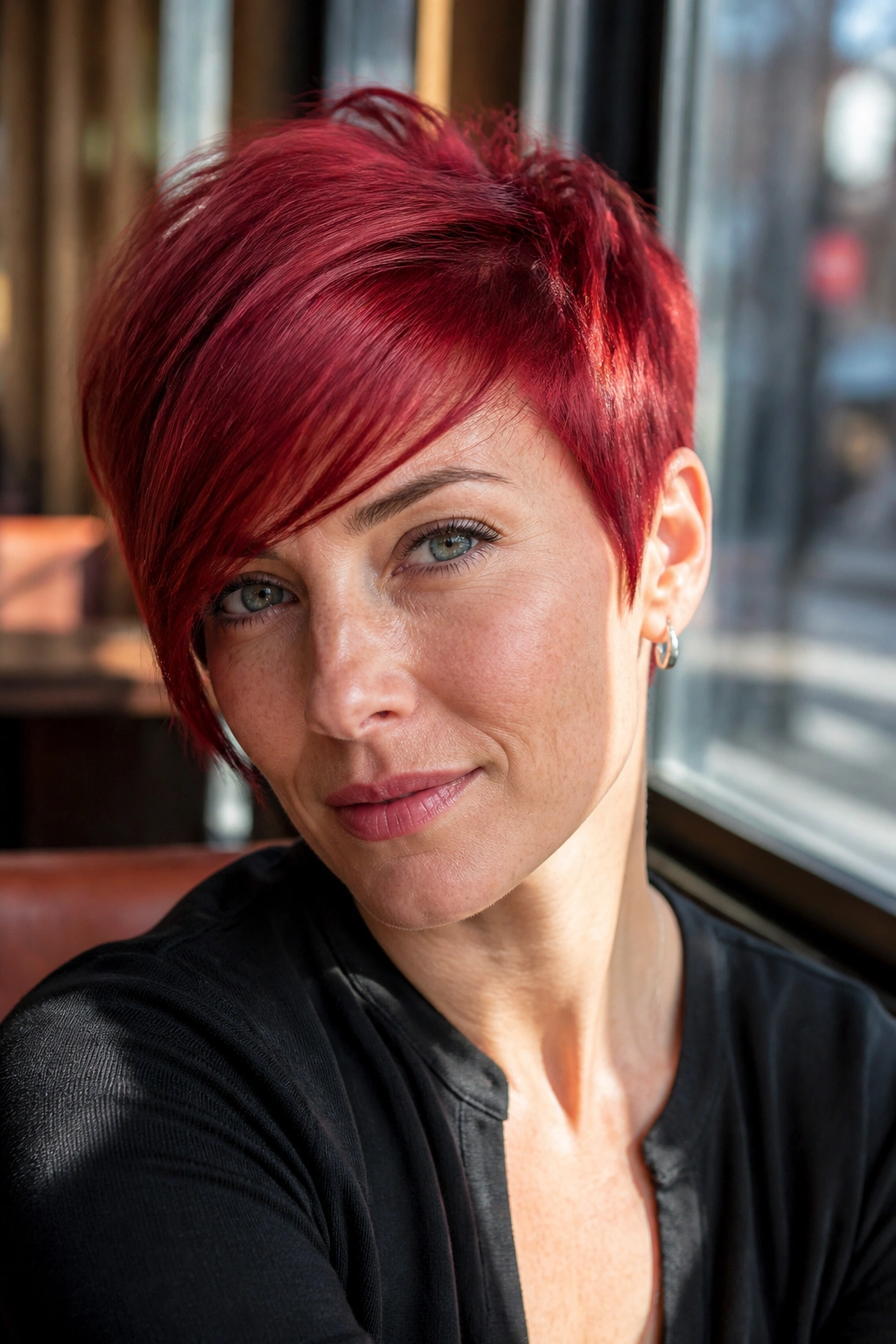
A long side fringe does more for fine hair than people expect. It gives the front of the cut a clean diagonal line, which makes the whole style feel fuller even when the strands themselves are soft.
Cherry red adds a little drama without making the cut feel heavy. That matters. A bold shade on a wispy shape can look thin if the front is too short, but a side-swept fringe gives the eye somewhere to land.
Short sides. Longer front. That’s the trick.
The best version keeps the fringe long enough to graze the eyebrow or cheekbone, then tucks the rest close so the front carries the shape. If your hair falls flat in humid weather, this is one of the easier pixies to rescue with a quick finger-dry and a dab of light cream.
3. Auburn Tapered Pixie with Neat Nape
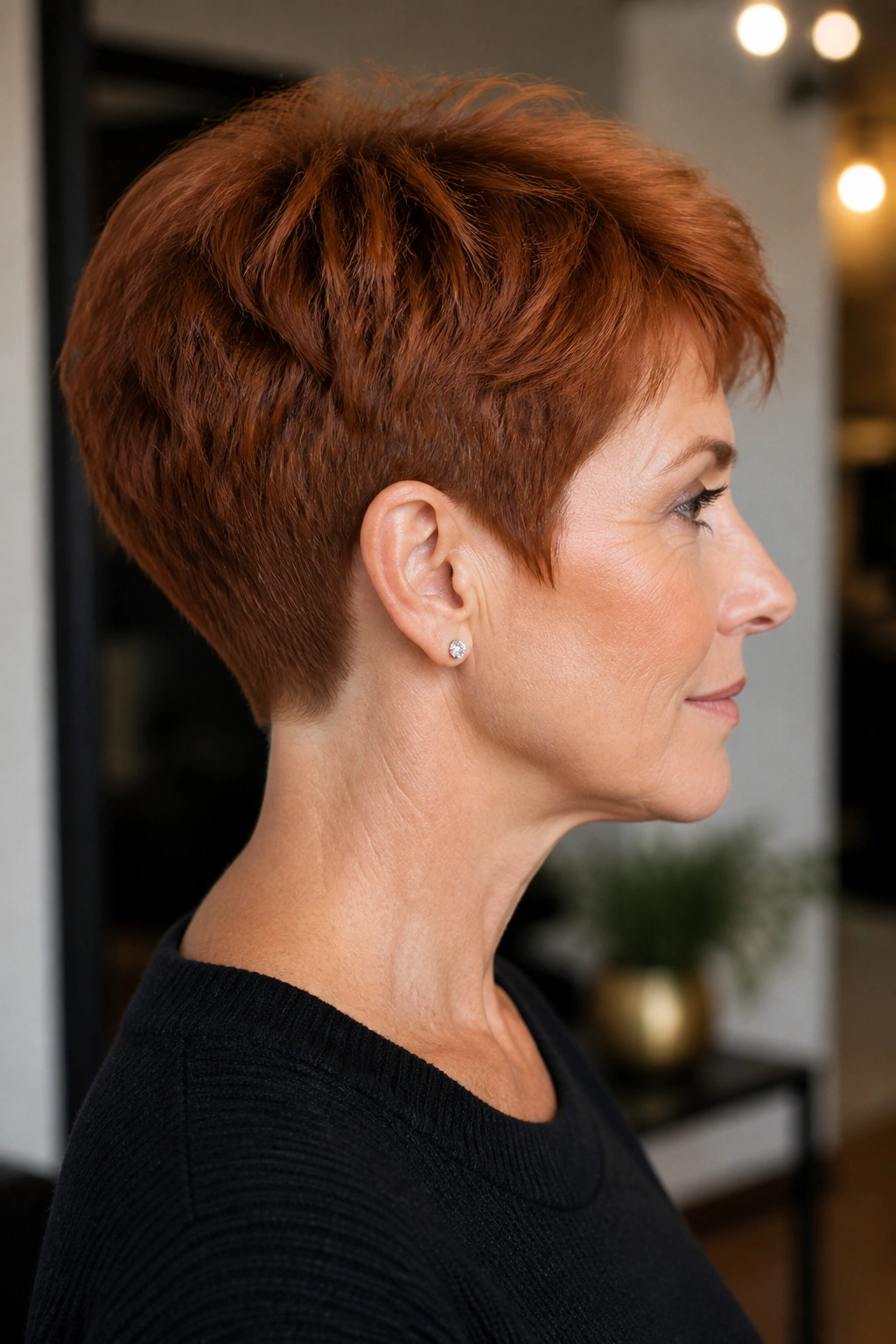
Why does a tapered nape matter so much on fine hair? Because it gives the cut a clean finish and makes the top seem denser by comparison. The contrast is subtle, but it works.
Auburn is a nice choice here because it reads rich without screaming for attention. The shade has enough depth to fill in visual gaps, and the taper keeps the back from puffing out or looking boxy. If your hair grows in a cowlick at the neck, a tapered nape usually handles that better than a blunt edge.
What to Ask For
- A close taper around the ears and nape.
- About 1.5 to 2.5 inches on top.
- Soft layering, not choppy chunks.
- A side part if your cowlick fights center parts.
If you like low-maintenance hair, this one is a calm, sensible pick. It dries neatly, and it still looks deliberate on day two.
4. Scarlet Micro-Fringe Pixie Crop
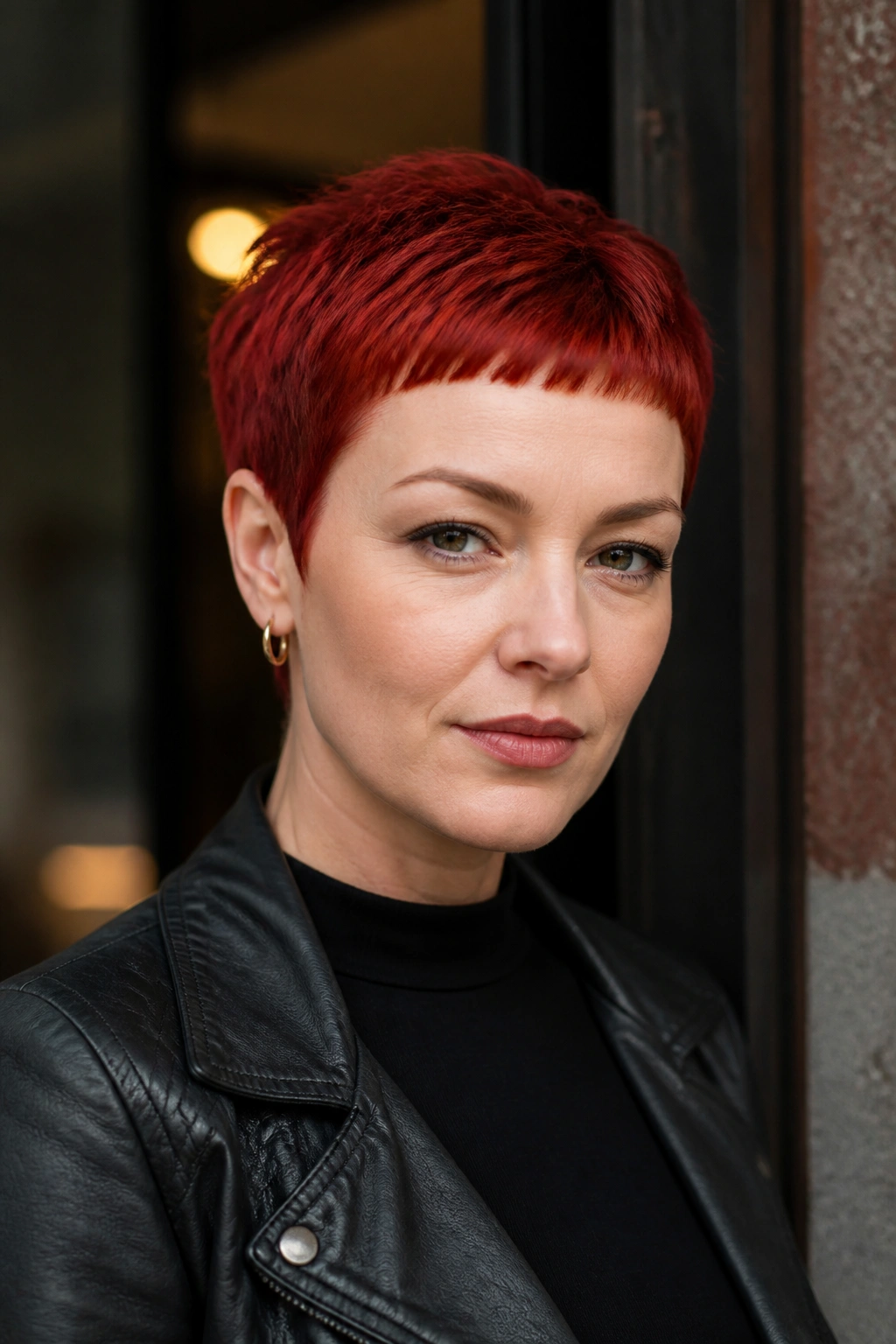
If you like a little edge, a micro-fringe pixie crop brings it immediately. The tiny fringe gives the cut a crisp line across the forehead, and on fine hair that line can make the top feel denser than a longer, floppy bang ever would.
The scarlet shade keeps the whole thing from looking too severe. Bright red tones tend to sharpen the face, so a short fringe works best when the rest of the cut stays snug around the sides and back.
- Keep the fringe under 1 inch if you want a true micro look.
- Ask for a softly beveled top, not a flat shelf.
- Style with a matte paste and pinch the ends into place.
- Skip heavy cream near the roots; it will flatten the whole front.
Not a shy cut. That’s the point.
5. Cinnamon Choppy Pixie with Piecey Ends
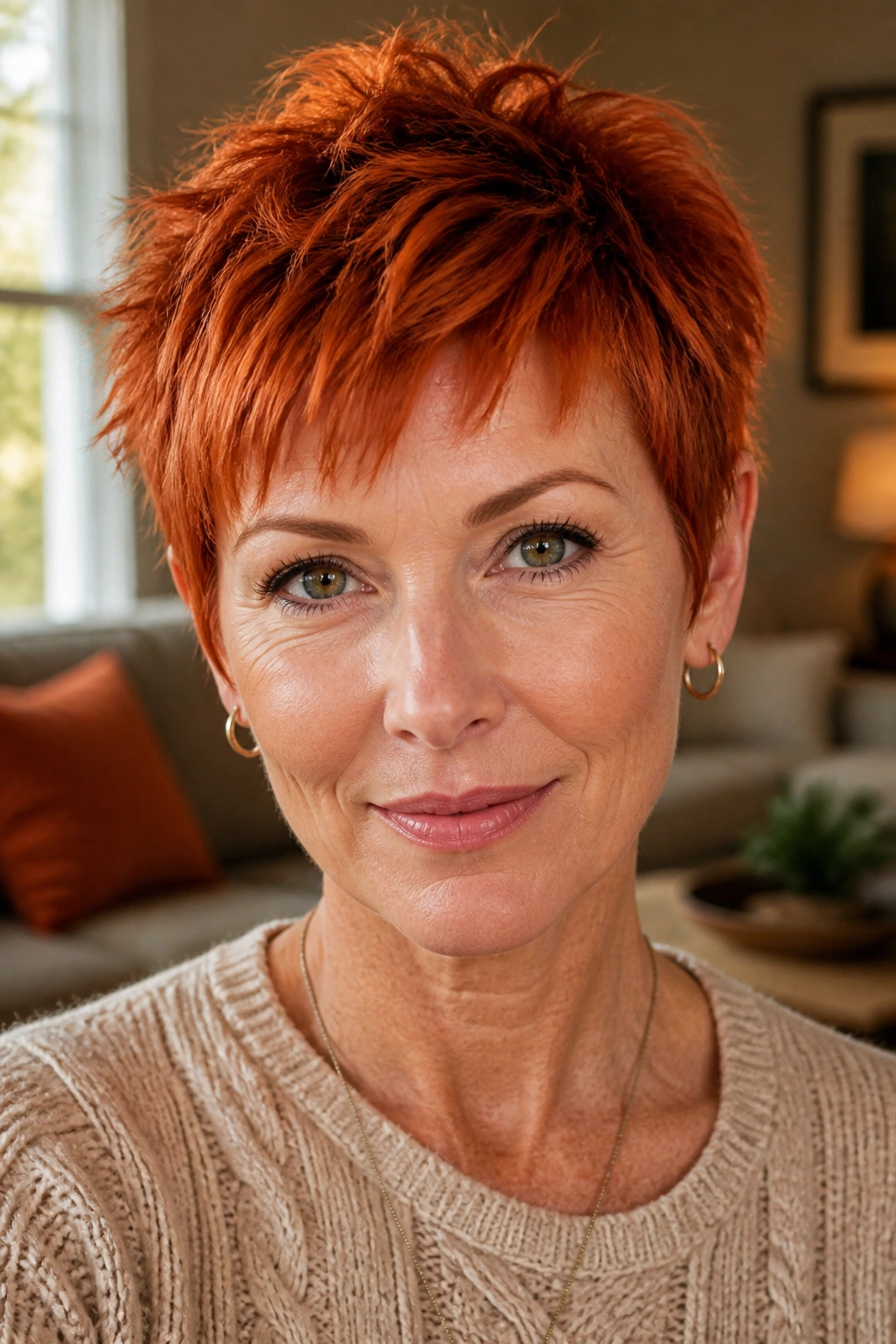
Cinnamon red has a warmth that plays nicely with fine hair, especially when the ends are sliced into small, broken pieces instead of left in one smooth line. A choppy pixie gives the hair somewhere to separate, which makes the cut look more textured and less like one solid cap.
That separation matters. Fine hair can cling to itself and look thin when it’s cut too cleanly, but piecey ends create tiny shadows and interruptions that make the shape feel fuller. A little point cutting at the ends goes a long way here.
If your hair is straight and a bit slippery, ask your stylist to leave the top with soft, uneven movement. Then rough it up with a light texturizing spray after drying. Not a ton. Just enough to break the strands apart.
6. Rose Gold Soft Pixie with Rounded Top
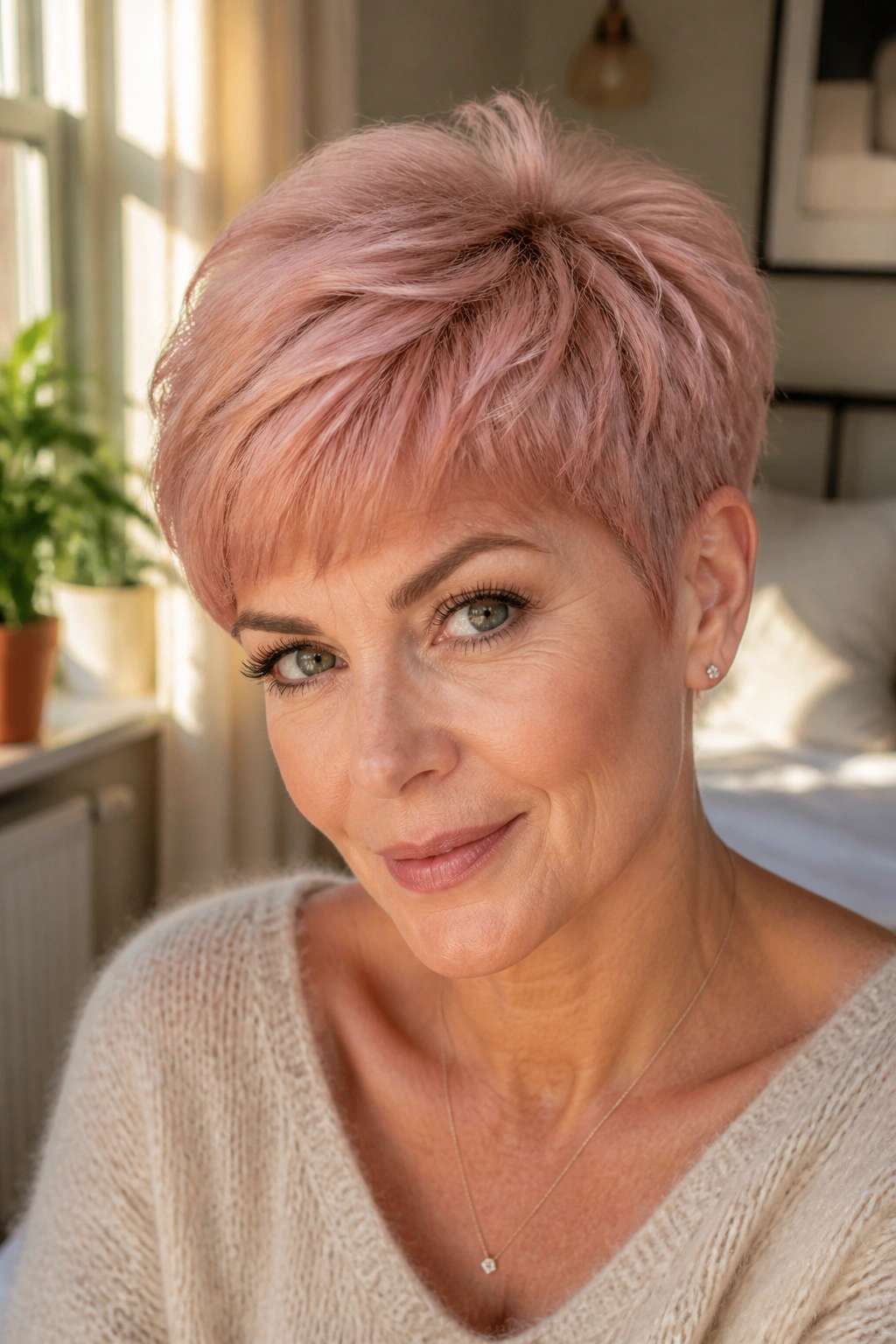
Unlike a sharp crop, this one softens the head shape and keeps the top from looking too flat. The rounded crown gives fine hair a little dome of lift, while the rose gold tone brings a gentle glow that reads well even when the styling is simple.
This cut is especially nice if you want something feminine without losing structure. The sides stay tucked in, but the top doesn’t feel severe or overly short. It has shape. Real shape.
A small mousse at the roots, blow-dried upward with fingers, usually does the job. If the front needs polish, smooth the last half-inch with a tiny bit of cream. That’s enough. Too much product would take the life right out of it.
7. Rusty Undercut Pixie with Swept Layers
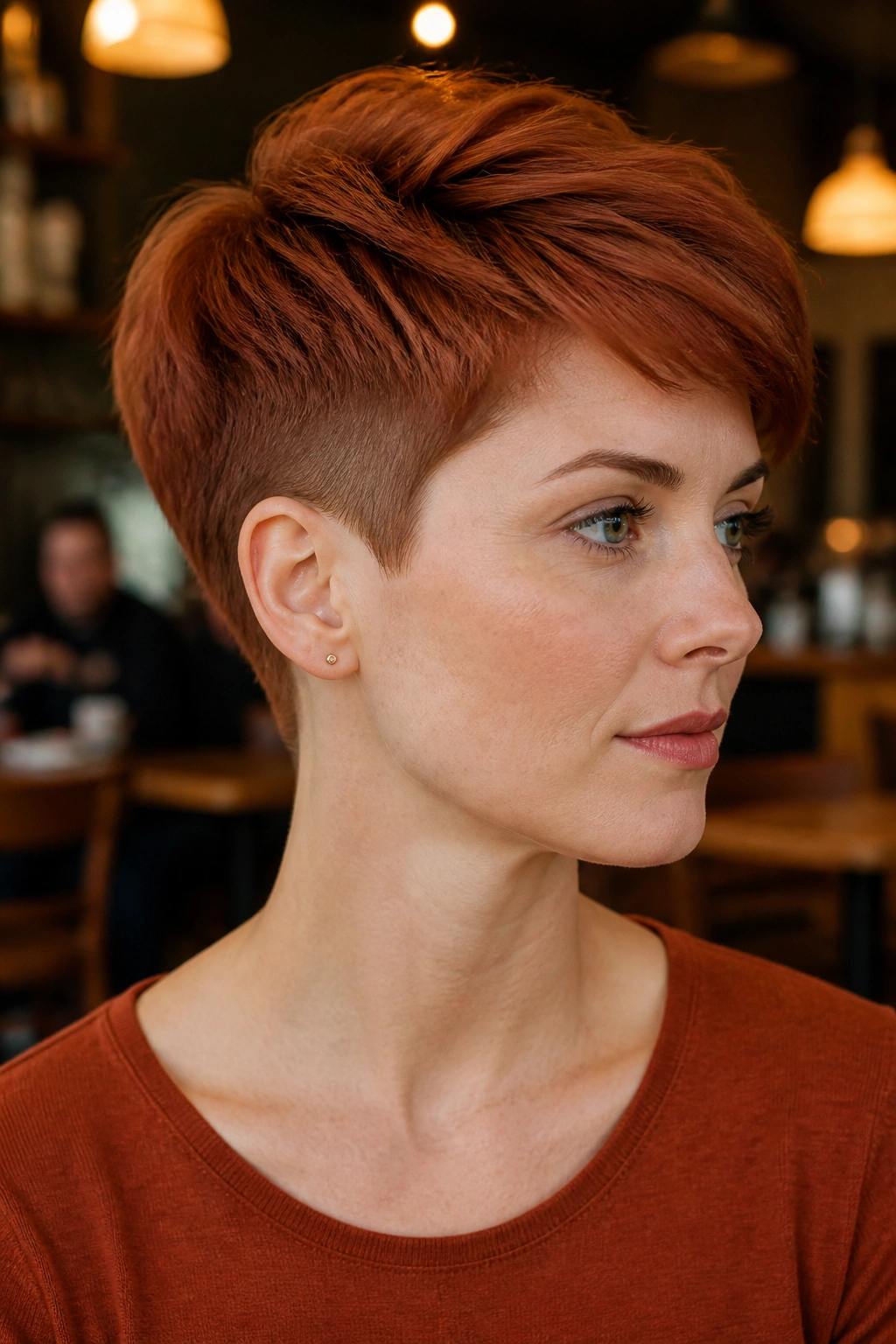
A rust-toned pixie with an undercut can look bold, but on fine hair the real payoff is practical: removing bulk from the sides lets the top read fuller. That visual trick is one of my favorites because it doesn’t ask the hair to do more than it can.
What Makes It Work
A low undercut is usually the safer bet. High undercuts can expose too much scalp on fine hair, while a lower cut keeps the neck clean and lets the top stay soft. Swept layers on top give the style movement without turning it into a mess.
- Keep the top about 2 to 3 inches.
- Ask for the undercut to start low, near the nape.
- Sweep the front to one side for a longer line.
- Use a firm paste only on the top layer.
This one feels sharper than the softer pixies, but it still stays wearable. And frankly, that balance is why it works.
8. Tomato Red French Pixie with Wide Fringe
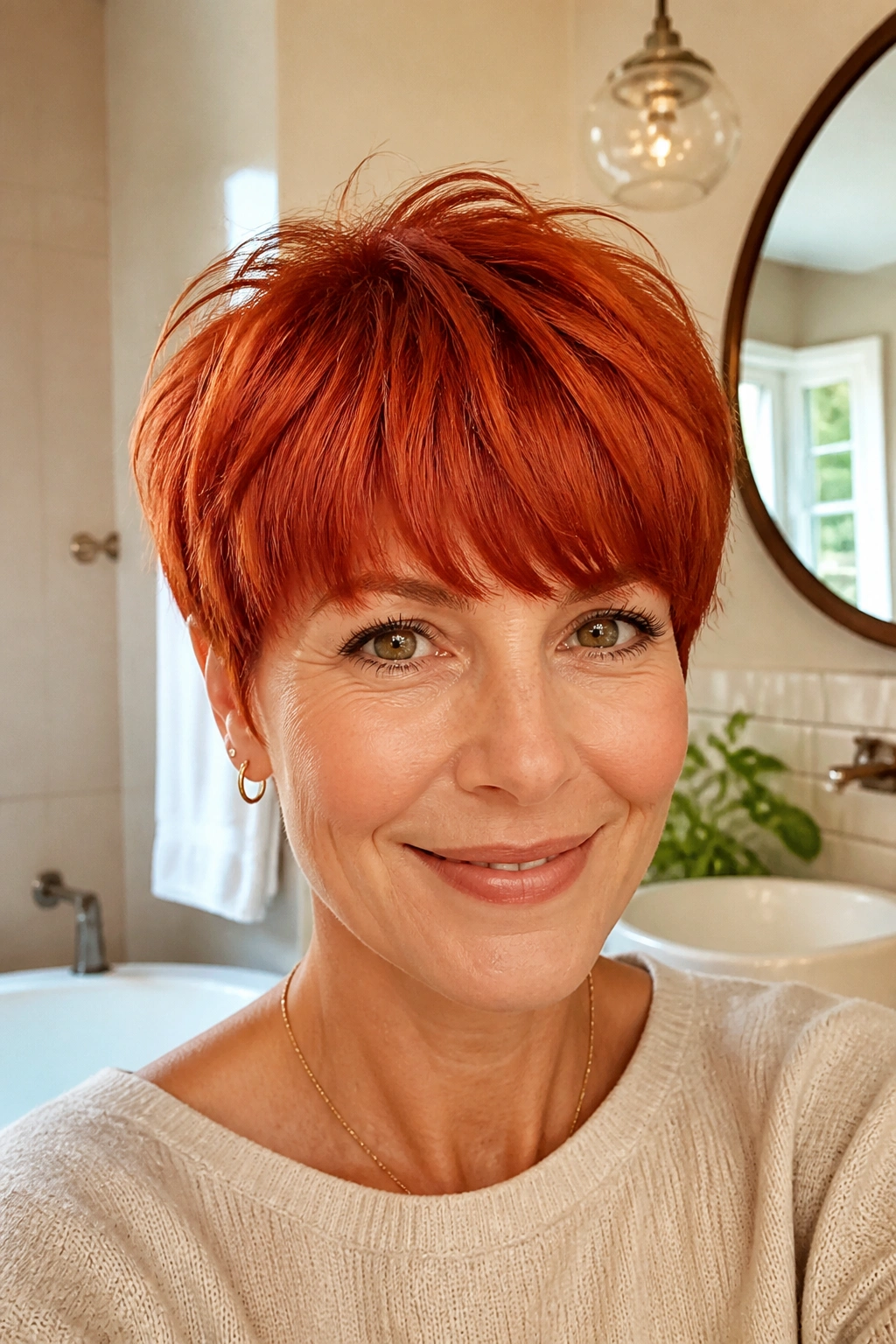
Can a pixie still feel soft? Absolutely. A French-style pixie with a wide fringe has enough width through the front to balance fine hair, and the tomato red shade keeps the shape lively instead of severe.
The key is the fringe. Wider bangs add the illusion of more hair across the forehead, which helps if the sides are short and the top is streamlined. You do not want a tiny, narrow fringe here. That would work against the whole effect.
Blow-dry the front side to side first so it bends naturally, then settle it where you want it. That little bit of motion keeps the fringe from sitting like a helmet. A bit of movement beats a stiff bang every time.
9. Mahogany Layered Pixie with Soft Texture
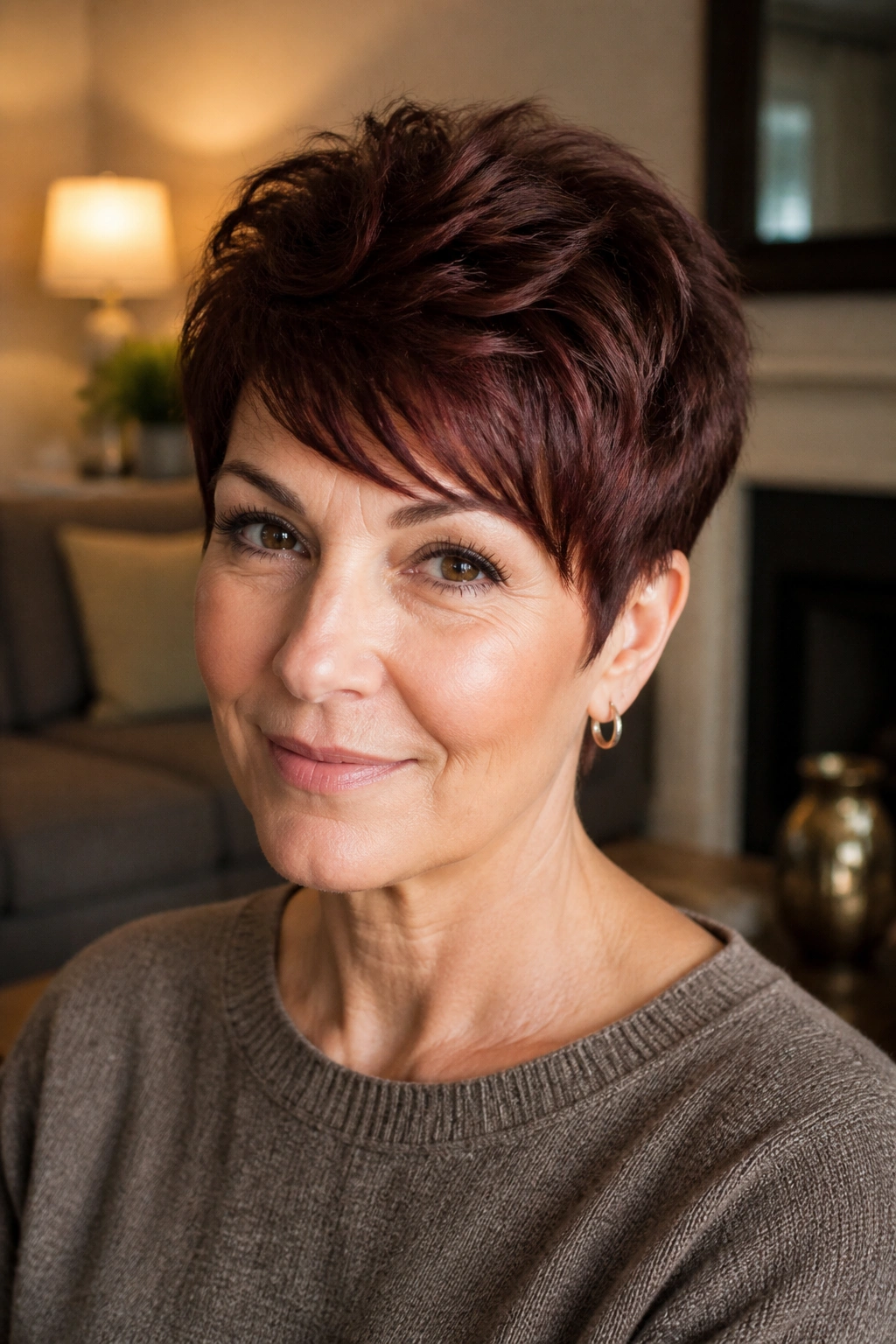
Mahogany is the quiet one in this group, and I mean that in a good way. It has depth, a little warmth, and enough darkness to give fine hair the look of more body without demanding a flashy shape.
This is the pixie for someone who wants the cut to do the talking, not the color. Soft layers across the crown keep the top from collapsing, and the muted red tone makes the strands look richer when the light hits them indoors or outdoors. It’s one of the easiest colors to live with if you don’t want constant root panic.
Keep the styling light. A dusting of dry shampoo at the roots and a small amount of cream on the ends is usually enough. Heavy smoothing products will only make the layers quit on you.
10. Cranberry Tousled Pixie with Air-Dried Finish
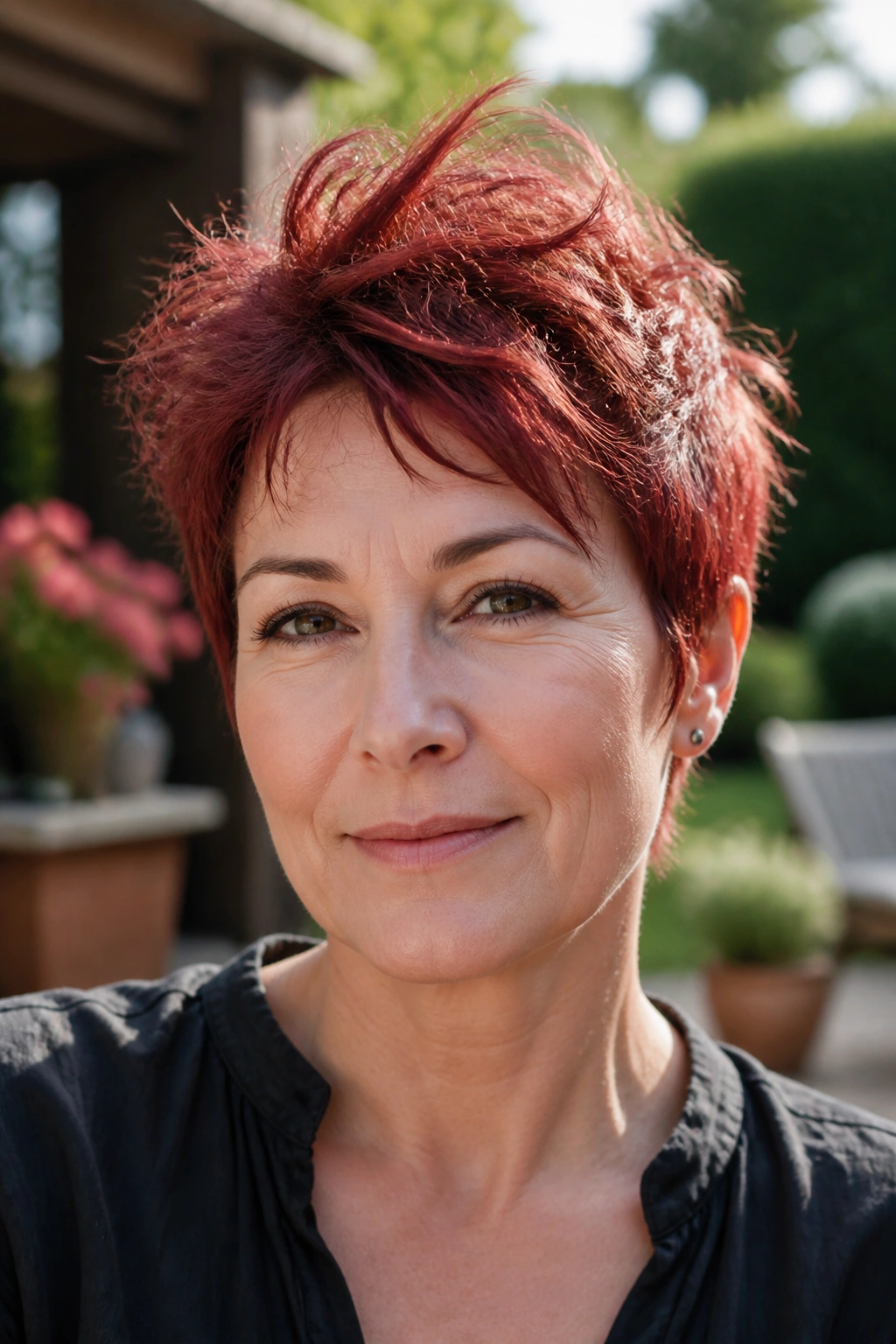
This one looks best when it does not look too finished. Cranberry red has enough brightness to carry a tousled shape, and fine hair often benefits from a cut that can move a little without needing a lot of heat.
The smartest part is the irregular texture. Instead of forcing every strand into place, let the top dry with a bit of bend and then break it up with your fingers. That gives you lift without stiffness. If you use too much salt spray, the hair can feel dry and brittle, so I’d stick with a lightweight mousse or styling cream.
Air-dry it about 70 to 80 percent of the way, then twist a few pieces at the crown. That tiny bit of hands-on shaping is usually enough.
11. Ginger Bowl-Inspired Pixie with Tapered Sides
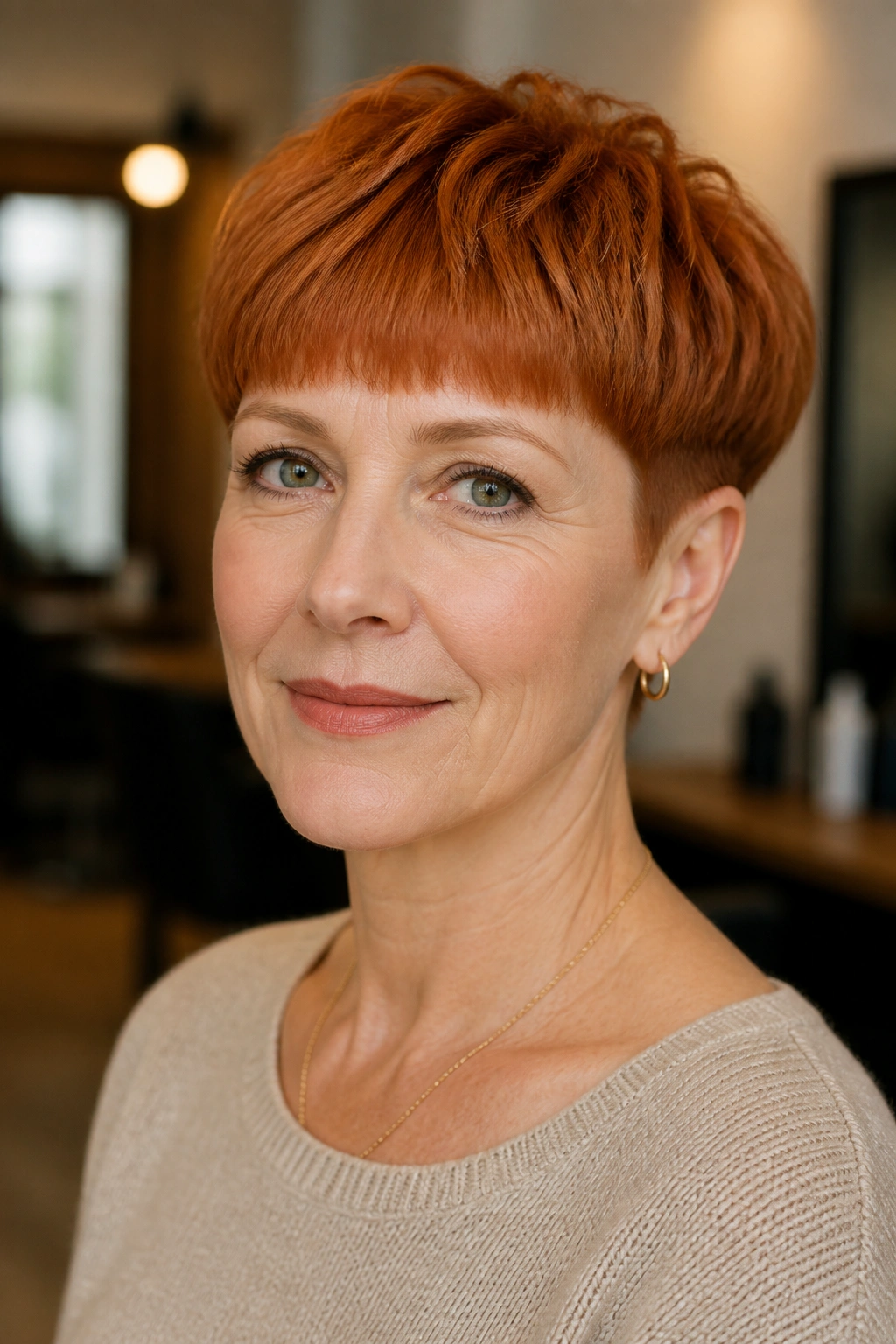
A bowl-inspired pixie sounds risky until you see the right version. On fine hair, a softly rounded top can actually make the head shape look denser, as long as the sides are tapered and the edge is softened.
Ginger red gives the cut a little spark, which helps keep the roundness from reading too retro or too severe. The shape works especially well if your hair falls straight and close to the head. You get a neat outline without losing movement.
Not flat. Not bulky. That middle ground is the whole point.
Ask for the top to stay compact and the sides to narrow gently toward the ears. If the bowl shape is too blunt, it can look heavy. If it’s too broken up, the structure disappears. This is one of those cuts that lives or dies on restraint.
12. Merlot Long-Top Pixie with Close Sides
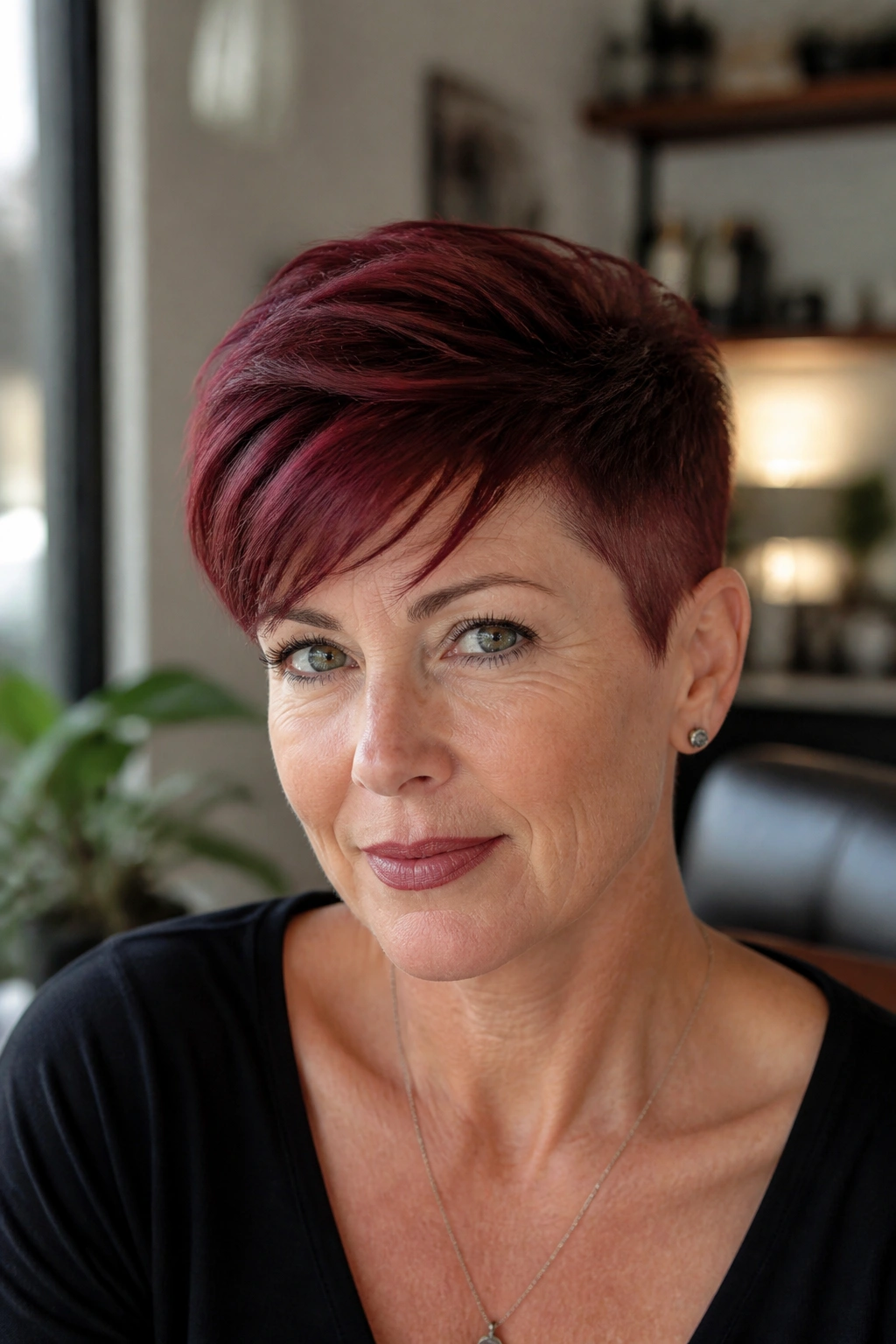
If your hair feels thin at the temples, this is one of the smartest red pixie cuts to try. Keeping the sides close and letting the top stay longer creates a strong contrast, and that contrast gives the illusion of more density where it matters.
Merlot works because the shade is deep enough to hold shape visually. It doesn’t scream from across the room, but it does make the layers on top look a little more substantial. A longer front — maybe 2.5 to 3.5 inches — can also soften the face without making the cut flop.
Use a small amount of pomade only on the ends, not the scalp. If the roots get weighed down, the entire point of the long top disappears.
13. Bright Copper Spiky Pixie with Root Lift
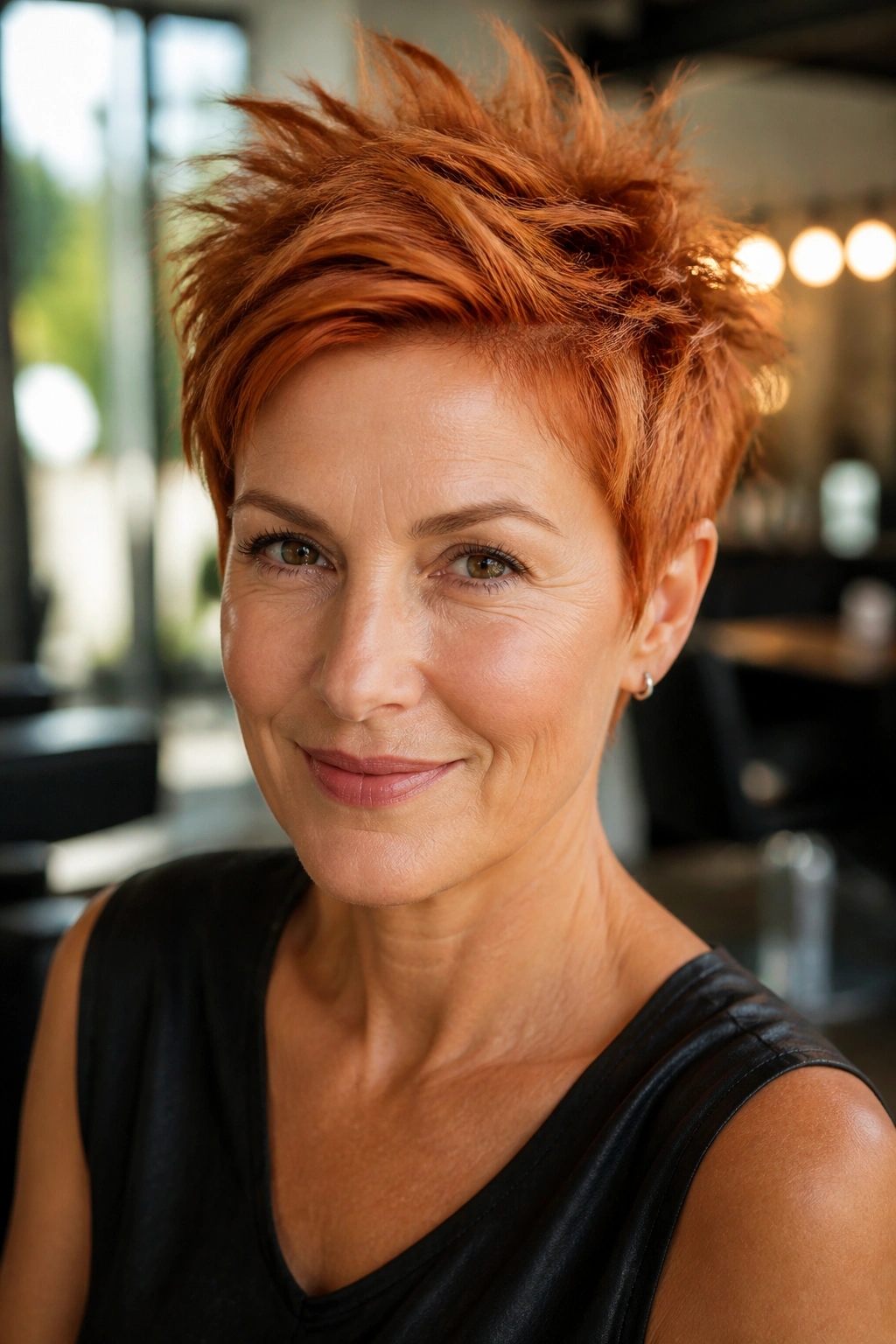
The top is supposed to feel airy here, almost lifted off the scalp. Bright copper helps because it reflects light across the spikes and keeps the shape from looking dark and heavy, which can happen with fine hair if the cut is too close and too flat.
Styling That Actually Helps
A root-lift spray at the base, followed by a quick blast from the dryer, is the cleanest way to get this look. Work in small sections and lift the hair straight up with your fingers as you dry it. Then pinch the tips with a little wax.
- Use a light spray at the roots.
- Dry in short bursts, not one long blast.
- Keep the product off the scalp.
- Stop before the spikes look stiff.
That last part matters. If the hair stands up like plastic, you’ve gone too far.
14. Dark Cherry Sleek Pixie with Side Part
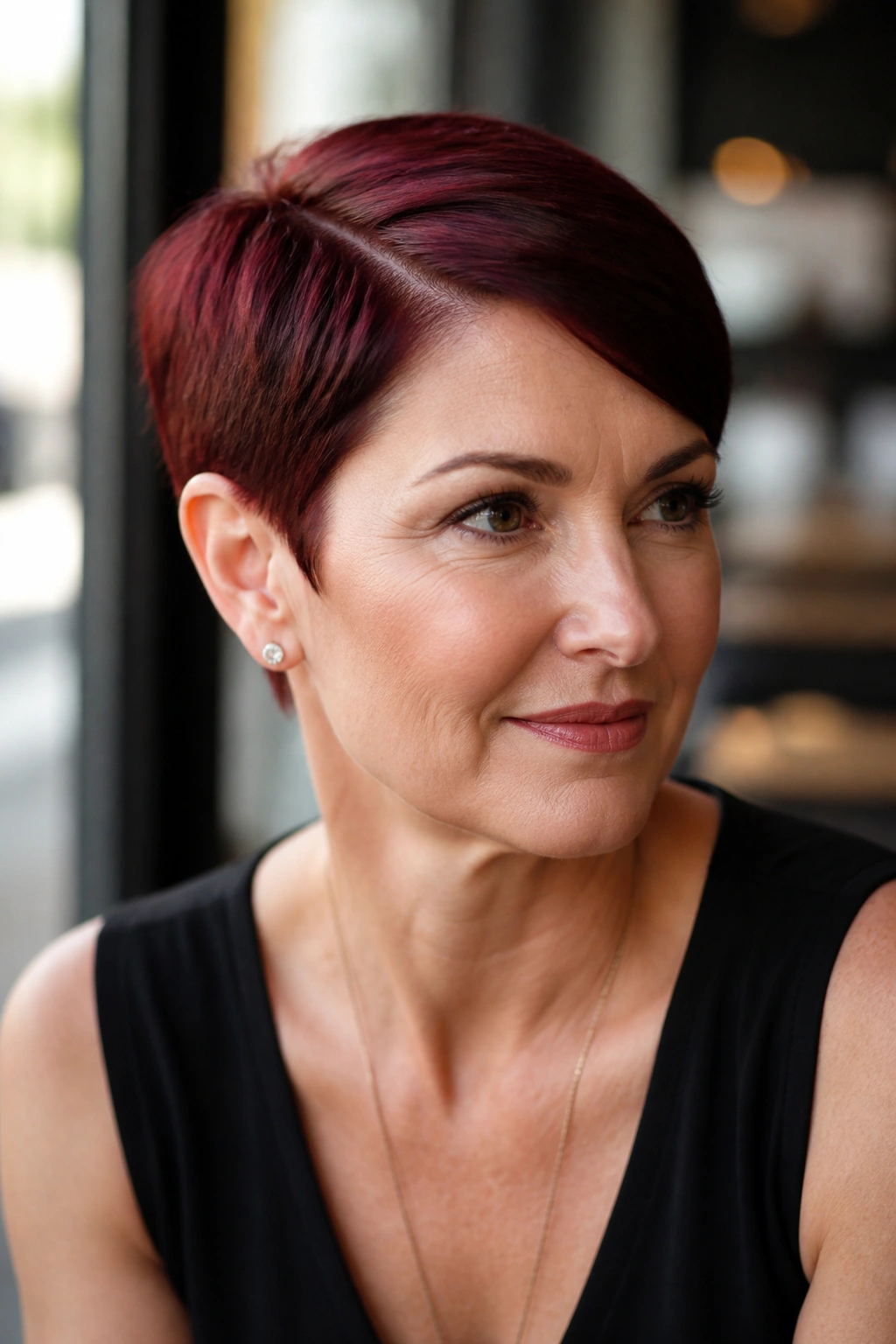
Fine hair does not always need texture. Sometimes a sleek side-parted pixie gives the illusion of more density because the hair lies in a cleaner sheet, with less separation between strands.
Dark cherry is a good match for that approach. The darker red tone adds depth, and the side part creates a little lift at the roots without asking the cut to be messy. If your hair is naturally straight, this style can look polished in a way that feels easy, not fussy.
Use a small dab of shine cream and comb the part while the hair is still slightly damp. That helps the cut dry into the shape you want. Too much product, though, and it goes limp fast.
15. Ember Shaggy Pixie with Broken-Up Layers

If you’ve ever had a short cut that puffed out at the wrong spots, a shaggy pixie with broken-up layers is usually the fix. The irregular shape keeps the hair from building one solid dome around the head.
Ember red is warm and smoky at the same time, which suits the slightly undone feel of this cut. The layers should be soft enough to move, but uneven enough to give the hair air. That’s where fine hair often wins. It does not need a ton of volume; it needs spaces between the strands.
A finger-dried finish works better than a brush here. Let it fall where it wants, then tweak a few sections with paste. Not every piece has to behave.
16. Firelight Taper Fade Pixie with Texture on Top
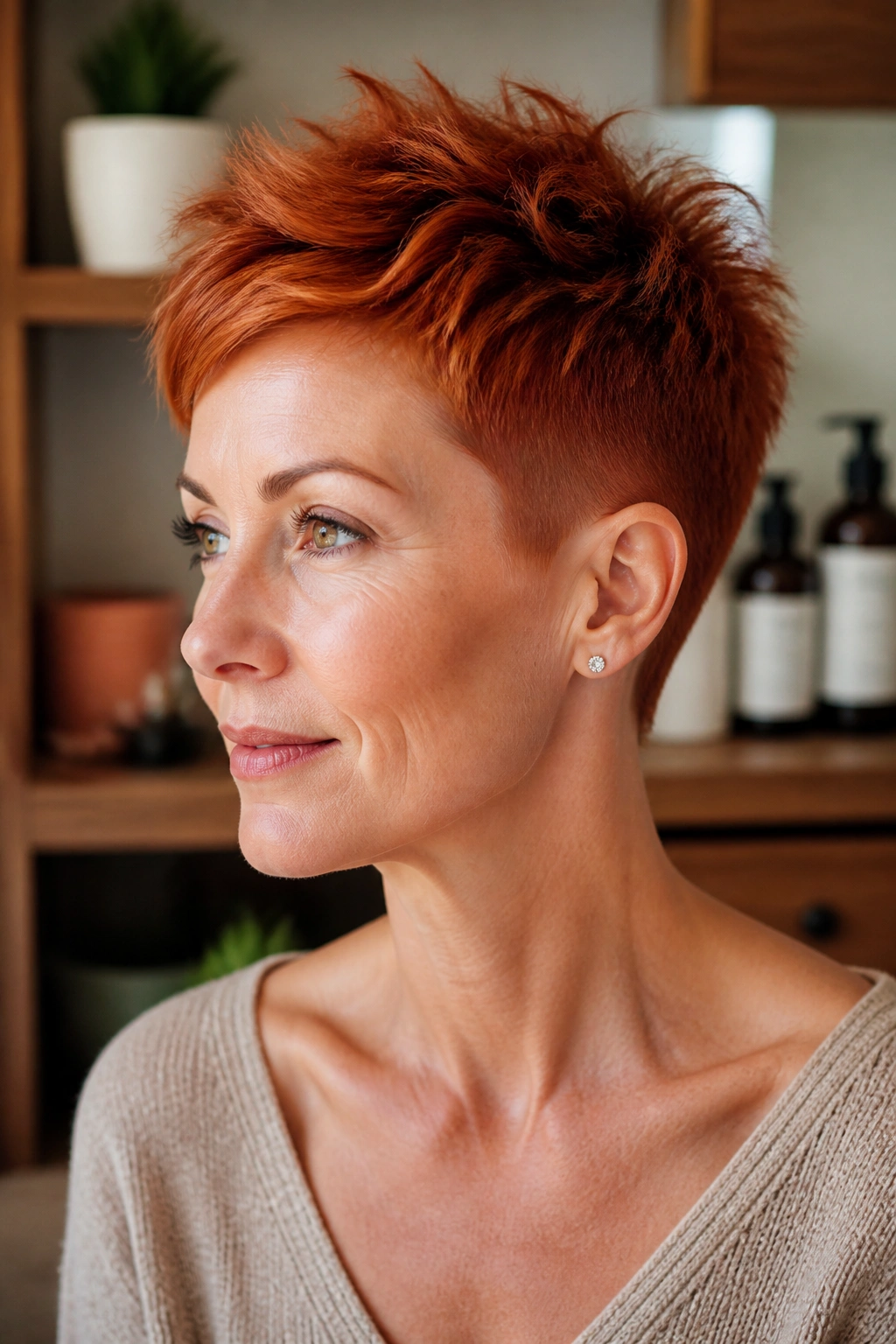
A low taper fade can make the top look thicker because the eye has fewer places to compare. That is the basic trick, and it works especially well with fine hair that tends to look sparse around the ears and nape.
What to Ask For
Keep the fade low, not high. A high fade can make fine hair look too exposed, while a low taper keeps the silhouette neat and gives the crown something to stand on. The top should stay around 2 to 3 inches so it can be lifted with a little product.
- Request soft texture through the top.
- Keep the fade close around the edges.
- Leave a touch more length at the front.
- Style upward, then slightly forward.
Firelight red adds enough brightness to keep the short sides from feeling too severe. It’s a sharp look, but not a harsh one.
17. Brick Red Wispy Pixie with Soft Bangs

If you want softness instead of edge, this is the one I’d point you toward first. Wispy bangs make the forehead area feel lighter, and on fine hair that can prevent the cut from looking too stark or too airy at the front.
Brick red is earthy enough to keep the style grounded. It has warmth, but it doesn’t shout. The result is a pixie that feels approachable and a little romantic without losing shape. It also works well if your hairline is uneven, because the fringe blurs that line in a gentle way.
Use a round brush or even just your fingers to bend the bangs slightly to one side. A flexible hairspray is enough. Strong spray tends to freeze wisps into stiff little ropes, and that ruins the point.
18. Strawberry Copper Pixie with Face-Framing Pieces
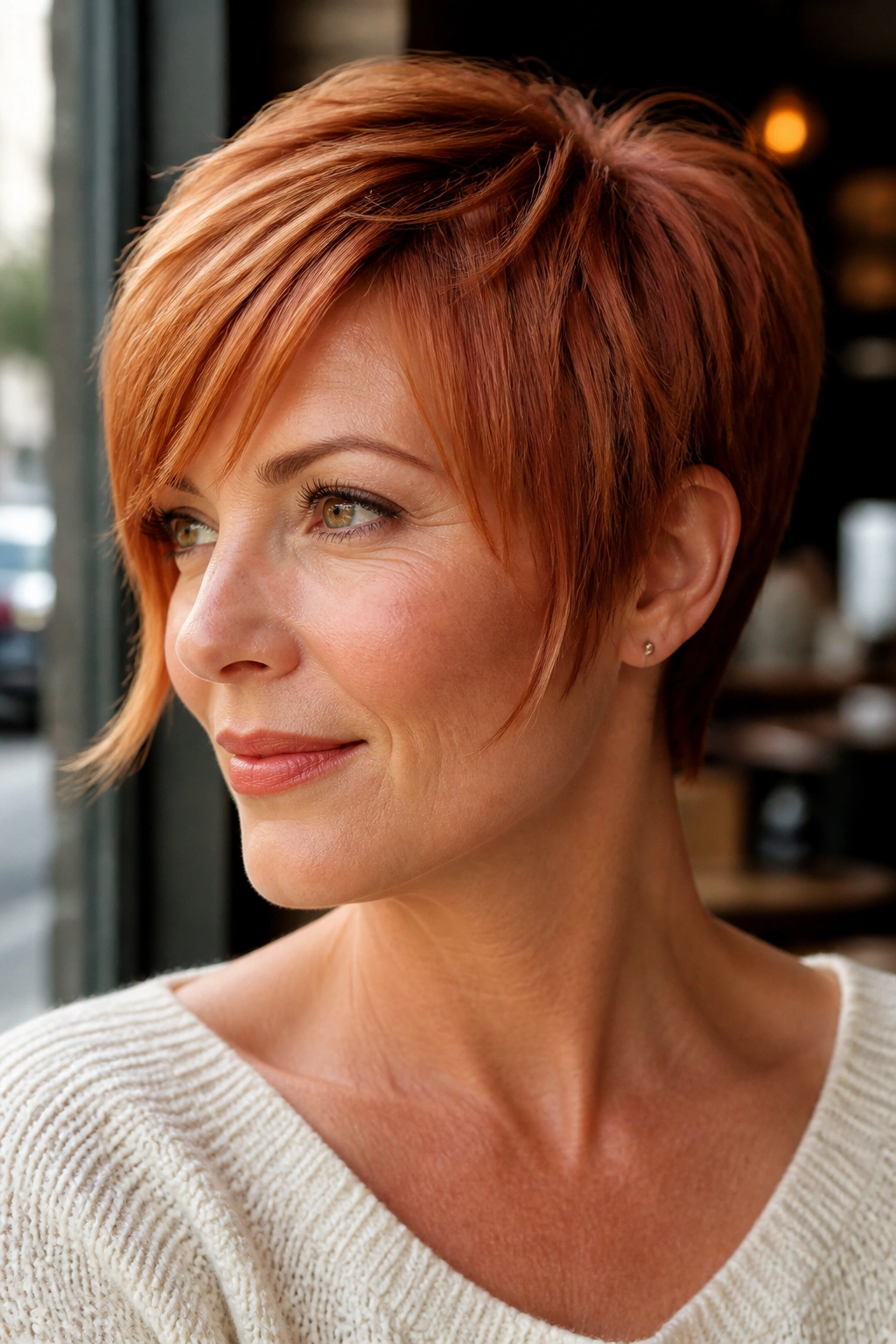
Unlike a uniform crop, this one uses small front pieces to pull attention forward. That can be a smart move for fine hair because the perimeter stays light while the face-framing sections give the cut some obvious structure.
Strawberry copper sits between red and gold, which makes the piecey front look brighter without feeling loud. If your face is long or square, those front pieces can soften the outline nicely. Keep them at cheekbone length or just above it so they don’t drag the whole shape down.
A tiny bend through the front makes the pieces look intentional. Straight ends can work too, but they need to be clean and crisp. Sloppy front pieces are the fastest way to make a pixie look unfinished.
19. Paprika Piecey Pixie with Short Crown Layers
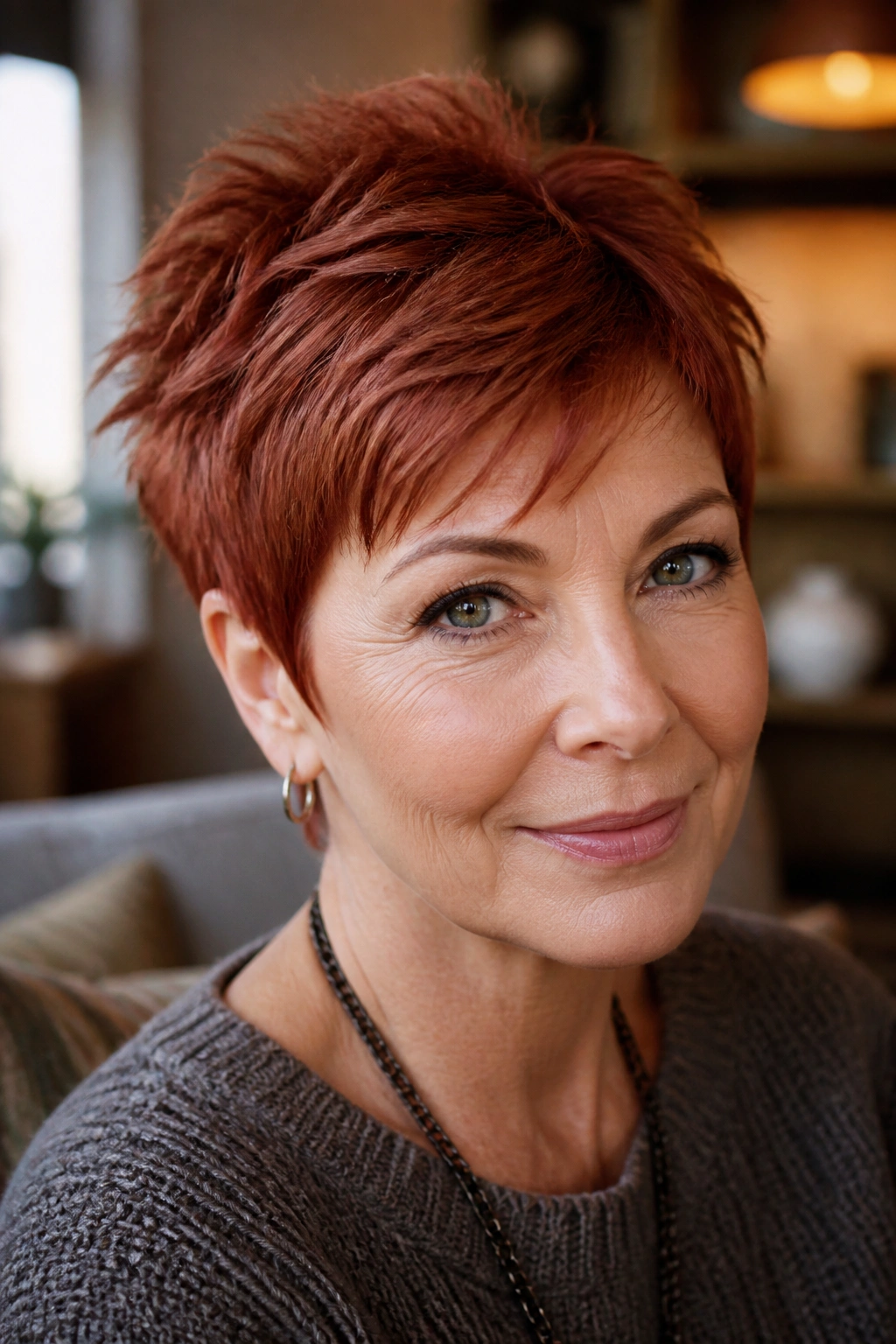
Short crown layers are the whole point here. Fine hair gets heavy fast when the top is left too long, so trimming the crown in small layers keeps the shape from collapsing by noon.
Paprika red has a lively, warm edge that matches the choppy finish. It looks especially good when the hair is separated into a few visible pieces rather than brushed into one smooth mass. No dead weight. That’s the best way to think about it.
A texture powder at the roots can help if your hair slips flat quickly, but use a light hand. Too much powder leaves a chalky feel, and this cut works better when the strands still move a little.
20. Wine Red Curved Pixie with Longer Front
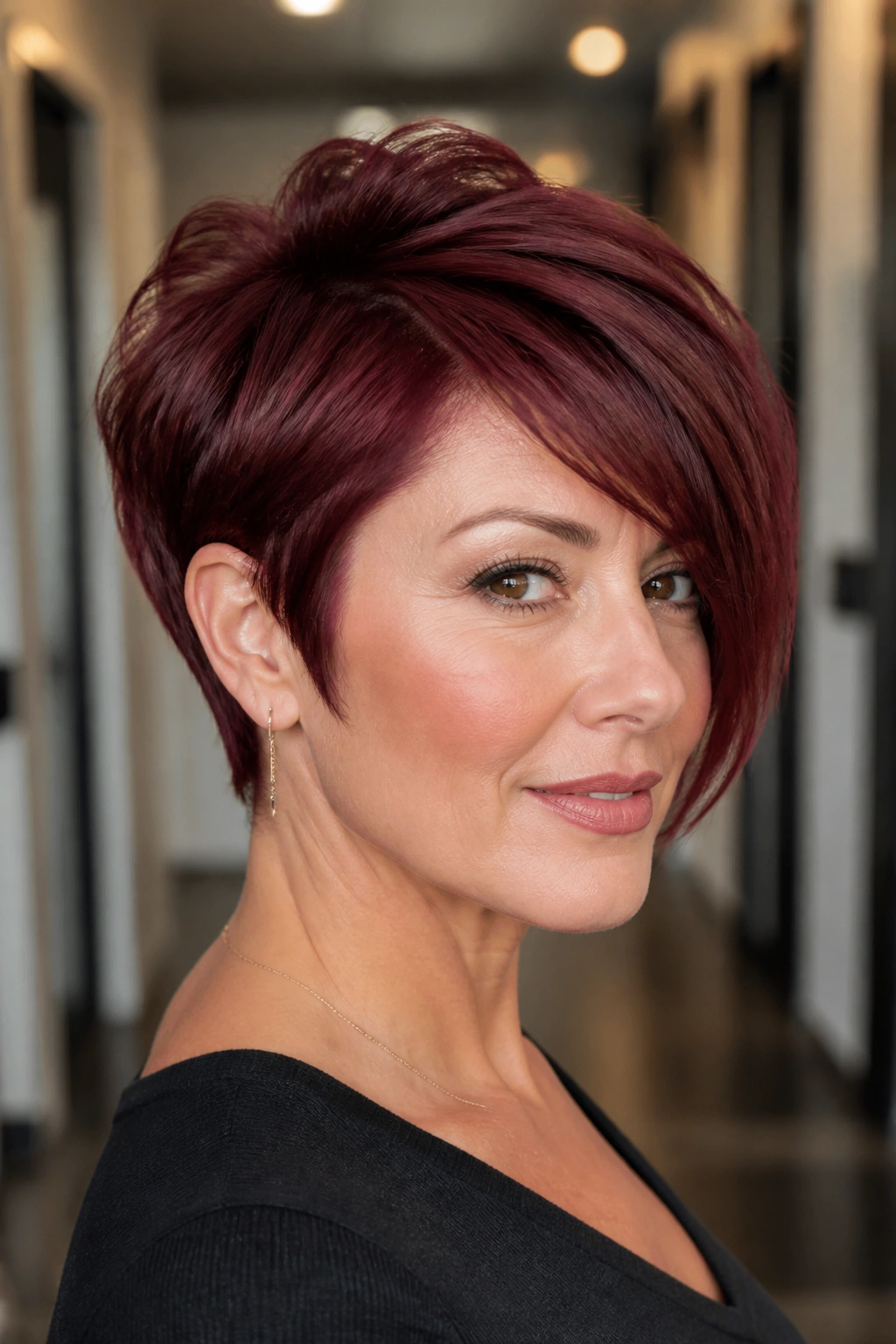
A curved silhouette hugs the head in a clean way, which is useful when fine hair needs shape more than volume. The longer front keeps the cut from feeling too severe, and the wine red shade gives it depth from root to tip.
Best Details to Ask For
- Front length around 2.5 to 4 inches.
- A tucked, close nape.
- Soft sideburns instead of hard edges.
- A curved outline that follows the skull.
This style is especially nice if you want something that looks neat without being stiff. A small round brush can bend the front just enough to soften the face, but you do not need a lot of fuss. The cut already does most of the work.
21. Auburn Pixie Bob Hybrid with Tucked Nape
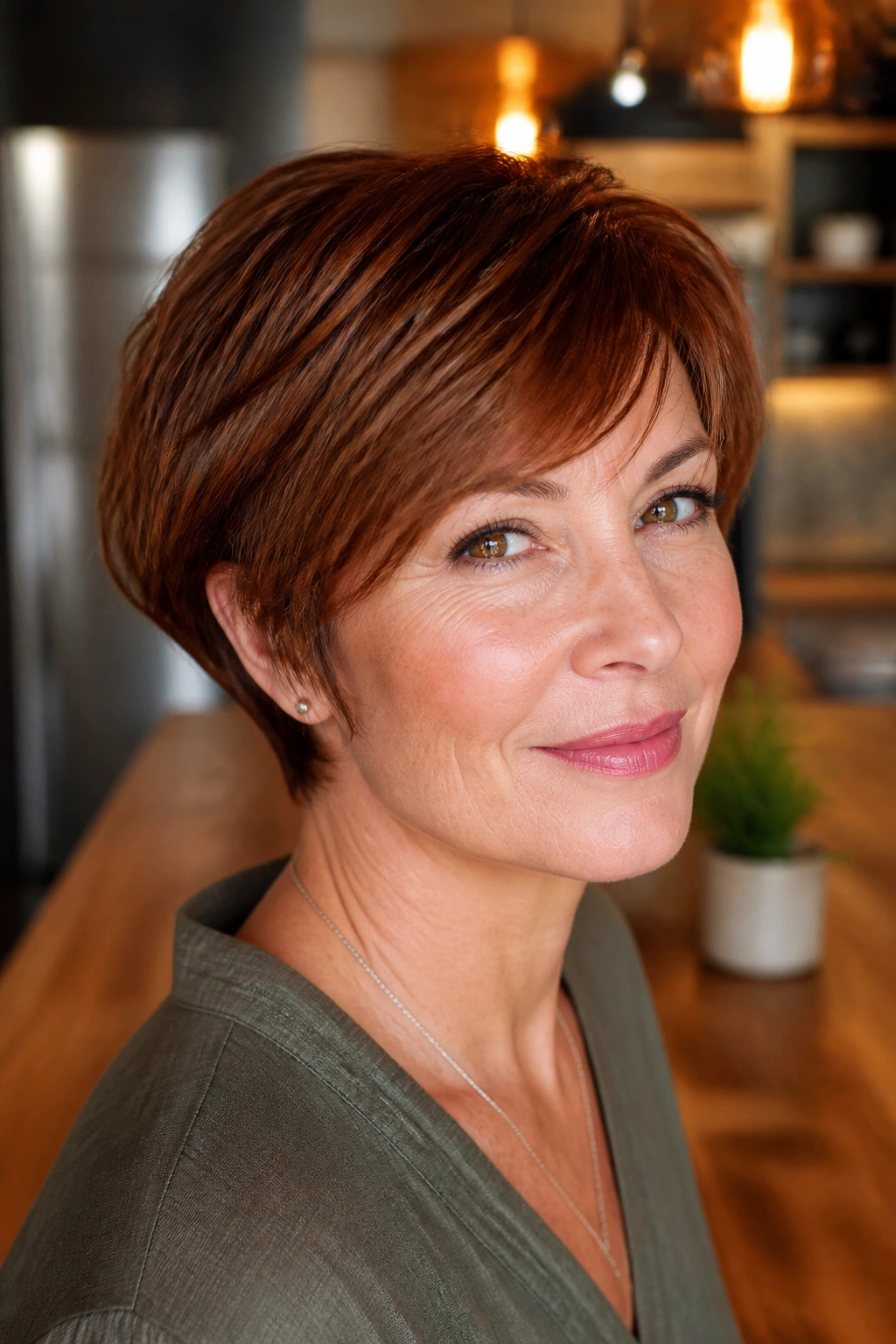
Can a pixie bob count as a pixie? On fine hair, yes — if the nape stays tucked close and the top remains compact. That extra bit of length can be helpful when you want more coverage without losing the short, airy feel.
Auburn suits this hybrid because the slightly longer outline gives the color more room to show off its warm depth. The bob-like edge around the jaw keeps the style from feeling too abrupt, which is useful if you are easing into shorter hair or if your hair tends to slip flat at the back of the head.
Who It Suits
- People who want a little more neck coverage.
- Straight or softly wavy fine hair.
- Anyone who likes styling with a round brush.
- Readers who want short hair without a severe crop.
It’s a comfortable cut. Not boring. Comfortable.
22. Coral Red Crop with Blunt Micro Bangs
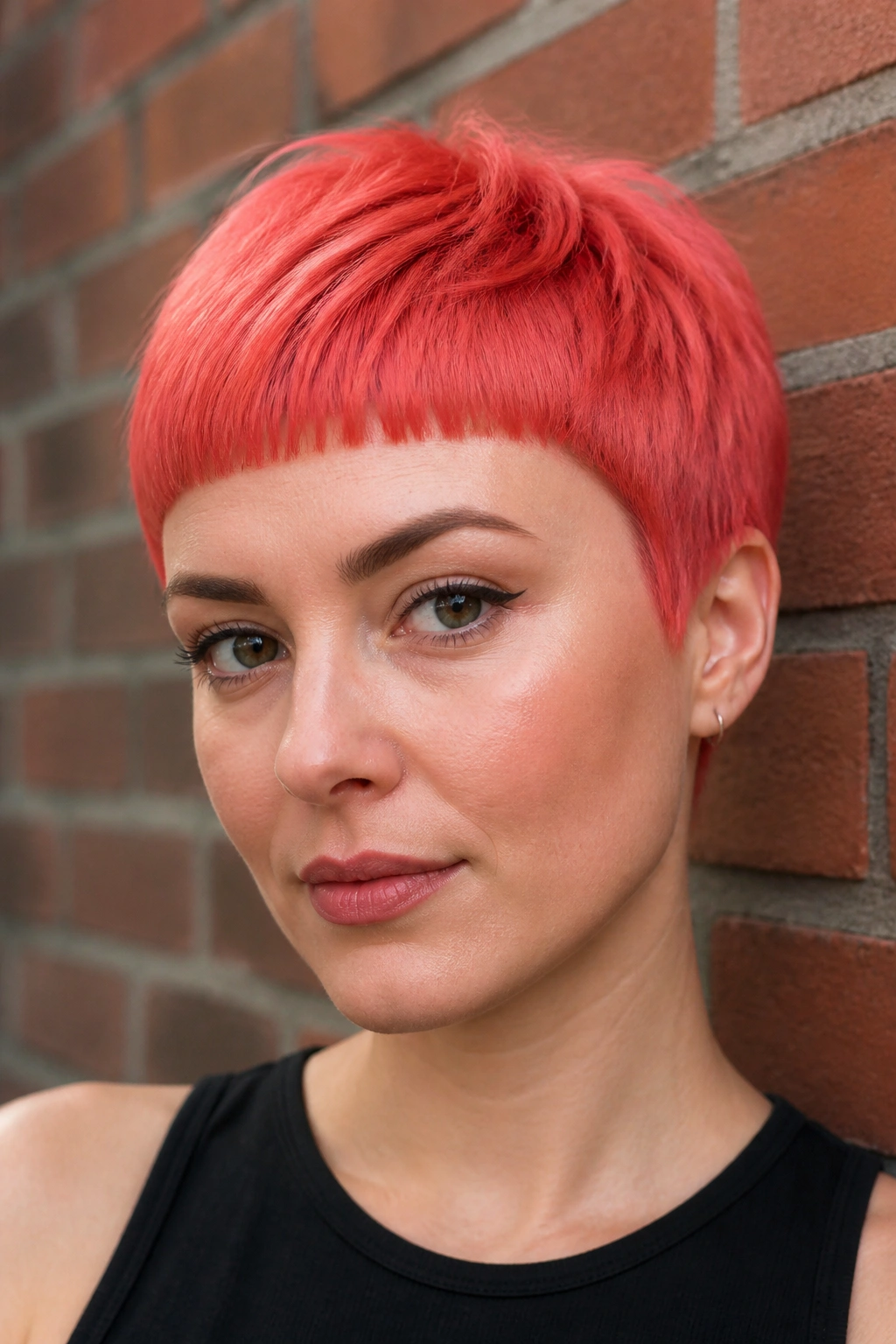
This is the artsy one. Coral red has a brighter, almost painted feel, and blunt micro bangs give the crop a strong line that can make fine hair look denser across the front.
The shape is graphic, which means the cut needs clean edges. If the bangs are too wispy, the whole style loses its punch. Keep them short, even, and a little blunt. The rest of the crop should stay close enough to the head to support that front line.
Best with straight hair. Best with a steady hand in styling. And best if you like a little attitude from your haircut.
A flat iron bend at the front can help if the bangs want to split. Just a tiny one. You want a crisp line, not a curl.
23. Garnet Asymmetrical Pixie with Deep Part

Symmetry is overrated on fine hair. An asymmetrical pixie with a deep part can actually create more volume because the heavier side gives the eye a place to rest while the lifted side opens up the crown.
Garnet is a smart match because the darker red tone adds depth to the longer side and keeps the shape from looking too fragmented. The asymmetry should be obvious, but not extreme. One side can graze the cheekbone while the other stays tighter at the ear.
That difference in length is what keeps the style alive. A deep part also helps if your roots flatten on one side, because the part itself acts like a built-in lift.
24. Sunset Red Layered Pixie with Flipped Ends
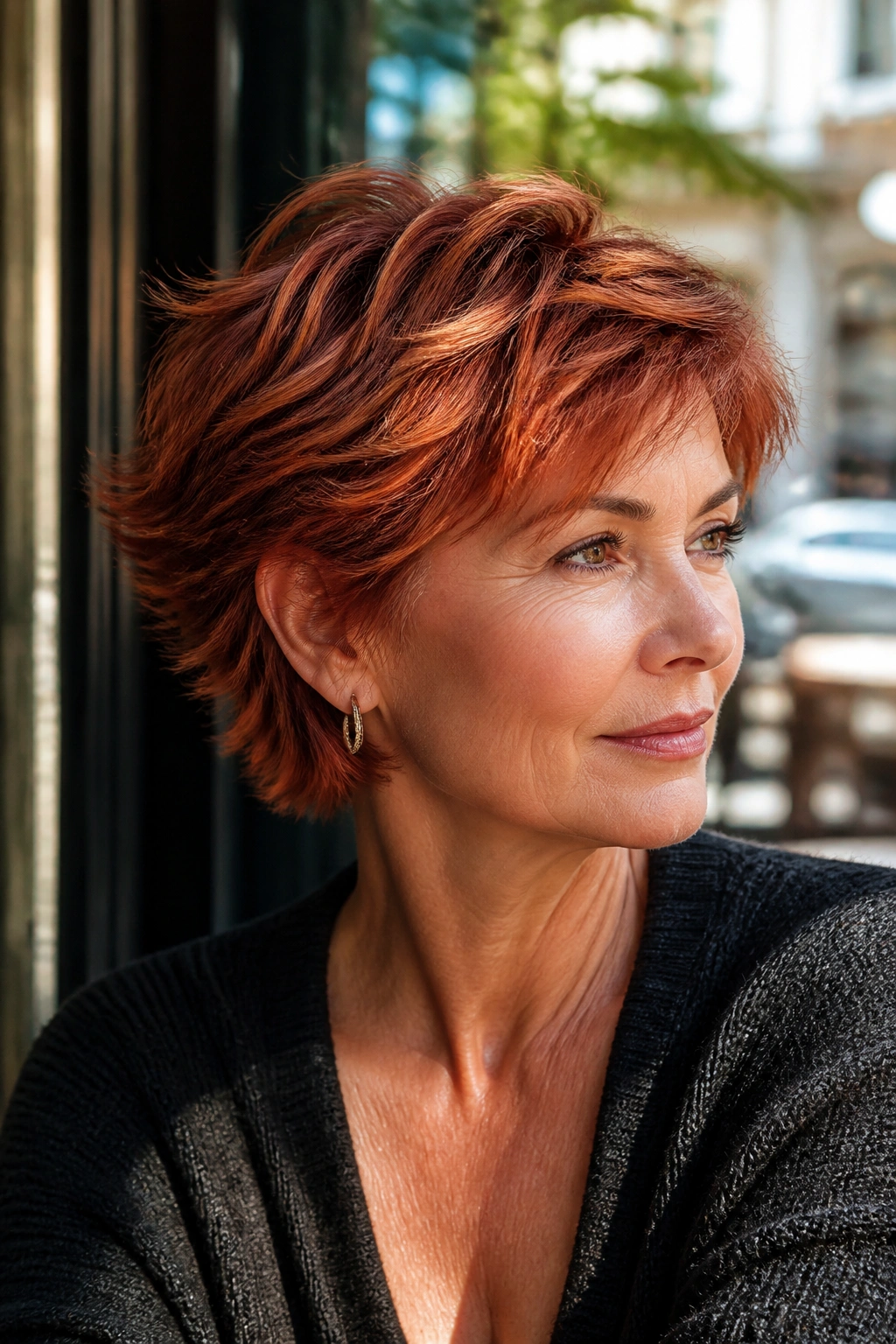
The ends should flick out, not curl under. That tiny detail changes the whole feel of the cut and keeps fine hair from looking too closed in at the edges.
Styling Note
Use a small round brush or a slim flat iron to bend the last half-inch of the layers away from the face. You only need a light turn. A hard curl can make the style look dated, while a soft flip keeps it fresh and airy.
Sunset red is a mix of copper, rose, and light auburn tones, which works well with a layered pixie because the color catches on the movement. Keep the layers short enough to lift, especially around the crown, or the flip will disappear into the rest of the hair.
This one looks best when it has a bit of motion.
25. Sunkissed Copper Crop with Soft Taper
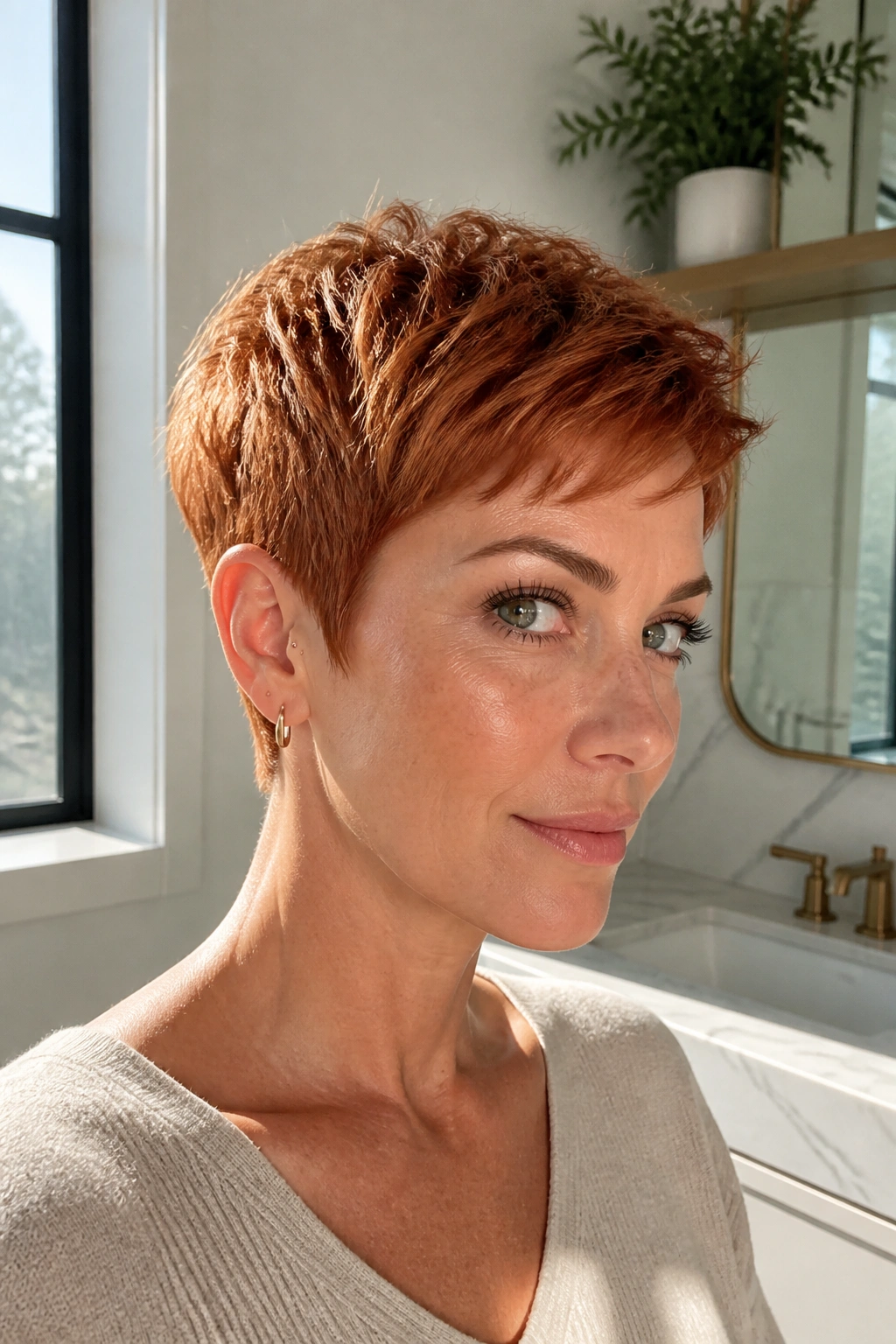
If you want the easiest morning routine on the list, start here. A soft taper around the ears and nape keeps the crop neat, and the sunkissed copper shade gives fine hair enough dimension that you do not need much styling at all.
The beauty of this cut is its calm shape. It doesn’t need spikes, it doesn’t need a big fringe, and it doesn’t need a lot of product. A touch of leave-in spray or a light cream is often enough to keep it from frizzing out.
This is a sensible pixie, which sounds plain until you see how useful that is. Some cuts ask for effort every day. This one mostly behaves.
26. Velvet Red Slick Pixie with Glossy Finish
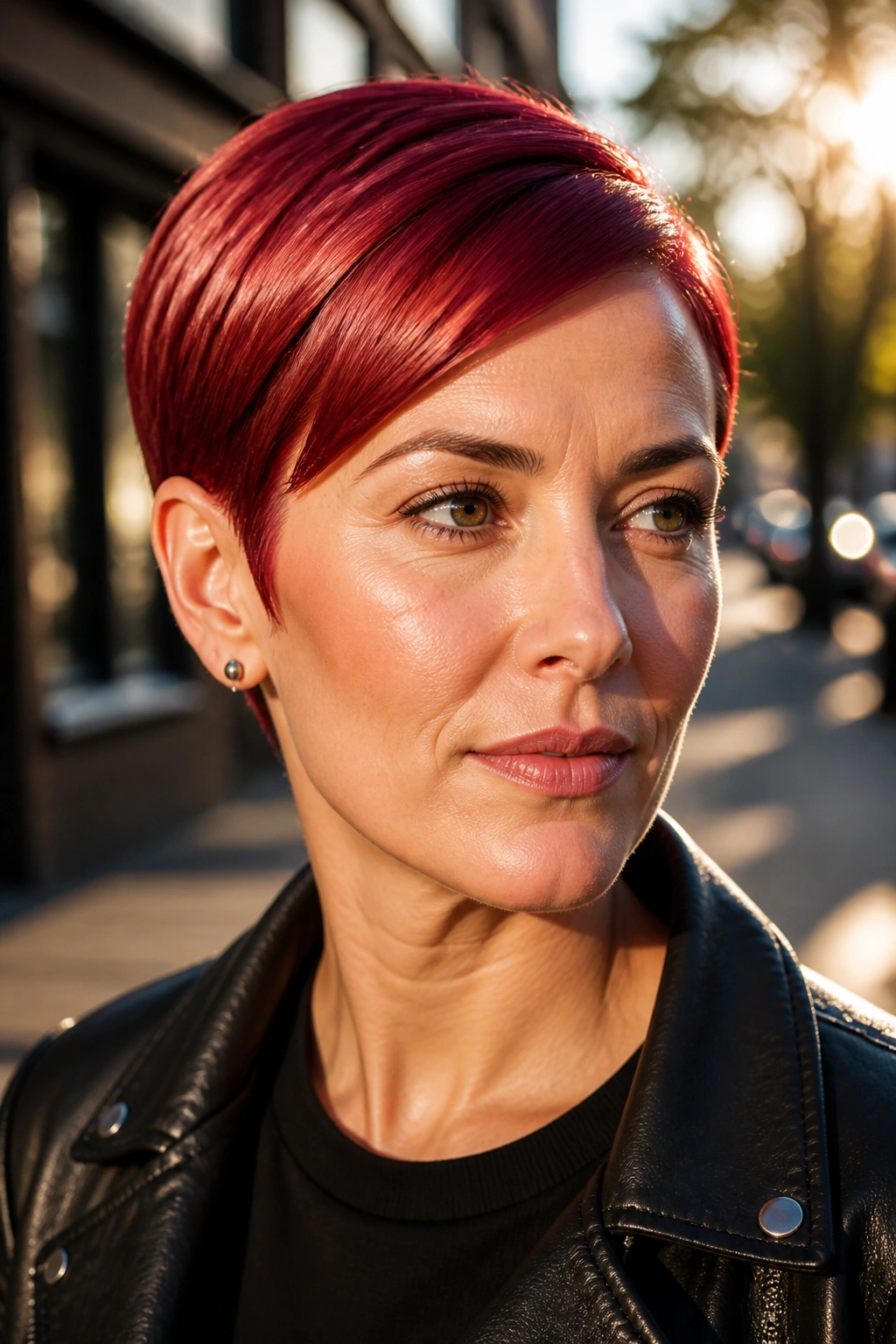
Unlike texture-heavy pixies, this version relies on shine and clean lines. That can be a smart move for fine hair because overly broken-up texture sometimes makes the strands look thinner than they are.
Velvet red has a soft richness that supports the slick finish. The color looks expensive without trying too hard, and the side part gives the style a tidy outline. If your hair is straight, this is one of the easier polished looks to keep in place.
Use a small amount of pomade, comb it through the top, and leave the ends smooth rather than crunchy. Too much gel will show every gap in the hair. A little shine, though, goes a long way.
27. Maple Red Sculpted Pixie with Feathered Top
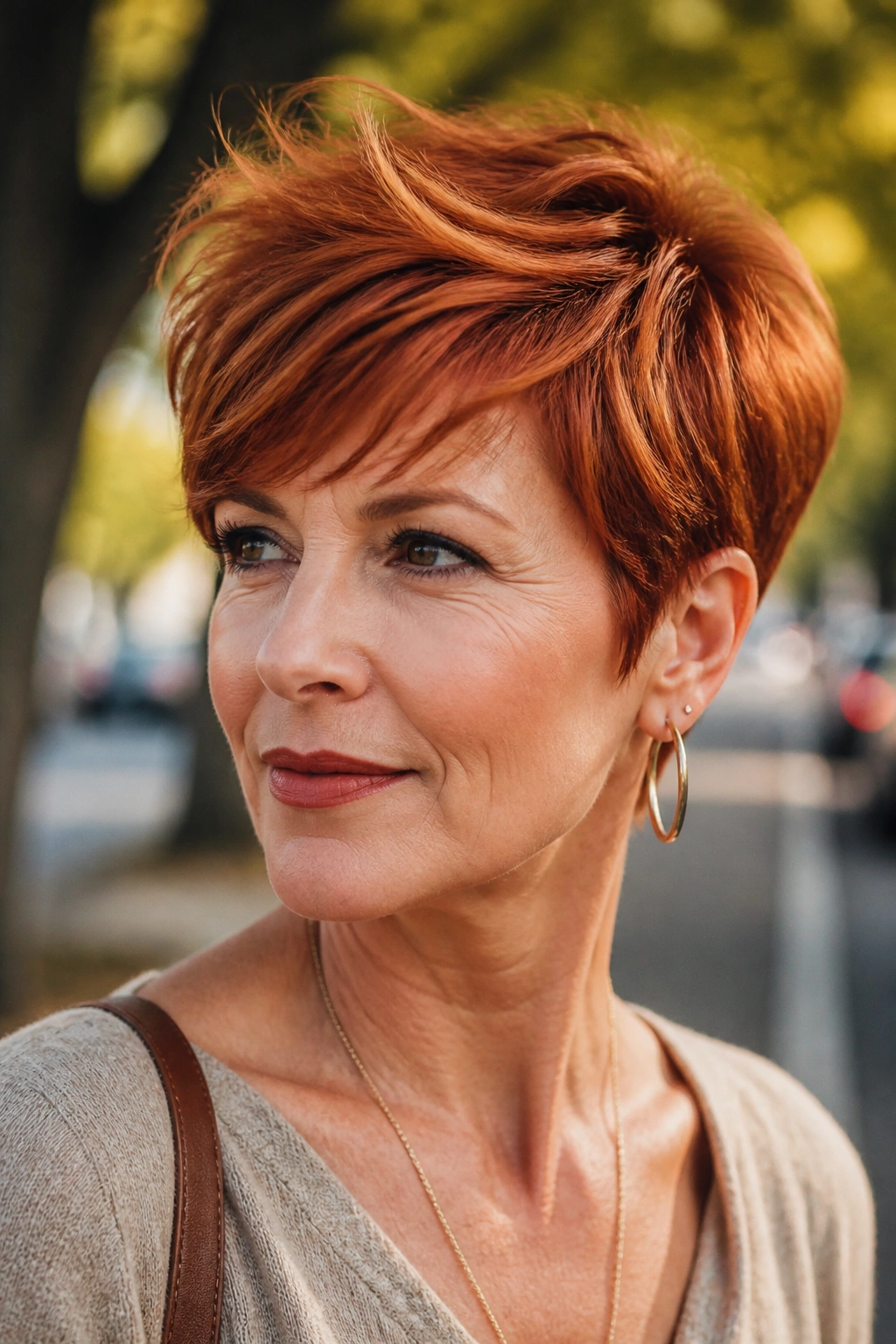
Shape comes first here, color second. A sculpted pixie with a feathered top gives fine hair a clean outline while still leaving enough softness on top to avoid that helmet effect people hate.
Maple red sits in that warm red-brown family, so it reads rich without overpowering the cut. The feathering should be subtle, almost hidden inside the shape, so the crown can lift without looking frayed. If you like your hair tidy but not stiff, this is a strong choice.
You’ll want the sides close and the top controlled, not fluffy. A tiny amount of paste at the tips is enough. The cut should look intentional even when it’s been ruffled by a scarf or a windy commute.
28. Firebrick Red Textured Pixie with Lifted Crown
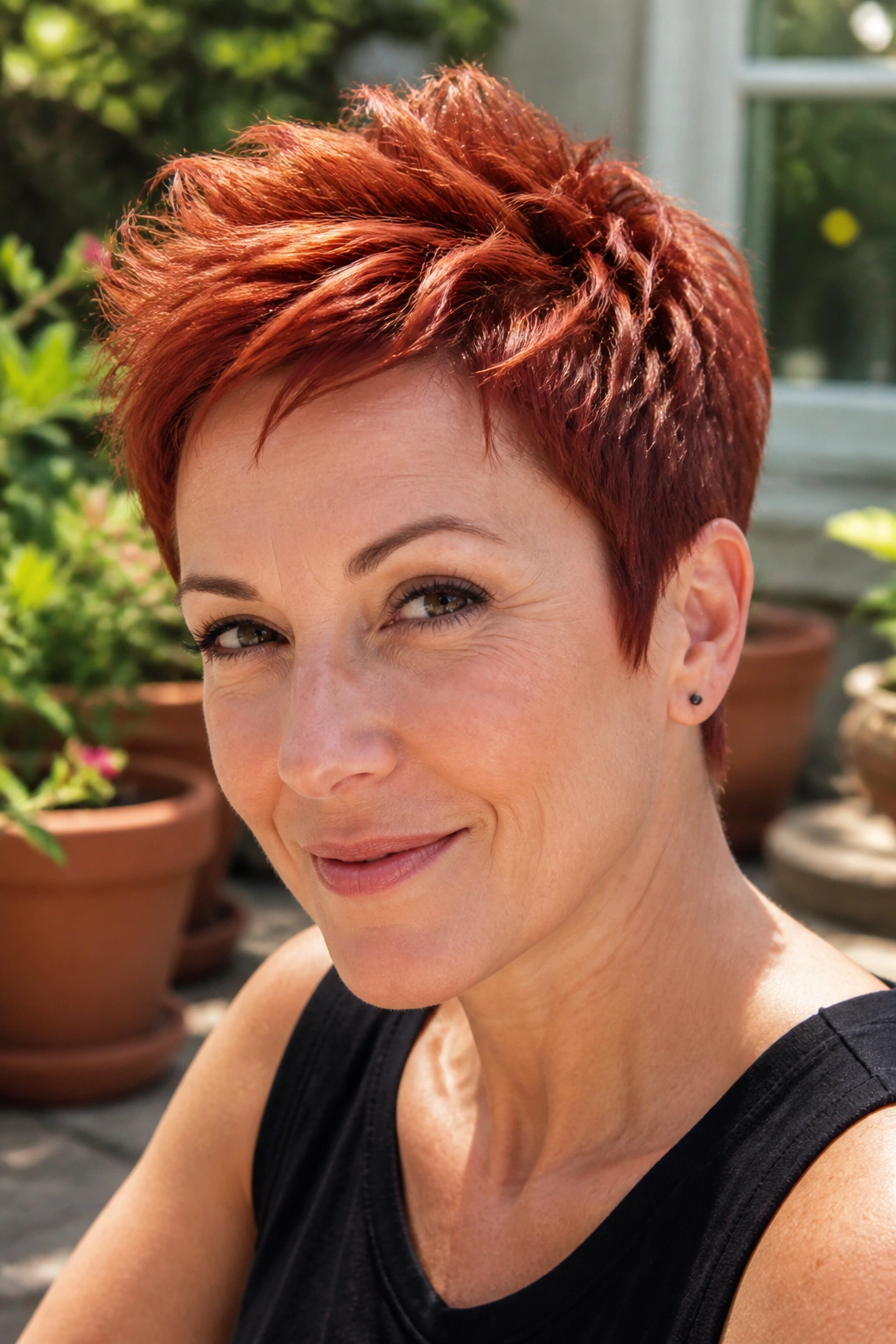
This is the one I’d hand to someone who wants the classic fine-hair pixie logic: lift at the crown, tight sides, and enough texture to keep the top from lying flat. Firebrick red gives the cut a grounded, deep warmth that makes the layers feel thicker than they are.
The Final Shape Check
Before you commit, look at the balance. The crown should have room to stand up a little. The sides should stay close enough to keep the silhouette neat. And the fringe — if there is one — should soften the forehead without swallowing it.
- Crown lifted, not puffed.
- Sides tapered, not bulky.
- Top textured, not shredded.
- Fringe light enough to move.
That balance is what makes a red pixie work on fine hair. Get it right, and the cut does not need much help. It holds its own.
