



Round faces are not hard to work with. They just punish lazy cuts.
The best short pixie cuts for round faces do three things at once: they leave a little height on top, they keep the sides from puffing out, and they use fringe or parting to break up the widest part of the face. Miss one of those, and the whole cut can feel boxy by lunch.
A good pixie should make your features look sharper, not busier. That is why the prettiest versions are rarely the shortest everywhere; they keep some lift at the crown, some softness through the front, and enough edge around the ears that the shape stays clean when you move.
Some of these cuts are polished. Some are messy on purpose. A few are bold enough to make your stylist double-check the mirror before you leave, which is not a bad sign if the shape is right. The options ahead cover the full range, from soft and forgiving to crisp and graphic, and the right one usually shows itself fast once you know what your hair is already doing.
1. Asymmetrical Pixie with a Long Side Fringe
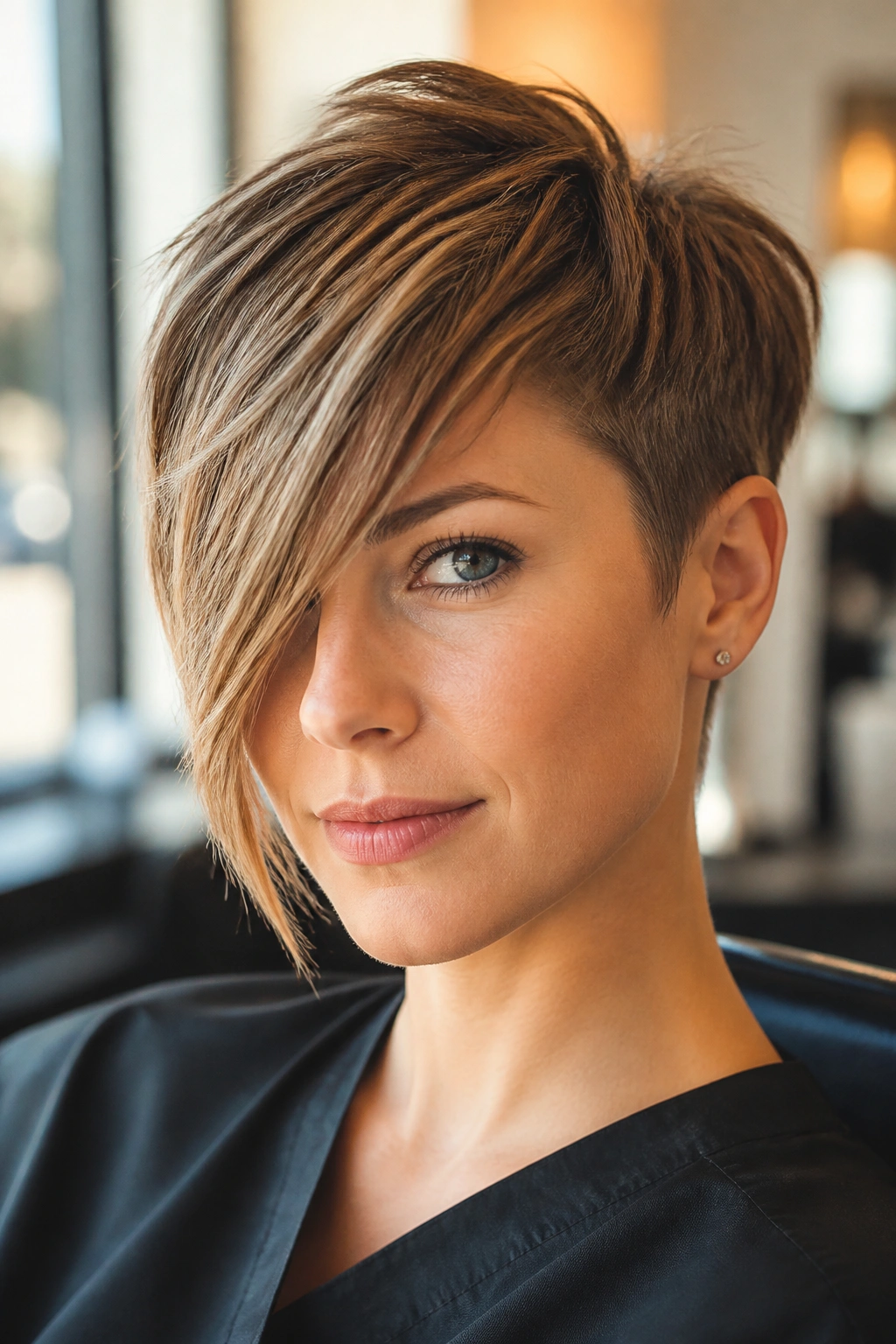
A long fringe that sweeps across one eye can do more for a round face than extra length in the back ever will. The diagonal line changes the whole read of the haircut.
Why It Flatters a Round Face
The trick is angle. A face that is widest through the cheeks looks slimmer when the eye has somewhere else to travel, and this cut gives it that path. The fringe should start longer on one side and skim across the forehead rather than sitting as a blunt shelf.
Ask for the shorter side to stay snug at the temple and around the ear, then let the longer side fall forward in a soft sweep. That contrast is the whole point. It keeps the cut lively instead of helmet-like.
Quick salon notes:
- Keep the longest fringe pieces around 3 to 5 inches so they can bend across the face instead of sticking out.
- Ask for point-cut ends, not a hard line, so the fringe moves when you turn your head.
- Leave the nape close and neat; too much bulk in back throws off the balance fast.
Pro tip: blow-dry the fringe in the opposite direction first, then sweep it back over. It gives the hair a little memory and keeps the front from falling flat an hour later.
2. Tapered Pixie with a Lifted Crown
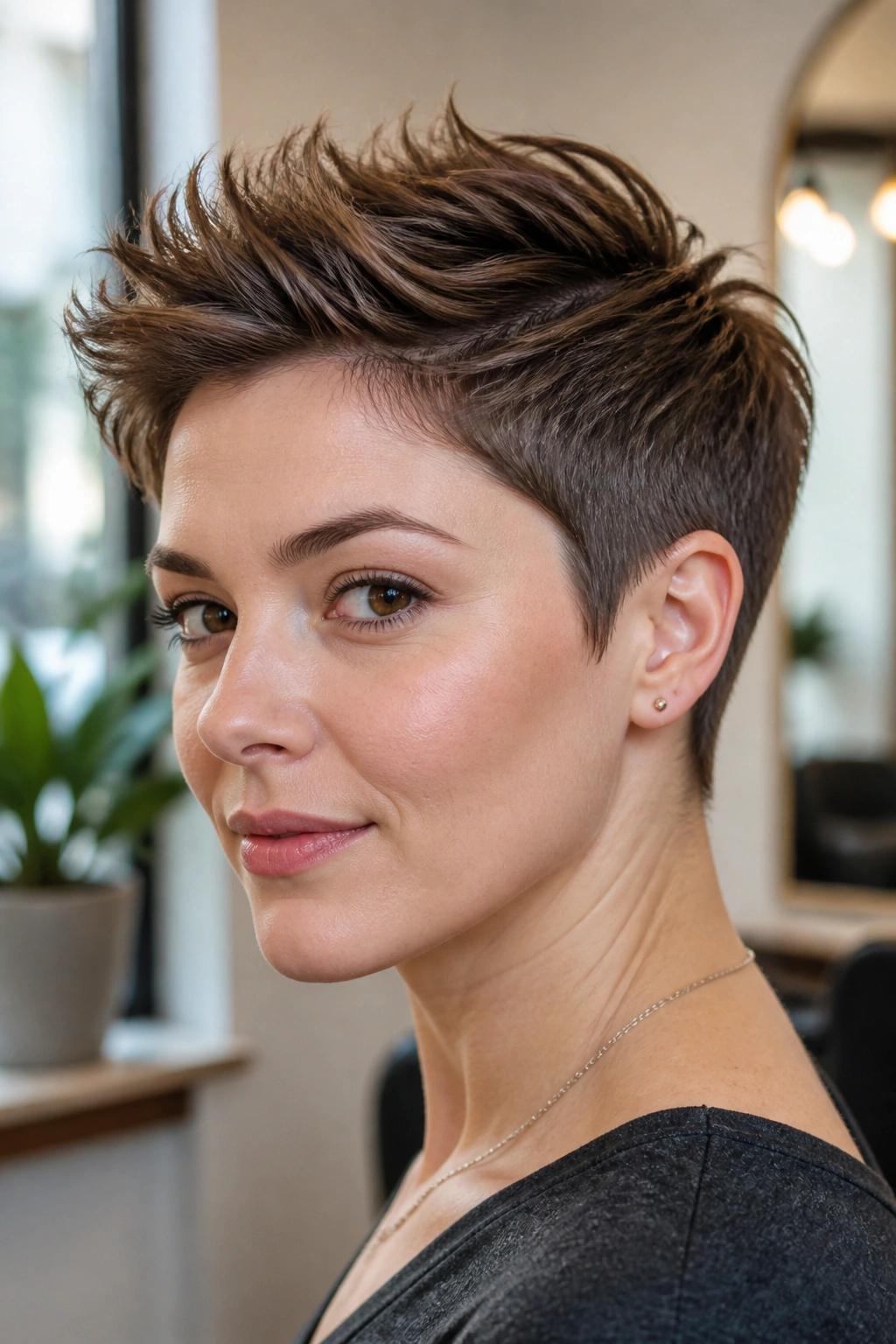
Height at the crown matters more than extra length in the back. That is the part many people miss when they ask for a short pixie and end up with something that spreads sideways.
A tapered pixie keeps the sides and nape tight while letting the top carry a little lift. On a round face, that vertical line is worth a lot. It stretches the silhouette and keeps the haircut from sitting wide across the temples.
The styling is plain, which is part of why I like it. Work a small amount of root-lifting mousse through damp hair, then blow-dry with the nozzle pointed upward at the crown. You do not need a stiff finish; you need enough shape that the top stands away from the head by half an inch or so.
What I watch for is the side profile. If the taper gets too soft at the sides, the whole cut starts to balloon. Keep the ears visible or only lightly covered, and the face looks cleaner right away.
3. Choppy Textured Pixie
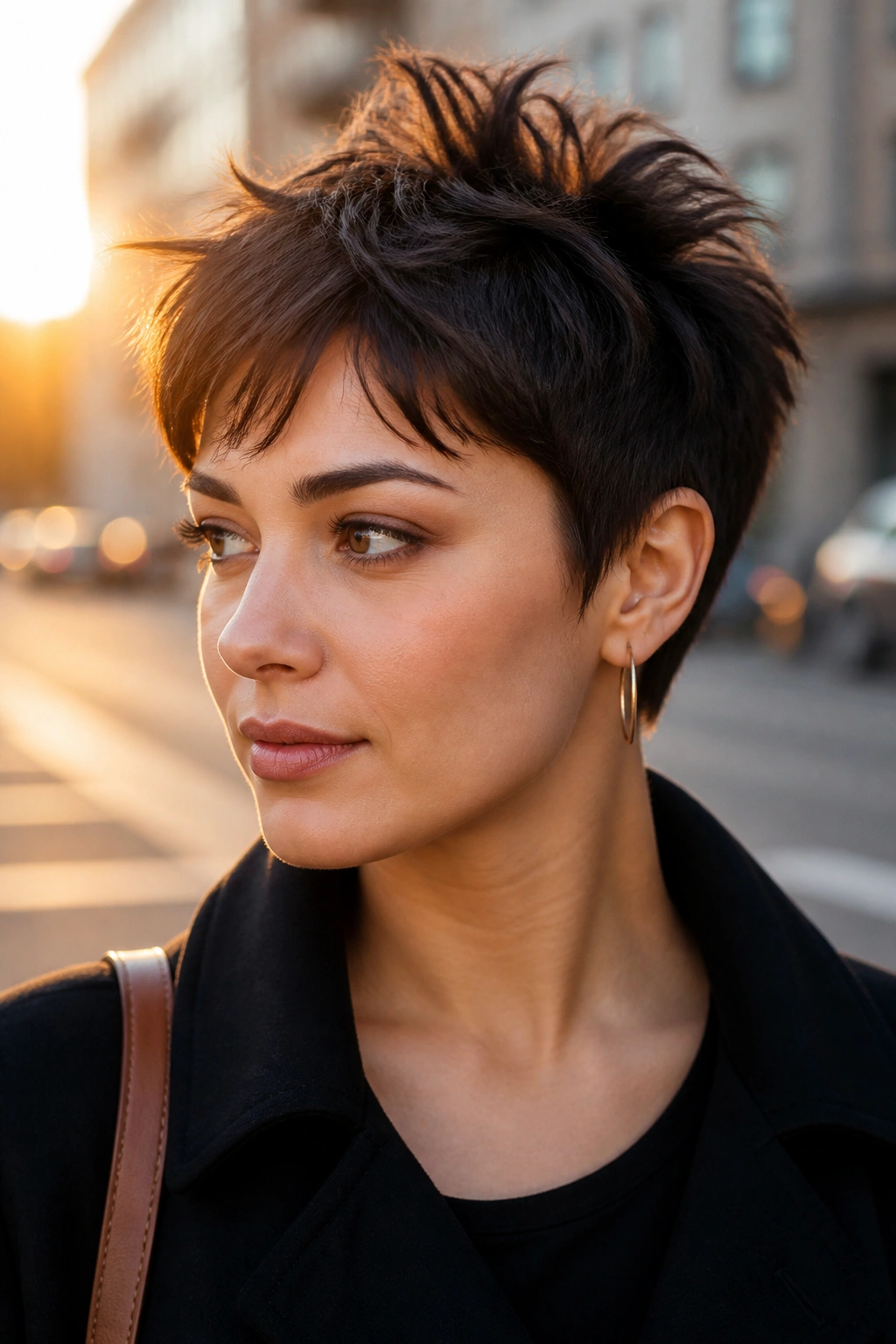
Why does a choppy pixie work so well on a round face? Because broken-up texture interrupts all that smooth width.
A blunt outline can be the enemy here. Choppy layers, especially ones cut with short, uneven ends, stop the haircut from forming one large circle around the head. The result feels lighter, and the cheek area stops being the first thing your eye sees.
How to Keep It Piecey
This is not the cut for heavy cream or too much brush-down styling. Use a pea-sized dab of matte paste, warm it between your palms until it disappears, then pinch it through the top and front. Leave some ends separated on purpose. That tiny bit of irregularity is what gives the cut its edge.
If your hair is fine, this style can be a gift. It creates the look of thickness without requiring a ton of length. If your hair is dense, it needs a good internal debulking at the salon or the top can get puffy fast.
Skip the neat, polished finish. Seriously. Choppy texture looks best when it has a little grit to it.
4. Side-Swept Pixie with a Deep Part
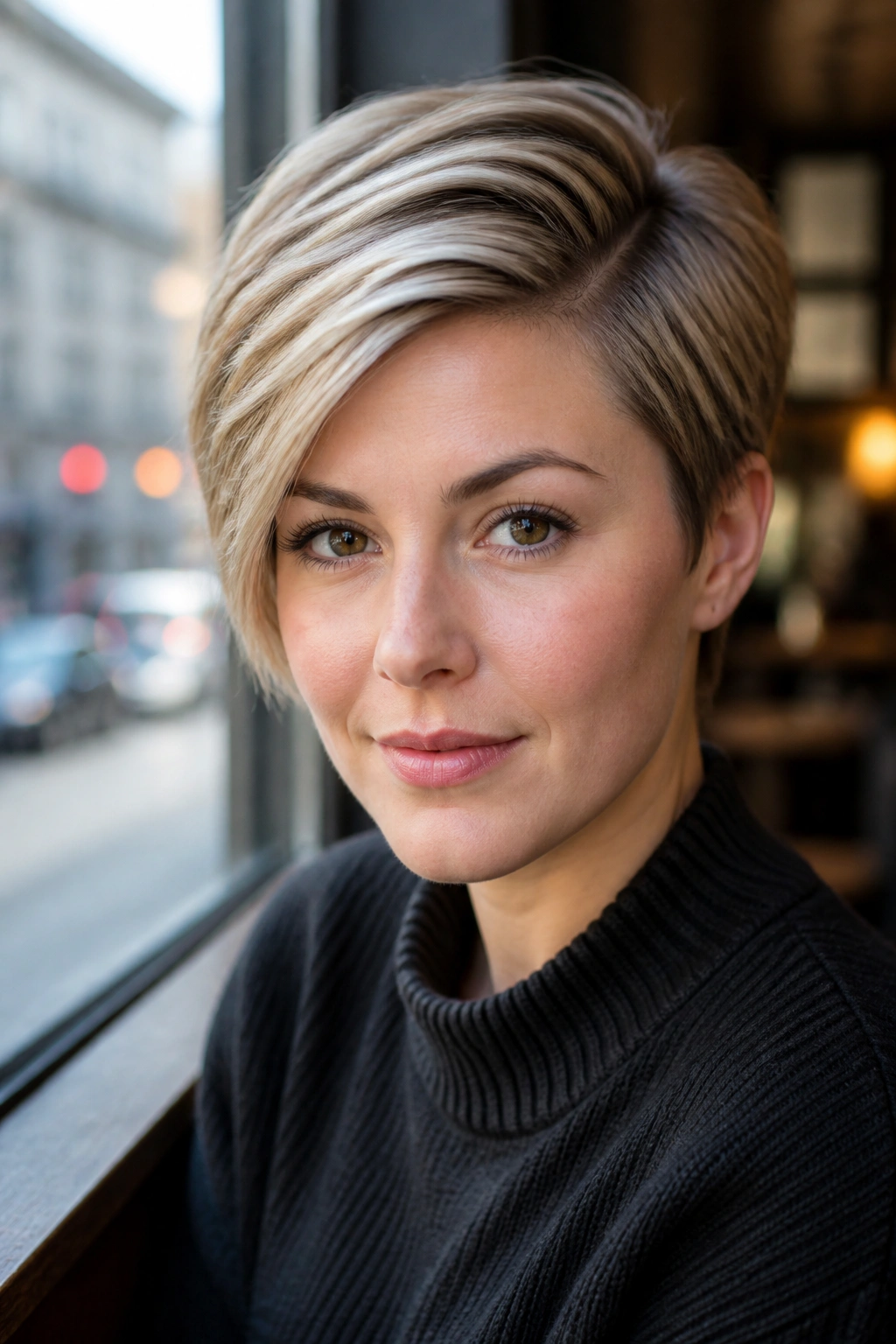
If your hair collapses flat by lunch, a deep side part is the easiest rescue. It sounds simple because it is, and simple cuts often do the heavy lifting better than fussy ones.
Picture the front section swept hard to one side, with most of the volume sitting above one brow instead of evenly across the forehead. That one move changes the face shape more than people expect. It breaks the symmetry that can make a round face look wider, and it gives the cut a sharper line.
Key Details That Matter
- Make the part at the arch of the eyebrow, not dead center.
- Keep the heavier side 1 to 2 inches longer than the other side.
- Blow-dry the front with a flat brush while lifting the root at the part.
- Use a small clip at the crown while the hair cools so the bend holds.
The best version of this cut has a soft edge, not a swoopy pageant wave. You want movement, not drama for its own sake. The long side should feel like it belongs there, not like it was pasted on as decoration.
5. Undercut Pixie with Soft Top
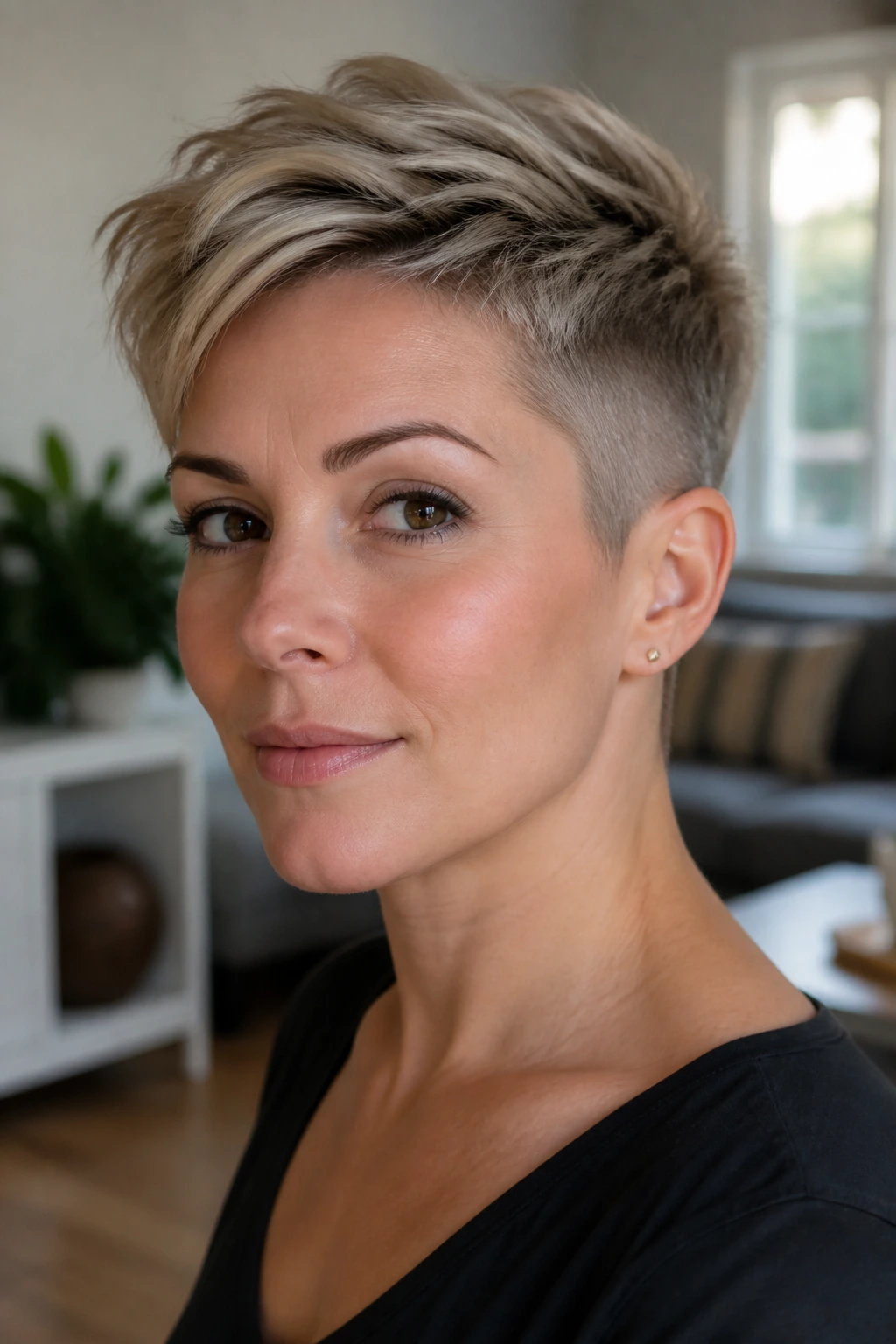
An undercut sounds severe until you pair it with a softer top. Then it starts making sense fast.
The short, clipped sides take bulk away from the widest parts of the head, which helps a round face feel less padded. The top stays longer and looser, so the overall shape keeps some air around it. That contrast is what gives the cut its bite.
I like this version most on thick hair. Thick hair can swell around the temples and ears if you let it, and that swelling is exactly what you do not want. A clean undercut at the sides and back removes that problem before it starts.
The catch is upkeep. You will need regular tidy-ups around the nape and side edges, because the shape looks best when it stays crisp. Let it grow too long and the whole point disappears. But when it is maintained, it feels sharp, modern, and strangely easy to wear.
6. Feathered Pixie
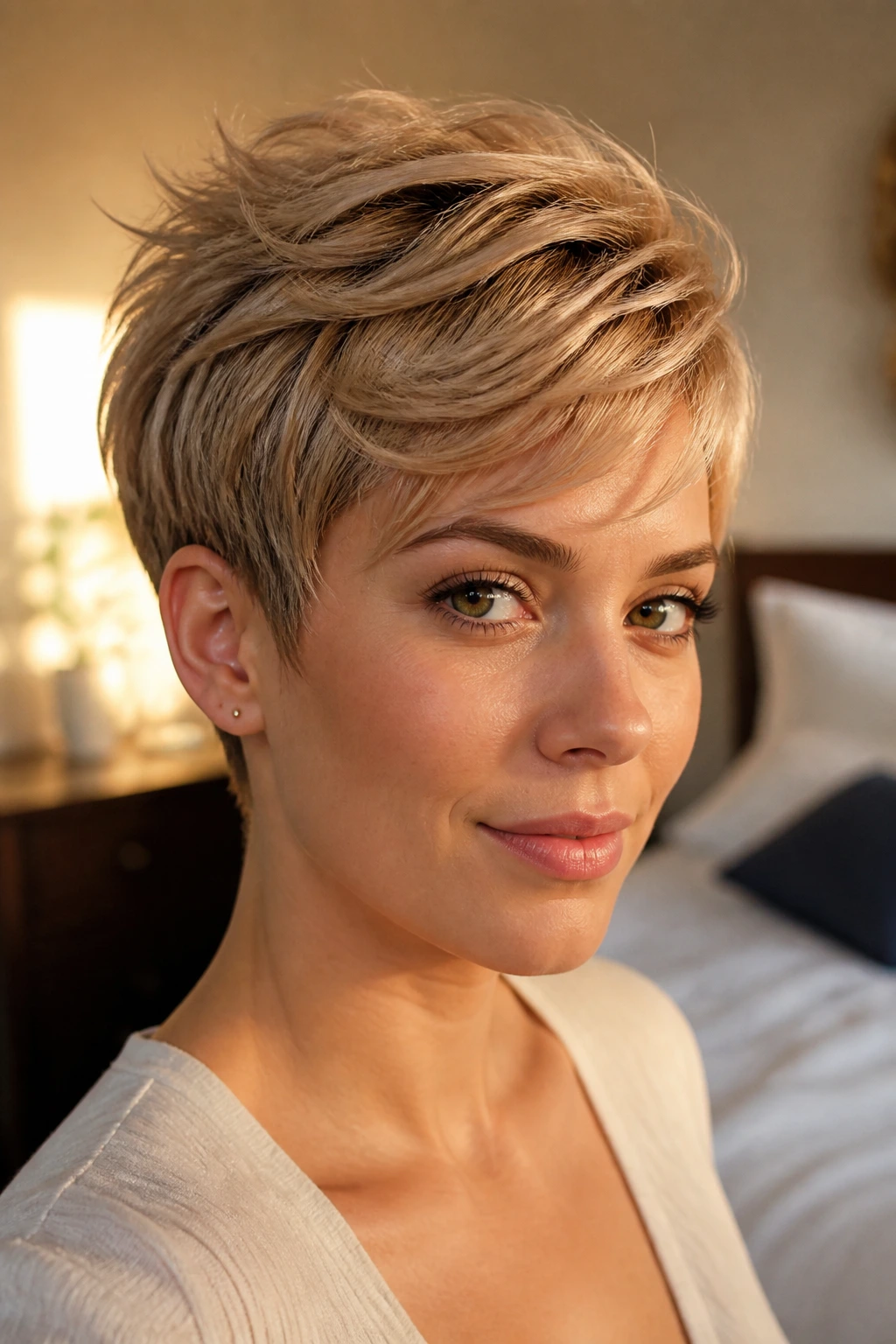
Unlike a choppy pixie, the feathered version keeps the outline softer and the ends more airy. That matters on a round face, because a hard, blunt edge can add visual weight right where you do not need it.
Feathering usually comes from slide cutting or careful texturizing at the ends. The goal is movement that flicks away from the face instead of sitting in a heavy block. It’s a good choice if you want a feminine finish without a lot of fuss.
This cut works especially well when the top has a little length and the sides stay close enough to the head to avoid widening the face. A round brush can help during blow-drying, but you do not want to over-shape it. Let the strands keep some softness.
I’d call this the quiet achiever of the bunch. Nothing shouts, yet the whole haircut looks more expensive when the feathering is done well.
7. Cropped Pixie with Wispy Bangs
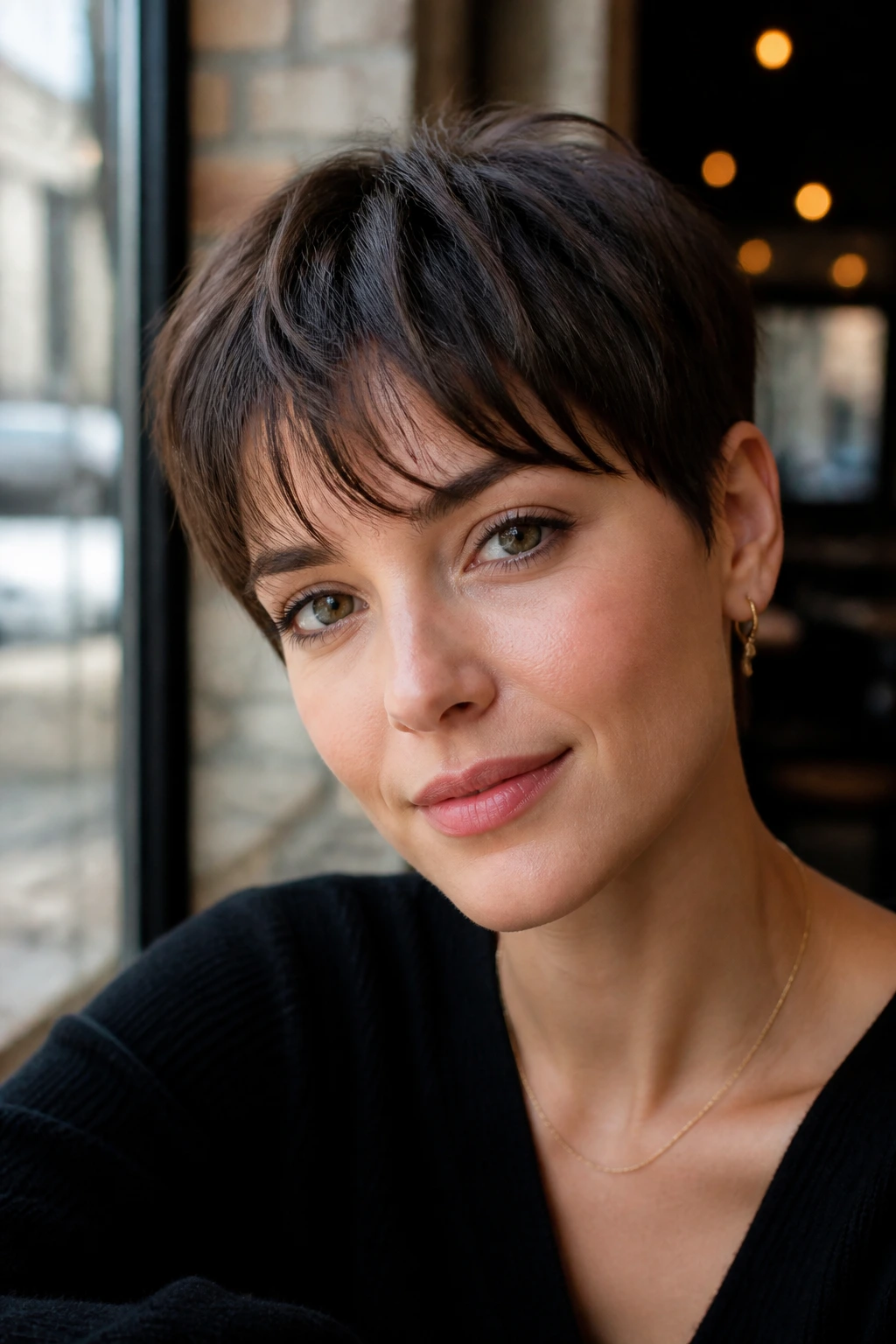
A cropped pixie can feel airy or severe, and wispy bangs are what keep it on the right side of that line.
The Bang Length That Matters
The fringe should graze the forehead rather than bury it. Think 0.5 to 1 inch above the brow for the shortest bits, with a few longer pieces slipping forward. Thick, blunt bangs are a different animal, and they can shrink the face in a way that works against a round shape.
What makes this cut useful is the softness at the front. The bangs take attention away from cheek width, but they do it gently, without the visual block of a heavier fringe. That means you can still keep the sides cropped close and the overall silhouette neat.
Best Way to Style It
- Use a lightweight mousse on damp hair.
- Dry the bangs with your fingers first, then finish with a small brush if needed.
- Keep the ends see-through, not packed together.
- Avoid heavy oils near the fringe; they make wisps look stringy.
If you like a cut that looks a little effortless but still intentional, this is one of the easiest places to start.
8. Curly Pixie with Lifted Crown
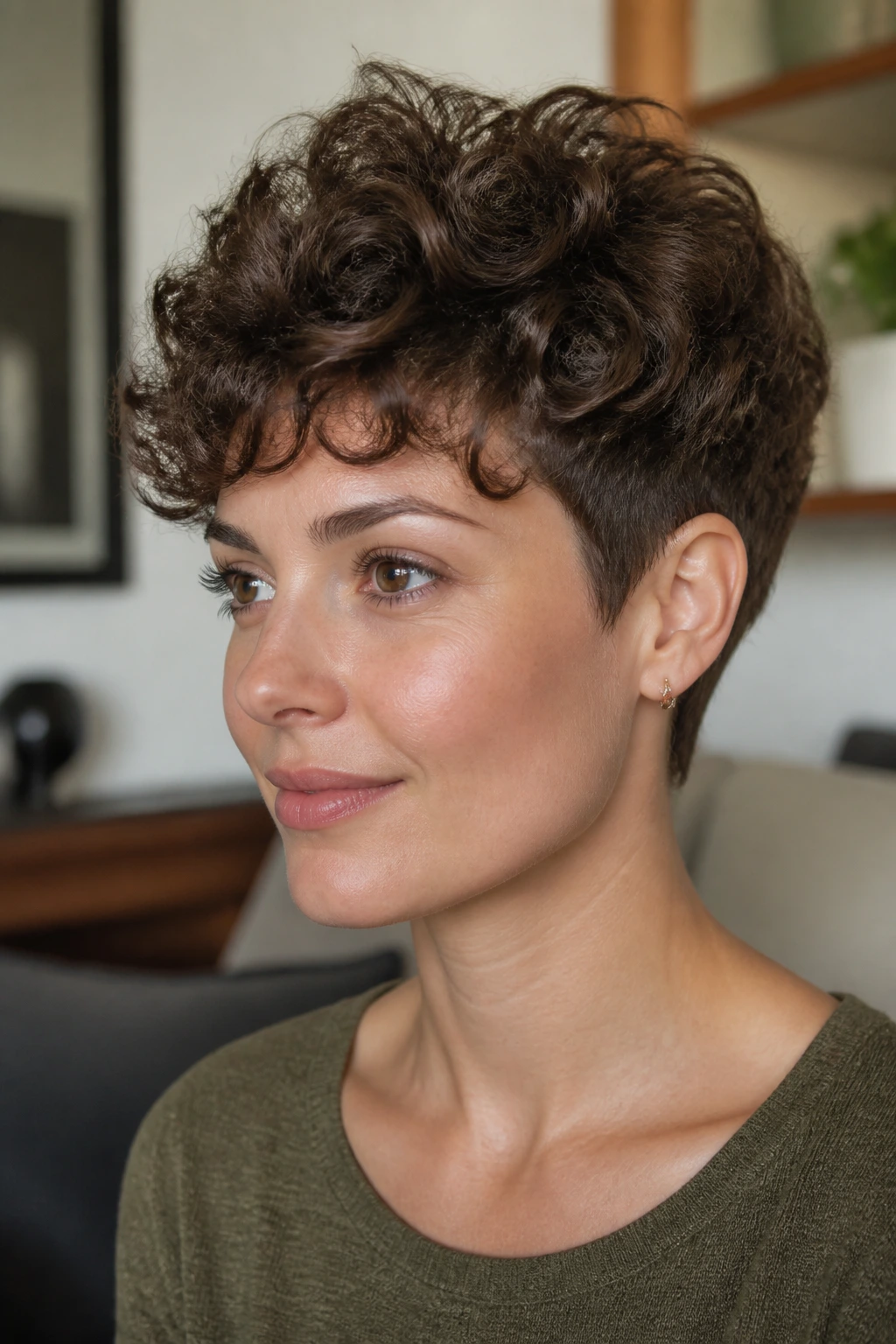
Curly hair can be a blessing on a round face when the crown is shaped on purpose. The wrong curly pixie grows outward. The right one grows up first.
That difference is everything. Leave a little extra length at the top — often 1 to 2 inches more than the sides — and the curls stack vertically instead of puffing around the cheeks. A good cut uses the curl pattern instead of fighting it.
Diffusing on low heat helps, but so does restraint. Scrunch in a curl cream, tip the head slightly forward, and stop touching it once the shape starts to set. Too much handling breaks the curl clumps apart and makes the face read wider.
The best curly pixies for round faces usually have a tapered nape and soft side shaping near the ears. That keeps the silhouette tidy. Without that clean edge, the haircut can drift into fuzzy triangle territory, which is never the goal.
9. Pompadour Pixie
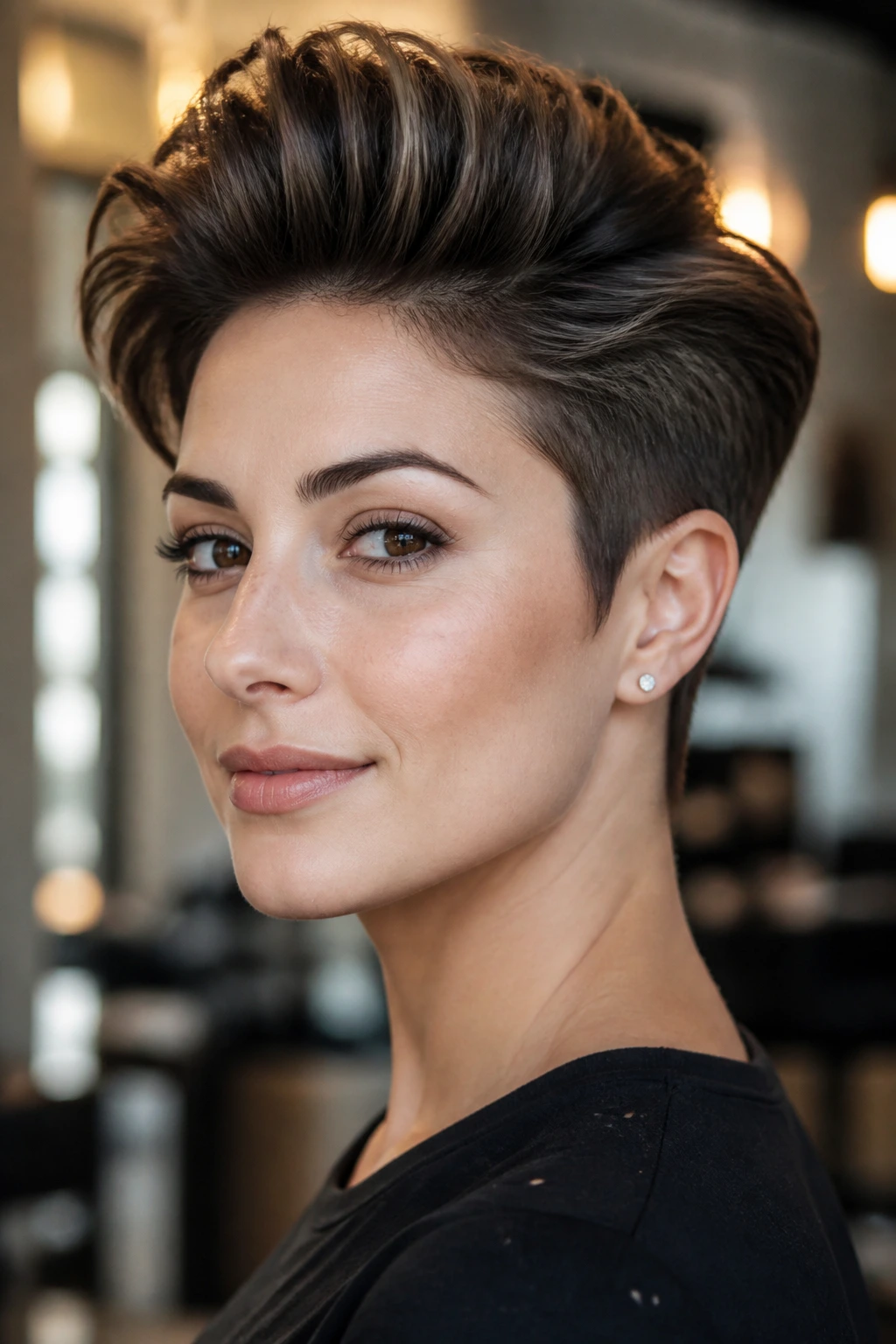
Want drama without a full quiff? The pompadour pixie gives you that lift without turning the whole cut into a costume piece.
The crown rises upward and slightly back, which is excellent for round faces that need vertical emphasis. The front is where the attitude lives. It creates a long line from the hairline to the top of the head, and that line matters more than a lot of people think.
Styling Notes
Start with damp hair and a volumizing spray at the roots. Use a blow-dryer and a small round brush, lifting the front section up and away from the scalp. Once it is dry, a small amount of pomade or paste can hold the shape without making it stiff.
The sides should stay close. If they get too fluffy, the cut loses its edge and starts to spread. That is the line I keep coming back to with round faces: lift above, control at the sides.
This cut looks especially good if you like strong brows, sharp earrings, or a little contrast in your clothes. It has presence. No apology needed.
10. Micro Pixie with Tucked Sides
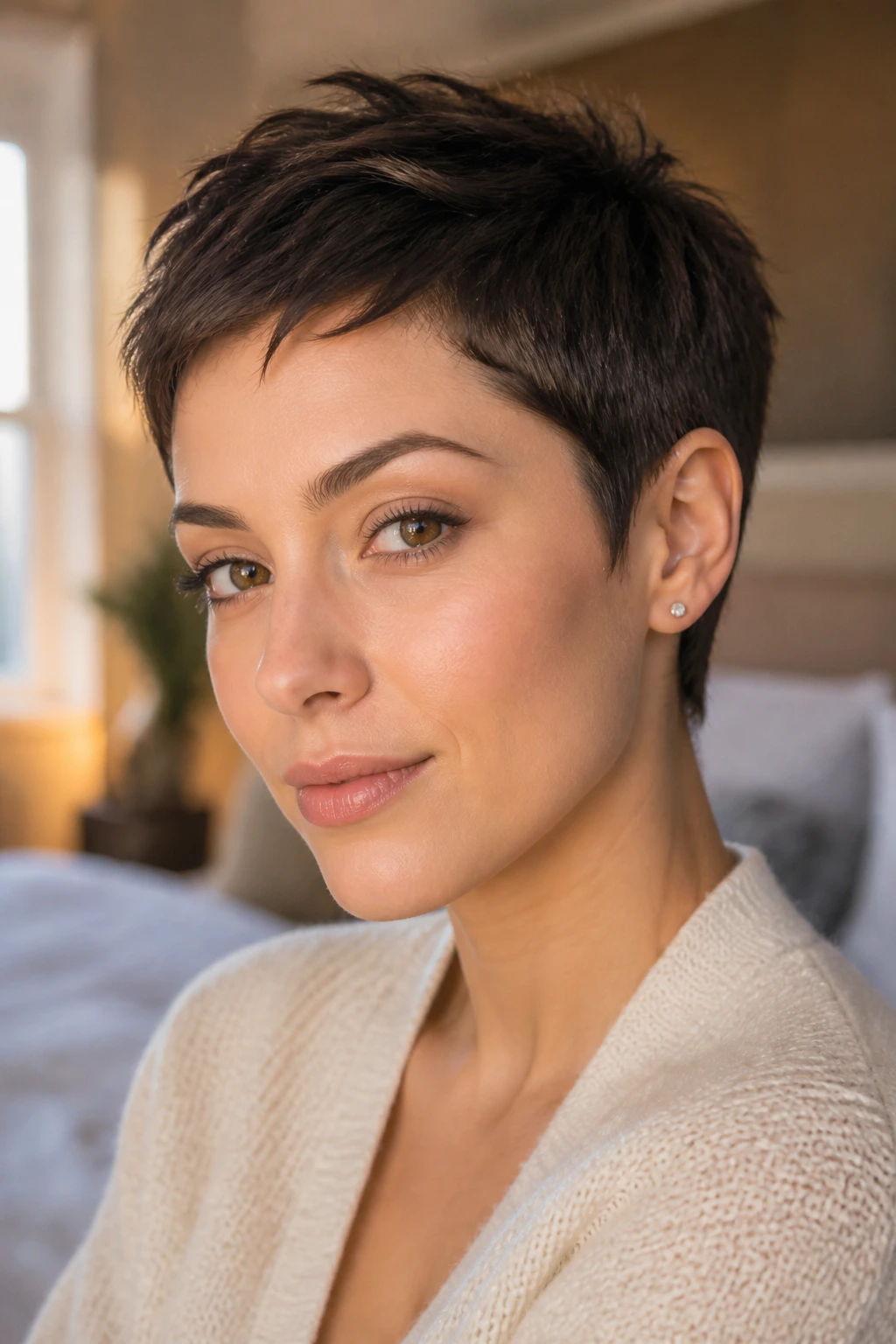
A micro pixie is the haircut people describe as “tiny” when they really mean controlled. On a round face, that control is what makes it work.
The sides and nape sit very close to the head, while the top keeps just enough length to create shape. You do not need much. Even an extra half-inch on top can be the difference between sleek and flat. The point is to expose the bone structure a bit more and remove the visual bulk that can crowd the face.
When you ask for this cut, be specific about the ears. Tucking the sides neatly around the ear can make the face feel longer and leaner. If the hair flares outward at the temple, the whole effect disappears.
This is the cut for someone who does not want to spend ten minutes fussing every morning. A finger comb, a touch of paste, and you’re done. The downside is obvious: it grows out fast, and it needs a clean trim to keep its shape.
11. Pixie Bob Hybrid with a Short Nape
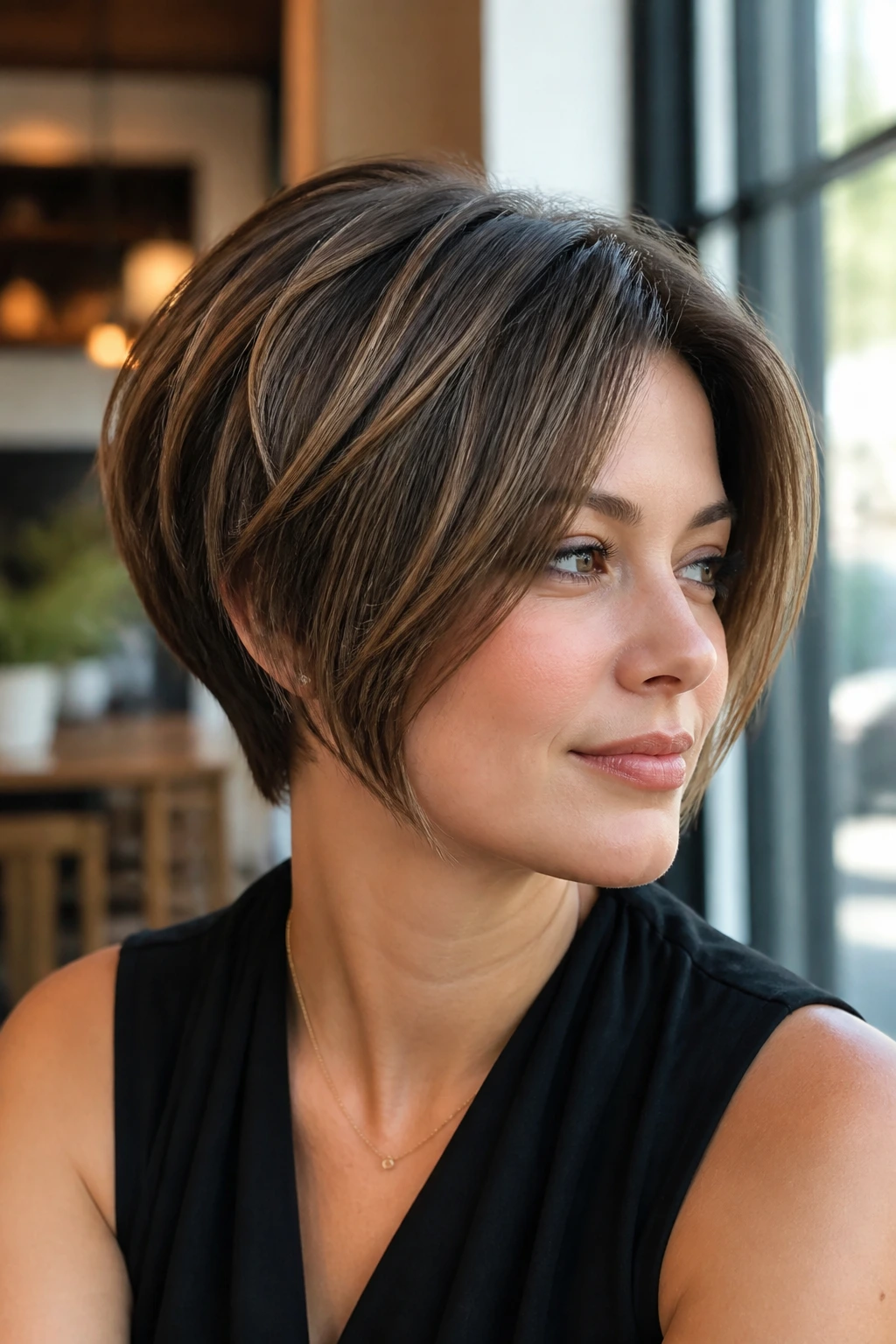
A pixie bob sits in that useful middle ground where the back is short enough to feel light, but the front still has a little swing. For a round face, that extra length at the cheek line can be a smart move.
The shape usually starts with a close nape and slightly longer pieces around the jaw or ears. That creates a narrow base and a softer front edge. I like this version for anyone who wants the spirit of a pixie without committing to a full crop.
It also solves a common complaint: “I love short hair, but I hate how exposed I feel.” Fair enough. The pixie bob gives you some coverage near the cheek and neck while keeping the outline clean, and that small bit of length can be flattering in a very unshowy way.
The best version avoids a stacked back. Too much roundness at the crown or back can cancel out the face-slimming effect. Keep the line smooth, not bulky.
12. Slicked-Back Pixie
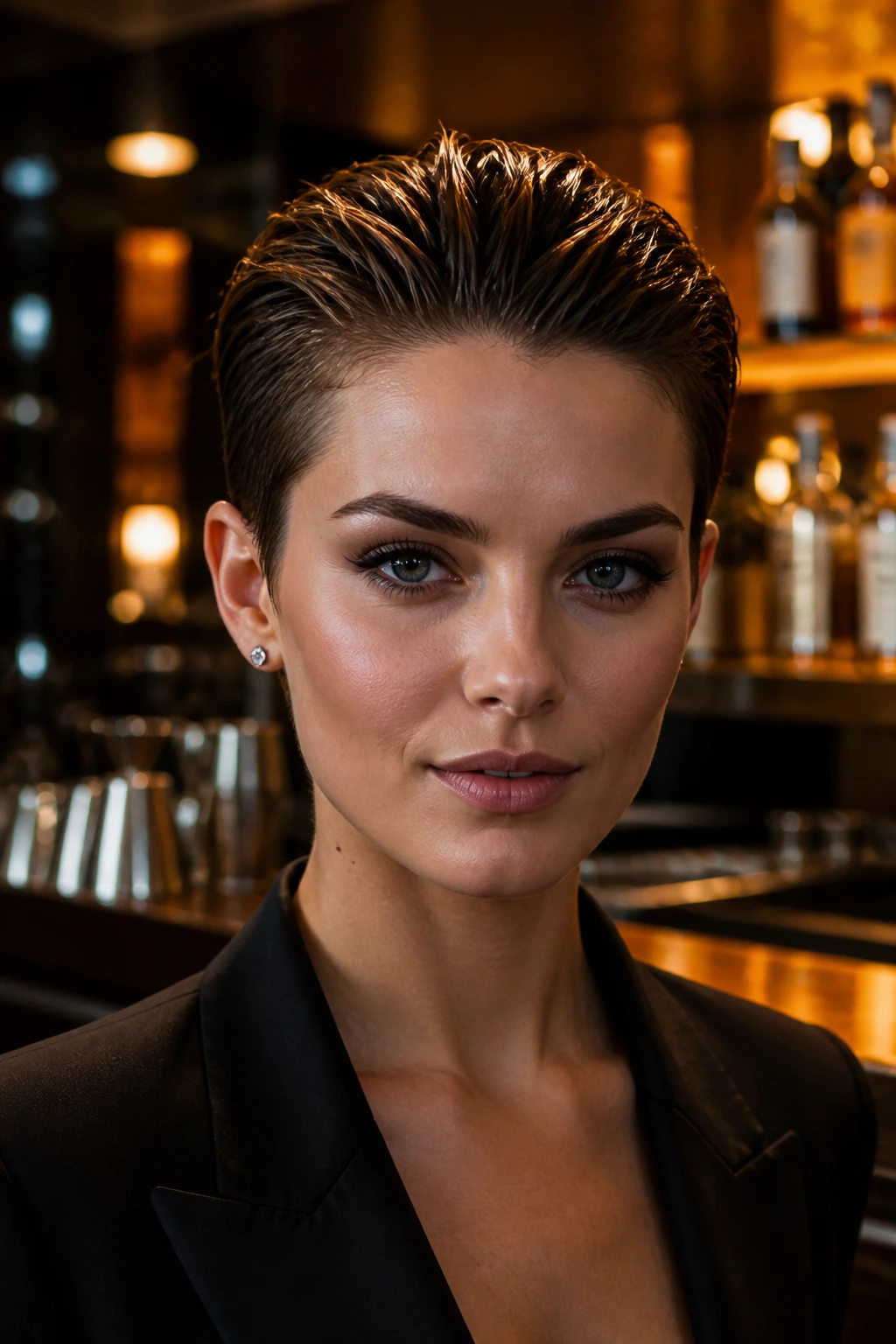
Unlike softer pixies, the slicked-back version puts the face front and center. That is exactly why it works on a round face when the cut underneath is good.
There’s no hiding behind the fringe here. The hair is brushed away from the face with gel or a strong cream, usually on damp hair, so the bone structure shows. If your hairline is neat and your features are balanced, the result can look striking without a lot of length.
This cut depends on precision. The sides should stay close, the top should have enough length to comb back cleanly, and the finish should look glossy rather than wet and crunchy. A little shine is nice. A helmet is not.
It suits a night-out look more than a casual no-thought morning, though some people wear it daily because they like the control. If you do, a fine-tooth comb and a soft brush will matter more than any styling trick.
13. Baby Bang Pixie
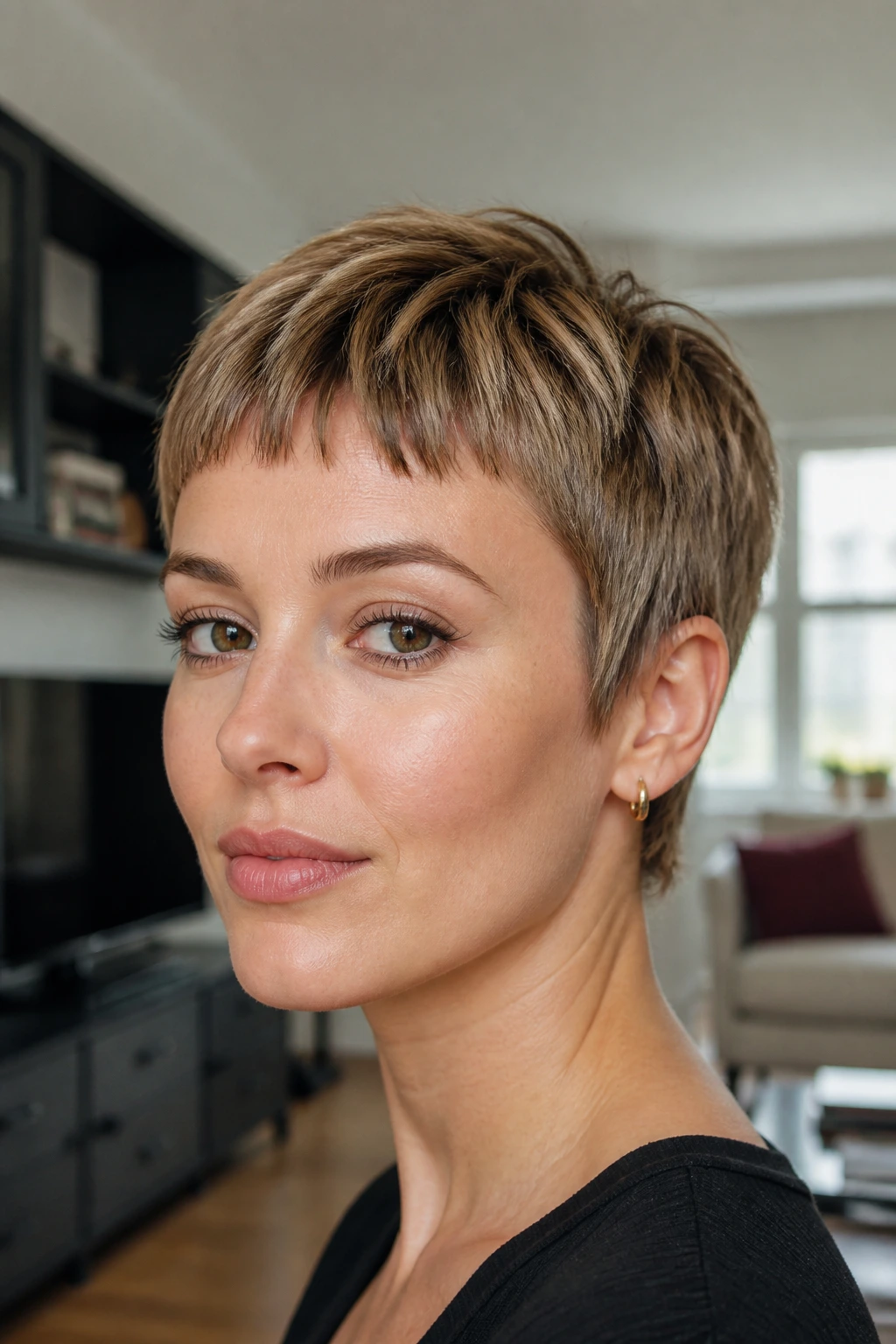
Baby bangs are a commitment. They are also one of the quickest ways to make a short pixie feel deliberate instead of ordinary.
Why It Works
A short fringe creates a strong horizontal line across the forehead, and that line can balance the fullness of a round face when the sides stay narrow. The trick is not to make the bangs thick. You want them short, light, and slightly broken at the ends.
This cut looks best when the rest of the hair stays textured and close to the head. If the top gets too rounded, the bangs can make the face feel boxed in. Keep the crown a little airy and the shape reads cleaner.
Who Should Try It
- People who like a graphic, fashion-forward look.
- Anyone with strong brows or eyes worth framing.
- Fine hair that needs a sharp shape to look fuller.
- Short foreheads, if the bangs are kept soft and not blunt.
Baby bangs are not subtle. That is part of the appeal. They make the pixie feel personal instead of generic.
14. Tousled Pixie with Long Crown Pieces
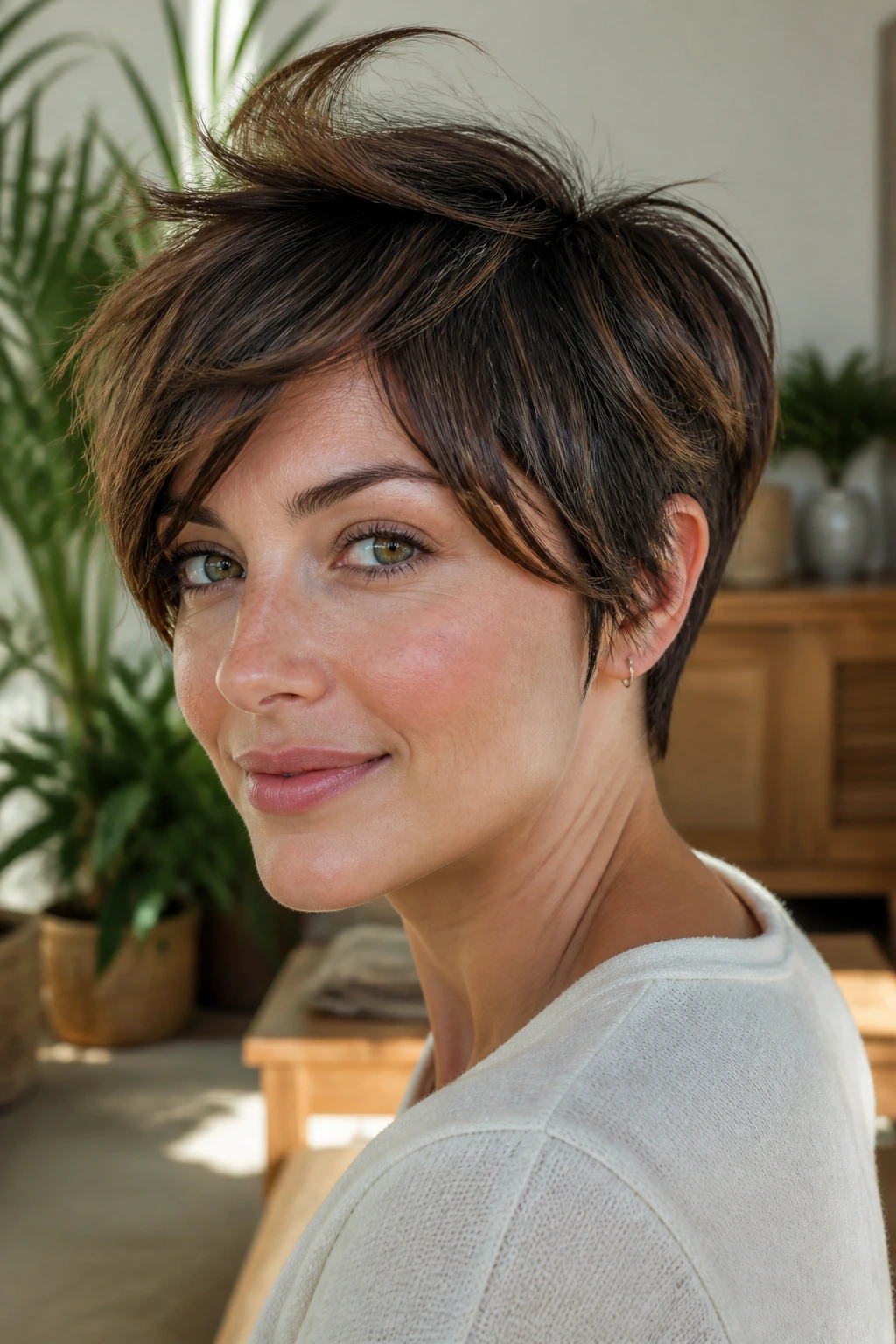
Messy works when the cut underneath is disciplined. That is the whole story with a tousled pixie.
The long crown pieces create lift, but the sides stay tighter so the volume does not spread across the cheeks. On a round face, that difference is everything. You get movement where you want it and restraint where you need it.
This is one of the better cuts for hair that likes to fall forward. A little texturizing spray or a matte cream can give the top that undone look without making it crunchy. Use your fingers, not a brush, once the hair is dry. Brushes smooth out the texture and usually flatten the shape.
I like this version because it forgives imperfect styling. A tiny cowlick at the front or a bend in the part can add to it instead of ruining it. That is rare, and useful.
15. Razor-Cut Shaggy Pixie
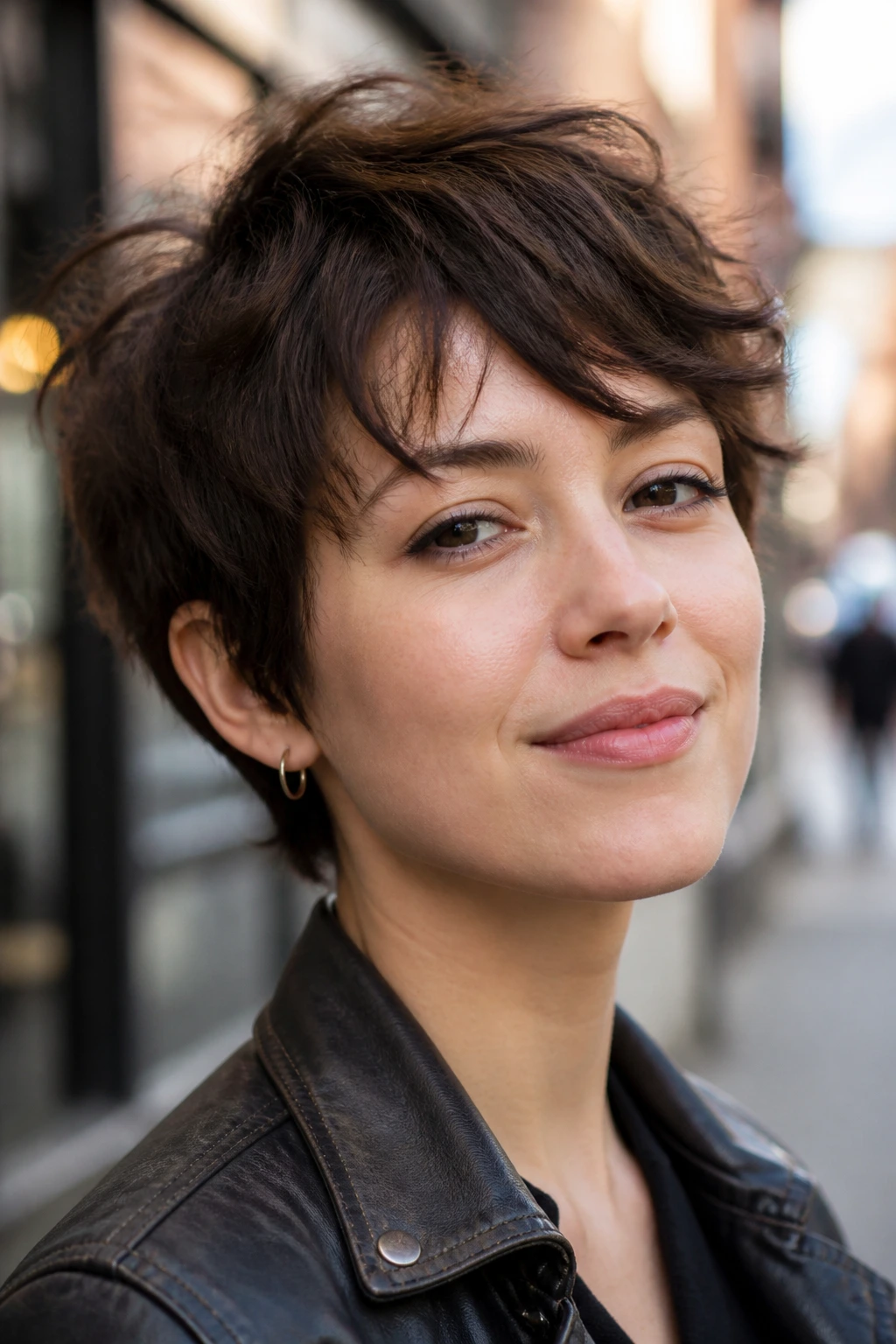
Why does a razor-cut pixie look so light? Because the razor takes out tiny bits of weight that scissors sometimes leave behind.
The shaggy version leans into that effect. The ends are soft, uneven, and a little broken up, which keeps the haircut from forming a neat round shell. That matters on round faces, where you want movement that changes direction instead of a shape that just mirrors the face.
What Makes It Different
The razor creates a faint, lived-in finish. It is not the same as a choppy cut, which can feel more piecey and defined. Razor work gives you a looser edge and a bit more swing at the front.
Styling is easy if you keep your hands out of it. A dab of cream or paste through the crown is enough. The more you smooth this cut down, the less interesting it gets.
This is a nice choice for people who hate hair that looks too “done.” It still has shape, but it feels casual in a way that suits denim, big sweaters, and ordinary days.
16. Nape-Undercut Pixie
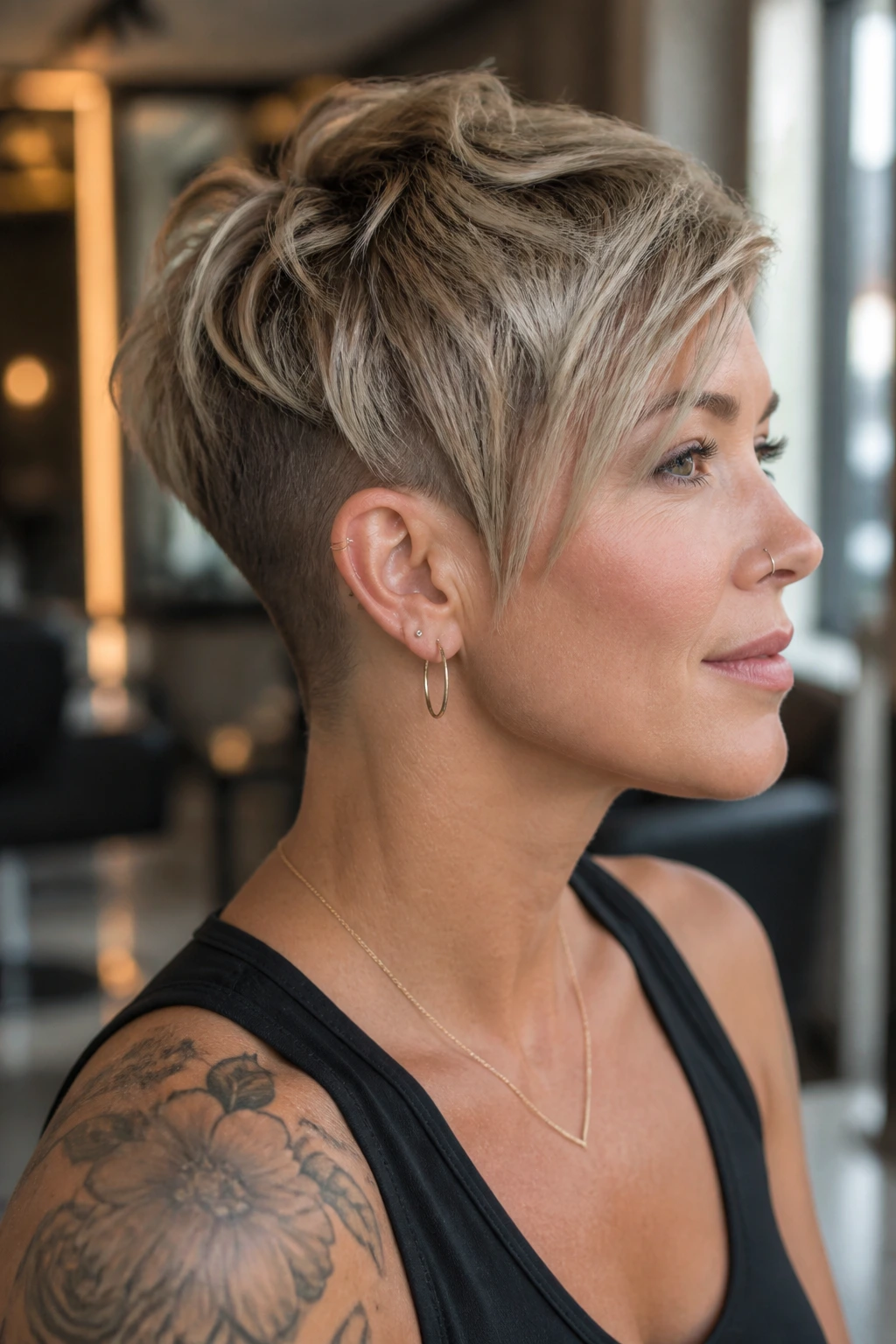
A hidden undercut at the nape does one very practical thing: it removes weight where short hair often gets bulky first.
On a round face, that lower bulk can make the neck area feel shorter and the overall shape wider. Clean it out, and the silhouette tightens immediately. The top can stay soft and a little longer, which gives you contrast without a harsh look.
Ask for These Details
- A close clippered nape, hidden under the upper layers.
- Softer lengths over the crown so the top doesn’t look shaved.
- Tapered edges around the ears, not a hard block.
- Enough top length to pinch, bend, or sweep forward.
The nice part about this cut is that the undercut is mostly invisible until the hair moves. You get a cleaner outline without advertising every bit of the maintenance. That can be a relief if you want the shape to do the talking.
17. Sideburn-Forward Pixie
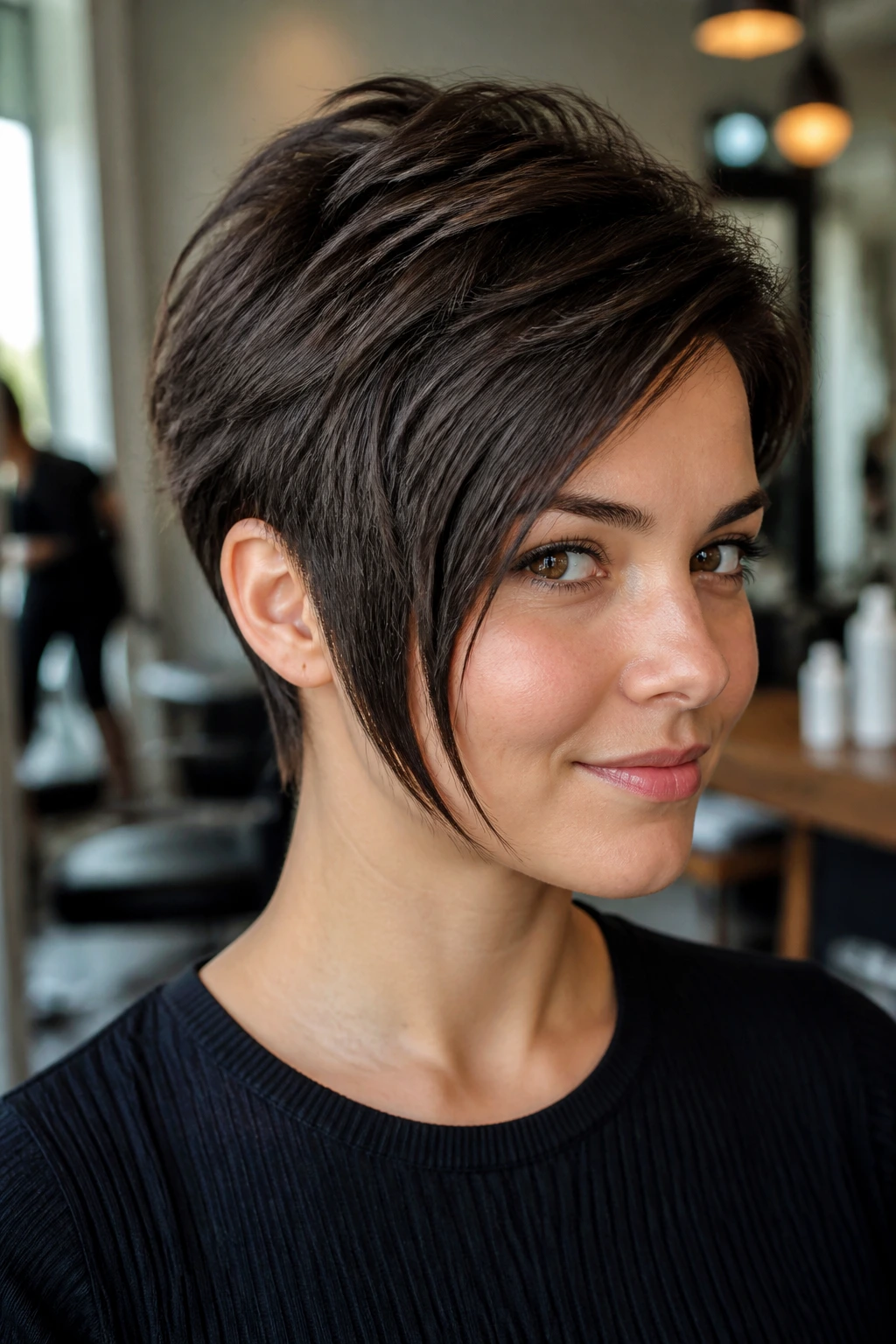
Sideburns are underrated. Kept a little longer and brought forward, they can pull the eye inward and soften the widest part of a round face.
This cut works because the front pieces don’t all push away from the face. A few strands at the temples and sideburns are left slightly longer, then angled forward so they skim the cheek instead of floating out beside it. That’s a small shift, but it changes the silhouette.
I’d recommend this to anyone who thinks short hair makes their face look “too open.” The extra face-framing at the sides fixes that feeling without needing a lot of length overall. Keep the top textured, though. If both the sides and the crown are soft, the whole cut can lose definition.
It’s also a good option for straight hair that tends to lie flat. The forward pieces create the illusion of shape even on days when you don’t style much.
18. Spiky Pixie with a Piecey Top
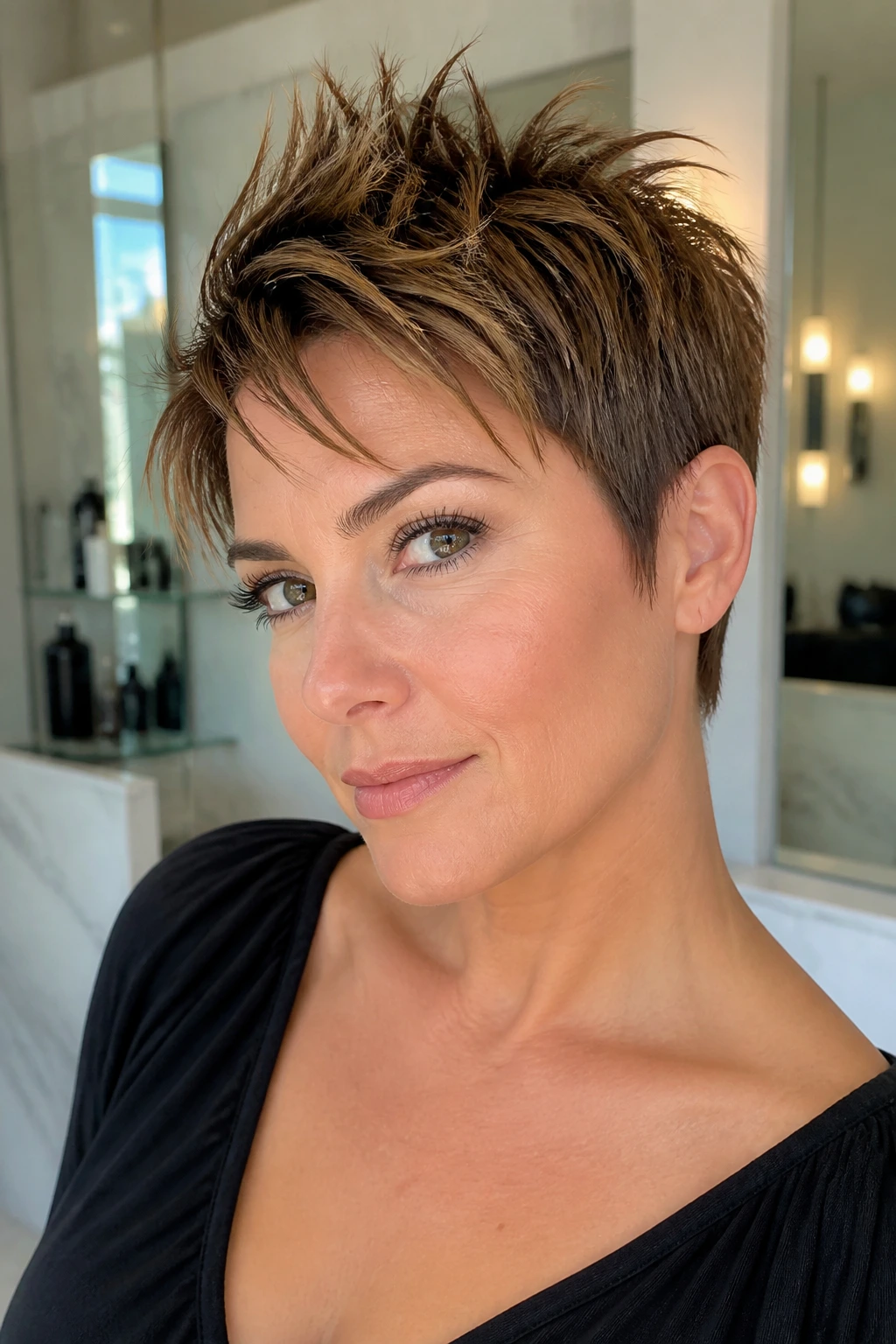
The old-school spiky pixie had too much gel and not enough thought. The modern version is better because it uses texture instead of hard points.
Fine hair often does well with this shape. Short layers on top create lift, and the little spikes keep the hair from collapsing into a smooth dome. For round faces, that vertical energy helps the cut feel leaner.
Use a tiny amount of paste — a pea-size amount is enough for most short hair — and warm it in your hands until it spreads thin. Then pinch the top into separated bits. You want movement, not little fences of hair standing up all over the place.
This cut is especially good if your hair is naturally soft and needs help holding shape. It can look edgy without becoming difficult, which is a nice trick when the rest of your routine already takes enough time.
19. Brushed-Forward Pixie with Soft Edges
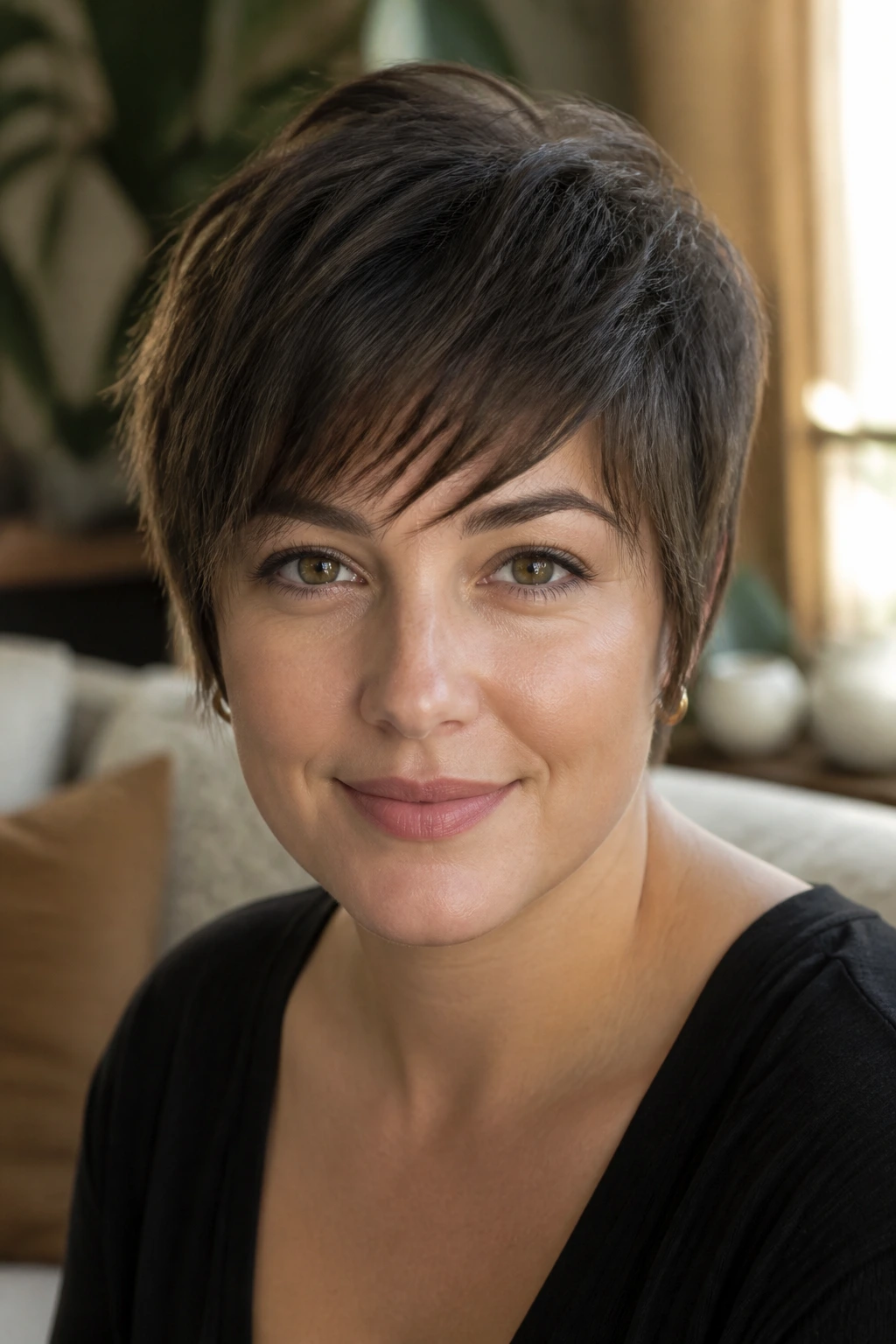
A brushed-forward pixie does something different from the usual lifted crown trick. It brings the movement toward the forehead, which can be a smarter choice if you do not like height on top.
Why It Flatters Without Flaring Out
The hair is directed forward and slightly downward at the front, then softened at the edges so it does not feel heavy. That forward motion can skim over the cheek area and draw attention to the eyes instead of the cheeks. On a round face, that shift is useful.
The sides stay close, but not pasted flat. Think soft contact with the head, not a hard shell. That distinction matters because too much flatness can make the cut look severe, especially if the top is short.
How to Style It
- Blow-dry the fringe forward with a vent brush.
- Use a light cream instead of a stiff wax.
- Leave the ends a little broken so the line stays soft.
- Tuck the sides behind the ears only if the hair is fine enough to lie there naturally.
This is the sort of pixie that looks calm and neat without losing personality. Nice balance, if that’s what you’re after.
20. Grown-Out Pixie with a Side Fringe
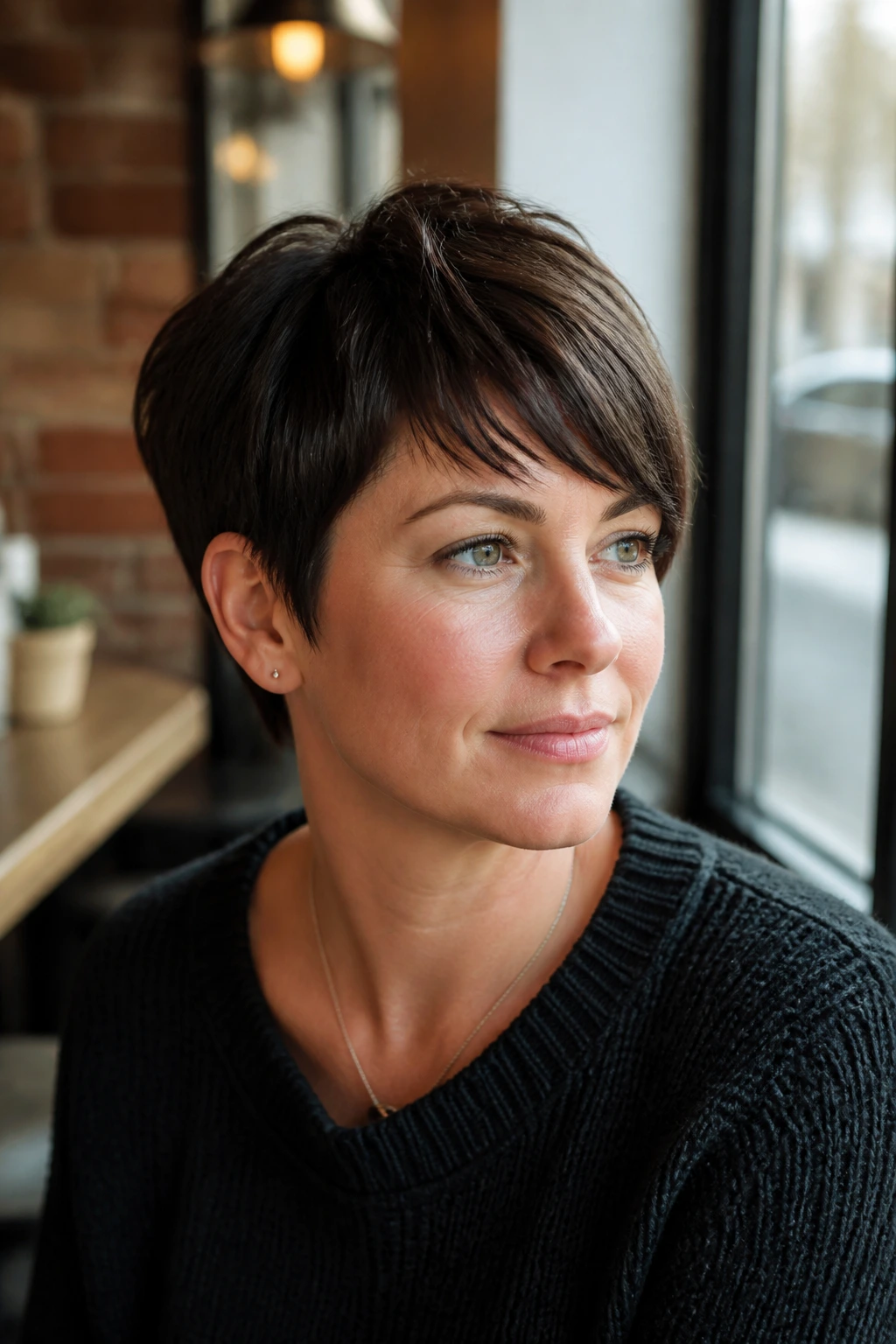
A grown-out pixie can look better than a freshly cut one when the shape is right. That sounds backwards until you see how the fringe starts to soften the face.
The side fringe gives you movement around the forehead, and the slightly longer top keeps the silhouette from going too round. A short cut that is halfway to a crop often suits a round face because it carries a little line and a little softness at the same time.
This is also the easiest way to live between appointments. The haircut is still short enough to feel neat, but it no longer needs daily micromanaging. A texturizing spray at the roots and a finger-combed side part usually do enough.
What matters is not letting the nape become fuzzy. Clean up the neck and around the ears, and the grow-out phase looks intentional instead of neglected. That’s the difference between “I’m growing it out” and “I forgot to book.”
21. Salt-and-Pepper Tapered Pixie
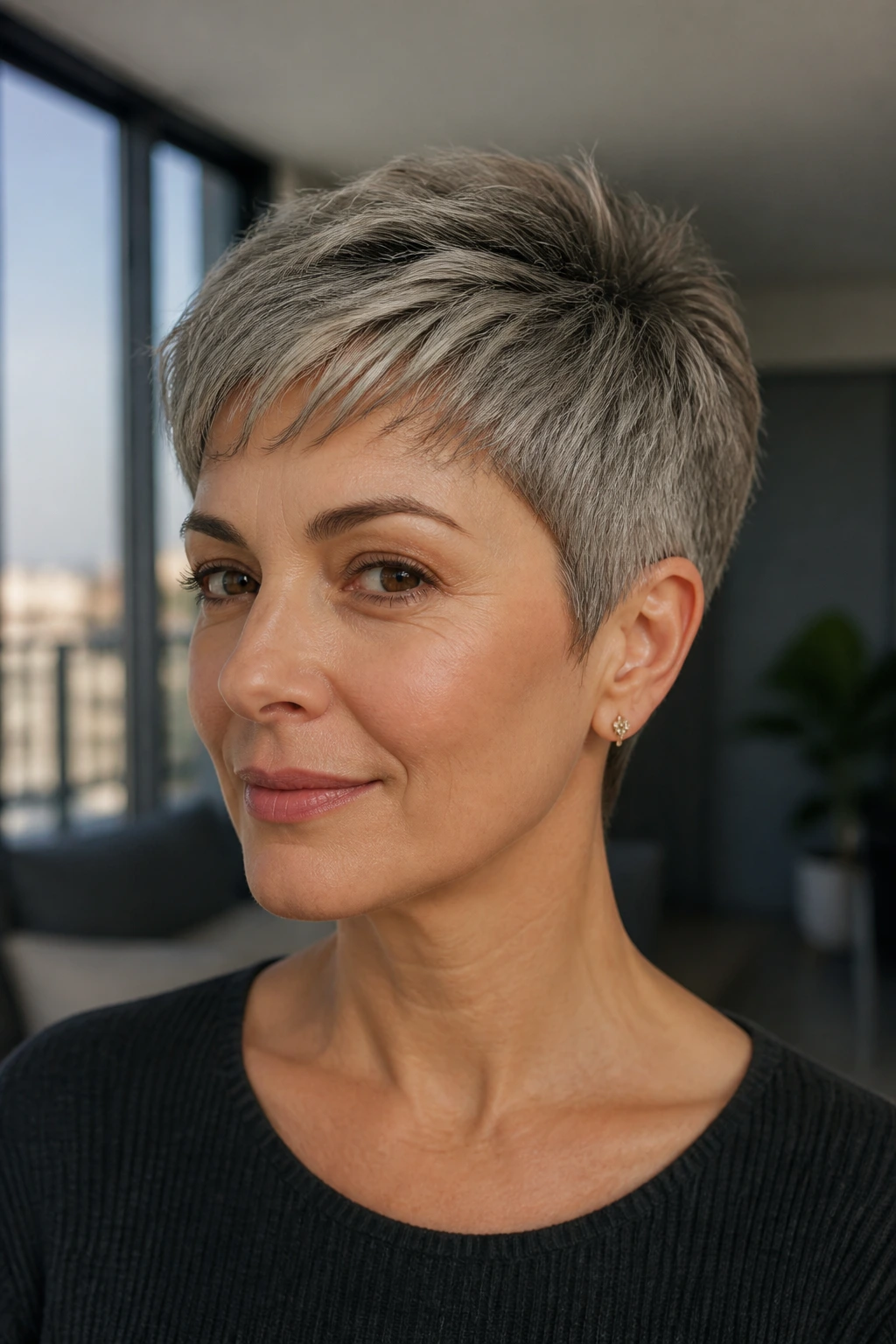
Can hair color change how a pixie reads on a round face? Absolutely.
Salt-and-pepper hair brings built-in contrast, and contrast helps short cuts look sharper. The silver strands catch the eye while the darker pieces keep the shape from flattening out into one dull block. When the cut is tapered at the sides and nape, the color movement makes the whole style feel more dimensional.
Why This Combination Works
The taper keeps the outline close to the head, which is what a round face usually benefits from. The mixed color gives the eye something to travel through, so the haircut does not feel heavy or uniform. That combination is much more useful than people give it credit for.
This cut looks good with a natural texture. You do not need perfect polish; a bit of separation at the top is enough. If anything, too much smoothing can hide the interesting part of the color.
If your silver hair is growing in and you’re tempted to cover it, pause for a minute. A short tapered pixie can make that natural contrast look deliberate instead of accidental.
22. Platinum Cropped Pixie
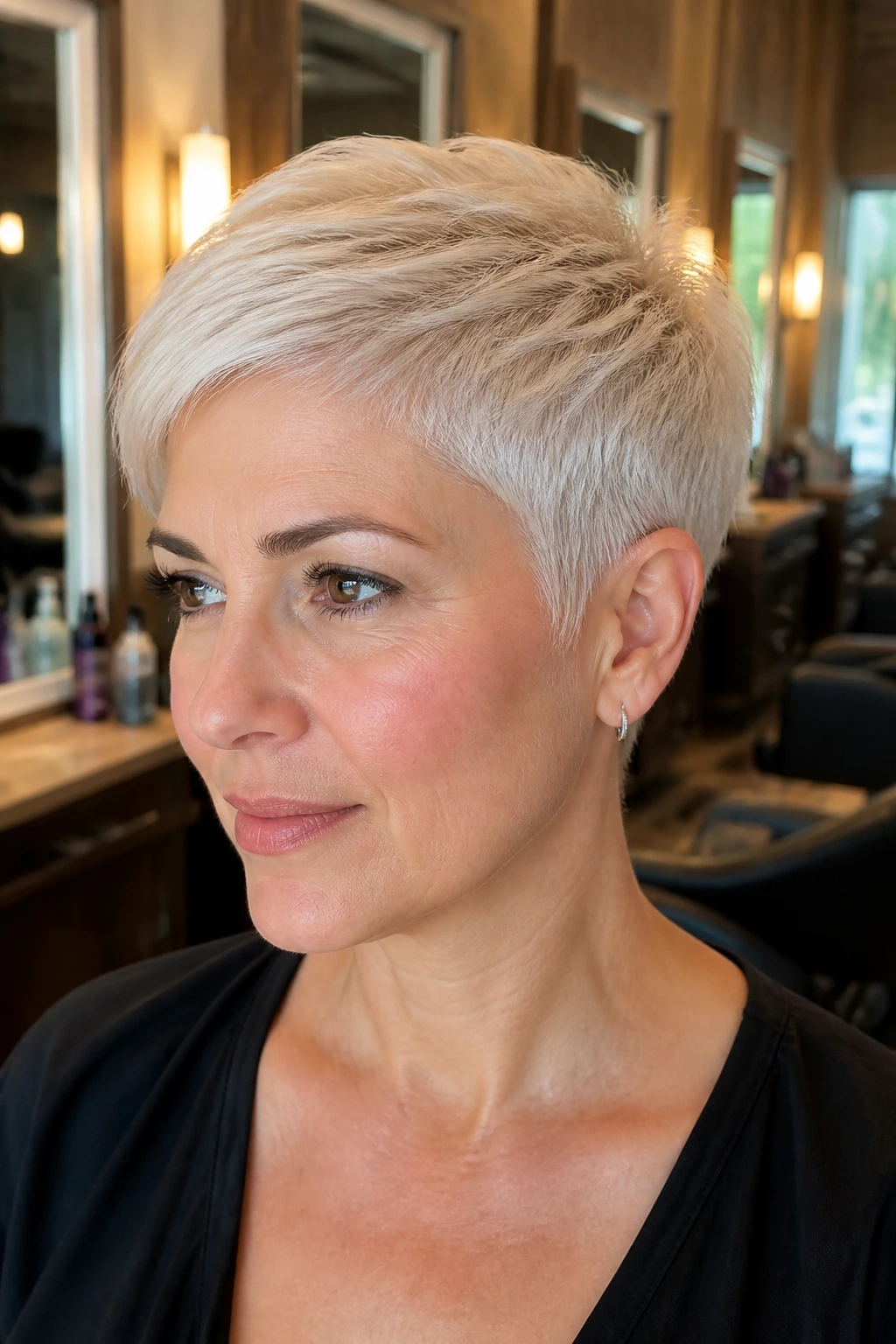
A pale blonde crop looks sharper when the cut underneath is clean enough to carry it. Otherwise, the color can wash out the detail and leave the whole thing looking soft in the wrong way.
That is why the platinum pixie works best when the sides are tight and the top has a crisp, cropped line. The light color bounces off the edges and makes every bend visible. On a round face, that definition helps a lot.
Salon Details Worth Asking For
- A tidy nape with no soft bulk.
- Cropped sides that stay close to the head.
- A little extra length on top for movement.
- Point-cut ends so the top does not look like a helmet.
Platinum also asks for honest maintenance. Roots show quickly, and the color can be drying, so this is not the easiest low-effort option. But if you like sharp shapes and don’t mind keeping the tone clean, it can look excellent with strong brows and simple clothes.
23. Warm Brunette Feathered Pixie
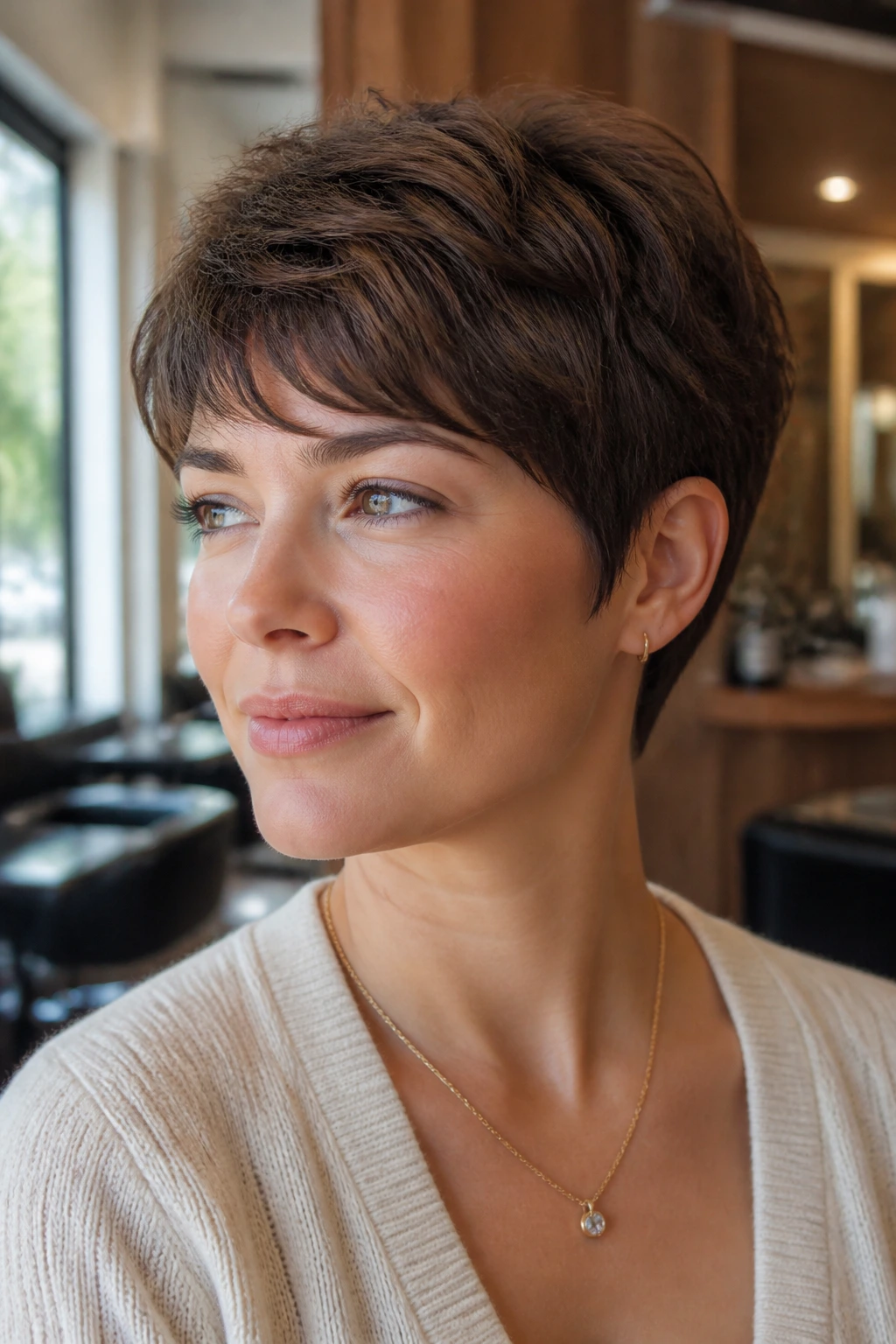
Warm brunette hair does a nice job of softening a pixie without hiding the cut itself. Chestnut, mocha, or cocoa tones give short hair a little depth, especially when the ends are feathered.
That softness is useful on a round face because it keeps the haircut from looking too graphic. The feathered layers still give movement, but the color makes the whole style feel smoother at the edges. It is a quiet look, not a loud one.
I like this option for hair that has some natural shine. Darker shades show shape best when the cut has a clean line around the ears and a little lift near the crown. Add a few lighter pieces around the top if you want more dimension, but keep them subtle. Too much contrast can make the cut busy.
This is one of those styles that looks expensive even when the styling is minimal. A little serum on the ends, done.
24. Curved Fringe Pixie
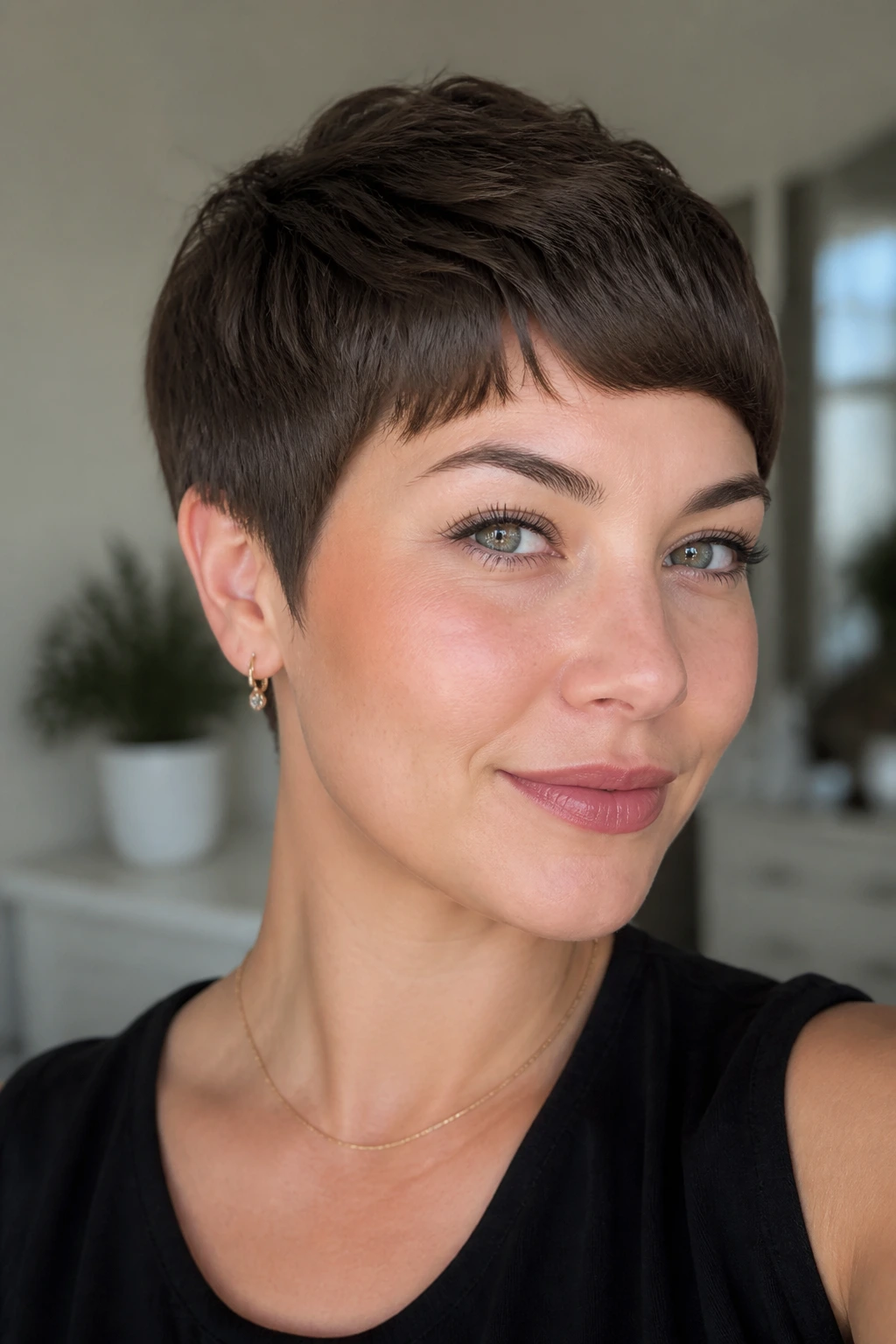
A straight fringe and a curved fringe are not the same thing, and on a round face the difference matters more than people think.
The curved fringe starts a touch shorter near the center, then arcs longer toward the temples. That shape follows the forehead instead of cutting across it like a ruler. It softens the face without squaring it off, which is why it tends to work better than a blunt bang in this setting.
The sides should stay slim and the top should not balloon up too much. Otherwise the curved fringe gets lost in the volume. When the balance is right, the haircut feels gentle but not mushy.
This is a smart choice if you want face-framing without a heavy side sweep. It sits in a nice middle ground, and that makes it easier to wear on ordinary days when you don’t feel like styling much.
25. Long-on-Top Micro Pixie
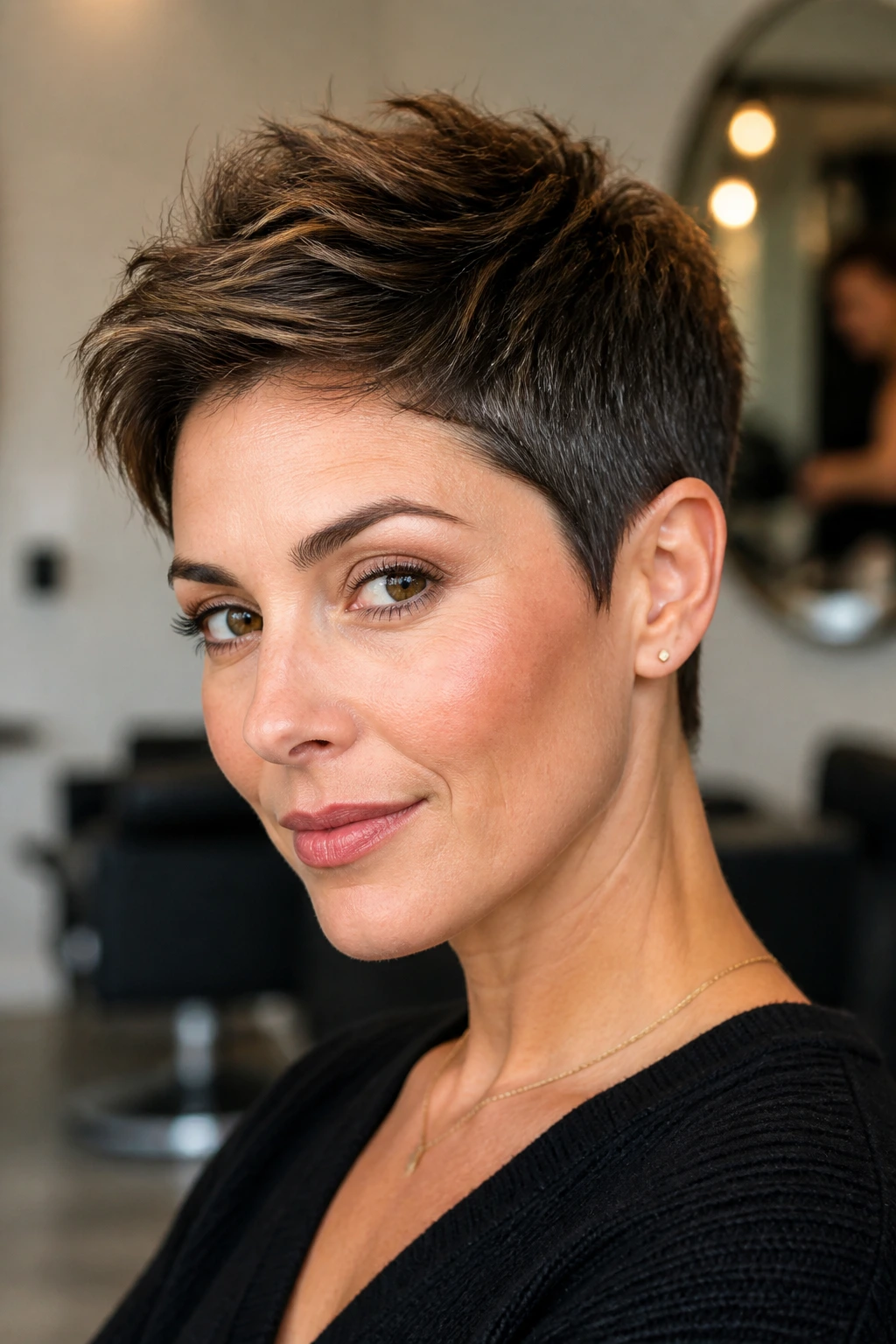
A micro pixie does not have to mean everything is clipped down to almost nothing. Leaving 1.5 to 2.5 inches on top gives you room to change the shape while still keeping the sides short and neat.
The Shape That Makes It Work
The top length lets you create a small wave, a forward bend, or a little lift at the crown. That flexibility is the whole point. On a round face, being able to move the front around matters because it lets you steer the eye in different directions from one day to the next.
The sides should stay close enough that they never compete with the top. If they start to puff, the haircut loses its clean line. A light pomade or paste is enough to guide the shape; you do not need anything heavy.
When to Choose It
- If you want a short crop but hate feeling locked into one look.
- If your hair is fine and needs a little length on top for body.
- If you want something easy to grow out.
- If you like being able to part it, sweep it, or mess it up in seconds.
This is one of the most practical short options in the whole bunch.
26. Ear-Length Tapered Pixie
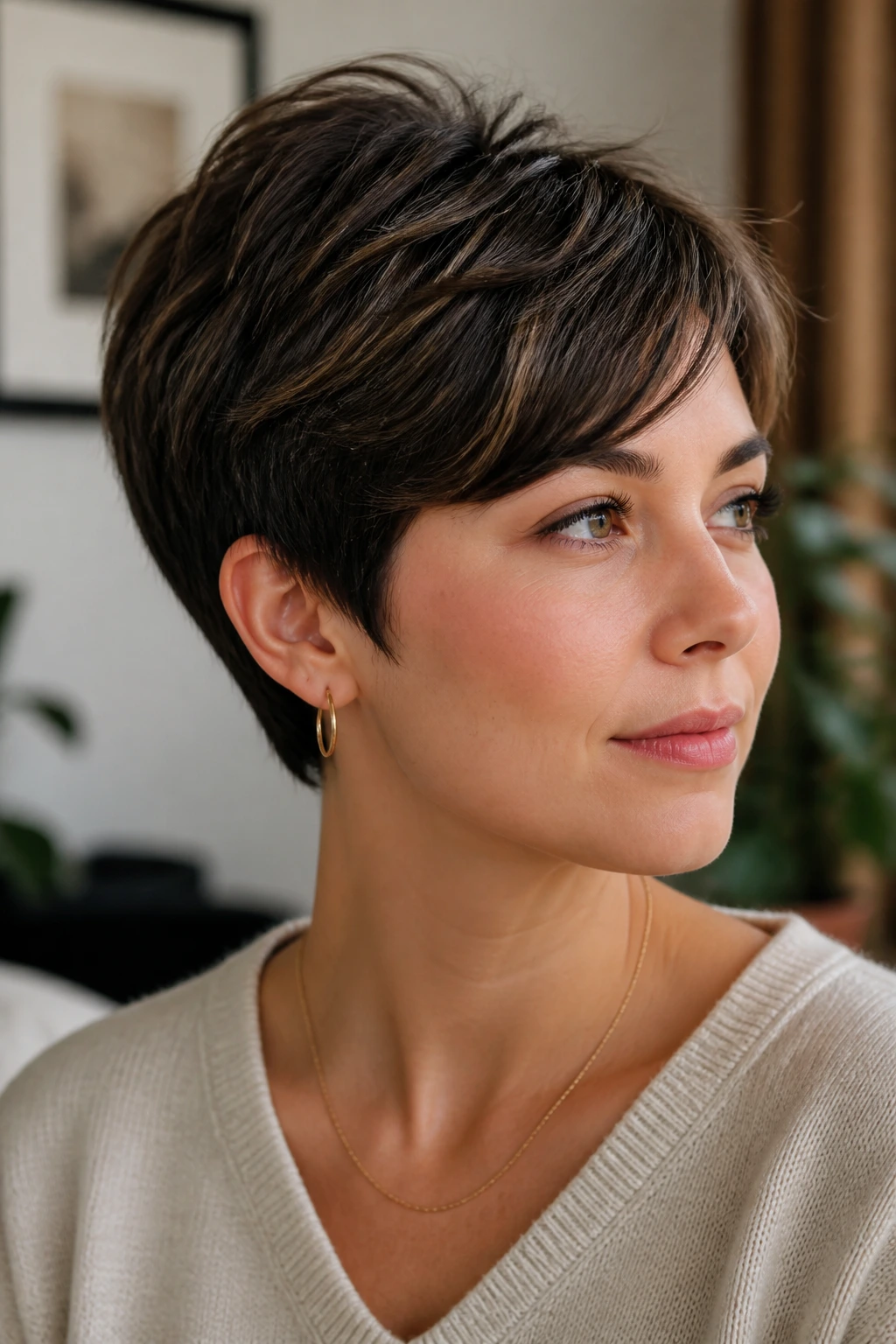
A little extra length around the ears can stop a pixie from looking severe. That matters on a round face, especially if you’ve tried shorter cuts that felt too open.
The ear-length taper gives the sides just enough softness to frame the face while keeping the nape and crown neat. It is a good compromise for people who want short hair but do not want the exposed feeling of a micro crop. The length near the ears softens the transition from hair to skin, which helps the face read a bit longer.
This is also a friendly cut for first-timers. You can still tuck one side behind the ear, still clip the front back, and still style it with almost no effort. Yet the shape has enough structure to look purposeful when you leave it alone.
If your hairline is strong or your cheeks are full, this cut keeps the attention where you want it. Not on width. On line.
27. Wet-Look Pixie
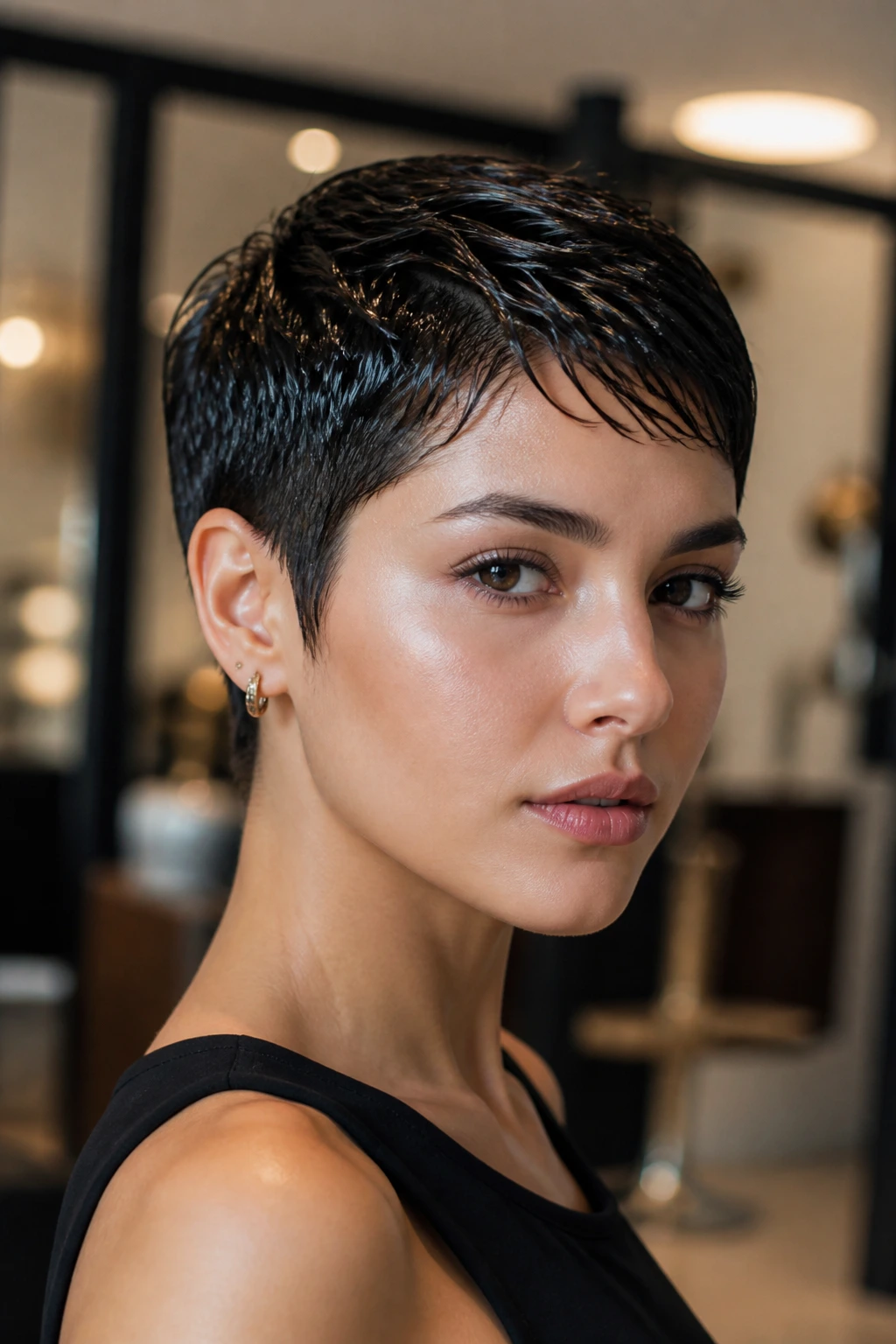
Want something sharp that takes five minutes? The wet-look pixie is the blunt answer.
It works because the product and the comb do the styling for you. Hair is slicked close to the head while still damp, usually with gel or a high-shine cream, and then shaped with fingers or a fine comb. That smooth finish strips away a lot of width from the sides, which can be useful on a round face.
How to Wear It
- Start on towel-dried hair, not dripping wet.
- Work a small amount of gel through the top and sides.
- Comb the hair back or into a deep side part.
- Let it dry without touching it, or the shine turns patchy.
The best versions have a clean nape and enough length on top to keep the shape from looking shaved. This style suits evenings, hot weather, or any day when you want the haircut to make the statement for you. The downside is obvious: once the gel dries out, you may need a touch of water or a quick refresh.
28. Soft Grow-Out Pixie Cut
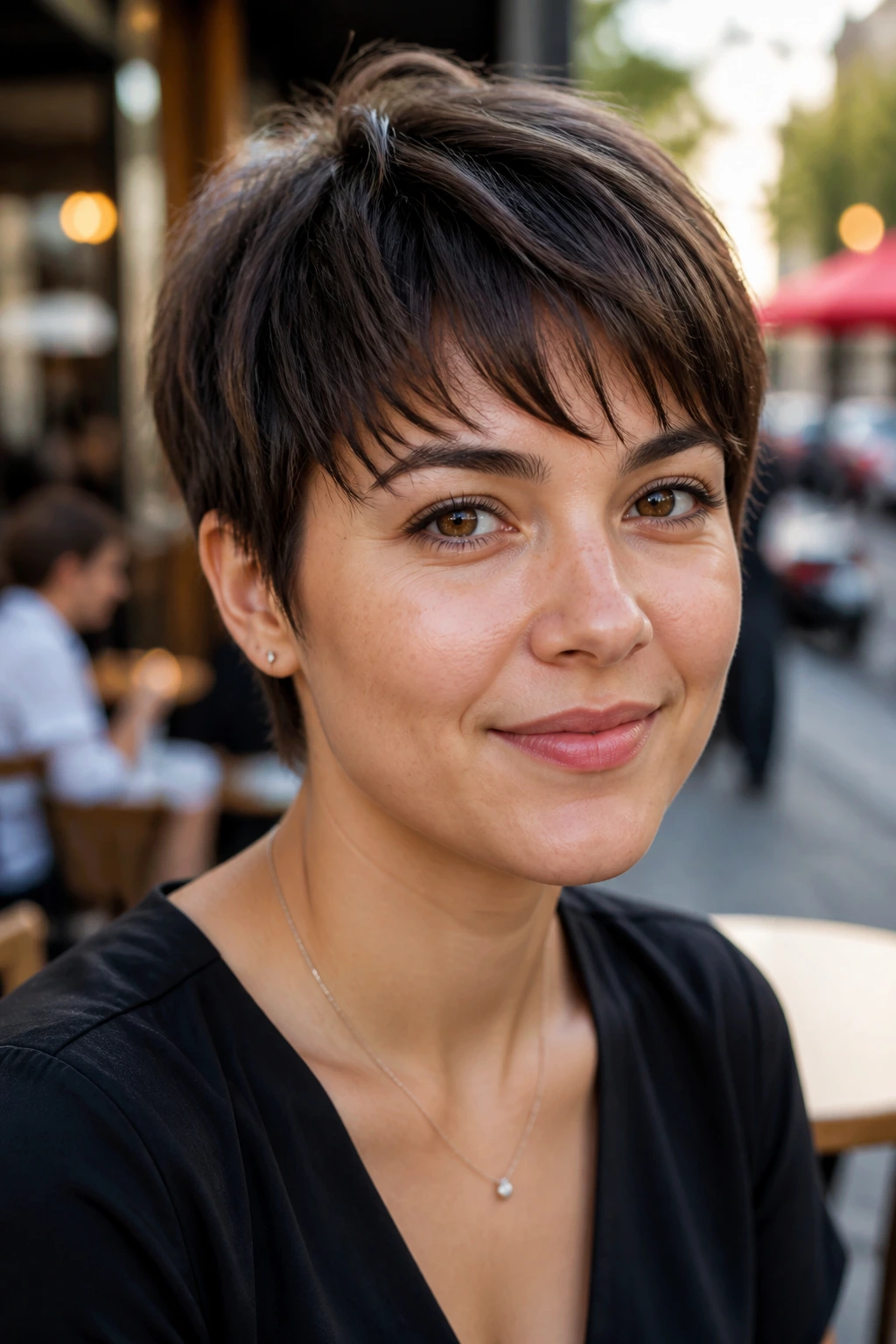
A soft grow-out pixie is the answer for anyone who likes the idea of a short cut but does not want to keep it razor-sharp every single week.
The shape usually keeps a little length at the fringe and crown while the nape stays trimmed and the sides remain controlled. That balance is what makes it work on a round face. You still get line and lift, but the edges are gentler, so the haircut does not start to fight your face shape as it grows.
This is the cut I’d point to if you like a bit of flexibility. Wear it swept to the side one day, pushed forward the next, tucked behind one ear if you feel like it. The styling needs are low, and the haircut forgives a missed trim better than many of the sharper pixies above.
It also has a nice honesty to it. No heavy styling, no drama, no pretending every strand needs to behave. Just enough structure to flatter the face, and enough softness that you can live in it without thinking about it all morning.
