



Fine hair can look limp in a blunt crop, but the right purple pixie cut changes the whole story. The cut does not need more length; it needs smarter shape, a little lift at the crown, and a color that gives depth where fine strands usually disappear.
Purple is a smart choice for that. A smoky amethyst reads deeper, lavender softens the edges, plum gives the cut some shadow, and a darker root keeps the whole thing from looking washed out under bright light. If the shade is too flat from root to tip, fine hair can lose its body fast. If there’s a bit of contrast, the eye sees texture that may not even be there.
Shape matters just as much as color. The best pixies for fine hair keep the sides snug, the nape tidy, and the top soft enough to move instead of collapsing into one stiff cap. Too much thinning, and the ends look hungry. Too much bulk, and the cut sits there like a helmet. The sweet spot is somewhere in the middle, where the hair looks light but not sparse.
Some of these looks lean soft and pretty. Others are sharp, dark, or a little punk. All of them are built to make fine hair look more alive on day one, and the first one starts with a smoky amethyst shape that gives the crown something solid to do.
1. Smoky Amethyst Pixie With Feathered Crown
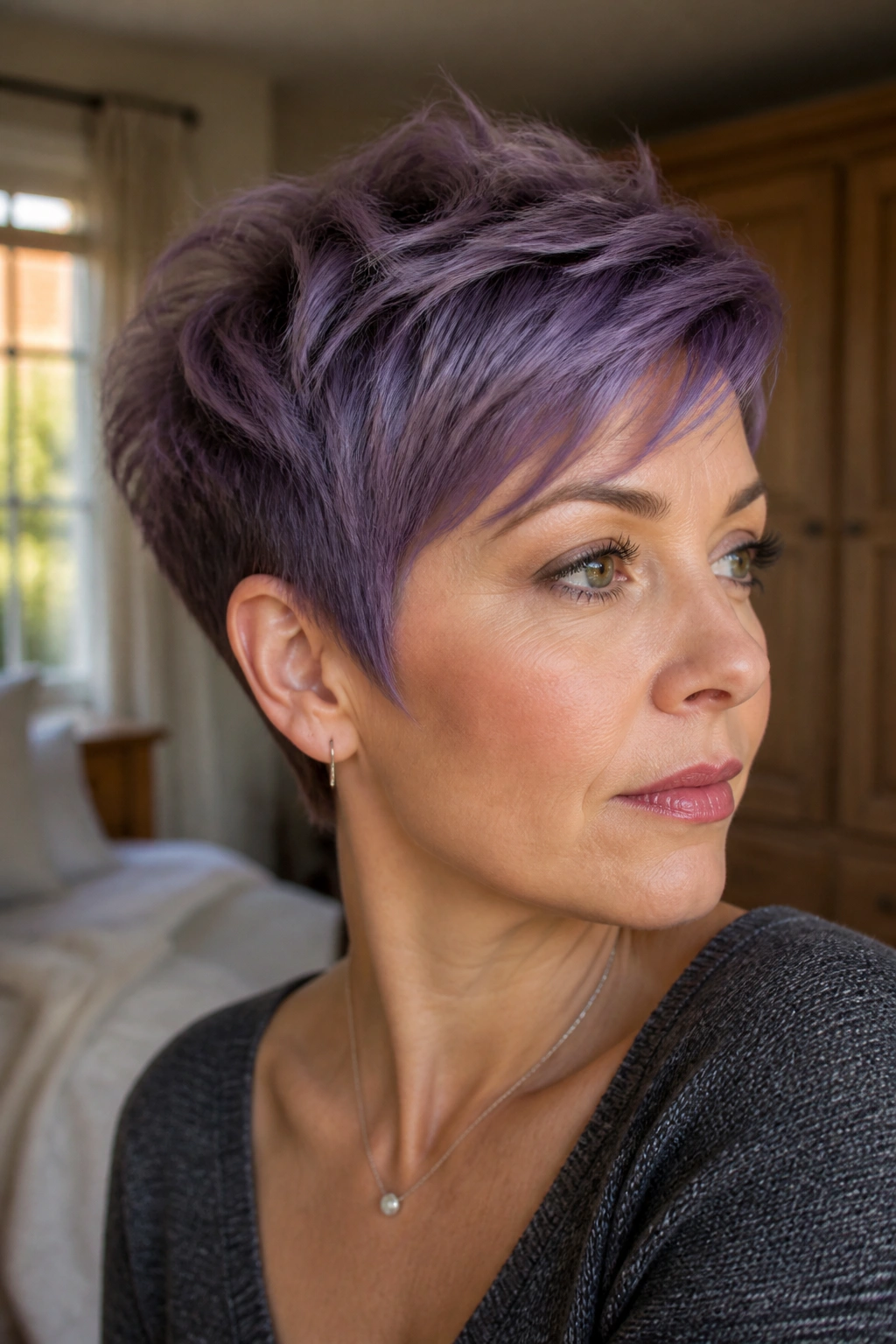
Smoky amethyst is one of those shades that makes a fine-hair pixie look fuller without screaming for attention. The color sits between purple and charcoal, which means it gives the eye depth right away. On a short cut, that extra shadow matters.
The cut itself works best with feathered layers at the crown and tighter sides that hug the head. Ask for the top to stay long enough to push forward or to one side, usually around 2 to 3 inches, so the hair can move instead of lying flat. A soft root shadow at the part helps even more.
A pea-sized amount of matte paste or light cream is enough. Rub it into the palms first, then pinch the top pieces upward. Do not smear product all through the ends or the cut will lose the airy texture that makes it work in the first place.
2. Lavender Side-Swept Pixie With Long Fringe
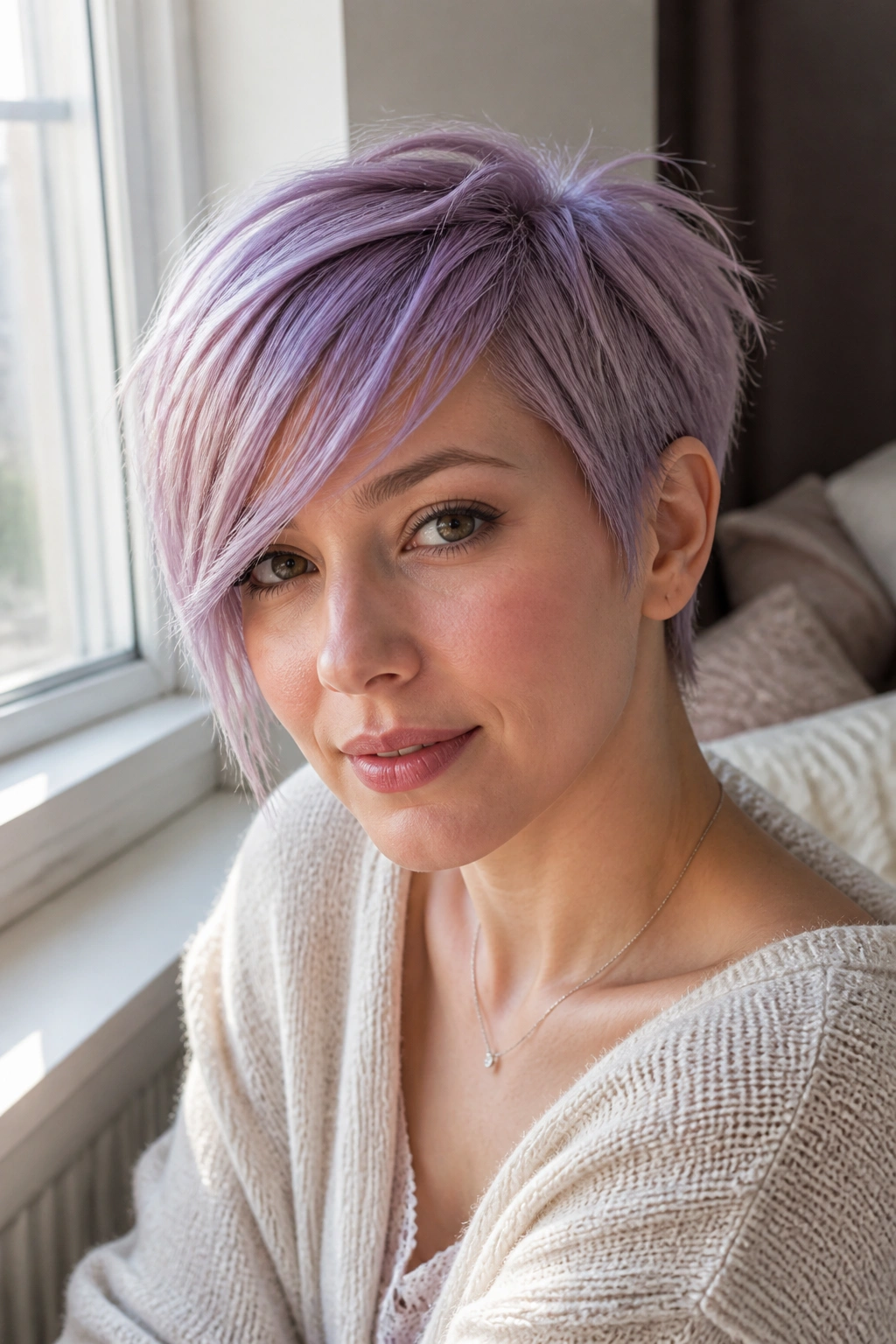
A long side-swept fringe can rescue a pixie when fine hair needs a little more presence at the front. It gives the eye a diagonal line to follow, and that alone makes the haircut feel less thin. Lavender keeps the whole look soft instead of severe.
Why the fringe matters
The fringe does a lot of the heavy lifting here. If the bangs sit too short, the forehead can take over the whole cut; if they’re too heavy, fine hair drops flat. The sweet spot is a fringe that grazes the brow or just skims it, then sweeps into one side with a soft bend.
How to style it
Blow-dry the fringe in the opposite direction first, then switch it back with a round brush or your fingers. That little trick creates a bend at the root that lasts longer than you’d expect. A light mist of flexible-hold spray keeps it in place without freezing it.
This one suits people who want a pixie that feels feminine and easy, not severe. It also grows out nicely, which is a quiet bonus.
3. Deep Plum Undercut Pixie
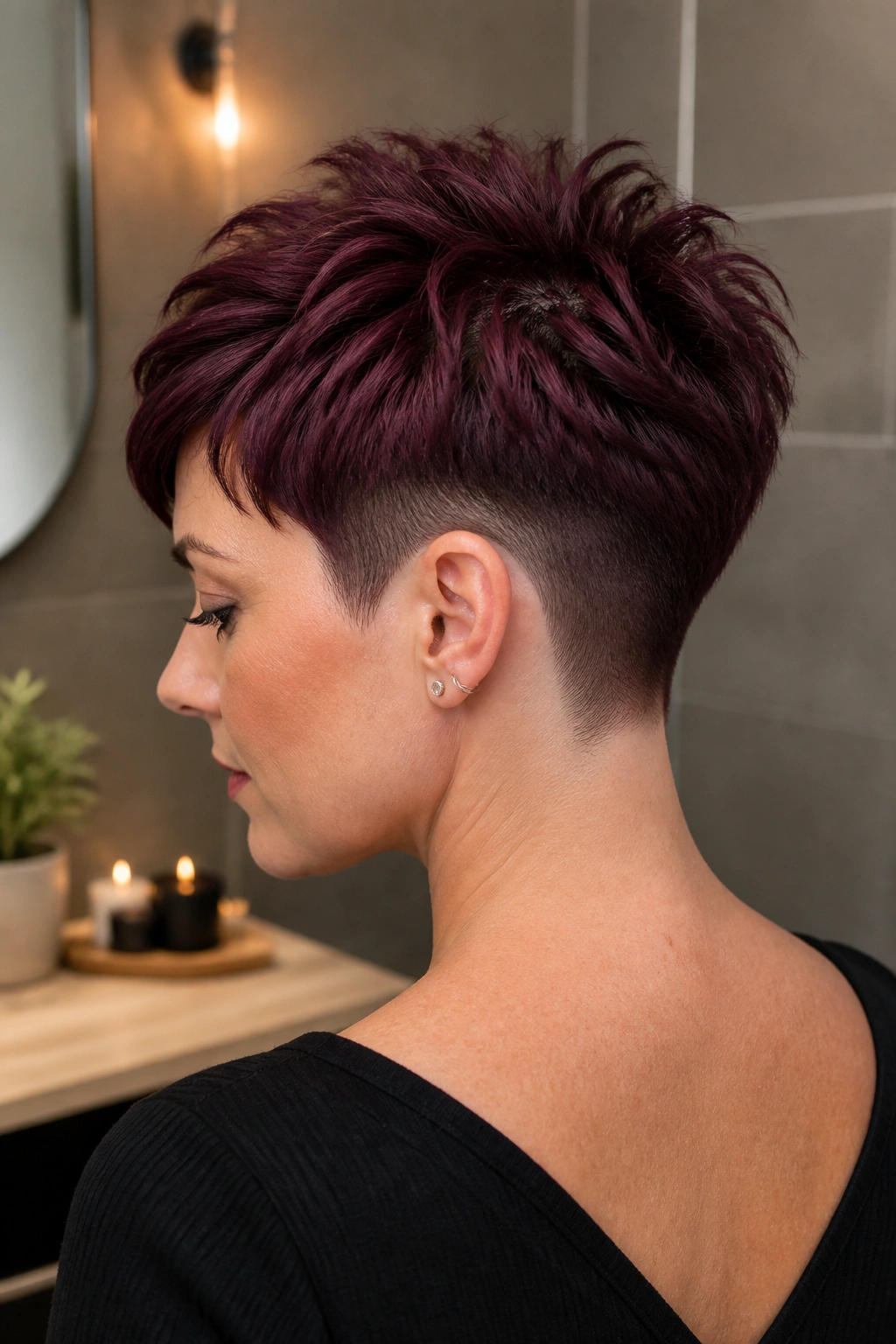
Deep plum has weight. That is the whole point.
On fine hair, an undercut can make the top look thicker because it removes the soft, fuzzy bulk underneath and leaves the visible layers clean. The top can stay a bit longer and choppier, while the back and nape sit close to the head. That contrast makes the purple read richer, too.
- Keep the undercut tight at the nape so the neckline stays neat.
- Leave the top pieces textured, not razor-thin, so they do not vanish when you add product.
- Ask for a plum shade with a darker base if your hair tends to look transparent in bright light.
- Style with a small dab of molding cream and lift only the front and crown.
Best for: anyone who wants a low-fuss shape with a little edge.
4. Soft Lilac Crop With Micro Bangs
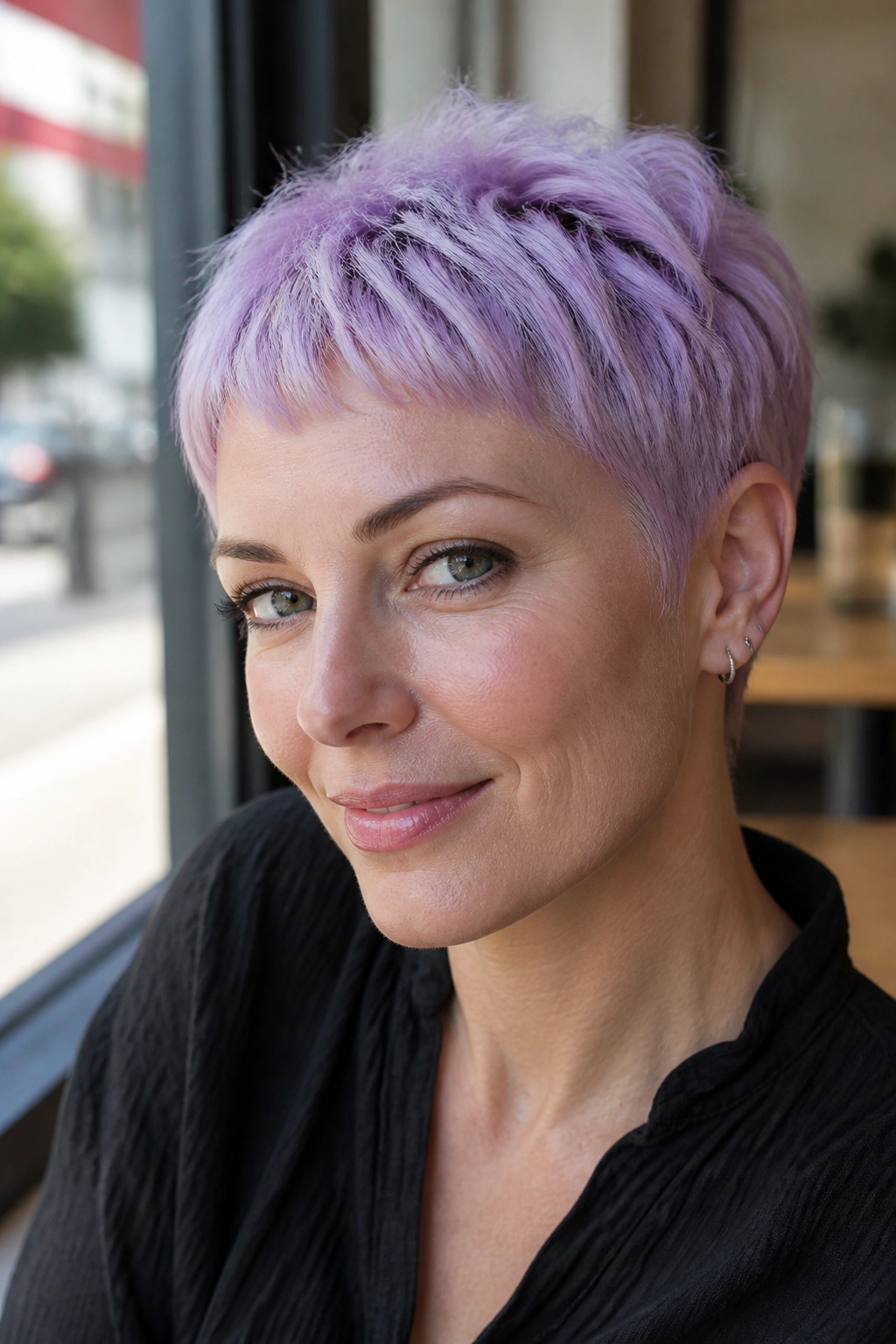
Can micro bangs work on fine hair? Yes, if the rest of the crop stays soft and controlled. The trick is keeping the fringe airy instead of blunt and boxy.
Lilac helps here because it keeps a short fringe from looking harsh. A pale purple tone can feel delicate, but the cut still needs structure underneath it. Ask for short bangs that sit high on the forehead with a bit of texture at the ends, not one heavy line across the face.
The crown should stay lightly layered so the overall shape has lift. If the hair is too long at the top, the micro bangs start to look like an afterthought. If the top is too short, the whole style can feel exposed.
This cut suits people who like a sharper, editorial look. It also works nicely with bold brows and simple makeup, which is probably why it has such staying power.
5. Violet Tapered Pixie With Ear Tuck
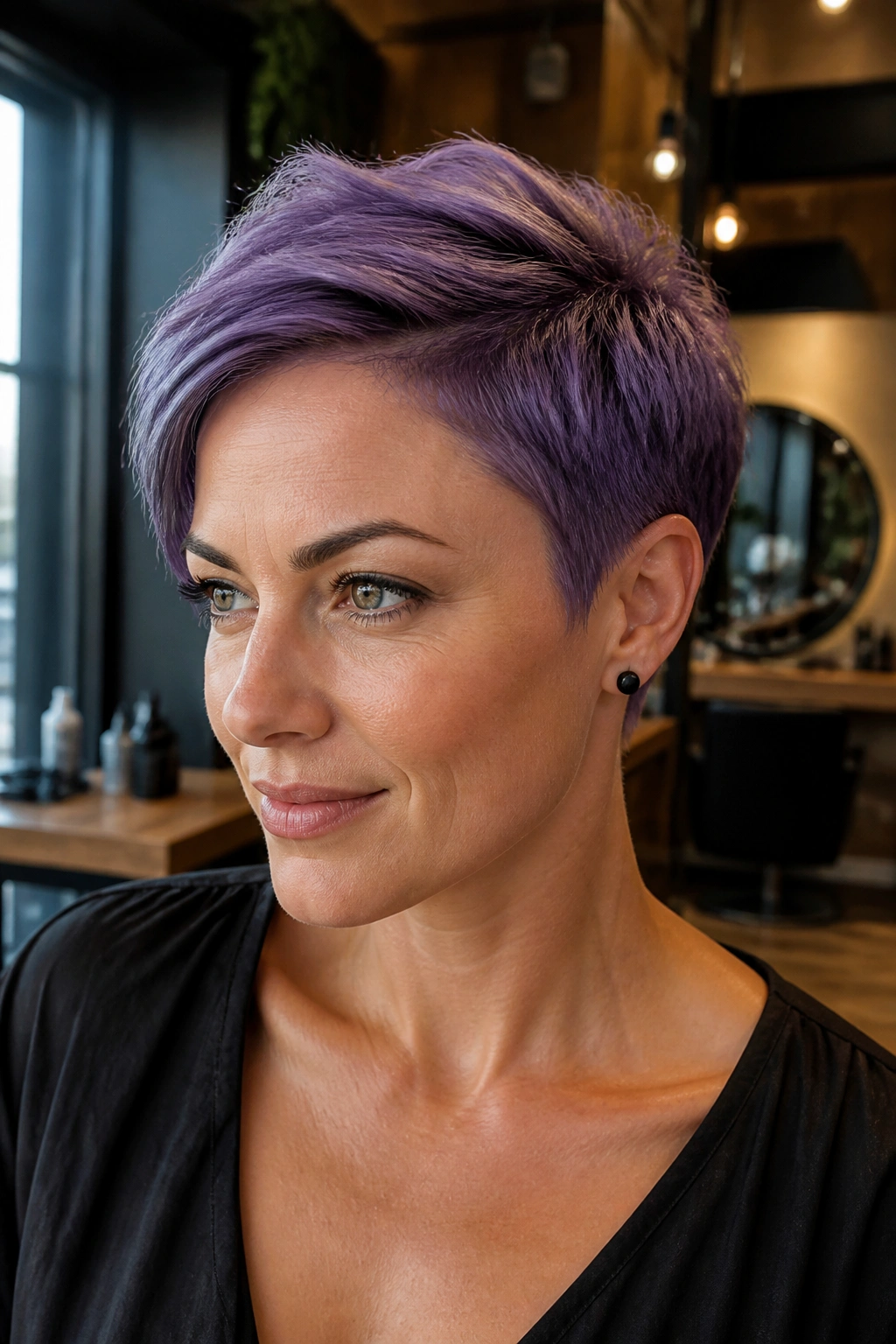
A tapered pixie is one of the cleanest ways to handle fine hair, especially when you want the sides to stay close and the top to look fuller by comparison. Violet gives the cut a little drama, but the shape keeps it grounded.
The ear tuck is the detail that changes the whole feel. When the hair curves neatly behind the ears, the cheekbones and jawline suddenly get more space. It is a small move, but it makes the style look deliberate instead of accidental.
This cut works well with a soft side part and a bit of lift at the crown. Keep the nape narrow, then let the top layer fall forward in pieces rather than one smooth sheet. That broken texture is what stops fine hair from looking flat.
If you wear glasses, this is one of the easiest pixies to live with. The temples stay clean, the frame doesn’t fight the hair, and the whole thing looks tidy with almost no effort.
6. Metallic Orchid Pixie With Piecey Top
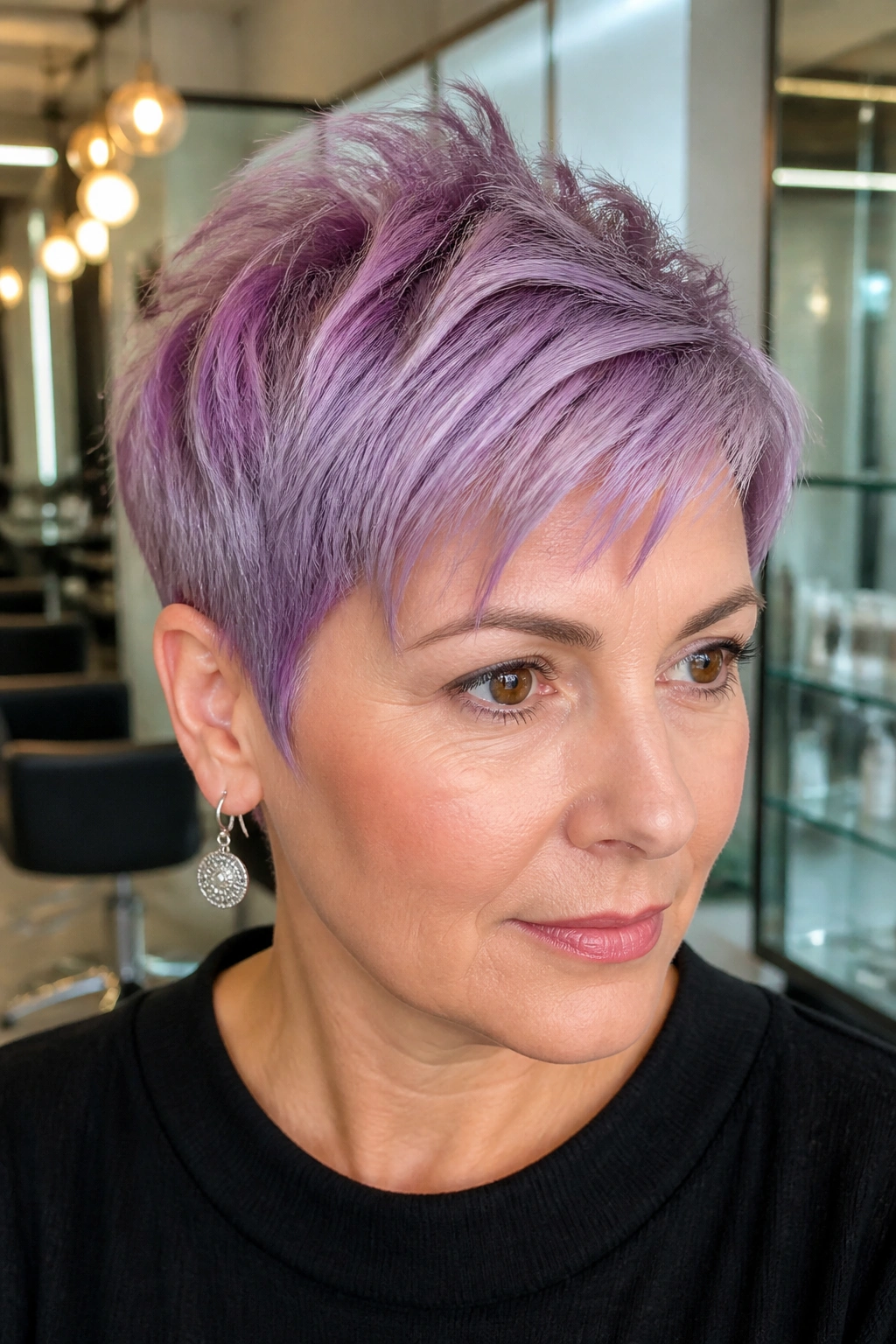
Metallic orchid is the kind of shade that makes short hair look sharper and more dimensional. The shine catches the eye, but the cut has to earn it. If the top is too smooth, the hair can read thin. If it’s piecey, each strand gets its own little job.
What makes it work
Piecey texture gives fine hair a kind of visual grit. Not roughness. Just enough separation to make the crown look busier than it is. A small round brush, a quick blast of warm air, and a dab of light wax at the fingertips usually do the trick.
Styling note
Push the top in different directions while it cools. Then choose the direction you actually want. That little bit of controlled mess creates lift without teasing.
This version is smart if you like shine but hate stiff hair. It has a polished edge, but it still feels touchable, which matters more on a pixie than people admit.
7. Grape-Brown Root Melt Pixie
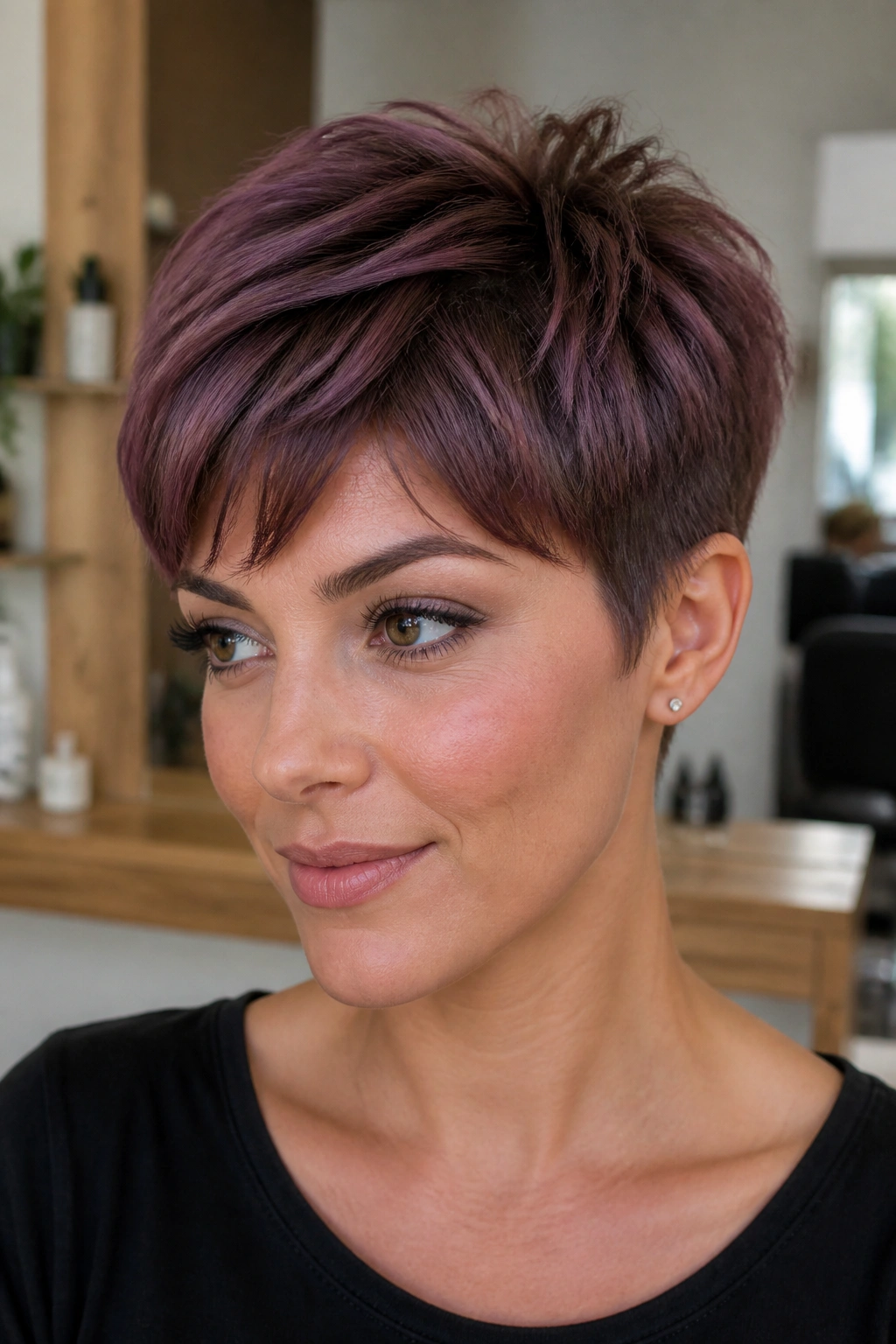
Unlike an all-over pastel, a grape-brown root melt gives fine hair somewhere to hide. The darker root creates depth at the scalp, and the purple lengths feel richer because of it. That’s why this version grows out so nicely.
The haircut can stay simple: short sides, a slightly longer crown, and a soft nape. The real work is in the color placement. Keep the root shadow soft, not striped, then melt into a muted purple through the mid-lengths and ends. The effect is less “dip-dyed” and more blended.
This is a good choice if you do not want to visit the salon constantly. The grow-out is gentler, and the darker root keeps the cut looking deliberate for longer. That matters on fine hair, where a few millimeters of regrowth can change the whole mood.
It also pairs well with matte styling products. A touch of dry texture spray at the crown is enough.
8. Pastel Purple Curly Pixie
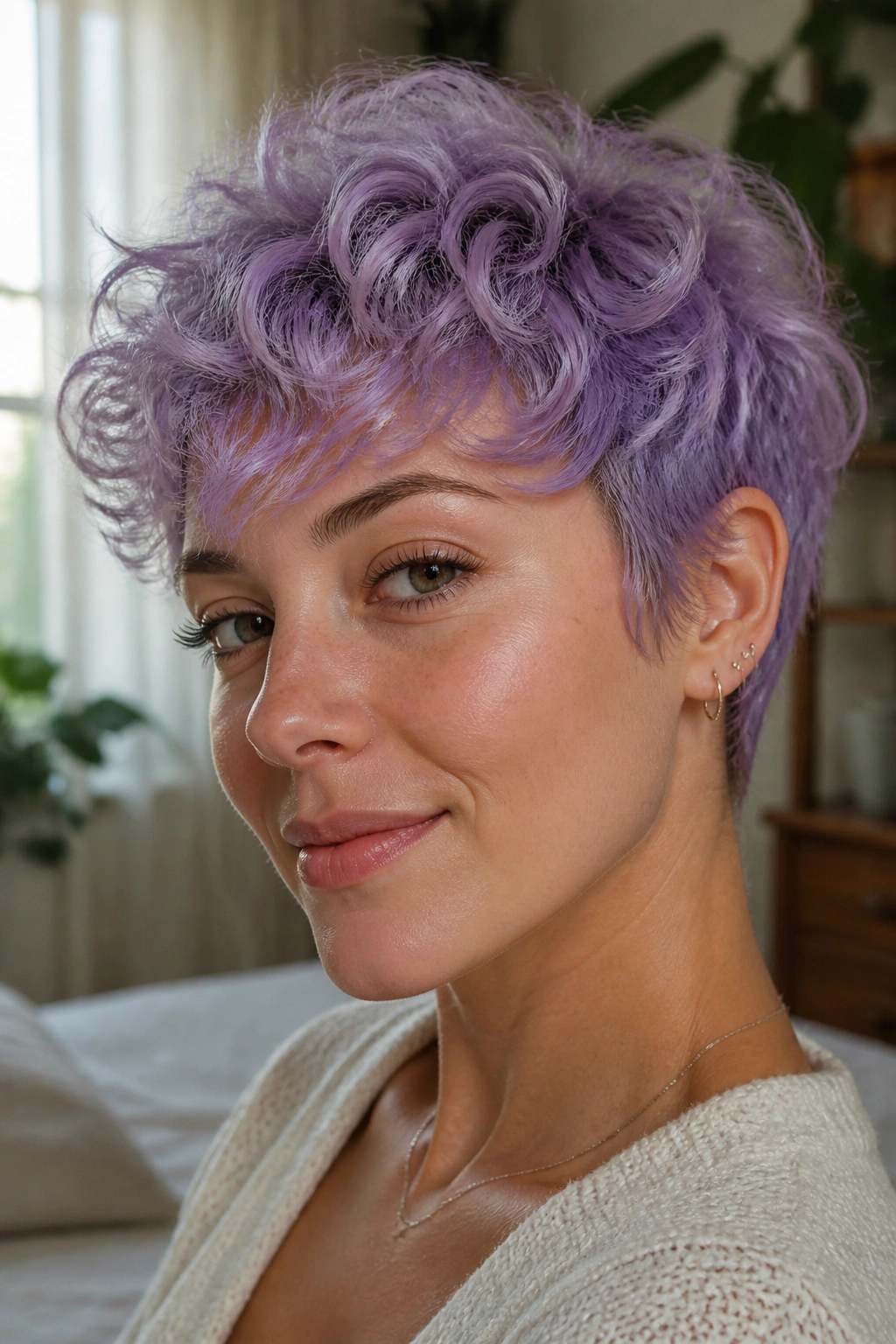
Curly fine hair has its own rules, and trying to force it into a sleek pixie usually backfires. A pastel purple crop lets the curl pattern do some of the work, which is a lot easier on the hair and usually looks better.
The key is not to over-layer the top. Curly fine hair needs enough length to form a bend, or the curls puff out and lose shape. Keep the crown soft and the sides tapered, then let the curls fall where they want to sit. A little unevenness is fine. It often looks better that way.
Diffuse on low heat, or let the hair air-dry with a curl cream that is light enough not to collapse the root. Heavy creams are a trap here. They make the hair look damp long after it has dried.
This cut feels playful without trying too hard. The pastel shade keeps it light, and the curl gives it the body that fine hair is often missing.
9. Shaggy Purple Pixie With Choppy Ends
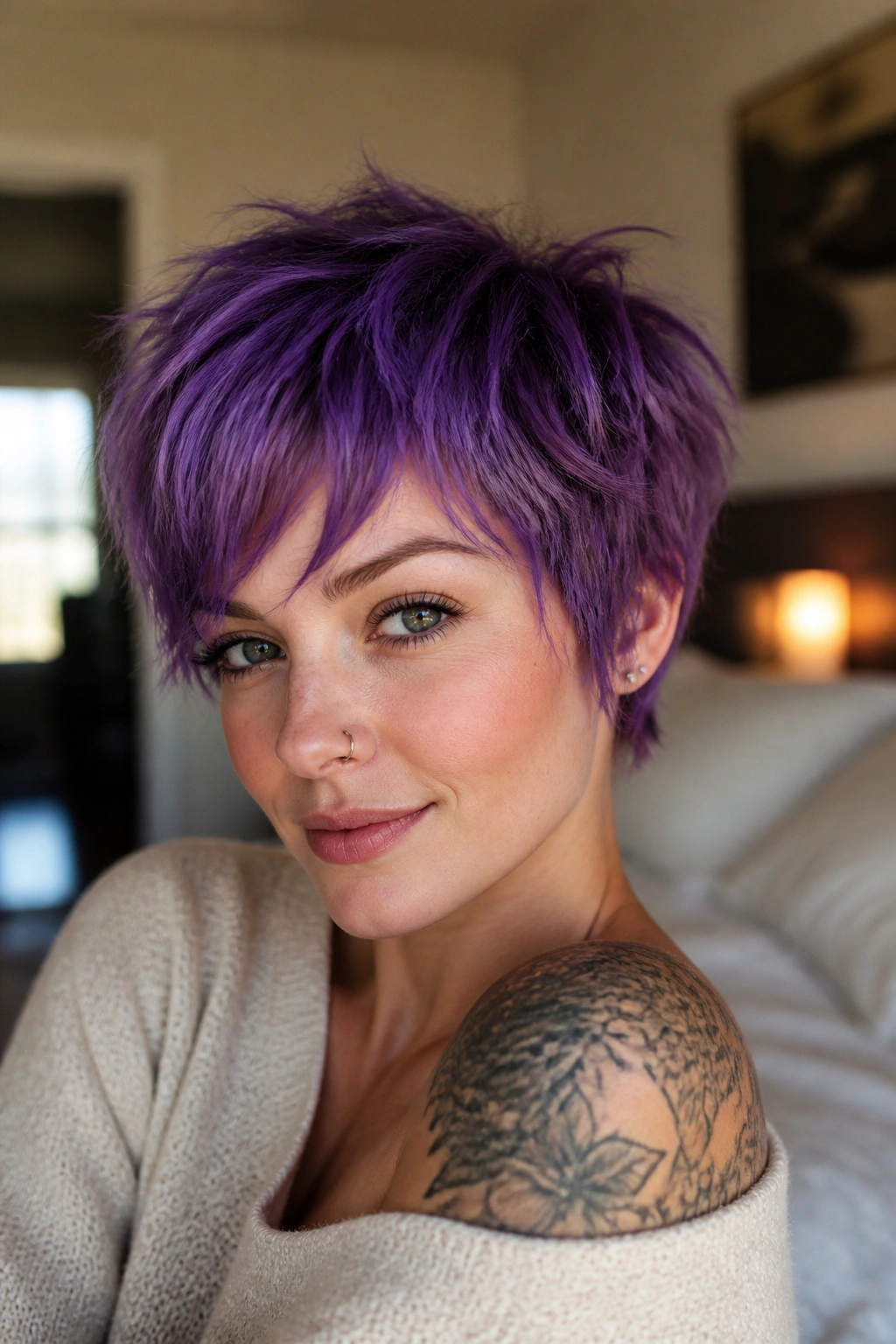
A shaggy pixie can be a gift for fine hair, but only if the choppy ends stay controlled. You want movement, not fray. That distinction matters more than most people think.
Key details to ask for
- Keep the crown layered in short, broken pieces so it stands up a little instead of lying in one direction.
- Ask for the ends to be point-cut or softly shattered, not aggressively thinned.
- Leave enough length around the front to create a little sweep across the forehead.
- Use a lightweight volume spray, not a heavy cream, or the texture will go limp by lunchtime.
The purple shade should help the cut look lived-in. A medium violet or blackberry tone works better than something too pale, because it gives the jagged ends more visual shape.
This is the kind of pixie that looks best slightly imperfect. A few bits sticking out? Fine. That is half the charm.
10. Eggplant Pixie With Sleek Sides
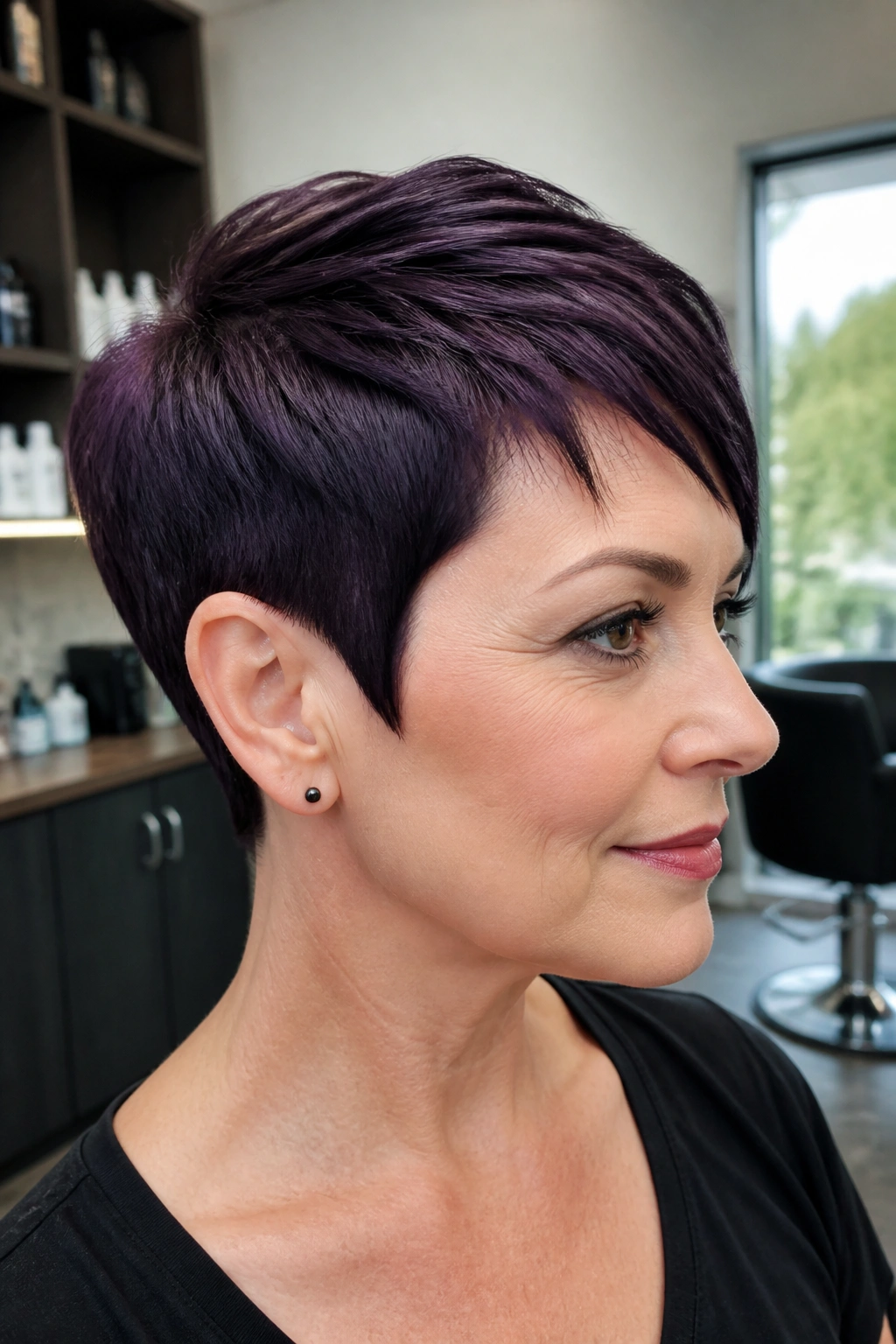
Eggplant is rich, dark, and moody in a way that makes sleek hair look intentional instead of thin. On fine hair, the darker shade can sharpen the outline of the cut, especially if the sides are kept smooth and close to the head.
Picture this: you want your hair to sit down around the ears, your neckline to look clean, and your morning routine to stay under ten minutes. This is the cut for that. The top can stay a little longer, but the sides should be neat enough to expose the shape of the face.
A smoothing cream and a fine-tooth comb are enough for styling. Work the product through damp hair, then comb it flat on the sides while lifting only the crown. If you want a little polish, tuck one side behind the ear.
It is a sharp look, but not harsh. The eggplant tone gives it depth, and the sleek sides keep it from reading wispy.
11. Mauve Purple Pixie Cut With Long Crown Layers
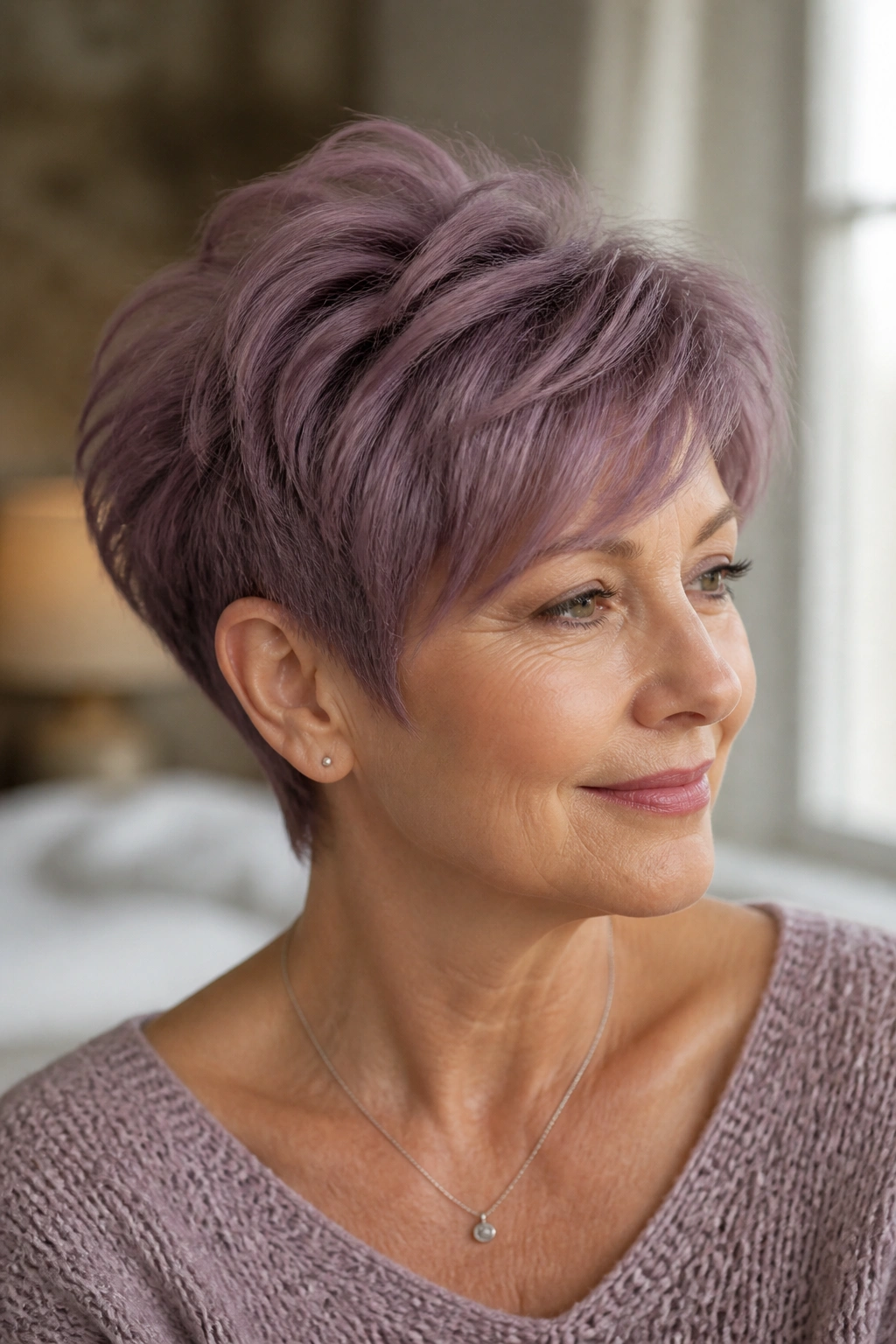
Mauve has a softer, dustier feel than brighter purple shades, and that works well when you want a pixie cut to look fuller rather than louder. On fine hair, the longer crown layers give the illusion of volume because they stack instead of disappearing into one short shell.
Ask for the top to keep enough length to bend over the head, not just stand straight up. That little bit of flexibility matters. The layers should move, but they should still connect to each other so the hair does not look chopped to pieces.
This cut is good for anyone who likes a gentle shape around the face. The crown can be lifted with mousse, then brushed slightly forward so the layer edges show. That visible movement creates body. It is a small thing, but it changes the whole read of the haircut.
It is also one of the easier purple pixie cuts for fine hair to wear every day. Not boring. Just practical in the best way.
12. Neon Violet Pixie With Black Roots
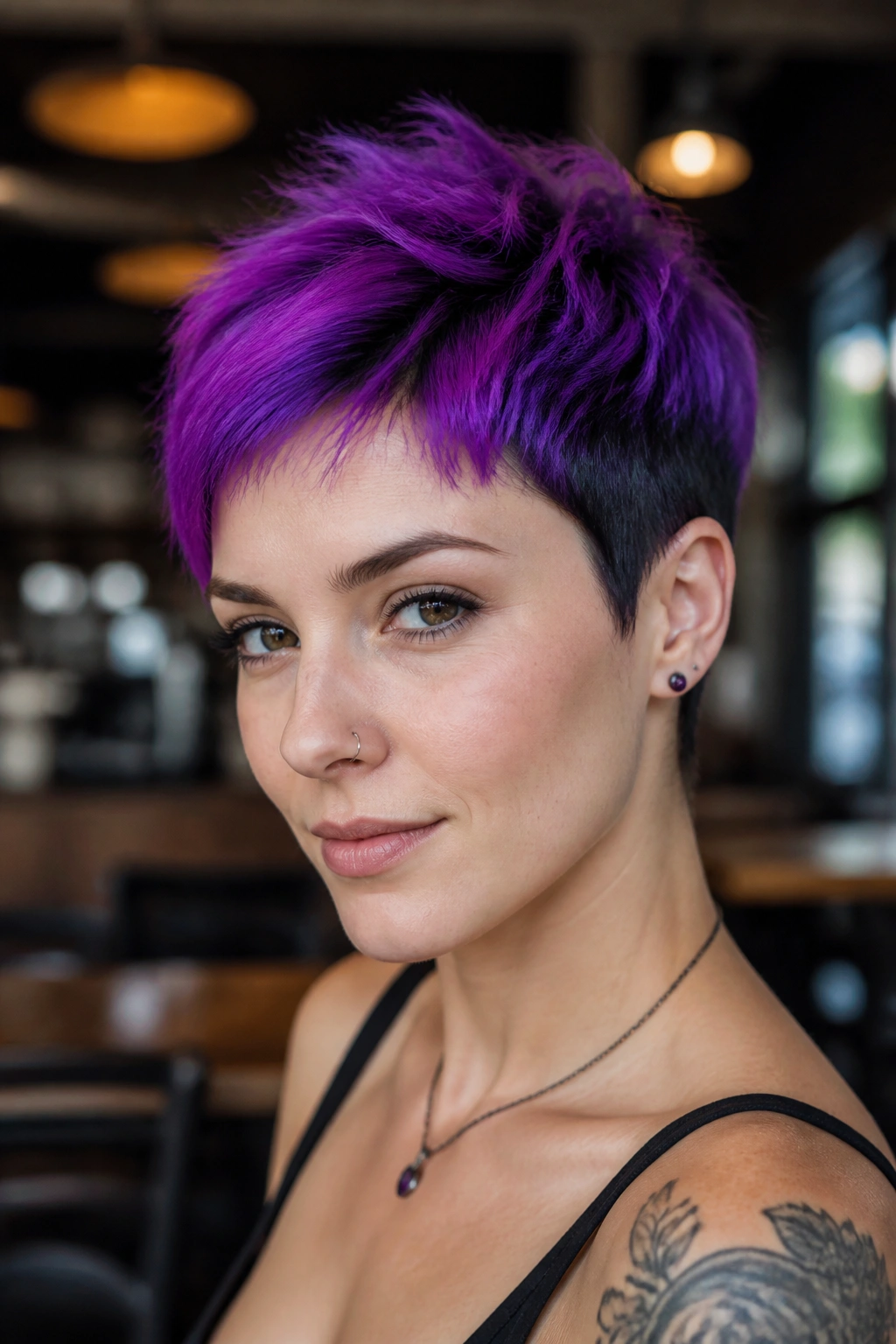
Bright violet can look thicker than a softer pastel when the roots stay dark. That sounds backward, but the contrast gives the eye something to measure, and fine hair benefits from that kind of definition.
The black roots do the heavy lifting here. They anchor the cut and stop the color from looking airy in a way that can expose every scalp line. The violet lengths then pop more sharply, especially when the pixie is cut with a clean nape and a slightly messy top.
This is not a shy haircut. It works best if you like color that says something the second you walk in. The styling can stay simple: a little texture cream, finger-combing, and a touch of separation at the fringe.
If you want maximum color payoff on fine hair, this is one of the strongest options in the whole group. Bold on purpose. No apology needed.
13. Dusty Lavender Pixie With Soft Taper
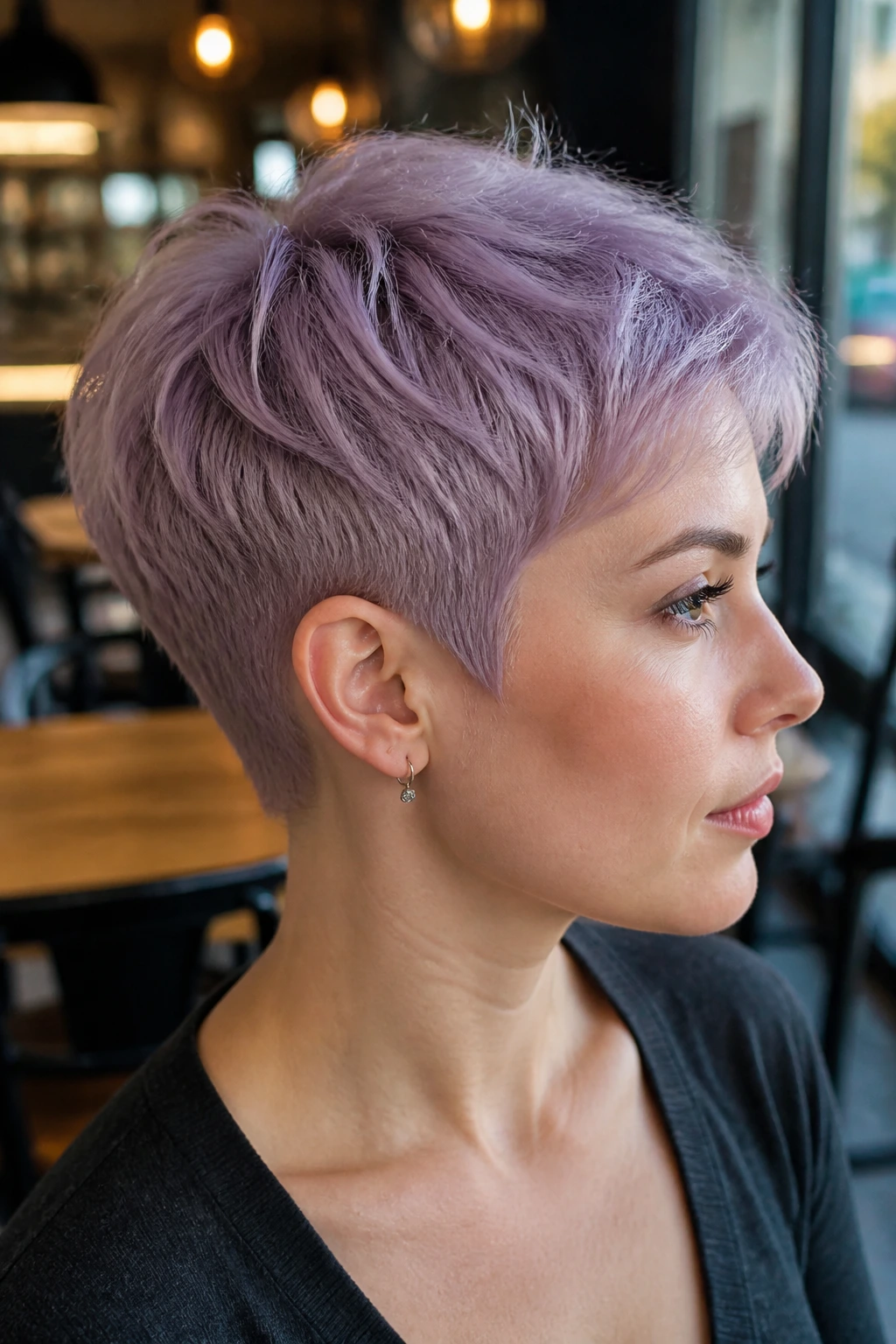
Why does a soft taper matter so much on fine hair? Because it keeps the cut from ending in a blunt wall at the nape. A gentle taper makes the neck look longer and the haircut look lighter, which is exactly what you want when the strands are delicate.
What makes it read softer
The dusty lavender shade helps the shape feel quiet. It does not fight the haircut; it supports it. Keep the top a little longer than the sides, then let the taper around the ears and nape get gradually shorter so the outline stays smooth.
How to keep it airy
Use a very small amount of styling foam on damp roots and blow-dry with your fingers first. Then finish with a brush only where you need control. If you drag a brush through every section, the fine hair can collapse.
This is a lovely choice if you want something neat, not severe. It has a soft edge that works with natural movement instead of trying to flatten it out.
14. Amethyst Bowl-Pixie Hybrid
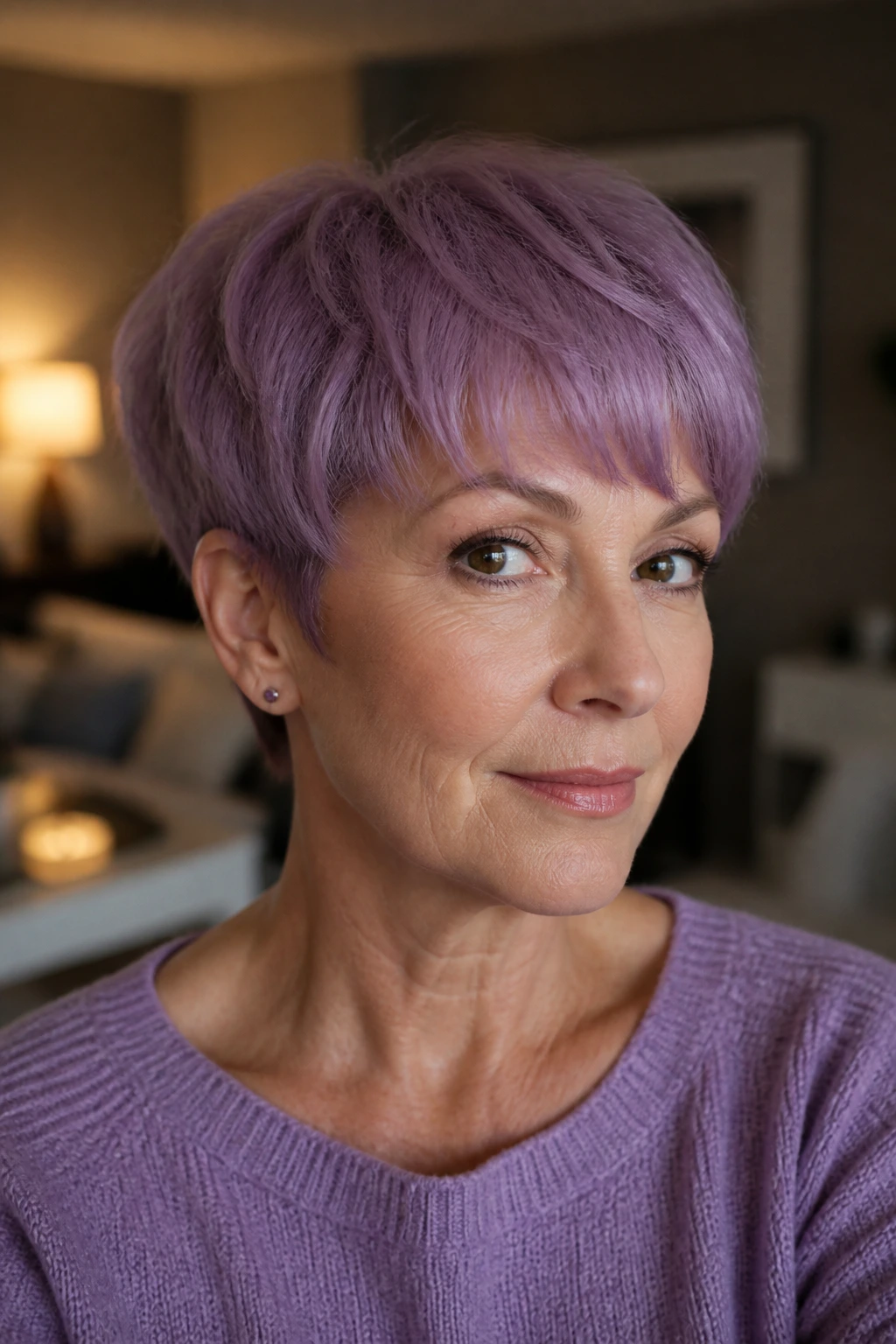
This shape sits halfway between a classic pixie and a softened bowl cut, and yes, that can work on fine hair. The trick is keeping the edges broken up so it never feels heavy or cartoonish.
A traditional bowl cut can swallow fine hair if the line is too blunt. A bowl-pixie hybrid avoids that by keeping the crown slightly longer, the perimeter soft, and the fringe curved rather than rigid. Amethyst gives the shape a modern note, which helps a lot.
It suits straight hair best, especially if your strands naturally fall into a smooth line. The color adds interest without relying on big layers. If your hair has a lot of cowlicks, you will want your stylist to carve the fringe carefully, because that front edge can either look chic or fight you all day.
Strange as it sounds, this one can feel more wearable than a very shattered pixie. It has shape. Clear shape.
15. Purple Pixie With Asymmetrical Fringe
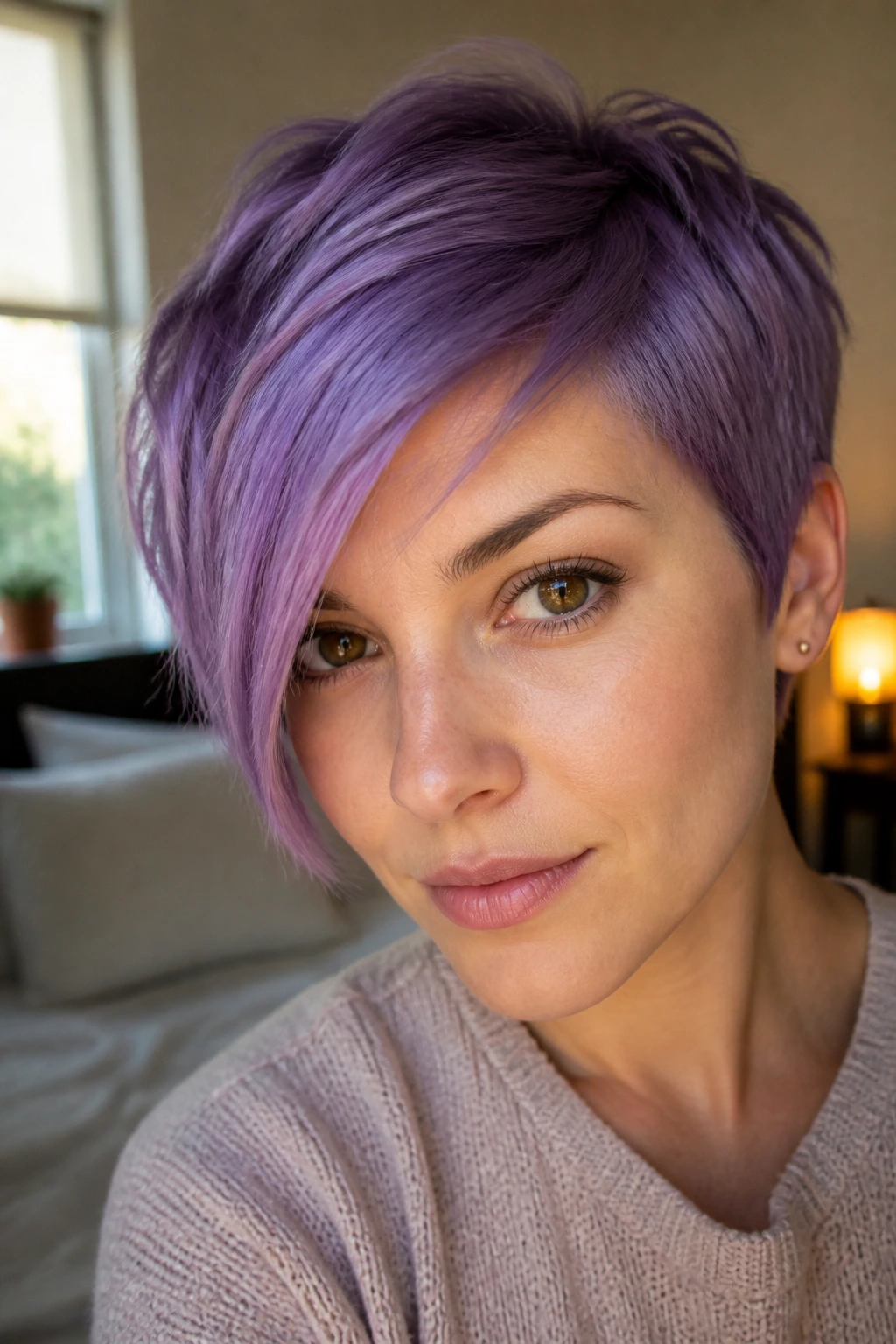
An asymmetrical fringe is one of the easiest tricks for making fine hair look a little fuller. One side sits a bit longer, which pulls the eye across the face and stops the style from looking too small or too tidy.
- Keep one side of the fringe just long enough to skim the cheekbone.
- Let the shorter side sit closer to the brow so the shape feels intentional.
- Use a light paste only at the ends, because too much product kills the movement.
- Ask for a soft diagonal line, not a harsh chop, unless you want a sharper look.
Why asymmetry helps
The uneven line adds motion, which is what fine hair often needs most. It also hides a cowlick better than a dead-straight fringe. That makes the cut easier to live with on bad hair days, which is when a lot of short cuts fall apart.
A medium purple or violet-black shade works well here because it makes the fringe edges stand out just enough.
16. Smoky Orchid Pixie With Razor Texture
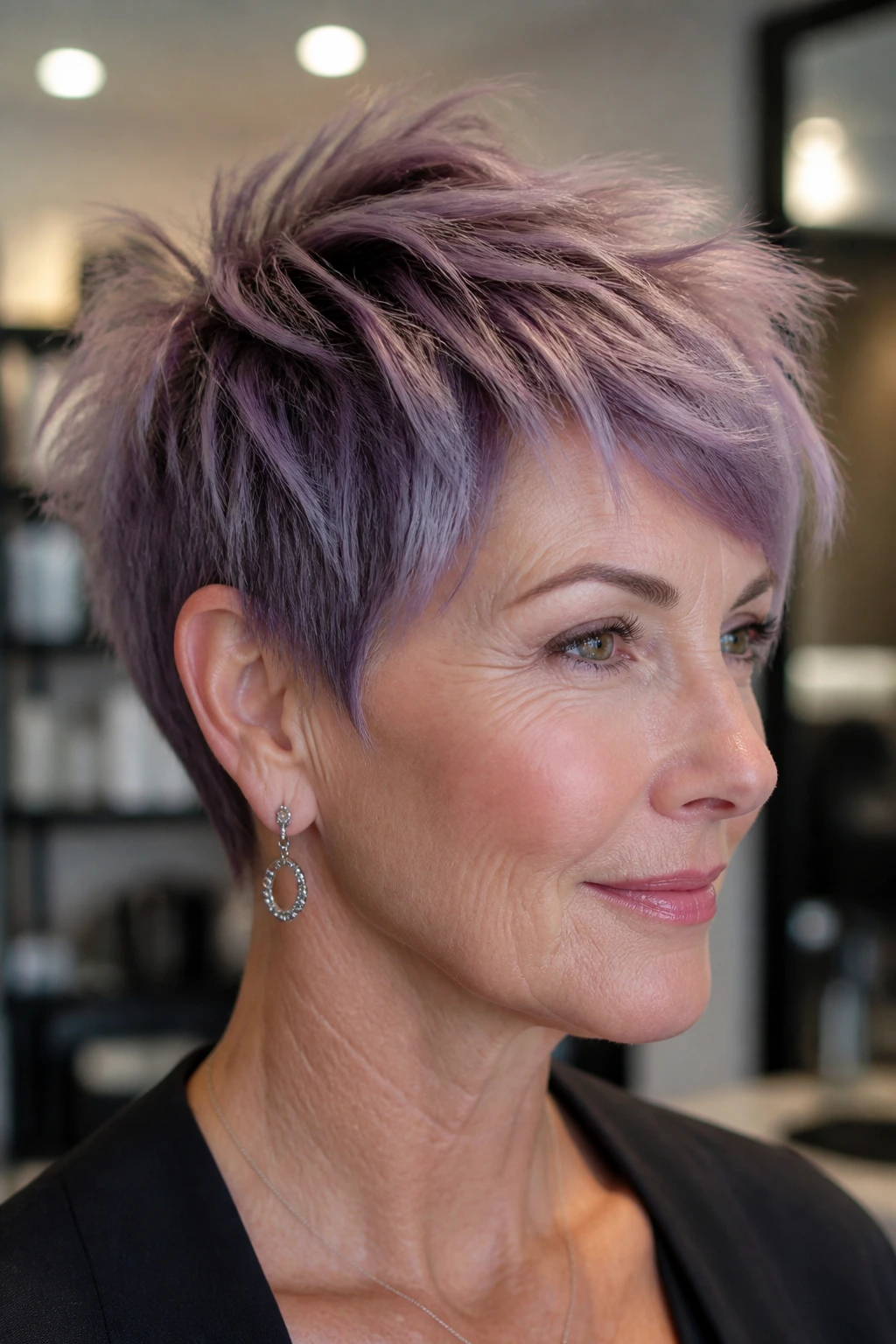
Razor texture can be lovely on a pixie, but on fine hair it needs a careful hand. Too much razor work and the ends look shredded. Just enough, and the cut gets a soft, airy edge that scissor work sometimes misses.
Smoky orchid is a nice match because the color has depth without being too dark. It lets the texture show. Ask for the razor to be used mainly at the ends and around the outer shape, not deep through the whole head. That keeps the hair from losing too much density.
This one works if your fine hair has a little natural softness and does not break easily. If your strands are fragile or already dry at the ends, scissors may be the safer call. A good razor cut should whisper, not fray.
The finished look is gentle, light, and a little bit cool. Not fussy. Not overbuilt.
17. Mulberry Pixie With Tousled Volume
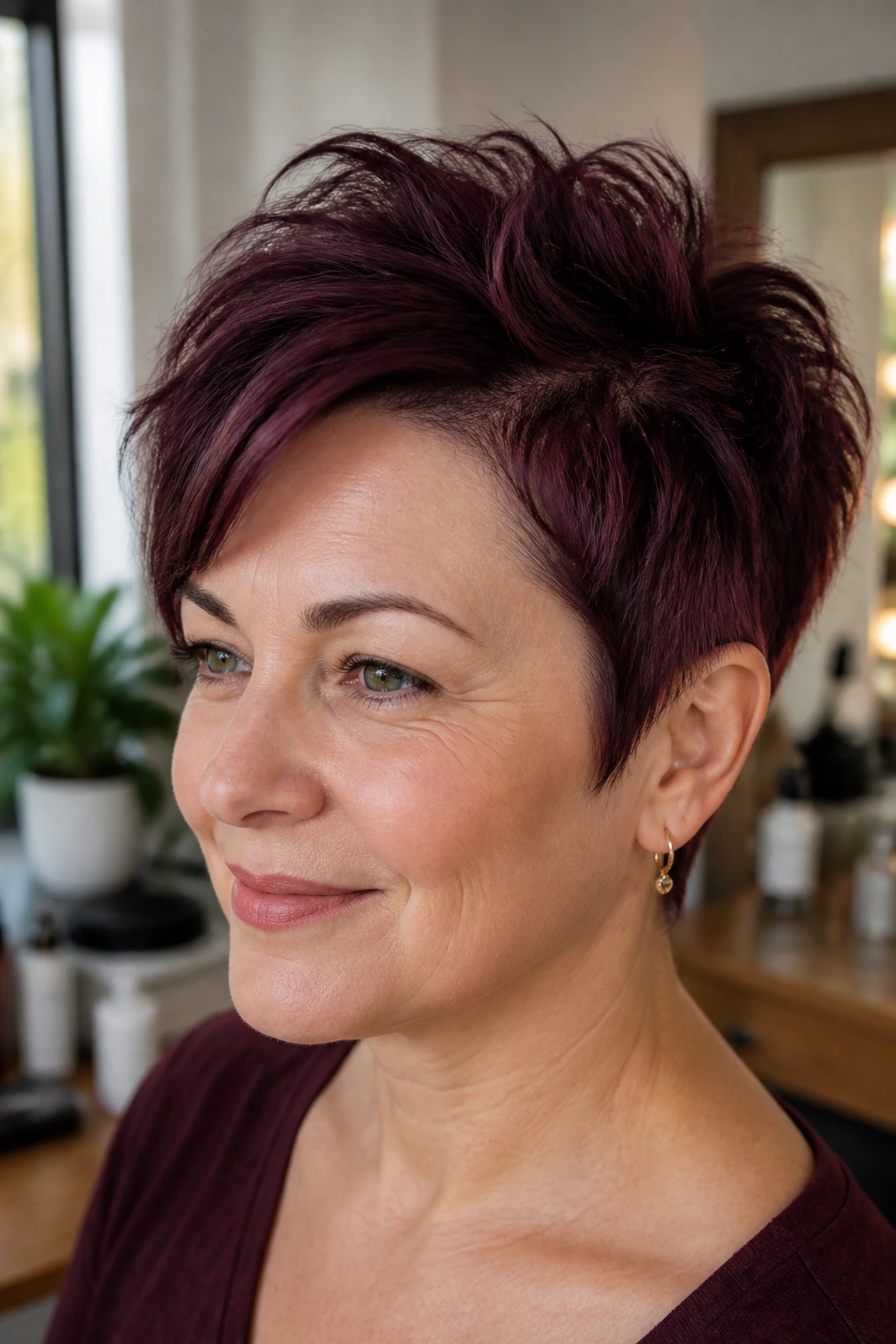
A tousled pixie is one of the best ways to make fine hair seem fuller, and mulberry gives it a darker, richer backdrop. The color makes the silhouette read stronger, while the styling creates the sense of lift you cannot get from product alone.
Work a small amount of root-lift foam into damp hair, then blow-dry the crown upward with your fingers. Once the hair is nearly dry, twist a few top pieces between your fingertips to break them apart. That little bit of roughness is the whole point.
The mulberry tone keeps the cut from looking flimsy. It is a flattering shade if you want purple without going too pastel or too neon. It also plays nicely with a side part, which can help fine hair look denser at the roots.
This is the pixie I’d pick for someone who wants movement first and polish second. It has both, but movement wins.
18. Lavender Pixie With Nape Undercut
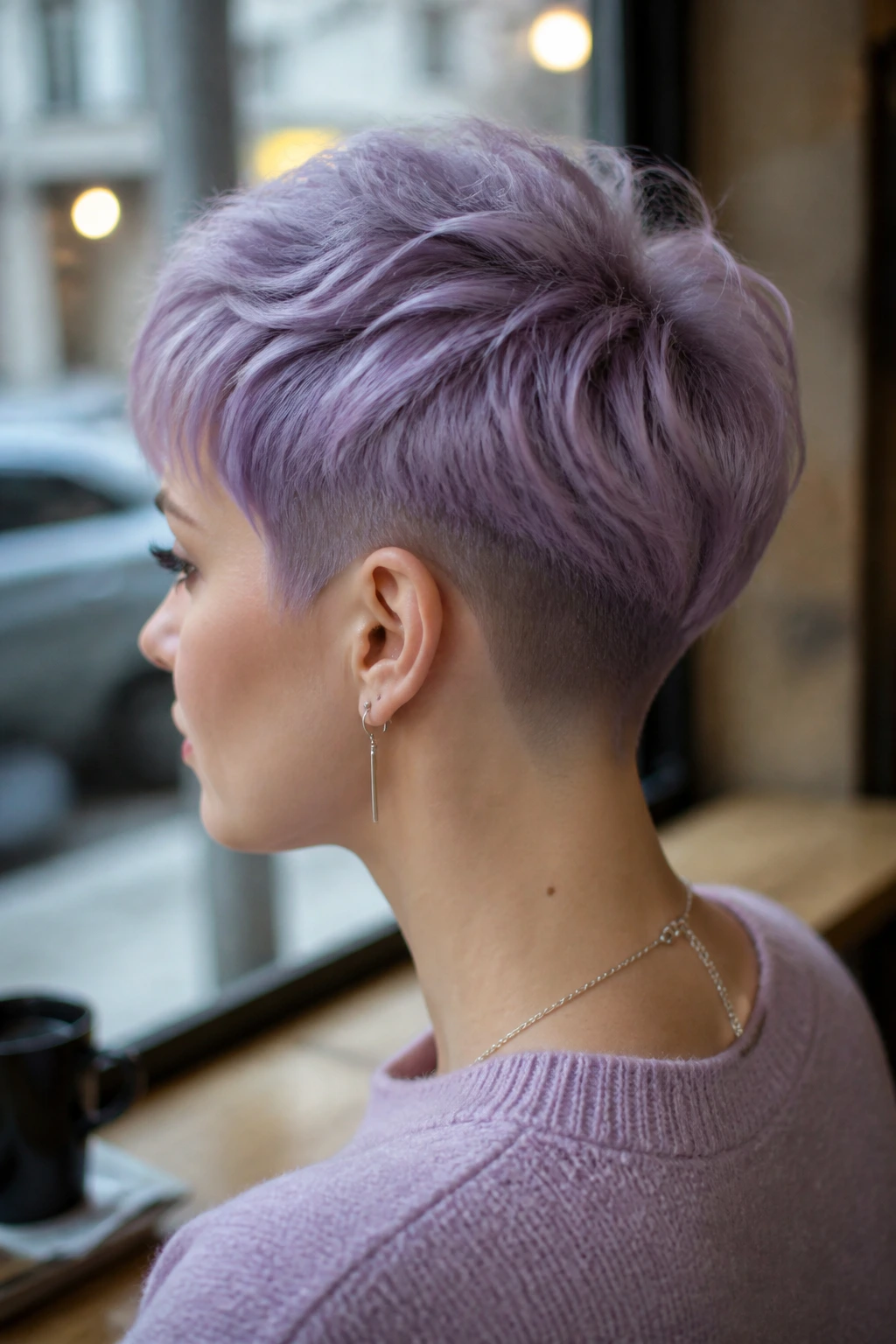
If the nape of your hair always lies flat and fussy, an undercut can be a relief. It removes the bulk that fine hair sometimes creates in the wrong place, which means the top can look cleaner and the neckline can stay sharp.
The practical payoff
The undercut helps the style sit closer to the head, so the rest of the cut can rise a little higher without turning puffy. That matters with lavender, because a pale shade can show shape changes fast. A tidy nape keeps the color story neat.
This version works especially well if you wear collars, scarves, or jackets that rub the back of your hair. The shorter section reduces that awkward fluffing at the neck. It also makes styling quicker.
Keep the top longer and softly layered so the undercut does not make the cut feel severe. You want contrast, not a hard divide.
19. Plum Pixie With Sideburn Detail
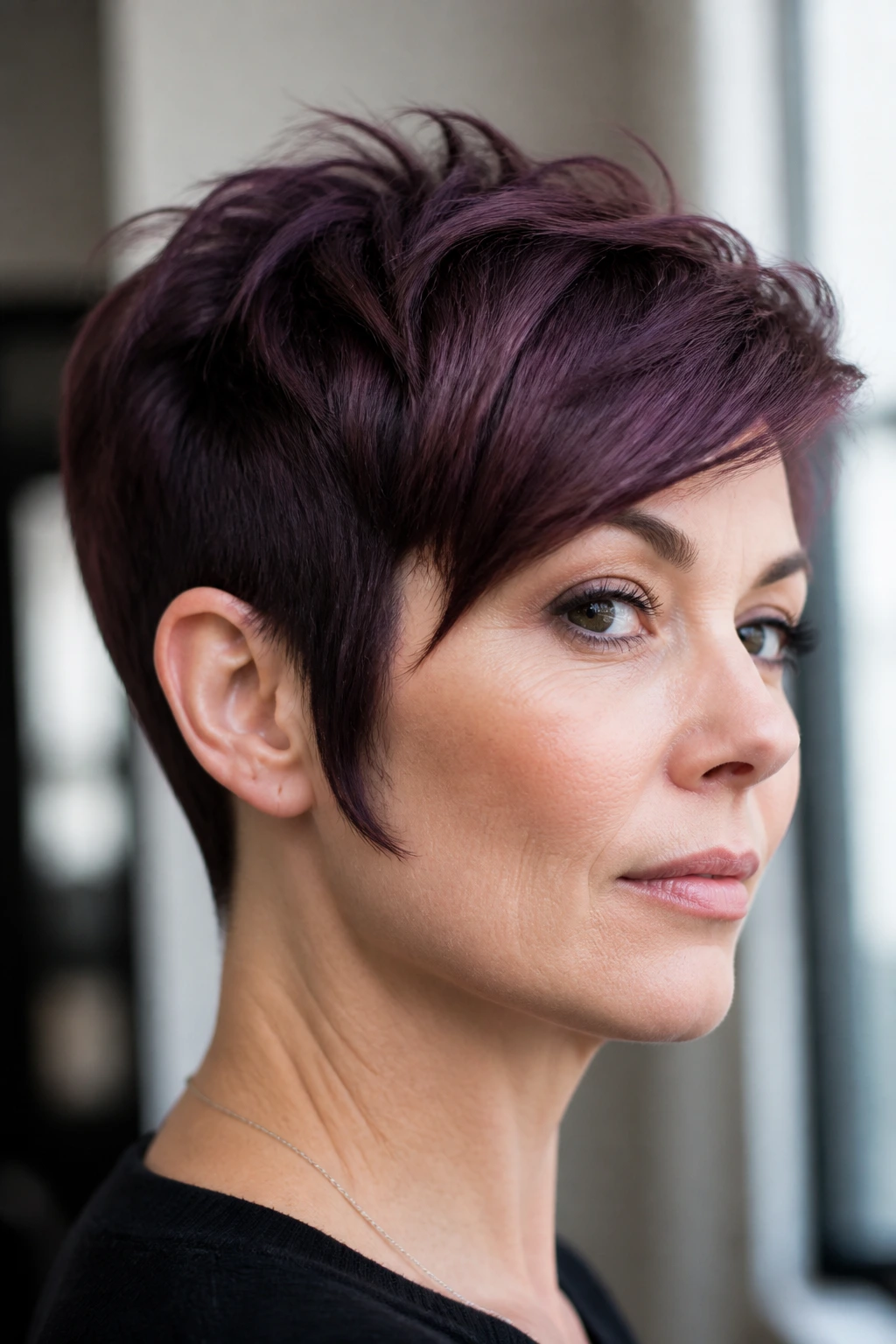
Sideburns are underrated on a pixie. A small sweep of length in front of the ear can frame the jaw, soften the profile, and keep fine hair from looking stripped bare at the sides.
Plum is a solid shade for this shape because it gives the sideburn area a bit of shadow. That shadow helps the detail show up instead of disappearing into the skin. If the rest of the cut is tight and neat, the sideburns become a little anchor point.
This style is a nice fit if your face is long or narrow. The extra length near the cheek can visually widen the middle of the face, which gives the whole cut balance. Keep the sideburns wispy if you want softness, or a little sharper if you want more definition.
It is a small adjustment, but small things matter on short hair. Especially short hair with fine texture.
20. Iris-Toned Pixie With Feathered Bangs
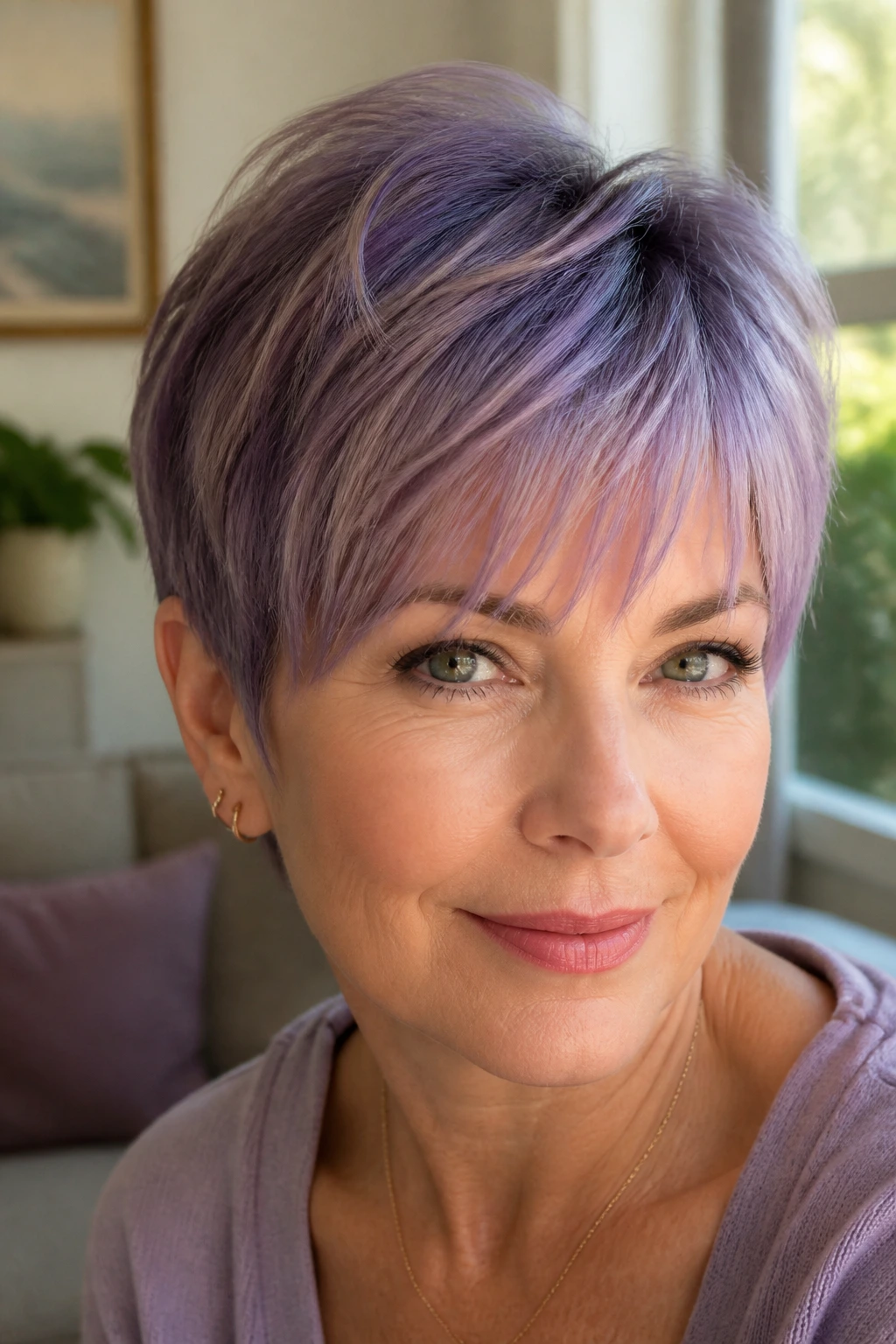
Can bangs stay soft on fine hair? They can, if they’re feathered instead of packed together. Feathered bangs move with the rest of the cut, which keeps the front from feeling heavy.
Iris is a useful shade here because it sits between cool purple and blue-leaning violet. That cooler cast makes the feathering look delicate instead of chunky. Ask for the bangs to be cut with tiny point-cut sections so the line breaks up a little.
The rest of the pixie should stay neat through the sides, with just enough length at the crown to support the fringe. If the top is too short, the bangs can take over. If the top is too long, the bang area loses its lightness.
This is a pretty, airy version for people who want movement around the eyes without a full heavy fringe. It has a soft bite to it.
21. Violet Pixie With Crown Lift
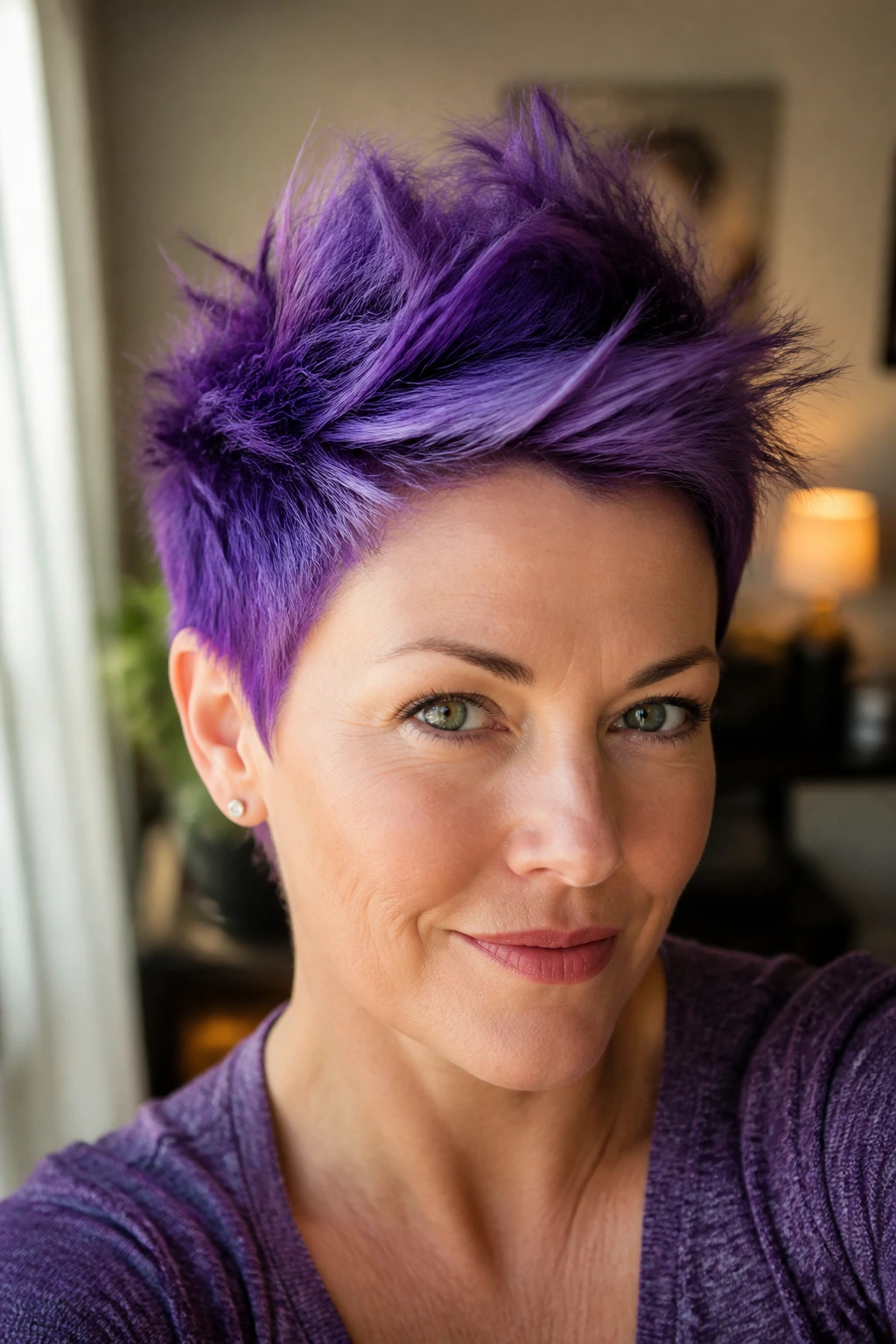
A lifted crown changes everything on fine hair. Without it, even the best purple shade can fall flat. With it, the whole cut looks awake.
Three ways to make the crown stand up
- Blow-dry the roots in the opposite direction first so they do not settle flat right away.
- Clip the crown up while it cools, which helps the bend last longer.
- Finish with a light dusting of root powder or texture spray instead of heavy wax.
The violet tone adds energy, but the lift is what makes the haircut read fuller from the front. Keep the sides snug and the back tapered so the crown has room to sit above the rest of the shape.
This is a good pick if you like a little height without teasing your hair into a brittle mess. The result looks cleaner, and your roots will thank you.
22. Grape Ice Pixie With Soft Waves
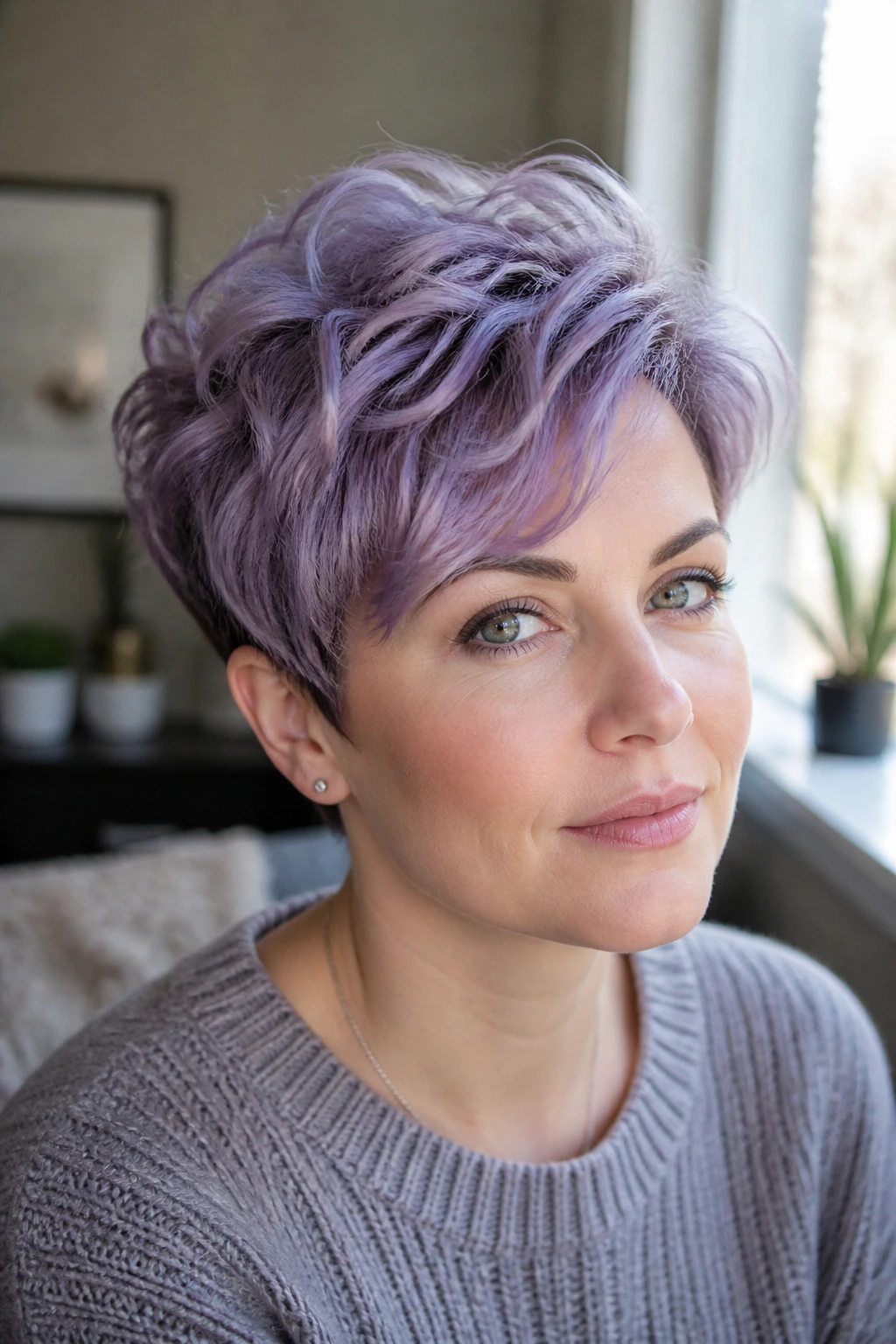
A soft wave can make a pixie feel broader and fuller, which is useful if fine hair falls too close to the head. Grape ice keeps the look light, a little cool, and more polished than a full curl pattern.
The trick is keeping the waves loose. A one-inch iron or even a quick bend with a flat iron is enough. You do not want ringlets here; you want controlled movement that gives the top a wider shape. Too much wave can make short fine hair frizzy, and nobody wants that.
Compared with a pin-straight pixie, this version feels less severe and a touch more relaxed. It also works well when your hair is cut with longer pieces on top and shorter sides, because the waves can separate those sections just enough to show the shape.
A tiny bit of shine spray on the ends can help, but keep it off the roots. The roots need lift, not slip.
23. Matte Purple Pixie With Tapered Temple
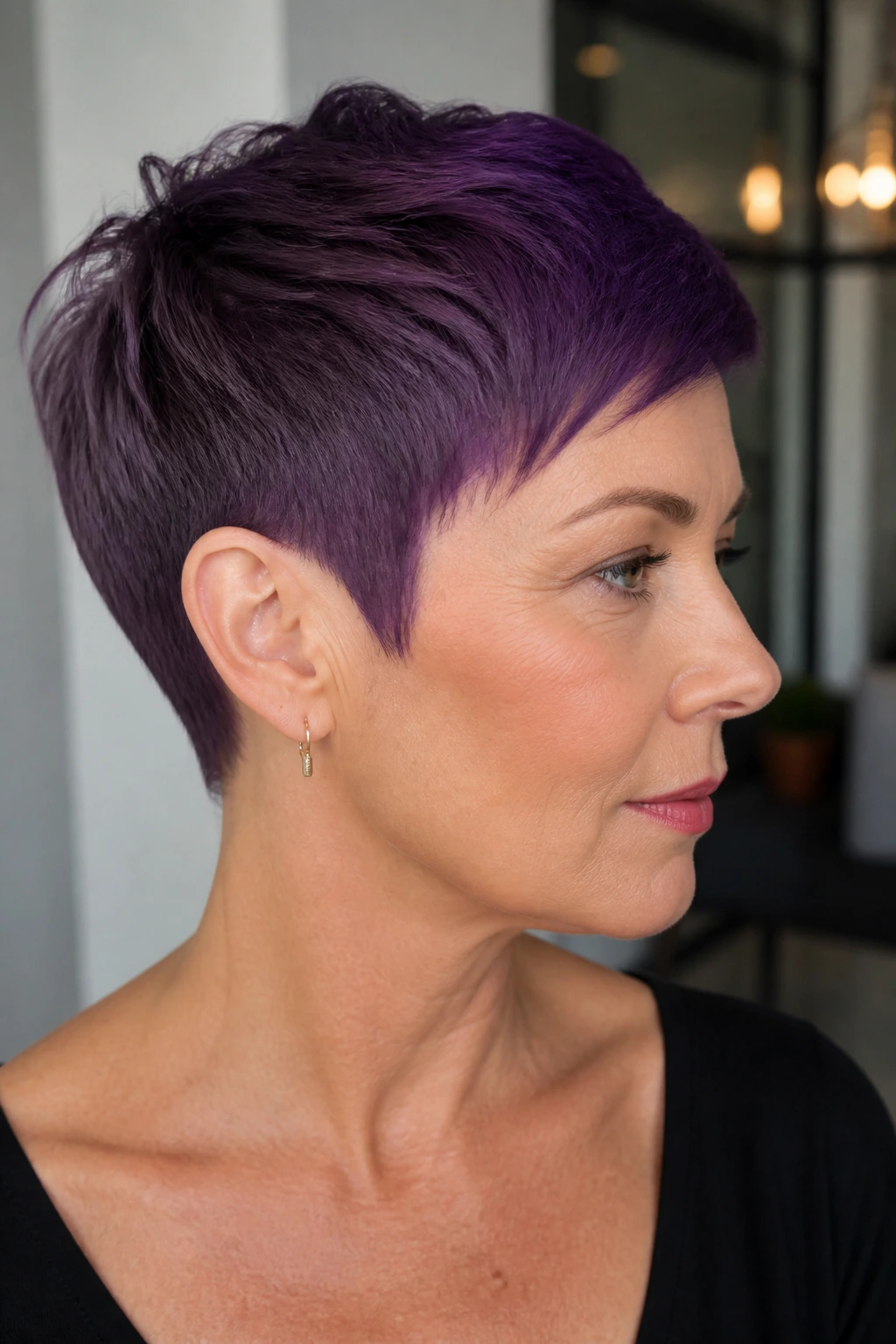
Matte purple is a sneaky-good choice for fine hair because it cuts down on the glare that can make a short style look sparse. The shade looks denser, and the tapered temple keeps the outline clean around the face.
This cut works best when the temples are shaped close but not shaved down to nothing. You want a soft fade into the sideburn area, then a slightly stronger top that sits above it. That contrast gives the pixie structure without making it boxy.
The matte finish can look a little flat if you go too far, so keep a touch of natural sheen at the ends. A tiny bit of lightweight serum is enough. Do not coat the whole head in shine products or you lose the point of the matte color.
It’s a smart option if you like a more modern, understated feel. Quiet, but not dull.
24. Sheer Lilac Pixie With Wispy Layers
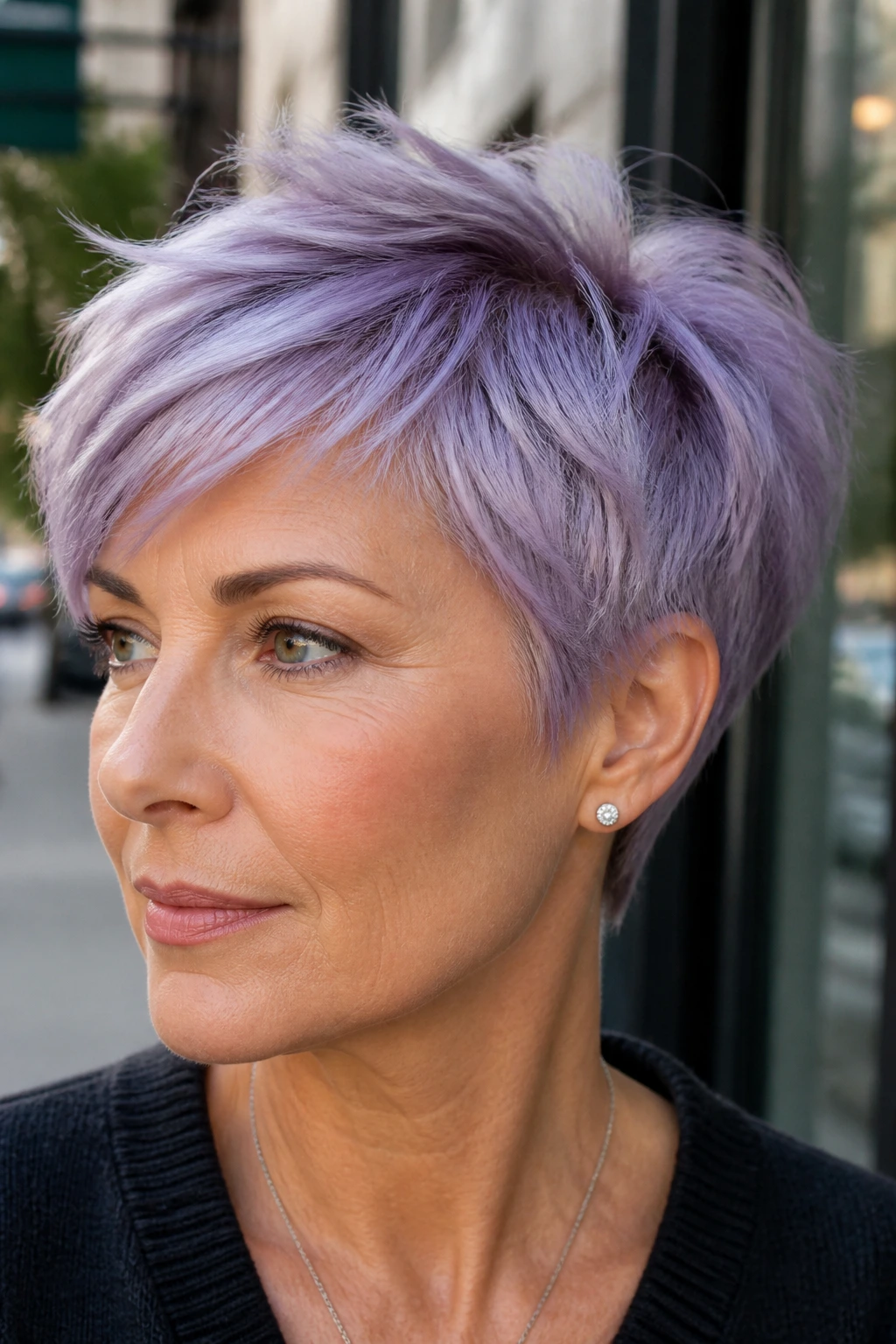
Sheer lilac looks delicate, and that can be lovely on fine hair if the layers are cut with enough intention. The danger is making the hair too soft, too pale, and too undefined. Then the whole shape disappears.
How to keep it from fading visually
The perimeter needs to stay visible. That means a clean outline around the nape and ears, even if the top layers are wispy. A faint root shadow can help the style hold its shape, especially if the lilac tone is very light.
The wispy layers should be soft enough to move but not so thin that they melt into the scalp. A little crown lift and a side part give the cut a bit more body. The color then does what it does best: it makes the shape look airy.
This is a gentle, almost airy version of a purple pixie. It suits people who want something soft on the eye but still short and modern.
25. Royal Purple Pixie Cut With Clean Neckline
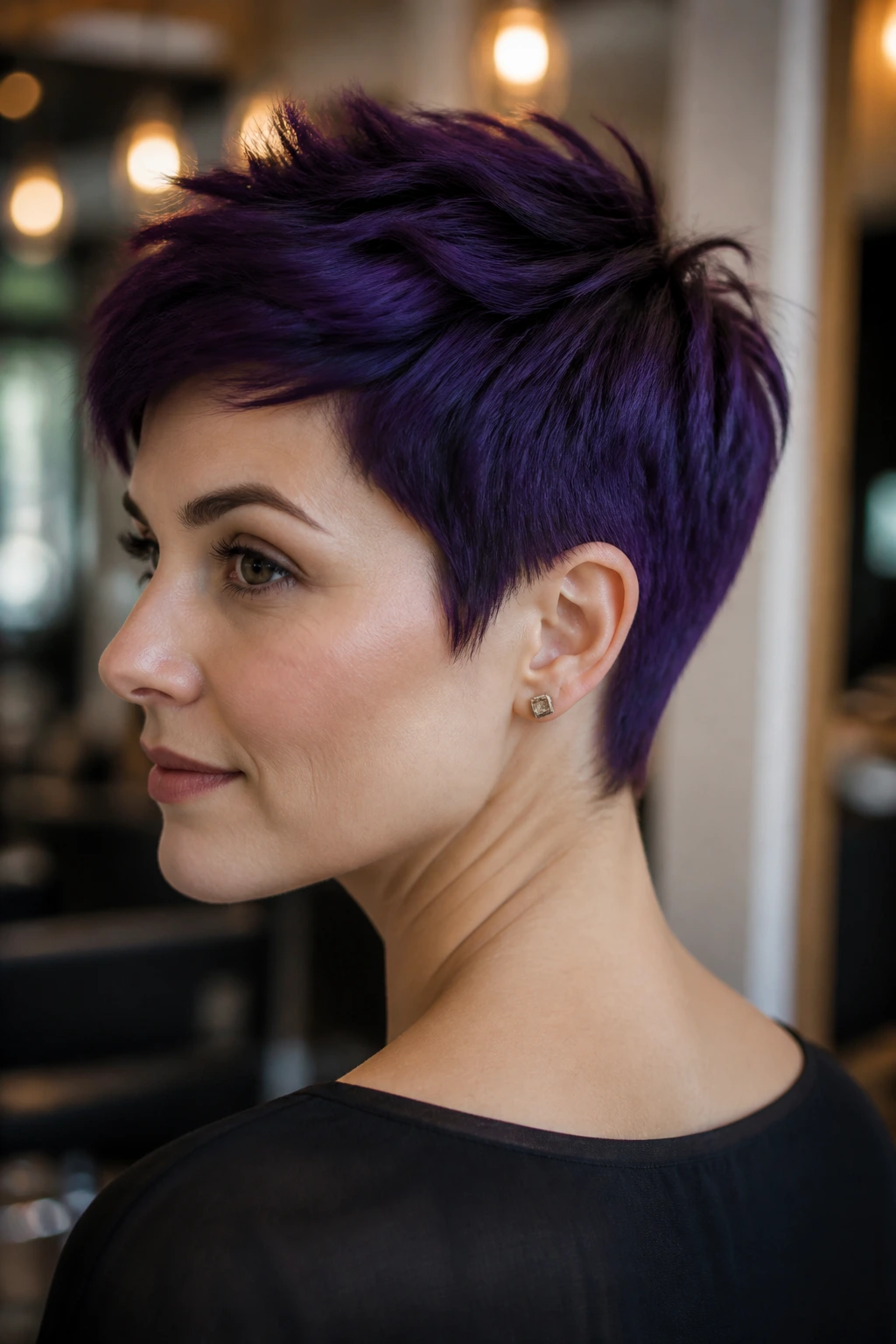
Royal purple has presence. Paired with a clean neckline, it turns a simple pixie into something that looks finished from every angle. On fine hair, that clean edge matters more than people think because it keeps the cut from looking accidental.
A crisp nape makes the color feel richer and the silhouette feel stronger. Keep the top just long enough to move, then let the sides stay close so the neckline can do its work. If the back is tidy, the whole haircut reads as sharper and more expensive, even when the styling is minimal.
This version is for someone who likes a little drama but still wants control. It can be worn smooth, piecey, or slightly tousled, and it still keeps its shape. That makes it the kind of pixie that does not need constant fussing to look deliberate.
Royal purple, clean neck, a small lift at the crown. That combination closes the loop nicely, and it is hard to argue with a cut that looks this strong without needing much more than a comb and a decent hand with product.
