



Fine hair can go flat in a blink, which is exactly why messy pixie cuts for fine hair make so much sense. The right pixie does not ask your hair to be something it isn’t. It gives you shape, edge, and a bit of lift where fine strands usually fold in on themselves by lunchtime.
The trap is going too short in the wrong places. A pixie that’s thinned out too much at the crown or stripped bare at the ends can look wispy fast, and not in a chic way. What usually works better is a clean outline with broken-up texture on top, a little softness around the hairline, and enough length to create movement.
That balance matters more than people think. Fine hair often needs controlled messiness, not random mess. A good pixie should look like it was finger-styled in three minutes, but it still needs a shape that holds up when the wind hits or when you skip shampoo for a day.
1. Choppy Micro Pixie With Airy Ends
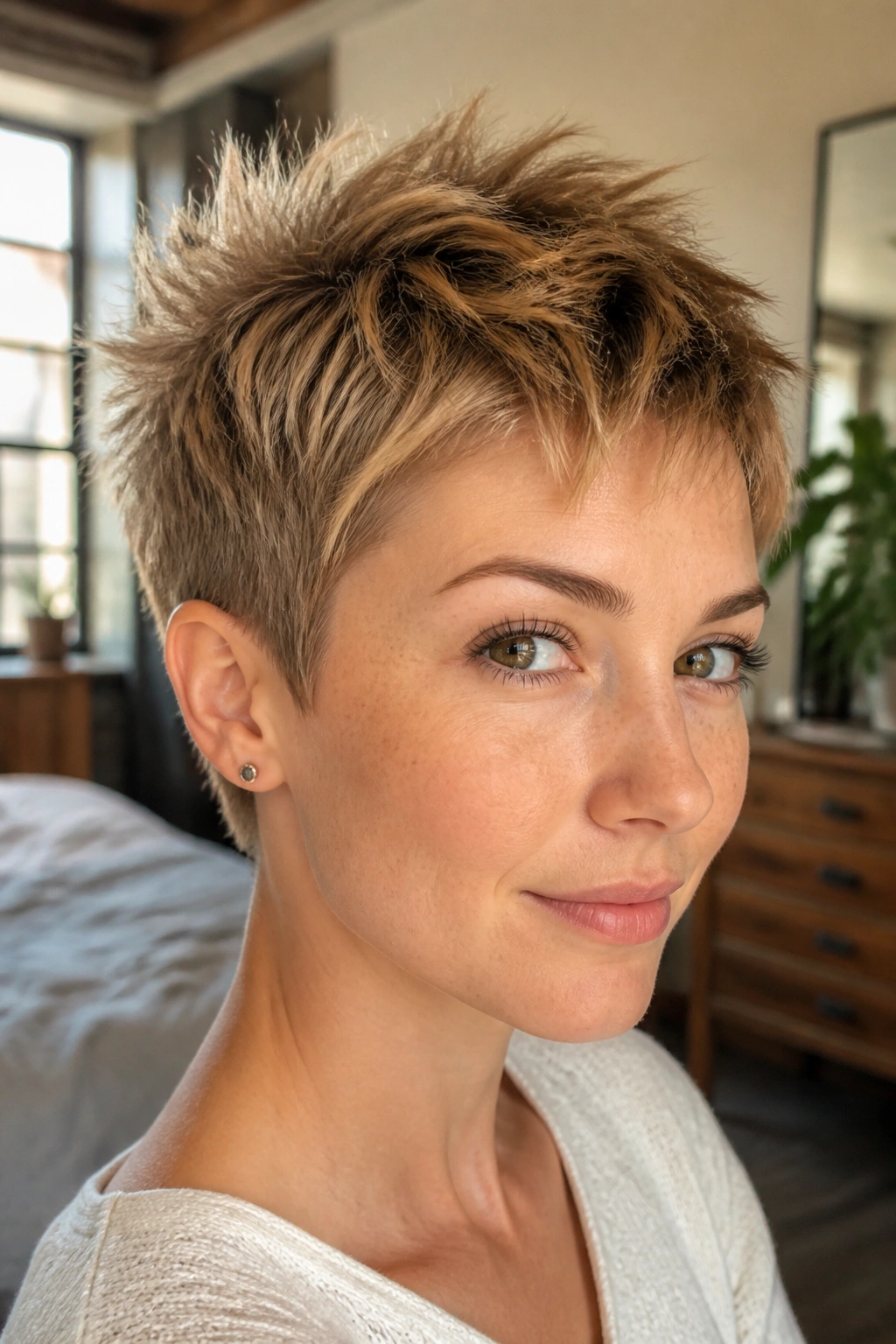
A micro pixie can be a little intimidating, but on fine hair it often looks sharper than longer cuts. The trick is keeping the perimeter neat while carving tiny, uneven pieces through the top so the cut doesn’t sit like a helmet.
Why It Works on Fine Hair
The shorter length removes the weight that pulls fine hair down. That gives you a cleaner lift at the root, and the choppy ends create tiny shadows that make the hair look denser than it is.
Ask for point-cut ends instead of blunt, heavy edges. You want texture, not frizz. A pea-sized dab of matte paste is usually enough; too much product can make the whole cut collapse.
- Best for oval, heart, and small face shapes
- Styling time: about 3 to 5 minutes
- Ask for short sides and a top that stays around 1.5 to 2.5 inches
- Use fingers, not a brush, to keep the finish piecey
Tip: blow-dry the crown first, lifting it with your fingers at the roots. That one move does more than a whole shelf of styling creams.
2. Side-Swept Pixie With a Soft Part
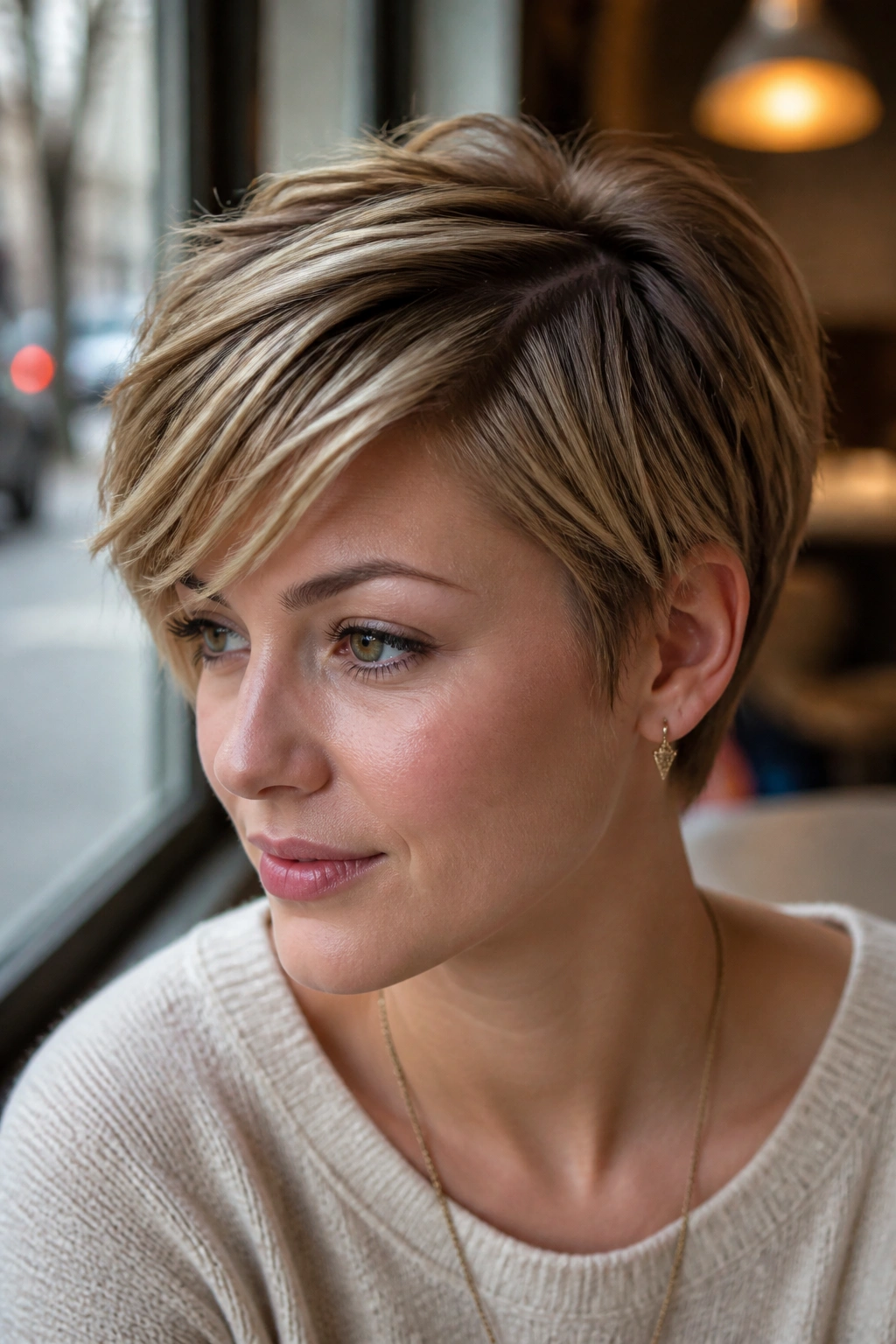
A deep side part gives fine hair something it often needs badly: a little asymmetry and a little shadow. That shadow makes the hairline look fuller, and the sweep across the forehead keeps the style from reading too severe.
The side-swept version works because it creates a built-in style line. Hair looks thicker where it falls over itself, especially if the front is left long enough to move in one soft curve instead of sticking straight up.
This is one of those cuts that looks polished even when it’s messy. A light root-lifting spray at the part, then a quick rough-dry, usually does the job. Keep the product light. Heavy cream near the front will drag the fringe down by noon.
It’s a good pick if you want a pixie that still feels feminine without being fussy. And honestly, it’s one of the easiest ways to make a fine-hair cut look like it has more body than it does.
3. Piecey Fringe Pixie That Barely Brushes the Brows
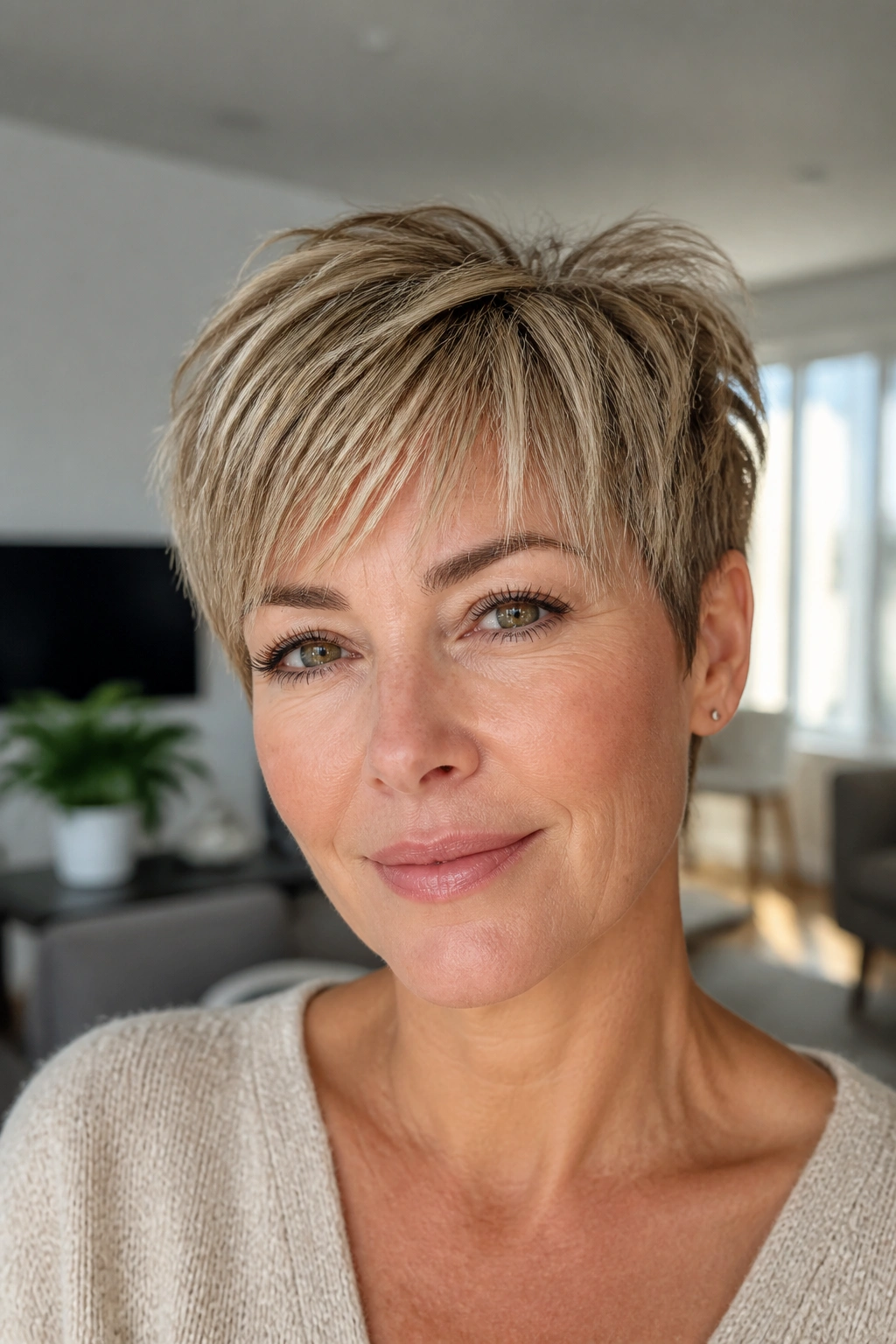
Want the easiest kind of softness around the face? Keep the fringe just long enough to graze the brows, then break it up into little pieces. That tiny bit of length gives fine hair a place to move, which helps the top stop looking flat and severe.
What Makes It Different
A blunt fringe can look dense, but on fine hair it can also look sparse if the hairline is thin. A piecey fringe solves that by spreading the shape out. You get texture without losing the feeling of fringe.
How to Style It
Work a small amount of mousse through damp hair, then blow-dry the front from side to side with your fingers. Once it’s dry, pinch a touch of light wax through the ends so a few strands separate and fall forward.
- Keep the fringe slightly longer in the center
- Ask your stylist to remove bulk only at the very ends
- Use a 1-inch round brush if you want a little bend
- Skip thick oils; they flatten the front fast
This cut is useful if you want something playful but not too short on the forehead. The brows stay visible. The face stays open. Nice compromise.
4. Undercut Pixie With a Taller Crown
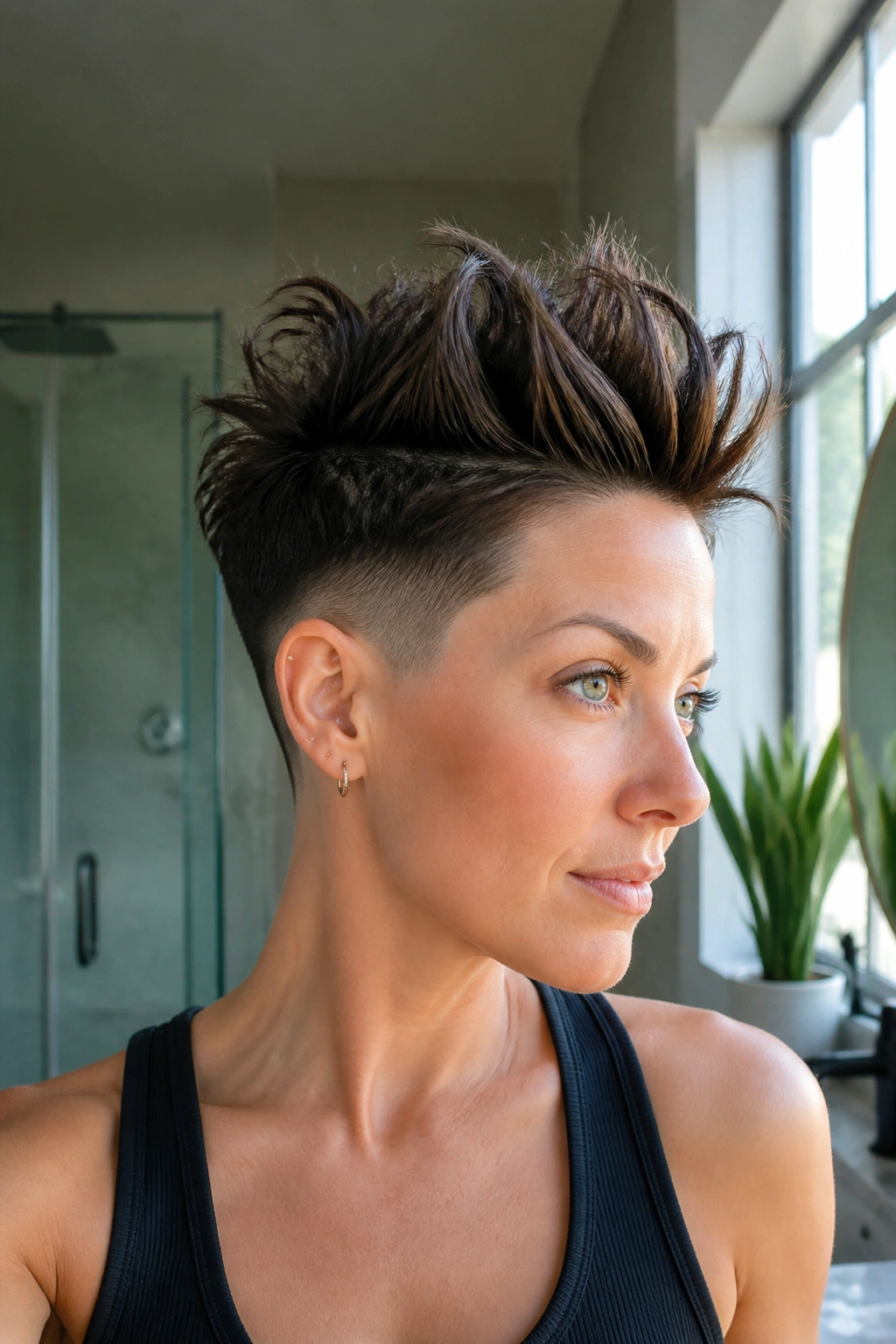
If your fine hair tends to puff out on the sides and go limp on top, an undercut can be the clean fix. Shaving or clipping the nape and lower sides removes bulk where you don’t need it, then leaves the top free to sit higher.
I like this shape because it makes fine hair look deliberate. There’s no trying to pretend the hair is thick everywhere. The cut says, “We’re using shape instead.”
Ask for a soft undercut, not a harsh one unless you want it visible all the time. A tighter back can make the top appear fuller, especially if the crown is left with 2 to 4 inches of length and styled forward or upward with a bit of air.
- Works well for people with dense-but-fine hair
- Keeps the neckline neat for 4 to 6 weeks
- Needs a texturizing spray or dry paste, not a heavy pomade
- The top should stay soft, not spiky
Good to know: this is the cut that grows out in a slightly awkward way if you ignore it. Book trims before the undercut starts sneaking out from under longer layers.
5. Layered Pixie Bob Hybrid
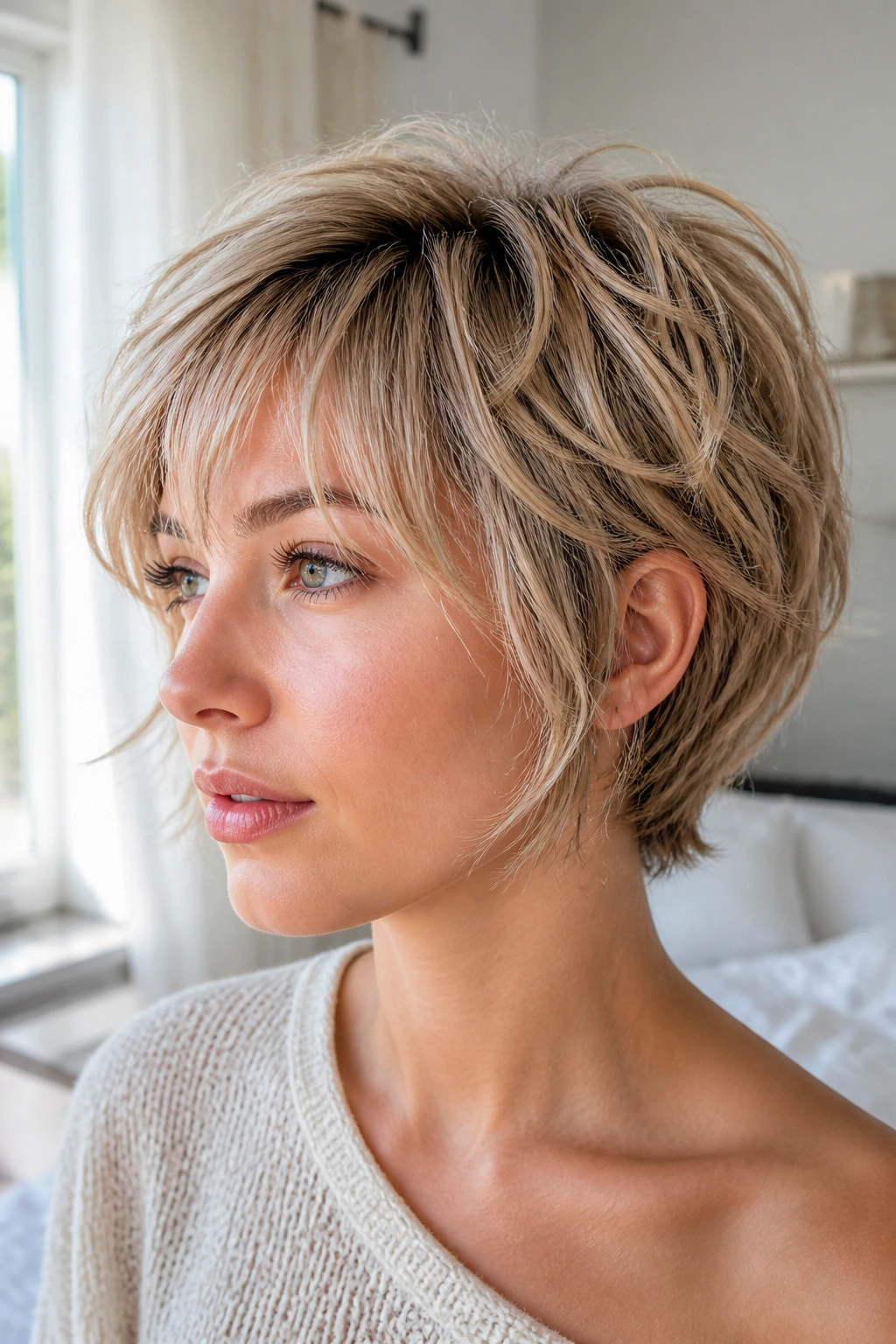
Some people love the idea of a pixie but panic at the thought of losing all their length. A pixie bob bridges that gap. It keeps the back short and tidy while leaving enough length around the ears and jaw to feel less exposed.
On fine hair, this shape is useful because it gives you more styling options without asking the hair to support a lot of weight. The layers can fall softly around the face, and a slight bend through the ends keeps the whole thing from looking too precise.
I’ve always thought this is one of the most forgiving short cuts for fine hair. You can rough-dry it, tuck one side behind the ear, or give the top a little lift and still look finished. It’s also easier to grow out than a true crop, which matters if you’re cautious.
The only real warning is to avoid over-layering the back. Too many short pieces there can leave fine hair looking see-through, especially in bright light. A cleaner outline usually works better.
6. Asymmetrical Messy Pixie
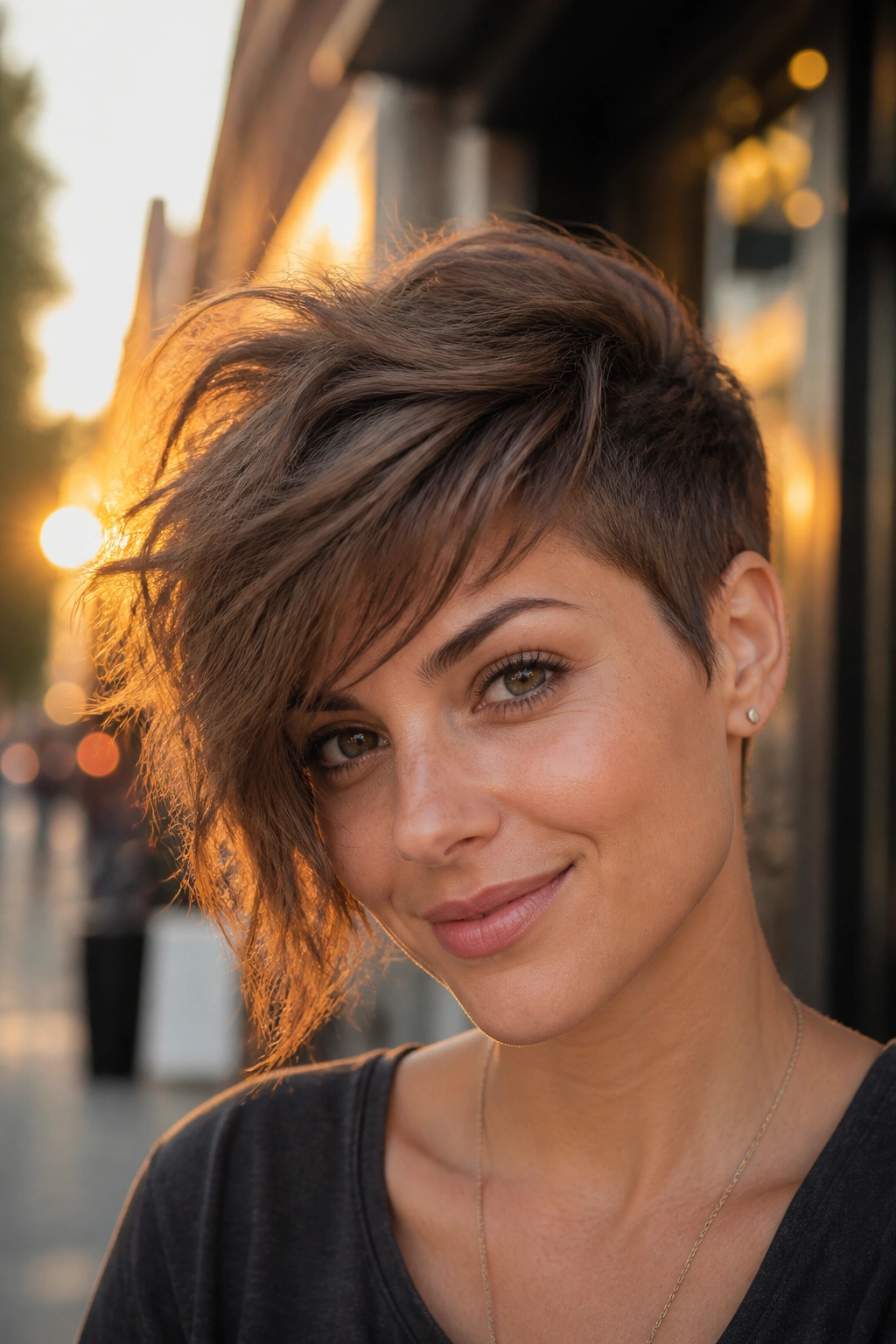
One side longer. One side shorter. That’s the whole idea, and it works because asymmetry keeps the eye moving. Fine hair benefits from that movement because it stops the style from sitting in one flat, predictable shape.
Unlike a perfectly balanced pixie, an asymmetrical cut has a natural bit of drama. The longer side can skim the cheekbone or jaw, while the shorter side keeps the head shape light and lifted. That contrast makes the hair look intentional, even when it’s mussed up.
Who It Flatters Most
This cut is especially strong on square and round faces because the diagonal line softens angles without hiding the face. It’s also useful if one side of your hair grows a little flatter than the other. The uneven shape turns that into part of the design.
A little styling cream on the longer side is enough. Comb it once, then break it apart with your fingers. Keep the shorter side touchable, not stiff. Stiff pixies almost always look older than they should.
7. Feathered Crown Pixie
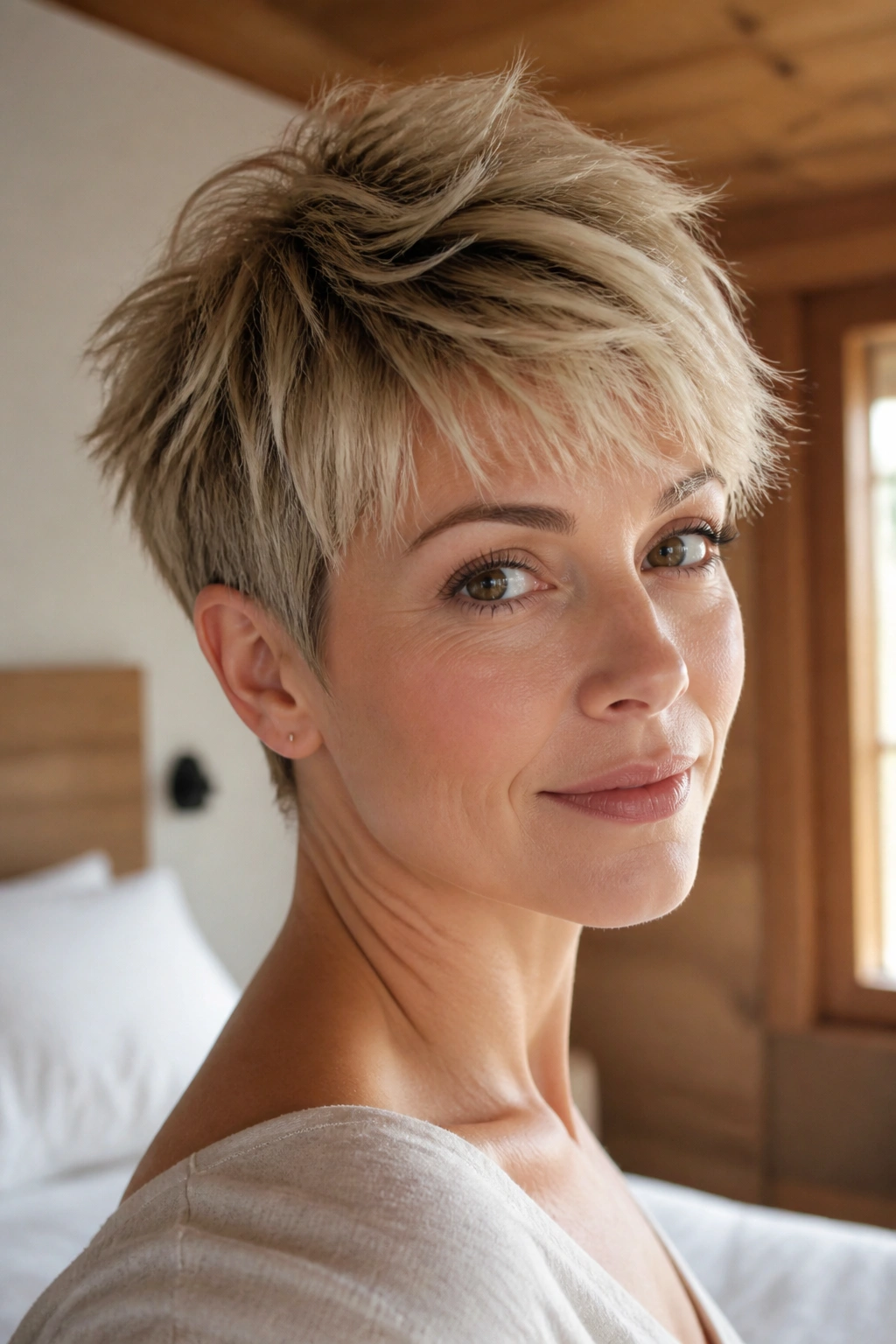
Feathering at the crown is one of the smartest tricks for fine hair, because the top needs lift without bulk. Feathered layers create movement near the roots, and that movement makes the haircut look lighter and fuller at the same time.
The best version keeps the ends soft and the top slightly airier. Think of it as a cut that lifts from within instead of puffing outward. That’s a big difference. Puffy is not the goal.
You can style this one with a small round brush or just rough-dry the crown with your fingers. A root spray helps, but the real secret is not dragging a brush through the top once it’s dry. Let the feathered pieces stay separated. They’re doing the work.
This is a nice choice if you want a pixie that looks good from the front and the side. A lot of cuts only behave from one angle. This one has more shape all around.
8. Curly or Wavy Pixie With a Soft Bend
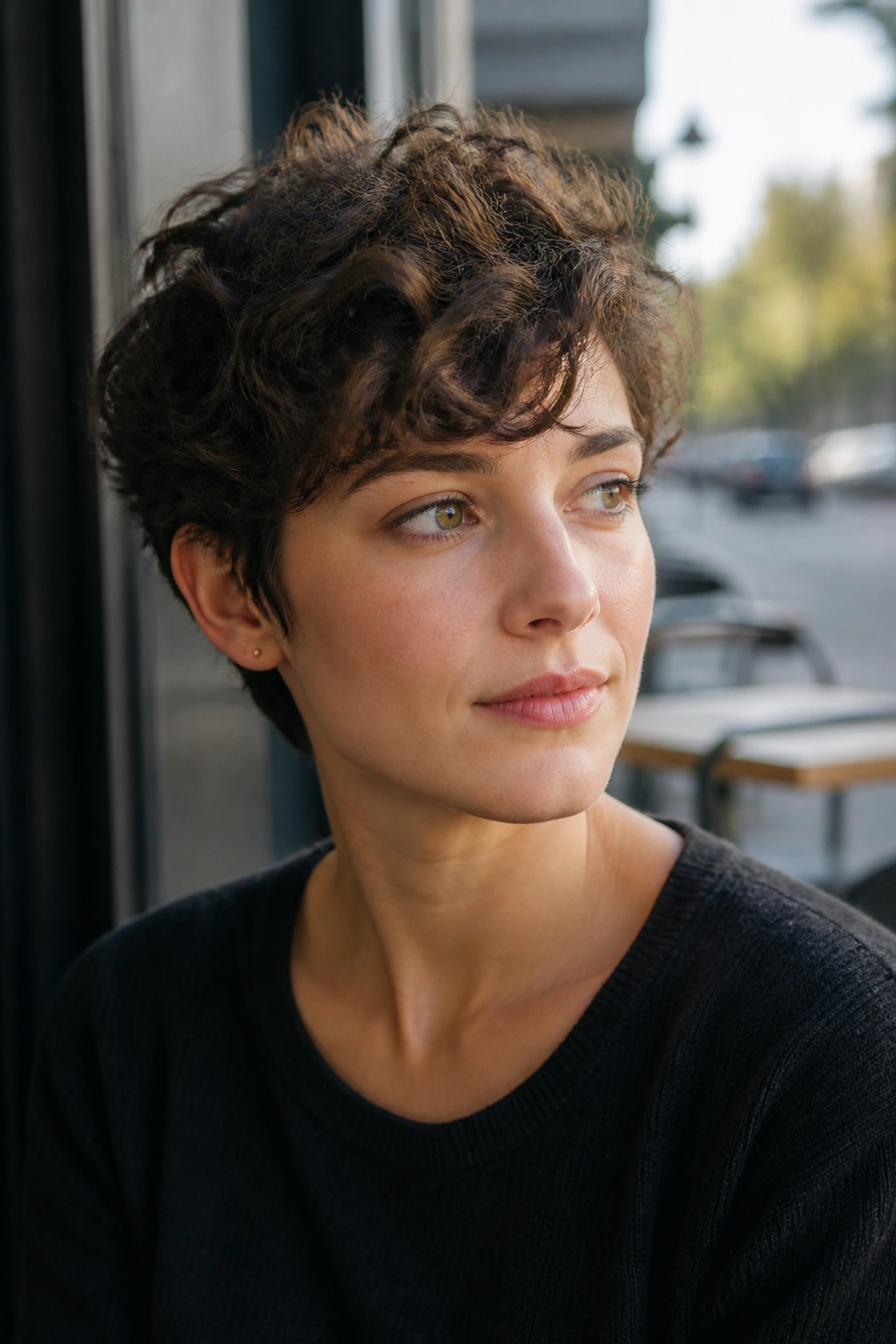
Fine hair is not always straight. Sometimes it has a loose wave, and sometimes the bend only shows up when the hair is short enough to stop fighting its own pattern. A messy pixie can make that texture look far richer than a longer cut ever did.
The reason is simple: shorter lengths let the wave spring up instead of hanging down. Even a half-inch of movement can make the hair look much fuller. If your hair bends when it air-dries, this cut gives that bend a job.
Use a light mousse on damp hair and either diffuse on low heat or let it dry on its own. Once it’s dry, separate the waves with a tiny bit of paste on the fingertips. Don’t rake through it. That tends to pull the shape apart and leave the top frizzy.
One more thing. If your wave is inconsistent, keep the back a touch shorter than the top. That keeps the cut from turning into a triangle.
9. Tapered Nape Pixie With Lift at the Top
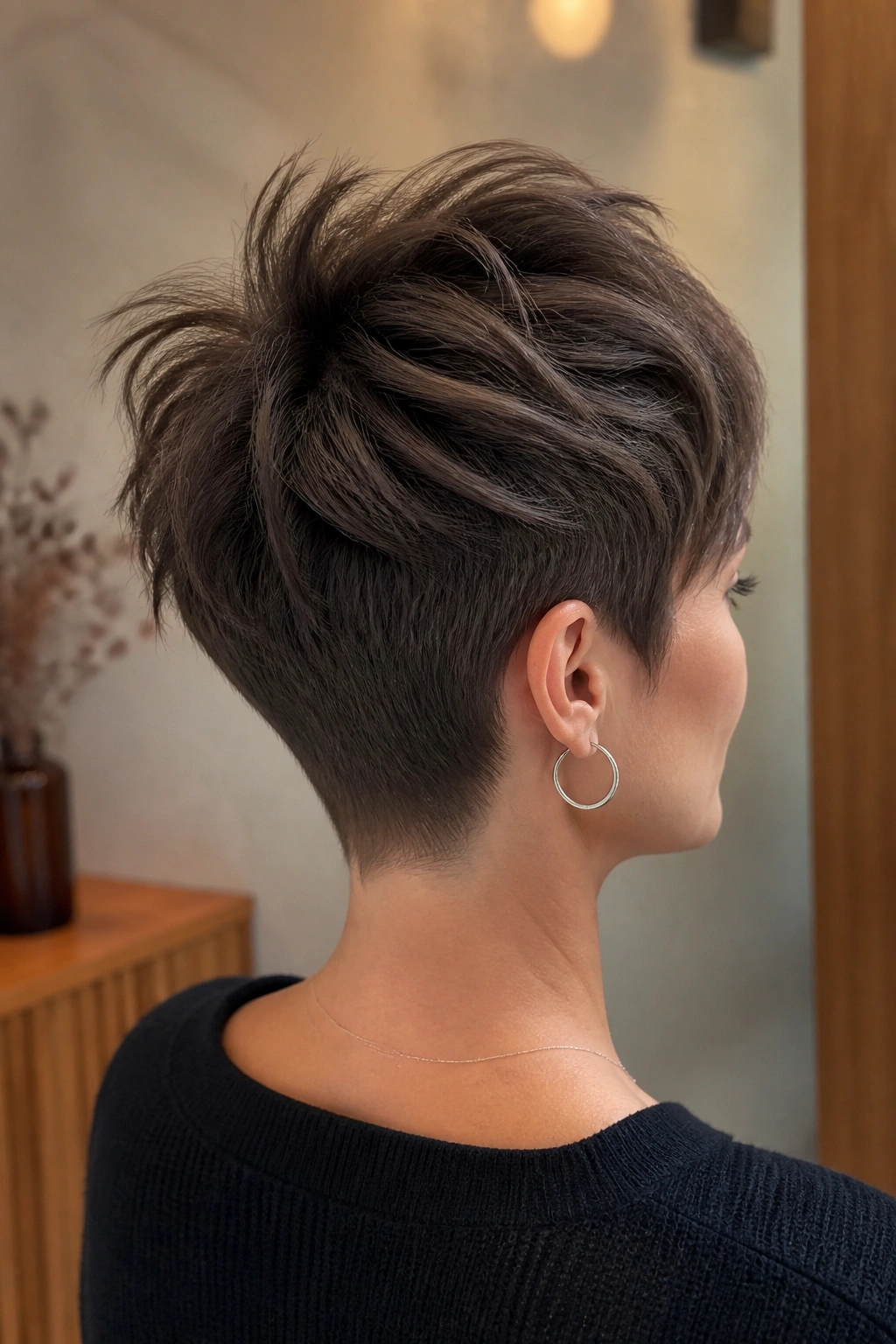
A tapered nape makes the neckline clean and tidy, which does wonders for fine hair. It removes the soft fuzziness that can make a short cut look unfinished, then leaves more visual attention on the crown where you want the volume.
This is a neat cut, but not a boring one. The top can still be messy and lifted, while the back stays close and smooth. That contrast is what gives it shape. Without the taper, the whole style can blur out.
Styling Notes That Matter
- Blow-dry the top first, lifting at the roots with your fingers
- Keep the nape close to the head with a small round brush or flat brush
- Use a light dry shampoo at the crown after styling for extra texture
- Schedule trims every 5 to 7 weeks if you want the taper to stay clean
This cut suits people who like a polished neckline but don’t want a stiff, salon-perfect finish on top. It reads neat from behind and casual from the front. That’s a useful mix.
10. Baby Bangs With a Messy Finish

Baby bangs are not for everyone, and that’s the truth. Still, on fine hair they can work in a way heavier fringe never does, because the short length keeps the hair from sitting flat across the forehead.
The key is keeping the finish messy, not blunt and sealed. A few uneven pieces make the bangs feel modern and a little playful. If they’re cut too square, they can look severe fast. Tiny differences in length matter here.
Use this cut if you like your face to stay open and you don’t mind a little attitude. It pairs well with textured sides and a top that isn’t too polished. The whole thing should feel a touch undone.
A dry wax or soft clay works better than shine-heavy products. Shine makes baby bangs look smaller. Texture makes them look intentional.
11. Long-Top Short-Sides Pixie
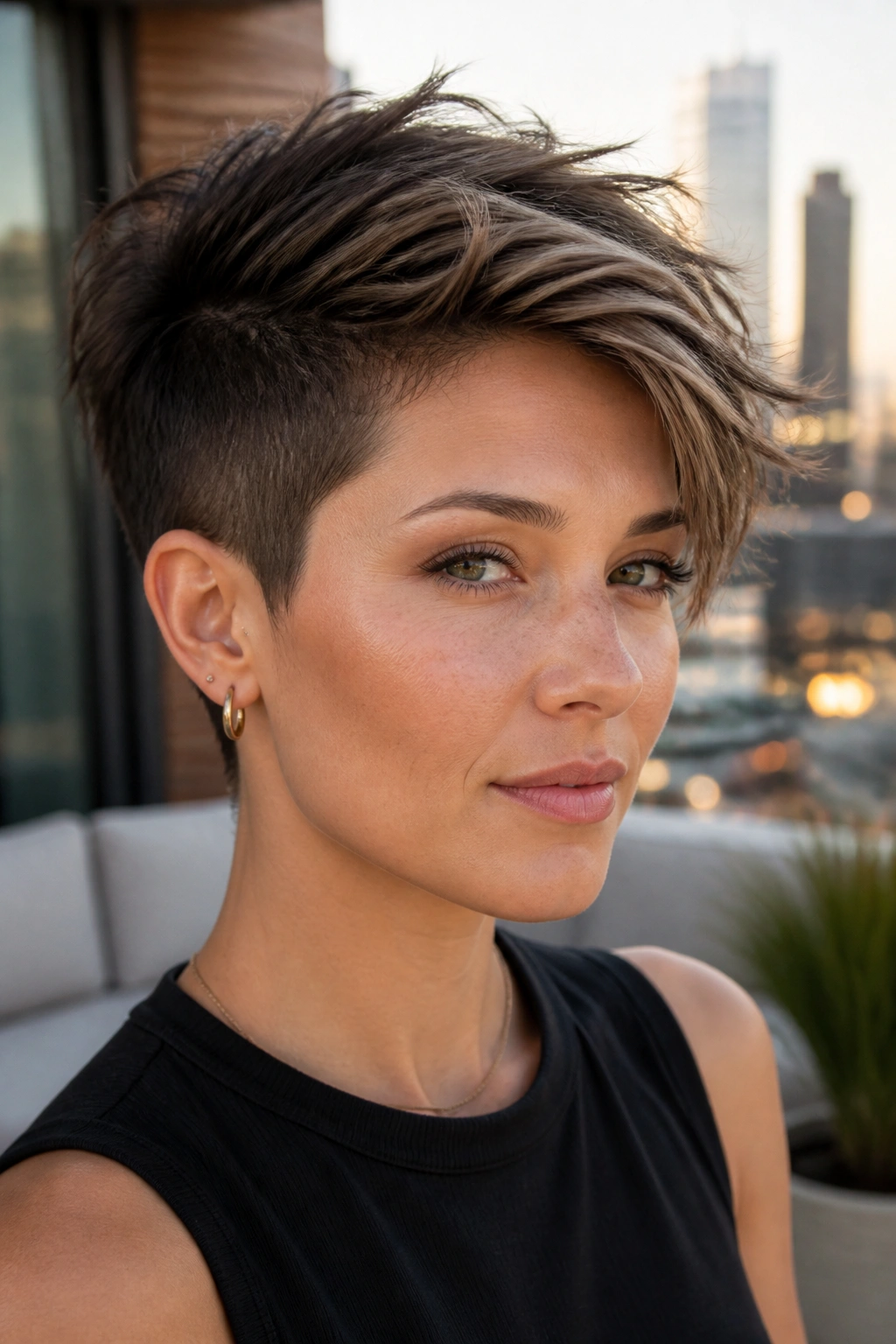
This is the pixie for someone who wants shape first and softness second. The sides stay close, the top stays long enough to move, and the contrast gives fine hair a sense of thickness that a one-length crop can’t always match.
A longer top also gives you more room to change the mood of the cut. Push it forward and it feels modern. Sweep it to the side and it reads softer. Lift it slightly at the roots and the whole head gains height. That flexibility is a real plus.
What to Ask For
Tell your stylist you want the top to keep around 3 to 4 inches, with the sides reduced enough to show the shape but not so much that they disappear into the scalp. That balance matters. If the sides are too tight and the top is too flat, the cut can look top-heavy.
This style works well if you like styling products but don’t want to spend forever in the mirror. A small amount of mousse at the roots and a touch of paste through the ends is enough. Short, easy, done.
12. Shaggy Pixie With Broken-Up Layers
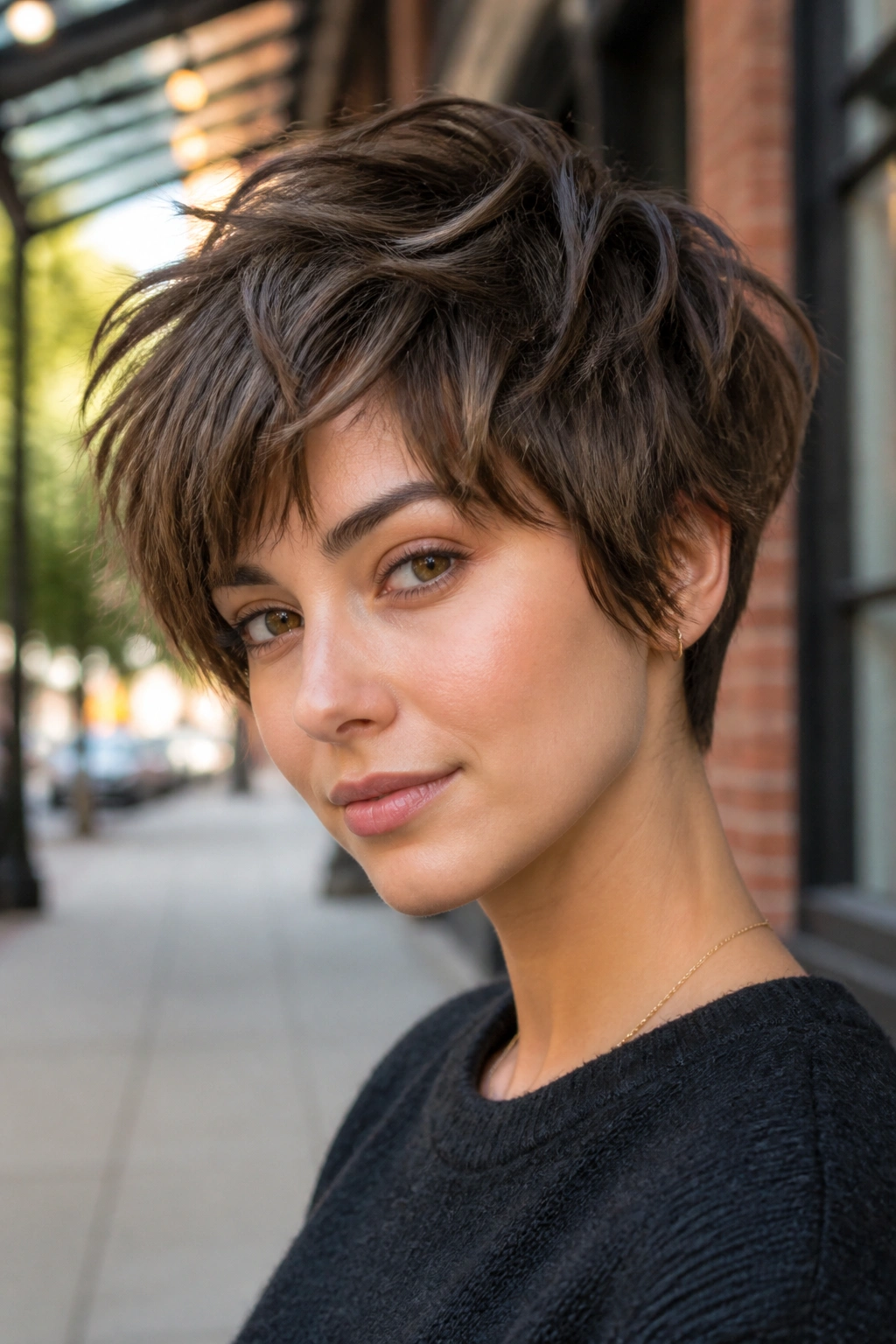
A shaggy pixie has a little more attitude than a classic crop. The layers don’t sit in tidy rows; they fall in broken, uneven pieces that give fine hair a rougher, fuller look. That roughness is the point.
The cut works because it avoids the overly neat finish that can make fine hair look thin. Instead, the movement comes from irregular layers around the crown, temples, and top. The result feels a bit casual, a bit piecey, and much less precious than a traditional pixie.
I like this one for people who hate spending time on their hair but still want it to look like it was thought through. You can air-dry it, shake it out, and go. A little texture spray helps, but the cut does most of the heavy lifting.
If your hair gets too fluffy in humidity, keep the longest pieces just under the cheekbone. That gives the shape enough weight to sit down without killing the texture.
13. Razor-Cut Pixie With Soft Ends
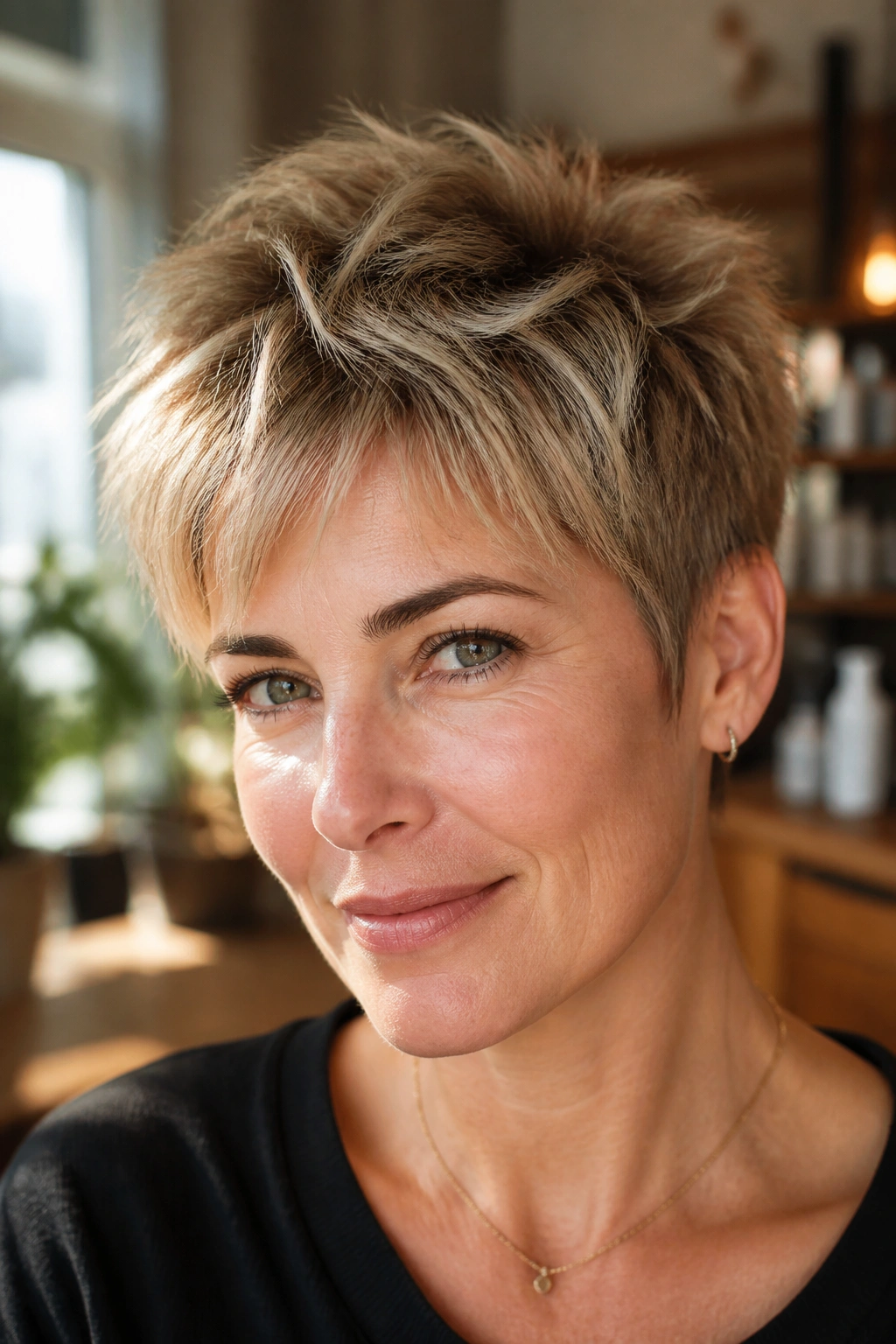
A razor cut can be gorgeous on fine hair when it’s done with a light hand. The blade removes weight in a way scissors don’t, so the ends fall softer and more separated. That can make a fine-hair pixie look airy instead of blunt.
But here’s the catch: a razor cut is not a free pass for every head of hair. If your strands are already fragile or split easily, too much razor work can leave the ends frayed. The style needs softness, not damage.
Razor vs. Scissors
Scissor-cut pixies usually look cleaner and denser. Razor-cut pixies look looser and more feathered. If you want movement right away, the razor version wins. If you want maximum neatness and less texture, scissors are safer.
This cut is best for someone who likes a little edge and does not mind a slightly shaggy finish. It can look especially good with a side part or a bit of root lift. Keep the products dry and light. Wet-looking styling gels tend to flatten the whole point of the cut.
14. Air-Dried Natural Texture Pixie
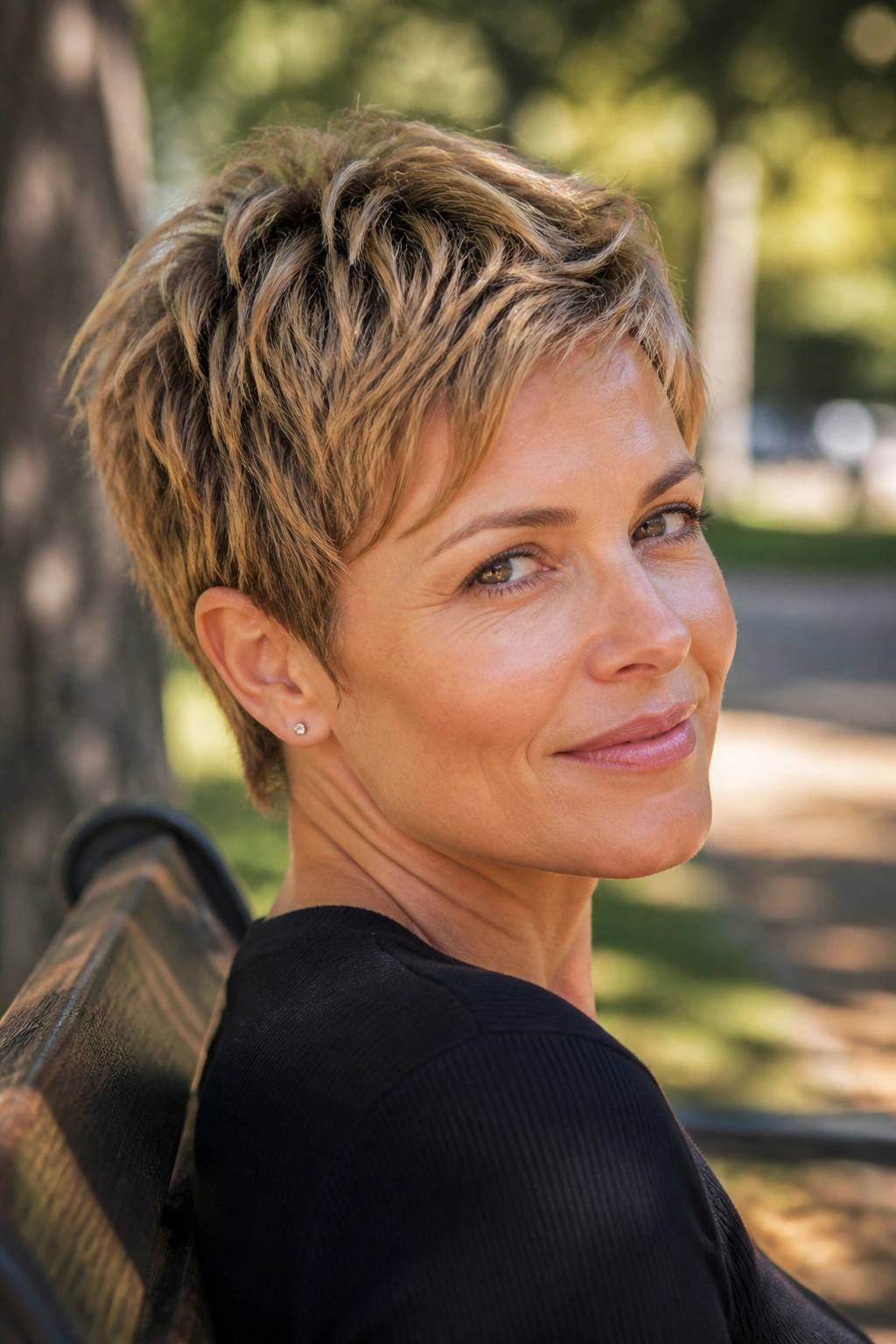
Some pixies need a blow-dryer. This one doesn’t. If your fine hair has a touch of natural bend or a soft cowlick pattern, letting it air-dry can give you the messiest, best-looking version of itself.
The trick is in the prep. Put a light mousse through damp hair, then rake it into the direction you want the cut to fall. After that, stop touching it. Fine hair can lose shape fast if you keep messing with it while it dries.
Once the hair is dry, use your fingers to lift the roots and separate the ends. A tiny bit of dry paste at the crown can keep the style from slipping flat. That’s enough. More than that can make the hair feel sticky and small.
This is the kind of cut that fits a busy morning. It looks a little better when it isn’t overworked. I appreciate that.
15. Slicked-Back-Then-Ruffled Pixie
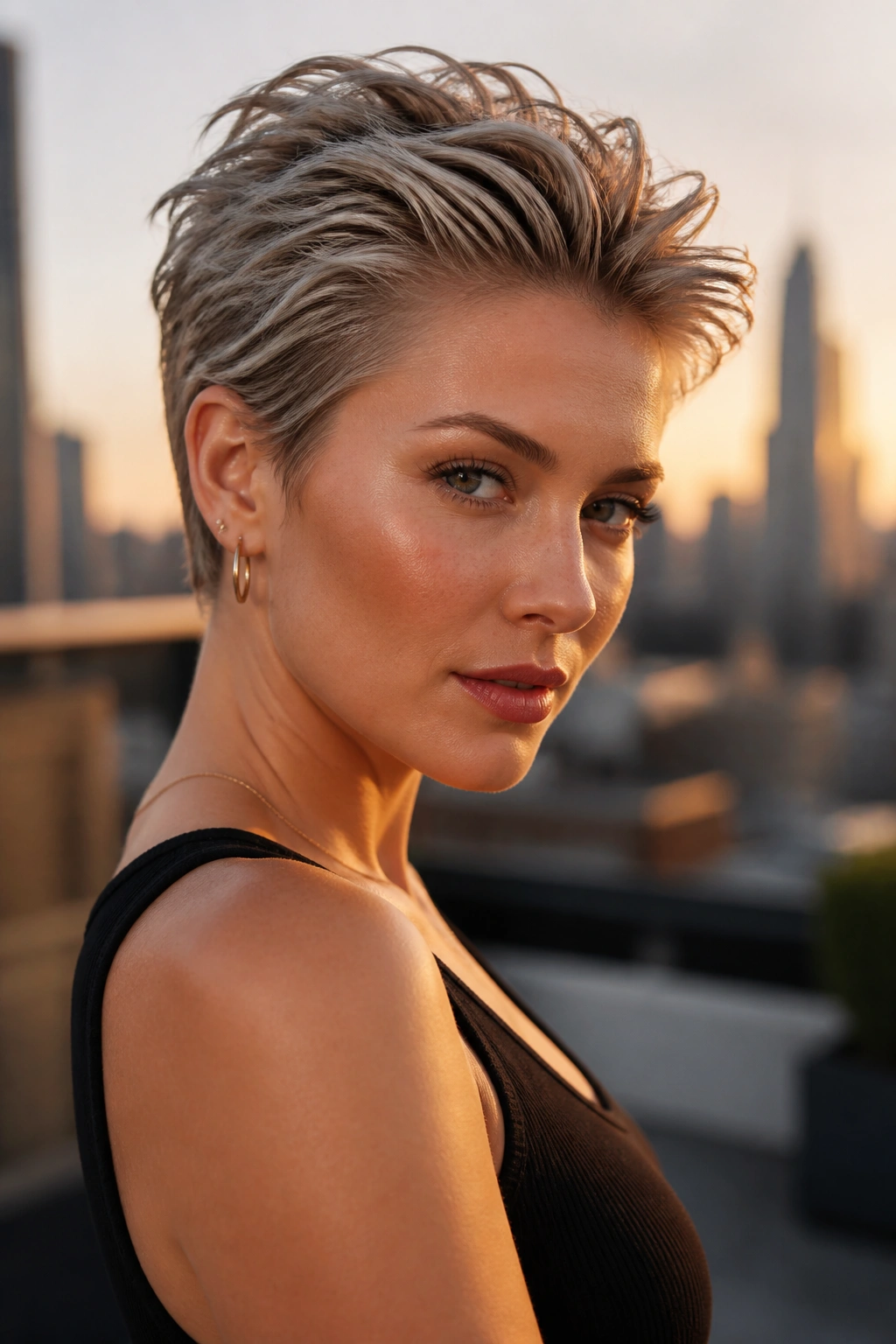
A slicked-back pixie sounds polished, but on fine hair you can turn it messy fast by breaking the front apart after it sets. That contrast is what makes the style work. Clean at the roots, messy through the lengths.
This one is useful for nights out or any time you want the haircut to look sharper without becoming stiff. Start with a small amount of lightweight gel or cream at the hairline, comb it back, then pinch the top loose once it dries. The shape stays, but the surface gets softer.
You do need restraint here. Too much product turns fine hair into a wet sheet, and that’s not the same thing as sleek. Start with less than you think you need. Add another half pea only if the front keeps slipping forward.
The best part is how the cut changes mood with almost no effort. Leave it smooth, and it looks tailored. Ruffle it, and it looks lived-in.
16. Brushed-Forward Crop With Choppy Ends
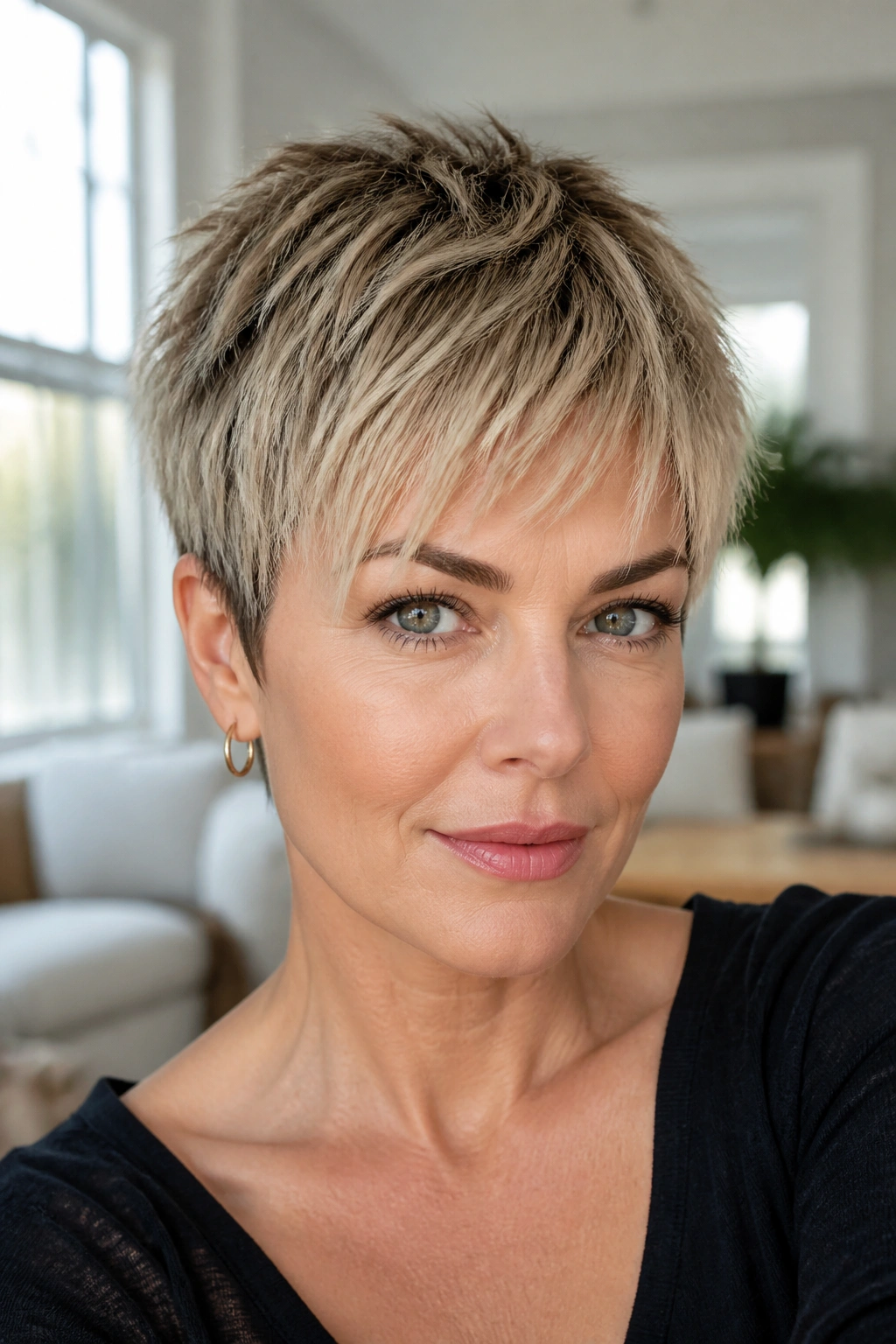
Bringing the hair forward can be a smart move if your fine hair is flatter at the crown than at the front. The forward direction creates a sense of density around the face, and the choppy ends keep the cut from feeling heavy.
Why It Flatters
A forward crop shifts attention to the eyes and cheekbones. It also disguises a sparse hairline better than a style that’s brushed straight back. For some people, that alone is worth the cut.
Keep the front pieces irregular. A few uneven ends around the forehead make the style softer and easier to wear. If the fringe is too perfect, it can look like a helmet cap. Nobody wants that.
This cut works well with a little root spray and a quick finger-dry. Push the hair forward while it’s damp, then let it settle where it wants. Fine hair often looks better with that relaxed direction than with a lot of forced styling.
17. Grown-Out Pixie That Still Looks Intentional
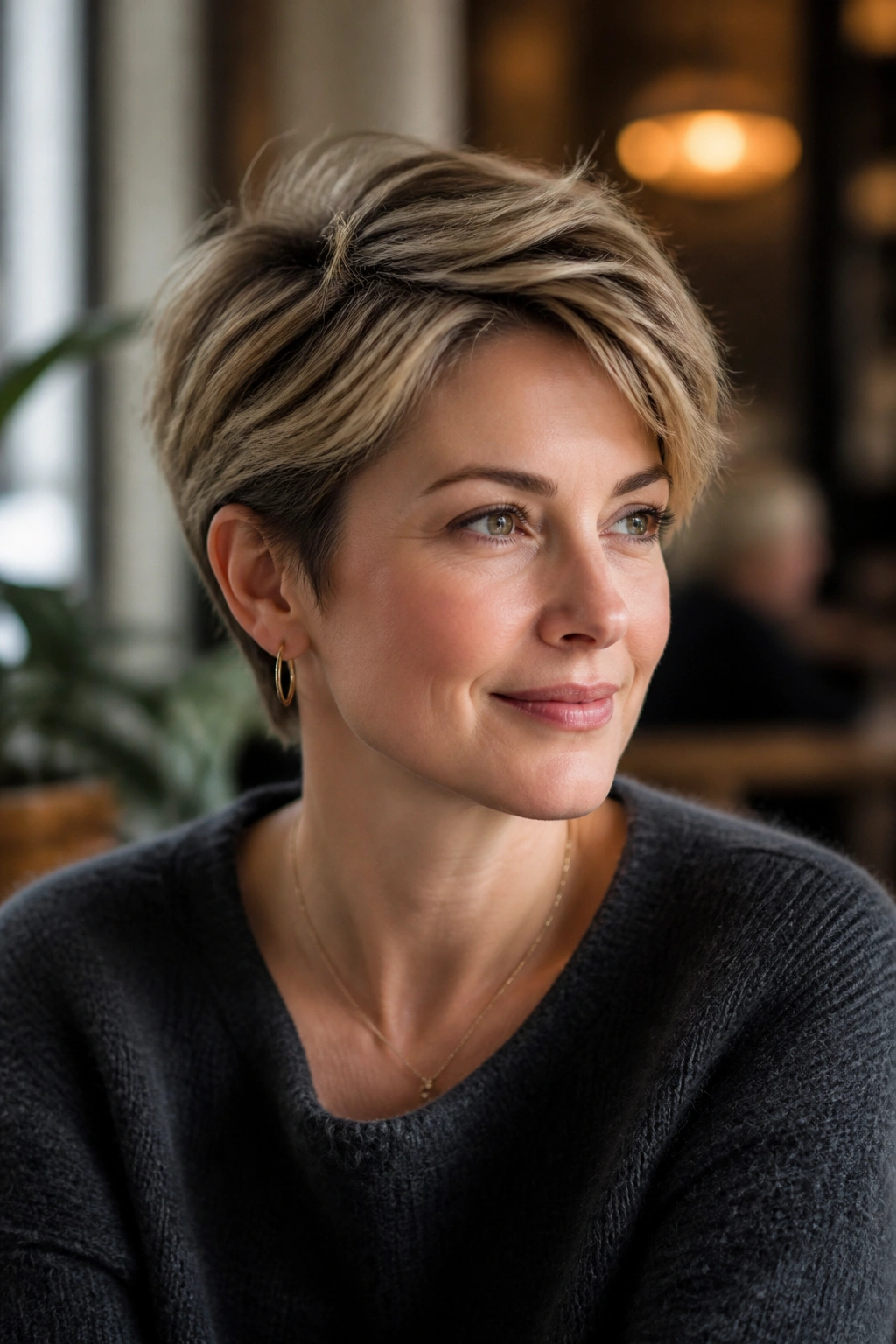
The grown-out phase gets a bad name, mostly because people stop shaping it. A grown-out pixie can look excellent on fine hair when the neckline is cleaned up and the top is allowed to fall with purpose.
This style is good if you want lower upkeep between salon visits. The ears can stay a little covered, the top can drift toward a soft side part, and the length can hover somewhere between pixie and short crop. It feels easy, not neglected.
A decent trim around the edges keeps the shape alive. That means the nape, around the ears, and any long fringe pieces that start drooping into your eyes. Leave the rest a touch messy. That looseness is the whole point.
I like this look on people who don’t want a hard reset every six weeks. It has a little softness, a little length, and enough structure to stay flattering while it grows.
18. Deep Side-Part Tousled Pixie With Soft Temples
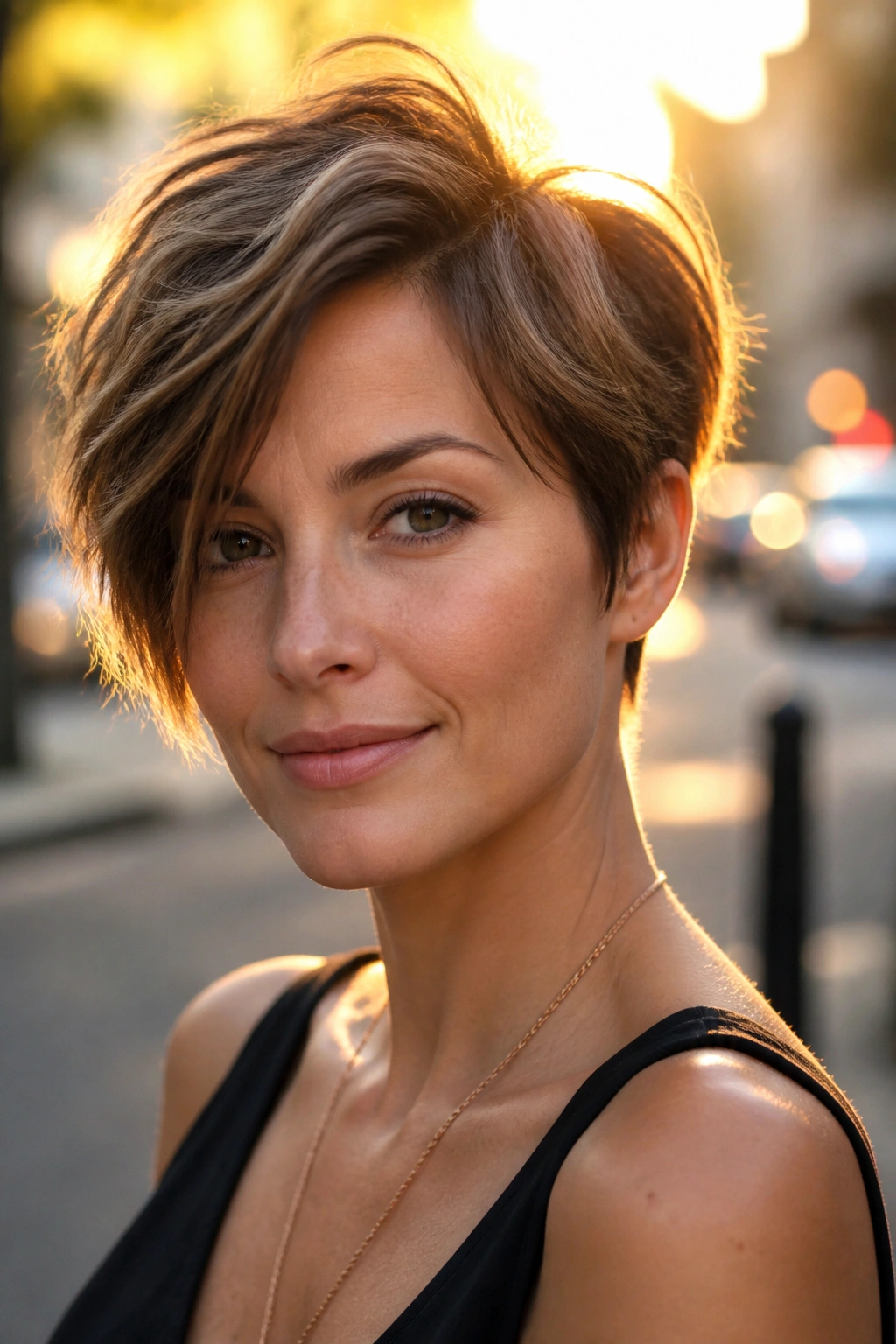
A deep side part changes the geometry of a pixie more than most people expect. It creates height on one side, a shadow on the other, and a little lift at the temple where fine hair often needs help most.
The soft temple area matters. If the sides are too tight, the cut can start to look severe; if they’re left with a bit of touchable length, the whole style feels lighter and more forgiving. That’s especially useful if your fine hair lies close to the head around the ears.
This is one of the easiest styles to wear on a normal day because it does not need perfect styling. Rough-dry the roots, push the part over with your fingers, and let the ends fall where they want. A little texturizing spray on the top is enough to keep the shape from going limp.
It also has that rare quality of looking better the second or third day. Freshly washed fine hair can be slippery. A tiny bit of day-two grit often helps the cut sit in place.
The best pixie for fine hair is usually the one that respects the hair you already have. Not the one that fights it.
Pick a shape with clean lines, then let the texture do its work. That’s where the good messy stuff lives.
