



Short shaggy pixie cuts for round faces work when they pull the eye up, not out. That sounds simple, but plenty of pixies miss the mark because they sit too even around the cheeks and make the face read wider than it is.
The fix is shape, not length. A little lift at the crown, chipped-out ends, and a diagonal fringe can do more than another inch of hair ever will.
I like a shaggy pixie best when it feels slightly broken up—piece-y, a bit uneven, and loose enough to move when you turn your head. The cut should brush past the widest part of the face instead of sitting on top of it like a cap.
The 22 looks below cover the styles that do that job in different ways, from soft and wispy to sharper and more editorial. Pick the one that fits your texture, then bring it to a stylist who knows how to keep a short cut alive after it leaves the chair. The details matter. A lot.
1. Classic Choppy Pixie With Crown Lift for Round Faces
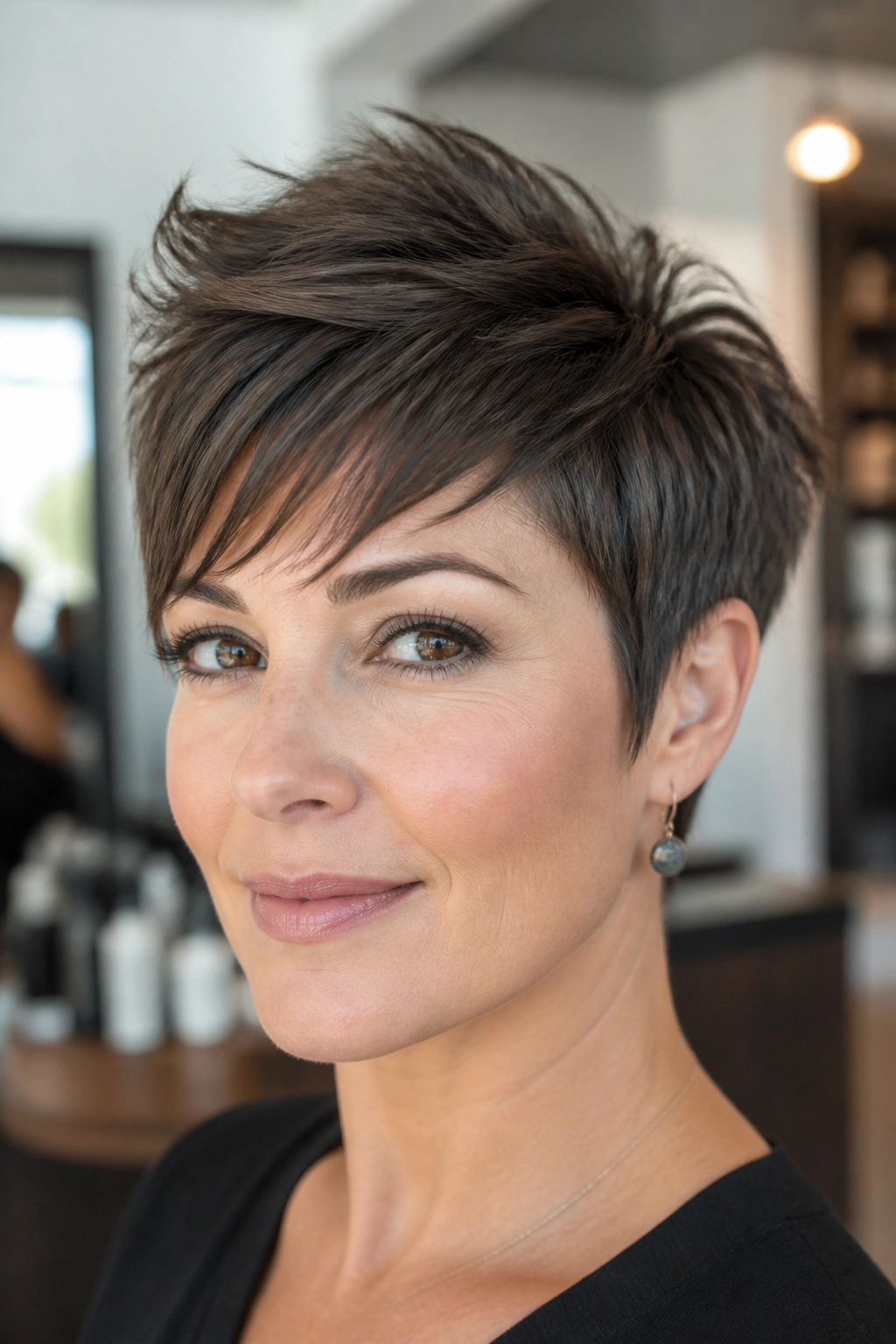
If you want a round face to look longer fast, start with this shape. The top stays choppy and lifted, the sides stay close, and the fringe moves diagonally instead of sitting straight across the forehead.
Why It Works on Round Faces
That extra height at the crown changes the whole read of the cut. When the top sits even one to two inches higher than the temples, the face gets more vertical line and less side-to-side width.
The trick is to keep the ends broken, not smooth. Point-cutting or light razor work keeps the silhouette from turning into a little helmet, which is the fast way to lose all the good stuff.
- Keep the longest top pieces around 2.5 to 3 inches.
- Ask for tapered sides that hug the ear.
- Style with a pea-size matte paste and lift at the roots with your fingers.
Best move: keep the fringe soft and angled, not blunt. That one detail does a lot of work.
2. Side-Swept Fringe Pixie Shag

Can a fringe flatter a round face? Yes, if it moves on a diagonal. A side-swept front breaks the width of the forehead and carries the eye across the face instead of straight down the middle.
The best version starts a little deeper than a standard side part and lands somewhere near the outer corner of the eye or cheekbone. That range matters. Too short, and it puffs up. Too long, and it drags the whole cut down.
A round face usually benefits from a fringe that looks like it was tossed into place, not carved into a neat line. Blow-dry it from the part toward the opposite side with a small round brush, then let the ends fall a touch irregular. That tiny bit of mess keeps it modern.
3. Curly Shaggy Pixie With Tapered Sides
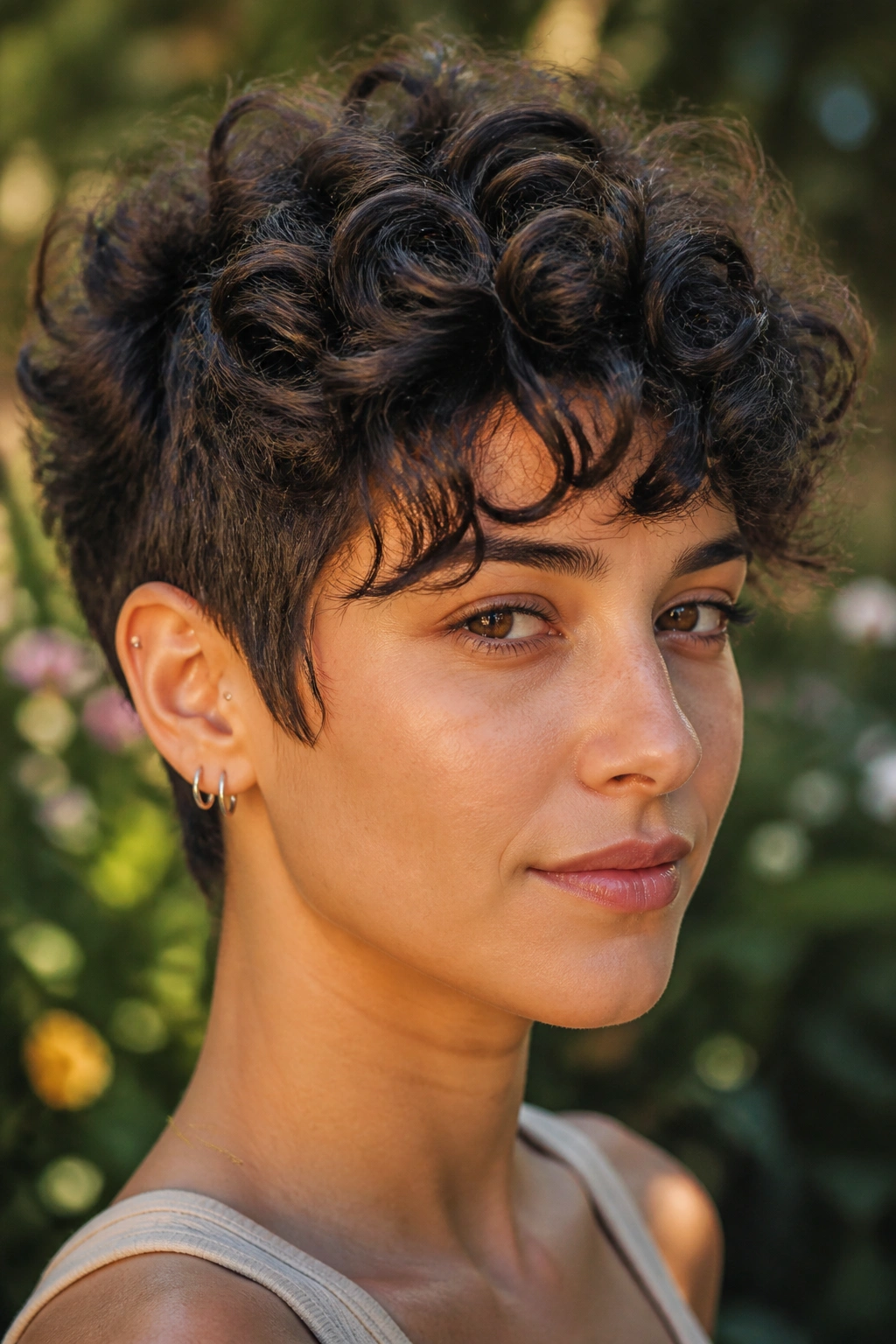
If your hair curls up into a soft cloud, this is the cut that keeps it from puffing out at the sides. The tapered edges narrow the silhouette, while the top layers stay long enough to show off the curl pattern.
A round face and curly texture can be a good match when the bulk sits above the cheek line instead of beside it. That’s the whole game. Keep the sides tight near the ears, leave a little extra length on top, and let one curl drop forward near the temple.
Styling Shortcut
- Work curl cream through soaking-wet hair.
- Scrunch in a light gel for hold.
- Diffuse on low heat until the hair is about 80% dry.
- Break up only the front pieces with a drop of oil.
One curl should land a little longer than the rest. It softens the shape without making the face look wider.
4. Asymmetrical Shaggy Pixie With One Long Side
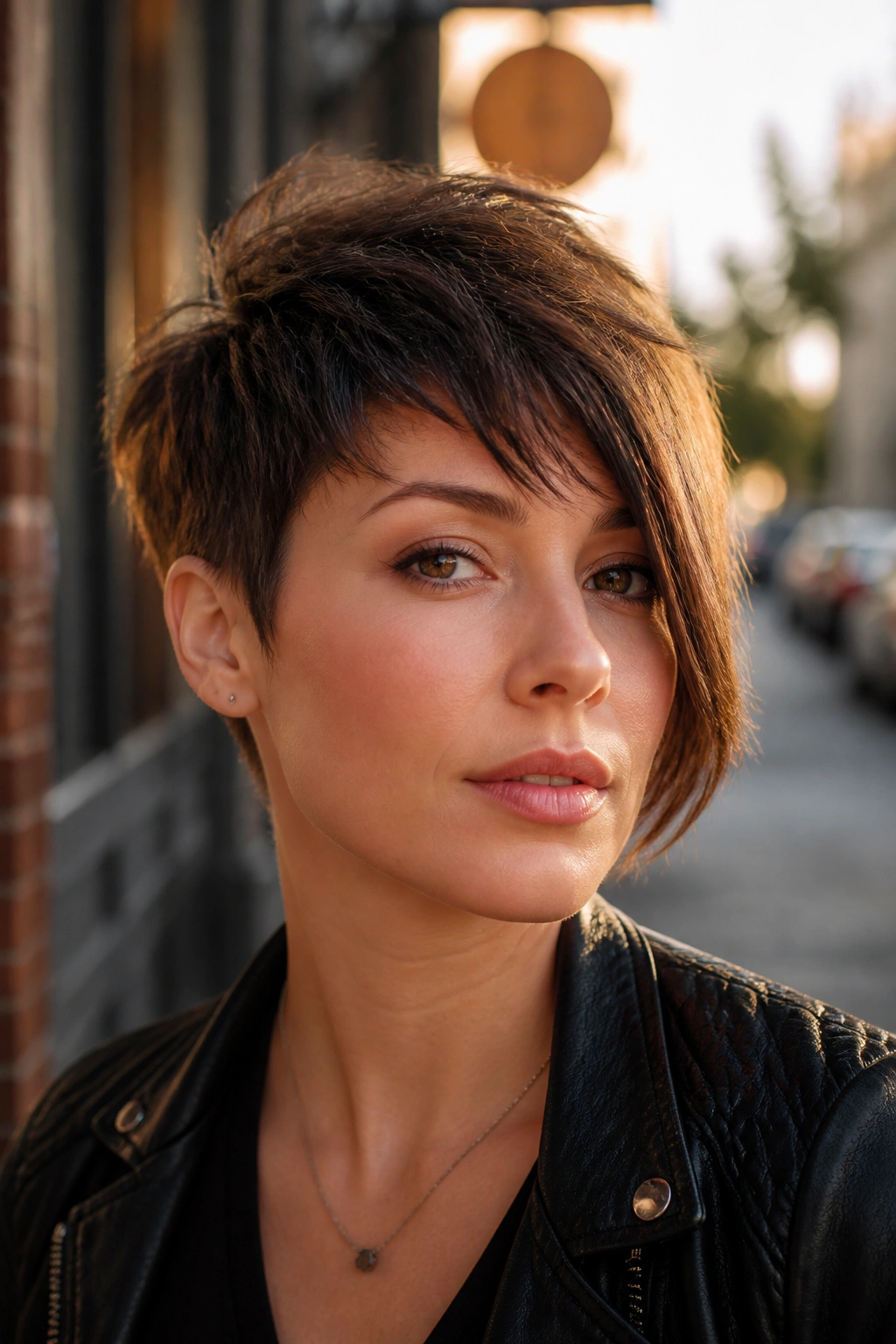
Symmetry can be the enemy here. A slight length difference creates a diagonal line across the face, and that line does a better job of slimming a round shape than any amount of teasing ever will.
The long side should graze the cheekbone or sit just below it, while the shorter side stays close enough to open the face. That contrast keeps the cut from feeling heavy. It also makes the jawline look a little more defined, which is handy when the face is naturally soft.
I’d call this one sneaky. It looks relaxed from the front, but the asymmetry is doing real work in the background. Keep the longer side piecey rather than blunt, or the whole thing starts to feel severe.
5. Feathered Pixie With Wispy Nape
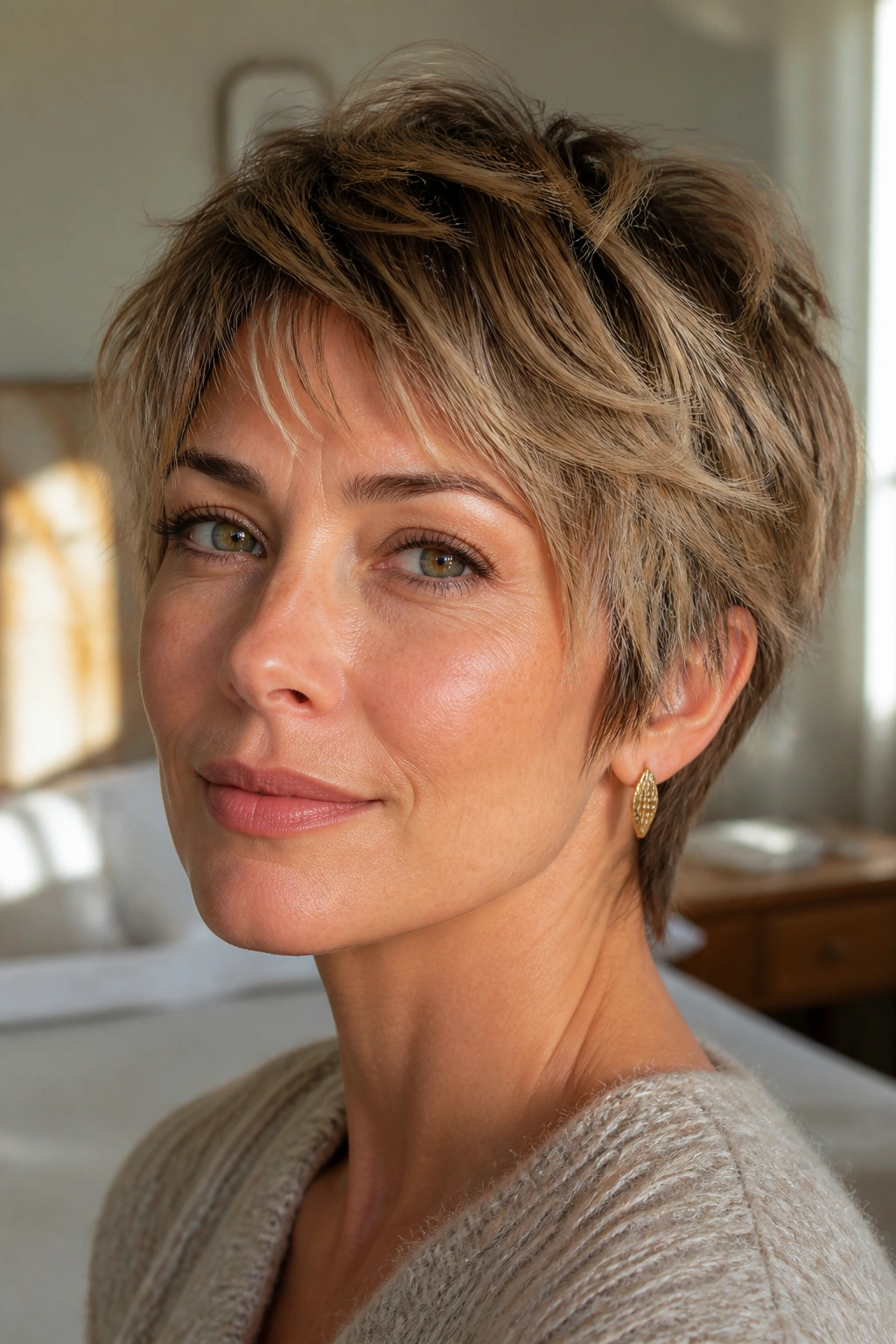
Feathered ends feel airy, almost brushed out with your fingers. On a round face, that softness matters because it keeps the cut from building width where you do not want it.
The nape should stay close and tidy, while the top and sides get feathered with light, separated pieces. That combination gives you movement without losing shape. A 1-inch round brush is enough for the finish; you do not need big volume everywhere.
It should move.
Ask for light layering around the temples so the hair curves away from the cheeks instead of sitting flat against them. When the nape is short and the top is a little longer, the whole silhouette looks cleaner and more lifted.
6. Razored Micro Shag Pixie
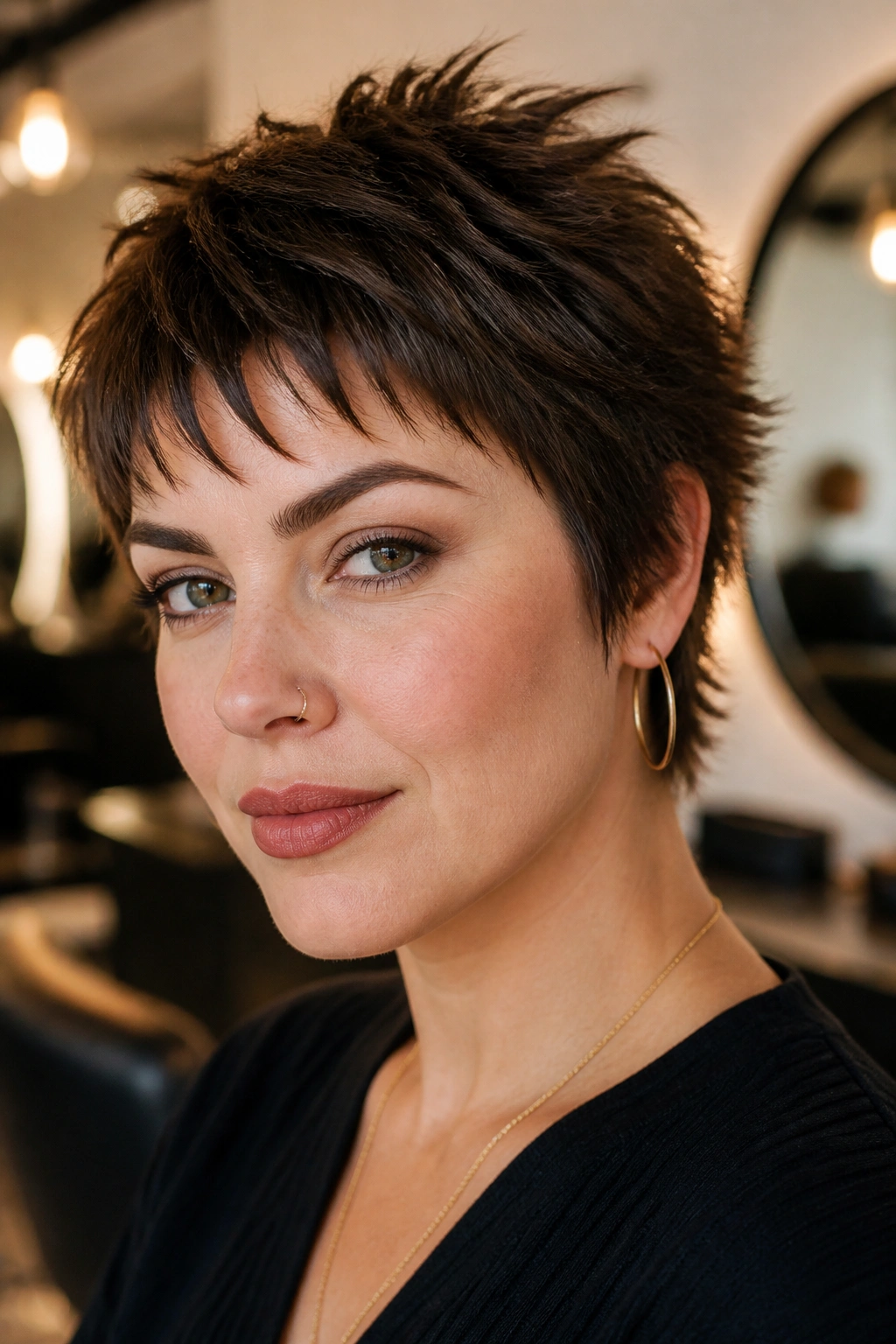
Unlike a blunt pixie, this one breaks up heavy hair instead of flattening it. That makes it a smart choice if your hair is thick, straight, or prone to puffing at the sides.
A razor cut creates soft, irregular edges, which helps the top sit lightly over a round face. The shape should feel sharp in outline but soft at the tips. That’s the sweet spot. Too much razoring, though, and the ends can look wispy in a bad way, especially if your hair is already fragile.
This style works best when the stylist keeps the perimeter controlled and uses the razor mostly through the interior layers. If your ends split easily, ask for scissors at the outer edge and texture only where the bulk needs to come out. That keeps the cut from falling apart after a few washes.
7. Long-Top Pixie With Temple Taper for Round Faces
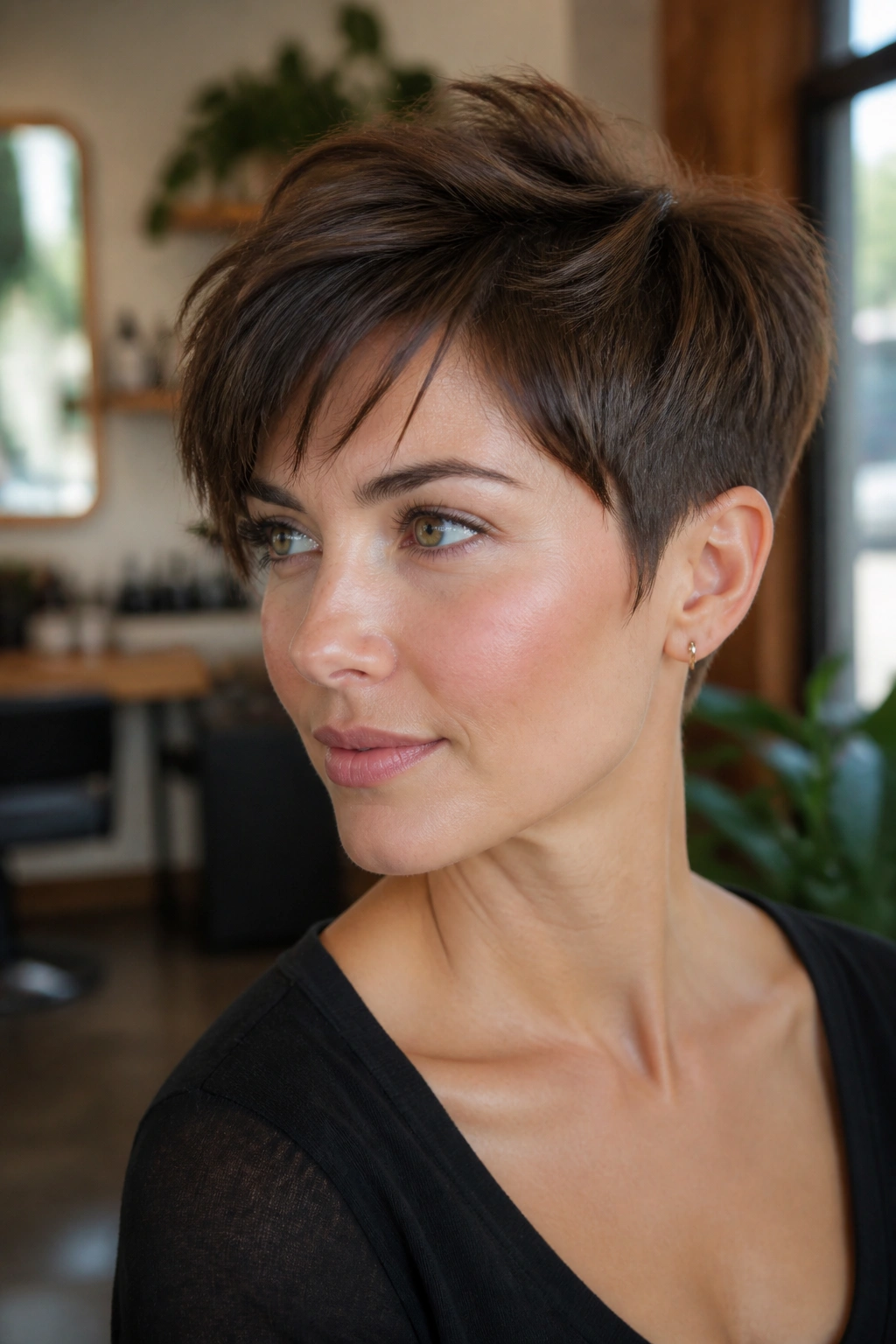
Long top, tight temples: that combo earns its keep. It gives the face a stronger vertical line and keeps the sides from ballooning out near the cheeks.
Ask Your Stylist For
- 3 to 4 inches through the crown for lift.
- Tapered temples that sit close to the head.
- A fringe that can be pushed forward or swept to one side.
- Point-cut ends so the top stays separated, not chunky.
A cut like this is especially good if your hair lies flat near the crown. Blow-dry the roots forward first, then lift them up and back with your fingers while the hair is still warm. That little bend at the root is what keeps the style from collapsing into a flat oval.
8. Messy Pixie Crop With Baby Bangs
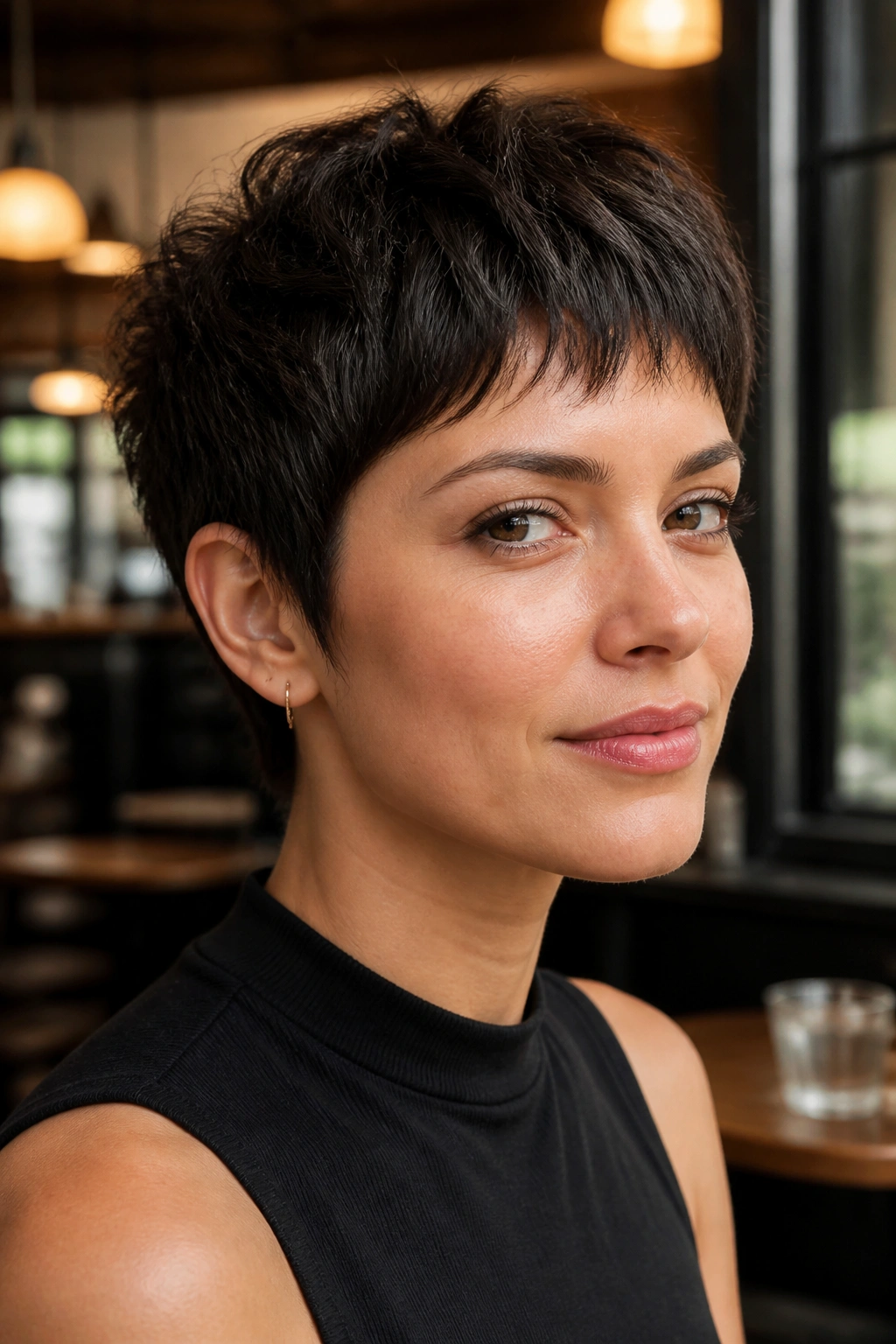
Can baby bangs work on a round face? They can, but only when they stay feathered. A hard, dense fringe cuts the forehead in a block, which usually makes the face look shorter and wider.
This version keeps the bangs short but irregular, so they don’t behave like one solid line. The top still needs height, and the sides need to stay close. Without that balance, the baby bangs become the whole story, and the cut loses the shape that flatters a round face.
Straight-across and heavy? Hard no.
Ask for the shortest pieces to be broken up with point cutting, then keep a little softness at the temples. That keeps the cut playful instead of severe, which is a better fit for most people than the sharp little-pageboy effect baby bangs sometimes create.
9. Undercut Shaggy Pixie
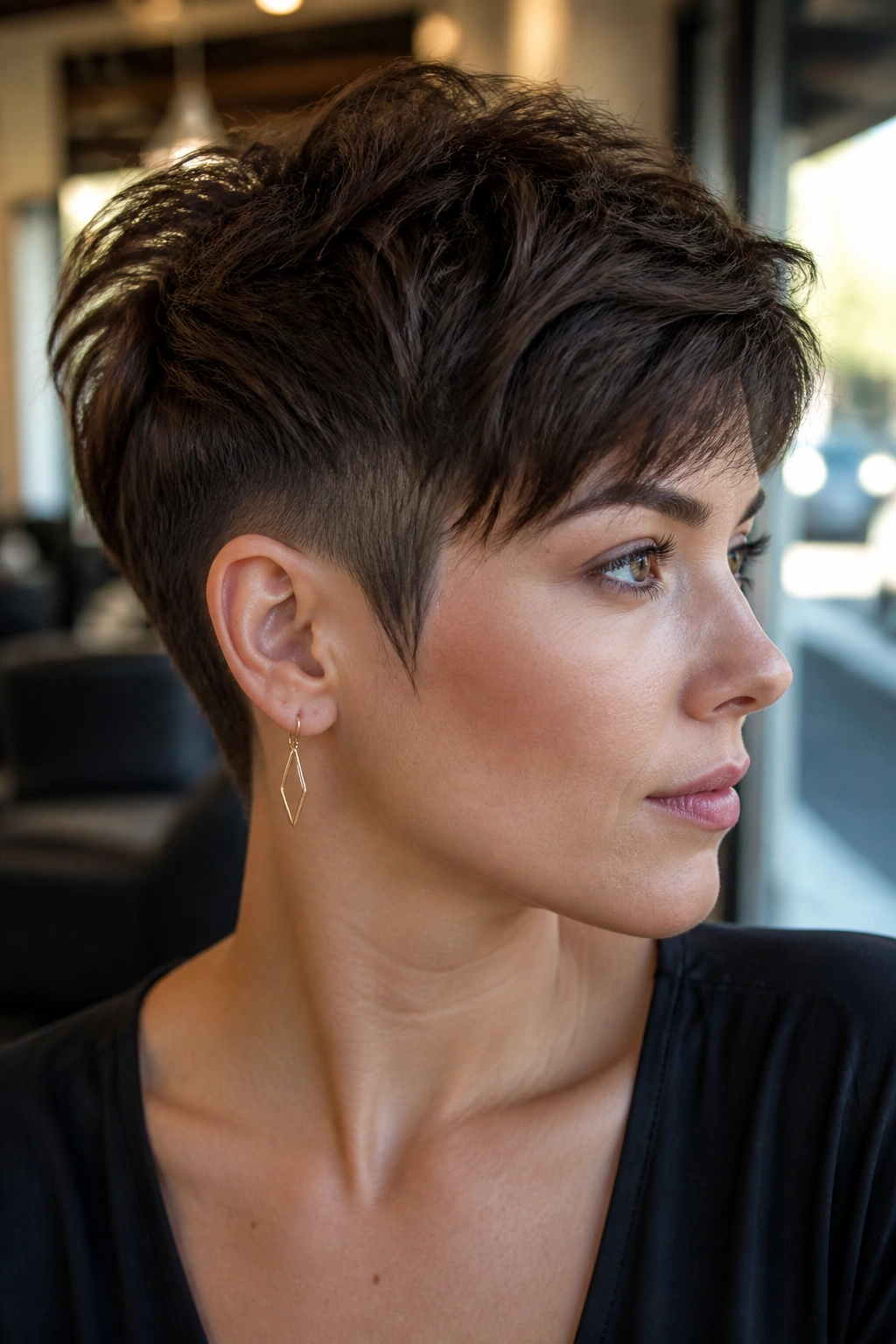
If the sides puff out by lunch, an undercut fixes the problem at the root. It removes bulk where round faces usually don’t need extra width, and it leaves the top free to create height.
- Keep the undercut at 1/4 to 1/2 inch if you want it subtle.
- Leave the crown long enough to fall over it, so the cut can hide the shave when needed.
- Ask for soft layers through the top, not a blunt cap.
- Use a finger-dab of wax only on the ends.
This shape is especially useful for dense hair that gets bulky around the ears. The cut looks edgy, sure, but it also makes styling faster. Less hair on the sides means less puff, less triangle shape, and less time fighting your own texture every morning.
10. Wavy Bixie-Style Shag

A bixie sits between a bob and a pixie, and that in-between length is exactly why it flatters a round face. The front pieces can brush the jawline, which gives the face a little length, while the shorter layers at the back keep the shape light.
Waves help here because they break up the outline. A soft bend through the sides looks better than straight, puffed-out hair that sits at cheek level. The cut should feel loose and a bit undone, not slick or over-controlled.
If you air-dry, work a small amount of cream through damp hair and scrunch the ends upward. If you blow-dry, use a diffuser only until the roots are about half dry, then stop and let the rest finish on its own. That keeps the wave pattern intact.
11. Deep Side-Part Shaggy Pixie for Round Faces
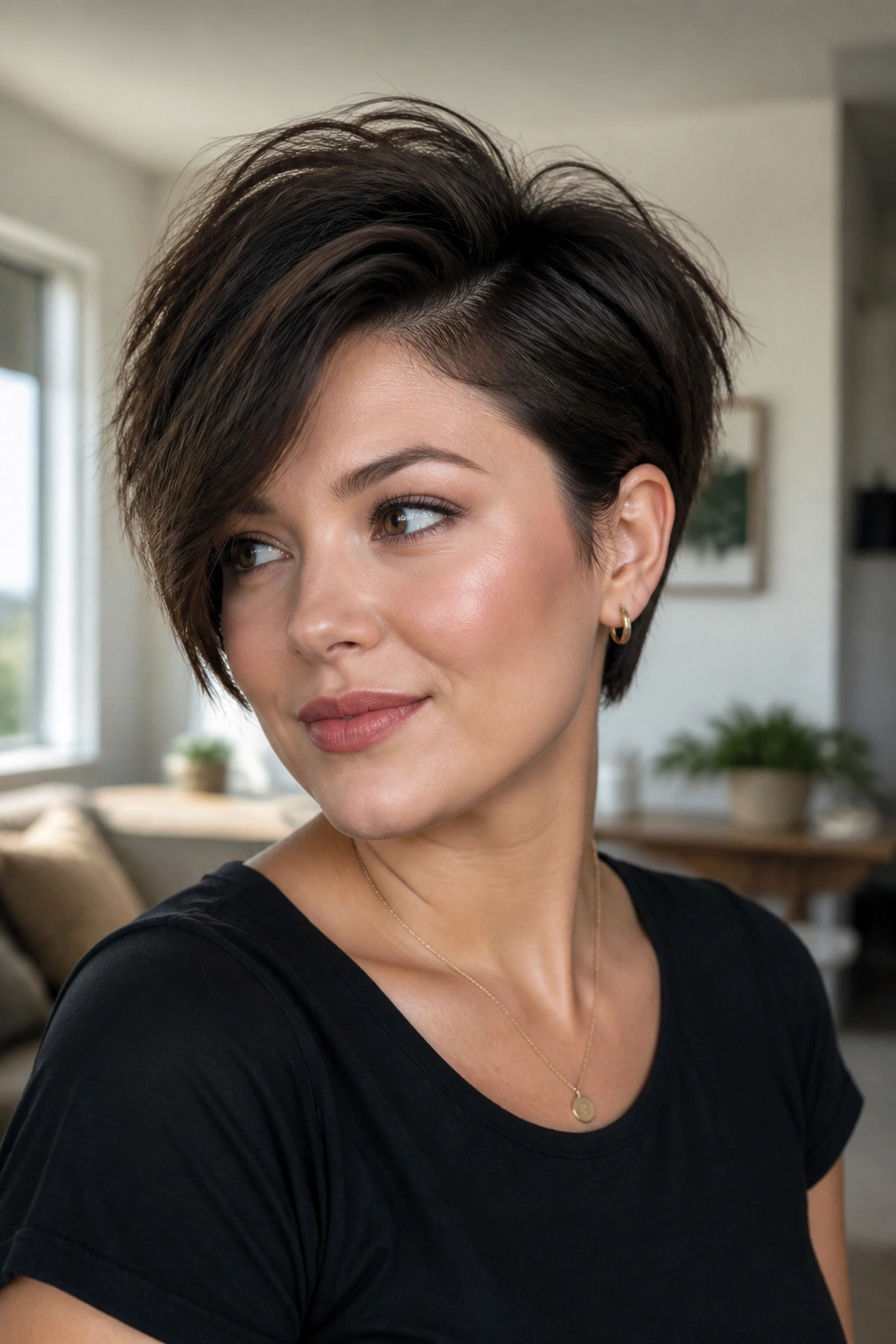
A deep side part does more than move hair to one side; it changes where the eye lands. That alone can make a round face look leaner because the volume shifts away from the middle of the forehead.
The part should sit above the arch of the eyebrow, not dead center. From there, let the longer section sweep across the front and stop somewhere near the cheekbone. The shorter side can tuck behind the ear or stay close to the temple. That imbalance is the point.
- Lift the roots on the heavier side with a round brush.
- Keep the opposite side flatter and softer.
- Use a light spray, not a stiff one, so the hair can still move.
This is one of the easiest shapes to wear if you want a little drama without a full-on edgy cut.
12. Salt-and-Pepper Shaggy Pixie
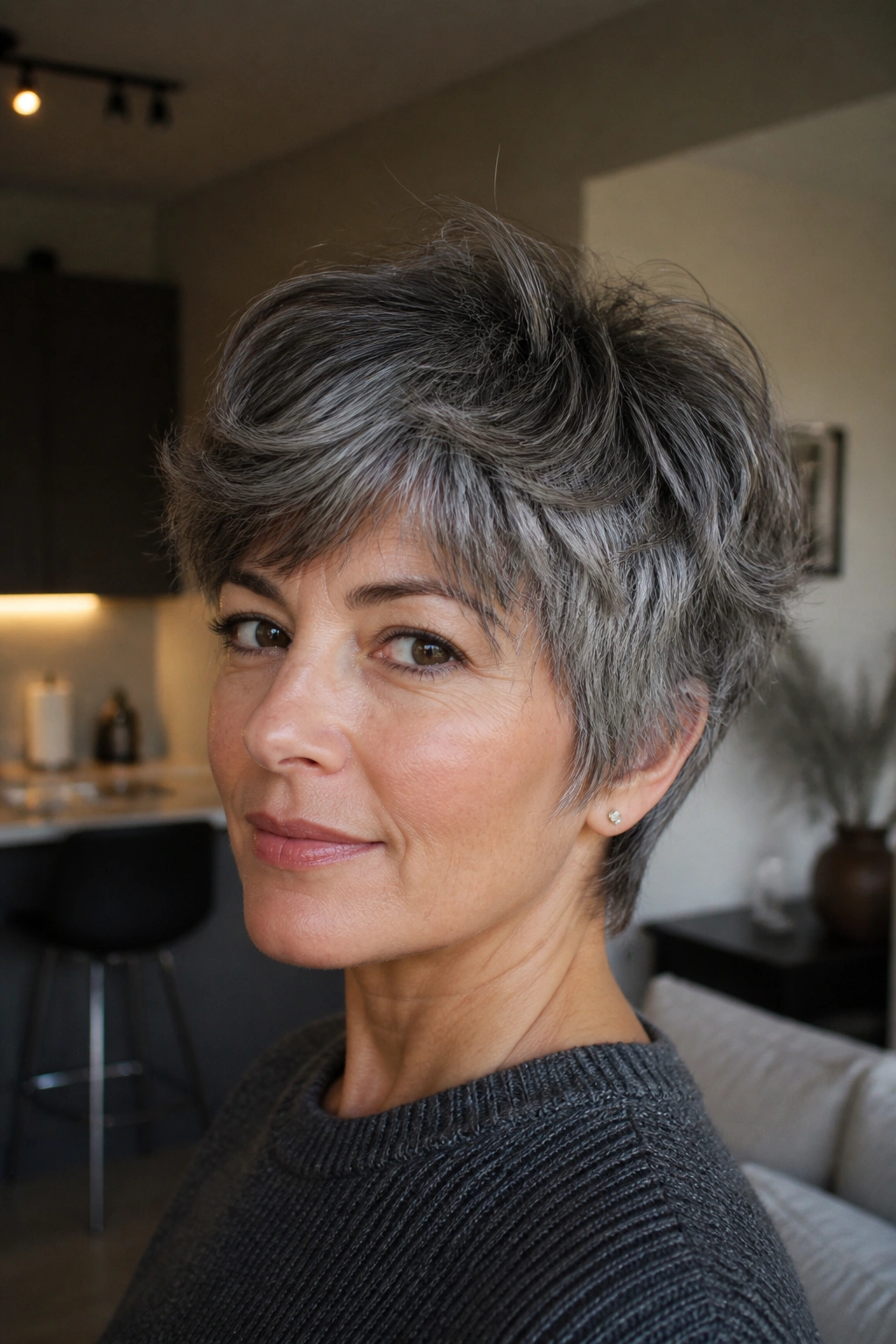
Salt-and-pepper hair can make this cut look richer, not older. The mix of dark and silver strands shows off every broken layer, which is exactly what a shaggy pixie needs.
The cut should stay airy enough that the gray isn’t buried under heavy texture. When the layers are too thin or too smooth, the color loses depth. Keep some thickness through the crown and a bit of softness around the ears, and the whole style looks intentional.
What Not to Do
- Don’t over-thin the top until it looks see-through.
- Don’t flatten the fringe with too much cream.
- Don’t try to cover every silver strand with a solid dark dye.
A little contrast between the longer top and shorter sides makes the color read like part of the design. That’s where the appeal lives.
13. Platinum Piece-Y Pixie With Choppy Ends
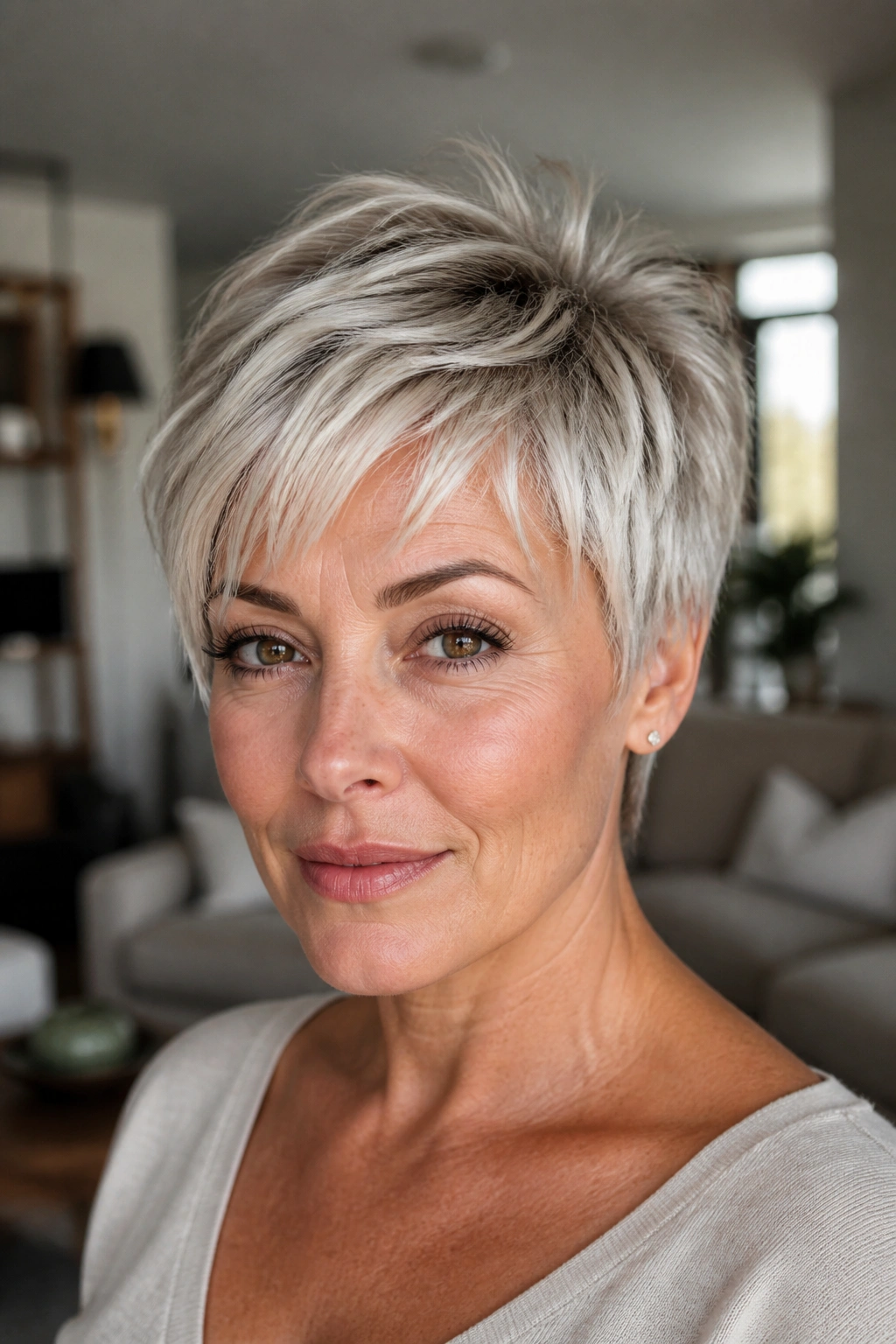
Platinum plus texture is a sharp combination on a round face. The light color pulls attention upward, while the choppy ends keep the cut from turning into one smooth shape that adds width.
The best version has a slightly darker root, or at least enough depth near the scalp to stop the top from looking flat. Piece-y ends matter here too, because platinum can make blunt edges look heavier than they are. A rough finish solves that fast.
If your hair is naturally fine, ask for texture mostly through the crown and fringe, not the whole head. Too much thinning can make platinum hair look brittle. And if the fringe sits on the forehead, keep it broken and separated. A thick white bang can make a round face feel boxed in.
14. Soft Shag With Neck-Hugging Length

Want something short without the hard edges? A soft shag with a neck-hugging back is the answer. It keeps the neckline neat, but it leaves enough length around the back to soften the transition into the face.
This shape is especially kind to round faces because it doesn’t flare out at the jaw. The back should graze the nape, then tuck in gently rather than flipping outward. Around the front, the longer pieces can skim the cheeks and stop right at the point where the face starts to widen.
There’s a calmness to this cut. It doesn’t shout. It just quietly fixes the proportions. If you wear glasses or earrings, that soft back length keeps the whole look from getting too busy.
15. Air-Dried Wave Pixie
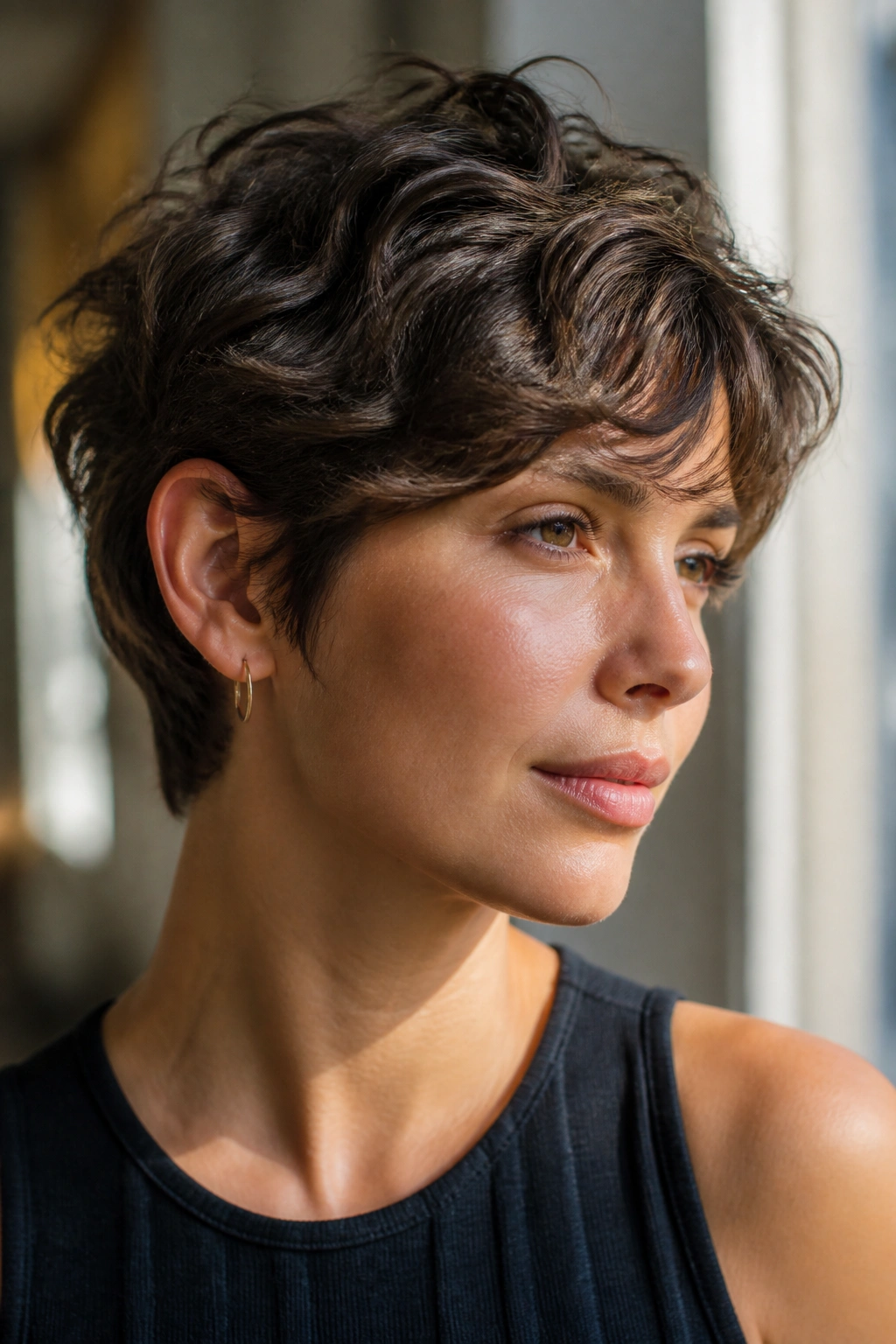
Air-dried waves give this cut its best shape when the hair has a little memory to it. The texture creates space between the strands, and that space keeps the cut from clinging to the cheeks.
How to Style It Fast
- Apply a nickel-size amount of leave-in cream to damp hair.
- Scrunch the crown upward with your hands.
- Tuck one side behind the ear while it dries.
- Pinch the front pieces once they’re dry so they separate.
The trick is to stop touching it too early. Let the hair set for 10 to 15 minutes before you fuss with the front. If you keep breaking it up while it’s still wet, the wave pattern turns fuzzy instead of soft.
This is a good cut for busy mornings because it doesn’t need a full blowout to look finished.
16. Razor-Cut Pixie With Broken Fringe
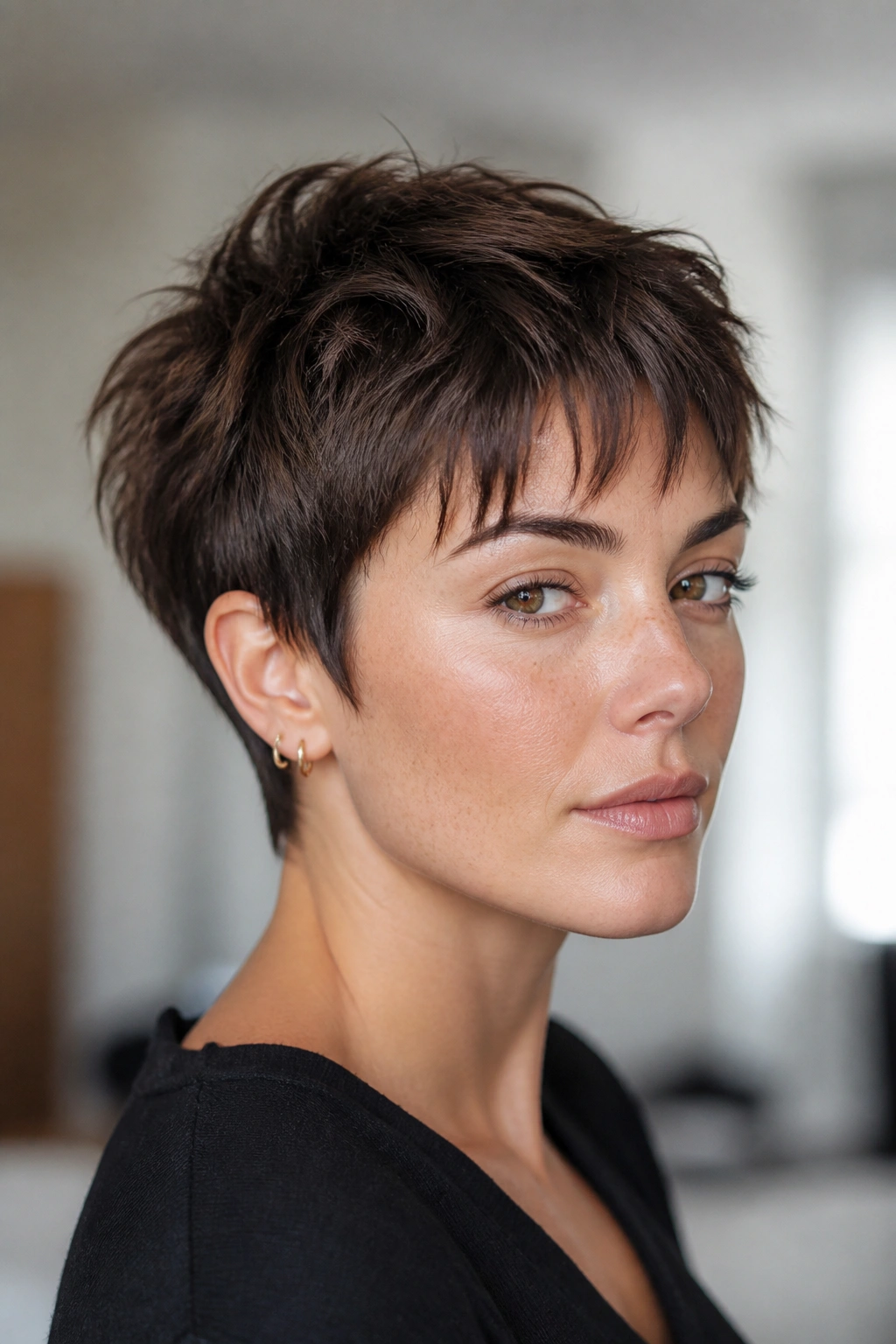
Razor-cut layers make fine hair look lighter, not thinner, when the stylist keeps the shape controlled. That’s the difference. A sloppy razor job can destroy a short cut, but a careful one gives the hair movement that scissors sometimes can’t.
The broken fringe is the key piece here. It should fall in little separated sections, not in one flat curtain. That helps a round face because the eye keeps moving instead of landing on one solid horizontal line. The same idea applies to the crown: a little controlled mess works better than a perfectly combed top.
This is a precision cut, not a messy one. If your ends split fast, ask for scissors on the perimeter and razoring only inside the shape. That keeps the finish soft without chewing up the outer line.
17. Wedge-Inspired Shaggy Pixie
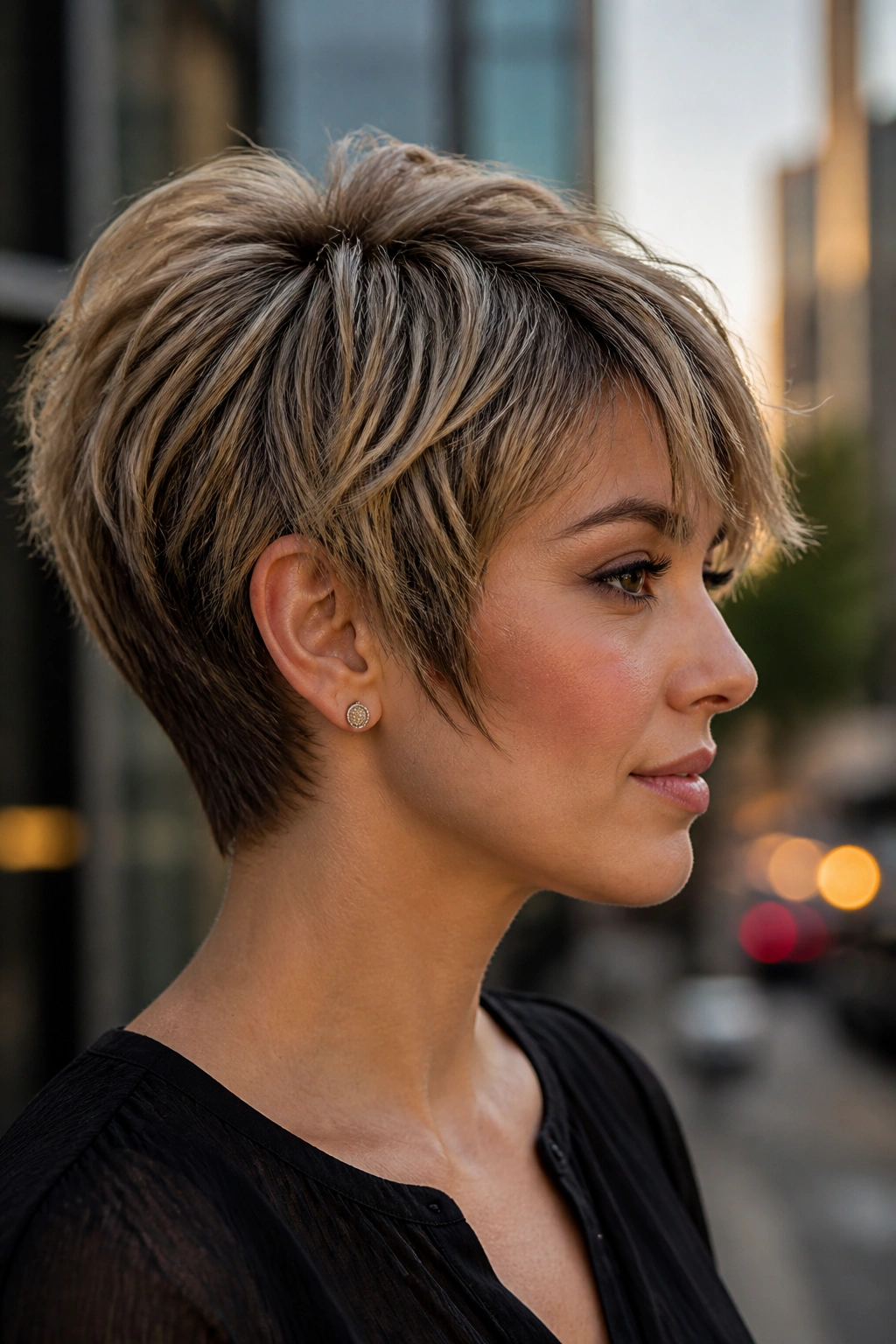
If you want lift at the back and softness around the cheeks, wedge inspiration makes sense. It gives the cut a little structure without turning it into a hard stacked shape.
The back should build gently from the nape, not puff out in a bulky ridge. Then the front can stay longer and feathered, which helps a round face look less full through the middle. The shape almost creates a small built-in slope from back to front, and that slope is useful.
- Keep the nape snug.
- Leave the crown slightly longer than the back.
- Feather the sideburns so they don’t make the cheeks look wider.
This version has a sharper profile than a soft pixie, but it still feels wearable. That’s the appeal.
18. Copper Shaggy Pixie With Eyebrow-Grazing Fringe

Copper is one of those colors that makes texture read from across the room, which is handy when the cut depends on piece-y layers. On a round face, the warmth brings attention to the eyes and the fringe, not just the cheeks.
The fringe should skim the brow in broken sections. Not a wall. A wall makes the face look shorter, and that’s the opposite of what you want. A little movement at the front keeps the style bright and light, especially when the copper shade has some depth at the roots.
If your hair tends to go flat, copper helps hide that because the color itself creates the illusion of motion. Keep the top airy and the sides close, and the cut will do more work than the styling cream ever could.
19. Spiky Crown Pixie
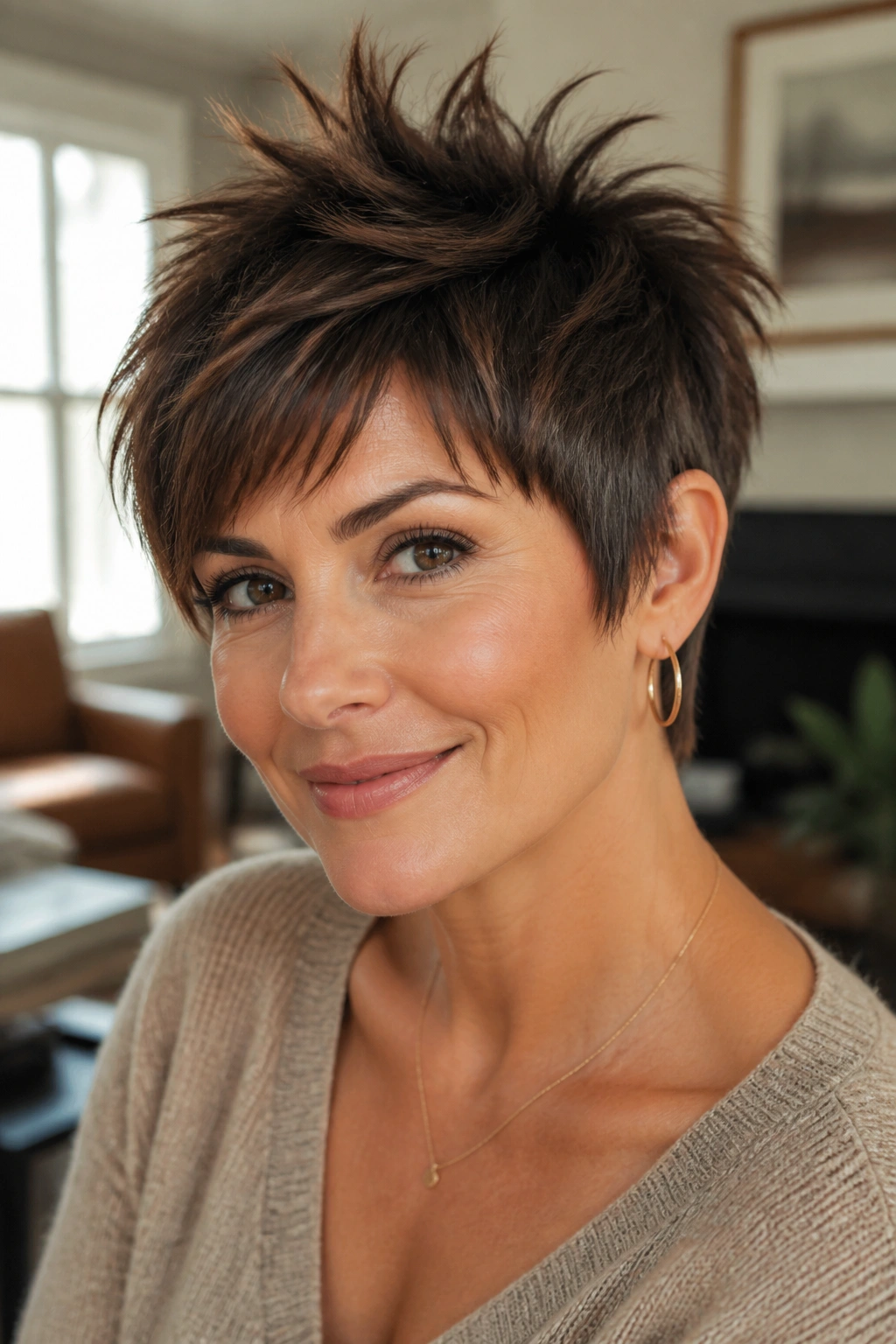
Spiky does not have to mean harsh. When the spikes live mostly at the crown, the cut adds height where round faces need it most and leaves the sides softer.
Use a tiny amount of wax or molding paste, warm it in your fingers, then pinch the top upward in small sections. Don’t spike the whole head. That’s where things go wrong. A few lifted pieces near the crown, a softer fringe in front, and tidy sides near the ears give you the shape without the cartoon effect.
This cut looks best when the spikes are uneven. One piece higher than the others. One piece falling forward. That irregularity keeps the style from looking stiff, and it helps the face look a little longer.
20. Low-Maintenance Wash-and-Go Shaggy Pixie
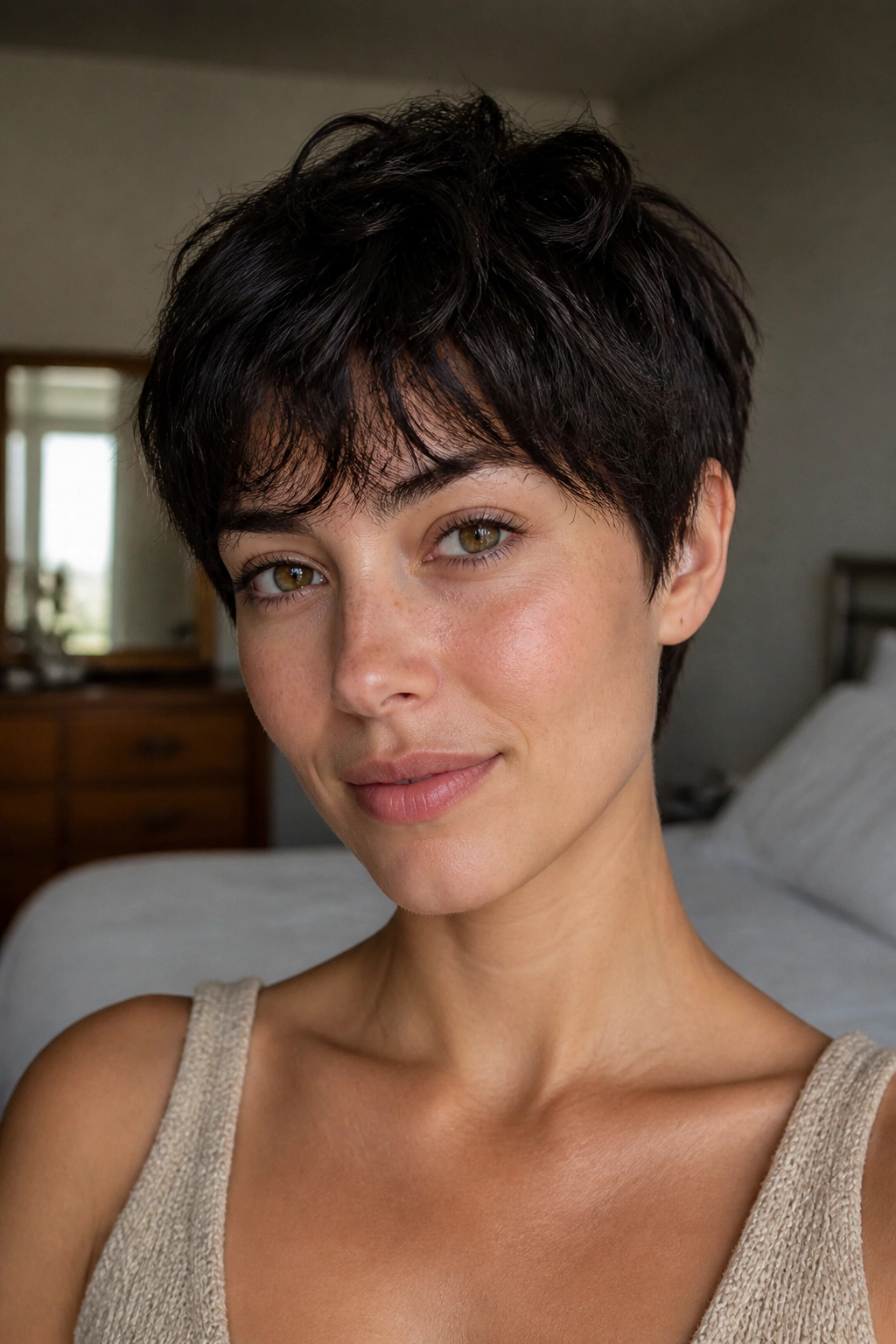
If you hate morning styling, cut the hair so it falls correctly before you touch it. That is the whole point of a wash-and-go shaggy pixie.
The layers should be disconnected enough to dry with their own shape, but not so chopped up that they stick out everywhere. The fringe can fall forward a little, the crown can stay light, and the sides should stay close. When the cut is right, a quick towel squeeze and a bit of cream is enough.
- Use a lightweight styling cream on damp hair.
- Blot with a microfiber towel, not a rough bath towel.
- Part the hair where it naturally wants to sit.
- Mist with water to revive it on day two.
A good wash-and-go pixie still looks deliberate after a nap. That’s the real test.
21. Feminine Mullet-Leaning Pixie Shag
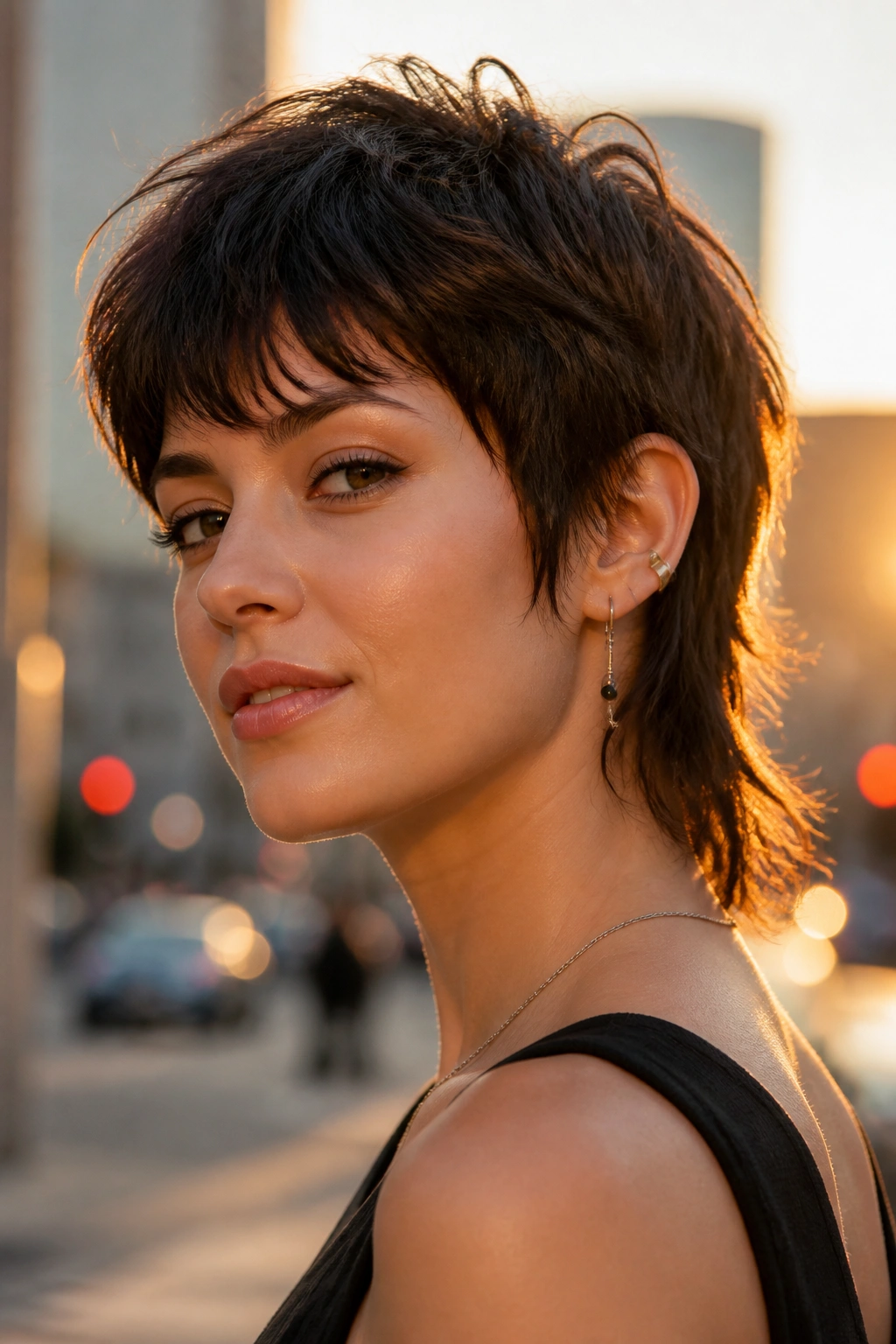
The mullet-leaning pixie works because it gives the face a longer tail at the back. That little bit of extension can help a round face feel less centered and more stretched out.
What Keeps It Flattering
- Keep the back grazing the nape, not dropping into bob territory.
- Leave the sides slim enough to avoid extra width.
- Soften the fringe so the front doesn’t feel too severe.
The cut can look edgy, but it doesn’t have to look harsh. In fact, the best versions feel a little soft around the ears and a little longer through the back, which creates a nice line down the profile. If the front gets too chunky, the whole effect falls apart. Keep the top piece-y and the nape clean, and the shape stays wearable.
22. Tapered Pixie Shag With Sideburn Length
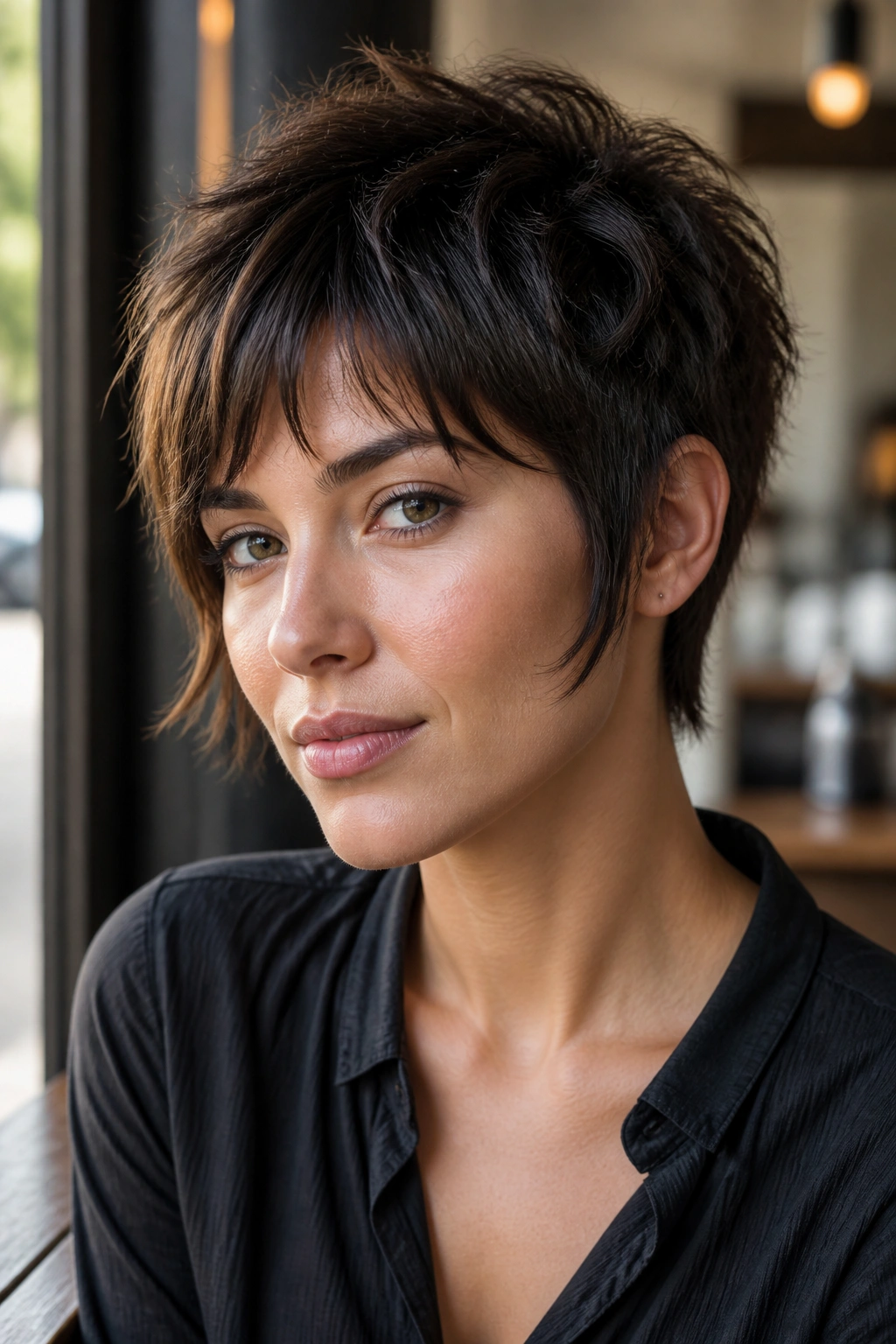
This one is the quietest option in the bunch, and that’s why it works. The sideburns stay just long enough to skim the jaw, while the top keeps its shaggy movement and the back stays neatly tapered.
That little bit of sideburn length changes the whole balance of a round face. It draws the eye down the line of the cheek instead of stopping right at the widest point. The cut feels soft, but it is doing a lot of quiet correction in the background.
If you want one detail to copy, make it this: keep the front pieces a half inch longer than you think you need. That small extra length lets the hair bend around the face instead of puffing out from it.
Final Thoughts
The strongest shaggy pixies for round faces do the same basic thing in different ways: they add height, keep the sides controlled, and break up the outline so the face looks longer. That shape language matters more than any single trend or product.
Bring a photo, yes, but bring a point of view too. Tell the stylist whether you want more crown lift, more fringe, or more softness around the nape. Those details decide whether the cut flatters your face or just sits there.
A round face does not need to be hidden. It needs a haircut that knows where to put the movement.
