



Fine hair can look expensive in a pixie cut—or it can collapse by lunch. The difference is the cut.
A blunt, one-length crop often sits too close to the head and exposes every flat spot. Choppy pixie cuts for fine hair work because they break that outline apart. Short internal layers, piecey ends, and a little unevenness at the crown make the hair read thicker than it really is.
That does not mean you should ask for wild thinning everywhere. Too much razor work can leave the ends wispy and tired, which is the opposite of what you want. The sweet spot is shape: enough texture to build lift, enough length to keep the cut from looking sparse.
If you’re bringing photos to a stylist, pay attention to the fringe length, the top length, and the nape. Those three details change everything. One pixie can feel soft and airy; another can feel sharp and edgy; a third can make fine hair look twice as full. The styles below cover the full range, from barely-there bangs to grown-out, shaggy pieces that still keep the neck clean.
1. Softly Shattered Choppy Pixie for Fine Hair
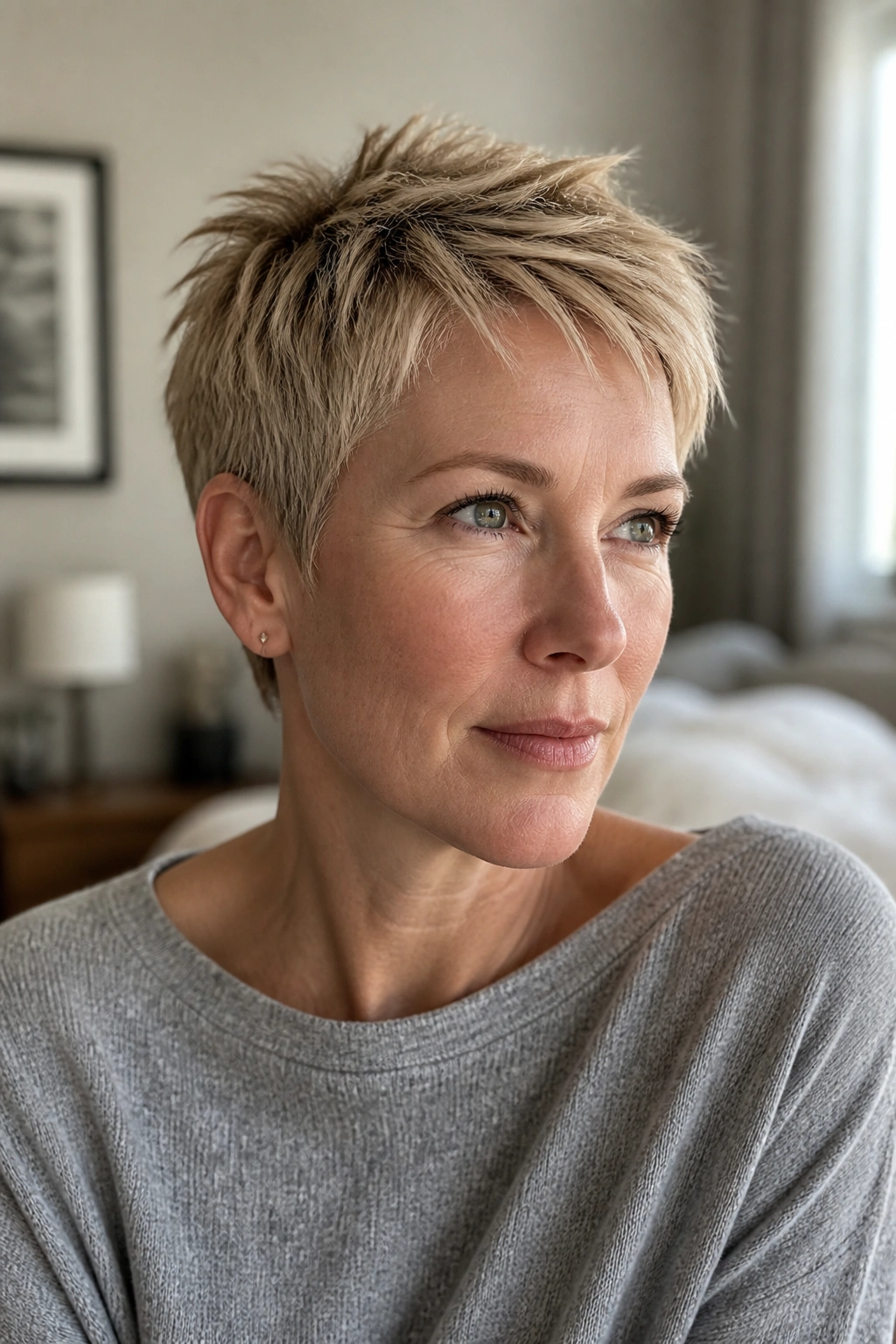
This is the cut I’d hand to someone who wants movement without drama. The top stays a little longer—usually around 2 to 3 inches—while the sides stay neat and close so the shape does not puff out at the ears.
The trick is gentle irregularity. Ask for point-cutting at the ends, not aggressive thinning. That gives the hair a broken edge, which helps fine strands look more numerous when they fall forward or sweep to the side.
Why It Works
A softly shattered pixie gives the crown something to do. Fine hair tends to lie in one direction, which is why a little texture can matter more than another half inch of length. The lightness at the top makes the hair move; the clean sides keep it from turning fuzzy.
A pea-sized amount of matte paste is enough for most days. Warm it between your fingers, lift at the roots, then pinch the ends into place. If you can see a few uneven bits, that is the point. Too neat. Too polished. Too flat.
2. Long Fringe Choppy Pixie
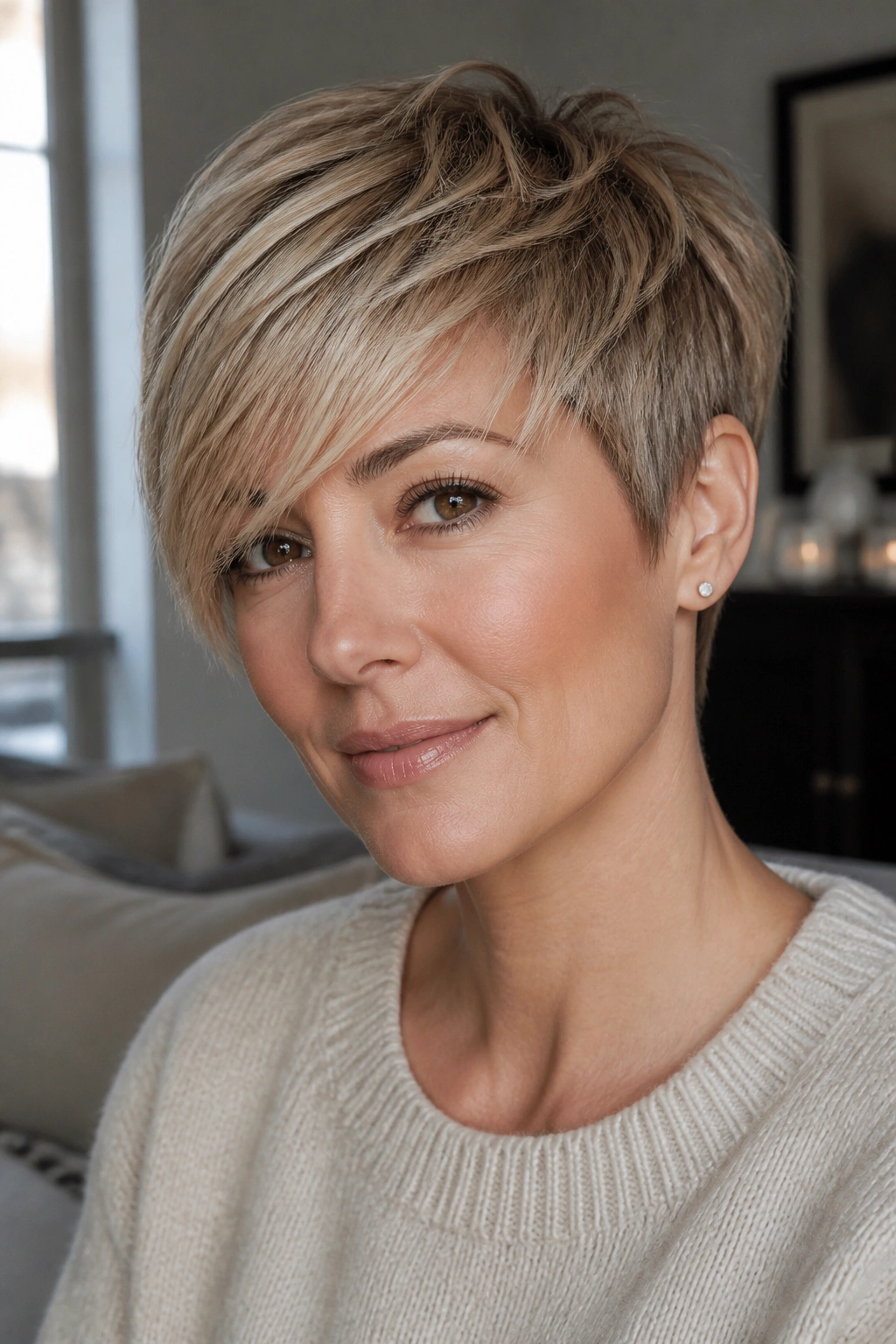
A long fringe changes the whole mood of a pixie. Instead of opening the face all at once, it lets the hair fall diagonally across the forehead, which gives fine hair a heavier-looking front line.
Best For a Softer Face Frame
This version is especially useful if your hairline is a little high or if you want to soften a strong brow. Keep the fringe long enough to brush the eyebrows on one side, then have the rest of the crop trimmed shorter around the ears and nape.
- Ask for soft point-cut ends so the fringe does not look blunt or blocky.
- Keep the top at 2 to 3.5 inches so you can sweep it over with a round brush.
- Use light mousse at the roots, not cream through the ends.
- Blow-dry the fringe in the direction you want it to sit, then let it cool before touching it.
The best thing about this cut is the way it behaves on a lazy morning. It still looks styled even when you only use your hands. Nice bonus. The fringe does the heavy lifting.
3. Micro-Bang Textured Crop
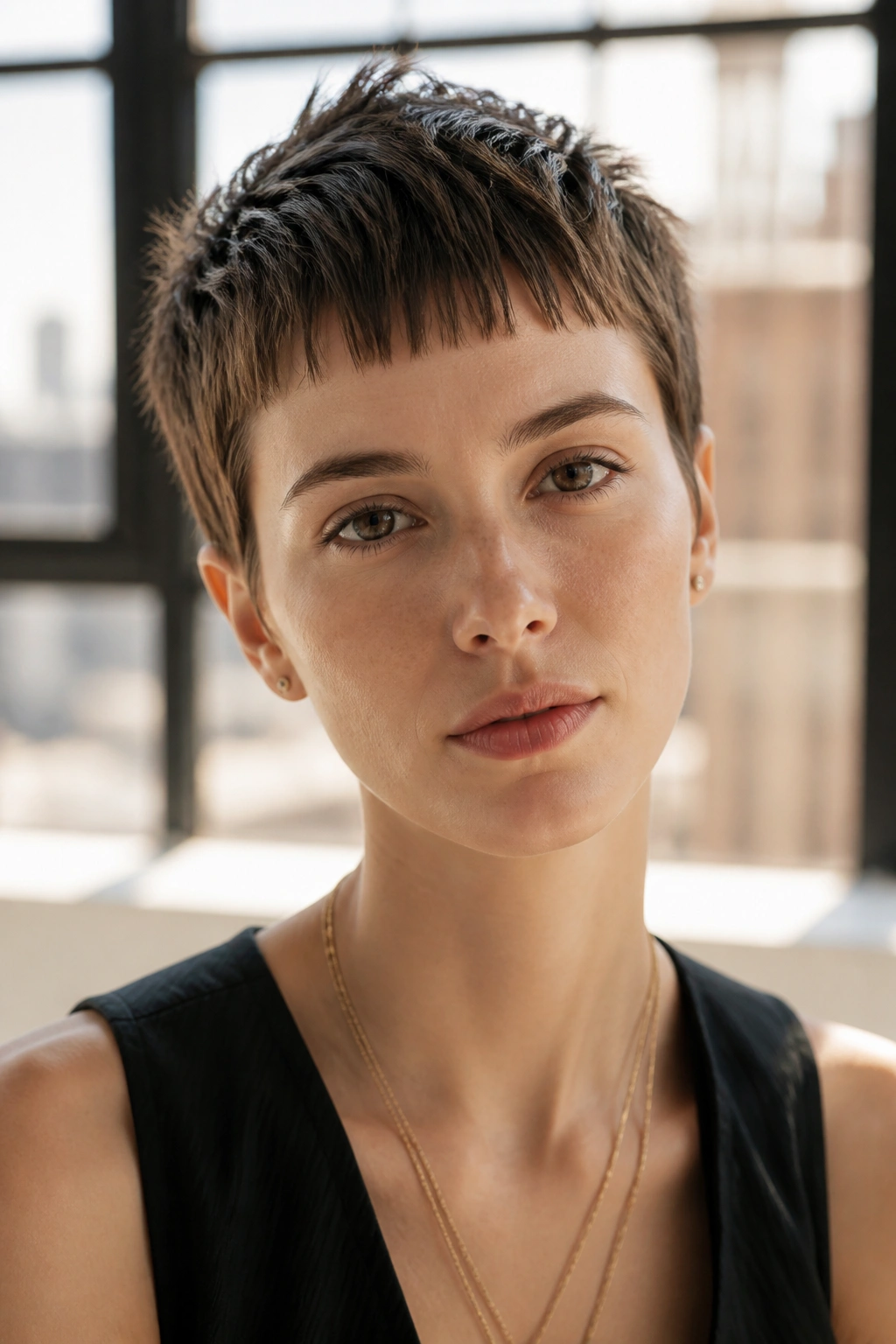
Short bangs are a bold move, but they can be brilliant on fine hair. A micro-bang crop creates a crisp line across the forehead, and that line gives the whole cut more visual weight.
The rest of the style should stay choppy and close, with tiny broken pieces through the top so the bangs don’t feel disconnected. If the fringe is cut too thick, it can drag the face down. Too sparse, and it looks accidental. You want a narrow band of hair that sits light but still holds its shape.
This cut works best when the hairline is even and the forehead can carry a shorter fringe. Use a dab of styling paste only on the top layers. Leave the bang area almost bare so it stays soft instead of sticky. Clean, sharp, and a little mischievous. That’s the sweet spot.
4. Asymmetrical Choppy Pixie
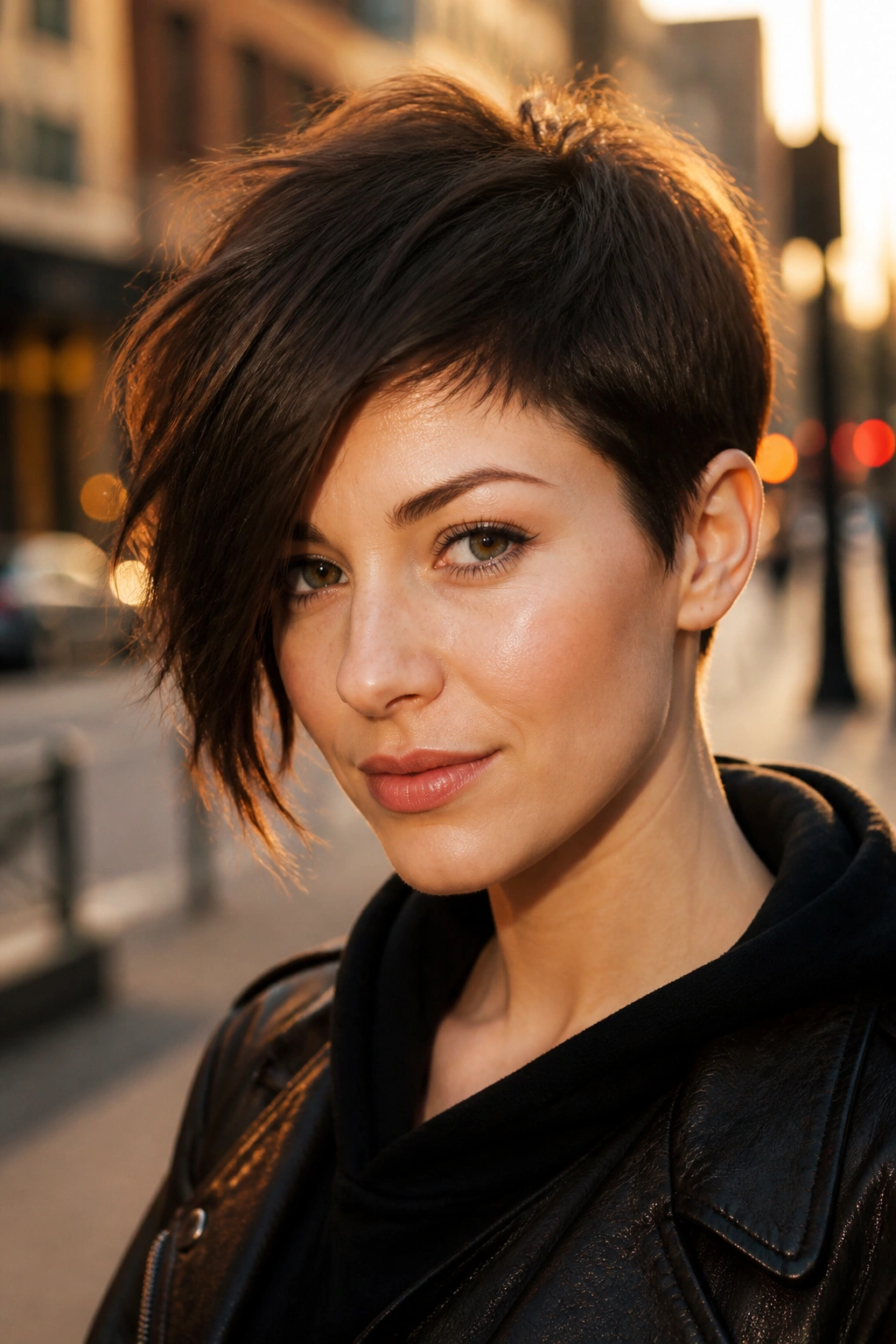
If your hair has one side that behaves better than the other, use it. An asymmetrical pixie leans into that difference with one side kept longer and the other side cut closer to the head.
A Smart Way to Add Interest
On fine hair, asymmetry creates the illusion of more density because the eye keeps moving. A longer front panel on one side draws attention away from any flat spots at the crown, while the shorter side keeps the cut from feeling heavy.
Ask for the longer side to graze the cheekbone or jawline, not fall into bob territory. The contrast should feel deliberate, not grown-out. Too much difference can make the cut hard to style, so the balance matters.
This one suits people who like a little edge but still want something wearable at work. It’s not fussy. It just has opinions.
5. Feathered Side-Swept Pixie
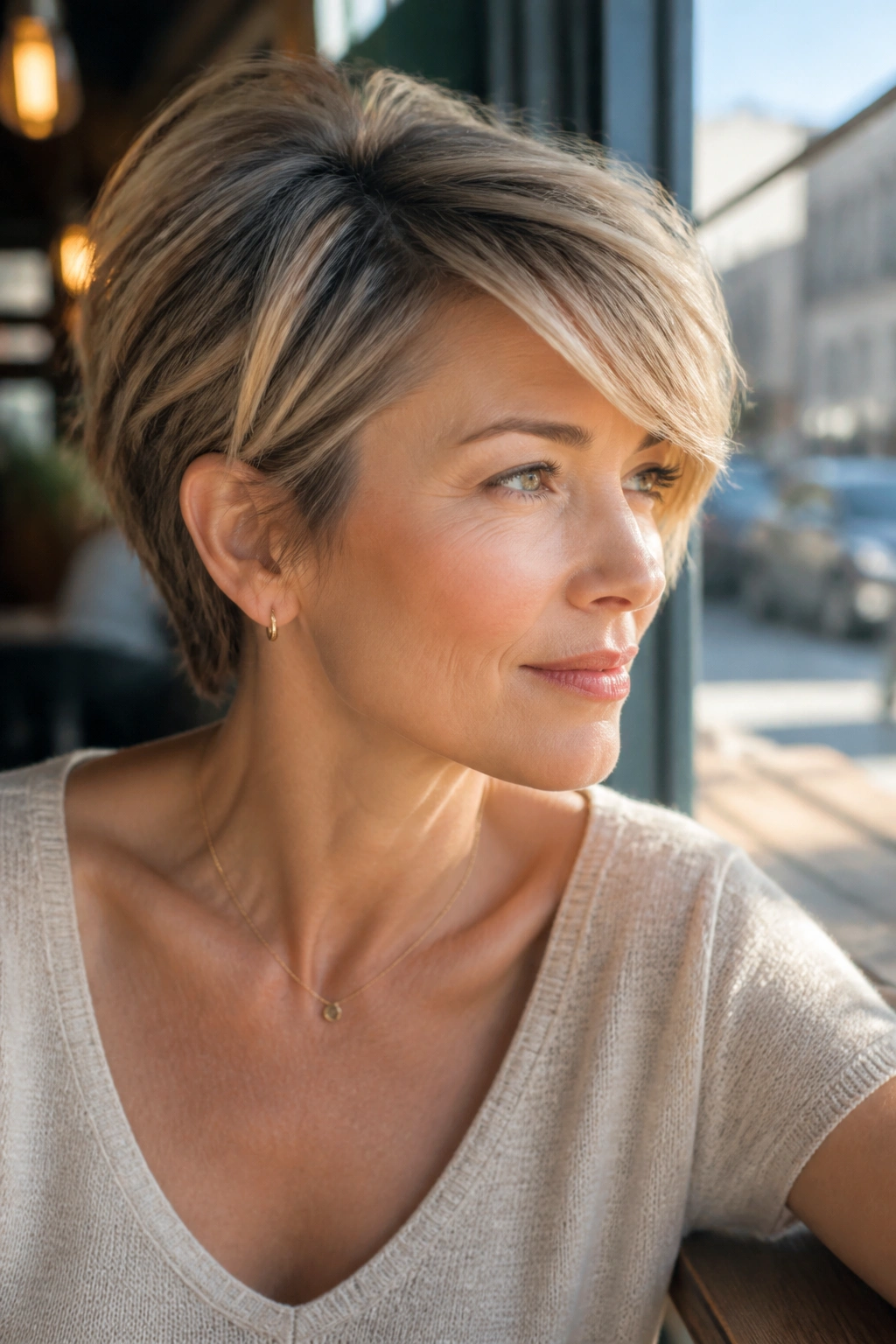
Feathered layers are one of the safest bets for fine hair because they soften the outline without stripping away too much bulk. The shape should feel airy around the temples and cheekbones, with the top brushed to one side.
Picture this: the hair lifts at the roots, bends slightly over the forehead, and tapers into wispy ends near the ear. That movement gives the cut a light, floating feel. Not fluffy. Floating.
A small round brush helps here, especially if you want the fringe to curve away from the face. Finish with a dry texturizing spray at the crown, then scrunch the ends once or twice with clean fingers. If the hair starts to separate in little ribbons, you’ve got it right.
6. Undercut Pixie with Airy Top
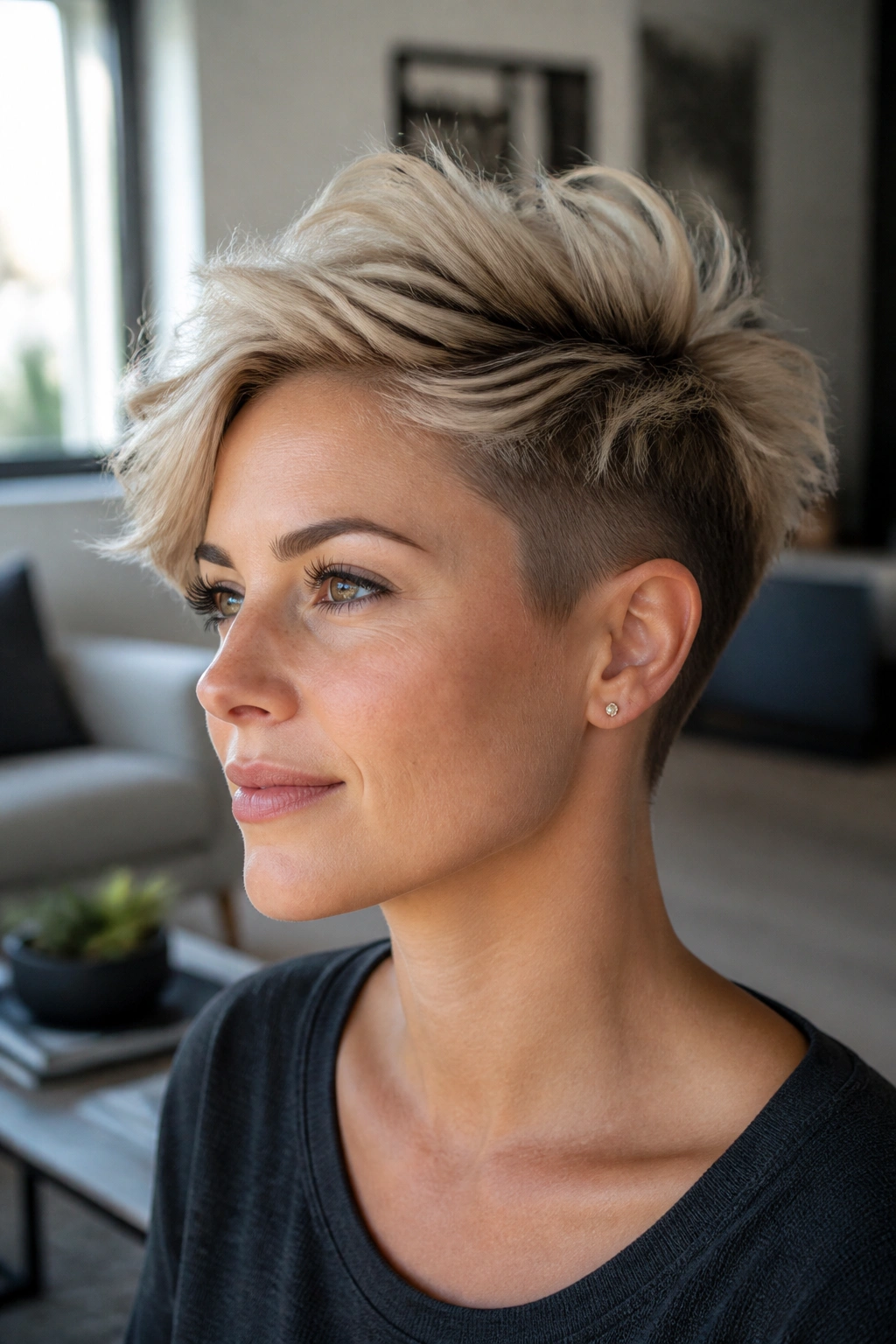
An undercut sounds severe, but on fine hair it can be one of the smartest choices. Taking weight out of the nape and lower sides lets the top sit higher, which is exactly what flatter hair needs.
The top should stay long enough to lift—usually around 3 inches or so—while the undercut keeps the bottom neat and close. That contrast makes the crown appear fuller because the shorter lower section stops the whole shape from collapsing.
What to Watch For
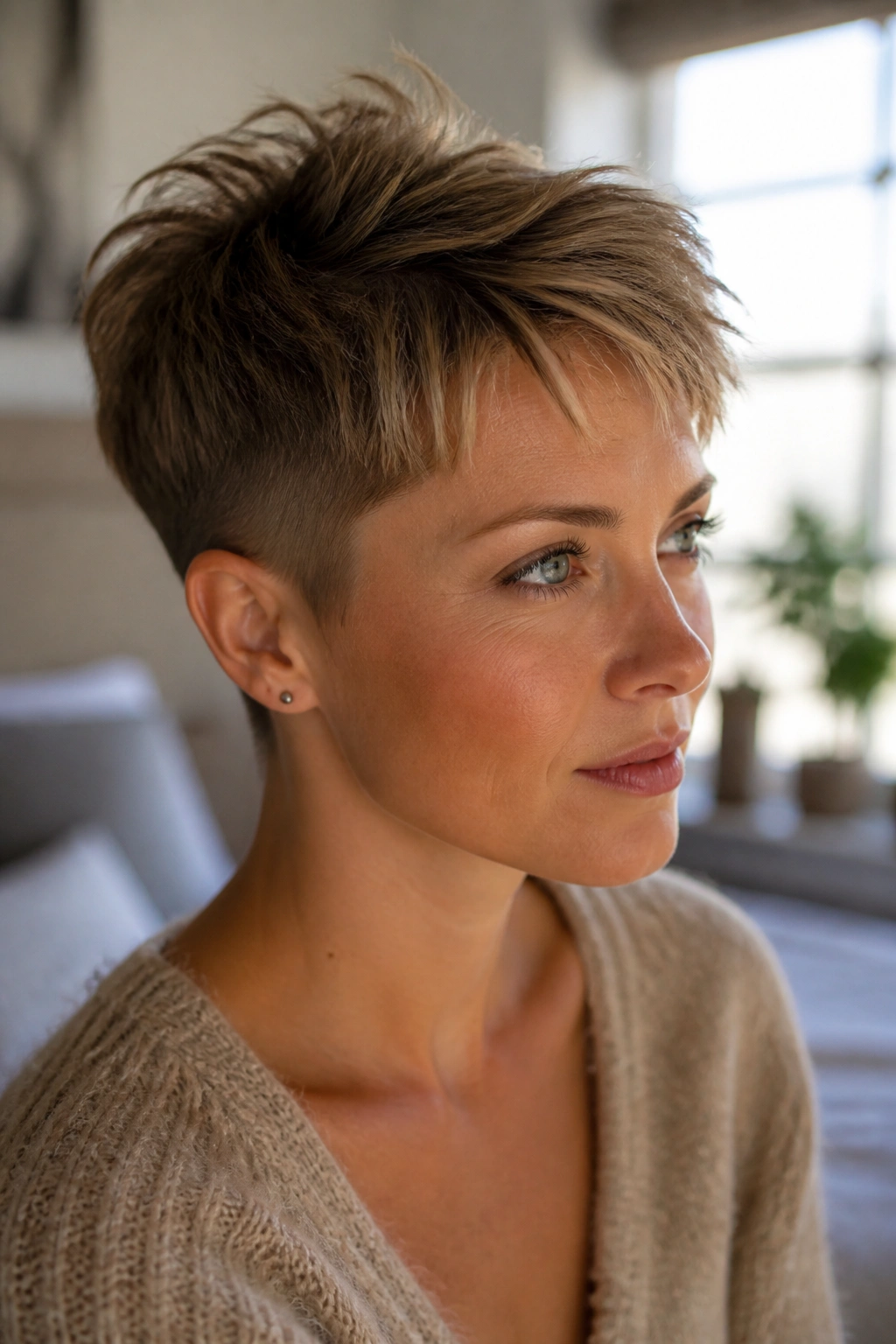
- Keep the top long enough to style. If it gets too short, the undercut becomes the only thing people notice.
- Ask for the fade or taper to stay soft, not buzzed to the skin.
- Use root spray or mousse, not heavy wax.
- Avoid over-trimming the crown. You need some length up there.
This cut is a little more daring, sure. But it’s also practical, especially if your hair tends to puff at the nape and go limp everywhere else.
7. Choppy Pixie Cuts for Fine Hair with a Deep Side Part
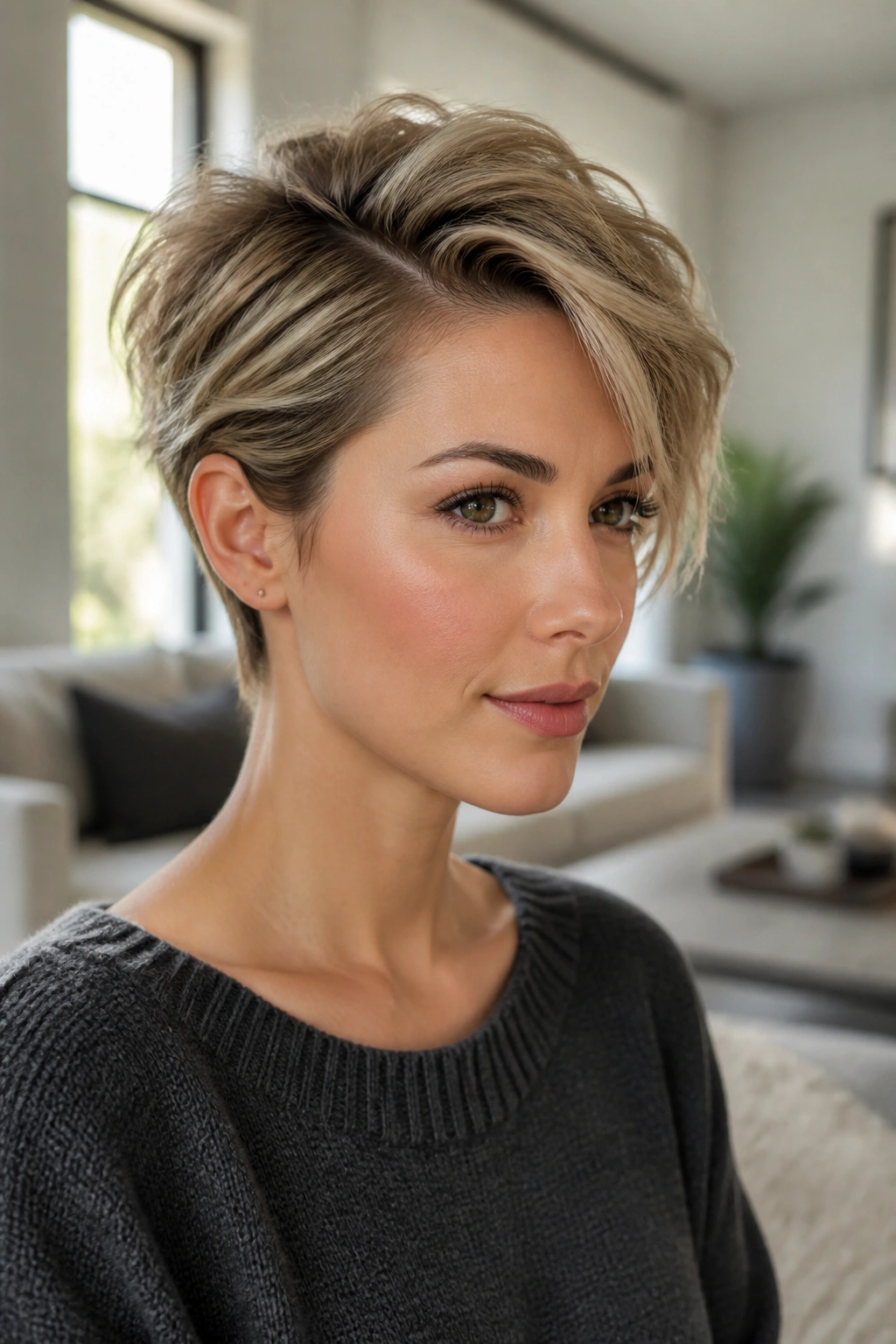
A deep side part can rescue fine hair in about ten seconds. It shifts the weight of the hair off the center line and creates instant lift at the roots, especially if one side is tucked behind the ear.
The cut itself should stay lightly layered through the top, with enough length to push the part over without fighting it. I like this shape when the client wants something polished but not stiff. The part gives structure; the choppy ends keep it from looking too formal.
Blow-dry against the direction of the part first. Then flip it over and set it in place with your fingers. That little trick makes the root stand up a bit instead of lying flat from the start.
8. Ear-Grazing Pixie-Bob
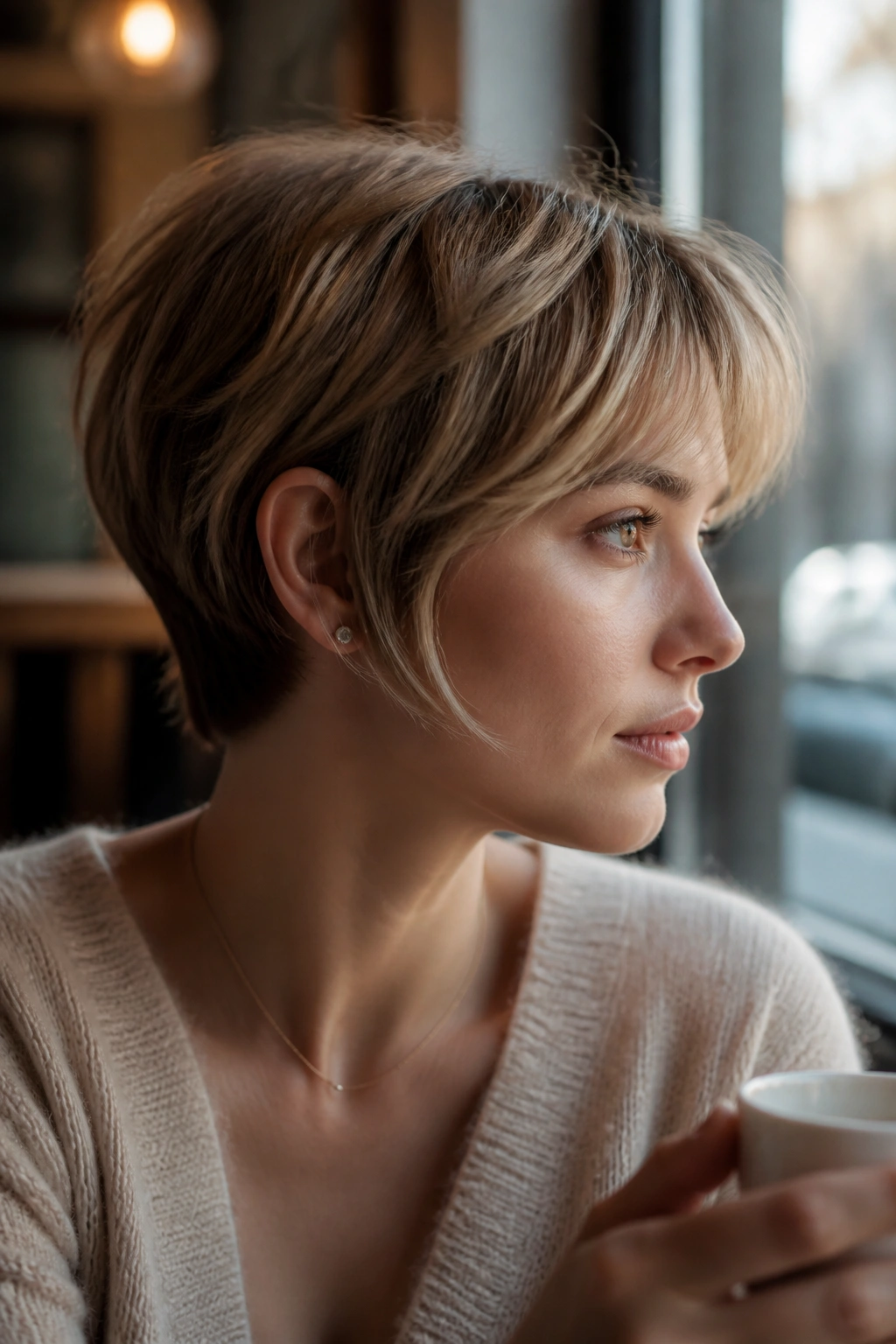
This one lives in the middle ground between a true pixie and a short bob, which is handy if you’re not ready to go super short. The front pieces skim the ears or jawline, while the back stays shorter and cleaner.
Why It Flatters Fine Hair
Because the front is longer, the eye sees more hair there. That matters. Fine hair often looks fullest when the perimeter has enough length to create a strong outline, even if the interior is light and broken up.
- Keep the front pieces just below the cheekbone if you want softness.
- Let the nape stay short and tidy so the cut does not balloon.
- Work a light cream only through the ends if they need polish.
- Tuck one side behind the ear for a quick, clean finish.
This is a good bridge cut. It has the ease of a pixie, but it won’t shock anyone who’s used to longer hair.
9. Tousled Piecey Pixie
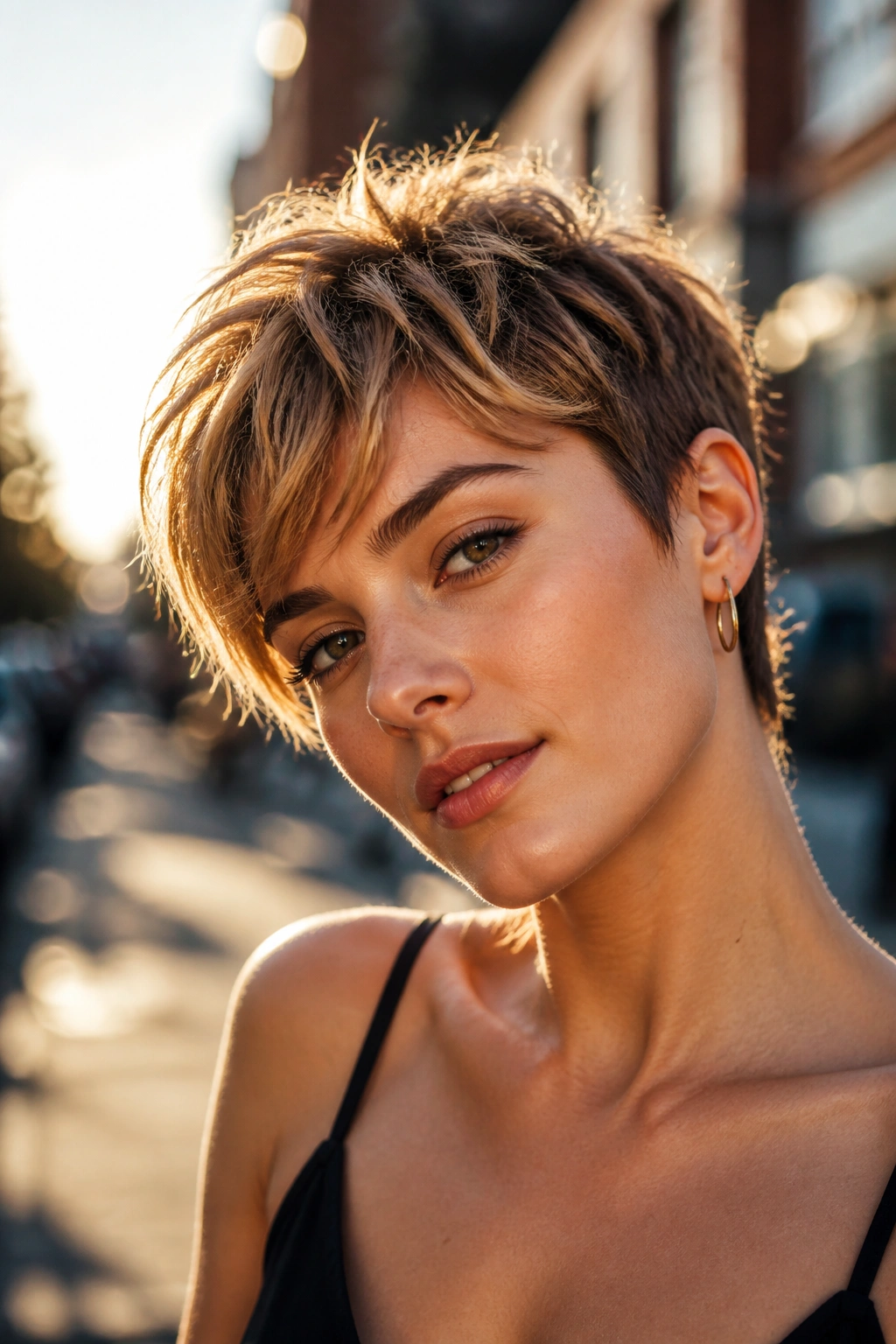
Tousled styles can go wrong fast on fine hair if they’re too dry or too frizzy. The right version looks lightly bent and separated, not puffy or rough. That means the cut needs some length on top and real softness at the edges.
The texture should be uneven in a controlled way. A few longer pieces near the front, a shorter crown, and closely tapered sides make the style look lived-in without looking messy in a lazy sense.
Use a tiny amount of styling paste on dry hair, then twist a few sections between your fingers. Don’t work all of it. Leave some gaps between the pieces. Those gaps create air, and air makes the hair seem fuller than a solid, pressed-down shape.
10. Tapered Nape Pixie
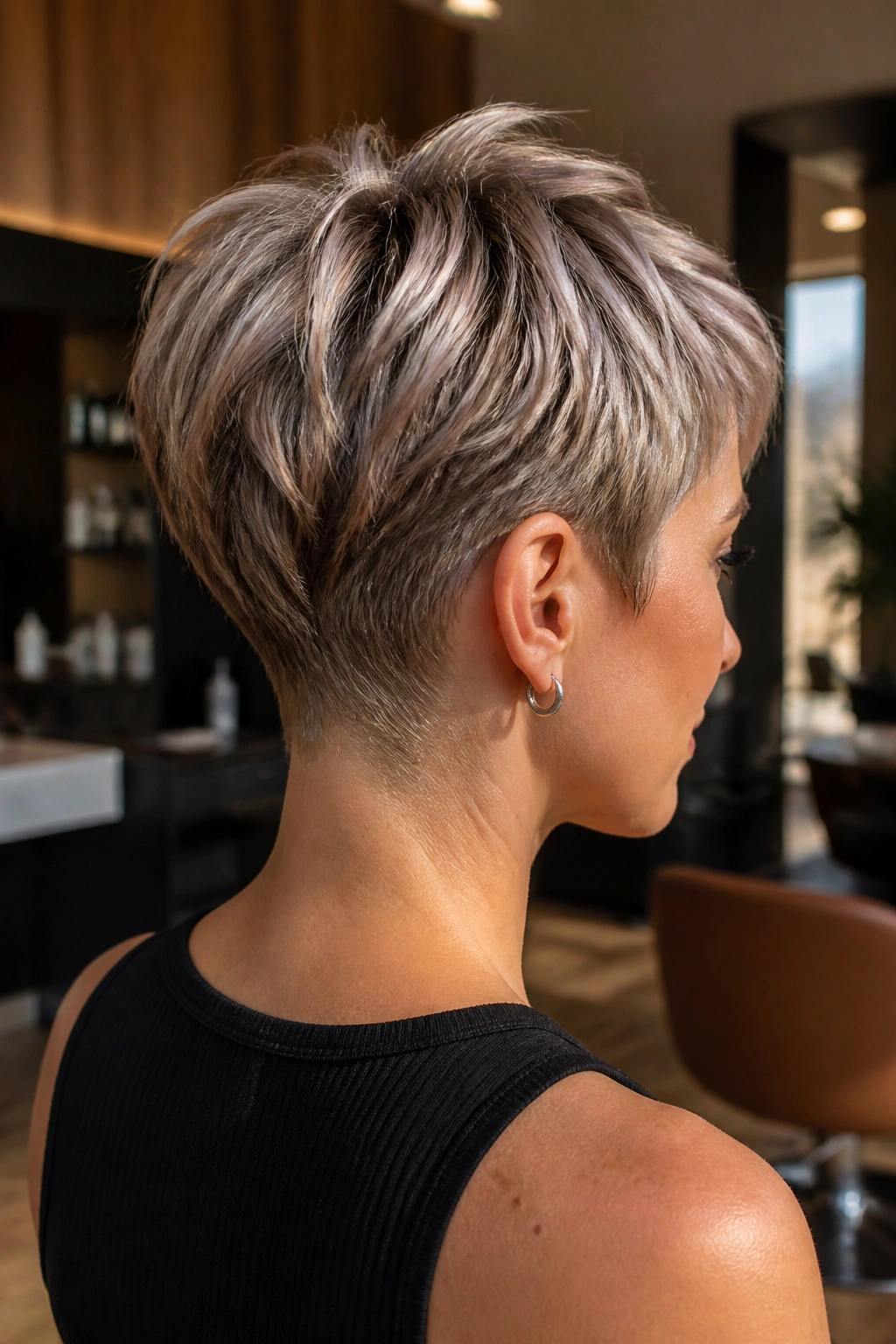
A tapered nape gives a pixie its backbone. On fine hair, that clean graduation at the back keeps the neck looking neat while the top stays light and movable.
This cut depends on a clear difference between the back and the crown. The nape hugs the head closely, almost like a tailored hem, while the top layers sit just a little freer. That contrast gives fine hair a stronger silhouette from the side.
If the back is left too heavy, the whole cut can slump. If it’s cut too short and too blunt, it can feel harsh. The nice middle ground is a soft taper that fades upward in small steps. It’s tidy, sure, but not severe.
11. Razor-Edged Crop
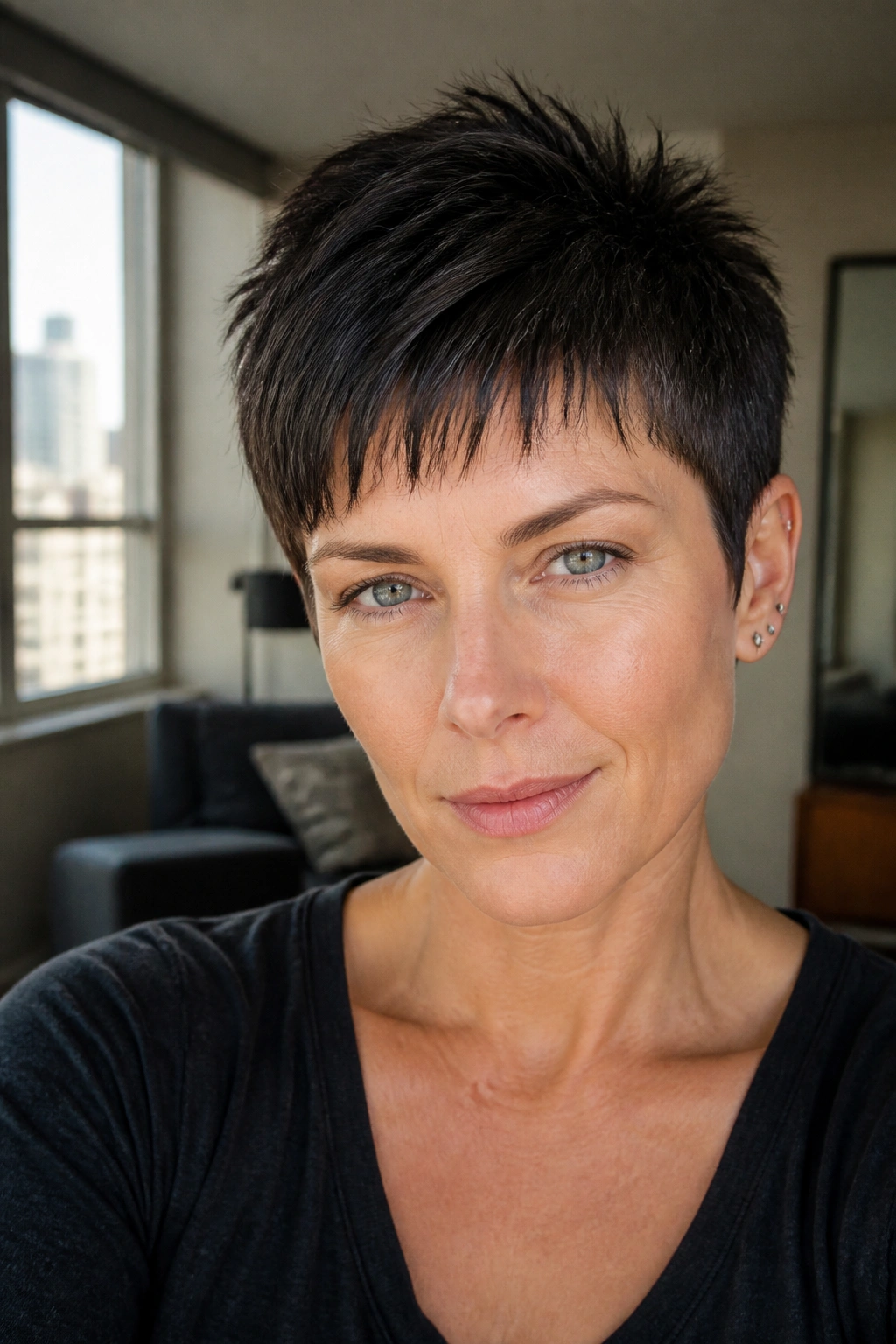
A razor cut can be gorgeous on fine hair when it’s done with restraint. It gives the ends a soft, wispy finish that scissors sometimes cannot match.
The danger is overdoing it. Fine strands can fray if the hair is carved too aggressively, and once that happens the cut starts to look weak instead of airy. The best razor-edged crop keeps the top choppy and the tips feathered, not shredded.
Use this style if you like a little roughness around the edges. It pairs well with a matte finish and a bit of lift at the crown. A polished blowout would fight the mood. This cut wants some attitude.
12. Temple-Length Pixie with Soft Bangs
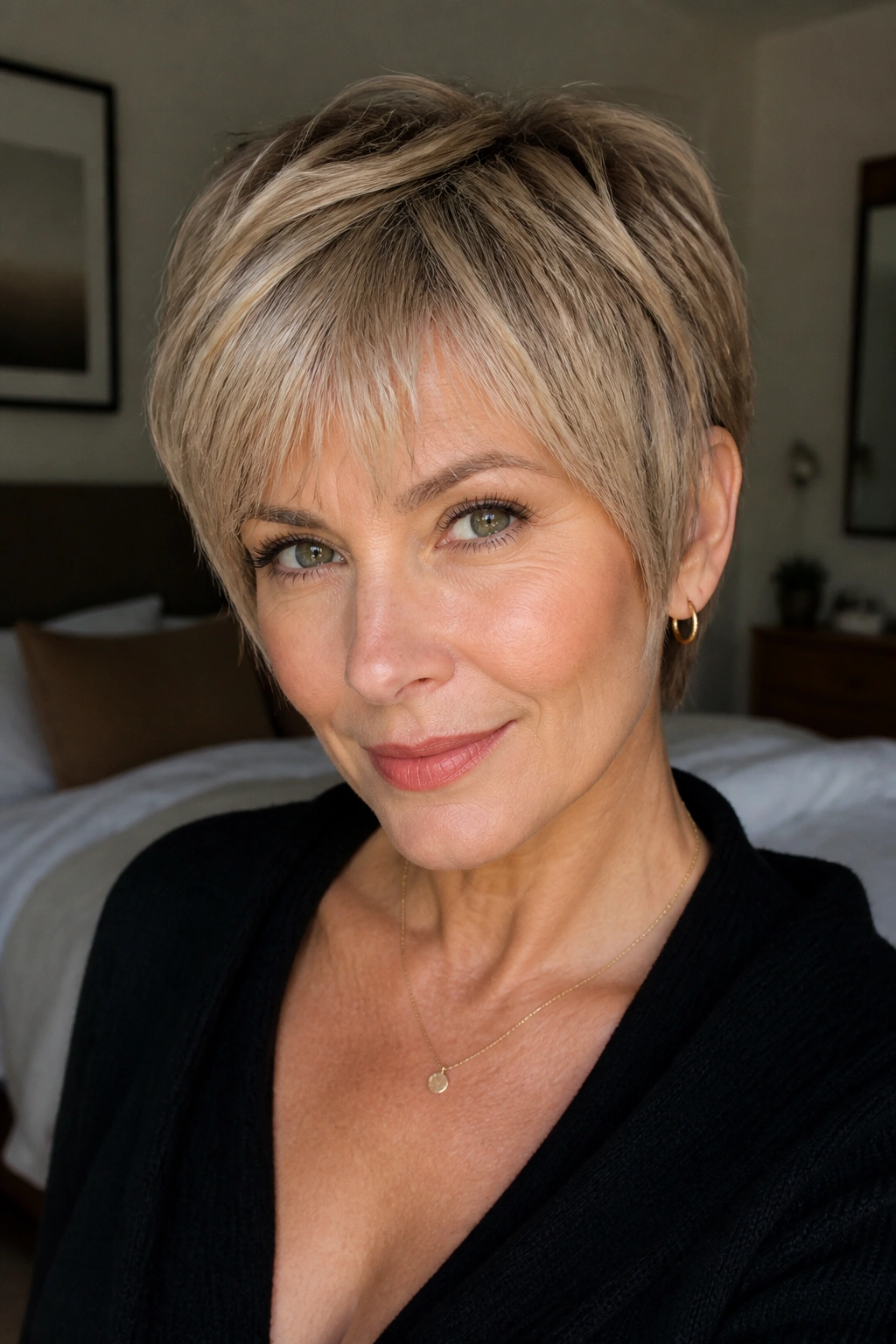
Temple-length pieces can do a lot of work. They add width around the face, which helps balance a narrow jaw or a longer forehead, and they keep fine hair from disappearing completely at the sides.
A Gentle Shape That Still Has Structure
Soft bangs should blend into the temple pieces instead of sitting like a hard strip across the face. That blend is what makes the cut feel easy. You want the fringe to move, not clamp down.
- Keep the bangs light and separated.
- Let the temple pieces hit the top of the cheekbone.
- Ask for soft layering under the crown so the top has lift.
- Style with a small round brush or your fingers, depending on how smooth you want it.
This cut suits people who want a little face-framing without committing to a long fringe. It’s tidy, flattering, and less precious than it sounds.
13. Crown-Boosted Tousled Pixie
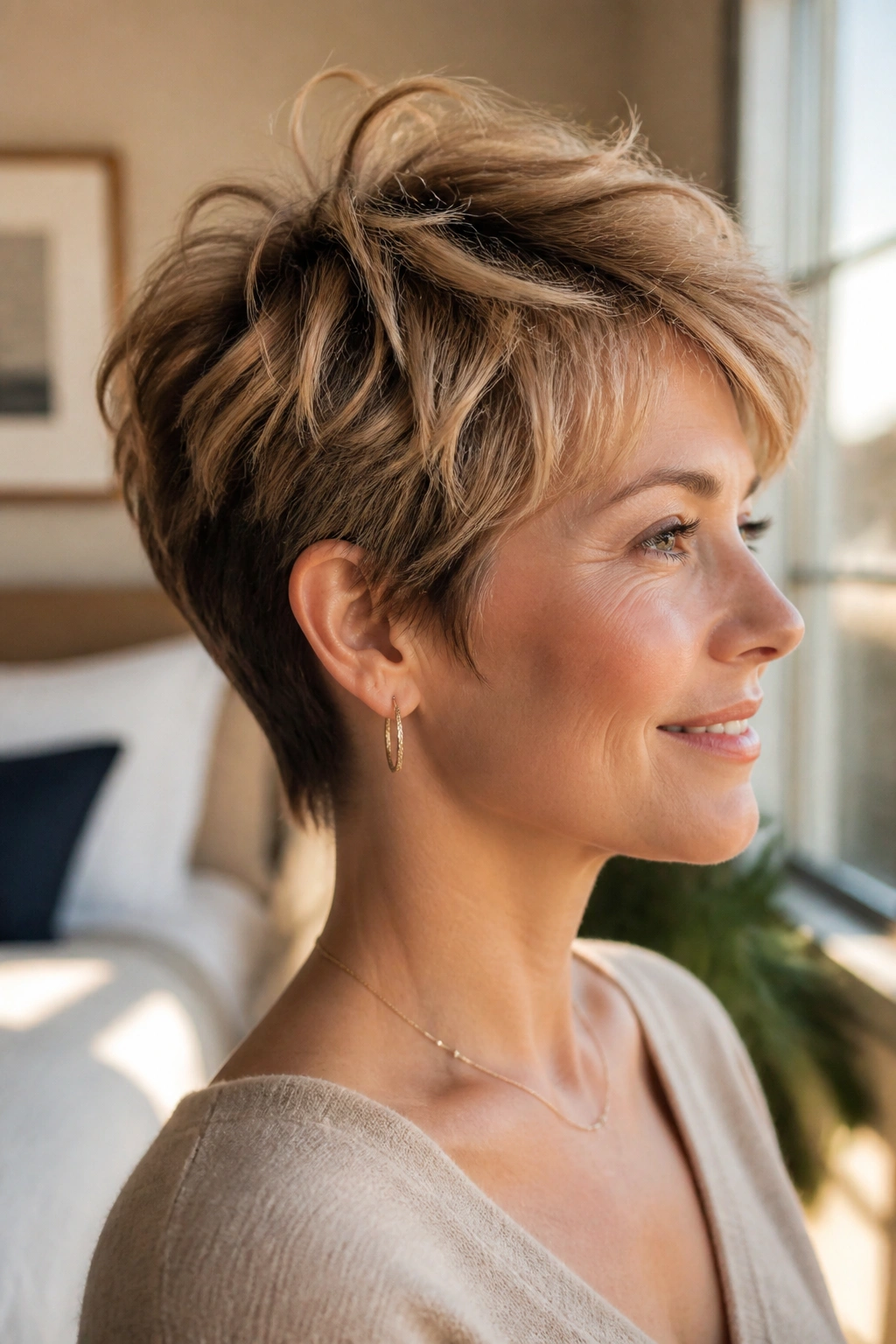
If your hair falls flat at the top first, build the cut around the crown. That means shorter sides, a little extra length at the top, and internal layering that starts high enough to create lift where you need it most.
The best version has a slightly messy crown, but not a spiky one. You want height, not hard angles. Fine hair usually looks fuller when the root area is lifted and the ends are allowed to bend naturally.
Flip the hair upside down while drying if you can. A round brush works too, but only if you’re willing to spend a few extra minutes. Finish with a spritz of dry shampoo at the roots, even on clean hair. It adds grit and helps the crown stay awake.
14. Choppy Pixie Cuts for Fine Hair with Curtain Bangs
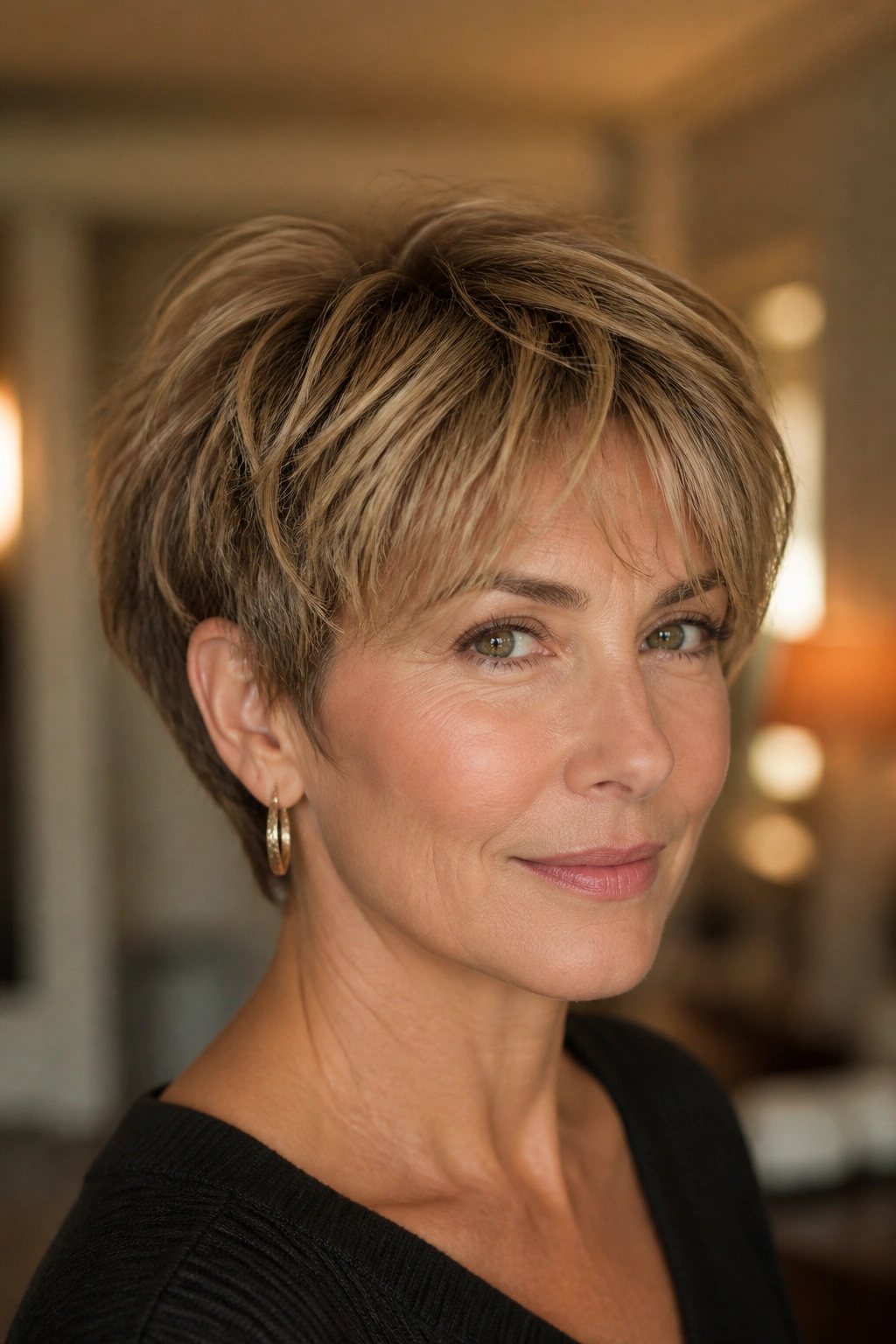
Curtain bangs are softer than a full fringe and easier to live with than a micro bang. On fine hair, they also help create width in the front without dragging the whole cut down.
The bangs should start a little higher than the eyebrows and taper out toward the temples. The rest of the pixie can stay layered and choppy, with enough top length to sweep forward or part down the middle. That center part can be a lifesaver if your hair naturally splits that way.
The nice part is flexibility. Wear them parted, sweep them off to the side, or tuck one piece back. The shape changes depending on how much effort you put in, which is rare and useful.
15. Close-Cropped Pixie with Piecey Texture
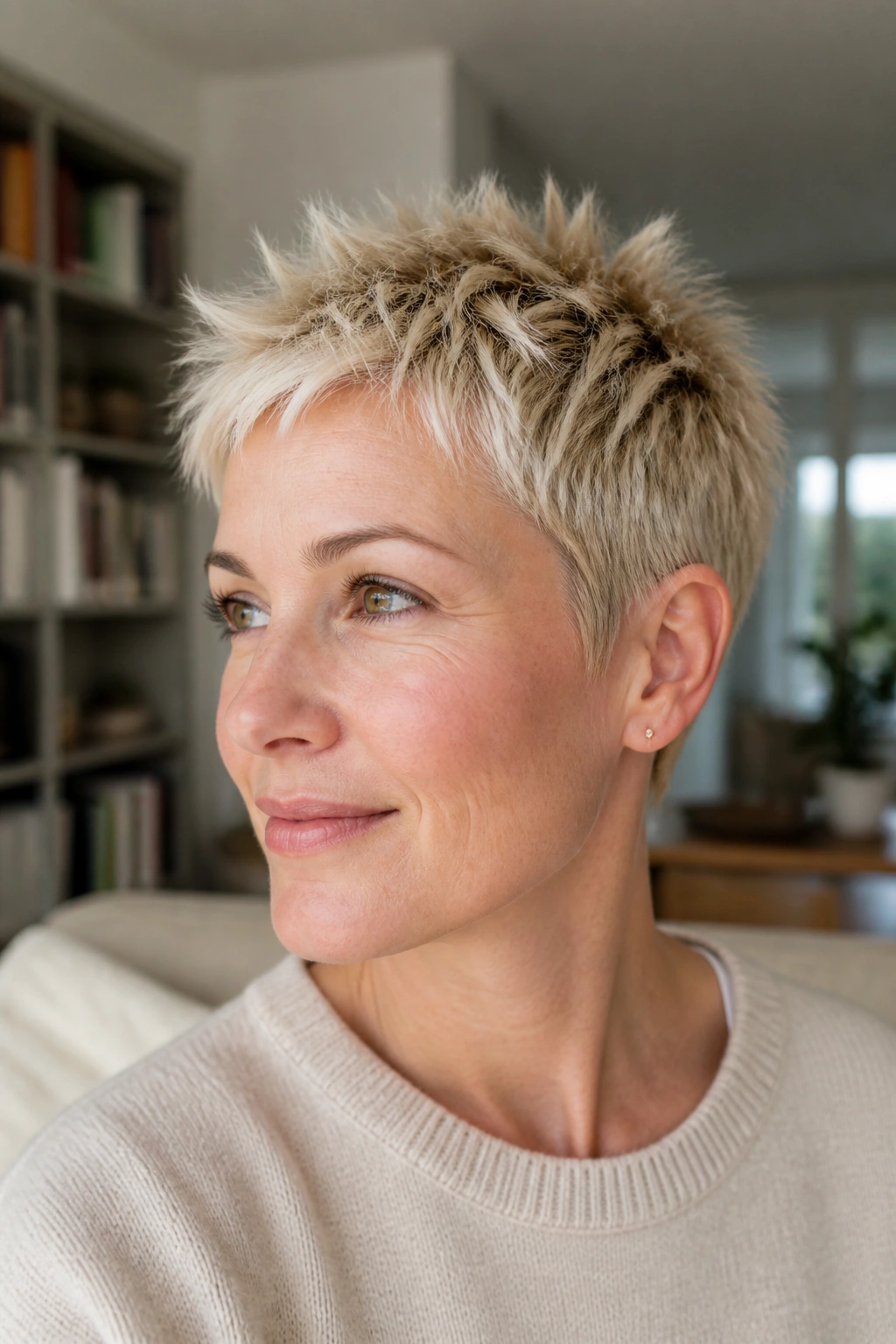
Close-cropped does not have to mean flat. If the top has tiny broken layers and the sides are carefully tapered, a short pixie can still show movement.
This is one of the cleaner-looking options for fine hair because it removes the bulk that can make strands hang limp. The trick is to leave enough softness at the crown so the cut still has texture. A blunt close crop can feel severe. A piecey one feels intentional.
Use a small amount of styling clay on the very ends, then pinch a few sections upward. You do not need much. A little separation goes a long way when the cut is short enough to show every detail.
16. Grown-Out Pixie with Broken Layers
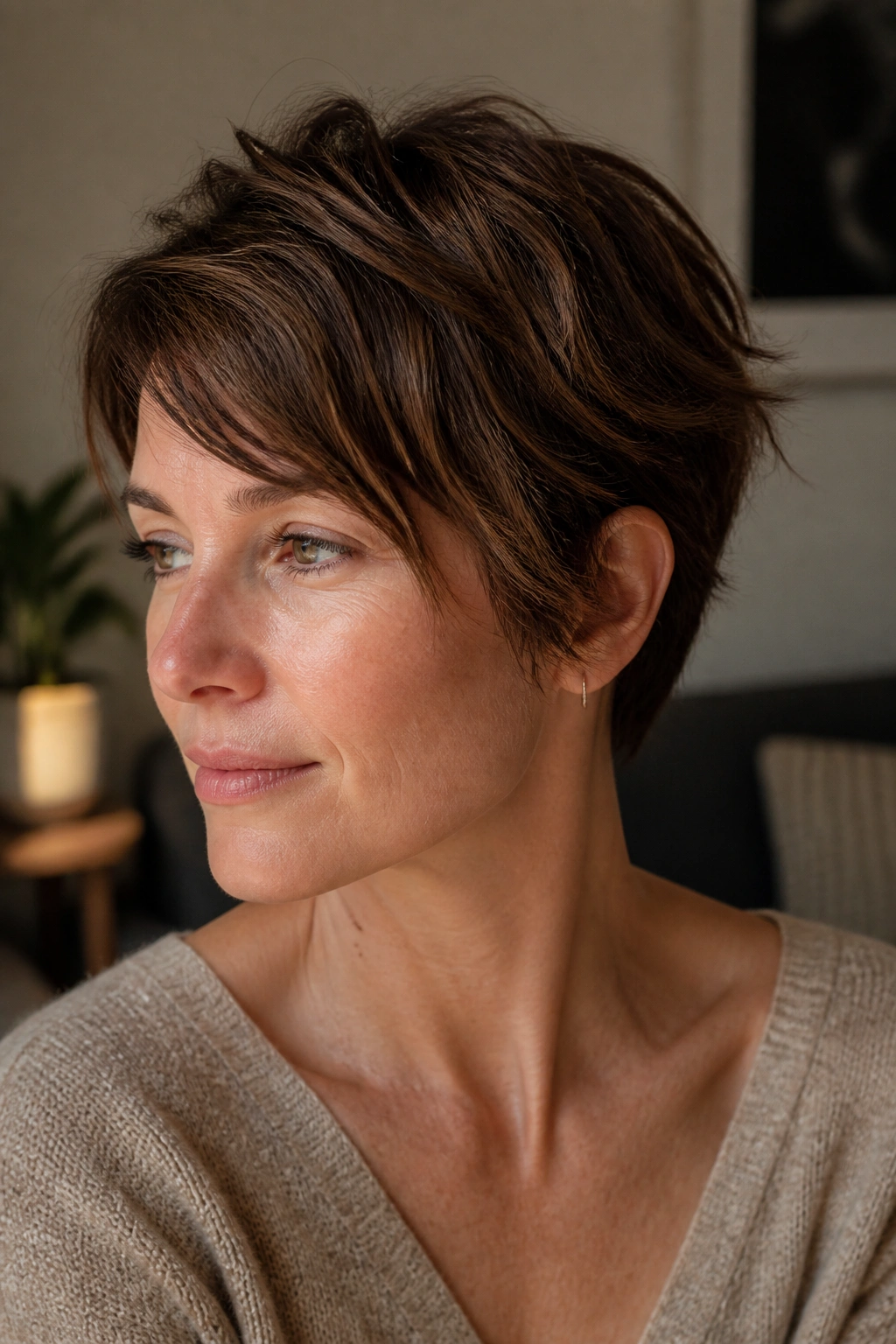
There’s a sweet spot in the grow-out phase where a pixie looks a little cooler than it did on day one. The back softens, the top gains movement, and the layers start to fall in a more relaxed way.
For fine hair, this phase can be kind. The extra length adds fullness, especially around the temples and crown. Ask your stylist to keep the layers broken instead of heavy, so the grow-out does not turn into a shapeless helmet.
What Makes It Work
The shape should still have a clear outline. Even when it’s longer, you want a neat nape and some face framing so the cut doesn’t drift into awkward territory.
This is a solid option if you hate frequent trims. You can stretch the time between cuts more easily here than with a super-short crop, and the style still feels current without trying too hard.
17. Shaggy Mini Pixie
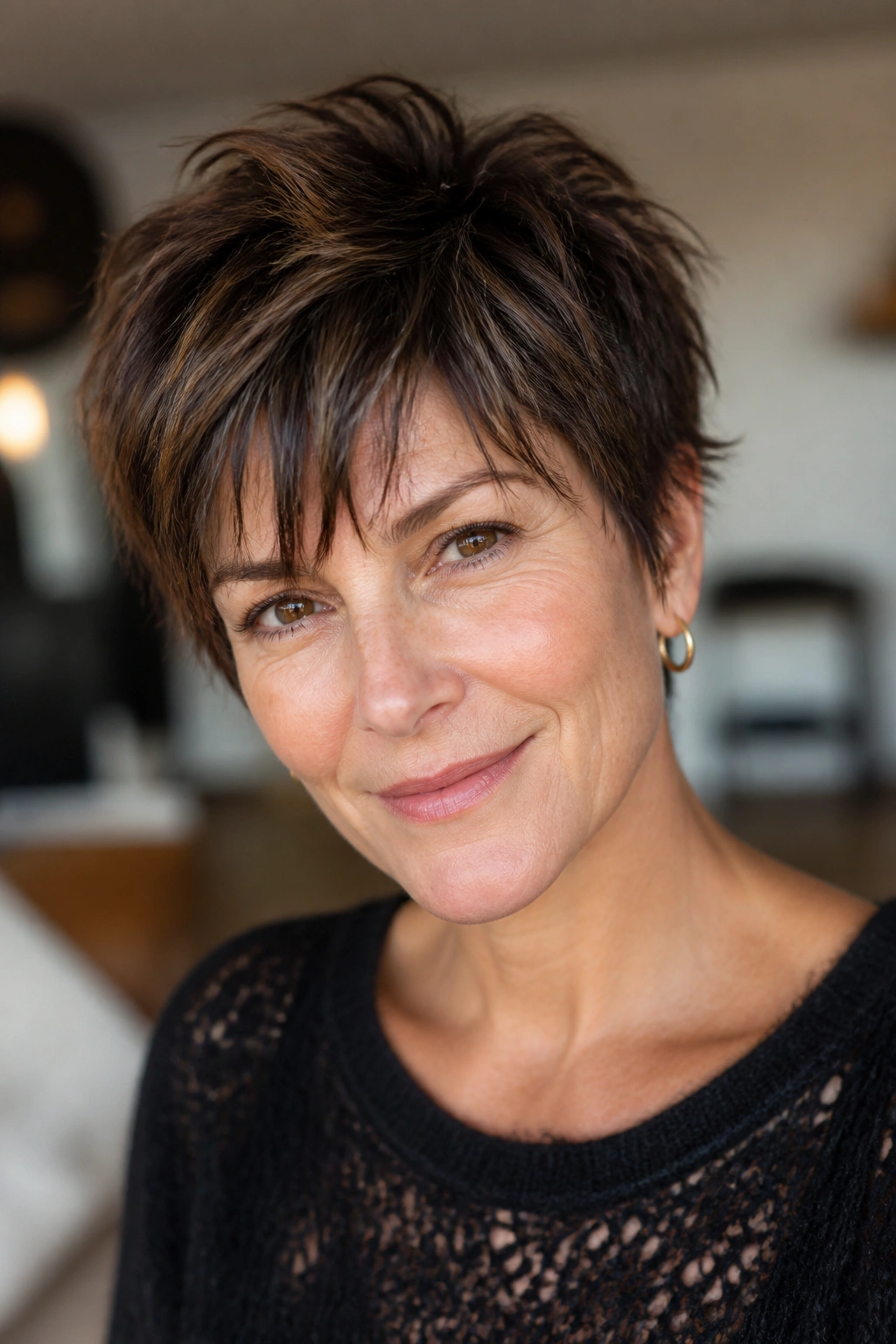
A shaggy mini pixie has a little more freedom than a classic crop. The layers are short, yes, but they’re not polished into place. They fall in different directions, which helps fine hair look less sparse.
The top is the star here. Keep it broken up and slightly longer than the sides, then let the fringe sit unevenly across the forehead or sweep to one side. If the ends are too smooth, the cut loses its character.
This is the kind of cut that looks best after a few hours of living in it. Fresh from the salon, it can feel almost too tidy. By the next day, a little dry shampoo and a few finger-combs make it come alive.
18. Wet-Look Textured Pixie
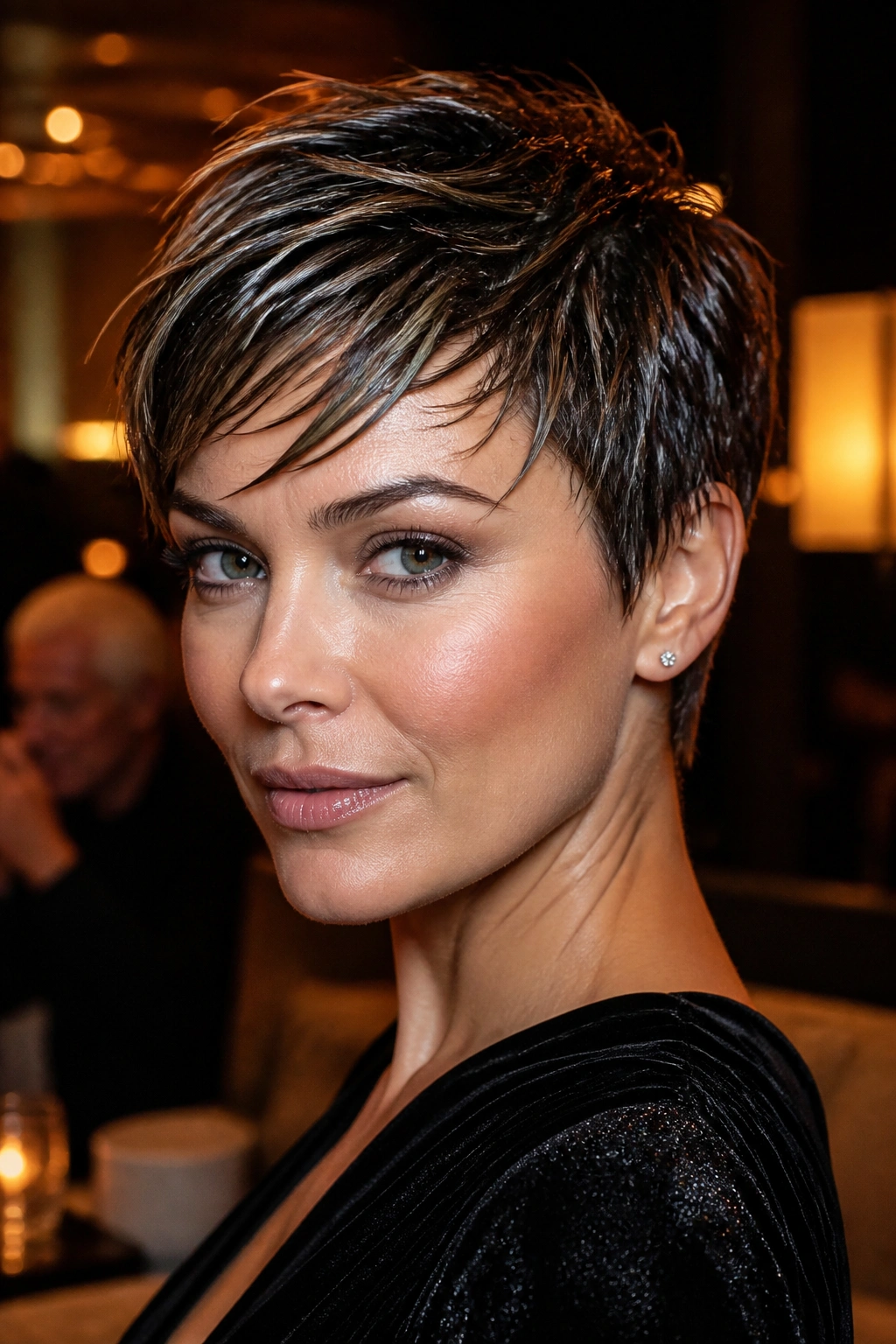
A wet-look pixie is a smarter move for fine hair than people give it credit for. The sleek finish clumps the strands together, which can make the hair look denser at the surface.
Use a light gel or a gel cream, not a heavy pomade. Work it through damp hair with your fingertips, then push the top into soft ridges or a side sweep. The goal is glossy separation, not helmet hair.
This cut works especially well for evenings, sharper outfits, or days when your hair feels too soft to hold a blowout. It is a little more dramatic. Fine hair can handle drama when the shape is simple.
19. Short-Banged Choppy Pixie

Short bangs can make a pixie feel crisp and modern, especially when the rest of the cut is broken up and light. The front line becomes the focus, which is useful if your hair is fine enough that long fringe pieces tend to fall flat.
The bangs should sit cleanly above the brows or just touch them in the center. Around the sides, keep the layering airy so the front doesn’t look disconnected. A few jagged pieces near the temples help the fringe blend into the rest of the cut.
It’s a strong look, so the finish matters. Blow-dry the bangs first, then leave the rest a little messier. That contrast keeps the cut from looking too staged.
20. Rounded Pixie with Hidden Layers
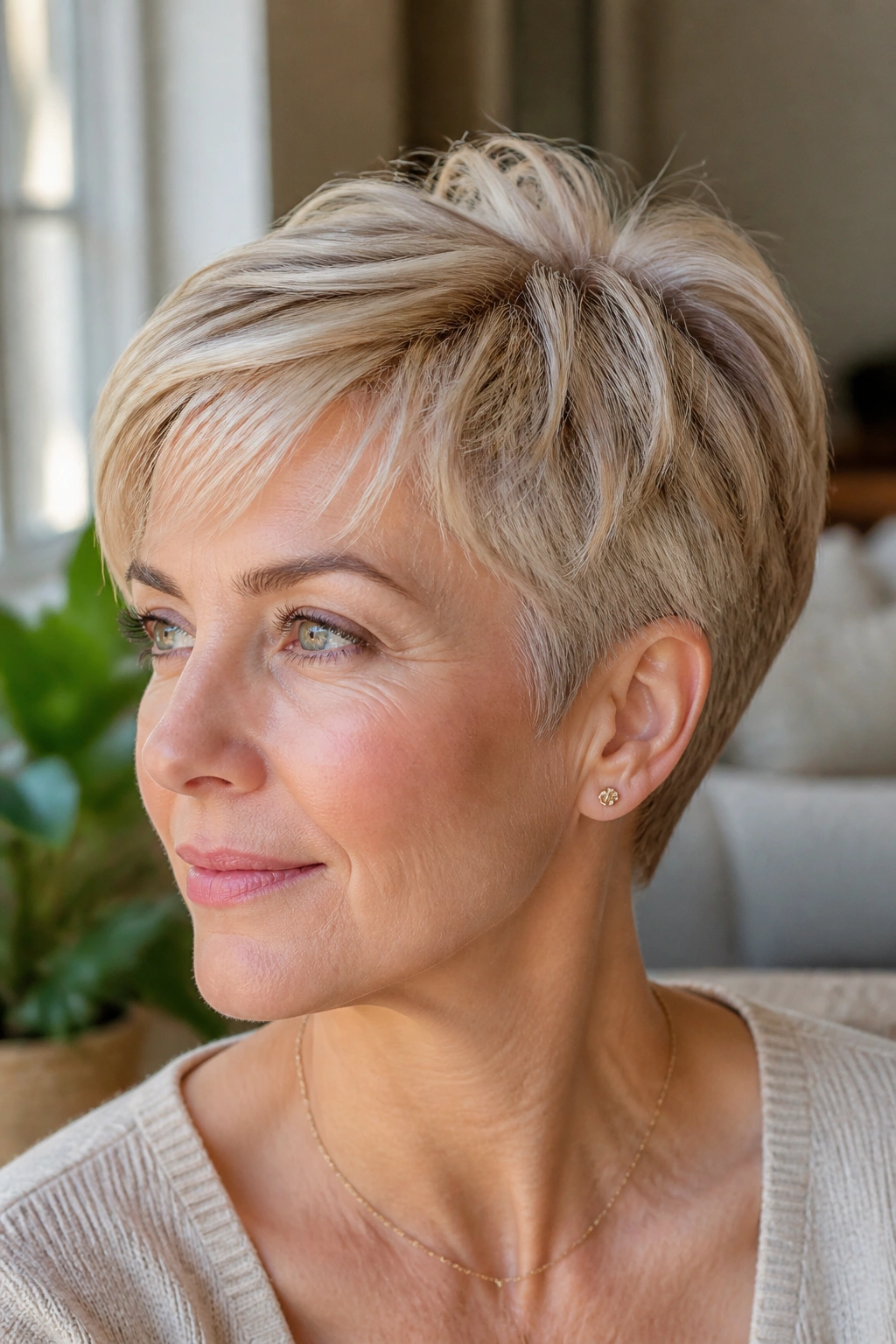
A rounded pixie sounds conservative, but hidden layers can make it one of the most flattering options for fine hair. The cut hugs the head in a soft curve while the internal layers lift the crown from underneath.
That hidden structure matters more than people think. Instead of chopping obvious layers into the surface, the stylist builds shape inside the cut. The result is a smooth outline with a little bounce at the top. Clean from the outside. Busy underneath.
If you want a pixie that grows out gracefully, this is a smart pick. The shape holds longer because the outline stays soft, even after several weeks.
21. Side-Flipped Pixie
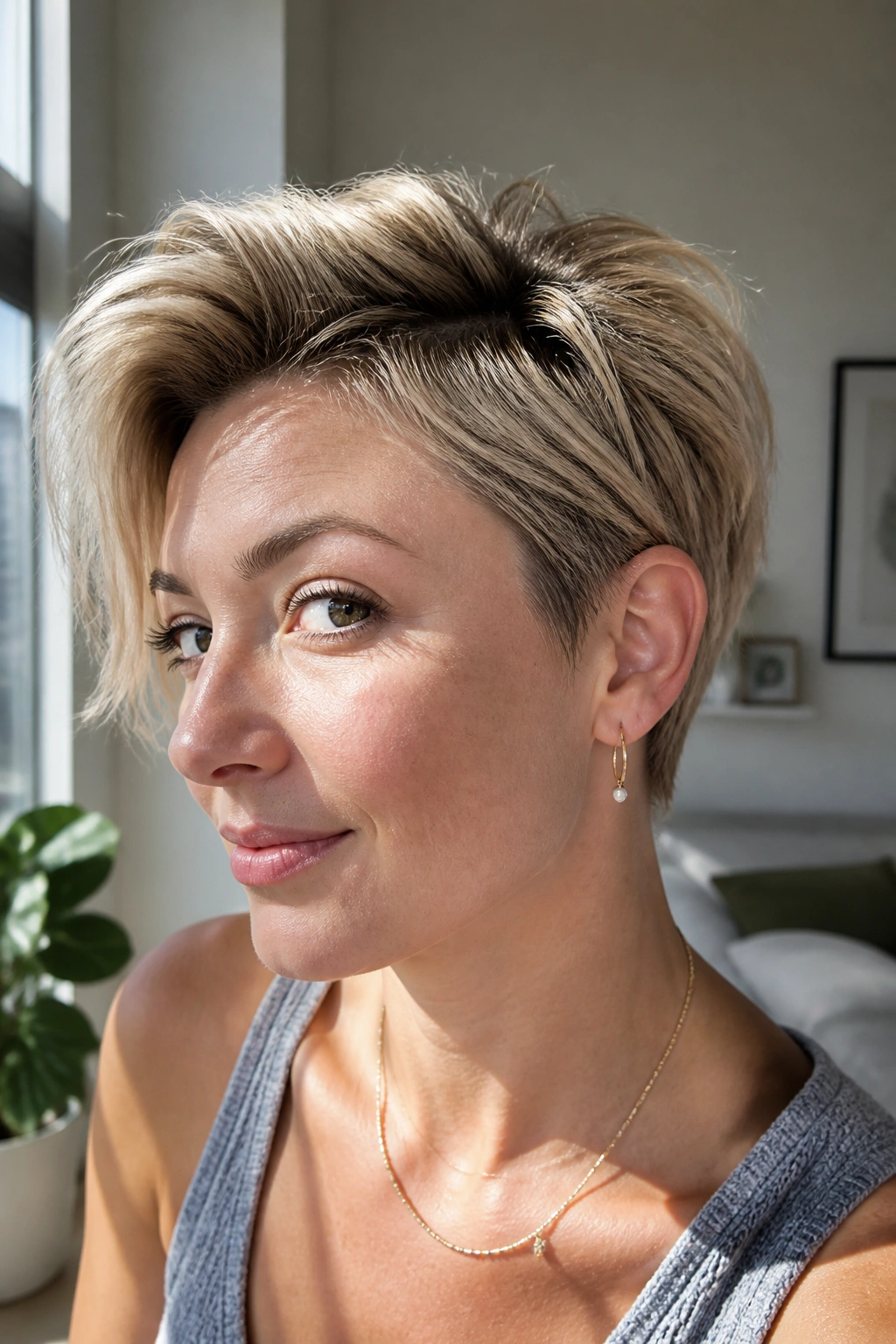
A side-flipped pixie uses movement to its advantage. One side gets directed away from the face, which opens the features and keeps the hair from sticking too closely to the scalp.
The best version has a slightly longer top and a neat underlayer. That lets the flip stay in place without needing a mountain of product. Fine hair can flip beautifully when the roots are lifted first and the ends are left light.
Use a vent brush or fingers while drying, then toss the front section to the side and let it cool there. That cooling step matters more than people realize. Hair sets as it cools, and this cut depends on that.
22. Bixie with Choppy Ends
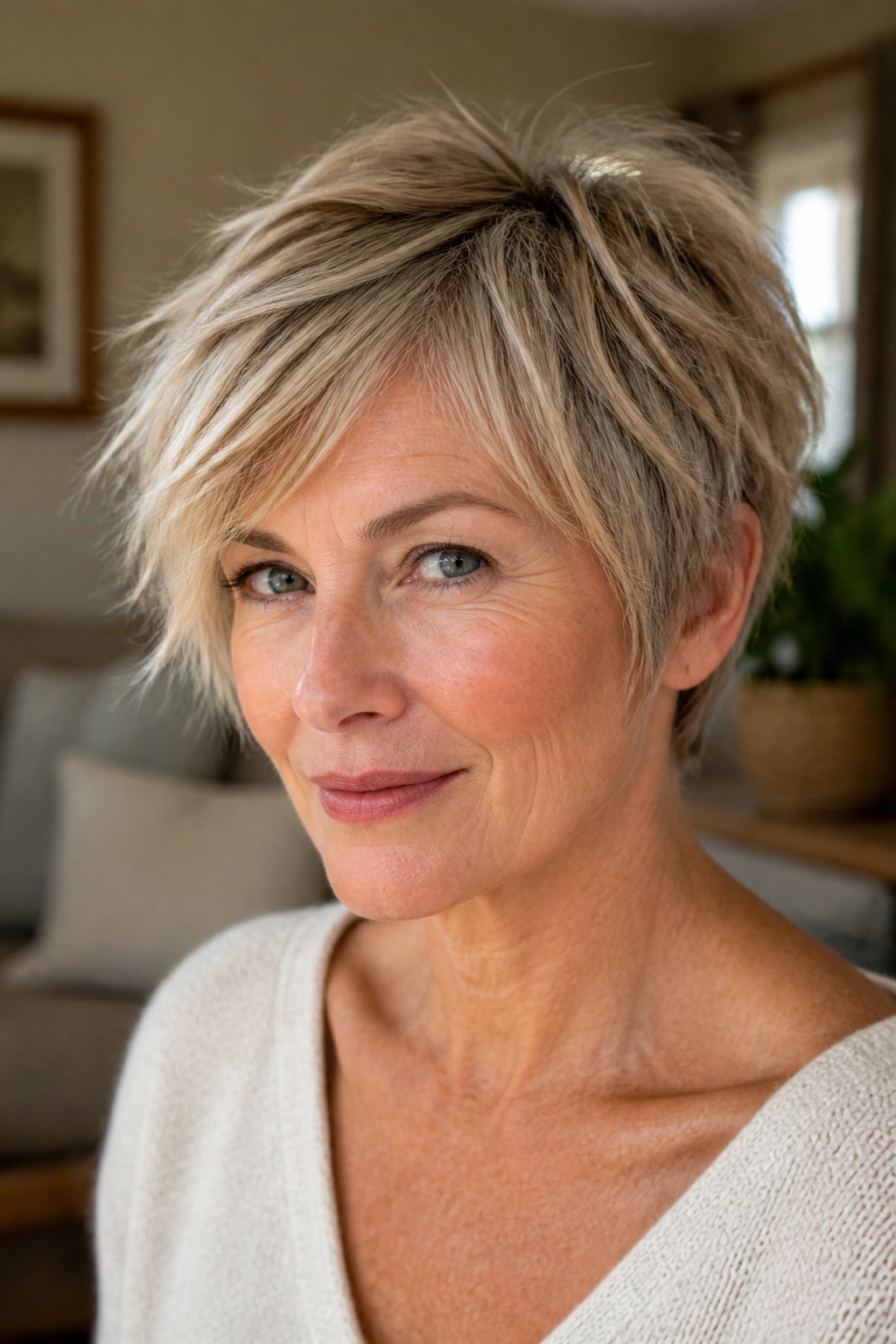
A bixie sits between a bob and a pixie, and for fine hair that middle ground can be gold. You get more perimeter, which makes the hair look fuller, while the choppy ends keep it from feeling heavy or boxy.
This is a good answer if you like short hair but want a little more room around the face and jaw. The front can skim the cheekbones, while the back stays shorter and tighter. That shape gives you movement without too much daily fuss.
A bixie does need trimming. If you let it grow too long, the layers can lose their structure and the ends start hanging. Keep the outline fresh, and it stays sharp.
23. Face-Framing Choppy Pixie
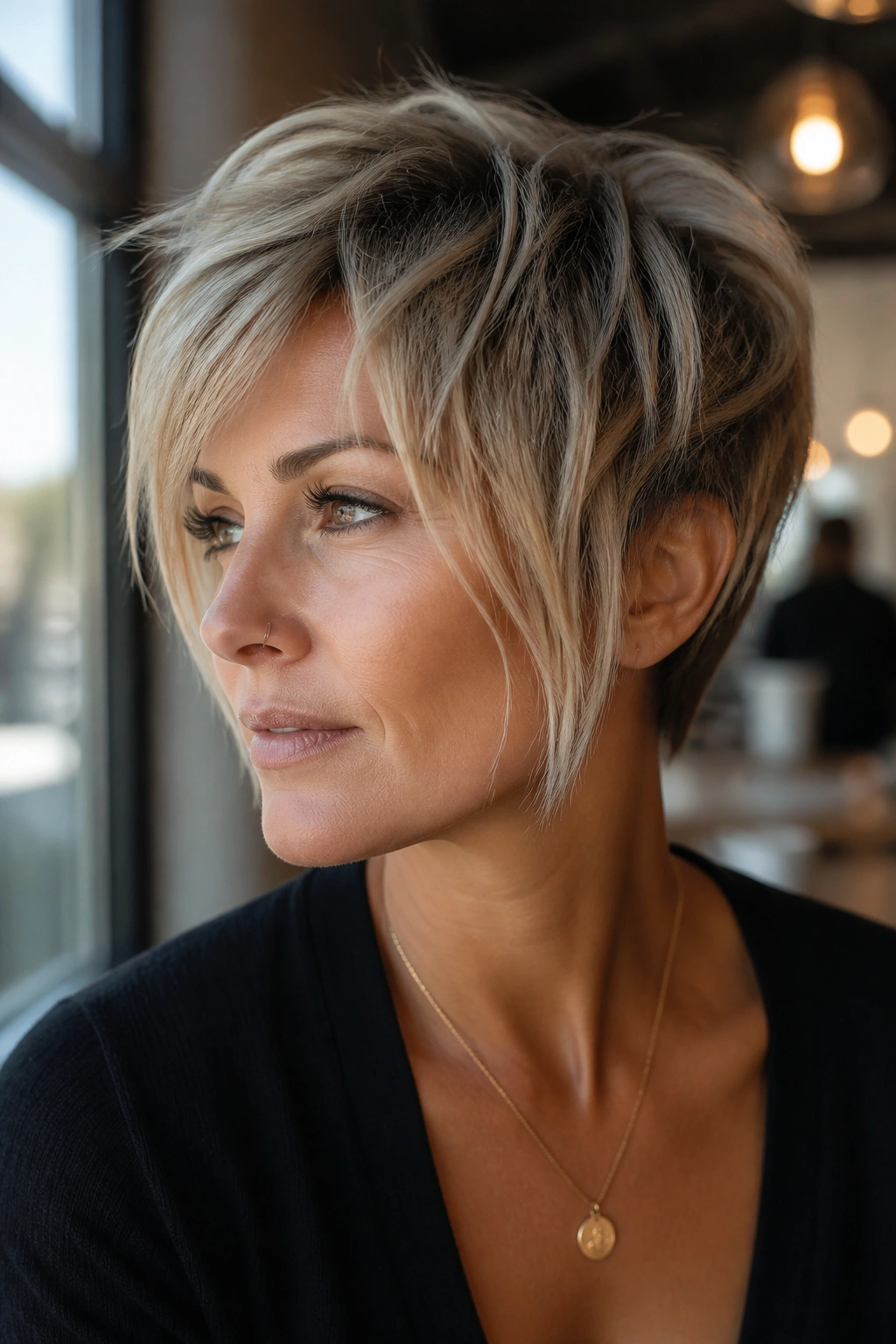
Not every pixie needs to be about the crown. Sometimes the smartest move is to build the shape around the face, with slightly longer pieces that frame the cheeks and jaw.
Those front pieces should be uneven, not blunt. A soft diagonal fall on one side can narrow a wider forehead, while shorter texture near the ear keeps the cut light. Fine hair benefits from this kind of focus because the eye goes straight to the face-framing lines.
It’s a good choice if you wear glasses too. The longer front pieces can sit around the frame without fighting it, which is one of those small things that makes a haircut pleasant instead of annoying.
24. Edgy Mullet-Inspired Pixie
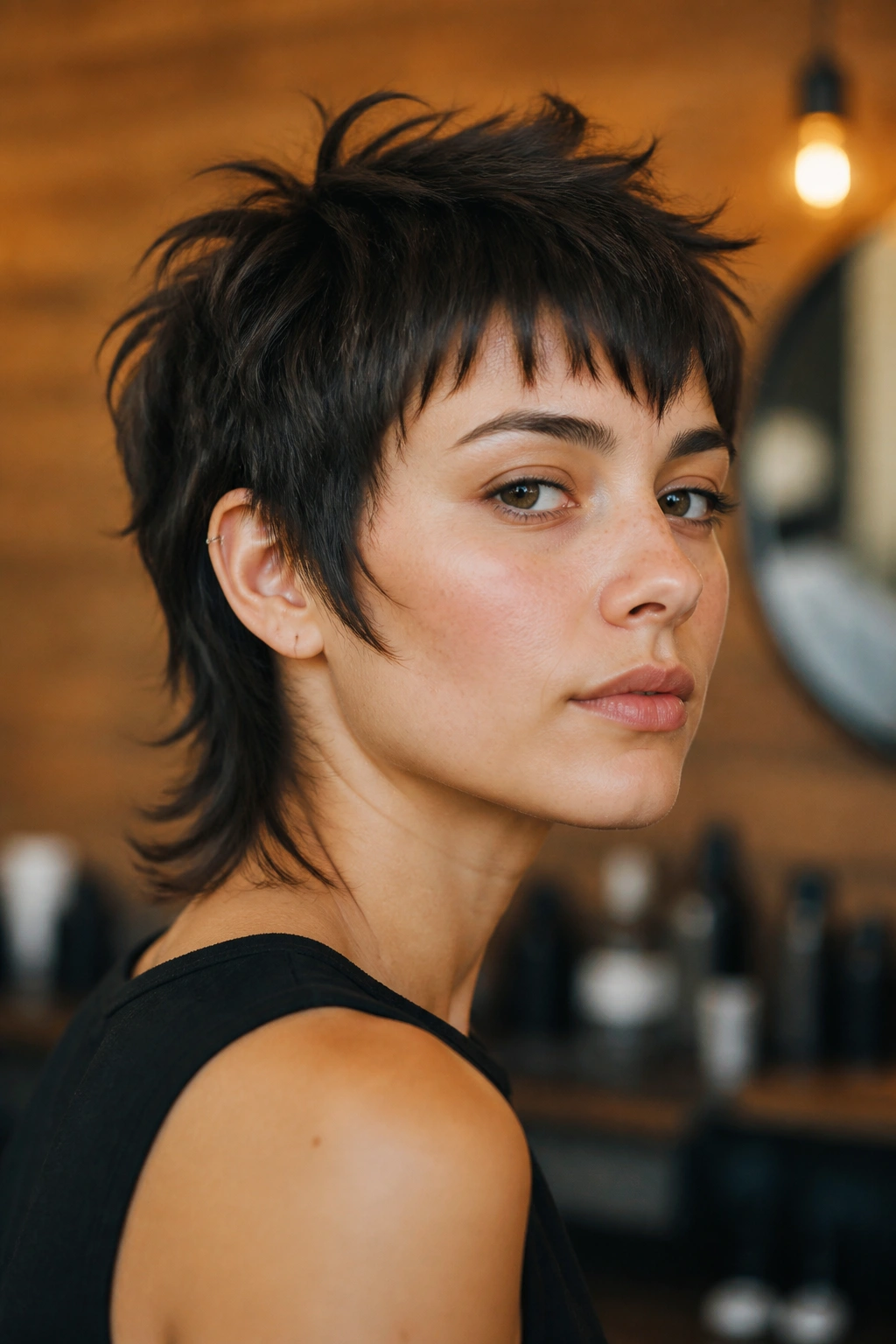
This one is for the person who wants a little rebellion without giving up the ease of a pixie. The top stays choppy and short, the sides are trimmed close, and the back keeps a touch more length for a soft tail at the nape.
On fine hair, the mullet-inspired shape works because it creates contrast. The eye reads the difference between short and long as volume, even when the actual hair count is modest. You need the back to stay soft, though. If it gets too thin, the whole thing can turn scrappy in a bad way.
I like this cut best when the finish is loose and slightly mussed. Too much smoothing kills the point. A little roughness suits it.
25. Low-Maintenance Choppy Pixie with Soft Taper
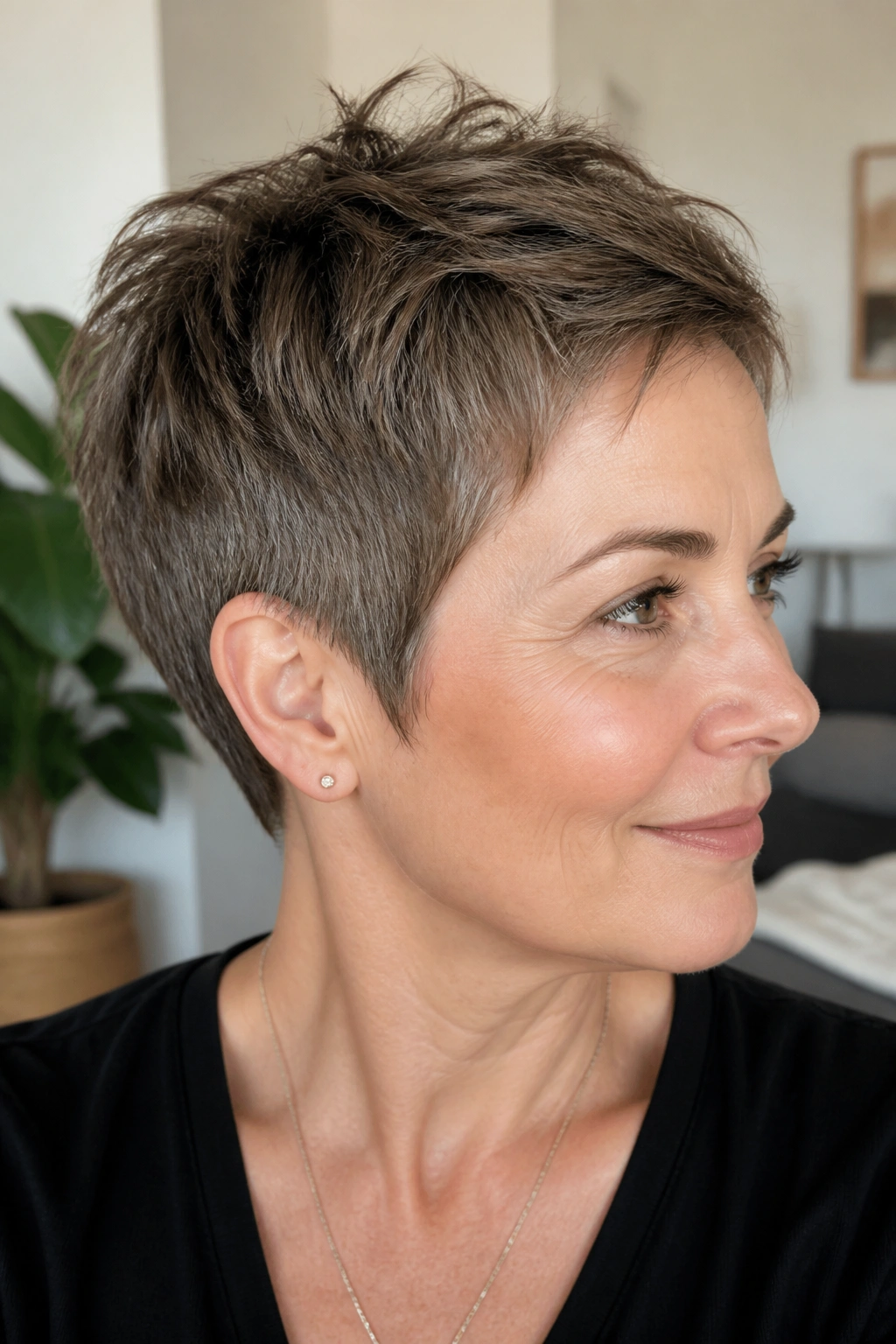
If you want the easiest version of the bunch, start here. A soft taper around the sides and nape keeps the outline clean, while the top stays lightly choppy so it can be pushed around without much effort.
This cut is built for real life. It grows out in a forgiving way, it does not need a perfect blow-dry, and it still looks intentional when you just finger-style it. For fine hair, that matters. A cut that only looks good under salon lights is not much help on a Tuesday.
Tell your stylist you want movement, not bulk removal. That one sentence saves a lot of trouble. The best low-maintenance pixies still have shape. They just don’t demand a performance every morning.
Final Thoughts
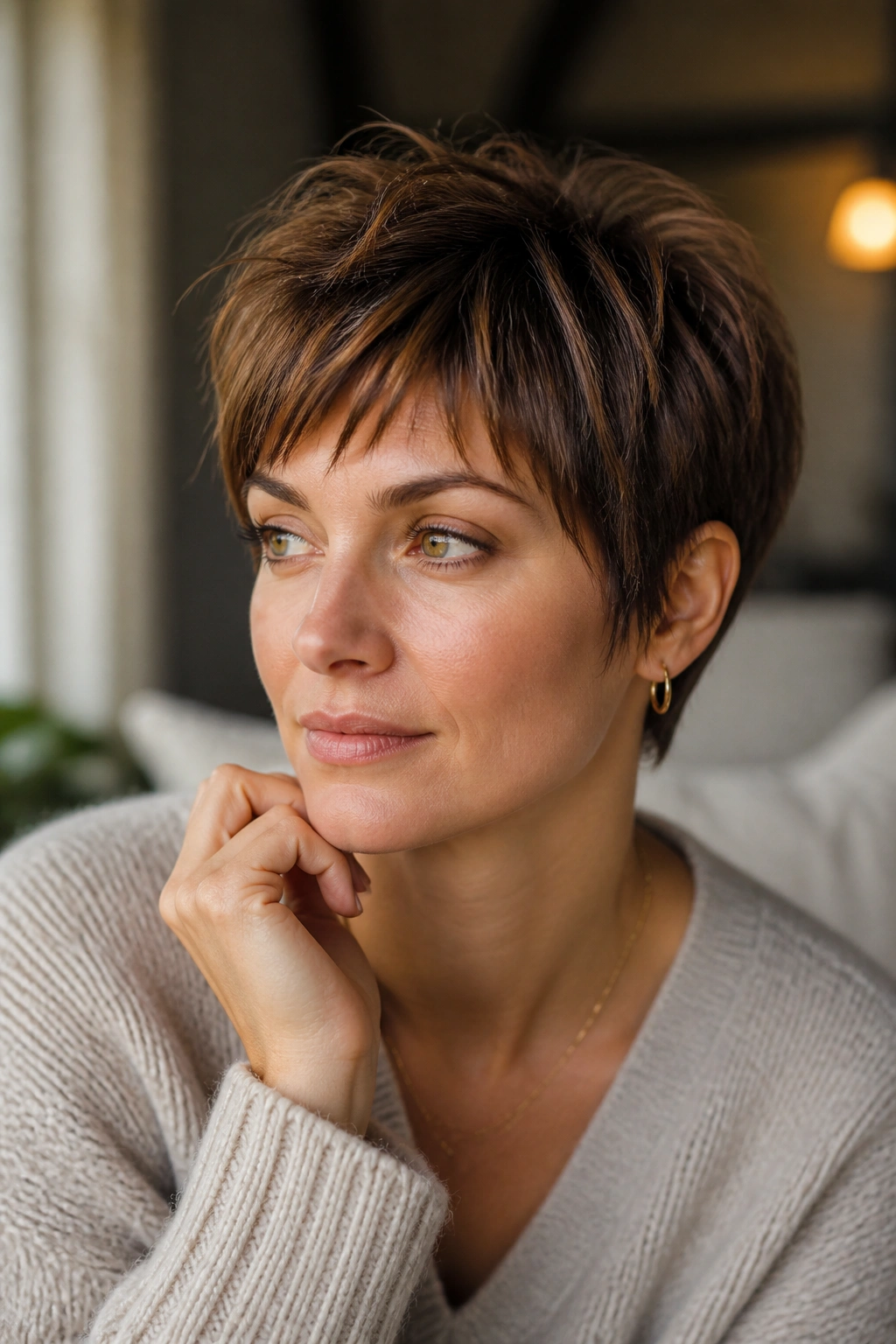
The best choppy pixie for fine hair is the one that solves a specific problem: flat crown, weak fringe, sparse sides, or a shape that grows out too fast. Once you know the weak spot, the haircut choices get a lot easier.
I’d be cautious of any pixie that looks stripped down to the bone. Fine hair needs texture, yes, but it also needs enough material left behind to read as full. That balance is where the good cuts live.
Bring a photo, then talk about the bits that matter most: fringe length, crown height, and how close you want the nape. Those three details carry the whole cut.
