



Fine hair and a pixie cut can be a perfect match, but only when the shape does some real work. If the cut is too blunt in the wrong places, it falls flat fast. If it’s too heavily thinned out, the ends start to look wispy in a way that is not flattering at all.
Brunette tones help more than people give them credit for. Chocolate, espresso, chestnut, mushroom brown, and soft caramel ribbons all add depth that fine strands can use. Shadow near the roots, a little gloss through the lengths, and a clean outline at the nape can make a short cut read fuller than a longer one that hangs limp.
The trick is balance. You want lift at the crown, enough length where the face needs softness, and just enough texture to keep the cut from looking helmet-stiff or sparse. Too much of one thing ruins the whole effect. Too little, and the style disappears the second the hair dries.
These brunette pixie cuts for fine hair lean on different strengths—some create volume with layers, some use fringe to build the illusion of density, and some work because the color itself does half the visual heavy lifting. A good pixie does not need to be loud. It just needs to be smart.
1. Soft Layered Brunette Pixie
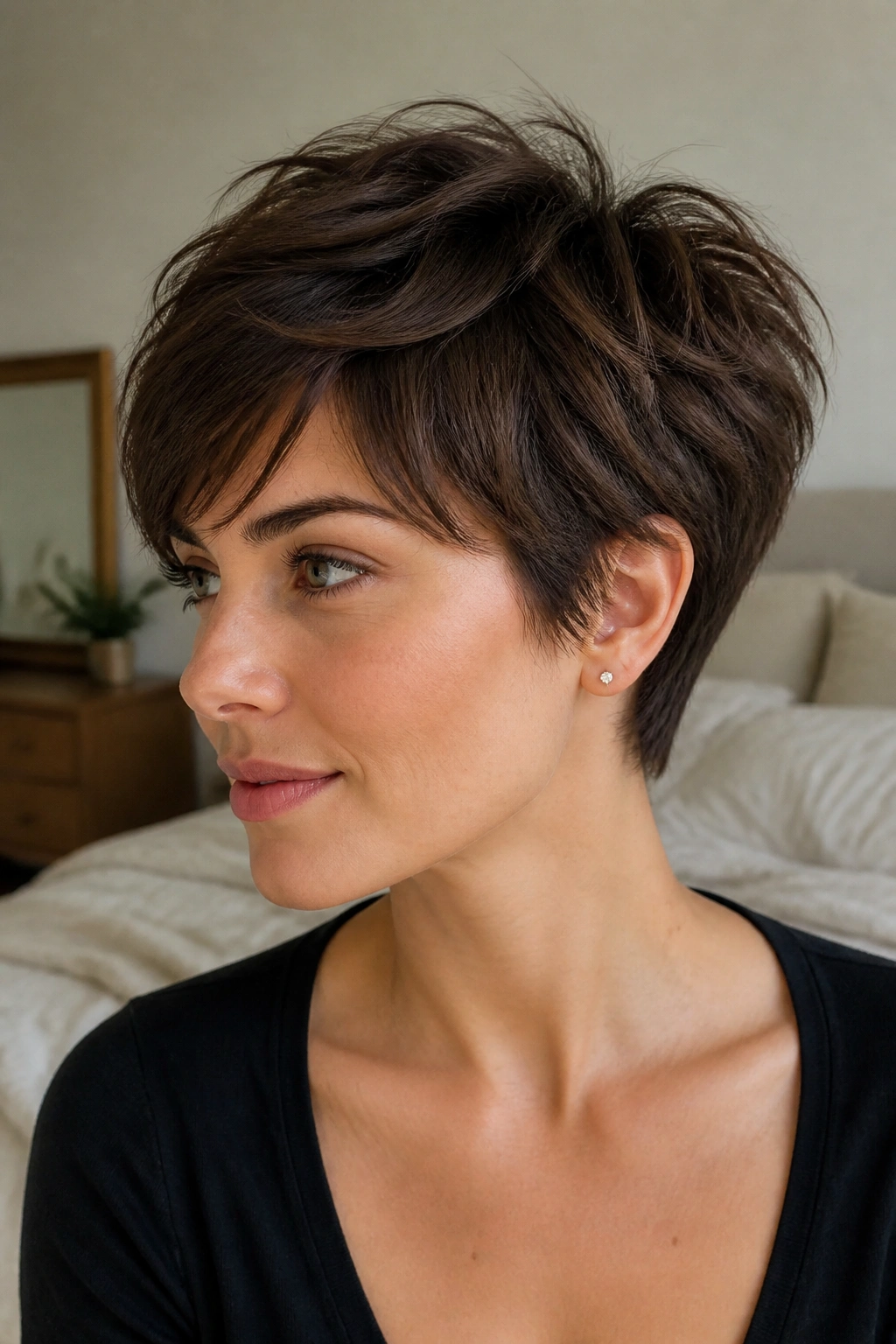
Soft layers are the easiest place to start if you want a brunette pixie cut for fine hair that feels polished without looking overworked. The shape stays close to the head, but the crown and sides are cut with enough movement that the hair does not lie in one flat sheet.
Why It Works on Fine Hair
The key is restraint. You want layers that bend, not layers that disappear. On fine hair, a gentle graduation through the top keeps the cut airy while the brunette color—especially chocolate or mocha—adds enough shadow to make the shape feel fuller.
This is the kind of pixie that can go from neat to slightly messy with one hand through the top. Good, honestly. You do not need a lot of product here.
- Best for straight to slightly wavy fine hair
- Ask for a tapered nape so the back stays clean
- Style with a pea-sized amount of lightweight mousse at the roots
- Avoid heavy razoring through the ends
Pro tip: if your hair tends to collapse at the crown, dry that area first with your head tipped forward. Small habit. Big difference.
2. Side-Swept Chocolate Pixie
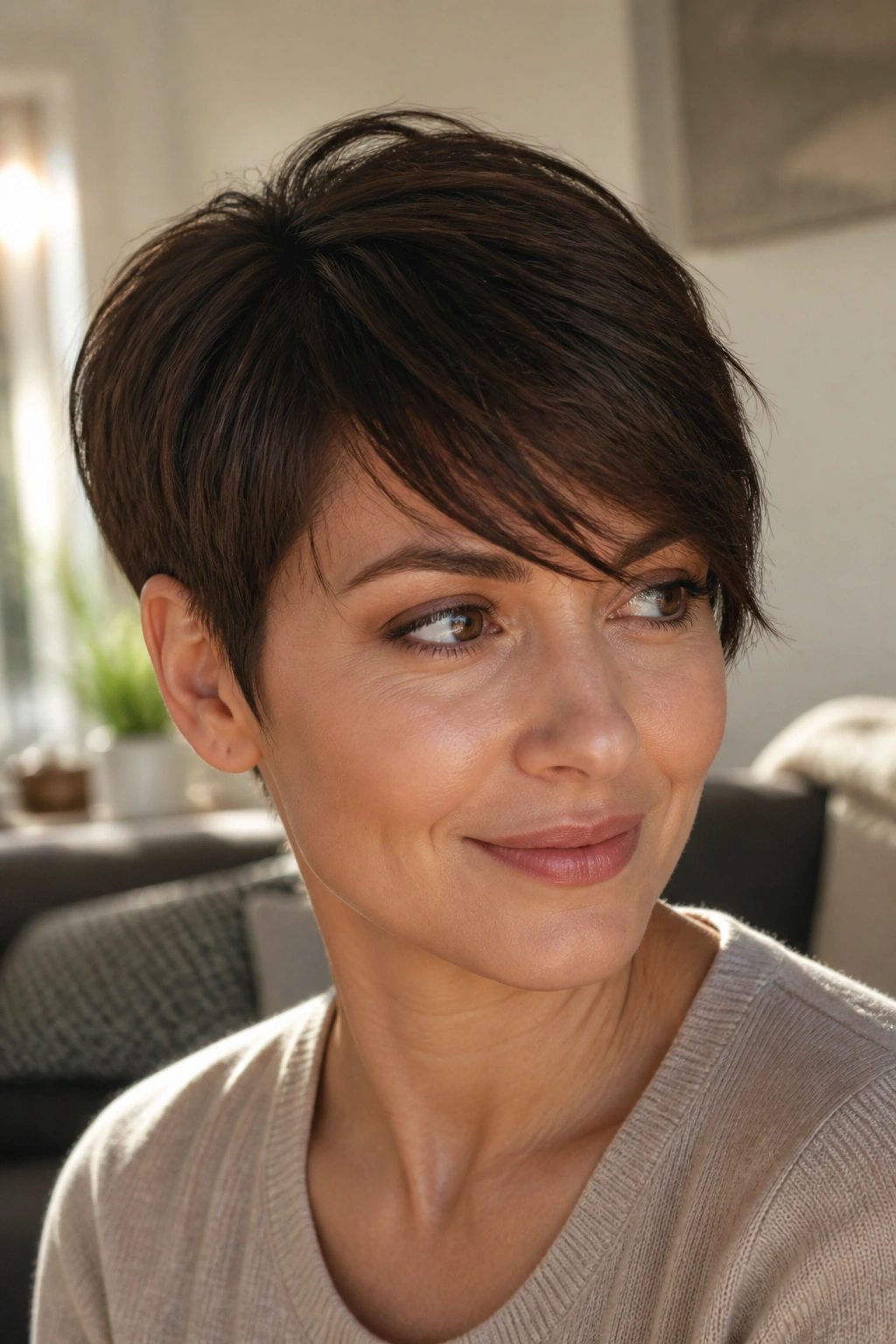
A side-swept fringe does more for fine hair than another inch of length ever will. It gives the front of the cut a denser look, and that matters when the strands themselves are delicate.
The diagonal line across the forehead creates movement without leaving the top empty. On brunette hair, especially a rich chocolate shade, the shadow under the fringe makes the cut read thicker than it is. That’s the part a lot of people miss.
Keep the fringe long enough to brush across the brow, then let the rest of the cut stay short and tidy around the ears. A round brush or a quick bend with a small flat iron is enough. You do not want it pinned flat to the head. That kills the whole point.
This cut works well if you like a little softness around the face but still want the crispness of a real pixie. It’s feminine without getting fussy, and that’s a nice place to be.
3. Tapered Pixie with Lifted Crown
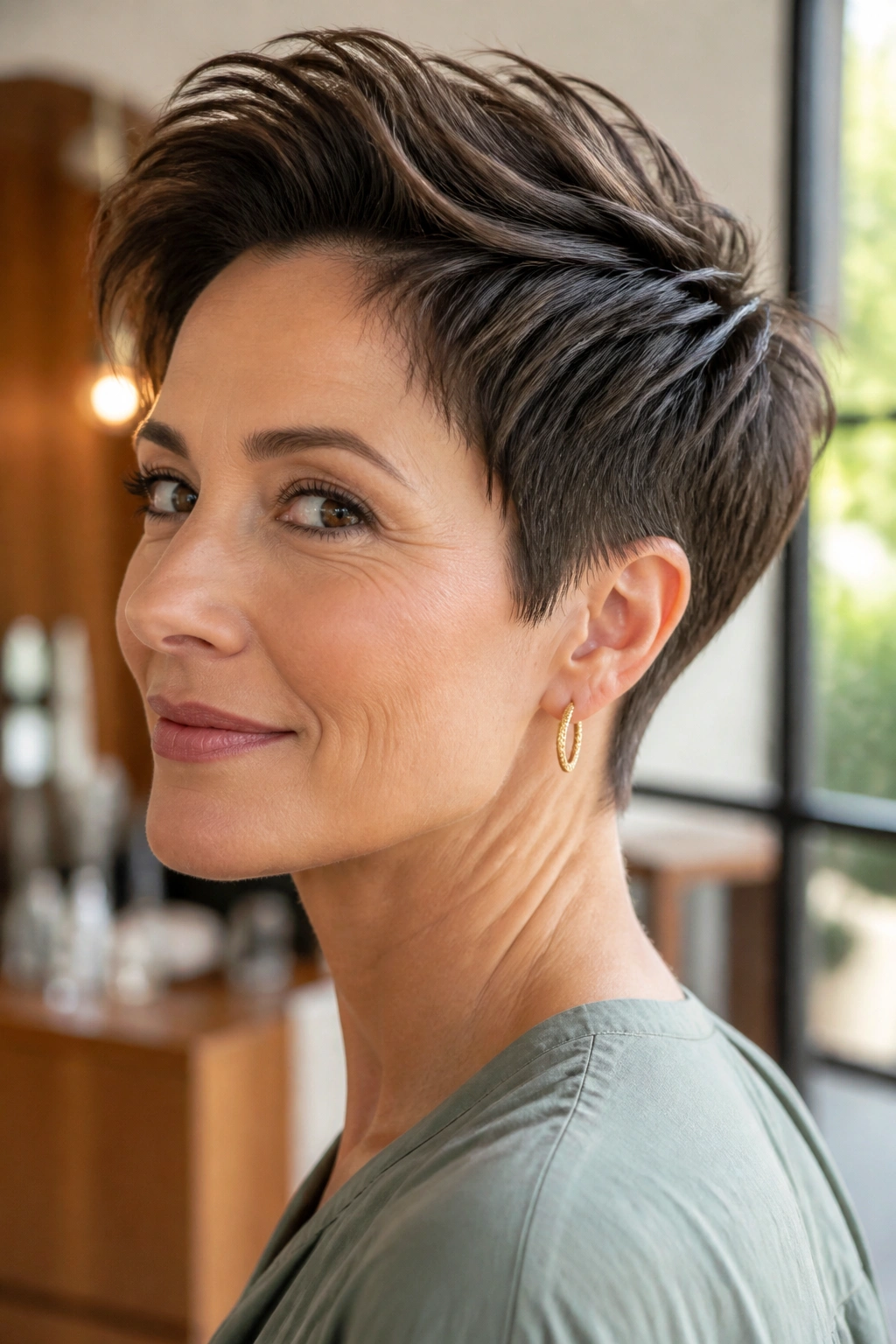
Why do some pixies look fuller from every angle? Because the crown was cut to stand up, not lie down.
A tapered pixie with a lifted crown builds height right where fine hair usually goes limp. The sides and nape stay close, which keeps the shape neat, while the top carries enough length to push upward and slightly forward. The result feels clean and a little sharp, but not severe.
How to Style It
Blow-dry the crown in the opposite direction of your part first. Then switch it back once the roots are warm and set. That small back-and-forth trick gives better lift than blasting the hair in one direction and hoping for the best.
- Use root spray only at the crown
- Finish with a matte paste at the ends for grip
- Keep the nape snug and tidy
- Skip thick creams; they flatten the top fast
This is one of those cuts that looks especially good in brunette shades with a soft gloss. The shine makes the height look intentional instead of accidental.
4. Choppy Chestnut Pixie
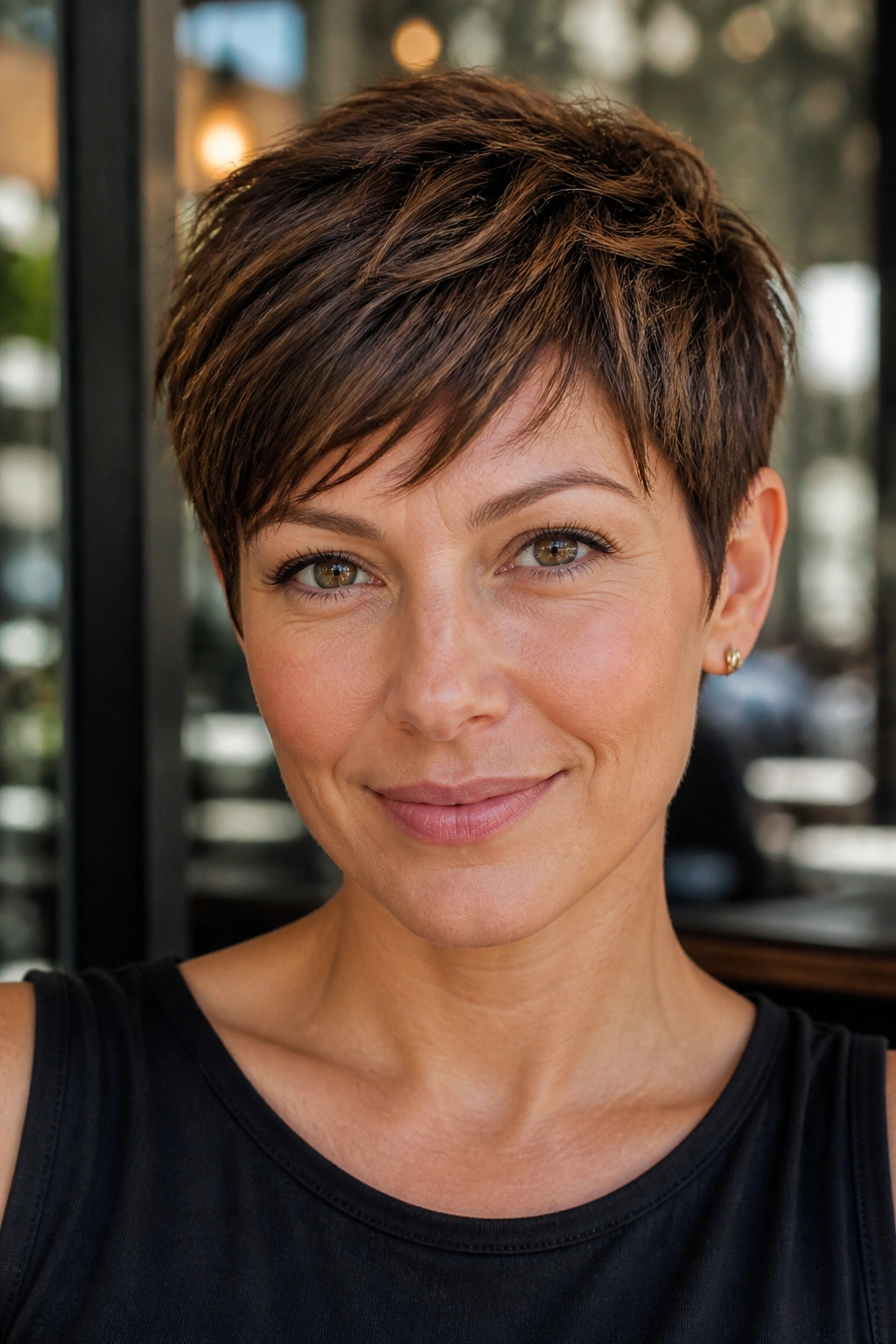
I keep coming back to choppy pixies for fine hair because they make every strand count. The uneven ends catch light differently, so the cut feels lived-in instead of thin.
Chestnut brown is a smart color here. It has enough warmth to soften the texture, but it still shows off the little breaks in the shape. A blunt, uniform cut can make fine hair look like a sheet. Choppy ends fix that.
A good version of this style leaves a touch of length through the top and around the ears, then slices in small, irregular pieces so the hair separates naturally. It should look piecey when you run your fingers through it, not frayed. There’s a difference.
Keep the styling simple. A little dry texture spray, a quick scrunch, and maybe a fingertip of styling cream at the ends is enough. Too much paste makes the hair stick together, and then the cut loses its airy feel.
5. Mushroom Brown Pixie Crop
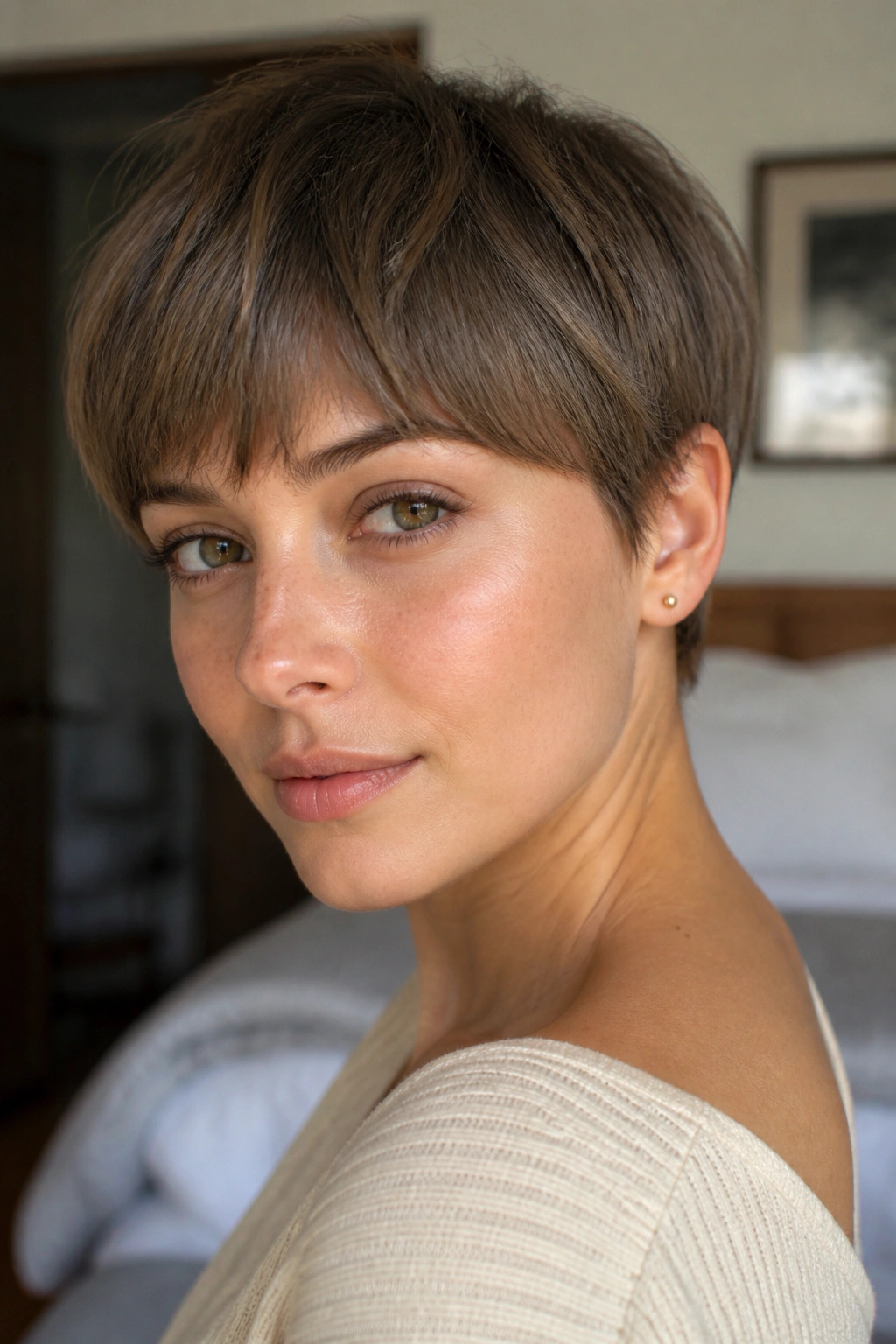
A mushroom-brown pixie crop is not boring. It only looks boring if the shape is lazy.
The color does a lot of quiet work here. Mushroom brown has a cool, smoky base that makes the cut look plush, while the rounded crop shape keeps the outline soft around the head. On fine hair, that rounded silhouette can be more flattering than a spikier style because it gives the illusion of more body without asking the hair to do anything dramatic.
This cut tends to sit close through the sides with a little extra fullness at the top and crown. If your hair is naturally straight, even better. A quick blow-dry with a small brush can keep the shape in place. If your hair bends a little, the result gets even softer.
It suits anyone who wants a polished short cut that does not scream for attention. Quiet, yes. Flat, no. That’s the difference.
6. Micro-Bang Pixie in Deep Brunette
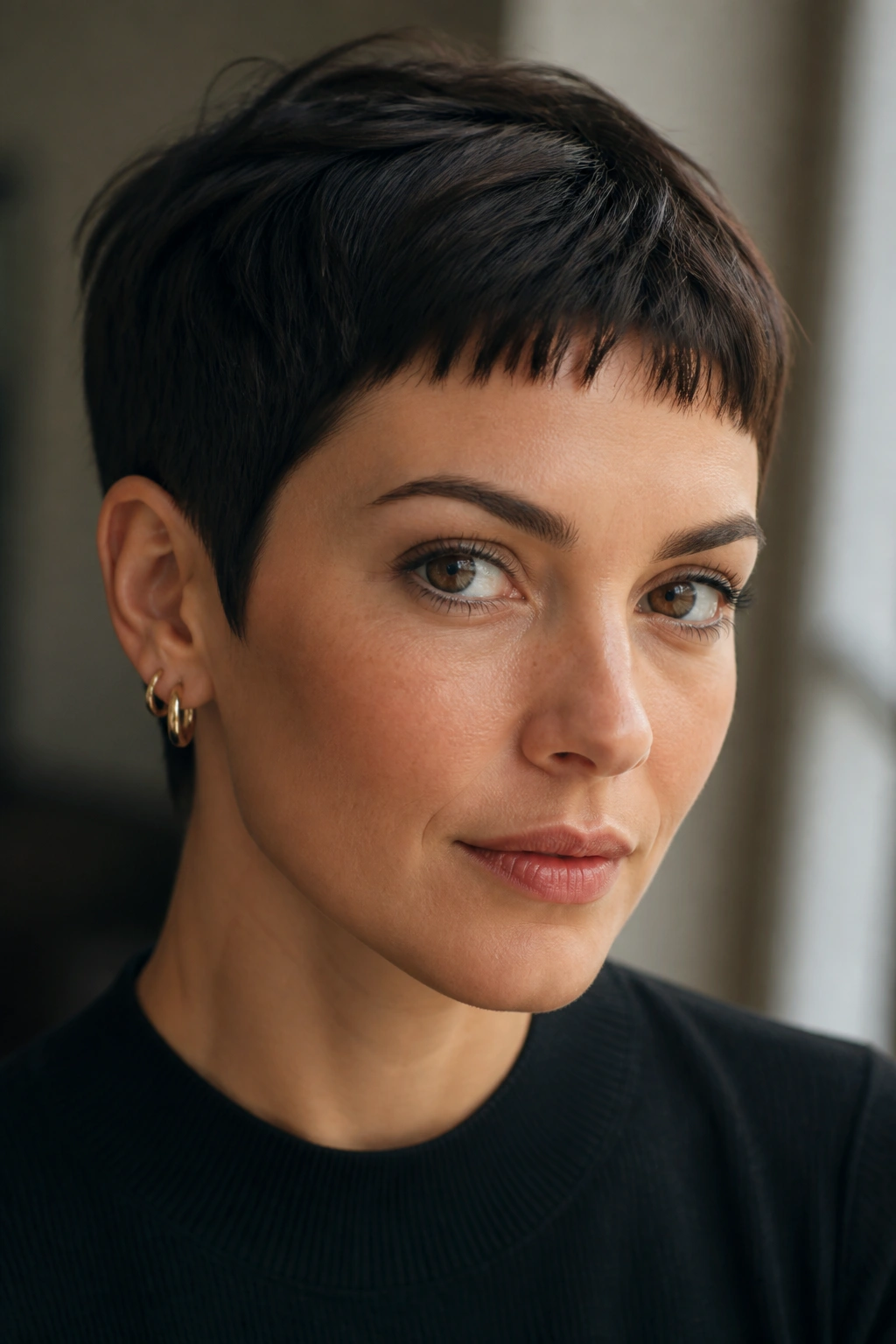
Unlike a full fringe, micro bangs leave space for the rest of the cut to breathe. That matters on fine hair, where too much weight across the forehead can drag everything down.
Micro bangs bring the eye straight to the brows and eyes, which is useful when the hair itself is delicate. The rest of the pixie can stay cropped close and slightly tapered, so the whole style feels light. Deep brunette shades make the bangs look sharper, especially when the color is one solid tone from root to tip.
This is not a low-commitment look. The bangs need regular trimming, and they work best when they are cut with a little softness at the edges instead of being sliced blunt and severe. Too short, and the style can get harsh. Just short enough, though, and it looks sharp in a good way.
Best with strong brows, a small forehead, or a face that can handle a little contrast up top. It has attitude. No pretending otherwise.
7. Undercut Pixie with Long Top
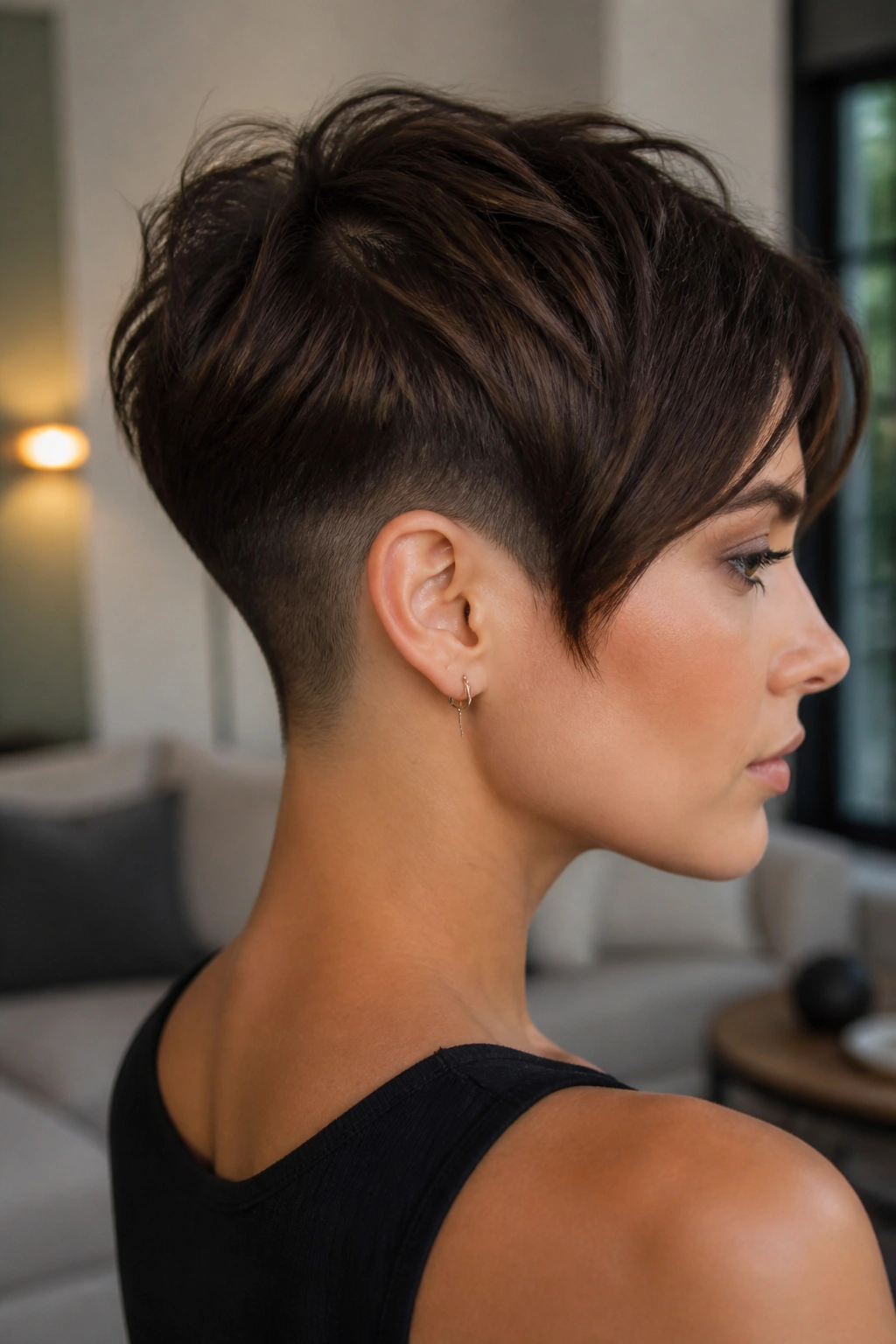
The underside should feel almost bare. The top should feel like it has room to move.
That’s the appeal of an undercut pixie for fine hair. The lower section is clipped tighter, which removes bulk and lets the top sit higher and looser. If your hair tends to puff out at the sides or collapse at the crown, this shape solves both problems without asking for much styling time.
What to Watch For
The undercut cannot sit too high. If it rises too far into the head shape, you lose the softness that makes a pixie wearable. The top also needs enough length—usually a couple of inches—to lie over the short back in a way that looks intentional.
- Best when the top has 2 to 3 inches of length
- Use a light paste only on the surface
- Keep the edge at the nape clean and narrow
- Great for people who like bold hair but low daily effort
Brunette color helps here because it emphasizes the contrast between the short and long sections. A glossy dark brown makes the top seem even denser.
8. Feathered Pixie Bob Hybrid
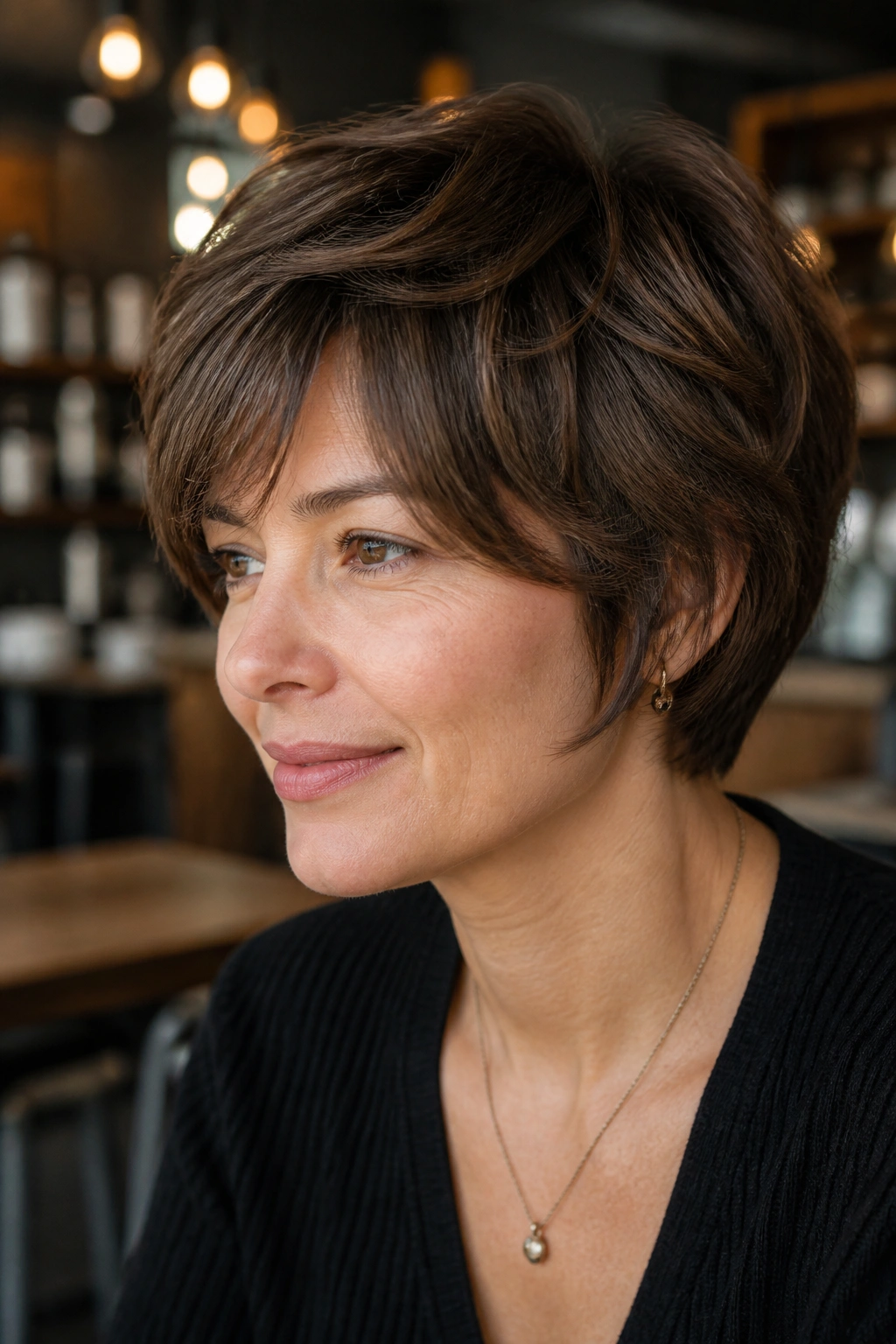
Picture a pixie that has decided it is not ready to give up all its length. That is the feathered pixie bob hybrid.
This cut sits in that sweet spot between a short crop and a tiny bob. The ends brush the jaw or skim just below it, while the top stays feathered and lightweight. For fine hair, that extra bit of length can help the style swing instead of sticking to the scalp. It also gives you a little more room to play with volume at the sides.
I like this cut for anyone growing out a shorter pixie but not ready for a full bob. It moves well, and the feathering keeps the shape from feeling heavy. Ask for soft layers around the cheekbones and a clean, tapered back so it does not mushroom out.
A round brush gives it a smooth finish. A flat brush gives it more swing. Either way, you get a brunette short cut that feels relaxed without looking unfinished.
9. Tousled Espresso Pixie
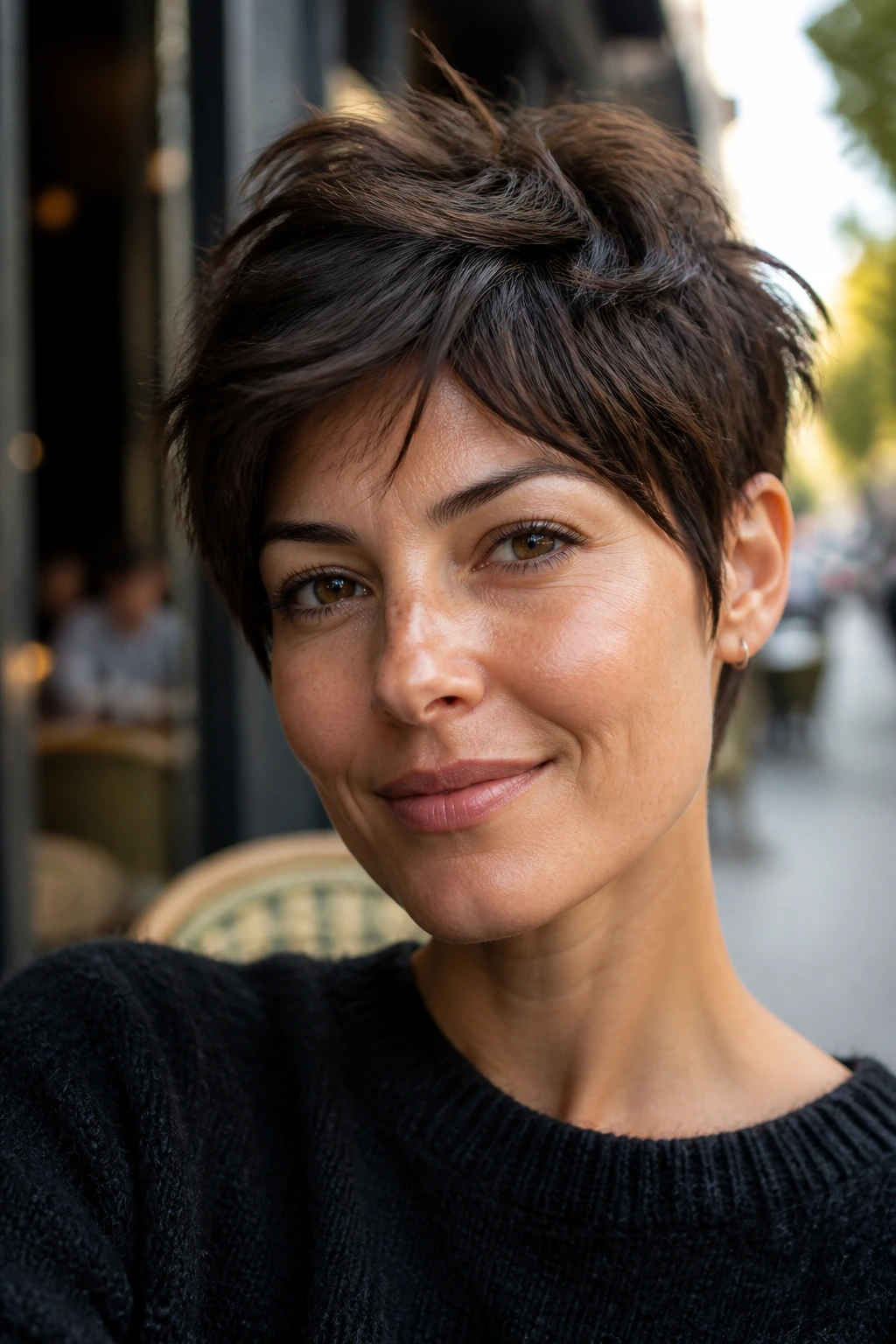
Can a tousled pixie look intentional on fine hair? Yes, if the texture lives in the right places.
The mistake is piling texture at the roots and calling it volume. That usually just makes the hair dry and fuzzy. A better approach is to keep the crown lightly lifted, then break up the ends with texture spray so the movement happens through the perimeter. Espresso brown is a smart color for this because the deeper tone keeps the piecey shape from looking sparse.
How to Keep It from Looking Frizzy
Work on dry hair. That matters. Damp hair tends to clump weirdly, and then the style dries into whatever shape it felt like making that day.
- Spray texture mist through the mid-lengths and ends
- Twist small sections with your fingers, not a brush
- Leave the top slightly lifted at the roots
- Avoid heavy oil on the surface
This cut has a cool, undone edge. Not sloppy. Just relaxed enough to feel human.
10. Asymmetrical Brunette Pixie
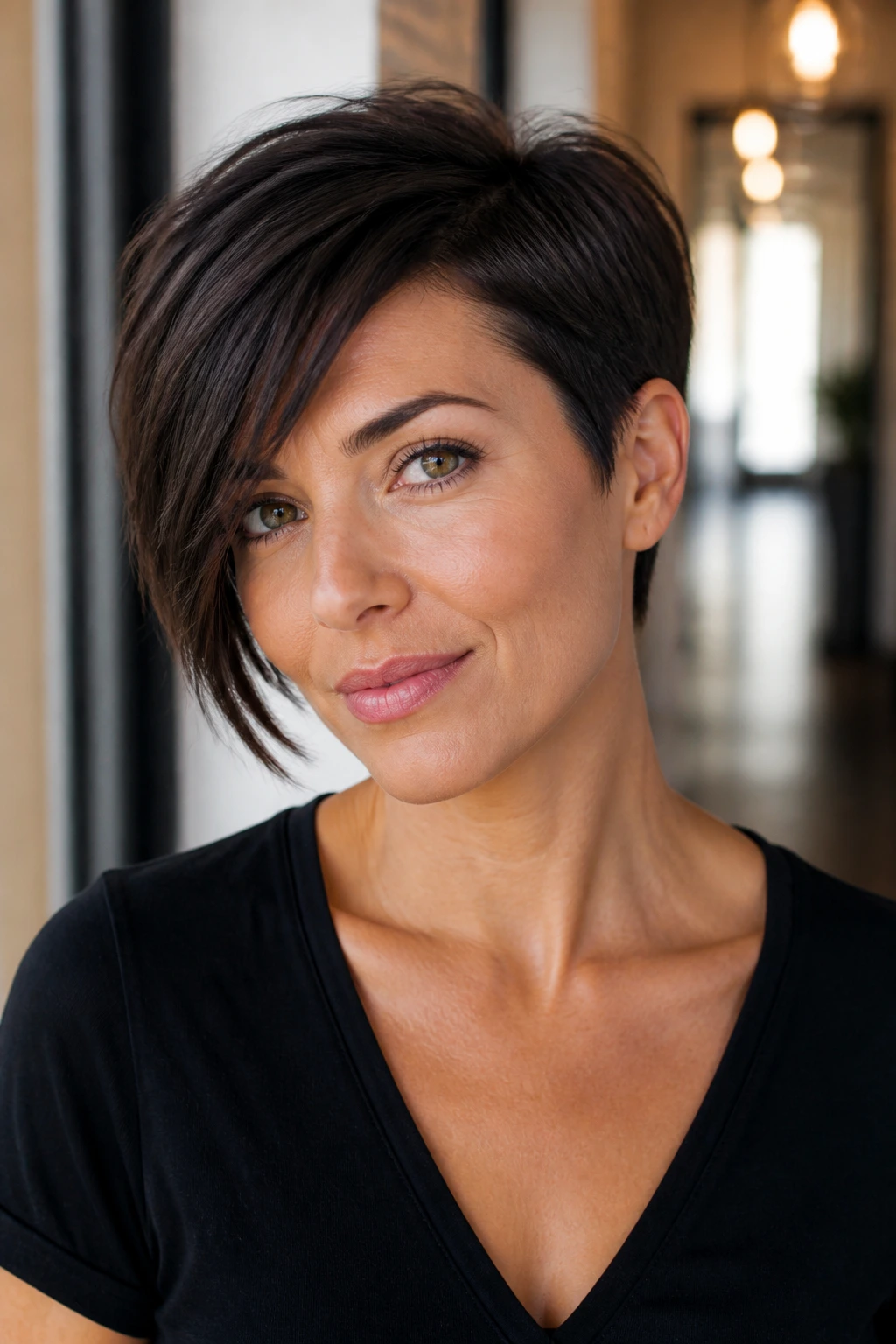
An asymmetrical pixie looks bold, but on fine hair it can also be practical. One side stays longer, the other side gets trimmed closer, and that uneven line creates instant visual interest.
Fine hair often benefits from a shape that gives the eye somewhere to travel. An asymmetrical cut does that. The longer side can skim the cheek or jaw, which adds softness, while the shorter side keeps the style from feeling heavy. On brunette hair, the contrast in the shape stands out even more when the color is deep and even.
This style works especially well if one side of your hair naturally falls flatter than the other. The uneven cut lets you work with that instead of fighting it. You can tuck the longer side behind the ear for a cleaner look, or wear it forward for more drama.
It is a good choice if you want a pixie that feels a little more fashion-forward without needing extra length everywhere.
11. Wavy Brunette Pixie
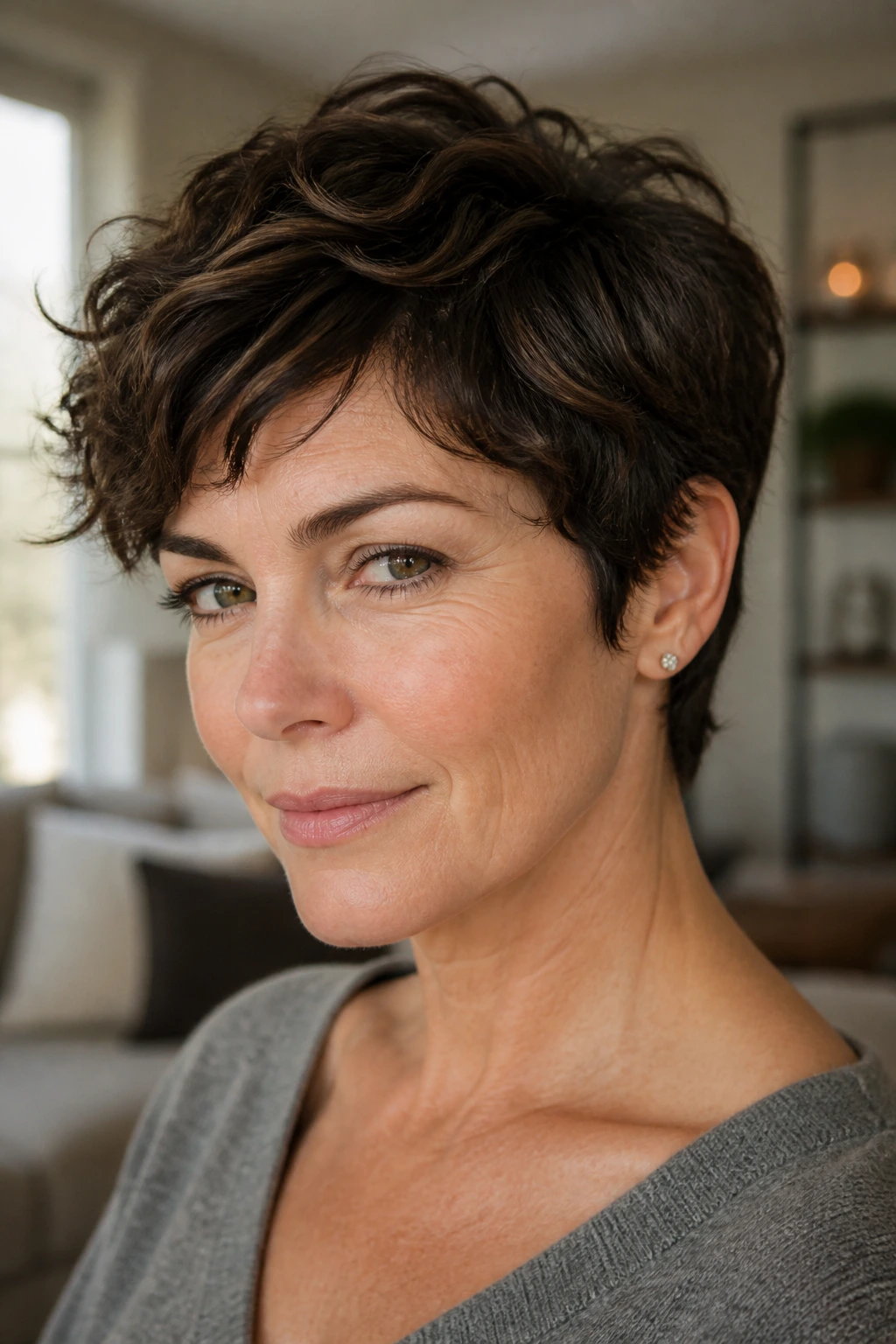
Waves are a fine-haired pixie’s best friend when the cut is short enough to keep them from drooping.
The problem with longer wavy styles is weight. Fine strands lose shape fast once they get too long. A pixie keeps the wave springy, so the movement stays visible. The brunette base—whether it’s cocoa, chestnut, or dark mocha—gives the waves a deeper look, which helps the texture show up instead of disappearing in the light.
This cut should be layered enough to let the wave bend, but not so layered that it turns fluffy. That line is narrower than people think. Use a diffuser on low heat or let the hair air-dry with a light curl cream if your natural bend is mild. If your wave pattern is stronger, you may not need much at all.
It’s a good option if you want softness around the face and a little lift at the crown without having to force the style into place every morning.
12. Piecey Pixie with Balayage
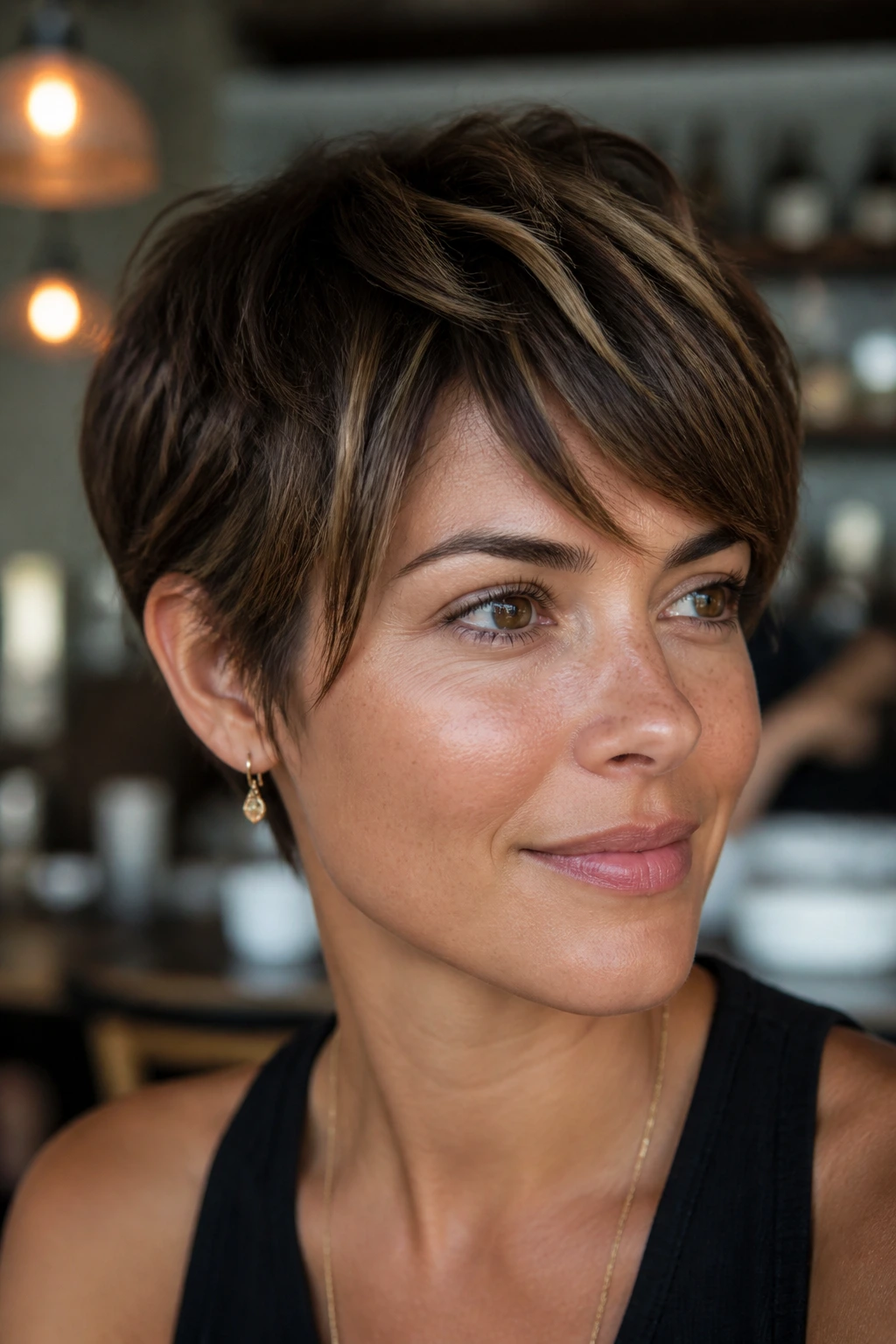
A piecey brunette pixie with balayage is not about bright streaks everywhere. It’s about smart placement.
On fine hair, a few lighter ribbons around the crown, fringe, and top layers can make the cut read fuller because the eye sees separate pieces instead of one flat block. The brunette base stays rich underneath, and the softer balayage pieces sit on top like narrow bands of light. That contrast is doing half the work.
Where the Color Should Sit
Keep the lightest pieces near the top layers and around the face. The back can stay darker and deeper so the cut keeps its weight. Too many highlights through the sides can make fine hair look thinner, not thicker.
- Use subtle caramel or honey ribbons
- Keep the nape darker for depth
- Avoid chunky stripes
- Ask for gloss after coloring so the finish looks smooth
The haircut itself should still be soft and layered. Color helps, but it does not replace shape.
13. Long-Top Pixie with Tapered Nape
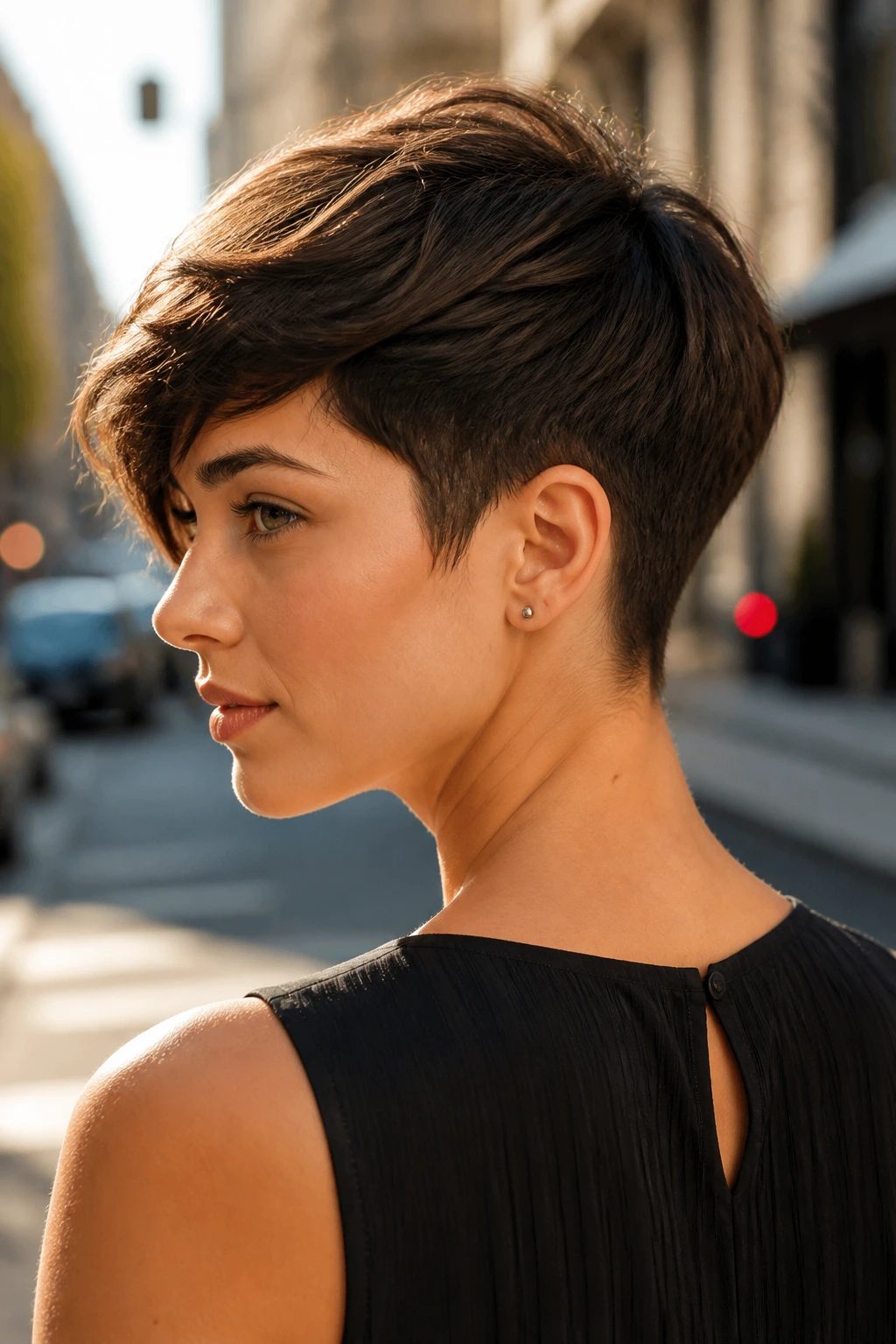
If the nape grows flat or clumsy, a long-top pixie with a tapered back fixes the silhouette fast.
The top stays long enough to sweep, bend, or lift, while the nape gets cut tight and clean so the back of the head looks neat. This contrast is useful for fine hair because it creates a clear shape from every angle. The style reads sharper at the back and softer up front, which is a nice balance.
Why the Silhouette Works
The tapered nape removes weight where it usually drags. The long top gives you enough length to build volume without having to spray your hair into a stiff shell. On brunette hair, the shape looks crisp because the darker base makes the lines easier to see.
Ask for the top to be cut with a little internal layering, not chopped heavily from the outside. That keeps the ends full. A small round brush can smooth the top, and a light wax on the very tips will keep the piecey finish from falling apart.
This is a tidy, grown-up pixie. Not boring. Just disciplined.
14. Sleek Polished Brunette Pixie
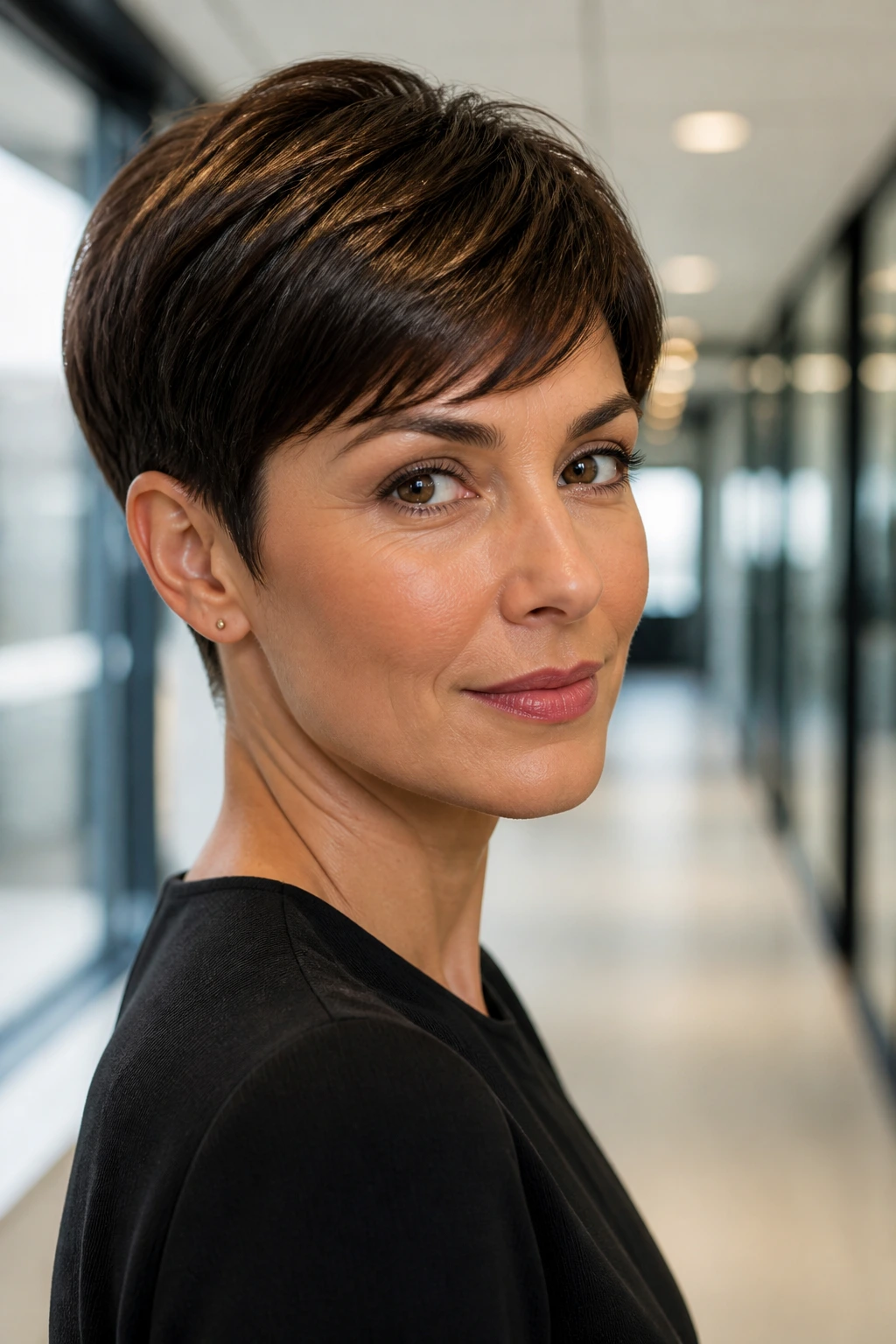
Do you want a pixie that looks neat after five minutes and stays that way? A sleek brunette crop is probably the answer.
The trick is precision. The edges need to be clean, the top needs enough length to lie in a controlled direction, and the layers need to be subtle so the cut keeps its density. Fine hair often looks fuller when it is smooth and tidy instead of heavily broken up. That surprises people, but it should not.
A tiny amount of shine serum on the hands goes a long way here. Run it over the surface only. Do not pile it near the roots, or the whole thing collapses. If your hair bends at all, a flat brush and a low-heat blow-dry can smooth the surface while keeping the body intact.
This style is especially good if your wardrobe leans sharp and clean. It has that quiet, crisp feel that works in a meeting or with a leather jacket. Same haircut, different mood.
15. Curtain Fringe Pixie
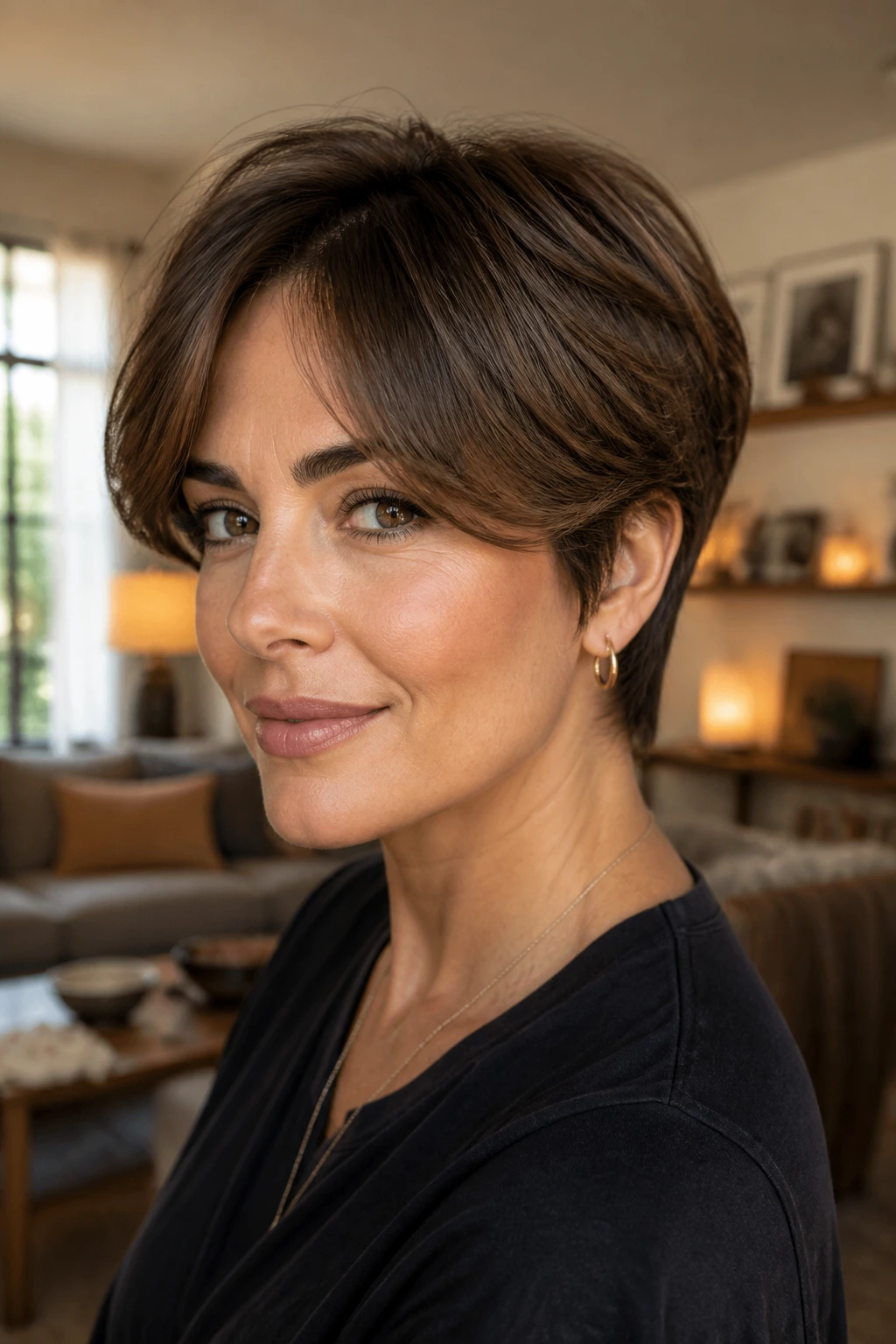
Curtain fringe on a pixie should fall like a soft bend, not a heavy drape.
That’s what makes it useful on fine hair. A center-opening fringe breaks up the forehead area without smothering the top, and the two sides of the fringe can be directed slightly away from the face to create width where you want it. In brunette shades, especially medium mocha or warm chocolate, the fringe frames the face without stealing too much attention from the rest of the cut.
The Small Trick That Helps
Blow-dry the fringe in two directions first—left and right—then let it settle in the middle. That gives the front a lived-in bend instead of a flat curtain line.
- Keep the fringe edges soft
- Use a round brush or fingers, not a stiff comb
- Ask for length that hits just below the brows
- Avoid too much thinning at the ends
This is a good cut if you want softness around the eyes and a bit of face-framing without going all the way into bob territory.
16. Rounded Pixie with Temple Volume
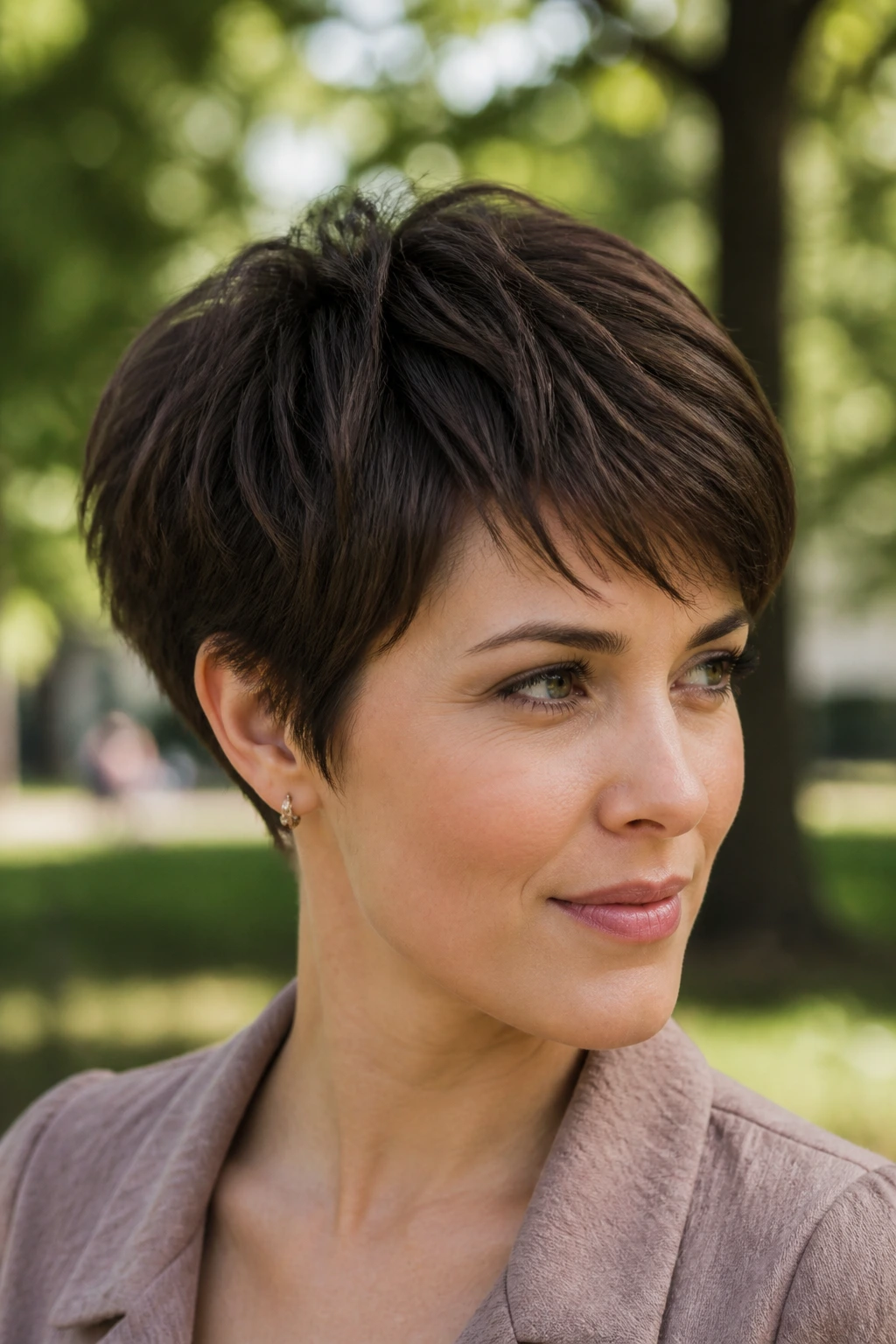
A rounded pixie with temple volume is the cut I reach for when a face needs a little width at the sides.
Fine hair tends to collapse near the temples first, which can make the face look longer than it is. Building a soft roundness there changes the whole balance. The crown can stay controlled while the sides push out just enough to create shape. On brunette hair, the outline looks gentle rather than puffed up because the darker color keeps the curve visually tight.
This style works well on narrow faces, longer faces, or anyone whose features look best with a little softness near the cheekbones. It is not the most dramatic pixie. That’s part of why it works. The volume sits where the face needs it, not where the hair wants to fall.
A small round brush and a light blow-dry at the temples usually does the trick. You are aiming for a soft arc, not a blowout. Small difference. Big payoff.
17. Short Shag Pixie
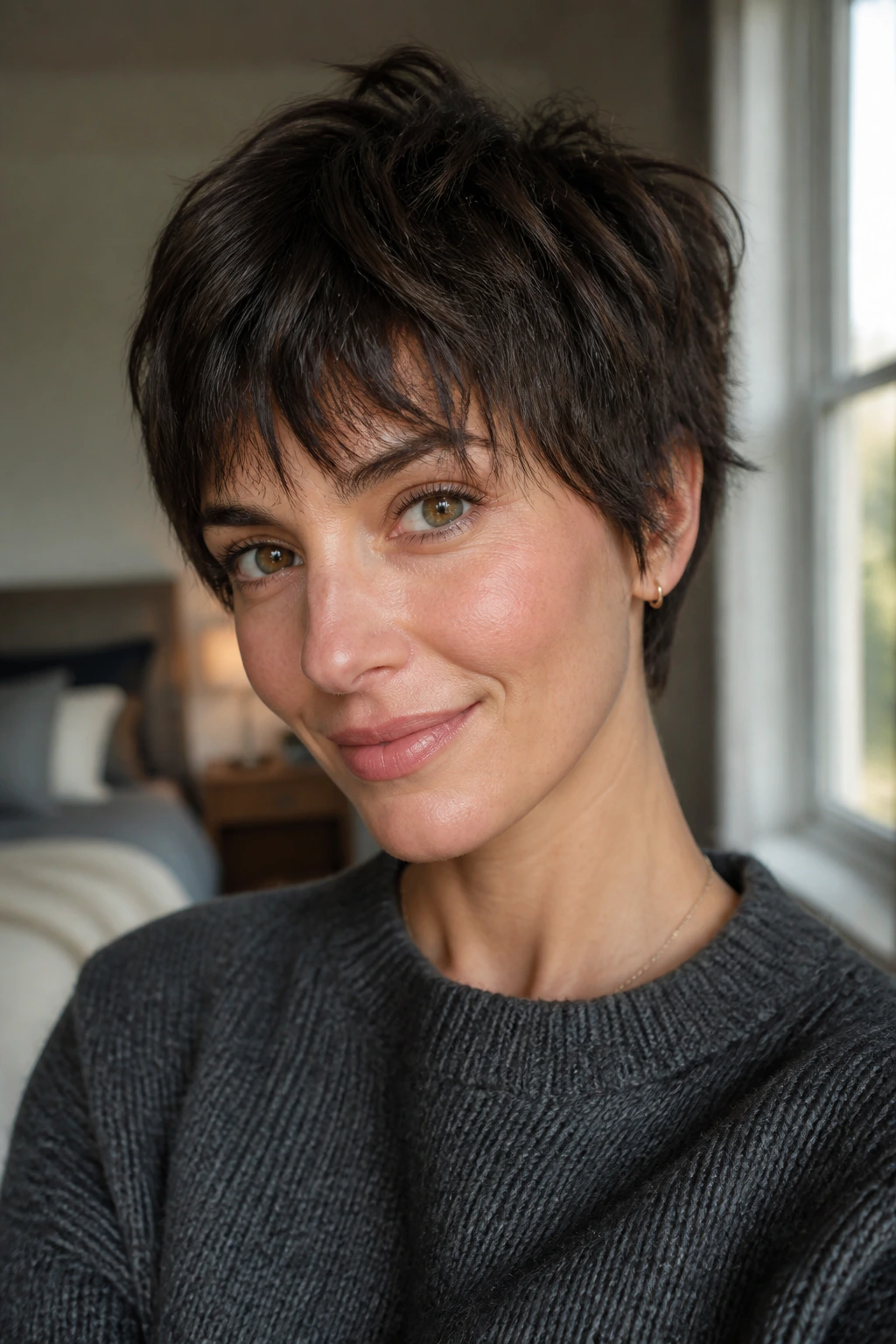
A short shag is not a messy pixie. People mix those up all the time.
The shag version has broken-up layers, a little attitude through the top, and a slightly undone outline around the ears and crown. On fine hair, that irregularity helps because it stops the style from looking too neat and too thin at the same time. Brunette shades add weight to the overall picture, which keeps the texture from becoming wispy.
This cut works best when you like movement and do not mind a little grit in the finish. It can be air-dried, finger-styled, or lightly rough-dried with a diffuser. The goal is separation, not polish. If every strand lies in the same place, you lose the point.
Ask your stylist to keep the layers soft enough that the hair still overlaps. Too much removal at the ends makes the shag look stringy. Too little, and it turns into a plain crop. There’s a narrow path here, but it’s a good one.
18. Spiky Textured Pixie
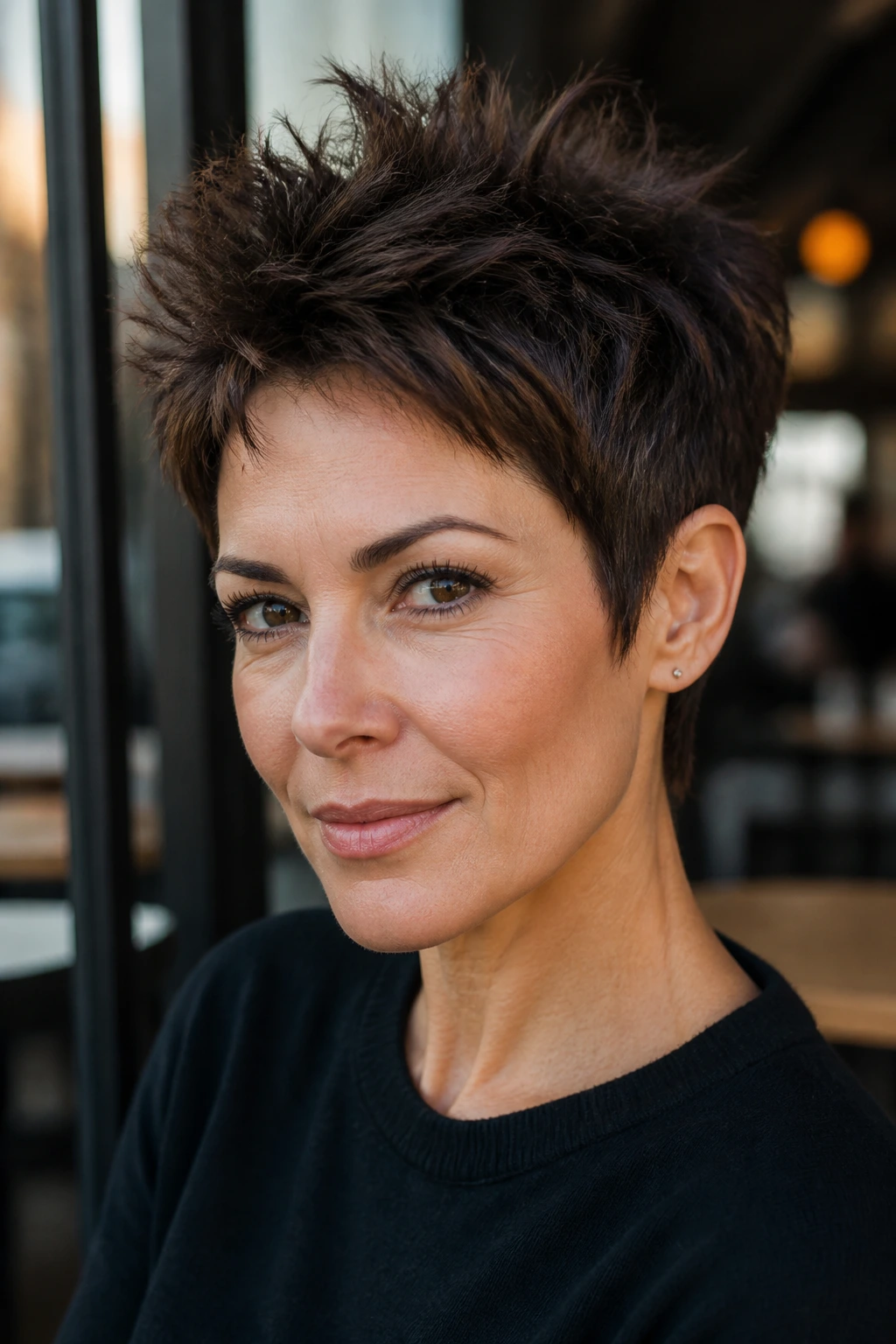
Spiky texture on fine hair is mostly about light weight, not attitude.
That sounds backwards, but it’s true. The shorter the cut, the easier it is to lift the pieces without having them flop over under their own weight. A brunette base helps the texture look sharper because the dark tone creates contrast between the lifted bits and the flatter sections underneath.
This style should not look crunchy. A tiny amount of matte clay or molding paste is enough. Warm it between your palms, tap it onto the top, and pinch only the bits you want to separate. Leave the sides quieter. If the whole head sticks straight up, the shape loses its line.
It works well if you want a little edge and you do not mind that the cut shows your styling choices. It is honest hair. There’s no hiding behind it.
The nice part? It can be reset with water and a quick re-shape. No drama.
19. Deep Side-Part Pixie
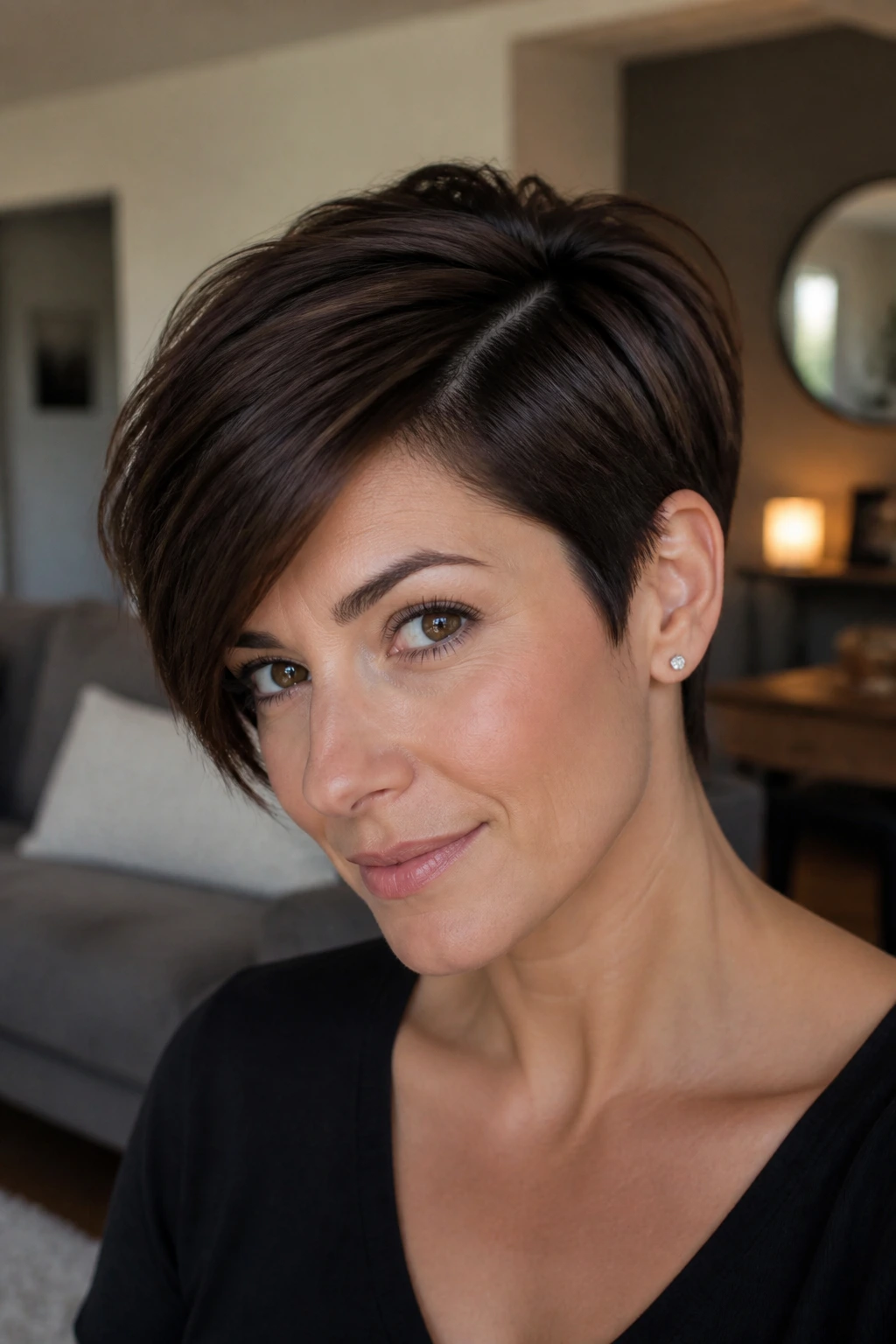
A deep side part can make fine hair look fuller before you even add product.
The strong diagonal line changes the whole balance of the cut. One side sweeps across the forehead, the other stays tighter and cleaner, and that asymmetry gives the top a little lift. On brunette hair, the parting creates a natural shadow that makes the crown look denser.
When to Choose It
This is a smart move if your hair has a cowlick near the front, if your crown lies flat, or if you want a quick way to change the mood of a short cut without changing the cut itself. It also pairs well with a subtle wave or a soft bend at the front.
- Blow-dry against the part first
- Set the longer side with a round brush
- Keep the shorter side close to the head
- Use only a light mist of flexible spray
The deep side part is one of those styles that looks deliberate even on a lazy day. Nice little cheat.
20. Tucked-Behind-the-Ear Pixie
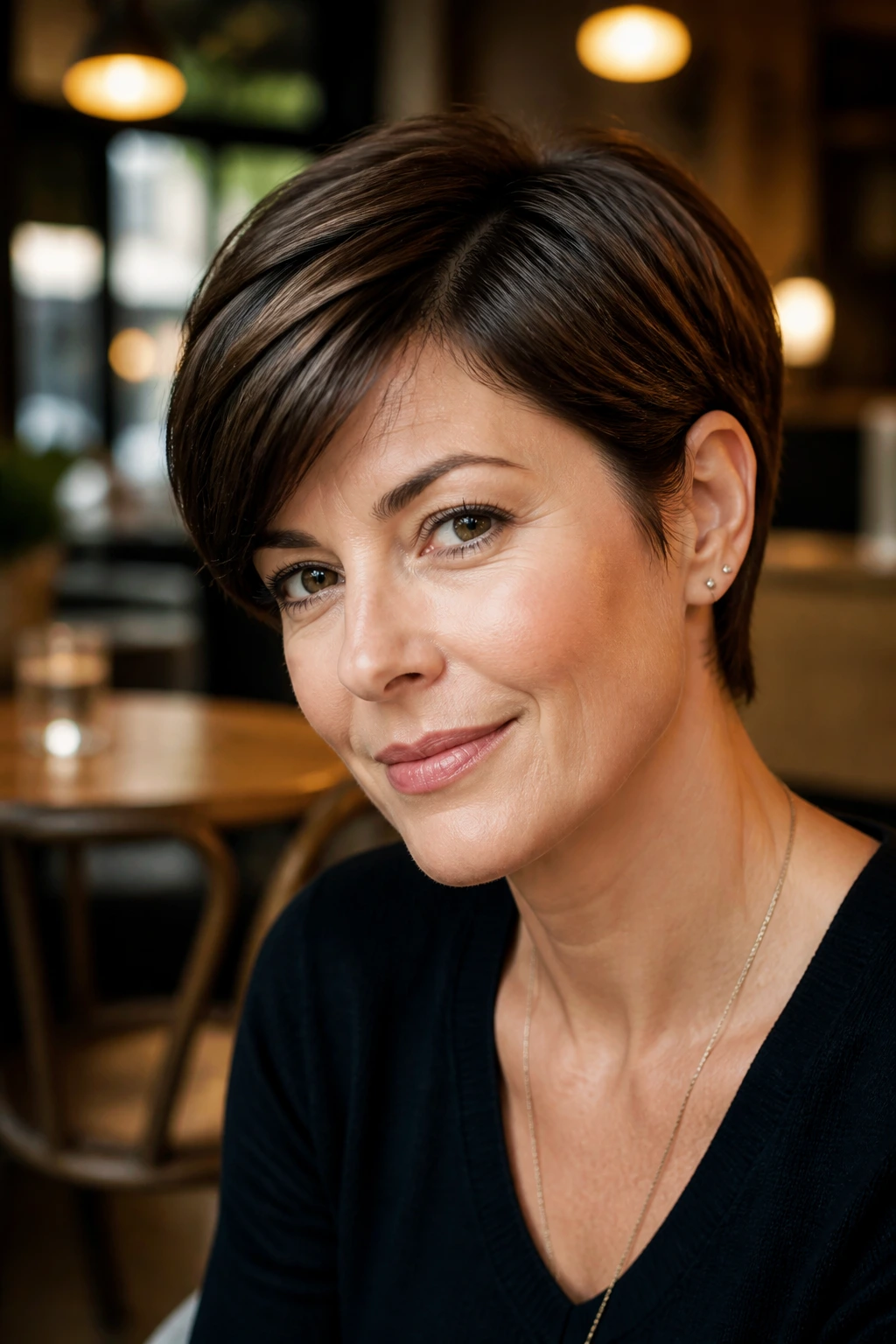
A tucked-behind-the-ear pixie makes the cheekbone line look cleaner than almost any other short cut.
That’s because the side section gets a job to do. Instead of hanging there like an afterthought, it gets swept back and tucked, which exposes the face and gives the hairstyle a neat finish. On fine brunette hair, that tucked shape can look especially sharp when the top has a soft bend and the sides stay close.
This cut works well if you wear earrings often or if you want a style that shifts easily from casual to polished. The key is keeping enough length near the front so the tuck does not feel forced. A piece that is too short just slips out and annoys you all day.
Leave a small curve in the front section. That keeps the ear-tuck from looking flat or overcontrolled. It should feel easy, not stiff. Easy is better here.
21. Ultra-Short Cropped Pixie
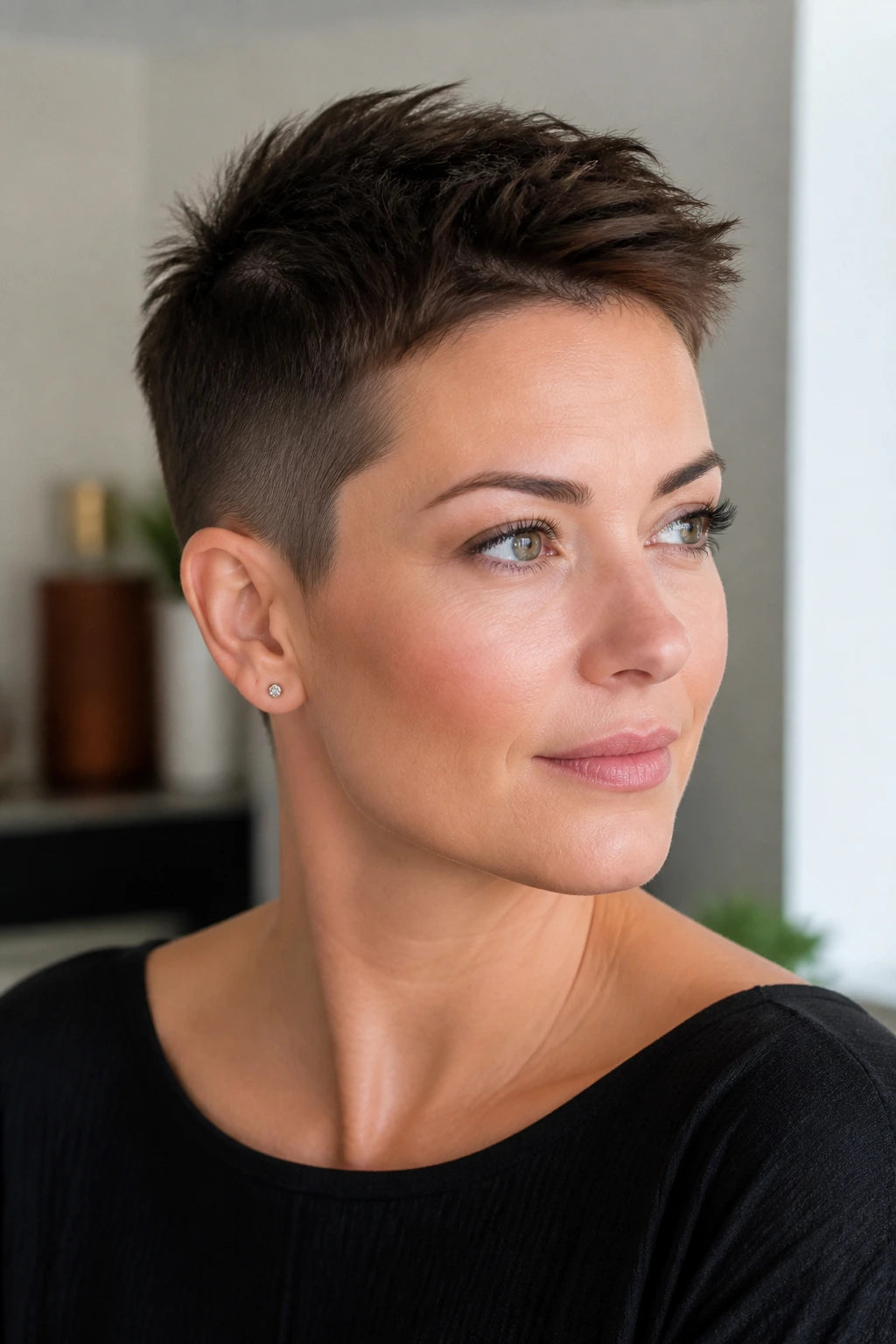
How short can a brunette pixie go before it starts to feel harsh? Short enough to show texture, but not so short that the shape disappears.
An ultra-short crop works on fine hair when the cut is clean and the top has a little soft movement. Because there is less length to drag the hair down, the strands often look denser and more compact. That can be very flattering, especially with a deep brunette color that gives the crop more visual depth.
What Makes It Work
The shape needs to stay close at the sides and nape, with just enough softness on top to keep it from looking like a buzz cut. A tiny amount of texture cream can separate the front, but the style should mostly rely on the cut itself.
- Best if you like a low-maintenance routine
- Works well on strong brows and clean bone structure
- Needs regular trimming to hold the outline
- Skip heavy product; it defeats the crispness
This is a confident haircut. It does not try to look fuller than it is. It simply looks intentional.
22. Soft Pixie-Bob Hybrid
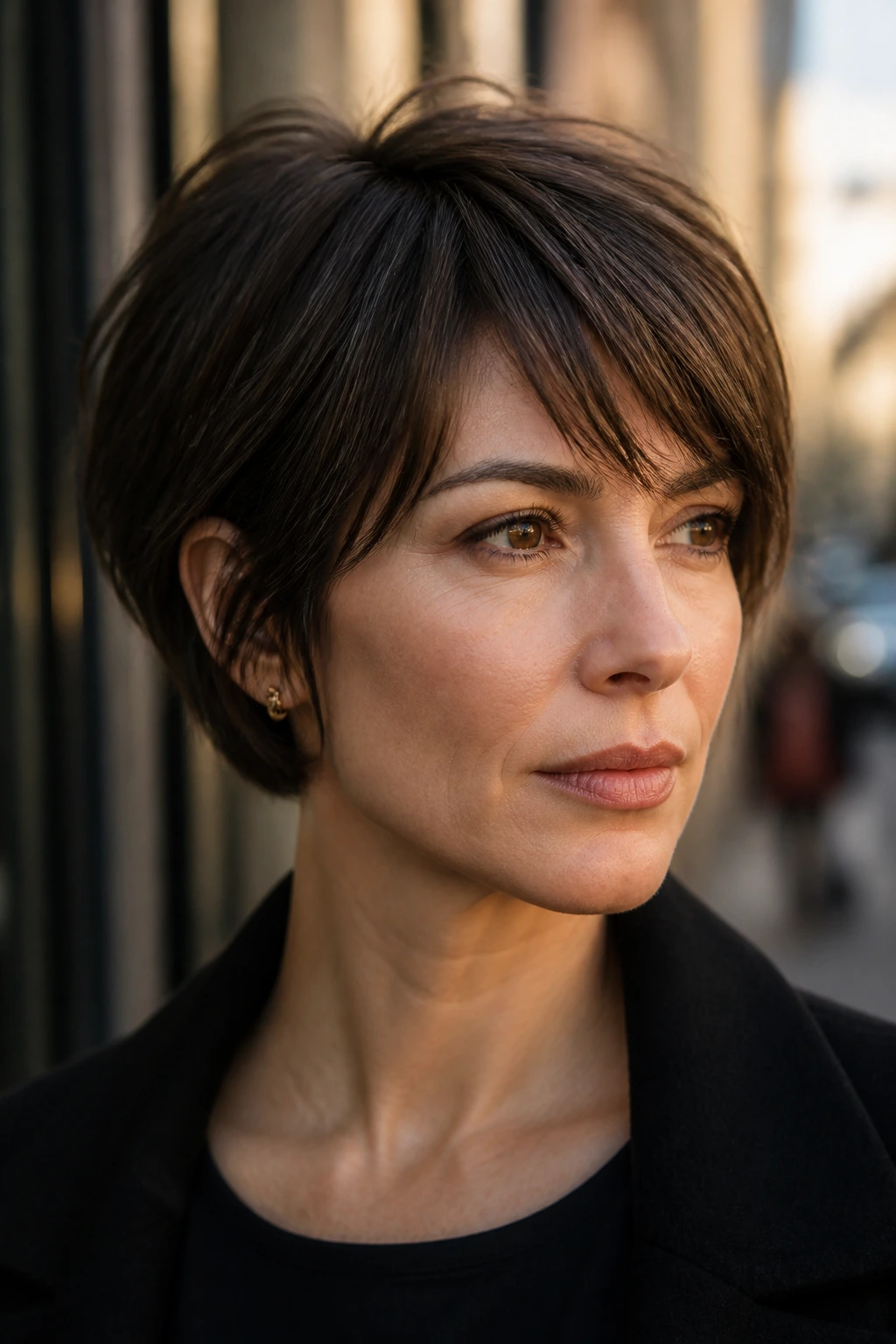
A pixie-bob hybrid is what you reach for when you want short hair but not that short.
The length usually brushes the jaw or sits just below the ears, which gives fine hair a little more swing and movement. The top stays short enough to feel light, while the front pieces have room to soften the face. On brunette hair, especially a smooth coffee-brown shade, the outline looks sleek without losing body.
I like this cut for people who are nervous about going full pixie. It gives you a familiar frame around the face, but it still opens up the neck and keeps the back tidy. That balance makes it easier to live with day to day.
A side part or a slight tuck behind the ear works well here. So does a loose wave through the top. The point is to keep the shape soft and easy, not heavy. If you want a short cut with a little forgiveness, this one has it.
23. Caramel-Dimension Brunette Pixie
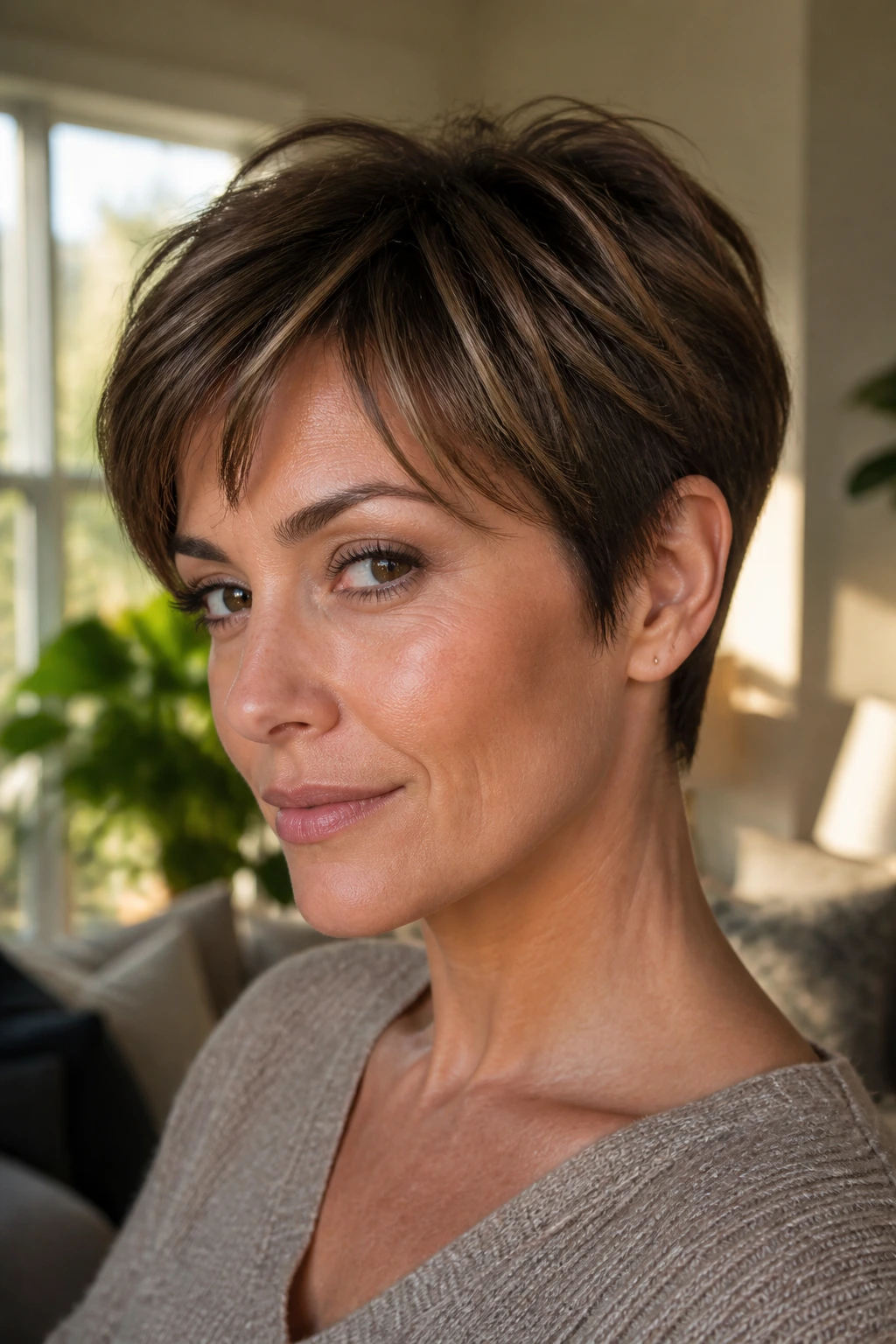
Color matters as much as cut here. Maybe more.
A caramel-dimension brunette pixie uses lighter ribbons and deeper lowlights to break up the surface of fine hair. That contrast gives the illusion of thickness because the eye sees depth, not just one flat tone. The haircut itself can stay simple—short sides, lifted crown, soft fringe—but the color makes the shape feel richer.
Where the Dimension Belongs
Keep the brightest caramel pieces near the top layers and around the face. Leave the underneath sections darker so the cut keeps some shadow. If the light pieces are spread everywhere, the whole thing can look thin instead of full.
- Ask for fine, narrow highlights, not chunky bands
- Keep lowlights near the root and nape
- Use a gloss afterward to smooth the tone
- Refresh the color in thin sections rather than repainting everything
This is a strong option if your brunette base needs a little life and you want the haircut to look fuller in daylight.
24. Air-Dried Messy Pixie
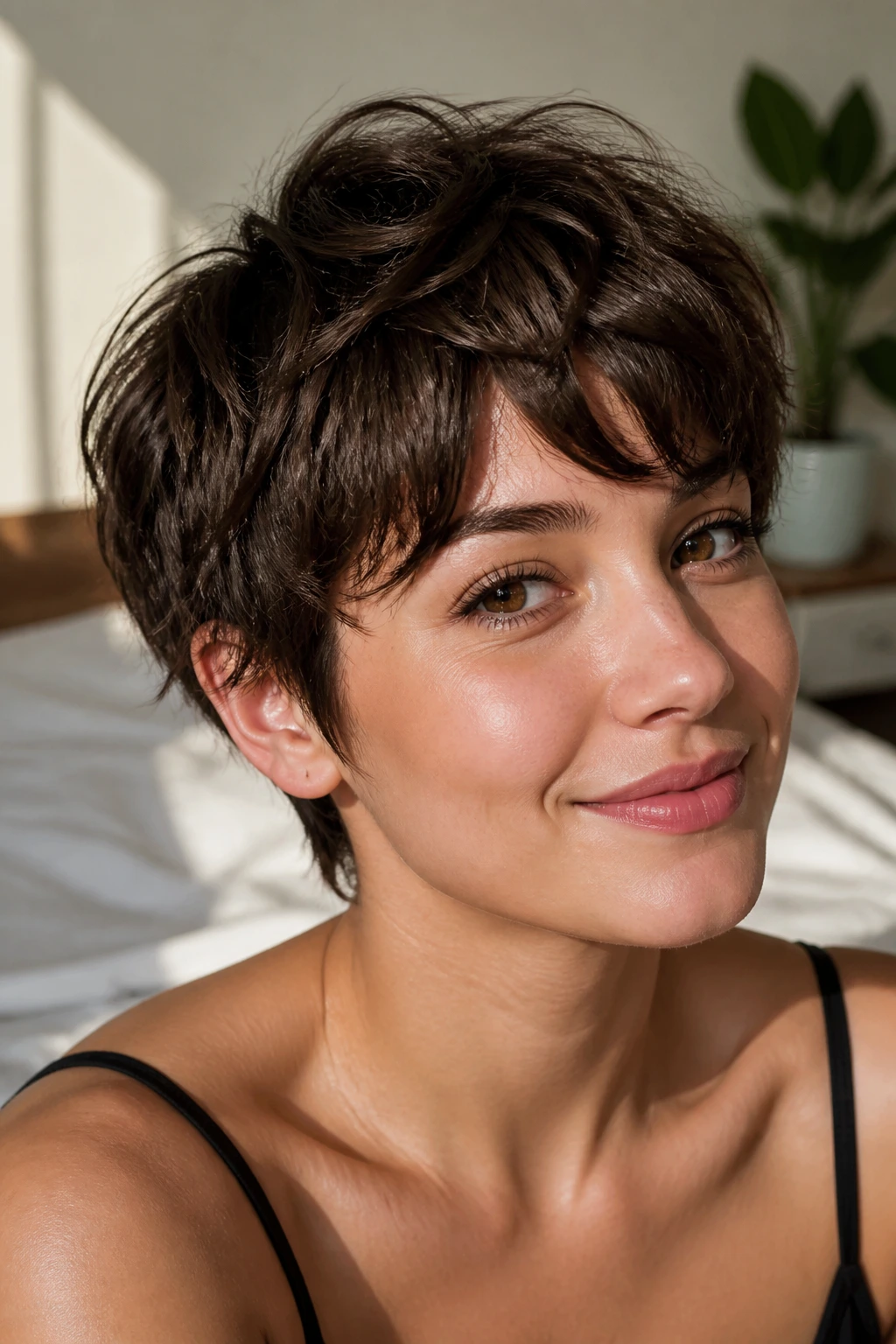
Unlike a polished crop, an air-dried messy pixie leans into softness.
That makes it a good fit for fine hair that has a little bend or wave and does not want to be forced into place. The style starts with a light leave-in or a whisper of cream through damp hair, then gets left alone. Fingers do most of the work. If you scrunch too hard, the pieces clump. If you touch it too much, the shape disappears. A light hand is the whole game.
Brunette tones are useful here because the darker color keeps the tousled shape from looking too see-through. A warm brown or soft espresso shade can make the movement feel plush even when the texture is relaxed.
This cut is for the person who wants to roll out of bed and still look like the hair belongs to them. Not perfect. Better.
25. Elegant Classic Pixie with Subtle Layers
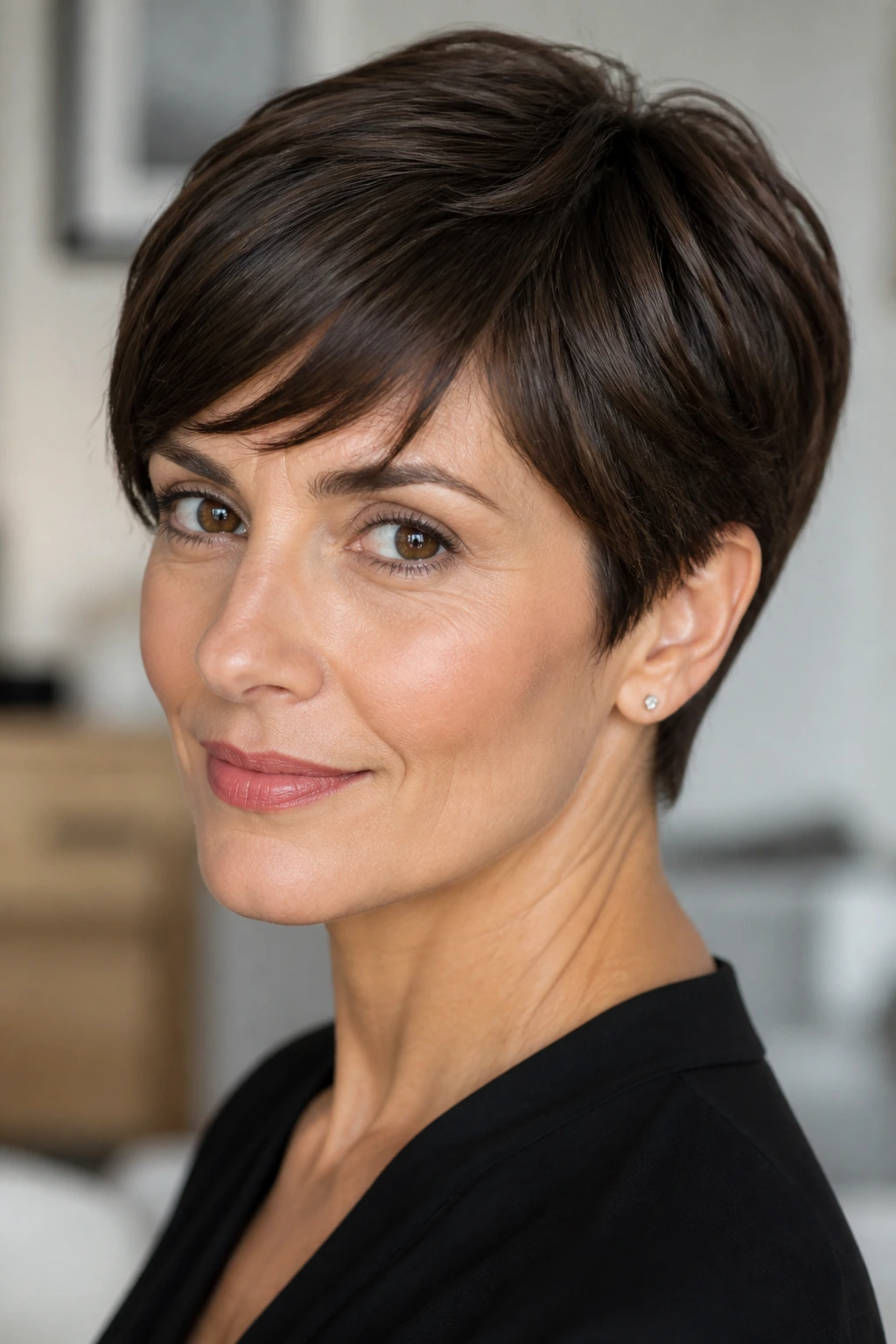
A classic pixie with subtle layers is the version I trust when someone wants the haircut to still look right six weeks later.
The shape is simple on purpose. The sides stay neat, the nape is tapered, and the top carries just enough length to be brushed forward or slightly to one side. Fine hair benefits from that kind of discipline because too much layering can make the ends look sparse before the cut even grows out. Subtle layers keep the body in the hair without breaking the silhouette apart.
Brunette shades make this cut feel especially clean. A deep brown gloss, a chestnut glaze, or even a soft mocha tone gives the shape a smooth finish and keeps the lines visible. That matters more than people think. A pixie is a tiny haircut, but every millimeter shows.
If you want one brunette pixie cut for fine hair that sits between polished and easy, this is the one I’d keep near the top of the list.
