



The prevailing myth in the world of hair styling is that fine hair requires length to maintain its dignity. We are told, often from a young age, that we need the weight of long strands to pull our hair down so it doesn’t frizz, or that keeping it long gives us something to work with. In reality, that very weight is the enemy of fine hair. Length pulls the roots flat against the scalp, sucking away any potential for natural lift and leaving the hair looking sparse and lifeless.
A pixie cut acts as a hard reset for fine hair. When you remove three, four, or six inches of hair, you are removing the drag. Suddenly, the hair has the freedom to stand up, to support itself, and to look significantly denser than it did at shoulder length. It is not about having less hair; it is about managing the hair you have so that it works for you, rather than against you.
The key to a successful pixie with fine hair is texture. If you cut fine hair bluntly and uniformly, you risk it looking like a helmet or a helmet-adjacent shape. You need movement, separation, and intentional chaos. You need to create the illusion of bulk where there might be none. Whether your hair is stick-straight or has a slight, unpredictable wave, a tailored pixie can transform your entire aesthetic. It puts the focus on your facial features—your eyes, your cheekbones, your jawline—rather than the hair itself.
1. The Undercut Pixie
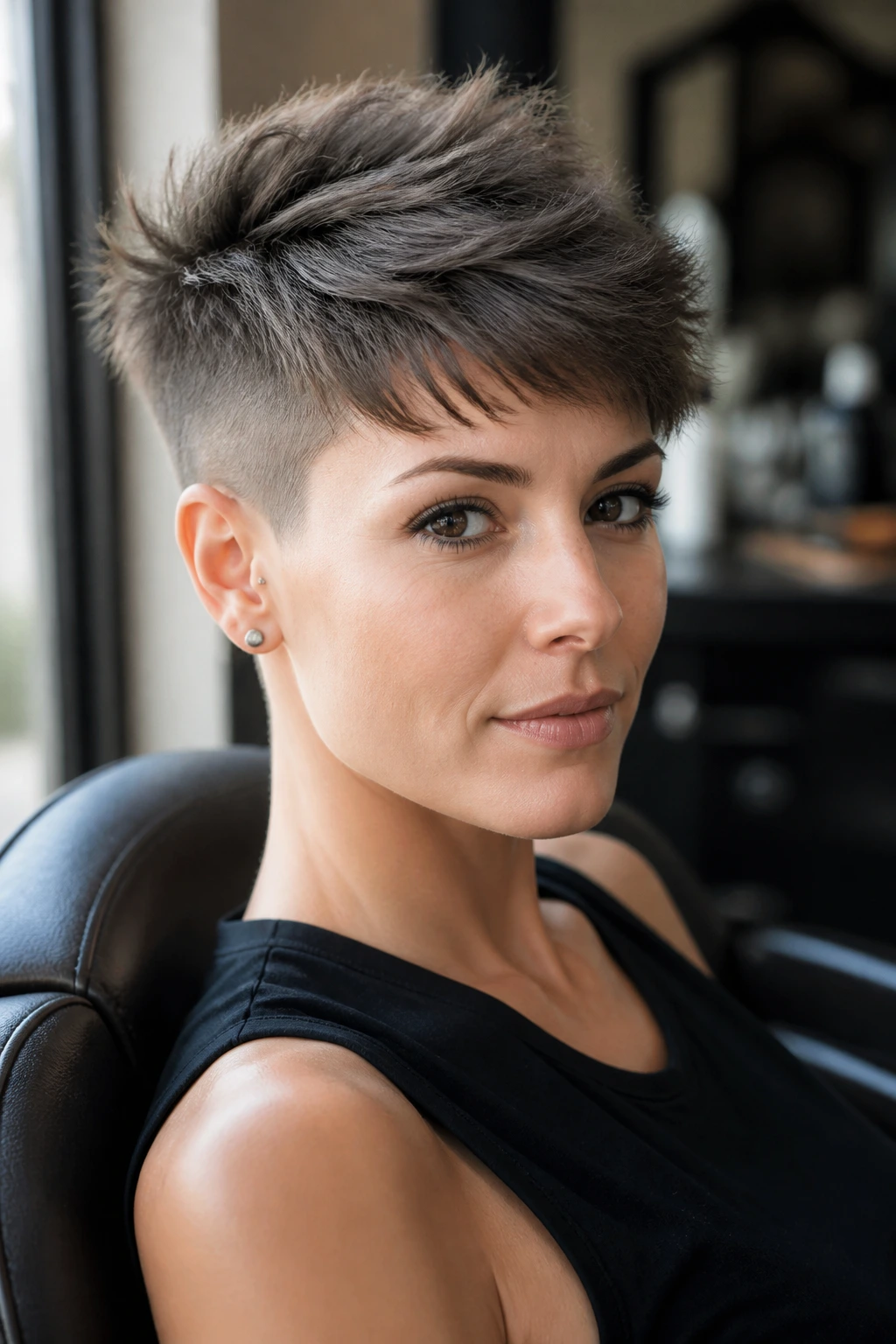
This is the ultimate choice if you want to maximize volume on top while keeping the sides tight and clean. By shaving or clipper-cutting the sides and back, you eliminate the areas where fine hair tends to look wispy or thin. The contrast between the closely cropped sides and the longer, texturized crown creates an immediate perception of thickness.
Why This Works for Fine Textures
The physics of this cut is simple: you are removing the weight from the perimeter, which allows the hair on the crown to sit higher and maintain its shape throughout the day. It removes the “fuzz” around the ears and neck, which is often where fine hair starts to break or look unkempt.
Styling for Maximum Impact
- Use a high-quality matte pomade or clay. Do not use gel; it is too heavy and will glue your fine strands together, making them look thinner.
- Apply the product to dry hair. Rub a dime-sized amount between your palms until it warms up and becomes invisible, then tousle the top section forward and then back.
- Focus on lifting the roots at the crown. You want that section to have height.
Pro Tip: If your scalp shows through on the sides due to the short length, ask your stylist to use a slightly longer guard on the clippers—a number 3 or 4—rather than going for a skin fade. It keeps the density without losing the sharp, clean lines.
2. The Textured Crop
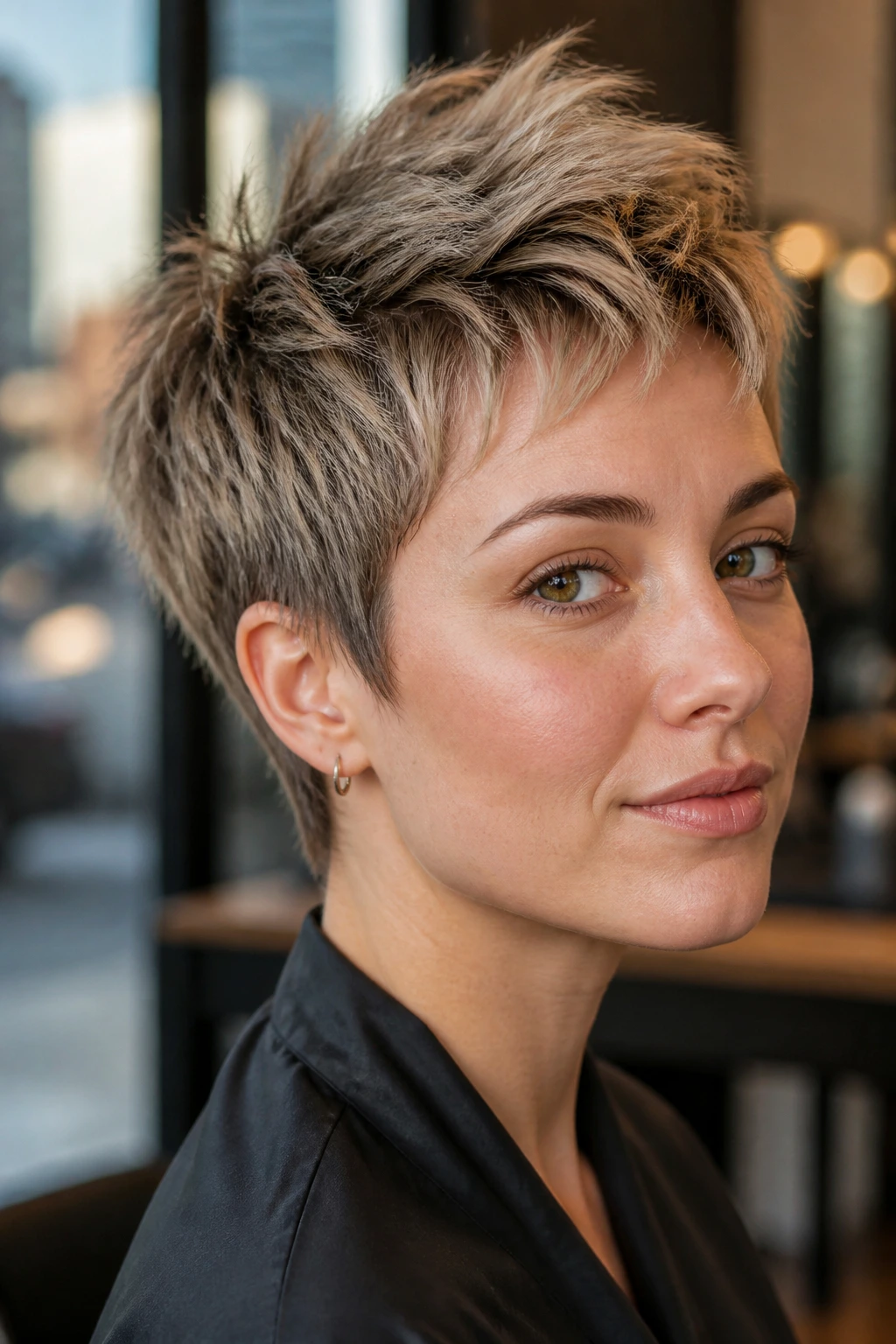
The textured crop is less about a specific shape and more about a technique. Here, the entire perimeter is kept relatively short, but the top is cut with point-cutting shears or a razor to create jagged, uneven ends. This is not a “smooth” haircut. It is meant to look lived-in and slightly messy from the moment you step out of the salon chair.
When your stylist is cutting, ensure they are cutting into the hair at an angle, not straight across. Straight lines emphasize the lack of bulk in fine hair. Jagged lines, conversely, create layers that stack on top of each other, tricking the eye into seeing more hair than is actually present.
This cut is remarkably low-maintenance. Because the layers are intentionally disconnected and irregular, it doesn’t matter if your hair grows out a bit unevenly between salon visits. It only adds to the aesthetic. You can wash, add a bit of salt spray, air dry, and walk out the door. It embraces the fine texture rather than trying to force it into a rigid, structured style that it simply cannot hold.
3. The Asymmetrical Pixie
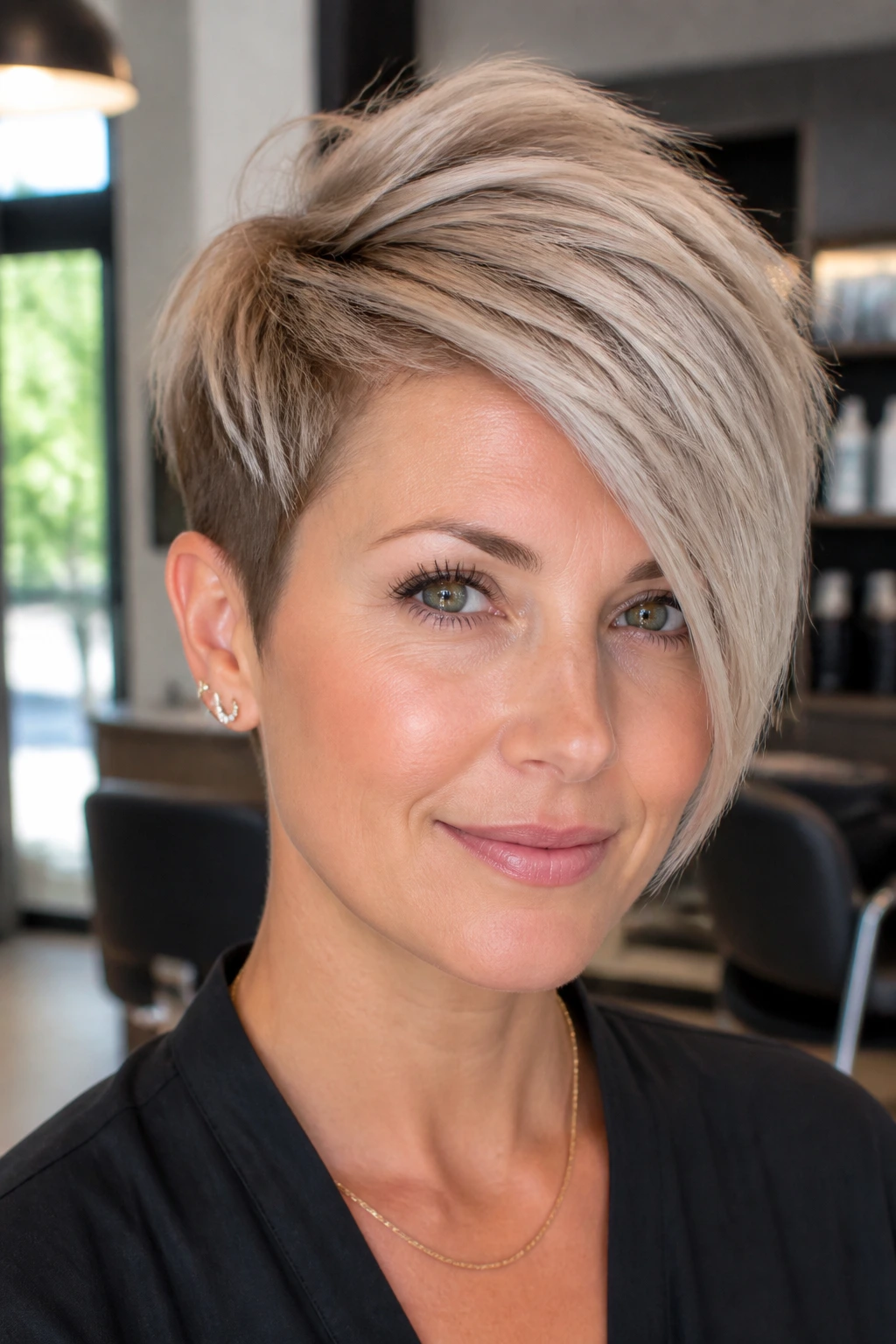
Asymmetry is one of the smartest tools in a stylist’s kit for anyone with fine hair. By keeping one side significantly shorter—perhaps even buzzed—and the other side longer, sweeping across the forehead, you disrupt the balance of the head shape. This visual disruption distracts from the fine texture and pulls focus toward the length of the fringe.
Playing with Proportions
The longer side can be styled to fall over one eye or swept back with a pomade to create a sophisticated, dramatic swoop. This length also allows you to play with texture sprays, which add grit and stickiness to fine strands, helping them clump together into thicker-looking “pieces” rather than individual, lonely hairs.
Who Should Choose This
If you have a strong jawline or want to soften the appearance of a wider forehead, this is the cut for you. It provides a frame for the face that is dynamic and ever-changing. You can change how you style the longer side daily, making it one of the most versatile options on this list.
4. The Choppy Layers Pixie
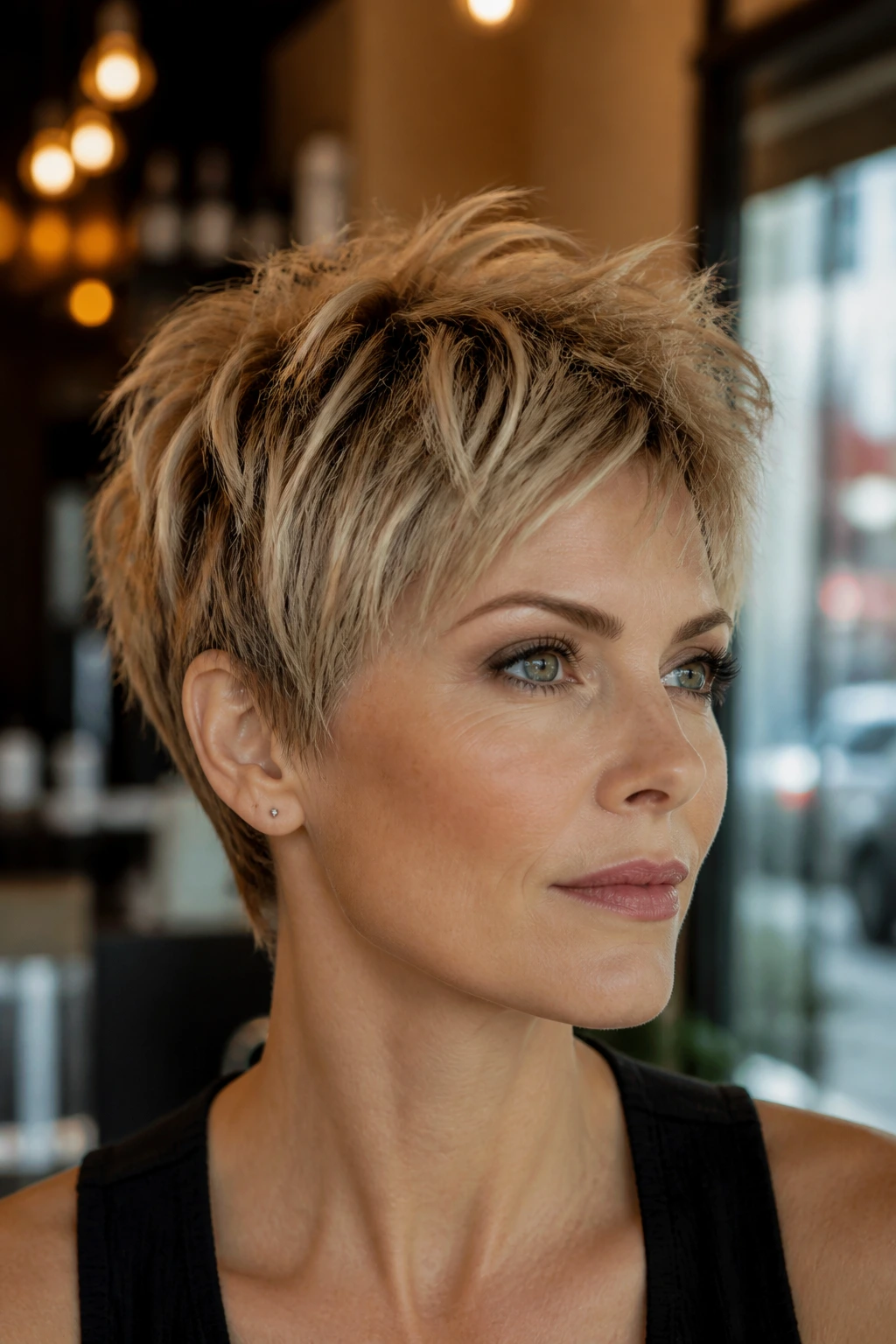
Choppy layers are the antithesis of a flat, rounded bob. This style involves cutting distinct, varying lengths all throughout the top and back sections. It creates a “shattered” look that is incredibly effective for adding volume to hair that typically falls flat within an hour of styling.
The secret here is in the “shattering.” Your stylist should use thinning shears or a razor to remove weight at the ends of the layers. This makes the ends of the hair feel light and airy, allowing them to bend and twist rather than just hanging straight down. It creates a cloud-like effect around the head, which is exactly what you want when your goal is the appearance of thickness.
Do not fear the layering. Many people with fine hair avoid layers because they associate them with “thinning out” the hair. That is a misunderstanding. Internal layers create structure, and structure creates lift. If you have fine hair that is one length, it is essentially a heavy sheet of glass. Layers turn that sheet into a stack of shingles, which is much more capable of standing up on its own.
5. The Long Pixie (Pixie Bob)
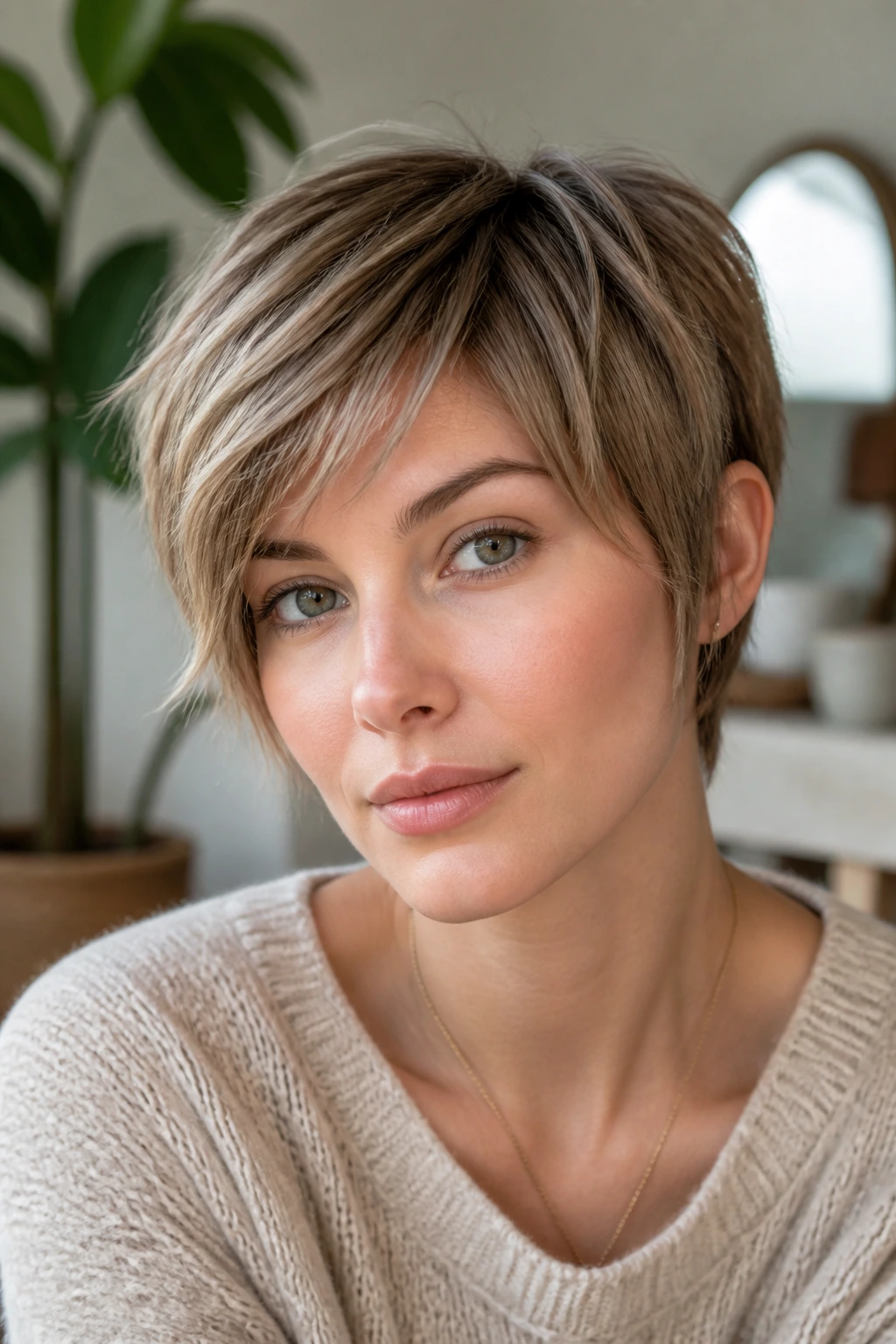
If you are hesitant to go “full pixie,” the long pixie, often called a “bixie,” is your middle ground. It keeps some length around the ears and the nape of the neck, while the top remains short and layered. It offers the ease of a short cut with the familiarity of a bob.
This cut is particularly forgiving. If you have been used to wearing your hair at chin-length or longer, the transition to a super-short pixie can be jarring. The long pixie eases you into it. It retains enough weight to frame the face softly, which can be comforting if you aren’t ready to expose your entire face and neck.
To style this, focus on volume at the roots. Since you have a bit more length to work with, you can use a small round brush while blow-drying to pull the roots upward. Finish with a dry texturizing spray, which is essential for fine hair—it provides the “grip” that fine strands naturally lack, allowing the hair to hold whatever shape you dictate.
6. The Super-Short Spiky Pixie
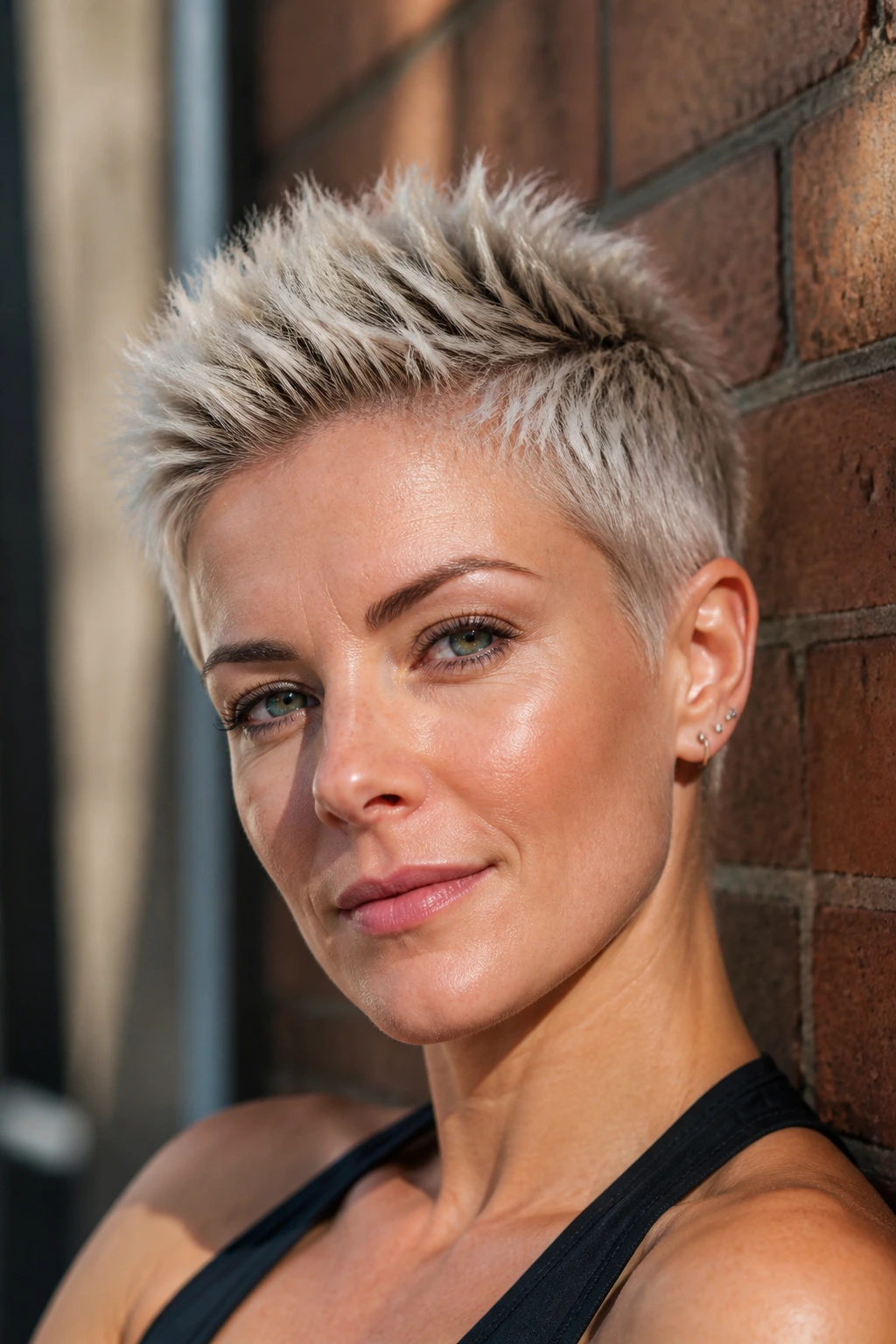
Sometimes, the best way to deal with fine hair is to lean into it. By going very short—think a classic boy-cut style—you minimize the surface area for hair to fall flat. This is not about trying to create volume; it is about celebrating the silhouette.
This style requires a bit of confidence, but it is incredibly chic. It highlights the neck and the bone structure of the face. The key to making this work for fine hair is product selection. You need a matte product with strong hold. Avoid anything shiny or greasy. Shine products will make fine hair look oily and flat in a matter of minutes.
When asking your stylist for this, be specific: you want a “tight taper” on the sides and back, and just enough length on top to create spikes. You don’t need a lot of length—just enough to grab with your fingertips. This cut is a wash-and-wear dream, but it does require frequent trips to the salon for trims, as the shape will lose its sharpness as soon as it grows out by even a quarter-inch.
7. The Side-Swept Pixie
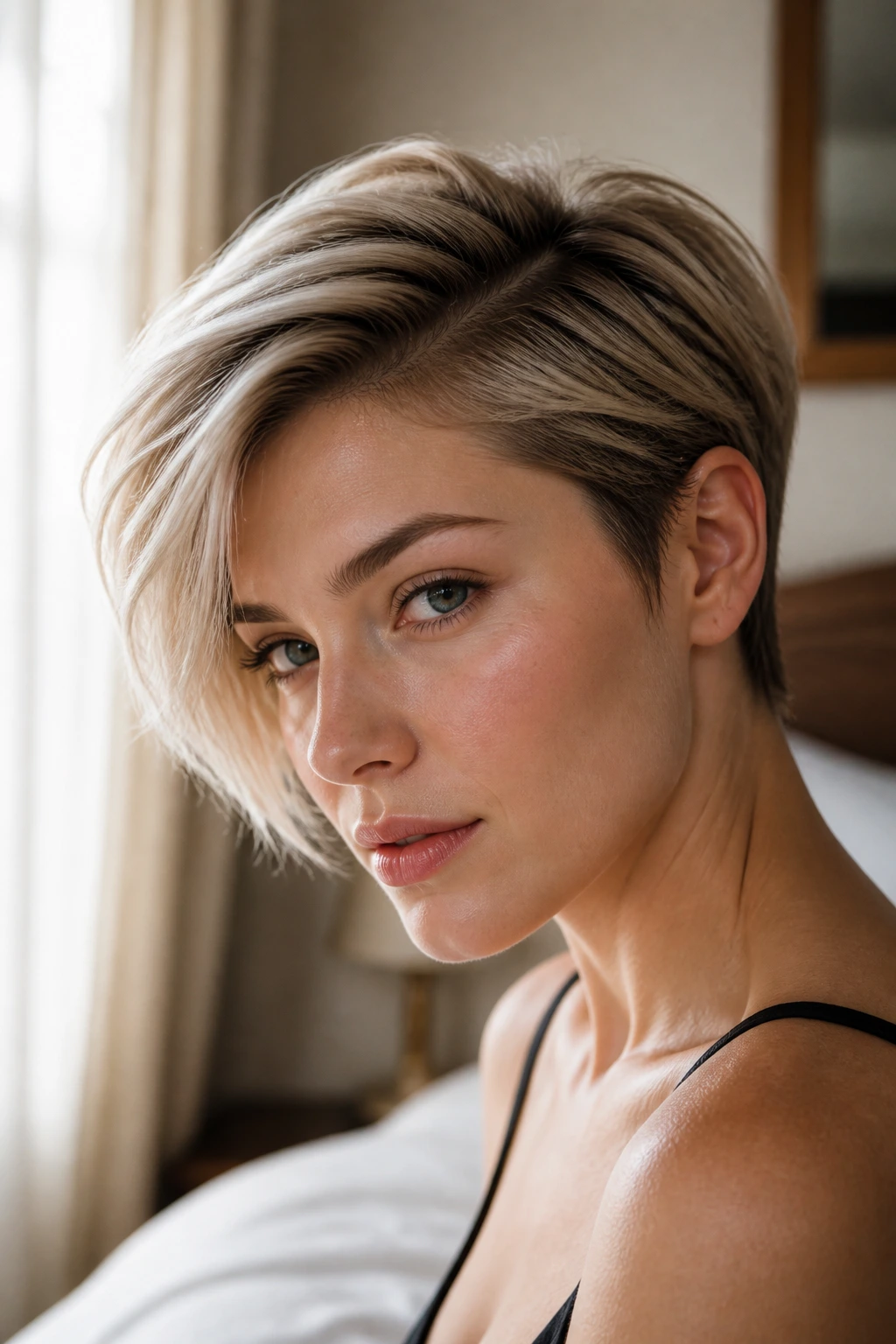
A side-swept pixie is elegant, timeless, and surprisingly effective at masking fine hair. By directing all the hair toward one side, you create a dense mass of hair rather than spreading your limited density across your entire head. It is the hair equivalent of pushing all your chips to the center of the table.
This style works best with a deep side part. When your hair is wet, find the highest point of your eyebrow and part your hair starting from there, or even further toward the temple. The sheer volume of hair being swept across the forehead helps disguise the fact that individual strands are fine.
To maintain the sweep throughout the day, use a light-hold hairspray rather than a heavy cream. You want the hair to move, but you want it to stay in that sweeping motion. If it gets heavy, the look collapses. Keep it airy, keep it light, and you will have a sophisticated look that transitions perfectly from the office to an evening event.
8. The Feathered Pixie
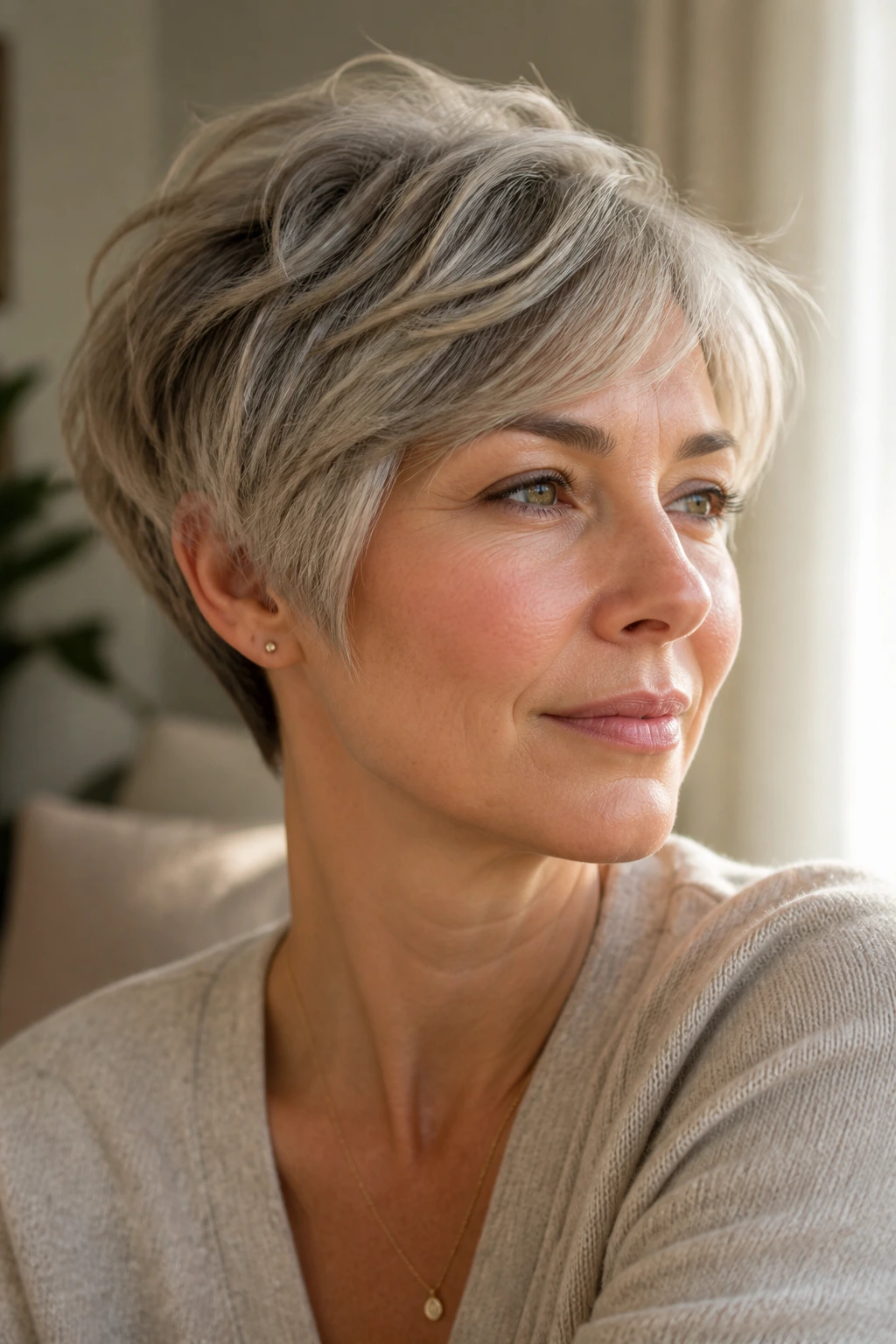
Feathering is a cutting technique that creates soft, sweeping layers that look like bird feathers. It is delicate and feminine, and it is a fantastic way to handle fine hair without making it look overly choppy or harsh. It creates a soft halo of hair around the head.
The beauty of the feathered look is that it doesn’t require precise styling. Because the layers are cut to be soft and overlapping, you can achieve a great look just by running your fingers through your hair with a dab of light mousse. It is an “undone” style that looks like it took much more effort than it actually did.
If you have a rounder face, the feathered pixie is particularly flattering. The soft edges balance out the curves of the face, whereas a sharper, blunter cut might emphasize them. It provides a gentle aesthetic that is very forgiving on the hair and the face.
9. The Razored Edges Pixie
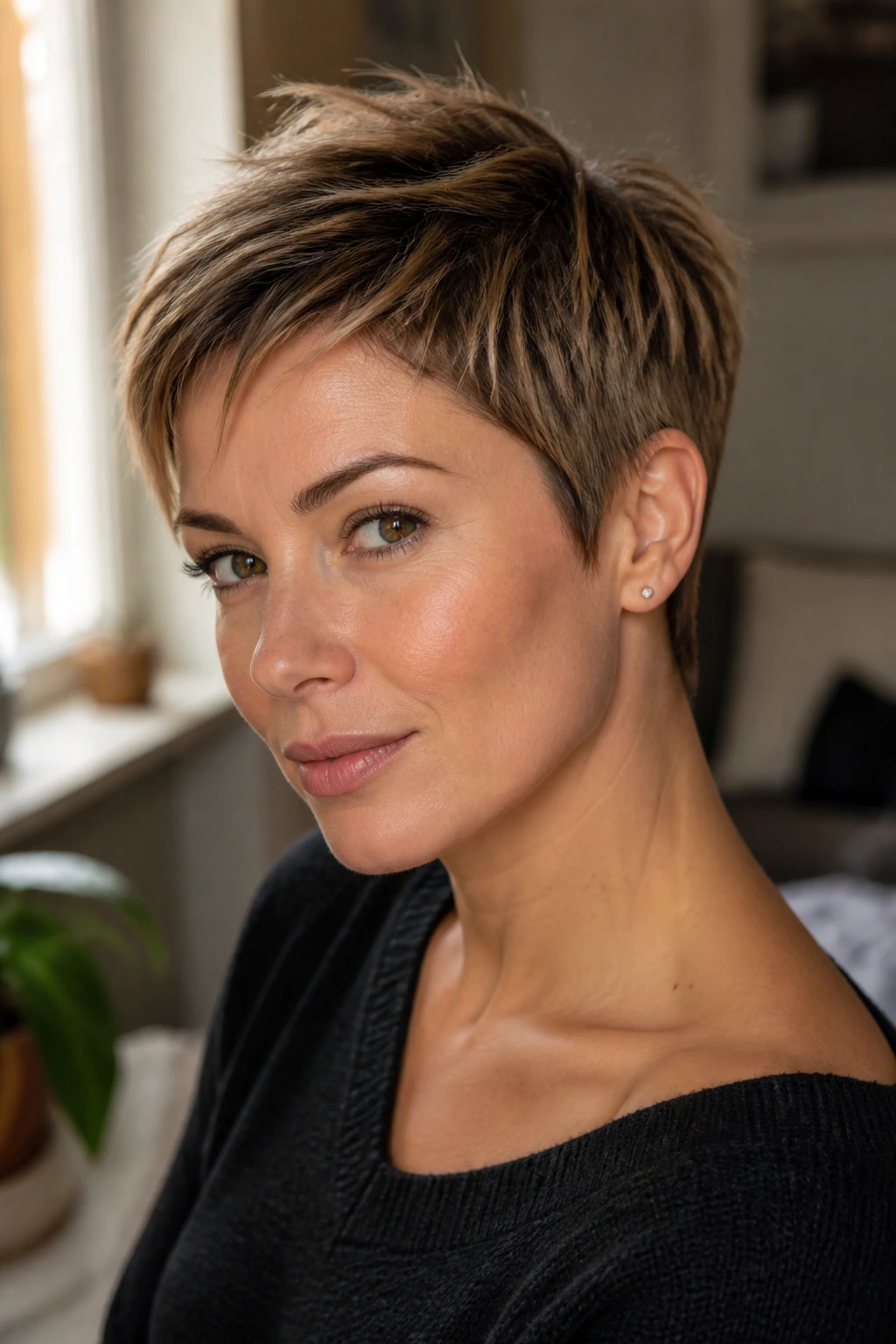
Razor cutting is the secret weapon for fine hair. While scissors create a clean, blunt line, a razor creates a tapered, soft edge. When you use a razor on the ends of fine hair, it creates a variation in length that makes the ends look much fuller and less “wispy.”
The Precision of the Razor
A skilled stylist can use a razor to remove weight internally, which encourages the hair to lift. It effectively creates a “nest” at the roots that supports the rest of the hair. This is the opposite of thinning shears, which simply remove hair. A razor reshapes the hair.
Managing the Texture
Because razor-cut hair can be prone to frizz if you have any natural wave or coarseness (even fine hair can have a bit of coarseness), it is crucial to use a smoothing cream before blow-drying. This keeps the razor-cut edges looking deliberate and sleek, rather than frayed. It is a look that feels modern, edgy, and intentionally curated.
10. The Stacked Back Pixie
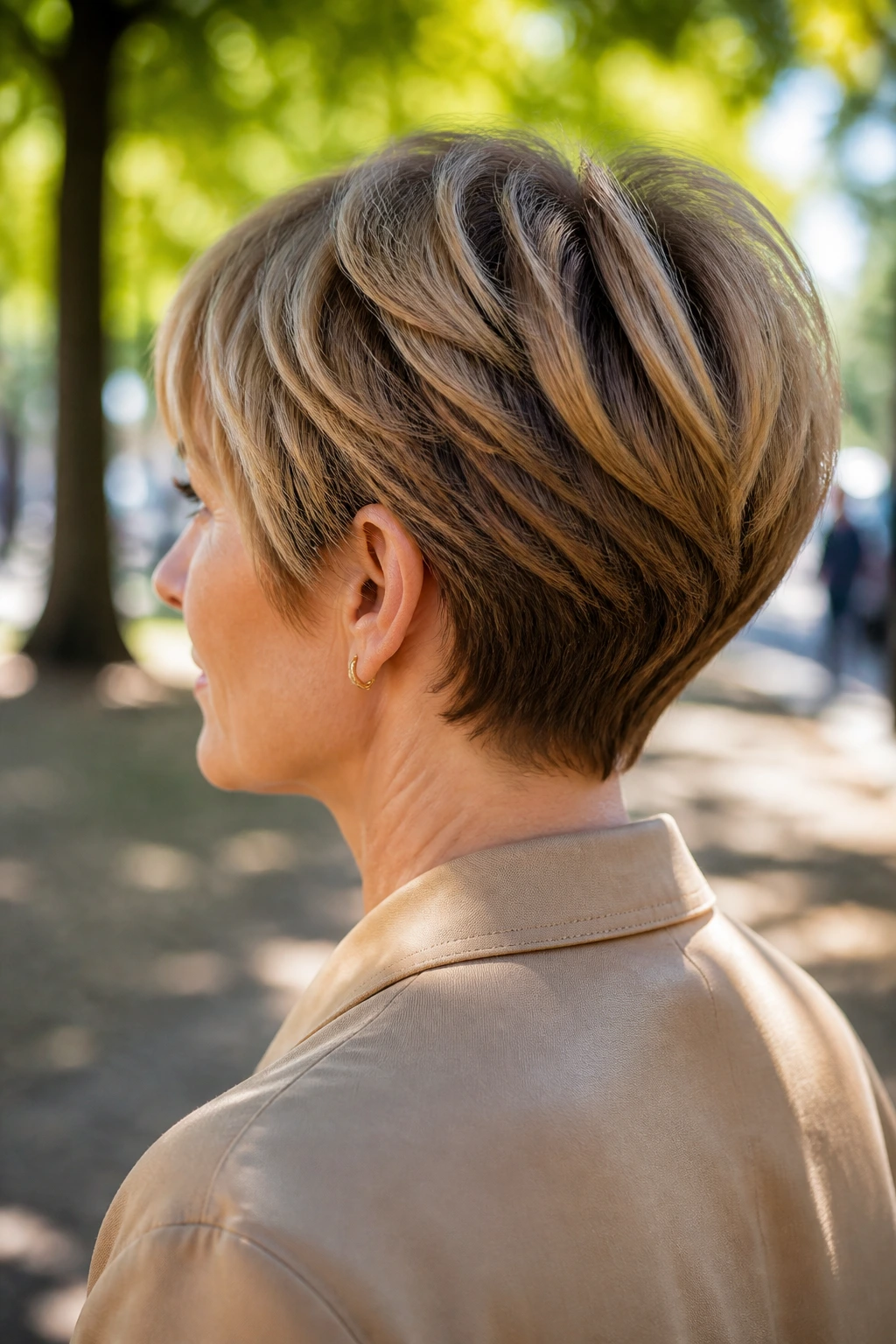
If you struggle with hair that is flat at the crown and refuses to stand up, the stacked back is your solution. This cut involves creating very short, graduated layers at the nape of the neck, which “stack” up to create a rounded, voluminous shape at the back of the head.
This is all about optical illusion. By building that density at the occipital bone (the curve at the back of your head), you create a profile that looks like it has much more volume than it actually does. It is like putting a push-up bra on the back of your head—it gives everything a lift.
To maintain this, you need to make sure the stylist isn’t cutting the “stack” too high. If the graduation starts too high up, it can look outdated, like a bowl cut. The goal is to keep the weight focused at the lower-middle part of the head, allowing the top to be shorter and lighter. It creates a beautifully rounded silhouette that requires very little daily effort.
11. The Messy Bedhead Pixie
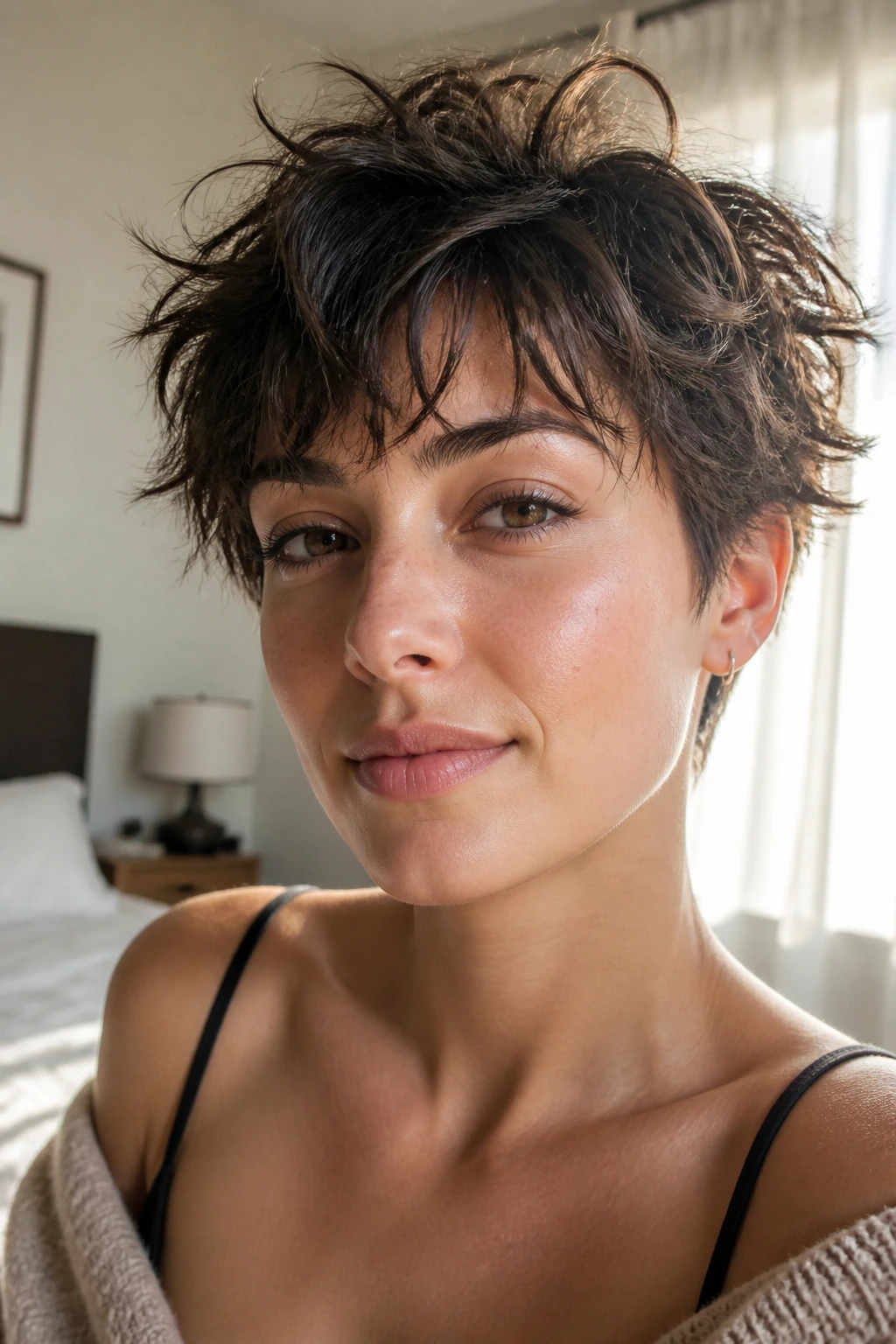
Sometimes, the best way to handle fine hair is to stop trying to make it behave. The “bedhead” look is intentional. It relies on texture, grit, and a bit of purposeful disarray. It is the look of someone who just rolled out of bed and looked effortlessly cool, even if you spent five minutes styling it.
The key to this style is a sea salt spray or a dry texturizing paste. Fine hair needs “stickiness” to hold a style. Clean, slippery hair is the enemy of volume. This style works best on second-day hair, or hair that has been treated with a spray to make it feel slightly thicker and coarser.
Start by rough-drying your hair with a blow dryer, using your fingers instead of a brush. Once it is 80% dry, work a small amount of paste into your hands and scrunch it into the ends. Don’t worry about symmetry. Don’t worry about neatness. The point is the chaos. It makes thin hair look like a deliberate design choice.
12. The Tapered Pixie with Volume
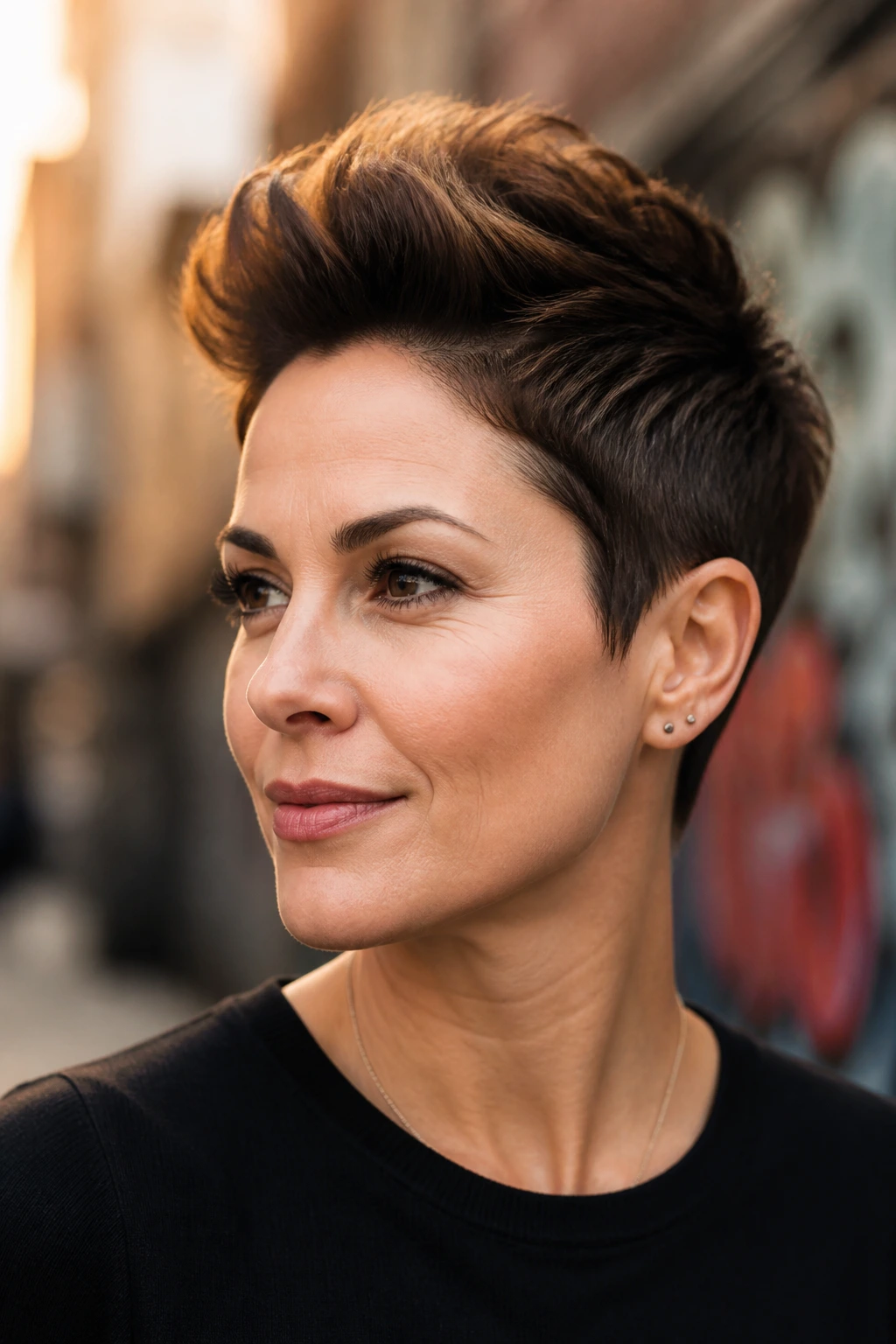
A tapered pixie means the sides and back are cut very short, getting progressively longer as you move toward the crown. This tapering effect is visually slimming and draws the eye upward, which is exactly where you want the focus to be when you have fine hair.
When the sides are kept tight, the top section—which is left longer—has more freedom to be styled with volume. You can use a round brush or your fingers to push the hair up and back, creating a pompadour-inspired look that is classic and incredibly flattering.
This style is excellent for highlighting your cheekbones. By keeping the sides sleek, you clear the way for your face to take center stage. If you have a round or square face shape, the added height on top elongates your features, providing a beautiful, balanced aesthetic that works for almost any age.
13. The Shaggy Pixie
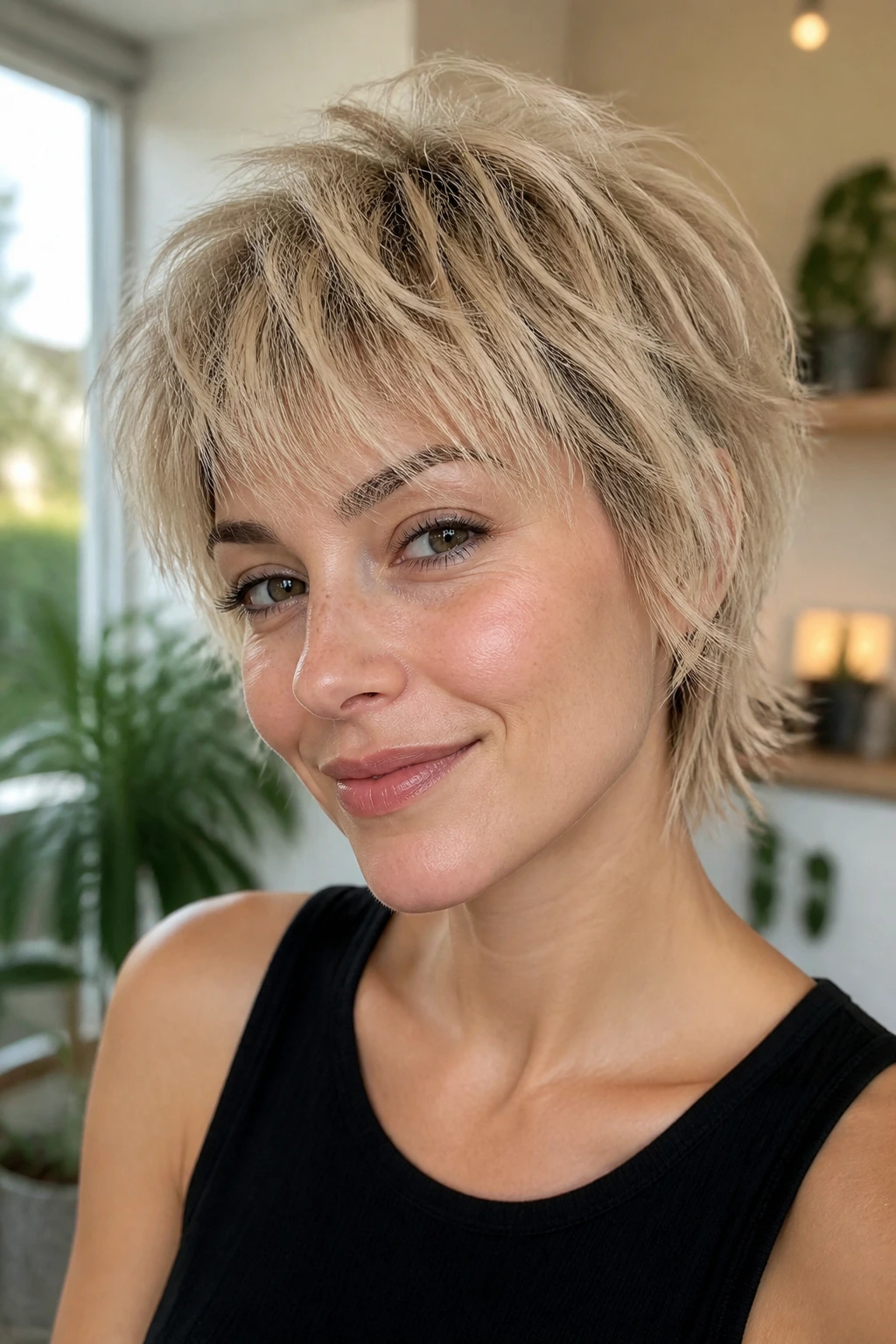
The shaggy pixie is a modern, slightly longer version of the classic pixie. It incorporates longer, wispy layers around the ears and the neck, giving it a soft, fringe-heavy look that feels like a micro-shag. It is perfect for those who want a shorter cut but aren’t ready to let go of having hair around their face.
Because it has more length, it allows you to utilize more products for volume. You can work mousse into the roots while damp, and then use a diffuser to dry the hair, which helps enhance any natural movement. Even if your hair is dead straight, the length allows for some “tousle” that you can’t achieve with a shorter, tighter cut.
This is a great transitional cut. If you are growing out a longer style but want to cut off the damage, the shaggy pixie allows you to do so while keeping a bit of that “frame” you are used to. It feels bohemian, relaxed, and incredibly chic.
14. The Piecey Fringe Pixie
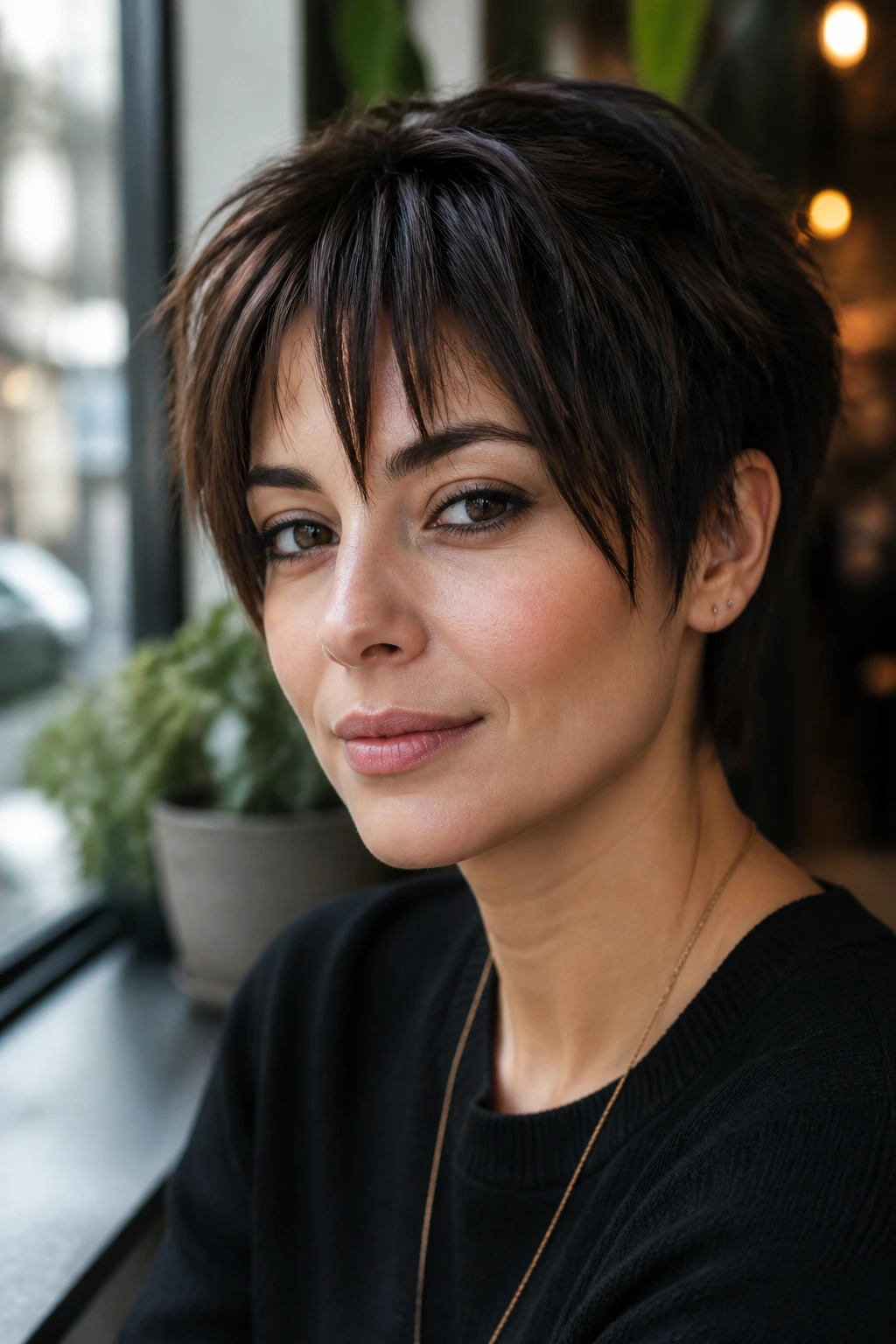
For many, the hair around the face is the most important part of the haircut. The piecey fringe pixie focuses entirely on the bangs. By keeping the bangs long and heavily texturized, you create a focal point that masks the overall density of the hair on the crown.
The fringe should be cut into “pieces,” not a solid block. A solid block of bangs on fine hair will look see-through and thin very quickly. By cutting the fringe into distinct sections—using the tips of the scissors to cut into the ends—you create a “shattered” look that feels thick and intentional.
This style works exceptionally well with glasses, as the fringe creates a playful interaction with the frames. It is a youthful, fun look that is easy to style—you just need a bit of pomade to define the individual pieces of the bangs, and the rest of the hair can be kept simple and clean.
15. The Slicked Back Pixie
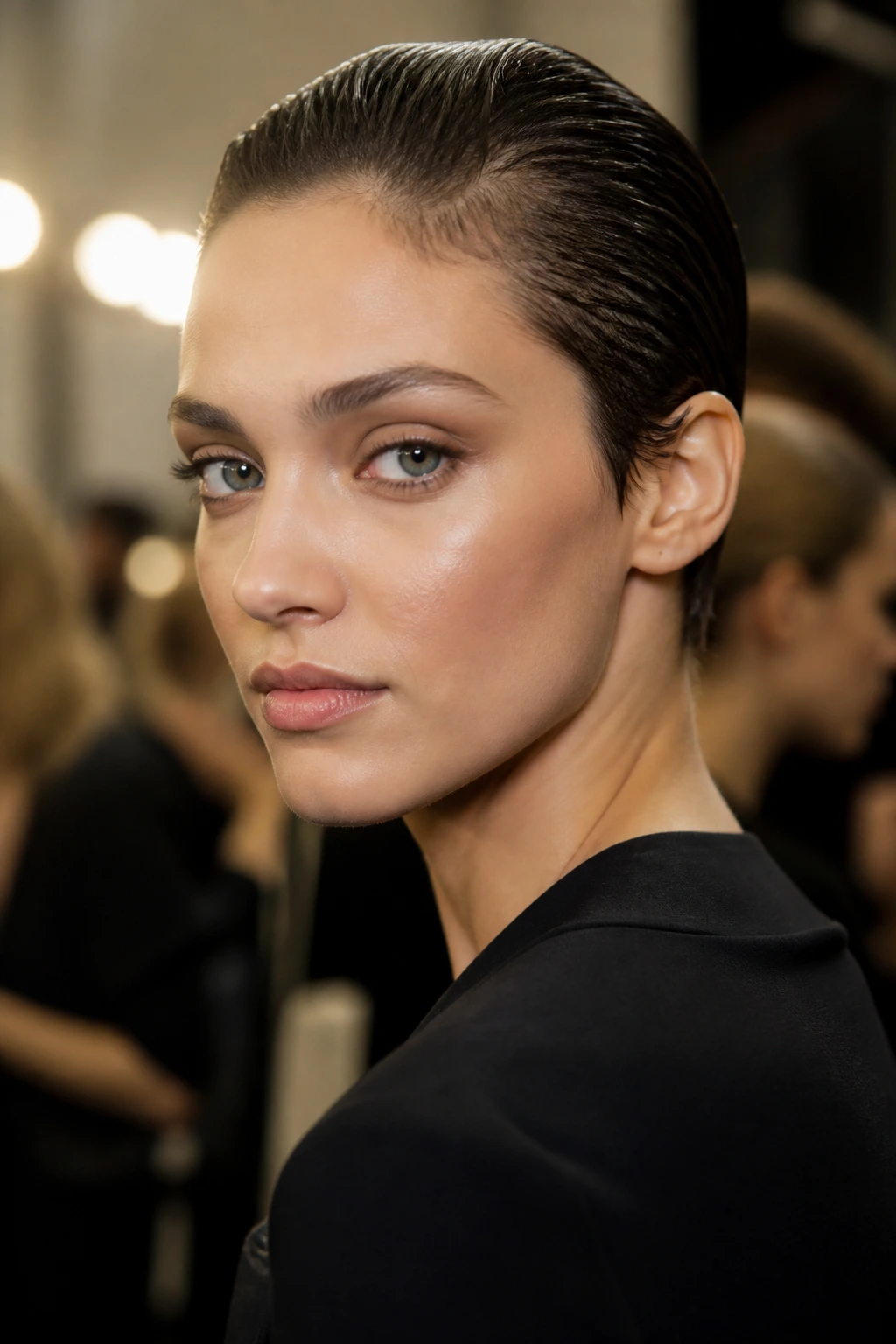
When you have an event, or you just want to look incredibly polished, the slicked-back pixie is the answer. This is not for every day, perhaps, but it is a masterclass in using your hair texture to your advantage. Fine hair, when slicked, looks purposeful and high-fashion rather than oily.
To achieve this, use a strong-hold pomade or a gel with a matte finish. Apply it while the hair is damp, and comb it straight back or to one side. The key is to keep the roots flat and the ends tucked in. It creates a very sleek, sophisticated silhouette.
This is the ultimate confidence cut. It leaves nothing to hide behind. It is powerful, minimalist, and striking. If you have strong, expressive features, this is a look that will make you feel unstoppable. It also requires zero “styling” in the sense of heat, so it is a great break for your hair if you typically use blow dryers and irons.
16. The Soft Blunt Pixie
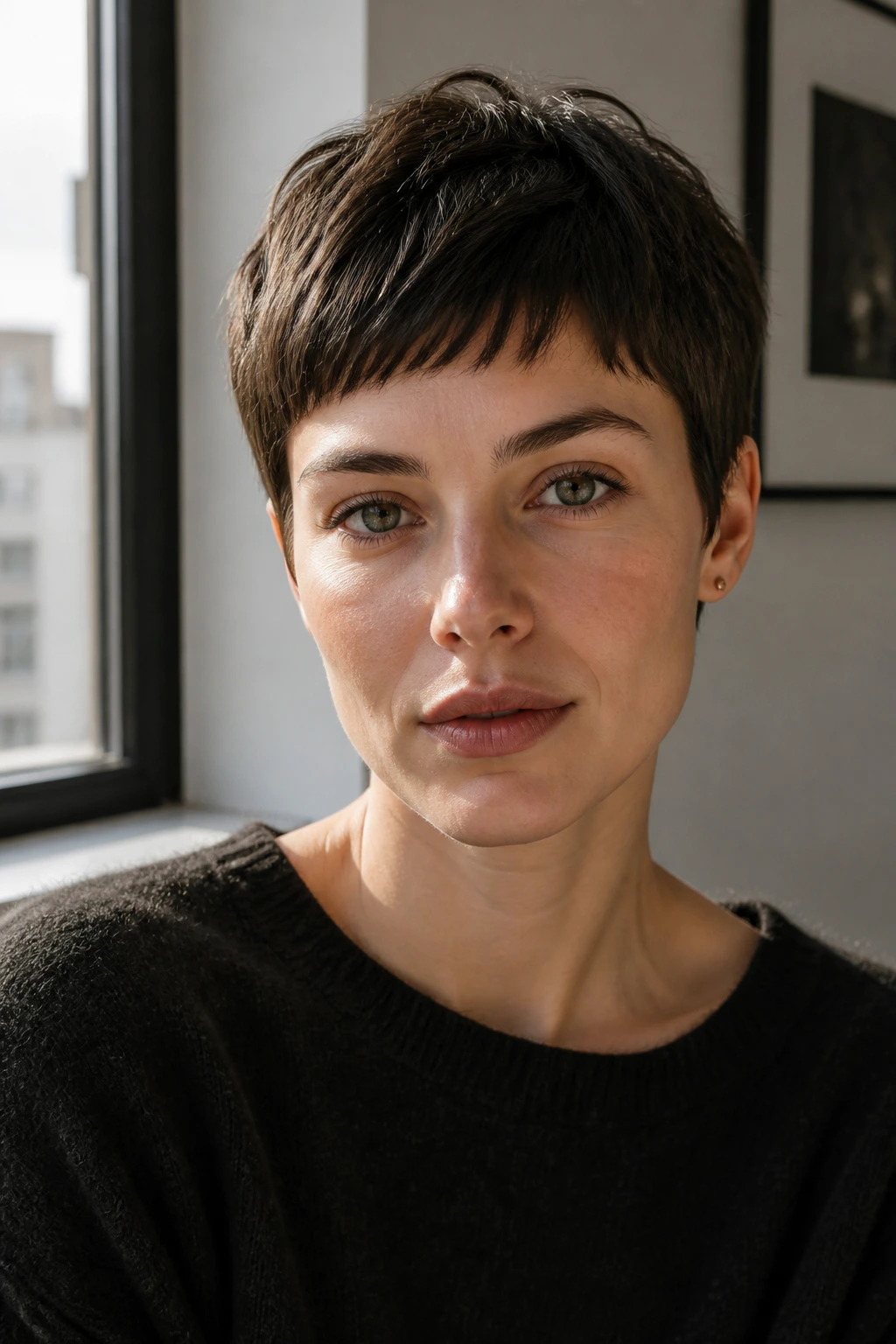
If you prefer a cleaner, more geometric look, the soft blunt pixie is a fantastic option. While blunt cuts are often avoided for fine hair, a soft blunt cut creates a dense perimeter that makes the ends of the hair look thicker. It is the difference between a ragged, thin edge and a clean, sharp line.
The stylist should cut the perimeter straight across, but then perform a light “point cut” on the very edges to soften the line so it isn’t too severe. This creates a solid line of density at the ends, which is a great trick for making fine hair appear more substantial.
This look is very French-inspired—understated, elegant, and minimal. It pairs beautifully with a simple outfit. It requires a bit more maintenance in terms of trims, because as soon as it grows out, that blunt line loses its sharpness, but the result is a classic look that never goes out of style.
17. The Brushed Forward Pixie
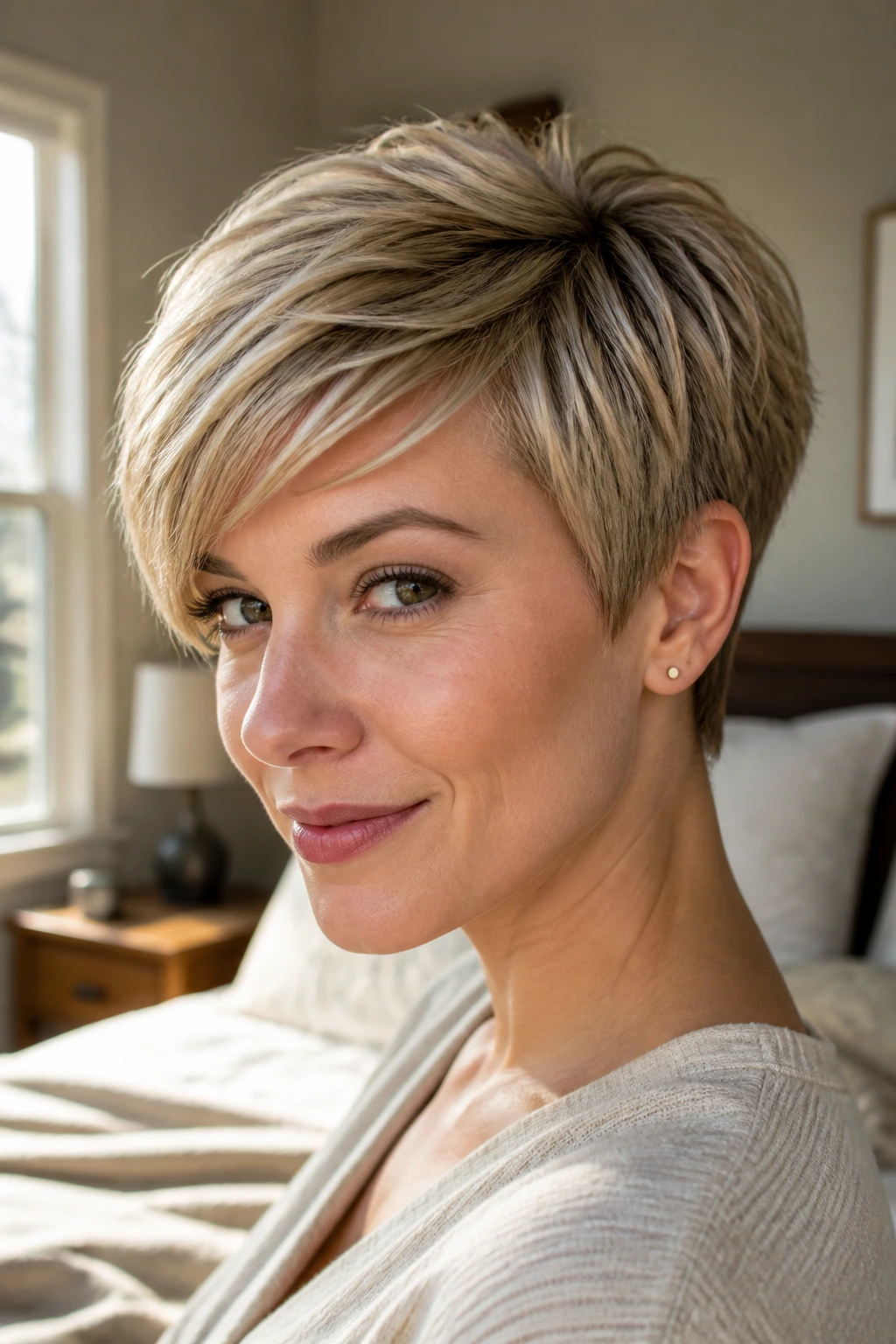
The “French girl” pixie often involves brushing the hair forward, toward the face, rather than back or to the side. This allows the hair to fall in a soft, natural way. It covers the forehead and softens the face, which is very helpful if you have a high forehead or want to minimize your face shape.
This style is about ease. You don’t need a round brush. You don’t need to spend 20 minutes with a hairdryer. You wash your hair, add a bit of light texturizing cream, and comb it forward. The hair falls into place naturally.
This style also highlights the nape of the neck beautifully. Because the hair is brushed forward, the back remains clean and exposed. It is a delicate, feminine look that defies the notion that short hair has to be “spiky” or “hard.” It is soft, approachable, and very chic.
18. The Two-Tone Pixie
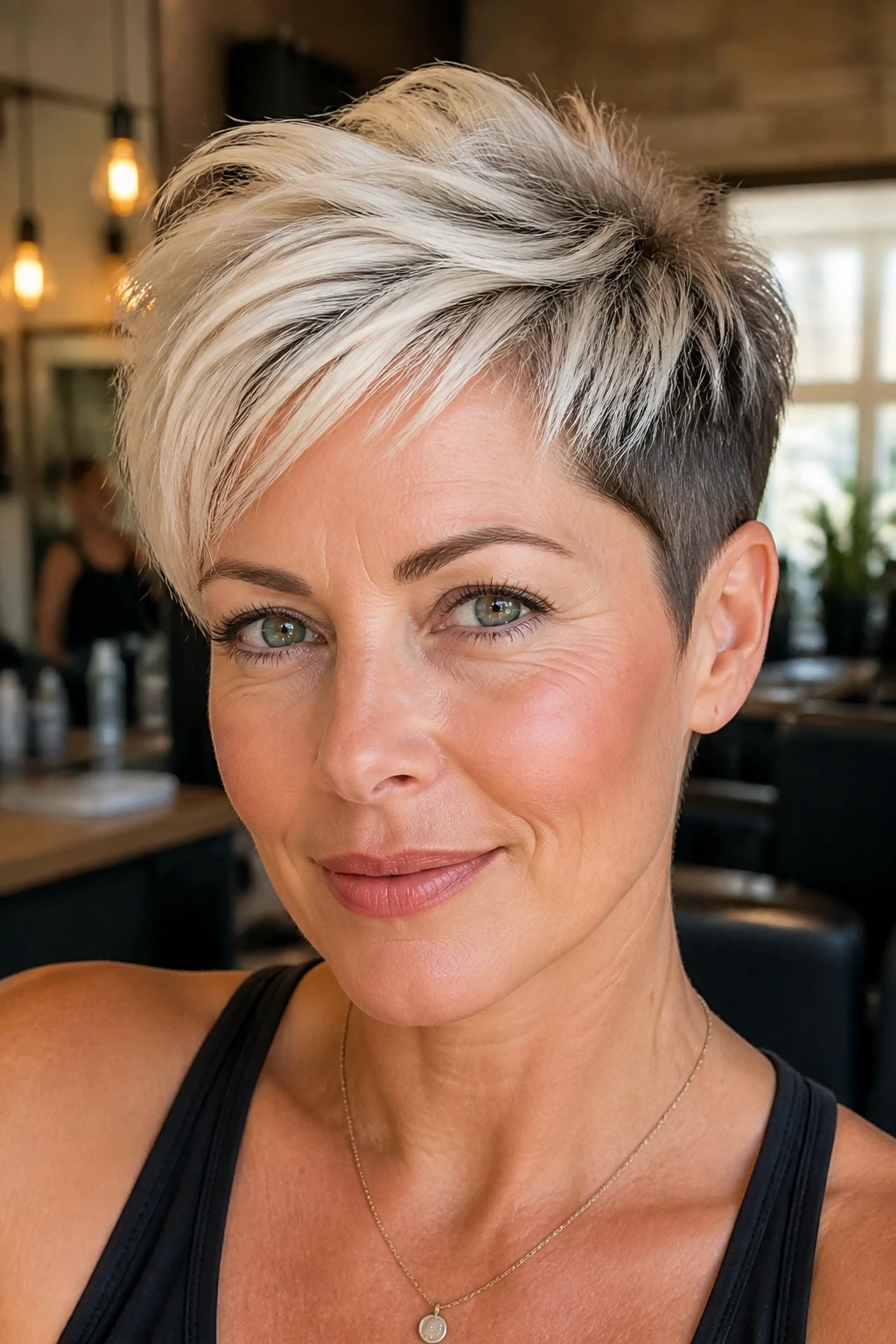
Sometimes, the solution for fine hair is color, not just the cut. A two-tone pixie—where the sides are a darker shade and the top is lighter, or vice-versa—creates an optical illusion of depth. When you have a solid color, your hair looks flat. When you have contrast, your hair looks dimensional.
Placement is key. If you are naturally dark, adding subtle, lighter highlights to the top section of your pixie will make it appear as though there is more volume and movement. The color variation catches the light and creates shadows, which are the visual cues we associate with thick, healthy hair.
This is a commitment, obviously, but it is one that pays off. The visual texture provided by the color can make a simple pixie look complex and expensive. Just be sure to use color-safe shampoos and conditioners to keep the hues vibrant, as dull color will work against the “volume” effect you are trying to create.
19. The Angled Pixie
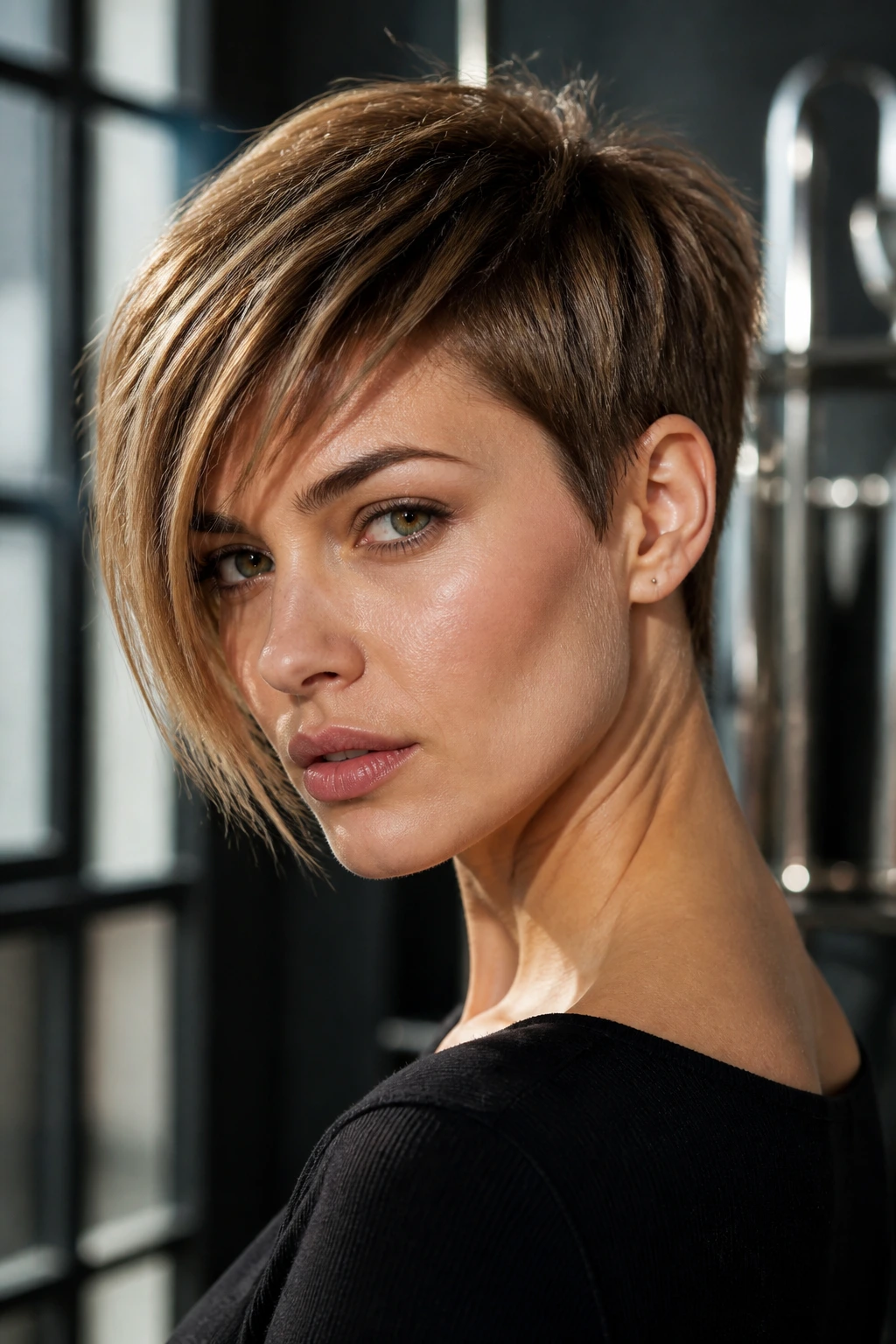
An angled pixie is cut on a diagonal, with the hair longer on one side and shorter on the other, but the angle is more extreme than the standard asymmetrical cut. It is a very deliberate, architectural shape. It provides a sharp, edgy look that feels very intentional.
The angle draws the eye across the face rather than down, which helps to create the illusion of width and volume on the crown. It is a fantastic choice if you want a look that is a little more “fashion-forward” and less “classic pixie.”
This style requires a bit of daily styling to ensure the angle stays crisp. You will want to use a flat iron on the longer side to smooth it down and ensure the lines of the cut are visible. It is a polished, sophisticated look that is perfect for professional settings where you want to project confidence and precision.
20. The Texturized Curly Pixie
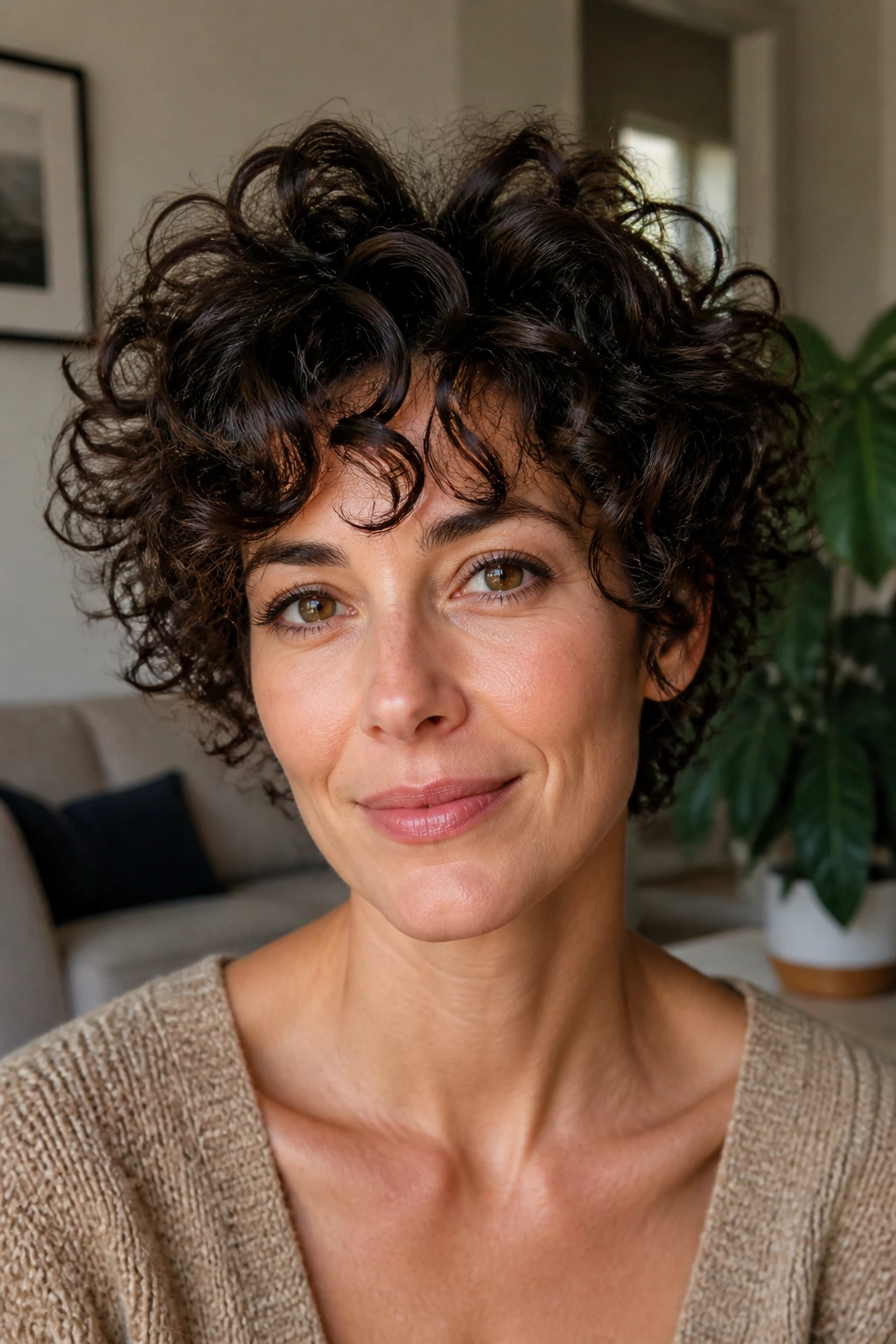
If your fine hair has even a hint of a bend or a wave, stop straightening it. The texturized curly pixie is designed to embrace that wave. Even fine, straight-ish hair can often be encouraged to hold a wave with the right product. By cutting the hair to a length that allows the natural pattern to form, you create incredible volume.
Use a diffuser attachment on your hairdryer. This is non-negotiable. If you try to blow dry fine, wavy hair with a standard nozzle, you will blow the curl right out and turn it into frizz. A diffuser circulates the air gently, allowing the hair to clump into waves without disturbing them.
This style creates a “halo” of hair that is inherently voluminous. It is the most “effortless” style on this list because it works with your hair’s natural inclination rather than fighting against it. When you stop fighting your texture and start supporting it, you will be amazed at how much “more” hair you actually have.
Final Thoughts
The decision to go short is liberating, but it is also a process of learning a new relationship with your hair. You are not just changing your look; you are changing your routine. Fine hair is actually quite cooperative once you stop trying to make it act like thick, heavy hair. It dries quickly, it styles easily, and it holds shape beautifully if you use the right, lightweight products.
Do not be afraid of the scissors. The most damaging thing you can do to fine hair is to cling to length that isn’t serving you. If your hair is currently hanging limp and flat, it is begging for a change. Find a stylist who understands texture cutting—someone who knows how to use thinning shears, razors, or point-cutting techniques—and show them a picture of the style you gravitate toward.
Remember, a haircut is temporary. If you hate it, it grows back. But you might just find that once you experience the lift, the volume, and the ease of a great pixie, you will never look back. The right cut turns fine hair from a source of frustration into your best accessory.
