



Fine hair often feels like a constant battle against gravity. You spend your mornings trying to tease, spray, and coax volume into existence, only to have it collapse by midday. It’s frustrating to deal with hair that clings to your scalp, showing off every pore and oil slick while refusing to hold a style. For a long time, the common advice for fine hair was to keep it one length to avoid wispy ends, but that is actually a myth. The right pixie cut is the ultimate equalizer. It removes the weight that pulls fine hair down, uses clever layering to create the illusion of density, and shifts the focus to your features rather than the texture of your strands.
Getting a pixie cut when your hair is fine requires a different approach than if you had thick, coarse hair. You aren’t just looking for a “short” style; you are looking for architectural structure. A good pixie on fine hair works like a scaffolding system, using shorter pieces underneath to prop up longer, textured pieces on top. Once you cross the bridge from “long and limp” to “short and structured,” you will realize that you don’t actually have bad hair—you just had the wrong shape.
1. Classic Textured Pixie
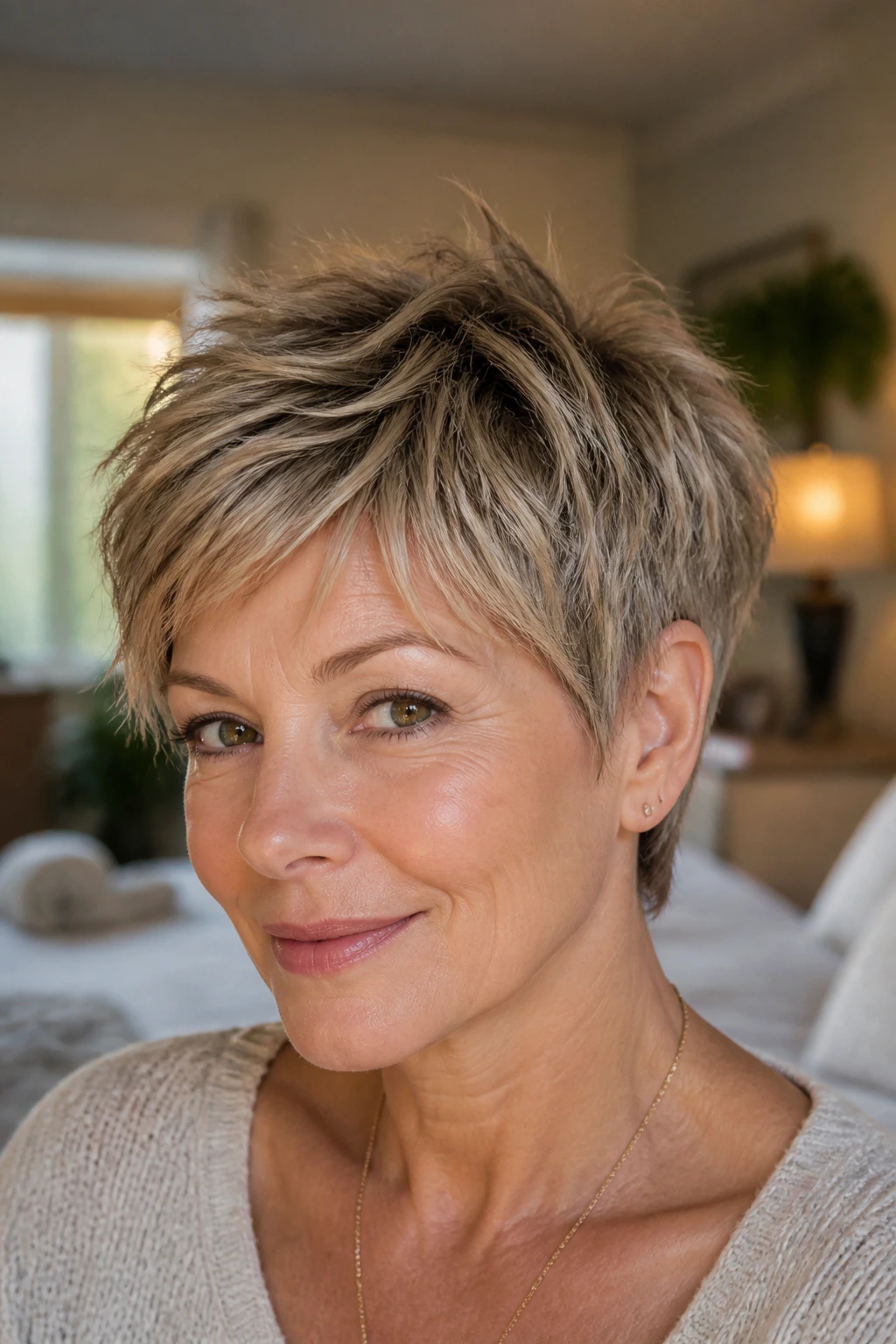
The classic textured pixie is your gateway into short hair. It relies on point-cutting, a technique where the stylist cuts into the ends of the hair rather than straight across, to soften the edges. For fine hair, this is essential. Blunt lines make thin hair look thinner because they create a sharp, distinct outline where you can count every strand. Softened, point-cut ends blend together, making the hair look fuller and less sparse.
Why It Works for Fine Texture
The secret here is the movement. Because the ends aren’t blunt, the hair doesn’t just sit there. It has enough separation to catch the light differently, which creates visual volume. You don’t need to pile on the product either. A light sea salt spray or a mousse applied to damp hair before blow-drying is enough to keep it from falling flat.
Pro Tip: Never use a heavy pomade on a textured pixie. You want grit, not grease. Look for a dry texturizing spray to add “stiffness” to the strands so they stay lifted.
2. Choppy Layered Pixie
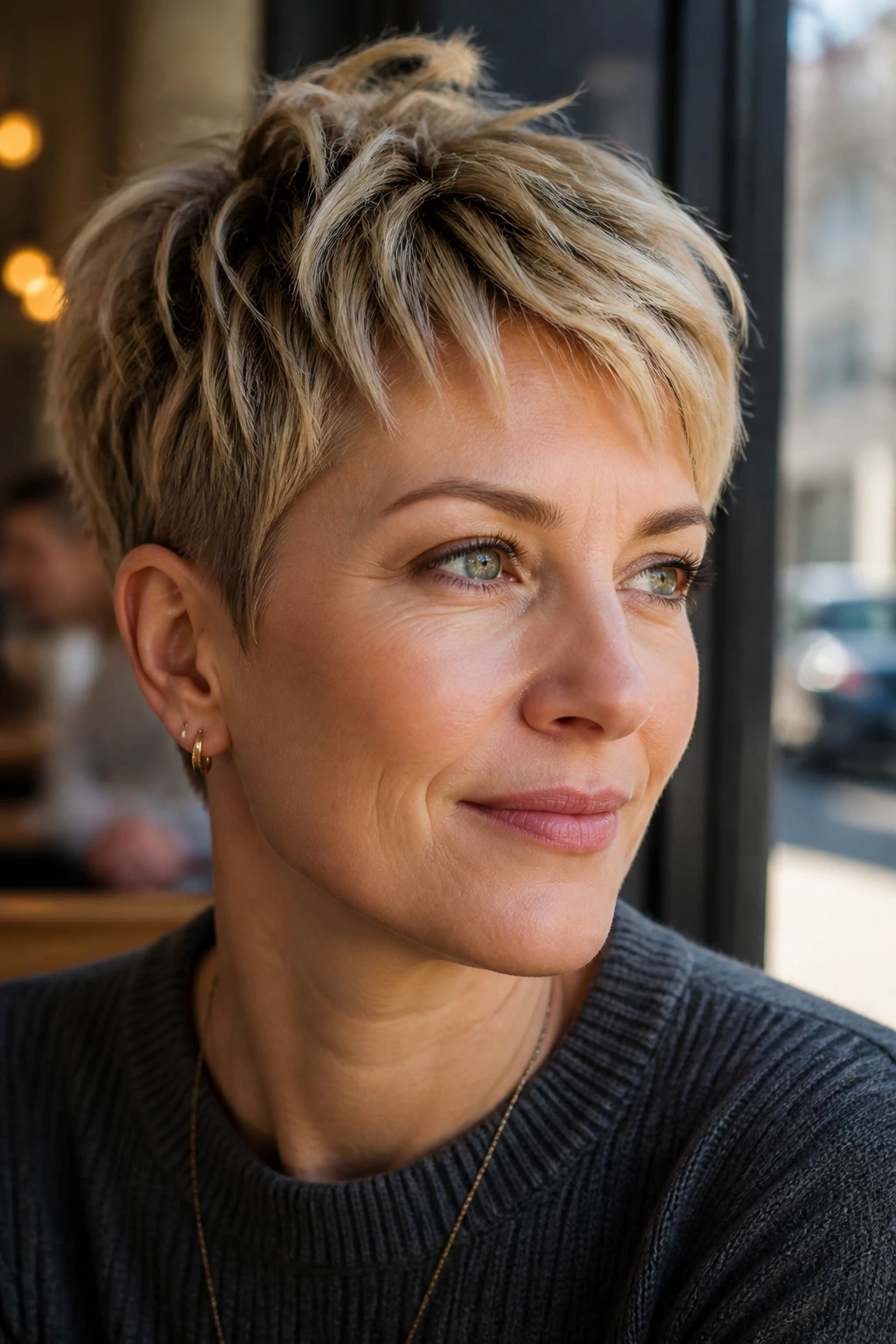
If you want something a bit bolder, go for a choppy layered cut. This style is all about creating distinct layers of varying lengths, usually focused at the crown. By having shorter layers buried beneath slightly longer ones, you create a literal support system for your hair. Think of it like a deck of cards where the bottom ones are propping up the top ones.
You should ask your stylist for “internal layering.” This is not about thinning your hair out—never let them use thinning shears if you have fine hair, as it will make it look stringy—but rather about removing weight from specific sections to encourage the hair to stand up. The goal is a bedhead, lived-in aesthetic that looks intentional rather than accidental.
3. Side-Swept Pixie
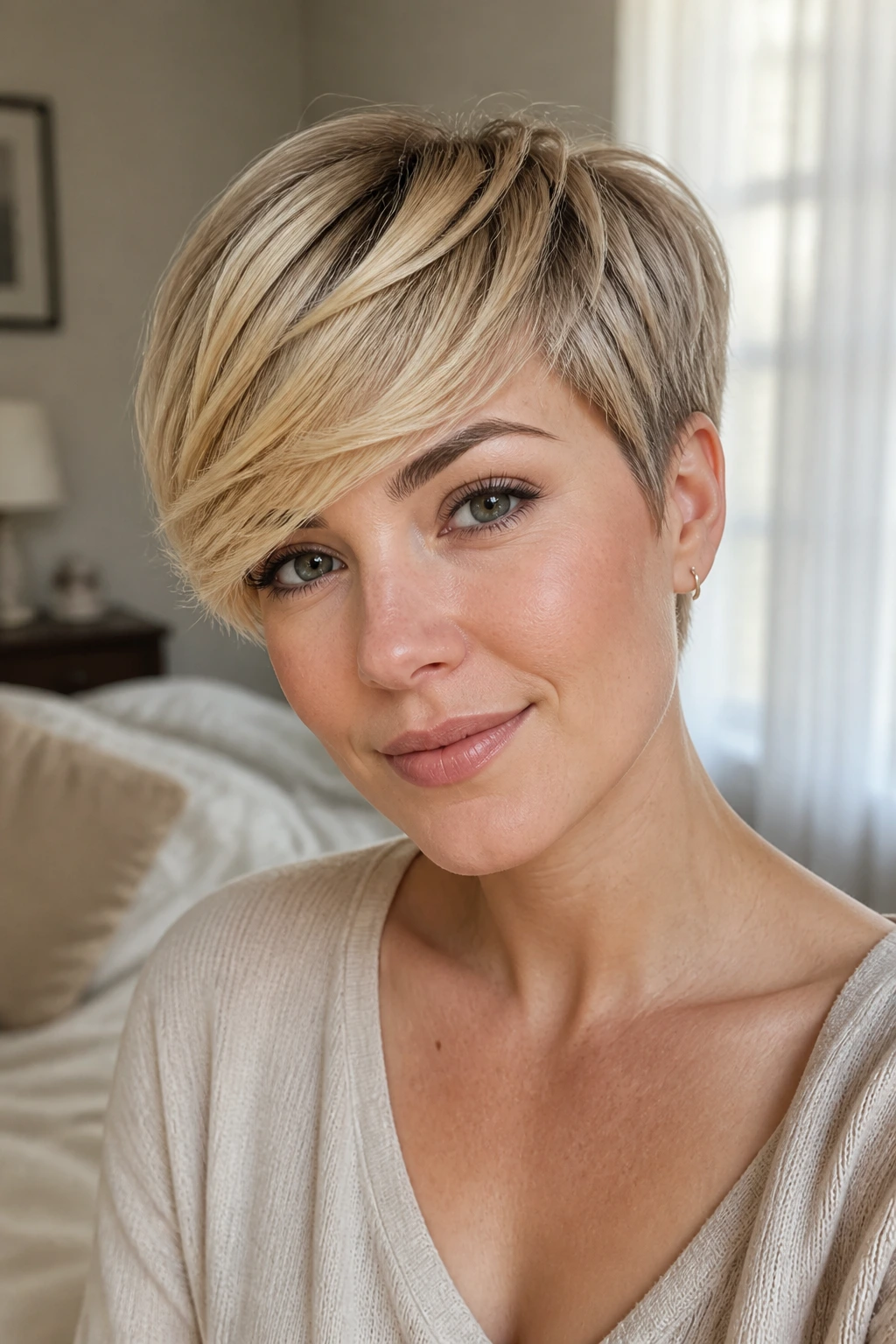
A side-swept pixie is perfect if you are nervous about exposing your forehead or feel like your face shape needs more framing. By keeping the hair on one side longer and swooping it across your brow, you create a focal point that draws attention to your eyes. This style feels feminine and soft, and it hides the fact that your hair might be lacking density in the crown.
How to Style the Sweep
- Start with clean, damp hair.
- Apply a volumizing mousse at the roots, especially where you plan to create the part.
- Blow-dry the hair forward toward your face to build volume at the root.
- Once dry, use a flat iron to give the sweep a gentle bend.
- Finish with a medium-hold hairspray.
Warning: Do not use heavy oils on the swept section, or it will stick to your forehead and look greasy by noon.
4. Disconnected Undercut Pixie
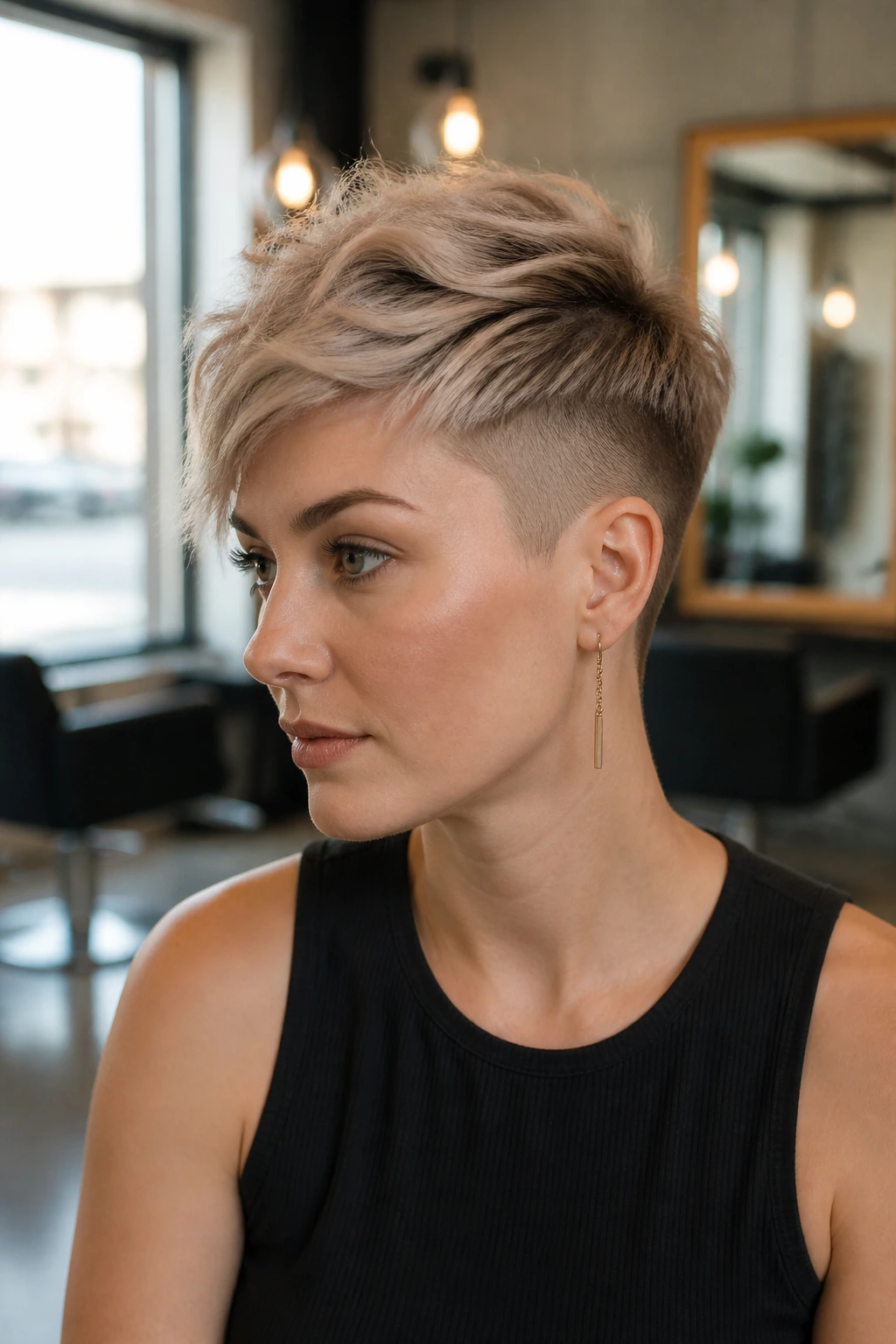
This is for those who want to commit to the short look fully. An undercut means the back and sides are clipped very short—sometimes down to a number two or three guard—while the top is left significantly longer. This contrast is a game-changer for fine hair. By removing the hair at the nape and sides, you eliminate the areas that usually go limp first.
When the sides are extremely short, the hair on top has nowhere to go but up. It creates a natural quiff effect. You can style the top forward, messy, or slicked back. It is arguably the lowest-maintenance style on this list because the “bad hair days” are essentially shaved off.
5. Soft Asymmetrical Pixie
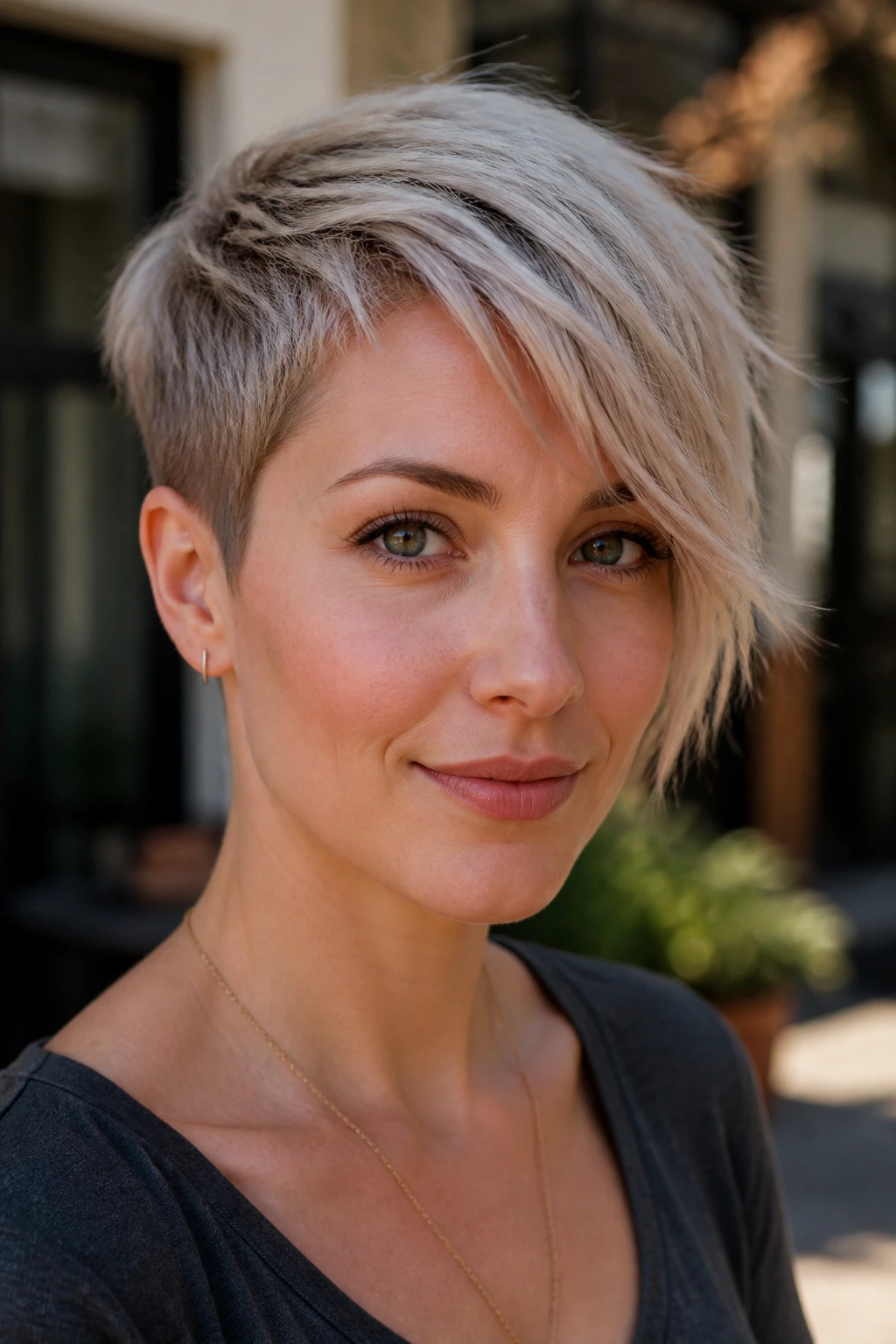
Asymmetry is a fantastic visual trick. By cutting one side shorter than the other, you create an unbalanced line that the eye finds intriguing. It moves the focus away from the volume of your hair and onto the shape of the cut itself. This works wonders for fine hair because it makes the style look purposefully edgy, rather than just thin.
The key is to keep the longer side soft and feathered. If the longer side is cut bluntly, it will just hang down like a curtain and emphasize the lack of volume. Keep it piecey. Use a wax-based clay to pull out individual strands, making the hair look thicker and more styled than it actually is.
6. Spiky Pixie
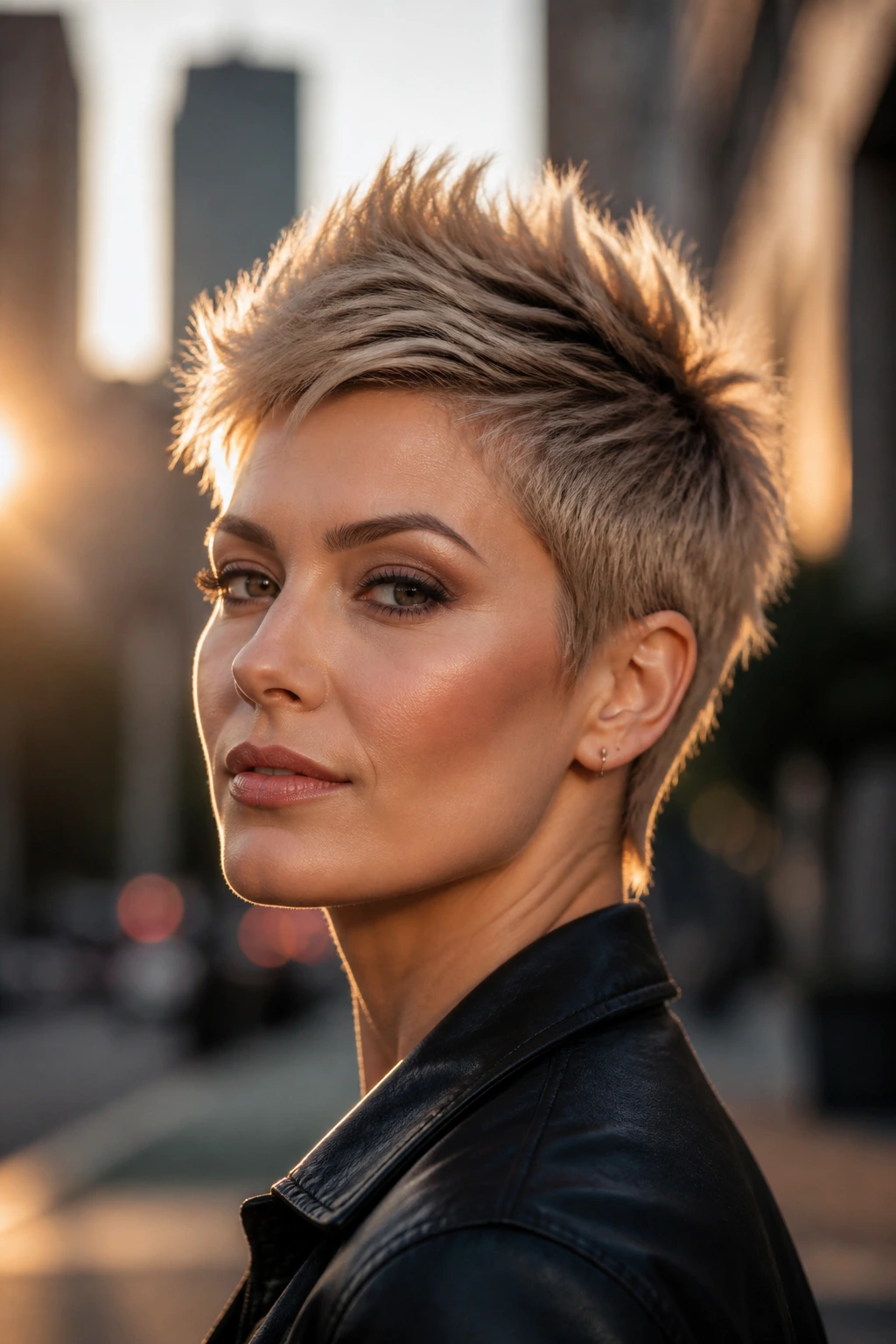
We often associate “spiky” with the 90s, but a modern spiky pixie is far more refined. It is all about height at the crown. With fine hair, you are always fighting gravity; this cut leans into that fight by pushing everything toward the sky. It is the most “volume-forward” cut you can choose.
The trick is to keep the sides tight but the top jagged. You need a high-hold product here—a paste or a fiber cream. Rub a small amount between your fingertips until it turns warm and clear, then work it into the roots. Pull upward rather than pushing down.
7. Tapered Nape Pixie
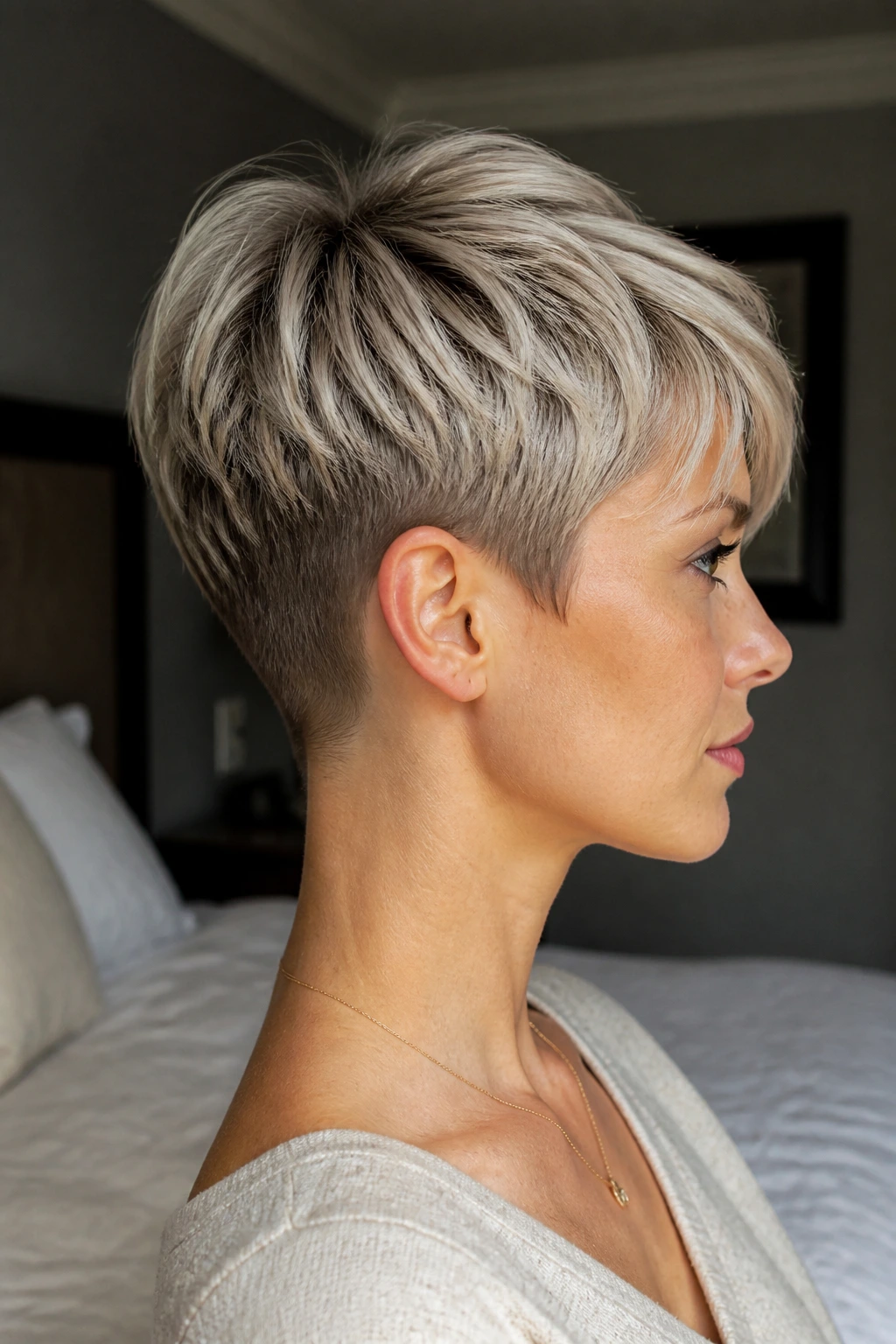
A tapered nape means the hair gradually gets shorter as it travels down toward the neckline, finishing in a very close crop. This is a polished, sophisticated look that is incredibly flattering on all face shapes. For fine-haired individuals, a clean nape makes the overall silhouette look much more deliberate and “done.”
The Maintenance Factor
Because the neckline is tapered, it will show growth faster than other cuts. You will need to visit the salon every four to six weeks to keep that taper sharp. If you let it grow out, the fine hair at the back will start to mullet-out, which is never a great look.
8. Feathered Pixie
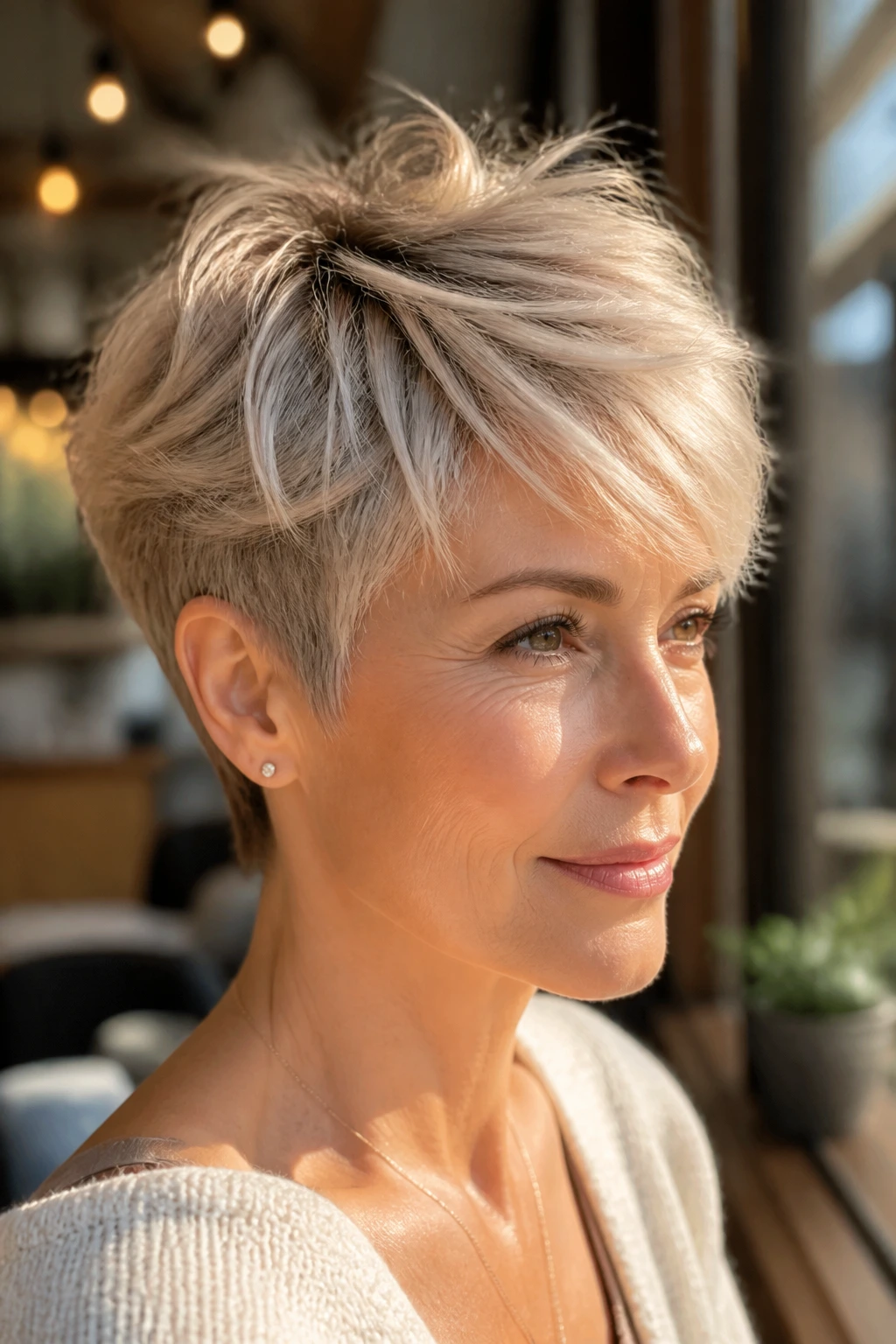
Feathering is a cutting technique that involves slicing into the hair to create a soft, wing-like effect. It gives the hair a natural bounce. Fine hair often likes to lie flat against the head; feathered layers force the hair to layer over itself, creating a stack of volume that persists throughout the day.
This style pairs beautifully with lighter hair colors, like blonde or light brown, because the highlights can emphasize the feathered layers. If you have very dark fine hair, make sure your stylist is heavy on the texturizing; otherwise, the layers might just disappear into the depth of the color.
9. Razored Pixie
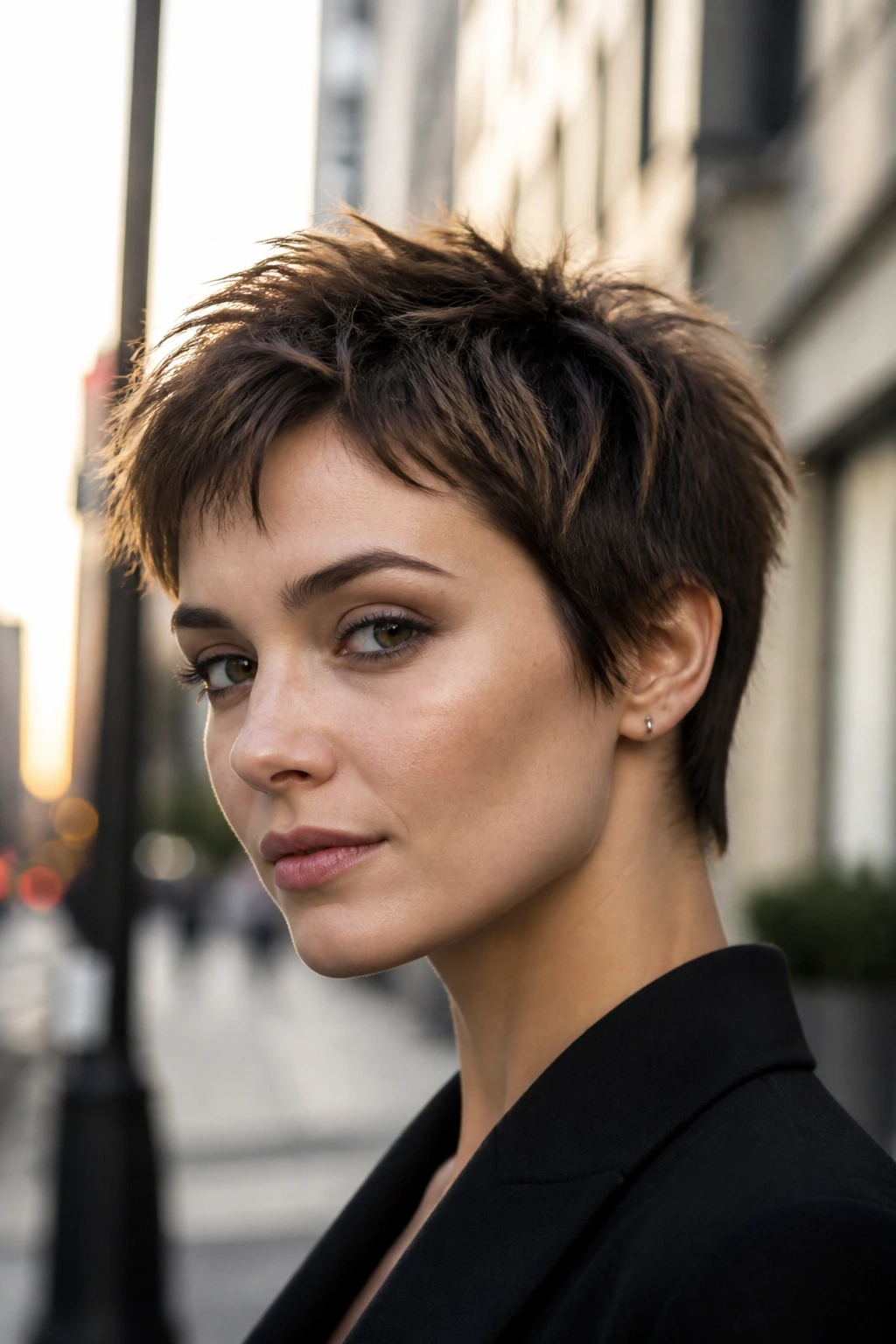
Using a razor instead of scissors creates a unique texture that shears cannot replicate. It creates a “shattered” effect at the ends of the hair, which is excellent for fine hair because it removes the bulk while adding texture. Razor-cut hair tends to be more pliable and easier to mold.
However, proceed with caution: you need a skilled stylist for this. If the razor is dull or the technique is aggressive, it can cause split ends in fine hair. When done correctly, the ends look lived-in and piecey, and the hair has an almost airy, weightless quality.
10. Blunt Micro Pixie
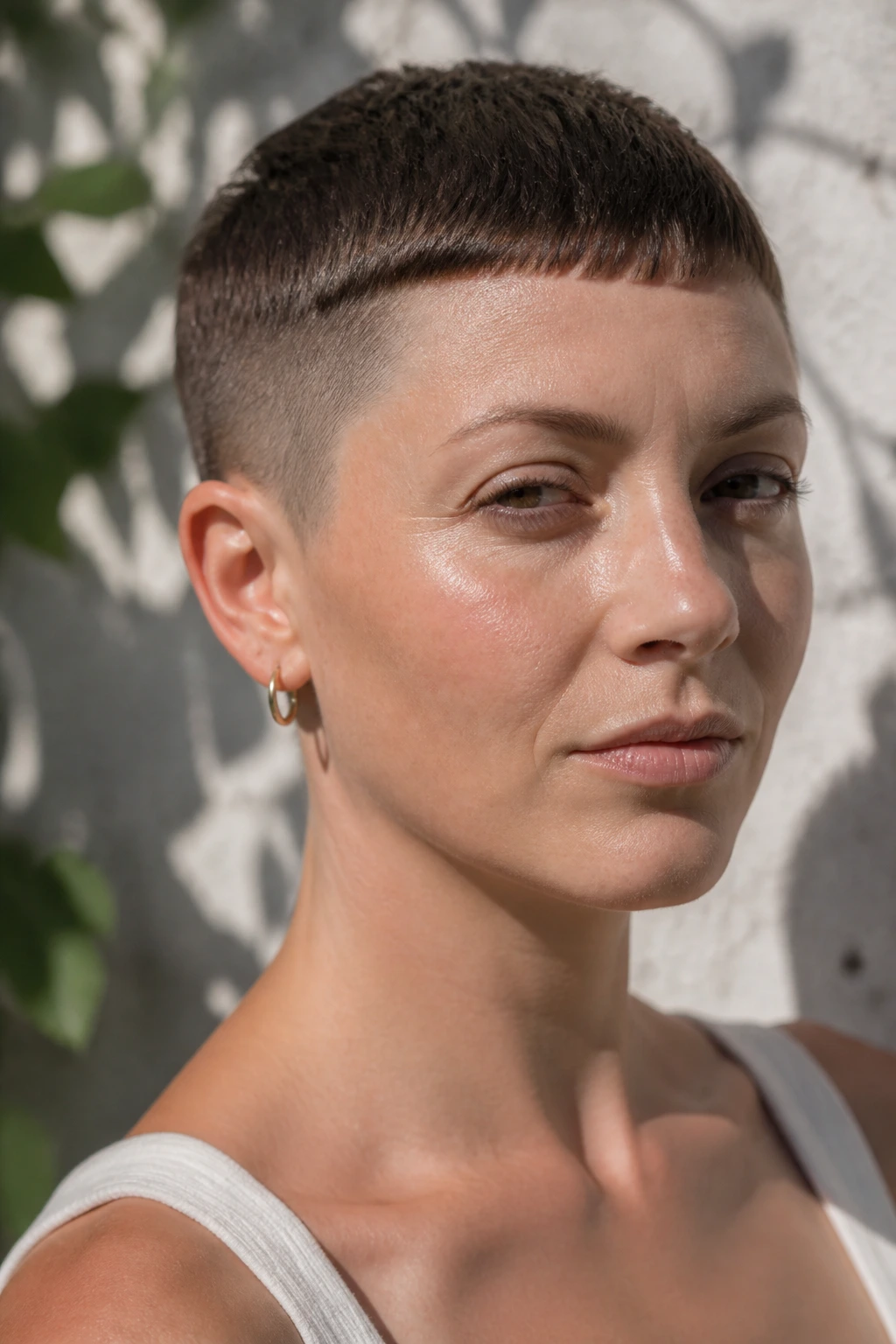
Sometimes, the best way to handle fine hair is to go extremely short. A micro pixie is essentially a buzz cut with just a bit of length on top. By stripping away all the length, you remove the possibility of the hair looking stringy. It is bold, confident, and requires zero styling time.
You might think that going this short makes fine hair look even thinner, but the opposite is true. When there is almost no hair, you don’t notice the thickness. You notice the shape of the head and the features of the face. It is the ultimate low-effort, high-impact style.
11. Shaggy Pixie Cut
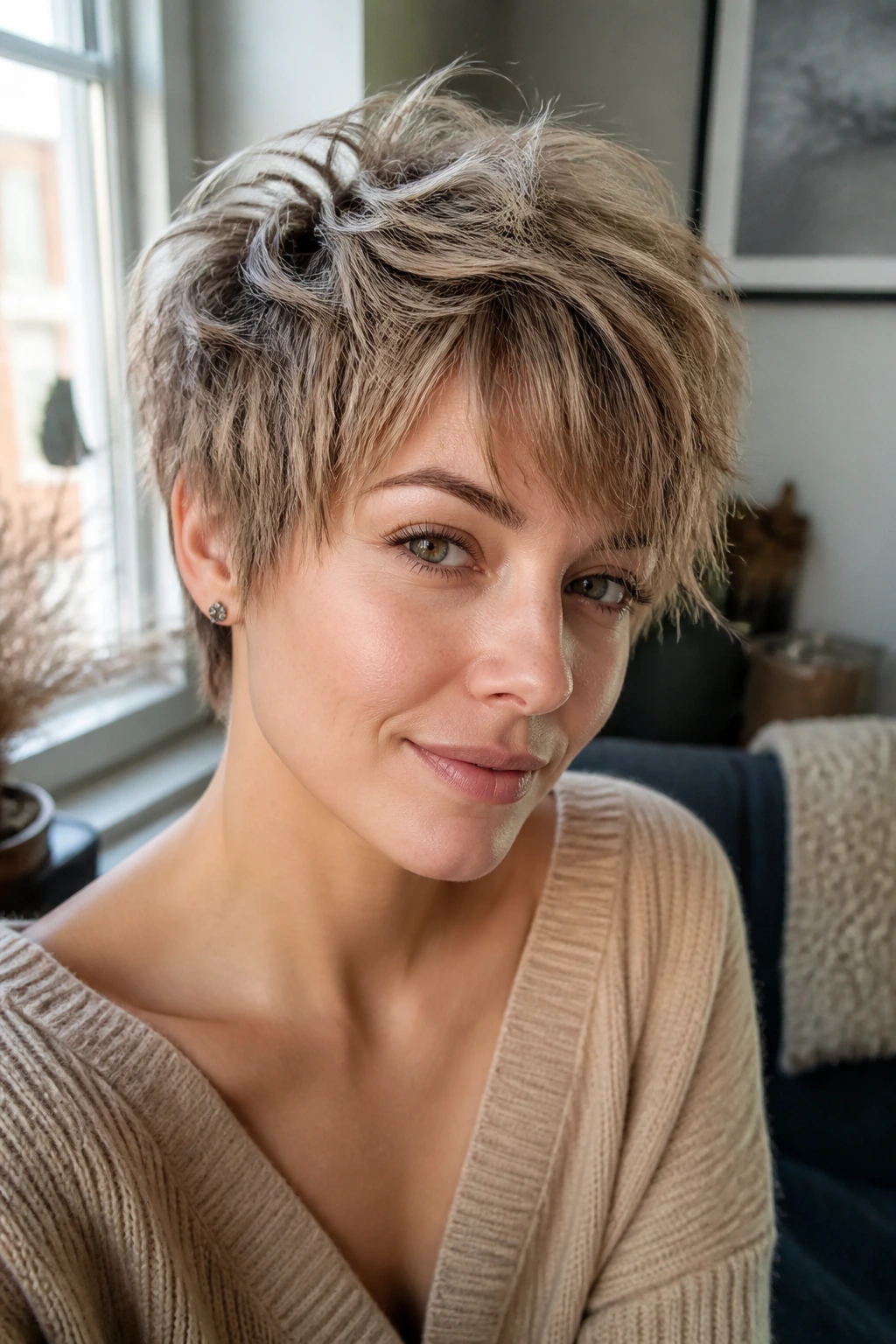
The shag has made a major comeback, and a “pixie-shag” is a hybrid that provides a lot of body. It involves messy, longer layers, usually with bangs or fringe. It is intentionally disheveled. For fine hair, the messy nature of the shag hides the fact that you might not have a ton of volume—it makes the mess look like a choice.
Use a sea salt spray to encourage the natural wave or straight-but-messy texture. The beauty of this cut is that it doesn’t need to be perfect. In fact, it looks better the second day, when your natural oils give it a bit more grip.
12. Pixie With Long Bangs
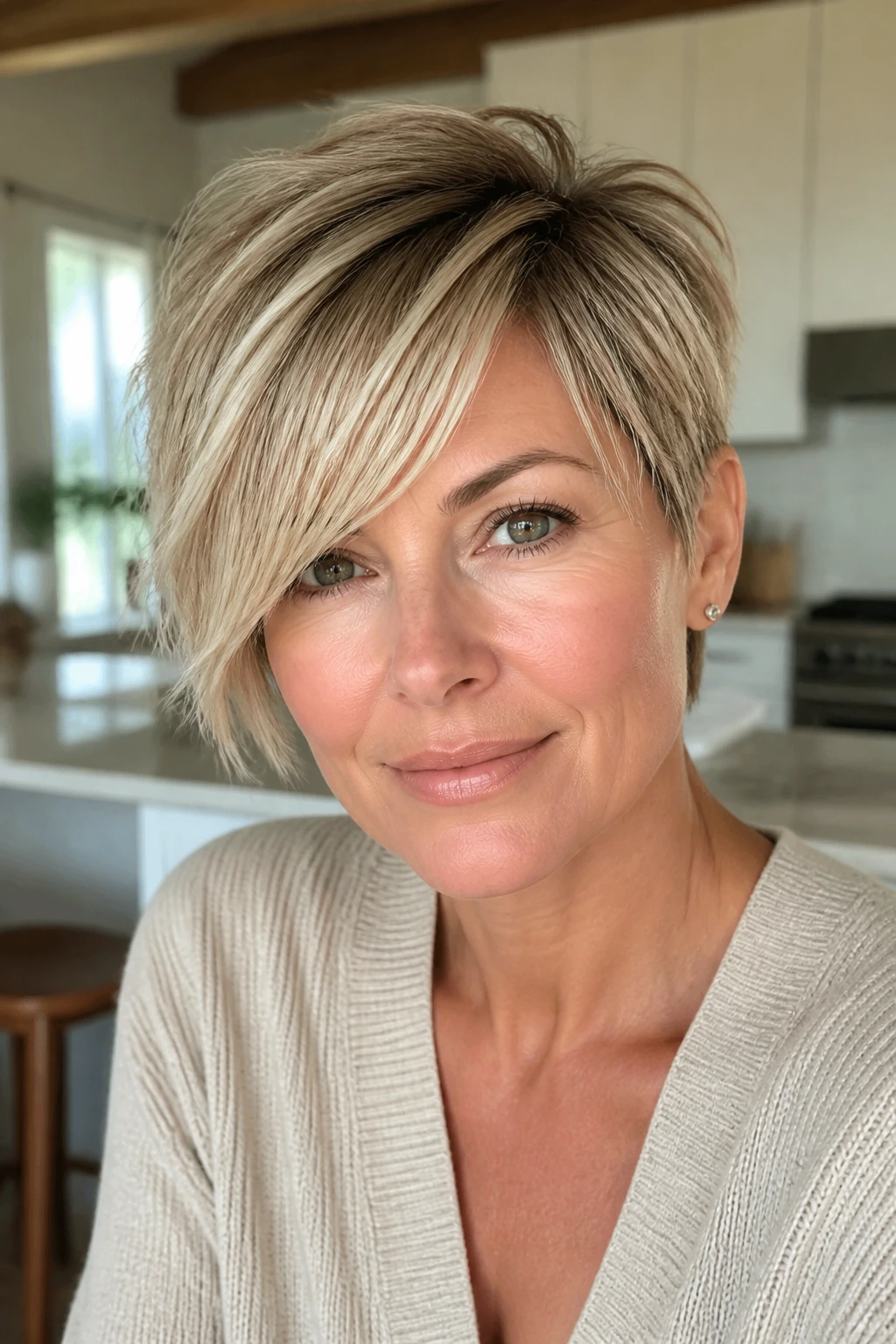
If you are struggling with a receding hairline or just feel uncomfortable with too much face exposure, adding long bangs to your pixie is the solution. The bangs act as a curtain that you can style in multiple ways—pushed to the side, worn straight down, or curled.
This adds a significant amount of weight to the front, which can be styled for volume. You can use a round brush to give the bangs a lift at the roots. It frames the face and provides a sense of security, making the transition to a very short haircut much easier to manage.
13. Undercut With Crown Volume
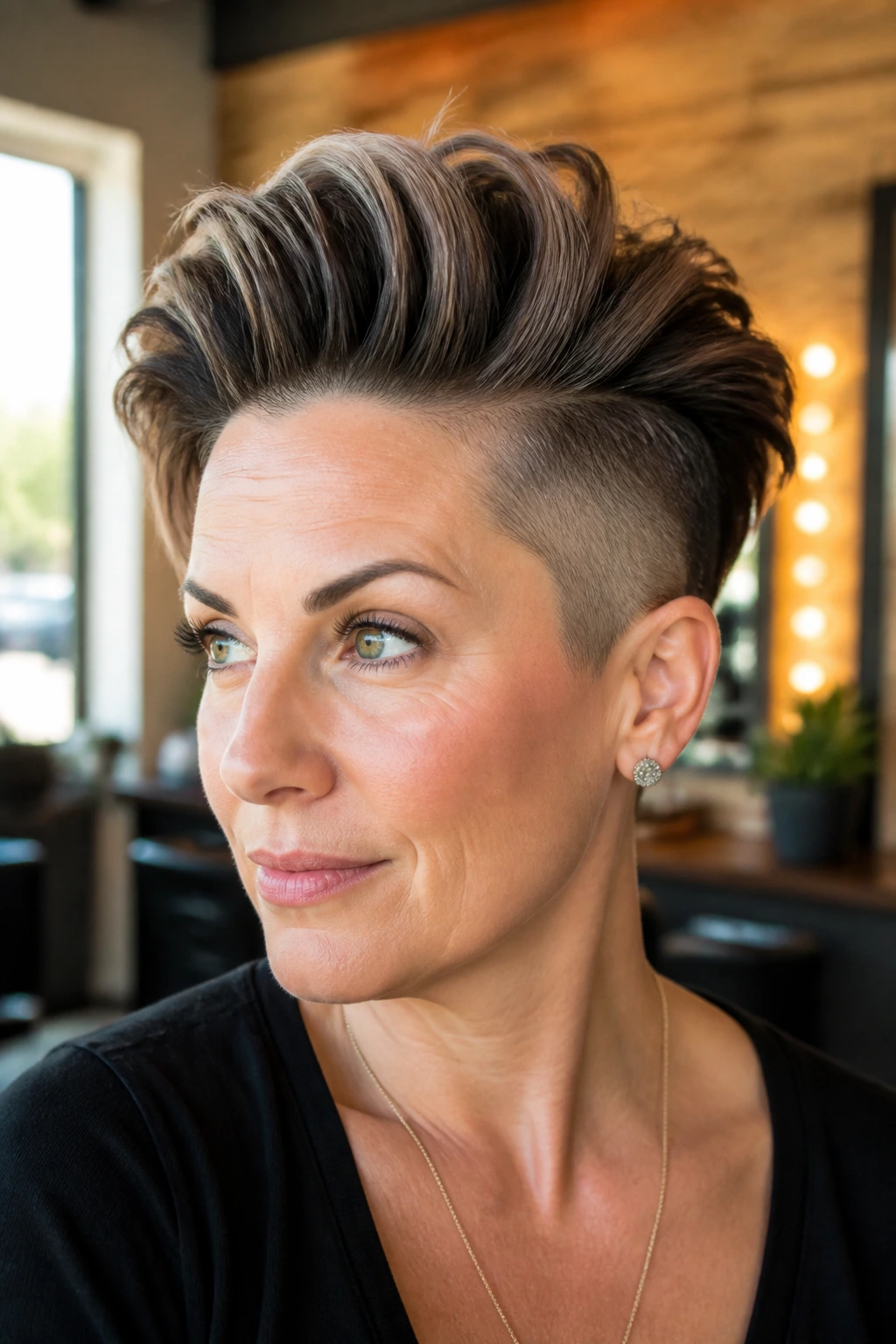
Focusing volume specifically at the crown is a classic trick for fine hair. This cut involves a fade or undercut on the sides, but the top is left long enough to brush up and back. The result is a profile that looks elongated and full.
Why This Style Succeeds
- It keeps the sides clean, so the hair doesn’t look messy.
- It maximizes the surface area at the top of the head.
- It works with cowlicks, which are common in fine hair.
Technique: When drying, use a small round brush specifically on the crown section. Lift the roots vertically, blast them with heat for ten seconds, and then hit them with the “cool” button on your dryer to lock that lift in place.
14. Wavy Texture Pixie
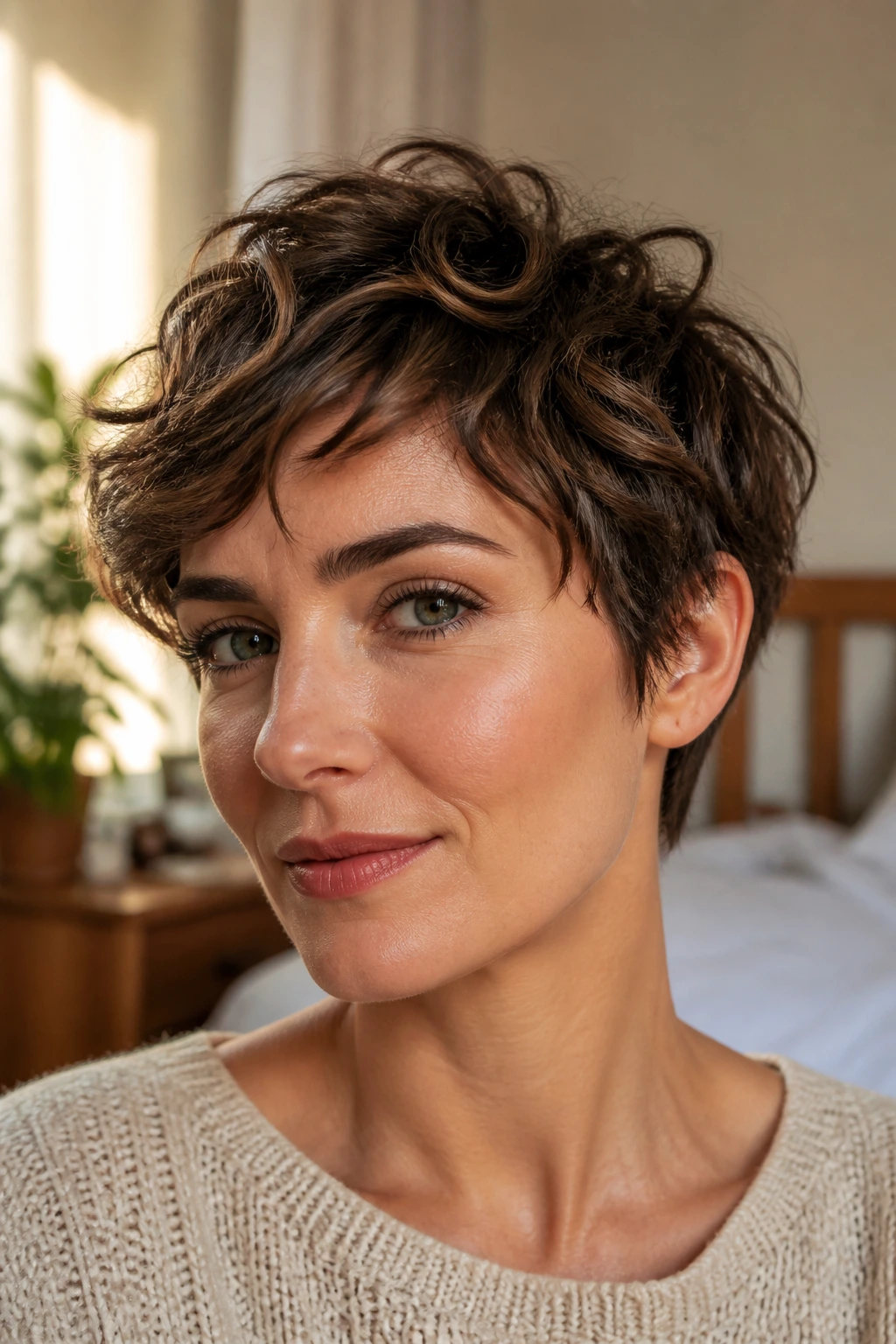
If you have fine hair that has a slight natural wave, do not fight it. A wavy pixie embraces the texture. The key is to cut the hair while it is dry, or at least account for how it will shrink when it dries. If you cut it too short, it might turn into a tight coil that you didn’t intend.
Let the waves create the volume. You will want to use a leave-in conditioner that is lightweight so the waves aren’t weighed down. Avoid creams and oils that are too heavy, as they will cause the waves to lose their bounce and fall straight.
15. Piecey Pixie
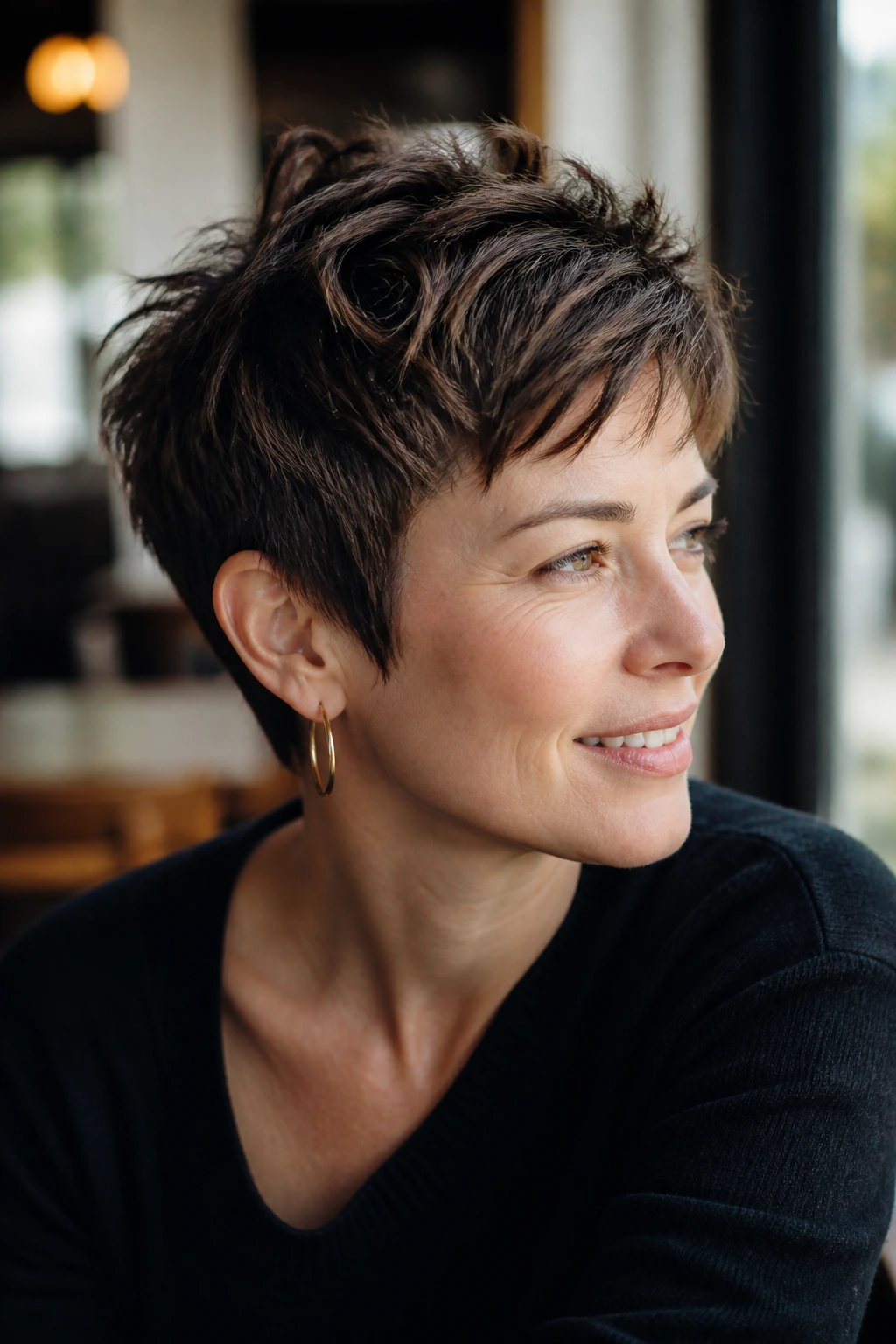
“Piecey” refers to the separation of hair strands. You want the hair to clump together into little groups rather than looking like a solid sheet. This is achieved through product placement. A molding paste or a texturizing pomade is your best friend here.
Take a pea-sized amount of product, warm it until it’s completely transparent, and then “pinch” the ends of your hair. Don’t smooth it over; pull it through. This creates a messy, textured look that hides the thinness of the hair by creating shadows and depth between the pieces.
16. Messy Bedhead Pixie
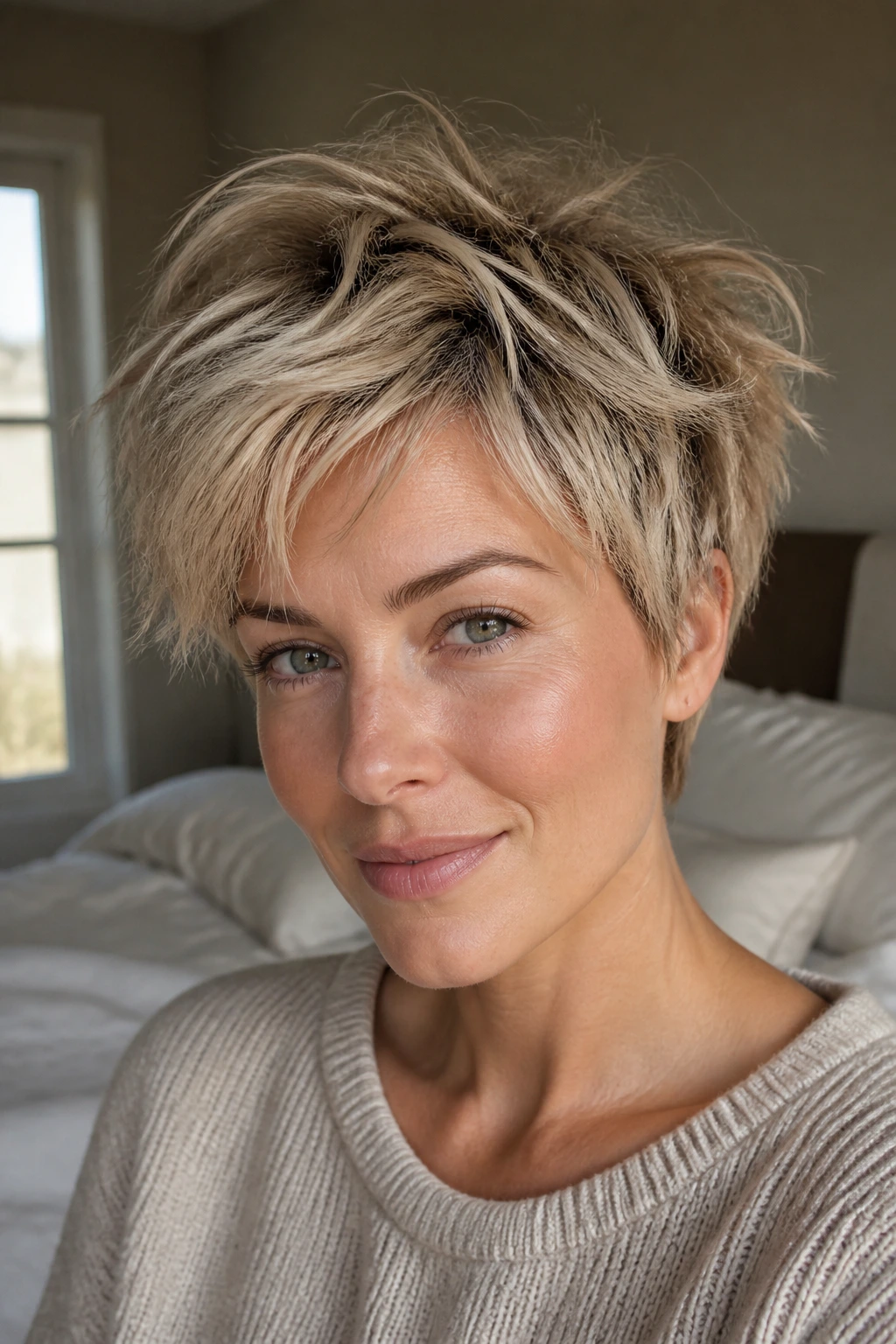
This is the “I woke up like this” look, but it requires a bit of tactical styling. It is essentially a layered pixie that you style by messing it up. It is the antithesis of the stiff, hairsprayed styles of the past.
To get this right, you need to apply a texturizing powder at the roots. These powders are magic for fine hair—they turn into a light, sticky substance that mimics the feel of thicker hair. Shake it into your roots, flip your head upside down, and shake your hair out.
17. Brushed-Back Pixie
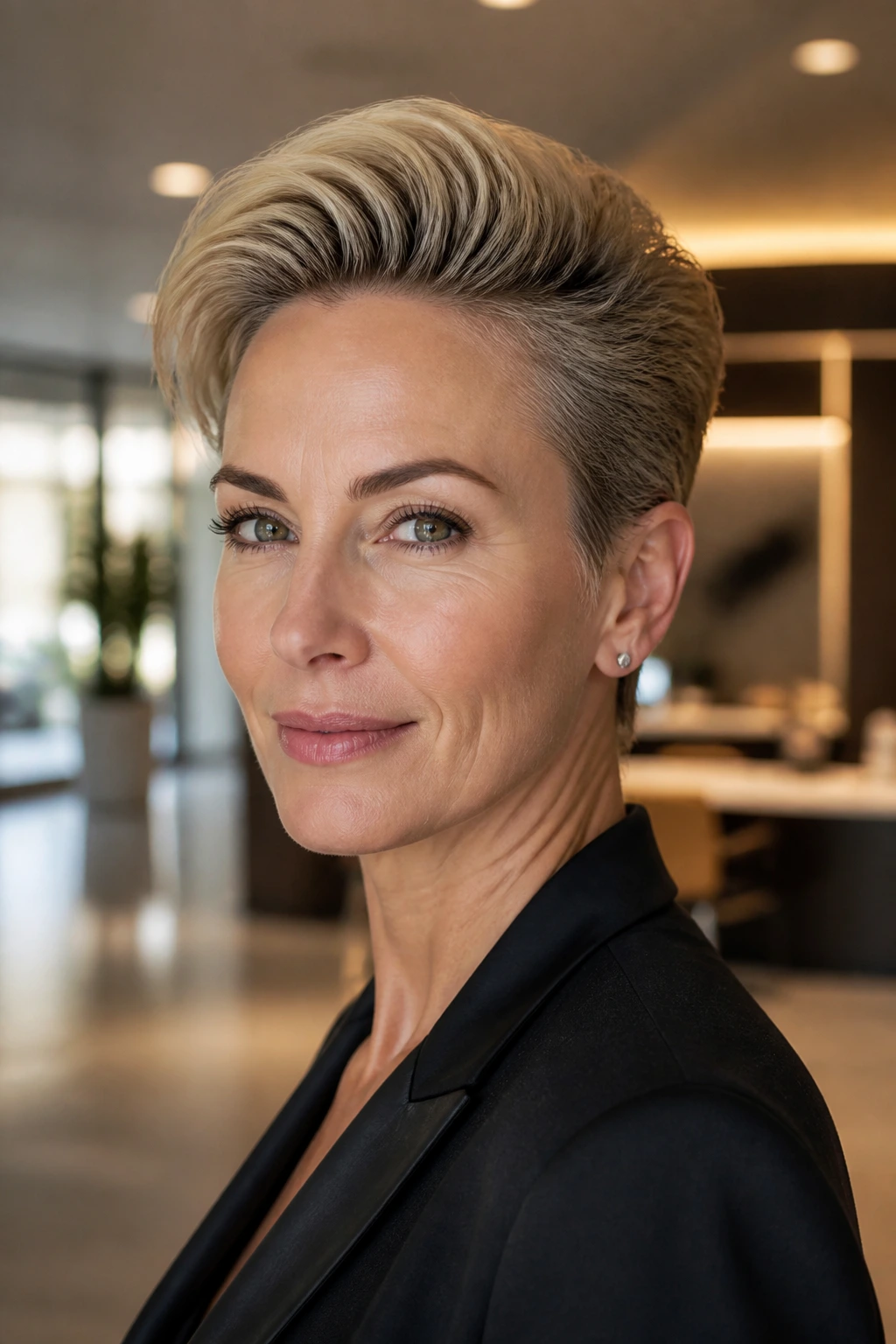
This is a sleek, polished look. It is perfect for formal occasions or professional settings. You essentially use a light-hold gel to push all the hair off your face, following the direction of your hair growth.
The danger here is looking “flat.” To avoid this, don’t press the hair flush against your scalp. Use a comb to pull the hair back, but keep the roots lifted slightly. You want a bit of a “poof” at the front before it goes back, which adds height and prevents the severe, pasted-down appearance.
18. Sleek Deep-Part Pixie
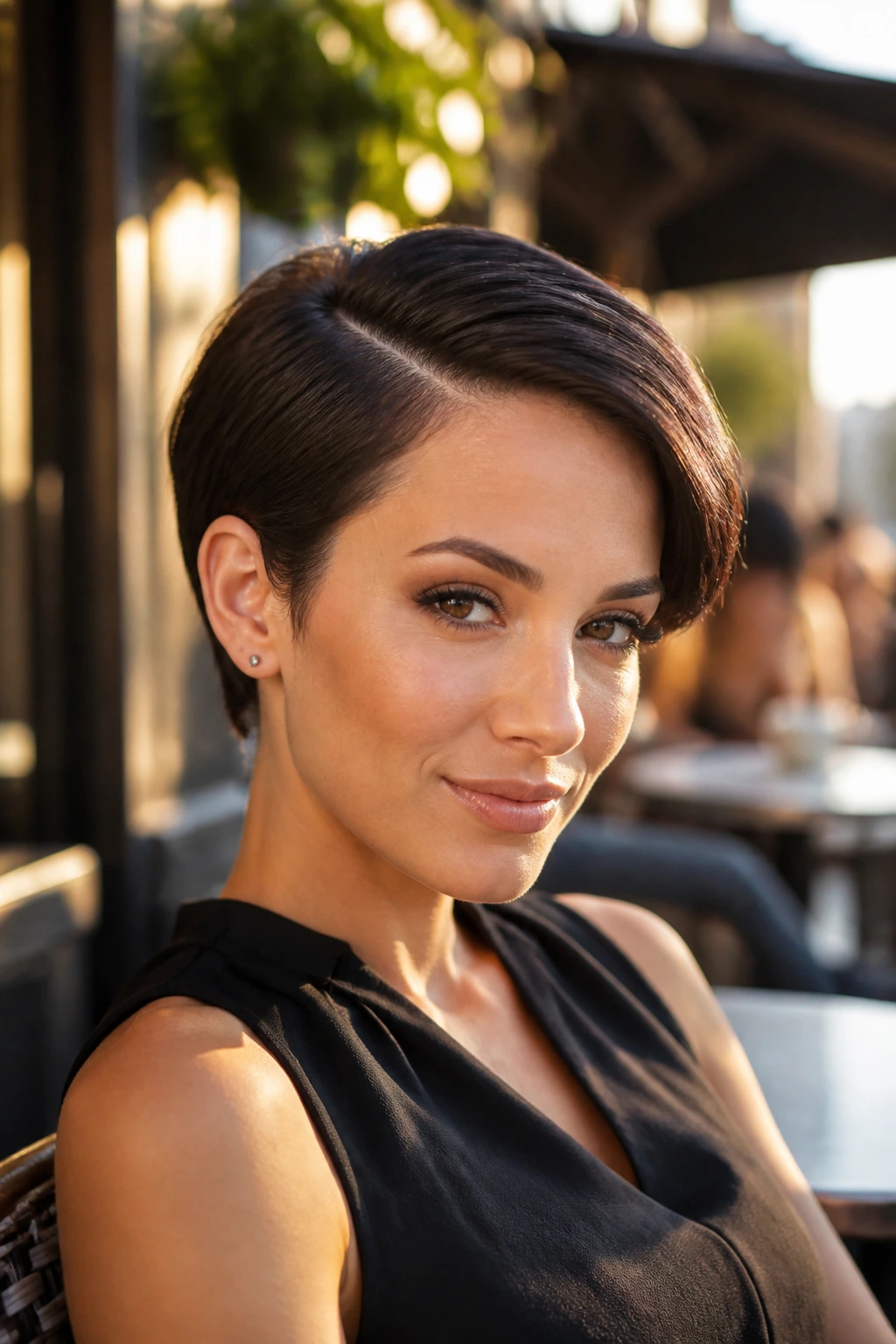
A deep side part is a simple structural change that can alter the appearance of your hair density. By pushing most of your hair to one side, you create an instant, artificial volume boost on that side. It is the easiest way to make fine hair look like it has more weight than it actually does.
Combine this with a sleek, polished finish. Use a shine serum—sparingly—to keep the hair looking healthy and glassy. The contrast between the sleekness and the dramatic volume of the side part makes for a very chic, editorial look.
19. Softly Layered Crop
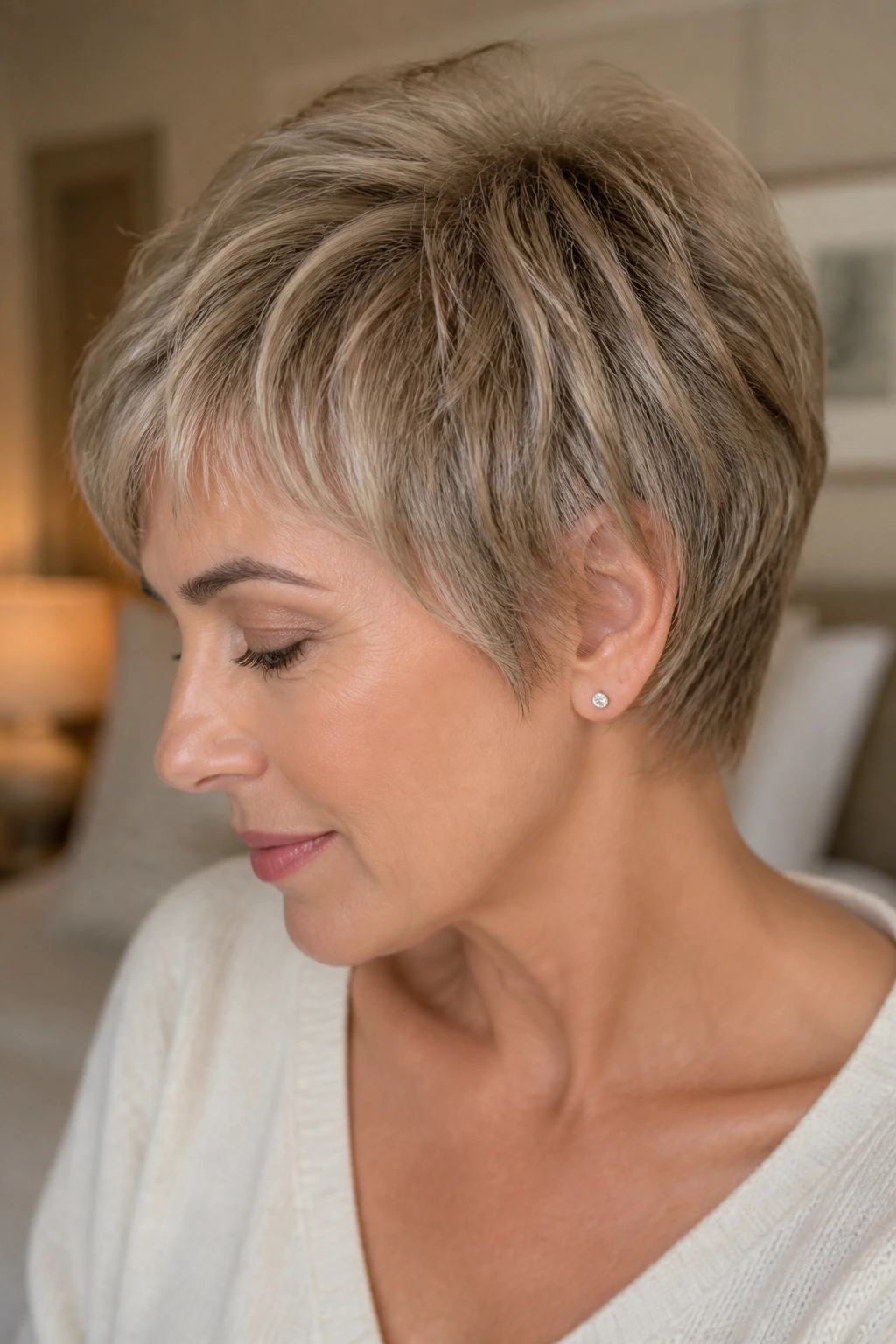
A crop differs from a pixie in that it is generally a bit more rounded and covers more of the ear or nape. It is softer and feels less “pointed.” This is a great transition cut for someone who isn’t ready to go super short on the sides.
It relies on many tiny, soft layers that blend into each other. Because there are no harsh lines, it is very forgiving on fine hair. You don’t have to worry about the hair looking patchy or sparse because the layers are so integrated.
20. Curly Pixie
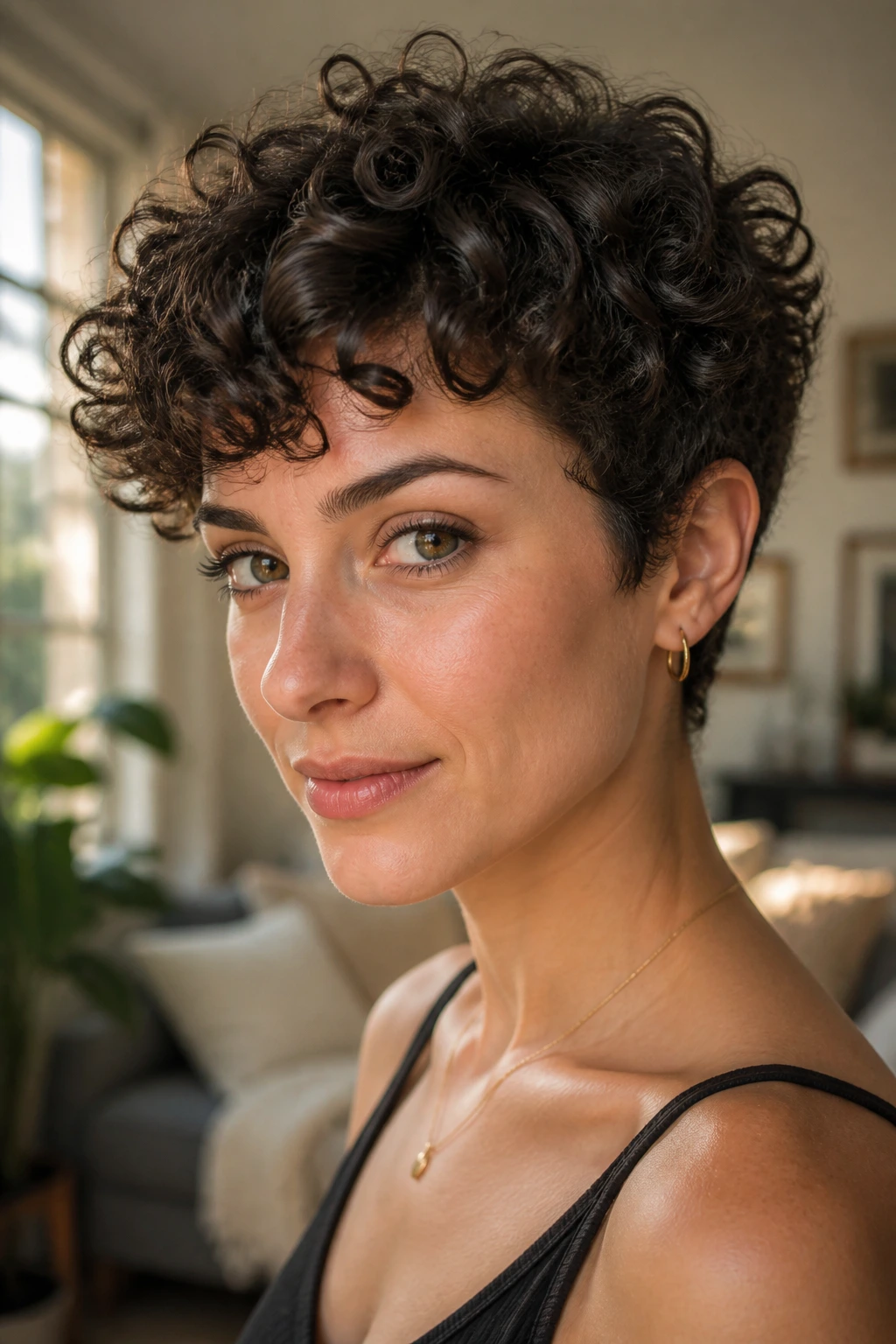
Fine, curly hair is a unique beast. It is fragile, so you must be careful with your styling tools. A curly pixie should be cut with a focus on shape rather than length. You want the curls to be tightest at the sides and slightly longer on top to create a rounded, flattering silhouette.
Always use a diffuser when blow-drying. The airflow of a standard dryer nozzle will blow your curls out of shape and create frizz. A diffuser spreads the air out, keeping the curl structure intact.
21. Tapered Sideburns Pixie
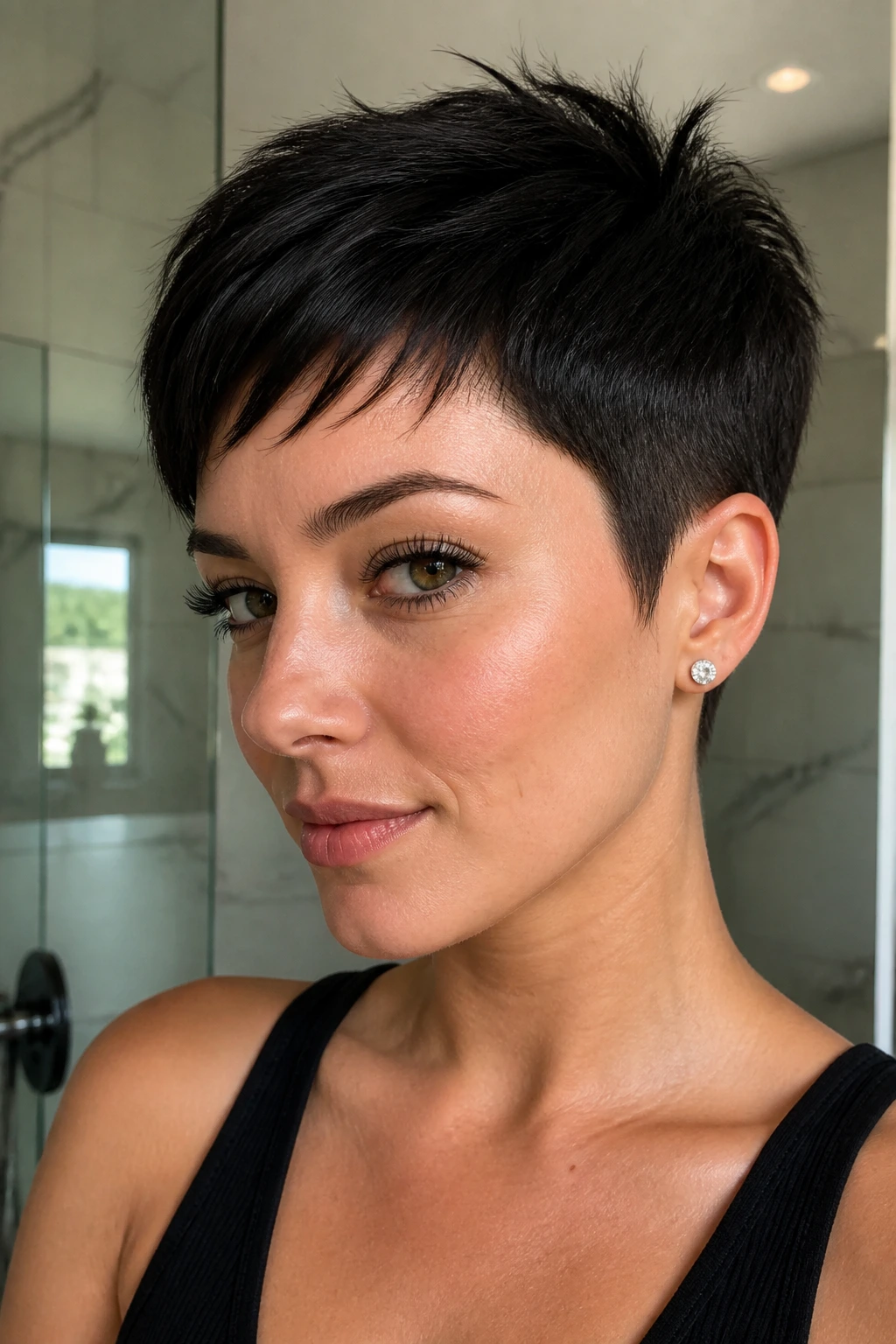
The sideburns are often overlooked in pixie cuts. By keeping them tapered and clean, you draw a sharp line along the face. This adds a level of precision that makes the whole cut look expensive.
For fine hair, this is a great detail because it emphasizes that you are choosing a style, not just letting your hair do whatever it wants. It’s a small, manageable feature that creates a big impact on the overall “cool” factor of the haircut.
22. The “French Girl” Pixie
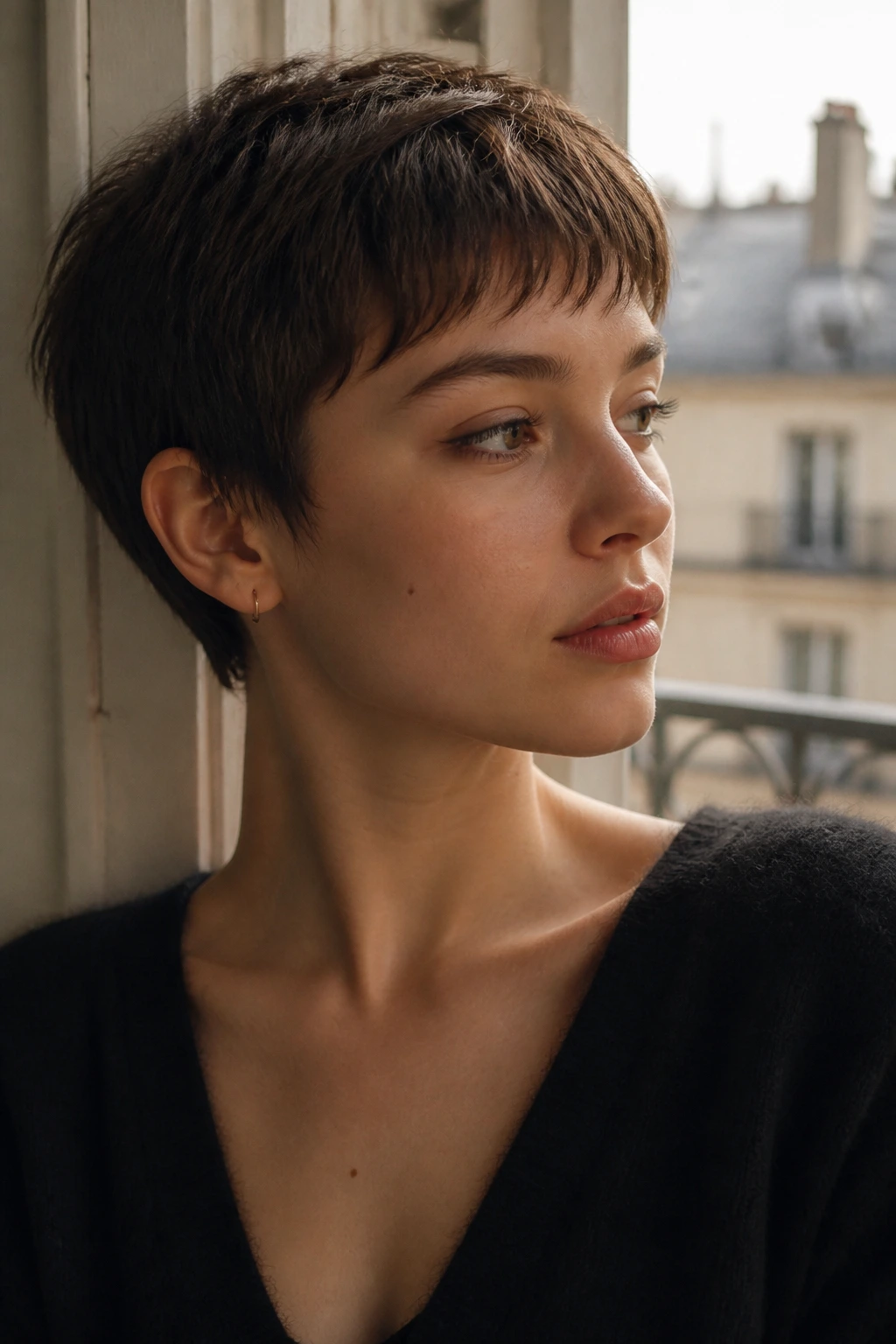
Think of Amélie or a classic 1960s Parisian aesthetic. This cut is short, slightly rounded, and often features a shorter fringe. It is incredibly romantic and works well with fine hair because it doesn’t try to be overly voluminous or stiff.
It is a “lazy” style in the best way. It relies on the hair’s natural fall. If your hair is straight, this cut will look sophisticated and minimal. If it has a slight bend, it will look cute and textured.
23. Voluminous Quiff Pixie
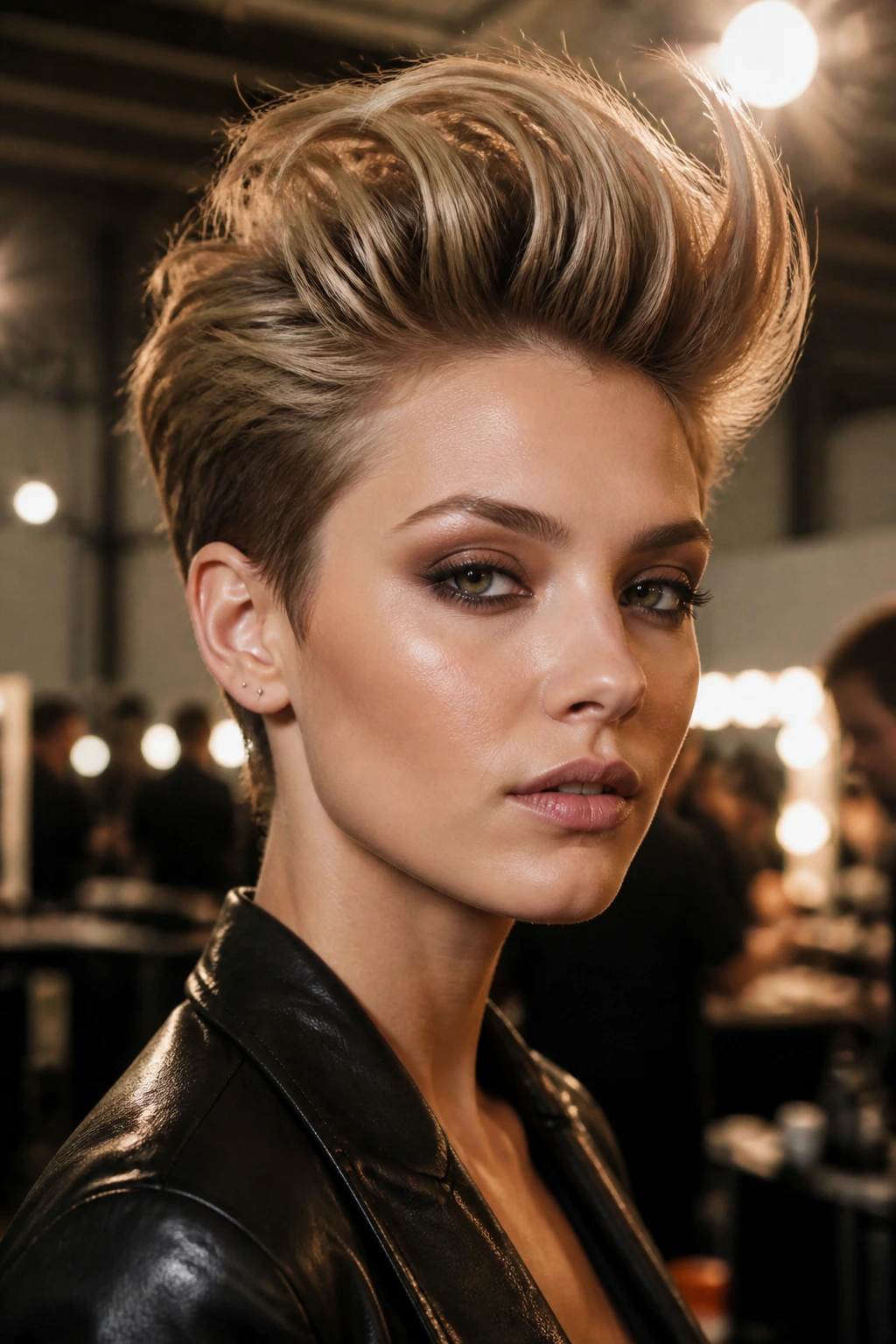
If you really want to defy the laws of physics, the quiff is the way to go. This involves leaving the hair at the front longer and brushing it up and back in a high, structured wave. It is a bold, rock-and-roll style that draws the eye upward.
Staying Power for the Quiff
- You must use a volumizing root lifter while the hair is damp.
- Use a round brush to create the curve while blow-drying.
- Finish with a strong-hold hairspray.
- If you have “baby hairs” that keep falling down, use a tiny bit of hairspray on a toothbrush to tame them into the main quiff.
24. Minimalist Short Pixie
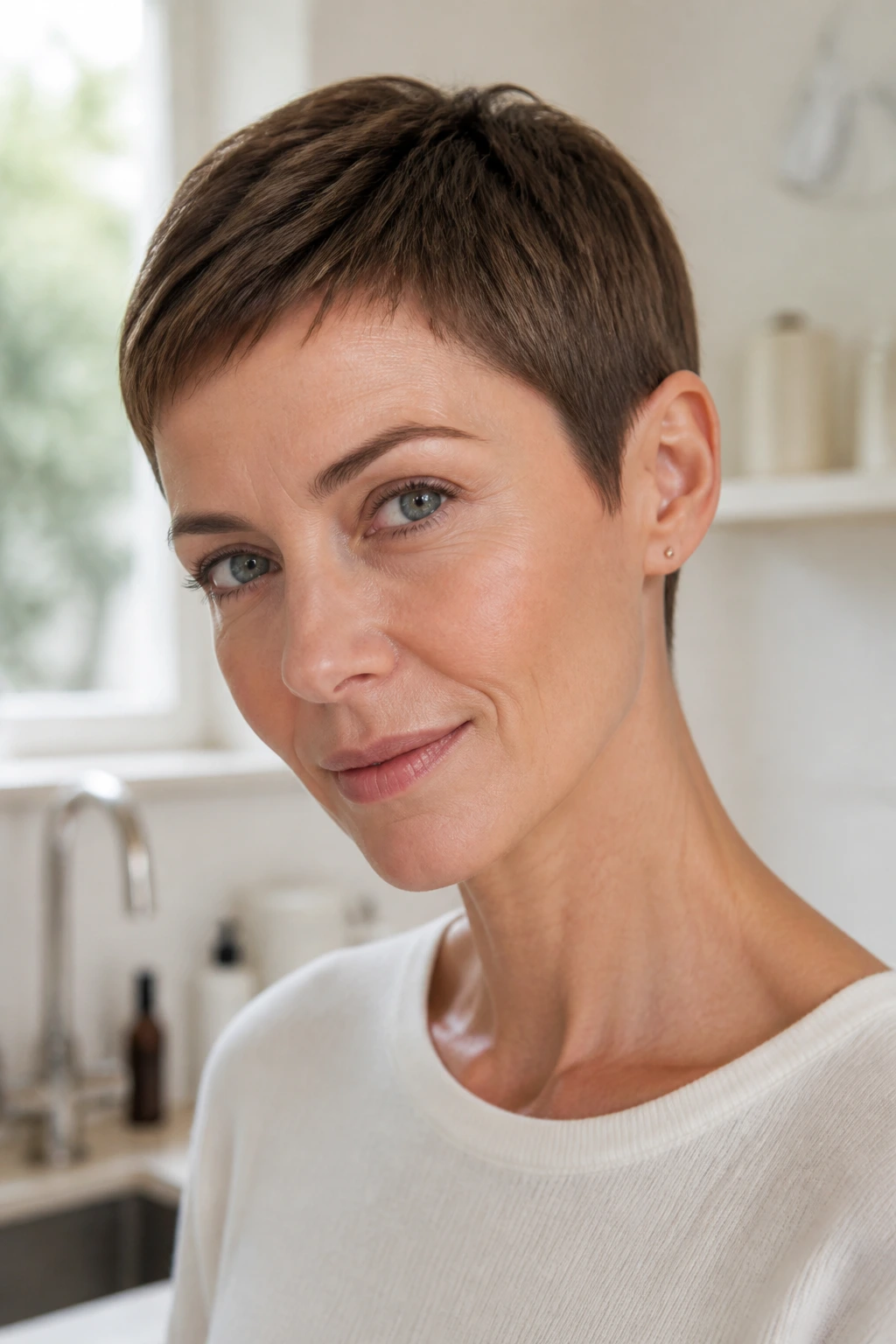
Sometimes, the best approach is to strip everything back to the basics. No layers, no complicated tapering—just a clean, even length all around. This looks incredibly chic on fine hair, especially if you have a face shape that can handle a lot of exposure.
It is clean, modern, and requires almost no maintenance. You might need a trim every few weeks, but the styling time is essentially zero. Just wash, dry, and go.
25. Wispy Fringe Pixie
A wispy fringe provides the visual interest of bangs without the heaviness of a full, blunt bang. This is great for fine hair because a full bang can sometimes look like a limp curtain. A wispy fringe allows for air and movement.
It softens the face and makes the pixie cut look more approachable. You can part it, sweep it, or let it fall naturally over your forehead. It’s a very versatile addition to any short cut.
26. Edgy Modern Mullet-Pixie Hybrid
This is the trendsetter’s choice. It’s a mix of a short, textured pixie on top and sides, with just a bit more length at the nape. It sounds counterintuitive for fine hair, but by keeping the top short and textured, you get that “lift” you need, while the slight length at the back adds a bit of whimsy.
It is definitely for someone with an edgy personal style. It requires confidence, but it is one of the most distinctive ways to wear short hair.
27. Blunt-Cut Pixie Bob
If you aren’t quite ready to lose all your length, the pixie bob (or “bixie”) is the middle ground. It is longer than a standard pixie but shorter than a traditional bob. It allows for more styling versatility while still removing enough weight to give fine hair a boost.
Because it has a bit more length, you can use hot rollers or a curling wand to create waves, which is an excellent way to fake density. The blunt ends provide a sense of fullness that helps mask the fine texture.
28. Dimensional Color Pixie
While this is a color technique, it is essential for the appearance of the cut. By adding highlights and lowlights—or even subtle balayage—to your pixie, you create the illusion of depth. Flat, one-dimensional color can make fine hair look like a solid, thin slab.
By adding lighter and darker pieces, you mimic the appearance of having more hair. The varying tones catch the light and create shadows, which tricks the eye into seeing volume where there might just be strands of hair.
Final Thoughts
Finding the right pixie cut when you have fine hair is not just about the length; it is about the architecture of the cut. The goal is to work with your hair’s natural tendencies rather than against them. If your hair is fine and straight, seek out styles that emphasize texture and blunt edges. If your hair is fine and has a bit of wave, prioritize cuts that allow for movement and layering.
Most importantly, do not be afraid of product. Fine hair often gets a bad rap for being “greasy,” but that is usually the result of using the wrong product in the wrong place. Light, dry, and texturizing products are your greatest assets. They provide the grit that your hair lacks, allowing you to manipulate the shape and build the volume you have always wanted. Once you find the right cut and the right rhythm for styling, the “burden” of fine hair disappears, leaving you with a style that is effortless, elegant, and entirely your own.
