



Fine hair can lie flat in a way that feels almost rude. A good red pixie cut for fine hair changes the whole read of the head: more lift at the crown, sharper edges at the nape, and color that pulls the eye where you want it.
Fine hair is not the same as thin hair. Fine hair means each strand is smaller in diameter, so it collapses fast when a cut gets too heavy or too blunt. That’s why some short cuts make the hair look softer and fuller, while others turn it into a helmet. The difference is usually in the layering, the outline, and whether the color gives the hair any depth at the roots.
Red helps, but only if the shade and shape match. Copper can make movement obvious. Auburn adds body. Cherry brings shine. Deeper reds like merlot or mahogany can make the hairline look denser because the eye reads the color as more solid. The wrong red, though, can sit on top of the haircut and show every flat spot.
That balance is the whole game here. Some of these looks are airy and soft, some are cropped and sharp, and a few are bold enough to make a plain T-shirt look finished. Start with the shape you’d actually wear, then pick the red that supports it.
1. Soft Copper Red Pixie Cut With Feathered Crown

Fine hair and a blunt pixie do not get along. A soft copper red pixie cut with a feathered crown does the opposite: it keeps the sides neat, then lets the top move a little so the hair looks lighter and fuller.
Why the Crown Matters
The feathering is doing quiet work here. Instead of one heavy layer sitting on top of the head, the cut has tiny separations that let light through, which makes fine strands read as more airy. Copper helps, too, because warm red reflects more light than a flat brown.
Tell your stylist you want point-cut ends and a crown that stays slightly longer than the sides. That tiny extra length gives you room to rough it up with mousse or a root spray. If the crown is cut too short, the style can stand up in a way that feels spiky rather than soft.
- Best for oval, heart, and narrow face shapes
- Style with a pea-sized amount of lightweight cream
- Blow-dry the crown forward, then lift it back with your fingers
- Avoid heavy oils near the roots
My rule here: keep the top airy, not puffy. Puffy reads dated. Airy reads intentional.
2. Cherry Red Pixie Cut With a Side-Swept Fringe
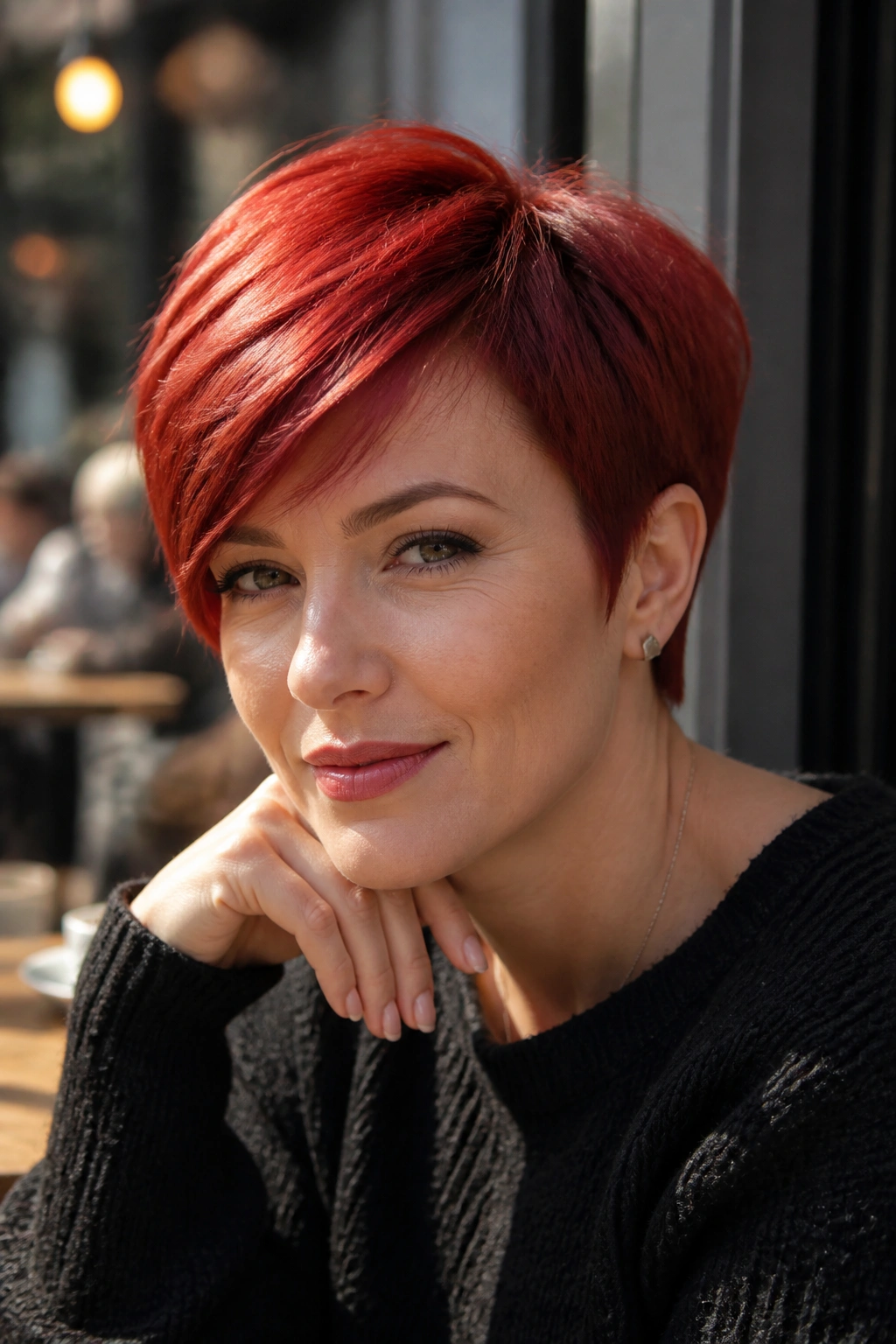
Why does this one work so well on fine hair? Because a side-swept fringe gives you instant width where you need it most, and cherry red adds a glossy edge that makes the cut look sharper than it is.
The fringe should be long enough to brush across the forehead, not so long that it swallows the face. On fine hair, that little diagonal line creates the illusion of more hair at the front. Cherry tones are a nice fit if your hair tends to look washed out in softer reds; they hold contrast better and make the haircut look deliberate.
Wear it with a smooth finish if you like clean lines, or rough it up with a dab of matte paste if you want more texture. I’d avoid thick bangs here. They can make fine hair look sparse at the temples, which is a pain to fix and rarely worth it.
A side-swept cherry pixie feels polished without trying too hard. That’s the charm.
3. Ginger Red Pixie Cut With a Tight Nape
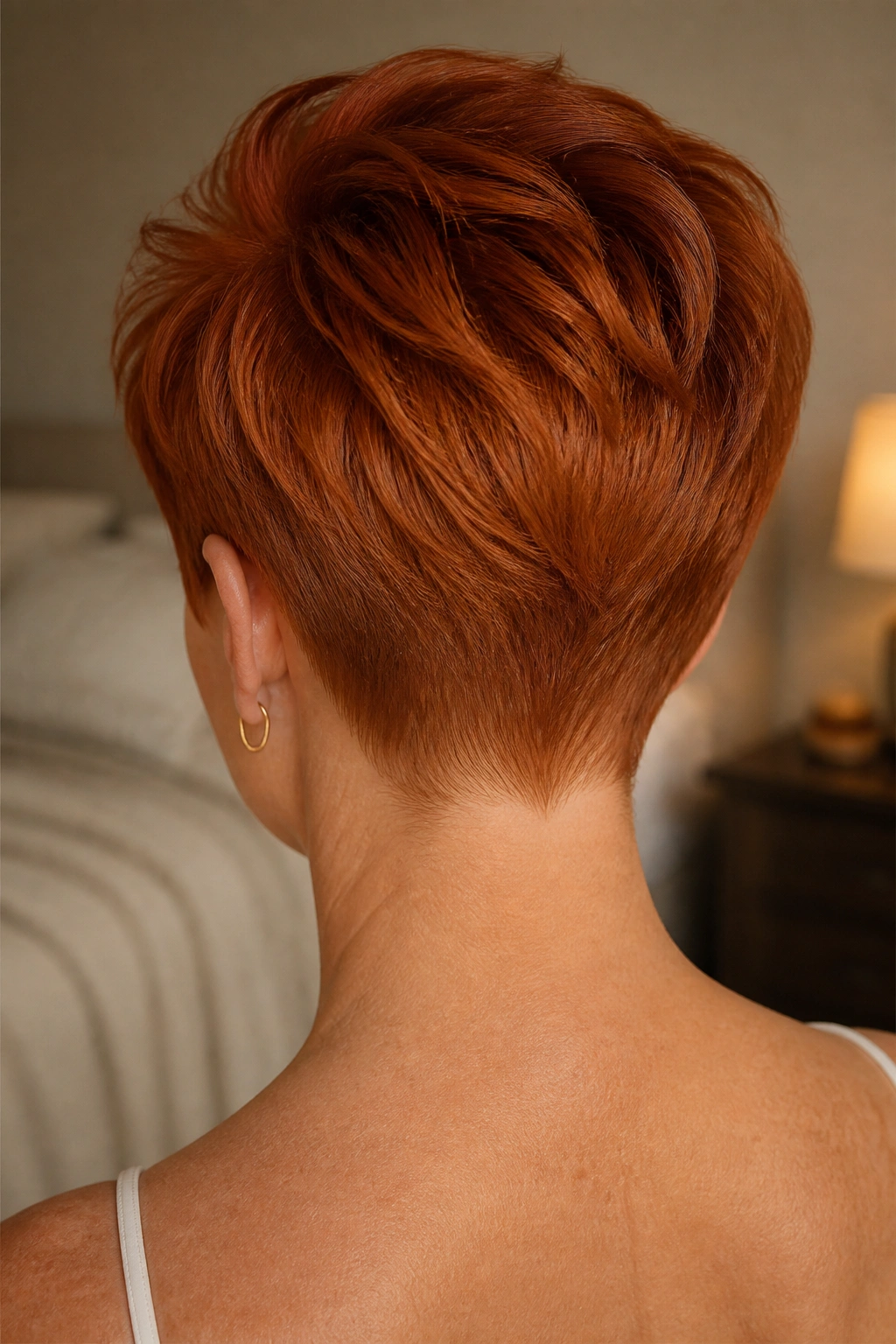
A tight nape changes everything. It gives the haircut a clean edge at the back, and on fine hair that clean edge can make the top look fuller by contrast.
What to Ask For at the Salon
- A closely tapered neckline
- Longer, choppy texture through the crown
- Soft, sliced pieces near the temples
- Ginger red color with a warm gold undertone
Ginger is a smart choice when you want red without going deep or dark. The brighter warmth keeps the style from looking flat, especially if your hair is naturally pale or delicate. I like this cut on people who wear glasses, because the open nape and lifted top keep the face from feeling boxed in.
There’s a little practical upside, too. A tight nape grows out in a tidy way. That matters if you don’t want to be in the salon every few weeks. Fine hair can lose shape fast, but a tapered neckline buys you a bit of grace between trims.
4. Auburn Choppy Pixie With Piecey Ends
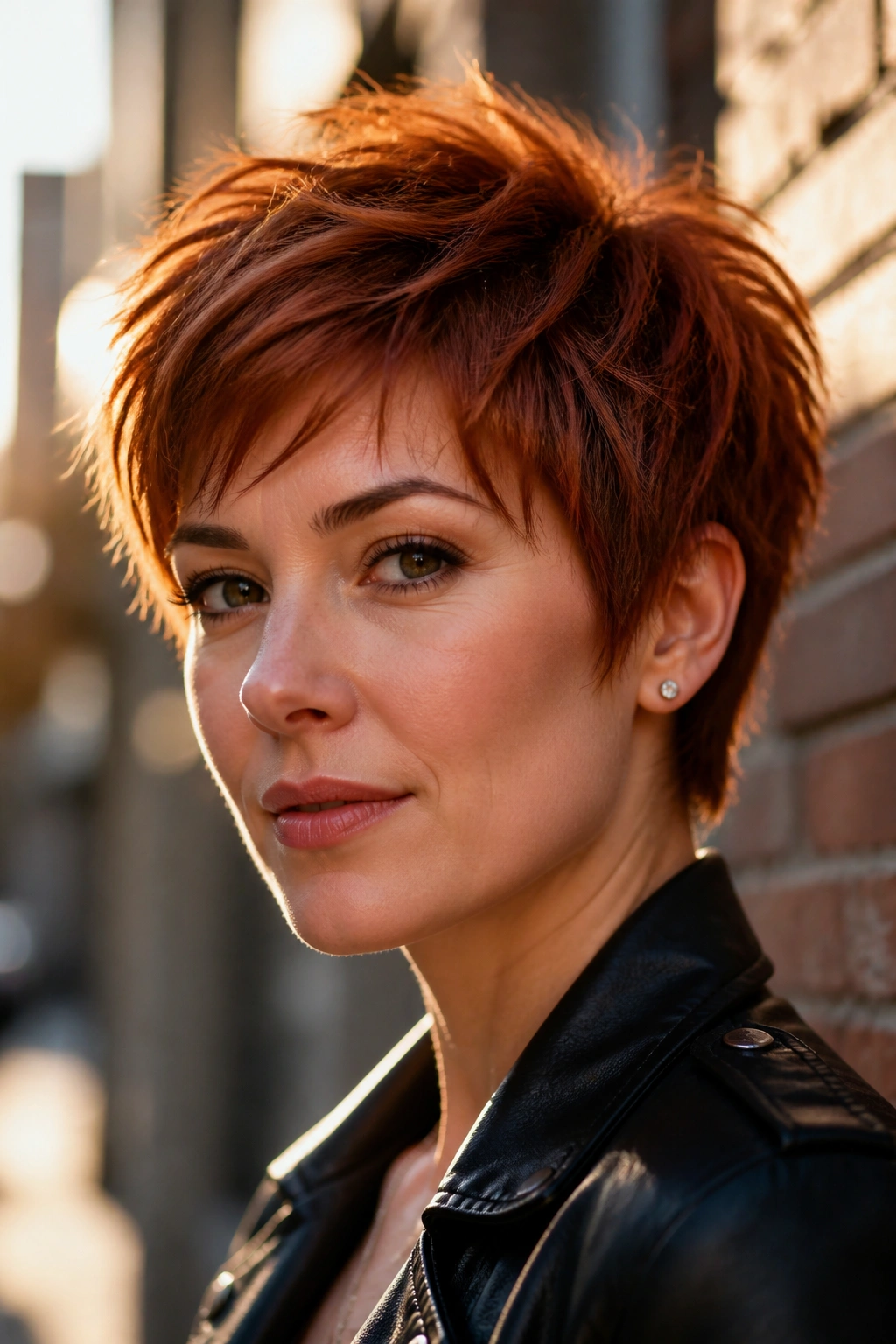
Auburn is the grown-up red that people underestimate. It has enough warmth to look alive, but enough depth to keep fine hair from looking see-through at the crown.
This version leans on choppy ends rather than soft feathering. That sounds like a small thing, but it changes the whole mood. Choppy ends break up the outline, and on fine hair that broken edge creates more visual density than a smooth, rounded cut ever will. I like this shape when the hair has a little bend or a stubborn cowlick. The uneven texture turns those quirks into part of the style.
How It Reads in Real Life
It’s less precious than a polished pixie. Good. That’s the point.
Wear it with a matte paste and pinch the ends into tiny clumps. You do not want a helmet. You want short, separated pieces that move when you turn your head. If your hair tends to go limp by lunchtime, this is a better bet than a slicker red crop, because the chopped outline keeps the shape alive even after the shine fades.
5. Ruby Red Pixie Cut With a Deep Side Part
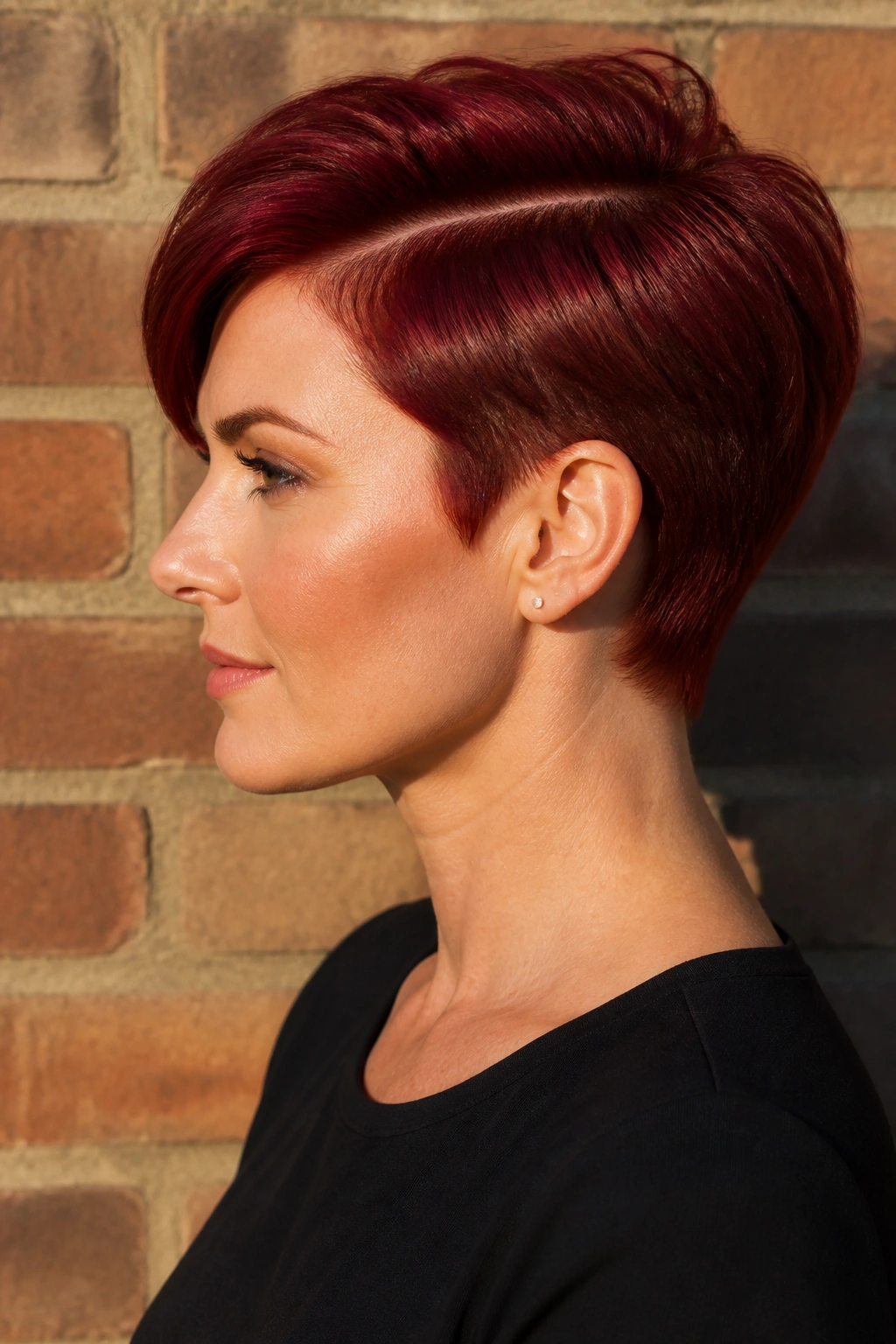
A deep side part is one of the oldest tricks in the book, and I still like it because it works. Shift the weight to one side, and fine hair suddenly looks less evenly spread and a little thicker at the root.
Ruby red gives the cut a brighter surface, which helps the side part stand out. The shade also makes the haircut feel cleaner. Fine hair can sometimes look wispy in lighter copper tones if the cut is too long, but ruby’s stronger pigment keeps the silhouette crisp. Tuck one side behind the ear and let the other side fall forward. That little asymmetry is the whole point.
This shape is good if you want the pixie to feel elegant rather than sporty. It also suits people who like a bit of shine. A lightweight gloss spray on the ends can help, but keep it off the scalp. Root shine on fine hair is not flattering unless you mean for it to look wet.
6. Cinnamon Pixie Cut With Airy Bangs
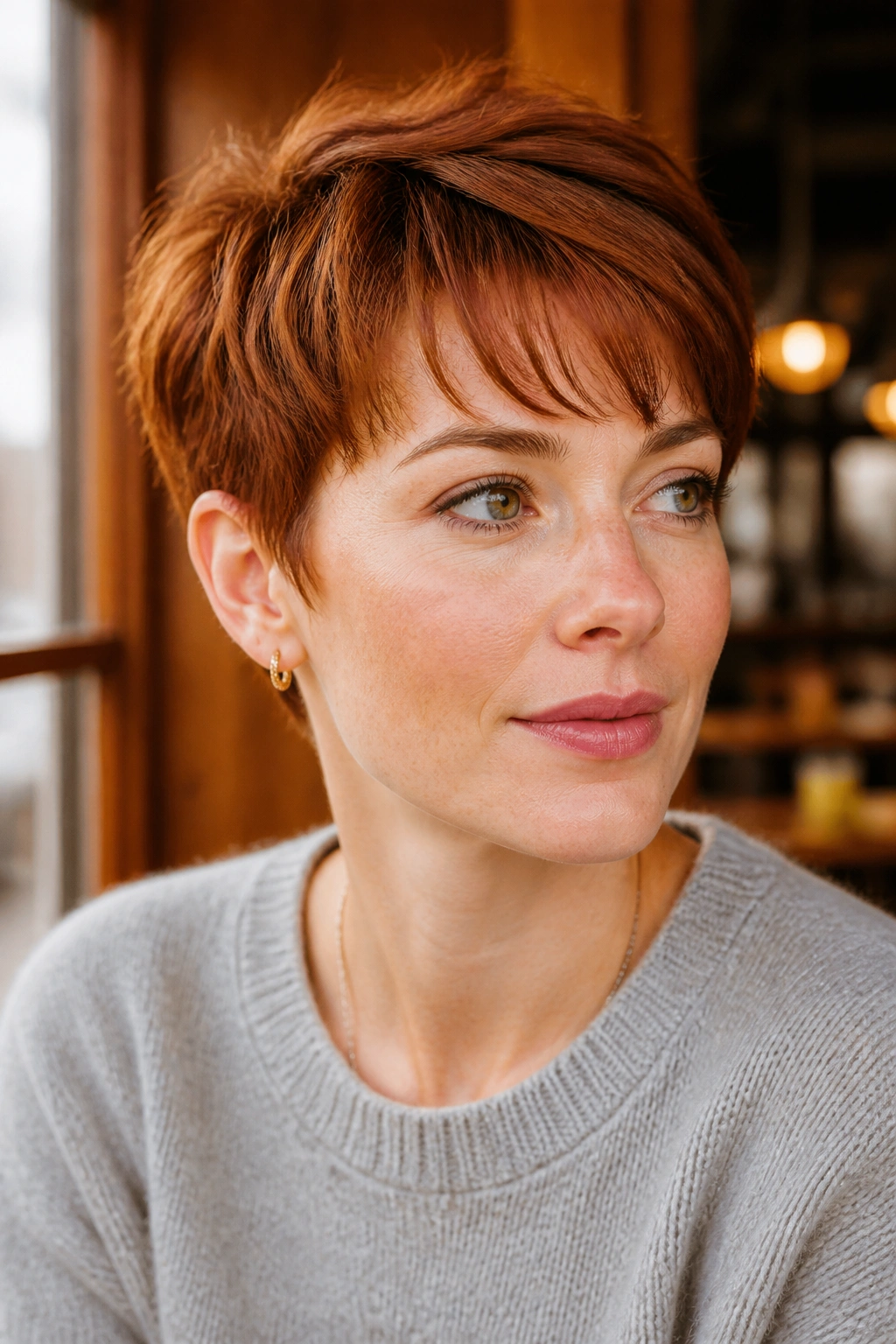
Cinnamon red has a soft, spicy look that feels warmer than auburn and less loud than cherry. On fine hair, that matters because the color should support the cut, not shout over it.
Airy bangs are the real draw here. Not blunt. Not heavy. Just enough fringe to soften the forehead and give the top some movement. The difference between airy and choppy is pretty obvious once you see it: airy bangs land in little separated wisps, while choppy bangs can look broken if the hair is too fine. I prefer the first option most of the time.
What Makes It Different
A cinnamon pixie with airy bangs feels lighter around the face. That can be useful if your features are sharp or if you want the haircut to take the edge off a strong jaw. Use a round brush only if you want a soft bend at the fringe. Otherwise, finger-dry it and let the pieces fall where they want.
A little texture spray at the ends helps, but keep the product off the front hairline. That’s where fine hair can start to look sticky fast.
7. Scarlet Undercut Pixie With Extra Crown Height
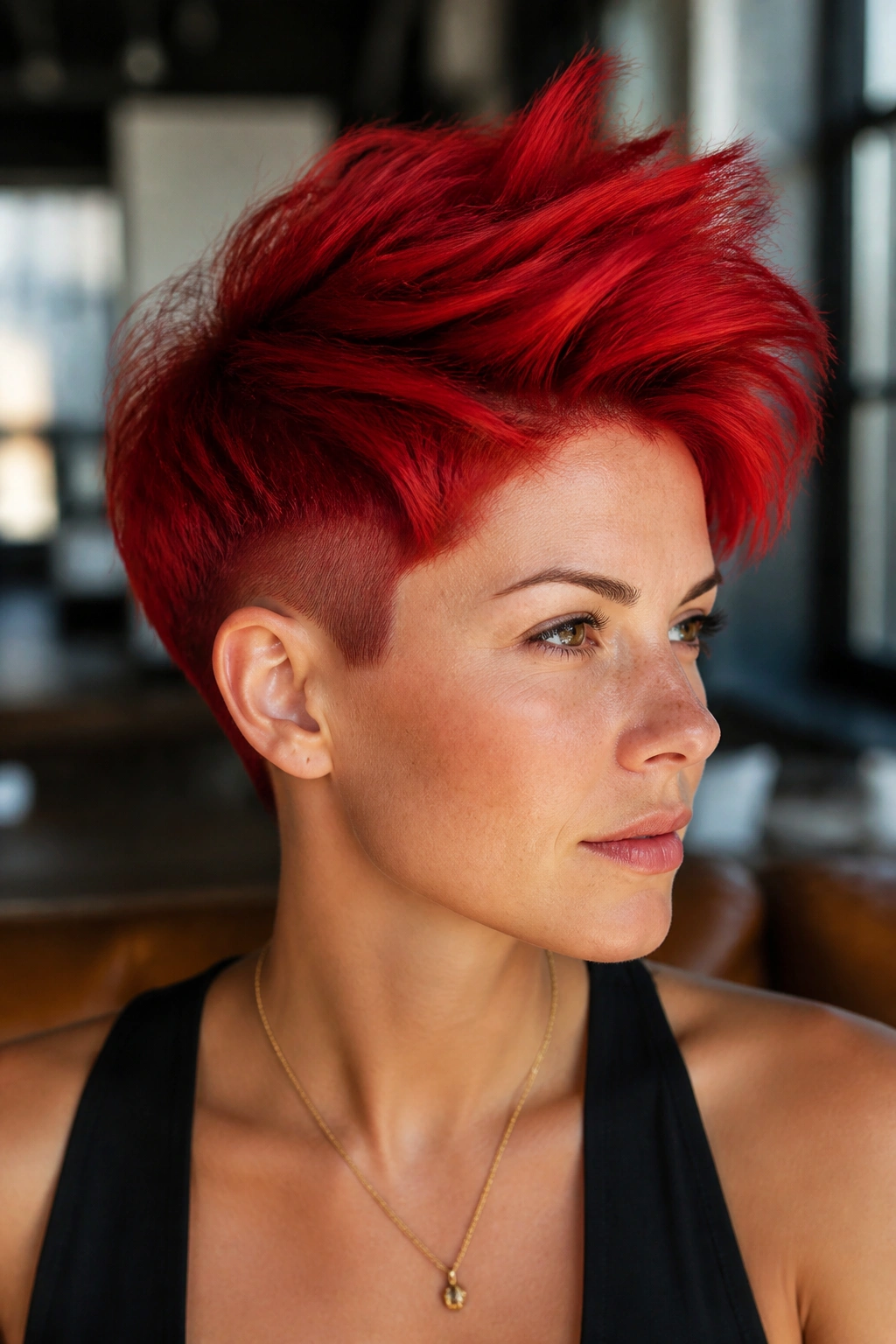
Scarlet and an undercut are a strong pair because the undercut removes bulk where you do not need it, and the scarlet tone pulls the eye up to the crown. That’s a useful trick on fine hair, where height matters more than weight.
This cut is for someone who wants the pixie to look sharp, maybe even a little fierce. The sides and back stay tight. The top gets more length so you can push it upward with mousse, root spray, or a bit of blow-dryer work. If your hair falls flat no matter what you do, the undercut gives you room to create shape without asking too much from the rest of the head.
A clean scarlet shade also makes the haircut read as intentional from across the room. That sounds dramatic, but it’s true. Bright red on a precise cut always looks more edited than the same color on a fuzzy shape.
Skip this one if you hate maintenance. The outline needs trimming to stay neat.
8. Copper Balayage Pixie With Dark Roots
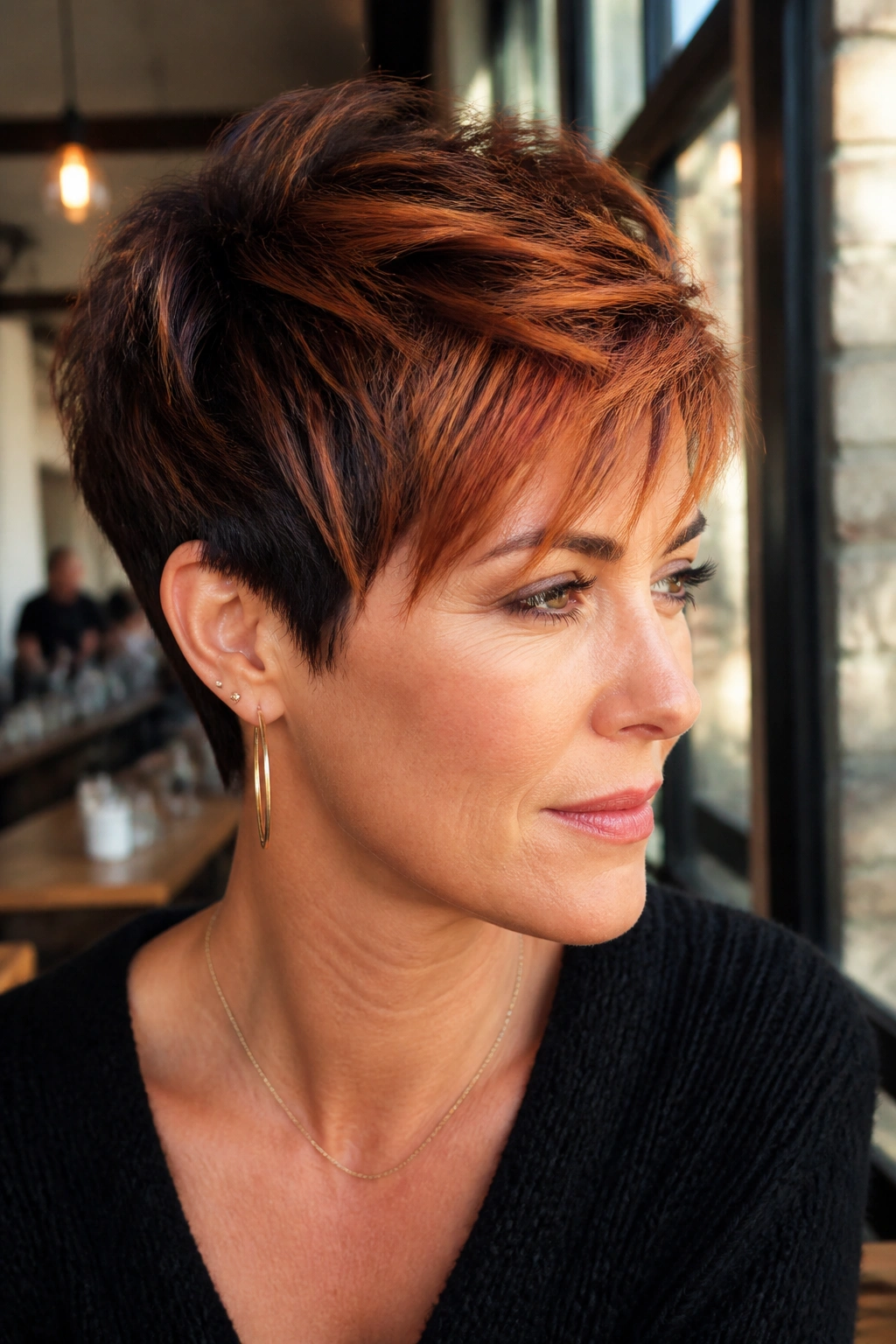
What if you want red, but you also want the hair to look thicker at the scalp? This is the one I’d point to first.
Why the Root Shadow Helps
Dark roots create depth where fine hair tends to look transparent. Copper balayage keeps the length bright, while the darker base makes the top of the head look fuller. It’s a small visual trick, but it matters a lot on short hair.
- Ask for a soft root shadow, not a harsh stripe
- Keep the copper pieces concentrated around the crown and fringe
- Ask for sliced layers so the color shows in movement
- Use a color-safe shampoo that won’t strip the warm tones too fast
The balayage effect also buys you easier grow-out. That’s useful if you do not want the color line to scream for attention every time your hair grows half an inch. On fine hair, a softer transition is usually kinder than a hard line of demarcation.
I like this cut for people who want red hair that doesn’t feel precious or high-maintenance every single week.
9. Mahogany Pixie Cut With Slicked-Back Texture
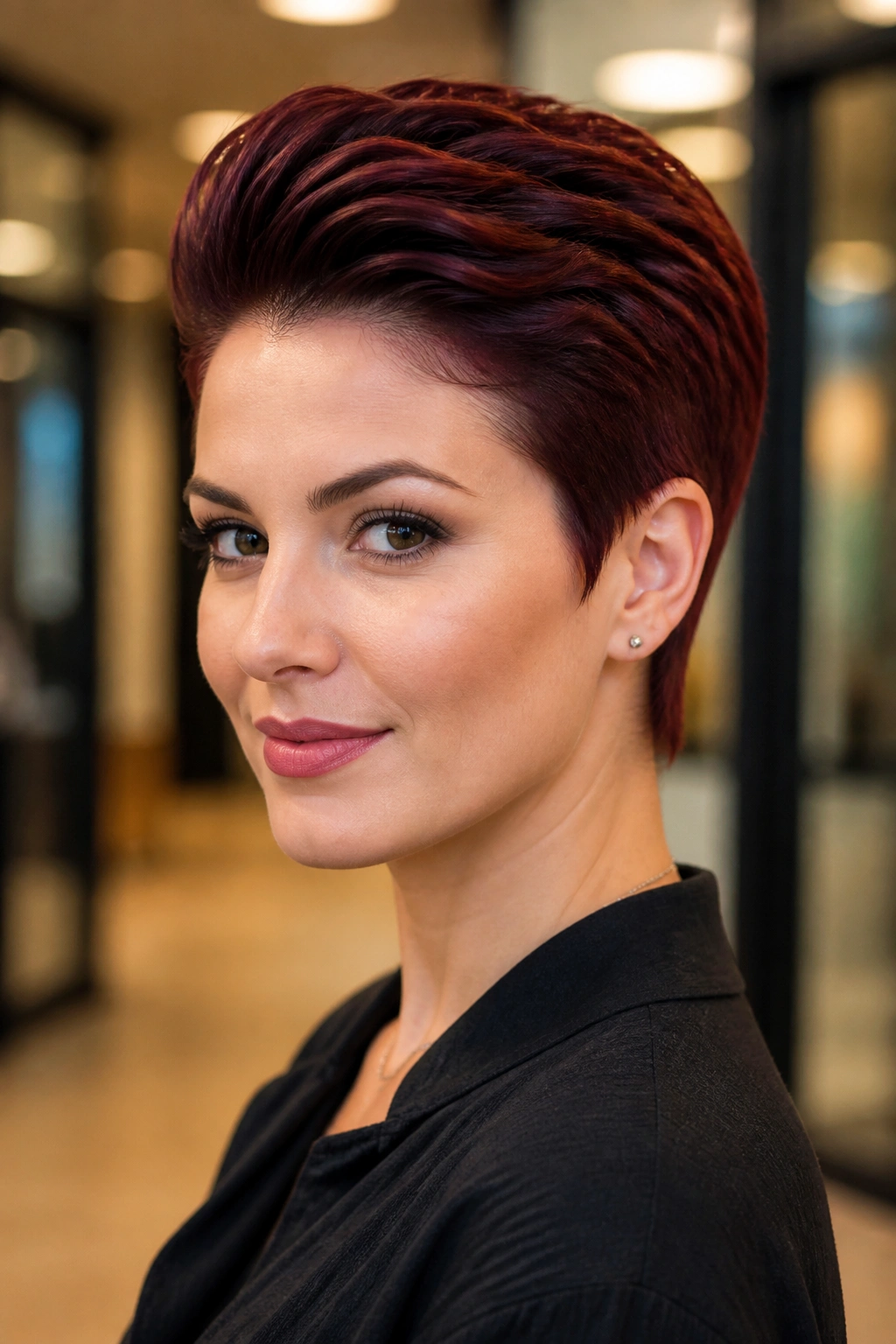
A slicked-back pixie can be risky on fine hair. It can also look expensive in the best way when the cut has enough density on top.
Mahogany is darker than copper and less loud than scarlet, so the shape gets to do the talking. Brush the top back with a light gel or cream, then stop before it looks wet. You want controlled shine, not a damp look that reveals every scalp line. The deeper red-brown tone helps here because it makes the hair read as fuller from the front.
This works especially well on short, straight hair that refuses to hold a fluffy style. Instead of fighting that, you turn it into a smooth, narrow shape. It has a clean, almost tailored feel. I’d wear this with small earrings and a simple neckline because the haircut already does enough.
If your hair is extremely sparse at the crown, keep some lift in the front. Too much backward slicking can expose the weak spots.
10. Rust Red Shag Pixie With Whispy Layers
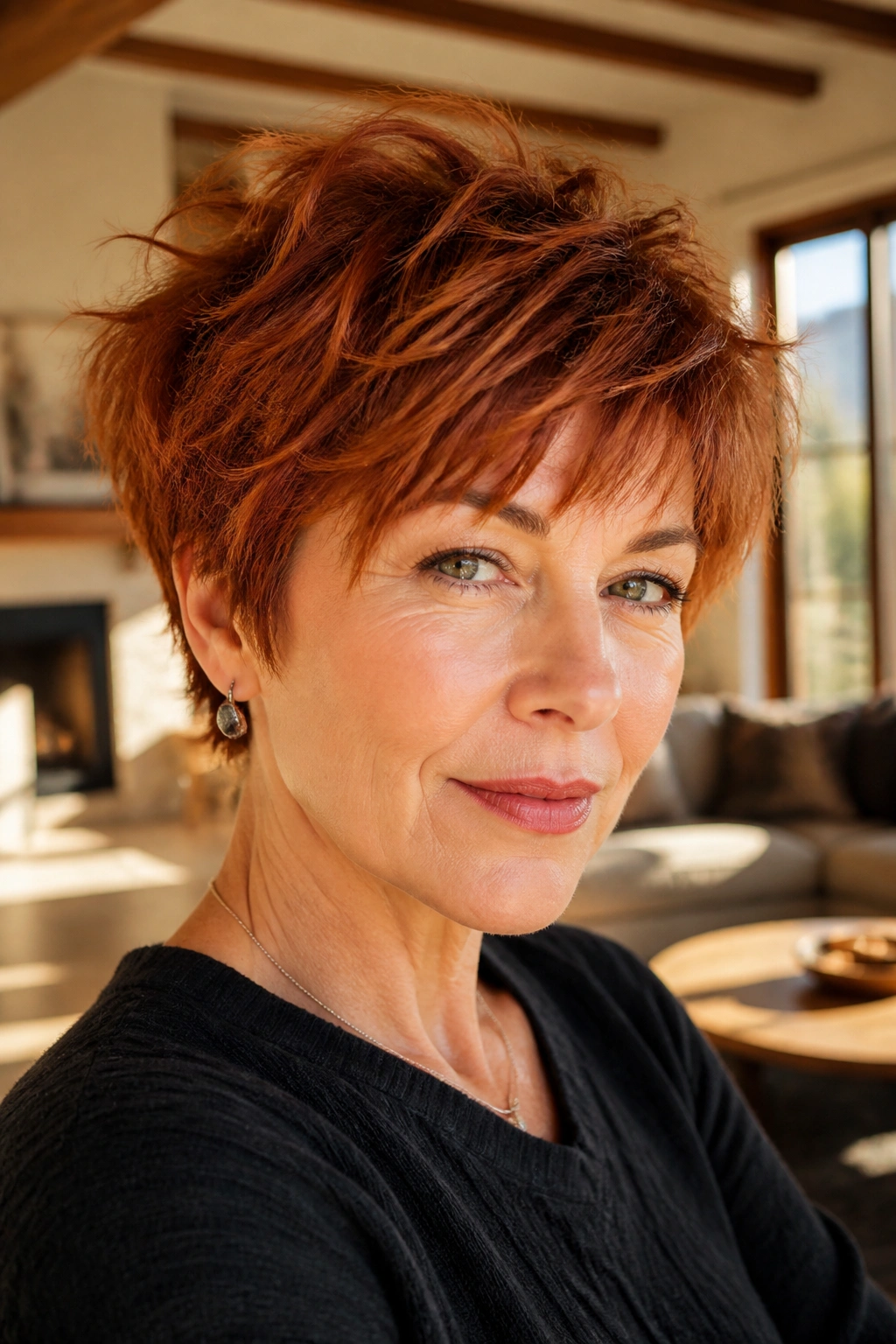
A shag and a pixie can live together. In fact, on fine hair, that messy middle ground can be more flattering than a rigid crop.
Rust red is a good shade for this because it has an earthy look that works with imperfect texture. The wispy layers keep the cut from feeling square. Instead of one clean line, you get a soft cloud of pieces that move a little when you walk. That movement matters. Fine hair can go limp in a hard outline, but a shaggy pixie has enough interruption in the shape to look alive.
The Science Behind It
The trick is not to over-layer the ends. Too many short pieces can make the haircut look frayed. You want a few longer bits around the temples and a lighter crown, then a tapered nape to keep the outline neat.
A small amount of dry texture spray can help, but use it sparingly. If you can feel a crust, you’ve used too much. And yes, that sounds obvious. It still happens.
11. Merlot Pixie Cut With a Curved Fringe
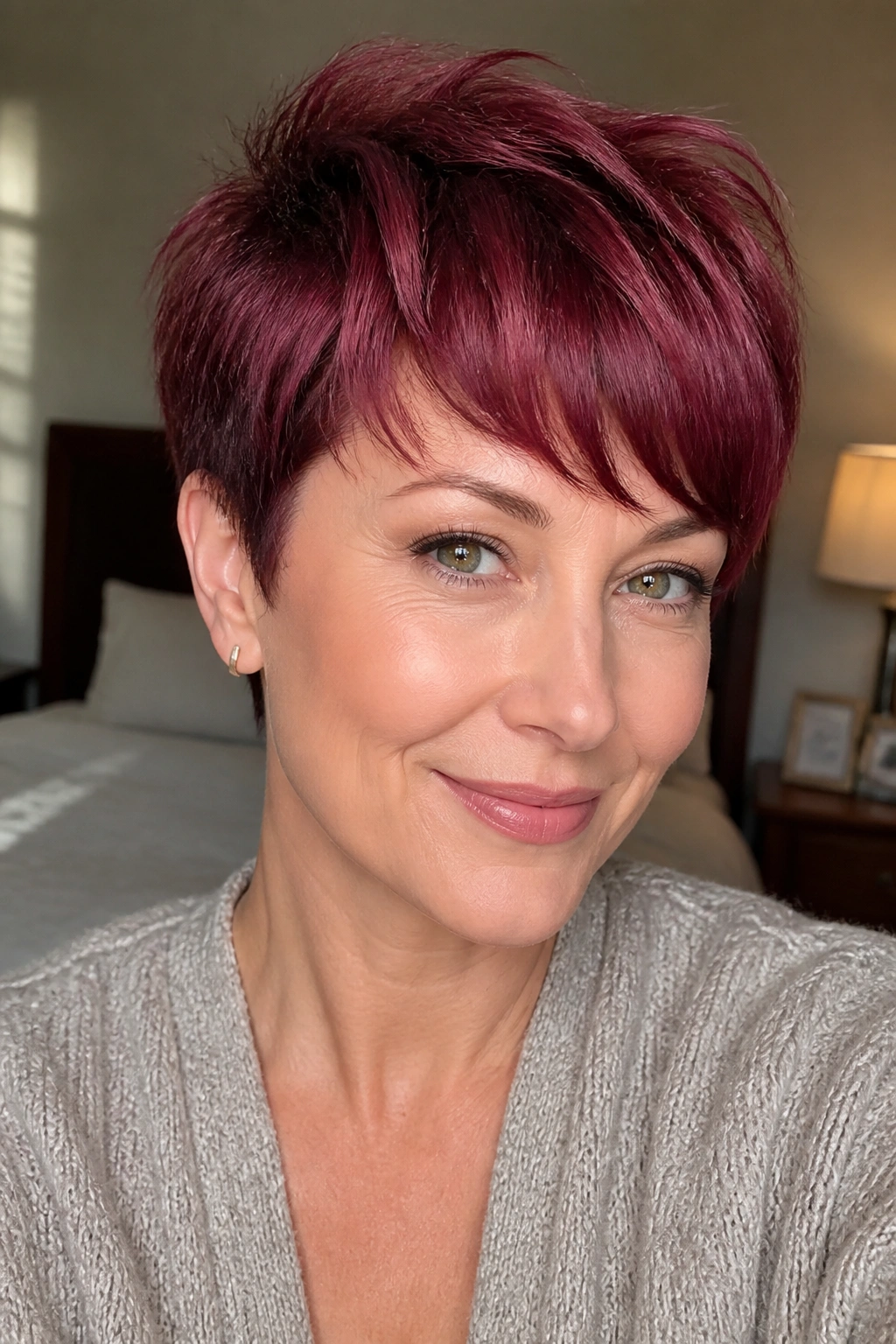
Merlot gives the haircut a deep wine color that feels richer than bright red and less brown than mahogany. On fine hair, that depth can be a gift because it gives the strands a stronger visual edge.
What to Watch For
The fringe should curve softly across the forehead, almost like a small crescent. That shape is friendlier than a blunt straight bang on delicate hair, and it gives the cut a softer landing around the face. I like this look on people with stronger brows or a longer forehead, since the curved line makes the top feel balanced without stealing too much height.
You can style it with a round brush for polish or let it dry with a slight bend for something easier. A little smoothing cream at the ends keeps the fringe from splitting, which is a common annoyance with fine hair. Split fringe pieces are not a tragedy, but they do look messy faster than people expect.
- Best with oval or long face shapes
- Works well with a side part or a centered curve
- Needs a trim every 4 to 6 weeks to keep the fringe from dropping into the eyes
12. Paprika Pixie With Tousled Crown
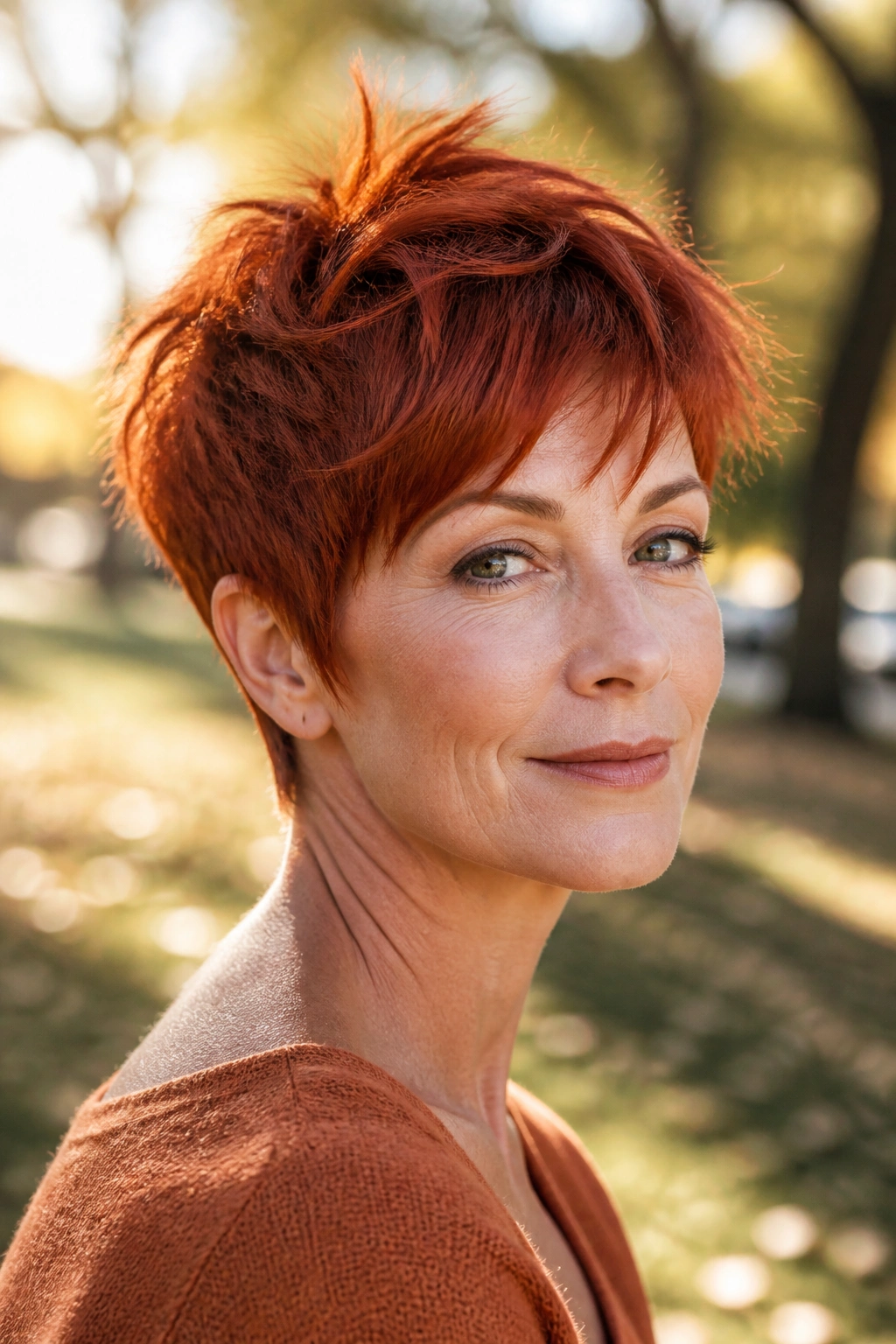
Paprika is the kind of red that looks lively even in a short cut. It has enough orange heat to stand out, and enough warmth to keep fine hair from looking dull under indoor light.
This version leans into tousled texture. That’s the right move if your hair is soft, slippery, or too fine to hold a smooth shape for long. A brushed-out pixie can look flat in half a day. A tousled crown hides that by giving you uneven lift and a little shadow between the pieces. The haircut feels casual, but not careless.
Why It’s Different From a Sleek Pixie
A sleek pixie depends on clean lines and product control. This one depends on movement. You can use mousse at the roots and a little dry spray at the crown, then scrunch the top with your fingers as it dries. No need to overthink it.
The only trap is over-teasing. A tiny bit of lift is enough. If you build a big bump at the crown, the texture starts to look old-fashioned fast.
13. Rose Copper Pixie Cut With Soft Sides
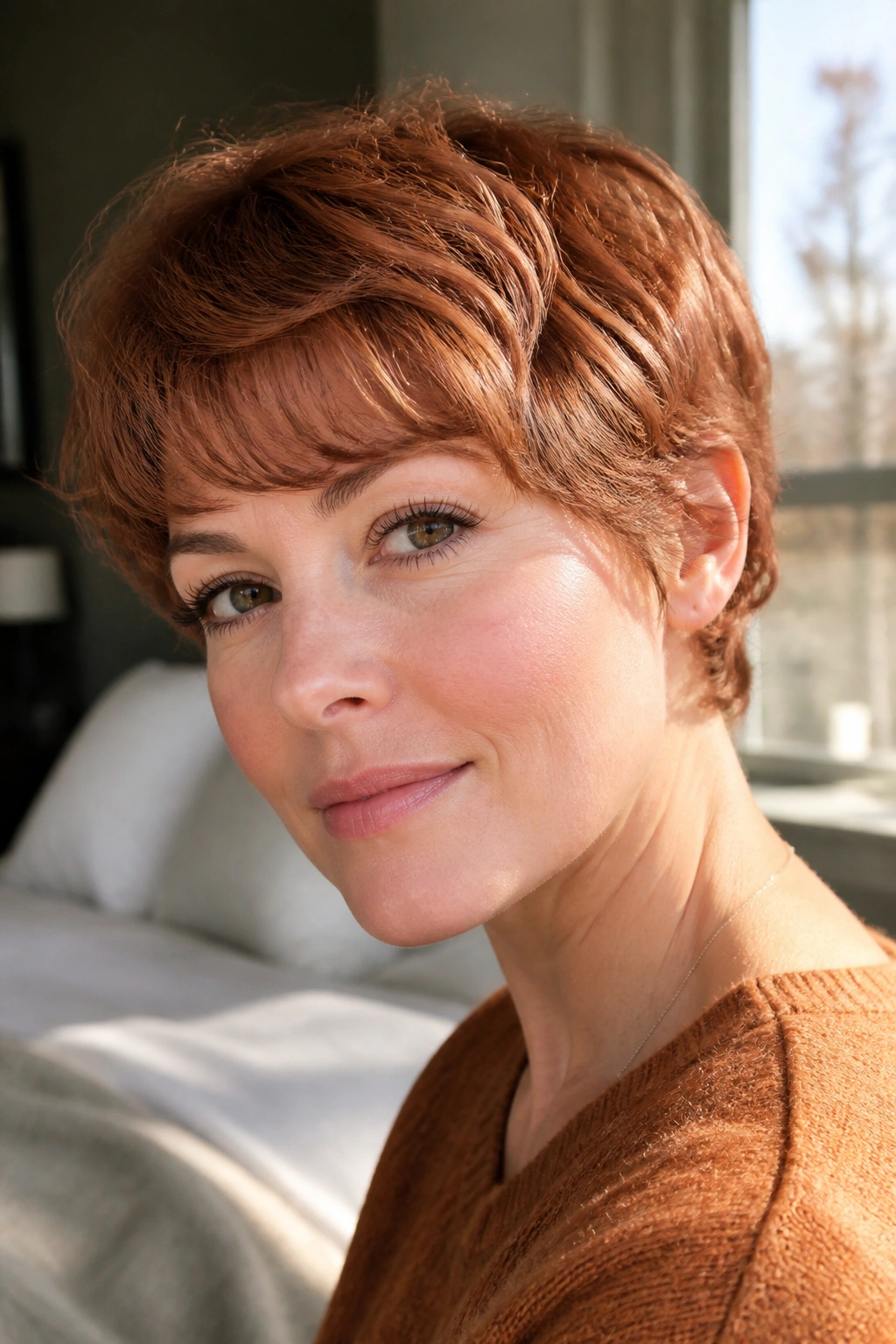
Rose copper is gentler than bright copper and a little more delicate than strawberry blonde. That makes it a lovely pick if you want red on fine hair without the color taking over the whole look.
Soft sides are the whole point here. Instead of carving the temples down too hard, let the sides stay slightly fuller so the haircut keeps a rounded, airy outline. That shape flatters fine hair because it avoids the harsh contrast of shaved sides and a tiny top, which can sometimes make the head look smaller than it is.
This cut works especially well if your hairline is a little uneven. The softness hides that. It also looks good with a natural bend, so if your hair wants to flip under at the ends, don’t fight it too much. That little movement gives the cut character.
A dab of lightweight styling lotion is usually enough. Heavy wax would be too much here. It would flatten the whole thing, and that would be a shame.
14. Brick Red Rounded Pixie Cut
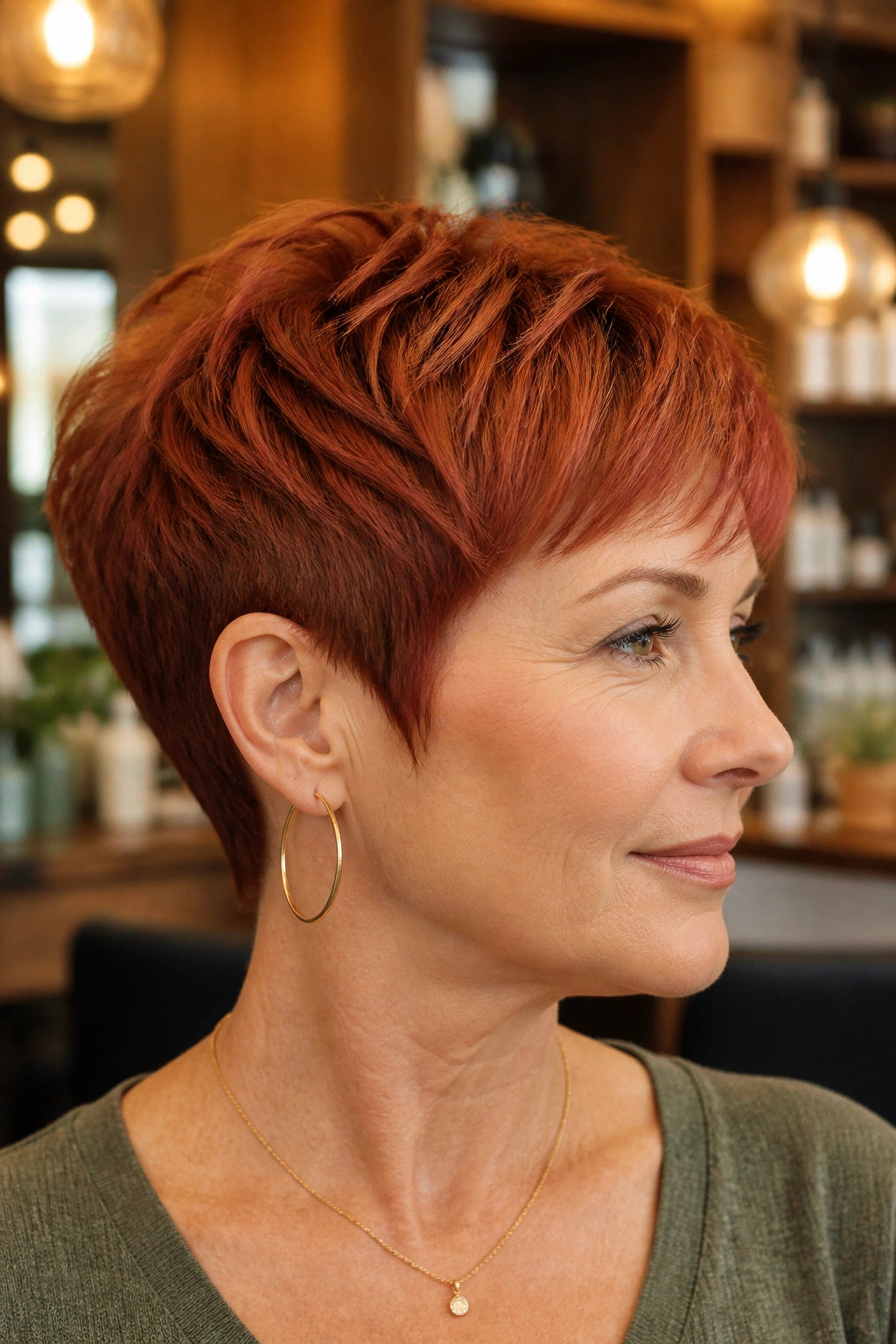
A rounded pixie is a smart move when your hair is fine but straight. Why? Because the curved outline gives the impression of more hair than a sharp, narrow shape does.
Brick red has depth and a little earthiness, which helps the rounded cut feel grounded instead of airy in a weak way. The color is not flashy. It is solid. That matters if you want the haircut to look polished and low-drama. A rounded shape also softens the ears and jawline, which can be useful if you prefer a less angular finish.
Ask for a fuller crown with tucked-in sides, not a mushroom shape. Those are not the same thing, and the difference matters. You want curve, not bulk. A round brush can help set the shape, but stop short of making the hair balloon. A light smoothing cream at the ends usually does enough.
This is a good one for people who like structure without a lot of visible mess.
15. Crimson Pixie Cut With a Micro Fringe
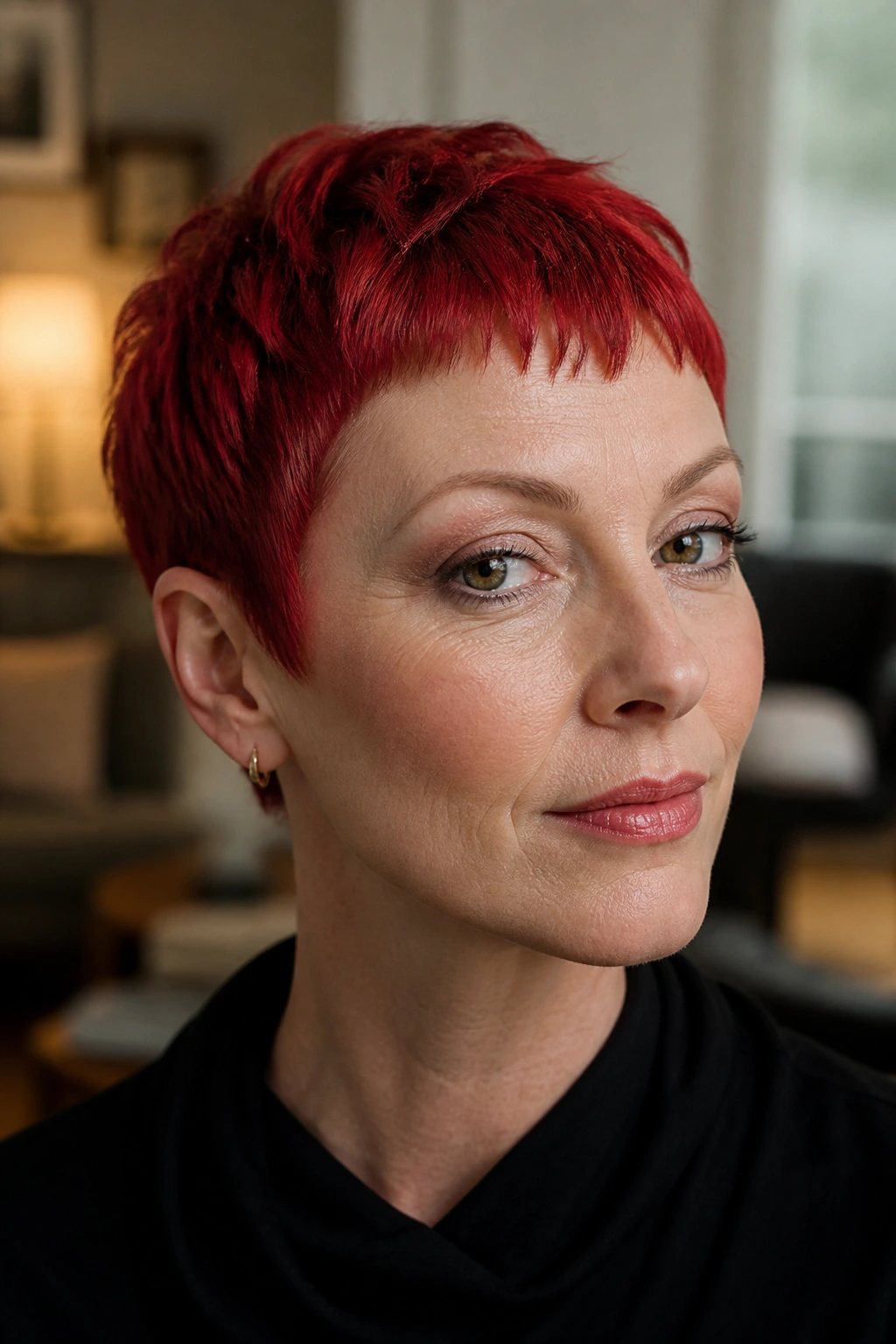
A micro fringe is not for everyone. It is sharp, a little daring, and unforgiving if the cut is off by even a quarter inch. On fine hair, though, it can be striking when the fringe is kept soft and narrow.
Crimson red gives the style extra bite. The color is bright enough to support the short fringe, and the whole haircut feels crisp from the first glance. Keep the fringe wispy, not thick. That is the difference between chic and costume-y. A tiny front fringe can make the eyes look larger and the face feel shorter, which is useful if you have a long forehead or a narrow face.
I’d keep the rest of the cut close to the head with a bit of piecey texture through the crown. That way the fringe gets to be the focal point. If you pair a micro fringe with too much volume, the proportions go strange fast.
This one looks best when the line is precise. Messy is not the goal.
16. Auburn-Black Shadow-Root Pixie
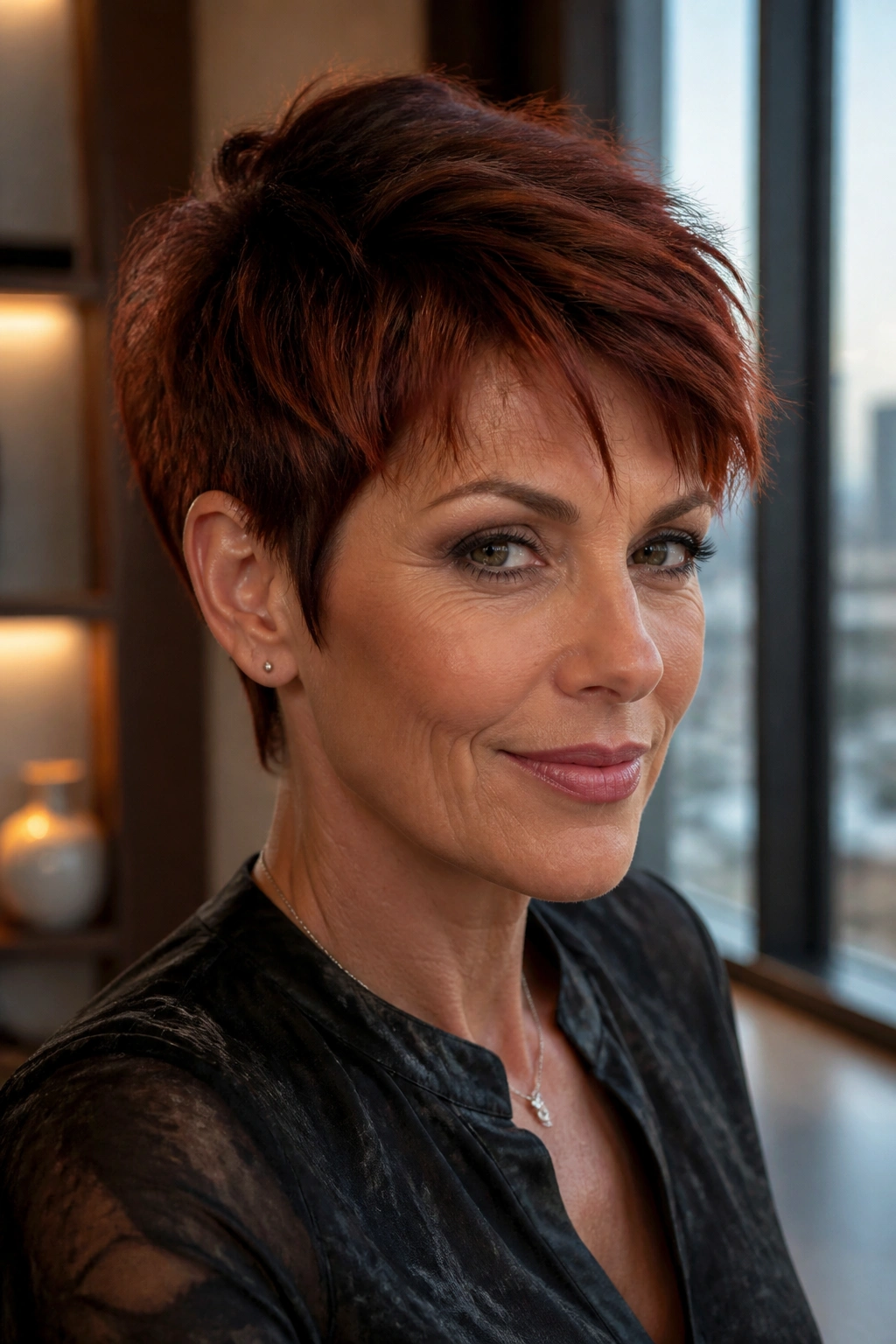
Dark roots are not a problem here. They are the point.
The auburn- black shadow-root pixie uses contrast to make fine hair appear thicker at the scalp. A deeper root gives the base more weight, while the auburn lengths keep the red visible and warm. The result is a cut that looks fuller without needing a ton of styling product. I like this for people who want a red pixie but don’t want to fight fade lines every few weeks.
What Makes It Different
A shadow root softens the grow-out, which matters because red fades fast and fine hair can show every change in color. The darker base also creates a little illusion of density around the part. That can be a lifesaver if your hair is delicate near the crown.
Use a small round brush or your fingers, depending on how smooth you want it. A little lift at the front keeps the cut from looking too flat. If the top lies too close to the scalp, the dark root can start to read harsher than intended.
This is one of the most practical looks in the whole set. Not the flashiest. Just smart.
17. Tangerine Red Pixie With Flipped Ends

Tangerine red has a bright, citrusy look that feels fresh on short hair. On fine strands, the color can bring out the edges of the cut, which is useful if you want the shape to feel playful rather than strict.
The flipped ends are what give this style motion. A tiny bend outward at the fringe or crown changes the whole mood. It makes the pixie look less controlled and more lively. You can get that bend with a small flat iron, a round brush, or even a quick finger twist while the hair is still warm from the dryer.
How to Style It
- Blow-dry with a light mousse at the roots
- Bend the ends away from the face in 1-inch sections
- Finish with dry texture spray, not a wet gel
- Keep the sides neat so the flips do not turn messy
This cut suits people who like a little personality in their hair. It’s cheerful without being childish, which is a harder line to walk than people think. The bright red helps, but the flip at the ends is what makes it move.
18. Wine Red Pixie Cut With Brushed-Forward Texture
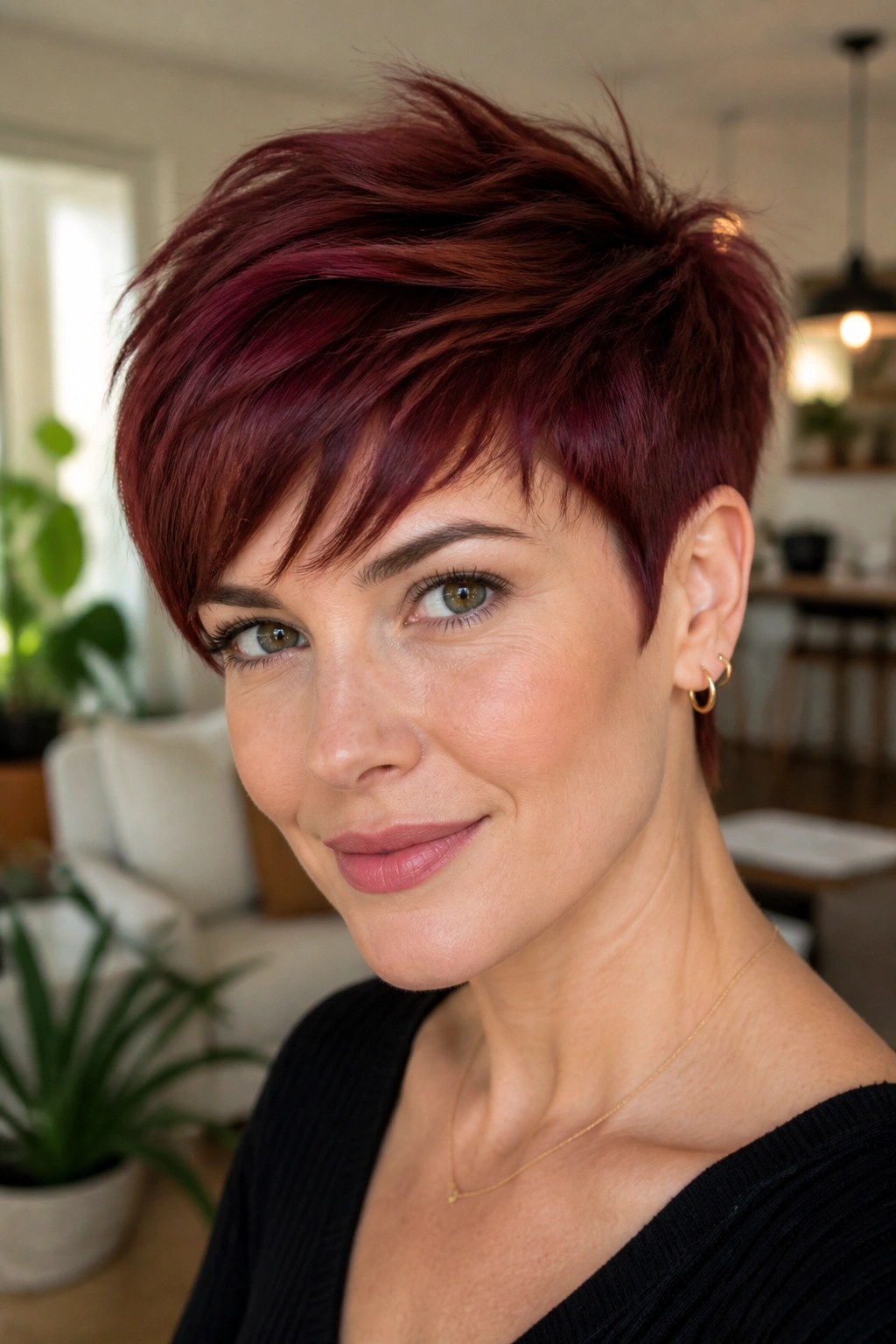
A brushed-back pixie can expose too much scalp on fine hair. Brushing the texture forward often works better. It gives the crown a softer start and puts the emphasis on the fringe and eyes.
Wine red is rich and low-gloss, so the style feels deeper than a bright red crop. That depth is useful because it keeps the forward texture from looking flimsy. The hair falls toward the face in small sections, which can hide thin spots at the crown and give the cut a fuller front line.
This shape is a good match if your hair grows in a way that resists lift. Some heads simply want to go forward. Stop fighting them. Use it. A little matte paste worked through the top can make the pieces separate without clumping.
The style is not fussy, but it does need a decent trim schedule. Once the front gets too long, the forward movement can slide into shapeless territory.
19. Fire Engine Red Pixie With Clean Lines
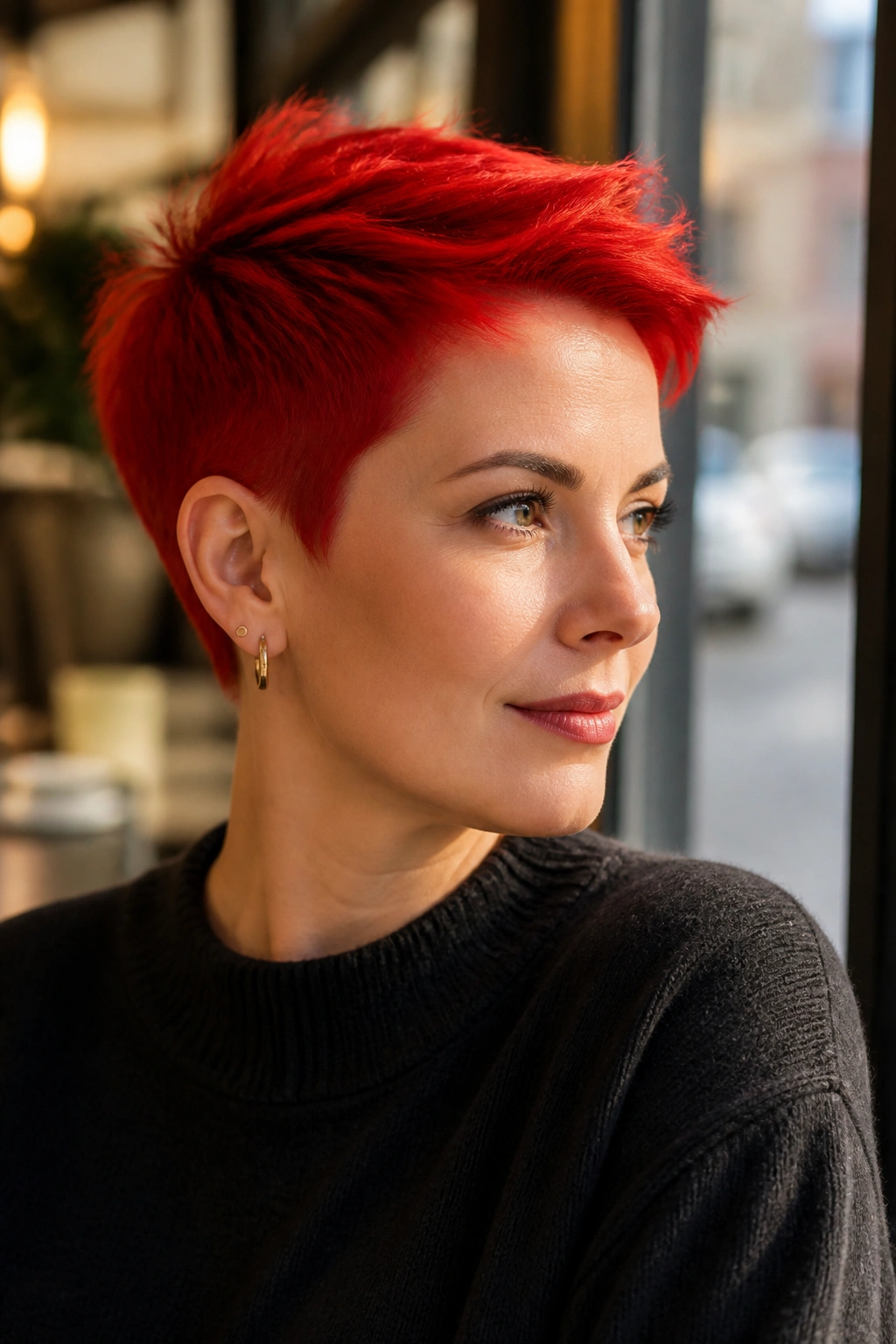
A fire engine red pixie cut is not shy. It works because the color and the shape both speak loudly, and on fine hair that can be a gift if the cut is precise.
The clean lines matter more here than anywhere else in the list. If the outline is sloppy, bright red will show every mistake. If the cut is neat, the whole style looks crisp and confident. Keep the sides tapered, the neck clean, and the top just long enough to create a little lift. You don’t need much bulk. You need accuracy.
This is the red for someone who wants the haircut to be the statement. Not the makeup. Not the clothes. The hair.
A glossing product can help the color look rich, but do not overdo the shine. Too much gloss can make fine hair seem thinner by showing too much separation at the scalp. A controlled finish is better. Think tidy, sharp, and a little bold. That’s the sweet spot.
20. Spiced Chestnut Pixie Cut With Long Crown
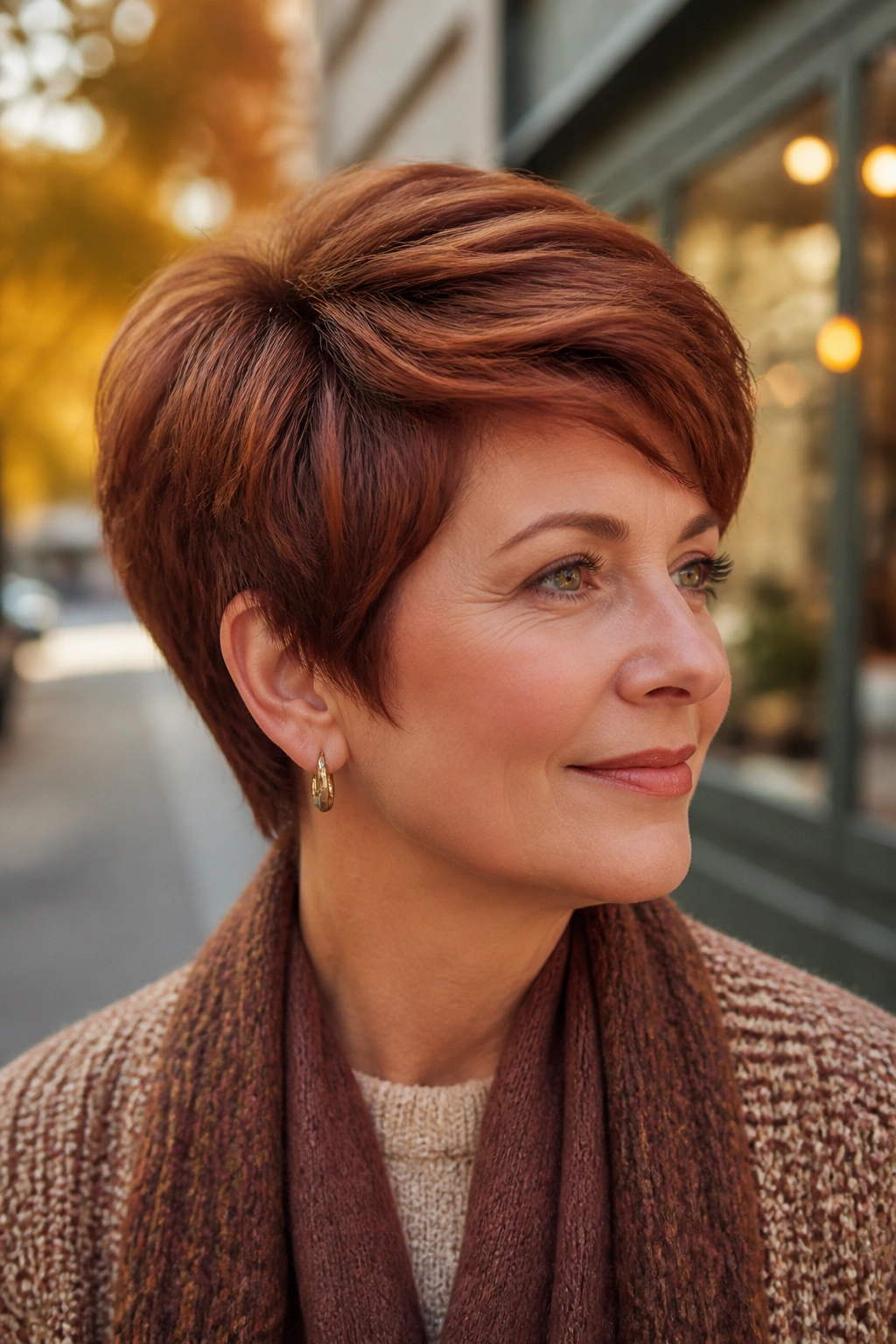
Want red without going all the way into bright territory? This is the one I’d hand to someone who wants something wearable first and dramatic second.
Why It Feels Easy to Live With
Spiced chestnut sits between red, brown, and copper, which means it has warmth without being loud. On fine hair, that softer balance can be kinder because the shade adds depth while the long crown creates room for movement. You get the visual lift of a pixie cut, but not the hard edge that some bright reds bring.
Keep the crown longer than the sides and point-cut the ends so the top can break into soft pieces. That little bit of length lets you tuck, sweep, or push the hair back depending on the day. It also gives you more room to play with product. A light mousse for volume. A touch of cream for polish. Nothing heavy.
This is the most flexible choice in the set, and maybe the smartest one if you like a red pixie that still feels easy, even on a rushed morning.
