



Thick pixie cuts for round faces work when they make the face look a little longer, a little sharper, and a lot more interesting. If the shape is wrong, thick hair can puff out at the sides and add width where you do not want it. If the shape is right, the cut opens up the cheekbones, shows off the eyes, and gives dense hair a clean outline instead of a bulky one.
The crown is the whole game.
Round faces usually look best with a cut that brings the eye upward or diagonally across the face. That can mean height at the top, a side-swept fringe, a tapered nape, or a strong asymmetrical line. Thick hair is a gift here, because it holds shape and texture better than finer hair, but it needs smart debulking. Without that, a pixie can turn boxy fast.
Some of the styles below are soft and flattering. Some are sharp and a little daring. All 30 use thick hair on purpose, not as a problem to hide, and that makes a huge difference in how the cut sits on a round face.
1. Crown-Lifted Textured Pixie
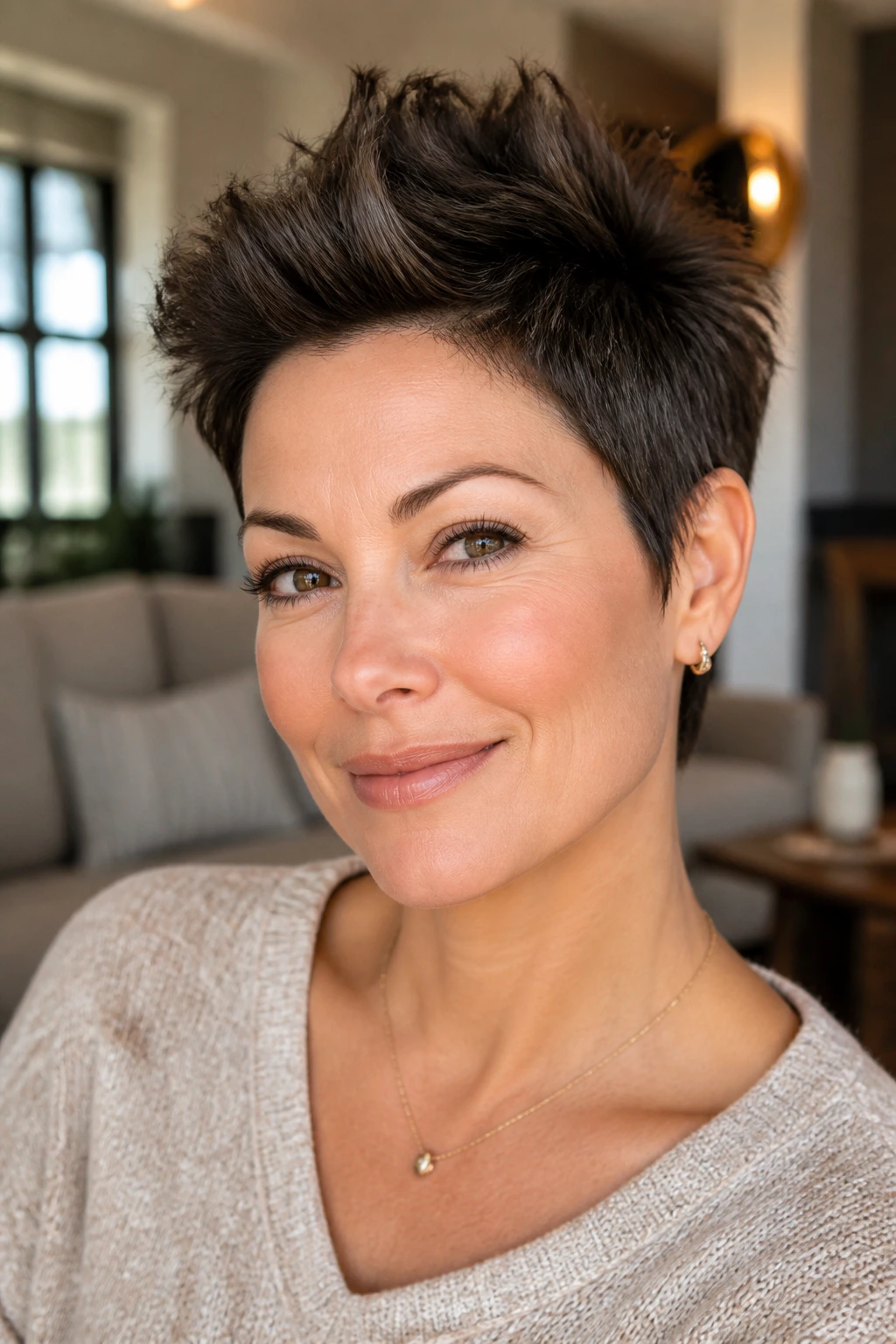
A crown-lifted pixie is one of the cleanest ways to handle thick hair on a round face. The top gets enough length to build height, while the sides stay tighter so the face doesn’t read wider than it is. That lift changes the whole shape.
Why the Crown Matters
Ask your stylist for shorter, controlled sides and 2 to 4 inches of texture on top. The length on top should not fall flat. It should stand up a little, then break into soft pieces instead of one solid block.
A little root lift at the crown does more than a heavy fringe ever will. It pulls the eye up and away from the widest part of the cheeks. That’s the trick.
- Blow-dry the top forward first, then redirect it up.
- Use a small round brush or your fingers.
- Finish with a matte paste, not a shiny gel.
- Keep the nape close so the cut stays neat.
Best move: keep the sides snug and the crown airy. That balance is what keeps thick pixie cuts for round faces from looking puffy.
2. Long Side-Swept Fringe Pixie
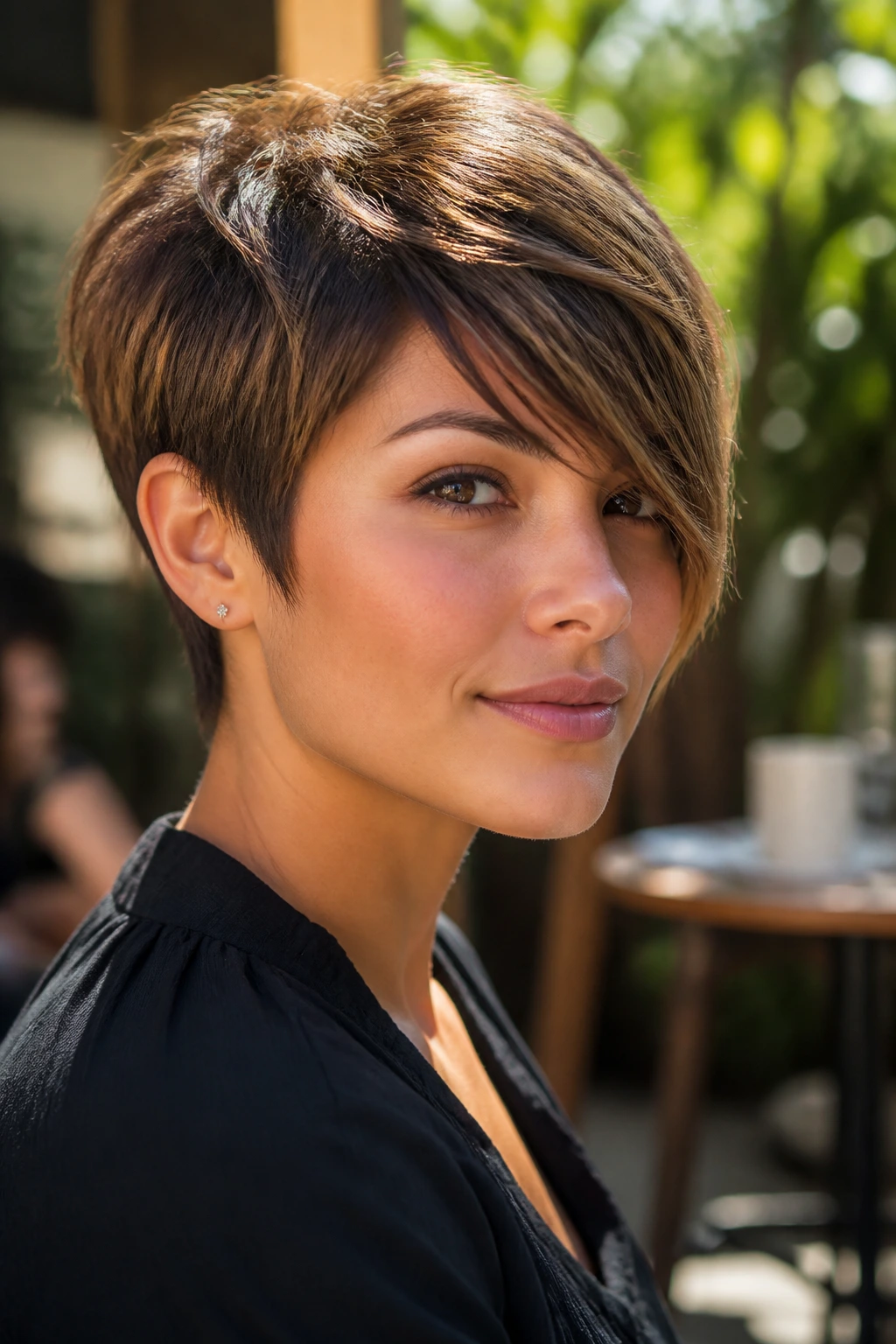
Can a fringe work on a round face? Yes, if it moves diagonally instead of sitting straight across. A long side-swept fringe gives thick hair a soft curve that breaks up the roundness of the face without hiding it.
The fringe should start somewhere near the deep side part and fall past the brow, often grazing the cheekbone on one side. That diagonal line is flattering because it creates movement and takes the eye off the widest point of the face. It also gives thick hair somewhere to go, which is half the battle.
How to Style It
A quick blow-dry with a paddle brush is enough if the fringe has been cut with a little internal texture. If it’s too heavy, it will split and sit like a curtain. If it’s too wispy, it will frizz. The sweet spot is a soft, piecey sweep that bends instead of collapsing.
This is the kind of pixie cut for a round face that looks polished on a work day and relaxed on a weekend. It doesn’t try too hard. Good fringe cuts rarely do.
3. Tapered Nape Pixie
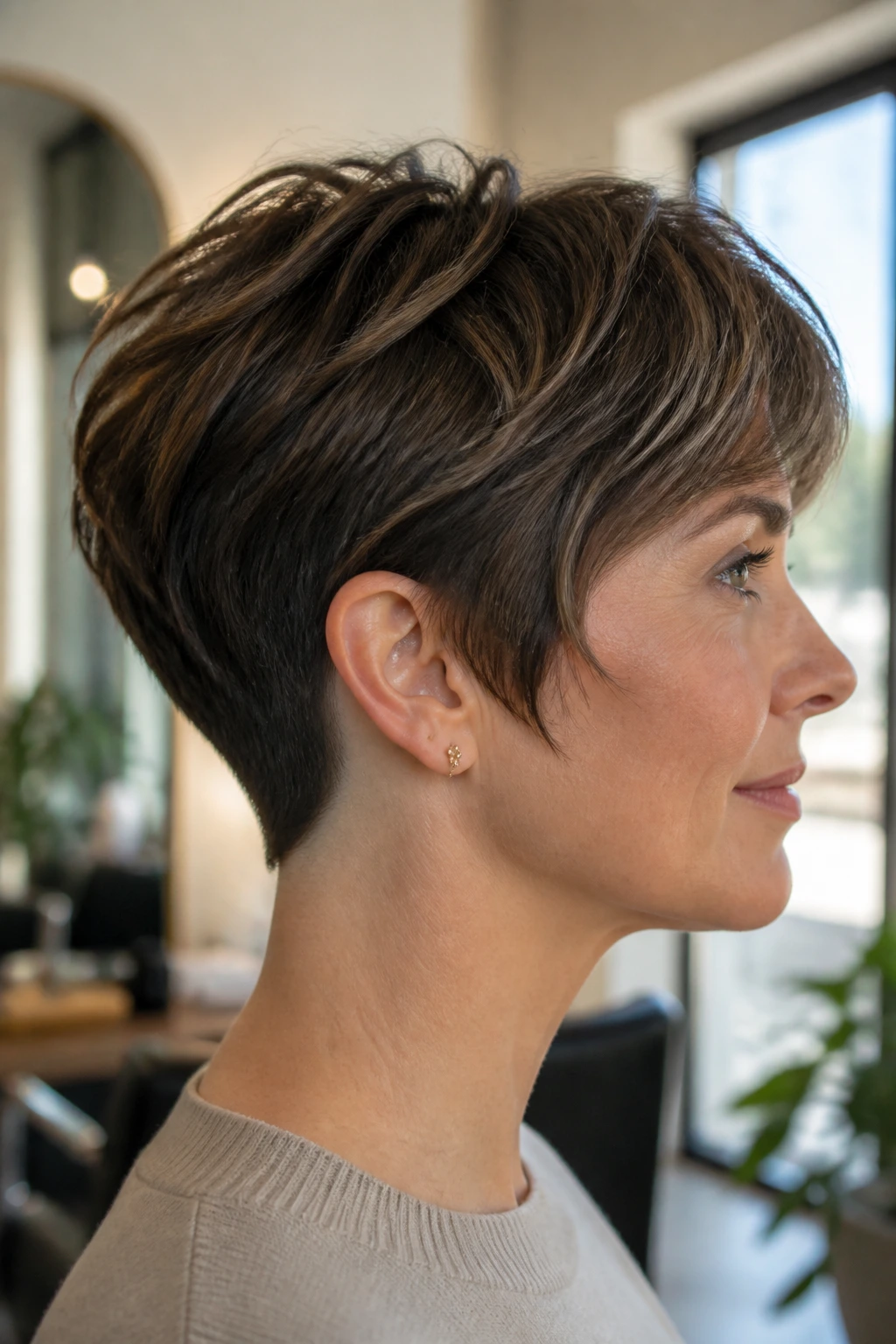
A tapered nape makes thick hair behave. That’s the blunt truth.
When the back of the cut is tight and clean around the neckline, the whole pixie looks lighter and more deliberate. On a round face, that matters because too much bulk at the back can make the head shape look shorter and wider. A neat taper gives the cut a sharper finish and keeps the profile from ballooning.
The front can stay a little longer, which helps balance the roundness of the face. I like a bit of softness around the temples here, too. Not too much. Just enough to keep the cut from feeling severe.
What to Ask For
- A close, blended nape
- Soft graduation through the back
- No chunky shelf at the occipital bone
- Enough length on top to style forward or to the side
This one needs trims every 4 to 6 weeks. Skip that, and the shape starts to blur fast.
4. Asymmetrical Pixie With a Deep Part
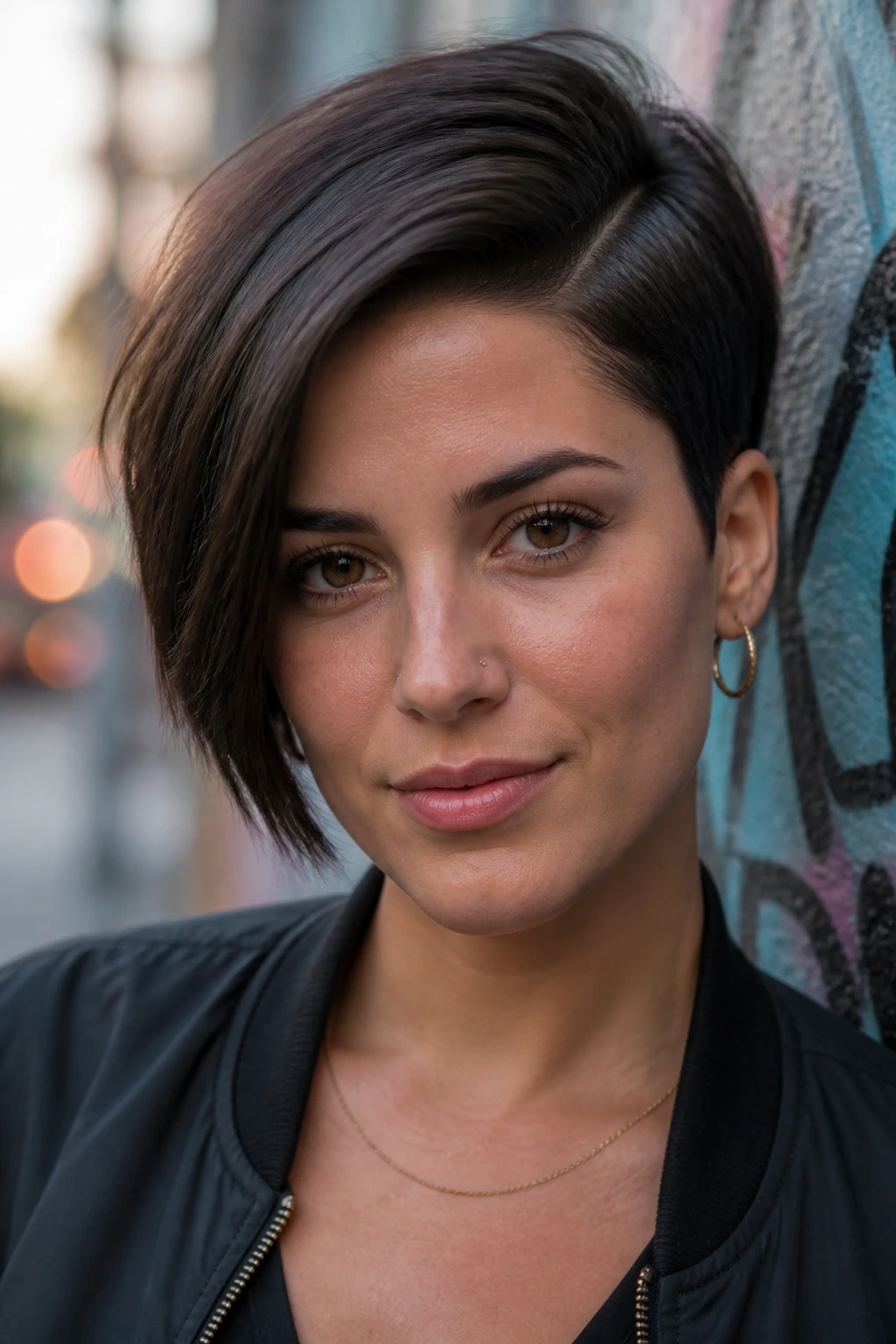
A round face and a perfectly even cut can feel too symmetrical. That’s why an asymmetrical pixie works so well. One side stays a touch longer, the part sits deep, and the whole shape gets a leaner, more angular line.
I like this cut on thick hair because density gives the asymmetry some weight. Fine hair can look stringy here. Thick hair can hold the shape and make it look intentional.
The longer side can skim the cheekbone or tuck behind the ear, which creates a useful vertical line. The shorter side keeps the cut from feeling heavy around the jaw. It’s a sharp little contradiction, and that’s what makes it good.
If you wear glasses, this style is even better. The side that tucks away keeps the frame visible. The longer side softens the face. Clean, simple, done.
5. Undercut Pixie With Full Top
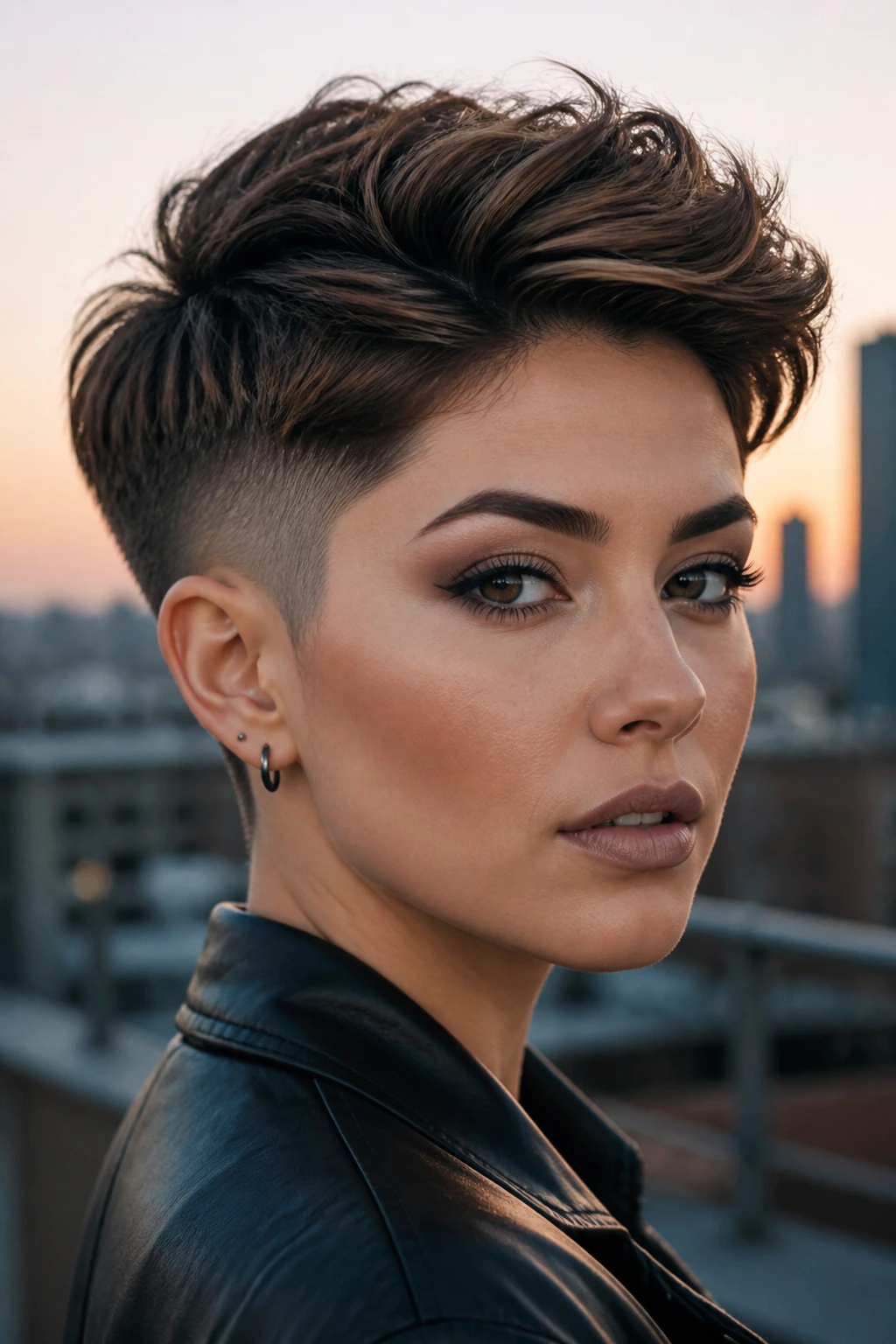
If thick hair hates staying put, an undercut is a mercy. It removes bulk from the sides and nape, then leaves enough length on top to shape the face upward instead of outward.
This is one of the bolder thick pixie cuts for round faces, and it works because the top becomes the main event. Keep the crown long enough to flick, sweep, or break into texture. The undercut does the quiet work in the background.
Why It Works
The reduced bulk at the sides stops the puff that so often makes thick pixies widen a round face. You get clean edges near the ears, a little drama on top, and a cut that dries faster than a fully layered pixie.
Who Should Try It
- Anyone with dense, straight hair that swells at the sides
- Anyone who likes a sharper, more modern outline
- Anyone willing to keep the undercut refreshed regularly
This one is not shy. That is the point.
6. Choppy Layered Pixie
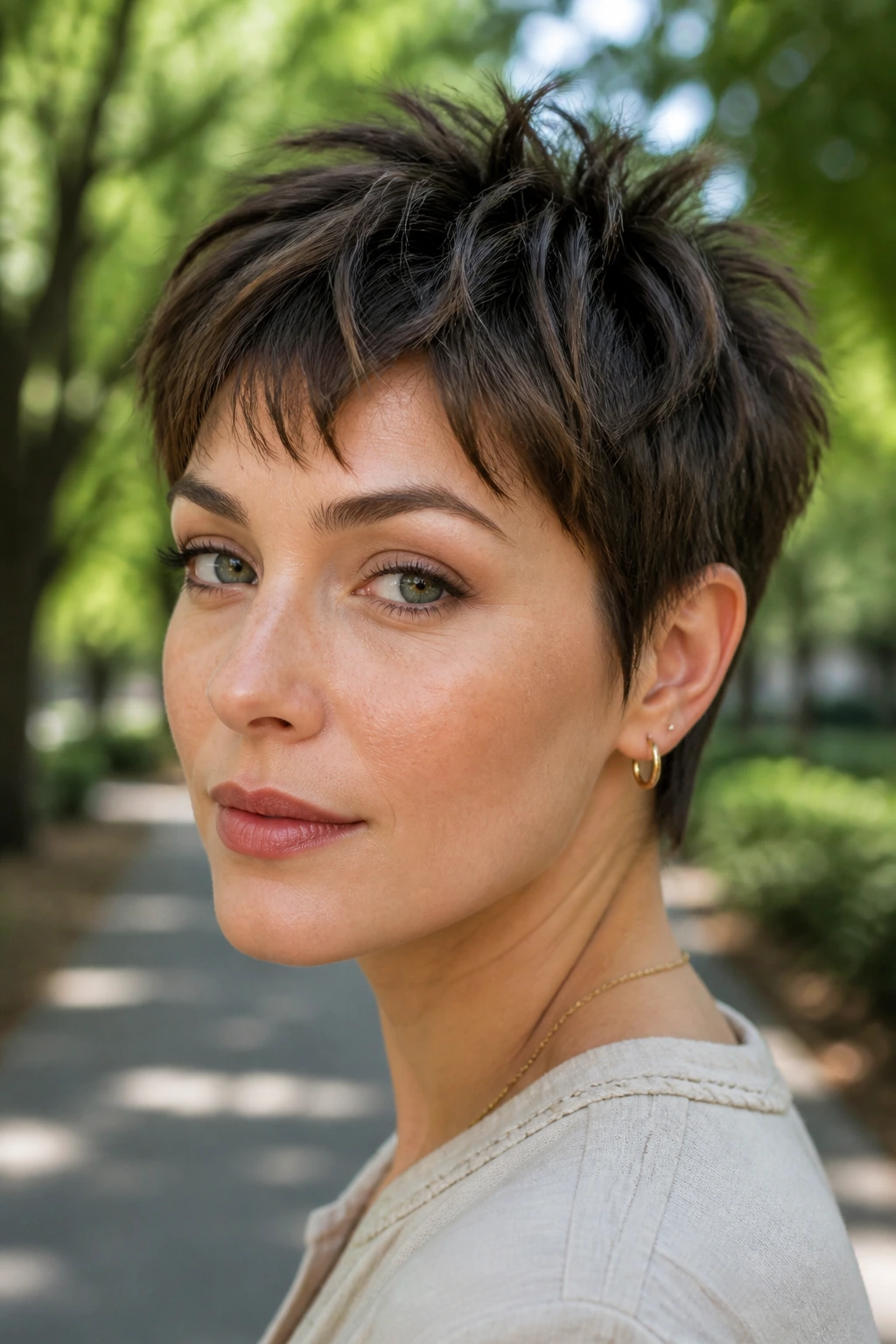
Choppy layers are the easiest way to turn thick hair from heavy into interesting. Instead of one blunt mass, you get tiny broken pieces that move when you turn your head. On a round face, that movement matters because it keeps the shape from feeling wide and static.
The cut should not be over-thinned. That mistake makes thick hair fuzzy. Better to use point cutting and careful internal layers so the bulk comes out from inside the shape, not from the surface.
What the Layers Do
They create little gaps of light and shadow, which makes the top look taller and the sides look softer. That’s especially useful if your hair tends to sit flat on the crown but puff around the ears.
A choppy pixie is also forgiving on busy mornings. Scrunch in a light paste, twist a few sections with your fingers, and walk away. Done badly, it looks random. Done well, it looks easy in the best possible way.
7. Feathered Pixie With Soft Ends
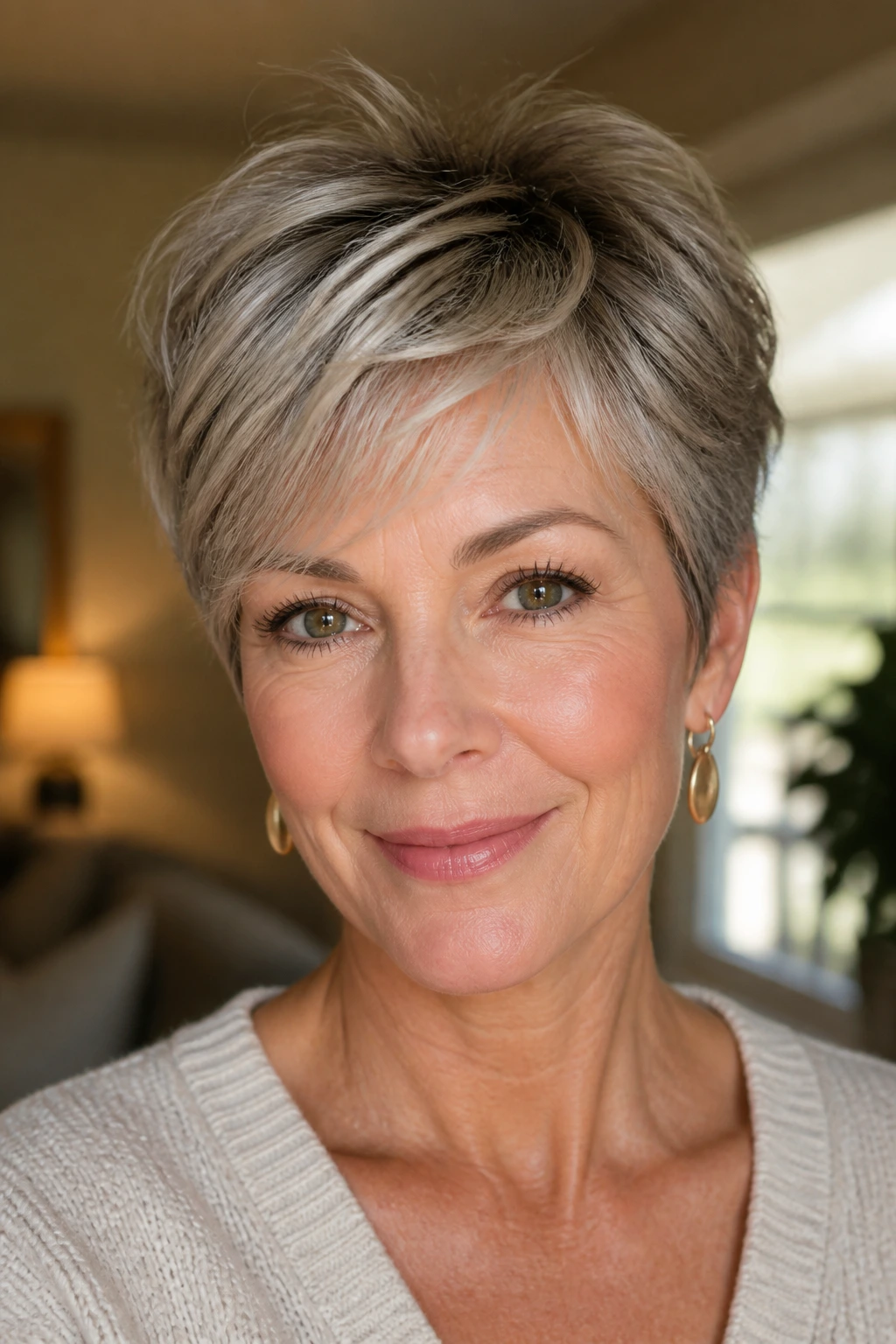
Feathered ends feel lighter between your fingers. That’s the first thing I notice about this cut.
On thick hair, feathering removes the hard edge that can make a pixie feel heavy. The result is a softer outline around the face, which helps a round shape look a little longer and less boxed in. The trick is restraint. Too much feathering and the cut loses structure. Too little and it stays bulky.
This style works especially well if your hair is straight or has a slight bend. The ends move, but they don’t frizz out. A small round brush and a touch of cream are usually enough.
The best feathered pixies leave the crown slightly fuller than the temples. That keeps the eye moving upward instead of out to the sides. It sounds small. It is not. Small shape decisions change everything here.
8. Curly Pixie With Controlled Volume
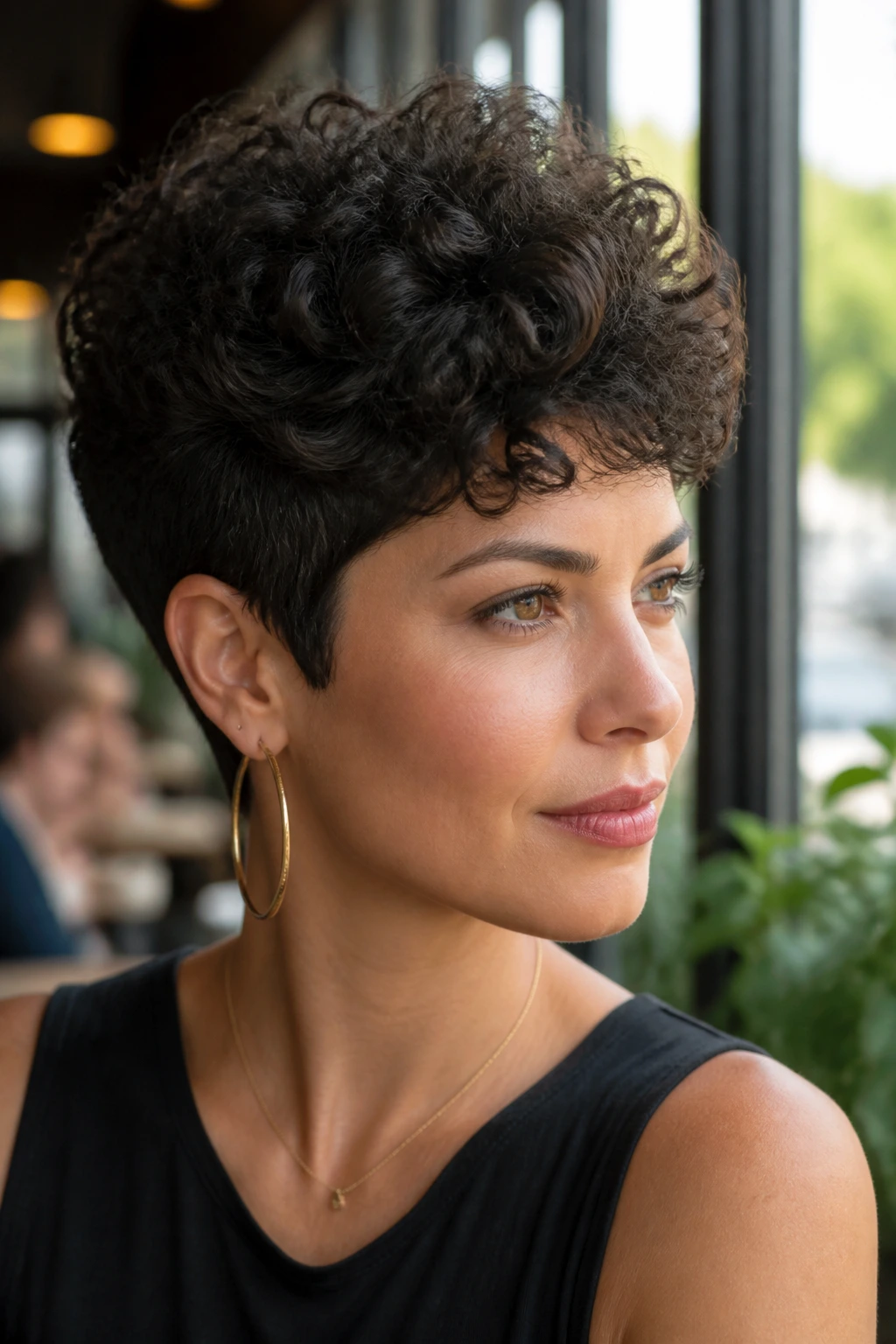
Can curls work in a pixie on a round face? Absolutely. The catch is placement.
You want the volume to live high and light, not wide at the cheeks. Thick curls can build a gorgeous halo when they’re cut with enough room at the crown and cleaned up at the sides. If the curls are allowed to flare at cheek level, the face can look fuller than it is.
How to Keep It Balanced
- Ask for curl-by-curl shaping, not one blunt chop
- Keep the nape neat
- Leave a bit more height on top
- Use a curl cream with a light hold
A diffuser helps, but low heat matters more than speed. Let the curls set without being blasted into a puffball. That’s the line. This style is lively, flattering, and a little unpredictable in a good way.
9. Wavy Pixie With Piecey Bend
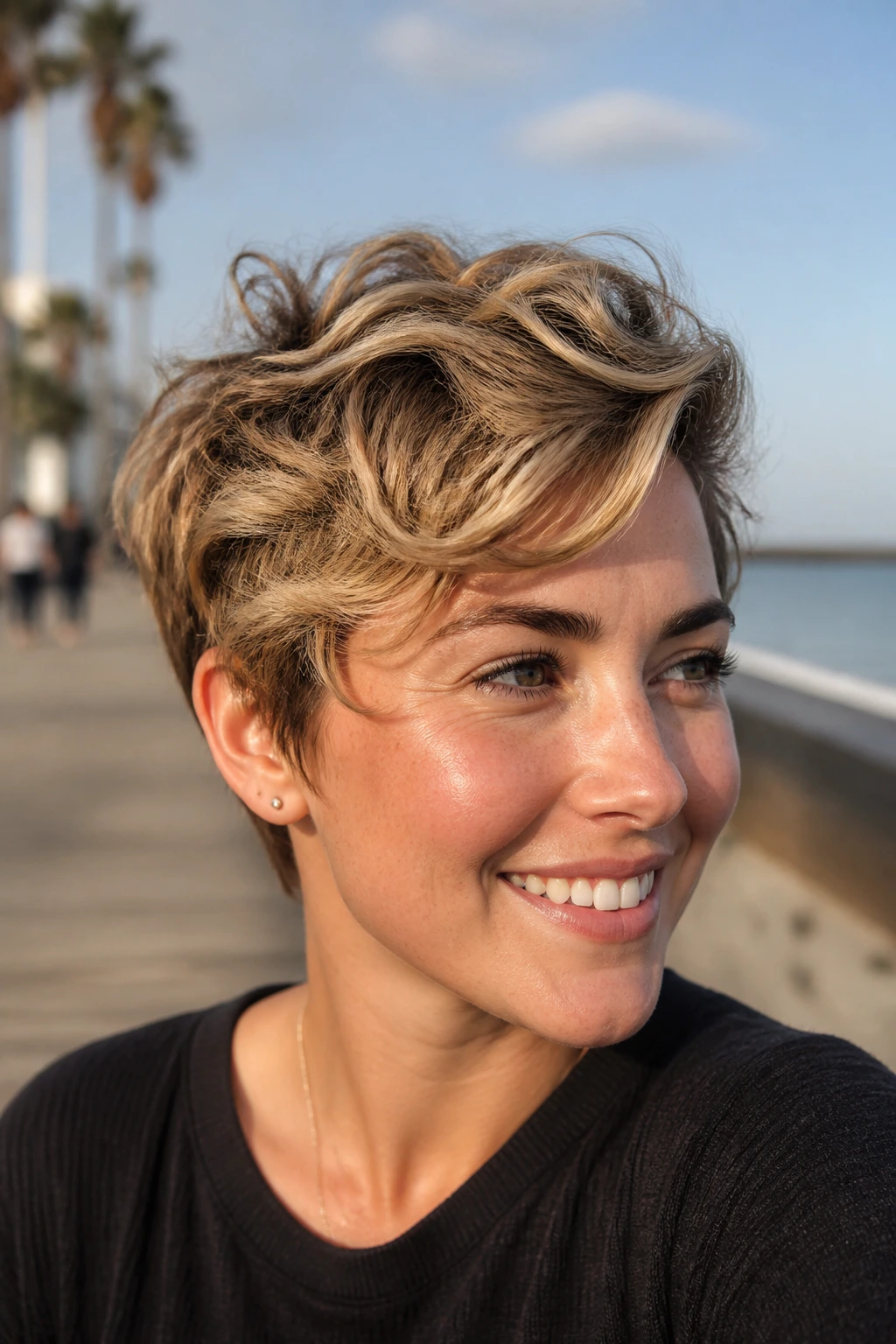
A wavy pixie has a softer attitude than a straight one. The bends break up the outline and keep thick hair from looking too solid. On a round face, that piecey movement can be a blessing, especially when the waves sweep slightly forward across the forehead.
This cut likes a side part or a loose fringe. It does not need perfect symmetry. In fact, symmetry can make it less interesting. Let a few pieces fall toward the cheekbone, then keep the sides tapered so the wave pattern doesn’t widen the face.
This is the kind of pixie that looks best when it’s not overworked. A little mousse, a quick finger-dry, maybe a touch of texture spray at the roots. Enough to separate. Not enough to stiffen.
Thick hair gives the waves a stronger shape, which means you can get away with less product than you think.
10. Slicked-Back Pixie
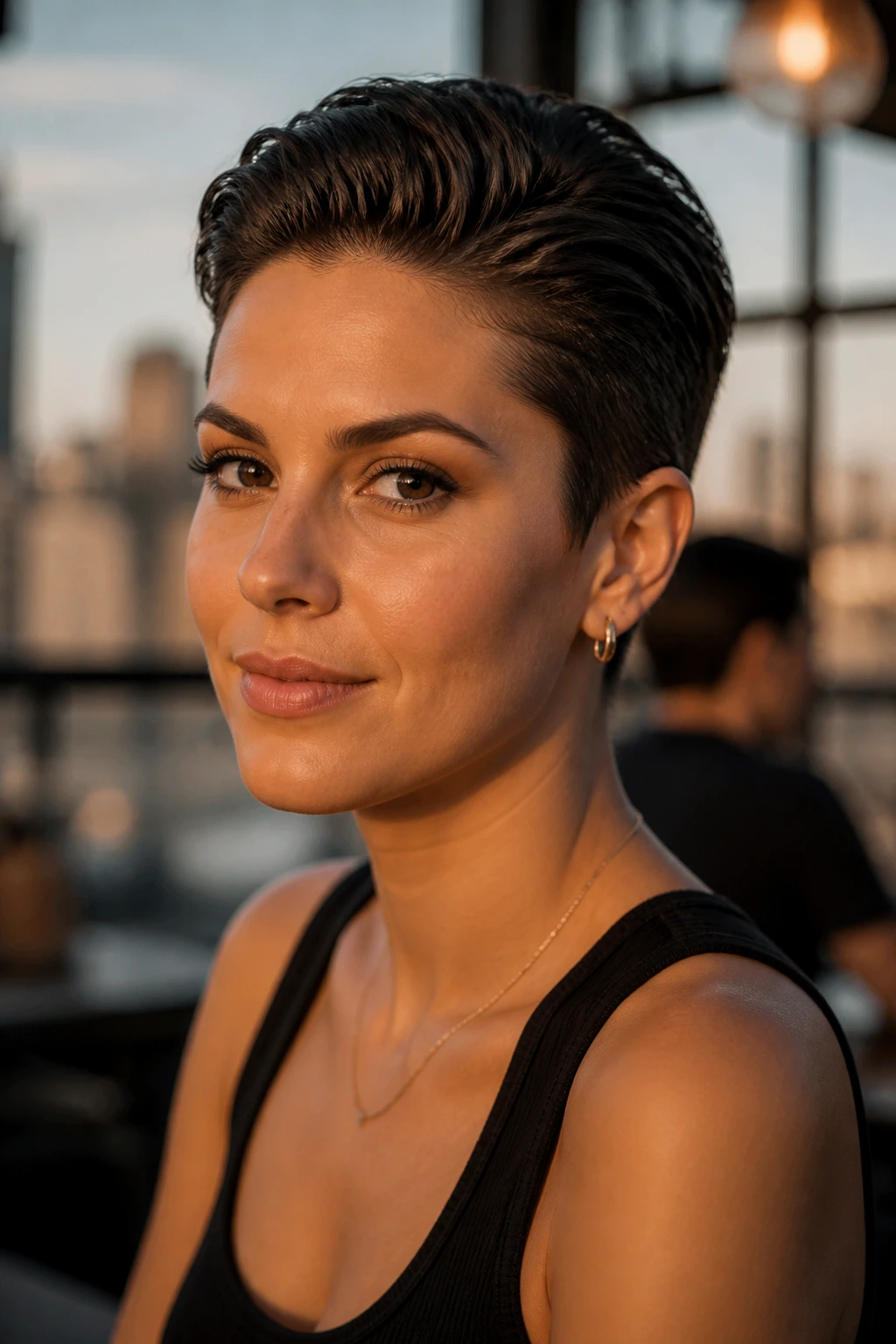
A slicked-back pixie is a strong choice if you want your face to do the talking. The hair goes up and away, which exposes the cheekbones and makes the roundness of the face read softer by comparison.
This style needs a clean cut underneath. If the sides are too bulky, the slicked-back shape can get wide at the temples. A tight taper or undercut solves that fast. The top can stay long enough to comb back with a bit of separation, not a wet helmet.
Use a small amount of pomade or gel, then comb it through with your fingers or a wide-tooth comb. The goal is control, not lacquer. Thick hair can hold the style all day, which is nice, because you do not want to keep fixing it.
Quick Notes
- Best with strong brows or statement earrings
- Needs a smooth finish around the hairline
- Works well for nights out and sharp outfits
11. Shaggy Pixie Crop
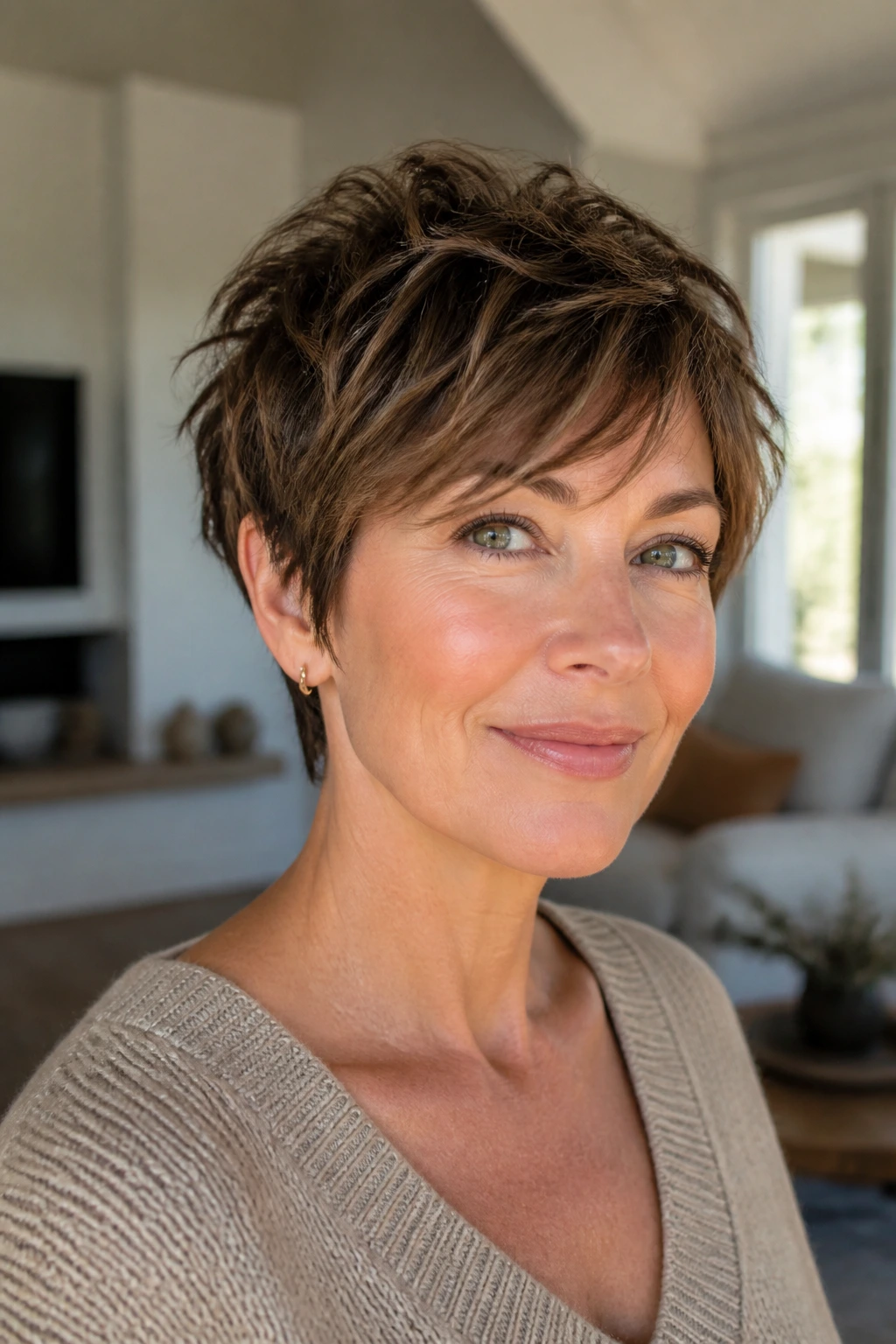
If you hate spending ten minutes with a round brush, this one deserves a look. The shaggy pixie crop keeps the shape loose, a little messy, and full of movement, which is a smart match for thick hair.
A round face can take this style if the layers are broken up enough. You want height at the top, lightness around the sides, and a fringe that doesn’t sit like a shelf. The shag effect comes from different lengths overlapping each other, not from random bulk.
What Makes It Different
The cut feels casual, but the structure still matters. Ask for internal layers and a softened perimeter so the hair doesn’t triangle out. That triangle shape is the enemy.
A little texture cream is usually enough. This cut does not need a perfect finish. That is part of the appeal. It looks better with a slight bend, a bit of fringe separation, and a less-than-perfect part.
12. Micro-Fringe Pixie
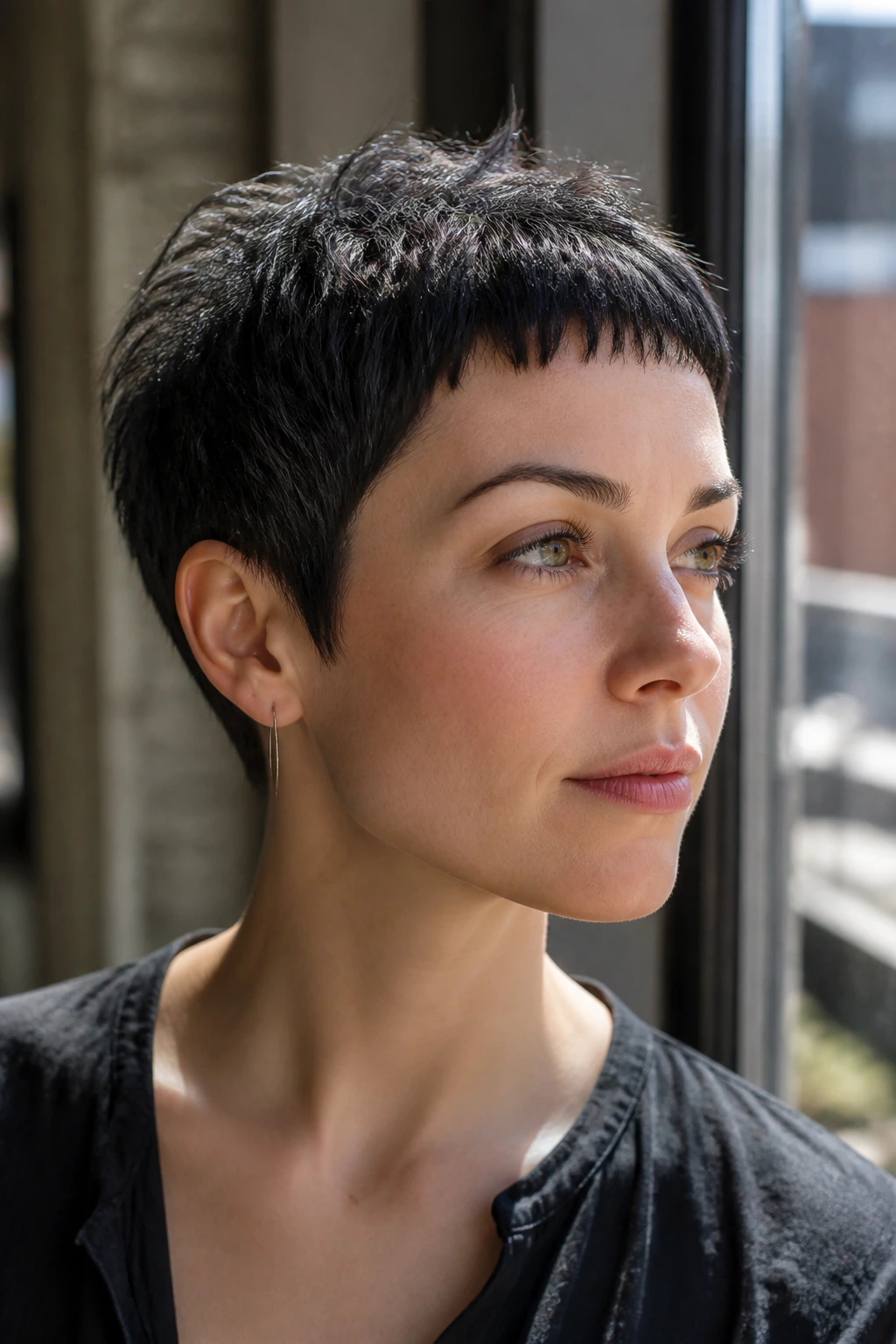
A micro-fringe on a round face is risky. I like that.
It works only when the rest of the cut gives enough lift and angle to balance the short bang. The tiny fringe opens up the eyes and adds a graphic edge, but it can also make the forehead look shorter if the sides are too full. With thick hair, that means the top and temple area have to be managed carefully.
The best version is cropped, textured, and a little irregular at the edge. Not a hard line. A tiny bit of broken softness keeps it from looking severe. Pair it with a tapered nape and a higher crown, and the face looks more sculpted.
- Best for people who like a bold look
- Needs regular bang trims
- Works better when the cheeks are not overloaded with width
This is not the safe choice. It is the interesting one.
13. Grown-Out Pixie With Ear-Length Sides
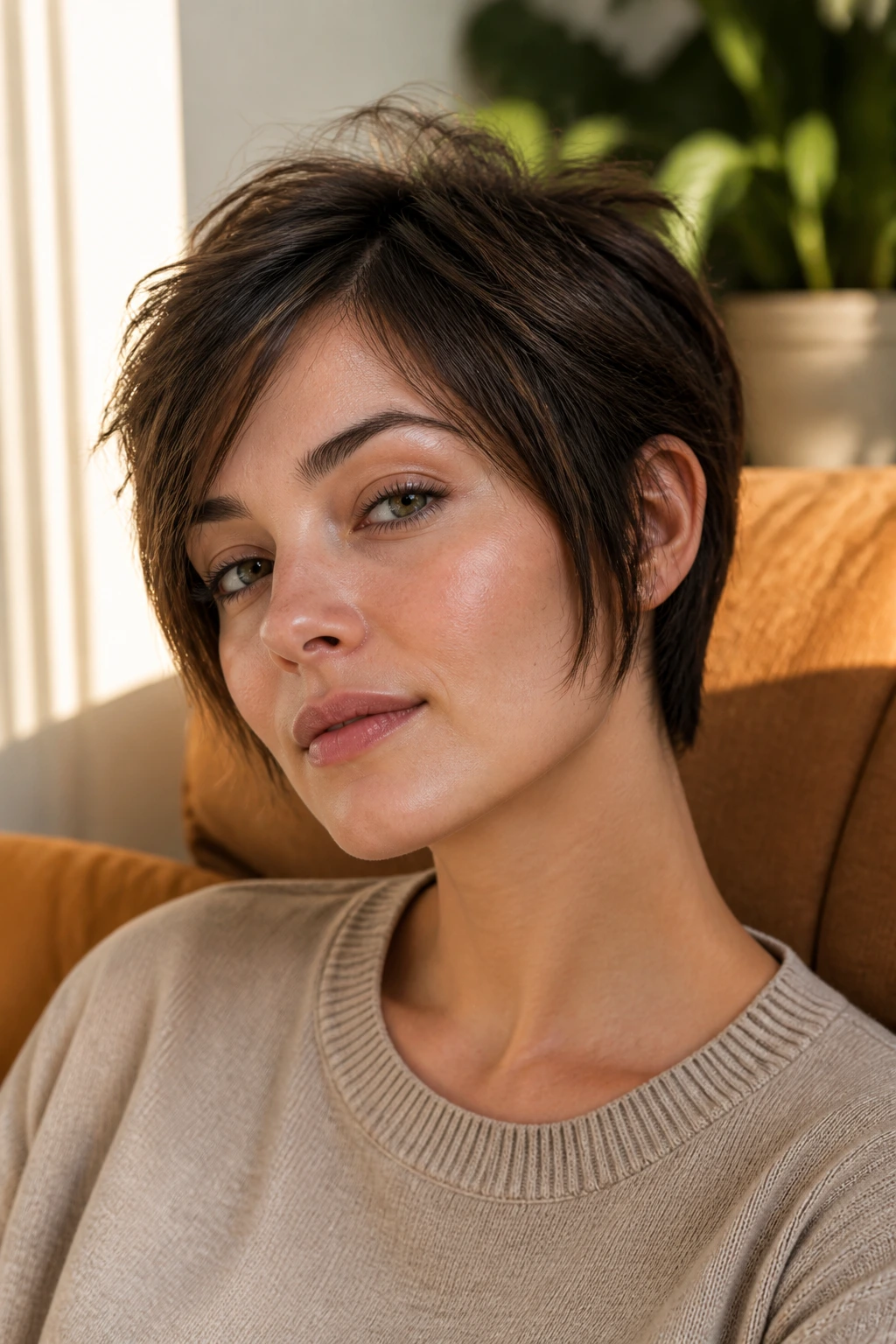
A grown-out pixie gives thick hair room to breathe. The sides can skim the ears, the top stays layered, and the whole cut feels softer than a strict crop. On a round face, that extra length around the cheekbone can help draw the eye down rather than out.
I like this shape for anyone who wants a pixie that doesn’t scream for daily styling. It also grows out gracefully, which matters if you do not live near a salon or you simply dislike frequent appointments. The trick is keeping the perimeter clean so the style does not drift into a puffy helmet.
Why It Flatters
The longer side pieces create vertical lines beside the face. That quietly lengthens the look of the jaw and gives the hair a little swing. Thick strands help the cut keep its shape, even when it’s a few weeks past a trim.
14. Spiky Crown Pixie
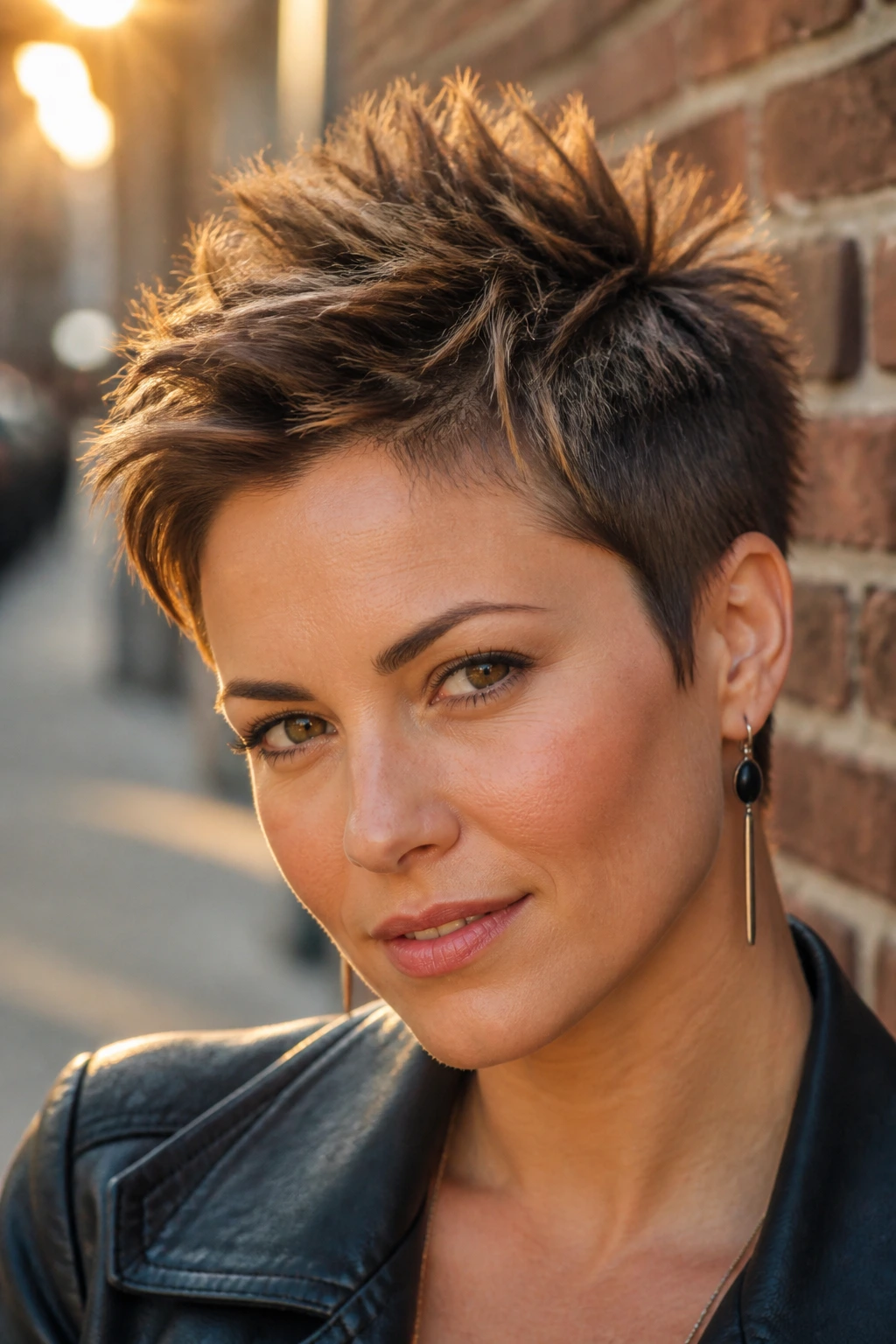
A spiky crown pixie has edge, but it should still feel touchable. The spikes are short, soft, and separated, not stiff or crunchy.
On thick hair, this style can be a lot of fun because the density helps the top stand up without much fuss. The sides should stay lean so the height reads intentional instead of messy. Round faces benefit from that vertical emphasis. It pulls the attention upward and away from the cheeks.
Use a little paste, warm it in your hands, then pinch the crown into small sections. Leave some of the pieces imperfect. Perfect spikes can look dated fast. Soft ones feel fresher and easier to wear.
This cut is for days when you want the hair to look slightly rebellious but still put together. It does both.
15. Rounded Bob-Pixie Hybrid
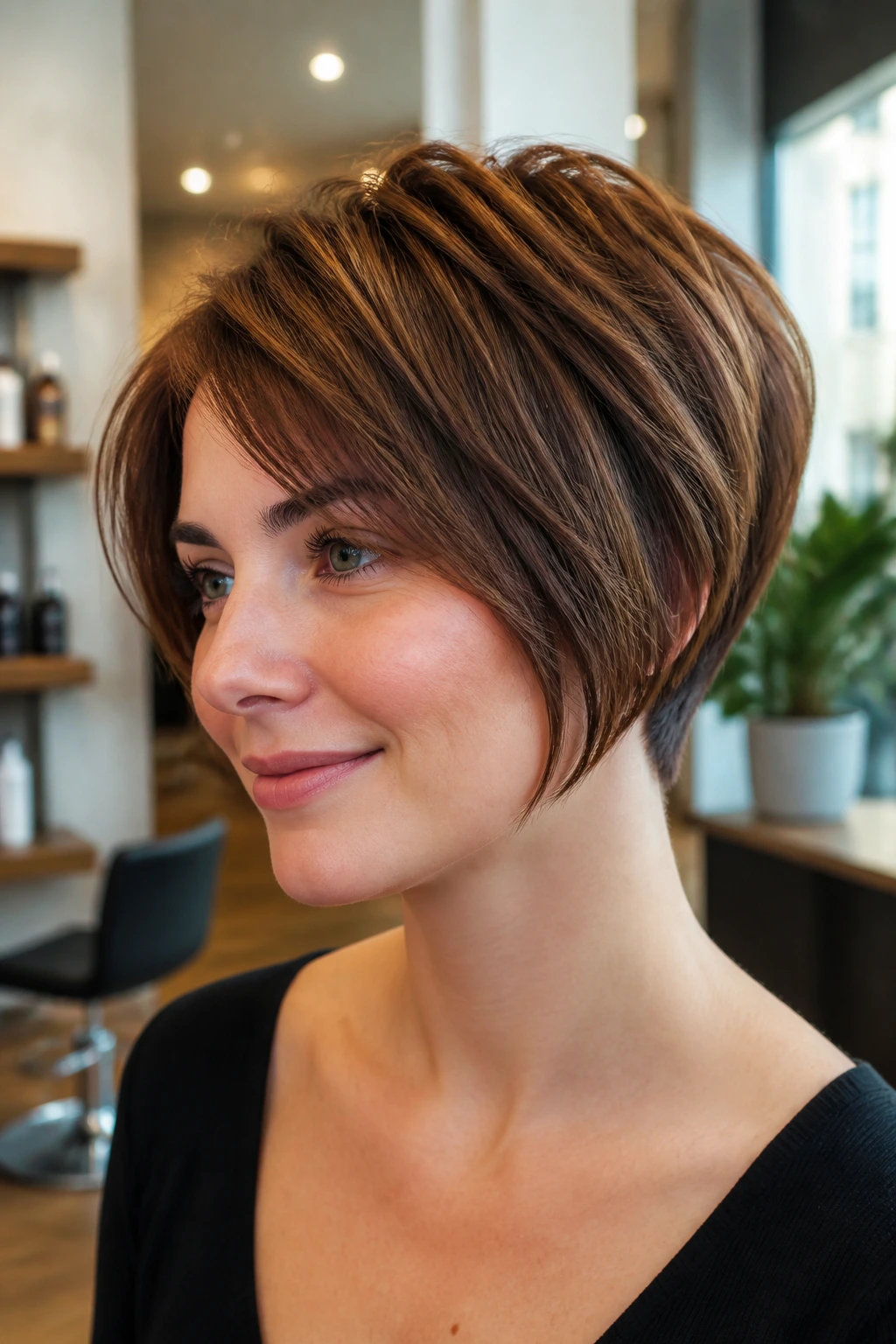
What if you want a pixie, but not a tiny one? A rounded bob-pixie hybrid sits in that middle zone. The nape stays cropped, while the front keeps enough length to brush the jawline or tuck behind the ear.
Why It Works on a Round Face
The forward length pulls the eye downward, which helps balance fullness in the cheeks. Thick hair makes this shape look plush without turning shapeless, as long as the interior is layered well. The crown should still have lift. If it flattens, the whole thing loses its edge.
Styling Notes
- Blow-dry the front forward, then sweep it off to one side
- Keep the ends soft, not blunt
- Ask for weight removal inside the cut, not just at the ends
- Trim every 5 to 7 weeks to hold the outline
This is a good choice if you want something between a pixie and a short crop.
16. Side-Part Pixie With a Tuckable Length
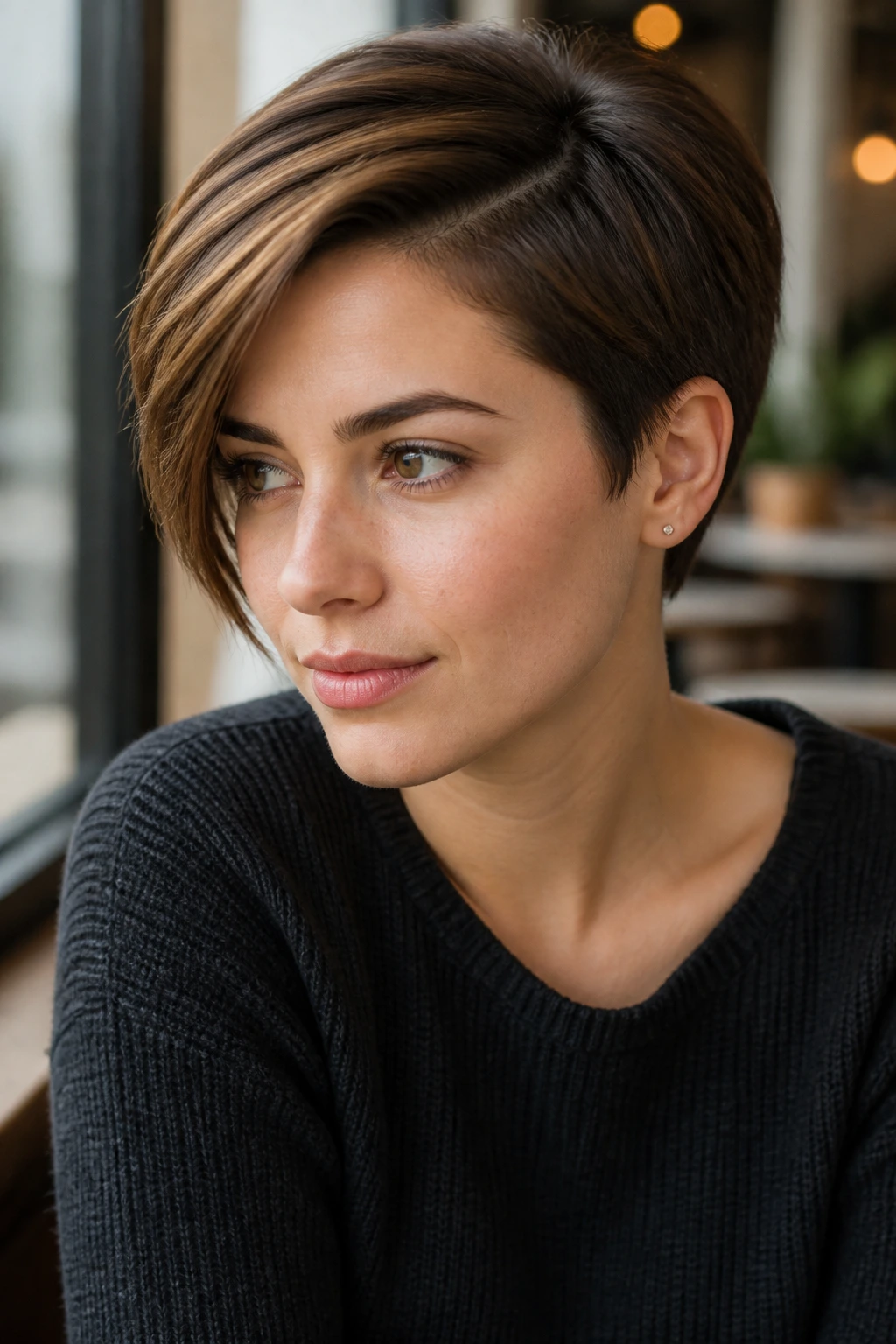
A deep side part changes the face shape fast. It creates an off-center line that stops a round face from feeling too symmetrical, and thick hair holds that line better than most textures.
The longer side should be just long enough to tuck behind the ear. That little move exposes the cheekbone and gives the face a cleaner outline. On the shorter side, keep the hair close to the head so the contrast reads clearly.
This cut feels a little more polished than a shaggy version, but it still has personality. The part is doing a lot of the work, so keep it clean. A comb and a blow-dryer nozzle help if your hair grows in stubbornly.
You can wear this one with a side-swept fringe or with more open forehead space. Both work. The difference is mood.
17. Tapered Temple Pixie
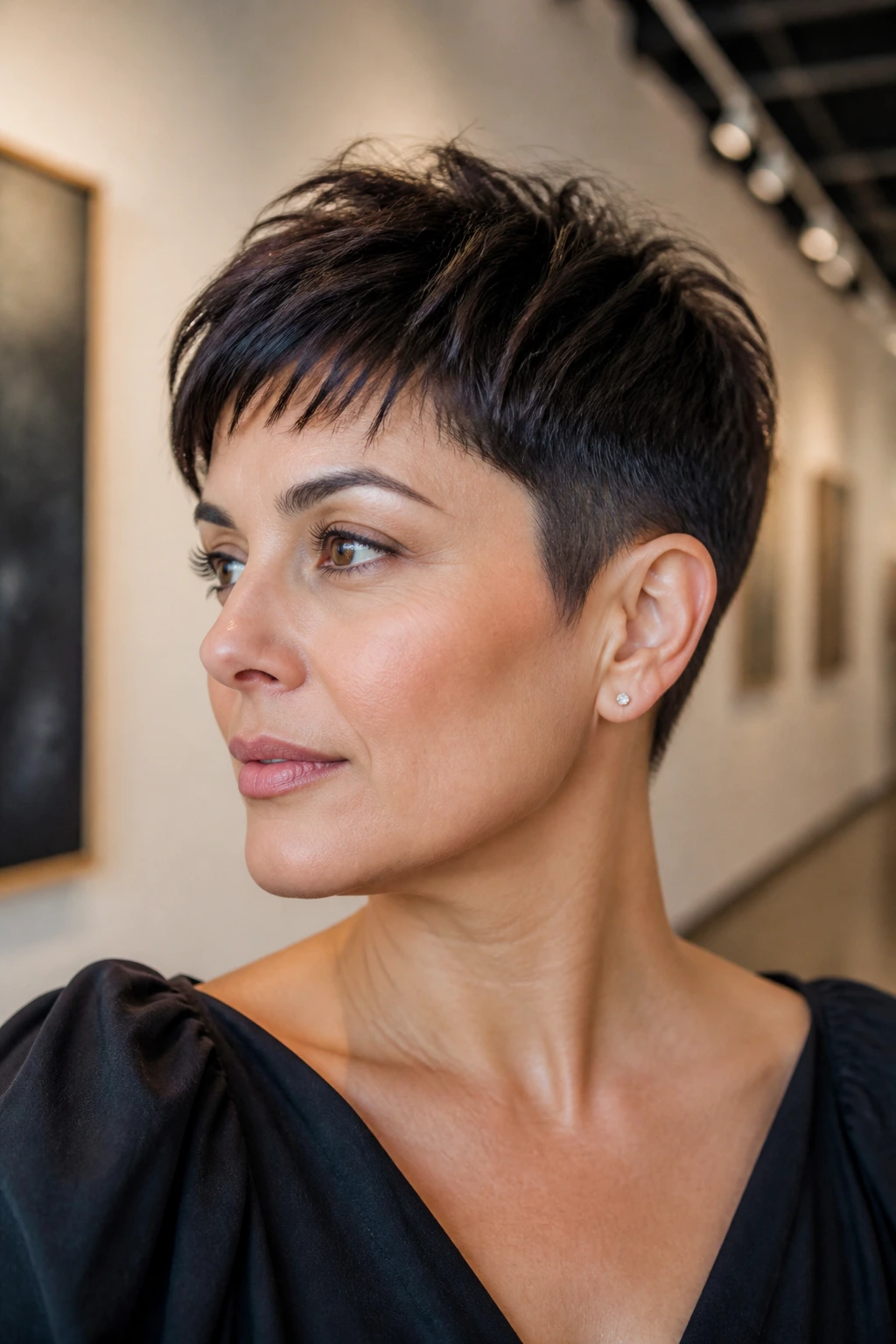
The temples matter more than people think.
When thick hair bulks up around the temples, a round face can lose definition. A tapered temple pixie keeps that area close and smooth, which makes the top and fringe look sharper by comparison. It is a small adjustment with a big visual payoff.
The cut should still leave enough softness near the front so it does not feel severe. Think neat, not shaved-looking. A little sideburn detail can help, too, especially if you like earrings or glasses.
If your hair tends to swell after washing, this is the place to watch. Dry the temple area first, using your fingers to press it flat while the root sets. That one habit can save the whole shape.
18. Tousled Bed-Head Pixie
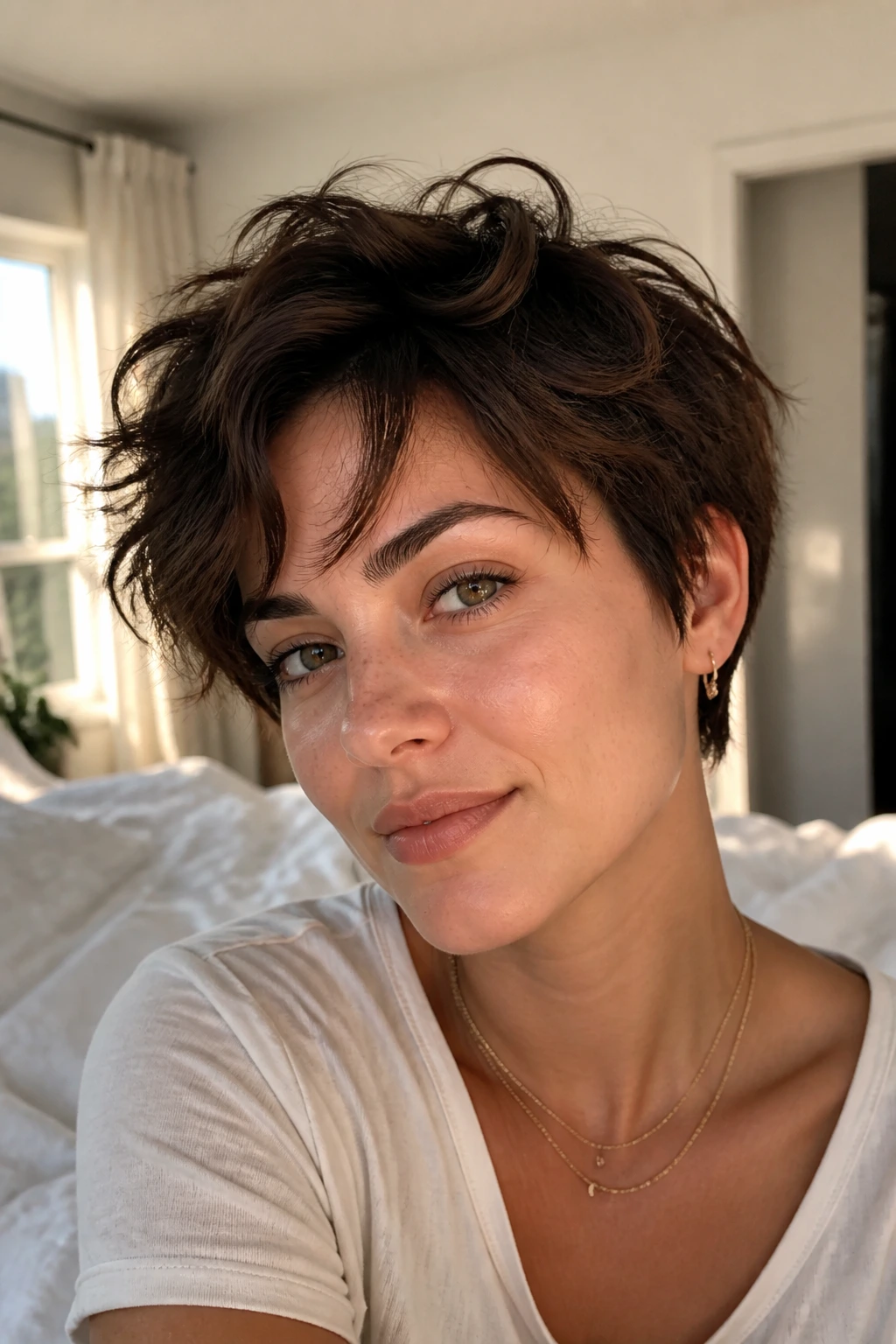
A tousled pixie is the easiest lie in hair styling. It looks casual, but the shape has to be right underneath.
Thick hair gives this cut the body it needs, and the rough texture keeps the face from reading too circular. The top should be long enough to fall in pieces, while the sides stay slimmer. That contrast keeps the cut light.
This is the kind of pixie you can wake up, mist, scrunch, and go. Not every section needs to behave. A few loose waves, a bent fringe, and a matte cream are usually enough. If you over-smooth it, you lose the charm.
Good tousled hair still has direction. That’s the detail people miss. Messy is not the same as shapeless.
19. Sculpted Pixie With a Hard Part
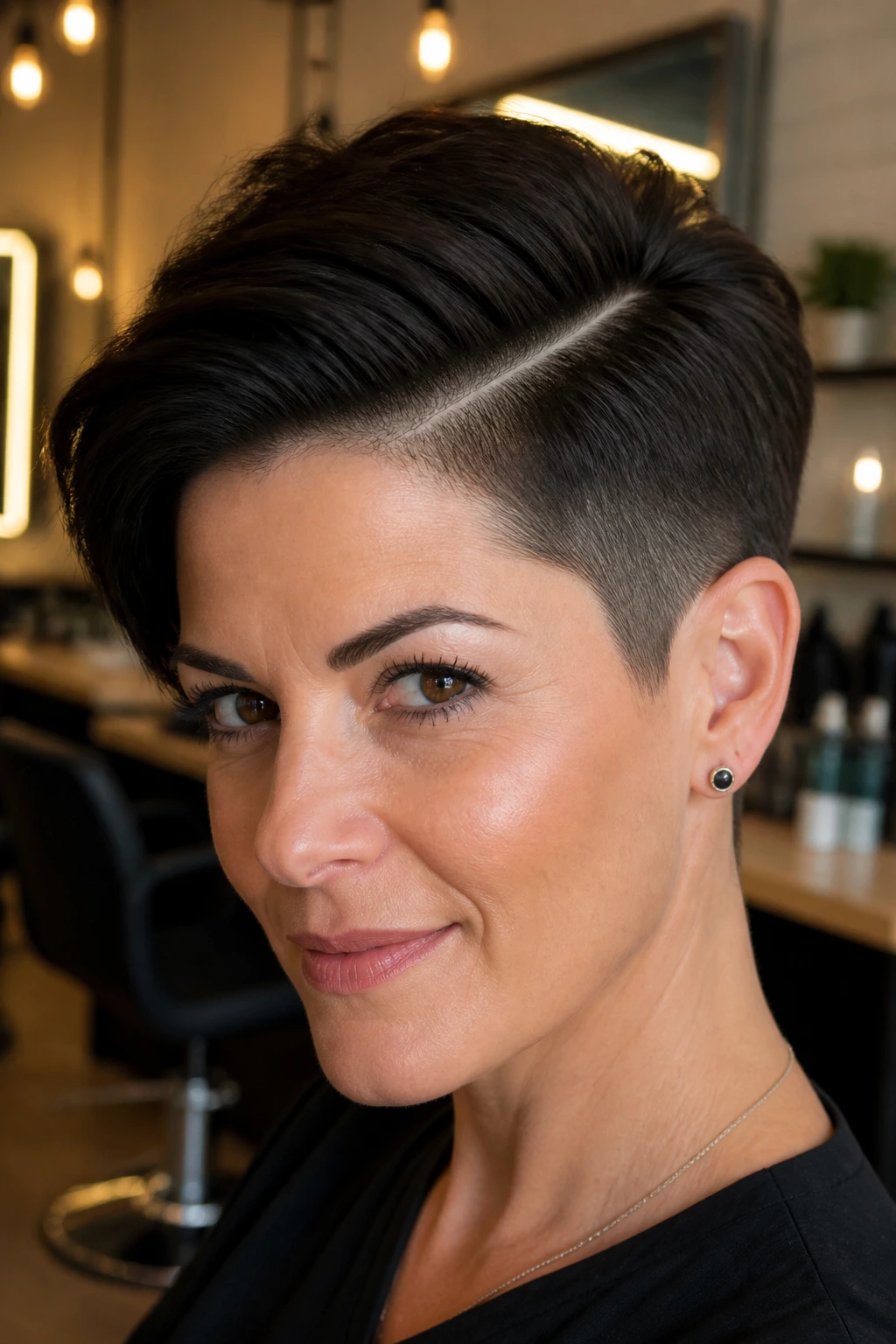
A hard part makes thick hair look deliberate in a way a soft side part sometimes can’t. On a round face, that crisp line adds structure and helps elongate the head shape a bit.
This style works best when the cut underneath is precise. The sides should be tapered, the top should have enough length to sweep or lift, and the part line should be clean enough to stay visible after styling. Thick hair holds a hard part well, which is one of the reasons this cut looks so sharp.
It is a more tailored look. Less casual. More exact. If you like neat lines and small details that stand out, this one has a lot going for it.
Use a fine-tooth comb and a little styling cream, then set the part before the rest of the hair dries. That step matters. A hard part is much harder to force in later.
20. Salt-and-Pepper Pixie With Texture
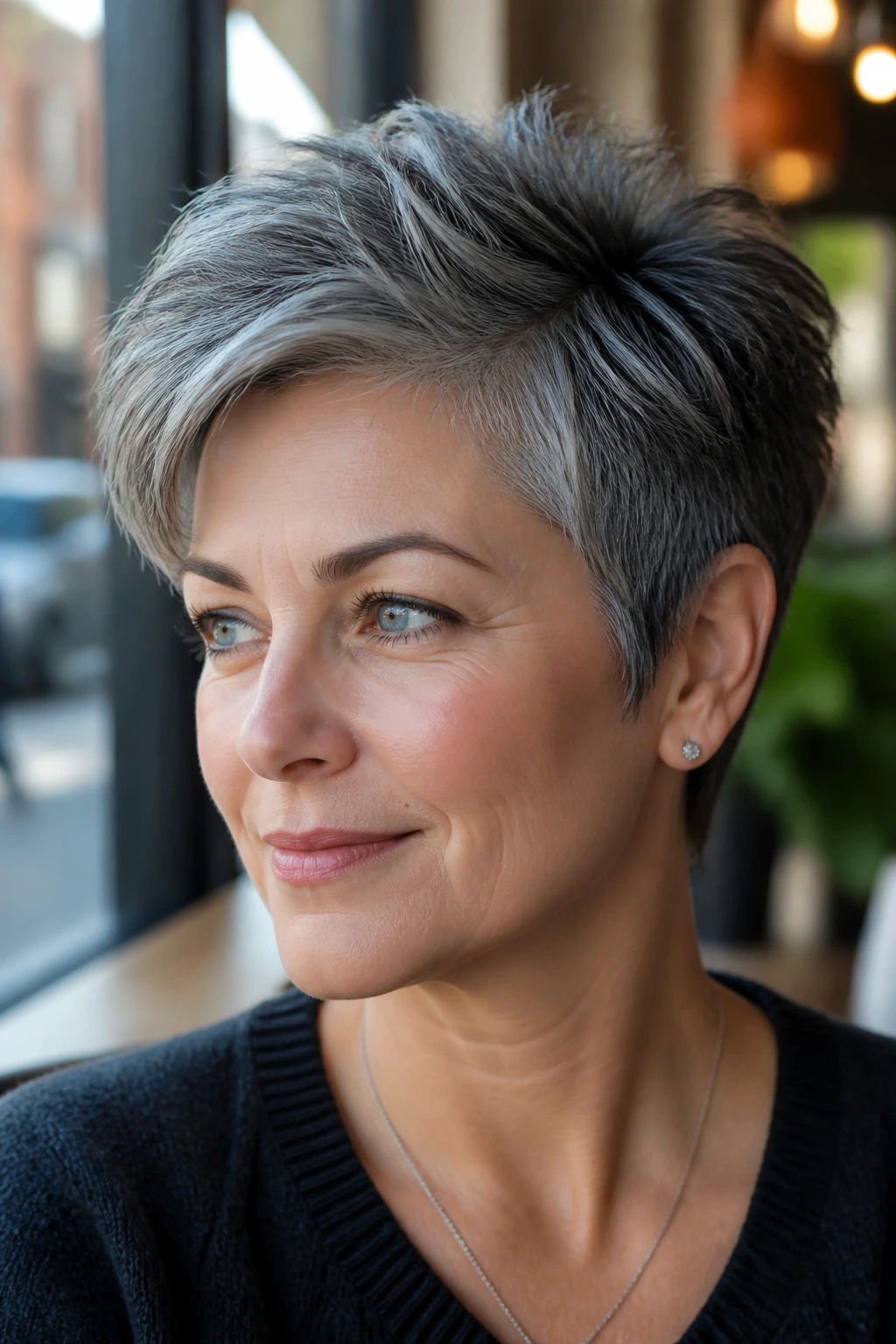
Does color affect the way a pixie shapes the face? Absolutely. Salt-and-pepper strands make texture easier to see, and a round face benefits from every line and shadow the hair can give it.
Why Texture Matters More Than Color Alone
Thick hair already has presence. When the cut adds movement through layers or point cutting, the mix of light and dark strands makes those details pop. The result is depth around the crown and softness at the edges, which helps the face feel a bit longer.
This is a good place for a side part or a lifted top. A flat shape can make the color read heavy. A textured one makes it sparkle. Not sparkly in a flashy sense. Just alive.
How to Wear It
- Keep the sides neat
- Let the crown stay airy
- Use a light cream so the texture stays visible
- Avoid heavy oils that collapse the shape
21. Soft A-Line Pixie
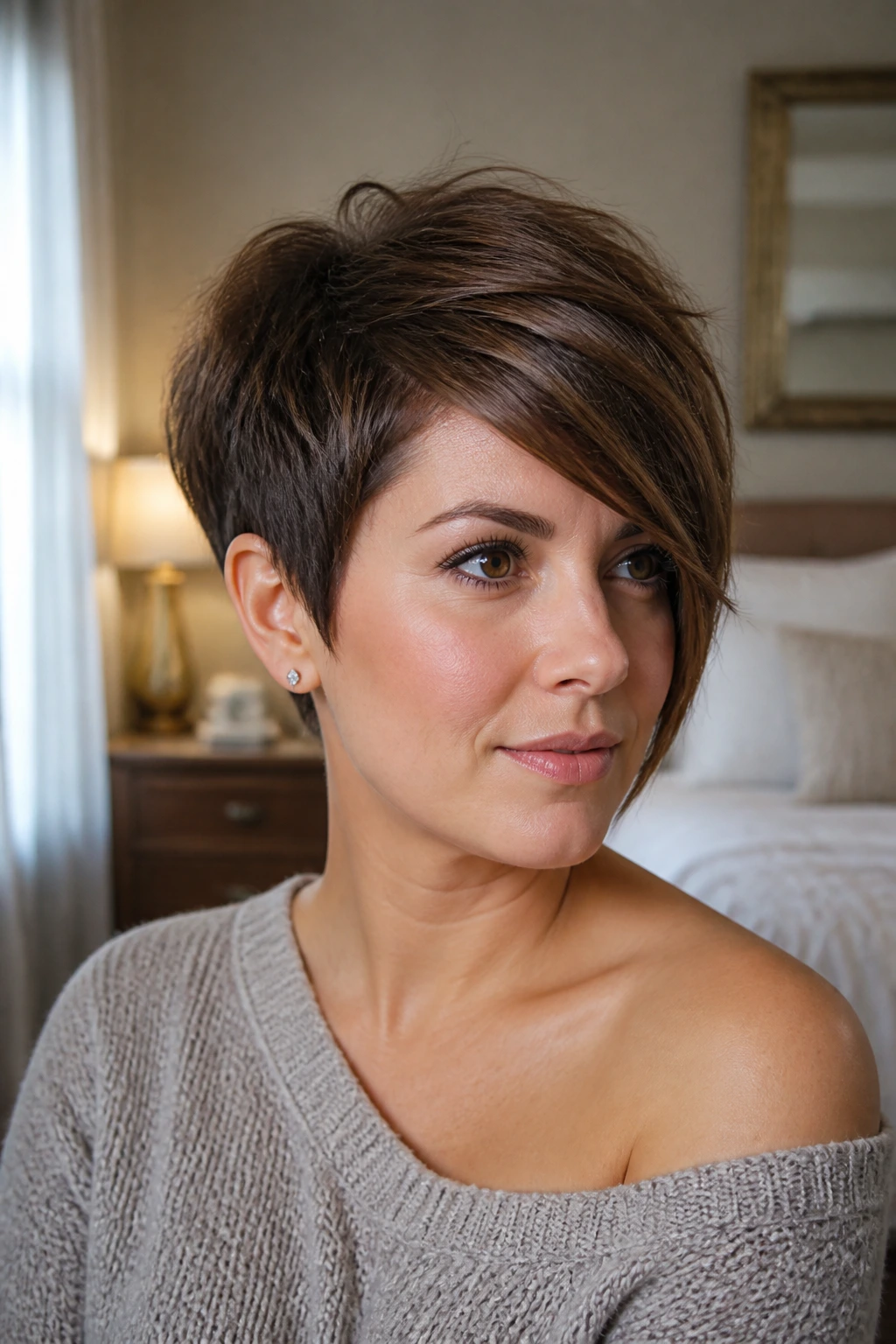
An A-line shape is not just for bobs. In a pixie, it means the front stays a touch longer than the back, which creates a subtle forward angle that flatters a round face.
The beauty of this cut is that it sneaks in length without losing the cropped feel. Thick hair helps the front sit with weight, so it can skim the cheek area instead of flaring outward. The back should stay tidy and compact.
Compared with a more square pixie, this one looks gentler. Less edgy. More wearable for people who want shape without a lot of drama. That forward angle does a lot of work, and it works quietly.
If your hair grows wide at the sides, this cut can be a relief. The line itself keeps the shape moving in the right direction.
22. Piecey Fringe Pixie
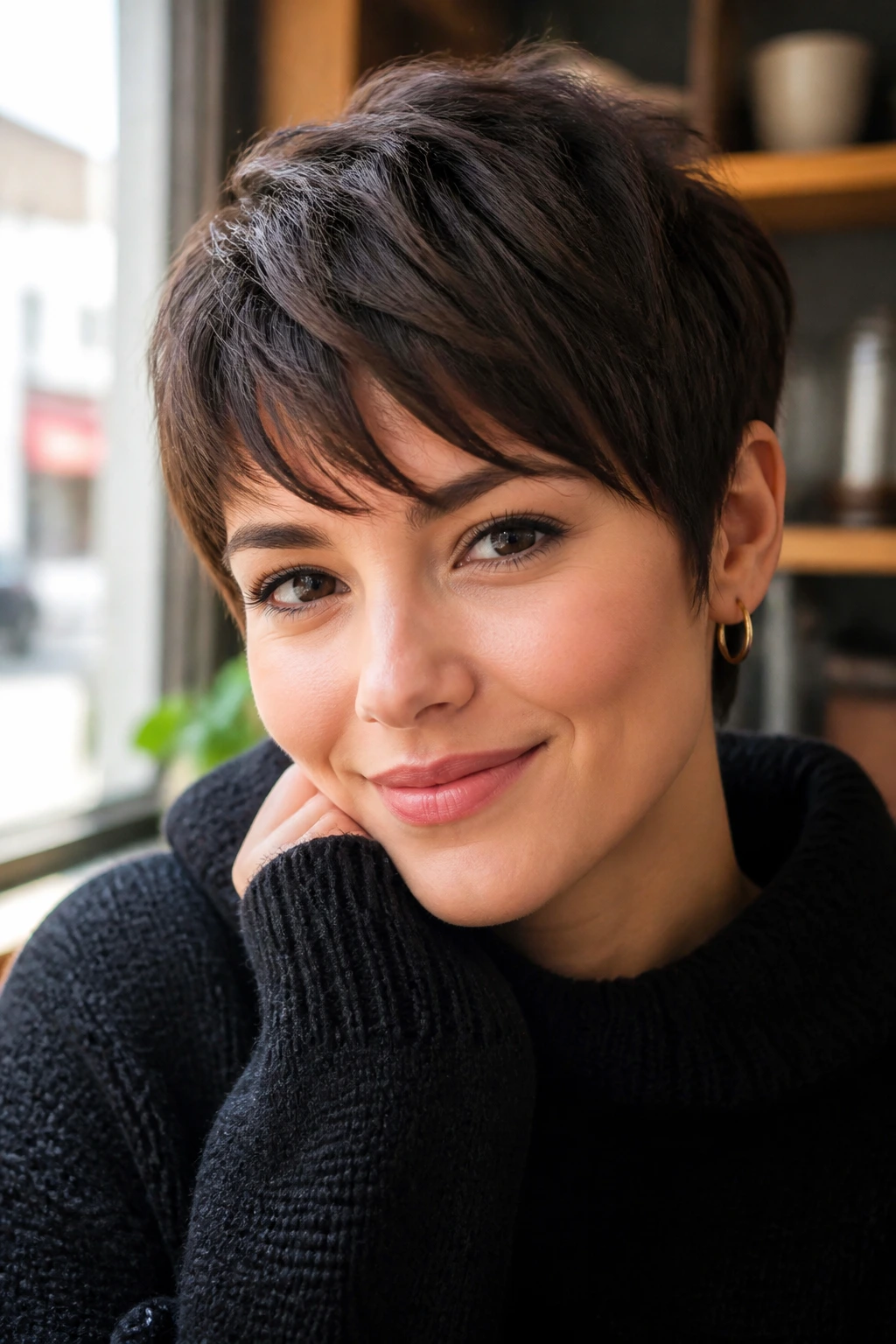
A piecey fringe is one of those details that sounds small until you see what it does. Instead of one solid bang, you get separate strands that break up the forehead line and keep the top from feeling heavy.
I like this on thick hair because the fringe has enough weight to stay put, but enough texture to avoid looking blunt. For a round face, that broken line is useful. It softens the upper face and gives the cheek area less competition.
What to Ask For
- Fringe cut with point cutting
- Slight unevenness through the ends
- Enough length to sweep sideways, not sit straight down
- A crown that stays lifted
Style it with fingers rather than a brush if you want that separated look. A brush can make the fringe too smooth, and smooth is not always the friend of a round face.
23. Disconnected Pixie
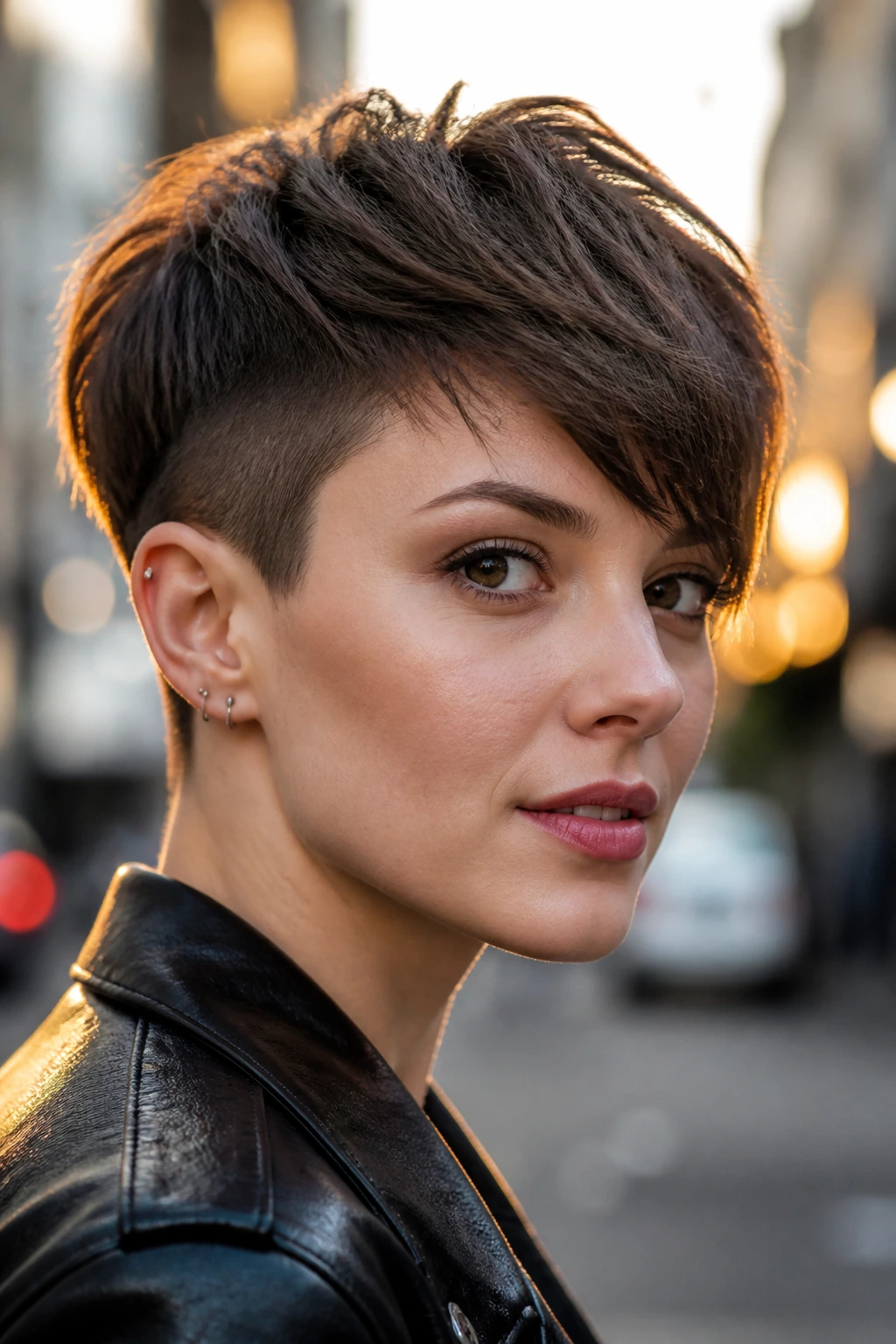
A disconnected pixie is not subtle. The top stays long, the sides stay short, and the contrast between them is the point.
That disconnection works well on thick hair because it removes bulk where it tends to sit heaviest. It also gives round faces a vertical focal point, which is useful when you want the face to look longer. The shape can be sleek or textured, depending on how you finish it.
This cut needs confidence and a stylist who understands balance. If the top is too long and the sides too full, the disconnect turns into a mushroom. That’s the bad version. The good version looks clean, modern, and slightly bold.
Wear it with a deep part or a messy lift at the crown. Both keep the eye moving. Static hair makes the cut feel flat.
24. Razor-Cut Pixie
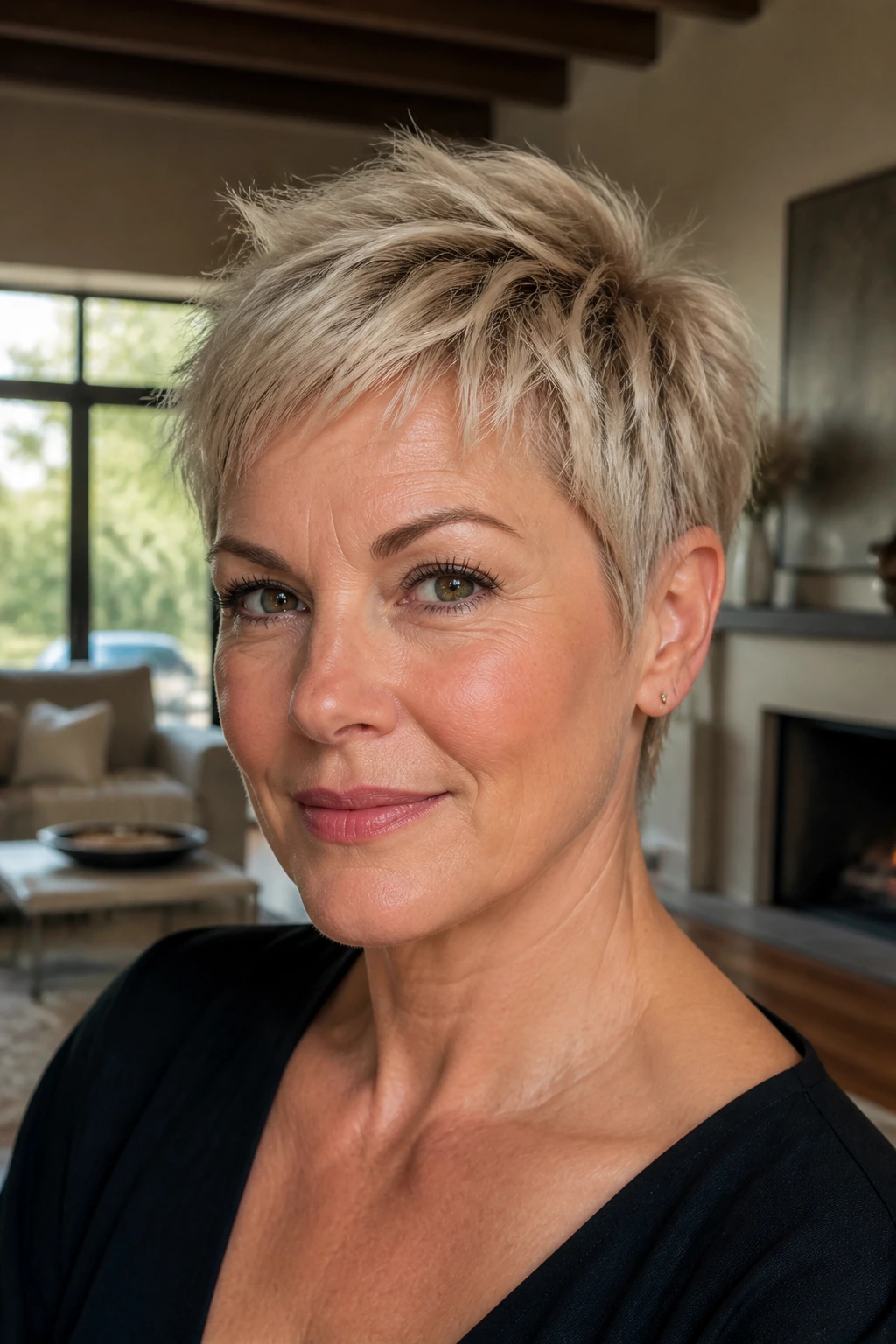
A razor-cut pixie has a softer edge than a scissor-heavy one. The ends fall in thinner, lighter pieces, which can be a real advantage with thick hair that likes to sit in chunks.
On a round face, the airy finish helps the cut avoid that solid, wide feeling around the sides. The razor can open up the shape, but only if your hair can handle it. Straight and wavy textures usually do well. Very fragile hair or tight curls can get frizzy if the razor is used too aggressively.
What Makes It Different
The ends move more. The crown can still be lifted, but the perimeter stays less blunt. That makes the face appear less boxed in.
A little texture spray helps after drying. You do not need much. The cut should already be doing the work. If your stylist likes soft separation and light edges, this is a smart pick.
25. Deep-Curve Side-Sweep Pixie
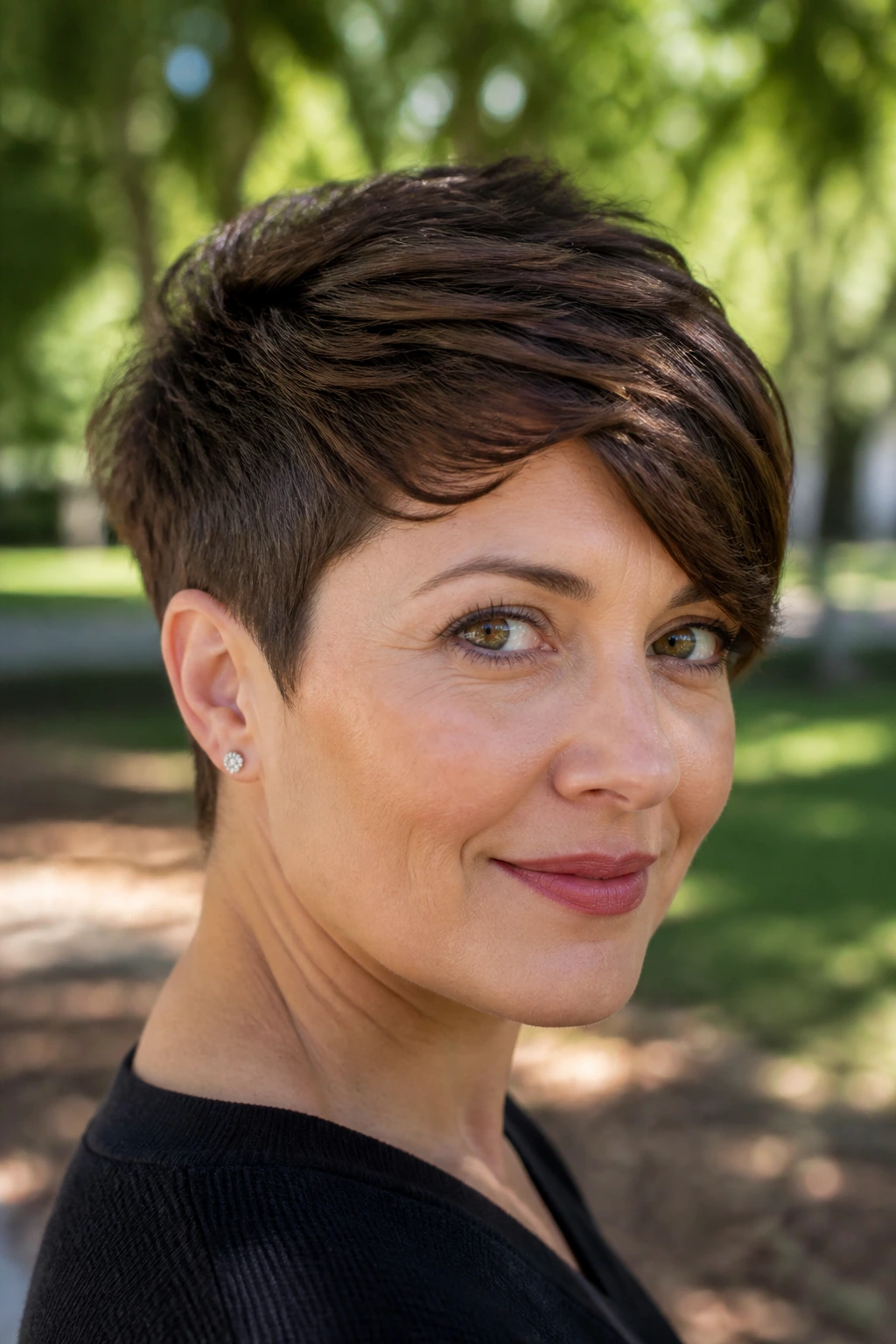
A deep-curved side sweep can change a round face in a way that feels almost sneaky. The fringe starts high, curves across the forehead, and lands near the cheekbone or temple on the other side.
Why does it work? Because curved lines are softer than straight ones, but they still direct the eye. The face gets a diagonal path instead of a horizontal one, and that makes it look a touch longer. Thick hair gives the curve enough body to hold its shape all day.
How to Get the Most From It
- Dry the fringe in the direction you want it to sit
- Use a medium round brush only on the bend
- Keep the sides close enough to avoid puff
- Leave the top with some airy separation
This one is flattering, practical, and not as fussy as it sounds.
26. Fluffy Layered Pixie
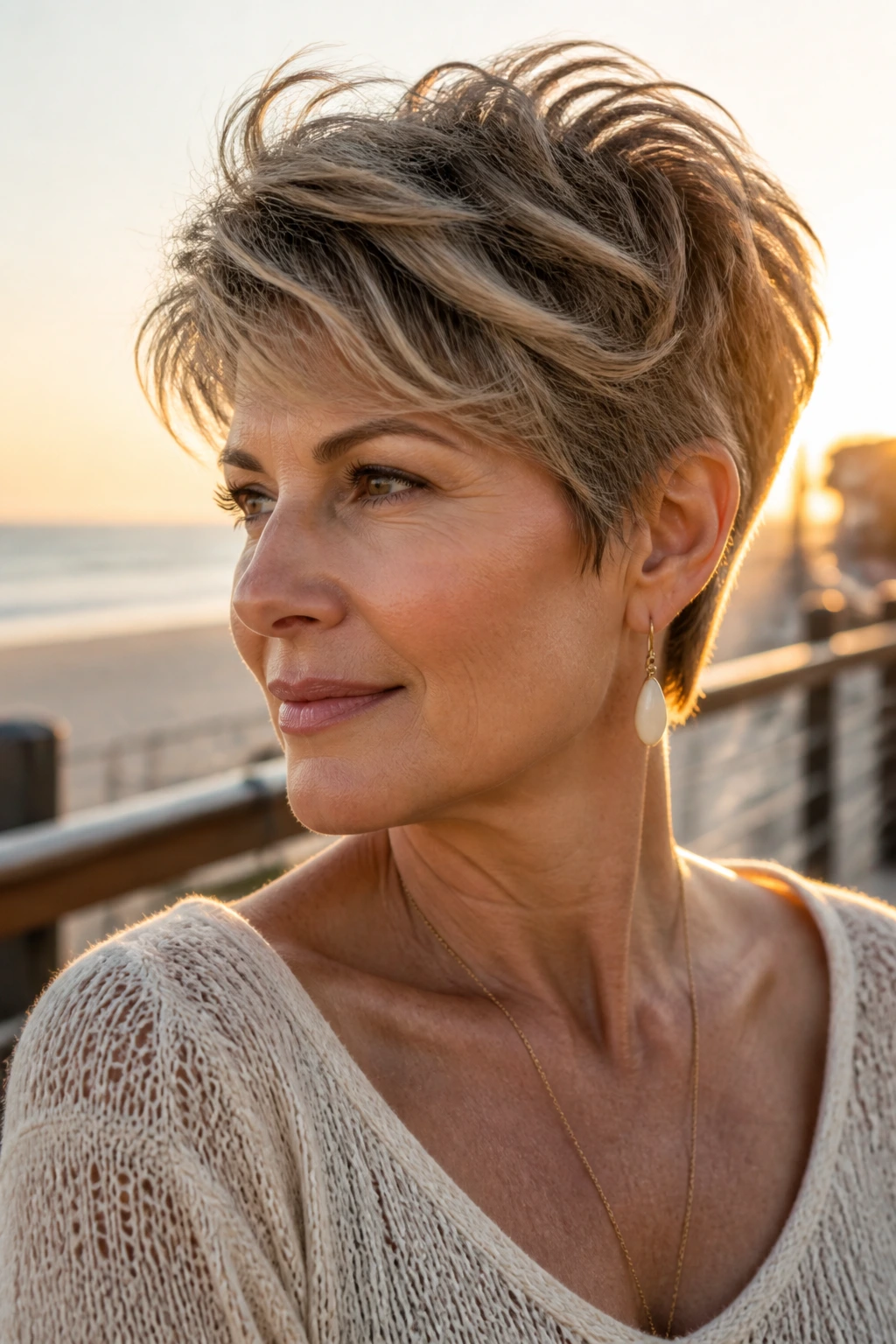
Fluffy can be a bad word in hair, but not here. A fluffy layered pixie is airy, lifted, and soft around the edges while still keeping the sides under control.
The important part is the difference between fluffy and puffy. Puffy means uncontrolled width. Fluffy means movement with shape. Thick hair can do that well when the layers are cut to reduce bulk inside the shape instead of just thinning the ends.
This cut suits people who like a fuller crown and a gentle fringe. It feels a little playful, a little relaxed, and less severe than a close crop. Round faces often need that softness, especially if the jawline is not particularly sharp.
A light mousse at the roots and a small amount of cream through the ends is usually enough. Too much product kills the lift.
27. Slick Side-Part Pixie
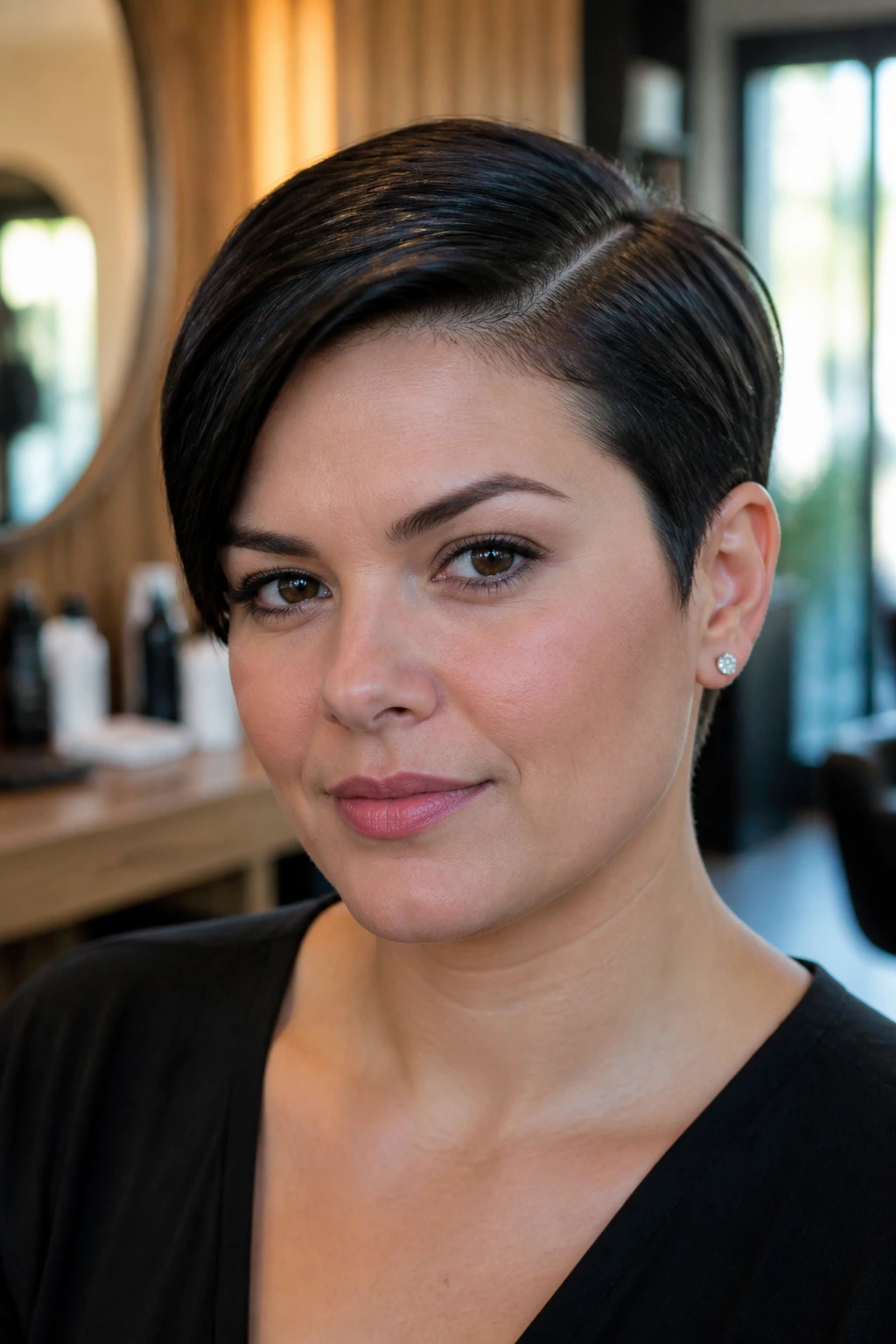
A slick side-part pixie is neat in a way that almost feels old-school, but the shape still works because the part creates asymmetry. That asymmetry matters a lot on a round face.
The hair should sweep in one direction with enough control to stay flat near the side part and close to the head around the temple. Thick hair helps here because it holds a clean line without collapsing. If the top has a little extra length, you can tuck one side and leave the other side polished across the forehead.
This is a strong office cut. It also looks good with bold lipstick or a strong brow, because the hair steps back and lets the face lead. A side part has that effect.
If you want low drama but a crisp finish, this is a reliable option.
28. Short Pixie With Length at the Crown
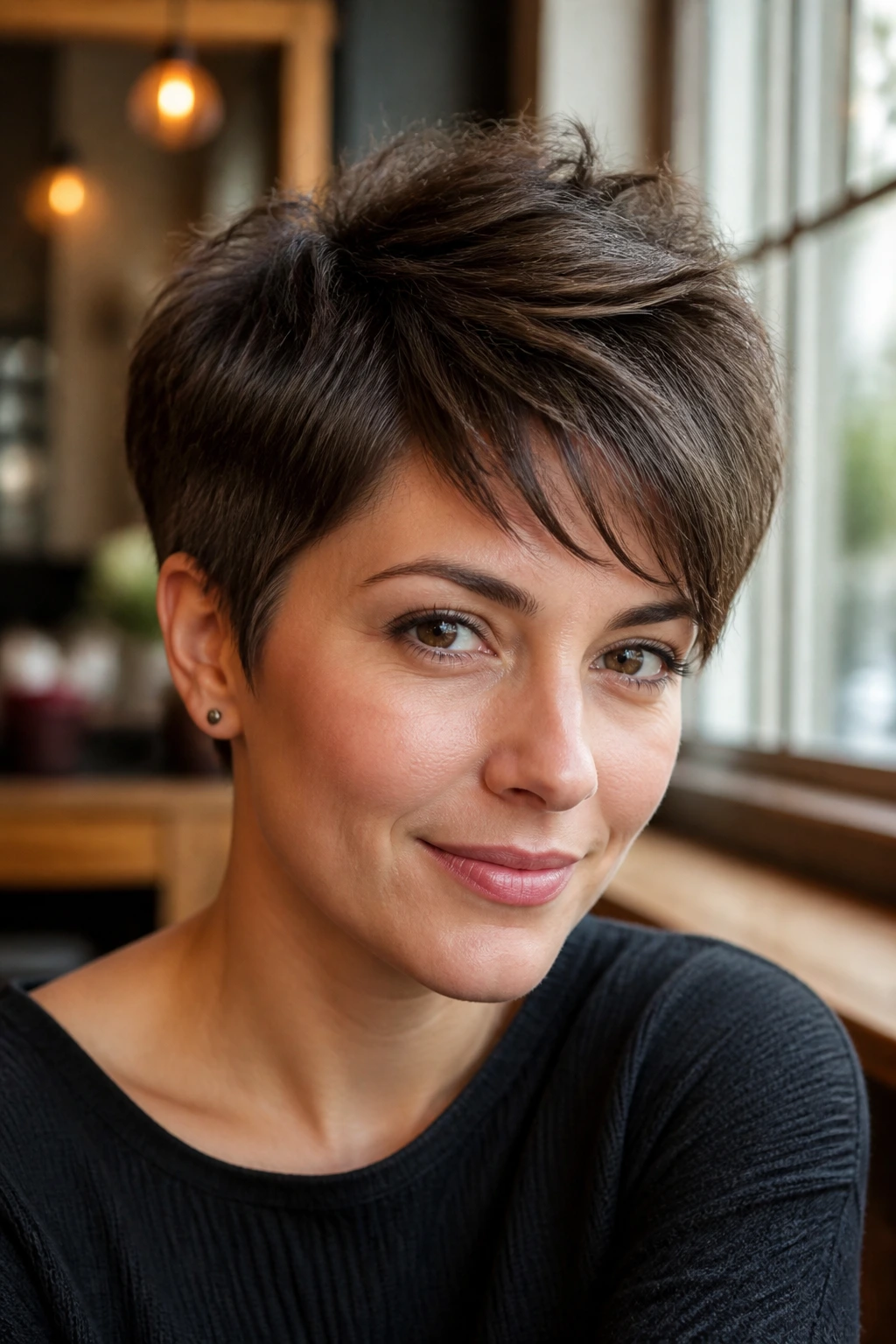
A lot of people ask for short hair and then wonder why it makes the face look rounder. The answer is usually simple: not enough length at the crown.
This cut solves that by keeping the top a little longer than the sides and back. The shape stays cropped, but the height gives the head a more oval look. Thick hair makes the crown behave nicely once it has been properly layered and lightly thinned inside.
What to Keep in Mind
- Crown length should be the longest point
- Sides should taper into the ears
- The fringe can be soft or side-swept
- Roots need lift, not stiffness
It is a straightforward cut, which is part of its appeal. No drama. Just clean shape.
29. Airy Fringe Pixie
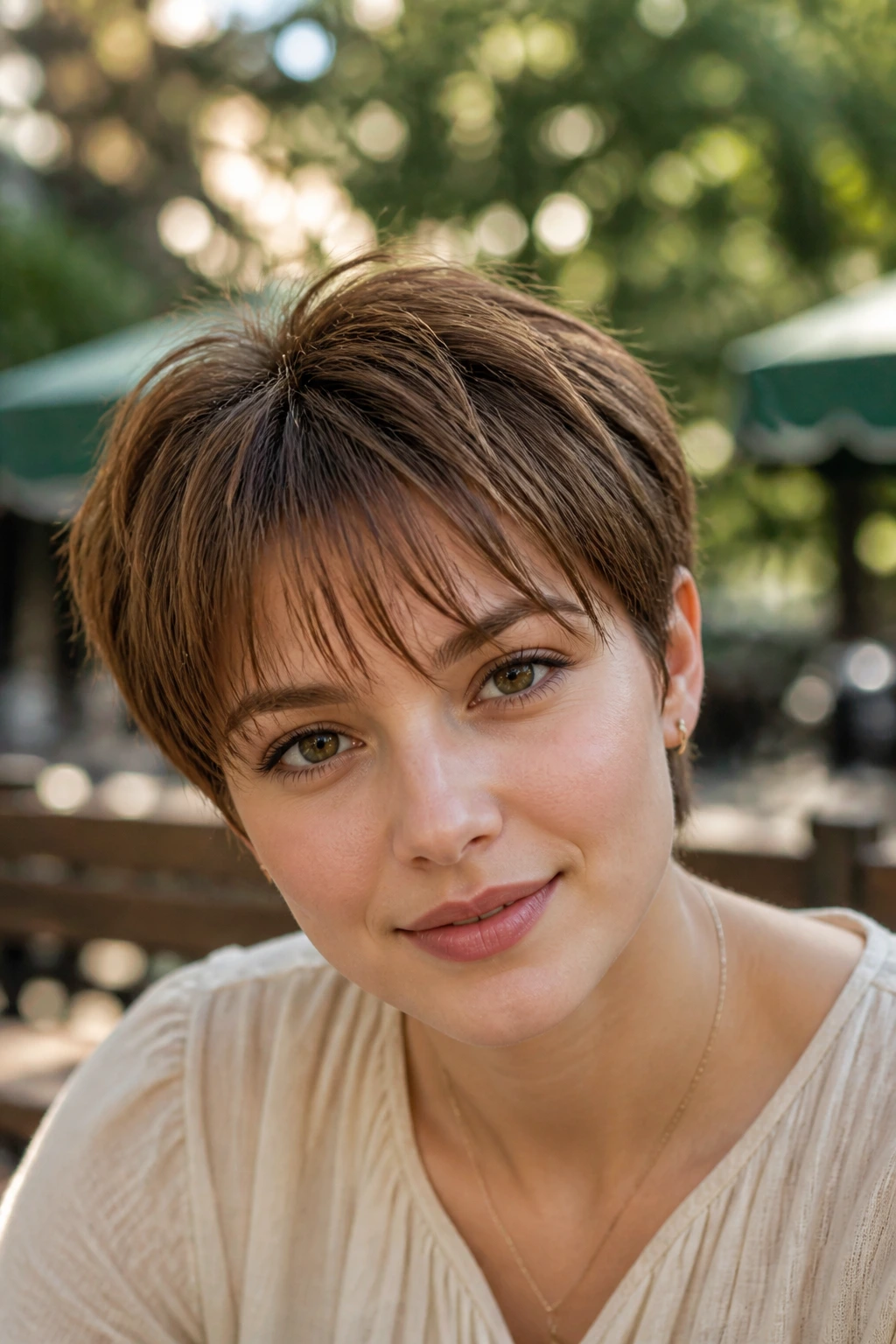
Not every round face needs a heavy fringe. In fact, a lighter, airier fringe can work better when thick hair already brings enough density to the front.
The fringe here should be broken up, a little see-through, and long enough to move rather than sit. That keeps the forehead from feeling boxed in while still giving the cut a frame. The airy texture also helps the hair blend with the rest of the style instead of forming a blunt line.
This is a good choice if you want softness without weight. The fringe can be worn forward, side-swept, or brushed open on days when you want a little more face showing. That flexibility is the point.
A light styling cream or texture spray is enough. Heavy products make airy bangs collapse, and that ruins the effect fast.
30. Bold, Close-Cropped Pixie
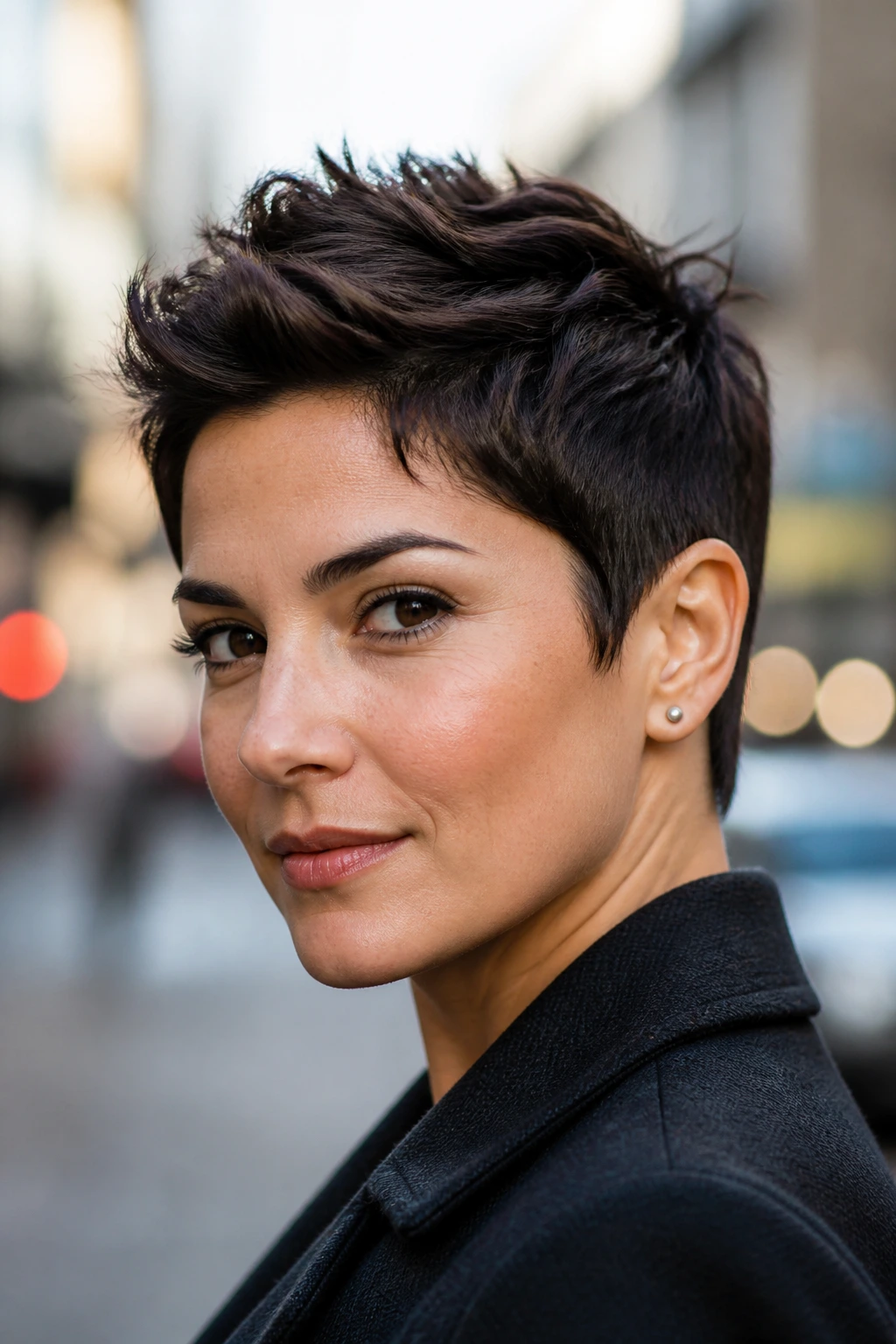
A close-cropped pixie is the boldest move on the list, and thick hair can carry it better than people think. The trick is keeping enough texture on top so the cut doesn’t sit like a helmet.
On a round face, the success of this style depends on the outline. The sides need to stay neat, the nape needs a clean finish, and the top needs enough movement to create shape. If the crop is too round all over, it can mirror the face shape instead of balancing it. That is the danger.
What to Ask Your Stylist
- Keep the top slightly longer than the sides
- Use point cutting to break up the surface
- Avoid a flat, bowl-like outline
- Leave a little softness around the hairline
This is a confident cut. Plain and simple. If you want something that feels sharp, low-fuss, and strong around thick hair, it earns its place at the end of the list.
Final Thoughts
The strongest thick pixie cuts for round faces do three things at once: they lift the crown, trim the sides, and keep the front from stopping right at the cheeks. Miss one of those, and the balance starts to slip. Get all three, and the face looks cleaner without looking overworked.
Thick hair is not the problem here. Bad shape is. That is why these cuts lean on angles, texture, and controlled bulk instead of trying to flatten everything down.
If you’re taking photos to the salon, bring front, side, and back views of the cut you want. The back shape matters more than people think, especially with dense hair. A good pixie should look sharper every time you turn your head.
