



If your cheeks do most of the talking, a pixie has to earn its place. The wrong cut can sit wide at the sides and make the whole face read softer than you wanted. The right one does the opposite. Short blonde pixie cuts for round faces work when they pull the eye upward, keep the perimeter neat, and leave a little movement around the forehead instead of building bulk at the cheeks.
Blonde changes the whole shape of the cut. Pale blonde, platinum, champagne, honey, and shadow-root blends all behave differently on hair. Icy shades sharpen the edges; warmer blondes soften them; darker roots create depth so the crop doesn’t turn into one flat helmet. That matters more than people think.
The best pixies for a round face usually have one or more of these traits: a side-swept fringe, a lifted crown, tapered sides, or a bit of asymmetry. None of that has to look fussy. In fact, the best versions usually look almost casual, which is the trick.
1. Side-Swept Ice Blonde Pixie
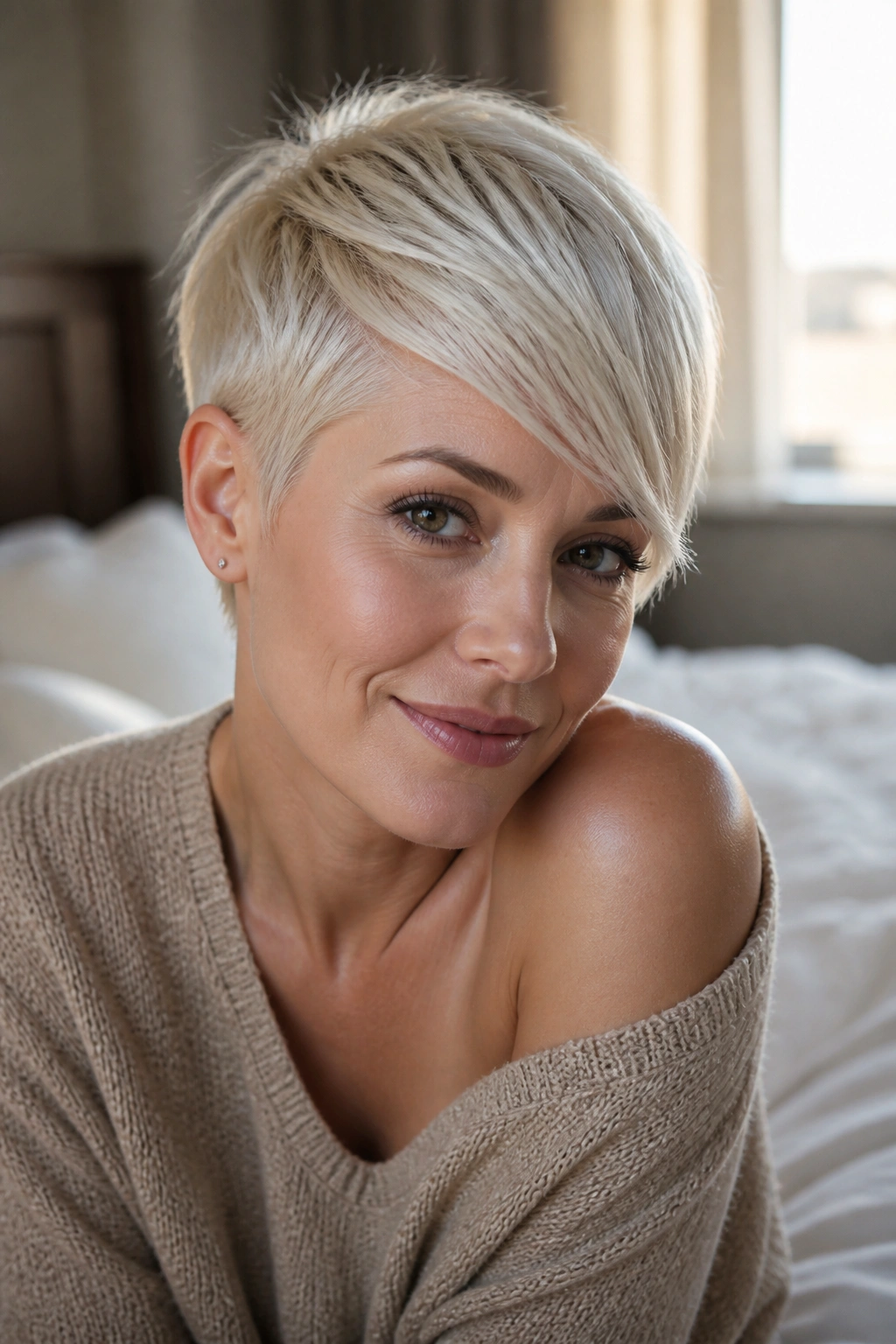
A side-swept pixie is one of the easiest ways to make a round face look a little longer without trying too hard. The diagonal fringe breaks up the curve of the cheeks, and the cool blonde shade keeps the cut looking crisp rather than puffed out.
Why It Works
Keep the fringe long enough to skim one eyebrow and sweep it across the forehead. That single diagonal line does a lot of work. The sides should stay close to the head, especially around the temples, so the cut doesn’t widen where your face is already full.
- Ask for short, tapered sides with a soft crown.
- Leave the longest pieces at the fringe, not the cheeks.
- Style with a light root spray and a round brush.
- Use a matte paste only on the ends if you want texture.
Pro tip: If the fringe starts to split in the middle, the face opens up too much. Sweep it firmly to one side and let it land just above the cheekbone.
2. Tapered Champagne Pixie
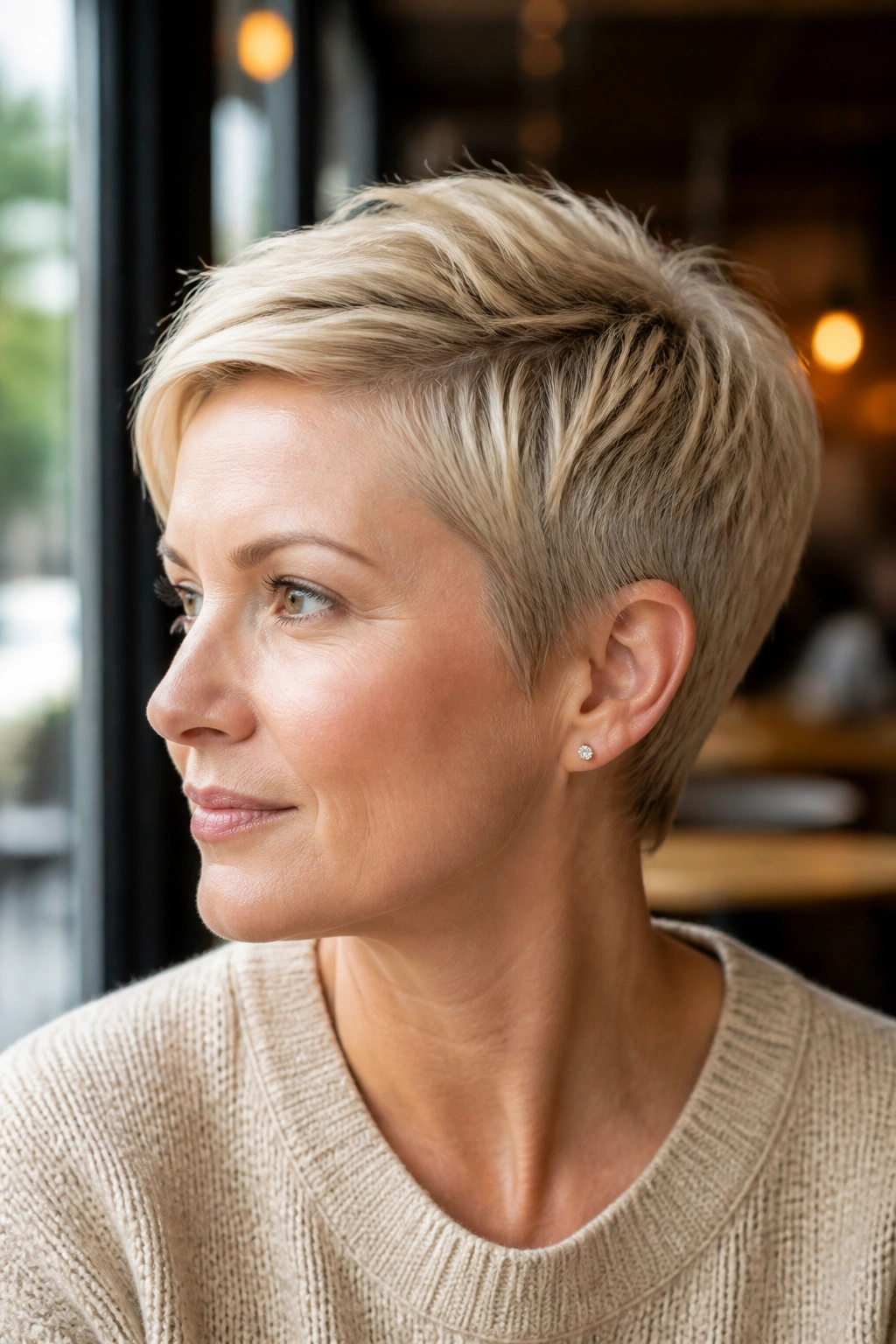
This is the pixie I’d hand to someone who wants polish without stiffness. Champagne blonde has enough warmth to keep the cut from looking severe, but the taper at the nape and sides keeps the shape narrow where it needs to be. On a round face, that balance is the whole game.
The shape works best when the back is neat and the top has just a little height. Not a tall, spiky crown. Just enough lift to stretch the silhouette. If your hair is fine, this cut can look fuller than it really is because the lighter color reflects a bit of light across the top.
Wear it with a soft side part and a blow-dry that moves backward first, then over. That small detail keeps the front from collapsing into the cheeks. A trim every four to six weeks helps the taper stay clean.
3. Choppy Platinum Pixie with Crown Lift
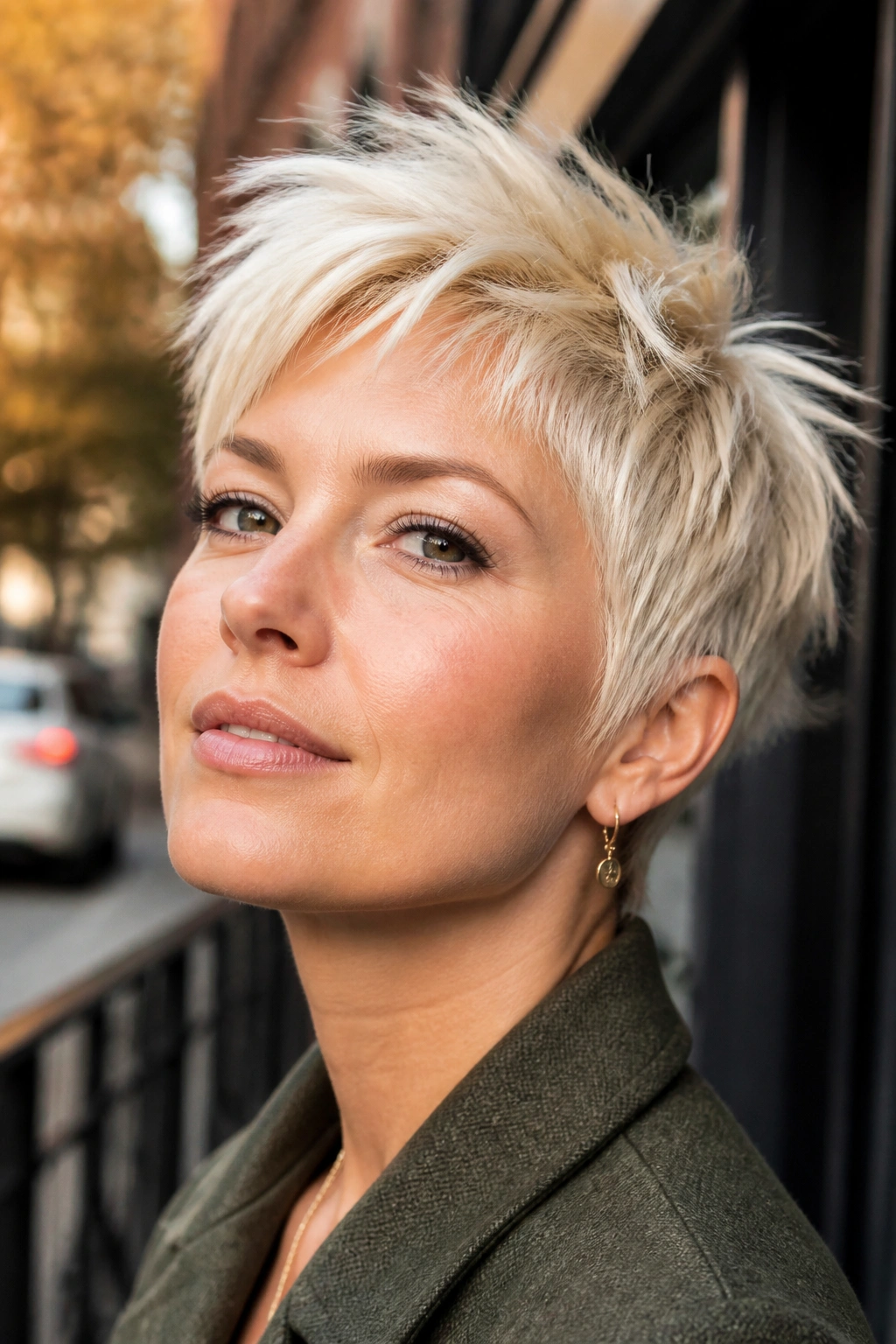
Why does this cut look so good on a round face? Because it turns the top of the head into the star and leaves the sides quiet. The choppy layers make the crown look taller, and platinum blonde makes every piece show up. That gives you shape even when the haircut is short.
The trick is to avoid making the fringe too heavy. Heavy bangs push the eye straight across the widest part of the face. You want broken-up pieces instead, cut with a point-cutting technique so the ends don’t sit in a hard line.
How to Style It
Work a pea-sized amount of texturizing paste through dry hair, then pinch the top upward with your fingers. Blow-dry the roots in the opposite direction of your part if you want more lift. If the cut starts to look too round, add a little more separation at the crown and keep the sides snug.
4. Feathered Beige Blonde Pixie
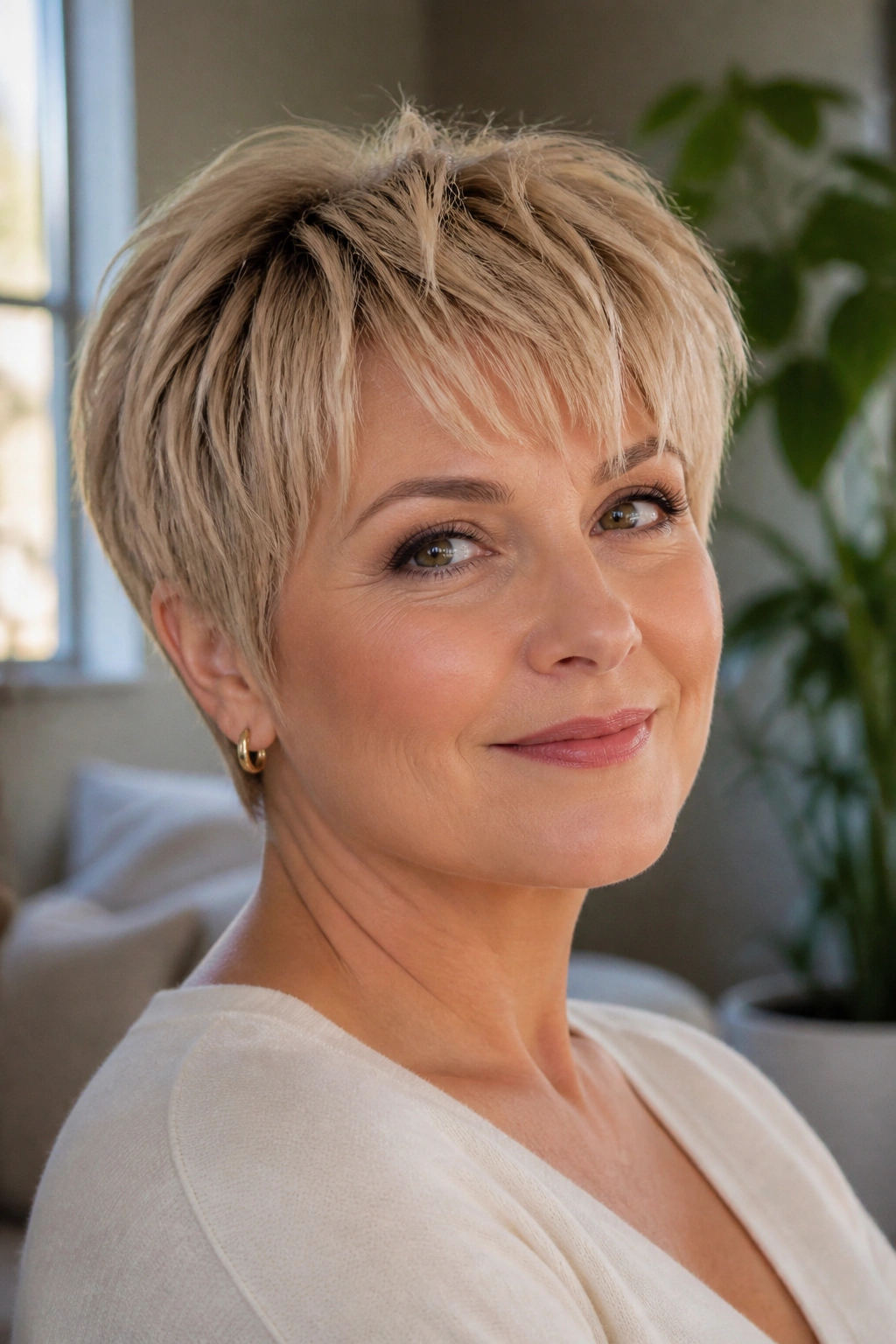
I like this one for anyone who hates a hard edge. Feathering makes the whole cut feel lighter, and beige blonde softens the transition between skin and hair so the face reads gentler, not wider. On a round face, that softness matters because it keeps the cut from fighting your features.
Picture the grow-out after six weeks. A blunt pixie starts to puff at the sides. A feathered one still falls in little layers. That’s the difference. The texture should move, not sit in one stiff block.
- Ask for feathered ends around the crown and fringe.
- Keep the sideburn area short and close.
- Use a light mousse on damp hair.
- Dry with your fingers instead of a brush if you want a softer finish.
A little bend at the ends is enough. You do not need big volume here.
5. Asymmetrical Blonde Pixie with Long Fringe
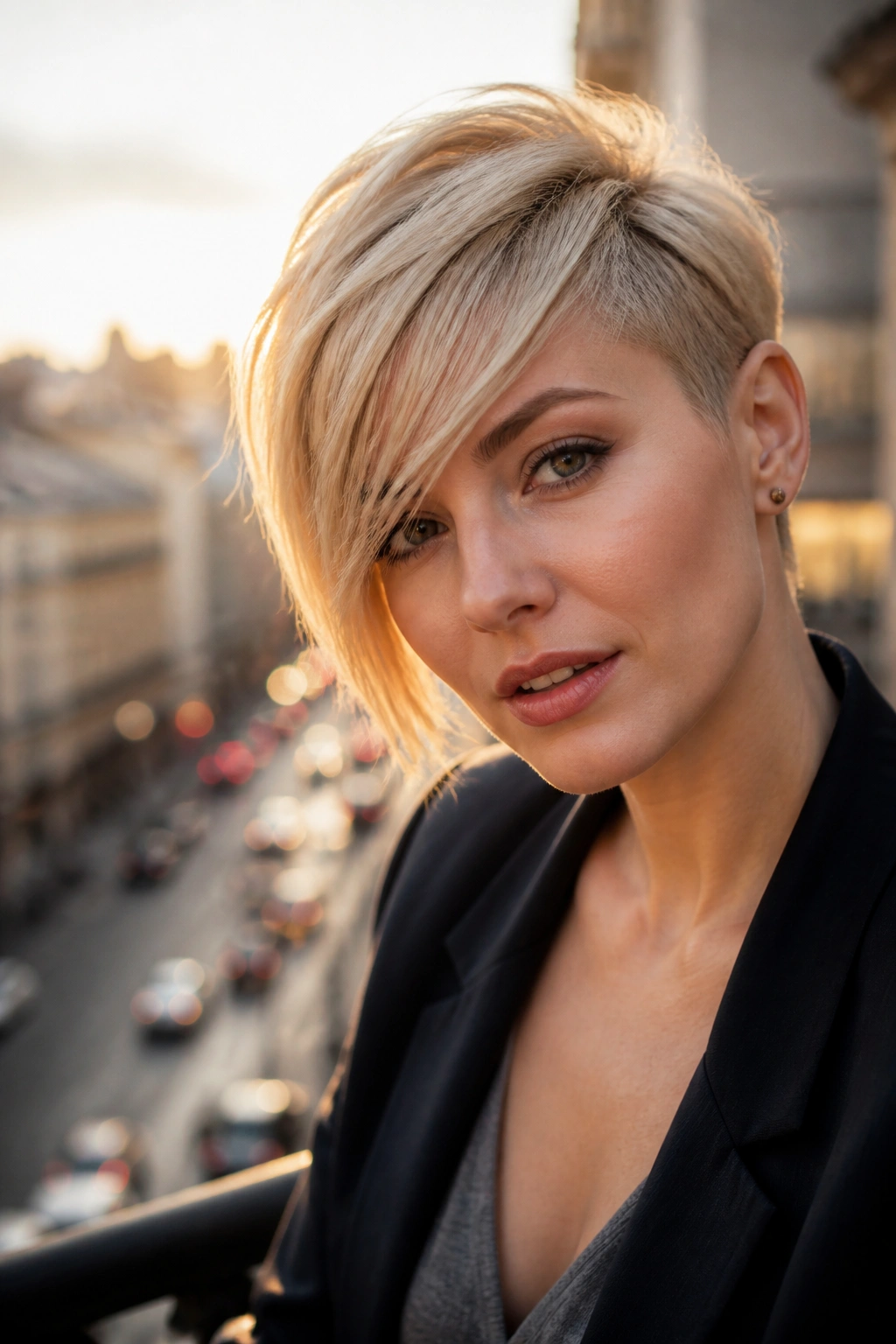
An asymmetrical pixie is one of the smartest cuts for a round face because it breaks the symmetry that can make cheeks look fuller. One side stays shorter and close; the other side lands longer, often around the cheekbone or just below it. That line changes everything.
Blonde makes the asymmetry easier to see, which is good if you want the cut to feel intentional. The longer fringe can be tucked behind one ear or left loose across the forehead. Either way, the face gets a diagonal frame instead of a circle.
This cut works best with a little product, but not too much. A touch of smoothing cream on the long side will keep it from frizzing out. If your hair is thick, ask for the interior to be thinned only a little. Too much thinning makes the longer side collapse and lose the shape you want.
6. Undercut Pixie with Soft Top
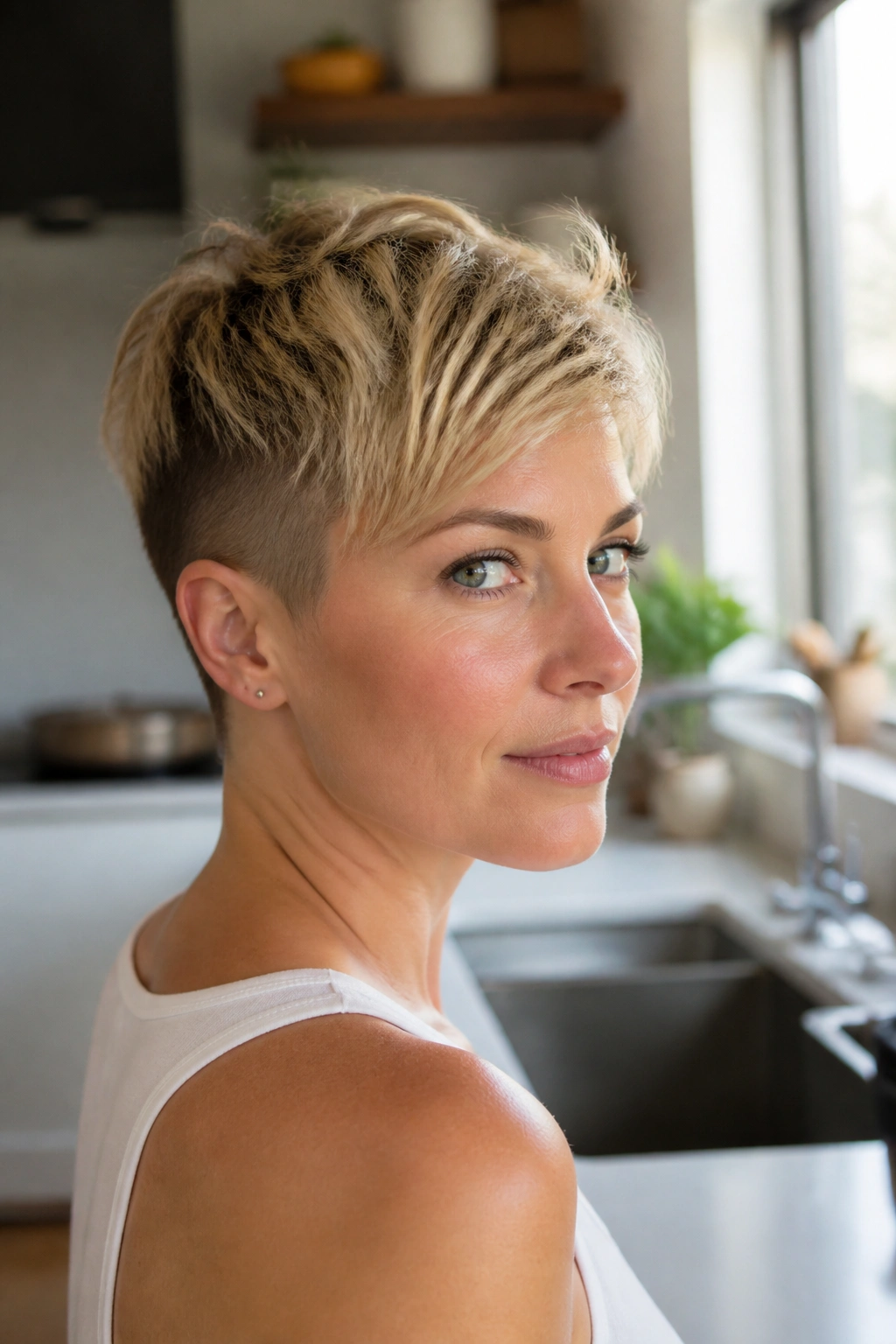
An undercut is not only for people who want edge. On a round face, it can be the cleanest way to remove width at the sides while keeping the top soft and feminine. The hidden bonus is that thick hair suddenly feels lighter, which makes styling easier in the morning.
The top should stay long enough to brush forward, upward, or diagonally. If the top spreads outward, the cut gets boxy. If it stays compact and lifted, the whole face looks narrower. That’s the part many people miss.
Compared with a classic all-over pixie, the undercut gives you more control. You can leave the top airy and keep the nape tight. It’s a good choice if your hair grows out fast or tends to balloon at the sides between appointments. Ask for the undercut to sit low enough that it disappears when the hair is down.
7. Layered Honey Blonde Pixie
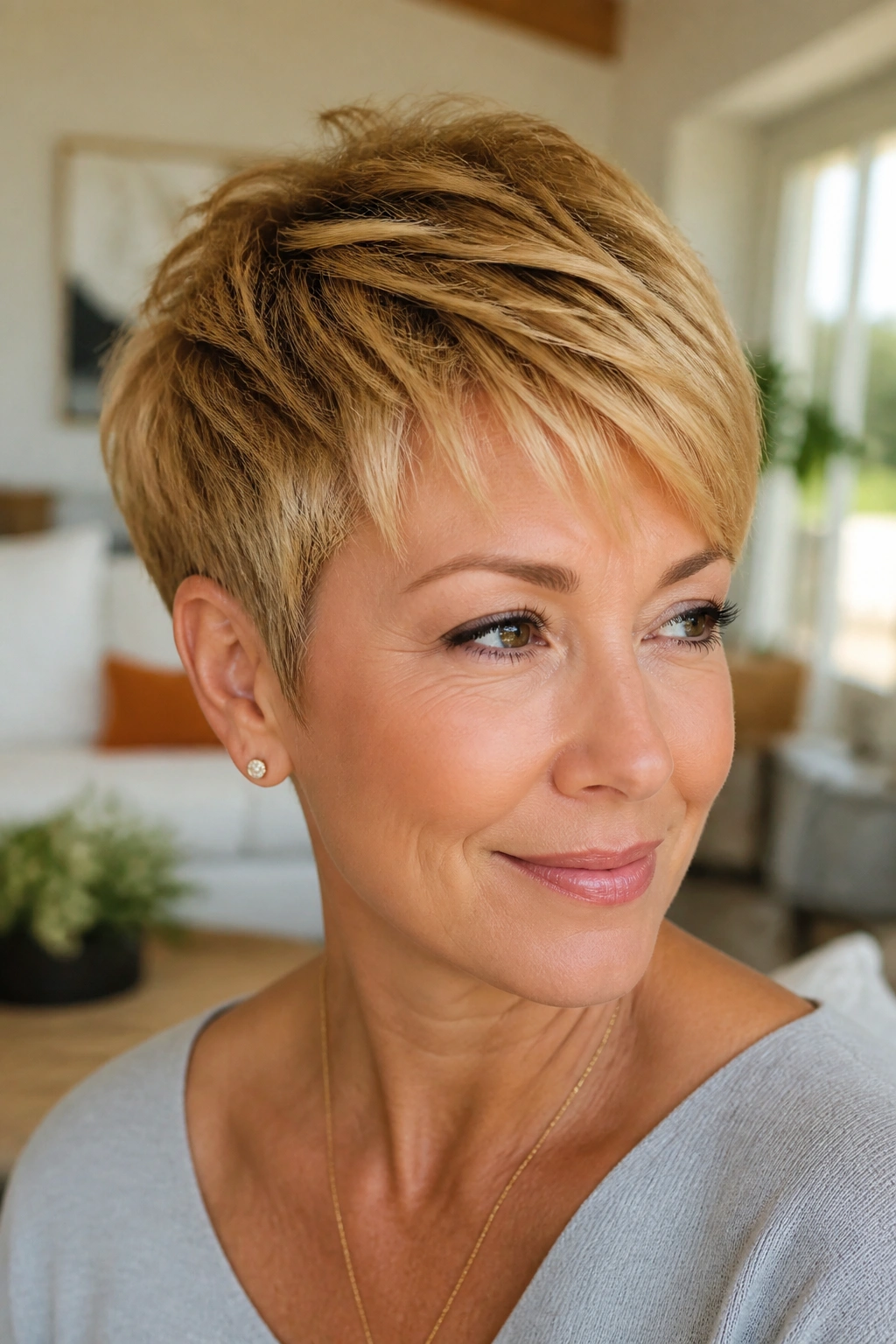
Honey blonde brings warmth to a round face in a way that feels easy, not harsh. The layered shape keeps the crown moving, and the warmer color stops the cut from looking too sharp around the edges. If your skin likes soft gold tones, this one is especially flattering.
What Makes It Work
The layers should be short enough to stack a little at the back, but not so short that they spike out. You want bend and flow. A round face benefits when the hair moves upward near the crown and stays neat at the jawline, and this cut does both without looking overdone.
- Ask for light layering through the top.
- Keep the nape tapered, not bulky.
- Use a light blowout cream if your hair frizzes.
- Refresh the shape with a dry shampoo puff at the roots.
Small warning: Too much warmth in the blonde can turn brassy fast, so a soft gloss every so often helps the color stay clean.
8. Curly Blonde Pixie with Diffused Volume
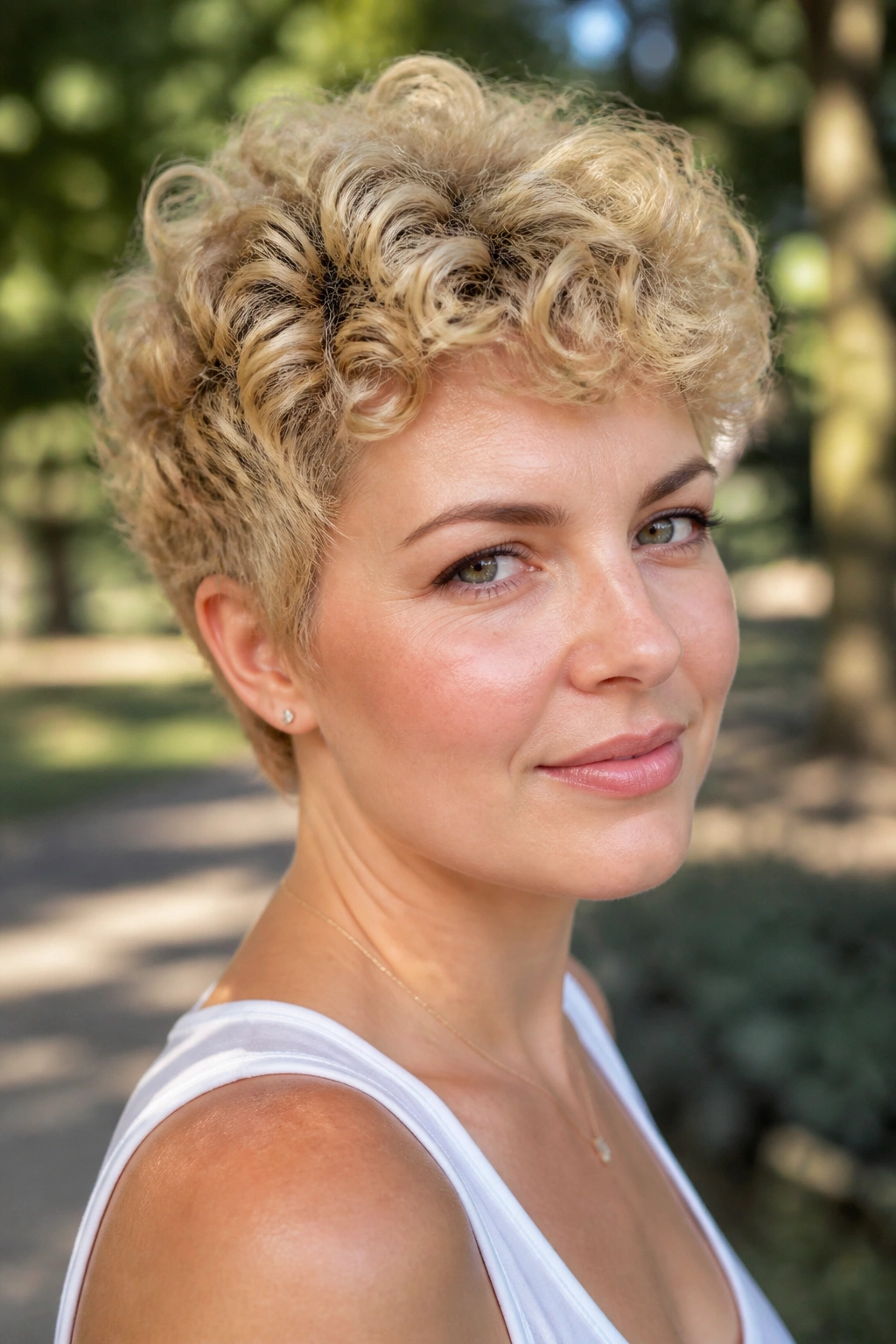
Curly hair changes the whole conversation. A round face does not need curls flattened down into a helmet. It needs the curls shaped so they rise a little at the top and stay tidy near the sides. That is where this cut earns its keep.
The blonde shade matters here too. Lighter tones show the curl pattern better, especially when the ends are textured and not all one length. You want the silhouette to look airy, not puffy. A diffuser does the heavy lifting, but the cut has to be right first.
Leave the top a little longer than the sides and let the curls spring up naturally. Use curl cream on damp hair, then diffuse on low heat until the roots are dry and the shape feels set. If the sides start spreading outward, your stylist needs to tighten the perimeter near the ears.
9. Pixie with Micro Fringe and Tapered Sides
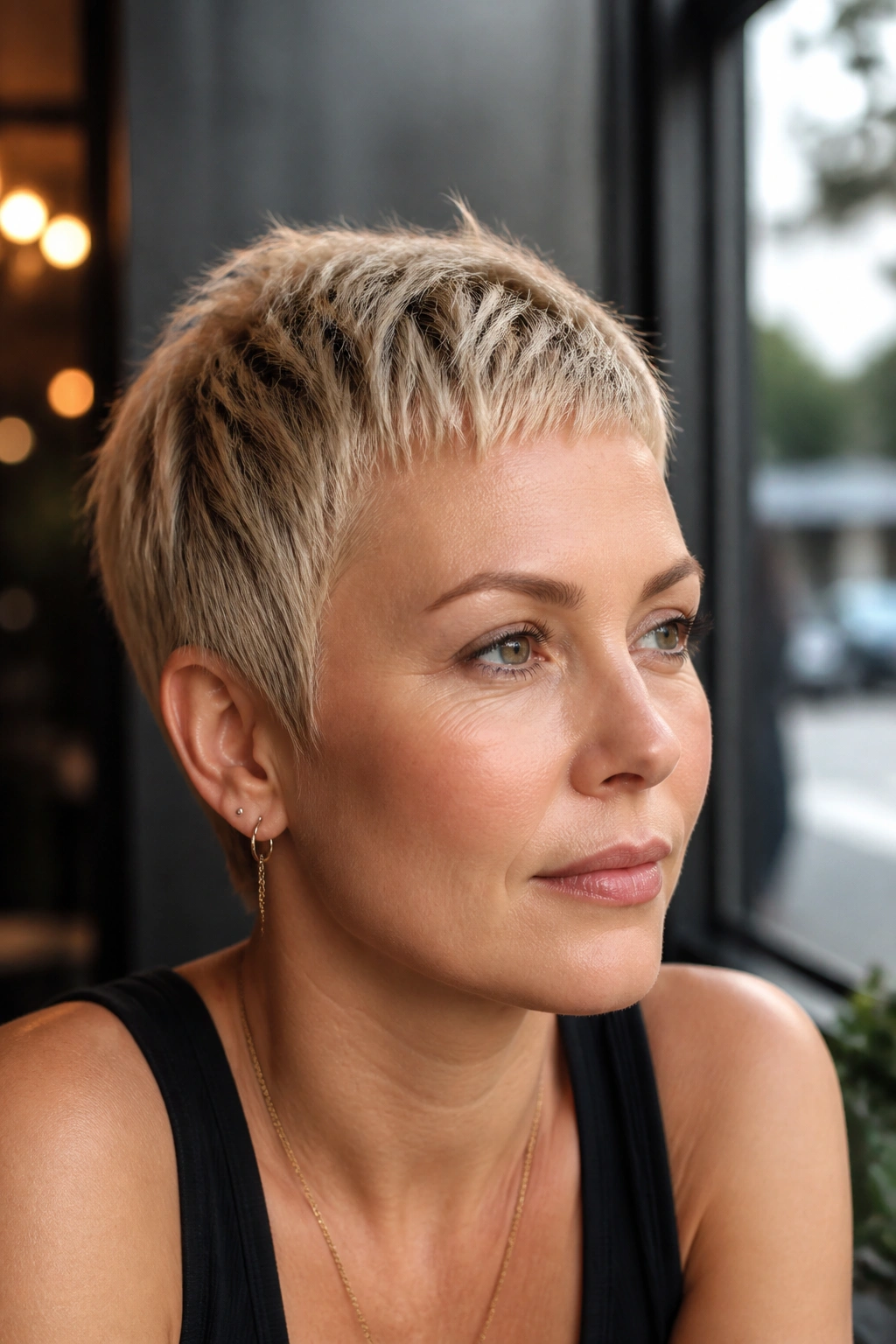
Can a tiny fringe work on a round face? Yes, but only if the rest of the cut is disciplined. A micro fringe opens the forehead and makes the eyes look sharp, while tapered sides keep the face from reading wide. That contrast is what saves it.
How to Wear It
The fringe should sit high enough that it doesn’t press into the brows. Think short, crisp, and slightly uneven rather than blunt and heavy. The top needs some lift, or the whole style can look too flat and severe. A bit of matte paste at the crown gives it life without making it crunchy.
This cut suits someone who likes a sharper look and doesn’t mind regular trims. The short fringe grows fast, and once it drops too low, the shape loses its snap. Keep the sides close and the top moving, and it stays sleek instead of awkward.
10. Slicked-Over Blonde Pixie
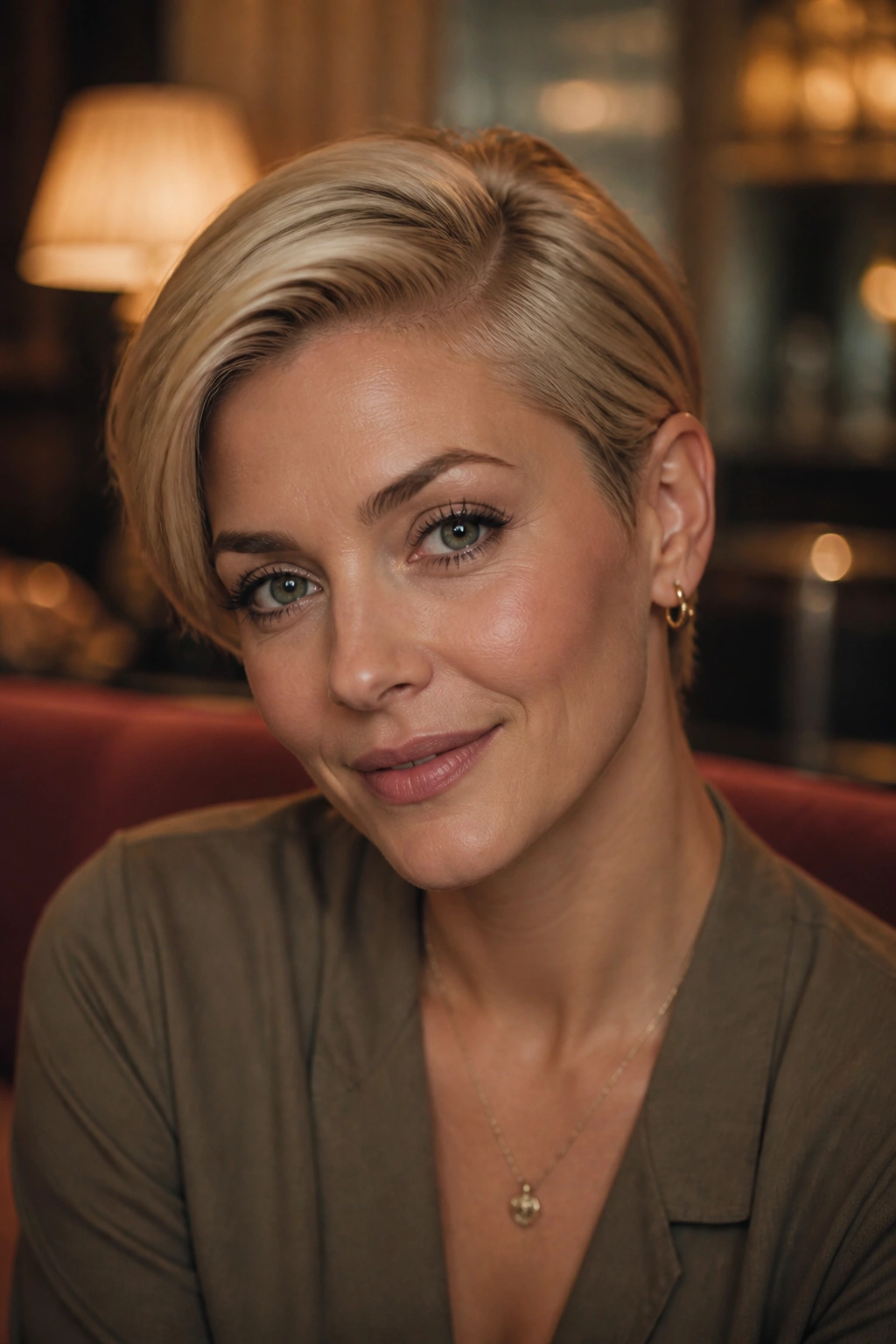
I always think of this one as the dressier pixie. A side-swept, slicked-over shape can make a round face look more sculpted because the hair follows the curve of the skull instead of floating away from it. Blonde adds shine, which gives the whole style a polished edge.
The trick is not to flatten the crown completely. You want the top controlled, not glued to the head. A light mousse at the roots, then a comb to guide the hair over, keeps the shape neat. If you push all the volume straight back, the face can look shorter. A little lift at the part fixes that.
This is a good style for evening plans, but it works during the day if you keep the product light. A satin-finish cream will usually look better than a heavy gel unless you want a wet look. Either way, tuck one side behind the ear to keep the shape open.
11. Bixie with Wispy Neck Length
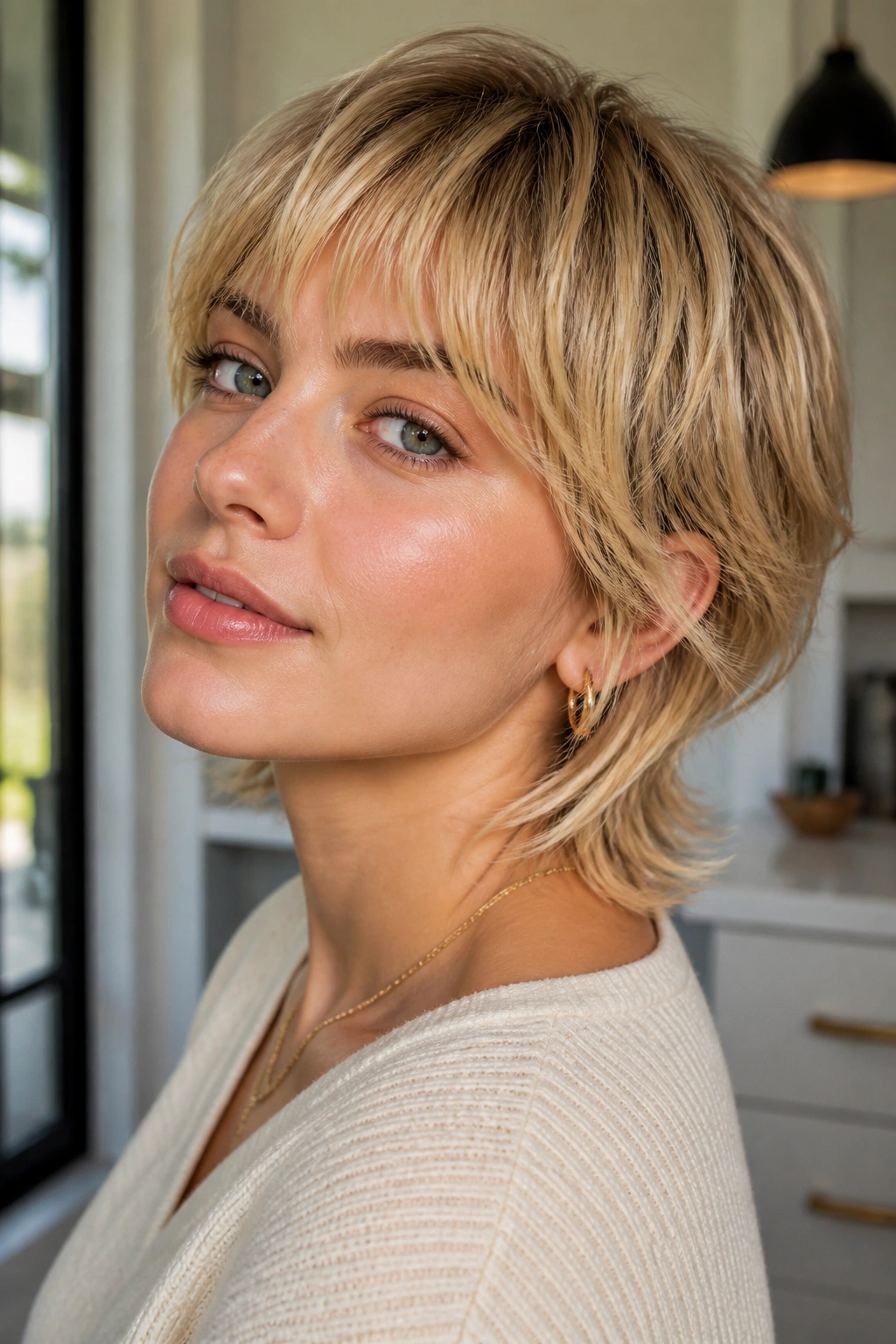
A bixie sits between a pixie and a bob, and that in-between space is useful for a round face. The extra length at the nape gives the neck more line, while the top stays short enough to keep the cut light. It’s a nice choice if you want something softer than a cropped pixie.
The wispy ends matter. Hard edges can make the face look fuller, especially near the jaw. Soft pieces at the back and around the ears keep the shape from turning boxy. The blonde color helps too, especially if the ends are a little lighter than the roots.
This cut suits someone who wants short hair without giving up movement. You can tuck pieces, flip them, or wear them flat on busy days. It also grows out in a more forgiving way than a very tight crop, which is why a lot of people end up staying with it longer than planned.
12. Deep Side-Part Blonde Pixie
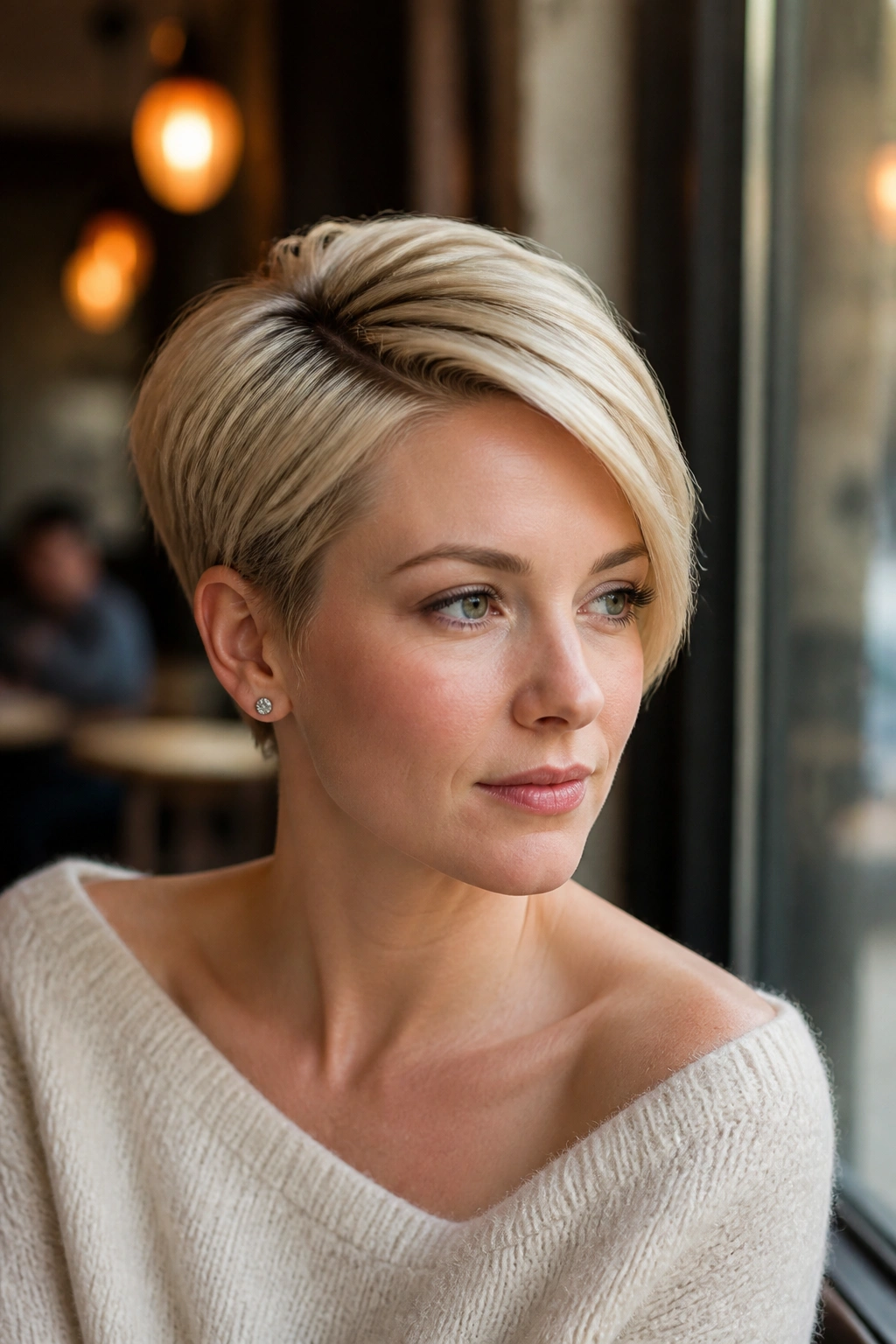
A deep side part is one of the simplest tricks in the book, and it works because it changes the whole line of the face. Instead of dividing the forehead evenly, it throws the weight to one side and creates a long diagonal. That diagonal is what helps a round face look slimmer.
Unlike a center-parted crop, this version doesn’t sit evenly on both cheeks. It gives you a stronger shape near the forehead and a cleaner opening on the other side. If your hair naturally falls flat, you may need a bit of root spray to hold the lift at the part.
This is a good pick if you want a style that looks neat with almost no effort. Tuck the lighter side behind the ear, leave the heavier side loose, and the face instantly looks more angular. Simple. Effective. No drama required.
13. Razor-Cut Textured Pixie
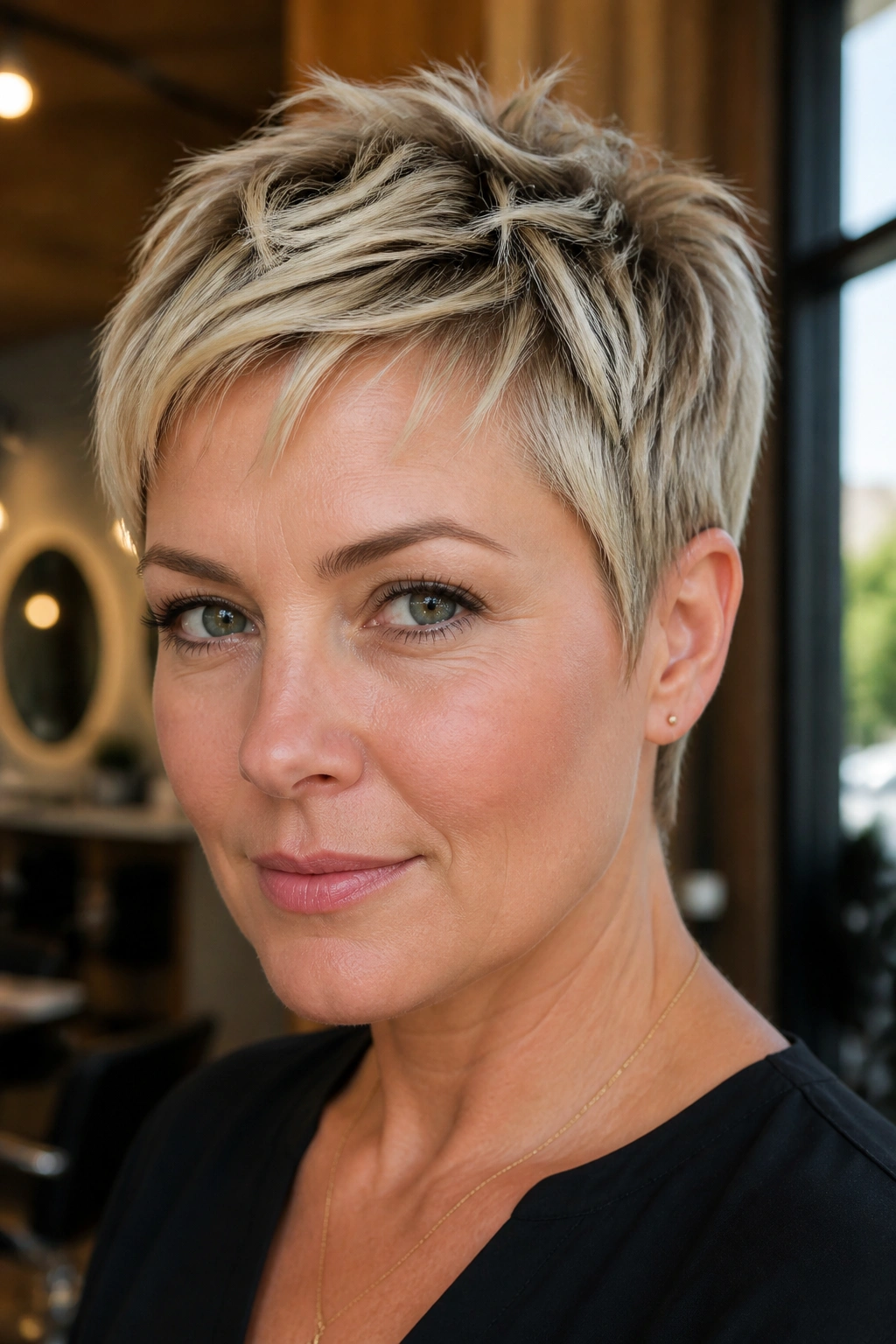
Razor-cut ends bring movement, and movement is useful when you’re working with a round face. The softer, sliced edges prevent the haircut from forming a heavy line. That matters if your hair is dense, because dense hair loves to puff outward when it gets too blunt.
What the Razor Does
A razor doesn’t mean the cut should look shaggy or damaged. It just means the ends are lighter and a little airy. That lets the blonde pieces separate instead of sitting together in one block. On the crown, that separation creates a bit of lift. Around the temples, it helps the hair lie flatter.
- Best for thicker hair that needs softness.
- Keep the fringe irregular, not blunt.
- Use a dry texturizing spray after styling.
- Avoid heavy oils; they erase the piecey effect.
If your hair is already fine, ask for a gentle razor touch, not a full thinning job. Too much can make the cut look wispy in a bad way.
14. Shaggy Wheat-Blonde Pixie
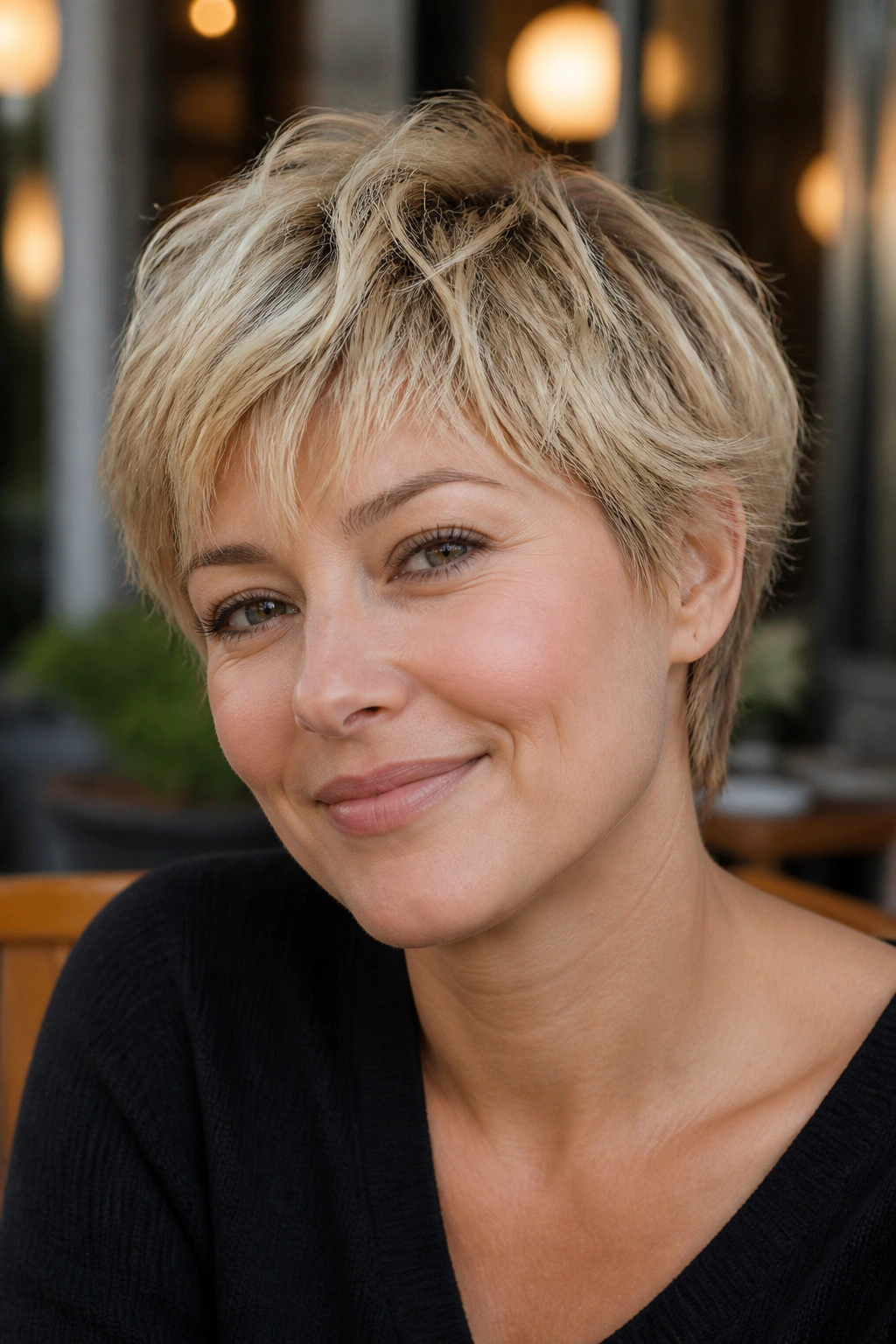
This is the cut for people who want short hair with a little mess in it. Wheat blonde gives the style a lived-in feel, and the shaggy layers stop the cut from looking too neat around the face. On a round face, that looseness can be a gift because it softens the shape without making it wider.
The top should still carry some height. Shaggy does not mean shapeless. You want short layers that kick forward a little at the fringe and narrow in at the sides. The back can be feathery, but not fluffy. That distinction matters more than most people realize.
Finger-dry it with a small amount of mousse, then break up the top with a little paste once it’s dry. If it starts to look too flat, lift the roots at the crown with your fingers and let the front fall naturally. That one move keeps it from becoming a helmet.
15. Short Blonde Pixie Cut with Curtain Fringe
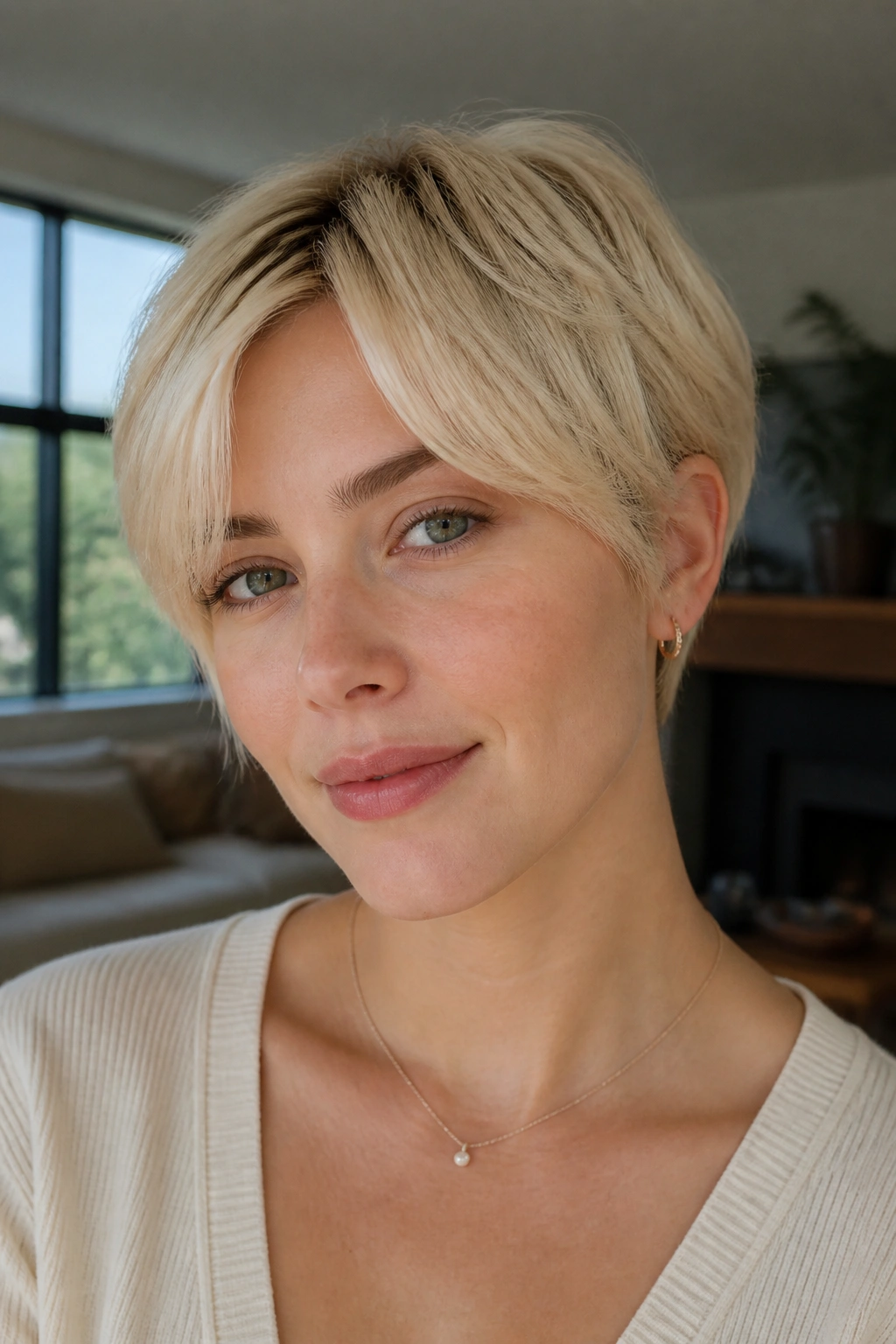
Can curtain bangs work on a pixie? Absolutely, if they stay short and airy. The fringe should part slightly off-center and sweep away from the middle of the forehead. That opening creates a soft frame that doesn’t crowd the cheeks, which is exactly what a round face needs.
How to Keep It Balanced
The shortest pieces should land near the center of the forehead, then lengthen gently toward the temples. That shape gives the face a little vertical pull without making the cut look severe. The rest of the pixie needs to stay compact so the fringe does the framing job on its own.
A small round brush helps, but your fingers are often enough. Dry the fringe forward first, then split it with your hands and let the pieces fall apart. If the ends bend too sharply inward, the cut starts to look heavy. A soft bend is enough.
16. Nape-Taper Pixie
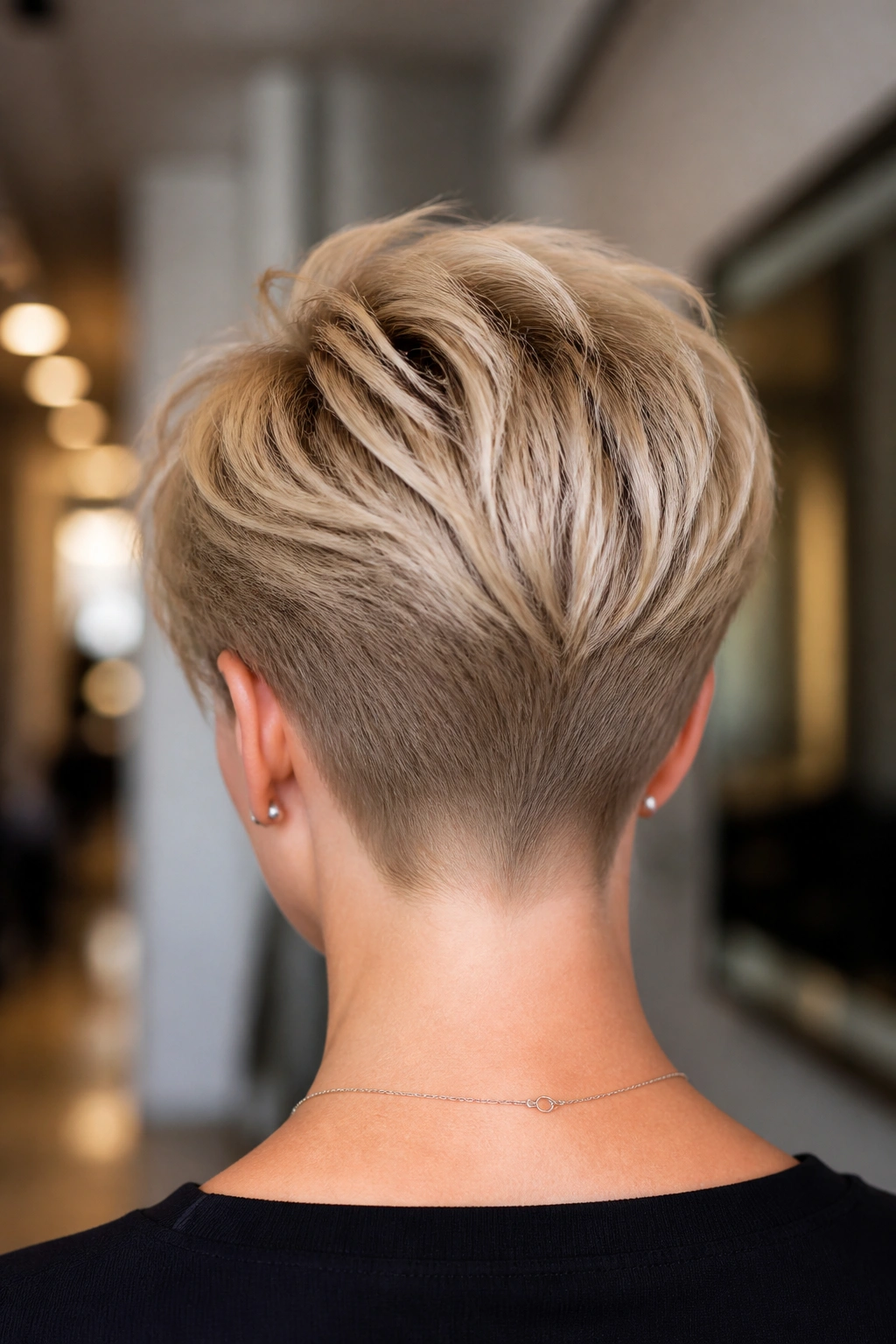
The back of a pixie matters more than most people think. A nape taper tightens the silhouette and keeps the cut from widening low on the head, which is a nice advantage for round faces. The shape also gives the neck a longer line, especially when the sides are kept close.
Picture the view from behind. If the nape is bulky, the head reads wider. If it’s clean and tucked in, the cut feels leaner right away. This is one of those little haircut details that sounds minor until you see the before-and-after.
- Ask for a stacked crown and a close nape.
- Keep the lower side sections soft, not puffy.
- Use a blow dryer with a narrow nozzle for direction.
- Trim every four weeks if your hair grows fast.
The overall effect is tidy, sharp, and easy to wear with earrings or a collared shirt.
17. Buzzed Sides with Longer Top
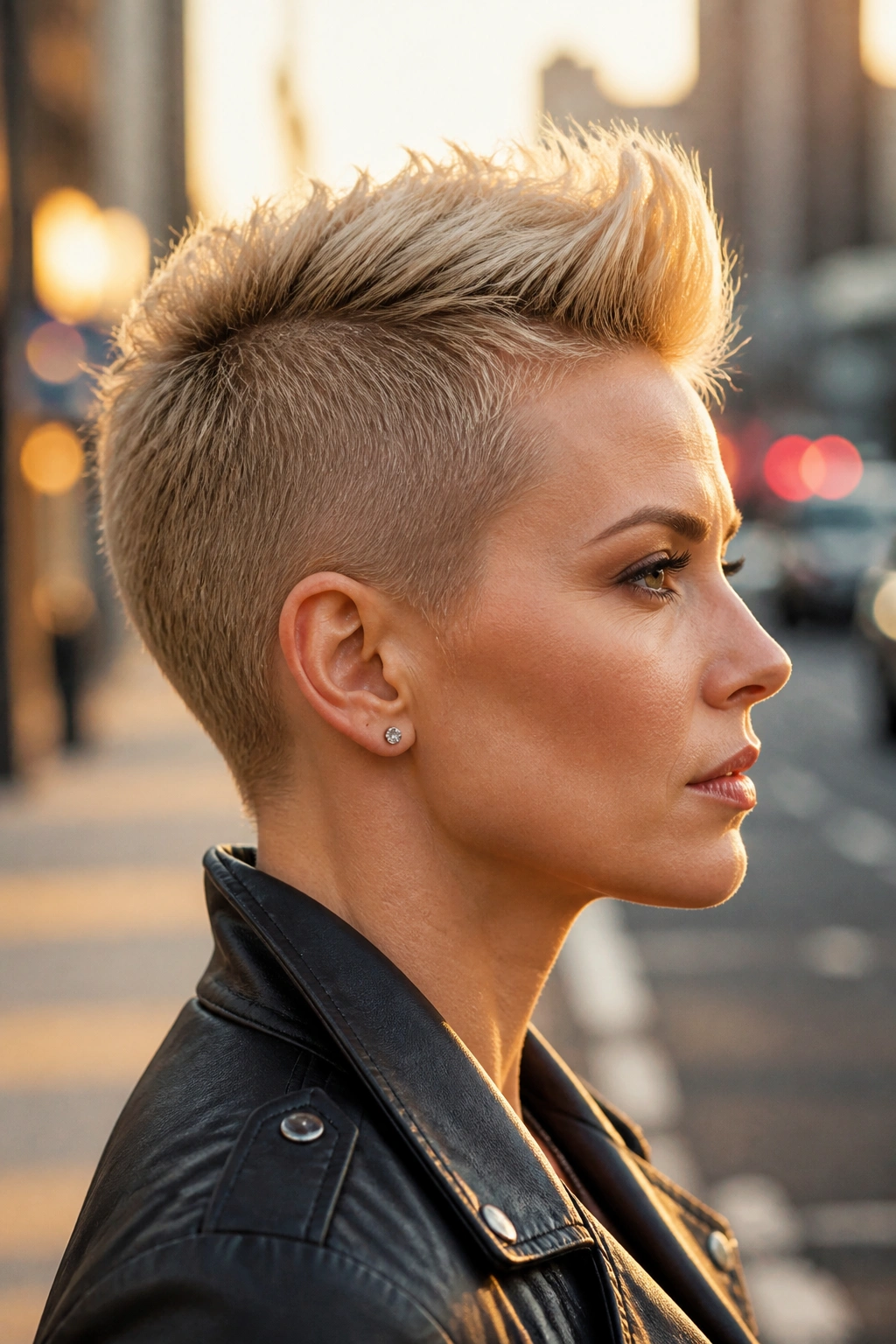
A buzzed-side pixie can work on a round face if the top has enough length and movement. The short sides remove width completely, which leaves the face to read through the vertical shape on top. That’s why this cut can look bold without making the face seem larger.
The blonde color helps soften the contrast. If the top is a pale blonde and the sides are clipped tight, the cut gets a clean graphic line. Keep the top brushed upward, slightly forward, or softly to one side. If it spreads outward, the whole thing loses shape fast.
This cut needs upkeep. The sides grow in quickly, and after a few weeks the crispness starts to fade. It’s worth it if you like a more dramatic haircut and don’t mind regular trims. If you want something low-maintenance, this is not the one.
18. Airy Pixie with Wispy Bangs
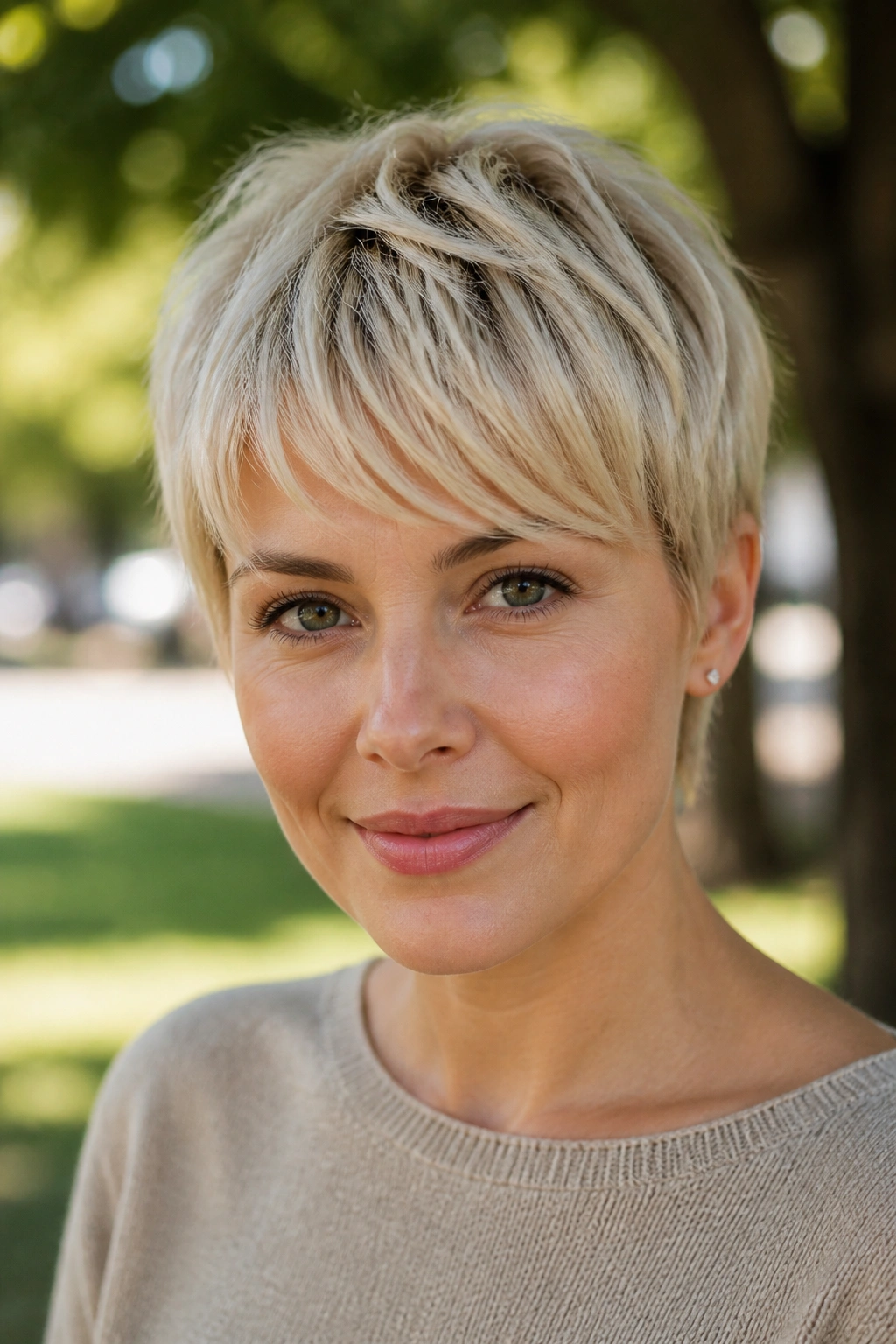
Wispy bangs are the quiet fix for someone who wants softness without a lot of hair in the face. Unlike blunt fringe, wispy bangs break up the forehead line and keep the front of the haircut light. That helps a round face because the eye can move through the cut instead of stopping at one solid band.
The blonde tone should stay light through the bangs, but the roots can be a touch deeper. That slight depth makes the fringe look separated, not pasted down. Keep the sides slim, and let the top float a little.
This style works well if you don’t want a full styling routine. A bit of mousse, a quick blow-dry, and a touch of spray at the roots usually does the job. It’s one of the easiest pixies to live with when you want softness more than structure.
19. Frosted Blonde Piecey Pixie
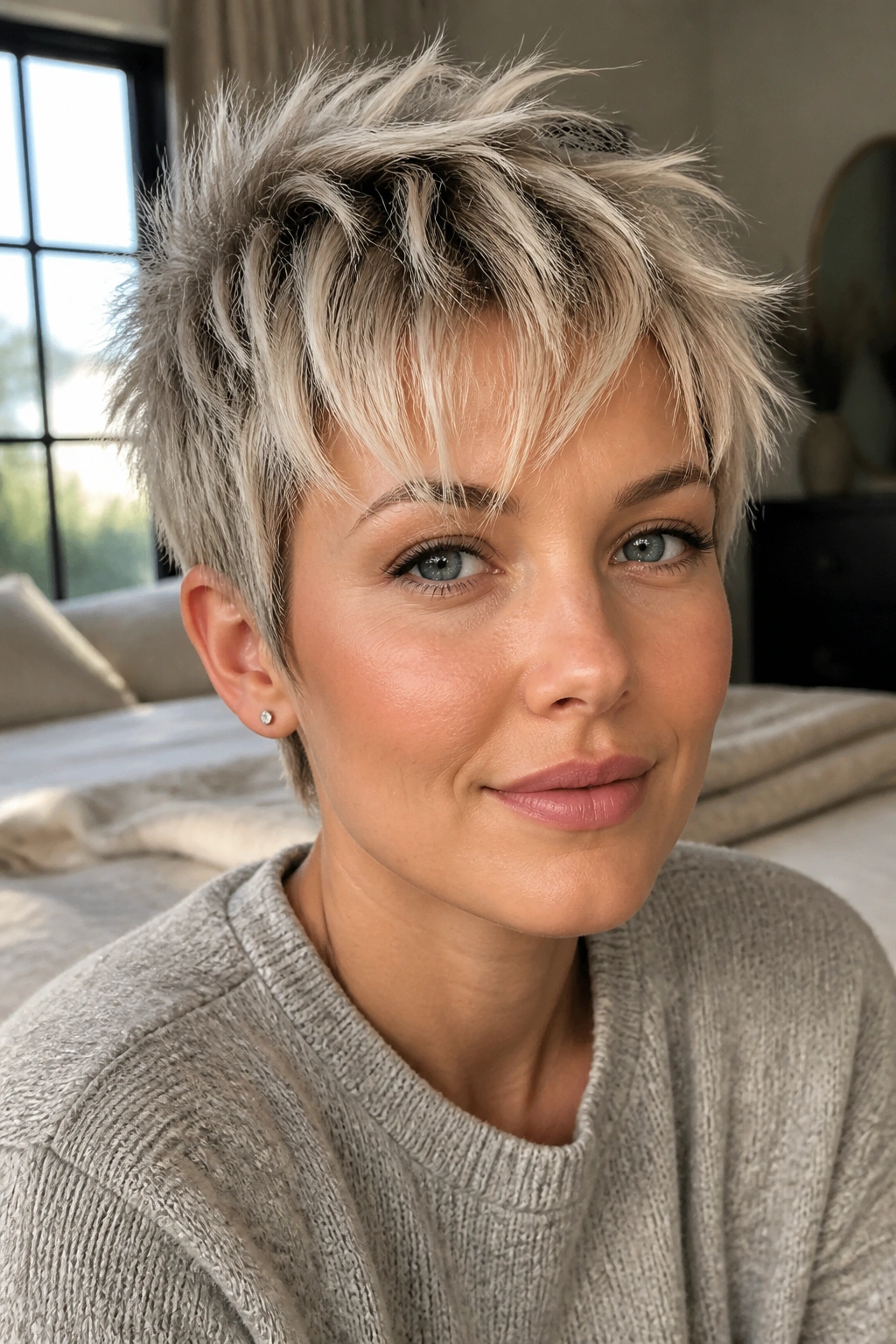
Piecey texture is the whole point here. Frosted blonde highlights make each little section of hair stand out, which is useful on a short crop because the shape can otherwise disappear. On a round face, the broken-up texture keeps the cut from feeling like one round mass.
Why the Pieces Matter
The cut should have short layers through the crown and fringe, with the ends left a little uneven. That creates tiny points of movement that pull the eye upward. Keep the sides tighter so the texture stays on top, where it can do the most work.
- Best with dry wax or a light paste.
- Ask for a few deeper lowlights near the roots.
- Keep the fringe separated, not clumped.
- Works well on hair with natural body.
A lot of people over-style this kind of cut. Don’t. If every piece is standing straight up, it loses the easy feel. A little separation goes a long way.
20. Round-Brushed Pixie with Crown Height
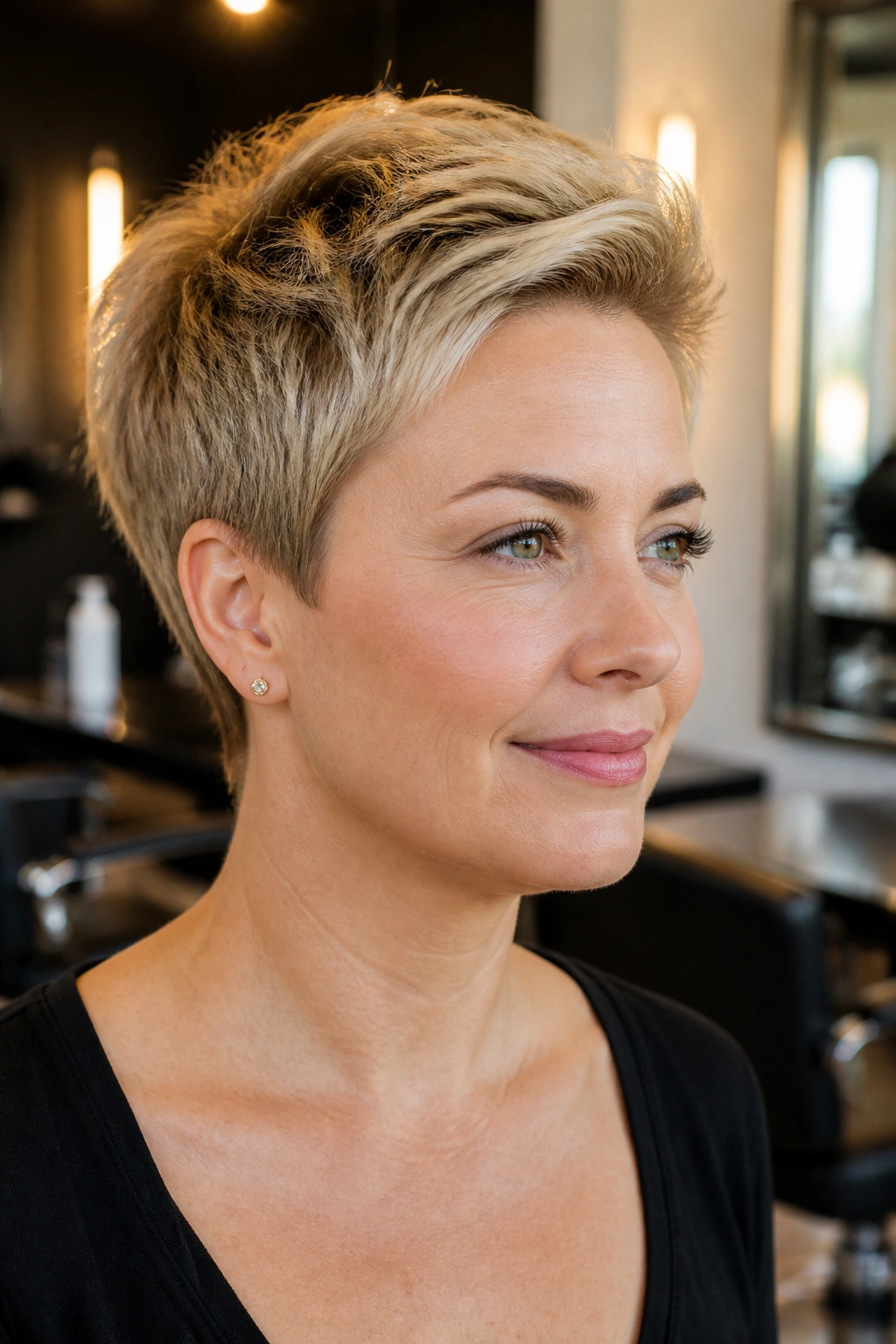
This is the most salon-shaped option in the bunch. A round-brushed pixie gets a little lift at the crown and smoothness at the edges, which is a strong combination for a round face. It feels polished without turning stiff, as long as the sides stay tucked in.
Use a small round brush and dry the roots upward first, then guide the hair back and slightly over. The crown should look fuller, not huge. That small lift stretches the face visually, while the tapered sides keep the width in check. Blonde makes the finished shape look even cleaner because the light catches the top.
If your hair is fine, this is a great choice because the brush work creates body without teasing. If your hair is thick, ask for a bit of internal layering so the blow-dry doesn’t take forever. Nobody needs a 40-minute morning routine for a pixie.
21. Slick-and-Tousled Pixie Hybrid
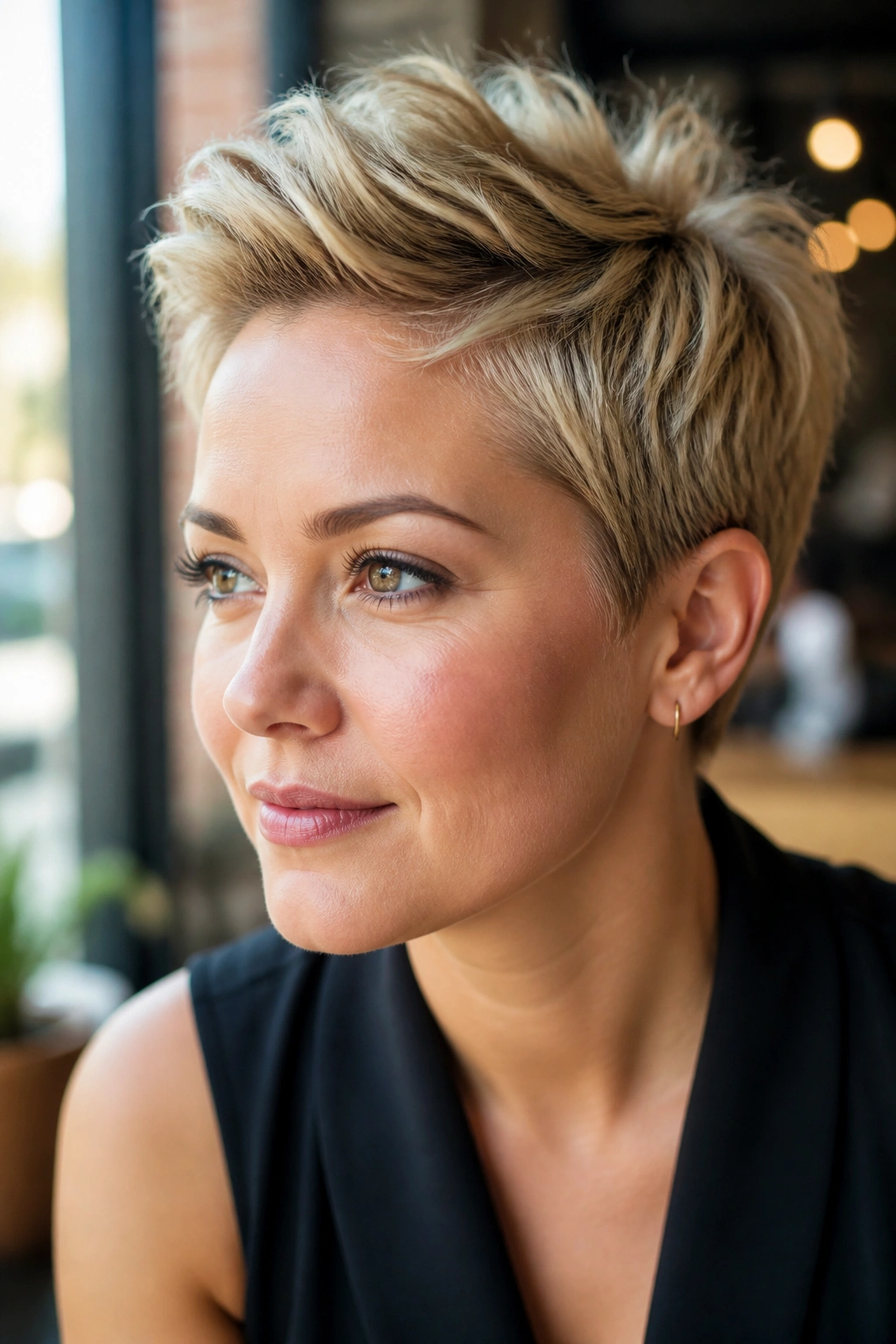
Can one pixie look neat and messy at the same time? Yes, and this is the cut that proves it. The front and sides stay smooth enough to look intentional, while the top gets a little piecey lift. That mix keeps the face from feeling too round or too rigid.
How to Style It
Start with a light cream at the front and a matte paste through the top. Blow-dry the fringe in the direction you want it to sit, then twist a few pieces at the crown with your fingers. The goal is controlled texture, not a wild mess. If the sides puff out, the whole cut loses its line.
This is a strong option if you want one haircut that can dress up or down. It looks just as good with a plain tee as it does with a sharper outfit, which is probably why people keep returning to it.
22. Ear-Tuck Pixie
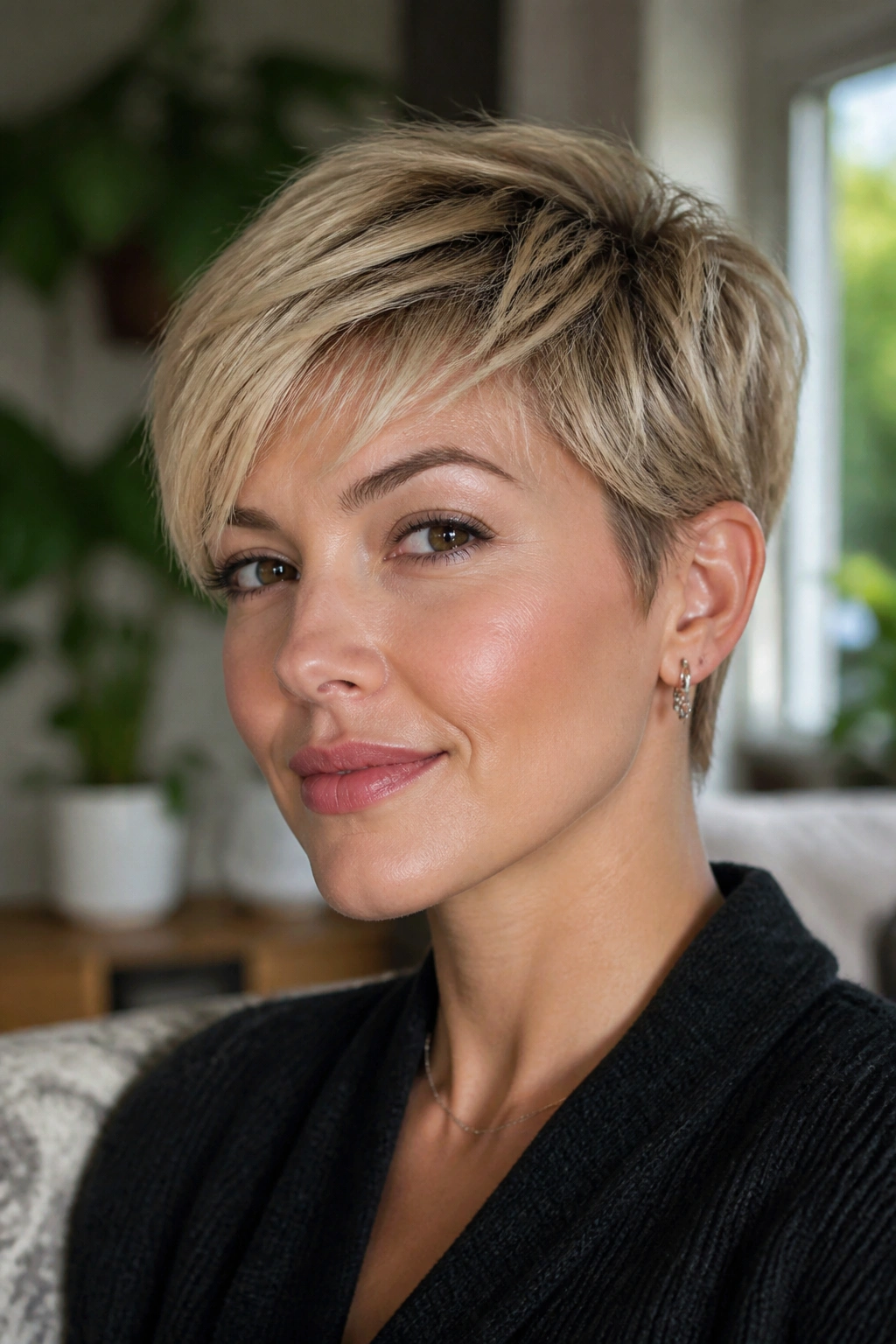
Sometimes the smallest move makes the biggest difference. An ear-tuck pixie leaves just enough length near the temples and sides so you can tuck one side behind the ear. That opens the face instantly and gives a round shape a cleaner edge.
The key is to keep the length around the ears soft, not chunky. If those side pieces sit too thick, the tuck looks forced. But if they’re light and slightly tapered, the whole cut feels airy. The blonde tone helps the tucked side disappear a little, which makes the face line even cleaner.
- Ask for temple pieces that graze the ear.
- Keep the nape trimmed close.
- Use a smoothing serum on the tucked side.
- Let the other side stay loose for contrast.
It’s a small styling trick, but on a round face it can make the jawline read more defined.
23. Shadow-Root Pixie
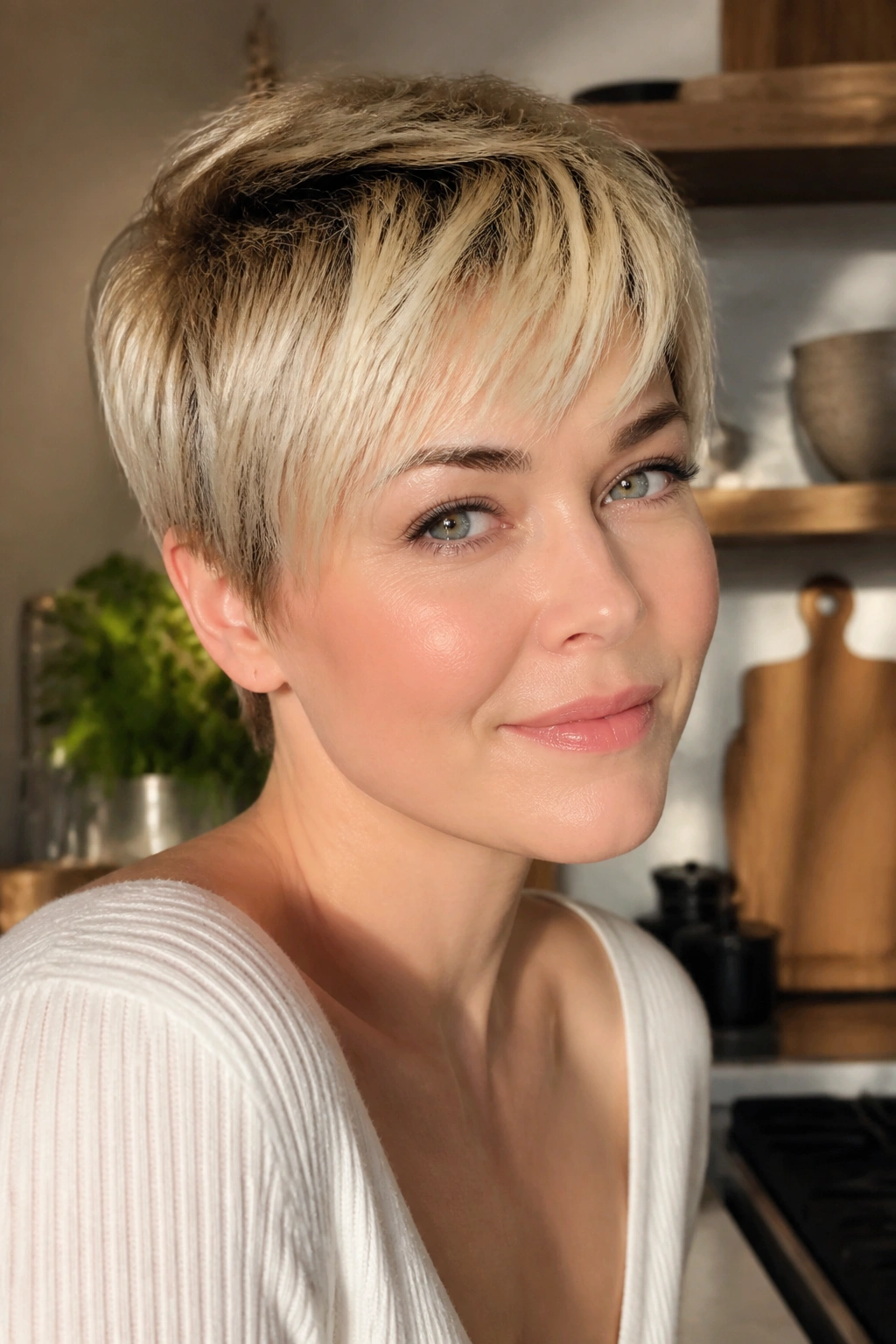
A shadow root does more than make grow-out easier. On a blonde pixie, it adds depth right where the cut can go flat. That depth stops the style from turning into one pale shape around the head, which is a common problem with very light blonde on a round face.
The darker root also creates a natural shadow at the scalp, and that makes the crown look slightly higher. Pair that with short, tapered sides and the face suddenly reads longer. The effect is subtle, but that’s why it works so well.
This is a smart choice if you want to keep your appointments a little farther apart. The grow-out looks deliberate instead of messy. You can wear it polished with a blow-dry cream or rough it up with a little dry texture spray. Either way, the root depth does half the styling for you.
24. French-Girl Pixie with Soft Bangs
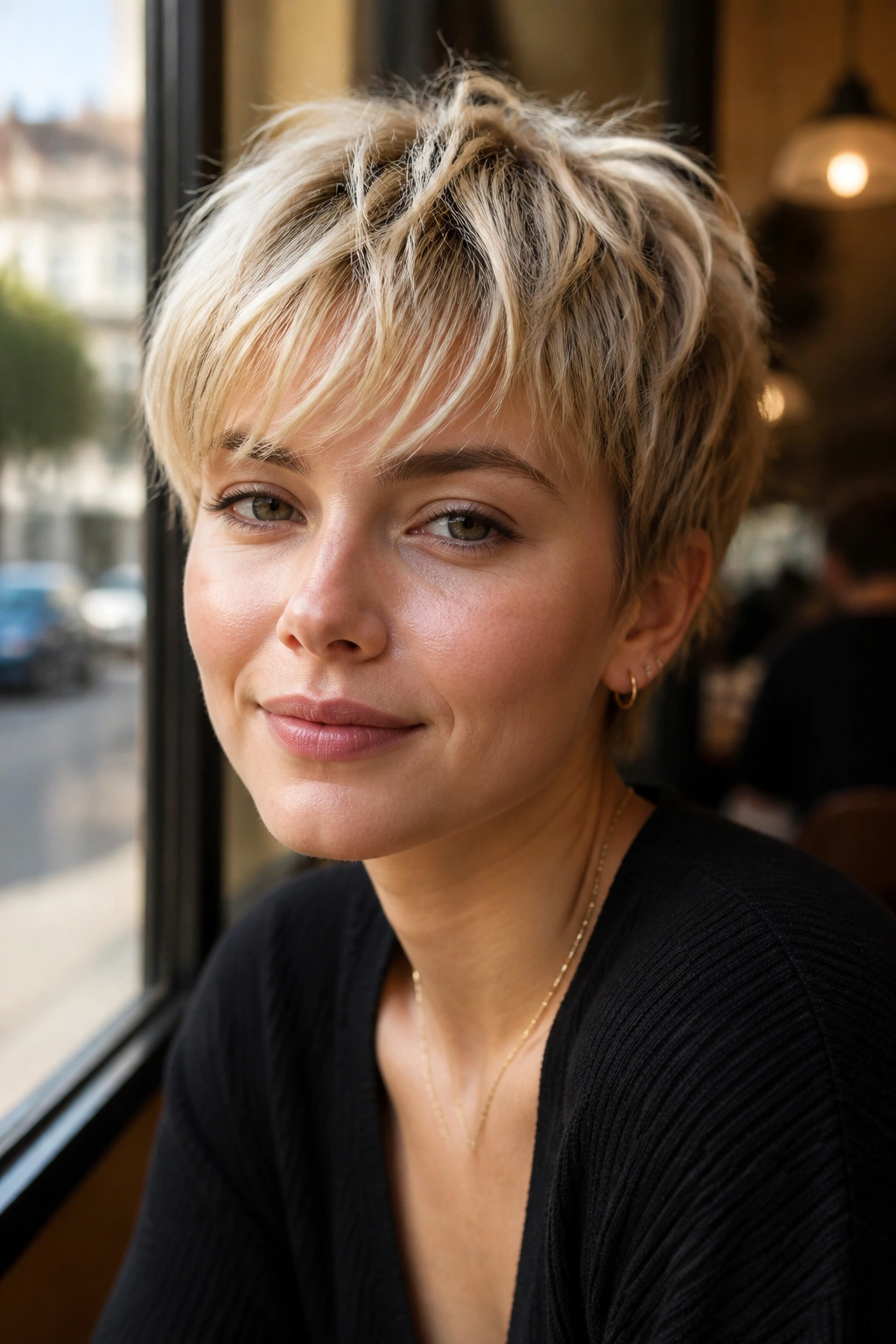
There’s a looseness to this cut that people either love or ignore. I love it. The soft bangs fall in a gentle sweep, the sides stay close, and the whole thing feels a little undone in the best way. On a round face, that softness keeps the shape from feeling overly engineered.
Unlike a sharp geometric pixie, this version leaves a little air around the forehead and temples. That extra breathing room matters. It lets the eyes stay the focus instead of the cheeks.
The style works best when the blonde is warm enough to soften the line but not so golden that it looks brassy. Dry it with your fingers, not a brush, unless you want a more polished finish. A bit of bend at the fringe is enough. Too much curl, and the face starts to widen again.
25. Pixie for Glasses Wearers
Glasses change the balance of a haircut, and this is where a round face needs a careful hand. The best pixie for frames keeps the temple area slim, leaves the fringe above the lens line, and avoids side volume that competes with the glasses. That sounds picky because it is.
Keep the Frames and Fringe in Balance
Bring your glasses to the cut, or at least wear a similar pair to the appointment. The fringe should stop short of the lenses, and the sides should not flare into the frame arms. A tapered nape helps too, because it keeps the back neat and lets the frames stay the focus.
- Keep bangs above or beside the lenses, not in them.
- Leave a little length at the temples for softness.
- Ask for a snug side shape.
- Choose a blonde that doesn’t wash out your skin under the frames.
This cut can look incredibly sharp when the proportions are right. If they’re off, the hair and glasses will fight each other all day.
26. Swoopy Fringe Pixie
A swoopy fringe is one of the quickest ways to fake a little extra length in the face. The hair sweeps from a deep side part and lands in a curved line across the forehead, which pulls the eye diagonally instead of across the widest part of the face. That alone makes a round face look more structured.
The blonde shade should have enough depth near the roots to keep the swoop visible. Flat, all-over light blonde can wash out the line. A slightly darker base gives the fringe shape and keeps the top from floating away.
This cut is best if you like a little movement near the front without committing to a heavy bang. Use a round brush or even a flat brush to guide the fringe, then let the ends fall softly. The swoop should look easy, not shellacked into place.
27. Messy Spiky Blonde Pixie
Spiky does not have to mean harsh. A messy spiky pixie can look soft if the pieces are separated with a light hand and the blonde tone stays pale enough to keep the texture visible. On a round face, the upward motion of the spikes gives you height, which is exactly what you want.
How to Keep It Soft
Use a matte paste, not a wet gel. Pinch a few pieces at the crown and fringe, then stop before the cut starts to look stiff. The sides should stay close and clean so the spikier top doesn’t widen the face. Think vertical, not outward.
This cut is a good fit for thick hair that wants to stand up on its own. It can also work on fine hair if you rough-dry the roots first and add paste only at the end. Too much product turns the whole thing into a sticky helmet, and nobody wants that.
28. Elegant Close Crop
There’s something sharp about a close crop done well. It sits near the head, keeps the sides neat, and leaves just enough texture on top to avoid looking severe. On a round face, that closeness can be flattering because it removes visual width.
The blonde needs to stay soft, though. If the color is too stark, the crop can look harsh. A creamy blonde with a little dimension is easier on the eye and sits better with the short shape. A tiny bit of lift at the crown keeps it from going flat.
- Best when you want low bulk around the ears.
- Ask for soft texture, not a hard helmet shape.
- Keep the top slightly longer than the sides.
- Use a tiny amount of paste and nothing heavier.
This is the kind of cut that looks expensive when the lines are clean. Messy edges spoil it fast.
29. Temple-Length Pixie
Temple length is one of those small details that changes the whole haircut. A little extra hair at the temples gives the face a frame without adding bulk at the cheeks. On a round face, that’s a sweet spot.
The pieces should sit just long enough to brush the temples and maybe graze the top of the ear. Shorter than that, and you lose the framing effect. Longer than that, and the side shape can start to widen. That narrow window is why a good stylist pays attention here.
This cut also gives you more styling options than you might expect. You can sweep the temple pieces back, tuck them, or let them fall forward with a side part. It’s a quiet haircut, not a flashy one, but it does a lot of face-shaping work without making a scene.
30. Short Blonde Pixie Cut with Feathered Layers
A feathered pixie is the one I’d pick for someone who wants short hair that still moves. The layers are soft at the ends, which keeps the haircut from feeling heavy around a round face. The blonde shade should have enough dimension to show the feathers, because flat color can make the shape disappear.
Compared with a blunt crop, this one feels lighter on the head and easier to wear through the day. The crown can have a little lift, the sides can stay snug, and the fringe can fall in soft pieces instead of one hard band. That combination is forgiving. It grows out well. It styles fast. It doesn’t ask for much.
If you’re choosing among these 30 looks, start with your hair texture before you start with the photo. Fine hair likes tapered shapes and a little root lift. Thick hair likes undercuts, razored ends, or anything that removes bulk. Curly hair needs room to spring. And if your face is round, the real win is still the same: keep the sides neat, keep the top alive, and let the fringe work on a diagonal instead of a straight line.
