



Fine hair often gets a bad reputation in the salon chair. People assume it lacks potential, that it will inevitably fall flat or stick to the scalp within an hour of styling. That is simply not true. Fine hair is actually quite versatile; it just lacks the structural density to hold onto traditional long styles. When you choose a pixie cut, you are not just cutting your hair; you are physically changing the way light hits it and how volume is created at the root. The secret lies in texture. By removing the weight that pulls fine hair down, you create a foundation that allows for movement, lift, and an illusion of fullness that longer styles rarely achieve.
Many people fear the commitment of a short cut, worrying that a pixie will look thin or sparse. The reality is quite the opposite. When the length is gone, the diameter of your ponytail or the thickness of your braid stops mattering entirely. Instead, the focus shifts to how the hair interacts with your scalp and face shape. A well-executed textured pixie uses layering techniques—like point cutting or razor feathering—to create scaffolding within the hair. This structural support is what keeps the style standing tall rather than collapsing.
If you are ready to stop fighting your natural hair texture and start working with it, this collection of cuts offers a path forward. Each of these styles prioritizes visual volume and manageable, lived-in texture. Whether you want something ultra-short and daring or a bit longer and softer, the key is the cut itself.
1. The Choppy Layered Pixie
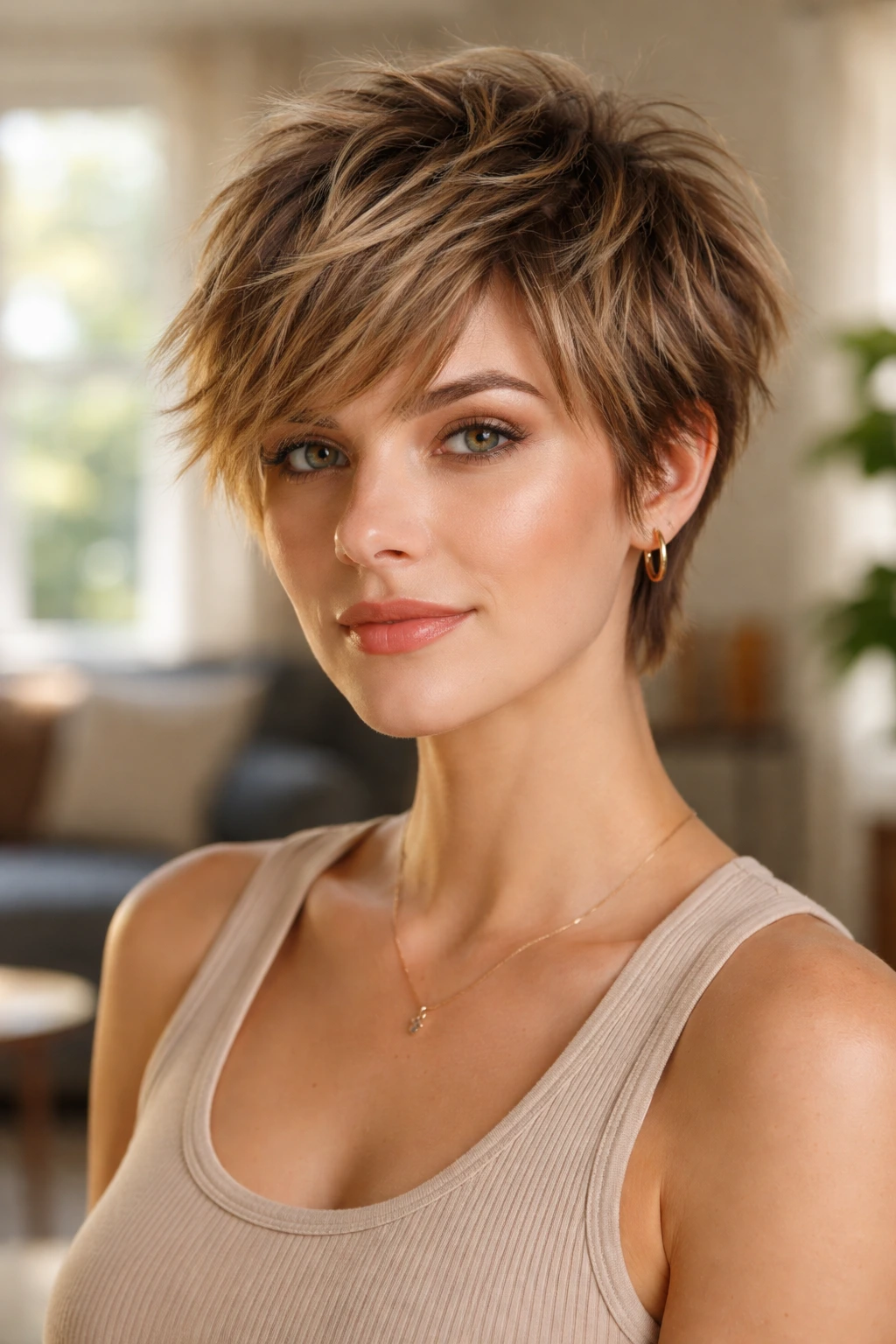
This is the quintessential starting point for anyone moving from a longer style to a pixie. It relies on internal layering to remove the weight that pulls fine hair down, allowing the roots to stand up more naturally. By cutting into the ends of the hair rather than snipping them straight across, your stylist creates jagged, varied lengths that nestle into one another, creating immediate volume.
Why It Works for Fine Strands
Fine hair often looks best when it isn’t perfectly uniform. Uniformity highlights the lack of density. Choppiness, however, distracts the eye. When the layers are mismatched, the eye sees movement and depth instead of counting the number of strands. It effectively tricks the observer into seeing a denser head of hair.
The Stylist’s Technique
Ask for “point cutting” on the ends. If you just ask for layers, you might end up with a shelf-like effect, which actually makes fine hair look thinner. Point cutting removes bulk while keeping the silhouette soft and blended.
Pro tip: Use a dry texturizing spray, not a heavy cream. Heavy products will just weigh your hair down and make it look greasy within a few hours.
2. The Undercut Pixie
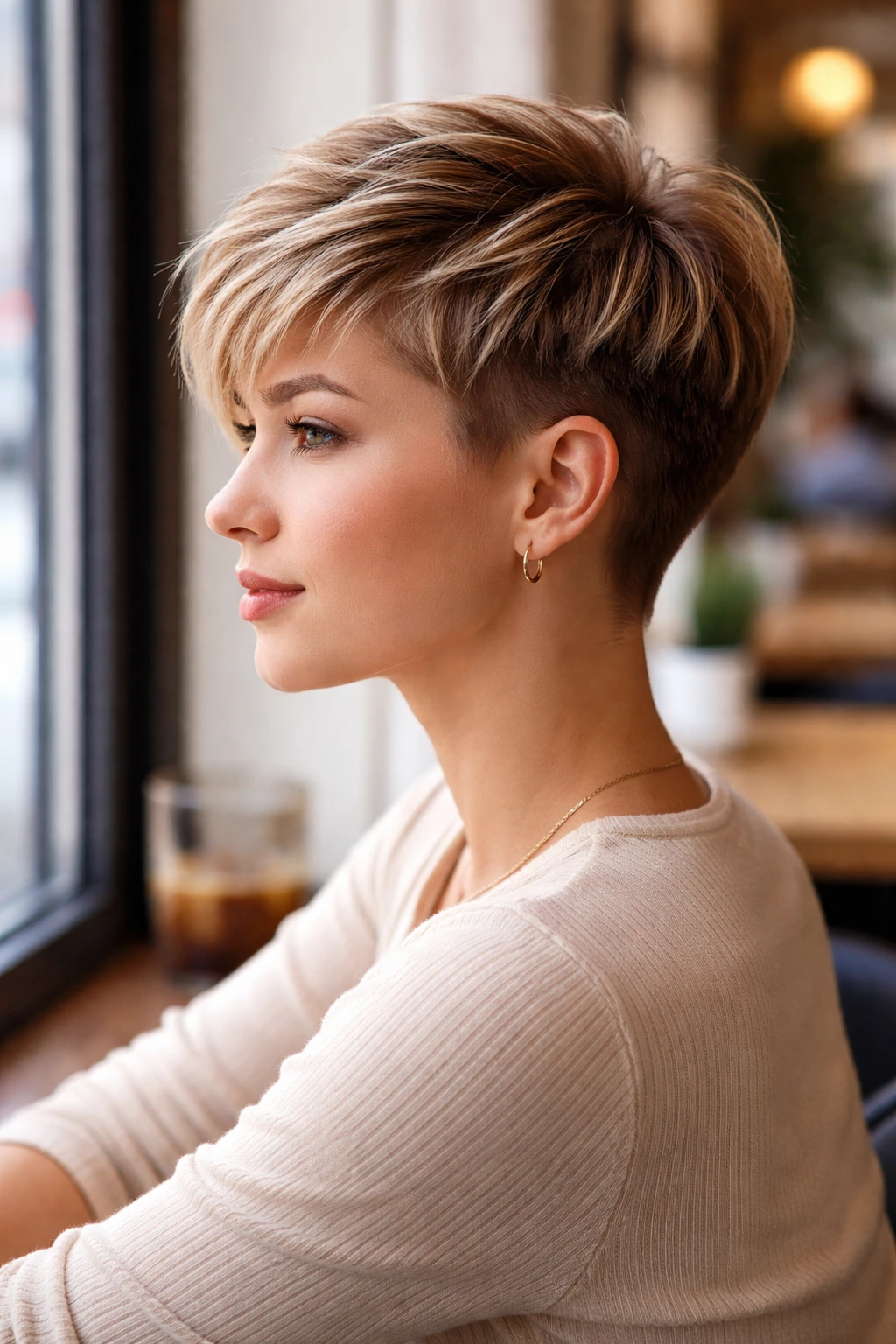
If you want the maximum possible volume at the crown, the undercut is your best friend. This style involves shaving or very closely clipping the hair at the nape of the neck and sometimes along the sides, leaving significantly more length on top. By eliminating the hair that would otherwise sit flat against your neck, you allow the hair on top to stand tall without any competition.
The stark contrast between the buzzed sides and the longer, textured top creates a focal point that screams volume. It is a bold look, but for someone with fine hair, it is one of the most functional cuts available. You stop worrying about the back of your hair losing its shape because there is literally no hair there to lose its shape.
It requires more frequent visits to the salon for maintenance—usually every four to six weeks—to keep the buzz looking clean and intentional. If you let it grow out too long, the silhouette loses that crisp, high-contrast energy that makes the cut so successful for fine hair.
3. The Piecey Sideswept Pixie
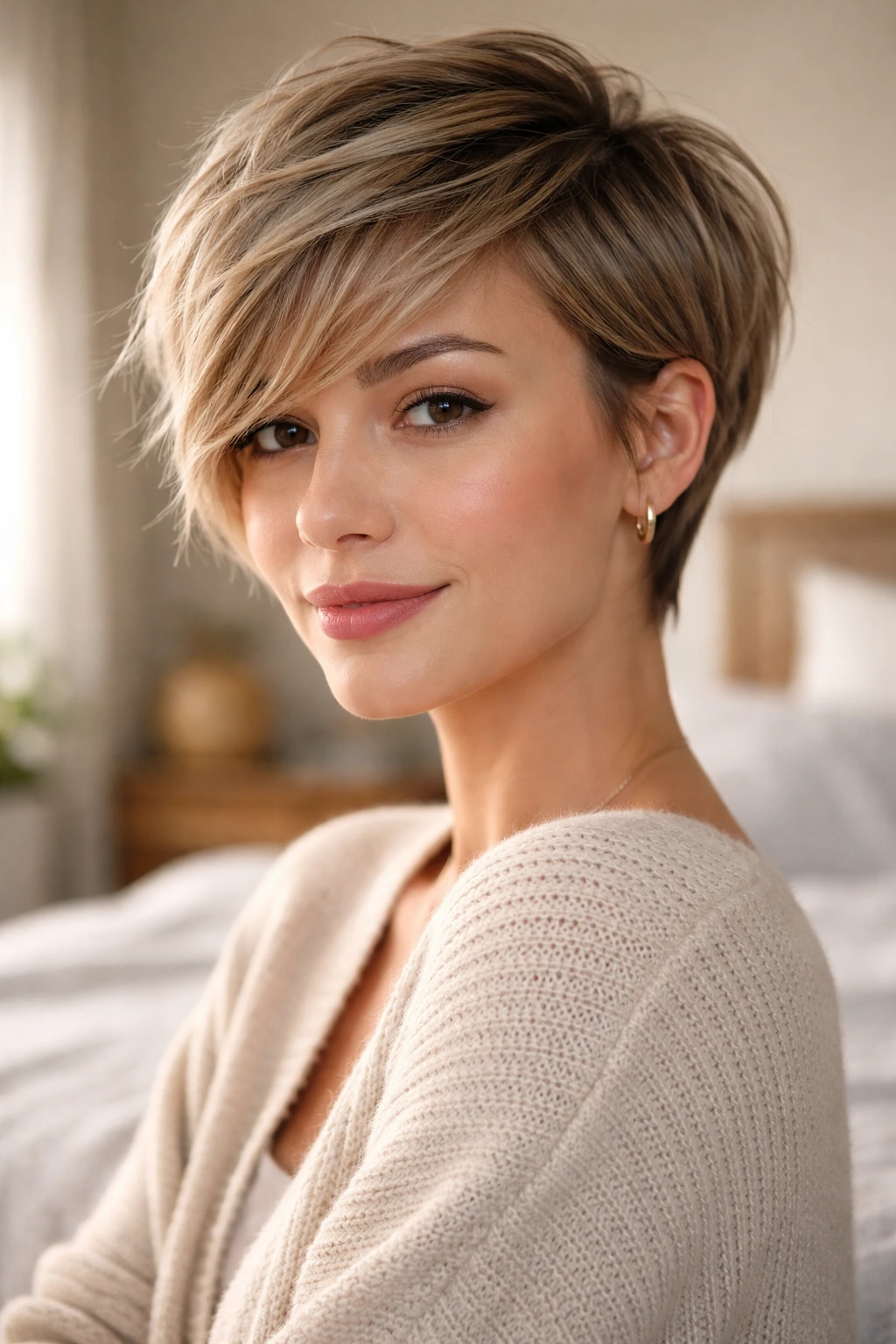
This style is all about the bang. By keeping the hair on one side longer and sweeping it across the forehead, you create a soft, face-framing effect that feels romantic and classic. It is a fantastic option if you have a larger forehead or just want a cut that feels a bit more feminine and less “high-fashion-edgy.”
How to Style It
You need a light-hold pomade or a styling paste that has a matte finish. Shiny products can make fine hair look oily, which only highlights the scalp. Work a pea-sized amount of product into your palms, rub them together until the product is invisible, and then rake your fingers through the hair, pushing the bangs to the side.
The Importance of Direction
Because the hair is swept to one side, you are naturally encouraging the hair to lift at the root on the opposite side. This creates a natural bump of volume right where you want it most. It is subtle, effective, and requires very little effort in the morning.
4. The Messy Bedhead
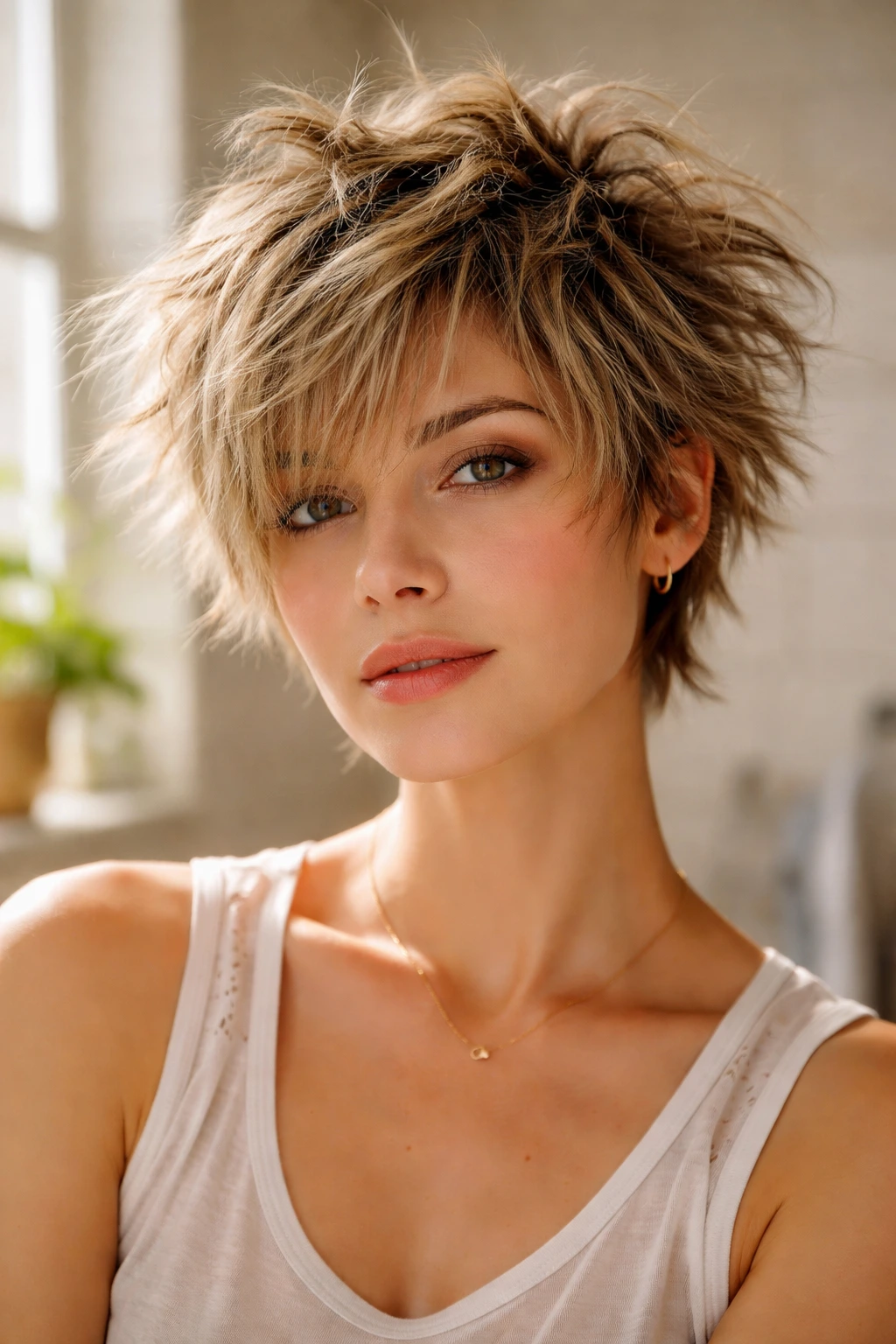
Have you ever woken up, looked in the mirror, and thought, “My hair actually looks better messy”? That is the logic behind the bedhead pixie. This cut is designed to be chaotic. It uses uneven, shaggy layers that are intentionally cut to stick out in different directions.
It works because it embraces the natural tendency of fine hair to be a bit slippery and flyaway. Instead of trying to force it into a smooth, sleek shape—which fine hair usually fights against—you lean into the lack of structure. The messier it is, the more intentional it looks.
To achieve this, you need a salt spray. Apply it to damp hair and let it air dry. As it dries, use your fingers to scrunch the hair upward. If it starts to lay flat, just give it another hit of salt spray or texturizing powder. The goal is to look like you just rolled out of bed, but in a way that feels polished and cool.
5. The Tapered Nape Pixie
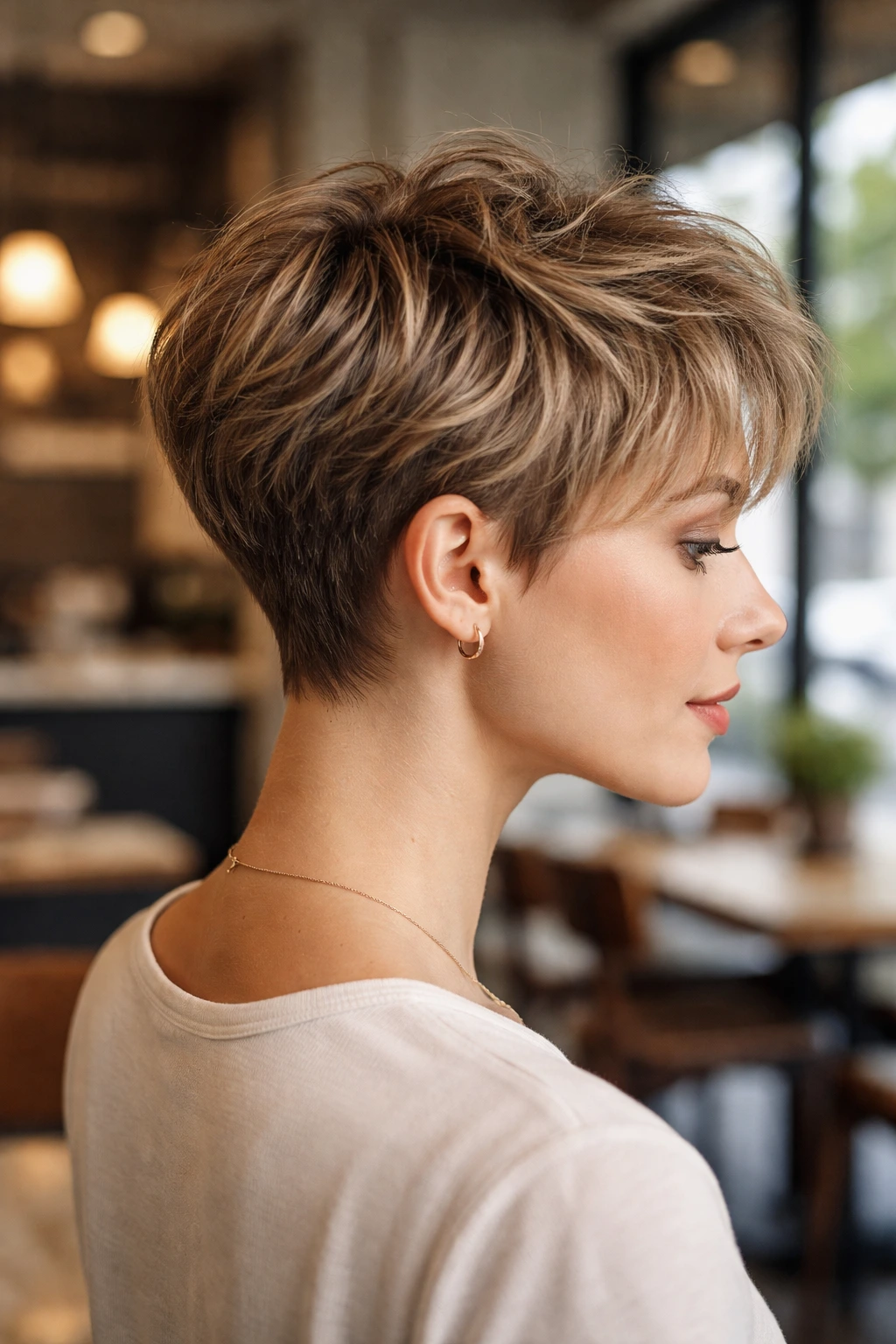
This style is sophisticated and clean. While the top has texture and length, the hair at the very back of the neck is cut close and tapered, fading into the hairline. It creates a beautiful, clean line from the profile view and prevents the “mullet” effect that can happen when short hair starts to grow out.
The beauty of the tapered nape is that it forces the hair immediately above it to lift. It acts as a prop, pushing the longer, textured hair upward. It creates a rounded, feminine shape that sits beautifully on the head, which is often a struggle for fine hair that naturally wants to go flat.
It works exceptionally well if you have a nice neck and want to show it off. It is a classic look that stands the test of time, appearing just as relevant on a corporate professional as it does on an artist. It is one of the most universally flattering pixie variations.
6. The Asymmetrical Pixie
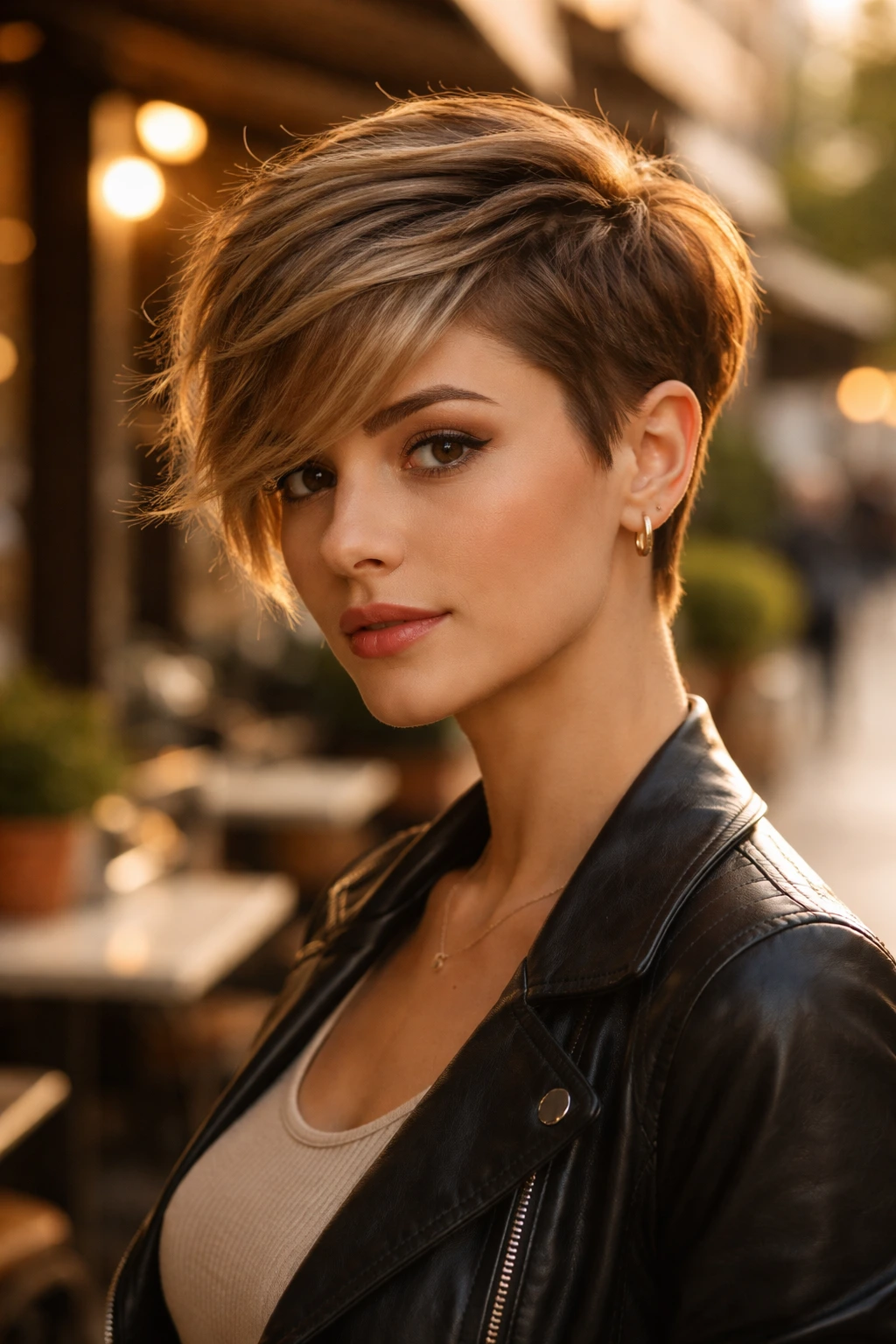
Asymmetry is a visual trick. By making one side of the hair shorter than the other, you create a diagonal line that draws the eye across the face rather than focusing on the thickness of the hair. It is a distraction tactic, and it is highly effective.
Unlike a symmetrical cut, which highlights any area where the hair might be thin, the asymmetrical cut creates movement. When you walk, when you turn your head, the imbalance catches the light and creates a sense of motion. That motion makes fine hair appear more dynamic.
Who Should Get This Cut
This is for the person who wants a bit of edge without going full-shave. It provides the drama of a shorter cut with the styling capability of a slightly longer side. It is also excellent for balancing out facial features if you have a face shape that leans toward one side or the other.
7. The Soft Shag Pixie
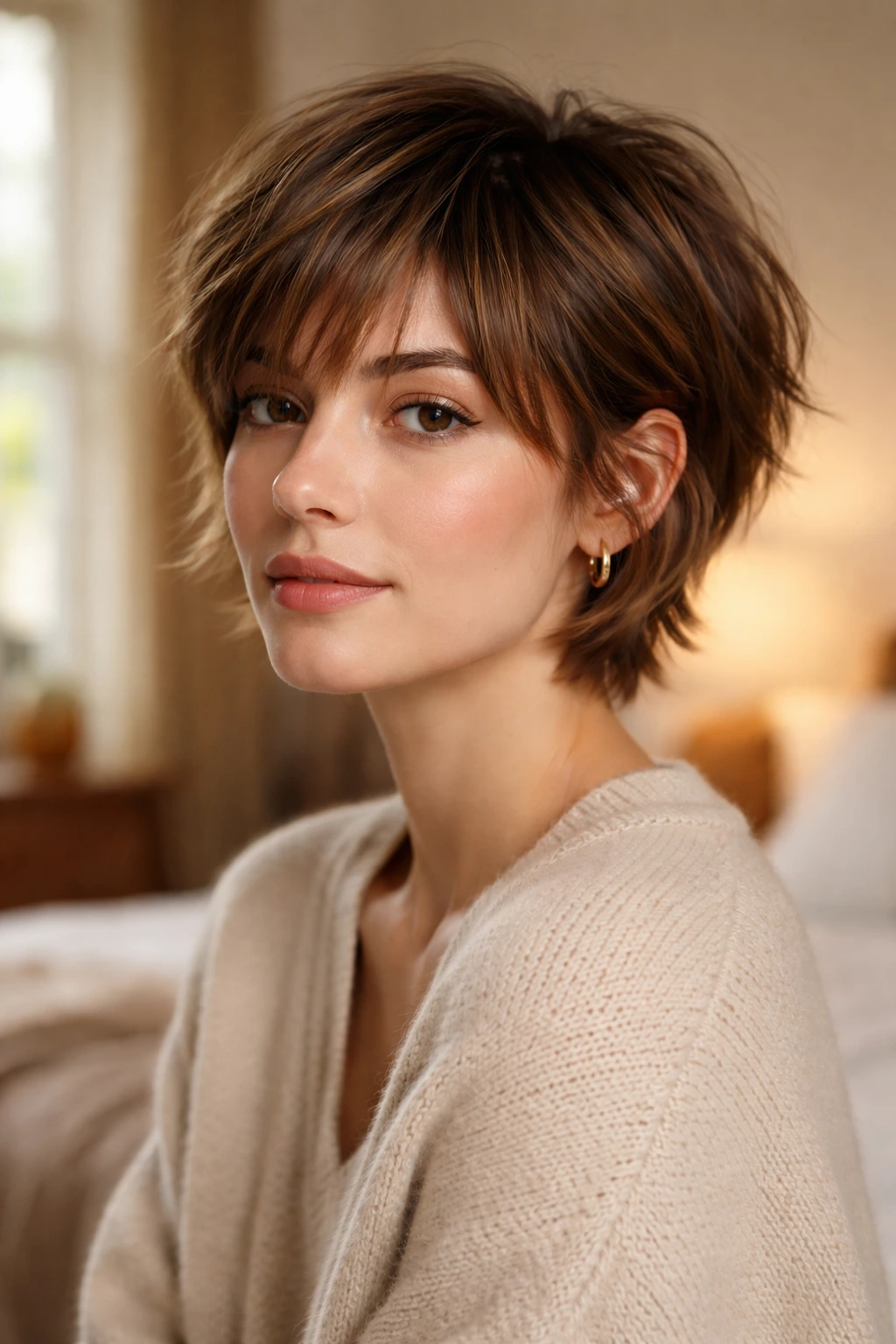
Think of this as a 1970s shag, but shrunk down to pixie proportions. It features curtain-like bangs that graze the eyebrows and layers that are slightly longer around the ears and neck. It is softer and more “grown-out” looking than a traditional, tight pixie.
Why It Works
The soft shag is built on volume. Because the layers are longer, they have more room to bend and move. Fine hair often holds a bend better than it holds a curl, so this style allows you to use a small flat iron to put a gentle “S” curve in the hair, giving you instant, effortless body.
Maintenance Note
This style is forgiving. Because it is meant to be a bit shaggy, you do not need to rush to the salon as soon as it grows out a quarter of an inch. It looks just as good at week eight as it does at week four.
8. The Feathered Pixie
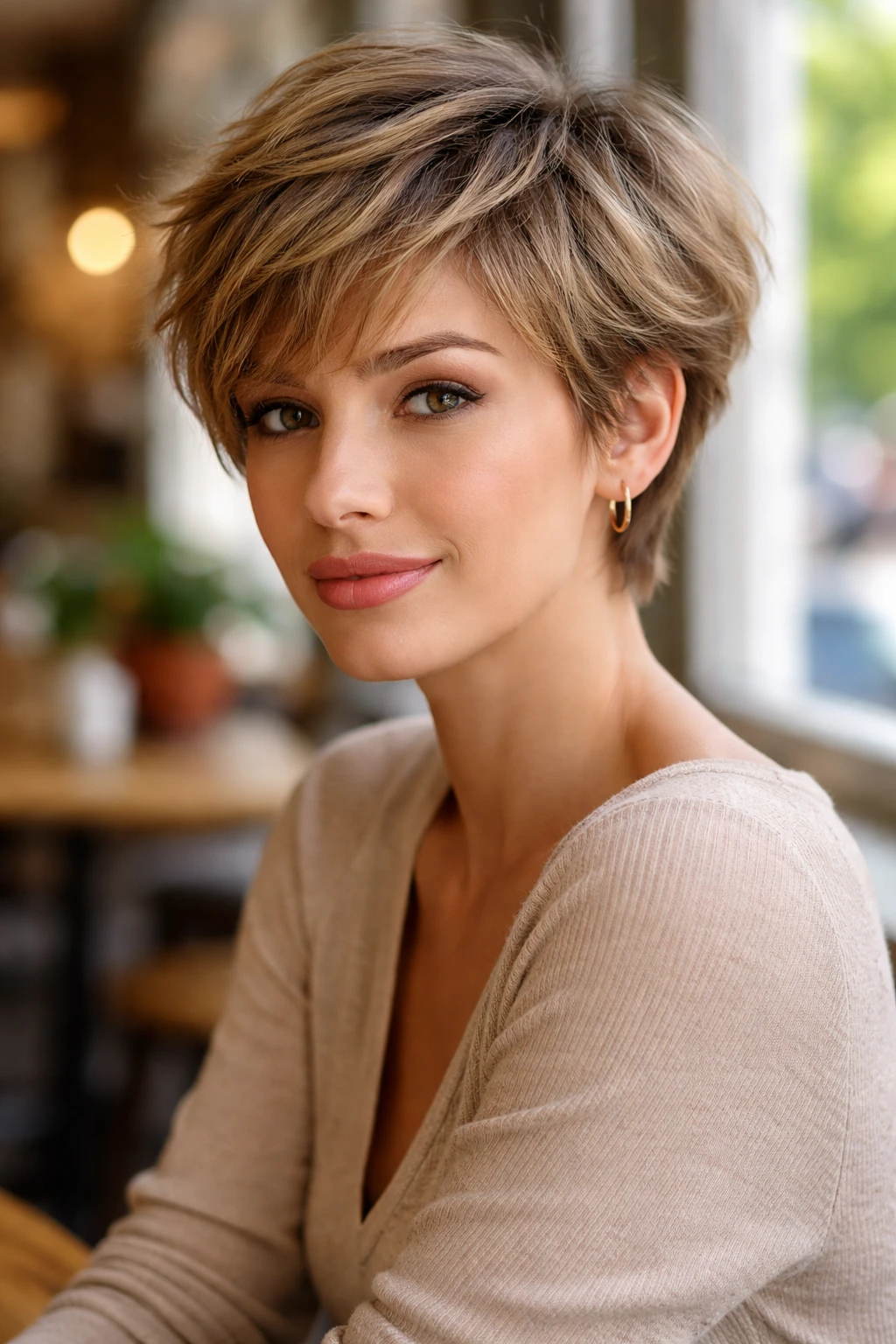
Feathering is a technique where the stylist uses a razor or texturizing shears to create soft, wispy edges that overlap like bird feathers. This is the opposite of a blunt cut. Where a blunt cut makes fine hair look healthy, feathering makes it look soft and voluminous.
The “feathered” effect creates air pockets between the layers. When you have air pockets, you have volume. It removes the weight of the hair but keeps the length, so it does not feel like you are losing too much. It is incredibly lightweight and feels almost like you have nothing on your head.
If you have very fine, straight hair that refuses to hold a style, this is a strong contender. The texture is baked into the cut itself, so you do not have to rely on heavy-duty styling products to get the volume you want. A little bit of light mousse while it is damp is all you need.
9. The Razored Edges Pixie
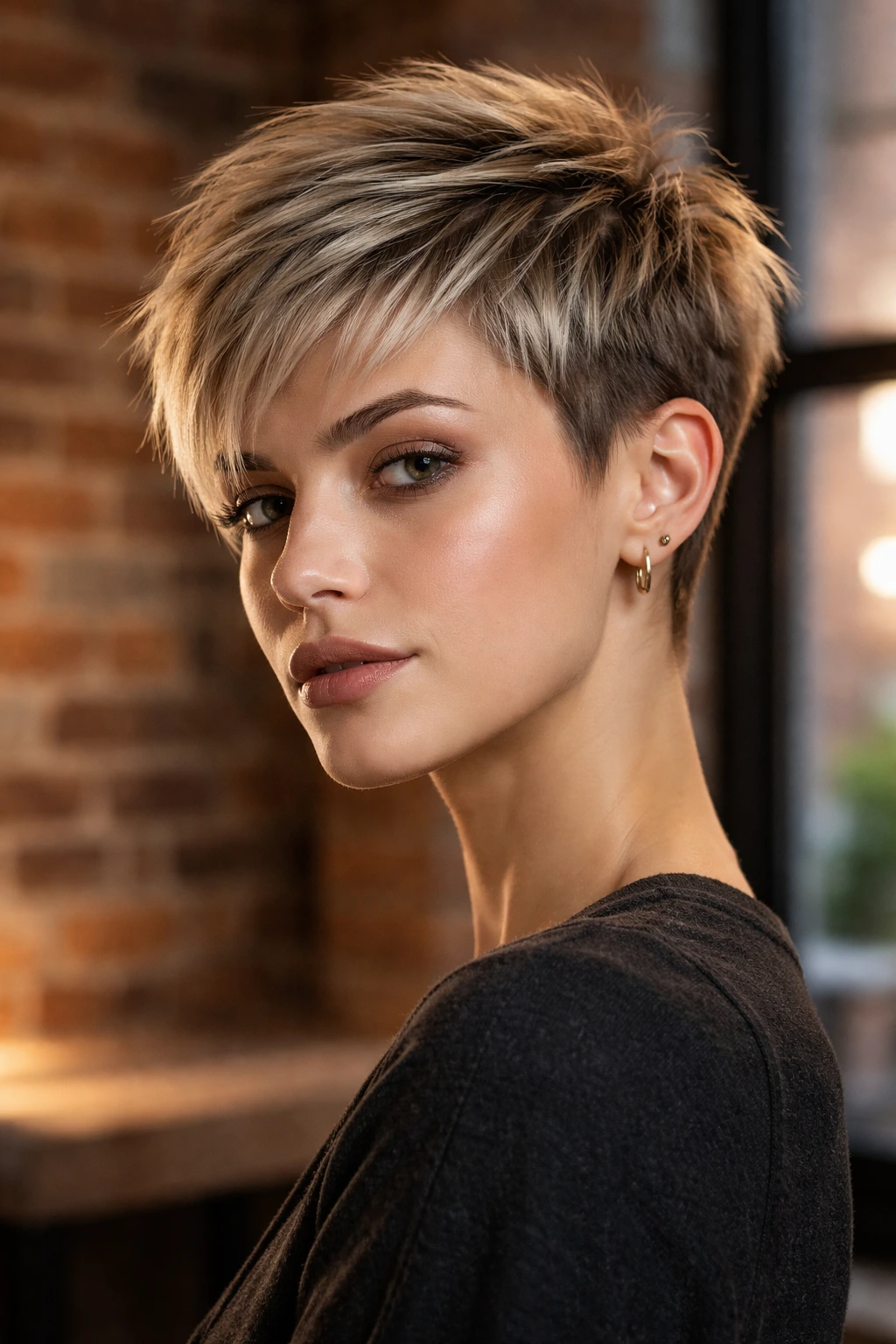
There is a distinct difference between “choppy” and “razored.” Choppy implies chunks of hair cut at different lengths. Razored implies that the very ends of the hair are tapered into nothingness. This creates a very modern, sharp silhouette that looks incredibly intentional.
The razor allows the stylist to create a curve in the hair shaft. For fine hair, that curve is essential. It prevents the hair from laying completely flat against the skull. Instead, it creates a slight lift at the ends that can be styled to flick out or tuck under, depending on your mood.
Caution: Make sure your stylist is confident with a razor. It is a different skill set than using shears. If a razor is used incorrectly on fine hair, it can cause frizz or make the ends look split. When done right, however, it is pure magic.
10. The Voluminous Crown Pixie
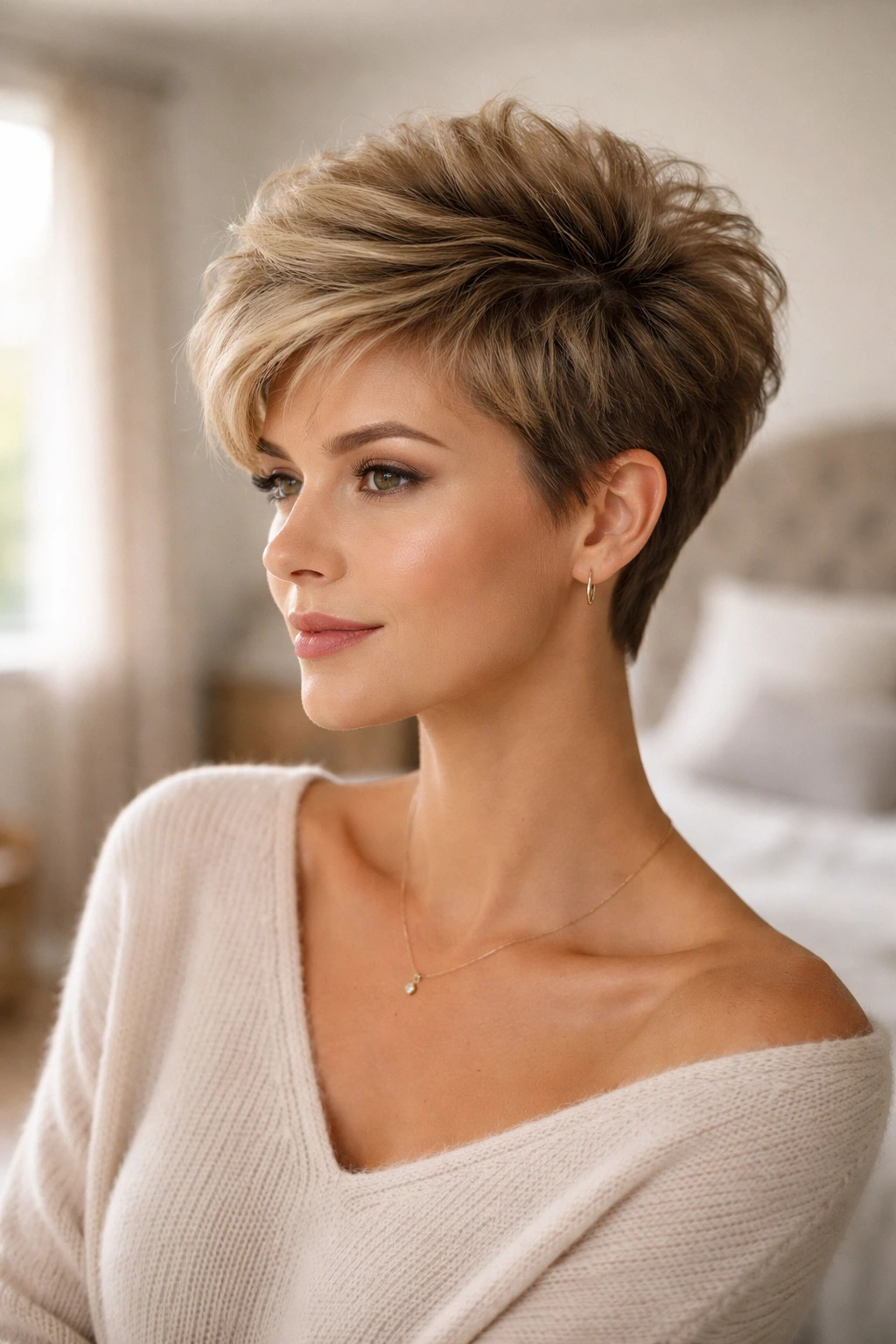
Sometimes, the issue isn’t the hair at the sides; it is the hair at the back of the crown that goes flat. The voluminous crown pixie is cut specifically to leave extra length at the top-back, which allows you to tease or style it upward for maximum height.
This style essentially builds a platform. By keeping the sides and the nape tight, you create a pedestal for the crown. Even if your hair is thin, you can use a bit of backcombing or root lift powder to make the crown area look full and tall.
It is a very regal, classic look. It takes a bit more daily styling time than a wash-and-go pixie, but the payoff is the height you get. It is arguably the best pixie cut for creating the illusion of a full head of hair.
11. The Spiky Texture Pixie
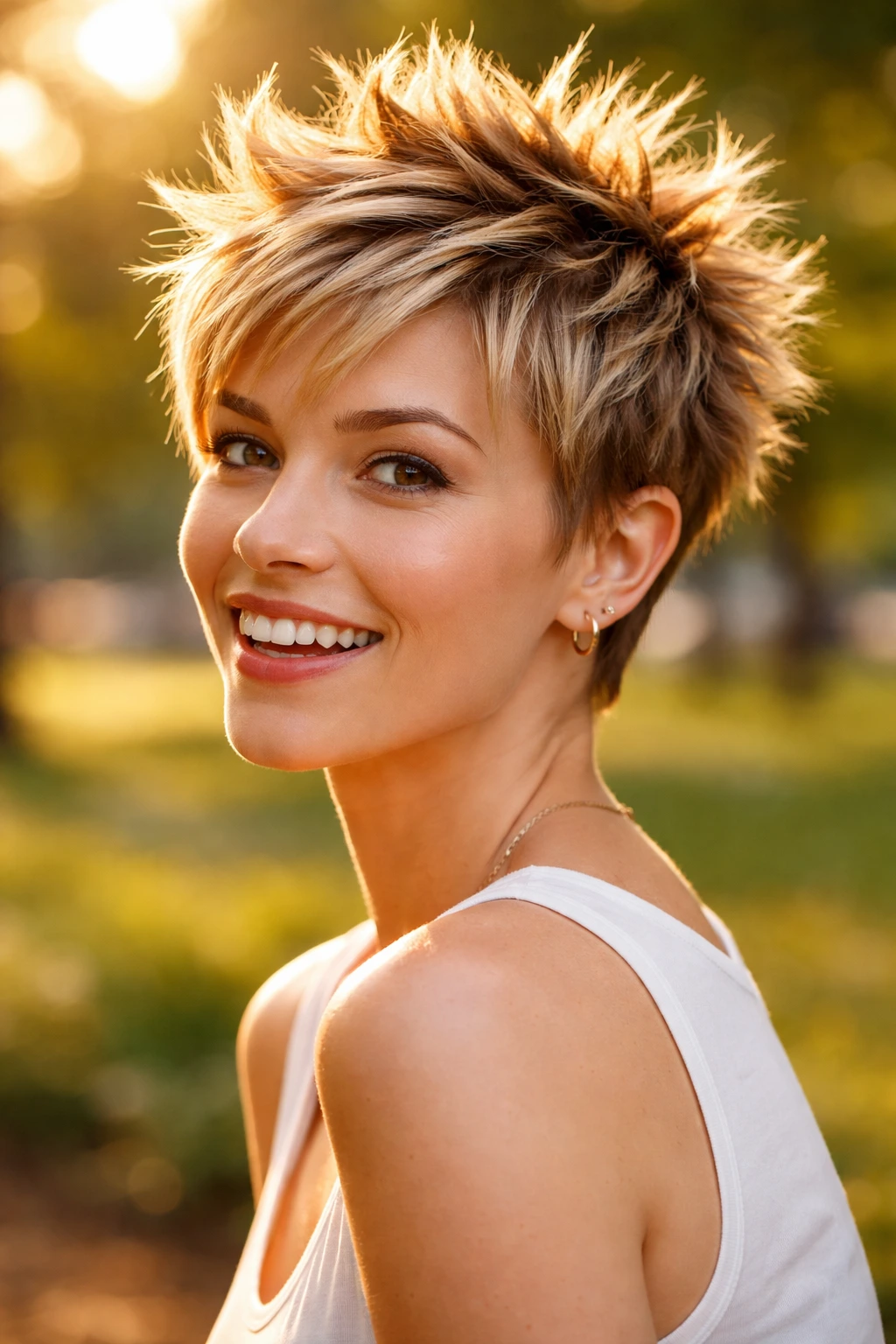
This is the pixie for those who hate fussing with their hair. It is a short, energetic cut that is designed to be styled with a small amount of wax or putty. You rub the product between your fingers, touch the ends of your hair, and pull them up into spikes.
The spikes create individual columns of hair. This is excellent for fine hair because it breaks the hair up into smaller, distinct pieces. When hair is lumped together, you see the scalp. When it is separated into individual spikes, you see the hair.
It is youthful, fun, and takes about thirty seconds to style in the morning. If you are someone who is constantly running late or just doesn’t enjoy the process of blow-drying and round-brushing, this is your solution. It leans into the “less is more” philosophy.
12. The Blunt Pixie
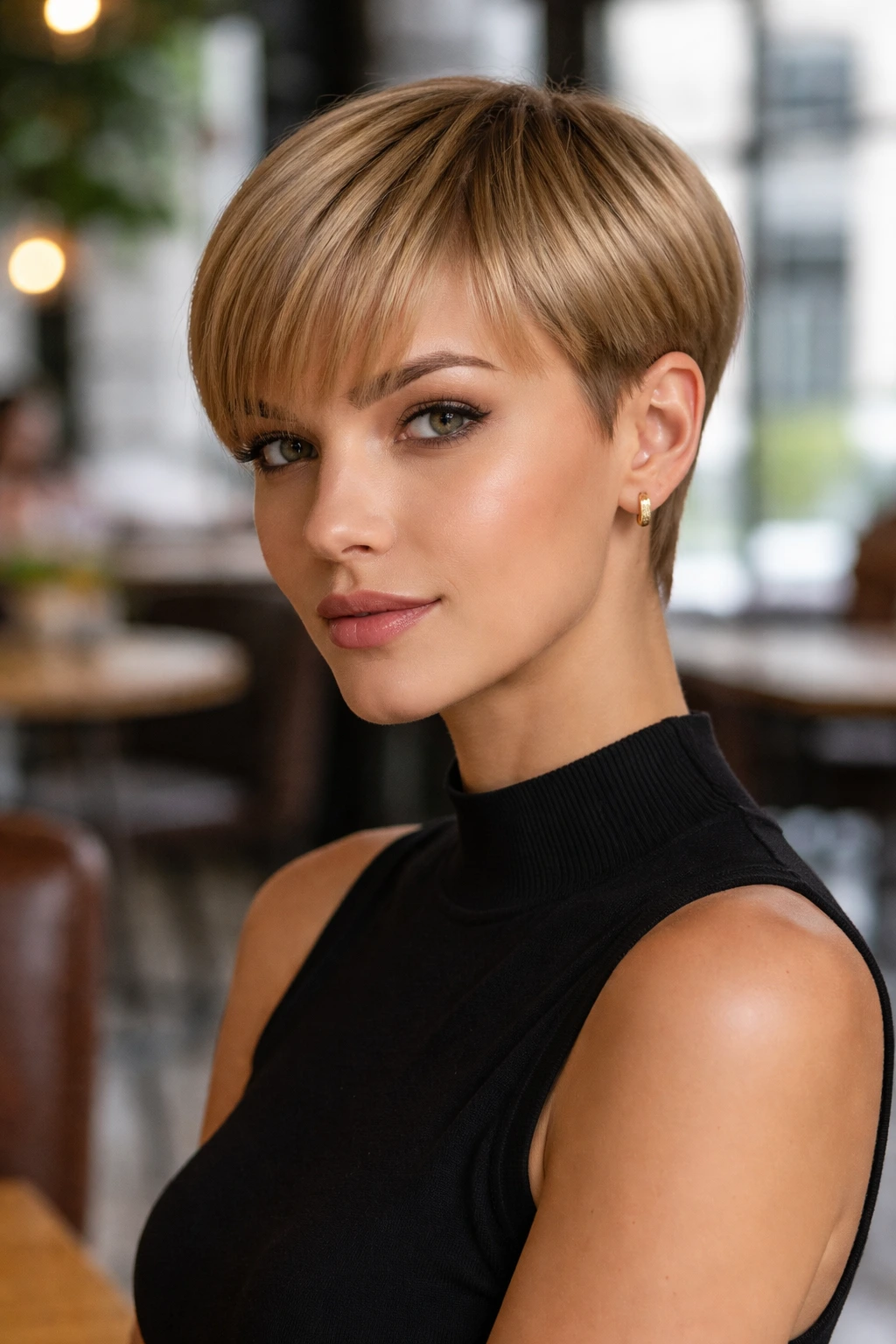
Most advice for fine hair focuses on layers, but there is a strong case for the blunt cut. When you cut fine hair perfectly blunt—no layers, just a clean, sharp line—you maximize the density of the ends.
The Trade-off
You will have less movement and less natural “poof” than with a layered cut. However, you will have the appearance of thicker, healthier hair. If your fine hair is prone to breakage or looks wispy at the ends, the blunt pixie is a restorative choice. It makes the ends look solid and weighty.
How to Style
This look requires a sleek finish. Use a smoothing serum and a flat iron to keep the hair perfectly straight and shiny. The beauty of this cut is in the precision of the line, not the amount of volume. It is a minimalist, high-fashion statement.
13. The Textured Bangs Pixie
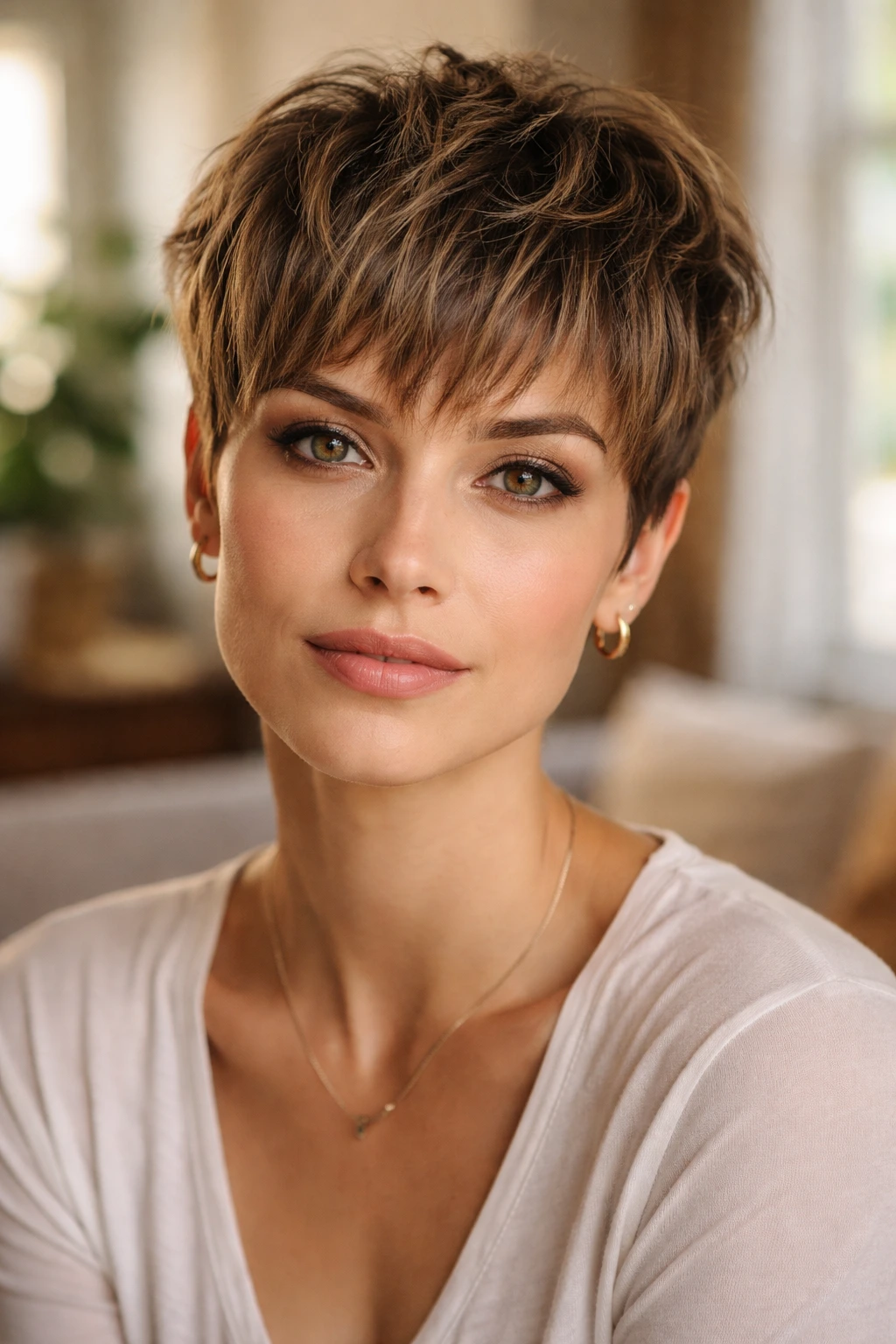
If you want to keep the hair relatively long on top but have the convenience of a pixie, focus on the bangs. By texturizing the bangs heavily and keeping them short, you create a focal point that draws attention away from the thinner hair at the back.
The bangs act as a frame for your eyes. Because the hair is cut in a way that creates texture, it doesn’t matter if the hair itself is fine. The style is what people see, not the strand diameter. It is a smart way to get the pixie look without needing to go ultra-short all over.
This cut pairs beautifully with glasses or bold makeup. Since the hair is framing your face in a very specific, deliberate way, it complements strong features. It is a balanced look that feels purposeful and chic.
14. The Wavy Pixie
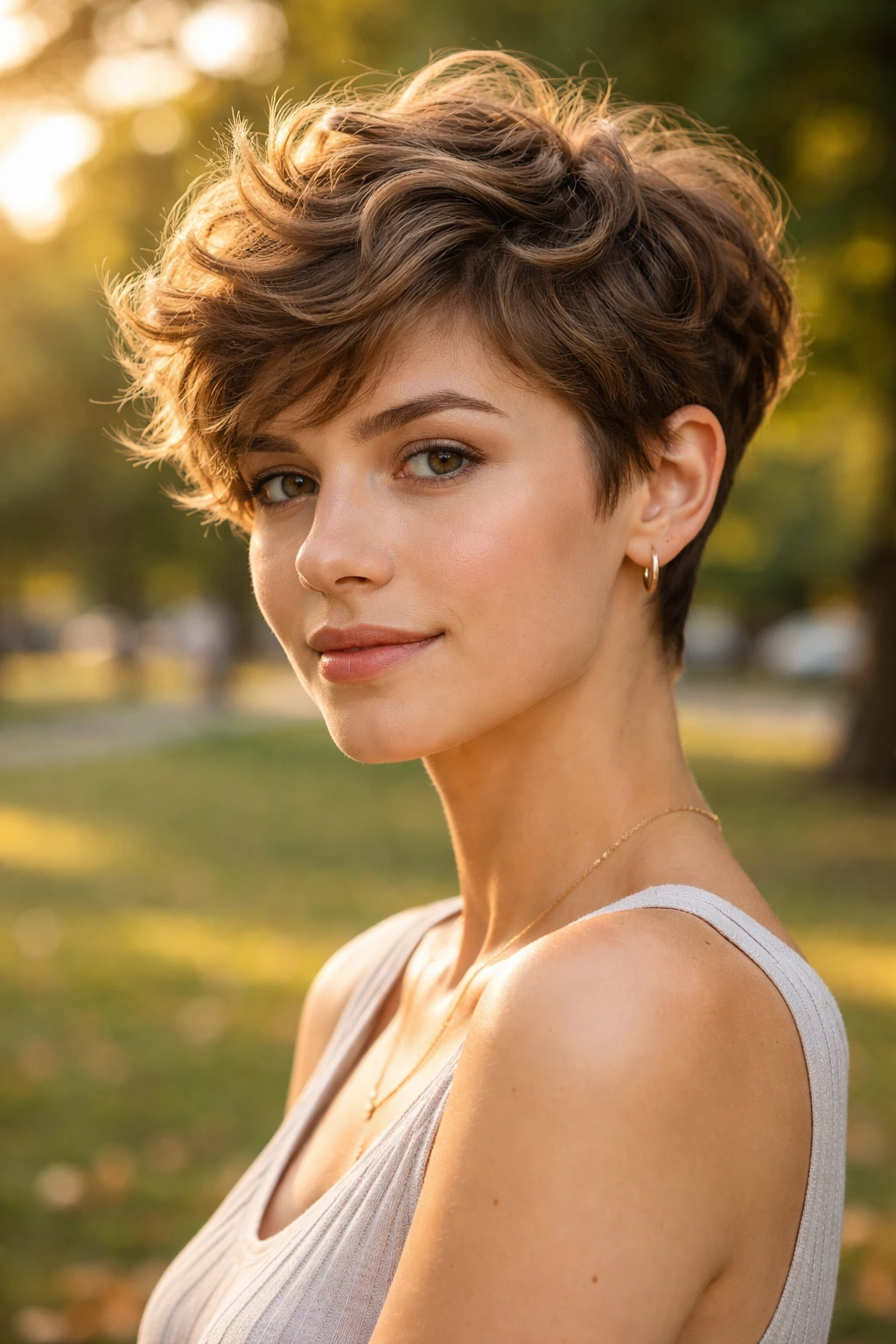
Do you have even a slight natural wave in your hair? If so, stop fighting it. The wavy pixie is the ultimate low-maintenance style for fine, wavy hair. The cut should be slightly longer—around three to four inches on top—to allow the wave to form.
When you cut fine hair too short, it doesn’t have the space to bend into a wave. By keeping it just long enough, you encourage the natural texture to pop. Waves are naturally voluminous. They take up space, which is exactly what you want when you are trying to combat flatness.
The Strategy: Use a curl-enhancing cream on damp hair and let it air dry. Do not touch it while it is drying! Once it is dry, you can shake it out with your fingers to break up any crunchiness. You will be left with a soft, full, and textured look.
15. The Baby Bangs Pixie
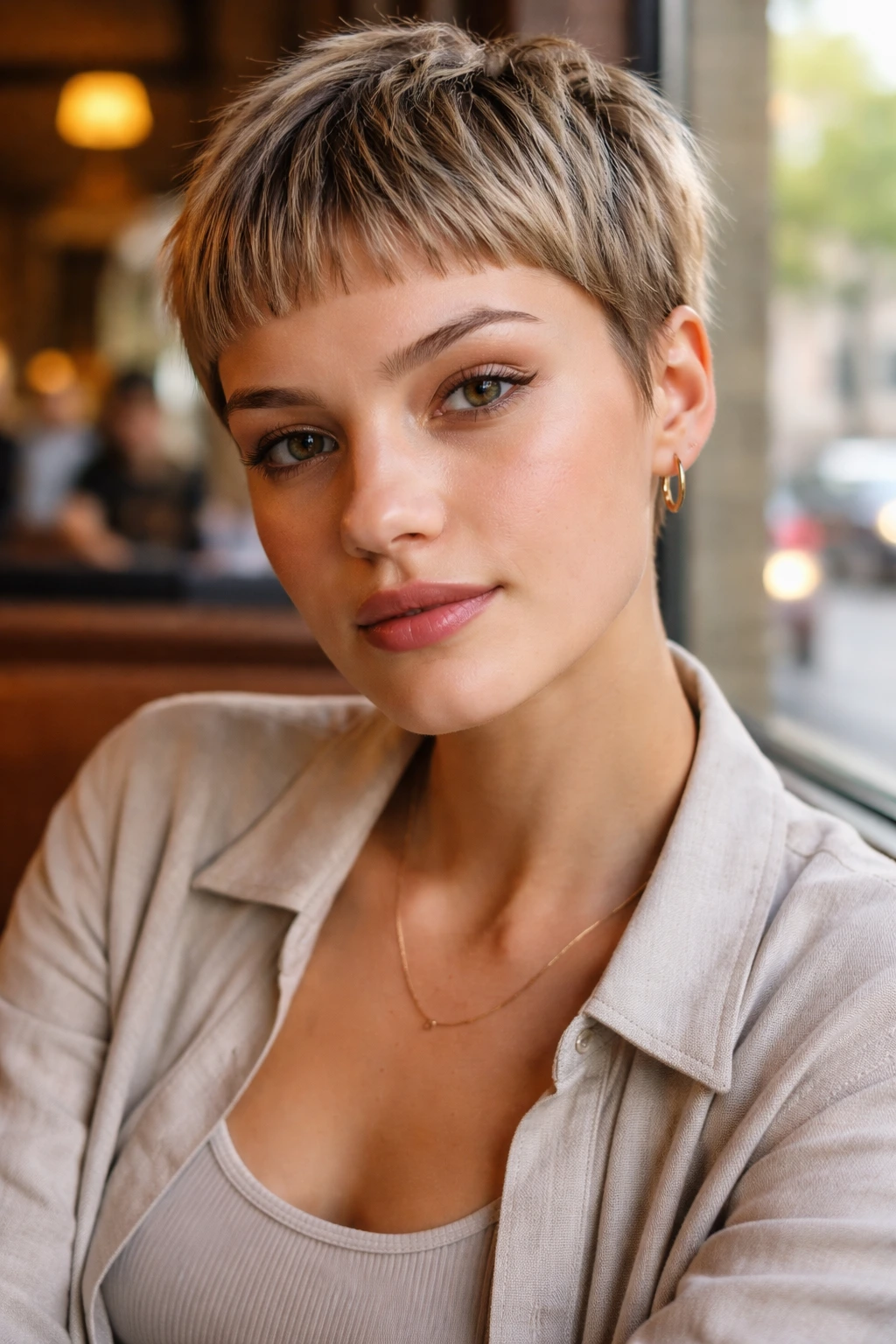
Baby bangs—also known as micro-bangs—are short, choppy bangs that sit well above the eyebrows. They are a statement, and they are incredibly flattering on the right person. For fine hair, they serve a functional purpose: they remove the weight from the front of the hairline.
When you have long, heavy bangs on fine hair, they tend to separate and show the scalp, which highlights thinning. By cutting them short, you remove that weight. The hair sits tight to the forehead, which looks like an intentional design choice rather than a struggle with density.
They are bold and require confidence, but they are also surprisingly low-maintenance. You don’t have to worry about them getting in your eyes or needing a round brush to get that perfect swooping curve. They sit where they sit, and they look cool doing it.
16. The Slicked-Back Pixie
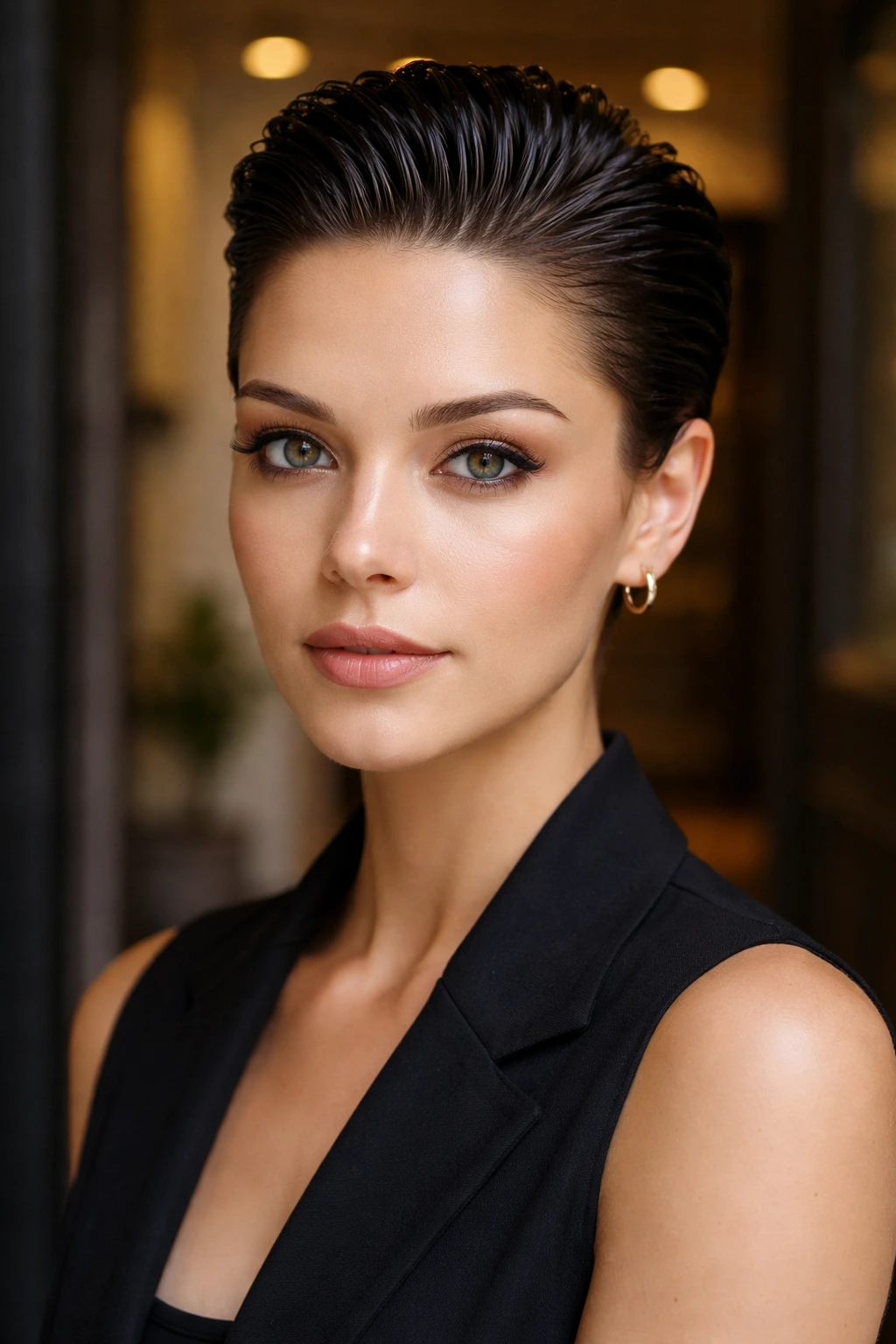
This is the ultimate evening or professional look. With the right pomade or gel, you can slick your fine hair back. The secret here is that you aren’t trying to hide the thinness; you are embracing the sleekness.
When you slick back fine hair, you create a wet-look or polished aesthetic that looks intentional. You aren’t trying to create volume; you are trying to create shape. It makes the hair look darker and more defined because it is packed together closely.
The Trick: Use a high-shine pomade and a fine-tooth comb. Start at the hairline and comb straight back. If you have some volume at the roots, use a little bit of root-lift spray before you apply the gel. It creates a sleek, sophisticated silhouette that looks like it belongs on a runway.
17. The Mohawk-Inspired Pixie
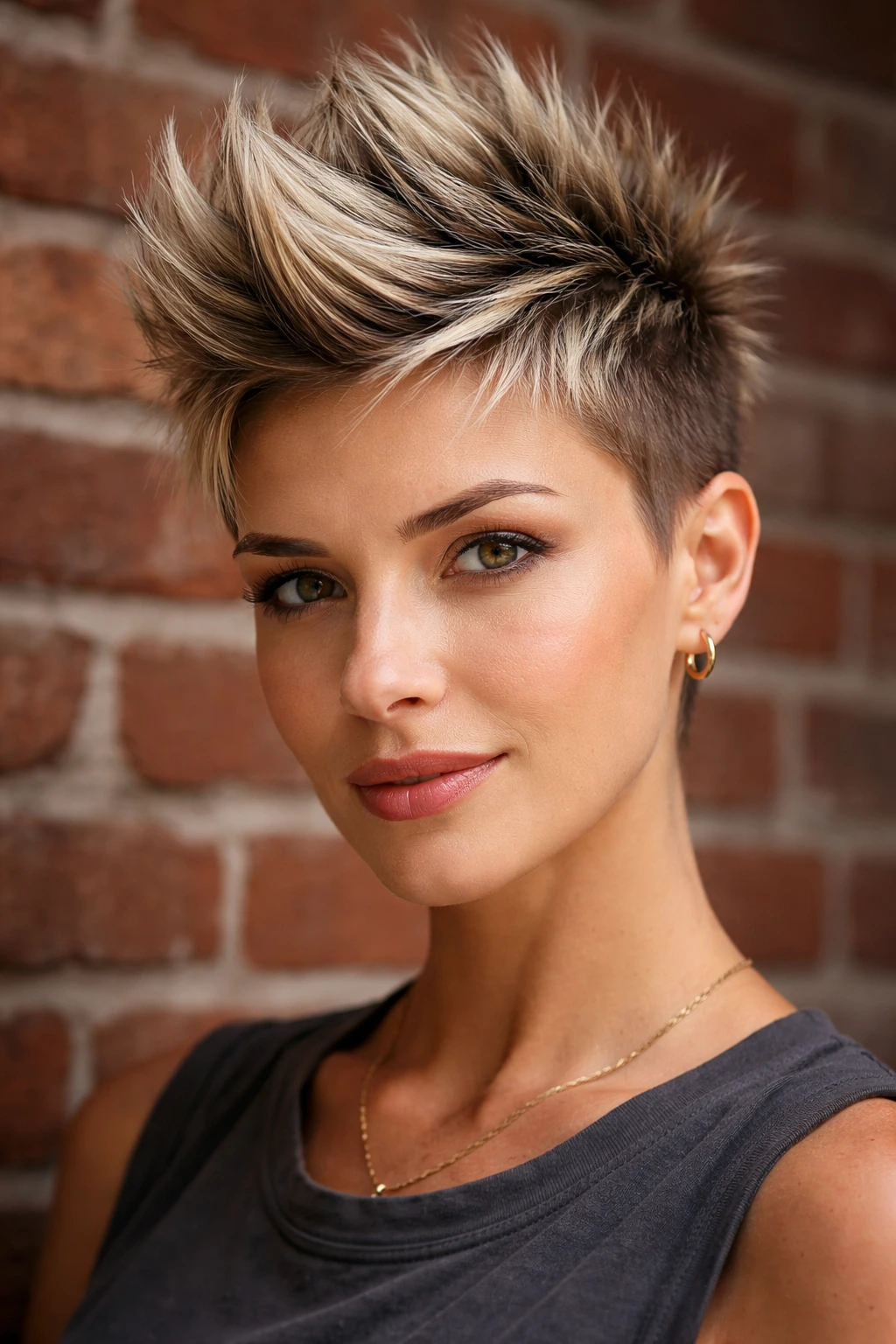
You don’t need a full shave to get a mohawk vibe. A mohawk-inspired pixie keeps the sides shorter than the top, but the transition is softer. The top is left long enough to style upward or to the side, creating the silhouette of a mohawk without the radical edge of a true shaved style.
This creates immense height. Because the hair is concentrated in the center, you have the maximum surface area to work with for volume. You can use root powder to tease the center section and make it stand up.
It is a great way to handle fine hair because it directs the hair into a vertical shape. Fine hair often struggles with horizontal volume (width), but it can do vertical volume (height) very well if it has the right structure.
18. The Disconnected Layers Pixie
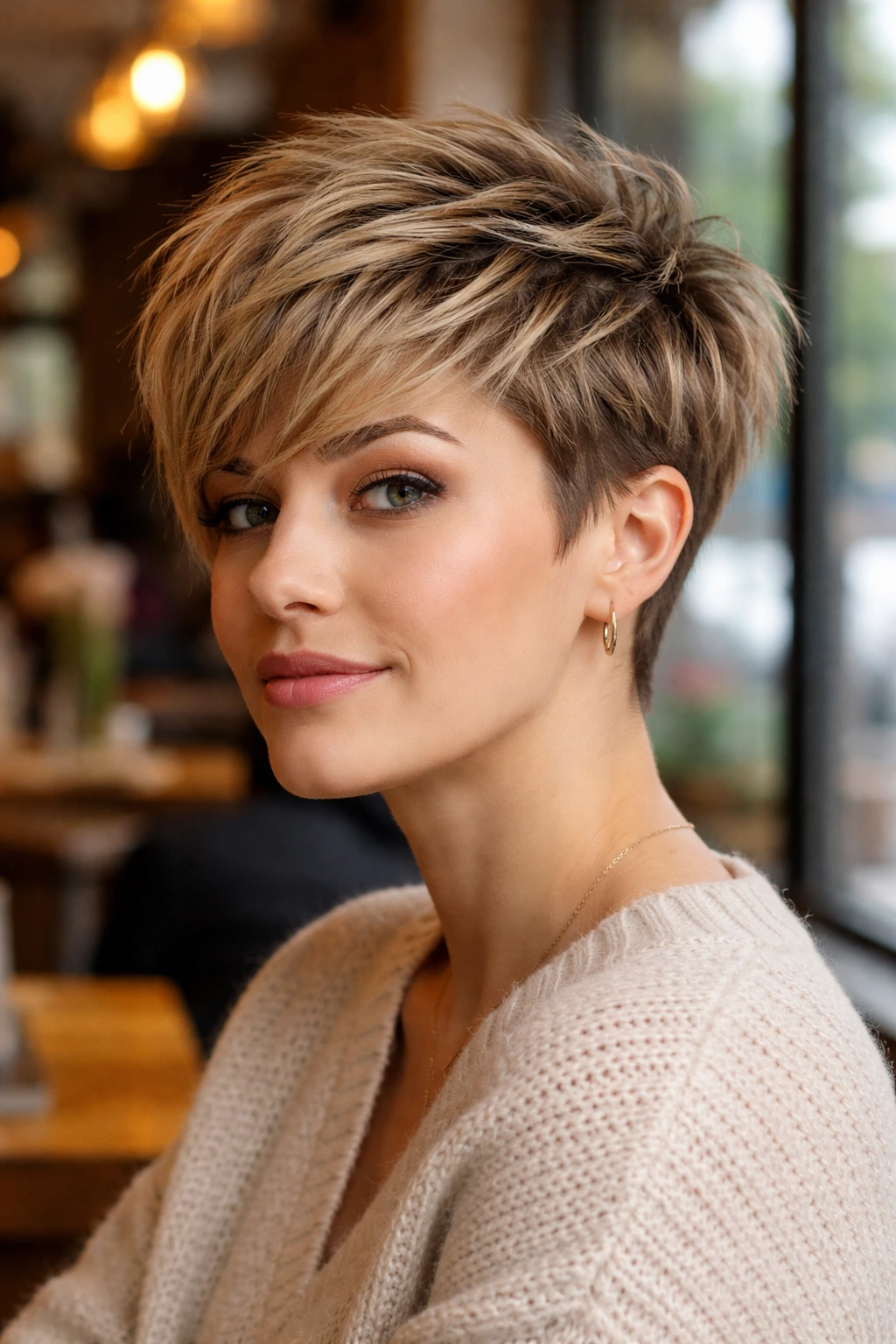
Disconnected layers mean the hair is cut in sections that don’t necessarily blend into each other. You might have a longer, softer top section that sits over a shorter, undercut bottom section. This is fantastic for fine hair because it creates multiple layers of volume.
Think of it like a tiered cake. You have the bottom tier for shape, and the top tier for volume. Because the layers aren’t blended, the top layer has “room” to move independently of the bottom layer. It never feels heavy or weighed down.
This look is modern, a bit abstract, and very stylish. It is for the person who wants a cut that is clearly a “haircut”—it has structure, it has geometry, and it shows that you put thought into your style.
19. The Layered Pixie Bob (The “Mixie”)
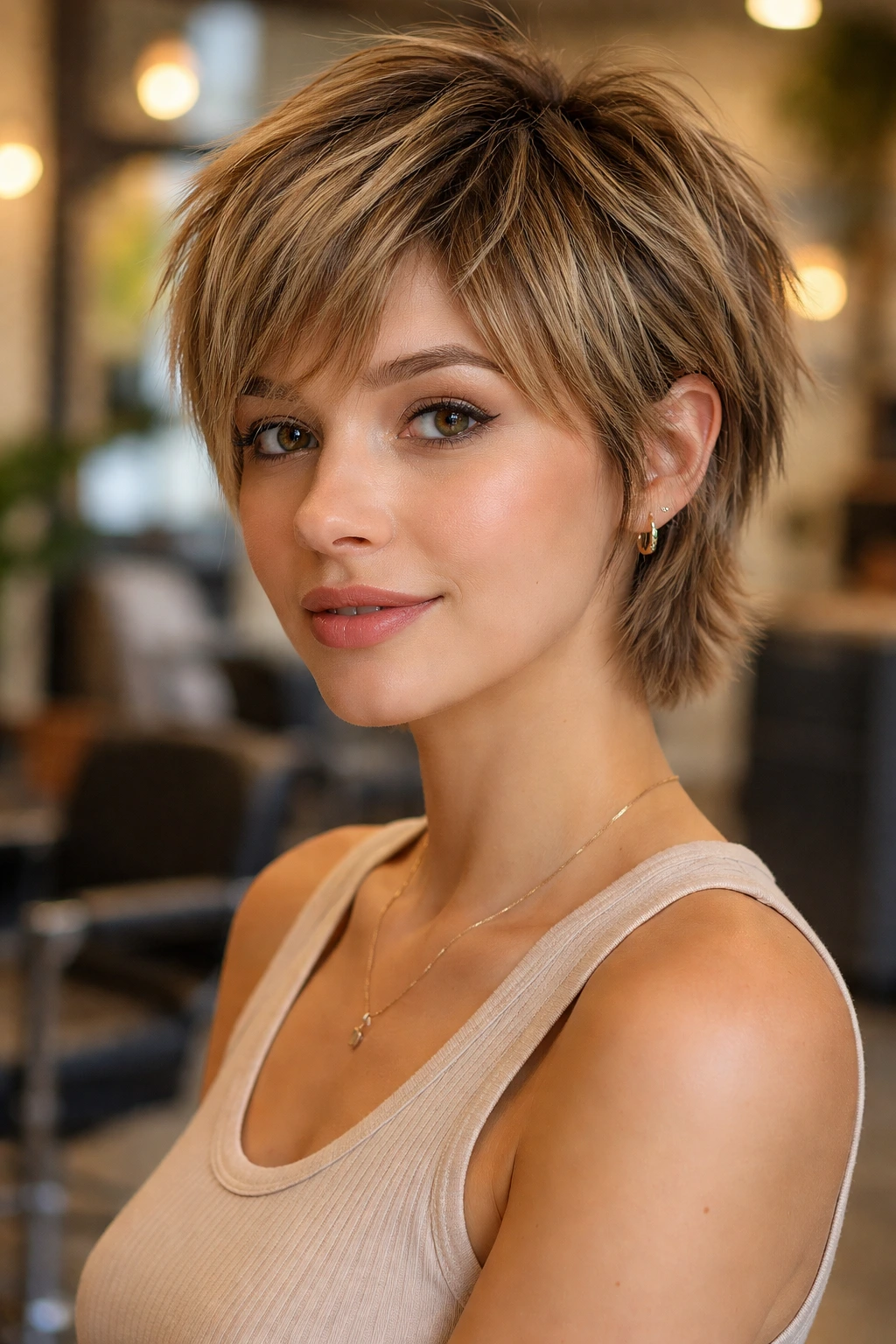
If you are terrified of going too short, the Mixie—a hybrid of a mullet and a pixie—is your bridge. It keeps some length at the back of the neck and around the ears, but the top is cut like a short pixie with lots of texture.
The length in the back provides a soft, feminine frame, while the short, textured top provides the lift and volume you need. It is the best of both worlds. It doesn’t feel as stark as a traditional pixie, but it offers all the styling benefits of shorter hair.
It is also an incredibly easy cut to grow out. Since it already has a bit of length, you don’t have to deal with the awkward “in-between” stage as intensely as you would with a buzz-cut style.
20. The Root-Lift Pixie
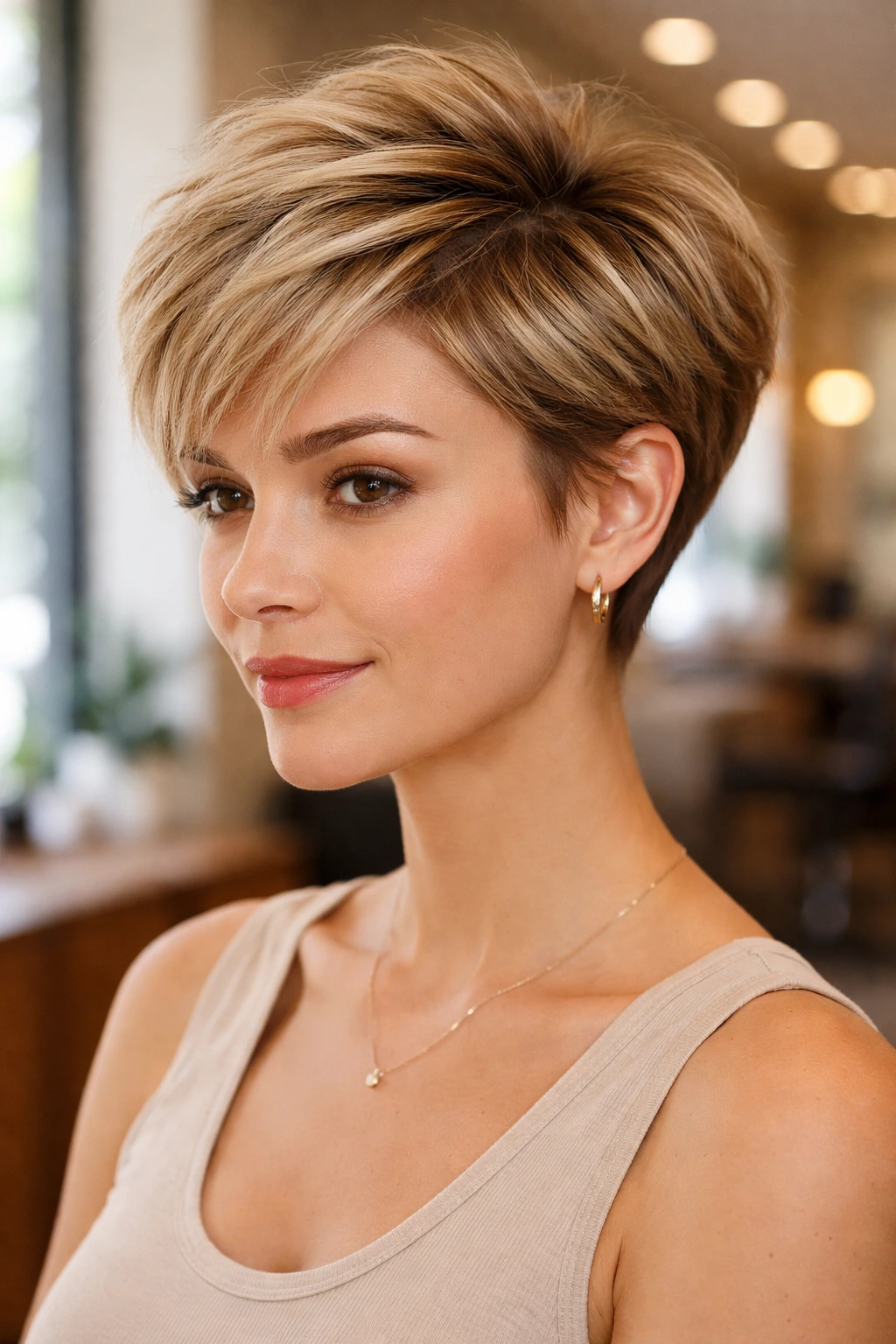
This is more of a cutting technique than a specific length, but ask for it specifically. A root-lift pixie uses “slice cutting” or “channel cutting” at the base of the hair shaft. Your stylist cuts into the hair right at the root, removing a tiny amount of hair.
What this does is create a spring. The hair that is left acts as a cushion for the hair on top. It is physically impossible for the hair to lay flat when you have cut it at the root to create that support.
It is the single most effective way to make fine hair appear thick. It doesn’t change the length or the overall shape of the haircut; it just changes the behavior of the hair. It is a game-changer for anyone who has ever felt like their hair was just “lifeless.”
How to Maintain Your Pixie Cut
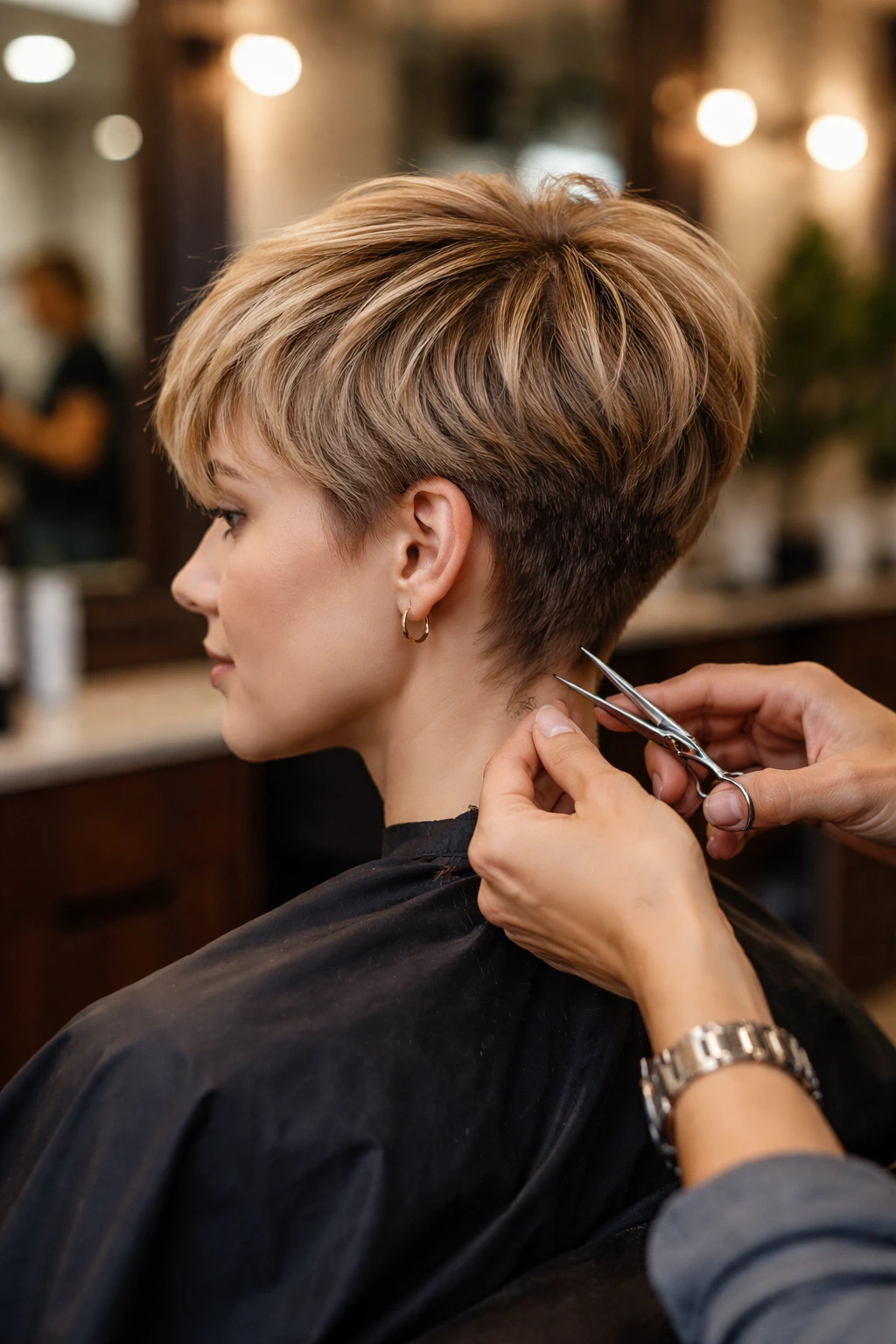
Once you have the cut, the maintenance is what keeps it looking fresh. A pixie is not a “set it and forget it” style. Because it is short, your hair grows out noticeably faster in terms of shape. You will need to commit to a schedule of trims every four to six weeks to keep the silhouette sharp.
The Importance of Washing
Fine hair gets oily quickly. When it is short, the oils from your scalp travel to the ends of your hair much faster than if you had long hair. You might find you need to wash your hair more frequently, but make sure you are using a shampoo that is gentle.
Avoid shampoos that are heavy with silicone. They will coat your hair and make it slippery and flat. Look for “volumizing” or “clarifying” labels, but keep the clarifying shampoo to once a week so you do not strip your natural oils too aggressively.
Selecting the Right Products
Stop buying the products that work for your friends with thick, curly hair. They are not for you. You need products that are designed for “fine, limp hair.” Look for:
- Texturizing sprays (the kind that feel a bit like hairspray/dry shampoo hybrid).
- Matte waxes or pastes (avoid anything with high shine unless you are going for a specific wet look).
- Mousse (the old-school stuff is still great for fine hair; it provides structure).
- Dry shampoo (your best friend for second-day volume).
The Bottom Line
Choosing a pixie cut is an act of liberation for fine hair. It allows you to stop fighting gravity and start working with the unique texture and behavior of your hair. The key is finding a stylist who understands the geometry of fine hair—someone who knows that point-cutting, razoring, and undercuts are tools to create volume, not just ways to remove hair.
Do not be afraid to be specific. Bring pictures, but also talk about what you hate. If you hate hair in your eyes, say it. If you want a specific silhouette at the nape, show them. The best pixie cuts are the result of a partnership between your vision and their technical skill. Once you find that balance, you will never want to go back to the flat, heavy hair of the past.
