



Fine hair and a bad pixie cut can turn on each other fast. The wrong version goes limp at the crown, clings to the head, and makes every scalp part line more visible than you’d like. The right one does the opposite. It builds a soft shape, keeps a little lift where it matters, and uses warm blonde color to make the whole cut feel fuller.
That’s the reason warm blonde pixie cuts for fine hair are such a smart match. Honey, butter, caramel, beige, and golden tones don’t just look pretty; they give the eye somewhere to land, which makes the hair read as denser than it is. Fine hair isn’t the enemy here. It just needs a cut that respects how it falls.
A lot of people ask for “short” and end up with “flat.” Those are not the same thing. The best pixies keep some movement on top, avoid bulky sides, and leave enough softness around the fringe to stop the style from looking too severe. Color helps, but shape does most of the heavy lifting.
And that’s where the good stuff starts. The styles below all work from the same basic idea, but each one changes the balance a little — more fringe here, more crown lift there, a softer nape, a deeper side part, a warmer glaze. Small changes. Big difference.
1. Honey Blonde Pixie with Feathered Crown
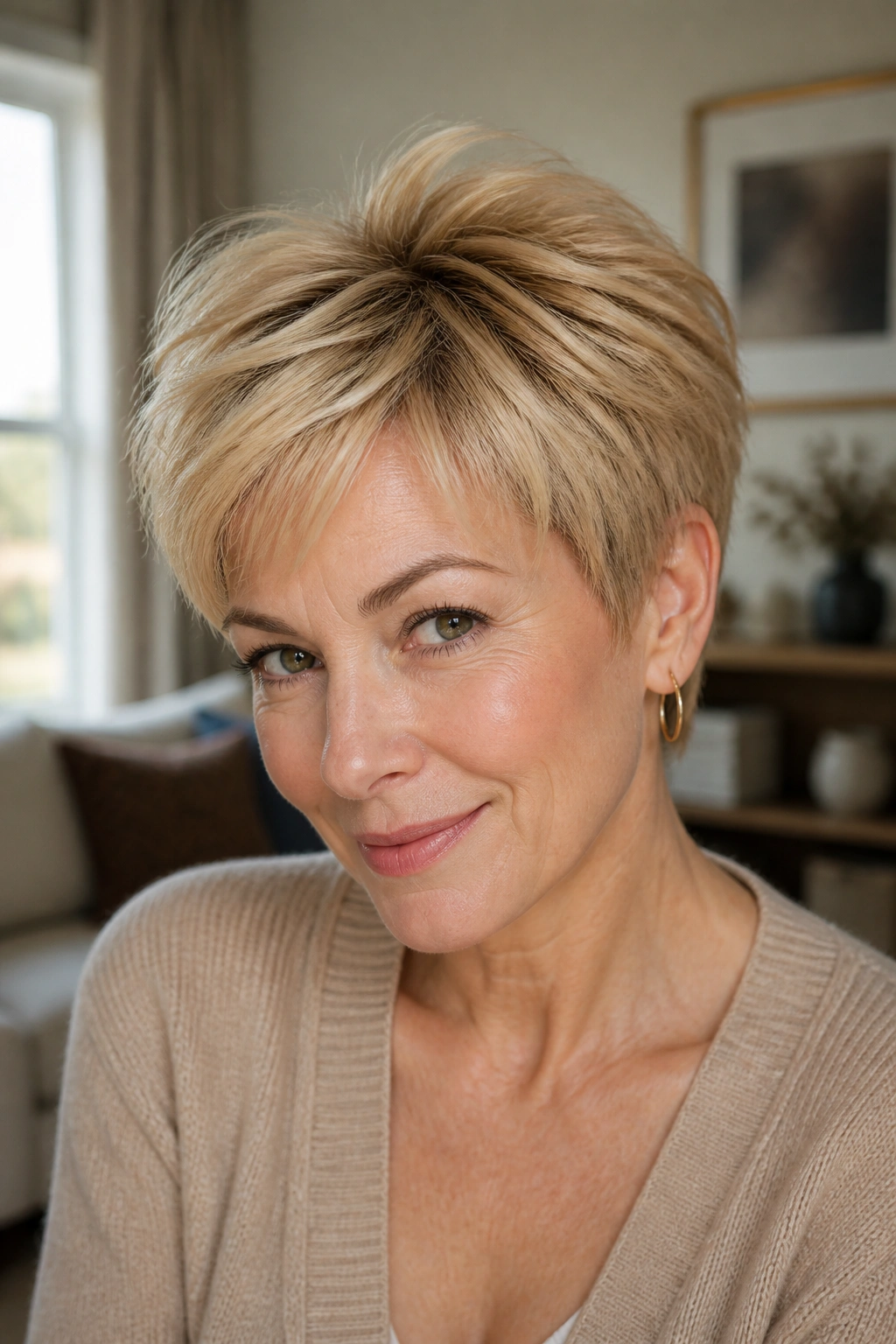
Honey blonde makes fine hair look a touch thicker because the tone has warmth without going brassy. Pair that with a feathered crown, and you get a cut that feels soft, lifted, and light on its feet. It’s the sort of pixie that moves when you turn your head.
Why It Works on Fine Strands
Ask for soft layering through the top with the shortest crown pieces left around 1½ to 2 inches. That gives the stylist enough length to create lift without making the top collapse. The sides should stay tighter, and the nape should taper cleanly so the shape doesn’t puff out.
- Blow-dry with a small round brush or vent brush.
- Lift the crown straight up while drying.
- Finish with a pea-sized amount of light styling cream.
- Keep the ends soft, not sharp.
Best for: straight or slightly wavy fine hair that needs movement without looking messy.
2. Butter Blonde Pixie with a Side-Swept Fringe
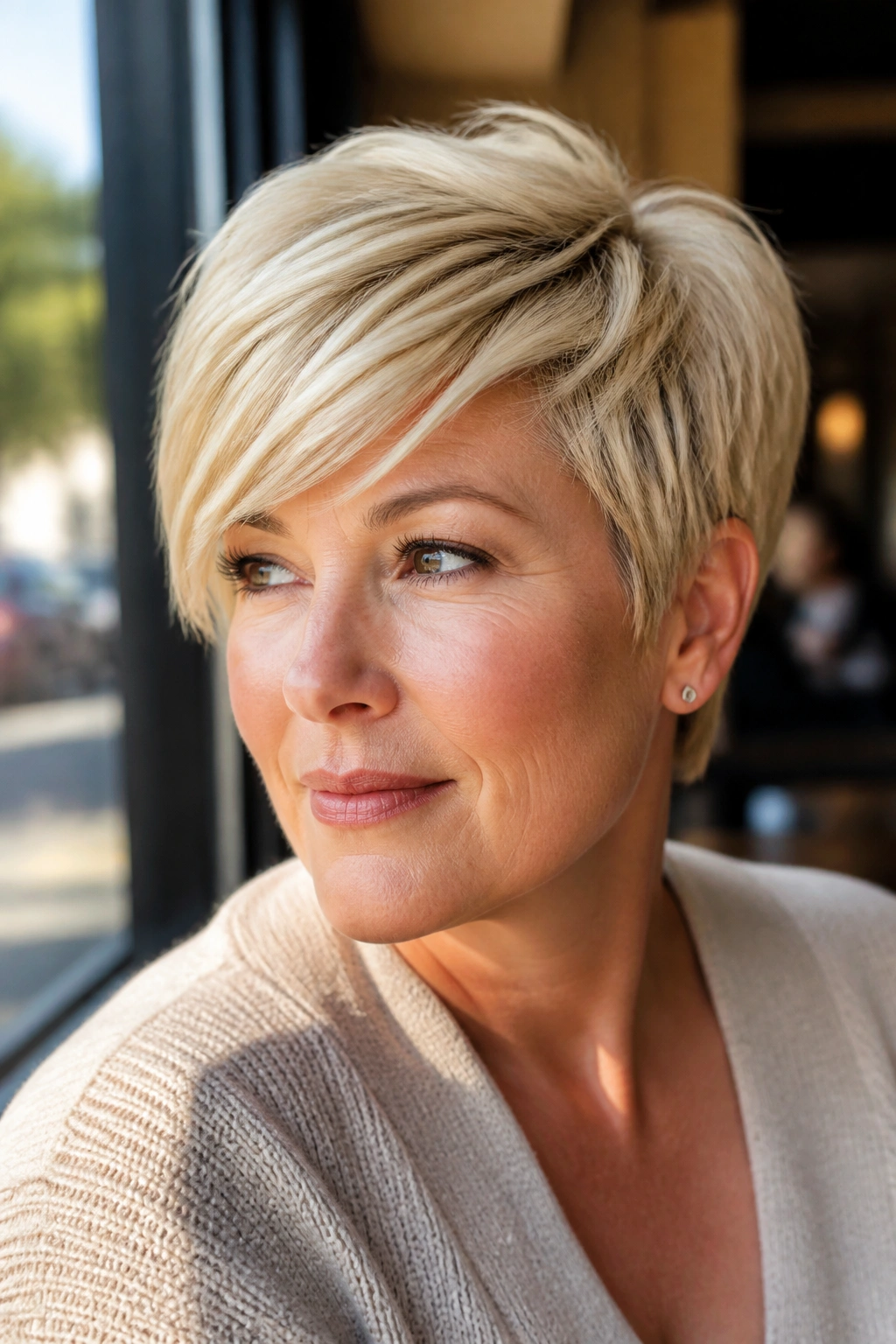
A side-swept fringe is one of those little details that changes everything. It gives fine hair a fuller front line, and butter blonde keeps the whole cut looking warm instead of washed out. The result feels easy, almost casual, but it still has enough shape to look intentional.
The fringe should fall diagonally across the forehead, not sit heavy like a curtain. That diagonal line breaks up flatness, which is why this cut suits anyone whose hair tends to lie close to the head. A soft side part helps too. It creates lift at the root with almost no effort.
If your hair has a tendency to split in the front, this is a forgiving choice. Use a mist of root spray at the part and blow-dry the fringe in the opposite direction first, then sweep it back. That little trick gives the hair a bend instead of a crease.
3. Caramel Root-Shadow Pixie Crop
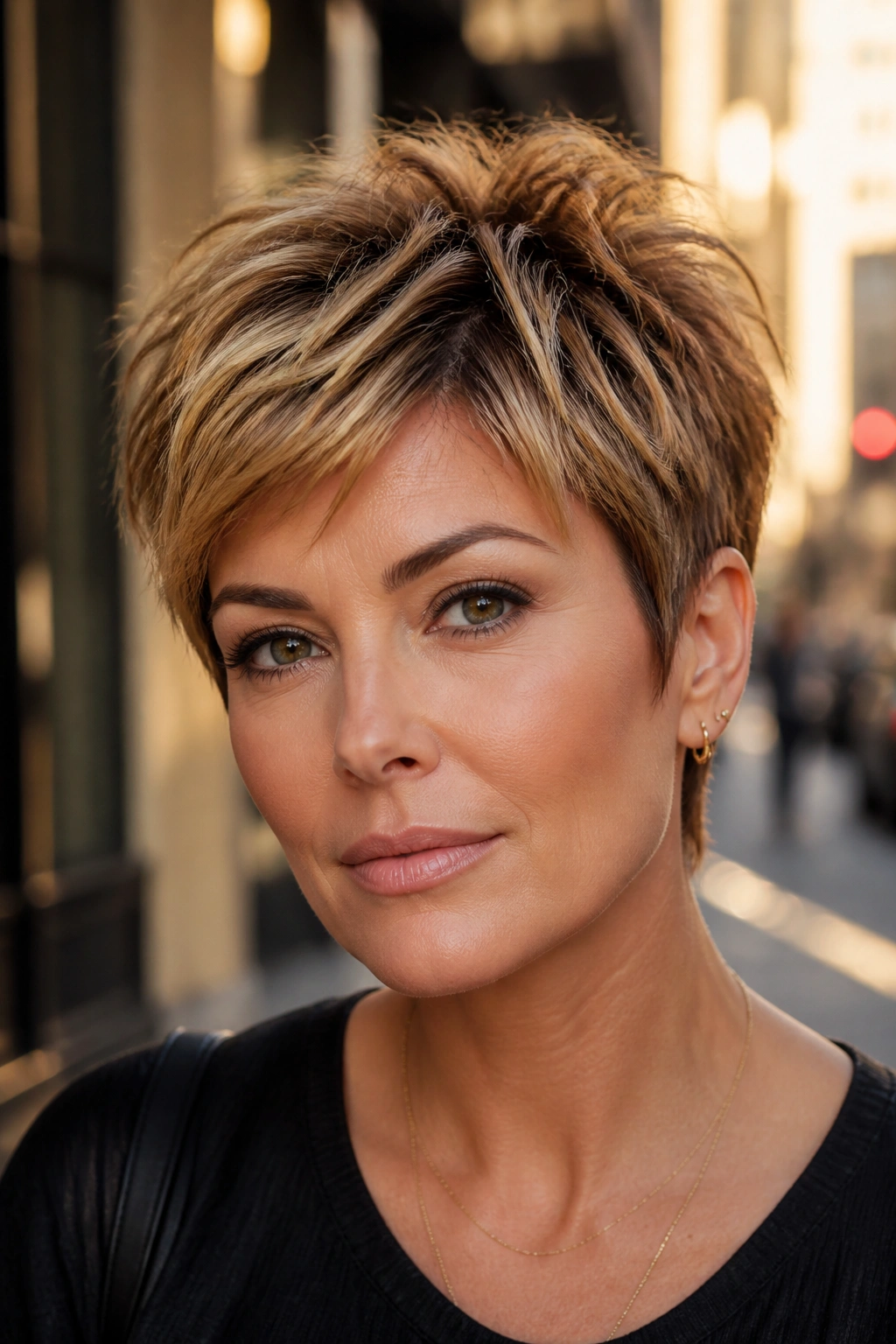
A root shadow is one of the smartest things you can ask for when your strands are fine. Darker roots create depth, and caramel through the mid-lengths keeps the blonde from looking too thin or airy. The cut ends up looking fuller before you even style it.
What Makes It Different
This version works because the darker base creates an illusion of density. You do not need harsh contrast. A soft root melt from brown-blonde into caramel-beige is enough to make the top look richer and the shape look more dimensional.
- Ask for a shadow root no more than 1 to 1½ shades deeper than the rest.
- Keep the top pieces textured, not blunt.
- Use a matte paste only at the ends.
- Refresh the gloss every 6 to 8 weeks if the warmth starts fading.
For fine hair, this cut is especially useful if you hate constant salon upkeep. Grow-out looks softer, not sloppy.
4. Golden Blonde Choppy Pixie
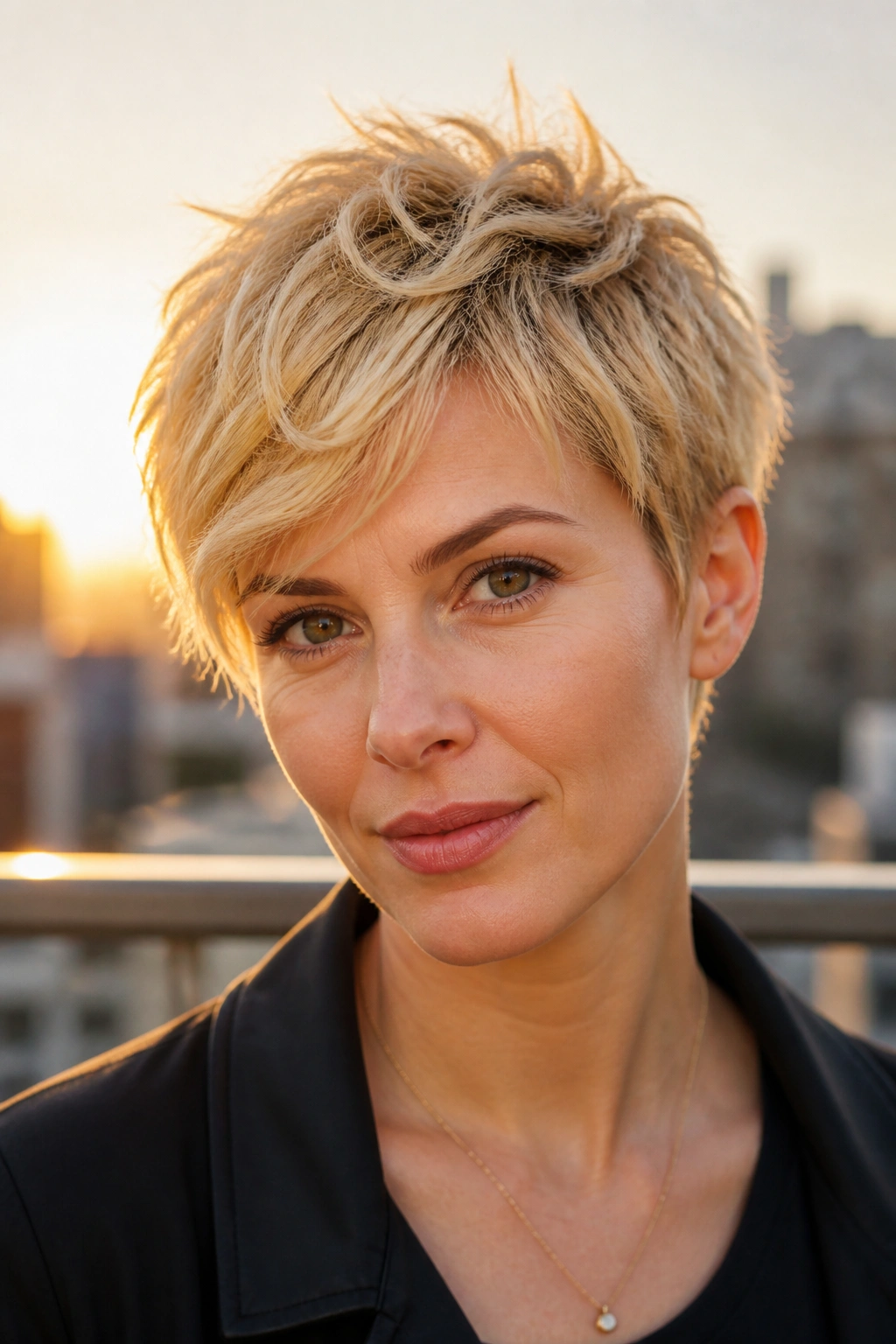
Choppy ends can be a gift for fine hair when they’re done with restraint. Too much chopping, and the hair starts to look frayed. Just enough, and the edge of the cut picks up light in a way that makes the hair seem airier and more alive. Golden blonde is the right kind of warmth for that effect.
The trick is to keep the interior of the cut light and the perimeter slightly broken up. That gives the pixie a bit of grit without stealing density. A razor can help, but only if your stylist knows when to stop. No one wants wispy noodles on the sides.
This one styles fast. A dab of texturizing paste rubbed between the palms, then pressed into the crown and fringe, is enough. Let some pieces fall where they want. The messier it looks, the better it usually works.
5. Beige Blonde Tapered Pixie
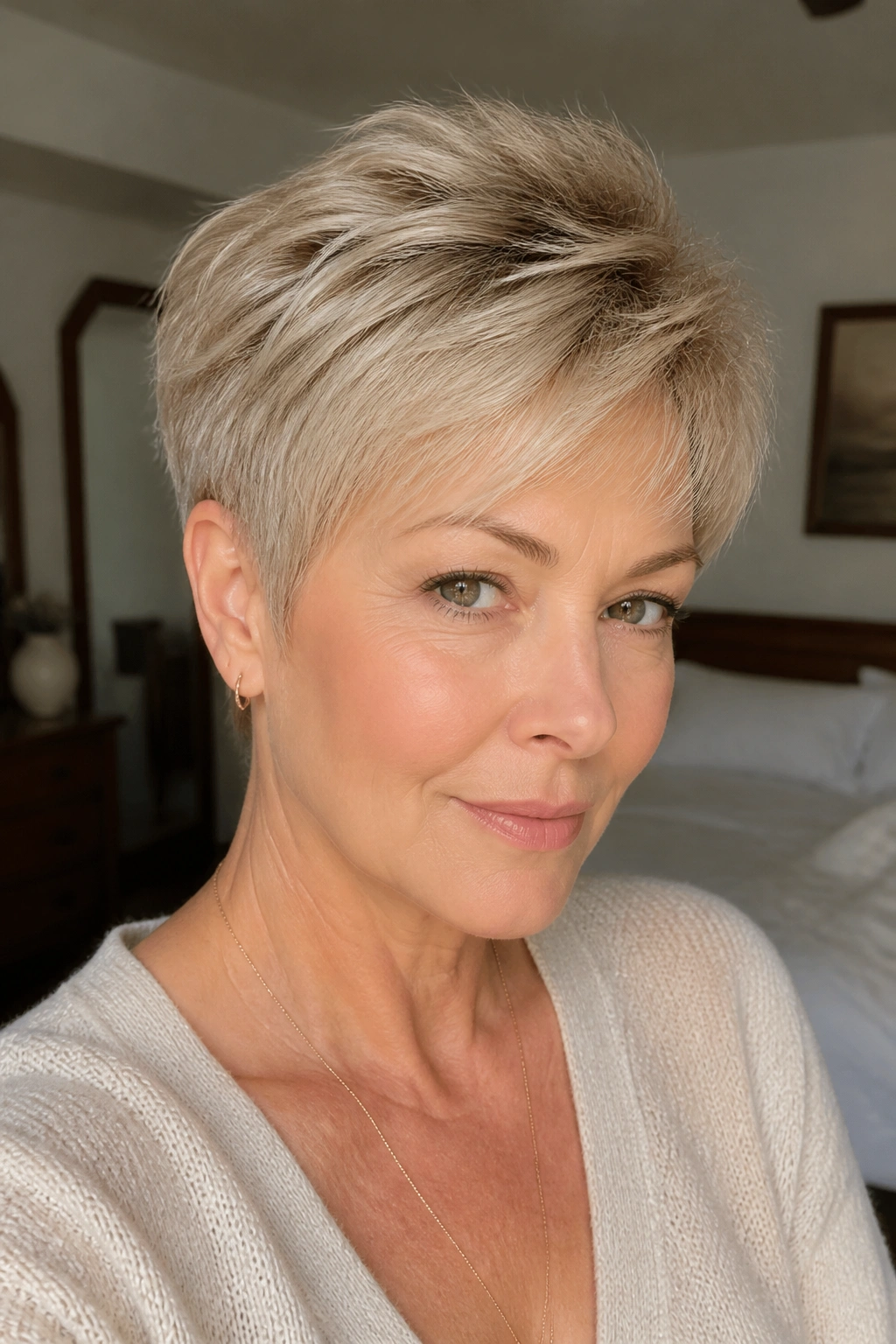
Beige blonde is underrated. It sits between warm and cool, which means it softens the face without turning yellow, and it keeps fine hair from looking too stark under bright light. A tapered nape gives the cut a clean finish, which helps the top feel fuller by contrast.
The Shape Matters More Than the Shade
A tapered pixie is useful because it removes bulk where you don’t need it and leaves visual weight where you do. The neck looks neat, the sides stay close, and the top can keep a little softness. That balance is especially helpful if your hair flops at the temples.
A good ask at the salon sounds like this: short, clean nape; soft crown; slightly longer top layers for movement. That’s the whole game. Keep the texture gentle, not spiky.
If you wear glasses, this version sits nicely around the frames. It does not fight them.
6. Warm Champagne Blonde Pixie with Wispy Baby Bangs
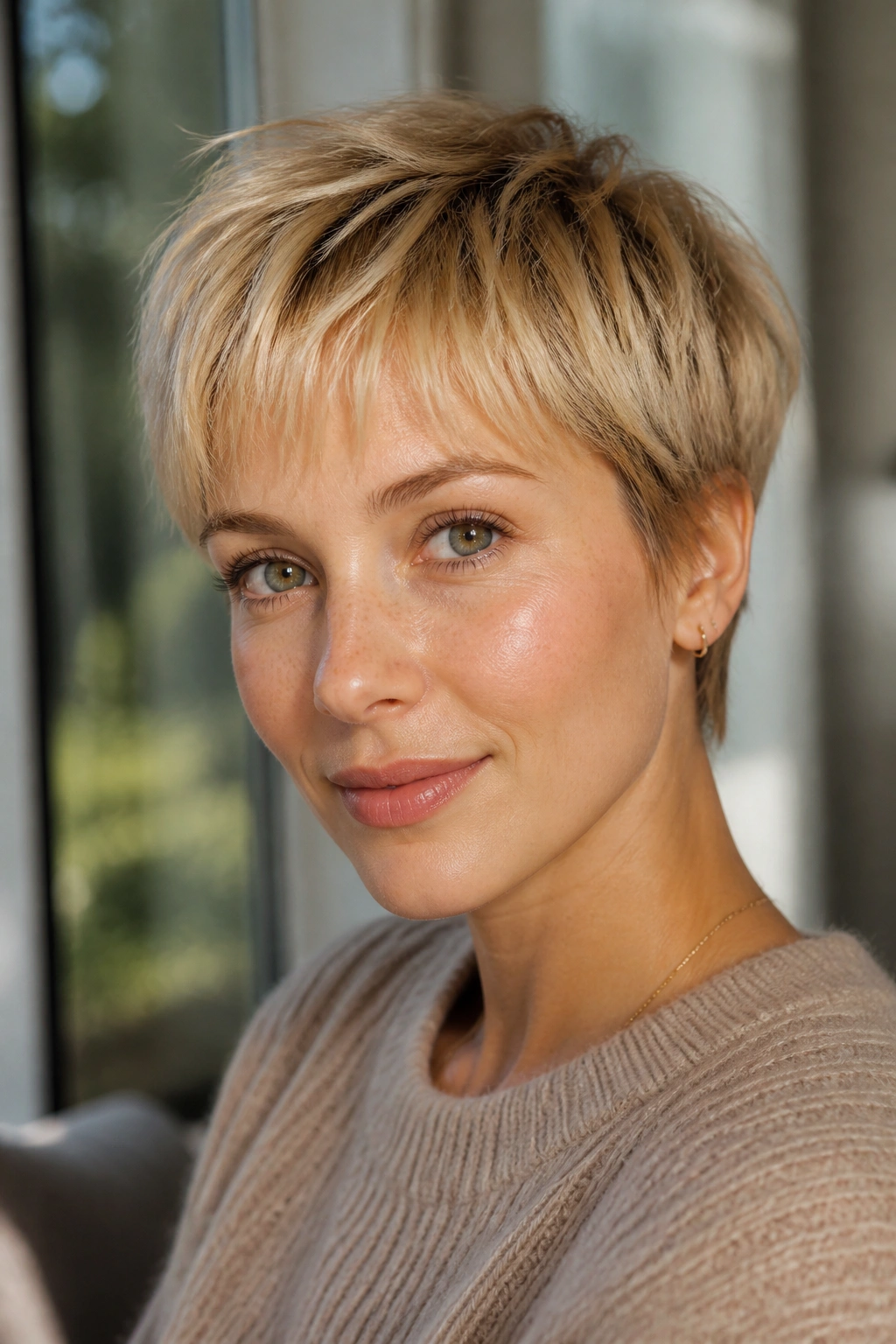
Baby bangs are not subtle. They show the face, which is exactly why they can be so good on fine hair. When the fringe is wispy rather than blunt, the cut keeps softness. Warm champagne blonde adds glow without pushing the tone too pale.
This style feels best when the bangs are cut a little uneven on purpose. Not jagged. Just softly irregular. That tiny looseness stops the forehead from looking boxed in. The rest of the pixie should stay close and light, with no heavy shelf at the hairline.
Styling Note
Use a flat brush to direct the bangs downward, then bend the ends slightly with your fingertips once the hair cools. A tiny amount of shine cream on the ends keeps them from separating too much. That’s enough.
7. Tousled Long-Top Pixie in Soft Honey Blonde
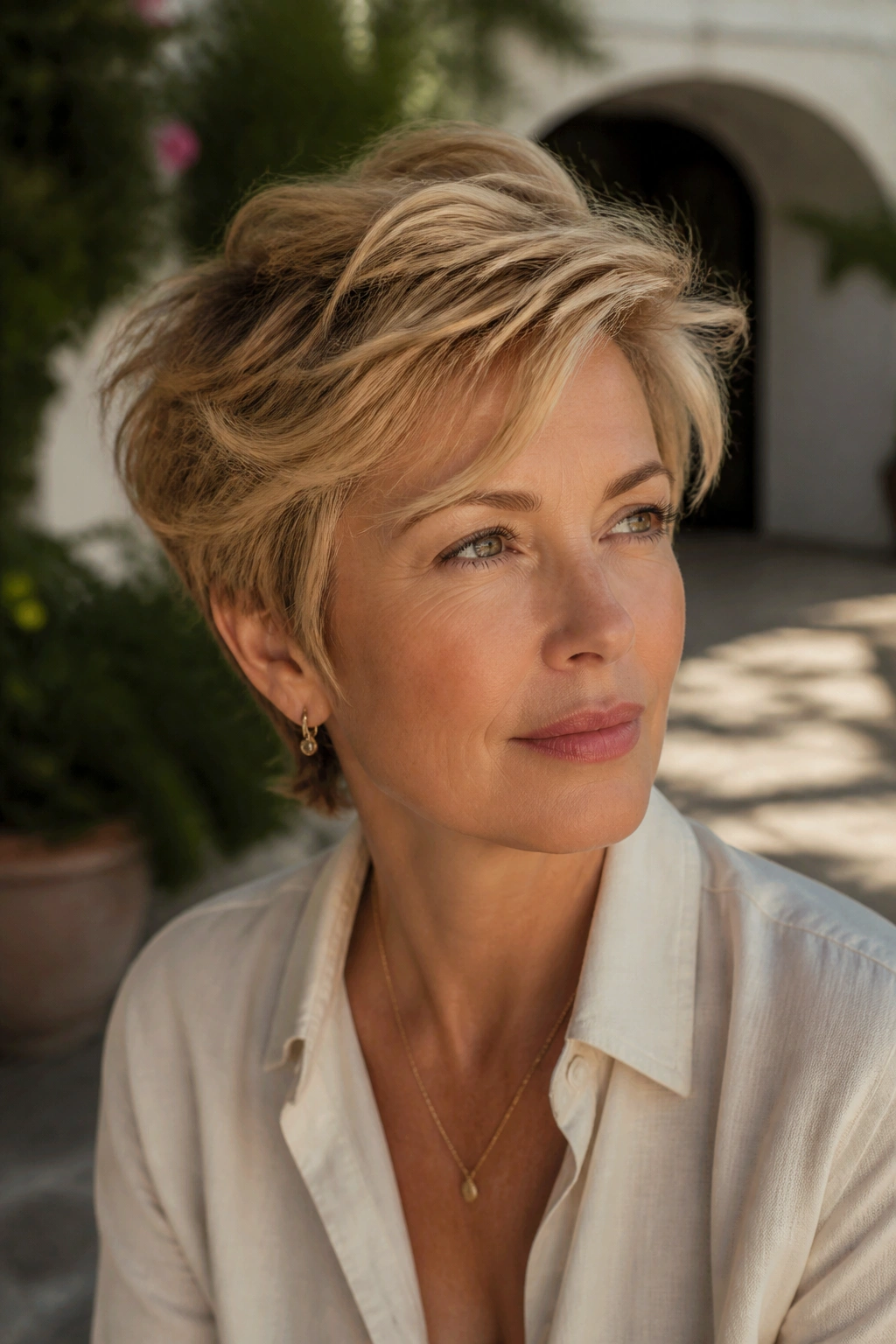
Longer tops are a gift if your fine hair needs some drama. They let you create height, sweep, and texture without adding bulk all over the head. Soft honey blonde keeps the whole style warm and approachable instead of severe.
This cut has a looser, more lived-in feel. The sides stay shorter, but the top can reach 3 to 4 inches, depending on your hairline and face shape. That extra length gives you room to push the front forward, side-sweep it, or rough it up with a diffuser.
The easiest way to wear it is slightly undone. Dry the hair in different directions, then decide where the part should live once the roots are about 80 percent dry. That keeps the lift intact instead of flattening it right away.
8. Sandy Blonde Rounded Pixie
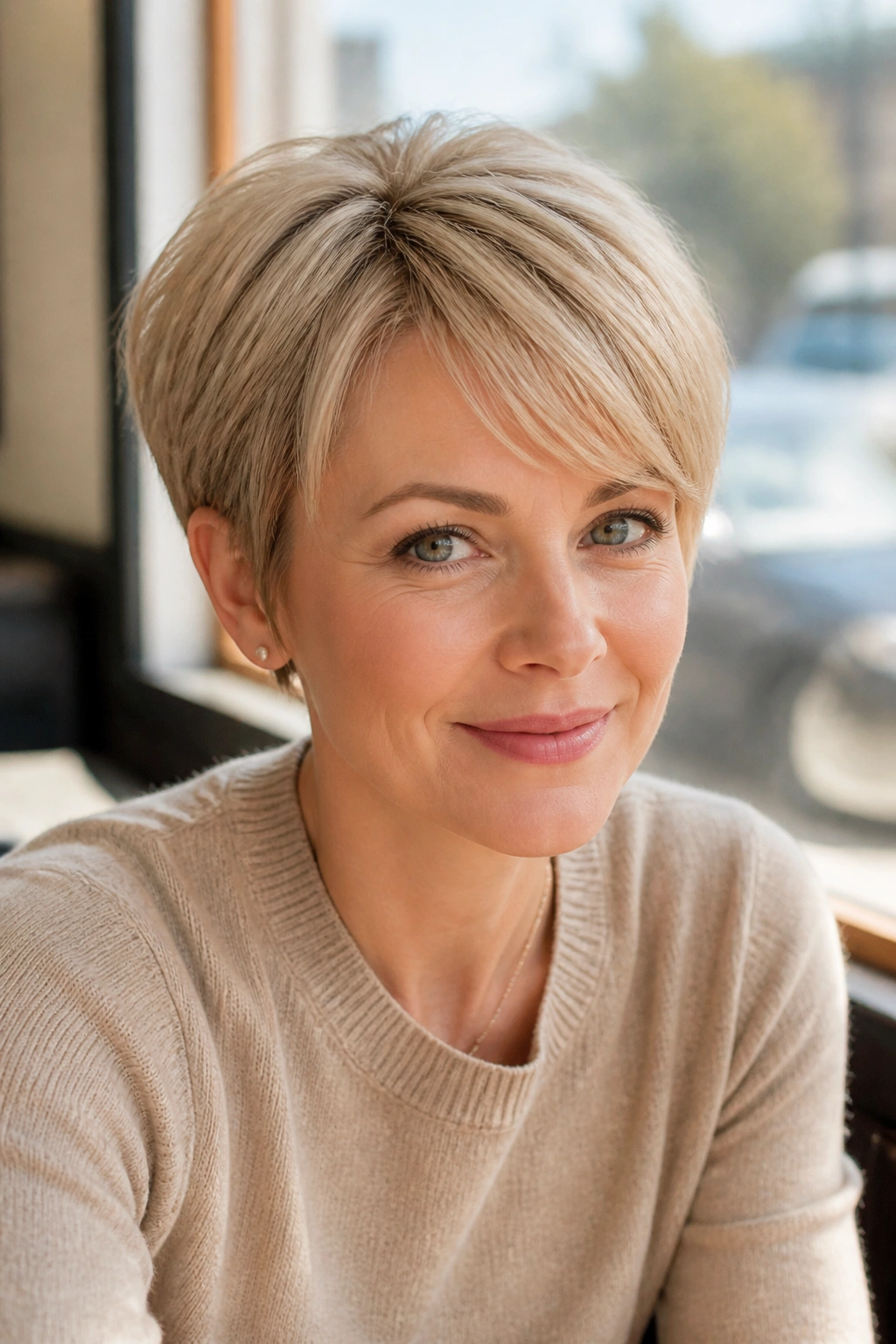
A rounded pixie sounds simple, but on fine hair it can be lovely. The curve gives the illusion of fullness through the head shape, and sandy blonde keeps the cut soft rather than flat or overly bright. It’s clean, but not severe.
Think of this one as a shape-first haircut. The crown needs just enough lift to prevent it from clinging, while the sides follow the curve of the head in a smooth line. If you like hair that sits neatly and still feels feminine, this is an easy one to live with.
How to Keep It From Falling Flat
- Use a root-lifting spray at the crown.
- Blow-dry with a small brush, lifting at the roots.
- Avoid heavy oils near the scalp.
- Refresh with dry shampoo only at the roots, not through the ends.
One small detail: rounded cuts usually need more frequent shaping, because a grown-out edge loses the curve fast.
9. Toffee Blonde Pixie with Piecey Texture
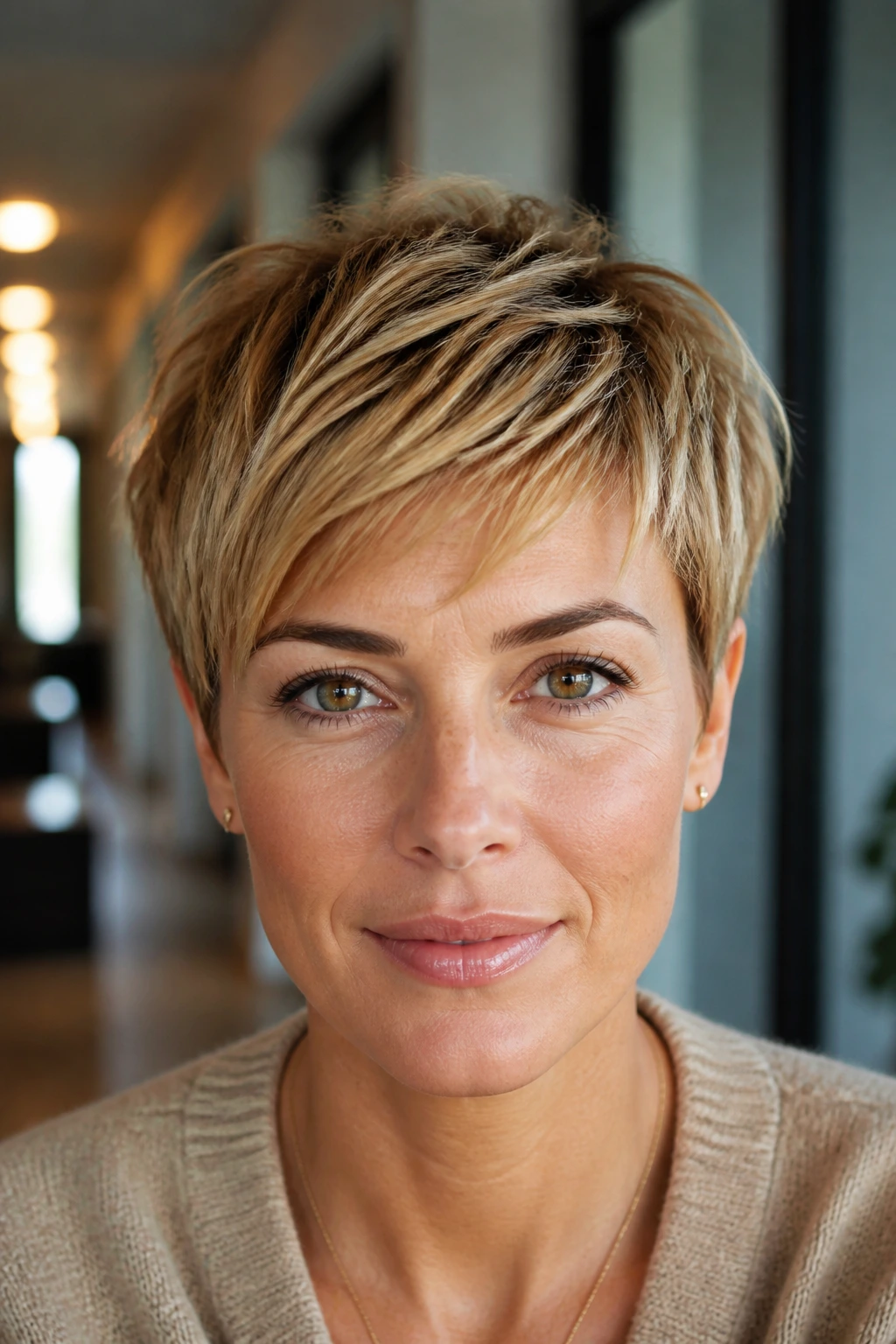
Toffee blonde brings warmth with a little more depth than honey. That depth matters on fine hair because it helps the texture look intentional instead of sparse. Add piecey separation through the top, and the cut feels modern without turning spiky.
What Makes It Different
Unlike smoother pixies, this one relies on tiny gaps of separation between pieces. The eye reads those gaps as movement, and movement reads as volume. That is why a little wax or cream can do more than a whole shelf of blowout products.
This works best if the layers are not all the same length. Ask for a soft disconnect between the crown and the fringe so the top can lift while the sides stay neat. It’s a small structural change, but it changes the whole mood.
10. Sunlit Pixie with a Deep Side Part
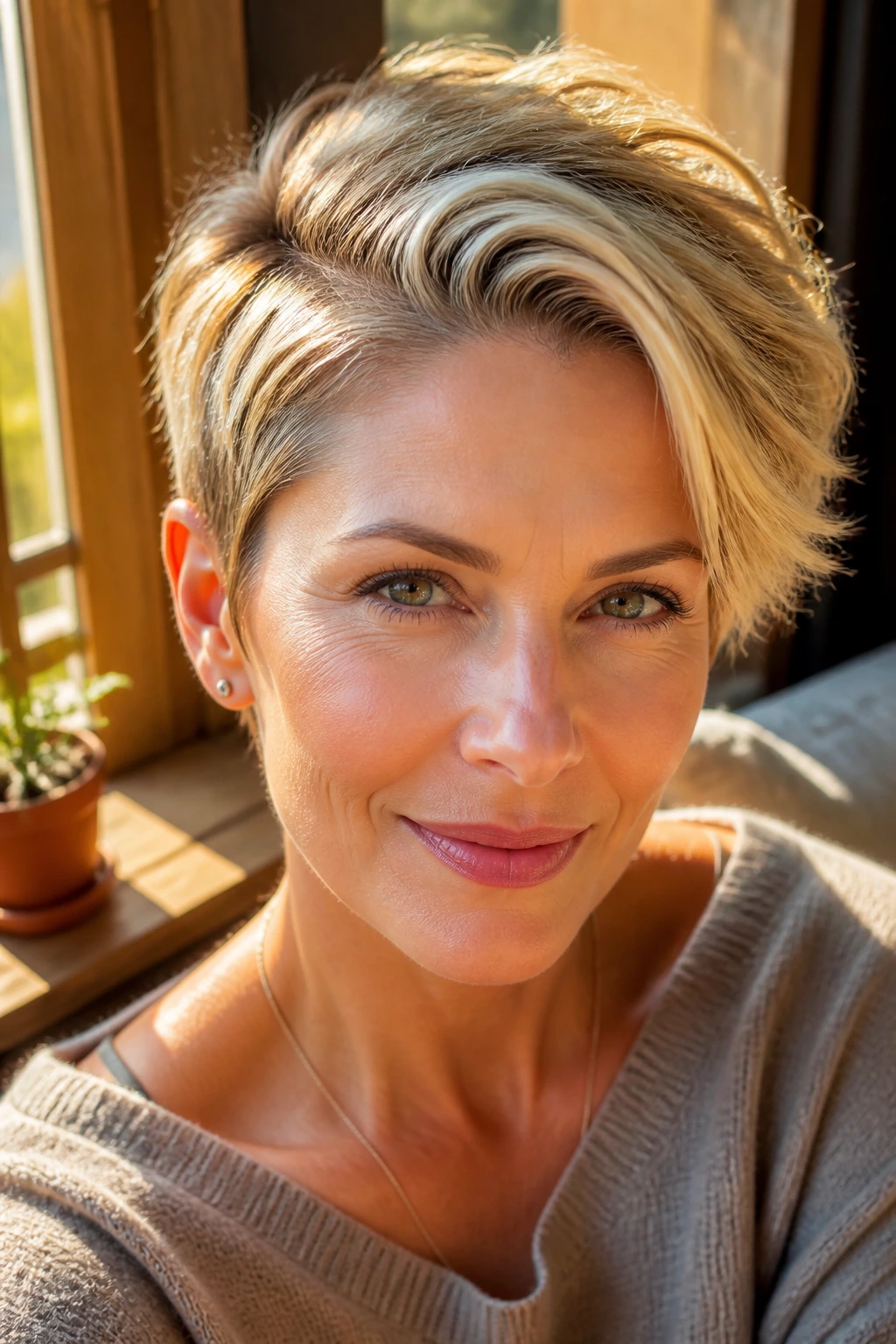
A deep side part can rescue fine hair on days when it wants to lie dead flat. It pushes one side up, lets the other side skim the face, and creates instant asymmetry. Add a sunlit warm blonde tone, and the parting line feels brighter instead of exposed.
This cut is especially good if you like a little drama without going for a full edgy look. The top should stay long enough to sweep over cleanly, usually around 2½ to 3 inches at the longest point. The shorter side should stay soft, not clipped to the scalp.
A root spray at the heavier side of the part makes a real difference. Blow-dry that area up and away from the face, then pin it for a minute while it cools. Old trick. Still works.
11. Soft Undercut Pixie in Buttery Blonde
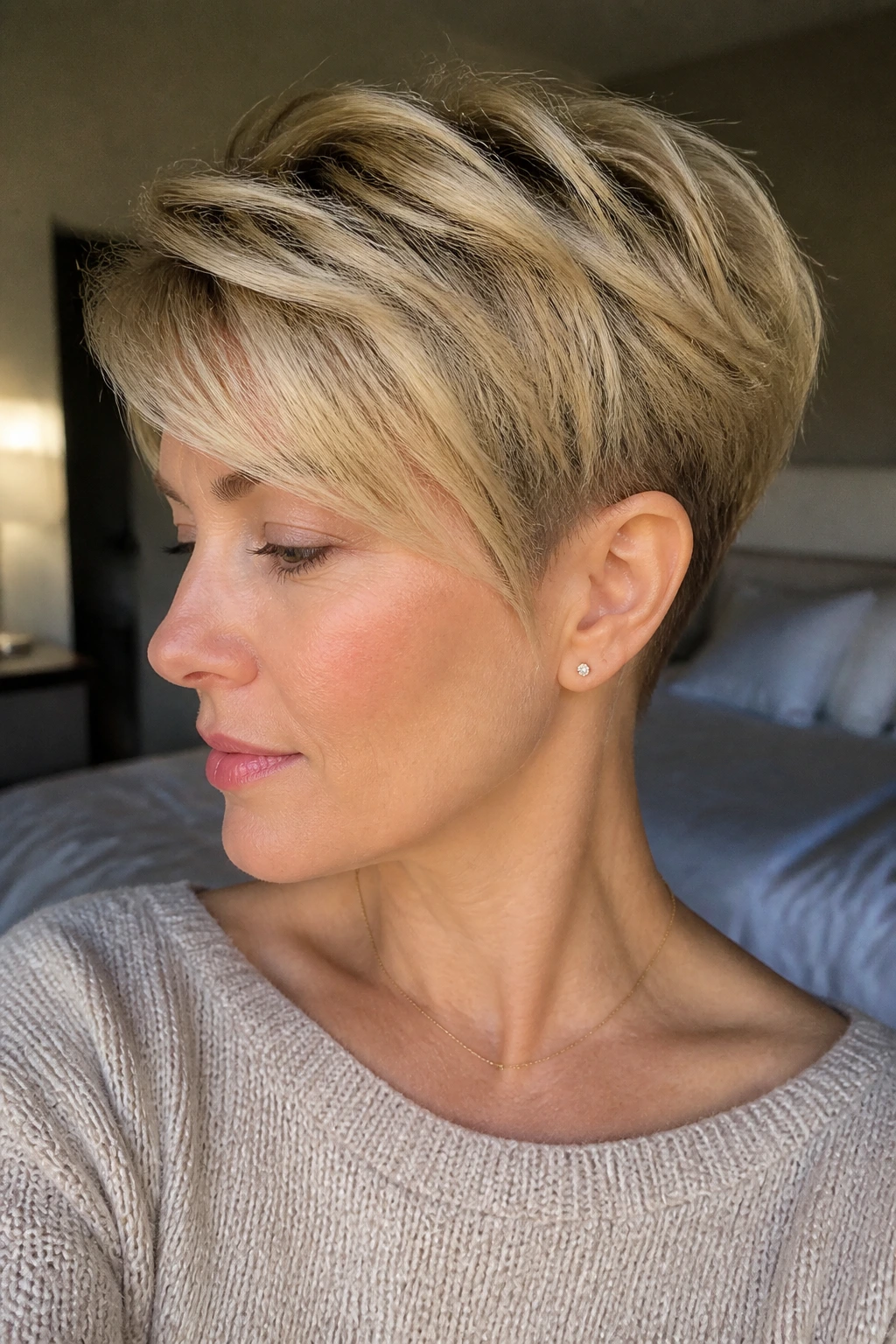
An undercut sounds bold, but a soft one can be one of the best moves for fine hair. It removes bulk from the bottom so the top has more visual presence. Buttery blonde keeps the cut from feeling too hard.
The key is hiding the undercut enough that the style still reads as feminine and light. Leave the top with enough length to brush over the shorter section, especially near the temples. If the contrast is too sharp, the cut can feel more fashion than flattering.
Ask Your Stylist For
- A lightly shaved or clippered nape.
- Longer top layers that cover the undercut.
- Soft blending at the sideburns.
- A buttery gloss that keeps the blonde creamy.
This is a good pick if your fine hair gets bulky at the back but you still want a little edge.
12. Feathered Shag Pixie in Warm Blonde
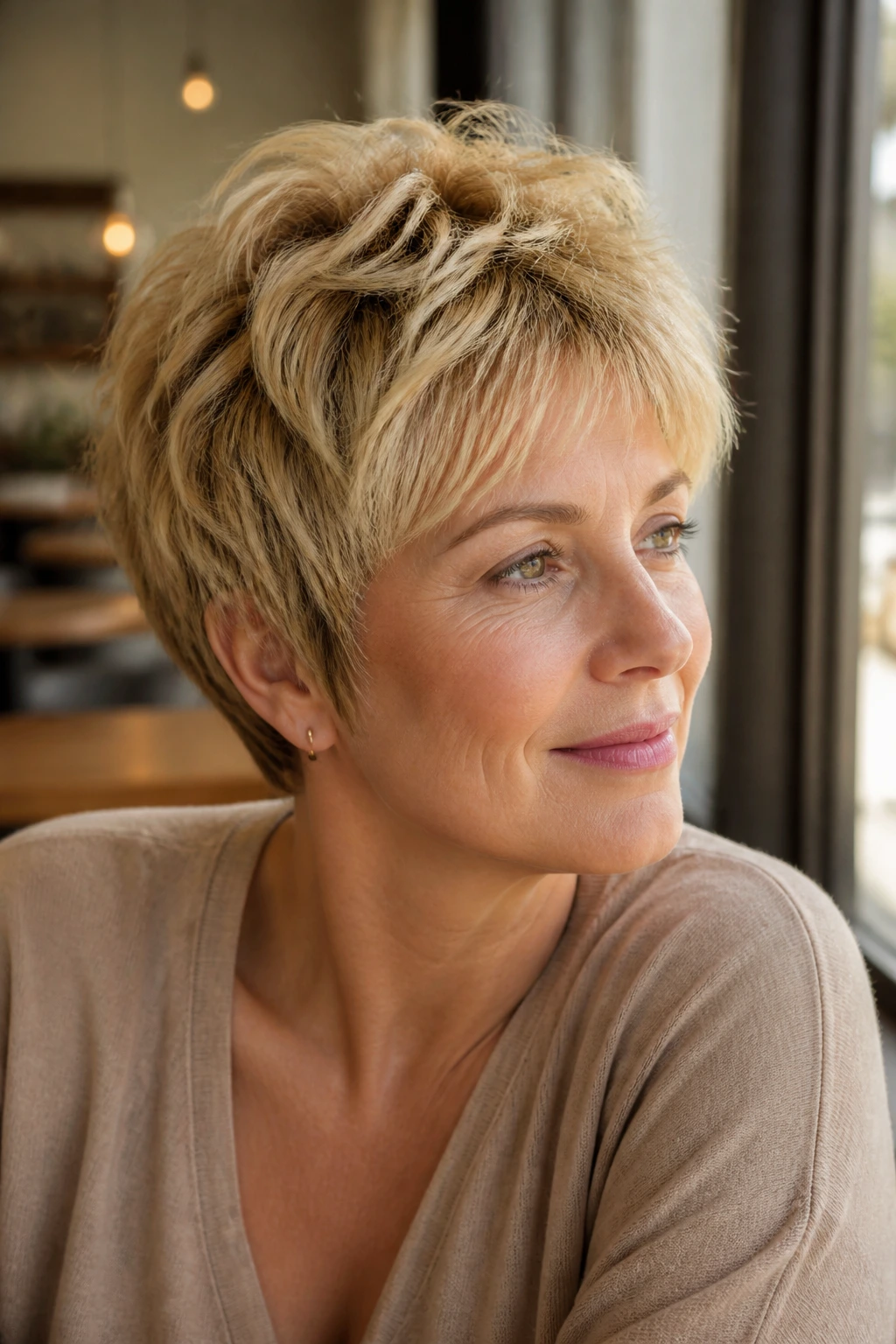
A shag influence gives fine hair room to breathe. Feathered layers stop the style from sitting like a cap, and warm blonde keeps the ends from disappearing into one flat shade. The whole thing looks freer, less polished, and that’s the appeal.
This cut lives or dies by softness. If the layers are too blunt, the shag effect disappears. If they’re too sliced up, the hair can look see-through. The sweet spot is airy, broken, and light around the face.
One sentence. That’s enough sometimes.
For styling, rough-dry first, then pinch a few top pieces with your fingers and a small amount of mousse or paste. Do not overwork it. A shag pixie looks better when it has a bit of texture left in it.
13. French Crop Pixie with Warm Blonde Fringe
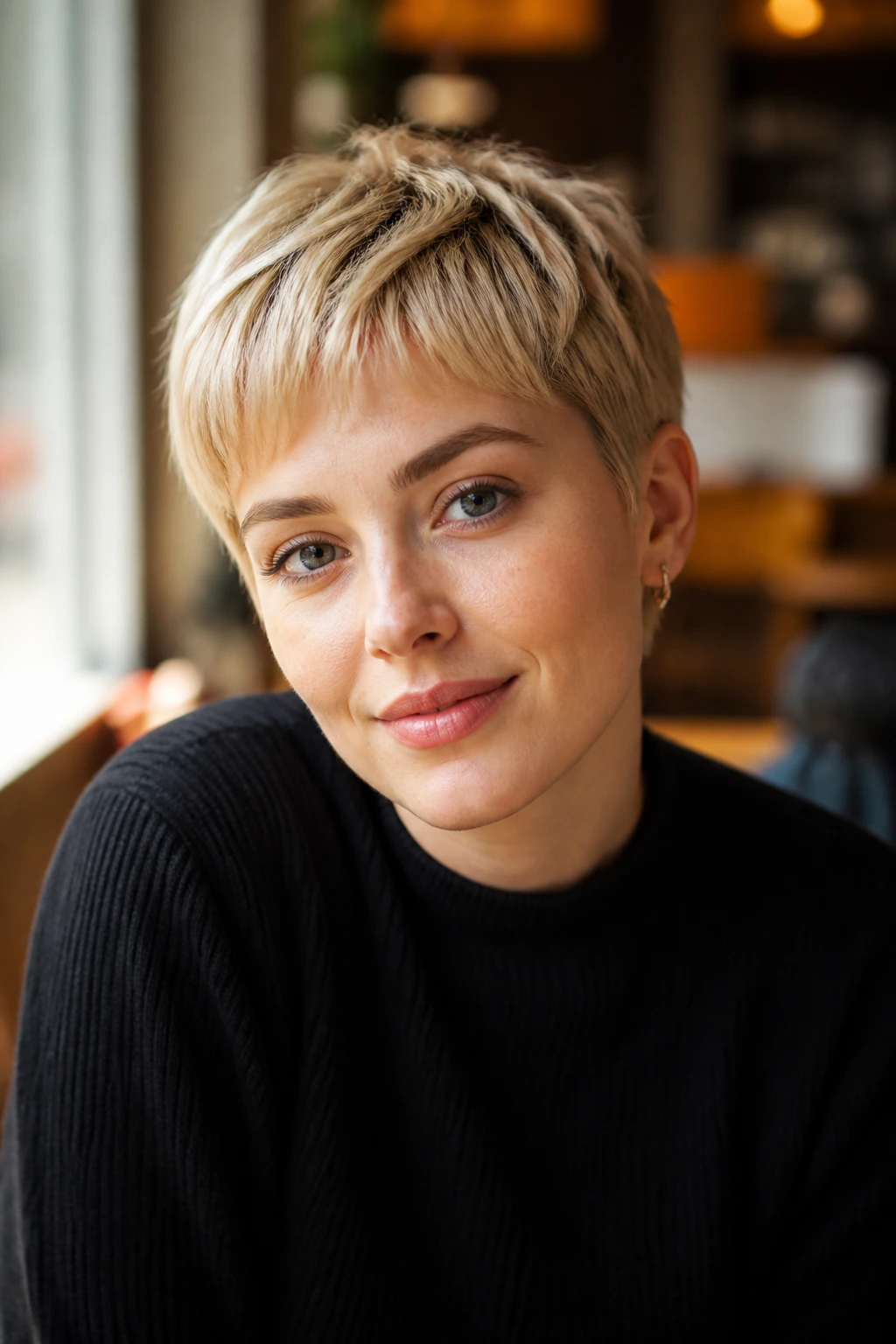
The French crop version leans chic without trying too hard. A short fringe gives fine hair a strong front line, and the warm blonde color softens the look so it doesn’t feel blunt. If your face looks better with structure near the eyes, this style deserves a look.
Why It Suits Fine Hair
The fringe creates the illusion of thickness where people notice it first. That matters. Fine hair often needs a bit of visual density around the forehead or temples to avoid looking sparse, and a cropped fringe does exactly that.
Keep the sides close and the top textured enough to move. You want shape, not stiffness. A matte cream or light paste will keep the fringe separated just enough to look full.
It’s a sharp style, but not a harsh one.
14. Curly Pixie with Golden Highlights
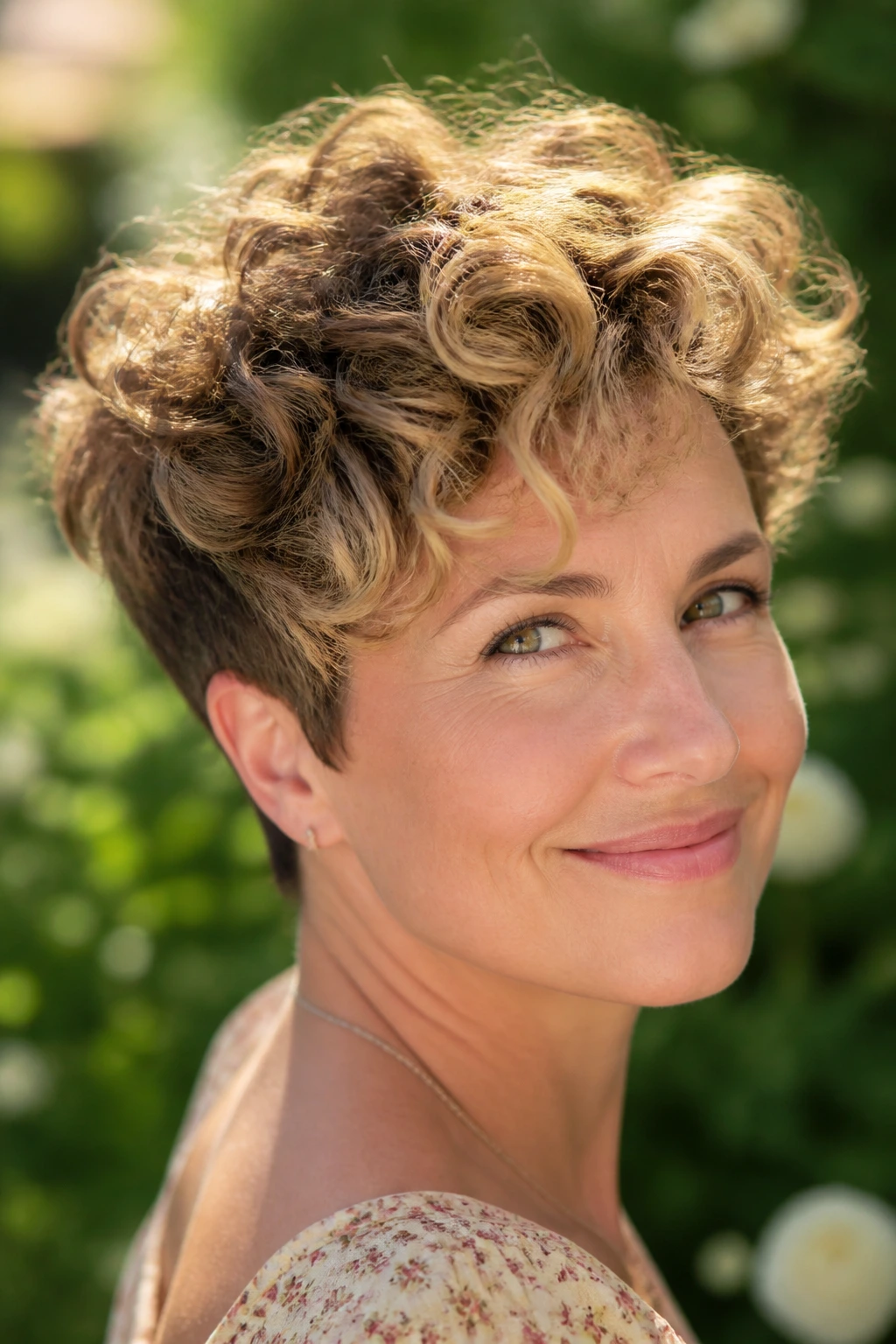
If your fine hair has even a little wave or curl, don’t fight it. A curly pixie can look fuller than a straight one because the bend gives the hair natural lift. Golden highlights make those bends easier to see, so the shape reads with more body.
This cut works best when the top is left slightly longer than you might expect. Curls spring up when they dry, and fine curls can shrink fast. A stylist who understands curl pattern will usually leave enough room for the hair to settle into itself.
Let the curls dry with a light gel or mousse and touch them only once they’re fully dry. Handling them too early can flatten the pattern. The gold tones do the rest.
15. Pixie Bob Hybrid in Honey Blonde
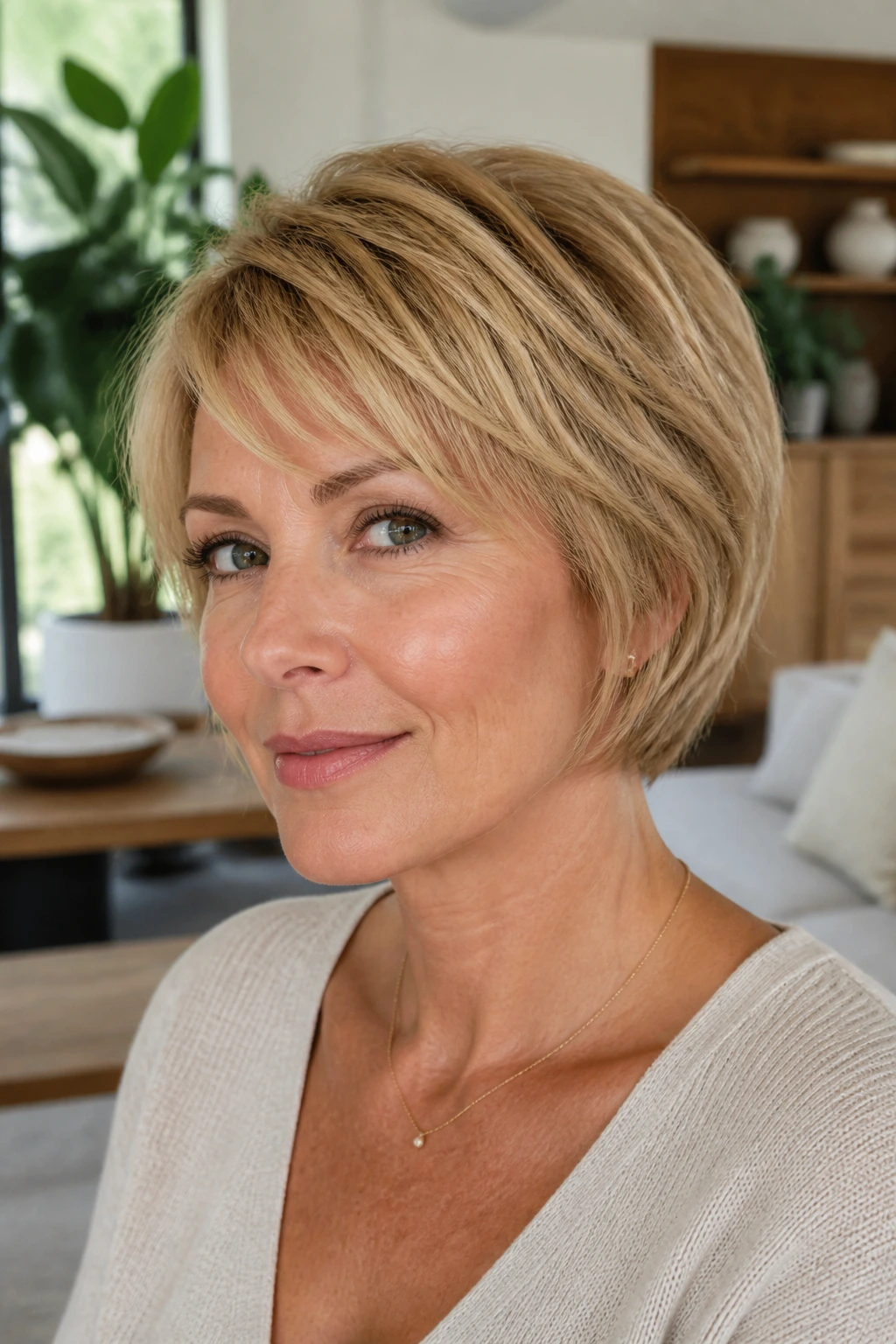
Not everyone wants a very short pixie. Fair enough. A pixie bob hybrid keeps a little more length around the ears and jawline, which can feel safer on fine hair while still getting that airy, cropped shape. Honey blonde makes the cut glow instead of looking heavy.
A Good Middle Ground
This is the cut for someone who wants movement but not a full clipper-short finish. The extra length gives the illusion of more hair, and that can be a relief if you’re nervous about exposing the scalp. It also buys you more styling options on days when you want to tuck one side back.
Ask for softness around the front edges and a light taper through the neck. That keeps the shape from turning into a mini bob with no lift. A little mousse at the roots is enough most mornings.
16. Sleek Side-Comb Pixie in Beige Gold
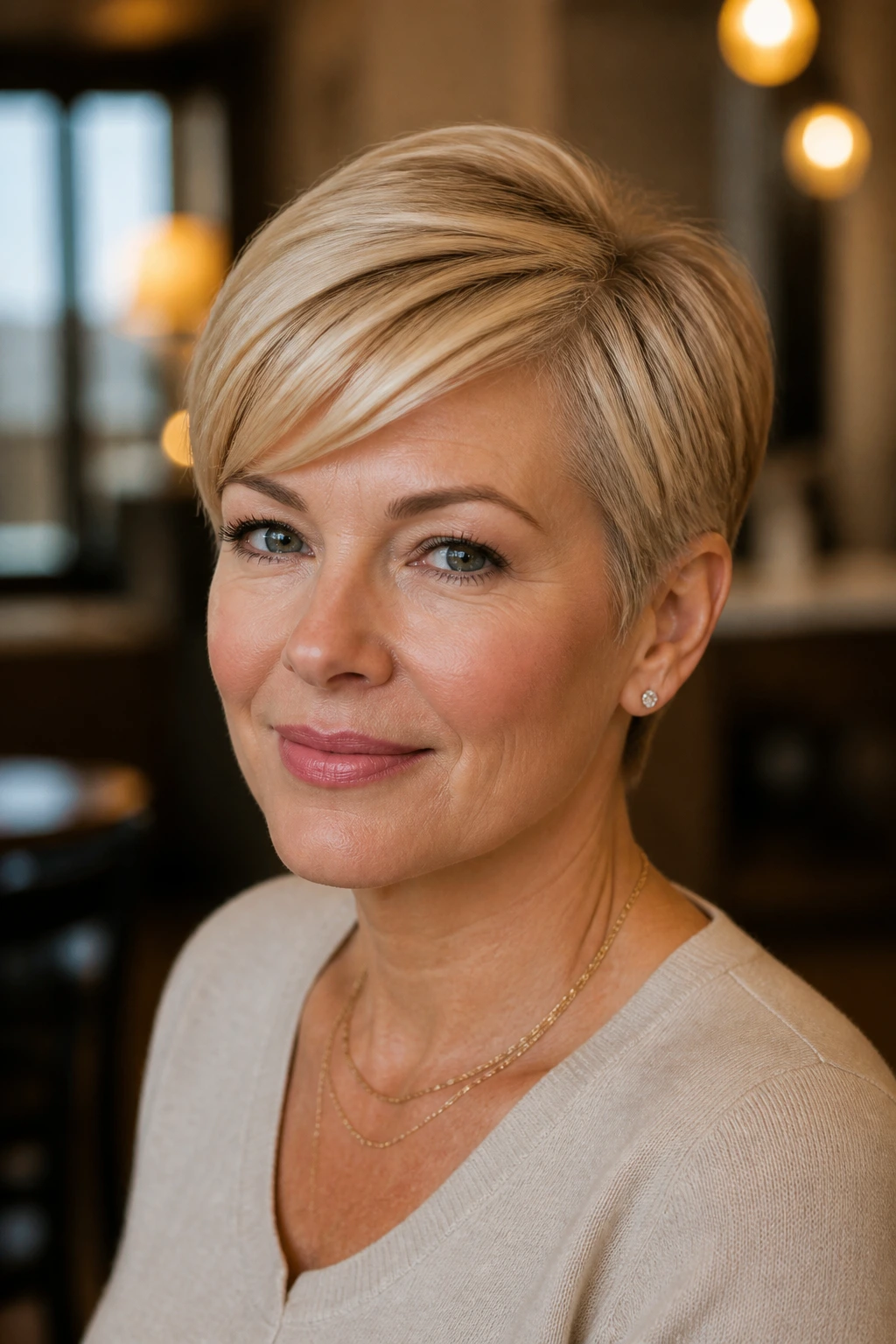
Sleek doesn’t have to mean flat. A side-comb pixie can look polished and still have enough movement if the top is cut with soft layers. Beige gold is a good match because it reflects light without going harsh.
This style is useful when you want something a little cleaner for work or events. The combing motion creates direction, and direction is what gives fine hair the appearance of density. Keep the part low and the finish smooth, but not lacquered.
A light blowout cream and a flat brush are enough. Comb the top in one direction, then lift the roots with your fingers at the very end. The goal is shape, not helmet hair.
17. Peachy Blonde Pixie with Soft Nape
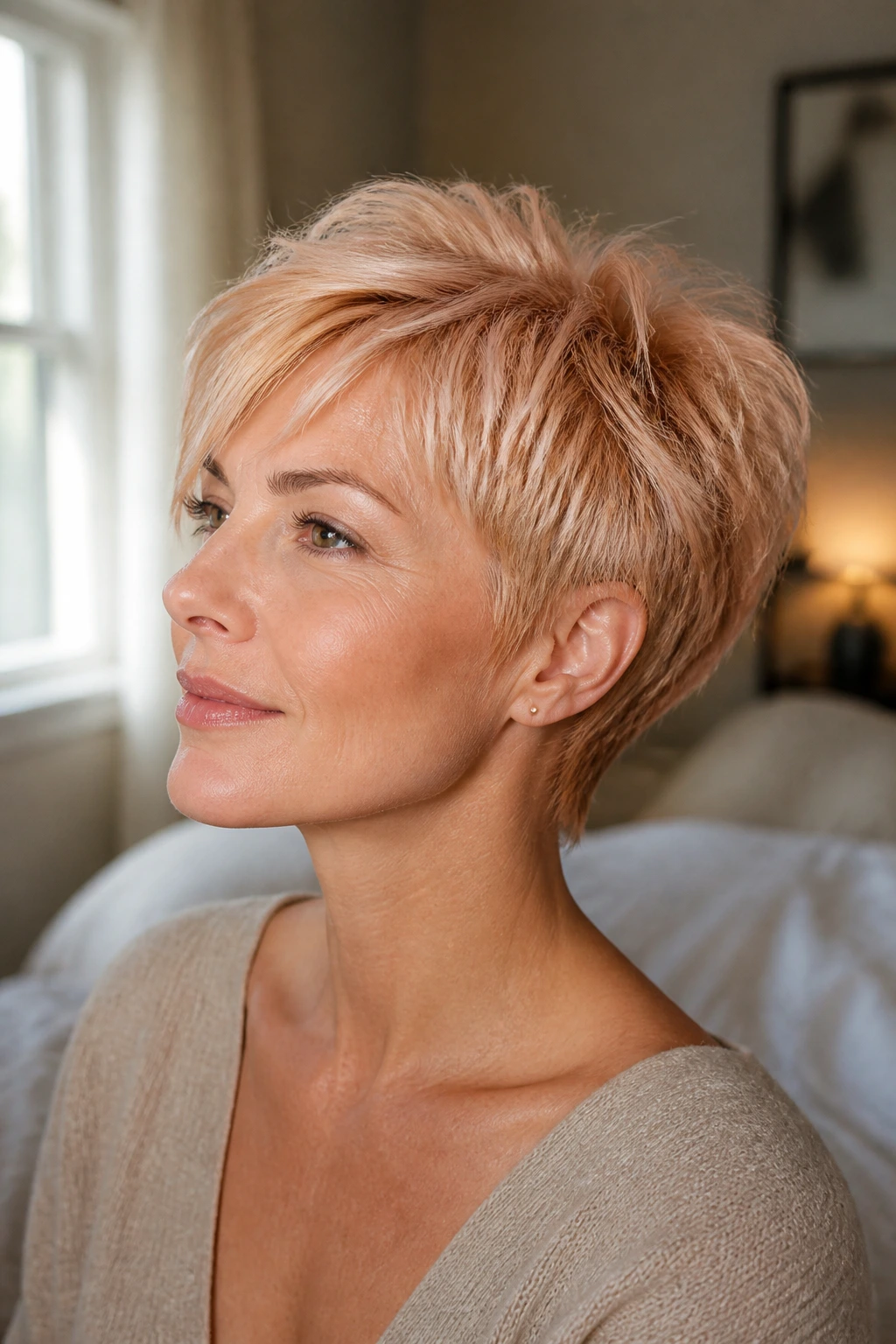
Peachy blonde is one of those shades that looks especially kind on fine hair. It has warmth, a little glow, and a softer edge than a straight golden blonde. Pair it with a carefully tapered nape, and the cut feels light all the way around.
Why the Nape Matters
A soft nape keeps the back of the head from looking bulky. On fine hair, that might sound backwards, but the back line affects how full the top appears. If the nape is too heavy, the whole shape droops. If it’s too tight and choppy, the cut can look unfinished.
- Keep the neckline clean.
- Leave the crown with soft lift.
- Let the peach tone sit on a beige base.
- Refresh the gloss before the color turns dull.
It’s a gentle look, and that’s its strength.
18. Tapered Pixie with Longer Temple Pieces
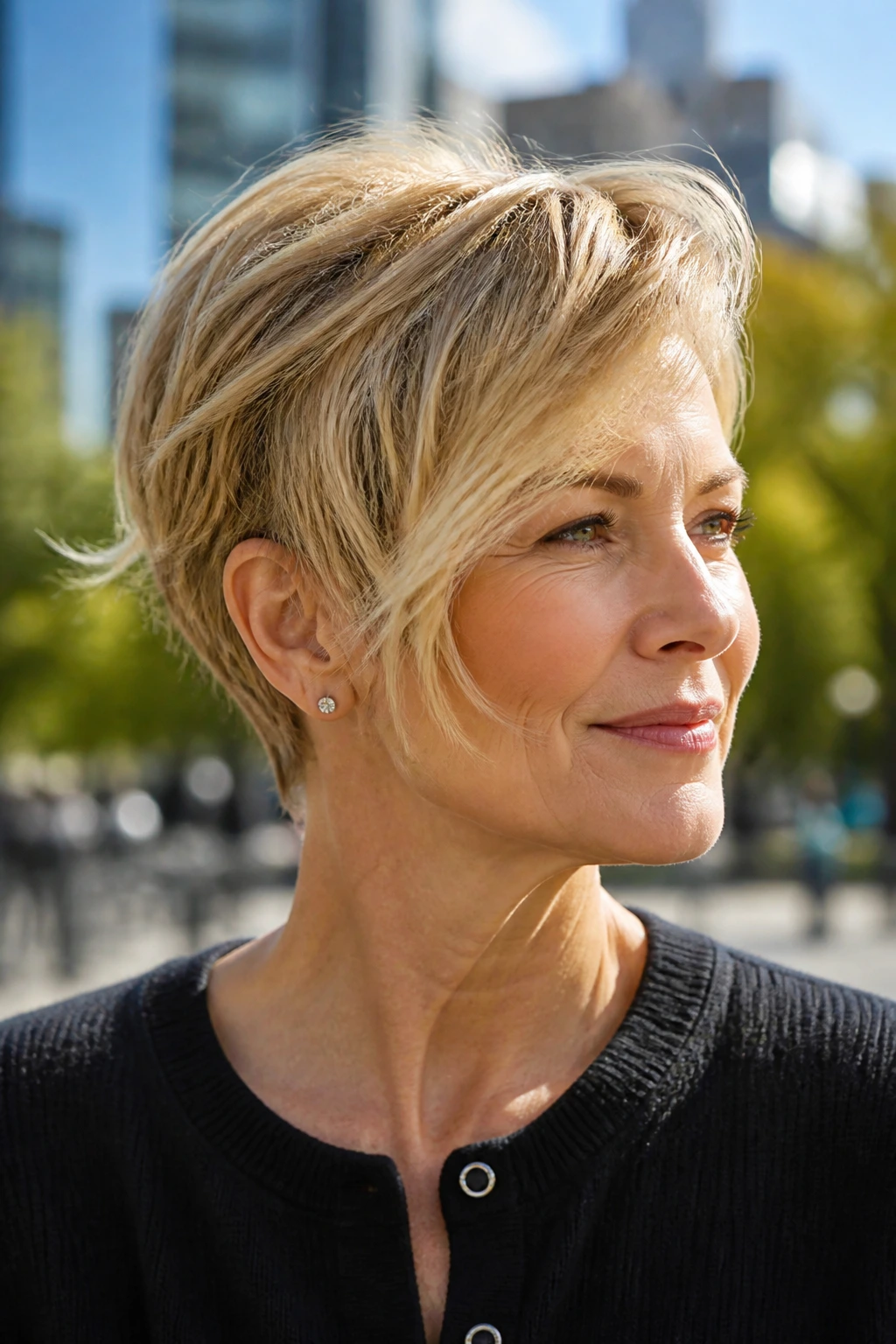
Longer temple pieces are a quiet fix for a lot of face-shape problems. They soften the edge near the cheekbone, which helps fine hair feel less exposed. A tapered back keeps the rest of the cut close and neat, while the warm blonde tone holds the whole thing together.
This is one of those cuts that looks especially good when the wind hits it. The front pieces move, the sides stay tidy, and the silhouette still makes sense from every angle. That combination is rare.
If your hair grows out unevenly at the temples, leave those pieces a little longer than you think you need. They’ll tuck, bend, or skim across the skin instead of flipping out in a weird way.
19. Layered Pixie with Lifted Crown
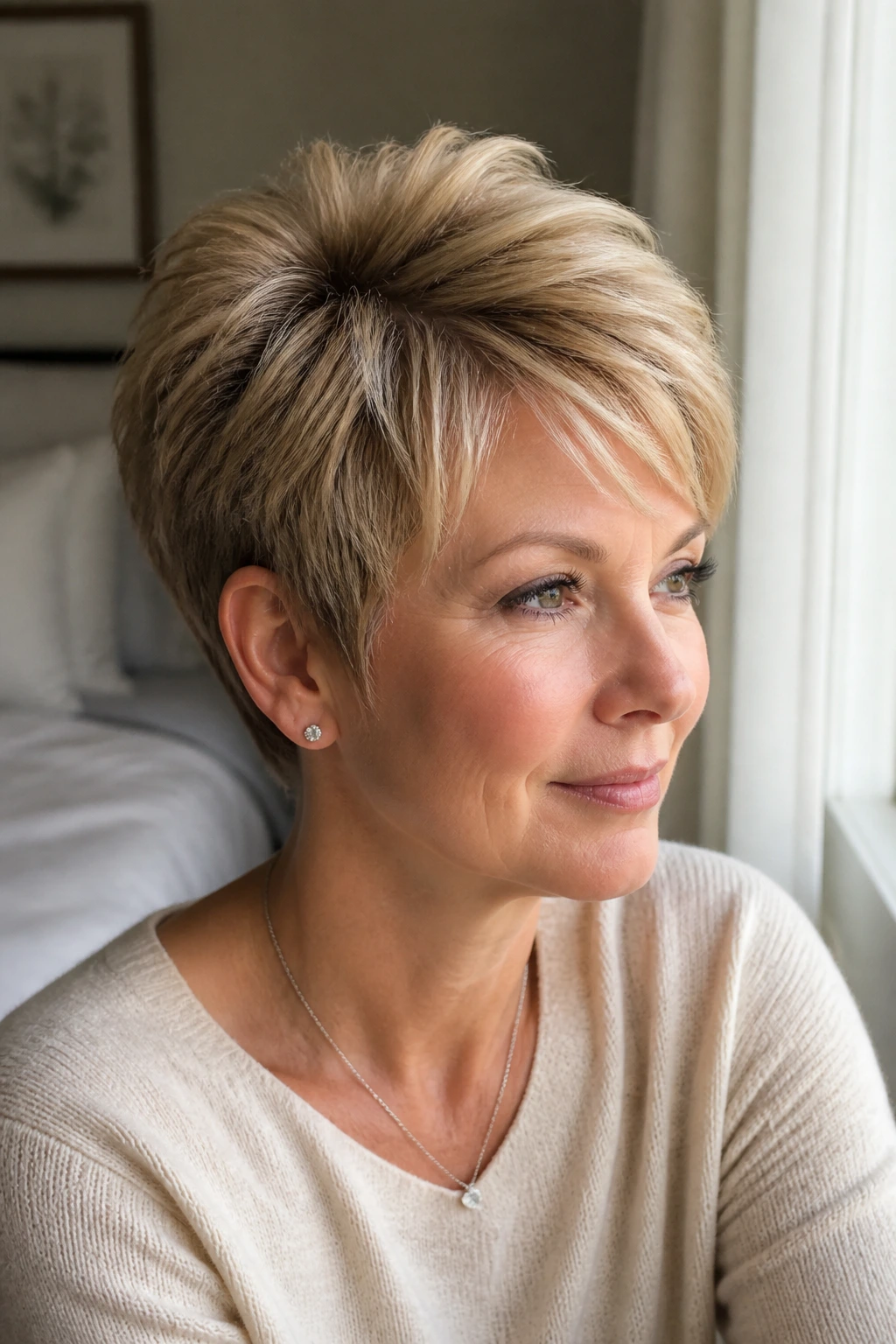
Volume at the crown is not optional on fine hair. It’s the thing that stops a pixie from looking pasted down. A layered crown with warm blonde color gives you lift, movement, and a little softness where the eye naturally looks first.
How to Shape It
Start with slightly longer crown layers and shorter sides. That shape gives the top room to stand away from the head without going into a pompadour. The color should stay warm and light, but not so pale that every short piece disappears.
Use your fingers to dry the roots in different directions, then set them with a cool shot of air. If you use a round brush, lift at the base rather than rolling the hair tightly. Tight rolling can make fine strands collapse faster.
This cut is honest. It wants height, and it shows when it gets it.
20. Warm Balayage Pixie with Darker Roots
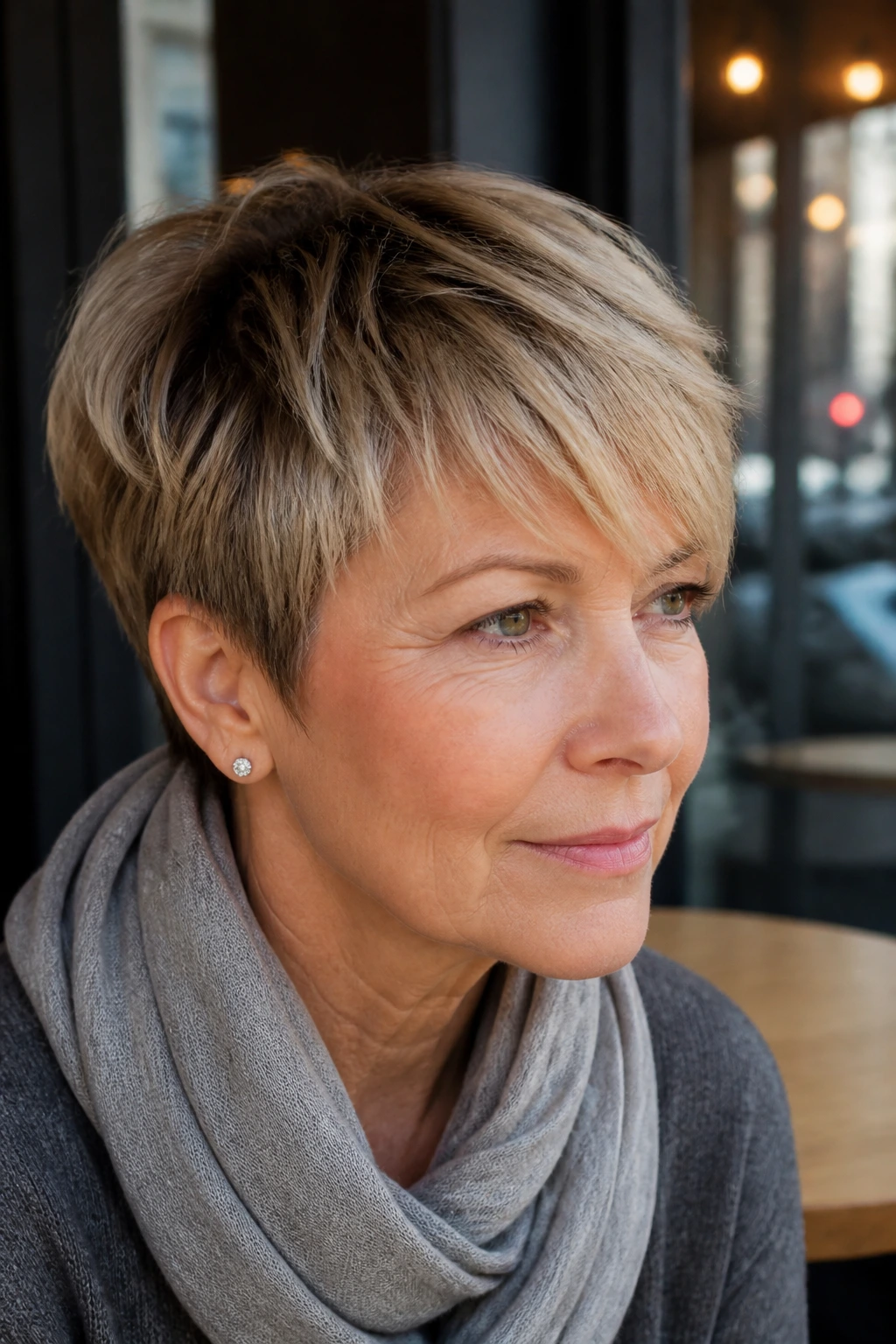
Balayage on a pixie sounds odd until you see how well it works on fine hair. The darker roots ground the style, while hand-painted lighter ends keep the top looking airy. Warm blonde balayage gives depth without creating thick, blocky color lines.
This is a smart option if you like low-maintenance color. The grow-out stays soft because the root line isn’t harsh, and the darker base can help the cut look fuller between appointments. That visual depth matters more than people realize.
The best version keeps the lightest pieces around the fringe and crown, where they catch the eye. Leave the nape a touch deeper. It’s a small color placement choice, but it stops the back from looking too pale and thin.
21. Razor-Cut Pixie with Airy Ends
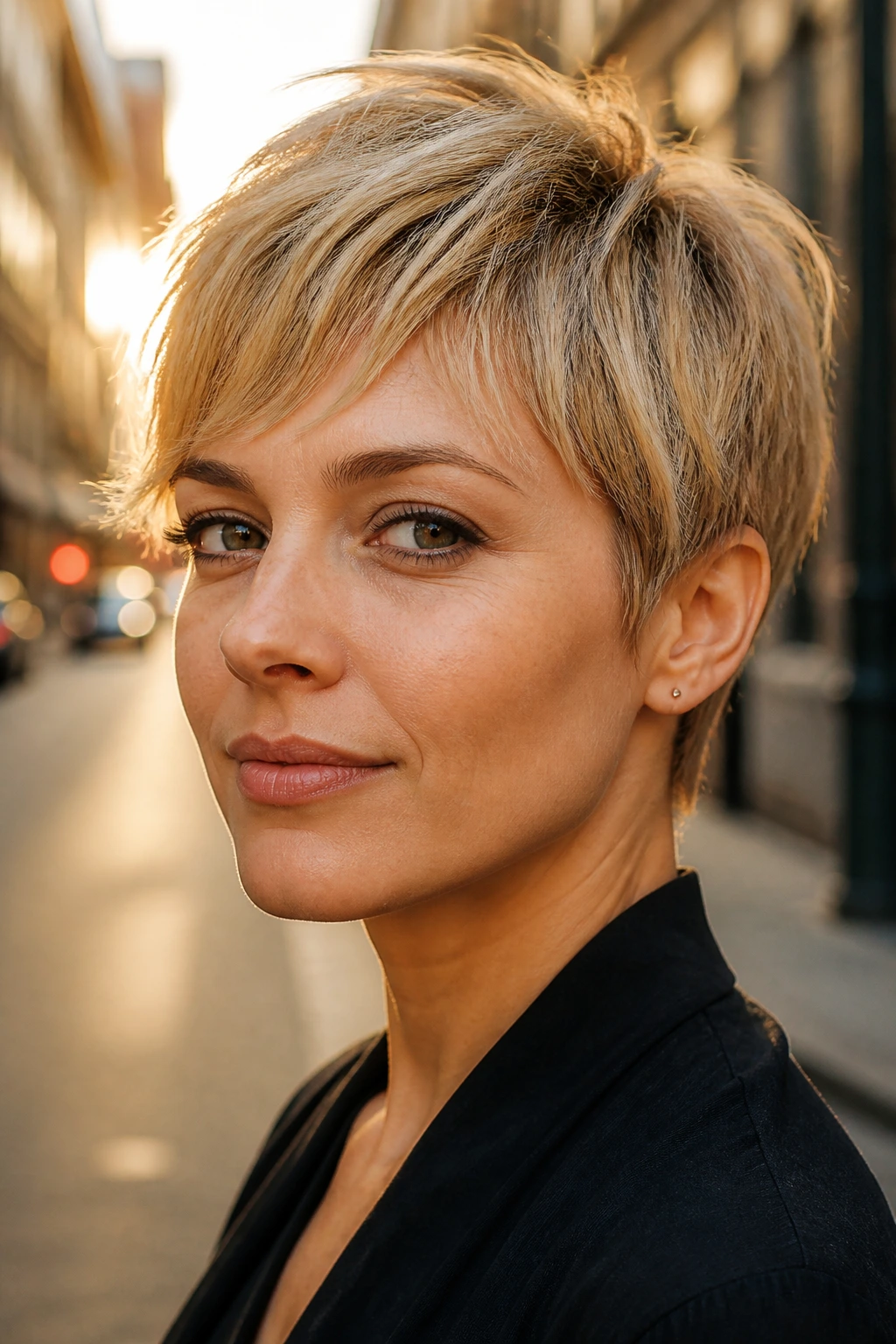
Razor cutting can be tricky on fine hair, but when it’s done well, it creates the kind of edge that feels weightless. Airy ends keep the shape from looking blocky, and warm blonde color makes the texture read more softly. The whole cut feels modern without being sharp.
What to Watch For
A razor should not shred the hair. That’s the mistake. The goal is to take out enough bulk to let the ends move, while keeping the line soft and healthy-looking. If your hair is fragile, a point-cut finish may be safer than a full razor cut.
Use this style if your fine hair tends to sit in one heavy sheet. The airy ends break that up. A small amount of texturizing mist is usually enough to bring the shape to life.
22. Ear-Tucked Pixie with Soft Fringe
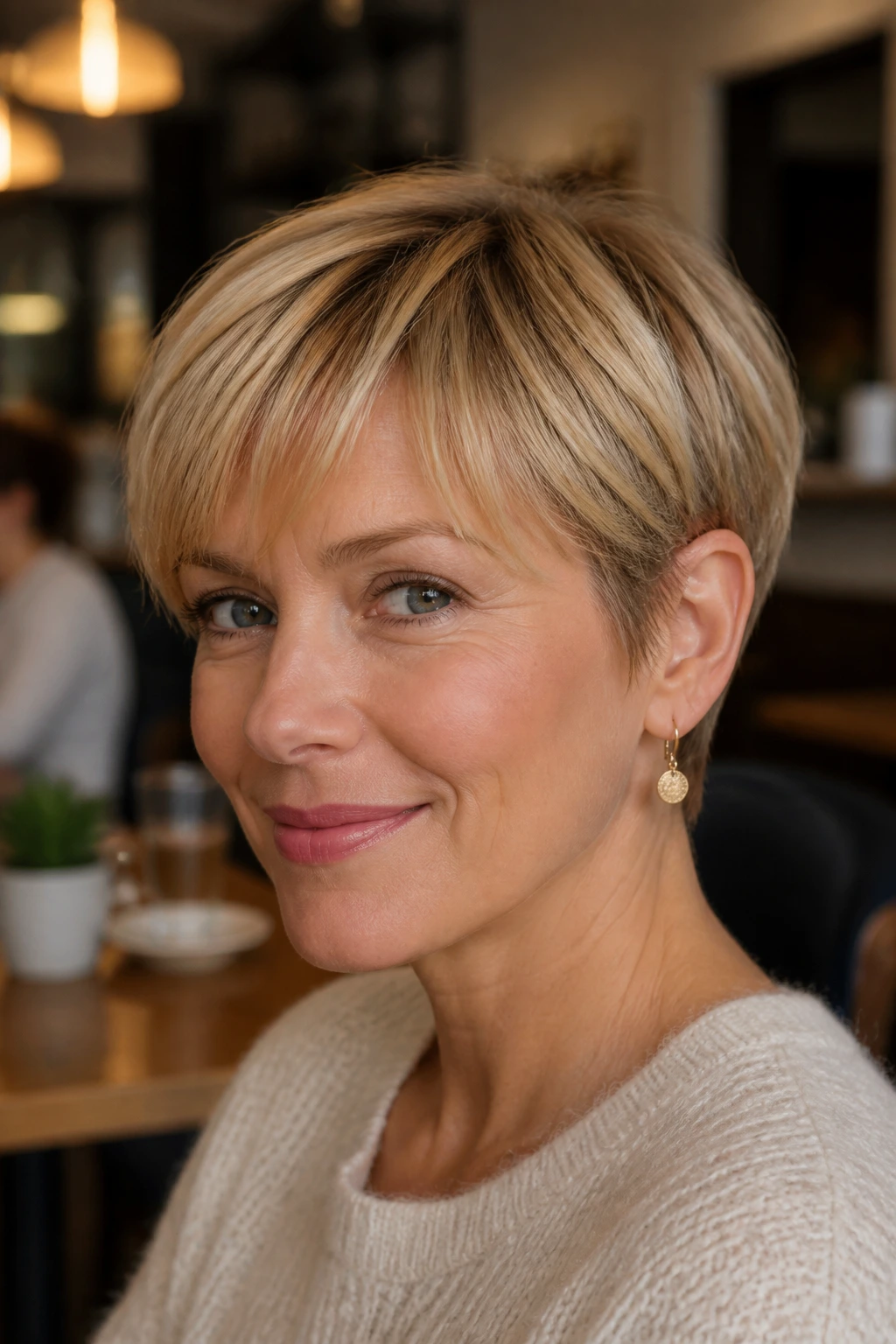
Ear-tucked styling gives fine hair a clean, open look, and that can be a relief when you want something neat without going severe. A soft fringe keeps the front from feeling too bare. Warm blonde shades, especially honey or beige, soften the whole frame.
This cut is especially nice if you like showing earrings or glasses. The hair stays out of the way, but the fringe adds enough softness to keep the style feminine. The ears tucked shape also makes the top appear a little fuller by comparison.
It helps to keep the fringe slightly longer than the side pieces. That creates a natural fold when you tuck the hair back. And yes, that tiny detail matters more than people think.
23. Pompadour Pixie in Soft Gold
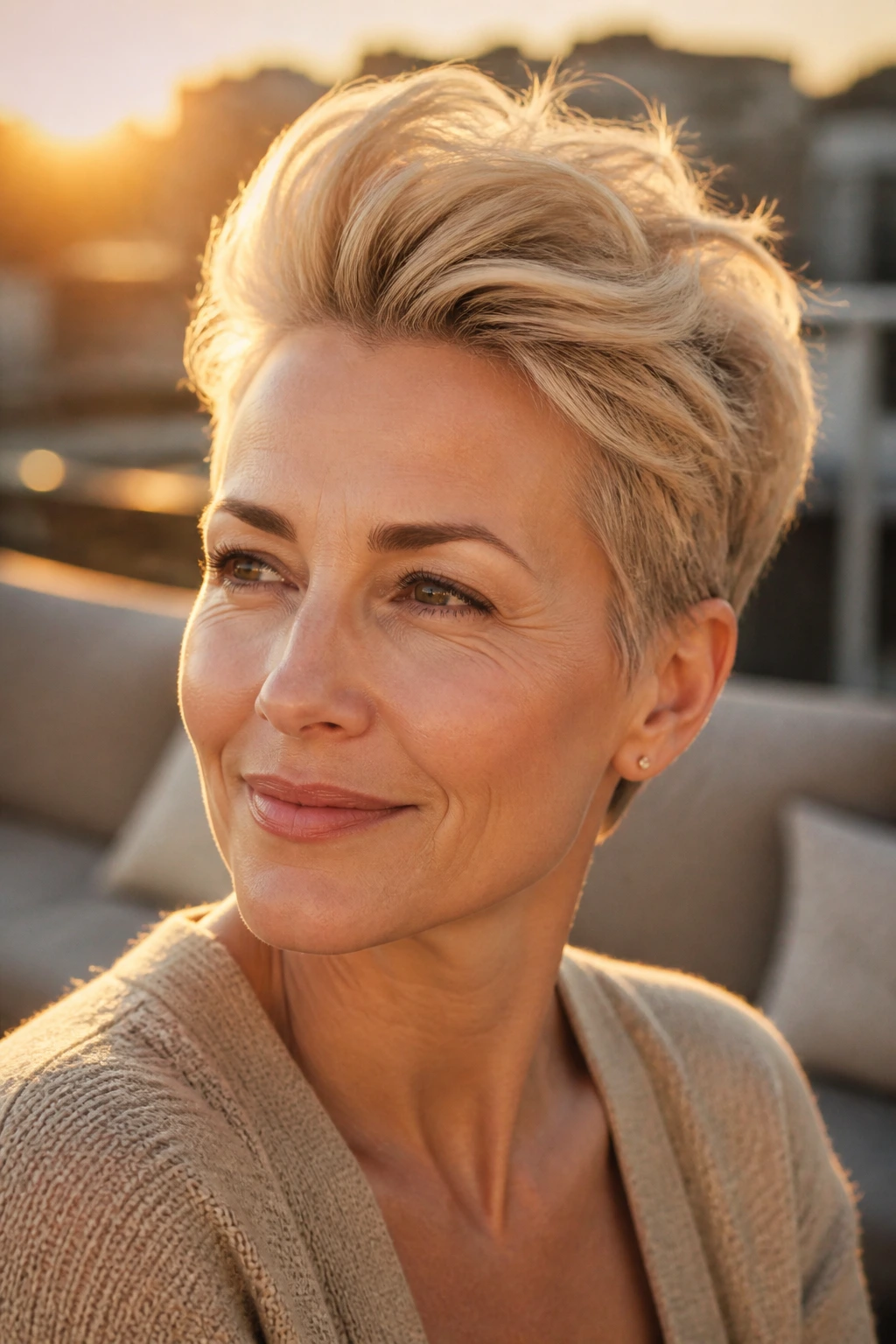
A pompadour pixie sounds dramatic, but on fine hair it can actually be very flattering. The height on top gives the hair a fuller profile, and soft gold color keeps the shape from feeling costume-like. Done right, it’s bold without being fussy.
The lift should come from the root, not from pile-on product. Use a root mousse, blow-dry the front upward, then smooth only the outer layer. Too much wax or spray will drag the hair down, and that defeats the whole point.
Style Notes
- Keep the sides closely tapered.
- Leave 3 to 4 inches on top.
- Direct the front upward and slightly back.
- Finish with a flexible spray, not a stiff shell.
It’s a strong look. That’s the appeal.
24. Spiky Pixie with Piecey Texture
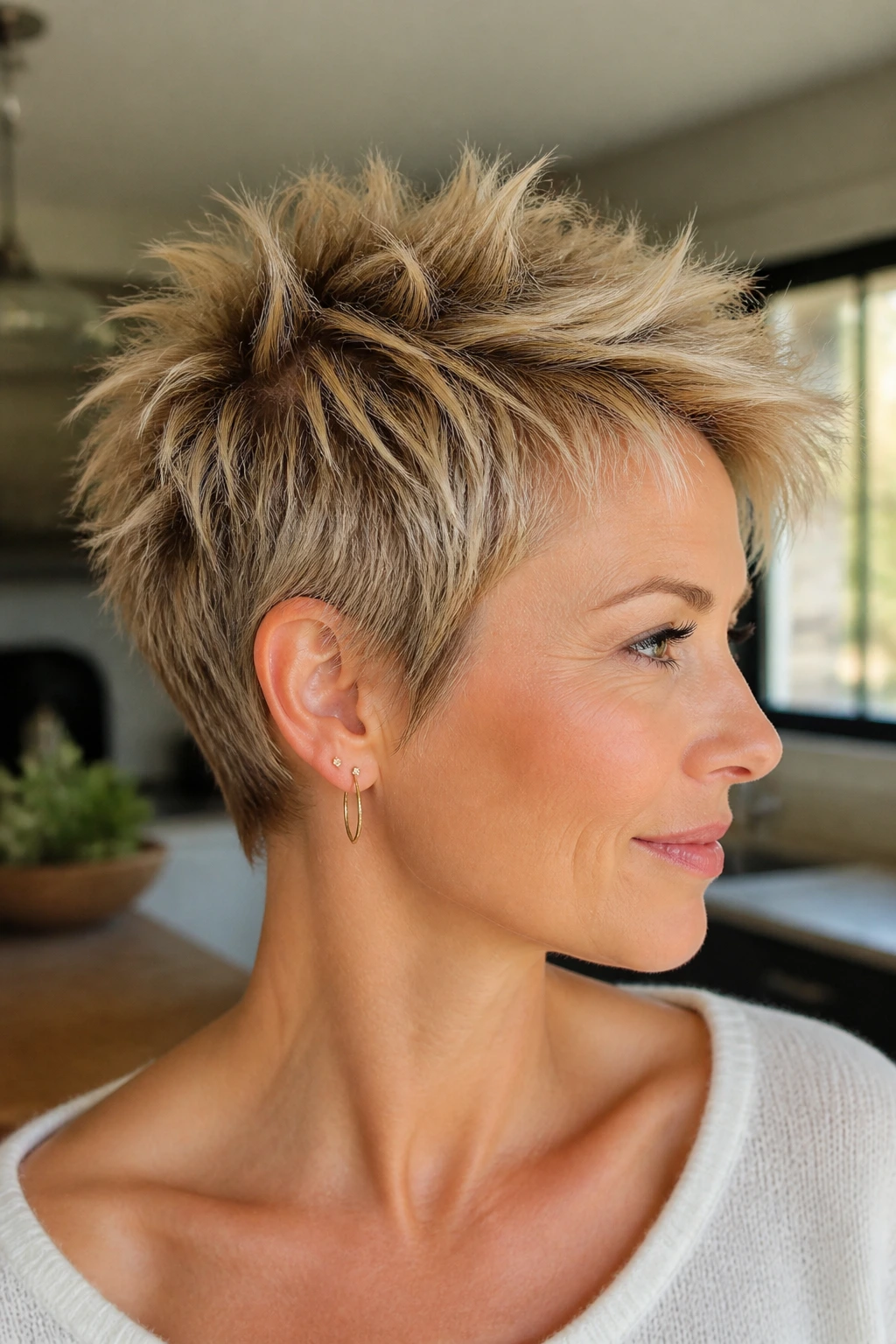
Spiky does not have to mean hard. On fine hair, piecey spikes can be light, touchable, and playful, especially in a warm blonde shade that keeps the cut from looking severe. The trick is to keep the spikes soft and irregular, not frozen into place.
This one works well if your hair is naturally straight and likes to stand up a bit. You can use a tiny amount of paste, pinch a few pieces at the crown and front, and leave the rest alone. That contrast is what gives it shape.
If you go too far with product, the hair clumps and loses the airy look. Small amount. Fingers only. That’s the whole formula.
25. Micro Pixie with Beige Blonde Melt
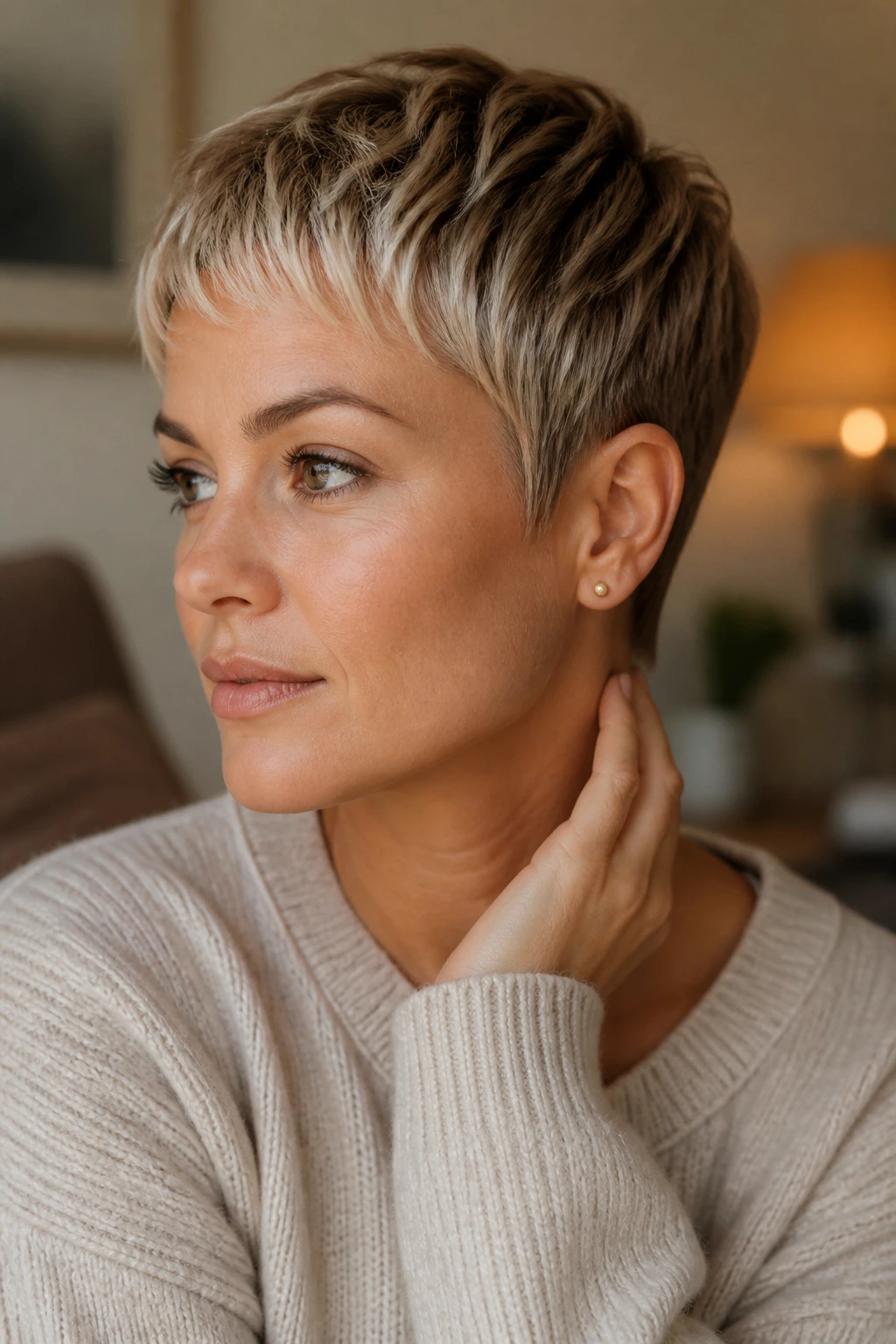
The micro pixie is for someone who wants almost no fuss and a lot of structure. Fine hair can look chic in this cut because the short length removes any chance of limp ends hanging around. A beige blonde melt keeps it soft instead of stark.
Why It Feels Different
A micro pixie leans close to the head, so the color has to do more of the visual work. The melted tone from darker beige roots into lighter ends keeps the short shape from reading one-dimensional. That little blend is what makes it feel polished.
Best on strong hairlines and people who don’t mind regular trims. Every 4 to 6 weeks is about right if you want to keep the shape crisp. Let it grow too long, and the cut loses its point.
26. Side-Parted Crop with Long Front Pieces
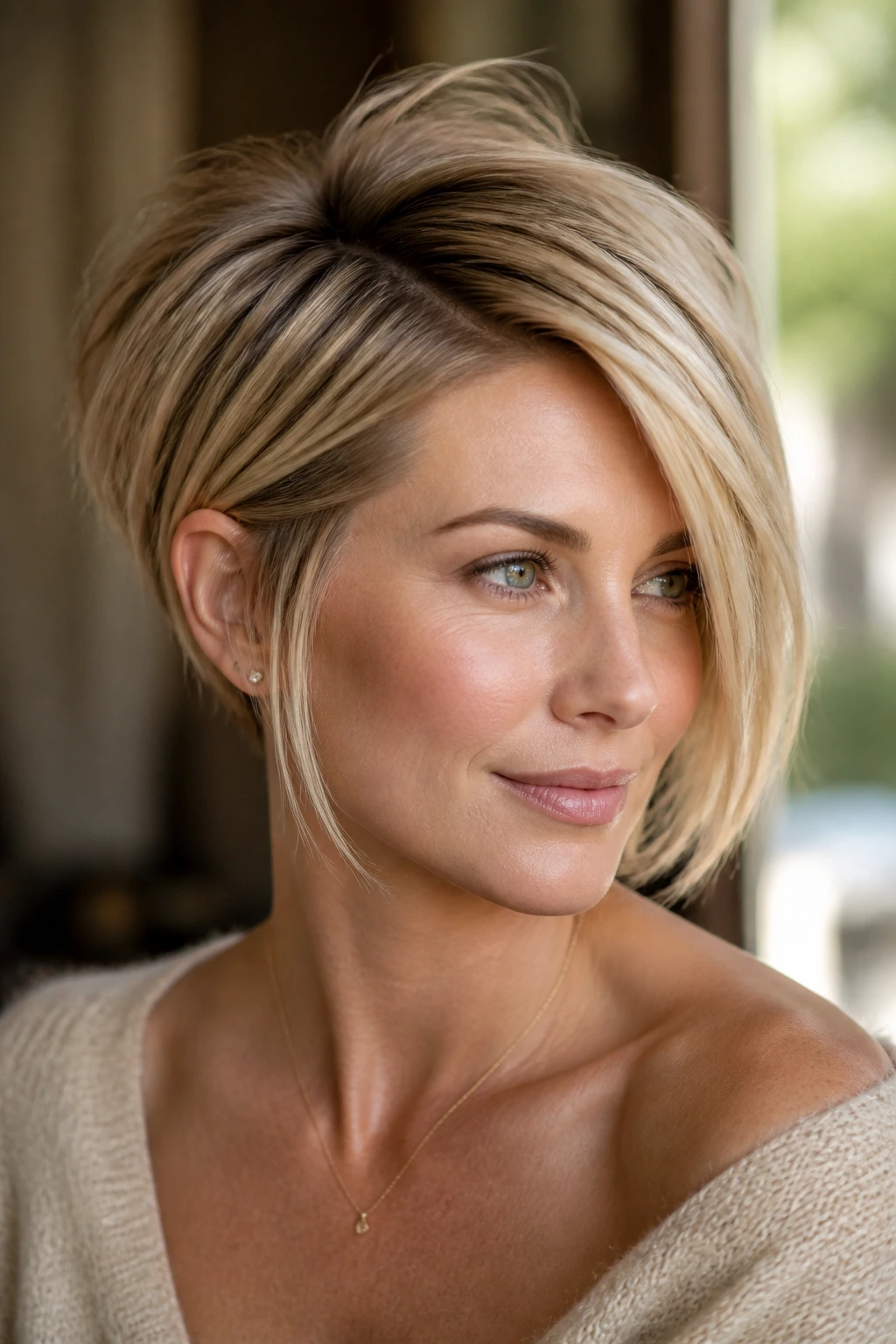
Long front pieces change the whole mood of a pixie. They give fine hair a frame around the face, which can make the hair feel instantly fuller. A side part adds lift on one side and a little sweep on the other. Warm blonde keeps the lines soft.
This is a good choice if your face looks best with some length near the cheekbones. The front can graze the jaw or cheek, while the back stays short enough to keep the style airy. That contrast is what makes it work.
A flat brush, a side part, and a quick blast of heat are often enough. Lift the roots where the part sits, then let the longer front pieces fall naturally. Do not over-style them. They look better with a bit of movement.
27. Pixie with Soft Flicked Sides
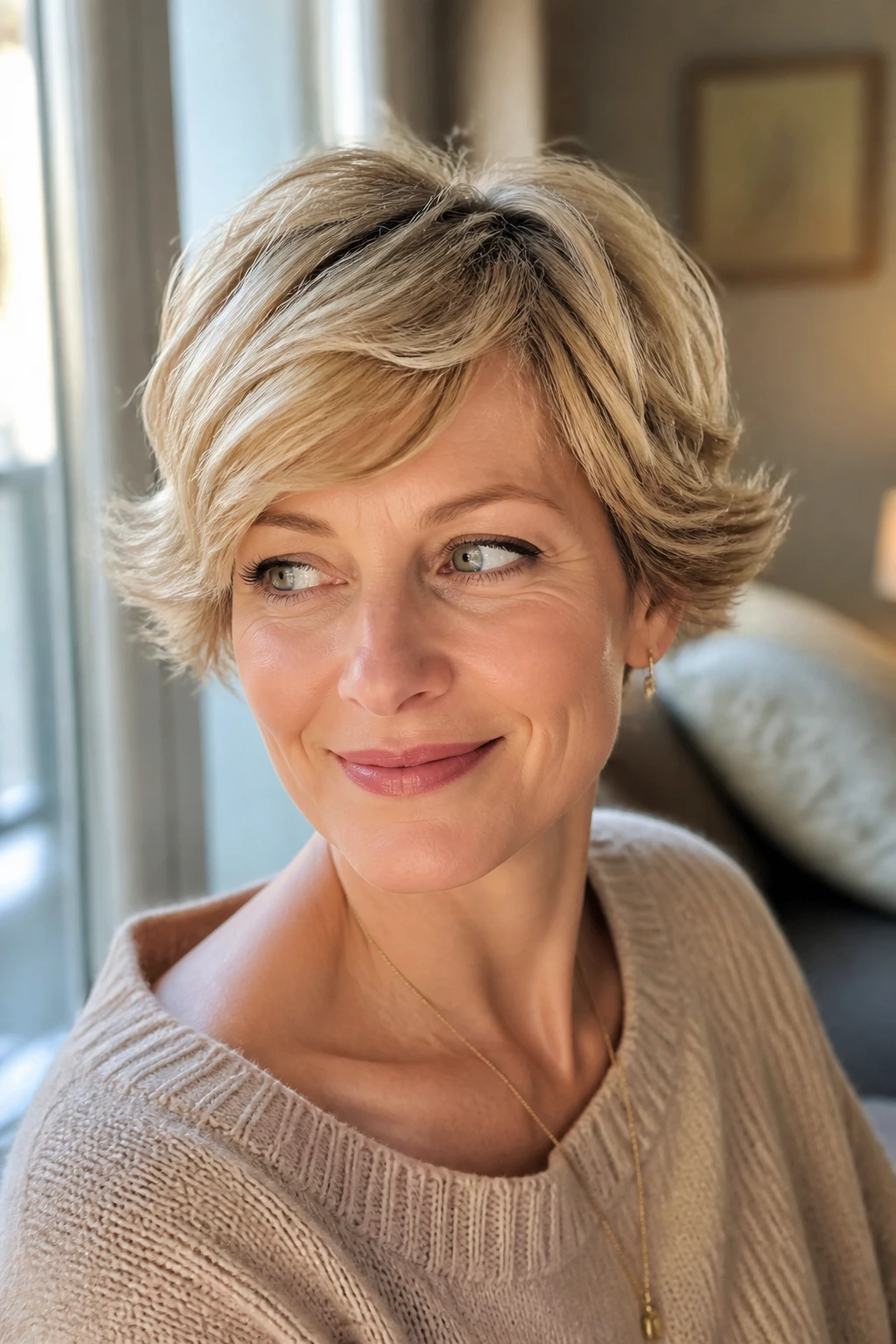
Flicked sides are a small detail with a big payoff. Instead of sitting flat against the head, the hair bends outward just a little, which helps fine strands look fuller. Warm blonde color makes the flicks more visible, especially in bright light.
How to Get the Shape
Ask for side layers that are long enough to bend, not so short that they stand straight out. A quick pass with a round brush or even fingers and a blow-dryer can create that outward curve. The key is softness.
- Keep the nape tapered.
- Leave the side layers touchable.
- Use light hold only.
- Aim for a soft bend, not a flip.
This is a nice option if you want movement around the face without a lot of daily work.
28. Grown-Out Pixie in Mellow Gold Tones
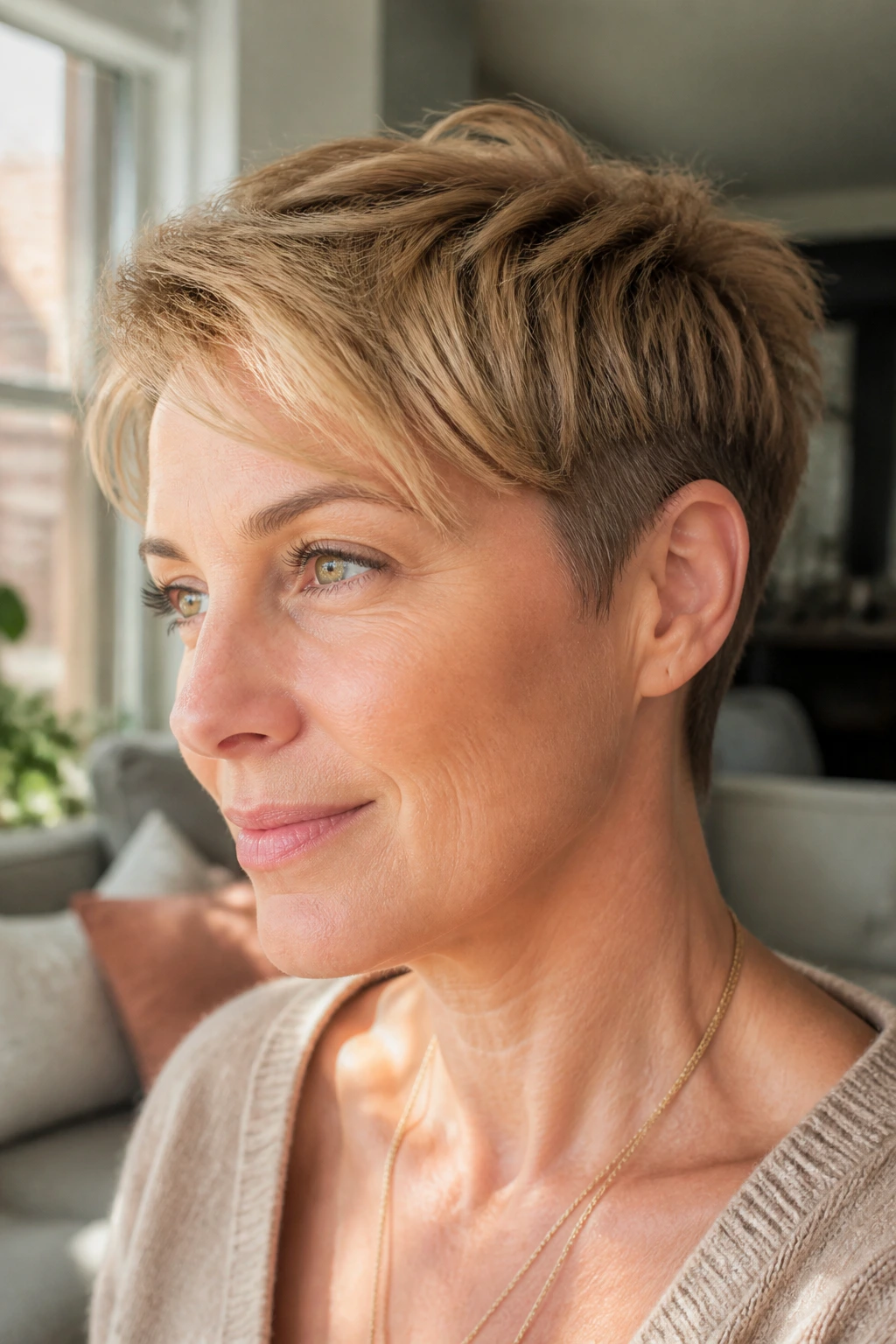
Some of the best pixies are the ones that look better as they soften. A grown-out pixie with mellow gold tones is forgiving, which matters if you’re not eager for salon visits every few weeks. Fine hair often behaves better when it has a little extra length anyway.
The shape should stay tidy at the neck and around the ears, but the top can relax into a softer sweep. That in-between stage has a nice casual look if the color stays warm and even. Mellow gold helps blur the line between fresh cut and grow-out.
This is a good cut for busy weeks. It does not need perfect styling to look deliberate. A bit of mist, a finger rake, and you’re done.
29. Glossy Cream Blonde Pixie for Fine Hair
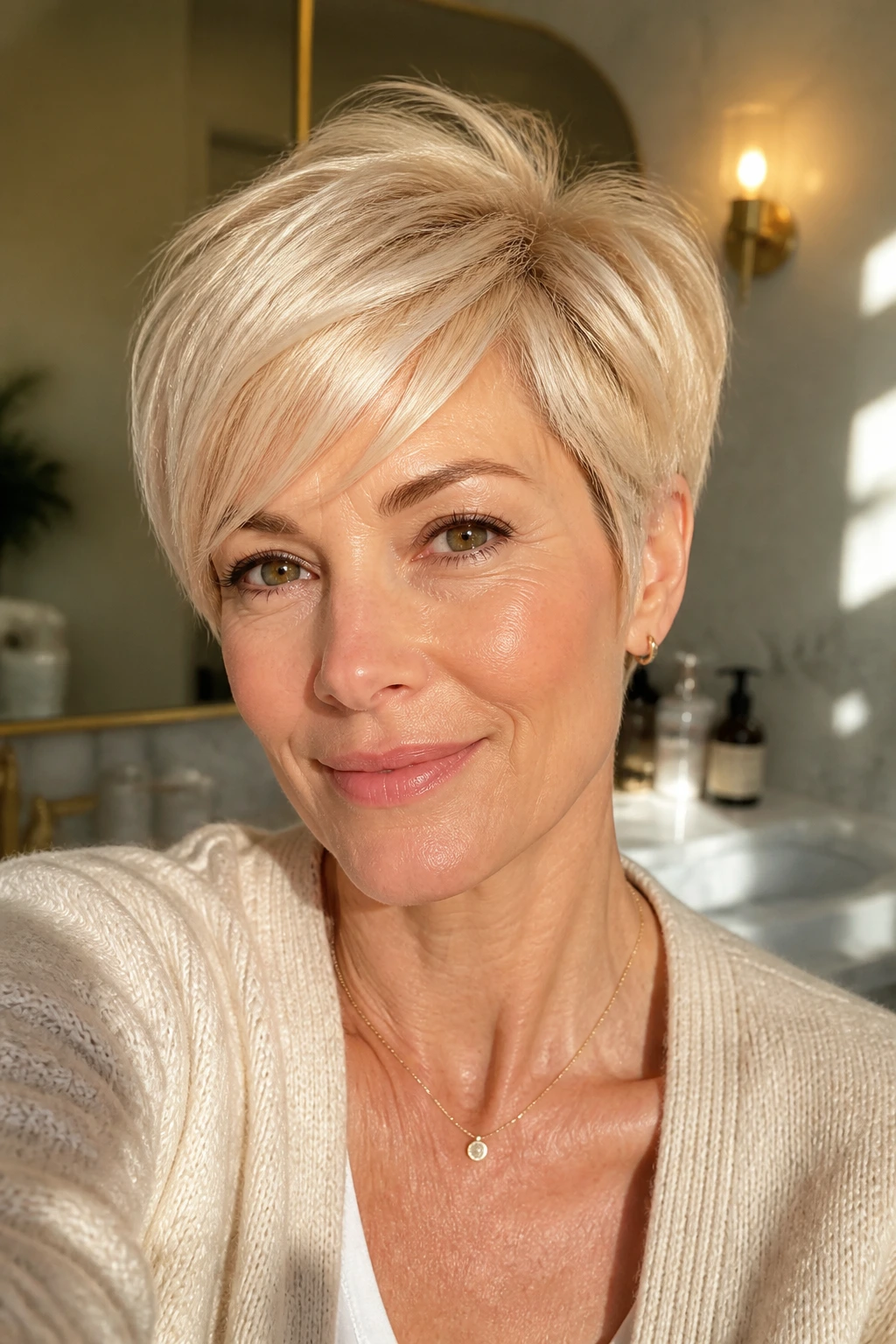
Cream blonde can look expensive on fine hair when the cut underneath has enough structure. The shine matters here. A glossy finish makes short strands reflect more light, which gives the hair a fuller visual edge than a flat matte tone would.
What to Ask For
Ask for a smooth base, soft top layers, and enough length at the crown to keep movement. The color should be creamy, not icy, and the finish should look healthy rather than over-processed. That combination is what keeps the style from looking thin.
A shine serum on the ends, not the roots, goes a long way. Too much product near the scalp can flatten everything. One drop, spread well, is enough for most fine hair.
30. Buttery Blonde Pixie with Soft Face Framing
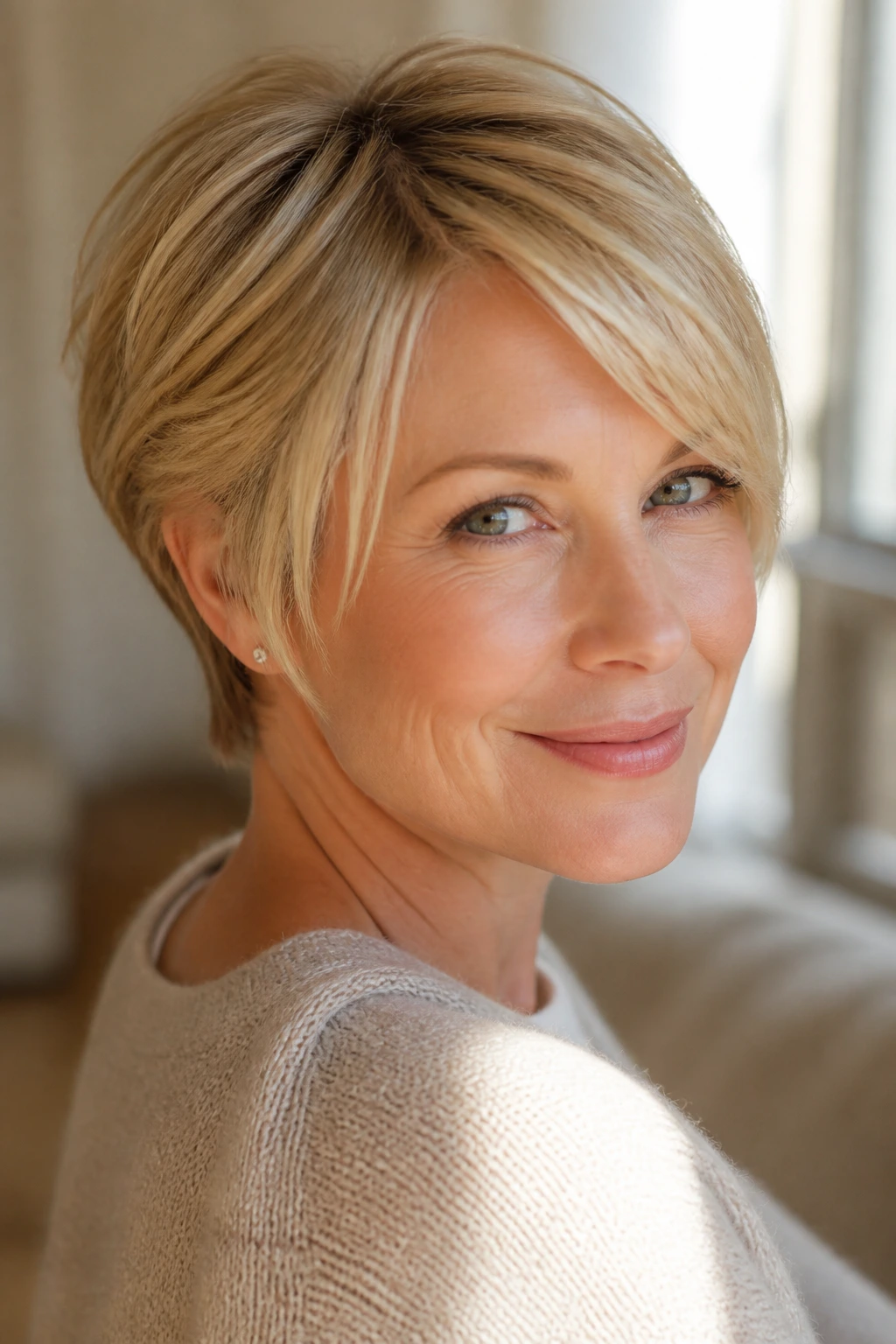
A soft face-framing pixie is a strong final pick because it flatters so many fine hair types. The buttery blonde tone warms the skin, and the little face-framing pieces stop the haircut from looking too clipped. You get structure, but you still get softness.
This cut works especially well when the front is left just long enough to tuck behind one ear or sweep across the brow. That tiny bit of flexibility makes the haircut easier to live with, which matters more than style photos ever admit. A pixie you can move around a bit is usually the one you keep wearing.
If you want one cut to take to a stylist and tweak from there, this is the safe, smart one. It has room for personal adjustments. That’s the part people love after the first week.
Final Thoughts
Fine hair does not need to be hidden under length. It needs shape, a little lift, and a color that gives the eye some warmth to work with. A good warm blonde pixie cut does all three without making the hair feel overloaded.
The best versions are never the harshest ones. They keep softness at the fringe, weight out of the sides, and enough crown height to stop the cut from sinking into the head. That’s the whole trick, and it’s a good one.
If you’re deciding between two versions, choose the one that gives your hair the most movement at the top and the least bulk at the back. That’s where fine hair usually tells the truth.
